Article

Lipase-Assisted Removal of Spin Finishes from Synthetic Fibre Textiles

1
Department of Bioengineering, iBB-Institute for Bioengineering and Biosciences, Instituto Superior Técnico, Universidade de Lisboa, Av. Rovisco Pais, 1049-001 Lisbon, Portugal
2
Associate Laboratory i4HB-Institute for Health and Bioeconomy, Instituto Superior Técnico, Universidade de Lisboa, 1049-001 Lisbon, Portugal
3
Instituto de Catalisis y Petroleoquimica (ICP), CSIC, Marie Curie 2, 28049 Madrid, Spain
4
Institute of Molecular Enzyme Technology, Heinrich-Heine-Universität Düsseldorf, D-52425 Jülich, Germany
5
Biosynth GmbH, Viehmarktgasse 2A, 1030 Vienna, Austria
6
Institute of Bio- and Geosciences IBG-1: Biotechnology, Forschungszentrum Jülich, D-52425 Jülich, Germany
7
Schoeller Textil AG, Bahnhofstrasse 17, 9475 Sevelen, Switzerland
*
Author to whom correspondence should be addressed.
Textiles 2026, 6(2), 56; https://doi.org/10.3390/textiles6020056
Submission received: 30 March 2026 / Revised: 28 April 2026 / Accepted: 30 April 2026 / Published: 5 May 2026
(This article belongs to the Special Issue Textile Recycling and Sustainability)

Abstract

Lubricants based on fatty acid ester (FAE) mixtures are widely used in the textile industry, e.g., in spin finishes applied during the production of synthetic fibres, or in sizes added to fibres before weaving. FAE lubricants can significantly impact the dyeing quality of a textile due to their hydrophobicity and must therefore be removed before dyeing. However, the solvents currently used for their removal pose an environmental risk, and biobased solutions are thus sought. A lipase-assisted pre-dyeing treatment for synthetic fibre textiles was developed in this study. Six lipases were tested for their ability to hydrolyse FAEs from a polyamide-with-elastane textile, and all were found to be active. The conditions for the washing of lipase-treated textiles were found to be crucial for the performance of the process. Among the possible lipid hydrolysis products of tripalmitin (selected as a model FAE), only palmitic acid removal improved during washing, in comparison with the original FAE. This improvement only occurred with washing solutions containing a monovalent base. A combination of lipase treatment and washing with a non-ionic surfactant and monovalent base was found to be effective in the removal of FAEs, with a performance similar to a current solvent-based pre-treatment process.

1. Introduction

Spin finishes are required during the production of synthetic fibres to protect the fibres and equipment from abrasion damage and to prevent static charge build-up during the high-speed processing of the fibres, while also improving fibre cohesion for multi-filament yarns [1]. Spin finishes are mainly composed of antistatic agents, lubricants, and emulsifiers [2]. Different compounds can be used in spin finishes as lubricants, including mineral oils, natural triacylglycerols (TAGs), synthetic fatty acid esters (FAEs), and silicones [3]. FAEs are common additives in the textile industry, where, besides being used as lubricants in spin finishes and sizes, they may be used as emulsifiers and wetting agents [4].
The hydrophobicity of lubricants can impact the dyeing of a textile, leading to uneven distribution of colour in fabrics [3]. Therefore, spin finishes are usually removed prior to dyeing in a scouring process. Spin finishes can be applied dissolved in organic solvents, or, with the addition of emulsifiers, in aqueous emulsions [5]. The addition of emulsifiers typically allows for the removal of spin finishes with scouring under mild conditions, in comparison to the scouring of cotton fibres [6]. Scouring of synthetic fibre textiles can also be performed in water with surfactant solutions or with organic solvents [4,6]. Solvent-based scouring can be very effective in the removal of hydrophobic lubricants, with lower energy and water usage than surfactant-based scouring [4]. However, its use carries added risks of environmental contamination and to worker safety [4]. Improvements to surfactant-based scouring of synthetic fibre textiles are therefore still valuable and sought-after.
Enzyme-assisted scouring processes, or bioscouring, have been described previously for cotton [7,8,9] and wool [10,11,12]. Enzymes must be selected depending on the composition of the contaminants present in the fibre. For the removal of spin finishes, lipases are of particular interest. Lipases (EC 3.1.1.3) can generally be described as carboxylic ester hydrolases that show activity towards water-insoluble substrates [13,14]. Most of the enzymes used for biotechnological applications originate from bacteria [15], and they are often characterized by their substrate promiscuity, catalysing the hydrolysis of substrates other than acylglycerols [16,17]. In laundry washing, the hydrolysis of fats and oils by lipases improves the removal of these soils [18]. Lipases are, therefore, common laundry detergent additives. The possibility of an improvement in the removal of FAE lubricants from textiles by their hydrolysis was evaluated in this work.
In textiles, detergents and surfactants may influence lipid dispersion and accessibility within fibres, influencing oil–water interfacial area and thus lipase-catalysed TAG hydrolysis into FFA and glycerol. However, it has been suggested that lipases enhance lipid removal when the detergent–surfactant system has limited action by functioning at the interior surfaces and inside the pores of the fibres [19].
We have previously shown that FAEs present in spin finishes can be hydrolysed by lipases PEH_Paes_PE-H_Y250S (subsequently referred to as enzyme Y250S), EstLip_Dim_#008 (subsequently referred to as Dim_#008), and LipMRD9 bearing the Val161Ser substitution (subsequently referred to as Lip9) [20]. This was achieved under the constraints of the substrates being present in the original textile matrix, with the low water activity and lack of stirring imposed by the application of the enzyme by padding (with a Foulard machine). However, no improvement in the removal of FAEs, or of the free fatty acids (FFAs) resulting from their hydrolysis, could be observed after lipase treatment due to mass transfer problems that prevented their removal from the fibres. In the present work, the conditions impacting the removal of the products of FAE hydrolysis during washing were evaluated. Additional bacterial lipases were also screened for activity towards FAEs present in a polyamide-with-elastane textile. Given the difference in substrate affinity observed between different lipases, combinations of lipases were also tested. A complete process of enzymatic treatment and subsequent washing is presented.

2. Materials and Methods

2.1. Materials and Reagents

Tripalmitin, monopalmitin, palmitic acid, and N,O-Bis(trimethylsilyl)trifluoroacetamide:trimethylchlorosilane 99:1 (w/w) (BSTFA:TMCS (99:1)) were purchased from TCI Chemicals. NaOH, HPLC-grade chloroform, methanol, dimethyl sulfoxide (DMSO), and n-hexane were obtained from Fisher Scientific. Sulfuric acid at 95–97% was purchased from Merck. Dipalmitin, NaCl, CaCl2, Ca(OH)2 and Genapol X-100 were obtained from Sigma-Aldrich (St. Louis, MO, USA). Tris buffer was purchased from Eurobio Scientific. NH3 solution at 30% (w/w) was acquired from PanReac AppliChem (Darmstadt, Germany).
Lipases Y250S [21], Dim_#008 [22,23], Lip9 [24], Hbau_PE-H (subsequently referred to as Hbau) [25], Hoce_PE-H (subsequently referred to as Hoce) [26], and FE_Polur1 [27] (subsequently referred to as Polur1) were produced with Pichia pastoris as the expression host by Biosynth GmbH (Vienna, Austria). Lyophilized extracellular enzyme preparations were used after dilution in Tris-HCl buffer.
Textile PA1, a 92% polyamide + 8% elastane woven textile with a mass/area ratio of 180 g m−2, was manufactured by Schoeller Textiles AG (Sevelen, Switzerland) and supplied as (i) raw material (after weaving, before pre-treatment) or (ii) pre-treated with an industrial solvent-based scouring process. Total concentrations of fatty acids (FAs) in raw PA1 textiles were found to vary by up to 13% in a 9 cm × 30 cm area of the textile (Supplementary Table S1). Textile samples were selected randomly for assay replicates.

2.2. Lipase Treatment

2.2.1. Enzyme Concentration

An optimal concentration of lipase for the enzymatic treatment of PA1 was initially determined. This was performed with Dim_#008 as the model lipase. The lyophilized enzyme preparation was dissolved in a solution of 50 mM Tris-HCl buffer at pH 8.5, in concentrations ranging between 0.05 g L−1 and 5 g L−1. The lipase solution was then applied directly to 1 cm2 samples of textile, at twice the mass of the sample (simulating a pick-up ratio of 200%). The samples were incubated for 24 h at 30 °C in closed microtubes to avoid evaporation, after which each textile sample was dried under a partial vacuum of 175 mbar to 80 mbar, at 40 °C. This was carried out in a RapidVap Vacuum Evaporation System (Labconco, Kansas City, MO, USA). The dried samples were stored at −20 °C until analysis of FFAs, after silylation (Section 2.4.2), by a gas chromatography–flame ionization detector (GC-FID). Assays were performed in triplicate.

2.2.2. Lipase Screening

All lipases were screened for activity towards FAEs in spin finishes in raw PA1 textiles. Enzyme concentrations for the different lipases were adjusted to achieve the same activity towards the model lipase substrate p-nitrophenyl butyrate (pNPB) as a solution of 2.5 g L−1 of Dim_#008. For this, the specific activity of the lyophilized lipases was determined with pNPB as the substrate (adapted from Hotta et al. [28]; full description in Supplementary Figure S1). The pH range where these enzymes remain active was simultaneously determined. The enzymatic treatments of PA1 with the lipases to be screened were performed over 24 h, as described in Section 2.2.1. The final concentrations of FFAs in the textiles were determined by GC-FID after silylation, as described in Section 2.4.2. Assays were performed in triplicate.

2.2.3. Lipase Combinations

Given the different substrate affinities displayed by Y250S, Dim_#008, and Hoce, different combinations of these enzymes were tested in the treatment of raw PA1 (Table 1). Enzyme combinations were made in such a way that the activity of the resulting solutions with pNPB as the substrate was the same as that reached by a 2.5 g L−1 solution of Dim_#008. The textiles were treated as described previously in Section 2.2.1. The final concentration of FFAs in the textiles was determined by GC-FID after silylation, as described in Section 2.4.2. Assays were performed in triplicate.

2.3. Wash Assays

2.3.1. Model Substrates

Different components in the washing solutions used after the enzymatic treatment were tested for the washing of textiles soiled with mono/di/tri-palmitin or palmitic acid, representing non-hydrolysed, partially hydrolysed, and fully hydrolysed FAE substrates. Pre-treated PA1 was used as the textile matrix in these assays. First, 1 cm2 samples of the textile were soiled with one of the FFAs/FAEs dissolved in chloroform, to a concentration of palmitic acid of 9 mmolC16 Kgtextile−1, with a ratio of soiling solution to textile mass of 0.578 µLsolution mgtextile−1. The textiles were then dried for 45 min at 40 °C, under a partial vacuum of 80 mbar, to ensure the complete evaporation of the solvent. The soiled textiles were washed in solutions containing surfactants, salts, and/or bases, prepared in ultrapure water (Table 2). Washing was performed for 10 min at 40 °C under constant stirring at 650 rpm, using a Heidolph RZR1 overhead stirrer equipped with a pitched blade impeller (four 2 cm blades at a 45° pitch). A ratio of washing solution to soiled textile mass of 5.77 mLwashing solution mgsoiled textile−1 was maintained for all washing assays. After washing, the textiles were rinsed twice with ultrapure water for 5 min, under the same conditions as the washing step. The textile samples were then dried for 45 min at 40 °C under a partial vacuum of 80 mbar, with a RapidVap from Labconco. Palmitic acid concentrations in the textile samples were subsequently determined by GC-FID after methylation (Section 2.4.1). Assays were performed in triplicate.

2.3.2. Lipase-Treated Textiles

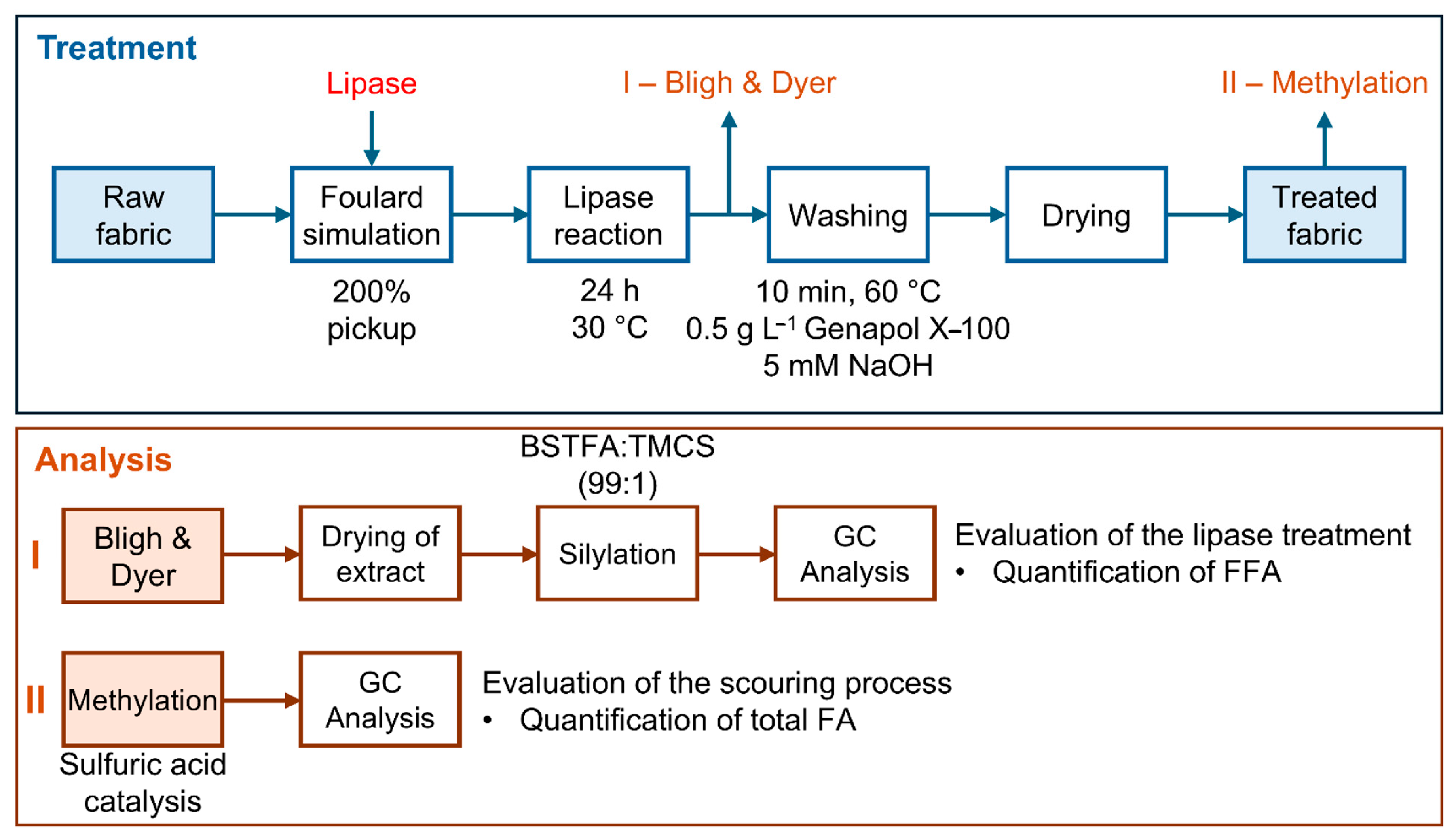
The textiles treated with the lipases Y250S, Dim_#008, Hoce, or combinations thereof, and the control samples of raw textiles incubated in buffer without enzyme, were washed with a washing solution containing 0.5 g L−1 Genapol X-100 and 5 mM NaOH, as described previously, at 40 °C or 60 °C. Total FA concentrations in the treated/washed textiles, and FFA concentrations in the lipase-treated, unwashed textiles, were determined by GC-FID, as described in Section 2.4 (Figure 1). Assays were performed in triplicate.

2.4. Analysis of Textiles

2.4.1. Derivatization of FAs

The total FA concentration was used as a metric for the concentrations of FAEs and FFAs in the textile samples, via their derivatization into fatty acid methyl esters by a sulfuric acid-catalysed methylation method [20]. For this, 0.75 mL of sulfuric acid at 2.5% (v/v) in methanol was added to each textile sample. The samples were incubated at 80 °C for 90 min and cooled to room temperature, after which 0.35 mL of n-hexane and 0.35 mL of NaCl at 9.8 g L−1 were added. The samples were mixed for 2 min with a vortex mixer and centrifuged for 1 min at 10,000× g. The top n-hexane phase was recovered for analysis by GC-FID.

2.4.2. Derivation of FFAs

FFAs present in the textile samples were analysed by GC-FID, after derivatization by silylation into fatty acid trimethylsilyl esters [20]. FFAs were first extracted according to the Bligh and Dyer method [29]. Briefly, each sample was placed in a mixture of 1.5 mL of methanol and 0.75 mL of chloroform and mixed for 2 h at 900 rpm in a Fisherbrand Multi-tube Vortexer. Afterwards, 0.75 mL of chloroform and 0.75 mL of ultrapure water were added to each sample, followed by mixing with a vortex mixer until a homogeneous turbid mixture was achieved. The chloroform phase was then recovered by a combination of cooling at −20 °C and centrifugation and dried under a partial vacuum of 175 mbar to 80 mbar at 40 °C. The extracts were stored at −20 °C until derivatization. The FFAs were then derivatized with BSTFA:TMCS (99:1). The dried extracts were first dissolved in 0.86 mL of n-hexane and 0.04 mL of DMSO, after which 0.1 mL of BSTFA:TMCS (99:1) was added. The samples were incubated for 90 min at 70 °C, cooled to room temperature, and subsequently mixed before recovery of the upper n-hexane and BSTFA:TMCS (99:1) phase for analysis.

2.4.3. GC-FID Analysis

GC-FID analyses were performed with an Agilent Technologies 6890N gas chromatograph (Agilent, Santa Clara, CA, USA) equipped with a flame ionization detector and a 7683B Series autosampler. A 5% phenyl methyl siloxane capillary column, J&W Ultra 2 from Agilent, with 25 m length, 200 µm inner diameter, and 0.33 µm film thickness, was used for all analyses. Data acquisition and analysis were performed with the GC ChemStation revision B.02.01-SR1 from Agilent Technologies.
Similar analysis protocols were used for silylated and methylated samples. A 2 µL volume of a sample was injected into the injector set at 250 °C, with a split ratio of 30:1. The initial oven temperature was set at 190 °C. To separate the compounds, a temperature ramp of 10 °C min−1 was implemented until 285 °C was reached, followed by a 60 °C min−1 ramp up to 310 °C, with a final hold time of 1 min. Hydrogen was used as the carrier gas, with a constant gas flow rate of 1.2 mL min−1. The detector was set at 300 °C. Quantification of total FAs and FFAs was made using external calibration curves obtained for palmitic acid after methylation or silylation, respectively, as described previously. Peak identification was performed as described previously [20].

2.5. Error Analysis

The average error associated with the quantification of each FAME by GC-FID was ±2.27%, quoted for a confidence interval of 99.5%. The errors were calculated based on nine analyses of standard solutions.

3. Results and Discussion

Significant substrate promiscuity is usually found in lipases, but substrate selectivity may still vary significantly in different enzymes of this class [30,31,32]. Given the variety of FAEs that can be applied in spin finishes, whose composition is often unknown to the textile manufacturer, different lipases or combinations thereof may be required in the pre-treatment of a synthetic fibre textile. In the present study, six lipases were screened for this purpose.
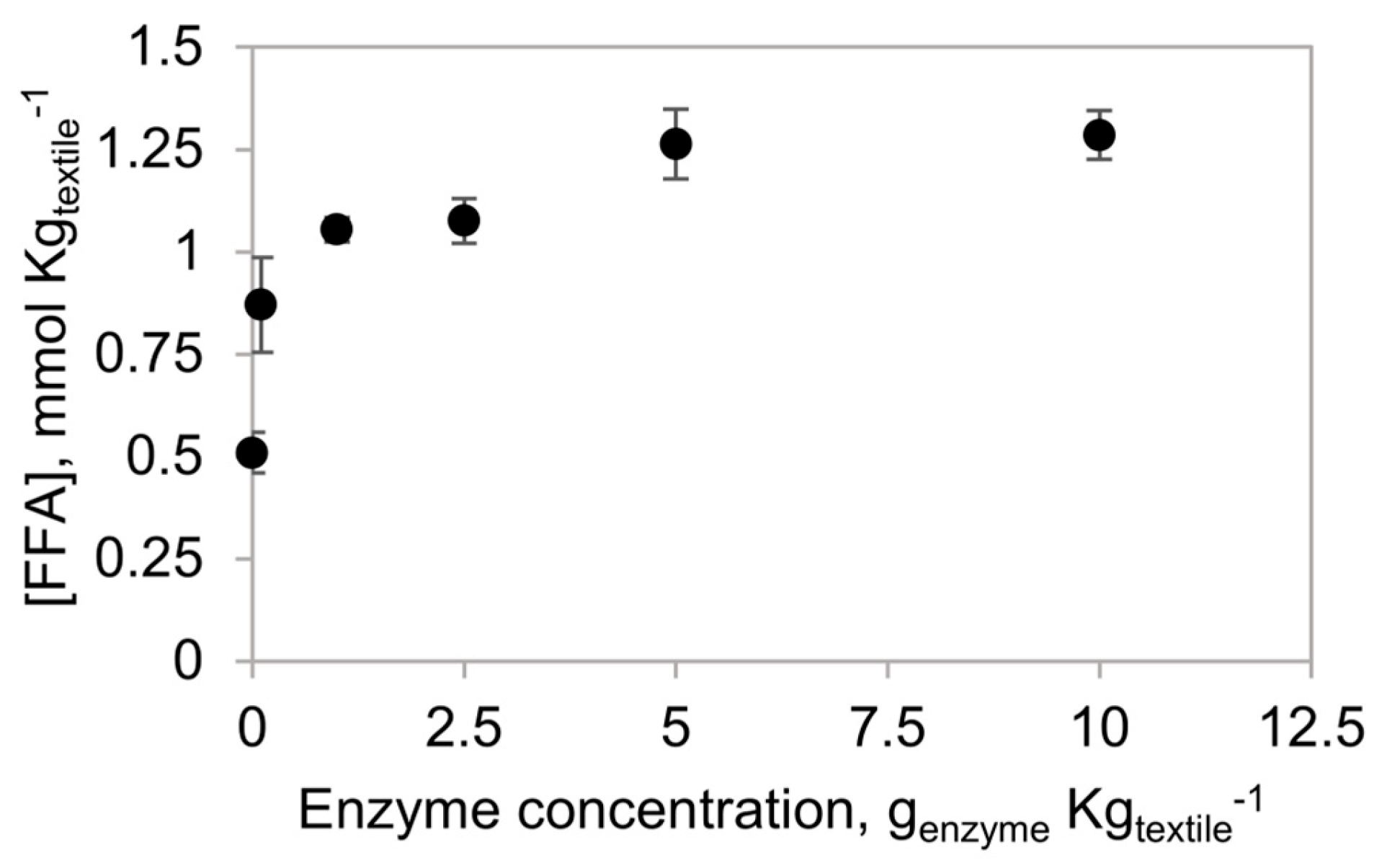
To compare the selectivity of the lipases towards the FAEs present in raw textiles, the activity of these enzymes towards a common substrate, pNPB, was first determined. The optimal pH for the enzymes was simultaneously determined. For all enzymes, pH 8.5 was shown to be nearly optimal (Supplementary Figure S1) and, therefore, selected for the subsequent enzymatic treatments. Dim_#008 was previously shown to be active towards FAEs in raw PA1 at high enzyme concentrations of 12 genzyme Kgtextile−1 [20]. The effect of enzyme concentration in the treatment of the textile was thus determined for Dim_#008 (Figure 2), as high concentrations of enzyme may limit the application of this treatment due to increased costs.
Significant concentrations of Dim_#008, ≥5 genzyme Kgtextile−1, were still found to be necessary to achieve the maximum hydrolysis of FAE. This is partially due to the method used to apply the lipase to the textile. Here, a volume of lipase solution below the saturation of the textile was added directly to the textile. This simulates the application of lipase in an industrial setting with a padding machine (e.g., a Foulard machine) or with a jigger. In these applications, instead of being immersed in the enzymatic solution for the duration of the treatment, the textile is wetted with the solution, squeezed between two rollers to remove excess solution, and rolled for storage during the incubation period. A similar process for the application of lipases in the treatment of natural fibre textiles has been patented previously [33]. This application would be advantageous, as it uses common industrial equipment currently applied to the de-sizing of cotton textiles with amylases [34]. However, the low water content in the textile may have led to poor diffusion of the enzymes away from their initial locations of application, thus requiring higher concentrations of lipases than if the treatment were performed in a lipase solution bath.
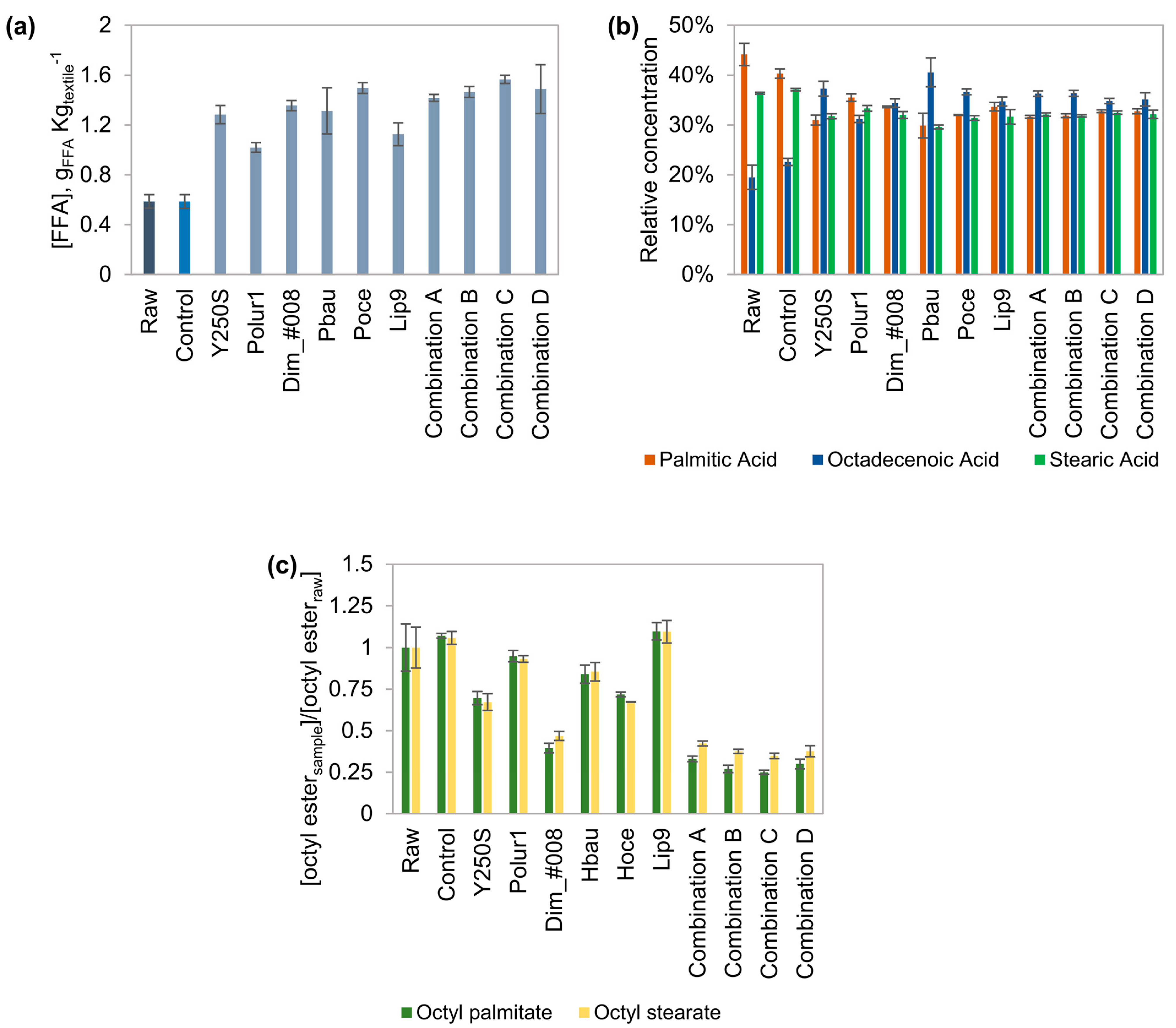
A concentration of Dim_#008 of 5 genzyme Kgtextile−1 was used as a reference for the determination of the initial standard activity for all subsequent treatments, by adjusting the concentration of each lipase to reach the same activity, at pH 8.5 with pNPB as the substrate, as that concentration of Dim_#008 (2.5 g L−1 with a pick-up of 200%). All lipases tested in this study showed the ability to hydrolyse the FAEs present in raw PA1 (Figure 3a). Nevertheless, distinct substrate affinities were observed, as shown by the distinct profiles of FFAs resulting from the hydrolysis reactions (Figure 3b) and from the final concentration of FA octyl esters (Figure 3c). These FAEs are used as lubricants in spin finishes [35,36,37], which can be detected with the GC protocol used in this work despite not being derivatized in the silylation reaction [20].
Amongst all lipases, Hoce produced the highest concentration of hydrolysis products, followed by similar concentrations of FFAs in the textiles treated with Y250S, Dim_#008, and Hbau (Figure 3a). Dim_#008 catalysed the hydrolysis of the greatest proportion of the FA octyl esters (Figure 3c). Given the distinct substrate selectivity displayed by the lipases, different combinations of Y250S, Dim_#008 and Hoce were tested in the treatment of PA1, always maintaining the final activity towards pNPB as described previously. Combination C, containing a proportion of 2/3 the activity of Dim_#008 and 1/3 the activity of Y250S, performed substantially better than the respective isolated enzymes, with increases in FFA concentrations of 22% and 15.4% relative to the textiles treated with Y250S and Dim_#008, respectively. The textiles treated with this enzyme combination reached the highest concentrations of FFAs and the lowest concentrations of FA octyl esters of all the tests performed. Considering these results, the PA1 textiles treated with Y250S, Dim_#008, Hoce, and enzyme combinations A, B, C, and D were subjected to post-enzyme treatment washing.
The enzyme-assisted treatment of the textiles described in this study was separated into two distinct steps: (1) lipase-catalysed hydrolysis of FAEs and (2) washing of the textiles. This enabled the use of lipases that would not be active under the washing conditions (i) due to the presence of surfactants or (ii) due to the high temperatures and pH required during washing. Additionally, it increased the amount of time the lipases had available to catalyse the hydrolysis of FAEs. However, in a previous study, it was observed that post-treatment washing was a significant limitation to the effectiveness of lipase-assisted pre-treatment of synthetic fibre textiles [20]. Indeed, despite the effectiveness of the hydrolysis, no significant increase in the removal of FAs could be attributed to the application of lipases, contrary to what is generally observed during the application of lipases in laundry detergents [38]. It could be concluded that under the previous washing condition, i.e., washing in tap water at 60 °C, FFAs were not significantly more soluble than the original FAE, with both types of compounds remaining adhered to the fibres in a similar manner. Adjustments to the composition of the washing solution were therefore required.
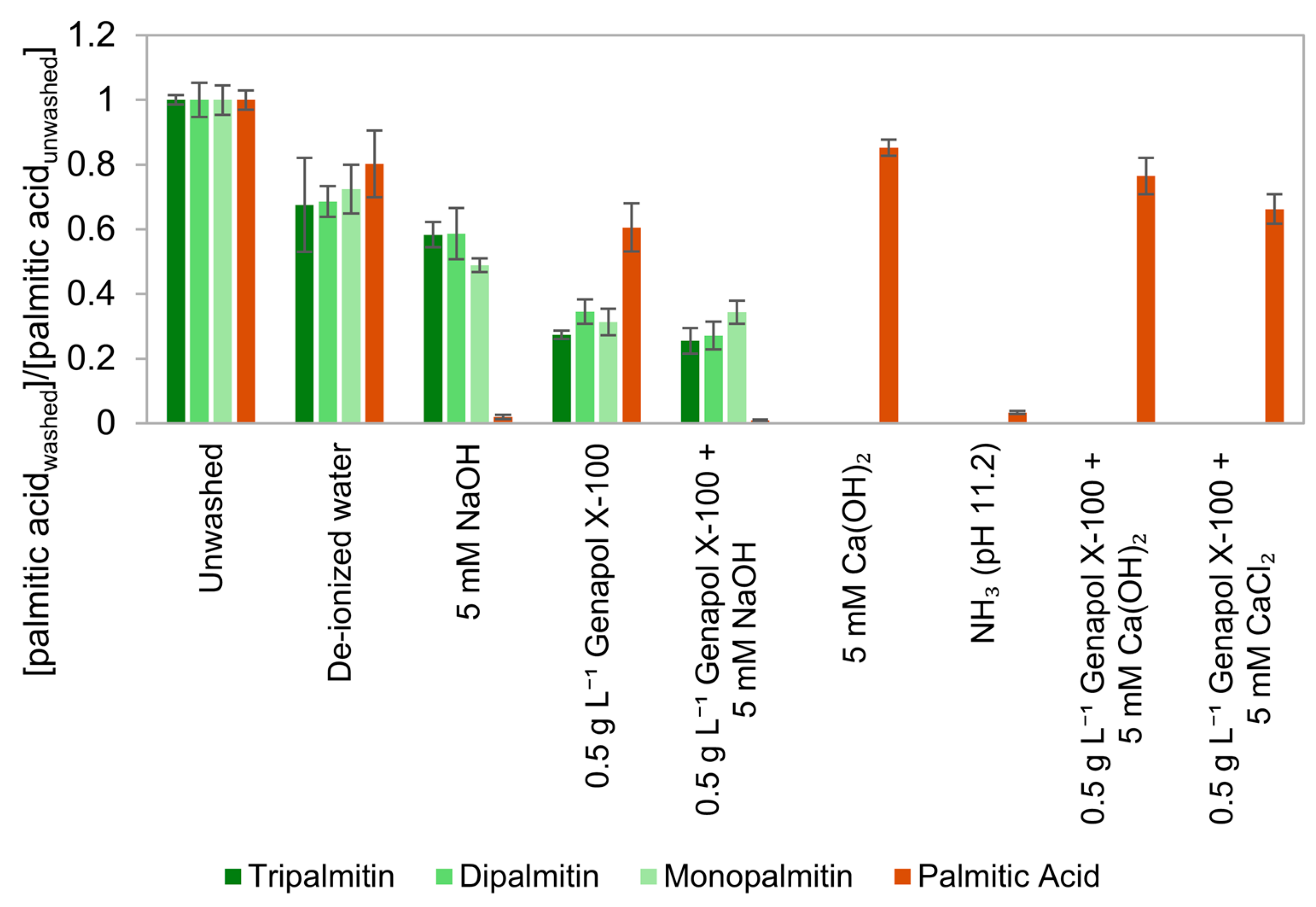
As stated previously, limitations in the mass transfer of the hydrolysis products from the fibre surfaces to the washing solution were the main constraints in the treatment. The effect of the washing solution composition on the removal of FAEs/FFAs was therefore evaluated. For this, washing assays were performed on pre-treated PA1 textiles soiled with palmitic acid or mono/di/tri-acylglycerols of this FA, representing a non-hydrolysed acylglycerol and its possible FAE/FFA hydrolysis products. A concentration of FA in the soils similar to the total concentration of FA found in the raw textiles was employed in these assays. Soiled textiles were then washed with washing solutions containing surfactants and/or different bases or salts (Figure 4). Genapol-X100, a non-ionic surfactant, was selected for the washing of PA1, as anionic surfactants can bind to polyamide fibres in a similar manner as an anionic dye, decreasing the effectiveness of the subsequent dyeing process [39].
Washing performance varied significantly between the FFA and the corresponding esters (Figure 4). In the absence of a base of a monovalent anion, the removal of palmitic acid was not accomplished. For instance, in comparison with acylglycerols, palmitic acid was harder to remove with the non-ionic surfactant, presenting only ca. 40% reduction in concentration after the washing and rinsing cycles, compared to the ca. 65% to 73% reductions observed for the acylglycerols. Therefore, the hydrolysis of FAEs may even be prejudicial to their removal from fibres, depending on washing conditions. However, the addition of NaOH or NH3 to the washing solution led to an almost complete removal of the palmitic acid, even in the absence of a surfactant, with ca. 1% of the original concentration of the FA remaining in the textiles washed with the best-performing wash solution, Genapol X-100 with NaOH. This is due to the formation of sodium/ammonium salts of the FA (a.k.a. soaps) [40], which have higher water solubility due to the higher polarity of the carboxylate anion compared to the carboxylic group in the protonated FA. The addition of Ca(OH)2 did not produce the same effect as that observed with NaOH/NH3, even leading to reduced performance of Genapol X-100. This likely occurred due to the formation of the water-insoluble calcium salt of the FA [41,42]. However, Ca2+ is known to increase the activity of many lipases, by both the existence of calcium binding sites in some lipases [43] and its interactions with the reaction products [44]. Ca2+ is therefore often added to improve lipase-catalysed reactions. Future work should explore a scenario where a calcium salt added to a reaction medium buffered at a basic pH leads to the precipitation of the FFA as FA calcium salts during the enzymatic hydrolysis step, thus decreasing the efficacy of the subsequent washing step. Additionally, since hard water is relatively common, the washing solution may need to be supplemented with chelators (also referred to as builders), as used in laundry detergents [45].
Overall, few differences existed in the removal of the different acylglycerols, regardless of the composition of the washing solution, despite the differences in polarity between the non-polar TAG and the amphiphilic mono/di-acylglycerols. Hence, at the low concentrations of soil tested here, the only hydrolysis product of TAG that leads to an improvement in fat/oil removal is the FFA. This should be the result of an easier mass transfer of these compounds from the fabric to the aqueous phase. It should be noted that the washing of the textiles was performed at temperatures lower than the melting point of the soils in polyamide substrates. The removal of solid and liquid soils is known to occur by different processes [46]. The process of removal of soils is also dependent on the composition of the substrate due to the surface interactions between the soil and the fibre and the morphology of the fibre [19,47].
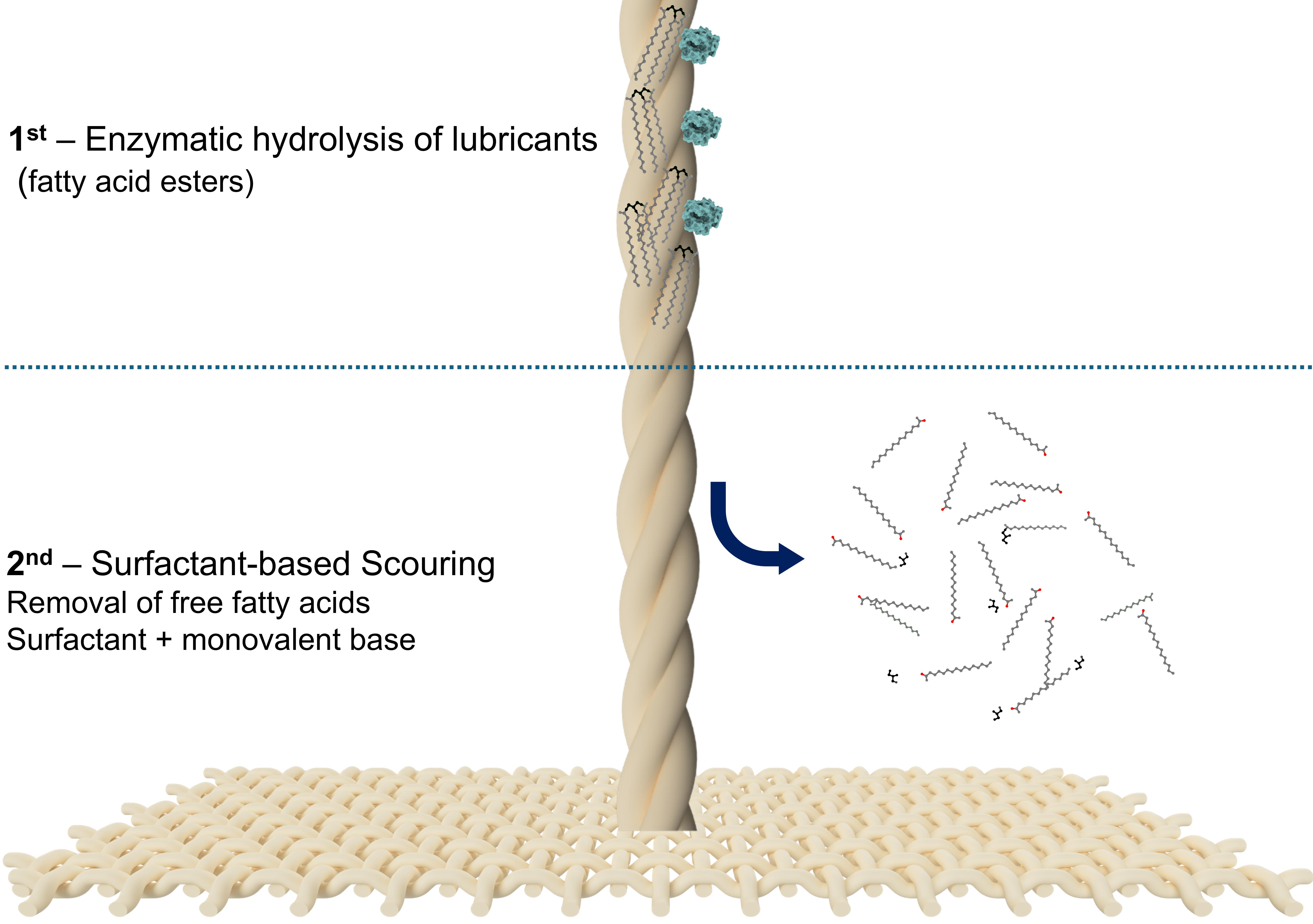
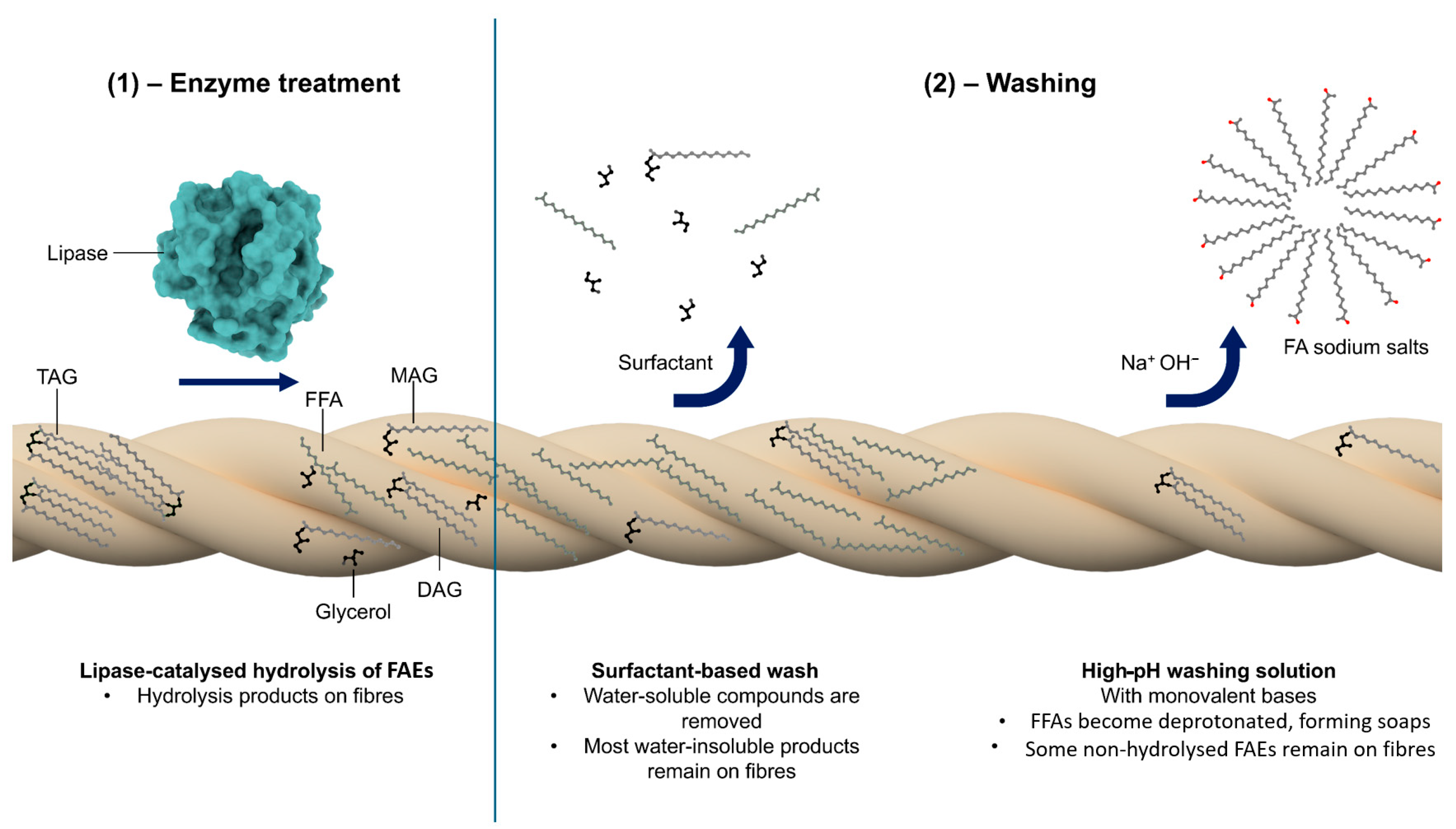
A solution containing both Genapol X-100 and NaOH was thus selected for the washing of the enzyme-treated textiles. The surfactant was used since no enzyme was able to fully hydrolyse the FAEs in raw PA1, with previous results showing the decreased effectiveness of washing enzyme-treated textiles with just NaOH (Supplementary Figure S2). Partial hydrolysis of FAEs may still aid in their removal, beyond the solubilization of the resulting FFAs. For example, small amounts of oleic acid have been shown to improve the removal of mineral oil soils by a physical roll-up process [48]. A system is therefore proposed where, in the initial lipase treatment, FAEs towards which lipases show activity are hydrolysed into FFAs and alcohols. During subsequent washing, the surfactant used in the solution facilitates the removal of some non-hydrolysed FAEs and of other components of the spin finish. As the removal of FFAs after their deprotonation, due to the addition of a monovalent base, is generally more effective than the removal of FAEs with the surfactant, and since these deprotonated FFAs can assist in the removal of the non-hydrolysed FAEs [48,49], the lipase treatment leads to an overall improvement in the performance of the washing procedure (Figure 5).
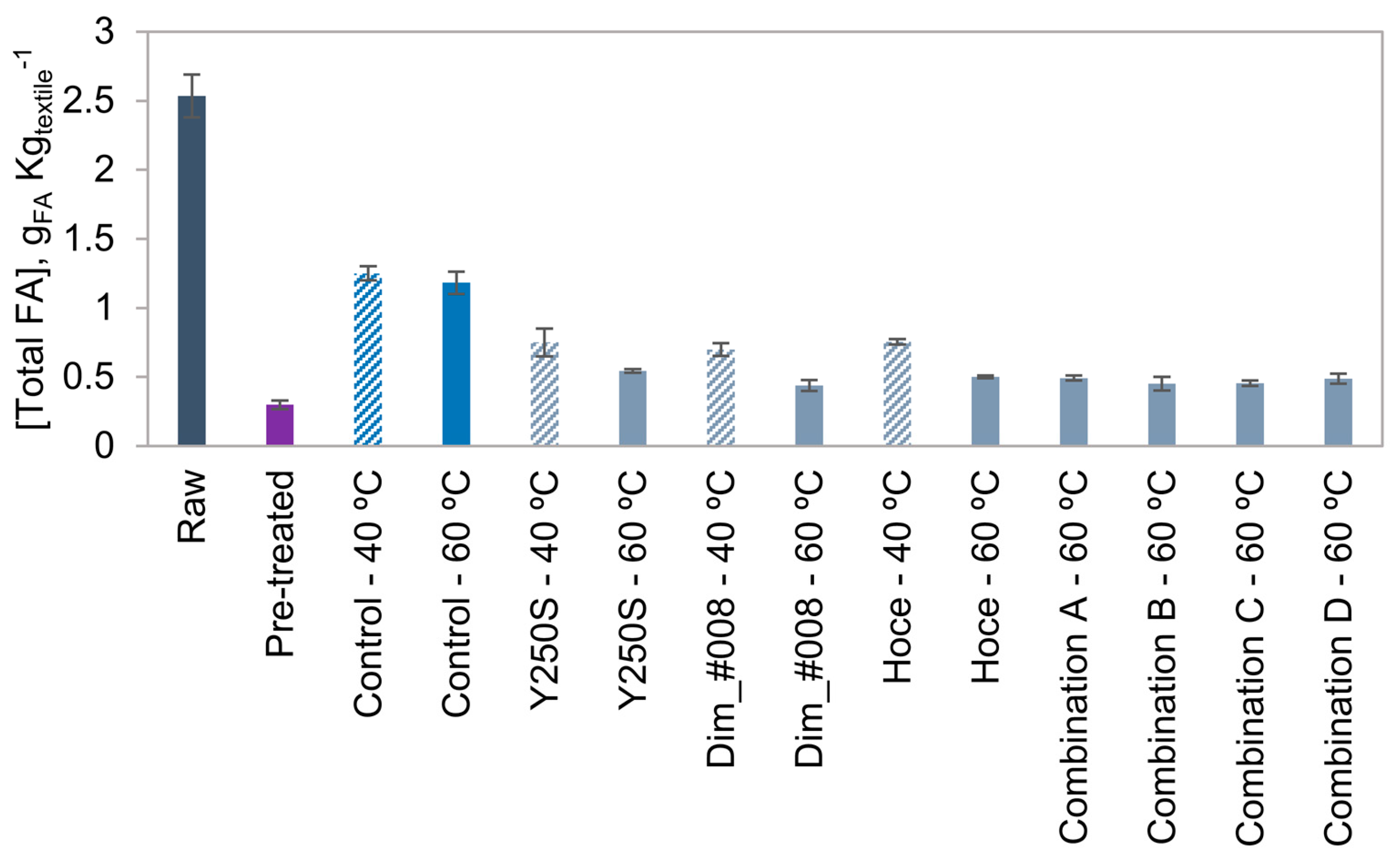
Overall, none of the enzymatic treatments/washing procedures achieved the efficacy of FA removal attained in the solvent-based scouring process, which led to a ca. 88.2% reduction in FA concentration in relation to the raw textiles (Figure 6). However, the washing of the textiles treated with lipases still resulted in the removal of more FAs than the washing of the control textiles incubated with buffer: reductions in FA concentrations of up to 82.7% were observed in the samples treated with Dim_#008 after washing at 60 °C, while the untreated samples washed at the same temperature (“control” samples) only presented a 53.4% reduction. However, despite the increase in FFA concentrations (Figure 3a), the textiles treated with combinations of lipases presented total FA concentrations similar to the textiles treated with isolated lipases after washing (Figure 6). Increasing the washing temperature substantially improved the removal of FAs from the lipase-treated textiles by an average of 32%, but not for the untreated control textiles, with a difference of only 5.4% between the samples washed at the two temperatures (Figure 6). This effect is in line with the improvement in the solubility of FA salts with increasing temperatures, as observed for sodium palmitate [50], whose solubility in water doubles between 30 °C and 50 °C [51]. The higher energy cost required for higher washing temperatures may therefore be justified.

4. Conclusions

An enzymatic pre-dyeing treatment protocol for polyamide fibre textiles was developed based on a two-step approach of: (1) lipase-catalysed hydrolysis of water-insoluble FAEs; and, (2) a surfactant and alkali-based wash to remove hydrolysis products (FFAs + alcohols), non-hydrolysed FAEs, and other spin finish components. Overall, this combined treatment led to substantial reductions in the concentration of FAs in the textiles of up to 82.7%, representing just 37% of the FAs retained on textiles directly washed under similar conditions. This occurred under conditions far from ideal for enzymes, as the industrial constraints associated with application with Foulard machines lead to substantial mass transfer limitations. These include low water activity, which limits access to substrates, and/or the accumulation of products near the biocatalyst. Nevertheless, the application of lipases substantially improved the effectiveness of the surfactant-based scouring of polyamide textiles, while still only slightly underperforming in comparison to a current solvent-based industrial pre-treatment. Additionally, this improvement may make surfactant-based scouring processes a viable alternative to solvent-based scouring of polyamide textiles while simultaneously allowing for a decrease in the quantity of surfactants required for scouring. Currently, surfactant or solvent-based scouring processes represent one of the most significant greenhouse gas emission sources in the textile industry, at approximately 9.6 kg of CO2 per kg of fabric [52]. Overall, the modification to surfactant-based scouring proposed in this study may therefore allow for a reduction in the emission of atmospheric and water pollutants associated with polyamide textile processing if appropriate, environmentally friendly surfactants are selected.
Similar approaches may also be useful in the scouring/de-sizing of other textile types, as has been shown for cotton textiles [33]. Polyester textiles may be of special interest due to the activity of lipases towards ester bonds. Polyethylene terephthalate (PET) fibres often contain side chains that increase the hydrophobicity of their surface. Hydrolysis of these side chains by carboxylic ester hydrolases (PETases/cutinases/lipases) has been shown to improve the hydrophilicity and, therefore, dyeability of the textile [53]. Lipase treatment of polylactic acid fibre textiles has similarly been shown to improve the hydrophilicity and water regain of fabrics [54]. Likewise, hydrolysis of the surface of polyamide fibres by proteases, amidases, or cutinases has been shown to improve the hydrophilicity and dyeability of fibres [55,56]. With the use of promiscuous lipases and/or through the application of multiple hydrolases, it may be possible to combine the scouring of textiles and the surface functionalization of polyester and polyamide fibres in a single process, with substantial environmental benefits. Together with carboxylic ester hydrolase-catalysed recycling processes for PET fibres, many novel applications of PETases/cutinases/lipases are now available for the textile industry [57].

Supplementary Materials

The following supporting information can be downloaded at https://www.mdpi.com/article/10.3390/textiles6020056/s1: Table S1: Distribution of concentrations of FA (gFA Kgtextile−1) in a 9 cm × 30 cm area of raw PA1; Figure S1: Determination of specific activity and optimal pH of lyophilized lipases with pNPB as the substrate; Figure S2: Performance comparison of a NaOH solution and a Genapol X-100 + NaOH solution in the washing of PA1 after enzymatic treatment with lipase Dim_#008.

Author Contributions

Conceptualization, L.C.d.S. and C.C.C.R.d.C.; methodology, L.C.d.S. and C.C.C.R.d.C.; formal analysis, L.C.d.S.; investigation, L.C.d.S., P.V., R.M., S.C.; resources, P.V., R.M., S.T., J.M., S.C., K.-E.J., N.A., R.L., R.R., M.F. and C.C.C.R.d.C.; writing—original draft preparation, L.C.d.S. and C.C.C.R.d.C.; writing—review and editing, K.-E.J., S.T., R.R., J.M. and M.F.; supervision, C.C.C.R.d.C.; validation—N.A. and R.L.; project administration, J.M., K.-E.J., R.R., M.F. and C.C.C.R.d.C.; funding acquisition, J.M., K.-E.J., R.R., M.F. and C.C.C.R.d.C. All authors have read and agreed to the published version of the manuscript.

Funding

This research was funded by the European Union’s Horizon 2020 Research and Innovation Programme (grant agreement no. 101000327, Project FuturEnzyme). This research was also partially funded by national funds from Fundação para a Ciência e a Tecnologia (FCT, Portugal) in the scope of project UID/04565/2025 of the Research Unit iBB-Institute for Bioengineering and Biosciences, and of the project LA/P/0140/2020 of the i4HN-Associate Laboratory Institute for Health and Bioeconomy.

Data Availability Statement

The raw data supporting the conclusions of this article will be made available by the authors on request.

Conflicts of Interest

N.A., R.L., and R.R. worked at Schoeller Textil AG, a company that produces fabrics. J.M. and S.C. work for Biosynth GmbH, a manufacturer of enzymes, among other biologics and chemicals. The remaining authors declare that this research was conducted in the absence of any commercial or financial relationships that could be construed as a potential conflict of interest.

Abbreviations

The following abbreviations are used in this manuscript:
TAGTriacylglycerol
FAEFatty acid ester
FFAFree fatty acid
BSTFA:TMCS (99:1)N,O-Bis(trimethylsilyl)trifluoroacetamide:trimethylchlorosilane 99:1 (w/w)
DMSODimethyl sulfoxide
FAFatty acid
pNPBp-Nitrophenyl butyrate
GC-FIDGas chromatography–flame ionization detector
PETPolyethylene terephthalate

References

  1. Postman, W. Spin Finishes Explained. Text. Res. J. 1980, 50, 444–453. [Google Scholar] [CrossRef]
  2. Redston, J.P.; Berkholz, W.F.; Schlatter, C. Chemicals Used as Spin-Finishes for Man-Made Fibers. Text. Res. J. 1973, 43, 325–335. [Google Scholar] [CrossRef]
  3. Bajaj, P. Spin Finishes for Manufactured Fibres. In Manufactured Fibre Technology; Springer: Dordrecht, The Netherlands, 1997; pp. 139–169. ISBN 978-94-011-5854-1. [Google Scholar]
  4. Roth, J.; Zerger, B.; de Geeter, D.; Gómez, B.J.; Roudier, S. Best Available Techniques (BAT) Reference Document for the Textiles Industry; Publications Office of the European Union: Luxembourg, 2023; ISBN 978-92-76-61945-1. [Google Scholar]
  5. Slade, P.E. Cohesive Agents and Fiber to Fiber Lubricants. In Handbook of Fiber Finish Technology; CRC Press: Boca Raton, FL, USA, 1998; pp. 129–184. ISBN 9780203719282. [Google Scholar]
  6. Shamey, R.; Shim, W.S. Assessment of Key Issues in the Coloration of Polyester Material. Text. Prog. 2011, 43, 97–153. [Google Scholar] [CrossRef]
  7. Hartzell, M.M.; Hsieh, Y.-L. Enzymatic Scouring to Improve Cotton Fabric Wettability. Text. Res. J. 1998, 68, 233–241. [Google Scholar] [CrossRef]
  8. Degani, O.; Gepstein, S.; Dosoretz, C.G. Potential Use of Cutinase in Enzymatic Scouring of Cotton Fiber Cuticle. Appl. Biochem. Biotechnol. 2002, 102–103, 277–290. [Google Scholar] [CrossRef]
  9. Madhu, A.; Chakraborty, J.N. Developments in Application of Enzymes for Textile Processing. J. Clean. Prod. 2017, 145, 114–133. [Google Scholar] [CrossRef]
  10. Saravanan, D.; Anusuya, C.A.; Divya, B.B.; Usha, M. Environmentally Benign Scouring of Wool Fibers Using Mesophile Acidic Lipase. Fibers Polym. 2014, 15, 1902–1907. [Google Scholar] [CrossRef]
  11. Taleb, M.A.; Gomaa, S.K.; Wahba, M.I.; Zaki, R.A.; El-Fiky, A.F.; El-Refai, H.A.; El-Sayed, H. Bioscouring of Wool Fibres Using Immobilized Thermophilic Lipase. Int. J. Biol. Macromol. 2022, 194, 800–810. [Google Scholar] [CrossRef] [PubMed]
  12. El-Fiky, A.F.; Khalil, E.M.; Mowafi, S.; Zaki, R.A.; El-Sayed, H. A Novel Approach towards Removal of Lipid Barrier from Wool Fibers’ Surface Using Thermophilic Lipase. J. Nat. Fibers 2022, 19, 9471–9485. [Google Scholar] [CrossRef]
  13. Verger, R. ‘Interfacial Activation’ of Lipases: Facts and Artifacts. Trends Biotechnol. 1997, 15, 32–38. [Google Scholar] [CrossRef]
  14. Kovacic, F.; Babic, N.; Krauss, U.; Jaeger, K.-E. Classification of Lipolytic Enzymes from Bacteria. In Aerobic Utilization of Hydrocarbons, Oils and Lipids; Springer International Publishing: Cham, Switzerland, 2019; pp. 1–35. ISBN 978-3-319-39782-5. [Google Scholar]
  15. Jaeger, K.-E.; Eggert, T. Lipases for Biotechnology. Curr. Opin. Biotechnol. 2002, 13, 390–397. [Google Scholar] [CrossRef]
  16. Nini, L.; Sarda, L.; Comeau, L.-C.; Boitard, E.; Dubès, J.-P.; Chahinian, H. Lipase-Catalysed Hydrolysis of Short-Chain Substrates in Solution and in Emulsion: A Kinetic Study. Biochim. Biophys. Acta Mol. Cell Biol. Lipids 2001, 1534, 34–44. [Google Scholar] [CrossRef] [PubMed]
  17. Hess, M.; Katzer, M.; Antranikian, G. Extremely Thermostable Esterases from the Thermoacidophilic Euryarchaeon Picrophilus torridus. Extremophiles 2008, 12, 351–364. [Google Scholar] [CrossRef] [PubMed]
  18. Flipsen, J.A.C.; Appel, A.C.M.; van der Hijden, H.T.W.M.; Verrips, C.T. Mechanism of Removal of Immobilized Triacylglycerol by Lipolytic Enzymes in a Sequential Laundry Wash Process. Enzym. Microb. Technol. 1998, 23, 274–280. [Google Scholar] [CrossRef]
  19. Obendorf, S.K.; Varanasi, A.; Mejldal, R.; Thellersen, M. Function of Lipase in Lipid Soil Removal as Studied Using Fabrics with Different Chemical Accessibility. J. Surfactants Deterg. 2001, 4, 233–245. [Google Scholar] [CrossRef]
  20. de Sousa, L.C.; Ansari, N.; Lottenbach, R.; Rösch, R.; Modregger, J.; Capone, S.; Jaeger, K.-E.; Molitor, R.; Thies, S.; Vidal, P.; et al. Gas Chromatography Analysis of Fatty Acid Esters and Free Fatty Acids for the Evaluation of Lipase Performance in Textile Treatment and Washing. Bioresour. Technol. Rep. 2026, 34, 102699. [Google Scholar] [CrossRef]
  21. Bollinger, A.; Thies, S.; Knieps-Grünhagen, E.; Gertzen, C.; Kobus, S.; Höppner, A.; Ferrer, M.; Gohlke, H.; Smits, S.H.J.; Jaeger, K.-E. A Novel Polyester Hydrolase from the Marine Bacterium Pseudomonas aestusnigri—Structural and Functional Insights. Front. Microbiol. 2020, 11, 510772. [Google Scholar] [CrossRef]
  22. Bollinger, A.; Molitor, R.; Thies, S.; Koch, R.; Coscolín, C.; Ferrer, M.; Jaeger, K.-E. Organic-Solvent-Tolerant Carboxylic Ester Hydrolases for Organic Synthesis. Appl. Environ. Microbiol. 2020, 86, e00106-20. [Google Scholar] [CrossRef]
  23. Masomian, M.; Rahman, R.N.Z.R.A.; Salleh, A.B.; Basri, M. A New Thermostable and Organic Solvent-Tolerant Lipase from Aneurinibacillus thermoaerophilus Strain HZ. Process Biochem. 2013, 48, 169–175. [Google Scholar] [CrossRef]
  24. Vidal, P.; Robles-Martín, A.; Fernandez-Lopez, L.; Gonzalez-Alfonso, J.L.; Almendral, D.; Muñoz-Tafalla, R.; Plou, F.J.; Guallar, V.; Ferrer, M. Unlocking a Key Residue in a Lipase for Efficient Polyethylene Terephthalate (PET) Hydrolysis and Influencing Depolymerization Product Profiles. ChemCatChem 2024, 16, e202400765. [Google Scholar] [CrossRef]
  25. Avilan, L.; Lichtenstein, B.R.; König, G.; Zahn, M.; Allen, M.D.; Oliveira, L.; Clark, M.; Bemmer, V.; Graham, R.; Austin, H.P.; et al. Concentration-dependent Inhibition of Mesophilic PETases on Poly(Ethylene Terephthalate) Can Be Eliminated by Enzyme Engineering. ChemSusChem 2023, 16, e202202277. [Google Scholar] [CrossRef]
  26. Molitor, R. Blue Biotechnology to Fight the Plastic Problem: Exploring Microbes and Enzymes for Biodegradation. Ph.D. Thesis, Heinrich Heine University Düsseldorf, Düsseldorf, Germany, 2024. [Google Scholar]
  27. Kuzmanović, N.; Eltlbany, N.; Ding, G.; Baklawa, M.; Min, L.; Wei, L.; Smalla, K. Analysis of the Genome Sequence of Plant Beneficial Strain Pseudomonas sp. RU47. J. Biotechnol. 2018, 281, 183–192. [Google Scholar] [CrossRef]
  28. Hotta, Y.; Ezaki, S.; Atomi, H.; Imanaka, T. Extremely Stable and Versatile Carboxylesterase from a Hyperthermophilic Archaeon. Appl. Environ. Microbiol. 2002, 68, 3925–3931. [Google Scholar] [CrossRef]
  29. Bligh, E.G.; Dyer, W.J. A Rapid Method of Total Lipid Extraction and Purification. Can. J. Biochem. Physiol. 1959, 37, 911–917. [Google Scholar]
  30. Jensen, R.G.; DeJong, F.A.; Clark, R.M. Determination of Lipase Specificity. Lipids 1983, 18, 239–252. [Google Scholar] [CrossRef] [PubMed]
  31. Pleiss, J.; Fischer, M.; Schmid, R.D. Anatomy of Lipase Binding Sites: The Scissile Fatty Acid Binding Site. Chem. Phys. Lipids 1998, 93, 67–80. [Google Scholar] [CrossRef] [PubMed]
  32. Leščić Ašler, I.; Ivić, N.; Kovačić, F.; Schell, S.; Knorr, J.; Krauss, U.; Wilhelm, S.; Kojić-Prodić, B.; Jaeger, K. Probing Enzyme Promiscuity of SGNH Hydrolases. ChemBioChem 2010, 11, 2158–2167. [Google Scholar] [CrossRef]
  33. Petersen, G. Removal of Hydrophobic Esters from Textiles. WO 93/13256, July 1993. [Google Scholar]
  34. Karmakar, S.R. Desizing. In Textile Science and Technology; Elsevier: Amsterdam, The Netherlands, 1999; Volume 12, pp. 69–85. ISBN 978-0-444-50060-1. [Google Scholar]
  35. Robert, H.D.; Harold, S. Spin Finish Composition. GB1124091A, February 1965. [Google Scholar]
  36. Rellensmann, W.; Bueb, M.; Kolbe, J. Spin Finish Compsn.—Comprises Isobutyl Stearate, Hydrocarbon Fraction, Ethoxylated Lauric Acid and Lauryl Alcohol and an Anionic Surfactant. DE2726439A1, June 1977. [Google Scholar]
  37. Makino, S.; Taniguchi, K. Process for High-Speed Spinning of Polyester Fiber. EP0605727A1, March 1993. [Google Scholar]
  38. Fujii, T.; Tatara, T.; Minagawa, M. Studies on Applications of Lipolytic Enzyme in Detergency I. Effect of Lipase from Candida Cylindracea on Removal of Olive Oil from Cotton Fabric. J. Am. Oil Chem. Soc. 1986, 63, 796–799. [Google Scholar] [CrossRef]
  39. Karmakar, S.R. Scouring. In Textile Science and Technology; Elsevier: Amsterdam, The Netherlands, 1999; Volume 12, pp. 86–131. ISBN 978-0-444-50060-1. [Google Scholar]
  40. Scott, B.A. Mechanism of Fatty Soil Removal. J. Appl. Chem. 1963, 13, 133–144. [Google Scholar] [CrossRef]
  41. Snabe, T.; Petersen, S.B. Lag Phase and Hydrolysis Mechanisms of Triacylglycerol Film Lipolysis. Chem. Phys. Lipids 2003, 125, 69–82. [Google Scholar] [CrossRef]
  42. Soontravanich, S.; Lopez, H.E.; Scamehorn, J.F.; Sabatini, D.A.; Scheuing, D.R. Dissolution Study of Salt of Long Chain Fatty Acids (Soap Scum) in Surfactant Solutions. Part I: Equilibrium Dissolution. J. Surfactants Deterg. 2010, 13, 367–372. [Google Scholar] [CrossRef]
  43. Simons, J.-W.F.A.; van Kampen, M.D.; Ubarretxena-Belandia, I.; Cox, R.C.; Alves dos Santos, C.M.; Egmond, M.R.; Verheij, H.M. Identification of a Calcium Binding Site in Staphylococcus hyicus Lipase: Generation of Calcium-Independent Variants. Biochemistry 1999, 38, 2–10. [Google Scholar] [CrossRef] [PubMed]
  44. Brockerhoff, H.; Jensen, R.G. Lipases. In Lipolytic Enzymes; Elsevier: Amsterdam, The Netherlands, 1974; pp. 25–175. [Google Scholar]
  45. Yu, Y.; Zhao, J.; Bayly, A.E. Development of Surfactants and Builders in Detergent Formulations. Chin. J. Chem. Eng. 2008, 16, 517–527. [Google Scholar] [CrossRef]
  46. Cox, M.F. Surfactants for Hard-surface Cleaning: Mechanisms of Solid Soil Removal. J. Am. Oil Chem. Soc. 1986, 63, 559–565. [Google Scholar] [CrossRef]
  47. Miller, C.A.; Raney, K.H. Solubilization—Emulsification Mechanisms of Detergency. Colloids Surf. A Physicochem. Eng. Asp. 1993, 74, 169–215. [Google Scholar] [CrossRef]
  48. Dillan, K.W.; Goddard, E.D.; McKenzie, D.A. Oily Soil Removal from a Polyester Substrate by Aqueous Nonionic Surfactant Systems. J. Am. Oil Chem. Soc. 1979, 56, 59–70. [Google Scholar] [CrossRef]
  49. Snabe, T.; Neves-Petersen, M.T.; Petersen, S.B. Enzymatic Lipid Removal from Surfaces—Lipid Desorption by a PH-Induced “Electrostatic Explosion”. Chem. Phys. Lipids 2005, 133, 37–49. [Google Scholar] [CrossRef]
  50. Vold, R.D.; Leggett, C.W.; McBain, J.W. Systems of Sodium Palmitate in Organic Liquids. J. Phys. Chem. 1940, 44, 1058–1071. [Google Scholar] [CrossRef]
  51. Leggett, C.W.; Void, R.D.; McBain, J.W. The Solubility of Sodium Palmitate in Organic Liquids. J. Phys. Chem. 1942, 46, 429–440. [Google Scholar] [CrossRef]
  52. Molina-Espeja, P.; Sanz-Aparicio, J.; Golyshin, P.N.; Robles-Martín, A.; Guallar, V.; Beltrametti, F.; Müller, M.; Yakimov, M.M.; Modregger, J.; van Logchem, M.; et al. Enzymes for Consumer Products to Achieve Climate Neutrality. Oxf. Open. Clim. Change 2023, 3, 3. [Google Scholar] [CrossRef]
  53. Araújo, R.; Casal, M.; Cavaco-Paulo, A. Application of Enzymes for Textile Fibres Processing. Biocatal. Biotransform. 2008, 26, 332–349. [Google Scholar] [CrossRef]
  54. Lee, S.H.; Song, W.S. Modification of Polylactic Acid Fabric by Two Lipolytic Enzyme Hydrolysis. Text. Res. J. 2013, 83, 229–237. [Google Scholar] [CrossRef]
  55. Kanelli, M.; Vasilakos, S.; Ladas, S.; Symianakis, E.; Christakopoulos, P.; Topakas, E. Surface Modification of Polyamide 6.6 Fibers by Enzymatic Hydrolysis. Process Biochem. 2017, 59, 97–103. [Google Scholar] [CrossRef]
  56. Guebitz, G.M.; Cavaco-Paulo, A. Enzymes Go Big: Surface Hydrolysis and Functionalisation of Synthetic Polymers. Trends Biotechnol. 2008, 26, 32–38. [Google Scholar] [CrossRef]
  57. Silva, A.C.; Barreiros, M.P.; Azevedo, T.; Brás, D.; Teixeira, M.A.; Fangueiro, R.; Ferreira, D.P. Fibre-to-Fibre Recycling in Textiles: Strategies, Limitations and Industrial Perspectives. Textiles 2026, 6, 30. [Google Scholar] [CrossRef]
Figure 1. Scheme of the lipase-assisted scouring and procedures for GC analyses carried out with textile PA1.
Textiles 06 00056 g001
Figure 2. Total concentrations of FFAs resulting from the treatment of PA1 with varying concentrations of Dim_#008, applied at a pick-up of 200%. The values represented are the average ± standard deviation of three independent assays.
Textiles 06 00056 g002
Figure 3. Screening of lipases and lipase combinations for activity towards FAEs in PA1 spin finishes. (a)—Total concentration of FFAs present in textile samples after 24 h of incubation with enzyme solutions, applied at a pick-up ratio of 200%, as determined by GC-FID after extraction and derivatization by silylation. (b)—FFA profile before (“Raw”) and after hydrolysis. (c)—Concentration of FA octyl esters after 24 h of incubation relative to the concentration before hydrolysis. The values represented are the average ± standard deviation of three independent assays.
Textiles 06 00056 g003
Figure 4. Relative concentration of palmitic acid in pre-treated PA1 textiles soiled with palmitic acid or acylglycerols of palmitic acid, after washing in different solutions. Washing with Ca(OH)2, NH3, Genapol X-100 + Ca(OH)2, and Genapol X-100 + CaCl2, was only performed on textiles soiled with palmitic acid. The values represented are the average ± standard deviation of three independent assays.
Textiles 06 00056 g004
Figure 5. Schematic representation of the lipase-assisted, surfactant-based scouring of synthetic fibre textiles, with tripalmitin as an example of an FAE used as a lubricant in a spin finish.
Textiles 06 00056 g005
Figure 6. Total concentration of FA, as determined by GC-FID after methylation, in PA1 textiles subjected to lipase treatment after washing. Textiles were washed at either 40 °C or 60 °C. Pre-treated samples were subjected to an industrial solvent-based pre-treatment. Control samples were incubated in buffer for 24 h before washing. The values represented are the average ± standard deviation of three independent assays.
Textiles 06 00056 g006
Table 1. Lipase combinations used in the treatment of PA1. The proportion of each enzyme is relative to its contribution to the final activity (towards pNPB) of the enzyme combination. The activity towards pNPB of each combination is equivalent to that of a 2.5 g L−1 solution of Dim_#008. Mass concentrations of each enzyme in the combination are also presented.
CombinationEnzyme
Y250SDim_#008Hoce
AProportion (Activity)2/31/3
Concentration (g L−1)3.620.83
BProportion (Activity)1/21/2
Concentration (g L−1)2.721.25
CProportion (Activity)1/32/3
Concentration (g L−1)1.811.67
DProportion (Activity)1/31/31/3
Concentration (g L−1)1.810.831.4
Table 2. Composition of washing solutions tested for removing soils of free palmitic acid and palmitoyl glycerols from PA1.
Soil
Palmitic AcidMonopalmitinDipalmitinTripalmitin
Soiling solutionConcentration (mM)15.615.67.85.2
vsolution/mtextile (µL mg−1)0.578
Wash solutionUltrapure waterxxxx
5 mM NaOHxxxx
5 mM Ca(OH)2x
NH3 (pH 11.2)x
0.5 g L−1 Genapol X-100xxxx
0.5 g L−1 Genapol X-100 + 5 mM NaOHxxxx
0.5 g L−1 Genapol X-100 + 5 mM Ca(OH)2x
0.5 g L−1 Genapol X-100 + 5 mM CaCl2x
Disclaimer/Publisher’s Note: The statements, opinions and data contained in all publications are solely those of the individual author(s) and contributor(s) and not of MDPI and/or the editor(s). MDPI and/or the editor(s) disclaim responsibility for any injury to people or property resulting from any ideas, methods, instructions or products referred to in the content.