Article

Anthropodynamic Optimization and Virtual Fitting of Workwear: A Biomechanical Approach to Ergonomic Design


by
Erkejan Ashimova
1,
Igor Tyurin
2,3,
Salikh Tashpulatov
3,4,
Elisabetta M. Zanetti
5,
Giulia Pascoletti
5,*,
Zulfiya Zufarova
3,4,
Umida Voxidova
3,4,
Raushan Zhilisbayeva
1 and
Zebuniso Mamaxanova
3
1
Department of Technology and Designing of Products and Goods, Faculty of Design, Textiles and Clothing Technologies, Almaty Technological University, Tole Bi Street, 100, Almaty 050012, Kazakhstan
2
Department of Artistic Modeling, Design, and Technology of Garments, Technological Institute of Textile and Light Industry, A.N. Kosygin Russian State University, Malaya Kaluzhskaya Street, 1, Moscow 119071, Russia
3
Department of Design, Faculty of Textile Engineering, Namangan State Technical University, I. Karimov Street, 161, Namangan 160107, Uzbekistan
4
Department of Fashion and Design, Faculty of Design and Technology, Tashkent Institute of Textile and Light Industry, Shohdjaxon Street, 5, Tashkent 100100, Uzbekistan
5
Department of Engineering, University of Perugia, Via G. Duranti, 93, 06125 Perugia, Italy
*
Author to whom correspondence should be addressed.
Textiles 2026, 6(1), 33; https://doi.org/10.3390/textiles6010033
Submission received: 25 November 2025 / Revised: 26 January 2026 / Accepted: 6 March 2026 / Published: 16 March 2026

Abstract

This study investigates the development of workwear designed to withstand harsh conditions and support physically demanding tasks. Its central aim is to create garments that enhance workers’ comfort and mobility by optimizing ergonomic and anthropometric factors. First of all, expert surveys were collected, and the importance of posture adaptability and material comfort was highlighted. To investigate realistic body–garment interactions, the 3D body scans of the upper body from 34 participants in common working poses were captured. These scans revealed the zones of high deformation, guiding the placement of elastic inserts to improve flexibility in targeted areas. The redesigned garments underwent a two-stage evaluation process. First, Clo3D virtual fittings provided qualitative insights into overall jacket fit and movement behavior. Next, stress and strain mapping offered quantitative validation, showing that fabric stress levels remained below 120 kPa, providing evidence that the added elasticity effectively reduced mechanical load and improved wearability. Expert reviewers confirmed the enhanced fit and functional performance. Overall, the study demonstrates an integrated design strategy that unites textile behavior, body dimensions and biomechanics. This approach not only improves workwear but also offers a transferable framework for developing specialized clothing across other physically intensive professions.

1. Introduction

The modern clothing industry faces a number of relevant challenges aimed at expanding the range of products, significantly improving their quality (both in terms of functional characteristics and reliability), and increasing the economic efficiency of production. Some main applications refer to the production of specialized clothing that has to face safety requirements that are even more stringent [1,2,3], especially in areas such as construction, where the working activity is associated with exposure to adverse environmental factors. The key areas for achieving these goals are optimizing the design and the selection of raw materials for the creation of finished products on one side and to improve the design methods and manufacturing technology on the other side.
More specifically, the existing models of special clothing for the construction industry have a number of shortcomings identified as a result of research analyses: the detailed studies by Eom and Lee [4] and Choi and Park [5] reported that many builders experience discomfort during work due to both poor breathability of materials [6] and inconvenient design, leading to hampered freedom of movement. These aspects can significantly impact labor productivity, fatigue, stress levels of employees, and ultimately working safety [1,2].
Dealing with the first aspect, the current designs do not always sufficiently protect against physical, chemical, psychophysiological and biological hazards, especially with reference to specific working conditions (e.g., underwater) or extreme climatic zones [7]. More specifically, Yang and Chan [3] suggest the need of special clothing for reducing the thermal load on a person working at high temperatures and humidity. Choi and Park [5] consider issues from construction workers during summer. Tyurin et al. [7] emphasize how thermal insulation should be assessed at different levels of tissue stretching in the case of constitutive materials such as neoprene. The same authors also suggested how sensors can be profitably integrated into textile materials to control the microclimate for a long time, opening wide new perspectives [8].
Another significant physical hazard in construction work comes from the high level of dust and pollution and can be addressed through specific materials and textures as demonstrated Nemirova et al. [9] in their experiments, as well as in works by Dorman and Havenith and Gupta et al. [10,11]. With reference to exposure to electric fields, the feasibility and possibility of using composite materials for special clothing were substantiated by researchers such as Akbarov et al. [12], with a significant impact on the level of safety of industrial work. In addition to protection from physical agents, ergonomic clothing should take care not to hamper or restrict movements, being uncomfortable or being too loose, since all these conditions can have a significant impact on the risk of injury and employee’s productivity [1,5]. The authors believe that the use of modern textile technologies and adaptive materials that provide greater human comfort in real construction work conditions are more functional and represent a way to solve some problematic issues [4]. Studies by Ganieva et al. [13] emphasize the need to analyze body movements during the working activity, since the very first stages of special clothing design, and demonstrate how this can lead to significantly improved ergonomic properties of workwear, especially in the case of intense physical activity typical of the construction industry [14,15]. The creation of truly functional and ergonomic workwear has to take into account biomechanical and anthropodynamic methodologies in its design. Construction workers represent a significant benchmark since they perform a wide range of tasks, including carrying heavy materials, installing structures, welding, assembling elements and other actions that require high physical activity. These activities are often accompanied by bending and twisting the body, raising arms and performing tasks in uncomfortable positions. One previous work by some of the authors [14] has been devoted to the analysis of upper limb movements to create “smart” clothing that minimizes the load on joints and ensures freedom of movement by an optimized design. The importance of correlating joint biomechanics with the design of workwear intended to be functional is emphasized by another recent study conducted in 2024 [15]. The approach introduced by the authors in this study makes it possible to take into account human movements, as required to provide comfort during intense and repeated working activities. The main hypothesis is that, by changing the basic design methodologies taking into account the workers’ postures required by specific activities, the respective constraining effect can be significantly reduced, with a significant impact on perceived comfort. Such conclusions are also made by Bragança et al. in their study [16], as well as Cho et al. [17] and Choi and Ashdown [18], and other authors who emphasize the need to optimize clothing for dynamic movements [11,18,19,20]. The main aspects of anthropometry in clothing design were identified by Jiang and Dai [21] who stress the importance of designing clothes in relation to the individual needs of a person. The findings of Gupta and Zakaria [10,22] complement the studies of Kirk and Ibrahim [23] on optimizing clothing design to ensure freedom of movement. Modern research, therefore, emphasizes the effectiveness of using an integral method in the design of special clothing, including material properties, textile performance, and anthropometric and biomechanical aspects [16,21,24]. Using a scientific method for the design of clothes is highly recommended by Kaya [24] who also emphasizes the need to consider not only physical but also psychosocial factors to improve the quality of life of workers. Concurrently, on-site studies and ergonomic analysis led Jiang and Dai [21] introduce the concept of “human-centric” design, as necessary for workers exposed to intense loads. Clothing designed using this approach can be customized to the real working conditions of the construction industry, thus reaching a higher functionality. Setting up methods to implement an integral approach for designing clothes requires not only identifying the significance of anthropomorphic factors but also considering movements and postures.
The current study illustrates a new methodology guiding the design process and its subsequent validation in a virtual environment. The methodology is based on body scanning, followed by the analysis of dynamic variations in anthropometric features up to the identification of the most critical areas for a specific worker. This information is used for design optimization through the introduction of elastic inserts corresponding to the most critical areas. At the end of design optimization, an expert assessment of the fit of the product was carried out, providing a comprehensive verification of the proposed approach.

2. Materials and Methods

In this section, the procedure for identifying the main anthropometric features that affect the ergonomic performances of the workwear is presented, along with the identification of the most relevant poses to be investigated. Based on this information, the creation of a new CAD design model of the workwear will be described.
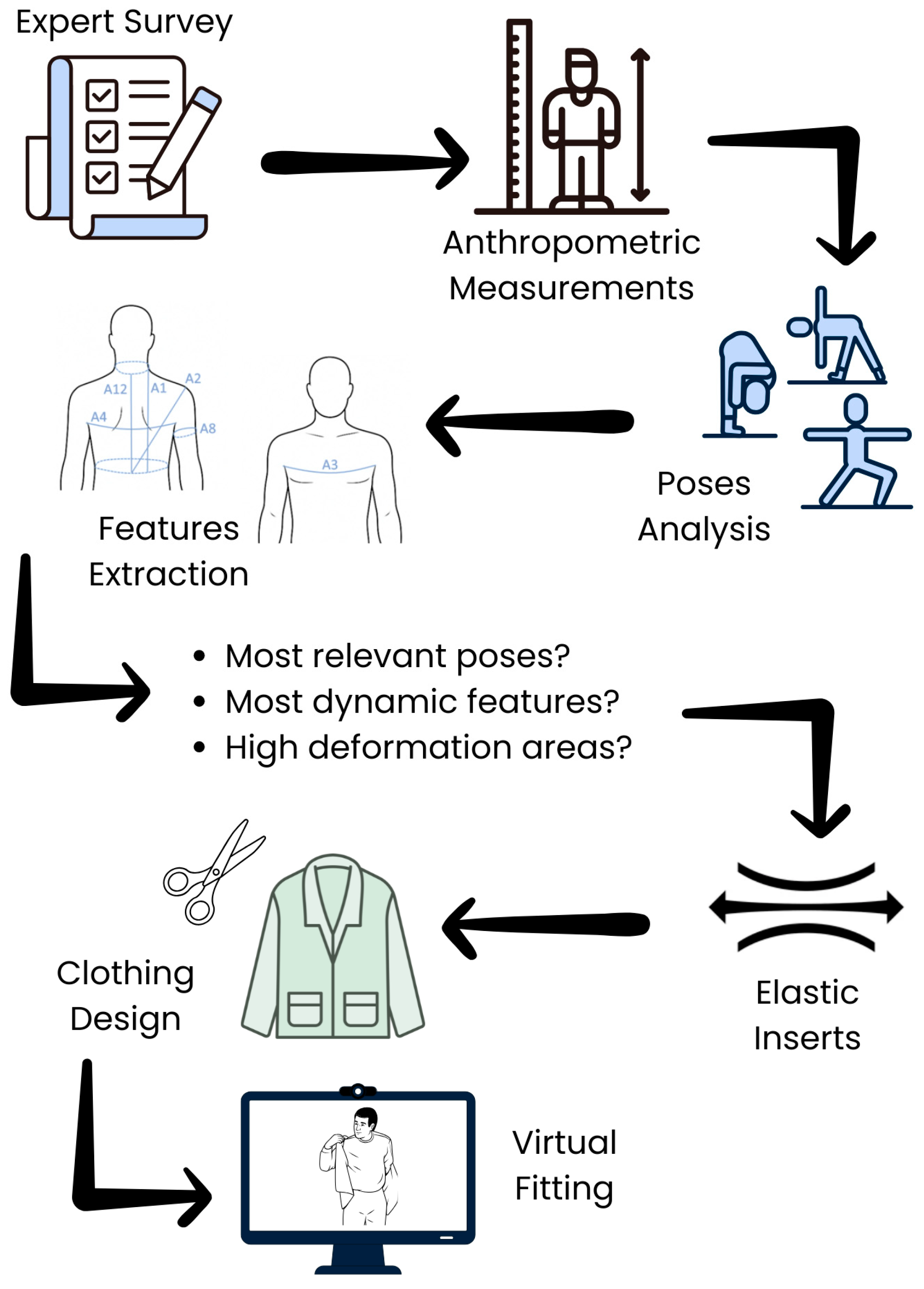
Figure 1 shows a complete workflow of the methodology.

2.1. Expert Survey and Key Parameters

A survey was conducted among experienced workers from the building industry to isolate factors determining the quality and reliability of special clothing for the construction industry. The selection of participants (Table 1) was based on the criteria that meet the requirements of GOST 23554.1-79 [25] and international standards such as ISO 20252:2019 (Market, Opinion, and Social Research) [26].
Figure 1. Workflow of the full methodology.
Textiles 06 00033 g001
The survey aimed to identify key factors influencing the operational and design performance of clothing.
The experts assessed the following parameters:
  • X1—wear resistance: measured on a Martindale tester up to 15,000 cycles.
  • X2—structure and material thickness: determined by a thickness gauge and warp/weft thread-count analysis.
  • X3—additional protective elements: checklist of reinforcements, overlays and padding.
  • X4—forming properties of materials: the drape coefficient is evaluated by a drape tester (ASTM D1388 [27]).
  • X5—size compliance and ergonomics: adaptability to static and dynamic poses; “relaxation/stretch” rated on mannequins and human subjects in different poses using a 1–10 scale.
  • X6—design features of the garment: analysis of cut asymmetries, seam placement, and pattern complexity in a CAD model.
  • X7—seam strength: tensile tests of seam samples according to ISO 13935-2 [28].
  • X8—design and functional accessories: the presence and functionality of pockets, ventilation zippers, reflective strips, etc.
These parameters were assessed on a set of volunteers composed by 20 male subjects and 14 female subjects, who have signed an informed consent.

2.2. Factor Ranking Methodology

The evaluation methodology is based on multi-level ranking using a 10-point scale, with a resolution of 0.5. The most significant factor received 10 points. In the case of equal significance of factors, they were assigned the same rank, which corresponds to the principles set out in ISO 5725-1:1994 (Accuracy—Trueness and Precision of Measurement Methods) [29].
The results of the survey were processed calculating the coefficient of concordance W, to assess the level of agreement between the experts’ opinions; values of W greater than 0.7 represent a high level of consistency of opinions among experts. The significance of the coefficient of concordance was tested using the chi-square criterion in order to test the statistical reliability of the data.

2.3. Anthropometric Measurements and Working Poses

To substantiate the importance of factor X5, anthropometric measurements were taken for all workers taking part in the study, in accordance with international standards such as ISO 7250-1:2017 (Basic Human Body Measurements for Technological Design) [30]. The anthropometric measures are reported in Table 2.
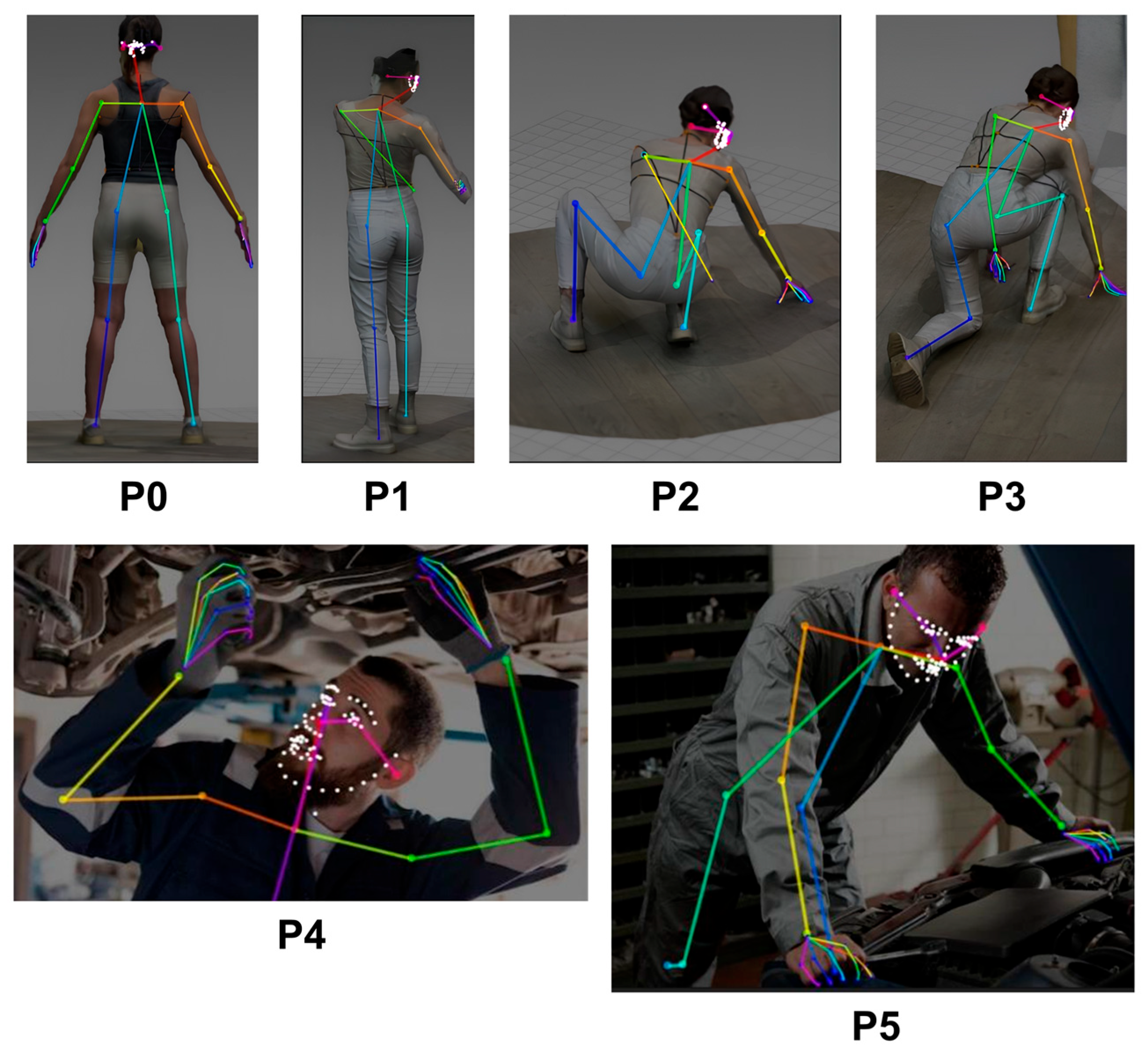
One key aspect of this investigation was the selection of the working poses: an analysis of the most recurrent poses that construction workers adopt while performing their professional duties was conducted, and the ones resulting in the widest variations in dimensional features, especially in the back and shoulder girdle regions, have been used as benchmarks. The selected poses are illustrated in Figure 2 and described as follows:
P0—static pose: standing upright with feet shoulder-width apart, weight evenly distributed, arms relaxed at the sides, and head facing forward; it serves as the neutral baseline posture.
P1—side twist while standing: this replicates the pose assumed when carrying materials or manipulating tools.
P2—side twist on squat: this pose is typical for work at the ground level, in confined spaces.
P3—forward bending with support on one knee: this pose is often assumed when fixing structural elements to the floor or to the ground.
P4—arms raised up, bent at the elbows: this pose is typical for working overhead, for example, when attaching ceiling elements or running cables.
P5—tilted torso with support on straight, wide-set arms: this pose is assumed when manipulating materials or tools at the floor or table level.
The reported parameters were assessed from three-dimensional reconstructions, generated using a portable handheld 3D scanner equipped with an integrated LiDAR depth sensor and a high-resolution RGB camera. Synchronized depth and color data were exported and processed in Agisoft Metashape Professional Edition (v 2.2.1) (by Drone Emotions Ltd., Albiate (MB), Italy).
Each working pose was captured three times to ensure measurement reproducibility. The resulting raw meshes were exported as STL files and processed with automatic hole-filling to close small gaps. Afterwards, a contour alignment of the STL mesh was performed, that is, the mesh’s outer silhouette contours were registered against predefined anatomical landmarks, to correct any positional deviations and guarantee geometric fidelity and consistency across scans.

2.4. Dimensional Features

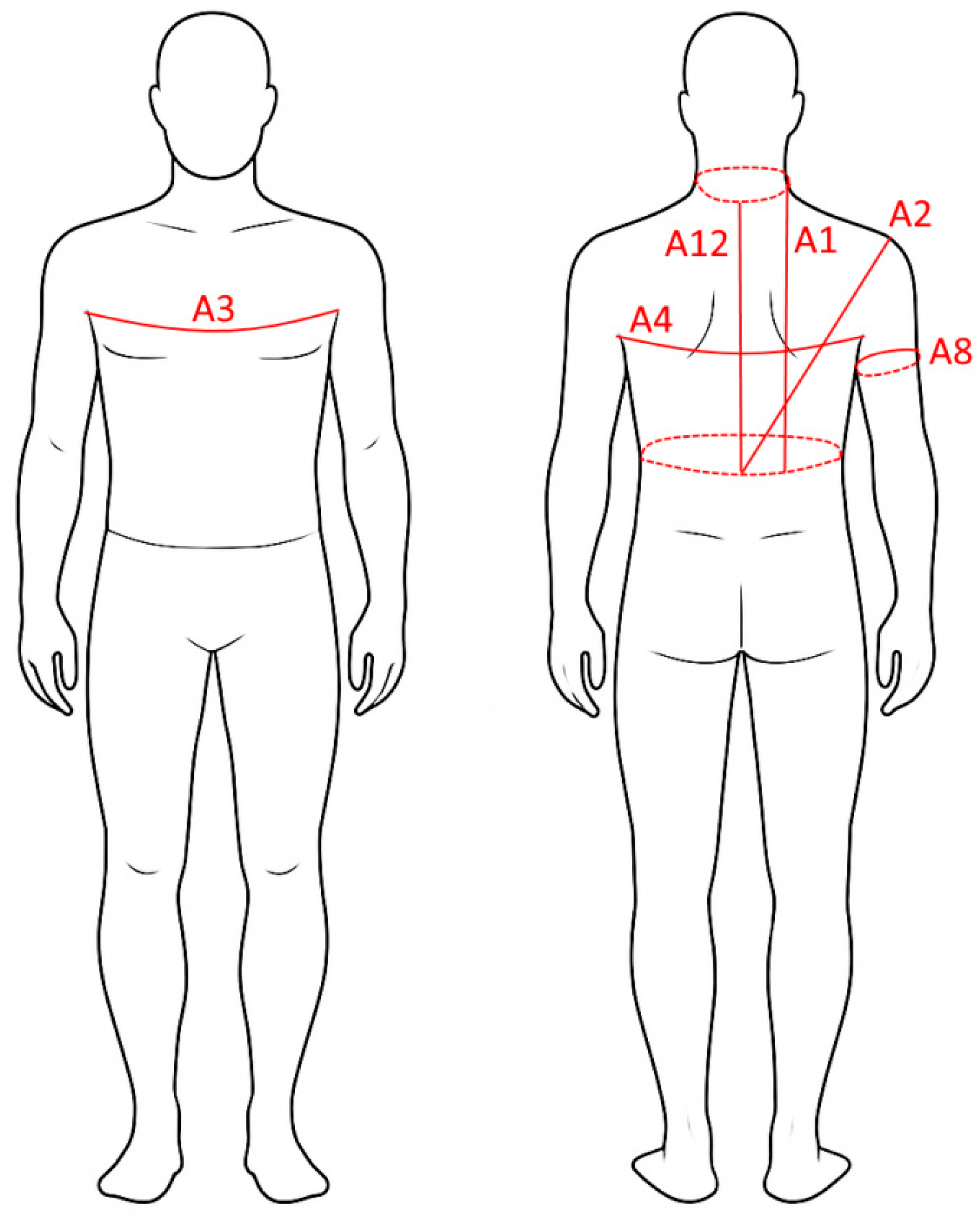
Key anatomical landmarks were identified, and these were used for the calculation of anthropometric features undergoing major variations at different poses; the analysis was limited to the upper body part, at the current stage. Anatomical landmarks were selected and recorded according to the ISO 7250-1:2017 [30] standard. On the basis of these landmarks, the anthropometric dimensions used for analysis are defined in Table 3.
The scheme of measurements of the main dimensional features is presented in Figure 3. It is used to analyze data in both static and dynamic poses.
The greatest attention was focused on the analysis of dimensional features demonstrating the largest variations among the five studied poses (P1–P5). For each pose, and for each DF, the percentage deviation with respect to the static pose was calculated:
% D i , j = D F i , j D F i , 0 D F i , 0 × 100 %
where DFi,j is the average value of feature i in pose j calculated over the three scans; DFi,0 is the average value of feature i for the static pose.
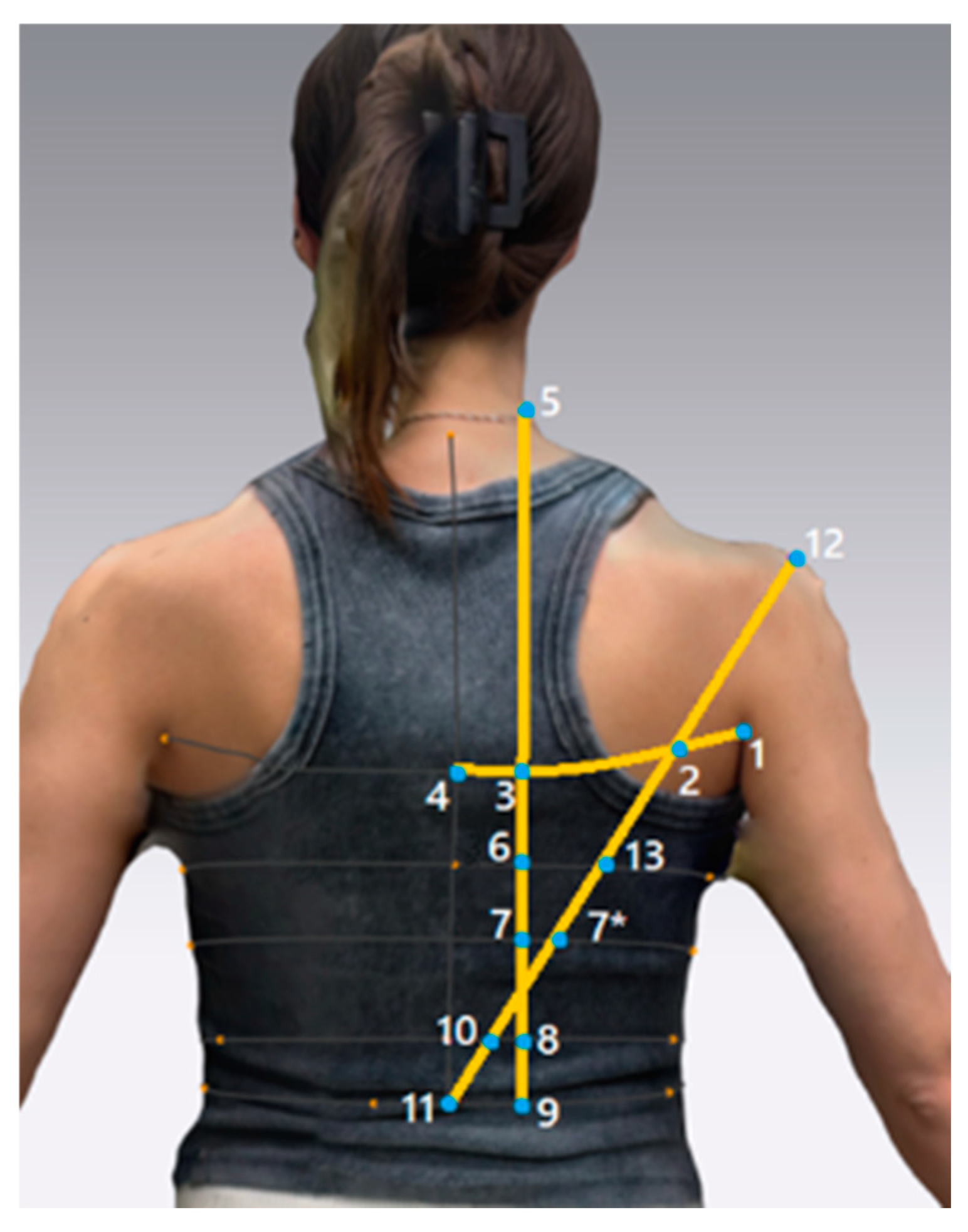
ANOVA statistical analysis was performed to analyze absolute deviation data, having set a level of confidence equal to 0.05; the analysis was aimed to assess the significance of factors such as the gender, the DF being analyzed, the pose and the respective interactions. Whenever one factor proved to be influent, a more detailed analysis was performed to assess which level of one factor produced significantly different results from all others. Secondly, the analysis was aimed to establish which measurements underwent the highest variation for each pose. Given a certain feature undergoing major variations among poses, that feature has been portioned into three to five parts to well localize the segment undergoing the greatest variations; this analysis was finalized to better confine the cloth area which needed to accommodate major extensions. Figure 4 shows how one half of BAW was divided in three parts, leaving from the midsagittal plane, by a vertical line passing through the side neck point, and by an oblique line joining the shoulder point to the waist shoulder point. Figure 4 also reports the partition of NWL1 and SWL, based on the armpit back level, the underbust level, the midriff level, the waist level and the iliac crest level.

2.5. Clothing Design

Based on anthropometric survey and body scan data, a two-piece workwear ensemble (jacket and trousers) was developed in Grafis CAD per BS EN 340:2003 [31] and ISO 13688:2013 [32]; this research work is focused on the jacket design.
The jacket uses a three-panel back, two-panel front and raglan sleeves, with Spandex-Lycra gussets at the underarms, lower back side seams, shoulder cap and lumbar regions to accommodate P1–P5 poses, plus 600 D polyester reinforcements and bar tack stitching in high-stress zones. Functional details include reinforced chest pockets, a tool loop, 3 cm reflective tape on sleeves and back, and underarm and back-yoke mesh vents. This baseline design was then virtually fitted in Clo3D (CLO Virtual Fashion Inc., Seoul, South Korea) and refined through strain-and-stress analyses to guide the final placement of elastomeric inserts and pattern adjustments.

2.6. Virtual Fitting

The design evaluation was performed in Clo3D, which complies with the ISO 20685:2010 (3D Scanning Methodologies for Anthropometric Data) [33] standards. For virtual fitting, male avatar principal body dimensions were set according to the European size designation 50/188 (chest circumference 100 cm; height 188 cm), in line with ISO 8559-1:2017 “Clothing—Size designation of clothes—Part 1: Anthropometric definitions for body measurement” [34].
The program provided tools to analyze a product fit through the visual evaluation of wearability on virtual avatars with average anthropometry. By comparing the original and modified designs, it was possible to establish benefits produced by the new design in terms of fitting at static and working poses. In the new design, some inserts made of elastomeric material with an extensibility of 53% will be added, having specified Knit Ponte Jersey fabric as a constitutive material for these inserts. This material is provided within the Clo3D library, and it includes spandex/elastane (typically 3–8%); in terms of elastic properties, it is characterized by a horizontal stretch of ~20–40% and high elastic recovery after stretching (95–98%).
As a first step, a qualitative evaluation was required for experts for the poses resulting to be the most demanding ones. The experts assessed the appearance, the expected freedom of movement and the functionality of the product design in each of the specified poses on a 1-to-10-point scale.
This step has been followed by an analysis of strain and stress distributions: hopefully, the new design should provide a higher extensibility in critical areas, resulting in minimal stress, as necessary to avoid putting extra loads on workers.

3. Results and Discussion

3.1. Significance of Factors Affecting the Quality and Reliability of Special Clothing

The significance of factors is confirmed by the high coefficient of concordance among experts W = 0.79, which indicates the consistency of opinions. The significance of the coefficient was tested using the Pearson criterion (χ2 = 42.84, p < 0.05).
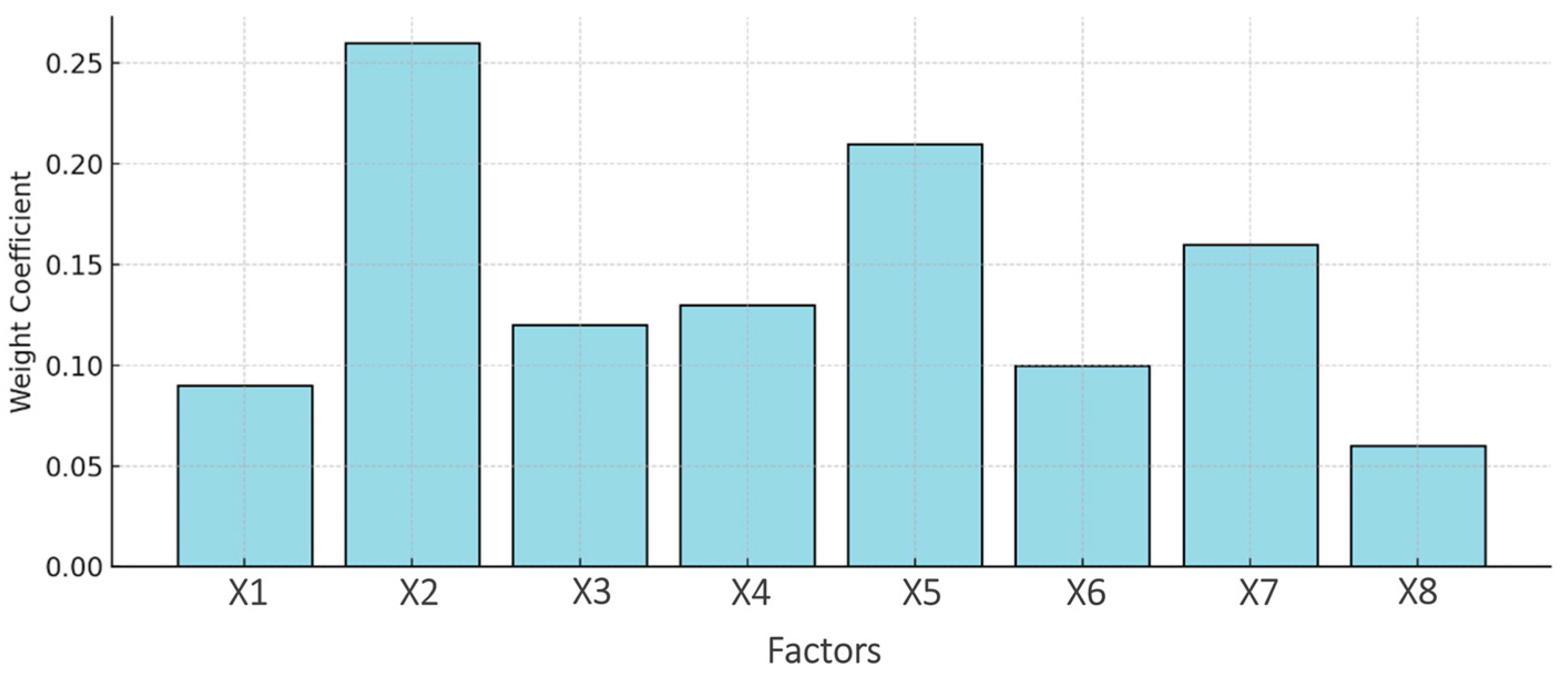
The rank assessment of the significance of factors is reported in Figure 5. The results of the expert survey were analyzed considering γ parameter, that is the effect of the i-th parameter. These results showed that, among the eight factors affecting the functionality and performance of special clothing, the most important is judged to be X2, the structure and thickness of the material (γ2 = 0.26). This confirms the key role of materials with optimal physical and mechanical properties in ensuring the reliability of products. The second place in terms of importance was taken by X5, the conformity of sizes in static and working poses (γ5 = 0.21), which emphasizes the need to consider specific working postures when designing clothing.

3.2. Body Scan Results

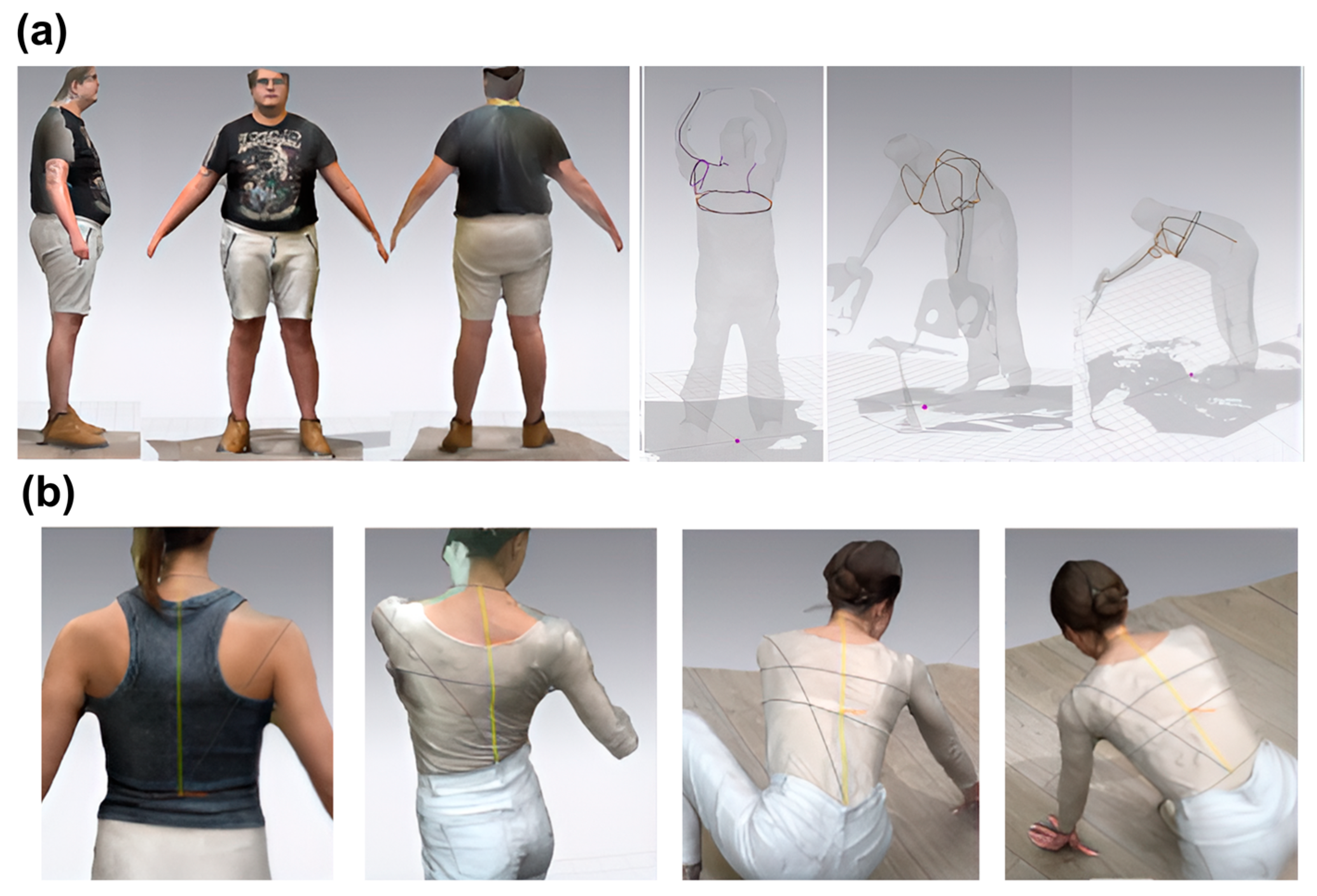
Sample scan results are reported in Figure 6.
The processed scans were used for measurements and for the analysis of difference in dimensional features between the static pose and working poses. Main results are reported in Table 4 and Table 5, where DFi,j represents the i-th design feature assessed for the j-th pose, while D is the percentage deviation as defined in Equation (1).
Deviation data reported in Table 4 and Table 5 were further analyzed through ANOVA; the main results are reported in Table 6. Both main effects and interaction between factors (i.e., Gender * Feature) are reported.
The ANOVA analysis allowed reaching some main conclusions.
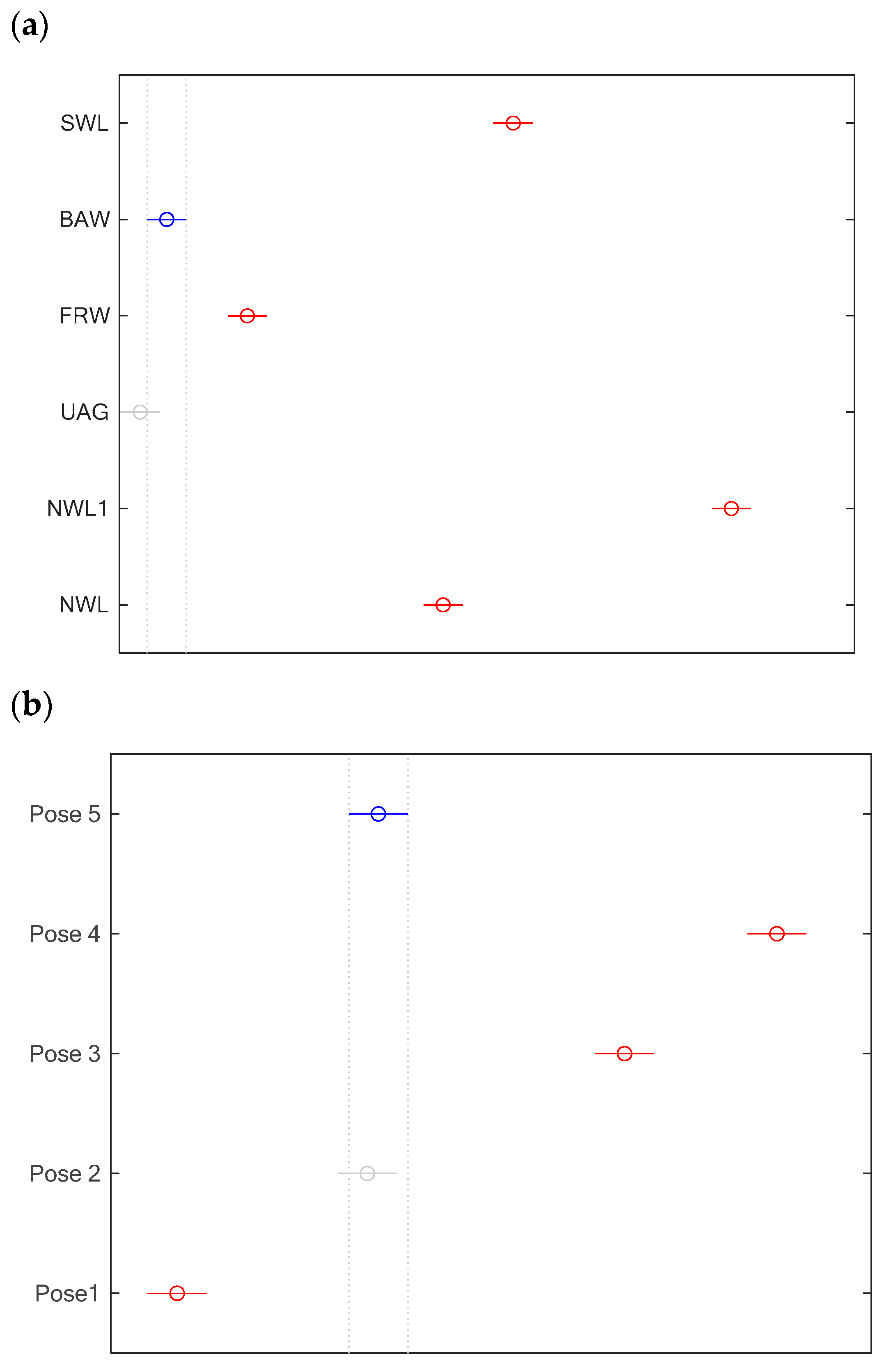
The main hypotheses behind this research work are sound from a statistical point of view: different working poses do produce different tissue stretching and the respective effects are not equal from point to point (that is, according to the dimensional feature being analyzed); therefore, specific poses of a given working activity must be analyzed; in addition, feature effect is indeed relevant (η2 > 31%), and this demonstrated that it would not be sensible to provide generalized elasticity all over the clothing. On the contrary, the “gender” factor does not play a significant role, both as a single factor and in conjunction with measures or poses, which means that neither the average deformation or deformation distribution are significantly different between males and females. This allows to conclude that design optimization in relation to working postures does not need to be accomplished separately and independently for men and women. According to Tukey–Cramer post hoc tests (α = 0.05), the only features which have produced similar results are back width and upper arm girth (Figure 7a), suggesting one of these two features is redundant and it would not need to be measured. Seemingly, pose 2 and pose 5 (Figure 7b) have produced similar results; therefore, pose 5 was not necessary to be analyzed since it did not add significant information.
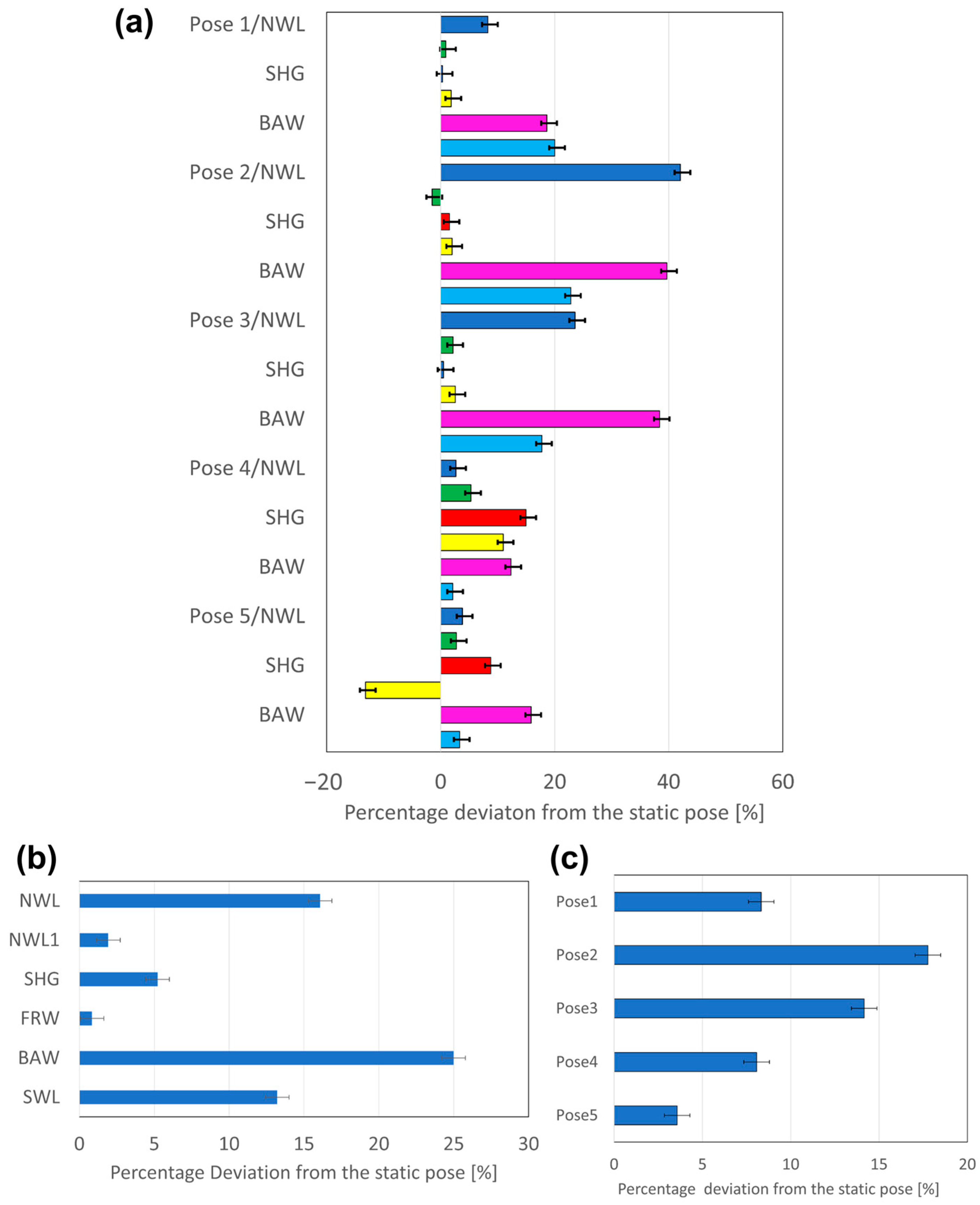
More detailed results are depicted in Figure 8.
With reference to pose P1 (standing side twist), the maximum increment was registered for the “shoulder to waist length (SWL)” feature, amounting to +20.0% (Figure 8a).
In pose P2 (side twisting in a squat), the largest increase was shown by the dimensional feature “neck to waist length” (NWL), having increased by +42% (Figure 8a).
In pose P3 (forward bend with support on one knee), the highest variation was reached for the dimensional feature “back width” (BAW), which demonstrated an increase equal to +38.4% (Figure 8a).
In pose P4 (pose with arms raised upward, bent at the elbows), the dimensional feature undergoing the highest variation is the shoulder girdle (UAG), with an increment of 15.0% (Figure 8a).
Finally, in pose P5 (torso tilt with an emphasis on straight, wide-set arms), back width (BAW) is again the feature undergoing the greatest deviation, reaching +15.9% (Figure 8a).
The analysis of Figure 8b makes evident that, when all poses of construction workers are considered, the DFs undergoing the highest variations are BAW (+25.0%), followed by NWL (+16.1%) and SWL (+13.2%), and this is the reason why these DFs have been partitioned to perform a more detailed inquiry; the main results can be found in Table 7. For NWL1 and SWL, pose P2 has been considered since this pose produced the highest variation in SWL and an intermediate variation in NWL1, thanks to the concurrent bending and tilting of the trunk.
Table 7 presents the subdivision of the back width (BAW) line for two working poses, P3 and P4, because these poses produced both the maximum and the lowest increase in BAW of +38.4% (16.5 mm) for P3 and of +12.4% (5.2 mm) for P4. By examining both the extreme (P3) and the lowest (P4) cases, Table 7 identifies which of the three back width partitions require elastomeric inserts (intervals 1–2 and 3–4) versus which can remain in the base material (interval 2–3).
Focusing on both the extreme and mid-range cases clarifies which back width segments require elastomeric inserts in relation to strain amplitude in order to take into account eventual non-linear behaviors: for example, it could happen that some segments do not undergo any elongation as long as the strain amplitude is limited below a given threshold.
As shown in Table 7, the middle-back partition (interval 2–3 of BAW) reached a maximum elongation of 38.0% under P3, while the central-back partition (interval 3–4 of BAW) exhibited a much higher variation of 88.5% under the same pose.
According to Table 7, with reference to both NWL1 and SWL, the intervals 3–6, 6–7, 8–9 and 2–13, 13–7 *, 10–11 are those requiring the insertion of an elastomeric material that provides the necessary extensibility with minimum load. On the contrary, the intervals 7–8 and 7 *–10 can be made in the basic material, and they can provide the necessary stability to the jacket. Of course, different solutions could be foreseen: for example, the whole BAW could be made in elastic material, but according to the present analysis, this would not result in any additional benefit.
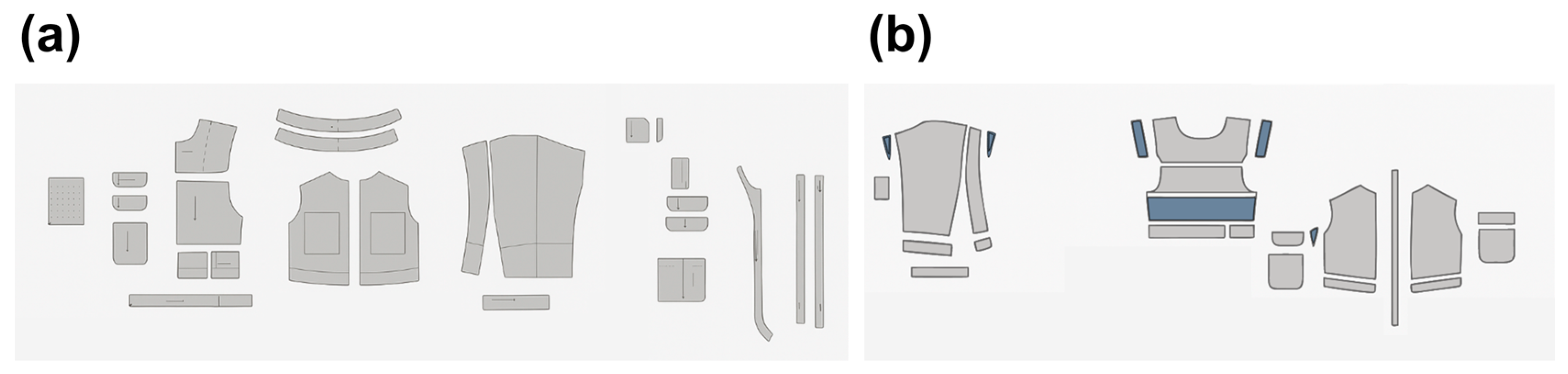
The model designs of men’s work overall jacket is shown in Figure 9: the original design (Figure 9a) was modified by inserting elastic parts where a high extensibility was required according to the previous analysis (Figure 9b). For example, to accommodate peak deformations recorded for BAW, P3, an accordion-style elastomeric gusset is positioned at the armhole area, offering up to 100 mm of deployable extension, well above the 38.4% (≈17 mm) maximum observed. This ensures the garment provides sufficient freedom of movement without over-straining the shoulder girdle.
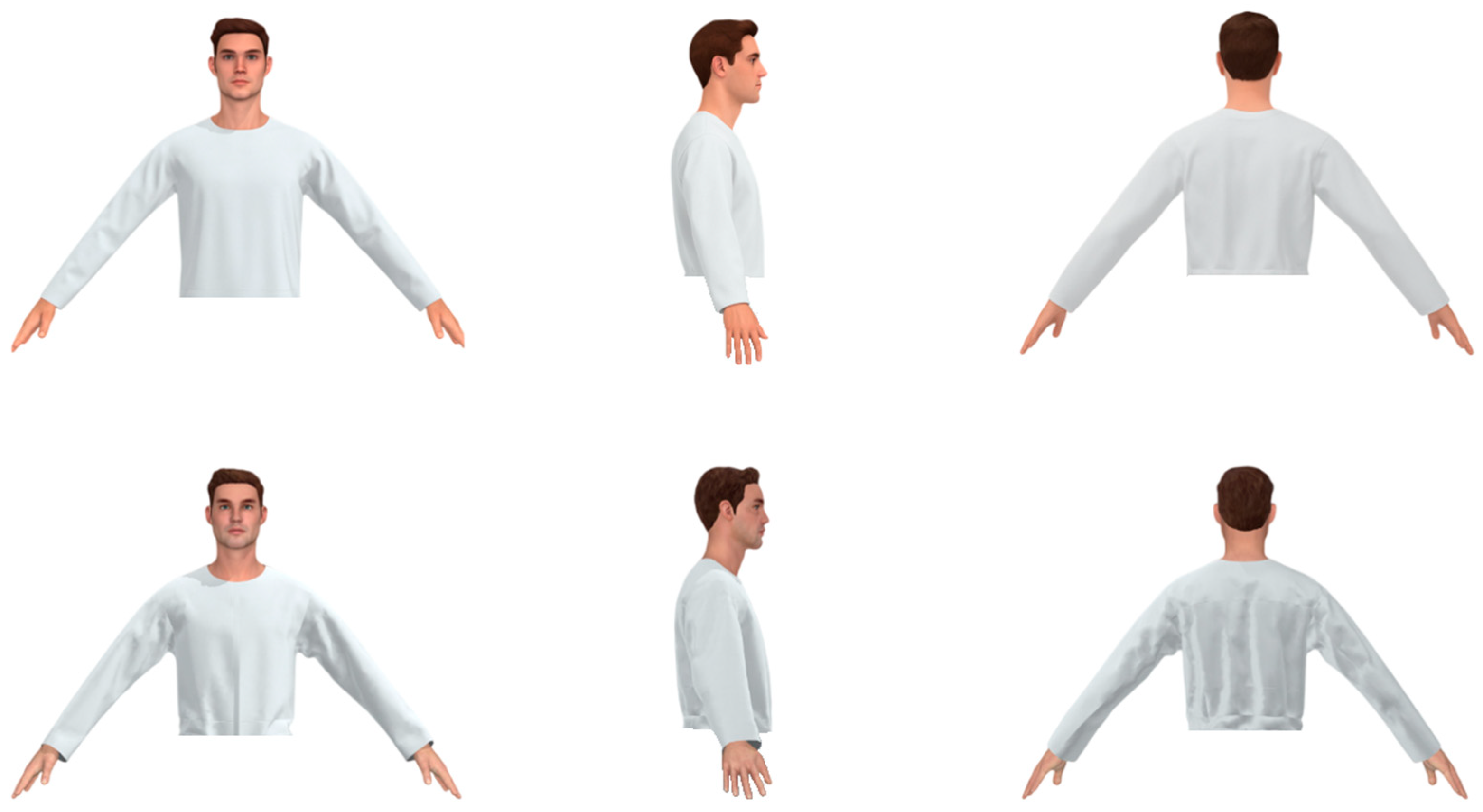
The fit assessment of the developed overall jackets was carried out in Clo3D (Figure 10).
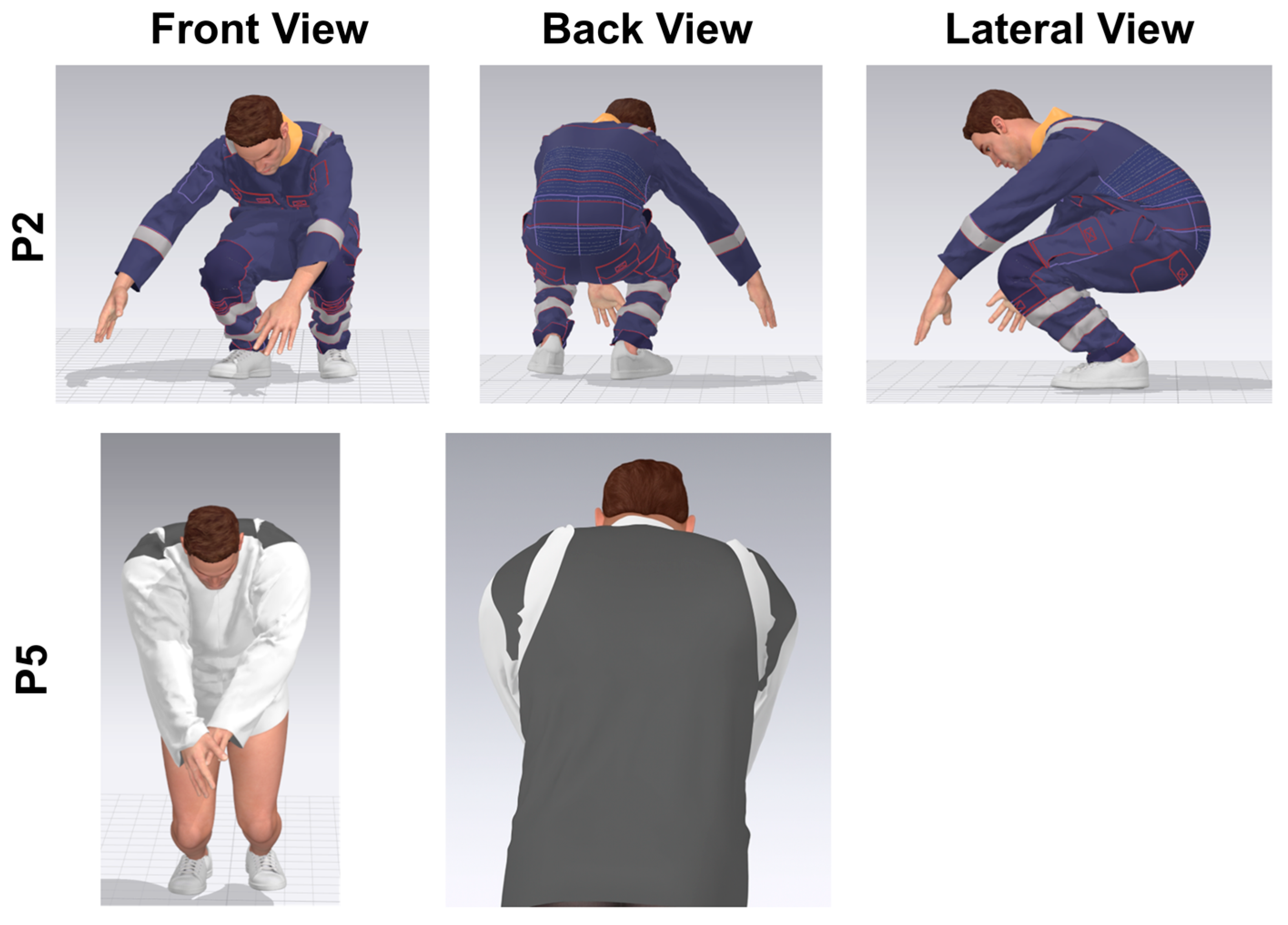
The following two dynamic poses were considered: P2 (twisting to the side in a squat) and P5 (torso tilt with an emphasis on straight, wide-set arms). The modified drawing and fitting in Clo3D are shown in Figure 10. Of the five scanned poses, P2 (twisting to the side in a squat) and P5 (torso tilt with wide-set, straight arms) were selected for detailed analysis because P2 generally produced the highest variations (Figure 8c), while P5 produced the most distinct strain patterns (see, for example, FRW in Figure 8a). The modified drawing and fitting in Clo3D are shown in Figure 11.
The preliminary scans of P1 (side twist while standing), P3 (forward bend with one-knee support) and P4 (arms raised overhead) revealed strain distributions that closely overlapped with either P2 or P5, offering little new information.
The average ratings of the experts showed that the P2 pose received the highest rating of 8.36, which is associated with an optimal fit and satisfies freedom of movement in the back and shoulder girdle. The P5 pose took second place with a rating of 7.79, which indicates high functional characteristics of the design, but with the need of additional minor revision to improve the fit.
To test the statistical significance of the differences between the ratings in different poses, a one-way analysis of variance (ANOVA) was performed, the results of which showed an F-statistic of 12.42 and a p-value of 0.0005. These data confirm that the differences in ratings between poses are statistically significant.

3.3. Stress and Strain Results

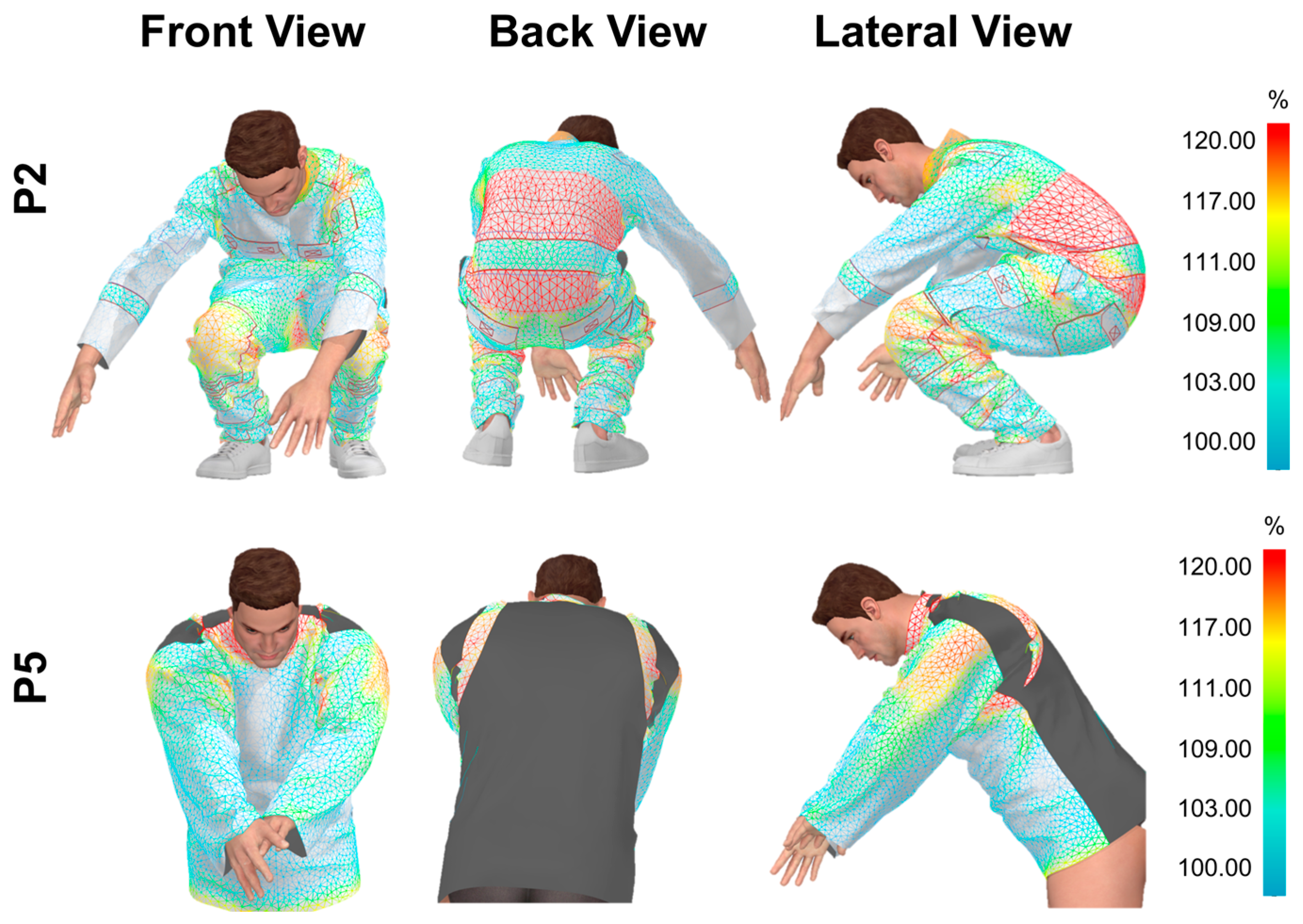
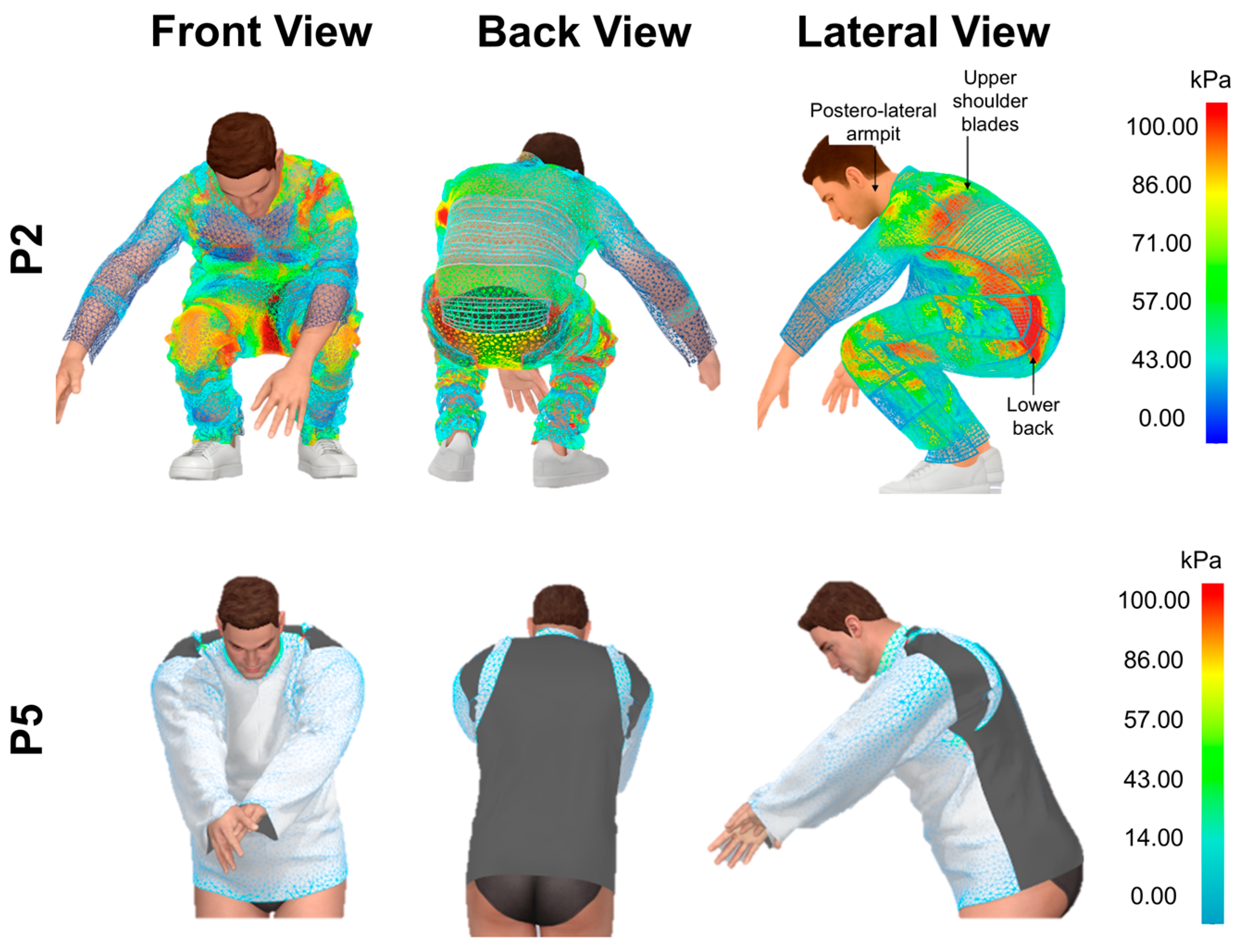
The qualitative assessment was followed by a quantitative one, based on strain and stress maps (Figure 12 and Figure 13).
The examination of strain and stress maps, corresponding to the dynamic poses P2 and P5, revealed distinct anatomical zones experiencing peak deformation levels. In pose P2 (a side twist in a squatting position), the highest strain concentrations were identified in the central and right segments of the back width, as well as in the lower lumbar area, postero-lateral armpit region and upper scapular zone. Localized elongation in these areas reached values up to 30%. Pose P5 (torso inclination with widely spread arms) exhibited pronounced fabric deformation predominantly in the lumbar region and shoulder complex. According to this analysis, the areas experiencing the highest strains are those where elastic inserts have been foreseen.
In spite of high elongations, stress maps are not critical for those same areas, keeping always below 120 kPa and reaching the highest values at different locations, in most cases.
Furthermore, zones of elevated stress were observed along the back’s side seams, aligning with similar stress areas previously noted in pose P2.
The observed strain and stress distributions suggest that the incorporation of elastomeric materials in the back and shoulder regions may enhance mobility and wearing comfort by accommodating dynamic body movements.

4. Limitations of the Study

It should be here emphasized how the selection of a limited number of working poses makes the garment optimized only in relation to specific activities. These poses have been selected here by the authors, having observed men at work, and considering the most recurrent activities. These input data are critical to the set up of the optimal garment design and could deserve a broader inquiry, considering a higher number and variety of workers.
At the current stage, only the upper body part has been considered. Nonetheless, the same methodology introduced here can be extended to the lower body part to allow the design of a full working suit.
Although the modified design visually demonstrates a more favorable stress distribution, no direct quantitative comparison with the original design has been provided at the current stage. Therefore, additional testing is necessary to substantiate the ergonomic and functional advantages of the proposed modifications; nonetheless, it deserves to be mentioned that the software used here has been quantitatively validated by previous works in the literature [35].

5. Conclusions

This paper considers the significant shortcomings in the existing models of workwear for the construction industry. One of the most significant shortcomings is their low compliance with movements required by each specific working activity. This ultimately leads to limited freedom of movement and increased fatigue, with an impact on safety and productivity.
The authors set up a procedure that allows analyzing working movements and translating these data into extensibility requirements for specific areas of working suits. These requirements can be satisfied designing elastic inserts. Preliminary tests have proved the validity of this approach both in terms of the qualitative assessment of workwear fitting and in terms of tissue stresses that are to be minimized.
The whole procedure can be readily implemented by garment designers: it requires the 3D scanning of the most recurrent working poses; as a result, the areas undergoing major strain can be automatically identified and used to plan the location of elastic inserts.
Further works will entail optimizing the full procedure, considering not only the upper body regions but also the lower limbs. Additional developments in the long term could involve setting up personalized solutions based on adaptive materials and the latest intelligent technologies integrated into the design of workwear. Such solutions will not only provide comfort at work but also greatly increase safety due to the ability to monitor the condition of the worker and the environmental conditions.

Author Contributions

Conceptualization, S.T., I.T., U.V. and Z.Z.; methodology, E.A., I.T. and E.M.Z.; software, R.Z.; validation, Z.Z., S.T. and Z.M.; formal analysis, E.M.Z., G.P. and S.T.; resources, S.T. and R.Z.; data curation, E.A. and E.M.Z.; writing—original draft preparation, S.T., E.M.Z. and G.P.; writing—review and editing, S.T., E.M.Z. and G.P.; supervision, S.T., U.V. and E.M.Z.; project administration, S.T. All authors have read and agreed to the published version of the manuscript.

Funding

This research received no external funding.

Institutional Review Board Statement

The study was conducted in accordance with the Declaration of Helsinki, and the protocol was approved by the Ethics Committee of the Tashkent Institute of Textile and Light Industry (protocol code 76-01/8) on 24 February 2025.

Informed Consent Statement

Informed consent was obtained from all subjects involved in the study. Informed consent for publication was obtained from all identifiable human participants.

Data Availability Statement

The raw data supporting the conclusions of this article will be made available by the authors on request.

Conflicts of Interest

The authors declare no conflicts of interest.

References

  1. Chan, A.P.C.; Yi, W.; Wong, F.K.W.; Yam, M.C.H.; Daniel, W.M. Designing Anti Heat Stress Clothing for Construction Workers. In Proceedings of the International Conference on “Modelling and Building Health and Safety”; International Council for Research and Innovation in Building and Construction (CIB): Ottawa, ON, Canada, 2014; pp. 332–339. [Google Scholar]
  2. Edirisinghe, R.; Blismas, N. A Prototype of Smart Clothing for Construction Work Health and Safety. In Proceedings of the Proceedings of CIB W099 Benefitting Workers and Society Through Inherently Safe(r) Construction, Belfast, UK, 9–11 September 2015. [Google Scholar]
  3. Yang, Y.; Chan, A.P.-C. Role of Work Uniform in Alleviating Perceptual Strain among Construction Workers. Ind. Health 2017, 55, 76–86. [Google Scholar] [CrossRef] [PubMed]
  4. Eom, R.; Lee, Y. Working Environments and Clothing Conditions in the Construction Industry. Fash. Text. 2020, 7, 9. [Google Scholar] [CrossRef]
  5. Choi, J.; Park, J. Working Clothes and Working Environment of Workers at a Construction Site in Summer. J. Korean Soc. Cloth. Text. 2007, 31, 1520–1529. [Google Scholar] [CrossRef][Green Version]
  6. Chan, A.P.C.; Yang, Y.; Guo, Y.P.; Yam, M.C.H.; Song, W.F. Evaluating the Physiological and Perceptual Responses of Wearing a Newly Designed Construction Work Uniform. Text. Res. J. 2016, 86, 659–673. [Google Scholar] [CrossRef]
  7. Tyurin, I.N.; Zufarova, Z.U.; Tashpulatov, S.S.; Kuzmin, A.G.; Firsov, A.V. Numerical Simulation and Image Analysis of Compression Properties of Heterogeneous Neoprene Material. Izv. Vyss. Uchebnykh Zaved. Seriya Tekhnologiya Tekst. Promyshlennosti 2023, 5, 175–183. [Google Scholar] [CrossRef]
  8. Tyurin, I.N.; Kuzmin, A.G.; Komisaruk, L.V.; Tashpulatov, S.S. E-Textile Touch Button Placement with a Help–Request Function for Smart Sportswear. E3S Web Conf. 2023, 431, 06017. [Google Scholar] [CrossRef]
  9. Nemirova, L.F.; Litunov, S.N.; Tashpulatov, S.S.; Cherunova, I.V.; Kochkorbaeva, C.T.; Makhmudova, G.I. Experimental Study of Pollution of Textile Materials by Dust of Fine-Powdered Powder Materials. Izv. Vyss. Uchebnykh Zavedeniy. Tekhnologiya Tekst. Promyshlennosti 2020, 2, 73–78. [Google Scholar]
  10. Guptaa, D. Design and Engineering of Functional Clothing. Indian J. Fibre Text. Res. 2011, 36, 327–335. [Google Scholar]
  11. Dorman, L.; Havenith, G. Examining the Impact of Protective Clothing on Range of Movement; Environmental Ergonomics Research Centre at Loughborough University: Loughborough, UK, 2007. [Google Scholar]
  12. Akbarov, R.D.; Zhilisbaeva, R.O.; Tashpulatov, S.S.; Cherunova, I.V.; Bolysbekova, R.T. Application of Composite Materials for Protective Clothing Against Electric Fields. Izv. Vyss. Uchebnykh Zavedeniy. Tekhnologiya Tekst. Promyshlennosti 2018, 5, 188–192. [Google Scholar]
  13. Ganieva, G.A.; Ryskulova, B.R.; Tashpulatov, S.S. Ergonomic Studies of Dynamic Compliance of Parameters in the “Human—Workwear” System for Oil Industry Workers. Izv. Vyss. Uchebnykh Zavedeniy. Tekhnologiya Tekst. Promyshlennosti 2015, 3, 151–154. [Google Scholar]
  14. Tyurin, I.N.; Tashpulatov, S.S.; Akhmedova, Z.M. Biomechanics of the Human Upper Limb for Sustainable Approach to Design Smart Clothing. E3S Web Conf. 2023, 460, 10050. [Google Scholar] [CrossRef]
  15. Akhmedova, Z.M.; Shin, I.G.; Tyurin, I.N.; Tashpulatov, S.S. Design of Functional Clothing for Patients through Modeling the Joints Biomechanics. BIO Web Conf. 2024, 130, 04011. [Google Scholar] [CrossRef]
  16. Bragança, S.; Carvalho, M.; Arezes, P.; Ashdown, S.P. Work-Wear Pattern Design to Accommodate Different Working Postures. Int. J. Cloth. Sci. Technol. 2017, 29, 294–313. [Google Scholar] [CrossRef]
  17. Cho, Y.; Okada, N.; Park, H.; Takatera, M.; Inui, S.; Shimizu, Y. An Interactive Body Model for Individual Pattern Making. Int. J. Cloth. Sci. Technol. 2005, 17, 91–99. [Google Scholar] [CrossRef]
  18. Choi, S.; Ashdown, S.P. 3D Body Scan Analysis of Dimensional Change in Lower Body Measurements for Active Body Positions. Text. Res. J. 2011, 81, 81–93. [Google Scholar] [CrossRef]
  19. Chan, A.P.C.; Yang, Y.; Wong, F.K.W.; Yam, M.C.H. Dressing Behavior of Construction Workers in Hot and Humid Weather. Occup. Ergon. 2014, 11, 177–186. [Google Scholar] [CrossRef]
  20. Bragança, S.; Fontes, L.; Arezes, P.; Edelman, E.R.; Carvalho, M. The Impact of Work Clothing Design on Workers’ Comfort. Procedia Manuf. 2015, 3, 5889–5896. [Google Scholar] [CrossRef][Green Version]
  21. Jiang, Q.J.; Dai, H. Design of Clothing for Construction Workers Based on Garment Ergonomics. In Proceedings of the 7th Textile Bioengineering and Informatics Symposium Proceedings, Hong Kong, China, 6–8 August 2014; pp. 404–411. [Google Scholar]
  22. Gupta, D. Anthropometry and the Design and Production of Apparel: An Overview. In Anthropometry, Apparel Sizing and Design; Gupta, D., Zakaria, N., Eds.; Woodhead Publishing Series in Textiles; Woodhead Publishing: Cambridge, UK, 2014; pp. 34–66. [Google Scholar] [CrossRef]
  23. Kirk, W.; Ibrahim, S.M. Fundamental Relationship of Fabric Extensibility to Anthropometric Requirements and Garment Performance. Text. Res. J. 1966, 36, 37–47. [Google Scholar] [CrossRef]
  24. Kaya, Ö. Design of Work Place and Ergonomics in Garment Enterprises. Procedia Manuf. 2015, 3, 6437–6443. [Google Scholar] [CrossRef]
  25. GOST 23554.1-79; Quality Management System Products. Expert Methods of Assessing the Quality of Industrial Products. Organization and Conduct of Expert Assessment of the Quality of the Products. Izdatelstvo Standartov: Moscow, Russia, 1980; 70p.
  26. BS ISO 20252:2019; Market, Opinion and Social Research, Including Insights and Data Analytics—Vocabulary and Service Requirements. The British Standards Institution (BSI): London, UK, 2019.
  27. ASTM D1388; Standard Test Method for Stiffness of Fabrics. American Society for Testing and Materials (ASTM): West Conshohocken, PA, USA, 2014.
  28. BS EN-ISO:13935-2; Textiles—Seam Tensile Properties of Fabrics and Made up Textile Article—Part 2: Determination of Maximum Force to Seam Rupture Using the Grip Method. The British Standards Institution (BSI): London, UK, 2010.
  29. ISO 5725-1:1994; Accuracy (Trueness and Precision) of Measurement Methods and Results—Part 1: General Principles and Definitions. International Organization for Standardization: Geneva, Switzerland, 1994.
  30. ISO 7250-1; Basic Human Body Measurements for Technological Design. International Organization for Standardization: Geneva, Switzerland, 2017.
  31. BS EN 340:2003; Protective Clothing—General Requirements. The British Standards Institution (BSI): London, UK, 2003.
  32. EN ISO 13688; Protective Clothing—General Requirements. European Committee for Standardization: Brussels, Belgium, 2013.
  33. BS EN ISO 20685:2010; 3-D Scanning Methodologies for Internationally Compatible Anthropometric Databases. The British Standards Institution (BSI): London, UK, 2010.
  34. BS ISO 8559-1; Size Designation of Clothes—Part 1: Anthropometric Definitions for Body Measurement. The British Standards Institution (BSI): London, UK, 2017.
  35. Psikuta, A.; Jaeger, M.; Mark, A.; McGowan, H.; Joshi, A.; Kink, M. CLO3D Fashion Design Software—A Perspective for Virtual Thermal Modelling of Garments. In Proceedings of the 3DBODY.TECH 2019—10th International Conference and Exhibition on 3D Body Scanning and Processing Technologies, Lugano, Switzerland, 22–23 October 2019. [Google Scholar]
Figure 2. Static and working poses: P0 static pose; P1 side twist while standing; P2 side twist on squat; P3 forward bending with support on one knee; P4 arms raised up, bent at the elbows; P5 tilted torso with support on straight, wide-set arms.
Textiles 06 00033 g002
Figure 3. Measurement schemes of dimensional characteristics (static posture).
Textiles 06 00033 g003
Figure 4. The location of points for the subdivision of BAW, NWL1 and SWL. 5–9: vertical line passing through the side neck point; 4–11: vertical line passing through the neck base point; 11–12: oblique shoulder–waist line; 1, 2, 3, 4: armpit back level; 6, 13: underbust level; 7, 7 *: midriff level; 8, 10: waist level; 9, 11: iliac crest level.
Textiles 06 00033 g004
Figure 5. Ranks of factors influencing clothing performance, according to experts’ interviews.
Textiles 06 00033 g005
Figure 6. The scanning process of (a) subject No. 17 and (b) No. 33 in static and working poses P4 and P5.
Textiles 06 00033 g006
Figure 7. Post hoc tests for (a) feature and (b) pose effects. The blue marker indicates the reference measure. Grey markers denote measures not significantly different from the reference, while red markers denote significant differences.
Textiles 06 00033 g007
Figure 8. Percentage deviation results for (a) DF/pose combinations, (b) DFs and (c) various poses.
Textiles 06 00033 g008
Figure 9. Men’s work overall jacket: (a) original design; (b) new design with elastic inserts.
Textiles 06 00033 g009
Figure 10. Virtual fitting on a static pose.
Textiles 06 00033 g010
Figure 11. Virtual fitting of the improved design on P2 and P5 poses.
Textiles 06 00033 g011
Figure 12. Strain maps the improved design on P2 and P5 poses.
Textiles 06 00033 g012
Figure 13. Stress maps the improved design on P2 and P5 poses.
Textiles 06 00033 g013
Table 1. Expert parameters.
Expert ParametersValue
Number of experts14
Average work experience (mean ± SD)12.5 ± 4.3 years
Age range (mean ± SD)42.5 ± 6.3 years
Areas of activityConstruction, engineering, design
Survey methodsOnline survey, personal interviews
Table 2. Anthropometric measurements among builders (N = 34, men = 20, women = 14).
Anthropometric MeasurementMen
Median (IQR 1)
Women
Median (IQR 1)
General
Average ± SD 2
Range
Height [cm]175 (170–180)165 (160–170)170 ± 7160–185
Chest circumference [cm]105 (100–110)95 (90–100)100 ± 885–120
Waist circumference [cm]90 (85–95)80 (75–85)85 ± 775.0–105
Hip circumference [cm]100 (95–105)95 (90–100)97 ± 780–110
Pignet index 323 (20–26)26 (24–30)25 ± 9−35–50
1 IQR = Inter Quartile Range (equal to 2nd quartile minus 1st quartile). 2 SD = Standard Deviation. 3 Index used for the evaluation of body build, equal to the height [cm] minus the weight [kg], added to chest circumference [cm].
Table 3. Main anatomical features.
LabelDimensional Feature (DF)
A1Side neck point to waist length (NWL1)
A2Shoulder to waist length (SWL)
A3Across front width (FRW)
A4Back width (BAW)
A8Upper arm girth (UAG)
A12Distance from back waistline to back neck point (NWL)
Table 4. DF variations at different poses for male subjects (average from 3 trials).
P0P1P2P3P4P5
DFiDFi,0
[cm]
DFi,1
[cm]
Di,1
[%]
DFi,2
[cm]
Di,2
[%]
DFi,3 [cm]Di,3
[%]
DFi,4
[cm]
Di,4
[%]
DFi,5
[cm]
Di,5
[%]
UAG41.0------47.315.445.09.8
FRW51.5------56.910.544.6−13.4
BAW45.253.418.163.540.563.841.251.213.352.215.5
NWL157.6------60.04.259.02.4
NWL59.363.26.684.041.773.423.8----
SWL54.265.019.967.324.263.717.5----
Table 5. DF variations at different poses for female subjects (average from 3 trials).
P0P1P2P3P4P5
DFiDFi,0
[cm]
DFi,1
[cm]
Di,1
[%]
DFi,2
[cm]
Di,2
[%]
DFi,3 [cm]Di,3
[%]
DFi,4
[cm]
Di,4
[%]
DFi,5
[cm]
Di,5
[%]
UAG33.2------35.98.134.95.1
FRW45.5------51.914.142.3−7.0
BAW40.749.421.455.235.656.939.844.69.646.915.2
NWL149.3------51.74.950.83.0
NWL52.357.19.271.536.762.820.1----
SWL38.147.223.949.229.145.419.3----
Table 6. ANOVA results. Bolded data represent statistically significant factors.
SourceSS [%00]DoFMS [%00]Fpη2
Gender231230.350.550.00
Feature186,763537,353563.82<0.0531.21
Pose63,180415,795238.42<0.0510.56
Gender * Feature3815761.150.330.06
Gender * Pose914230.340.850.02
Feature * Pose167,721208386126.58<0.0528.03
Error170,259257066
Total598,3252609229
Table 7. Average variations in SF partitions at different poses.
PoseSFPortion
(Figure 4)
Value at Pose
[cm]
Value in Static Condition
[cm]
Difference
[%]
P2NWL13–610.06.067.0
6–78.64.3102.0
7–86.16.2−2.0
8–95.33.552.0
SWL2–1311.27.255.5
13–7 *10.25.682.1
7 *–107.47.5−1.3
10–115.94.047.5
P3BAW1–210.29.84.1
2–36.95.038.0
3–414.77.888.5
P4BAW1–29.89.80.0
2–36.05.020.0
3–49.87.825.6
Disclaimer/Publisher’s Note: The statements, opinions and data contained in all publications are solely those of the individual author(s) and contributor(s) and not of MDPI and/or the editor(s). MDPI and/or the editor(s) disclaim responsibility for any injury to people or property resulting from any ideas, methods, instructions or products referred to in the content.