
Article

Antimicrobial Textile Finishing Based on Silver Nanostructures

by
José Ángel Juárez Torres
1,
María Luisa Castellanos Cabrera
1,
Dalia Molina Romero
2,
Itzel Pamela Torres Avila
3,
Oscar Goiz
4,* and
Miriam Cruz-Leal
1,*
1
Facultad de Ingeniería, Benemérita Universidad Autónoma de Puebla, Ciudad Universitaria, Puebla C.P. 72570, Mexico
2
Laboratorio de Biología Molecular y Microbiología, Facultad de Ciencias Biológicas, Benemérita Universidad Autónoma de Puebla, Edificio 112-A, Ciudad Universitaria, Puebla C.P. 72570, Mexico
3
Laboratorio de Inmunofarmacología, Unidad Profesional Interdisciplinaria de Biotecnología, Instituto Politécnico Nacional, Ciudad de México C.P. 07340, Mexico
4
Unidad Profesional Interdisciplinaria en Ingeniería y Tecnologías Avanzadas, Instituto Politécnico Nacional, Ciudad de México C.P. 07340, Mexico
*
Authors to whom correspondence should be addressed.
Textiles 2025, 5(4), 61; https://doi.org/10.3390/textiles5040061
Submission received: 30 September 2025 / Revised: 19 November 2025 / Accepted: 20 November 2025 / Published: 29 November 2025

Abstract

This study presents the development and application of a textile finishing treatment with antimicrobial properties based on silver nanostructures. The methodology involved the initial synthesis of silver-supported structures on aluminosilicates, which were subsequently applied to 100% raw cotton Jersey fabric through an impregnation finishing process. The treated cotton samples were evaluated for antimicrobial activity using the Kirby-Bauer disk diffusion method. The tested bacterial strains included Gram-negative as Shigella sp., Pseudomonas sp. M13, Pseudomonas sp. M14, Pseudomonas putida KT2440, and Escherichia coli, as well as Gram-positive Staphylococcus aureus ATCC 29213 and Streptococcus agalactiae ATCC 12386 (American Type Culture Collection) all of which exhibited growth inhibition in the presence of the treated textile, demonstrating the effectiveness of the antimicrobial finish.

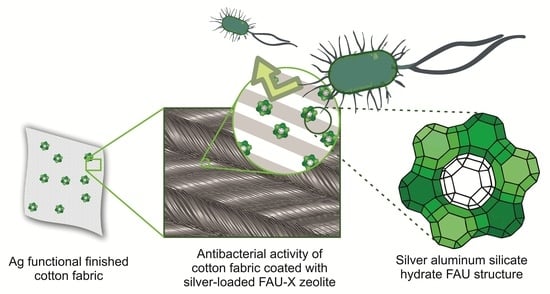
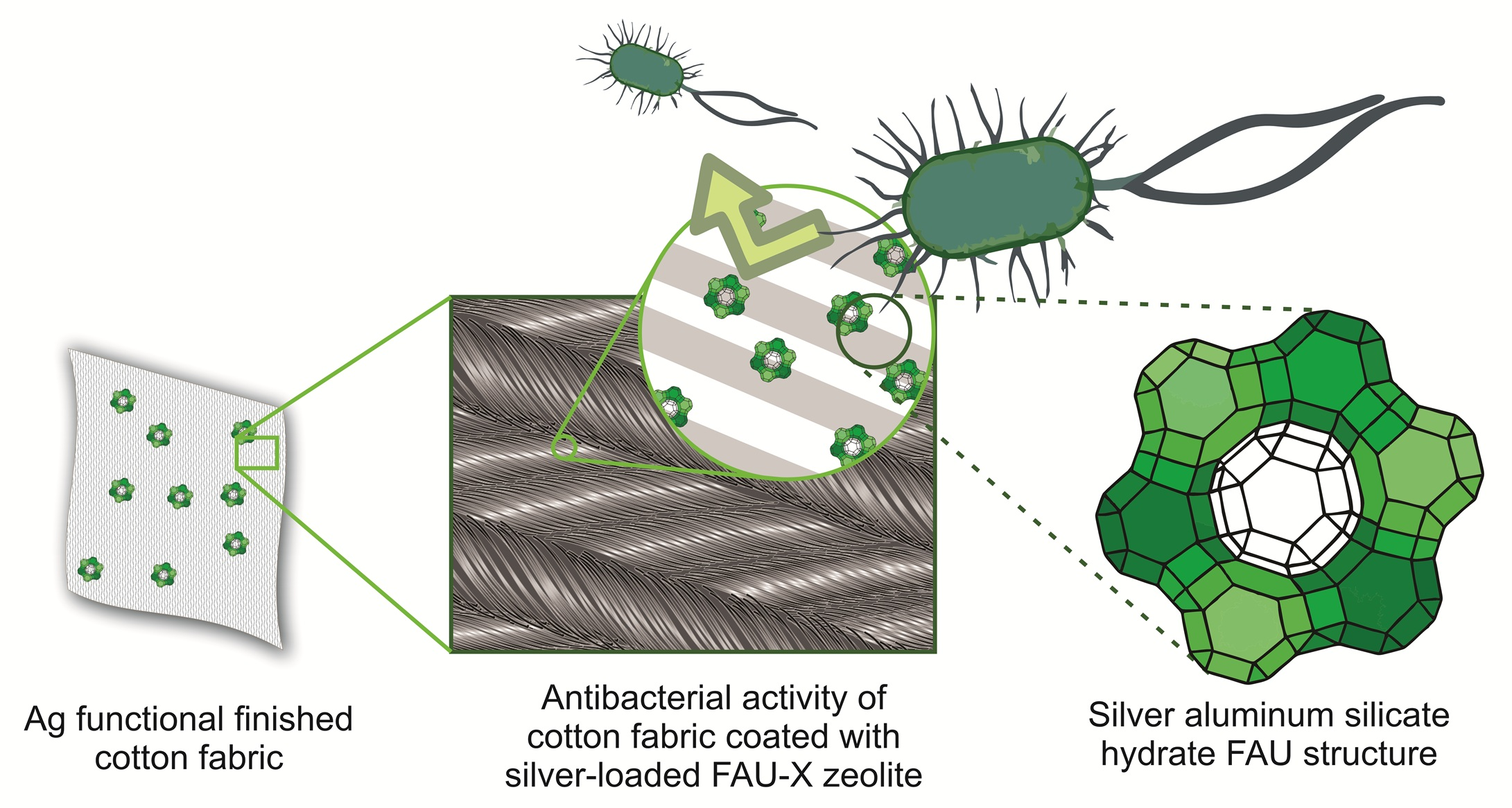
Graphical Abstract

1. Introduction

The emergence and rapid spread of multidrug-resistant bacteria, commonly known as “superbugs,” has become a critical global health concern. Infections caused by these pathogens are increasingly difficult to treat with existing therapies. Major contributing factors include inadequate antibiotic treatments, irrational use of different antibiotic classes, and spontaneous genetic mutations [1]. According to recent estimates, approximately 4.71 million deaths worldwide were associated with antimicrobial resistance, and projections indicate that this number could double by 2050 if no effective interventions are implemented [2].
Growing concern over infectious diseases has intensified interest in antibacterial textiles, driven by the increasing global incidence of antibiotic-resistant infections. A promising strategy to combat multidrug-resistant bacteria is to develop antimicrobial surfaces and coatings that inhibit bacterial adhesion and proliferation. For instance, such coatings have been applied to ceramics, bathroom fixtures, glass, and hospital equipment to reduce microbial growth and minimize cross-contamination [3].
Metallic nanoparticles have demonstrated strong and sustained bactericidal activity; for instance, a study shows that copper alloy surfaces significantly reduce bacterial burden in hospital-acquired infections when copper components are used in patient rooms [4]. Similarly, titanium dioxide and zinc oxide nanoparticles have been widely applied in antimicrobial surfaces due to their photocatalytic activity under light exposure [5]. Despite these advances, many antimicrobial agents still face challenges related to stability, cytotoxicity, and scalability, underscoring the need for versatile and durable alternatives.
In this context, silver (Ag+) has attracted considerable attention due to its chemical stability, biocompatibility, and broad-spectrum activity against both Gram-negative and Gram-positive microorganisms. Furthermore, its relatively low cost compared to other noble metals makes it suitable for incorporation into a wide range of applications, including healthcare products, cosmetics, water treatment systems, and food packaging [6,7]. Among these, textiles have emerged as a particularly critical focus, since fabrics are ubiquitous in daily life and can act as reservoirs for microorganisms.
Their direct and prolonged contact with human skin, combined with their presence in hospitals, public spaces, and domestic environments, makes them especially relevant targets for antimicrobial functionalization. To address this issue, there is a growing interest in developing functional textiles with antimicrobial properties. Recent research has demonstrated the successful implementation of silver nanoparticles in textile materials through different strategies. For example, the combination of recycled silver nanoparticles with chitosan has proven effective in eliminating S. aureus and E. coli [8], similarly, eco-friendly silver nanoparticles obtained from fungi (Penicillium commune) have conferred antimicrobial properties to natural fabrics such as silk, cotton, linen and wool [9].
Additional work by Rashid et al. (2025) achieved >99.99% reduction in E. coli and S. aureus on fabric coated with silver nanoparticles (AgNPs) [10], while Khan et al. (2024) developed cotton fabrics with both antibacterial and self-cleaning properties using AgNPs combined with perfluorotriethoxysilane (PFOTS) [11].
These examples highlight the potential of silver in creating high-performance antimicrobial textiles, but also underscore challenges related to scaling up the finishing processes for industrial textile production. Studies like Dos Santos et al. (2025) highlight significant silver loss after repeated washing, even with pretreatment, suggesting that durability remains a barrier to real-world use [12]. A review highlights the challenges of scaling up the production of antibacterial textiles, as factors such as cost, particle size distribution, and reproducibility hinder their large-scale adoption [13]. These limitations underscore the urgent need for innovative finishing strategies that are not only effective but also compatible with conventional manufacturing processes.
In this work, we propose an antimicrobial finishing treatment for cotton textiles based on silver nanostructures supported on aluminosilicates, a strategy designed to be readily adapted to conventional industrial methods. Zeolites have attracted significant attention as inorganic supports for antimicrobial agents due to their high surface area, ion-exchange capacity, chemical stability, and biocompatibility. Their porous crystalline structure allows the controlled incorporation and gradual release of active species such as Ag+, thereby enhancing durability and reducing the rapid leaching often observed with direct nanoparticle applications. Moreover, zeolites are abundant, low-cost materials already employed in catalysis, adsorption, and water treatment, making them promising candidates for large-scale and environmentally sustainable antimicrobial textile finishes. The combination of silver nanostructures with zeolitic frameworks can therefore provide a synergistic effect, ensuring both antimicrobial efficiency and industrial feasibility [14].
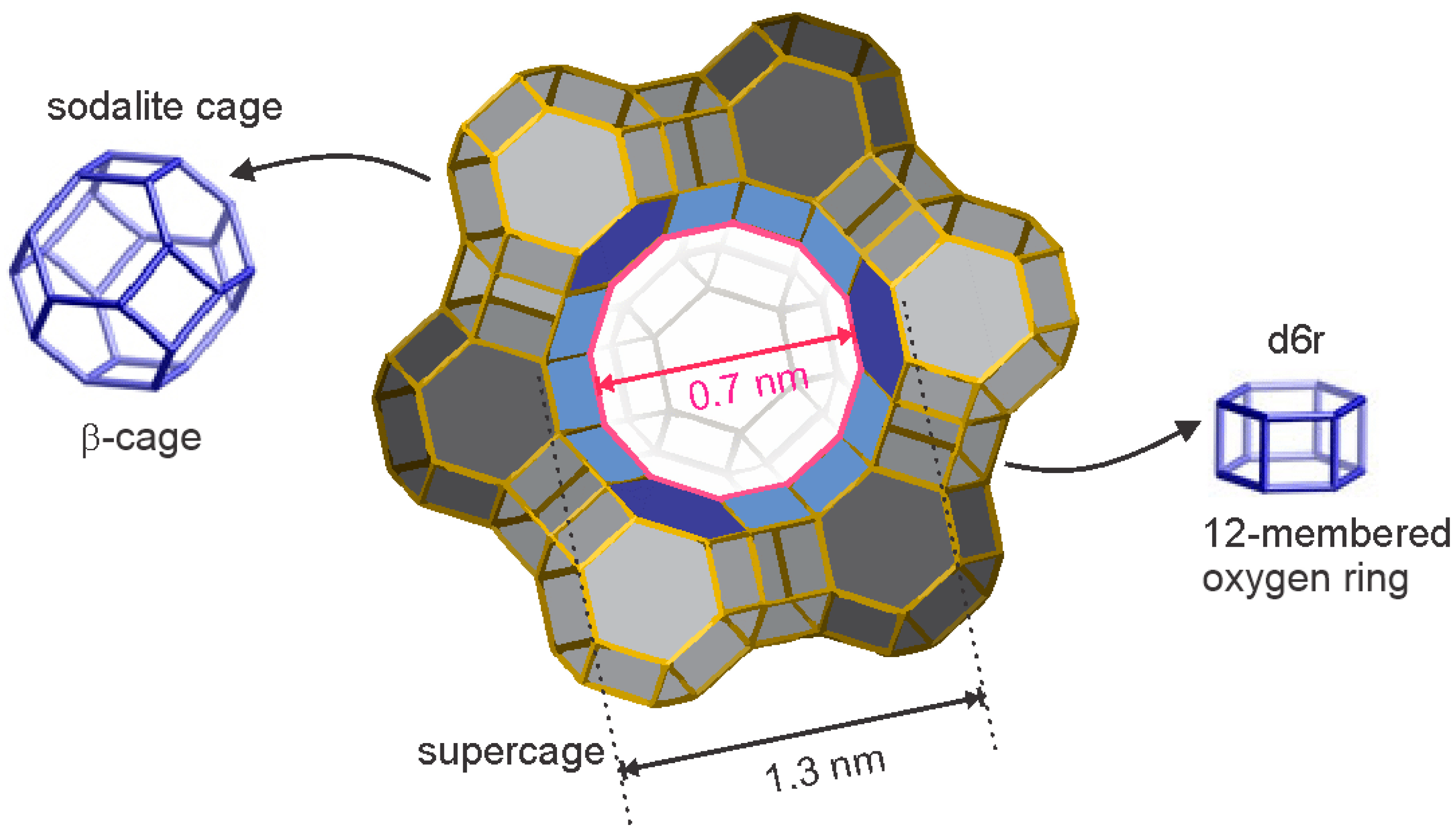
The commercial zeolite used in this study is the faujasite-type X (FAU-X) characterized by a three-dimensional framework of SiO4 and AlO4 tetrahedra with a Si/Al ratio of 1–1.5 [15]. Its structure contains supercages of approximately 1.3 nm, linked through 12-membered oxygen rings with a pore diameter of 0.7 nm (Figure 1), exhibiting a high density of negatively charged sites that allow an efficient cation exchange [16].
To confirm their antimicrobial efficacy of the finishing, the treated textiles were systematically evaluated against a representative panel of bacterial strains, including Gram-negative (Shigella sp., Pseudomonas sp. M13, Pseudomonas sp. M14, Pseudomonas putida KT2440, Escherichia coli) and Gram-positive species (Staphylococcus aureus ATCC 29213, Streptococcus agalactiae ATCC 12386, American Type Culture Collection). The results aim to establish their potential use in protective and sanitary textile applications, thereby contributing to the development of next-generation functional fabrics for both healthcare and everyday environments.

2. Materials and Methods

2.1. Fabric Pretreatment

Samples of 100% cotton jersey knit fabric (local commercial supplier, Mexico) were scoured to remove impurities by submerging them in a NaOH solution (sodium hydroxide pellets 98.30%, 40 g/L; J.T Baker, Bala Cynwyd, PA, USA) at 80 °C for 30 min. The bleaching process was then carried out using a H2O2 solution (30%, diluted to 2 g/L; Sigma-Aldrich, Darmstadt, Germany) at 80 °C for 30 min. Finally, the cotton samples were washed with neutral soap, rinsed with deionized water, immersed in ethanol (≥99.5%, Merck, Darmstadt, Germany) for 5 min at 65 °C, and dried at 70 °C for 15 min.

2.2. Silver Finishing Process

The silver finishing was prepared using a conventional ion-exchange procedure with AgNO3 (silver nitrate, 99.9999% trace metals basis, Sigma-Aldrich, Darmstadt, Germany) and FAU-X, as previously described [18]. During the ion-exchange process, Na+ ions in the lattice are replaced by Ag+ ions from the AgNO3 solution, leading to their stabilization within the aluminosilicate framework. Briefly, two Ag+ concentrations were explored, 10% (FAU-X 10%) and 100% (FAU-X 100%), corresponding to low and high ion-exchange levels, respectively. The suspension was stirred for 60 min, after which the supernatant was filtered and the solid was calcined at 450 °C in air, for 4 h. Subsequently, 0.5% w/w of the resulting ion-exchanged material was dispersed in a commercial acrylic binder (Hipocryl PRINT, Aatexa, Puebla, Mexico) under stirring for 20 min. The binder was included in the formulation to promote adhesion of the Ag-loaded aluminosilicate particles to the cotton surface.

2.3. Finishing Application on Textile

The Ag-based finishing was applied to cotton fabrics using a conventional exhaustion process. The cotton samples were immersed in the Ag-finishing bath containing different silver concentrations (10% and 100%) under constant stirring for 20 min to promote the exhaustion of the finishing onto the fibers. Excess moisture was then removed using a foulard at 3 bar, subsequently, the fabrics were dried in a forced-air oven at 120 °C for 30 min, then the oven was turned off, and the samples were left inside for 24 h to complete the drying-curing process under a controlled temperature decay, resulting in a weight change of approximately 8%.
The percentage weight change was calculated using Equation (1) [19], comparing the dry weight of the fabric before treatment ( W 0 ) with its dry weight after the drying-curing process ( W 1 ). The measurements were performed using an Analytical Balance (OHAUS PIONEER PA214, Parsippany, NJ, USA).
Weight   change   ( % ) = W 1 W 0 W 0 × 100
where
W 0 = dry weight of the fabric before treatment
W 1 = dry weight of the fabric after drying-curing process

2.4. Characterization

The morphology of the material was analyzed using Scanning Electron Microscopy (SEM JSM-7800F, JEOL, Tokyo, Japan) equipped with an energy-dispersive X-ray spectrometer (EDX, EDAX-AMETEK Octane Elite, Berwyn, PA, USA). The SEM micrographs at 5000× magnification for zeolites and fibers were acquired in high-vacuum mode. The zeolites were imaged at an accelerating voltage of 10 kV, using a lower electron detector (LED) and a working distance of 10 mm. The cotton fibers were imaged at an accelerating voltage of 1.5 kV, using a backscattered electron detector (BED) and a working distance of 4 mm.
X-ray diffraction patterns were obtained by using a diffractometer with Cu cathode as the X-ray source (CuKα radiation, λ = 1.5406 Å) (Bruker D2 phaser second-generation, Billerica, MA, USA).

2.5. Bacterial Study on Textiles

The immobilization of the Ag-loaded zeolite within the acrylic matrix suggests that the antibacterial mechanism is predominantly contact-based, occurring at the textile–bacteria interface rather than through extensive Ag+ leaching into the medium. Thus, a qualitative contact-based assay was selected as the most suitable first-stage method for this work. The antibacterial activity was studied by the Kirby-Bauer method. The primary cultures of the strains preserved in freezing were prepared in trypticase soy agar (TSB), with incubation conditions of 37 °C and 48 h. The Gram-negatives strains such as Shigella sp., Pseudomonas sp. M13, Pseudomonas sp. M14, Pseudomonas putida KT2440, Escherichia coli, these isolates were characterized at the molecular level [20]. Also, Gram-positives Staphylococcus aureus ATCC 29213 and Streptococcus agalactiae ATCC 12386 were cultured in Luria–Bertani (LB, culture rich), incubation conditions were 37 °C for 24 h. The textile discs had a diameter of 6 mm, to perform the Kirby-Bauer method. In another test, each type of textile (10 mm diameter) was inoculated in 15 mL Luria–Bertani broth, the incubation conditions were shaking at 190 rpm, 37 °C for 5 days. Each test was performed for FAU-X, FAU-X 10%, and FAU-X 100% in triplicate.

3. Results and Discussion

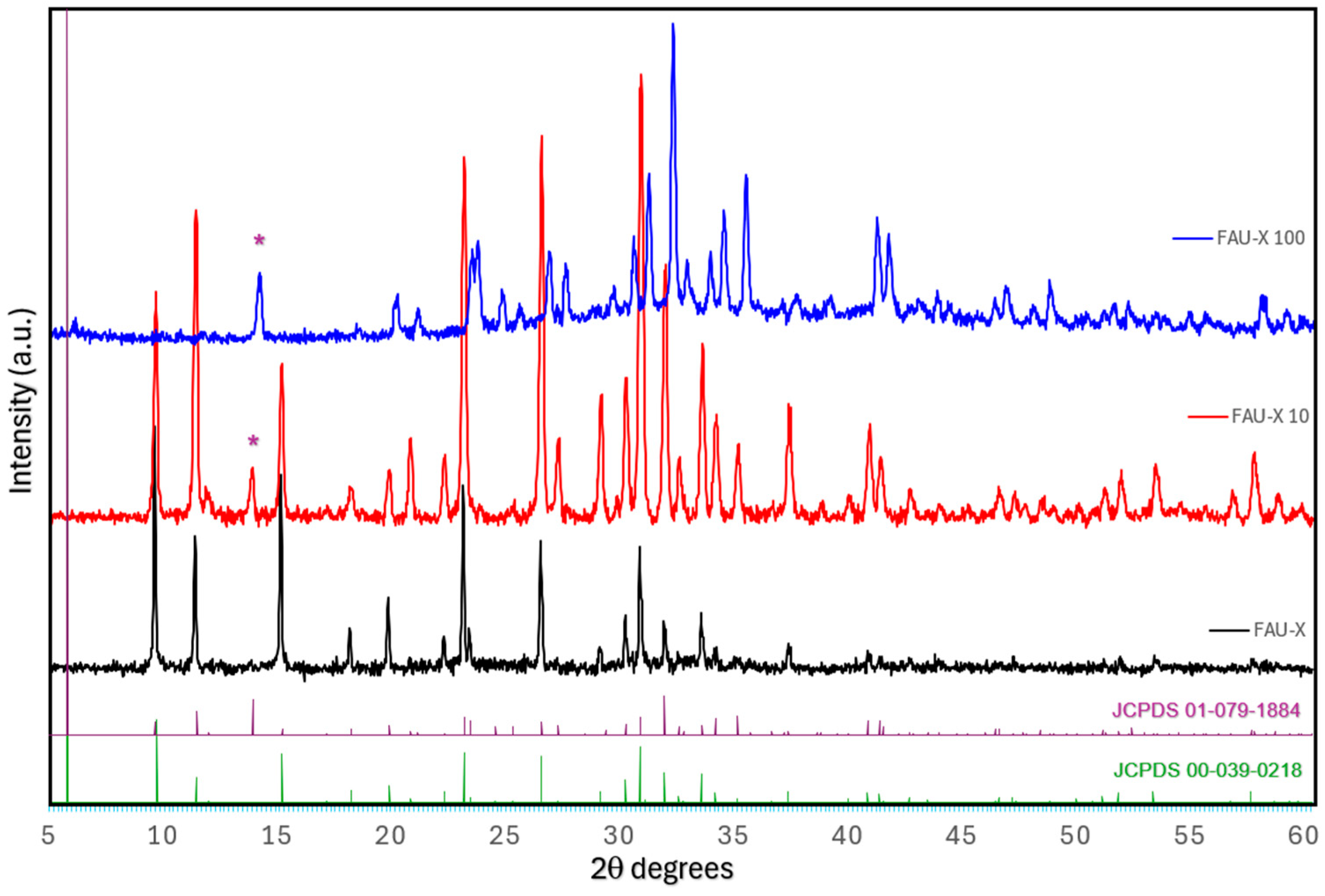
The XRD patterns of the samples are presented in Figure 2. The pattern for the FAU-X 10% sample shows no significant differences from the pristine FAU-X, maintaining the characteristic reflections of the faujasite X structure (JCPDS 00-039-0218). The appearance of a signal at approximately 2θ = 14.14°, which indexes to the silver aluminum silicate hydrate FAU structure (JCPDS 01-079-1884), indicates the incorporation of silver cations. For the FAU-X 100% sample, all peaks can be assigned mainly to this silver-exchanged FAU structure. The exchange is confirmed by the good match in relative intensity with the reference pattern. This match is clearly visible in the doublets within the 24–26° range and the triplets between 30–33° and 33–36°. Therefore, it is concluded that high ion exchange was successfully achieved while preserving the original FAU morphology [21,22,23,24,25].
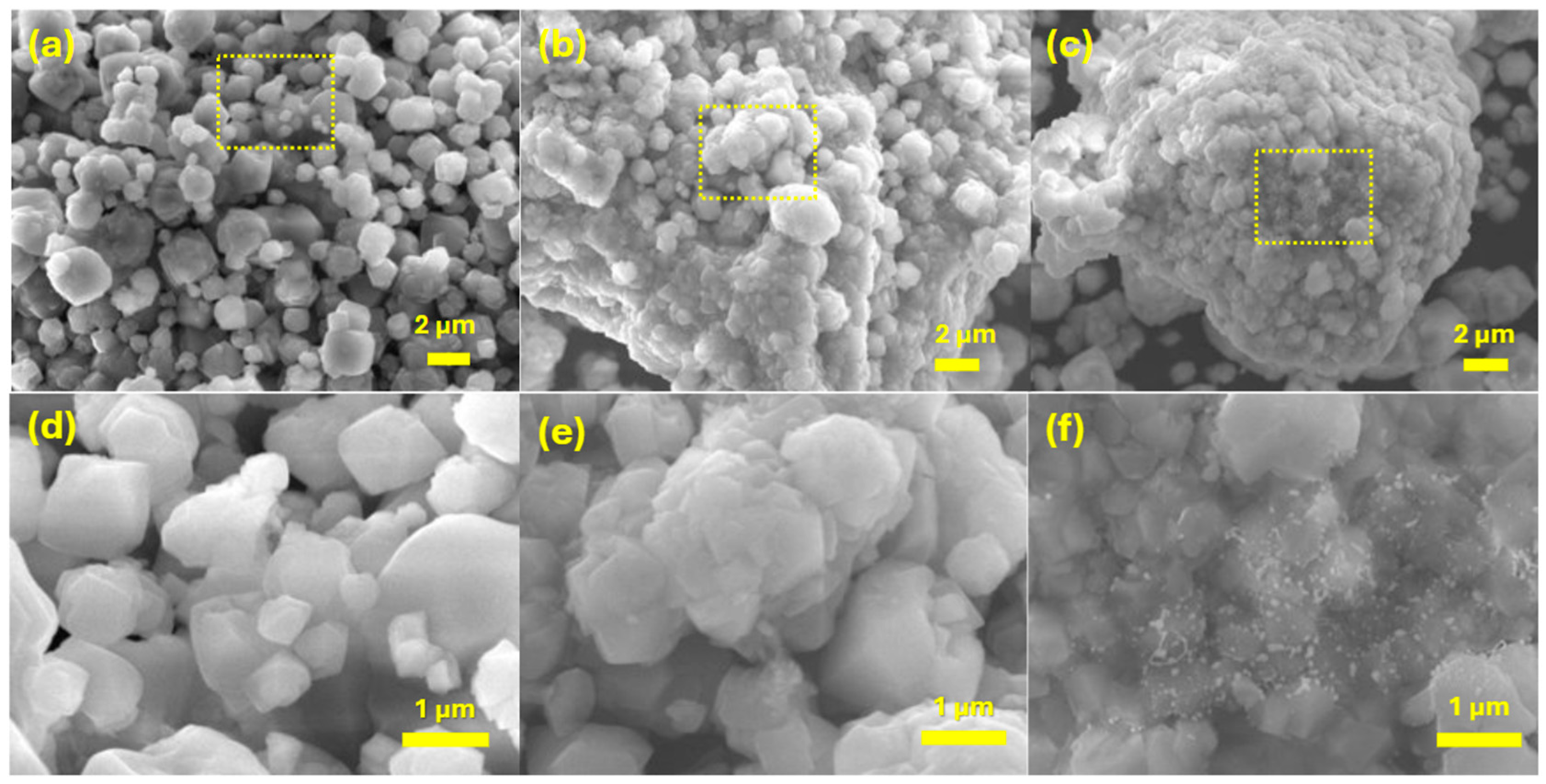
The SEM micrographs provide complementary information on the morphology of the FAU-X zeolite (Figure 3), and its subsequent incorporation into cotton textiles (Figure 4). The pristine FAU-X sample exhibits the typical cubic morphology with well-defined crystals, while both FAU-X 10% and FAU-X 100% maintain this morphology, indicating that ion exchange with silver does not alter the external shape of the zeolite particles. Further TEM analysis is necessary to confirm the presence of silver nanoparticles; however, based on literature, the nanostructured character of the Ag-loaded FAU-X zeolite can be attributed to the confinement of silver species within the nanometric supercages of the aluminosilicate framework. Such structural cavities (~1.3 nm) act as rigid hosts that restrict the growth of silver particles and promote their stabilization at the nanoscale. This phenomenon is the so-called “ship-in-a-bottle” approach, where the zeolitic framework acts as a template controlling the size and distribution of the metal particles, thus preventing aggregation and ensuring high dispersion [26]. This simple route is one of the most effective methods for embedding silver species into aluminosilicate matrices, and subsequent chemical or thermal reduction can generate confined metallic nanoparticles, resulting in hybrid materials with multifunctional properties [27]. As a result, the material exhibits a genuine nanostructured organization governed by the intrinsic zeolitic architecture rather than by an external nanoscale coating.
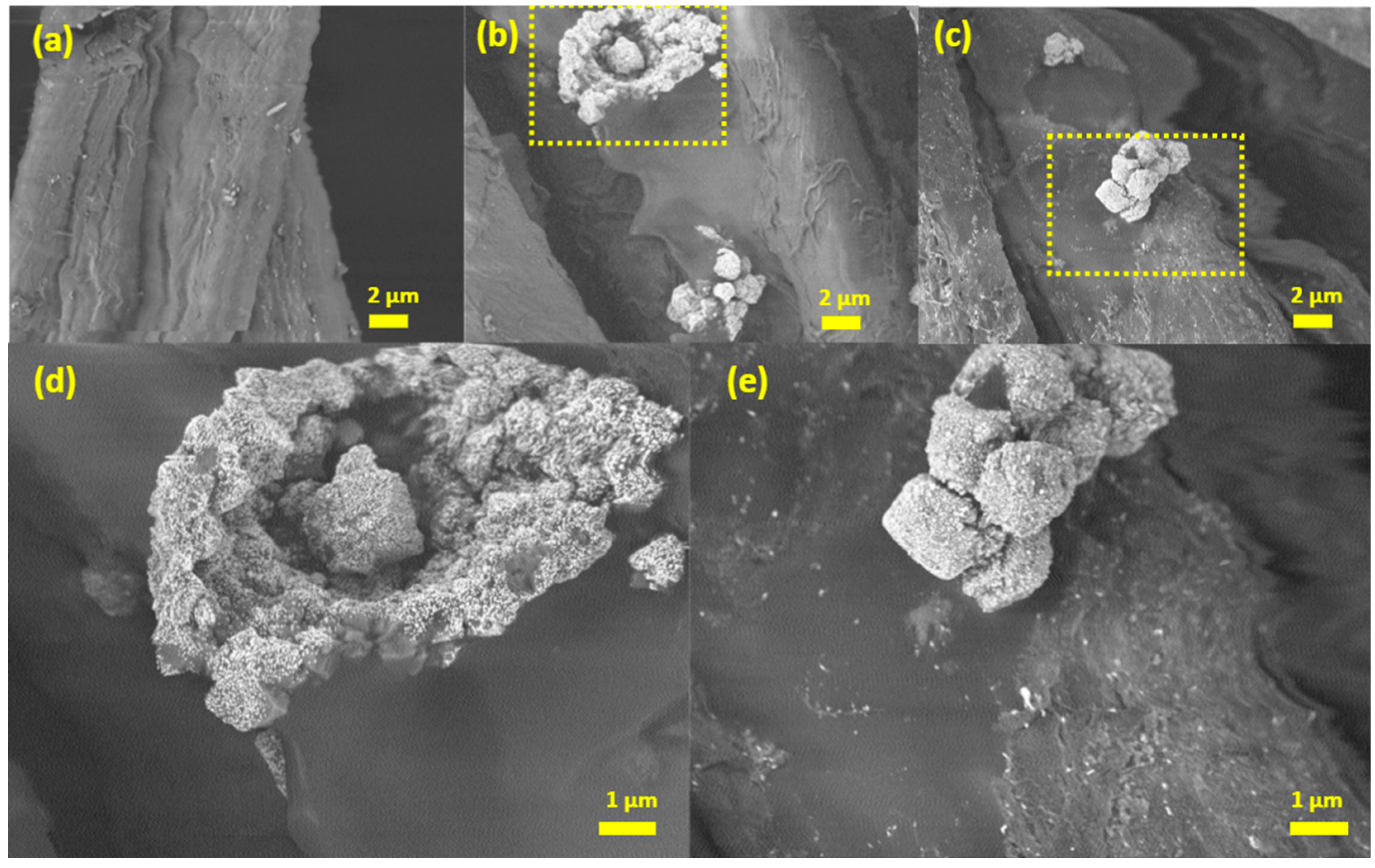
Figure 4a presents the surface morphology of cotton fibers prior to immersion in the antimicrobial finishing solution. The fibers exhibit widths of approximately 15–20 µm and display a twisted ribbon-like morphology with an irregular, non-smooth surface, which is typical of natural cotton fibers [28]. After applying the complete finishing process (Figure 4b,c), in which the zeolite-based material was combined with a commercial binder, the micrographs no longer reveal the typical cubic morphology of FAU-X. Higher magnification images of Figure 4b,c show that the zeolite distribution is not uniform, forming aggregates randomly on the fiber surface (Figure 4d,e). This behavior can be attributed to particle–particle interactions when the amount of binder available is not sufficient to immobilize all particles homogeneously on the textile surface. Under these conditions, some particles tend to cluster rather than form a conformal layer, producing locally enriched zones. To improve this distribution through formulation, adjustments such as increasing the binder content, modifying the bath rheology, or employing a multi-cycle deposition process could be explored.
The EDS analysis provides clear evidence of the progressive incorporation of silver-loaded FAU-X zeolite onto cotton fibers (Table 1). In the pristine cotton sample, only carbon and oxygen were detected, in agreement with the cellulose backbone of the fiber. Minor traces of Si and Ca were present, which can be attributed to natural impurities or residual processing agents.
In contrast, the FAU-X 10% sample exhibited new signals corresponding to Si and Al, confirming the presence of the aluminosilicate framework, together with Na originating from composition of FAU-X. Importantly, a silver peak (4.6 wt%) was detected, demonstrating the successful incorporation of Ag+ species into the zeolite and their deposition on the cotton surface.
For the FAU-X Ag 100% sample, the silver content increased substantially to 10.8 wt%, while the Na signal decreased, indicating more extensive cation exchange and replacement of Na+ by Ag+ within the zeolite framework. The relative stability of the Si and Al signals suggests that the aluminosilicate structure remains intact at higher silver loading (Si/Al ≈ 1.3). Overall, these results confirm that silver incorporation scales with the intended exchange level (10% vs. 100%), and that zeolite provides a stable inorganic matrix to host and retain Ag+ species. This strategy ensures both structural stability and controlled silver presence on the cotton fibers, essential for the durability and antimicrobial effectiveness of the final textile finishing.
The incorporation of an acrylic binder is consistent with previously reported antimicrobial finishing systems, in which film-forming polymeric matrices are employed to anchor inorganic particles and improve their durability against handling or washing, without significantly altering the textile handle or breathability [29,30]. High adhesion performance results from physical and/or chemical interactions between the adhesive and the substrate, which are further enhanced by thermal curing or other post-treatments. In acrylic-based textile finishes, thermal curing is commonly performed from 120 to 160 °C [31,32] to complete film formation and improve wash durability, since the coalescence of the polymer film and its anchoring to the fiber network are thermally activated, resulting in a mechanically stable and wash-resistant coating [33].
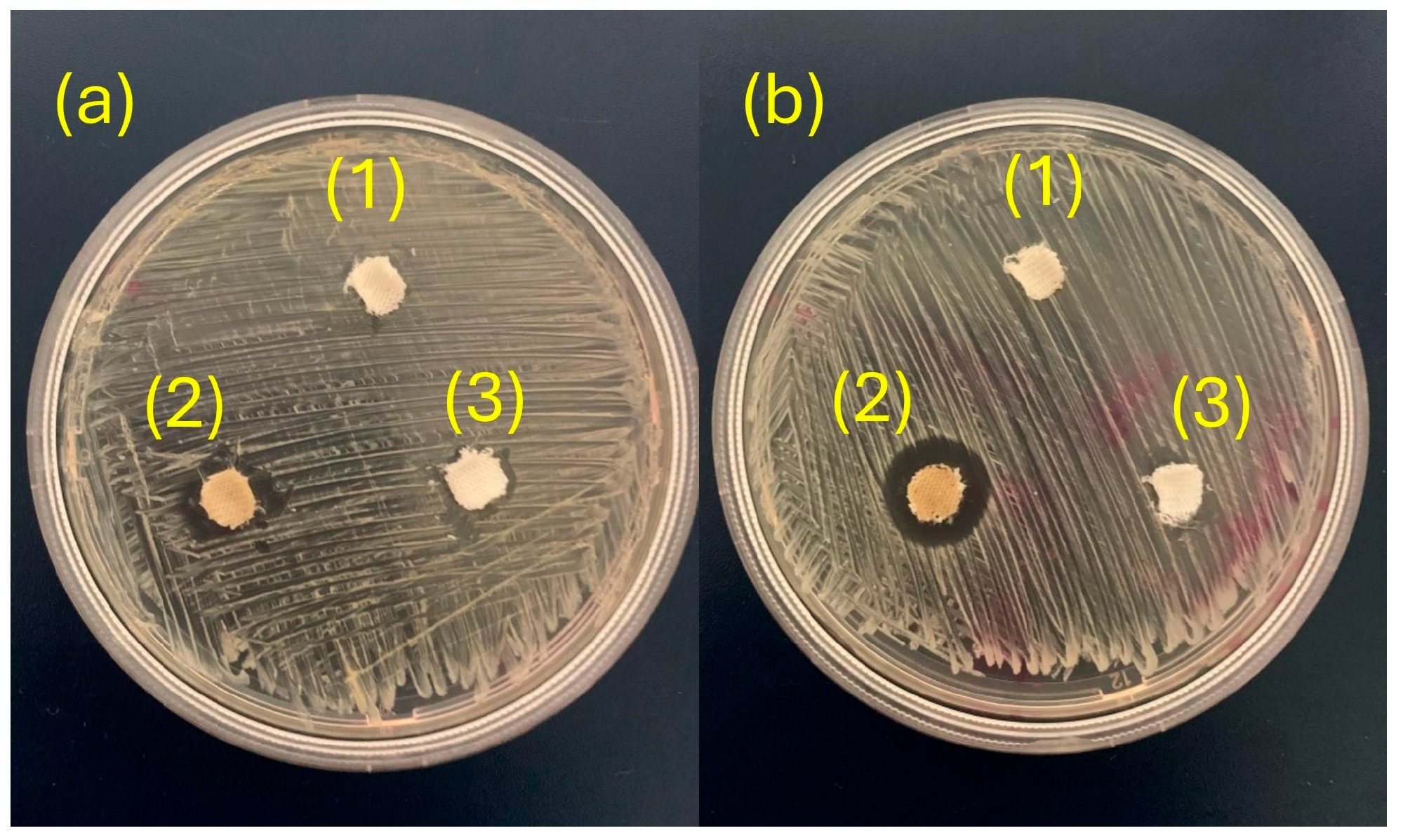
In this study, the Kirby–Bauer disk diffusion assay was selected as a first contact-based screening method to verify the antibacterial activity of the Ag-finished textile and to assess its potential for protective textile applications (Figure 5). This qualitative assay is widely employed for initial antimicrobial screening in Ag-based functional material [8,34,35].
The antimicrobial test showed that FAU-X 100% inhibited the growth of all five Gram-negative strains and both Gram-positive strains tested. The Gram-positive bacterium S. agalactiae ATCC 12386 exhibited the largest inhibition halo of 14 mm (Figure 5), followed by the Gram-negative strains Pseudomonas sp. M13 (isolated from water), P. putida KT2440 PGPR, E. coli (clinical isolate) [20], and the Gram-positive S. aureus ATCC 29213, which displayed an inhibition halo of 11 mm. The smallest inhibition halos were observed for Shigella sp. (clinical isolate) and Pseudomonas sp. M14 (water isolate), both with 10 mm (Table 2).
FAU-X 10% also exhibited antimicrobial activity. The largest inhibition zone was observed for Pseudomonas sp. M13 and Pseudomonas sp. M14 (9 mm), while Shigella sp. (clinical isolate), P. putida KT2440 PGPR, and S. agalactiae ATCC 12386 showed inhibition zones of 8 mm. The smallest inhibition zone (7 mm) was observed for S. aureus ATCC 29213. In contrast, E. coli (clinical isolate) did not show any inhibition and grew in close contact with the textile disc. The FAU-X control textile inhibited bacterial growth only in the Gram-negative strain Pseudomonas sp. M14 (7 mm) (see Table 2).
The antimicrobial activity of FAU-X 100% and FAU-X 10% against the two Gram-positive and five Gram-negative strains can be attributed to the interaction of silver species with bacterial cell envelopes. Silver ions and nanostructures are capable of adhering to cell walls and membranes, causing structural damage and increased permeability. Once internalized, silver species can interact with proteins and DNA, induce oxidative stress, and disrupt signal transduction pathways, ultimately leading to bacterial cell death [36].
The inoculation test, in which one disc of each textile (FAU-X, FAU-X 10%, and FAU-X 100%) was placed in LB broth, demonstrated that the textiles did not harbor bacteria or fungi. Over a period of five days under favorable conditions for microbial growth, no microbial proliferation was observed, indicating that the textiles were not vehicles for microbial propagation. This inability to host microorganisms can be explained by the antimicrobial action of silver supported in aluminosilicates, which increases cell permeability, disrupts membrane integrity, and induces oxidative stress leading to cell damage [37].
The inhibition of E. coli, Shigella sp. (Gram-negative), and different Pseudomonas strains upon contact with FAU-X 100% and 10% textiles can be explained by the action of Ag+ ions, which are transported through porins located in the outer membrane of the bacterial cell wall. Once inside, these positively charged species interact with carboxyl, amino, and phosphate groups of the cell wall and membrane, leading to altered permeability, lipid modifications, disruption of membrane fluidity, and ultimately loss of membrane integrity [36,37].
The Ag+ with the bacteria membrane by adhering to the cell wall, increasing its permeability, leading to ion leakage (K+, Na+, Ca2+), and potentially causing cell lysis. According to Alzahrani et al. the prepared nanostructures based on Ag+ could generate reactive oxygen species (ROS) which act in microbial cell death [38]. As described by Vaishampayan and Grohmann, hydroxyl (-OH), hydrogen peroxide (H2O2) and superoxide (O2) free radicals penetrate the bacteria cell wall, inducing the fragmentation of the nuclei acids and resulting in inhibition of genes expression [39]. Meaning that, the potential antimicrobial activity of FAU-X was correlated to the Ag+ concentrations.
A greater inhibitory effect on the growth of Gram-negative bacteria is expected compared to Gram-positive bacteria due to possessing a thinner cell wall [40]. The membrane of Gram-positive bacteria consists of a thick and rigid peptidoglycan layer that provides higher mechanical strength, in contrast to Gram-negative bacteria, which are composed of a thinner layer of peptidoglycans and phospholipids [41].
The oxidative stress in the cell was produced by ROS causes the oxidation of fatty acids resulting in membrane damage, which would explain the minor effect of Ag+ on Gram-positive bacteria. Unlike the structure of Gram-negative bacteria, whose cell wall has an outer membrane with the presence of positively charged lipopolysaccharides that bind Ag+, which explains the greater damage against Gram-negative bacteria [36]. However, in this study FAU-X 100% in contact with Gram-positive bacteria exhibited a stronger inhibitory effect than with Gram-negative strains. Greater growth inhibition was observed for S. agalactiae ATCC 12386 compared to E. coli and Shigella sp. This finding is consistent with previous reports on cotton and polyester finished with SilverSil xerogel powder dispersed in a water-repellent medium, where bacterial growth was reduced by 90.1% for S. aureus and 99.0% for E. coli [42].
Although no statistically significant difference was found between the inhibition zones of Gram-negative and Gram-positive strains, the results provide evidence that FAU-X remains active. This latter observation is consistent with the findings reported by Pádua et al. [43] and Delgado-Beleño et al. [44]. Table 3 presents similar studies with limiting points, where our work may highlight a potential area of opportunity. In studies on textiles made with chitosan nanofiber (CNF)/nano-silver phosphate (Ag3PO4) coatings, bacterial adhesion and growth inhibition zones were reduced by 100% and 99.8% against S. aureus and E. coli, respectively [45]. This is similar the results reported in this study, where growth inhibition is greater for S. agalactiae ATCC 12386 Gram-positive bacteria compared to E. coli, Shigella sp. clinical isolate, Pseudomonas sp. and P. putida KT2440 Gram-negative bacteria.
These types of textiles, finished with silver nanoparticles, offer promising potential for producing antibacterial garments for use in hospital and biomedical settings, preventing the textile from acting as a carrier for microorganisms in these environments [37].

4. Conclusions

This study demonstrates the successful functionalization of cotton textiles with silver-loaded FAU-X zeolite using a conventional ion-exchange method followed by an exhaustion finishing process. This methodology is readily adaptable for scaling up to industrial textile manufacturing. Structural analyses confirmed that the original FAU framework was preserved after Ag+ incorporation, with the silver being integrated into the aluminum silicate hydrate structure. Energy-dispersive X-ray spectroscopy (EDS) verified the presence of the Ag–zeolite on the cotton fibers, with the higher silver loading (FAU-X 100%) showing significantly greater incorporation compared to FAU-X 10%. However, SEM imaging revealed a non-uniform distribution of the Ag-zeolite material, which formed random aggregates on the fiber surface. This aggregation is likely due to an insufficient quantity of commercial acrylic binder in the formulation. To improve homogeneity, future methodological refinements should explore increasing the binder content, modifying the bath rheology, or employing a multi-cycle deposition process.
The nanostructured organization of the material is attributed to the "ship-in-a-bottle" confinement of silver species within the zeolitic supercages (~1.3 nm). Nevertheless, further characterization by Transmission Electron Microscopy (TEM) is necessary to confirm the formation of silver nanoparticles directly.
Antimicrobial assays revealed that FAU-X 100% finished textile inhibited the growth of all seven tested Gram-negative and Gram-positive strains. The results demonstrate robust broad-spectrum activity, with particularly strong effects against S. agalactiae ATCC 12386 which exhibited the largest inhibition zone of 14 mm. Textiles finished with FAU-X 10% also exhibited inhibitory activity, although to a lesser extent, while control textiles showed no significant effect. The observation that the inhibitory effect was stronger against Gram-positive bacteria than against Gram-negative strains like E. colli or Shigella sp., contrasts with general expectations based on cell wall thickness, but provides evidence of the material antimicrobial mechanism.
Overall, the silver-zeolite finishing provides a scalable and sustainable strategy for producing protective textiles with durable antimicrobial properties. The approach shows potential for applications in healthcare and biomedical environments, where it could prevent textiles from acting as carriers for microbial propagation.

Author Contributions

Conceptualization, M.C.-L.; methodology, M.C.-L., J.Á.J.T., M.L.C.C. and D.M.R.; investigation, M.C.-L., D.M.R. and O.G.; resources, O.G.; data curation, M.C.-L. and I.P.T.A.; writing—original draft preparation, M.C.-L.; writing—review and editing, O.G. All authors have read and agreed to the published version of the manuscript.

Funding

This research received no external funding.

Institutional Review Board Statement

Not applicable.

Data Availability Statement

The original contributions presented in this study are included in the article. Further inquiries can be directed to the corresponding authors.

Acknowledgments

We gratefully acknowledge the experimental support for the characterization processes provided by the Centro de Nanociencias y Micro-nanotecnologías of IPN, and the Laboratorio de Síntesis y Caracterización de Materiales Avanzados y Tecnologías para Energía y Medio Ambiente, UPIITA-IPN. O.G. is grateful to SIP-IPN for SIP20250483 project.

Conflicts of Interest

The authors declare no conflicts of interest.

References

  1. Rajendran, R. Superbug Infection. J. Drug Metab. Toxicol. 2018, 9, 238. [Google Scholar] [CrossRef]
  2. Naghavi, M.; Vollset, S.E.; Ikuta, K.S.; Swetschinski, L.R.; Gray, A.P.; Wool, E.E.; Aguilar, G.R.; Mestrovic, T.; Smith, G.; Han, C.; et al. Global burden of bacterial antimicrobial resistance 1990–2021: A systematic analysis with forecasts to 2050. Lancet 2024, 404, 1199–1226. [Google Scholar] [CrossRef]
  3. Dube, E.; Okuthe, G.E. Silver Nanoparticle-Based Antimicrobial Coatings: Sustainable Strategies for Microbial Contamination Control. Microbiol. Res. 2025, 16, 110. [Google Scholar] [CrossRef]
  4. Michels, H.T.; Keevil, C.W.; Salgado, C.D.; Schmidt, M.G. From Laboratory Research to a Clinical Trial. HERD Health Environ. Res. Des. J. 2015, 9, 64–79. [Google Scholar] [CrossRef]
  5. Widyastuti, E.; Chiu, C.-T.; Hsu, J.-L.; Lee, Y.C. Photocatalytic Antimicrobial and Photostability Studies of TiO2/ZnO Thin Films. Arab. J. Chem. 2023, 16, 105010. [Google Scholar] [CrossRef]
  6. Ong, W.T.J.; Nyam, K.L. Evaluation of Silver Nanoparticles in Cosmeceutical and Potential Biosafety Complications. Saudi J. Biol. Sci. 2022, 29, 2085–2094. [Google Scholar] [CrossRef] [PubMed]
  7. Rao, M.M.V.; Mohammad, N.; Banerjee, S.; Khanna, P.K. Synthesis and Food Packaging Application of Silver Nanoparticles: A Review. Hybrid Adv. 2024, 6, 100230. [Google Scholar] [CrossRef]
  8. Mondal, M.S.; Paul, A.; Rhaman, M. Recycling of Silver Nanoparticles from Electronic Waste via Green Synthesis and Application of AgNPs–Chitosan Based Nanocomposite on Textile Material. Sci. Rep. 2023, 13, 13798. [Google Scholar] [CrossRef]
  9. Abdelhamid, S.A.; Mohamed, S.S.; Abdelghaffar, F. Ecofriendly Silver Nanoparticles Biosynthesis from Penicillium Commune NRC 2016-3 as Antimicrobial Agents for Textile Materials. Sci. Rep. 2025, 15, 25522. [Google Scholar] [CrossRef]
  10. Rashid, S.; Ali, M.; Islam, S.; Iqbal, M.O.; Al-Rawi, M.B.A.; Naseem, M. Enhancing the Antibacterial Properties of Silver-Particles-Coated Cotton Bandages Followed by Natural Extracted Dye. J. Ind. Text. 2025, 55, 1320571. [Google Scholar] [CrossRef]
  11. Khan, M.; Saeed, M.A.; Ullah, S.; Repon, R.; Pranta, A.D.; Yunusov, N.; Hossain, M. Development of Self-Cleaning and Antibacterial Properties on Cotton Fabric Using Silver Nanoparticles and PFOTS. SPE Polym. 2024, 5, 568–575. [Google Scholar] [CrossRef]
  12. dos Santos, L.M.G.; Medeiros, R.J.; Maciel-Magalhães, M.; Guedes, N.C.; Brito, T.M.; de Souza, G.F.; Oliveira, M.L.; Pereira, R.A.; Neto, S.A.; Jacob, S.C.; et al. Unravelling the Effects of Silver Nanoparticles on Textiles: A Comprehensive Toxicological and Quantitative Analysis. Health Nanotechnol. 2025, 1, 6. [Google Scholar] [CrossRef]
  13. Hossain, M.T.; Shahid, M.A.; Limon, M.G.M.; Hossain, I.; Mahmud, N. Techniques, Applications, and Challenges in Textiles for a Sustainable Future. J. Open Innov. Technol. Mark. Complex. 2024, 10, 100230. [Google Scholar] [CrossRef]
  14. Pavlova, E.L.; Nenova, E.P.; Yocheva, L.D.; Ivanova, I.A.; Georgiev, P.A. Antimicrobial and Oxidative Activities of Different Levels of Silver-Exchanged Zeolites X and ZSM-5 and Their Ecotoxicity. Pharmaceuticals 2024, 17, 1586. [Google Scholar] [CrossRef]
  15. Verboekend, D.; Nuttens, N.; Locus, R.; Van Aelst, J.; Verlome, P.; Groen, J.C.; Perez-Ramirez, J.; Sels, B.F. Synthesis, Characterisation, and Catalytic Evaluation of Hierarchical Faujasite Zeolites: Milestones, Challenges, and Future Directions. Chem. Soc. Rev. 2016, 45, 3331–3352. [Google Scholar] [CrossRef]
  16. Mauer, V.; Bläker, C.; Pasel, C.; Bathen, D. Energetic Characterization of Faujasite Zeolites Using a Sensor Gas Calorimeter. Catalysts 2021, 11, 98. [Google Scholar] [CrossRef]
  17. Baerlocher, C.; Brouwer, D.; Marler, B.; McCusker, L.B. Database of Zeolite Structures. Available online: https://www.iza-structure.org/databases/ (accessed on 11 November 2025).
  18. Cruz-Leal, M.; Goiz, O.; Niño, T.I.M.; Coutino-Gonzalez, E.; Albarado-Ibañez, A.; Pérez-Sánchez, G.F.; Alcantara C, J.A. Silver Cluster Supported in Zeolite as Antimicrobial Agent to Textiles. MRS Adv. 2023, 9, 168–171. [Google Scholar] [CrossRef]
  19. Zhou, C.-E.; Kan, C.; Yuen, C.M.; Matinlinna, J.P.; Tsoi, J.K.; Zhang, Q. Plasma Treatment Applied in the Pad-Dry-Cure Process for Making Rechargeable Antimicrobial Cotton Fabric That Inhibits S. aureus. Text. Res. J. 2016, 86, 2202–2215. [Google Scholar] [CrossRef]
  20. Venegas, B.; Tello-Hernández, M.A.; Cepeda-Cornejo, V.; Molina-Romero, D. Calidad Microbiológica: Detección de Aeromonas sp y Pseudomonas sp en Garrafones Provenientes de Pequeñas Plantas Purificadoras de Agua. CienciaUAT 2022, 17, 146–164. [Google Scholar] [CrossRef]
  21. Sousa, P.B.F.; Bieseki, L.; Pergher, S.B.C. Seed-Assisted Crystallization in the Hydrothermal Synthesis of FAU Zeolite from Acid-Treated Residue Glass Powder. Materials 2025, 18, 1393. [Google Scholar] [CrossRef] [PubMed]
  22. Zheng, T.; Huang, R.; Zhang, H.; Ye, S.; Wang, D. Synthesis of Silver Nanocluster-Loaded FAU Zeolites and the Application in Light Emitting Diode. Chemistry 2025, 7, 90. [Google Scholar] [CrossRef]
  23. Wang, Q.; Chen, H.; He, F.; Liu, Q.; Xu, N.; Fan, L.; Wang, C.; Zhang, L.; Zhou, R. High-Performance FAU Zeolite Membranes Derived from Nano-Seeds for Gas Separation. Membranes 2023, 13, 858. [Google Scholar] [CrossRef]
  24. Frising, T.; Leflaive, P. Extraframework Cation Distributions in X and Y Faujasite Zeolites: A Review. Microporous Mesoporous Mater. 2008, 114, 27–63. [Google Scholar] [CrossRef]
  25. Cerrillo, J.L.; Palomares, A.E.; Rey, F.; Valencia, S.; Palou, L.; Pérez-Gago, M.B. Ag-Zeolites as Fungicidal Material: Control of Citrus Green Mold Caused by Penicillium digitatum. Microporous Mesoporous Mater. 2017, 254, 69–76. [Google Scholar] [CrossRef]
  26. Romolini, G.; Steele, J.A.; Hofkens, J.; Roeffaers, M.B.J.; Coutino-Gonzalez, E. Tunable Luminescence from Stable Silver Nanoclusters Confined in Microporous Zeolites. Adv. Opt. Mater. 2021, 9, 210094. [Google Scholar] [CrossRef]
  27. Gicheva, G.; Panayotova, M.; Gemishev, O.; Kulinich, S.A.; Mintcheva, N. Silver Nanoparticles@Zeolite Composites: Preparation, Characterization and Antibacterial Properties. Materials 2025, 18, 3964. [Google Scholar] [CrossRef]
  28. Wang, S.; Egan, J.; Salmon, S. Preparation and Characterization of Cotton Fiber Fragments from Model Textile Waste via Mechanical Milling and Enzyme Degradation. Cellulose 2023, 30, 10879–10904. [Google Scholar] [CrossRef]
  29. Schindler, W.D.; Hauser, P.J. Chemical Finishing Processes. In Chemical Finishing of Textiles; Elsevier: Cambridge, UK, 2004; pp. 7–28. [Google Scholar] [CrossRef]
  30. Gao, Y.; Cranston, R. Recent Advances in Antimicrobial Treatments of Textiles. Text. Res. J. 2008, 78, 60–72. [Google Scholar] [CrossRef]
  31. Pojnar, K.; Pilch-Pitera, B.; Ataei, S.; Gazdowicz, P.; Mossety-Leszczak, B.; Grabowska, B.; Bobrowski, A. Self-Healing Thermal-Reversible Low-Temperature Polyurethane Powder Coating Based on Diels–Alder Reaction. Materials 2024, 17, 3555. [Google Scholar] [CrossRef]
  32. Patti, A. Green Advances in Wet Finishing Methods and Nanoparticles for Daily Textiles. Macromol. Rapid Commun. 2025, 46, 2400636. [Google Scholar] [CrossRef]
  33. Tian, Y.; Huang, X.; Cheng, Y.; Niu, Y.; Ma, J.; Zhao, Y.; Kou, X.; Ke, Q. Applications of Adhesives in Textiles: A Review. Eur. Polym. J. 2022, 167, 111089. [Google Scholar] [CrossRef]
  34. Ghetas, H.A.; Abdel-Razek, N.; Shakweer, M.S.; Abotaleb, M.M.; Paray, B.A.; Ali, S.; Eldessouki, E.A.; Dawood, M.A.; Khalil, R.H. Antimicrobial Activity of Chemically and Biologically Synthesized Silver Nanoparticles against Some Fish Pathogens. Saudi J. Biol. Sci. 2022, 29, 1298–1305. [Google Scholar] [CrossRef]
  35. Samani, P.A.; Ghavam, M. Synthesis of Silver Nanoparticles from Pure and Combined Extracts of Satureja bachtiarica Bung. and Satureja hortensis L. effective on Some Microbial Strains Causing Digestive Diseases. Discov. Nano 2025, 20, 90. [Google Scholar] [CrossRef] [PubMed]
  36. Mikhailova, E.O. Silver Nanoparticles: Mechanism of Action and Probable Bio-Application. J. Funct. Biomater. 2020, 11, 84. [Google Scholar] [CrossRef]
  37. More, P.R.; Pandit, S.; De Filippis, A.; Franci, G.; Mijakovic, I.; Galdiero, M. Silver Nanoparticles: Bactericidal and Mechanistic Approach against Drug-Resistant Pathogens. Microorganisms 2023, 11, 369. [Google Scholar] [CrossRef]
  38. Alzahrani, S.O.; Al-Ghamdi, S.A.; Alsahag, M.; Alatawi, K.; Alaysuy, O.; Al-Ahmed, Z.A.; El-Metwaly, N.M. Nanosilver-Doped Carbon Quantum Dots for Industrialization of Efficacious Textiles with Superior UV-Resistance and Antimicrobial Performance. Diam. Relat. Mater. 2023, 138, 110249. [Google Scholar] [CrossRef]
  39. Vaishampayan, A.; Grohmann, E. Antimicrobials Functioning through ROS-Mediated Mechanisms: Current Insights. Microorganisms 2022, 10, 61. [Google Scholar] [CrossRef]
  40. Mai-Prochnow, A.; Clauson, M.; Hong, J.; Murphy, A.B. Gram-Positive and Gram-Negative Bacteria Differ in Their Sensitivity to Cold Plasma. Sci. Rep. 2016, 6, 38610. [Google Scholar] [CrossRef]
  41. Dong, X.; Liang, W.; Meziani, M.J.; Sun, Y.-P.; Yang, L. Carbon Dots as Potent Antimicrobial Agents. Theranostics 2020, 10, 671–686. [Google Scholar] [CrossRef]
  42. Li Petri, G.; Facchiano, S.; Trovato, V.; Vineis, C.; Rosace, G.; Pagliaro, M.; Ciriminna, R. Antibacterial Activity of Textiles Functionalized with SilverSil. ChemNanoMat 2025, 11, e202500132. [Google Scholar] [CrossRef]
  43. Pádua, A.S.; Rosa, R.M.; Vieira, T.; Henriques, C.; Silva, J.C. Electrospun Poly(N-Vinylpyrrolidone) Membranes with Ag Nanoparticles for Wound Dressings: Production and Characterization. J. Drug Deliv. Sci. Technol. 2024, 101, 106303. [Google Scholar] [CrossRef]
  44. Delgado-Beleño, Y.; Martinez-Nuñez, C.E.; Cortez-Valadez, M.; Flores-López, N.S.; Flores-Acosta, M. Optical Properties of Silver, Silver Sulfide and Silver Selenide Nanoparticles and Antibacterial Applications. Mater. Res. Bull. 2018, 99, 385–392. [Google Scholar] [CrossRef]
  45. Taheri, P.; Khajeh-Amiri, A. Antibacterial Cotton Fabrics via Immobilizing Silver Phosphate Nanoparticles onto the Chitosan Nanofiber Coating. Int. J. Biol. Macromol. 2020, 158, 282–289. [Google Scholar] [CrossRef] [PubMed]
Figure 1. Structure of faujasite zeolite, adapted from [17].
Textiles 05 00061 g001
Figure 2. XRD spectra of FAU-X (black line), FAU-X 10% (red line), and FAU-X 100% (blue line). Asterisks indicate the presence of silver aluminum silicate hydrate FAU structure.
Textiles 05 00061 g002
Figure 3. SEM micrographs of (a) pristine FAU-X zeolite, (b) FAU-X 10%, and (c) FAU-X 100%. Higher magnification images of the squared areas in (a), (b) and (c), are shown in (d), (e) and (f), respectively.
Textiles 05 00061 g003
Figure 4. SEM surface images of antimicrobial finishing of (a) cotton, (b) FAU-X 10%/cotton, and (c) FAU-X 100%. Higher magnification images of the squared areas in (b) and (c) are shown in (d) and (e), respectively.
Textiles 05 00061 g004
Figure 5. Culture on fabric (a) Staphylococcus aureus ATCC 29213, (a.1) FAU-X, (a.2) FAU-X 100%, (a.3) FAU-X 10%, (b) Streptococcus agalactiae ATCC 12386 (b.1) FAU-X, (b.2) FAU-X 100%, (b.3) FAU-X 10%.
Textiles 05 00061 g005
Table 1. EDS tested the composition of active Zeolite FAU X before and after modification of silver (Ag).
Types of Minerals (wt%)
SampleCOSiAlNaAgCaOther
Pristine cotton48.750.570.50---0.23traces
FAU-X 10%/cotton-53.6320.1315.364.364.611.46traces
FAU-X 100%/cotton-54.1016.4212.333.4310.811.56traces
Table 2. Inhibition zone for various strains.
Inhibition Zone (mm) *
Gram NegativesFAU-XFAU-X 10%FAU-X 100%
Shigella sp.-810
Pseudomonas sp. M13-911
Pseudomonas sp. M147910
Pseudomonas putida KT2440-811
Escherichia coli--11
Gram Positives
Staphylococcus aureus ATCC 29213-711
Streptococcus agalactiae ATCC 12386-814
* 6 mm of fabric diameter.
Table 3. Effect of antibacterial activity in textiles.
MaterialMain FindingLimitationReference
Ag, Ag2S, and Ag2Se nanoparticlesAgNPs showed the strongest effect against E. coliLow stability in aqueous media[38]
Electrospun poly(N-vinylpyrrolidone) membranes with AgNPsGram-positive
bacteria revealed a higher susceptibility to silver
Difficult to scale up for industrial use[37]
Ag/ZnO NPs in cotton fibersDeveloping antimicrobial cotton fibersExperiments were limited to two bacterial strains.[40]
Silver-loaded chitosan nanoparticles applied on cotton fabric using a layer-by-layer self-assembly coating method.Demonstrated effective inhibition against both E. coli and S. aureus.Antibacterial tests were only performed on two bacterial strains.[41]
Disclaimer/Publisher’s Note: The statements, opinions and data contained in all publications are solely those of the individual author(s) and contributor(s) and not of MDPI and/or the editor(s). MDPI and/or the editor(s) disclaim responsibility for any injury to people or property resulting from any ideas, methods, instructions or products referred to in the content.