Article

Supply Chain Cost Analysis for Interior Lighting Systems Based on Polymer Optical Fibres Compared to Optical Injection Moulding


Institut für Textiltechnik of RWTH Aachen University, RWTH Aachen University, Otto-Blumenthal-Str. 1, 52074 Aachen, Germany
*
Author to whom correspondence should be addressed.
Textiles 2025, 5(3), 29; https://doi.org/10.3390/textiles5030029

Submission received: 5 June 2025 / Revised: 23 July 2025 / Accepted: 23 July 2025 / Published: 24 July 2025

Abstract

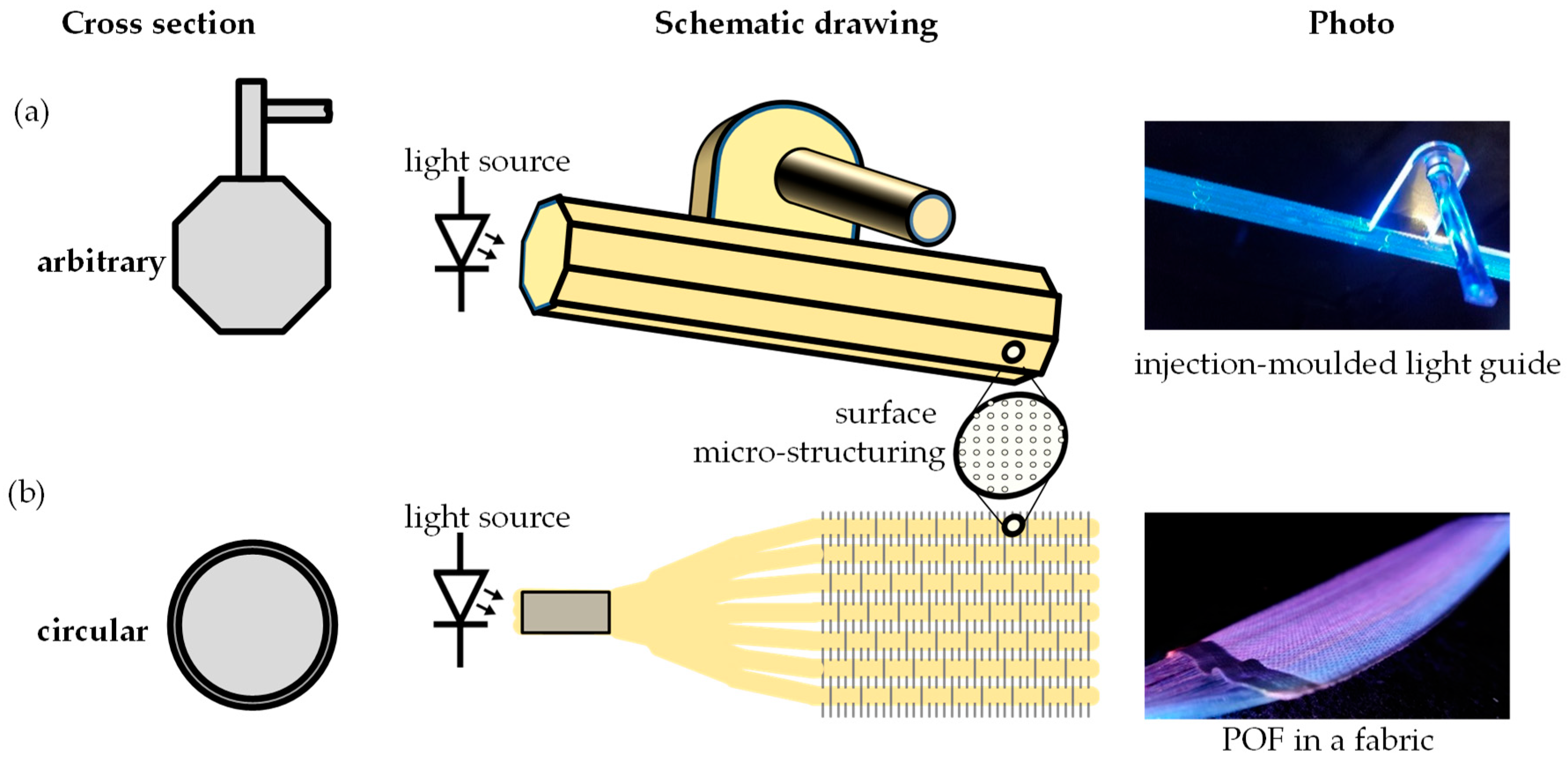
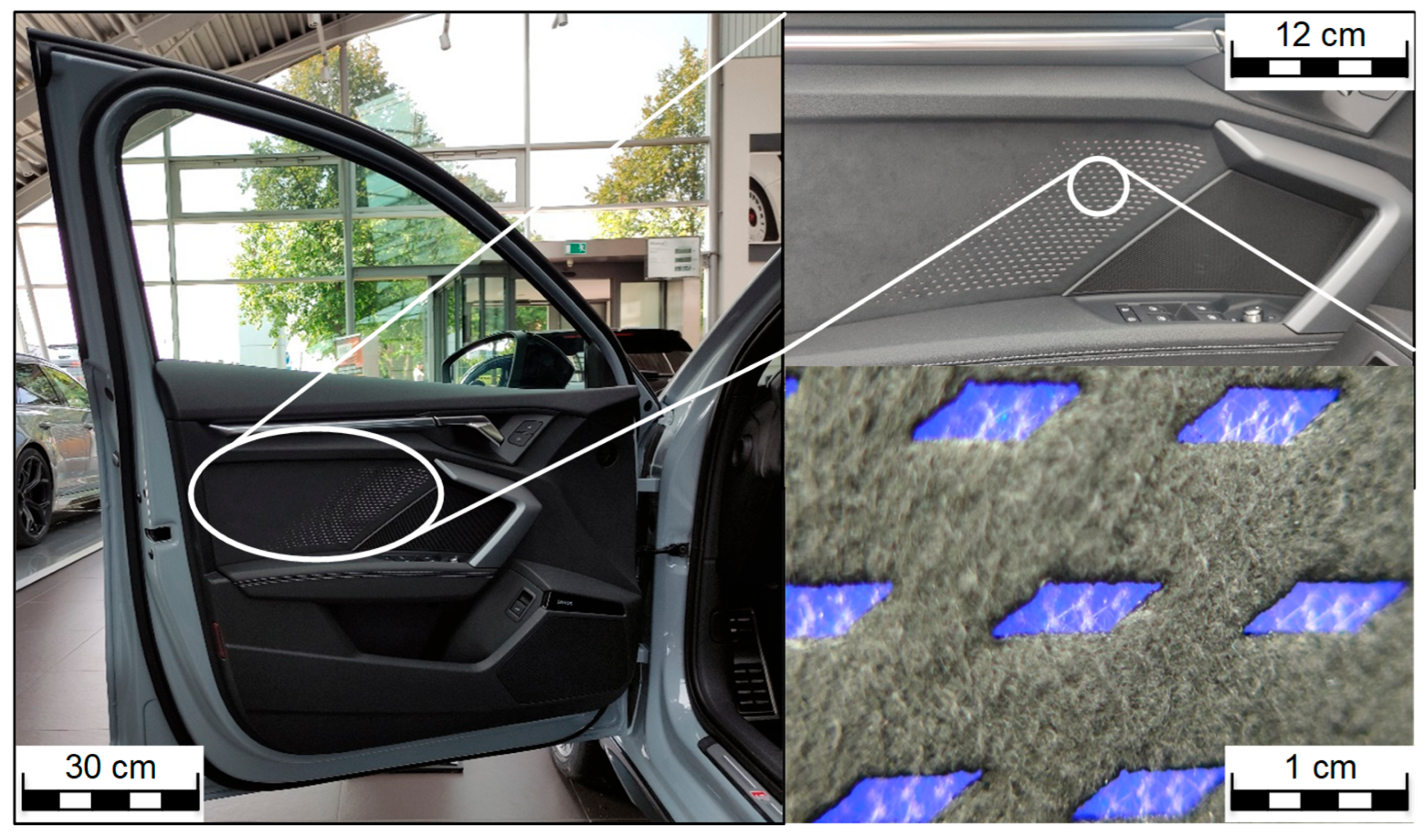
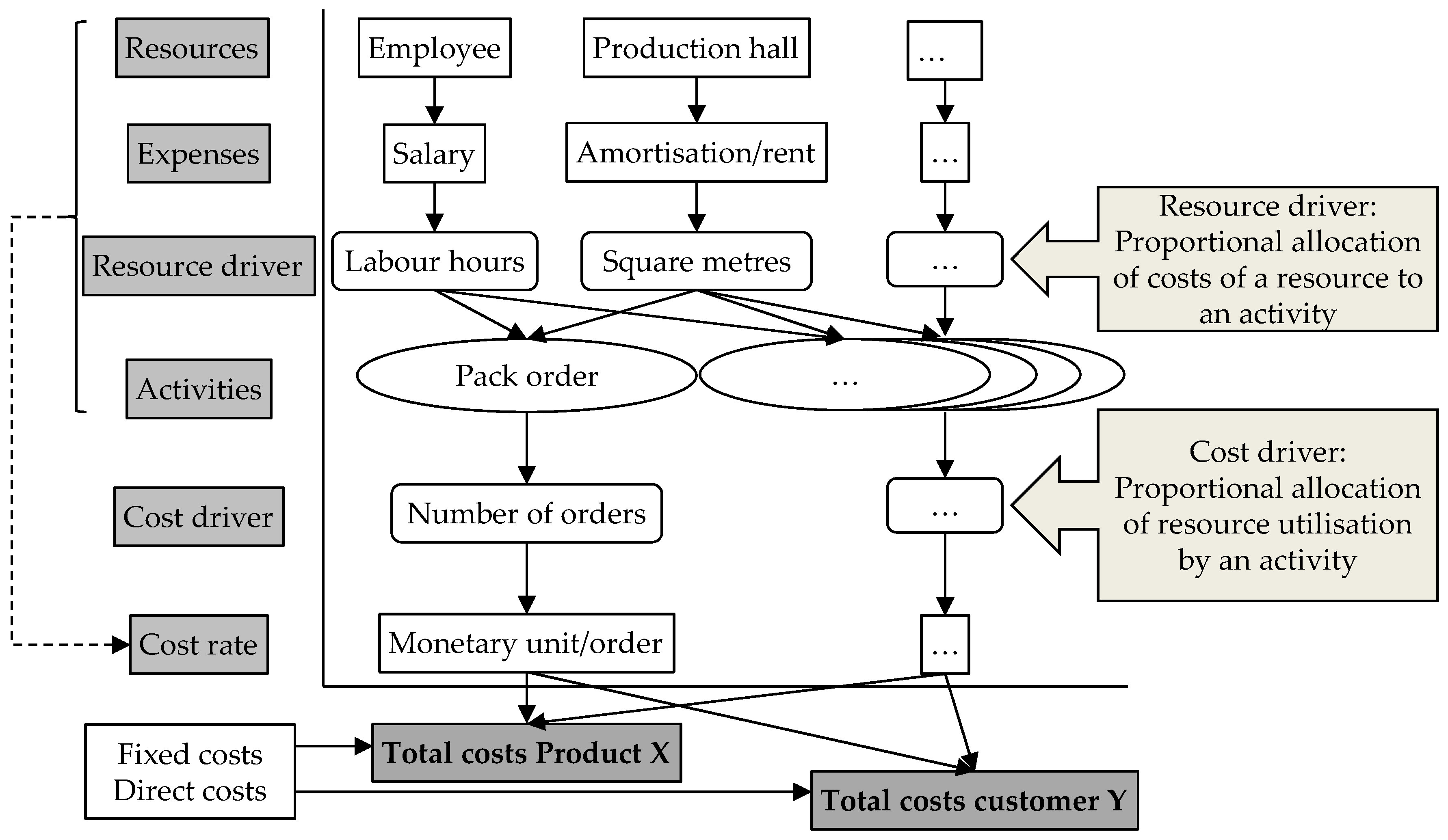
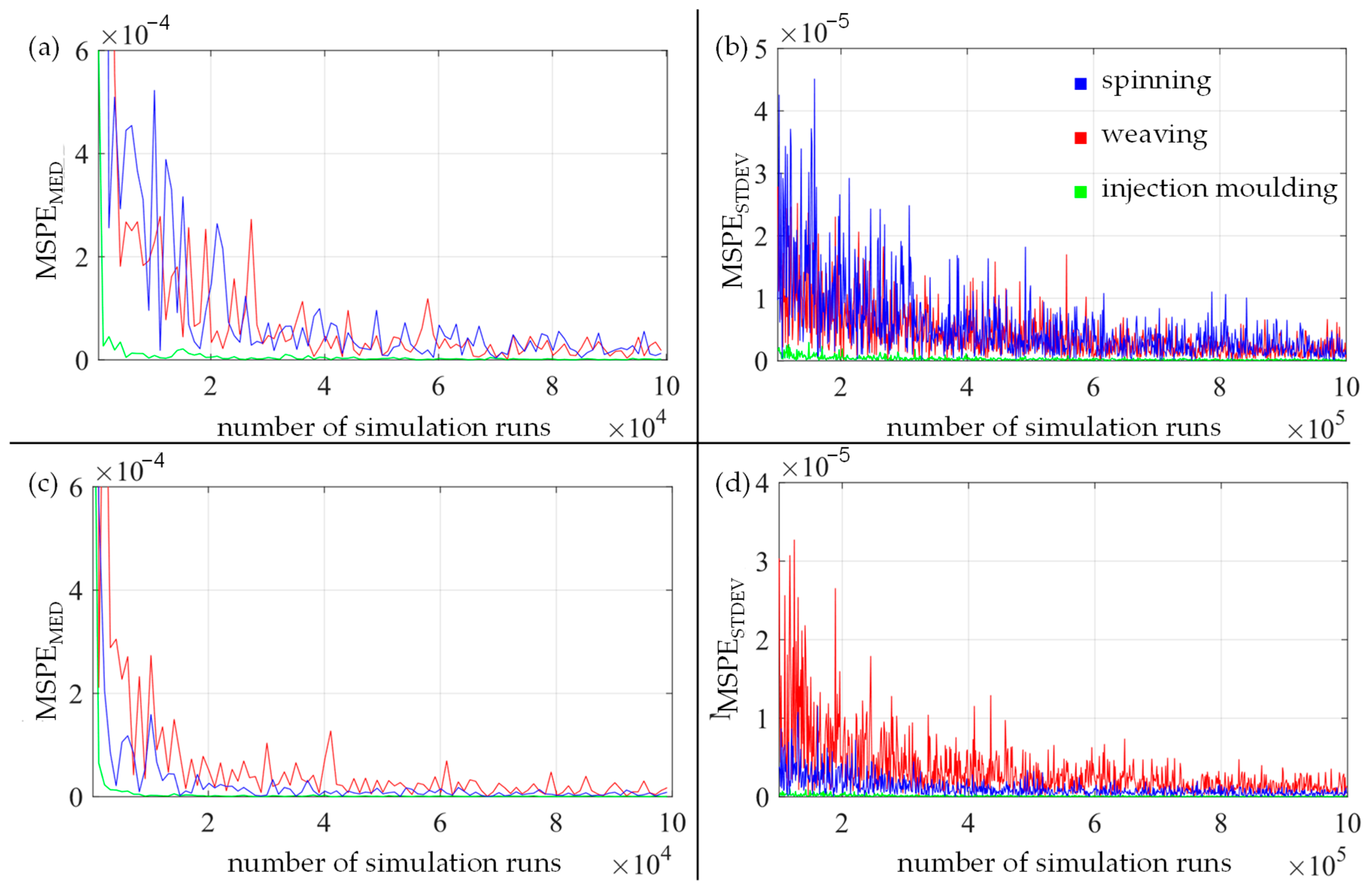
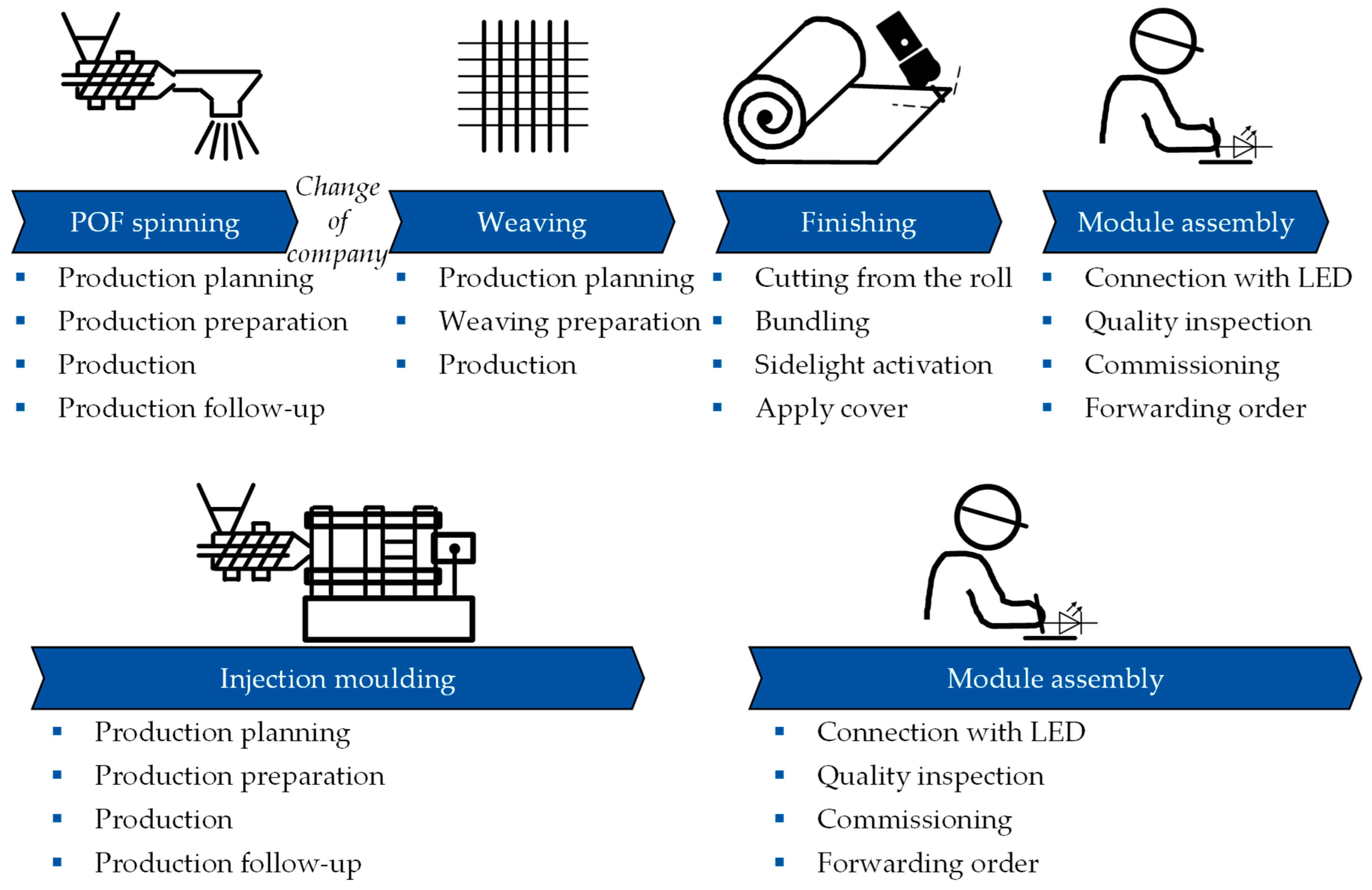
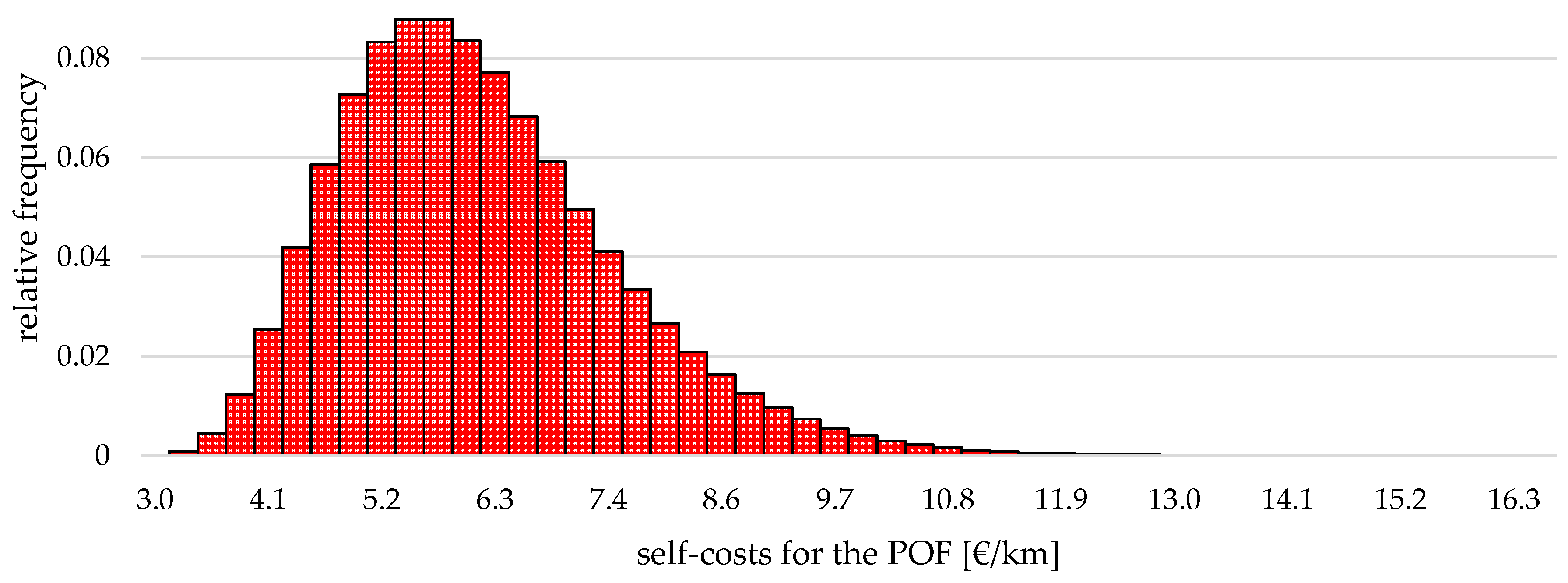
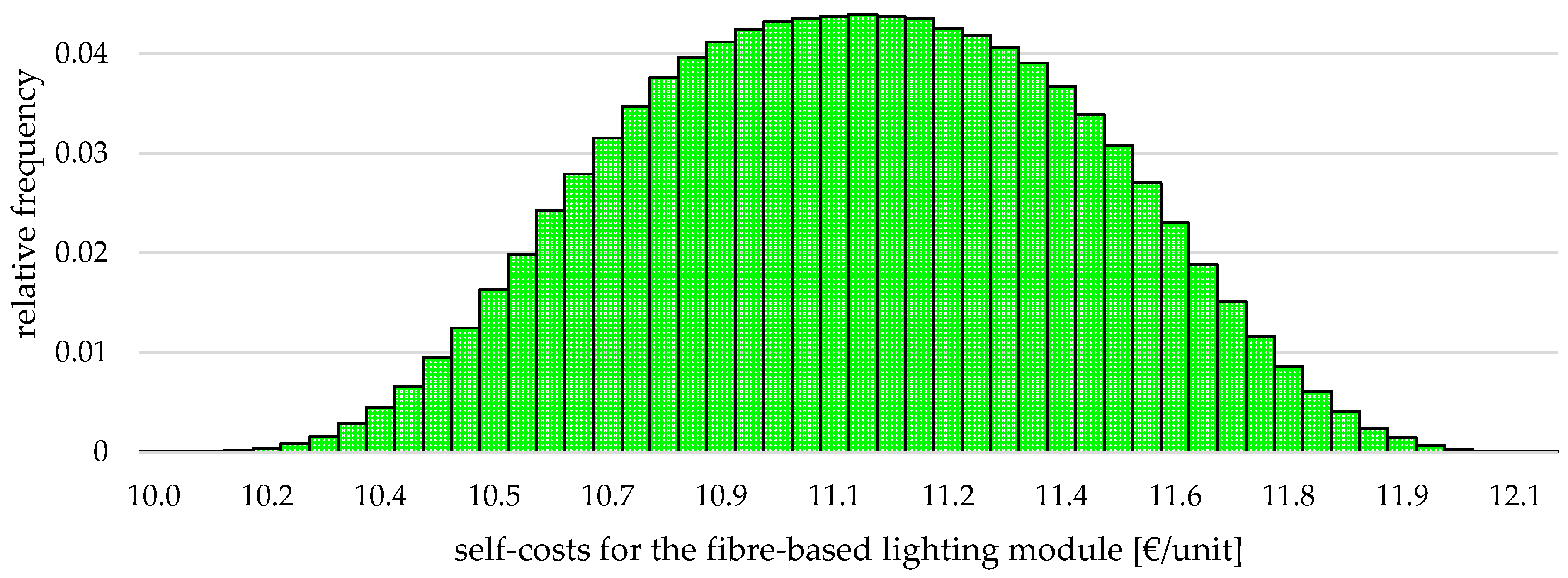
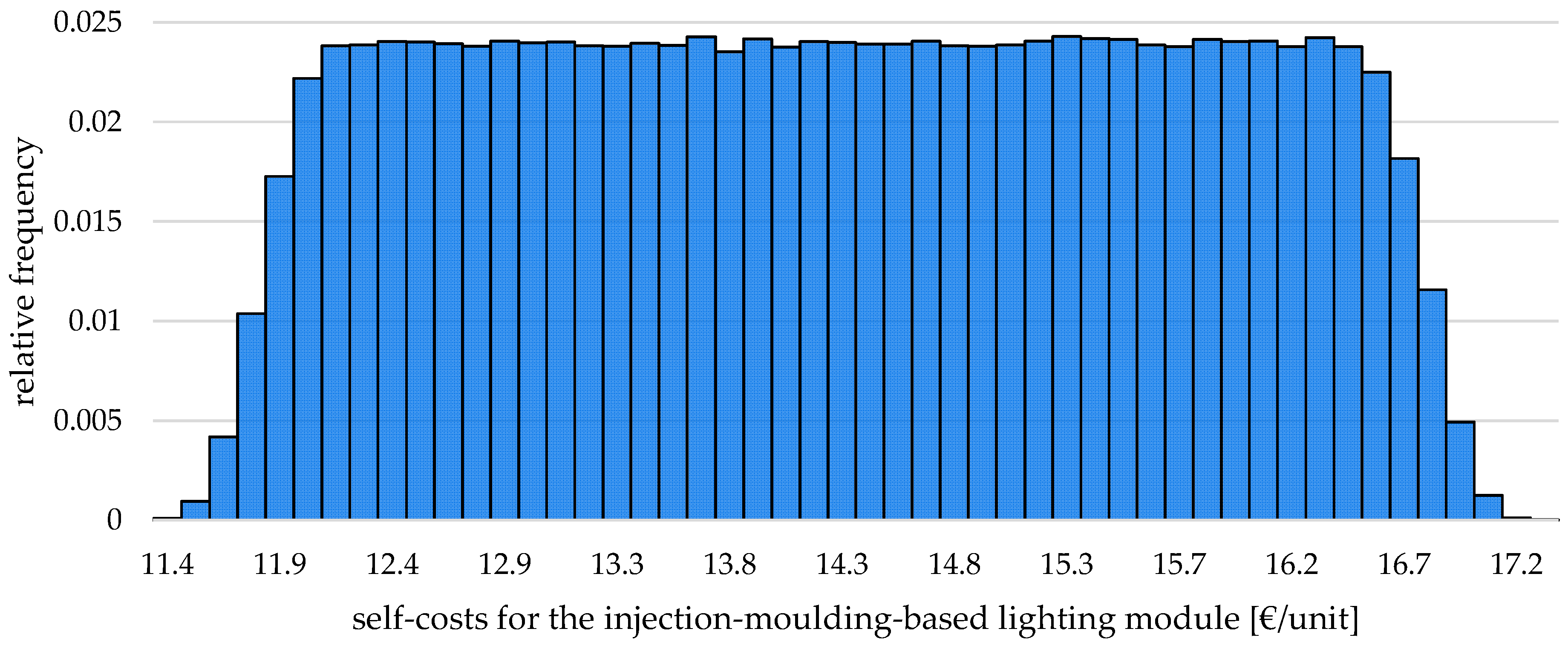
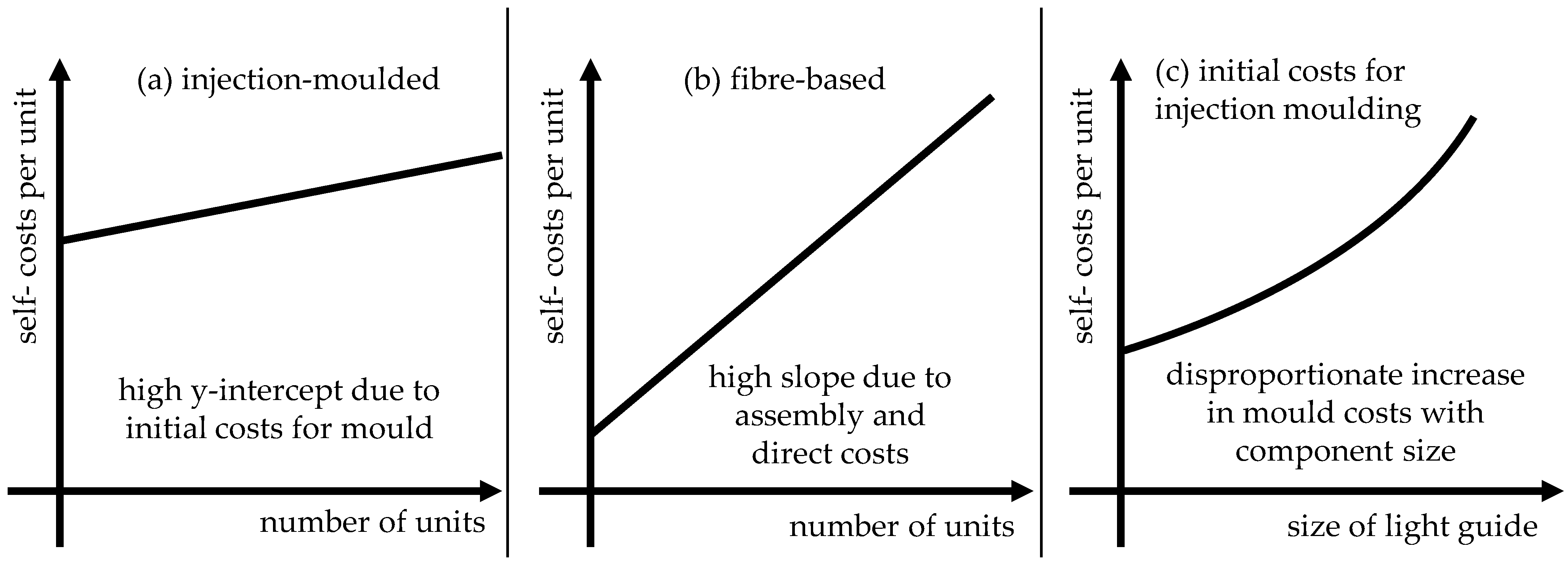
Car interior design should evoke emotions, offer comfort, convey safety and at the same time project the brand identity of the car manufacturer. Lighting is used to address these functions. Modules required for automotive interior lighting often feature injection-moulded (IM) light guides, whereas woven fabrics with polymer optical fibres (POFs) offer certain technological advantages and show first-series applications in cars. In the future, car interior illumination will become even more important in the wake of megatrends such as autonomous driving. Since the increase in deployment of these technologies facilitates a need for an economical comparison, this paper aims to deliver a cost-driven approach to fulfil the aforementioned objective. Therefore, the cost structures of the supply chains for an IM-based and a POF-based illumination module are analysed. The employed research methodologies include an activity-based costing approach for which the data is collected via document analysis and guideline-based expert interviews. To account for data uncertainty, Monte Carlo simulations are conducted. POF-based lighting modules have lower initial costs due to continuous fibre production and weaving processes, but are associated with higher unit costs. This is caused by the discontinuous assembly of the rolled woven fabric which allows postponement strategies. The development costs of the mould generate high initial costs for IM light guides, which makes them beneficial only for high quantities of produced light guides. For the selected scenario, the POF-based module’s self-costs are 11.05 EUR/unit whereas the IM module’s self-costs are 14,19 EUR/unit. While the cost structures are relatively independent from the selected scenario, the actual self-costs are highly dependent on boundary conditions such as production volume.
Keywords: activity-based costing; ABC; polymer optical fibre; POF; injection-moulded optics; textile lighting; automotive interior activity-based costing; ABC; polymer optical fibre; POF; injection-moulded optics; textile lighting; automotive interior