
Advances and Applications of Graphene-Enhanced Textiles: A 10-Year Review of Functionalization Strategies and Smart Fabric Technologies



Abstract
1. Introduction
2. Functional Properties Enabled by Graphene Integration into Textiles
2.1. Functionalization Techniques
2.2. Electrical Conductivity
2.3. Thermal Responsiveness
2.4. Mechanical Performance and Structural Reinforcement
2.5. Bioactive Functionality: Antimicrobial and Antiviral Properties
3. Applications of Graphene-Based Textiles
3.1. Wearable Sensors and Health Monitoring
3.2. Energy Storage and Harvesting
3.3. Protective Antiviral and Antibacterial Textiles
3.4. Graphene-Functionalized Textiles for EMI Shielding in Wearable Electronics
3.5. Commercially Available Graphene-Functionalized Textiles
4. Characterization Techniques for Graphene-Enhanced Textiles
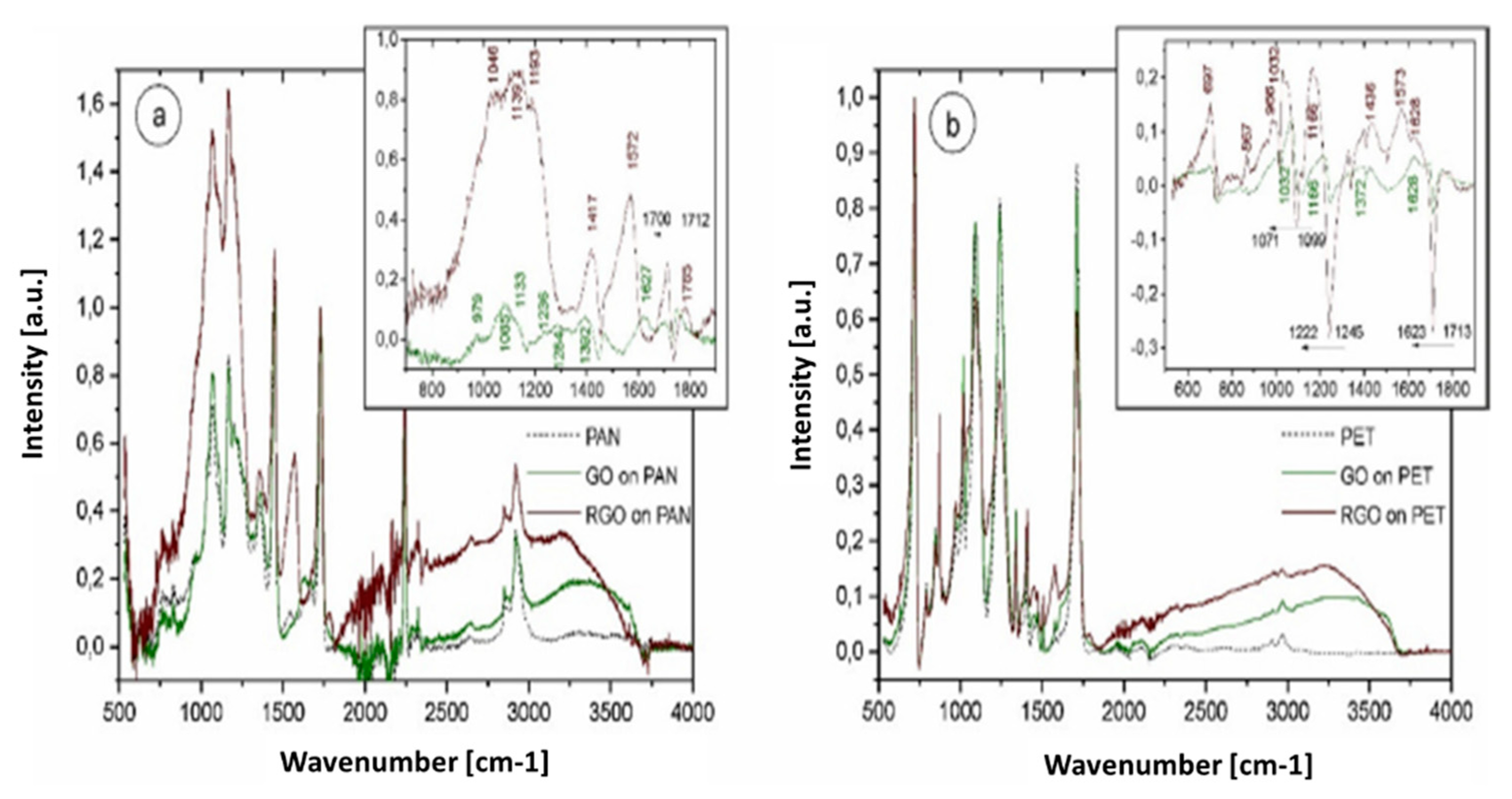
4.1. Morphological and Structural Characterization
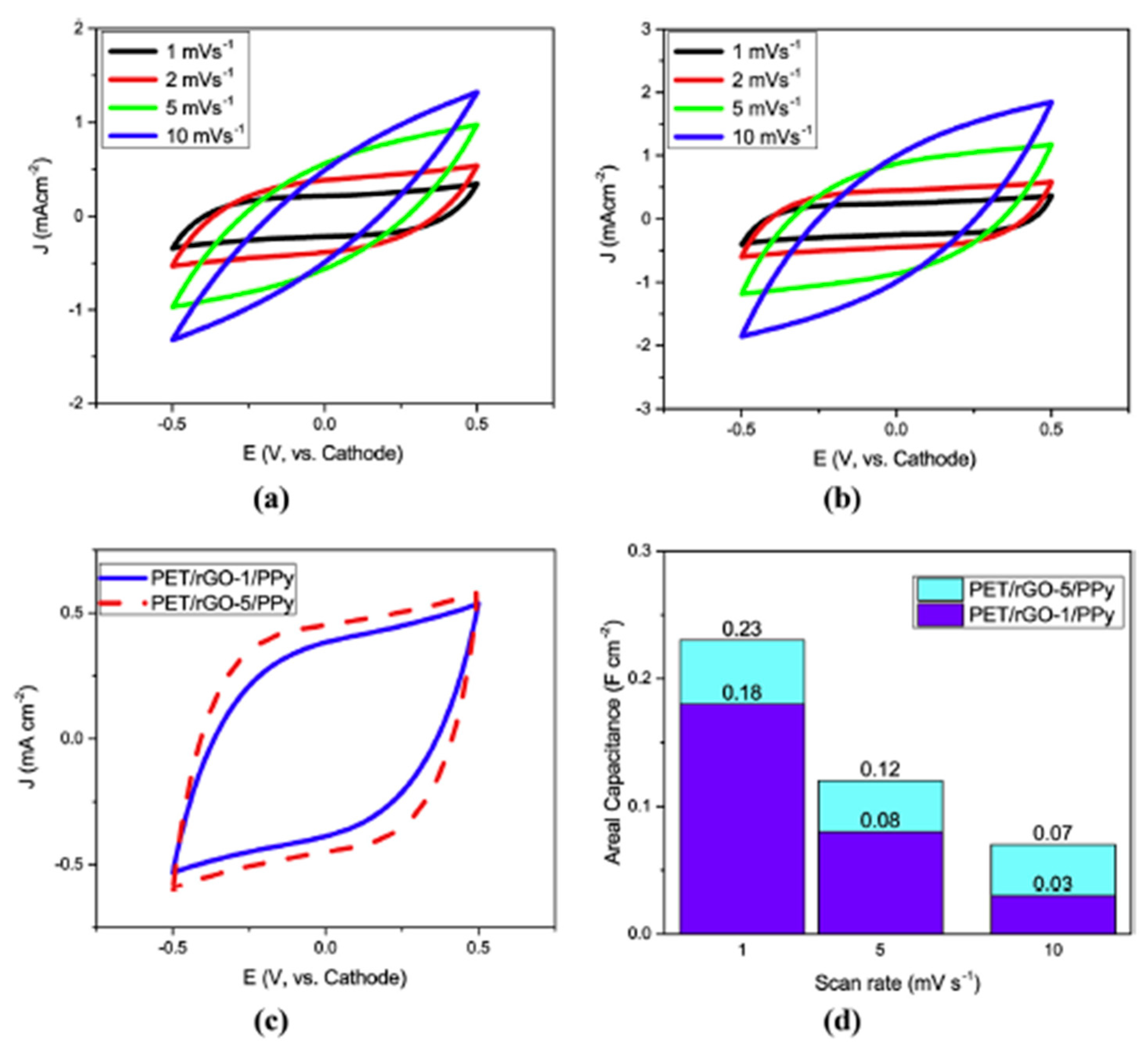
4.2. Electrical and Electrochemical Characterization
4.3. Mechanical and Durability Testing
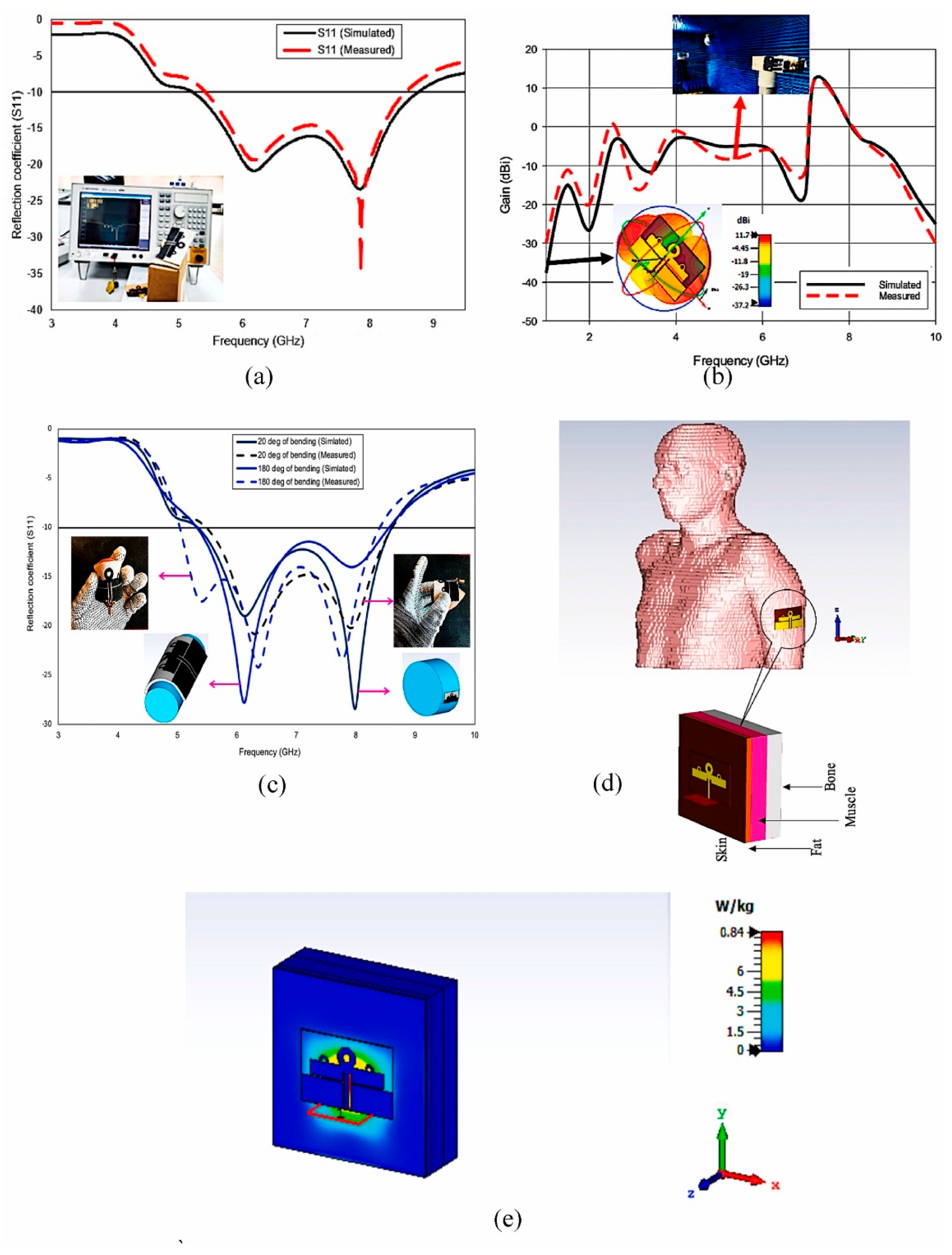
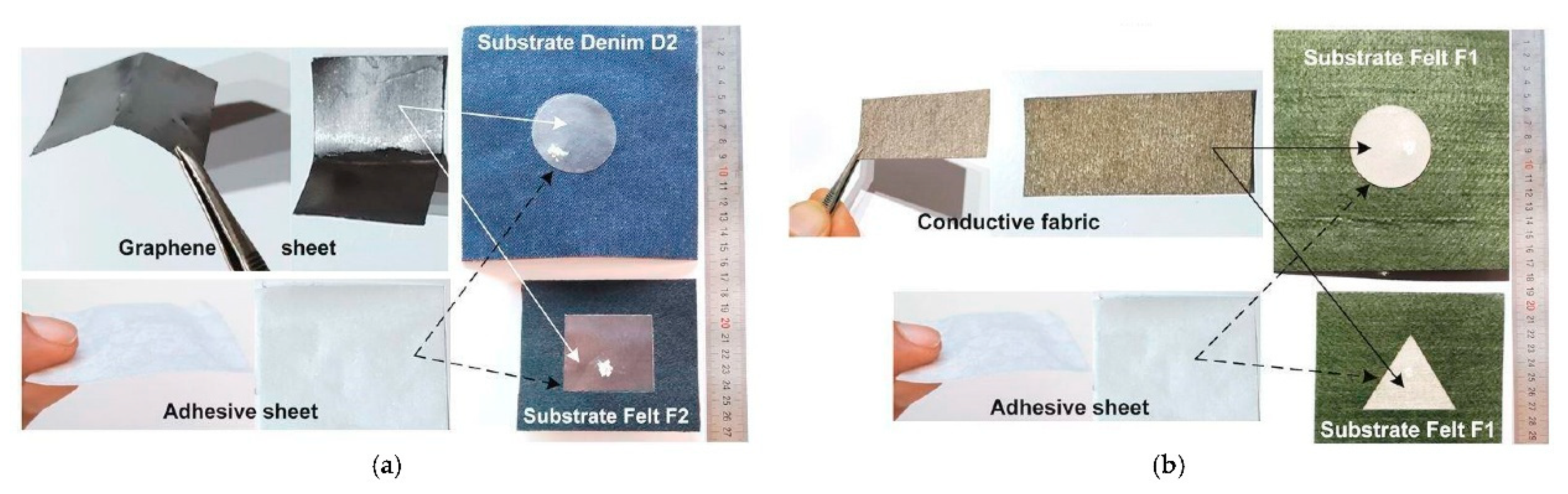
4.4. Functional Performance Evaluation
4.5. Durability and Washing
5. Latest Improvements
6. Challenges, Opportunities, and Outlook for Graphene-Enhanced Fabrics
7. Conclusions
Author Contributions
Funding
Conflicts of Interest
References
- Zhang, M.; Cai, Z.; Ma, X.; Huang, Y.; Zhang, Z.; Zhang, X. Printable Smart Pattern for Multifunctional Energy-Management E-Textile. Matter 2019, 1, 168–179. [Google Scholar] [CrossRef]
- Song, P.; Xu, Z.; Sun, M.; Cao, D.; Fang, Z. Polyaniline Wrapped Graphene Functionalized Textile with Ultrahigh Areal Capacitance and Energy Density for High-Performance All-Solid-State Supercapacitors for Wearable Electronics. Compos. Sci. Technol. 2020, 198, 108305. [Google Scholar] [CrossRef]
- Xu, C.; Sun, J.; Gao, L. Synthesis of Novel Hierarchical Graphene/Polypyrrole Nanosheet Composites and Their Superior Electrochemical Performance. J. Mater. Chem. 2011, 21, 11253–11258. [Google Scholar] [CrossRef]
- Jin, H.; O’Connor, R.; Sayers, P.; Hall, M. Raman Spectroscopy Analysis of Graphene Oxide-Enhanced Textiles. J. Raman Spectrosc. 2021, 52, 843–848. [Google Scholar] [CrossRef]
- He, X.; Qiu, L.; Yang, Y.; Tan, Y.; Zeng, Q.; Zhang, L.; Wei, J.; Yu, M. Strategy of Constructing Light-Weight and Highly Compressible Graphene-Based Aerogels with an Ordered Unique Configuration for Wearable Piezoresistive Sensors. ACS Appl. Mater. Interfaces 2019, 11, 19350–19362. [Google Scholar] [CrossRef] [PubMed]
- Afroj, S.; Tan, S.; Mayousse, C.; Karim, N.; Anwar, T.; Goutianos, S.; Novoselov, K.S. Highly Conductive, Scalable, and Machine Washable Graphene-Based E-Textiles for Multifunctional Wearable Electronic Applications. Adv. Funct. Mater. 2020, 30, 2000293. [Google Scholar] [CrossRef]
- Yang, Z.; Pang, Y.; Han, X.; Yang, Y.; Ling, J.; Jian, M.; Zhang, Y.; Yang, Y.; Ren, T.; Wang, X. Graphene Textile Strain Sensor with Negative Resistance Variation for Human Motion Detection. ACS Nano 2018, 12, 9134–9141. [Google Scholar] [CrossRef] [PubMed]
- Manasoglu, G.; Celen, R.; Kanik, M.; Ulcay, Y. Electrical resistivity and thermal conductivity properties of graphene-coated woven fabrics. J. Appl. Polym. Sci. 2019, 136, 48024. [Google Scholar] [CrossRef]
- Kumar, A.; Sharma, K.; Dixit, A.R. Role of Graphene in Biosensor and Protective Textile against Viruses. Med. Hypotheses 2020, 144, 110253. [Google Scholar] [CrossRef] [PubMed]
- Cheng, J.; Zhang, M.; Zhang, Q.; Gao, L.; Zhao, J.; Li, X.; Zhang, D. Aramid Textile with Near-Infrared Laser-Induced Graphene for Efficient Adsorption Materials. J. Hazard. Mater. 2022, 436, 129150. [Google Scholar] [CrossRef] [PubMed]
- Liang, X.; Xiong, J.; Zhang, L.; Yin, X.; Lu, Y.; Zhang, M.; Wang, W.; Sun, R.; Wong, C.P. Hydrophilic, Breathable, and Washable Graphene Decorated Textile Assisted by Silk Sericin for Integrated Multimodal Smart Wearables. Adv. Funct. Mater. 2022, 32, 2200162. [Google Scholar] [CrossRef]
- Ma, H.; Yu, L.; Yang, L.; Yao, Y.; Shen, G.; Wang, Y.; Li, B.; Meng, J.; Miao, M.; Zhi, C. Graphene oxide composites for dye removal in textile, printing and dyeing wastewaters: A review. Environ. Chem. Lett. 2025, 23, 165–193. [Google Scholar] [CrossRef]
- Ede, J.D.; Diges, A.S.; Zhang, Y.; Shatkin, J.A. Life-cycle risk assessment of graphene-enabled textiles in fire protection gear. NanoImpact 2024, 33, 100488. [Google Scholar] [CrossRef] [PubMed]
- Xu, Z.; Zhang, C.; Wang, F.; Yu, J.; Yang, G.; Surmenev, R.A.; Li, Z.; Ding, B. Smart textiles for personalized sports and healthcare. Nano-Micro Lett. 2025, 17, 1–39. [Google Scholar] [CrossRef] [PubMed]
- Fatkullin, M.; Menzelintsev, V.; Lipovka, A.; Dogadina, E.; Plotnikov, E.; Brazovskiy, K.; Li, S.; Ma, L.; Cheng, C.; Porokhova, E.; et al. Smart graphene textiles for biopotential monitoring: Laser-tailored electrochemical property enhancement. ACS Sens. 2024, 9, 1809–1819. [Google Scholar] [CrossRef] [PubMed]
- Park, C.; Kim, H.; Ko, Y.; Jeong, Y.; Lee, Y. Superhydrophobic Antibacterial Wearable Metallized Fabric as Supercapacitor, Multifunctional Sensors, and Heater. J. Power Sources 2021, 506, 230142. [Google Scholar] [CrossRef]
- Barakzehi, M.; Shamsipur, M.; Faridbod, F.; Tashkhourian, J.; Garakani, T.M. A Textile-Based Wearable Supercapacitor Using Reduced Graphene Oxide/Polypyrrole Composite. Electrochim. Acta 2019, 305, 187–196. [Google Scholar] [CrossRef]
- Yun, Y.J.; Hong, W.G.; Kim, H.J.; Jun, Y.; Lee, H.K. E-textile gas sensors composed of molybdenum disulfide and reduced graphene oxide for high response and reliability. Sens. Actuators B Chem. 2017, 248, 829–835. [Google Scholar] [CrossRef]
- Kim, H.; Lee, S. Characterization of electrical heating textile coated by graphene nanoplatelets/PVDF-HFP composite with various high graphene nanoplatelet contents. Polymers 2019, 11, 928. [Google Scholar] [CrossRef] [PubMed]
- Shateri-Khalilabad, M.; Yazdanshenas, M.E. Fabricating electroconductive cotton textiles using graphene. Carboh. Polym. 2013, 96, 190–195. [Google Scholar] [CrossRef] [PubMed]
- Karim, N.; Afroj, S.; Tan, S.; He, P.; Fernando, A.; Carr, C.; Novoselov, K.S. Scalable production of graphene-based wearable E-textiles. ACS Nano 2017, 11, 12266–12275. [Google Scholar] [CrossRef] [PubMed]
- Stempien, Z.; Khalid, M.; Kozicki, M.; Kozanecki, M.; Varela, H.; Filipczak, P.; Pawlak, R.; Korzeniewska, E.; Sąsiadek, E.J.S.M. In-situ deposition of reduced graphene oxide layers on textile surfaces by the reactive inkjet printing technique and their use in supercapacitor applications. Synth. Met. 2019, 256, 116144. [Google Scholar] [CrossRef]
- Zhu, J.; Zu, J.; Liu, J.; Wang, Y.; Pei, M.; Xu, Y. Self-assembled reduced graphene oxide films with different thicknesses as high performance supercapacitor electrodes. J. Energy Storage 2020, 32, 101795. [Google Scholar] [CrossRef]
- Hu, X.; Tian, M.; Qu, L.; Zhu, S.; Han, G. Multifunctional cotton fabrics with graphene/polyurethane coatings with far-infrared emission, electrical conductivity, and ultraviolet-blocking properties. Carbon 2015, 95, 625–633. [Google Scholar] [CrossRef]
- Liu, Y.; Zhang, K.N.; Zhang, Y.; Tao, L.Q.; Li, Y.X.; Wang, D.Y.; Yang, Y.; Ren, T.L. Flexible, wearable, and functional graphene-textile composites. Appl. Phys. Lett. 2017, 110, 261903. [Google Scholar] [CrossRef]
- Berendjchi, A.; Khajavi, R.; Yousefi, A.A.; Yazdanshenas, M.E. Improved continuity of reduced graphene oxide on polyester fabric by use of polypyrrole to achieve a highly electro-conductive and flexible substrate. Appl. Surf. Sci. 2016, 363, 264–272. [Google Scholar] [CrossRef]
- Golparvar, A.J.; Yapici, M.K. Electrooculography by wearable graphene textiles. IEEE Sens. J. 2018, 18, 8971–8978. [Google Scholar] [CrossRef]
- Kim, H.; Kim, H.S.; Lee, S. Thermal insulation property of graphene/polymer coated textile based multi-layer fabric heating element with aramid fabric. Sci. Rep. 2020, 10, 17586. [Google Scholar] [CrossRef] [PubMed]
- Tan, S.; Afroj, S.; Li, D.; Islam, M.R.; Wu, J.; Cai, G.; Karim, N.; Zhao, Z. Highly sensitive and extremely durable wearable e-textiles of graphene/carbon nanotube hybrid for cardiorespiratory monitoring. Iscience 2023, 26. [Google Scholar] [CrossRef] [PubMed]
- Neves, A.I.S.; Bointon, T.H.; Melo, L.V.; Russo, S.; De Schrijver, I.; Craciun, M.F.; Alves, H. Transparent conductive graphene textile fibers. Sci. Rep. 2015, 5, 9866. [Google Scholar] [CrossRef] [PubMed]
- Kar, P.C.; Islam, M.A. Design and performance analysis of a rectenna system for charging a mobile phone from ambient EM waves. Heliyon 2023, 9. [Google Scholar] [CrossRef] [PubMed]
- Ma, Z.; Huang, Q.; Zhou, N.; Zhuang, Q.; Ng, S.W.; Zheng, Z. Stretchable and conductive fibers fabricated by a continuous method for wearable devices. Cell Rep. Phys. Sci. 2023, 4. [Google Scholar] [CrossRef]
- Chan, K.Y.; Pham, D.Q.; Demir, B.; Yang, D.; Mayes, E.L.; Mouritz, A.P.; Ang, A.S.; Fox, B.; Lin, H.; Jia, B.; et al. Graphene oxide thin film structural dielectric capacitors for aviation static electricity harvesting and storage. Compos. Part B Eng. 2020, 201, 108375. [Google Scholar] [CrossRef]
- Stupar, S.L.; Bučko, M.; Karanović, J.; Lazić, D.; Dinić, D.; Tanić, M.N.; Karkalić, R. Silver coated textiles as multifunctional flexible materials. Int. J. Electrochem. Sci. 2023, 18, 31–37. [Google Scholar] [CrossRef]
- Yao, D.; Tang, Z.; Zhang, L.; Li, R.; Zhang, Y.; Zeng, H.; Du, D.; Ouyang, J. Gas-permeable and highly sensitive, washable and wearable strain sensors based on graphene/carbon nanotubes hybrids e-textile. Compos. Part A Appl. Sci. Manuf. 2021, 149, 106556. [Google Scholar] [CrossRef]
- Pang, Q.; Yang, F.; Jiang, Z.; Wu, K.; Hou, R.; Zhu, Y. Smart wound dressing for advanced wound management: Real-time monitoring and on-demand treatment. Mater. Des. 2023, 229, 111917. [Google Scholar] [CrossRef]
- Cheng, Q.; Meng, C.; Qian, Y.; He, J.; Dong, X. Energy capacity enhancement of all-organic fabric supercapacitors by organic dyes: Old method for new application. Prog. Org. Coat. 2020, 138, 105439. [Google Scholar] [CrossRef]
- Doganay, D.; Cicek, M.O.; Durukan, M.B.; Altuntas, B.; Agbahca, E.; Coskun, S.; Unalan, H.E. Fabric based wearable triboelectric nanogenerators for human machine interface. Nano Energy 2021, 89, 106412. [Google Scholar] [CrossRef]
- Guler, S.; Golparvar, A.; Ozturk, O.; Yapici, M.K. Ear electrocardiography with soft graphene textiles for hearable applications. IEEE Sens. Lett. 2022, 6, 9. [Google Scholar] [CrossRef]
- Chowdhury, M.K.H.; Anik, H.R.; Akter, M.; Hasan, S.M.M.; Tushar, S.I.; Mahmud, S.; Nahar, N.; Tania, I.S. Sensing the Future with Graphene-based Wearable Sensors: A review. Results Mater. 2024, 25, 100646. [Google Scholar] [CrossRef]
- Raza, F.; Ni, X.; Wang, J.; Liu, S.; Jiang, Z.; Liu, C.; Chen, H.; Faroow, A.; Ju, A. Ultrathin honeycomb-like MnO2 on hollow carbon nanofiber networks as binder-free electrode for flexible symmetric all-solid-state supercapacitors. J. Energy Storage 2020, 30, 101467. [Google Scholar] [CrossRef]
- Luís, P.; Southee, D.; Weaver, G.W.; Wijayantha, U. Synergistic combination of carbon conductive and flexural additives for flexible screen-printed supercapacitor electrodes. Carbon Trends 2023, 12, 100287. [Google Scholar] [CrossRef]
- Alotaibi, F.; Tung, T.T.; Nine, M.J.; Kabiri, S.; Moussa, M.; Tran, D.N.; Losic, D. Scanning atmospheric plasma for ultrafast reduction of graphene oxide and fabrication of highly conductive graphene films and patterns. Carbon 2018, 127, 113–121. [Google Scholar] [CrossRef]
- Uzun, S.; Han, M.; Strobel, C.J.; Hantanasirisakul, K.; Goad, A.; Dion, G.; Gogotsi, Y. Highly conductive and scalable Ti3C2Tx-coated fabrics for efficient electromagnetic interference shielding. Carbon 2021, 174, 382–389. [Google Scholar] [CrossRef]
- Materials of the Future: Graphene and Textiles. Available online: https://graphene-flagship.eu/materials/news/materials-of-the-future-graphene-and-textiles/ (accessed on 10 July 2025).
- Overcoming Challenges in Graphene Fabric Market: Strategic Insights 2025–2033. Available online: https://www.datainsightsmarket.com/reports/graphene-fabric-1138241#summary (accessed on 10 July 2025).
- Qu, J.; Shen, M.; Xu, Q.; Ling, J.; Cao, L.; Li, S.; Zhao, K.; Liu, H. Highly efficient electrothermal cotton fabric with flexibility, rapid mechanical response, and excellent washing fastness. Ind. Crops Prod. 2024, 214, 118577. [Google Scholar] [CrossRef]
- Rotzler, S.; Schneider-Ramelow, M. Washability of e-textiles: Failure modes and influences on washing reliability. Textiles 2021, 1, 37–54. [Google Scholar] [CrossRef]
- Al-Gburi, A.J.A.; Radi, N.H.M.; Saeidi, T.; Mohammed, N.J.; Zakaria, Z.; Das, G.S.; Buragohain, A.; Ismail, M.M. Superconductive and flexible antenna based on a tri-nanocomposite of graphene nanoplatelets, silver, and copper for wearable electronic devices. J. Sci. Adv. Mater. Devices 2024, 9, 100773. [Google Scholar] [CrossRef]
- Kapetanakis, T.N.; Nikolopoulos, C.D.; Petridis, K.; Vardiambasis, I.O. Wearable textile antenna with a graphene sheet or conductive fabric patch for the 2.45 GHz band. Electronics 2021, 10, 2571. [Google Scholar] [CrossRef]
- Vargun, E.; Fei, H.; Anik, U.; Cheng, Q.; Saha, P. A Compressible Asymmetric Supercapacitor Based on Carbon Felt/MWCNT@ PANI and MXene. Mater. Chem. Phys. 2025, 131120. [Google Scholar] [CrossRef]
- Stavrakis, A.K.; Simić, M.; Stojanović, G.M. Electrical characterization of conductive threads for textile electronics. Electronics 2021, 10, 967. [Google Scholar] [CrossRef]
- Wang, C.; Zhang, N.; Liu, C.; Ma, B.; Zhang, K.; Li, R.; Wang, Q.; Zhang, S. New advances in antenna design toward wearable devices based on nanomaterials. Biosensors 2024, 14, 35. [Google Scholar] [CrossRef] [PubMed]
- Kwame Fobiri, G.; Eghan, B.; Kanyire Seidu, R.; Tawiah, B. A review of functionalized graphene-oxide in wearable textile sensors and supercapacitors for biomedical applications. Essent. Chem 2025, 2, 2493111. [Google Scholar] [CrossRef]

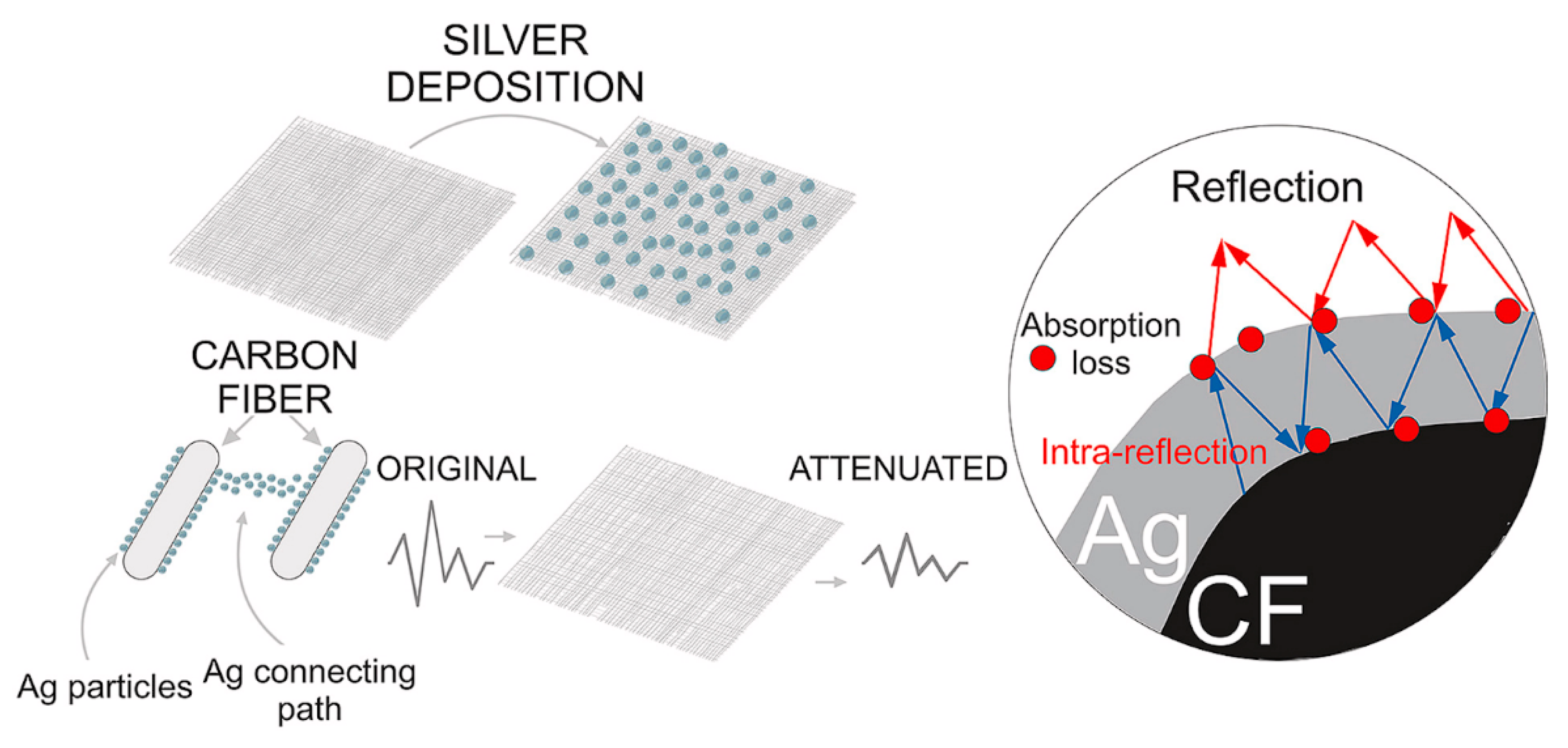
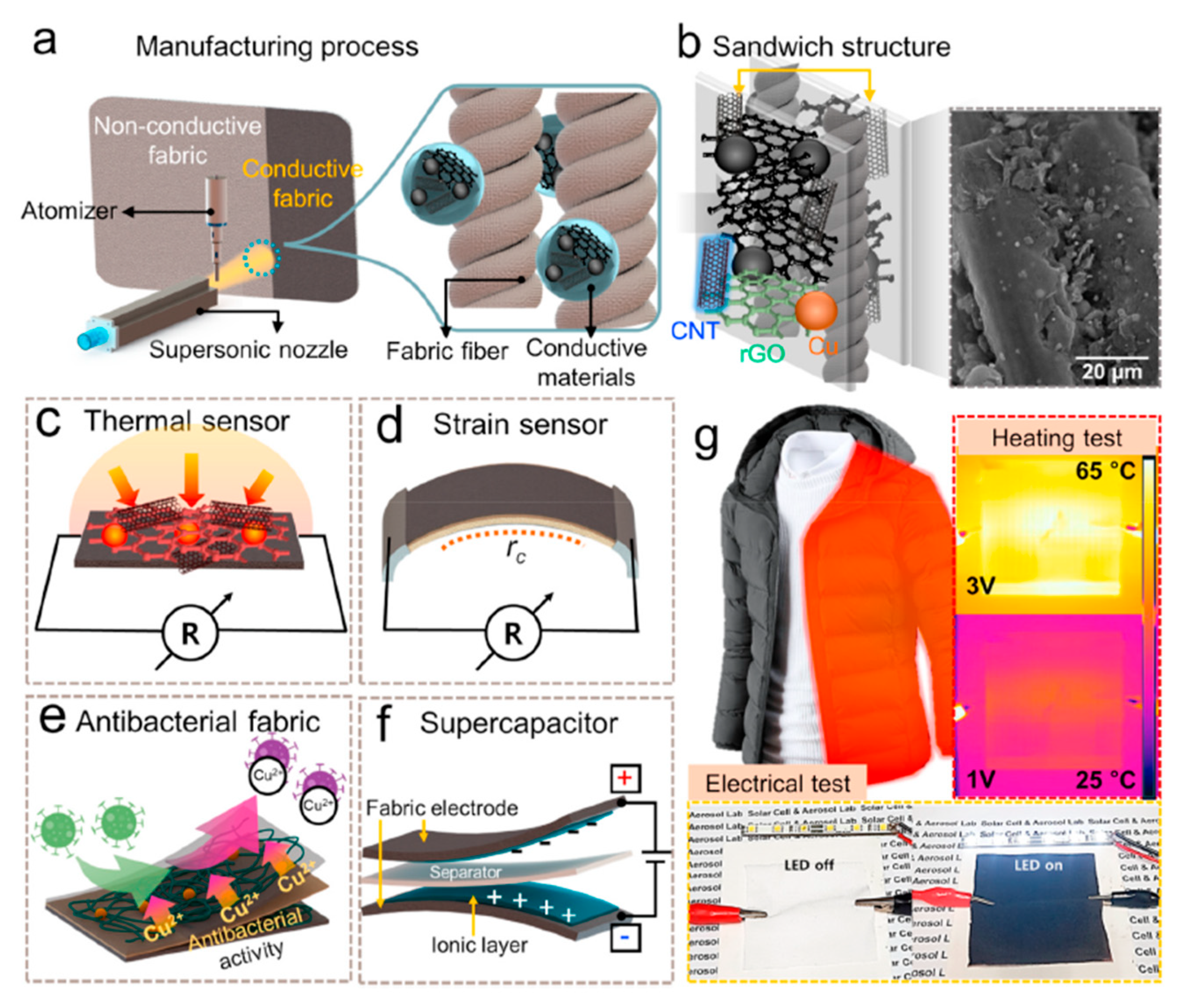
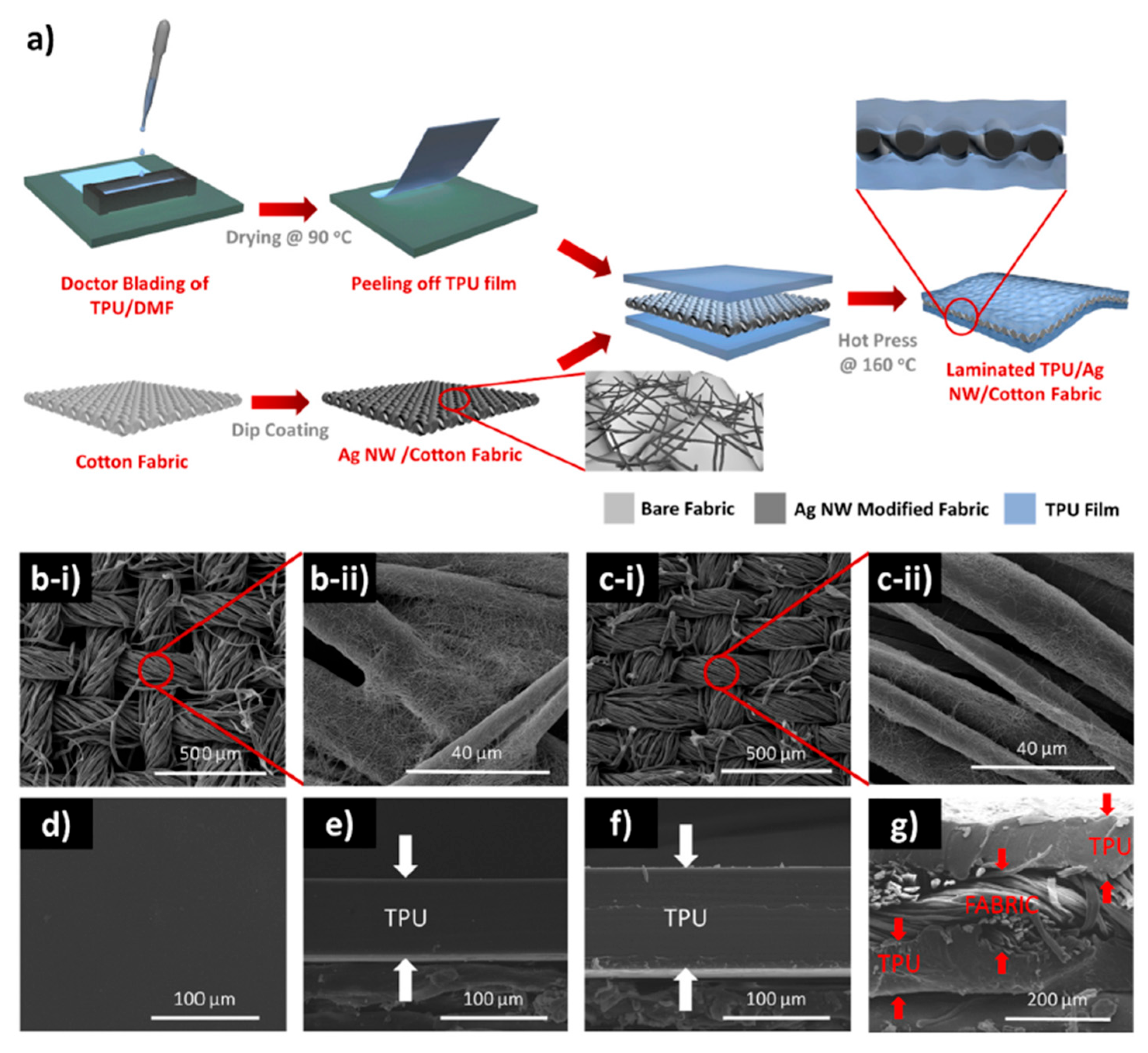
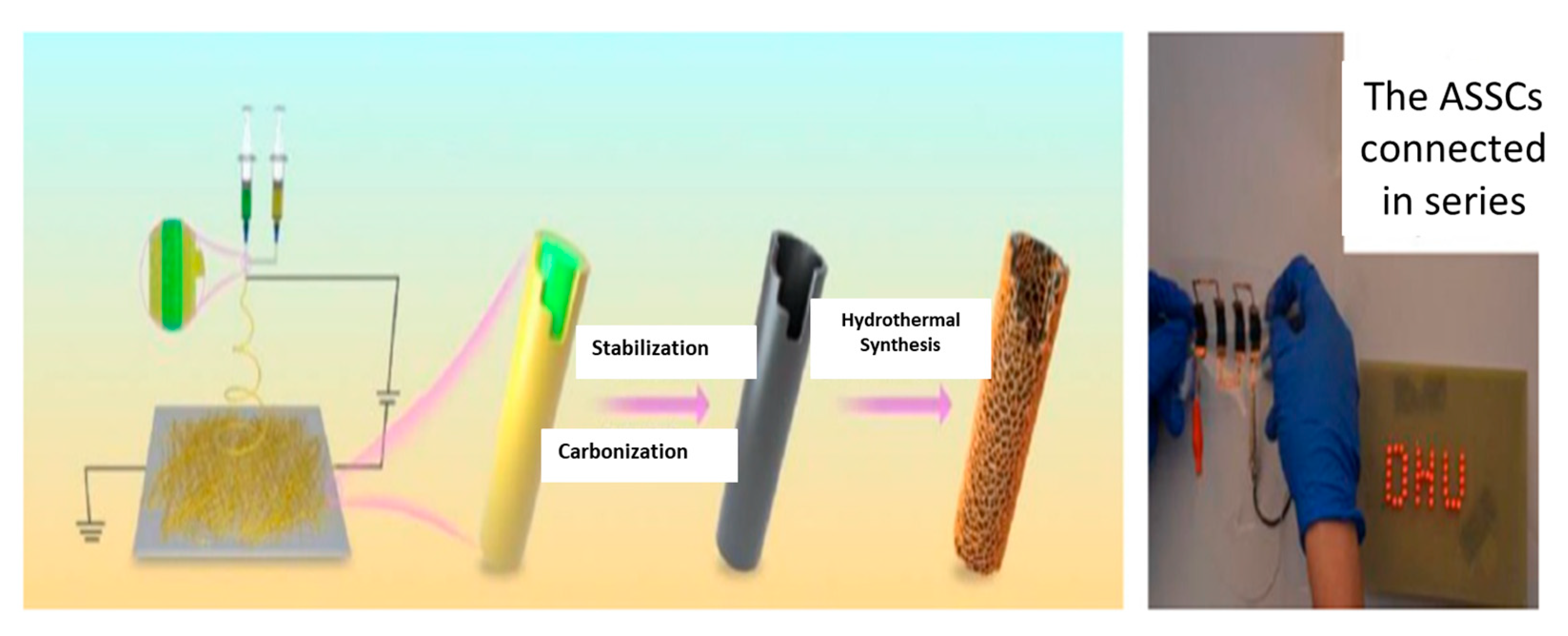
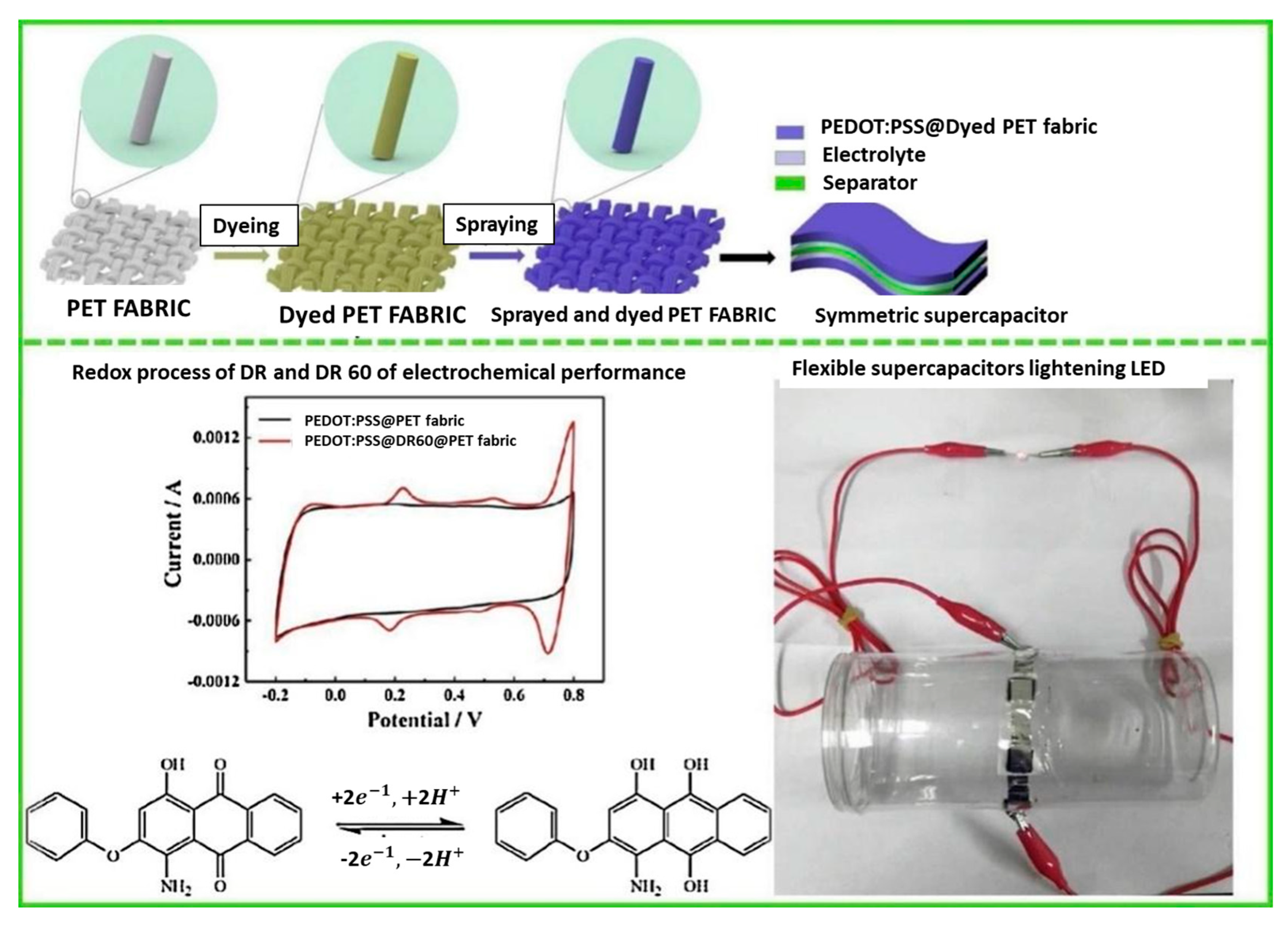
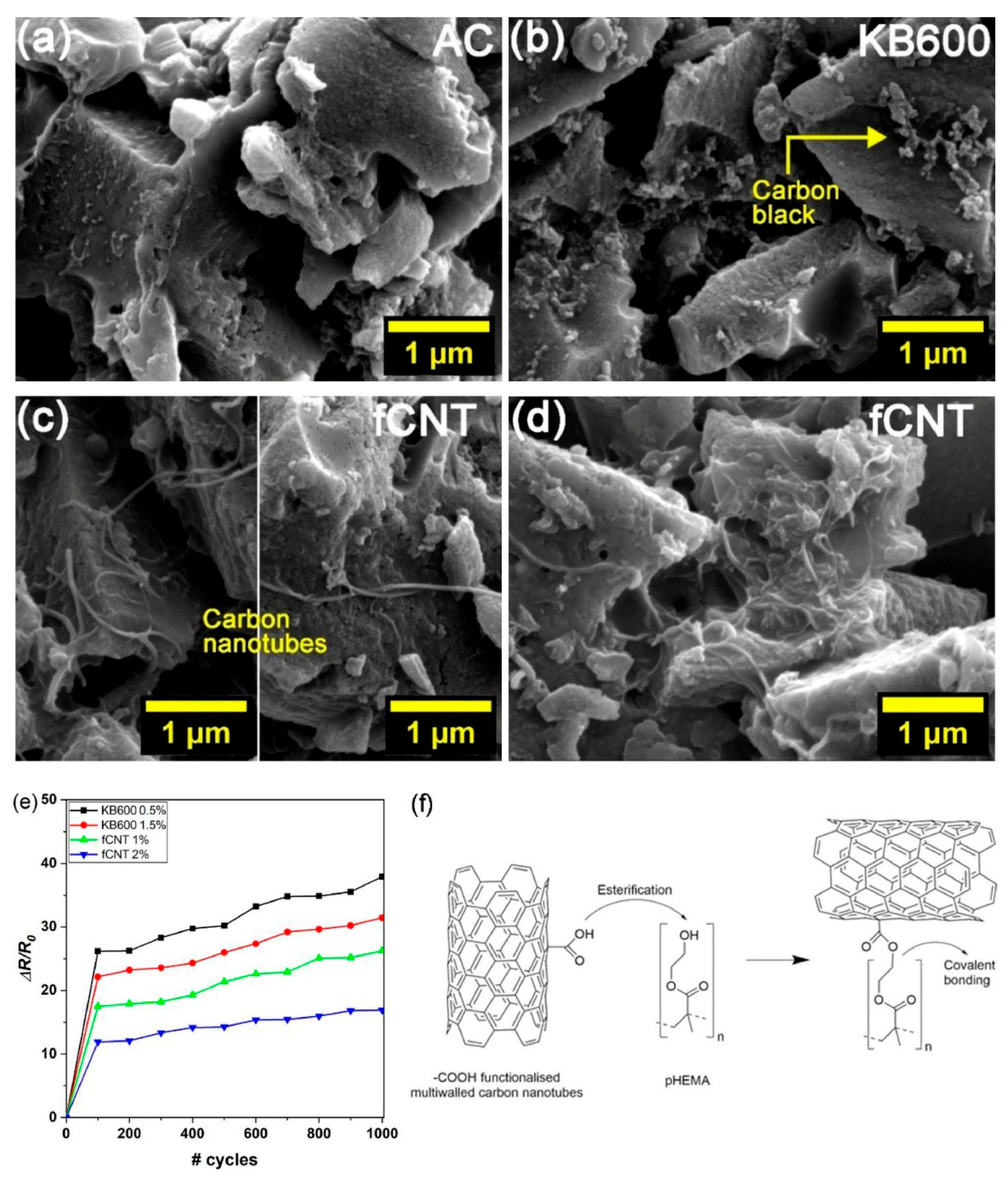
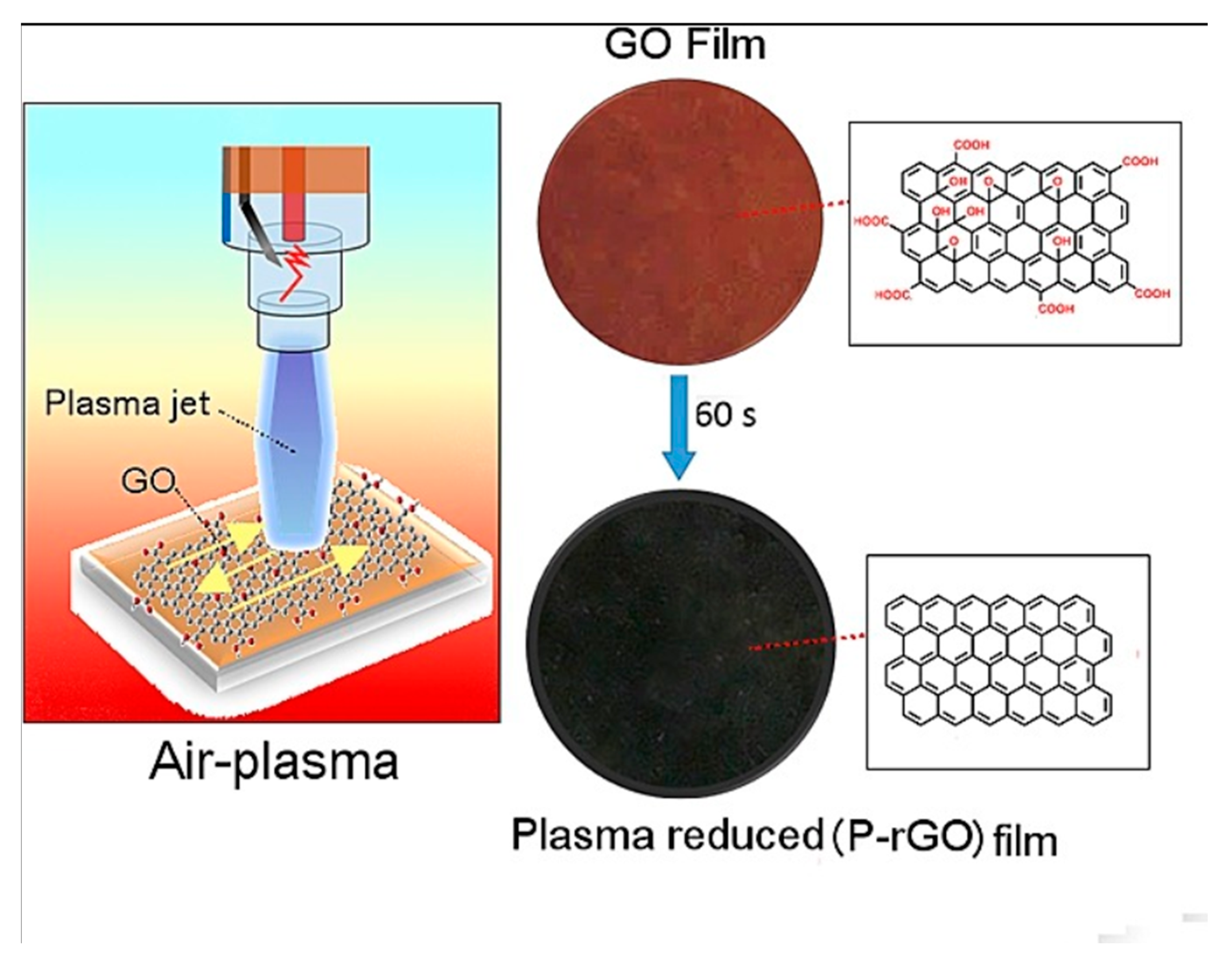
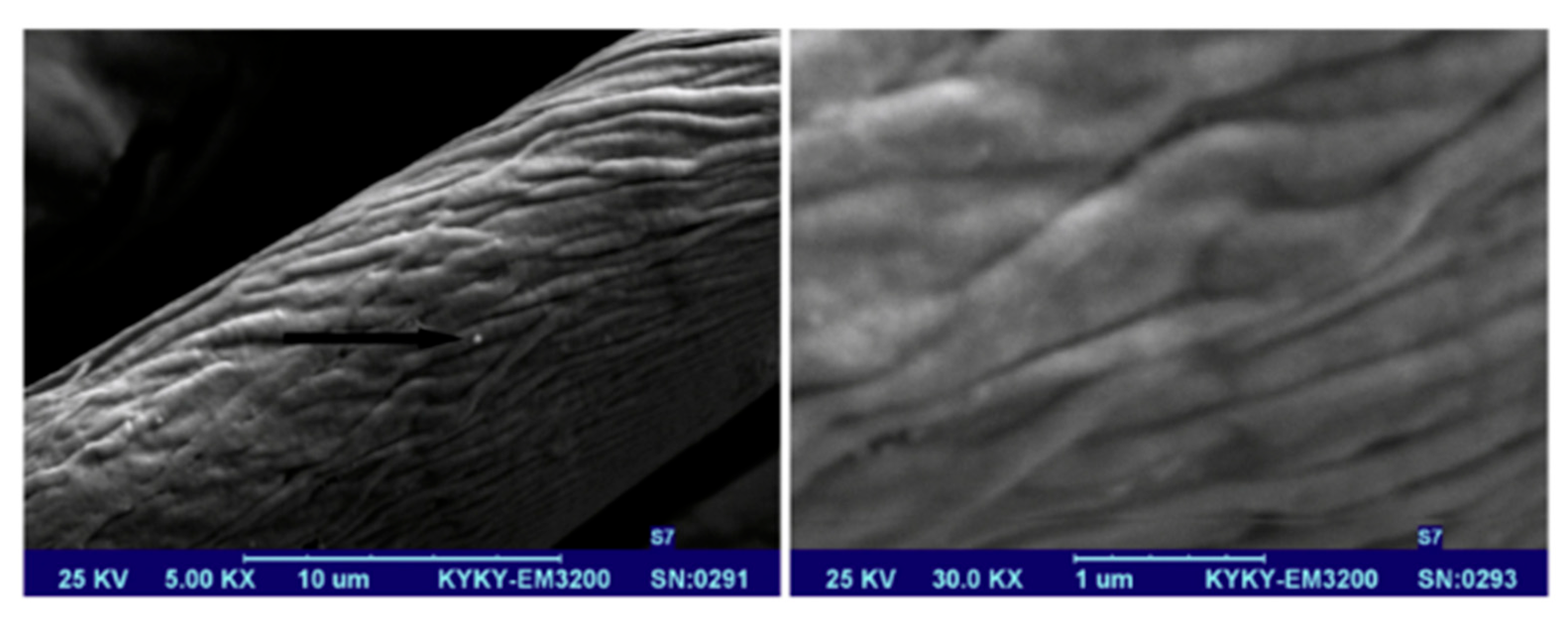


| Technique | Description | Advantages | Limitations | Scalability | Reference |
|---|---|---|---|---|---|
| Dip Coating | Substrate is immersed in a graphene solution and dried; simple and scalable. | Low cost, compatible with various fabrics, scalable. | May require multiple cycles for uniformity. | High—Easy, low-cost, scalable setup. | [20] |
| Spray Coating | Graphene dispersion is sprayed onto the fabric surface using pressure or ultrasonic nozzles. | Good control of layer thickness, uniform coating. | Wasting of material, nozzle clogging possible. | Med–High—Fast, but less efficient. | [22] |
| Pad-Dry-Cure | Fabric is passed through graphene solution, then dried and cured; commonly used in industry. | Industrial compatibility, uniform distribution. | Moderate control over nano-scale features. | High—Standard in textile industry. | [21] |
| Inkjet Printing | Precise deposition of graphene-based inks onto fabrics using digital printing heads. | High resolution and pattern control. | Requires specific ink rheology and substrate compatibility. | Low–Med—Precise, but slow. | [22] |
| Chemical Vapor Deposition (CVD) | Graphene is grown directly on substrates at high temperatures; it produces high-quality films. | High-quality graphene layers, excellent conductivity. | High cost, not fabric-friendly due to temperature. | Low–Med—Precise, but slow. | [25] |
| Electrochemical Deposition | Graphene or conductive polymers are electrochemically deposited onto the fabric. | Good adhesion, controllable thickness. | Requires conductive substrates, less scalable. | Low–Med—Precise, but slow. | [18] |
| In Situ Polymerization | Polymer matrix is polymerized in the presence of graphene directly on fabric fibers. | Strong interaction with fabric, enhanced durability. | Complex chemistry may involve toxic reagents. | Med—Effective, but chemically demanding. | [24] |
| Drop Casting | Graphene solution is dropped onto the textile and dried; useful for lab-scale samples. | Very simple, quick for testing purposes. | Not scalable, uneven coating possible. | Low—Manual, for small-scale use. | [7] |
Disclaimer/Publisher’s Note: The statements, opinions and data contained in all publications are solely those of the individual author(s) and contributor(s) and not of MDPI and/or the editor(s). MDPI and/or the editor(s) disclaim responsibility for any injury to people or property resulting from any ideas, methods, instructions or products referred to in the content. |
© 2025 by the authors. Licensee MDPI, Basel, Switzerland. This article is an open access article distributed under the terms and conditions of the Creative Commons Attribution (CC BY) license (https://creativecommons.org/licenses/by/4.0/).
Share and Cite
Aznar, P.R.D.; Junior, H.L.O. Advances and Applications of Graphene-Enhanced Textiles: A 10-Year Review of Functionalization Strategies and Smart Fabric Technologies. Textiles 2025, 5, 28. https://doi.org/10.3390/textiles5030028
Aznar PRD, Junior HLO. Advances and Applications of Graphene-Enhanced Textiles: A 10-Year Review of Functionalization Strategies and Smart Fabric Technologies. Textiles. 2025; 5(3):28. https://doi.org/10.3390/textiles5030028
Chicago/Turabian StyleAznar, Patricia Rocio Durañona, and Heitor Luiz Ornaghi Junior. 2025. "Advances and Applications of Graphene-Enhanced Textiles: A 10-Year Review of Functionalization Strategies and Smart Fabric Technologies" Textiles 5, no. 3: 28. https://doi.org/10.3390/textiles5030028
APA StyleAznar, P. R. D., & Junior, H. L. O. (2025). Advances and Applications of Graphene-Enhanced Textiles: A 10-Year Review of Functionalization Strategies and Smart Fabric Technologies. Textiles, 5(3), 28. https://doi.org/10.3390/textiles5030028