
Article

Meso-Macro Simulations of the Forming of 3D Non-Crimp Woven Fabrics
1
Université de Lyon, LaMCoS CNRS, INSA-Lyon, F-69621 Lyon, France
2
Université de Haute Alsace, ENSISA, LPMT, F-68000 Mulhouse, France
3
Ecole Nationale d’Ingénieurs de Brest, IRDL CNRS, F-29200 Brest, France
*
Author to whom correspondence should be addressed.
Textiles 2022, 2(1), 112-123; https://doi.org/10.3390/textiles2010006

Submission received: 15 December 2021 / Revised: 14 January 2022 / Accepted: 2 February 2022 / Published: 11 February 2022
(This article belongs to the Special Issue New Research Trends for Textiles)

Abstract

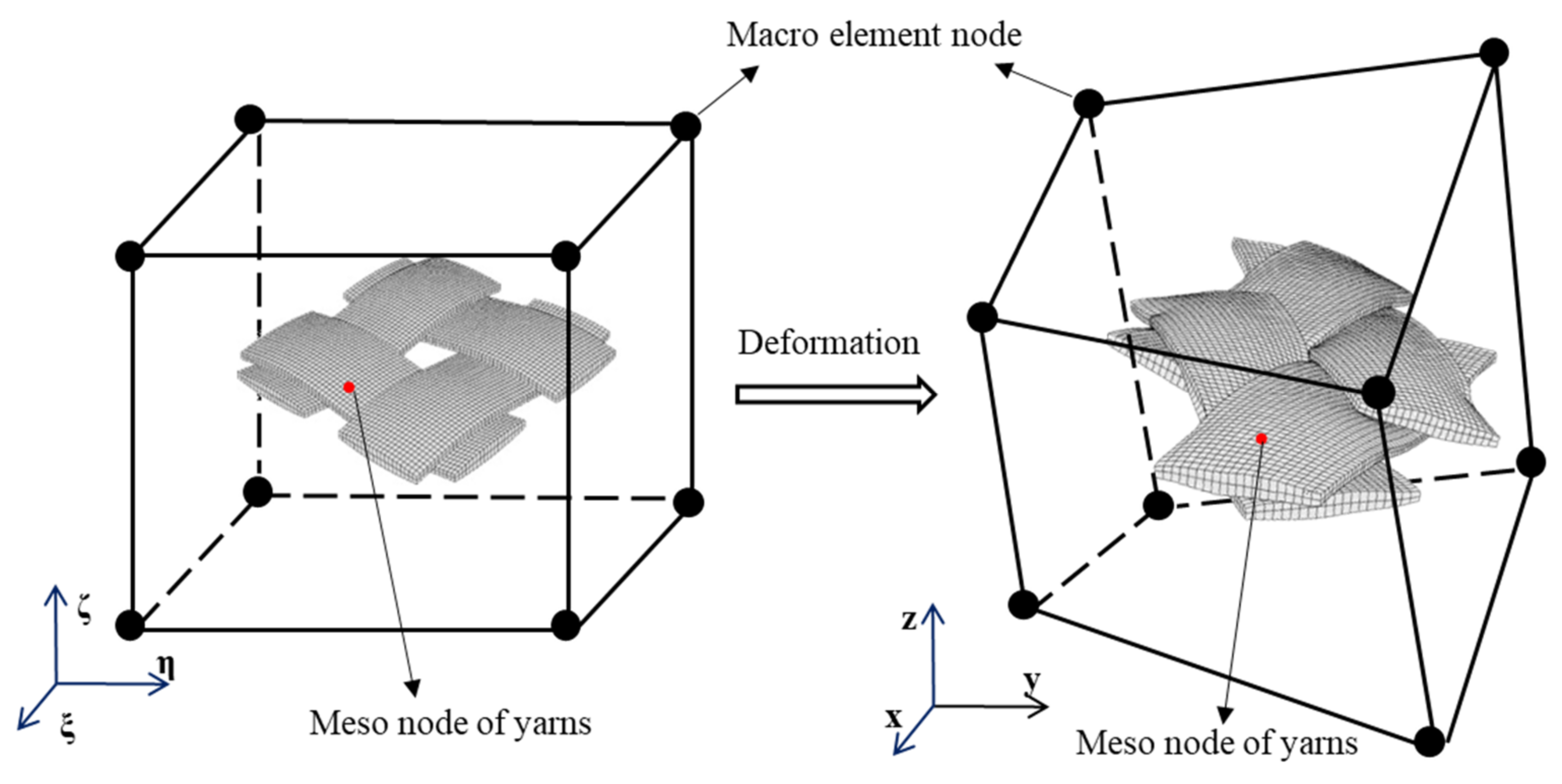
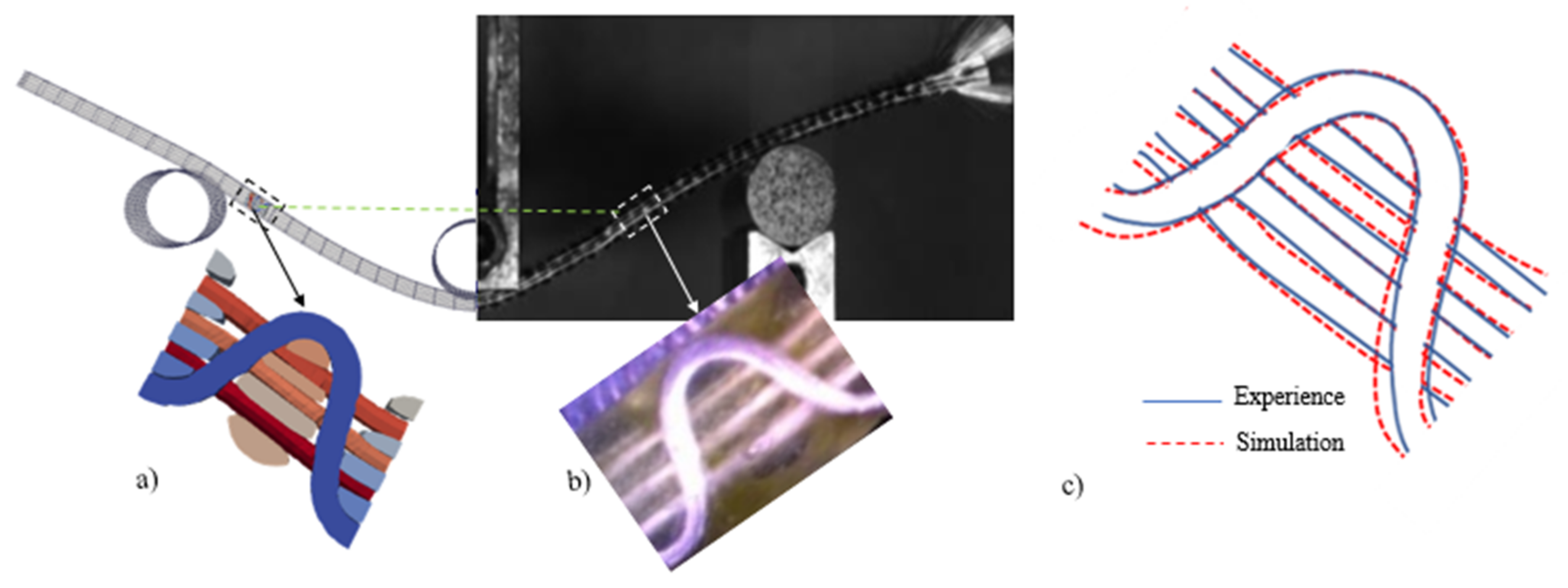
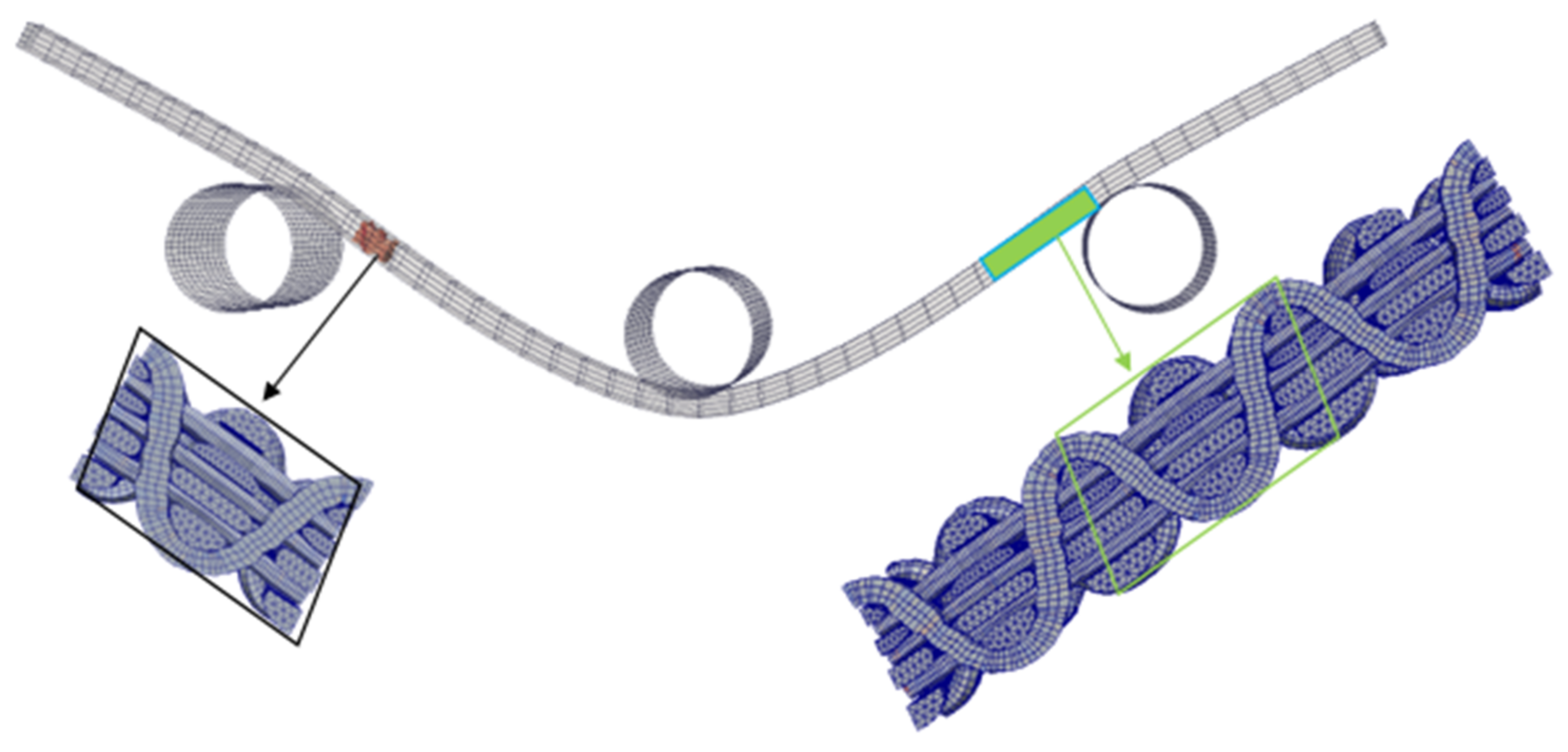
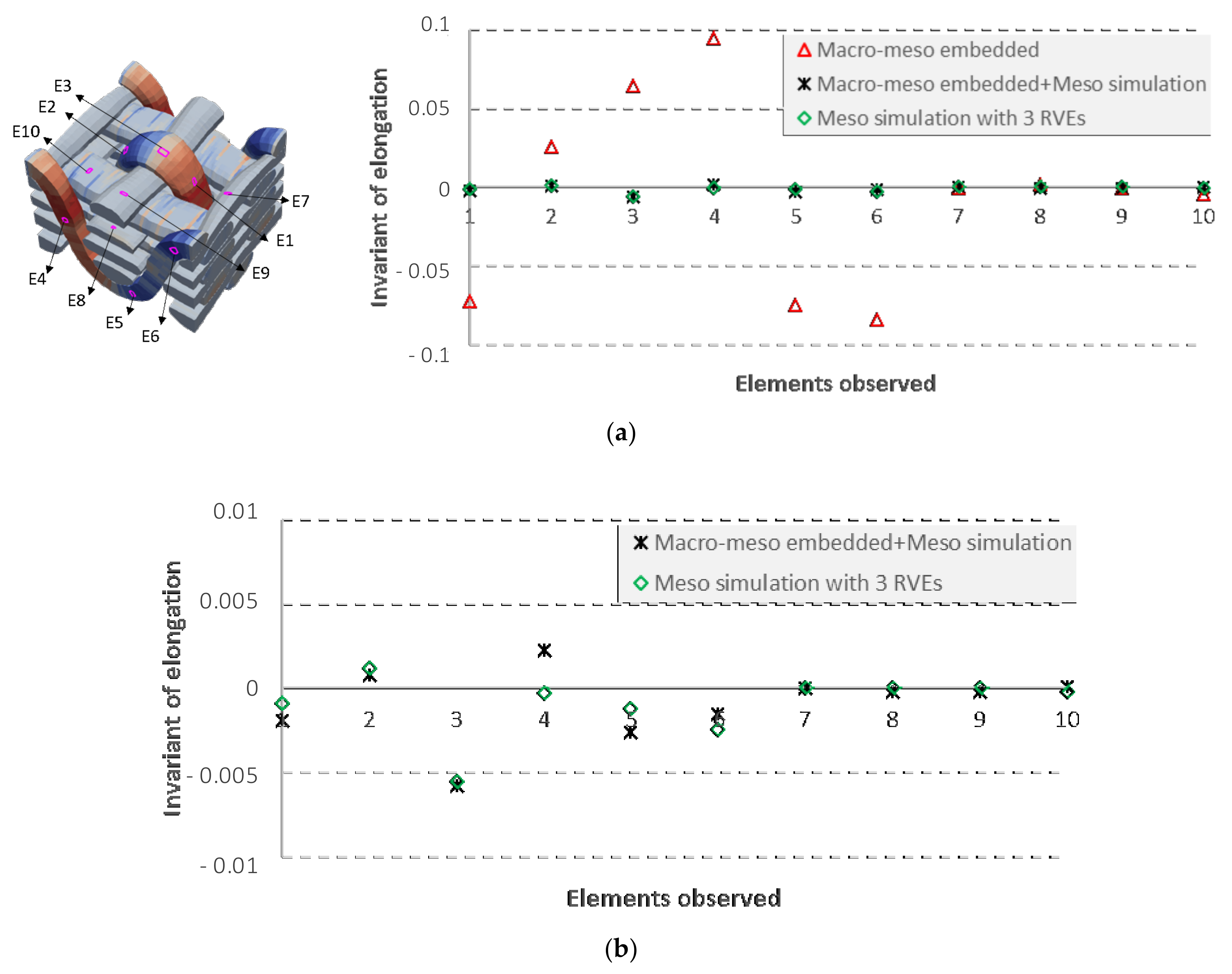
The RTM (Resin Transfer Molding) manufacturing process is largely used for the fabrication of textile composites. During the forming phase, the deformations of composite reinforcements at the mesoscopic scale, such as the positions, orientations, and changes in the sections of deformed yarns, are essential to calculate the permeability of the reinforcement in the injection phase and evaluate the mechanical behaviors of the final products. However, the mesoscopic models of the forming simulation lead to a high computational cost due to the numerous yarns and their complex contacts, especially for thick reinforcements. In this paper, a macro-meso method for predicting the mesoscopic deformations of composite reinforcements with a reasonable calculation time is presented in this paper. The proposed multi-scale method allows for the linkage of the macroscopic simulation of reinforcements with the mesoscopic modelling of an RVE (Representative Volume Element) through a macro-meso embedded approach. Based on macroscopic simulations using a 3D hyperelastic constitutive law, an embedded mesoscopic geometry is first deduced. The macro-meso embedded solution can lead to excessive extensions of yarns. To overcome this inconvenience, a local mesoscopic simulation based on the macro-meso embedded analysis is carried out on a single RVE. Finally, the multi-scale forming simulations are investigated in comparison with the experimental results, illustrating the efficiency of the proposed method.
Keywords: forming simulation; multi-scale analyses; RVE; hyperelasticity; thick reinforcements forming simulation; multi-scale analyses; RVE; hyperelasticity; thick reinforcements