You are currently on the new version of our website. Access the old version .
PhyschemPhyschem
  • Article
  • Open Access

9 January 2026

Model Simulations and Experimental Study of Acetic Acid Adsorption on Ice Surfaces with Coupled Ice-Bulk Diffusion at Temperatures Around 200 K


,
,
,
and
1
Department of Analytical Chemistry and Computer Chemistry, University of Plovdiv, 4000 Plovdiv, Bulgaria
2
Greenlyte Carbon Technologies GmbH, D-45143 Essen, Germany
3
ALBO-Tec GmbH, D-45473 Mülheim an der Ruhr, Germany
4
Institute of Physical Chemistry, University of Duisburg-Essen, D-45117 Essen, Germany
This article belongs to the Section Kinetics and Thermodynamics

Abstract

A kinetic and thermodynamic multi-phase model has been developed to describe the adsorption of gases on ice surfaces and their subsequent diffusional loss into the bulk ice phase. This model comprises a gas phase, a solid surface, a sub-surface layer, and the ice bulk. The processes represented include gas adsorption on the surface, solvation into the sub-surface layer, and diffusion in the ice bulk. It is assumed that the gases dissolve according to Henry’s law, while the surface concentration follows the Langmuir adsorption equilibrium. The flux of molecules from the sub-surface layer into the ice bulk is treated according to Fick’s second law. Kinetic and thermodynamic quantities as applicable to the uptake of small carbonyl compounds on ice surfaces at temperatures around 200 K have been used to perform model calculations and corresponding sensitivity tests. The primary application in this study is acetic acid. The model simulations are applied by fitting the experimental data obtained from coated-wall flow-systems (CWFT) measurements, with the best curve-fit solutions providing reliable estimations of kinetic parameters. Over the temperature range from 190 to 220 K, the estimated desorption coefficient, kdes, varies from 0.02 to 1.35 s−1, while adsorption rate coefficient, kads, ranges from 3.92 and 4.17 × 10⁻¹³ cm3 s−1, and the estimated diffusion coefficient, D, changes by more than two orders of magnitude, increasing from 0.03 to 13.0 × 10⁻⁸ cm2 s−1. Sensitivity analyses confirm that this parameter estimation approach is robust and consistent with underlying physicochemical processes. It is shown that for shorter exposure times the loss of molecules from the gas phase is caused exclusively by adsorption onto the surface and solvation into the sub-surface layer. Diffusional loss into the bulk, on the other hand, is only important at longer exposure times. The model is a useful tool for elucidating surface and bulk process kinetic parameters, such as adsorption and desorption rate constants, solution and segregation rates, and diffusion coefficients, as well as the estimation of thermodynamic quantities, such as Langmuir and Henry constants and the ice film thickness.

1. Introduction

The importance of multi-phase processes in atmospheric chemistry has been recognized ever since the detection of polar ozone depletion over Antarctica [1,2,3,4]. In the following years, numerous experimental studies were undertaken to study the rates of these reactions [1,2,3,4,5,6,7,8]. In general, these rates can be described as a collision frequency of gas phase molecules with the surface multiplied with the uptake coefficient γ [9]. The latter accounts for the fraction of molecules that are not reflected back into the gas phase but rather are permanently taken up into the condensed phase—whether liquid or solid. Together with model calculations these studies have not only helped to clarify the chemical and microphysical mechanism underlying polar ozone depletion but also have unequivocally confirmed the role of human influence.
A particular but ubiquitous form of solids in the upper troposphere/lower stratosphere (UTLS) region is water ice at temperatures around 200 K. Its origin is either the penetration of water vapor from the troposphere into the UTLS region [10] or the injection of water vapor from jet-engine exhaust [11]. The abundance of ice particles and their surface areas in the UTLS are sufficient to influence the distribution of gas-phase species by providing surfaces for heterogeneous reactions [12].
Because of their importance, ice surfaces and their impact on adjacent gas phase compositions have been the subject of intense laboratory studies over the last decades. Among others, coated-wall flow-tube (CWFT) reactors with sensitive monitoring of the interacting gas phase have proven to be one of the most versatile instruments. Apart from a number of other experimental details, these studies primarily differ in the methods used to generate ice surfaces: either by freezing of liquid water as used in the experiments described in [13,14,15,16], or by condensation (re-sublimation) of ice from gas-phase vapor [17,18]. In the latter case, the resulting surface is rougher than that produced by the former method. The reproduction of atmospherically relevant ice surfaces is typically estimated by the maximum number of active surface sites, reported by different groups and preparation techniques to be 2–6 × 1014 cm−2 [13,14,17,19,20], or by the area of the geometric surface [21].
An important issue of gas/ice interference in the laboratory as well as in the atmospheric environment is the nature of the interaction processes. Because of its surface polarity, water ice will interact relatively strongly with polar gas molecules such as alcohols, aldehydes, and acids. The corresponding enthalpies of adsorption are around −40 to −60 kJ/mol, for which interactions between the ice and these molecules become significant at all temperatures below approximately 220 K [17]. In addition to surface adsorption, water ice may also act as a solvent. In this case molecules from the gas phase that are adsorbed onto the surface may penetrate into the solid phase and be distributed in the bulk according to diffusional processes and thermodynamic constraints. However, surface adsorption, phase boundary transition, and bulk diffusion occur on different time scales and exhibit different temperature dependencies.
In addition to the experimental studies, attempts have also been undertaken to design a mathematical framework for the interactions of the gas phase molecules with solid or liquid films. Behr et al. [22] were the first to simulate the CWFT reactor using a multi-segment numerical model to describe adsorption and desorption processes of acetone in a tubular reactor with a moveable gas injection port. It was shown that the observed profiles of the acetone gas phase concentrations could be reproduced satisfactorily based on reversible gas phase adsorption. A similar model was concurrently developed by Symington et al. [14]. For the first time, these authors also included in their model an additional loss of gas phase molecules into the solid phase.
The reversible adsorption of acetone on ice was also investigated by Bartels–Rausch et al. [21] using an atmospheric pressure variant of the coated-wall flow-tube experiment. In their study, they calculate experimental break-through curves by a Monte Carlo simulation method under conditions of simple first-order wall loss. In addition, a kinetic framework model with universally applicable rate equations and parameters has been presented by Poeschl et al. [23]. Their model describes in detail the mass transport across phase boundaries in connection with chemical reactions and maintains the full compatibility with the resistor model. Previously, an integrated mathematical model for all relevant kinetic processes [24] along with corresponding software tools for CWFT reactor simulations based on this framework had been developed by us [25].
In the present work, we provide a detailed theoretical investigation of acetic acid interactions with ice at UTLS conditions. We have extended the model of Symington et al. [14] by incorporating a full numerical simulation of diffusional processes. This extension required the introduction of an additional phase, the sub-surface layer (ssl), into which the molecules may penetrate from the surface, and which serves as the boundary layer for diffusion into the bulk. Kinetic parameters and thermodynamic constraints are being used to describe the loss of molecules from the gas phase onto the surface and into the condensed phase. Also, the presented numerical examples demonstrate the sensitivity of the distribution of the originally gaseous component between the different phases of the model for different parameters of the simulation, i.e., temperature, Henry solubility, diffusion coefficient, thickness of the bulk layer, etc.

2. Model Description

2.1. The Physical Model

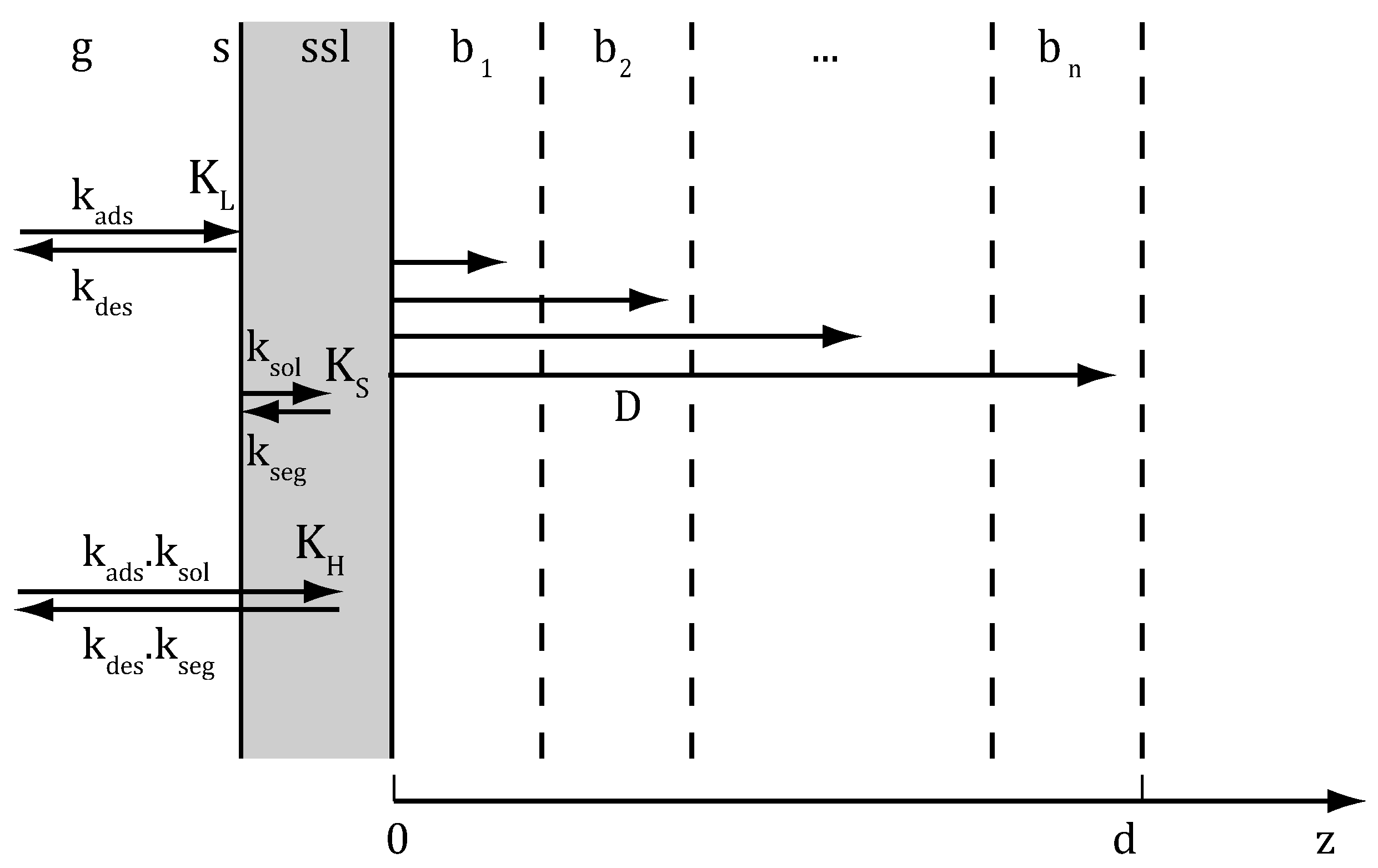
The model presented in this work describes the bidirectional mass transfer from the gas phase across the ice surface and into the ice bulk. It consists of three coupled modules (phases) that account for calculating simultaneously the adsorption from the gas phase onto the surface, the transition from the surface into a sub-surface layer, and, eventually, the flux into the solid bulk. Each of these processes is treated as being reversible with corresponding rate coefficients in both directions. Figure 1 is a schematic representation of the overall mass transfer model. It is important to note that in each simulation all trace gas molecules (e.g., acetic acid molecules) initially reside in the gas phase.
Figure 1. Schematic representation of the mass transfer processes from the gas phase (g) across the surface (s) and through the sub-surface layer (ssl) into the ice bulk (b). The bulk consists of n layers, with d being its total thickness.
The adsorption of molecules from the gas phase (g) onto the surface (s) and the reverse desorption from the surface is considered to obey Langmuir’s law. This law defines these processes by means of two rate coefficients kads [cm3 s−1] and kdes [s−1], for adsorption and desorption, respectively, and the equilibrium described by the Langmuir constant. The adsorbing surface is assumed to consists of identical, evenly distributed surface sites with a number density of cs,max [cm−2]. The instantaneous thermalized surface number density is denoted as cs [cm−2].
From the surface the adsorbed molecules are allowed to penetrate into the sub-surface layer (ssl) with rate coefficients ksol [s−1] and kseg [cm3 s−1] for solvation and segregation, respectively. At equilibrium, the bulk concentration of the sub-surface layer is given by KS = ksol/kseg [cm−3]. Assuming that gas adsorption and phase transfer into the sub-surface layer—as well as the reverse processes—occur rapidly, the gas can be considered equilibrated with the sub-surface layer concentration, and the following relationship applies:
K L × K s = K H
Hence, the product of the Langmuir constant KL [cm3] and the solvation constant KS [cm−3] is identical with the dimensionless Henry constant KH. If we further assume that KH for the solution in the sub-surface layer of the ice film can be approximated by that in liquid water, the equilibrium constants can be estimated individually, enabling a complete quantification of the phase transfer process (cf. Table 1).
The transport from the sub-surface layer into the bulk can be estimated using Fick’s time-dependent second law, provided the sub-surface layer concentration cssl [cm−3] is known. In order to simulate the bulk gradient and its temporal variation, the ice bulk with a total depth d [cm] is subdivided into several bulk layers (b1, b2, …, bn). As a result, the three phase processes are treated simultaneously using sufficiently small spatial and temporal differential steps.
The mathematical framework of model and corresponding software for its numerical implementation was developed by us and are available in the following repository: https://doi.org/10.5281/zenodo.1240249.

2.2. Mathematical Framework for Open Box Systems

The numerical model of all processes that occur in the uptake of gases onto an ice film and into a solid ice phase, as appropriate for the experimental setup of a coated wall flow tube reactor (CWFT), has previously been described by Kochev et al. [24]. The simulations of this model are based on a system of partial differential equations (PDEs) which describe the physicochemical processes of adsorption/desorption, solution/segregation, and bulk diffusion [25]. The concentrations utilized in the computational process are designated as follows:
cg(t) [cm−3] is the gas concentration as a function of time (t);
cs(t) [cm−2] is the surface concentration as a function of time (t);
cb(z,t) [cm−3] is the ice bulk concentration as function of time (t) and bulk depth (z);
cb,i(t) = cb(i × ∆z,t) [cm−3] is an alternative discrete formalization of the i-th bulk layer by replacing the continuous variable, z, with bulk layer index, i.
As described above, the bulk layer with formal index 0 (cb,0(t)) is designated in this study as a sub-surface layer (ssl) where the mass transfer across the phase boundary from the surface to the bulk and vice versa occurs. Both the gas and the sub-surface concentrations are well mixed and hence spatially uniform, provided that ∆z is sufficiently small.
For straightforward physical reasons, the results of the model simulations will depend on whether the system is open or closed. The former corresponds to a constant gas phase concentration, whereas in the latter case the gas phase is allowed to vary in time. We examined these two cases in order to investigate the general behavior of gases in contact with surfaces. The special case of a flow system, in which we build up a steady state gas phase concentration for each sector along the flow tube, is treated separately in the following sections.
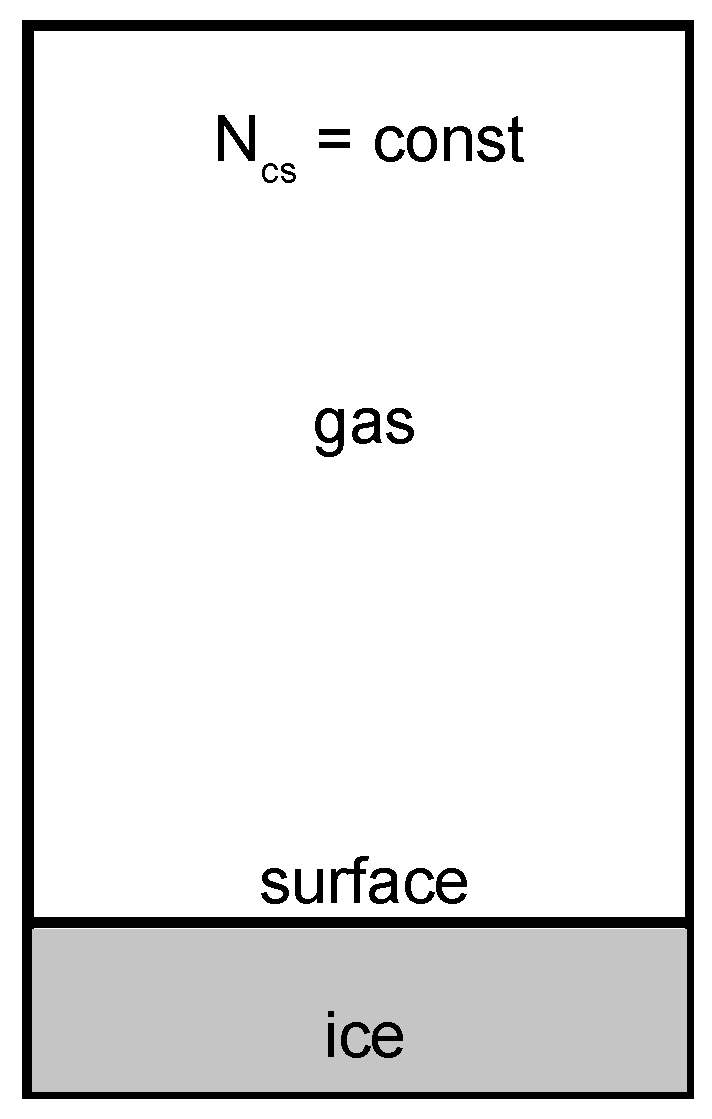
The model for a closed system is represented by a container (closed box) with specified geometry, where the processes illustrated in Figure 1 occur for a gas volume (V) obtained from the tube dimensions (radius and length), an ice surface area (S), and an ice layer thickness (d) (cf. Figure 2). The main characteristic of the closed system is that the total number of molecules across all phases within the container remains constant throughout the entire simulation. Initially, at the start of the simulation all molecules reside in the gas phase, i.e., cg(0) = c0 [cm−3] for t = 0 s. The computation therefore focuses on the evolution of the gas phase concentration, as well as the corresponding ice surface and ice bulk concentrations.
Figure 2. Schematic representation of a closed system. The absolute number of molecules in the system and, consequently, the total number of molecules (NCS) among the three phases is kept constant. The ratio between the gas and ice volume is not to scale.
The kinetic processes occurring within a closed system are mathematically described by the following system of partial differential equations (PDEs) [24].
𝜕 c g ( t ) 𝜕 t = S V k a d s c g ( t ) c s , m a x c s t k d e s c s ( t ) 𝜕 c s ( t ) 𝜕 t = k a d s c g t c s , m a x c s t k d e s c s t F s o l / s e g ( t ) 𝜕 c b ( z , t ) 𝜕 t = D 𝜕 2 c b ( z , t ) 𝜕 z 2
Thus, we consider the changes in the gas phase concentration, the surface concentration, and the concentrations in different layers of the bulk, respectively. The term (ratio), S/V, accounts for the reactor geometry. In the present calculations we have adopted a tubular reactor geometry, appropriate for a coated-wall flow-tube (CWFT) system. In this case, S corresponds to the inner area of a tubular section (S = 2πrl [cm2]), V is the volume (V = πr2l [cm3]), and l is the length of this section. S/V, therefore, is simply 2/r.
The first two equations are essentially the Langmuir PDEs for adsorption and desorption where kads [cm3 s−1] and kdes [s−1] are, respectively, the adsorption and desorption rate coefficients, and cs,max [cm−2] is the total number of the active surface sites. However, the second equation also takes into account the transfer from the surface into the sub-surface layer and vice versa. It is, therefore, modified by the function Fsol/seg(t) [cm−2 s−1] which is physically identical to a net flux from the surface into the sub-surface layer across a unit surface area:
F s o l / s e g ( t ) = F s o l t F s e g t   [ cm 2   s 1 ]
In our model we propose the following expression for the net flux from the surface to the bulk (detailed expansion of Equation (3)):
F s o l / s e g ( t ) = k s o l c s t k s e g c b z = 0 , t c s , m a x c s ( t )   [ cm 2   s 1 ]
In here, cs(t) [cm−2] is the surface concentration and cb(z = 0,t) [cm−3] is the sub-surface layer concentration. The flux of molecules that segregate from the sub-surface layer to the ice surface is proportional to the sub-surface layer concentration and the number of free surface sites [cs,maxcs(t)]. The segregation process itself is described by means of the rate constant kseg [cm3 s−1].
The concept of a sub-surface layer is primarily introduced to generate an upper boundary condition for diffusion into the bulk. Its physical state is not precisely defined. However, it is deemed not to be fully crystalline but rather to resemble a quasi-liquid layer [5,26,27,28]. This term is supposed to reflect some surface disorder and disordered interface which is an inherent interfacial property of crystals [5]. Molecular dynamic simulations have shown that a disordered layer develops spontaneously at the free surface of ice at temperatures below the melting point [5]. In this form, the properties of this layer are liquid-like with enhanced mobility of the water and the absorbed molecules [29]. The thickness of the ssl is irrelevant to the results, although in the diffusion model it is treated as one of 1000 sub-layers. Hence, this thickness contributes modestly to the total capacity (i.e., the total number of molecules) in this layer, in particular for very short diffusion times when most of the bulk molecules resides exclusively in the uppermost layers (see below).
The third equation is the classical diffusion PDE of Fick’s second law where D [cm2 s−1] is the diffusion coefficient. The diffusion equation is solved with the following boundary conditions of the Neumann type:
𝜕 c b z = 0 , t 𝜕 t = 1 d z F s o l / s e g ( t ) 𝜕 c b z = d , t 𝜕 t = 0
In here, 1/dz is the ratio between the surface area and the differential volume of the sub-surface layer, i.e., 1/dz = (S/(S × dz)). The second boundary condition describes the bottom of the ice bulk (z = d) where no mass transfer is possible since it is interfacing with the reactor tube.
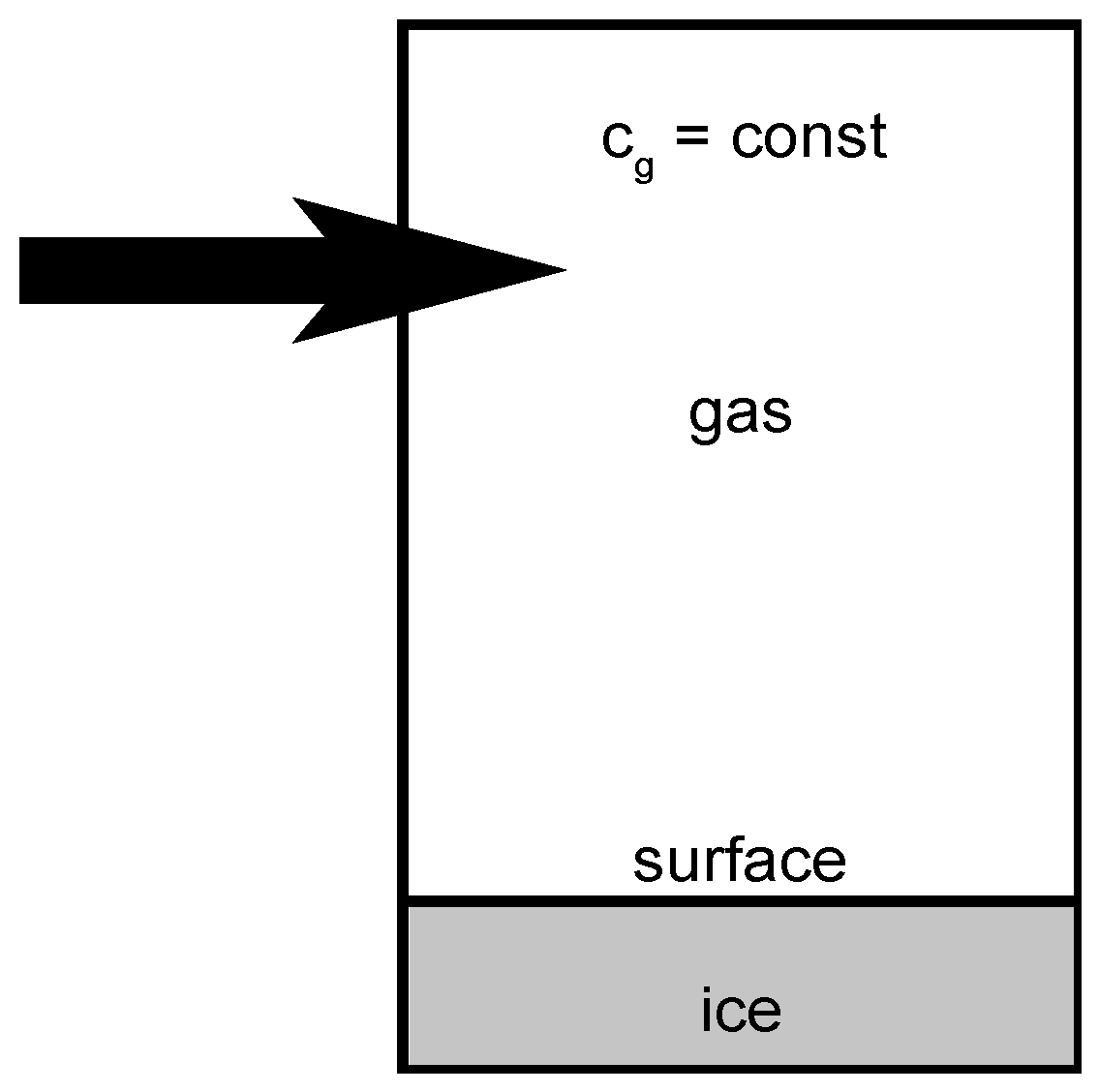
The simulations for the open system (Figure 3) have been performed in close analogy to those of the closed system and for the same geometry of the model container. The main difference, however, is that in the open system the gas phase concentration is kept constant during the entire simulation: cg(t) = const. = c0 [cm−3].
Figure 3. Schematic representation of an open system. The gas phase concentration (cg) is kept constant by a continuous flux (represented by the arrow) of molecules into the gas phase from a neighboring volume. Note: The ratio between the gas and ice volumes is not to scale.
The system of partial differential equations (PDE), in this case, does not contain an equation for cg(t) change because, by definition, this is constant (i.e., cg(t) = c0) and, respectively, its derivative is zero. The main PDE system is therefore rewritten with only two equations in the following form:
𝜕 c s t 𝜕 t = k a d s c 0 c s , m a x c s t k d e s c s t F s o l / s e g t 𝜕 c b ( z , t ) 𝜕 t = D 𝜕 2 c b ( z , t ) 𝜕 z 2
Notably, the equations that describe the mass transfer between the ice surface and ice bulk are the same as those for the closed system case section above.

3. Model Results and Sensitivity Analysis

In the following section we present the results for the temporal evolution of all concentrations in multi-phase distributions of gases in contact with an ice film. The focus is on the concentrations on the surface and in the bulk and on how much these reduce the prevailing gas phase concentration. The input values chosen are physically realistic and correspond approximately to the interaction of smaller (short chain) carboxylic acids with ice surfaces at temperatures around 200 K, for which an interaction with the gas phase concentration by adsorption to the ice surface is known to be significant [13,14,17,18,30].
In addition to delineating and describing the results, we also present and discuss the results from a sensitivity analysis regarding the impact of temperature and the rate of the solution and segregation process, as well as the impact of the bulk ice diffusion coefficient and ice film thickness.

3.1. Input (Setup) Simulation Parameters

The simulations were performed for a gas phase with a total volume of 1 cm3 in a tubular reactor as appropriate for CWFT setups. For a reactor radius of 1.20 cm, this volume corresponds to a segment length of 0.22 cm and a surface area of S = 1.67 cm2. The initial gas phase concentration is set to 4 × 1011 cm−3. The thickness of the ice film is taken as 5 × 10⁻³ cm [3] and is subdivided into 1000 bulk layers of equal thickness. The work simulation temperatures were 190, 205, and 220 K, reflecting approximately the conditions of the UTLS region.
The additional input (configuration) parameters for the calculations (kads, kdes, ksol, kseg, cs,max and D) are summarized in Table 1, with temperature dependent expressions (where appropriate) for the selected values of 190, 205, and 220 K. Among these, the input values for surface–gas interactions (kads, kdes, and cs,max) have been taken from previously reported studies on the interaction of oxygenated hydrocarbons with ice surfaces [3,5,6], including small carbonyls. Due to the large number of previous studies, the parameters for these interactions are reliably determined. It has been empirically shown that the temperature dependences of kads and kdes follow the theoretical T1/2 dependence and are consistent with the enthalpy of adsorption of ΔHads ≈ −50 kJ/mol [13,14,17,18,30].
Table 1. Summary of input parameters used in the present simulations with temperature dependent expressions and absolute values for 190, 205, and 220 K.
Data for the rate coefficients for solution (ksol) and segregation (kseg) of oxygenated hydrocarbons on ice surfaces are, to our knowledge, not available in the literature. There is, however, independent information available on the phase transfer process from measurements of accommodation coefficients and Henry constants.
Accommodation coefficients (αssl) in the bulk reflect the relative probability of solvation versus desorption of molecules on the surface [33] according to the following relation:
α s s l = α s k s o l / k s o l + k d e s
where αs is the corresponding accommodation coefficient on the surface. Since the absolute values of α on ice surfaces are roughly three orders of magnitude smaller than those on water surfaces [34], we may assume that this is an effect of a reduced solvation constant ksol. This conclusion is further supported by molecular dynamical calculations. In a theoretical study of the adsorption of environmental trace gases on liquid and solid water surfaces [31], it has been shown that the free energy paths for phase transfer of a solute into liquid and solid water differ substantially, with the solid pathway being both energetically and entropically more demanding.
Additional information on KS is available from the values of Langmuir (KL) and Henry (KH) constants using the relation Ks = KH/KL. With the KH values available from the thesis of Nehme [35] and the KL values provided in [13,14,17,18,30], we calculate a temperature independent value for the solvation constant of Ks = 5.0 × 1017 cm3. It should be noted that the Henry constants from [12] are several orders of magnitude smaller than those for liquid water [36].
A major source of potential parameter uncertainty is the choice of the diffusion coefficient values for oxygenated hydrocarbons in ice films. While diffusion coefficients in ice for several substances have been measured [12,37,38,39], there is no direct information for the compounds chosen here. In addition, there is evidence that diffusion coefficients depend on surface disorder as well as the surface layer concentration due to surface melting. Finally, there is the possibility of grain boundaries and cracks in the ice film which might induce apparently higher D values than those expected for more perfect solids. In the present work we have decided to adopt the data of Livingston and Smith [31].

3.2. Simulations for Open Box Systems

In this chapter, we describe the simulation results for the time evolution of molecule distribution across the gas phase, the ice surface, and the ice bulk for the set of input parameters outlined in Section 3.1. The simulations were performed for a tubular segment with constant gas phase concentration (open system).
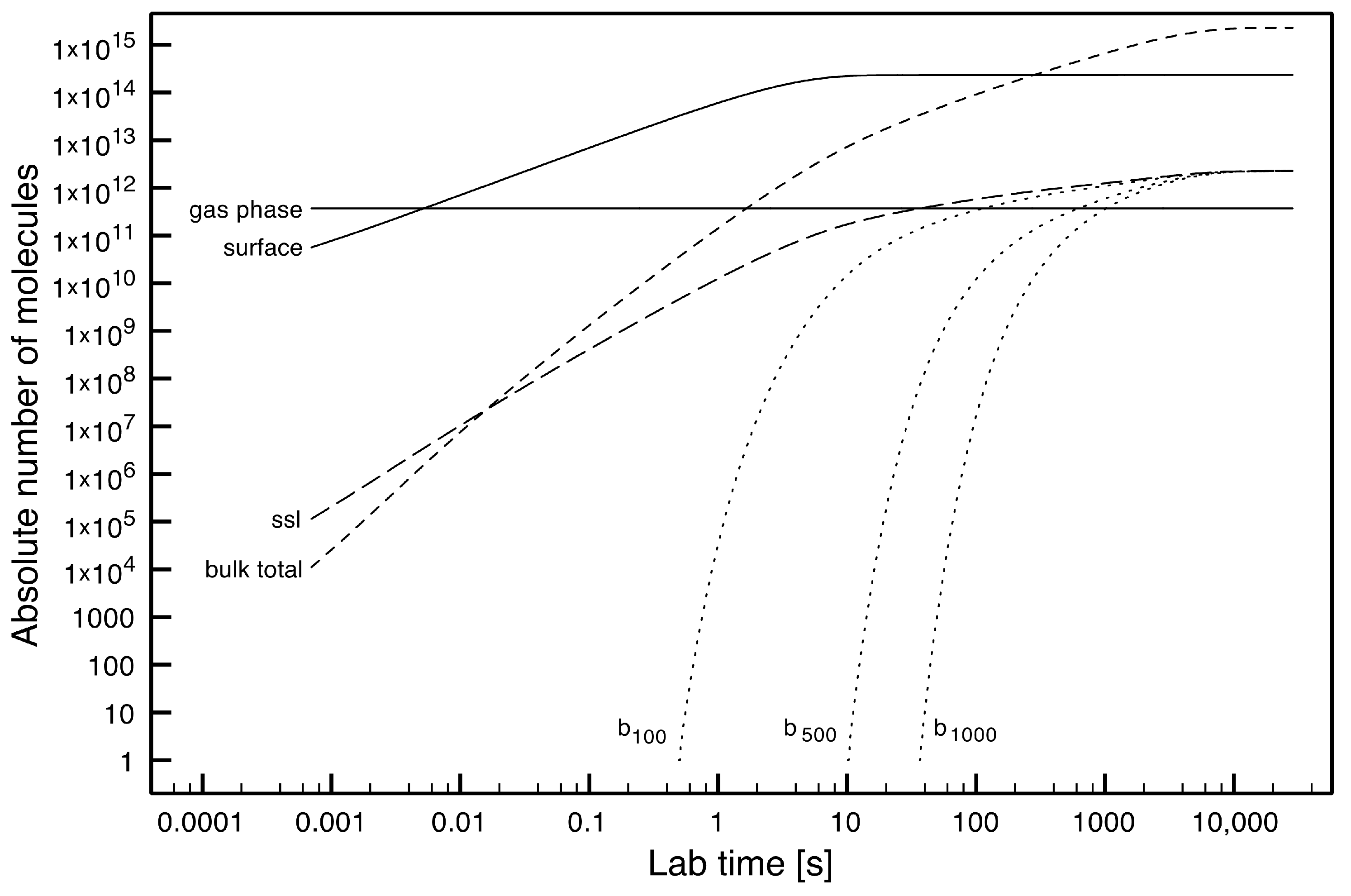
In the case of the open system, the gas phase concentration is held constant at approximately 4 × 10¹¹ molecules/cm3, as indicated by the horizontal line (see Figure 4). The surface concentration rises rapidly and approaches the equilibrium level in less than 10 s. During this time the total number of molecules adsorbed on the surface is several orders of magnitude larger than that in the gas phase. On the other hand, the total number of molecules that entered the bulk ice phase at that time is fairly small. The surface dominance, however, disappears after approximately 100 s, when the number of molecules in the bulk exceeds that on the surface. This means that the two reservoirs (surface and bulk) fill up sequentially in well-defined time domains. As it is shown below, the detailed behavior of this filling process depends on several parameters including the temperature and thickness of the ice film, as well as the KL, KS, and D values.
Figure 4. Time evolution of the distribution of the absolute number of molecules among gas, surface, and bulk phases in an open box system at 205 K with a constant gas phase concentration of 4 × 10¹¹ molecules/cm3. The system geometry has a surface area of 1.67 cm2 and a volume of 1 cm3. The plotted layers of the bulk ice are ssl (sub-surface layer), b100, b500, and b1000.
Figure 4 also shows the temporal evolution of molecule numbers in different layers of the bulk, including the sub-surface layer (ssl) and the bulk layers 100, 500, and 1000, where the latter represents the outermost (last) layer of the 5 × 10⁻³ cm-thick ice film. As expected, these layers fill up sequentially by diffusion, starting from the sub-surface layer. Only after approximately 1000 s the different bulk layers are filled equally and the bulk becomes saturated. The total number of molecules in the condensed phase is well above 1015, more than three orders of magnitude larger than that of the gas phase.

3.2.1. The Influence of Temperature

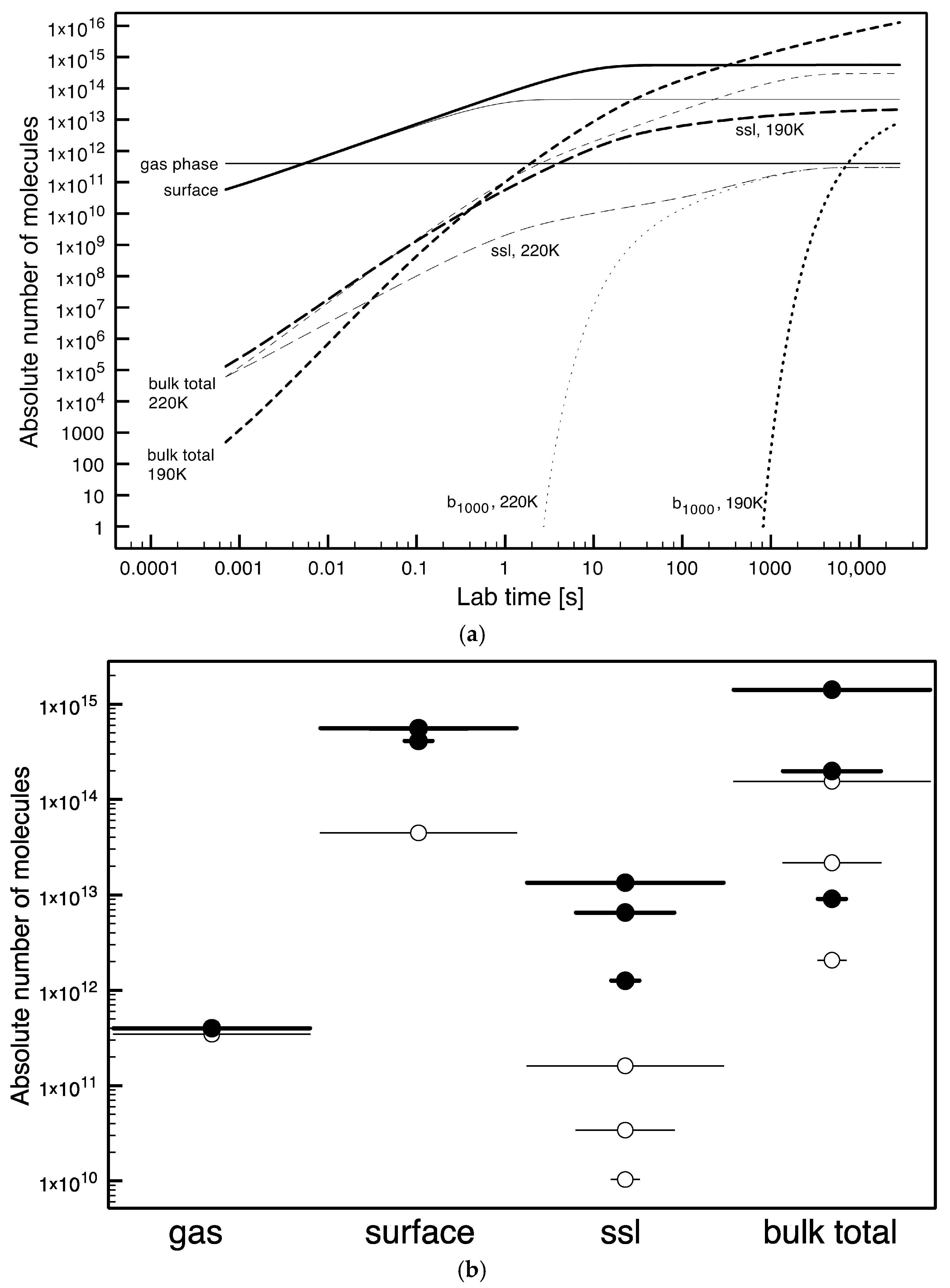
The influence of temperature, albeit over a relatively small range between 190 and 220 K, on the distribution of molecules between the different phases was examined in separate calculations. The results for an open system are shown in Figure 5a. Although this temperature interval is small, the effects on the temporal evolution of molecule distribution and the relative amounts in each phase are still remarkable. These effects are observed because of the temperature dependences of the Langmuir constant KL and the diffusion coefficient D, which are counteracting each other. Since KL increases with decreasing temperature, the number of molecules accumulated on the surface is higher at lower temperatures. However, it reaches saturation over longer periods of time (cf. Figure 5a). This difference transfers also into the sub-surface layer because there is no additional temperature effect from the solution process.
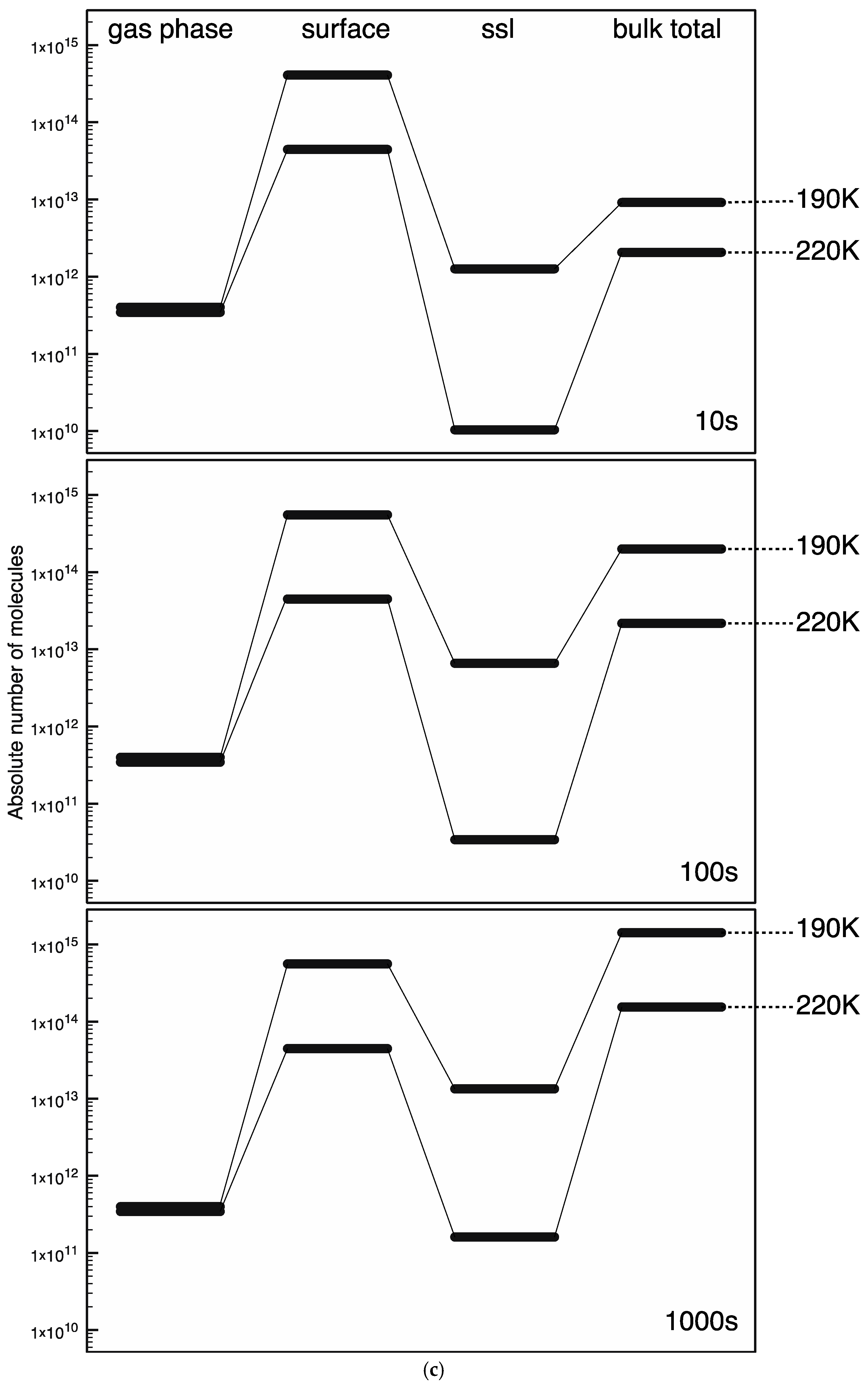
Figure 5. (a) Time evolution of the distribution of the absolute number of molecules among gas, surface, and bulk (ssl and total bulk) phases in an open box system at two different temperatures of 190 K (thick lines) and 220 K (thin lines) and for a constant gas phase concentration of 4 × 1011 cm−3. (b) The residence times of molecules in the four phases (gas, surface, ssl, and bulk total) at two different temperatures of 190 K (thick lines with black dots) and 220 K (thin lines with empty dots), shown at 10 s (short lines), 100 s (medium length lines), and 1000 s (long lines). (c) Mass transport from the gas phase through the surface and the sub-surface layer (ssl) into the ice bulk, as presented in (a,b). Three snapshots at 10 (top), 100 (middle), and 1000 s (bottom) and two temperatures of 190 K and 220 K are shown.
Figure 5b complements Figure 5a, offering valuable information on how molecular distributions among the phases vary with time and temperature. As can be seen, surface thermalized molecules rapidly establish an equilibrium state due to the faster adsorption/desorption kinetics, particularly at higher temperatures. On the other hand, the surface acts as a source interface to the ssl, where due to the slower processes the number of resident molecules depends strongly on time. The molecules that penetrated into the bulk due to diffusion have a more complex behavior similar to the ssl, as shown on both figures.
Figure 5c highlights another aspect of the data, namely the relative contributions of the different phases (gas, surface, ssl, bulk total) to the total number of molecules across various time scales (10, 100, 1000 s) and temperatures (190 and 220 K).
The following four aspects are noteworthy:
(1)
The total number of molecules at the surface decreases with increasing temperature because of the increasing rate of desorption.
(2)
The number of molecules in the sub-surface layer (ssl) decreases with increasing temperature in a manner similar to the surface concentration. However, the ssl concentrations are increasing somewhat slower with time due to the growing bulk concentration, which reduces net flux from the ssl into the bulk.
(3)
The behavior of the total bulk content is more complex. Although the diffusion coefficient shows the strongest temperature dependence of all kinetic parameters, substantially increasing at higher temperatures, the total bulk concentration is always lower at a higher temperature. The latter applies to all timescales. The reason is that, in each case, the ssl concentration is lower at a higher temperature (due to lower surface coverage) and cannot be compensated by the higher diffusion coefficient.
(4)
The impact of the bulk on the distribution of molecules during the phase transition becomes relevant only at longer reaction times (t > 100 s). As a result, the contribution of the bulk phase is expected to be significant only under such conditions and may remain unnoticed in typical flow systems experiments.

3.2.2. Sensitivity of Solution and Segregation Rate Constants

As noted above, the present model assumes that the sub-surface concentration of adsorbing gases is equilibrated according to Henry’s law. The dimensionless Henry constant is defined as follows:
K H = K L × K S = k a d s k d e s × k s o l k s e g
Henry constant depends on temperature mainly through the temperature dependent Langmuir constant (mostly kdes). As evident from a comparison of KH and KL values [3,6,9,10,11,12], within the experimental error, there is no additional temperature dependence of KH arising from the solution equilibrium constant, KS.
The sensitivity analysis of our model with respect to the adsorption and desorption rate constants has been presented previously [22]. The temperature dependence of the solution constant, KS, is assumed to be insignificant. Nevertheless, it is important to test the sensitivity of our simulations to the absolute values of ksol and kseg, which determine the time scale over which the system reaches equilibrium.
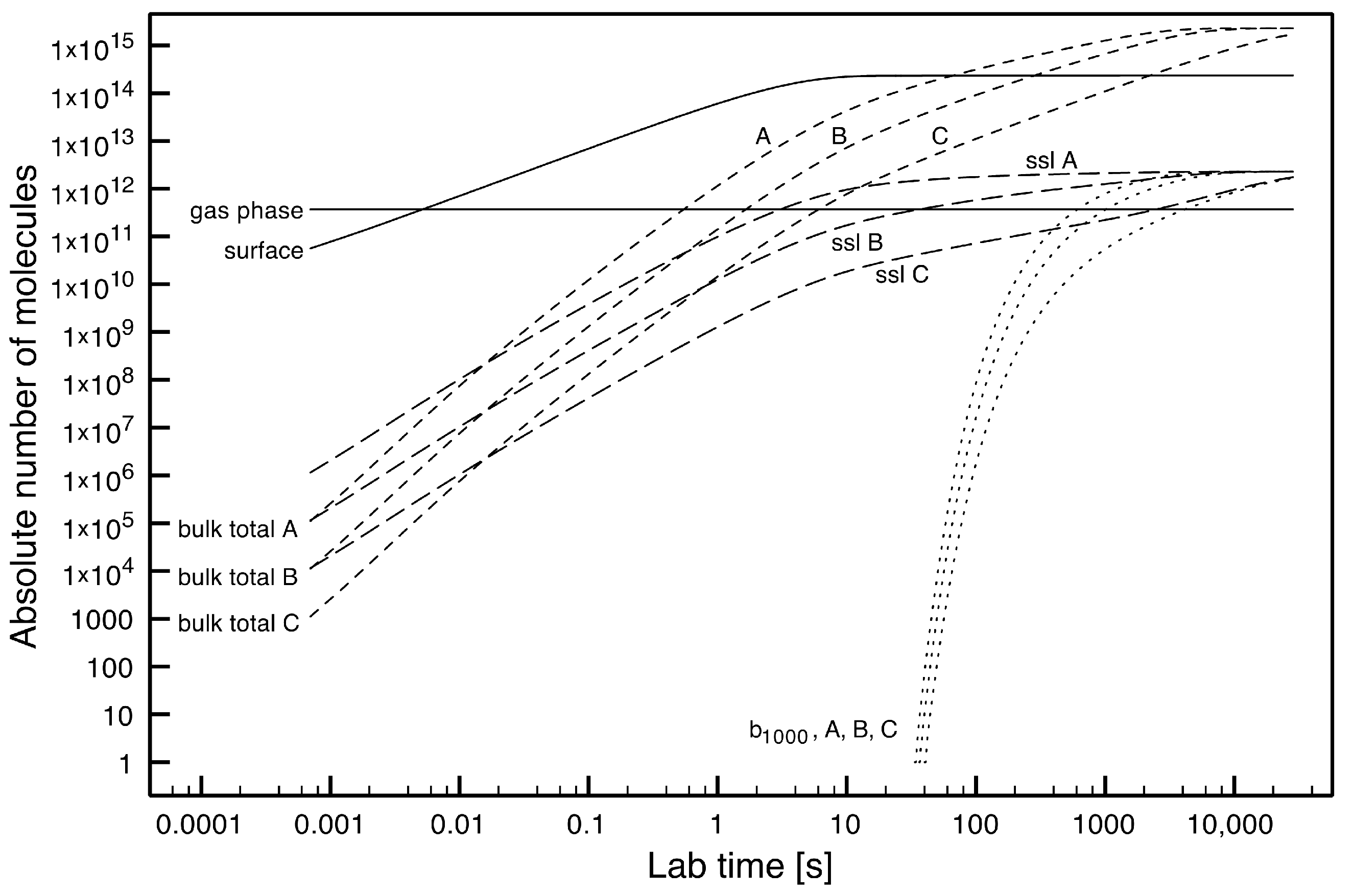
Figure 6 illustrates the result of simulations at 205 K for a constant value of KS = 5 × 1017 cm−3 but for three different sets of ksol and kseg as follows: (A—fast) ksol = 0.05 s−1, kseg = 10−19 cm3 s−1, (B—slower) ksol = 0.005 s−1, kseg = 10−20 cm3 s−1, and (C—slowest) ksol = 0.0005 s−1, kseg = 10−21 cm3 s−1. As can be seen, the system converges to the same ice bulk concentration at equilibrium. This is not a result of the absolute values of the solution and segregation rate coefficients but solely of their ratio, Ks. However, from case A to case C the time needed for reaching equilibrium increases significantly. Analogously, the ssl concentration for longer exposure times also approaches a constant level for the three cases. The three dotted lines show the resulting bulk concentrations in the bottom layer b1000. The latter trends are quite similar, as the bottom layer is least affected by the changes in surface process parameters and reaches saturations over much longer time scales (thousands of seconds).
Figure 6. Time evolution of the distribution of the absolute number of molecules in an open system at a temperature of 205 K and constant value of KS for three different sets of ksol and kseg. A: ksol = 0.05 s−1, kseg = 10−19 cm3 s−1, B: ksol = 0.005 s−1, kseg = 10−20 cm3 s−1, and C: ksol = 0.0005 s−1, kseg = 10−21 cm3 s−1.

3.2.3. Sensitivity with Respect to the Ice Film Thickness

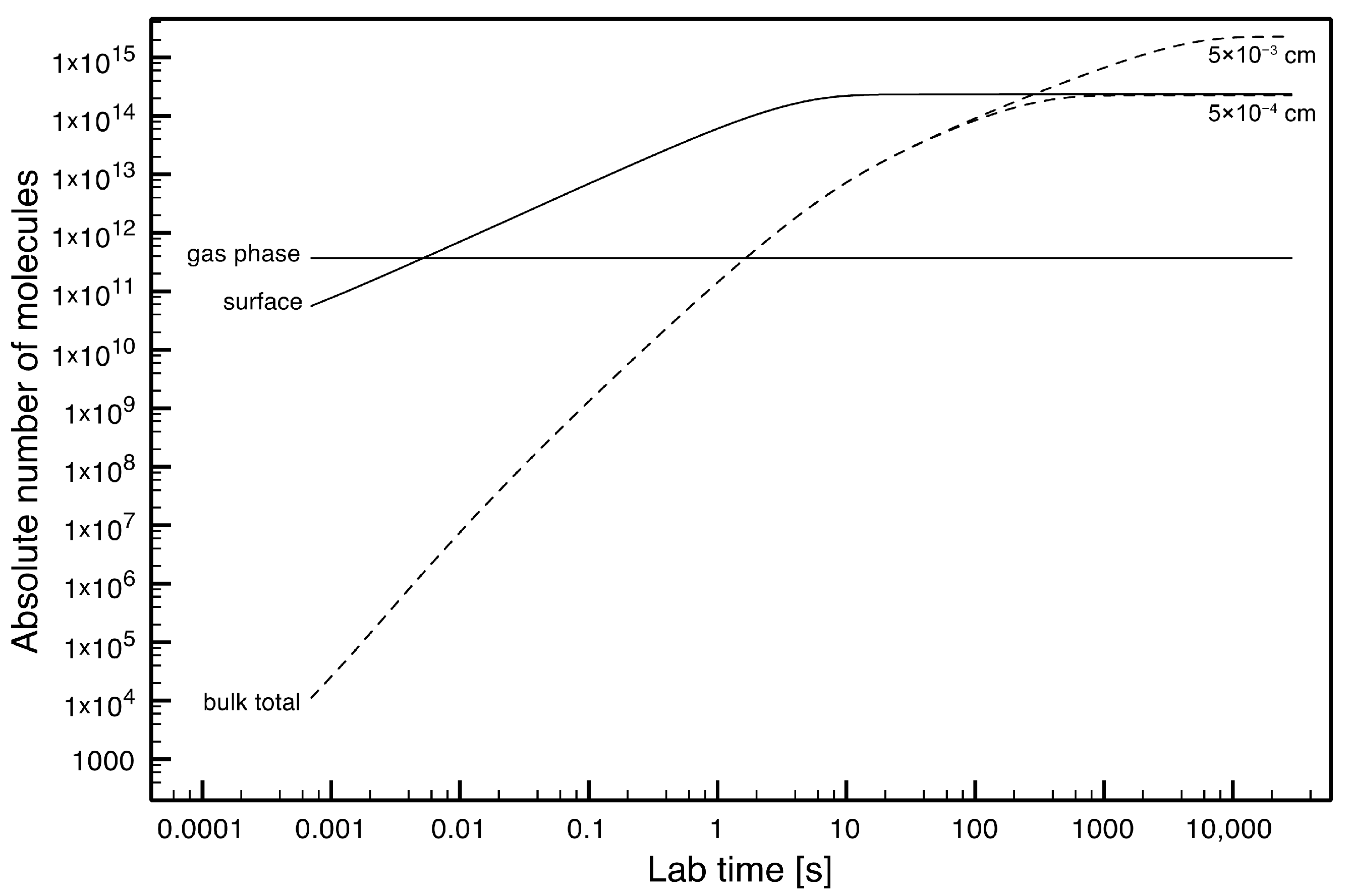
In the model setup the ice film serves as a slow reservoir into which the gas phase molecules can penetrate and can be stored. Among other factors (e.g., most notably, the diffusion coefficient), the capacity of this reservoir depends on the total volume of the ice film and, therefore, on its thickness. Figure 7 illustrates the distribution of molecules for two ice film thicknesses that differ by an order of magnitude (i.e., 5 × 10⁻⁴ and 5 × 10⁻³ cm).
Figure 7. Time evolution of the distribution of the absolute number of molecules distributed in an open system at a temperature of 205 K and for two different values of the ice film thickness.
As shown, the resulting distribution of molecules in the total bulk at equilibrium is directly proportional to the thickness of the ice film. The surface concentration at equilibrium on the other hand—and by implication also the sub-surface concentration—is essentially not affected and independent of the ice film thickness.

3.3. Simulations for a Closed Box System

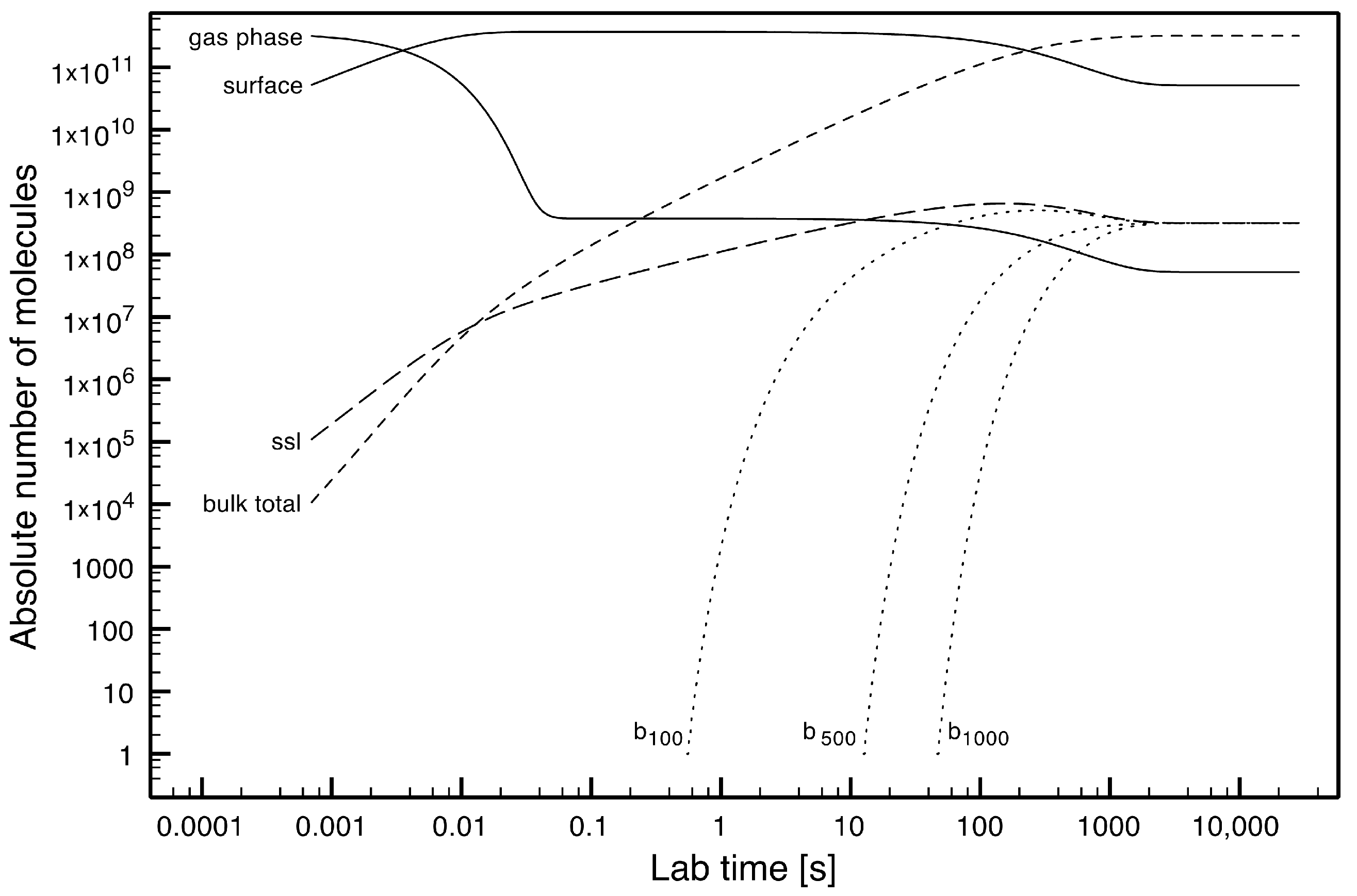
A distinctly different situation arises in the closed system. In this case, the total number of molecules in the entire multi-phase system is limited to 4 × 10¹¹, corresponding to the initial number of molecules contained within a gas volume of 1 cm3. The results for the time evolution of the molecules between the different phases are shown in Figure 8. As shown, the gas phase becomes almost completely depleted within less than 0.1 s. This situation remains essentially unchanged for at least several tens of seconds, after which the bulk ice phase becomes increasingly significant and eventually dominates after approximately 100 s. Beyond this time, most molecules reside in the bulk, and the surface begins to deplete. The system achieves full equilibrium after several hours.
Figure 8. Time evolution of the distribution of the absolute number of molecules between gas, surface, and bulk in a closed system at 205 K. The system geometry has a surface area of 1.67 cm2 and a volume of 1 cm3. The initial (and total) number of molecules in this system is 4 × 10¹¹.
For simplicity, we illustrated the distribution of molecules in a closed box using a single set of kinetic parameters, as presenting multiple plots would make it more difficult for readers to follow the behavior across different phases.

3.4. Simulations for a Flow System

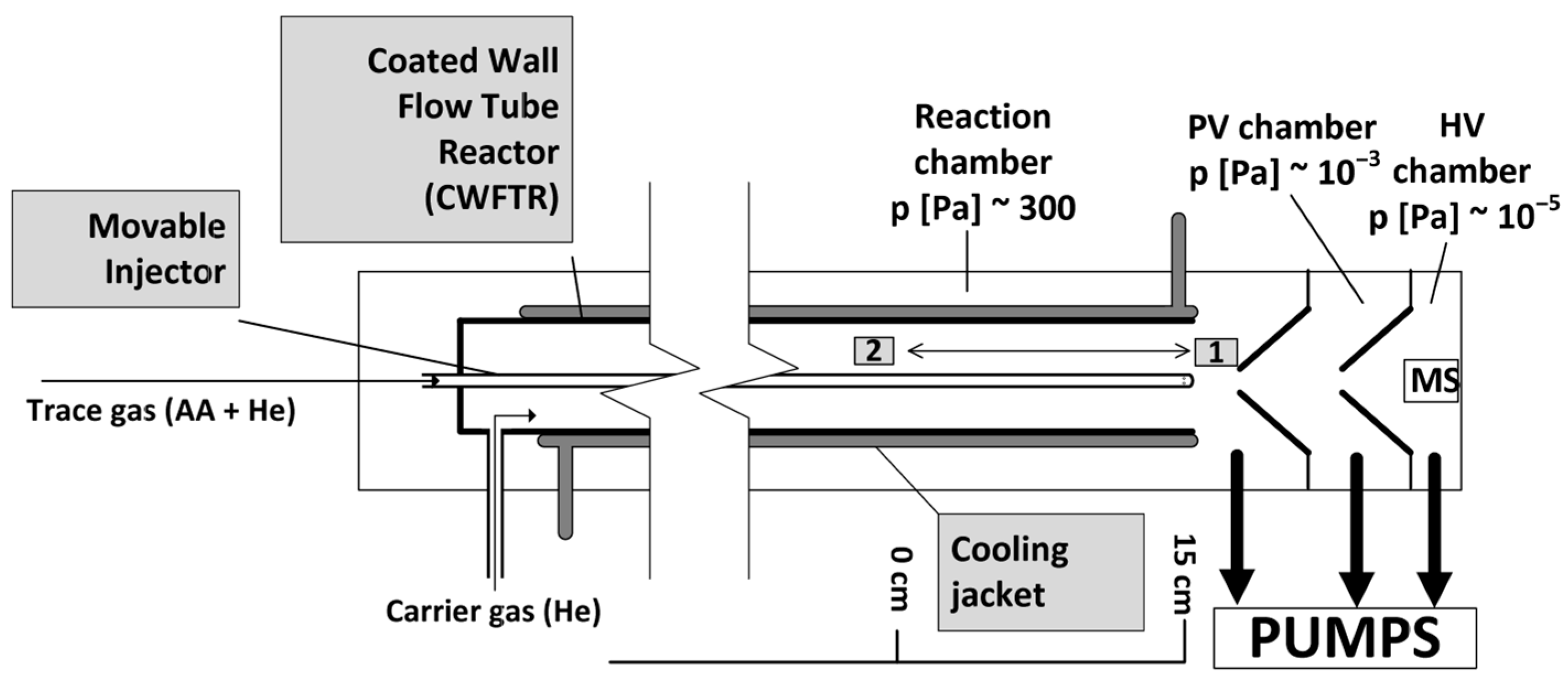
The flow reactor consists of three differentially pumped chambers (Figure 9). On the left-hand side of the figure is the reaction chamber with the flow tube, which has a 24 mm internal diameter. Typical pressures inside the flow tube are between 200 and 400 Pa. An important element is the heated movable injector with an outer diameter of 6 mm, which is utilized to coat the reactor walls with a film of ice by deposition of water vapor prior to the measurements. During the experiments the same injector is used to insert diluted acetic acid. In these measurements the injector is sequentially positioned at two different sites of the coated part of the flow tube. Position 1 is located directly in front of the mass spectrometer (15 cm). Position 2 is approximately 15 cm upstream of the flow tube (0 cm). These two positions are schematically shown in Figure 9.
Figure 9. Coated-wall flow-tube (CWFT) reactor scheme including typical positions of the gas injector.
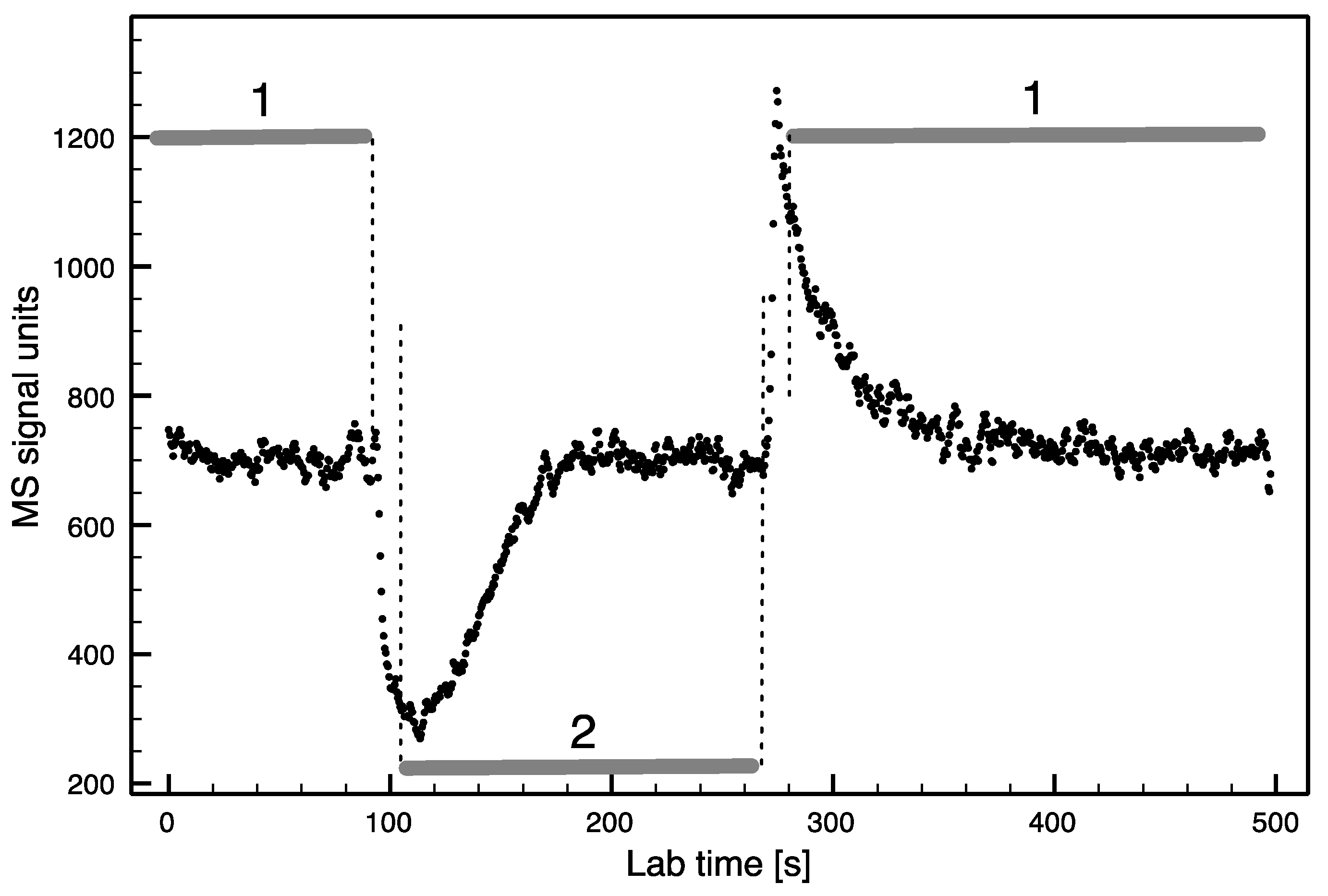
The flow system is surrounded by a cooling jacket to generate temperatures between 190 and 220 K (like those prevailing under UTLS conditions) using a thermostat. Additional carrier gas is inserted through another injection port to generate linear flow velocities in our experiment of approximately 1.8 m/s. After passing a conical skimmer, the molecules enter the pre-vacuum chamber at pressures which are typically reduced by four orders of magnitude. Also, the flow is modulated by a tuning fork chopper operating at 156 Hz. A further skimmer separates the pre-vacuum from the high-vacuum chamber with pressures around 10−6 Pa including the mass spectrometer. Afterwards, the signals are filtered, amplified, and finally analyzed by built-in, instrument-specific, and customized software. Figure 10 shows an experimentally registered CWFT reactor signal.
Figure 10. Gas phase concentration profile in a typical adsorption/desorption experiment as a function of lab time for two different positions of the injector.
Initially the gas injector is at position 1. At a lab time of approximately 100 s, the injector is pulled back to position 2, whereupon the gas interacts with the ice film. If the equilibrium between the gas phase and adsorption sites on the ice surface is established, the initial signal is reached again, and the gas phase concentration returns to its initial value. Upon the return of the injector to its initial position 1, adsorbed molecules start to desorb and tend to increase the gas phase concentration beyond its initial value (desorption peak). The times elapsed at each position are variable but, in most experiments, do not exceed several hundred seconds.
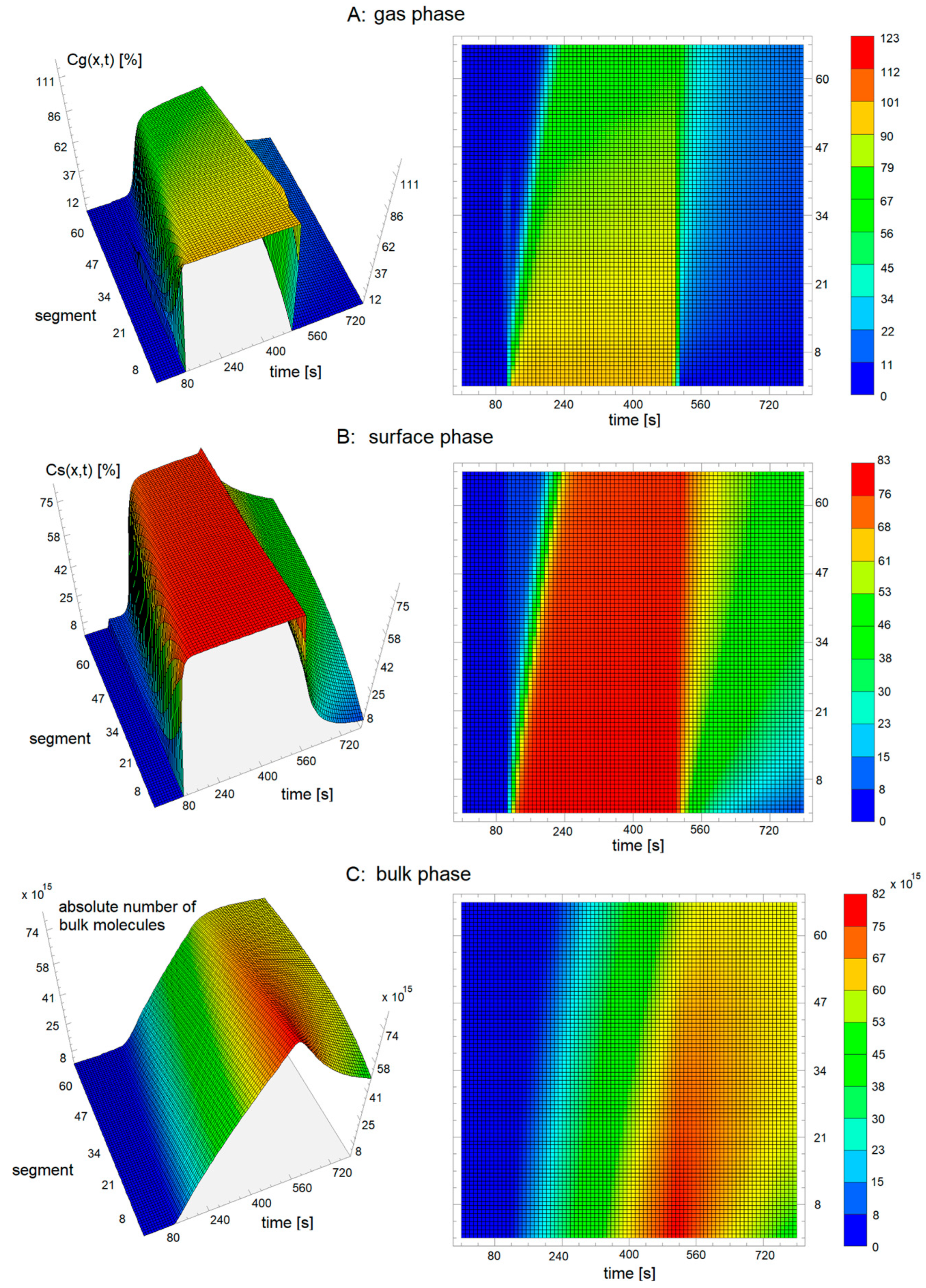
Figure 11 shows the segment-wise distribution of trace gas molecules among the three phases in the CWFT for a typical measurement at 190 K. These distributions are represented with three- and two-dimensional plots as a percentage of the initial gas phase concentration. Part A (top) of this figure shows the simulation results for the gas phase along the reactor as a function of relative laboratory time and position in the reactor (segment number). Analogously, Figure 11 (middle part) visualizes the distribution of thermalized molecules on the surface in both three- and two-dimensional (heat map style) graphics. The number of adsorbed molecules is expressed as a percentage of the maximum number of adsorption sites. Part C (bottom) represents the absolute number of molecules that have penetrated into the ice bulk.
Figure 11. Three- and two-dimensional distributions of molecules among the three phases: ((A) gas phase (top), (B) surface (middle), and (C) bulk (bottom)) along the CWFT reactor at 190 K. The bulk depth is 5 × 10⁻³ cm.
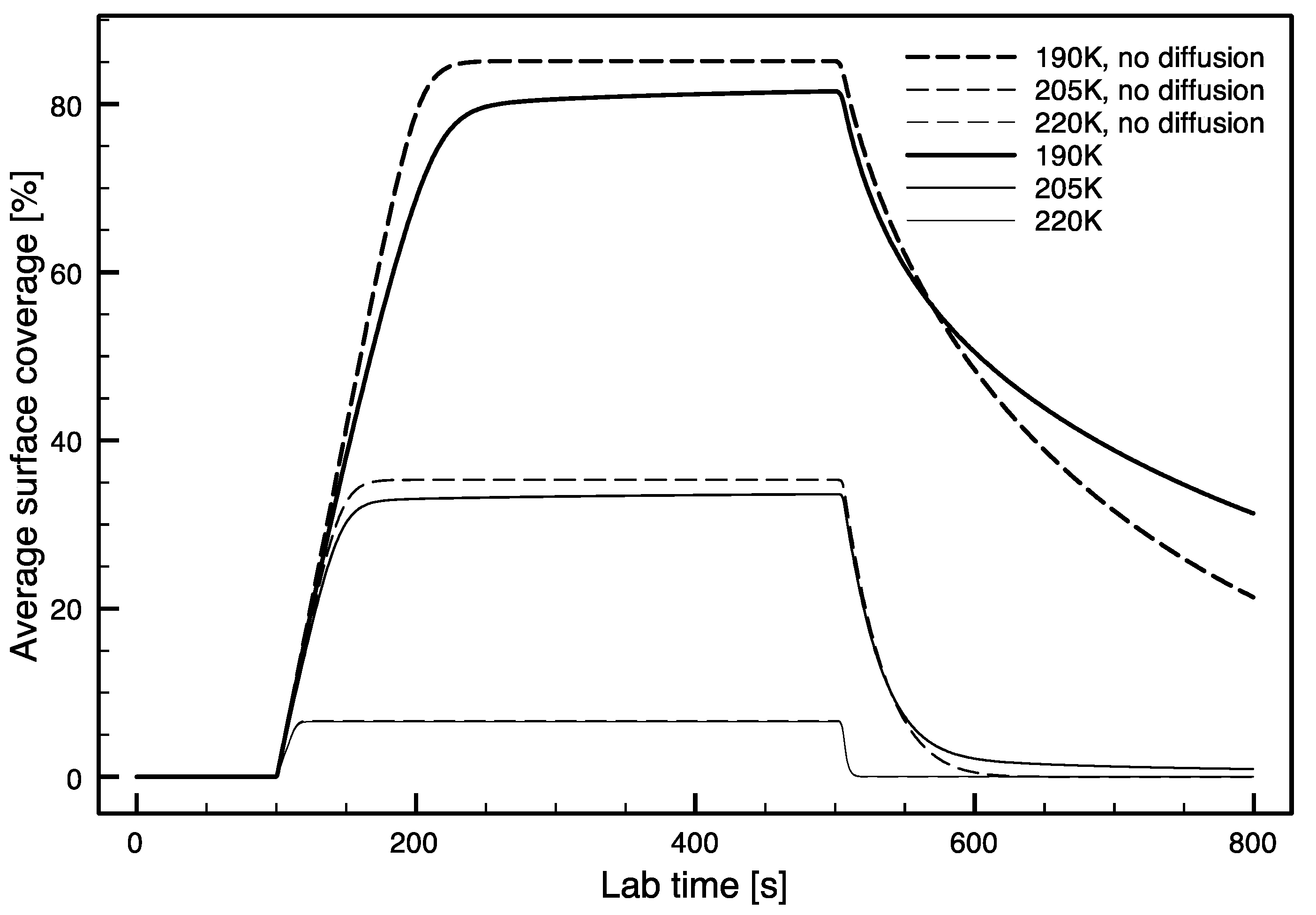
While the 3D plots in Figure 11 present the complete picture and effectively summarizes the sensitivity analysis discussed previously, Figure 12 offers a simpler data representation, showing the profiles of adsorbed molecules on the ice film, under the same conditions as in Figure 11. The number of surface molecules are expressed as percentages of cs,max, the maximum number of surface sites. As shown, the number of surface molecules is slightly higher during the adsorption phase (from 100 to 500 s) in case of no diffusion. The difference is due to the molecules which are removed from the surface, and which penetrate the bulk by diffusion. However, this effect is only pronounced at the lowest temperature (190 K). A reversed behavior is observed for later laboratory times during the desorption phase, with the curves exchanging their positions. In this case, with bulk diffusion, the surface coverage is higher due to the continuous supply of molecules from the bulk to the surface and subsequent segregation.
Figure 12. Calculated average surface coverage in the reactor (averaged over all segments of the reactor) at three different temperatures (190 K (thick lines), 205 K, and 220 K (thinner lines)). Solid lines with diffusion and dashed lines without diffusion.
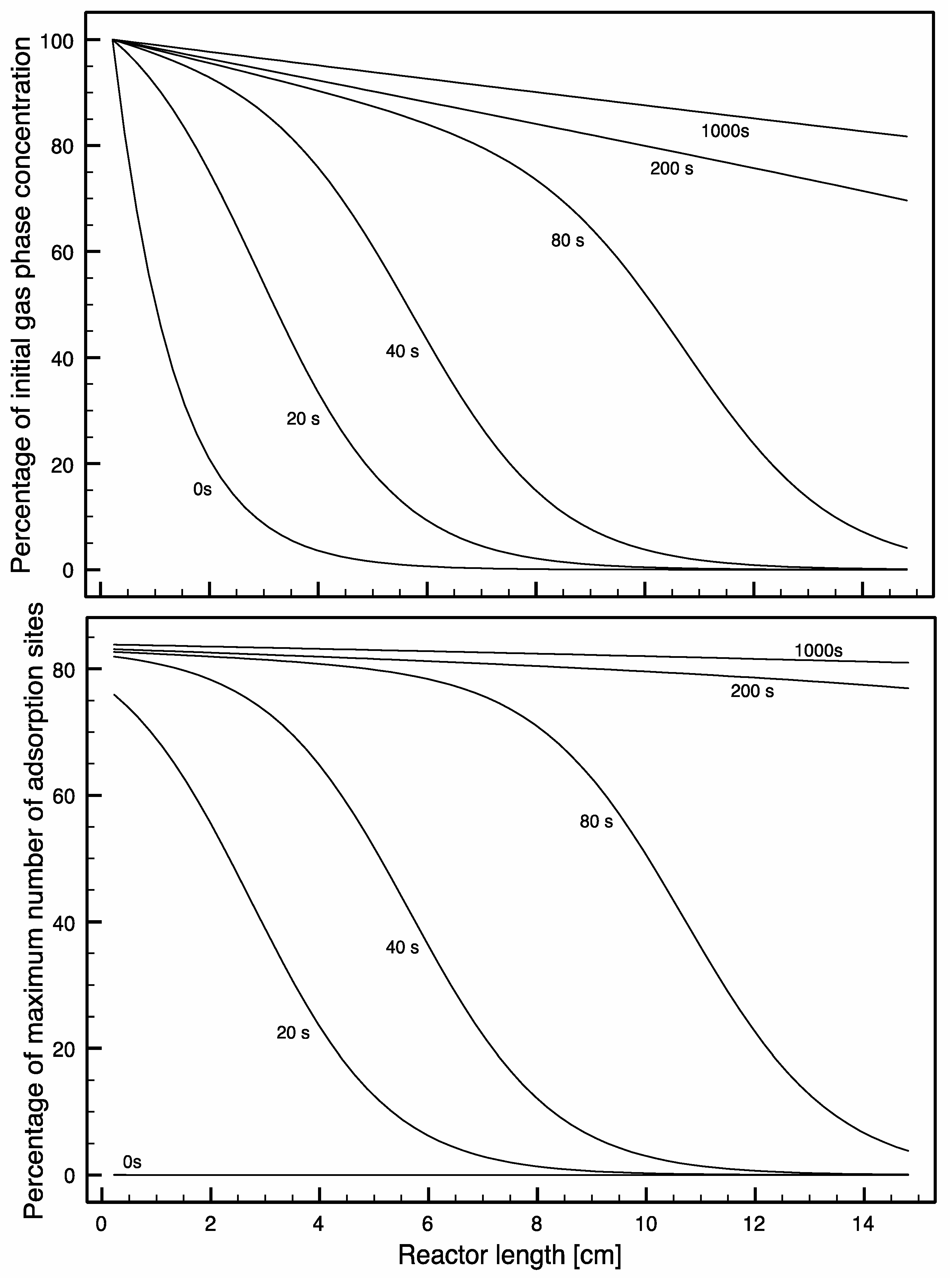
Figure 13 shows the results of a simulation of the temporal evolution of the gas phase and surface concentrations along the CWFT reactor at T = 190 K. The figure results were calculated with the injector positioned at 0 cm (see Figure 9) upstream of the mass spectrometer. Accordingly, it represents the evolution of concentrations along the reactor tube with a length of 15 cm. The gas phase concentration and the surface coverage are expressed in percentages of the initial gas phase concentration (upper part), cg,ini = 4 × 1011 cm−3, and the maximum number of adsorption sites (lower part), cs,max = 4 × 1014 cm−2, respectively. The temporal concentration behavior of the two phases is given as snapshots for six different laboratory times after the beginning of the simulation. The start of the simulation (t = 0 s) accounts for the very first gas phase volume flowing down a freshly coated reactor tube.
Figure 13. Simulated temporal evolutions of the gas phase concentration (upper part) and surface coverage (lower part) along the CWFT reactor at T = 190 K for different laboratory times. The concentrations are expressed as percentages of the initial gas phase concentration and the maximum number of surface sites, respectively.
The only source of molecules in the reactor is via the injector nozzle, which is located at position l = 0 cm. As shown in the figure, the initial gas phase concentration drops rapidly in the very first moment whilst the gas is exposed to a fresh ice surface. As time progresses, the gas phase concentration in the individual sections of the reactor increases due to ongoing surface saturation. At infinite laboratory time, the gas phase concentration should reach uniform distribution of 100% of its initial value along the entire tube reactor (the latter is approximated with 1000 s simulation curve).
A similar behavior is observed on the surface. As expected, the surface concentration is zero at the beginning of the simulation. Thereafter, this concentration rises rapidly with time due to the continuous supply from the gas phase, with noticeable “jumps” between the curves at 0 s, 20 s, 40 s, and 80 s. As soon as equilibrium (cs = cs,max) is approached, the rise in the surface concentration is drastically diminished. The equilibrium surface concentration is attained when roughly 84% of the active surface sites are occupied.

3.4.1. Temperature and Diffusion Influence on CWFT Simulations

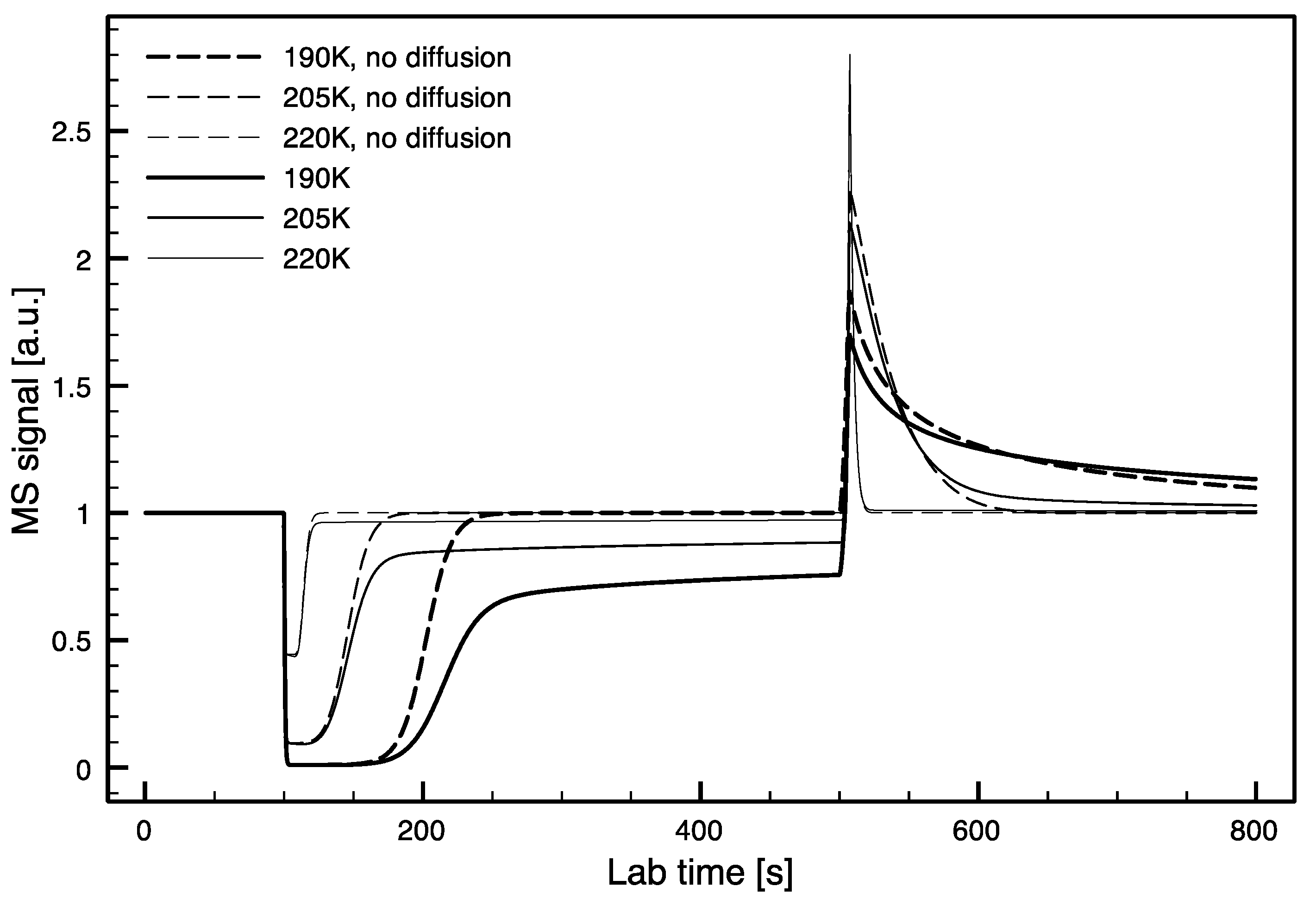
Figure 14 illustrates the temperature influence on simulation profiles at the three selected temperatures for two scenarios with and without bulk diffusion included.
Figure 14. Calculated concentration profiles for the adsorption and desorption behavior in CWFT experiments at three different temperatures, 190 K (thick lines), 205 K, and 220 K (thin lines), and with (solid lines) and without (dashed lines) diffusion. The ice depth is 5 × 10⁻³ cm and the solution constants are ksol = 5 × 10⁻³ s−1 and kseg = 1 × 10⁻²⁰ cm3 s−1, independent of temperature. The other variables are as follows: D (190 K) = 2.9 × 10⁻¹⁰ cm2 s−1, kads (190 K) = 2.8 × 10⁻¹³ cm3 s−1, kdes (190 K) = 0.02 s−1, D (205 K) = 7.7 × 10⁻⁹ cm2 s−1, kads (205 K) = 2.9 × 10⁻¹³ cm3 s−1, kdes (205 K) = 0.12 s−1, D (220 K) = 1.3 × 10⁻⁷ cm2 s−1, kads (220 K) = 3.0 × 10⁻¹³ cm3 s−1, and kdes (220 K) = 1.43 s−1.
As expected, the number of adsorbed molecules at lower temperatures is higher due to the exothermicity of the adsorption process. In turn, this causes substantial rates of surface penetration and subsequent diffusion into the ice bulk. A steady state uptake is noted over a substantial amount of time. The figure also illustrates the importance of temperature with respect to surface coverage and steady state uptake. For temperatures higher than 190 K the integrals under the adsorption peaks become increasingly smaller and the steady state uptakes gradually vanish. This happens over a very small temperature range and indicates the extreme sensitivity of these concurrent processes on temperature. The kinetics for the release of molecules from the tubular reactor is also seen to be strongly temperature dependent from about 500 s onward. It is faster at higher temperatures and slower at lower temperatures due to the exponential dependence of desorption rate coefficient on temperature. The establishment of bulk equilibrium (i.e., the MS signal curve drops down to 1 a.u. at the end) requires orders of magnitude more time because diffusion processes are far slower. However, diffusion still has some noticeable influence on shorter time scales.

3.4.2. Sensitivity of Solution and Segregation Rate Constants

As discussed previously, the rates of solution and segregation as well as the absolute value of the solution equilibrium constant KS are strongly influencing the extent of uptake of gas phase molecules into the bulk via surface penetration and phase transfer. While the value of Ks has been fixed by assuming that the relation between the Langmuir constant, the solution constant, and Henry’s constant is given by KL × KS = KH and KH has been taken from the work of Nehme [35], the individual rate coefficients for solution and segregation are still important for the time constant of phase transfer and for elucidating the sub-surface layer concentration.
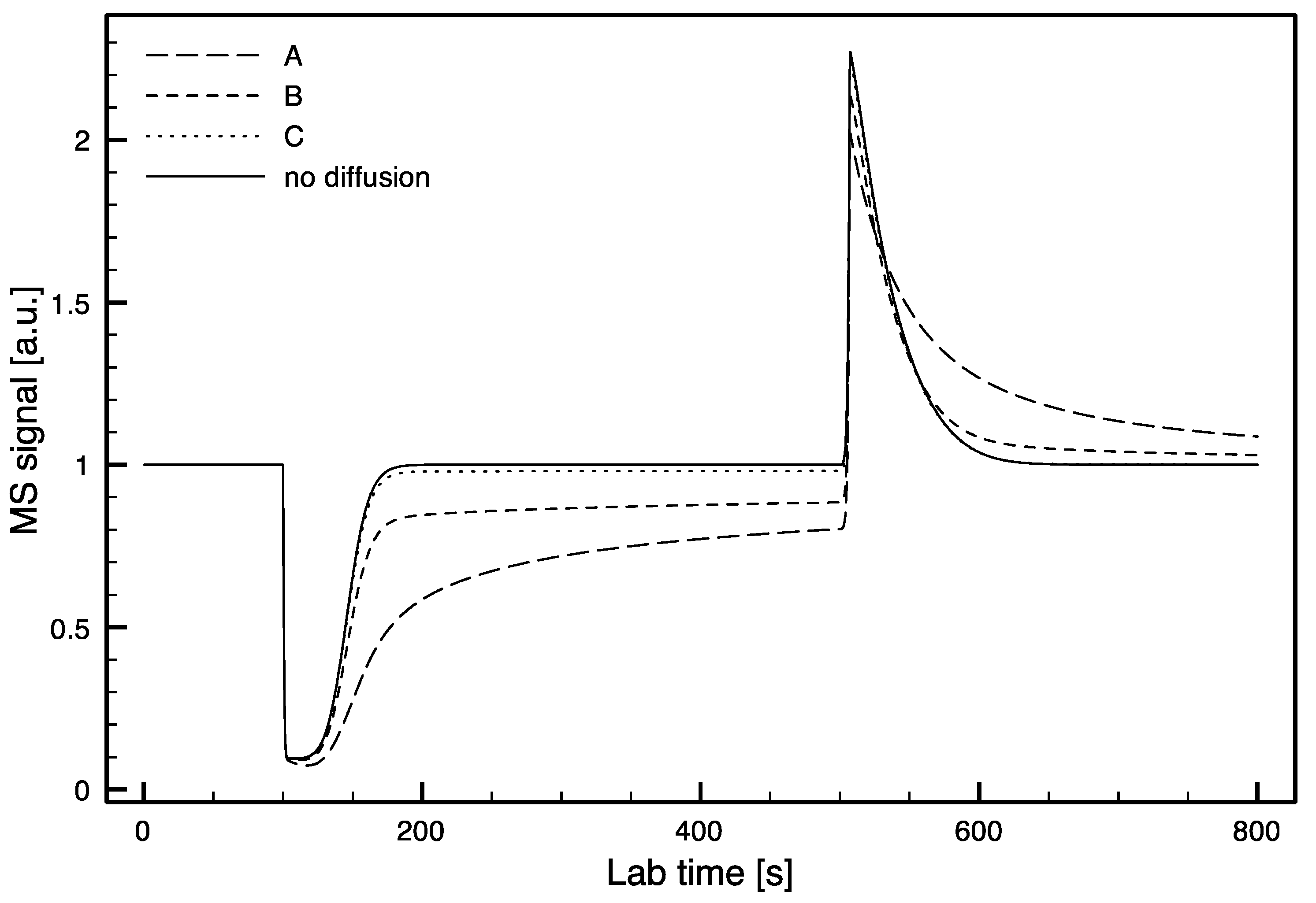
Figure 15 illustrates the sensitivity of simulation profiles for adsorption and desorption in a CWFT reactor with respect to the solution and segregation coefficient values while their ratio (KS) is kept constant. The total number of molecules penetrating into the bulk is the same in each case, but the plots differ with respect to the time required for reaching the equilibrium between the gas phase in the tube reactor and surface/bulk concentration. As expected, equilibrium (MS signal = 1 a.u.) is reached much faster for the higher values of ksol [s−1] and kseg [cm3 s−1].
Figure 15. Simulation of adsorption and desorption profiles at T = 205 K and for a solution constant KS = 5 × 1017 cm−3 and a diffusion coefficient D = 7.7 × 10⁻⁹ cm2 s−1. The different curves A, B, and C represent different choices of the absolute values of ksol and kseg (A: ksol = 0.05 s−1, kseg = 1 × 10⁻¹⁹ cm−3 s−1, B: ksol = 0.005 s−1, kseg = 1 × 10⁻²⁰ cm−3 s−1, and C: ksol = 0.0005 s−1, kseg = 1 × 10⁻²¹ cm−3 s−1). The solid line represents a case with no diffusion, i.e., D = 0.
The signal sensitivity of this plot also depends somewhat on the ice thickness. For a thinner ice film, the differences arising from ksol and kseg variations diminish due to the reduced bulk capacity. This effect is further discussed in the next section.

3.4.3. Sensitivity of the Ice Film Thickness

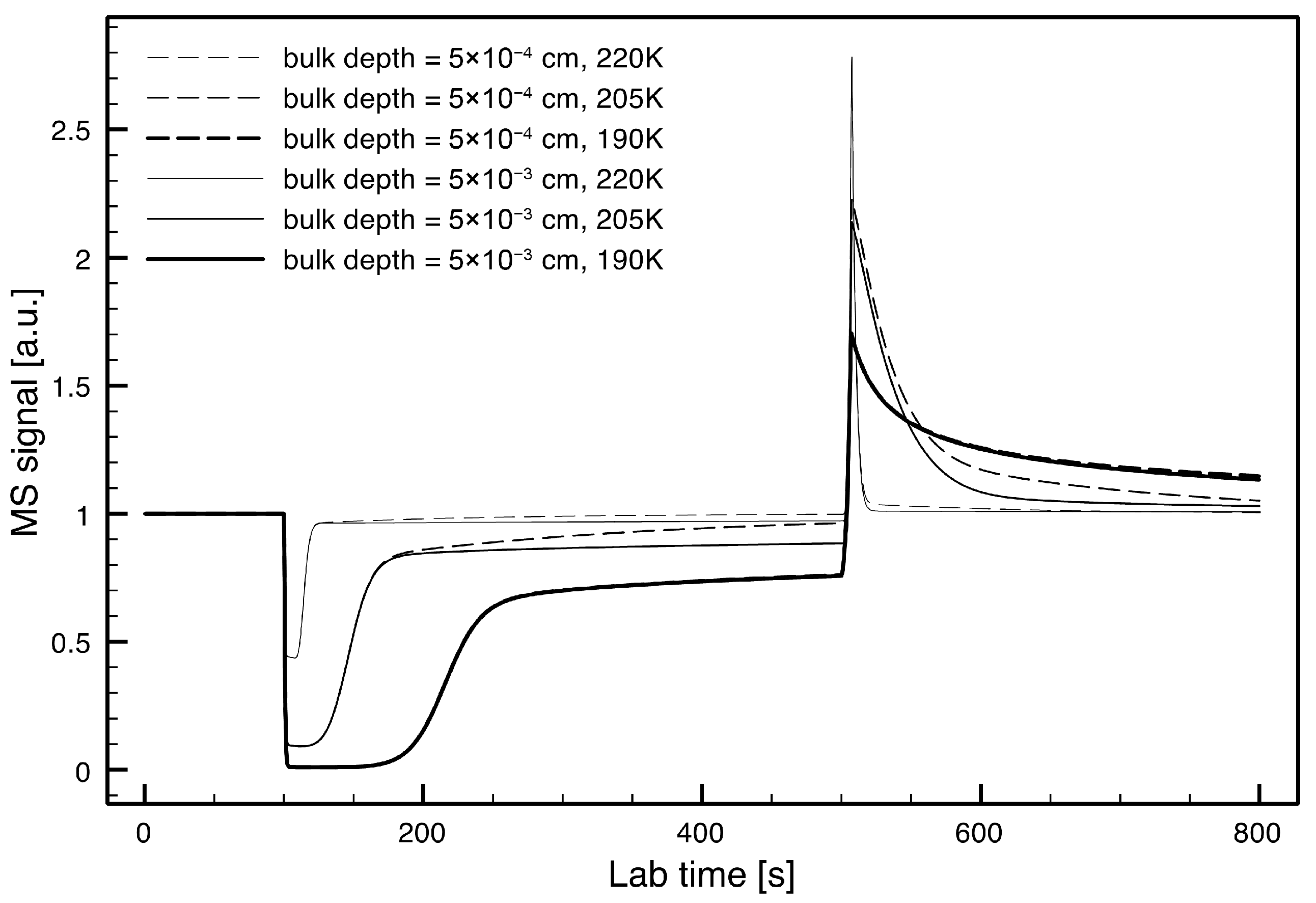
We also studied the influence of the ice thickness at temperatures of 190 K, 205 K, and 220 K. Although the bulk effects are strongly linked to the bulk kinetics, such as diffusion coefficient, solution, and segregation coefficients, for the subsequent simulations only the bulk depth is varied. Figure 16 represents simulated adsorption and desorption profiles at three different temperatures and for ice thickness values of 5 × 10⁻³ cm and 5 × 10⁻⁴ cm.
Figure 16. Simulated adsorption and desorption profiles at three different temperatures and for two different ice thicknesses.
As shown, the bulk depth does not play a significant role within the short time scale and for processes with a lower solution coefficient. At the lowest temperature, the resulting profiles show no dependence on the ice bulk thickness, whereas at 205 K a clear thickness dependence is observed. At even higher temperatures (e.g., 220 K), surface adsorption becomes sufficiently reduced to influence the number of molecules crossing the interface and diffusing into the bulk.

4. Model Application to Experimental Data of Acetic Acid on Ice

The obtained sensitivity analysis results discussed in Section 3 provide sufficient background to apply our model for studying real trace gas interaction scenarios within CWFT reactors. Our approach is based on finding the best fit for an experimentally registered CWFT reactor signal (e.g., Figure 10) obtained by finding the most appropriate simulation parameter values. The exact parameter values are preliminary unknown, and it is assumed that their best estimation minimizes the difference between simulated and measured signals, expressed as RMSE (root mean square error):
R M S E = i = 1 n S s i m u l a t e d i S M A S S i 2
The minimal RMSE search is performed either automatically by an exhaustive systematic search scanning each point from a multi-dimensional grid (simulations are performed for each point from this grid) or by visual expert observation, manually adjusting the parameters via the GUI on the software system. The automatic search for minimal RMSE required huge computational resources especially when numerical stability and accuracy concerns are handled for small values of the differentiation steps. An excerpt from a simulation configuration file is provided below:
SIMULATION_TASK = REACTOR
[MODEL]
E_A = 47,001
SIGMA_0 = 1 × 10⁻¹⁴
A = 1 × 10⁻¹¹
GAMMA = 0.0049
C_S_MAX = 4 × 10¹⁴
K_ADS = 2.86356 × 10⁻¹³
K_DES = 0.194510027
C_GAS_INITIAL = 1 × 10⁻¹²
C_S_INITIAL = 0
C_BULK_INITIAL = 0
[REACTOR]
LENGTH = 15
RADIUS = 1.2
T = 205
P_REACTOR = 2.5
P_BOTTLE = 1.604
P_TOTAL = 1900
F_INJECTOR = 1
F_CARRIER = 200
[FIT]
SEGMENT_LENGTH = 0.221048532
INJ_SPEED = 30
JUST_FLOW = 100
DESORB_STARTS = 500
END_TIME = 800
INJ_STOP_POS = 15
MASS_TIME_STEP = 0.5
[DIFFUSION]
DO_DIFFUSION = 1
ENTRY_PROFILE = SINGLE_LAYER
NUM_LAYERS = 1000
BULK_DEPTH = 5 × 10⁻³
D = 7.70446 × 10⁻⁹
K_SOL = 0.005
K_SEG = 1 × 10⁻²⁰
A detailed list and an archive containing all simulation configurations are provided in the Data Availability Statement with the source link (https://doi.org/10.5281/zenodo.17778225).
We applied the model to determine the kinetic constants of acetic acid using a kinetic model setup with adsorption mechanism combined with simulation of possible diffusion into the bulk. The diffusion effects had already been demonstrated in previous work by the group through titration of exposed ice samples [32,35].
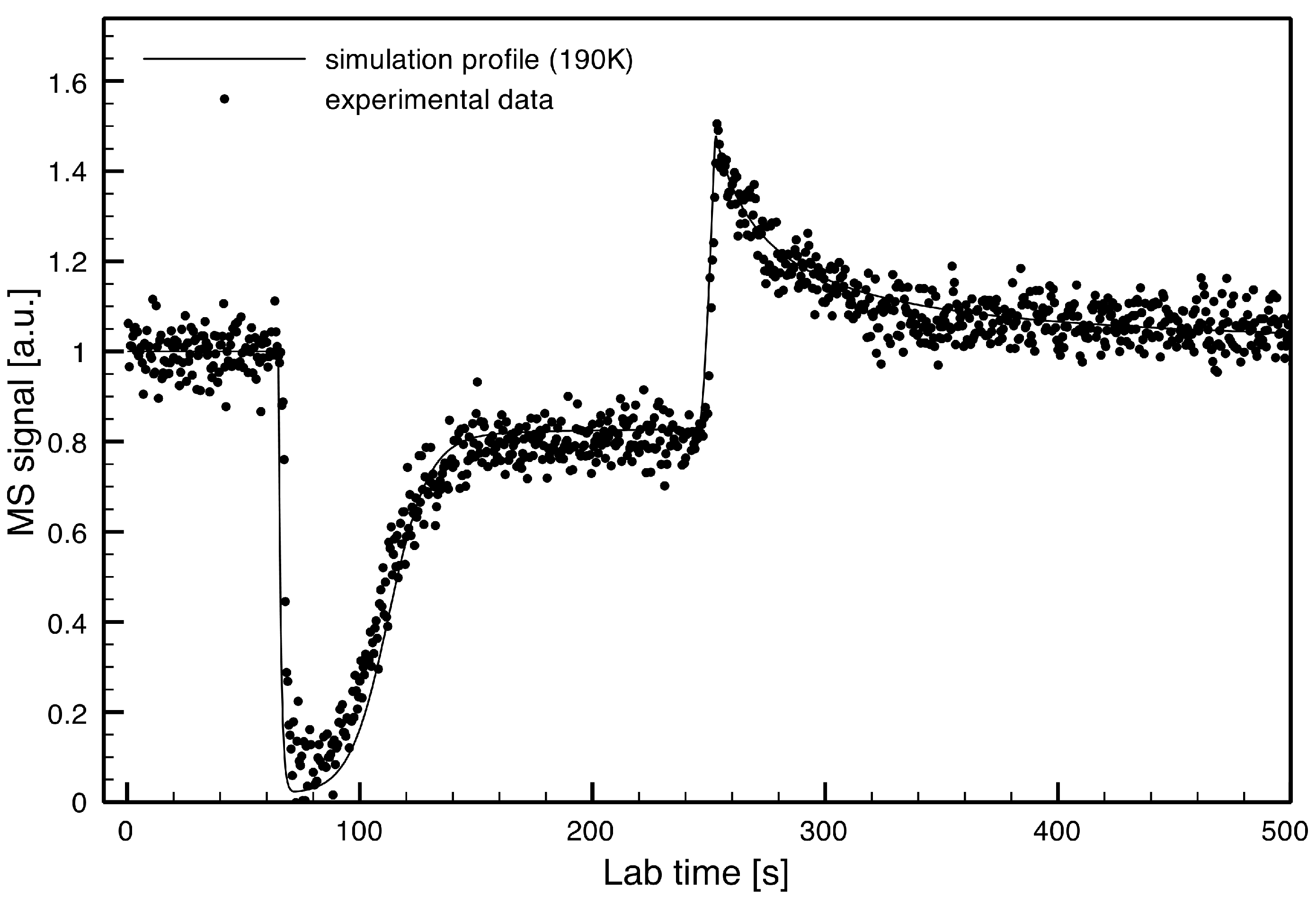
Since the diffusion process into the ice bulk was observed only at temperatures around or below 200 K, Figure 17 shows a simulation with a recognizable diffusion process at 190 K. This work succeeds for the first time in describing rate constants for the solvation of molecules into the ice bulk and for their segregation out of the bulk.
Figure 17. Adsorption and desorption profile (experimental values and simulation best fit) of acetic acid on ice surfaces at a concentration of c = 4 × 1011 cm−3 and a temperature of 190 K. The additional constants are kads = 3.92 × 10⁻¹³ cm3 s−1, kdes = 0.02 s−1, and cs,max = 2 × 1014 cm−2. Ice thickness is d = 5 × 10⁻³ cm, D = 2.7 × 10⁻¹⁰ cm2 s−1 ksol = 4 × 10⁻³ s−1 and kseg = 5 × 10⁻²¹ cm3 s−1.
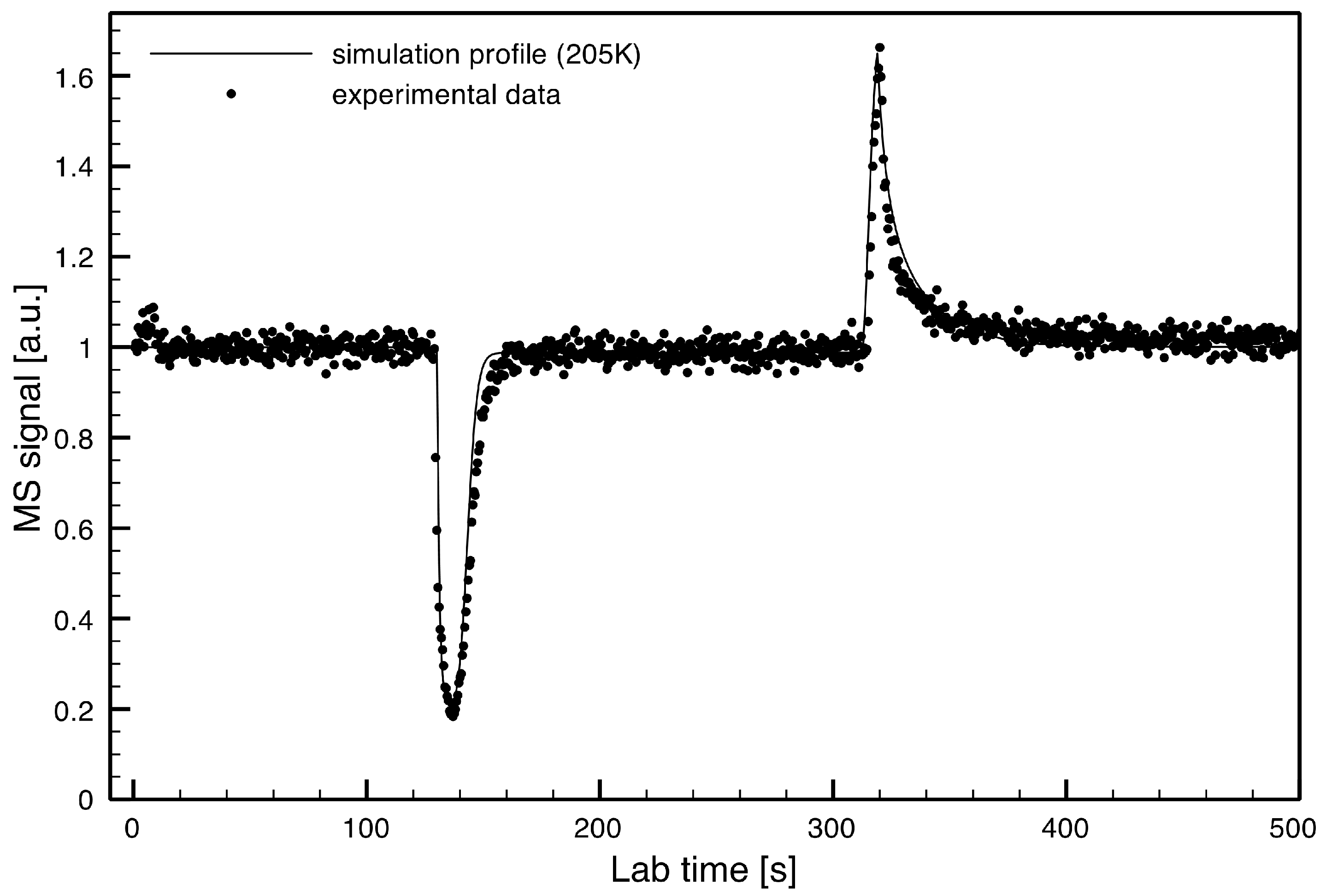
The following figure shows a fit of a measurement at 205 K together with the corresponding simulation curve. The influence of the diffusion process on the adsorption profile diminishes at higher temperatures and the initial input signal becomes visible again shortly after the adsorption phase. Furthermore, the area integrals of adsorption and desorption become identical again—both in the experiment and in the simulation—in contrast to measurements below 200 K (Figure 17), where they clearly differ.
Figure 18 illustrates a scenario at temperature of 205 K in which the influence of the diffusion process is slightly discernible in the resulting experimental profile.
Figure 18. Adsorption and desorption profile (experimental values and simulation best fit) of acetic acid on ice surfaces at a concentration of 1.6 × 1012 cm−3 and temperature of 205 K. kads = 3.8 × 10⁻¹³ cm3 s−1 and kdes = 0.2, cs,max = 1.8 × 1014 cm−2. Ice thickness is d = 5 × 10⁻³ cm. D= 7.5 × 10⁻⁹ cm2 s−1 ksol = 3 × 10⁻³ s−1 and kseg = 2 × 10⁻²⁰ cm3 s−1.

5. Results and Discussion of Acetic Acid Measurements

We have delineated and described a numerical model for simulating the uptake of trace gases by ice surfaces. This model is based on Langmuir kinetics for the adsorption of such molecules onto the ice surface, followed by interfacial penetration and subsequent bulk diffusion. The latter two processes are treated kinetically by rate coefficients for solution and segregation as well as a diffusion coefficient. Neither of these constants is reliably available from the literature. Therefore, we have used our best guess based on similarities from the literature in order to set up more realistic and adequate parameter intervals for the best simulation search.
Based on these values, it is shown that surface adsorption and subsequent establishment of surface equilibrium consistently represent the fastest loss process for gas phase molecules. Whether this surface equilibrium affects the distribution of molecules and thus the number of molecules residing on the surface depends, of course, on the desorption rate and consequently on the enthalpy of adsorption. Only for more strongly adsorbing species and at sufficiently low temperatures does surface adsorption become a significant loss process. This is valid, for instance, for small carbonyls, such as aldehydes and carboxylic acids, whose enthalpies of adsorption are on the order of −50 kJ/mol.
The interfacial transition from the surface into a sub-surface layer and the bulk is described by corresponding rate constants. It is found that phase boundary transition and transport in the bulk are slower processes which are somewhat decoupled from the surface processes. Nevertheless, these processes can become significant on timescales of several hundred seconds if the gases exhibit sufficient solubility. In addition, such processes can primarily be observed at lower temperatures where the accumulation of molecules on the surface and in the sub-surface layer is large.
The dependence of the phase distribution on temperature arises primarily from the activation energy of surface desorption and from the temperature dependence of the diffusion coefficient. Both are counteracting each other. However, due to the disparate time constant of surface and solid phase processes, the increase in diffusion rate at increased temperatures does not compensate for the decrease in surface adsorption. Therefore, bulk uptake of molecules takes place primarily at lower temperatures, which is somewhat counterintuitive.
The nature of simultaneous three-phase processes of adsorption and desorption, solution and segregation with bulk diffusion is complex and can be revealed via both theoretical and experimental approaches. The suggested model consists of a classical boxed system (open and close) where the processes are simulated by a numerical solution of Langmuir’s law of adsorption, Henry’s law of solution, and Fick’s second law of diffusion. Each process depends on a variety of kinetic and thermodynamic coefficients, some of which are temperature dependent while others are not. The analyses show a reasonable sensitivity with respect to time scale and gas phase concentration changes. The presented model and the developed simulation software can be used as a module embeddable in other systems such as flow reactors, Knudsen cell reactors, and so on.
A similar model to the one presented here was previously described by Symington et al. [14]. In the latter work, the diffusion into the ice phase was also considered by kdiff, where the diffusion into the bulk film was driven by the concentration gradient created in the surface film after molecules adsorb at the surface. The solution of the diffusion equation based on Fick’s law provides a simple expression for the time dependence of the rate coefficient for diffusion of surface adsorbed species into the bulk of kdiff = A/(t)0.5 [s−1]. In here A is a constant related to the effective bulk diffusion coefficient and the diffusion depth. The value of A was used as an adjustable parameter to provide the best fit to the tailing in the experimental adsorption/desorption profiles, which is attributed to diffusion. The net transport rate depends on the difference in concentration in the bulk relative to the surface and the exposure time. As a result of this approach, the numerical value for A varied according to the initial gas phase concentration and the temperature between 0.0083 and 0.1; adopting a value of 1 × 10⁻¹² cm2 s−1 for diffusion, the values of A imply diffusion depths in the range 60–1000 nm during exposure. Using this model, Symington et al. [14] achieved a good parameter description for the adsorption of HCl and HNO3 on, and penetration into, an ice surface by means of the absorption peak analysis. The desorption rate, however, was usually below the model description. A possible explanation for this observation is provided by the distribution of the molecules within the ice phase, which is not fully described by this simplified model.
A summary of the constants obtained from our best fit kinetic model simulations for the adsorption of acetic acid on ice is given in Table 2.
Table 2. Rate, Langmuir, and diffusion constants derived from the kinetic model for the adsorption of acetic acid on ice.
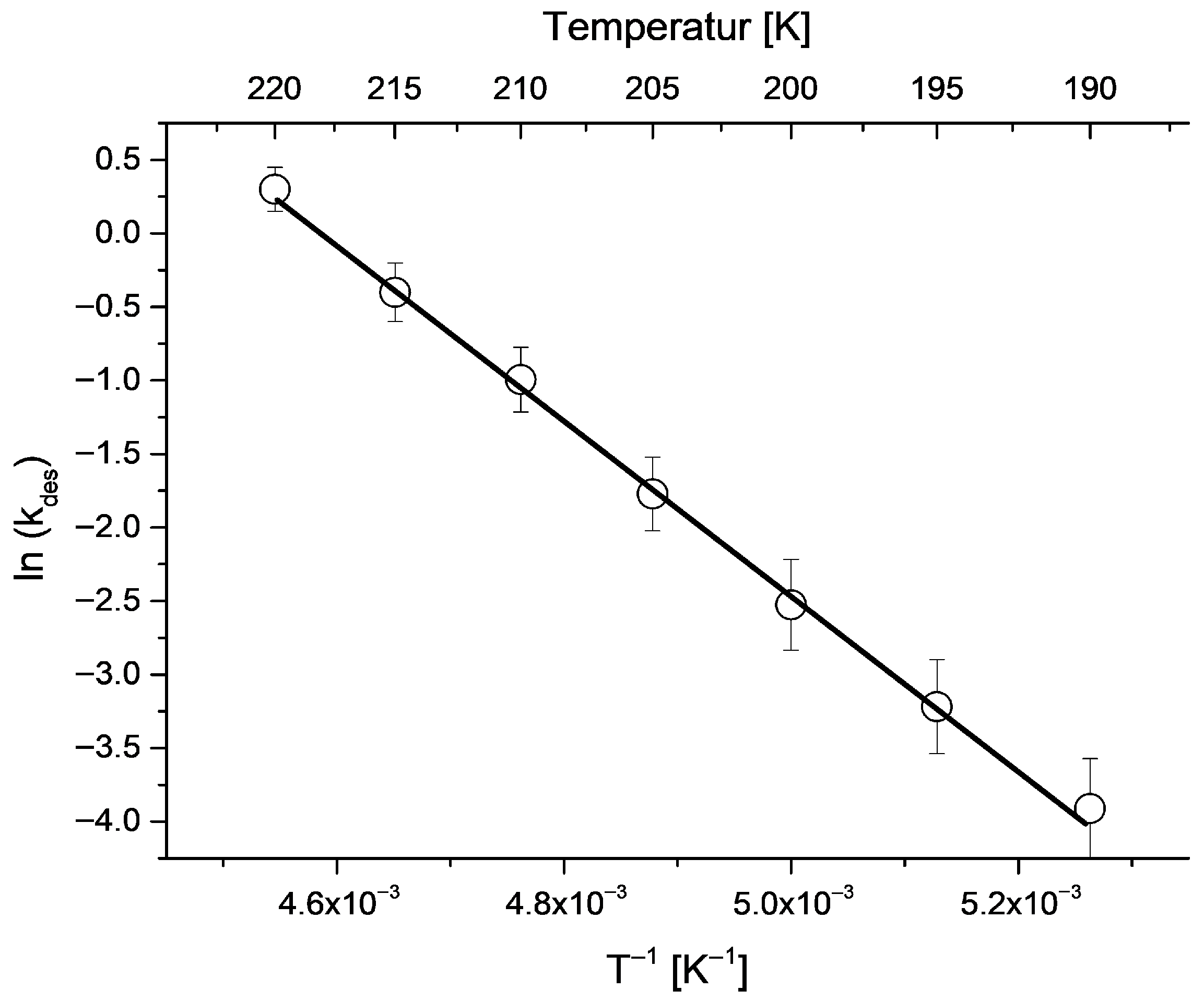
The Arrhenius plot was used to determine the activation energy of desorption, as shown in Figure 19 yields a value of:
EA = 49.1 (±6.8) kJ mol−1.
Figure 19. Arrhenius plot for determining the activation energy of desorption for acetic acid.
The kinetic coefficients of phase transfer (ksol and kseg) into the bulk are within the order of magnitude shown in Table 2. For the simulations best fit, the ice thickness was kept constant at a value of 5 × 10⁻³ cm [17]. The diffusion coefficient used corresponds to the values and temperature dependence formulated by Livingston et al. [31].
We estimated the rate constants of phase transfer and the solubility constant for acetic acid in ice as follows: ksol = 5 × 10⁻³ s−1, kseg = 5 × 10⁻²¹ cm3 s−1, Ks = 1018 cm−3, and the ice thickness for our conditions of 5 × 10⁻³ cm.
By determining KS (KS = ksol/kseg), it becomes possible—by linking it with the Langmuir constant KL—to determine a coefficient that can describe the complete dissolution process of gases in condensed phases (i.e., adsorption onto and solvation within the condensed phase simultaneously). Analogous to absorption processes in the liquid phase, this coefficient is referred to below as the Henry constant KH.
By multiplying KL [cm3] and KS [cm−3], a dimensionless quantity is obtained with values in the range of KH = 106. A comparable magnitude of this coefficient has already been reported by this group [35]. A similar magnitude of the Henry constant is observed in liquid-phase studies with acetic acid and water just above the freezing point [40].
The obtained parameter estimations may serve as an initial reference point for future investigations. At least the order of magnitude of the solvation rate constant, ksol, agrees with another reported value—although one extrapolated to lower temperatures [41]. In the temperature range examined, Jayne et al. [41] report values between 5 × 10⁻⁴ s−1 for 190 K and 5 × 10⁻³ s−1 for 220 K.

6. Conclusions

We presented a multi-phase kinetic model that describes the uptake of trace gases on ice surfaces through coupled adsorption, interfacial solvation, and bulk diffusion at temperatures relevant to the upper troposphere and lower stratosphere. By explicitly treating the gas phase, the ice surface, a sub-surface layer, and the multiple bulk layers, the approach enables a mechanistic description of mass transfer on various time scales and allows for the separation of the fast surface processes from the slower bulk transport. The simulations show that adsorption and desorption equilibrate rapidly, whereas solvation and diffusion proceed on much longer timescales and become relevant only at low temperatures and extended exposure times. The strong temperature dependence of desorption and diffusion leads to efficient bulk uptake mainly below 200 K.
Sensitivity analyses highlight that the solubility constant, KS = ksol/kseg, determines the equilibrium bulk loading, while the absolute solution and segregation rate coefficients control the equilibration time. Ice thickness affects the long-term storage capacity but has little influence on early adsorption behavior. Overall, these analyses demonstrate the practical applicability of the model for fitting CWFT reactor experimental measurements. The application of the model to acetic acid flow-tube experiments allowed for the determination of adsorption, desorption, solvation, segregation, and diffusion parameters, including a desorption activation energy of approximately 49 kJ mol−1 and a Henry constant KH of ~106. The results demonstrate that diffusion contributes significantly at low temperatures but becomes negligible above 200 K.
The principal novelty of this work lies in the development and application of a fully coupled, multi-phase kinetic-diffusion model that explicitly resolves gas-surface-sub-surface-bulk ice interactions and quantitatively applies this framework to flow-tube measurements of acetic acid uptake on ice at UTLS-relevant temperatures (190–220 K). Moreover, we have explicitly introduced a sub-surface layer (ssl) as a distinct physicochemical phase which provides a physically motivated boundary condition between Langmuir surface adsorption and Fick’s law of diffusion, enabling the mechanistic separation of fast surface equilibration from slow bulk uptake. Using our own in-house developed simulation software, we have developed a full numerical solution of time-dependent bulk diffusion coupled to surface kinetics. The latter upgrades earlier simplified approaches and allows spatially and temporally resolved concentration profiles within the ice film and gas phase based on the unified kinetic–thermodynamic framework linking Langmuir, Henry, and diffusion processes. Our best fits provide quantitative determination of solvation and segregation rate constants for trace gases in ice and demonstrates when and why bulk diffusion matters in laboratory and atmospheric contexts. Our theoretical approach has direct applicability to reactor-scale simulations and parameter extraction. The model is not purely conceptual, but it is embedded in a numerical framework capable of simulating open systems, closed systems, and flow tube reactors.
The model provides a robust framework for extracting kinetic and thermodynamic parameters from experimental data and for understanding multi-phase gas–ice interactions under atmospheric conditions. This methodology could also be extended to other gas–matter interaction systems, such as adsorption studies of trace gases on activated carbon, and to scenarios or physicochemical parameter setups where the kinetics are governed by the same processes simulated by the model presented in this study.

Author Contributions

Conceptualization, R.Z., P.B. and A.T.; methodology, A.T. and N.K.; software, N.K. and A.T.; validation, A.T. and P.S.; formal analysis, P.S.; investigation, A.T. and R.Z.; resources, P.S.; data curation, A.T.; writing—original draft preparation, A.T.; writing—review and editing, R.Z., A.T. and N.K.; visualization, A.T. and N.K.; supervision, R.Z. and P.B. All authors have read and agreed to the published version of the manuscript.

Funding

This study is financed by the European Union-NextGenerationEU, through the National Recovery and Resilience Plan of the Republic of Bulgaria, project No. BG-RRP-2.004-0001-C01.

Data Availability Statement

The complete information, including all simulation setups and model results, can be downloaded from: https://doi.org/10.5281/zenodo.17778225. The software used in this study is available at: https://doi.org/10.5281/zenodo.1240249.

Conflicts of Interest

Author Peter Behr was employed by Greenlyte Carbon Technologies GmbH. Author Peer Scheiff was employed by ALBO-Tec GmbH. The companies were not involved in the study design, collection, analysis, interpretation of data, the writing of this article or the decision to submit it for publication. The remaining authors declare that the research was conducted in the absence of any commercial or financial relationships that could be construed as a potential conflict of interest.

Abbreviations

The following abbreviations are used in this manuscript:
CWFTCoated Wall Flow Tube
UTLSUpper Troposphere/Lower Stratosphere
sslsub-surface layer
adsadsorption
desdesorption
solsolution
segsegregation
diffdiffusion
HVHigh-Vacuum
PVPre-Vacuum
MSMass Spectometer

References

  1. Crutzen, P.J.; Lelieveld, J. Human Impacts on Atmospheric Chemistry. Annu. Rev. Earth Planet. Sci. 2001, 29, 17–45. [Google Scholar] [CrossRef]
  2. Farman, J.C.; Gardiner, B.G.; Shanklin, J.D. Large Losses of Total Ozone in Antarctica Reveal Seasonal ClOx/NOx Interaction. Nature 1985, 315, 207–210. [Google Scholar] [CrossRef]
  3. Lelieveld, J.; Bregman, A.; Scheeren, H.A.; Ström, J.; Carslaw, K.S.; Fischer, H.; Siegmund, P.C.; Arnold, F. Chlorine Activation and Ozone Destruction in the Northern Lowermost Stratosphere. J. Geophys. Res. Atmos. 1999, 104, 8201–8213. [Google Scholar] [CrossRef]
  4. Solomon, S. Stratospheric Ozone Depletion: A Review of Concepts and History. Rev. Geophys. 1999, 37, 275–316. [Google Scholar] [CrossRef]
  5. Bartels-Rausch, T.; Jacobi, H.-W.; Kahan, T.F.; Thomas, J.L.; Thomson, E.S.; Abbatt, J.P.D.; Ammann, M.; Blackford, J.R.; Bluhm, H.; Boxe, C.; et al. A Review of Air–Ice Chemical and Physical Interactions (AICI): Liquids, Quasi-Liquids, and Solids in Snow. Atmos. Chem. Phys. 2014, 14, 1587–1633. [Google Scholar] [CrossRef]
  6. Papagiannakopoulos, P.; Kong, X.; Thomson, E.S.; Pettersson, J.B.C. Water Interactions with Acetic Acid Layers on Ice and Graphite. J. Phys. Chem. B 2014, 118, 13333–13340. [Google Scholar] [CrossRef]
  7. Abbatt, J.P.D. Interactions of Atmospheric Trace Gases with Ice Surfaces: Adsorption and Reaction. Chem. Rev. 2003, 103, 4783–4800. [Google Scholar] [CrossRef]
  8. Donaldson, D.J.; Valsaraj, K.T. Adsorption and Reaction of Trace Gas-Phase Organic Compounds on Atmospheric Water Film Surfaces: A Critical Review. Environ. Sci. Technol. 2010, 44, 865–873. [Google Scholar] [CrossRef]
  9. Burkholder, J.B.; Sander, S.P.; Abbatt, J.P.D.; Barker, J.R.; Huie, R.E.; Kolb, C.E.; Kurylo, M.J.; Orkin, V.L.; Wilmouth, D.M.; Wine, P.H. Chemical Kinetics and Photochemical Data for Use in Atmospheric Studies; Evaluation Number 18; JPL Publication: Pasadena, CA, USA, 2015. [Google Scholar]
  10. Homeyer, C.R.; Pan, L.L.; Dorsi, S.W.; Avallone, L.M.; Weinheimer, A.J.; O’Brien, A.S.; DiGangi, J.P.; Zondlo, M.A.; Ryerson, T.B.; Diskin, G.S.; et al. Convective Transport of Water Vapor into the Lower Stratosphere Observed during Double-Tropopause Events. J. Geophys. Res. Atmos. 2014, 119, 10941–10958. [Google Scholar] [CrossRef]
  11. Penner, J.E.; Lister, D.H.; Griggs, D.J.; Dokken, D.J.; McFarland, M. Aviation and the Global Atmosphere; IPCC: Geneva, Switzerland, 1999. [Google Scholar]
  12. Bartels-Rausch, T.; Wren, S.N.; Schreiber, S.; Riche, F.; Schneebeli, M.; Ammann, M. Diffusion of Volatile Organics through Porous Snow: Impact of Surface Adsorption and Grain Boundaries. Atmos. Chem. Phys. 2013, 13, 6727–6739. [Google Scholar] [CrossRef]
  13. Von Hessberg, P.; Pouvesle, N.; Winkler, A.K.; Schuster, G.; Crowley, J.N. Interaction of Formic and Acetic Acid with Ice Surfaces between 187 and 227 K. Investigation of Single Species- and Competitive Adsorption. Phys. Chem. Chem. Phys. 2008, 10, 2345. [Google Scholar] [CrossRef]
  14. Symington, A.; Cox, R.A.; Fernandez, M.A. Uptake of Organic Acids on Ice Surfaces: Evidence for Surface Modification and Hydrate Formation. Z. Phys. Chem. 2010, 224, 1219–1245. [Google Scholar] [CrossRef]
  15. Sokolov, O.; Abbatt, J.P.D. Adsorption to Ice of n -Alcohols (Ethanol to 1-Hexanol), Acetic Acid, and Hexanal. J. Phys. Chem. A 2002, 106, 775–782. [Google Scholar] [CrossRef]
  16. Picaud, S.; Hoang, P.N.M.; Peybernès, N.; Le Calvé, S.; Mirabel, P. Adsorption of Acetic Acid on Ice: Experiments and Molecular Dynamics Simulations. J. Chem. Phys. 2005, 122, 194707. [Google Scholar] [CrossRef]
  17. Behr, P.; Terziyski, A.; Zellner, R. Acetone Adsorption on Ice Surfaces in the Temperature Range T = 190−220 K: Evidence for Aging Effects Due to Crystallographic Changes of the Adsorption Sites. J. Phys. Chem. A 2006, 110, 8098–8107. [Google Scholar] [CrossRef]
  18. Kerbrat, M.; Huthwelker, T.; Bartels-Rausch, T.; Gäggeler, H.W.; Ammann, M. Co-Adsorption of Acetic Acid and Nitrous Acid on Ice. Phys. Chem. Chem. Phys. 2010, 12, 7194. [Google Scholar] [CrossRef] [PubMed]
  19. Abdelmonem, A. Direct Molecular-Level Characterization of Different Heterogeneous Freezing Modes on Mica—Part 1. Atmos. Chem. Phys. 2017, 17, 10733–10741. [Google Scholar] [CrossRef]
  20. Zimmermann, S.; Kippenberger, M.; Schuster, G.; Crowley, J.N. Adsorption Isotherms for Hydrogen Chloride (HCl) on Ice Surfaces between 190 and 220 K. Phys. Chem. Chem. Phys. 2016, 18, 13799–13810. [Google Scholar] [CrossRef]
  21. Abbatt, J.P.D.; Bartels-Rausch, T.; Ullerstam, M.; Ye, T.J. Uptake of Acetone, Ethanol and Benzene to Snow and Ice: Effects of Surface Area and Temperature. Environ. Res. Lett. 2008, 3, 045008. [Google Scholar] [CrossRef]
  22. Behr, P.; Terziyski, A.; Zellner, R. Reversible Gas Adsorption in Coated Wall Flow Tube Reactors. Model Simulations for Langmuir Kinetics. Z. Phys. Chem. 2004, 218, 1307–1327. [Google Scholar] [CrossRef]
  23. Pöschl, U.; Rudich, Y.; Ammann, M. Kinetic Model Framework for Aerosol and Cloud Surface Chemistry and Gas-Particle Interactions—Part 1: General Equations, Parameters, and Terminology. Atmos. Chem. Phys. 2007, 7, 5989–6023. [Google Scholar] [CrossRef]
  24. Kochev, N.; Terziyski, A.; Milev, M. Numerical Modeling of Three-Phase Mass Transition with an Application in Atmospheric Chemistry. Appl. Math. 2013, 4, 100–106. [Google Scholar] [CrossRef]
  25. Terziyski, A.T.; Kochev, N.T. Distributed Software System for Data Evaluation and Numerical Simulations of Atmospheric Processes. In Numerical Methods and Applications; Dimov, I., Dimova, S., Kolkovska, N., Eds.; Lecture Notes in Computer Science; Springer: Berlin/Heidelberg, Germany, 2011; Volume 6046, pp. 182–189. ISBN 978-3-642-18465-9. [Google Scholar]
  26. Asakawa, H.; Sazaki, G.; Nagashima, K.; Nakatsubo, S.; Furukawa, Y. Two Types of Quasi-Liquid Layers on Ice Crystals Are Formed Kinetically. Proc. Natl. Acad. Sci. USA 2016, 113, 1749–1753. [Google Scholar] [CrossRef]
  27. Sánchez, M.A.; Kling, T.; Ishiyama, T.; Van Zadel, M.-J.; Bisson, P.J.; Mezger, M.; Jochum, M.N.; Cyran, J.D.; Smit, W.J.; Bakker, H.J.; et al. Experimental and Theoretical Evidence for Bilayer-by-Bilayer Surface Melting of Crystalline Ice. Proc. Natl. Acad. Sci. USA 2017, 114, 227–232. [Google Scholar] [CrossRef] [PubMed]
  28. Kahan, T.F.; Zhao, R.; Donaldson, D.J. Hydroxyl Radical Reactivity at the Air-Ice Interface. Atmos. Chem. Phys. 2010, 10, 843–854. [Google Scholar] [CrossRef]
  29. Hudait, A.; Allen, M.T.; Molinero, V. Sink or Swim: Ions and Organics at the Ice–Air Interface. J. Am. Chem. Soc. 2017, 139, 10095–10103. [Google Scholar] [CrossRef]
  30. Girardet, C.; Toubin, C. Molecular Atmospheric Pollutant Adsorption on Ice: A Theoretical Survey. Surf. Sci. Rep. 2001, 44, 159–238. [Google Scholar] [CrossRef]
  31. Livingston, F.E.; Smith, J.A.; George, S.M. General Trends for Bulk Diffusion in Ice and Surface Diffusion on Ice. J. Phys. Chem. A 2002, 106, 6309–6318. [Google Scholar] [CrossRef]
  32. Scheiff, P. Untersuchung der Wechselwirkung von Einfachen Carbonylverbindungen mit Eisoberflächen. Ph.D. Thesis, Universität zu Köln, Cologne, Germany, 2015. [Google Scholar]
  33. Kolb, C.E.; Cox, R.A.; Abbatt, J.P.D.; Ammann, M.; Davis, E.J.; Donaldson, D.J.; Garrett, B.C.; George, C.; Griffiths, P.T.; Hanson, D.R.; et al. An Overview of Current Issues in the Uptake of Atmospheric Trace Gases by Aerosols and Clouds. Atmos. Chem. Phys. 2010, 10, 10561–10605. [Google Scholar] [CrossRef]
  34. DeMore, W.B.; Sander, S.P.; Golden, D.M.; Hampson, R.F.; Kurylo, M.; Howard, C.J.; Ravishankara, A.R.; Kolb, C.E.; Molina, M.J. Chemical Kinetics and Photochemical Data for Use in Stratospheric Modeling; Evaluation Number 12; JPL Publication: Pasadena, CA, USA, 1997. [Google Scholar]
  35. Nehme, R. Thermodynamik und Kinetik der Adsorption von Ameisensäure und Essigsäure auf Eisoberflächen. Ph.D. Thesis, Universität zu Köln, Cologne, Germany, 2010. [Google Scholar]
  36. Sander, R. Compilation of Henry’s Law Constants (Version 4.0) for Water as Solvent. Atmos. Chem. Phys. 2015, 15, 4399–4981. [Google Scholar] [CrossRef]
  37. Petrenko, V.F.; Whitworth, R.W. Physics of Ice; Oxford University Press: Oxford, UK, 2002; ISBN 978-0-19-851894-5. [Google Scholar]
  38. Mispelaer, F.; Theulé, P.; Aouididi, H.; Noble, J.; Duvernay, F.; Danger, G.; Roubin, P.; Morata, O.; Hasegawa, T.; Chiavassa, T. Diffusion Measurements of CO, HNCO, H2 CO, and NH3 in Amorphous Water Ice. Astron. Astrophys. 2013, 555, A13. [Google Scholar] [CrossRef]
  39. Aguzzi, A.; Fluckiger, B.; Rossi, M.J. The Nature of the Interface and the Diffusion Coefficient of HCl/Ice and HBr/Ice in the Temperature Range 190-205 K. R. Soc. Chem. 2003, 5, 4157–4169. [Google Scholar] [CrossRef]
  40. Sander, R. Modeling Atmospheric Chemistry: Interactions between Gas-Phase Species and Liquid Cloud/Aerosol Particles. Surv. Geophys. 1999, 20, 1–31. [Google Scholar] [CrossRef]
  41. Jayne, J.T.; Duan, S.X.; Davidovits, P.; Worsnop, D.R.; Zahniser, M.S.; Kolb, C.E. Uptake of Gas-Phase Alcohol and Organic Acid Molecules by Water Surfaces. J. Phys. Chem. 1991, 95, 6329–6336. [Google Scholar] [CrossRef]
Disclaimer/Publisher’s Note: The statements, opinions and data contained in all publications are solely those of the individual author(s) and contributor(s) and not of MDPI and/or the editor(s). MDPI and/or the editor(s) disclaim responsibility for any injury to people or property resulting from any ideas, methods, instructions or products referred to in the content.

Article Metrics

Citations

Article Access Statistics

Multiple requests from the same IP address are counted as one view.