Perspective

Plasticizing Effects of Ionic Liquids on the Properties and Applications of Polymer Blends

by
Ahmad Adlie Shamsuri
1,* and
Siti Nurul Ain Md. Jamil
2,3
1
Laboratory of Biocomposite Technology, Institute of Tropical Forestry and Forest Products (INTROP), Universiti Putra Malaysia, Serdang 43400 UPM, Selangor, Malaysia
2
Department of Chemistry, Faculty of Science, Universiti Putra Malaysia, Serdang 43400 UPM, Selangor, Malaysia
3
Centre for Foundation Studies in Science of Universiti Putra Malaysia, Universiti Putra Malaysia, Serdang 43400 UPM, Selangor, Malaysia
*
Author to whom correspondence should be addressed.
Physchem 2026, 6(1), 15; https://doi.org/10.3390/physchem6010015
Submission received: 17 October 2025 / Revised: 10 December 2025 / Accepted: 13 February 2026 / Published: 2 March 2026
(This article belongs to the Section Electrochemistry)

Abstract

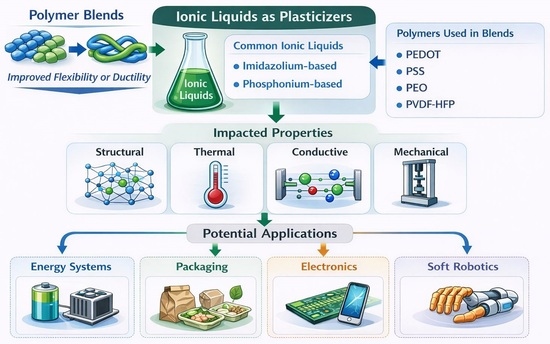
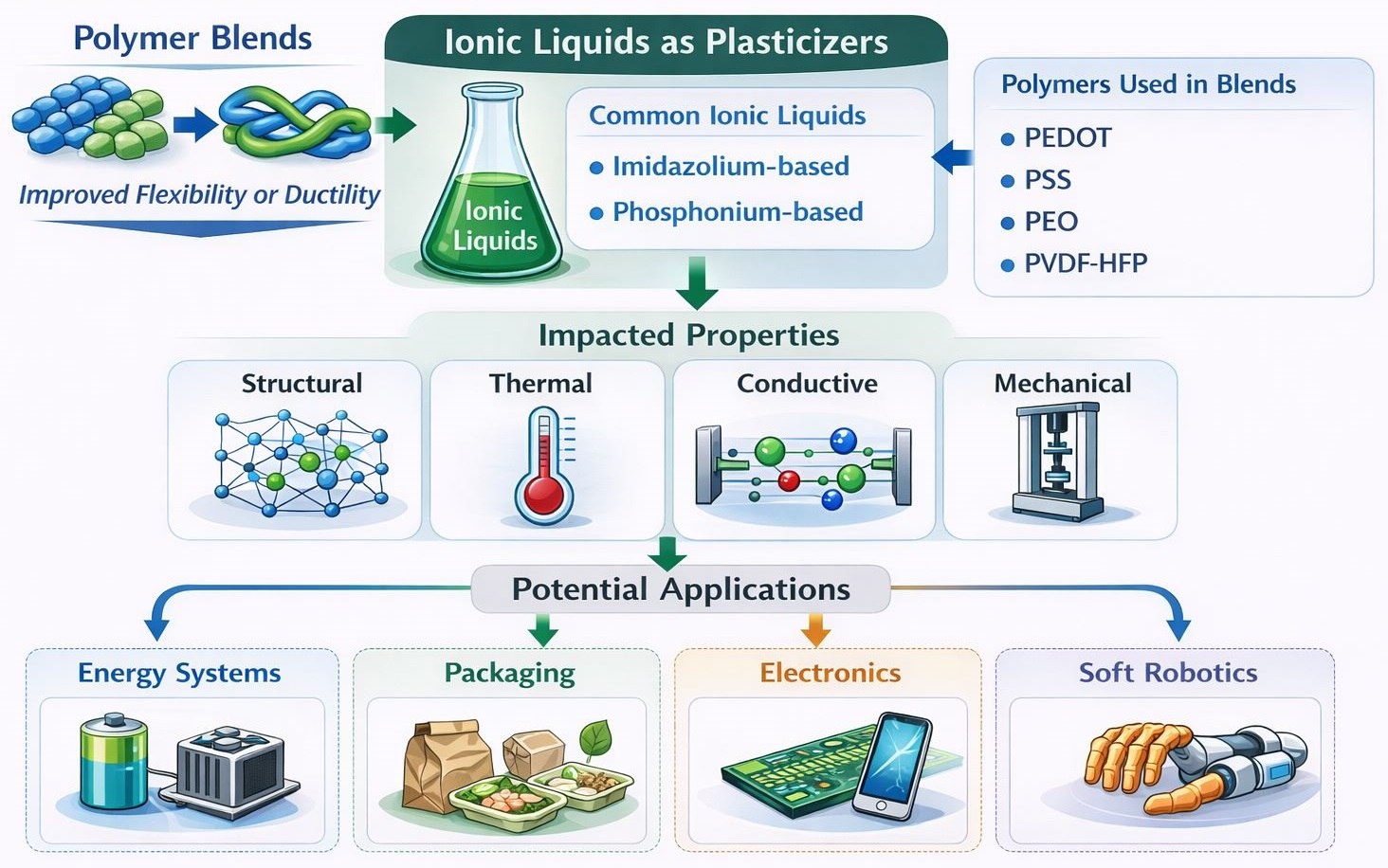
Polymer blends are an essential category of materials formed by physically combining two or more polymers. The plasticizing process is advantageous for brittle or rigid polymer systems that need improved flexibility or ductility. The increasing demand for environmentally friendly and high-performance polymeric materials has spurred research into alternative plasticization methods. The use of ionic liquids as non-volatile plasticizers in polymer blends is owing to their outstanding properties. In this short review, several ionic liquids employed in polymer blends and some polymers used in blends with ionic liquids are listed. Additionally, the plasticizing effects of ionic liquids on the properties of polymer blends are concisely elucidated. This review also provides a brief overview of the potential applications of polymer blends plasticized with ionic liquids. In summary, many studies reveal that ionic liquid-based plasticization impacts the structural, thermal, conductive, and mechanical properties of polymer blends. The potential applications of polymer blends plasticized with ionic liquids cover various fields, including energy systems, packaging, electronics, and soft robotics.

Graphical Abstract

1. Introduction

Polymer blends represent a vital class of materials produced by physically mixing two or more polymers to create a single-phase or multi-phase system [1]. This approach offers a cost-effective and multipurpose strategy for developing new materials with desirable features by combining the advantageous characteristics of different polymer components. Advances in blending methods such as melt blending [2], solution blending [3], and in situ polymerization [4] have expanded the range of achievable properties. Moreover, the development of sustainable and functional polymer blends has received increasing attention in recent years [5,6]. In any case, polymer blending remains a widely studied and industrially relevant strategy in material design and engineering.
The plasticizing process is beneficial for brittle or rigid polymer systems that require enhanced flexibility or ductility for practical applications. In polymer blends, the effectiveness of plasticization depends on the compatibility between the plasticizer and each polymer component [7] as well as on the distribution achieved after processing [2]. Furthermore, the concentration of the plasticizer plays a crucial role in determining the extent of modification [8], as excessive loading can lead to undesirable effects. Thus, careful selection and optimization of plasticization conditions are crucial to strike a balance between the desired improvements in flexibility and the long-term stability and performance of the polymer blend system.
Recent studies have explored the use of ionic liquids as non-volatile plasticizers for polymer blends due to their exceptional characteristics, such as thermal/chemical stability, low volatility/toxicity, and tunable solubility/processability [6,9,10,11]. Ionic liquids are organic salts that exist in the liquid state at temperatures below 100 °C due to the bulky and asymmetric structures of the ions [10]. These liquid salts can interact with a wide range of functional groups in polymers [12], promoting enhanced flexibility and deformability [13]. Unlike conventional plasticizers, ionic liquids suggest potential for improved compatibility across different polymer phases [14], making them suitable for both miscible and immiscible systems [15]. Their ability to be structurally tailored further [16] allows fine-tuning of blend behavior. As such, ionic liquid-based plasticization signifies a promising strategy for developing advanced and multifunctional polymer blend systems.
The growing interest in environmental and high-performance polymeric materials has driven the investigation of substitution plasticization strategies, including the usage of ionic liquids in polymer blends. Although several studies have provided comprehensive insights and outcomes of ionic liquid-based plasticization, the findings remain divided. This short review intends to examine the recent advancements in plasticizing polymer blends with ionic liquids, highlighting their effects on structural, thermal, conductive, and mechanical properties. By evaluating the key findings across various ionic liquids and polymer systems, this review aims to fill the gaps, identify influencing factors, and explore potential applications for optimizing the employment of ionic liquids in polymer blend systems.

2. Ionic Liquids Employed in Polymer Blends

Table 1 shows the ionic liquids employed as plasticizers for polymer blends. It suggests that two types of ionic liquids are usually used, specifically imidazolium- and phosphonium-based ionic liquids. Among the imidazolium-based, 1-butyl-3-methylimidazolium (Bmim) and 1-ethyl-3-methylimidazolium (Emim) cations are the most regularly studied. Bmim-based ionic liquids, including BmimBr, BmimCl, BmimPF6, and BmimI, are commonly chosen due to their availability, low cost, and advantageous physicochemical properties [7]. Similarly, Emim-based ionic liquids such as EmimTFSI, EmimES, EmimTCB, and EmimTCM are widely employed due to their low to moderate viscosity, making them favorable candidates for blending with both hydrophilic and hydrophobic polymers [8].
On the other hand, trihexyl(tetradecyl)phosphonium (Thtdp) cation represents a phosphonium-based ionic liquid characterized by bulky, long alkyl chains, which provide compatibility with various polymers [2,15]. Thtdp-based ionic liquids such as ThtdpEHP, ThtdpTFSI, ThtdpTMP, ThtdpCl, and ThtdpDP are typically used in polymer blend systems. Notably, the bis(trifluoromethylsulfonyl)imide (TFSI) anion is frequently paired with both Emim and Thtdp cations due to its hydrophobicity and good thermal stability [8,15]. Figure 1 shows the chemical structures of Bmim cation, Emim cation, Thtdp cation, and TFSI anion. These cations and an anion provide the foundation for diverse ionic liquids, enhancing interactions by leveraging their specific physical and chemical properties.

3. Polymer Blends Plasticized with Ionic Liquids

Table 2 displays the polymers used in blends with ionic liquid plasticizers. It discloses that thermoplastics are more commonly utilized than natural polymers and thermosets. Among these, poly(3,4-ethylenedioxythiophene) (PEDOT) stands out as a widely studied conductive polymer, which is frequently used in plasticization with ionic liquids to enhance flexibility and electrical properties [6,13]. PEDOT is often blended with poly(styrene sulfonate) (PSS), a widely studied thermoplastic polyelectrolyte, which is negatively charged and acts as a processability enhancer [10]. This PEDOT:PSS system is highly valued in electronic and actuator applications due to its excellent film-forming ability and improved conductivity upon plasticization [4,23].
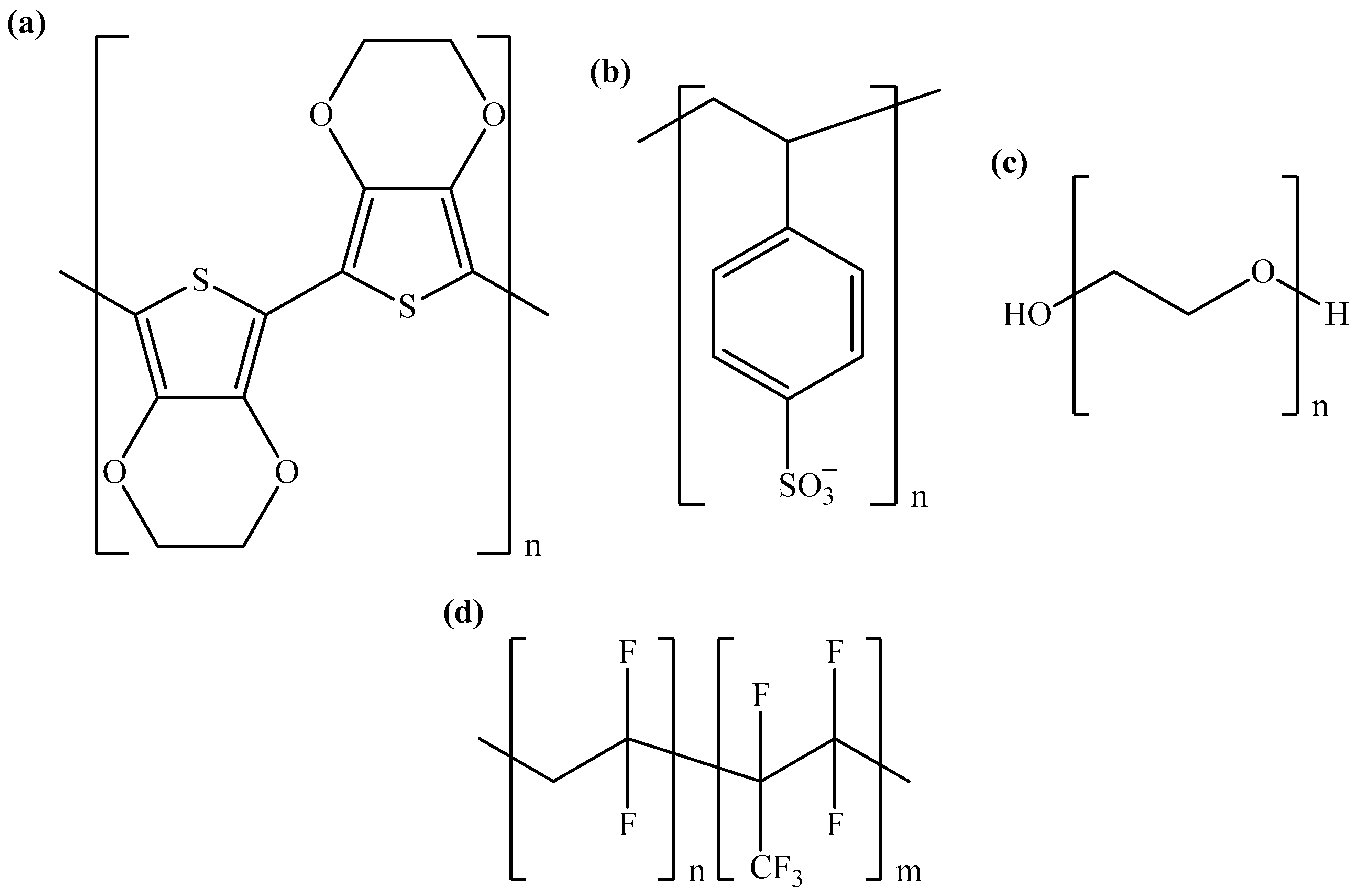
Poly(ethylene oxide) (PEO) is another important thermoplastic used in these blends. It is a semi-crystalline, water-soluble polymer known for its low toxicity, flexibility, good solvating ability, and ion mobility [20,25], making it a suitable candidate for use in solid polymer electrolytes and biomedical applications [27]. Poly(vinylidene fluoride-hexafluoropropylene) (PVDF-HFP), a copolymer with high mechanical stability and dielectric constant [20], is also prominently featured. PVDF-HFP blends with ionic liquids aim to enhance ionic conductivity and electrochemical performance [26], thereby expanding their applications in energy storage devices and flexible electronics. Figure 2 shows the chemical structures of PEDOT, PSS, PEO, and PVDF-HFP. Overall, the regular appearance of these polymers in polymer blends with ionic liquids underlines their versatility and compatibility with advanced plasticization strategies for both functional and sustainable material development.

4. Properties of Polymer Blends Plasticized with Ionic Liquids

Table 3 demonstrates the plasticizing effects of ionic liquids on the properties of polymer blends. Rawat and Saroj have prepared the Ch/PVP/PEG blends plasticized with EmimMS [29]. They found that the crystallinity decreases with increasing EmimMS concentration (50 wt%). This may be attributed to the plasticization of EmimMS with the functional groups of polymer blends [29]. Moreover, the decomposition temperature decreases slightly as EmimMS is added, possibly due to the complexation of the Emim cations with the hydroxyl and amine groups attached to the Ch backbone [29]. The electrical conductivity increases with rising EmimMS concentration. This also may be attributed to the plasticization effect of EmimMS [29].
Asnawi et al. have prepared the MX/MC blends plasticized with EmimBr [28]. They found that the crystallinity decreases as the concentration of EmimBr increases (30 wt%). This is because the interaction of the blends with EmimBr has broadened the amorphous region [28]. Additionally, the glass transition temperature decreases with the addition of EmimBr, indicating a good interaction between EmimBr and the polymer blends, as EmimBr promotes the segmental motion of the polymer chains and enhances the amorphous characteristic of the blends [28]. The ionic conductivity increases because EmimBr promotes the plasticization effect, thereby increasing the mobility of charge carriers [28].
Zhou et al. have prepared the PBAT/PLA blends plasticized with TbpDP and ThtdpDP [2]. They found that as the content of TbpDP in the blends increased (0.7 wt%), the melting temperature of the PLA component gradually decreased [2]. In contrast, the elongation at break of the blends increased, due to the plasticizing effect of TbpDP, which reduces entanglement between polymer chains and increases their mobility [2].
Livi et al. have prepared the PBAT/PLA/LG blends plasticized with ThtdpEHP, ThtdpTFSI, ThtdpTMP, and ThtdpCl [5]. They found that the use of ThtdpCl (1 wt%) has a plasticizing effect, as confirmed by a slight decrease in the glass transition temperature [5]. Moreover, an increase in the strain at break is caused by the good affinity of LG with Cl anions in ThtdpCl, which results in a decrease in the LG particle size, giving better stretchability to the blends [5].
Xu et al. have prepared the PBS/CS blends plasticized with BmimBr, BmimCl, and BmimI [7]. They found that BmimI (9.09 wt%) had the strongest plasticizing effect on CS. The crystallinity of the plasticized blends was the lowest, which was due to the best compatibility between CS-BmimI and PBS [7]. Additionally, the elongation at break increased because BmimI weakened the intermolecular force in CS, enabling better integration of CS and PBS molecular chains, and the blends showed good toughness [7].
Liu et al. have prepared the PBS/MS blends plasticized with BmimCl [18]. They found that the decreased glass transition temperature of PBS upon the addition of BmimCl (5.66 wt%) indicated that the ionic liquid could plasticize PBS to some extent. Thus, BmimCl could increase the chain mobility of PBS through the plasticization effect [18]. Furthermore, the reduction in MS crystallinity can be explained by BmimCl entering the MS granules, weakening the inter- and intramolecular hydrogen bonding and thereby destroying MS crystallinity [18]. The elongation at break of the polymer blends stays at a high level due to BmimCl’s more efficient plasticization effect [18].
Teo et al. have prepared the PEDOT/PSS blends plasticized with EmimTCB [6]. They found that EmimTCB (1 wt%) acts not only as a secondary dopant but also as a plasticizer for the blends, forming a fibrillar structure which results in high electrical conductivity [6]. EmimTCB increases free volume and segmental motion, elevating tensile strain while maintaining its superior conductance when stretched [6].
Kim et al. have prepared the PEDOT/PSS blends plasticized with EmimES, EmimTCB, and EmimTCM [10]. They found that EmimTCM (2 wt%) increases the electrical conductivity and stretchability of the blends while decreasing their elastic modulus [10]. The outstanding performance of these blends is attributed to the plasticizing effect of EmimTCM, which allows them to deform more readily without fracturing the electrical pathway [10].
Wu et al. have also prepared the PEDOT/PSS blends plasticized with EmimTCM [13]. They found that the improved electrical conductivity of the plasticized blends is caused by EmimTCM (1.5 wt%), which forms a fibrillar structure network and provides an efficient pathway for hole transport [13]. In addition, increased fracture strain is likely due to the plasticizing effect of EmimTCM, which enhances the segmental motion of the polymer chains, providing stretchability and flexibility to the blends [13].
Rathika and Suthanthiraraj have prepared the PEO/PVDF blends plasticized with EmimTFSI [25]. They found that the crystallinity varies with the amount of EmimTFSI (7 wt%) added to the polymer blends. This is because of the formation of more amorphous regions [25]. The melting temperature decreases with the addition of EmimTFSI, which may be due to the increased complexation of the Emim cations [25]. The ionic conductivity increases with increasing EmimTFSI content. This may occur because EmimTFSI acts as a plasticizer, thereby enhancing the amorphicity of the blends [25].
Jayanthi has prepared the PEO/PVDF-HFP blends plasticized with BmimPF6 [19]. She found that the crystallinity of the blends decreases when BmimPF6 (20 wt%) is added as the polymer chains become more amorphous [19]. At the same time, the ionic conductivity increased, revealing the plasticizing effect of BmimPF6, as the polymer backbone became more flexible due to the increased mobility of ions [19].
Kujur et al. have prepared the PEO/PVDF-HFP blends plasticized with BmimSCN [20]. They found that the decrease in crystallinity due to the addition of BmimSCN (0.6 mL) enhances the amorphousity of the polymer blends caused by ion–dipole interactions between BmimSCN and the polymer chains [20]. Moreover, the melting temperature decreases, indicating the plasticization of the polymer blends and an increase in the amorphous region [20]. The enhancement in electrical conductivity can be ascribed to the interaction of BmimSCN with the polymer chains, which may lead to plasticization and an increased amorphousity of the polymer blends [20].
Nguyen et al. have prepared the PEO/PVDF-HFP blends plasticized with EmimTFSI [27]. They found that the addition of EmimTFSI (33.33 wt%) as a plasticizer reduces crystallinity, yielding an almost amorphous structure [27]. Additionally, the decomposition temperature decreases due to the lower thermal stability of the blends, caused by the combined decomposition of the CF3 groups in PVDF-HFP, the ethyl and methyl groups of the Emim cations, and chain scission of PEO [27]. The complexation of the PVDF-HFP chains with the Emim cations and the formation of a lower-crystalline phase could lead to an increase in ionic conductivity [27].
Yousfi et al. have prepared the PP/PA6 blends plasticized with ThtdpTFSI and ThtdpTMP [15]. They found that the introduction of ThtdpTFSI (10 wt%) into the blends creates a plasticizing effect, lowering the melting temperature and promoting miscibility through intermolecular interactions between ThtdpTFSI and the blend phases [15]. The Young’s modulus also decreases, resulting in a significant increase in elongation at break [15].
Li et al. have prepared the PU/PEDOT/PSS blends plasticized with EmimTFSI [4]. They found that increasing the EmimTFSI content (50 wt%) results in a gradual increase in ionic conductivity [4]. However, there is a decrease in Young’s modulus and strength, which is likely due to the plasticizing effect of EmimTFSI. Nevertheless, elongation at break slightly increases, demonstrating good miscibility between the PU and EmimTFSI [4].
Okuzaki et al. have also prepared the PU/PEDOT/PSS blends plasticized with EmimTFSI [23]. They found that the ionic conductivity of the plasticized blends increases with increasing EmimTFSI content (40 wt%) [23]. However, the compression modulus decreases, which is likely due to the plasticizing effect of EmimTFSI and/or a decrease in the network density of the PU elastomer resulting from a reduction in its volume fraction [23].
Thayumanasundaram et al. have prepared the PVA/PAA blends plasticized with BmpyTFSI [22]. They found that the decrease in crystallinity occurred with the addition of BmpyTFSI (70 mol-%). This is due to the ionic liquid, which can weaken the interactions among polymer chains and hinder some recrystallization of the polymer blends [22]. Furthermore, the glass transition temperature decreases slightly. This is owing to the plasticization effect that results from the weak interaction between BmpyTFSI and the polymer blends [22]. The polymer blends with a high BmpyTFSI content have the highest amount of ions, resulting in higher ionic conductivity [22].
Prasanna and Suthanthiraraj have prepared the PVC/PEMA blends plasticized with EmimTFSI [8]. They found that the crystallinity of the plasticized blends decreases with the addition of EmimTFSI (80 wt%) [8]. Nevertheless, the ionic conductivity increases, which may be due to the plasticizing effect of EmimTFSI, thereby breaking the primary bonds in the blends and increasing the amorphous fraction of these polymers [8].
Da Trindade et al. have prepared the SPEEK/PBI blends plasticized with BimHSO4 and TeaHSO4 [17]. They found that the crystallinity decreased when TeaHSO4 (5 wt%) was added to the blends, indicating that the blends became less amorphous [17]. Moreover, the addition of TeaHSO4 has a plasticizing effect on the blends, accelerating the mobility of polymer chains and thereby increasing the ionic conductivity [17].

5. Applications of Polymer Blends Plasticized with Ionic Liquids

Table 4 presents the potential applications of polymer blends plasticized with ionic liquids. The Ch/PVP/PEG blends plasticized with EmimMS are ideal for use in dye-sensitized solar cells because of their good electrochemical behavior [29]. The MX/MC blends plasticized with EmimBr are suited for usage in electrochemical double-layer capacitors, as they can achieve high specific capacitance [28]. The PBAT/PLA blends plasticized with TbpDP are suitable for biodegradable packaging applications due to their enhanced flexibility, toughness, and interfacial compatibility [2]. Similarly, the same blends containing LG plasticized with ThtdpCl are potentially used for biodegradable packaging because of their improved mechanical strength and reduced water vapor permeability [5].
The PBS/CS blends plasticized with BmimI are particularly appropriate for food packaging applications due to their enhanced elongation, compatibility, and water resistance [7]. The PBS/MS blends plasticized with BmimCl are also suitable for food packaging applications, as they possess high tensile strength and elongation at break [18]. For PEDOT/PSS blends plasticized with EmimTCB and EmimTCM, applications extend to stretchable electronics because of their increased flexibility and electrical conductivity [6,10,13]. The PEO/PVDF blends plasticized with EmimTFSI are ideal for rechargeable battery applications owing to their high ionic mobility and conductivity [25]. The PEO/PVDF-HFP blends plasticized with BmimPF6, BmimSCN, and EmimTFSI are also potentially utilized in rechargeable battery applications due to their improved ionic conductivity and amorphous nature [19,20,27]. The PP/PA6 blends plasticized with ThtdpTFSI can be used in high-performance applications because of their enhanced mechanical and thermal properties [15].
The plasticization of EmimTFSI on PU/PEDOT/PSS blends makes them ideal for soft actuators due to their increased ionic conductivity and flexibility [4,23]. The PVA/PAA blends plasticized with BmpyTFSI are suitable for use in rechargeable batteries, as they can maintain both thermal and mechanical stability while providing high ion conductivity [22]. EmimTFSI plasticization on PVC/PEMA blends can also be applied in rechargeable batteries because of their enhanced ionic conductivity and wide electrochemical stability window [8]. Finally, the SPEEK/PBI blends plasticized with TeaHSO4 make them suitable for fuel cell applications due to their high proton conductivity and excellent thermal stability [17]. Therefore, each of these potential applications is closely tied to the distinctive functions of ionic liquids, which increase the inherent properties of polymer blends to address specific industrial needs.

6. Discussion

Table 3 also provides information on the trends in increment and decrement for the properties of different polymer blends plasticized with ionic liquids. The qualitative data highlight the impact of various ionic liquid types, including imidazolium-, phosphonium-, pyrrolidinium-, and ammonium-based ionic liquids and their loadings, across a wide range of polymer blend systems. An imidazolium-based ionic liquid like EmimTFSI is the most frequently employed, showing consistent reductions in crystallinity that correlate with enhanced ionic conductivity in systems such as PEO/PVDF, PEO/PVDF-HFP, PU/PEDOT/PSS, and PVC/PEMA blends. In the PEDOT/PSS blends, EmimTCM and EmimTCB significantly increased electrical conductivity and tensile or fracture strain. The properties also depend on the ionic liquid loading. Low loadings (typically ≤10 wt%) in PBAT/PLA, PBS/starch, PP/PA6, and SPEEK/PBI blends showed low crystallinity and thermal properties, but high elongation. In comparison, moderate loadings (usually <50 wt%) also exhibited low crystallinity and thermal properties with high conductivity, but in some cases decreased modulus. Moreover, high loadings (e.g., 50–80 wt%) amplified ionic or electrical conductivity and elongation. Phosphonium-based ionic liquids, such as TbpDP and ThtdpCl, improved elongation and strain at break in PBAT-based blends, demonstrating their potential to soften the polymer chains. Pyrrolidinium- and ammonium-based ionic liquids like BmpyTFSI and TeaHSO4 also contributed to enhanced ionic conductivity and reduced crystallinity in PVA/PAA and SPEEK/PBI blends. Overall, the structural, thermal, conductive, and mechanical properties of polymer blends plasticized with ionic liquids vary considerably with ionic liquid type and loading, enabling tunable performance depending on the blend design purposes.
Table 4 also provides information on the potential applications of different polymer blends plasticized with various ionic liquids. The data show that specific plasticization of polymer blends with ionic liquids is tailored for targeted end uses. For example, imidazolium-based ionic liquids such as EmimTFSI and EmimBr are employed to plasticize PEO-based and MX/MC blends, respectively, for energy storage devices like rechargeable batteries and electrochemical double-layer capacitors. Additionally, EmimTCM and EmimTFSI are used to plasticize PEDOT/PSS and PU/PEDOT/PSS blends, respectively, for soft robotics applications like stretchable electronics and soft actuators. Furthermore, BmimI and BmimCl are utilized to plasticize PBS/CS and PBS/MS blends, respectively, for food packaging. Biodegradable packaging emerges as a key area for PBAT/PLA-based blends plasticized with phosphonium-based ionic liquids like TbpDP and ThtdpCl. These blends are beneficial for their flexibility and compostability. Lastly, EmimMS- and TeaHSO4-plasticized Ch/PVP/PEG and SPEEK/PBI blends, respectively, are intended for energy-generating devices such as dye-sensitized solar cells and fuel cells. Overall, the polymer blends plasticized with ionic liquids demonstrate great versatility for use in energy storage devices, innovative electronics, sustainable packaging, and energy generators.

7. Conclusions

In this review, the ionic liquids employed as plasticizers for polymer blends, as well as the polymers used in blends with ionic liquid plasticizers, are thoroughly recorded. In addition, the plasticizing effects of ionic liquids on the properties of polymer blends are underlined in this short review. A brief overview of the potential applications of polymer blends plasticized with ionic liquids is also provided. Ionic liquids such as imidazolium- and phosphonium-based ionic liquids are typically employed in polymer blends. Polymers like PEDOT, PSS, PEO, and PVDF-HFP are generally used in plasticization with ionic liquids for these blends. Most investigations disclose that polymer blends plasticized with ionic liquids improve elongation and strain while decreasing modulus, indicating an enhancement of the segmental motion of the polymer blend chains. Moreover, the glass transition, melting, and decomposition temperatures, as well as the crystallinity of the plasticized blends, are reduced, implying the plasticizing effects of ionic liquids. However, both their ionic and electrical conductivities increase, suggesting the enhanced mobility of ions and electrons. Hence, ionic liquid-based plasticization plays an essential role in impacting the structural, thermal, conductive, and mechanical properties of polymer blends. Several potential applications of polymer blends plasticized with ionic liquids concentrate on energy storage, biodegradable or food packaging, stretchable electronics, energy generators, and soft actuators, depending on the intrinsic properties of the polymer blends and additional components.

Author Contributions

Conceptualization, A.A.S.; data curation, S.N.A.M.J.; formal analysis, S.N.A.M.J.; funding acquisition, A.A.S.; investigation, A.A.S.; methodology, S.N.A.M.J.; project administration, A.A.S.; resources, A.A.S.; supervision, S.N.A.M.J.; validation, A.A.S.; writing—original draft preparation, A.A.S.; writing—review and editing, S.N.A.M.J. All authors have read and agreed to the published version of the manuscript.

Funding

This short review was sponsored by the Universiti Putra Malaysia under the Grant Putra IPM Scheme (project number: GP-IPM/2024/9789200).

Data Availability Statement

Not applicable.

Acknowledgments

The authors gratefully acknowledge the reviewers and editors for their valuable insights and helpful feedback throughout the review process. The first author also wishes to express gratitude to his family and the INTROP staff for their unwavering support during his battle with stage 3 cancer.

Conflicts of Interest

The authors declare no conflicts of interest.

References

  1. Shamsuri, A.A.; Md. Jamil, S.N.A.; Yusoff, M.Z.M.; Abdan, K. Methods and Mechanical Properties of Polymer Hybrid Composites and Hybrid Polymer Composites: Influence of Ionic Liquid Addition. Appl. Mech. 2024, 5, 1–19. [Google Scholar] [CrossRef] [Scilit]
  2. Zhou, Y.; Qiu, S.; Waterhouse, G.I.N.; Zhang, K.; Xu, J. Enhancing the properties of PBAT/PLA composites with novel phosphorus-based ionic liquid compatibilizers. Mater. Today Commun. 2021, 27, 102407. [Google Scholar] [CrossRef] [Scilit]
  3. Shamsuri, A.A.; Md. Jamil, S.N.A.; Yusoff, M.Z.M.; Abdan, K. Polymer Composites Containing Ionic Liquids: A Study of Electrical Conductivity. Electron. Mater. 2024, 5, 189–203. [Google Scholar] [CrossRef] [Scilit]
  4. Li, Y.; Tanigawa, R.; Okuzaki, H. Soft and flexible PEDOT/PSS films for applications to soft actuators. Smart Mater. Struct. 2014, 23, 074010. [Google Scholar] [CrossRef] [Scilit]
  5. Livi, S.; Bugatti, V.; Marechal, M.; Soares, B.G.; Barra, G.M.O.; Duchet-Rumeau, J.; Gérard, J.-F. Ionic liquids–lignin combination: An innovative way to improve mechanical behaviour and water vapour permeability of eco-designed biodegradable polymer blends. RSC Adv. 2015, 5, 1989–1998. [Google Scholar] [CrossRef] [Scilit]
  6. Teo, M.Y.; Kim, N.; Kee, S.; Kim, B.S.; Kim, G.; Hong, S.; Jung, S.; Lee, K. Highly Stretchable and Highly Conductive PEDOT:PSS/Ionic Liquid Composite Transparent Electrodes for Solution-Processed Stretchable Electronics. ACS Appl. Mater. Interfaces 2017, 9, 819–826. [Google Scholar] [CrossRef] [Scilit]
  7. Xu, J.; Chen, Y.; Tian, Y.; Yang, Z.; Zhao, Z.; Du, W.; Zhang, X. Effect of ionic liquid 1-buyl-3-methylimidazolium halide on the structure and tensile property of PBS/corn starch blends. Int. J. Biol. Macromol. 2021, 172, 170–177. [Google Scholar] [CrossRef] [Scilit]
  8. Prasanna, C.M.S.; Suthanthiraraj, S.A. Effective influences of 1-ethyl-3-methylimidazolium bis(trifluoromethylsulfonyl) imide (EMIMTFSI) ionic liquid on the ion transport properties of micro-porous zinc-ion conducting poly (vinyl chloride)/poly (ethyl methacrylate) blend-based polymer electro. J. Polym. Res. 2016, 23, 140. [Google Scholar] [CrossRef] [Scilit]
  9. Shamsuri, A.A.; Abdan, K.; Yusoff, M.Z.M.; Jamil, S.N.A.M. Impact of ionic liquids on the thermal properties of polymer composites. e-Polymers 2024, 24, 20240020. [Google Scholar] [CrossRef] [Scilit]
  10. Kim, N.; Lienemann, S.; Petsagkourakis, I.; Alemu Mengistie, D.; Kee, S.; Ederth, T.; Gueskine, V.; Leclère, P.; Lazzaroni, R.; Crispin, X.; et al. Elastic conducting polymer composites in thermoelectric modules. Nat. Commun. 2020, 11, 1424. [Google Scholar] [CrossRef] [Scilit] [PubMed]
  11. Makarov, D.M.; Fadeeva, Y.A.; Kolker, A.M. Machine Learning Prediction of Henry’s Law Constant for CO2 in Ionic Liquids and Deep Eutectic Solvents. Liquids 2025, 5, 16. [Google Scholar] [CrossRef] [Scilit]
  12. Shamsuri, A.A.; Mohamed Yusoff, M.Z.; Md. Jamil, S.N.A.; Abdan, K. Fourier transform infrared spectroscopy study of polymer/filler/ionic liquid composites. Rev. Anal. Chem. 2025, 44, 20250084. [Google Scholar] [CrossRef] [Scilit]
  13. Wu, X.; Surendran, A.; Ko, J.; Filonik, O.; Herzig, E.M.; Müller-Buschbaum, P.; Leong, W.L. Ionic-Liquid Doping Enables High Transconductance, Fast Response Time, and High Ion Sensitivity in Organic Electrochemical Transistors. Adv. Mater. 2019, 31, 1805544. [Google Scholar] [CrossRef] [Scilit]
  14. Shamsuri, A.A.; Md. Jamil, S.N.A.; Abdan, K. Coupling effect of ionic liquids on the mechanical, thermal, and chemical properties of polymer composites: A succinct review. Vietnam J. Chem. 2024, 62, 227–239. [Google Scholar] [CrossRef] [Scilit]
  15. Yousfi, M.; Livi, S.; Duchet-Rumeau, J. Ionic liquids: A new way for the compatibilization of thermoplastic blends. Chem. Eng. J. 2014, 255, 513–524. [Google Scholar] [CrossRef] [Scilit]
  16. Shamsuri, A.A.; Yusoff, M.Z.M.; Abdan, K.; Md. Jamil, S.N.A. Ionic liquid-modified carbon-based fillers and their polymer composites—A Raman spectroscopy analysis. Rev. Adv. Mater. Sci. 2024, 63, 20240070. [Google Scholar] [CrossRef] [Scilit]
  17. da Trindade, L.G.; Zanchet, L.; Martins, P.C.; Borba, K.M.N.; Santos, R.D.M.; Paiva, R.d.S.; Vermeersch, L.A.F.; Ticianelli, E.A.; de Souza, M.O.; Martini, E.M.A. The influence of ionic liquids cation on the properties of sulfonated poly (ether ether ketone)/polybenzimidazole blends applied in PEMFC. Polymer 2019, 179, 121723. [Google Scholar] [CrossRef] [Scilit]
  18. Liu, D.; Qi, Z.; Zhang, Y.; Xu, J.; Guo, B. Poly(butylene succinate) (PBS)/ionic liquid plasticized starch blends: Preparation, characterization, and properties. Starch/Staerke 2015, 67, 802–809. [Google Scholar] [CrossRef] [Scilit]
  19. Jayanthi, S. Studies on ionic liquid incorporated polymer blend electrolytes for energy storage applications. Adv. Compos. Hybrid Mater. 2019, 2, 351–360. [Google Scholar] [CrossRef] [Scilit]
  20. Kujur, S.; Mahipal, Y.K.; Kumar, N. Investigation of Zn2+-ion-conducting polymer electrolytes incorporated with room temperature ionic liquid using Zn-V2O5-based electrodes for energy storage applications. J. Mater. Res. 2025, 40, 2735–2748. [Google Scholar] [CrossRef] [Scilit]
  21. Thayumanasundaram, S.; Rangasamy, V.S.; Seo, J.W.; Locquet, J.P. Electrochemical performance of polymer electrolytes based on Poly(vinyl alcohol)/Poly(acrylic acid) blend and Pyrrolidinium ionic liquid for lithium rechargeable batteries. Electrochim. Acta 2017, 240, 371–378. [Google Scholar] [CrossRef] [Scilit]
  22. Thayumanasundaram, S.; Rangasamy, V.S.; De Greef, N.; Seo, J.W.; Locquet, J.P. Hybrid polymer electrolytes based on a Poly(vinyl alcohol)/Poly(acrylic acid) blend and a pyrrolidinium-based ionic liquid for lithium-ion batteries. Eur. J. Inorg. Chem. 2015, 2015, 1290–1299. [Google Scholar] [CrossRef] [Scilit]
  23. Okuzaki, H.; Takagi, S.; Hishiki, F.; Tanigawa, R. Ionic liquid/polyurethane/PEDOT:PSS composites for electro-active polymer actuators. Sens. Actuators B Chem. 2014, 194, 59–63. [Google Scholar] [CrossRef] [Scilit]
  24. Prasanna, C.M.S.; Suthanthiraraj, S.A. Dielectric and thermal features of zinc ion conducting gel polymer electrolytes (GPEs) containing PVC/PEMA blend and EMIMTFSI ionic liquid. Ionics 2018, 24, 2631–2646. [Google Scholar] [CrossRef] [Scilit]
  25. Rathika, R.; Suthanthiraraj, S.A. Influence of 1-ethyl-3-methylimidazolium bis (trifluoromethyl sulfonyl) imide plasticization on zinc-ion conducting PEO/PVdF blend gel polymer electrolyte. J. Mater. Sci. Mater. Electron. 2018, 29, 19632–19643. [Google Scholar] [CrossRef] [Scilit]
  26. Perez Andrade, J.; Wrzesińska-Lashkova, A.; Prasoon, A.; Talnack, F.; Haase, K.; Büchner, B.; Feng, X.; Vaynzof, Y.; Hambsch, M.; Krupskaya, Y.; et al. Solution-Shearing of Highly Smooth Ion-Gel Thin Films: Facilitating the Deposition of Organic Semiconductors for Ion-Gated Organic Field Effect Transistors. Adv. Electron. Mater. 2025, 11, 2400312. [Google Scholar] [CrossRef] [Scilit]
  27. Nguyen, H.B.T.; Ding, L.; Pohle, B.; Schmeida, T.; Nguyen, H.B.A.; Mikhailova, D. Ternary PEO/PVDF-HFP-Based Polymer Electrolytes for Li-Ion Batteries. Batteries 2025, 11, 45. [Google Scholar] [CrossRef] [Scilit]
  28. Asnawi, A.S.F.M.; Hamsan, M.H.; Aziz, S.B.; Kadir, M.F.Z.; Matmin, J.; Yusof, Y.M. Impregnation of [Emim]Br ionic liquid as plasticizer in biopolymer electrolytes for EDLC application. Electrochim. Acta 2021, 375, 137923. [Google Scholar] [CrossRef] [Scilit]
  29. Rawat, P.; Saroj, A.L. Effect of ionic liquid on plasticized CS-PVP-NaI based bio-polymer blend electrolytes: Structural, thermal, dielectric and ion transport properties study. Mater. Sci. Eng. B 2023, 288, 116215. [Google Scholar] [CrossRef] [Scilit]
  30. Singh, A.; Singh, J.; Singh, N.; Kaur, N. Development and characterization of gelatin/carboxymethyl cellulose based polymeric film with inclusion of ionic liquid to enhance the shelf life of food. Food Packag. Shelf Life 2024, 42, 101251. [Google Scholar] [CrossRef] [Scilit]
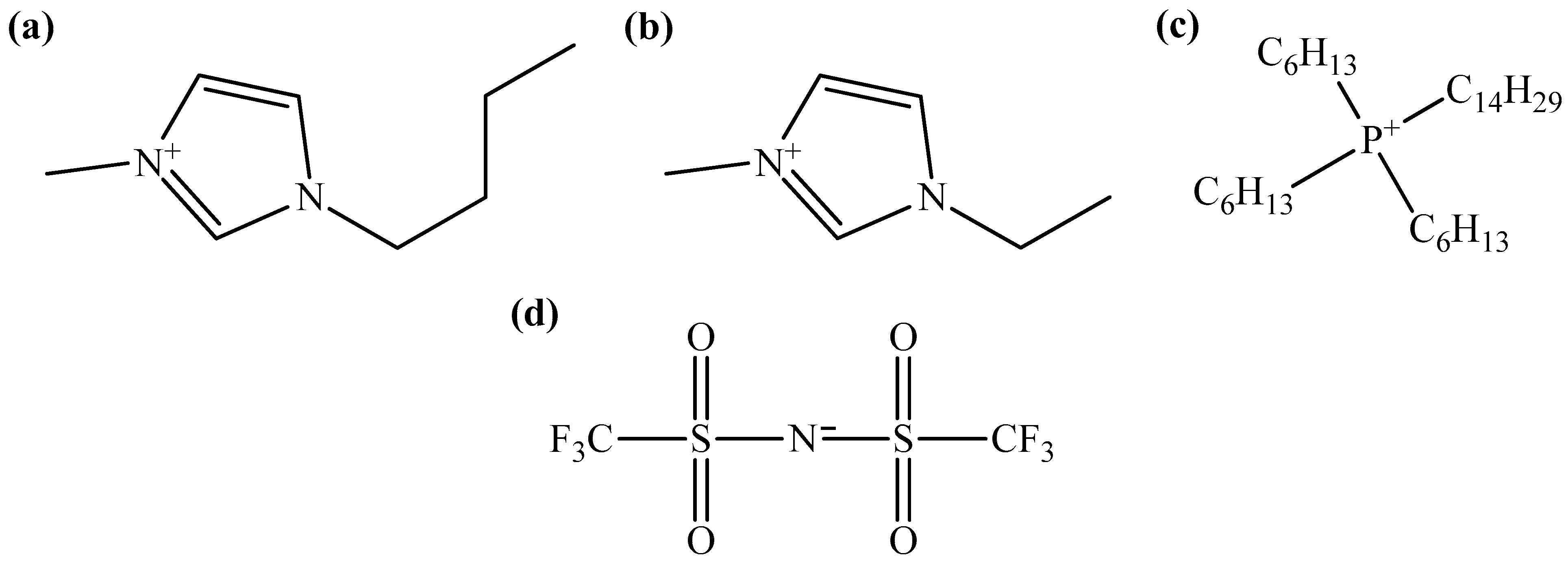
Figure 1. Chemical structures of (a) Bmim cation, (b) Emim cation, (c) Thtdp cation, and (d) TFSI anion.
Physchem 06 00015 g001
Figure 2. Chemical structures of (a) PEDOT, (b) PSS, (c) PEO, and (d) PVDF-HFP.
Physchem 06 00015 g002
Table 1. Ionic liquids employed as plasticizers for polymer blends.
Ionic LiquidAbbreviationReferences
1-Butylimidazolium hydrogen sulfateBimHSO4[17]
1-Butyl-3-methylimidazolium bromideBmimBr[7]
1-Butyl-3-methylimidazolium chlorideBmimCl[7,18]
1-Butyl-3-methylimidazolium hexafluorophosphateBmimPF6[19]
1-Butyl-3-methylimidazolium iodideBmimI[7]
1-Butyl-3-methylimidazolium thiocyanateBmimSCN[20]
1-Butyl-1-methylpyrrolidinium bis(trifluoromethylsulfonyl)imideBmpyTFSI[21,22]
1-Ethyl-3-methylimidazolium bis(trifluoromethylsulfonyl)imideEmimTFSI[4,8,23,24,25,26,27]
1-Ethyl-3-methylimidazolium bromideEmimBr[28]
1-Ethyl-3-methylimidazolium ethylsulfateEmimES[10]
1-Ethyl-3-methylimidazolium methylsulfateEmimMS[29]
1-Ethyl-3-methylimidazolium tetracyanoborateEmimTCB[6,10]
1-Ethyl-3-methylimidazolium tricyanomethanideEmimTCM[10,13]
1-Octyl-3-methylimidazolium salicylateOmimSal[30]
Tetrabutylphosphonium dodecylphosphonateTbpDP[2]
3-Triethylammonium hydrogen sulfateTeaHSO4[17]
Trihexyl(tetradecyl)phosphonium bis(2-ethylhexyl) phosphateThtdpEHP[5]
Trihexyl(tetradecyl)phosphonium bis(trifluoromethylsulfonyl)imideThtdpTFSI[5,15]
Trihexyl(tetradecyl)phosphonium bis(2,4,4-trimethylpentyl)phosphinateThtdpTMP[5,15]
Trihexyl(tetradecyl)phosphonium chlorideThtdpCl[5]
Trihexyl(tetradecyl)phosphonium dodecylphosphonateThtdpDP[2]
Table 2. Polymers used in blends with ionic liquid plasticizers.
PolymerAbbreviationReferences
Carboxy methyl celluloseCMC[30]
ChitosanCh[29]
Corn starchCS[7]
GelatinGL[30]
LigninLG[5]
MaltodextrinMX[28]
MethylcelluloseMC[28]
Modified starchMS[18]
Poly(acrylic acid)PAA[21,22]
Polyamide 6PA6[15]
PolybenzimidazolePBI[17]
Polybutylene adipate terephthalatePBAT[2,5]
Polybutylene succinatePBS[7,18]
Polyethyl methacrylatePEMA[8,24]
Polyethylene glycolPEG[29]
Poly(3,4-ethylenedioxythiophene)PEDOT[4,6,10,13,23]
Poly(ethylene oxide)PEO[19,20,25,27]
Polylactic acidPLA[2,5]
Polymethyl methacrylatePMMA[26]
PolypropylenePP[15]
Poly(styrene sulfonate)PSS[4,6,10,13,23]
PolyurethanePU[4,23]
Polyvinyl alcoholPVA[21,22]
Polyvinyl chloridePVC[8,24]
Polyvinyl pyrrolidonePVP[29]
Poly(vinylidene fluoride)PVDF[25]
Poly(vinylidene fluoride-hexafluoropropylene)PVDF-HFP[19,20,26,27]
Sulfonated poly(ether ether ketone)SPEEK[17]
Table 3. Plasticizing effects of ionic liquids on the properties of polymer blends.
Polymer BlendIonic LiquidLoadingPropertiesReferences
StructuralThermalConductiveMechanical
Ch/PVP/PEGEmimMS50 wt%Crys ↓Tdσ ↑-[29]
MX/MCEmimBr30 wt%Crys ↓Tgσi-[28]
PBAT/PLATbpDP0.7 wt%-Tm-EB ↑[2]
PBAT/PLA/LGThtdpCl1 wt%-Tg-SB ↑[5]
PBS/CSBmimI9.09 wt%Crys ↓--EB ↑[7]
PBS/MSBmimCl5.66 wt%Crys ↓Tg-EB ↑[18]
PEDOT/PSSEmimTCB1 wt%--σ ↑TS ↑[6]
PEDOT/PSSEmimTCM2 wt%--σ ↑EM ↓[10]
PEDOT/PSSEmimTCM1.5 wt%--σ ↑FS ↑[13]
PEO/PVDFEmimTFSI7 wt%Crys ↓Tmσi-[25]
PEO/PVDF-HFPBmimPF620 wt%Crys ↓-σi-[19]
PEO/PVDF-HFPBmimSCN0.6 mLCrys ↓Tmσ ↑-[20]
PEO/PVDF-HFPEmimTFSI33.33 wt%Crys ↓Tdσi-[27]
PP/PA6ThtdpTFSI10 wt%-Tm-YM ↓[15]
PU/PEDOT/PSSEmimTFSI50 wt%--σiEB ↑[4]
PU/PEDOT/PSSEmimTFSI40 wt%--σiCM ↓[23]
PVA/PAABmpyTFSI70 mol-%Crys ↓Tgσi-[22]
PVC/PEMAEmimTFSI80 wt%Crys ↓-σi-[8]
SPEEK/PBITeaHSO45 wt%Crys ↓-σi-[17]
Crys = crystallinity, Td = decomposition temperature, σ = electrical conductivity, Tg = glass transition temperature, σi = ionic conductivity, Tm = melting temperature, EB = elongation at break, SB = strain at break, TS = tensile strain, EM = elastic modulus, FS = fracture strain, YM = Young’s modulus, CM = compression modulus, ↑ = increase in the properties, and ↓ = decrease in the properties.
Table 4. Potential applications of polymer blends plasticized with ionic liquids.
Polymer BlendIonic LiquidPotential ApplicationReferences
Ch/PVP/PEGEmimMSDye-sensitized solar cells[29]
MX/MCEmimBrElectrochemical double-layer capacitors[28]
PBAT/PLATbpDPBiodegradable packaging[2]
PBAT/PLA/LGThtdpClBiodegradable packaging[5]
PBS/CSBmimIFood packaging[7]
PBS/MSBmimClFood packaging[18]
PEDOT/PSSEmimTCBStretchable electronics[6]
PEDOT/PSSEmimTCMStretchable electronics[10]
PEDOT/PSSEmimTCMStretchable electronics[13]
PEO/PVDFEmimTFSIRechargeable batteries[25]
PEO/PVDF-HFPBmimPF6Rechargeable batteries[19]
PEO/PVDF-HFPBmimSCNRechargeable batteries[20]
PEO/PVDF-HFPEmimTFSIRechargeable batteries[27]
PP/PA6ThtdpTFSIHigh-performance materials[15]
PU/PEDOT/PSSEmimTFSISoft actuators[4]
PU/PEDOT/PSSEmimTFSISoft actuators[23]
PVA/PAABmpyTFSIRechargeable batteries[22]
PVC/PEMAEmimTFSIRechargeable batteries[8]
SPEEK/PBITeaHSO4Fuel cells[17]
Disclaimer/Publisher’s Note: The statements, opinions and data contained in all publications are solely those of the individual author(s) and contributor(s) and not of MDPI and/or the editor(s). MDPI and/or the editor(s) disclaim responsibility for any injury to people or property resulting from any ideas, methods, instructions or products referred to in the content.