Article

Multi-Analytical Characterization of Lime Plaster Technology in Ancient Anuradhapura (2000–1000 Years Old): A UNESCO World Heritage Site, Sri Lanka


by
Dilan Ranaweera
1,
Rohan S. Dassanayake
2,*,
Arjuna Thantilage
3,
Saranga Diyabalanage
4,5 and
E. V. A. Premalal
1,*
1
Department of Civil and Environmental Technology, Faculty of Technology, University of Sri Jayewardenepura, Pitipana, Homagama 10206, Sri Lanka
2
Department of Biosystems Technology, Faculty of Technology, University of Sri Jayewardenepura, Pitipana, Homagama 10206, Sri Lanka
3
Postgraduate Institute of Archaeology, University of Kelaniya, Bauddhaloka Mawatha, Colombo 00700, Sri Lanka
4
Department of Forestry and Environmental Science, Faculty of Science, University of Sri Jayewardenepura, Gangodawila, Nugegoda 10250, Sri Lanka
5
Instrument Centre, Faculty of Applied Sciences, University of Sri Jayewardenepura, Gangodawila, Nugegoda 10250, Sri Lanka
*
Authors to whom correspondence should be addressed.
Conservation 2026, 6(2), 69; https://doi.org/10.3390/conservation6020069
Submission received: 25 March 2026 / Revised: 21 May 2026 / Accepted: 21 May 2026 / Published: 3 June 2026

Abstract

This systematic research was conducted as the first comprehensive scientific analysis of ancient lime plaster samples from Anuradhapura, a World Heritage Site in Sri Lanka. Five ancient heritage sites from 1st to 10th Century AD, covering two stupa domes: Abhayagiri (AP01) and Jethavana (AP02), Monk residence building near Ruwanweliseya Stupa (AP03), Deeghapashan Rock Shelter Building of Abhayagiri Monastery Complex (AP04), and Vessagiriya Rock Shelter wall lime Plaster (AP05) were examined by employing Fourier transform infrared spectroscopy (FTIR), X-ray diffraction (XRD), X-ray fluorescence (XRF), thermogravimetric analysis (TGA), optical microscopy (OM), scanning electron microscopy (SEM) and gas chromatography-mass spectrometry (GC-MS). The current work investigated the composition, mineralogical and microstructural properties, binding media, and organic additives. Our findings indicate that calcareous lime from seashells and river sand are the main raw materials, with ratios of 1:2.7, 1:2.0, 1:2.4, 1:4.4, and 1:3.7 for the AP01, AP02, AP03, AP04, and AP05 samples, respectively. Data also suggest that plant-based materials, mainly wood apple wax, along with nanoscale fibrous materials, were used as the main additives to enhance the properties of lime plasters. This study provides insights into the raw materials, their mixing ratios, and the techniques employed in the lime plastering of ancient Anuradhapura City, and serves as a scientific reference for the conservation and restoration of ancient buildings resilient to climate change.

1. Introduction

A UNESCO (United Nations Educational, Scientific and Cultural Organization) World Heritage Site, Anuradhapura is one of the oldest and longest-lived urban cultures in South and Southeast Asia, dating back to the 6th century BC and continuing until 1017 AD [1]. This historic city served as the first capital of Sri Lanka for over a millennium and is considered one of the greatest ancient sites, featuring engineering marvels, advanced hydraulic and water-management systems, and civil engineering structures [2,3,4]. Among many engineering wonders in Anuradhapura, the civil engineering technology behind the construction of stupas, palaces, and other religious structures has attracted significant attention worldwide. In particular, massive bubble-shaped megastructures or domes, including the Thuparamaya (3rd century BC), Ruwanweliseya (2nd century BC), Abhayagiri (1st century AD), and Jetavanaramaya (3rd century AD), stupas in Anuradhapura, were built using bricks, mortar, and lime plaster [3,5]. Interestingly, the Jetavanaramaya stupa is ranked the third-tallest man-made structure on Earth, surpassed only by the Great Pyramids of Giza during the historical era (4th Century AD to the 14th Century AD) [3,6]. Among many civil engineering technologies, especially lime plaster technology, although historically important, has never been extensively analyzed, creating a profound knowledge gap in the archaeological sciences of Sri Lanka.
Lime plasters have been used as protective coverings over masonry to withstand adverse environmental conditions, including rainfall, weathering, wind, and temperature fluctuations. Most importantly, the conservation, preservation and restoration of archaeological monuments depend primarily on the accurate identification of the original materials used in their construction [7,8,9,10,11]. Therefore, it is important to accurately identify the heritage of the basic architectural and construction techniques of ancient lime plasters. Moreover, historical lime plaster and mortar research has recently become increasingly important for evidence-based conservation practices, and knowledge of the mineralogical, chemical, and microstructural properties of historic lime plasters directly influences the selection of appropriate restoration methods [10,11,12,13,14,15].
Lime plaster technology originated approximately 10,000–12,000 years ago and has undergone profound historical development across many geographical regions based on local resources, eventually spreading across the Mediterranean, the Middle East, Mesoamerica, and South and Southeast Asia [14,16,17,18,19]. The lime technology of Sri Lanka developed independently from the methods reported in the European, Mediterranean, Asian, and Middle Eastern regions and has been shaped by the island’s geological landscape, tropical climate, and availability of raw materials, making the characteristics of the lime plasters of Anuradhapura particularly important in archaeological materialology in South Asia. Depending on the local raw materials, ancient lime plasters varied throughout the world, and those lime plasters were fundamentally produced by calcination of limestone into quick lime (CaO), subsequent hydration to slaked lime (Ca (OH)2), and final carbonation to calcite (CaCO3) [16,17,18]. Interestingly, lime plasters found in Anuradhapura archaeological sites are still preserved, surviving the monsoon-driven dry-zone climate in the North Central region of Sri Lanka over the past thousand years, suggesting the primordial knowledge of ancient civilizations about lime plaster technology, including raw material selection and the use of Pozzolans.
It is imperative to consider the identification and scientific characterization, as well as the long-term performance, of ancient lime plasters to understand their construction technology, environmental sustainability, and durability, and to employ appropriate conservation applications. Several recent studies from Mediterranean, Middle Eastern, and Asian contexts [16,17,19] have highlighted how variations in calcium sources, aggregate composition, and organic additives shape technological traditions [14]. The addition of organic additives, including plant extracts, polysaccharides, proteins, waxes, and gums, has considerably improved workability, hydrophobicity, and mechanical properties of lime plasters, as demonstrated by analytical investigations [16,20].
According to historical studies, numerous calcareous lime sources, such as limestone, seashells and dolomitic lime, were used as binders to prepare ancient lime plasters in South Asia [16,21,22,23,24]. The selection of the binder type, whether it is calcitic or dolomitic, plays a pivotal role in choosing the right conservation mediums, as accurate binder identification is necessary because it impacts carbonation, crack propagation, porosity, strength, and substrate compatibility [7,25]. Furthermore, adverse climate effects, including extreme heat, humidity, rising sea levels, and increased rainfall, are significantly exacerbating the deterioration of numerous UNESCO World Cultural Heritage sites and structures. Hence, identifying the original components and the ratios of ancient lime plasters is crucial for restoration efforts, allowing for the development of durable, climate-resilient structures that can withstand the challenges posed by climate change. Currently, dolomite-based lime binders are used in modern conservation practices in Sri Lanka, including the restoration of lime-based heritage monuments, such as those in Anuradhapura, due to limited studies on the characterization of ancient lime plasters in Sri Lanka [3]. Moreover, there is scarce information available on multianalytical investigations of the raw materials and lime plaster technology of ancient Anuradhapura city, hindering the carbon-neutral, sustainable, climate change-adaptable, and environmentally benign conservation and restoration of world-heritage Buddhist stupas and other building structures.
The current study focuses on the characterization of ancient lime plasters in Anuradhapura using various analytical techniques, including Fourier transform infrared spectroscopy (FTIR), X-ray diffraction (XRD), X-ray fluorescence (XRF), thermogravimetric analysis (TGA), gas chromatography-mass spectrometry (GC-MS), optical microscope (OM) and scanning electron microscope (SEM). To the best of our knowledge, this is the first systematic, multi-analytical investigation of ancient lime plaster, addressing a significant gap in the scientific understanding of lime plaster technology in Sri Lanka. The present study examines five historically important sites in Anuradhapura, which include monumental stupas, monastic residences, and rock shelter walls. Furthermore, this study serves as a valuable guide for architects, archaeologists, engineers, and researchers involved in the climate-resilient conservation and restoration of historic structures.

2. Materials and Methods

2.1. Locations and Sampling Strategy

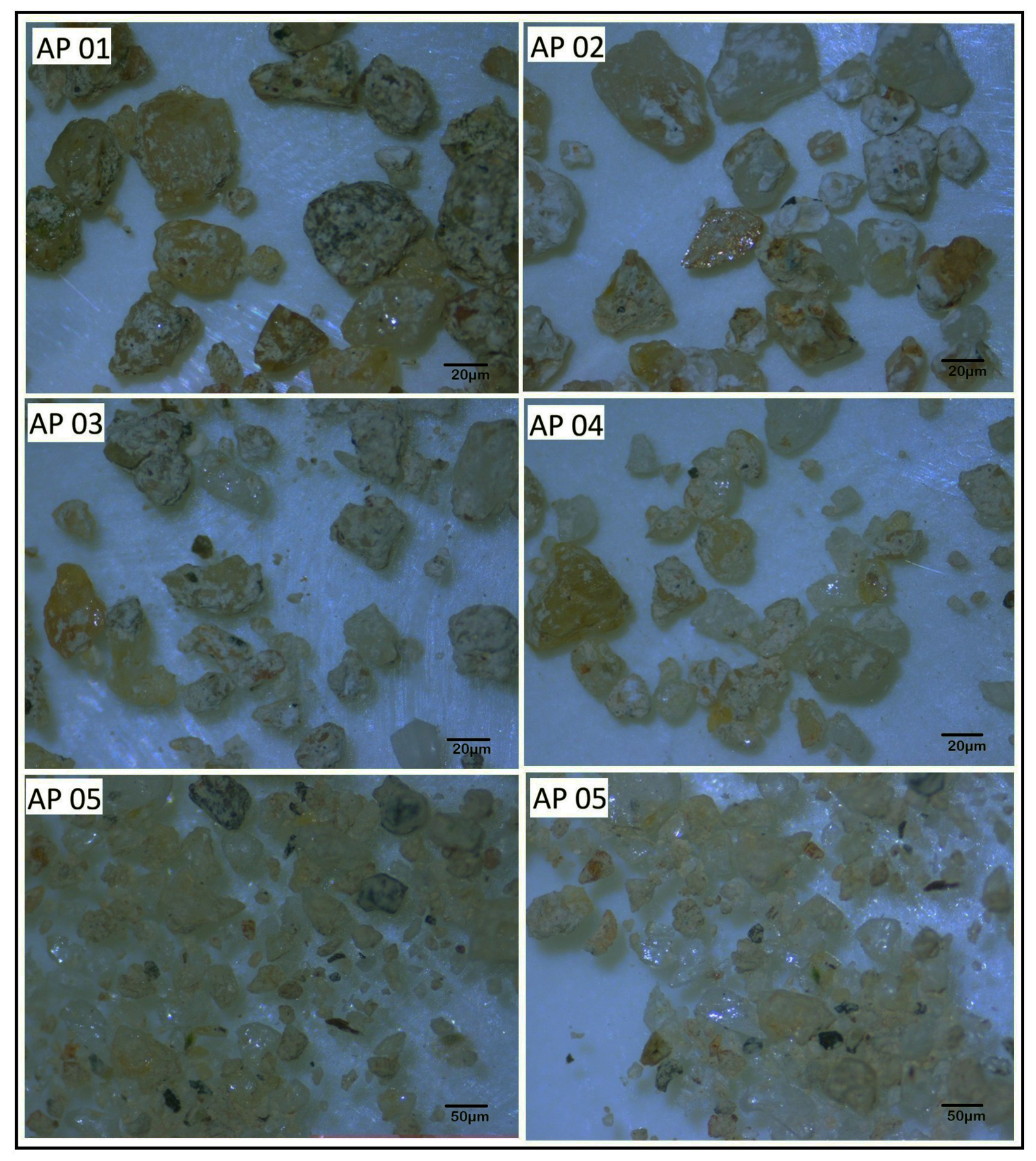
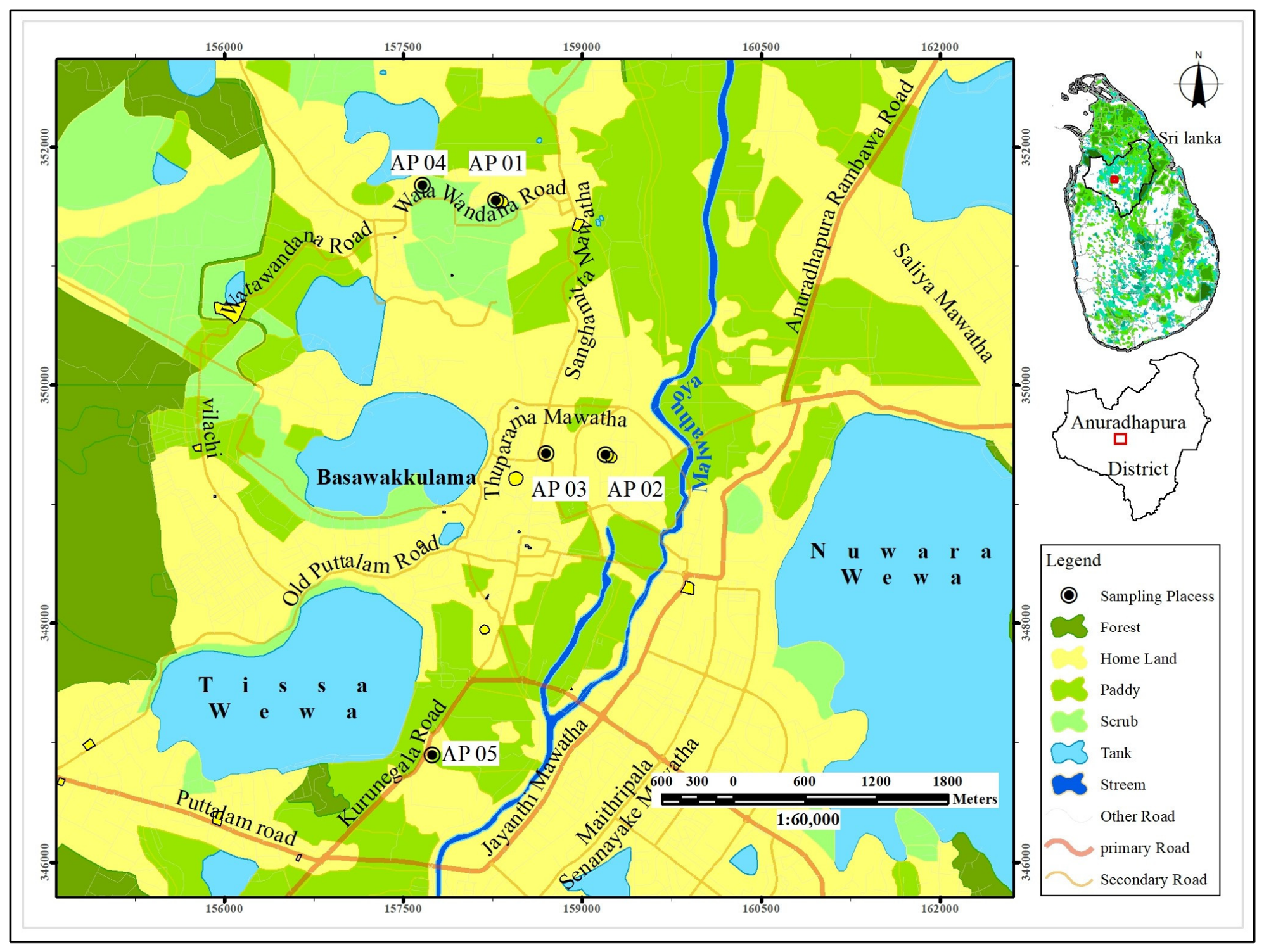
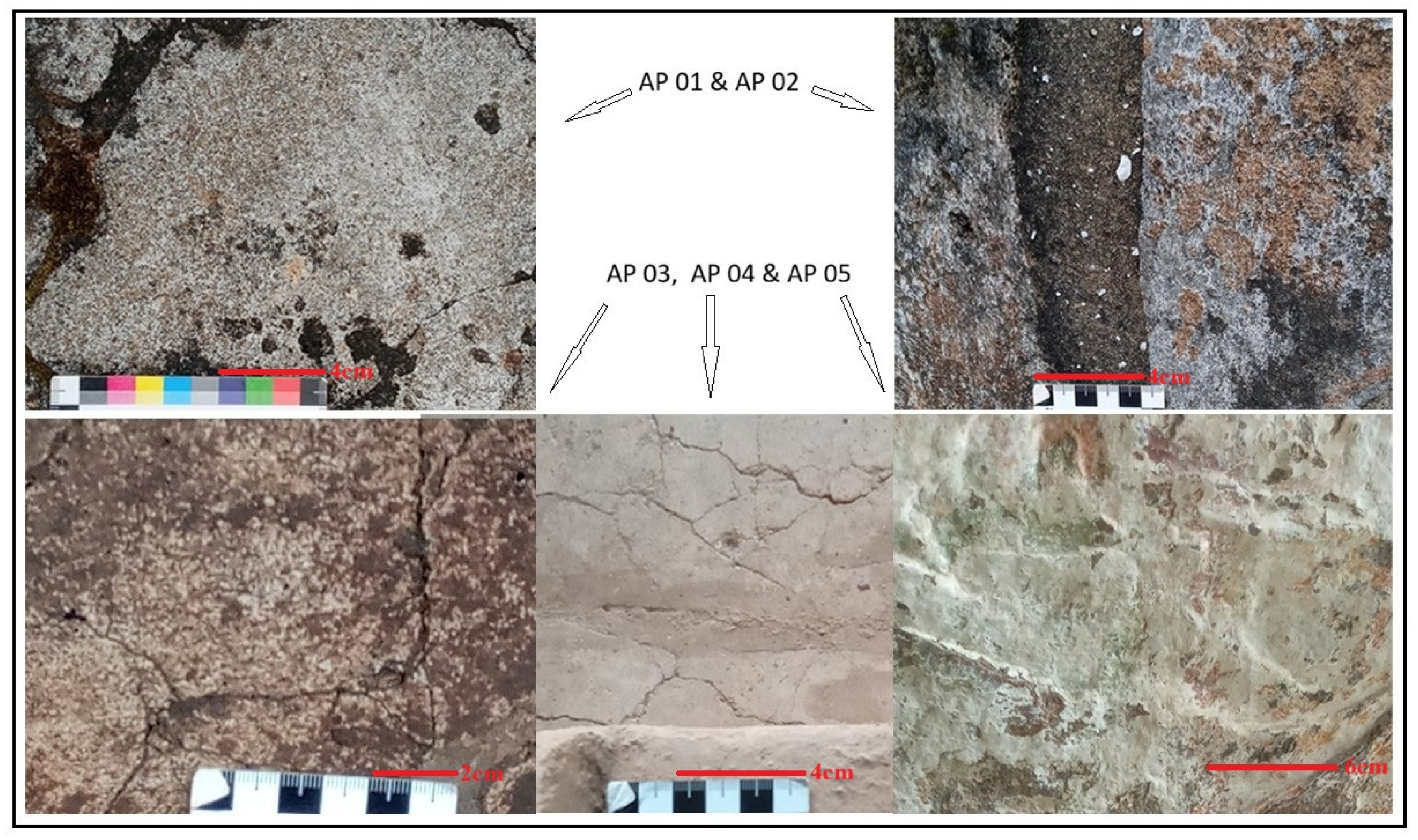
Ancient Anuradhapura, located in Sri Lanka’s north-central dry zone, represents a variety of religious contexts for lime plaster applications. Stupas and some constructions date back 2300 years [4,5]. In this research, ancient lime plaster samples were collected from five different locations in Anuradhapura, designated as AP01 (Abhayagiri Stupa Dome), AP02 (Jethavana Stupa Dome), AP03 (Monk residence building near Ruwanweliseya Stupa), AP04 (Deeghapashan Rock Shelter Building of Abhayagiri Monastery Complex), and AP05 (Vessagiriya Rock Shelter wall lime Plaster), dating from the 1st century AD to the 10th century AD [4,5,26,27]. Figure 1 and Figure 2 show the map of the sampling sites (AP01–AP05) in the city of Anuradhapura and the photographic images of samples (AP01–AP05). The thickness of the samples (AP01–AP05) ranged from 0.5 to 1.5 cm. The detailed descriptions of the samples are summarized in Table 1, including the sample IDs, names, locations of the sample sites, their structural types, and the construction period. The collected samples were stored and processed at the Geoenvironmental Laboratory of the Faculty of Technology, University of Sri Jayewardenepura. All samples were prepared for scientific analyses using a previously described method [28,29,30,31,32]. In brief, the collected samples were first cleaned with distilled water several times and then dried at 40 °C for 30 min in an oven. Subsequently, they were crushed using a mortar and pestle, and the resulting powder was transferred into air-tight bags and sent to testing laboratories for characterization.

2.2. FTIR Spectroscopy

FTIR analyses of powdered lime plaster samples (AP01–AP05) were conducted using a Thermo Scientific Nicolet S10, Fitchburg, WI, USA FTIR spectrophotometer equipped with attenuated total reflectance (ATR) capability. The ATR–FTIR is also equipped with a zinc selenide (ZnSe) crystal, giving FTIR spectra directly from a sample without any further sample preparation. The Spectra were collected in the mid-infrared region (4000–400 cm−1) with a resolution of 4 cm−1 and 32 scans per spectrum. Background spectra were collected before each sample measurement. Data processing and functional group identification were performed using OMNIC Spectra software, version 833-036500.

2.3. XRD Analysis

XRD analyses of the lime plaster samples (AP01–AP05) were performed using a Rigaku Ultima IV X-ray diffractometer (XRD), Tokyo, Japan. The test conditions were as follows: an operating voltage of 40 kV, an operating current of 30 mA, a scanning angle range of 4–85°, and a scanning speed of 5°/min. The goniometer was configured in 2θ/θ scanning mode with a step width of 0.02°. Cu Kα radiation was employed with a Kβ filter to eliminate unnecessary wavelengths.

2.4. XRF Analysis

X-ray fluorescence (XRF) analyses were carried out using a HORIBA Scientific XGT-5200 X-ray analytical microscope, Kyoto, Japan, on powdered samples (AP01–AP05). XRF samples were mounted on the sample stage using double-sided tape, and six measurement spots per sample were analyzed. Measurements employed a 100 µm XGT beam diameter, 50 kV tube voltage, a pulse processing time of P4 (selected to optimize energy resolution), and 300 s live time, and elemental mass percentages from Na to U were quantified as relative proportions of the detected elements.

2.5. TGA Analysis

Thermal degradation of samples (AP01–AP05) was observed on a Simultaneous Differential Scanning Calorimeter and Thermogravimetric Analyzer (SDT Q600 V20.9 Build 20, TA Instruments, New Castle, DE, USA). A sample was heated in a ceramic pan in a nitrogen atmosphere over a temperature range of 20 to 800 °C at a controlled heating rate of 5 °C/min.

2.6. GC-MS Studies

GC-MS analyses of the powder samples (AP01–AP05) were conducted to identify the presence of organic additives in the lime plaster samples using the following method. 50 mg of each powdered lime plaster sample was dissolved in HPLC-grade methanol (10 mL for wax; 5 mL for lime plaster) and stored at room temperature for 24 h. They were then filtered using Whatman Grade 1 filter paper. All filtered extracts were analyzed using a Shimadzu GC-MS-QP2010 Ultra, Kyoto, Japan, equipped with an AOC-5000 Plus autosampler and an OPTIC-4 injection system. Separation was performed on a non-polar Restek Rxi-5 Sil MS column (30 m × 0.25 mm i.d.) with helium as the carrier gas. The GC oven temperature was programmed from 60 °C to 300 °C for lime plaster samples. Mass spectrometric detection used electron impact ionization at 70 eV. The sample identification was performed using the NIST and Wiley mass spectral databases.

2.7. Optical Microscopic (OM) Analysis

For grain morphological analyses of aggregates present in the lime plaster samples (AP01–AP05), the ZEISS Stemi 305 Optical Stereo Microscope, Oberkochen, Germany, was employed. All samples were thoroughly washed using distilled water and dried completely prior to optical microscopic imaging. The aggregates were subjected to petrological identification to confirm their grain size and shape.

2.8. SEM

Morphology of powder samples (AP01–AP05) was observed using a Hitachi SU6600 Field Emission Scanning Electron Microscope (FE-SEM), Tokyo, Japan, at the Sri Lanka Institute of Nanotechnology (SLINTEC), Pitipana, Sri Lanka. Each sample was ground in an agate mortar to obtain fine particles and scattered onto a carbon tape attached to an SEM sample holder. Samples were then sputter-coated with a thin gold layer for 30 s prior to imaging. The images were recorded at accelerating voltages of 5.0 kV and 10.0 kV using a secondary electron imaging detector.
All data were analyzed by using Microcal Origin version 8.0. Moreover, ArcGIS Pro 3.3 software was used for creating maps.

3. Results and Discussion

3.1. Visual Analysis

A thorough visual inspection was conducted during the sample collection at each site. Sampling of the dome lime plasters was performed with great care to identify the earliest lime plaster layer, as multiple lime plaster layers had been applied. Samples collected from stupas were from the lowest layer directly associated with the original brick. In contrast, the residential and rock shelter lime plasters were single-layer. In situ examinations revealed that the outer layers have been affected by several deterioration factors, including microbial growth, salt crystallization, and the impacts of climate change, particularly fluctuating rainfall and temperature patterns. However, the inner lime plaster layer, intact with the bricks and rocks, typically appeared white to dirty white, with varying thicknesses depending on the topography of the site.

3.2. XRD Characterization

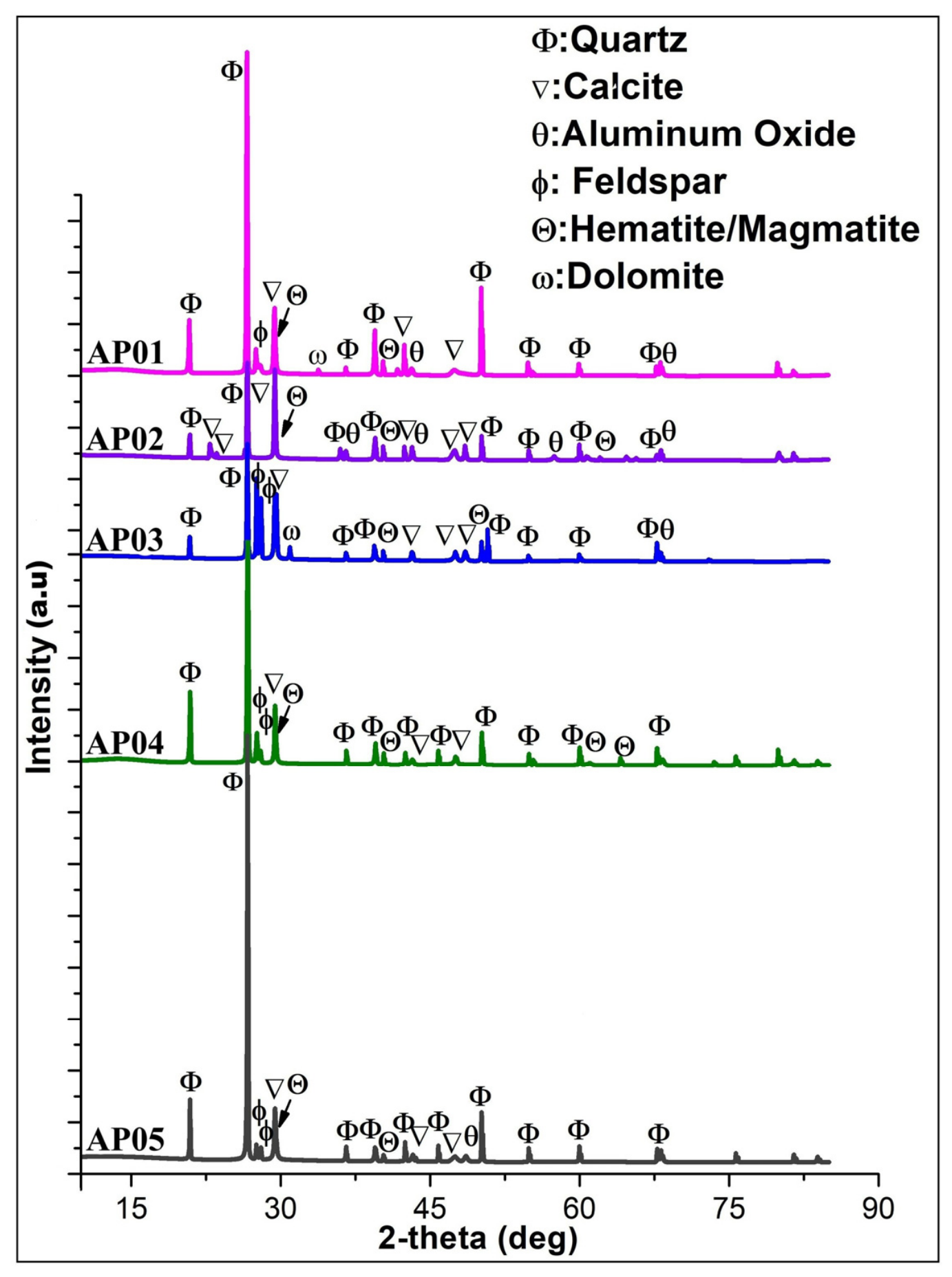
XRD analysis was conducted to identify crystalline phases in the lime plaster matrices, enabling precise determination of binder mineralogy and aggregate composition. Figure 3 shows the XRD diffractograms of lime plaster samples (AP01–AP05).
As shown in Figure 3, all lime plaster samples (AP01–AP05) predominantly contained quartz and calcite at 2θ values of 20.9°, 26.7°, 50.2°, and 60.0°, and 29.4°, 39.4°, 43.2°, 47.5°, and 48.5°, respectively. Other than that, minor amounts of feldspar (2θ ≈ 27–28°) and hematite (2θ ≈ 33.36°) are also present in all the samples. The higher quartz content and the presence of feldspar in all the samples suggest that the aggregates are siliceous and that their source could be river sand. Moreover, the presence of calcite confirms that the binder is mainly calcitic. It is noteworthy to mention that a trace amount of dolomite is present in the AP01 and AP03 samples collected from the Abhayagiriya Stupa and Residential building near Ruwanwelisaya, Stupa, and could be attributed to impurities in the lime plaster.
All XRD patterns were in agreement with XRD profiles reported in the literature and matched with JCPDS standards for quartz (JCPDS 46-1045), calcite (JCPDS 05-0586), feldspar (JCPDS 75-1190), hematite (JCPDS 33-0664) and dolomite (JCPDS 36-0426) [33]. Our results suggest that the lime plaster used in the Anuradhapura era was lime-based and primarily composed of sand and lime.

3.3. XRF Characterization

XRF analysis was performed on all samples (AP01–AP05) for qualitative identification of the elemental distribution of components heavier than sodium (Z > 11). This detection limit is due to instrumental resolution constraints and the low fluorescence yields characteristic of lighter elements. Table 2 shows the normalized weight percentages of these detectable elements. Because standard elemental analysis, conducted using a HORIBA Scientific XGT 5200 XRF analyzer, could not detect light elements such as carbon (C) and oxygen (O), which are primary constituents of the calcite (CaCO3) and quartz (SiO2) lime plaster matrices.
All samples exhibited high percentages of silicon (Si) and calcium (Ca). Samples AP01–AP03, collected from stupa domes and associated structures, showed a dominant binder-rich profile with Ca levels ranging from approximately 50% to 59%, and Si levels around 34% to 37%. In contrast, the rock shelter samples (AP04 and AP05) showed an opposite composition, with significantly higher Si (~55%) and lower Ca (~36–42%), indicating a higher aggregate-to-binder ratio. These findings are in strong agreement with the XRD results, which identified quartz and calcite as the primary crystalline phases. Minor constituents included aluminum (Al, 1.72–3.71%) and potassium (K, 0.57–1.77%), likely corresponding to the feldspar identified in the river sand aggregates. Iron (Fe) was observed at 1.43–3.92%, attributed to hematite. Small amounts of sulfur (S), titanium (Ti), and trace amounts of manganese (Mn) and strontium (Sr) were also detected across all samples. The XRF results are in agreement with geochemical profiles of Sri Lankan seashells reported by Koswaththa et al. [34].
Interestingly, the presence of trace amounts of Sr in all samples (AP01–AP05) indicates that the lime source was most likely seashells rather than inland dolomitic limestone, further supporting a calcitic binder type [30]. Additionally, the magnesium (Mg) in AP01 (2.02%) and AP03 (0.55%) is due to impurities. The Citadel of Anuradhapura shows an increase in the number of seashell fragments (including imported shells) in the cultural deposits of the transition period from the Early Iron Age settlements to the more urbanized and interconnected early historic settlements (5th–4th centuries BC [35]. Similarly, the excavations of JSP I 2000, JSP II, and JSWMP 2003 at the Jetavanaramaya site have also yielded strong evidence of the use of seashells in the cultural layers of the early historic (600 BCE to 300 BCE) and historic period [36]. Furthermore, corals and shells of the families of Carditidae and Cypraeidae have been identified in ancient plaster fragments recovered from the historic periods of the excavations at the Abhayagiri complex [37]. Most importantly, both XRD and XRF results, and archaeological evidence, reveal that the calcareous binder material and aggregates used in the lime plaster preparation in Anuradhapura were most likely limestone derived from seashells and river sand.

3.4. FTIR Characterization

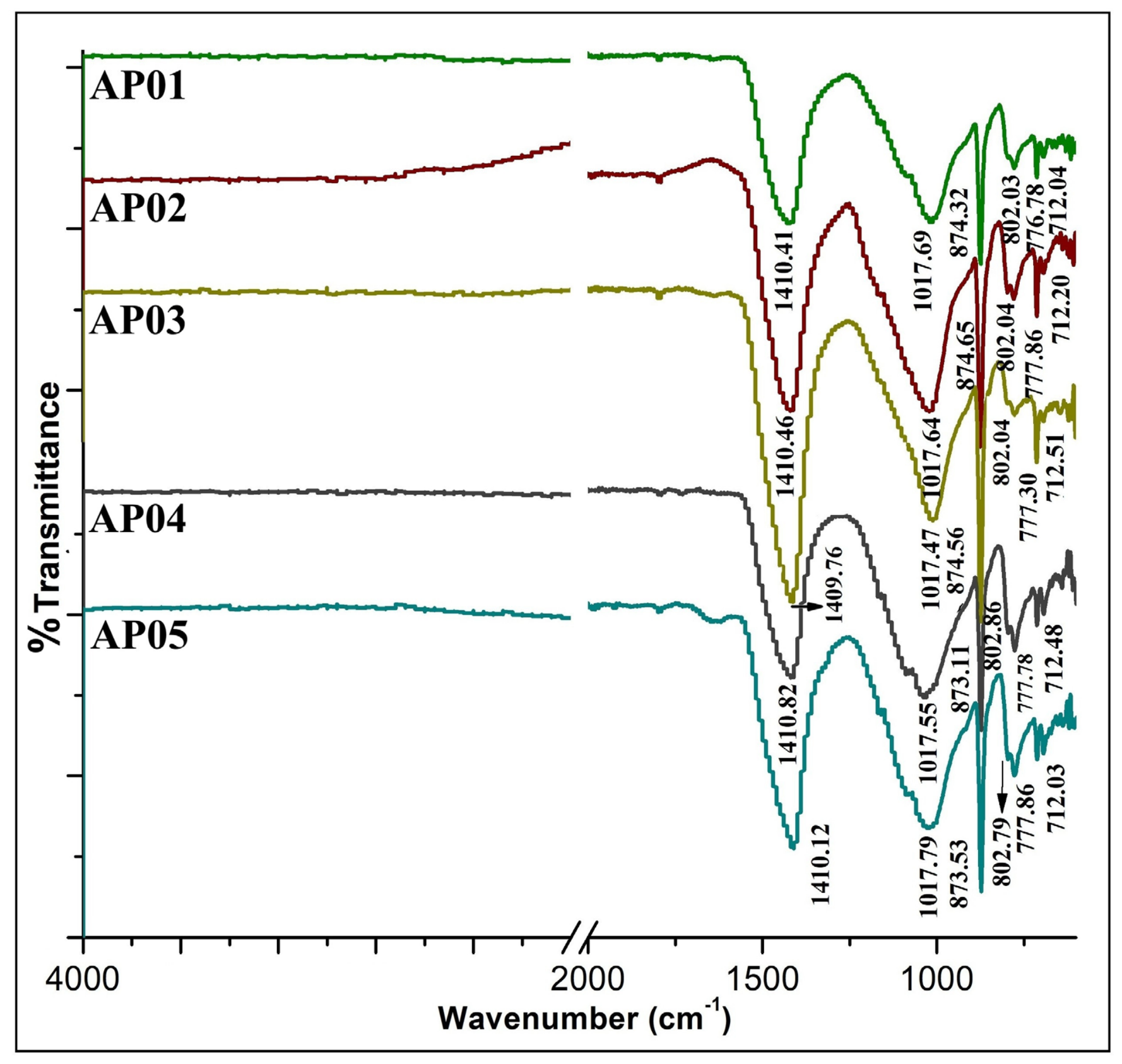
FTIR studies were performed to study the chemical properties of the lime plaster samples. Figure 4 shows the FTIR spectra of AP01–AP05 samples recorded in the 4000–400 cm−1 wavenumber range. As shown in Figure 4, all samples displayed similar vibrational patterns, mainly corresponding to calcite and quartz. The most prominent spectral features across all samples are strong absorption bands in the 1400–1500 cm−1 region, assigned to asymmetric stretching vibrations of carbonate (CO32−) groups in CaCO3 structures [38]. Calcite exhibits three primary IR-active vibrational bands at ~1410 cm−1, 875 cm−1 and ~712 cm−1, corresponding to asymmetric C-O stretching mode, out-of-plane and in-plane bending modes of CO32− groups accompanied by a shoulder near 700 cm−1 [30,31,32]. The vibration bands at ~1015, 802, and 776 cm−1 are attributed to Si–OH stretching, Si–O–Si asymmetric, and Si–O–Si symmetric stretching of quartz, respectively [39]. No prominent peaks were observed in the 4000–2000 cm−1 region (see Figure 4) due to the complete dryness of the samples. The strong vibrational bands of CaCO3 and SiO2 likely obscure those of the organic materials. Therefore, to effectively detect the presence of organic additives, TGA and GC-MS were performed. Table 3 summarizes the major vibrational bands of calcite and quartz present in the samples AP01–AP05.

3.5. TGA Characterization

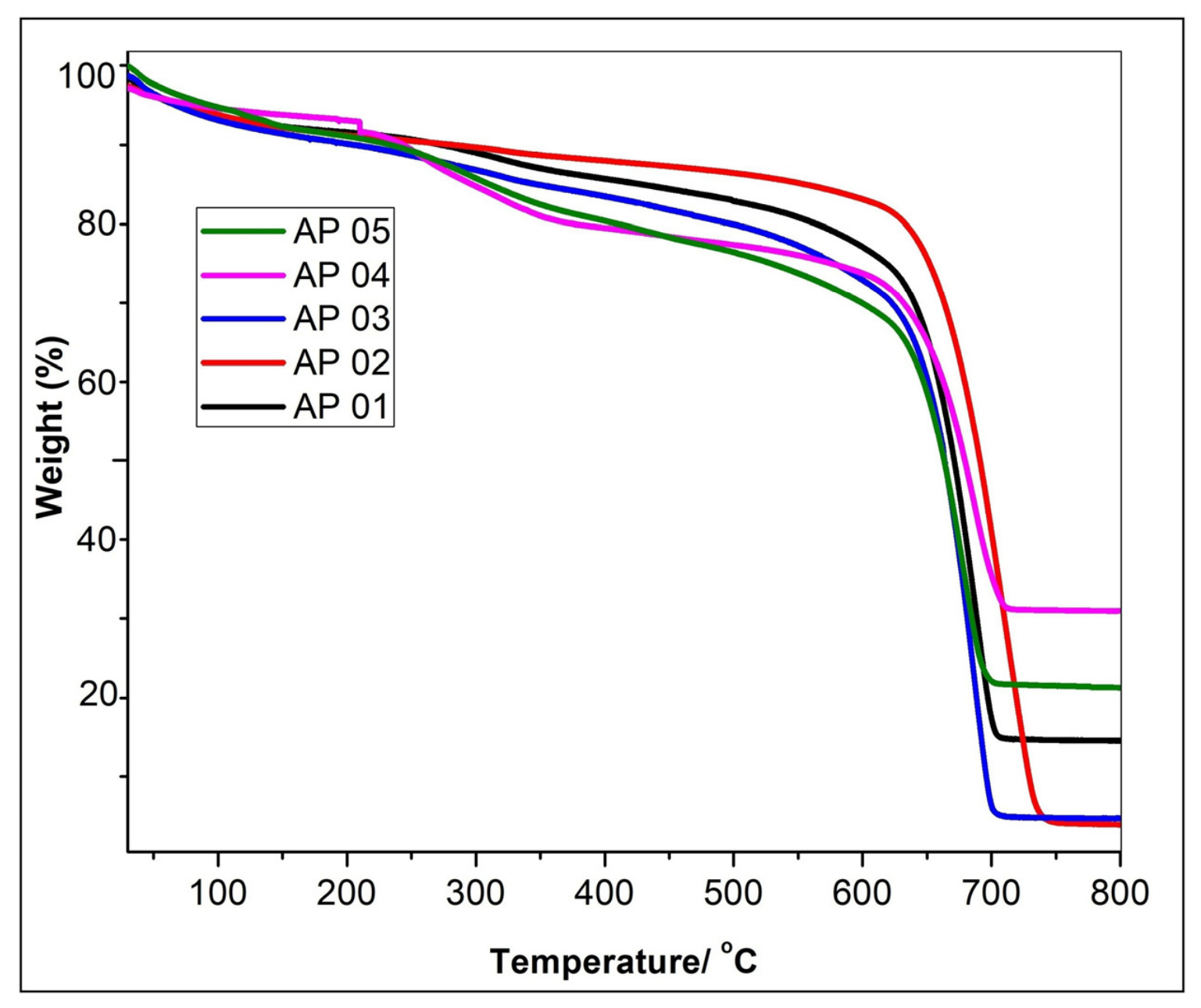
TG profiles were recorded in flowing nitrogen (N2) to determine the thermal characteristics and presence of organic matter in the lime plaster samples (AP01–AP05). The TG profiles recorded for AP01–AP05 samples are shown in Figure 5. The observed thermal weight loss is endothermic, as they occur under an inert nitrogen atmosphere where weight loss is driven by heat-absorbing dehydration and decomposition rather than exothermic combustion. The TG profiles of all AP01–AP05 samples exhibited two minor and one major weight loss region (Figure 5). The first minor weight loss region (30–150 °C) attributes ~1–1.5% w/w and corresponds to the removal of interphase (hygroscopic/adsorbed) water associated with the river sand aggregates and the binder matrix. The second minor weight loss region between 150 and 600 °C is possibly attributed to the thermal degradation of organic materials present in the samples, corresponding to 1.5–4% [45,46]. The district thermal degradation region between 600 and 800 °C is ascribed to the decarboxylation of calcite in the lime plaster samples. The absence of a weight loss region at 400–500 °C indicates the complete carbonation of Ca (OH)2 to CaCO3 over time [47].
It is important to note that the organic content detected by TGA, particularly for sample AP04 (3.52%), is not reflected by corresponding O–H or C–H absorption bands in the FTIR spectra. This apparent inconsistency is attributed to the fundamental differences in the detection principles of the two techniques. FTIR samples only the near-surface layer of the specimen and is highly susceptible to spectral masking by the dominant CaCO3 and SiO2 matrix phases, which overwhelm minor organic and moisture signals. In contrast, TGA measures bulk mass loss across the entire sample volume and is therefore inherently more sensitive to minor volatile constituents regardless of their spectral characteristics. Furthermore, the highest quartz content in AP04 (~54.67% Si by XRF) produces overwhelmingly intense Si–O absorption bands that further suppress the detection of minor O–H and C–H signals in FTIR. The organic additives detected by TGA in AP04 are independently confirmed by GC-MS analysis, which identified consistent FAME profiles across all samples. Therefore, FTIR and TGA are considered complementary rather than directly correlated techniques in the characterization of these ancient lime plaster samples.
Our DTGA results reveal that the decarboxylation temperature of CaCO3 is 750 °C. Table 4 summarizes the percentages of water, organic materials, CaCO3, and the binder-to-total-aggregates ratio in the lime plaster mixture based on the mass loss calculations. As shown in Table 3, the ratios of lime- to-total aggregates, especially to sand, are approximately 1:2.7, 1:2, 1:2.4, 1:3.7 and 1:4.4 for AP01, AP02, AP03, AP04 and AP05 samples, respectively. Most importantly, these ratios are comparable to ancient Indian lime plaster technology, where 1:1–4 lime to aggregates mix ratios were commonly used [16].
Remarkably, the binder-to-aggregate ratios identified in the ancient lime plaster formulations closely align with modern standards. Specifically, the proportions correspond to the current American Society for Testing and Materials (ASTM) C897 recommended standards for lime plaster coatings, particularly regarding the lime-to-aggregate ratios for both base and finish coats [48]. For instance, the standard specifies base coats of 1 Part lime putty to 2.5–3 Parts aggregate (sand) and finish (fine) coats of 1 Part lime putty to 1.5–2 Parts aggregates (fine sand or silica sand). Based on the calculated binder-to-aggregate ratios, a distinct pattern of application emerges: a fine coating, consistent with a finish coat, was applied to the outer surfaces of stupas, requiring a higher binding capacity. In contrast, the lime plasters from rock shelters are coarser and exhibit higher lime-to-sand ratios, aligning more with a base coat formulation, requiring greater dimensional stability and reduced shrinkage.
This observed variation is particularly significant in the context of historic restoration. For non-cementitious, heritage-compatible repairs, a 1:3 lime-to-sand ratio is typically recommended [49]. Our analytical data corroborate these compositional differences. TGA data are in strong agreement with the XRD results. For instance, samples AP01, AP04, and AP05, which correspond to the rock shelter group, display relatively higher XRD peak intensities for quartz (sand) than for calcite (lime binder). Conversely, samples AP02 and AP03, associated with the finer stupa lime plasters, exhibit lower quartz-to-calcite intensity ratios, indicating a binder-rich mix consistent with a finish coat.
Interestingly, it has been reported that seashells were historically transported to Anuradhapura city from the coastal areas of Sri Lanka, suggesting that the limestone used in the region’s lime plasters could have been derived from sedimentary rock formed by the compaction of CaCO3 from marine organisms [50,51]. As per the Mahavamsa, also known as “The Great Chronicle of Sri Lanka,” it describes that during the dynasty of King Bhathikabhaya (38–66 AD), a lime plaster mixture was prepared using seashells brought by one hundred wagon-loads to Anuradhapura for the construction of the Ruwanweliseya stupa [39,40]. Thus far, this proposed link between the archaeological evidence and the actual lime plaster source had not been scientifically proven. Moreover, it is well known that such limestones derived from marine sources can be completely burned at relatively low temperatures of 600–800 °C. This process produces highly pure, quality lime with minimal contaminants, making it particularly suitable for internal lime plaster applications [52].
Our multianalytical approach of using XRD, XRF, FTIR, and TGA analyses provides the first scientific confirmation that the calcareous lime source for these lime plasters is most likely seashells. These results conclusively prove the archaeological and historical records. Furthermore, the consistency of the mineralogical profiles of lime plasters across diverse architectural structures, including stupas, residential buildings, and rock shelters, suggests that standardized lime production and lime plaster formulation protocols were maintained throughout Anuradhapura city. This uniformity reflects a sophisticated and widely disseminated knowledge of lime plaster technology in this ancient civilization.

3.6. Optical Microscopic Analysis

In order to confirm that the aggregates used in the lime plaster are river sand, the morphology of all aggregates (AP01–AP05) was observed under an optical microscope, as shown in Figure 6. All aggregates exhibit roughly rounded and angular shapes with fine and rough surfaces, possibly due to the continuous abrasion, polishing and erosion by moving river water [53]. As shown in Figure 6, the quartz grains range in size from 0.5 to 3 mm from AP01 to AP04. However, very fine aggregate ranging from 0.075 mm to 0.25 mm has been used for the Vessagiriya lime plaster (AP05) attached to the rock shelter. Based on the rough surface and shape of the quartz grains, it is evident that all aggregates used in the lime plasters are river sand.

3.7. SEM Studies

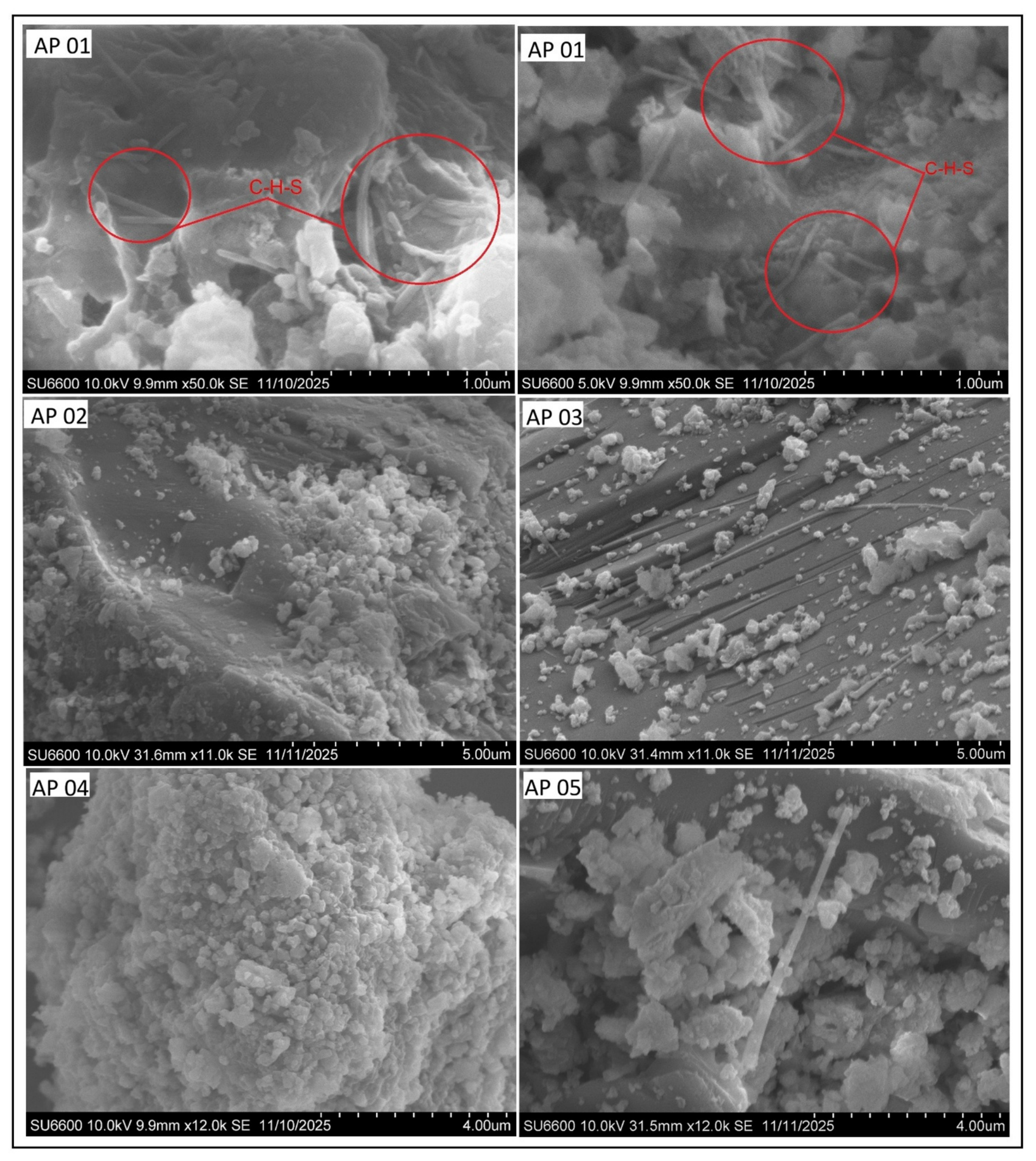
SEM analysis was conducted to study microstructural morphologies, particle size distributions, interfacial bonding characteristics, and unique nanostructural features of the ancient lime plaster materials. Secondary electron imaging was performed at magnifications ranging from 500× to 50,000× using a Hitachi SU6600 field emission microscope, providing nanometer-scale resolution. Figure 7 depicts the SEM images of five lime plaster samples (AP01–AP05) studied.
As can be seen from Figure 7, all samples (AP01–AP05) exhibited heterogeneous particle-size distributions, ranging from nanometer-scale particles (<100 nm) to micrometer-scale aggregates (10–100 μm), indicating a multigrain-size distribution characteristic of well-formulated lime plasters. This particle-size heterogeneity promotes optimal packing density, reduces porosity, and enhances mechanical interlocking, thereby contributing to the exceptional durability observed in these ancient materials [54,55,56]. It is clearly observed in all samples that aggregates are surrounded by small fine particles, which could be calcite particles.
It is interesting to observe fibrillar nanorods in the AP01, AP03, and AP05 samples. The most significant nanostructural observation was made in sample AP01, where high magnification FE-SEM imaging at 50,000× revealed distinctive nanorod-shaped fibrillar structures in the binder matrix, with diameters of approximately 30 nm and lengths of approximately 500 nm. These nanostructures were distributed within the calcite binder phase and concentrated at binder-aggregate interfacial zones. The morphological characteristics of these nanorods, including their fibrillar structure and nanometer-scale dimensions, are fully consistent with poorly crystalline Calcium Silicate Hydrate (C-S-H) fibers, the principal nanostructural product generated by long-term pozzolanic reaction between calcium hydroxide and silica in lime-based systems [57,58]. C-S-H formation in aged lime plasters has been documented in multiple SEM studies of ancient heritage mortars. Moropoulou et al. [58] demonstrated through SEM that C-S-H phases progressively develop in historic lime-pozzolan mortars at binder–aggregate interfaces over multi- century timescales, with fibrillar morphologies closely resembling those of modern cement hydration products [54] identified secondary mineralization products including recrystallized calcium carbonate phases and silica-rich reaction zones at aggregate surfaces in the Chennai heritage lime mortar, attributing them to long-term interaction between the calcitic binder and siliceous aggregate under the influence of capillary pore fluids.
The relationship between binder content and secondary C-S-H development has been corroborated in comparable South Asian lime plaster systems [30] reported that binder-rich finishing coats at the Sadras fort lime plaster showed greater evidence of secondary silicate phase formation at grain boundaries compared to coarser base coat layers. It is further noteworthy that no organic fiber morphologies such as the elongated cell wall fragments or lumen structures characteristic of plant-derived cellulosic reinforcement were identified by FE-SEM in any of the Anuradhapura samples, in contrast to the organic fiber inclusions reported by Dighe et al. [59] in the Solapur Fort lime plasters of Maharashtra, where bamboo foliage and flax fibers were clearly resolved as structurally distinct phases under SEM imaging. The absence of such morphological signatures in the present samples, combined with the GC-MS identification of fatty acid methyl esters as the sole organic constituent, conclusively supports a C-S-H rather than a plant-fiber interpretation for the observed nanorods. The C-S-H nanofibers identified here are interpreted as the product of a slow, in situ pozzolanic aging reaction that has progressively densified the binder–aggregate interface of the Anuradhapura lime plasters, contributing to their crack resistance and microstructural integrity across millennia of tropical environmental exposure.

3.8. GC-MS Characterization of Lime Plaster Samples

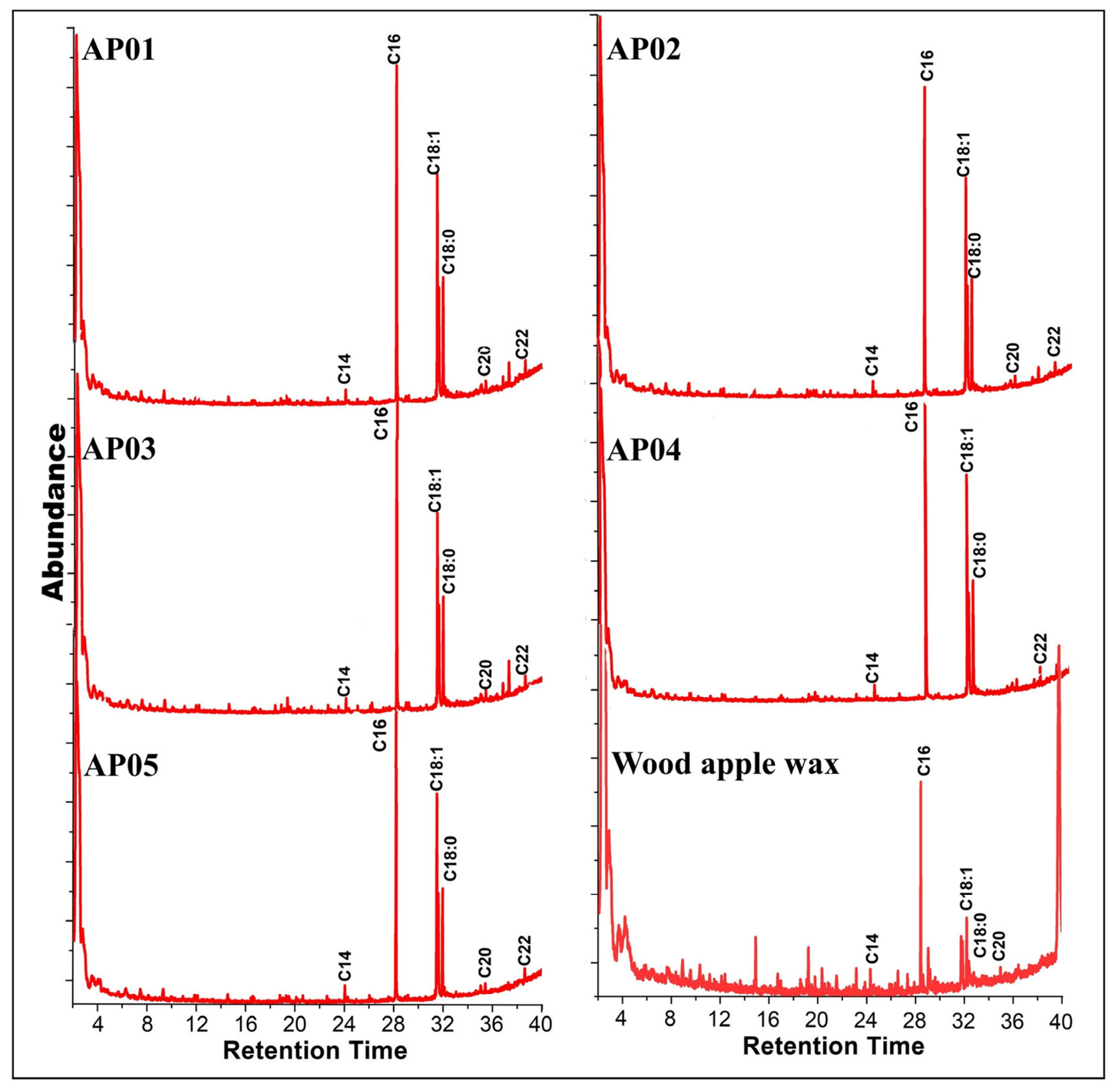
The determination of the composition of lime plasters not only includes the inorganic components, including the binder and aggregates, but also the organic additives, which are extremely imperative in heritage conservation, ensuring the durability and authenticity of the ancient constructions. It is well known that the sustainable use of plant and animal-based organic materials has long been applied with ancient lime plaster and motor mixtures to improve their workability, water resistance, and functional and mechanical features [59,60]. Most commonly used plant-based organic additives include rice husks and other polysaccharides, waxes, gums, proteins, and oils [59,61]. Interestingly, our TGA results revealed that there are around 1.5–4% organic materials present in the ancient lime plaster samples (AP01–AP05). Therefore, GC-MS analyses were conducted to identify the organic additives present in the lime plaster samples. It is noteworthy that this was the first time organic additives in ancient Sri Lankan lime plasters were analyzed using GC-MS. Figure 8 shows the GCMS analysis of five ancient lime plaster samples (AP01–AP05) and the wood apple wax sample.
Previous studies have reported that the wood apple gum, Sesame oil, Dorana oil (an oil extracted from the Dorana tree (Dipterocarpus glandulosus)), and Hal Dummala (a resin from the dummala tree (Shorea oblongifolia), native to Sri Lanka) were used in ancient coating technology as organic additives in Sri Lanka [20,62,63]. The wood apple (Limonia acidissima L.) tree, or divul in the native language, is commonly found in the Indian subcontinent, and its wax is comparable to gum Arabic, mostly used in paints and varnishes [63]. Interestingly, historical records report that wood apple wax was used as an organic additive in ancient Sri Lanka [64]. Even to date, the wood apple tree is also commonly found in the North Central part of Sri Lanka, especially in the Anuradhapura area. To investigate the presence of wood apple wax in ancient lime plasters, a recently collected wood apple wax sample from the Anuradhapura area was also analyzed using GC-MS; see Figure 8.
All samples (AP01–AP05) displayed three major and three minor fatty acid methyl esters (FAMEs), indicating that all the samples most likely contain similar organic additives. As shown in Table 4, the most abundant FAME in the samples was palmitic acid (~30%), whereas oleic and stearic acids were around 20% and 10%, respectively. Minor peaks of myristic and behenic acids were also present, approximately 1–2% found, in all AP01–AP05 samples. Approximately 1% of Arachidic acid was present in all samples except AP04. Interestingly, all three major FAME peaks observed in lime plaster samples were also detected in the wood apple wax sample, along with several other unknown peaks (Figure 8 and Table 5), suggesting that the wood apple wax may be a major or one of the major organic additives in the lime plaster samples. The main reason for not showing the other minor peaks of wood apple wax in the lime plaster samples could be the loss of FAMEs due to oxidation, polymerization, esterification, and hydration reactions, as well as changes in growth and environmental conditions over many years. Most importantly, our GC-MS analysis confirmed that ancient civilizations in Anuradhapura used organic additives, such as wood apple wax, to improve the performance of the lime plasters. It is worthwhile mentioning that this is the first time such a finding has been scientifically proven in Sri Lanka.

4. Conclusions

The multi-analytical study of historical lime plasters from ancient Anuradhapura city reveals a highly developed tradition of construction material technology used by ancient Sinhala craftsmen. Five lime plaster samples taken from different archaeological sites (1st-10th Century AD), namely, two stupa domes: Abhayagiri (AP01) and Jethavana (AP02), Monk residence building near Ruwanweliseya Stupa (AP03), Deeghapashan Rock Shelter Building of Abhayagiri Monastery Complex (AP04), and Vessagiriya Rock Shelter wall lime Plaster (AP05) were examined and characterized using XRD, XRF, FTIR, OM, SEM, and GC-MS. All samples showed that calcium lime, obtained from seashells, was the main binder in the ancient lime plaster mixture, and that quartz-rich river sand was the major aggregate. The ratio of the mixture between the main binding medium and the main aggregate is identified in this research as 1:2.7, 1:2.0, 1:2.4, 1:4.4, and 1:3.7 for the AP01, AP02, AP03, AP04, and AP05 samples, respectively, with more binder added in outdoor structures than in indoor applications. In addition, TGA and GC-MS analysis results confirmed the addition of plant materials, especially wood apple wax, as additives to enhance the properties of the lime plasters. The evidence identified in this study suggests that ancient builders applied performance-based design principles, deliberately adjusted raw materials, processing parameters, and compound formulations to produce durable and sustainable lime plasters that could withstand centuries of tropical weather, and they have elucidated, through scientific tests, how plant extracts affect the performance of lime plasters and mortars. Characterization data of ancient lime plasters, including the mixing ratios of raw materials, offers potential for developing restoration and conservation strategies that enhance the structural stability, durability, and climate resilience of restored archaeological sites and structures. Most importantly, these findings provide essential guidance to the State Archaeological Department, conservation engineers and architects, and archaeologists, while also assisting in the development of new conservation lime plasters and mortars for climate change adaptive restoration and conservation of ancient building structures.

Author Contributions

D.R.: investigation, methodology, formal analysis. writing—original draft. R.S.D.: supervision, writing, review, editing and proofreading. E.V.A.P.: supervision, writing, review and editing. A.T.: supervision, writing—review and editing. S.D.: review and editing. All authors have read and agreed to the published version of the manuscript.

Funding

This work was supported by the Research Council, University of Sri Jayewardenepura, Nugegoda 10250, Sri Lanka, for the financial assistance (Grant No: RC/URG/FOT/2024/79).

Institutional Review Board Statement

Not applicable.

Informed Consent Statement

Not applicable.

Data Availability Statement

All data relevant to this study are included in the main article in the form of text, images, figures, and tables and are available upon request from the corresponding author(s).

Acknowledgments

The authors wish to express their sincere gratitude to the late KY Gamini Saman, Former Senior Conservation Supervisor (Artefacts) in Central Cultural Fund, Nilan Cooray, Director General of the Central Cultural Fund, and Thusitha Mendis, former Director General of the Department of Archaeology, for authorizing the collection of samples from the archaeological sites at Anuradhapura.

Conflicts of Interest

The authors declare no conflicts of interest.

References

  1. Deraniyagala, S.U. Prehistory of Sri Lanka: An Ecological Perspectives; Department of Archaeology: Colombo, Sri Lanka, 1992; Volume II. [Google Scholar]
  2. De Silva, K.M. History of Ceylon; Ceylon University Press: Colombo, Sri Lanka, 1959. [Google Scholar]
  3. Lokeshwara, P.A.G.W.S.; Thilakarathna, T.N.M.; Wijewardena, L.S.S.; Karunananda, P.A.K.; Pallewatta, T.M. Seismic performance of three ancient stupas in Anuradhapura, Sri Lanka. Eng. J. Inst. Eng. Sri Lanka 2023, 56, 21–30. [Google Scholar] [CrossRef] [Scilit]
  4. Dharmasena, P.B. Evolution of hydraulic societies in the ancient Anuradhapura Kingdom of Sri Lanka. In Landscapes and Societies; Springer: Dordrecht, The Netherlands, 2010; pp. 341–352. [Google Scholar]
  5. Silva, R. Architecture and Town Planning in Sri Lanka During the Early and Medieval Periods: Thūpa, Thūpaghara and Thūpa-Pāsāda. In Architecture and Town Planning in Sri Lanka During the Early and Medieval Periods; Silva, R., Ed.; Department of Archaeology: Colombo, Sri Lanka, 2004; pp. 1–225. [Google Scholar]
  6. Ranaweera, M.P. Ancient stupas in Sri Lanka—Largest brick structures in the world. CHS Newsl. 2004, 70, 11–16. [Google Scholar]
  7. Ontiveros-Ortega, E.; Martín-del-Rio, J.J.; Sebastián-Pardo, E.; Martínez-Martínez, J. Thermal decomposition of the CaO in traditional lime kilns: Applications in cultural heritage conservation. Constr. Build. Mater. 2018, 190, 349–362. [Google Scholar] [CrossRef] [Scilit]
  8. Simou, S.; Baba, K.; Nounah, A. Preserving historic structures: Advancing conservation practices through building material analysis and mapping. Civ. Eng. Archit. 2024, 12, 312–325. [Google Scholar] [CrossRef] [Scilit]
  9. Fassina, V. The activity of the European Standardization Committee CEN/TC 346 Conservation of Cultural Heritage from 2004 to 2020. Sustainability 2025, 17, 1992. [Google Scholar] [CrossRef] [Scilit]
  10. EN 17187:2020; Conservation of Cultural Heritage—Characterization of Mortars Used in Cultural Heritage. CEN: Brussels, Belgium, 2020.
  11. EN 16455:2014; Conservation of Cultural Heritage—Extraction and Determination of Soluble Salts in Natural Stone and Related Materials Used in and from Cultural Heritage. CEN: Brussels, Belgium, 2014.
  12. Bilgilioğlu, H. Geochemical and physical properties of historical mortars from the Tyana Octagonal Church: Implications for restoration. npj Herit. Sci. 2025, 13, 288. [Google Scholar] [CrossRef] [Scilit]
  13. Krejsová, J.; Scheinherrová, L.; Fořt, J.; Pokorný, J.; Rovnaníková, P. Lime-based historic plasters characterization: Mineralogical composition and binder to aggregate ratio. J. Phys. Conf. Ser. 2024, 2911, 012004. [Google Scholar] [CrossRef] [Scilit]
  14. Anand, N.J.; Singhal, V.; Manohar, S. Ancient mortar technology of the 1600-year-old renowned Buddhist University and UNESCO world heritage site. Case Stud. Constr. Mater. 2025, 22, e04412. [Google Scholar] [CrossRef] [Scilit]
  15. Freire, M.T.; Veiga, M.R.; Silva, A.S.; de Brito, J. Restoration of ancient gypsum-based plasters: Design of compatible materials. Cem. Concr. Compos. 2021, 120, 104014. [Google Scholar] [CrossRef] [Scilit]
  16. Kumar Shiva, M.; Selvaraj, T. Ancient organic lime plaster production technology and its properties among Mayan, Egyptian, Persian and Asian civilizations. Asian J. Civ. Eng. 2023, 24, 2709–2718. [Google Scholar] [CrossRef] [Scilit]
  17. Friesem, D.E.; Munro, N.D.; Belfer-Cohen, A.; Shaham, D.; Grosman, L. Lime plaster cover of the dead 12,000 years ago—New evidence for the origins of lime plaster technology. Evol. Hum. Sci. 2019, 1, e9. [Google Scholar] [CrossRef] [Scilit]
  18. Carran, D.; Hughes, J.; Leslie, A.; Kennedy, C. A short history of the use of lime as a building material beyond Europe and North America. Int. J. Archit. Herit. 2012, 6, 117–146. [Google Scholar] [CrossRef] [Scilit]
  19. Grono, E.; Piper, P.J.; Kinh, D.N.; Bellwood, P.; Denham, T.; Friesem, D.E. Early settlement construction in Southeast Asia: Lime mortar floor sequences at Loc Giang, southern Vietnam. Antiquity 2022, 96, 1391–1410. [Google Scholar] [CrossRef] [Scilit]
  20. Rathnayake, R.M.K.M.; Mendis, M.S.; Galabada, H.; Halwatura, R.U. An analytical review of ancient coating technology employed at Sigiriya, Sri Lanka. npj Herit. Sci. 2025, 13, 379. [Google Scholar] [CrossRef] [Scilit]
  21. Practical Action. Lime Production: Traditional Techniques in Sri Lanka; Practical Action Technical Brief; Practical Action: Rugby, UK, 2006. [Google Scholar]
  22. Arıoglu, N.; Acun, S. Research about a method for restoration of traditional lime mortars and plasters: A staging system approach. Build. Environ. 2006, 41, 1223–1230. [Google Scholar] [CrossRef] [Scilit]
  23. Singh, M.; Vinodh Kumar, S.; Waghmare, S.A. Characterization of 6–11th century A.D. decorative lime plasters of rock cut caves of Ellora. Constr. Build. Mater. 2015, 98, 156–170. [Google Scholar] [CrossRef] [Scilit]
  24. Singh, M.R. Dolomitic plasters in Indian monuments and its characterization. J. Hist. Archaeol. Anthropol. Sci. 2017, 1, 133–139. [Google Scholar] [CrossRef] [Scilit]
  25. Dettmering, T.; Dai, S. Types of lime binders in mortars used for the construction of the Ming Great Wall of China and their importance for the development of a conservation strategy. Built Herit. 2022, 6, 1. [Google Scholar] [CrossRef] [Scilit]
  26. Mendis, D.T. Information on the Pre-Jetavanarama Settlement Revealed Through Archaeological Excavations in the Salapathala Maluwa (Courtyard) and Weli Maluwa (Sand Courtyard) of the Jetavana Stupa; Jetavana Stupa Puranaya, Commemorative Issue; Piyatissa, S., Ed.; Central Cultural Fund: Colombo, Sri Lanka, 2009; pp. 13–22. [Google Scholar]
  27. Wickramagamage, C. Abhayagiri Vihara Project: Reports of Archaeological Excavations; Central Cultural Fund: Colombo, Sri Lanka, 1983. [Google Scholar]
  28. Rodriguez-Navarro, C.; Elert, K.; Ševčík, R. Amorphous and crystalline calcium carbonate phases during carbonation of nanolimes: Implications in heritage conservation. CrystEngComm 2016, 18, 6594–6607. [Google Scholar] [CrossRef] [Scilit]
  29. Dighe, B.; Singh, M.R. From ancient practices to contemporary green building: Analyzing organic additives in Pitalkhora earthen plasters for sustainable construction. Green Technol. Sustain. 2025, 3, 100195. [Google Scholar] [CrossRef] [Scilit]
  30. Manivannan, K.; Bhatnagar, M.K.; Pazhavoor, D.R.; Rahul, P.; Vinodh Kumar, S.; Perumalsamy, C. Resilient lime–silica mortars of the Dutch fort at Sadras, India: Multi-analytical insights into sustainable and eco-efficient binder technologies. SSRN Electron. J. 2025. [Google Scholar] [CrossRef] [Scilit]
  31. Medjelekh, D.; Kenai, S.; Claude, S.; Ginestet, S.; Escadeillas, G. Multi-technique characterization of ancient materials as part of an eco-renovation of historic centres, case of Cahors centre in France. Constr. Build. Mater. 2020, 250, 118894. [Google Scholar] [CrossRef] [Scilit]
  32. Brunello, V. Mortars: A Complex Material in Cultural Heritage. A Multi-Analytical Procedure to Characterize Historical Mortars. Ph.D. Dissertation, University of Insubria, Varese, Italy, 2019. [Google Scholar]
  33. ICDD. PDF-2 Database; International Centre for Diffraction Data: Newtown Square, PA, USA, 2003. [Google Scholar]
  34. Koswaththa, A.; Abeyaratne, P.; Buddika, S.; Yapa, H.; Navaratnam, S. Effects of natural seashell presence on the engineering performance of sea sand concrete. Buildings 2025, 15, 2751. [Google Scholar] [CrossRef] [Scilit]
  35. Coningham, R.; Young, R.; Nalinda, K.; Perera, J.; Khan, H. Faunal Remains. In Anuradhapura: The British-Sri Lankan Excavations at Anuradhapura Salgaha Watta 2, Volume II: The Artefacts; BAR International Series 1508; Coningham, R., Ed.; Archaeopress/British Archaeological Reports: Oxford, UK, 2006; pp. 581–587. [Google Scholar]
  36. Mendis, T. The Cultural Evolution and Landscape of Ancient Anuradhapura; S Godage and Brothers: Colombo, Sri Lanka, 2019. [Google Scholar]
  37. Katupotha, J. Geological significance of artifacts in Sri Lanka: Evidence from the Abhayagiri Viharaya, Anuradhapura. In Sirinimal Lakdusinghe Felicitation Volume; Neptune Publication: Colombo, Sri Lanka, 2014; pp. 327–332. [Google Scholar]
  38. Ceran, İ.; Kaygisiz, E. Assessing carbonation maturity for restoration compatibility: A spectroscopic–mineralogical study of historic and modern lime mortars. Heritage 2026, 9, 93. [Google Scholar] [CrossRef] [Scilit]
  39. Andersen, F.A.; Neuman, L. Carbonate, nitrate, and sulfate minerals: Infrared and Raman spectra. In The Infrared Spectra of Minerals; Farmer, V.C., Ed.; Mineralogical Society: London, UK, 2001. [Google Scholar]
  40. Reig, F.B.; Adelantado, J.V.G.; Moreno, M.C.M.M. FTIR quantitative analysis of calcium carbonate (calcite) and silica (quartz) mixtures using the constant ratio method. Talanta 2002, 58, 811–821. [Google Scholar] [CrossRef] [Scilit] [PubMed]
  41. Vagenas, N.V.; Gatsouli, A.; Kontoyannis, C.G. Quantitative analysis of synthetic calcium carbonate polymorphs using FT-IR spectroscopy. Talanta 2003, 59, 831–836. [Google Scholar] [CrossRef] [Scilit] [PubMed]
  42. Farmer, V.C. (Ed.) The Infrared Spectra of Minerals; Mineralogical Society: London, UK, 1974. [Google Scholar]
  43. Salisbury, J.W.; Walter, L.S.; Vergo, N.; D’Aria, D.M. Infrared (2.1–25 µm) Spectra of Minerals; Johns Hopkins University Press: Baltimore, MD, USA, 1991; pp. 1–25. [Google Scholar]
  44. Shoval, S.; Ginott, Y.; Nathan, Y. A new method for determination of the crystallinity index of quartz by infrared spectroscopy. Mineral. Mag. 1991, 55, 579–582. [Google Scholar] [CrossRef] [Scilit]
  45. Moropoulou, A.; Bakolas, A.; Bisbikou, K. Thermal Analysis as a Method of Characterizing Ancient Ceramic Technologies. Thermochim. Acta 1995, 269, 743–753. [Google Scholar] [CrossRef] [Scilit]
  46. Böke, H.; Akkurt, S.; İpekoğlu, B.; Uğurlu, E. Characteristics of brick used as aggregate in historic brick-lime mortars and plasters. Cem. Concr. Res. 2006, 36, 1115–1122. [Google Scholar] [CrossRef] [Scilit]
  47. Sun, T.; Wei, G.; Kang, Y.; An, Z. Exploring plastering techniques in ancient Chinese royal architecture at Huilong temple using multi-analytical methods. npj Herit. Sci. 2025, 13, 270. [Google Scholar] [CrossRef] [Scilit]
  48. ASTM C897-15(2020); Standard Specification for Aggregate for Job-Mixed Portland Cement-Based Plasters. ASTM International: West Conshohocken, PA, USA, 2020.
  49. Groot, C.; Veiga, R.; Papayianni, I.; Van Hees, R.; Secco, M.; Alvarez, J.I.; Faria, P.; Stefanidou, M. RILEM TC 277-LHS report: Lime-based mortars for restoration—A review on long-term durability aspects and experience from practice. Mater. Struct. 2022, 55, 245. [Google Scholar] [CrossRef] [Scilit]
  50. Guiger, W. (Ed.) The Mahavamsa; Oxford University Press: Oxford, UK, 1912. [Google Scholar]
  51. Sri Sumangala, H.; Batuwanthudawe, A.S. (Eds.) Mahavamsa; Government Information Department: Colombo, Sri Lanka, 1896. [Google Scholar]
  52. Historic Environment Scotland. Short Guide 1: Fabric Care and Repair—Lime Mortars in Traditional Buildings; Historic Environment Scotland: Edinburgh, UK, 2014. [Google Scholar]
  53. Folk, R.L. Petrology of Sedimentary Rocks; Hemphill Publishing Company: Austin, TX, USA, 1980. [Google Scholar]
  54. Haneefa, K.M.; Rani, S.D.; Santhanam, M.; Parida, F.C. Microstructure and geo-chemistry of lime mortar from a heritage structure. Constr. Build. Mater. 2019, 225, 538–554. [Google Scholar] [CrossRef] [Scilit]
  55. Rodriguez-Navarro, C.; Ruiz-Agudo, E.; Ortega-Huertas, M.; Hansen, E. Nanostructure and Irreversible Colloidal Behavior of Ca(OH)2: Implications in Cultural Heritage Conservation. Langmuir 2005, 21, 10948–10957. [Google Scholar] [CrossRef] [Scilit]
  56. Elert, K.; Rodriguez-Navarro, C.; Pardo, E.S.; Hansen, E.; Cazalla, O. Lime Mortars for the Conservation of Historic Buildings. Stud. Conserv. 2002, 47, 62–75. [Google Scholar] [CrossRef] [Scilit]
  57. Cizer, O.; Van Balen, K.; Van Gemert, D.; Elsen, J. Carbonation and hydration of mortars with calcium hydroxide and calcium silicate binders. In Sustainable Construction Materials and Technologies; Taylor & Francis Group: London, UK, 2007; pp. 453–463. [Google Scholar]
  58. Moropoulou, A.; Cakmak, A.S.; Labropoulos, K.C.; Van Grieken, R. Evaluation of the conservation interventions on the Hagia Sophia through the investigation of the micro-structure and the chemical composition of the mortars. Ann. Chim. 2004, 94, 111–123. [Google Scholar]
  59. Dighe, B.; Singh, M.R. Integrating tradition and sustainability: Organic additives in 2nd century BC Bhaja Caves for carbon-neutral construction solutions. Clean. Circ. Bioeconomy 2025, 12, 100163. [Google Scholar] [CrossRef] [Scilit]
  60. Shivakumar, M.; Selvaraj, T.; Dhassaih, M.P. Preparation and characterization of ancient recipe of organic lime putty—Evaluation for its suitability in restoration of Padmanabhapuram Palace, India. Sci. Rep. 2021, 11, 13261. [Google Scholar] [CrossRef] [Scilit]
  61. Saggu, K.; Pal, S.; Dev, N. Exploring the role of organic additives in ancient lime mortars: Current knowledge and implications. J. Cult. Herit. 2025, 76, 317–326. [Google Scholar] [CrossRef] [Scilit]
  62. De Silva, R.H. The evolution of the technique of Sinhalese wall painting and comparison with Indian painting methods. Anc. Ceylon 1971, 1, 90–104. [Google Scholar]
  63. Seneviratne, J.N. Binding mediums, protective coatings and mural painting techniques used by ancient painters. Anc. Ceylon J. Dep. Archaeol. Sri Lanka 2021, 27, 87–110. [Google Scholar]
  64. Gnanawimala, K. (Ed.) Saddharma Rathnawaliya; MD Gunasena Publication: Colombo, Sri Lanka, 1961. [Google Scholar]
Figure 1. The map of the Sampling sites in the Ancient Anuradhapura City.
Conservation 06 00069 g001
Figure 2. Images of the lime plaster samples collected from different locations in Ancient Anuradhapura city.
Conservation 06 00069 g002
Figure 3. XRD patterns of lime plaster samples (AP01–AP05).
Conservation 06 00069 g003
Figure 4. FTIR spectra of the lime plaster samples (AP01–AP05) of Anuradhapura.
Conservation 06 00069 g004
Figure 5. Thermogravimetric analysis of ancient lime plasters of AP01 to AP05.
Conservation 06 00069 g005
Figure 6. Optical microscopic images of grains from ancient lime plaster samples (AP01–AP05) of Anuradhapura, illustrating particle morphology and surface texture.
Conservation 06 00069 g006
Figure 7. SEM images of ancient lime plaster samples (AP01–AP05).
Conservation 06 00069 g007
Figure 8. GCMS chromatograms of ancient lime plaster samples AP01–AP05 and wood apple wax sample.
Conservation 06 00069 g008
Table 1. Details of the lime plaster samples tested in the study.
Sample IDLocation NameLocationType of StructurePeriod
AP01Abhayagiriya Stupa8.3710972 N–80.394877 EStupa Dome1st century AD
AP02Jetavanarama Stupa8.3518222 N–80.403255 EStupa Dome3rd century AD
AP03Ruwanweliseya Stupa8.3518944 N–80.398702 EResidential Building1–10th century AD
AP04Deeghapashana rock shelter8.3722417 N–80.389297 EResidential Building1–10th century AD
AP05Vessagiriya rock shelter8.3289750 N–80.390047 EPainting Plaster5th century AD
Table 2. Average Elemental Composition of lime plaster samples of AP01 to AP05 by XRF with the detectable elements (Z > 11).
ElementAP01AP02AP03AP04AP05
Mg2.02-0.55--
Al3.252.963.712.541.72
Si37.5634.2434.5854.6748.73
S0.220.510.150.161.03
K1.390.570.881.771.14
Ca50.7658.955.2636.5942.36
Ti0.580.180.530.770.54
Mn0.190.010.220.040.18
Fe3.071.433.882.933.92
Zn0.020.010.010.01-
Sr0.330.520.160.180.07
Yb0.08-0.03--
Ce-0.230.030.180.16
Table 3. Summary of major vibrational peak assignments for samples AP01-AP05.
Wavenumber (cm−1)Vibrational Band AssignmentRefs.
~1410ν3 asymmetric C–O stretching of CO32−; strong, broad absorption diagnostic of carbonate minerals. Shifted/split position distinguishes calcite from dolomite.[39,40,41]
~1020Si–O–Si asymmetric stretching; broad, strong band characteristic of quartz and silicate framework.[42,43]
~874ν2 out-of-plane CO32− bending vibration; distinguishes calcite (~873 cm−1) from dolomite (~728 cm−1).[39,41]
~802Si–O–Si symmetric stretching; upper component of the characteristic quartz doublet (paired with ~776 cm−1); diagnostic of quartz crystallinity.[44]
~776Si–O–Si symmetric stretching; lower component of the quartz doublet.[44]
~712ν4 in-plane CO32− bending; also overlaps with the second quartz Si–O bending component.[41,42]
Table 4. Summary of the weight percentages of moisture, organic additives, binder, and the binder-to-total-aggregates ratios for the AP01–AP05 samples.
SampleMoisture % (30–150 °C)Organic Additives
(150–550 °C), (%)
Binder (CaCO3, 600–750 °C), %Total
Aggregates, %
Binder: Total
Aggregates Ratio
AP011.312.6325.8270.231:2.7
AP021.171.4732.6464.731:2.0
AP031.603.1328.1767.111:2.4
AP040.773.5217.7078.021:4.4
AP051.673.8420.0174.481:3.7
Table 5. Fatty acid methyl ester compositions of ancient lime plaster samples (AP01–AP05) and wood apple wax.
PeaktR (Min)Common NameFAMEValue (%)
AP01AP02AP03AP04AP05Wax
C1424.05Myristic acidMethyl tetradecanoate1.530.641.491.531.911.53
C1628.17Palmitic acidHexadecanoic acid, methyl ester27.4428.5629.2131.9831.2627.44
C18:031.94Stearic acidMethyl stearate10.517.7910.2210.5610.8510.51
C18:131.59Oleic acid9-Octadecenoic acid, methyl ester20.7645.3421.6922.547.1920.76
C2035.40Arachidic acidMethyl 18-methylnonadecanoate,
Methyl 10-methyl-hexadecanoate
1.030.911.000.001.211.03
C2238.61Behenic acidDocosanoic acid, methyl ester2.271.052.201.901.952.27
Disclaimer/Publisher’s Note: The statements, opinions and data contained in all publications are solely those of the individual author(s) and contributor(s) and not of MDPI and/or the editor(s). MDPI and/or the editor(s) disclaim responsibility for any injury to people or property resulting from any ideas, methods, instructions or products referred to in the content.