Article

Human–African Civet (Civettictis civetta) Conflict: Patterns, Drivers, and Conservation Implications in Ethiopia


by
Melese Merewa
1,2,
Petra Chaloupková
1,
Divyadharshini Shanthakrishnan
1 and
Barbora Černá Bolfíková
1,*
1
Faculty of Tropical AgriSciences, Czech University of Life Sciences Prague, 16500 Prague, Czech Republic
2
Wondo Genet College of Forestry and Natural Resources, Hawassa University, Wondo Genet, Shashemene P.O. Box 128, Ethiopia
*
Author to whom correspondence should be addressed.
Conservation 2026, 6(2), 66; https://doi.org/10.3390/conservation6020066
Submission received: 22 April 2026 / Revised: 22 May 2026 / Accepted: 25 May 2026 / Published: 28 May 2026

Abstract

Human–wildlife conflict research has focused mainly on large mammals, whereas smaller carnivores remain comparatively understudied despite frequent interactions with people. Among them is the African civet (Civettictis civetta (Schreber, 1776)), a widespread mesocarnivore occurring in human-modified landscapes. This study examined human–African civet interactions in the Sidama Region of southern Ethiopia, focusing on reported conflict, traditional uses, local knowledge, and attitudes toward the species. Data were collected through structured interviews and analyzed using descriptive statistics and Pearson’s chi-square tests. A majority of respondents (N = 328; 72%) reported conflict, although most described direct encounters as rare. Livestock depredation (n = 237; 59%) was identified as the main driver of conflict, whereas crop damage (n = 237; 26%) played a secondary role. African civets were not perceived only negatively: traditional uses, especially musk extraction (N = 328; 57%) and traditional medicine (N = 328; 37%), were common, and reported killing was relatively limited (N = 328; 9%), although some lethal responses were documented. Knowledge of the species was generally low and uneven, and conflict experience was significantly associated with both length of residence and African civet familiarity. These findings suggest that human–African civet interactions are shaped not only by ecological overlap and access to household resources, but also by how local communities understand and value the species.

1. Introduction

Human–wildlife conflict (HWC) is an important challenge in rural landscapes, where people and wildlife compete for space and resources and where local livelihoods depend heavily on agriculture [1,2]. In Ethiopia, HWC is widely recognized as both a conservation issue and a rural livelihood concern, and is often associated with crop damage, livestock loss, and land-use change [1,3,4,5]. In human-dominated landscapes, such pressures can reduce local tolerance toward wildlife and complicate efforts to maintain coexistence [6].
Despite the broad importance of HWC, research has focused predominantly on large herbivores and large carnivores, whereas small- and medium-sized carnivores remain comparatively overlooked, even though they may generate repeated local losses and frequent interactions with people [7,8,9]. This bias is also evident in Ethiopia where a systematic review of HWC studies documented 47 terrestrial vertebrate species involved in conflict-related research, but the most frequently represented groups were large mammals, while small carnivores rarely formed the primary analytical focus [5]. In Ethiopia, the African civets (Civettictis civetta (Schreber, 1776)) have been mentioned among species involved in crop damage, yet small carnivores have rarely been treated as the primary analytical focus of HWC studies [10]. This is an important gap, because mesocarnivores often persist in agricultural and peri-domestic environments, where their interactions with people may be localized, recurrent, and shaped by both ecological and socio-economic conditions [9,11,12,13,14,15].
The African civet is a widespread nocturnal viverrid distributed throughout much of sub-Saharan Africa [16]. While no global population estimate is available, the species is regarded as relatively common across much of its range and is currently listed as Least Concern by the IUCN [17]. African civets are ecological generalists that occupy a wide range of habitats, including forests, wetlands, shrublands, plantations, farmland, and semi-urban areas [17]. Their ecological flexibility, nocturnal behavior, and ability to persist in human-modified landscapes make them relevant in mixed agricultural systems, where overlap with farms, settlements, and anthropogenic food resources may increase the likelihood of conflict with people [18].
Available studies from Ethiopia support the relevance of the African civet in human-dominated landscapes [19,20,21,22]. Research from Hawassa, Wondo Genet, and Arba Minch indicates that African civets use a wide range of habitats, including farmland and other modified environments, and show considerable dietary flexibility [19,21,22]. Additional evidence from south-western Ethiopia suggests that African civets also exploit economically important crop resources such as coffee berries [23]. Evidence from the Lake Hawassa basin also suggests that African civets may be involved in local crop damage and that responses to these interactions can include both non-lethal deterrence and direct persecution [20]. At the same time, African civets are associated with musk production and traditional uses in Ethiopia, indicating that human–African civet relationships may involve both costs and benefits [24,25]. A previous study in the same region also suggests that local attitudes toward civets are not uniformly negative [20], highlighting the need to better understand the socio-ecological factors shaping human–African civet interactions in rural landscapes.
Despite growing recognition of human–wildlife conflict in Ethiopia, interactions involving African civets remain insufficiently studied, particularly in relation to reported conflict patterns, traditional uses, local knowledge, and attitudes. Existing evidence indicates that civets can persist in human-modified landscapes and may exploit both natural and cultivated resources, but the frequency, forms, and local interpretations of these interactions remain poorly documented [26,27,28,29,30]. This study, therefore, examined human–African civet interactions in the Sidama Region of southern Ethiopia, with a focus on reported conflict, traditional uses, local knowledge, and attitudes toward the species. Specifically, we asked: (1) what forms of conflict local residents report and what drivers they perceive, (2) what traditional uses of African civets exist and how these relate to mortality, (3) what level of knowledge respondents report regarding the species, and (4) what attitudes local residents hold toward African civets. By addressing these questions, the study aims to contribute to a broader understanding of human–mesocarnivore coexistence.

2. Materials and Methods

2.1. Study Area Description

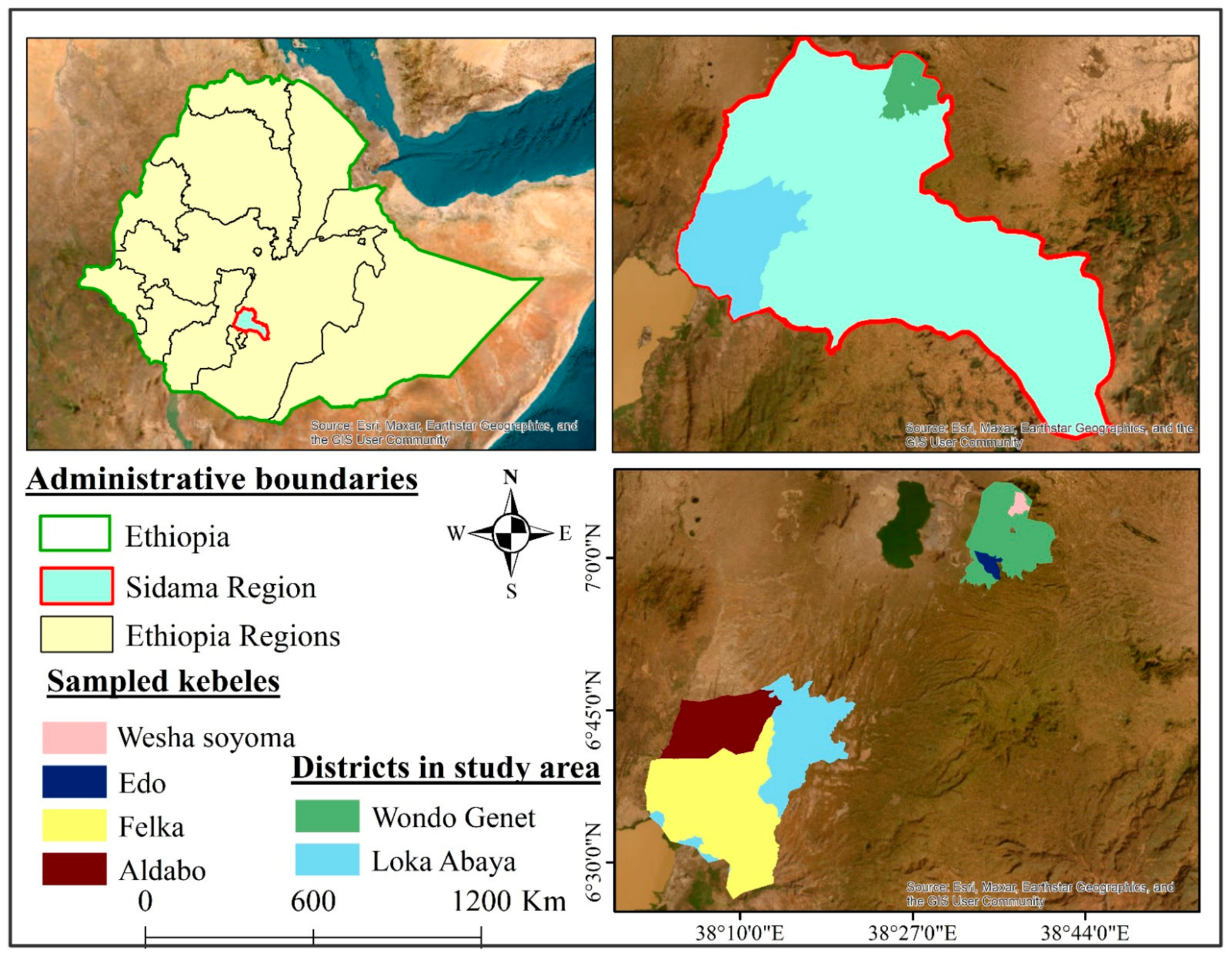
The study was conducted in the Wondogenet (WC) and Loka Abaya (LC) districts of the Sidama Region, southern Ethiopia (Figure 1). The area is characterized by a mosaic of smallholder farms, agroforestry systems, remnant forest patches, and rural settlements, creating substantial overlap between human land use and potential wildlife habitat. Local livelihoods are based mainly on mixed crop–livestock farming, with maize, enset, and coffee among the principal crops.
The two districts differ in landscape structure and land use, and population density. Wondogenet is characterized by more forest fragments and coffee-based agroforestry, whereas Loka Abaya contains more open cultivated and woodland habitats. According to the central statistical agency [31], Wondogenet and Loka abaya districts had an estimated population of 234,490 and approximately 148,000 people respectively. Based on district area estimates reported by the [32], Wondogenet (≈432 km2) and Loka Abaya (≈1300 km2) have population densities of approximately 543 people/km2 and 114 people/km2 respectively.
Both districts are predominantly rural, with dispersed settlements located near agricultural fields and remnant forest habitats. The study area experiences a tropical sub-humid climate characterized by annual rainfall ranging from approximately 900 to 1400 mm and mean annual temperatures between 15 °C and 28 °C. Rainfall is bimodal, with a main rainy season from June to September and a short rainy season from March to April. These ecological and livelihood conditions make the area suitable for examining household-level patterns of human–African civet conflict.

2.2. Survey Design

A cross-sectional household survey design was applied. Data was collected from December 2023 to February 2024 through structured face-to-face interviews with adult household members. Prior to the main survey, a preliminary field assessment was conducted to support site selection and study planning. Study sites were selected purposively based on reported civet occurrence, evidence of human–African civet interactions, accessibility, and their relevance for comparing different socio-ecological settings. The study targeted households potentially affected by interactions with African civets. Sample size was calculated using Cochran’s finite population correction formula: n0 = (Z2 × p × (1 − p))/e2 [33], assuming a 95% confidence level and 5% precision. The final sample comprised 328 households. The final sample comprised N = 328 respondents and was allocated proportionally between the two districts according to the number of households: Wondogenet (48,000 households; n = 211) and Loka Abaya (26,500 households; n = 117). Within each district, the sample was further distributed across two kebeles to ensure coverage of the local variation in settlement and land-use conditions. Households were selected using systematic random sampling based on household lists obtained from kebele administrations. A sampling interval was calculated for each kebele, and households were selected from a random starting point. In kebeles where complete household lists were unavailable, random-walk sampling was applied. Only permanent resident households with at least one adult respondent available for interview were included in the survey. Households that were absent during repeated visits or declined participation were excluded. In households with more than one eligible adult, one respondent was selected using the Kish grid method.
Data were collected through structured questionnaires administered in face-to-face interviews by trained enumerators in the local language (Sidamu-Afoo). The questionnaire was designed to obtain information on household experiences with African civets, perceived drivers of conflict, reported impacts on crops and livestock, responses to conflict, and mitigation measures used by households. Structured interviews ensured consistency across respondents. Before the main survey, the questionnaire was pilot tested in kebeles adjacent to the study area. Households involved in the pilot survey were not included in the final dataset. The interviews lasted approximately 30–50 min.

2.3. Data Analysis

To maintain data quality, completed questionnaires were checked regularly by field supervisors, and spot checks were conducted during data collection. Data was entered carefully into Excel and reviewed for consistency. The questionnaire is provided as a Supplementary File S1.
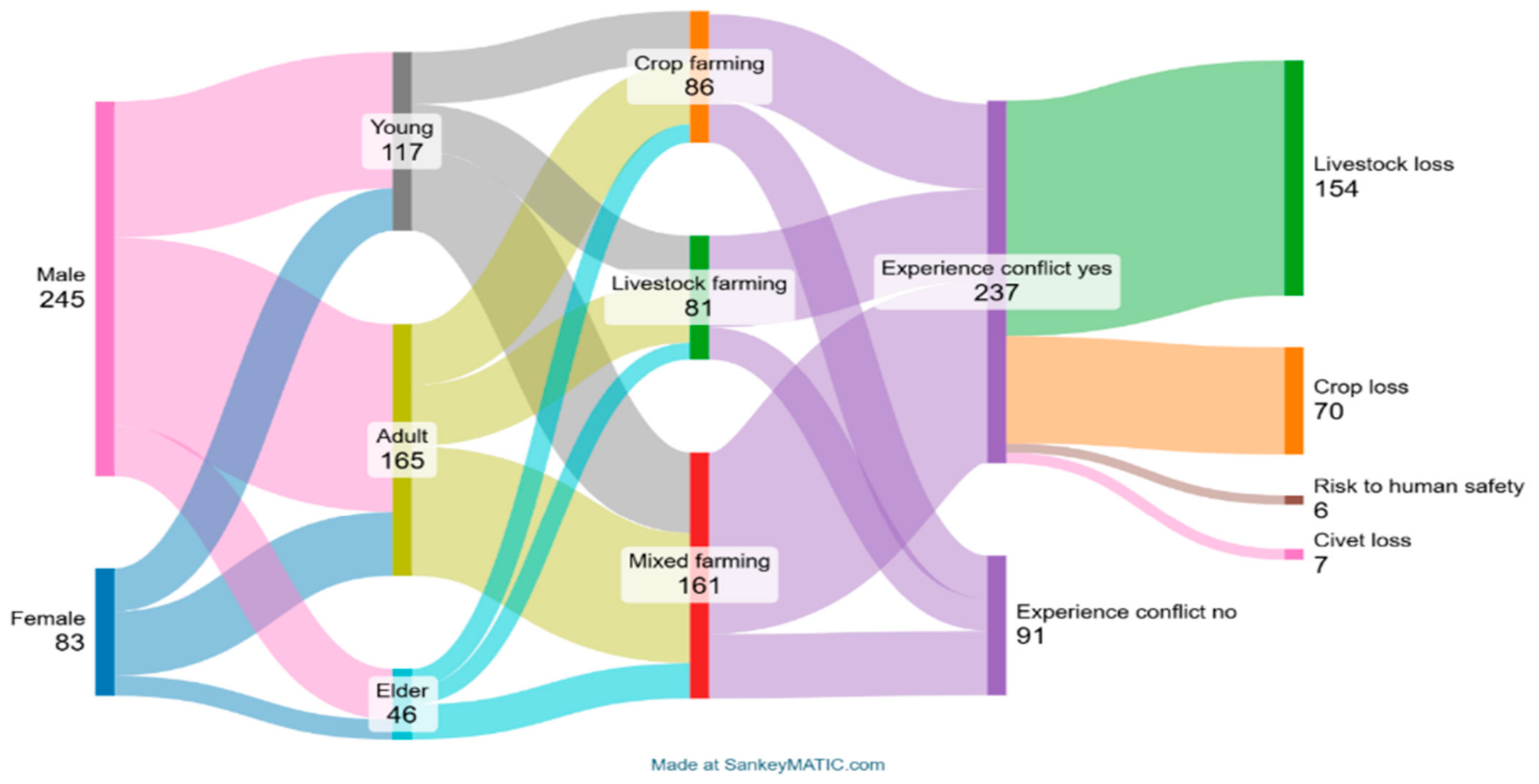
The collected data were analyzed using descriptive statistics to summarize the characteristics of the study sample. Associations between conflict experience and respondents’ characteristics were examined using the Pearson chi-squared test, which was selected as an appropriate method for assessing relationships between categorical variables. Differences between independent variables were considered statistically significant at p < 0.05. All statistical analyses were performed using Statistica software, version 13 (TIBCO Software Inc., Palo Alto, CA, USA, 2015). The Sankey graph (Figure 2: Conflict experience flow) was created using SankeyMATIC (available at https://sankeymatic.com/, accessed on 5 April 2026).

3. Results

3.1. Socio-Demographic Characteristics of the Respondents and Conflict Experience

The respondent population was largely male-headed households, with adult family members playing a central role in household decision-making related to farming and livestock management (Table 1). Most respondents (86%) were within the economically active age range, reflecting the dominance of working-age individuals in rural livelihoods. Marital status patterns were consistent with customary rural social structures, where marriage is common, and household sizes were generally small to moderate. Educational attainment was notably low, with many respondents lacking formal schooling (86%) and only a minority having progressed to secondary or higher education, underscoring limited access to educational opportunities in the study area. Livelihood strategies were diverse but strongly centered on agriculture, with many households combining crop cultivation and livestock keeping as a risk-spreading strategy. Poultry and livestock ownership was widespread, highlighting the importance of animal husbandry for subsistence and income. Most respondents were settled near forested areas and resided in the locality for extended periods, indicating long-term coexistence with surrounding wildlife. The civet (“Tirign”) was perceived as declining in the area (66%), a trend most often linked to habitat loss driven by deforestation and agricultural expansion (75%). Direct encounters with civets were described as infrequent and typically occurred outside settlement areas, in forests and agricultural fields. Overall familiarity with the species was low, with many respondents reporting limited or no knowledge (73%), suggesting gaps in local ecological awareness.
Among the variables examined, length of residence in the area showed a strong and statistically significant association with reported experience of human–African civet conflict (p = 0.000), indicating that prolonged exposure increases the likelihood of interaction. Perceptions of population trends differed marginally between groups (p = 0.050), reflecting variations in awareness or concern despite a broadly shared view of population decline. Knowledge of “Tirign” was also significantly associated with conflict experience (p = 0.000), suggesting that familiarity and awareness influence how interactions are perceived and reported. In contrast, other socio-demographic characteristics, livelihood factors, proximity to forests, locality, encounter frequency, perceived drivers of population decline, and sighting locations did not differ significantly (p > 0.05) between respondents with and without conflict experience, pointing to a shared ecological and social context across the study population.
Although differences in perceptions and experiences of conflict are not statistically significant across socio-demographic groups, the Sankey graph (Figure 2) clearly illustrates the main structural flows within the study population. The graph shows that most respondents were male, predominantly in the adult age group, with fewer females across all age categories. Across age groups, mixed farming represents the most common livelihood strategy (49%), especially among adults, while crops and livestock farming are less prevalent. A majority of respondents across all farming systems reported experiencing human–animal conflict (72%), with mixed farmers accounting for the largest share, followed by livestock and crop farmers. Among those experiencing conflict, livestock loss is the most frequently reported consequence (65%), clearly exceeding crop loss, whereas risks to human safety and civet loss are rare.

3.2. Drivers of Human–African Civet Conflict

The respondents most frequently identified livestock depredation as the main driver of conflict, particularly involving poultry, followed by crop damage (Table 2). Direct killing of civets and attraction to unmanaged household waste were reported less frequently as conflict drivers. The consequences of these interactions were perceived in terms of economic loss, with livestock loss being the most common outcome (65%), followed by crop loss (30%). Risks to human safety and losses of civets themselves were reported only rarely, suggesting that the conflict is livelihood oriented rather than a direct threat to people. Conflict was reported most often during the dry season (62%), with additional peaks during the harvest period, suggesting a seasonal pattern linked to resource availability and agricultural activities. Households employed a range of traditional management strategies, with fencing being the most used method. Among poultry-keeping households, livestock losses were moderate to high, while crop-growing households reported substantial levels of crop raiding. Avocado emerged as the most frequently affected crop (68%), followed by maize, highlighting specific agricultural vulnerabilities that contribute to human–African civet conflict in the study area.

3.3. Traditional Uses and Civet Mortality

The results in Table 3 show that African civets are widely used for traditional purposes within the study area, most notably for musk secretion (57%), which represents the most common form of utilization. Traditional medicine is also widely used (37%), while the use of body parts as charms is relatively uncommon (6%). Despite these uses, reported civet mortality was low overall, with the majority of respondents indicating that civets are not commonly killed in their area. Where killings did occur, they generally involved relatively small numbers of individuals, suggesting that large-scale or systematic killing is not widespread. Habitat loss and deforestation (79%) were identified as the primary drivers of civet-related problems. Regarding responses to civet damage, most respondents relied on non-lethal preventive measures, such as guarding and fencing. However, a notable proportion reported attempts to kill civets, using methods including spears, traps, and poisoning. These findings indicate that although coexistence is largely maintained through preventive strategies, lethal control methods are still used by some households, potentially posing a conservation concern for African civet populations.

3.4. Knowledge of the African Civet

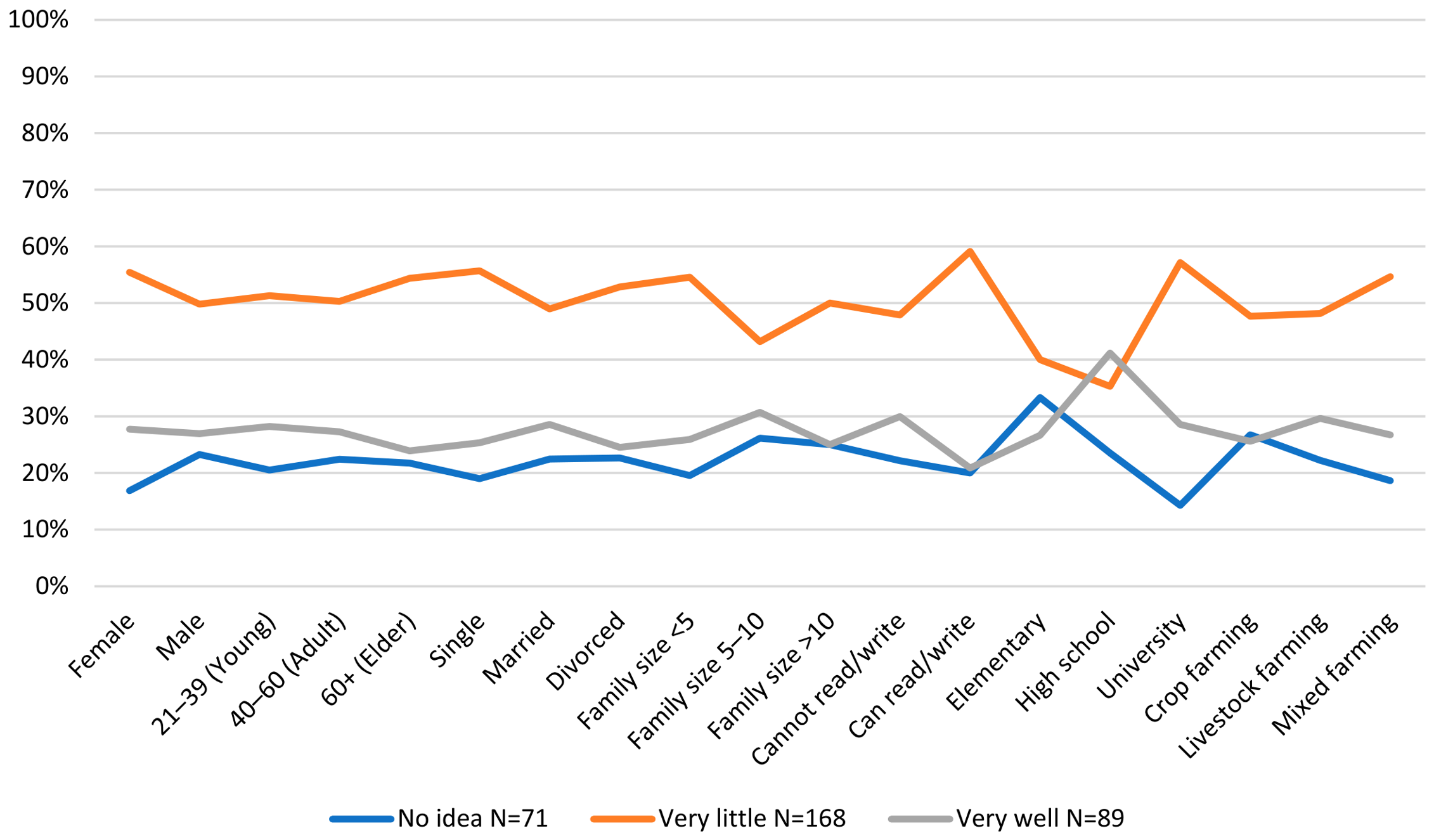
Overall, respondents demonstrated limited knowledge of the African civet, with most reporting very little understanding of the species (Figure 3). Knowledge levels were similar between males and females and showed only minor variation across age groups, although elderly respondents tended to report slightly lower high-level knowledge. Married respondents exhibited greater knowledge, whereas single respondents were more likely to report a very limited understanding. Family size also influenced knowledge, with respondents from medium-sized households displaying comparatively higher levels than those from smaller or larger families. Knowledge appeared to vary most clearly across literacy and education categories. Most respondents across all education levels reported having only limited knowledge, while confidence in knowing the topic well increases with higher levels of formal education, particularly at the high school level. Livelihood type also played a role, as livestock-based households reported greater knowledge than crop-farming households, which showed the highest proportion of respondents with no knowledge. These patterns suggest that awareness may be associated with education, literacy, and livelihood engagement rather than with demographic characteristics such as gender or age.

3.5. Attitudes Towards African Civet

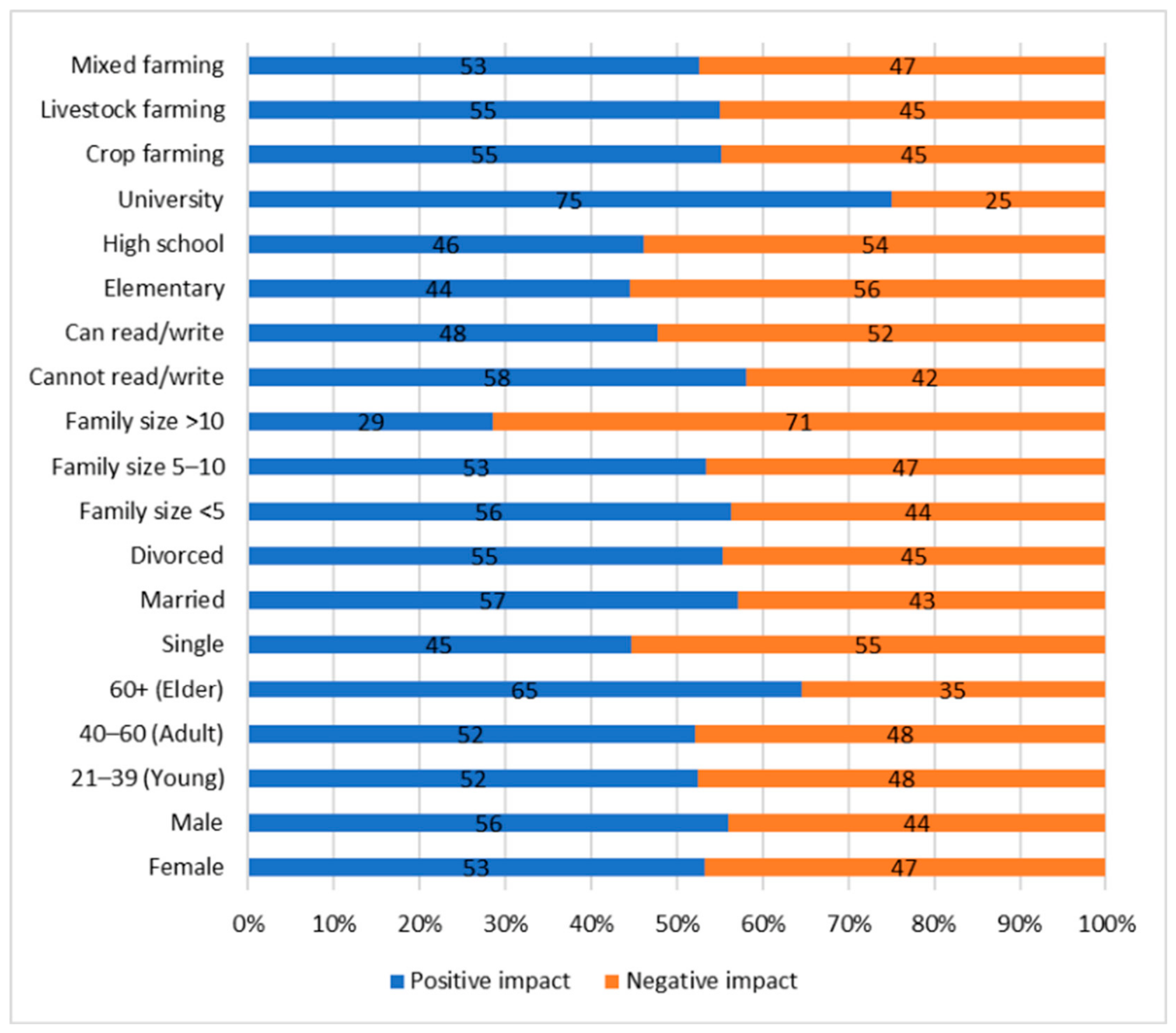
Figure 4 indicates that positive perceptions constitute a substantial share across most socio-demographic and livelihood groups, although negative perceptions remain evident. Perceptions are broadly similar between females and males, with both groups exhibiting a balanced distribution between positive and negative impacts. Across age categories, young and adult respondents report comparable patterns, while respondents aged 60 years and above show a slightly higher prevalence of positive perceptions. Differences by marital status are modest; however, single respondents tend to report a higher share of negative impacts compared to married and divorced respondents. Some differences were more apparent when household characteristics and education levels were considered. Respondents from medium-sized families are more likely to report positive impacts, whereas those from very large households are more likely to report negative perceptions. Education was associated with a visible shift in the distribution of positive and negative perceptions: respondents who cannot read or write report positive impacts, while perceptions shift toward more negative impacts with increasing literacy and higher educational attainment. In contrast, respondents with university education show a clearer predominance of positive over negative impacts, suggesting more favorable assessments at higher education levels. Livelihood type shows balanced trends overall, with no strong divergence in perceptions across crops, livestock, and mixed farming households.

4. Discussion

This study showed that reported human–African civet conflict in the Sidama Region was common despite the fact that direct encounters with the species were usually described as rare. Conflict was reported mainly in relation to livestock depredation, especially poultry loss, whereas attitudes toward civets were not uniformly negative. These findings indicate that human–African civet interactions in the study area are shaped by both reported livelihood costs and the way the species is perceived and used locally. In this respect, the study adds to the still limited literature on mesocarnivore coexistence in rural African landscapes and is consistent with broader human–carnivore literature showing that research and management attention have often focused on large carnivores, although mesocarnivores can also generate local costs, provide ecosystem services, and persist close to human settlements [7,9]. Although a majority of respondents reported experiencing human–African civet conflict, most also described encounters with African civets as rare. This suggests that conflict is shaped less by frequent direct encounters than by the consequences of occasional interactions, particularly when losses affect economically important household resources [34,35]. The low frequency of direct observations is also consistent with the species’ nocturnal behavior and its use of forest edges and agricultural mosaics, where vegetation cover may reduce detectability [18]. At the same time, the absence of a significant association between conflict experience and distance from forest indicates that conflict may not be restricted only to households closest to natural habitat but may occur more broadly wherever poultry and other accessible household resources are available within the landscape. These findings therefore point to the importance of the forest–farmland interface as a setting in which civet movements and vulnerable household resources overlap.
Livestock depredation was the most frequently reported driver of conflict, with poultry loss as the dominant consequence. Conflict was also reported most often during the dry season, with a smaller proportion of respondents associating it with the harvest period, indicating that civet-related damage is not evenly distributed throughout the year. Together, these patterns are consistent with the feeding ecology of African civets, which are opportunistic and omnivorous feeders able to exploit a wide range of food resources in disturbed and human-modified habitats [21,22,29,36,37]. In rural settings, small domestic animals such as poultry may become particularly vulnerable, and African civets have long been noted to raid poultry farms and cultivated areas [10,20,37,38]. The prominence of avocado among raided crops further suggests that conflict may be concentrated on specific, accessible resources rather than evenly distributed across all crop types. Comparable patterns have been reported for Asian civets in human-modified landscapes. Studies from Malaysia, Borneo, Taiwan, and Pakistan show that civets can use agricultural, degraded, peri-urban, and urban habitats and may come into conflict with people through fruit damage, poultry attacks, property damage, or use of settlement areas [39,40,41,42,43]. These comparisons suggest that ecological flexibility may be a broader feature of civet coexistence systems, while the specific form of conflict depends on locally available resources and human responses. Because these results are based on questionnaire data rather than direct ecological monitoring, they should be interpreted as reported patterns of damage rather than direct evidence of seasonal foraging behavior or dietary preference. Nevertheless, they indicate that the type and timing of accessible food resources may play an important role in shaping human–African civet conflict. The study also highlights that African civets are not viewed only as damage-causing animals. Traditional uses, especially musk extraction and traditional medicine, remain prominent in local knowledge and practice. In Ethiopia, the association of civets with musk production gives the species a distinct socio-economic and cultural dimension since wildlife values are often multidimensional and may include cultural, medicinal, symbolic, and economic meanings alongside perceived costs [24,25,44]. More broadly, animal-derived medicines remain important in many traditional healthcare systems, and their conservation implications depend on both cultural meaning and the sustainability of harvest [45]. This may help explain why attitudes are not uniformly negative and why complete rejection of the species was not evident despite widespread reports of conflict. Similar evidence from crop-raiding systems elsewhere shows that tolerance may be shaped by cultural values and species preferences, not only by the level of damage experienced [46]. Attitudes also did not follow a simple social gradient, as positive and negative perceptions were distributed across most respondent groups, and educational differences were not uniformly directional. Together, these results suggest that local coexistence with civets is shaped by both the costs of damage and the perceived cultural or economic value of the species.
At the same time, the results suggest that this tolerance has limits. Most respondents reported reliance on non-lethal preventive measures such as fencing and guarding, while direct killing was less frequently reported. Similar patterns have been reported elsewhere in Ethiopia, where non-lethal responses appear to predominate unless losses become repeated or economically important [10,20]. This pattern is consistent with wildlife tolerance models, which suggest that tolerance depends on intangible factors, including fear, cultural values, perceived risks, costs and benefits, rather than on damage alone [46,47,48]. From a management perspective, these findings suggest that locally appropriate non-lethal measures should remain the primary focus of conflict mitigation, while efforts to reduce escalation toward lethal control are likely to be particularly important in households experiencing repeated losses. In the case of African civets, even relatively low levels of direct mortality may still be important locally when combined with habitat loss and other pressures, as the species is thought to experience localized declines in some areas due to hunting, pest control, and deforestation [17].
Knowledge of the African civet was limited, with most respondents reporting either very little knowledge or no clear knowledge of the species, although a smaller proportion reported high familiarity. This pattern should be interpreted cautiously because the questionnaire captures self-reported familiarity rather than objective knowledge, and reported knowledge is likely influenced by factors such as length of residence, personal experience, and exposure to conflict. In this study, conflict experience was significantly associated with both duration of residence and civet knowledge, suggesting that familiarity with the species may increase through long-term exposure rather than reflecting independent ecological understanding alone. Even so, uneven knowledge may still influence how people interpret wildlife presence, attribute losses, and evaluate management options. From a conservation perspective, this suggests that awareness-building may be most effective when grounded in local experience and existing knowledge of the species rather than treated as purely general educational intervention. Overall, the findings suggest that human–African civet interactions in the Sidama Region are shaped by seasonal resource availability, traditional use, and knowledge of the species. Management responses should therefore prioritize locally appropriate non-lethal measures, and awareness activities that build on existing local experience. Because the study is based on questionnaire data, future work should combine household surveys with ecological monitoring, diet analysis, and spatial data to better evaluate civet movement, seasonal resource use, and the direct causes of reported damage.

5. Conclusions

In conclusion, this study shows that human–African civet conflict in rural Ethiopia is not explained simply by frequent encounters with civets or by immediate proximity to forest. A clear majority of respondents reported conflict despite rarely observing the species, and conflict experience was not significantly associated with distance from forest, suggesting that civet-related damage may be distributed more broadly across the agricultural landscape wherever accessible household resources are available. At the same time, African civets were not perceived only negatively. Traditional uses, especially musk extraction and traditional medicine, indicate that the species retains socio-cultural value, while the relatively low reported level of killing suggests that direct persecution is present but not dominant. Local knowledge of the species was generally limited and uneven, indicating that human–African civet interactions are shaped not only by reported losses, but also by how civets are understood and valued by local communities. Together, these findings highlight that African civets represent an important but often overlooked dimension of human–wildlife coexistence in rural landscapes.

Supplementary Materials

The following supporting information can be downloaded at: https://www.mdpi.com/article/10.3390/conservation6020066/s1, File S1: Questionnaire dataset.

Author Contributions

Conceptualization, M.M.; methodology, M.M. and P.C.; formal analysis, M.M. and P.C.; investigation, M.M.; data curation, M.M. and P.C.; visualization, M.M. and P.C.; supervision, B.Č.B. and P.C.; funding acquisition, B.Č.B. and P.C.; writing—original draft preparation, M.M., D.S., B.Č.B. and P.C.; writing—review and editing, M.M., D.S., B.Č.B. and P.C. All authors have read and agreed to the published version of the manuscript.

Funding

The research was supported by the Internal Grant Agency of the Faculty of Tropical AgriSciences, Czech University of Life Sciences Prague (IGA 20253125 and IGA 20253128).

Institutional Review Board Statement

The study was conducted in accordance with the Declaration of Helsinki, approved by the Ethiopian Wildlife Conservation Authority, the Sidama Regional Bureau of Agriculture, and relevant local kebele authorities (protocol code Ref.No.ደአ31/27/2105 and date of approval 28 April 2023).

Informed Consent Statement

Before each interview, respondents were informed of the study’s purpose and assured that their responses would remain confidential. Respondents were free to withdraw from the survey at any time. Verbal informed consent was obtained from all respondents prior to the interviews because the majority of respondents were unable to read and write. All data were anonymized to protect participant privacy and confidentiality.

Data Availability Statement

The questionnaire and the anonymized respondent-level dataset underlying the analyses are provided in Supplementary File S1. All information that could compromise participant confidentiality has been removed; therefore, no further raw respondent-level data are publicly available.

Acknowledgments

We sincerely thank the Ethiopian Wildlife Conservation Authority for granting permission to conduct this research. We are also grateful to Tadesse Bursamo, Abrahm Tesfaye, Memiru Tarekegn, and Mulugeta Birhanu for their invaluable assistance with conducting surveys, collecting data on human–African civet conflict, and engaging with local communities during the study. We also thank Pavla Hejcmanová for her valuable input in shaping the ideas behind this study. Finally, we thank all respondents who participated in the survey and shared their knowledge and experiences.

Conflicts of Interest

The authors declare no conflicts of interest. The funders had no role in the design of the study; in the collection, analyses, or interpretation of data; in the writing of the manuscript; or in the decision to publish the results.

Abbreviations

The following abbreviations are used in this manuscript:
HWCHuman–wildlife conflict
WCWondogenet
LCLoka Abaya

References

  1. Nyhus, P.J. Human–wildlife conflict and coexistence. Annu. Rev. Environ. Resour. 2016, 41, 143–171. [Google Scholar] [CrossRef]
  2. Seoraj-Pillai, N.; Pillay, N. A meta-analysis of human–wildlife conflict: South African and global perspectives. Sustainability 2017, 9, 34. [Google Scholar] [CrossRef]
  3. Shanko, G.; Tona, B.; Adare, B. Human–wildlife conflict around Belo-Bira Forest, Dawro Zone, southwestern Ethiopia. Int. J. Ecol. 2021, 2021, 9944750. [Google Scholar] [CrossRef]
  4. Yimam, I.A. Human wildlife conflict in Ethiopia: A review. Int. J. Zool. Anim. Biol. 2021, 4, 1–5. [Google Scholar] [CrossRef]
  5. Shanko, G.; Tona, B. Human–terrestrial wildlife conflict in Ethiopia: A systematic review. Sci. World J. 2022, 2022, 2612716. [Google Scholar] [CrossRef]
  6. König, H.J.; Kiffner, C.; Kramer-Schadt, S.; Fürst, C.; Keuling, O.; Ford, A.T. Human–wildlife coexistence in a changing world. Conserv. Biol. 2020, 34, 786–794. [Google Scholar] [CrossRef]
  7. Lozano, J.; Olszańska, A.; Morales-Reyes, Z.; Castro, A.A.; Malo, A.F.; Moleón, M.; Sánchez-Zapata, J.A.; Cortés-Avizanda, A.; von Wehrden, H.; Dorresteijn, I.; et al. Human–carnivore relations: A systematic review. Biol. Conserv. 2019, 237, 480–492. [Google Scholar] [CrossRef]
  8. Peterson, M.N.; Birckhead, J.L.; Leong, K.; Peterson, M.J.; Peterson, T.R. Rearticulating the myth of human–wildlife conflict. Conserv. Lett. 2010, 3, 74–82. [Google Scholar] [CrossRef]
  9. Roemer, G.W.; Gompper, M.E.; Van Valkenburgh, B. The ecological role of the mammalian mesocarnivore. BioScience 2009, 59, 165–173. [Google Scholar] [CrossRef]
  10. Fenta, M.M. Human–wildlife conflicts: Case study in Wondo Genet District, southern Ethiopia. Agric. For. Fish. 2014, 3, 352–362. [Google Scholar] [CrossRef]
  11. Matusal, M.; Megaze, A. Diet of black-backed jackal (Canis mesomelas, Schreber, 1775), impacts on livelihood and perceptions of farmers in Konasa Pulasa Community Conserved Forest, Omo Valley of Ethiopia. BMC Zool. 2023, 8, 27. [Google Scholar] [CrossRef]
  12. Reasoner, E.; Marker, L.; Verschueren, S.; Briers-Louw, W.D.; Mbidzo, M.; Cristescu, B. Relative abundance of a mesocarnivore in a human-dominated, semi-arid rangeland in Namibia. Front. Ecol. Evol. 2024, 12, 1333162. [Google Scholar] [CrossRef]
  13. Rodriguez, J.T.; Lesmeister, D.B.; Levi, T. Mesocarnivore landscape use along a gradient of urban, rural, and forest cover. PeerJ 2021, 9, e11083. [Google Scholar] [CrossRef] [PubMed]
  14. Soulsbury, C.D.; White, P.C.L. Human–wildlife interactions in urban areas: A review of conflicts, benefits and opportunities. Wildl. Res. 2016, 42, 541–553. [Google Scholar] [CrossRef]
  15. Ugarte, C.S.; Stuardo, C.J.; Fernández, J.; Napolitano, C. Poultry–carnivore conflict in Chile: Are we advancing toward effective coexistence for small wild carnivore conservation? Conserv. Sci. Pract. 2025, 7, e70071. [Google Scholar] [CrossRef]
  16. Ray, J.C. Civettictis civetta African civet. In Mammals of Africa. Volume V: Carnivores, Pangolins, Equids and Rhinoceroses; Kingdon, J., Hoffmann, M., Eds.; Bloomsbury Publishing: London, UK, 2013; pp. 255–259. [Google Scholar]
  17. Do Linh San, E.; Gaubert, P.; Wondmagegne, D.; Ray, J. Civettictis civetta, amended version of 2015 assessment. In The IUCN Red List of Threatened Species 2019; e.T41695A147992107; IUCN: Gland, Switzerland, 2019. [Google Scholar] [CrossRef]
  18. Faure, J.P.B.; Swanepoel, L.H.; Cilliers, D.; Venter, J.A.; Hill, R.A. Estimates of carnivore densities in a human-dominated agricultural matrix in South Africa. Oryx 2022, 56, 774–781. [Google Scholar] [CrossRef]
  19. Ayalew, B.A. Ecological Studies of the African Civet (Civettictis civetta) in Hawassa and Wondo Genet Areas, Southern Ethiopia. Ph.D. Thesis, Addis Ababa University, Addis Ababa, Ethiopia, 2015. [Google Scholar]
  20. Mateos, E.; Zerihun, G.; Yosef, M.; Megersa, D. Community attitudes towards African civet Civettictis civetta conservation in eastern sub-catchment of Lake Hawassa Basin, southern Ethiopia. Discovery 2015, 27, 2–7. [Google Scholar]
  21. Mullu, D.; Balakrishnan, M. Seasonal and spatial differences in feeding ecology and behavior of the African civet Civettictis civetta in Arba Minch Forest, Arba Minch, Ethiopia. Glob. J. Hum. Soc. Sci. 2015, 15, 9–13. [Google Scholar]
  22. Mullu, D.; Balakrishnan, M. Ecology of African civet (Civettictis civetta) in Arba Minch Forest, Arba Minch, Ethiopia. Sci. Technol. Arts Res. J. 2014, 3, 99–102. [Google Scholar] [CrossRef][Green Version]
  23. Habtamu, T.; Bekele, A.; Ahmed, R.; Gadisa, T.; Birlie, B.; Tolemariam, T.; Belay, B. Diets of the African civet Civettictis civetta (Schreber, 1778) in selected coffee forest habitat, south-western Ethiopia. Afr. J. Ecol. 2017, 55, 573–579. [Google Scholar] [CrossRef]
  24. Taye, T. The African civet cat (Viverra civetta) and its life supporting role in the livelihood of smallholder farmers in Ethiopia. In Proceedings of the Tropentag 2009: International Research on Food Security, Natural Resource Management and Rural Development, Hamburg, Germany, 6–8 October 2009. [Google Scholar]
  25. Mullu, D. Scent-marking by the African civet Civettictis civetta in Arba Minch Forest, Nech Sar National Park, Ethiopia. J. Biol. Agric. Healthc. 2015, 5, 178–186. [Google Scholar]
  26. Berhanu, A.; Bekele, A.; Balakrishnan, M. Home range and movement patterns of African civet Civettictis civetta in Wondo Genet, Ethiopia. Small Carniv. Conserv. 2013, 48, 83–86. [Google Scholar]
  27. Daniel, W.; Bekele, A.; Balakrishnan, M.; Belay, G. Collection of African civet Civettictis civetta perineal gland secretion from naturally scent-marked sites. Small Carniv. Conserv. 2011, 44, 14–18. [Google Scholar]
  28. Debelo, D. Feeding Habit and Population Density of African Civet (Civettictis civetta) in Chora District, Buno Bedele Zone, South West Ethiopia. Master’s Thesis, Jimma University, Jimma, Ethiopia, 2011. [Google Scholar]
  29. Admasu, E.; Thirgood, S.J.; Bekele, A.; Laurenson, M.K. A note on the spatial ecology of African civet Civettictis civetta and common genet Genetta genetta in farmland in the Ethiopian Highlands. Afr. J. Ecol. 2004, 42, 160–162. [Google Scholar] [CrossRef]
  30. Melese, D.; Suryabhagavan, K.V.; Gelet, M.; Balakrishnan, M. Remote sensing and geographic information system-based African civet habitat mapping in Andracha, Ethiopia. J. Appl. Remote Sens. 2014, 8, 083502. [Google Scholar] [CrossRef]
  31. Central Statistical Agency. Population Projections for Ethiopia: 2007–2037; Central Statistical Agency: Addis Ababa, Ethiopia, 2013. Available online: https://ess.gov.et/download/icps-population-projection-2007-2037-produced-in-2012-2/ (accessed on 15 May 2026).
  32. Ministry of Agriculture. Environmental and Social Management Framework (ESMF): Second Ethiopia Resilient Landscapes and Livelihoods Project (P174385); Ministry of Agriculture: Addis Ababa, Ethiopia, 2020. Available online: https://documents1.worldbank.org/curated/en/502041612888710407/text/Environmental-and-Social-Management-Framework-ESMF-Second-Ethiopia-Resilient-Landscapes-and-Livelihoods-Project-P174385.txt (accessed on 15 May 2026).
  33. Cochran, W.G. Sampling Techniques, 3rd ed.; John Wiley & Sons: New York, NY, USA, 1977. [Google Scholar]
  34. Dickman, A.J. Complexities of conflict: The importance of considering social factors for effectively resolving human–wildlife conflict. Anim. Conserv. 2010, 13, 458–466. [Google Scholar] [CrossRef]
  35. Inskip, C.; Zimmermann, A. Human–felid conflict: A review of patterns and priorities worldwide. Oryx 2009, 43, 18–34. [Google Scholar] [CrossRef]
  36. Rosevear, D.R. The Carnivores of West Africa; British Museum (Natural History): London, UK, 1974. [Google Scholar]
  37. Daniel, W.; Eniang, E.A.; Bekele, A.; Balakrishnan, M.; Egwali, E.C. Food types and feeding ecology of African civets (Civettictis civetta) in Jimma, Ethiopia. Rev. Ecol. Terre Vie 2008, 63, 283–288. [Google Scholar] [CrossRef]
  38. Bekele, T.D. Feeding Ecology of the African Civet (Civettictis civetta) and Improved Captive Management for Sustainable Utilization in Illubabora, Ethiopia. Ph.D. Thesis, Addis Ababa University, Addis Ababa, Ethiopia, 2015. [Google Scholar]
  39. Hasan, S.M.; Csányi, S. Human–Asian palm civet conflict in Malaysia. Sustainability 2023, 15, 11570. [Google Scholar] [CrossRef]
  40. Nakashima, Y.; Nakabayashi, M.; Sukor, J.A. Space use, habitat selection, and day-beds of the common palm civet (Paradoxurus hermaphroditus) in human-modified habitats in Sabah, Borneo. J. Mammal. 2013, 94, 1169–1178. [Google Scholar] [CrossRef]
  41. Evans, M.N.; Müller, C.T.; Kille, P.; Asner, G.P.; Guerrero-Sanchez, S.; Bakar, M.S.A.; Goossens, B. Space-use patterns of Malay civets (Viverra tangalunga) persisting within a landscape fragmented by oil palm plantations. Landsc. Ecol. 2021, 36, 915–930. [Google Scholar] [CrossRef]
  42. Lim, P.X.; Lin, S.M.; Lin, W.L.; Tseng, H.Y. Breeding records, urban habitat, and threats to the masked palm civet in Taiwan. J. Wildl. Manag. 2023, 87, e22467. [Google Scholar] [CrossRef]
  43. Ahmad, T.; Razzaq, A.; Bo, L.; Rehman, F.; Saba, G.; Saqib, O.; Ullah, S.; Suliman, M. Conflict between Himalayan palm civet (Paguma larvata) and local community for food competition in District Dir Lower, Khyber Pakhtunkhwa, Pakistan. Pak. J. Zool. 2022, 54, 1–8. [Google Scholar] [CrossRef]
  44. Gomez, J.; van Vliet, N.; Canales, N. The values of wildlife revisited. Ecol. Soc. 2022, 27, 23. [Google Scholar] [CrossRef]
  45. Coals, P.G.R.; Williams, V.L.; Benítez, G.; Chassagne, F.; Leonti, M. Ethnopharmacology, ethnomedicine, and wildlife conservation. J. Ethnopharmacol. 2024, 333, 118399. [Google Scholar] [CrossRef]
  46. Li, M.; Jiang, W.; Li, B.; Butt, N. Social and cultural aspects of human–wildlife conflicts: Understanding people’s attitudes to crop-raiding animals and other wildlife in agricultural systems of the Tibetan Plateau. Integr. Conserv. 2023, 2, 214–225. [Google Scholar] [CrossRef]
  47. Kansky, R.; Kidd, M.; Knight, A.T. A wildlife tolerance model and case study for understanding human–wildlife conflicts. Biol. Conserv. 2016, 201, 137–145. [Google Scholar] [CrossRef]
  48. Jacobsen, K.S.; Dickman, A.J.; Macdonald, D.W.; Mourato, S.; Johnson, P.J.; Sibanda, L.; Loveridge, A.J. The importance of tangible and intangible factors in human–carnivore coexistence. Conserv. Biol. 2021, 35, 1233–1244. [Google Scholar] [CrossRef] [PubMed]
Figure 1. Geographic location of the study area in Wondogenet and Loka Abaya districts, Sidama Region, Ethiopia. The map includes the national and regional context, district administrative boundaries of the study areas. Sampled kebeles are shown to illustrate the geographic coverage of the study. The map was prepared using ArcGIS Desktop 10.8 (ArcMap).
Conservation 06 00066 g001
Figure 2. Sankey diagram of respondent characteristics, livelihood type, reported human–African civet conflict experience, and perceived conflict consequences (N = 328). The Sankey diagram was generated using SankeyMATIC.
Conservation 06 00066 g002
Figure 3. Relative distribution of respondents reporting no knowledge, very little knowledge, or high familiarity with the African civet across socio-demographic and livelihood groups (N = 328, in %).
Conservation 06 00066 g003
Figure 4. Distribution of positive (blue) and negative (orange) perceptions of the African civet across socio-demographic and livelihood groups (N = 328; in %).
Conservation 06 00066 g004
Table 1. Socio-demographic characteristics of the respondents and conflict experience (N = 328).
VariablesN = 328Experienced ConflictPearson’s Chi-Square Test
n%Yes (n = 237)No (n = 91)p Valueχ2Df
Gender 0.5650.3311
Female8325.36221
Male24574.717570
Age 0.7230.6482
21–39 (Young)11735.78532
40–60 (Adult)16550.312144
60+ (Elder)4614.03115
Marital status 0.9720.0572
Single7924.15722
Married19659.814155
Divorced5316.23914
Family size 0.7270.6392
<522067.116258
5–108826.86127
>10206.1146
Education 0.3384.5434
Cannot read/write16750.911552
Can read/write11535.18827
Elementary154.696
High school175.2134
University144.3122
Primary income source 0.5101.3482
Crop farming8626.25828
Livestock farming8124.76021
Mixed farming16149.111942
Poultry/Livestock kept 0.5420.3721
Yes21991.62154
No208.4200
Distance from forest 0.4004.0424
<1 km10532.07233
1–3 km16048.811644
3–5 km4513.7369
>5 km144.395
No natural vegetation41.240
Locality 0.6920.1571
Wondogenet21164.315457
Loka Abaya11735.78334
Living in the area <0.00121.0552
<5 years4714.32720
>5 < 10 years5316.2512
>10 years22869.515969
Observation about population trend 0.0505.9962
Increasing206.10182
Stable9328.357221
Declining21565.5514768
If declining, main reasons 0.1873.3482
Habitat loss due to deforestation and agricultural expansion24675.018066
Illegal trapping6519.84817
Retaliatory killing175.298
Frequency of encounters with “Tirign” 0.3972.9633
Never216.4129
Very rarely27884.820375
Quite often298.8218
Locations of encounters with “Tirign” 0.9170.5113
Garden298.8209
Settlement278.2198
Agricultural fields12939.39237
Forest areas14343.610637
Knowledge of “Tirign” <0.001181.9672
No idea7121.6764
Very little16851.214226
Very well8927.1881
Table 2. Drivers of human–African civet conflict (n = 237).
Conflict Experiencen = 237%
Perceived drivers of human—civet conflict
Livestock depredation13958.6
Crop damage6226.2
Civet killing2811.8
Attraction to unmanaged waste83.4
Consequences of human—civet interaction
Livestock loss15465.0
Crop loss7029.5
Risk to human safety62.5
Civet loss73.0
Conflict season
Dry14762.0
Rainy3313.9
Harvest5322.4
No seasonal pattern41.7
Traditional management measures
Noise/Visual scares5121.5
Fencing11448.1
Sacrificial crops2611.0
Guarding4619.4
Livestock depredation (Chicken holders)
1–206025.3
21–5013557.0
>504217.7
Crop raiding (crop-growing households)
1–104117.3
11–204519.0
>2015163.7
Crop type raided
Avocado16067.5
Maize5121.5
Banana145.9
Wheat73.0
Corn52.1
Table 3. Traditional uses and civet mortality perceived by the respondents (N = 328).
n%
Traditional uses of African civet (n = 328)328100.0
Musk secretion18857.3
Body part as a charm195.8
Traditional medicine12136.9
African civet cats killed in the area (n = 328)328100.0
Yes288.5
No30091.5
Number of civets killed (n = 28)28100.0
1–102175.0
>10725.0
Reasons for civet damage (n = 237)237100.0
Habitat loss/deforestation18678.5
Lack of natural food2811.8
Attraction to poultry/crops135.5
Increased civet population104.2
Preventive methods (n = 236)236100.0
Uses preventive methods, such as guarding, fencing14159.7
Attempt to kill the animal using a spear5724.2
Attempt to kill the animal using kill-traps2811.9
Attempt to kill the animal by poisoning104.2
Note: The number of respondents (n) is indicated for each question, as not all of the total sample (N = 328) responded to every item, resulting in varying sample sizes.
Disclaimer/Publisher’s Note: The statements, opinions and data contained in all publications are solely those of the individual author(s) and contributor(s) and not of MDPI and/or the editor(s). MDPI and/or the editor(s) disclaim responsibility for any injury to people or property resulting from any ideas, methods, instructions or products referred to in the content.