Review

Phytomining with Nickel and Rare Earth Element Hyperaccumulators: A Nature-Based Strategy for Critical Mineral Supply and Conservation with Prospects for the United States


1
Mova Metals, 302 Midway Rd, Freeport, TX 77542, USA
2
Enterprise Data Template, 10201 SPID, Ste 102, Corpus Christi, TX 78418, USA
*
Author to whom correspondence should be addressed.
Conservation 2026, 6(2), 65; https://doi.org/10.3390/conservation6020065
Submission received: 2 April 2026 / Revised: 17 May 2026 / Accepted: 20 May 2026 / Published: 27 May 2026

Abstract

The accelerating demand for nickel and rare earth elements (REEs) for batteries, renewable energy technologies, and advanced electronics is intensifying pressure on conventional mining, with profound implications for biodiversity, ecosystem integrity, and local communities. Phytomining—cultivating metal-hyperaccumulator plants to recover metals from soils—has emerged as a promising complementary approach that can simultaneously generate metal resources, remediate degraded lands, and deliver conservation co-benefits. Nickel phytomining is now approaching commercial deployment, supported by a diverse flora of more than 500 nickel-hyperaccumulator species and field trials demonstrating economically relevant yields of approximately 22.6–77 kg Ni ha−1 yr−1 on ultramafic and mine-affected soils. In parallel, recent discoveries of REE hyperaccumulator plants and advances in biomass processing, including rapid electrothermal calcination, have revitalized interest in REE phytomining as a sustainable alternative for critical mineral recovery. This review synthesizes current knowledge on the ecology, physiology, and agronomy of nickel and REE hyperaccumulators, with a focus on how their deployment in phytomining systems can contribute to biodiversity conservation, land restoration, and resource recycling. It identifies key research gaps in hyperaccumulator discovery, molecular mechanisms, soil–plant–microbe interactions, agronomic optimization, biomass processing, techno-economic assessment, and social science and governance. In addition, the paper presents a novel techno-economic assessment for Texas as a case study of U.S. deployment, and proposes a phased scouting protocol for discovering and domesticating new hyperaccumulator species. Together, these elements provide a framework for integrating phytomining into conservation planning and critical mineral strategies, particularly in the United States, where ARPA-E programs are beginning to target domestic phytomining supply chains.

1. Introduction

1.1. The Critical Minerals Challenge and Biodiversity Crisis

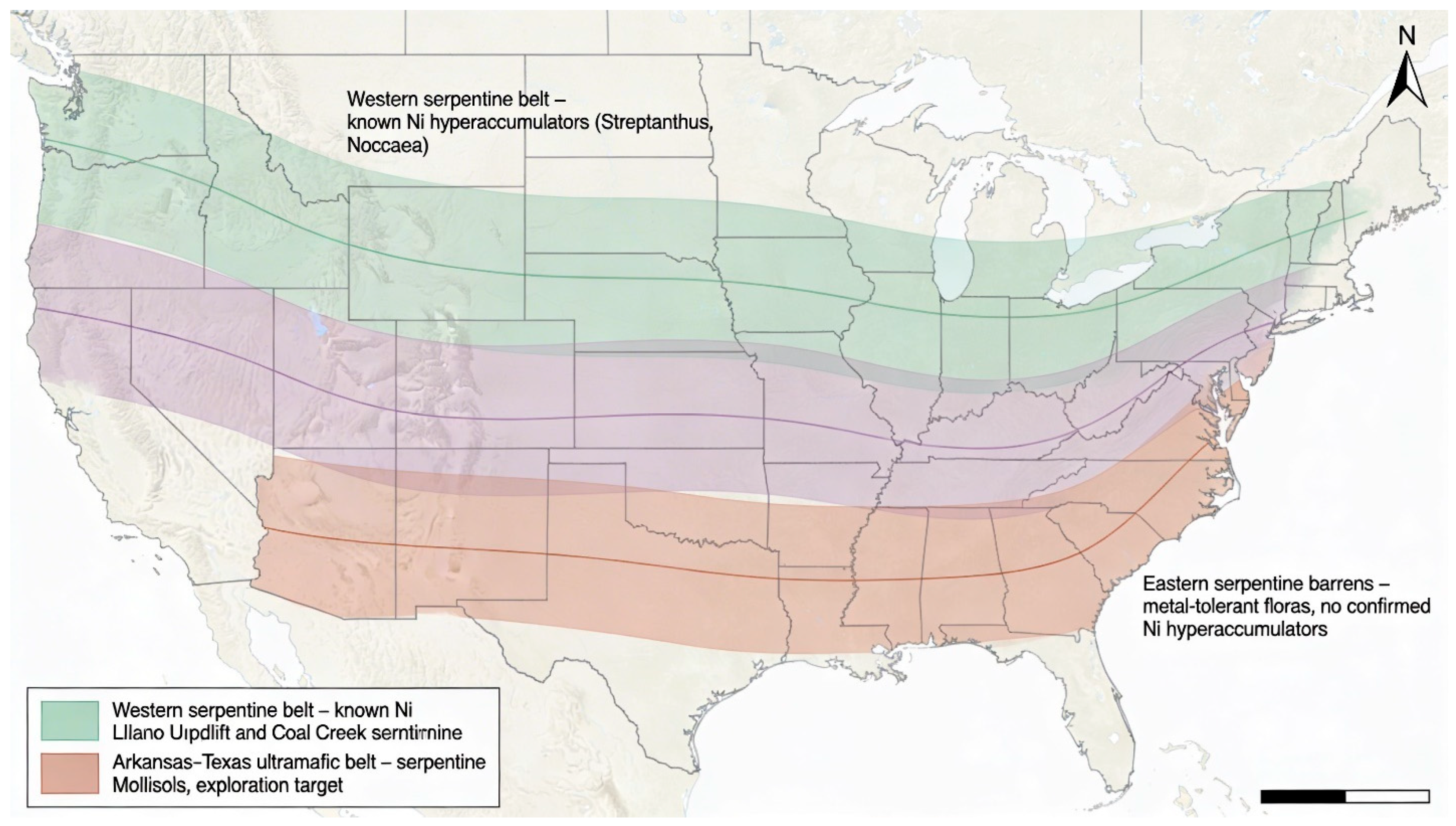
The global transition to low-carbon energy systems is driving unprecedented demand for nickel and rare earth elements (REEs), which are essential components of rechargeable batteries, electric vehicles, wind turbines, permanent magnets, catalytic converters, and a wide range of electronic devices [1,2,3]. Conventional mining of these metals is often associated with extensive land clearance, habitat fragmentation, large tailings facilities, and long-term contamination of soils and waters, with well-documented negative impacts on biodiversity and ecosystem services [4,5,6]. Lateritic nickel mining in Indonesia, the Philippines, and New Caledonia, for example, has been linked to deforestation of tropical rainforests, loss of endemic species’ habitats, and severe sediment and metal pollution of streams and coastal waters [7,8]. At the same time, large areas of ultramafic soils—serpentine soils developed over peridotite and serpentinite bedrock—mine wastes and metal-contaminated lands remain under-utilized, degraded, and poorly integrated into conservation planning. These ultramafic landscapes are chemically challenging (high Ni, Cr, and Co; low P, K, and Ca; extreme Mg:Ca ratios) yet support unique and highly endemic floras [9,10,11], often with endemism rates exceeding 50% [12]. In regions such as Cuba, New Caledonia, California, the Balkans, and Southeast Asia (particularly Borneo and the Philippines), ultramafic substrates thus constitute both biodiversity hotspots and targets for mining, creating a tension between conservation and resource extraction. In the United States, ultramafic hotspots from the California–Oregon serpentine to eastern barrens and Texas’s Llano Uplift offer complementary opportunities for phytomining, as shown in Table 1 and Figure 1, aligning with national critical mineral strategies amid geopolitical supply risks.

1.2. Phytomining as a Complementary and Conservation-Compatible Approach

Phytomining has been proposed as an alternative or complementary strategy for recovering metals from soils, using hyperaccumulator plants that concentrate metals to extraordinary levels in their above-ground tissues [15,16,17,18]. Hyperaccumulator species have been documented for several elements, including nickel, zinc, cadmium, manganese, arsenic, and selenium [16]; for nickel alone, more than 500 species are now recognized [19]. These plants can accumulate up to several percent of their dry biomass as metal, in some cases reaching 30–40 g kg−1 Ni in leaves, while maintaining normal growth and reproduction [20,21]. In a phytomining system, hyperaccumulators are cultivated on metal-rich substrates such as ultramafic soils, lateritic regoliths, or mine wastes. They take up metals from the soil and concentrate them in harvestable biomass, which is subsequently dried, thermally treated to yield a metal-rich ash or biochar, and processed by hydrometallurgical or pyrometallurgical methods to recover metals or metal salts. Nickel phytomining has advanced furthest, with field trials in Europe, North America, Africa, and Oceania demonstrating metal yields of 22.6–77 kg Ni ha−1 yr−1 under optimized agronomic conditions [22,23,24]. The first commercial initiatives now operate in the Balkans and elsewhere, integrating phytomined nickel into stainless-steel production and exploring breeding and microbiome engineering to increase yields. More recently, discoveries of REE hyperaccumulator plants, including ferns such as Dicranopteris linearis and Blechnopsis orientalis and several grasses and forbs, coupled with new processing technologies such as rapid electrothermal calcination, have opened avenues for REE phytomining [25,26,27]. These developments align closely with current conservation priorities on resource recycling, sustainable land management, and nature-based solutions for restoration and climate mitigation. U.S. ARPA-E PHYTOMINES funding accelerates this, screening native hyperaccumulators on serpentine soils for domestic Ni/REE production. Texas, with its vast rangelands and renewable energy dominance, exemplifies regional potential and later serves as a techno-economic test case in this review (Section 3.4 and Section 8.2).

2. Literature Review and Scope of This Paper

A substantial body of work over the past two decades has established the physiological basis and agronomic feasibility of nickel phytomining on ultramafic soils and mine wastes, as well as the remarkable diversity of Ni-hyperaccumulator floras on these substrates. Earlier reviews have synthesized global patterns of Ni hyperaccumulation and summarized field trials in Europe, Albania, New Caledonia, and elsewhere, including the development of agromining systems and early techno-economic analyses for nickel recovery. More recently, dedicated reviews have examined the ecology and metal uptake mechanisms of rare earth element (REE) hyperaccumulator ferns, and have outlined emerging process options for REE recovery from biomass.
However, existing reviews have paid comparatively little attention to the intersection of phytomining with biodiversity conservation, land-use planning, and critical mineral policy, and have only briefly touched on prospects for large-scale deployment in the United States. In particular, there is a lack of integrative analyses that connect molecular and physiological advances (such as the identification of REE transporters), agronomic and technological innovation (such as rapid electrothermal calcination), conservation risks and co-benefits, and high-level techno-economic assessment under region-specific enabling conditions [28,29,30].
This paper addresses these gaps by: (i) synthesizing recent advances in Ni and REE phytomining with explicit emphasis on conservation outcomes; (ii) reviewing technological and agronomic advances that are most relevant to conservation-compatible deployment; (iii) analyzing conservation risks, constraints and governance challenges, including invasive species and social equity; and (iv) developing a U.S.-focused perspective through a techno-economic assessment of Texas as a potential phytomining frontier and a proposed scouting protocol for discovering native hyperaccumulators. The structure of the paper follows this logic, moving from biogeography and physiology, through agronomy and processing, to conservation, policy, and implementation pathways.
The review first summarizes hyperaccumulator plant diversity, mechanisms of metal uptake and sequestration, and the phytomining process chain (Section 2). It then considers nickel phytomining in depth, focusing on key species, field trial results, economic potential, and conservation co-benefits (Section 3), followed by emerging REE phytomining (Section 4). Section 5 discusses technological and agronomic advances relevant to conservation, Section 6 addresses conservation risks and trade-offs, and Section 7 proposes a framework for integrating phytomining into conservation planning and policy. Section 8 outlines major research gaps and develops a U.S.-focused perspective through a techno-economic assessment of Texas and a scouting protocol for phytomining deployment, and Section 9 presents conclusions and recommendations.

2.1. Definition and Global Diversity of Hyperaccumulators

Hyperaccumulator plants are defined by their ability to accumulate specific metals or metalloids in their aerial tissues to concentrations far exceeding those of most other plants growing on the same soils. For nickel, a common operational threshold is 1000 µg g−1 Ni in leaves on a dry-weight basis (0.1% Ni) as summarized for representative nickel-hyperaccumulator species and their phytomining potential in Table 2; for zinc and manganese, 10,000 µg g−1; for cobalt, 1000 µg g−1; and for cadmium, 100 µg g−1 [28,31]. Hyperaccumulators have been confirmed for nickel, zinc, cadmium, manganese, arsenic and selenium, whereas hyperaccumulation of lead, copper, cobalt, chromium and thallium remains rare or debated [13,31]. Global compilations indicate that over 700 hyperaccumulator species are known, spanning at least 50 plant families, with nickel hyperaccumulators forming the largest group [16,32]. Prominent nickel-hyperaccumulating genera include Odontarrhena and Noccaea (Brassicaceae) in Mediterranean and temperate regions [33,34]; numerous shrubs and trees in Phyllanthaceae from Southeast Asia, New Caledonia, and Cuba [35]; and Asteraceae such as Berkheya coddii and Senecio coronatus in South Africa [36]. Ultramafic regions worldwide—New Caledonia, Cuba, Sabah (Borneo), the Balkans, California and Oregon, and the Great Dyke and Barberton areas in southern Africa—emerge as major hotspots of nickel-hyperaccumulator diversity, often coinciding with centers of plant endemism [37,38,39]. For REEs, the known hyperaccumulator flora is smaller but growing rapidly. Dicranopteris linearis and Blechnopsis orientalis have been identified as REE hyperaccumulators, with field specimens containing thousands of µg g−1 total REEs in fronds, particularly light REEs [25,26]. Greenhouse studies with REE-enriched soils have also revealed angiosperm candidates such as—arundinacea and Phytolacca americana with high REE uptake in bio-ores after pyrolysis [40]. Systematic screening of herbarium collections and field floras is likely to uncover additional REE-hyperaccumulating species in the coming years. The evolution of hyperaccumulation appears to have occurred multiple times across lineages, often in association with serpentine and other metalliferous soils. Several hypotheses have been proposed to explain its adaptive value, including elemental defense against herbivores and pathogens, allelopathy via metal-rich litter, drought tolerance, and inadvertent co-selection [41,42]. Evidence from field observations and experimental feeding trials supports elemental defense as a major driver, with high leaf metal concentrations deterring or impairing generalist herbivores and favoring specialist taxa adapted to hyperaccumulator hosts.

2.2. Mechanisms of Metal Uptake, Transport and Sequestration

The capacity of hyperaccumulators to accumulate metals depends on coordinated physiological mechanisms governing root uptake, radial transport to the xylem, long-distance translocation, and intracellular sequestration. At the root–soil interface, metals such as Ni2+ and Zn2+ are absorbed via high-affinity transporters of the ZIP (Zrt, Irt-like protein), NRAMP (natural resistance-associated macrophage protein), and YSL (yellow stripe-like) families [32,43]. In hyperaccumulators, these transporters are often constitutively overexpressed, contributing to enhanced uptake even at low bioavailable metal concentrations. Root exudates—organic acids, phytosiderophores and amino acids—can chelate metals and increase their lability, and many hyperaccumulators acidify the rhizosphere, promoting dissolution of metal-bearing minerals [44]. Arbuscular mycorrhizal fungi may further extend the absorptive surface and influence metal mobility, although their net effect on metal uptake can be positive or negative depending on species and conditions [45,46]. In serpentine soils, total nickel concentrations are typically high (1000–4000 mg kg−1), but bioavailable fractions are small because most nickel is bound in silicate or oxide phases [47,48]. Hyperaccumulators must therefore efficiently access and sequester the limited pool of exchangeable and weakly sorbed nickel. For REEs, the recent identification of a plasma-membrane-localized transporter, NREET1 (NRAMP REE Transporter 1), in Dicranopteris linearis provides the first mechanistic insight into REE hyperaccumulation [25]. NREET1, although a member of the NRAMP family, shows unusual specificity: when expressed in yeast or Arabidopsis, it transports trivalent REEs but not divalent metals such as Zn2+, Ni2+, Mn2+, and Fe2+, and exhibits higher affinity for light REEs than for heavy REEs, consistent with the preferential enrichment of light REEs in field-grown D. linearis. Once inside roots, metals are transported radially to the xylem and loaded into xylem vessels by efflux transporters such as heavy metal ATPases. In xylem sap, nickel is primarily complexed with organic acids such as citrate and malate or, in some species, with amino acids like histidine. Long-distance transport delivers metals to shoot tissues, where they are sequestered in cellular compartments to minimize toxicity. Vacuolar sequestration of metal–ligand complexes in mesophyll, epidermal, and trichome cells is the predominant mechanism, with many hyperaccumulators concentrating nickel in epidermal tissues and leaf trichomes [34]. High-resolution X-ray fluorescence studies on Odontarrhena leaves have revealed 10–50-fold higher nickel concentrations in epidermis than in mesophyll [49]. In REE-hyperaccumulating ferns, synchrotron-based microanalysis shows REE enrichment in root cell walls, leaf epidermis, and mesophyll vacuoles, often associated with phosphate-rich structures, suggesting partial precipitation as REE phosphates in addition to complexation with organic ligands.

2.3. The Phytomining Concept and Process Chain

The phytomining process begins with site selection and characterization. Suitable sites include natural ultramafic outcrops, lateritic nickel deposits below conventional mining cut-off grades, nickel-rich mine tailings and waste rock, industrially contaminated soils, and REE-enriched substrates such as ion-adsorption clays, phosphate mine wastes, and coal fly ash-affected soils [15,50,51]. Key parameters for assessment are total and bioavailable metal concentrations, soil pH and texture, organic matter, nutrient status, competing vegetation, erosion risk, water availability, and the socio-legal context (land tenure, environmental regulations, and community acceptance). Once a site is deemed suitable, appropriate hyperaccumulator species are selected and cultivated. Establishment can rely on direct seeding, transplanting of seedlings, or vegetative propagation by cuttings or tissue culture, depending on the species biology. Agronomic practices aim to maximize biomass and maintain high tissue metal concentrations, using fertilization, weed control, irrigation (where necessary), and soil amendments such as sulfur or organic matter. Perennial hyperaccumulators can be harvested annually for several years, gradually depleting bioavailable metals in the root zone. Harvest typically occurs at peak biomass and metal concentration, often at late flowering or early fruiting stages. Above-ground biomass is cut and dried to reduce moisture content and mass, thereby lowering transport and processing costs. In optimized nickel phytomining systems, biomass yields of 2–10 t ha−1 yr−1 combined with shoot nickel concentrations of 0.5–2.5% Ni result in nickel yields of approximately 10–100 kg Ni ha−1 yr−1 [18,52]. Thermal treatment of harvested biomass by combustion or pyrolysis produces ash or biochar enriched in metals; nickel concentrations in ash can reach 5–25% [15]. For REE-rich biomass, rapid electrothermal calcination has emerged as a particularly efficient method, enhancing REE extractability and reducing energy requirements compared to conventional furnace calcination [53,54]. Metals are recovered from ash or calcined material by acid leaching with subsequent solvent extraction, ion exchange, precipitation or electrowinning [55]. Economic assessments suggest that nickel phytomining can be profitable under certain conditions, with break-even yields of roughly 15–30 kg Ni ha−1 yr−1 at nickel prices of 16–20 USD kg−1 and potential revenues of 3000–6000 USD ha−1 yr−1 on suitable ultramafic lands [51,56]. Life-cycle assessments indicate that, relative to conventional laterite nickel production, phytomining can reduce greenhouse gas emissions, energy consumption, and water use by 70–80% or more, largely by avoiding high-temperature smelting and large-scale earthmoving [53].

3. Nickel-Hyperaccumulator Phytomining and Conservation Outcomes

3.1. Key Nickel-Hyperaccumulator Species and Global Hotspots

In the Mediterranean region, particularly the Balkans and Greece, the Odontarrhena (formerly Alyssum) species complex has been the main focus of nickel phytomining research. Odontarrhena chalcidica (syn. Alyssum murale) is a perennial herb that can accumulate 0.5–4% Ni in leaves and produce several tonnes of dry biomass per hectare under cultivation, making it a leading candidate crop [15,33,57], as summarized in Table 3 for selected hyperaccumulator species investigated for phytomining applications Field trials in Albania and Greece have demonstrated nickel yields of 22.6–29.5 kg Ni ha−1 yr−1 with modest NPK fertilization and weed control, and soil data suggest that such extraction could continue for decades before nickel becomes limiting [23]. In South Africa, Berkheya coddii (Asteraceae) is an endemic nickel-hyperaccumulating species confined to ultramafic substrates in the Great Dyke and Barberton regions [58]. It can reach leaf nickel concentrations of 1–3% and has co-accumulation potential for cobalt. Pot and small field trials indicate possible nickel yields of 75–150 kg Ni ha−1 yr−1 under optimized management, making it one of the most promising hyperaccumulator “metal crops” worldwide. However, its restricted range and conservation status demand careful consideration in any agronomic deployment. In California and Oregon, hyperaccumulator Streptanthus species occur on serpentine outcrops, but their limited biomass and frequent conservation concerns restrict their suitability for phytomining. In Southeast Asia, numerous nickel-hyperaccumulating Phyllanthaceae trees and shrubs, including Phyllanthus rufuschaneyi, have been described from ultramafic forests in Sabah (Borneo) and elsewhere, offering long-term potential for tree-based phytomining or agroforestry systems that integrate metal production with forest restoration [56]. New Caledonia, with its exceptionally diverse and highly endemic ultramafic flora, including the spectacular latex-rich tree Pycnandra acuminata, represents a global hotspot of nickel hyperaccumulators [59]. However, the priority there is biodiversity conservation and careful regulation of conventional nickel mining; the use of native woody hyperaccumulators for phytomining is unlikely to be appropriate except in very specific restoration contexts.

3.2. Field Trials and Economic Potential of Nickel Phytomining

Field trials in Albania, Greece, and elsewhere have provided proof-of-concept for nickel phytomining and enabled quantitative assessment of agronomic and economic performance. In Albania’s Pojske serpentine area, O. murale has been cultivated in replicated plots under different fertilization and weed-control regimes. NPK fertilization and selective herbicide treatment increased biomass and nickel yield relative to controls, with little change in leaf nickel concentration [22,23,60]. Gross revenues, at nickel prices of 16–20 USD kg−1, compared favorably with low-value agricultural uses of ultramafic land. Life-cycle assessments comparing nickel phytomining and conventional laterite nickel production corroborate the potential environmental advantages of phytomining [61]. Phytomining systems, including fertilizer and machinery inputs, biomass processing and hydrometallurgy, show substantially lower greenhouse gas emissions, energy demands and water use per tonne of nickel produced [62]. However, these analyses are based on assumed best-practice conditions; real-world performance will depend strongly on local agronomy, energy sources, processing technology, scale and management.

3.3. Conservation Co-Benefits on Ultramafic and Degraded Lands

Many of the most important regions for nickel and REE hyperaccumulators are also globally significant biodiversity hotspots, including New Caledonia, Cuba, Sabah, and other parts of Borneo, Mediterranean ultramafic belts, and serpentine floras of California and Oregon. Phytomining interventions in or near such areas can generate conservation benefits—by stabilizing heavily disturbed substrates, reducing erosion, and potentially decreasing pressure to open new mines in intact habitats—but also risks, if hyperaccumulator monocultures displace diverse native communities or if non-native species become invasive. To ensure that phytomining promotes rather than jeopardizes biodiversity, deployment should prioritize already degraded or mined lands, avoid intact high-value habitats identified through systematic conservation planning, use native or regionally appropriate species wherever possible, and be time-limited and coupled to explicit restoration goals.
Ultramafic soils and mine wastes are chemically and physically challenging and often remain sparsely vegetated or bare long after disturbance. The establishment of hyperaccumulator crops on such substrates can accelerate revegetation, reducing erosion and dust generation and moderating microclimates. Case studies in Albania show that Odontarrhena plantings on nickel mine tailings achieved vegetative cover of around 80% within a few years, compared to less than 5% on untreated controls, and significantly reduced erosion [63]. Similar outcomes have been observed for Berkheya coddii on ultramafic overburden in South African mines. By focusing on degraded or marginal lands that are unsuitable for conventional agriculture, phytomining can contribute to land sparing, potentially reducing pressure to open new mines in intact ecosystems [58]. Modeling exercises suggest that supplying even a modest share (for example, 5–10%) of global nickel demand from phytomining on such lands could offset the development of several large conventional mines, provided that spared lands are legally protected and managed for conservation [51,61]. From a biodiversity standpoint, phytomining monocultures inevitably support lower plant diversity than natural ultramafic communities, but they can nonetheless provide important habitat and resources relative to bare or severely degraded substrates. Flowering hyperaccumulator stands support pollinators, and structurally complex vegetation offers shelter for invertebrates and small vertebrates [64,65]. However, the high metal content of tissues raises questions about food-web impacts and the potential for chronic exposure to affect wildlife. Phytomining can also serve as a tool for ecological restoration. By stabilizing substrates, initiating soil development and reducing bioavailable metal pools, hyperaccumulator cover may facilitate successional colonization by native species. In some contexts, phytomining can thus function as an interim land use that accelerates recovery of ecosystem structure and function while generating revenue to fund restoration. Socio-economically, phytomining offers opportunities for rural development and post-mining transitions. Converting otherwise unproductive ultramafic or mine-affected land into “metal farms” can provide employment and income, particularly if organized through cooperative arrangements or community-based enterprises. In Albania and Greece, for example, commercial phytomining initiatives have begun to work with landowners to develop phytomining cooperatives, and in the United States, ARPA-E projects have explored partnerships with Native American tribes on serpentine lands.

3.4. Prospects for Nickel Phytomining in the United States

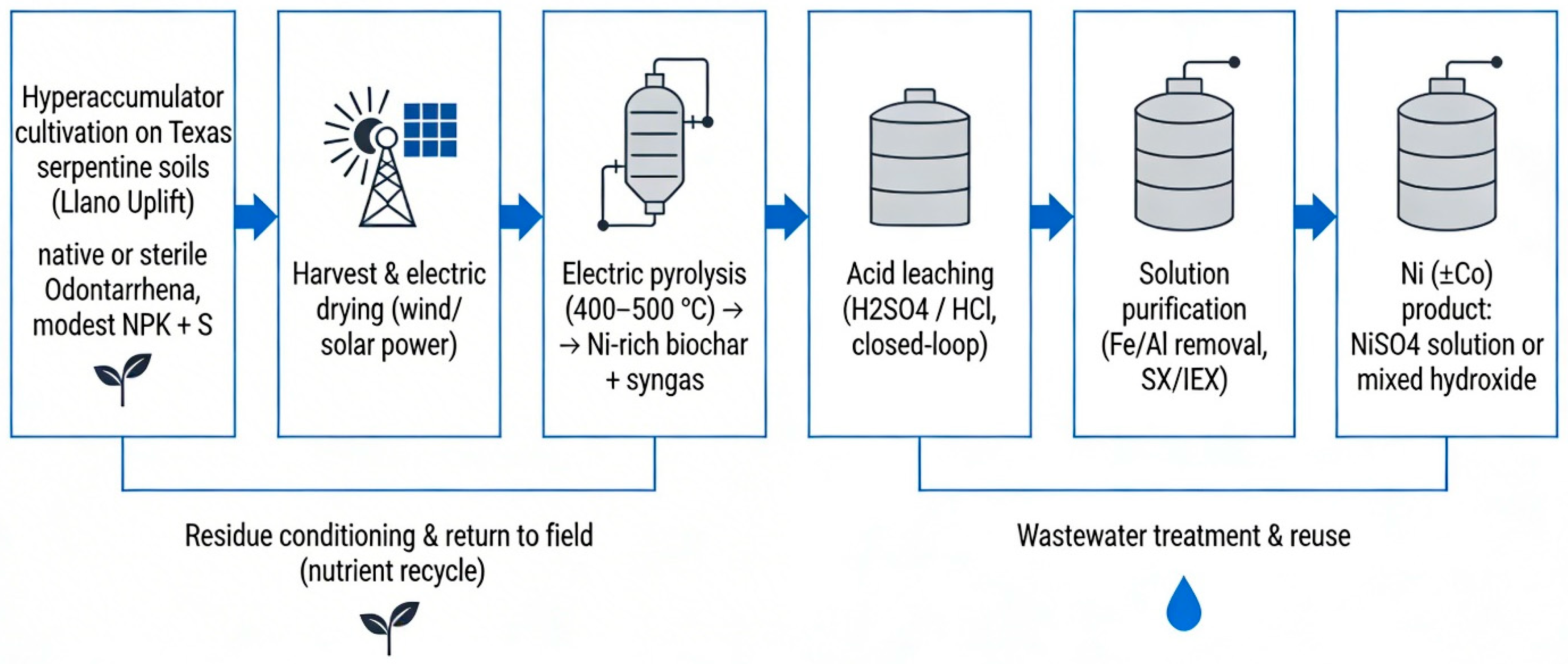
Nickel-hyperaccumulator research in the United States has so far focused on a small number of species endemic to Californian and Oregon serpentine outcrops, especially Streptanthus polygaloides (milkwort jewelflower) and Thlaspi (Noccaea) montanum var. montanum. S. polygaloides is strictly confined to ultramafic soils in the Sierra Nevada foothills of California and routinely reaches leaf nickel concentrations well above the 1000 µg g−1 hyperaccumulation threshold, with reported ranges of roughly 2400–18,600 µg g−1 [65]. Greenhouse work on T. montanum var. montanum using seed from both serpentine and non-serpentine Californian/Oregon populations has shown that all tested populations can hyperaccumulate nickel when grown on high-Ni substrates, although field populations on serpentine generally attain higher tissue Ni than those from non-serpentine sites. Together with other serpentine-tolerant but non-hyperaccumulating taxa, these species confirm that western North American ultramafic floras include both strong nickel excluders and true hyperaccumulators, but all verified U.S. Ni-hyperaccumulator taxa remain restricted to California and Oregon at present. Serpentine and other ultramafic substrates, however, are more widespread in the United States than the California–Oregon belt alone. In the East, serpentine outcrops form a discontinuous chain from Newfoundland and Québec through New England to Maryland and Pennsylvania, and south to Alabama, supporting distinctive “serpentine barrens” with sparse, metal-tolerant vegetation and many rare or state-listed plant taxa [66,67]. A complementary belt of ultramafic rocks runs from Arkansas to Texas inland from the Gulf of Mexico, where peridotites and serpentinites derived from Precambrian and Paleozoic mantle fragments were accreted to the margin of ancestral North America and subsequently weathered to serpentine soils. Detailed geoecological work indicates that in the drier Llano Uplift of central Texas, these serpentine soils are predominantly Mollisols, characterized by the classic serpentine signature of low Ca:Mg ratios and elevated first-transition metals from chromium through nickel and cobalt, and support distinctive, often sparse woody vegetation adapted to these edaphically harsh conditions. The best-studied body is the Coal Creek Serpentinite—an approximately 6 km long, up to ~2.3 km wide tabular body of serpentinized harzburgite on the southeastern flank of the Llano Uplift in Gillespie and Blanco counties—forming a narrow, sparsely vegetated ridge with thin, rocky serpentine soils [14]. Additional “serpentine plugs” of Cretaceous igneous origin are documented in central and south Texas along the Ouachita structural front, although their weathering products and metal inventories are less well characterized from a geoecological perspective. Despite the clear presence of ultramafic substrates and chemically suitable serpentine soils in Texas and other states along the Arkansas–Texas belt, there are, to date, no published records of native nickel-hyperaccumulator species from Texas serpentine floras. Existing botanical work on eastern North American and Llano Uplift serpentine sites documents numerous serpentine endemics or near-endemics, but these are generally metal-tolerant or Ni-excluder species rather than hyperaccumulators sensu stricto. Recent studies of nickel distribution in non-hyperaccumulating serpentine plants (for example, Brassicaceae species in Pennsylvania and elsewhere) suggest that many serpentine endemics actively limit Ni in above-ground tissues, especially reproductive organs, which likely reduces their suitability as phytomining crops even on Ni-rich soils. Consequently, any near-term development of nickel phytomining in the United States is likely to rely on (i) existing Californian/Oregon hyperaccumulator species, (ii) non-native but agronomically superior hyperaccumulators such as O. chalcidica (with strict biosafety controls), or (iii) newly identified U.S.-native hyperaccumulators discovered through systematic screening, rather than on already documented Texan Ni-hyperaccumulator taxa. The U.S. Department of Energy’s ARPA-E “PHYTOMINES” program explicitly targets this discovery and domestication gap [68]. Program documents describe a portfolio of projects that will use portable X-ray fluorescence to screen on the order of 100,000 specimens of U.S. flora for elevated metal contents, with a particular focus on serpentine barrens and other nickel-enriched marginal soils, while simultaneously developing safer, sterile, or non-invasive cultivars of high-yielding hyperaccumulator species [69]. One project led by Michigan Technological University and Stevens Institute of Technology focuses on chemically and microbiologically catalyzed phytomining on serpentine barrens soils, optimizing biodegradable chelating agents, rhizospheric bacteria, and biosensors to enhance Ni uptake and evaluate full life-cycle sustainability [67]. Another project, led by the University of Florida, aims to improve a U.S.-native hyperaccumulator species for commercial cultivation (“Nickel Farming: Improving a U.S.-Native Hyperaccumulator Plant for Commercial Cultivation”), explicitly linking domestic nickel supply security with restoration of degraded lands [70]. These initiatives are likely to include eastern serpentine barrens and potentially Llano Uplift and related ultramafic terrains in their geochemical and floristic surveys, raising the prospect that native Texan taxa with useful Ni-accumulation traits may yet be discovered. From a techno-economic and conservation standpoint, Texas presents several distinctive enabling conditions for future phytomining or agromining pilot projects, despite the limited areal extent of known serpentinite bodies compared to California. First, Texas combines very large areas of privately owned rangeland with localized ultramafic and serpentine occurrences (for example, in the Llano Uplift and along the Ouachita structural front), creating opportunities to test hyperaccumulator cultivation on relatively low-opportunity-cost lands if suitable substrates and plant species can be identified. Second, the state now leads the United States in installed wind capacity (on the order of 42 GW) and is rapidly emerging as a top-tier solar producer, with roughly 40+ GW of installed solar capacity and projections to become the largest solar state within the next five years; wind alone already supplies close to 30% of ERCOT electricity, and combined wind and solar approach or exceed that share [71,72]. This abundance of low-carbon electricity—concentrated in West Texas and the Panhandle—could power energy-intensive steps in the phytomining chain, such as biomass drying, combustion or pyrolysis, and, in the case of REE phytomining, rapid electrothermal calcination, thereby further reducing life-cycle greenhouse gas emissions relative to fossil-fuel-based processing. Third, Texas hosts major petrochemical and metallurgical complexes along the Gulf Coast (for example, in the Houston–Freeport–Corpus Christi corridor), which already possess infrastructure, skilled labor, and regulatory frameworks for hydrometallurgical processing and waste treatment, potentially lowering capital and permitting barriers for co-located phytomining refineries [73,74]. In practical terms, an initial Texas-focused phytomining research agenda would have three main pillars. The first would be detailed geological and pedological mapping and geochemical sampling of serpentine and other ultramafic soils in the Llano Uplift and central/south Texas “serpentine plugs” to quantify total and bioavailable nickel, cobalt, and other candidate elements, and to identify micro-sites with sufficiently high Ni availability for economically meaningful extraction. The second would be systematic floristic and XRF-based screening of plants on these substrates, in coordination with ongoing ARPA-E and academic efforts, to identify any native taxa with elevated Ni accumulation that could be developed as regionally appropriate phytomining crops or as sources of useful alleles for breeding and gene editing. The third would be integrative techno-economic and life-cycle assessment comparing scenarios that (a) import well-characterized non-native hyperaccumulators such as optimized Odontarrhena cultivars under strict biosafety regimes, versus (b) develop and deploy U.S.-native hyperaccumulators, under Texas-specific constraints of climate, land tenure, and water availability, as illustrated conceptually in Figure 2. Such analyses would need to account explicitly for Texas’s unique energy mix and infrastructure, as well as for the high conservation value of certain serpentine habitats and the need for robust social safeguards in any new extractive or quasi-extractive land uses.

4. Emerging Rare Earth Element Phytomining

4.1. Discovery and Diversity of REE Hyperaccumulators

REE phytomining is less advanced than nickel phytomining, but recent discoveries of REE-hyperaccumulating ferns and other species, and elucidation of molecular transport mechanisms, have significantly advanced the field. Dicranopteris linearis is a pantropical fern frequently found in disturbed habitats and on ultramafic soils. Field and herbarium studies from Southeast Asia have documented total REE concentrations in fronds ranging from around 1000 to more than 6000 µg g−1, with a notable enrichment of light REEs over heavy REEs. The plasma-membrane-localized transporter NREET1, identified and characterized in D. linearis, mediates REE uptake from the apoplast into root cells and shows preferential transport of light REEs [25]. Blechnopsis orientalis and additional fern taxa have also been reported to accumulate high REE concentrations in fronds, although their physiological mechanisms are less well understood [26,75]. Greenhouse experiments using REE-enriched soils from phosphate mining regions in Idaho, USA, indicate that several angiosperm species are capable of accumulating REEs at levels compatible with phytomining when combined with biomass pyrolysis. Reed canary grass (Phalaris arundinacea), pokeweed (Phytolacca americana), and black nightshade (Solanum nigrum) have all been shown to produce bio-ores with tens of thousands of µg g−1 total REEs after pyrolysis, with bioaccumulation factors above unity, especially when soils are amended with organic acids such as citric or oxalic acid [76].

4.2. Biomass Processing and REE Recovery Innovations

Recovering REEs efficiently from plant biomass is technically challenging. Conventional approaches involving ashing biomass at moderate temperatures followed by mineral acid leaching typically achieve only partial extraction. Rapid electrothermal calcination (REC) has recently been developed to address this bottleneck. In REC, dried biomass is subjected to short, high-temperature electrical pulses (for example, 1000 °C for tens of seconds), which rapidly decompose organic matter and convert REE complexes and phosphates into more soluble oxides. Subsequent leaching with dilute mineral acids can then extract more than 90% of REEs from the calcined ash, compared to around 25–30% from raw biomass and 65–75% from conventional furnace-calcined biomass. Preliminary life-cycle assessments suggest that REC reduces energy consumption and carbon emissions by approximately 60–70% relative to conventional furnace calcination [53]. After leaching, REEs are purified and separated using standard hydrometallurgical techniques, such as solvent extraction with organophosphorus ligands, ion exchange, and selective precipitation, yielding REE oxides suitable for magnet or catalyst production.

4.3. Conservation Relevance of REE Phytomining

Conventional REE production, particularly from ion-adsorption clays in southern China and hard-rock deposits such as Bayan Obo, has resulted in well-documented environmental degradation, including forest clearance, soil erosion, groundwater contamination, and large volumes of chemically contaminated waste [77]. REE phytomining offers a potentially lower-impact, surface-based alternative for exploiting low-grade or secondary REE resources, especially if implemented on already degraded lands. Target substrates include shallow ion-adsorption clays, phosphate mine tailings, coal fly ash-affected soils, and contaminated industrial lands. On such sites, cultivation of REE-hyperaccumulating ferns or grasses could combine resource recovery with stabilization of soils, reduced erosion, and partial restoration of vegetation cover, thereby providing co-benefits for local ecosystems and communities. However, REE phytomining also poses conservation risks. Some candidate species, such as D. linearis, can form dense stands that exclude other vegetation and may behave invasively outside their native ranges. The ecological consequences of introducing REE hyperaccumulators into new regions, or of establishing large monocultures within their native ranges, require careful assessment. The potential for REEs to enter food webs and accumulate in herbivores and predators is not yet well quantified. Soil acidification associated with REE mobilization amendments and leaching could also have negative effects on soil biota and water quality if not well managed.

5. Technological and Agronomic Advances Relevant to Conservation

5.1. Soil Amendments and Agronomic Optimization

Agronomic strategies to increase biomass and metal uptake are central to making phytomining economically and environmentally viable. On ultramafic soils, applications of NPK fertilizers often enhance biomass production significantly, with only modest dilution of tissue metal concentrations. In Albanian Odontarrhena trials, NPK fertilization increased biomass by about 30% and nickel yield by roughly 25%, while soil testing indicated sustainable depletion rates of bioavailable nickel [23,61]. Elemental sulfur and other acidifying amendments can lower soil pH and increase metal availability; field studies with O. chalcidica have shown increases in shoot nickel concentration and yield following sulfur applications [23]. Organic amendments such as composts improve soil structure and water-holding capacity and can increase total metal yield despite slight reductions in tissue metal concentration. Organic acids like citric and oxalic acid, and biodegradable chelators such as EDDS, can enhance metal solubility and plant uptake in the short term, as demonstrated for nickel and REEs in pot experiments and small field trials [78,79,80]. However, their use must be carefully managed to avoid off-site metal mobilization and groundwater contamination. Synthetic chelators such as EDTA are generally considered unsuitable for field-scale phytomining because of their persistence and environmental risks [81]. In addition to these inputs, biochar is emerging as a useful amendment in phytomining systems [82]. Biochars derived from hyperaccumulator biomass or other feedstocks can increase soil organic matter, improve water-holding capacity and cation exchange capacity, and buffer pH, thereby enhancing crop performance on ultramafic or degraded soils. Nickel-hyperaccumulator biochar has been shown to sorb Ni from water and wastewater streams while creating an enriched bio-ore, illustrating the potential to integrate biochar into circular phytomining flowsheets. When applied to REE- or Ni-bearing soils, appropriately designed biochars may help retain mobilized metals in the root zone and reduce off-site leaching, although their effects on metal speciation and plant availability require further study in field settings.
Water management is another key factor. Many hyperaccumulators tolerate seasonal drought, but irrigation during establishment and critical growth periods can substantially increase biomass and metal yields. Precision irrigation and the use of drought-tolerant genotypes can help balance productivity and water conservation.
Microbiome engineering, through inoculation with arbuscular mycorrhizal fungi (AMF) or plant growth-promoting rhizobacteria (PGPR), offers additional opportunities to enhance plant growth and nutrient uptake on challenging substrates [82]. Experiments with B. coddii and Odontarrhena have shown that selected AMF and PGPR strains can increase biomass and, in some cases, metal uptake, although results are variable and sometimes context-dependent. Using native microbial strains from target sites is generally preferable from a conservation standpoint to minimize ecological disruption.

5.2. Breeding, Domestication and Genetic Improvement

Because most hyperaccumulators are wild species, breeding and domestication efforts seek to improve agronomic traits such as biomass, growth rate, seed production, stress tolerance, and adaptation to new environments, while maintaining high metal accumulation. Classical breeding approaches—selection, crossing, and polyploid induction—have been applied to Odontarrhena and B. coddii, with encouraging gains in biomass and nickel yield [43,57]. Genetic engineering and synthetic biology provide more targeted tools for enhancing hyperaccumulation traits or transferring them into high-biomass crops, although such approaches remain at an early stage. Overexpression of key metal transporters (for example, NREET1 for REEs) or regulatory genes governing metal homeostasis has been achieved in model species, suggesting pathways to engineer crops for phytomining or remediation [25]. However, the ecological and biosafety implications of releasing genetically modified hyperaccumulators into the environment are substantial and must be evaluated rigorously. From a conservation genetics perspective, it is essential to conserve wild hyperaccumulator populations and their genetic diversity, which provide both fundamental scientific value and a reservoir of traits for breeding and engineering. Ex situ conservation in seed banks and botanical gardens, combined with in situ protection of key populations, will be important as phytomining develops.

5.3. Crop Management and Harvesting Innovations

Advances in precision agriculture can improve the efficiency and reduce the environmental footprint of phytomining. Remote sensing using drones or satellites, combined with ground-based measurements, can be used to monitor crop health, detect nutrient deficiencies or disease, and determine optimal harvest times. Soil sensors can inform precision fertilization and irrigation strategies. For perennial hyperaccumulators, management practices such as coppicing can maintain high productivity over multiple years. Recycling of stabilized ash or process residues back to fields, once metals have been extracted, can help replenish nutrients such as phosphorus and potassium, provided that contaminants are controlled. Integrating hyperaccumulators into more diverse cropping systems, including agroforestry or intercropping with non-accumulating species, may enhance biodiversity and ecosystem services, but such systems require careful design to avoid diluting metal yields or increasing management complexity.

5.4. Techno-Economic Assessment Methodology for Phytomining

To evaluate the longer-term economic potential of phytomining at meaningful scales, we adopt a simplified techno-economic assessment (TEA) framework that links field yields, processing performance and market prices to project-level cash flows. The system boundary includes land access and preparation, crop establishment and management, biomass harvesting and transport, thermal processing (pyrolysis or rapid electrothermal calcination), leaching, hydrometallurgical recovery of Ni or REE concentrates or oxides, and the internal management of process residues. Downstream refining of intermediate products to final metals or alloys is excluded and treated as part of existing metallurgical value chains.
For each scenario, we define representative metal yields per hectare per year, based on field trial data for nickel and greenhouse and emerging field data for REEs, along with a project lifetime, discount rate, and price ranges for Ni and REEs. Cultivation costs are benchmarked against commercial agricultural operations in the relevant region, including labor, inputs, and mechanization. Processing costs are estimated for electrically powered thermal treatment and hydrometallurgy, with sensitivity to the share of low-carbon electricity. The TEA is implemented at two spatial scales: (i) ranch-scale projects on the order of tens of thousands of hectares, and (ii) state-scale deployment on the order of one million hectares or selected coal ash or tailing footprints.
Sensitivity analysis focuses on parameters that strongly influence net present value (NPV) and internal rate of return (IRR), including metal yields per hectare, metal prices, cultivation and processing costs per hectare, the share and cost of renewable electricity, and the presence or absence of fiscal incentives such as production tax credits. Rather than providing precise forecasts, the TEA is used to identify threshold conditions under which phytomining becomes competitive with other land uses or supply options, and to explore how region-specific enabling conditions—such as Texas’s combination of rangeland, ultramafic substrates, and renewable energy infrastructure—shift these thresholds. Section 8.2 applies this framework to a high-level assessment for Texas.

6. Conservation Risks, Constraints and Trade-Offs

6.1. Scale Limitations and Complementarity with Conventional Mining

Fundamental biophysical and economic constraints limit the scale at which phytomining can contribute to global metal supply. Root depth confines extraction to the topsoil; annual extraction rates are modest compared to those of industrial mining; and large land areas are required to produce significant quantities of metal. Even under optimistic scenarios, phytomining is unlikely to replace conventional mining for bulk metals such as nickel and REEs, but rather to complement it by exploiting low-grade, near-surface resources and mine wastes and by providing environmentally and socially preferable options in certain contexts [24,83].

6.2. Invasiveness and Genetic Pollution

The introduction of non-native hyperaccumulators for phytomining carries clear invasion risks. The case of O. chalcidica (syn. Alyssum murale) in Oregon illustrates these risks. Initially introduced in the 1990s and 2000s for phytomining and phytoextraction trials on serpentine soils [84], the species escaped cultivation and spread across serpentine habitats and along infrastructure corridors [84,85], prompting listing as a noxious weed and costly control efforts [83,84]. The invasion threatens rare native serpentine flora and raises concerns about increased nickel exposure for herbivores and other biota [84]. State-level pest risk assessments and subsequent field surveys document its establishment in several ecologically sensitive serpentine barrens that host endemic and state-listed plant taxa, with ongoing expansion despite control efforts. Control campaigns combining herbicide treatment and manual removal have proven costly and only partially effective, and O. chalcidica is now listed as a noxious weed in Oregon. This experience underscores how quickly a promising phytomining crop can become a conservation problem when weed risk assessment, containment and long-term monitoring are inadequate, and motivates a strong preference for native species or sterile cultivars wherever possible.

6.3. Environmental Burden Shifting and Unintended Consequences

While phytomining can reduce certain impacts of conventional mining, it can also shift environmental burdens if not carefully managed. Soil amendments and chelators used to enhance metal availability may mobilize metals into groundwater or surface waters; processing of biomass generates ash and effluents that require proper treatment and disposal; and repeated biomass harvesting can deplete soil nutrients unless replenished [86]. Life-cycle assessments suggest that phytomining generally has a smaller carbon and energy footprint than conventional mining, but this advantage depends on moderate input use, efficient processing and short transport distances [29,53]. If fertilizers are overused or fossil-fuel-based energy dominates, the net climate benefit could be reduced or negated. Metal transfer into food webs via herbivores, detritivores and higher trophic levels represents another area of uncertainty. Although nickel and many REEs do not biomagnify strongly, chronic exposure at elevated levels may have sub-lethal or cumulative impacts on wildlife. Robust monitoring programs will therefore be essential, especially in and around conservation areas.

6.4. Social Equity and Governance Challenges

Phytomining projects intersect with land rights, livelihoods and power relations. On customary or indigenous lands, they must proceed only with free, prior, and informed consent and with equitable benefit-sharing arrangements [87]. Without such safeguards, there is a risk that external actors may capture most of the economic benefits while local communities bear environmental and opportunity costs. Lessons from mining, forestry and renewable energy sectors indicate that community trust funds, cooperative models and community benefit agreements can help align resource projects with local development goals, but also that elite capture and power imbalances are common challenges [88]. Phytomining processing facilities may concentrate pollution risks in particular communities, raising environmental justice concerns, but phytomining can also deliver justice benefits if used to remediate contaminated sites that disproportionately affect marginalized populations. Gender dimensions of phytomining remain underexplored, but given patterns in the agricultural and resource sectors, proactive attention to gender equity in access to land, employment, decision-making, and benefits is warranted [60].

7. Integrating Phytomining into Conservation Planning and Policy

7.1. Phytomining as a Nature-Based Solution

The concept of nature-based solutions (NbS) emphasizes the use of ecosystems and ecosystem processes to address societal challenges while providing co-benefits for biodiversity and human well-being. Phytomining can fit this framework where it demonstrably contributes to critical mineral supply and land restoration, delivers net positive or neutral impacts on biodiversity relative to alternatives, and provides ecosystem services such as erosion control, carbon sequestration and water regulation [79,89]. Designing phytomining explicitly as an NbS implies setting ecological and social objectives alongside yield targets and embedding monitoring and adaptive management [90].

7.2. Policy Instruments and Funding Mechanisms

National critical mineral strategies, climate policies, biodiversity and restoration targets, and land-use planning frameworks all provide potential entry points for supporting conservation-compatible phytomining. For instance, ARPA-E programs in the United States have funded phytomining research explicitly aiming to align domestic critical mineral supply with land rehabilitation [68,70,82], while European and Australian initiatives have begun to explore phytomining within broader sustainable mining and restoration agendas [90,91]. Carbon finance and payments for ecosystem services could reward phytomining projects that sequester carbon (for example, via biochar) and deliver watershed protection or biodiversity benefits, while biodiversity offset frameworks could recognize phytomining as a tool for generating offsets for unavoidable impacts of other developments, provided that robust evidence of net biodiversity gains exists [92,93].

7.3. Planning Tools and Spatial Targeting

Integrating phytomining into conservation planning requires spatial tools to identify where it can best contribute to multiple objectives. Multi-criteria GIS analyses that combine geochemical data, land-degradation maps, biodiversity and protected-area layers, and socio-economic information can help identify suitable, conditionally suitable, and unsuitable areas for phytomining [33,51,93]. These analyses should be coordinated with systematic conservation planning to ensure that phytomining supports, rather than undermines, regional conservation priorities.

7.4. Standards, Guidelines and Certification

Developing best-practice standards and potentially certification schemes for phytomining can help ensure that projects meet high environmental and social standards and provide assurance to regulators, communities and downstream metal users. Such standards would address environmental safeguards (e.g., invasive species prevention, water and soil protection), social safeguards (FPIC, fair labor, grievance mechanisms), and biodiversity outcomes (no net loss or net gain of key habitats and species) [94,95,96]. Certification, perhaps analogous to Forest Stewardship Council or Fairtrade schemes, could enable market differentiation for metals sourced from certified phytomining operations and attract investment from ESG-oriented financiers.

7.5. Policy Priorities and Enabling Conditions

Policy support for phytomining should be structured in phases that reflect the maturity of the technology and the need for safeguards. In the short term (0–5 years), priorities include funding for field trials and demonstration projects on degraded lands, support for systematic scouting and domestication of hyperaccumulator species, development of basic environmental and social safeguard guidelines, and explicit recognition of phytomining in critical mineral strategies and restoration policies. In the medium term (5–15 years), as pilots mature, policy should focus on integrating phytomining into land-use planning and conservation strategies, establishing voluntary or mandatory standards and certification schemes, facilitating access to carbon and biodiversity finance where justified by robust evidence, and enabling clustering of phytomining with existing industrial infrastructure. In the long term (>15 years), the aim should be to embed phytomining within broader circular-economy and just-transition agendas, including stable markets for certified “phytomined” metals, cross-border governance frameworks that manage trade and environmental spillovers, and durable mechanisms for community benefit-sharing and adaptive management.

8. Research Priorities and Implementation Roadmap

8.1. Research Gaps and Future Directions

Important research gaps remain across ecological, agronomic, technological, socio-economic and governance dimensions. Fundamental science needs include further discovery of REE and other hyperaccumulators, deeper understanding of molecular mechanisms of hyperaccumulation and tolerance, improved characterization of metal speciation and bioavailability in ultramafic and REE-rich soils, and better knowledge of plant–herbivore–microbe interactions in hyperaccumulator systems [25,26]. Applied agronomy and technology research must optimize cultivation practices across climates and substrates, integrate hyperaccumulators with other land uses where appropriate, scale up processing technologies such as REC, and conduct rigorous techno-economic analyses for commercial-scale operations [53]. From a conservation perspective, long-term ecological monitoring of phytomining sites is essential to assess biodiversity outcomes, restoration trajectories, and cumulative impacts, including metal transfer in food webs [90]. Landscape-scale modeling and empirical studies should evaluate how phytomining interacts with other land uses and conservation strategies. Social science research on community perceptions, benefit-sharing mechanisms, gender and equity, and policy effectiveness is critical to designing governance models that are both fair and robust [79]. Integrated sustainability assessments that combine economic, environmental and social indicators, and involve stakeholders in co-producing scenarios and strategies, will help identify conditions under which phytomining most effectively complements other approaches to critical mineral supply and land conservation.

8.2. Techno-Economic Assessment: Texas as Untapped Phytomining Frontier

To quantify the latent potential of phytomining in the United States, we present a high-level techno-economic assessment (TEA) focused on Texas, which combines 120 million hectares of rangeland, localized ultramafic occurrences, and unmatched renewable energy infrastructure (42 GW wind, 40+ GW solar capacity). Three scenarios span 20 years at 8% discount rate: conservative (Ni 30 kg/ha/yr from established Odontarrhena trials, REE 5 kg/ha/yr early greenhouse baseline), realistic (Ni same, REE 20 kg/ha/yr from field ferns achieving 3–7 mg/g tissue at 4 t/ha biomass), and optimistic (Ni 60 kg/ha/yr ARPA-E targets, REE 50 kg/ha/yr with chelators on coal ash substrates averaging 1000 ppm REE). Cultivation costs benchmark Texas agriculture at $2000/ha/yr; processing assumes $300/kg Ni and $400/kg REE (electric pyrolysis/REC + hydrometallurgy with 50% renewable cost savings vs. fossil baselines).
At ranch scale (50,000 ha, large Texas property), conservative Ni delivers $12 M annual EBITDA (20-yr NPV $80 M); realistic REE jumps to $38 M EBITDA ($250 M NPV). State-wide deployment on 1 M ha (<1% rangeland) yields 30 kt Ni/yr (5% U.S. battery demand) with $0.5 B annual revenue, while realistic REE supplies 10% of national needs ($5 B NPV). Optimistic REE on Texas coal ash (11 M t national stockpile, 300–1500 ppm REE) reaches $20 B NPV, as summarized in Table 4. OPEX dominated by cultivation/land preparation ($2 B/yr state-scale) turns positive above 15 kg/ha Ni or 10 kg/ha REE thresholds. National security implications are profound: domestic Ni/REE precursors reduce China’s reliance (90% REE processing dominance), synergize with MP Materials’ Mountain Pass oxides, and leverage Inflation Reduction Act 45x credits ($40–80/kg equivalent, adding $5–10 B NPV). Risks include yield uncertainty and invasiveness; sterile cultivars and systematic scouting (Section 8.3) mitigate these. Additional assumptions, scenario inputs, and calculation details for the techno-economic assessment are provided in the Supplementary Materials (Supplementary File S1).

8.3. Scouting Protocols for U.S. Phytomining Deployment

Systematic discovery of native hyperaccumulators remains the critical bottleneck for scaling U.S. phytomining, particularly in underexplored regions like Texas’s Llano Uplift and eastern serpentine barrens. While California–Oregon hosts confirmed Ni hyperaccumulators, the Arkansas–Texas ultramafic belt and coal ash repositories represent high-potential frontiers requiring structured prospecting. A phased scouting protocol, adapted from ARPA-E PHYTOMINES methodologies, would map REE/Ni-rich substrates, screen regional floras via portable XRF, validate yields in controlled trials, and demonstrate modular processing—all within 24 months, as outlined in Table 5. Texas’s advantages include accessible private rangelands, university partnerships (UT Austin, TAMU), and existing geochemical baselines for coal fly ash (300–1500 ppm REE) and produced water brines. This approach positions phytomining as both economically viable and ecologically synergistic, transforming marginal lands into critical mineral assets while advancing restoration and supply chain security.

9. Conclusions and Recommendations

Nickel and rare earth element phytomining represent a promising but still developing interface between plant science, resource extraction and conservation. For nickel, field trials and early commercial initiatives in Europe, Albania, and elsewhere demonstrate that hyperaccumulator crops can achieve economically relevant metal yields on ultramafic and mine-affected soils, while delivering significant reductions in greenhouse gas emissions, energy consumption and water use per unit metal compared to conventional mining. For REEs, the identification of hyperaccumulating ferns and the development of rapid electrothermal calcination (REC) provide building blocks for sustainable, plant-based REE recovery. From a conservation standpoint, phytomining offers ways to convert degraded or metal-rich marginal lands into productive landscapes that supply critical minerals, stabilize soils, sequester carbon and support new livelihoods, potentially reducing pressure to open new mines in ecologically sensitive areas. When deployed strategically on degraded lands and mine wastes, using native or non-invasive species and best-practice agronomy, phytomining can contribute to land restoration and ecosystem service provision. Despite its promise, phytomining has inherent biophysical and economic limits and cannot replace conventional mining for the bulk supply of nickel or rare earth elements. Its contribution will instead lie in strategically targeting low-grade or secondary resources and degraded lands where it can provide conservation co-benefits. Realizing this potential will require coordinated efforts across disciplines: botanists and plant physiologists to discover and improve hyperaccumulators; soil scientists and ecologists to understand and manage ecosystem responses; metallurgical and chemical engineers to design efficient, low-impact processing chains; economists and systems analysts to develop robust techno-economic and life-cycle assessments; and social scientists, legal scholars and policymakers to co-design governance frameworks and social safeguards. If designed and governed with conservation principles at the forefront, phytomining can demonstrate that the transition to a low-carbon economy need not further erode nature and, in select contexts, can actively support ecological recovery and more resilient critical mineral supply chains.

Supplementary Materials

The following supporting information can be downloaded at: https://www.mdpi.com/article/10.3390/conservation6020065/s1, Supplementary File S1: Additional supporting information, including the techno-economic assessment breakdown.

Author Contributions

Conceptualization, A.F. and W.O.; methodology, A.F.; validation, A.F.; formal analysis, A.F.; investigation, A.F.; resources, A.F.; data curation, A.F.; writing—original draft preparation, A.F.; writing—review and editing, A.F. and W.O.; visualization, A.F.; supervision, A.F.; project administration, A.F.; funding acquisition, A.F. All authors have read and agreed to the published version of the manuscript.

Funding

This research received no external funding. The publication discount was granted by the journal.

Institutional Review Board Statement

Not applicable. This study did not involve human participants or other research activities requiring IRB approval.

Informed Consent Statement

Not applicable, as this study did not involve human participants or personal data.

Data Availability Statement

The data supporting the findings of this study are provided within the article and its Supplementary Materials. Additional TEA assumptions and scenario inputs are available in Supplementary File S1.

Conflicts of Interest

Ario Fahimi is employed by Mova Metals. Wisdom Oghenerurie is employed by Enterprise Data Template. This study is a literature-based review on phytomining with nickel and rare earth element hyperaccumulators and does not involve proprietary data, commercial operations, or company-sponsored experimental work. The authors further confirm that the activities of their respective employers are not related to, nor do they influence, the scope or content of this work. The authors declare that the research was conducted in the absence of any commercial or financial relationships that could be construed as a potential conflict of interest.

References

  1. International Energy Agency. The Role of Critical Minerals in Clean Energy Transitions; IEA: Paris, France, 2021. [Google Scholar]
  2. International Energy Agency. Global Critical Minerals Outlook; IEA: Paris, France, 2025. [Google Scholar]
  3. Environmental and Energy Study Institute (EESI). Critical Minerals and the U.S. Clean Energy Transition; Issue Brief; EESI: Washington, DC, USA, 2025. [Google Scholar]
  4. Mervine, E.M.; Valenta, R.K.; Paterson, J.S.; Mudd, G.M.; Werner, T.T.; Nursamsi, I.; Sonter, L.J. Biomass carbon emissions from nickel mining have significant implications for climate action. Nat. Commun. 2025, 16, 481. [Google Scholar] [CrossRef]
  5. Yang, X.J.; Lin, A.; Li, X.L.; Wu, Y.; Zhou, W.; Chen, Z. China’s ion-adsorption rare earth resources, mining consequences and preservation. Environ. Dev. 2013, 8, 131–136. [Google Scholar] [CrossRef]
  6. Sonter, L.J.; Ali, S.H.; Watson, J.E.M. Mining and biodiversity: Key issues and research needs in conservation science. Proc. R. Soc. B 2018, 285, 20181926. [Google Scholar] [CrossRef]
  7. Climate Rights International. Nickel Unearthed: Human and Climate Costs of Indonesia’s Nickel Rush; CRI: Washington, DC, USA, 2024. [Google Scholar]
  8. Pasquet, C.; Le Monier, P.; Monna, F.; Durlet, C.; Brigaud, B.; Losno, R.; Chateau, C.; Laporte-Magoni, C.; Gunkel-Grillon, P. Impact of nickel mining in New Caledonia assessed by compositional data analysis of lichens. SpringerPlus 2016, 5, 2022. [Google Scholar] [CrossRef]
  9. Alexander, E.B.; Coleman, R.G.; Keeler-Wolfe, T.; Harrison, S.P. Serpentine Geoecology of Western North America: Geology, Soils, and Vegetation; Oxford University Press: New York, NY, USA, 2007. [Google Scholar] [CrossRef]
  10. Boyd, R.S.; Kruckeberg, A.R.; Rajakaruna, N. Biology of ultramafic rocks and soils: Research goals for the future. Southeast. Nat. 2009, 16, 422–440. [Google Scholar] [CrossRef]
  11. Rajakaruna, N.; Boyd, R.S. Serpentine Soils. In Oxford Bibliographies in Ecology; Gibson, D., Ed.; Oxford University Press: New York, NY, USA, 2014. [Google Scholar]
  12. Jaffré, T. Floristic and ecological diversity of the vegetation on ultramafic rocks in New Caledonia. In The Vegetation of Ultramafic (Serpentine) Soils; Baker, A.J.M., Proctor, J., Reeves, R.D., Eds.; Intercept Ltd.: Andover, UK, 1992; pp. 147–163. [Google Scholar]
  13. Reeves, R.D.; Baker, A.J.M.; Jaffré, T.; Erskine, P.D.; Echevarria, G.; van der Ent, A. A global database for plants that hyperaccumulate metal and metalloid trace elements. New Phytol. 2018, 218, 407–411. [Google Scholar] [CrossRef] [PubMed]
  14. Garrison, J.R. Coal Creek serpentinite, Llano Uplift, Texas: A fragment of an incomplete Precambrian ophiolite. Geology 1981, 9, 225–230. [Google Scholar] [CrossRef]
  15. Chaney, R.L.; Angle, J.S.; Broadhurst, C.L.; Peters, C.A.; Tappero, R.V.; Sparks, D.L. Improved understanding of hyperaccumulation yields commercial phytoextraction and phytomining technologies. J. Environ. Qual. 2007, 36, 1429–1443. [Google Scholar] [CrossRef] [PubMed]
  16. ERylott, L.; van der Ent, A. Harnessing hyperaccumulator plants to recover technology-critical metals: Where are we at? New Phytol. 2025, 246, 859–866. [Google Scholar] [CrossRef] [PubMed]
  17. Nkrumah, P.N.; Baker, A.J.M.; Chaney, R.L.; Erskine, P.D.; Echevarria, G.; Morel, J.L.; van der Ent, A. Current status and challenges in developing nickel phytomining: An agronomic perspective. Plant Soil 2016, 406, 55–69. [Google Scholar] [CrossRef]
  18. Broadhurst, C.L.; Chaney, R.L. Growth and metal accumulation of an Alyssum murale nickel hyperaccumulator ecotype co-cropped with Alyssum montanum and perennial ryegrass in serpentine soil. Front. Plant Sci. 2016, 7, 451. [Google Scholar] [CrossRef]
  19. Mesjasz-Przybyłowicz, J.; Przybyłowicz, W.J.; Barnabas, A.D.; van der Ent, A. Extreme nickel hyperaccumulation in the vascular tracts of the tree Phyllanthus balgooyi from Borneo. New Phytol. 2016, 209, 1513–1526. [Google Scholar] [CrossRef]
  20. Jaffré, T.; Brooks, R.R.; Lee, J.; Reeves, R.D. Sebertia acuminata: A hyperaccumulator of nickel from New Caledonia. Science 1976, 193, 579–580. [Google Scholar] [CrossRef] [PubMed]
  21. Isnard, S.; L’Huillier, L.; Paul, A.L.D.; Munzinger, J.; Fogliani, B.; Echevarria, G.; Erskine, P.D.; Gei, V.; Jaffré, T.; van der Ent, A. Novel insights into the hyperaccumulation syndrome in Pycnandra (Sapotaceae). Front. Plant Sci. 2020, 11, 559059. [Google Scholar] [CrossRef]
  22. Bani, A.; Echevarria, G.; Sulce, S.; Morel, J.L.; Mullai, A. In-situ phytoextraction of Ni by a native population of Alyssum murale on an ultramafic site (Albania). Plant Soil 2007, 293, 79–89. [Google Scholar] [CrossRef]
  23. Bani, A.; Echevarria, G. Can organic amendments replace chemical fertilizers in nickel agromining cropping systems in Albania? Int. J. Phytoremediat. 2019, 21, 43–51. [Google Scholar] [CrossRef]
  24. Van der Ent, A.; Aarts, M.G.M.; Morel, J.L.; Chaney, R.L.; Baker, A.J.M.; Simonnot, M.O.; Laubie, B.; Pollard, A.J.; Tang, Y.T.; Qiu, R.L.; et al. Global database of hyperaccumulator plants. Environ. Sci. Technol. 2026, 60, 6852–6861. [Google Scholar] [CrossRef] [PubMed]
  25. Zheng, H.X.; Liu, W.S.; Sun, D.; Zhu, S.C.; Li, Y.; Yang, Y.L.; Liu, R.R.; Feng, H.Y.; Cai, X.; Cao, Y.; et al. Engineering a Nickel-Hyperaccumulating Plant for Phytomining. Environ. Sci. Technol. 2023, 57, 6922–6933. [Google Scholar] [CrossRef]
  26. Goudard, L.; Blaudez, D.; Sirguey, C.; Purwadi, I.; Invernon, V.; Rouhan, G.; van der Ent, A. Prospecting for rare earth element (hyper)accumulators in the Paris Herbarium using X-ray fluorescence spectroscopy reveals new distributional and taxon discoveries. Ann. Bot. 2024, 133, 573–584. [Google Scholar] [CrossRef]
  27. Liu, W.S.; Laird, J.S.; Ryan, C.G.; Tang, Y.T.; Qiu, R.L.; Echevarria, G.; Morel, J.L.; van der Ent, A. Rare earth elements, aluminium and silicon distribution in the fern Dicranopteris linearis revealed by μPIXE Maia analysis. Ann. Bot. 2021, 128, 17–30. [Google Scholar] [CrossRef] [PubMed]
  28. Rabbani, M.; Taqi Rabbani, M.; Muthoni, F.; Sun, Y.; Vahidi, E. Advancing phytomining: Harnessing plant potential for sustainable rare earth element extraction. Bioresour. Technol. 2024, 401, 130751. [Google Scholar] [CrossRef]
  29. Rabbani, M.; Rabbani, M.T.; Razmju, F.; Valencia, F.; Razmjoo, F.; Vahidi, E. Advancing Circular Economy through Phytomining: Critical Mineral Recovery from Mine Tailings and Environmental Impact Assessment. ACS Sustain. Chem. Eng. 2025, 13, 11335–11347. [Google Scholar] [CrossRef]
  30. van Der Ent, A.; Baker, A.J.; Reeves, R.D.; Chaney, R.L.; Anderson, C.W.; Meech, J.A.; Erskine, P.D.; Simonnot, M.O.; Vaughan, J.; Morel, J.L.; et al. Agromining: Farming for Metals in the Future. Environ. Sci. Technol. 2015, 49, 4773–4780. [Google Scholar] [CrossRef]
  31. van der Ent, A.; Baker, A.J.M.; Reeves, R.D.; Pollard, A.J.; Schat, H. Hyperaccumulators of metal and metalloid trace elements: Facts and fiction. Plant Soil 2013, 362, 319–334. [Google Scholar] [CrossRef]
  32. Bhat, B.A.; Rather, M.A.; Bilal, T.; Nazir, R.; Qadir, R.U.; Mir, R.A. Plant hyperaccumulators: A state-of-the-art review on mechanism of heavy metal transport and sequestration. Front. Plant Sci. 2025, 16, 1631378. [Google Scholar] [CrossRef]
  33. Pardo, T.; Rodríguez-Garrido, B.; Saad, R.F.; Soto-Vázquez, J.L.; Loureiro-Viñas, M.; Prieto-Fernández, Á.; Echevarria, G.; Benizri, E.; Kidd, P.S. Assessing the agromining potential of Mediterranean nickel-hyperaccumulating plant species at field-scale in ultramafic soils under humid-temperate climate. Sci. Total Environ. 2018, 630, 275–286. [Google Scholar] [CrossRef]
  34. Krämer, U. Metal hyperaccumulation in plants. Annu. Rev. Plant Biol. 2010, 61, 517–534. [Google Scholar] [CrossRef]
  35. Fernando, E.S.; Quimado, M.O.; Doronila, A.I. Rinorea niccolifera (Violaceae), a new, nickel-hyperaccumulating species from Luzon Island, Philippines. PhytoKeys 2014, 37, 1–13. [Google Scholar] [CrossRef]
  36. Robinson, B.; Chiarucci, A.; Brooks, R.R.; Petit, D.; Kirkman, J.H.; Gregg, P.E.H.; de Dominicis, V. The nickel hyperaccumulator plant Alyssum bertolonii as a potential agent for phytoremediation and phytomining of nickel. J. Geochem. Explor. 1997, 59, 75–86. [Google Scholar] [CrossRef]
  37. Jaffré, T.; Reeves, R.D.; Baker, A.J.M.; Schat, H.; van der Ent, A. The discovery of nickel hyperaccumulation in the New Caledonian tree Pycnandra acuminata 40 years on: An introduction to a Virtual Issue. New Phytol. 2018, 218, 397–400. [Google Scholar] [CrossRef]
  38. Reeves, R.D. Nickel and zinc accumulation by species of Thlaspi L., Cochlearia L., and other genera of the Brassicaceae. Taxon 1988, 37, 309–318. [Google Scholar] [CrossRef]
  39. Paul, A.L.D.; Gei, V.; Isnard, S.; Fogliani, B.; Echevarria, G.; Erskine, P.D.; Jaffré, T.; Munzinger, J.; van der Ent, A. Nickel hyperaccumulation in New Caledonian Hybanthus (Violaceae) and occurrence of nickel-rich phloem in Hybanthus austrocaledonicus. Ann. Bot. 2020, 126, 905–914. [Google Scholar] [CrossRef]
  40. Richardson, K.; Aylward, A.; Mirkouei, A.; Duellman, K. Phytomining of rare earth elements using native hyperaccumulator plants and surface soils from Idaho, USA. Sci. Total Environ. 2025, 1008, 180964. [Google Scholar] [CrossRef]
  41. Martens, S.N.; Boyd, R.S. The defensive role of Ni hyperaccumulation by plants: A field experiment. Am. J. Bot. 2002, 89, 998–1003. [Google Scholar] [CrossRef]
  42. Hörger, A.C.; Fones, H.N.; Preston, G.M. The current status of the elemental defense hypothesis in relation to pathogens. Front. Plant Sci. 2013, 4, 395. [Google Scholar] [CrossRef]
  43. Tao, J.; Lu, L. Advances in genes-encoding transporters for cadmium uptake, translocation, and accumulation in plants. Toxics 2022, 10, 411. [Google Scholar] [CrossRef]
  44. Sun, L.; Mo, J.; Wang, Z.; Lin, S.; Wang, D.; Li, Z.; Wang, Y.; Wu, J.; Guo, W.; Chen, J.; et al. Molecular mechanisms of root exudate-mediated remediation in soils co-contaminated with heavy metals and polycyclic aromatic hydrocarbons. Toxics 2025, 13, 1044. [Google Scholar] [CrossRef]
  45. Ferrol, N.; Tamayo, E.; Vargas, P. The heavy metal paradox in arbuscular mycorrhizas: From mechanisms to biotechnological applications. J. Exp. Bot. 2016, 67, 6253–6265. [Google Scholar] [CrossRef]
  46. Herath, B.M.; Madhushan, A.; Lakmali, J.P.D.; Yapa, N. Arbuscular mycorrhizal fungi as a potential tool for bioremediation of heavy metals in contaminated soil. World J. Adv. Res. Rev. 2021, 10, 217–228. [Google Scholar] [CrossRef]
  47. Tumi, A.F.; Mihailović, N.; Gajić, B.; Niketić, M.; Tomović, G. Comparative study of hyperaccumulation of nickel by Alyssum murale s.l. populations from the ultramafics of Serbia. Pol. J. Environ. Stud. 2012, 21, 1855–1866. Available online: https://hdl.handle.net/21.15107/rcub_agrospace_2792 (accessed on 16 March 2026).
  48. Altunbaş, S. Heavy metals concentration and availability of serpentine soils in southwestern Turkey. Chil. J. Agric. Res. 2023, 83, 358–368. [Google Scholar] [CrossRef]
  49. Mišljenović, T.; Jakovljević, K.; Brückner, D.; van der Ent, A. Synchrotron μXRF imaging reveals elemental distribution in the nickel hyperaccumulator Odontarrhena muralis (Brassicaceae) from Serbia. Ecol. Res. 2024, 39, 425–437. [Google Scholar] [CrossRef]
  50. Akinbile, B.; Mbohwa, C. Incorporating hyperaccumulating plants in phytomining, remediation and resource recovery: Recent trends in the African region—A review. RSC Sustain. 2025, 3, 1652–1671. [Google Scholar] [CrossRef]
  51. Araújo do Nascimento, C.W.; Lima, L.H.V.; Silva, Y.J.A.B.; Biondi, C.M. Ultramafic soils and nickel phytomining opportunities: A review. Rev. Bras. Ciênc. Solo 2022, 46, e0210099. [Google Scholar] [CrossRef]
  52. Smoak, R.A.; Schnoor, J.L. Nickel hyperaccumulator biochar sorbs Ni(II) from water and wastewater to create an enhanced bio-ore. ACS Environ. Au 2023, 3, 24–33. [Google Scholar] [CrossRef]
  53. Xu, M.; Deng, B.; Feng, E.; Wang, T.; Yin, Z.; Huang, Z.; Liu, W.-S.; Zeng, X.; Ma, L.Q.; Qiu, R.; et al. Sustainable rare earth extraction from phytomining by rapid electrothermal calcination. Commun. Mater. 2026, 7, 77. [Google Scholar] [CrossRef]
  54. Wang, H.; Chen, Z.; Feng, L.; Chen, Z.Q.; Owens, G.; Chen, Z. Uptake and transport mechanisms of rare earth hyperaccumulators: A review. J. Environ. Manag. 2024, 351, 119998. [Google Scholar] [CrossRef]
  55. Guilpain, M.; Laubie, B.; Zhang, X.; Morel, J.L.; Simonnot, M.O. Speciation of nickel extracted from hyperaccumulator plants by water leaching. Hydrometallurgy 2018, 180, 192–200. [Google Scholar] [CrossRef]
  56. van der Ent, A.; Mak, R.; de Jonge, M.D.; Harris, H.H. Simultaneous hyperaccumulation of nickel and cobalt in the tree Glochidion cf. sericeum (Phyllanthaceae): Elemental distribution and chemical speciation. Sci. Rep. 2018, 8, 9683. [Google Scholar] [CrossRef]
  57. Montanarini, B.; Salinitro, M.; Randi, M.R.; Montanarini, B.; Salinitro, M.; Randi, M.R. How provenance and cultivation method shape morphological and physiological traits in the nickel hyperaccumulator Odontarrhena chalcidica. Plant Soil 2025, 517, 985–1003. [Google Scholar] [CrossRef]
  58. Rue, M.; Paul, A.L.; Echevarria, G.; van der Ent, A.; Simonnot, M.O.; Morel, J.L. Uptake, translocation and accumulation of nickel and cobalt in Berkheya coddii, a ‘metal crop’ from South Africa. Metallomics 2020, 12, 1278–1289. [Google Scholar] [CrossRef]
  59. Paul, A.L.; Isnard, S.; Wawryk, C.M.; Erskine, P.D.; Echevarria, G.; Baker, A.J.; Kirby, J.K.; van Der Ent, A. Intensive cycling of nickel in a New Caledonian forest dominated by hyperaccumulator trees. Plant J. 2021, 107, 1040–1055. [Google Scholar] [CrossRef]
  60. Bani, A.; Alvarez-Lopez, V.; Prieto-Fernandez, A.; Miho, L.; Shahu, E.; Echevarria, G.; Kidd, P. Designing cropping systems for nickel agromining on ultramafic land in Albania. Ecol. Res. 2024, 39, 909–926. [Google Scholar] [CrossRef]
  61. Kidd, P.S.; Bani, A.; Benizri, E.; Gonnelli, C.; Hazotte, C.; Kisser, J.; Konstantinou, M.; Kuppens, T.; Kyrkas, D.; Laubie, B.; et al. Developing sustainable agromining systems in agricultural ultramafic soils for nickel recovery. Front. Environ. Sci. 2018, 6, 44. [Google Scholar] [CrossRef]
  62. Rabbani, M.; Muthoni, F.; Rabbani, M.T.; Nili, S.; Sharifian, S.; Vahidi, E. Dual-product phytomining systems: Techno-economic and life-cycle implications of fast pyrolysis-enabled REO production. Resour. Conserv. Recycl. 2026, 230, 108888. [Google Scholar] [CrossRef]
  63. Mendez, M.O.; Maier, R.M. Phytostabilization of mine tailings in arid and semiarid environments—An emerging remediation technology. Environ. Health Perspect. 2008, 116, 278–283. [Google Scholar] [CrossRef]
  64. Meindl, G.A.; Bain, D.J.; Ashman, T.L. Nickel accumulation in leaves, floral organs and rewards varies by serpentine soil affinity. AoB Plants 2014, 6, plu036. [Google Scholar] [CrossRef]
  65. Boyd, R.S.; Martens, S.N. Nickel hyperaccumulation by Thlaspi montanum var. montanum (Brassicaceae): A constitutive trait. Am. J. Bot. 1998, 85, 259–265. [Google Scholar] [CrossRef]
  66. Prince, A.; Thoms, J.; Prince, T. Natural Communities—Serpentine Grasslands. Available online: https://dnr.maryland.gov/wildlife/pages/plants_wildlife/serpentine.aspx (accessed on 19 May 2026).
  67. Great Lakes Research Center. Nickel Phytomining. Michigan Tech. [Online]. Available online: https://www.mtu.edu/greatlakes/research-highlights/nickel-phytomining/ (accessed on 19 May 2026).
  68. ARPA-E. PHYTOMINES: Plant HYperaccumulators TO MIne Nickel (Project Descriptions), Dep. Energy. Available online: https://arpa-e.energy.gov/sites/default/files/migrated/documents/files/PHYTOMINES_Project%20Descriptions_FINAL.pdf (accessed on 19 May 2026).
  69. ARPA-E. Exploratory Award to Develop Sterile, High-Yield Nickel Hyperaccumulator Cultivars. Available online: https://metalplant.com/metalplants-proposal-awarded-1-72m-by-doe-arpa-e-to-enhance-hyperaccumulators-and-spur-nickel-phytomining-in-the-usa/ (accessed on 19 May 2026).
  70. University of Florida, Institute of Food and Agricultural Sciences (UF/IFAS). Phytomining: Growing a U.S. Solution to the Nickel Supply Crisis. Available online: https://blogs.ifas.ufl.edu/ (accessed on 17 March 2026).
  71. BKV Energy. The Largest Wind Farms in Texas (2025 Update). Available online: https://bkvenergy.com/learning-center/largest-wind-farms-in-texas/ (accessed on 17 March 2026).
  72. Solar Energy Industries Association (SEIA). Texas Solar and Storage State Factsheet (Q1 2026 Update). Available online: https://seia.org/state-solar-policy/texas-solar/ (accessed on 17 March 2026).
  73. Greater Houston Port Bureau. Port Freeport Marks Infrastructure Milestone (Q1 2026 Update). Available online: https://www.txgulf.org/news/port-freeport-marks-infrastructure-milestone (accessed on 17 March 2026).
  74. Argus Media. New PE Train Absorbs Dow’s Last Merchant Ethylene. Available online: https://www.argusmedia.com/en/news-and-insights/latest-market-news/2713845-new-pe-train-absorbs-dow-s-last-merchant-ethylene (accessed on 17 March 2026).
  75. Purwadi, I.; Erskine, P.D.; Hutahaean, B.; Wijaya, R.; Nurtjahya, E.; van der Ent, A. Rare earth elements (REEs) in soils and plants of Bangka Island (Indonesia) focussing on (hyper)accumulation. Plant Soil 2024, 507, 417–431. [Google Scholar] [CrossRef]
  76. Richardson, K.; Mirkouei, A.; Duellman, K.; Aylward, A.; Zirker, D.; Schwarz, E.; Sun, Y. Rare earth elements extraction from Idaho-sourced surface soil by phytomining. bioRxiv 2024. [Google Scholar] [CrossRef]
  77. Lee, J. Rare Earths from Mines to Metals: Comparing Environmental Impacts from China’s Main Production Pathways: Environmental Impacts of Rare Earths in China. J. Ind. Ecol. 2017, 21, 1277–1290. [Google Scholar] [CrossRef]
  78. Liu, W.-S.; van der Ent, A.; Erskine, P.D.; Morel, J.L.; Echevarria, G.; Spiers, K.M.; Montargès-Pelletier, E.; Qiu, R.-L.; Tang, Y.-T. Spatially Resolved Localization of Lanthanum and Cerium in the Rare Earth Element Hyperaccumulator Fern Dicranopteris linearis from China. Environ. Sci. Technol. 2020, 54, 2287–2294. [Google Scholar] [CrossRef]
  79. Liu, W.-S.; Liu, C.-D.; Liu, C.; van der Ent, A.; Cao, Y.; Chao, Y.-Q.; Qiu, R.-L.; Tang, Y.-T. Microbial Phosphate Solubilization Promotes Rare Earth Element Accumulation in the Hyperaccumulator Dicranopteris linearis from China. Environ. Sci. Technol. 2025, 59, 17092–17102. [Google Scholar] [CrossRef]
  80. Tandy, S.; Schulin, R.; Nowack, B. Uptake of Metals during Chelant-Assisted Phytoextraction with EDDS Related to the Solubilized Metal Concentration. Environ. Sci. Technol. 2006, 40, 2753–2758. [Google Scholar] [CrossRef]
  81. Ighalo, J.O.; Ohoro, C.R.; Ojukwu, V.E.; Oniye, M.; Shaikh, W.A.; Biswas, J.K.; Seth, C.S.; Mohan, G.B.M.; Chandran, S.A.; Rangabhashiyam, S. Biochar for ameliorating soil fertility and microbial diversity: From production to action of the black gold. iScience 2024, 28, 111524. [Google Scholar] [CrossRef]
  82. Turnau, K.; Mesjasz-Przybylowicz, J. Arbuscular mycorrhiza of Berkheya coddii and other Ni-hyperaccumulating members of Asteraceae from ultramafic soils in South Africa. Mycorrhiza 2003, 13, 185–190. [Google Scholar] [CrossRef]
  83. Chaney, R.L. Phytomining Ni in the USA. Presented at the ARPA-E Video Conference on Ni Phytomining in the USA, Beltsville, MD, USA, 30 May 2023. Available online: https://arpa-e.energy.gov/ (accessed on 19 March 2026).
  84. Oregon Department of Agriculture. Pest Risk Assessment of Alyssum murale LTURE Alyssum murale and A. corsicum. Available online: https://www.oregon.gov/oda/Documents/Publications/Weeds/PlantPestRiskAssessmentAlyssum.pdf (accessed on 16 March 2026).
  85. Strawn, K. Unearthing the habitat of a hyperaccumulator: Case study of the invasive plant yellowtuft (Alyssum; Brassicaceae) in Southwest Oregon, USA. Manag. Biol. Invasions 2013, 4, 249–259. [Google Scholar] [CrossRef]
  86. Kumar, M.; Bolan, N.; Jasemizad, T.; Padhye, L.P.; Sridharan, S.; Singh, L.; Bolan, S.; O’Connor, J.; Zhao, H.; Shaheen, S.M.; et al. Mobilization of contaminants: Potential for soil remediation and unintended consequences. Sci. Total Environ. 2022, 839, 156373. [Google Scholar] [CrossRef]
  87. Bellamy, P. Free, Prior Informed Consent and Extractive Industry: Indigenous Action is the Past, Present, and Future of Global Environmental Justice. Environ. Earth Law J. EELJ 2023, 13, 105. [Google Scholar]
  88. Bell, K. Bread and Roses: A Gender Perspective on Environmental Justice and Public Health. Int. J. Environ. Res. Public Health 2016, 13, 1005. [Google Scholar] [CrossRef]
  89. Di Stasio, L.; Gentile, A.; Tangredi, D.N.; Piccolo, P.; Oliva, G.; Vigliotta, G.; Cicatelli, A.; Guarino, F.; Guidi Nissim, W.; Labra, M.; et al. Urban Phytoremediation: A Nature-Based Solution for Environmental Reclamation and Sustainability. Plants 2025, 14, 2057. [Google Scholar] [CrossRef] [PubMed]
  90. European Commission. Cropping Hyperaccumulator Plants on Nickel-Rich Soils and Wastes for the Green Synthesis of Pure Nickel Compounds; Project LIFE15 ENV/FR/000512; LIFE-AGROMINE: Brussels, Belgium, 2016–2022; Available online: https://webgate.ec.europa.eu/life/publicweb/project/details/4414 (accessed on 19 March 2026).
  91. Sustainable Minerals Institute. Leaders of the Energy Transition Are Calling for a Sustainable Source of Critical Metals—Is Phytomining the Answer? University of Queensland: Brisbane, QLD, Australia, 2023. [Google Scholar]
  92. IEREK. Driving Nature-Based Solutions and Carbon Sequestration; International Association for Science and Technology (IEREK): Cairo, Egypt, 2024; Available online: https://www.ierek.com/news/ (accessed on 19 March 2026).
  93. Sonter, L.J.; Gordon, A.; Archibald, C.; Simmonds, J.S.; Ward, M.; Metzger, J.P.; Rhodes, J.R.; Maron, M. Offsetting impacts of development on biodiversity and ecosystem services. Ambio 2020, 49, 892–902. [Google Scholar] [CrossRef] [PubMed]
  94. Interstate Technology & Regulatory Council (ITRC). Phytotechnology Technical and Regulatory Guidance and Decision Trees, Revised; PHYTO-3; ITRC: Washington, DC, USA, 2009; Available online: https://itrcweb.org/guidance/ (accessed on 19 March 2026).
  95. M. and P. (CIM) Canadian Institute of Mining. CIM ESG Guidelines for Mineral Resource and Mineral Reserve Estimation; Canadian Institute of Mining, Metallurgy and Petroleum: Westmount, QC, Canada, 2023. [Google Scholar]
  96. CAF. Environmental and Social Safeguards Manual of CAF as a GEF Project Implementing Agency; Development Bank of Latin America (CAF): Caracas, Venezuela, 2022; Available online: https://www.caf.com/media/3381440/manual-caf-gef-safeguardsfinal.pdf (accessed on 19 March 2026).
Figure 1. Schematic U.S. ultramafic belts relevant to nickel/REE phytomining. Western (CA/OR): confirmed Ni hyperaccumulators; eastern barrens and Arkansas–Texas (Llano Uplift): exploration targets for native accumulators [9,13,14]. The purple shading indicates the central Appalachian serpentine barrens belt, where serpentine habitats are present but no confirmed Ni hyperaccumulators have yet been documented.
Conservation 06 00065 g001
Figure 2. Conceptual flowsheet for a Texas nickel phytomining operation on serpentine soils in the Llano Uplift. Hyperaccumulator crops (native taxa or sterile Odontarrhena cultivars) are grown on Ni-rich serpentine Mollisols, harvested and dried using wind-/solar-powered electric dryers, and converted to Ni-rich biochar via electric pyrolysis. Nickel (±cobalt) is recovered by closed-loop acid leaching and solution purification to generate NiSO4 solution or mixed Ni–Co hydroxide products suitable for battery precursor production, while conditioned residues and treated process waters are recycled to fields. Symbols indicate: solar/wind power for drying, reactor/vessel icons for pyrolysis, leaching, and purification steps, a leaf icon for biomass/field return, and a water droplet for wastewater treatment and reuse.
Conservation 06 00065 g002
Table 1. Major U.S. ultramafic regions and their relevance to nickel phytomining.
Region/StatesDominant Host Rocks and SoilsNi Hyperaccumulators Confirmed?Current Phytomining StatusKey Opportunities and Constraints
California–Oregon Coast Ranges & Sierra foothillsOphiolitic peridotite and serpentinite; shallow, rocky serpentine soilsYes—e.g., Streptanthus polygaloides, Noccaea montanum populationsExperimental; research plots onlyProven native hyperaccumulators; high conservation value; fragmented land tenure; invasive species risk from non-natives.
Eastern serpentine barrens (MA–PA–MD–AL)Serpentinite lenses in Appalachian belt; thin, droughty Inceptisols/EntisolsNo confirmed Ni hyperaccumulators to dateConceptual; ARPA-E screening and lab work underwayLarge degraded barrens; strong conservation interest; likely metal-tolerant excluders rather than hyperaccumulators.
Arkansas–Texas inland ultramafic belt (incl. Llano)Accreted peridotites/serpentinites along Ouachita front; serpentine Mollisols and rocky soilsNone documented so far; floras metal-tolerant but excluder-dominatedExploratory; no field trials yetLocalized Ni-rich soils; large rangelands; excellent wind/solar resources; need for basic floristic and Ni-screening work.
Other Western ophiolites (e.g., Klamath, Blue Mts.)Discontinuous ophiolitic massifs and associated serpentine soilsLikely metal-tolerant floras; few taxa studied in detailNone; only geoecological base dataAdditional potential screening targets; often remote, rugged terrain.
Table 2. Representative nickel-hyperaccumulator species and their phytomining potential.
Species (Family)Region/HotspotTypical Leaf Ni (µg g−1)Indicative Annual Ni Yield (kg ha−1 yr−1)Preferred Substrates/ClimateMain AdvantagesMain Limitations
Odontarrhena chalcidica (Brassicaceae)Albania, Mediterranean ultramafics1000–20,00020–60 (field trials)Ultramafic Vertisols and Leptosols; temperate MediterraneanWell-studied agronomy; high-biomass; candidate for breeding and domesticationInvasive risk outside native range; requires fertilizer/weed control
Berkheya coddii (Asteraceae)South African ultramafics5000–30,000Up to ~70 (modeled)Ultramafic grasslands; subtropicalVery high leaf Ni; perennial growth; deep rootingLimited geographic range; spiny morphology; mycorrhiza-dependent
Glochidion cf. sericeum/related Phyllanthaceae treesSoutheast Asia, New Caledonia5000–15,000 Ni; often Co co-accumulationNot yet field-quantified; potentially high over multi-year rotationsUltramafic forests; humid tropicalWoody habit; potential for agroforestry or mixed systemsLong rotation times; conservation sensitivity of native forests
Other Ni hyperaccumulators (e.g., Streptanthus polygaloides, Thlaspi/Noccaea montanum var. montanum)Western North America2000–20,000Currently experimentalSerpentine outcrops; Mediterranean-typeNative to U.S.; high tissue Ni; candidates for domesticationNarrow ranges; often small, annual or biennial; ecological sensitivity
Table 3. Selected hyperaccumulator species investigated for phytomining applications.
SpeciesFamilyMetal AccumulatedTypical ConcentrationRegionNotes
Odontarrhena chalcidicaBrassicaceaeNickel1–3% dry weightMediterraneanMost widely tested phytomining crop
Berkheya coddiiAsteraceaeNickelup to 1.5%South AfricaHigh-biomass yields
Phyllanthus balgooyiPhyllanthaceaeNickel>1%Malaysia (Sabah)Woody hyperaccumulator
Pycnandra acuminataSapotaceaeNickelextremely high in latexNew CaledoniaIconic hyperaccumulator species
Dicranopteris linearisGleicheniaceaeREEup to ~6000 µg g−1South ChinaREE hyperaccumulator
Phytolacca americanaPhytolaccaceaeREEvariableNorth AmericaExperimental studies
Phalaris arundinaceaPoaceaeREEmoderateEurope/AsiaGrass with REE uptake potential
Table 4. Texas phytomining economics.
ScenarioScaleAnnual ProductionRevenue ($ M/yr)OPEX ($ M/yr)EBITDA ($ M/yr)NPV ($ M)
Ni Conservative (30 kg/ha)50,000 ha ranch1.5 kt Ni27151280
Ni Realistic (45 kg/ha)50,000 ha ranch2.3 kt Ni411526170
Ni Optimistic (60 kg/ha)50,000 ha ranch3 kt Ni541539260
REE Conservative (5 kg/ha)50,000 ha ranch0.25 kt REE12.5120.53
REE Realistic (20 kg/ha)50,000 ha ranch1 kt REE501238250
REE Optimistic (50 kg/ha ash)50,000 ha ranch2.5 kt REE12512113750
Ni State (30 kg/ha)1 M ha30 kt Ni5401104302900
REE State Realistic (20 kg/ha)1 M ha20 kt REE10004006004000
Conservative: Proven field yields (Ni: Albanian trials 22–30 kg/ha; REE: greenhouse baseline 5 kg/ha). Realistic: Field ferns (REE 3–7 mg/g × 4 t/ha = 20 kg) + ARPA-E Ni breeding (45 kg). Optimistic: Max literature + Texas coal ash substrates (Ni 60 kg ARPA-E target; REE 50 kg chelator + ash). Cultivation $2000/ha (TX benchmark); proc $300–400/kg (electric savings 50%). Abbreviations: M, million; B, billion.
Table 5. Texas REE/Ni phytomining scouting protocol.
StepActionsTimelinePartners/ResourcesExpected Outputs
1. Substrate mappingGeochem survey of Llano serpentine, coal ash ponds, phosphate tailings (XRF/ICP for total/bioavailable REE/Ni)1–2 moUSGS TX maps, UT Jackson School, TX Texas Railroad Commission produced-water dataREE/Ni maps (ppm levels); 10–20 priority sites
2. Floristic/XRF screeningCollect 500–1000 specimens (spring); handheld XRF leaves (>1000 µg/g threshold)3–6 moARPA-E PHYTOMINES protocol, herbariums (UTEX, TEX-LL) Top 10–20 candidates; baseline tissue REE/Ni
3. Pot/greenhouse trialsGrow candidates on site soils ± chelators (citric/EDDS); ICP-MS quantify6–12 moBRIT, TAMU ag extension; benchmark species such as Dicranopteris linearisYield validation (kg/ha); best genotypes
4. Pilot flowsheet testModular electric pyro/REC + leach (1–5 t biomass)12–24 moGulf Coast chem firms; wind and solar project operatorsProcess recovery (>90%); LCA for IRA credits
Abbreviations: mo, months.
Disclaimer/Publisher’s Note: The statements, opinions and data contained in all publications are solely those of the individual author(s) and contributor(s) and not of MDPI and/or the editor(s). MDPI and/or the editor(s) disclaim responsibility for any injury to people or property resulting from any ideas, methods, instructions or products referred to in the content.