


Abstract
The Southern Stuttering Frog, Mixophyes australis, is a newly described threatened species endemic to Australia that is suffering severe and ongoing declines. The species is currently presumed extinct from the southern two thirds of its range, primarily driven by the amphibian chytrid fungus (Batrachochytrium dendrobatidis; Bd). In response to the species’ decline, a conservation breeding program (CBP) was established at Symbio Wildlife Park to secure an insurance population and support future reintroductions. Herein, the establishment and management of the CBP for M. australis is described. We detail the captive husbandry framework and tracing progress from the collection of 200 wild-caught tadpoles in April 2022, through to the successful reproduction of the founder colony. Following the revision of husbandry and water management practices, and disease treatment in quarantine to overcome initial mortality, 89 Bd-free individuals were transferred to the breeding facility to establish the insurance colony. Critically, the program has achieved consistent and successful reproduction commencing in April 2024, within 2 years of tadpole collection. The breeding cohort exhibited a distinctive bimodal annual reproductive pattern in captivity, with clear peaks in breeding activity in Austral autumn (March–May) and mid-winter to early spring (July–September). We detail effective husbandry protocols for all life stages of the species, which has resulted in the generation of clutches exhibiting high fertility and high tadpole survivorship. Overall, the program to date has contributed to the reintroduction of over 7700 first-generation (F1) tadpoles and 59 head-started founder (F0) adults across 15 release sites within the species’ historical range in NSW. Herein, we provide important natural history data for the species and considerations for their breeding in captivity, which can inform future conservation efforts for this and other threatened frog species globally.
1. Introduction
Global biodiversity is experiencing unprecedented rates of loss, with amphibians undergoing the most severe declines of any vertebrate class [1]. The assessment of over 8011 amphibian species indicates that a staggering 40.7% of species worldwide are currently threatened with extinction [2]. Amphibian declines have accelerated from the 1980s to the present due primarily to disease, habitat loss and degradation, climate change, fire, over-exploitation, and invasive species [2]. One of the most significant threats to amphibians worldwide has been the emergence of the pathogenic fungus Batrachochytrium dendrobatidis (Bd), which causes the disease chytridiomycosis, also known as the amphibian chytrid fungus. This disease has contributed to the significant decline of over 500 species and the extinction of at least 90 [1]. Australian frogs have been heavily impacted by the disease, with six species declared extinct in recent years and severe declines recorded in at least 23 others [2,3,4,5,6,7]. Chytridiomycosis remains a persistent and widespread threat across the continent, continuing to impact many native frog species [1]. With the status of amphibians continuing to deteriorate globally, ex situ conservation actions such as conservation breeding programs (CBPs) have become an essential lifeline for many species facing imminent extinction risk [8,9]. Given the severity of ongoing declines, the establishment and effective management of ex situ programs are critical components of global amphibian conservation efforts [9].
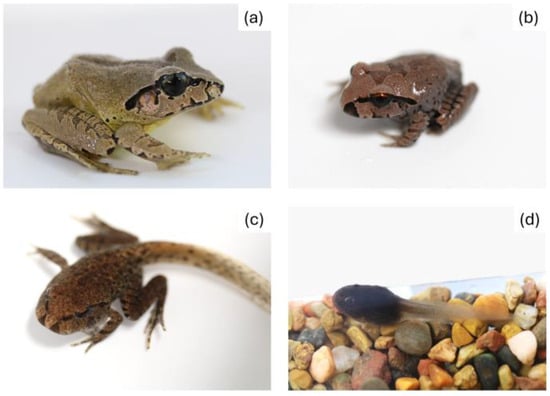
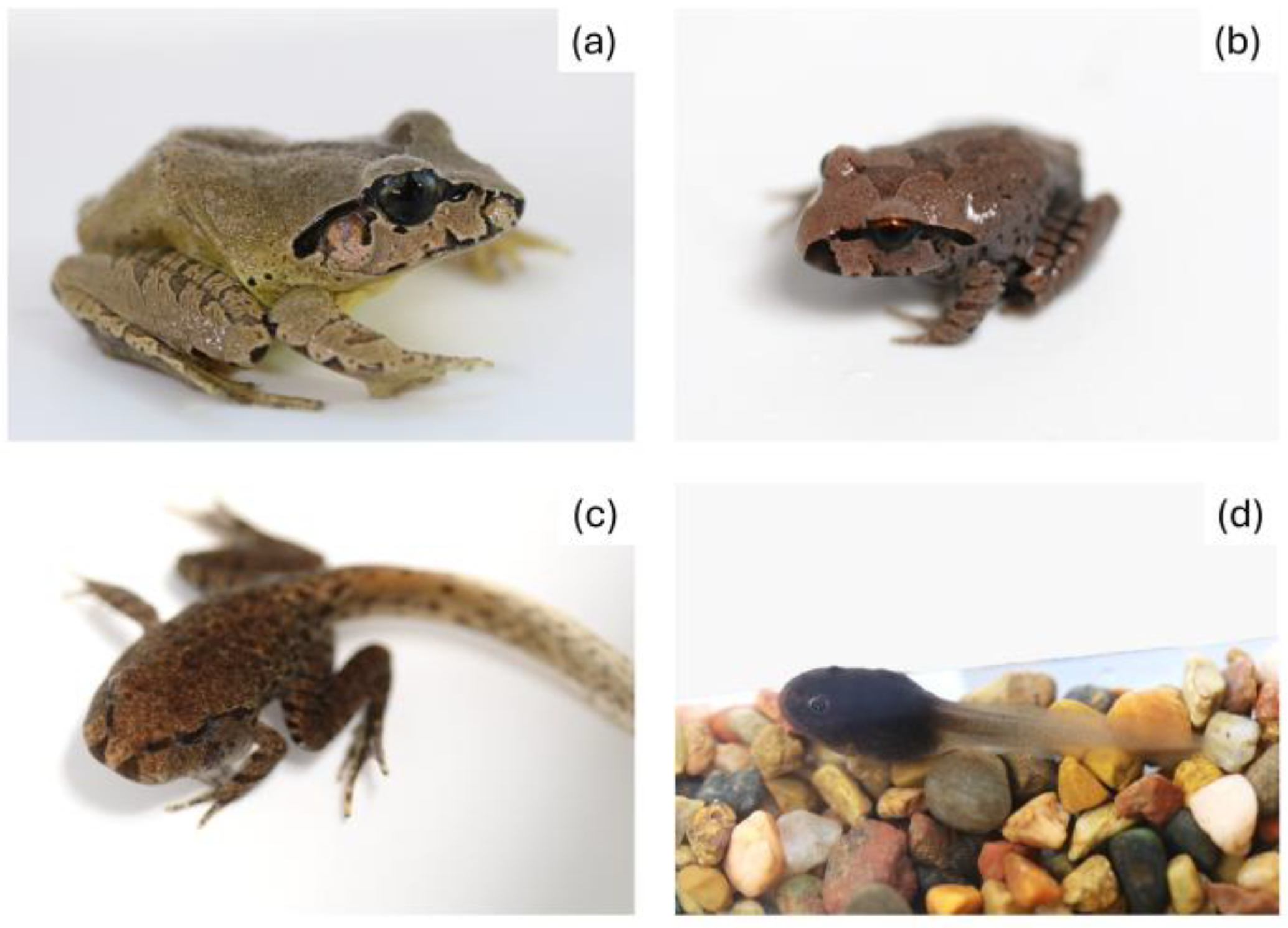
The Southern Stuttering Frog (Mixophyes australis) is one of nine species from the Australo-Papuan myobatrachid genus Mixophyes, with eight species endemic to the south coast of Australia, and one species inhabiting New Guinea [10]. The genus comprises large ground-dwelling frogs known as ‘barred river frogs’ due to their association with flowing river/stream habitats and the presence of barred markings on the forearms and hind legs [11]. The barred markings on M. australis start to develop on the limbs of tadpoles prior to metamorphosis and persist into the adult life stage (Figure 1). Adult Northern and Southern Stuttering Frogs (M. balbus and M. australis, respectively) are terrestrial, dispersing into forest habitats and returning to riparian zones along flowing streams during the breeding season, while eggs and tadpoles of these species are entirely aquatic [10]. Australian species within the genus exhibit varied reproductive modes, including aquatic or terrestrial oviposition and exotrophic tadpoles in lentic or lotic water [12]. Reproduction in the New Guinean Namosado Barred Frog (M. hihihorlo) is yet to be described.
Figure 1.
The Southern Stuttering Frog, Mixophyes australis, showing (a) a reproductively mature adult, (b) a recently metamorphosed juvenile frog, (c) a tadpole with emerged front and hind limbs, and (d) a tadpole prior to limb development. Photographs courtesy of Aimee Silla.
The Southern Stuttering Frog was originally considered to form the southern clade of M. balbus, but was elevated to species status in 2023 following molecular genetic assessment of population structuring (indicating a level of diversity consistent with the presence of two distinct species), corroborated by phenotypic analysis [11]. One of the primary distinguishing phenotypic features between the two species is a difference in the limb banding, whereby limb bands exhibited by the Northern Stuttering Frog comprise wide, highly contrasting bands interspersed in places with narrower bands, while the Southern Stuttering Frog exhibits limb bands that are narrower and more uniform in width (for further details and images of distinguishing features, see [11]). The distribution of the newly described M. australis spans from the Carrai Plateau south of the Macleay River in New South Wales, to the Cann River catchment in East Gippsland, Victoria, across a wide range of elevations from 50 to 1230 m asl [11,13]. Within the past decade alone, it is estimated that M. australis has experienced a population reduction of over 30% (with evidence of ongoing declines) [11]. Declines and disappearances of populations have predominantly occurred in the southern two-thirds of the species’ range [11], with the last verified observations of the species in Victoria occurring in the 1980s, and with recent targeted surveys unsuccessful [14]. The timing of the species’ declines is indicative of the emergence of chytridiomycosis, aligning with the widespread chytrid-driven declines observed in many east-coast Australian frogs during the 1980s–1990s [14]. This is further supported by the disappearance of M. australis from the southern extent of its range, as these populations would have occupied habitats within the pathogen’s optimal 17–23 °C growth range, making them particularly susceptible to infection [15,16]. As a newly described species, Mixophyes australis has not yet been officially listed under the Environmental Protection and Biodiversity Conservation (EPBC) Act or the IUCN Red List. The species has been assessed under IUCN criteria A2(a) and B2(a)(b) and categorised as Endangered, based on the extent of population decline and distribution contraction [11]. While the NSW and Federal Government scientific committees are yet to formalise the species’ status in Australia, the conservation management team anticipate that the species will be listed as Endangered or Critically Endangered under the EPBC Act [17].
A conservation breeding and reintroduction program for the threatened Southern Stuttering Frog was initiated in 2022 at Symbio Wildlife Park, NSW, Australia. While individuals of the species are also maintained at one other facility in Australia, Symbio Wildlife Park remains the only institution actively undertaking coordinated conservation breeding and scientifically guided reintroduction efforts for this species. Herein we document the successful establishment of the conservation breeding program and first successful captive reproduction of M. australis at Symbio Wildlife Park. By outlining the captive husbandry practices, key breeding conditions, and observed life-history traits, this paper seeks to share critical practical insights that will inform future recovery efforts for this species and support the development of conservation breeding programs for other threatened amphibians.
2. Materials and Methods
2.1. Strategic Conservation Planning, Consultation and Review
Conservation planning for the Southern Stuttering Frog involves expert engagement with a senior threatened species officer, conservation managers, academic researchers, and senior ecologists to ensure science-based decision making for all conservation actions. Further information and a framework for strategic conservation planning for amphibian conservation can be found in the Amphibian Conservation Action Plan [9,18]. The selected source populations for founding individuals and reintroduction sites for wild releases of captive-bred Southern Stuttering Frogs were authorised by the New South Wales National Parks and Wildlife Service [17] (approval number: SL101788). The captive facilities and husbandry methods for tadpole, juvenile, and adult frogs were determined following consultation with herpetofauna conservation officers at Taronga and Melbourne Zoos who are leading experts in amphibian conservation breeding programs in Australia, having successfully established CBPs for several threatened Australian frog species (e.g., see [8,13,19,20,21,22,23,24,25,26]). Symbio Wildlife Park is an accredited institution by the Australasian Zoo and Aquarium Association (ZAA), the peak body representing the collective voice of the zoos, aquariums, sanctuaries and wildlife parks across Australasia. ZAA animal welfare accreditation provides evidence of Symbio’s commitment to positive animal welfare, safety, biosecurity, conservation and sustainability. Ongoing refinement of captive husbandry methods and conservation actions for the species will continue into the future as research expands following establishment of a collaboration between the Symbio Conservation Foundation and the University of Wollongong.
2.2. Source Population and Founding Individuals
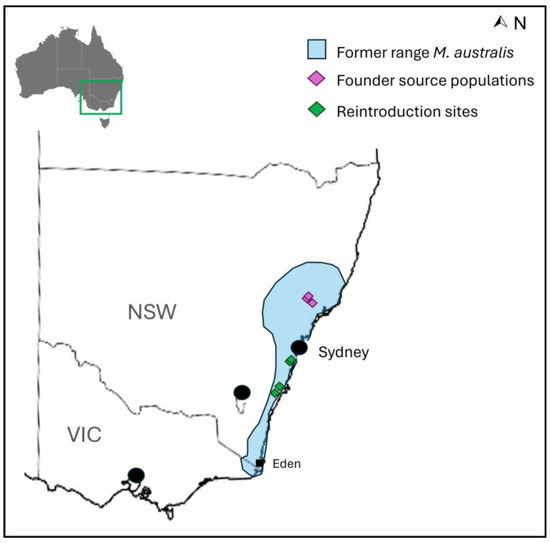
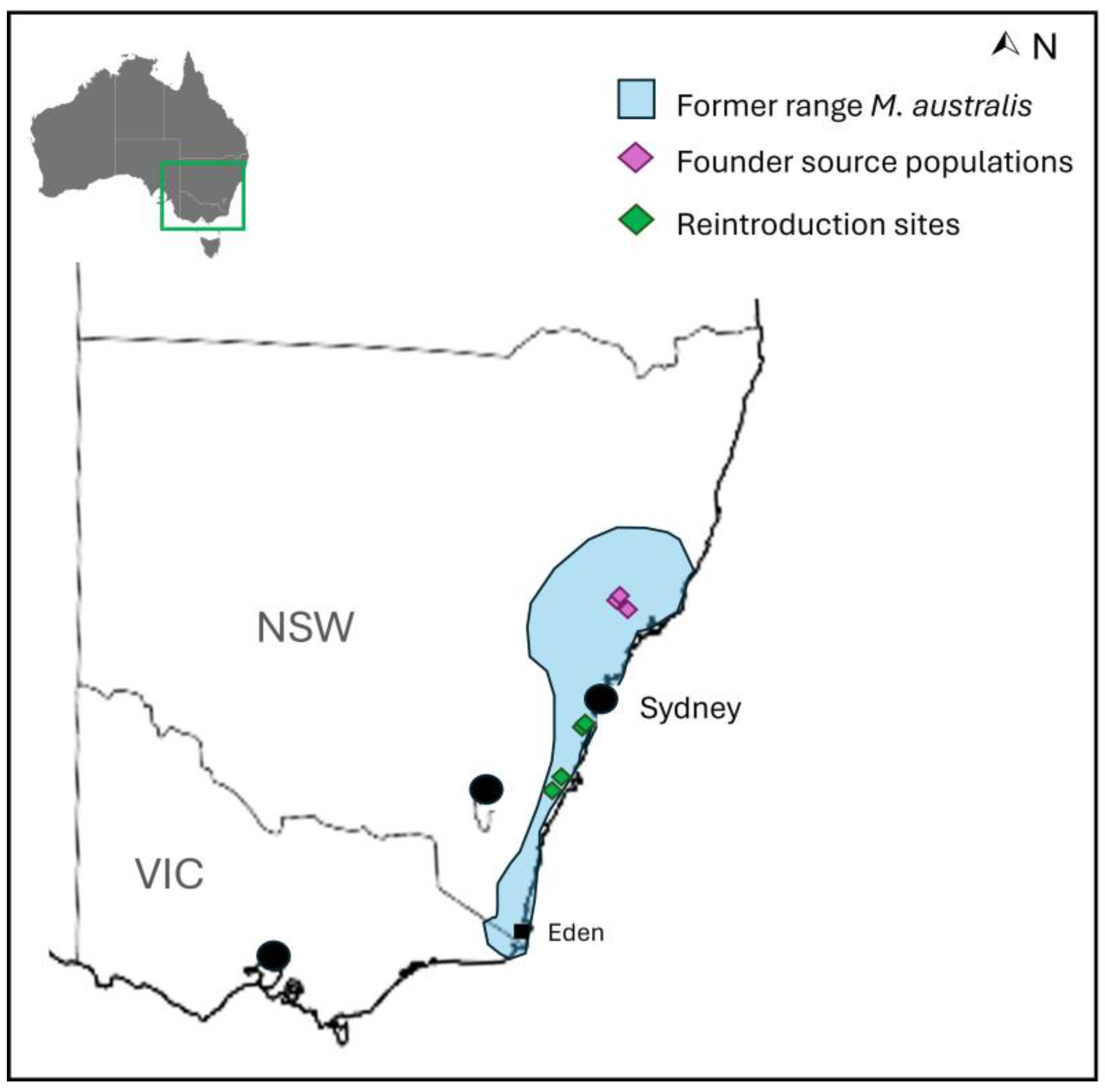
To establish the ex situ conservation breeding program for Mixophyes australis, wild individuals were collected from two source populations located within Bowman State Forest, NSW (Figure 2). These sites were chosen based on the outcome of annual monitoring efforts for the species across several remnant populations throughout their distribution since 2016 [17]. Population monitoring records indicated that these locations supported the most robust and consistently breeding populations, with large numbers of adults and thousands of tadpoles observed along more than a kilometre of creek line at each site (Garry Daly, unpublished data). Importantly, these populations have persisted and recovered in the presence of the chytrid fungus. Previous research has shown that reintroducing individuals from resilient or recovering frog populations can support the broader recovery of disease-impacted species across the landscape [27]. Consequently, founder individuals of our target species were strategically collected from large robust extant populations found to be persevering in the presence of chytrid fungus, as this was expected to enhance the species’ long-term conservation success. On 22 April 2022, a total of 200 M. australis tadpoles were collected, 100 from each of two independent wild populations located approximately 2.5 direct km apart in two separate creek systems, in two separate catchments. The collection of individuals from the larval life stage (tadpoles) rather than adults was chosen to minimise potential impacts on the wild source population (avoiding the removal of reproductively mature individuals and minimising disturbance to breeding habitat). All 200 tadpoles were immediately transported to Symbio Wildlife Park’s quarantine facilities.
Figure 2.
Distribution of M. australis on the east coast of Australia. The map shows the former range of the species (blue shading), approximate location of three source populations in New South Wales (NSW) used to establish the conservation breeding program (pink diamonds), and the approximate location of reintroduction sites that have been used for wild releases to date (green diamonds). Black circles represent state and territory capital cities.
2.3. Tadpole Husbandry
Upon arrival at Symbio Wildlife Park, the 200 founder individuals (tadpoles) of Mixophyes australis were housed in a secure quarantine facility maintained at a constant ambient temperature of 26–27 °C. Tadpoles from each source population (Populations A and B) were housed separately. Population A tadpoles were kept in 50 L tubs (filled to ~40 L) at a low density of 20 individuals per tub, while Population B tadpoles were housed in larger 200 L tubs (filled to ~160 L) containing 50 individuals each. Each tub contained a thin layer of fine aquarium gravel and an artificial plant to provide cover. Each tub was fitted with an air stone to ensure adequate oxygenation. Automated freshwater top-ups were delivered via a tap-timer system that ran for three minutes, eight times per day (four intervals in the morning and four in the afternoon), using 4 mm irrigation tubing. All water supplied to the facility consisted of treated rainwater processed through a Hybrid G7 Dual Rainwater Filter System (Purtec, Minto, NSW, Australia) with ultraviolet sterilisation, comprising an initial 10 µm sediment cartridge followed by an activated carbon filtration stage. Lighting was provided using T5 7.0 UVB fluorescent tubes (Get Your Pet Right (GYPR), Greenacre, NSW, Australia) positioned approximately 20 cm above the water level. Lights operated on photoelectric cells, switching on at sunrise and off at sunset, to replicate the natural photoperiod of the Illawarra region, NSW. Throughout the quarantine period, tadpoles were fed ad libitum, with constant access to frozen–thawed endive or zucchini, supplemented three to four times per week with a high-quality fish pellet (Fluval Tropical sinking pellets). Husbandry methods were determined following discussions with herpetofauna conservation officers at Taronga and Melbourne Zoo who are leading experts in amphibian conservation breeding programs in Australia, having successfully established CBPs for several threatened Australian frog species (e.g., see [8,13,19,20,21,22,23,24,25,26]).
Unfortunately, high rates of mortality (approximately 50–60%) were observed shortly after the tadpoles arrived at the facility, necessitating further refinement of the husbandry practices adopted. It was identified that the use of automated water top-up systems was ineffective at managing water quality, as they did not adequately control nitrogen cycling or waste loads, leading to declining overall water quality. To address this, small internal aquarium filters were installed in each tub to provide both mechanical and biological filtration. These filters assisted in the removal of suspended waste while also supporting the establishment of beneficial bacteria required to process nitrogenous waste products. Manual water changes were also implemented using tap water treated with a conditioner (Seachem Prime, Seachem Laboratories, Madison, WI, USA) to remove chlorine and assist with detoxification of nitrogen waste products. The gravel substrate was also removed and replaced with large river stones. This still provided tadpoles with important refuge while reducing the accumulation of waste within the substrate. Although the specific cause of the initial mortality was not definitively identified, the stabilisation of the cohort following the introduction of filtration and improved water management indicated that the earlier system was insufficient for maintaining appropriate water quality. As a result, for subsequent incoming genetic cohorts, the quarantine system was upgraded to incorporate large canister filters in each tub. This improvement substantially reduced maintenance time and resulted in minimal to no mortality in the following years.
2.4. Metamorph and Juvenile Frog Husbandry
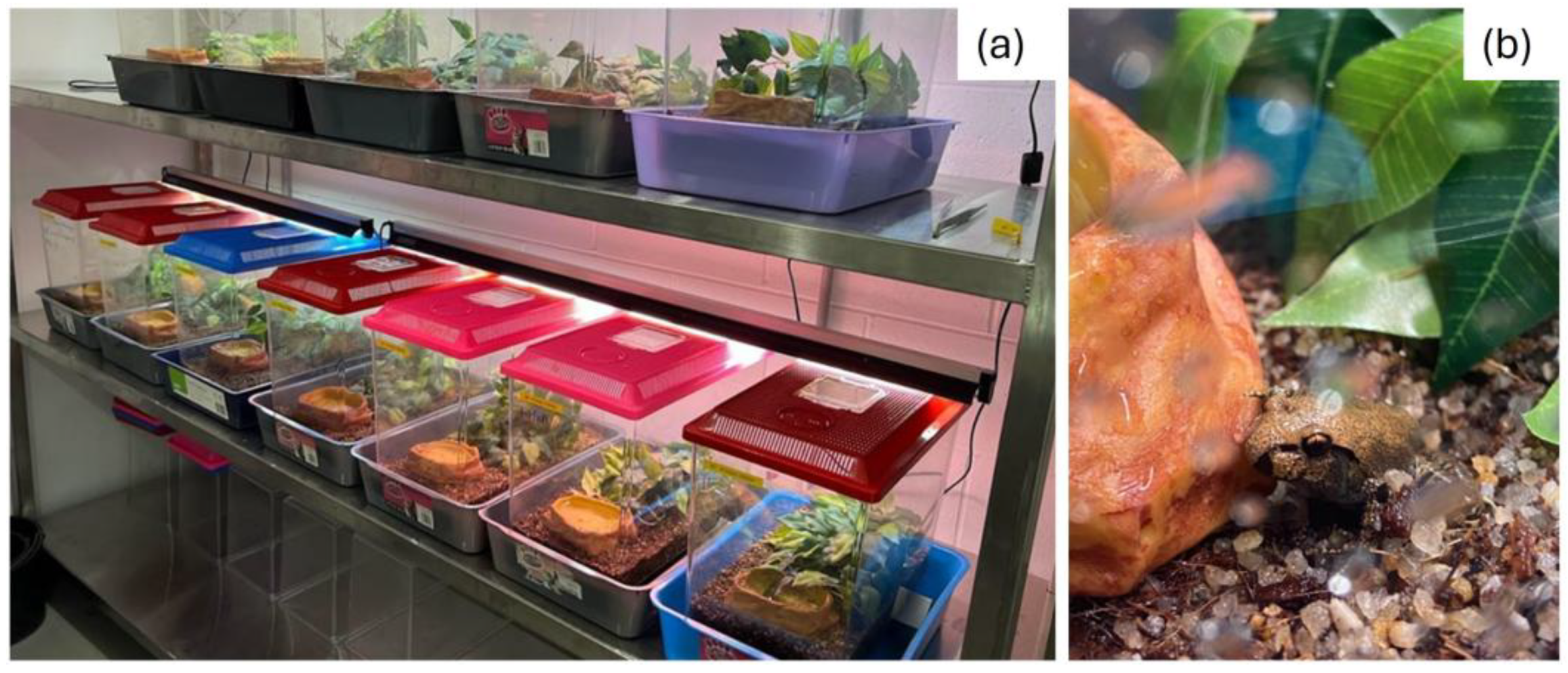
The first signs of metamorphosis in Mixophyes australis were observed in Population B, with hind limb development recorded on 21 June 2022. Complete metamorphosis commenced on 16 July 2022, approximately three months after the tadpoles arrived at the facility; note that tadpoles were of unknown age at the time of collection. Metamorphosis continued over a seven-month period, from the first individual to complete metamorphosis on 16 July 2022 to the final individual to metamorphose on 28 January 2023. Overall, a total of 89 individuals (89/200, 44.5%) successfully metamorphosed within Symbio’s quarantine facility. Post-metamorphic juveniles were transferred from tadpole tubs to dedicated plastic enclosures (28 cm H × 21 cm W × 37 cm) when they had >2 mm tail remaining and were placed into the water bowl. Each plastic enclosure featured perforations in the base and a mesh false bottom for drainage, positioned on small stands within plastic trays to allow flushing in place (Figure 3a). Enclosures were furnished with small exo-terra rock hides, an approx. 4 cm layer of aquarium gravel, shallow water bowls, and artificial plant hides for cover (Figure 3a,b). Juveniles were maintained at a density of 3–7 individuals per plastic enclosure. Cleaning was conducted three times per week. Two cleans involved spot-cleaning faeces, removing dead crickets, refreshing water bowls, and lightly misting the enclosures. The third weekly clean consisted of a full flush, with enclosures thoroughly rinsed using a hose on a gentle “shower” setting. Feeding occurred 2–4 times per week using appropriately sized crickets (no larger than the distance between the frog’s eyes). All crickets were dusted with calcium or vitamin powder at each feeding. Lighting across all enclosures was provided using 14.0 UVB T5 fluorescent tubes (Get Your Pet Right (GYPR), Greenacre, NSW, Australia), with the photoperiod regulated by photoelectric cells to match natural Illawarra daylight cycles. Lights were positioned at the rear of each enclosure, allowing frogs to behaviourally regulate direct UV exposure. The facility’s ambient temperatures were provided by a single reverse-cycle split-system air-conditioning unit (ASTG24KMCA, Fujitsu, Tokyo, Japan) and maintained at elevated levels of 26–27 °C to mitigate chytrid fungus growth and minimise its effects on frogs [15,16].
Figure 3.
Enclosures used to house M. australis juveniles within the quarantine facility. (a) Plastic enclosures with gravel substrate, artificial plants and water dishes, and (b) a metamorph M. australis within its enclosure. Photographs courtesy of Amber Harrison.
2.5. Quarantine Husbandry Refinement, Disease Testing and Treatment
On 15 January 2023, two metamorphs were found deceased and three with abnormal skin surfaces. The most severely affected individual was assessed by a veterinarian and humanely euthanised, while the remaining frogs were isolated for treatment. Bacterial infection was deemed the most likely cause and the treatment prescribed by the consulting wildlife veterinarian consisted of daily application of topical antibacterial cream (Silver sulphadiazine cream; Flamazine®, Smith & Nephew, London, UK), following which their condition resolved within several days. During this period, the third scheduled deep clean (see Section 2.4 ‘Metamorph and Juvenile Frog Husbandry’ above) was modified to include the complete removal of all frogs from their enclosures; furnishings were then taken from the enclosures, disinfected with F10 solution (1:250 dilution; [28]), and thoroughly rinsed. The drainage layer and river rocks were then washed, during which a substantial amount of organic waste floated to the surface. This indicated that waste was likely being flushed into the gravel substrate and accumulating within the rocks that the frogs burrow into. The rocks were repeatedly rinsed in tubs until the water ran clear. After cleaning was completed, all disinfected furnishings, substrate, and drainage layers were returned to the enclosures, and the frogs were placed back inside.
After approximately 4 weeks in quarantine, once individuals had reached a sufficient size to swab, all juvenile M. australis in the facility underwent comprehensive screening for the presence of the chytrid fungus, Batrachochytrium dendrobatidis (Bd), following the methods described by [29]. Frogs were swabbed using fine rayon-tip swabs on the underside of the legs, feet, and pelvic patch, with 3–5 strokes performed per area, and the swabs were then sent to Cesar Australia (Brunswick, Victoria) for chytrid assessment (using a real-time Taqman PCR assay). In January 2023, PCR tests revealed that a significant number of group tanks tested positive for chytrid fungus (13/21, 62%). Plastic enclosures of frogs with positive results were immediately isolated on a separate shelving unit and underwent treatment, while those testing negative were re-swabbed four weeks later to confirm their disease-free status. Strict quarantine biosecurity was maintained by prioritising servicing and feeding enclosures according to disease status: starting with frogs that had two negative results, followed by those with one negative result, then those with no results, and finally attending to positive frogs. Gloves were changed between individual enclosures to minimise the risk of spreading the disease within the facility. Frogs were only deemed Bd-free and moved out of quarantine after receiving three consecutive negative PCR swabs 4 weeks apart.
The treatment strategy employed for those frogs testing positive for the presence of chytrid fungus was voriconazole due to its efficacy as a less invasive antifungal agent. Treatment was administered following the method established by [30] over a seven-day course. A 1 L batch solution was prepared by dissolving 1.25 mg of voriconazole in water, resulting in a 1.25 µg/mL solution, which was stored in a spray bottle for the duration of the treatment. Each day, infected frogs were temporarily removed from their tanks and placed in empty treatment tanks. The solution was sprayed to coat all surfaces of the frogs’ skin and left to sit for five minutes, and then the frogs were transferred to a clean, disinfected housing setup (similar to the original enclosures but without the drainage layer, with just 2 cm of substrate). The previous day’s infected containers were thoroughly decontaminated: substrate was discarded, and furnishings and tanks were soaked in a high-concentration 1:125 F10 dilution for 5 min [28], then thoroughly rinsed and air-dried overnight. Fresh substrate and decontaminated furniture were added to the clean housing setups before the next day’s treatment, ensuring a sterile environment for each treatment session. Seven days post-treatment, frogs were re-swabbed for chytrid fungus, and the same protocol was repeated until three consecutive negative PCR results were obtained. Eight weeks after treatment, 2 of the 13 enclosures of frogs returned positive for chytrid, requiring an additional 7-day treatment period, while the remaining 11 enclosures were cleared after the initial round. Overall, 36 frogs did not contract the disease, 5 individuals died during treatment, and 53 juveniles were successfully cleared of infection.
2.6. Conservation Breeding Facility
Following confirmation of their Bd-free status, a total of 89 juvenile M. australis were transferred from the quarantine facility to the dedicated conservation breeding facility between August 2023 and April 2024. Of these, 56 were held temporarily prior to their release into the wild (20 frogs released January 2024, 20 frogs released February 2025, and 16 frogs released March 2026). A further 33 frogs were retained to establish the captive breeding colony, comprising 16 individuals from population A and 17 from population B.
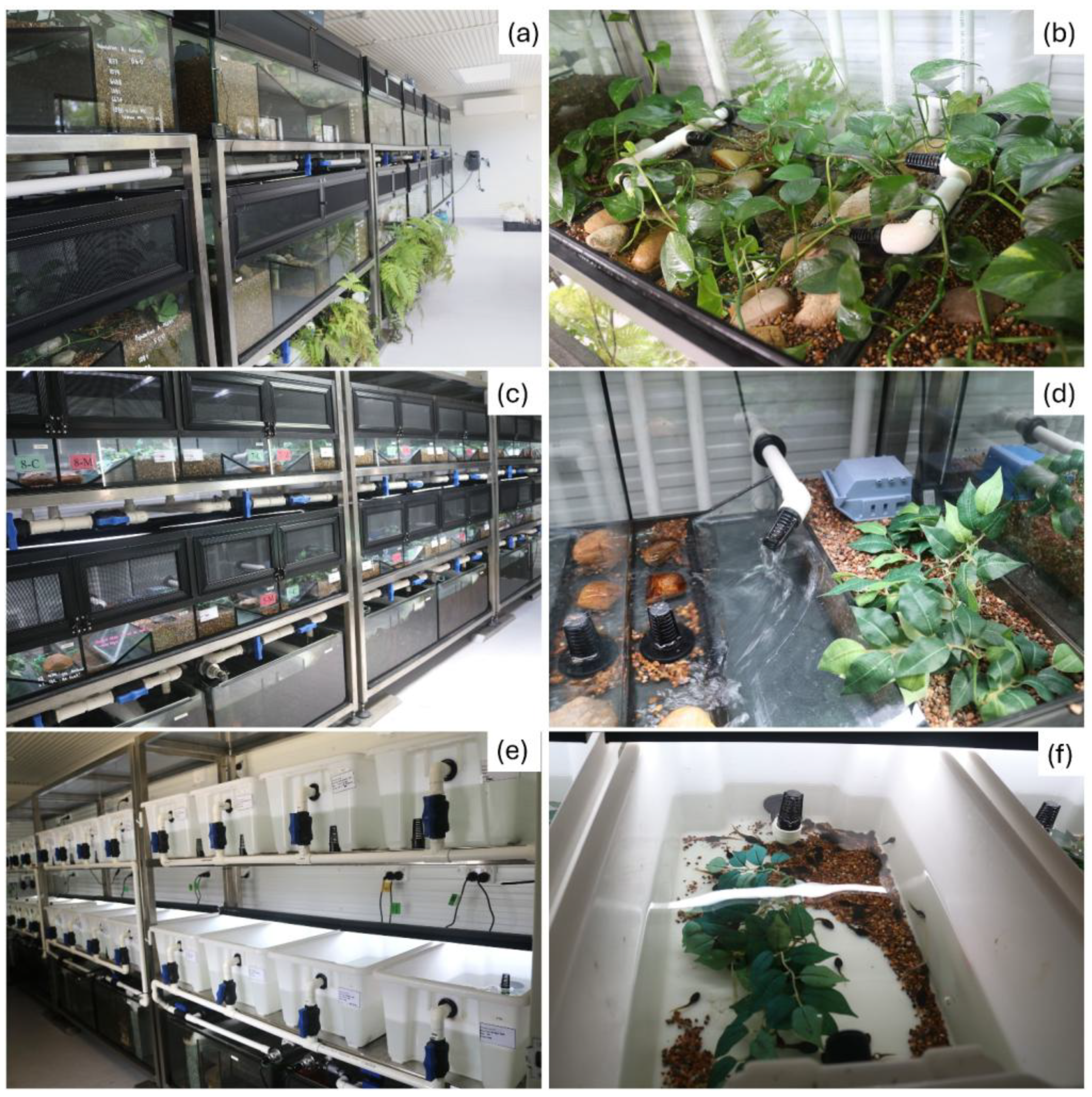
Each frog retained for breeding was implanted with a passive integrated transponder (PIT) tag (Trovan ID162(1.4)VB ISO, Microchips Australia, Keysborough, VIC, Australia) under the skin in the left inguinal region in April 2024, at approximately 18 months of age. The conservation breeding facility consists of three separate rooms: the breeding room (9.6 m × 3 m) containing 4 large and 8 medium breeding glass terraria (Figure 4a,b), a holding facility (6 m × 3 m) with 24 glass terraria for juveniles/adults (Figure 4c,d), and a tadpole rearing room (6 m × 3 m) with 32 individual 50 L plastic aquaria for captive-bred offspring (Figure 4e,f). The conservation breeding facility was exposed to ambient temperatures throughout Austral autumn, winter, and early spring (April–October). Throughout late spring and summer (Nov–March), when ambient temperatures increase, the facility is held at a constant temperature by three separate reverse-cycle split systems air-conditioning units (ASTG24KMCA, Fujitsu, Tokyo, Japan), with one air-conditioner per room. Under these conditions, air temperatures within the facility cycle from 15–27 °C in the spring–summer months to 7–19 °C in the winter–autumn months.
Figure 4.
The M. australis conservation breeding facility, consisting of three separate rooms specifically designed for each life stage. (a) Breeding room terraria, consisting of four large and eight medium glass terraria; (b) inside a breeding room terrarium containing live plants, rocks, gravel, flowing water and riffle zones for oviposition; (c) holding room terraria, consisting of 24 small terraria; (d) inside a holding room terrarium containing artificial plants, gravel, a hide and flowing water; (e) tadpole rearing room aquaria, consisting of 32 aquaria (50 L volume); and (f) inside a tadpole rearing aquarium, consisting of artificial plants and gravel. Photographs courtesy of Amber Harrison and Aimee Silla.
2.6.1. Breeding Room Terraria
The breeding terraria were built based on successful designs used for stream-breeding Australian anurans, specifically referencing published setups utilised at Melbourne Zoo for Mixophyes balbus [13]. Frogs were housed in one of four large glass terraria (62 cm H × 170 cm W × 57 cm D) or eight medium-size glass terraria (62 cm H × 110 cm W × 57 cm) designed to simulate a cross-section of their natural stream environment (Figure 4a,b). Each enclosure incorporated two areas of deep substrate at either end to allow for natural burrowing behaviour. Aquarium gravel was used as substrate to allow waste to be flushed efficiently via a 25 mm permanently plumbed drainage hole located at the base of each substrate section. To provide suitable egg-deposition sites, the tanks included glass ramps secured at varied gradients to mimic the shallow riffle zones used by Mixophyes species for breeding. Large stones were adhered to the ramps, and gaps were filled with small gravel to create nest spaces for egg deposition.
The frogs mostly positioned themselves tightly between and among rocks in the flowing stream and occasionally sat on exposed rocky areas. It was very rare for frogs to burrow deeply into the substrate, and on most days all frogs could be sighted; if individuals were not visible, it was assumed that they were temporarily buried, but they were never dug up, and within a few days at most they would reappear on the surface, especially after tanks were thoroughly flushed. The terraria contained live Epipremnum aureum (Pothos) plants to provide structural cover, reduce visual stress, and assist in maintaining water quality through biological filtration. All live plants were heat-treated (>30 °C for >48 h) prior to introduction into the terraria to ensure eradication of potential pathogens, including chytrid fungus. Frogs were maintained under T5 14.0 UVB (Get Your Pet Right (GYPR), Greenacre, NSW, Australia) artificial lighting run on a photoelectric cell; security screen mesh lids filter out a large portion of ambient UV light, hence the use of the higher-output globes. Additionally, natural light entered the facility via an overhead skylight and four large windows. Filter systems consisted of sump-based, closed-loop recirculating units that efficiently maintain water quality and biological stability. Water flows through multiple filtration stages, including mechanical and biological media, before being returned to the tanks. The same water filtration systems were used within each of the three rooms (tadpole rearing, juvenile/adult housing, and breeding rooms) in the M. australis conservation breeding facility. Adult frogs were fed up to three times per week, averaging two feeding events per week, with each individual offered 1–3 large crickets per feeding. Enclosures were spot-cleaned and hosed daily to remove waste and uneaten food. A full clean of each enclosure was conducted weekly, involving the removal and thorough washing of all gravel substrate on ramps, flushing of accumulated waste through the drainage system until water ran clear, and subsequent replacement of cleaned substrate onto enclosure ramps.
During the first breeding season, breeding room terraria housed individuals from the same collection location, such that population A bred only with individuals from population A, and population B with individuals from population B. This approach was adopted due to concerns regarding outbreeding depression. However, genetic assessments conducted in July 2025 indicated that crossing between populations was favourable. Consequently, individuals have since been housed across populations (i.e., population A males with population B females and vice versa). Breeding terraria contained 7–8 males and 8 females per enclosure to allow for natural mate choice.
2.6.2. Holding Room Terraria
Enclosures within the holding room were designed to allow the breeding cohort to be housed individually, or in small groups, prior to their introduction into breeding tanks during the breeding season. The holding room consisted of three racking systems each holding a bank of eight small terraria (Figure 4c), with a total of 24 terraria (42 cm H × 42 cm W × 57 cm D) in the holding room. Each bank of eight tanks ran off one filtration system. Holding tanks contained a small section of aquarium gravel (approximately 10 cm deep) to provide burrowing opportunity, using the same drainage system as the breeder tanks (Figure 4c,d). A small glass ramp allowed water to flow across the enclosure from the pump and into a very shallow water section (1–2 cm deep). Frogs experienced constant flowing water and typically sat within this shallow pool or burrowed just below the surface among rocks and beneath hides. Artificial lighting was provided from GYPR T5 14.0 UVB bulbs controlled by a photoelectric cell, in addition to natural light via a skylight and external windows (the same set-up as the breeding room). Water entering the tanks ran through the same sump-based filtration systems as those used in the breeding room terraria. Each tank included an artificial plastic plant, a small plastic hide, and 2–3 river stones with gravel in the water section (Figure 4c,d).
2.6.3. Tadpole Room Aquaria
The tadpole rearing room contained 32 × 50 L plastic aquaria (27 cm H × 35 cm W × 55 cm D) fitted in racking units with two shelves, each holding 4 aquaria (Figure 4e). Water was pumped through the central filter systems and each aquarium had an overflow fitted with a mesh cover so tadpoles could not pass through into the filter. Water filtration systems servicing the tadpole aquaria were run year-round, even when empty, to ensure the systems remained well cycled. Artificial lighting was provided via T5 5.0 UVB bulbs (Get Your Pet Right (GYPR), Greenacre, NSW, Australia). Note that reduced output UVB bulbs were used above the tadpole aquaria compared to the higher UVB globes used above juvenile/adult holding and breeding terraria as tadpole aquaria do not contain mesh lids which are known filter/reduce UV exposure. Natural lighting was also provided via a skylight and external windows (the same set-up as the adult holding and breeding rooms). Tadpole aquaria were furnished with artificial plants and a very small amount of gravel (Figure 4f). Tadpole rearing facilities and husbandry methods were determined following consultation with herpetofauna conservation officers at Taronga and Melbourne Zoos who are leading experts in amphibian conservation breeding programs in Australia, having successfully established CBPs for several threatened Australian frog species (e.g., see [8,13,19,20,21,22,23,24,25,26]).
3. Results
3.1. Reproduction
In the months following transfer of the juvenile frogs from quarantine to the conservation breeding facility, juvenile frogs were regularly observed to be engaged in amplexus. Minimal calling behaviour was detected, as calling primarily occurred overnight when staff were not present to record this behaviour. Males readily attempted to amplex females during the breeding season, and in one case a male even amplexed a staff member’s thumb during handling, demonstrating a strong drive to reproduce within the captive facility. Males were observed to be in amplexus within quarantine facilities at as young as 6 months old. The first recorded spawning event in the breeding room occurred on 11 December 2023, when frogs were approximately 11 months old post-metamorphosis; however, the clutch spawned was entirely infertile (Table 1). No further breeding events were observed until March 2024. Between 8 March 2024 and 10 April 2024, a total of nine spawn events occurred across both the breeding and holding room terraria. Fertilisation success of these initial clutches was extremely low, with five completely infertile clutches (0% developing embryos), and four clutches with low fertilisation success (<20% developing embryos) (Table 1). Overall, the number of viable tadpoles resulting from these initial nine clutches ranged from 0 to a maximum of 50 tadpoles per clutch.
Table 1.
Summary of M. australis spawning events (clutches laid and clutch parameters) from 2023 to 2025.
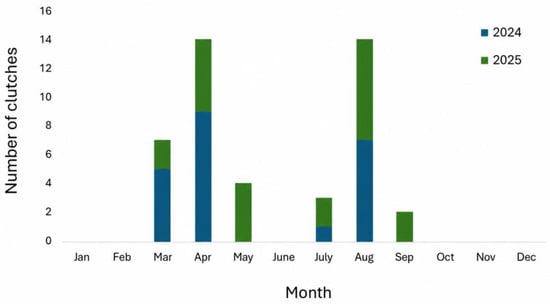
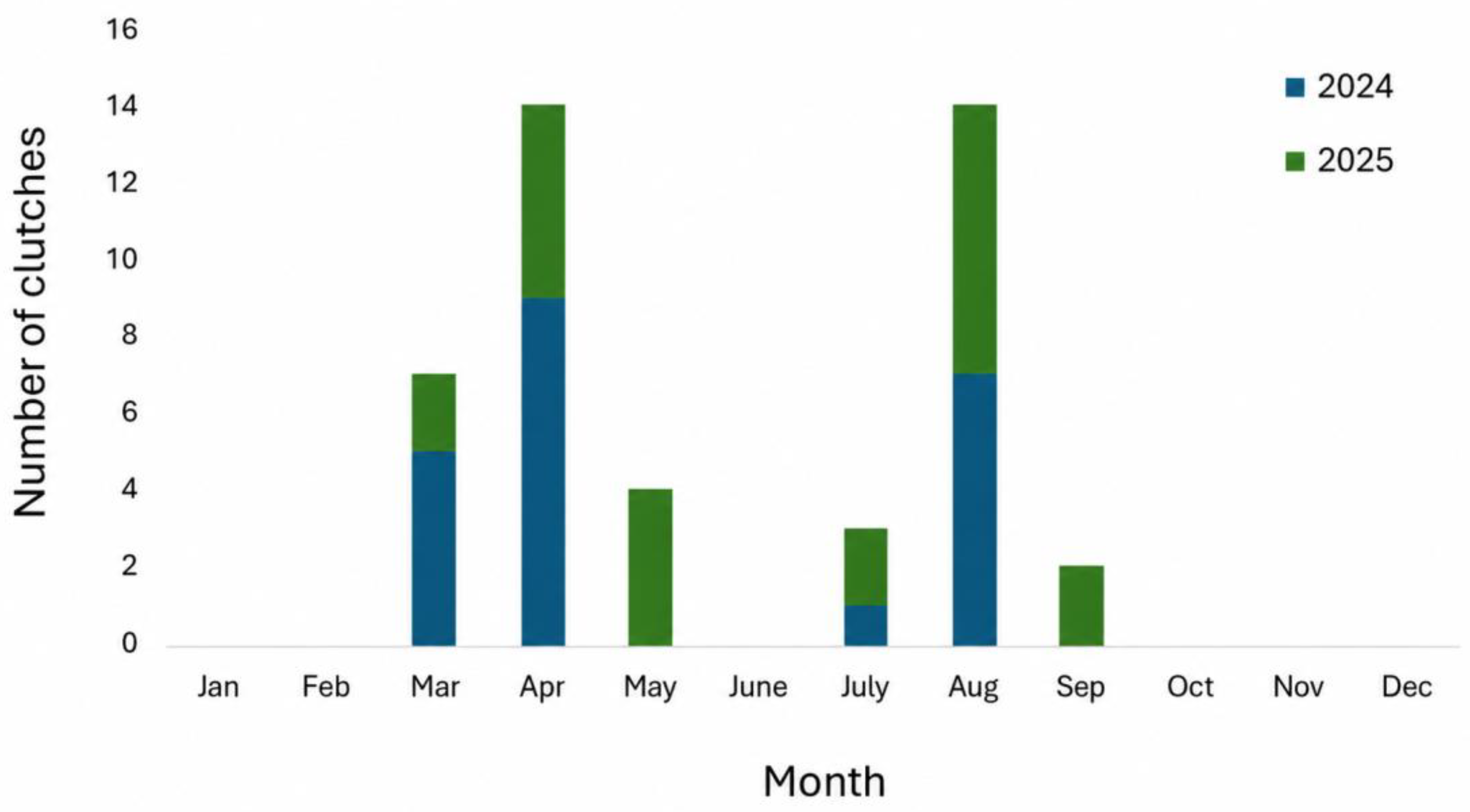
The first clutch to exhibit high fertility was spawned on 15 April 2024 in the breeding facility, yielding an estimated 200 tadpoles (Table 1). Using the most conservative timeframe (age from the first metamorph; 16 July 2022), the oldest possible age for these frogs producing consistently fertile eggs was approximately 1 year and 9 months. This fertile clutch was followed by three more infertile clutches spawned in late April. From 29 April 2024 onwards, breeding frogs became almost consistently fertile. Between April 2024 and September 2025, 29 successful clutches with high-to-very high fertility were recorded, with only three infertile clutches (Table 1). Following the implantation of PIT-tags in April 2024, the sire and dam of each clutch were able to be recorded by identifying the male and female in amplexus prior to spawning (Table 1). These reproductive events revealed a distinct bimodal reproductive pattern, with the number of clutches spawned exhibiting an initial peak in astral Autumn, and a second peak in later Winter to early Spring (Figure 5). Specifically, the first pulse of breeding activity occurred between March and early May, with 19 clutches spawned, while the second pulse occurred between July and early September, with 16 clutches spawned. It should be noted that male and female frogs were separated in late May 2025 and were repaired when a female spawned away from the males on 27 July 2025.
Figure 5.
The number of spawning events (clutches laid) from 2024 to 2025. Shown are two distinct peaks in captive breeding activity, corresponding with Austral autumn (March–May) and mid-winter to early spring (July–September).
Eggs were deposited in the shallow riffle sections provided by the glass ramps, typically in large clumps or small nest sites between gravel and under rocks. In the holding room, eggs were laid in the shallow water section, as few other suitable sites were available. All fertile clutches were promptly transferred to the dedicated tadpole rearing room. Eggs were easily moved due to their sturdy egg-jelly layer and clumped arrangement. The species exhibited high intraclutch variation in the time to hatching and tadpole growth (unpublished data). Hatching typically commenced within 8–14 days post-spawning and was completed between 11 and 24 days, with a mean embryonic period of approximately 16 days (data based on seven clutches with very high fertility; Table 2). Metamorphosis commenced between 114 and 144 days post-hatching (mean ± sem = 130 ± 4.1 days). Based on the first 10 individuals to metamorphose from each of the seven clutches (Total = 70 metamorphs), size at metamorphosis ranged from 21.0 to 26.58 mm snout-vent-length (SVL; mean ± sem = 23.96 ± 0.17 mm) and from 0.867 to 1.974 g bodymass (mean ± sem = 1.41 ± 0.04 g) (Table 2). The majority of F1 offspring were released into the wild as late-stage tadpoles, so the time taken for the entire clutch to metamorphose was not determined. Larval survival rates of first-generation (F1) offspring were very high, with very few tadpoles observed to be deceased (90–100% survival).
Table 2.
Embryo and larval duration and metamorph size data for a subset of first-generation (F1) captive-bred offspring from seven clutches laid at in 2025.
3.2. Wild Release
As of February 2026, approximately 7700 first-generation (F1) captive-bred tadpoles and 58 founder (F0) ‘head-started’ adult frogs (captive reared from wild-caught tadpoles) have been released across 15 release sites from Symbio’s CBP, in addition to a preliminary trial release of 30 F1 individuals in 2020 prior to the establishment of the CBP. Release sites have been chosen based on thorough assessment of ecological suitability for the species. Specifically, suitable first- and second-order streams were identified that contained exposed rock shelves and rock boulders (used by M. australis for refuge and male advertisement calling) with healthy adjoining temperate rainforest habitat and an abundance of invertebrates (food source for the frogs), and containing deep layers of leaf litter and organically rich soil for the frogs to bury and overwinter [17]. Most importantly the fluvial elements of the creeks at chosen release sites were assessed and deemed suitable for breeding/oviposition and tadpole survival, consisting of exposed rock riffle zones, small waterfalls, and undercuts beside shallow pools [17]. All release sites were within the species’ historic natural distribution range (Figure 2). The release sites are located within National Parks, State Conservation Areas and Council Reserves. A total of nine sites were located within Royal National Park, with additional sites located across New South Wales, including two in Nowra, one in Berry, two in Macquarie Pass, and one in the Blue Mountains. All release sites were classified as reintroduction sites due to the absence of wild frogs of the species prior to releases. Annual post-release monitoring (including nocturnal spotlighting and diurnal tadpole surveys) has revealed evidence of released frogs attaining maturity (male calling, location of gravid females) and successful wild breeding (amplecting pairs, fertile clutches (=22 clutches), and tadpoles observed) at one release site (along two separate creek lines) (Garry Daly unpublished data; [17,31]). Based on criteria developed to assess amphibian translocations [32], the initial outcomes of M. australis reintroductions are considered highly successful (Garry Daly unpublished data; [17]).
4. Discussion
This paper reports on the establishment and success of the conservation breeding program for M. australis at Symbio Wildlife Park, documenting distinct breeding periods in captivity and effective husbandry practices for the species, leading to the generation and release of thousands of tadpoles and at least one self-sustaining wild population. The first recorded breeding success was achieved remarkably quickly for a program starting with larval-stage individuals, with consistently fertile clutches spawned from within just two years following the collection of wild founder tadpoles in April 2024. Of note, a total of ten clutches were also spawned in the four months prior; however, these initial clutches were either completely infertile or exhibited very low fertilisation success (<20%). The lack of fertility in initial clutches was presumed to be a result of the frogs not yet reaching complete sexual maturity (impacting sperm concentration/quality or oocyte fertilisation capacity) and/or a lack of mating experience impacting fertilisation, rather than a result of environmental provisioning (i.e., food, substrates and water quality), as husbandry practices remained unaltered during this period. Using the most conservative estimate, frogs at Symbio reached reproductive maturity at approximately one year and nine months post-metamorphosis, with clutches that exhibited high to very high fertilisation success spawning from individuals at approximately 2 years of age post-metamorphosis. The time to sexual maturity (indicated by the spawning of clutches with high fertilisation) observed at Symbio Wildlife Park is in contrast to previously published data for the species, where Melbourne Zoo reported that the first spawning event for the species (formerly M. balbus, southern clade) occurred when frogs (initially collected as wild tadpoles, n = 10 individuals) were five years and one month of age [13]. Our observations are more closely aligned with data from a related Endangered species, Fleay’s barred frog, M. fleayi, with data for seven wild populations indicating an age of sexual maturity of 2–4 years [5].
It is important to note that the observed time to sexual maturity of M. australis at Symbio Wildlife Park may have been expedited by the provision of consistently warm temperatures throughout their first 18 months in captivity, without the facility being cooled over the winter period. Specifically, the founder (F0) tadpoles grew and developed rapidly throughout larval and early juvenile life stages, as they were maintained at consistently warmer temperatures, 26–27 degrees Celsius, to mitigate the growth and spread of Batrachochytrium dendrobatidis (Bd) within the quarantine facility. The decision to maintain warmer temperatures during the initial quarantine period was based on a study in the related great barred frog, M. fasciolatus, which found that Bd-induced mortality increased at lower temperatures [4]. As a result, the frogs were not exposed to a wintering event and continued feeding during this period, likely accelerating early growth and development. Of note, once frogs were determined to be free of Bd-infection and transferred to the conservation breeding facility, the provision of naturalistic climatic cycling was imposed, including a cooler winter period. The provision of seasonal cycling of climatic conditions (including temperature, photoperiod, simulated rainfall and humidity) in captivity that are reflective of the species’ natural environment is of critical importance to enhance the likelihood of successful reproduction [33,34].
The initial success of the conservation breeding program for M. australis at Symbio Wildlife Park (producing 26 clutches with high fertility and extremely high tadpole survival in the first 12 months following frogs reaching sexual maturity) is a celebrated triumph for the species’ conservation. The breeding success of the captive colony is likely the result of two main factors: first, the provision of appropriate biotic and abiotic environmental conditions, and second, the establishment of the breeding colony from two large, healthy wild source populations. Firstly, the provision of naturalistic seasonal climatic cycling and opportunities for mate choice (with multiple males and females entered into breeding tanks) have been identified as determinants that enhance captive breeding success [33,34]. This is because abiotic (i.e., temperature, photoperiod, rainfall, humidity) and biotic (social stimuli such as acoustic signals and pheromones) environmental cues are critical triggers for breeding in amphibians, ensuring gamete maturation, courtship behaviours and fertilisation are successful [35]. Symbio Wildlife Park is located near the original southern populations of M. australis, so local climate conditions are more closely aligned with the natural climatic conditions experienced by the source populations. This includes natural photoperiods, sunlight through skylights, and large windows allowing natural airflow and temperature fluctuations, which all may have facilitated the initiation of breeding. Secondly, the origin and genetic health of the founder populations may have contributed to Symbio’s captive breeding success. Symbio Wildlife Park’s founders were sourced from two populations in Bowman State Forest identified as large, robust populations with evidence of successful breeding, including observations of over 1000 tadpoles at each site. Establishing insurance populations from genetically diverse, healthy wild populations is likely to enhance reproductive performance in captivity and assist in the long-term success of conservation breeding programs. Importantly, genetic analyses were conducted to determine the genetic diversity and relatedness of the founder individuals which will have important implications for the future genetic management of the M. australis insurance population (discussed further below).
The spawning events reported herein revealed two distinct peaks in breeding activity within Symbio’s conservation breeding program, coinciding with Austral autumn (March–May) and mid-winter to early spring (July–September). The bimodal breeding pattern observed herein differs from previous records for the species, which report calling periods for M. australis occurring from spring through autumn, though specific spawning periods were not identified [11]. Published data on natural breeding activity for this species appear limited to [36], which reports five spawning events from wild populations in the northern part of the species’ range during spring to early summer (October ×2, November ×1, December ×1, and February ×1). Importantly, these observations were made for populations in the northern extent of M. australis’ distribution. It therefore remains unclear whether the observed breeding patterns reported herein are influenced by captivity conditions or if the facility, being located within the southern extent of the species’ natural range, reflects differences in peak breeding activity throughout the species’ distribution. Continued monitoring of the wild populations over the coming years will provide further insights into the peak periods of breeding activity for the species in the future.
Importantly, now that the peaks in breeding activity at Symbio Wildlife Park have been identified, males and females of the species that were previously co-housed have now been separated into same-sex enclosures. Adult males and females will now be introduced to each other twice annually, corresponding with the identified peaks in breeding activity. Housing frogs in same-sex groups and only introducing male–female pairs, or more commonly small mixed-sex groups, of frogs during the breeding season is standard practice within conservation breeding programs in Australia (e.g., see [19,37]). Conspecific social interactions are important prior to and during the breeding season to maximise reproductive output, however for many frog species, physical aggression and sexual coercion have been documented and can lead to injury, elevated stress, and even mortality [34]. Physical aggression has not been observed between M. australis at Symbio Wildlife Park; however, male–female pairs have been observed in amplexus for prolonged periods (up to 8 days) without spawning, which may elevate stress levels for females if sexual coercion or forced copulation is taking place (note that it has not been verified if females are voluntarily entering into amplexus). To reduce the potential likelihood of negative conspecific encounters, M. australis are now being housed in same-sex groups throughout the year and only co-housed for a few weeks at a time, twice annually to correspond with the observed peak periods of breeding activity.
Overall, the successful reproduction, larval rearing, and wild releases detailed herein are a significant milestone; without these captive-reared individuals, extinct populations could not have been reestablished. Future research planned for the conservation breeding program includes monitoring of the reintroduced wild populations using AudioMoth recording devices as released individuals mature and reach sexual maturity. These devices will also be employed within the captive facilities to link calling activity with observed breeding events. This approach will enable us to determine whether the observed breeding periods for the captive cohort align with the natural reproductive season of reintroduced southern populations. Additionally, now that successful reproduction and larval rearing have been achieved, future research is underway to refine and enhance the conservation breeding program managed by Symbio Wildlife Park. Specifically, research has commenced to investigate the effect of enhanced nutrition on tadpole growth, development, and performance to inform and refine husbandry practices for the species. Additionally, genetic analyses have been conducted for source populations A and B to determine the genetic diversity and relatedness of the founder individuals and establish a captive breeding matrix, with the aim of allowing strategic allocation of individuals to breeding terraria in order to minimise parental relatedness and maximise the genetic variation in captive-bred offspring. In 2025, additional founders (F0 wild tadpoles) were collected from a third source population (population C) from The Glenn Nature Reserve further north in the species distribution. Research is planned to determine the genetic diversity and genetic similarity of the new founders (F0 from population C) and design breeding experiments to quantify the effect of hybrid matings between source populations on offspring fitness.
5. Conclusions
Herein we provide a comprehensive account of the Mixophyes australis conservation breeding program established at Symbio Wildlife Park, detailing high reproductive success for the species in captivity. We identify the timing of peak breeding activity and provide effective husbandry protocols for all life stages of the species, resulting in the generation of clutches exhibiting high fertility and high survivorship of tadpoles. The M. australis conservation breeding program described has resulted in the generation and release of thousands of tadpoles within the first 2 years of the program’s inception and at least one self-sustaining wild population. These findings provide essential baseline data for managing M. australis in captivity and offer practical guidance for other amphibian conservation programs seeking to establish breeding colonies and secure future reintroduction capacity. This program also demonstrates the capacity for privately funded zoological institutions to contribute meaningfully to amphibian conservation and species recovery when integrated with academic and government partners.
Author Contributions
Conceptualisation, M.R., J.P. and A.R.H.; investigation, A.R.H., J.P. and A.J.S.; resources, M.R., J.P. and A.R.H.; data curation, A.R.H., J.P. and A.J.S.; writing—original draft preparation, A.R.H. and A.J.S.; writing—review and editing, A.R.H., A.J.S., J.P. and M.R.; supervision, A.J.S.; project administration, M.R., J.P. and A.R.H.; funding acquisition, M.R., J.P. and A.R.H. All authors have read and agreed to the published version of the manuscript.
Funding
This research was funded by Symbio Conservation Foundation and Symbio Wildlife Park.
Institutional Review Board Statement
The animal study was conducted in accordance with the Australian Code for the Care and Use of Animals for Scientific Purposes 2013 (updated in 2021). Animal collections and wild releases were authorised by the New South Wales National Parks and Wildlife Service (approval number: SL101788 and date of approval 29 February 2024).
Informed Consent Statement
Not applicable.
Data Availability Statement
The breeding data presented in this study are available on request from the corresponding author. The data are not publicly available, in accordance with Symbio Wildlife Park’s policies on data and sample sharing.
Acknowledgments
The authors thank the herpetofauna team at Symbio Wildlife Park for their assistance with the husbandry and care of this species. We are particularly grateful to Garry Daly, Rachel Melrose, and Chad Beranek for their coordination of the collection of founding individuals, support of releases, field monitoring, data collection, and expert guidance. Their ongoing commitment to the conservation of this and other threatened frog species in New South Wales has been invaluable. We also thank Michael McFadden for his guidance on captive frog husbandry and for providing insights and support throughout the program, and Alex Pike for photographic and video documentation of releases for media distribution.
Conflicts of Interest
The authors declare no conflicts of interest.
Abbreviations
The following abbreviations are used in this manuscript:
| CBP | Conservation Breeding Program |
| EPBC | EPBC Environmental Protection and Biodiversity Conservation |
| IUCN | IUCN International Union for the Conservation of Nature |
| NSW | New South Wales |
| PCR | Polymerase Chain Reaction |
| UV | Ultraviolet |
| UVB | Ultraviolet B |
| VIC | Victoria |
References
- Scheele, B.C.; Pasmans, F.; Skerratt, L.F.; Berger, L.; Martel, A.; Beukema, W.; Acevedo, A.A.; Burrowes, P.A.; Carvalho, T.; Catenazzi, A.; et al. Amphibian fungal panzootic causes catastrophic and ongoing loss of biodiversity. Science 2019, 363, 1459–1463. [Google Scholar] [CrossRef] [Scilit]
- Luedtke, J.A.; Chanson, J.; Neam, K.; Hobin, L.; Maciel, A.O.; Catenazzi, A.; Borzée, A.; Hamidy, A.; Aowphol, A.; Jean, A.; et al. Ongoing declines for the world’s amphibians in the face of emerging threats. Nature 2023, 622, 308–314. [Google Scholar] [CrossRef] [Scilit]
- Skerratt, L.F.; Berger, L.; Speare, R.; Cashins, S.; McDonald, K.R.; Phillott, A.D.; Hines, H.B.; Kenyon, N. Spread of Chytridiomycosis Has Caused the Rapid Global Decline and Extinction of Frogs. EcoHealth 2007, 4, 125–134. [Google Scholar] [CrossRef] [Scilit]
- Berger, L.; Roberts, A.A.; Voyles, J.; Longcore, J.E.; Murray, K.A.; Skerratt, L.F. History and recent progress on chytridiomycosis in amphibians. Fungal Ecol. 2016, 19, 89–99. [Google Scholar] [CrossRef] [Scilit]
- Hero, J.-M.; Morrison, C. Frog declines in Australia: Global implications. Herpetol. J. 2014, 14, 175–186. [Google Scholar]
- Alford, R.A.; Richards, S.J. GLOBAL AMPHIBIAN DECLINES: A Problem in Applied Ecology. Annu. Rev. Ecol. Syst. 1999, 30, 133–165. [Google Scholar] [CrossRef] [Scilit]
- Stuart, S.N.; Chanson, J.S.; Cox, N.A.; Young, B.E.; Ana, S.L.R.; Fischman, D.L.; Waller, R.W. Status and Trends of Amphibian Declines and Extinctions Worldwide. Science 2004, 306, 1783–1786. [Google Scholar] [CrossRef] [Scilit]
- McFadden, M.; Gilbert, D.; Bradfield, K.; Evans, M.; Marantelli, G.; Byrne, P. The Role of Ex Situ Amphibian Conservation in Australia; CSIRO Publishing: Clayton, VIC, Australia, 2018; pp. 125–140. [Google Scholar]
- IUCN. Amphibian Conservation Action Plan: A Status Review and Roadmap for Global Amphibian Conservation; 978-2-8317-2279-5; IUCN: Gland, Switzerland, 2024. [Google Scholar]
- Knowles, R.; Thumm, K.; Mahony, M.; Hines, H.; Newell, D.; Cunningham, M. Oviposition and egg mass morphology in barred frogs (Anura: Myobatrachidae: Mixophyes Günther, 1864), its phylogenetic significance and implications for conservation management. Aust. Zool. 2015, 37, 381–402. [Google Scholar] [CrossRef] [Scilit]
- Mahony, M.J.; Bertozzi, T.; Guzinski, J.; Hines, H.B.; Donnellan, S.C. A new species of barred frog, Mixophyes (Anura: Myobatrachidae) from south-eastern Australia identified by molecular genetic analyses. Zootaxa 2023, 5297, 301–336. [Google Scholar] [CrossRef] [Scilit] [PubMed]
- Hoskin, C.J. Breeding behaviour of the Barred Frog Mixophyes coggeri. Mem. Qld. Museum. Cult. Herit. Ser. 2010, 55, 1–7. [Google Scholar]
- Banks, C.; Traher, R.; Hobbs, R. Captive management and breeding of the stuttering frog (Mixophyes balbus) at melbourne zoo. Herpetol. Rev. 2014, 45, 43–49. [Google Scholar]
- Hunter, D.; Gillespie, G. National Recovery Plan for the Stuttering Frog (Mixophyes balbus); Department of Sustainability and Environment (DSE): Melbourne, VIC, Australia, 2011; p. 64.
- Murray, K.A.; Skerratt, L.F.; Speare, R.; McCallum, H. Evidence of Effects of Endemic Chytridiomycosis on Host Survival, Behavior, and Emigration: Reply to Schmidt. Conserv. Biol. 2010, 24, 900–902. [Google Scholar] [CrossRef] [Scilit]
- Li, Y.; Cohen, J.M.; Rohr, J.R. Review and synthesis of the effects of climate change on amphibians. Integr. Zool. 2013, 8, 145–161. [Google Scholar] [CrossRef] [Scilit]
- Daly, G. Re-Introduction of the Southern Stuttering Frog Mixophyes Australis to the South Coast of NSW. Translocation Proposal 2025-2026; NSW National Parks and Wildlife Service Wildlife Team: Parramatta, NSW, Australia, 2025.
- Wren, S.; Baker, A.; Andreone, F.; Kacoliris, F.; Rakotoarison, A.; Olson, D.H.; Cogalniceanu, D.; Dawson, J.; Johnson, K.; Kahn, T.R.; et al. Strategic planning: A basis for effective action. In Amphibian Conservation Action Plan; IUCN SSC: Gland, Switzerland, 2024; pp. 219–236. [Google Scholar]
- McFadden, M.S.; Hush, L.; Chaudhuri, G.; Leong, D.; Skidmore, A.; Silla, A.J.; Hunter, D.A. Ex Situ Management and Reproduction of the Rediscovered Yellow-Spotted Bell Frog, Ranoidea castanea. Animals 2025, 15, 3404. [Google Scholar] [CrossRef] [Scilit]
- McFadden, M.; Duffy, S.; Harlow, P.; Hobcroft, D.; Webb, C.; Ward-Fear, G. A review of the green and golden bell frog Litoria aurea breeding program at Taronga Zoo. Aust. Zool. 2008, 34, 291–296. [Google Scholar] [CrossRef] [Scilit]
- McFadden, M.; Hobbs, R.; Marantelli, G.; Harlow, P.; Banks, C.; Hunter, D. Captive management and breeding of the Critically Endangered Southern Corroboree Frog (Pseudophryne corroboree) (Moore 1953) at Taronga and Melbourne Zoos. Amphib. Reptile Conserv. 2013, 5, 70–87. [Google Scholar]
- McFadden, M.S.; Silla, A.J.; Kelleher, S.R.; Endler, J.A.; Landler, L.; Byrne, P.G. Optimising conservation breeding efforts: Investigating the effects of ultraviolet radiation on colouration of the northern corroboree frog (Pseudophryne pengilleyi). Front. Amphib. Reptile Sci. 2025, 3, 1669704. [Google Scholar] [CrossRef] [Scilit]
- Gilbert, D.J.; Magrath, M.J.; Byrne, P.G. Warmer temperature and provision of natural substrate enable earlier metamorphosis in the critically endangered Baw Baw frog. Conserv. Physiol. 2020, 8, coaa030. [Google Scholar] [CrossRef] [Scilit]
- Gilbert, D.J.; Goodall, D.; Byrne, P.G.; Silla, A.J. Hormone therapy improves conservation breeding outcomes in the critically endangered Baw Baw frog, Philoria frosti. Front. Conserv. Sci. 2024, 5, 1464730. [Google Scholar] [CrossRef] [Scilit]
- Hobbs, R.J.; Upton, R.; Calatayud, N.E.; Silla, A.J.; Daly, J.; McFadden, M.S.; O’Brien, J.K. Cryopreservation Cooling Rate Impacts Post-thaw Sperm Motility and Survival in Litoria booroolongensis. Animals 2023, 13, 3014. [Google Scholar] [CrossRef] [Scilit] [PubMed]
- Harley, D.; Mawson, P.R.; Olds, L.; McFadden, M.; Hogg, C. The contribution of captive breeding in zoos to the conservation of Australia’s threatened fauna. In Recovering Australian Threatened Species, A Book of Hope; Garnett, S., Latch, P., Lindenmayer, D., John, W., Eds.; CSIRO Publishing: Clayton, VIC, Australia, 2018. [Google Scholar]
- Knapp, R.A.; Wilber, M.Q.; Joseph, M.B.; Smith, T.C.; Grasso, R.L. Reintroduction of resistant frogs facilitates landscape-scale recovery in the presence of a lethal fungal disease. Nat. Commun. 2024, 15, 9436. [Google Scholar] [CrossRef] [Scilit] [PubMed]
- Webb, R.; Mendez, D.; Berger, L.; Speare, R. Additional disinfectants effective against the amphibian chytrid fungus Batrachochytrium dendrobatidis. Dis. Aquat. Org. 2007, 74, 13–16. [Google Scholar] [CrossRef] [Scilit] [PubMed]
- Hyatt, A.D.; Boyle, D.G.; Olsen, V.; Boyle, D.B.; Berger, L.; Obendorf, D.; Dalton, A.; Kriger, K.; Hero, M.; Hines, H.; et al. Diagnostic assays and sampling protocols for the detection of Batrachochytrium dendrobatidis. Dis. Aquat. Org. 2007, 73, 175–192. [Google Scholar] [CrossRef] [Scilit]
- Martel, A.; Van Rooij, P.; Vercauteren, G.; Baert, K.; Van Waeyenberghe, L.; Debacker, P.; Garner, T.W.; Woeltjes, T.; Ducatelle, R.; Haesebrouck, F. Developing a safe antifungal treatment protocol to eliminate Batrachochytrium dendrobatidis from amphibians. Med. Mycol. 2011, 49, 143–149. [Google Scholar] [CrossRef] [Scilit]
- Daly, G. Updated translocation proposal. Re-Introduction of the Stuttering Frog Mixophyes Balbus to the South Coast of NSW from Captive Bred Animals Sourced from the Central Coast of NSW; NSW National Parks and Wildlife Service Wildlife Team: Parramatta, NSW, Australia, 2021.
- Scheele, B.C.; Hollanders, M.; Hoffmann, E.P.; Newell, D.A.; Lindenmayer, D.B.; McFadden, M.; Gilbert, D.J.; Grogan, L.F. Conservation translocations for amphibian species threatened by chytrid fungus: A review, conceptual framework, and recommendations. Conserv. Sci. Pract. 2021, 3, e524. [Google Scholar] [CrossRef] [Scilit]
- Silla, A.J.; Calatayud, N.E.; Trudeau, V.L. Amphibian reproductive technologies: Approaches and welfare considerations. Conserv. Physiol. 2021, 9, coab011. [Google Scholar] [CrossRef] [Scilit]
- Linhoff, L.; Germano, J.; Molinia, F. Methods of identifying the sex of amphibians and of conditioning captive brood stock for assisted reproduction. In Reproductive Technologies and Biobanking for the Conservation of Amphibians; Silla, A.J., Kouba, A.J., Heatwole, H., Eds.; CSIRO Publishing: Melbourne, VIC, Australia, 2022. [Google Scholar]
- Wells, K.D. Ecology & Behavior of Amphibians, 1st ed.; The University of Chicago Press: Chicago, IL, USA, 2007. [Google Scholar]
- Anstis, M. Tadpoles and Frogs of Australia; New Holland: Wahroonga, NSW, Australia, 2013. [Google Scholar]
- Silla, A.J.; McFadden, M.; Byrne, P.G. Hormone-induced spawning of the critically endangered northern corroboree frog Pseudophryne pengilleyi. Reprod. Fertil. Dev. 2018, 30, 1352–1358. [Google Scholar] [CrossRef] [Scilit]

Disclaimer/Publisher’s Note: The statements, opinions and data contained in all publications are solely those of the individual author(s) and contributor(s) and not of MDPI and/or the editor(s). MDPI and/or the editor(s) disclaim responsibility for any injury to people or property resulting from any ideas, methods, instructions or products referred to in the content. |
© 2026 by the authors. Licensee MDPI, Basel, Switzerland. This article is an open access article distributed under the terms and conditions of the Creative Commons Attribution (CC BY) license.