1. Introduction
Türkiye’s unique position at the confluence of Europe, Asia, and Africa, characterized by diverse ecosystems and varied topography, establishes it as a primary center of mammalian biodiversity within the Palearctic [
1,
2]. Mammals in this region serve as vital indicators of environmental health and are central to national conservation strategies [
3,
4]. However, these populations increasingly face anthropogenic threats, including habitat fragmentation, illegal hunting, and land-use changes [
5,
6,
7].
The foundation of Anatolian mammalogy was established by pioneering researchers who documented the region’s initial species richness [
8,
9,
10,
11,
12,
13]. Although recent studies have expanded our understanding of Turkish fauna—now estimated at approximately 177 wild species—significant knowledge gaps regarding regional distributions persist [
14,
15,
16,
17], positioning areas like Ağrı Province as critical focal points for biodiversity assessments.
Ağrı Province, located in eastern Türkiye, represents a critical biogeographical focal point situated along the Anatolian Diagonal. It functions as a complex transition zone where Siberian and cold-steppe taxa from the Erzurum–Kars Plateau converge with desert-adapted species from the Iğdır–Aralık lowlands and the Van–Hakkari uplands [
8,
9,
10]. This unique convergence makes the region an essential site for assessing beta diversity—the variation in species composition across space—which serves as a fundamental metric for modern ecosystem management and conservation planning [
18,
19,
20,
21,
22,
23,
24,
25,
26]. Given that geographical distribution patterns underlie the context in which conservation actions are implemented, monitoring beta diversity at both site and species levels provides critical insights into environmental uniqueness. Consequently, integrating regional monitoring data with metrics of community differentiation is vital for developing trans-regional conservation strategies, particularly in high-priority protected areas [
27,
28].
The Anatolian Diagonal is a prominent mountain system extending from north-eastern to south-western Türkiye. It serves as a major floristic and faunal barrier, separating Mediterranean–European elements in the west from Irano-Turanian elements in the east. While its influence on the genetic structure and distribution of plants, insects, and herpetofauna is well documented [
29,
30,
31,
32,
33], studies on its impact on mammal community composition are limited [
34,
35]. Despite its well-documented role in shaping endemism in plants and herpetofauna, the extent to which this barrier drives turnover in mammal assemblages remains a critical knowledge gap that this study aims to address.
Current research often focuses on individual species ranges rather than community-level beta diversity. It remains unclear whether mammal community differentiation across this boundary is driven by species turnover (species replacement) or by nestedness (where one community is a subset of another). Distinguishing between these patterns is vital; turnover suggests a hard biogeographical transition, whereas nestedness often reflects environmental gradients or habitat harshness.
This study aims to provide a systematic assessment of mammal diversity in Ağrı Province and contextualize it within a broader biogeographical framework. By harmonizing presence–absence data for medium- and large-sized mammals, we aim to (i) test whether mammal assemblages differ significantly between the western and eastern sides of the Anatolian Diagonal, (ii) quantify the relative contributions of turnover and nestedness to overall beta diversity, and (iii) disentangle the relative roles of habitat composition and biogeographical position in structuring mammal communities using constrained ordination and partial canonical correspondence analysis. We hypothesize that mammal assemblages will differ significantly across the Anatolian Diagonal, that beta diversity will be dominated by species turnover, and that biogeographical position will explain a significant portion of community variation independent of habitat composition.
2. Materials and Methods
2.1. Study Area and Biogeographical Context
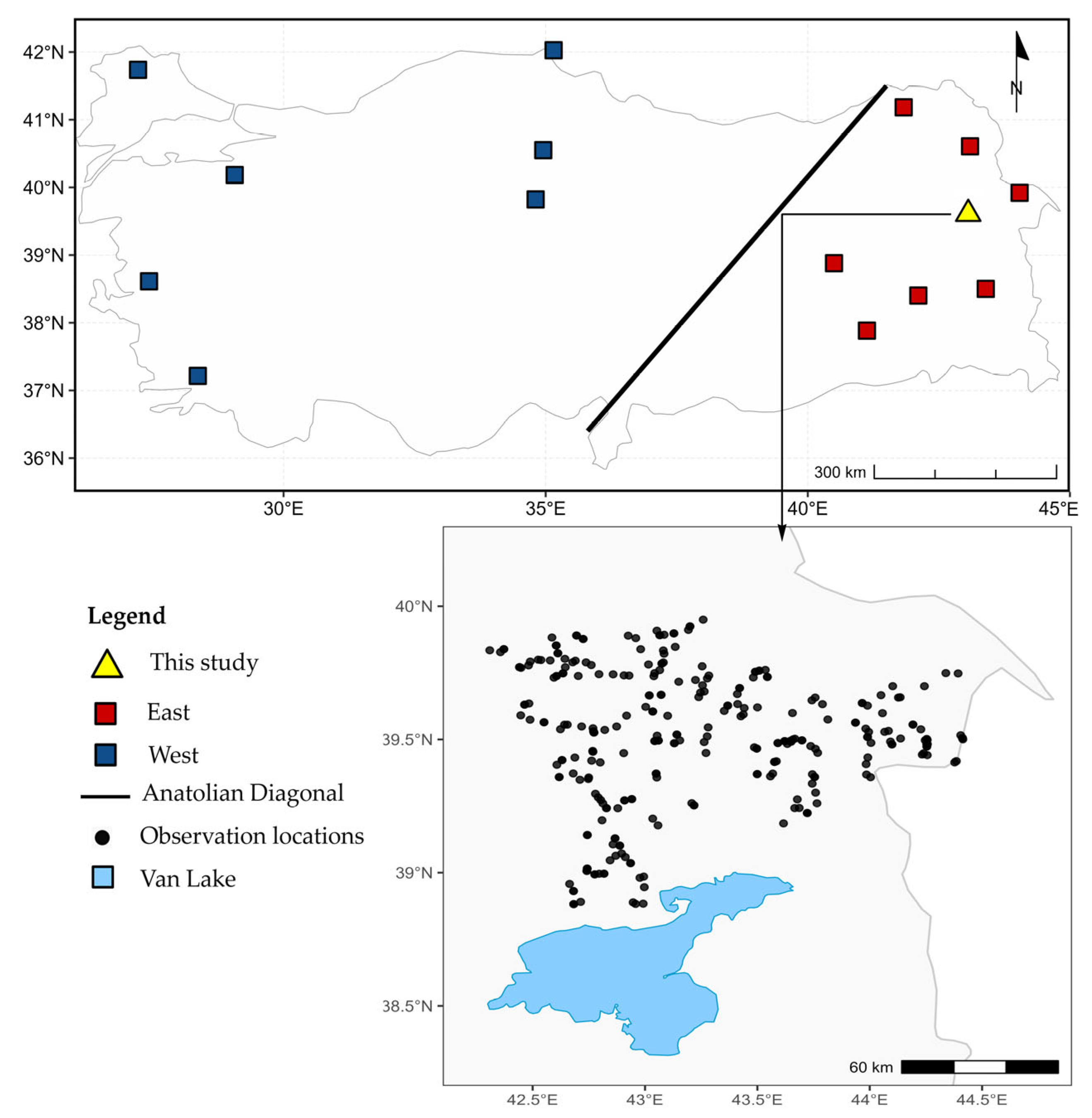
The study was conducted across a broad longitudinal gradient in Türkiye, encompassing 15 provinces positioned on both the western and eastern sides of the Anatolian Diagonal (
Figure 1,
Table S1). This mountain system acts as a major biogeographical boundary, and sampling units were categorized into two groups (West and East) to test for compositional shifts in mammal assemblages.
Within this framework, intensive field studies were conducted in Ağrı Province (2014–2015), covering the high-altitude steppes of the eastern Diagonal. The environmental characteristics of the Ağrı study area were quantified using CORINE Land Cover data, revealing a landscape dominated by croplands (44%) and bare lands (31%), followed by shrub lands (22%) and water bodies (2%) (
Table 1).
2.2. Data Collection and Harmonization
2.2.1. Ağrı Province Inventory
The mammal fauna of Ağrı Province was compiled from three primary sources: (i) fieldwork, (ii) previous studies, and (iii) interviews with local residents. Mammal surveys were conducted at 251 localities across 92 map sheets (1:25,000 scale) in Ağrı Province, following the sampling framework of the Provincial Directorate of Nature Conservation and National Parks. During the 73-day field study, a minimum coverage of 10% per map sheet was achieved. Comprehensive data, such as geographic coordinates, timestamps, and abundance, were documented for each detection (
Table S2). Mammal species were recorded through both direct and indirect observation methods. Direct observations were conducted using binoculars (Travel 10 × 40; Levenhuk, Tampa, FL, USA), digital video cameras (HDR-CX190E; Sony, Tokyo, Japan), and DSLR cameras (D7100; Nikon, Tokyo, Japan). Indirect evidence, such as footprints, scats, feeding remains, and scratch marks, was systematically identified and documented. To maximize sampling efficiency across diverse habitats, surveys were conducted at sunrise and sunset. The study area encompassed a broad ecological gradient, including mountains, forests, moorlands, wetlands, and agricultural zones, as well as anthropogenic environments ranging from urban centers to rural settlements. The spatial distribution of the recorded observations is presented in
Figure 1.
2.2.2. Comparative Dataset
To minimize sampling bias in constructing the dataset for regional comparisons, a selective protocol was implemented. In this context, published literature data from different regions of Türkiye were reviewed; however, only provinces (n = 15) that were systematically surveyed using camera trapping and direct observation methods in accordance with the standards of the ‘National Biodiversity Inventory and Monitoring Project’ of the General Directorate of Nature Conservation and National Parks (DKMP), Ministry of Agriculture and Forestry, were included in the analyses. This standardization minimized differences in data quality among provinces, ensuring a more reliable biodiversity signal.
2.2.3. Taxonomic and Temporal Scope
The scope of the analysis was limited to medium- and large-bodied mammals to ensure higher detectability and more robust inventory data. Small mammals (Rodentia and Soricomorpha) were omitted from the dataset due to significant methodological heterogeneity and elevated ‘betajac’ values observed between studies. Finally, all faunistic records were transformed into a binary presence–absence matrix to mitigate potential biases in taxonomic resolution.
2.3. Statistical Analyses
Statistical analyses were performed using R v. 4.5.2 (R Foundation for Statistical Computing, Vienna, Austria) and categorized into two scales: local (Ağrı) and regional (Diagonal comparison).
2.3.1. Local Diversity
For the Ağrı dataset, where individual counts were available, alpha diversity was quantified using Shannon (H’) and Richness (S) indices. Gamma diversity was calculated by pooling abundance data across all localities. Sampling completeness was evaluated using the Chao1 richness estimator. The Rank–Abundance Distribution (RAD) was modeled to assess niche partitioning, and community structure was visualized using the vegan package.
2.3.2. Regional Biogeographical Comparisons
To explore the potential structuring effect of the Anatolian Diagonal, beta diversity was quantified using Jaccard dissimilarity and partitioned into turnover and nestedness components [
50]. Because the analyses rely on incidence-based data derived from heterogeneous literature sources, the resulting estimates reflect patterns of compositional differentiation at a regional scale and should be interpreted cautiously.
Multivariate ordination techniques (NMDS and PCoA) were applied to visualize similarities among provinces. Differences between western and eastern groups were evaluated using PERMANOVA (adonis2, 999 permutations). Given the non-standardized sampling effort among provinces, PERMANOVA results indicate statistically detectable differences in species composition but do not imply fully standardized ecological equivalence among sites.
2.3.3. Environmental and Habitat Modeling
Environmental variables, including habitat composition, elevation, and slope, were extracted and standardized in R. Five major CORINE land-cover categories—agriculture, forest, grassland, rocky areas, and wetlands—were used as environmental predictors. To evaluate the relationship between mammalian community composition and these environmental factors, community comparisons, ordination, partitioning, and partial CCA (PCCA) were employed.
A Permutational Multivariate Analysis of Variance (PERMANOVA) was performed using the vegan package to test for significant differences in species assemblages between the eastern and western sides of the Anatolian Diagonal. Canonical Correspondence Analysis (CCA) was also used to examine the influence of habitat structure and biogeographical position on community divergence. To isolate the unique contribution of the Anatolian Diagonal, PCCA models were fitted by conditioning on specific variables: (i) Habitat/Biogeography: Assessing the effect of habitat while controlling for biogeographical position. (ii) Biogeography/Habitat: Assessing the independent effect of the Anatolian Diagonal while controlling for contemporary habitat composition, elevation, and slope.
3. Results
3.1. Ağrı Mammalian Fauna
3.1.1. Mammalian Species Richness and Abundance
This comprehensive study of mammalian diversity in Ağrı Province identified 32 species across six orders and seventeen families, spanning 251 localities. According to the IUCN (Mediterranean assessment),
Capra aegagrus and
Ursus arctos are classified as Vulnerable (VU), while
Lutra lutra,
Lynx lynx,
Spermophilus xanthoprymnus,
Scarturus williamsi,
Mesocricetus brandti,
Rhinolophus hipposideros,
Rhinolophus ferrumequinum, and
Myotis blythii are listed as Near Threatened (NT). Additionally,
Nannospalax xanthodon is categorized as Data Deficient (DD), and the remaining 21 species are listed as Least Concern (LC). Notably, this survey recorded
Dryomys nitedula and
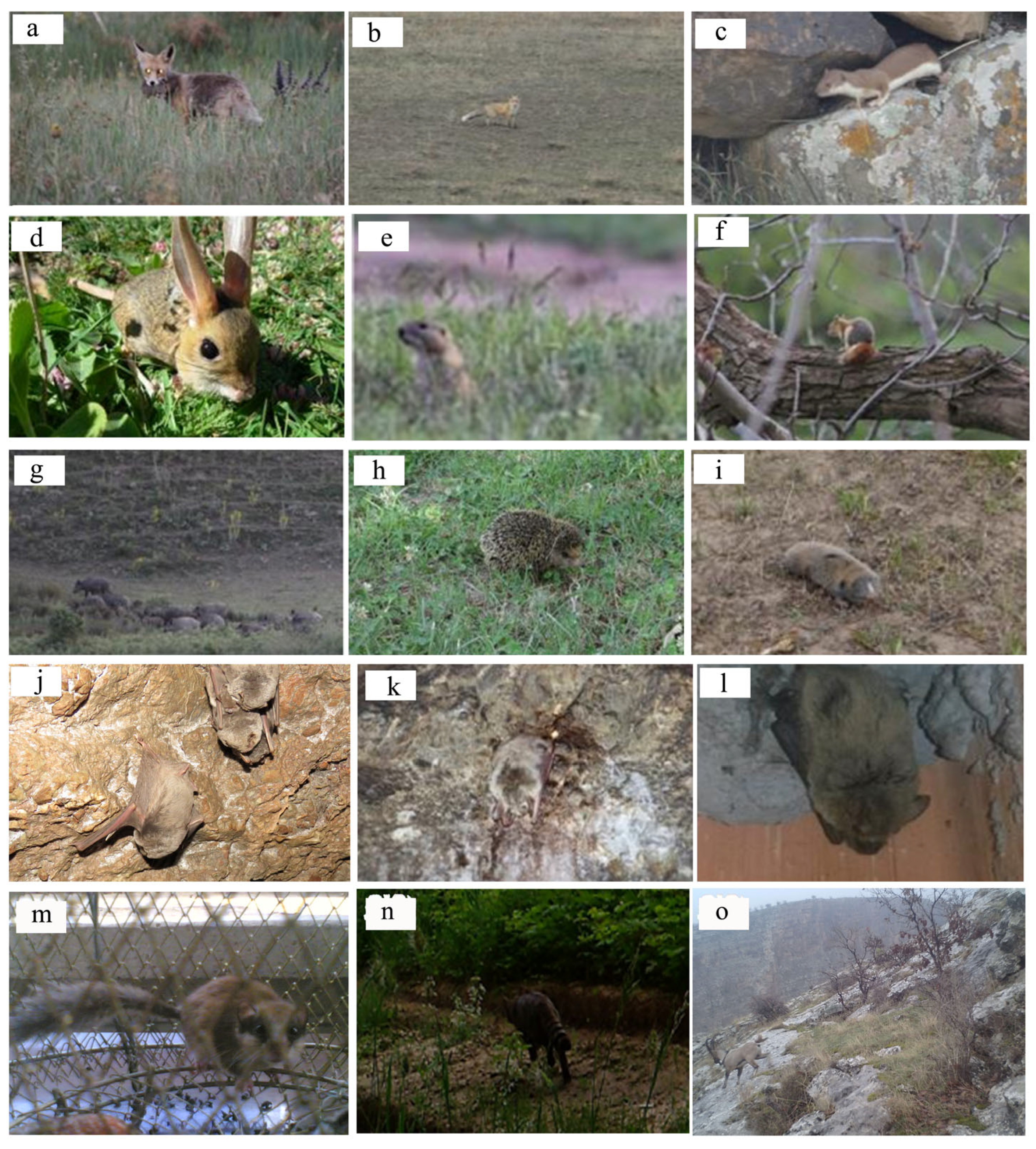
Felis silvestris as new findings not included in previous preliminary reports. Representative images of some of the species identified in the study are provided in
Figure 2.
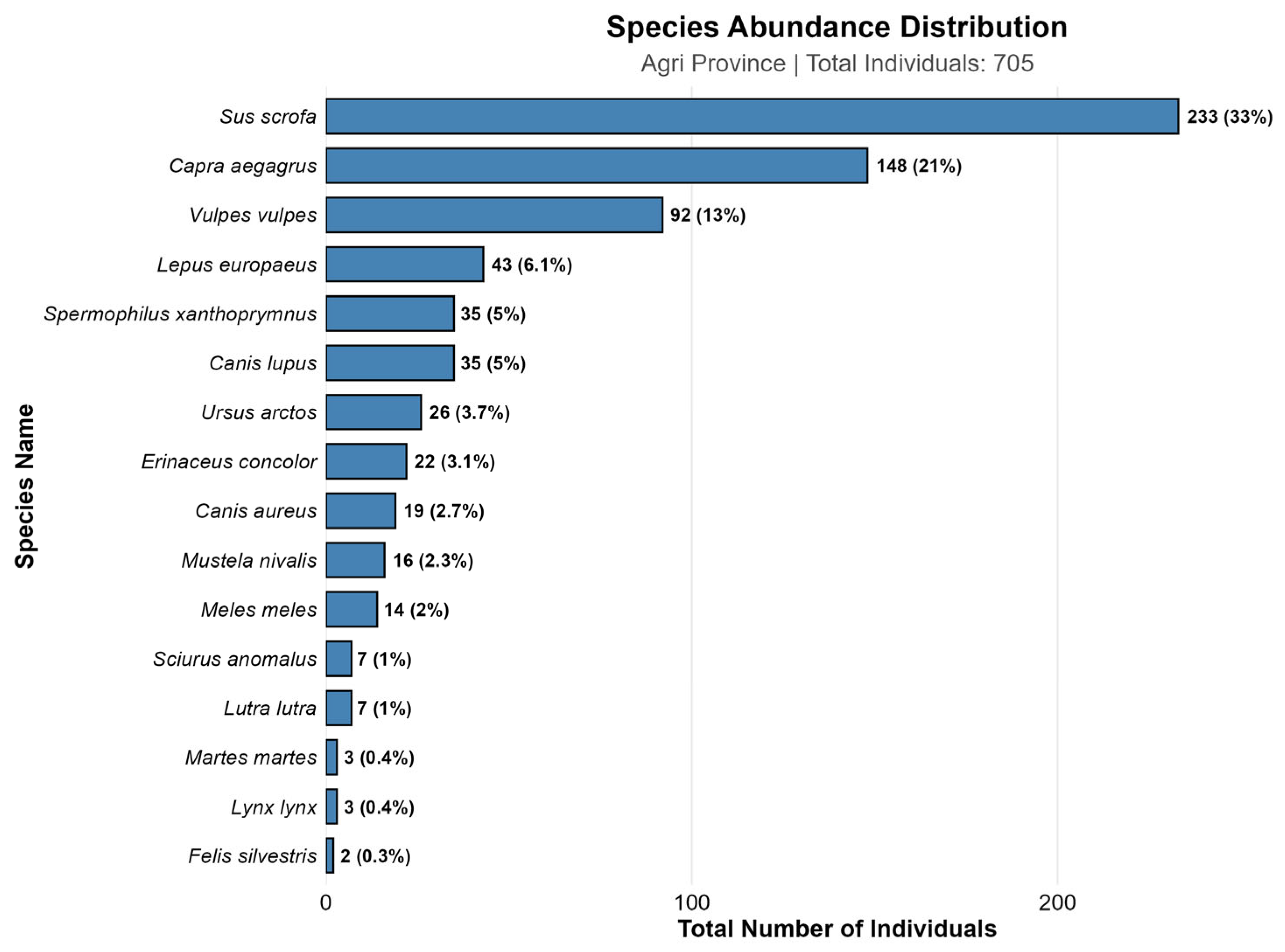
While the overall inventory includes a broad range of taxa, the core analysis focused on 16 medium- and large-sized mammals recorded across 228 localities, comprising 705 individuals. The community composition within this group was dominated by a few highly abundant species;
Sus scrofa was the most prevalent, accounting for 33.0% of total observations (
n = 233), followed by
Capra aegagrus (21.0%,
n = 148) and
Vulpes vulpes (13.0%,
n = 92). Conversely,
Felis silvestris and
Martes martes were the rarest species, representing less than 1% of the total community (
Figure 3). Ecological observations indicated that the high density of
C. aegagrus was notably associated with rocky terrains (CORINE Class 332), while
S. scrofa occurrences were concentrated in the ecotones between agricultural areas (Class 211) and shrublands (Class 324).
3.1.2. Alpha Diversity and Sampling Efficiency
The alpha diversity analysis revealed a Shannon–Wiener index (H’) of 2.08 indicating a moderate level of diversity with a clear dominance structure. Pielou’s evenness index (J’ = 0.73) further confirmed that individuals were not perfectly evenly distributed among species, reflecting the high abundance of
Sus scrofa and
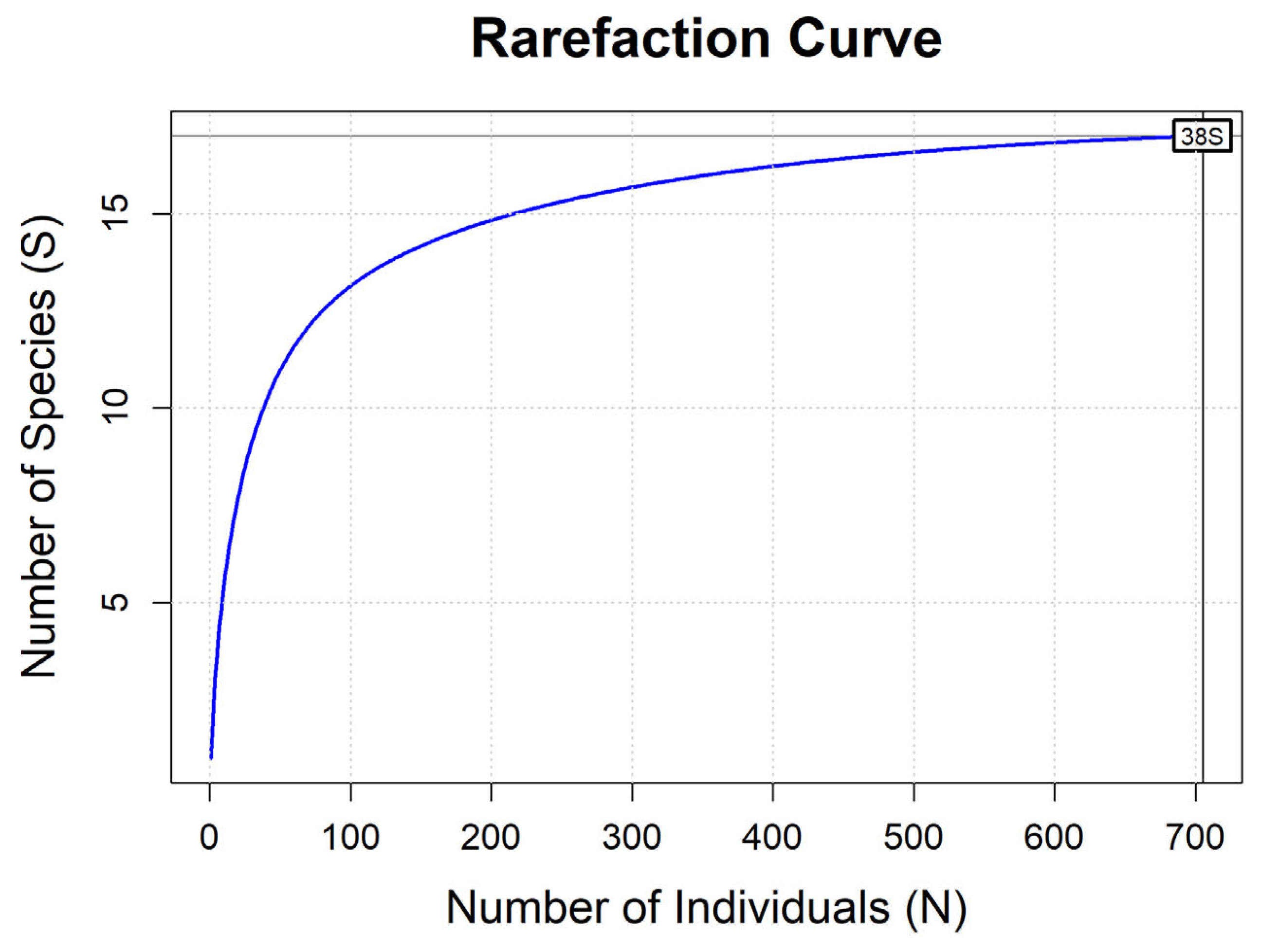
Capra aegagrus. Sampling completeness was validated using the Chao1 richness estimator; the observed richness (Sobs = 17) and the estimated richness (Schao1 = 17.0 ± 0.24) converged perfectly. This statistical alignment, supported by the ACE estimator (17.5 ± 1.93), demonstrates that the sampling effort across 228 localities was exhaustive and sufficient to capture the regional mammalian biodiversity (
Figure 4).
3.1.3. Community Structure and Trophic Guilds
The Rank–Abundance Distribution (RAD) was best explained by the Lognormal model (AIC: 95.29), outperforming the Preemption and Zipf models. This fit indicates a well-structured community in which niche partitioning is governed by multiple environmental factors rather than by a single dominant resource (
Supplementary Figure S1).
Trophic analysis showed that the community is primarily composed of omnivores, largely driven by the high density of Sus scrofa. However, a significant presence of carnivores (n = 167 individuals across 6 species), including apex predators such as Canis lupus and Ursus arctos, indicates a functional and relatively intact food web. Herbivores were represented by three species, with Capra aegagrus being the primary contributor to this guild.
3.2. Comparison Sites
3.2.1. Differences in Mammal Assemblages Between West and East of the Anatolian Diagonal
Permutational multivariate analysis of variance (PERMANOVA) based on Jaccard dissimilarity revealed significant differences in mammal assemblage composition between the western (n = 7) and eastern (n = 8) sides of the Anatolian Diagonal (F = 3.08, R2 = 0.19, p = 0.007). Biogeographical position accounted for 19.2% of the total variation in community composition.
To verify that the significant PERMANOVA result was not driven by differences in multivariate dispersion among groups, a test for homogeneity of multivariate dispersions (betadisper) was conducted. The analysis revealed no significant difference in dispersion between the western and eastern groups (F = 0.051, p = 0.825), indicating that the observed compositional differentiation reflects genuine shifts in community structure rather than unequal within-group variability.
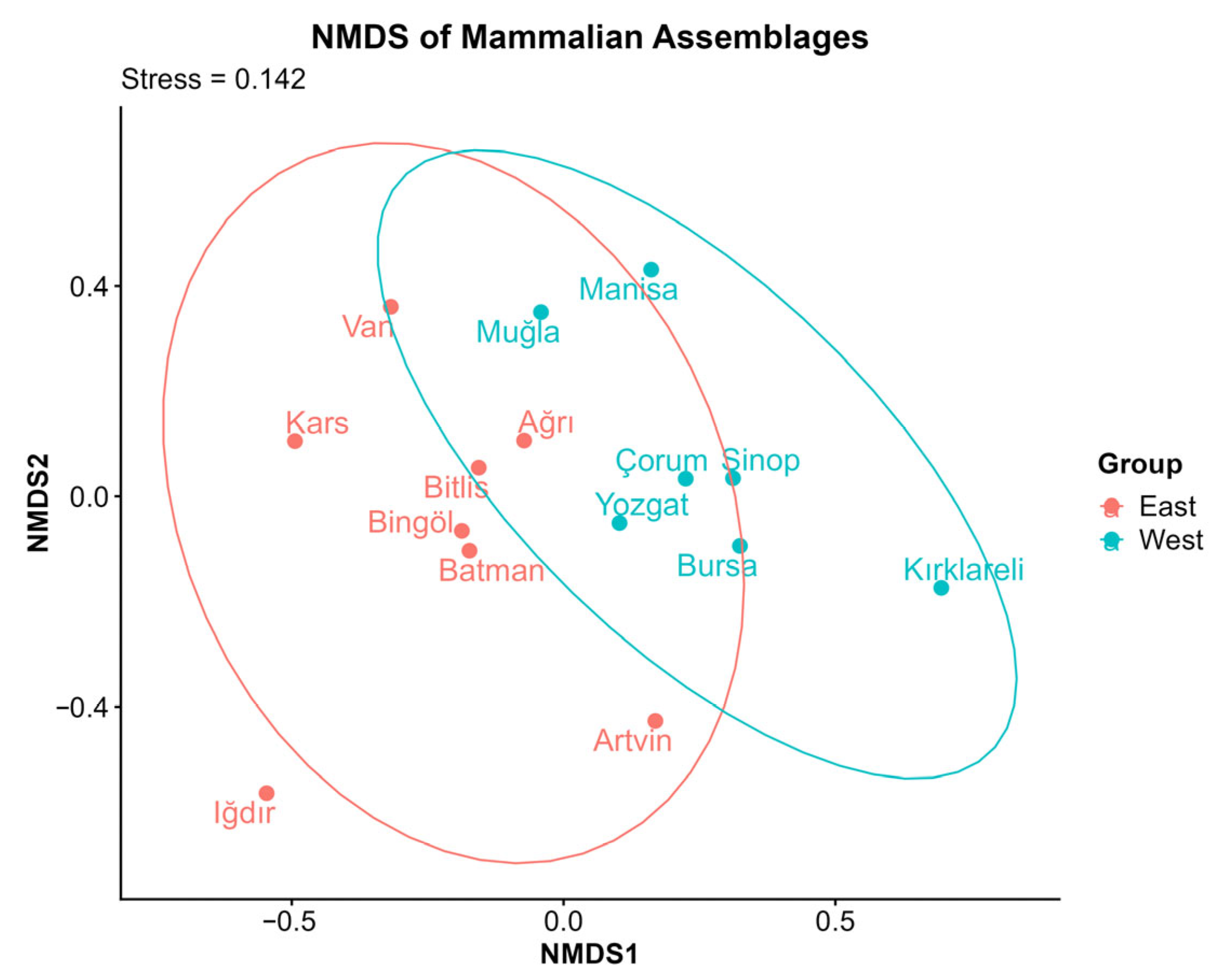
Non-metric multidimensional scaling (NMDS) ordination based on Jaccard dissimilarity (Stress = 0.142) effectively visualized the compositional differentiation between western and eastern assemblages (
Figure 5). The ordination plot showed clear spatial segregation of provinces by their position relative to the Anatolian Diagonal. Although some overlap exists between the 95% confidence ellipses, the centroids of the two groups are distinctly separated, reflecting a significant shift in community structure.
3.2.2. Beta Diversity Partitioning
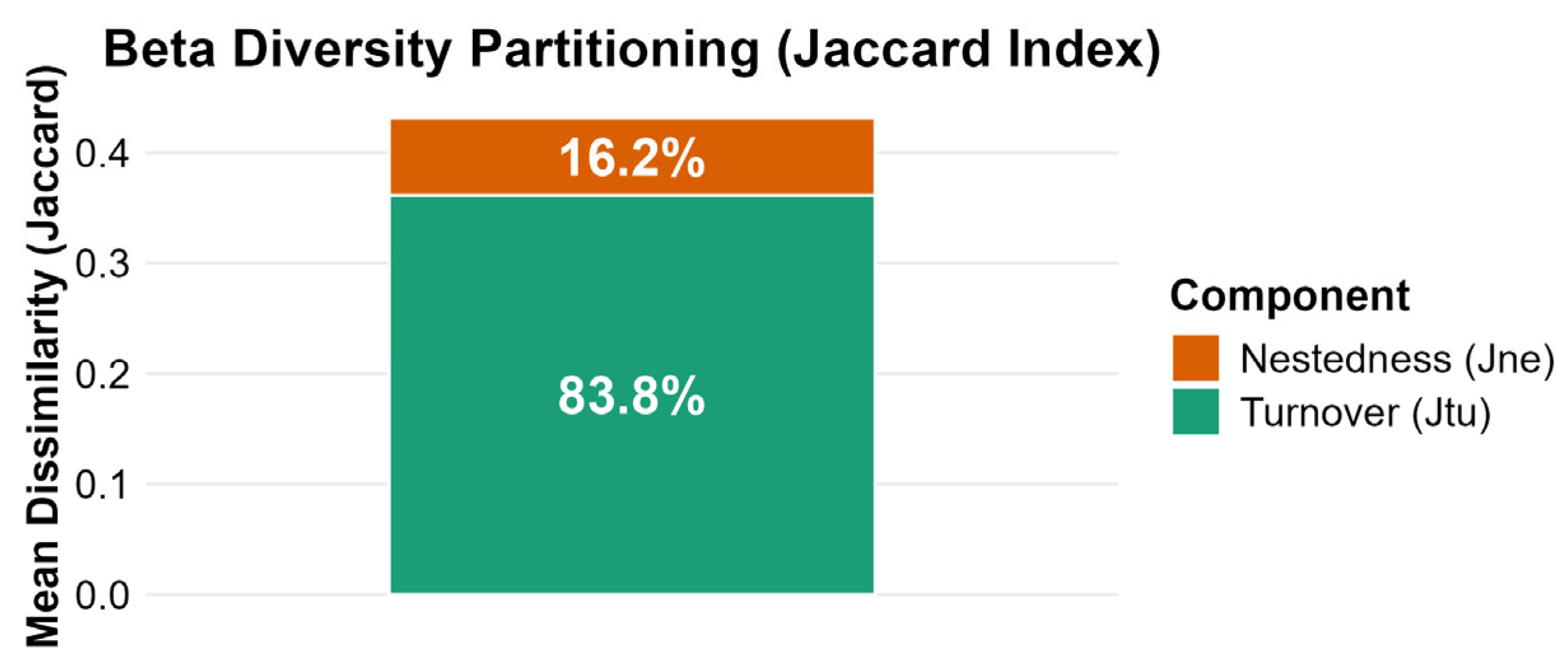
The overall beta diversity (βjac) across the entire study area was 0.431. Partitioning this diversity into its core components revealed that species turnover (βjtu = 0.361) is the overwhelming driver of community differentiation, accounting for 83.8% of the total beta diversity. In contrast, nestedness-resultant dissimilarity (βjne = 0.070) contributed only 16.2% (
Figure 6).
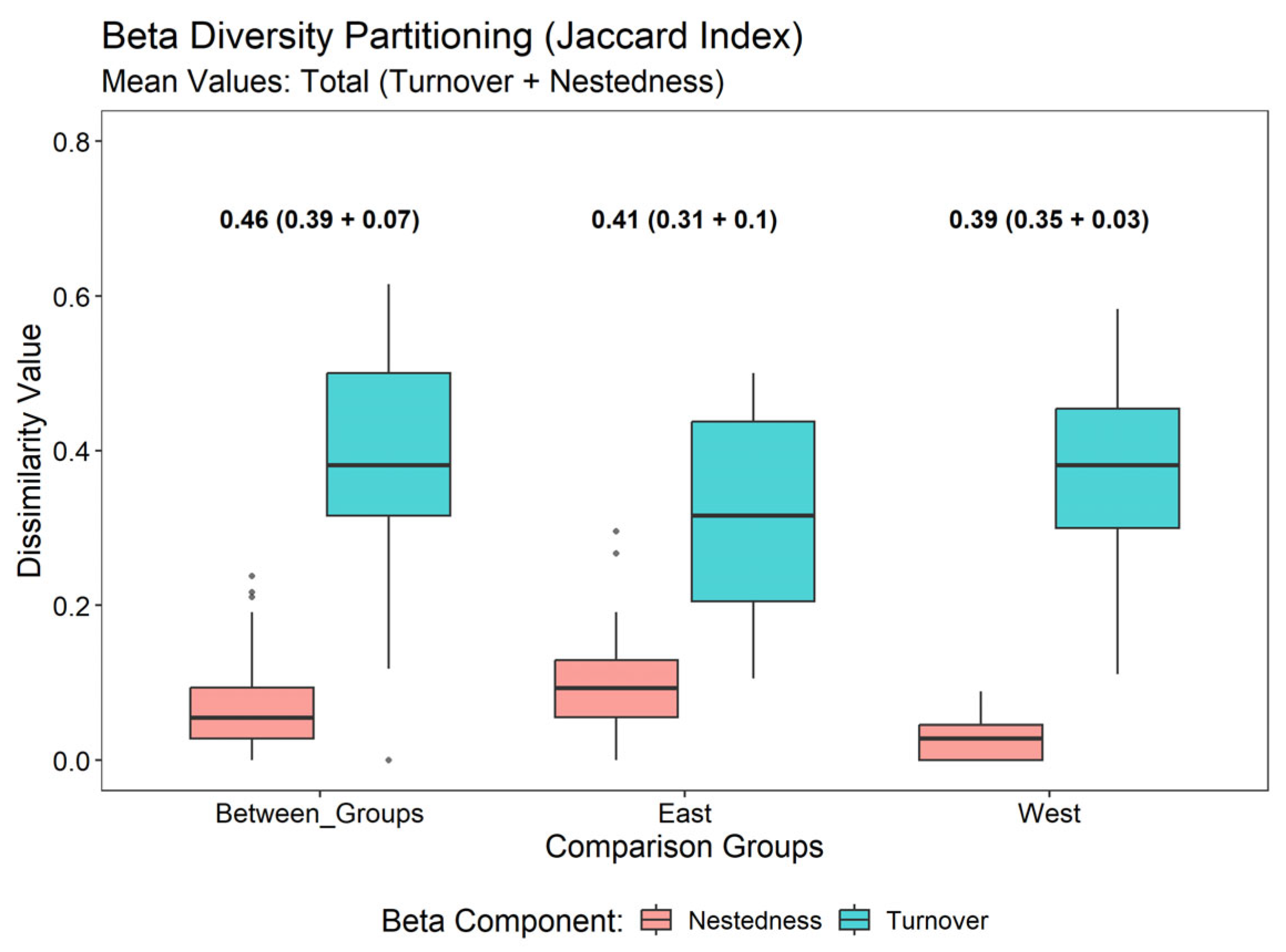
The beta diversity partitioning analysis revealed that taxonomic differentiation of wild mammal assemblages across the Anatolian Diagonal is primarily driven by species turnover rather than nestedness. Total dissimilarity was highest in the inter-regional comparison (0.46), exceeding the intra-regional variation observed within the Eastern (0.41) and Western (0.39) sectors (
Figure 7). In all comparisons, the turnover component (blue) accounted for the vast majority of the total beta diversity, particularly in the Western region where it contributed 0.35 to the total dissimilarity of 0.39. This suggests that mammalian community structure on the western side of the Diagonal is characterized by high species replacement between localities, likely reflecting fine-scale environmental filtering or habitat heterogeneity. Conversely, the nestedness-derived component (pink) remained consistently low, although it was slightly more pronounced in the Eastern region (0.1) compared to the Western region (0.03). The marginal increase in nestedness in the East may indicate a subsetting effect, where certain high-altitude or climatically harsh sites harbor impoverished versions of more diverse regional species pools. However, the overall dominance of the turnover component (0.39 for ‘Between_Groups’) underscores the role of the Anatolian Diagonal as a significant biogeographic barrier, facilitating distinct species compositions on either side through replacement rather than non-random species loss.
The dominance of the turnover component (species replacement) over the nestedness component (richness differences) provides conclusive evidence that the observed community differences are not due to unequal sampling efforts or species loss. Instead, these results confirm that the Anatolian Diagonal acts as a significant dispersal barrier, facilitating a high degree of species replacement between the two regions.
3.2.3. Canonical Correspondence Analysis
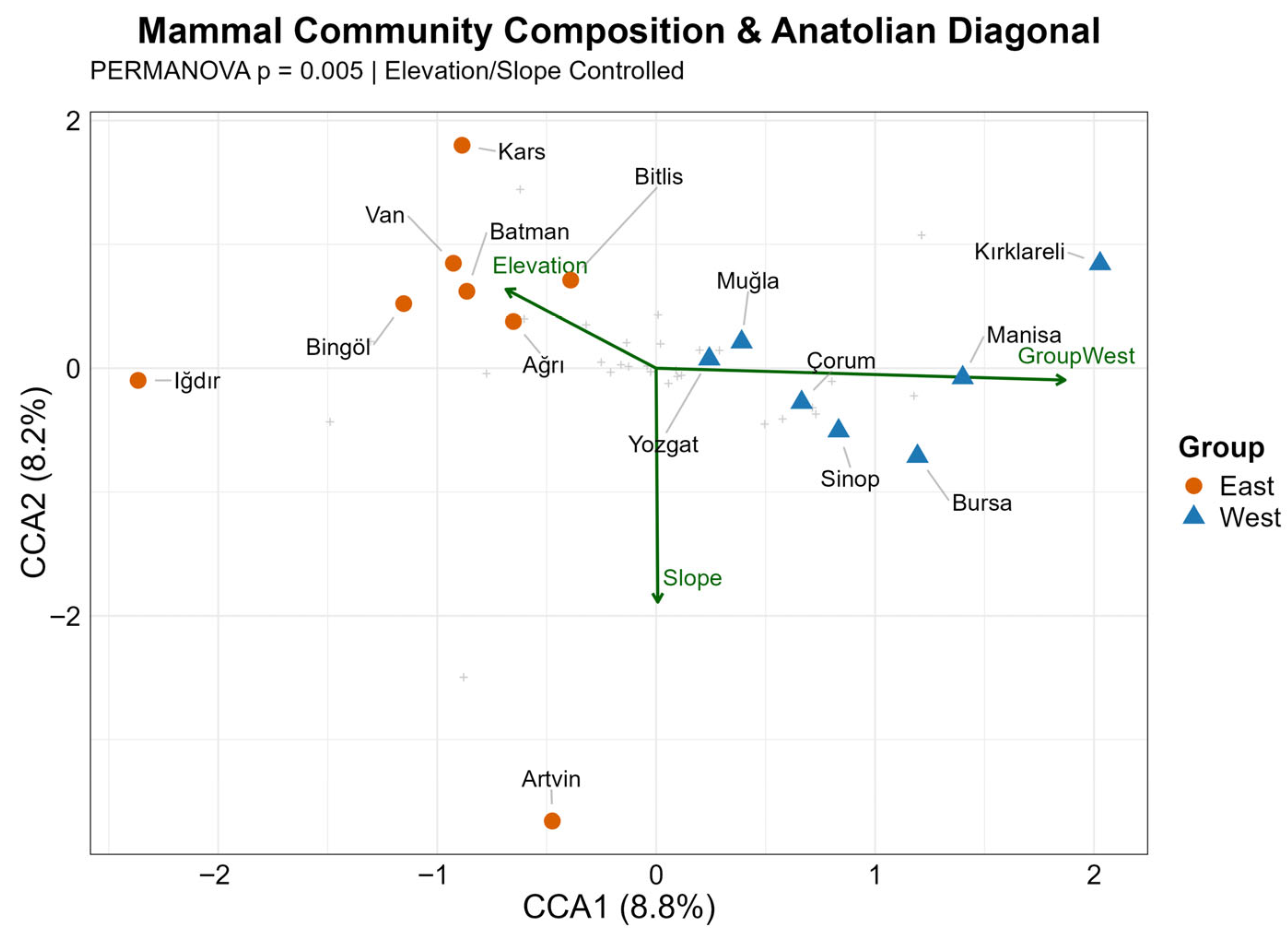
To further disentangle the effects of topography and geography, a Canonical Correspondence Analysis (CCA) was performed. The full model, including biogeographical position, elevation, and slope, was highly significant (
p = 0.005) (
Figure 8). Even after controlling for topographic variables, the partial CCA revealed that biogeographical position had a strong independent effect on mammal community composition (
p = 0.005). In contrast, topographic variables such as elevation (
p = 0.204) and slope (
p = 0.054) did not have a significant independent influence on community structure after accounting for geographical position. These findings indicate that the Anatolian Diagonal functions as an independent biogeographical barrier that influences mammal assemblages, beyond simple habitat or elevation differences (
Figure 8).
3.2.4. Nestedness Patterns (NODF)
Nestedness analysis based on the NODF metric revealed a moderate nested structure across all sites (NODF = 53.34). When analysed separately, nestedness values were considerably lower and highly similar for the eastern (NODF = 38.00) and western (NODF = 37.30) subsets. The higher nestedness observed when all sites were considered together suggests that the nested structure largely emerges from differences in species composition between regions rather than from a pronounced nested ordering of communities within each region.
These findings are consistent with the results of beta diversity partitioning based on the Jaccard index, which indicated that most of the compositional dissimilarity among sites was explained by species turnover (jtu = 0.361), whereas the contribution of nestedness (jne = 0.070) was comparatively small (total β-diversity, jac = 0.431). Together, these results indicate that regional differences in mammal communities are primarily driven by species replacement rather than by nested species loss across sites.
4. Discussion
4.1. Effects of Habitat Composition and Biogeographical Position
The Anatolian Diagonal has long been recognized as a major biogeographical boundary structuring patterns of species distributions and endemism [
51,
52,
53,
54]. Our results provide quantitative, community-level evidence that this mountain system significantly structures assemblages of medium- and large-sized mammals. The significant differences in mammal community composition detected by PERMANOVA (F = 3.08, R
2 = 0.19,
p = 0.007) between the western and eastern sides of the Diagonal indicate that this region functions not only as a historical barrier but also as a contemporary biogeographical filter. Notably, biogeographical position alone explains 19.2% of the total variation in community structure [
2].
Partitioning of Jaccard-based beta diversity revealed that assemblage dissimilarity was heavily dominated by species turnover (83.8%) rather than nestedness (16.2%). This suggests that differences between western and eastern mammal assemblages primarily reflect species replacement across the Anatolian Diagonal, rather than simple species loss or gain [
29,
30,
31,
32,
33,
34,
35]. Historically, Anatolia served as a critical corridor for faunal dispersal during the Early Miocene and subsequently functioned as a vast, non-homogeneous refuge area during the climatic fluctuations of the Pleistocene [
9,
51]. In this context, the Anatolian Diagonal likely acted as a refugial boundary where isolation by barrier facilitated the divergence of lineages by helping different taxa escape the analogous effects of both glacial and interglacial cycles [
33,
34,
51,
55,
56]. The high turnover observed suggests that the Diagonal limited post-glacial expansions, effectively ‘trapping’ certain lineages on either side and reinforcing long-term spatial isolation that persists in contemporary assemblage structures [
35]. Furthermore, the fact that inter-regional dissimilarity across the Diagonal (0.46) was higher than the intra-regional means (East: 0.41; West: 0.39) underscores its role as a primary filter, exceeding the influence of internal environmental gradients. Such turnover-dominated beta diversity is consistent with the interpretation of the Anatolian Diagonal as a biogeographical transition zone, where faunal elements of European–Mediterranean origin in western Anatolia are progressively replaced by Irano-Turanian and eastern Anatolian elements [
29,
30,
31,
32,
33,
34,
35,
51,
52,
53].
4.2. Disentangling Habitat and Biogeography: Legacy Effects
A critical finding of this study, derived from Partial Canonical Correspondence Analysis (PCCA), is that biogeographical position (west vs. east) retained a highly significant independent effect on mammal community composition (
p = 0.005) even after controlling for contemporary habitat composition. Conversely, habitat variables alone were not significant when the effect of biogeographical position was accounted for. This indicates that historical and biogeographical processes associated with the Anatolian Diagonal play a more important role than present-day land-cover composition in structuring mammalian assemblages [
29,
30,
31,
32,
33,
34,
35,
51,
52,
53,
54]. While current CORINE habitat classes are ecologically important for species occupancy, they do not fully explain the observed community divergence. Instead, legacy effects of past climatic and geological processes continue to shape the contemporary mammalian distribution patterns in Anatolia [
56,
57,
58]. The potency of biogeographical position over contemporary land cover suggests that the filtering mechanism is driven by deeper environmental gradients, such as the sharp transition between the humid Mediterranean climate and the semi-arid, continental Irano-Turanian climate. These climatic gradients likely act as physiological filters, limiting the westward expansion of cold-adapted eastern species and the eastward dispersal of thermophilic western elements. Thus, the Diagonal represents a complex interaction between topographic obstruction and climatic constraints [
56,
57,
58].
4.3. Mammalian Diversity in Ağrı and Regional Comparisons
The 16 species identified in Ağrı province represent approximately 40% of the medium- and large-sized terrestrial mammals found in Türkiye [
14]. Our findings show that the community is dominated by
Sus scrofa (33%) and
Capra aegagrus (21%), which together account for more than half of the recorded individuals. The dominance of plastic species such as
S. scrofa,
Vulpes vulpes, and
Canis lupus across both sides of the Diagonal reflects their high ecological adaptability [
5]. However, the presence of
C. aegagrus and its strong association with high-altitude rocky areas (CORINE Class 332), combined with the absence of Mediterranean-adapted species, confirms that regional distribution is governed by the interplay of climate and the Diagonal’s filtering effect [
29,
30,
31,
32,
33,
34,
35]. Beyond taxonomic turnover, our results point toward functional shifts in assemblage structure. For instance, the high abundance of
C. aegagrus in the East reflects a specialization toward vertical, high-altitude niches, whereas western assemblages are characterized by species associated with temperate forest mosaics. This suggests that the Anatolian Diagonal filters species based on functional traits related to habitat specialization and climatic tolerance, leading to ecologically distinct communities that fulfill similar trophic roles but via different taxonomic representatives [
29,
30,
31,
32,
33,
34,
35,
51,
52,
53,
54].
4.4. Taxonomic Considerations and Sampling Consistency
The exclusion of small mammals (Rodentia and Soricomorpha) was a strategic decision to minimize sampling bias. High betajac values in small mammals across all regions, along with high NMDS stress values, indicated inconsistencies in survey efforts among literature sources. By focusing on medium and large mammals—and specifically utilizing standardized data from provinces with high-quality inventory records—we ensured a more reliable signal for biogeographical analysis. From a conservation perspective, the predominance of turnover suggests that both sides of the Diagonal host distinct communities. Protecting representative habitats on both sides—specifically, the high-altitude rocky areas in the east and the forest mosaics in the west—is crucial for preserving Anatolia’s evolutionary processes [
51,
52,
53,
54].
4.5. Methodological Limitations and Interpretative Scope
Although this study applies standardized multivariate approaches, some limitations remain. First, while we focused on provinces with standardized survey data to reduce resolution bias, differences in sampling duration and detection techniques may still exist. Second, the use of incidence-based indices assumes equal detectability, which can vary with habitat structure. Third, environmental variables were derived from coarse-grained CORINE classes; fine-scale microclimatic factors might further contribute to differentiation. Despite these limitations, the robust significance of the PERMANOVA and PCCA results, alongside the high turnover rates, provides strong evidence consistent with a structuring role of the Anatolian Diagonal at the community level. Future research incorporating molecular phylogeography and high-resolution climatic modeling would be instrumental in further disentangling the relative contributions of historical vicariance versus contemporary environmental filtering in shaping these mammalian assemblages.
5. Conclusions
This study provides a comprehensive assessment of the diversity of medium- and large-sized mammals in Ağrı Province within a broader biogeographical framework. Although Ağrı represents a relatively small proportion of Türkiye’s total land area, the documented assemblage underscores its ecological significance within the Eastern Anatolian highland ecosystem and provides essential baseline data for regional monitoring and conservation planning.
At the regional scale, our comparative analyses reveal that mammal assemblages differ significantly between the western and eastern sides of the Anatolian Diagonal. The overwhelming predominance of species turnover (83.8%) over nestedness indicates that compositional differences are primarily driven by species replacement across this transition zone. This striking turnover rate suggests that the Anatolian Diagonal does not merely act as a filter that reduces species richness in one direction; rather, it functions as a genuine biogeographical barrier where distinct species assemblages replace one another. Such a high replacement rate supports the hypothesis that the Diagonal has historically promoted allopatric speciation or restricted the post-glacial expansion of divergent lineages. Furthermore, partial constrained ordination (PCCA) results support the interpretation that biogeographical position contributes to community differentiation independently of contemporary habitat composition.
However, given the inherent heterogeneity in sampling designs, temporal coverage, and data sources across provinces, these findings should be interpreted with caution. While the results are strongly consistent with a biogeographical filtering effect associated with the Anatolian Diagonal, they do not constitute definitive proof of a strict, impermeable barrier. Future research incorporating standardized, detection-corrected, and abundance-based surveys across multiple regions will be required to rigorously test the underlying mechanisms of mammalian assemblage differentiation in Anatolia.
The observed divergence in mammalian communities also reflects broader biogeographic patterns, including latitudinal and longitudinal gradients of biodiversity. In the complex topography of Anatolia, these gradients often interact with the peninsula effect, where species richness and turnover are influenced by the narrowing of landmasses and increasing isolation from source populations. Such patterns have been well-documented in the region’s herpetofauna [
59] and are here corroborated by our mammalian dataset, suggesting a consistent biogeographic response across different taxonomic groups.
Recognizing these gradients is essential for applied biogeographical solutions [
60]. From a conservation standpoint, the high beta diversity observed along longitudinal transitions requires the implementation of ecological networks that maintain connectivity between the Mediterranean, Iranian, and European faunal elements. By integrating these spatial trends into a historical applied ecology framework [
61], practitioners can better understand how past climatic shifts have shaped current gradients. This dataset thus serves as a critical tool for ‘situation and context analysis’ [
62], allowing for the development of logical frameworks [
63] that prioritize habitat heterogeneity along these environmental axes. Incorporating such multi-dimensional biogeographic data into the IUCN project cycle ensures that conservation efforts are aligned with the fundamental ecological rules governing the region’s biodiversity.
Supplementary Materials
The following supporting information can be downloaded at
https://www.mdpi.com/article/10.3390/conservation6020058/s1. Table S1: The wild mammals of Ağrı Province and the fourteen comparison areas, IUCN—International Union for Conservation of Nature, DD—Data Deficient, LC—Least Concern, NT—Near Threatened, VU—Vulnerable; Table S2: The sampling locations and wild mammal records of Ağrı Province with their conservation statuses. IUCN—International Union for Conservation of Nature, BERN—Biological and Industry Reporting Network, CITES—Convention on International Trade in Endangered Species of Wild Fauna and Flora, MAKK—Central Hunting Commission Decisions, DD—Data Deficient, LC—Least Concern, NT—Near Threatened, VU—Vulnerable, and N—number of individuals; Figure S1. Rank–abundance distribution of species recorded in the study area. Black points represent the observed species abundances, while colored lines indicate the fitted species–abundance distribution models: Null (black), Preemption (red), Lognormal (green), Zipf (blue), and Mandelbrot (cyan). Species are ordered by rank on the
x-axis, and abundance is presented on a logarithmic scale on the
y-axis. The comparison of observed and predicted curves illustrates differences in model performance in describing the community structure.
Funding
This research was funded by the General Directorate of Nature Conservation and National Parks of the Ministry of Agriculture and Forestry through the project titled ‘Inventory and Monitoring of the Terrestrial and Freshwater Ecosystems Biodiversity in Ağrı Province. No specific grant number was assigned to this project.
Institutional Review Board Statement
Not applicable.
Informed Consent Statement
Not applicable.
Data Availability Statement
Acknowledgments
I want to thank the employees of the Provincial Directorate of Nature Conservation and National Parks of Ağrı Province for their support during the field studies. Additionally, I would like to thank the anonymous reviewers and editorial team whose valuable critiques and comments significantly shaped the work.
Conflicts of Interest
The author declares no conflicts of interest.
References
- Eken, G.; Bozdoğan, M.; İsfendiyaroğlu, S.; Kılıç, D.T.; Lise, Y. Türkiye’nin Önemli Doğa Alanları; Doğa Derneği: Ankara, Turkey, 2006; pp. 1–640. ISBN 9789759890131. [Google Scholar]
- Ambarlı, D.; Zeydanlı, U.S.; Balkız, Ö.; Aslan, S.; Karaçetin, E.; Sözen, M.; Ilgaz, Ç.; Ergen, A.G.; Lise, Y.; Caglayan, S.D.; et al. An overview of biodiversity and conservation status of steppes of the Anatolian Biogeographical Region. Biodivers. Conserv. 2016, 25, 2491–2519. [Google Scholar] [CrossRef]
- Gebo, B.; Takele, S.; Shibru, S. Perception and attitude of the local people toward carnivore population and conservation in the Faragosa-Fura landscape of the Southern Rift Valley, Ethiopia. Conserv. Sci. Pract. 2022, 4, e12705. [Google Scholar] [CrossRef]
- Plön, S.; Andra, K.; Auditore, L.; Gegout, C.; Hale, P.J.; Hampe, O.; Ramilo-Henry, M.; Burkhardt-Holm, P.; Jaigirdar, A.M.; Klein, L.; et al. Marine mammals as indicators of Anthropocene Ocean Health. npj Biodivers. 2024, 3, 24. [Google Scholar] [CrossRef]
- Ambarlı, H.; Ertürk, A.; Soyumert, A. Current status, distribution, and conservation of brown bear (Ursidae) and wild canids (gray wolf, golden jackal, and red fox; Canidae) in Turkey. Turk. J. Zool. 2016, 40, 944–956. [Google Scholar] [CrossRef]
- Agebo, A.; Tekalign, W. Terrestrial medium and large-sized mammalian species diversity in Michole Community Protected Forest, southern Ethiopia. BMC Zool. 2022, 7, 20. [Google Scholar] [CrossRef]
- Uzun, G.; Evcin, Ö. Determination of Dispersal Corridors Used by Large Mammals Between Close Habitats. Diversity 2025, 17, 165. [Google Scholar] [CrossRef]
- Demirsoy, A. Yaşamın Temel Kuralları, Omurgalılar/Amniyota (Sürüngenler, Kuşlar ve Memeliler); Meteksan A.Ş.: Ankara, Turkey, 1992; Volume 3, pp. 1–942. ISBN 975-7746-08-8. [Google Scholar]
- Demirsoy, A. Genel ve Türkiye Zoocoğrafyası “Hayvan Coğrafyası”; Meteksan A.Ş.: Ankara, Turkey, 1996; pp. 1–630. ISBN 975-7746-18-5. [Google Scholar]
- Kuru, M. Omurgalı Hayvanlar, 11th ed.; Palme Yayıncılık: Ankara, Turkey, 2006; pp. 1–841. ISBN 9789757477525. [Google Scholar]
- Kryštufek, B.; Vohralík, V. Mammals of Turkey and Cyprus. Rodentia I: Sciuridae, Dipodidae, Gliridae, Arvicolinae; Zgodovinsko društvo za južno Primorsko: Koper, Slovenia, 2005; ISBN 961-6033-60-3. [Google Scholar]
- Kryštufek, B.; Vohralík, V. Mammals of Turkey and Cyprus. Rodentia II: Cricetinae, Muridae, Spalacidae, Calomyscidae, Capromyidae, Hystricidae, Castoridae; Zgodovinsko društvo za južno Primorsko: Koper, Slovenia, 2009; ISBN 978-961-6732-11-6. [Google Scholar]
- Yiğit, N.; Çolak, E.; Sözen, M.; Karataş, A. Rodents of Türkiye; Demirsoy, A., Ed.; Meteksan A.Ş.: Ankara, Turkey, 2006; pp. 1–154. ISBN 9944-5560-0-9. [Google Scholar]
- Sözen, M.; Çolak, F. An updated checklist of the mammals of Türkiye. Turk. J. Zool. 2025, 49, 252–280. [Google Scholar] [CrossRef]
- Karataş, A.; Bulut, Ş.; Akbaba, B. Camera trap records confirm the survival of the Leopard (Panthera pardus L., 1758) in eastern Turkey (Mammalia: Felidae). Zool. Middle East 2021, 67, 198–205. [Google Scholar] [CrossRef]
- Karataş, A.; Filiz, H.; Yavuz, K.; Özeren, S.C.; Tok, C.V. The Vertebrate Biodiversity of Turkey. In Biodiversity, Conservation and Sustainability in Asia; Öztürk, M., Altay, V., Efe, R., Eds.; Springer: Cham, Switzerland, 2021; pp. 175–274. [Google Scholar] [CrossRef]
- Seyfi, E.; Bulut, Ş.; Karataş, A. Türkiye’nin Tehlike Altındaki Memeli Türleri. Doğanın Sesi 2021, 7, 54–72. Available online: https://dergipark.org.tr/tr/pub/dosder/article/960418 (accessed on 8 March 2026).
- Johnson, J.C.; Gillingham, P.M. An evaluation of mapped species distribution models used for conservation planning. Environ. Conserv. 2005, 32, 117–128. [Google Scholar] [CrossRef]
- Villero, D.; Pla, M.; Camps, D.; Ruiz-Olmo, J.; Brotons, L. Integrating species distribution modelling into decision-making to inform conservation actions. Biodivers. Conserv. 2017, 26, 251–271. [Google Scholar] [CrossRef]
- Koleff, P.; Gaston, K.J.; Lennon, J.J. Measuring Beta Diversity for Presence-Absence Data. J. Anim. Ecol. 2003, 72, 367–382. [Google Scholar] [CrossRef]
- Legendre, P. Studying Beta Diversity: Ecological Variation Partitioning by Multiple Regression and Canonical Analysis. J. Plant Ecol. 2008, 1, 3–8. [Google Scholar] [CrossRef]
- Jurasinski, G.; Retzer, V.; Beierkuhnlein, C. Inventory, Differentiation, and Proportional Diversity: A Consistent Terminology for Quantifying Species Diversity. Oecologia 2008, 159, 15–26. [Google Scholar] [CrossRef] [PubMed]
- Gülsoy, S.; Özkan, K. Importance of Biodiversity from the Ecological Standpoint and Some Diversity Indexes. SDÜ J. Fac. For. 2008, 1, 168–178. Available online: https://dergipark.org.tr/en/download/article-file/195531 (accessed on 8 March 2026).
- Margules, C.; Pressey, R. Systematic conservation planning. Nature 2000, 405, 243–253. [Google Scholar] [CrossRef]
- Socolar, J.B.; Gilroy, J.J.; Kunin, W.E.; Edwards, D.P. How should beta-diversity inform biodiversity conservation? Trends Ecol. Evol. 2016, 31, 67–80. [Google Scholar] [CrossRef] [PubMed]
- Battisti, C. Unifying the trans-disciplinary arsenal of project management tools in a single logical framework: Further suggestion for IUCN project cycle development. J. Nat. Conserv. 2018, 41, 63–72. [Google Scholar] [CrossRef]
- Qian, H. Global comparisons of beta diversity among mammals, birds, reptiles, and amphibians across spatial scales and taxonomic ranks. J. Syst. Evol. 2009, 47, 509–514. [Google Scholar] [CrossRef]
- Santos, F.; Lima, M.G.M.; Espinosa, S.; Ahumada, J.A.; Jansen, P.A.; Spironello, W.R.; Hurtado, J.; Juen, L.; Peres, C.A. Site and species contribution to β-diversity in terrestrial mammal communities: Evidence from multiple Neotropical forest sites. Sci. Total Environ. 2021, 789, 147946. [Google Scholar] [CrossRef] [PubMed]
- Çıplak, B.; Demirsoy, A.; Bozcuk, A.N. Distribution of Orthoptera in relation to the Anatolian Diagonal in Turkey. Articulata 1993, 8, 1–20. [Google Scholar]
- Çıplak, B. Biogeography of Anatolia: The marker group Orthoptera. Mem. SEI 2004, 82, 357–372. [Google Scholar]
- Welch, H.; Kirwan, G.M. Turkey’s ecoregions: Their biodiversity and conservation. In The Birds of Turkey; Kirwan, G., Demirci, B., Welch, H., Boyla, K., Özen, M., Castell, P., Marlow, T., Eds.; Helm: London, UK, 2008; pp. 31–41. [Google Scholar]
- Veith, M.; Schmidtler, J.; Kosuch, J.; Baran, I.; Seitz, A. Paleoclimatic changes explain Anatolian mountain frog evolution: A test for alternating vicariance and dispersal events. Mol. Ecol. 2003, 12, 185–199. [Google Scholar] [CrossRef]
- Mutun, S. Review of oak gall wasps phylogeographic patterns in Turkey suggests a main role of the Anatolian diagonal. Turk. J. For. 2016, 17, 1–6. [Google Scholar] [CrossRef]
- Gür, H. The Anatolian diagonal revisited: Testing the ecological basis of a biogeographic boundary. Zool. Middle East 2016, 62, 189–199. [Google Scholar] [CrossRef]
- Şekercioğlu, Ç.H.; Anderson, S.; Akçay, E.; Bilgin, R.; Can, Ö.E.; Semiz, G.; Tavşanoğlu, Ç.; Yokeş, M.B.; Soyumert, A.; İpekdal, K.; et al. Turkey’s globally important biodiversity in crisis. Biol. Conserv. 2011, 144, 2752–2769. [Google Scholar] [CrossRef]
- Karatay, M.; Ulutürk, S. Effectiveness of Protected Areas in Conserving Mammalian Wildlife Diversity: A Case Study from Türkiye. KSU J. Agric. Nat. 2026, 29, 721–731. [Google Scholar] [CrossRef]
- Ulutürk, S.; Yürümez, G. The threat analysis and conservation needs of wild mammals around Van province, Eastern Anatolia of Turkey. Commagene J. Biol. 2022, 6, 33–38. [Google Scholar] [CrossRef]
- Oğuz, T. Mammal Biodiversity of Batman. Master’s Thesis, Batman University Graduate Education Institute, Batman, Türkiye, 2019. [Google Scholar]
- Toyran, K. Predatory Mammal Species of Bitlis Province (Mammalia: Carnivora). J. Inst. Sci. Technol. 2016, 6, 27–32. [Google Scholar] [CrossRef]
- Toyran, K.; Adızel, Ö. Contributions to the mammal fauna of Bitlis Province, Turkey. J. Sci. Technol. 2018, 8, 90–94. [Google Scholar] [CrossRef]
- Selçuk, A.Y. Mammalian fauna of Kars and Iğdır provinces and conservation status of species (Eulipotyphla, Rodentia, Lagomorpha, Carnivora, Cetartiodactyla). Turk. J. Biod. 2023, 6, 79–87. [Google Scholar] [CrossRef]
- Göktürk, T.; Bucak, F.; Artvinli, T. Mammalian fauna of Artvin. Int. J. Agric. Sci. 2022, 12, 1418–1425. [Google Scholar]
- Gözütok, S. Mammalian Fauna of Bursa Province and Conservation Status of Species (Classis: Mammalia). Int. J. Agric. Wildl. Sci. 2017, 3, 120–130. [Google Scholar] [CrossRef]
- Yorulmaz, T.; Arslan, N. Yozgat ili Memeli Faunası (Classis: Mammalia). BEU J. Sci. 2020, 9, 194–203. [Google Scholar] [CrossRef]
- İlemin, Y. Contributions to the Mammalian Fauna of Muğla Province. BEU J. Sci. 2020, 9, 1153–1165. [Google Scholar] [CrossRef]
- Çam, P.; Ölmez, İ. Sinop İli Memeli Hayvan Faunasının Değerlendirilmesi. J. Inst. Sci. Technol. Iğdır Üniv. Fen Bilim. Enst. Derg. 2015, 5, 9–16. [Google Scholar]
- Bulut, Ş.; Akbaba, B.; Karataş, A. Contributions to the Knowledge of Mammals in Çorum Province, Turkey. Hittite J. Sci. Eng. 2017, 4, 57–63. [Google Scholar] [CrossRef][Green Version]
- İlemin, Y. A Research on Mammalian Fauna of Manisa. Commagene J. Biol. 2022, 6, 6–10. [Google Scholar] [CrossRef]
- Ünal, Y.; Şimşek, Ö.; Kahveci, N. Kasatura Körfezi Tabiatı Koruma Alanı Memeli Faunası. Sci. Tech. 21st Century 2023, 10, 73–79. [Google Scholar]
- Baselga, A.; Orme, C.D.L. Betapart: An R package for the study of beta diversity. Methods Ecol. Evol. 2012, 3, 808–812. [Google Scholar] [CrossRef]
- Çıplak, B. The analogy between interglacial and global warming for the glacial relicts in a refugium: A biogeographic perspective for conservation of Anatolian Orthoptera. In Insect Ecology and Conservation; Fattorini, S., Ed.; Research Signpost Inc.: Kerela, India, 2008; pp. 135–163. [Google Scholar]
- Ekim, T.; Güner, A. The Anatolian diagonal: Fact or fiction? Proc. R. Soc. Edinb. Sect. B Biol. Sci. 1986, 89, 69–77. [Google Scholar] [CrossRef]
- Eken, G.; Evans, M.; Karataş, A.; Balkız, Ö.; Karaçetin, E.; Kılıç, T.; Karataş, A. Irano-Anatolian. In Hotspots Revisited; Mittermeier, R.A., Gil, P.R., Hoffman, M., Pilgrim, J., Brooks, T., Mittermeier, C.G., Da Fonseca, G.A.B., Eds.; CEMEX: Mexico City, Mexico, 2004; pp. 287–295. [Google Scholar]
- Glor, R.E.; Warren, D. Testing ecological explanations for biogeographic boundaries. Evolution 2011, 65, 673–683. [Google Scholar] [CrossRef]
- Hewitt, G.M. Genetic consequences of climatic oscillations in the Quaternary. Phil. Trans. R. Soc. Lond. B 2004, 359, 183–195. [Google Scholar] [CrossRef]
- Gür, H. The effects of the late Quaternary glacial-interglacial cycles on Anatolian ground squirrels: Range expansion during the glacial periods? Biol. J. Linn. Soc. 2013, 109, 19–32. [Google Scholar] [CrossRef]
- Unal, Y.; Kındap, T.; Karaca, M. Redefining the climate zones of Turkey using cluster analysis. Int. J. Climatol. 2003, 23, 1045–1055. [Google Scholar] [CrossRef]
- Ansell, S.W.; Stenoien, H.K.; Grundmann, M.; Russell, S.J.; Koch, M.A.; Schneider, H.; Vogel, J.C. The importance of Anatolian mountains as the cradle of global diversity in Arabis alpina, a key arctic-alpine species. Ann. Bot. 2011, 108, 241–252. [Google Scholar] [CrossRef]
- Kurnaz, M. Species list of Amphibians and Reptiles from Turkey. J. Anim. Divers. 2020, 2, 10–32. [Google Scholar] [CrossRef]
- Spellerberg, I.F.; Sawyer, J.W.D. An Introduction to Applied Biogeography; Cambridge University Press: Cambridge, UK, 1999; pp. 1–243. [Google Scholar]
- Swetnam, T.W.; Allen, C.D.; Betancourt, J.L. Applied historical ecology: Using the past to manage for the future. Ecol. Appl. 1999, 9, 1189–1206. [Google Scholar] [CrossRef]
- Blicharska, M.; Smithers, R.J.; Kuchler, M.; Agrawal, G.K.; Gutiérrez, J.M.; Hassanali, A.; Huq, S.; Koller, S.H.; Marjit, S.; Mshinda, H.M.; et al. Steps to overcome the North–South divide in research relevant to climate change policy and practice. Nat. Clim. Change 2017, 7, 21–27. [Google Scholar] [CrossRef]
- Battisti, C.; Fanelli, G.; Mariani, L.; Capizzi, D. Assessing disturbance-sensitivity and generalism in mammals: Corroborating a hump-shaped relationship using a hemerobiotic approach. Ecol. Indic. 2017, 76, 178–183. [Google Scholar] [CrossRef]
Figure 1.
Spatial distribution of the study provinces across Türkiye in relation to the Anatolian Diagonal. Provinces included in the comparative analysis are grouped according to their position relative to the Diagonal (western group in blue; eastern group in red). The solid black line represents the approximate extent of the Anatolian Diagonal as described in previous biogeographical studies. Ağrı Province is highlighted as the focal field-survey area where intensive sampling was conducted during 2014–2015. The inset map shows the distribution of sampling localities within Ağrı Province. This spatial framework underpins the regional comparison of mammalian assemblage composition between the western and eastern sides of the Diagonal.
Figure 1.
Spatial distribution of the study provinces across Türkiye in relation to the Anatolian Diagonal. Provinces included in the comparative analysis are grouped according to their position relative to the Diagonal (western group in blue; eastern group in red). The solid black line represents the approximate extent of the Anatolian Diagonal as described in previous biogeographical studies. Ağrı Province is highlighted as the focal field-survey area where intensive sampling was conducted during 2014–2015. The inset map shows the distribution of sampling localities within Ağrı Province. This spatial framework underpins the regional comparison of mammalian assemblage composition between the western and eastern sides of the Diagonal.
Figure 2.
Photographs of wild mammal species recorded in the Ağrı region (a) Canis aureus, (b) Vulpes vulpes, (c) Mustela nivalis, (d) Scarturus williamsi, (e) Spermophilus xanthoprymnus, (f) Sciurus anomalus, (g) Sus scrofa, (h) Erinaceus concolor, (i) Nannospalax xanthodon, (j) Myotis blythii, (k) Myotis myotis, (l) Pipistrellus pipistrellus, (m) Dryomys nitedula, (n) Felis silvestris, and (o) Capra aegagrus.
Figure 2.
Photographs of wild mammal species recorded in the Ağrı region (a) Canis aureus, (b) Vulpes vulpes, (c) Mustela nivalis, (d) Scarturus williamsi, (e) Spermophilus xanthoprymnus, (f) Sciurus anomalus, (g) Sus scrofa, (h) Erinaceus concolor, (i) Nannospalax xanthodon, (j) Myotis blythii, (k) Myotis myotis, (l) Pipistrellus pipistrellus, (m) Dryomys nitedula, (n) Felis silvestris, and (o) Capra aegagrus.
Figure 3.
Species abundance distribution (SAD) of the mammalian assemblage in Ağrı Province. Bars represent the total number of individuals recorded for each species, with their respective percentages shown in parentheses. The distribution follows a characteristic log-normal pattern, dominated by Sus scrofa and Capra aegagrus.
Figure 3.
Species abundance distribution (SAD) of the mammalian assemblage in Ağrı Province. Bars represent the total number of individuals recorded for each species, with their respective percentages shown in parentheses. The distribution follows a characteristic log-normal pattern, dominated by Sus scrofa and Capra aegagrus.
Figure 4.
Individual-based rarefaction curve (with 95% confidence intervals) for the mammalian fauna of Ağrı Province. The flattening of the curve indicates that the sampling effort across 228 localities was sufficient to capture the majority of the expected medium- and large-sized terrestrial mammal richness in the region.
Figure 4.
Individual-based rarefaction curve (with 95% confidence intervals) for the mammalian fauna of Ağrı Province. The flattening of the curve indicates that the sampling effort across 228 localities was sufficient to capture the majority of the expected medium- and large-sized terrestrial mammal richness in the region.
Figure 5.
Non-metric Multidimensional Scaling (NMDS) ordination based on Jaccard dissimilarity, showing the differentiation of medium- and large-sized mammalian assemblages between the western (blue) and eastern (red) sides of the Anatolian Diagonal. Each point represents a province or study area. The separation between the two groups reflects the significant turnover in species composition (p = 0.007, PERMANOVA). The stress value (0.142) indicates a high level of reliability for the two-dimensional representation of the community distances.
Figure 5.
Non-metric Multidimensional Scaling (NMDS) ordination based on Jaccard dissimilarity, showing the differentiation of medium- and large-sized mammalian assemblages between the western (blue) and eastern (red) sides of the Anatolian Diagonal. Each point represents a province or study area. The separation between the two groups reflects the significant turnover in species composition (p = 0.007, PERMANOVA). The stress value (0.142) indicates a high level of reliability for the two-dimensional representation of the community distances.
Figure 6.
Partitioning of beta diversity (βjac) for mammalian assemblages using the Jaccard dissimilarity index. The total beta diversity is decomposed into its two components: species turnover (βjtu) and nestedness (βjne). The dominance of the turnover component (83.8%) indicates a high degree of species replacement between the studied sites.
Figure 6.
Partitioning of beta diversity (βjac) for mammalian assemblages using the Jaccard dissimilarity index. The total beta diversity is decomposed into its two components: species turnover (βjtu) and nestedness (βjne). The dominance of the turnover component (83.8%) indicates a high degree of species replacement between the studied sites.
Figure 7.
Partitioning of beta diversity (Jaccard dissimilarity) for wild mammal assemblages across the Anatolian Diagonal. The total beta diversity is decomposed into its two additive components: species turnover (replacement) and nestedness-derived loss. Boxplots illustrate the distribution of dissimilarity values; mean values for total dissimilarity are provided above each category, with the relative contributions of turnover and nestedness indicated in parentheses. The individual dots represent outliers, defined as values exceeding 1.5 times the interquartile range from the edge of the box. “Between_Groups” represents the comparison across the Diagonal, while “East” and “West” denote intra-regional comparisons.
Figure 7.
Partitioning of beta diversity (Jaccard dissimilarity) for wild mammal assemblages across the Anatolian Diagonal. The total beta diversity is decomposed into its two additive components: species turnover (replacement) and nestedness-derived loss. Boxplots illustrate the distribution of dissimilarity values; mean values for total dissimilarity are provided above each category, with the relative contributions of turnover and nestedness indicated in parentheses. The individual dots represent outliers, defined as values exceeding 1.5 times the interquartile range from the edge of the box. “Between_Groups” represents the comparison across the Diagonal, while “East” and “West” denote intra-regional comparisons.
Figure 8.
Canonical Correspondence Analysis (CCA) biplot illustrating the relationship between mammal assemblages, biogeographical groups (West vs. East), and environmental vectors (elevation and slope). The “+” symbols represent the distribution of species. CCA1 and CCA2 explain 8.8% and 8.2% of the total inertia, respectively. Significant differentiation is observed along the first axis (p = 0.005), with key indicator species such as Sciurus anomalus and Spermophilus xanthoprymnus characterizing their respective regions.
Figure 8.
Canonical Correspondence Analysis (CCA) biplot illustrating the relationship between mammal assemblages, biogeographical groups (West vs. East), and environmental vectors (elevation and slope). The “+” symbols represent the distribution of species. CCA1 and CCA2 explain 8.8% and 8.2% of the total inertia, respectively. Significant differentiation is observed along the first axis (p = 0.005), with key indicator species such as Sciurus anomalus and Spermophilus xanthoprymnus characterizing their respective regions.
Table 1.
Comparative habitat composition percentages and literature sources for the studied provinces and specific areas, organized by their location relative to the Anatolian Diagonal.
Table 1.
Comparative habitat composition percentages and literature sources for the studied provinces and specific areas, organized by their location relative to the Anatolian Diagonal.
| Province/Area 1 | Position | Crop
Lands | Forest
Land | Shrub
Lands | Bare
Land | Water
Bodies | Data Source |
|---|
| Ağrı | East | 43.53 | 0 | 22.02 | 31.20 | 2.02 | This study |
| Bingöl | East | 15.65 | 11.76 | 46.01 | 25.10 | 0.93 | Karatay & Ulutürk (2026) [36] |
| Van | East | 28.04 | 0.05 | 17.05 | 43.57 | 10.21 | Ulutürk & Yürümez (2022) [37] |
| Batman | East | 45.59 | 2.21 | 22.79 | 26.70 | 1.34 | Oğuz (2019) [38] |
| Bitlis | East | 25.24 | 9.20 | 22.94 | 19.91 | 22.11 | Toyran (2016) [39], Toyran and Adızel (2018) [40] |
| Kars | East | 60.38 | 2.82 | 19.98 | 13.95 | 1.27 | Selçuk (2023) [41] |
| Iğdır | East | 32.85 | 0.06 | 7.27 | 56.86 | 1.56 | Selçuk (2023) [41] |
| Artvin | East | 12.18 | 42.20 | 29.26 | 15.26 | 0.69 | Göktürk et al. (2022) [42] |
| Bursa | West | 44.53 | 32.95 | 13.64 | 0.34 | 4.73 | Gözütok (2017) [43] |
| Yozgat | West | 65.21 | 9.68 | 15.03 | 8.01 | 0.47 | Yorulmaz & Arslan (2020) [44] |
| Muğla | West | 22.12 | 36.48 | 33.54 | 3.68 | 1.62 | İlemin (2020) [45] |
| Sinop | West | 29.33 | 50.37 | 16.98 | 1.78 | 0.92 | Çam & Ölmez (2015) [46] |
| Çorum | West | 51.59 | 16.73 | 20.78 | 8.99 | 0.79 | Bulut et al. (2017) [47] |
| Manisa | West | 53.78 | 16.02 | 25.28 | 1.45 | 1.04 | İlemin (2022) [48] |
| Kırklareli | West | 51.59 | 31.92 | 12.78 | 0.71 | 0.79 | Ünal et al. (2023) [49] |
| Disclaimer/Publisher’s Note: The statements, opinions and data contained in all publications are solely those of the individual author(s) and contributor(s) and not of MDPI and/or the editor(s). MDPI and/or the editor(s) disclaim responsibility for any injury to people or property resulting from any ideas, methods, instructions or products referred to in the content. |