Opinion

Continued Deforestation Could Wipe out Key Ecological Functions of Parrots Before They Are Documented in Madagascar


by
José L. Tella
1,*,
Cristina B. Sánchez-Prieto
2 and
Pedro Romero-Vidal
1
1
Department of Conservation Biology and Global Change, Estación Biológica de Doñana (EBD-CSIC), 41092 Sevilla, Spain
2
Department of Zoology, University of Granada, 18071 Granada, Spain
*
Author to whom correspondence should be addressed.
Conservation 2026, 6(1), 20; https://doi.org/10.3390/conservation6010020
Submission received: 19 December 2025 / Revised: 6 January 2026 / Accepted: 2 February 2026 / Published: 5 February 2026

Abstract

Madagascar is a global biodiversity hotspot, with approximately 90% of all its plant and animal species being endemic, most of them associated with forest ecosystems. This rich biodiversity is threatened by relentless deforestation; in 2014 only about 15% of the national territory retained highly fragmented native forests, and deforestation continues with worrying forecasts for the coming decades. This rapid loss of habitat is not only causing species losses, but also the loss of important ecological functions that may disappear well before the extinction of the species involved. Here we want to draw attention to the three species of parrots endemic to Madagascar, for which there is a lack of systematically collected data on their distribution and population trends. We compiled available evidence, including data derived from citizen science, suggesting that the distribution and abundance of at least two of the three parrot species have declined in recent decades. These declines are likely driven not only by forest loss but also by persecution for the pet trade, crop protection, and hunting for food. There is also evidence, although still scarce, showing that these parrot species not only act as plant antagonists, but also fulfill mutualistic functions such as seed dispersal by different mechanisms, pollination, and maintenance of plant health. We urge researchers to study the current distribution and population size of the Malagasy parrots, as well as the full antagonism–mutualism spectrum of relationships with their food plants. This is needed for assessing their current conservation status, which may be significantly worse than that reflected by the IUCN Red List, and for identifying important ecological functions that may be lost before the disappearance of the species involved, which can be key to the maintenance and regeneration of the forests they inhabit.

1. Deforestation and Biodiversity Loss in Madagascar

Madagascar, with an area of c. 587,000 km2, is the fourth-largest island, a biodiversity hotspot and one of the 17 megadiverse countries of the world [1]; https://www.biodiversitya-z.org/content/megadiverse-countries (accessed on 22 October 2025). This rich biodiversity results from the wide variety of ecoregions [2] and habitats [3] that the island harbors today, and from its geological and evolutionary history. Following the breakup of Gondwana, Madagascar split from Africa during the Early Jurassic period (c. 180 million years ago) and separated from the Indian subcontinent during the Late Cretaceous (c. 90 million years ago) [4]. This long-term isolation allowed native plants and animals to evolve in relative seclusion, resulting in approximately 90% of all plant and animal species being endemic [5].
Human activities, such as forest loss by ‘tavy’, a traditional slash-and-burn agricultural practice imported by the earliest settlers around 2350 years ago [6,7], threaten the rich flora and fauna of Madagascar. Further population growth, zebu cattle grazing since its introduction around 1000 years ago, the reliance on charcoal as a fuel for cooking and the expansion of agriculture increased forest loss over the past century [8,9]. Anthropogenic deforestation sharply increased in recent decades, and it has been estimated that forest cover decreased by almost 40% from the 1950s to c. 2000 [8]. Later, since 2005, the annual deforestation rate has progressively increased to reach 99,000 ha/yr during 2010–2014 [10]. Thus, in 2014 only 15% of the national territory retained native forests, and these were highly fragmented, with around half of the forest surface being located at less than 100 m from the forest edge [10]. In addition to agricultural practices, forest conservation is challenged by the illicit harvesting as well as the state-sanctioned harvesting of precious timber within national parks [11,12]. The most recent estimates of deforestation rates and future forecasts are even more worrying. Deforestation has increased from less than 0.9%/yr in 2000–2010 to more than 2%/yr in 2010–2017 [13], increasing the frequency of fires, and resulting in a 25% decrease in forest cover between 2001 and 2021 [14]. Given the current population growth and extreme poverty in Madagascar—currently classified among the world’s ten lowest-income countries—[14], together with bad governance and an unregulated global market, recent models predicted that 38–93% of the forest present in 2000 will have disappeared in 2050 [13].
Deforestation has strong consequences on biodiversity in Madagascar, since around 90% of its species are forest dependent [15,16]. By modeling the distribution of 2243 plant and invertebrate species, Allnutt et al. [15] predicted that 9.1% of species in Madagascar have been committed to extinction from deforestation between 1950 and 2000. In the case of flagship endemic species, such as lemurs, the impacts of deforestation have been studied and are better understood. At least 17 species of lemurs have become extinct, and from the 111 extant species and subspecies—39 of which were described by zoologists between 2000 and 2008 [17]—105 (95%) are threatened with extinction [18]. However, assessing population declines and extinction risk across the entire rich flora and fauna of the island [15] is difficult because information is lacking for most species. This is the case of parrots (order Psittaciformes), a group largely associated with forest environments and whose conservation is closely linked to forest conservation worldwide [19].

2. The Decline of Parrot Populations in Madagascar

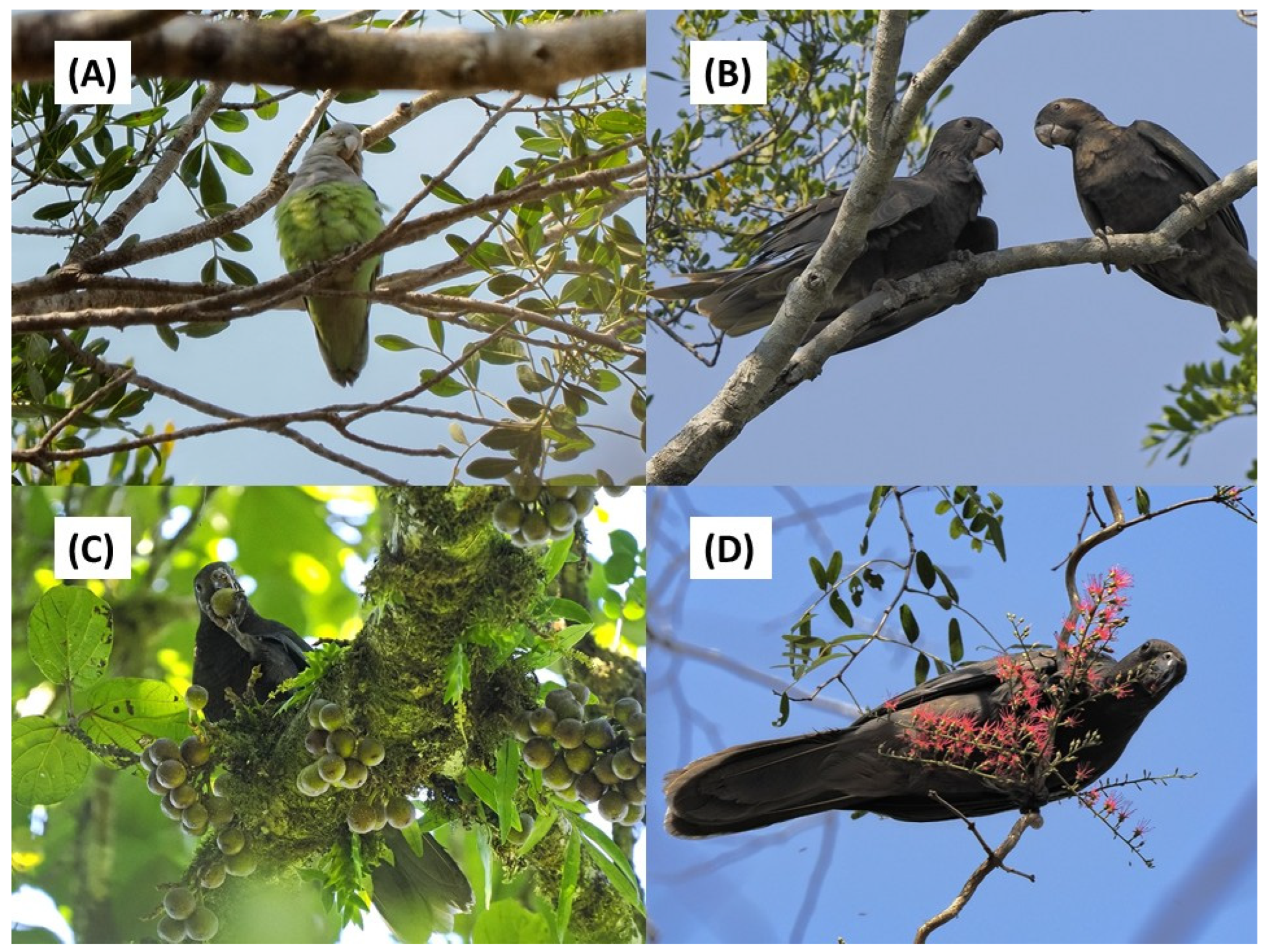
Madagascar is home to three endemic parrots widely distributed throughout the island, ranging in size from the smallest gray-headed lovebird Agapornis canus (14 cm length) to the medium-sized black parrot Coracopsis nigra (40 cm) and the largest vasa parrot Coracopsis vasa (50 cm) (Figure 1) [20]. There have been no population estimation studies of these species, and there is a lack of systematically collected data on their distribution and population trends [21,22]. The gray-headed lovebird and the vasa parrot were last assessed by the IUCN Red List in 2018, and were evaluated as Least Concern due to the lack of information that could prove range contractions or population declines [23,24]. Still lacking population and range distribution data, the black parrot was further evaluated in June 2025 and listed as Vulnerable. It has been argued that the species is suspected to be declining at a rapid rate, likely mirroring or exceeding the rate of forest cover loss, which has exceeded 30% over the past 22 years [25].
Between 21 and 28 August 2025, we conducted censuses in central Madagascar using well-established methods for obtaining relative abundances of parrots, such as walking transects and roadside surveys [26]. After surveying 1654 km during 73 h, we only recorded black parrots on 8 occasions (12 individuals in total), vasa parrots on 5 occasions (11 individuals), and gray-headed lovebirds on 2 occasions (3 individuals). All parrot sightings took place only within or in the immediate vicinity of national parks and other protected areas: Andasibe-Mantadia NP and Ranomafana NP on the east coast, and Kirindy Forest reserve on the west coast. These observations, although they may be highly biased by the short spatial and temporal survey scale, may suggest that the three parrot species have become scarce and are now restricted to the remaining patches of well-preserved forests.
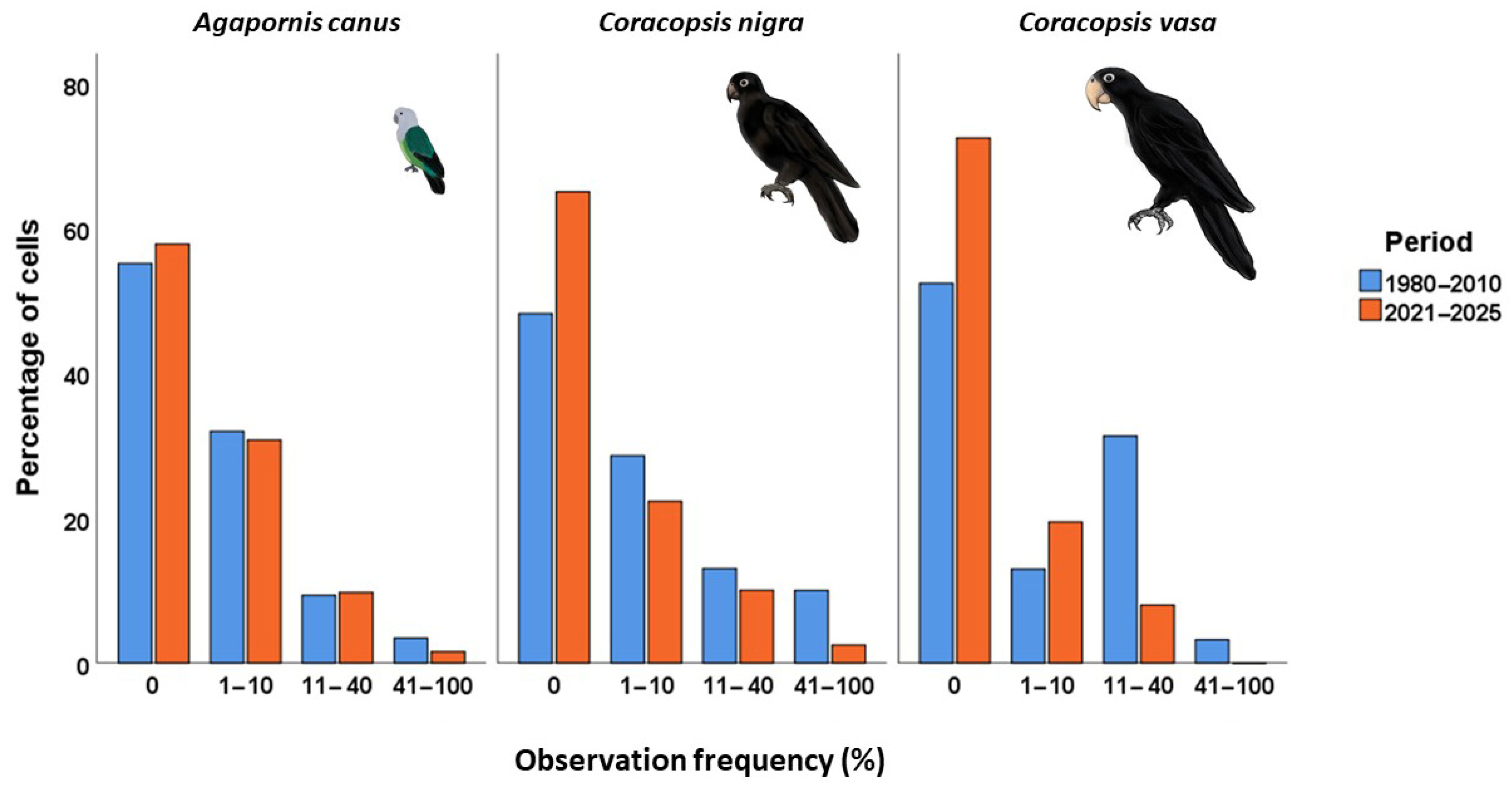
In the absence of specific population studies, citizen science data can help infer patterns of species abundance and temporal trends. For example, the eBird platform (ebird.org (accessed on 15 October 2025)) displays online maps of the global distribution—according to user-reported observations—of each bird species in a grid with 20 × 20 km cells. These maps show how frequently the species was observed in each cell (that is, the % of complete lists of observed bird species in which the species was recorded by observers who visited that cell), and the categorized frequencies can be visualized by selecting and grouping years. We used the information provided by observers in 318 cells distributed throughout Madagascar, grouped for the periods 1980–2010 and 2021–2025 (Figure 2). This approach was used to detect recent changes in the abundance of the three parrot species associated with deforestation that occurred in the previous four decades. There were no differences in the percentage of cells where gray-headed lovebirds were observed with different frequencies, ranging from cells where the species was never observed (0%) to cells where it was observed in 41–100% of the surveys, between the two time periods (Figure 2, ꭕ2 = 2.13, df = 5, p = 0.546). However, the frequency of observations of black parrots decreased significantly (Figure 2, ꭕ2 = 21.72, df = 5, p < 0.001); the percentage of cells where the species was not recorded increased from 48% to 65%, while the percentage of cells where the species was recorded in 41–100% of the surveys decreased from 10 to 2.5%. The changes were even more striking in the case of the vasa parrot (Figure 2, ꭕ2 = 58.34, df = 5, p < 0.001). The percentage of cells where the species was not recorded increased from 52% to 72%, while the percentage of cells where the species was recorded in 11–100% of the surveys decreased from 35 to 8% (Figure 2).
Citizen science data analysis has recently shown changes in the distribution of two species of parrots [27,28]. However, the use of citizen science has certain limitations that could produce biased results [29,30]. Particularly, inferences about population sizes obtained from citizen science platforms should be taken with caution, as the data may be biased by spatial differences in sampling efforts [31]. However, in the case of Madagascar, its attractive wildlife has led to a sharp increase in nature-based tourism since the 1990s, which is directed almost exclusively towards protected areas [32] [Authors pers. obs.]. These areas contain the last remaining forests, and thus the likelihood of observing not only target species like lemurs [32], but also any forest species, such as parrots, is greater for tourists in recent years. Therefore, the temporal patterns suggested by Figure 2 could be rather conservative, with recent real changes much more pronounced than those shown. With due caution, these trends support the assumption that forest loss and fragmentation have stronger negative effects on vasa and black parrots [21] than on the much smaller and potentially more resilient gray-headed lovebirds [22]. Moreover, deforestation is not the only threat to these species. All three species have been subject to the international pet trade. While exports of the two parrots ceased to some extent between 1995 and 2005 [21], those of lovebirds continued at least until 2020 [22]. However, the two Coracopsis parrots are much more in demand as pets than lovebirds in the Malagasy domestic market [33,34]. The three species are also subject to legal persecution and hunting due to their consideration as crop pests [21,22], a pressure that may increase as habitat loss increases reliance on agricultural crops [35]. In addition, black and vasa parrots are also hunted for food. In fact, in the Kirindy Forest reserve the numbers hunted for food far exceed those captured for the pet trade [21]. Finally, it should be noted that deforestation in Madagascar began a long time ago, and that it may have produced population declines and contractions in the distributions of the three parrot species several decades before those shown in Figure 2. In fact, even lacking information on population sizes, the gray-headed lovebird was described as ‘very abundant’ 150 years ago, as ‘common’ about 50 years ago, and as ‘uncommon’ in the east and ‘absent’ or ‘scarce’ on the central plateau in recent times [22].

3. The Potential Loss of Parrot–Plant Mutualisms

There is increasing evidence that unsustainable anthropogenic habitat loss and resource extraction have not only led to population declines and extinctions, but also to the disruption of ecological interactions between species, affecting the structural integrity of ecological processes [36,37]. A recent study shows that extinctions of threatened species will alter the functional richness and composition of avian frugivore assemblages across the world, which will substantially diminish the ability of many tropical ecosystems to recover fully after disturbance [38]. Nevertheless, the predictive capacity of research on the role of ecological interactions in ecosystem conservation is hampered by our lack of knowledge of the conservation status of many species, and of their ecological interactions, as is the case of the parrots of Madagascar.
While parrots were considered for decades to be plant antagonists, since they are efficient consumers of seeds and other reproductive structures of plants, recent studies show that they fulfill important ecological functions [39], embracing mutualism–antagonism continuums [40]. Among their mutualistic functions, parrots act as long-distance seed dispersers through endozoochory [41,42], stomatochory [43,44,45], and epizoochory [46]. Notably, on numerous occasions parrots are the main dispersers of plants that are keystone species in the ecosystems they occupy [41,47,48,49,50]. Through food wastage, parrots facilitate access to resources for multiple species that act as secondary seed dispersers [44,51]. Parrots can also pollinate [39] and heal their food plants by consuming their parasites [39]. Through both antagonistic and mutualistic interactions, parrots can exert cascading effects on the plants’ life cycles and shape ecosystems by influencing the spatial distribution and demography of their food plants and vegetal communities [39,40,47].
The trophic ecology of Malagasy parrots has been little studied [52] and, as with other parrots worldwide, these species have mainly been considered as seed predators [53]. However, some mutualistic roles as seed dispersers are now known. When studying the seed dispersal system of the endemic Commiphora guillaumini, which is the dominant canopy tree species in the dry deciduous forest of Kirindy, western Madagascar, Böhning-Gaese et al. [54] found that primary seed dispersal was carried out exclusively by black parrots through stomatochory, while ants were the only secondary seed dispersers. Vasa parrots were observed only consuming these fruits and dropping the intact seeds under the parent tree [54,55], but given their morphological and ecological similarities [52], it is reasonable to expect that they may act as dispersers of this or other tree species. Black parrots have been observed dispersing three plant species by epizoochory [46], when feeding on fruits such as those of the endemic Anthocleista madagascariensis and Ficus trees, as their small seeds become attached to the beak (Figure 1C) and are transported long distances. Black parrots have also been observed feeding on flowers (Figure 1D, [52]), and then they can eventually act as pollinators, as in the case of other parrot species [39]. They also consume insect galls [52], which can be beneficial to plant health [39].
With some 14,000 species, 84% of them endemic, Madagascar is home to a unique and globally important assemblage of plants [56]. As mutualistic relationships of plants with other bird species are still being discovered [57], and even with the much better studied lemurs [58], the detailed study of the trophic ecology of the three parrot species will undoubtedly yield knowledge about many, still unknown ecological functions. Since the diversity of frugivorous birds in Madagascar is markedly depauperate compared to that existing on the African continent [55,59], the potential role of parrots as plant mutualists becomes more important. In fact, as in other parts of the world [47,48,49,60], parrots could be dispersing fruits in Madagascar whose dispersal is attributed to extinct megafauna [61,62]. As for the case of plant–lemur interactions [58], combining research-based observations with ethnobiological data could help to discover new, so far cryptic interactions. Research in that area is urgently needed since the loss of ecological interactions may occur well before the disappearance of parrot species [49], affecting species functionality and ecosystem services at a faster rate than species extinctions [37].

4. Conclusions

There is an urgent need to study the current distribution and population size of the three parrot species endemic to Madagascar, as well as their antagonistic and mutualistic relationships with their food plants. This would not only help to understand their current conservation status, which may be much worse than that assessed by the IUCN Red List, but also to discover important ecological functions that may be lost before the disappearance of the species involved.

Author Contributions

Conceptualization, J.L.T., C.B.S.-P. and P.R.-V.; methodology, J.L.T. and C.B.S.-P.; formal analysis, J.L.T. and C.B.S.-P.; investigation, J.L.T., C.B.S.-P. and P.R.-V.; writing—original draft preparation, J.L.T.; writing—review and editing, J.L.T., C.B.S.-P. and P.R.-V. All authors have read and agreed to the published version of the manuscript.

Funding

This research received no external funding.

Institutional Review Board Statement

Not applicable.

Informed Consent Statement

Not applicable.

Data Availability Statement

Data on the frequency of observation of parrots were extracted from the publicly available maps provided by eBird (https://ebird.org/explore), accessed on 25 September 2025. All the transects and the parrots we observed are publicly available on the citizen science platform Observation (https://observation.org (accessed on 10 October 2025)).

Acknowledgments

We thank Tina Ratovonjanahary, Sana and a number of guides from the protected areas for their help during the field trips in Madagascar, and Simon Young for editing the manuscript. Three anonymous reviewers contributed to improve the manuscript.

Conflicts of Interest

The authors declare no conflicts of interest.

References

  1. Myers, N.; Mittermeier, R.A.; Mittermeier, C.G.; Da Fonseca, G.A.; Kent, J. Biodiversity hotspots for conservation priorities. Nature 2000, 403, 853–858. [Google Scholar] [CrossRef] [PubMed]
  2. Dinerstein, E.; Olson, D.; Joshi, A.; Vynne, C.; Burgess, N.D.; Wikramanayake, E.; Hahn, N.; Palminteri, S.; Hedao, P.; Noss, R.; et al. An ecoregion-based approach to protecting half the terrestrial realm. BioScience 2017, 67, 534–545. [Google Scholar] [CrossRef] [PubMed]
  3. Behrens, K.; Barnes, K.; Campbell, I. Habitats of Africa; Princeton University Press: Oxford, UK, 2025. [Google Scholar]
  4. Raval, U.; Veeraswamy, K. India-Madagascar separation: Breakup along a pre-existing mobile belt and chipping of the craton. Gondwana Res. 2003, 6, 467–485. [Google Scholar] [CrossRef]
  5. Hobbes, J.; Dolan, A. World Regional Geography, 6th ed; Cengage Learning: Belmont, CA, USA, 2008; p. 752. [Google Scholar]
  6. Gade, D.W. Deforestation and its effects in Highland Madagascar. Mount. Res. Develop. 1996, 16, 101–116. [Google Scholar] [CrossRef]
  7. Scales, I.R. Farming at the forest frontier: Land use and landscape change in Western Madagascar, 1896–2005. Environ. Hist. 2011, 17, 499–524. [Google Scholar] [CrossRef]
  8. Harper, G.J.; Steininger, M.K.; Tucker, C.J.; Juhn, D.; Hawkins, F. Fifty years of deforestation and forest fragmentation in Madagascar. Environ. Conserv. 2007, 34, 325–333. [Google Scholar] [CrossRef]
  9. Burns, S.J.; Godfrey, L.R.; Faina, P.; McGee, D.; Hardt, B.; Ranivoharimanana, L.; Randrianasy, J. Rapid human-induced landscape transformation in Madagascar at the end of the first millennium of the common era. Quat. Sci. Rev. 2016, 134, 92–99. [Google Scholar] [CrossRef]
  10. Vieilledent, G.; Grinand, C.; Rakotomalala, F.A.; Ranaivosoa, R.; Rakotoarijaona, J.R.; Allnutt, T.F.; Achard, F. Combining global tree cover loss data with historical national forest cover maps to look at six decades of deforestation and forest fragmentation in Madagascar. Biol. Conserv. 2018, 222, 189–197. [Google Scholar] [CrossRef]
  11. Wilmé, L.; Innes, J.L.; Schuurman, D.; Ramamonjisoa, B.; Langrand, M.; Barber, C.V.; Butler, R.A.; Wittemyer, G.; Waeber, P.O. The elephant in the room: Madagascar’s rosewood stocks and stockpiles. Conserv. Lett. 2000, 13, e12714. [Google Scholar] [CrossRef]
  12. Barrett, M.A.; Brown, J.L.; Morikawa, M.K.; Labat, J.N.; Yoder, A.D. CITES designation for endangered rosewood in Madagascar. Science 2010, 328, 1109–1110. [Google Scholar] [CrossRef]
  13. Vieilledent, G.; Nourtier, M.; Grinand, C.; Pedrono, M.; Clausen, A.; Rabetrano, T.; Rakotoarijaona, J.R.; Rakotoarivelo, B.; Rakotomalala, F.A.; Rakotomalala, L.; et al. It’s not just poverty: Unregulated global market and bad governance explain unceasing deforestation in Western Madagascar. BioRxiv 2020. [Google Scholar] [CrossRef]
  14. Suzzi-Simmons, A. Status of deforestation of Madagascar. Res. Sq. 2023. [Google Scholar] [CrossRef]
  15. Allnutt, T.F.; Ferrier, S.; Manion, G.; Powell, G.V.N.; Ricketts, T.H.; Fisher, B.L.; Harper, G.J.; Irwin, M.E.; Kremen, C.; Labat, J.N.; et al. A method for quantifying biodiversity loss and its application to a 50-year record of deforestation across Madagascar. Conserv. Lett. 2008, 1, 173–181. [Google Scholar] [CrossRef]
  16. Goodman, S.M.; Benstead, J.P. Updated estimates of biotic diversity and endemism for Madagascar. Oryx 2005, 39, 73–77. [Google Scholar] [CrossRef]
  17. Mittermeier, R.; Ganzhorn, J.; Konstant, W.; Glander, K.; Tattersall, I.; Groves, C.; Rylands, A.; Hapke, A.; Ratsimbazafy, J.; Mayor, M.; et al. Lemur diversity in Madagascar. Int. J. Primatol. 2008, 29, 1607–1656. [Google Scholar] [CrossRef]
  18. Mittermeier, R.A.; Wilson, D.E.; Ratsimbazafy, J.; Andriamanana, E.E.L., Jr.; Switzer, C.; Sechrest, W. Mammals of Madagascar; Lynx Edicions: Barcelona, Spain, 2021. [Google Scholar]
  19. Vergara-Tabares, D.L.; Cordier, J.M.; Landi, M.A.; Olah, G.; Nori, J. Global trends of habitat destruction and consequences for parrot conservation. Glob. Change Biol. 2020, 26, 4251–4262. [Google Scholar] [CrossRef]
  20. Hawkins, F.; Safford, R.; Skerrett, A. Birds of Madagascar; Cristopher Helm: London, UK, 2015. [Google Scholar]
  21. Martin, R.O.; Perrin, M.R.; Boyes, R.S.; Abebe, Y.D.; Annorbah, N.D.; Asamoah, A.; Bizimana, D.; Bobo, K.S.; Bunbury, N.; Brouwer, J.; et al. Research and conservation of the larger parrots of Africa and Madagascar: A review of knowledge gaps and opportunities. Ostrich 2014, 85, 205–233. [Google Scholar] [CrossRef]
  22. Dueker, S.; Willows-Munro, S.; Perrin, M.R.; Abebe, Y.D.; Annorbah, N.N.; Mwangi, E.W.; Madindou, I.R.; Tekalign, W.; Mori, E.; Mzumara, T.I.; et al. Conservation status and threats to lovebirds: Knowledge gaps and research priorities. Ostrich 2023, 94, 1–27. [Google Scholar] [CrossRef]
  23. BirdLife International. Agapornis canus. The IUCN Red List of Threatened Species 2018: e.T22685326A131875130. Available online: https://www.iucnredlist.org/species/22685326/131875130 (accessed on 10 December 2025).
  24. BirdLife International. Coracopsis vasa. The IUCN Red List of Threatened Species 2018: e.T22685261A131279943. Available online: https://www.iucnredlist.org/species/22685261/131279943 (accessed on 9 December 2025).
  25. BirdLife International. Coracopsis nigra. The IUCN Red List of Threatened Species 2025: e.T22727885A276800431. Available online: https://www.iucnredlist.org/species/22727885/276800431 (accessed on 10 December 2025).
  26. Tella, J.L.; Palacios-Martínez, I.; Blanco, G.; Juste, J.; Romero-Vidal, P. A comparison of three methods for estimating abundances of the globally endangered African grey parrot. Biology 2026, 15, 73. [Google Scholar] [CrossRef] [PubMed]
  27. Hernández-Brito, D.; Carrete, M.; Tella, J.L. Annual censuses and citizen science data show rapid population increases and range expansion of invasive rose-ringed and monk parakeets in Seville, Spain. Animals 2022, 12, 677. [Google Scholar] [CrossRef]
  28. Rotherham, I.D.; Watchman, M.J. Attitudes to exotic parakeets: A comparative case study and citizen science review. Diversity 2025, 17, 423. [Google Scholar] [CrossRef]
  29. Dickinson, J.L.; Zuckerberg, B.; Bonter, D.N. Citizen science as an ecological research tool: Challenges and benefits. Ann. Rev. Ecol. Evol. Syst. 2010, 41, 149–172. [Google Scholar] [CrossRef]
  30. Burgess, H.K.; DeBey, L.B.; Froehlich, H.E.; Schmidt, N.; Theobald, E.J.; Ettinger, A.K.; HilleRisLambers, J.; Tewksbury, J.; Parrish, J.K. The science of citizen science: Exploring barriers to use as a primary research tool. Biol. Conserv. 2017, 208, 113–120. [Google Scholar] [CrossRef]
  31. Robinson, O.J.; Socolar, J.B.; Stuber, E.F.; Auer, T.; Berryman, A.J.; Boersch-Supan, P.H.; Brightsmith, D.J.; Burbidge, A.H.; Butchart, S.H.; Davis, C.L.; et al. Extreme uncertainty and unquantifiable bias do not inform population sizes. Proc. Nat. Acad. Sci. USA 2022, 119, e2113862119. [Google Scholar] [CrossRef]
  32. Andrianambinina, F.O.D.; Schuurman, D.; Rakotoarijaona, M.A.; Razanajovy, C.N.; Ramparany, H.M.; Rafanoharana, S.C.; Rasamuel, H.A.; Faragher, K.D.; Waeber, P.O.; Wilmé, L. Boost the resilience of protected areas to shocks by reducing their dependency on tourism. PLoS ONE 2003, 18, e0278591. [Google Scholar] [CrossRef]
  33. Reuter, K.E.; Clarke, T.A.; LaFleur, M.; Rodriguez, L.; Hanitriniaina, S.; Schaefer, M.S. Trade of parrots in urban areas of Madagascar. Madag. Conserv. Dev. 2017, 12, 41–48. [Google Scholar] [CrossRef]
  34. Reuter, K.E.; Rodriguez, L.; Hanitriniaina, S.; Schaefer, M.S. Ownership of parrots in Madagascar: Extent and conservation implications. Oryx 2019, 53, 582–588. [Google Scholar] [CrossRef]
  35. Barbosa, J.; Hiraldo, F.; Romero, M.A.; Tella, J.L. When does agriculture enter into conflict with wildlife? A global assessment of parrot-agriculture conflicts and their conservation effects. Divers. Dist. 2021, 27, 4–17. [Google Scholar] [CrossRef]
  36. Aslan, C.E.; Zavaleta, E.S.; Tershy, B.; Croll, D. Mutualism Disruption Threatens Global Plant Biodiversity: A Systematic Review. PLoS ONE 2013, 8, e66993. [Google Scholar] [CrossRef] [PubMed]
  37. Valiente-Banuet, A.; Aizen, M.A.; Alcántara, J.M.; Arroyo, J.; Cocucci, A.; Galetti, M.; García, M.B.; García, D.; Gómez, J.M.; Jordano, P.; et al. Beyond species loss: The extinction of ecological interactions in a changing world. Funct. Rcol. 2015, 29, 299–307. [Google Scholar] [CrossRef]
  38. Lim, J.Y.; Lee, W.Q.; Marsh, C.; Sreekar, R.; Tobias, J.; Ferreiro-Arias, I.; Edwards, D. The loss of at-risk morphologically unique avian frugivores diminishes seed dispersal function and natural restoration potential in the tropics. Res. Sq. 2025. [Google Scholar] [CrossRef]
  39. Blanco, G.; Hiraldo, G.; Tella, J.L. Ecological functions of parrots: An integrative perspective from plant life cycle to ecosystem functioning. Emu 2018, 118, 36–49. [Google Scholar] [CrossRef]
  40. Montesinos-Navarro, A.; Hiraldo, F.; Tella, J.L.; Blanco, G. Network structure embracing mutualism-antagonism continuums increases community robustness. Nat. Ecol. Evol. 2017, 1, 1661. [Google Scholar] [CrossRef]
  41. Young, L.M.; Kelly, D.; Nelson, X.J. Alpine flora may depend on declining frugivorous parrot for seed dispersal. Biol. Conserv. 2012, 147, 133–142. [Google Scholar] [CrossRef]
  42. Blanco, G.; Bravo, C.; Pacífico, E.; Chamorro, D.; Speziale, K.; Lambertucci, S.; Hiraldo, F.; Tella, J.L. Internal seed dispersal by parrots: An overview of a neglected mutualism. PeerJ 2016, 4, e1688. [Google Scholar] [CrossRef]
  43. Tella, J.L.; Baños-Villalba, A.; Hernández-Brito, D.; Rojas, A.; Pacífico, E.; Díaz-Luque, J.A.; Carrete, M.; Blanco, G.; Hiraldo, F. Parrots as overlooked seed dispersers. Front. Ecol. Environ. 2015, 13, 338–339. [Google Scholar] [CrossRef]
  44. da Silva, L.B. Teamwork: Psittacids (Aves, Psittaciformes) disperse and help other birds disperse large diaspores. Ornithol. Res. 2022, 30, 247–252. [Google Scholar] [CrossRef]
  45. McConkey, K.R.; Sushma, H.S.; Sengupta, A. Seed dispersal by frugivores without seed swallowing: Evaluating the contributions of stomatochoric seed dispersers. Func. Ecol. 2024, 38, 480–499. [Google Scholar] [CrossRef]
  46. Hernández-Brito, D.; Romero-Vidal, P.; Hiraldo, F.; Blanco, G.; Díaz-Luque, J.A.; Barbosa, J.M.; Symes, C.T.; White, T.H.; Pacífico, E.C.; Sebastián-González, E.; et al. Epizoochory in parrots as an overlooked yet widespread plant-animal mutualism. Plants 2021, 10, 760. [Google Scholar] [CrossRef]
  47. Baños-Villalba, A.; Blanco, G.; Díaz-Luque, J.A.; Dénes, F.V.; Hiraldo, F.; Tella, J.L. Seed dispersal by macaws shapes the landscape of an Amazonian ecosystem. Sci. Rep. 2017, 7, 7373. [Google Scholar] [CrossRef] [PubMed]
  48. Tella, J.L.; Blanco, G.; Dénes, F.V.; Hiraldo, F. Overlooked parrot seed dispersal in Australia and South America: Insights on the evolution of dispersal syndromes and seed size in Araucaria trees. Front. Ecol. Evol. 2019, 7, 82. [Google Scholar] [CrossRef]
  49. Tella, J.L.; Hiraldo, F.; Pacífico, E.; Díaz-Luque, J.A.; Dénes, F.V.; Fontoura, F.M.; Guedes, N.; Blanco, G. Conserving the diversity of ecological interactions: The role of two threatened macaw species as legitimate dispersers of “megafaunal” fruits. Diversity 2020, 12, 45. [Google Scholar] [CrossRef]
  50. Tarazona-Tubens, F.L.; Morales-Pérez, A.L.; Searcy, C.A. Seed predator or seed nurturer? The critically endangered Puerto Rican parrot increases germination of large-fruited Caribbean plants. Biol. Conserv. 2025, 311, 111421. [Google Scholar] [CrossRef]
  51. Sebastián-González, E.; Hiraldo, F.; Blanco, G.; Hernández-Brito, D.; Romero-Vidal, P.; Carrete, M.; Gómez Llanos, E.; Pacífico, E.; Díaz-Luque, J.A.; Denés, F.V.; et al. The extent, frequency and ecological functions of food wasting by parrots. Sci. Rep. 2019, 9, 15280. [Google Scholar] [CrossRef]
  52. Juniper, T.; Parr, M. Parrots; Christopher Helm: London, UK, 1998. [Google Scholar]
  53. Bollen, A.; Van Elsacker, L. The feeding ecology of the Lesser Vasa Parrot, Coracopsis nigra, in south-eastern Madagascar. Ostrich 2004, 75, 141–146. [Google Scholar] [CrossRef]
  54. Böhning-Gaese, K.; Gaese, B.H.; Rabemanantsoa, S.B. Importance of primary and secondary seed dispersal in the Malagasy tree Commiphora guillaumini. Ecology 1999, 80, 821–832. [Google Scholar] [CrossRef]
  55. Bleher, B.; Böhning-Gaese, K. Seed dispersal by birds in a South African and a Malagasy Commiphora species. Ecotropica 2000, 6, 43–53. [Google Scholar]
  56. Callmander, M.W.; Phillipson, P.B.; Schatz, G.E.; Andriambololonera, S.; Rabarimanarivo, M.; Rakotonirina, N.; Raharimampionona, J.; Chatelain, C.; Gautier, L.; Lowry, P.P. The endemic and non-endemic vascular flora of Madagascar updated. Plant Ecol. Evol. 2011, 144, 121–125. [Google Scholar] [CrossRef]
  57. Navarro, L.; Ayensa, G.; González-Megías, A.; Navarro-Ayensa, A.; Ventre-Lespiaucq, A.; Méndez, M.; Gómez, J.M. Pollination Beyond the Usual Suspects: Endemic Neodrepanis coruscans Birds Visiting Tubular Flowers in Madagascar. Afr. J. Ecol. 2025, 63, e70065. [Google Scholar] [CrossRef]
  58. DeSisto, C.M.; Bezaralahy, R.; Dimbiarijaonina, C.; Emerancine, R.; Feno, T.; Mahazandry, E.; Njakandrina, J.; Nunn, C.; Rabevao, E.; Raharizafinirina, M.O.; et al. Ecological and human use traits shape lemur-tree interaction networks across human-modified landscapes. Glob. Ecol. Conserv. 2025, 62, e03729. [Google Scholar] [CrossRef]
  59. del Hoyo, J. All the Birds of the World; Lynx Edicions: Barcelona, Spain, 2020. [Google Scholar]
  60. Carrete, M.; Hiraldo, F.; Romero-Vidal, P.; Blanco, G.; Hernández-Brito, D.; Sebastián-González, E.; Díaz-Luque, J.A.; Tella, J.L. Worldwide distribution of antagonistic-mutualistic relationships between parrots and palms. Front. Ecol. Evol. 2022, 10, 790883. [Google Scholar] [CrossRef]
  61. Méndez, L.; Barratt, C.D.; Durka, W.; Kissling, W.D.; Eiserhardt, W.L.; Baker, W.J.; Randrianasolo, V.; Onstein, R.E. Genomic signatures of past megafrugivore-mediated dispersal in Malagasy palms. J. Ecol. 2024, 112, 1583–1598. [Google Scholar] [CrossRef]
  62. Pu, Y.; Zizka, A.; Onstein, R.E. Legacy of the Lost and Pressure of the Present: Malagasy Plant Seeds Retain Megafauna Dispersal Signatures but Downsize Under Human Pressure. Ecol. Lett. 2025, 28, e70205. [Google Scholar] [CrossRef]
Figure 1. The three parrots endemic to Madagascar: gray-headed lovebird Agapornis canus (A), vasa parrot Coracopsis vasa (B), and black parrot Coracopsis nigra (C,D). Photographs: José L. Tella.
Conservation 06 00020 g001
Figure 2. Percentage of 20 × 20 km cells distributed across Madagascar where the three species of parrots were observed with different frequencies, ranging from cells where the species were never observed (0%) to cells where they were observed in 41–100% of the surveys conducted by users of the citizen science platform eBird. Years are grouped into two periods. Illustrations: Dailos Hernández-Brito.
Conservation 06 00020 g002
Disclaimer/Publisher’s Note: The statements, opinions and data contained in all publications are solely those of the individual author(s) and contributor(s) and not of MDPI and/or the editor(s). MDPI and/or the editor(s) disclaim responsibility for any injury to people or property resulting from any ideas, methods, instructions or products referred to in the content.