
From Infection to Adaptation: Sclerotium rolfsii-Induced Stress and Defense in Tomato

 , , ,
, , ,  , ,
, ,
Abstract
1. Introduction
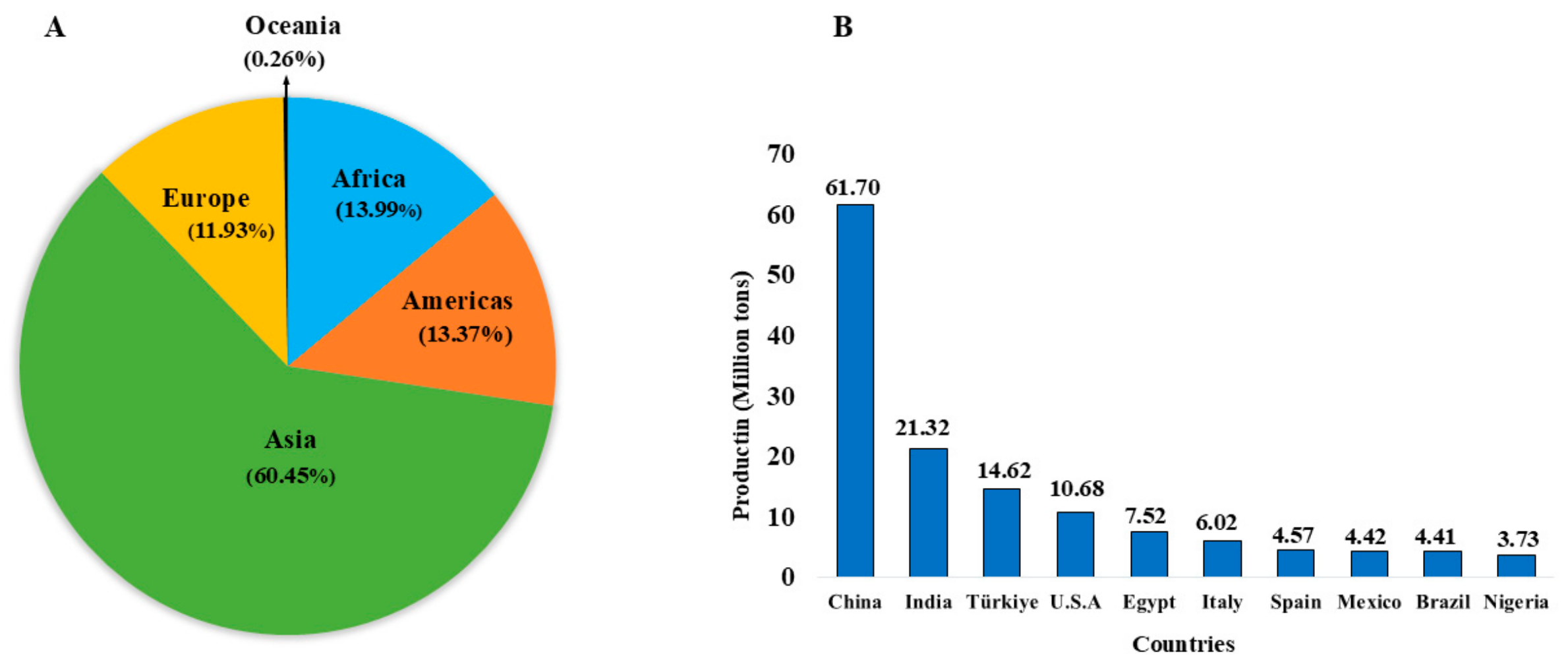
2. Global Trends in Tomato Production and the Threat of Sclerotium rolfsii
3. The Biology and Survival of Sclerotium rolfsii
4. Signs, Symptoms and Disease Development of Southern Blight
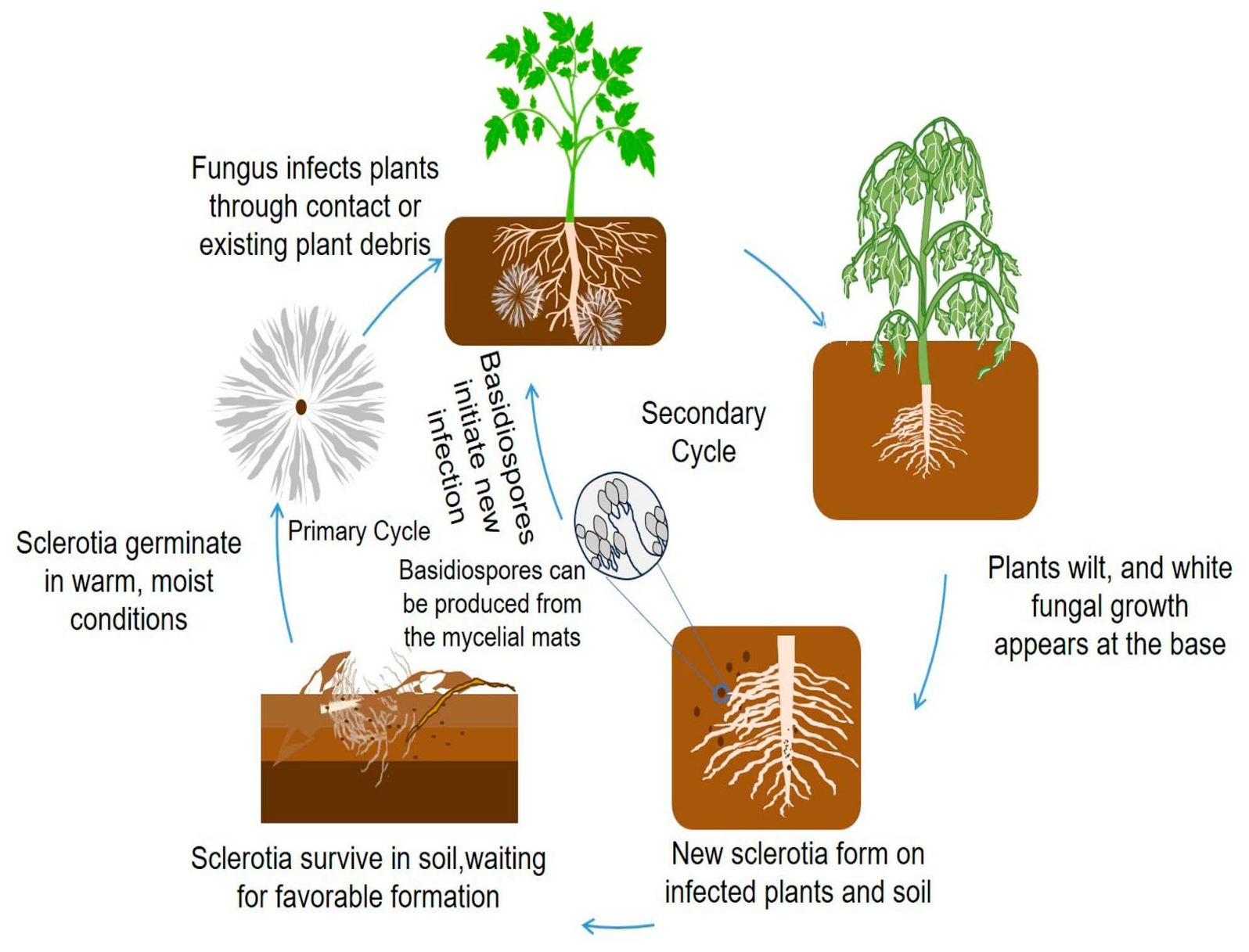
5. Disease Cycle
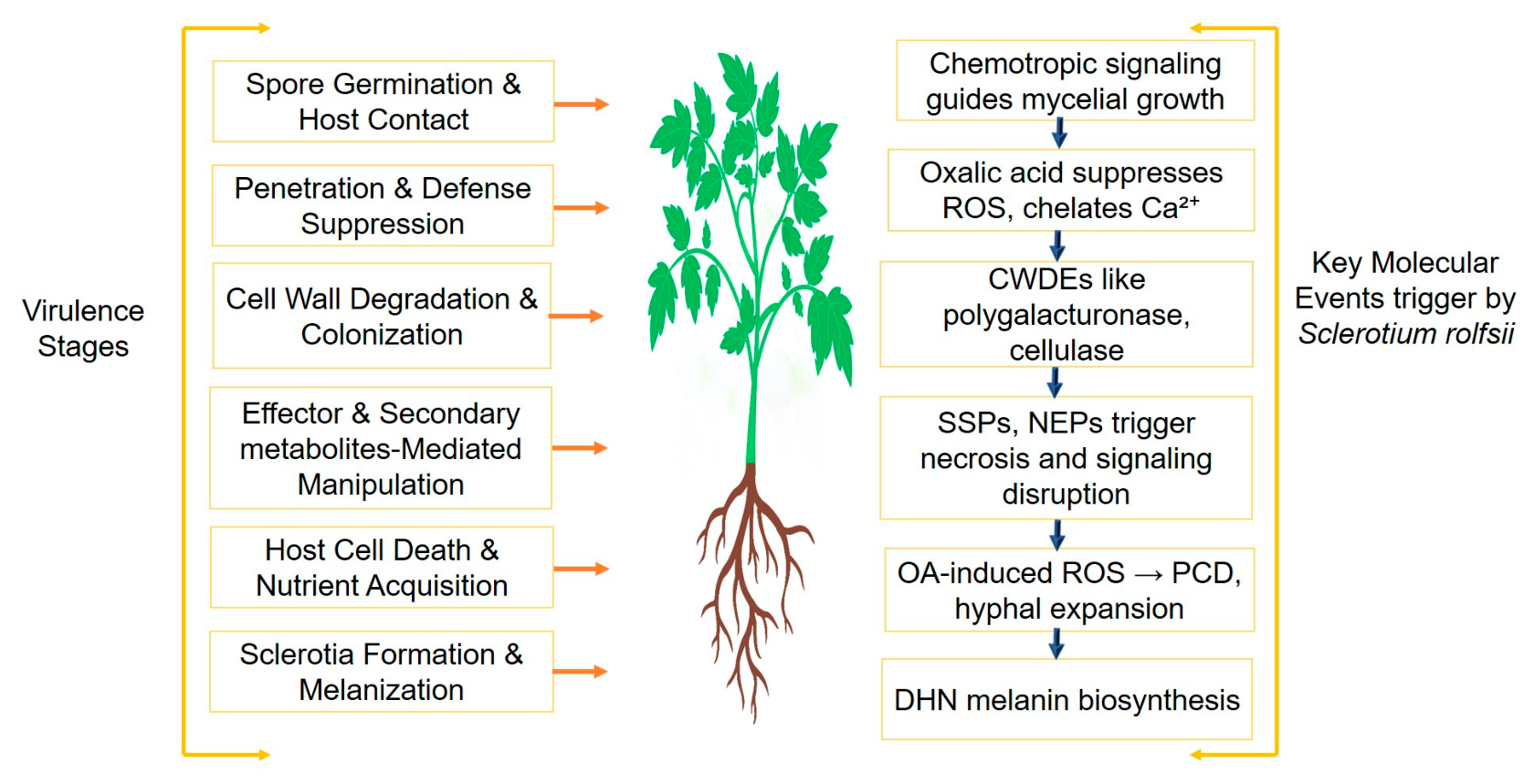
6. Pathogenesis and Virulence Mechanisms of Sclerotium rolfsii
6.1. Oxalic Acid (OA)
6.2. Cell Wall-Degrading Enzymes (CWDEs)
6.3. Effector Proteins and Secondary Metabolites
6.4. Sclerotial Melanization
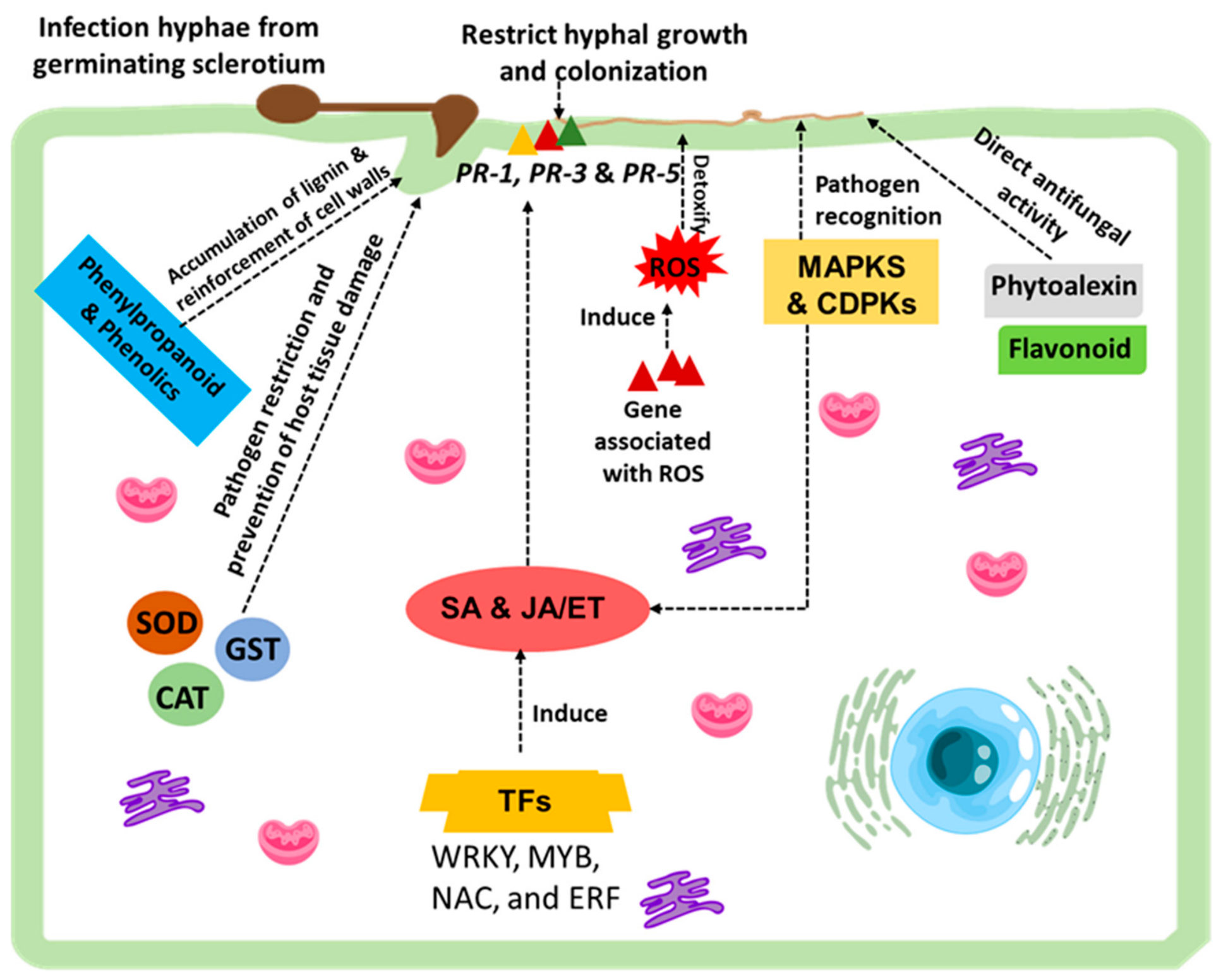
7. Tomato Defense Responses Against Sclerotium rolfsii
8. Genetics and Breeding for Southern Blight Resistance
9. Sustainable Approaches in Managing Southern Blight in Tomato
9.1. Cultural Control
9.2. Biological Control
9.3. Mycovirus-Induced Hypovirulence
9.4. Development of Resistant Cultivars
9.4.1. Conventional Breeding Approaches
9.4.2. Biotechnological Approaches
9.5. Chemical Control
9.6. Remote Sensing and Precision Agriculture as Promising Transformative Tools
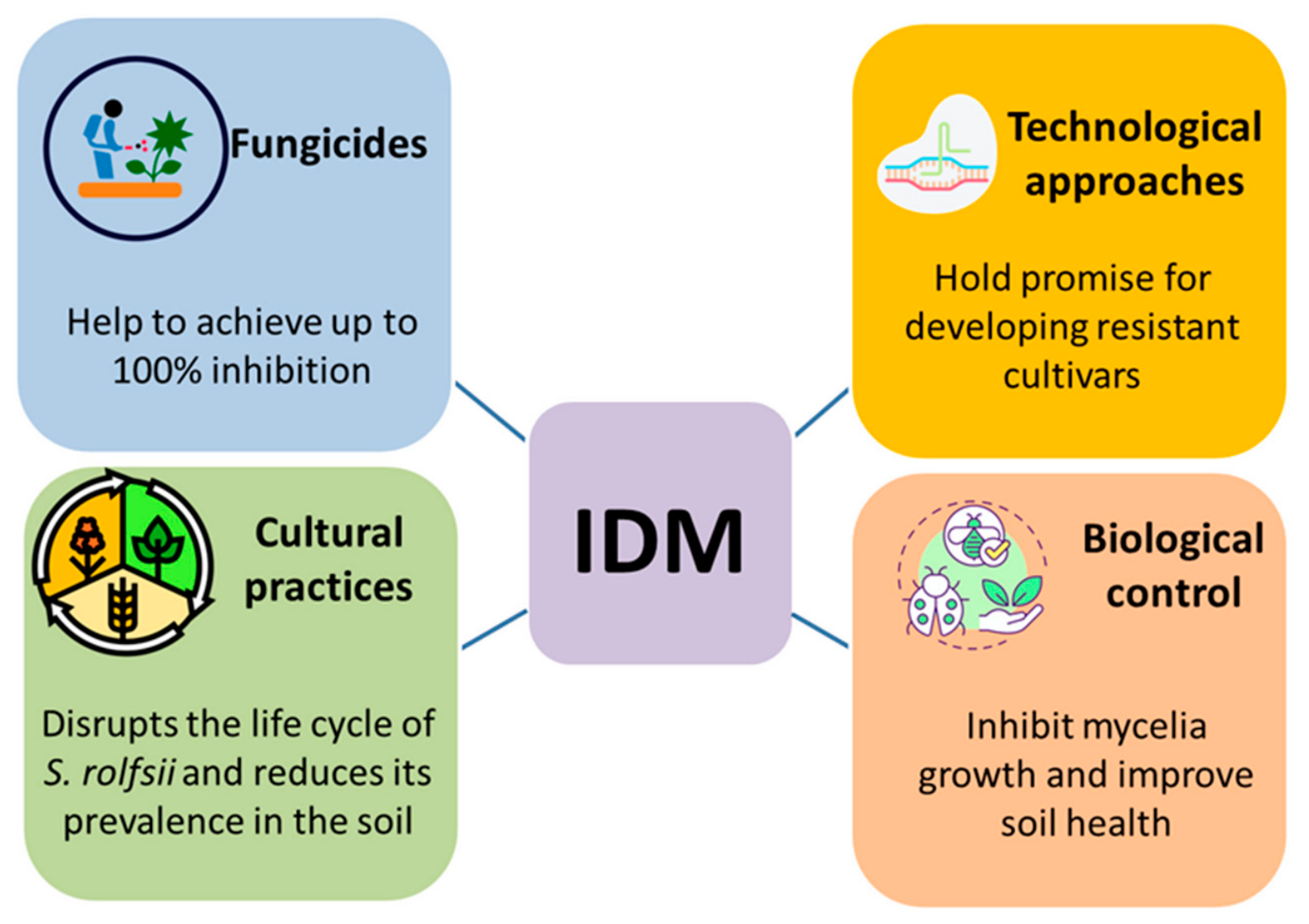
9.7. Integrated Disease Management (IDM)
- (1)
- Microbiome-assisted IDM-harnessing beneficial microbial consortia (e.g., Trichoderma + PGPR + AMF) tailored to specific soil types, hypothesizing that microbial network engineering will provide longer-lasting suppression than single-agent biocontrol.
- (2)
- Climate-smart IDM—integrating weather- and soil-moisture-based predictive models to optimize timing of cultural, chemical, or biological interventions, thereby reducing input use and improving efficiency under climate variability.
- (3)
- Technology-enhanced IDM—leveraging RNAi sprays (SIGS), CRISPR-based resistant cultivars, and digital surveillance tools to combine host resistance with precision application of control agents, hypothesizing that integration of biotech with traditional IDM will significantly reduce reliance on fungicides.
10. Socio-Economic Feasibility and Climate-Adaptive Strategies
11. Conclusions
Author Contributions
Funding
Institutional Review Board Statement
Informed Consent Statement
Data Availability Statement
Conflicts of Interest
References
- FAOSTAT. FAOSTAT Database. 2024. Available online: https://www.fao.org/faostat/en/#data/QCL (accessed on 16 January 2026).
- Sattar, S.; Iqbal, A.; Parveen, A.; Fatima, E.; Samdani, A.; Fatima, H.; Iqbal, M.S.; Wajid, M. Tomatoes Unveiled: A Comprehensive Exploration from Cultivation to Culinary and Nutritional Significance. Qeios 2024, 2, 10-32388. [Google Scholar] [CrossRef]
- Eslami, E.; Abdurrahman, E.; Pataro, G.; Ferrari, G. Increasing sustainability in the tomato processing industry: Environmental impact analysis and future development scenarios. Front. Sustain. Food Syst. 2024, 8, 1400274. [Google Scholar] [CrossRef]
- Li, Z.; Yu, F. Recent Advances in Lycopene for Food Preservation and Shelf-Life Extension. Foods 2023, 12, 3121. [Google Scholar] [CrossRef] [PubMed]
- Maciejczyk, E.; Wajs-Bonikowska, A.; Batory, M.; Budzisz, E. Tomato Pomace: Underestimated Sustainable Cosmetic/Pharmaceutical Raw Source. Molecules 2026, 31, 53. [Google Scholar] [CrossRef]
- Collins, E.J.; Bowyer, C.; Tsouza, A.; Chopra, M. Tomatoes: An extensive review of the associated health impacts of tomatoes and factors that can affect their cultivation. Biology 2022, 11, 239. [Google Scholar] [CrossRef]
- Vollmer, A.; Schmidt, U.; Ulrichs, C.; Dannehl, D. Closing the loop: Utilization of composted tomato plant residues as fertilizer and soil amendment. Sci. Hortic. 2025, 342, 114028. [Google Scholar] [CrossRef]
- Xie, K.; Sun, M.; Shi, A.; Di, Q.; Chen, R.; Jin, D.; Li, Y.; Yu, X.; Chen, S.; He, C. The Application of Tomato Plant Residue Compost and Plant Growth-Promoting Rhizobacteria Improves Soil Quality and Enhances the Ginger Field Soil Bacterial Community. Agronomy 2022, 12, 1741. [Google Scholar] [CrossRef]
- Passera, A.; Casati, P.; Abbasi-Parizad, P.; Pagnoni, S.; Carullo, D.; Farris, S.; Scaglia, B. Evaluation of the biocide activity of tomatine-rich extracts from tomato cannery residues against fungi and bacteria. Environ. Technol. Innov. 2024, 36, 103807. [Google Scholar] [CrossRef]
- Cervoni, B. Tomato Nutrition Facts and Health Benefits. Verywell Fit. 2024. Available online: https://www.verywellfit.com/tomatoes-nutrition-facts-calories-and-health-benefits-4119981 (accessed on 25 November 2025).
- Campos, M.D.; Félix, M.D.R.; Patanita, M.; Materatski, P.; Albuquerque, A.; Ribeiro, J.A.; Varanda, C. Defense Strategies: The Role of Transcription Factors in Tomato-Pathogen Interaction. Biology 2022, 11, 235. [Google Scholar] [CrossRef] [PubMed]
- Sultana, F.; Hossain, M.M. Assessing the potentials of bacterial antagonists for plant growth promotion, nutrient acquisition, and biological control of Southern blight disease in tomato. PLoS ONE 2022, 17, e0267253. [Google Scholar] [CrossRef]
- Ahmed, M.J.; Shoaib, A. Genotype-dependent stratification of tomato for Sclerotium rolfsii resistance using physiological, biochemical, and pathogenicity indices. Physiol. Mol. Plant Pathol. 2025, 140, 102890. [Google Scholar] [CrossRef]
- Kator, L.; Hosea, Z.Y.; Oche, O.D. Sclerotium rolfsii: Causative organism of southern blight, stem rot, white mold and sclerotia rot disease. Ann. Biol. Res. 2015, 6, 78–89. [Google Scholar]
- Ram, R.M.; Rajput, R.S.; Vaishnav, A. Management of Sclerotium rolfsii Induced Diseases in Crops by Trichoderma Species. In Rhizosphere Microbes; Microorganisms for Sustainability; Sharma, S.K., Singh, U.B., Sahu, P.K., Singh, H.V., Sharma, P.K., Eds.; Springer: Singapore, 2021; Volume 23. [Google Scholar] [CrossRef]
- Gandhi, V.; Taya, R.S.; Kumar, A. Viability of sclerotia of Sclerotium rolfsii at different depths and durations in soil. Indian J. Agric. Res. 2017, 51, 601–605. [Google Scholar] [CrossRef]
- Dinesh, K.; Sinha, B.; Ravikumar, M.R.; Savani, A.K. Genetic diversity analysis of Sclerotium rolfsii employing ITS, ISSR and RAPD markers. Indian Phytopathol. 2022, 75, 259–265. [Google Scholar] [CrossRef]
- Yan, L.; Wang, Z.; Song, W.; Fan, P.; Kang, Y.; Lei, Y.; Wan, L.; Huai, D.; Chen, Y.; Wang, X.; et al. Genome sequencing and comparative genomic analysis of highly and weakly aggressive strains of Sclerotium rolfsii, the causal agent of peanut stem rot. BMC Genom. 2021, 22, 276. [Google Scholar] [CrossRef]
- Wang, F.; Wang, X.; Tang, T.; Duan, Y.; Mao, T.; Guo, X.; Wang, Q.; You, J. De Novo RNA Sequencing and Transcriptome Analysis of Sclerotium rolfsii Gene Expression during Sclerotium Development. Genes 2023, 14, 2170. [Google Scholar] [CrossRef]
- Cheng, K.; Lin, D.; Ma, L.; Lu, Y.; Li, J.; Zhu, G.; Lin, T.; Qu, G.; Zhu, B.; Fu, D.; et al. A SlRBP1-SlFBA7/SlGPIMT module regulates fruit size in tomato. Hortic. Res. 2025, 12, 1–13. [Google Scholar] [CrossRef]
- Cucu, M.A.; Choudhary, R.; Trkulja, V.; Garg, S.; Matić, S. Utilizing Environmentally Friendly Techniques for the Sustainable Control of Plant Pathogens: A Review. Agronomy 2025, 15, 1551. [Google Scholar] [CrossRef]
- Elrashedy, A.; Mousa, W.; Nayel, M.; Salama, A.; Zaghawa, A.; Elsify, A.; Hasan, M.E. Advances in bioinformatics and multi-omics integration: Transforming viral infectious disease research in veterinary medicine. Virol. J. 2025, 22, 22. [Google Scholar] [CrossRef]
- Wenig, M.; Bauer, K.; Lenk, M.; Vlot, A.C. Analysis of Innate Immune Responses Against Pathogenic Bacteria in Arabidopsis, Tomato, and Barley. In Environmental Responses in Plants; Duque, P., Szakonyi, D., Eds.; Methods in Molecular Biology; Humana: New York, NY, USA, 2022; Volume 2494. [Google Scholar] [CrossRef]
- James, B.; Atcha-Ahowé, C.; Godonou, I.; Baimey, H.; Goergen, H.; Sikirou, R.; Toko, M. Integrated Pest Management in Vegetable Production: A Guide for Extension Workers in West Africa; International Institute of Tropical Agriculture (IITA): Ibadan, Nigeria, 2010; 120p, ISBN 978-131-344-7. [Google Scholar]
- Sánchez-Sánchez, M.; Aispuro-Hernandez, E.; Quintana-Obregon, E.A.; Vargas-Arispuro, I.d.C.; Martinez-Tellez, M.A. Estimating tomato production losses due to plant viruses, a look at the past and new challenges. Comun. Sci. 2024, 15, e4247. [Google Scholar] [CrossRef]
- Nizamani, M.M.; Hughes, A.C.; Zhang, H.L.; Wang, Y. Revolutionizing agriculture with nanotechnology: Innovative approaches in fungal disease management and plant health monitoring. Sci. Total Environ. 2024, 928, 172473. [Google Scholar] [CrossRef]
- Mullen, J. Southern blight, southern stem blight, white mold. Plant Health Instr. 2001, 10, 104. [Google Scholar] [CrossRef]
- Sikirou, R.; Zannou, A.; Gbèhounou, G.; Tosso, F.; Komlan, F.A. Fungicide effect of banana column juice on tomato southern blight caused by Sclerotium rolfsii: Technical and economic efficiency. Afr. J. Agric. Res. 2010, 5, 3230–3238. Available online: http://www.academicjournals.org/AJAR (accessed on 26 November 2025).
- Lamour, K.H.; Stam, R.; Jupe, J.; Huitema, E. The oomycete broad-host-range pathogen Phytophthora capsici. Mol. Plant Pathol. 2012, 13, 329–337. [Google Scholar] [CrossRef]
- Hyder, S.; Naseem, S.; Azhar, S.; Ashfaq, M.; Ali, Z.; Khalid, A.; Inam-ul-Haq, M. Disease incidence and severity of Pythium spp. and Phytophthora spp. affecting chili pepper and tomato crops in Punjab, Pakistan. Philipp. Agric. Sci. 2018, 101, 136–147. [Google Scholar] [CrossRef]
- Aljabali, M.A.R.A.; Basavaraj, V.; Sampathkumar, M.R.; Sharada, M.S. Incidence, Prevalence, and Molecular Identification of Sclerotium rolfsii Causing Southern Blight in Tomato Fields of Mysuru District, Karnataka, India. Asian Res. J. Agric. 2025, 18, 42–52. [Google Scholar] [CrossRef]
- Hartman, G.L.; Huang, Y.H. Characteristics of Phytophthora infestans isolates and development of late blight on tomato in Taiwan. Plant Dis. 1995, 79, 849–852. [Google Scholar] [CrossRef]
- Karki, H.S.; Halterman, D.A. Phytophthora infestans (late blight) infection assay in a detached leaf of potato. Bio-Protocol 2021, 11, e3926. [Google Scholar] [CrossRef]
- Liang, Y.; Xiong, W.; Steinkellner, S.; Feng, J. Deficiency of the melanin biosynthesis genes SCD1 and THR1 affects sclerotial development and vegetative growth, but not pathogenicity, in Sclerotinia sclerotiorum. Mol. Plant Pathol. 2018, 19, 1444–1453. [Google Scholar] [CrossRef]
- Chudasama, K.S.; Monpara, J.K.; Thaker, V.S. Identification and Characterization of Pectin Lyase Gene as a Virulence Factor in Colletotrichum gloeosporioides. Physiol. Mol. Plant Pathol. 2021, 116, 101706. [Google Scholar] [CrossRef]
- George, M.E.; Gaitor, T.T.; Cluck, D.B.; Henao-Martínez, A.F.; Sells, N.R.; Chastain, D.B. The impact of climate change on the epidemiology of fungal infections: Implications for diagnosis, treatment, and public health strategies. Ther. Adv. Infect. Dis. 2025, 12, 1–24. [Google Scholar] [CrossRef]
- Kumar, A.; Singh, V.; Harshita; Jaisval, G.K. Combined Application of Bio-Agents and Novel Fungicides for Management of Collar Rot of Chickpea. Legume Res. 2025, 48, 664–673. [Google Scholar] [CrossRef]
- Srividya, P.V.; Ramana, J.V.; Ahammed, S.K. Studies on Diversity of Sclerotium rolfsii Causing Collar Rot in Chickpea using Morphological and Molecular Markers. Legume Res. 2022, 45, 82–89. [Google Scholar] [CrossRef]
- Paul, S.K.; Gupta, D.R.; Mahapatra, C.K.; Rani, K.; Islam, T. Morpho-molecular, cultural and pathological characterization of Athelia rolfsii causing southern blight disease on common bean. Heliyon 2023, 9, e16136. [Google Scholar] [CrossRef]
- Erima, S.; Nyine, M.; Ssemakula, M.O.; Tusiime, G.; Akhunov, E.; Akhunova, A.; Yunusbaev, U.; Adjei, E.A.; Mukasa, S.B.; Otim, M.H.; et al. Pathogenic and Genetic Diversity of Sclerotium rolfsii, the Causal Agent of Southern Blight of Common Bean in Uganda. J. Fungi 2026, 12, 18. [Google Scholar] [CrossRef]
- Wang, S.; Wang, Q.; Gou, Y.; Hou, H.; Qiu, Y.; Su, T.; Zou, L.; Huang, J. A novel Agroathelia species causing southern blight on Aconitum carmichaelii in Sichuan, China. Plant Pathol. 2025, 74, 431–442. [Google Scholar] [CrossRef]
- Paul, N.C.; Hwang, E.-J.; Nam, S.-S.; Lee, H.-U.; Lee, J.-S.; Yu, G.-D.; Kang, Y.-G.; Lee, K.-B.; Go, S.; Yang, J.-W. Phylogenetic Phylogenetic placement and morphological characterization of Sclerotium rolfsii (Teleomorph: Athelia rolfsii) associated with blight disease of Ipomoea batatas in Korea. Mycobiology 2017, 45, 129–138. [Google Scholar] [CrossRef]
- Angel-Salazar, L.d.M.; Zuñiga-Perez, L.F.; Mestizo-Garzón, Y.A.; Ortega-Soto, C.S.; Garcia-Ruiz, D.A.; Medina-Cárdenas, H.C.; Padilla, J.L.; Vargas-Medina, L.E.; Morales-Rodríguez, A.; Sarria, G.A. First report of Agroathelia rolfsii causing white fruit rot in oil palm hybrid OxG in Colombia. J. Fungi 2026, 12, 31. [Google Scholar] [CrossRef]
- You, J.; You, L.; Tang, T.; Wang, F.; Huang, H.; Duan, Y.; Zheng, L.; Wang, X.; Zhou, W.; Zhang, Y. The high-quality genome sequence of Agroathelia rolfsii (Syn. Sclerotium rolfsii), the causal agent of southern blight in Coptis chinensis. Sci. Data 2025, 12, 1833. [Google Scholar] [CrossRef]
- Willetts, H.J.; Bullock, S. Developmental biology of sclerotia. Mycol. Res. 1992, 96, 801–816. [Google Scholar] [CrossRef]
- Eliahu, N.; Igbaria, A.; Rose, M.S.; Horwitz, B.A.; Lev, S. Melanin biosynthesis in the maize pathogen Cochliobolus heterostrophus depends on two mitogen-activated protein kinases, Chk1 and Mps1, and the transcription factor Cmr1. Eukaryot. Cell 2007, 6, 421–429. [Google Scholar] [CrossRef]
- Erental, A.; Dickman, M.B.; Yarden, O. Sclerotial development in Sclerotinia sclerotiorum: Awakening molecular analysis of a “Dormant” structure. Fungal Biol. Rev. 2008, 22, 6–16. [Google Scholar] [CrossRef]
- Halaouli, S.; Asther, M.; Sigoillot, J.C.; Hamdi, M.; Lomascolo, A. Fungal tyrosinases: New prospects in molecular characteristics, bioengineering and biotechnological applications. J. Appl. Microbiol. 2006, 100, 219–232. [Google Scholar] [CrossRef]
- Ellil, A.H.A.A. Sclerotial development, melanin production and lipid peroxidation by Sclerotium rolfsii. Folia Microbiol. 1999, 44, 181–186. [Google Scholar] [CrossRef]
- Espín-Sánchez, D.; Preisegger, L.; Mazzolenis, R.; Santana, M.; Saparrat, M.C.N.; Pedrini, N.; Huarte-Bonnet, C. Dark pigments in entomopathogenic fungal microsclerotia: Preliminary evidence of a 1,8-dihydroxynaphthalene-melanin-like compound in Metarhizium robertsii. J. Fungi 2023, 9, 1162. [Google Scholar] [CrossRef]
- Muthukumar, A.; Venkatesh, A. Effect of light and aeration on the growth of Sclerotium rolfsii in vitro. Afr. J. Biotechnol. 2013, 12, 6843–6846. [Google Scholar]
- Fravel, D.R.; Connick, W.J., Jr.; Grimm, C.C.; Lloyd, S.W. Volatile compounds emitted by sclerotia of Sclerotinia minor, Sclerotinia sclerotiorum, and Sclerotium rolfsii. J. Agric. Food Chem. 2002, 50, 3761–3764. [Google Scholar] [CrossRef]
- Ayed, F.; Jabnoun-Khiareddine, H.; Aydi-Ben-Abdallah, R.; Daami-Remadi, M. Effects of pH and aeration on Sclerotium rolfsii Sacc. mycelial growth, sclerotial production and germination. Int. J. Phytopathol. 2018, 7, 123–129. [Google Scholar] [CrossRef]
- Muthukumar, A.; Suthinraj, T. In vitro and in vivo efficacy of culture filtrate of bacterial antagonists against Sclerotium rolfsii causing collar rot of peppermint. J. Pharmacogn. Phytochem. 2019, 2, 26–31. [Google Scholar]
- Kushwaha, S.K.; Kumar, S.; Chaudhary, B.; Sahu, R.J.C.S.R. Effect of different media, pH and temperature on growth and sclerotia formation of Sclerotium rolfsii Sacc. causing collar rot of lentil. Chem. Sci. Rev. Lett. 2019, 8, 1–5. [Google Scholar]
- Rivard, C.L.; O’Connell, S.; Peet, M.M.; Louws, F.J. Grafting tomato with interspecific rootstock to manage diseases caused by Sclerotium rolfsii and southern root-knot nematode. Plant Dis. 2010, 94, 1015–1021. [Google Scholar] [CrossRef]
- Billah, K.M.; Hossain, M.B.; Prince, M.H.; Sumon, M.M. Pathogenicity of Sclerotium Rolfsii on Different Host, and Its over Wintering Survival; A Mini Review. Int. J. Adv. Agric. Sci. 2017, 2, 1–6. [Google Scholar]
- Melouk, H.A.; Singleton, L.L.; Owens, F.N.; Akem, C.N. Viability of sclerotia of Sclerotinia minor after passage through the digestive tract of a crossbred heifer. Plant Dis. 1989, 73, 68–69. [Google Scholar] [CrossRef]
- Sen, K.; Dutta, S.; Halder, S.K.; Pati, B.; Goldar, S.; Patar, S.; Bharati, D.R.S.; Patsa, R.; Ghorai, A.K.; Sarker, K.; et al. 2Influence of cropping sequences on soil suppressive/conduciveness against Sclerotium rolfsii in different agro-climatic zones of West Bengal, India. J. Environ. Biol. 2023, 44, 753–764. [Google Scholar] [CrossRef]
- Mishu, N.J.; Hasan, M.R.; Islam, S.M.N.; Nayeema, J.; Hossain, M.M. Additive effects of Trichoderma isolates for enhancing growth, suppressing southern blight and modulating plant defense enzymes in tomato. PLoS ONE 2025, 20, e0329368. [Google Scholar] [CrossRef]
- Mahato, A.; Biswas, M.K.; Patra, S. Prevalence of Collar Rot of Tomato Caused by Sclerotium rolfsii (Sacc.) under the Red and Lateritic Zone of West Bengal. Int. J. Curr. Microbiol. Appl. Sci. 2017, 6, 3231–3236. [Google Scholar] [CrossRef]
- Browning, S. Possible Causes of Sudden Wilt and Death in Tomatoes. Nebraska Extension in Lancaster County. 2019. Available online: https://lancaster.unl.edu/possible-causes-sudden-wilt-and-death-tomatoes/ (accessed on 24 October 2025).
- Tsahouridou, P.; Thanassoulopoulos, C. Proliferation of Trichoderma koningii in the tomato rhizosphere and the suppression of damping-off by Sclerotium rolfsii. Soil Biol. Biochem. 2002, 34, 767–776. [Google Scholar] [CrossRef]
- Bowen, K.L.; Hagan, A.K.; Weeks, R. Seven years of Sclerotium rolfsii in peanut fields: Yield losses and means of minimization. Plant Dis. 1992, 76, 982–985. [Google Scholar] [CrossRef]
- Cer, C.; Morca, A.U. First report of Athelia rolfsii (Sclerotium rolfsii Sacc.) causing collar rot disease on sunflower in Turkey. J. Plant Pathol. 2020, 102, 931. [Google Scholar] [CrossRef]
- Sajeena, A.; Nair, D.S.; Peteti, T.S.; John, J.; Sudha, B.; Meera, A.V. First report of basal stem rot and blight of yard long bean (Vigna unguiculata subsp. sesquipedalis) caused by Athelia rolfsii in India. J. Plant Pathol. 2021, 103, 337. [Google Scholar] [CrossRef]
- Kwon, J.H.; Lee, S.D.; Choi, O.; Shen, S.S.; Shim, H.S. Occurrence of Sclerotium Rot of Cucumber Caused by Sclerotium rolfsii. Res. Plant Dis. 2013, 19, 229–232. [Google Scholar] [CrossRef]
- Taylor, C.; Rodriguez-Kábana, R. Optimal rotation of peanuts and cotton to manage soil-borne organisms. Agric. Syst. 1999, 61, 57–68. [Google Scholar] [CrossRef]
- Sultana, N.A.; Islam, M.A.; Islam, M.S.; Alam, M.M.; Bell, R.W.; Mainuddin, M. In vitro control of Sclerotium rolfsii, the causal agent of collar rot in sunflower using fungicides, botanicals and organic matter: Inhibiting the growth of S. rolfsii for managing sunflower collar rot. Bangladesh J. Agric. 2025, 49, 1–5. [Google Scholar] [CrossRef]
- Ablormeti, F.K.; Souza, P.G.C.; Awuah, R.T.; Kwoseh, C.K.; Agbetiameh, D.; Kena, A.W.; Aidoo, K.A.S.; Lutuf, H.; Sossah, F.L.; da Silva, R.S.; et al. Modeling global habitat suitability of Agroathelia rolfsii causing Sclerotium wilt disease of tomato with emphasis on Ghana. Sci. Rep. 2025, 15, 34034. [Google Scholar] [CrossRef]
- Tarafdar, A.; Rani, T.S.; Chandran, U.S.; Ghosh, R.; Chobe, D.R.; Sharma, M. Exploring combined effect of abiotic (soil moisture) and biotic (Sclerotium rolfsii Sacc.) stress on collar rot development in chickpea. Front. Plant Sci. 2018, 9, 1154. [Google Scholar] [CrossRef]
- Kumari, A.; Ghatak, A. Variability in chickpea rot causing soil-borne necrotrophs, Sclerotium rolfsii and Macrophomina phaseolina. J. AgriSearch 2018, 5, 247–253. [Google Scholar] [CrossRef]
- University of California Statewide IPM Program (UCS IPM). Southern Blight/Tomato: Agriculture—Pest Management Guidelines. 2023. Available online: https://ipm.ucanr.edu/agriculture/tomato/southern-blight/ (accessed on 31 October 2025).
- INRAE. Tomato—Biology, Epidemiology. e-Phytia. 2021. Available online: https://ephytia.inra.fr/en/C/5264/Tomato-Biology-epidemiology (accessed on 26 October 2025).
- Punja, Z.K. The biology, ecology, and control of Sclerotium rolfsii. Annu. Rev. Phytopathol. 1985, 23, 97–127. [Google Scholar] [CrossRef]
- Leoni, C.; ter Braak, C.J.; Gilsanz, J.C.; Dogliotti, S.; Rossing, W.A.; van Bruggen, A.H. Sclerotium rolfsii dynamics in soil as affected by crop sequences. Appl. Soil Ecol. 2014, 75, 95–105. [Google Scholar] [CrossRef]
- Okon, O.G.; Uwaidem, Y.I.; Rhouma, A.; Antia, U.E.; Okon, J.E.; Archibong, B.F. Unraveling the biology, effects and management methods of Sclerotium rolfsii infection in plants for sustainable agriculture. Eur. J. Biol. Res. 2025, 15, 1–10. [Google Scholar] [CrossRef]
- Cessna, S.G.; Sears, V.E.; Dickman, M.B.; Low, P.S. Oxalic acid, a pathogenicity factor for Sclerotinia sclerotiorum, suppresses the oxidative burst of the host plant. Plant Cell 2000, 12, 2191–2199. [Google Scholar] [CrossRef]
- Hossain, M.M.; Sultana, F.; Li, W.; Tran, L.-S.P.; Mostofa, M.G. Sclerotinia sclerotiorum (Lib.) de Bary: Insights into the Pathogenomic Features of a Global Pathogen. Cells 2023, 12, 1063. [Google Scholar] [CrossRef]
- Kim, K.S.; Min, J.Y.; Dickman, M.B. Oxalic acid is an elicitor of plant programmed cell death during Sclerotinia sclerotiorum disease development. Mol. Plant-Microbe Interact. 2008, 21, 605–612. [Google Scholar] [CrossRef]
- Guimaraes, R.L.; Stotz, H.U. Oxalate production by Sclerotinia sclerotiorum deregulates guard cells during infection. Plant Physiol. 2004, 136, 3703–3711. [Google Scholar] [CrossRef] [PubMed]
- Kubicek, C.P.; Starr, T.L.; Glass, N.L. Plant cell wall-degrading enzymes and their secretion in plant-pathogenic fungi. Annu. Rev. Phytopathol. 2014, 52, 427–451. [Google Scholar] [CrossRef] [PubMed]
- Song, J.; Qiu, Y.; Zhao, R.; Hou, J.; Tu, L.; Nie, Z.; Wang, J.; Zheng, Y.; Wang, M. Transcriptomics and Metabolomics Analysis of Sclerotium rolfsii Fermented with Differential Carbon Sources. Foods 2022, 11, 3706. [Google Scholar] [CrossRef]
- Tripathy, B.C.; Oelmüller, R. Reactive oxygen species generation and signaling in plants. Plant Signal. Behav. 2012, 7, 1621–1633. [Google Scholar] [CrossRef]
- Camejo, D.; Guzmán-Cedeño, Á.; Moreno, A. Reactive oxygen species, essential molecules, during plant-pathogen interactions. Plant Physiol. Biochem. 2016, 103, 10–23. [Google Scholar] [CrossRef]
- Lv, H.; Qin, J.; Gao, J.; Zhang, F.; Li, M.; Hao, D.C.; Yin, H. An endoglucanase from Erwinia amylovora induces broad-spectrum immune response in plants. Int. J. Biol. Macromol. 2025, 308, 142550. [Google Scholar] [CrossRef] [PubMed]
- Su, Q.; Qi, X.; Li, K.; Zou, W. The Role of Puccinia polysora Underw Effector PpEX in Suppressing Plant Defenses and Facilitating Pathogenicity. Int. J. Mol. Sci. 2025, 26, 3159. [Google Scholar] [CrossRef]
- Patra, G.K.; Acharya, G.K.; Panigrahi, J.; Mukherjee, A.K.; Rout, G.R. The soil-borne fungal pathogen Athelia rolfsii: Past, present, and future concern in legumes. Folia Microbiol. 2023, 68, 677–690. [Google Scholar] [CrossRef]
- Savitri, N.; Rangra, S.; Monika, N.; Bhalla, T.C. Enzymes and Microbes in Agro-Processing. In Agricultural Biotechnology: Latest Research and Trends; Springer: Singapore, 2021; pp. 689–710. [Google Scholar] [CrossRef]
- Afroz Toma, M.; Rahman, M.H.; Rahman, M.S.; Arif, M.; Nazir, K.N.H.; Dufossé, L. Fungal pigments: Carotenoids, riboflavin, and polyketides with diverse applications. J. Fungi 2023, 9, 454. [Google Scholar] [CrossRef] [PubMed]
- Punja, Z.K. Transgenic vegetable crops for managing insect pests and fungal and viral diseases. In BIOTECHNOLOGY-Volume VIII: Fundamentals in Biotechnology; Eolss Publishers: Oxford, UK, 2009. [Google Scholar]
- Gan, J.; Qiu, Y.; Tao, Y.; Zhang, L.; Okita, T.W.; Yan, Y.; Tian, L. RNA-seq analysis reveals transcriptome reprogramming and alternative splicing during early response to salt stress in tomato root. Front. Plant Sci. 2024, 15, 1394223. [Google Scholar] [CrossRef]
- Makhumbila, P.; Rauwane, M.; Muedi, H.; Figlan, S. Insights of Phaseolus vulgaris’ response to infection by Uromyces appendiculatus using an RNA-seq approach. Front. Plant Sci. 2025, 16, 1557954. [Google Scholar] [CrossRef]
- Kaur, A.; Kaur, S.; Kaur, A.; Sarao, N.K.; Sharma, D. Pathogenesis-related proteins and their transgenic expression for developing disease-resistant crops: Strategies, progress and challenges. In Case Studies of Breeding Strategies in Major Plant Species; IntechOpen: London, UK, 2022. [Google Scholar] [CrossRef]
- Dos Santos, C.; Franco, O.L. Pathogenesis-related proteins with enzyme activity activating plant defense responses. Plants 2023, 12, 2226. [Google Scholar] [CrossRef]
- Freeborough, W.; Gentle, N.; Rey, M.E.C. WRKY Transcription Factors in Cassava Contribute to Regulation of Tolerance and Susceptibility to Cassava Mosaic Disease through Stress Responses. Viruses 2021, 13, 1820. [Google Scholar] [CrossRef]
- Haghpanah, M.; Jelodar, N.B.; Zarrini, H.N.; Pakdin-Parizi, A.; Dehestani, A. Azelaic acid enhances tomato resistance to Alternaria solani via defense responses and lignin biosynthesis. Physiol. Mol. Plant Pathol. 2025, 138, 102654. [Google Scholar] [CrossRef]
- Foyer, C.H.; Kunert, K. The ascorbate-glutathione cycle coming of age. J. Exp. Bot. 2024, 75, 2682–2699. [Google Scholar] [CrossRef] [PubMed]
- Nunes, C.A. Biological control of postharvest diseases of fruit. Eur. J. Plant Pathol. 2012, 133, 181–196. [Google Scholar] [CrossRef]
- Sattler, S.E.; Funnell-Harris, D.L. Modifying lignin to improve bioenergy feedstocks: Strengthening the barrier against pathogens? Front. Plant Sci. 2013, 4, 70. [Google Scholar] [CrossRef]
- Cesarino, I.; Eudes, A.; Urbanowicz, B.; Xie, M. Phenylpropanoid systems biology and biotechnology. Front. Plant Sci. 2022, 13, 866164. [Google Scholar] [CrossRef]
- Jagodzik, P.; Tajdel-Zielinska, M.; Ciesla, A.; Marczak, M.; Ludwikow, A. Mitogen-activated protein kinase cascades in plant hormone signaling. Front. Plant Sci. 2018, 9, 1387. [Google Scholar] [CrossRef]
- Punja, Z.K.; Huang, J.-S.; Jenkins, S.F. Relationship of mycelial growth and production of oxalic acid and cell wall degrading enzymes to virulence in Sclerotium rolfsii. Can. J. Plant Pathol. 1985, 7, 109–117. [Google Scholar] [CrossRef]
- Leeper, P.W.; Phatak, S.C.; Bell, D.K.; George, B.F.; Cox, E.L.; Oerther, G.E.; Scully, B.T. Southern blight-resistant tomato breeding lines: 5635M, 5707M, 5719M, 5737M, 5876M, and 5913M. HortScience 1992, 27, 475–478. [Google Scholar] [CrossRef]
- Collard, B.C.Y.; Mackill, D.J. Marker-assisted selection: An approach for precision plant breeding in the twenty-first century. Philos. Trans. R. Soc. B Biol. Sci. 2008, 363, 557–572. [Google Scholar] [CrossRef]
- Foolad, M.R.; Panthee, D.R. Marker-assisted selection in tomato breeding. Crit. Rev. Plant Sci. 2012, 31, 93–123, Correction in Crit. Rev. Plant Sci. 2013, 32, 483. https://doi.org/10.1080/07352689.2013.795451. [Google Scholar] [CrossRef]
- Takagi, H.; Abe, A.; Yoshida, K.; Kosugi, S.; Natsume, S.; Mitsuoka, C.; Uemura, A.; Utsushi, H.; Tamiru, M.; Takuno, S.; et al. QTL-seq: Rapid mapping of quantitative trait loci in rice by whole genome resequencing of DNA from two bulked populations. Plant J. 2013, 74, 174–183. [Google Scholar] [CrossRef]
- Cappetta, E.; Andolfo, G.; Di Matteo, A.; Barone, A.; Frusciante, L. Accelerating tomato breeding by exploiting genomic selection approaches. Plants 2020, 9, 1236. [Google Scholar] [CrossRef]
- Liabeuf, D.; Sim, S.-C.; Francis, D.M. Comparison of marker-based genomic estimated breeding values and phenotypic evaluation for selection of bacterial spot resistance in tomato. Phytopathology 2018, 108, 392–401. [Google Scholar] [CrossRef]
- Yeon, J.; Le, N.T.; Heo, J.; Sim, S.-C. Low-density SNP markers with high prediction accuracy of genomic selection for bacterial wilt resistance in tomato. Front. Plant Sci. 2024, 15, 1402693. [Google Scholar] [CrossRef]
- Sahu, P.K.; Singh, S.; Gupta, A.; Singh, U.B.; Brahmaprakash, G.P.; Saxena, A.K. Antagonistic potential of bacterial endophytes and induction of systemic resistance against collar rot pathogen Sclerotium rolfsii in tomato. Biol. Control 2019, 137, 104014. [Google Scholar] [CrossRef]
- Shanmugaraj, C.; Kamil, D.; Parimalan, R.; Singh, P.K.; Shashank, P.R.; Iquebal, M.A.; Hussain, Z.; Das, A.; Gogoi, R.; Nishmitha, K. Deciphering the defense response in tomato against Sclerotium rolfsii by Trichoderma asperellum strain A10 through gene expression analysis. 3 Biotech 2024, 14, 210. [Google Scholar] [CrossRef]
- Stotz, H.U.; Contos, J.J.A.; Powell, A.L.T.; Bennett, A.B.; Labavitch, J.M. Structure and expression of an inhibitor of fungal polygalacturonases from tomato. Plant Mol. Biol. 1994, 25, 607–617. [Google Scholar] [CrossRef]
- Walz, A.; Zingen-Sell, I.; Loeffler, M.; Sauer, M. Expression of an oxalate oxidase gene in tomato and severity of disease caused by Botrytis cinerea and Sclerotinia sclerotiorum. Plant Pathol. 2008, 57, 453–458. [Google Scholar] [CrossRef]
- Bashir, S.; Rehman, N.; Fakhar Zaman, F.; Naeem, M.K.; Jamal, A.; Tellier, A.; Ilyas, M.; Silva Arias, G.A.; Khan, M.R. Genome-wide characterization of the NLR gene family in tomato (Solanum lycopersicum) and their relatedness to disease resistance. Front. Genet. 2022, 13, 931580. [Google Scholar] [CrossRef]
- Takahashi, T. A Sclerotium disease of Larkspur. Phytopathology 1927, 17, 239–245. [Google Scholar]
- Ferreira, S.A.; Boley, R.A. Sclerotium rolfsii. Available online: http://www.extento.hawaii.edu/kbase/crop.Type/s_rolfs.htm (accessed on 28 September 2025).
- Weber, G.F. Blight of carrots caused by Sclerotium rolfsii, with geographic distribution and host range of the fungus. Phytopathology 1931, 21, 1129–1140. [Google Scholar]
- Subbarao, K.V.; Koike, S.T.; Hubbard, J.C. Effects of deep plowing on the distribution and density of Sclerotinia minor sclerotia and lettuce drop incidence. Plant Dis. 1996, 80, 28–33. [Google Scholar] [CrossRef]
- Rippa, M.; Rotolo, C.; Masiello, M.; Pane, C.; Zaccardelli, M. Effect of an innovative solarization method on crops, soil-borne pathogens, and living fungal biodiversity. Agronomy 2025, 15, 1391. [Google Scholar] [CrossRef]
- Dada, O.I.; Liyanage, T.U.H.; Chi, T.; Yu, L.; DeVetter, L.W.; Chen, S. Towards sustainable agroecosystems: A life cycle assessment review of soil-biodegradable and traditional plastic mulch films. Environ. Sci. Ecotechnol. 2025, 24, 100541. [Google Scholar] [CrossRef]
- Marín-Guirao, J.I.; Martín-Expósito, E.; García-García, M.d.C.; de Cara-García, M. Alternative mulches for sustainable greenhouse tomato production. Agronomy 2022, 12, 1333. [Google Scholar] [CrossRef]
- Bulluck, L.R., III; Ristaino, J.B. Effect of synthetic and organic soil fertility amendments on southern blight, soil microbial communities, and yield of processing tomatoes. Phytopathology 2002, 92, 181–189. [Google Scholar] [CrossRef]
- Veena, S.S.; Krishna, P.N.; Karthikeyan, S. Synergistic effect of oil cakes and Trichoderma asperellum in the suppression of Sclerotium rolfsii. J. Root Crops 2023, 49, 39–45. [Google Scholar]
- Rahul, S.N.; Singh, V.P.; Singh, R.K.; Kumar, S.; Khilari, K. Effect of different organic amendments on the radial growth of Rhizoctonia solani kuhn causing black scurf of potato. Trends Biosci. 2014, 7, 3874–3876. [Google Scholar]
- Ristaino, J.B.; Perry, K.B.; Lumsden, R.D. Effect of solarization and Gliocladium virens on sclerotia of Sclerotium rolfsii, soil microbiota, and the incidence of southern blight of tomato. Phytopathology 1991, 81, 1117–1124. [Google Scholar] [CrossRef]
- Latunde-Dada, A.O. Biological control of southern blight disease of tomato caused by Sclerotium rolfsii with simplified mycelial formulations of Trichoderma koningii. Plant Pathol. 1993, 42, 522–529. [Google Scholar] [CrossRef]
- Javaid, A.; Ali, A. Screening of Trichoderma species for their biological control potential against Sclerotium rolfsii, the cause of collar rot disease of chickpea. Mycopath 2016, 13, 93–96. [Google Scholar]
- Yaqub, F.; Shahzad, S. Competitive colonization of wheat straw by Trichoderma species and Sclerotium rolfsii. Pak. J. Bot. 2010, 42, 1983–1989. [Google Scholar]
- Chowdhury, M.R.; Ahmed, S.F.; Khalid, B.; Bony, Z.F.; Asha, J.F.; Bhuiyan, M.K.A. Biocontrol efficiency of microencapsulated Trichoderma harzianum coupled with organic additives against potato stem rot caused by Sclerotium rolfsii. Plant Stress 2023, 9, 100181. [Google Scholar] [CrossRef]
- Kumari, P.; Bishnoi, S.K.; Chandra, S. Assessment of antibiosis potential of Bacillus sp. against the soil-borne fungal pathogen Sclerotium rolfsii Sacc. (Athelia rolfsii (Curzi) Tu and Kimbrough). Egypt. J. Biol. Pest Control 2021, 31, 17. [Google Scholar] [CrossRef]
- Bidima, M.G.S.; Chtaina, N.; Ezzahiri, B.; El Guilli, M.; Barakat, I.; El Kamli, T. Antifungal activity of bioactive compounds produced by the endophyte Bacillus velezensis NC318 against the soil borne pathogen Sclerotium rolfsii Sacc. J. Plant Prot. Res. 2022, 62, 326–333. [Google Scholar]
- Piriyaprin, S.; Soytong, K.; Poeaim, S. Biological control of Pythium aphanidermatum and Sclerotium rolfsii, root rot of Sunn-hemp and mungbean by Gliocladium virens. J. Agric. Technol. 2007, 3, 694–701. [Google Scholar]
- Sunkad, G.; Joshi, R.; Patil, M.S. Exploitation of indigenous fluorescent pseudomonads against stem and pod rot of groundnut caused by Sclerotium rolfsii. J. Biol. Control 2022, 36, 120. [Google Scholar] [CrossRef]
- Jacob, S.; Sajjalaguddam, R.R.; Kumar, K.V.K.; Varshney, R.; Sudini, H.K. Assessing the prospects of Streptomyces sp. RP1A-12 in managing groundnut stem rot disease caused by Sclerotium rolfsii Sacc. J. Gen. Plant Pathol. 2016, 82, 96–104. [Google Scholar] [CrossRef]
- Sailaja, K.R.; Reddy, R. Cultural and morphological characterization of Streptomyces and interaction study with Sclerotium rolfsii by SEM. J. Sci. Res. Rep. 2019, 30, 176–192. [Google Scholar] [CrossRef]
- Chavan, S.B.; Vidhate, R.P.; Kallure, G.S.; Dandawate, N.L.; Khire, J.M.; Deshpande, M.V. Stability studies of cuticle degrading and mycolytic enzymes of Myrothecium verrucaria for control of insect pests and fungal phytopathogens. Indian J. Biotechnol. 2017, 16, 404–412. [Google Scholar]
- Motlagh, M.R.S.; Farokhzad, M.; Kaviani, B.; Kulus, D. Endophytic fungi as potential biocontrol agents against Sclerotium rolfsii Sacc.; The causal agent of peanut white stem rot disease. Cells 2022, 11, 2643. [Google Scholar] [CrossRef]
- Costa, A.; Corallo, B.; Amarelle, V.; Stewart, S.; Pan, D.; Tiscornia, S.; Fabiano, E. Paenibacillus sp. strain UY79, isolated from a root nodule of Arachis villosa, displays a broad spectrum of antifungal activity. Appl. Environ. Microbiol. 2022, 88, e0164521. [Google Scholar] [CrossRef]
- Basumatary, M.; Dutta, B.K.; Singha, D.M.; Das, N. Some in vitro observations on the biological control of Sclerotium rolfsii, a serious pathogen of various agricultural crop plants. J. Agric. Vet. Sci. 2015, 8, 87–94. [Google Scholar]
- Sennoi, R.; Singkham, N.; Jogloy, S.; Boonlue, S.; Saksirirat, W.; Kesmala, T.; Patanothai, A. Biological control of southern stem rot caused by Sclerotium rolfsii using Trichoderma harzianum and arbuscular mycorrhizal fungi on Jerusalem artichoke (Helianthus tuberosus L.). Crop Prot. 2013, 54, 148–153. [Google Scholar] [CrossRef]
- Rubayet, M.T.; Bhuiyan, M.K.A. Integrated management of stem rot of potato caused by Sclerotium rolfsii. Bangladesh J. Plant Pathol. 2016, 32, 7–14. [Google Scholar]
- Wells, H.D.; Bell, D.K.; Jaworski, C.A. Efficacy of Trichoderma harzianum as a biocontrol for Sclerotium rolfsii. Phytopathology 1972, 62, 442–447. [Google Scholar] [CrossRef]
- Elad, Y.; Chet, I.; Katan, J. Trichoderma harzianum: A biocontrol agent effective against Sclerotium rolfsii and Rhizoctonia solani. Phytopathology 1980, 70, 119–121. [Google Scholar] [CrossRef]
- Cumagun, C.J.R. Advances in formulation of Trichoderma for biocontrol. In Biotechnology and biology of Trichoderma; Gupta, V.K., Herrera-Estrella, M.S., Upadhyay, R.S., Druzhinina, I., Tuohy, M.G., Eds.; Elsevier: Amsterdam, The Netherlands, 2014. [Google Scholar] [CrossRef]
- Islam, M.M.; Hossain, D.M.; Nonaka, M.; Harada, N. Biological control of tomato collar rot induced by Sclerotium rolfsii using Trichoderma species isolated in Bangladesh. Arch. Phytopathol. Plant Prot. 2017, 50, 109–116. [Google Scholar] [CrossRef]
- Nuss, D.L. Hypovirulence: Mycoviruses at the fungal-plant interface. Nat. Rev. Microbiol. 2005, 3, 632–642. [Google Scholar] [CrossRef]
- Yu, X.; Li, B.; Fu, Y.; Xie, J.; Cheng, J.; Ghabrial, S.A.; Li, G.; Yi, X.; Jiang, D. Extracellular transmission of a DNA mycovirus and its use as a natural fungicide. Proc. Natl. Acad. Sci. USA 2013, 110, 1452–1457. [Google Scholar] [CrossRef]
- Zhong, J.; Chen, D.; Zhu, H.J.; Gao, B.D.; Zhou, Q. Hypovirulence of Sclerotium rolfsii caused by associated RNA mycovirus. Front. Microbiol. 2016, 7, 1798. [Google Scholar] [CrossRef] [PubMed]
- Hussain, W.; Ullah, M.W.; Farooq, U.; Aziz, A.; Wang, S. Bacteriophage-based advanced bacterial detection: Concept, mechanisms, and applications. Biosens. Bioelectron. 2021, 177, 112973. [Google Scholar] [CrossRef] [PubMed]
- Bateman, D.F.; Beer, S.V. Simultaneous production and synergistic action of oxalic acid and polygalacturonase during pathogenesis by Sclerotium rolfsii. Phytopathology 1965, 55, 204–211. [Google Scholar]
- Xu, T.; Li, J.; Yu, B.; Liu, L.; Zhang, X.; Liu, J.; Pan, H.; Zhang, Y. Transcription factor SsSte12 was involved in mycelium growth and development in Sclerotinia sclerotiorum. Front. Microbiol. 2018, 9, 2476. [Google Scholar] [CrossRef]
- Lorrai, R.; Ferrari, S. Host Cell Wall Damage during Pathogen Infection: Mechanisms of Perception and Role in Plant-Pathogen Interactions. Plants 2021, 10, 399. [Google Scholar] [CrossRef] [PubMed]
- Gostinčar, C.; Gunde-Cimerman, N. Overview of Oxidative Stress Response Genes in Selected Halophilic Fungi. Genes 2018, 9, 143. [Google Scholar] [CrossRef] [PubMed]
- Swevers, L.; Liu, J.; Smagghe, G. Defense mechanisms against viral infection in Drosophila: RNAi and non-RNAi. Viruses 2018, 10, 230. [Google Scholar] [CrossRef]
- Ruiz-Moyano, S.; Pérez-Nevado, F.; Rodríguez, A.; Córdoba, M.G.; Martín, A.; Córdoba, J.J. Pathogenesis of fungal infections. In Molecular Medical Microbiology; Academic Press: Cambridge, MA, USA, 2024; pp. 2797–2812. [Google Scholar] [CrossRef]
- Zhang, H.; Shen, X.; Shen, W.; Zhang, D.; Huang, X.; Zhu, K.; Liu, J.; Li, G. Glutathione peroxidase LtGPX3 contributes to oxidative stress tolerance, virulence, and plant defense suppression in the peach gummosis fungus Lasiodiplodia theobromae. Phytopathol. Res. 2024, 6, 6. [Google Scholar] [CrossRef]
- Zhu, J.Z.; Zhu, H.J.; Gao, B.D.; Zhou, Q.; Zhong, J. Diverse, novel mycoviruses from the virome of a hypovirulent Sclerotium rolfsii strain. Front. Plant Sci. 2018, 9, 1738. [Google Scholar] [CrossRef]
- Faruk, M.I.; Suzuki, N. Detection of Mycovirus in Sclerotium Rolfsii, A Phytopathogenic Fungus in Bangladesh. Bangladesh J. Agric. Res. 2021, 46, 331–341. [Google Scholar] [CrossRef]
- Khan, H.A.; Baig, D.I.; Bhatti, M.F. An Overview of Mycoviral Curing Strategies Used in Evaluating Fungal Host Fitness. Mol. Biotechnol. 2023, 65, 1547–1564. [Google Scholar] [CrossRef]
- Fu, M.; Qu, Z.; Pierre-Pierre, N.; Jiang, D.; Souza, F.L.; Miklas, P.N.; Porter, L.D.; Vandemark, G.J.; Chen, W. Exploring the mycovirus Sclerotinia sclerotiorum hypovirulence-associated DNA virus 1 as a biocontrol agent of white mold caused by Sclerotinia sclerotiorum. Plant Dis. 2024, 108, 624–634. [Google Scholar] [CrossRef]
- Limeang, K.; Sophea, K.; Sokol, Y.; Sambo, N.; Sovorn, C.; Ong, S. Screening tomato line resistance to controlling Sclerotium rolfsii in Cambodia. Int. J. Innov. Sci. Res. Technol. 2023, 8, 3907–3912. [Google Scholar]
- Terna, T.P.; Anyam, R.W.; Ekefan, E.J. Screening of four local varieties of tomato (Solanum lycopersicum L.) for resistance to fungal diseases in a Southern Guinea Savannah Agro-ecological Region of Nigeria. Appl. Sci. Rep. 2017, 20, 1–10. [Google Scholar]
- Fatima, A.; Ali, S.; Azmat, S.; Amrao, L.; Ghani, M.U.; Iftikhar, Y.; Zeshan, M.A.; Ahmad, A.; Kalsoom, H. Morphological assessment of resistance potential in tomato against early blight disease and its management. Pak. J. Agric. Res. 2024, 37, 176. [Google Scholar] [CrossRef]
- Zhang, Y.; Hussain, A.; Arif, M.; Alkahtani, J.; AlMunqedhi, B.M.; Song, C. Genetic variability for salinity tolerance of tomato (Solanum lycopersicon MILL.) genotypes determined by stress tolerance indices. J. King Saud. Univ.-Sci. 2024, 36, 103386. [Google Scholar] [CrossRef]
- Bouzata, C.; Fellah, I.; Boutabia, L.; Bennadja, S. Solanum lycopersicum var. RIO grande: Organoleptic value and quality of the crude oil extracted from the seeds. Plant Arch. 2022, 22, 118–123. [Google Scholar] [CrossRef]
- Merk, H.L. Identification and Mapping of New Tomato Late Blight Resistance Genes in an Accession of the Wild Tomato Species, Solanum pimpinellifolium. Ph.D. Dissertation, The Pennsylvania State University, University Park, PA, USA, 2010. Available online: https://etda.libraries.psu.edu/catalog/11045 (accessed on 11 February 2026).
- Bonsi, C.K.; Rhoden, E.G.; Stevens, C.; Khan, V. Evaluation of tomato breeding lines for resistance to Sclerotium rolfsii and control of southern blight of vegetables. In Proceedings of the 22nd Annual Meeting of the Caribbean Food Crops Society, Castries, Saint Lucia, 25–29 August 1986. [Google Scholar] [CrossRef]
- Martínez-Ramírez, J.L.; Guzmán, E.R.; Durán-Martínez, C.M.; Navarro, J.V.; Alcocer, E.L.; Abascal, G.C. Selection for resistance to Sclerotium rolfsii in accessions of Solanum lycopersicum var. cerasiforme in western Mexico. Acta Hortic. 2015, 1069, 71–76. [Google Scholar] [CrossRef]
- Bhat, J.A.; Ali, S.; Salgotra, R.K.; Mir, Z.A.; Dutta, S.; Jadon, V.; Tyagi, A.; Mushtaq, M.; Jain, N.; Singh, P.K.; et al. Genomic selection in the era of next generation sequencing for complex traits in plant breeding. Front. Genet. 2016, 7, 221. [Google Scholar] [CrossRef]
- Wilson, R.C.; Doudna, J.A. Molecular mechanisms of RNA interference. Annu. Rev. Biophys. 2013, 42, 217–239. [Google Scholar] [CrossRef]
- Borges, F.; Martienssen, R.A. The expanding world of small RNAs in plants. Nat. Rev. Mol. Cell Biol. 2015, 16, 727–741. [Google Scholar] [CrossRef] [PubMed]
- McLoughlin, A.G.; Wytinck, N.; Walker, P.L.; Girard, I.J.; Rashid, K.Y.; de Kievit, T.; Fernando, W.G.D.; Whyard, S.; Belmonte, M.F. Identification and application of exogenous dsRNA confers plant protection against Sclerotinia sclerotiorum and Botrytis cinerea. Sci. Rep. 2018, 8, 7320. [Google Scholar] [CrossRef]
- Sang, H.; Kim, J.I. Advanced strategies to control plant pathogenic fungi by host-induced gene silencing (HIGS) and spray-induced gene silencing (SIGS). Plant Biotechnol. Rep. 2020, 14, 1–8. [Google Scholar] [CrossRef]
- McCaghey, M.; Shao, D.; Kurcezewski, J.; Lindstrom, A.; Ranjan, A.; Whitham, S.A.; Conley, S.P.; Williams, B.; Smith, D.L.; Kabbage, M. Host-induced gene silencing of a Sclerotinia sclerotiorum oxaloacetate acetylhydrolase using bean pod mottle virus as a vehicle reduces disease on soybean. Front. Plant Sci. 2021, 12, 677631. [Google Scholar] [CrossRef]
- Koch, A.; Biedenkopf, D.; Furch, A.; Weber, L.; Rossbach, O.; Abdellatef, E.; Linicus, L.; Johannsmeier, J.; Jelonek, L.; Goesmann, A.; et al. An RNAi-based control of Fusarium graminearum infections through spraying of long dsRNAs involves a plant passage and is controlled by the fungal silencing machinery. PLoS Pathog. 2016, 12, e1005901. [Google Scholar] [CrossRef]
- Wytinck, N.; Manchur, C.L.; Li, V.H.; Whyard, S.; Belmonte, M.F. dsRNA uptake in plant pests and pathogens: Insights into RNAi-based insect and fungal control technology. Plants 2020, 9, 1780. [Google Scholar] [CrossRef]
- Bortesi, L.; Fischer, R. The CRISPR/Cas9 system for plant genome editing and beyond. Biotechnol. Adv. 2015, 33, 41–52. [Google Scholar] [CrossRef]
- Veillet, F.; Kermarrec, M.P.; Chauvin, L.; Chauvin, J.E.; Nogué, F. CRISPR-induced indels and base editing using the Staphylococcus aureus Cas9 in potato. PLoS ONE 2020, 15, e0235942. [Google Scholar] [CrossRef]
- Bai, T.; Wang, T.; Li, Y.; Gao, N.L.; Zhang, L.; Chen, W.H.; Yin, X. Optimization of scleroglucan production by Sclerotium rolfsii by lowering pH during fermentation via oxalate metabolic pathway manipulation using CRISPR/Cas9. Fungal Biol. Biotechnol. 2021, 8, 1. [Google Scholar] [CrossRef]
- Keinath, A.P.; DuBose, V.B. Management of southern blight on tomato with SDHI fungicides. Crop Prot. 2017, 101, 29–34. [Google Scholar] [CrossRef]
- Garcia-Gonzalez, J.; Hansen, M.A.; Strawn, L.K.; Rideout, S.L. An Overview of Southern Blight, Caused by Sclerotium rolfsii. Virginia Cooperative Extension, Publication SPES-325. 2021. Available online: https://www.pubs.ext.vt.edu/content/dam/pubs_ext_vt_edu/spes/spes-325/SPES-325.pdf (accessed on 1 January 2026).
- Wei, X. Management of Stem Rot of Peanut Using Optical Sensors, Machine Learning, and Fungicides. Ph.D Dissertation, Virginia Polytechnic Institute and State University, Blacksburg, VA, USA, 28 May 2021. [Google Scholar]
- Han, Z.; Cui, K.; Wang, M.; Jiang, C.; Zhao, T.; Wang, M.; Du, P.; He, L.; Zhou, L. Bioactivity of the DMI fungicide mefentrifluconazole against Sclerotium rolfsii, the causal agent of peanut southern blight. Pest Manag. Sci. 2023, 79, 2126–2134. [Google Scholar] [CrossRef]
- You, J.; Tang, T.; Wang, F.; Mao, T.; Yuan, B.; Guo, J.; Guo, X.; Duan, Y.; Huang, J. Baseline sensitivity and control efficacy of strobilurin fungicide pyraclostrobin against Sclerotium rolfsii. Plant Dis. 2021, 105, 3503–3509. [Google Scholar] [CrossRef]
- Sun, L.; Na, R.; Jiang, C.; Cui, K.; He, Y.; Zhao, T.; Zhang, J.; He, L.; Zhou, L. Bioactivity and control efficacy of benzovindiflupyr against Athelia rolfsii in China. Plant Dis. 2023, 107, 2359–2364. [Google Scholar] [CrossRef]
- Madhavi, G.B.; Bhattiprolu, S.L. Integrated disease management of dry root rot of chilli incited by Sclerotium rolfsii (Sacc.). Int. J. Plant Anim. Environ. Sci. 2011, 1, 31–37. [Google Scholar]
- Khatri, K.; Kunwar, S.; Barocco, R.L.; Dufault, N.S. Monitoring fungicide sensitivity levels and mycelial compatibility groupings of Sclerotium rolfsii isolates from Florida peanut fields. Peanut Sci. 2017, 44, 83–92. [Google Scholar] [CrossRef]
- Adeyemi, M.H. The potential of secondary metabolites in plant material as deterents against insect pests: A review. Afr. J. Pure Appl. Chem. 2010, 4, 243–246. [Google Scholar]
- Chen, L.; Zhang, L.; Xiang, S.; Chen, Y.; Zhang, H.; Yu, D. The transcription factor WRKY75 positively regulates jasmonate-mediated plant defense to necrotrophic fungal pathogens. J. Exp. Bot. 2021, 72, 1473–1489. [Google Scholar] [CrossRef]
- Galieni, A.; Nicastro, N.; Pentangelo, A.; Platani, C.; Cardi, T.; Pane, C. Surveying soil-borne disease development on wild rocket salad crop by proximal sensing based on high-resolution hyperspectral features. Sci. Rep. 2022, 12, 5098. [Google Scholar] [CrossRef]
- Manganiello, G.; Nicastro, N.; Caputo, M.; Zaccardelli, M.; Cardi, T.; Pane, C. Functional hyperspectral imaging by high-related vegetation indices to track the wide-spectrum Trichoderma biocontrol activity against soil-borne diseases of baby-leaf vegetables. Front. Plant Sci. 2021, 12, 630059. [Google Scholar] [CrossRef]
- Kuswidiyanto, L.W.; Noh, H.H.; Han, X. Plant disease diagnosis using deep learning based on aerial hyperspectral images: A review. Remote Sens. 2022, 14, 6031. [Google Scholar] [CrossRef]
- Alsadik, B.; Ellsäßer, F.J.; Awawdeh, M.; Al-Rawabdeh, A.; Almahasneh, L.; Oude Elberink, S.; Abuhamoor, D.; Al Asmar, Y. Remote sensing technologies using UAVs for pest and disease monitoring: A review centered on date palm trees. Remote Sens. 2024, 16, 4371. [Google Scholar] [CrossRef]
- Reis Pereira, M.; Verrelst, J.; Tosin, R.; Rivera Caicedo, J.P.; Tavares, F.; Neves dos Santos, F.; Cunha, M. Plant disease diagnosis based on hyperspectral sensing: Comparative analysis of parametric spectral vegetation indices and nonparametric Gaussian process classification approaches. Agronomy 2024, 14, 493. [Google Scholar] [CrossRef]
- Adão, T.; Hruška, J.; Pádua, L.; Bessa, J.; Peres, E.; Morais, R.; Sousa, J.J. Hyperspectral Imaging: A Review on UAV-Based Sensors, Data Processing and Applications for Agriculture and Forestry. Remote Sens. 2017, 9, 1110. [Google Scholar] [CrossRef]
- Mishra, H.; Mishra, D. Economic evaluation of UAV-based soil sampling approaches. In Applications of Computer Vision and Drone Technology in Agriculture 4.0; Springer Nature Singapore: Singapore, 2024; pp. 271–291. [Google Scholar] [CrossRef]
- Van Loon, J.; Woltering, L.; Krupnik, T.J.; Baudron, F.; Boa, M.; Govaerts, B. Scaling agricultural mechanization services in smallholder farming systems: Case studies from sub-Saharan Africa, South Asia, and Latin America. Agric. Syst. 2020, 180, 102792. [Google Scholar] [CrossRef]
- Acharya, K.K.; Gamoh, M.; Mandla, I.; Kharkwal, S. Climate-resilient agriculture through artificial intelligence. In Transforming Agriculture through Artificial Intelligence for Sustainable Food Systems; Springer Nature Singapore: Singapore, 2025; pp. 95–108. [Google Scholar] [CrossRef]
- Hassan, K.S.; Islam, M.N.; Billah, M.M.; Islam, M.M.; Jahan, M.S. Effective extension and access to education drive optimal adoption of climate-smart agriculture interventions in affected tidal floodplains: A case study. Heliyon 2024, 10, e31616. [Google Scholar] [CrossRef]
- Ndifon, E.M. Compatibility of integrated management (chemical × biological, and botanical × biological) strategies deployed against Athelia rolfsii, causing Sclerotium rots. Bulg. J. Crop Sci. 2024, 61, 109–115. [Google Scholar] [CrossRef]
- Kanthe, H.J.; Ghante, P.H.; Hingole, D.G.; Khaire, P.B. Laboratory management of Sclerotium rolfsii pathogen by different tests to check the efficacy of plant products, biocontrol agents and fungicides. Int. J. Agric. Appl. Sci. 2023, 4, 104–108. [Google Scholar] [CrossRef]
- Babu, G.N.; Deepika, D.S. Integrated management of stem rot of groundnut caused by Sclerotium rolfsii. sacc. Indian J. Agric. Res. 2023, 57, 235–241. [Google Scholar]
- Daunde, A.T.; Apet, K.T.; Navgire, K.D.; Khandare, V.S. Integrated Management of Collar Rot of Chilli Caused by Sclerotium rolfsii Sacc. Int. J. Curr. Microbiol. Applies Sci. 2020, 9, 2187–2194. [Google Scholar]
- Ferioun, M.; Zouitane, I.; Bouhraoua, S.; Elouattassi, Y.; Belahcen, D.; Errabbani, A.; Louahlia, S.; Sayyed, R.; El Ghachtouli, N. Applying microbial biostimulants and drought-tolerant genotypes to enhance barley growth and yield under drought stress. Front. Plant Sci. 2025, 15, 1494987. [Google Scholar] [CrossRef]
- Khaskheli, M.A.; Nizamani, M.M.; Tarafder, E.; Das, D.; Nosheen, S.; Muhae-Ud-Din, G.; Khaskheli, R.A.; Ren, M.-J.; Wang, Y.; Yang, S.-W. Sustainable Management of Major Fungal Phytopathogens in Sorghum (Sorghum bicolor L.) for Food Security: A Comprehensive Review. J. Fungi 2025, 11, 207. [Google Scholar] [CrossRef]
- Gebreegziher, W.G. Agronomic use of solarization technology on soil fertility and pest management in dryland agriculture. Cogent Food Agric. 2024, 10, 2306692. [Google Scholar] [CrossRef]
- Wang, Y.; Chen, H.; Ma, L.; Gong, M.; Wu, Y.; Bao, D.; Zou, G. Use of CRISPR-Cas tools to engineer Trichoderma species. Microb. Biotechnol. 2022, 15, 2521–2532. [Google Scholar] [CrossRef]
- Devi, J.P.; Mahanta, C.; Barua, A. Understanding Adaptation Strategies to Climate Change. In Sustainability of Water Resources; Water Science and Technology Library; Yadav, B., Mohanty, M.P., Pandey, A., Singh, V.P., Singh, R.D., Eds.; Springer: Cham, Switzerland, 2022; Volume 116. [Google Scholar] [CrossRef]
- Saddaf, N.; Sultana, R.; Anjum, B. Vulnerability and effectiveness of nature-based solutions (NbS) in the farming communities of coastal Bangladesh. Environ. Chall. 2024, 14, 100863. [Google Scholar] [CrossRef]






| Nutrient | Amount | Remarks |
|---|---|---|
| Calories | 16 kcal | 73% from carbs, 18% from protein, 9% from fat |
| Carbohydrates | 3.5 g | Includes sugars and fiber |
| Sugars | 2.4 g | Naturally occurring |
| Fiber | 1.1 g | Supports digestive health |
| Protein | 0.8 g | Low protein content |
| Fat | 0.2 g | Very low fat |
| Sodium | 5 mg | Low sodium level |
| Potassium | 215.7 mg | Supports heart and muscle function |
| Vitamin C | 12.5 mg | Powerful antioxidant, boosts immunity |
| Vitamin K | 7.2 µg | Essential for blood clotting and bone health |
| Vitamin A | 38.2 µg | Important for vision and immune function |
| Folate (Vitamin B9) | 13.7 µg | Supports DNA synthesis and pregnancy health |
| Beta-carotene | 408.6 µg | Precursor of vitamin A, antioxidant |
| Lycopene | 2341.4 µg | Antioxidant linked to heart and cancer protection |
| Vitamin E | 0.5 mg | Protects cells from oxidative damage |
| Biological Control Agent | Mode of Action | Remarks | Citation |
|---|---|---|---|
| Stenotrophomonas maltophilia PPB3 and Bacillus subtilis PPB9 | Production of antibiotics and hydrolytic enzymes | Also show potential to solubilize phosphate and fix nitrogen, improving seed germination, seedling vigor, etc. | [12] |
| Trichoderma harzianum | Antagonism, mycoparasitism | Widely used, enhances plant growth | [130] |
| Bacillus species | Production of antibiotics and hydrolytic enzymes | Plant growth-promoting attributes | [131] |
| Bacillus velezensis NC318 | Antibiotic production, competition | Produces antifungal compounds like iturins and fengycins | [132] |
| Gliocladium virens | Antibiosis, competition, and mycoparasitism | Effective against S. rolfsii, especially in high-humidity conditions | [133] |
| Pseudomonas fluorescens | Antibiotic production, enzyme production, competition | Plant growth-promoting traits | [134] |
| Streptomyces sp. RP1A-12 | Production of antibiotics and hydrolytic enzymes | Plant-growth-promoting traits | [135] |
| Streptomyces spp. | Antibiotic production and extracellular enzymes | Produce a variety of secondary metabolites that inhibit the growth of many bacteria, fungi, and protozoa | [136] |
| Myrothecium verrucaria | Mycoparasitism, hydrolytic enzyme production | Increases germination rates and suppresses pathogens | [137] |
| Penicillium decaturense and Penicillium rubens | Competition, antibiotic production | Exhibit strong inhibitory effects on mycelial growth and sclerotial formation | [138] |
| Paenibacillus sp. Strain UY79 | Antibiotic production | Produces a wide range of antibiotics and stimulates plant defenses | [139] |
| Aspergillus niger | Enzyme production, competition | Little inhibition of mycelial growth of the pathogen | [140] |
| Fungicide/Combination | Efficacy/EC50 | Reference |
|---|---|---|
| Tebuconazole (0.15%) | ~94% inhibition (in vitro) | [187] |
| Carbendazim + Mancozeb (0.2%) | ||
| Captan + Hexaconazole/Trifloxystrobin | 100% inhibition (in vitro) | [37] |
| Propiconazole (50–100 ppm) | 70.9–82.96% inhibition; 100% at ≥500 ppm (in vitro) | |
| Flutolanil, Tebuconazole, etc. | EC50 = 0.005–0.213 ppm | [188] |
| [188] Mefentrifluconazole | Mean EC50 = 0.21 ± 0.11 mg L−1 (range: 0.02–0.55 mg L−1) | [184] |
| Pyraclostrobin | ~90% inhibition (in vitro); ~80% efficacy (field) | [185] |
| Mefentrifluconazole (200 mg L−1) | 95.36% preventive; 60.94% curative efficacy (greenhouse trial) | [184] |
| Fluxapyroxad + Pyraclostrobin (SDHI + QoI) | Strong inhibition of sclerotial germination and colony growth (in vitro); significantly reduced field incidence (both years tested) | [181] |
| Penthiopyrad (SDHI) | Reduced sclerotial germination and mycelial growth (in vitro); field efficacy variable across years | [181] |
| Quintozene (PCNB) | Reduced disease incidence in field but caused 43–75% plant stunting (phytotoxicity) | [181] |
| Benzovindiflupyr | Significant inhibition of mycelial growth and sclerotia formation (in vitro) | [186] |
Disclaimer/Publisher’s Note: The statements, opinions and data contained in all publications are solely those of the individual author(s) and contributor(s) and not of MDPI and/or the editor(s). MDPI and/or the editor(s) disclaim responsibility for any injury to people or property resulting from any ideas, methods, instructions or products referred to in the content. |
© 2026 by the authors. Licensee MDPI, Basel, Switzerland. This article is an open access article distributed under the terms and conditions of the Creative Commons Attribution (CC BY) license.
Share and Cite
Biswas, S.K.; Anik, T.R.; Adhikary, S.; Kundu, M.; Sultana, F.; Mostofa, M.G.; Hossain, M.M. From Infection to Adaptation: Sclerotium rolfsii-Induced Stress and Defense in Tomato. Stresses 2026, 6, 35. https://doi.org/10.3390/stresses6020035
Biswas SK, Anik TR, Adhikary S, Kundu M, Sultana F, Mostofa MG, Hossain MM. From Infection to Adaptation: Sclerotium rolfsii-Induced Stress and Defense in Tomato. Stresses. 2026; 6(2):35. https://doi.org/10.3390/stresses6020035
Chicago/Turabian StyleBiswas, Suvankar Kumar, Touhidur Rahman Anik, Shanta Adhikary, Mrinmoy Kundu, Farjana Sultana, Mohamamd Golam Mostofa, and Md. Motaher Hossain. 2026. "From Infection to Adaptation: Sclerotium rolfsii-Induced Stress and Defense in Tomato" Stresses 6, no. 2: 35. https://doi.org/10.3390/stresses6020035
APA StyleBiswas, S. K., Anik, T. R., Adhikary, S., Kundu, M., Sultana, F., Mostofa, M. G., & Hossain, M. M. (2026). From Infection to Adaptation: Sclerotium rolfsii-Induced Stress and Defense in Tomato. Stresses, 6(2), 35. https://doi.org/10.3390/stresses6020035