Review

The Role of Chewing and Chronic Stress in Breast Cancer Progression and Metastasis: A Review

1
Department of Rehabilitation, Heisei College of Health Sciences, Gifu 501-1131, Japan
2
Department of Pediatric Dentistry, Asahi University School of Dentistry, Mizuho 501-0296, Japan
3
Department of Health and Nutrition, Faculty of Health and Science, Nagoya Aoi University, Nagoya 467-8610, Japan
4
Department of Physical Therapy, Faculty of Medical Science, Nagoya Aoi University, Nagoya 467-8610, Japan
5
Graduate School of Human Life Science, Nagoya Aoi University, Nagoya 467-8610, Japan
*
Authors to whom correspondence should be addressed.
Stresses 2026, 6(2), 16; https://doi.org/10.3390/stresses6020016
Submission received: 25 February 2026 / Revised: 23 March 2026 / Accepted: 1 April 2026 / Published: 2 April 2026
(This article belongs to the Section Animal and Human Stresses)

Abstract

Chronic stress is defined as a prolonged state of emotional disturbance and psychological strain resulting from an inability to maintain internal homeostasis. It is recognized as a significant risk factor for breast cancer, primarily through the chronic activation of the sympathetic nervous system and the hypothalamic–pituitary–adrenal (HPA) axis. This neuroendocrine activation leads to elevated systemic levels of epinephrine, norepinephrine, and glucocorticoids. By binding to their respective adrenergic and glucocorticoid receptors, these hormones disrupt immune homeostasis and exacerbate oxidative stress within the tumor microenvironment. Such physiological shifts promote critical oncogenic processes, including angiogenesis and tumor cell proliferation, thereby driving the development, progression, and distant metastasis of breast cancer. Mastication, or the act of chewing, serves as a practical and effective behavioral strategy for modulating the deleterious effects of chronic psychological stress. Recent animal studies have provided compelling evidence that chewing can attenuate excessive stress responses. Specifically, it has been shown to mitigate stress-induced breast cancer progression and metastasis by modulating the expression of stress hormones, their corresponding receptors, and key downstream signaling pathways. These findings suggest that the rhythmic activity of chewing may exert a protective effect against stress-related tumor exacerbation. Consequently, further clinical research is warranted to determine whether chewing interventions can serve as a viable complementary strategy alongside conventional breast cancer prevention and treatment protocols.

1. Introduction

Cancer remains a leading cause of global morbidity and mortality, accounting for approximately one in six deaths. Among women, breast cancer is the most prevalent malignancy, with an estimated 2.3 million new cases and 670,000 deaths reported in 2022 [1]. Its pathogenesis is multifactorial, driven by a complex interplay of genetic and environmental factors. Established risk factors include a positive family history, BRCA1 and BRCA2 mutations, prolonged estrogen exposure, and lifestyle factors such as alcohol consumption, physical inactivity, and obesity [2]. Beyond these conventional factors, growing evidence underscores the role of chronic psychological stress in breast cancer progression and metastasis [3,4,5]. The association between chronic stress and breast cancer was recognized as early as 200 CE, when Galen observed a higher incidence of malignancy in women with melancholia [6]. Since then, numerous studies have explored the biological mechanisms through which psychosocial factors influence oncogenesis [7,8,9]. Persistent stress, arising from life events such as occupational strain, financial hardship, chronic illness, or interpersonal conflict, induces long-term physiological alterations that extend beyond the transient responses during acute stress.
Psychophysiological models suggest that chronic stress facilitates breast cancer progression and metastasis primarily through neuroendocrine and immune dysregulation. Persistent stress activates both the hypothalamic–pituitary–adrenal (HPA) axis and the sympathetic nervous system (SNS) [10,11], leading to sustained elevations in glucocorticoids (GCs), epinephrine, and norepinephrine (NE). These stress hormones impair immune surveillance and create a permissive environment for tumor growth and dissemination [12,13]. GCs modulate metabolism, immune signaling, and circadian rhythms, while the activation of β-adrenergic receptors (β-ARs) promotes angiogenesis, invasion, and metastasis. Notably, β-adrenergic blockers have been shown to slow the progression of breast cancer and improve clinical outcomes [14], highlighting the significance of this pathway. While accumulating evidence suggests an association between chronic psychological stress and breast cancer, evaluating this relationship in human populations presents significant epidemiological challenges. The strength of the evidence varies, and overall effect sizes are often modest due to inherent methodological difficulties, including unmeasured confounding variables, recall bias in retrospective studies, and the subjective nature of quantifying psychological stress.
Given its pervasive nature, chronic psychological stress represents a critical yet frequently overlooked factor in breast cancer management. Consequently, effective stress-reduction strategies may be vital for mitigating cancer progression [15]. Of particular interest, recent evidence identifies mastication, or chewing, as a beneficial stress-coping behavior [16,17,18]. Under stressful conditions, chewing appears to alleviate physiological disturbances by attenuating HPA axis and noradrenergic overactivity. However, few systematic reviews have specifically addressed the impact of chewing behavior on cancer progression in the context of chronic stress. This review aims to summarize current knowledge regarding the effects of chewing on chronic psychological stress and explore its potential as a complementary strategy for managing stress-related breast cancer through the modulation of neuroendocrine and immune pathways.

2. General Overview of Breast Cancer

Breast cancer is fundamentally characterized by the uncontrolled proliferation of malignant cells within breast tissue. It exhibits distinct sex- and age-related patterns, occurring predominantly in women and accounting for approximately 99% of all cases. Although rare, representing less than 1% of cases, men can also develop breast cancer, often associated with hormonal imbalance, genetic predispositions, or elevated estrogen levels [2]. Despite its occurrence in men, it remains the most prevalent malignancy among women.
The pathogenesis of breast cancer is a complex, multistep process that is not yet fully elucidated. Globally, it represents a substantial health burden, accounting for approximately one-third of all female malignancies and nearly 15% of cancer-related deaths in women worldwide [1,19]. The risk increases significantly with age. While uncommon in young individuals, the incidence rises markedly after 40, with the majority of cases diagnosed in women over 50. Postmenopausal women exhibit a higher incidence than premenopausal women, likely due to the accumulation of genetic mutations and prolonged hormone exposure [2,20]. Despite significant advancements in diagnostics and therapeutics, breast cancer remains a critical challenge due to its pronounced heterogeneity, variable clinical course, and intricate molecular mechanisms. This disease encompasses multiple molecular subtypes, reflecting its multifactorial etiology and diverse biological pathways [2,20].
The etiology of breast cancer involves a multifactorial interplay of genetic, hormonal, environmental, and behavioral factors. Non-modifiable risks include advancing age, female sex, family history, and specific germline mutations, most notably high-penetrance mutations in BRCA1 or BRCA2 [2,20]. Hormonal and reproductive factors, such as prolonged estrogen exposure, early menarche, nulliparity, and late menopause, are also well-established risks. Conversely, modifiable risk factors include obesity, sedentary behavior, alcohol consumption, smoking, and exposure to ionizing radiation [19,20,21,22,23,24,25]. A comprehensive understanding of these categories is essential for informing effective prevention and management strategies.
In addition to these conventional factors, emerging evidence suggests that long-term psychological stress contributes significantly to breast cancer development [5,7,8]. Persistent activation of the HPA axis and the SNS under chronic stress leads to sustained elevations of GCs and NE [7,9]. These stress hormones bind to their respective receptors, the glucocorticoid receptor (GR) and β-AR, thereby promoting tumor progression and metastasis via neuroendocrine and immunological pathways.
Elucidating how stress-related pathways interact with genetic, hormonal, and environmental factors will provide a more integrated understanding of tumor biology. Therefore, a rigorous investigation of these interrelated mechanisms is essential for developing effective prevention strategies and identifying reliable biomarkers and novel therapeutic targets to improve patient outcomes and reduce the global burden of breast cancer.

3. Stress and Stress Responses

Stress is defined as the non-specific response of the body to any demand for change, a syndrome initially characterized by Hans Selye as being triggered by various noxious agents [26]. It encompasses physiological and psychological responses to internal or external challenges, known as stressors, that threaten homeostasis. Stressors may be physical (e.g., pathogens, radiation, and noise) or psychological (e.g., social conflict and emotional burden). In response, the body activates coordinated behavioral and physiological mechanisms to restore homeostatic balance and ensure survival.
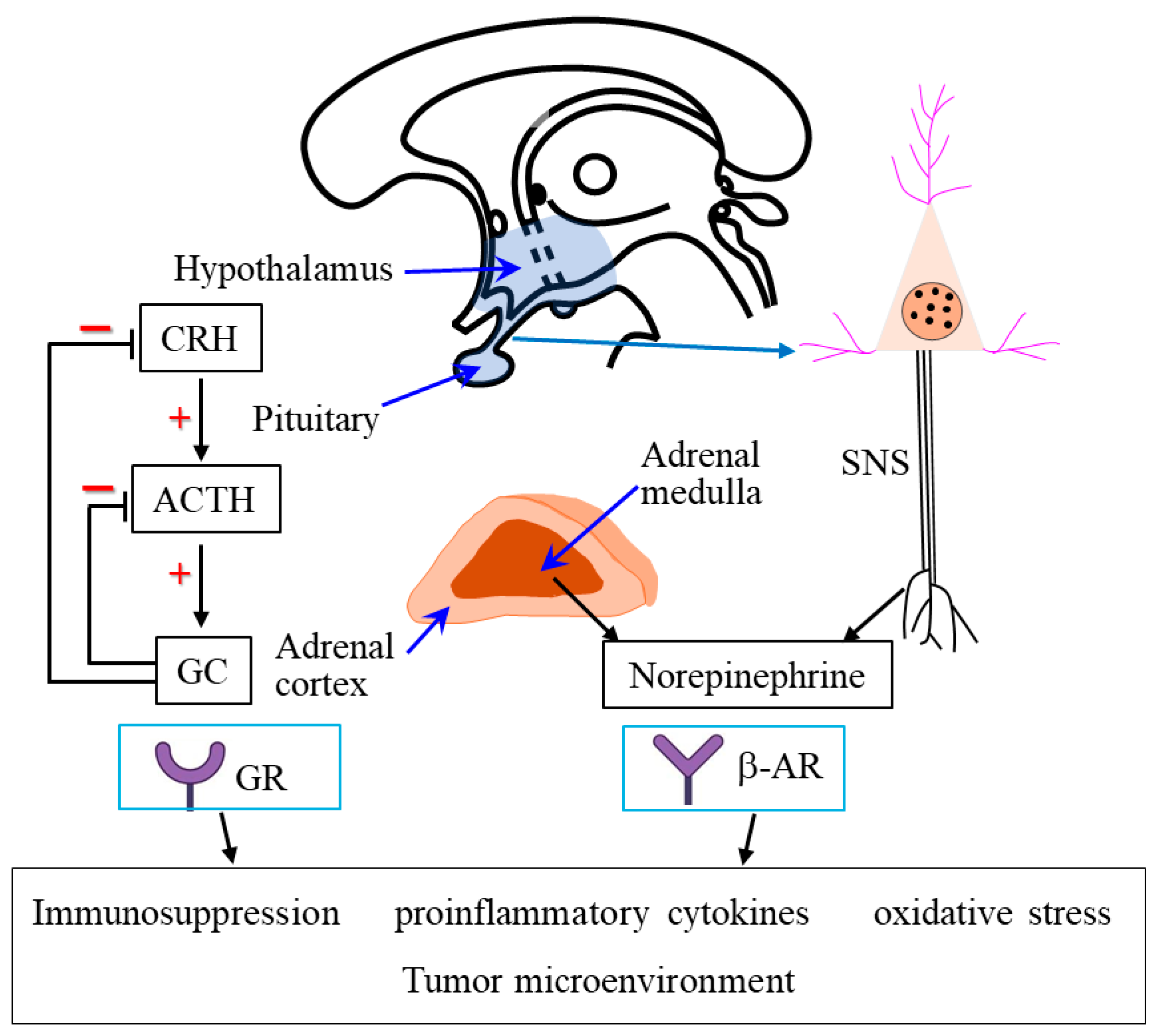
The stress response involves multiple interconnected systems, including the HPA axis, SNS, and the neuroendocrine and immune systems, alongside neural circuits such as the locus coeruleus-norepinephrine system. These systems release mediators that act on receptors in both the brain and peripheral tissues to initiate adaptive responses [10,27,28,29]. The HPA axis serves as a central regulator of the stress response. Corticotropin-releasing hormone (CRH), secreted by the hypothalamus [28,29], stimulates the anterior pituitary gland to release adrenocorticotropic hormone (ACTH), which in turn induces the secretion of GCs from the adrenal cortex. While essential for coping with acute stress, chronic activation of the HPA axis can result in dysregulated GC secretion (Figure 1). As primary stress hormones, GCs bind to GR and play critical roles in diverse biological processes, including the regulation of immune responses, metabolism, and inflammation [30,31,32].
Selye described the stress response as the general adaptation syndrome, which progresses through three phases: (1) alarm, characterized by acute physiological changes; (2) resistance, during which the body attempts to adapt to the persistent stressor; and (3) exhaustion, where prolonged stress overwhelms adaptive capacity, leading to systemic dysfunction [26,33]. Recent animal studies have demonstrated that pathologically elevated GC levels and increased GR expression are causally associated with enhanced angiogenesis, cancer cell proliferation, accelerated tumor progression, and metastasis [34,35].
The SNS further contributes to the stress response by releasing catecholamines, specifically epinephrine and NE (Figure 1). These neurotransmitters exert context-dependent effects on the immune system [30,36]. While acute SNS activation enhances innate immunity, chronic stress severely impairs adaptive responses. Prolonged exposure to catecholamines and elevated GCs disrupts immune homeostasis by suppressing the function of T cells and natural killer (NK) cells and altering cytokine profiles [37,38]. Consequently, this diminished immune surveillance weakens host defenses, increasing susceptibility to infections, cancer progression, and chronic inflammatory diseases.
Chronic stress induces oxidative stress, characterized by an imbalance between the systemic production of reactive oxygen species (ROS) and the capacity of antioxidant defenses to neutralize these intermediates or repair the resulting damage [39]. This imbalance leads to the excessive accumulation of ROS, resulting in the oxidative modification of cellular components, including lipids, proteins, and DNA. Elevated ROS levels perturb redox homeostasis and disrupt normal cellular functions. Evidence suggests that chronic stress increases the production of ROS and reactive nitrogen species (RNS) through elevated GCs and NE levels acting via GRs and β2-ARs. The subsequent increase in ROS and RNS levels induces DNA damage and promote oncogenic transformation [39,40].

4. Chronic Stress Acts as a Risk Factor for Breast Cancer

Chronic psychological stress is increasingly recognized as a global health priority due to its profound impact on multiple physiological processes. Long-term stress is implicated in the pathogenesis of various conditions, including cardiovascular disease, gastric ulcers, obesity, diabetes, metabolic syndrome, osteoporosis, arthritis, and neurodegenerative disorders such as dementia. Therefore, effective stress management is essential for the prevention and clinical intervention of stress-related pathologies, including breast cancer.
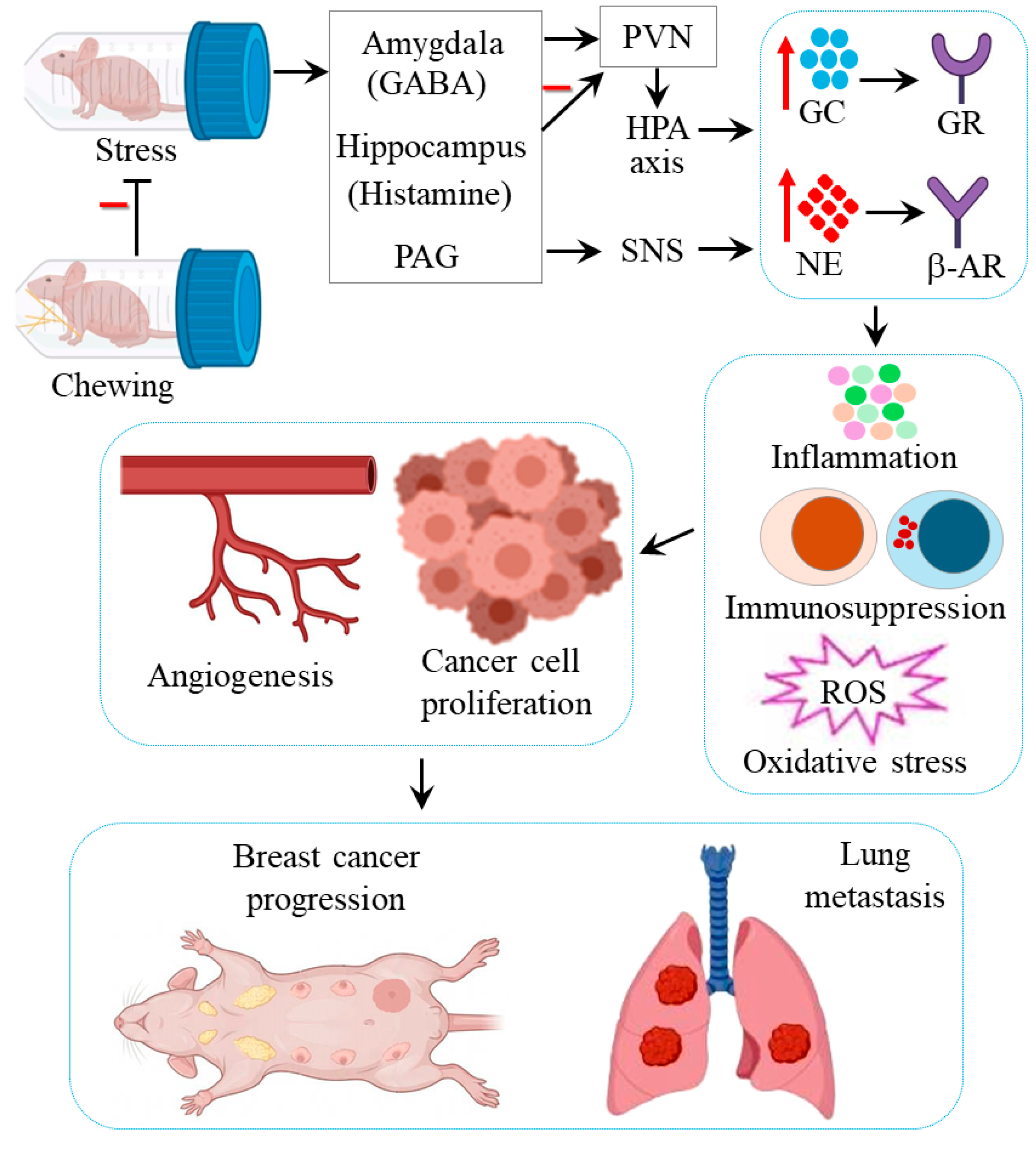
Animal studies have demonstrated that chronic stress triggers persistent activation of the HPA axis and SNS, resulting in sustained elevations in GCs and NE. These stress hormones bind to their respective receptors, the GR and β-ARs, promoting tumor progression through multiple signaling pathways (Figure 2). In particular, chronic activation of β2-ARs has been shown to enhance angiogenesis [36,37], the epithelial-to-mesenchymal transition (EMT) [41], and metastasis via the AKT-p53 and plexin A1 pathways [10]. Preclinical data further indicate that sympathetic activation promotes tumor progression, whereas parasympathetic stimulation exerts inhibitory effects [42]. Moreover, clinical evidence suggests that β-blockers may reduce cancer recurrence and metastasis [43], although large-scale trials are required to confirm their therapeutic efficacy.
Chronic psychological stress has been increasingly recognized as an important factor promoting breast cancer progression and metastasis, primarily through the modulation of the immune system and the tumor microenvironment (TME) [30,31,32,44]. Stress hormones, such as GCs and NE, activate GR and β-AR signaling pathways, thereby altering immune cell function and foster a tumor-promoting niche.
Myeloid-derived suppressor cells (MDSCs) are key mediators linking chronic stress to tumor progression [5,45,46]. Chronic stress enhances proinflammatory cytokine production and stimulates the accumulation and recruitment of MDSCs to tumors and metastatic sites via catecholamine-mediated β-AR signaling. These cells suppress antitumor immunity through multiple mechanisms, including the depletion of essential metabolites, increased reactive oxygen species (ROS) production, and the secretion of immunosuppressive cytokines. In addition, MDSCs promote tumor progression through non-immunological mechanisms such as epithelial–mesenchymal transition (EMT), tumor stemness, and angiogenesis [5].
Macrophages also play a critical role in chronic stress-mediated tumor progression [5,47]. Under chronic stress, GCs and NE alter macrophage polarization, favoring the development of M2-like tumor-associated macrophages (TAMs). These TAMs interact with other cellular components of the TME, including fibroblasts, endothelial cells, and immune cells, to promote immune evasion, tumor growth, and metastasis [47].
Neutrophils represent another vital component of the TME [48,49]. Recruited through the CXCR2–CXCL1 signaling axis, neutrophils contribute to disease progression by promoting angiogenesis, extracellular matrix remodeling, and tumor invasion. Chronic stress further enhances neutrophil activity by disrupting circadian regulation and stimulating GC-induced neutrophil extracellular trap (NET) formation, creating a microenvironment that facilitates metastatic colonization [49].
Both adaptive and innate lymphocytes are significantly impacted by chronic stress [44]. CD8+ cytotoxic T cells and natural killer (NK) cells are essential for recognizing and eliminating tumor cells, while CD4+ T helper cells support antitumor immune responses by orchestrating cytotoxic responses. Conversely, regulatory T (Treg) cells suppress immune responses to tumors, their accumulation in the TME correlates with poor clinical outcomes in breast cancer. Chronic stress suppresses these protective immune mechanisms by reducing the proliferation and cytotoxic activity of NK cells, CD8+, and CD4+ T cells, while simultaneously promoting the expansion of Tregs [49,50]. These alterations impair immune surveillance, thereby enabling breast cancer cells to escape immune destruction.
In addition to immune cell modulation, chronic stress promotes tumor angiogenesis and metastasis by upregulating vascular endothelial growth factor (VEGF) and matrix metalloproteinases (MMP-2 and MMP-9). VEGF stimulates tumor vascularization and lymphangiogenesis, facilitating tumor cell dissemination [48]. MMP-2 and MMP-9 degrade basement membrane components and the extracellular matrix, promoting tumor invasion and metastasis [5,51]. Moreover, proinflammatory cytokines such as IL-1β, IL-6, and TNF-α contribute to the formation of an inflammatory TME that supports tumor growth and metastatic progression [32,52,53]. The chemokine CXCL1 facilitates cancer metastasis by recruiting MDSCs via the CXCR2 receptor, thereby promoting the formation of premetastatic niches [5]. Furthermore, chronic stress also exerts hyperglycemic and obesogenic effects, both of which are associated with increased cancer risk [31,54].
Collectively, these findings indicate that chronic psychological stress reshapes the TME through complex interactions among immune cells, inflammatory mediators, and tumor-derived factors, ultimately driving breast cancer progression.
Accumulating evidence suggests that oxidative stress is a major contributor to stress-induced oncogenesis. Chronic psychological stress increases the production of ROS and RNS through elevated GC levels and β2-AR activation [34,35,55]. These reactive molecules induce DNA damage and promote oncogenic transformation. Key mediators in this process include inducible nitric oxide synthase (iNOS) and 4-hydroxynonenal (4-HNE), and Superoxide dismutase 2 (SOD2).
iNOS produces nitric oxide (NO) in response to inflammatory stimuli and is implicated in several aspects of cancer development, including DNA damage, angiogenesis, and the evasion of apoptosis. Sustained NO production by iNOS facilitates cancer cell proliferation, survival, and angiogenesis, thereby driving tumor progression [38,39]. Consequently, elevated iNOS expression is associated with increased tumor aggressiveness, metastasis, and poor survival outcomes in breast cancer patients. 4-HNE, a stable end product of lipid peroxidation, has been shown to promote the growth, invasion, and metastasis of breast cancer cells [56]. As a pivotal mitochondrial enzyme, SOD2 exhibits a dual role in cancer, acting as both a tumor suppressor and a tumor promoter, through its regulation of mitochondrial superoxide and H2O2 levels [57].
Taken together, chronic psychological stress promotes breast cancer progression and metastasis by dysregulating neuroendocrine, immune, and oxidative pathways. These mechanisms, primarily mediated by the HPA axis and SNS via GC/GR and NE/β2-AR signaling, facilitate a permissive environment for angiogenesis, immunosuppression, and metastatic niche formation. The key factors linking chronic stress to breast cancer progression are summarized in Table 1.
Systemic oxidative stress is known to exacerbate local inflammatory processes, in the oral cavity, for instance, such systemic changes can be monitored through biomarkers like salivary amylase in conditions such as periodontitis. Human studies have revealed that chronic psychological stress significantly increases levels of salivary amylase (a sympathetic nervous system stress marker) and cortisol [58]. Furthermore, case–control studies demonstrate that patients with periodontitis exhibit significantly higher stress and elevated salivary cortisol, highlighting a potential link between psychological stress, cortisol secretion, and periodontal disease [59,60]. Compared to patients with other malignancies, those with breast cancer often experience higher levels of psychological distress arising from life-threatening diagnoses, physical alterations, treatment side effects, and social dysfunction [61]. These factors frequently lead to anxiety, depression, and insomnia. Accumulating evidence indicates that chronic psychological stress contributes to breast cancer development, progression, and metastasis through neuroendocrine and immune regulatory mechanisms [3,4]. A cohort study revealed that women with a history of chronic stress had a significantly higher prevalence of being overweight and a greater incidence of aggressive breast cancer subtypes, potentially linked to compromised immunosurveillance [62]. Additionally, clinical evidence indicates that familial breast cancer risk acts as a chronic life stressor, associated with higher levels of self-reported distress [63].

5. Chewing Attenuates Promotion of Breast Cancer by Chronic Stress

Masticatory function plays a critical role in maintaining nutritional status, overall health, and cognitive function. Tooth loss and the resulting decline in masticatory performance not only impair daily activities but also increase the risk of dementia. Persistent masticatory dysfunction activates the SNS and the HPA axis, thereby elevating circulating NE and GC levels. These stress hormones act on their respective receptors, eliciting metabolic, physiological, and behavioral responses [16,17].
An orthotopic breast cancer xenograft model was established by inoculating MDA-MB-231 cells into the mammary fat pads of athymic nude mice [34]. Additionally, a lung metastasis model was generated via tail vein injection of MDA-MB-231 cells into female nude mice [35]. The mice were randomly divided into control, stress, and stress/chewing groups. Chronic stress was induced by daily restraint (45 min, 3 times/day for 5 weeks). The stress/chewing group was provided with wooden sticks to chew during restraint. Notably, chewing significantly attenuated stress-induced cancer progression and metastasis by inhibiting angiogenesis and tumor cell proliferation [34,35]. Mechanistically, chewing reduced circulating GC and NE levels, downregulated GR and β2-AR expression in tumor cells, and alleviated oxidative stress by suppressing iNOS and 4-HNE expression.
Animal studies have demonstrated that occlusal disharmony and bite-raising conditions in male rats induce excessive HPA axis activation and elevate GC levels [64,65]. Furthermore, tooth extraction and masticatory dysfunction impair hippocampus-dependent spatial memory, indicating that chewing plays a pivotal role in maintaining hippocampal cognitive function [66]. Early work by Vincent et al. showed that female rats allowed to chew during restraint- and water-immersion stress developed a lower incidence of gastric lesions than those exposed to stress alone. This suggests that trigeminal afferent input during chewing activates mechanisms that attenuate stress responses [67].
Osteoporosis is a skeletal disorder characterized by reduced bone mass and microstructural deterioration, leading to an increased risk of fracture [68]. Evidence from both animal and human studies indicates a link between chronic mild stress and bone loss. Chewing under chronic stress conditions prevents elevations in plasma GC and NE levels, thereby reducing osteoclast-mediated bone resorption, promoting osteoblast-mediated bone formation, and consequently improving trabecular microarchitecture and bone strength [69].
Okada et al. reported that restraint stress increases blood pressure, heart rate, and core temperature in male rats, all of which are significantly suppressed by chewing during stress [70]. In a related study, Koizumi et al. showed that chewing during immobilization stress ameliorated stress-induced increases in circulating NE levels and reduced the incidence of post-stress arrhythmias associated with sympathetic hyperactivity in male rats [71].
Spatial cognitive function is primarily regulated by the hippocampus, which is highly sensitive to stress and is among the first brain regions to undergo structural and functional changes. Animal studies have further demonstrated that stress-induced elevations in corticosterone levels impair hippocampus-dependent learning and memory, whereas chewing ameliorates these stress-induced cognitive deficits [72]. Specifically, male rats provided with wooden sticks to chew during immobilization stress exhibited attenuated suppression of spatial memory and preserved GR expression in the hippocampus [73].
How does chewing under stress suppress the SNS and HPA axis activity? The stress-ameliorating effects of chewing likely involve integrated mechanisms among the HPA axis, SNS, and the amygdala, the emotional center responsible for evaluating sensory input and mediating behavioral responses [74]. The paraventricular nucleus (PVN), located upstream of the HPA axis, integrates neuroendocrine and autonomic functions to maintain homeostasis [17,74]. Expression of CRH in the PVN is a key modulator of the stress response. CRH stimulates the release of ACTH from the pituitary gland, which in turn promotes cortisol secretion from the adrenal cortex (Figure 1). This cascade is regulated by negative feedback via steroid receptors in the pituitary gland, hypothalamus, hippocampus, and amygdala. Moreover, CRH neurons in the PVN activate the SNS via the locus coeruleus, thereby enhancing catecholamine release [75]. Chewing has been shown to reduce the number of CRH-, c-Fos-, and phosphorylated ERK1/2 (p-ERK1/2)-positive cells in the PVN, all of which increase under stress [76]. These intracellular changes occur prior to CRH expression, suggesting that chewing modulates early neural responses to stress. Thus, the PVN appears to be a central site mediating the stress-ameliorating effects of chewing through both neural and humoral regulation.
Chronic stress significantly elevates circulating corticosterone levels in adult rats via HPA axis activation. Hypothalamic glucose uptake also increases in response to stress but normalized with concurrent chewing [77]. Measurements of plasma corticosterone levels confirm that chewing markedly counteracts this stress-induced hormonal elevation. Furthermore, a region-of-interest analysis reveals a significant reduction in glucose uptake within the hypothalamic PVN. These findings suggest that active coping through chewing inhibits the upstream activation of the HPA axis, thereby mitigating the stress response [77].
Amygdala ablation studies suggest that the amygdala plays an important role in regulating HPA axis activity. The central amygdala (CeA) projects directly to the PVN [78,79], with GABA acting as the principal inhibitory neurotransmitter. Under stress conditions, GABA efflux in the basolateral amygdala (BLA) increases and is further enhanced by chewing, suggesting that trigeminal inputs strengthen GABAergic transmission. This enhanced inhibitory signaling suppresses stress-induced p-ERK1/2 expression in the PVN. Consequently, the activation of BLA GABAergic neurons mediates chewing-induced suppression of stress hormone secretion through hypothalamic modulation [78,80].
The hippocampus is particularly vulnerable to stress [78,79]. Chronic stress typically downregulates hippocampal GRs, impairing the negative feedback control of the HPA axis. However, rats provided with wooden sticks to chew during stress show reduced suppression of spatial memory together with elevated hippocampal GR expression [73]. This chewing-induced recovery of hippocampal plasticity is largely mediated by the histamine system. Oral proprioceptive inputs are transmitted via the mesencephalic trigeminal nucleus to the tuberomammillary nucleus, activating histaminergic neurons that project widely throughout the brain [79]. This activation enhances N-methyl-D-aspartate (NMDA) receptor function via H1 receptors and phospholipase C activation, thereby ameliorating stress-induced impairments in hippocampal long-term potentiation (LTP) [81,82].
Furthermore, the amygdala modulates hippocampal function both directly and indirectly. Kim et al. demonstrated that the activation of GABAergic neurons attenuates the stress-induced suppression of hippocampal LTP [82,83]. Thus, the combined activation of the histaminergic and GABAergic systems likely underlies the chewing-induced recovery of hippocampal plasticity under stress conditions.
Stress activates the SNS, inducing physiological responses such as elevated heart rate and blood pressure. The midbrain periaqueductal gray (PAG) regulates multiple physiological and behavioral functions, including cardiovascular control, and directly modulates the SNS by coordinating defensive, emotional, and autonomic stress responses. Under stress, the PAG shows an increase in p-ERK1/2-positive cells, which is normalized by chewing [84]. Given the amygdala’s projections to the PAG, chewing likely suppress stress-induced sympathetic and cardiovascular responses via enhanced GABAergic inhibition from the BLA [85]. Collectively, these findings suggest that chewing is an effective stress-coping mechanism modulating both neuroendocrine and autonomic stress pathways.
Human studies have also shown that chewing significantly reduces salivary cortisol levels [86,87]. In healthy male populations, chewing represents a practical behavior for stress mitigation, suggesting that optimizing chewing behavior could further enhance its psychological stress relief effects [88]. The mechanisms underlying these effects are linked to neuronal pathways in the brain. Functional magnetic resonance imaging (fMRI) studies demonstrate that gum chewing increases bilateral blood flow in regions including the sensorimotor cortex and insula, indicating enhanced neuronal activity [89,90,91]. Chewing gum has been shown to alleviate stress responses, improve working memory, and enhance cognitive performance [89]. Notably, chewing during stress exposure suppresses the transmission of stress-dependent information in the brain by attenuating sensory processing and neural propagation within these circuits. In particular, chewing gum appears to relieve stress by counteracting stress-induced increases in activity and connectivity within sensory, interoceptive, and control networks [17,77,92].

6. Potential Limitations

A primary limitation of this review is that the evidence demonstrating the attenuation of stress-induced breast cancer progression through mastication is largely derived from our previous studies. To date, independent replication to confirm these specific mechanisms remains limited. This reliance on findings from a single research group may introduce potential bias and limit the generalizability of the conclusions. Therefore, future investigations by independent research groups are essential to validate these observations, clarify the underlying mechanisms, and establish a broader scientific consensus.
Furthermore, the rodent models discussed often use wooden sticks as a chewing substrate during stress protocols. Although this approach effectively isolates the stress-modulating effects of rhythmic jaw movement, it does not fully replicate natural mastication. During normal feeding behavior, mastication involves a sophisticated coordination of jaw, tongue, and facial muscles, driven by multimodal sensory feedback from periodontal ligaments, the oral mucosa, and taste receptors. These inputs modulate chewing rhythm and bite force through central pattern generators and sensory integration. In contrast, wood chewing is largely non-nutritive and repetitive, lacking the sensory complexity of taste, texture variation, and bolus formation. The mechanical properties of wood also differ substantially from standard rodent diets, potentially altering muscle activation patterns and periodontal loading. Consequently, the neural and physiological responses elicited in these models may not fully represent those occurring during natural feeding.
Finally, as much of the current evidence is derived from animal models, its translational relevance to human physiology remains uncertain. Therefore, interpretations regarding the clinical application of these findings should be made with caution.

7. Conclusions and Future Perspectives

Modern society faces chronic psychological stress as a major public health challenge, given its pervasive effects on multiple physiological systems. Persistent activation of stress-related pathways, specifically the HPA axis and SNS, leads to sustained elevation of GCs and catecholamines. These hormonal shifts suppress immune surveillance, alter cytokine profiles, and augment the production of pro-inflammatory mediators and oxidative stress markers. Consequently, the delicate balance between tumor-suppressive and tumor-promoting mechanisms is disrupted, thereby facilitating the development, progression, and metastasis of breast cancer by enhancing angiogenesis, cell proliferation, and resistance to apoptosis.
Chewing is a simple, cost-effective, and practical behavior observed in both animals and humans. Accumulating evidence indicates that chewing plays a protective role in modulating stress responses. Experimental studies in rodents have demonstrated that chewing during exposure to various stressors can attenuate excessive activation of the HPA axis, normalize stress hormone levels, and maintain the balance between immune and oxidative systems. Furthermore, chewing has been shown to mitigate the effects of chronic stress on breast cancer progression and metastasis, likely by regulating stress-related signaling pathways and preserving physiological homeostasis.
Given its non-invasive and readily accessible nature, chewing represents a potentially valuable behavioral intervention for counteracting the adverse effects of chronic psychological stress. However, because independent replication is limited and most existing evidence is derived from animal models, its translational relevance to human physiology remains uncertain. Further research, including well-designed clinical trials, is warranted to validate whether chewing-based strategies can complement conventional approaches for preventing and treating breast cancer in humans.

Author Contributions

Conceptualization, K.A. and K.-y.K.; writing—original draft preparation, K.A., M.I. and K.-y.K.; writing—review and editing, K.A., S.O., K.K., A.S., K.Y., T.T. and K.-y.K. All authors have read and agreed to the published version of the manuscript.

Funding

This research received no external funding.

Data Availability Statement

No new data were created or analyzed in this study.

Conflicts of Interest

The authors declare no conflicts of interest.

Abbreviations

The following abbreviations are used in this manuscript:
ACTHAdrenocorticotropic hormone
β-ARβ-adrenergic receptor
BLABasolateral amygdala
CeACentral amygdala
CRHCorticotropin-releasing hormone
EMTEpithelial–mesenchymal transition
GCGlucocorticoid
GRGlucocorticoid receptor
HPAHypothalamic–pituitary–adrenal
4-HNE4-hydroxynonenal
iNOSinducible nitric oxide synthase
ILInterleukin
LTPLong-term potentiation
MDSCMyeloid-derived suppressor cell
MMPMatrix metalloproteinase
NKNatural killer
NENorepinephrine
NETNeutrophil extracellular trap
NMDAN-methyl-D-aspartate
PAGPeriaqueductal gray
PVNParaventricular nucleus
RNSReactive nitrogen species
ROSReactive oxygen species
SNSSympathetic nervous system
SOD2Superoxide dismutase 2
TAMTumor-associated macrophage
VEGFVascular endothelial growth factor

References

  1. Freihat, O.; Sipos, D.; Kovacs, A. Global burden and projections of breast cancer incidence and mortality to 2050: A comprehensive analysis of GLOBOCAN data. Front. Public Health 2025, 13, 1622954. [Google Scholar] [CrossRef]
  2. Łukasiewicz, S.; Czeczelewski, M.; Forma, A.; Baj, J.; Sitarz, R.; Stanisławek, A. Breast Cancer—Epidemiology, Risk Factors, Classification, Prognostic Markers, and Current Treatment Strategies—An Updated Review. Cancers 2021, 13, 4287. [Google Scholar] [CrossRef]
  3. Liu, H.-M.; Ma, L.; Li, C.; Cao, B.; Jiang, Y.; Han, L.; Xu, R.; Lin, J.; Zhang, D. The molecular mechanism of chronic stress affecting the occurrence and development of breast cancer and potential drug therapy. Transl. Oncol. 2022, 15, 101281. [Google Scholar] [CrossRef]
  4. Chen, X.; Wang, M.; Yu, K.; Xu, S.; Qiu, P.; Lyu, Z.; Zhang, X.; Xu, Y. Chronic stress-induced immune dysregulation in breast cancer: Implications of psychosocial factors. J. Transl. Int. Med. 2022, 11, 226–233. [Google Scholar] [CrossRef] [PubMed]
  5. Zheng, Y.; Wang, N.; Wang, S.; Zhang, J.; Yang, B.; Wang, Z. Chronic psychological stress promotes breast cancer pre-metastatic niche formation by mobilizing splenic MDSCs via TAM/CXCL1 signaling. J. Exp. Clin. Cancer Res. 2023, 42, 129. [Google Scholar] [CrossRef]
  6. Mravec, B.; Tibensky, M.; Horvathova, L. Stress and cancer. Part I: Mechanisms mediating the effect of stressors on cancer. J. Neuroimmunol. 2020, 346, 577311. [Google Scholar] [CrossRef] [PubMed]
  7. Chen, H.; Liu, D.; Guo, L.; Cheng, X.; Guo, N.; Shi, M. Chronic psychological stress promotes lung metastatic colonization of circulating breast cancer cells by decorating a pre-metastatic niche through activating β-adrenergic signaling. J. Pathol. 2018, 244, 49–60. [Google Scholar] [CrossRef] [PubMed]
  8. Bahri, N.; Najafi, T.F.; Shandiz, F.H.; Tohidinik, H.R.; Khajavi, A. The relation between stressful life events and breast cancer: A systematic review and meta-analysis of cohort studies. Breast Cancer Res. Treat. 2019, 176, 53–61. [Google Scholar] [CrossRef]
  9. Khan, A.; Song, M.; Dong, Z. Chronic stress: A fourth etiology in tumorigenesis? Mol. Cancer 2025, 24, 196. [Google Scholar] [CrossRef]
  10. Zhang, Z.; Wang, Y.; Li, Q. Mechanisms underlying the effects of stress on tumorigenesis and metastasis (Review). Int. J. Oncol. 2018, 53, 2332–2342. [Google Scholar] [CrossRef]
  11. Russell, G.; Lightman, S. The human stress response. Nat. Rev. Endocrinol. 2019, 15, 525–534. [Google Scholar] [CrossRef]
  12. Glaser, R.; Kiecolt-Glaser, J.K. Stress-induced immune dysfunction: Implications for health. Nat. Rev. Immunol. 2005, 5, 243–251. [Google Scholar] [CrossRef]
  13. Liu, Z.; Le, M.; Bai, Y. Chronic Stress Mediates Inflammatory Cytokines Alterations and Its Role in Tumorigenesis. J. Inflamm. Res. 2025, 18, 1067–1090. [Google Scholar] [CrossRef] [PubMed]
  14. Caparica, R.; Bruzzone, M.; Agostinetto, E.; Angelis, C.D.; Fêde, Â.; Ceppi, M.; de Azambuja, E. Beta-blockers in early-stage breast cancer: A systematic review and meta-analysis. ESMO Open 2021, 6, 100066. [Google Scholar] [CrossRef] [PubMed]
  15. Antoni, M.H.; Dhabhar, F.S. The impact of psychosocial stress and stress management on immune responses in patients with cancer. Cancer 2019, 125, 1417–1431. [Google Scholar] [CrossRef]
  16. Kubo, K.-Y.; Iinuma, M.; Chen, H. Mastication as a Stress-Coping Behavior. Biomed. Res. Int. 2015, 2015, 876409. [Google Scholar] [CrossRef]
  17. Azuma, K.; Zhou, Q.; Niwa, M.; Kubo, K.-Y. Association between Mastication, the Hippocampus, and the HPA Axis: A Comprehensive Review. Int. J. Mol. Sci. 2017, 18, 1687. [Google Scholar] [CrossRef]
  18. Yaman-Sözbir, Ş.; Ayaz-Alkaya, S.; Bayrak-Kahraman, B. Effect of chewing gum on stress, anxiety, depression, self-focused attention, and academic success: A randomized controlled study. Stress Health 2019, 35, 441–446. [Google Scholar] [CrossRef] [PubMed]
  19. Siegel, R.L.; Giaquinto, A.N.; Jemal, A. Cancer statistics, 2024. CA Cancer J. Clin. 2024, 74, 12–49. [Google Scholar] [CrossRef]
  20. Xiong, X.; Zheng, L.-W.; Ding, Y.; Chen, Y.-F.; Cai, Y.-W.; Wang, L.-P.; Huang, L.; Liu, C.-C.; Shao, Z.-M.; Yu, K.-D. Breast cancer: Pathogenesis and treatments. Signal Transduct. Target Ther. 2025, 10, 49. [Google Scholar] [CrossRef]
  21. Anderson, K.N.; Schwab, R.B.; Martinez, M.E. Reproductive risk factors and breast cancer subtypes: A review of the literature. Breast Cancer Res. Treat. 2014, 144, 1–10. [Google Scholar] [CrossRef]
  22. Namazi, N.; Irandoost, P.; Heshmati, J.; Larijani, B.; Azadbakht, L. The association between fat mass and the risk of breast cancer: A systematic review and metaanalysis. Clin. Nutr. 2019, 38, 1496–1503. [Google Scholar] [CrossRef] [PubMed]
  23. Bagnardi, V.; Rota, M.; Botteri, E.; Tramacere, I.; Islami, F.; Fedirko, V.; Scotti, L.; Jenab, M.; Turati, F.; Pasquali, E.; et al. Alcohol consumption and site-specific cancer risk: A comprehensive dose-response meta-analysis. Br. J. Cancer 2015, 112, 580–593. [Google Scholar] [CrossRef] [PubMed]
  24. Gaudet, M.M.; Gapstur, S.M.; Sun, J.; Diver, W.R.; Hannan, L.M.; Thun, M.J. Active smoking and breast cancer risk: Original cohort data and meta-analysis. J. Natl. Cancer Inst. 2013, 105, 515–525. [Google Scholar] [CrossRef]
  25. Koo, E.; Henderson, M.A.; Dwyer, M.; Skandarajah, A.R. Management and Prevention of Breast Cancer After Radiation to the Chest for Childhood, Adolescent, and Young Adulthood Malignancy. Ann. Surg. Oncol. 2015, 22, S545–S551. [Google Scholar] [CrossRef]
  26. Selye, H. A Syndrome produced by Diverse Nocuous Agents. Nature 1936, 138, 32. [Google Scholar] [CrossRef]
  27. McCarty, R.; Horwatt, K.; Konarska, M. Chronic stress and sympathetic-adrenal medullary responsiveness. Soc. Sci. Med. 1998, 26, 333–341. [Google Scholar] [CrossRef]
  28. Vasconcelos, M.; Stein, D.J.; Gallas-Lopes, M.; Landau, L.; de Almeida, R.M.M. Corticotropin-releasing factor receptor signaling and modulation: Implications for stress response and resilience. Trends Psychiatry Psychother. 2020, 42, 195–206. [Google Scholar] [CrossRef]
  29. Hostinar, C.E.; Sullivan, R.M.; Gunnar, M.R. Psychobiological mechanisms underlying the social buffering of the hypothalamic-pituitary-adrenocortical axis: A review of animal models and human studies across development. Psychol. Bull. 2014, 140, 256–282. [Google Scholar] [CrossRef]
  30. Besedovsky, H.; del Rey, A. A Glucocorticoid-Mediated Immunoregulatory Circuit Integrated at Brain Levels: Our Early Studies and a Present View. Neuroimmunomodulation 2024, 31, 230–245. [Google Scholar] [CrossRef] [PubMed]
  31. Akalestou, E.; Genser, L.; Rutter, G.A. Glucocorticoid Metabolism in Obesity and Following Weight Loss. Front. Endocrinol. 2020, 11, 59. [Google Scholar] [CrossRef]
  32. Reichard, S.D.; Amouret, A.; Muzzi, C.; Vettorazzi, S.; Tuckermann, J.P.; Lühder, F.; Reichardt, H.M. The Role of Glucocorticoids in Inflammatory Diseases. Cells 2021, 10, 2921. [Google Scholar] [CrossRef] [PubMed]
  33. Selye, H. Forty years of stress research: Principal remaining problems and misconceptions. Can. Med. Assoc. J. 1976, 115, 53–56. [Google Scholar] [PubMed]
  34. Zhou, Q.; Katano, M.; Zhang, J.-H.; Liu, X.; Wang, K.-Y.; Iinuma, M.; Kubo, K.-Y.; Azuma, K. Chewing Behavior Attenuates the Tumor Progression-Enhancing Effects of Psychological Stress in a Breast Cancer Model Mouse. Brain Sci. 2021, 11, 479. [Google Scholar] [CrossRef]
  35. Zhang, J.H.; Wang, K.-Y.; Kubo, K.-Y.; Azuma, K. Chewing Behavior Attenuates Lung-Metastasis-Promoting Effects of Chronic Stress in Breast-Cancer Lung-Metastasis Model Mice. Cancers 2022, 14, 5950. [Google Scholar] [CrossRef]
  36. Sanders, V.M.; Kohm, A.P. Sympathetic nervous system interaction with the immune system. Int. Rev. Neurobiol. 2002, 52, 17–41. [Google Scholar]
  37. Shimba, A.; Ikuta, K. Control of immunity by glucocorticoids in health and disease. Semin. Immunopathol. 2020, 42, 669–680. [Google Scholar] [CrossRef]
  38. Zefferino, R.; Di Gioia, S.; Conese, M. Molecular links between endocrine, nervous and immune system during chronic stress. Brain Behav. 2020, 11, e01960. [Google Scholar] [CrossRef]
  39. Flaherty, R.L.; Owen, M.; Fagan-Murphy, A.; Intabli, H.; Healy, D.; Patel, B.A.; Allen, M.C.; Patel, B.A.; Flint, M.S. Glucocorticoids induce production of reactive oxygen species/reactive nitrogen species and DNA damage through an iNOS mediated pathway in breast cancer. Breast Cancer Res. 2017, 19, 35. [Google Scholar] [CrossRef]
  40. Flaherty, R.L.; Intabli, H.; Falcinelli, M.; Bucca, G.; Hesketh, A.; Patel, B.A.; Allen, M.C.; Smith, C.P.; Flint, M.S. Stress hormone-mediated acceleration of breast cancer metastasis is halted by inhibition of nitric oxide synthase. Cancer Lett. 2019, 459, 59–71. [Google Scholar] [CrossRef] [PubMed]
  41. Silva, D.; Quintas, C.; Gonçalves, J.; Fresco, P. b2-Adrenoceptor Activation Favor Acquisition of Tumorigenic Properties in Non-Tumorigenic MCF-10A Breast Epithelial Cells. Cells 2024, 13, 262. [Google Scholar] [CrossRef]
  42. Sun, C.; Shen, Y.; Wang, F.; Lu, T.; Zhang, J. Sympathetic nervous system in tumor progression and metabolic regulation: Mechanisms and clinical potential. J. Transl. Med. 2025, 23, 836. [Google Scholar] [CrossRef]
  43. Peixoto, R.; de Lourdes Pereira, M.; Oliveira, M. Beta-Blockers and Cancer: Where Are We? Pharmaceuticals. 2020, 13, 105. [Google Scholar] [CrossRef]
  44. Alotiby, A. Immunology of Stress: A Review Article. J. Clin. Med. 2024, 13, 6394. [Google Scholar] [CrossRef]
  45. Vilasco, M.; Communal, L.; Mourra, N.; Courtin, A.; Forgez, P.; Gompel, A. Glucocorticoid receptor and breast cancer. Breast Cancer Res. Treat. 2011, 130, 1–10. [Google Scholar] [CrossRef] [PubMed]
  46. Zhang, X.; Ma, N.; Jin, C.; Cao, X. Role of gut microbiota and immune response in breast cancer progression. Biomol. Biomed. 2026, 26, 100–114. [Google Scholar] [CrossRef] [PubMed]
  47. Momčilović, S.; Milošević, M.; Kočović, D.M.; Marković, D.; Zdravković, D.; Petrinović, S.V. Macrophages at the Crossroads of Chronic Stress and Cancer. Int. J. Mol. Sci. 2025, 26, 6838. [Google Scholar] [CrossRef]
  48. Zhang, L.; Pan, J.; Wang, M.; Yang, J.; Zhu, S.; Li, L.; Hu, X.; Wang, Z.; Pang, L.; Li, P.; et al. Chronic Stress-Induced and Tumor Derived SP1+ Exosomes Polarizing IL-1β+ Neutrophils to Increase Lung Metastasis of Breast Cancer. Adv. Sci. 2025, 12, 2310266. [Google Scholar] [CrossRef] [PubMed]
  49. He, X.-Y.; Gao, Y.; Ng, D.; Michalopoulou, E.; George, S.; Adrover, J.M.; Sun, L.; Albrengues, J.; Daßler-Plenker, J.; Han, X.; et al. Chronic stress increases metastasis via neutrophil-mediated changes to the microenvironment. Cancer Cell 2024, 42, 474–486.e12. [Google Scholar] [CrossRef]
  50. Lei, Y.; Liao, F.; Tian, Y.; Wang, Y.; Xia, F.; Wang, J. Investigating the crosstalk between chronic stress and immune cells: Implications for enhanced cancer therapy. Front. Neurosci. 2023, 17, 1321176. [Google Scholar] [CrossRef]
  51. Li, H.; Qiu, Z.; Li, F.; Wang, C. The relationship between MMP-2 and MMP-9 expression levels with breast cancer incidence and prognosis. Oncol. Lett. 2017, 14, 5865–5870. [Google Scholar] [CrossRef]
  52. Slavich, G.M.; Irwin, M.R. From stress to inflammation and major depressive disorder: A social signal transduction theory of depression. Psychol. Bull. 2014, 140, 774–815. [Google Scholar] [CrossRef]
  53. Kuebler, U.; Zuccarella-Hackl, C.; Arpagaus, A.; Wolf, J.M.; Farahmand, F.; von Känel, R.; Ehlert, U.; Wirtz, P.H. Stress-induced modulation of NF-κB activation, inflammation-associated gene expression, and cytokine levels in blood of healthy men. Brain Behav. Immun. 2015, 46, 87–95. [Google Scholar] [CrossRef] [PubMed]
  54. Krolick, K.N.; Shi, H. Estrogenic Action in Stress-Induced Neuroendocrine Regulation of Energy Homeostasis. Cells 2022, 11, 879. [Google Scholar] [CrossRef]
  55. Li, K.; Deng, Z.; Lei, C.; Ding, X.; Li, J.; Wang, C. The Role of Oxidative Stress in Tumorigenesis and Progression. Cells 2024, 13, 441. [Google Scholar] [CrossRef]
  56. Li, Y.-P.; Tian, F.-G.; Shi, P.-C.; Guo, L.-Y.; Wu, H.-M.; Chen, R.-Q.; Xue, J.-M. 4-Hydroxynonenal promotes growth and angiogenesis of breast cancer cells through HIF-1α stabilization. Asian Pac. J. Cancer Prev. 2014, 15, 10151–10156. [Google Scholar] [CrossRef]
  57. Kim, Y.S.; Vallur, P.G.; Phaëton, R.; Mythreye, K.; Hempel, N. Insights into the Dichotomous Regulation of SOD2 in Cancer. Antioxidants 2017, 6, 86. [Google Scholar] [CrossRef] [PubMed]
  58. Takai, N.; Yamaguchi, M.; Aragaki, T.; Eto, K.; Uchihashi, K.; Nishikawa, Y. Effect of psychological stress on the salivary cortisol and amylase levels in healthy young adults. Arch. Oral. Biol. 2004, 49, 9633–9968. [Google Scholar] [CrossRef]
  59. Hingorjo, M.R.; Owais, M.; Siddiqui, S.U.; Nazar, S.; Ali, Y.S. The impact of psychological stress on salivary cortisol levels in periodontitis patients: A case-control study. BMC Oral Health 2025, 25, 276. [Google Scholar] [CrossRef] [PubMed]
  60. Lee, Y.-H.; Suk, C.; Shin, S.-I.; Hong, J.-Y. Salivary cortisol, dehydroepiandrosterone, and chromogranin A levels in patients with gingivitis and periodontitis and a novel biomarker for psychological stress. Front. Endocrinol. 2023, 14, 1147739. [Google Scholar] [CrossRef]
  61. Dinapoli, L.; Colloca, G.; Di Capua, B.; Valentini, V. Psychological Aspects to Consider in Breast Cancer Diagnosis and Treatment. Curr. Oncol. Rep. 2021, 23, 38. [Google Scholar] [CrossRef] [PubMed]
  62. Cormanique, T.F.; de Almeida, L.E.; Rech, C.A.; Rech, D.; Herrera, A.C.; Panis, C. Chronic psychological stress and its impact on the development of aggressive breast cancer. Einstein 2015, 13, 352–356. [Google Scholar] [CrossRef]
  63. Gold, S.M.; Zakowski, S.G.; Valdimarsdottir, H.B.; Bovbjerg, D.H. Stronger endocrine responses after brief psychological stress in women at familial risk of breast cancer. Psychoneuroendocrinology 2003, 28, 584–593. [Google Scholar] [CrossRef] [PubMed]
  64. Yoshihara, T.; Taneichi, R.; Yawaka, Y. Occlusal disharmony increases stress response in rats. Neurosci. Lett. 2009, 452, 181–184. [Google Scholar] [CrossRef]
  65. Piancino, M.G.; Tortarolo, A.; Polimeni, A.; Bramanti, E.; Bramanti, P. Altered mastication adversely impacts morpho-functional features of the hippocampus: A systematic review on animal studies in three different experimental conditions involving the masticatory function. PLoS ONE 2020, 15, e0237872. [Google Scholar] [CrossRef]
  66. Kubo, K.-Y.; Kojo, A.; Yamamoto, T.; Onozuka, M. The bite-raised condition in aged SAMP8 mice induces dendritic spine changes in the hippocampal region. Neurosci. Lett. 2008, 441, 141–144. [Google Scholar] [CrossRef]
  67. Vincent, G.P.; Paré, W.P.; Prenatt, J.E.; Glavin, G.B. Aggression, body temperature, and stress ulcer. Physiol. Behav. 1984, 32, 265–268. [Google Scholar] [CrossRef]
  68. Azuma, K.; Adachi, Y.; Hayashi, H.; Kubo, K.-Y. Chronic Psychological Stress as a Risk Factor of Osteoporosis. J. UOEH 2015, 37, 245–253. [Google Scholar] [CrossRef]
  69. Furuzawa, M.; Chen, H.; Fujiwara, S.; Yamada, K.; Kubo, K.-Y. Chewing ameliorates chronic mild stress-induced bone loss in senescence-accelerated mouse (SAMP8), a murine model of senile osteoporosis. Exp. Gerontol. 2014, 55, 12–18. [Google Scholar] [CrossRef] [PubMed]
  70. Okada, S.; Hori, N.; Kimoto, K.; Onozuka, M.; Sato, S.; Sasaguri, K. Effects of biting on elevation of blood pressure and other physiological responses to stress in rats: Biting may reduce allostatic load. Brain Res. 2007, 1185, 189–194. [Google Scholar] [CrossRef]
  71. Koizumi, S.; Minamisawa, S.; Sasaguri, K.; Onozuka, M.; Sato, S.; Ono, Y. Chewing reduces sympathetic nervous response to stress and prevents poststress arrhythmias in rats. Am. J. Physiol. 2011, 301, H1551–H1558. [Google Scholar] [CrossRef]
  72. Kubo, K.-Y.; Sasaguri, K.; Ono, Y.; Yamamoto, T.; Takahashi, T.; Watanabe, K.; Karasawa, N.; Onozuka, M. Chewing under restraint stress inhibits the stress-induced suppression of cell birth in the dentate gyrus of aged SAMP8 mice. Neurosci. Lett. 2009, 466, 109–113. [Google Scholar] [CrossRef]
  73. Miyake, S.; Yoshikawa, G.; Yamada, K.; Sasaguri, K.-I.; Yamamoto, T.; Onozuka, M.; Sato, S. Chewing ameliorates stress-induced suppression of spatial memory by increasing glucocorticoid receptor expression in the hippocampus. Brain Res. 2012, 1446, 34–39. [Google Scholar] [CrossRef]
  74. Ono, Y.; Kataoka, T.; Miyake, S.; Sasaguri, K.; Sato, S.; Onozuka, M. Chewing rescues stress-suppressed hippocampal long-term potentiation via activation of histamine H1 receptor. Neurosci. Res. 2009, 64, 385–390. [Google Scholar] [CrossRef]
  75. Pessoa, L. A Network Model of the Emotional Brain. Trends Cogn. Sci. 2017, 21, 357–371. [Google Scholar] [CrossRef] [PubMed]
  76. McEwen, B.S. The neurobiology of stress: From serendipity to clinical relevance. Brain Res. 2000, 886, 172–189. [Google Scholar] [CrossRef]
  77. Binder, E.B.; Nemeroff, C.B. The CRF system, stress, depression and anxiety-insights from human genetic studies. Mol. Psychiatry 2010, 15, 574–588. [Google Scholar] [CrossRef]
  78. Van de Kar, L.D.; Piechowski, R.A.; Rittenhouse, P.A.; Gray, T.S. Amygdaloid lesions: Differential effect on conditioned stress and immobilization-induced increases in corticosterone and renin secretion. Neuroendocrinology 1991, 54, 89–95. [Google Scholar] [CrossRef] [PubMed]
  79. Chen, H.; Iinuma, M.; Onozuka, M.; Kubo, K.-Y. Chewing Maintains Hippocampus-Dependent Cognitive Function. Int. J. Med. Sci. 2015, 12, 502–509. [Google Scholar] [CrossRef] [PubMed]
  80. Sasaguri, K.; Kikuchi, M.; Hori, N.; Yuyama, N.; Onozuka, M.; Sato, S. Suppression of stress immobilization-induced phosphorylation of ERK 1/2 by biting in the rat hypothalamic paraventricular nucleus. Neurosci. Lett. 2005, 383, 160–164. [Google Scholar] [CrossRef]
  81. Reznikov, L.R.; Reagan, L.P.; Fadel, J.R. Effects of acute and repeated restraint stress on GABA efflux in the rat basolateral and central amygdala. Brain Res. 2009, 1256, 61–68. [Google Scholar] [CrossRef]
  82. Prewitt, C.M.; Herman, J.P. Hypothalamo-Pituitary-Adrenocortical Regulation Following Lesions of the Central Nucleus of the Amygdala. Stress 1997, 1, 263–280. [Google Scholar] [CrossRef]
  83. Kim, J.J.; Koo, J.W.; Lee, H.J.; Han, J.S. Amygdalar inactivation blocks stress-induced impairments in hippocampal long-term potentiation and spatial memory. J. Neurosci. 2005, 25, 1532–1539. [Google Scholar] [CrossRef]
  84. Yamada, K.; Narimatsu, Y.; Ono, Y.; Sasaguri, K.-I.; Onozuka, M.; Kawata, T.; Yamamoto, T. Chewing suppresses the stress-induced increase in the number of pERK-immunoreactive cells in the periaqueductal grey. Neurosci. Lett. 2015, 599, 43–48. [Google Scholar] [CrossRef]
  85. de Abreu, A.R.; Abreu, A.R.; Santos, L.T.; de Souza, A.A.; da Silva, L.G., Jr.; Chianca, D.A., Jr.; de Menezes, C.R. Amygdalar neuronal activity mediates the cardiovascular responses evoked from the dorsolateral periaqueductal gray in conscious rats. Neuroscience 2015, 284, 737–750. [Google Scholar] [CrossRef]
  86. Tasaka, A.; Takeuchi, K.; Sasaki, H.; Yoshii, T.; Soeda, R.; Ueda, T.; Sakurai, K. Influence of chewing time on salivary stress markers. J. Prosthodont. Res. 2014, 58, 48–54. [Google Scholar] [CrossRef] [PubMed]
  87. Tahara, Y.; Sakurai, K.; Ando, T. Influence of chewing and clenching on salivary cortisol levels as an indicator of stress. J. Prosthodont. 2007, 16, 129–135. [Google Scholar] [CrossRef]
  88. Tasaka, A.; Kikuchi, M.; Nakanishi, K.; Ueda, T.; Yamashita, S.; Sakurai, K. Psychological stress-relieving effects of chewing—Relationship between masticatory function-related factors and stress-relieving effects. J. Prosthodont. 2018, 62, 50–55. [Google Scholar] [CrossRef] [PubMed]
  89. Onozuka, M.; Fujita, M.; Watanabe, K.; Hirano, Y.; Niwa, M.; Nishiyama, K.; Saito, S. Mapping brain region activity during chewing: A functional magnetic resonance imaging study. J. Dent. Res. 2002, 81, 743–746. [Google Scholar] [CrossRef] [PubMed]
  90. Hirano, Y.; Onozuka, M. Chewing and attention: A positive effect on sustained attention. Biomed. Res. Int. 2015, 2015, 367026. [Google Scholar] [CrossRef]
  91. Hirano, Y.; Obata, T.; Kashikura, K.; Nonaka, H.; Tachibana, A.; Ikehira, H.; Onozuka, M. Effects of chewing in working memory processing. Neurosci. Lett. 2008, 436, 189–192. [Google Scholar] [CrossRef] [PubMed]
  92. Yu, H.; Chen, X.; Liu, J.; Zhou, X. Gum chewing inhibits the sensory processing and the propagation of stress-related information in a brain network. PLoS ONE 2013, 8, e57111. [Google Scholar] [CrossRef] [PubMed]
Figure 1. Illustration of the stress response. CRH secreted by the hypothalamus, stimulates the pituitary to release ACTH, which in turn induces the secretion GC from the adrenal cortex. GCs exert negative feedback control on CRH and ACTH secretion. Simultaneously, activation of the hypothalamus stimulates the SNS and the adrenal medulla, triggering the secretion of norepinephrine. Elevated levels of GCs and norepinephrine, signaling through GRs and β-ARs, respectively, promote immunosuppression, alter proinflammatory cytokine production, and induce oxidative stress, ultimately facilitating breast cancer progression. ACTH: adrenocorticotropic hormone; CRH: corticotropin-releasing hormone; GC: glucocorticoid; SNS: sympathetic nervous system.
Stresses 06 00016 g001
Figure 2. The simplified diagram illustrates the relationship between chewing, chronic stress, and stress-related breast cancer. Chronic stress elevates GC and NE levels via GABAergic neurons in the amygdala and the hippocampal histamine system. These pathways influence the PVN (upstream of the HPA axis) and PAG-mediated sympathetic activation. GC and NE bind to GR and β-AR, respectively, disrupting immune homeostasis, inducing inflammation, and increasing oxidative stress. These alterations promote angiogenesis and cancer cell proliferation, thereby driving the progression of breast cancer. Conversely, chewing attenuates stress responses, mitigating the promotive effects of chronic stress on breast cancer progression and lung metastasis. β-AR: β-adrenergic receptor; GC: glucocorticoid; GR: glucocorticoid receptor; HPA: hypothalamic–pituitary–adrenal; NE: norepinephrine; PAG: periaqueductal gray; PVN: paraventricular nucleus.
Stresses 06 00016 g002
Table 1. Key factors linking chronic stress to breast cancer progression.
FactorPrimary Function
MDSCsAct as key mediators linking chronic stress to tumor progression
TAMsPromote immune evasion, tumor growth, and metastasis
NeutrophilsPromote angiogenesis, matrix remodeling, and tumor invasion
CD8+ and NK cellsServe as essential effects for recognizing and eliminating tumor cells
CD4+ cellsCoordinate and support antitumor immune responses
TregsSuppress antitumor immune responses
VEGFFacilitates angiogenesis and tumor cell dissemination
MMP-2, MMP-9Promote tumor invasion and metastasis
IL-1β, IL-6, TNF-αContribute to the formation of a proinflammatory TME
CXCL1Facilitates metastasis by recruiting MDSCs to establish PMN
iNOSFacilitates cancer cell proliferation, survival, and angiogenesis
4-HNEPromotes the growth, invasion, and metastasis of cancer cells
SOD2Exhibits a dual role in tumor suppression and promotion
Disclaimer/Publisher’s Note: The statements, opinions and data contained in all publications are solely those of the individual author(s) and contributor(s) and not of MDPI and/or the editor(s). MDPI and/or the editor(s) disclaim responsibility for any injury to people or property resulting from any ideas, methods, instructions or products referred to in the content.