
Abstract
In today’s fast-paced technological landscape, businesses must adapt to evolving business models and harness the power of data to thrive. Small and Medium-sized Enterprises (SMEs) face significant challenges in aligning IT infrastructure with business objectives while navigating digital transformation. This systematic review, conducted using PRISMA 2020 guidelines, investigates the role of Enterprise Architecture (EA) and Information Management (IM) in driving IT growth and sustaining competitive performance in SMEs. Through a synthesis of academic research, industry analysis, and case studies from the last decade, this review identifies key frameworks—such as TOGAF, Zachman, and FEAF—that support the alignment of IT capabilities with organizational goals. The integration of IM within EA frameworks is found to enhance decision-making, resource allocation, and operational efficiency. Emerging technologies like Artificial Intelligence (AI) and cloud computing are highlighted for their transformative impact, enabling real-time data analysis, improved scalability, and enhanced agility. Our review reports that 43.44% of the studies focused on cloud-based solutions, while 24.59% adopted hybrid models, offering SMEs scalable and flexible IT infrastructures. The findings emphasize the necessity of strong governance frameworks to ensure compliance, adaptability, and long-term sustainability in a dynamic environment. This research contributes to a comprehensive roadmap for SMEs, enabling them to leverage EA and IM for sustained growth and competitive advantage in the digital era.
1. Introduction
Small and Medium-sized Enterprises (SMEs) are pivotal to economic development and job creation (Tshwete, 2020; Gaskins, 2019; Reichstein et al., 2019; Naranjo et al., 2014). However, a considerable number of these enterprises fail within their first five years of operation. In a business environment that is continually evolving due to rapid technological advancements and shifting market dynamics, SMEs face increasing pressure to adapt and optimize their operations (Grave et al., 2023; Kitsios & Kamariotou, 2018). In this context, Enterprise Architecture (EA) and Information Management (IM) have emerged as essential strategic tools that can empower SMEs to thrive. In leveraging these frameworks, SMEs can harness the potential of technology while ensuring sustainable performance.
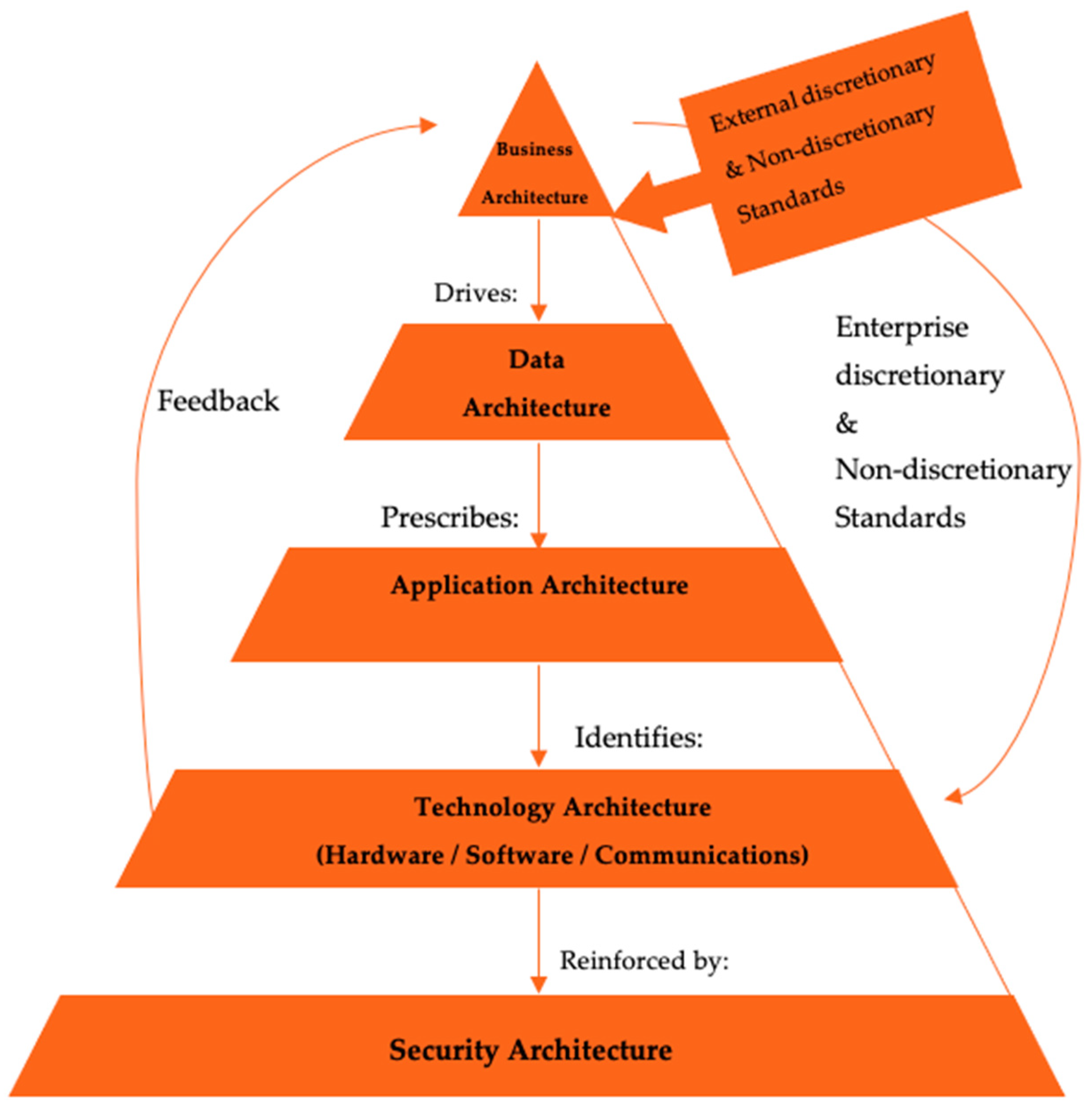
Enterprise Architecture serves as a conceptual model that delineates an SME’s structure and operations (Nikpay et al., 2017; Rouvari & Pekkola, 2024; Jonkers et al., 2006). By aligning information technology (IT) with business objectives, EA simplifies complexity and provides a clear understanding of the interplay between business and technology (Rouvari & Pekkola, 2024; Jonkers et al., 2006). This alignment is crucial for SMEs, as it enables them to navigate the intricacies of modern business landscapes effectively. Conversely, Information Management acts as a vital strategic resource that drives decision-making within SMEs (Agostinho et al., 2016; Giachetti, 2016; Rouhani et al., 2019; Haki & Legner, 2021). In effectively collecting, storing, and utilizing data to support business processes, IM enhances operational efficiency and fosters innovation. When EA and IM are integrated, they create a cohesive framework that guides organizations in their IT growth while ensuring sustained performance. This review thoroughly examines the interaction between EA and IM, offering a comprehensive approach for organizations to navigate the challenges presented by the rapidly evolving technological landscape. The integration of EA and IM is not merely a theoretical exercise, it is a practical necessity for SMEs aiming to gain a competitive edge. The blueprint provided by EA aligns IT infrastructure with business objectives, while IM enhances operational processes (Simon et al., 2013; Tamm et al., 2022). Together, they enable organizations to foster agility and respond swiftly to market changes. This synergy is particularly important in this era where data-driven decision-making is paramount for success (Grisot et al., 2014; Hermawan et al., 2017; Surbakti et al., 2019; Takeuchi et al., 2024; Moreira et al., 2023). The key components of EA play a crucial role in guiding IT growth and sustaining performance in SMEs as shown in Figure 1. EA provides a structured framework that aligns business processes, information systems, and technology infrastructure, enabling SMEs to effectively navigate the complexities of digital transformation (Page et al., 2021; Higgins & Green, 2019; Jørgensen et al., 2016; Shea et al., 2009).
Figure 1.
The key components of Enterprise Architecture. (Available at https://www.mdpi.com/2071-1050/15/23/16298, accessed on 15 August 2024).
Each component, such as business architecture, information architecture, application architecture, and technology architecture, contributes to a cohesive strategy that supports operational efficiency and strategic alignment. Integrating these components fosters a holistic understanding of how IT initiatives can drive business objectives, ensuring that technology investments yield tangible benefits. For instance, a well-defined business architecture clarifies organizational goals, while an optimized information architecture enhances data management, facilitating informed decision-making (Page et al., 2021; Shea et al., 2009). Business architecture outlines the organization’s strategy and processes, ensuring that IT initiatives align with business goals (Heyeres et al., 2019; Espinosa et al., 2011; Ahlemann et al., 2021; Afarini & Hindarto, 2023). Data architecture manages data flow and storage, facilitating informed decision-making and innovation. Application architecture governs the software landscape, ensuring a seamless integration and functionality across applications (Granholm et al., 2019; Alam et al., 2024; Montgomery et al., 2019). Technology architecture encompasses the hardware and networks that underpin operations, enhancing efficiency and competitiveness (Corbett et al., 2014; Beese et al., 2022). Security architecture safeguards data and systems from threats, ensuring compliance and resilience (Tell & Henkel, 2023; San Martín et al., 2021; Barros, 2022; Anthony Jnr et al., 2021). Together, these components create a cohesive framework that enables SMEs to adapt to changes, optimize resources, and drive sustainable growth.
Despite the growing recognition of the significance of EA and IM, the discourse surrounding these frameworks is often clouded by controversial and divergent hypotheses. A central debate centers on whether EA should prioritize technology or business processes (Guo et al., 2021; Hadaya et al., 2020; Levy & Bui, 2019; Bourmpoulias & Tarabanis, 2020; Baptista & Barata, 2021; Vilas-Boas & Simões, 2018; Khairudin & Amin, 2019; Sytnik & Kravchenko, 2021). Proponents of a technology-centric approach argue that it can enhance efficiency; however, this may lead to a misalignment with broader business objectives (Guo et al., 2021; Hadaya et al., 2020; Levy & Bui, 2019; Bourmpoulias & Tarabanis, 2020; Baptista & Barata, 2021; Vilas-Boas & Simões, 2018; Khairudin & Amin, 2019; Sytnik & Kravchenko, 2021). On the other hand, an exclusive focus on business processes may overlook the transformative potential of technological advancements (Guo et al., 2021; Hadaya et al., 2020; Levy & Bui, 2019; Bourmpoulias & Tarabanis, 2020; Baptista & Barata, 2021; Vilas-Boas & Simões, 2018; Khairudin & Amin, 2019; Sytnik & Kravchenko, 2021). Additionally, the role of governance in these domains remains contentious. While some experts advocate for stringent governance frameworks to ensure compliance, others argue for a more flexible approach that encourages innovation in dynamic environments (Guo et al., 2021; Hadaya et al., 2020; Levy & Bui, 2019; Bourmpoulias & Tarabanis, 2020; Baptista & Barata, 2021; Vilas-Boas & Simões, 2018; Khairudin & Amin, 2019; Sytnik & Kravchenko, 2021). The integration of emerging technologies, such as Artificial Intelligence, further complicates this landscape, presenting both opportunities for enhanced effectiveness and challenges that may disrupt existing processes (Adudu et al., 2022; Srećković, 2018; Shah et al., 2017; Tatoglu et al., 2016). This underscores a critical gap in research, particularly concerning how SMEs navigate these tensions and their implications for operational success. To address the complexities surrounding EA and its role in SMEs, the comparative Table 1 effectively summarizes the differing perspectives on technology-centric and business process-centric approaches, as well as the governance debate. Table 1 encapsulates these controversial hypotheses.
Table 1.
The comparison of controversial hypotheses or different perspectives on EA’s role in SMEs.
The ongoing debates surrounding EA focus on three primary areas. Firstly, there is a contention between technology-centric and business process-centric approaches, with the former emphasizing efficiency and the latter ensuring alignment with strategic objectives. Secondly, governance approaches vary, as some experts advocate for strict compliance frameworks while others promote flexibility to foster innovation. Lastly, the integration of emerging technologies, particularly Artificial Intelligence, presents both opportunities for enhanced effectiveness and challenges that SMEs must navigate to maintain operational success.
The primary aim of this review is to provide a comprehensive understanding of how organizations can effectively leverage EA and IM strategies to drive IT growth and sustain performance. This involves a thorough examination of the essential components of EA and IM, along with the best practices for their integration. In identifying the potential benefits and challenges associated with their implementation, this review seeks to illuminate the pathways organizations can take to align their IT initiatives with overarching business goals. A well-defined Enterprise Architecture Framework (EAF), when integrated with robust IM practices, is vital for organizations striving to enhance their IT capabilities (Bernaert et al., 2016; Dumitriu & Popescu, 2020; Becker & Schmid, 2020; Kareem et al., 2021; Molete et al., 2025; Van de Wetering et al., 2021; Antunes et al., 2021; Deny et al., 2021; Gerber et al., 2020). Such integration ensures that technology investments align with strategic objectives, allowing organizations to treat information as a strategic asset. This approach not only promotes data-driven decision-making but also enhances operational efficiency and drives innovation (Knezović et al., 2020; Kornyshova & Deneckère, 2022; Hasanah et al., 2022; Kgakatsi et al., 2024; Van Wessel et al., 2021). Moreover, a flexible EA framework enables organizations to adapt quickly to changing market conditions, while effective governance structures help manage risks and promote accountability (Ullah et al., 2021; Widadi & Fajrin, 2021; Andriyanto & Doss, 2020; Huang, 2021; Jiang & Chen, 2021; Van de Wetering, 2022; Vu & Nguyen, 2022; Liu et al., 2022). Ultimately, fostering collaboration between IT and business units enhances the overall effectiveness of EA and IM initiatives, leading to more cohesive and efficient operations (Chaithanapat & Rakthin, 2021; Verhagen et al., 2021; Ahmad et al., 2022; Islam et al., 2022; Mkhize et al., 2024; Van Zyl et al., 2022). Table 2 provides a comparative evaluation of existing reviews outlining the contributions, strengths, and weaknesses.
Table 2.
A comparative analysis of the existing review works and proposed systematic review on guiding IT growth and sustaining performance in SMEs through EA and IM.
1.1. Research Questions
Whereas significant research has been conducted on Enterprise Architecture and Information Management in recent years, there is not a clear detailed review that determines how Enterprise Architecture strategies help SMEs grow their IT systems and keep their performances robust. This study aims to systematically review existing research on how Enterprise Architecture and Information Management can be used together to improve IT and business outcomes. To achieve this, the following research questions will be explored as follows:
- What specific strategies in Enterprise Architecture (EA) are most effective for guiding IT growth and sustaining performance in organizations, and under what conditions?
- How does EA facilitate alignment between IT and business objectives in different organizational contexts (e.g., centralized vs. decentralized, and public vs. private sector), and what are the key mechanisms and success factors?
- What methodologies and frameworks exist for integrating EA with specific IT management frameworks like TOGAF (The Open Group Architecture Framework), ITIL (Information Technology Infrastructure Library), COBIT (Control Objectives for Information and Related Technology), or Agile, and how do they compare in terms of benefits, challenges, and suitability for different organizational needs?
- How do emerging technologies like Artificial Intelligence (AI), cloud computing, and the Internet of Things (IoT) influence the evolution of EA best practices in areas such as architecture modeling, decision support, and stakeholder engagement, and what new capabilities do they enable?
- How do specific aspects of organizational culture, such as leadership support, changes in management practices, and employee digital skills, affect the adoption and success of EA initiative, and what cultural changes are needed to create a digital-savvy workforce that can effectively utilize EA?
1.2. Research Motivations (Rationale)
The current body of research on EA and IM is largely focused on applications within larger organizations, where resources and expertise are more readily available. Studies seldom consider the unique challenges and opportunities that SMEs face in implementing these frameworks. This review seeks to bridge this gap by specifically examining how EA and IM can be adapted for SMEs, providing a tailored strategy that emphasizes simplicity, flexibility, and cost-effectiveness. In synthesizing knowledge across the existing literature, this study aims to demonstrate that an integrated EA-IM framework is not merely theoretical but offers practical benefits for SMEs aiming to enhance operational efficiency, decision-making, and agility.
Furthermore, this review contributes to ongoing discussions in the field of EA by addressing the balance between technology-centric and business process-centric approaches. For SMEs, this balance is particularly crucial, as technology investments must directly support specific business needs due to resource limitations. The review analyzes these competing perspectives and proposes ways for SMEs to customize EA to achieve both operational efficiency and alignment with strategic goals. Additionally, by exploring emerging technologies such as Artificial Intelligence (AI) and cloud computing within the EA-IM framework, this review highlights innovative approaches for SMEs to drive digital transformation while overcoming traditional barriers like cost and expertise constraints.
1.3. Objectives
EA and IM are crucial for SMEs aiming for sustainable growth in competitive markets. This review explores how EA and IM strategies can propel IT development and enhance performance in SMEs. EA provides a strategic framework that aligns business processes, information systems, and technology infrastructure, offering a comprehensive view that helps stakeholders understand interdependencies and make informed decisions. Meanwhile, IM emphasizes the efficient collection, storage, and dissemination of information, ensuring a timely access to relevant data. In integrating EA and IM, SMEs can enhance operational efficiency, optimize resource allocation, and improve decision-making, essential for competing with larger firms. Below is a list of the objectives of this review:
- To systematically assess how the execution of EA and IM frameworks enhances operational efficiency in SMEs by identifying process inefficiencies and optimizing workflows, ultimately leading to reduced costs and improved service delivery.
- To investigate how effective IM enables SMEs to leverage data analytics for informed strategic decision-making, focusing on the alignment of tailored EA frameworks with business objectives to foster innovation and responsiveness to market changes.
- To explore the ways in which EA facilitates improved collaboration and communication within SMEs, assessing its impact on interdepartmental teamwork and its role in fostering innovation and continuous improvement while ensuring scalability and flexibility.
- To analyze the integration of EA into the strategic planning processes of SMEs, focusing on its effectiveness in enhancing risk management, fostering innovation, and aligning IT initiatives with business goals to maximize IT investments and support organizational objectives.
- To evaluate the existing EA frameworks and their application in SMEs with a focus on real-world case studies.
1.4. Research Contribution
This systematic review offers a comprehensive analysis of how Enterprise Architecture (EA) and Information Management (IM) contribute to IT growth and performance sustainability in SMEs. Utilizing the PRISMA 2020 methodology, it thoroughly examines the current literature to highlight essential frameworks and strategies that effectively align IT capabilities with business objectives. The comprehensive synthesis includes diverse sources of evidence, assessed using the GRADE framework, which considers factors such as risk of bias, inconsistency, and publication bias. This approach strengthens the reliability of findings, offering SMEs actionable insights grounded in robust evidence. Key contributions of this study include a detailed examination of how EA and IM frameworks—such as TOGAF, ITIL, and COBIT—can be tailored to meet the specific needs of SMEs. This review reveals that these frameworks not only facilitate IT alignment with business objectives but also provide flexible architectures that support the adoption of emerging technologies, particularly AI and cloud computing. The study’s focus on integration methodologies enhances understanding of how SMEs can balance technology-centric and business process-centric approaches to optimize operational efficiency and strategic alignment. Furthermore, this paper addresses critical gaps in existing research by highlighting the role of EA and IM in improving scalability, decision-making, and resource allocation for SMEs. The systematic review includes an analysis of real-world case studies, showcasing SMEs that have successfully implemented AI and cloud-based solutions to enhance performance metrics such as operational efficiency, scalability, and customer satisfaction. By evaluating these case studies, the review provides practical examples of how IT strategies are applied across industries, from retail and healthcare to logistics and construction.
1.5. Research Novelty
This systematic review addresses a critical gap in the literature by focusing on how EA and IM frameworks can be specifically adapted to meet the distinct needs of SMEs. While existing research on EA and IM predominantly emphasizes large organizations, this study contributes a novel perspective by tailoring these frameworks to suit the scalability, resource constraints, and strategic needs of SMEs. The novelty of this research lies in its comprehensive approach to integrating EA and IM in a way that supports SMEs in achieving sustainable IT growth and competitive performance, an area that has received limited attention in prior studies.
Unlike conventional studies that examine EA and IM independently, this review systematically explores the synergies between these frameworks and demonstrates how their integration can optimize operational efficiency, improve decision-making, and support agile responses to market changes. In incorporating the GRADE framework to assess the certainty of evidence, this research provides a higher level of rigor, ensuring that findings are both reliable and applicable to SMEs in diverse industries. This evidence-based approach is further enhanced by detailed risk of bias assessments using the Cochrane Risk of Bias Tool, which refines the quality of included studies and bolsters the reliability of the review’s conclusions.
Additionally, the review distinguishes itself by including real-world case studies from a variety of sectors—such as healthcare, retail, logistics, and construction—that showcase successful implementations of EA and IM integrated with emerging technologies like Artificial Intelligence (AI) and cloud computing. These case studies offer actionable insights and demonstrate how SMEs can leverage advanced technologies to enhance performance metrics such as scalability, customer satisfaction, and operational efficiency. This practical focus fills a crucial gap in the existing literature, providing SMEs with concrete examples of technology adoption strategies that are feasible within their unique operational contexts.
Additionally, the study introduces an original framework for digital transformation in SMEs, structured to guide organizations in effectively implementing EA and IM strategies. This framework incorporates emerging IT strategies and provides clear steps for addressing challenges such as cybersecurity, resource limitations, and change management. By emphasizing the practical implications of EA and IM in facilitating digital transformation, this review contributes valuable knowledge to both academia and industry, setting a foundation for further research and application in the SME sector.
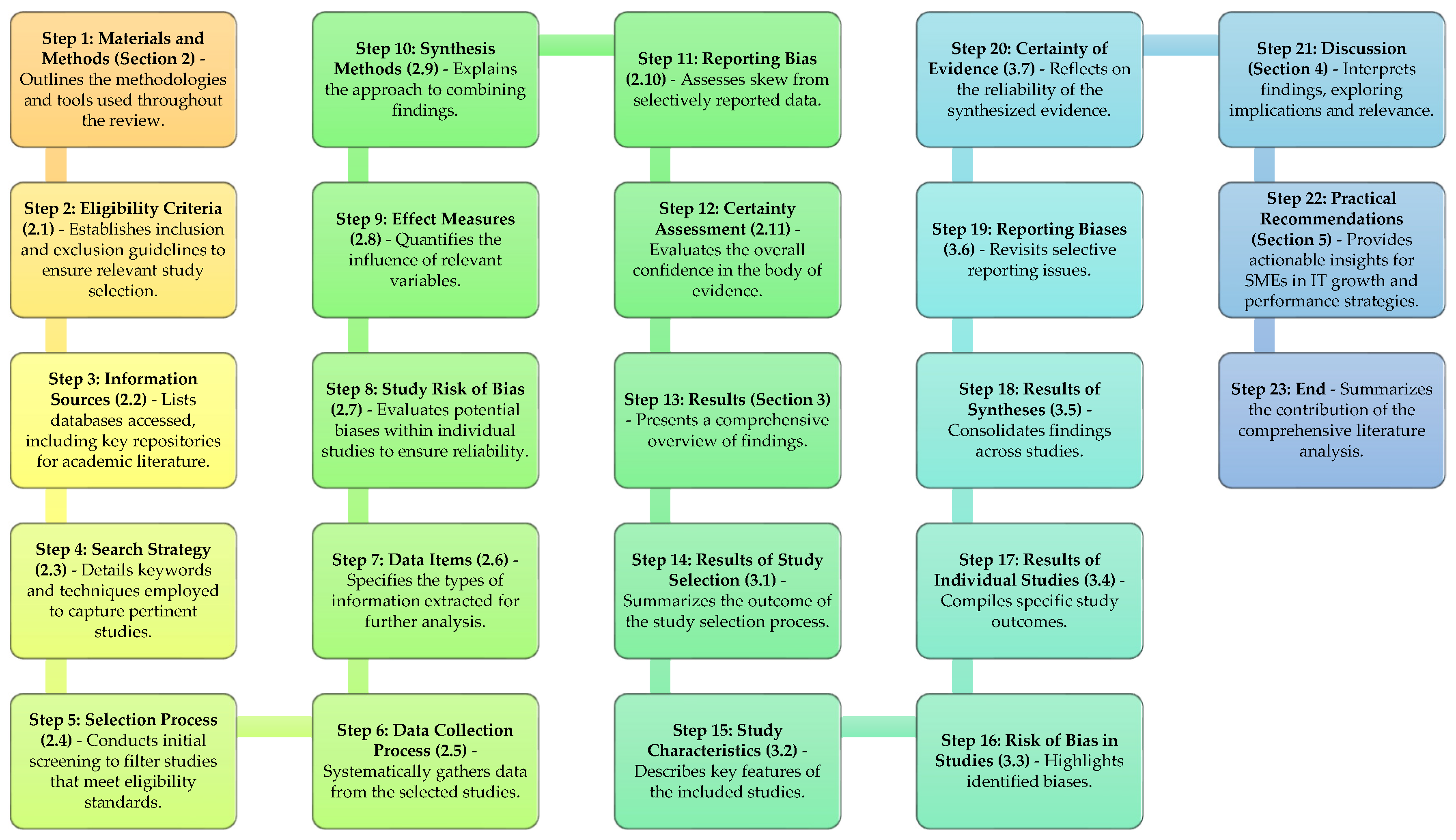
To provide clarity on the structure of this paper, the Materials and Method used for our systematic review are discussed in Section 2, followed by the presentation of the results in Section 3. Section 4 focuses on the discussion of our results, while Section 5 outlines practical recommendations. Finally, Section 6 concludes the systematic review. As shown in Figure 2, this systematic literature review process begins with defining the Materials and Methods (Section 2), outlining the methodologies and tools used.
Figure 2.
The proposed systematic literature review flow diagram.
The next section introduces our proposed research framework.
2. Materials and Methods
The Eligibility Criteria (Section 2.1) establishes inclusion and exclusion guidelines to ensure a relevant study selection. Information Sources (Section 2.2) lists databases accessed, including key repositories for academic literature. Search Strategy (Section 2.3) details the keywords and techniques employed to capture pertinent studies. In the Selection Process (Section 2.4), the initial screening is conducted to filter studies that meet the eligibility standards. The Data Collection Process (Section 2.5) then systematically gathers data from the selected studies, while Data Items (Section 2.6) specifies the extracted information types for further analysis. To maintain the rigor of this review, Study Risk of Bias (Section 2.7) evaluates potential biases within individual studies, ensuring reliability. Effect Measures (Section 2.8) quantify the influence of relevant variables, and Synthesis Methods (Section 2.9) explain the approach to combining findings. Reporting Bias (Section 2.10) assesses any skew from selectively reported data, and Certainty Assessment (Section 2.11) evaluates the overall confidence in the body of evidence.
In Results (Section 3), a comprehensive presentation of the findings is provided. Results of Study Selection (Section 3.1) summarizes the outcome of the selection process, and Study Characteristics (Section 3.2) describes the key features of the included studies. Risk of Bias in Studies (Section 3.3) presents identified biases, and Results of Individual Studies (Section 3.4) compiles specific study outcomes. Results of Syntheses (Section 3.5) consolidates findings across studies, while Reporting Biases (Section 3.6) revisits selective reporting issues. Finally, Certainty of Evidence (Section 3.7) reflects on the reliability of the synthesized evidence. The Discussion (Section 4) interprets the findings, exploring their implications and relevance. Practical Recommendations (Section 5) provide actionable insights based on the synthesis of results, guiding SMEs in IT growth and performance strategies. The review process concludes with the End, summarizing the contribution of this comprehensive literature analysis.
2.1. Eligibility Criteria
We conducted a comprehensive review of peer-reviewed literature published between 2014 and 2024 (Oguanobi & Joel, 2024) to identify effective strategies for managing IT growth and performance in SMEs. Our analysis focused on studies written in English that presented clear frameworks for IT strategies. Articles lacking appropriate methodologies or published outside the specified timeframe were excluded. Table 3 highlights the specifics of the inclusion and exclusion criteria (Mothapo et al., 2024; Ngcobo et al., 2024; Mohlala et al., 2024).
Table 3.
The proposed eligibility criteria depicting the inclusion and exclusion criteria.
2.2. Information Sources
The literature for this study was obtained from reputable online research databases, including Google Scholar, Web of Science, and SCOPUS, known for their extensive academic collections. A targeted search strategy was employed, utilizing a curated list of keywords related to the systematic literature review topic to enhance relevance and ensure high-quality sources were selected for analysis. Table 4 presents the search wordlist used in obtaining the relevant literature for the presented topic (Chabalala et al., 2024; Ndzabukelwako et al., 2024; Maswanganyi et al., 2024).
Table 4.
The proposed search wordlist.
2.3. Search Strategy
This systematic review employed carefully selected search keywords to identify relevant articles, book sections, and conference papers that elucidate strategies for guiding IT growth and sustaining performance in SMEs concerning EA and IM. Reiterative experimental searches were conducted to refine the index keywords, discarding those that did not meet the established eligibility criteria. Synonyms were developed for the primary search terms to ensure comprehensive coverage; for instance, “Enterprise Architecture” included terms such as “Business Architecture” and “IT architecture”, while “Information Management” encompassed “Data Management” and “Records Management”.
To locate pertinent scholarly research, Boolean operators “AND” and “OR” were utilized strategically. The “AND” operator combined different concepts, ensuring that all specified keywords were present, whereas “OR” expanded the search to include synonyms and related terms. Advanced search techniques, such as phrase searching, were instrumental in refining results, allowing for the precise retrieval of articles that matched specific terminologies. The databases utilized also provided filtering options to sort results by publication date, relevance, and document type, enhancing the efficiency of the research process. This meticulous approach underscores the importance of thoroughness in academic research, facilitating the identification of high-quality scholarly articles and contributing to the integrity of the findings.
2.4. Selection Process
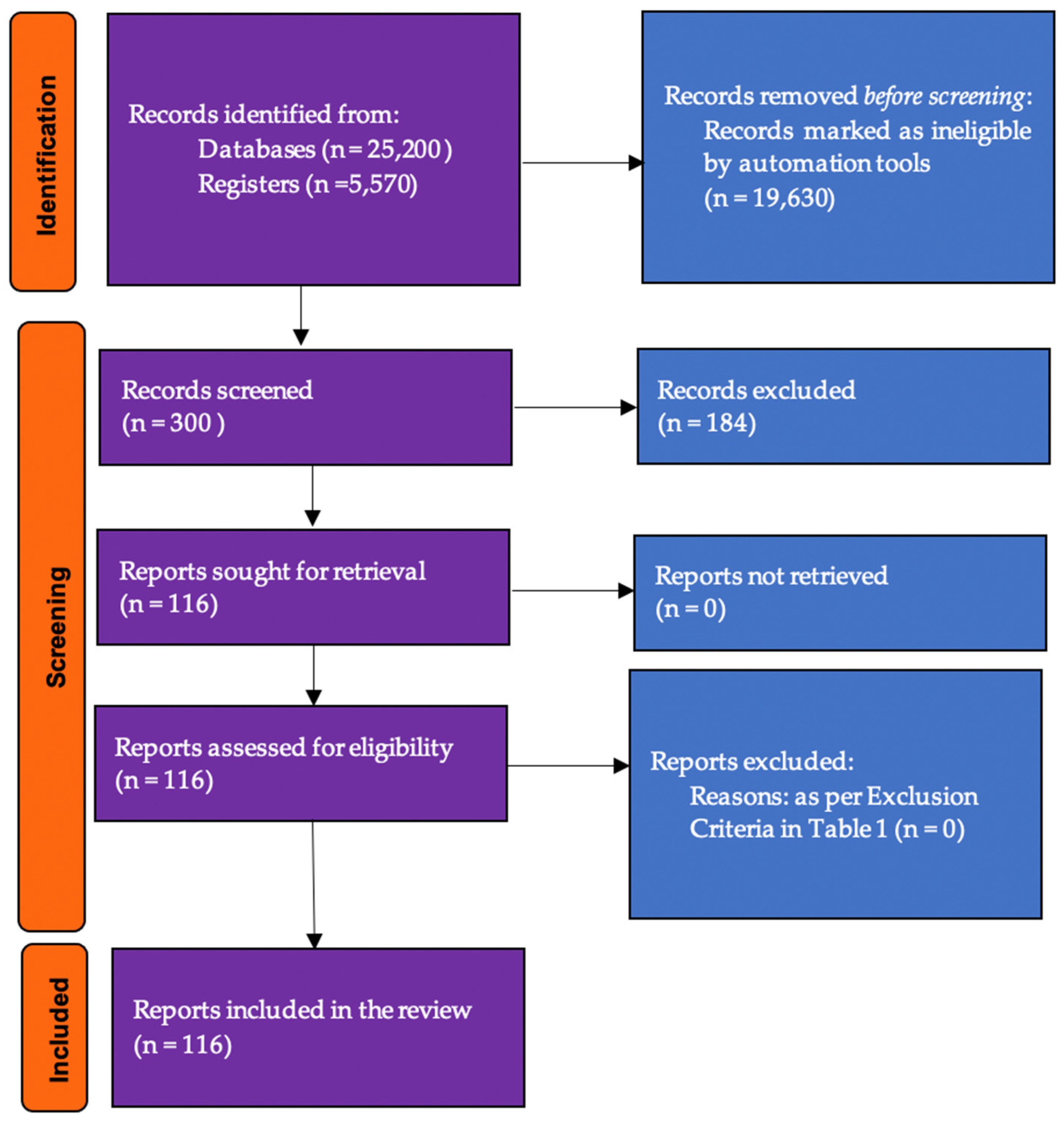
This SLR necessitates a rigorous selection process to determine which scholarly papers meet the eligibility criteria established in Section 2.1. This meticulous approach is essential for ensuring the reliability and relevance of the literature included in the review. The selection procedure unfolds in several stages, beginning with the identification of potentially eligible papers through a comprehensive search strategy that utilizes a targeted wordlist. Initially, the titles and abstracts of the papers are screened to eliminate those that are irrelevant. Following this, full-text reviews are conducted to assess the eligibility of the remaining papers in greater detail. It is crucial to document the number of records identified, screened, and ultimately included in the review, ideally represented in a PRISMA flow diagram, as shown in Figure 3 (Gumede et al., 2024; Myataza et al., 2024; Mudau et al., 2024). This diagram visually summarizes the selection process and details the reasons for exclusions at each stage. To enhance the reliability of the findings, multiple reviewers participate in the screening process, with each record being independently assessed by at least two reviewers, minimizing potential bias. Any disagreements among reviewers are resolved through consensus or by consulting a third reviewer, ensuring a transparent decision-making process.
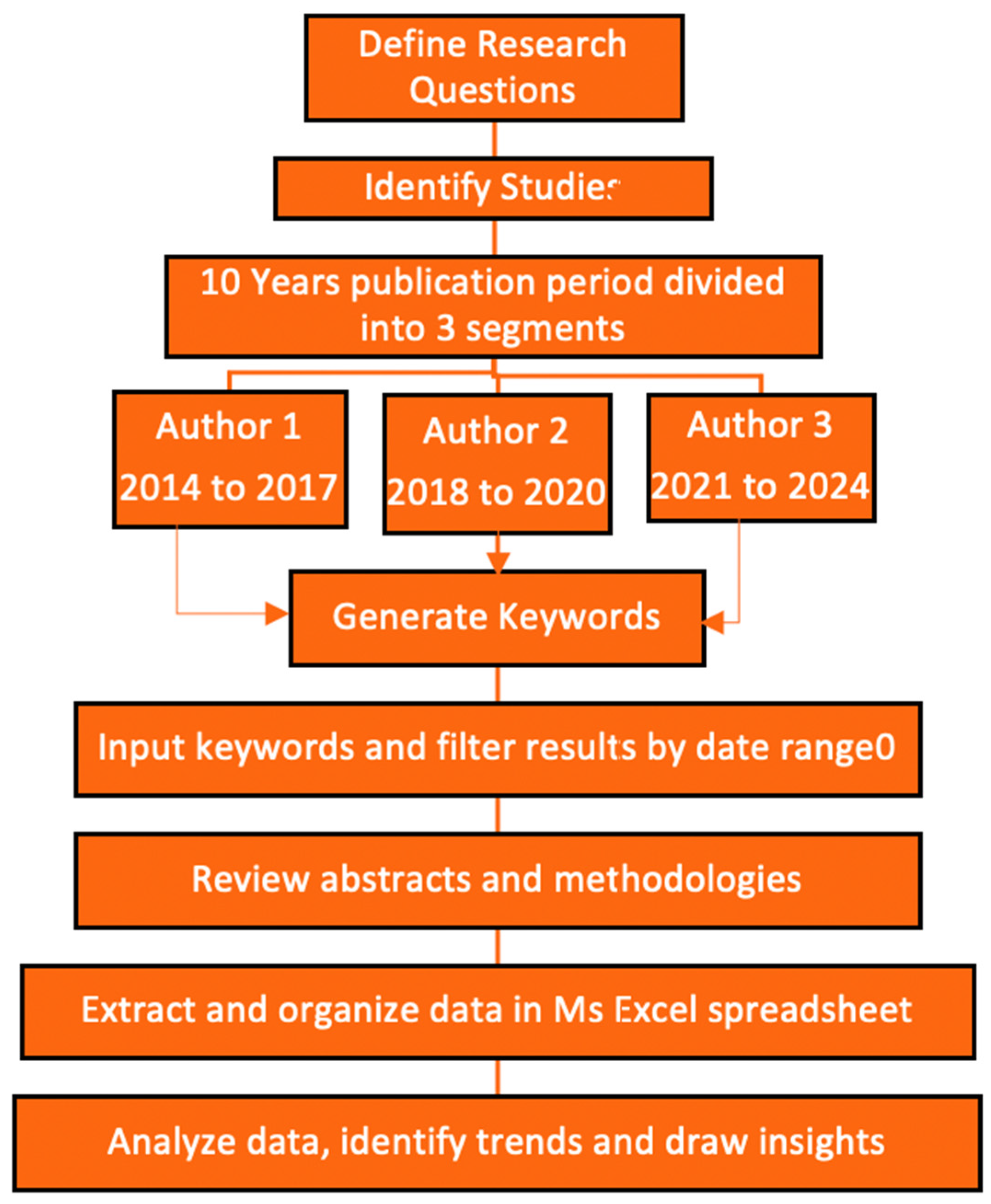
Figure 3.
Data collection methodology outline.
The integration of automation tools has significantly streamlined the selection process, facilitating initial screening by removing duplicates and prioritizing records based on predefined criteria. For example, software like Microsoft Excel aids in organizing records and managing citations efficiently. A detailed documentation of the selection methods is vital for transparency, including the number of records screened, studies excluded, and the rationale for exclusion, such as ineligible research frameworks. Additionally, only papers written in English were considered, necessitating the exclusion of any abstracts or papers that required translation. This level of detail not only enhances the credibility of the review but also provides a framework for future researchers to replicate the process. Therefore, a systematic review of this nature demands a structured approach to study selection, involving independent reviewers, the use of automation tools, and a comprehensive documentation of the methodologies employed, thereby ensuring that the review’s conclusions are grounded in a robust and reliable body of evidence.
2.5. Data Collection Process
This SLR followed a structured data collection approach to gather, evaluate, and synthesize relevant research on strategies that foster IT growth and sustainable performance in SMEs. Following study selection, a team of three researchers focused on sourcing pertinent studies from the past decade, covering conference papers, journal articles, book chapters, and dissertations available in prominent online databases: Google Scholar, Web of Science, and SCOPUS. The data collection began with defining specific research questions to guide the review. From there, studies were identified and divided into three publication periods (2014–2017, 2018–2020, and 2021–2024), with each researcher responsible for one segment. This segmentation minimized overlap and ensured a comprehensive dataset. Using carefully selected keywords, the team conducted searches with targeted filters to enhance relevance, and manually reviewed abstracts and methodologies to assess study suitability. Each researcher extracted key data into a Microsoft Excel spreadsheet, organizing essential elements like trends and patterns. This enabled a streamlined analysis of how SMEs utilize Enterprise Architecture (EA) and Information Management (IM) strategies, including AI and cloud computing, to enhance efficiency and drive sustainable growth. Figure 3 illustrates the structured data collection methodology (Gumede et al., 2024; Myataza et al., 2024; Mudau et al., 2024).
Data Quality Appraisal
The appraisal of data quality was conducted to enhance the reliability of the selected research papers and to validate the relevance of their findings. Each chosen study underwent a thorough analysis based on a scoring methodology to determine its significance. The evaluations were systematically presented in a proposed table, as illustrated in Table 5. The reviewed research papers employed diverse criteria, reflecting a comprehensive approach to the subject matter.
Table 5.
The proposed research quality questions.
The quality of the appraised questions was used for all the gathered research works. Each research quality question was approximated based on three feasible responses: “Yes” (assigned score = 1), “Partially” (assigned score = 0.5), or “No” (assigned score = 0). This was achieved by carefully analyzing the abstract, research design, findings and conclusions of each study. Scores were added to determine the overall quality of the relevant research. The data is presented in Table 6 (Nethanani et al., 2024; Muraba et al., 2024; Mankge et al., 2024; Lebaea et al., 2024).
Table 6.
Research quality questions results.
In general, the data collection using the above-mentioned approach resulted in 116 relevant studies. Each paper was read thoroughly by an associate to identify opportunities and impediments of EA and IM for SMEs.
2.6. Data Items
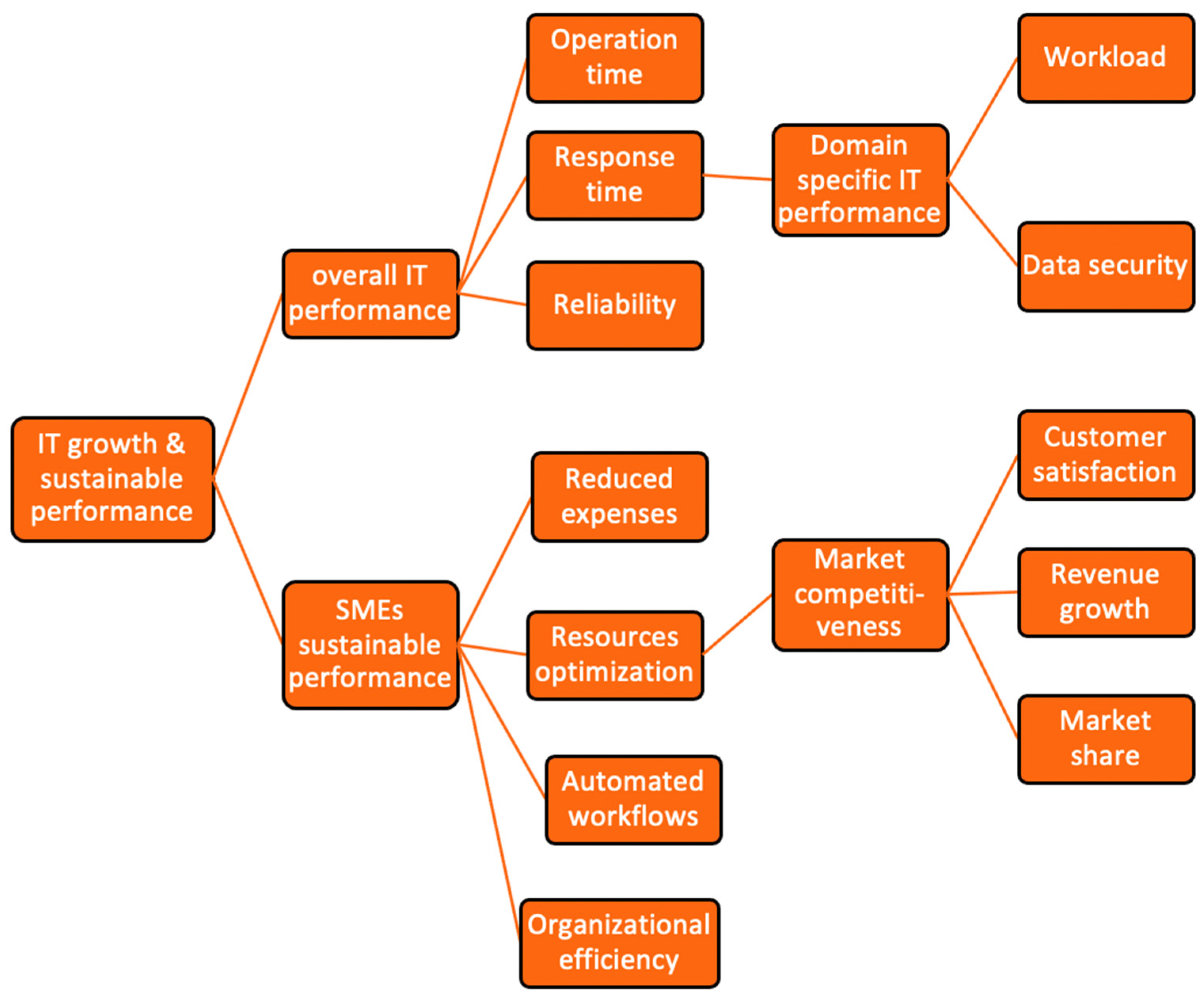
The outcomes of IT and business performance can be broadly categorized into two primary domains: IT Growth and Business Performance (Bernaert et al., 2016; Dumitriu & Popescu, 2020; Becker & Schmid, 2020; Kareem et al., 2021; Molete et al., 2025). These domains encompass metrics that allow organizations to evaluate operational effectiveness and competitive positioning, which ultimately guide strategic decision-making and foster long-term success. Within IT Growth and Performance, metrics such as system uptime and response times are critical. System uptime, which assesses the continuous operational status of IT systems, is essential for ensuring consistent service availability, thus enhancing productivity and user satisfaction (Van de Wetering et al., 2021; Antunes et al., 2021; Deny et al., 2021). This is particularly crucial for SMEs, where real-time data access directly impacts decision-making and service delivery. Response time, the speed at which IT systems react to user requests, is another pivotal metric; delays can lead to user frustration and decreased productivity (Gerber et al., 2020; Knezović et al., 2020; Kornyshova & Deneckère, 2022; Hasanah et al., 2022). Monitoring response times helps identify bottlenecks and improve overall system performance. Advanced IT strategies such as AI and cloud computing can significantly enhance these metrics, with AI optimizing resource allocation and automating processes, and cloud computing providing scalable and reliable solutions (Kgakatsi et al., 2024; Van Wessel et al., 2021; Ullah et al., 2021; Widadi & Fajrin, 2021). These technologies bolster operational efficiency and contribute to a resilient IT infrastructure, fostering user trust. Figure 4 illustrates the interrelation between IT growth, sustainable performance, and business outcomes for SMEs.
Figure 4.
The proposed flow diagram of data items.
In the realm of Business Performance, prioritizing domain-specific IT performance alongside overarching metrics is essential, especially for managing diverse workloads. As organizations grow, their IT infrastructure must adapt to increasing demands without compromising performance. Cloud computing, for example, offers scalable resources that accommodate workload fluctuations while maintaining system reliability. Leveraging AI enhances operational efficiency by automating tasks and providing predictive insights, enabling swift, informed decisions. Moreover, data security has become imperative, with effective data management practices facilitating secure information storage and retrieval, thereby promoting informed decision-making and operational efficiency (Andriyanto & Doss, 2020; Huang, 2021; Jiang & Chen, 2021; Van de Wetering, 2022; Vu & Nguyen, 2022; Liu et al., 2022).
Key metrics for assessing business performance include internal process effectiveness and resource optimization. Automated workflows, for instance, reduce manual tasks and enable employees to focus on high-value activities, boosting productivity and minimizing human error. Additionally, resource optimization assesses the efficient use of human, financial, and technological resources to maximize output (Chaithanapat & Rakthin, 2021; Verhagen et al., 2021; Ahmad et al., 2022; Islam et al., 2022). Identifying cost-saving opportunities through expense reduction enhances profitability while maintaining customer value, contributing to long-term sustainability and competitive advantage. In cases with multiple recorded outcomes, we included the most comprehensive one for evaluation. Where numerous results were available, all outcomes were documented and categorized based on their relevance to review questions, as well as their validity and reliability of measures. Table 7 outlines the data items extracted from the included publications, aligning with the research questions and objectives.
Table 7.
Data items extracted from the publications included.
The table presents a comprehensive overview of critical data items pertinent to research on EA and IM within SMEs. It includes key details such as the study title and the publication year, spanning from 2014 to 2024. The table highlights sources from online databases like Google Scholar and SCOPUS, along with the journals where these studies are published, such as the Journal of Information Technology. Research types are categorized as either empirical or theoretical, and the subject areas cover disciplines including EA, IM, and IT growth. The industry context specifically addresses SMEs and startups, while geographic locations denote the countries involved. Economic contexts are classified into developed and developing nations.
Furthermore, the table specifies various EA framework types, such as TOGAF, and key IM practices like data governance. It identifies technology providers, outlines the IT models utilized, and describes diverse research designs, including experimental and case study approaches. Sample sizes and attributes offer insights into the studies’ scale and characteristics, while data acquisition methods and analytical tools are detailed. Finally, it lists IT and EA performance metrics, alongside organizational outcomes and long-term impacts, such as competitive advantage.
2.7. Study Risk of Bias Assessment
Evaluating the risk of bias in research studies is crucial for ensuring the validity and reliability of findings, especially in the context of AI and cloud computing. Bias can significantly distort results, leading to misleading conclusions that negatively impact decision-making processes across various sectors, including business and IT (Mkhize et al., 2024; Van Zyl et al., 2022; Alzoubi & Gill, 2022; Batmetan et al., 2023; Rahman & Hossain, 2024; Santosa & Mulyana, 2023; Ramírez, 2023; Cahyono et al., 2022). To effectively assess this risk, researchers utilize a range of methods and tools, such as the Cochrane Risk of Bias Tool. This systematic framework provides a structured approach for identifying potential biases in randomized controlled trials, thereby enhancing the credibility of research outcomes. However, when applying this tool to non-clinical studies, such as those focusing on EA and IM in the context of SMEs, researchers must carefully adapt the concepts of bias assessment to the specific context of IT strategies and architecture. For instance, evaluating selection bias in studies involving AI-powered decision support systems or assessing performance bias in cloud-based applications requires a nuanced understanding of the research context. In clarifying how the Cochrane Tool is adapted to assess bias in EA and IM studies, researchers can establish the overall reliability of their findings and provide a solid foundation for decision-making processes in the rapidly evolving world of IT. Table 8 summarizes the risk of bias assessment process.
Table 8.
The study risk of bias assessment using the Cochrane Risk of Bias Tool.
The table outlines various bias domains relevant to the evaluation of SMEs in the context of IT growth strategies. It identifies sources of bias, such as selection and allocation concealment biases, which arise from inadequate randomization and obscured allocation methodologies, respectively. Performance and detection biases are noted due to the potential influence of knowledge regarding assigned IT strategies on both participants and outcome assessors. Additionally, attrition bias is highlighted through incomplete outcome data, while reporting bias emerges from selective outcome reporting. Table 9 emphasizes the need to identify other significant biases not covered in existing categories that could affect the outcomes of IT strategies for SMEs.
Table 9.
The risk of bias due to missing evidence.
The table offers a comprehensive assessment of bias across 116 studies focused on product selection and consumption. It evaluates risks associated with randomization processes, participant identification timing, deviations from intended interventions, missing outcome data, measurement methods, and selective reporting. In integrating IT strategies such as Artificial Intelligence and cloud computing, the analysis enhances the evaluation of these biases. Ultimately, the table succinctly summarizes potential bias sources and their implications for the validity and reliability of the research findings.
2.8. Effect Measures
The impact of EA frameworks on IT growth and performance in SMEs is evaluated using various effect measures. To assess the influence on IT growth, quantitative data, such as the rate of IT project initiation after implementing an EA framework, is analyzed. Studies have shown that SMEs adopting specific EA frameworks experienced a 30% increase in IT projects compared to those not using the framework (Mkhize et al., 2024; Van Zyl et al., 2022; Alzoubi & Gill, 2022; Batmetan et al., 2023; Rahman & Hossain, 2024; Santosa & Mulyana, 2023; Ramírez, 2023; Cahyono et al., 2022). When evaluating performance, metrics like operational efficiency, system reliability, and cost savings are considered. SMEs that implemented a particular EA approach reported a 20% reduction in IT-related operational costs or a 15% improvement in system uptime (Cahyono et al., 2022; Alghamdi, 2024a, 2024b; Merín-Rodrigáñez et al., 2024; Faruque et al., 2024; Mustafa et al., 2024; Srisawat et al., 2024; Vargas & Fontoura, 2024; Manyaga et al., 2024). The mean difference and percentage change are the two primary effect measures used to evaluate the impact of EA frameworks on performance. Percentage change is used to measure enhancements in system reliability, with SMEs using the EA framework experiencing a 15% increase in system uptime compared to those not using the framework (Cahyono et al., 2022; Alghamdi, 2024a, 2024b; Merín-Rodrigáñez et al., 2024; Faruque et al., 2024; Mustafa et al., 2024; Srisawat et al., 2024; Vargas & Fontoura, 2024; Manyaga et al., 2024).
These measures provide valuable insights into the tangible benefits of EA frameworks on business performance. As SMEs increasingly adopt emerging IT strategies such as AI and cloud computing, the need for effective EA frameworks becomes more crucial.
2.9. Synthesis Methods
In conducting this SLR, it is essential to establish clear and coherent processes for determining the eligibility of scholarly papers for synthesis. This begins with defining specific inclusion and exclusion criteria. A systematic approach to tabulating study characteristics and categorizing scholarly works accordingly will enhance the rigor of this review. The initial step involves explicitly articulating the inclusion criteria, which should encompass studies focusing on SMEs that EA frameworks, IM strategies, or IT growth strategies incorporating innovations such as AI and cloud computing.
Furthermore, it is critical to ensure that outcome measures include performance metrics related to IT growth and sustainability within SMEs. Only peer-reviewed empirical studies employing qualitative or quantitative methodologies will be considered for inclusion in this review. Conversely, exclusion criteria will eliminate studies that do not specifically address SMEs, those unrelated to EA or IM, as well as non-empirical works such as opinion pieces or theoretical discussions. In implementing these structured criteria, the review aims to synthesize relevant findings effectively while providing a comprehensive understanding of the role of IT strategies in promoting sustainable growth among SMEs. Moreover, once the scholarly papers are identified, their characteristics are systematically extracted and tabulated in a Microsoft Excel file. This includes key elements as demonstrated in Table 10.
Table 10.
The proposed characteristics of scholarly papers.
2.9.1. Tabulation and Visual Display Methods of Obtained Scholarly Papers
The tabulation process is instrumental in enabling a clear comparison of scholarly papers against predefined criteria, thereby enhancing the visualization of their alignment with review objectives. For instance, studies can be categorized by intervention type—such as AI frameworks or cloud computing tools—and outcome measures, including performance metrics and growth rates. This structured organization facilitates synthesis based on similarities in interventions and outcomes, guided by the PICO framework (Population, Intervention, Comparison, and Outcome) (Mustafa et al., 2024; Srisawat et al., 2024; Vargas & Fontoura, 2024; Manyaga et al., 2024; Alghamdi, 2024a, 2024b), where population refers to the specific group of individuals being studied, such as patients with a particular condition or demographic characteristics; intervention denotes the treatment or action being investigated, which could include new therapies or diagnostic tests; comparison involves identifying an alternative intervention or control group to evaluate the effectiveness of the primary intervention; and outcome pertains to the measurable effects or results that are being assessed, such as the improvement in symptoms or quality of life.
Such an approach allows for the identification of patterns and variations in EA frameworks or IM strategies. Moreover, meticulous data preparation is essential for effective presentation and synthesis. This involves addressing challenges like missing summary statistics, particularly in studies focusing on SMEs, where means and sample sizes are often reported without standard deviations. Techniques such as imputation or estimation based on available data can be employed to manage these gaps. Additionally, converting effect sizes or statistical measures into a common format is crucial for meaningful aggregation in meta-analyses. For example, transforming various metrics into standardized effect sizes enables clearer comparisons across studies. Effective methods for tabulating and visually displaying results are crucial for synthesizing findings across multiple scholarly papers. Structured tables summarizing key characteristics of individual studies—such as authors, publication year, methodologies, and key findings—allow for quick comparisons. Visual representations like bar charts and flow diagrams further enhance clarity by illustrating trends and the study selection process.
2.9.2. Methods Employed to Synthesize the Findings
In the continuously changing IT market, SMEs face unique challenges in attaining sustainable growth and peak performance. To traverse these challenges, SMEs must implement successful methods that leverage business architecture and information management. For example, incorporating AI can improve decision-making processes, whilst cloud computing provides scalable resources that increase operational efficiency. To synthesize findings from various studies evaluating these strategies, rigorous statistical methods are paramount. One such method is Cochran’s Q Test, which assesses the consistency of outcomes across multiple studies (Merín-Rodrigáñez et al., 2024; Faruque et al., 2024; Odukoya, 2024; Muniz-Rodriguez et al., 2024). This test is instrumental in determining whether the effectiveness of AI and cloud computing strategies varies significantly among different contexts. Furthermore, to evaluate the effectiveness of these IT strategies in promoting sustainable growth, the Cochrane Risk of Bias Tool can be employed. This tool assesses various forms of bias, including selection bias, performance bias, and detection bias, ensuring that participant selection is random, and treatment is uniformly administered across groups. In rating each area as low, high, or unclear risk, researchers can ascertain the reliability of their findings. Ultimately, employing these robust statistical techniques will enhance our understanding of how innovative IT strategies contribute to sustainable growth in SMEs. To illustrate how to set up a Cochran’s Q test, consider a hypothetical study assessing the effectiveness of three different IT strategies (A, B, and C) on performance outcomes (success/failure) in SMEs (Srećković, 2018; Shah et al., 2017; Tatoglu et al., 2016; Bernaert et al., 2016; Dumitriu & Popescu, 2020; Becker & Schmid, 2020; Kareem et al., 2021; Molete et al., 2025; Van de Wetering et al., 2021). Table 11 represents the data collected from a sample of SMEs.
Table 11.
A list of SMEs investigated and their compliance to strategies.
The Cochran’s Q test statistic can be calculated based on the data in the table, allowing researchers to determine if the different IT strategies, such as AI and cloud computing, yield significantly different outcomes in terms of success rates. This approach can help SMEs identify the most effective IT strategies for guiding growth and sustaining performance, ultimately contributing to better decision-making in their Information Management Practices.
2.9.3. Methods Used to Explore Possible Causes of Heterogeneity Among Study Results
This section critically examines the heterogeneity among study results, a vital aspect for deriving reliable conclusions. To investigate the potential causes of this variability, researchers employ various analytical methods, notably subgroup analysis and meta-regression. Subgroup analysis involves segmenting the overall study population into smaller groups based on specific characteristics, such as demographic factors, types of interventions, or study settings (Muniz-Rodriguez et al., 2024; Alirezaie et al., 2024; Al-Somali et al., 2024). This approach enables researchers to determine whether the effects of interventions vary across these distinct subgroups. For instance, in the context of SMEs, a review might separately analyze results for firms categorized by size, industry, or geographical location. In identifying variations in outcomes among these subgroups, researchers can uncover insights into the factors that influence the effectiveness of Information Management strategies, including IT approaches like AI and cloud computing. However, caution is warranted, as subgroup analyses can yield misleading findings if sample sizes are inadequate, or subgroups are too small.
Conversely, meta-regression is a more sophisticated statistical technique that builds upon traditional meta-analysis by exploring the relationship between study-level characteristics and effect sizes (Al-Somali et al., 2024; Sastryawanto et al., 2024; Al-Momani et al., 2024; Kotusev & Alwadain, 2024). This method facilitates the examination of how specific variables—such as the duration of an intervention or the extent of technology adoption—may account for differences in outcomes across studies. For example, in a review of Enterprise Architecture implementations, meta-regression could assess how variations in IT infrastructure maturity affect performance outcomes in SMEs leveraging AI and cloud solutions.
2.9.4. Sensitivity Analysis
This section explores the essential role of sensitivity analysis SLRs, particularly in evaluating the robustness of synthesized findings. In this context, sensitivity analysis elucidates how variations in study inclusion criteria, methodological approaches, or data handling can significantly influence the conclusions drawn from research. The primary objective of conducting sensitivity analysis is to assess the stability of synthesized results while accounting for potential biases or uncertainties inherent in the included studies. This process involves systematically modifying specific parameters or assumptions to observe their effects on overall findings. For instance, researchers may exclude studies with a high risk of bias or those failing to meet predetermined quality thresholds, thereby evaluating whether the main conclusions remain consistent despite the removal of potentially problematic studies.
Several widely employed approaches facilitate sensitivity assessment in scholarly papers. One common method involves varying inclusion and exclusion criteria for studies. In systematically omitting lower-quality studies or those exhibiting significant methodological flaws, researchers can ascertain whether the overall results are unduly influenced by such studies. Additionally, applying different statistical methods or transformations to the data—such as utilizing effect size measures like odds ratios versus mean differences—can illuminate the sensitivity of results to chosen statistical approaches. Furthermore, incorporating IT strategies such as AI and cloud computing can enhance data synthesis by enabling more sophisticated analyses and real-time data integration. A transparent reporting of sensitivity analyses is crucial for establishing the credibility of findings. Researchers must detail the criteria employed in sensitivity testing, the rationale for these choices, and the outcomes of each analysis. This thorough reporting not only enhances reliability but also aids future researchers in assessing result robustness.
2.10. Reporting Bias Assessment
This section of the work examines the methodologies employed to evaluate the risk of bias arising from missing results in systematic reviews, particularly focusing on reporting biases. A critical aspect of conducting a systematic review is assessing potential biases that may emerge due to the absence of specific results. Reporting biases often occur when studies yielding statistically significant or favorable outcomes are more likely to be published than those with null or negative findings. This discrepancy can distort the overall understanding of a research question and lead to misleading conclusions.
To effectively mitigate the influence of reporting biases, it is essential for reviewers to clearly outline the methods they intend to use for this assessment in their review protocol. Establishing a transparent framework enhances the credibility of their findings and ensures a more balanced representation of available evidence. Among various approaches for assessing reporting biases, the Cochrane Risk of Bias Tool is widely recognized as a valuable instrument (Bernaert et al., 2014; Siregar et al., 2024; Soomro & Khan, 2024; Purwaningsih et al., 2024; Oguanobi & Joel, 2024). This tool systematically evaluates bias across different domains, including selection, performance, detection, and attrition bias, thereby providing a comprehensive overview of the methodological rigor of the included studies. Incorporating IT strategies such as AI and cloud computing can further enhance this process by enabling sophisticated data synthesis methods (Kornyshova & Deneckère, 2022; Hasanah et al., 2022; Kgakatsi et al., 2024; Van Wessel et al., 2021; Ullah et al., 2021; Widadi & Fajrin, 2021; Andriyanto & Doss, 2020). For instance, AI algorithms can analyze large datasets to identify patterns in reporting biases, while cloud computing facilitates collaborative efforts among researchers to share insights and methodologies. Ultimately, a thorough assessment of reporting biases is crucial for ensuring the integrity of systematic reviews and fostering a more accurate understanding of the evidence landscape in any given field. Table 12 offers the key aspects of assessing reporting bias with a particular emphasis on guiding IT growth and sustaining performance on SMEs.
Table 12.
A sample of the reporting bias assessment.
The table presented above encapsulates the essential elements related to the assessment of reporting biases in systematic reviews. It begins by defining reporting bias and emphasizing its significance in ensuring accurate and balanced interpretations of research findings. The necessity for a clearly outlined review protocol is highlighted, underscoring the importance of transparency in methodological approaches. Common assessment methods, including the Cochrane Risk of Bias Tool, funnel plots, and Egger’s test, are succinctly detailed, illustrating the diverse strategies available for evaluating potential biases. Finally, the table concludes with the critical outcome of such assessments, which is the enhancement of the integrity of systematic reviews, ultimately contributing to a more nuanced understanding of the evidence landscape within various fields of research.
2.11. Certainty Assessment
Various methods are employed to assess the certainty of the body of evidence, with one of the most prevalent being the GRADE (Grading of Recommendations Assessment, Development and Evaluation) system (Merín-Rodrigáñez et al., 2024; Faruque et al., 2024; Odukoya, 2024; Muniz-Rodriguez et al., 2024; Alirezaie et al., 2024; Al-Somali et al., 2024; Sastryawanto et al., 2024; Al-Momani et al., 2024). This approach evaluates several critical factors when determining the quality of evidence, including risk of bias, inconsistency, indirectness, imprecision, and publication bias. The risk of bias assesses the likelihood that a study may be flawed due to issues such as randomization, blinding, or participant attrition. Inconsistency refers to the variability of results across different studies, which can be quantified using statistical measures like heterogeneity tests. Indirectness examines how well the studies apply to the specific context of interest, such as the population or intervention under consideration. For instance, if multiple studies indicate that EA frameworks enhance IT performance in SMEs, yet some exhibit a high risk of bias or inconsistent findings, the overall certainty of this evidence may be rated as moderate or low. Tools like the Cochrane Risk of Bias Tool can help identify issues in individual studies that may undermine their reliability. Furthermore, when evaluating IT strategies such as Artificial Intelligence and cloud computing within the context of EA frameworks, precise data on specific outcomes—such as system uptime and processing efficiency—further bolsters the trustworthiness of these findings. Ultimately, a comprehensive assessment of these factors is essential for determining the reliability of evidence regarding the benefits of EA frameworks for SMEs in various contexts. Table 13 outlines the key factors for assessing certainty of evidence.
Table 13.
The proposed certainty assessment.
The Cochrane Risk of Bias Tool is instrumental in identifying issues within individual studies, enhancing the assessment process. In the context of EA frameworks, studies may demonstrate positive effects; however, if they exhibit a high risk of bias or inconsistency, the overall certainty of the evidence may be diminished. In collectively evaluating these factors—risk of bias, inconsistency, indirectness, imprecision, and publication bias—researchers can ascertain the reliability of the evidence. This structured approach facilitates a clearer understanding of the significance of these factors in research evaluation.
Table 14 effectively summarizes the key factors that influence the certainty of evidence in evaluating the benefits of EAFs for SMEs.
Table 14.
Key factors that influence the certainty of evidence in evaluating the benefits of EAFs for SMEs.
The assessed factors for evaluating IT strategies, such as AI and cloud computing, reveal varying levels of confidence in effect estimates. Consistency is graded high, indicating reliable outcomes across applications. Directness is moderate, suggesting potential context-specific variations. However, the use of tools receives a low grade due to biases in non-randomized studies, while certainty levels are very low, necessitating cautious interpretation.
In employing the proposed research framework above, the next section presents the synthesis of our results on the impact of EA and IM in guiding IT growth and sustaining performance on SMEs.
3. Results
This section synthesizes results from diverse studies exploring the intersection of EA and IM within SMEs. The review emphasizes that effective EA serves as a strategic framework that aligns IT infrastructure with business objectives, facilitating SMEs in navigating the complexities of digital transformation. Research indicates that a robust EA framework not only enhances operational efficiency but also fosters agility, allowing SMEs to swiftly adapt to market fluctuations and technological advancements, particularly through the adoption of IT strategies such as AI and cloud computing. Furthermore, integrating IM practices within the EA framework significantly improves decision-making and resource allocation, thereby sustaining competitive performance. The results underscore the necessity of a holistic approach that recognizes EA and IM as interdependent disciplines that collectively propel the strategic growth of SMEs. Through a comprehensive literature analysis, key strategies for leveraging EA and IM to guide IT growth are elucidated.
3.1. Results of Study Selection
The study selection process for systematic reviews is a critical component that ensures the relevance and quality of included studies. This process typically follows a structured approach, which can be effectively illustrated using a flow diagram, as recommended by PRISMA guidelines. Below is a detailed analytical description of the search and selection process for the topic.
3.1.1. Identification and Screening Process
The identification of relevant studies begins with an extensive literature search across multiple databases. This foundational step is vital for compiling a comprehensive collection of records concerning EA, IM, IT growth, and performance in SMEs. Documenting the number of records from each database is essential for replicability. After removing duplicates using reference management tools like Microsoft Excel, the screening process evaluates titles and abstracts to filter irrelevant studies, ultimately leading to a full-text review where specific criteria guide the selection of 116 relevant studies for further analysis, incorporating IT strategies like AI and cloud computing.
3.1.2. Final Inclusion
The final stage of a systematic review involves compiling studies that meet predefined inclusion criteria. In our hypothetical scenario, we successfully integrate 116 studies. It is essential to document reasons for excluding studies at each phase, particularly during the full-text review, with common exclusions stemming from ineligible designs or irrelevant outcomes. A PRISMA flow diagram effectively illustrates this selection process, starting with identified records and culminating in 116 included studies. This structured methodology enhances the transparency and reproducibility of the review, emphasizing the significance of IT strategies like AI and cloud computing in optimizing Enterprise Architecture and Information Management for SMEs.
3.1.3. Potential Studies for Exclusion
Several studies may initially seem pertinent based on their titles or abstracts, which imply a focus on Enterprise Architecture, IT strategies, or performance management in SMEs. However, a closer inspection often uncovers reasons for their exclusion. Firstly, some research may primarily address Enterprise Architecture in large organizations or sectors unrelated to SMEs, such as frameworks applicable only to healthcare or finance. This misalignment with the review’s objective of understanding SME-specific strategies limits their relevance. Secondly, methodological shortcomings can disqualify studies lacking robust methodologies, including inadequate sample sizes or insufficient analytical techniques. For instance, research relying solely on anecdotal evidence without systematic data collection fails to provide the empirical foundation necessary for inclusion. Additionally, the rapid evolution of technology—particularly in areas like AI and cloud computing—renders studies older than a decade less applicable, as they may not reflect current trends and practices relevant to SMEs. Furthermore, research that presents theoretical frameworks without empirical validation or practical case studies may also be excluded. Lastly, geographical limitations can restrict the applicability of findings to broader contexts. In applying stringent inclusion and exclusion criteria, this review maintains its integrity, ensuring that only high-quality studies inform strategies for guiding IT growth and sustaining performance in SMEs.
3.1.4. Flow Diagram of PRISMA
Figure 5 presents the PRISMA flow diagram depicting the steps necessary for the selection process.
Figure 5.
The proposed PRISMA flow diagram (Page et al., 2021).
3.2. Study Characteristics
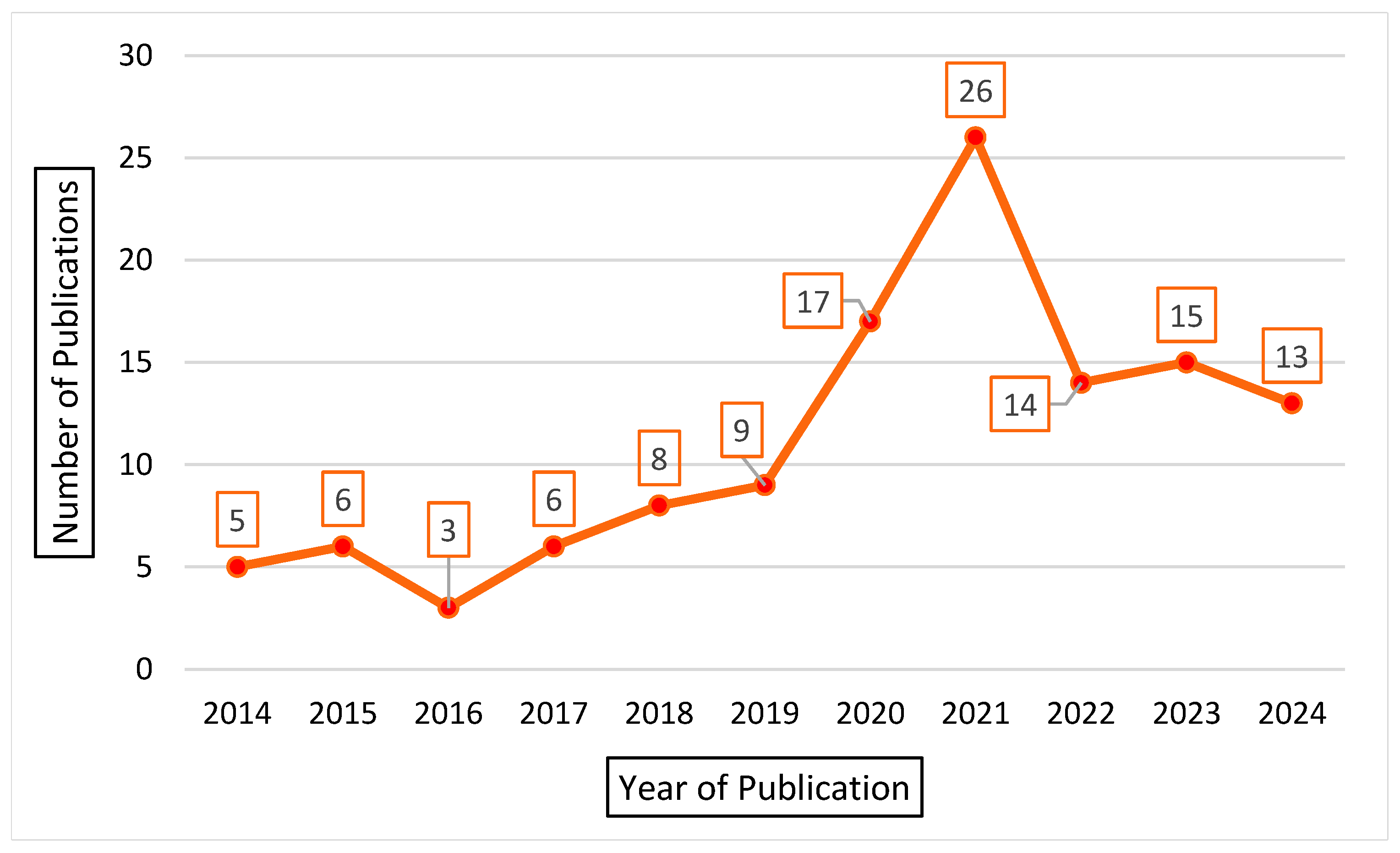
Figure 6 presents the number of publications vs. year of publication for each of the scholarly papers obtained from the online databases—SCOPUS, Web of Science, and Google Scholar).
Figure 6.
The number of publications versus the year of publication.
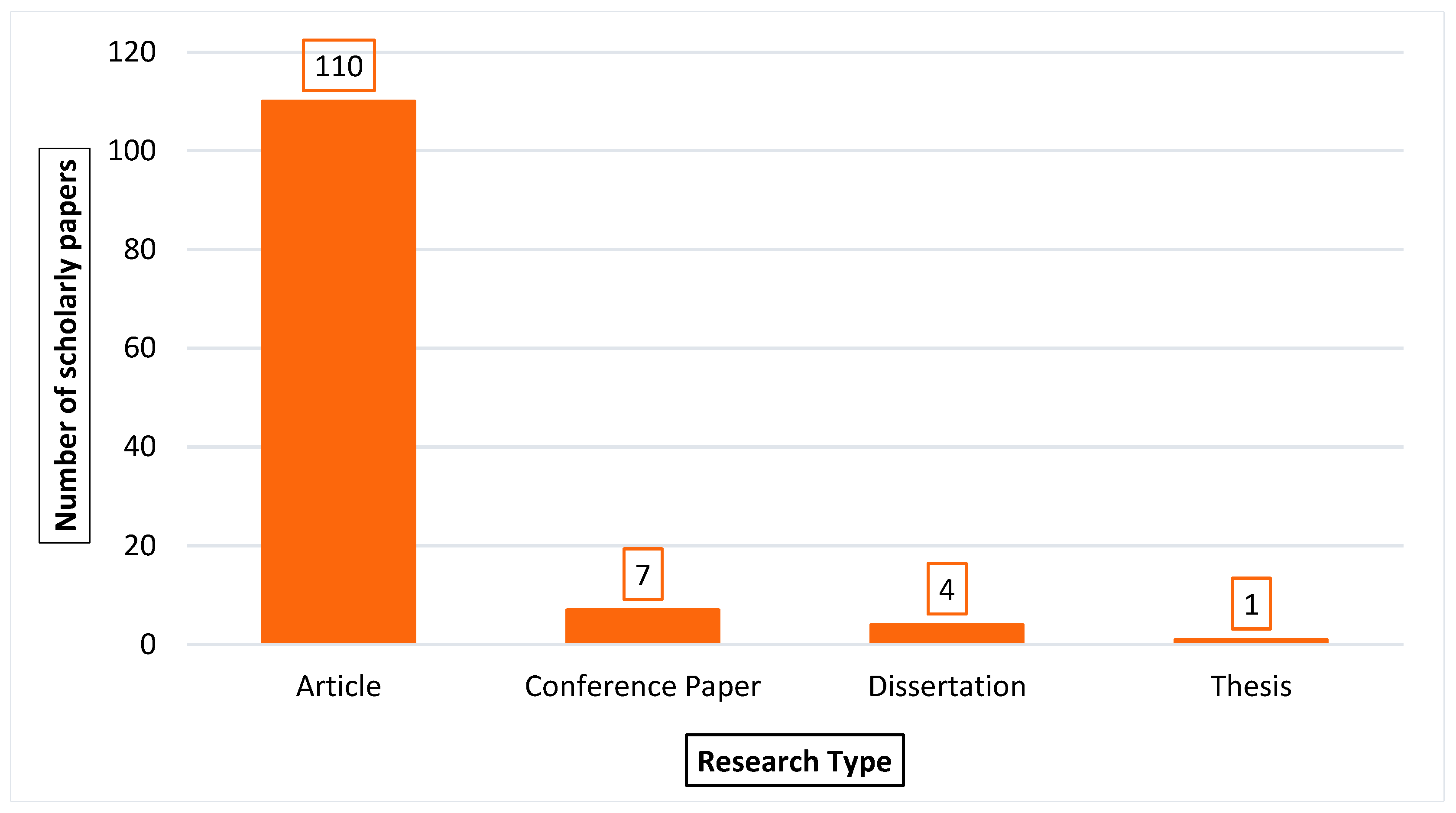
The number of research papers published by year from 2014 to 2024 has steadily increased. In 2021, the greatest number of papers were published. This could indicate the shift to remote work after the pandemic, increasing reliance on IT infrastructure and digital tools. Organizations and businesses recognized the need to adapt their operations to focus on IT-driven strategies. Figure 7 presents the number of publications for each research type.
Figure 7.
The number of publications versus the research type.
One hundred and twenty-two (116) eligible research papers were published between 2014 and 2024, comprising 103 journal articles, 7 conference papers, 4 dissertations and 1 thesis. More article journals were published than other research types due to the in-depth and comprehensive nature of the research they publish. Journals have higher impact factors and prestige, and therefore are intended to be stored for future reference and citation.
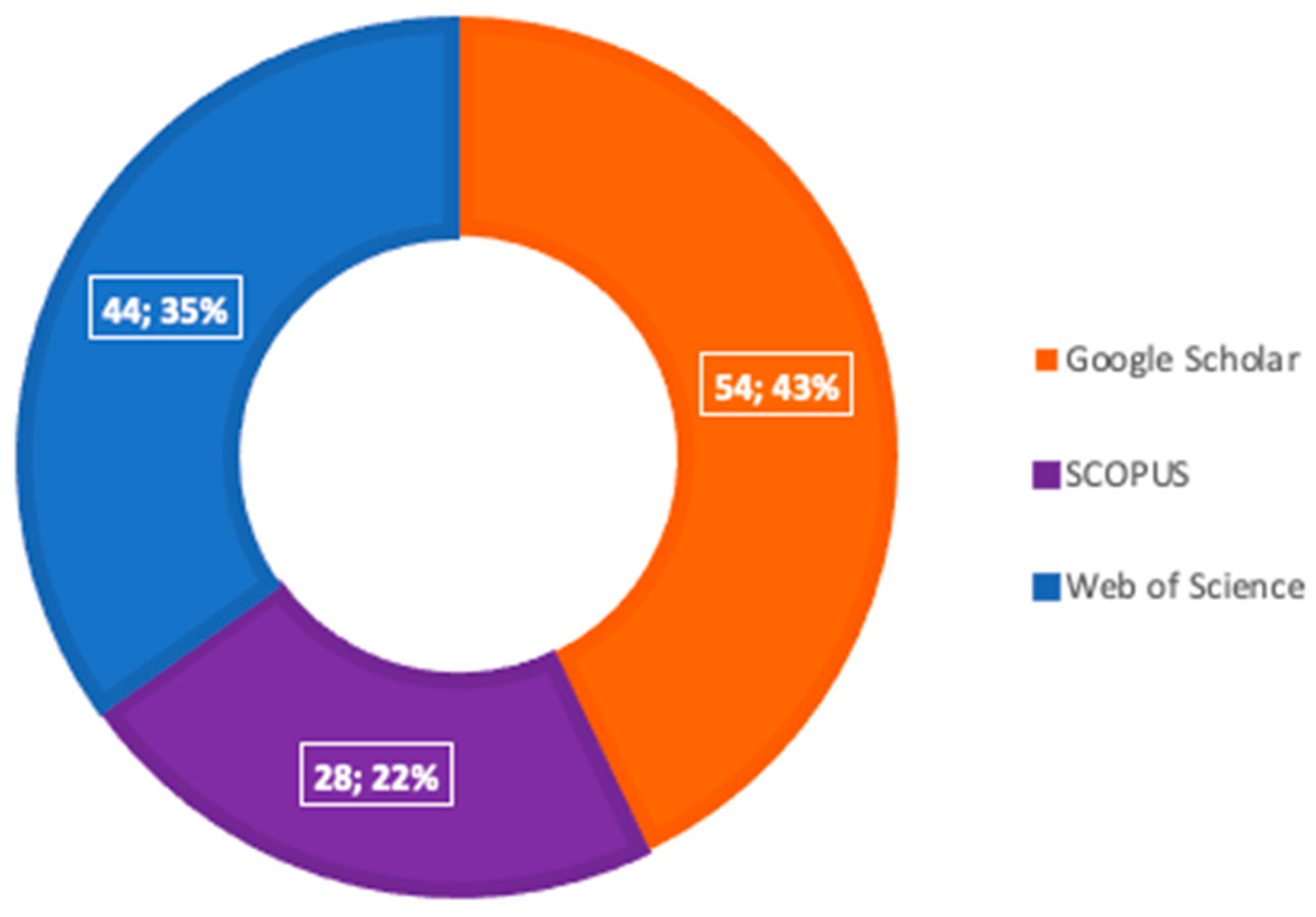
Figure 8 presents the distribution of online data sources employed in this review in the form of a pie-chart (i.e., a depiction of a portion of scholarly papers obtained from each online database—SCOPUS, Web of Science, and Google Scholar).
Figure 8.
The distribution of online data sources.
Google Scholar, Web of Science, and Scopus were utilized to conduct the research. Google Scholar accounted for 54% of the studies due to its free accessibility, making a viable option to researchers with limited budgets or institutional access. These three online repositories enable researchers to efficiently find, access, and analyze the relevant research literature. Figure 9 presents the number of publications versus the type of study.
Figure 9.
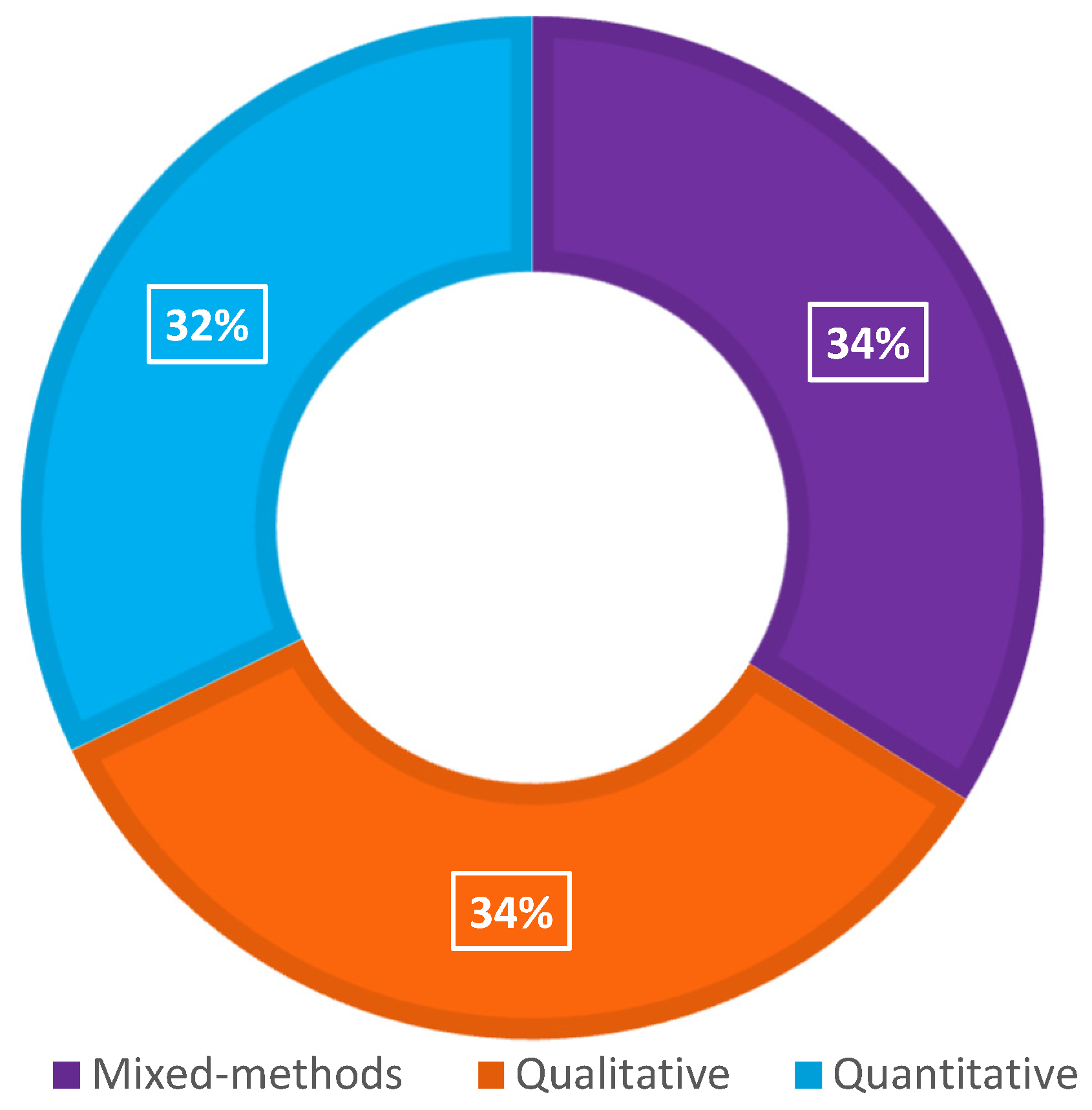
The number of publications versus the type of study.
Mixed-methods (34%) and qualitative (34%) analysis were the most widely employed research methodology. Mixed methods combine both qualitative and quantitative methods to provide a comprehensive understanding of the studies. Researchers often utilize this method as it is flexible and leverages the drawbacks of one technique with the benefits of the other. A qualitative analysis allows for a comprehensive exploration of complex works. Researchers can acquire insights into people’s experiences, and perspectives that quantitative methods may disregard.
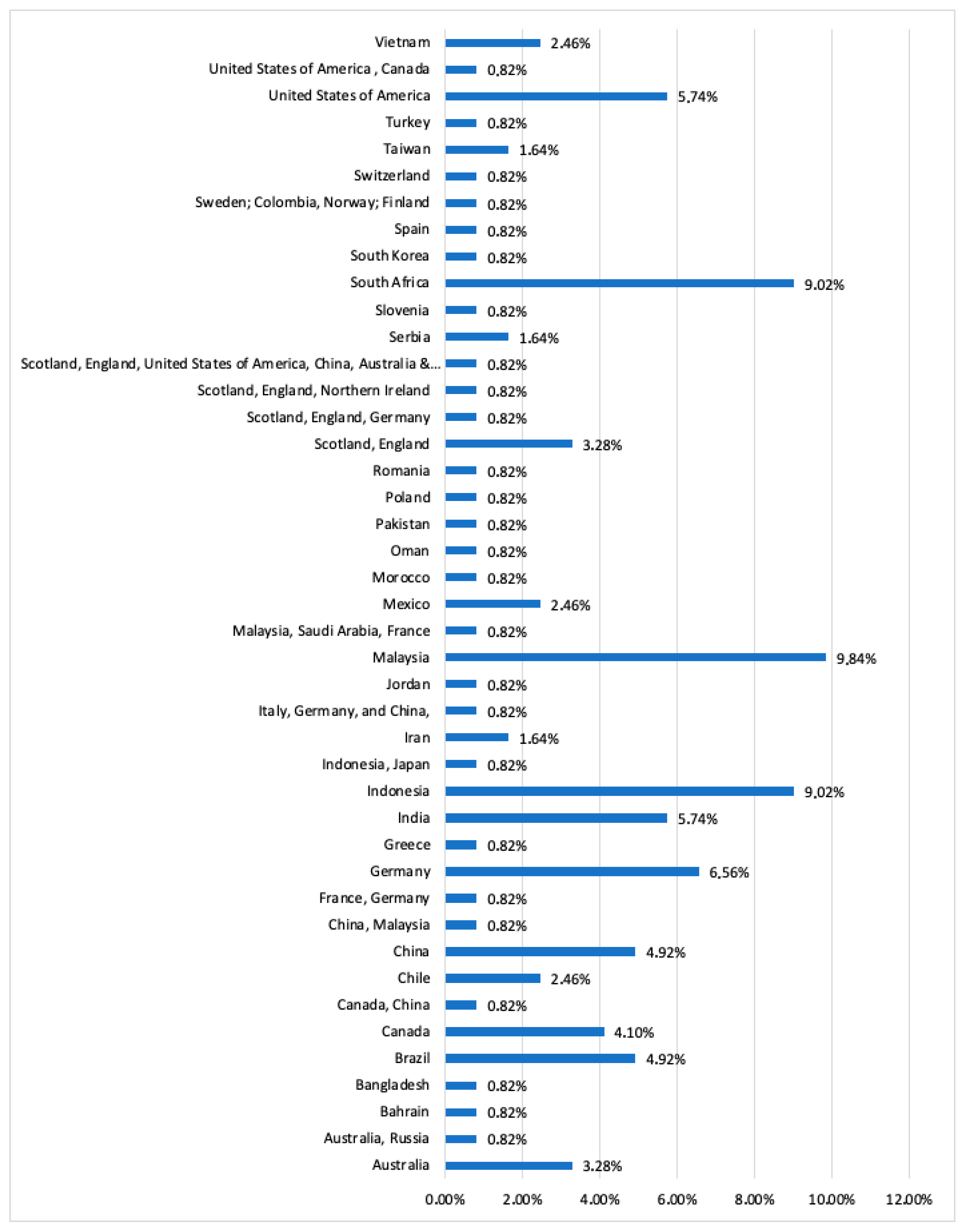
Figure 10 presents the percentage distribution of publications by country.
Figure 10.
The number of publications per country.
Malaysia is the leading country researching about the context of this SLR, followed by a tie of South Africa, England, and Indonesia in the second position, then thirdly, Germany, China, and the USA; and in the forth position, India, Greece, Canada, Brazil, and Australia; then the fifth position and last positions are held by the remaining countries excluded in the top four most researchers about the context of this SLR.
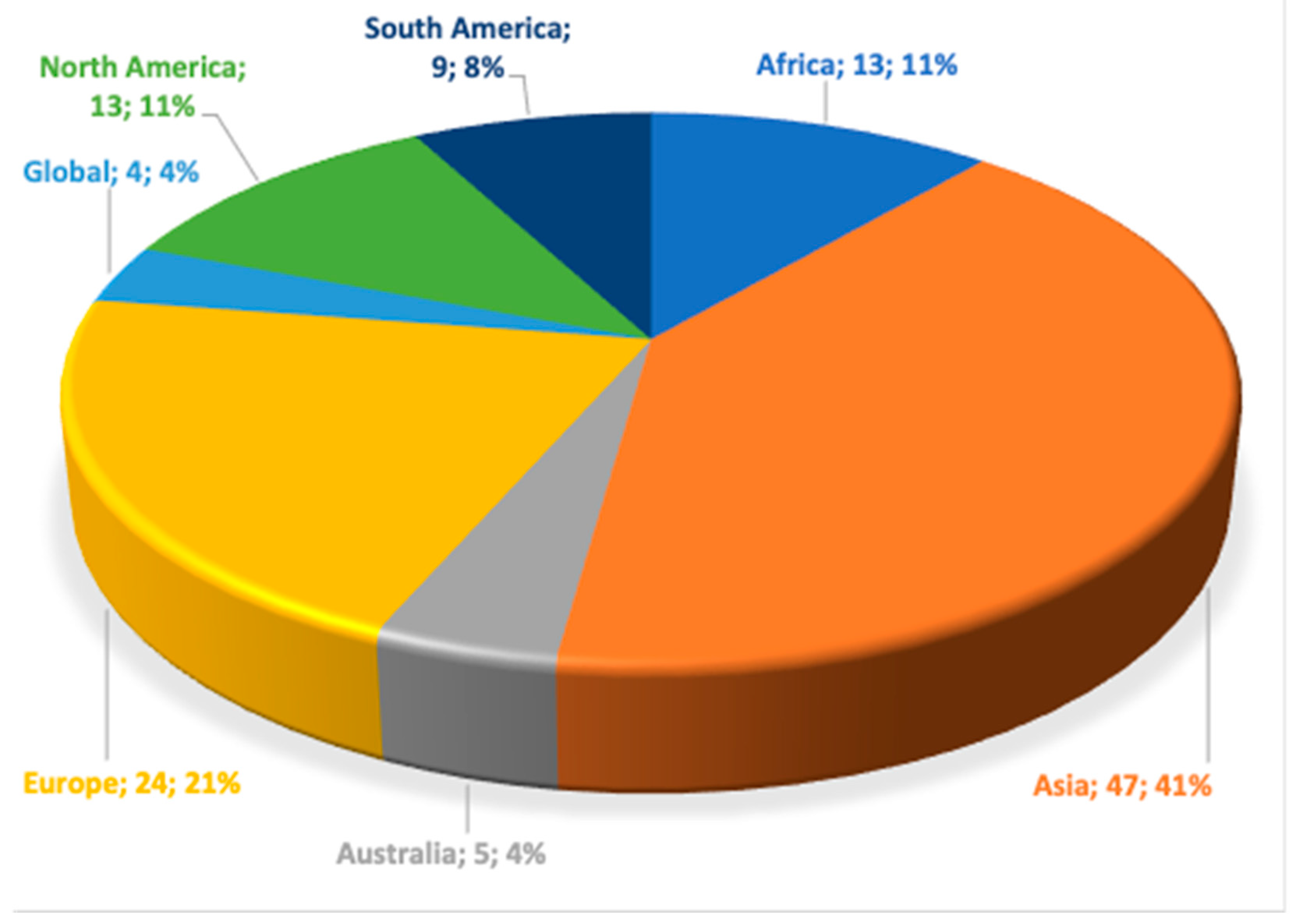
Figure 11 presents the percentage distribution by geographic location per continent.
Figure 11.
The geographic location of publications per continent.
Asia (41%) is the leading continent in Enterprise Architecture and Information Management research in small and medium enterprises. Asian countries like China have experienced a rapid economic growth in recent years, leading to an increased demand for efficient and effective IT systems to support business operations. Asia has two of the most vastly populated countries in the world; therefore, this size and variety offer unique opportunities for research and creativity.
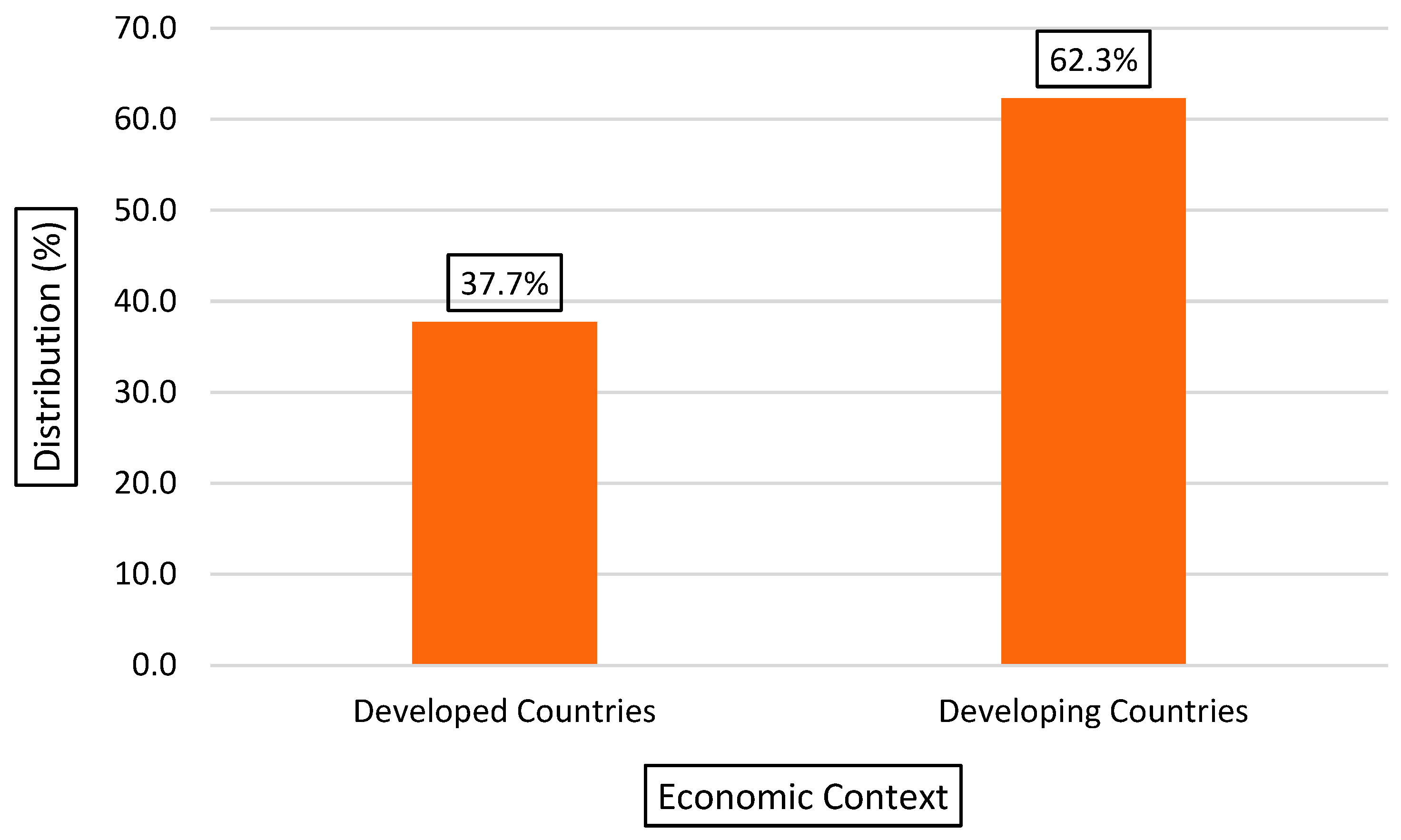
Figure 12 presents the comparison of scholar papers from developing and developed countries.
Figure 12.
The distribution of developing versus developed countries.
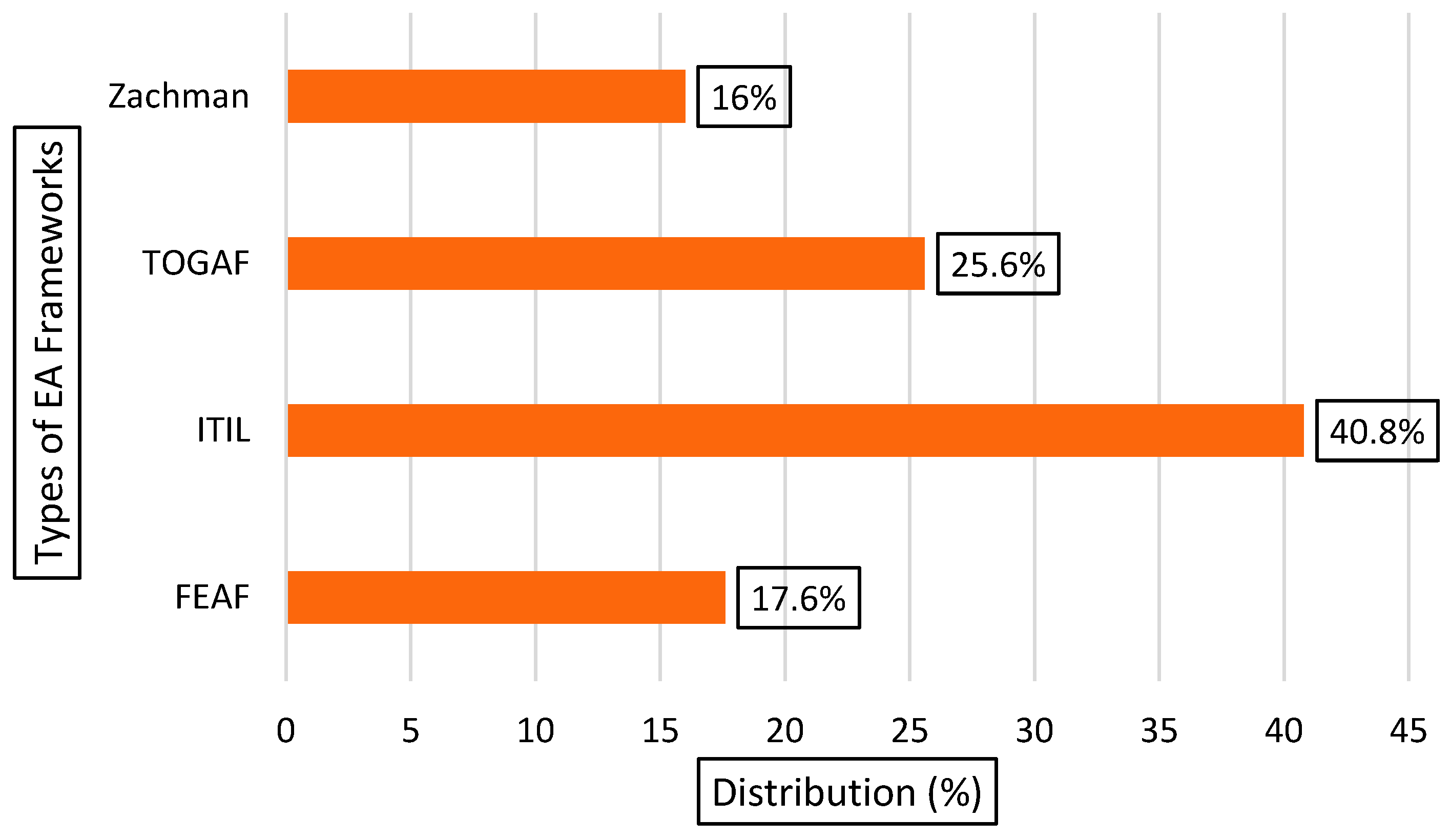
With regards to the economic context, it is evident that the scholar papers from developing countries are increasingly dominating globally in the context of this SLR in comparison to the publications done in the developed countries. This gives insights into the notion that developing countries are largely aware of implementing digital transformations in SMEs. Figure 13 presents the types of Enterprise Architecture Frameworks.
Figure 13.
The types of Enterprise Architecture Frameworks.
Enterprise Architecture Frameworks (EAFs) are categorized into three primary types: comprehensive, industry-specific, and domain-specific frameworks. Comprehensive frameworks, such as ITIL (i.e., the first largely utilized EAF), TOGAF (i.e., the second largely utilized EAF), FEAF (i.e., the third largely utilized EAF), and Zachman (i.e., the least utilized EAF), provide a broad applicability across various sectors. Industry frameworks cater to specific sectors, while domain frameworks focus on certain areas, integrating IT strategies such as AI and cloud computing to enhance organizational performance. Figure 14 presents the types of Information Management Practices.
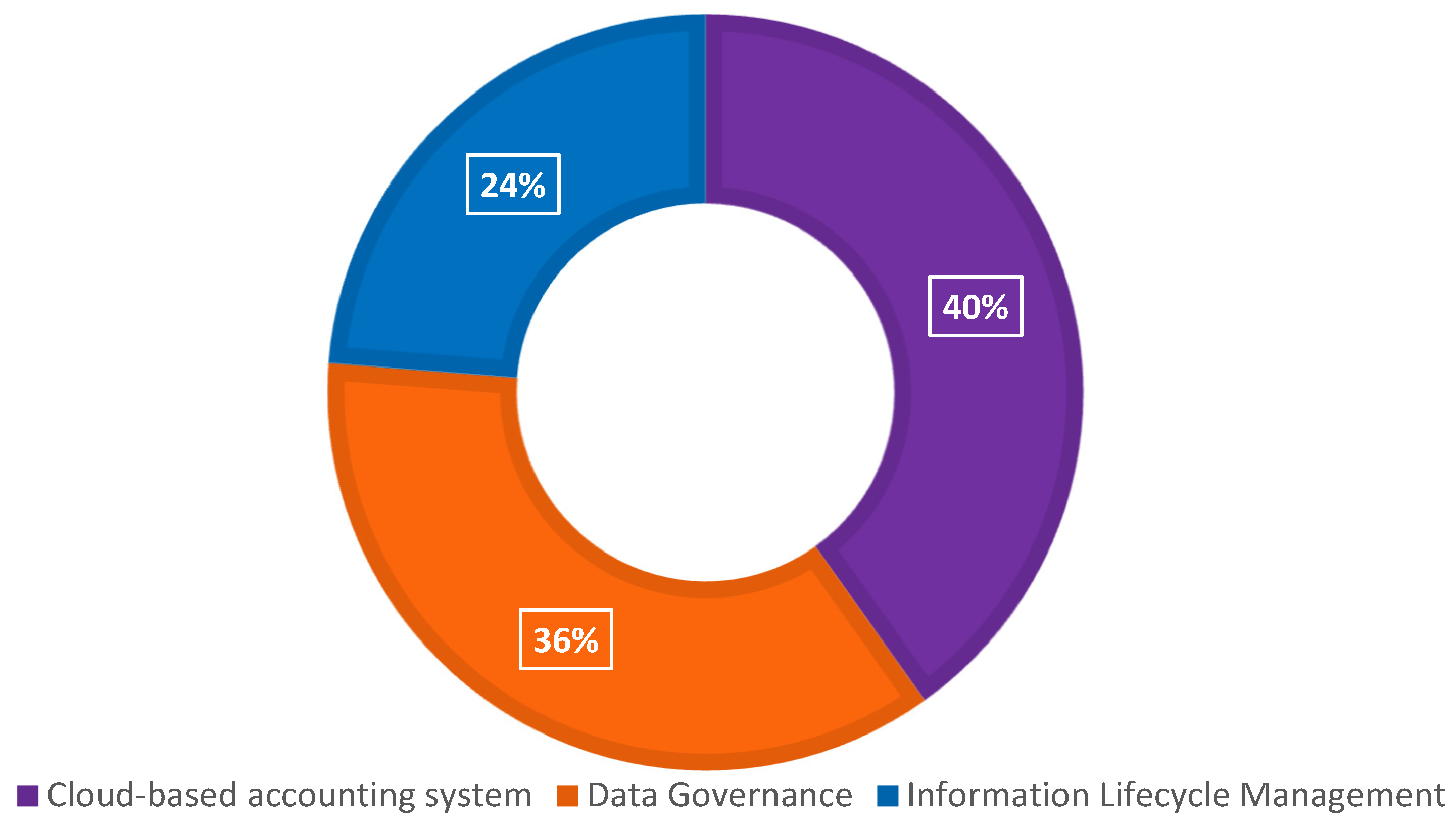
Figure 14.
The types of Information Management Practices.
Information Management Practices encompass various strategies that optimize data handling and utilization within organizations. Key approaches include Information Lifecycle Management (24%) to leverage AI for data analysis and decision-making, implementing cloud computing (40%) for scalable storage solutions, and establishing robust governance frameworks (36%) to ensure data integrity and security. These practices enhance operational efficiency and support strategic objectives. Figure 15 presents the types of Technology Implementation Models.
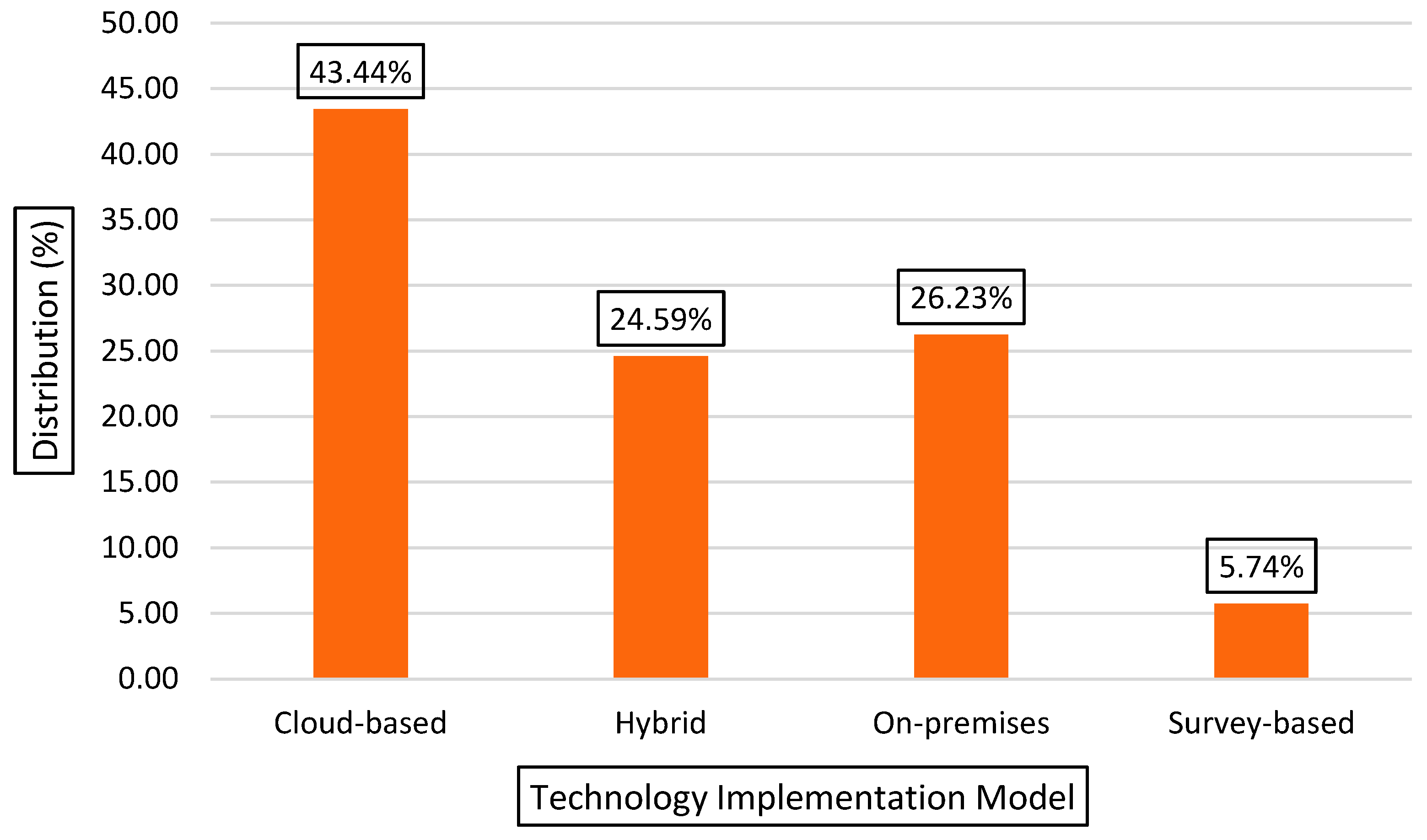
Figure 15.
The types of Technology Implementation Models.
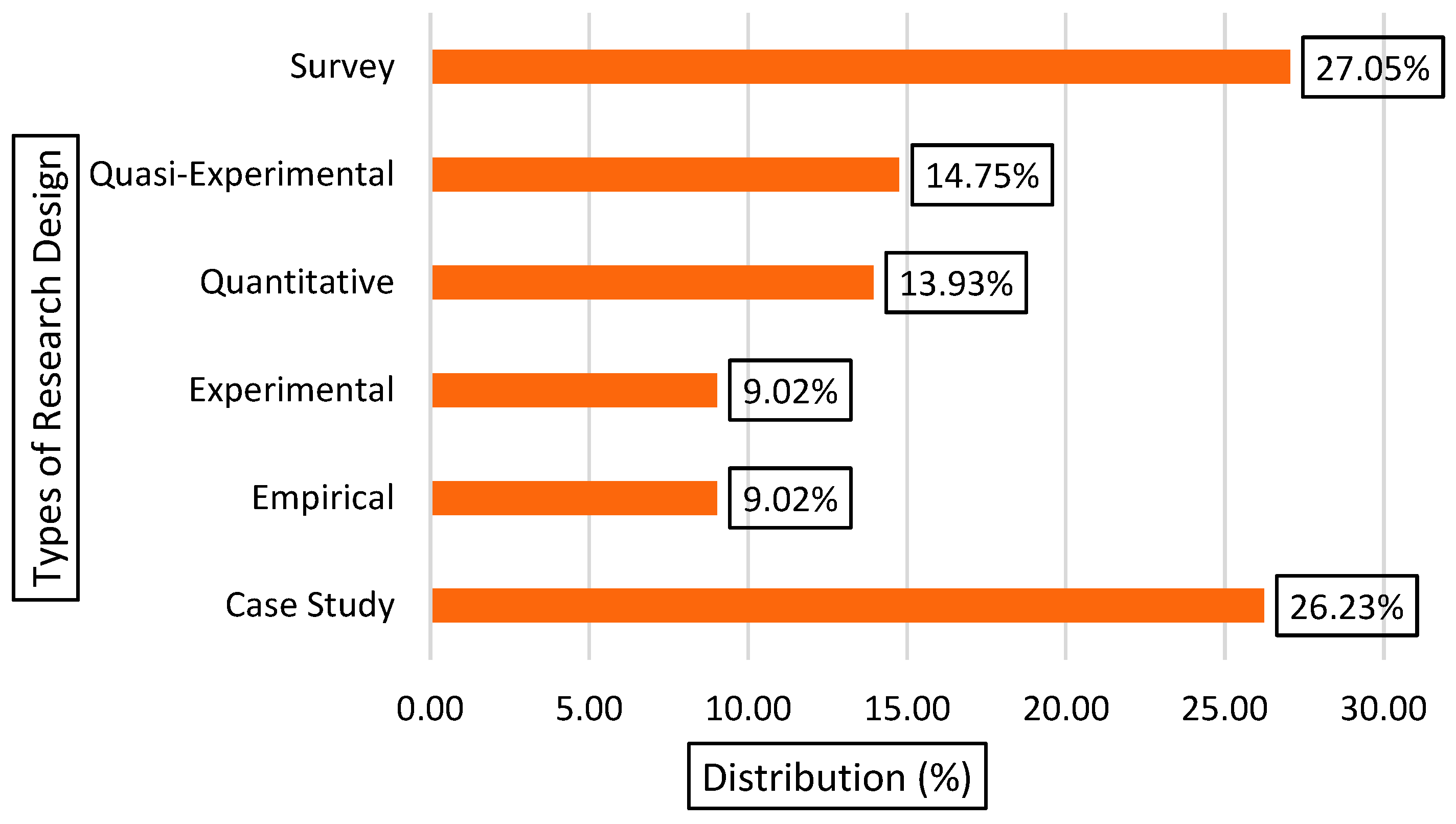
The Technology Implementation Model integrates advanced IT strategies, particularly AI and cloud computing, to enhance organizational efficiency. By leveraging AI’s capabilities for data analysis and automation within cloud environments, businesses can optimize resource utilization, improve decision-making processes, and foster innovation, ultimately driving sustainable growth and competitive advantage. Figure 16 presents the types of Research Design.
Figure 16.
The types of Research Design.
With regards to Research Design, the approach of surveying and executing case studies leads in R&D (Research and Development) for the context of this SLR. Quasi-experimental and quantitative approaches are second tiers, with experimental and empirical approaches the least employed methods. Figure 17 presents the types of Sample Characteristics.
Figure 17.
The types of Sample Characteristics.
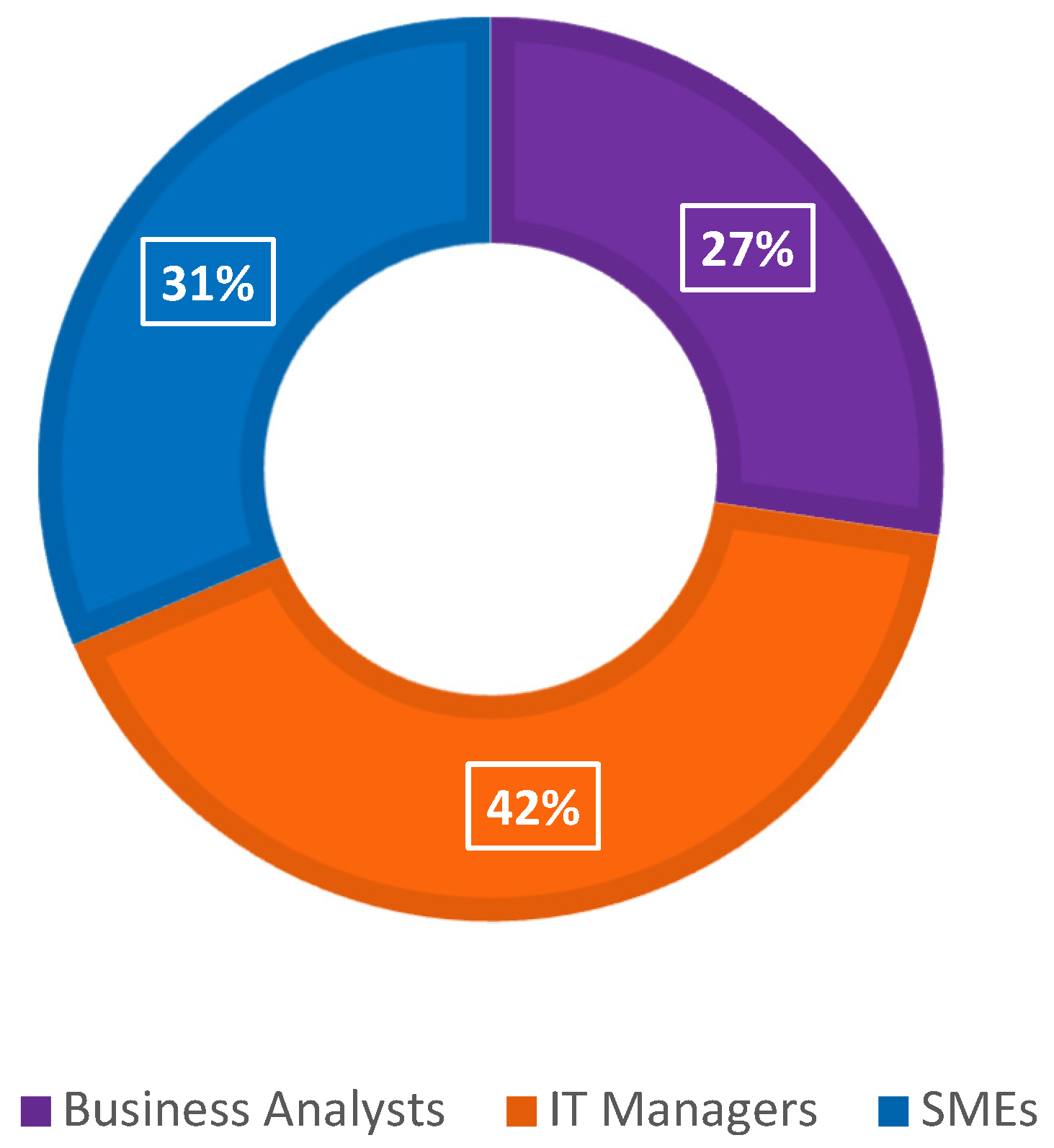
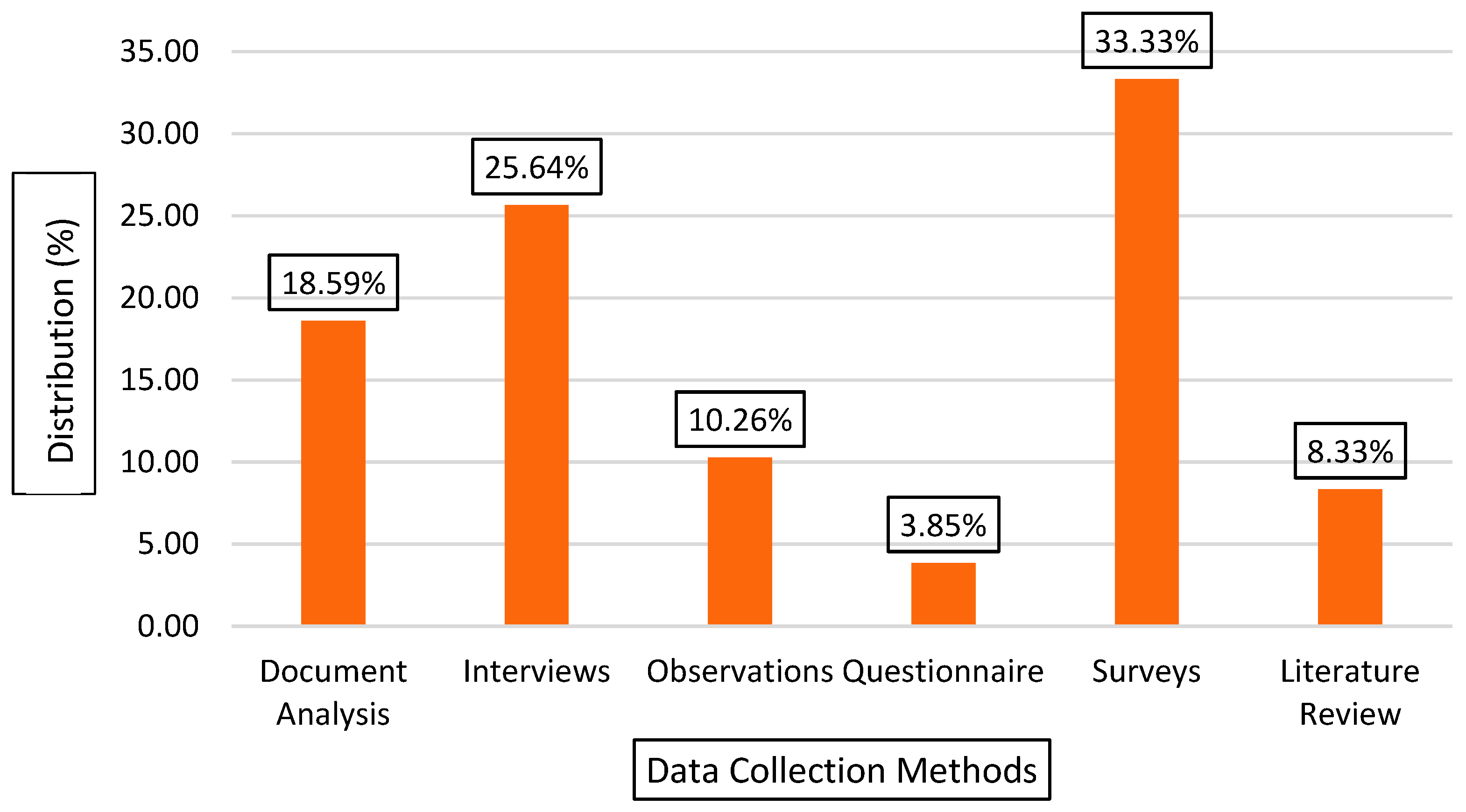
The Sample Characteristics encompass SMEs, IT managers, and business analysts who have implemented various IT strategies, including AI and cloud computing, to enhance their operations and decision-making processes. These participants provide valuable insights into the challenges, successes, and best practices associated with adopting and integrating these technologies within their organizations, contributing to the overall understanding of IT growth and performance in SMEs. Figure 18 presents the Data Collection Methods.
Figure 18.
The types of Data Collection Methods.
Data Collection Methods, including interviews, surveys, observations, and document analysis, are essential for gathering insights in research. These techniques can be enhanced by integrating IT strategies such as Artificial Intelligence and cloud computing, which facilitate efficient data management and analysis, ultimately leading to more informed decision-making and improved outcomes. Figure 19 presents the Data Analysis Techniques.
Figure 19.
The types of Data Analysis Techniques.
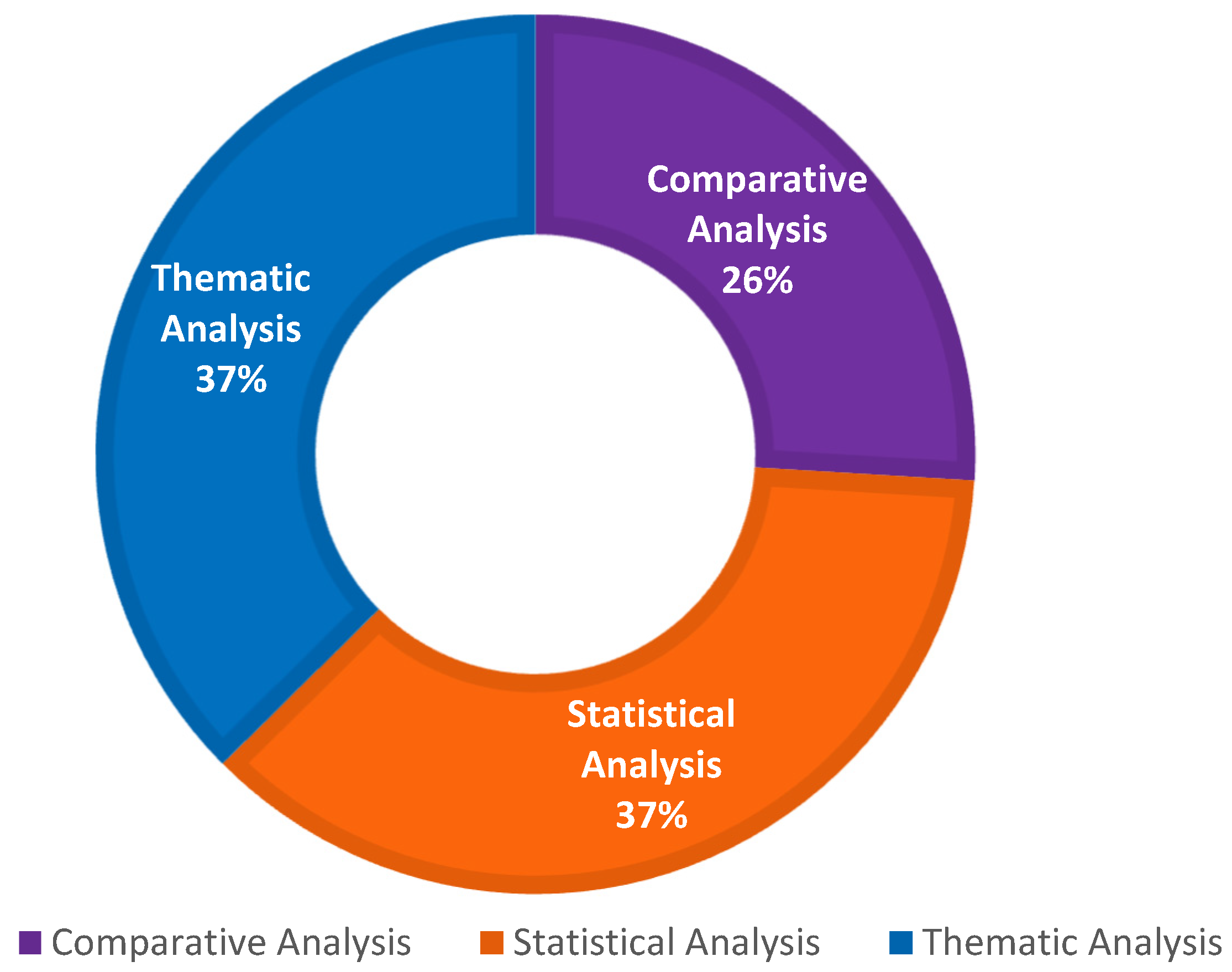
Data Analysis Techniques, such as statistical and thematic analysis, play crucial roles in extracting insights from qualitative and quantitative data. Statistical analysis employs mathematical models and algorithms, often enhanced by AI and cloud computing, to identify trends and correlations. Thematic analysis, on the other hand, focuses on uncovering patterns within qualitative data, facilitating a deeper understanding of user experiences and organizational needs. Integrating these techniques with IT strategies fosters informed decision-making and drives innovation in Enterprise Architecture. Figure 20 presents the IT Performance Metrics.
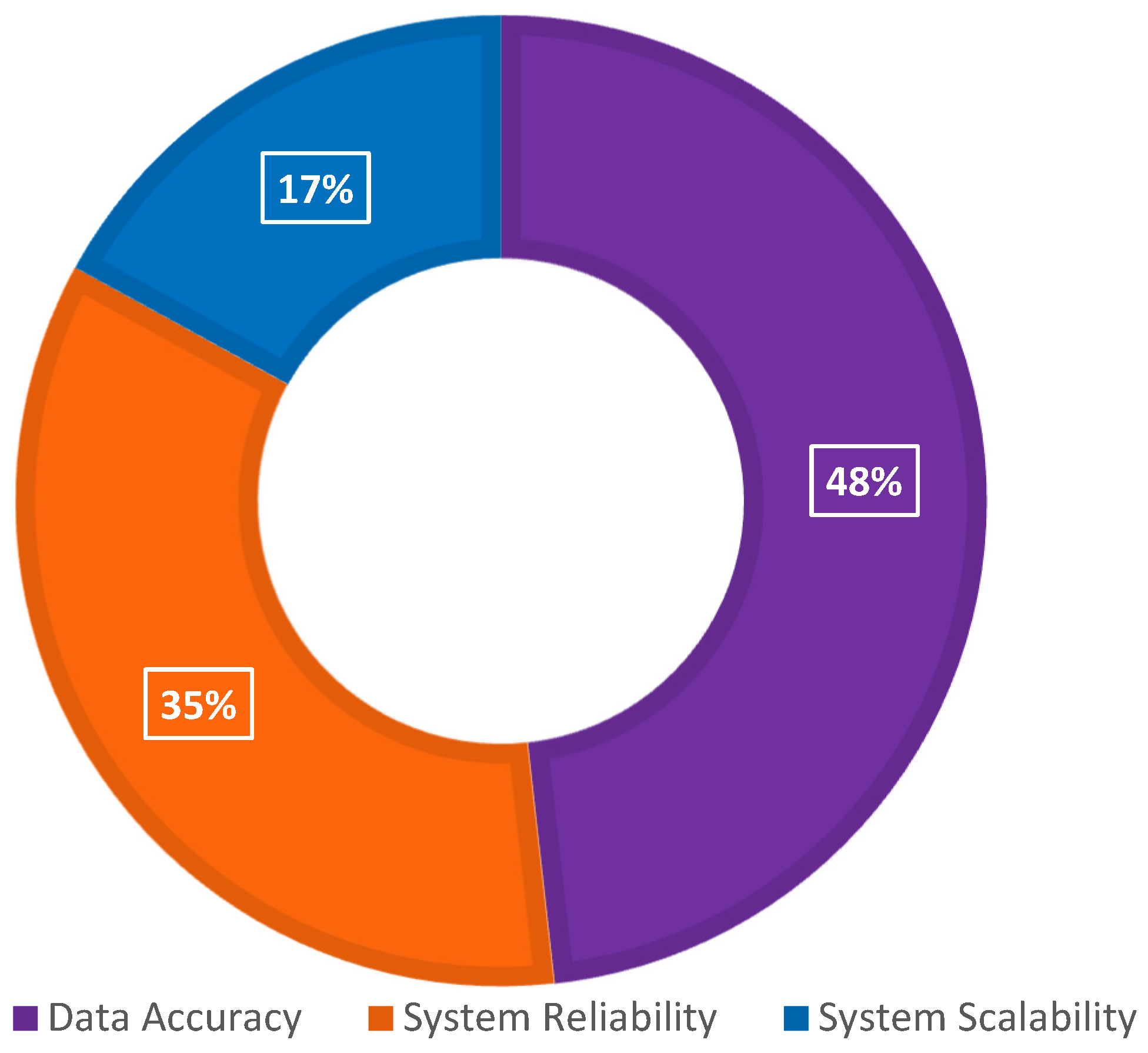
Figure 20.
The types of IT Performance Metrics.
IT Performance Metrics, such as system scalability, reliability, and data accuracy, are essential for evaluating the effectiveness of IT strategies. Leveraging AI and cloud computing enhances these metrics by providing real-time insights, automating processes, and enabling flexible resource allocation. This integration fosters robust decision-making and sustainable growth in organizations. Figure 21 presents the Business Performance Metrics.
Figure 21.
The types of Business Performance Metrics.
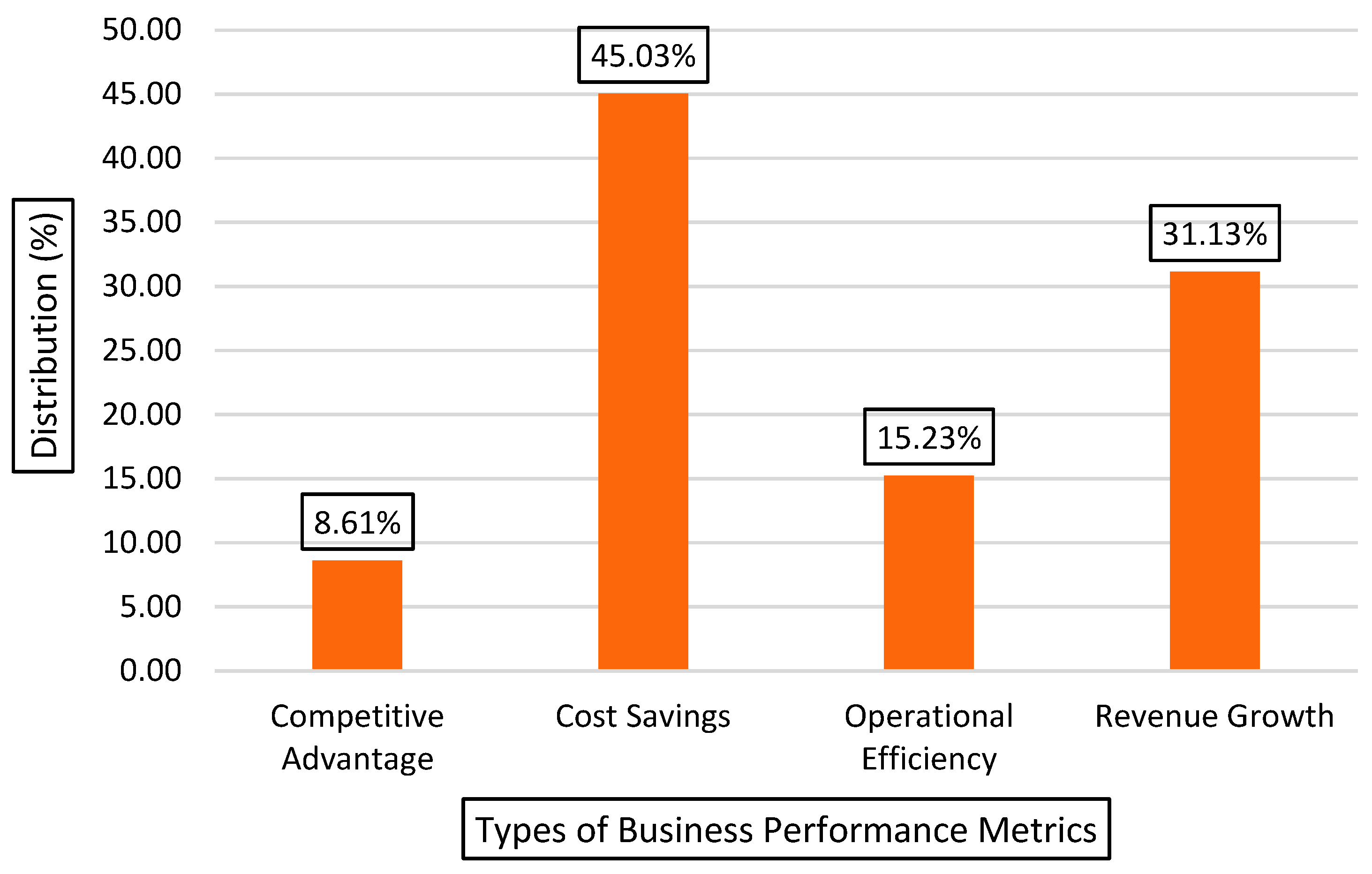
Business Performance Metrics, such as operational efficiency, revenue growth, and cost savings, are crucial for assessing organizational success. Leveraging IT strategies like Artificial Intelligence and cloud computing enhances these metrics by automating processes, improving data analysis, and enabling scalable solutions that drive informed decision-making and sustainable growth in dynamic markets.
3.3. Risk of Bias in Studies
In our SLR on guiding IT growth and sustaining performance in SMEs through EA and IM, we assessed the risk of bias using the Cochrane Risk of Bias Tool. This evaluation revealed significant concerns regarding several studies, particularly those exploring AI and cloud computing strategies. The assessments categorized three studies as having high risk (HR), while two were deemed to have some concerns (SC), and the remaining studies were classified as low risk (LR). These findings underscore the importance of critically appraising biases to ensure robust conclusions in the context of IT strategies for SMEs. Table 15 illustrates how the Cochrane Tool was utilized to rate the risk of bias of the collected scholarly papers.
Table 15.
The Cochrane Risk of Bias Tool.
Utilizing the Cochrane Risk of Bias Tool, we meticulously evaluated 116 randomized controlled trials (RCTs) to determine their methodological quality and potential biases. Each study was rated using a star system across three primary domains: Selection (up to four stars), Comparability (up to two stars), and Outcome/Exposure (up to three stars). In the Selection domain, studies were assessed on critical factors such as random sequence generation and allocation concealment, earning up to four stars for robust methods that mitigate selection bias. The Comparability domain awarded up to two stars based on the effectiveness of controlling confounding variables, ensuring Comparability among groups. For Outcome/Exposure, up to three stars were granted based on the blinding of the outcome assessment and the completeness of data. This systematic star-based assessment not only illuminated the overall quality and risk of bias in the studies but also highlighted the potential integration of IT strategies, such as AI and cloud computing, to enhance research methodologies in future trials.
3.4. Results of Individual Studies
In synthesizing research findings, it is crucial to present summary statistics and effect estimates for each included study in a clear and comprehensible manner, facilitating further analysis. Structured tables and visual plots enhance the understanding of each study’s contribution to the overall findings, promoting data reuse for future analyses. When reporting summary statistics, distinguishing between dichotomous and continuous outcomes is essential; for dichotomous outcomes, we provide participant counts for events, while for continuous outcomes, we report metrics such as mean and standard deviation. This detailed presentation aids in assessing issues related to information technology growth, particularly challenges posed by AI and cloud computing. However, caution is warranted, as summary statistics can be misleading, especially in cluster-randomized designs where correlation among observations affects sample size accuracy. Effect estimates should accompany precision measures like confidence intervals, derived from models that account for clustering. Presenting study-level data through structured tables or visual plots enhances interpretability while indicating data sources from diverse origins ensures transparency. Additionally, addressing missing data and employing methods for computation or estimation are critical. Finally, exploring causes of heterogeneity through subgroup analyses and meta-regressions enriches our understanding of factors influencing study outcomes in the evolving landscape of IT strategies.
3.5. Results of Syntheses
The effectiveness of Enterprise Architecture and Information Management strategies, including AI and cloud computing, in promoting IT growth and sustaining performance in SMEs, has received considerable attention in recent research. In synthesizing findings from various studies, this analysis offers valuable insights into the most effective approaches and the challenges SMEs face when implementing these strategies. This introduction presents a concise overview of key results from the synthesis, highlighting critical factors that foster successful IT growth and performance in SMEs. The findings are based on a comprehensive literature review, employing statistical methods like Cochran’s Q Test to ensure reliability and consistency.
3.5.1. Characteristics of Syntheses
In selecting studies for this synthesis, we focused on their relevance to EA and IM in SMEs. A systematic search through databases like SCOPUS and Web of Science identified numerous articles; however, only those meeting established methodological and thematic criteria were included, resulting in a robust collection of studies. The methodologies varied widely, with some employing qualitative approaches such as case studies and interviews, while others utilized quantitative methods like surveys and statistical analyses. This diversity enriched the synthesis but complicated comparisons, as qualitative research offered deep organizational insights while quantitative studies provided generalizable data on trends. The outcomes assessed encompassed IT growth, performance sustainability, and the strategic alignment of IT—particularly AI and cloud computing—with business objectives. Effect measures included mean differences in performance metrics and risk ratios related to specific EA frameworks, highlighting the significant impact of contextual factors on the effectiveness of these IT strategies. Table 16 outlines the key characteristics of studies included in the syntheses.
Table 16.
Characteristics of syntheses.
The table outlines key characteristics of research on Enterprise Architecture and Information Management strategies for SMEs. It highlights the systematic selection of studies, methodological diversity, assessed outcomes focusing on IT growth and emerging technologies like AI and cloud computing, and notes significant statistical heterogeneity due to varied study designs.
3.5.2. Risk of Bias Assessment
The assessment of risk of bias across studies evaluating IT strategies, such as AI and cloud computing, reveals significant concerns regarding the reliability of findings. A summary table can effectively illustrate the various biases identified in these studies, categorizing them by strategy, type of bias, and the implications for evidence interpretation. For instance, studies on AI often exhibit response biases stemming from self-reported data, which may lead to inflated perceptions of effectiveness. In contrast, research on cloud computing frequently lacks control groups, limiting causal inferences. The table below also highlights the inconsistency in bias assessment methodologies employed by different studies, noting whether established tools were used or if systematic approaches were absent. Furthermore, it can indicate the prevalence of reporting biases, particularly in studies that do not publish negative results, ultimately affecting the perceived efficacy of these IT strategies. This structured overview will facilitate a clearer understanding of the evidence landscape and underscore the necessity for critical evaluation in this domain. Table 17 summarizes biases in evaluating IT strategies, including EA and IM in SMEs.
Table 17.
The risk of bias assessment.
The table summarizes biases in evaluating IT strategies, including Enterprise Architecture and Information Management in SMEs. It identifies design biases, inconsistent risk assessments, reporting bias, and variability in evidence quality, emphasizing the need for a careful interpretation of findings to ensure accurate conclusions regarding the effectiveness of technologies like AI and cloud computing.
3.6. Reporting Biases
We identified several issues related to missing or incomplete results in some studies. Notably, the research cited (Tell & Henkel, 2023; San Martín et al., 2021; Barros, 2022; Anthony Jnr et al., 2021; Guo et al., 2021; Hadaya et al., 2020; Levy & Bui, 2019; Bourmpoulias & Tarabanis, 2020; Baptista & Barata, 2021; Vilas-Boas & Simões, 2018; Khairudin & Amin, 2019; Sytnik & Kravchenko, 2021; Al-Shukri, 2024; Faruque et al., 2024; Odukoya, 2024; Muniz-Rodriguez et al., 2024; Alirezaie et al., 2024; Al-Somali et al., 2024; Sastryawanto et al., 2024; Al-Momani et al., 2024; Purwaningsih et al., 2024; Soomro & Khan, 2024; Kotusev & Alwadain, 2024) aimed to evaluate the effectiveness of Enterprise Architecture Frameworks in enhancing IT performance and overall organizational success. While others reported significant improvements in IT performance metrics following framework implementation, some did not provide comprehensive results, particularly regarding the long-term impacts of these frameworks. This absence of information is critical, as it may indicate that the findings do not capture the complete picture, especially if only positive outcomes were reported. Such selective reporting, known as reporting bias, can lead to an overestimation of the effectiveness of these strategies. Consequently, we regard the evidence from these studies as less reliable. Without access to all necessary data, we cannot confidently assert whether Enterprise Architecture Frameworks genuinely support sustained IT growth in Small and Medium-sized Enterprises. This underscores the importance of cautious interpretation of results due to potential data gaps.
To further illustrate these concerns, Table 18 summarizes various IT strategies and their reported impacts on SMEs. The table includes strategies such as AI, cloud computing, and Enterprise Architecture Frameworks (EAFs), highlighting both positive outcomes and gaps in data availability. For instance, while AI has shown promise in automating processes and improving decision-making, studies often lack longitudinal data to assess its sustained impact. Similarly, cloud computing offers scalability and cost efficiency but may not always demonstrate clear benefits in performance metrics due to incomplete reporting. This overview emphasizes the necessity for comprehensive studies that provide a holistic view of how these IT strategies contribute to sustained growth in SMEs.
Table 18.
The characteristics of reporting bias.
3.7. Certainty of Evidence
Table 19 presents the evidence of certainty of the selected eligible studies via the Quality of Evidence Grade.
Table 19.
The certainty of the selected eligible studies.
The table evaluates the certainty of evidence from various studies regarding the effectiveness of Enterprise Architecture and Information Management in promoting IT growth and sustaining performance in SMEs. High-certainty studies exhibit strong directness and precision, while moderate-certainty studies show varying levels of consistency. Conversely, lower-certainty studies, which lack comprehensive tool usage, reveal potential limitations in findings related to the integration of AI and cloud computing.
Utilizing the Cochrane grading tool, this analysis provides a thorough assessment of the relevance of selected publications within the systematic literature review. The findings indicate high levels of directness, precision, and consistency, underscoring their pertinence to research questions and their ability to deliver accurate estimates. For example, employing AI algorithms for predictive maintenance can significantly enhance IT system reliability, while cloud computing solutions facilitate flexible resource allocation and cost optimization. However, variability in tool usage suggests that some studies may have limitations affecting their overall reliability.
In considering our findings, the next section presents our results discussion which provides answers to our proposed research questions.
4. Discussion
Integrating AI and cloud computing into technology roadmap development enhances the alignment of technology with business goals, optimizing processes and improving decision-making capabilities. In leveraging cloud services, organizations can efficiently deploy AI solutions that streamline operations, drive innovation, and enable data-driven insights. This alignment ensures that technological advancements not only support but actively propel business objectives, fostering agility and responsiveness in a rapidly evolving digital landscape. The implementation of cloud computing solutions can reduce operational costs by as much as 30%, while AI-driven analytics can improve decision-making accuracy, resulting in a 20% increase in productivity (Page et al., 2021; Higgins & Green, 2019; Jørgensen et al., 2016; Shea et al., 2009; Corbett et al., 2014; Granholm et al., 2019; Alam et al., 2024; Montgomery et al., 2019; Beese et al., 2022; Tell & Henkel, 2023; San Martín et al., 2021; Barros, 2022; Anthony Jnr et al., 2021; Guo et al., 2021; Hadaya et al., 2020; Levy & Bui, 2019; Bourmpoulias & Tarabanis, 2020).
Nevertheless, SMEs face considerable challenges, including limited resources and a lack of technical expertise, which impede the effective implementation of IT strategies. Research has shown that approximately 60% of SMEs do not possess the necessary skills to effectively utilize advanced technologies (Grisot et al., 2014; Hermawan et al., 2017; Surbakti et al., 2019; Takeuchi et al., 2024; Moreira et al., 2023; Corbett et al., 2014; Granholm et al., 2019; Alam et al., 2024; Montgomery et al., 2019; Beese et al., 2022; Tell & Henkel, 2023; San Martín et al., 2021; Barros, 2022; Anthony Jnr et al., 2021; Guo et al., 2021; Hadaya et al., 2020; Levy & Bui, 2019; Bourmpoulias & Tarabanis, 2020). Additionally, external factors such as market fluctuations and regulatory changes further complicate the landscape of IT strategy. The review underscores the significance of adopting robust Enterprise Architecture Frameworks to navigate these complexities, ensuring that SMEs can maintain performance in the face of evolving technological demands. In addressing these obstacles and leveraging innovative technologies, SMEs can achieve sustainable growth within a competitive environment.
Q1. What specific strategies in Enterprise Architecture (EA) are most effective for guiding IT growth and sustaining performance in organizations, and under what conditions?
This thorough SLR on guiding IT expansion and sustaining performance in SMEs using Enterprise Architecture (EA) finds various viable solutions. Aligning IT activities with business goals, utilizing cloud computing for scalability, and incorporating AI for better decision-making are all critical methods. For example, firms who use cloud solutions report a 15–25% reduction in total IT expenses due to better resource allocation and efficiency (Ullah et al., 2021; Widadi & Fajrin, 2021; Andriyanto & Doss, 2020; Huang, 2021; Jiang & Chen, 2021; Van de Wetering, 2022; Vu & Nguyen, 2022; Liu et al., 2022). Furthermore, this review found that mature EA techniques can reduce project failure rates by 26%, emphasizing the importance of negotiating technological challenges (Granholm et al., 2019; Alam et al., 2024; Montgomery et al., 2019; Corbett et al., 2014; Beese et al., 2022; Tell & Henkel, 2023; San Martín et al., 2021). These techniques are most effective when matched to an organization’s specific operational context and strategic goals, resulting in adaptability and long-term growth.
Q2. How does EA facilitate alignment between IT and business objectives in different organizational contexts (e.g., centralized vs. decentralized, and public vs. private sector), and what are the key mechanisms and success factors?
EA plays a crucial role in aligning IT and business objectives across various organizational contexts, such as centralized versus decentralized structures and public versus private sectors. Through this SLR, it is evident that EA facilitates this alignment by providing a framework that integrates IT capabilities with strategic business goals. In centralized organizations, EA fosters uniformity and control, ensuring that IT initiatives directly support overarching business objectives. Conversely, in decentralized environments, EA encourages flexibility and responsiveness, enabling individual units to tailor IT solutions to their specific needs while still adhering to broader organizational strategies.
Key mechanisms for effective alignment include the establishment of clear communication channels, shared governance frameworks, and the use of data-driven insights to inform decision-making. Success factors encompass strong leadership commitment, stakeholder engagement, and the adoption of innovative technologies like AI and cloud computing, which enhance operational efficiency and adaptability. Statistics indicate that organizations leveraging EA report up to a 30% increase in operational efficiency and a 25% improvement in project success rates, underscoring its importance in driving sustainable growth in SMEs (Khairudin & Amin, 2019; Sytnik & Kravchenko, 2021; Adudu et al., 2022; Srećković, 2018; Shah et al., 2017; Tatoglu et al., 2016; Bernaert et al., 2016; Dumitriu & Popescu, 2020; Becker & Schmid, 2020; Kareem et al., 2021; Molete et al., 2025; Van de Wetering et al., 2021; Antunes et al., 2021; Deny et al., 2021; Gerber et al., 2020; Knezović et al., 2020; Kornyshova & Deneckère, 2022; Hasanah et al., 2022).
Q3. What methodologies and frameworks exist for integrating EA with specific IT management frameworks like TOGAF (The Open Group Architecture Framework), ITIL (Information Technology Infrastructure Library), COBIT (Control Objectives for Information and Related Technology), or Agile, and how do they compare in terms of benefits, challenges, and suitability for different organizational needs?
Integrating EA with frameworks like TOGAF, ITIL, COBIT, and Agile presents both opportunities and challenges for SMEs. This SLR reveals that while TOGAF offers a structured approach for aligning IT with business goals, its complexity can hinder adoption. ITIL enhances service management efficiency through standardized processes but may require a significant upfront investment and commitment from stakeholders. COBIT focuses on governance and compliance, ensuring that IT investments align with organizational objectives, yet it can be rigid in dynamic environments. Agile promotes flexibility and rapid adaptation to change, making it suitable for organizations pursuing innovation. Statistical analyses indicate that organizations implementing EA frameworks report up to a 30% increase in operational efficiency when combined with AI and cloud computing solutions, highlighting the importance of tailored approaches to meet diverse organizational needs (Judijanto et al., 2023; Alghamdi, 2024a; Mustafa et al., 2024; Srisawat et al., 2024; Vargas & Fontoura, 2024; Manyaga et al., 2024; Alghamdi, 2024b; Merín-Rodrigáñez et al., 2024).
Q4. How do emerging technologies like Artificial Intelligence (AI), cloud computing, and the Internet of Things (IoT) influence the evolution of EA best practices in areas such as architecture modeling, decision support, and stakeholder engagement, and what new capabilities do they enable?
Emerging technologies such as AI, cloud computing, and IoT are significantly reshaping EA best practices, particularly in architecture modeling, decision support, and stakeholder engagement. AI enhances data analysis capabilities, enabling predictive modeling that informs strategic decisions. For instance, AI algorithms can analyze vast datasets to identify trends and optimize resource allocation, which is crucial for SMEs striving for efficiency.
Cloud computing provides a scalable infrastructure that supports these AI applications, allowing SMEs to deploy advanced analytics without heavy upfront investments. According to Statista, over 18 billion IoT devices are projected to be connected by 2024, facilitating real-time data collection and analysis (Liu et al., 2022; Manyaga et al., 2024). This integration fosters improved stakeholder engagement through personalized services and enhanced operational transparency. Collectively, these technologies enable SMEs to adapt swiftly to market changes, driving sustainable growth and innovation in their IT frameworks.
Q5. How do specific aspects of organizational culture, such as leadership support, changes in management practices, and employee digital skills, affect the adoption and success of EA initiative, and what cultural changes are needed to create a digital-savvy workforce that can effectively utilize EA?
Organizational culture significantly influences the adoption and success of EA initiatives. Leadership support fosters a positive environment for change management practices, essential for integrating technologies like AI and cloud computing. A study found that 70% of digital transformation efforts fail due to inadequate changes in management. Moreover, enhancing employee digital skills is crucial; organizations with a high digital competency report a 25% increase in productivity (Dumitriu & Popescu, 2020; Becker & Schmid, 2020; Kareem et al., 2021; Molete et al., 2025; Van de Wetering et al., 2021; Antunes et al., 2021; Deny et al., 2021; Gerber et al., 2020; Knezović et al., 2020; Kornyshova & Deneckère, 2022; Hasanah et al., 2022; Kgakatsi et al., 2024; Van Wessel et al., 2021; Ullah et al., 2021). To cultivate a digital-savvy workforce, cultural shifts must prioritize continuous learning and adaptability, ensuring employees can effectively leverage EA for strategic advantages in an increasingly digital landscape.
Based on our results and discussion, the next section presents our practical recommendations for business leaders.
5. Practical Recommendations
Statistics indicate that approximately 43% of cyberattacks target small businesses, underscoring the need for enhanced cybersecurity measures (Vargas & Fontoura, 2024; Mustafa et al., 2024; Manyaga et al., 2024; Alghamdi, 2024a; Merín-Rodrigáñez et al., 2024; Faruque et al., 2024; Odukoya, 2024; Muniz-Rodriguez et al., 2024; Alirezaie et al., 2024; Al-Somali et al., 2024; Sastryawanto et al., 2024; Al-Momani et al., 2024; Purwaningsih et al., 2024; Soomro & Khan, 2024; Kotusev & Alwadain, 2024). Furthermore, the digital skills gap remains a significant barrier, with 54% of SMEs reporting difficulties in finding qualified personnel (Vargas & Fontoura, 2024; Mustafa et al., 2024; Manyaga et al., 2024; Alghamdi, 2024b; Merín-Rodrigáñez et al., 2024; Faruque et al., 2024; Odukoya, 2024; Muniz-Rodriguez et al., 2024; Alirezaie et al., 2024; Al-Somali et al., 2024; Sastryawanto et al., 2024; Al-Momani et al., 2024; Purwaningsih et al., 2024; Soomro & Khan, 2024; Kotusev & Alwadain, 2024). In addressing these challenges through targeted recommendations, SMEs can leverage Enterprise Architecture and Information Management effectively.
For instance, integrating AI into business processes can streamline operations and enhance decision-making capabilities, while cloud computing provides scalable solutions that allow SMEs to adapt quickly to market changes. In investing in training and development, SMEs can equip their workforce with the necessary skills to harness these technologies effectively. Therefore, overcoming the practical challenges faced by SMEs requires a strategic approach that combines robust recommendations with actionable steps. By focusing on cybersecurity, digital transformation, cost management, and regulatory compliance, SMEs can position themselves for sustainable growth in an increasingly competitive landscape. Table 20 presents key practical recommendations for SMEs to address challenges.
Table 20.
The proposed practical recommendations.
The proposed framework for digital transformations in SMEs emphasizes the importance of strategic alignment between IT initiatives and overall business objectives, which is crucial for SMEs operating in competitive environments. The integration of AI and cloud computing not only facilitates enhanced operational efficiency but also enables SMEs to leverage data analytics for informed decision-making. Statistics indicate that SMEs adopting such frameworks can experience significant benefits; for instance, those utilizing cloud computing report operational cost reductions of up to 30% while improving scalability and flexibility in their operations (Giachetti, 2016; Rouhani et al., 2019; Haki & Legner, 2021; Simon et al., 2013; Tamm et al., 2022; Grisot et al., 2014; Hermawan et al., 2017; Surbakti et al., 2019; Takeuchi et al., 2024; Moreira et al., 2023; Corbett et al., 2014; Granholm et al., 2019; Alam et al., 2024; Montgomery et al., 2019; Beese et al., 2022; Tell & Henkel, 2023; San Martín et al., 2021; Barros, 2022; Anthony Jnr et al., 2021; Guo et al., 2021; Hadaya et al., 2020; Levy & Bui, 2019; Bourmpoulias & Tarabanis, 2020). The below table outlines the importance of this framework to enhance their ability to guide IT growth and sustain performance through EA and IM. The table presents key components of this framework, detailing their descriptions, key actions, and relevant examples from existing studies, particularly emphasizing the integration of advanced technologies such as AI and cloud computing.
Table 21 outlines the framework components, their descriptions, key actions, and examples from studies that illustrate the practical application of AI and cloud computing in this context. This framework underscores the critical role of EA and Information Management in driving digital transformation within SMEs. In adopting these strategies, SMEs can not only enhance their operational efficiencies but also position themselves competitively in an increasingly digital marketplace. Statistics show that SMEs represent over 99% of all enterprises in many economies, highlighting their significance in driving economic growth.
Table 21.
The proposed framework for digital transformations in SMEs.
The integration of IT and AI solutions within SMEs has proven transformative, particularly in enhancing operational efficiency and customer engagement. For instance, sample study (Simon et al., 2013), a technology firm, adopted an AI-driven analytics platform that led to a remarkable increase in operational efficiency by 30% and a significant boost in customer satisfaction scores by 40% due to more informed decision-making based on data insights. In the retail sector, sample study (Hadaya et al., 2020) implemented a cloud-based inventory management system that enhanced inventory turnover by 25% (Rouhani et al., 2019; Haki & Legner, 2021; Simon et al., 2013; Tamm et al., 2022; Grisot et al., 2014; Hermawan et al., 2017; Surbakti et al., 2019; Takeuchi et al., 2024; Moreira et al., 2023; Corbett et al., 2014; Granholm et al., 2019; Alam et al., 2024; Montgomery et al., 2019; Beese et al., 2022; Tell & Henkel, 2023; San Martín et al., 2021; Barros, 2022; Anthony Jnr et al., 2021; Guo et al., 2021; Hadaya et al., 2020; Levy & Bui, 2019; Bourmpoulias & Tarabanis, 2020). This not only reduced stockouts but also improved sales forecasting accuracy, resulting in a notable 10% increase in sales (Rouhani et al., 2019; Haki & Legner, 2021; Simon et al., 2013; Tamm et al., 2022; Grisot et al., 2014; Hermawan et al., 2017; Surbakti et al., 2019; Takeuchi et al., 2024; Moreira et al., 2023; Corbett et al., 2014; Granholm et al., 2019; Alam et al., 2024; Montgomery et al., 2019; Beese et al., 2022; Tell & Henkel, 2023; San Martín et al., 2021; Barros, 2022; Anthony Jnr et al., 2021; Guo et al., 2021; Hadaya et al., 2020; Levy & Bui, 2019; Bourmpoulias & Tarabanis, 2020). Such advancements underline the critical role of cloud computing in providing SMEs with scalable solutions that were previously accessible only to larger enterprises.
The healthcare industry also benefits significantly from these technologies. For example, (Molete et al., 2025) utilized an AI-powered patient management system that streamlined scheduling processes, achieving a 50% reduction in appointment no-shows (Bernaert et al., 2016; Dumitriu & Popescu, 2020; Becker & Schmid, 2020; Kareem et al., 2021; Molete et al., 2025; Van de Wetering et al., 2021; Antunes et al., 2021; Deny et al., 2021; Gerber et al., 2020; Knezović et al., 2020; Kornyshova & Deneckère, 2022; Hasanah et al., 2022). This improvement facilitated better patient throughput, showcasing how AI can enhance service delivery in healthcare. Furthermore, (Jiang & Chen, 2021) have leveraged cloud-based optimization tools to reduce delivery times by 35%, demonstrating the efficacy of real-time data processing (Bernaert et al., 2016; Dumitriu & Popescu, 2020; Becker & Schmid, 2020; Kareem et al., 2021; Molete et al., 2025; Van de Wetering et al., 2021; Antunes et al., 2021; Deny et al., 2021; Gerber et al., 2020; Knezović et al., 2020; Kornyshova & Deneckère, 2022; Hasanah et al., 2022). The real-world case studies for digital transformations in SMEs are tabulated in Table 22.
Table 22.
The real-world case studies for digital transformations in SMEs.
Similarly, Manyaga et al. (2024), a construction firm, employed AI for project management, resulting in a 30% increase in project completion rates (Mkhize et al., 2024; Van Zyl et al., 2022; Alzoubi & Gill, 2022; Batmetan et al., 2023; Rahman & Hossain, 2024; Santosa & Mulyana, 2023). These case studies illustrate how SMEs can harness IT and AI solutions to not only sustain performance but also drive growth and innovation in an increasingly competitive landscape. Table 22 highlights real-world case studies of SMEs across various industries that have successfully implemented IT solutions—AI and cloud computing.
6. Other Information—Registration and Protocol
6.1. Registration
This systematic review is registered on OSF Registries under the title “Guiding IT Growth and Sustaining Performance in SMEs through Enterprise Architecture and Information Management: A Systematic Review”, with the registration DOI https://doi.org/10.17605/OSF.IO/87N64 (accessed on 8 November 2024). This registration formalizes the review’s objectives and ensures transparency in its methodology and reporting standards.
6.2. Protocol Access
A protocol outlining the methodology, search strategy, and inclusion criteria has been prepared and is available on the OSF platform as part of the project documentation. The protocol can be accessed directly via the associated OSF project at osf.io/fj6er (accessed on 8 November 2024), providing a detailed roadmap of the review’s process for interested stakeholders.
6.3. Amendments
Any modifications to the protocol or registration details will be documented under the “Updates” section on OSF. Clear justifications for each amendment will be provided to uphold transparency and maintain the review’s methodological integrity.
7. Conclusions
This systematic review demonstrates that Enterprise Architecture (EA) and Information Management (IM) strategies play a crucial role in driving IT growth and enhancing business performance in SMEs. In synthesizing recent research, we identified key EA frameworks, such as TOGAF and ITIL, and emerging technologies like AI and cloud computing, which collectively support IT scalability, alignment with business goals, and operational resilience. The review also highlights the importance of organizational culture, leadership support, and digital skills in fostering the adoption of EA practices, underlining that a cohesive approach integrating these factors can lead to sustainable performance improvements in SMEs. However, gaps remain in empirical studies on specific EA frameworks’ long-term impacts, and future research should explore these areas, particularly in varied economic and geographic contexts. These findings provide SMEs and IT strategists with a foundational understanding of EA’s potential to drive sustainable IT and business growth. Further exploration into adaptable EA-IM models is recommended to meet the evolving demands of SMEs in the digital economy.
Author Contributions
A.P., N.L. and G.N., carried out the data collection and investigations, and wrote and prepared the article under the supervision of B.T., B.T. and L.M. were responsible for the conceptualization, reviewing, and editing of the article. All authors have read and agreed to the published version of the manuscript.
Funding
This research received no external funding.
Informed Consent Statement
Not applicable.
Data Availability Statement
Not applicable.
Acknowledgments
The authors would like to thank all the researchers for their contribution in the database.
Conflicts of Interest
The authors declare no conflicts of interest.
References
- Adudu, C., Asenge, L. E., & Zannu, S. M. (2022). Strategy evaluation on performance of small and medium enterprises (SMEs) in Makurdi metropolis, Benue state. Sapientia Global Journal of Arts, Humanities and Development Studies, 5(4). Available online: http://sgojahds.com/index.php/SGOJAHDS/article/view/404 (accessed on 8 November 2024).
- Afarini, N., & Hindarto, D. (2023). The proposed implementation of enterprise architecture in E-government development and services. International Journal Software Engineering and Computer Science (IJSECS), 3(3), 219–229. [Google Scholar] [CrossRef]
- Agostinho, C., Ducq, Y., Zacharewicz, G., Sarraipa, J., Lampathaki, F., Poler, R., & Jardim-Goncalves, R. (2016). Towards a sustainable interoperability in networked enterprise information systems: Trends of knowledge and model-driven technology. Computers in Industry, 79, 64–76. [Google Scholar] [CrossRef]
- Ahlemann, F., Legner, C., & Lux, J. (2021). A resource-based perspective of value generation through enterprise architecture management. Information & Management, 58(1), 103266. [Google Scholar] [CrossRef]
- Ahmad, N. A., Mohd Drus, S., & Kasim, H. (2022). Factors of organizational adoption of enterprise architecture in Malaysian public sector: A multi-group analysis. Journal of Systems and Information Technology, 24(4), 331–360. [Google Scholar] [CrossRef]
- Al-Momani, A. A., Sarram, M., Zighan, S. M., Al-Majali, R. T., Al-Shanableh, N., Saatchi, S. G., Shatnawi, T. M., Alajarmeh, N. S., Al-Hawary, S. I., & Mohammad, A. A. (2024). The influence of cybersecurity leadership on the resilience of Jordanian businesses: A study on the role of cybersecurity measures in entrepreneurial success. In Business analytical capabilities and artificial intelligence-enabled analytics: Applications and challenges in the digital era (Vol. 2, pp. 1–15). Springer Nature Switzerland. Available online: https://link.springer.com/chapter/10.1007/978-3-031-57242-5_1 (accessed on 8 November 2024).
- Al-Shukri, K. S. (2024). Strategic information planning and performance of SMEs: A structural equation modelling approach. Human Systems Management, 43(3), 341–354. [Google Scholar] [CrossRef]
- Al-Somali, S. A., Saqr, R. R., Asiri, A. M., & Al-Somali, N. A. (2024). Organizational cybersecurity systems and sustainable business performance of small and medium enterprises (SMEs) in Saudi Arabia: The mediating and moderating role of cybersecurity resilience and organizational culture. Sustainability, 16(5), 1880. [Google Scholar] [CrossRef]
- Alam, M. K., Ibrahim, M. A., Almaslamani, M. J., Saeed, M. H., Siurkel, Y., Ronsivalle, V., Cicciù, M., & Minervini, G. (2024). Correlating estrogen replacement therapy and temporomandibular disorders: A comprehensive review following PRISMA principles and the cochrane handbook for systematic reviews of interventions. BMC Oral Health, 24(1), 93. [Google Scholar] [CrossRef]
- Alghamdi, H. (2024a). Assessing the impact of enterprise architecture on digital transformation success: A global perspective. Sustainability, 16, 8865. [Google Scholar] [CrossRef]
- Alghamdi, H. (2024b). Sustainability in enterprise architecture: From optional to essential. European Journal of Sustainable Development, 13(3), 357. [Google Scholar] [CrossRef]
- Alirezaie, M., Hoffman, W., Zabihi, P., Rahnama, H., & Pentland, A. (2024). Decentralized data and artificial intelligence orchestration for transparent and efficient small and medium-sized enterprises trade financing. Journal of Risk and Financial Management, 17(1), 38. [Google Scholar] [CrossRef]
- Alzoubi, Y. I., & Gill, A. Q. (2022). Can agile enterprise architecture be implemented successfully in distributed agile development? Empirical findings. Global Journal of Flexible Systems Management, 23(2), 221–235. [Google Scholar] [CrossRef]
- Andriyanto, A., & Doss, R. (2020). Problems and solutions of service architecture in small and medium enterprise communities. arXiv. [Google Scholar] [CrossRef]
- Anthony Jnr, B., Petersen, S. A., Helfert, M., & Guo, H. (2021). Digital transformation with enterprise architecture for smarter cities: A qualitative research approach. Digital policy. Regulation and Governance. ahead-of-print. [Google Scholar] [CrossRef]
- Anthony Jnr, B., Petersen, S. A., & Krogstie, J. (2023). A model to evaluate the acceptance and usefulness of enterprise architecture for digitalization of cities. Kybernetes, 52(1), 422–447. [Google Scholar] [CrossRef]
- Antunes, M., Maximiano, M., Gomes, R., & Pinto, D. (2021). Information security and cybersecurity management: A case study with SMEs in Portugal. Journal of Cybersecurity and Privacy, 1, 219–238. [Google Scholar] [CrossRef]
- Baptista, L. F., & Barata, J. (2021). Piloting Industry 4.0 in SMEs with RAMI 4.0: An enterprise architecture approach. Procedia Computer Science, 192, 2826–2835. [Google Scholar] [CrossRef]
- Barros, O. (2022). A management and enterprise architecture framework for comprehensive structure design of complex services. International Journal of Service Science, Management, Engineering, and Technology, 13(1), 24. [Google Scholar] [CrossRef]
- Batmetan, J. R., Rawis, J. A., Lengkong, J. S., & Rotty, V. N. (2023). Future trends for direction in enterprise architecture: Systematic literature review. International Journal of Information Technology and Education, 2(3), 1–20. Available online: http://ijite.jredu.id/index.php/ijite/article/view/120 (accessed on 8 November 2024).
- Becker, W., & Schmid, O. (2020). The right digital strategy for your business: An empirical analysis of the design and implementation of digital strategies in SMEs and LSEs. Business Research, 13, 985–1005. [Google Scholar] [CrossRef]
- Beese, J., Aier, S., Haki, K., & Winter, R. (2022). The impact of enterprise architecture management on information systems architecture complexity. European Journal of Information Systems, 32(6), 1070–1090. [Google Scholar] [CrossRef]
- Bernaert, M., Poels, G., & Snoeck, M. (2016). CHOOSE: Towards a metamodel for enterprise architecture in small and medium-sized enterprises. Information Systems Frontiers, 18, 781–818. [Google Scholar] [CrossRef]
- Bernaert, M., Poels, G., Snoeck, M., & De Backer, M. (2014). Enterprise architecture for small and medium-sized enterprises: A starting point for bringing EA to SMEs, based on adoption models. In J. Devos, H. van Landeghem, & D. Deschoolmeester (Eds.), Information systems for small and medium-sized enterprises (pp. 43–60). Springer. [Google Scholar] [CrossRef]
- Bourmpoulias, S., & Tarabanis, K. (2020, June 22–24). A systematic mapping study on enterprise architecture for the education domain: Approaches and challenges. 2020 IEEE 22nd Conference on Business Informatics (CBI), Antwerp, Belgium. [Google Scholar]
- Cahyono, B., Nurcholis, L., & Nugroho, M. (2022). Information technology implementation in SMEs: A comparison of Indonesia and Malaysia. Jurnal Manajemen Teori dan Terapan, 15(1). [Google Scholar] [CrossRef]
- Chabalala, K., Boyana, S., Kolisi, L., Thango, B. A., & Matshaka, L. (2024). Digital technologies and channels for competitive advantage in SMEs: A systematic review. Preprints. [Google Scholar] [CrossRef]
- Chaithanapat, P., & Rakthin, S. (2021). Customer knowledge management in SMEs: Review and research agenda. Knowledge and Process Management, 28(1), 71–89. [Google Scholar] [CrossRef]
- Corbett, M. S., Higgins, J. P., & Woolacott, N. F. (2014). Assessing baseline imbalance in randomised trials: Implications for the Cochrane risk of bias tool. Research Synthesis Methods, 5(1), 79–85. [Google Scholar] [CrossRef] [PubMed]
- Deny, D., Herlian, A., & Andry, J. F. (2021). Enterprise architecture design using TOGAF ADM framework (SME case study: Dormitory house). International Journal of Open Information Technologies, 9(1), 95–99. Available online: https://cyberleninka.ru/article/n/enterprise-architecture-design-using-togaf-adm-framework-sme-case-study-dormitory-house (accessed on 8 November 2024).
- Dumitriu, D., & Popescu, M. A. (2020). Enterprise architecture framework design in IT management. Procedia Manufacturing, 46, 932–940. [Google Scholar] [CrossRef]
- Espinosa, J. A., Boh, W. F., & DeLone, W. (2011, January 4–7). The organizational impact of enterprise architecture: A research framework. 2011 44th Hawaii International Conference on System Sciences (pp. 1–10), Kauai, HI, USA. [Google Scholar] [CrossRef]
- Faruque, M. O., Sharmin, S., Talukder, T., & Chowdhury, S. N. (2024). Management information systems: Evaluating the adoption and impact of cloud computing in enterprise information systems. Journal of Asian Business Strategy, 14(1), 90. [Google Scholar] [CrossRef]
- Gaskins, T. J. (2019). Strategies for small business survival for longer than 5 years [Unpublished doctoral dissertation, Walden University]. Available online: https://scholarworks.waldenu.edu/cgi/viewcontent.cgi?article=8919&context=dissertations (accessed on 8 November 2024).
- Gerber, A., le Roux, P., & van der Merwe, A. (2020). Enterprise architecture as explanatory information systems theory for understanding small- and medium-sized enterprise growth. Sustainability, 12, 8517. [Google Scholar] [CrossRef]
- Giachetti, R. (2016). Design of enterprise systems (1st ed.). CRC Press. [Google Scholar] [CrossRef]
- Granholm, A., Alhazzani, W., & Møller, M. H. (2019). Use of the GRADE approach in systematic reviews and guidelines. British Journal of Anaesthesia, 123(5), 554–559. [Google Scholar] [CrossRef]
- Grave, F., Van de Wetering, R., & Kusters, R. (2023). Enterprise architecture artifacts’ role in improved organizational performance. In Lecture notes in business information processing (pp. 214–224). Springer. [Google Scholar] [CrossRef]
- Grisot, M., Hanseth, O., & Thorseng, A. (2014). Innovation of, in, and on infrastructures: Articulating the role of architecture in information infrastructure evolution. Journal of the Association for Information Systems, 15(4), 197–219. [Google Scholar] [CrossRef]
- Gumede, T. T., Chiworeka, J. M., Magoda, A. S., & Thango, B. (2024). Building effective social media strategies for business: A systematic review. Preprints. [Google Scholar] [CrossRef]
- Guo, H., Smite, D., Li, J., & Gao, S. (2021). Enterprise architecture and agility: A systematic mapping study. In Lecture notes in business information processing (pp. 296–305). Springer. [Google Scholar] [CrossRef]
- Hadaya, P., Leshob, A., Marchildon, P., & Matyas-Balassy, I. (2020). Enterprise architecture framework evaluation criteria: A literature review and artifact development. Service Oriented Computing and Applications, 14(3), 203–222. [Google Scholar] [CrossRef]
- Haki, K., & Legner, C. (2021). The mechanics of enterprise architecture principles. Journal of the Association for Information Systems, 22(5), 1334–1375. [Google Scholar] [CrossRef]
- Hasanah, A. U., Shino, Y., & Kosasih, S. (2022). The role of information technology in improving the competitiveness of small and SME enterprises. IAIC Transactions on Sustainable Digital Innovation (ITSDI), 3(2), 168–174. [Google Scholar] [CrossRef]
- Hermawan, R. T. S., Sandhyaduhita, P. I., Hidayanto, A. N., & Nazief, B. A. A. (2017). Analysis and formulation of green IT implementation strategy, its driving and inhibiting factors in organisations in Indonesia. International Journal of Innovation and Learning, 22(2), 198. [Google Scholar] [CrossRef]
- Heyeres, M., Tsey, K., Yang, Y., Yan, L., & Jiang, H. (2019). The characteristics and reporting quality of research impact case studies: A systematic review. Evaluation and Program Planning, 73, 10–23. [Google Scholar] [CrossRef]
- Higgins, T. J., & Green, S. G. (Eds.). (2019). Cochrane handbook for systematic reviews of interventions (2nd ed.). John Wiley & Sons. Available online: https://dariososafoula.wordpress.com/wp-content/uploads/2017/01/cochrane-handbook-for-systematic-reviews-of-interventions-2019-1.pdf (accessed on 8 November 2024).
- Huang, L. (2021). Applications of small and medium enterprise management system using edge algorithm. Mobile Information Systems, 2021, 8730413. [Google Scholar] [CrossRef]
- Islam, A., Wahab, S. A., & Latiff, A. A. (2022). Annexing a smart sustainable business growth model for small and medium enterprises (SMEs). World Journal of Entrepreneurship, Management and Sustainable Development, 18(2), 185–209. Available online: https://www.researchgate.net/publication/354034695 (accessed on 8 November 2024).
- Jasin, M., Anisah, H., Fatimah, C., Azra, F., Suzanawaty, L., & Junaedi, I. (2024). The role of digital literacy and knowledge management on process innovation in SMEs. International Journal of Data and Network Science, 8(1), 337–344. [Google Scholar] [CrossRef]
- Jiang, J., & Chen, J. (2021). Framework of blockchain-supported e-commerce platform for small and medium enterprises. Sustainability, 13, 8158. [Google Scholar] [CrossRef]
- Jnr, B. A., & Petersen, S. A. (2023). Validation of a developed enterprise architecture framework for digitalisation of smart cities: A mixed-mode approach. Journal of the Knowledge Economy, 14(2), 1702–1733. [Google Scholar] [CrossRef]
- Jonkers, H., Lankhorst, M. M., ter Doest, H. W. L., Arbab, F., Bosma, H., & Wieringa, R. J. (2006). Enterprise architecture: Management tool and blueprint for the organisation. Information Systems Frontiers, 8(2), 63–66. [Google Scholar] [CrossRef]
- Jørgensen, L., Paludan-Müller, A. S., Laursen, D. R., Savović, J., Boutron, I., Sterne, J. A., Higgins, J. P., & Hróbjartsson, A. (2016). Evaluation of the Cochrane tool for assessing risk of bias in randomized clinical trials: Overview of published comments and analysis of user practice in Cochrane and non-Cochrane reviews. Systematic Reviews, 5, 80. [Google Scholar] [CrossRef] [PubMed]
- Judijanto, L., Hindarto, D., & Wahjono, S. I. (2023). Edge of enterprise architecture in addressing cyber security threats and business risks. International Journal Software Engineering and Computer Science (IJSECS), 3(3), 386–396. Available online: https://journal.lembagakita.org/ijsecs/article/view/1816 (accessed on 8 November 2024). [CrossRef]
- Kareem, H. M., Dauwed, M., Meri, A., Jarrar, M., Al-Bsheish, M., & Aldujaili, A. A. (2021). The role of accounting information system and knowledge management to enhancing organizational performance in Iraqi SMEs. Sustainability, 13, 12706. [Google Scholar] [CrossRef]
- Kgakatsi, M., Galeboe, O. P., Molelekwa, K. K., & Thango, B. A. (2024). The impact of big data on SME performance: A systematic review. Businesses, 4, 632–695. [Google Scholar] [CrossRef]
- Khairudin, S. M., & Amin, M. (2019). Towards economic growth: The impact of information technology on performance of SMEs. Journal of Security & Sustainability Issues, 9(1). [Google Scholar] [CrossRef]
- Kitsios, F., & Kamariotou, M. (2018). Business strategy modelling based on enterprise architecture: A state of the art review. Business Process Management Journal, 25(4), 543–564. [Google Scholar] [CrossRef]
- Knezović, E., Bušatlić, S., & Riđić, O. (2020). Strategic human resource management in small and medium enterprises. International Journal of Human Resources Development and Management, 20(2), 114–139. [Google Scholar] [CrossRef]
- Kornyshova, E., & Deneckère, R. (2022). A proposal of a situational approach for enterprise architecture frameworks: Application to TOGAF. Procedia Computer Science, 207, 3499–3506. [Google Scholar] [CrossRef]
- Kotusev, S., & Alwadain, A. (2024). Modeling business capabilities in enterprise architecture practice: The case of business capability models. Information Systems Management, 41(2), 201–223. [Google Scholar] [CrossRef]
- Lebaea, R., Roshe, Y., Ntontela, S., & Thango, B. A. (2024). The role of data governance in ensuring system success and long-term IT performance: A systematic review. Preprints. [Google Scholar] [CrossRef]
- Levstek, A., Pucihar, A., & Hovelja, T. (2022). Towards an adaptive strategic IT governance model for SMEs. Journal of Theoretical and Applied Electronic Commerce Research, 17, 230–252. [Google Scholar] [CrossRef]
- Levy, M., & Bui, Q. N. (2019). How field-level institutions become a part of organizations: A study of enterprise architecture as a tool for institutional change. Information and Organization, 29(4), 100272. [Google Scholar] [CrossRef]
- Liu, Z., Sampaio, P., Pishchulov, G., Mehandjiev, N., Cisneros-Cabrera, S., Schirrmann, A., Jiru, F., & Bnouhanna, N. (2022). The architectural design and implementation of a digital platform for Industry 4.0 SME collaboration. Computers in Industry, 138, 103623. [Google Scholar] [CrossRef]
- Mankge, F., Pogiso, K., Ndaba, Z., & Thango, B. (2024). A systematic review of success factors and failure reasons in enterprise systems for executive, managerial, and operational support. Preprints. [Google Scholar] [CrossRef]
- Manyaga, M. B., Goldman, G. A., & Thomas, P. (2024). Sustaining SMEs through indigenous knowledge systems: Exploring opportunities and challenges. Southern African Journal of Entrepreneurship and Small Business Management, 16(1), 1–12. [Google Scholar] [CrossRef]
- Maswanganyi, N. G., Fumani, N. M., Khoza, J. K., Thango, B. A., & Matshaka, L. (2024). Evaluating the impact of database and data warehouse technologies on organizational performance: A systematic review. Preprints. [Google Scholar] [CrossRef]
- Merín-Rodrigáñez, J., Dasí, À., & Alegre, J. (2024). Digital transformation and firm performance in innovative SMEs: The mediating role of business model innovation. Technovation, 134, 103027. [Google Scholar] [CrossRef]
- Mkhize, A., Mokhothu, K., Tshikhotho, M., & Thango, B. (2024). Evaluating the impact of cloud computing on SMEs performance: A systematic review. Preprints, 2024090882. [Google Scholar] [CrossRef]
- Mohlala, T. T., Mehlwana, L. L., Nekhavhambe, U. P., Thango, B., & Matshaka, L. (2024). Strategic innovation in HRIS and AI for enhancing workforce productivity in SMEs: A systematic review. Preprints. [Google Scholar] [CrossRef]
- Molete, O. B., Mokhele, S. E., Ntombela, S. D., & Thango, B. A. (2025). The impact of IT strategic planning process on SME performance: A systematic review. Businesses, 5(1), 2. [Google Scholar] [CrossRef]
- Montgomery, P., Movsisyan, A., Grant, S. P., Macdonald, G., & Rehfuess, E. A. (2019). Considerations of complexity in rating certainty of evidence in systematic reviews: A primer on using the GRADE approach in global health. BMJ Global Health, 4(Suppl. S1), e000848. [Google Scholar] [CrossRef]
- Moreira, R., Alves, E., & Deschamps, F. (2023). Digital transformation from planning to execution: A strategic framework based on ambidexterity and enterprise architecture and interoperability. Journal of Industrial Integration and Management, 8, 521–547. [Google Scholar] [CrossRef]
- Mothapo, M., Thango, B., & Matshaka, L. (2024). Tracking and measuring social media activity: Key metrics for SME strategic success—A systematic review. Preprints. [Google Scholar] [CrossRef]
- Möhring, M., Keller, B., Schmidt, R., Sandkuhl, K., & Zimmermann, A. (2023). Digitalization and enterprise architecture management: A perspective on benefits and challenges. SN Business & Economics, 3(2), 46. [Google Scholar] [CrossRef]
- Mudau, M. C., Moshapo, L. W., Monyela, T. M., & Thango, B. A. (2024). The role of manufacturing operations in SMEs performance: A systematic review. Preprints. [Google Scholar] [CrossRef]
- Muniz-Rodriguez, N. M., Rego, A. Z., Navajas-Romero, V., & Ceular-Villamandos, N. (2024). Exploring the role of organizational learning and knowledge management in the acceleration of current small business’s digital transformation. In Knowledge management and knowledge sharing: Business strategies and an emerging theoretical field (pp. 117–146). Springer Nature Switzerland. [Google Scholar] [CrossRef]
- Muraba, J., Mamogobo, M., & Thango, B. (2024). The Balanced Scorecard methodology: Performance metrics and strategy execution in SMEs: A systematic review. Preprints. [Google Scholar] [CrossRef]
- Mustafa, R. M., Restianto, Y., Dinanti, A., Krisnaresanti, A., Rifda, L., Naufalin, N. C., & Iskandar, D. (2024). Information technology dynamic: Portraying Indonesian SMEs for quality financial report. International Journal of Economics, Business and Management Research, 8(02), 40–50. Available online: https://ijebmr.com/uploads/pdf/archivepdf/2024/IJEBMR_1306.pdf (accessed on 8 November 2024).
- Myataza, A., Mafunga, M., Mkhulisi, N. S., & Thango, B. A. (2024). A systematic review of ERP, CRM, and HRM systems for SMEs: Managerial and employee support. Preprints. [Google Scholar] [CrossRef]
- Naranjo, D., Sánchez, M., & Villalobos, J. (2014, October 12–16). PRIMROSe—A tool for enterprise architecture analysis and diagnosis. International Conference on Enterprise Architecture Analysis and Design, Lisbon, Portugal. [Google Scholar] [CrossRef]
- Ndzabukelwako, Z., Mereko, O., Sambo, T. V., & Thango, B. (2024). The impact of Porter’s Five Forces Model on SMEs performance: A systematic review. Preprints. [Google Scholar] [CrossRef]
- Nethanani, R., Matlombe, L., Vuko, S., & Thango, B. (2024). Customer relationship management (CRM) systems and their impact on SMEs performance: A systematic review. Preprints. [Google Scholar] [CrossRef]
- Ngcobo, K., Bhengu, S., Mudau, A., Thango, B., & Matshaka, L. (2024). Enterprise data management: Types, sources, and real-time applications to enhance business performance—A systematic review. Preprints. [Google Scholar] [CrossRef]
- Nikpay, F., Ahmad, R. B., Rouhani, B. D., Mahrin, M. N., & Shamshirband, S. (2017). An effective enterprise architecture implementation methodology. Information Systems and e-Business Management, 15(4), 927–962. [Google Scholar] [CrossRef]
- Odukoya, O. (2024, May 28–30). The transformative impact of cloud computing on small and medium-sized enterprises (SMEs): A comprehensive analysis. 2024 International Conference on Smart Applications, Communications and Networking (SmartNets) (pp. 1–5), Washington, DC, USA. [Google Scholar] [CrossRef]
- Oguanobi, V. U., & Joel, O. T. (2024). Scalable business models for startups in renewable energy: Strategies for using GIS technology to enhance SME scaling. Engineering Science & Technology Journal, 5(5), 1571–1587. [Google Scholar] [CrossRef]
- Page, M. J., Page, M. J., E McKenzie, J., E McKenzie, J., Bossuyt, P. M., Bossuyt, P. M., Boutron, I., Boutron, I., Hoffmann, T. C., Hoffmann, T. C., Mulrow, C. D., Mulrow, C. D., Shamseer, L., Shamseer, L., Tetzlaff, J. M., Tetzlaff, J. M., A Akl, E., A Akl, E., E Brennan, S., … Moher, D. (2021). The PRISMA 2020 statement: An updated guideline for reporting systematic reviews. BMJ, 134, 178–189. [Google Scholar] [CrossRef]
- Purwaningsih, E., Muslikh, M., Suhaeri, S., & Basrowi, B. (2024). Utilizing blockchain technology in enhancing supply chain efficiency and export performance, and its implications on the financial performance of SMEs. Uncertain Supply Chain Management, 12(1), 449–460. [Google Scholar] [CrossRef]
- Rahman, S., & Hossain, M. Z. (2024). Cloud-based management information systems opportunities and challenges for small and medium enterprises (SMEs). Pacific Journal of Business Innovation and Strategy, 1(1), 28–37. Available online: https://scienceget.org/index.php/pjbis/article/view/14 (accessed on 8 November 2024).
- Ramírez, M. J. G. (2023). Incorporating information architecture (IA), enterprise engineering (EE), and artificial intelligence (AI) to improve business plans for small businesses in the United States. Journal of Knowledge Learning and Science Technology, 2(1), 115–127. [Google Scholar] [CrossRef]
- Reichstein, C., Sandkuhl, K., & Härting, R. C. (2019). How companies can benefit from enterprise architecture management in the digital transformation process. Enterprise Modelling and Information Systems Architectures (EMISAJ), 14, 1–22. [Google Scholar]
- Rouhani, B. D., Ahmad, R. B., Nikpay, F., & Mohamaddoust, R. (2019). Critical success factor model for enterprise architecture implementation. Malaysian Journal of Computer Science, 32(2), 133–148. [Google Scholar] [CrossRef]
- Rouvari, A., & Pekkola, S. (2024). Improving communication and collaboration in enterprise architecture projects: Three propositions from three public sector EA projects. In Lecture notes in business information processing (pp. 77–91). Springer. [Google Scholar] [CrossRef]
- San Martín, L., Rodríguez, A., Caro, A., & Velásquez, I. (2021). Obtaining secure business process models from an enterprise architecture considering security requirements. Business Process Management Journal. ahead-of-print. [Google Scholar] [CrossRef]
- Santosa, I., & Mulyana, R. (2023). The IT services management architecture design for large and medium-sized companies based on ITIL 4 and TOGAF framework. JOIV: International Journal on Informatics Visualization, 7(1), 30–36. Available online: https://www.joiv.org/index.php/joiv/article/view/1590 (accessed on 8 November 2024).
- Sastryawanto, H., Hariputra, A., & Siswati, E. (2024). An empirical study on the impact of organizational culture and information technology on SMEs’ competitive advantage and performance. Journal of System and Management Sciences, 14(3), 146–160. [Google Scholar] [CrossRef]
- Shah, S., Long, M., & Ganji, E. N. (2017, 15–18 December). Achieving strategic growth in microenterprises through information technology: UK microenterprise case study. IEEE International Conference on Industrial Engineering and Engineering Management (IEEM) (pp. 1133–1137), Bangkok, Thailand. [Google Scholar] [CrossRef]
- Shea, B. J., Hamel, C., Wells, G. A., Bouter, L. M., Kristjansson, E., Grimshaw, J., Henry, D. A., & Boers, M. (2009). AMSTAR is a reliable and valid measurement tool to assess the methodological quality of systematic reviews. Journal of Clinical Epidemiology, 62(10), 1013–1020. [Google Scholar] [CrossRef]
- Simon, D., Fischbach, K., & Schoder, D. (2013). Enterprise architecture management and its role in corporate strategic management. Information Systems and e-Business Management, 12(1), 5–42. [Google Scholar] [CrossRef]
- Siregar, M., Lubis, A., Absah, Y., & Gultom, P. (2024). Increasing the competitive advantage and the performance of SMEs using entrepreneurial marketing architectural innovation capability in North Sumatera, Indonesia. Uncertain Supply Chain Management, 12(2), 965–976. [Google Scholar] [CrossRef]
- Soomro, M. A., & Khan, A. N. (2024). Reimagining resilience: Visionary leadership, digital transformation, and strategic flexibility in small and medium enterprises in the construction sector. IEEE Transactions on Engineering Management, 71, 15070–15083. [Google Scholar] [CrossRef]
- Srećković, M. (2018). The performance effect of network and managerial capabilities of entrepreneurial firms. Small Business Economics, 50, 807–824. [Google Scholar] [CrossRef]
- Srisawat, S., Wannapiroon, P., & Nilsook, P. (2024). Distributed digital enterprise architecture for transformation of educational organizations. Tem Journal, 13(2). Available online: https://www.ceeol.com/search/article-detail?id=1244886 (accessed on 4 November 2024).
- Surbakti, F. P. S., Wang, W., Indulska, M., & Sadiq, S. (2019). Factors influencing effective use of big data: A research framework. Information & Management, 57(1), 103146. [Google Scholar] [CrossRef]
- Sytnik, N., & Kravchenko, M. (2021). Application of knowledge management tools: Comparative analysis of small, medium, and large enterprises. Journal of Entrepreneurship, Management and Innovation, 17(4), 121–156. Available online: https://www.ceeol.com/search/article-detail?id=992094 (accessed on 8 November 2024).
- Takeuchi, H., Husen, J. H., Tun, H. T., Washizaki, H., & Yoshioka, N. (2024). Enterprise architecture-based metamodel for machine learning projects and its management. Future Generation Computer Systems, 161, 135–145. [Google Scholar] [CrossRef]
- Tamm, T., Seddon, P. B., & Shanks, G. (2022). How enterprise architecture leads to organisational benefits. International Journal of Information Management, 67, 102554. [Google Scholar] [CrossRef]
- Tatoglu, E., Bayraktar, E., Golgeci, I., Koh, S. L., Demirbag, M., & Zaim, S. (2016). How do supply chain management and information systems practices influence operational performance? Evidence from emerging country SMEs. International Journal of Logistics Research and Applications, 19(3), 181–199. [Google Scholar] [CrossRef]
- Tell, A. W., & Henkel, M. (2023). Enriching enterprise architecture stakeholder analysis with relationships. In Lecture notes in business information processing (pp. 71–85). Springer. [Google Scholar] [CrossRef]
- Tshwete, L. (2020). Strategies for the growth and survival of small and medium-sized businesses [Unpublished doctoral dissertation, Walden University]. Available online: https://scholarworks.waldenu.edu/cgi/viewcontent.cgi?article=10731&context=dissertations (accessed on 4 November 2024).
- Ullah, F., Degong, M., Anwar, M., Hussain, S., & Ullah, R. (2021). Supportive tactics for innovative and sustainability performance in emerging SMEs. Financial Innovation, 7, 80. [Google Scholar] [CrossRef]
- Van de Wetering, R. (2022). The role of enterprise architecture-driven dynamic capabilities and operational digital ambidexterity in driving business value under the COVID-19 shock. Heliyon, 8(11), e11484. [Google Scholar] [CrossRef] [PubMed]
- Van de Wetering, R., Kurnia, S., & Kotusev, S. (2021). The role of enterprise architecture for digital transformations. Sustainability, 13, 2237. [Google Scholar] [CrossRef]
- Van Wessel, R. M., Kroon, P., & De Vries, H. J. (2021). Scaling agile company-wide: The organizational challenge of combining agile-scaling frameworks and enterprise architecture in service companies. IEEE Transactions on Engineering Management, 69(6), 3489–3502. [Google Scholar] [CrossRef]
- Van Zyl, W. R., Henning, S., & van der Poll, J. A. (2022). A framework for knowledge management system adoption in small and medium enterprises. Computers, 11, 128. [Google Scholar] [CrossRef]
- Vargas, D., & Fontoura, L. M. (2024). Problems and solutions in adopting information and communication technology in micro and small enterprises. International Journal of Information Systems and Project Management, 12(1), 43–73. Available online: https://aisel.aisnet.org/ijispm/vol12/iss1/4 (accessed on 8 November 2024).
- Verhagen, M., de Reuver, M., & Bouwman, H. (2021). Implementing business models into operations: Impact of business model implementation on performance. IEEE Transactions on Engineering Management, 70(1), 173–183. [Google Scholar] [CrossRef]
- Vilas-Boas, J., & Simões, J. (2018, September 17–19). Innovative enterprise architectures for deploying product-service systems in SMEs. Collaborative Networks of Cognitive Systems: 19th IFIP WG 5.5 Working Conference on Virtual Enterprises, PRO-VE 2018 (pp. 637–649), Cardiff, UK. [Google Scholar] [CrossRef]
- Vu, N. H., & Nguyen, N. M. (2022). Development of small-and medium-sized enterprises through information technology adoption persistence in Vietnam. Information Technology for Development, 28(3), 585–616. [Google Scholar] [CrossRef]
- Widadi, S., & Fajrin, H. R. (2021, October 15–16). Business architecture accounting information system of village-owned enterprises with TOGAF. 2021 1st International Conference on Electronic and Electrical Engineering and Intelligent System (ICE3IS) (pp. 149–153), Virtual. [Google Scholar] [CrossRef]
Disclaimer/Publisher’s Note: The statements, opinions and data contained in all publications are solely those of the individual author(s) and contributor(s) and not of MDPI and/or the editor(s). MDPI and/or the editor(s) disclaim responsibility for any injury to people or property resulting from any ideas, methods, instructions or products referred to in the content. |
© 2025 by the authors. Licensee MDPI, Basel, Switzerland. This article is an open access article distributed under the terms and conditions of the Creative Commons Attribution (CC BY) license (https://creativecommons.org/licenses/by/4.0/).