Article

Spatial Footprint of Anthropogenic Activities in the Lubumbashi Charcoal Production Basin (DR Congo): Insights from Local Community Perceptions


by
Dieu-donné N’tambwe Nghonda
1,2,*,
Héritier Khoji Muteya
1,2,
Sylvestre Cabala Kaleba
1,
François Malaisse
2,
Amisi Mwana Yamba
3,
Wilfried Masengo Kalenga
1,
Jan Bogaert
2 and
Yannick Useni Sikuzani
1,*
1
Ecology, Ecological Restoration and Landscape Unit, Faculty of Agronomic Sciences, University of Lubumbashi, Lubumbashi 1825, Democratic Republic of the Congo
2
Biodiversity, Ecosystems, Landscapes, Gembloux Agro-BioTech, University of Liège, 5030 Gembloux, Belgium
3
Department of Geography, Faculty of Sciences, University of Lubumbashi, Lubumbashi 1825, Democratic Republic of the Congo
*
Authors to whom correspondence should be addressed.
Geographies 2026, 6(1), 24; https://doi.org/10.3390/geographies6010024
Submission received: 17 January 2026 / Revised: 12 February 2026 / Accepted: 17 February 2026 / Published: 25 February 2026
(This article belongs to the Special Issue Geography as a Transdisciplinary Science in a Changing World)

Abstract

Village landscapes within an 80 km radius of Lubumbashi (south-eastern Democratic Republic of the Congo) are undergoing rapid spatial transformation driven by subsistence agriculture, charcoal production, and mining activities. This study analyzes how these transformations are spatially perceived and organized across five village territories of the Lubumbashi Charcoal Production Basin using an adapted version of Kevin Lynch’s perceptual model. Landscape elements were independently identified by trained cartographic observers and by local community members. A comparison of the resulting maps yields a Sørensen similarity index ranging between 70% and 75% across villages, indicating strong convergence in spatial interpretation despite differences in expertise. Among the perceptual components, districts and landmarks account for nearly half of all identified elements and comprise the most perceptible anthropogenic disturbances. Spatial analysis shows that areas perceived as negatively impacted represent between 40% and 79% of total village surfaces. Deforestation associated with post-cultivation fallow dominates in Makisemu (47.6%) and Texas (64.4%), while woodland degradation linked to charcoal production is particularly pronounced in Mwawa (39.0%) and Luisha (25.1%). Mining-related disturbances, including soil and water alteration, are especially evident in Nsela (24.6%). These findings demonstrate that Lynch’s framework, although originally developed for urban systems, can effectively structure perception in diffuse rural woodland environments when methodologically adapted. Perception-based cartography therefore provides a robust complementary tool to biophysical monitoring for understanding the spatial footprint of anthropogenic pressures at the village scale and informing ecosystem restoration strategies.

1. Introduction

Forests constitute major centers of biological diversity, harboring a high number of endemic plant and animal species [1]. Beyond their ecological significance, they supply essential goods and ecosystem services to human societies, including climate regulation, energy from wood biomass, and a broad spectrum of non-timber forest products [2]. Over the past century, however, rapid demographic expansion—from 1.86 billion people in 1920 to approximately 8 billion in 2022—has markedly increased global demand for forest-derived resources [3]. This sustained growth in demand has intensified human pressure on forest ecosystems, leading to widespread deforestation and forest degradation [4].
Although global forests once covered roughly 4 billion hectares—about 30% of the Earth’s terrestrial surface [5]—an estimated 178 million hectares were lost between 2015 and 2020 [6]. Natural forest decline has been especially severe in tropical regions, where annual deforestation rates reach approximately 4.5 million hectares in Southeast Asia and 6.9 million hectares in Central Africa [7,8]. In Central Africa alone, forest cover was estimated at nearly 300 million hectares in 2010 [9], yet about 18 million hectares have been lost since 2000. Moreover, annual forest loss increased from 1.36 million hectares during 2005–2015 to 1.79 million hectares during 2015–2020 [2].
Within this regional context, the Democratic Republic of the Congo (DR Congo) holds a particularly strategic position. In 2020, the country’s forest cover was estimated at nearly 200 million hectares, representing close to 60% of the Congo Basin forests [10]. Despite this substantial resource base, DR Congo exhibits the highest annual deforestation rate among Basin countries, estimated at approximately 0.4% between 2001 and 2019 [2]. This dynamic is largely associated with expanding human activities, compounded by structural weaknesses in forest governance [11].
The south-eastern part of the country provides a clear illustration of these trends. In this region, miombo woodlands form the predominant vegetation type [12]. Dominated by woody species of the genera Brachystegia, Julbernardia, and Isoberlinia, miombo ecosystems extend across nearly 2.8 million km2 in southern Africa [13] and sustain the livelihoods of more than 100 million people [14]. In DR Congo, miombo woodlands covered approximately 232,200 km2—around 11% of the ecoregion—between 2000 and 2010, remaining the most extensive ecosystem type in the area. In the former Katanga Province, forest cover declined from over 70% in 2000 to about 43% in 2010 [15]. In addition to supporting rural economies, these woodlands function as significant carbon sinks and are recognized as conservation priorities due to their high levels of species diversity and endemism [16].
Nevertheless, miombo ecosystems are increasingly subjected to human-induced disturbances. Activities such as shifting cultivation, charcoal production, mining, and other subsistence-oriented practices exert growing pressure on woodland resources [17]. These practices occur within a fragile socio-economic and political context that heightens dependence on forest resources for survival [18], contributing to marked forest regression [4,17]. At the same time, expanding urban centers intensify demand for basic commodities, particularly fuelwood [19]. The city of Lubumbashi, with an estimated population of nearly 2.5 million inhabitants [20], relies heavily on surrounding forest areas. Indeed, 96% of households depend on dendro-energy supplied by the Lubumbashi Charcoal Production Basin (LCPB) [21], defined as the group of administrative entities responsible for charcoal provision to the city [22]. As a result, both rural producers and urban consumers exploit forest resources primarily to meet essential needs, often with limited attention to long-term sustainability [23]. This situation unfolds in a context of weak regulatory enforcement and economic instability [24], further accelerating deforestation and degradation across an expanding radius around Lubumbashi [25]. In 2022, deforestation rates within the LCPB were estimated at −1.51%, nearly six times higher than the national average of −0.26% [4]. Accordingly, anthropogenic activities have been identified as the principal drivers of forest loss in the rural hinterland of Lubumbashi [26]. However, insufficient monitoring by public institutions and environmental organizations restricts systematic documentation of these drivers and associated ecological transformations, thereby limiting the effectiveness of management interventions [27]. In such a context, tracking anthropogenic activities and their landscape impacts is essential for ensuring the sustainable management of miombo woodlands, which remain central to local livelihoods [28,29,30].
Various methodological approaches are employed to assess forest change, notably remote sensing and participatory mapping. Remote sensing offers broad spatial coverage and high temporal resolution, enabling continuous monitoring of forest dynamics. Yet it remains limited in capturing how environmental changes are perceived and interpreted by local actors [31]. Environmental perception plays a fundamental role in shaping how organisms—including human communities—navigate and utilize their surroundings [32,33]. Participatory mapping attempts to integrate local knowledge by involving communities in the identification and description of forest resources within village territories. However, this approach often entails subjective interpretation and may lack precise spatial localization [34]. In this respect, Lynch’s perceptual framework, extensively applied in urban landscape studies [33], provides a structured alternative. Originally developed in the United States to analyze the urban morphology of cities such as Boston, Jersey City, and Los Angeles [35,36], the framework is based on five perceptible elements: paths, edges, nodes, landmarks, and districts [32]. By systematically linking perception to cartographic representation, it enables a more coherent analysis of landscape structure [36]. A clear understanding of how communities perceive landscape transformations is therefore essential for designing and implementing strategies aimed at mitigating human pressure and reducing its ecological consequences [37,38,39]. Integrating local perceptions into conservation initiatives can strengthen stakeholder engagement, foster ownership, and ultimately support the sustainable management of natural resources [40,41].
Numerous studies conducted in both developed [35] and developing countries [32,33,36] have demonstrated the relevance of assessing the spatial footprint of anthropogenic activities through perceptible landscape components derived from Lynch’s theory. Although deforestation and forest degradation have been extensively quantified using remote sensing and biophysical indicators, far fewer studies have examined how rural landscapes are perceived and spatially structured by local actors. Moreover, Kevin Lynch’s framework—largely confined to urban contexts—has rarely been applied to rural African landscapes characterized by diffuse spatial organization and subsistence-driven land use systems [37]. This methodological gap limits our understanding of how anthropogenic landscape transformation is perceived at the village scale. The present study addresses this gap by representing the first systematic attempt to transfer Kevin Lynch’s perceptual framework from urban environments to rural African village landscapes, while explicitly comparing expert-based and community-based perceptions. In doing so, it introduces a perception-driven cartographic approach that complements conventional biophysical assessments of landscape transformation.
The objective of this study is to assess the transferability and applicability of Kevin Lynch’s perceptual framework to rural miombo landscapes affected by anthropogenic activities in south-eastern DR Congo. Specifically, this study addresses the following research questions: (i) Can Lynch’s perceptual element’s structure a coherent image of rural village landscapes despite diffuse spatial boundaries? (ii) To what extent do trained experts and local community members share similar perceptions of anthropogenic landscape transformation? (iii) Which perceptual elements are most frequently associated with identifiable anthropogenic disturbances? We hypothesize that, despite functional and spatial differences between urban and rural contexts, Lynch’s elements can effectively structure the perceived image of rural landscapes when adapted to village-scale environments.
This paper is organized into five main sections: introduction, materials and methods, results, discussion, and conclusion.

2. Materials and Methods

2.1. Study Area

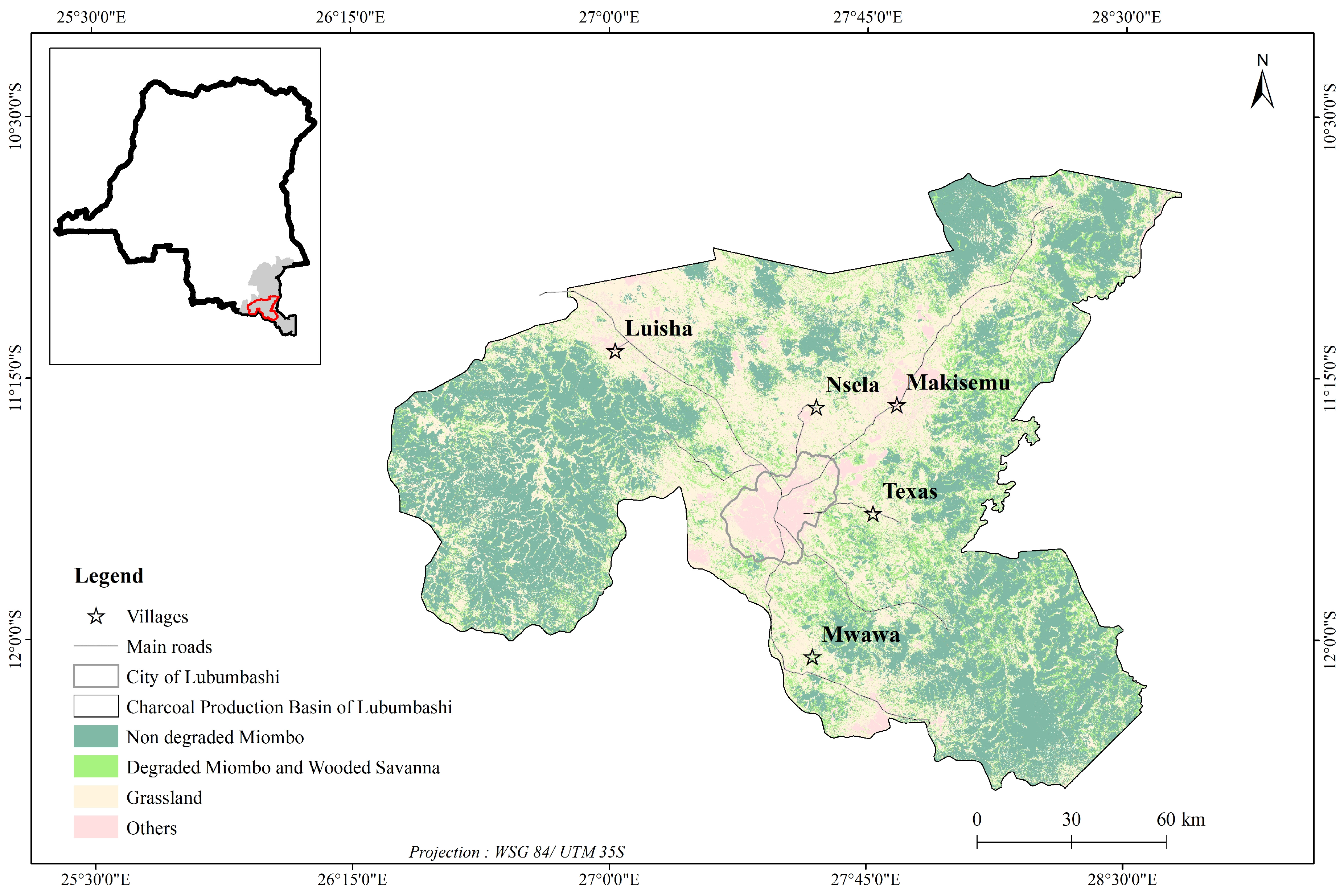
The research was undertaken in the rural zone surrounding the city of Lubumbashi (Figure 1), located in the south-eastern part of the DR Congo and serving as the administrative center of Haut-Katanga Province.
The area falls within the Cw category of the Köppen classification, indicating a subtropical climate marked by strong seasonal contrasts. Precipitation is concentrated between November and March, whereas the period from May to September is typically dry; April and October function as short transitional phases between these two dominant seasons [42]. Climatic records indicate that mean annual temperatures averaged close to 20 °C during the latter half of the twentieth century, although recent decades have been characterized by a discernible upward trend in regional temperatures [43]. Annual rainfall reaches approximately 1200 mm [12], with the highest monthly totals generally observed in January.
Historically, the landscape was largely dominated by miombo woodlands growing predominantly on ferralsol soils [44]. At the beginning of the twentieth century, this vegetation type constituted the principal ecological formation of the region [12,45]. Over time, however, the spatial continuity of these woodlands has been progressively disrupted. Expanding subsistence agriculture, charcoal-based energy production, and artisanal mining—key components of local livelihood systems—have contributed to a steady contraction of forested areas [17,24].
The socio-economic context further amplifies these pressures. Rural communities in the Lubumbashi hinterland face persistent economic constraints, with a substantial proportion of households living below the international poverty threshold of US$1.25 per day [46]. This structural vulnerability reinforces dependence on natural resource exploitation as a primary survival strategy.

2.2. Methods

2.2.1. Study Design, Sampling Strategy and Data Collection

Field investigations were conducted between 14 July and 15 September 2022 in five customary village territories—Luisha, Makisemu, Mwawa, Nsela, and Texas—located within the rural hinterland of Lubumbashi. In this study, a village area refers to a customary territorial unit under traditional authority where a local community organizes and implements its production and subsistence activities [47]. All selected sites lie within the LCPB. Their selection followed a preliminary survey of major charcoal storage points in Lubumbashi, during which these territories were repeatedly identified as key production zones [24]. In addition, the sites present contrasting degrees of anthropogenic transformation, as illustrated in Figure 1.
To examine the structure and perceptual organization of village landscapes, a cognitive mapping approach was adopted [32]. Two complementary dimensions were considered: (i) landscape legibility, defined as the extent to which spatial elements can be identified and organized into a coherent structure, and (ii) imageability, understood as the capacity of a landscape to generate a stable mental representation expressed through recognizable cartographic forms [48,49].
The analytical framework was based on Kevin Lynch’s theory of spatial perception [35]. Five categories of landscape elements were systematically documented:
-
Paths, corresponding to linear features that enable circulation.
-
Edges, defined as linear delimitations separating spatial units.
-
Nodes, representing points of convergence or intersection.
-
Landmarks, punctual features distinguished by their visibility, form, or function and facilitating spatial orientation.
-
Districts, surface units characterized by internal morphological coherence [33,50].
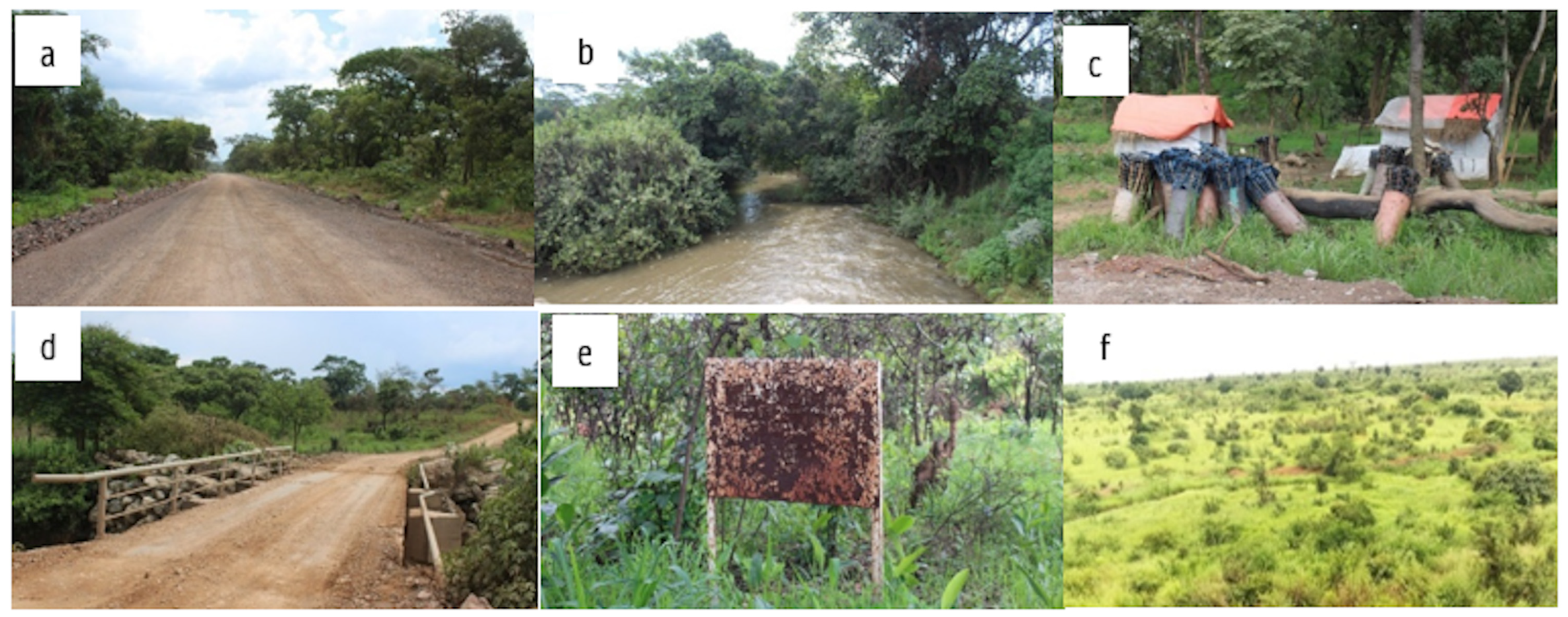
Given the diffuse spatial limits typical of rural territories, the analytical grid was expanded by incorporating the concept of point-edges, which represent localized markers serving as territorial boundaries [33] (Figure 2).

2.2.2. Expert-Based Landscape Observation

Landscape traversal was conducted by four trained observers with backgrounds in cartography and landscape ecology. Observations were carried out on foot, by bicycle, or by motorcycle to document the spatial distribution, visibility, and relationships among perceptual elements. The limited number of observers was intentional, as the objective was methodological triangulation rather than statistical representativeness. Individual observations were consolidated into a synthesized expert-based landscape representation [32].

2.2.3. Community-Based Perception Survey

In parallel, semi-structured individual interviews were conducted with residents (see Supplementary Materials) to capture locally perceived landscape images [33]. Respondents were selected based on three criteria: long-term residence within the village territory, frequent interaction with surrounding landscapes, and active participation in livelihood activities. These conditions ensured strong spatial familiarity, a prerequisite for perception-oriented research.
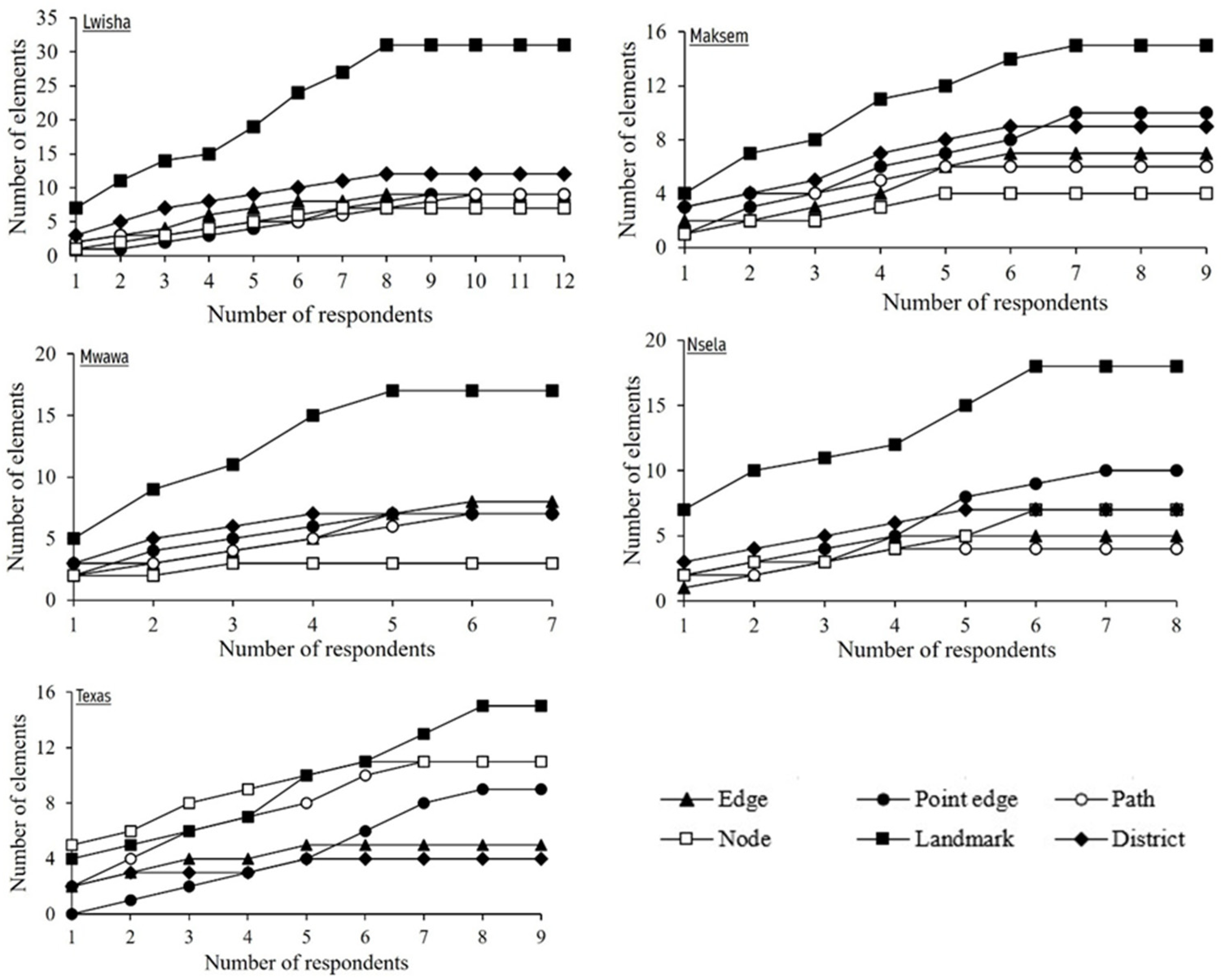
The number of interviewees was determined using the accumulation-curve method for perceptual elements. Landscape features cited by successive respondents were cumulatively recorded, and sampling was considered sufficient once the curve reached stabilization for each Lynch category [36]. Final sample sizes were 12 respondents in Luisha, 9 in Makisemu, 7 in Mwawa, 8 in Nsela, and 9 in Texas (Figure 3).

2.2.4. Data Analysis

a.
Definition of perceived negative impact
For the purposes of this research, “negative impact” refers exclusively to visually identifiable landscape alterations reported during field observation or interviews. The analysis does not include laboratory measurements or chemical assessments. Instead, it focuses on perceptible manifestations of anthropogenic disturbance, such as vegetation clearance, exposed soil surfaces, modified water appearance, and mining infrastructure.
b.
Comparison of expert and community perceptions
To assess the degree of convergence between expert-derived and community-derived landscape representations, a comparative analysis of mapped elements was conducted for each village territory. The Sørensen similarity index (Ss) was used to quantify correspondence (Equation (1); [32]):
S s = 2 a ( 2 a + b + c ) × 100
where, a represents the number of shared elements between the expert and collective maps; b and c correspond to elements present on only one of the two maps.
c.
Mapping anthropogenic footprints
Cartographic representations of anthropogenic spatial footprints were generated using only those elements identified in common by experts and local participants [31,35]. This choice was guided by the objective of producing coherent and legible maps while avoiding excessive detail or omission of relevant features (Table 1). Results from the five village areas were treated as analytical repetitions to test the transferability of Lynch’s framework to rural woodland contexts.
d.
Participatory GIS and spatial quantification
Spatial delineation of land use units and perceptual districts was carried out using a Participatory GIS (PGIS) approach [51]. High-resolution QuickBird satellite imagery available via Google Earth served as the base layer for manual vectorization. Mapping sessions were conducted collaboratively with trained experts and local stakeholders to ensure contextual accuracy in feature identification [51,52].
Surface areas corresponding to districts perceived as impacted by anthropogenic activities were calculated using ArcGIS 10.8 software (Redlands, CA, USA). Relative proportions were subsequently derived for each village territory to enable inter-site comparison.

3. Results

3.1. Perceptibility of Lynch Elements and Agreement Between Actor Groups

The cartographic analysis indicates that the structural components defined by Kevin Lynch are clearly identifiable within the rural village landscapes under study. However, their perceptual prominence varies considerably across categories. Point-edges, edges, paths, nodes, and districts are generally less frequently identified than other elements. In contrast, districts and landmarks collectively represent nearly half of all reported perceptual elements and are directly associated with visible anthropogenic disturbances.
Across most village territories, trained observers recorded a greater number of Lynch elements than local community members. Exceptions were observed for specific categories: point-edges and landmarks in Nsela; paths in Makisemu and Mwawa; nodes in Texas; and landmarks and districts in Luisha, Makisemu, and Texas. The landscape of Luisha displays the highest overall number of perceptible elements compared to the other villages.
The comparison between expert-generated maps and collective representations yield Sørensen similarity indices close to 75% for most element categories and for the village territories considered as integrated units (Table 2). These results demonstrate substantial overlap in spatial perception between trained observers and local inhabitants.
Although point-edges exhibit greater divergence, most landscape components are consistently identified by both actor groups. In rural contexts, these perceptual elements correspond to tangible spatial features such as rivers (edges), signposts and boards (point-edges), dirt roads (paths), crossroads (nodes), farms and charcoal-production camps (landmarks), and zones characterized by internally homogeneous land use patterns (districts; Table 3). Overall, the findings indicate the emergence of a stable and coherent perceptual structure across actor groups, supporting the analytical applicability of Lynch’s framework in non-urban environments.

3.2. Spatial Distribution of Perceived Negative Anthropogenic Impacts

Deforestation—frequently combined with forest degradation and post-cultivation fallow—constitutes the most prominent negative impact perceived across the village territories surrounding Lubumbashi. These disturbances are primarily expressed through surface-based (districts) and point-based (landmarks) elements within the landscape structure.
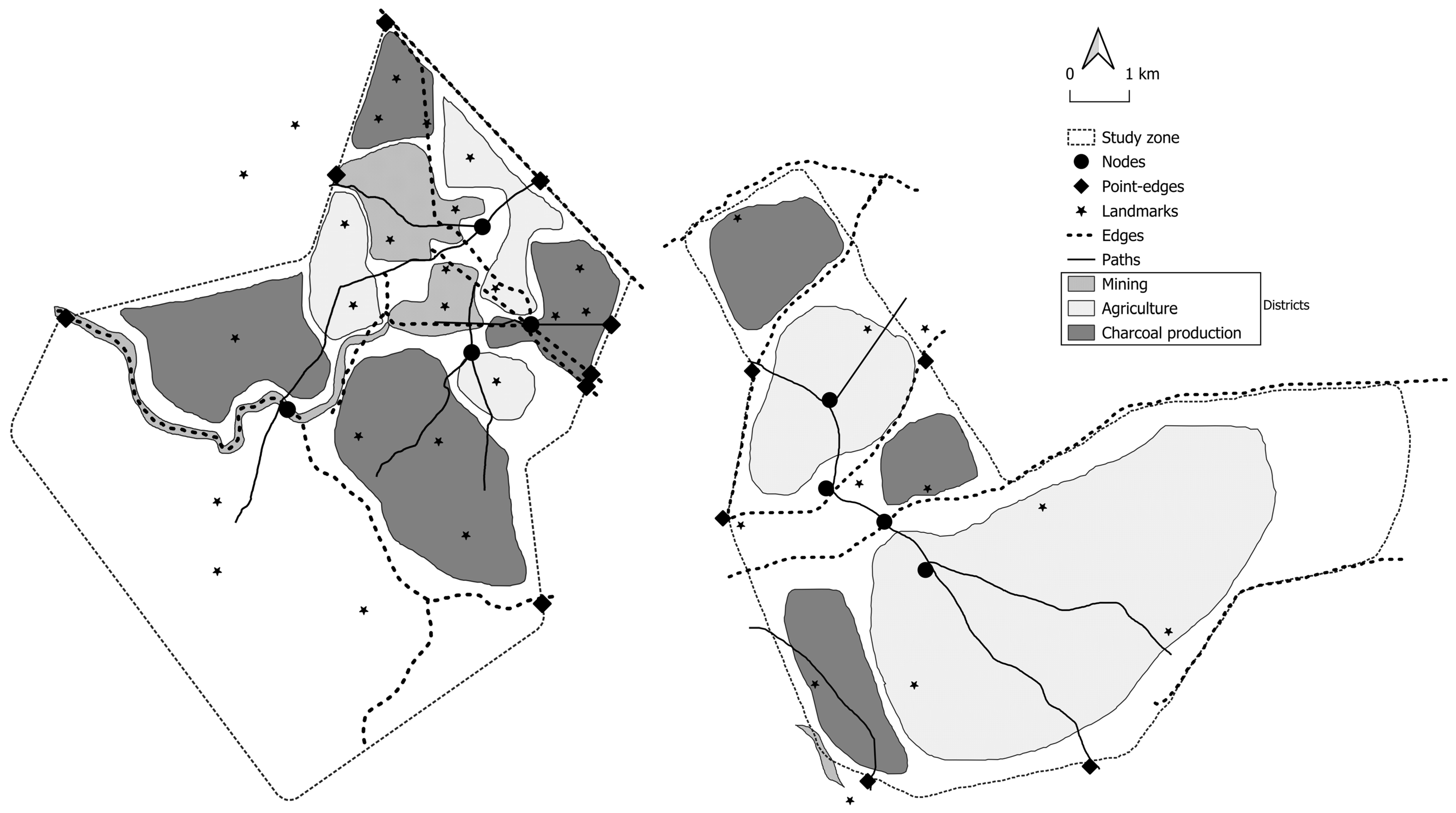
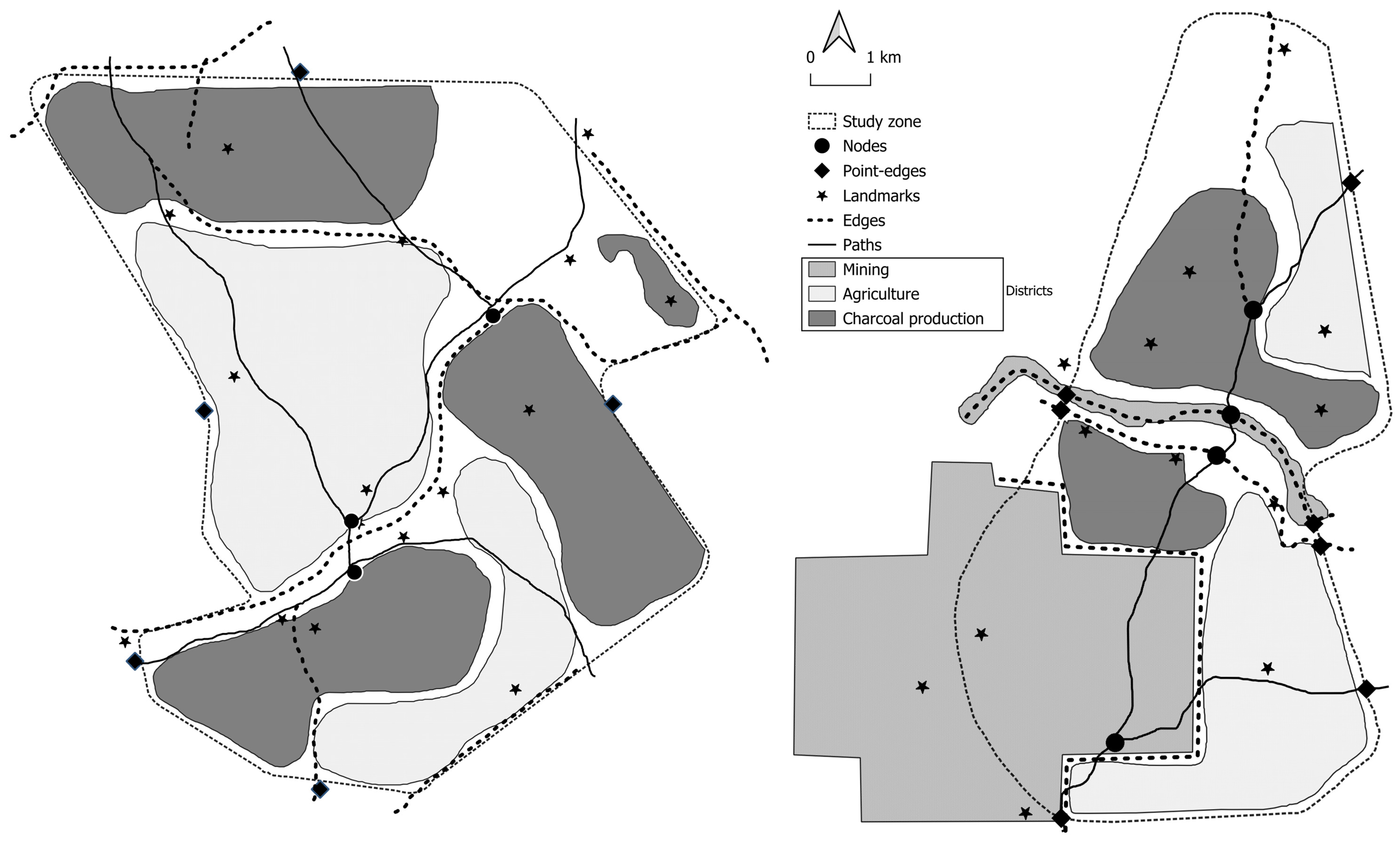
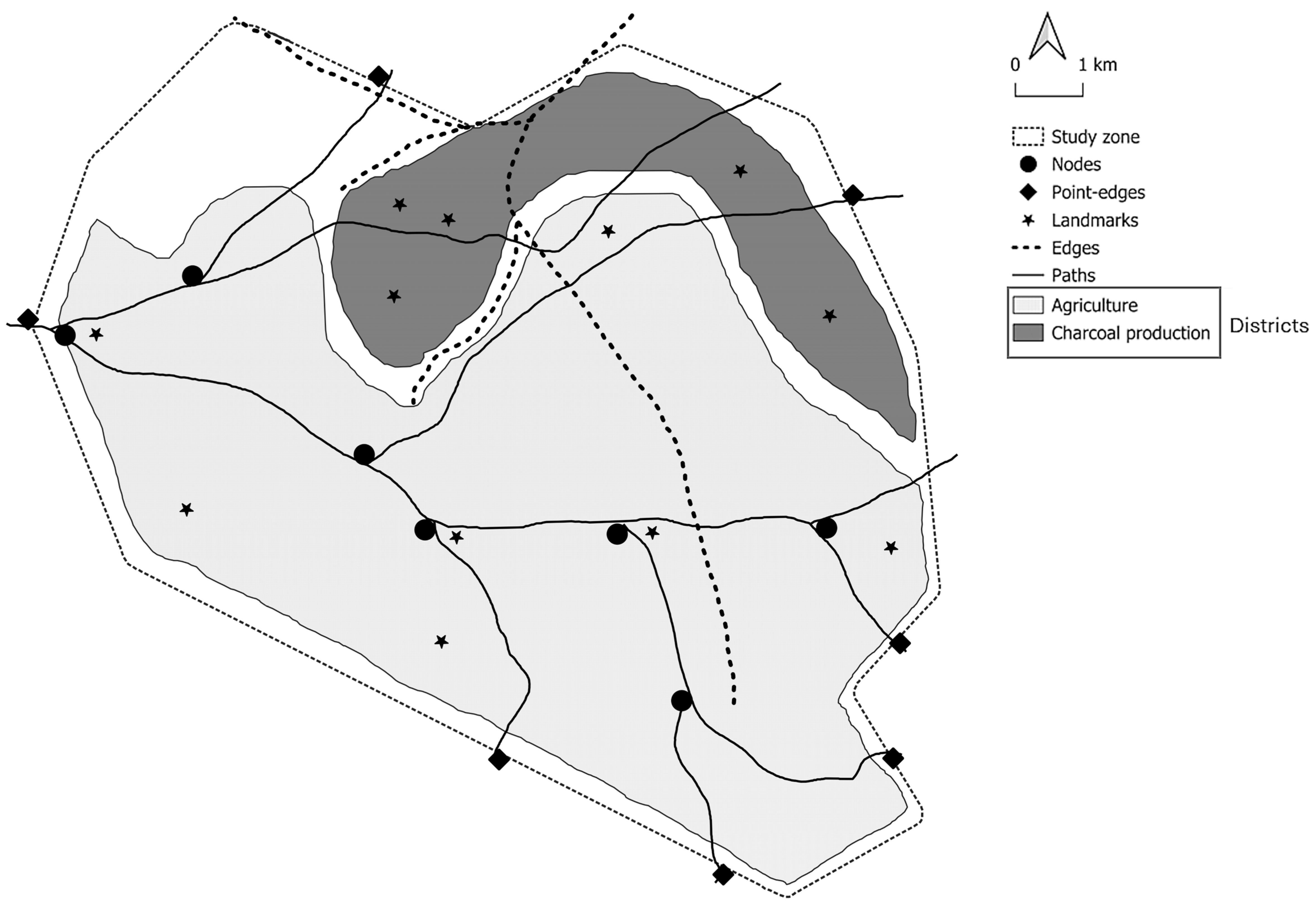
The spatial representations provided in Figure 4, Figure 5 and Figure 6 reveal differentiated patterns among villages. Luisha and Mwawa are predominantly characterized by deforestation associated with forest degradation. Makisemu and Texas display landscapes largely shaped by deforestation linked to post-cultivation fallow dynamics. In Nsela, no single form of negative impact clearly dominates, reflecting a more heterogeneous configuration. Soil and river pollution are particularly noticeable in Luisha and Nsela.
With the exception of Luisha, perceived negative impacts extend over nearly three-quarters of the total area in each village landscape. When aggregated, deforestation combined with post-cultivation fallow and forest degradation accounts for more than half of the impacted surface in all study sites. Makisemu and Texas show the highest proportions of land affected by deforestation associated with fallow cycles, whereas Luisha and Mwawa are more strongly influenced by degradation processes. In Nsela, different disturbance types are distributed more evenly. Overall, Luisha appears comparatively less affected in proportional terms (Table 4). Nevertheless, ongoing geological exploration and mineral discoveries in this area are already generating, and are likely to intensify, pressure on miombo woodlands. The development of new dirt roads associated with mining further facilitates access to forest resources and increases human mobility within previously less disturbed areas.

3.3. Characterization of Perceived Disturbance Types

The qualitative understanding of disturbance indicators reported by experts and local communities is summarized in Table 5. Perceptual markers of deforestation associated with post-cultivation fallow include the visible presence of crops, abandoned fields with reduced fertility, and the dominance of herbaceous vegetation.
Forest degradation is identified through the presence of tree stumps, reduced tree density, a predominance of small-diameter individuals, and traces of charcoal production equipment. Mining-related disturbances are recognized through exposed ore fragments, bare soils, visible infrastructure, backfilled excavation areas, and water bodies characterized by turbidity or color alteration.
Despite differences in technical training, trained observers and community members largely converge in their interpretation of these visual indicators. The spatial distribution and typology of perceived impacts confirm that agriculture, charcoal production, and mining represent the principal drivers structuring landscape transformation at the village scale.

4. Discussion

4.1. Convergence Between Expert and Community Perceptions and the Transferability of Lynch’s Framework

The results demonstrate a high level of agreement—approximately 75% similarity—between expert-derived maps and collective representations (Table 2). Such convergence suggests that the most frequently identified perceptual elements significantly contribute to the structural clarity of village landscapes. In other words, these shared elements constitute the core components shaping spatial legibility at the village scale.
Perceptual discrepancies observed for certain categories can be attributed to differences in technical training, conceptual familiarity with Lynch’s framework, and varying levels of spatial literacy among respondents [32,53]. Educational disparities and differential exposure to cartographic reasoning likely influence how spatial features are categorized and described.
Among Lynch’s elements, point-edges, edges, paths, nodes, and districts were comparatively less salient. This reduced perceptibility is consistent with the limited infrastructure, sparse road networks, and absence of formal spatial planning typical of rural territories [54]. In contrast, landmarks and districts emerged as the dominant structuring components directly associated with anthropogenic disturbance.
This contrasts with findings from urban studies conducted in southeastern DR Congo [32,33], where paths and nodes were identified as the most visually prominent elements and were closely linked to human impacts. The divergence can be explained by structural differences between compact urban systems and spatially diffuse rural environments. Whereas urban morphology is organized around circulation networks and intersections, rural landscapes are shaped primarily by expansive land use units and functionally distinct activity zones.
Seasonal variation and recurrent bushfires, which influence vegetation cover and visibility in the Lubumbashi region [12,45], may further modulate perceptual salience. Moreover, the disciplinary background of observers inevitably affects how landscape components are interpreted and classified.
Although originally conceived to analyze urban forms in highly structured environments [35], Lynch’s framework has proven adaptable in several southern cities [32,33,36]. Its successful application in this rural context underscores the continuity between peri-urban and rural spatial systems in rapidly transforming African regions. Importantly, the present study does not mobilize Lynch’s theory for esthetic analysis, but rather as a tool for structuring spatial perception of anthropogenic transformation. In subsistence-based rural systems, perceptual prominence is largely functional, reflecting livelihood activities rather than recreational or symbolic values.
Alternative perception-based approaches exist [55,56], yet they often focus on identifying environmental degradation without systematically linking perception to clearly defined structural landscape elements. This limits their capacity to generate coherent cartographic outputs. By contrast, Lynch’s framework provides a formalized structure that facilitates spatial comparability and analytical consistency.

4.2. Anthropogenic Drivers of Miombo Landscape Transformation

Across the five village territories, the most visually prominent anthropogenic disturbances consist of deforestation associated with post-cultivation fallow, degradation of miombo woodlands, and various forms of pollution (Figure 4, Figure 5 and Figure 6). These transformations are primarily driven by agricultural expansion, charcoal production, and copper–cobalt mining activities [17,25].
Agriculture remains a central livelihood strategy in the rural hinterland of Lubumbashi [24,25] and more broadly across the DR Congo. Farming systems are predominantly subsistence-oriented and frequently rely on practices that accelerate soil nutrient depletion [56]. As soil fertility declines, crop yields decrease, prompting itinerant farmers to clear new areas in search of more productive land [18]. Forested zones, enriched by organic matter from litterfall, are therefore particularly attractive targets for cultivation, contributing directly to forest loss and progressive landscape degradation [57,58]. Rapid demographic growth further intensifies this pressure by shortening fallow periods, thereby reducing the capacity of ecosystems to regenerate [59]. Over time, this trajectory undermines ecological resilience and promotes processes of savanization [60].
The expansion of agropastoral concessions in peri-urban zones has amplified these dynamics. Areas that were previously relatively preserved are increasingly converted for commercial agricultural purposes. This expansion often displaces economically vulnerable smallholders toward more remote locations, where subsistence farming extends deforestation and degradation into previously less disturbed woodland areas. Such patterns are consistent with findings across developing regions and throughout the miombo ecoregion, where agriculture is widely recognized as the dominant driver of forest loss [17,61,62,63].
Energy demand constitutes a second major driver of woodland transformation. In a context marked by insufficient electrification and limited access to alternative fuels such as biogas or biomass briquettes [64], wood energy remains the primary domestic energy source in the DR Congo. In Lubumbashi, 72% of households rely exclusively on charcoal for cooking [21], and dependence is even greater in rural settings where electricity access is minimal. Recurrent bushfires have further reduced fuelwood availability, encouraging a shift toward charcoal, which is easier to transport and store. As a result, charcoal production serving both urban and rural markets have become a major factor in deforestation and forest degradation.
At localized scales, charcoal production generates clear-cut patches, whereas at broader scales it contributes to diffuse woodland degradation [65]. Initially, producers selectively harvest species with high calorific value [66]. However, growing demand—particularly from expanding urban centers—has led to the depletion of preferred species and a gradual shift toward more indiscriminate tree cutting practices [67]. Within agropastoral concessions, charcoal production is frequently integrated into land-clearing operations prior to cultivation [68]. It also provides supplementary income through sharecropping arrangements between concession holders and residents, thereby reinforcing extraction pressures. Combined with agricultural expansion, charcoal production therefore represents one of the principal drivers of forest transformation in the Lubumbashi hinterland [25]. Moreover, as accessible woodland resources decline, producers increasingly exploit residual forest patches near settlements, sustaining high levels of degradation [69]. Comparable dynamics have been documented elsewhere in Central Africa and across the miombo region [18,61,70,71].
Mining activities introduce an additional dimension of environmental disturbance. In the Lubumbashi region, intensive copper and cobalt extraction is associated not only with deforestation but also with soil and water contamination. The full mining cycle—from exploration and excavation to ore processing and infrastructure development (roads, pits, tailings facilities, processing plants, and worker settlements)—exerts considerable pressure on forest landscapes [30]. Mining operations are also linked to atmospheric deposition of non-ferrous metals and related compounds, contributing to ecosystem fragmentation and contamination [13,32]. Waste disposal, tailings storage, and effluent discharge further degrade surrounding soils and waterways [13,72].
Empirical evidence from the Katangan region illustrates the magnitude of these impacts. Around Kolwezi, mining expansion has led to a 147.2% increase in built-up mining infrastructure (+7.7 km2), a 104.7% rise in compacted surfaces (+3.35 km2), an 85.4% expansion of bare soil (+33.81 km2), and a 56.2% increase in exposed rock surfaces (+27.46 km2) [73]. These changes coincided with a 42.5% decline in miombo woodland cover (−26.38 km2) and widespread water contamination, affecting nearly 91.6% of water bodies within a 1 km radius of mining sites. The patterns observed in the present study are consistent with earlier research in the Katangese Copperbelt [13,72] and specifically in the Lubumbashi area [17], all of which emphasize the substantial ecological consequences of mining activities.
Finally, the disturbances identified through spatial perception analysis correspond closely with environmental concerns previously reported by both researchers and local communities [24]. Deforestation, declining soil fertility, water pollution, and biodiversity loss consistently emerge as the principal environmental challenges in the rural hinterland of Lubumbashi.

4.3. Implications for the Restoration of Anthropized Landscapes

The rural hinterland of Lubumbashi is primarily affected by three interrelated forms of environmental degradation: deforestation linked to post-cultivation fallow systems, progressive woodland degradation, and contamination of soils and watercourses. Addressing these cumulative pressures requires active ecosystem restoration strategies [74,75]. Restoration interventions may include reforestation, enrichment planting within degraded stands, and phytoremediation of contaminated sites.
Reforestation and forest enrichment can partially offset vegetation loss and structural simplification caused by agriculture, charcoal production, and mining [76]. When native miombo species are prioritized, such measures help preserve ecological integrity by maintaining characteristic forest structure, species composition, and ecosystem functioning. Although many miombo species exhibit relatively slow growth rates [77], certain taxa—such as Pterocarpus tinctorius Welw. and Combretum collinum Fresen.—have demonstrated comparatively rapid establishment and suitability for restoration initiatives in the Lubumbashi region [74].
In areas affected by mining, phytoremediation techniques offer additional opportunities for ecological rehabilitation. Phytostabilization enables woody plants to immobilize trace metal elements (TMEs) within the soil matrix while contributing organic inputs (litterfall, root exudates) and modifying soil physicochemical properties and microbial activity [78,79]. Experimental evidence from the Lubumbashi region confirms the feasibility of restoring plant biodiversity on TME-contaminated substrates using adapted woody species [80].
Rhizofiltration represents a complementary approach for the treatment of surface waters contaminated by mining effluents. Using accumulator plant species, this method facilitates the removal or stabilization of dissolved metals originating from mineral extraction activities [75]. Successful applications have been reported in Europe—particularly in Portugal—using species such as Canna indica L., Typha latifolia L., and Phragmites australis (Cav.) Trin. ex Steud., demonstrating the operational potential of this technique [75,81].
However, technical solutions alone are insufficient. Effective restoration requires coordinated engagement among environmental non-governmental organizations, accredited public institutions, and local communities, even though institutional and logistical constraints remain significant in the Lubumbashi region [24]. In addition, restored sites must be protected from renewed encroachment and recurrent bushfires, which could otherwise undermine recovery processes [28,82]. When properly safeguarded, restored ecosystems can deliver long-term benefits to both rural and urban populations by providing essential ecosystem services, including non-timber forest products, microclimate regulation, and mitigation of environmental pollution [83].
This study presents several limitations. First, it does not quantify environmental degradation using biophysical measurements or remote sensing but rather maps spatial perceptions of landscape transformation. Second, perception-based approaches inherently involve subjectivity; while this constitutes a methodological constraint, it also forms the central focus of the analysis. Finally, the findings are context-specific and should be interpreted as exploratory insights rather than universally generalizable conclusions.

5. Conclusions

This study examined the spatial imprint of human activities on miombo woodlands at the village scale in the Lubumbashi region through an empirical application of Kevin Lynch’s perceptual framework across five village territories. The findings demonstrate that the structural elements defined by this model provide an effective means of organizing and describing rural landscapes. Cartographic representations generated by trained experts and collective mental maps produced by local communities show a high degree of correspondence, with similarity levels approaching 75%.
Among Lynch’s components, districts and landmarks are the only elements consistently associated with anthropogenic disturbance. Landmarks constitute the most reliably identified features across both actor groups, reflecting their strong visual salience within modified environments. The perceptual analysis further indicates that deforestation linked to post-cultivation fallow, woodland degradation, and soil and river contamination represent the dominant negative transformations in the rural hinterland of Lubumbashi. In several villages, deforestation and degradation processes affect a substantial share of total land surface.
Nevertheless, the outcomes derived from a perception-based approach remain influenced by multiple factors, including familiarity with the theoretical framework, perceptual sensitivity, educational background, technical training, and seasonal conditions during data collection. Despite these sources of variability, the overall consistency of results confirms the relevance of Lynch’s theory for structuring rural landscape analysis.
Beyond its empirical findings, this research illustrates that perception-based analytical models originally designed for urban environments can be meaningfully adapted to rural contexts, provided that their conceptual boundaries are clearly defined and adjusted to diffuse spatial configurations. However, perceptual mapping should not be regarded as a substitute for quantitative environmental assessment. Visually detectable disturbances do not necessarily reflect the full extent of ecological or chemical degradation.
Future research should therefore integrate perception-based mapping with remote sensing, GIS-based spatial modeling, and ecological indicators to strengthen the linkage between landscape interpretation and measurable environmental change. From a policy perspective, coordinated reforestation initiatives led by accredited public institutions and environmental non-governmental organizations—implemented in close collaboration with local communities—are necessary to mitigate ongoing degradation. Furthermore, the systematic implementation of post-mining rehabilitation and social mitigation plans (PARS) is essential to reduce the long-term ecological consequences of mineral extraction in the Lubumbashi region.

Supplementary Materials

The following supporting information can be downloaded at: https://www.mdpi.com/article/10.3390/geographies6010024/s1, File S1: Questionnaire used for individual interviews.

Author Contributions

Conceptualization, Y.U.S. and J.B.; Methodology, D.-d.N.N., H.K.M. and A.M.Y.; Software, D.-d.N.N. and H.K.M.; Validation, S.C.K., A.M.Y., W.M.K., F.M., Y.U.S. and J.B.; Formal analysis, D.-d.N.N. and H.K.M.; Investigation, D.-d.N.N. and H.K.M.; Resources, S.C.K., W.M.K.; Writing—original draft, D.-d.N.N.; Supervision, Y.U.S. and J.B.; Project administration, Y.U.S. and J.B.; Funding acquisition, Y.U.S. and J.B. All authors have read and agreed to the published version of the manuscript.

Funding

This research was funded by the Académie de Recherche et d’Enseignement Supérieur (ARES-CCD, Belgium).

Institutional Review Board Statement

This study was conducted in accordance with institutional and (inter)national research ethics guidelines. In accordance with the legislation and ethical frameworks in force in the Democratic Republic of the Congo, ethics committee approval is required only for research involving the handling of human or biological samples. This study was conducted exclusively using semi-structured interviews, and all information collected was fully anonymized prior to analysis. Free, prior, and informed consent was obtained from all participants, and the principles of confidentiality, respect for people, and non-prejudice were strictly upheld.

Informed Consent Statement

All participants provided informed consent prior to their involvement in the study. They were fully briefed on the objectives of the research, the voluntary nature of participation, and their right to withdraw at any time without consequences. Participants also provided consent for anonymized data and aggregated findings to be published. Any potentially identifying information has been removed to protect the confidentiality of respondents. All authors have read this manuscript and agree to its publication.

Data Availability Statement

The raw data supporting the conclusions of this article will be made available by the authors on request.

Acknowledgments

The authors wish to express their gratitude to the Académie de Recherche et d’Enseignement Supérieur (ARES) for the doctoral grants awarded to Dieu-donné N’tambwe Nghonda and Héritier Khoji Muteya as part of the Research Project for Development, “Renforcement des capacités de gestion durable de la forêt claire de miombo par l’évaluation de l’impact environnemental de la production de charbon de bois et l’amélioration des pratiques vis-à-vis des ressources forestières”, (PRD CHARLU). They also thank the members of the local communities and the customary authorities of the villages that participated in this study.

Conflicts of Interest

The authors declare no conflicts of interest.

References

  1. Tchekoté, H.; Meva’a Nleme, Z.L.; Moudingo, J.H.; Djofang, N.P. Diagnostic de la conservation pour une gestion durable de la biodiversité dans le Bakossi, Banyang-Mbo, Régions du Sud-Ouest et du Littoral au Cameroun. Rev. Sci. Tech. Forêt Environ. Bassin Congo 2020, 15, 49–59. [Google Scholar] [CrossRef]
  2. Eba’a Atyi, R.; Hiol Hiol, F.; Lescuyer, G.; Mayaux, P.; Defourny, P.; Bayol, N.; Saracco, F.; Pokem, D.; Sufo Kankeu, R.; Nasi, R. Les Forêts du Bassin du Congo: État des Forêts 2021; CIFOR: Bogor, Indonésie, 2022; 474p. [Google Scholar] [CrossRef]
  3. Pison, G.; Couppié, E.; Caporali, A. Tous les pays du monde. Pop. Soc. 2022, 603, 1–8. [Google Scholar] [CrossRef]
  4. Okumu, T.O. Assessing the impact of population dynamics in Kenya: A need for policy implementation. J. Geo. Environ. Earth Sci. Int. 2024, 28, 53–69. [Google Scholar] [CrossRef]
  5. Sawadogo, B.; Yaméogo, A.; Zabre, N.; Bonkoungou, J. Impacts Des Actions Anthropiques Sur La Dynamique De La Forêt Classée De Tiogo (FCT) Dans Un Contexte De Gouvernance Centralisée. Int. J. Progress. Sci. Technol. 2022, 34, 240–250. [Google Scholar] [CrossRef]
  6. FAO; PNUE. La Situation des Forêts du Monde 2020. Forêts, Biodiversité et Activité Humaine; FAO: Rome, Italy; UNEP: Rome, Italy, 2020; 223p. [Google Scholar] [CrossRef]
  7. Zo-Bi Irie, C.; Hérault, B. Promouvoir l’agroforesterie? Les leçons de la Côte d’Ivoire. Bois For. Trop. 2023, 356, 93–98. [Google Scholar] [CrossRef]
  8. Cesaro, J.-D. Transformation des Agricultures en Asie du Sus-est: La Paysannerie Face aux Défis de la Mondialisation; Cirad: Paris, France, 2020; 26p. [Google Scholar]
  9. Grantham, H.S.; Shapiro, A.; Bonfils, D.; Gond, V.; Goldman, E.; Maisels, F.; Plumptre, A.J.; Rayden, T.; Robinson, J.G.; Strindberg, S.; et al. Spatial priorities for conserving the most intact biodiverse forests within Central Africa. Environ. Res. Let. 2020, 15, 0940b5. [Google Scholar] [CrossRef]
  10. Vancutsem, C.; Achard, F.; Pekel, J.-F.; Vieilledent, G.; Carboni, S.; Simonetti, D.; Gallego, J.; Aragao, L.; Nasi, R. Long-term (1990–2019) monitoring of tropical moist forests dynamics. Sci. Adv. 2020, 7, eabe1603. [Google Scholar] [CrossRef]
  11. Kyale, K.J.; Wardell, D.A.; Mikwa, J.-F.; Kabuanga, J.M.; Monga Ngonga, A.M.; Oszwald, J.; Doumenge, C. Dynamique de la déforestation dans la Réserve de biosphère de Yangambi (République démocratique du Congo): Variabilité spatiale et temporelle au cours des 30 dernières années. Bois For. Trop. 2019, 341, 15–28. [Google Scholar] [CrossRef]
  12. Malaisse, F.; Bogaert, J.; Boisson, S.; Sikuzani, Y.U. La végétation naturelle d’Élisabethville (actuellement Lubumbashi) au début et au milieu du XXième siècle. Geo-Eco-Trop 2021, 45, 41–51. [Google Scholar]
  13. Ameja, L.G.; Ribeiro, N.S.; Sitoe, A.; Guillot, B. Regeneration and Restoration Status of Miombo Woodland Following Land UseLand Cover Changes at the Buffer Zone of Gile National Park’s Central Mozambique. Trees For. People 2022, 9, 100290. [Google Scholar] [CrossRef]
  14. Useni, S.Y.; Muteya, H.K.; Bogaert, J. Miombo woodland, an ecosystem at risk of disappearance in the Lufira Biosphere Reserve (Upper Katanga, DR Congo)? A 39-years analysis based on Landsat images. Glob. Ecol. Conserv. 2020, 24, e01333. [Google Scholar] [CrossRef]
  15. Potapov, P.V.; Turubanova, S.A.; Hansen, M.C.; Adusei, B.; Broich, M.; Altstatt, A.; Mane, L.; Justice, C.O. Quantifying forest cover loss in Democratic Republic of the Congo, 2000–2010, with Landsat ETM+ data. Remote Sens. Environ. 2012, 122, 106–116. [Google Scholar] [CrossRef]
  16. Godlee, J.L.; Gonçalves, F.M.; Tchamba, J.J.; Chisingui, A.V.; Muledi, J.I.; Shutcha, M.N.; Ryan, C.M.; Brade, T.K.; Dexter, K.G. Diversity and Structure of an Arid Woodland in Southwest Angola, with Comparison to the Wider Miombo Ecoregion. Diversity 2020, 12, 140. [Google Scholar] [CrossRef]
  17. Cabala, K.S.; Useni, S.Y.; Amisi, M.Y.A.; Munyemba, K.F.; Bogaert, J. Activités anthropiques et dynamique des écosystèmes forestiers dans les zones territoriales de l’Arc Cuprifère Katangais (RD Congo). Tropicultura 2022, 40, 2100. [Google Scholar] [CrossRef]
  18. Raihan, A. A review of the global climate change impacts, adaptation strategies, and mitigation options in the socio-economic and environmental sectors. J. Environ. Sci. Econ. 2023, 2, 36–58. [Google Scholar] [CrossRef]
  19. Palo, M. Population and deforestation. In The Causes of Tropical Deforestation; Brown, K., Pearce, D.W., Eds.; Routledge: Oxfordshire, UK, 2023; pp. 42–56. [Google Scholar] [CrossRef]
  20. Mutomb, C. Facteurs de choix d’implantation chaotique des noyaux d’habitat dans les plaines alluviales à Lubumbashi, R.D. Congo. Int. J. Multidiscipl. Res. 2025, 7, 39348. [Google Scholar] [CrossRef]
  21. Kabulu, D.J.-P.; Vranken, I.; Bastin, J.-F.; Malaisse, F.; Nyembwe, S.; Useni, S.Y.; Ngongo, L.M.; Bogaert, J. Approvisionnement en charbon de bois des ménages Lushois: Quantité, alternatives et conséquences. In Anthropisation des Paysages Katangais; Bogaert, J., Colinet, G., Mahy, G., Eds.; Les Presses Universitaires de Liège: Liège, Belgium, 2018; pp. 297–311. [Google Scholar]
  22. Khoji, M.H.; N’tambwe, N.D.; Mwamba, K.F.; Harold, S.; Munyemba, K.F.; Malaisse, F.; Bastin, J.-F.; Useni, S.Y.; Bogaert, J. Mapping and Quantification of Miombo Deforestation in the Lubumbashi Charcoal Production Basin (DR Congo): Spatial Extent and Changes between 1990 and 2022. Land 2023, 12, 1852. [Google Scholar] [CrossRef]
  23. Lebailly, P. Rapide Évaluation de l ’Impact de la Crise du Secteur Minier de la Zone Lubumbashi-Likasi-Kolwezi de la Province du Katanga (RD Congo) et des Potentialités en Termes de Promotion de L’emploi. La Problématique Agricole; Rapport Final; BIT: Gembloux, Belgium, 2010; Available online: https://www.gembloux.ulg.ac.be/economie-etdeveloppement-rural/wp-content/uploads/sites/34/2018/10/2013_LEBAILLY_Rapide-%c3%a9valuation-de-l-impact-de-la-crise-du-secteur-minieremploi-Katanga.pdf (accessed on 21 December 2022).
  24. Nghonda, D.N.; Khoji, M.H.; Kasongo, K.B.; Kouagou, S.R.; Malaisse, F.; Useni, S.Y.; Masengo, K.W.; Bogaert, J. Towards an Inclusive Approach to Forest Management: Highlight of the Perception and Participation of Local Communities in the Management of miombo Woodlands around Lubumbashi (Haut-Katanga, D.R. Congo). Forests 2023, 14, 687. [Google Scholar] [CrossRef]
  25. Useni, S.Y.; Malaisse, F.; Cabala, K.S.; Munyemba, K.F.; Bogaert, J. Le rayon de déforestation autour de la ville de Lubumbashi (Haut-Katanga, RD Congo): Synthèse. Tropicultura 2017, 35, 215–221. Available online: http://hdl.handle.net/2268/227664 (accessed on 12 December 2020).
  26. Khoji, M.H.; Nghonda, N.D.; Malaisse, F.; Bogaert, J.; Useni, S.Y. Mapping and quantifying deforestation in the Zambezi ecoregion of Central-Southern Africa: Extent and spatial structure. Front. Remote Sens. 2025, 6, 1590591. [Google Scholar] [CrossRef]
  27. Achieng, A.O.; Arhonditsis, G.B.; Mandrak, N.; Febria, C.; Opaa, B.; Coffey, T.J.; Masese, F.O.; Irvine, K.; Ajode, Z.M.; Obiero, K.; et al. Monitoring biodiversity loss in rapidly changing Afrotropical ecosystems: An emerging imperative for governance and research. Philos. Transact. Royal Soc. B 2023, 378, 20220271. [Google Scholar] [CrossRef] [PubMed]
  28. Giliba, R.A.; Mafuru, C.S.; Paul, M.; Kayombo, C.J.; Kashindye, A.M.; Chirenje, L.I.; Musamba, E.B. Human Activities Influencing Deforestation on Meru Catchment Forest Reserve, Tanzania. J. Human Ecol. 2011, 33, 17–20. [Google Scholar] [CrossRef]
  29. Barbara, N.; Linda, N.; Ngonga, C. Drivers of deforestation in the Miombo Woodlands and Their Impacts on the Environment. Adv. Res. 2016, 6, 1–7. [Google Scholar] [CrossRef]
  30. Tegegne, Y.T.; Lindner, M.; Fobissie, K.; Kanninen, M. Evolution of drivers of deforestation and forest degradation in the Congo Basin forests: Exploring possible policy options to address forest loss. Land Use Policy 2016, 51, 312–324. [Google Scholar] [CrossRef]
  31. Roche, Y. Apport des outils géomatiques à l’analyse des ressources forestières en Asie du Sud-Est. In Proceedings of the 17e Colloque International en Évaluation Environnementale, Montréal, QC, Canada, 12–15 June 2012; 14p. [Google Scholar]
  32. Vranken, I.; Amisi, Y.M.; Munyemba, F.K.; Bamba, I.; Veroustraete, F.; Visser, M.; Bogaert, J. The spatial footprint of the Non-ferrous mining industry in Lubumbashi. Tropicultura 2013, 31, 20–27. [Google Scholar]
  33. Amisi, Y.M.; Vranken, I.; Nkulu, J.; Lubala, F.T.R.; Kyanika, D.; Tshibang, D.N.; Mastaki, F.U.; Bulambo, J.-P.M.; Bogaert, J. L’activité minier au Katanga et la perception de ses impacts à Lubumbashi, Kolwezi, Likasi et Kipushi. In Anthropisation des Paysages Katangais; Bogaert, J., Colinet, G., Mahy, G., Eds.; Les Presses Universitaires de Liège: Liège, Belgium, 2018; pp. 267–279. [Google Scholar]
  34. Moumouni, A.B.A.; Arouna, O.; Thomas, O.A.B. Cartographie participative villageoise et diagnostic territorial des infrastructures sociocommunautaires de la commune de Bassila au Bénin. EFUA 2021, 1, 11–38. [Google Scholar]
  35. Lynch, K. The Image of the City; MIT Press, Massachusetts Institute of Technology: Cambridge, MA, USA; London, UK, 1960; 255p. [Google Scholar]
  36. Amisi, Y.M. Perception de L’impact des Activités Minières au Katanga. Analyse par L’application de la Théorie Paysagère de Kevin Lynch. Ph.D. Thesis, Université de Lubumbashi, Lubumbashi, Democratic Republic of the Congo, 2010; 340p. [Google Scholar]
  37. Burel, F.; Baudry, J. Ecologie du Paysage: Concepts, Méthodes et Applications; Tec & Doc: Paris, France, 2012; 359p. [Google Scholar]
  38. Meyfroidt, P. Environmental cognitions, land change, and social-ecological feedbacks: An overview. J. Land Use Sci. 2013, 8, 341–367. [Google Scholar] [CrossRef]
  39. Taffa, A.A.; Van Vliet, J.; Verburg, H.P. Land-use and land-cover changes in the Central Rift Valley of Ethiopia: Assessment of perception and adaptation of stakeholders. Appl. Geogr. 2015, 65, 28–37. [Google Scholar] [CrossRef]
  40. Hervé, D.; Randriambanona, H.; Ravonjimalala, H.R.; Ramanankierana, H.; Rasoanaivo, N.S.; Baohanta, R.; Carrière, S.M. Perceptions des fragments forestiers par les habitants des forêts tropicales humides malgaches. Bois For. Trop. 2020, 345, 43–62. [Google Scholar] [CrossRef]
  41. Nansikombi, H.; Fischer, R.; Kabwe, G.; Günter, S. Exploring patterns of forest governance quality: Insights from forest frontier communities in Zambia’s Miombo ecoregion. Land Use Policy 2020, 99, 1–16. [Google Scholar] [CrossRef]
  42. Kalombo, K.D. Caractérisation de la Répartition Temporelle des Précipitations à Lubumbashi (Sud-Est de la RDC) sur la Periode 1970–2014; XXIII Colloque de l’Association Internationale de Climatologie: Liege, Belgium, 2015; pp. 531–536. [Google Scholar]
  43. Kalombo, K.D. Évolution des Éléments du Climat en RDC: Stratégies D’adaptation des Communautés de Base, Face aux Événements Climatiques de Plus en Plus Fréquents; Éditions Universitaires Européennes: Sarrebruck, Germany, 2016; 220p. [Google Scholar]
  44. Ngongo, M.L.; Van Ranst, E.; Baert, G.; Kasongo, E.L.; Verdoodt, A.; Mujinya, B.B.; Mukalay, J.M. Guide des Sols en République Démocratique du Congo, Tome I: Étude et Gestion; Salama-Don Bosco: Lubumbashi, Democratic Republic of the Congo, 2009; 260p. [Google Scholar]
  45. Malaisse, F. How to Live and Survive in Zambezian Open Forest (Miombo Ecoregion); Les Presses Agronomiques de Gembloux: Gembloux, Belgium, 2010; 424p. [Google Scholar]
  46. Cadre Intégré de Classification de la Sécurité Alimentaire. Analyse de l’IPC de L’insécurité Alimentaire Chronique; IPC-Kinshasa: Kinshasa, Democratic Republic of the Congo, 2024; 120p.
  47. Elise, A.; Jonathan, V.; Mariana, O.; Dominique, M.; Séraphin, D.G.; Valérie, D.; Philippe, L. Réintroduire l’élevage pour accroître la durabilité des terroirs villageois d’Afrique de l’Ouest: Le cas du bassin arachidier au Sénégal. In Les Sociétés Rurales Face aux Changements Climatiques et Environnementaux en Afrique de l’Ouest; Sultan, B., Lalou, R., Amadou, S.M., Oumarou, A., Soumaré, M.A., Eds.; IRD: Marseille, France, 2015; pp. 403–427. [Google Scholar]
  48. Laurent, J.; Gibout, C. Ces décors urbains qui invitent aux voyages. L’ « imagibilité » chez les skaters de Montpellier. Ann. Rech. Urbaine 2010, 106, 110–120. [Google Scholar] [CrossRef]
  49. Stojanovski, T.; Axelsson, Ö. Typo-morphology and environmental perception of urban space. Urban Morph. Theory 2019, 711, 822–834. [Google Scholar]
  50. Zmudzinska, M.N. Searching for legible city form: Kevin Lynch’s theory in contemporary perspective. J. Urban Technol. 2003, 10, 19–39. [Google Scholar] [CrossRef]
  51. Mataruse, P.T.; Nyikahadzoi, K.; Fallot, A.; Perrotton, A. Using participatory mapping for a shared understanding of deforestation dynamics in Murehwa district, Zimbabwe. Cah. Agri. 2024, 33, 15. [Google Scholar] [CrossRef]
  52. Courtney, K.; Rabung, E.; Brousseau, J.; Cheng, A.S.; Fischer, A.P.; Fried, H.; Hamilton, M.; Holm, F.; Inskeep, J.; Lyde, A.; et al. Application of Participatory Process Mapping to Evaluate Environmental Decision-Making and Implementation. Soc. Natur. Resour. 2024, 37, 1627–1634. [Google Scholar] [CrossRef]
  53. Kibala, K.J. Pauvreté et Chômage en République Démocratique du Congo: État des Lieux, Analyses et Perspectives; Centre de Recherches Economiques et Quantitatives (CREQ): Kinshasa, Democratic Republic of the Congo, 2020; 24p, Available online: https://hal.science/hal-02909695 (accessed on 14 December 2022).
  54. Tchindjang, M.; Makak, R.N.; Issan, I.; Saha, F.; Voundi, E.; Fendoung, P.M.; Manfo, D.A. Appui au Zonage agricole dans la Région Administrative du Centre Cameroun. In Proceedings of the Conférence OSFACO: Des Images Satellites pour la Gestion Durable des Territoires en Afrique, Cotonou, Benin, 11–15 March 2019; 31pAvailable online: https://hal.science/hal-02189570 (accessed on 8 January 2021).
  55. Dobbs, C.; Eleuterio, A.A.; Amaya, J.D.; Montoya, J.; Kendal, D. Les bienfaits de la foresterie urbaine et périurbaine. Forum Mond. For. Urbaines 2018, 69, 22–29. [Google Scholar]
  56. Benavides, C.G. Qualité des Eaux D’une Rivière Urbaine: Suivi Réglementaire Versus Perception des Riverains Le cas du río Liberia (Costa Rica). Ph.D. Thesis, Université de Montpellier, Montpellier, France, 2018; 285p. Available online: https://pastel.hal.science/tel-02619537 (accessed on 16 January 2021).
  57. Reyniers, C. Agroforesterie et déforestation en République démocratique du Congo. Miracle ou mirage environnemental? Mondes Dev. 2019, 187, 113–132. [Google Scholar] [CrossRef]
  58. Ryan, C.M.; Pritchard, R.; McNicol, L.; Owen, M.; Fisher, J.A.; Lehman, C. Ecosystem services from southern African woodlands and their future under global change. Philos. Trans. R. Soc. B Biolog. Sci. 2016, 37, 20150312. [Google Scholar] [CrossRef] [PubMed]
  59. Mama, A.; Bamba, I.; Sinsin, B.; Bogaert, J.; De Cannière, C. Déforestation, savanisation et développement agricole des paysages de savanes-forêts dans la zone soudano-guinéenne du Bénin. Bois For. Trop. 2014, 322, 66–75. [Google Scholar] [CrossRef]
  60. Kombienou, P.D.; Toko, I.I.; Dagbenonbakin, G.D.; Mensah, G.A.; Sinsin, B.A. Impacts socio-environnementaux des activités agricoles en zone de montagnes au Nord-Ouest de l’Atacora au Bénin. J. Appl. Biosci. 2020, 145, 14914–14929. [Google Scholar] [CrossRef]
  61. Shapiro, A.; d’Annunzio, R.; Desclée, B.; Jungers, Q.; Kondjo, H.K.; Iyanga, J.M.; Gangyo, F.I.; Nana, T.; Obame, C.V.; Milandou, C.; et al. Small scale agriculture continues to drive deforestation and degradation in fragmented forests in the Congo Basin (2015–2020). Land Use Policy 2023, 134, 106922. [Google Scholar] [CrossRef]
  62. Rannestad, M.M.; Gessesse, T.A. Deforestation and Subsequent Cultivation of Nutrient Poor Soils of Miombo Woodlands of Tanzania: Long Term Effect on Maize Yield and Soil Nutrients. Sustainability 2020, 12, 4113. [Google Scholar] [CrossRef]
  63. Doggart, N.; Morgan-Brown, T.; Lyimo, E.; Mbilinyi, B.; Meshack, C.K.; Sallu, S.M.; Spracklen, D.V. Agriculture is the main driver of deforestation in Tanzania. Environ. Res. Lett. 2020, 15, 034028. [Google Scholar] [CrossRef]
  64. Schure, J.; Pinta, F.; Cerutti, P.O.; Kasereka, L.M. Efficiency of charcoal production in Sub-Saharan Africa: Solutions beyond the kiln. Bois For. Trop. 2019, 340, 57–70. [Google Scholar] [CrossRef]
  65. Traore, K. Impact de la production du charbon de bois sur l’environnement et la santé du producteur dans le département de Korhogo (Côte d’Ivoire). Int. J. Sociol. Anthropol. Res. 2024, 10, 13–31. [Google Scholar] [CrossRef]
  66. Schure, J.; Ingram, V.; Assembe, S.M.; Mvula, E.M.; Levang, P. La filière bois-énergie des villes de Kinshasa et Kisangani (RDC). In Quand la Ville Mange la fôret: Les Défis du Bois-Énergie en Afrique Centrale; Marien, J.-N., Dubiez, E., Louppe, D., Larzillière, A., Eds.; Edition Quae: Paris, France, 2013; pp. 27–44. [Google Scholar]
  67. Maurice, J.; Le Crom, M. Carbonisation et Commercialisation du Makala Produit à Partir des Plantations Commerciales du Puits de Carbone Agroforestier d’Ibi Batéké en Périphérie de Kinshasa, République Démocratique du Congo; Salva Terra, GIZ: Bonn, Germany, 2014; 70p. [Google Scholar]
  68. Malimbwi, R.; Zahabu, E.; Kajembe, G.; Luoga, E. Contribution of Charcoal Extraction to Deforestation: Experience from CHAPOSA Research Project; Faculty of Forestry and Nature Conservation, Sokoine University of Agriculture: Morogoro, Tanzania, 2000; 14p. [Google Scholar]
  69. Sola, P.; Schure, J.; Eba’a Atyi, R.; Gumbo, D.; Okeyo, I. Politiques et pratiques en matière de bois-énergie dans certains pays d’Afrique subsaharienne–un examen critique. Bois For. Trop. 2019, 340, 27–41. [Google Scholar] [CrossRef]
  70. Katembera, S.C.; Mikwa, J.-F.; Cirhuza Malekezi, A.; Gond, V.; Boyemba Bosela, F. Identification des moteurs de déforestation dans la région d’isangi, république démocratique du Congo. Bois For. Trop. 2015, 324, 29–38. [Google Scholar] [CrossRef]
  71. Kazungu, M.; Ferrer Velasco, R.; Zhunusova, E.; Lippe, M.; Kabwe, G.; Gumbo, D.J.; Günter, S. Effects of household-level attributes and agricultural land-use on deforestation patterns along a forest transition gradient in the Miombo landscapes, Zambia. Ecol. Econ. 2021, 186, 107070. [Google Scholar] [CrossRef]
  72. Morley, J.; Buchanan, G.; Mitchard, E.T.A.; Keane, A. Quasi-experimental analysis of new mining developments as a driver of deforestation in Zambia. Sci. Rep. 2022, 12, 18252. [Google Scholar] [CrossRef]
  73. Brown, C.; Boyd, D.S.; Kara, S. Landscape Analysis of Cobalt Mining Activities from 2009 to 2021 Using Very High Resolution Satellite Data (Democratic Republic of the Congo). Sustainability 2022, 14, 9545. [Google Scholar] [CrossRef]
  74. Kaumbu, J.M.K.; Mpundu, M.M.M.; Kasongo, E.L.M.; Ngoy Shutcha, M.; Tekeu, H.; Kalambulwa, A.N.; Khasa, D. Early Selection of Tree Species for Regeneration in Degraded Woodland of Southeastern Congo Basin. Forests 2021, 12, 117. [Google Scholar] [CrossRef]
  75. Bakshe, P.; Jugade, R. Phytostabilization and rhizofiltration of toxic heavy metals by heavy metal accumulator plants for sustainable management of contaminated industrial sites: A comprehensive review. J. Haz. Mat. Adv. 2023, 10, 100293. [Google Scholar] [CrossRef]
  76. Yoshikawa, S. Causes and Dynamics of Vegetation Change in Mato Grosso State, Brazil; Mie University: Tsu, Japan, 2010; 139p. [Google Scholar]
  77. Kalaba, F.K.; Quinn, C.H.; Dougill, A.J.; Vinya, R. Floristic composition, species diversity and carbon storage in charcoal and agriculture fallows and management implications in Miombo woodlands of Zambia. For. Ecol. Manag. 2013, 304, 99–109. [Google Scholar] [CrossRef]
  78. Corami, A. Phytoremediation and contaminants. In Phytoremediation; Newman, L., Ansari, A.A., Gill, S.S., Naeem, M., Gill, R., Eds.; Springer: Cham, Switzerland, 2023; pp. 15–48. [Google Scholar] [CrossRef]
  79. Shutcha, M.N.; Faucon, M.-P.; Kamengwa Kissi, C.; Colinet, G.; Mahy, G.; Ngongo Luhembwe, M.; Visser, M.; Meerts, P. Three years of phytostabilisation experiment of bare acidic soil extremely contaminated by copper smelting using plant biodiversity of metal-rich soils in tropical Africa (Katanga, DR Congo). Ecol. Engin. 2015, 82, 81–90. [Google Scholar] [CrossRef]
  80. Mwanansomwe, J.K.; Langunu, S.; Shutcha, M.N.; Colinet, G. Effects of 15-Year-Old Plantation on Soil Conditions, Spontaneous Vegetation, and the Trace Metal Content in Wood Products at Kipushi Tailings Dam. Front. Soil Sci. 2022, 2, 934491. [Google Scholar] [CrossRef]
  81. Calheiros, M.C.S.; Rangel, A.O.; Castro, P.M. The Use of Different Plants for Phytoremediation of Industrial Wastewater. Presented at the COST Action 837–Workshop on Achievements and Prospects of Phytoremediation in Europe, Vienna, Austria, 15–18 October 2003; 1p. [Google Scholar]
  82. Cardoso, A.W.; Beckett, H.; Bond, W.J. How forests survive alongside flammable open ecosystems: Conservation implications for Africa. Front. Conserv. Sci. 2023, 4, 1150516. [Google Scholar] [CrossRef]
  83. Talukdar, N.R.; Choudhury, P.; Barbhuiya, R.A.; Singh, B. Importance of Non-Timber Forest Products (NTFPs) in rural livelihood: A study in Patharia Hills Reserve Forest, northeast India. Trees For. People 2021, 3, 100042. [Google Scholar] [CrossRef]
Figure 1. Location of the Lubumbashi Charcoal Production Basin (different land uses) and of the villages covered by the present study (stars) distributed over an 80 km radius around the city of Lubumbashi (the gray polygon in the center) in the province of Haut-Katanga, south-eastern DR Congo. In the map label (upper left corner), the gray area represents the current Haut-Katanga Province, while the red line delineates the boundaries of the LCPB. The ‘Other’ class in the map legend predominantly includes built-up surfaces and bare soil.
Geographies 06 00024 g001
Figure 2. Illustration of the elements of Lynch’s approach adapted to a rural area. Paths are illustrated by a dirt road (a); edges by a river (b); landmarks by a charcoal-production camp within a farm (c); nodes by a bridge illustrating the crossing between a dirt road and a river (d); point-edges by an old board between two village areas (e) and districts by deforestation area combined with post-cultivation fallows (f).
Geographies 06 00024 g002
Figure 3. Lynch perception interview-element accumulation curves for the five village spaces.
Geographies 06 00024 g003
Figure 4. Mapping the perception of anthropogenic activities having a negative impact on the landscapes of Luisha (left) and Makisemu (right) village areas, according to Ref. [35]’s approach. Districts are areas characterized by anthropogenic activities; edges are roads, trails or rivers used to circumscribe districts; paths are also roads or trails used by the population; nodes are the crossroads of different paths; point-edges are the crossroads between paths and the limits of village areas; landmarks are farms, (former) charcoal-production camps and mining sites or other infrastructures related to mining activities.
Geographies 06 00024 g004
Figure 5. Mapping the perception of anthropogenic activities having a negative impact on the landscapes of Mwawa (left) and Nsela (right) village areas, according to Ref. [35]’s approach. Districts are areas characterized by anthropogenic activities; edges are roads, trails or rivers used to circumscribe districts; paths are also roads or trails used by the population; nodes are the crossroads of different paths; point-edges are the crossroads between paths and the limits of village areas; landmarks are farms, (former) charcoal-production camps and mining sites or other infrastructures related to mining activities.
Geographies 06 00024 g005
Figure 6. Mapping the perception of anthropogenic activities having a negative impact on the landscapes of Texas village area, according to Ref. [35]’s approach. Districts are areas characterized by anthropogenic activities; edges are roads, trails or rivers used to circumscribe districts; paths are also roads or trails used by the population; nodes are the crossroads of different paths; point-edges are the crossroads between paths and the limits of village areas; landmarks are farms, (former) charcoal-production camps and mining sites or other infrastructures related to mining activities.
Geographies 06 00024 g006
Table 1. Possible ways of mapping the perceived footprint of human activities on the landscape of village areas.
Representation ModeAdvantagesDisadvantages
All elementsRepresentation down to the last detailRepresentation with less relevant elements, poor map legibility
Most frequent elementsElimination of less perceptible elements, uncluttered representationElimination of infrequent but relevant elements
Common elementsRepresentation with relevant elements, coherent representation, uncluttered representation, absence of uninformative elementsWeak details
Table 2. Elements of the image relating to anthropic activities as perceived by trained experts and on the collective image of the village areas of Luisha, Makisemu, Mwawa, Nsela and Texas around the city of Lubumbashi following Ref. [35]’s approach. Comparison of two maps using Sørensen’s index (Ss). Obs.: elements cited by observers/experts; Coll.: elements of the collective image; a: elements perceived in common on both maps; b and c: elements perceived only by experts or local communities, respectively.
ElementsLuishaMakisemuMwawaNselaTexas
Obs.Coll.abcSsObs.Coll.abcSsObs.Coll.abcSsObs.Coll.abcSsObs.Coll.abcSs
Nodes6742361.544400100.05332075.05741366.791172470.0
Landmarks2731225975.91315112478.62017146375.71318121677.41315121385.7
Point-edges15987166.7111056547.68753266.791072373.711974270.0
Edges12975266.78753266.79872182.47543166.77543166.7
Paths10955452.64640280.05741366.73421257.1121184369.6
Districts1112101287.07961375.08762180.09763175.03421257.1
Total817756252170.9475135121671.4554939161075.0465135111672.2555540151572.7
Table 3. Understanding of five landscape features by trained experts and local communities in the Lubumbashi region.
Lynch’s ElementsExpertsLocal Communities
NodesRoad crossings and junctions, bridgesRoad crossings and junctions, bridges
Land-marksFarm names, Charcoal Production Camps, Mines, and related facilitiesFarm names, charcoal production camps, Mines, and related facilities
Point-edgesBoards, villagesBoards, road and river crossings, villages, termite mounds, large trees
EdgesRivers, roads, paths, power lines, railways, concession fencesRivers, streams, roads, paths, valleys, power lines, railroads
PathsRoads, trailsRoads, trails, power lines
DistrictsUniform landscape (large area)Uniform landscape (small area)
Table 4. Surface area of different village areas in the Lubumbashi rural area and anthropogenic impacts. The values in brackets represent the proportions of negative impacts in relation to the surface area of the corresponding village space.
Anthropogenic ActivitiesNegative ImpactsVillage Areas (Hectare)
LuishaMakisemuMwawaNselaTexas
AgricultureDeforestation and post-cultivation fallows3237.5 (8.0)6813.0 (47.6)2387.6 (31.5)1129.9 (26.0)4657.0 (64.4)
Charcoal productionDeforestation and forest degradation10,203.0 (25.1)1917.5 (13.4)2946.4 (39.0)886.9 (20.4)1025.0 (14.2)
Mining activitiesDeforestation and pollution3002.8 (7.4)35.8 (0.3)0.0 (0.0)1072.8 (24.6)0.0 (0.0)
Total surface impacted16,443.3 (40.5)8766.3 (61.2)5333.9 (70.4)3089.6 (70.9)5682.0 (78.6)
Total village area40,630.014,320.07573.04355.07233.0
Table 5. Understanding of the negative impacts of anthropogenic activities by trained experts and local communities in the Lubumbashi region.
Negative ImpactsExpertsLocal Communities
Deforestation and post-cultivation fallowsCrop presence,
Abandoned fields
Herbaceous as dominant vegetation
Crop presence,
Abandoned fields (low soil fertility)
Herbaceous as dominant vegetation
Deforestation and forest degradationPresence of tree pivots
Low tree density
Small-diameter trees (more juveniles)
Presence or traces of grinding wheels
Presence of tree pivots
Small-diameter trees (more juveniles)
Presence or traces of grinding wheels
Deforestation and pollutionPresence of ore fragments,
Presence of metallophyte species, Total absence of vegetation, Imprint of mining machinery,
Mining, infrastructure and backfill,
Water loaded with particles
Presence of ore fragments,
Less fertile soils
Total absence of vegetation, footprint of mining machinery,
Mining, infrastructure and backfill,
Particle-laden water and color change
Disclaimer/Publisher’s Note: The statements, opinions and data contained in all publications are solely those of the individual author(s) and contributor(s) and not of MDPI and/or the editor(s). MDPI and/or the editor(s) disclaim responsibility for any injury to people or property resulting from any ideas, methods, instructions or products referred to in the content.