


Standardization of Neuromuscular Reflex Analysis—Role of Fine-Tuned Vision-Language Model Consortium and OpenAI gpt-oss Reasoning LLM-Enabled Decision Support System
 , ,
, ,  , , ,
, , ,
Abstract
1. Introduction
- Fine-tuning a consortium of VLMs to analyze H-reflex EMG waveform images and predict neuromuscular states such as fatigue, injury, and recovery.
- Integrating a specialized reasoning LLM to refine and validate diagnostic outputs, ensuring robust, transparent, and explainable neuromuscular assessments based on the predictions of the VLM consortium.
- Automate the end-to-end workflow for H-reflex analysis and neuromuscular diagnosis by orchestrating seamless communication between the VLM ensemble and the reasoning LLM, facilitated by AI agents and advanced prompt engineering.
- Implement and validate a prototype of the proposed platform, integrate multiple fine-tuned VLMs with the reasoning LLM, and demonstrate its effectiveness for standardized and scalable neuromuscular reflex assessment in clinical and sports science contexts.
2. Related Work
2.1. Sensor Fusion for EMG-Based Gesture Recognition
2.2. Vision Transformer-Based Hand Gesture Recognition (CT-HGR)
2.3. Explainable AI in EMG for Stroke Gait Analysis
2.4. INSPIRE: AI for Electrodiagnostic Interpretation
2.5. LLMs for EMG-to-Text Conversion
2.6. Multiscale ML for Nerve Conduction Velocity
2.7. Hybrid-FEM
3. Background
3.1. The H-Reflex and Neuromuscular Diagnostics
3.2. Vision–Language Models (VLMs)
3.3. Reasoning LLMs
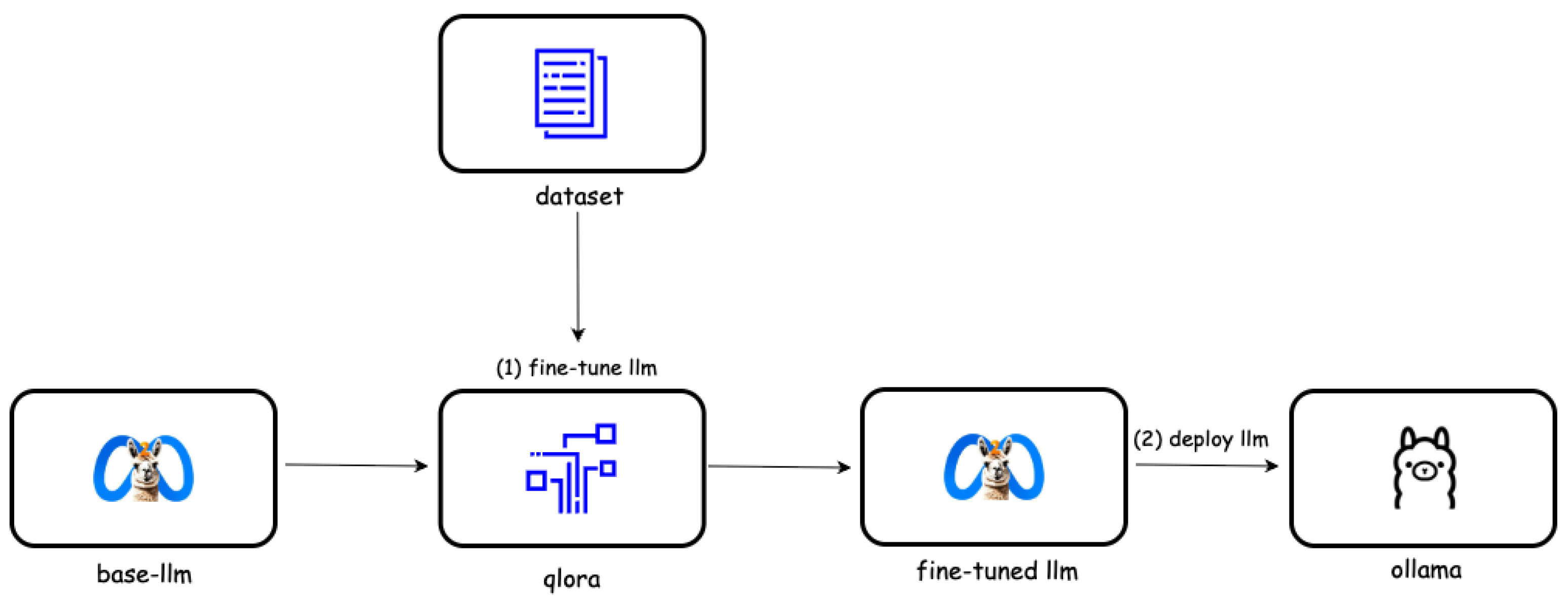
3.4. VLM Fine-Tuning
3.5. AI Agents and Agentic AI
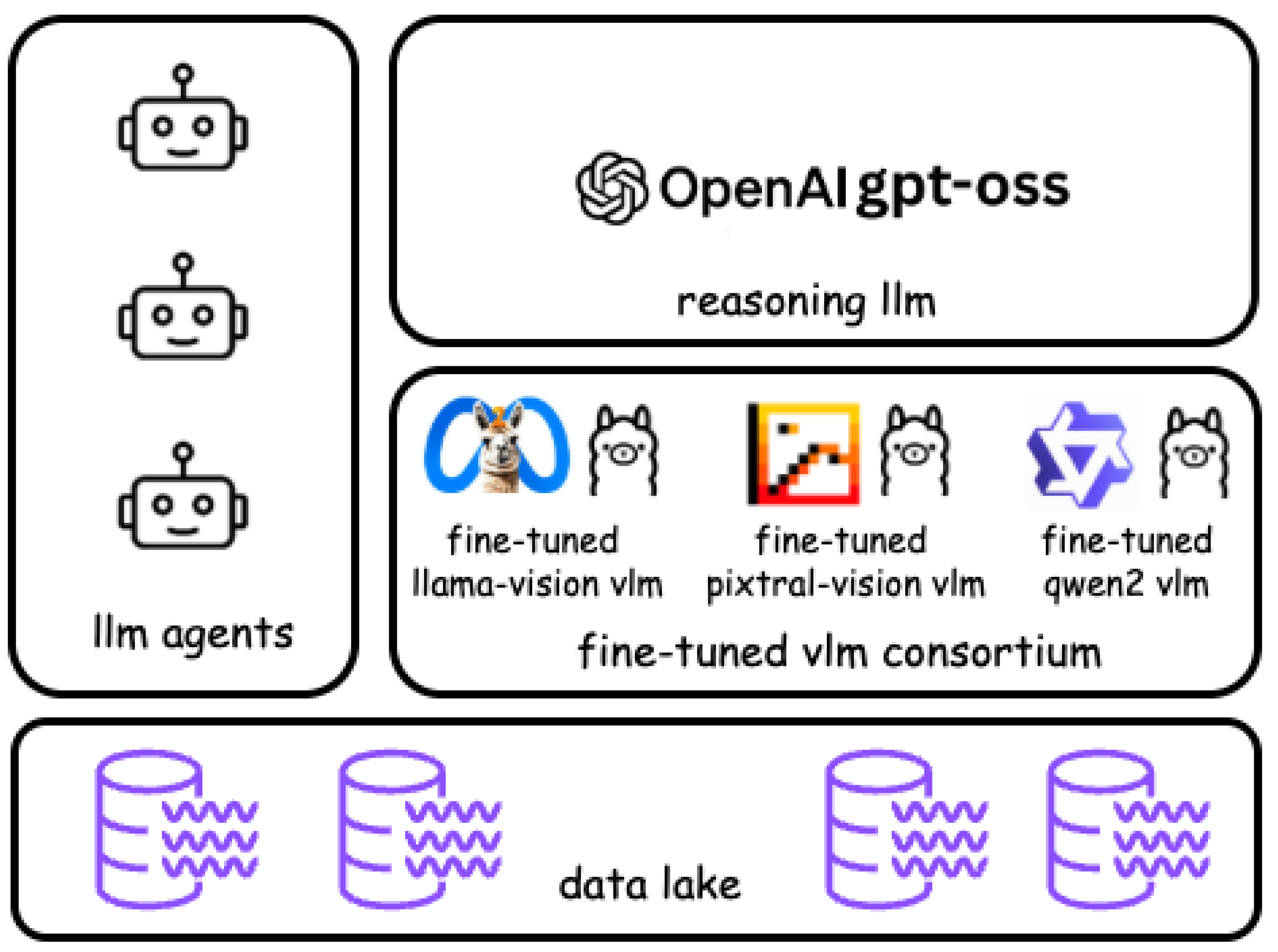
4. System Architecture
4.1. Data Lake Layer
4.2. LLM Agent Layer
4.3. VLM Layer
4.4. Reasoning LLM Layer
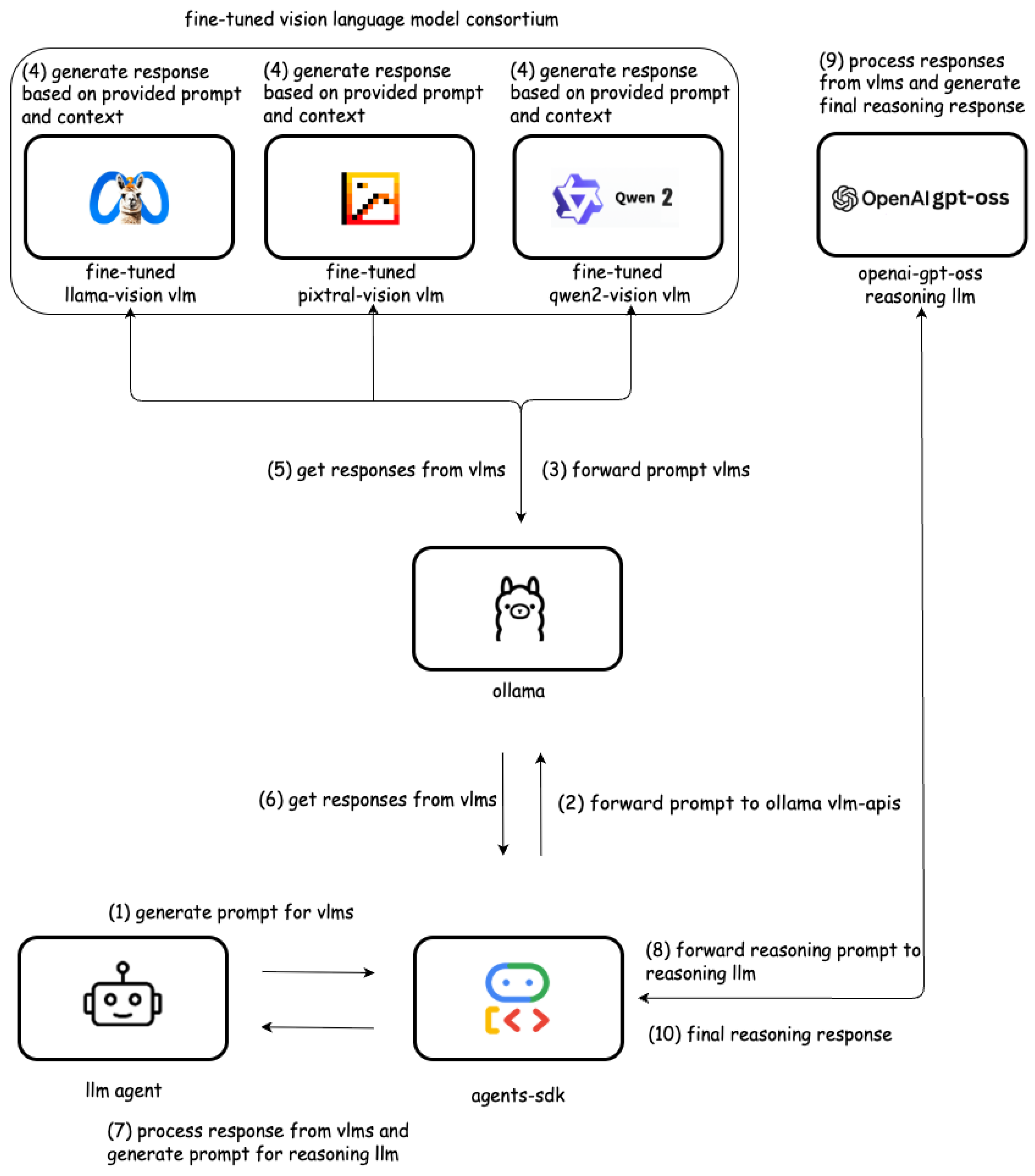
5. Platform Functionality
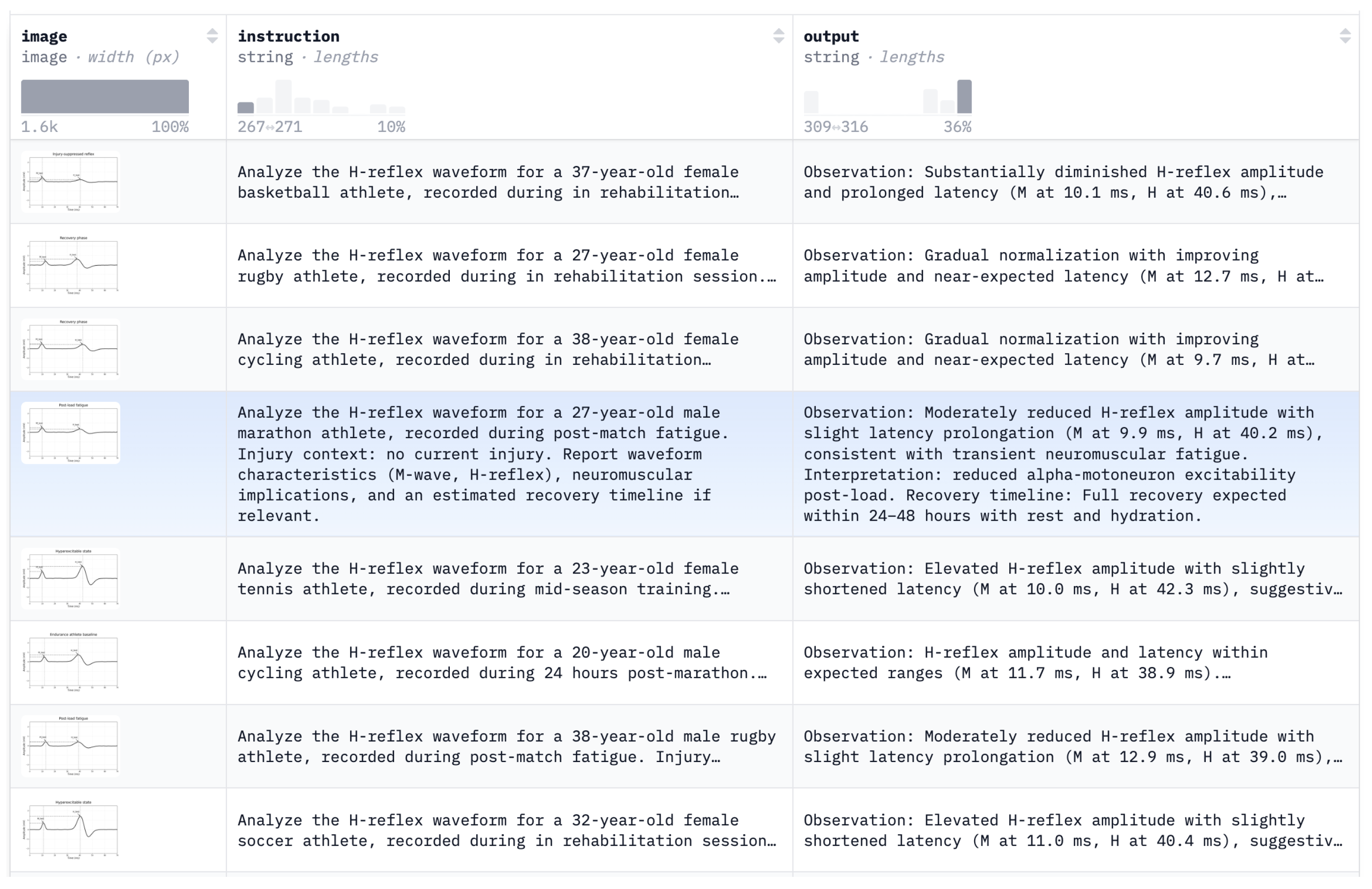
5.1. Data Lake Setup
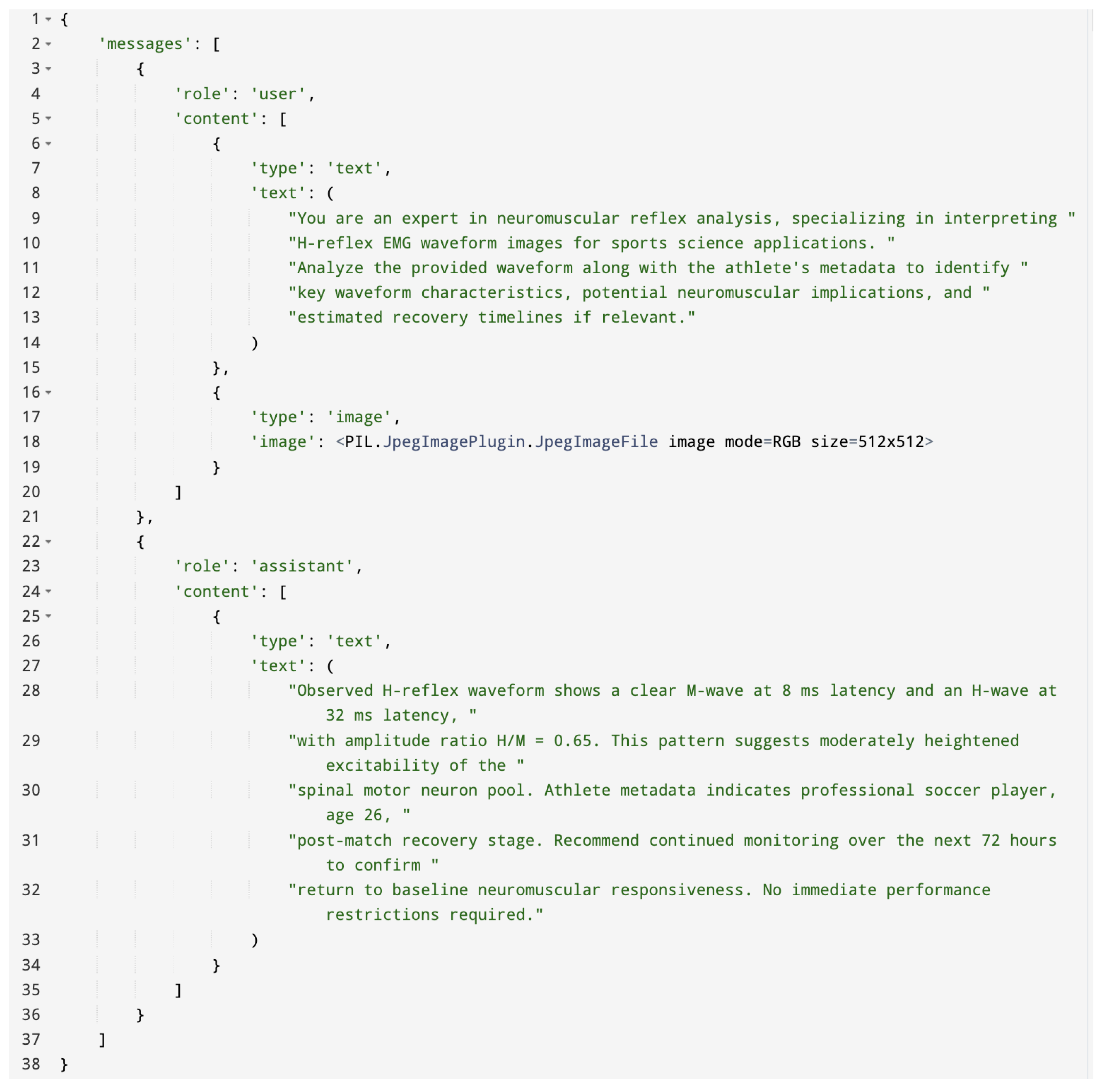
5.2. Fine-Tune VLM Consortium
5.3. Prediction by Fine-Tuned VLMs
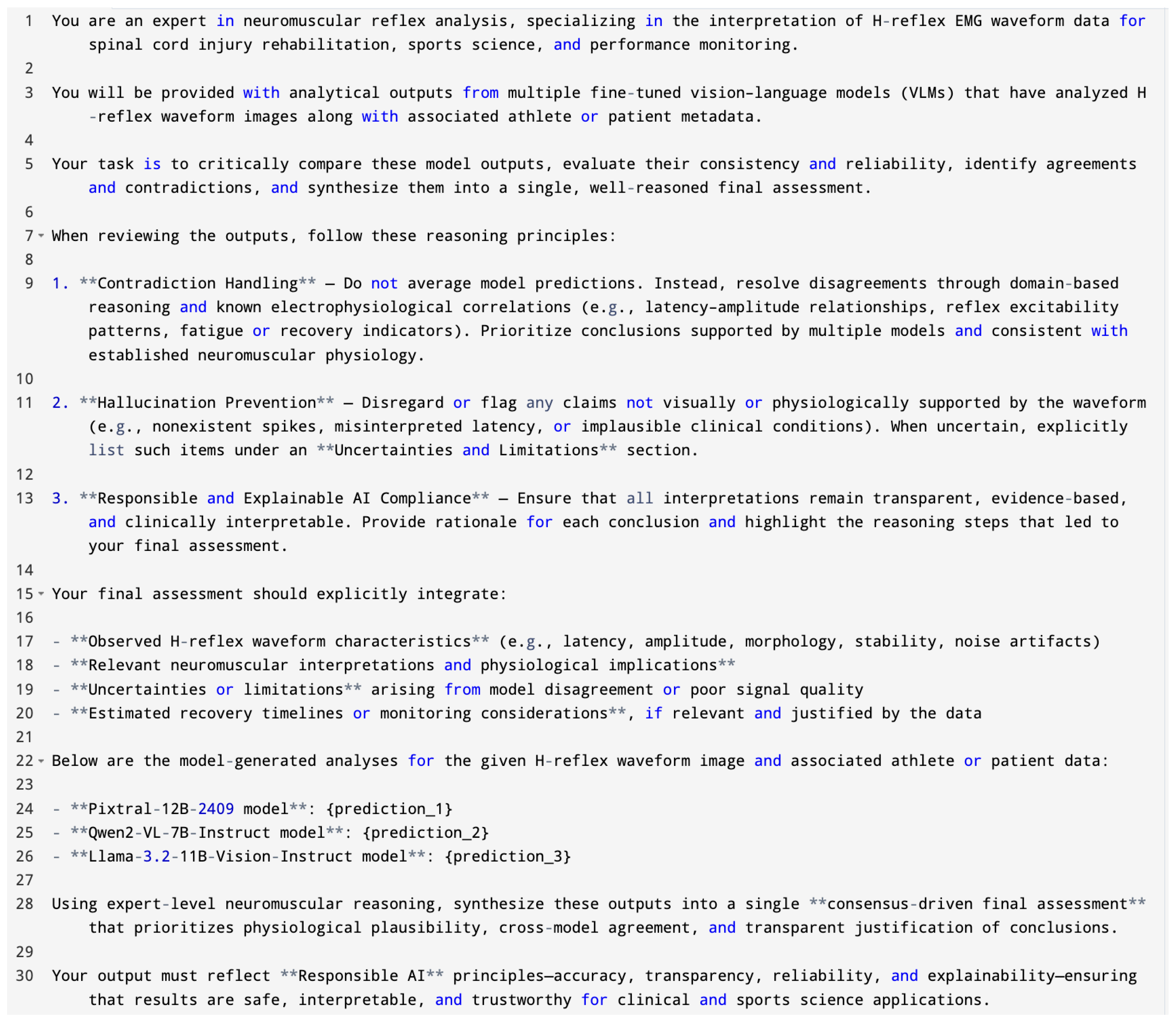
5.4. Final Prediction by OpenAI-Gpt-Oss Reasoning LLM
6. Implementation and Evaluation
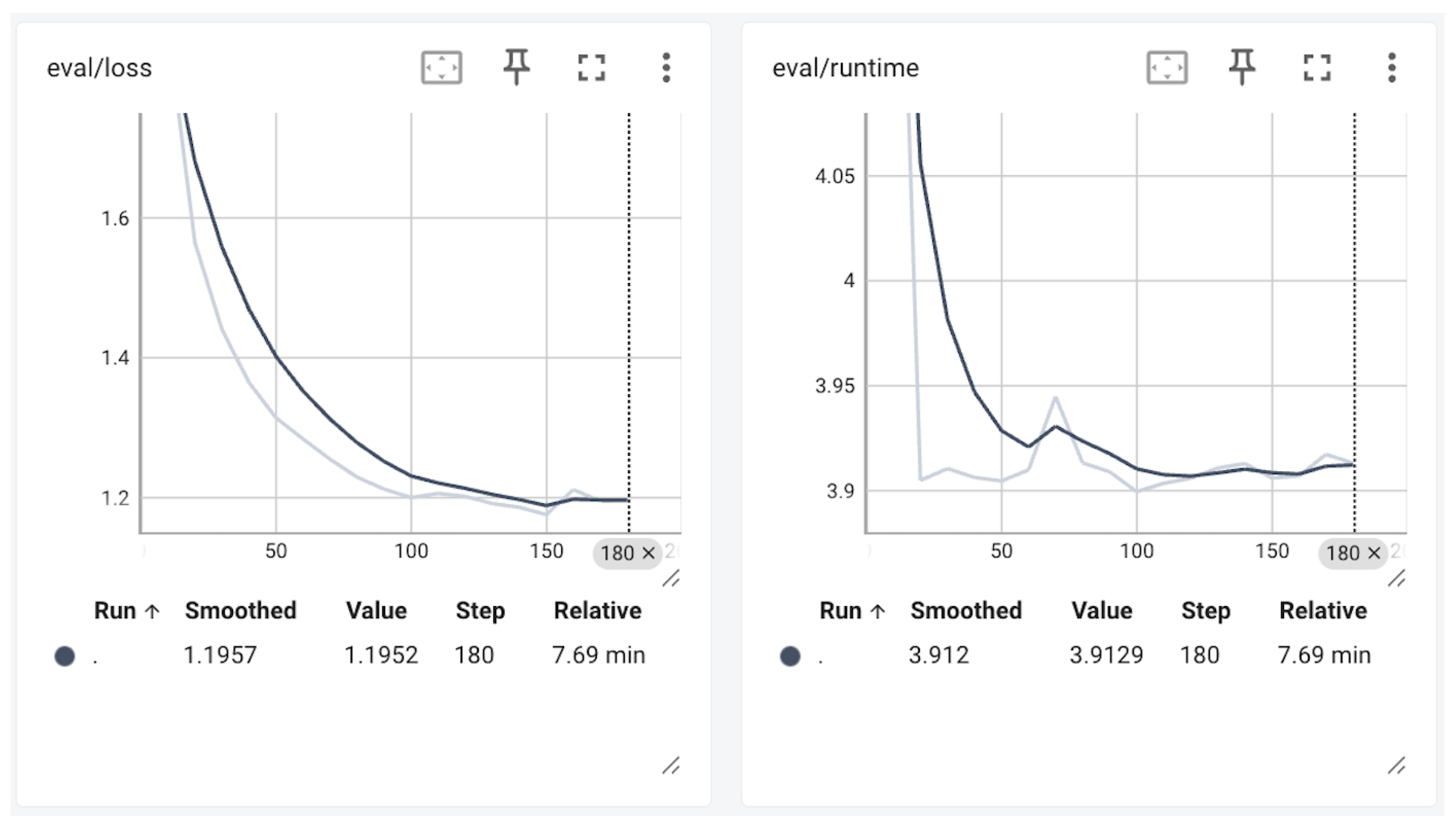
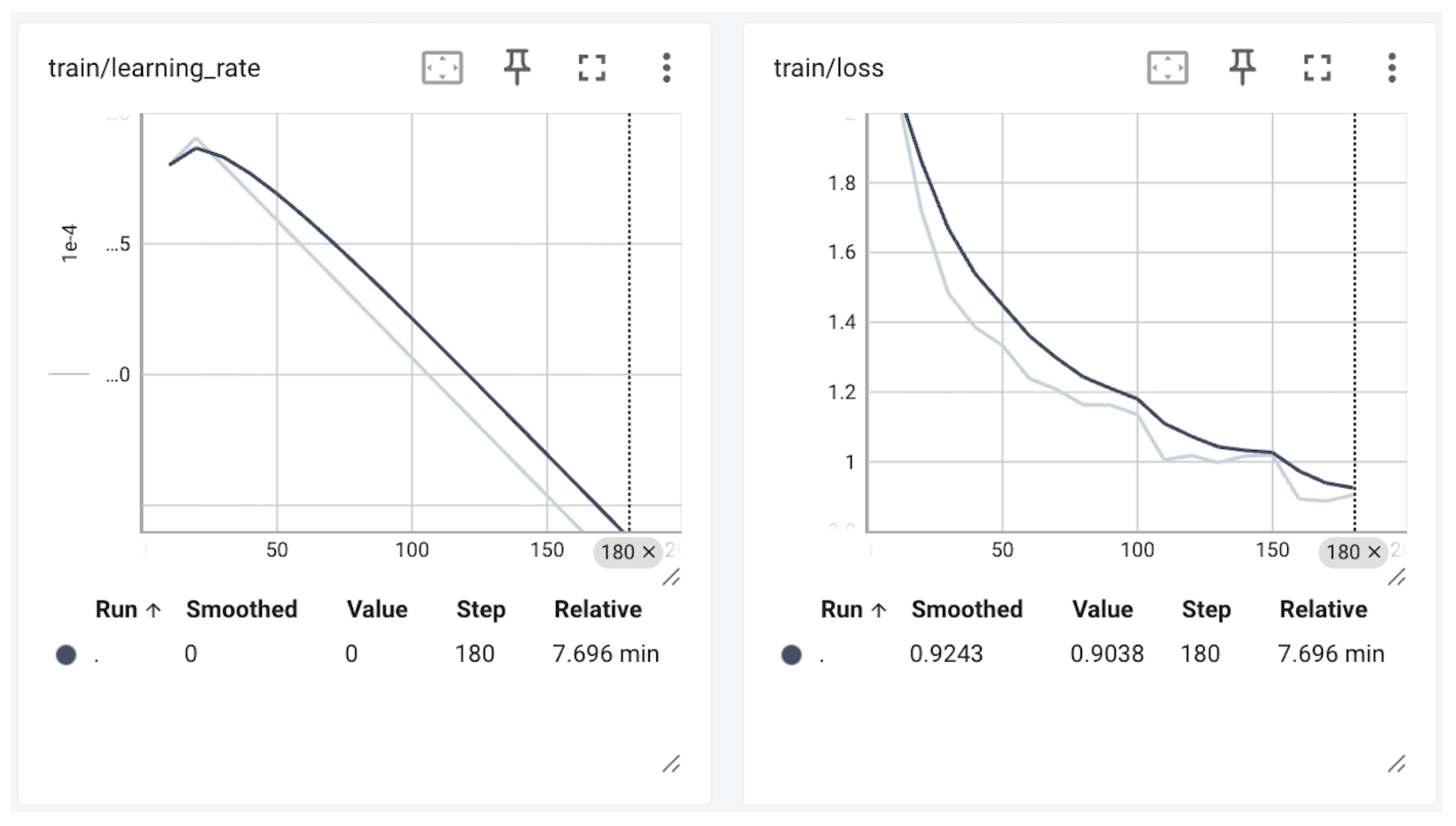
6.1. Evaluation of VLM Fine-Tuning
6.2. Prediction Performance of Fine-Tuned VLM Consortium
6.3. Reasoning Performance of the OpenAI-Gpt-Oss LLM
6.4. Clinical Implementation and Limitations
6.5. Ethical Approval and Data Use
7. Conclusions and Future Work
Author Contributions
Funding
Institutional Review Board Statement
Informed Consent Statement
Data Availability Statement
Conflicts of Interest
References
- Šádek, P.; Hrušková, E.; Ostrỳ, S.; Otáhal, J. Neurophysiological Assessment of H-Reflex Alterations in Compressive Radiculopathy. Physiol. Res. 2024, 73, 427. [Google Scholar] [CrossRef]
- Gomes, M.; Gonçalves, A.D.; Pezarat-Correia, P.; Mendonca, G.V. Changes in H-reflex, V-wave, and contractile properties of the plantar flexors following concurrent exercise sessions—The acute interference effect. J. Appl. Physiol. 2025, 138, 327–341. [Google Scholar] [CrossRef]
- Martinez-Thompson, J.M.; Mazurek, K.A.; Parra-Cantu, C.; Naddaf, E.; Gogineni, V.; Botha, H.; Jones, D.T.; Laughlin, R.S.; Barnard, L.; Staff, N.P. Artificial intelligence models using F-wave responses predict amyotrophic lateral sclerosis. Brain 2025, 148, awaf014. [Google Scholar] [CrossRef]
- Long, Z.; Cao, Z.; Chen, W.; Wei, Z. EMGLLM: Data-to-Text Alignment for Electromyogram Diagnosis Generation with Medical Numerical Data Encoding. In Proceedings of the Findings of the Association for Computational Linguistics: ACL 2025, Vienna, Austria, 27 July–1 August 2025; pp. 20470–20480. [Google Scholar]
- Peng, F.; Yang, X.; Xiao, L.; Wang, Y.; Xu, C. Sgva-clip: Semantic-guided visual adapting of vision-language models for few-shot image classification. IEEE Trans. Multimed. 2023, 26, 3469–3480. [Google Scholar] [CrossRef]
- Zhang, J.; Huang, J.; Jin, S.; Lu, S. Vision-language models for vision tasks: A survey. IEEE Trans. Pattern Anal. Mach. Intell. 2024, 46, 5625–5644. [Google Scholar] [CrossRef] [PubMed]
- Zhang, Y.; Mao, S.; Ge, T.; Wang, X.; de Wynter, A.; Xia, Y.; Wu, W.; Song, T.; Lan, M.; Wei, F. Llm as a mastermind: A survey of strategic reasoning with large language models. arXiv 2024, arXiv:2404.01230. [Google Scholar] [CrossRef]
- Wallace, E.; Watkins, O.; Wang, M.; Chen, K.; Koch, C. Estimating Worst-Case Frontier Risks of Open-Weight LLMs. arXiv 2025, arXiv:2508.03153. [Google Scholar]
- Mondillo, G.; Masino, M.; Colosimo, S.; Perrotta, A.; Frattolillo, V. Evaluating AI Reasoning Models in Pediatric Medicine: A Comparative Analysis of o3-mini and o3-mini-high. medRxiv 2025. [Google Scholar] [CrossRef]
- Shruti, I.; Kumar, A.; Seth, A.; Rajeev, R.N. Responsible Generative AI: A Comprehensive Study to Explain LLMs. In Proceedings of the 2024 International Conference on Electrical, Computer and Energy Technologies (ICECET), Sydney, Australia, 25–27 July 2024; IEEE: New York, NY, USA, 2024; pp. 1–6. [Google Scholar]
- Dwivedi, R.; Dave, D.; Naik, H.; Singhal, S.; Omer, R.; Patel, P.; Qian, B.; Wen, Z.; Shah, T.; Morgan, G.; et al. Explainable AI (XAI): Core ideas, techniques, and solutions. ACM Comput. Surv. 2023, 55, 194. [Google Scholar] [CrossRef]
- Bandara, E.; Hewa, T.; Gore, R.; Shetty, S.; Mukkamala, R.; Foytik, P.; Rahman, A.; Bouk, S.H.; Liang, X.; Hass, A.; et al. Towards Responsible and Explainable AI Agents with Consensus-Driven Reasoning. arXiv 2025, arXiv:2512.21699. [Google Scholar] [CrossRef]
- Acharya, D.B.; Kuppan, K.; Divya, B. Agentic AI: Autonomous Intelligence for Complex Goals—A Comprehensive Survey. IEEE Access 2025, 13, 18912–18936. [Google Scholar] [CrossRef]
- Huang, X.; Liu, W.; Chen, X.; Wang, X.; Wang, H.; Lian, D.; Wang, Y.; Tang, R.; Chen, E. Understanding the planning of LLM agents: A survey. arXiv 2024, arXiv:2402.02716. [Google Scholar] [CrossRef]
- Bandara, E.; Gore, R.; Foytik, P.; Shetty, S.; Mukkamala, R.; Rahman, A.; Liang, X.; Bouk, S.H.; Hass, A.; Rajapakse, S.; et al. A Practical Guide for Designing, Developing, and Deploying Production-Grade Agentic AI Workflows. arXiv 2025, arXiv:2512.08769. [Google Scholar] [CrossRef]
- Augustin, A.; Yi, J.; Clausen, T.; Townsley, W. A study of LoRa: Long range & low power networks for the internet of things. Sensors 2016, 16, 1466. [Google Scholar] [CrossRef]
- Dettmers, T.; Pagnoni, A.; Holtzman, A.; Zettlemoyer, L. Qlora: Efficient finetuning of quantized llms. Adv. Neural Inf. Process. Syst. 2024, 36, 441. [Google Scholar]
- Rohr, M.; Haidamous, J.; Schäfer, N.; Schaumann, S.; Latsch, B.; Kupnik, M.; Antink, C.H. On the benefit of FMG and EMG sensor fusion for gesture recognition using cross-subject validation. IEEE Trans. Neural Syst. Rehabil. Eng. 2025, 33, 935–944. [Google Scholar] [CrossRef]
- Montazerin, M.; Zabihi, S.; Rahimian, E.; Mohammadi, A.; Naderkhani, F. ViT-HGR: Vision transformer-based hand gesture recognition from high density surface EMG signals. In Proceedings of the 2022 44th Annual International Conference of the IEEE Engineering in Medicine & Biology Society (EMBC), Glasgow, UK, 11–15 July 2022; IEEE: New York, NY, USA, 2022; pp. 5115–5119. [Google Scholar]
- Hussain, I.; Jany, R. Interpreting stroke-impaired electromyography patterns through explainable artificial intelligence. Sensors 2024, 24, 1392. [Google Scholar] [CrossRef]
- Mohapatra, P.; Pandey, A.; Zhang, X.; Zhu, Q. Can LLMs Understand Unvoiced Speech? Exploring EMG-to-Text Conversion with LLMs. arXiv 2025, arXiv:2506.00304. [Google Scholar]
- Sadeghi, H. Advanced multiscale machine learning for nerve conduction velocity analysis. Sci. Rep. 2025, 15, 23399. [Google Scholar] [CrossRef] [PubMed]
- Pratticò, D.; Carlo, D.D.; Silipo, G.; Laganà, F. Hybrid FEM-AI approach for thermographic monitoring of biomedical electronic devices. Computers 2025, 14, 344. [Google Scholar] [CrossRef]
- Pehlke, M.; Jansen, M. LLM Driven Processes to Foster Explainable AI. arXiv 2025, arXiv:2511.07086. [Google Scholar] [CrossRef]
- Dubey, A.; Jauhri, A.; Pandey, A.; Kadian, A.; Al-Dahle, A.; Letman, A.; Mathur, A.; Schelten, A.; Yang, A.; Fan, A.; et al. The llama 3 herd of models. arXiv 2024, arXiv:2407.21783. [Google Scholar] [CrossRef]
- Samo, H.; Ali, K.; Memon, M.; Abbasi, F.A.; Koondhar, M.Y.; Dahri, K. Fine-tuning mistral 7b large language model for python query response and code generation: A parameter efficient approach. VAWKUM Trans. Comput. Sci. 2024, 12, 205–217. [Google Scholar]
- Wang, P.; Bai, S.; Tan, S.; Wang, S.; Fan, Z.; Bai, J.; Chen, K.; Liu, X.; Wang, J.; Ge, W.; et al. Qwen2-vl: Enhancing vision-language model’s perception of the world at any resolution. arXiv 2024, arXiv:2409.12191. [Google Scholar]
- Brown, T.; Mann, B.; Ryder, N.; Subbiah, M.; Kaplan, J.D.; Dhariwal, P.; Neelakantan, A.; Shyam, P.; Sastry, G.; Askell, A.; et al. Language models are few-shot learners. Adv. Neural Inf. Process. Syst. 2020, 33, 1877–1901. [Google Scholar]
- Imran, M.; Almusharraf, N. Google Gemini as a next generation AI educational tool: A review of emerging educational technology. Smart Learn. Environ. 2024, 11, 22. [Google Scholar] [CrossRef]
- Saporita, A.; Pipoli, V.; Bolelli, F.; Baraldi, L.; Acquaviva, A.; Ficarra, E. Tracing Information Flow in LLaMA Vision: A Step Toward Multimodal Understanding. In Proceedings of the 21st International Conference in Computer Analysis of Images and Patterns, Canary Islands, Spain, 22–25 September 2025. [Google Scholar]
- Gore, R.; Bandara, E.; Shetty, S.; Musto, A.E.; Rana, P.; Valencia-Romero, A.; Rhea, C.; Tayebi, L.; Richter, H.; Yarlagadda, A.; et al. Proof-of-TBI–Fine-Tuned Vision Language Model Consortium and OpenAI-o3 Reasoning LLM-Based Medical Diagnosis Support System for Mild Traumatic Brain Injury (TBI) Prediction. arXiv 2025, arXiv:2504.18671. [Google Scholar]
- Wang, Z.; Han, Z.; Chen, S.; Xue, F.; Ding, Z.; Xiao, X.; Tresp, V.; Torr, P.; Gu, J. Stop reasoning! when multimodal LLM with chain-of-thought reasoning meets adversarial image. arXiv 2024, arXiv:2402.14899. [Google Scholar]
- Bandara, E.; Bouk, S.H.; Shetty, S.; Gore, R.; Kompella, S.; Mukkamala, R.; Rahman, A.; Foytik, P.; Liang, X.; Keong, N.W.; et al. Bassa-Llama—Fine-Tuned Meta’s Llama LLM, Blockchain and NFT Enabled Real-Time Network Attack Detection Platform for Wind Energy Power Plants. In Proceedings of the 2025 International Wireless Communications and Mobile Computing (IWCMC), Abu Dhabi, United Arab Emirates, 12–16 May 2025; pp. 330–336. [Google Scholar] [CrossRef]
- Bandara, E.; Bouk, S.H.; Shetty, S.; Gore, R.; Kompella, S.; Mukkamala, R.; Rahman, A.; Foytik, P.; Liang, X.; Keong, N.W.; et al. VindSec-Llama—Fine-Tuned Meta’s Llama-3 LLM, Federated Learning, Blockchain and PBOM-enabled Data Security Architecture for Wind Energy Data Platforms. In Proceedings of the 2025 International Wireless Communications and Mobile Computing (IWCMC), Abu Dhabi, United Arab Emirates, 12–16 May 2025; pp. 120–126. [Google Scholar] [CrossRef]
- Zheng, Y.; Zhang, R.; Zhang, J.; Ye, Y.; Luo, Z.; Feng, Z.; Ma, Y. Llamafactory: Unified efficient fine-tuning of 100+ language models. arXiv 2024, arXiv:2403.13372. [Google Scholar]
- Kimm, H.; Paik, I.; Kimm, H. Performance comparision of tpu, gpu, cpu on google colaboratory over distributed deep learning. In Proceedings of the 2021 IEEE 14th International Symposium on Embedded Multicore/Many-core Systems-on-Chip (MCSoC), Singapore, 20–23 December 2021; IEEE: New York, NY, USA, 2021; pp. 312–319. [Google Scholar]
- Alkhatib, A.; Shaheen, A.; Albustanji, R.N. A Comparative Analysis of Cloud Computing Services: AWS, Azure, and GCP. Genesis 2024, 4, 5. [Google Scholar] [CrossRef]
- Liao, C.; Sun, M.; Yang, Z.; Xie, J.; Chen, K.; Yuan, B.; Wu, F.; Wang, Z. Lohan: Low-cost high-performance framework to fine-tune 100b model on a consumer gpu. arXiv 2024, arXiv:2403.06504. [Google Scholar]
- Singh, A.; Ehtesham, A.; Kumar, S.; Khoei, T.T. Enhancing ai systems with agentic workflows patterns in large language model. In Proceedings of the 2024 IEEE World AI IoT Congress (AIIoT), Melbourne, Australia, 24–26 July 2024; IEEE: New York, NY, USA, 2024; pp. 527–532. [Google Scholar]
- Bandara, E.; Gore, R.; Liang, X.; Rajapakse, S.; Kularathne, I.; Karunarathna, P.; Foytik, P.; Shetty, S.; Mukkamala, R.; Rahman, A.; et al. Agentsway–Software Development Methodology for AI Agents-based Teams. arXiv 2025, arXiv:2510.23664. [Google Scholar]
- Bandara, E.; Bouk, S.H.; Shetty, S.; Roy, S.; Mukkamala, R.; Rahman, A.; Foytik, P.; Liang, X.; Keong, N.W.; De Zoysa, K. Llama-Recipe—Fine-Tuned Meta’s Llama LLM, PBOM and NFT Enabled 5G Network-Slice Orchestration and End-to-End Supply-Chain Verification Platform. In Proceedings of the 2025 IEEE 22nd Consumer Communications & Networking Conference (CCNC), Las Vegas, NV, USA, 10–13 January 2025; IEEE: New York, NY, USA, 2025; pp. 1–6. [Google Scholar]
- Marvin, G.; Hellen, N.; Jjingo, D.; Nakatumba-Nabende, J. Prompt Engineering in Large Language Models. In Proceedings of the International Conference on Data Intelligence and Cognitive Informatics, Tirunelveli, India, 27–28 June 2023; Springer: Berlin/Heidelberg, Germany, 2023; pp. 387–402. [Google Scholar]
- Lin, X.; Wang, W.; Li, Y.; Yang, S.; Feng, F.; Wei, Y.; Chua, T.S. Data-efficient Fine-tuning for LLM-based Recommendation. In Proceedings of the 47th international ACM SIGIR conference on research and development in information retrieval, Washington, DC, USA, 14–18 July 2024; pp. 365–374. [Google Scholar]
- Wang, J. A tutorial on LLM reasoning: Relevant methods behind ChatGPT o1. arXiv 2025, arXiv:2502.10867. [Google Scholar] [CrossRef]
- Bandara, E.; Foytik, P.; Shetty, S.; Mukkamala, R.; Rahman, A.; Liang, X.; Keong, N.W.; De Zoysa, K. WedaGPT—Generative-AI (with Custom-Trained Meta’s Llama2 LLM), Blockchain, Self Sovereign Identity, NFT and Model Card Enabled Indigenous Medicine Platform. In Proceedings of the 2024 IEEE Symposium on Computers and Communications (ISCC), Paris, France, 26–29 June 2024; IEEE: New York, NY, USA, 2024; pp. 1–6. [Google Scholar]
- Reason, T.; Benbow, E.; Langham, J.; Gimblett, A.; Klijn, S.L.; Malcolm, B. Artificial Intelligence to Automate Network Meta-Analyses: Four Case Studies to Evaluate the Potential Application of Large Language Models. PharmacoEconomics Open 2024, 8, 205–220. [Google Scholar] [CrossRef] [PubMed]
- Perak, B.; Beliga, S.; Meštrović, A. Incorporating Dialect Understanding Into LLM Using RAG and Prompt Engineering Techniques for Causal Commonsense Reasoning. In Proceedings of the Eleventh Workshop on NLP for Similar Languages, Varieties, and Dialects (VarDial 2024), Mexico City, Mexico, 20–21 June 2024; pp. 220–229. [Google Scholar]
- Xiang, M.; Fernando, R.; Wang, B. On-Device Qwen2. 5: Efficient LLM Inference with Model Compression and Hardware Acceleration. arXiv 2025, arXiv:2504.17376. [Google Scholar]
- Chen, E.; Lin, C.; Tang, X.; Xi, A.; Wang, C.; Lin, J.; Koedinger, K.R. VTutor: An Open-Source SDK for Generative AI-Powered Animated Pedagogical Agents with Multi-Media Output. arXiv 2025, arXiv:2502.04103. [Google Scholar]
- Yehudai, A.; Eden, L.; Li, A.; Uziel, G.; Zhao, Y.; Bar-Haim, R.; Cohan, A.; Shmueli-Scheuer, M. Survey on evaluation of llm-based agents. arXiv 2025, arXiv:2503.16416. [Google Scholar] [CrossRef]
- Eelbode, T.; Sinonquel, P.; Maes, F.; Bisschops, R. Pitfalls in training and validation of deep learning systems. Best Pract. Res. Clin. Gastroenterol. 2021, 52, 101712. [Google Scholar] [CrossRef]



| Platform | Domain | Fine-Tuning Support | Model Type/LLM-VLM | Multimodal Support | Reasoning LLM Support | Responsible AI Support | Explainable AI Support |
|---|---|---|---|---|---|---|---|
| This work | H-reflex neuromuscular analysis | ✓ | Llama-Vision, Pixtral-Vision, Qwen-VL OpenAI-gpt-oss | ✓ | ✓ | ✓ | ✓ |
| Sensor Fusion [18] | Gesture recognition | ✗ | CNN-based fusion models | ✗ | ✗ | ✗ | ✗ |
| ViT-HGR [19] | Gesture recognition | ✗ | Vision Transformer (ViT) | ✗ | ✗ | ✗ | ✗ |
| Explainable Stroke Gait [20] | Stroke gait EMG analysis | ✗ | GBoost + SHAP/LIME | ✗ | ✗ | ✗ | ✓ |
| INSPIRE [4] | Electrodiagnostic interpretation | ✗ | Multi-agent LLMs (unspecified) | ✓ | ✗ | ✗ | ✗ |
| LLM for EMG-to-Text [21] | Silent speech decoding via EMG | ✗ | LLM with EMG adapter | ✓ | ✗ | ✗ | ✗ |
| Nerve Conduction Velocity [22] | Nerve conduction analysis | ✗ | Not Applicable | ✗ | ✗ | ✗ | ✗ |
| Hybrid-FEM [23] | Biomedical device diagnostics | ✗ | Not Applicable | ✗ | ✗ | ✗ | ✗ |
Disclaimer/Publisher’s Note: The statements, opinions and data contained in all publications are solely those of the individual author(s) and contributor(s) and not of MDPI and/or the editor(s). MDPI and/or the editor(s) disclaim responsibility for any injury to people or property resulting from any ideas, methods, instructions or products referred to in the content. |
© 2026 by the authors. Licensee MDPI, Basel, Switzerland. This article is an open access article distributed under the terms and conditions of the Creative Commons Attribution (CC BY) license.
Share and Cite
Bandara, E.; Gore, R.; Shetty, S.; Mukkamala, R.; Rhea, C.K.; Samulski, B.S.; Hass, A.; Yarlagadda, A.; Kaushik, S.; De Silva, M.; et al. Standardization of Neuromuscular Reflex Analysis—Role of Fine-Tuned Vision-Language Model Consortium and OpenAI gpt-oss Reasoning LLM-Enabled Decision Support System. Biomechanics 2026, 6, 23. https://doi.org/10.3390/biomechanics6010023
Bandara E, Gore R, Shetty S, Mukkamala R, Rhea CK, Samulski BS, Hass A, Yarlagadda A, Kaushik S, De Silva M, et al. Standardization of Neuromuscular Reflex Analysis—Role of Fine-Tuned Vision-Language Model Consortium and OpenAI gpt-oss Reasoning LLM-Enabled Decision Support System. Biomechanics. 2026; 6(1):23. https://doi.org/10.3390/biomechanics6010023
Chicago/Turabian StyleBandara, Eranga, Ross Gore, Sachin Shetty, Ravi Mukkamala, Christopher K. Rhea, Brittany S. Samulski, Amin Hass, Atmaram Yarlagadda, Shaifali Kaushik, Malith De Silva, and et al. 2026. "Standardization of Neuromuscular Reflex Analysis—Role of Fine-Tuned Vision-Language Model Consortium and OpenAI gpt-oss Reasoning LLM-Enabled Decision Support System" Biomechanics 6, no. 1: 23. https://doi.org/10.3390/biomechanics6010023
APA StyleBandara, E., Gore, R., Shetty, S., Mukkamala, R., Rhea, C. K., Samulski, B. S., Hass, A., Yarlagadda, A., Kaushik, S., De Silva, M., Maznychenko, A., Sokolowska, I., & De Zoysa, K. (2026). Standardization of Neuromuscular Reflex Analysis—Role of Fine-Tuned Vision-Language Model Consortium and OpenAI gpt-oss Reasoning LLM-Enabled Decision Support System. Biomechanics, 6(1), 23. https://doi.org/10.3390/biomechanics6010023