Article

NMR Characterization, LC-MS Phenolic Profiling, and Cytotoxic Activity Evaluation of Ethanolic Extract of Propolis from Central Mexico


by
Eloy Rodríguez-deLeón
1,*,
José E. Báez
2,
Guadalupe García-Alcocer
1,
Fabián Santa-María
3,
Miguel A. Ramos-López
3,
Claudia Gutiérrez-García
3 and
Moustapha Bah
1,*
1
Posgrado en Ciencias Químico-Biológicas, Faculty of Chemistry, Autonomous University of Queretaro (UAQ), Cerro de las Campanas S/N, Querétaro 76010, Mexico
2
Department of Chemistry, Division of Natural and Exact Sciences, University of Guanajuato (UG), Noria Alta S/N, Guanajuato 36050, Mexico
3
Faculty of Chemistry, Autonomous University of Queretaro (UAQ), Cerro de las Campanas S/N, Querétaro 76010, Mexico
*
Authors to whom correspondence should be addressed.
Compounds 2026, 6(1), 10; https://doi.org/10.3390/compounds6010010
Submission received: 7 August 2025 / Revised: 15 September 2025 / Accepted: 29 January 2026 / Published: 2 February 2026

Abstract

Propolis is a resinous material produced by honeybees characterized by a high phenolic compound and flavonoid content. To date, several studies have examined the chemical composition of Mexican propolis from the south and north of the country. However, limited information is available on the chemical profile of propolis from central Mexico. The present study isolated six known compounds from propolis from central Mexico: one diterpene (sugiol, found for the first time in Mexican propolis), three flavonoids (chrysin, galangin 3-methyl ether, and 3,7-dimethoxyquercetin), a fatty acid (cerotic acid), and an unusual glycerol derivative (batyl alcohol). Moreover, LC-ESI-MS analysis conducted on the ethanolic extract led to the identification of three phenolic compounds and fourteen flavonoids commonly found in propolis. Lastly, the cytotoxic activity evaluation carried out on the ethanolic extract showed a decrease in the cell viability of human leukemia (Jurkat) cells in a concentration-dependent manner.

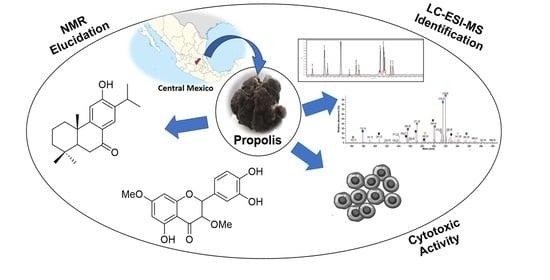
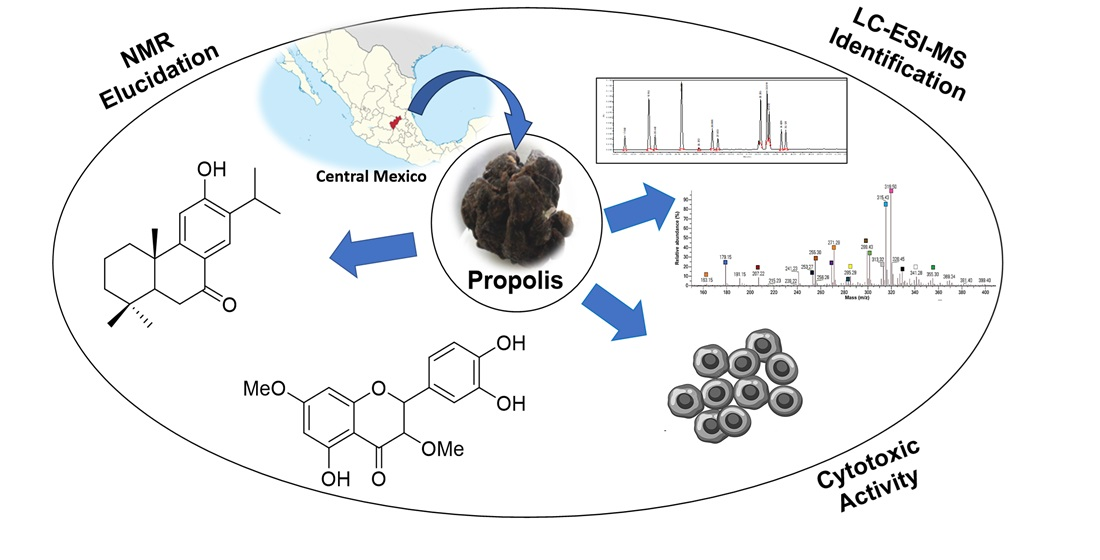
Graphical Abstract

1. Introduction

Propolis is a natural resinous product collected by honeybees from trees and plant exudates [1]. Owing to its origin in diverse plant species, propolis presents a wide chemical diversity and a different appearance depending mainly on local flora and geographical origin [2,3]. The characteristic colours of Mexican propolis are red, yellow-red, chestnut-green, dark yellow, dun, brown, and black [4]. Many studies have been carried out globally on the chemical composition and pharmacological effects of propolis. In recent years, the ongoing demand for propolis has increased because it is widely used as a functional food and cosmetic ingredient [5]; therefore, the consumption in pharmaceutical and dermo-cosmetic sectors is the major factor driving market growth [6]. The global propolis market was valued at around USD 700 million in 2023 and is expected to grow to up to USD 1033 million by 2032. In Mexico, the Yucatan peninsula produces six tons of propolis per year and comprises 37% of national production [7,8].
Studies have examined the chemical composition of Mexican propolis from both the north and south of the country, namely in the state of Yucatan and the states of Sonora and Chihuahua, respectively. Said studies mainly report on the phenolic compounds and flavonoids, notable among which are the following: galangin, luteolin, trans-ferulic acid, chrysin, quercetin, pinobanksin, pinobanksin 5-methyl ether, kaempferol, apigenin, catechin, rutin, pinocembrin, pinobanksin 3-acetate, and others [4]. Furthermore, studies on propolis obtained in the state of Quintana Roo in southern Mexico have reported the pentacyclic triterpenes α and β amyrins as chemical markers (Figure 1). These compounds have been found in the resin of Bursera simaruba, a tree widely distributed in Quintana Roo [9]. Recently, the chemical analysis of propolis from Chiapas state, also in southern Mexico, reported α and β amyrins and their acetylated derivatives as main constituents [9]. In the same way, a study of propolis from Guanajuato state in the centre of Mexico reported only the presence of flavonoids, with pinocembrin (Figure 1) as the major constituent in ethanolic extract [10].
Propolis has gained both notoriety and acceptance as a potential phytomedicine for preventing chronic diseases, such as diabetes and different types of cancers, and for its antibacterial, antifungal, and antiviral effects [11]. However, to date, limited information is available on the chemical composition of propolis from central Mexico. The present study aimed to isolate and identify its main compounds and evaluate the cytotoxic effect of its ethanolic extract on the human leukemia (Jurkat) cell line. Leukemia, which presents mainly in children and young people, is still a major health concern, both in Mexico and worldwide [12].

2. Materials and Methods

2.1. General Procedures

1H, 13C, DEPT-135, and two-dimensional COSY, HSQC, and HMBC NMR spectra were recorded in a Bruker Avance III HD spectrometer (Bruker, Billerica, MA, USA) operating at 500 MHz for 1H and 125.7 MHz for 13C. The samples were dissolved in pyridine-d5 or dimethyl sulfoxide-d6, and tetramethylsilane (TMS) was used as the internal standard. NMR chemical shift (δ) for 1H and 13C spectra were expressed in ppm and coupling constants (J) were reported in Hertz.

2.2. Propolis Material

The propolis was collected in April 2020 from San Juan del Río City, Querétaro state, Mexico (20°23′19.83″ N, 99°59′46.71″ W). The sample (600 g) was stored (at −15 °C) inside plastic bags at the Laboratory of Natural Products Chemistry, Department of Chemical and Biological Sciences, Faculty of Chemistry of the Autonomous University of Queretaro, until analysis. A total of 100 g of propolis was ground and extracted with 600 mL of ethanol for seven days, employing a single maceration process. The alcoholic extract was filtered and evaporated until dry at 36 °C to obtain 6.2 g of extract.

2.3. Extraction and Isolation of Compounds

The ethanolic extract (6.2 g) was fractionated using open-column chromatography (CC) (silica gel Merck, 70–230 mesh, Toluca, Mexico State, Mexico), and it was first eluted with hexane to remove fats, followed by progressive mixing with dichloromethane and acetone in increasing amounts. A total of 660 fractions were collected and monitored by thin-layer chromatography (TLC), and most of them pooled together into 18 fractions according to their similarities. Fractions 9–14 eluted only with CH2Cl2 provided 16.0 mg of cerotic acid, and fractions 45–55 provided 10.1 mg of batyl alcohol. Fractions 200–220 eluted with CH2Cl2/acetone (90:10) provided 7.0 mg of chrysin, while fractions 245–260 provided 5.1 mg galangin 3-methyl ether. Fractions 395–425 eluted with CH2Cl2/acetone (80:20) provided 28.6 mg of sugiol as the major constituent. Finally, fractions 551–565 eluted with CH2Cl2/acetone (50:50) yielded 12.1 mg of quercetin 3,7-dimethyl ether.

2.4. Identification of Phenolic Compounds

2.4.1. Identification of Phenolic Compounds Using LC-ESI-MS

For the chemical analysis of phenolic compounds and flavonoids present in propolis, an ultrahigh-performance liquid chromatography (UHPLC) method coupled with triple quadrupole mass spectrometry (QqQ-MS) and the multiple reaction monitoring mode (MRM) was used for the selective and fast analysis of these compounds. The direct injection of the ethanolic extract was performed with the use of a syringe pump (Chemix Fusion 100X, Chemyx, Stafford, TX, USA) with a flow rate of 10 µL/min.
Ultrahigh-resolution liquid chromatography was performed using an Ultimate 300 system (Dionex, Germerin, Germany) consisting of a quaternary pump coupling to a degasser, an autosampler, and a column compartment. A Synergy-Fusion Phenomenex (Torrance, CA, USA) C18 column (100 × 2 mm, 2.5 µm particle size) as stationary and two mobile (A and B) phases were used. Water contained 12.5 mM of formic acid (95%) and 5% acetonitrile (phase A) and a mixture of 50% water, 12.5 mM of formic acid, and 50% acetonitrile (phase B). The flow rate was 0.35 mL/min, and the gradient profile was 0 to 22.5% A in 5 min, 22.5 to 100% A in 5 min, and 100% B in 5 min (15 min total). The UHPLC was coupled with a TSQ Endura triple quadrupole mass spectrometer (Thermo Scientific, Waltham, MA, USA) equipped with an electrospray ionization ion source (ESI). The capillary voltage was 3.96 kV in negative mode, the vaporizer temperature was set to 330 °C, the transfer tube temperature was to 250 °C, the gas flow of the auxiliary gas was 7.97 L/min (10 Arb), the sheath gas was 4.58 L/min (40 Arb), and the sweep gas was 0 L/min (0 Arb). The molecular mass analyzed was between 100 and 700 m/z. The compounds were identified by studying their fragmentation pattern and comparing them with data from the literature.

2.4.2. Identification of Phenolic Compounds Through HPLC-DAD

HPLC-DAD analyses were conducted on Waters-Alliance equipment (Waters Chromatography Division, Milford, MA, USA) composed of a quaternary solvent delivery pump (model 2695e) and diode array detector (DAD, model 2998). Data acquisition and processing were performed using Empower 3 Software (Chromatographic Data System, CDS). The identification of p-coumaric acid, caffeic acid, kaempferol, and quercetin was confirmed in comparison to analytical standards (Merck, Naucalpan de Juárez, Mexico). The chromatographic conditions consisted of a stationary phase with a C18-column Agilent Zorbax-XDB-C18 (4.6 mm × 150 mm, 5 µm) (Santa Clara, CA, USA). The mobile phase was composed of aqueous acetic acid [12.5 mM] (phase A) and acetonitrile (phase B) in a linear gradient at a flow rate of 1.0 mL min−1. The gradient started with 95% A and 5% B for 5 min; then, a linear increase in phase B content to 50% over 15 min (from 5 to 20 min) was implemented. Subsequently, the mobile phase was returned to its initial conditions (95:5) at 25 min, which were maintained during the final 10 min of the 35 min analysis. The run time was 35 min, the volume of the injection was 20 µL, and the wavelength of detection was 280 nm.

2.5. Biological Essays

2.5.1. Cell Cultures

The Jurkat cell line was purchased from the American Type Culture Collection. The cells were maintained at 37 °C in a humidified atmosphere containing 5% CO2 in RPMI 1640 medium (Corning, 50-020-PBR, Somerville, MA, USA) supplemented with 10% fetal bovine serum (BIOWEST, S1810-500, Nuaillé, France) and antibiotic–antimycotic at a final concentration of 1X [1X is equal to 100 U/mL penicillin, 100 μg/mL streptomycin, and 0.25 µg/mL amphotericin B (Gibco, 15240-096, Waltham, MA, USA)]. Peripheral blood mononuclear cells (PBMCs) were isolated from human whole blood following the instructions of Ficoll-Paque PLUS (GE Healthcare, 17-1440-02, Chicago, IL, USA). The blood used in this experiment was kindly donated by one of the co-authors of this manuscript, derived entirely from a project considered exempt from informed consent. All the experiments were conducted according to the final ethical approval issued by the authorized Bioethics Committee (Comité de Bioética) of our Institution (approval code CBQ17/099). PBMCs were cultured in RPMI 1640 medium containing 10% FBS and antibiotic–antimycotic 1X. PBMCs were incubated at least 6 h before experiments at 37 °C in a humidified atmosphere containing 5% CO2.

2.5.2. Cytotoxic Effect and Cell Viability Analysis

Jurkat cells (1 × 10⁵ cells) were plated onto 24-well plates and were left for 24 h to grow without interruption; then, the cells were treated with different concentrations (0, 20, 40, 60, 80, 100, 250, and 500 μg/mL) of propolis extract for 24 h. The propolis stock solution was prepared in DMSO, and each concentration was diluted with culture medium immediately before the experiment. Control cells were treated with DMSO alone. In all experiments, the DMSO concentration was never higher than 0.1% (v/v) and did not affect cell growth. The cell viability was evaluated by the trypan blue technique and calculated as the number of viable cells divided by the total number of cells. The cell viability was expressed as a percentage of the control.

2.6. Statistical Analysis

Statistical analysis was performed using GraphPad Prism 6 software. Data is expressed as mean ± standard deviation. The differences in multiple groups were calculated by a one-way ANOVA with post hoc test. p < 0.05 was considered statistically significant.

3. Results and Discussion

3.1. Chemical Composition of Propolis from Central Mexico

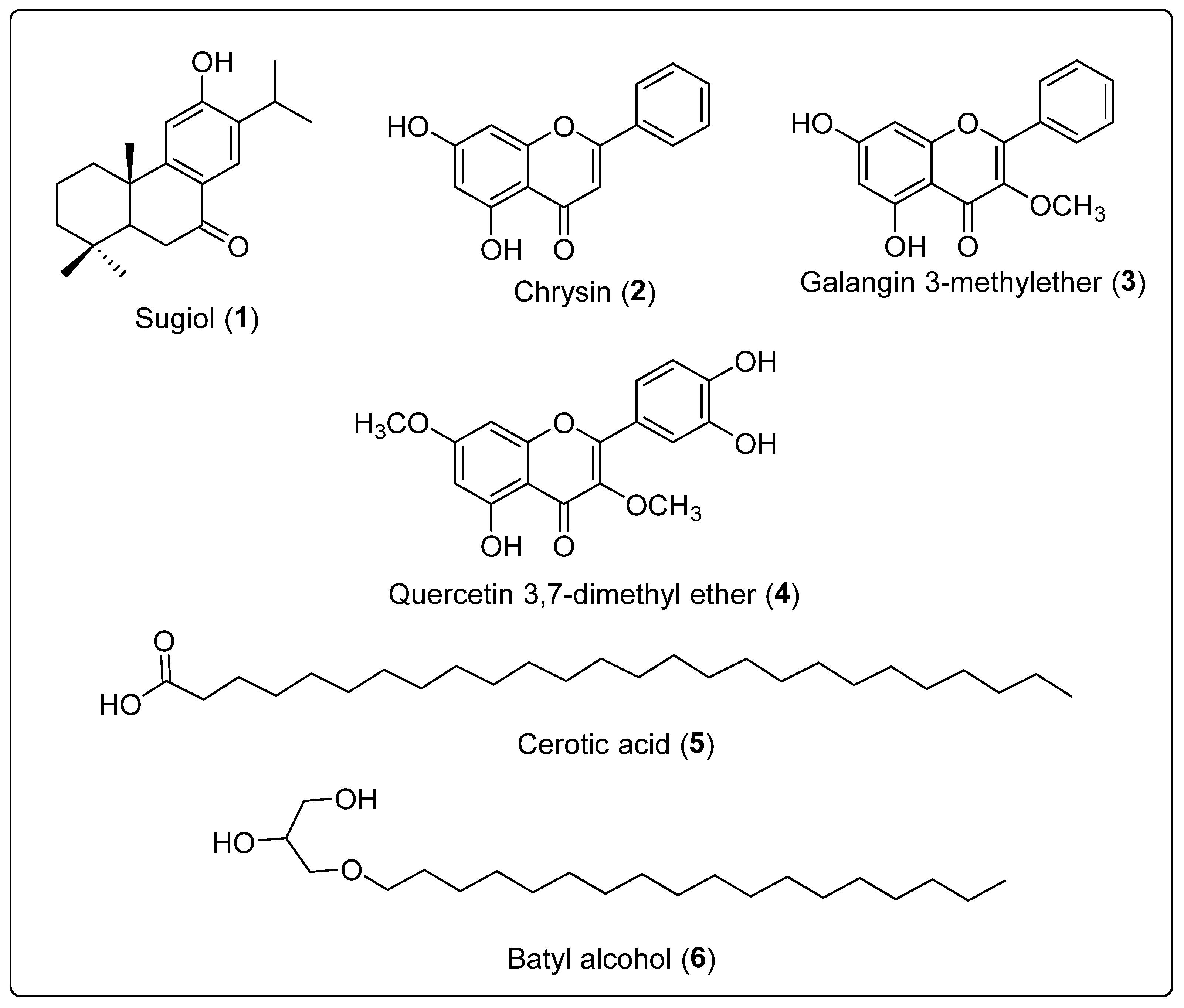
Fractionation was carried out via open-column chromatography of the ethanolic propolis extract collected from San Juan del Río in the state of Queretaro, central Mexico, enabling the isolation of six compounds (Figure 2). The study of the NMR spectra (Figures S1–S15) identified the compounds as sugiol (1), chrysin (2), galangin 3-methyl ether (3), quercetin 3,7-dimethyl ether (4), cerotic acid (5), and batyl alcohol (6).
The present study represents the first time that aromatic diterpene sugiol (1) has been found in Mexican propolis, indicating a significant difference between the local flora of the central and other regions of Mexico. However, chrysin, galangin, quercetin, and their derivatives are compounds widely reported in many other Mexican propolis varieties [4]. Cerotic acid, a saturated fatty acid commonly found in beeswax [13], was also isolated as part of the present research, as was an unusual alkylglycerol, known as batyl alcohol or batilol (6) (Figure 2). This latter compound has cosmetic applications and has been reported exclusively as being present in propolis from New Zealand [14].
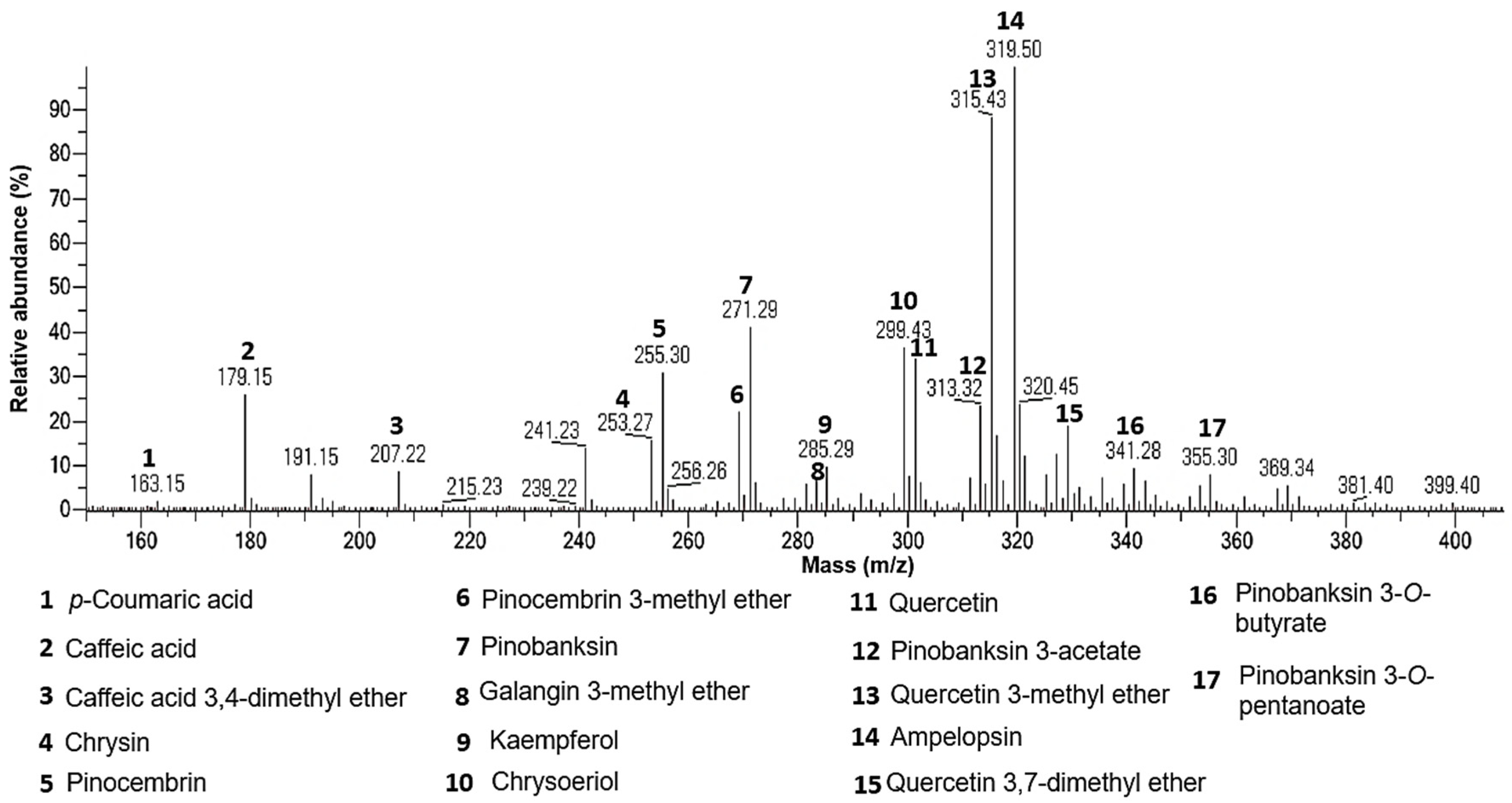
In addition to NMR characterization of the main compounds in this propolis sample, we carried out a negative mode LC-ESI-MS analysis of ethanolic extract. The LC-MS analysis reveals the presence of three phenolic acids: p-coumaric, caffeic, and caffeic acid 3,4-dimethyl ether. Moreover, fourteen flavonoids widely reported in propolis were identified: chrysin, pinocembrin, pinocembrin 5-methyl ether, pinobanksin, galangin 3-methyl ether, kaempferol, chrysoeriol, quercetin, pinobanksin 3-acetate, quercetin 3-methyl ether, ampelopsin, quercetin 3,7-dimethyl ether, pinobanksin 3-O-butyrate, and pinobanksin 3-O-pentanoate (Figure 3 and Table 1).
Figure 3 shows the mass spectrum obtained by direct injection of the propolis ethanolic extract. The identity of the seventeen compounds was established by comparing their masses and fragmentation patterns with databases and the literature [15,16,17,18,19].
Moreover, to confirm the identity of some phenolics and flavonoids such as p-coumaric acid, caffeic acid, kaempferol, and quercetin, the HPLC-DAD analysis was carried out using commercial standards (Figure S16). In addition, the presence of chrysin, galangin 3-methyl ether, and quercetin 3,7-dimethyl ether was corroborated by the NMR characterization of the isolated compounds.

3.2. Determination of Cytotoxic Activity

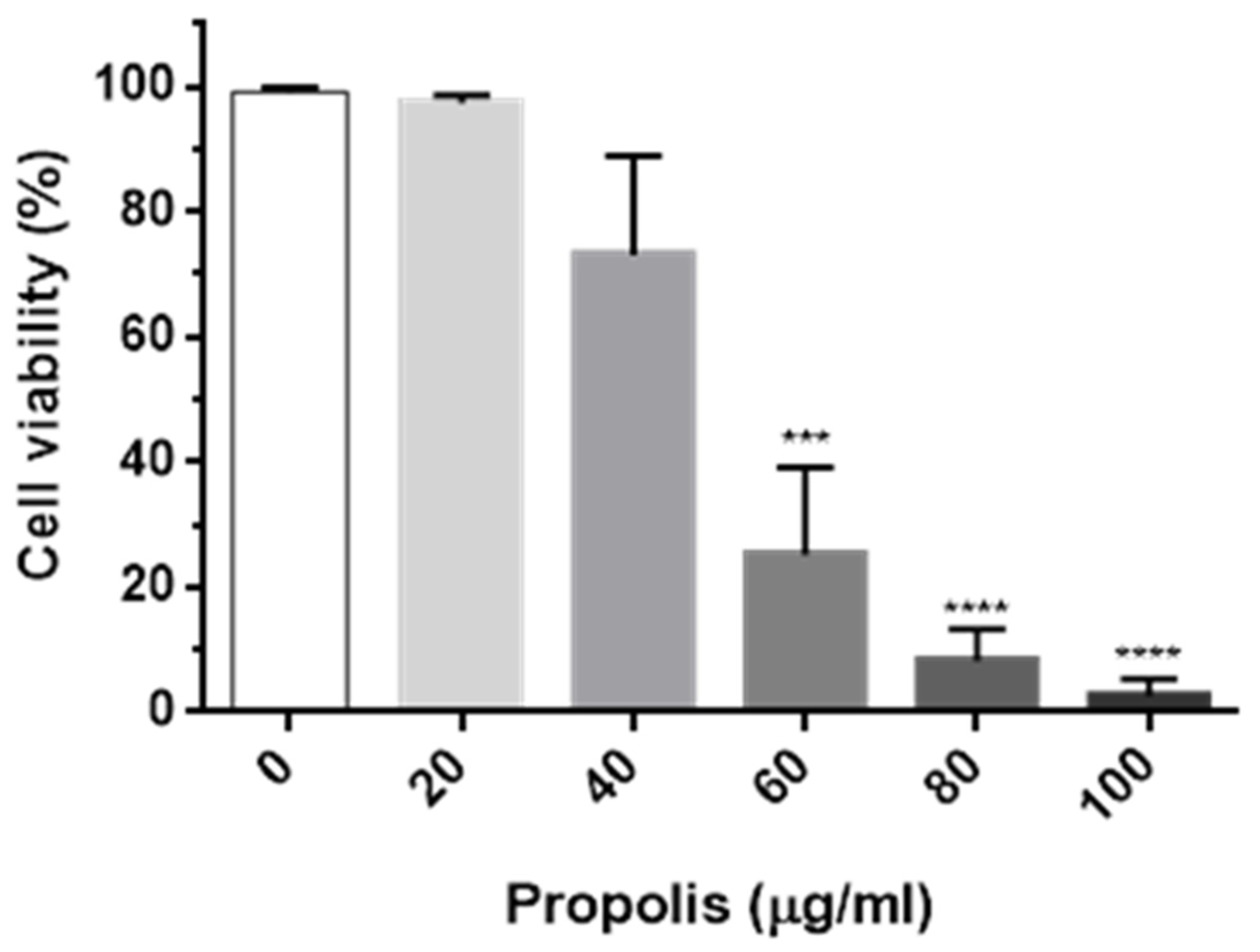
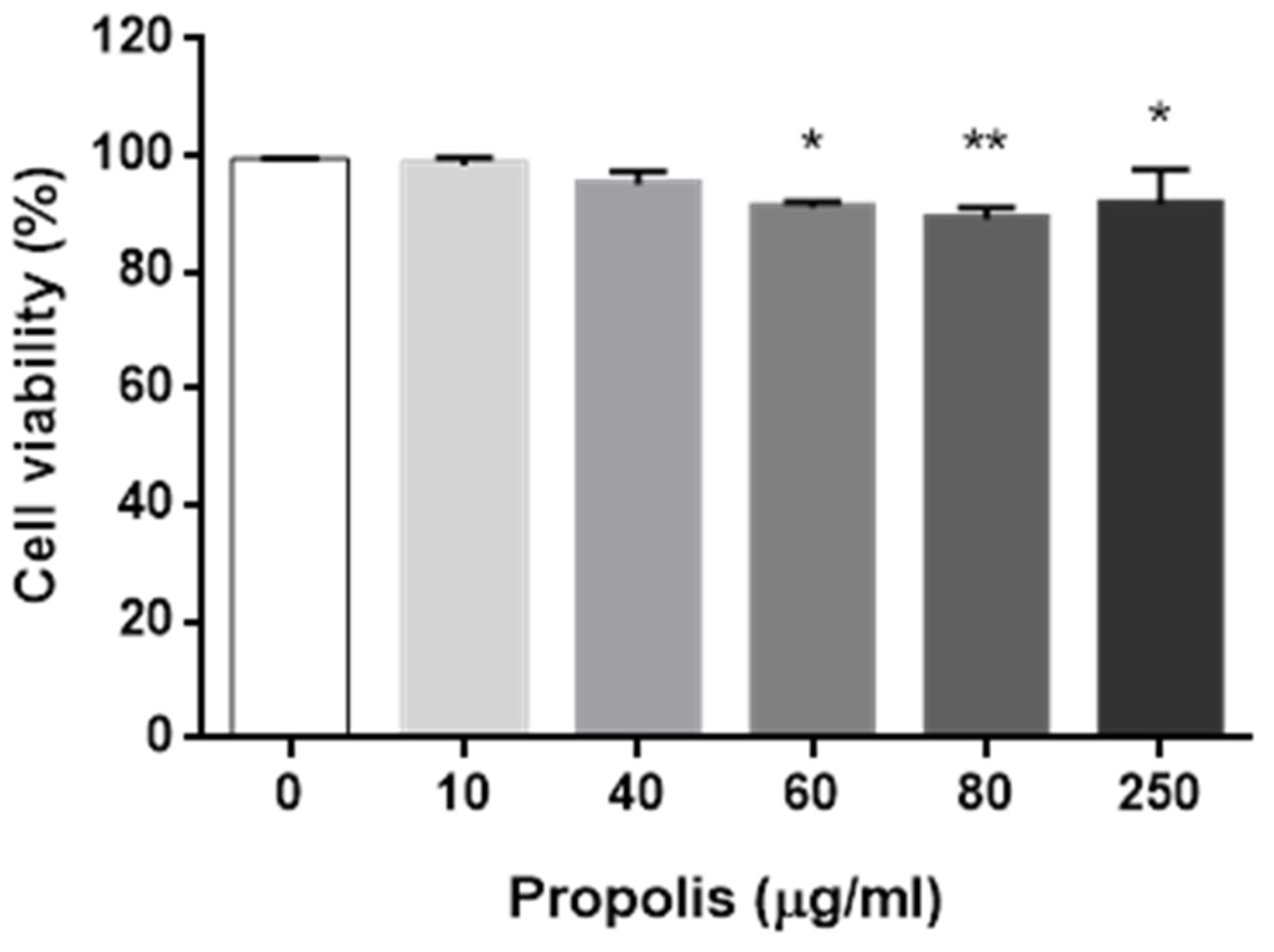
The assessment of the cytotoxic activity of the ethanolic extract on Jurkat cells showed a decrease in cell viability depending on the concentration (Figure 4). A 30% cell viability was obtained at a concentration of 60 μg/mL, while this viability was completely suppressed at 100 μg/mL. Peripheral blood mononuclear cells (PBMCs) were used to evaluate the effect of propolis on non-carcinogenic cells, with Figure 5 showing that propolis, at 250 μg/mL, only decreases cell viability by 7%.
To date, there are a few studies on the cytotoxic effect of Mexican propolis. Rivero-Cruz et al. [10] reported a low IC50 (9 µM) in glioblastoma cells for the ethanolic extract of propolis from Guanajuato State, México.
Regarding the cytotoxic effect of the ethanolic extract of our propolis, one of its main compounds (chrysin) has been shown to inhibit cancer growth through the induction of apoptosis, the alteration of the cell cycle, and the inhibition of angiogenesis [20]. The anticancer effect of galangin is mostly due to its ability to inhibit the protein kinase B (Akt), mitogen-activated protein kinase (MAPK), and cell cycle progression [21]. Sugiol, the most abundant compound in the propolis, has been reported to have potent anticancer effects, mainly in ovarian and endometrial cancers [22]. Furthermore, previous reports about the cytotoxic effect of the compounds isolated from Mexican propolis against cancer cell lines have shown a more significant cytotoxic effect than 5-fluorouracil on human fibrosarcoma HT-1080 (IC50 = 3.9 µM) and human lung adenosarcoma A549 (IC50 = 6.2 µM) [23]. In this context, the characterized compounds herein contribute to the cytotoxic effect of the ethanolic extract obtained from this propolis from central Mexico.

4. Conclusions

Six compounds were isolated in central Mexican propolis, including three flavonoids, a diterpenoid, an alkylglycerol, and a fatty acid. Therefore, sugiol and batyl alcohol are herein described for the first time in Mexican propolis, indicating a significant difference between the local flora of the central and other regions of Mexico. In addition, fourteen flavonoids and three phenolic compounds were identified. Lastly, the ethanolic extract showed cytotoxic activity, in a concentration-dependent manner, on the Jurkat cell line, which can be mainly attributed to sugiol, chrysin, and galangin, some of the most abundant anticancer compounds found in this propolis.

Supplementary Materials

The following supporting information can be downloaded at: https://www.mdpi.com/article/10.3390/compounds6010010/s1; Figure S1. 1H NMR spectrum of compound 1 (sugiol) (Py-d5, 500 MHz); Figure S2. 13C NMR spectrum of compound 1 (sugiol) (Py-d5, 125 MHz); Figure S3. HMBCs of sugiol; Figure S4. 1H NMR spectrum of compound 2 (chrysin) (DMSO-d6, 500 MHz); Figure S5. 13C NMR spectrum of compound 2 (chrysin) (DMSO-d6, 125 MHz); Figure S6. 13C NMR spectrum of compound 3 (galangin 3-methylether) (DMSO-d6, 125 MHz); Figure S7. 1H NMR spectrum of compound 4 (quercetin 3,7-dimethyl ether) (Py-d5, 500 MHz); Figure S8. 13C NMR spectrum of compound 4 (quercetin 3,7-dimethyl ether) (Py-d5, 125 MHz); Figure S9. 1H-1H COSY of quercetin 3,7-dimethyl ether (4); Figure S10. 1H NMR spectrum of compound 5 (cerotic acid) (Py-d5, 500 MHz); Figure S11. 13C NMR spectrum of compound 5 (cerotic acid) (Py-d5, 125 MHz); Figure S12. HSQC of cerotic acid (5); Figure S13. 1H NMR spectrum of compound 6 (batyl alcohol) (Py-d5, 500 MHz); Figure S14. 13C NMR spectrum of compound 6 (batyl alcohol) (Py-d5, 125 MHz); Figure S15. 13C NMR-DEPT-135 spectrum of compound 6 (batyl alcohol) (Py-d5, 125 MHz). Figure S16. HPLC-DAD chromatogram of the ethanolic extract of propolis at 280 nm.

Author Contributions

Conceptualization, E.R.-d. and M.B.; methodology, E.R.-d., J.E.B., G.G.-A., F.S.-M., M.A.R.-L. and C.G.-G.; formal analysis, E.R.-d., F.S.-M. and C.G.-G.; investigation, E.R.-d. and M.B.; resources, E.R.-d., G.G.-A., J.E.B. and M.B.; data curation, J.E.B., G.G.-A. and M.A.R.-L.; writing—original draft preparation, E.R.-d.; writing—review and editing, E.R.-d. and M.B. All authors have read and agreed to the published version of the manuscript.

Funding

This research received no external funding.

Data Availability Statement

The original contributions presented in this study are included in the article/Supplementary Material. Further inquiries can be directed to the corresponding authors.

Acknowledgments

Eloy Rodríguez-deLeón, Moustapha Bah, and José E. Baéz thank the Laboratorio Nacional de Caracterización de Propiedades Fisicoquímicas y Estructura Molecular of the University of Guanajuato for the NMR spectra recording, and the authors thank Carolina Rodríguez Martínez for her technical support in the LC-MS analysis.

Conflicts of Interest

The authors declare no conflicts of interest.

References

  1. Belmehdi, O.; El Menyiy, N.; Bouyahya, A.; El Baaboua, A.; El Omari, N.; Gallo, M.; Montesano, D.; Naviglio, D.; Zengin, G.; Senhaji, N.S.; et al. Recent Advances in the Chemical Composition and Biological Activities of Propolis. Food Rev. Int. 2023, 39, 6078–6128. [Google Scholar] [CrossRef]
  2. El-Guendouz, S.; Lyoussi, B.; Miguel, M.G. Insight on Propolis from Mediterranean Countries: Chemical Composition, Biological Activities, and Application Fields. Chem. Biodivers. 2019, 16, e1900094. [Google Scholar] [CrossRef]
  3. Salatino, A.; Fernandes-Silva, C.C.; Righi, A.; Salatino, M.L.F. Propolis research and the chemistry of plant products. Nat. Prod. Rep. 2011, 28, 925–936. [Google Scholar] [CrossRef] [PubMed]
  4. Silva-Beltrán, N.P.; Umsza-Guez, M.A.; Ramos, D.M.; Gálvez-Ruiz, J.C.; Castro, T.L.P.; Balderrama-Carmona, A.P. Comparison of the Biological Potential and Chemical Composition of Brazilian and Mexican Propolis. Appl. Sci. 2021, 11, 11417. [Google Scholar] [CrossRef]
  5. Irigoiti, Y.; Navarro, A.; Yamul, D.; Libonatti, C.; Tabera, A.; Basualdo, M. The use of propolis as a functional food ingredient: A review. Trends Food Sci. 2021, 115, 297–306. [Google Scholar] [CrossRef]
  6. Peixoto, M.; Freitas, A.S.; Cunha, A.; Oliveira, R.; Almeida-Aguilar, C. Mixing Propolis from different apiaries and harvesting years: Towards propolis standardization? Antibiotics 2022, 11, 1181. [Google Scholar] [CrossRef] [PubMed]
  7. Herrera-López, M.G.; Rubio-Hernández, E.I.; Leyte-Lugo, M.A.; Schinkovitz, A.; Richomme, P.; Calvo-Irabién, L.M.; Peña-Rodríguez, L.M. Botanical origin of triterpenoids from Yucatecan Propolis. Phytochem. Lett. 2019, 29, 25–29. [Google Scholar] [CrossRef]
  8. Boisard, S.; Tho, T.J.; Escalante-Erosa, F.; Hernández-Chávez, L.I.; Peña-Rodríguez, L.M.; Richomme, P. Unusual chemical composition of a Mexican Propolis Collected in Quintana Roo, Mexico. J. Apic. Res. 2015, 54, 350–357. [Google Scholar] [CrossRef]
  9. Rivero-Cruz, B.E.; Rojas-Brandao, M.E.; Correa-Benítez, A.; Becker, I.; Xolalpa-Aroche, A.; Delgado-Dominguez, J.; Rivero-Cruz, J.F. Scaptotrigona Mexicana Propolis from Totonacapan Region: Chemical Composition, Antioxidant and Antibacterial Activities. Molecules 2025, 30, 1370. [Google Scholar] [CrossRef]
  10. Rivero-Cruz, J.F.; Granados-Pineda, J.; Pedraza-Chaverri, J.; Pérez-Rojas, J.M.; Kumar-Passari, A.; Díaz-Ruiz, G.; Rivero-Cruz, B.E. Phytochemical Constituents, Antioxidant, Cytotoxic, and Antimicrobial Activities of the ethanolic extract of Mexican Brown Propolis. Antioxidants 2020, 9, 70. [Google Scholar] [CrossRef]
  11. Santos, L.M.; Fonseca, M.S.; Sokolonski, A.R.; Deegan, K.R.; Araújo, R.P.C.; Umzsa-Guez, M.A.; Barbosa, J.D.V.; Portela, R.D.; Machado, B.A.S. Propolis: Types, composition, biological activities, and veterinary product patent prospecting. J. Sci. Food Agric. 2019, 100, 1369–1382. [Google Scholar] [CrossRef]
  12. Muñoz-Aguirre, P.; Zapata-Tarres, M.; Sánchez-Blas, H.; Brochier, M.; Lamadrid-Figueroa, H. Childhood acute lymphoblastic leukemia in Mexico: Mortality trend analysis, 1998–2018. Salud Públ. Méx. 2022, 64, 26–34. [Google Scholar] [CrossRef]
  13. Bharathwaaj, R.; Nagarajan, P.K.; Kabeel, A.E.; Madhu, B.; Mageshbabu, D.; Sathyamurthy, R. Formation, characterization, and theoretical evaluation of combustion of biodiesel obtained from wax esters from A. Mellifera. Alex. Eng. J. 2018, 57, 1205–1215. [Google Scholar] [CrossRef]
  14. Vyssotski, M.; Lagutin, K.; Catchpole, O. Simple lipids and hydrocarbons of New Zealand propolis wax. J. Apic. Res. 2018, 57, 271–277. [Google Scholar] [CrossRef]
  15. Santos, A.L.; Soares, M.G.; de Medeiros, L.S.; Ferreira, M.J.; Sartorelli, P. Identification of flavonoid 3-O-glycosides from leaves of Casearia arborea (Salicaceae) by UHPLC-MS DAD-ESI-HRMS/MS combined with molecular networking and NMR. Phytochem. Anal. 2021, 32, 891–898. [Google Scholar] [CrossRef]
  16. Aghakhani, F.; Kharazian, N.; Gooini, Z.L. Flavonoid constituents of Phlomis (Lamiaceae) Species using liquid chromatography mass spectrometry. Phytochem. Anal. 2018, 29, 180–195. [Google Scholar] [CrossRef]
  17. Falcao, S.I.; Vale, N.; Gomes, P.; Domingues, M.R.M.; Freire, C.; Cardoso, S.M.; Vilas-Boas, M. Phenolic profiling of Portuguese propolis by LC-MS spectrometry: Uncommon propolis rich in flavonoids glycosides. Phytochem. Anal. 2013, 24, 309–318. [Google Scholar] [CrossRef] [PubMed]
  18. Lee, J.S.; Kim, D.H.; Liu, K.-H.; Oh, T.K.; Lee, C.H. Identification of flavonoids using liquid chromatography with electrospray ionization and ion trap tandem mass spectrometry with MS/MS library. Rapid Commun. Mass. Spectrom. 2005, 19, 3539–3548. [Google Scholar] [CrossRef]
  19. Vieira de Morais, D.; Rosalen, P.L.; Ikegaki, M.; de Souza Silva, A.P.; Massarioli, A.P.; Matias de Alencar, S. Active antioxidant phenolics from Brazilian red propolis: An optimization study for their recovery and identification by LC-ESI-QTOF-MS/MS. Antioxidants 2021, 10, 297. [Google Scholar] [CrossRef]
  20. Kasala, E.R.; Bodduluru, L.N.; Madana, R.M.; Athira, K.V.; Gogoi, R.; Barua, C.C. Chemopreventive and therapeutic potential of chrysin in cancer: Mechanistic perspective. Toxicol. Lett. 2015, 233, 214–225. [Google Scholar] [CrossRef]
  21. Singh, D.; Saini, A.; Singh, R.; Agrawal, R. Galangin, as a Potential Anticancer agent. Rev. Bras. Farmacogn. 2022, 32, 331–343. [Google Scholar] [CrossRef]
  22. Bajpai, V.K.; Sonwal, S.; Hwang, S.-K.; Shukla, S.; Khan, I.; Dey, D.K.; Chen, L.; Simal-Gandara, J.; Xiao, J.; Huh, Y.S.; et al. Sugiol, a diterpene: Therapeutic actions and molecular pathways involved. Pharmacol. Res. 2022, 163, 105313. [Google Scholar] [CrossRef] [PubMed]
  23. Li, F.; Awale, S.; Tezuka, Y.; Kadota, S. Cytotoxicity of constituents from Mexican propolis against a panel of six different cancer cell lines. Nat. Prod. Commun. 2010, 5, 1601–1606. [Google Scholar] [CrossRef] [PubMed]
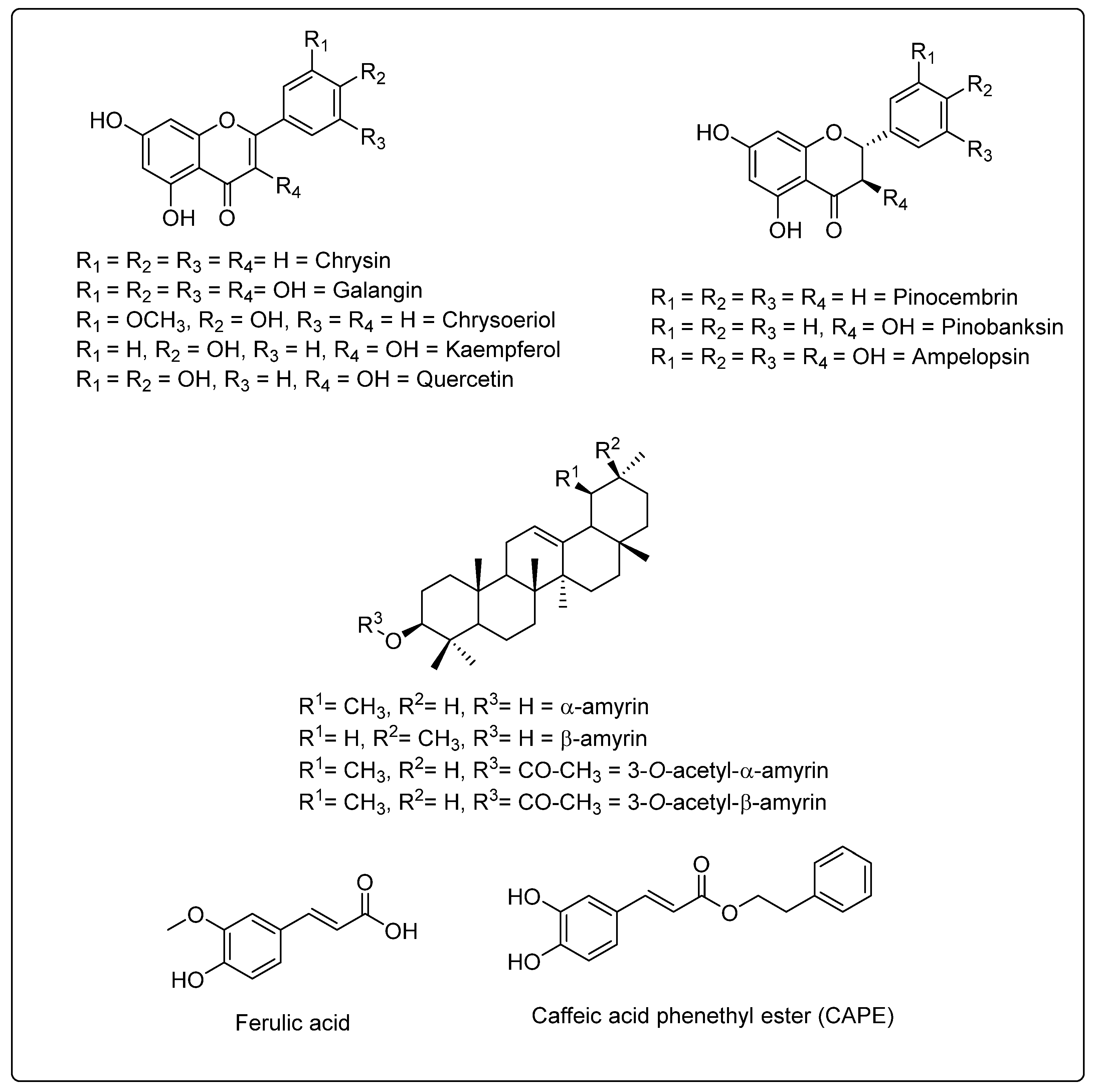
Figure 1. Structure of the main compounds identified in studies of Mexican propolis.
Compounds 06 00010 g001
Figure 2. Structures of compounds 16 isolated from central Mexican propolis.
Compounds 06 00010 g002
Figure 3. ESI(-)-MS spectrum obtained by direct injection of the ethanolic extract of propolis.
Compounds 06 00010 g003
Figure 4. Effect of propolis on Jurkat cells. Cells (1 × 10⁵) were plated onto 24-well plates and treated for 24 h with different concentrations of propolis (0, 20, 40, 60, 80, 100 μg/mL). Cell viability was evaluated by trypan blue technique and expressed as a percentage of control group. Data are represented as mean and standard error of three independent experiments in triplicate. *** p < 0.001, **** p < 0.0001 compared to the control group.
Compounds 06 00010 g004
Figure 5. Effect of propolis on peripheral blood mononuclear cells. Cells (1 × 10⁵) were plated onto 24-well plates and treated for 24 h with different concentrations of propolis (0, 10, 40, 60, 80, and 250 μg/mL). Cell viability was evaluated with trypan blue technique and was expressed as percentage of control group. Data are represented as mean and standard error of three independent experiments in triplicate. * p < 0.05, ** p < 0.01 compared to the control group.
Compounds 06 00010 g005
Table 1. Compounds identified in ethanolic extract of propolis by comparison of their mass to databases and literature.
PeakPhenolic Compounds[M-H] (m/z)FragmentsMethod of Identification
1p-coumaric acid163.15145, 119, 93a, b
2Caffeic acid179.15179, 135a, b
3Caffeic acid 3,4-dimethyl ether207.22163, 145b
Flavonoids
4Chrysin253.27225, 209, 151b, c
5Pinocembrin255.30213, 211, 151b
6Pinocembrin 3-methyl ether269.27255, 227, 165b
7Pinobanksin271.29253, 225, 151b
8Galangin 3-methyl ether283.30268, 239, 211b, c
9Kaempferol285.29273, 252a, b
10Chrysoeriol299.43284, 276b
11Quercetin301.20179, 151a, b
12Pinobanksin 3-acetate313.32271, 253b
13Quercetin 3-methyl ether315.43271, 255, 151b
14Ampelopsin319.50301, 193b
15Quercetin 3,7-dimethyl ether329.34299, 285, 271b, c
16Pinobanksin 3-O-butyrate341.28271, 253b
17Pinobanksin 3-O-pentanoate355.30271, 253b
a: Retention time; b: mass spectrum; c: NMR data.
Disclaimer/Publisher’s Note: The statements, opinions and data contained in all publications are solely those of the individual author(s) and contributor(s) and not of MDPI and/or the editor(s). MDPI and/or the editor(s) disclaim responsibility for any injury to people or property resulting from any ideas, methods, instructions or products referred to in the content.