Article

Prevalence and Risk Analysis of Human Geohelminths in Rural Communities of Ilalo, Ecuador

by
Fernando Pazmiño
1,2,3,*,
Gissela García
2,4,
Karla Novoa
1 and
Stefan Michael Geiger
3
1
College of Veterinary Medicine and Animal Husbandry, Central University of Ecuador, Quito 170521, Ecuador
2
College of Veterinary Medicine and Agronomy, UTE University, Quito 170129, Ecuador
3
Institute of Biological Sciences, Universidade Federal de Minas Gerais, Belo Horizonte 31270-901, Brazil
4
Institut de Recerca i Tecnologia Agroalimentàries, 17121 Girona, Spain
*
Author to whom correspondence should be addressed.
Parasitologia 2026, 6(1), 8; https://doi.org/10.3390/parasitologia6010008 (registering DOI)
Submission received: 14 November 2024 / Revised: 26 September 2025 / Accepted: 27 November 2025 / Published: 2 February 2026

Abstract

Soil-transmitted helminthiases (STH) represent the most prevalent helminth infections worldwide and are closely associated with inadequate sanitation and poverty. During 2020 and 2021, a significant information gap emerged as a consequence of the SARS-CoV-2 pandemic. Therefore, the objective of this study was to provide an updated post-pandemic overview by estimating the prevalence of STH, identifying the etiological agents involved, and analyzing the risk factors associated with these infections. The study was conducted in Ilaló, Pichincha, Ecuador, where a total of 320 individuals were examined using three diagnostic methods: Kato-Katz, McMaster, and Mini-FLOTAC. Of these, 73 participants tested positive (22.81%, 95% CI: 22.3–23.4). The most frequently identified parasite was Ascaris lumbricoides (74.73%, 95% CI: 73.7–75.8). The main risk factors identified were pig farming (OR: 4.16; 95% CI: 2.34–7.42) and vegetable and fruit cultivation (OR: 11.66; 95% CI: 4.32–41.08). These findings provide relevant epidemiological data on STH in the region, demonstrating a reduction in infection prevalence likely associated with improved prevention and control measures implemented during the COVID-19 pandemic.

1. Introduction

Soil-transmitted helminths (STH) are among the most prevalent parasitic infections worldwide, strongly associated with poor sanitation, inadequate hygiene, and poverty. The principal etiological agents include the nematodes Ascaris lumbricoides Linnaeus, 1758, Trichuris trichiura Linnaeus, 1771, Strongyloides stercoralis Babay, 1876 and hookworms (Necator americanus Stiles, 1903 and Ancylostoma duodenale Dubini 1843) [1,2]. Transmission occurs either by ingestion of infective eggs present in soil, food, or water contaminated with human feces (A. lumbricoides and T. trichiura), or through skin penetration by infective larvae present in contaminated soil, as in the case of hookworm disease [3,4].
Lack of economic development and less access to sanitary infrastructure and treated water, garbage collection, and hygiene services have contributed to the increased burden of STH in rural populations [5]. In children, heavy infections can compromise physical growth and cognitive development, leading to iron-deficiency anemia, poor academic performance, and school absenteeism [6,7]. In adults and the elderly, STH infections are frequently associated with gastrointestinal disorders, increased susceptibility to secondary infections, and comorbid digestive pathologies, contributing to reduced work productivity and chronic absenteeism [8].
In Latin America, the prevalence of intestinal parasites has remained relatively stable over the last six decades, despite technological and scientific advances. Extremely high prevalence rates have been documented in countries such as Brazil (89.5%), Perú (65%), and Venezuela (79%), with A. lumbricoides consistently identified as the most widespread parasite across both tropical and temperate regions [8,9]. In Ecuador, STH prevalence varies by geographic region, with average estimates around 40%. However, in remote populations and specific ethnic groups, prevalence can exceed 50% [10].
Given this epidemiological context, the planning and evaluation of control interventions for STH require valid, accurate, and up-to-date information. The omission of existing soil-transmitted helminth (STH) control programs, such as mass drug administration (MDA), is a relevant limitation that should be acknowledged, as these interventions are central to understanding infection dynamics in endemic regions. Over the past two decades, large-scale deworming programs—often school-based and implemented with albendazole or mebendazole—have been shown to substantially reduce prevalence and intensity of STH infections [8,11].
Unfortunately, catastrophic events can disrupt surveillance systems, as evidenced by the SARS-CoV-2 pandemic beginning in 2020, which generated profound social and health-related impacts worldwide. This viral disease, characterized by high transmissibility and multisystem involvement (pulmonary, renal, and cardiovascular), exhibited elevated morbidity and mortality rates [11,12]. Mandatory quarantines limited access to processed foods and safe drinking water, forcing rural households to rely on artisanal livestock farming, small-scale horticulture, and untreated well water—conditions that significantly increased exposure risk to STH. Additionally, the reallocation of healthcare resources toward pandemic control diminished government capacity for STH surveillance, prevention, and treatment, leading to insufficient epidemiological data and weakened intervention strategies. In many mestizo and Indigenous communities, this vacuum fostered self-medication practices, including widespread prophylactic use of ivermectin, which in some cases worsened health outcomes [11,12].
The subsequent development of vaccines against SARS-CoV-2 and the adoption of enhanced sanitary practices—such as frequent handwashing, disinfection of footwear and clothing, and improved domestic hygiene—proved effective in mitigating viral transmission. Notably, these practices also contributed to reducing STH transmission, underscoring the interconnection between COVID-19 control strategies and parasitic disease management [11,12,13]. This convergence of preventive measures highlights the complexity of global health responses and emphasizes the importance of integrated, cross-sectoral approaches to address interconnected public health challenges [14,15].
The potential association between the COVID-19 pandemic and an increased risk of soil-transmitted helminth (STH) infections is biologically and epidemiologically plausible; however, empirical evidence directly supporting this link remains limited. Emerging studies indicate that the pandemic exacerbated structural vulnerabilities in low- and middle-income countries by restricting access to healthcare services, interrupting preventive chemotherapy programs, and worsening socioeconomic conditions that favor STH transmission. The World Health Organization, for instance, reported substantial disruptions in mass drug administration (MDA) campaigns for neglected tropical diseases, including STH, raising concerns about a possible resurgence of infections [11].
Therefore, the objective of this study was to characterize the epidemiology and risk factors associated with major soil-transmitted helminthiases in the post–SARS-CoV-2 pandemic context among rural inter-Andean communities of the Ilaló Strip, Ecuador.

2. Materials and Methods

2.1. Study Population

The study was conducted between June 2021 and May 2022 in the area known as the Ilaló Strip, located in Pichincha Province, Ecuador, between the Tumbaco and Los Chillos valleys, in proximity to Quito. Ilaló is an inactive volcanic formation surrounded by rural communities and agricultural zones. The region is characterized by a dry temperate climate with microclimatic variations influenced by altitude and vegetation. The mean annual temperature ranges between 14 °C and 22 °C. The area combines natural landscapes, ecotourism activities, and progressive urban development.
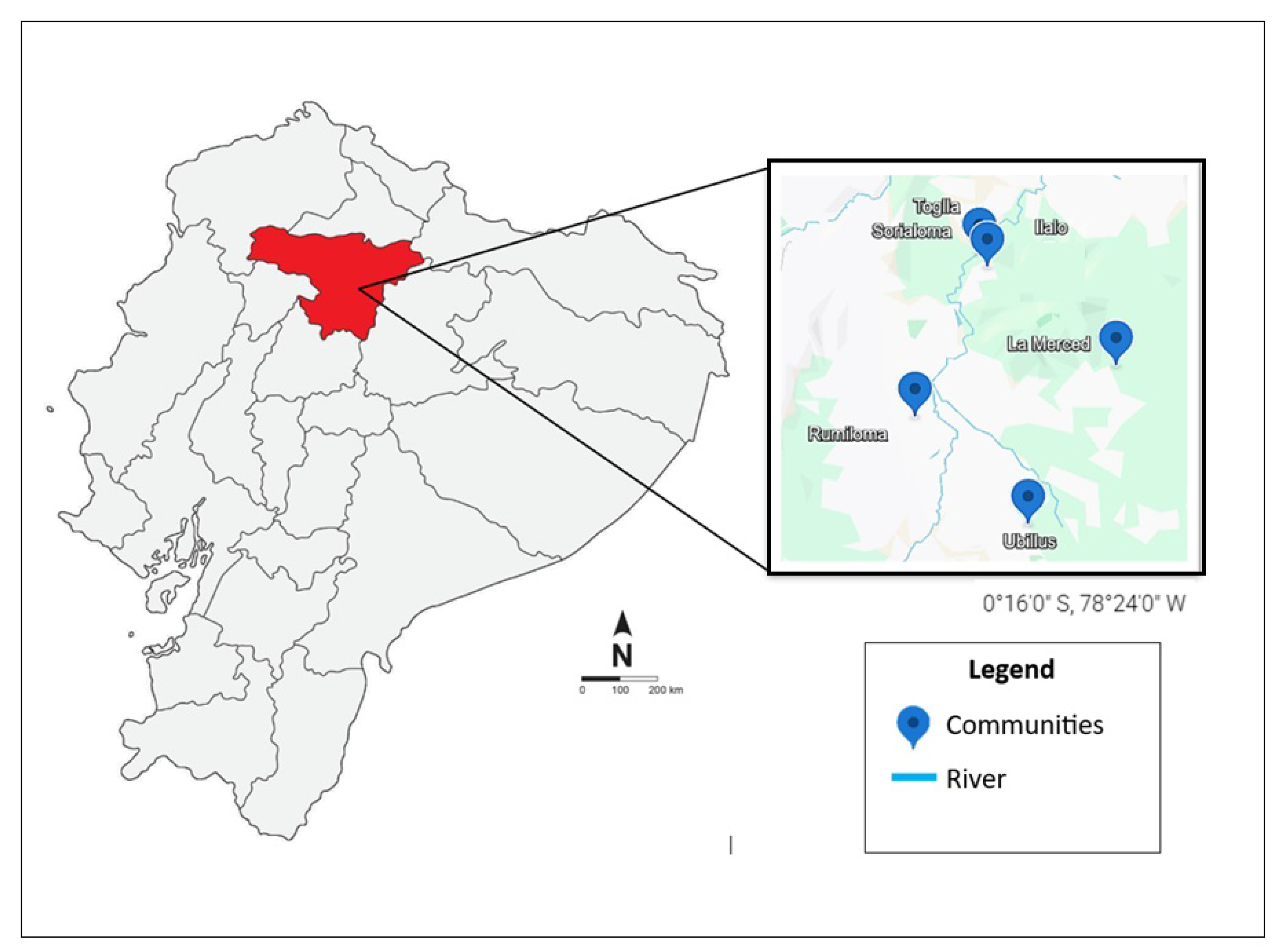
For this investigation, the total population of the surrounding communities (n = 2432) was established based on data from the 2022 population census and the registration records of the Los Chillos Zonal Administration. The sample size was estimated using the statistical software R version 4.0, assuming an expected prevalence of 30%, a 95% confidence level, and a 5% margin of error, yielding a required sample of 322 individuals. The communities included in the survey were La Merced (0°36′66.67″ S, 78°45′00″ W), La Toglla (0°22′31.14″ S, 78°49′78.1″ W), Sorialoma (0°15′17.6″ S, 78°26′50.4″ W), Rumiloma (0°19′55.2″ S, 78°29′11.9″ W), and Ubiyus (0°25′0″ S, 78°22′60″ W), as depicted in Figure 1.
A descriptive cross-sectional survey was conducted in adults, elder adults and children, with and without STH symptomatology. Each participant completed a standardized questionnaire; for minors, participation was assisted and authorized by their parents or legal guardians. Inclusion criteria required the provision of signed informed consent and voluntary agreement to participate in the study. Exclusion criteria included a history of antiparasitic treatment within the six months preceding sample collection.

2.2. Selection of Samples and Parasitological Methods

Three consecutive stool samples (minimum 15 g each) were collected from every participant and processed within 24 h at the Parasitology Laboratory of the Central University of Ecuador. All samples were analyzed in parallel using three standardized coproparasitological techniques: Mini-FLOTAC, McMaster, and Kato–Katz. The Kato–Katz technique was performed using the 41.7 mg template, according to WHO recommendations [16]. The McMaster method was conducted according to the standard protocol: 2 g of stool were homogenized and filtered in 30 mL of Sheather’s sugar solution with a specific gravity of 1.20 (Flotation Solution 1, FS1). Two McMaster counting chambers (1 mL each) were filled per sample, and eggs were allowed to float for three minutes. Counts were multiplied by 50 to obtain the number of eggs per gram of feces (EPG) [17]. The Mini-FLOTAC method was applied according to FLOTAC protocols [18]. Two grams of stool were homogenized in 2 mL of 5% formalin, filtered, and subsequently diluted in 36 mL of saturated sodium chloride solution with a specific gravity of 1.20 (Flotation Solution 2, FS2). After a flotation period of 10 min, the reading disc was translated, and intestinal helminth eggs were detected and quantified within the counting grid. The intensity of infection with soil-transmitted helminths (STH) was classified according to the thresholds established by the World Health Organization (WHO) using the Kato–Katz technique. For Ascaris lumbricoides, infection intensity was defined as mild (<5000 eggs per gram [EPG]), moderate (5000–49,999 EPG), and heavy (≥50,000 EPG). For Trichuris trichiura, thresholds were mild (1–999 EPG), moderate (1000–9999 EPG), and heavy (≥10,000 EPG). For hookworms (Necator americanus and Ancylostoma duodenale), infection intensity was categorized as mild (1–1999 EPG), moderate (2000–3999 EPG), and heavy (≥4000 EPG) [16]. The variable type of infection was defined as either monoparasitic infection, corresponding to infection with a single STH species, or polyparasitic infection, corresponding to concurrent infection with two or more STH species. Within polyparasitic cases, types of mixed infection were further specified based on the particular combinations of species detected.

2.3. Statistical Analysis

All data were entered into an Excel file (Microsoft 2010) and subsequently analyzed using EPIDAT version 3.1. Demographic and sanitary variables of the participants—including age, sex, source of water consumption, excreta disposal, handwashing practices, disinfection habits, footwear use, waste management, animal husbandry, vegetable and fruit cultivation, as well as washing and disinfection of produce—were treated as categorical variables and described using absolute frequencies and percentages.
The prevalence, agent, type of infection, types of mixed infection and its 95% confidence interval were calculated per community. For each community, prevalence estimates, etiological agents, type of infection, and patterns of mixed infections were calculated along with their corresponding 95% confidence intervals (CI). Prevalence was defined as the proportion of positive samples among the total number of samples analyzed. A case was classified as positive if at least one of the diagnostic techniques (Kato–Katz, Mini-FLOTAC, or McMaster) yielded a positive result, and as negative if all three techniques produced negative findings. The intensity of infection was determined exclusively by the Kato–Katz method and expressed as eggs per gram of feces (EPG), categorized into mild, moderate, and heavy infections according to WHO guidelines.
Risk factor analysis for soil-transmitted helminth (STH) infections was conducted through both bivariate and multivariate approaches. In the bivariate analysis, associations between STH infection and demographic or sanitary variables were assessed using Pearson’s χ2 test, and crude Odds ratio (OR) with 95% CI were calculated. Variables showing statistical significance in the bivariate analysis were subsequently included in a multiple logistic regression model to estimate adjusted ORs and their 95% CI. Statistical significance was defined at p < 0.05, high significance at p < 0.01, and very high significance at p < 0.001.

3. Results

3.1. Characteristics of Study Population

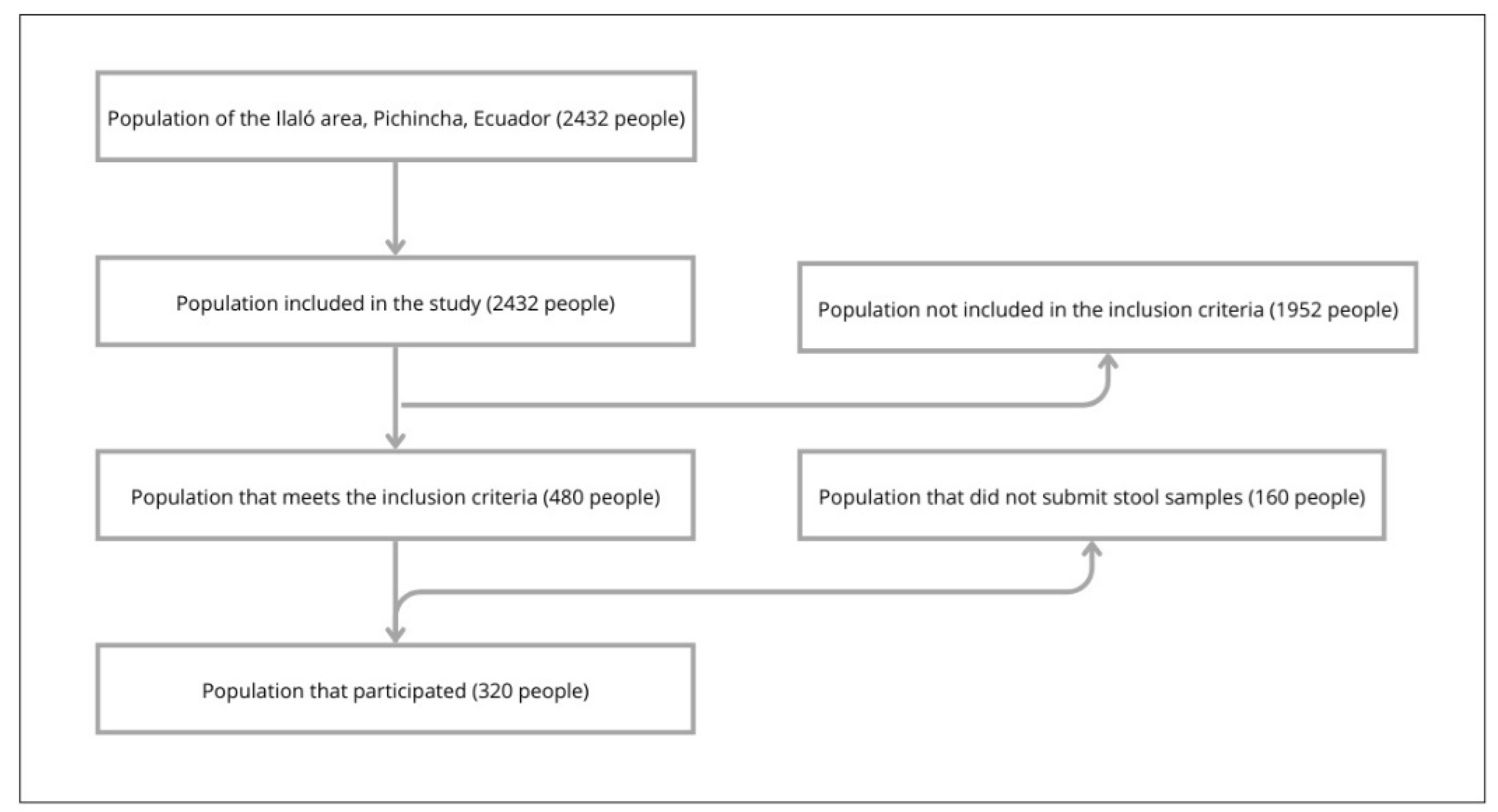
A total of 320 participants out of 2432 inhabitants from the five studied communities met the eligibility criteria and consented to participate (Scheme 1). The distribution of enrolled individuals was as follows: La Merced, 87/635; La Toglla, 68/438; Sorialoma, 59/356; Rumiloma, 40/412; and Ubiyus, 66/591. The demographic and sanitary characteristics of the study population are summarized in Table 1. The mean age was 36.5 years (range: 17–65 years), and the proportion of women was higher than that of men (62.19% vs. 40.94%). Regarding water consumption, the majority reported access to drinking water (75.31%). In terms of waste management, the predominant method was municipal garbage collection (69.69%). With respect to animal husbandry, 98.44% of respondents reported raising animals, among which pig farming represented 22.5% of cases.

3.2. Prevalence of STH

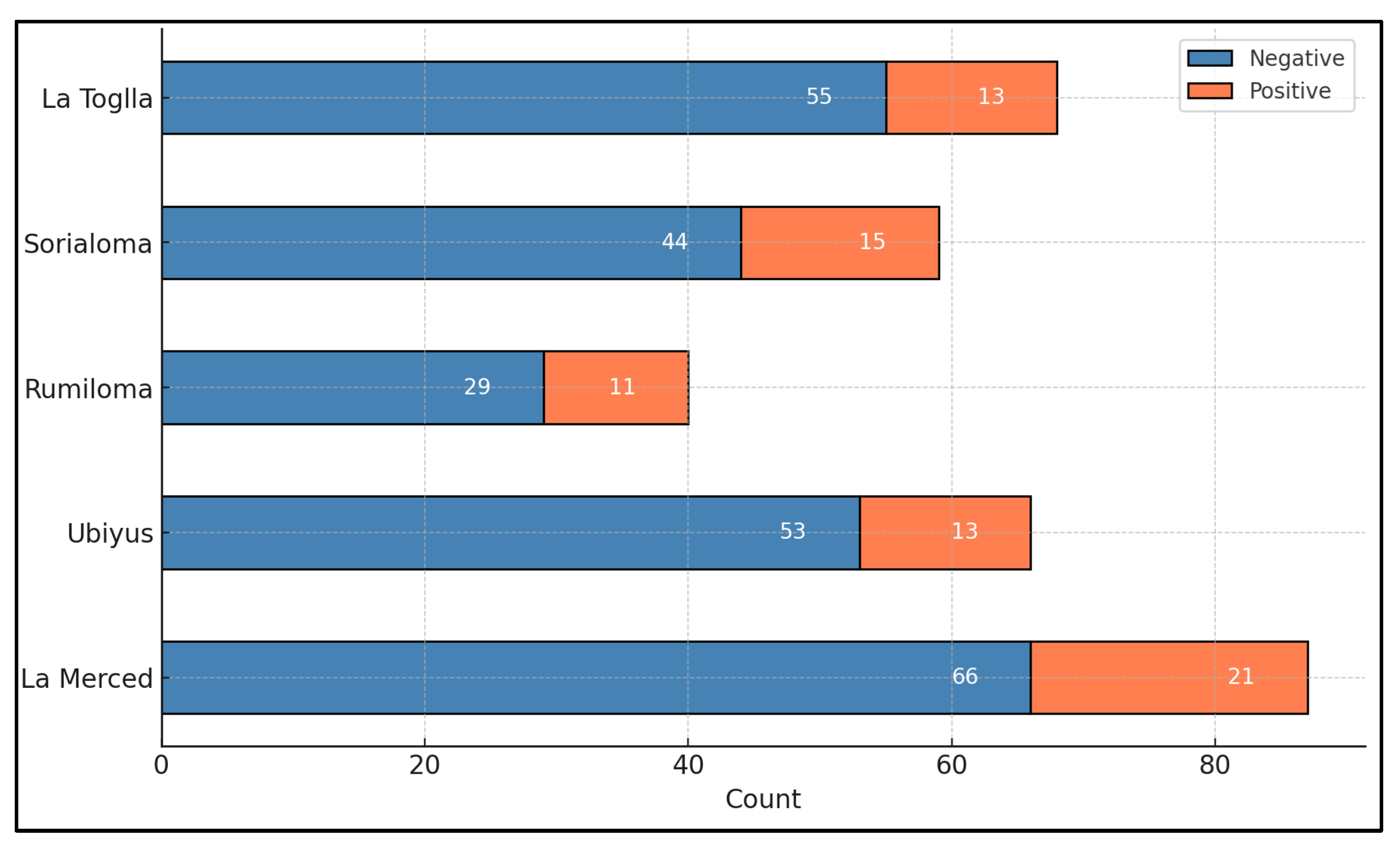
A total of 73 stool samples tested positive for soil-transmitted helminths (STH) among the 320 individuals examined, corresponding to an overall prevalence of 22.81% (95% CI: 22.3–23.4). Diagnostic performance across the parasitological methods was comparable, with 71 infections detected using Mini-FLOTAC, 69 with the McMaster technique, and 68 with the Kato–Katz method (p > 0.05). At the community level, prevalence was as follows: La Toglla, 13/68 (19.12%; 95% CI: 17.9–20.3); Sorialoma, 15/59 (25.42%; 95% CI: 24.1–26.7); Rumiloma, 11/40 (27.50%; 95% CI: 25.9–29.1); Ubiyus, 13/66 (19.70%; 95% CI: 18.1–21.3); and La Merced, 21/87 (24.14%; 95% CI: 23.1–25.2) (Figure 2). No statistically significant variation in STH prevalence was observed between communities (p > 0.05).
No statistically significant differences were observed in STH prevalence by sex (p > 0.05). Of the positive cases, 36 (49.31%; 95% CI: 48.2–50.5) were males and 37 (50.69%; 95% CI: 49.5–51.8) were females. When stratified by age group, statistically significant differences were identified (p < 0.05), with the highest number of cases occurring among individuals aged 17–65 years (41/73; 56.16%; 95% CI: 55–57.3), followed by children aged 3–16 years (24/73; 32.88%; 95% CI: 32.7–35.0) and adults over 65 years (8/73; 10.96%; 95% CI: 9.81–12.1).
The most frequently reported parasite was A. lumbricoides (74.73%), followed by T. trichiura (13.19%) and hookworm species (12.09%), as detailed in Table 2. Overall, single-species infections were the most frequent presentation (57 cases), whereas polyparasitism was observed in 17 individuals with dual infections and in 2 individuals harboring three species simultaneously. The most prevalent co-infection pattern involved A. lumbricoides and hookworms, detected in 9 cases (64.29% of all mixed infections).

3.3. Intensity of STH Infection

The overall prevalence of STH infections was predominantly mild intensity (Table 3). Ascaris lumbricoides accounted for the highest proportion of mild infections (54/68, 73.97%), followed by T. trichiura (10/12, 71.43%) and hookworms (9/11, 81.82%). Moderate infections were mainly observed in A. lumbricoides (12/68, 16.44%), T. trichiura (2/12, 28.57%), and hookworms (2/11, 18.18%). Severe infections were rare, detected only in La Toglla with A. lumbricoides (2/68, 2.74%).

3.4. Factors Associated with STH

Bivariate logistic regression analysis (Table 4) identified multiple epidemiological factors significantly associated with soil-transmitted helminth (STH) infection. Pearson’s chi-square (χ2) test was first applied to explore crude associations between categorical variables, revealing statistically significant differences that were subsequently examined through logistic regression modeling. Age group showed a significant association (χ2 = 7.90, df = 2, p < 0.05), with individuals aged 3–18 years exhibiting the highest prevalence and increased odds of infection (OR = 1.85; 95% CI: 1.02–3.36). Environmental exposures were also relevant determinants: animal husbandry (χ2 = 14.05, df = 2, p < 0.001), particularly pig rearing (OR = 4.16; 95% CI: 2.34–7.42), and fruit/vegetable cultivation (χ2 = 165.62, df = 1, p < 0.001; OR = 11.66; 95% CI: 4.32–41.08) were strongly associated with infection risk. Similarly, waste disposal practices were significantly linked to STH prevalence (χ2 = 17.74, df = 3, p < 0.001).
In contrast, hygiene-related practices exhibited strong inverse associations. Disinfection habits (χ2 = 32.96, df = 1, p < 0.001; OR = 0.15; 95% CI: 0.04–0.53) and proper washing/disinfection of fruits and vegetables (χ2 = 102.04, df = 1, p < 0.001; OR = 0.004; 95% CI: 0.0002–0.033) were independently associated with substantially reduced odds of infection, underscoring their role as critical protective behaviors. No significant associations were observed for community of residence, gender, type of water source, excreta disposal system, handwashing frequency, or shoe use (p > 0.05).
Multivariate logistic regression analysis (Table 5) corroborated the associations identified in the bivariate models, providing robust evidence of the epidemiological determinants of STH infection. Age was a significant factor, with individuals aged 3–18 years exhibiting markedly increased odds of infection (OR = 4.87; 95% CI: 1.17–25.81), underscoring the heightened vulnerability of school-aged populations. Likewise, specific environmental exposures—particularly pig farming (OR = 3.11; 95% CI: 1.80–12.05) and fruit/vegetable cultivation (OR = 7.40; 95% CI: 3.25–22.06)—were strongly associated with infection risk, reflecting their importance as context-specific drivers of transmission.
In contrast, hygiene-related practices demonstrated statistically significant inverse associations with STH prevalence. Regular body and hand disinfection (OR = 0.15; 95% CI: 0.03–0.53) and proper washing/disinfection of fruits and vegetables (OR = 0.004; 95% CI: 0.0002–0.033) were associated with substantially reduced odds of infection. While these findings do not establish causality, they highlight the relevance of behavioral and sanitary measures as potential mitigating factors in transmission dynamics. Collectively, these results emphasize the dual role of environmental exposures and preventive practices in shaping the epidemiological profile of STH within the study population.

4. Discussion

In this study, the prevalence of A. lumbricoides, T. trichiura, and hookworms was 22.81%, which is lower than the national and regional averages that generally exceed 30%. Nevertheless, A. lumbricoides remained the predominant species. Previous surveys in Quito, Ecuador, reported prevalences of 35.5% for A. lumbricoides and 0.5% for T. trichiura [19], whereas in remote Amazonian communities of Paquisha, prevalences reached 44.3% for A. lumbricoides, 23.3% for T. trichiura, and 1.8% for hookworms [20]. Previous studies have reported considerable variation in the prevalence of soil-transmitted helminth (STH) infections across Latin America. Earlier surveys documented an overall prevalence of 27.9%, with species-specific rates of 18.5% for Ascaris lumbricoides, 19.3% for Trichuris trichiura, and 5.0% for hookworms [21]. More recent investigations indicated prevalence values as high as 45.31% among children, with A. lumbricoides remaining the predominant species [22]. At the regional level, prevalence estimates of 23.3% have been described, again dominated by A. lumbricoides (33.9%). In contrast, markedly higher levels have been reported in other areas (72%) [23], although in these cases A. lumbricoides accounted for only 12.2% and hookworms for 1.11%. Additional surveys have documented prevalences of 25.2% for A. lumbricoides, 14.8% for T. trichiura, and 4.4% for hookworms [24].
Compared with historical data, our findings indicate a decline in prevalence, which may be partially explained by behavioral and sanitary practices adopted during the SARS-CoV-2 pandemic, such as improved hand hygiene, increased use of disinfectants, and restrictions on mobility that reduced environmental exposure. Similar post-pandemic epidemiological shifts have been described in other parasitic and infectious diseases, suggesting that public health crises can indirectly modify patterns of transmission of endemic pathogens [25].
The observed reduction, however, should be interpreted with caution. Temporary behavioral changes induced by the pandemic may not persist once sanitary vigilance diminishes, which could lead to a rebound in transmission, as reported in other regions where STH control was interrupted by COVID-19-related disruptions. These findings highlight the critical importance of maintaining sustainable preventive strategies rather than relying on circumstantial factors associated with global health emergencies [26].
The consumption of untreated water and inadequately washed food has been shown to increase the risk of infection by up to 90%, underscoring the persistent role of behavioral risk factors in sustaining transmission, particularly for Trichuris trichiura [25,26]. However, these practices cannot be examined in isolation, as environmental determinants exert a synergistic influence. The ecological characteristics of the Ilaló area—altitudes ranging from 1800 to 2500 m and moderate temperatures between 10 and 22 °C—create favorable conditions for the survival and development of infective stages of soil-transmitted helminths (STH). This aligns with evidence indicating that microclimatic stability enhances the persistence of helminth eggs and larvae in the environment [14,27].
Of particular concern is the predominance of A. lumbricoides, a pattern repeatedly observed in both national and regional surveys. This predominance may be attributed to the exceptional resilience of its eggs, which remain viable under fluctuating environmental conditions such as high humidity or prolonged desiccation, thus extending the window of transmission for weeks or even months [28,29].
In this study, the presence of sewage systems emerged as a key protective factor against STH infections. Previous evidence from China demonstrated that the availability of household toilets and sewage infrastructure was strongly associated with a reduced risk of parasitic infections [26], underscoring the pivotal role of sanitation in mitigating geohelminth transmission. One of the most effective interventions to control A. lumbricoides and T. trichiura is the implementation of sanitary facilities such as private toilets, latrines, or communal restrooms [30,31]. However, despite their initial acceptance, these facilities often deteriorate over time in the absence of sustained oversight by health authorities and community engagement. Poor construction quality, inadequate maintenance, and lack of routine cleaning contribute to their progressive abandonment, ultimately limiting their long-term impact on reducing transmission [32].
Access to safe drinking water emerged as a critical protective factor, with more than 75% of participants (75.31%) reporting availability of potable sources. In contrast, communities dependent on untreated water exhibited significantly higher prevalence rates of soil-transmitted helminth (STH) infections [33]. Meta-analytical evidence has consistently shown that access to treated water reduces the odds of parasitic infection by nearly 50%, reinforcing the central role of water quality in shaping STH epidemiology [34].
Behavioral practices, particularly those reinforced during the COVID-19 pandemic, also contributed to mitigating infection risk. Frequent handwashing and the use of alcohol-based disinfectants acted as protective factors against STH, reflecting widespread behavioral adaptations to pandemic-related preventive measures [35,36]. During this period, routine disinfection of hands, clothing, and surfaces became mandatory in many public and commercial spaces. Hand hygiene—defined as the mechanical or chemical cleansing of hands to reduce microbial load—has long been recognized as a cornerstone of infectious disease prevention, including helminth transmission [37,38]. Evidence indicates that frequent handwashing with soap or the use of alcohol-based sanitizers substantially lowers infection risk, while specific practices such as handwashing before meals and after defecation are associated with markedly reduced odds of STH infection [39,40]. Specifically for STH, handwashing before meals (OR 0.80) and after defecation (OR 0.37) were associated with markedly reduced infection risk [41,42].
Nevertheless, the protective effects of hygiene interventions are not universally consistent. Some studies report no significant added benefit [43], when combining multiple practices, possibly because these behaviors were implemented selectively in schools but not consistently reinforced at the household level. Moreover, reductions in prevalence and intensity appear to be species-specific, with stronger associations observed for Ascaris lumbricoides compared to Trichuris trichiura or hookworm species [44,45].
Another effective protective measure identified was the consistent use of footwear, both inside and outside the household, as well as the practice of foot disinfection through footbaths when entering homes during the COVID-19 pandemic. Floors were recognized as highly contaminated surfaces, and the application of disinfectants through cleaning or footbaths significantly reduced the risk of viral transmission. Although primarily intended to mitigate COVID-19, these practices may have indirectly contributed to a reduction in soil-transmitted helminth (STH) infections by limiting contact with contaminated substrates [46]. Previous studies highlighted that farmers exhibited a significantly higher risk of STH infection (OR 1.7), attributable to prolonged exposure to agricultural environments while working barefoot under unhygienic conditions [41]. Direct skin contact with contaminated soil facilitates larval penetration and ingestion of infective stages, reinforcing the importance of footwear as a critical barrier against infection.
Given the central role of soil in STH transmission, numerous investigations have focused on the prevalence and concentration of infective eggs in diverse environmental matrices, including agricultural fields and livestock farms [47]. The persistence of STH eggs in soil, often lasting several months due to their remarkable resistance to environmental stressors, sustains the risk of infection over time [48,49]. Consequently, individuals working in or exposed to agricultural settings remain vulnerable to infection even in the absence of direct human contamination, as soils used for crop cultivation or animal husbandry may act as long-term reservoirs of infective eggs and larvae [50].
Cultivation of vegetables and fruits was identified as a high-risk factor for STH infection in this study, likely attributable to the reuse of wastewater for irrigation, a well-documented transmission route that directly affects farmers and indirectly exposes consumers. It has been reported that consumption of vegetables irrigated or fertilized with wastewater significantly increases the risk of STH transmission, the degree of contamination is strongly influenced by the quality of wastewater, the irrigation technique applied, and the crop species cultivated [51,52]. Furthermore, post-harvest practices introduce additional risks; transportation, handling, storage, and distribution of vegetables and fruits in markets may further enhance the likelihood of STH contamination [53].
Our findings also revealed a significant association between backyard pig rearing and Ascaris lumbricoides infection, compared with households without pigs. This observation is consistent with previous studies that demonstrated overlap between A. lumbricoides and Ascaris suum Goeze, 1782 in humans and pigs, raising the hypothesis that they may constitute a single species [54]. Future research should aim to clarify whether cross-infection occurs under natural conditions. This evidence highlights the domestic environment as a critical interface for transmission, underscoring the role of both humans and backyard pigs as potential reservoirs and vectors of Ascaris spp. [55]. Indeed, ascarid infestations derived from pig feces have increasingly been recognized as a relevant zoonotic source of infection for humans [56,57]. Experimental studies by Avery et al. demonstrated that A. lumbricoides and A. suum are capable of infecting and completing their life cycles in non-natural hosts [58]. More recently, occupational exposure has been identified as a key risk factor, with individuals working on pig farms, whether producers or veterinarians—showing higher infection rates compared to non-exposed populations [56].
Several limitations of this study must be acknowledged. A substantial proportion of the target population (1952 of 2432 individuals) was excluded, primarily due to the continuous use of ivermectin or chlorine dioxide as prophylactic measures against COVID-19 [59,60]. In addition, both participants and non-participants frequently lacked accurate knowledge of the specific substances administered within their communities during quarantine, raising the possibility of exposure misclassification. To mitigate this bias, only individuals who reported no antiparasitic drug use during the six months prior to sampling were included, which markedly reduced the effective sample size. The widespread promotion of ivermectin during the pandemic—driven by inconclusive randomized clinical trials with limited evidence of efficacy [61,62]—fueled its uncontrolled use at both regional and national levels. Although these studies consistently demonstrated no significant benefit in reducing emergency consultations, hospitalizations, or mortality compared with placebo [61,62], ivermectin consumption nevertheless became generalized and may have indirectly contributed to the lower prevalence of helminth infections observed in this study [63]. Importantly, one key limitation in establishing a direct causal relationship between pandemic-related preventive measures and the observed reduction in STH prevalence is the cross-sectional design of this study, which inherently precludes temporal or causal inferences.

5. Conclusions

This study provides updated evidence on the epidemiological status of soil-transmitted helminth (STH) infections in the Ilaló region, identifying key determinants that shape local transmission dynamics. The observed reduction in prevalence compared with historical data may reflect the indirect impact of sanitary and behavioral interventions adopted during the SARS-CoV-2 pandemic, including enhanced hygiene practices and widespread disinfection protocols. While such measures appear to have conferred collateral benefits in controlling STH transmission, their sustainability beyond the pandemic context remains uncertain. The findings reinforce the importance of integrating long-term, community-based health education strategies that emphasize preventive practices, particularly in vulnerable rural populations. Special attention should be directed toward improving access to safe water, sanitation, and hygiene infrastructure, as well as strengthening surveillance systems to detect and respond to changes in infection trends. Moreover, the persistence of backyard farming and small-scale animal husbandry as potential sources of environmental contamination highlights the need for tailored interventions that address zoonotic interfaces, including the safe management of livestock waste and promotion of biosecure farming practices.

Author Contributions

F.P., G.G., K.N. and S.M.G.: conceptualization of the research idea and methodology; F.P., G.G. and K.N.: investigation; F.P. and G.G.: analysis; F.P.: writing—review and editing. All authors contributed to the writing of the manuscript. S.M.G.: research supervisor. All authors have read and agreed to the published version of the manuscript.

Funding

This research received no external funding.

Institutional Review Board Statement

The study was conducted in accordance with the Declaration of Helsinki and approved by the Institutional Review Board (or Ethics Committee) of UNIVERSIDAD CENTRAL DEL ECUADOR (ID: CEISH-UCE-078, 2021, CAE-An-006, 27 April 2021). for studies involving humans and animals. Samples were collected after obtaining informed consent from patients and those set forth in the Operational Guidelines for Ethics Committees reviewing Biomedical Research (WHO 2000). All information was confidential; all patients were assigned a code according to their place of residence. After testing, all participants who tested positive were treated with albendazole 400 mg in a single dose according to WHO recommendations.

Informed Consent Statement

Informed consent was obtained from all subjects involved in the study.

Data Availability Statement

All relevant data presented in this paper, and more information can be provided upon reasonable request from the corresponding author.

Acknowledgments

We thank the Municipality of the Metropolitan District of Quito, the Central University of Ecuador and the Federal University of Minas Gerais-Institute of Biological Sciences, for their human and technical support.

Conflicts of Interest

The authors declare no conflicts of interest.

References

  1. Duque-Correa, M.A.; Goulding, D.; Rodgers, F.H.; Gillis, J.A.; Cormie, C.; Rawlinson, K.A.; Bancroft, A.J.; Bennett, H.M.; Lotkowska, M.E.; Reid, A.J.; et al. Defining the early stages of intestinal colonisation by whipworms. Nat. Commun. 2022, 13, 1725. [Google Scholar] [CrossRef]
  2. Ali, S.A.; Niaz, S.; Aguilar-Marcelino, L.; Ali, W.; Ali, M.; Khan, A.; Amir, S.; Nasreen; Alanazi, A.D.; Cossio-Bayugar, R.; et al. Prevalence of Ascaris lumbricoides in contaminated faecal samples of children residing in urban areas of Lahore, Pakistan. Sci. Rep. 2020, 10, 21815. [Google Scholar] [CrossRef]
  3. Blouin, B.; Casapia, M.; Joseph, L.; Gyorkos, T.W. A longitudinal cohort study of soil-transmitted helminth infections during the second year of life and associations with reduced long-term cognitive and verbal abilities. PLoS Neglected Trop. Dis. 2018, 12, e0006688. [Google Scholar] [CrossRef]
  4. Bethony, J.; Brooker, S.; Albonico, M.; Geiger, S.M.; Loukas, A.; Diemert, D.; Hotez, P.J. Soil-transmitted helminth infections: Ascariasis, trichuriasis, and hookworm. Lancet 2006, 367, 1521–1532. [Google Scholar] [CrossRef] [PubMed]
  5. Else, K.J.; Keiser, J.; Holland, C.V.; Grencis, R.K.; Sattelle, D.B.; Fujiwara, R.T.; Bueno, L.L.; Asaolu, S.O.; Sowemimo, O.A.; Cooper, P.J. Whipworm and roundworm infections. Nat. Rev. Dis. Primers 2020, 6, 44. [Google Scholar] [CrossRef]
  6. Leta, G.T.; Mekete, K.; Wuletaw, Y.; Gebretsadik, A.; Sime, H.; Mekasha, S.; Woyessa, A.; Shafi, O.; Vercruysse, J.; Grimes, J.E.T.; et al. National Mapping of Soil-transmitted Helminth and Schistosome Infections in Ethiopia. Parasites Vectors 2020, 13, 437. [Google Scholar] [CrossRef] [PubMed]
  7. Pullan, R.L.; Smith, J.L.; Jasrasaria, R.; Brooker, S.J. Global numbers of infection and disease burden of soil transmitted helminth infections in 2010. Parasites Vectors 2014, 7, 37. [Google Scholar] [CrossRef] [PubMed]
  8. Chammartin, F.; Scholte, R.G.; Guimarães, L.H.; Tanner, M.; Utzinger, J.; Vounatsou, P. Soil-transmitted helminth infection in South America: A systematic review and geostatistical meta-analysis. Lancet Infect. Dis. 2013, 13, 507–518. [Google Scholar] [CrossRef]
  9. Carmona-Fonseca, J.; Correa, A. Perfil hematológico de niños colombianos de zonas palúdicas y su relación con desnutrición crónica y parásitos intestinales patógenos en Urabá, Colombia, 2012. Medicas UIS 2015, 28, 196–208. [Google Scholar]
  10. Moncayo, A.L.; Lovato, R.; Cooper, P.J. Soil-transmitted helminth infections and nutritional status in Ecuador: Findings from a national survey and implications for control strategies. BMJ Open 2018, 8, e021319. [Google Scholar] [CrossRef]
  11. World Health Organization. Outbreak of Coronavirus Disease (COVID-19). Available online: https://www.who.int/es/emergencies/diseases/novel-coronavirus-2019 (accessed on 15 September 2023).
  12. Looi, M.-K. How are COVID-19 symptoms changing? BMJ 2023, 380, 3. [Google Scholar] [CrossRef]
  13. Xu, Y.; Wang, Y.; Wang, L.; Kong, X.; Yan, G.; Li, Y.; Bu, C.; Zhang, B. The prevalence of soil transmitted helminths and its influential factors in Shandong Province, China: An analysis of surveillance data from 2016 to 2020. Infect Dis. Poverty 2023, 12, 24. [Google Scholar] [CrossRef]
  14. Chachar, A.Z.K.; Khan, K.A.; Asif, M.; Tanveer, K.; Khaqan, A.; Basri, R. Effectiveness of Ivermectin in SARS-CoV-2/COVID-19 Patients. Int. J. Sci. 2020, 9, 31–35. [Google Scholar] [CrossRef]
  15. World Health Organization. Helminth Control in School-Age Children: A Guide for Managers of Control Programmes. Available online: https://www.who.int/publications/i/item/9789241548267 (accessed on 20 September 2023).
  16. World Health Organization. Bench Aids for the Diagnosis of Intestinal Parasitic Infections. Available online: https://www.who.int/publications/i/item/9789241515344 (accessed on 21 September 2023).
  17. Levecke, B.; Behnke, J.M.; Ajjampur, S.S.R.; Albonico, M.; Ame, S.M.; Charlier, J.; Geiger, S.M.; Hoa, N.T.V.; Ngassam, R.I.K.; Kotze, A.C.; et al. A comparison of the sensitivity and fecal egg counts of the McMaster egg counting and Kato-Katz thick smear methods for soil-transmitted helminths. PLoS Neglected Trop. Dis. 2011, 5, e1201. [Google Scholar] [CrossRef] [PubMed]
  18. Cringoli, G.; Rinaldi, L.; Maurelli, M.P.; Utzinger, J. FLOTAC: New multivalent techniques for qualitative and quantitative copromicroscopic diagnosis of parasites in animals and humans. Nat. Protoc. 2010, 5, 503–515. [Google Scholar] [CrossRef] [PubMed]
  19. Oña Cisneros, F.; García, D.; Costta, M.; Ruano, A. Prevalencia de parásitos intestinales y comparación de dos métodos diagnósticos en heces de niños escolares de tres parroquias del Distrito Metropolitano de Quito, provincia de Pichincha, Ecuador. Rev. Eugenio Espejo 2015, 4, 9–14. [Google Scholar]
  20. González, M.; Bermeo, S.; Cruz, C.; Sánchez, D. Prevalencia de Geohelmintos y factores socioambientales en zonas urbanas y rurales, cantón Paquisha, Ecuador. Cedamaz 2014, 4, 4–13. [Google Scholar]
  21. Taco, L.A.C.; Paredes, F.X.P. Prevalencia de parasitosis intestinal en niños y niñas del Ecuador. Rev. Científica Arbitr. Multidiscip. PENTACIENCIAS 2023, 5, 535–550. [Google Scholar] [CrossRef]
  22. Rosas-Malca, D.; Patiño-Abad, B.; Carrasco-Solano, F.; Cruz-López, C.S.; Silva-García, M. Prevalencia de helmintos intestinales y evaluación de tres técnicas coproparasitológicas para su diagnóstico. Lambayeque, Perú. Rev. Exp. Med. 2018, 4, 96–99. [Google Scholar]
  23. Jiménez, H.A.B.; Sua, E.A.V.; Gil, Ó.A.V.; Rodríguez, L.J.V.; Carvajal, B.F.V.; Carrero, S.H.S.; Agudelo, L.G. Prevalencia de parasitismo intestinal en niños de la comunidad indígena U′wa en Boyacá, Colombia. Rev. Médica Risaralda 2022, 28, 11–22. [Google Scholar] [CrossRef]
  24. Bracho-Mora, A.; Rivero-de-Rodríguez, Z.; Fuentes, M.; Vera-Montilla, F.; Aguirre-Colina, M.; Bertel, L.; Atencio-Tello, R.; Villalobos, R. Geohelmintiasis en comunidades indígenas del estado Zulia, Venezuela. Rev. Cuba. Med. Trop. 2021, 73, e612. [Google Scholar]
  25. Chaccour, C.; Casellas, A.; Matteo, A.B.-D.; Pineda, I.; Fernandez-Montero, A.; Ruiz-Castillo, P.; Richardson, M.-A.; Rodríguez-Mateos, M.; Jordán-Iborra, C.; Brew, J.; et al. The effect of early treatment with ivermectin on viral load, symptoms and humoral response in patients with non-severe COVID-19: A pilot, double-blind, placebo-controlled, randomized clinical trial. eClinicalMedicine 2021, 32, 100720. [Google Scholar] [CrossRef]
  26. Li, Y.M.; Huang, Y.; Yin, K.X.; Sheng, Z.D. Influence factor analysis of intestinal parasite infection in population. Zhonghua Yu Fang Yi Xue Za Zhi 2001, 2, 310–311. [Google Scholar]
  27. Shahbaznejad, L.; Davoudi, A.; Eslami, G.; Markowitz, J.S.; Navaeifar, M.R.; Hosseinzadeh, F.; Movahedi, F.S.; Rezai, M.S. Effects of Ivermectin in Patients With COVID-19: A Multicenter, Double-blind, Randomized, Controlled Clinical Trial. Clin. Ther. 2021, 43, 1007–1019. [Google Scholar] [CrossRef]
  28. Oyewole, O.E.; Simon-Oke, I.A. Ecological risk factors of soil-transmitted helminths infections in Ifedore district, Southwest Nigeria. Bull. Natl. Res. Cent. 2022, 46, 13. [Google Scholar] [CrossRef]
  29. Brooker, S.; Clements, A.; Bundy, D.A.P. Global epidemiology, ecology and control of soil-transmitted helminth infections. Adv. Parasitol. 2006, 62, 221–261. [Google Scholar] [CrossRef]
  30. Amadi, E.; Uttah, E. Bionomics of geohelminth nematodes in contaminated foci in parts of Abua Communities, Niger Delta, Nigeria (A). J. Appl. Sci. Environ. Manag. 2010, 14, 61–64. [Google Scholar] [CrossRef]
  31. Xiao, P.-L.; Zhou, Y.-B.; Chen, Y.; Yang, Y.; Shi, Y.; Gao, J.-C.; Yihuo, W.-L.; Song, X.-X.; Jiang, Q.-W. Prevalence and risk factors of Ascaris lumbricoides (Linnaeus, 1758), Trichuris trichiura (Linnaeus, 1771) and HBV infections in Southwestern China: A community-based cross sectional study. Parasites Vectors 2015, 8, 661. [Google Scholar] [CrossRef] [PubMed]
  32. Zdybel, J.; Cencek, T.; Karamon, J.; Kłapeć, T. Effectiveness of Selected Stages of Wastewater Treatment in Elimination of Eggs of Intestinal Parasites. J. Vet. Res. 2015, 59, 51–57. [Google Scholar] [CrossRef]
  33. Grimes, J.E.T.; Croll, D.; Harrison, W.E.; Utzinger, J.; Freeman, M.C.; Templeton, M.R. The Relationship between Water, Sanitation and Schistosomiasis: A Systematic Review and Meta-analysis. PLoS Neglected Trop. Dis. 2014, 8, e3296. [Google Scholar] [CrossRef] [PubMed]
  34. Strunz, E.C.; Addiss, D.G.; Stocks, M.E.; Ogden, S.; Utzinger, J.; Freeman, M.C. Water, sanitation, hygiene, and soil-transmitted helminth infection: A systematic review and meta-analysis. PLoS Med. 2014, 11, e1001620. [Google Scholar] [CrossRef]
  35. Ministerio de Salud Pública. Lineamientos de Prevención y Control para Casos Sospechosos o Confirmados de SARS CoV-2/COVID-19. 2020. Available online: https://www.salud.gob.ec/wp-content/uploads/2020/03/lineamientos-COVID19_DNCSS_31032020-ECU-911.pdf (accessed on 17 March 2022).
  36. Boyce, J.M.; Pittet, D. Guideline for Hand Hygiene in Health-Care Settings: Recommendations of the Healthcare Infection Control Practices Advisory Committee and the HICPAC/SHEA/APIC/IDSA Hand Hygiene Task Force. Infect. Control Hosp. Epidemiol. 2002, 23, S3–S40. [Google Scholar] [CrossRef]
  37. Makata, K.; Ensink, J.; Ayieko, P.; Hansen, C.; Sichalwe, S.; Mngara, J.; Mcharo, O.; Mazigo, H.; Seni, J.; Dreibelbis, R.; et al. Hand hygiene intervention to optimise soil-transmitted helminth infection control among primary school children: The Mikono Safi cluster randomised controlled trial in northwestern Tanzania. BMC Med. 2021, 19, 125. [Google Scholar] [CrossRef]
  38. World Health Organization. WHO Guidelines on Hand Hygiene in Health Care; WHO: Geneva, Switzerland, 2009; p. 270. [Google Scholar]
  39. Karout, L.; Serwat, A.; El Mais, H.; Kassab, M.; Khalid, F.; Mercedes, B.R. COVID-19 Prevalence, Risk Perceptions, and Preventive Behavior in Asymptomatic Latino Population: A Cross-Sectional Study. Cureus 2020, 12, e10707. [Google Scholar] [CrossRef] [PubMed]
  40. Liu, P.Y.; Gragnani, C.M.; Timmerman, J.B.; Newhouse, C.N.; Soto, G.; Lopez, L.; Spronz, R.B.; Mhaskar, A.; Yeganeh, N.; Fernandes, P.M.; et al. Pediatric Household Transmission of Severe Acute Respiratory Coronavirus-2 Infection—Los Angeles County, December 2020 to February 2021. Pediatr. Infect. Dis. J. 2021, 40, e379–e381. [Google Scholar] [CrossRef] [PubMed]
  41. Nery, S.V.; Pickering, A.J.; Abate, E.; Asmare, A.; Barrett, L.; Benjamin-Chung, J.; Bundy, D.A.P.; Clasen, T.; Clements, A.C.A.; Colford, J.M.; et al. The role of water, sanitation and hygiene interventions in reducing soil-transmitted helminths: Interpreting the evidence and identifying next steps. Parasites Vectors 2019, 12, 273. [Google Scholar] [CrossRef] [PubMed]
  42. Aw, J.Y.H.; Clarke, N.E.; Mayfield, H.J.; Lau, C.L.; Richardson, A.; Nery, S.V. Novel statistical approaches to identify risk factors for soil-transmitted helminth infection in Timor-Leste. Int. J. Parasitol. 2021, 51, 729–739. [Google Scholar] [CrossRef]
  43. Ercumen, A.; Benjamin-Chung, J.; Arnold, B.F.; Lin, A.; Hubbard, A.E.; Stewart, C.; Rahman, Z.; Parvez, S.M.; Unicomb, L.; Rahman, M.; et al. Effects of water, sanitation, handwashing and nutritional interventions on soil-transmitted helminth infections in young children: A cluster-randomized controlled trial in rural Bangladesh. PLoS Neglected Trop. Dis. 2019, 13, e0007323. [Google Scholar] [CrossRef]
  44. Bieri, F.A.; Gray, D.J.; Williams, G.M.; Raso, G.; Li, Y.-S.; Yuan, L.; He, Y.; Li, R.S.; Guo, F.-Y.; Li, S.-M.; et al. Health-education package to prevent worm infections in Chinese schoolchildren. N. Engl. J. Med. 2013, 368, 1603–1612. [Google Scholar] [CrossRef]
  45. Gyorkos, T.W.; Maheu-Giroux, M.; Blouin, B.; Casapia, M. Impact of Health Education on Soil-Transmitted Helminth Infections in Schoolchildren of the Peruvian Amazon: A Cluster-Randomized Controlled Trial. PLoS Neglected Trop. Dis. 2013, 7, e2397. [Google Scholar] [CrossRef]
  46. Husen, E.A.; Tafesse, G.; Hajare, S.T.; Chauhan, N.M.; Sharma, R.J.; Upadhye, V.J. Cross-Sectional Study on Assessment of Frequency of Intestinal Helminth Infections and Its Related Risk Factors among School Children from Adola Town, Ethiopia. BioMed Res. Int. 2022, 2022, 5908938. [Google Scholar] [CrossRef]
  47. Agustina, K.K.; Wirawan, I.M.A.; Sudarmaja, I.M.; Subrata, M.; Dharmawan, N.S. The first report on the prevalence of soil-transmitted helminth infections and associated risk factors among traditional pig farmers in Bali Province, Indonesia. Vet. World 2022, 15, 1154–1162. [Google Scholar] [CrossRef] [PubMed]
  48. Blaszkowska, J.; Kurnatowski, P.; Damiecka, P. Contamination of the soil by eggs of geohelminths in rural areas of Lodz district (Poland). Helminthologia 2011, 48, 67–76. [Google Scholar] [CrossRef]
  49. Amoah, I.D.; Abubakari, A.; Stenström, T.A.; Abaidoo, R.C.; Seidu, R. Contribution of Wastewater Irrigation to Soil Transmitted Helminths Infection among Vegetable Farmers in Kumasi, Ghana. PLoS Neglected Trop. Dis. 2016, 10, e0005161. [Google Scholar] [CrossRef] [PubMed]
  50. Koné, D.; Cofie, O.; Zurbrügg, C.; Gallizzi, K.; Moser, D.; Drescher, S.; Strauss, M. Helminth eggs inactivation efficiency by faecal sludge dewatering and co-composting in tropical climates. Water Res. 2007, 41, 4397–4402. [Google Scholar] [CrossRef]
  51. Amoah, I.D.; Adegoke, A.A.; Stenström, T.A. Soil-transmitted helminth infections associated with wastewater and sludge reuse: A review of current evidence. Trop. Med. Int. Health 2018, 23, 692–703. [Google Scholar] [CrossRef]
  52. Yajima, A.; Jouquet, P.; Trung, D.D.; Cam, T.D.T.; Cong, D.T.; Orange, D.; Montresor, A. High latrine coverage is not reducing the prevalence of soil-transmitted helminthiasis in Hoa Binh province, Vietnam. Trans. R. Soc. Trop. Med. Hyg. 2009, 103, 237–241. [Google Scholar] [CrossRef]
  53. Uga, S.; Hoa, N.T.V.; Noda, S.; Moji, K.; Cong, L.; Aoki, Y.; Rai, S.K.; Fujimaki, Y. Parasite egg contamination of vegetables from a suburban market in Hanoi, Vietnam. Nepal Med. Coll. J. 2009, 11, 75–78. [Google Scholar]
  54. Leles, D.; Gardner, S.L.; Reinhard, K.; Iñiguez, A.; Araujo, A. Are Ascaris lumbricoides and Ascaris suum a single species? Parasites Vectors 2012, 5, 42. [Google Scholar] [CrossRef]
  55. Betson, M.; Stothard, J.R. Ascaris lumbricoides or Ascaris suum: What’s in a Name? J. Infect. Dis. 2016, 213, 1355–1356. [Google Scholar] [CrossRef]
  56. Taus, K.; Schmoll, F.; El-Khatib, Z.; Auer, H.; Holzmann, H.; Aberle, S.; Pekard-Amenitsch, S.; Monschein, S.; Sattler, T.; Steinparzer, R.; et al. Occupational swine exposure and Hepatitis E virus, Leptospira, Ascaris suum seropositivity and MRSA colonization in Austrian veterinarians, 2017–2018—A cross-sectional study. Zoonoses Public Health 2019, 66, 842–851. [Google Scholar] [CrossRef] [PubMed]
  57. Miller, L.A.; Colby, K.; Manning, S.E.; Hoenig, D.; McEvoy, E.; Montgomery, S.; Mathison, B.; de Almeida, M.; Bishop, H.; Dasilva, A.; et al. Ascariasis in Humans and Pigs on Small-Scale Farms, Maine, USA, 2010–2013. Emerg. Infect. Dis. 2015, 21, 332–334. [Google Scholar] [CrossRef]
  58. Avery, R.H.; Wall, L.A.; Verhoeve, V.I.; Gipson, K.S.; Malone, J.B. Molecular Confirmation of Ascaris suum: Further Investigation into the Zoonotic Origin of Infection in an 8-Year-Old Boy with Loeffler Syndrome. Vector Borne Zoonotic Dis. 2018, 18, 638–640. [Google Scholar] [CrossRef]
  59. Ahmed, S.; Karim, M.M.; Ross, A.G.; Hossain, M.S.; Clemens, J.D.; Sumiya, M.K.; Phru, C.S.; Rahman, M.; Zaman, K.; Somani, J.; et al. A five-day course of ivermectin for the treatment of COVID-19 may reduce the duration of illness. Int. J. Infect. Dis. 2021, 103, 214–216. [Google Scholar] [CrossRef]
  60. Roman, Y.M.; Burela, P.A.; Pasupuleti, V.; Piscoya, A.; Vidal, J.E.; Hernandez, A.V. Ivermectin for the Treatment of Coronavirus Disease 2019: A Systematic Review and Meta-analysis of Randomized Controlled Trials. Clin. Infect. Dis. 2022, 74, 1022–1029. [Google Scholar] [CrossRef]
  61. Hashim, H.; Maulood, M.; Ali, C.; Rasheed, A.; Fatak, D.; Kabah, K.; Abdulamir, A.; Hospital, B.A. Controlled randomized clinical trial on using ivermectin with doxycycline for treating COVID-19 patients in Baghdad, Iraq. Iraqi J. Med. Sci. 2021, 19, 107–115. [Google Scholar] [CrossRef]
  62. Okumuş, N.; Demirtürk, N.; Çetinkaya, R.A.; Güner, R.; Avcı, İ.Y.; Orhan, S.; Konya, P.; Şaylan, B.; Karalezli, A.; Yamanel, L.; et al. Evaluation of the effectiveness and safety of adding ivermectin to treatment in severe COVID-19 patients. BMC Infect. Dis. 2021, 21, 411. [Google Scholar] [CrossRef] [PubMed]
  63. Podder, C.S.; Chowdhury, N.; Sina, M.I.; Haque, W.M.M.U. Outcome of ivermectin treated mild to moderate COVID-19 cases: A single-centre, open-label, randomised controlled study. IMC J. Med. Sci. 2021, 14, 11–18. [Google Scholar] [CrossRef]
Figure 1. Location of the communities of the Ilaló Strip, Pichincha Province, Ecuador.
Parasitologia 06 00008 g001
Scheme 1. Selection of the study population from the Ilaló Strip, Pichincha Province, Ecuador.
Parasitologia 06 00008 sch001
Figure 2. Positive and negative cases by location in the Ilaló Strip, Pichincha Province, Ecuador.
Parasitologia 06 00008 g002
Table 1. Characteristics of the Ilaló Strip population, Pichincha Province, Ecuador.
Variables CategoriesTotal = 320
n%CI (95%)
CommunityLa Toglla6821.2516.7725.73
Sorialoma5918.4414.1922.69
Rumiloma4012.58.8816.12
Ubiyus6620.6316.1925.06
La Merced8727.1922.3132.06
Age3 to 16 years old8927.8122.932.72
17 to 65 years old15749.0643.5954.54
>65 years old7423.1318.5127.74
GenderMale13137.8135.5546.33
Female19962.1956.8767.5
Water ConsumptionDrinking water24175.3170.5980.04
Pipe water6219.3815.0423.71
Well175.312.867.77
River0000
Excrement handlingSewage2086559.7770.23
Septic tank7623.7519.0928.41
Latrine3510.947.5214.36
Open field10.3100.92
HandwashingYes31899.3898.51100
No20.6201.49
Frequency of handwashingAfter using bathroom6420.0015.6224.38
Once a day21165.9460.7471.13
Several times a day4313.439.717.17
DisinfectionYes 199 62.1856.8767.5
No121 37.8132.543.13
Shoe useYes31899.3898.51100
No20.6201.49
Indoors28990.8887.0793.55
Outdoors31810098.51100
Garbage and waste managementGarbage collector22369.6964.6574.72
Burial3611.257.7914.71
Burning5717.8113.6222
Open field41.250.032.47
Animal farmingYes31598.4497.0899.8
Pigs7222.517.9227.08
No51.560.22.92
Vegetable and fruit growingYes5216.2512.2120.29
No26883.7579.7187.79
Washing and disinfection of vegetables and fruitsYes28996.2587.0793.55
No313.756.4512.93
Table 2. Analysis of the different parasitic agents and types of infection.
HelminthiasisTotal
n%CI (95%)
AgentAscaris lumbricoides6874.7373.775.8
Trichuris trichiura1213.1912.214.2
Hookworms 11112.0911.113.1
Type of infectionOne parasite5778.0876.979.2
Two parasites1419.181820.3
Three parasites22.741.593.98
Types of mixed infectionA. lumbricoides + T. trichiura535.7133.138.3
A. lumbricoides + Hookworms 1964.2961.766.9
T. trichiura + Hookworms 100-
1 Necator americanus or Ancylostoma duodenale.
Table 3. Classification of helminthiases by intensity of infection.
Agent Intensity of Infection 1
Mild%CI 95% X ¯ EPG 2Moderated%CI 95% X ¯ EPGHigh%CI 95% X ¯ EPG
A. lumbricoides5473.9769.8–89.022762.641216.448.59–26.7124,26322.740–6.9658,200
T. trichiura1071.4362.25–85.31568.75228.5719.15–37.9 375000--
Hookworms 3981.8272.03–91.611158.33218.189.72–29.3295000--
1 The intensity of infection was calculated by Kato–Katz method in Eggs per Gram of Faeces (EPG). 2 The average EPG is obtained by summing the calculated EPG values for each sample and dividing by the total number of samples analyzed. 3 Necator americanus or Ancylostoma duodenale.
Table 4. Bivariate analysis of the association between STH and variables.
VariablesCategoriesTotal PositivesBivariate Analysis
p ValueORCI 95%
CommunityLa Toglla6813Ref---
Sorialoma59150.41.440.623.35
Rumiloma40110.341.60.644.03
Ubiyus661311.040.442.44
La Merced87210.561.350.622.93
Age3 to 16 years89240.04 11.851.023.36
17 to 65 years15741Ref---
>65 years7480.830.930.451.84
GenderFemale19937Ref---
Male131360.571.170.691.97
Water consumptionDrinking water24149Ref---
Pipe water62200.191.520.802.83
Well1740.811.150.313.40
River00----
Excrement handlingSewage208400.980.0110.0001.50
Septic tank76210.980.1850.0122.35
Latrine35110.980.2160.0232.70
Open field11Ref---
HandwashingYes318720.980.1360.0144.86
No21Ref---
Frequency of handwashingAfter using bathroom641Ref---
Once a day211720.980.1590.0220.322
Several times a day43010.1000.0180.89
DisinfectionYes 199 240.000 20.200.110.34
No121 49Ref---
Shoe useYes318720.980.130.0250.48
No21Ref---
Indoors289600.590.120.0620.24
Outdoors318 710.980.130.0620.48
Garbage and waste managementGarbage collector223410.5190.450.049.83
Burial36180.6141.890.1742.88
Burning57130.6770.590.0513.31
Open field31Ref---
Animal farmingYes315720.881.180.1723.38
Pigs72320.000 24.162.347.42
No51Ref---
Vegetable and fruit cultivationYes52480.000 211.664.3241.08
No268 25Ref---
Washing and disinfection of vegetables and fruitYes289 430.000 20.0050.00030.028
No3130Ref---
1 Significance (p < 0.05); 2 very high significance (p < 0.001).
Table 5. Multivariate analysis of the association between STH and variables.
VariablesCategoriesTotal PositivesMultivariate Analysis
p ValueORCI 95%
Age3 to 16 years89240.038 14.871.1725.81
17 to 65 years15741----
>65 years7480.133.880.6626.03
DisinfectionYes 199240.004 20.150.030.53
No12149----
Animal farmingYes31572----
Pigs72320.009 23.111.8012.05
No51----
Vegetable and fruit cultivationYes52480.000 37.403.2522.06
No26825----
Washing and disinfection of vegetables and fruitYes289430.000 30.0040.00020.033
No3130----
1 Significance (p < 0.05); 2 high significance (p < 0.01); 3 very high significance (p < 0.001).
Disclaimer/Publisher’s Note: The statements, opinions and data contained in all publications are solely those of the individual author(s) and contributor(s) and not of MDPI and/or the editor(s). MDPI and/or the editor(s) disclaim responsibility for any injury to people or property resulting from any ideas, methods, instructions or products referred to in the content.