
Article

Calcaneal Spurs in Thai Skeletons: High Prevalence and Population-Specific Patterns for Forensic Identification

by
Phatthiraporn Aorachon
1,
Tarinee Sawatpanich
1,
Suthat Duangchit
2,
Chanasorn Poodendaen
3 and
Sitthichai Iamsaard
1,*
1
Unit of Human Bone Warehouse for Research, Department of Anatomy, Faculty of Medicine, Khon Kaen University, Khon Kaen 40002, Thailand
2
Department of Physiology, Faculty of Medical Science, Naresuan University, Phitsanulok 65000, Thailand
3
Department of Anatomy, Faculty of Medical Science, Naresuan University, Phitsanulok 65000, Thailand
*
Author to whom correspondence should be addressed.
Forensic Sci. 2026, 6(1), 30; https://doi.org/10.3390/forensicsci6010030
Submission received: 2 January 2026 / Revised: 13 February 2026 / Accepted: 2 March 2026 / Published: 9 March 2026

Abstract

Background/Objectives: Calcaneal spurs are pathological bone formations at entheseal attachment sites with clinical implications but limited forensic anthropological applications. While entheseal changes have been proposed as age estimation markers in forensic contexts, empirical validation remains insufficient, particularly for Southeast Asian populations. This study evaluated calcaneal spur utility for forensic age estimation in Thai skeletal remains while establishing population-specific osteological reference data for forensic individuation. Materials and Methods: The 3516 dry calcanei from 1758 Northeastern Thai skeletons (1031 males, 727 females; age 22–106 years) were examined. Spurs were classified by anatomical location as dorsal (D-type), plantar (P-type), or combined plantar–dorsal (P–D type). The morphometric measurements were performed bilaterally. Age-associated patterns were analyzed across four age cohorts (≤40, 41–50, 51–60, ≥61 years), and Random Forest machine learning classification tested forensic age estimation capacity using 10-fold cross-validation. Results: Overall prevalence reached 67.63% with distinctive P–D type predominance. While age-stratified prevalence increased from 24.56% (≤40 years) to 74.77% (≥61 years), Random Forest modeling explicitly demonstrated overall classification accuracy of 62.5%. Compared between sexes, the maximum length of calcaneal spurs was significantly longer in males. Dimensional analyses revealed weak age correlations and substantial inter-individual morphological variation precluded reliable age prediction. Interestingly, the unique P–D type distribution pattern (77.5% among spur-bearing individuals) may serve as an auxiliary marker for Thai population affinity assessment in forensic contexts. Conclusions: This study established the first comprehensive Thai-specific osteological reference for calcaneal spurs, revealing distinctive plantar–dorsal type predominance valuable for forensic population affinity assessment and provided population-specific baseline data for forensic individuation.

1. Introduction

Age estimation represents one of the most basic challenges in forensic anthropology, serving as a critical component in establishing the biological profile of unidentified human remains [1,2]. In medicolegal contexts, accurate age-at-death determination narrows victim identities and facilitates identification through antemortem record comparison [3]. Traditionally, age estimation methods rely on well-established skeletal indicators, including pubic symphysis morphology [4], cranial suture closure patterns [5], and dental development [6]. However, classical markers vary in population specificity, age-reliability, and preservation-dependent use, requiring continuous study of supplementary skeletal features to improve accuracy in diverse forensic contexts [7].
Entheseal changes have been proposed as potential age indicators in forensic practice, based on the premise that cumulative biomechanical stress induces progressive osseous responses [8]. Among entheseal markers, calcaneal spurs are easily observed entheseal markers that increase with age, making them useful for estimating age ranges in biological profiling of skeletal remains. Their morphological variations across ancestral groups also help assess population affinity [9]. It has been documented that disaster victim identification (DVI) protocols include calcaneal spur analysis in biological profile reconstruction, particularly useful in fragmentary remains where primary age indicators are unavailable [3]. Despite this forensic potential, critical validation of calcaneal spurs as reliable age estimation tools has not been reported in non-Western populations [10].
It is known that calcaneal spurs develop at two distinct fibrocartilaginous entheses: the posterior calcaneal tuberosity (dorsal spurs at the Achilles tendon insertion) and the medial process of the calcaneal tuberosity (plantar spurs at the plantar fascia attachment), resulting from traction and compression forces during weight-bearing activities; however, their formation mechanisms remain incompletely understood [8,11]. From forensic identification, it still requires understanding population-specific trait prevalence and variation to distinguish normal anatomy from pathology and evaluate ancestry estimation accuracy [9,12]. Calcaneal spur prevalence varies widely across populations (10% in Western groups to over 90% in some African samples), but Southeast Asian groups like Thais lack forensic data, hindering accurate biological profiling of remains in Thailand [13]. Additionally, this gap challenges practitioners, and the calcaneal spur’s potential for forensic age estimation remains untested [14]. A robust calcaneus often survives taphonomic destruction of fragile bones, offering valuable forensic data, but using its spurs requires validating the age-discriminatory power of spur morphology in populations, population-specific patterns for ancestry estimation, and contributions to multifactorial biological profiling, respectively.
Villotte and Knüsel [8] demonstrated substantial inter-individual variation in enthesopathy development unrelated to chronological age, highlighting the necessity for population-specific baseline data and statistical validation before forensic application. Similarly, the random forest algorithms have emerged as rigorous tools for evaluating the diagnostic performance of skeletal age, providing quantifiable accuracy metrics and honest assessments of predictive limitations [14]. Therefore, this recent study aimed to fill the critical gaps in Southeast Asian forensic anthropology and supply essential baseline evidence on spurs’ forensic capabilities.

2. Materials and Methods

2.1. Sample Collections and Ethical Approval

This study examined 3516 dry calcanei from 1758 identified skeletal individuals (1031 males, 727 females) aged 22 to 106 years, housed in the Unit of Human Bone Warehouse for Research (UHBWR), 7th floor, Department of Anatomy, Faculty of Medicine, Khon Kaen University, Thailand. All skeletons are from a documented reference collection of known individuals donated for anatomical research, with identification confirmed via official records. In the data collection system, the skeletal specimens were derived from a documented reference collection with known biological parameters obtained from the official documentation. Age at death was determined directly from governmental death certificates and hospital records at the time of body donation, providing documented chronological age (not estimated via skeletal methods). These records were cross-verified against institutional donor logs and entered into the UHBWR database. Biological sex was assigned based on death certificates, autopsy reports, and confirmed via standard osteological assessment (e.g., pelvic morphology where available). Age at death and biological sex were recorded from governmental death certificates and hospital records at the time of body donation and subsequently entered into the institutional database maintained by the unit of body donation and UHBWR, respectively. The sample age structure shows a skew toward older adults (≥61 years: ~70% of individuals), reflecting donation patterns from a rural Northeastern Thai population with high longevity and agricultural lifestyles. The inclusion criteria required bilaterally intact calcanei without taphonomic damage, while calcaneal fractures or pathologies such as diffuse idiopathic skeletal hyperostosis (DISH), spondyloarthropathies, or other enthesopathies mimicking spurs were excluded following systematic visual and tactile examination by two observers (intra-observer error < 5%).
Ethical approval was granted by the Center for Ethics in Human Research, Khon Kaen University, Thailand (approval number HE681399). Ethical approval was granted by the Center for Ethics in Human Research, Khon Kaen University, Thailand (approval number HE681399).

2.2. Calcaneal Spur Classification and Measurement

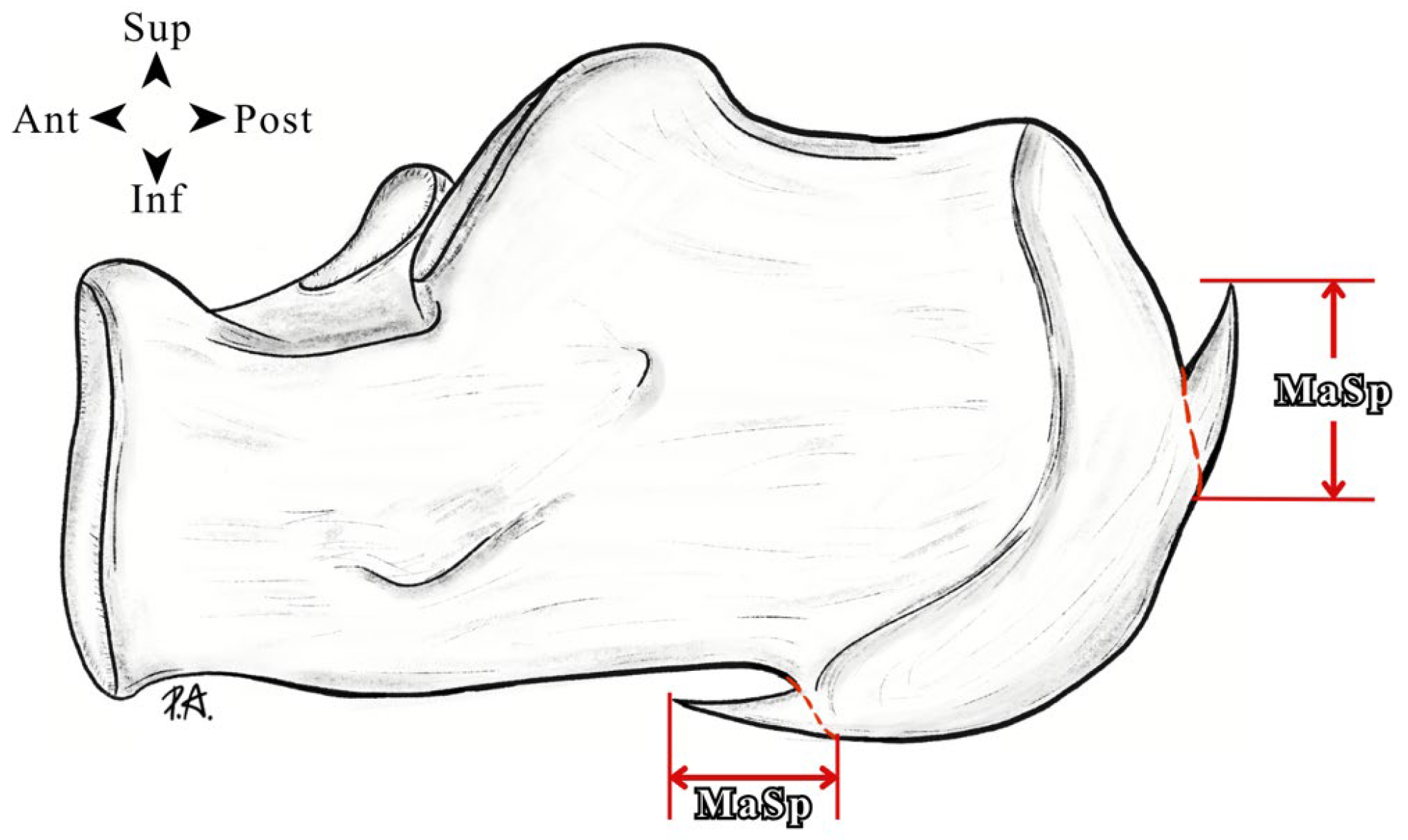
Specimens were stratified into three age groups: Group 1 (≤40 years), Group 2 (41–60 years), and Group 3 (≥61 years). Calcaneal spurs were classified into three categories based on anatomical location: dorsal spurs (D-type) projecting from the posterior calcaneal tuberosity on the posterior surface, plantar spurs (P-type) projecting from the medial process of the calcaneal tuberosity on the inferior surface, and combined spurs (P–D type) presenting simultaneously at both dorsal and plantar locations. Maximum spur length (MaSp) was measured using a digital vernier caliper (Mitutoyo CD-8” CSx, Utsunomiya, Tochigi, Japan) from the spur base (demarcated by the red dotted line in Figure 1) to the most distal point, as visualized on the lateral calcaneal surface. For P–D type calcanei, both dorsal and plantar spur lengths were measured independently.

2.3. Statistical Analysis

Statistical analyses were conducted using IBM SPSS Statistics version 28 (IBM Corp., Armonk, NY, USA). Data normality was assessed via the Kolmogorov–Smirnov test. Paired t-tests evaluated sex-based differences in spur length. For forensic age estimation validation, individuals were stratified into three age groups based on established biological and forensic anthropological principles: (1) ≤40 years (young adults, representing individuals with incompletely developed age-related skeletal changes and active occupational stress exposure); (2) 41–60 years (middle-aged adults, characterized by progressive degenerative changes and peak entheseal ossification prevalence); and (3) ≥61 years (elderly individuals, exhibiting advanced skeletal senescence and established age-related pathologies). This tripartite classification aligns with forensic biological profiling protocols that distinguish young from middle-aged and elderly individuals—age ranges critical for narrowing victim identity in medicolegal investigations. Additionally, this stratification corresponds to Thai social security and occupational retirement age transitions (60 years), reflecting population-specific life course changes in physical activity patterns that influence entheseal development.
Random Forest classification modeling performed in Orange 3.39.0 to predict age group membership from calcaneal spur characteristics. Independent variables included spur location (plantar/dorsal), size classification (small/medium/large), and maximum length (mm). The model was constructed as (1) 100 decision trees grown via bootstrap aggregation with random subset feature selection at each split, (2) out-of-bag (OOB) error estimation for internal validation, (3) final evaluation via stratified 10-fold cross-validation to mitigate class imbalance. Hyperparameters were defaults unless tuned via grid search for optimal OOB error. The model comprised 100 decision trees with default splitting criteria (square root of total features at each node) and was validated using stratified 10-fold cross-validation to address class imbalance. Performance metrics included overall and class-specific accuracy, confusion matrices, and area under the receiver operating characteristic curve (AUC).

3. Results

3.1. Classification and Prevalence of Calcaneal Spurs

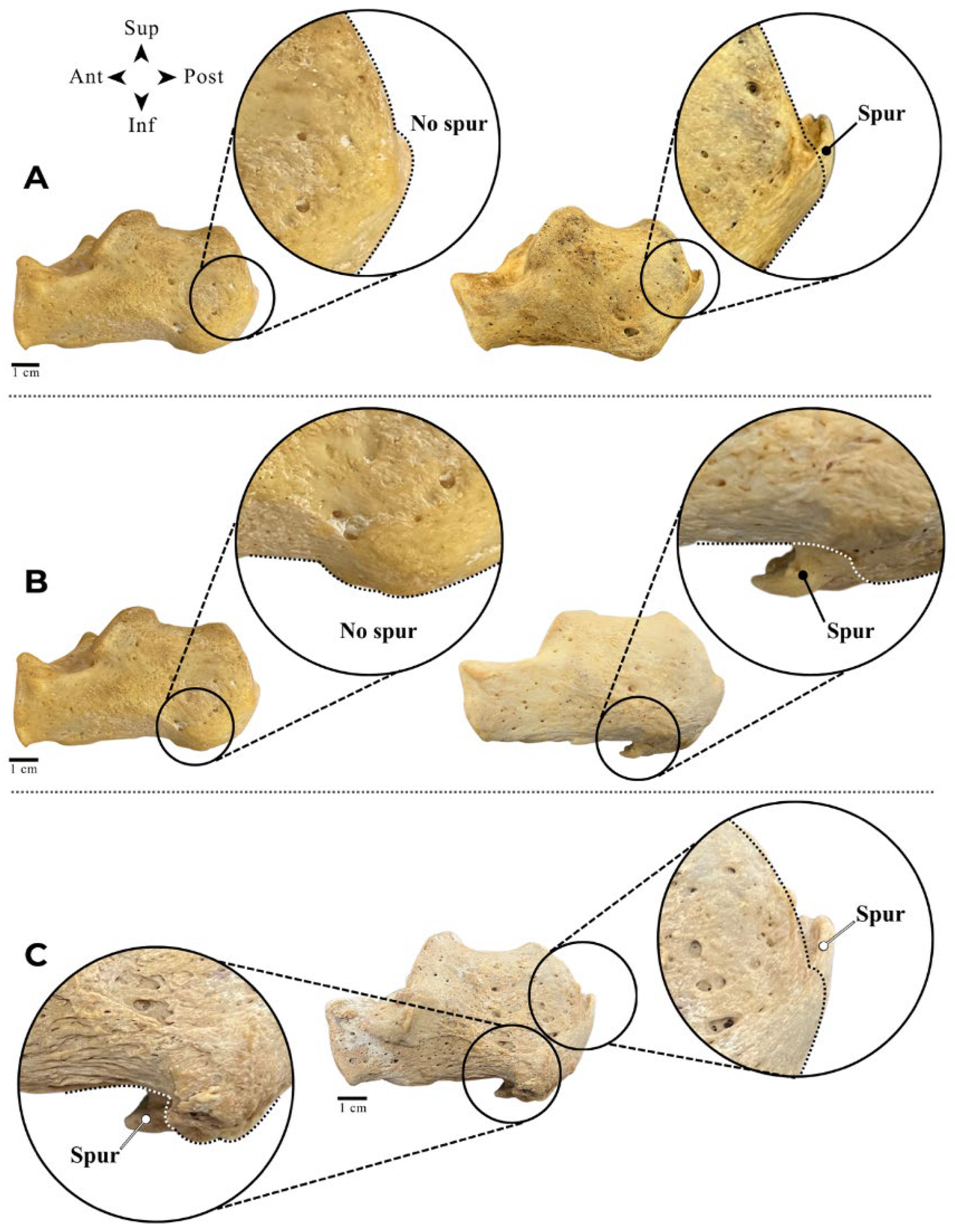
The calcaneal spurs were classified into three types based on anatomical location (Figure 2): dorsal (D-type), plantar (P-type), and combined dorsal–plantar (P–D type).
Of 3516 Northeastern Thai calcanei examined, the results showed that 2378 (67.63%) exhibited at least one spur type. The P–D type demonstrated the highest prevalence (1164 calcanei; 33.11%), followed by D-type (859; 24.42%) and P-type (355; 10.10%). Females exhibited slightly higher overall spur prevalence (69.26%) than males (66.49%), with significantly greater occurrence of P–D type (37.83% vs. 29.78%, respectively). In contrast, males demonstrated higher D-type prevalence (28.32% vs. 18.91% in females) as shown in Table 1.
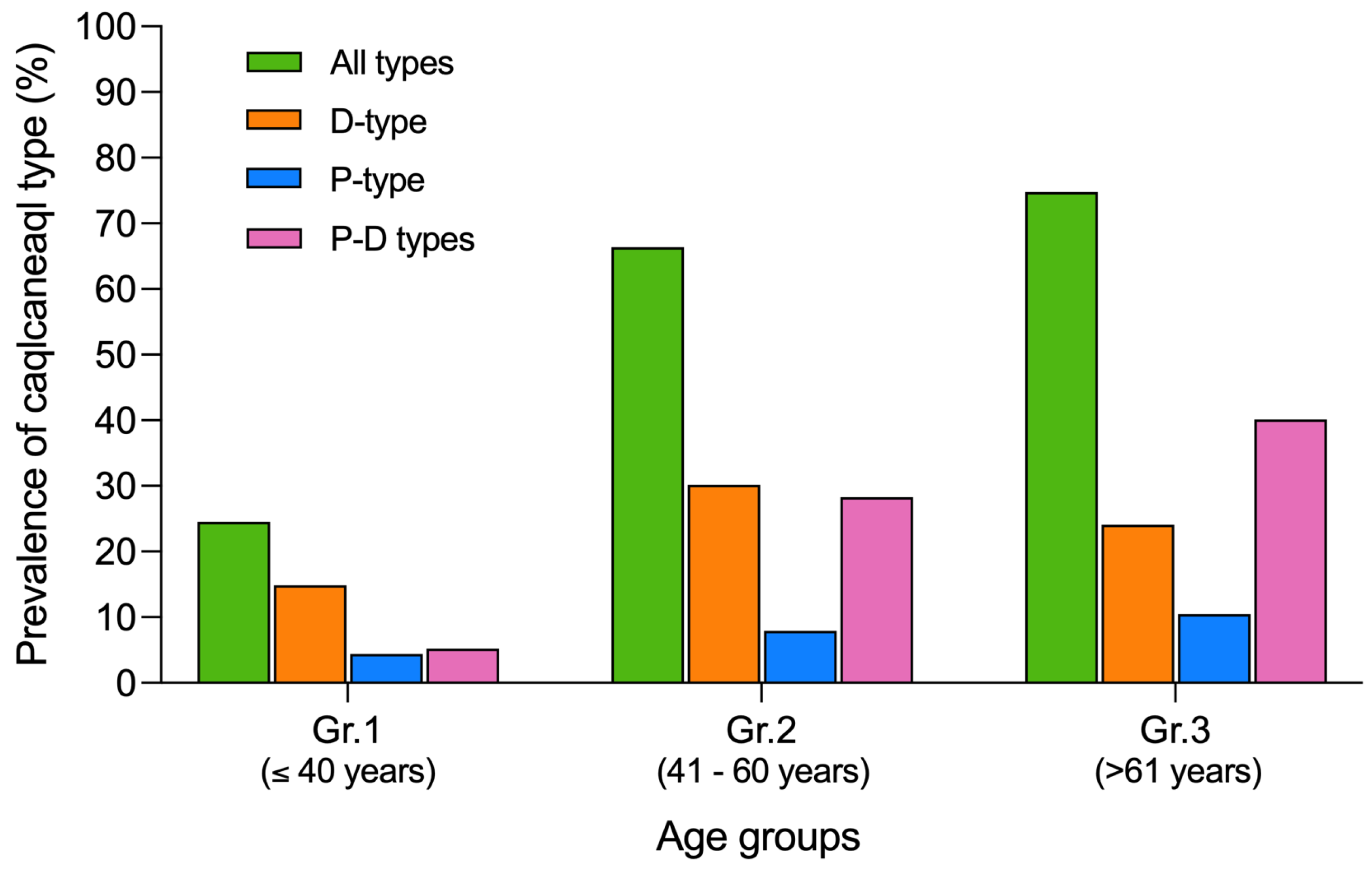
Age-stratified analysis (Table 2 and Figure 3) revealed a strong positive correlation between calcaneal spur prevalence and advancing age. Group 3 (≥61 years) demonstrated the highest overall prevalence (74.77%), representing a three-fold increase compared to Group 1 (≤40 years; 24.56%). D-type prevalence peaked in Group 2 (30.16%) before declining to 24.12% in Group 3. P-type prevalence exhibited progressive age-related increases: 4.39% (Group 1), 7.94% (Group 2), and 10.51% (Group 3). The P–D type displayed the most pronounced age-dependent pattern, escalating from 5.26% in Group 1 to 28.31% in Group 2, and reaching 40.13% in Group 3.

3.2. Length of Calcaneal Spur

Comparative analysis revealed significant sexual dimorphism in spur length (Table 3), with males exhibiting greater mean lengths than females for both D-type and P-type spurs (p < 0.05, paired t-test). The absolute maximum spur lengths recorded in this study were 25.15 mm for D-type and 20.06 mm for P-type, both occurring in male specimens.
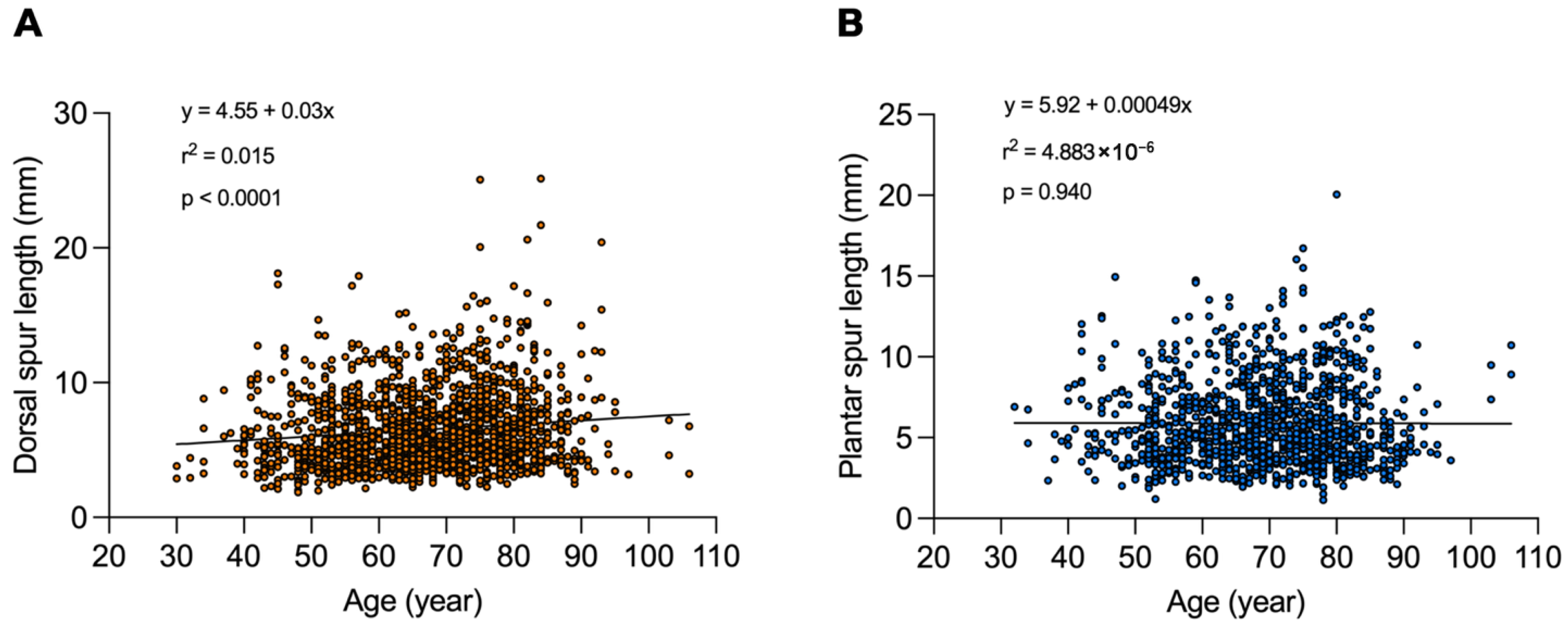
In Table 4, the age-stratified analysis revealed progressive elongation of D-type spurs with advancing age, with mean lengths increasing from 5.19 ± 1.69 mm in Group 1 (≤40 years) to 6.07 ± 2.79 mm in Group 2 (41–60 years) and 6.73 ± 2.99 mm in Group 3 (≥61 years), representing a 29.7% increase from youngest to oldest cohorts. In contrast, P-type spur length remained relatively constant across age groups.
Linear regression analysis demonstrated a statistically significant, though weak, positive correlation between D-type spur length and age (y = 4.55 + 0.03x; R2 = 0.015; p < 0.0001; Figure 4A), accounting for only 1.5% of variance. P-type spur length showed no significant age-related correlation (y = 5.92 + 0.00048x; R2 < 0.001; p = 0.840; Figure 4B).

3.3. Random Forest-Based Age Estimation Performance

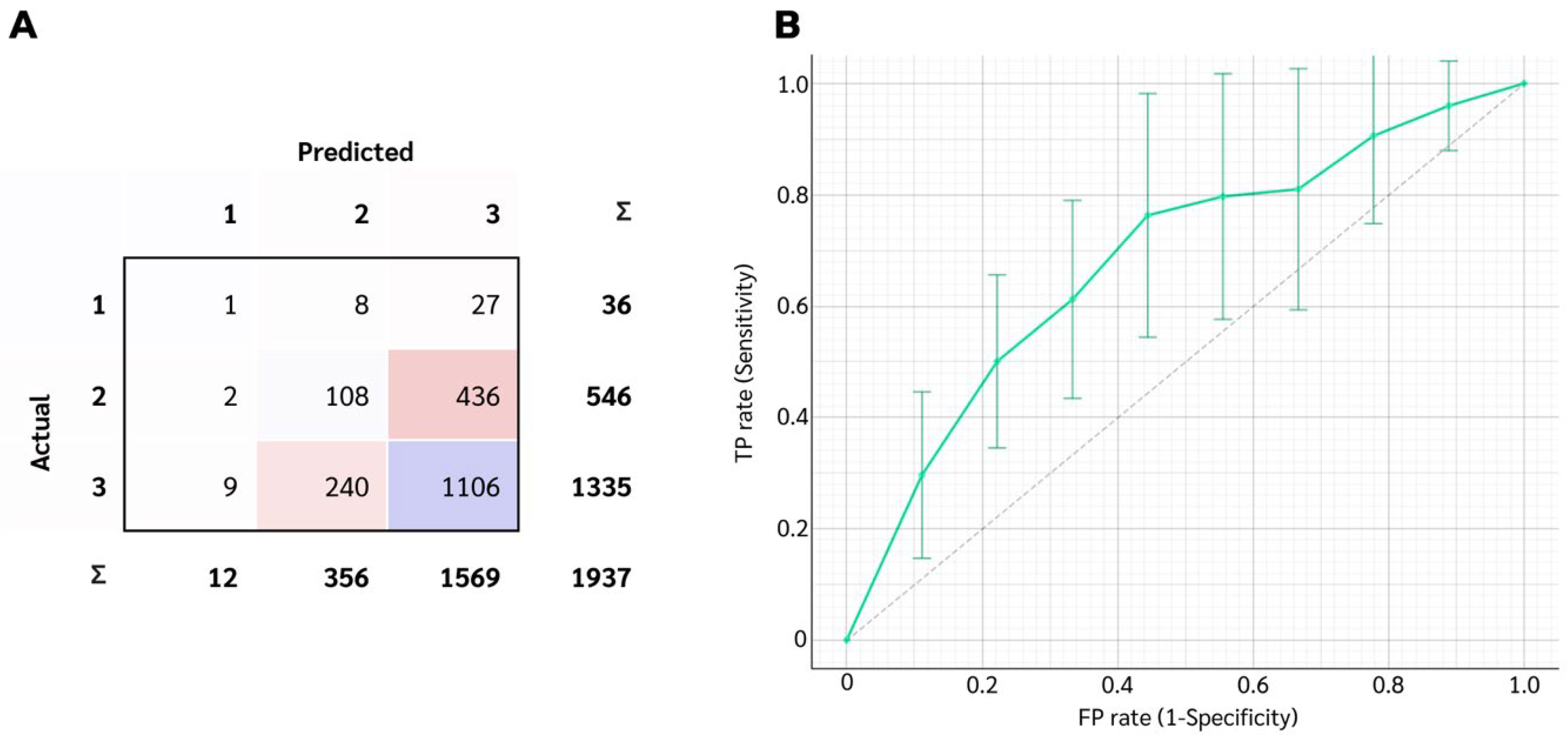
In Figure 5A, the random Forest classification modeling yielded suboptimal age estimation performance using calcaneal spur morphological features. While the overall classification accuracy reached 62.5% (1215 of 1937 specimens), this metric obscured pronounced class imbalance effects. Age-stratified accuracy demonstrated severe heterogeneity: Group 3 (>60 years) achieved 81.6% accuracy (1106/1355), whereas Groups 1 and 2 exhibited accuracies of 2.8% (1/36 for <40 years) and 19.8% (108/546 for 41–60 years), respectively. Error analysis revealed systematic classification bias toward the majority class (oldest age group), consistent with class imbalance in the training dataset (69.9% of specimens in Group 3).
Discriminatory capacity was further evaluated through ROC analysis for the minority class (<40 years), yielding an AUC of 0.685 (Figure 5B). This value indicates classification performance only 18.5 percentage points above chance level (AUC = 0.50), falling within the “poor” discrimination range by conventional thresholds (AUC < 0.70). The ROC curve’s proximity to the identity line, combined with substantial confidence intervals across k-fold cross-validation iterations, indicates limited model generalizability and poor feature informativeness for younger age categories.

4. Discussion

This study has provided critical evidence that calcaneal spurs lack discriminatory capacity for forensic age estimation under rigorous machine learning validation. Random Forest, a non-neural network, tree-based ensemble method using bootstrap aggregation of 100 decision trees with feature subsampling and stratified cross-validation, achieved 62.5% overall accuracy (AUC = 0.685, marginally above chance and substantially below the minimum 80% accuracy threshold for forensic applications [2,15]. More concerning, age-specific performance revealed catastrophic failure in younger samples (≤40 years: 2.8% accuracy), precisely the demographic range where forensic age estimation is most crucial for identifying missing persons and disaster victims [1,3]. This failure stems from substantial inter-individual variation unrelated to chronological age, reflecting complex interactions between genetic predisposition, biomechanical loading, pathological conditions, and metabolic factors [8,16]. Furthermore, interpreting these skeletal changes can be challenging because certain medical conditions can cause bone growth at attachment sites that look similar to normal age-related changes, even in younger individuals. In particular, conditions like Diffuse Idiopathic Skeletal Hyperostosis (DISH) and inflammatory joint diseases (spondyloarthropathies) are well-known for causing abnormal bone formation at tendon and ligament attachment sites [17,18,19,20]. To ensure our results reflect genuine age-related changes rather than disease processes, a systematic macroscopic assessment was conducted in this study to differentiate between degenerative changes and such pathologies. This step was crucial for ensuring the reliability of our age estimation method for real-world forensic applications.
This failure stems from substantial inter-individual variation unrelated to chronological age, reflecting complex interactions between genetic predisposition, biomechanical loading, pathological conditions, and metabolic factors [8,16]. Indeed, forensic anthropologists require multifactorial approaches for integrating multiple independent age indicators to achieve reliable biological profiling [7,12]. Best practices were recommended to combine macroscopic skeletal markers (like pubic symphysis, auricular surface, sternal rib ends) with histomorphometric analysis and biochemical methods [21]. Transition analysis frameworks employing Bayesian modeling demonstrate superior accuracy (5–8 years) as compared to single-indicator methods [5,22]. For Southeast Asian contexts, the previous study established Thai-specific standards achieving 78–84% classification accuracy [23]. It was suggested that calcaneal spurs may contribute ancillary information regarding activity patterns but should never substitute for validated age indicators in forensic casework [14].
Although calcaneal spurs alone are insufficient for precise age estimation, they demonstrate population-specific morphological patterns with potential forensic utility for ancestry assessment. In this study, the overall prevalence of calcaneal spurs in the Northeastern Thai population (67.63%) was higher than those reported in Western populations as demonstrated in Table 5, with American populations ranging from 7% in normal individuals [24] to 22% [25], Central European populations at 15.7% [26], and Welsh/British populations at 38% [27]. These marked differences may reflect underlying genetic, biomechanical, and lifestyle factors that influence entheseal ossification patterns across populations. Notably, the anatomical distribution pattern also differs significantly. The distinctive plantar–dorsal (P–D) type predominance in Thai individuals (77.5% of spur-bearing calcanei, 33.11% overall prevalence) markedly differs from Western populations, where plantar-only spurs typically predominate (40–60%) and combined P–D types occur in only 15–25% as previously reported [28]. This population-specific signature may serve as an auxiliary marker in forensic skeletal individuation, particularly when analyzing fragmentary remains or differentiating between Southeast Asian and non-Asian ancestral groups [10,29]. Population affinity assessment represents a cornerstone of forensic biological profiling, providing investigative leads that narrow potential victim pools [30,31]. Established cranial and postcranial metrics demonstrate population-specific variation useful for ancestry estimation, with classification accuracies of 80–90% when applying appropriate reference populations [32]. The P–D spur predominance contributes to the growing database of Thai-specific skeletal variation, complementing existing data on cranial morphometry, stature estimation, and pelvic morphology [9,11,33]. When examining remains suspected to be of Thai origin, bilateral P–D type spurs would be consistent with Thai ancestry (33.11% versus ~15–20% in Western populations), while plantar-only spurs (12.59% Thai versus 40–60% Western) would be less indicative [34]. Furthermore, age estimation methods and skeletal markers cannot be universally applied across populations without validation. Relying on Western data, the remains of Southeast Asian could lead to systematic misinterpretation of biological variation and, consequently, erroneous forensic assessments. The limitations of our study included (1) spurs occur in only 67.63% of Thai individuals, (2) morphological overlap between populations necessitates probabilistic assessments, and (3) the absence of comprehensive comparative data from neighboring populations prevents fine-scale discrimination. Therefore, the integration with established ancestry markers is still essential for robust forensic assessment [9,35].
The exceptionally high calcaneal spur prevalence (67.63%) and distinctive P–D type predominance in Northeastern Thai skeletal remains likely reflect complex interactions between population-specific biomechanical loading patterns, occupational activities, and genetic predisposition to entheseal ossification. Traditional Northeastern Thai subsistence patterns involve intensive agricultural labor requiring prolonged squatting and barefoot field work—factors known to increase plantar fascia and Achilles tendon stress [36]. Biomechanical studies demonstrate squatting postures generate 2–3 times greater calcaneal loading compared to Western seated positions, potentially explaining elevated spur formation rates. Entheseal ossification represents the adaptive response to chronic mechanical loading, initiated when biomechanical stress exceeds the physiological capacity of fibrocartilaginous attachment sites [11]. We assumed that P–D type predominance may specifically reflect Northeastern Thai occupational patterns that simultaneously stress both plantar (agricultural squatting) and dorsal (load carrying) entheses, whereas Western populations with predominantly plantar loading develop primarily plantar spurs. The absence of significant age-related dimensional progression (R2 < 0.061) despite prevalence increases (24.56% at ≤40 years to 74.77% at ≥61 years) suggests spur formation occurs relatively early with minimal subsequent growth, consistent with biomechanical threshold models rather than cumulative aging processes. It was possible that the lifestyle transitions in contemporary Thailand may alter future spur prevalence patterns, emphasizing temporal specificity of skeletal reference data for forensic practitioners analyzing recent versus historical Thai remains [11,36].
Although calcaneal spurs alone are insufficient for precise age estimation, they demonstrate population-specific morphological patterns with potential forensic utility for ancestry assessment as an auxiliary probabilistic marker, not a primary indicator. In this study, the overall incidence of calcaneal spurs in the Northeastern Thai population (67.63%) was higher than that reported in Western populations, as demonstrated in Table 5, with American populations ranging from 7% in normal individuals to 22%, Central European populations at 15.7%, and Welsh/British populations at 38%. However, these differences must be interpreted cautiously, as calcaneal spur formation is primarily driven by non-ancestral confounders, including age, soft-tissue pathology, body mass/load, repetitive stress/microtrauma, and occupational loading rather than ancestry per se [8,11,16]. Our Thai sample’s age structure is skewed older (≥61 years: 74.77% prevalence vs. 24.56% ≤40 years; n = 856 vs. n = 57; Table 2), unlike younger-skewed Western clinical samples or archeological series (e.g., Medieval Spanish: 15.7%). Without matched controls for these variables, like body mass index (unavailable antemortem), occupational histories (predominantly agriculture in rural Thais vs. sedentary/urban in Western groups), or pathology rates, the affinity estimation remains hampered and probabilistic at best.
As summarized in Table 5, Thai P–D predominance (33.11%) exceeds Indian (4.5–26.5% combined [37,38]), Anatolian (10.3–11.1% ancient, 1.5–3% modern), Ghanaian (17.0% combined), and Zimbabwean (97% total but location ND) samples, even accounting for age/pathology differences. For instance, Anatolian medieval bones (skewed older like ours) show higher dorsal spurs (33.5%) but lower combined (10.3%) than Thais, while Indian dry bones (mixed ages/occupations) emphasize plantar types. Activity-related behavior likely explains residuals: Northeastern Thais’ squatting/barefoot farming imposes dual plantar–dorsal stress (2–3x Western loads), unlike Western plantar-dominant gait. Even unadjusted, Western samples differ significantly from non-Western (e.g., African/Indian highs), supporting auxiliary utility when confounders are noted, but integration with validated markers (e.g., cranial metrics [9,13]) is essential to avoid overinterpretation.
Notably, the anatomical distribution pattern also differs significantly. The distinctive plantar–dorsal (P–D) type predominance in Thai individuals (77.5% of spur-bearing calcanei, 33.11% overall prevalence) markedly differs from Western populations, where plantar-only spurs typically predominate (40–60%) and combined P–D types occur in only 15–25% as previously reported.
Table 5. Comparison of the incidence of calcaneal spurs observed in different populations.
ReferencesPopulationsResourcesNumber of SamplesIncidences
Locations Found on Calcaneal TuberositySexesSides
PlantarDorsalBothTotalMaleFemaleRightLeft
Bassioui [39]American (normal)X-ray80
(Males = 41)
(Females = 39)
46.4%12.8%40.8%16.2%17%15.4%N.D.N.D.
American patients with osteoarthrosis168
(Males = 46)
(Females = 122)
81%79%81%N.D.N.D.
American patients with rheumatoid arthritis282
(Males = 89)
(Females = 193)
21.6%17.9%23.4%N.D.N.D.
Resnick [25]AmericanX-ray7516%11%4%22%N.D.N.D.N.D.N.D.
Banadda et al. [40]ZimbabweanX-ray1228
(Males = 815)
(Females = 413)
N.D.N.D.N.D.97%13%17.7%N.D.N.D.
Galera and
Garralda [41]
Medieval SpanishDry bone70N.D.15.7%N.D.N.D.N.D.N.D.N.D.N.D.
Riepert et al. [26]Central EuropeanX-ray102711.2%9.3%N.D.15.7%N.D.N.D.N.D.N.D.
Barrett [42]AmericanX-ray200N.D.N.D.N.D.52.4%N.D.N.D.N.D.N.D.
Köse et al. [43]Turkish (normal)X-ray120N.D.N.D.N.D.8.3%N.D.N.D.N.D.N.D.
Turkish patients with heel pain73N.D.N.D.N.D.60.2%N.D.N.D.N.D.N.D.
Menz et al. [44]AustralianX-ray216
(Males = 76)
(Female = 140)
N.D.48%N.D.55%N.D.N.D.N.D.N.D.
Chundru et al. [24]American (normal)MRI100N.D.N.D.N.D.7%N.D.N.D.N.D.N.D.
American patients with ADMA100N.D.N.D.N.D.48%N.D.N.D.N.D.N.D.
Weiss [45]Prehistoric native AmericanDry bone121
(Males = 62)
(Female = 59)
N.D.N.D.N.D.34.2%N.D.N.D.N.D.N.D.
Perumal and Anand [46]IndianDry bone218N.D.N.D.N.D.56%N.D.N.D.62.5%55%
Kullar [37]IndianDry bone2006.5%15.5%4.5%26.5%N.D.N.D.N.D.N.D.
Caroline and Kirchengast [47]19th century KhoisanDry bone529.6%N.D.N.D.N.D.10.3%16.7%9.6%9.6%
Toumi et al. [27]Welsh/BritishX-ray1080N.D.N.D.11%38%41%38%N.D.N.D.
Lourdes and Ram [38]Indian patients with heel painX-ray200
(Males = 100)
(Female = 100)
N.D.59%N.D.N.D.40%60%N.D.N.D.
Beytemür and Oncü [48]AmericanX-ray1335
(Males = 758)
(Female = 550)
32.2%13.1%9.8%N.D.N.D.N.D.N.D.N.D.
Açıkgöz et al. [49]Ancient AnatolianDry bone2510.8%33.5%10.3%44.6%47.6%40.6%N.D.N.D.
Modern Anatolian681.5%20.5%1.5%23.5%N.D.N.D.N.D.N.D.
Altuntas and Uzum [50]TurkishX-ray200026%16.9%10.3%N.D.N.D.N.D.N.D.N.D.
Rohini et al. [51]IndianDry bone50N.D.N.D.N.D.32%N.D.N.D.N.D.N.D.
Fiagbedzi et al. [52]GhanaianX-ray32347.3%35.7%17.0%34.7%35.7%64.3%N.D.N.D.
Aorachon et al., [this study]Northeastern ThaiDry bone1758
(Males = 727)
(Female = 1031)
10.10%24.43%33.11%67.63%66.49%69.26%N.D.N.D.
N.D., not determined; ADMA, abductor digiti minimi atrophy.

5. Conclusions

This study has established the first comprehensive Thai-specific osteological reference for calcaneal spurs, revealing distinctive plantar–dorsal type predominance (77.5%) valuable for forensic population affinity assessment, though rigorous Random Forest modeling explicitly demonstrates inadequate standalone age estimation capacity (51.8% accuracy; AUC = 0.685). These findings provide critical population-specific baseline data for forensic individuation and clinical diagnosis while cautioning that reliable forensic age estimation requires multifactorial approaches rather than entheseal markers alone.

Author Contributions

Conceptualization, P.A. and S.I.; methodology, P.A., C.P. and T.S.; formal analysis, P.A., S.D. and C.P.; resources, S.I.; data curation, P.A., C.P. and T.S.; visualization, P.A. and S.D.; writing—original draft preparation, P.A. and S.I.; writing—review and editing, all authors.; project administration, S.I.; funding acquisition, S.I. All authors have read and agreed to the published version of the manuscript.

Funding

This research was supported by the Faculty of Medicine, Khon Kaen University, Thailand (Grant No. IN69022).

Institutional Review Board Statement

Human ethical approval was obtained from the Center for Ethics in Human Research, Khon Kaen University (approval code: HE681399, 4 July 2025).

Informed Consent Statement

Not applicable. KKUEC’s Exemption Determination Regulation 6.7.3 specifically covers “Research studying human bones, skeletons, extracted teeth, and cadavers.” Our research only involves the skeletal remains (cadaveric calcaneal bones) housed in the Unit of Human Bone Warehouse for Research (UHBWR), Khon Kaen University, Thailand. The research falls under the exemption category, the informed consent was not required.

Data Availability Statement

The original contributions presented in this study are included in the article. Further inquiries can be directed to the corresponding author.

Acknowledgments

We are grateful to Apichaya Wongsomwomg (A.W.), Arpapat Sangpasit (A.S.), Auekarn Chaiyamart (A.C.), Eko Prastyo (E.P.), Tayanee Poovanart (T.P.), and Manutchanok Khamlue (M.K.) for their invaluable assistance in the sample collection. This study was financially supported by the Faculty of Medicine, Khon Kaen University, Thailand (Grant No. IN69022) and the postgraduate study support grant (2024) from the Faculty of Medicine, Khon Kaen University to Phatthiraporn Aorachon (P.A.).

Conflicts of Interest

The authors declare no conflicts of interest.

References

  1. Ubelaker, D.H.; Khosrowshahi, H. Estimation of age in forensic anthropology: Historical perspective and recent methodological advances. Forensic Sci. Res. 2019, 4, 1–9. [Google Scholar] [CrossRef]
  2. Garvin, H.M.; Passalacqua, N.V. Current practices by forensic anthropologists in adult skeletal age estimation. J. Forensic Sci. 2012, 57, 427–433. [Google Scholar] [CrossRef] [PubMed]
  3. Blau, S.; Briggs, C.A. The role of forensic anthropology in Disaster Victim Identification (DVI). Forensic Sci. Int. 2011, 205, 29–35. [Google Scholar] [CrossRef] [PubMed]
  4. Brooks, S.; Suchey, J.M. Skeletal age determination based on the os pubis: A comparison of the Ascádi-Nemeskéri and Suchey-Brooks methods. Hum. Evol. 1990, 5, 227–238. [Google Scholar] [CrossRef]
  5. Milner, G.R.; Boldsen, J.L. Transition analysis: A validation study with known-age modern American skeletons. Am. J. Phys. Anthropol. 2012, 148, 98–110. [Google Scholar] [CrossRef] [PubMed]
  6. Liversidge, H.M. Timing of human mandibular third molar formation. Ann. Hum. Biol. 2008, 35, 294–321. [Google Scholar] [CrossRef]
  7. Cunha, E.; Baccino, E.; Martrille, L.; Ramsthaler, F.; Prieto, J.; Schuliar, Y.; Lynnerup, N.; Cattaneo, C. The problem of aging human remains and living individuals: A review. Forensic Sci. Int. 2009, 193, 1–13. [Google Scholar] [CrossRef]
  8. Villotte, S.; Knüsel, C.J. Understanding entheseal changes: Definition and life course changes. Int. J. Osteoarchaeol. 2013, 23, 135–146. [Google Scholar] [CrossRef]
  9. Hefner, J.T. Cranial nonmetric variation and estimating ancestry. J. Forensic Sci. 2009, 54, 985–995. [Google Scholar] [CrossRef]
  10. Tallman, S.D.; Kincer, C.C. Centennial critique: Population-specific data, reference samples, and ancestry estimation in forensic anthropology. Forensic Sci. Int. Synerg. 2021, 3, 100120. [Google Scholar]
  11. Benjamin, M.; Toumi, H.; Ralphs, J.R.; Bydder, G.; Best, T.M.; Milz, S. Where tendons and ligaments meet bone: Attachment sites (‘entheses’) in relation to exercise and/or mechanical load. J. Anat. 2006, 208, 471–490. [Google Scholar] [CrossRef] [PubMed]
  12. Dirkmaat, D.C.; Cabo, L.L.; Ousley, S.D.; Symes, S.A. New perspectives in forensic anthropology. Am. J. Phys. Anthropol. 2008, 137, 33–52. [Google Scholar] [CrossRef] [PubMed]
  13. Mahakkanukrauh, P.; Sinthubua, A.; Prasitwattanseree, S.; Troy Case, D.; Rooppakhun, S. Cranial morphometric study of Thai population. Forensic Sci. Int. 2015, 248, 14–19. [Google Scholar]
  14. Nikita, E.; Nikitas, P. On the use of machine learning algorithms in forensic anthropology. Leg. Med. 2020, 47, 101771. [Google Scholar] [CrossRef]
  15. Kimmerle, E.H.; Prince, D.A.; Berg, G.E. Inter-observer variation in methodologies involving the pubic symphysis, sternal ribs, and teeth. J. Forensic Sci. 2008, 53, 594–600. [Google Scholar] [CrossRef]
  16. Jurmain, R.; Cardoso, F.A.; Henderson, C.; Villotte, S. Bioarchaeology’s Holy Grail: The reconstruction of activity. In A Companion to Paleopathology; Grauer, A.L., Ed.; Wiley-Blackwell: Chichester, UK, 2012; pp. 531–552. [Google Scholar]
  17. Henderson, C.Y.; Mariotti, V.; Pany-Kucera, D.; Villotte, S.; Wilczak, C. Recording specific entheseal changes of fibrocartilaginous entheses: Initial tests using the Coimbra method. Int. J. Osteoarchaeol. 2013, 23, 152–162. [Google Scholar] [CrossRef]
  18. Resnick, D.; Niwayama, G. Entheses and enthesopathy. Anatomical, pathological, and radiological correlation. Radiology 1983, 146, 1–9. [Google Scholar] [CrossRef]
  19. Villotte, S.; Assis, S.; Cardoso, F.A.; Henderson, C.Y.; Mariotti, V.; Milella, M.; Pany-Kucera, D.; Speith, N.; Wilczak, C.A.; Jurmain, R. In search of consensus: Terminology for entheseal changes (EC). Int. J. Paleopathol. 2016, 13, 49–55. [Google Scholar] [CrossRef]
  20. Terzi, R. Extraskeletal symptoms and comorbidities of diffuse idiopathic skeletal hyperostosis. World J. Clin. Cases 2014, 16, 422–425. [Google Scholar] [CrossRef]
  21. Crowder, C.; Austin, D. Age Estimation of the Human Skeleton; Charles C Thomas: Springfield, IL, USA, 2005; ISBN 978-0398075637. [Google Scholar]
  22. Boldsen, J.L.; Milner, G.R.; Konigsberg, L.W.; Wood, J.W. Transition analysis: A new method for estimating age from skeletons. In Paleodemography; Hoppa, R.D., Vaupel, J.W., Eds.; Cambridge University Press: Cambridge, UK, 2002; pp. 73–106. [Google Scholar]
  23. Mahakkanukrauh, P.; Kringsri, N.; Sinthubua, A.; Duangto, P. Forensic age estimation of tibiae from a Thai population. Forensic Sci. Int. 2016, 265, 120–126. [Google Scholar]
  24. Chundru, U.; Liebeskind, A.; Seidelmann, F.; Fogel, J.; Franklin, P.; Beltran, J. Plantar fasciitis and calcaneal spur formation are associated with abductor digiti minimi atrophy on MRI of the foot. Skeletal Radiol. 2008, 37, 505–510. [Google Scholar] [CrossRef]
  25. Resnick, D.; Feingold, M.L.; Curd, J.; Niwayama, G.; Goergen, T.G. Calcaneal abnormalities in articular disorders. Rheumatoid arthritis, ankylosing spondylitis, psoriatic arthritis, and Reiter syndrome. Radiology 1977, 125, 355–366. [Google Scholar] [CrossRef] [PubMed]
  26. Riepert, T.; Drechsler, T.; Schild, H.; Nafe, B.; Mattern, R. Häufigkeit, Altersabhängigkeit und Geschlechtsverteilung des Calcaneussporns. Rechtsmedizin 1995, 5, 121–125. [Google Scholar]
  27. Toumi, H.; Davies, R.; Mazor, M.; Coursier, R.; Best, T.M.; Jennane, R.; Lespessailles, E. Changes in prevalence of calcaneal spurs in men & women: A random population from a trauma clinic. BMC Musculoskelet Disord. 2014, 15, 87. [Google Scholar]
  28. Johal, K.S.; Milner, S.A. Plantar fasciitis and the calcaneal spur: Fact or fiction? Foot Ankle Surg. 2012, 18, 39–41. [Google Scholar] [CrossRef] [PubMed]
  29. Lessig, R.; Grundmann, C.; Dahlmann, F.; Rotzscher, K.; Edelmann, J.; Schneider, P.M. Tsunami 2004—Persisting problems in victim identification. Forensic Sci. Int. 2011, 205, 128–133. [Google Scholar]
  30. Hefner, J.T.; Ousley, S.D. Statistical classification methods for estimating ancestry using morphoscopic traits. J. Forensic Sci. 2014, 59, 883–890. [Google Scholar] [CrossRef]
  31. Ousley, S.; Jantz, R.; Freid, D. Understanding race and human variation: Why forensic anthropologists are good at identifying race. Am. J. Phys. Anthropol. 2009, 139, 68–76. [Google Scholar] [CrossRef]
  32. Spradley, M.K.; Jantz, R.L. Sex estimation in forensic anthropology: Skull versus postcranial elements. J. Forensic Sci. 2011, 56, 289–296. [Google Scholar] [CrossRef]
  33. Somboonsuk, K.; Prasitwattanaseree, S.; Mahakkanukrauh, P.; Case, D.T. Estimation of stature using long bone lengths in a Thai population. Forensic Sci. Int. 2012, 222, 394.e1–394.e7. [Google Scholar]
  34. Cattaneo, C.; Ritz-Timme, S.; Gabriel, P.; Gibelli, D.; Giudici, E.; Poppa, P.; Nohrden, D.; Assmann, S.; Schmitt, R.; Grandi, M. The difficult issue of age assessment on pedo-pornographic material. Forensic Sci. Int. 2009, 183, e21–e24. [Google Scholar] [CrossRef]
  35. Scott, G.R.; Turner, C.G. The Anthropology of Modern Human Teeth: Dental Morphology and Its Variation in Recent Human Populations; Cambridge University Press: Cambridge, UK, 1997; ISBN 978-0521784443. [Google Scholar]
  36. D’Août, K.; Pataky, T.C.; De Clercq, D.; Aerts, P. The effects of habitual footwear use: Foot shape and function in native barefoot walkers. Footwear Sci. 2009, 1, 81–94. [Google Scholar] [CrossRef]
  37. Kullar, J.S.; Randhawa, G.K.; Kullar, K.K. A study of calcaneal enthesophytes (spurs) in Indian population. Int. J. Appl. Basic Med. Res. 2014, 4, 13–16. [Google Scholar] [CrossRef] [PubMed]
  38. Lourdes, R.K.; Ram, G.G. Incidence of calcaneal spur in Indian population with heel pain. Int. J. Res. Orthop. 2016, 2, 174–176. [Google Scholar] [CrossRef]
  39. Bassiouni, M. Incidence of calcaneal spurs in osteo-arthrosis and rheumatoid arthritis, and in control patients. Ann Rheum Dis. 1965, 24, 490–493. [Google Scholar] [CrossRef] [PubMed]
  40. Banadda, B.M.; Gona, O.; Vaz, R.; Ndlovu, D.M. Calcaneal spurs in a black African population. Foot Ankle 1992, 13, 352–354. [Google Scholar] [CrossRef]
  41. Galera, V.; Garralda, M.D. Enthesopathies in a spanish medieval population: Anthropological, epidemiological, and ethnohistorical aspects. Int. J. Anthropol. 1993, 8, 247–258. [Google Scholar] [CrossRef]
  42. Barrett, S.L.; Day, S.V.; Pignetti, T.T.; Egly, B.R. Endoscopic heel anatomy: Analysis of 200 fresh frozen specimens. J. Foot Ankle Surg. 1995, 34, 51–56. [Google Scholar] [CrossRef]
  43. Köse, N.; Göktürk, E.; Turgut, A.; Seber, S.; Hazer, B. Taban çöküklüğü ve topuk dikeninin topuk ağrısı etiolojisindeki rolü. Acta Ortop. Traumatol. Turc. 1998, 32, 322–324. [Google Scholar]
  44. Menz, H.B.; Zammit, G.V.; Landorf, K.B.; Munteanu, S.E. Plantar calcaneal spurs in older people: Longitudinal traction or vertical compression? J. Foot Ankle Res. 2008, 1, 7. [Google Scholar] [CrossRef]
  45. Weiss, E. Calcaneal spurs: Examining etiology using prehistoric skeletal remains to understand present day heel pain. Foot 2012, 22, 125–129. [Google Scholar] [CrossRef] [PubMed]
  46. Perumal, A.; Anand, A. Morphometric study of spur formation in dry adult human calcaneae. Int. J. Curr. Res. Rev. 2013, 5, 92–96. [Google Scholar]
  47. Caroline, C.; Kirchengast, S. Calcaneal spurs among San and Khoi skeletons. Anthropol. Anz. 2015, 72, 107–115. [Google Scholar]
  48. Beytemür, O.; Öncü, M. The age dependent change in the incidence of calcaneal spur. Acta Orthop. Traumatol. Turc. 2018, 52, 367–371. [Google Scholar] [CrossRef]
  49. Açıkgöz, K.; Balci, R.S.; Erkman, A.C.; Göker, P.; Bozkır, M.G. Morphometric Analysis of Calcaneal (Heel) Spurs in Ancient and Modern Anatolian Populations. Int. J. Morphol. 2020, 38, 1729–1734. [Google Scholar]
  50. Altuntas, E.; Uzun, A. The Relationship Between Age-Related Incidences of Heel Spur With Sex and Side. Int. J. Morphol. 2022, 40, 369–375. [Google Scholar] [CrossRef]
  51. Rohini, S.K.; Shobha, K.; Komala, B. An anatomical study of Calcaneal Spurs. Med. Innov. 2023, 12, 108–110. [Google Scholar]
  52. Fiagbedzi, E.; Ofori, N.; Amlalo, J.G. Prevalence of calcaneal spur among foot and ankle patients at the Cape Coast Teaching Hospital, Ghana. Med. J. Indones. 2025, 33, 225–228. [Google Scholar] [CrossRef]
Figure 1. Drawing of the calcaneal bone with measurement landmarks for calcaneal spurs. Lateral view of the right calcaneus showing dorsal (D-type) and plantar (P-type) calcaneal spurs. Red dotted lines demarcate the spur base, red solid lines indicate measurement paths, and red bidirectional arrows represent maximum spur length (MaSp). Abbreviations: Ant, anterior; Post, posterior; Sup, superior; Inf, inferior; L, lateral; Med, medial.
Forensicsci 06 00030 g001
Figure 2. Classification of calcaneal spur types observed in the Northeastern Thai skeletal sample. Representative specimens showing (A) dorsal spur (D-type), (B) plantar spur (P-type), and (C) combined dorsal–plantar spurs (P–D type). Abbreviations: Ant, anterior; Post, posterior; Sup, superior; Inf, inferior; Lat, lateral; Med, medial.
Forensicsci 06 00030 g002
Figure 3. Age-related distribution of calcaneal spur type prevalence in Northeastern Thai calcanei.
Forensicsci 06 00030 g003
Figure 4. Linear regression analysis of calcaneal spur length versus age. (A) D-type spurs showing weak positive correlation (R2 = 0.015; p < 0.0001). (B) P-type spurs showing no significant correlation (R2 < 0.001; p = 0.840).
Forensicsci 06 00030 g004
Figure 5. Diagnostic performance of the Random Forest classifier for age estimation. (A) Confusion matrix displaying the distribution of predicted age classifications against true age groups for 1937 calcanei. Values represent absolute counts with classification accuracy percentages. (B) Age-specific ROC curves demonstrating discriminatory capacity for each age group. Shaded areas or error bars indicate 95% confidence intervals from k-fold cross-validation. The reference diagonal represents random classification.
Forensicsci 06 00030 g005
Table 1. Prevalence of calcaneal spur types by sex in Northeastern Thai calcanei.
Prevalence of Thai Calcaneal Spurs
All TypesD-TypeP-TypeP–D Types
Both sexes
(n = 3516)
2378
(67.63%)
859
(24.43%)
355
(10.10%)
1164
(33.11%)
Females
(n = 1454)
1007
(69.26%)
275
(18.91%)
182
(12.52%)
550
(37.83%)
Males
(n = 2062)
1371
(66.49%)
584
(28.32%)
173
(8.39%)
614
(29.78%)
Table 2. Prevalence of calcaneal spur types by age group investigated in Northeastern Thai dry calcanei.
Age GroupsPrevalence of Calcaneal Spurs
All TypesD-TypeP-TypeP–D Types
Gr.1: ≤40 years
(n = 57)
28
(24.56%)
17
(14.91%)
5
(4.39%)
6
(5.26%)
Gr.2: 41–60 years
(n = 378)
502
(66.40%)
228
(30.16%)
60
(7.94%)
214
(28.31%)
Gr.3: ≥61 years
(n = 856)
1280
(74.77%)
413
(24.12%)
180
(10.51%)
687
(40.13%)
Table 3. Comparison of calcaneal spur lengths between males and females.
Maximum Length of Calcaneal Spurs (MaSp)
D-TypeP-Type
Total (n = 3516)
Mean ± SD (mm)
Min–Max (mm)
6.45 ± 2.92
(1.06–25.15)
5.86 ± 2.53
(1.14–14.74)
Females (n = 1454)
Mean ± SD (mm)
Min–Max (mm)
6.17 ± 2.59
(1.06–17.96)
6.22 ± 2.68
(1.19–16.71)
Males (n = 2062)
Mean ± SD (mm)
Min–Max (mm)
6.65 ± 3.11 *
(1.76–25.15)
6.65 ± 2.52 *
(1.14–20.06)
p-value0.011<0.001
* Significant difference between male and female (p < 0.05; paired t-test).
Table 4. Comparison of calcaneal spur lengths between age groups.
Maximum Length of Calcaneal Spurs (MaSp)
D-TypeP-Type
Gr.1: ≤40 years
(n = 57)
5.19 ± 1.69
(2.90–9.43)
5.37 ± 1.70
(2.35–8.07)
Gr.2: 41–60 years
(n = 378)
6.07 ± 2.79
(1.87–18.11)
5.78 ± 2.55
(1.19–14.94)
Gr.3: ≥61 years
(n = 856)
6.73 ± 2.99
(2.23–25.25)
5.92 ± 2.67
(1.14–20.06)
Disclaimer/Publisher’s Note: The statements, opinions and data contained in all publications are solely those of the individual author(s) and contributor(s) and not of MDPI and/or the editor(s). MDPI and/or the editor(s) disclaim responsibility for any injury to people or property resulting from any ideas, methods, instructions or products referred to in the content.