Measuring Tooth Color: A Key for Age Estimation


 , and
, and 
Abstract
1. Introduction
- A medical history collection
- A physical examination, including vital signs, anthropometric data, sexual maturation, and age-relevant developmental disorders
- A radiographic examination of the left hand and wrist
- A radiographic examination of the sternal and clavicle, if the hand and wrist bones have fully developed
- An oral exam with panoramic radiography evaluation
- Increasing the sample size of reference populations
- Matching information from a single anatomic area with multifactorial data
- Avoiding ionizing radiation
- Carrying out a fully automated assessment
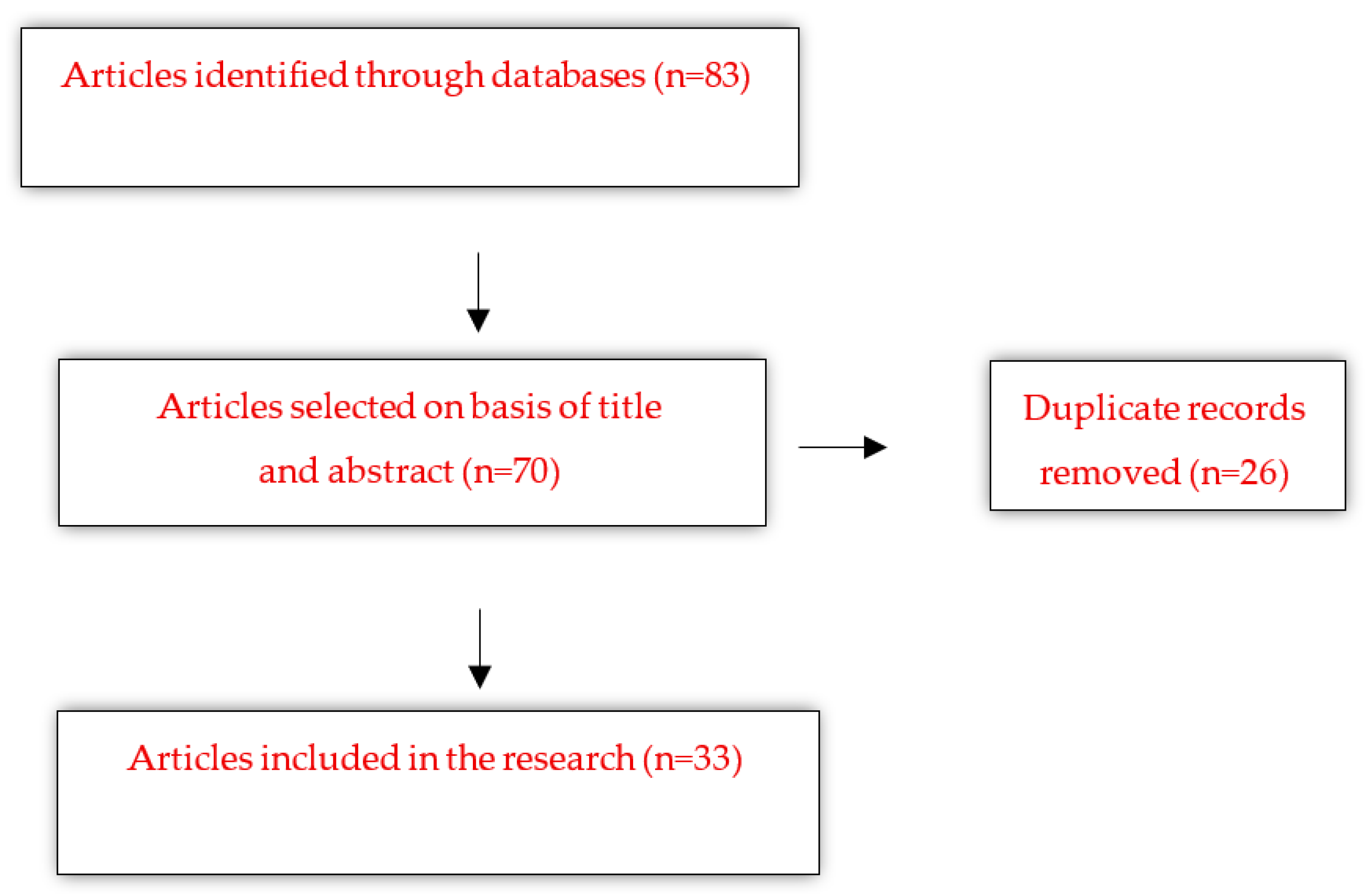
2. Methods
3. Results
4. Discussion
- (a)
- The biological mechanisms linking age to changes in dentin and enamel;
- (b)
- The evolution and performance of color measurement devices;
- (c)
- The methodological implications of these processes for forensic age estimation.
4.1. Physiological Processes Underlying Tooth Color Change
4.2. Technological Developments Across Measurement Devices
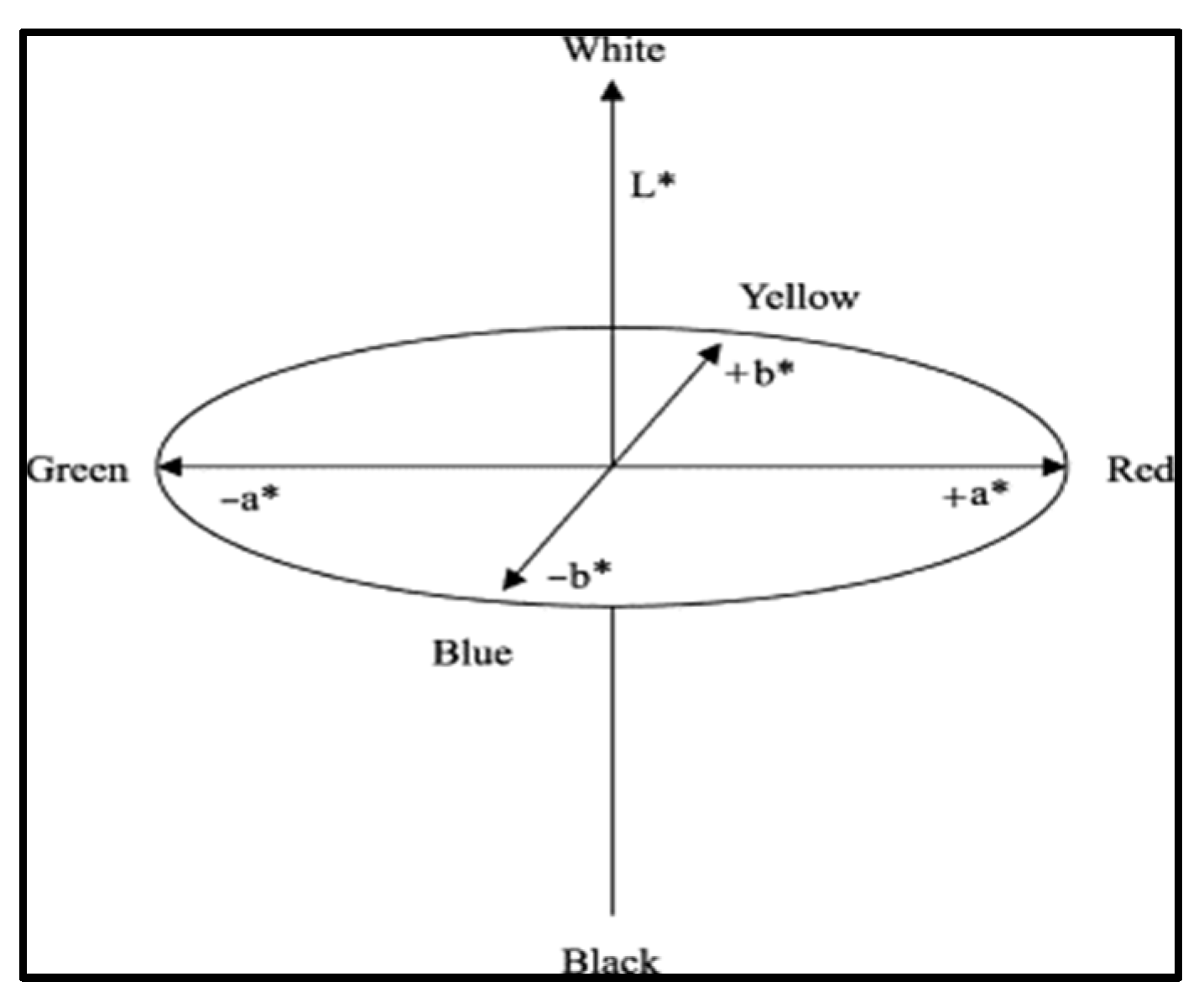
4.2.1. Color Spaces and Standardization
4.2.2. Comparative Performance of Color Measurement Devices
- Colorimeters measure tristimulus RGB (red, green, and blue) values using filters. They are affordable and straightforward to operate [16,35,36], but their limited spectral capture and susceptibility to filter aging reduce precision [22]. The Shade Eye NCC (Natural Esthetics, Fussen, Germany), for instance, explained only 48–56% of age variance and is constrained by small measurement windows and surface-specific variability [35].
- Spectrophotometers offer the most precise and reproducible measurements, capturing full spectral reflectance curves and demonstrating superior accuracy, approximately 33% higher than colorimeters and far closer to real color perception than visual assessment [16,37]. Their robustness against illumination changes, reduced observer subjectivity, and capacity to detect metamerism make them the current technological standard for forensic applications [15,22,36].
- Spectroradiometers, although less frequently used, provide detailed chromaticity coordinates (CIEXYZ) and yield strong correlations with age when paired with whiteness and yellowing indices [38]. Their primary limitation is the need for carefully controlled illumination environments.
4.2.3. Variability Arising from Tooth Type and Surface Selection
4.3. Methodological Implications for Forensic Age Estimation
4.3.1. Age-Estimation Performance and Error Patterns
4.3.2. Sex Effects
4.3.3. Tooth Type and Surface Selection
4.3.4. Post-Mortem Interval and Cadaveric Effects
4.3.5. Forensic Constraints: Living Individuals vs. Cadavers
4.3.6. Ethical Issues
4.4. Limitations
5. Conclusions
Author Contributions
Funding
Data Availability Statement
Conflicts of Interest
References
- Schmeling, A.; Geserick, G.; Reisinger, W.; Olze, A. Age estimation. Forensic Sci. Int. 2007, 165, 178–181. [Google Scholar] [CrossRef] [PubMed]
- Streeter, A.J.; Schmeling, A.; Karch, A. How certainty is certain enough? Challenges in the statistical methodology for forensic age assessment of living individuals. Med. Clin. 2024, 163, e92–e97. [Google Scholar] [CrossRef]
- Schmeling, A.; Dettmeyer, R.; Rudolf, E.; Vieth, V.; Geserick, G. Forensic Age Estimation. Dtsch. Arztebl. Int. 2016, 113, 44–50. [Google Scholar] [CrossRef]
- Rudolphi, F.; Steffens, L.; Shay, D.; Smit, C.; Robinson, L.; Bernitz, H.; Schmeling, A.; Timme, M. Insights into dental age estimation: Introducing multiple regression data from a Black South African population on modified gustafson’s criteria. Int. J. Leg. Med. 2025, 139, 143–155. [Google Scholar] [CrossRef]
- Cunha, E.; Baccino, E.; Martrille, L.; Ramsthaler, F.; Prieto, J.; Schuliar, Y.; Lynnerup, N.; Cattaneo, C. The problem of aging human remains and living individuals: A review. Forensic Sci. Int. 2009, 193, 1–13. [Google Scholar] [CrossRef]
- Murray, P.E.; Stanley, H.R.; Matthews, J.B.; Sloan, A.J.; Smith, A.J. Age-related odontometric changes of human teeth. Oral Surg. Oral Med. Oral Pathol. Oral Radiol. Endodontology 2002, 93, 474–482. [Google Scholar] [CrossRef]
- Marques-Moura, S.; Caldas, I.M. Study of secondary dentine deposition in central incisors as an age estimation method for adults. Forensic Sci. Med. Pathol. 2024, 20, 1268–1275. [Google Scholar] [CrossRef]
- Rocha, V.; Mendes, F.; Pereira, M.L.; Caldas, I.M. Evaluating the accuracy of root transparency and periodontosis age estimation models in a Portuguese population. Forensic Sci. Med. Pathol. 2025, 21, 1101–1111. [Google Scholar] [CrossRef]
- EASO. Pratical Guide on Age Assessment, 2nd ed.; European Asylum Support Office: Valletta, Malta, 2018. [Google Scholar]
- Cameriere, R.; Brogi, G.; Ferrante, L.; Mirtella, D.; Vultaggio, C.; Cingolani, M.; Fornaciari, G. Reliability in age determination by pulp/tooth ratio in upper canines in skeletal remains. J. Forensic Sci. 2006, 51, 861–864. [Google Scholar] [CrossRef] [PubMed]
- De Tobel, J.; Ottow, C.; Widek, T.; Klasinc, I.; Mornstad, H.; Thevissen, P.W.; Verstraete, K.L. Dental and skeletal imaging in forensic age estimation: Disparities in current approaches and the continuing search for optimization. Semin. Musculoskelet. Radiol. 2020, 24, 510–522. [Google Scholar] [CrossRef] [PubMed]
- Schmeling, A.; Grundmann, C.; Fuhrmann, A.; Kaatsch, H.J.; Knell, B.; Ramsthaler, F.; Reisinger, W.; Riepert, T.; Ritz-Timme, S.; Rosing, F.W.; et al. Criteria for age estimation in living individuals. Int. J. Leg. Med. 2008, 122, 457–460. [Google Scholar] [CrossRef]
- Mansour, H.; Fuhrmann, A.; Paradowski, I.; van Well, E.J.; Puschel, K. The role of forensic medicine and forensic dentistry in estimating the chronological age of living individuals in Hamburg, Germany. Int. J. Leg. Med. 2017, 131, 593–601. [Google Scholar] [CrossRef]
- Aynsley-Green, A.; Cole, T.J.; Crawley, H.; Lessof, N.; Boag, L.R.; Wallace, R.M. Medical, statistical, ethical and human rights considerations in the assessment of age in children and young people subject to immigration control. Br. Med. Bull. 2012, 102, 17–42. [Google Scholar] [CrossRef]
- Martín-Martín, J.; Santos, I.; Gaitán-Arroyo, M.J.; Suarez, J.; Rubio, L.; Martín-de-Las-Heras, S. Dental color measurement to estimate age in adults: A systematic review and meta-analysis. Forensic Sci. Med. Pathol. 2025, 21, 382–400. [Google Scholar] [CrossRef]
- Chen, H.; Huang, J.; Dong, X.; Qian, J.; He, J.; Qu, X.; Lu, E. A systematic review of visual and instrumental measurements for tooth shade matching. Quintessence Int. 2012, 43, 649–659. [Google Scholar] [PubMed]
- Hassel, A.J.; Johanning, M.; Grill, S.; Schroder, J.; Wahl, H.W.; Corcodel, N.; Klotz, A.L.; Rammelsberg, P.; Zenthofer, A. Changes of tooth color in middle and old age: A longitudinal study over a decade. J. Esthet. Restor. Dent. 2017, 29, 459–463. [Google Scholar] [CrossRef] [PubMed]
- Joiner, A. Tooth colour: A review of the literature. J. Dent. 2004, 32, 3–12. [Google Scholar] [CrossRef]
- Martin-de-las-Heras, S.; Del-Rey, M.; Molina, A.; Rubio, L. Spectrophotometric dental colour measurement to assess age in living adults. Aust. J. Forensic Sci. 2018, 50, 82–89. [Google Scholar] [CrossRef]
- Marroquin, T.Y.; Karkhanis, S.; Kvaal, S.I.; Vasudavan, S.; Kruger, E.; Tennant, M. Age estimation in adults by dental imaging assessment systematic review. Forensic Sci. Int. 2017, 275, 203–211. [Google Scholar] [CrossRef] [PubMed]
- De Tobel, J.; Bauwens, J.; Parmentier, G.I.L.; Franco, A.; Pauwels, N.S.; Verstraete, K.L.; Thevissen, P.W. Magnetic resonance imaging for forensic age estimation in living children and young adults: A systematic review. Pediatr. Radiol. 2020, 50, 1691–1708. [Google Scholar] [CrossRef]
- Chu, S.J.; Trushkowsky, R.D.; Paravina, R.D. Dental color matching instruments and systems. Review of clinical and research aspects. J. Dent. 2010, 38, e2–e16. [Google Scholar] [CrossRef]
- Solheim, T. Dental color as an indicator of age. Gerodontics 1988, 4, 114–118. [Google Scholar] [PubMed]
- Kim, H.K. A study on the color distribution of natural teeth by age and gender in the Korean population with an intraoral spectrophotometer. J. Esthet. Restor. Dent. 2018, 30, 408–414. [Google Scholar] [CrossRef] [PubMed]
- Odioso, L.L.; Reno, E.A. The impact of age on tooth colour. J. Ir. Dent. Assoc. 2001, 47, 144–145. [Google Scholar] [PubMed]
- Odioso, L.L.; Gibb, R.D.; Gerlach, R.W. Impact of demographic, behavioral, and dental care utilization parameters on tooth color and personal satisfaction. Compend. Contin. Educ. Dent. Suppl. 2000, 29, S35–S41; quiz S43. [Google Scholar]
- Schroeder, H.E.; Krey, G.; Preisig, E. Age-related changes of the pulpal dentin wall in human front teeth. Schweiz. Monatsschr. Zahnmed. 1990, 100, 1450–1461. [Google Scholar]
- ten Bosch, J.J.; Coops, J.C. Tooth color and reflectance as related to light scattering and enamel hardness. J. Dent. Res. 1995, 74, 374–380. [Google Scholar] [CrossRef]
- Demirel, M.G.; Tuncdemir, M.T. Influence of age, gender, and educational background on tooth color. Niger. J. Clin. Pract. 2019, 22, 162–166. [Google Scholar] [CrossRef]
- Gomez Polo, C.; Gomez Polo, M.; Montero, J.; Martinez Vazquez De Parga, J.A.; Celemin Vinuela, A. Correlation of natural tooth colour with aging in the Spanish population. Int. Dent. J. 2015, 65, 227–234. [Google Scholar] [CrossRef]
- Hasegawa, A.; Ikeda, I.; Kawaguchi, S. Color and translucency of in vivo natural central incisors. J. Prosthet. Dent. 2000, 83, 418–423. [Google Scholar] [CrossRef]
- Greta, D.C.; Colosi, H.A.; Gasparik, C.; Dudea, D. Color comparison between non-vital and vital teeth. J. Adv. Prosthodont. 2018, 10, 218–226. [Google Scholar] [CrossRef]
- Huang, M.; Ye, H.; Chen, H.; Zhou, Y.; Liu, Y.; Wang, Y.; Sun, Y. Evaluation of accuracy and characteristics of tooth-color matching by intraoral scanners based on Munsell color system: An in vivo study. Odontology 2022, 110, 759–768. [Google Scholar] [CrossRef]
- Nickerson, D. The Munsell color system. Illum. Eng. 1946, 41, 549–560. [Google Scholar]
- Devos, N.; Willems, G.; Wood, R. Objective human tooth colour measurements as a means of determining chronologic age in vivo and ex vivo. J. Forensic Odontostomatol. 2009, 27, 2–8. [Google Scholar]
- Tabatabaian, F.; Beyabanaki, E.; Alirezaei, P.; Epakchi, S. Visual and digital tooth shade selection methods, related effective factors and conditions, and their accuracy and precision: A literature review. J. Esthet. Restor. Dent. 2021, 33, 1084–1104. [Google Scholar] [CrossRef]
- Paul, S.; Peter, A.; Pietrobon, N.; Hammerle, C.H. Visual and spectrophotometric shade analysis of human teeth. J. Dent. Res. 2002, 81, 578–582. [Google Scholar] [CrossRef]
- Martin-de las Heras, S.; Valenzuela, A.; Bellini, R.; Salas, C.; Rubino, M.; Garcia, J.A. Objective measurement of dental color for age estimation by spectroradiometry. Forensic Sci. Int. 2003, 132, 57–62. [Google Scholar] [CrossRef]
- Schmitter, M.; Mussotter, K.; Hassel, A.J. Interexaminer reliability in the clinical measurement of L*C*h* values using a laminar spectrophotometer. Int. J. Prosthodont. 2008, 21, 422–424. [Google Scholar] [PubMed]
- Gozalo-Diaz, D.; Johnston, W.M.; Wee, A.G. Estimating the color of maxillary central incisors based on age and gender. J. Prosthet. Dent. 2008, 100, 93–98. [Google Scholar] [CrossRef] [PubMed]
- Lackovic, K.P.; Wood, R.E. Tooth root colour as a measure of chronological age. J. Forensic Odontostomatol. 2000, 18, 37–45. [Google Scholar] [PubMed]
- EASO. Pratical Guide on Age Assessment; European Asylum Support Office: Valletta, Malta, 2018. [Google Scholar]
- Mandojana, J.M.; Martin-de las Heras, S.; Valenzuela, A.; Valenzuela, M.; Luna, J.D. Differences in morphological age-related dental changes depending on postmortem interval. J. Forensic Sci. 2001, 46, 889–892. [Google Scholar] [CrossRef] [PubMed]
- Braga, S.; Caldas, I.M.; Dinis-Oliveira, R.J. Forensic significance of postmortem pink teeth: A narrative review. Arch. Oral. Biol. 2025, 169, 106092. [Google Scholar] [CrossRef] [PubMed]
- Zapico, S.C.; Ubelaker, D.H. Applications of physiological bases of ageing to forensic sciences. Estimation of age-at-death. Ageing Res. Rev. 2013, 12, 605–617. [Google Scholar] [CrossRef] [PubMed]


Disclaimer/Publisher’s Note: The statements, opinions and data contained in all publications are solely those of the individual author(s) and contributor(s) and not of MDPI and/or the editor(s). MDPI and/or the editor(s) disclaim responsibility for any injury to people or property resulting from any ideas, methods, instructions or products referred to in the content. |
© 2025 by the authors. Licensee MDPI, Basel, Switzerland. This article is an open access article distributed under the terms and conditions of the Creative Commons Attribution (CC BY) license (https://creativecommons.org/licenses/by/4.0/).
Share and Cite
Moura, S.M.; Madureira-Carvalho, Á.; Azevedo, Á.; Caldas, I.M. Measuring Tooth Color: A Key for Age Estimation. Forensic Sci. 2025, 5, 77. https://doi.org/10.3390/forensicsci5040077
Moura SM, Madureira-Carvalho Á, Azevedo Á, Caldas IM. Measuring Tooth Color: A Key for Age Estimation. Forensic Sciences. 2025; 5(4):77. https://doi.org/10.3390/forensicsci5040077
Chicago/Turabian StyleMoura, Silvina Marques, Áurea Madureira-Carvalho, Álvaro Azevedo, and Inês Morais Caldas. 2025. "Measuring Tooth Color: A Key for Age Estimation" Forensic Sciences 5, no. 4: 77. https://doi.org/10.3390/forensicsci5040077
APA StyleMoura, S. M., Madureira-Carvalho, Á., Azevedo, Á., & Caldas, I. M. (2025). Measuring Tooth Color: A Key for Age Estimation. Forensic Sciences, 5(4), 77. https://doi.org/10.3390/forensicsci5040077