
The Pathology of Starvation: A Systematic Review of Forensic Evidence

 , , , ,
  ,
,  and
and
Abstract
1. Introduction
2. Materials and Methods
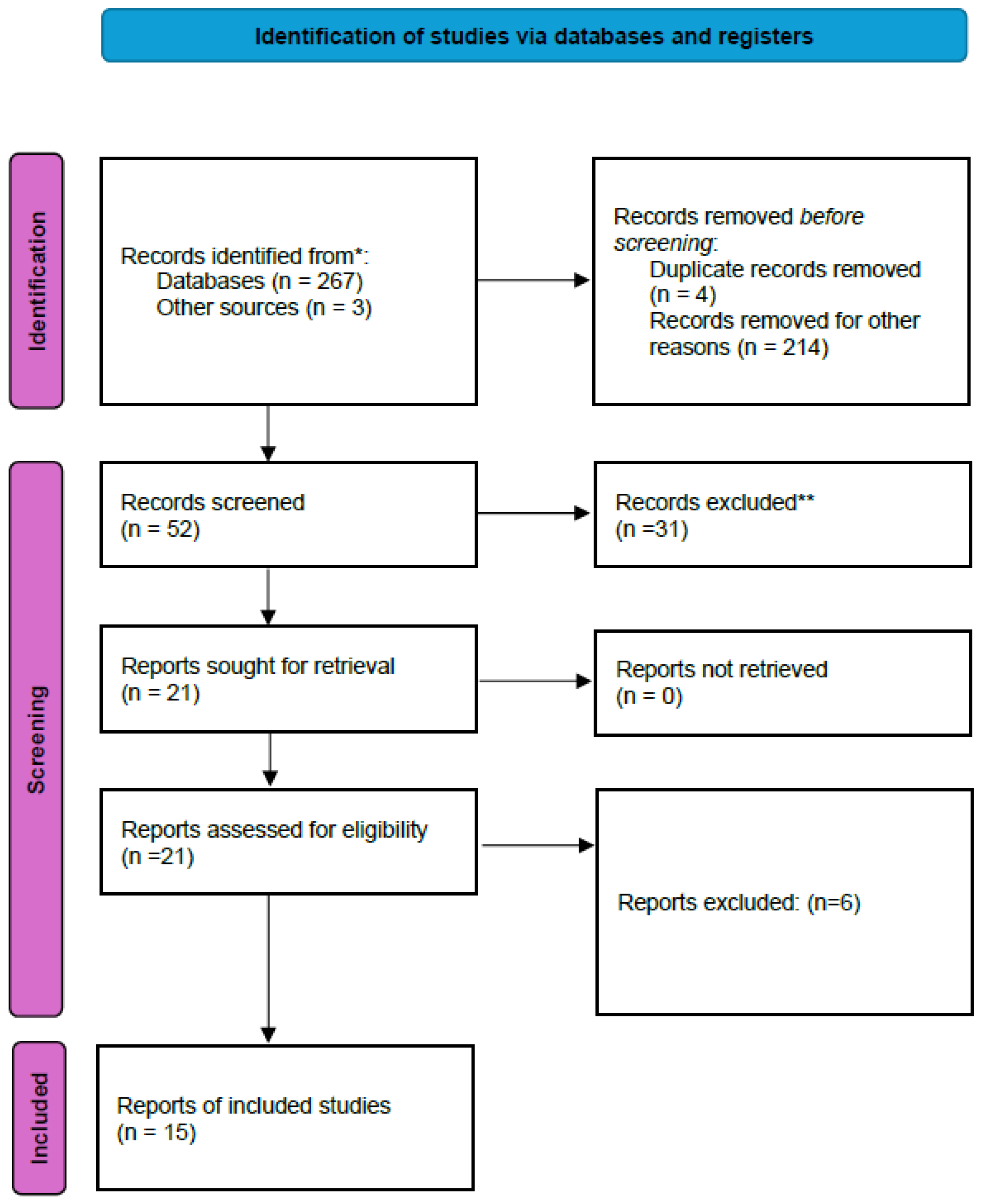
- Records identified: 267 + 3 = 270;
- Duplicates removed: 4;
- Removed for other reasons: 214;
- Records screened (title/abstract): 52;
- Records excluded at abstract screening: 31;
- Full-text reports assessed for eligibility: 21;
- Studies included in the review: 15.
3. Results

| Reference (Author, Year, Journal) | Country | Case ID | Age/Sex | Comorbidities | Anthropometric Parameters | Main External Findings | Main Internal Findings (Organs) | Histology/Microscopy | Ancillary Investigations | |
|---|---|---|---|---|---|---|---|---|---|---|
| Yamada L. et al., 2021, Forensic Science International [23] | Japan | 1.1 | Child neglect | 10, M | - | 114 cm × 16.8 kg, BMI 21.6 kg/m2 | Liver: Buff-colored, severe hepatic steatosis | Muscle: Poor muscle development | Liver: hepatic glycogen deposition was incremented | Immunohistochemistry (Liver): p62-positive staining around the central vein (CV) region; LC3 was inconspicuous | |
| Franchetti G. et al., 2024, Forensic Science International [24] | Italy | 2.1 | Neglect | 47, F | Unspecified circulation disorders; severe scoliosis and bilateral flexed ankylosis of the hips and knees | 176 × 35 kg, BMI 11.3 kg/m2 | Adipose panniculus: Reduced and with gelatinous fat transformation | Adipose panniculus: Atrophic | Brain: Not atrophic | Heart: Atrophic | Lungs: Atrophic | Liver: Atrophic | Spleen: Atrophic | Kidneys: Atrophic | Thyroid: Atrophic | Muscle: Atrophic muscle masses | Surrenal Gland: Atrophic | Bones: Costal bones-iliac-knee protrusions | Other: Anasarca | Heart: Atrophic, significant cellular shrinkage, reduced diameter of myocardiocytes and subepicardial adipocytes, mucoid interstitial alteration in myocardium and subepicardial adipose tissue | Lungs: Atrophic, significant cellular shrinkage, capillary congestion and atrophic emphysema | Liver: Atrophic, reduced diameter of hepatocytes | Spleen: Atrophic | Kidneys: Atrophic | Thyroid: Atrophic, colloidal condensation and collapse of the follicle | Muscle: Atrophic | Surrenal Gland: Vacuolar degeneration of the adrenal medullary cells | Bones: Atrophic | |
| Yamada Y. et al., 2001, Internal Medicine [25] | Japan | 3.1 | Anorexia nervosa | 41, F | Anorexia nervosa, paralytic ileus, dehydration | 154.5 cm × 29.1 Kg, BMI 12.2 | Colon: ileum and cecum with transmural infarction | Other: ascites, pleural effusion, bleeding in gastrointestinal tracts | Colon: mucosal and submucosal with severe hemorrhagic necrosis, degeneration of muscle layer | ||
| Cundiff D.K. et al., 2006, Nutrition Journal [26] | USA | 4.1 | Child neglect | 5 months, F | Suspected DiGeorge Syndrome | 3180 mg × 57 cm, Head circumference: 38 cm | Lungs: congested and atelectasis, postmortem changes | Liver: passive congestion, no fatty changes | Thymus: absent | Parathyroid glands: inconspicuous | Brain: No abnormalities | Pancreas: normal histology | Parathyroid glands: no tissue submitted | Adrenals: spent | Immunohistochemistry (spleen): immunochemistry for CD3 demonstrates the presence of Tymphocytes towards the periphery of the Malpighian corpuscles and scattered throughout the red pulp. NOTE: The presence of Tymphocytes in the spleen excludes the possibility of DiGeorge syndrome.” | |
| Steyn M. et al., 2023, Journal of Forensic and Legal Medicine [27] | South Africa | 5.1 | Child maltreatment | 11, F | evidence of sharp trauma on several bones | Anthropologic studies (bones): cribria orbitalia, No areas of subperiosteal bone growth subperiosteal bone growth | ||||
| 5.2 | Child maltreatment | Less than 3 years, not determined | ulnar osteomyelitis | Anthropologic studies (bones): slight cribria ortbitalia | ||||||
| Madewell ZJ et al., 2024, BMJ Global Health [21] | USA (Georgia, Maryland) Mali Kenya Sierra Leone Nigeria Spain Mozambique South Africa UK Ethiopia Bangladesh | 6.1 | Child malnutrition in contexts of poverty | 1–59 months, Male/Female (54.6% male) | HIV infection (13.4%), infectious diseases (sepsis, pneumonia, malaria, diarrheal disease) | WAZ (Weight-for-Age Z-score, indicator of underweight), LAZ (Length-for-Age Z-score, indicator of stunting), WLZ (Weight-for-Length Z-score, indicator of wasting), MUACZ (Mid–Upper Arm Circumference Z-score, indicator of wasting). Postmortem anthropometry showed: 90.1% underweight, 61.2% stunted, 94.1% wasted. | MITS (Minimally Invasive Tissue Sampling), PCR for pathogens, postmortem anthropometry (Length, weight and mid–upper arm circumference (MUAC) were measured postmortem. WHO Child Growth Standards were used to calculate Z-scores: WAZ (Weight-for-Age Z-score, underweight), LAZ (Length-for-Age Z-score, stunting/chronic malnutrition), WLZ (Weight-for-Length Z-score, wasting/acute malnutrition), MUACZ (Mid–Upper Arm Circumference Z-score, wasting). Z-scores were categorized as: normal (≥−2), moderate (−3 ≤ Z < −2), severe (<−3). Any moderate-to-severe malnutrition was defined as WAZ, LAZ, WLZ or MUACZ <−2; any severe malnutrition as <−3. Implausible anthropometric values (WAZ < −10 or >5; LAZ < −10 or >6; WLZ < −10 or >5; MUACZ < −10 or >5) were excluded.): Malnutrition identified as causal or significant in 39.5% of under-5 deaths, most frequently in association with infectious diseases. | |||
| Lutz L. et al., 2024, Forensic Science, Medicine and Pathology [22] | Germany | 7.1 | Elder abuse | Range from 21 to 96 years, most female (71.7%) | Signs of dehydration, infections, infestations (lice, mites, fleas, worms), pressure sores, aspiration | Severe body weight loss consistent with malnutrition | Intestine: small, hard dry stool in the colon | |||
| Eerkens JW et al., 2017, PLOS ONE [28] | USA | 8.1 | N/A | 2, Female | No | 90 cm | Stable isotope analysis of hair (δ13C, δ15N) (Hair): δ15N enrichment indicating severe undernutrition; compatible with marasmus/starvation | |||
| Hale AR, Ross AH, 2018, Journal of Visualized Experiments [29] | USA | 9.1 | Child neglect | 13, F | Femur length: 355 mm; tibia length: 300 mm (consistent with average 9-year-old values). Estimated stature: 136.2 cm (95% CI 129.8–141.0), corresponding to below the 3rd percentile for age (13 years), indicating pronounced growth deficit. | Dual-energy X-ray absorptiometry (DXA) for Bone Mineral Density (BMD) assessment (Lumbar spine): Total BMD (AP lumbar spine): 0.660 g/cm2 Z-score: −2.2 (cutoff for low BMD < −2) Interpretation: Low BMD for chronological age, consistent with chronic malnutrition | ||||
| 9.2 | Child neglect | 14 months | Weight: 6.1 kg (13.4 lbs) Reference comparison (Gómez system): 38% weight-for-age → Grade III (severe malnutrition) Waterlow classification: severe wasting, no stunting (height normal range) Weight plotted on CDC 2000 curve: <3rd percentile for age | Dual-energy X-ray absorptiometry (DXA) for Bone Mineral Density (BMD) assessment (Lumbar spine): Total BMD (lumbar spine): 0.190 g/cm2 (reference mean: 0.399 ± 0.040 g/cm2) Z-score: −5.225 (well below cutoff of −2; <0.1 percentile for age) Conclusion: Severe malnutrition (starvation), low BMD consistent with fatal starvation | ||||||
| Solarino B. et al., 2012, Journal of Forensic and Legal Medicine [10] | Italy | 10.1 | Child neglect | 16 months, F | No chronic disease identified; malabsorption, neoplasia, intoxication excluded | 5.7 kg × 76 cm | Scalp: alopecia | skin: inelasticity | orbital adipose tissue: atrophic | eyes: sunken | Bones: skeletal prominences | muscle: severe depletion | thymus: atrophic | stomach: empty with ulcerative lesions | large intestine: empty with ulcerative lesions | all organs: 20–50% of weight reduction | Lungs: focal acute hypostatic bronchopneumonia | brain: massive oedema | liver: hepatic steatosis | PAS stain (liver): no glycogen |
| 10.2 | Child neglect | 7 years, F | No chronic disease identified; malabsorption, neoplasia, intoxication excluded | 9.6 kg × 105 cm | Skin: no lividity due to several anemia; extreme exsiccosis: when pinched up between the fingers, skin folds on the upper arm remained elevated and did not return to their flat position | Subcutaneous adipose tissue: absent | visceral adipose tissue: absent | large intestine: completely obstructed by fecal concretions | trachea and bronchi: abundant brown liquid corresponding to stomach contents. | kidneys: purulent pyelonephritis | all organs: 10–60% of weight reduction | Lungs: confirmed the macroscopic diagnosis of massive aspiration of stomach contents | bones: advanced rickets with numerous resorption lacunae and osteoclasts | PAS stain (lungs): Aspirated food constituents corresponding to meat fibers | ||
| Fieguth A. et al., 2002, Forensic Science International [30] | Germany | 11.1 | Child neglect | 14 weeks, F | Upper respiratory infection and decreased appetite at 9 weeks | 3.8 kg × 57 cm | Skin: tenting of the overall dry and wrinkly skin | eyes: sunken | oropharynx, esophagus and trachea: brown mucous | Stomach: small amount of brown fluid | duodenum and small intestine: small amounts of yellow mucous | large intestine: yellowish-brown mucous | liver: fatty infiltrate | renal pelvises: yellow deposits | brain: evidence of increased cranial pressure | Liver: centrilobar hepatic fat deposits | lungs: evidence of aspiration | heart: cardiac edema | muscle: sarcolysis | thymus: thymic involution | |
| 11.2 | Child neglect | 5 weeks, F | 2.4 kg × 48 cm | Skin: dry and wrinkled | Duodenum and upper ileum: devoid of contents | small and large intestine: large amounts of yellowish-beige material | oropharyngeal cavity and esophagus: minimal amount of whitish puree-like material | trachea and bronchial tree: large amount of whitish puree-like material | lungs: dry | thymus: noticeably shrunken | liver: Hepatic fatty deposits | brain: evidence of increased intracranial pressure | Lungs: marked aspiration of foreign material | thymus: involution | liver: centrilobar fatty hepatic deposits | Immunological investigations (blood): BSA-antibody titre of 1.26 mg/ml | |||
| 11.3 | Child neglect | 3.5, F | 10.1 kg × 98 cm | Eyes: sunken in their sockets | oropharynx, esophagus, and trachea: greenish viscous material | Bones: ribcage and pelvis easily visible under the skin | brain: increased volume | thymus: involution | adipose tissue of abdominal wall and retroperitoneal cavity: markedly reduced | stomach: small amounts of green fluid adhering to its wall | duodenum and small intestine: minimal amounts of green mucous | large intestine: several small, dried fecal masses | lungs: inflated, with dry, crumbling, dark green material in the bronchial branches | liver: fatty deposits | Lungs: The majority of the bronchial material consisted of sloughed epithelium; only trace amounts of foreign matter colonized with bacteria were in evidence | liver: fatty deposits showed a periportal distribution, suggesting toxin-induced damage | Toxicology (blood): Blood alcohol: 0.51% → possible alcohol intoxication 3-methylbutanol-1: detected (commonly associated with bacterial decomposition) Serum acetone: slightly elevated (25 mg/L) | swabs (vagina): no evidence of sperm | |||
| Altun G., 2004, Forensic Science International [31] | Turkey | 12.1 | Hunger strike | 26, M | 39 kg × 172 cm | Skin: thin, dry, sallow, lax, wrinkled, thin, inelastic, pigmented, scaly and hyperkeratotic | eyes: sunken in their sockets | pericardium: 40 cc of serous effusion | subcutaneous and internal fat storages: reduced to nil | gastro-intestinal tract: thin and translucent walls; empty lumen; atrophic, hemorrhagic, and smooth mucosa | gallbladders: distended and filled with bile | muscles: waisted | bones: prominent. Orbital margins and nose tips were sharp. Knee–elbow diameters were wide consistent with the term ‘‘camel-like limbs | cheeks: sunken | brain: edema | heart: gelatinoid atrophy in subepicardial fat tissue, brown atrophy in myocardium | liver: atrophic | lungs: atelectasis | spleen: atrophic | Gastro-intestinal tract: Hemorrhagic gastroenteropathy | brain: edema | heart: interstitial edema, atrophy | liver: passive congestion | lungs: emphysema and focal intra-alveolar hemorrhage | kidneys: hyperemia | ||
| 12.2 | Hunger strike | 38, M | 40 kg × 171 cm | Skin: thin, dry, sallow, lax, wrinkled, thin, inelastic, pigmented, scaly and hyperkeratotic, decubitus ulcers | eyes: sunken in their sockets | Peritoneum: 900 cc of serous effusion | subcutaneous and internal fat storages: reduced to nil | gastro-intestinal tract: thin and translucent walls; empty lumen; atrophic, hemorrhagic, and smooth mucosa | gallbladders: distended and filled with bile | muscles: waisted | bones: prominent. Orbital margins and nose tips were sharp. Knee–elbow diameters were wide consistent with the term ‘‘camel-like limbs | cheeks: sunken | brain: edema | heart: gelatinoid atrophy in subepicardial fat tissue | liver: fatty change | lungs: edema and pneumonia | kidneys: Subcapsular petechial hemorrhages | Gastro-intestinal tract: Hemorrhagic gastroenteropathy | brain: edema, petechial hemorrhage | heart: interstitial edema, Atrophy, fibrosis and lipomatosis | liver: passive congestion, fatty change | lungs: Edema and pneumonia | kidneys: acute tubular necrosis | spleen: congestion and stasis | bone marrow: hypocellularity | ||||
| 12.3 | Hunger strike | 25, M | 40 kg × 170 cm | Skin: thin, dry, sallow, lax, wrinkled, thin, inelastic, pigmented, scaly and hyperkeratotic, decubitus ulcers | eyes: sunken in their sockets | Pericardium: 100 cc of white-opaque effusion | peritoneum: 400 cc of serous effusion | subcutaneous and internal fat storages: reduced to nil | gastro-intestinal tract: thin and translucent walls; empty lumen; atrophic, hemorrhagic, and smooth mucosa | gallbladders: distended and filled with bile | muscles: waisted | bones: prominent. Orbital margins and nose tips were sharp. Knee–elbow diameters were wide consistent with the term ‘‘camel-like limbs | cheeks: sunken | brain: edema, atrophy of the frontal lobe | liver: fatty change | lungs: edema and pneumonia | Pericardium: serofibrinous pericarditis | gastro-intestinal tract: Hemorrhagic gastroenteropathy | brain: edema, atrophy of the frontal lobe | heart: interstitial edema, fibrosis and lipomatosis | liver: passive congestion, Fatty change, massive central necrosis | lungs: edema and pneumonia | spleen: Congestion and stasis, fibrosis | ||||
| Tanegashima A. et al., 1999, Forensic Science International [32] | Japan | 13.1 | Child neglect | 1 year and 11 months, M | 8 kg × 85.5 cm | Most organs: severe congestion and average weight | serous cavities: effusion | thymus: involuted and reduced of weight | Thymus: cortical involution with marked reduction in cortical thymocytes; clustering of Hassall’s corpuscles in the medulla; septal thickening and partial fatty infiltration. | Flow cytometry (CD3, CD4, CD8, bcl-2 expression in thymocyte subsets) (Thymus tissue (autopsy case) compared with thymus from 6 age-matched controls (surgical biopsies)): Marked reduction in immature CD4+CD8+ double-positive thymocytes, especially CD3^low bcl-2^low subset, indicating stress-induced thymic involution from neglect | ||
| Mimasaka S., Funayama M., Adachi N., Nata M., Morita M., 2000, International Journal of Legal Medicine [33] | Japan | 14.1 | Child neglect | 6 years, F | Premature birth; no regular medical follow-up | Height: 90 cm; Weight: 10.6 kg (marked growth retardation) | Gums/Teeth: Swollen, bleeding gums; some teeth absent | Skin/Soft tissues: Multiple subcutaneous hemorrhages (face, chest, back, legs) | Gums/Teeth: Alveolar bone resorption; hemorrhage into periodontal membrane (loosening and tooth loss) | Bones (tibia, femur, humerus, epiphyses): Periosteal hemorrhages; bloody subperiosteal fluid (aseptic); epiphyseal plate dislocation; joints easily displaced; soft X-ray: periosteal calcification around epiphyses (halo effect) | Lungs: Distended; foam in airways | Heart: Weight 57 g; no gross malformations | Thymus: Weight 4 g (atrophy) | Bones (tibia, femur, humerus, epiphyses): Periosteal calcification; hemorrhage; cellular hyperplasia; slight fibrosis; no tumor or periostitis | Soft X-ray: periosteal calcification around epiphysis, halo effect, separation of epiphysis; serum: no detectable ascorbic acid (Bones, periosteum, epiphyseal regions, gingiva): Death due to cardiorespiratory failure secondary to scurvy, not drowning; confirmed vitamin C deficiency with characteristic radiological and pathological findings |
| Milroy, C. M., & Parai, J. L. 2011. Forensic science, medicine, and pathology [34] | Canada | 15.1 | Child neglect | 3 years, F | No other disease identified. | 86 cm × 9 kg, both under 3rd percentile. | All organ weights were low. | Thymic atrophy | Liver: steatosis | Muscle: myocyte vacuolation |Lungs: terminal bronchopneumonia | Kidneys: Armanni–Ebstein lesion with fat stains revealed the vacuoles contained fat. | The biochemical findings in blood indicate ketoacidosis, but with no evidence of diabetes mellitus. A post-mortem skeletal survey revealed no fractures but the skeletal survey showed evidence of multiple growth arrests (Harris lines). | |
| Reference | Country | Case ID | Etiology | Age/Sex | Comorbidities | Anthropometry | Main External Findings | Main Internal Findings | Histology | Ancillary |
| Yamada 2021 [23] | Japan | 1.1 | Child neglect | 10 M | – | Normal height, low weight | – | Steatosis; poor muscle | ↑ glycogen, p62+ | IHC (LC3/p62) |
| Franchetti 2024 [24] | Italy | 2.1 | Neglect | 47 F | Ortho disorders | Severe low BMI | Gelatinous fat | Multiorgan atrophy | Cellular shrinkage | – |
| Yamada 2001 [25] | Japan | 3.1 | Anorexia | 41 F | Ileus, dehydration | Very low BMI | – | GI infarction | Hemorrhagic necrosis | – |
| Cundiff 2006 [26] | USA | 4.1 | Neglect | 5 mo F | Suspected DiGeorge | Low weight | – | Lung congestion; absent thymus | Various | IHC CD3 |
| Steyn 2023 [27] | S. Africa | 5.1 | Maltreatment | 11 F | Bone trauma | – | – | – | – | Anthropology |
| Steyn 2023 [27] | S. Africa | 5.2 | Maltreatment | <3 y | Osteomyelitis | – | – | – | – | Anthropology |
| Madewell 2024 [21] | Multi-country | 6.1 | Malnutrition | 1–59 mo | Infectious diseases | 90% underweight | – | – | – | MITS; anthropometry |
| Lutz 2024 [22] | Germany | 7.1 | Elder abuse | 21–96 y | – | Severe weight loss | Dehydration/sores | Fecal stasis | – | – |
| Eerkens 2017 [28] | USA | 8.1 | – | 2 F | – | – | – | – | Hair δ15N enrichment | Isotopes |
| Hale 2018 [29] | USA | 9.1 | Neglect | 13 F | – | Severe growth deficit | – | – | – | DXA |
| Hale 2018 [29] | USA | 9.2 | Neglect | 14 mo | – | Severe wasting | – | – | – | DXA |
| Solarino 2012 [10] | Italy | 10.1 | Neglect | 16 mo F | – | Severe underweight | Alopecia | Organ weight ↓ | Steatosis | PAS liver |
| Solarino 2012 [10] | Italy | 10.2 | Neglect | 7 y F | – | Severe underweight | Exsiccosis | Fecal impaction; pyelonephritis | Aspiration | PAS lungs |
| Fieguth 2002 [30] | Germany | 11.1 | Neglect | 14 w F | URI | Underweight | Dehydration | Fatty liver; aspiration | Fat deposits | – |
| Fieguth 2002 [30] | Germany | 11.2 | Neglect | 5 w F | – | Very low weight | Wrinkled skin | Aspiration; thymic involution | Fatty liver | Immunology |
| Fieguth 2002 [30] | Germany | 11.3 | Neglect | 3.5 F | – | Low weight | Sunken eyes | GI residues; liver fat | Bronchial slough | Toxicology |
| Altun 2004 [31] | Turkey | 12.1 | Hunger strike | 26 M | – | 39 kg | Cachexia | Multiorgan atrophy | Edema; gastroenteropathy | – |
| Altun 2004 [31] | Turkey | 12.2 | Hunger strike | 38 M | – | 40 kg | Cachexia + ulcers | Effusions; pneumonia | ATN; edema | – |
| Altun 2004 [31] | Turkey | 12.3 | Hunger strike | 25 M | – | 40 kg | Cachexia | Effusions; pneumonia | Central necrosis | – |
| Tanegashima 1999 [32] | Japan | 13.1 | Neglect | 1 y 11 mo M | – | Low weight | – | Congestion; thymic involution | DP thymocyte ↓ | Flow cytometry |
| Mimasaka 2000 [33] | Japan | 14.1 | Neglect | 6 F | Prematurity | Severe growth delay | Gingival bleeding | Periosteal hemorrhage | Periosteal calcification | Vit C deficiency tests |
| Milroy 2011 [34] | Canada | 15.1 | Neglect | 3 F | – | Low height & weight | – | Organ weight ↓ | Steatosis; ketosis | Skeletal survey |
| Article | Total Score | Quality Level | Brief Narrative Review |
|---|---|---|---|
| Yamada et al. (2021) [23] | 6/8 | Moderate quality (50–74%) | This study is generally well reported, with clear descriptions of the victim’s demographic features, circumstances of death, autopsy findings, and laboratory results. The narrative is detailed and coherent, providing a thorough reconstruction of the clinical and forensic context and introducing an innovative diagnostic criterion based on lipophagy markers. However, the study lacks sufficient detail regarding autopsy procedures and methodological aspects, and potential confounding factors are only briefly addressed. Overall, the report demonstrates high descriptive quality and scientific value, though with minor limitations in procedural transparency and critical discussion. |
| Franchetti et al. (2024) [24] | 7/8 | High quality (≥75%) | This study shows excellent reporting quality. The demographic data, clinical history, circumstances of discovery, and ante- and post-mortem findings are described in meticulous detail. Both external and internal autopsy results are supported by clear histopathological and morphometric analyses, and the integration of clinical, forensic and radiological evidence provides a comprehensive reconstruction of the events. The authors also offer a thoughtful interpretation of the forensic significance of the findings, highlighting the implications for detecting abuse and neglect in adults, which represents an underexplored field. The only minor limitation lies in the absence of a concise methodological description of some laboratory procedures, but this does not detract from the overall clarity and rigor. Overall, the study stands out for its exceptional completeness, coherence, and forensic relevance. |
| Yamada et al. (2001) [25] | 5/8 | Moderate quality (50–74%) | This study presents a moderately detailed account of a fatal complication of anorexia nervosa associated with ischemic necrosis of the ileum and cecum. The demographic data, clinical history, and circumstances of hospitalization and death are well documented and the autopsy and histological findings are clearly described, including the identification of non-occlusive mesenteric infarction. The discussion effectively contextualizes the case within the literature, highlighting the rarity of bowel ischemia as a fatal complication of anorexia nervosa. However, the methodological details of the autopsy and laboratory analyses are limited, and potential confounding factors, such as concurrent medications or metabolic alterations, are not explored in depth. Despite these omissions, the report remains clinically and forensically valuable, as it broadens the understanding of fatal mechanisms in chronic malnutrition and anorexia-related pathology. |
| Cundiff et al. (2006) [26] | 5/8 | Moderate quality (50–74%) | This study provides a moderately detailed and well-structured description of a controversial forensic case involving alleged child neglect and malnutrition in a family following a raw vegan diet. The demographic details, clinical history and autopsy findings are clearly presented, and the discussion includes an in-depth review of nutritional, metabolic and diagnostic considerations, demonstrating critical engagement with existing medical definitions of malnutrition and rickets. However, the autopsy and laboratory methodologies are only briefly summarized, with limited procedural detail, and the interpretation of confounding variables (e.g., potential congenital anomalies like DiGeorge syndrome) remains somewhat speculative. Despite these gaps, the report’s strength lies in its analytical depth and critical discussion of the intersection between nutrition, pathology, and medico-legal interpretation, though it would have benefited from a clearer presentation of forensic protocols and methodological rigor. |
| Steyn et al. (2023) [27] | 8/10 | High quality (≥75%) | This study demonstrates high reporting quality and offers a detailed forensic-anthropological review of 19 juvenile deaths investigated at the Human Variation and Identification Research Unit in Johannesburg. The inclusion criteria are clearly stated, and the diagnostic approach to cause of death is consistent across cases, supported by standardized anthropological and osteological methods. The cases were collected consecutively over a six-year period, minimizing selection bias, and demographic, contextual, and autopsy data are thoroughly reported. The integration of multiple case studies illustrates both acute and chronic trauma, malnutrition, and neglect, providing strong inferential value for forensic interpretation. The study’s main limitations are the limited standardization of the “starvation” definition across cases and the absence of a formal comparative or statistical analysis beyond descriptive reporting. Nevertheless, the series stands out for its clarity, completeness, and scientific rigor, representing a robust example of forensic anthropology applied to child abuse and neglect investigations in a high-violence setting. |
| Madewell et al. (2024) [21] | 8/10 | High quality (≥75%) | This study exhibits high methodological and reporting quality. The study, conducted within the CHAMPS network across seven countries in Sub-Saharan Africa and South Asia, clearly defines inclusion criteria, standardized diagnostic definitions of malnutrition and consistent postmortem investigative procedures using minimally invasive tissue sampling (MITS). Data collection was systematic and consecutive, ensuring minimal selection bias, and included comprehensive demographic, clinical and environmental details for each decedent. The cause of death was adjudicated by expert panels using WHO standards and ICD-10/11 coding, providing robust internal validity. However, while the anthropometric findings were extensively detailed and the association between malnutrition and infectious diseases was thoroughly analyzed, the study lacked granular contextual information (e.g., socio-environmental or familial dynamics) and statistical comparison across sites was limited by variability in enrollment and diagnostic interpretation. Despite these constraints, the work stands out for its scientific rigor, multicentric scope, and integration of postmortem data, offering valuable insights into the dual burden of malnutrition and infection in pediatric mortality across low-resource settings. |
| Lutz et al. (2024) [22] | 8/10 | High quality (≥75%) | This study presents a comprehensive and methodologically robust retrospective analysis of 46 autopsied cases of physical neglect. The inclusion criteria were clearly stated, focusing on cases with objective evidence of neglect during the final period of life and the definition and classification of neglect were standardized according to established medico-legal criteria. Data collection was consistent and consecutive over nearly three decades, covering demographic, clinical, environmental, and entomological aspects. The study was strengthened by the integration of forensic entomology, used to determine the ante-mortem duration of neglect through insect developmental stages, an innovative and scientifically rigorous approach. The cause of death was defined in all cases and autopsy findings were detailed with photographic and tabular documentation. Although information on socio-environmental context and statistical analysis was somewhat limited, the case descriptions were comprehensive, and the analytical framework was appropriate for the study design. |
| Eerkens et al. (2017) [28] | 6/8 | Moderate quality (50–74%) | This study demonstrates high methodological quality and presents a multidisciplinary isotopic investigation of hair samples from a mummified child from 19th-century San Francisco. The study provides a clear description of the historical and burial context, an accurate reconstruction of the child’s age and physical condition and a comprehensive explanation of the sampling and isotopic analysis procedures. The progressive variations in δ15N and δ13C values strongly support a diagnosis of prolonged malnutrition leading to marasmus, consistent with historical death records. The report excels in clarity, analytical rigor and integration of archaeological, historical, and biochemical data, though it is somewhat limited by the absence of full autopsy, histological or toxicological correlations. Overall, it represents an exemplary application of forensic and archaeometric methods to reconstruct historical cases of pediatric malnutrition. |
| Hale et al. (2018) [29] | 5/10 | Moderate quality (50–74%) | This study demonstrates moderate reporting quality within the context of a methodological case series describing the preparation and analysis of hair samples for stable isotope evaluation in forensic investigations. The study provides clear inclusion criteria and consistent analytical methodology, detailing the isotopic assessment of carbon and nitrogen for reconstructing nutritional and metabolic status in postmortem cases. However, the definition of starvation is not explicitly standardized, and the selection of cases is not presented as consecutive or representative, limiting reproducibility. While autopsy and contextual information are adequately described in illustrative cases, broader clinical, demographic, and socio-environmental data are scarce. Furthermore, no formal comparative or statistical analysis is conducted beyond methodological validation. Despite these limitations, the study is valuable for its technical rigor, procedural transparency, and relevance to the forensic assessment of malnutrition and metabolic disturbances through isotopic profiling. |
| Solarino et al. (2012) [10] | 10/10 | High quality (≥75%) | This study demonstrates excellent reporting and methodological quality. The authors present two meticulously documented cases of fatal child neglect and starvation, integrating autopsy, histological, radiological and socio-environmental evidence to establish both cause and manner of death. The inclusion criteria and diagnostic framework are clearly stated, and the definition of starvation follows established forensic references, including the Waterlow Classification for protein-energy malnutrition. Each case is comprehensively described, with detailed anthropometric data, organ weight comparisons, histopathological findings and biochemical analyses. The collection and documentation of cases were consistent and systematic, and the contextual information, including family background, living conditions, and investigative findings, was thoroughly integrated with the forensic evidence. The authors also provide clear differentiation between starvation and potential differential diagnoses, ensuring diagnostic accuracy. Furthermore, the discussion synthesizes the findings with a strong medico-legal perspective, emphasizing the importance of multidisciplinary collaboration between pathology, scene investigation, and social inquiry. Overall, this study exemplifies best practices in forensic case reporting, combining exhaustive clinical-pathological documentation with interpretative clarity and societal relevance. |
| Fieguth et al. (2002) [30] | 10/10 | High quality (≥75%) | This study represents a model of comprehensive forensic documentation and methodological rigor. The study analyzes three fatal cases of child neglect and starvation, providing clear inclusion criteria, systematic autopsy findings, and consistent diagnostic application across all cases. The definition of malnutrition is explicitly standardized using the Waterlow classification, allowing differentiation between acute and chronic nutritional deficiency. The authors meticulously describe the clinical histories, socio-environmental circumstances, and pathological features, including thymic involution, hepatic fatty change, and aspiration, integrating macroscopic and histological data. Cases were collected consecutively, and the forensic context (home conditions, maternal behavior, substance abuse, and socio-economic background) was thoroughly investigated, providing a holistic understanding of the mechanisms and risk factors underlying fatal neglect. The inclusion of quantitative anthropometric analysis and correlation with established reference curves adds further scientific robustness. The discussion demonstrates strong interpretative depth, addressing medico-legal distinctions between neglect and abuse. Overall, this work exemplifies best practices in forensic case series reporting, distinguished by its clarity, completeness, and integration of pathological, clinical, and social evidence, setting a methodological benchmark for future studies on fatal child neglect. |
| Altun et al. (2004) [31] | 10/10 | High quality (≥75%) | This study demonstrates outstanding reporting quality and scientific rigor. The authors present three meticulously documented cases of fatal hunger strike deaths, providing a comprehensive analysis that combines clinical history, autopsy findings, and pathophysiological interpretation. The inclusion criteria are clearly defined, and the diagnostic framework for starvation is standardized and consistently applied across cases. Each subject is described in detail, with precise anthropometric measurements, organ weights, and both macroscopic and histopathological findings. The autopsy descriptions are exceptionally thorough, documenting consistent features of severe cachexia, organ atrophy, serous effusions, and gastrointestinal mucosal atrophy, alongside complications such as pneumonia, myocardial degeneration, and hepatic steatosis. Importantly, the study contextualizes these findings within the biochemical and physiological mechanisms of prolonged starvation, particularly emphasizing the role of thiamine deficiency following cessation of vitamin supplementation. The clinical and environmental context (prison setting, hunger strike progression, medical supervision) is clearly delineated, and the discussion integrates medical, ethical, and forensic perspectives. Overall, this study exemplifies methodological excellence, with complete documentation, diagnostic coherence, and interpretative depth, making it a reference standard for the forensic investigation of starvation-related deaths in both institutional and voluntary contexts. |
| Tanegashima et al. (1999) [32] | 7/8 | High quality (≥75%) | This study represents a significant contribution to forensic pathology in the context of child neglect. The study provides a comprehensive description of the case, including clear demographic information, detailed autopsy findings, and meticulous histological and flow cytometric analyses of the thymus. The authors integrate morphological and immunophenotypic data to demonstrate thymic involution as a biological marker of chronic stress in neglected children, introducing an innovative quantitative approach through CD4/CD8 and bcl-2 expression profiling. The methodological section is particularly robust, outlining sampling, staining, and analytical procedures with scientific precision. The only minor limitation is the limited discussion of possible confounding variables (e.g., pre-existing illness or environmental factors). Overall, this case report stands out for its clarity, methodological rigor, and forensic relevance, providing a strong model for integrating cellular immunology into postmortem evaluation of child neglect. |
| Mimasaka et al. (2000) [33] | 6/8 | Moderate quality (50–74%) | This study presents a well-documented forensic investigation of a fatal case of infantile scurvy initially mistaken for child abuse. The demographic characteristics, circumstances of death, and autopsy findings are clearly described, including detailed accounts of periosteal hemorrhages, dental changes, and radiographic evidence of bone calcification consistent with vitamin C deficiency. The authors effectively reconstruct the clinical and social context of neglect, linking parental ignorance and isolation of the child to the fatal nutritional deficiency. However, methodological details of the autopsy and laboratory testing are somewhat limited, and the discussion of potential confounding medical factors (e.g., metabolic or genetic disorders) remains brief. Despite these minor limitations, the report is notable for its clarity, diagnostic precision, and forensic relevance, highlighting the importance of distinguishing neglect-induced malnutrition from physical abuse in pediatric forensic evaluations. |
| Milroy et al. (2011) [34] | 7/8 | High quality (≥75%) | This study displays excellent reporting quality, offering a comprehensive and methodologically rigorous forensic investigation into the death of a 3-year-old child from starvation-induced ketoacidosis. The authors provide clear demographic information, a detailed account of the death circumstances and a thorough autopsy description, including macroscopic, histological and biochemical findings that confirm the presence of the Armanni–Ebstein renal lesion in a non-diabetic context. The inclusion of biochemical analyses, histochemical fat staining and radiological documentation of growth arrest lines demonstrates exceptional integration of multidisciplinary evidence. The discussion effectively situates the case within the broader forensic literature, emphasizing the pathophysiological link between ketoacidosis and the Armanni–Ebstein lesion, independent of diabetes. The only minor limitation lies in the brevity of procedural details regarding laboratory techniques. Overall, the report stands out for its clarity, scientific depth, and forensic relevance, serving as an exemplary model of diagnostic accuracy in starvation-related child fatalities. |
| Category | N | % |
|---|---|---|
| Total articles | 15 | – |
| Case reports/series | 13 | 86.7% |
| Cohort studies | 2 | 13.3% |
| Total subjects (case reports/series) | 20 | – |
| Adults | 5 | 25% |
| Children | 15 | 75% |
| Males | 5 | 25% |
| Females | 13 | 65% |
| Sex not reported | 2 | 10% |
| Cadavers in advanced decomposition | 6 | – |
| Skeletonized | 3 | – |
| Mummified | 2 | – |
4. External Examination
5. Autopsy Findings
6. Ancillary Analysis
7. Cause of Death and Forensic Diagnostic Criteria
8. Discussion
9. Conclusions
Supplementary Materials
Author Contributions
Funding
Institutional Review Board Statement
Informed Consent Statement
Data Availability Statement
Conflicts of Interest
References
- Knight, L.D.; Collins, K.A. A 25-Year Retrospective Review of Deaths Due to Pediatric Neglect. Am. J. Forensic Med. Pathol. 2005, 26, 221–228. Available online: https://journals.lww.com/amjforensicmedicine/fulltext/2005/09000/a_25_year_retrospective_review_of_deaths_due_to.4.aspx (accessed on 30 June 2025). [CrossRef] [Scilit]
- Buono, R.; Longo, V.D. Starvation, Stress Resistance, and Cancer. Trends Endocrinol. Metab. 2018, 29, 271–280. Available online: https://www.sciencedirect.com/science/article/pii/S1043276018300171 (accessed on 30 June 2025). [CrossRef] [Scilit]
- Thomas, D.R. Distinguishing starvation from cachexia. Clin. Geriatr. Med. 2002, 18, 883–891. [Google Scholar] [CrossRef] [Scilit]
- Weisz, G. Starvation Genocide in Occupied Eastern Europe 1939–1945: Food Confiscation by and for the Nazis. J. Law Med. 2021, 28, 1105–1113. [Google Scholar]
- Shasha, S. Morbidity in the ghettos during the Holocaust. Harefuah 2002, 141, 364–368, 408, 409. [Google Scholar]
- Weisz, M. Famine in Jewish History and the Metabolic Consequences. Harefuah 2020, 159, 266–268. [Google Scholar]
- Lasker, G.W. The effects of partial starvation on somatotype: An analysis of material from the Minnesota starvation experiment. Am. J. Phys. Anthr. 1947, 5, 323–342. [Google Scholar] [CrossRef] [Scilit]
- Dulloo, A.G. Physiology of weight regain: Lessons from the classic Minnesota Starvation Experiment on human body composition regulation. Obes. Rev. 2021, 22, e13189. [Google Scholar] [CrossRef] [Scilit] [PubMed]
- Madea, B.; Doberentz, E. Starvation, Dehydration, Malnutrition, and Neglect. In Geriatric Forensic Medicine and Pathology; Collins, K.A., Byard, R.W., Eds.; Cambridge University Press: Cambridge, UK, 2020; pp. 109–129. Available online: https://www.cambridge.org/core/product/3ECEA0AE0249B0D1EDDF1A17B5B8FC3E (accessed on 30 June 2025).
- Solarino, B.; Grattagliano, I.; Catanesi, R.; Tsokos, M. Child starvation and neglect: A report of two fatal cases. J. Forensic Leg. Med. 2012, 19, 171–174. Available online: https://www.sciencedirect.com/science/article/pii/S1752928X11002046 (accessed on 30 June 2025). [CrossRef] [Scilit] [PubMed]
- Catanesi, R.; Rocca, G.; Candelli, C.; Solarino, B.; Carabellese, F. Death by starvation. Seeking a forensic psychiatric understanding of a case of fatal child maltreatment by the parent. Forensic Sci. Int. 2012, 223, e13–e17. Available online: https://www.sciencedirect.com/science/article/pii/S037907381200388X (accessed on 30 June 2025). [CrossRef] [Scilit] [PubMed]
- Ventura, M.J. Prosecuting Starvation under International Criminal Law: Exploring the Legal Possibilities. J. Int. Crim. Justice 2019, 17, 781–814. [Google Scholar] [CrossRef] [Scilit]
- Luciano, S.A. Starvation at the International Criminal Court: Reflections on the Available Options for the Prosecution of the Crime of Starvation. Int. Crim. Law Rev. 2023, 23, 284–320. Available online: https://brill.com/view/journals/icla/23/2/article-p284_003.xml (accessed on 30 June 2025). [CrossRef] [Scilit]
- Conley, B.; de Waal, A. The Purposes of Starvation: Historical and Contemporary Uses. J. Int. Crim. Justice 2019, 17, 699–722. [Google Scholar] [CrossRef] [Scilit]
- Famine Review Committee: Gaza Strip, August 2025. Available online: https://www.ipcinfo.org/fileadmin/user_upload/ipcinfo/docs/IPC_Famine_Review_Committee_Report_Gaza_Aug2025.pdf (accessed on 2 September 2025).
- Famine Confirmed for First Time in Gaza. Available online: https://www.who.int/news/item/22-08-2025-famine-confirmed-for-first-time-in-gaza (accessed on 2 September 2025).
- Pollanen, M.S. The pathology of torture. Forensic Sci. Int. 2018, 284, 85–96. [Google Scholar] [CrossRef] [Scilit]
- Jensen, G.L.; Mirtallo, J.; Compher, C.; Dhaliwal, R.; Forbes, A.; Grijalba, R.F.; Hardy, G.; Kondrup, J.; Labadarios, D.; Nyulasi, I.; et al. Adult Starvation and Disease-Related Malnutrition. J. Parenter. Enter. Nutr. 2010, 34, 156–159. [Google Scholar] [CrossRef] [Scilit] [PubMed]
- Solarino, B.; Tsokos, M.; Di Vella, G.; Tattoli, L. Child Starvation and Neglect. In Handbook of Famine, Starvation, and Nutrient Deprivation; Springer International Publishing: Cham, Switzerland, 2017; pp. 1–19. Available online: http://link.springer.com/10.1007/978-3-319-40007-5_57-1 (accessed on 30 June 2025).
- Palmiere, C.; Tettamanti, C.; Augsburger, M.; Burkhardt, S.; Sabatasso, S.; Lardi, C.; Werner, D. Postmortem biochemistry in suspected starvation-induced ketoacidosis. J. Forensic Leg. Med. 2016, 42, 51–55. [Google Scholar] [CrossRef] [Scilit] [PubMed]
- Madewell, Z.J.; Keita, A.M.; Das, P.M.-G.; Mehta, A.; Akelo, V.; Oluoch, O.B.; Omore, R.; Onyango, D.; Sagam, C.K.; Cain, C.J.; et al. Contribution of malnutrition to infant and child deaths in Sub-Saharan Africa and South Asia. BMJ Glob. Health 2024, 9, e017262. [Google Scholar] [CrossRef] [Scilit]
- Lutz, L.; Klinger, M.F.; Holz, F.; Verhoff, M.A.; Amendt, J. How to prove neglect in the context of the post-mortem examination. Forensic Sci. Med. Pathol. 2024, 20, 603–613. [Google Scholar] [CrossRef] [Scilit]
- Yamada, A.; Unuma, K.; Arai, N.; Kitamura, O.; Uemura, K. Inappropriate diet and fatal malnutrition in a 10-year-old child fed only infant formula throughout life: Novel pathological diagnostic criterion for starvation via lipophagy. Forensic Sci. Int. 2021, 325, 110896. [Google Scholar] [CrossRef] [Scilit]
- Franchetti, G.; Cestonaro, C.; Giordano, R.; Callegari, E.; Giraudo, C.; Viel, G.; Cecchetto, G. Severe starvation and restraint in a 47-year-old woman: Clinical, autopsy and histopathological evidence of abuse and neglect. Forensic Sci. Int. 2024, 355, 111941. [Google Scholar] [CrossRef] [Scilit]
- Yamada, Y.; Nishimura, S.; Tsujimura, T.; Fushimi, H. Anorexia Nervosa with Ischemic Necrosis of the Segmental Ileum and Cecum. Intern. Med. 2001, 40, 304–307. [Google Scholar] [CrossRef] [Scilit]
- Cundiff, D.K.; Harris, W. Case report of 5 siblings: Malnutrition? Rickets? DiGeorge syndrome? Developmental delay? Nutr. J. 2006, 5, 1. [Google Scholar] [CrossRef] [Scilit]
- Steyn, M.; Brits, D.; Botha, D.; Holland, S. Violence against children: A review of cases at a forensic anthropology unit, Johannesburg, South Africa. J. Forensic Leg. Med. 2024, 101, 102623. [Google Scholar] [CrossRef] [Scilit]
- Eerkens, J.W.; Hull, B.; Goodman, J.; Evoy, A.; Kapp, J.D.; Hussain, S.; Green, R.E. Stable C and N isotope analysis of hair suggest undernourishment as a factor in the death of a mummified girl from late 19th century San Francisco, CA. PLoS ONE 2017, 12, e0184921. [Google Scholar] [CrossRef] [Scilit]
- Hale, A.R.; Ross, A.H. Scanning skeletal remains for bone mineral density in forensic contexts. J. Vis. Exp. 2018, 131, 56713. [Google Scholar]
- Fieguth, A.; Günther, D.; Kleemann, W.J.; Tröger, H.D. Lethal child neglect. Forensic Sci. Int. 2002, 130, 8–12. [Google Scholar] [CrossRef] [Scilit] [PubMed]
- Altun, G.; Akansu, B.; Ugur Altun, B.; Azmak, D.; Yilmaz, A. Deaths due to hunger strike: Post-mortem findings. Forensic Sci. Int. 2004, 146, 35–38. [Google Scholar] [CrossRef] [PubMed]
- Tanegashima, A.; Yamamoto, H.; Yada, I.; Fukunaga, T. Estimation of stress in child neglect from thymic involution. Forensic Sci. Int. 1999, 101, 55–63. [Google Scholar] [CrossRef] [Scilit]
- Mimasaka, S.; Funayama, M.; Adachi, N.; Nata, M.; Morita, M. A fatal case of infantile scurvy. Int. J. Leg. Med. 2000, 114, 122–124. [Google Scholar] [CrossRef] [Scilit]
- Milroy, C.M.; Parai, J.L. Armanni-Ebstein lesion, ketoacidosis and starvation in a child. Forensic Sci. Med. Pathol. 2011, 7, 213–216. [Google Scholar] [CrossRef] [Scilit] [PubMed]
- Costache, M.; Lazaroiu, A.M.; Contolenco, A.; Costache, D.; George, S.; Sajin, M.; Patrascu, O.M. Clinical or Postmortem? The Importance of the Autopsy; a Retrospective Study. Maedica J. Clin. Med. 2014, 9, 261. [Google Scholar]
- Madea, B. Death as a Result of Starvation. In Forensic Pathology Reviews; Tsokos, M., Ed.; Humana Press: Totowa, NJ, USA, 2005; pp. 3–23. [Google Scholar] [CrossRef] [Scilit]

| Adapted Version of the JBI (Joanna Briggs Institute) Critical Appraisal Checklist, Tailored to Autopsy Case Reports (8 Items) | Yes | No |
|---|---|---|
| Were the circumstances of discovery/death and the relevant anamnestic history clearly described and presented in temporal sequence? | 1 point | 0 points |
| Were the conditions of the body at the time of examination (e.g., nutritional status, external signs) clearly described? | 1 point | 0 points |
| Were the autopsy examinations (macroscopic, histological, toxicological, laboratory) and their results clearly described? | 1 point | 0 points |
| Were the autopsy/methodological procedures adopted clearly described? | 1 point | 0 points |
| Were subsequent findings (histology, toxicology, other specialized assessments) clearly reported? | 1 point | 0 points |
| Were any unexpected events or confounding elements (e.g., comorbid diseases, substance use) identified and described? | 1 point | 0 points |
| Were any unexpected events or confounding elements (e.g., comorbid diseases, substance use) identified and described? | 1 point | 0 points |
| Does the case report provide useful lessons or takeaways for forensic-autopsy practice? | 1 point | 0 points |
| Adapted version of the JBI (Joanna Briggs Institute) critical appraisal checklist, tailored to autopsy case series (10 items) | Yes | No |
| Were clear inclusion criteria for the cases in the series reported? | 1 point | 0 points |
| Was the diagnosis of “starvation” defined in a standard manner and applied uniformly across all cases? | 1 point | 0 points |
| Were valid and consistent methods used to determine the cause of death in all cases? | 1 point | 0 points |
| Were the cases included in the series collected consecutively? | 1 point | 0 points |
| Was case inclusion complete (i.e., free from arbitrary selection)? | 1 point | 0 points |
| Were the demographic characteristics of the deceased subjects clearly reported? | 1 point | 0 points |
| Were the relevant clinical and circumstantial details (e.g., socio-environmental context, medical history) clearly reported? | 1 point | 0 points |
| Were the autopsy findings and histological/toxicological results clearly described? | 1 point | 0 points |
| Were the characteristics of the setting or context (e.g., prison, home, hospital) clearly reported? | 1 point | 0 points |
| Was the comparative/statistical analysis of cases (if applied) appropriate? | 1 point | 0 points |
Disclaimer/Publisher’s Note: The statements, opinions and data contained in all publications are solely those of the individual author(s) and contributor(s) and not of MDPI and/or the editor(s). MDPI and/or the editor(s) disclaim responsibility for any injury to people or property resulting from any ideas, methods, instructions or products referred to in the content. |
© 2025 by the authors. Licensee MDPI, Basel, Switzerland. This article is an open access article distributed under the terms and conditions of the Creative Commons Attribution (CC BY) license (https://creativecommons.org/licenses/by/4.0/).
Share and Cite
Amirante, F.; Pititto, F.; Pulin, G.; Bellacicco, R.; Paladini, E.; Cazzato, G.; Solarino, B.; Marrone, M. The Pathology of Starvation: A Systematic Review of Forensic Evidence. Forensic Sci. 2025, 5, 74. https://doi.org/10.3390/forensicsci5040074
Amirante F, Pititto F, Pulin G, Bellacicco R, Paladini E, Cazzato G, Solarino B, Marrone M. The Pathology of Starvation: A Systematic Review of Forensic Evidence. Forensic Sciences. 2025; 5(4):74. https://doi.org/10.3390/forensicsci5040074
Chicago/Turabian StyleAmirante, Federica, Fortunato Pititto, Giuseppe Pulin, Roberto Bellacicco, Elisa Paladini, Gerardo Cazzato, Biagio Solarino, and Maricla Marrone. 2025. "The Pathology of Starvation: A Systematic Review of Forensic Evidence" Forensic Sciences 5, no. 4: 74. https://doi.org/10.3390/forensicsci5040074
APA StyleAmirante, F., Pititto, F., Pulin, G., Bellacicco, R., Paladini, E., Cazzato, G., Solarino, B., & Marrone, M. (2025). The Pathology of Starvation: A Systematic Review of Forensic Evidence. Forensic Sciences, 5(4), 74. https://doi.org/10.3390/forensicsci5040074