
Article

Waiting to Be Discovered: A New Lizard Species of Wilsonosaura (Squamata: Gymnophthalmidae) from the City of Ayacucho in the Andes of Central Peru †

by
Juan R. Gamboa-Yupanqui
1,
Cesar Aguilar-Puntriano
1,2,
Miguel Vences
3 and
Edgar Lehr
1,4,*
1
Departamento de Herpetología, Museo de Historia Natural, Universidad Nacional Mayor de San Marcos, Av. Arenales 1256, Lima 15064, Peru
2
Laboratorio de Sistemática y Ecología de Vertebrados, Universidad Nacional Mayor de San Marcos, Av. Carlos Germán Amezaga 375, Lima 15001, Peru
3
Zoological Institute, Technische Universität Braunschweig, Mendelssohnstr. 4, 38106 Braunschweig, Germany
4
Department of Biology, Illinois Wesleyan University, 303 E Emerson, Bloomington, IL 61701, USA
*
Author to whom correspondence should be addressed.
urn:lsid:zoobank.org:pub:0F9D3252-74B6-42FA-8C3B-29535A77251E; urn:lsid:zoobank.org:act:8AB73CE8-2C27-463F-828A-08AC9EA62960.
Taxonomy 2026, 6(2), 34; https://doi.org/10.3390/taxonomy6020034
Submission received: 4 March 2026 / Revised: 18 May 2026 / Accepted: 18 May 2026 / Published: 26 May 2026

Abstract

Wilsonosaura Lehr, Moravec, Von May, 2020, was described as a monotypic genus from central Peru, based on genetic and morphological characters. This genus is easily distinguished from other lizards in the gymnophthalmid subfamily Cercosaurini, except for Proctoporus, by the presence of an undivided translucent lower palpebral disk, weakly keeled dorsal scales, and the absence of preanal pores. Morphological synapomorphies to distinguish Wilsonosaura and Proctoporus have not been identified. Consequently, differentiation of both genera continues to require molecular analysis. We describe a new species of Wilsonosaura based on morphological and DNA sequence data and extend the geographic distribution of this genus by 88.53 km to the southeast of Ayacucho, Peru, from the nearest known record to date. The new species is known only from the Ayacucho Department, Huamanga and Huanta Provinces, in the eastern Andes, between 2674 and 2800 m a.s.l., where it inhabits humid areas along riverbanks, urban areas, and farming areas and can be found under rocks, logs, and urban buildings. Wilsonosaura sp. nov. can be distinguished from W. josyi by the absence of fusion of the first superciliary and first supraocular scales, a lower count of scales in the mid-body, a higher scale row count on the side of the neck, a smaller size, and a different coloration pattern.

1. Introduction

The taxonomy of lizards in the family Gymnophthalmidae remains complex, but molecular information has helped to shed light on the diversity and relationships of these neotropical squamates. The first contribution to the systematics of the clade Microteiidae was made in 2001 [1] when four subfamilies of Gymnophthalmidae were established (Alopoglossinae, Gymnophthalminae, Rachisaurinae, and Cercosaurinae). Three years later, a Bayesian inference analysis of DNA sequences revealed that Proctoporus and Neusticurus are polyphyletic [2]. In 2005, two new genera (Potamites and Petracola) were described to allocate some species of Neusticurus and Proctoporus [3]. The second comprehensive phylogenetic study [4], using mitochondrial (12S, 16S, and ND4) and nuclear-encoded (c-mos) genes, presented a time-calibrated evolutionary tree with reconstructions of ancestral areas, highlighted unnamed clades, and showed that several genera within Cercosaurini are not monophyletic while proposing several taxonomic changes.
In a subsequent study using nucleotide sequences to infer phylogenetic relationships within the superfamily Gymnophthalmoidea, the monophyly of Gymnophthalmidae was refuted, and Allopoglossinae was proposed as a new family [5]. Eventually, two genera were described from Peru: Selvasaura in 2018 [6] and Dendrosauridion in 2019 [7]. In 2020, Lehr et al. [8] described the genus Wilsonosaura, a terrestrial lizard of Gymnophthalmidae from central Peru, based on genetic and morphological characters. No consistent morphological character has been identified to differentiate Wilsonosaura from Proctoporus, and phenotypic synapomorphies for Wilsonosaura remain unknown.
Gymnophthalmids are distributed in the Neotropics [6], where rugged topography may hide their true species diversity. Wilsonosaura is known only from Peru and is distributed in the departments of Huancavelica, Junín, and Pasco, in upper montane forest and puna habitats between 2430 and 3710 m a.s.l. The type species Wilsonosaura (Euspondylus) josyi [8] was described in the department of Junín (Marainiyoc at 2880 m a.s.l.) based on morphological evidence. Recent molecular data led Lehr et al. [8] to describe Wilsonosaura as a separate genus, and to transfer Eusponylys josyi to it as the type species.
Herein, based on a concordant differentiation in DNA sequences of the mitochondrial gene ND4 and various morphological characters, we describe a new species of Wilsonosaura from the department of Ayacucho in Peru.

2. Materials and Methods

2.1. DNA Extraction, Amplification, and Sequencing

We extracted DNA from tissue samples following a standard salt-extraction protocol [9]. A fragment of the mitochondrial NADH Dehydrogenase subunit 4 gene (ND4) (terminally including sequences of tRNA-His, tRNA-Ser, and partial tRNA-Leu) was PCR-amplified with the primers ND4 (CACCTATGACTACCAAAAGCTCATGTAGA) and leutRNA (AGCCATTACTTTTACTTGGATTTGCACC) (modified from Arevalo et al. [10]) and the following cycling protocol: initial denaturation at 94 °C for 90 s, 33 cycles of denaturation at 94 °C for 45 s, annealing at 47 °C for 45 s, elongation at 72 °C for 90 s, followed by 10 min of final elongation 72 °C. Reaction mixes contained 1 μL template DNA, 0.25 μL of 10 μM dNTPs, 0.3 μL of each 10 μM Primer, 2.5 μL Colorless 5x GoTaq Reaction Buffer, and 0.1 μL GoTaq G2 DNA Polymerase (5 U/μL) in a total volume of 12.5 μL. We removed nucleotide debris by adding 2.4 μL ExoSAP to 8 μL PCR [11]. Purified PCR products were sequenced on capillary sequencers by LGC Biosearch Technologies in Berlin, Germany. We used CodonCode Aligner v. 6.0.2. (Codon Code Corporation, Centerville, MA, USA) to verify the sequence quality of chromatograms and to remove stretches of poor read quality. The final sequences used for analysis only included a protein-coding stretch of the ND4 gene.

2.2. Molecular Phylogenetics

Phylogenetic analyses in this study employed gene sequences of gymnophthalmid species available from GenBank as of 17 December 2025, and sequences added in this work (Appendix A). We used fragments of three mitochondrial genes (12S, 16S, and ND4) and one nuclear gene (c-mos) for our analysis and incorporated new ND4 gene sequences for the new species. Our datasets are composed of gene sequences for 369 terminals, including the outgroup. The data were assembled and aligned in GENEIOUS PRIME Version 2025.0.2 [12] under default settings for MAFFT Version 7 [13]. ND4 sequences (Table 1) were translated into amino acids to confirm the alignment. The best evolutionary model for the DNA sequences was selected using the corrected Akaike information criterion (AICc) in IQ-TREE 3 [14]. The best model for each mitochondrial gene was GTR+F+I+G4, and for the nuclear gene was K2P+G4. The sequence sets were analyzed by Maximum Likelihood in IQTREE 3. A total of 10,000 nonparametric replicates were run. The consensus tree was edited in FigTree Version 1.4.5. The uncorrected genetic distance between groups was evaluated in MEGA 11 [15]. Bayesian inference analyses were performed for the same set of samples in BEAST v2.6.7 [16]. The Generalized Reversible Time (GTR) evolutionary model was used for all genes because it is the available model implemented in BEAST v2.6.7, with six gamma categories (G+I), employing four Markov Chains and Monte Carlo (MCMC). The chains sampled 10 million generations, and the imprinting or subsampling frequency was every 1000 trees. Then, 25% of the trees were discarded as burn-in, and we obtained a consensus tree in TreeAnotator v2.6.7. The resulting tree was edited in FigTree.

2.3. Single-Locus Species Delimitation

Three species delimitation methods were used to delimit Wilsonosaura species based on the ND4 fragment gene: mPTP (the tree-based multi-rate Poisson tree processes model) [17] and bPTP (the Bayesian implementation of the PTP model for species delimitation) [18], that were performed using the ML tree, and ASAP (the distance-based assemble species by automatic partitioning) [19]. mPTP parameters follow Albano et al. [20]. For bPTP we performed 100,000 MCMC generations, thinning 1000, burn-in 10%, and seed value of 200. ASAP was performed using the JC69 Jukes–Cantor substitution model with the parameters used by Albano et al. [20]. These approaches are known to often lead to over-splitting but provide a reproducible approach to define subsets (lineages) from single-locus DNA sequence data sets.

2.4. Morphology

The format of the description and terminology of the diagnostic characters follows Kizirian [21], Doan and Castoe [22], Goicoechea et al. [23], Chávez et al. [24], and Mamani and Rodríguez [25]. The format of diagnosis follows Lehr et al. [8]. Scale counts were taken in adults (11 males and 12 females) and juveniles (6 males and 2 females); measurements were taken only in adults (11 males and 12 females). JRGY did all measurements and scale counts. Measurements were taken with a digital caliper to the nearest 0.1 mm. Snout-vent length (SVL); axilla–groin distance (AGD); head length (HL); head width (HW); head depth (HD); eye–nose distance (E–N); forelimb length (FLL); hind limb length (HLL); longitudinal dorsal count; transversal dorsal count; longitudinal ventral count; transversal ventral scale rows; anterior supralabials; posterior supralabials; supraoculars; genials in contact; collar scales; number of lamellae under finger IV; number of lamellae under toe IV; anal scales; femoral pores; supratympanic temporals; enlarged occipitals; nasoloreal suture; first superciliar–supraocular fusion; prefrontal scales; surface of the dorsal scales; limbs overlapping when adpressed to the body; and a continuous series of dark-centered lateral ocelli. The coloration in life was described from photographs of adults taken by JRGY. Hemipenial preparations based on a paratype specimen (MUSM41988) follow Pesantes [26] and Zaher & Prudente [27]. The everted hemipenis was filled with petroleum jelly and immersed in dichloromethane for 30 min. Hemipenial morphology follows Sanchez-Pacheco et al. [28].
Drawings were made by JRGY using photographs, CorelDRAW Graphics Suite 2021 [29], and Adobe Photoshop CC 2024 [30]. The map was made using QGIS [31].
To collect morphological data and detect morphological apomorphies, we examined comparative specimens housed in the herpetological collection of the Museo de Historia Natural de San Marcos (MUSM, Lima, Peru).

3. Results

3.1. Phylogenetic Relationships and Single-Locus Species Delimitation

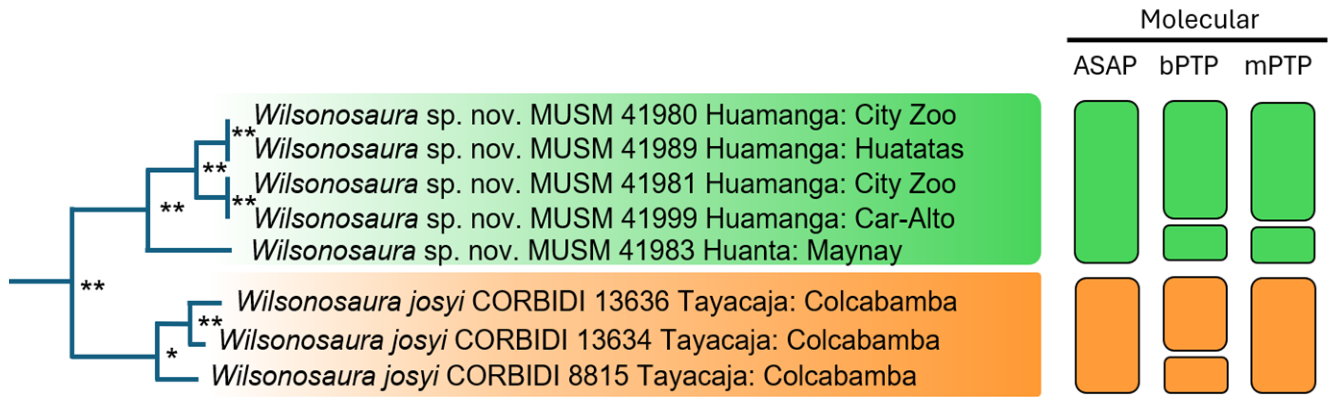
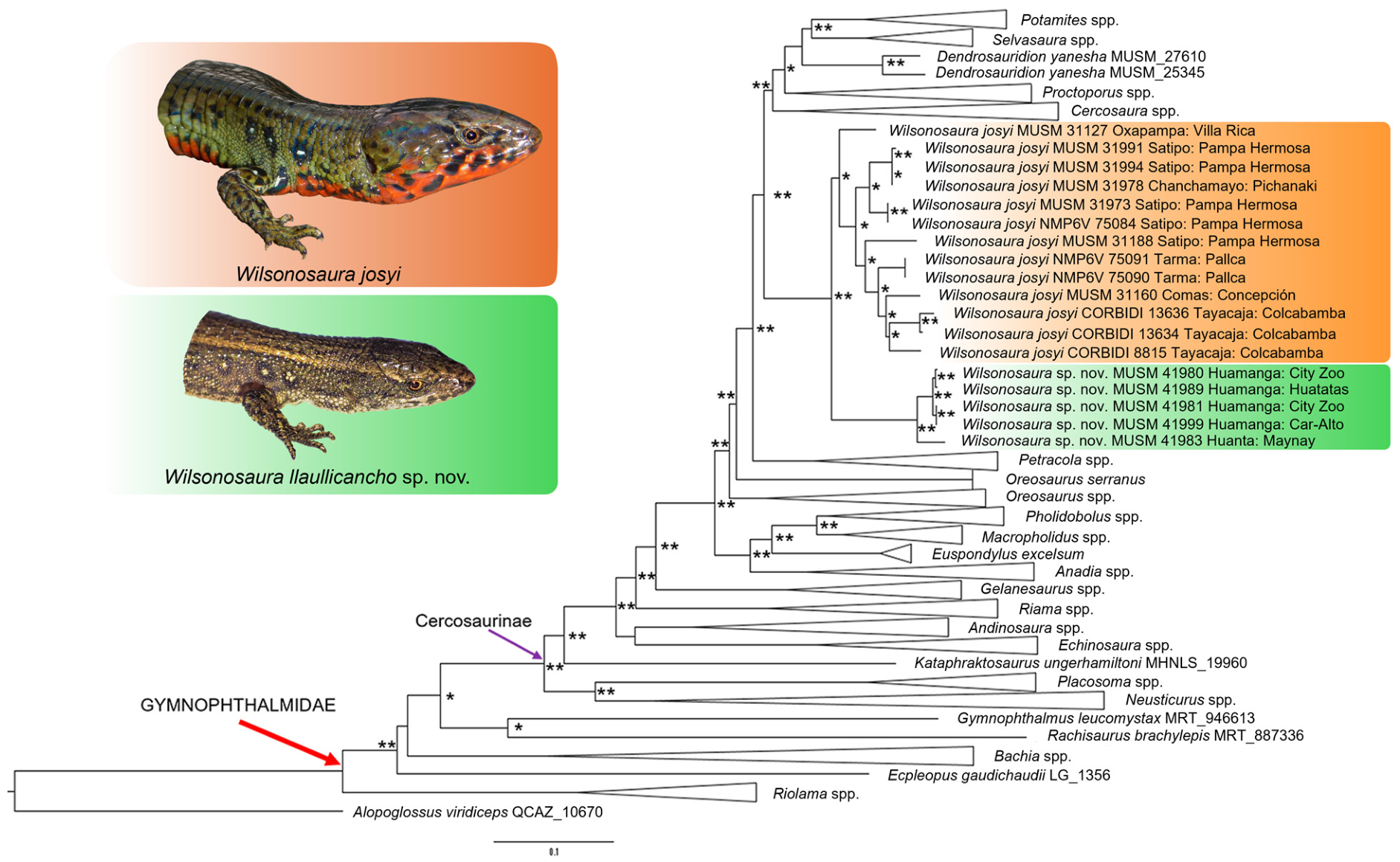
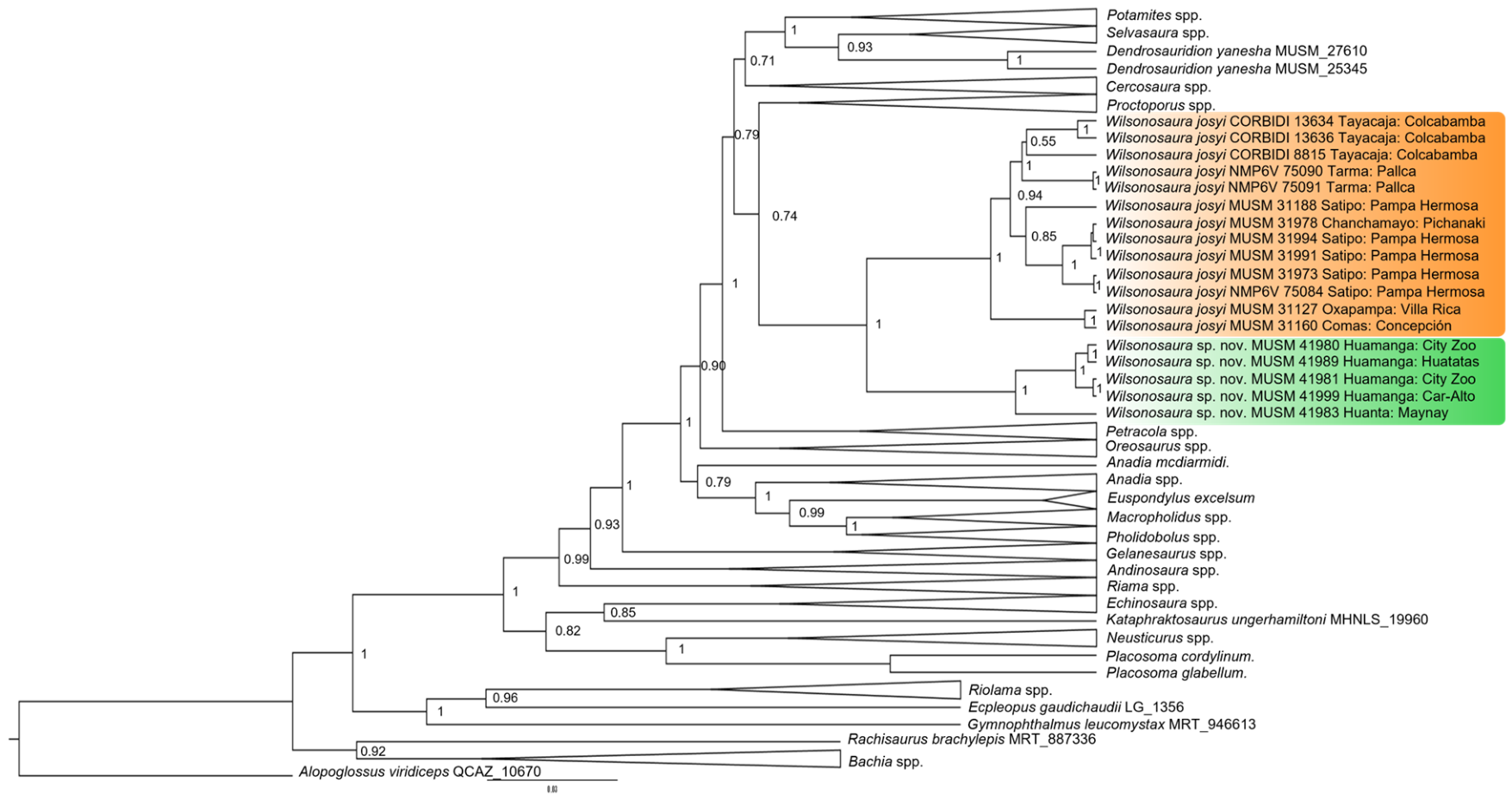
We obtained a coding fragment of 621 base pairs from the ND4 gene for five specimens of W. llaullicancho sp. nov. In the Maximum Likelihood tree (Figure 1) inferred from our data set of concatenated DNA sequences of the 12S, 16S, ND4, and c-mos gene fragments, most species-level lineages had high support (>95%). The focal lineage (Wilsonosaura llaullicancho sp. nov.) was recovered within Gymnophthalmidae and the sister to Wilsonosaura josyi. Both analyses, Maximum Likelihood (ML) and Bayesian inference, yielded similar tree topologies; the differences between the two trees lie in the nodes with low support. For this study, we used the Maximum Likelihood tree to test the hypothesis of the phylogenetic relationships of Cercosaurinae. The Bayesian tree is presented in Appendix B. Regarding genetic distances, the greatest intraspecific distance for W. llaullicancho sp. nov. was 5.15%, and for W. josyi, 7.24%. With respect to interspecific distances, both species differed by 14.17–17.06% uncorrected genetic distance in the ND4 gene fragment (see Appendix C). Single-locus species delimitation grouped species similarly and supported the hypothesis of the new species. mPTP and ASAP group individuals into the same species, and bPTP was less conservative (see Appendix D).

3.2. Generic Assignment

We assigned the new species to Wilsonosaura (sensu Lehr et al. [8]) based on its position in our molecular phylogeny (Figure 1). No morphological synapomorphies were discovered to differentiate it from Proctoporus.

3.3. Taxonomy

Wilsonosaura llaullicancho sp. nov. Juan R. Gamboa-Yupanqui, Cesar A. Aguilar, Miguel Vences, and Edgar Lehr, 2026.
ZooBank LSID:urn:lsid:zoobank.org:act:8AB73CE8-2C27-463F-828A-08AC9EA62960.
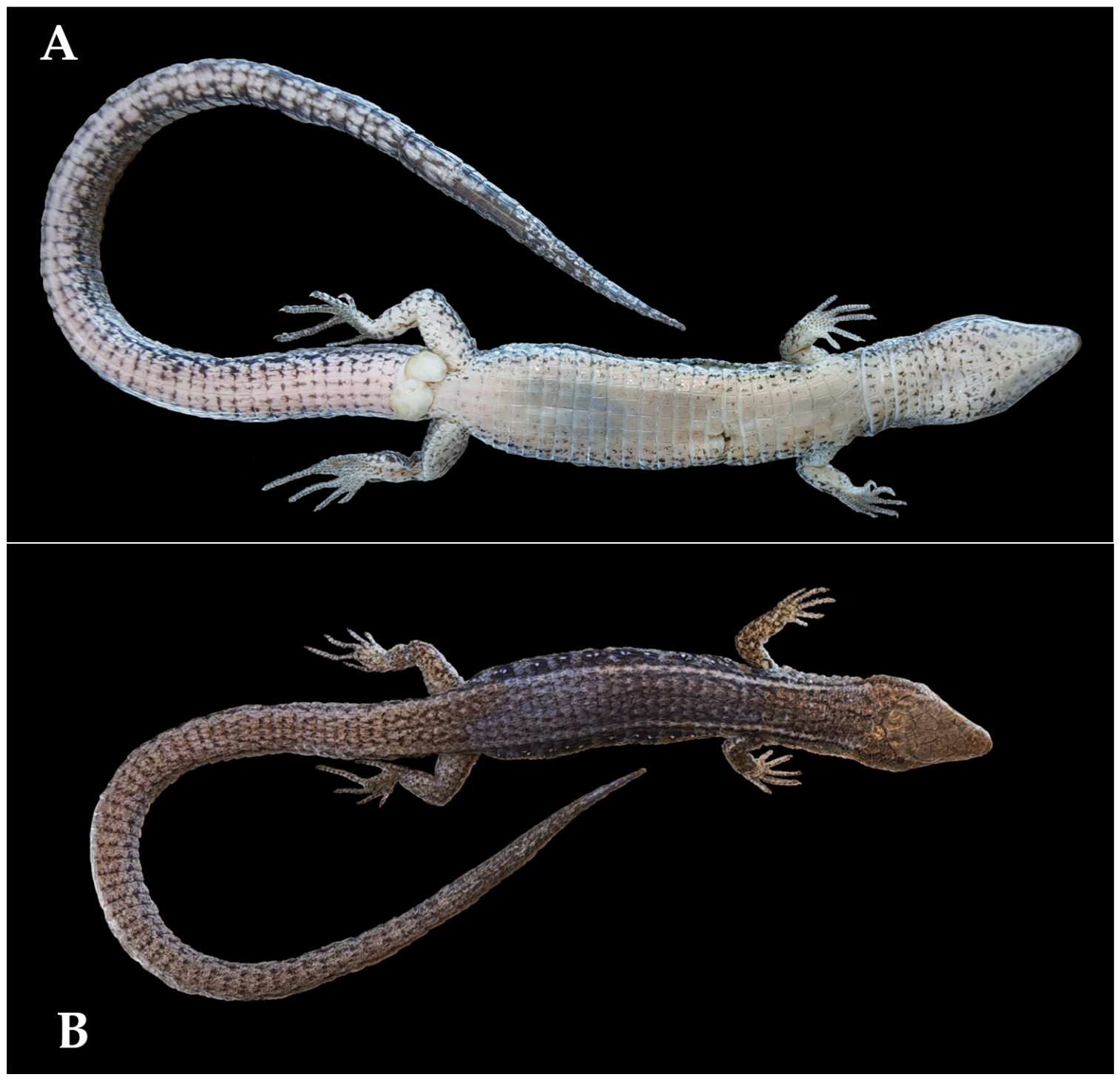
Holotype: MUSM 41989 (JRGY 2030), adult male (Figure 2), Peru, Ayacucho Department, Huamanga Province, Andrés Avelino Cáceres Dorregaray District (−13.17, −74.19) 2674 m a.s.l., at riverbank “Huatatas”; collected by Juan Rufino Gamboa Yupanqui on 18 August 2024. Drawings in Figure 3.
Paratypes: 20 (7 adult males, 9 adult females, 3 juvenile males, 1 juvenile female), all from Ayacucho Department, Huamanga and Huanta Province, Peru, collected by Juan R. Gamboa-Yupanqui, Cesar Aguilar-Puntriano, Ling Huamani-Valderrama, Esther Salazar & Gustavo Durand in 2024. MUSM 41981 (field number JRGY 2020) adult male, MUSM 41980 (JRGY 2019) adult female, MUSM 41982 (JRGY 2021) adult female, MUSM 41979 (JRGY 2018) juvenile male, MUSM 41984 (JRGY 2022) adult female, collected in Ayacucho Department, Huamanga Province, Andrés Avelino Cáceres Dorregaray District, in the City Zoo, −13.16/−74.21, 2720 m a.s.l. on 16 August 2024; MUSM 41988 (JRGY 2029) adult male and MUSM 41990 (JRGY 2031) adult female, −13.17, −74.19, 2674 m a.s.l., MUSM 41991 (JRGY 2032) juvenile male and MUSM 41992 (JRGY 2033) juvenile female, 18L, −13.18, −74.19, 2659 m a.s.l. on 18 August 2024, collected in Ayacucho Department, Huamanga Province, Andrés Avelino Cáceres Dorregaray District at riverbank “Huatatas”, 18L, −13.17, −74.19, 2674 m a.s.l.; MUSM 41993 (JRGY 2044) adult male, on 22 August 2024, MUSM 41996 (JRGY2047) adult male, MUSM 41994 (JRGY 2045) adult female, MUSM 41995 (JRGY 2046) adult male, on 19 November 2024, collected in Ayacucho Department, Huamanga Province, Carmen Alto District at road to “Cuartel de Quicapata”, 18L, −13.18, −74.23, 2800 m a.s.l.; MUSM 41997 (JRGY 2075) juvenile male, and MUSM 41999 (LDHV 1081) adult male, MUSM 41998 (JRGY 2076) adult female, on 17 August 2024, collected in Ayacucho Department, Huamanga Province, Carmen Alto District, 18L, −13.18, −74.22, 2800 m a.s.l.; MUSM 41985 (JRGY 2026) adult female, and MUSM 41986 (JRGY 2027) adult female, MUSM 41983 (JRGY 2023) adult male, MUSM 41987 (JRGY 2028) adult female, on 17 August 2024, collected in Ayacucho Department, Huanta Province, Huanta District, at road to “Maynay”, −12.95, −74.24, 2734 m a.s.l.
Referred specimens: 10 (3 adult males, 3 adult females, 3 juvenile males, and 1 juvenile female). MUSM 6847 (juvenile male), MUSM 6848 (adult female), MUSM 6849 (adult male), MUSM 6851 (adult female), MUSM 6852 (adult male), collected by Mario Ayala Huaytalla in 1986 in Ayacucho Department, Huamanga Province, San Juan Bautista District; MUSM 26017 (juvenile female) collected by Robert Langstroth in 2006 in Ayacucho Department, Huamanga Province; MUSM 30228 (juvenile male), MUSM 30230 (juvenile male), MUSM 30231 (adult male), MUSM 30232 (adult female) collected by Michael Harvey in 2006 at the same locality of the holotype.
Etymology: the specific epithet “llaullicancho” is the Quechua name locals use for this small lizard in the city of Ayacucho.
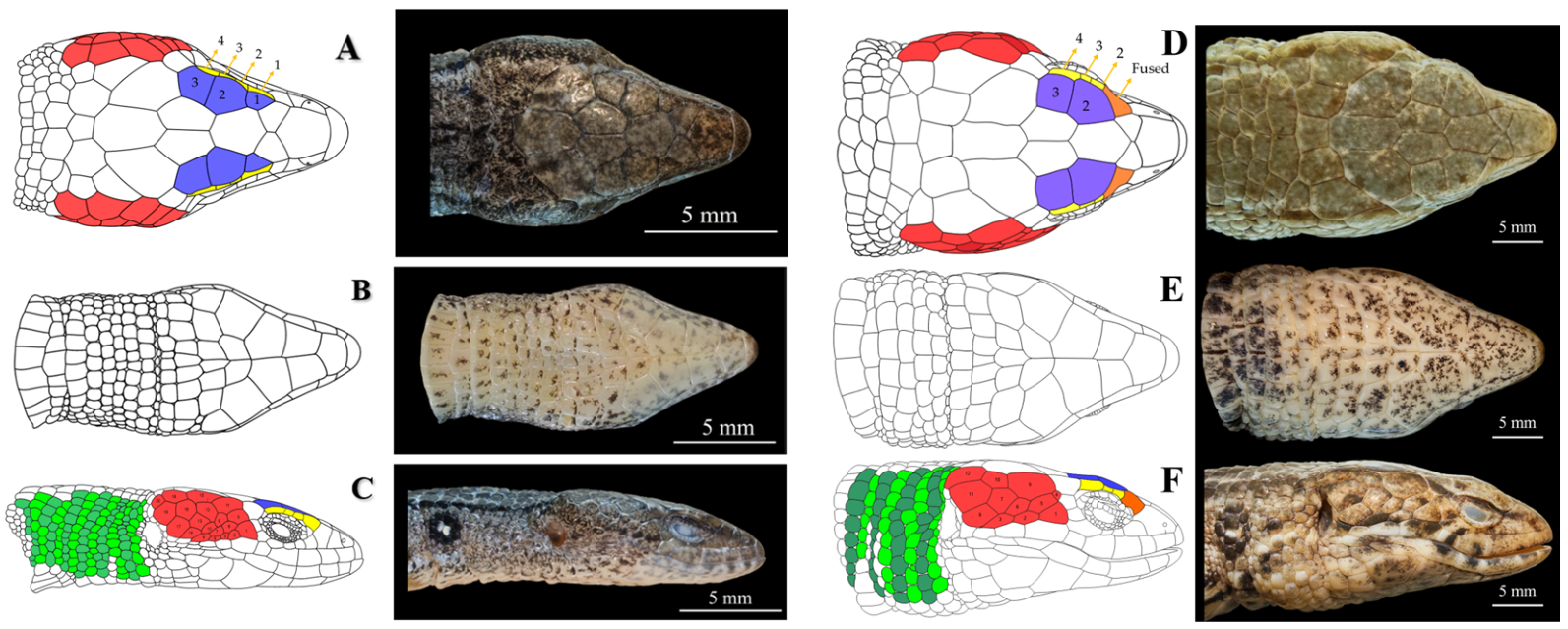
Diagnosis: (1) body thin, moderately depressed; (2) head rounded in dorsal and lateral view, longer than wide (HL/HW 1.2–1.4 in males, 1.2–1.6 in females); (3) ear opening distinct, deeply recessed, taller than wide (T/W 1.31/0.97 in males, 1.26/0.8 in females); (4) nasals separated by undivided frontonasal; (5) prefrontals, frontal, frontoparietals, parietals, interparietals, postparietals present; (6) parietals slightly longer than wide; (7) supraoculars three, anterior most supraocular not fused with anterior most superciliary; (8) superciliary series complete consisting of four and five shields; (9) nasal divided; (10) loreal scale present, nasoloreal suture present; (11) supralabial 7–8; (12) two genials in medial contact; (13) collar scales 9–11; (14) longitudinal dorsal scales count 35–41 in males, 35–40 in females, squarish, subimbricate and juxtaposed, sightly striated, sightly rounded on the distal border; (15) longitudinal ventral scales count 22–25 in males, 23–25 in females; (16) scales around midbody 33–38 in males, 33–37 in females; (17) lateral scales smaller than dorsal scales, forming a continuous line of one to tree scales; (18) limbs not overlapping when adpressed against body, pentadactyl, all digits clawed, forelimb reaching anteriorly to fourth supralabial; (19) subdigital lamella on fourth finger 11–14, subdigital lamella on fourth toe 18–23; (20) 7–11 femoral pores in males, 2–5 in females; (21) 2–4 preanal scales, 4–6 anal scales; (22) tail 1.98–2.21 times longer than SVL; (23) dorsal scales on tail rectangular, smooth, and subimbricate, ventrally squared, smooth, and juxtaposed; (24) palpebral disk translucid and undivided; (25) dorsal surface of the tongue covered by scale-like papillae (except of bifurcated distal part), ventral surface with 7–8 distinct infralingual plicae; (26) in life (Figure 3 and Figure 4), males and females have dorsal coloration brown to gray with a cream band bordered at outer margin to black irregular bands that extends from the head to the tail, with an iridescent shining depending on light incidence, body and tail dorsally with several irregular thin black longitudinal stripes; flanks are brow to gray with eight to sixteen ocelli conformed by one to two white scales bordered by several black scales (more evident in males); adult males have orange-to-salmon coloration on ventral surface of belly and neck, gulars are cream with orange or salmon stains, females coloration of belly, neck and gulars are cream; scales of the middle portion of the belly in males lack spots or stains, some females have gray stains; (27) 16–22 temporal scales; (28) 12–14 rows of lateral scales on the neck; (29) ventrolateral ocelli in males absent lateral.
Comparison: Wilsonosaura llaullicancho sp. nov. can be distinguished from W. josyi by the following character states (condition of W. josyi in parentheses); (1) fusion between first superciliary and first supraocular absent (present); (2) having a greater number of temporal scales 16–22 (11–15); (3) rows of lateral scales on the neck 12–17 (9–10); (4) smaller mean SVL size 43.5 mm in males, n = 17 (56.7 mm in males, n = 9), 43.1 mm in females, n = 14 (50.8 mm in females, n = 4); and (5) ventrolateral ocelli in males absent (present). The differences are consistent across specimens of both species (see Appendix E for the geographical provenance of the material examined).
Description of the holotype: Adult male (MUSM 41989); SVL = 48.7 mm, tail (regenerated) length = 89.8 mm; axilla to groin distance 23.9 mm; head length 10.5 mm; head width 7.3 mm; hindlimb length 17.8 mm, forelimb length 12.4 mm. Head scales smooth, glossy; rostral scale wider (1.7 mm) than long (1.0 mm), in contact with frontonasal, nasals and first supralabials; frontonasal slightly longer (2.1 mm) than wide (1.7 mm), in contact with nasals, loreals and prefrontals; loreal scale present (nasoloreal suture present); nasals divided; frontal slightly longer (2.0 mm) than wide (1.7 mm), in contact with prefrontals anteriorly, with first and second supraoculars laterally and frontoparietals posteriorly; two frontoparietals pentagonal in medial contact, in contact with second and third supraoculars laterally, two parietals and interparietal posteriorly; interparietal heptagonal, longer (2.5 mm) than wide (1.8 mm), in contact with parietals laterally, postparietals posteriorly; parietals heptagonal, in contact with third supraocular and a postocular scale anterolaterally, a temporal scale and a supratemporal scale laterally on both sides, and postparietals posteriorly; postparietals three, lateral postparietals heptagonal, medial postparietal pentagonal; supraoculars three; superciliary series complete, first anterior superciliary not fused with supraocular on both sides; palpebral disk undivided oval, translucent; postoculars three; suboculars three; frenocular quadrangular, in contact with loreal anteriorly, third supralabial from below and an infraocular posteriorly; two supratemporals; temporals polygonal, 20 on right and 22 on left; supratympanic temporals three; anterior supralabials four, posterior four; anterior infralabials five, posterior three; mental wider (1.9 mm) than long (1.3 mm), in contact with first infralabials laterally and postmental posteriorly; postmental single, pentagonal, in contact with first and second infralabials on both sides; two genials in medial contact, anterior pair quadrangular, in contact with second and third infralabials; eight genial scale rows; 12 lateral neck vertical rows; lateral neck scales rounded, smooth, slightly smaller than dorsals; dorsal scales rectangular with slightly rounded distal edge, longer than wider, subimbricate, striated, 38 in a longitudinal count; mid dorsal scales regularly arranged, except by row 22–23 where it has double row of scales in the right; transverse dorsal count 24; longitudinal dorsal count 38; small lateral scales two or three; ventrals larger than dorsals, rectangular and juxtaposed; longitudinal ventral scales 24; transverse ventral scale row 10; anterior preanal plate scales two; anal plate scales six, four large and two small; scales on tail rectangular and juxtaposed, striated on dorsal view and smoot on ventral view. Limbs pentadactylous; digits clawed; palmar scales small, oval; dorsal scales on fingers smooth, quadrangular; subdigital lamellae 13/13 in fourth finger; dorsal scales of the foot, imbricate, smooth; scales on dorsal surface of digits simple, quadrangular, smooth; subdigital lamellae of fourth toes 19 on left (15 double, 4 simple), 20 on right (16 double, 4 simple); femoral pores 9 on right and 10 on left; femoral pores not in contact with preanal scales.
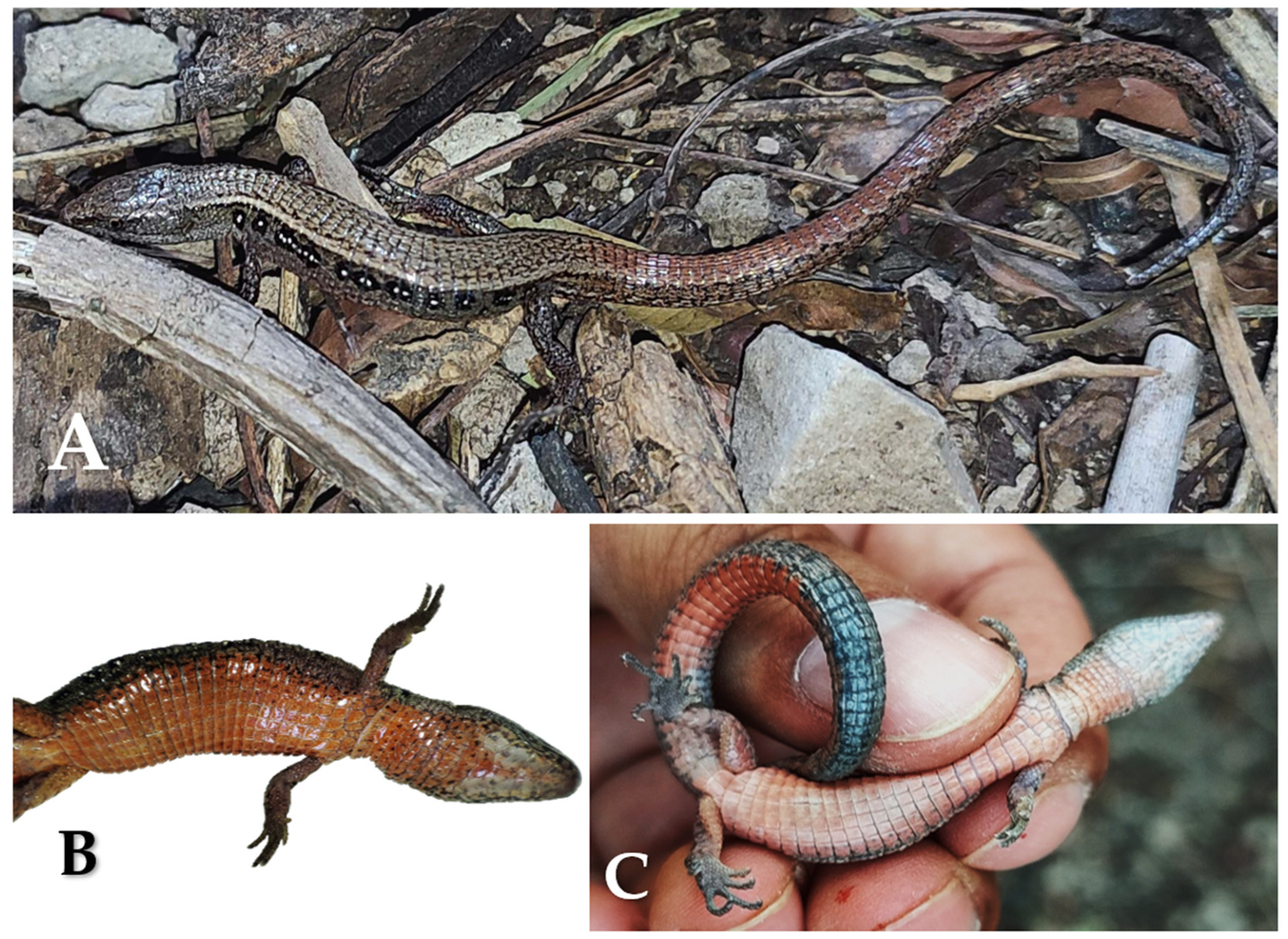
Coloration of holotype in life (Figure 4): Dorsal surface of head dark brown with cream stains; lateral surface of head cream with brown stains, labial region light cream with a dark scattered stain on each anterior supralabial and infralabial scale; ventral surface of head creamy with gray spots and orange pigmentation at the junction between the scales on postmental and genials; pregulars and gulars orange with gray stains at mid surface and the edges of scales; neck scales cream with gray scattered spots; ventral coloration of head, neck, body, thighs, arms and tail varies from light salmon to orange. Dorsal surface of body lighter than color of the head whit two dorsolateral bands that begin at the third supraocular scale and extend to the tail, decreasing in intensity; dorsal coloration on tail dark orange; lateral surface of body same color as lateral surface of head with 14 ocelli on both sides of body form the neck to the groin; ventral surface of body orange with black spots on ventrolateral scales, midventral scales orange without spots. Limbs colored like the body; scales with the femoral pores are more yellow than the belly; ventral surfaces of the tail are colored like the body but without ocelli. Iris coloration is pale golden yellow, with pale green spots on the outer edges, and a pupil rim with a very fine pale orange relief.
In preservation (Figure 1), dorsal coloration is slightly paler than in life, ventral coloration of all body parts is cream, ocelli remain the same color as in life, and palpebral disks are semi-translucent cream.
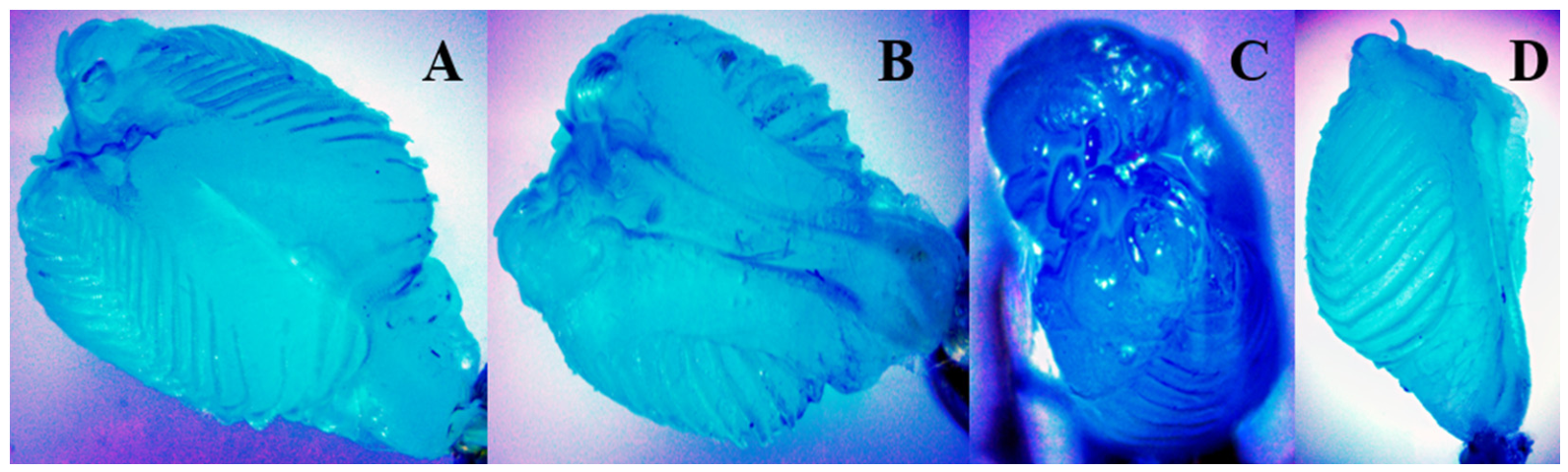
Hemipenial morphology (Figure 5): The hemipenes of MUSM 41988 (paratype) were everted during preservation and fixed in alcohol. The completely everted organs measure 6.2 mm in length and 4.0 mm in width. The hemipenial body has a conical shape with the proximal region distinctly thinner than the distal region.
The flounces on the asulcate side (Figure 5A) form 16–17 series on both lateral sides: three rows in medial contact in the proximal region (base of the hemipenis), and 13–14 discontinuous rows to the apex. Ornamentation is present and distinct, and the asulcate central area is broad, lacking ornamentations and with a medial depression.
The sulcate region shows a large sulcus spermaticus with the distal and proximal regions slightly widened and the medial region narrow; each edge of the sulcus spermaticus has slight striations and begins as a slightly wide structure at the base of the hemipenis, ends in a rounded structure that projects slightly outward from the hemipenial body, have lateral contact with each lobe, and medial contact with two kidney-shaped structures, these structures are followed by two smaller swollen folds and together they separate the sulcate surface from the asulcate surface.
The hemipenial lobes are slightly distinct from the hemipenial body, and each lobe has a protruding, digitiform terminal appendage.
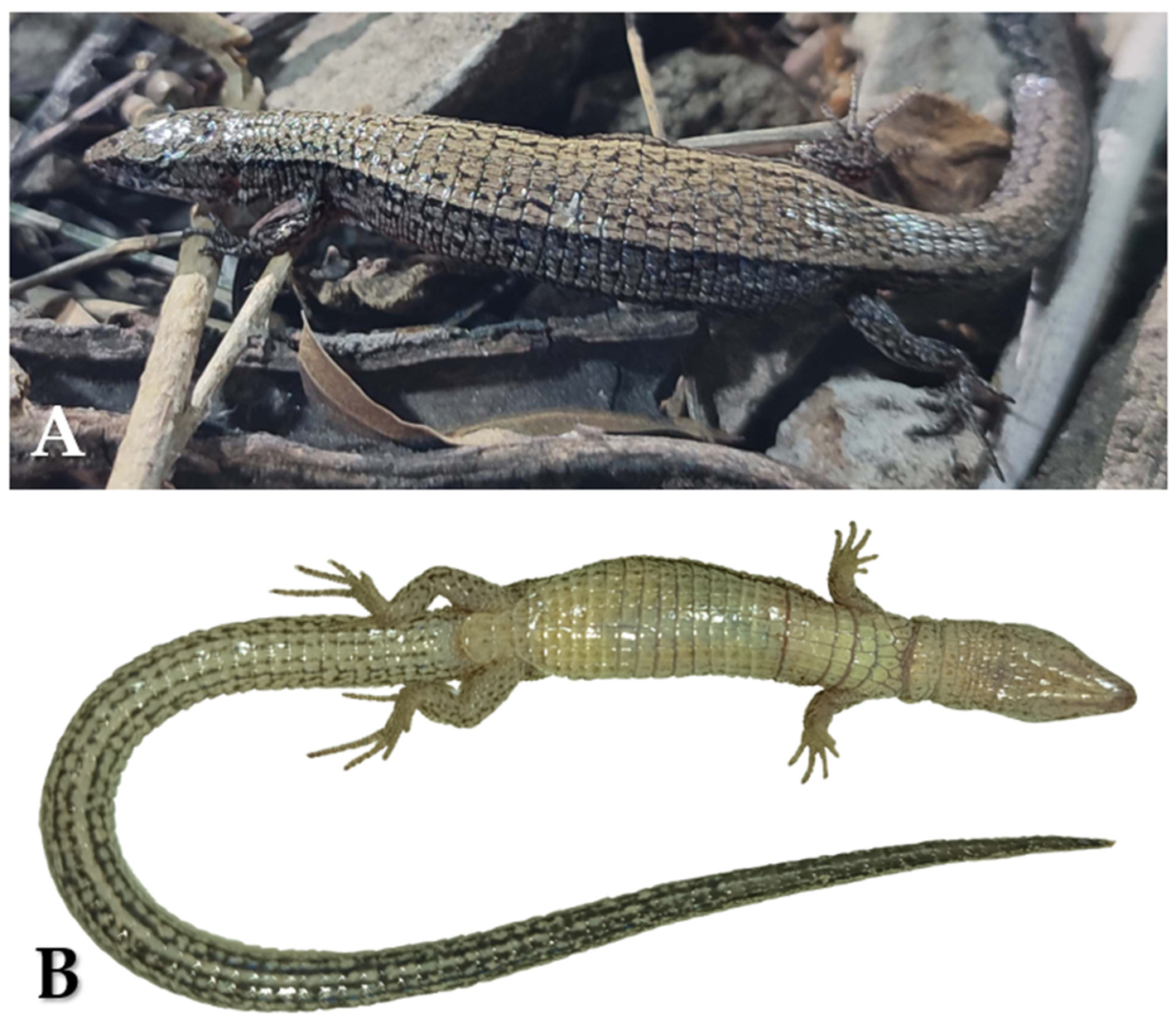
Variation: Pholidosis and measurements (Table 2) of the paratypes and referred specimens are similar to the holotype. SVL of males and females varies from 34.3 mm to 55.3 mm. A gravid female (MUSM 41982) had a maximum SVL of 55.3 mm (Figure 6). The most pronounced dimorphic character is the number of femoral pores, with males having 6–11 (n = 17), whereas females have 2–5 (n = 14). Furthermore, the coloration of the lateral ocelli is more pronounced in males. The number of lateral ocelli is not informative to differentiate males and females. Sexual dichromatism is evident in ventral coloration: males have the venter pale salmon (Figure 4C) to orange (Figure 4B), whereas females have the venter cream. In life, the body coloration in juveniles is like that of adult females, but the cream band bordered at the outer margin by black irregular bands that extend from the head to the tail is more noticeable.
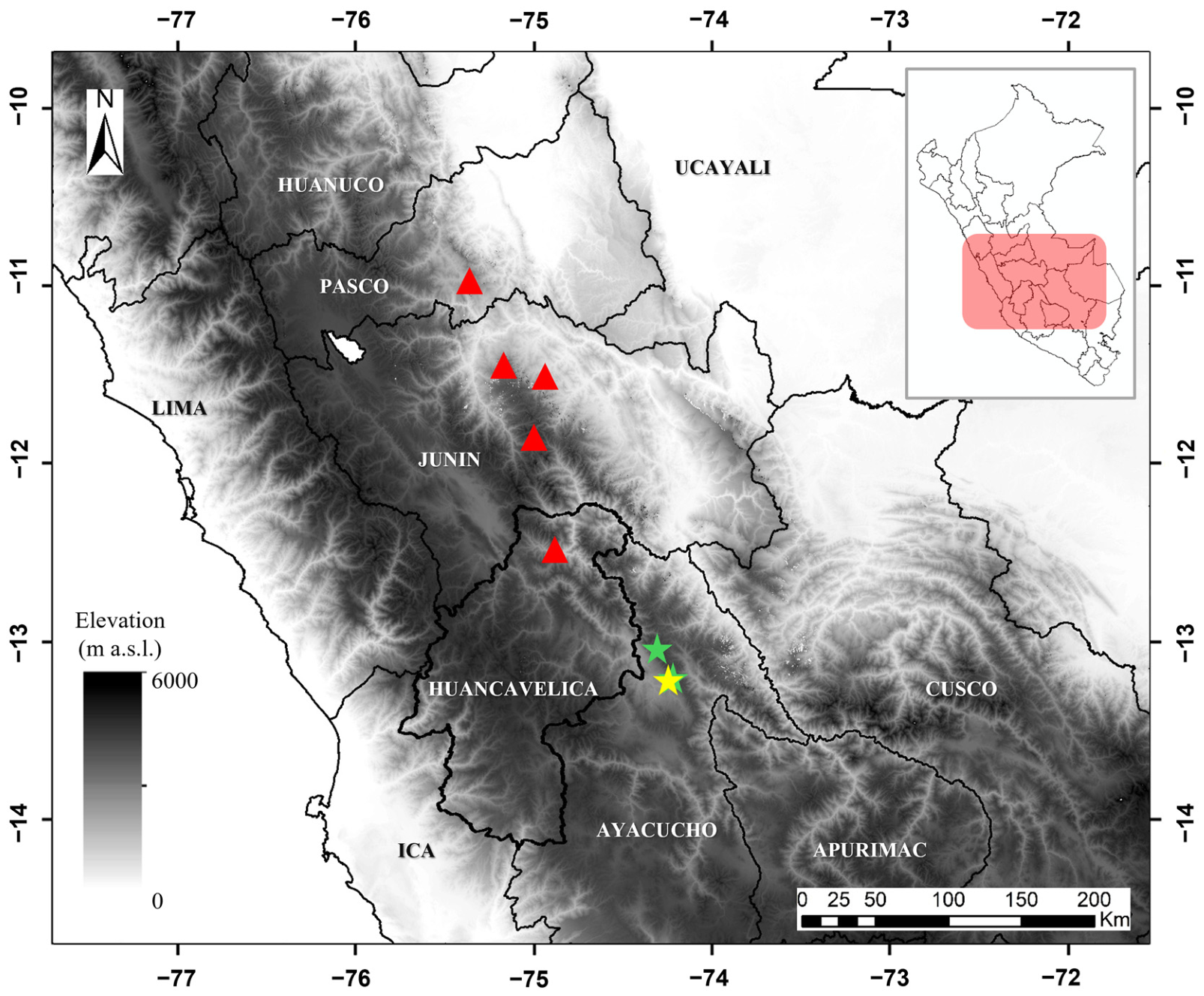
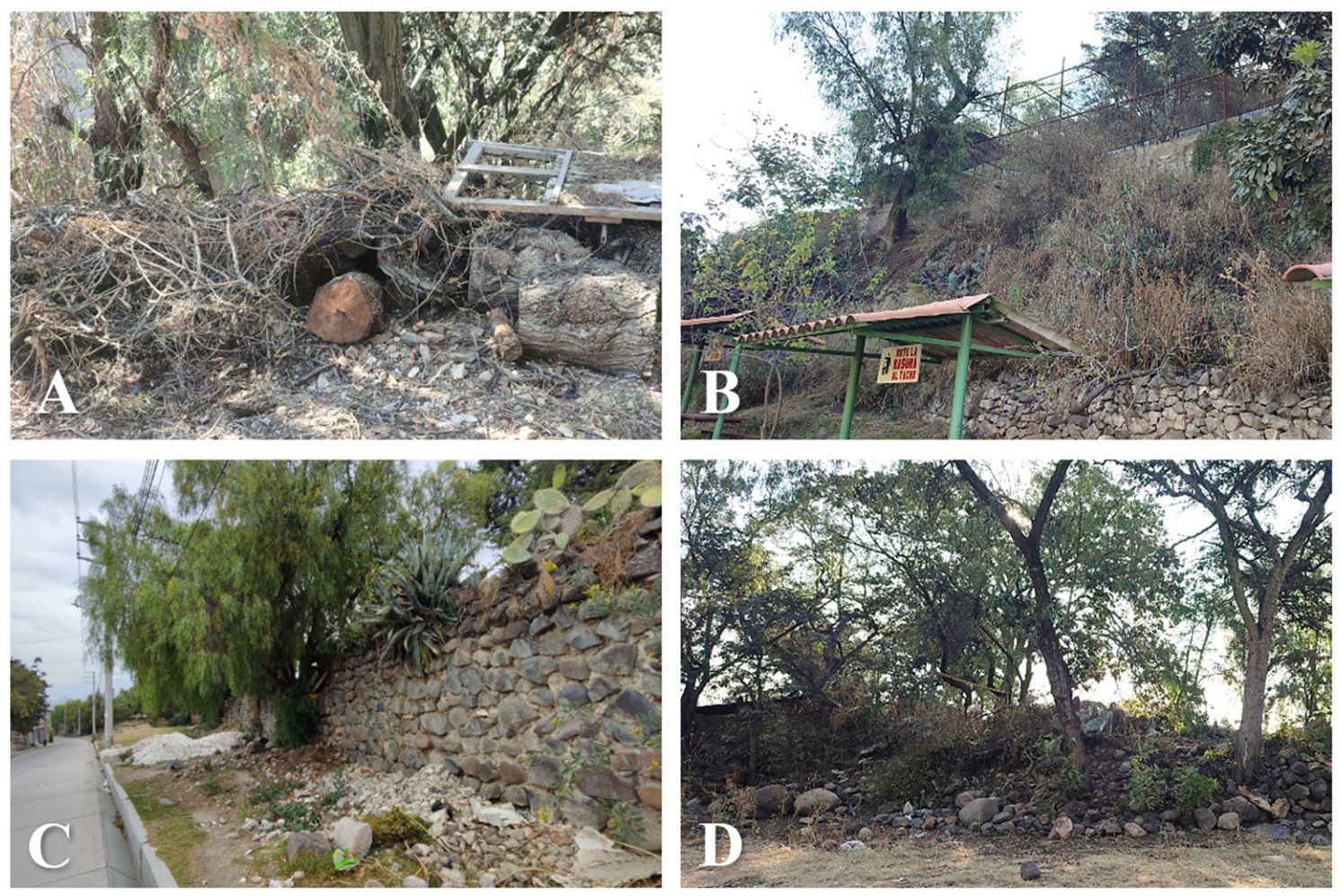
Distribution and ecology: Wilsonosaura llaullicancho sp. nov. is known only from the Ayacucho Department (Figure 7 and Figure 8) in the two provinces of Huamanga and Huanta (2674–2800 m a.s.l.). The new species was found in humid areas near riverbanks, water channels, farming areas, camping areas, and urban areas, where it hides under piles of rocks, logs, and roots. In farming areas, it can be found under agricultural remains; in urban areas, under rocks, walls, and in gardens.
Wilsonosaura llaullicancho sp. nov. was found in shelters around the roots of Schinus molle (Molle), Caesalpinia spinosa (Tara), and Salix sp. (Sauce). Each group of individuals observed in the field consisted of only one adult male, accompanied by several adult females and juvenile males and females. A female was found with two eggs (length × width: 11.9 × 6.4 mm, 11.4 × 6.3 mm), one on each side of the belly.

4. Discussion

The topology of the Maximum Likelihood tree (Figure 1) agrees with the analyses performed by Torres-Carvajal et al. [4], Moravec et al. [6], Rojas-Runjaic et al. [32], Mamani and Rodríguez [33], and Vásquez-Restrepo and Diago-Toro [34], where Wilsonosaura was classified as a distinct deep clade within the subfamily Cercosaurinae. The tree inferred herein supports this finding and allocates Wilsonosaura llaullicancho sp. nov. as a sister species to W. josyi.
In previous studies, only Mamani et al. [35] recovered Wilsonosaura nested within Proctoporus; however, in all subsequent studies mentioned above, this nesting was not recovered. We recover all species of Proctoporus as a monophyletic group in agreement with Goicoechea et al. [5], with low support values, and separated into five species groups in agreement with Moravec et al. [6] and Mamani et al. [35]. However, this monophyletic hypothesis contrasts with previous hypotheses that reported the polyphyly of Proctoporus [4,26,32,36]. Also, we note that Oreosaurus is not monophyletic.
We assigned the new species discovered here to the cryptic genus Wilsonosaura according to Lehr et al. [8], confirming that new studies, based on phylogenetic analysis, have the potential to reveal cryptic species, as predicted by Moravec et al. [6].
Regarding morphology, all diagnostic characters were consistent across all samples of the new species and did not overlap with those of W. josyi. No other species of gymnophthalmids were recorded in sympatry with W. llaulicancho sp. nov.
Hemipenial morphology of W. llaullicancho sp. nov. also differs from W. josyi [8]. Wilsonosaura llaullicancho sp. nov. has lobes slightly distinct from the hemipenial body, and each lobe has a protruding, digitiform terminal appendage in the shape of the lobes, whereas W josyi has hemipenial lobes that are narrow and indistinct from the hemipenial body and do not have filiform appendages. In addition, W. llaullicancho sp. nov. has 16–17 flounces while W.josyi has 12.
Two single-locus species delimitation methods were performed (ASAP, bPTP, and mPTP). ASAP was the most conservative method, consistent with our hypothesis of a new species different from W. josyi (Figure A2). bPTP split W. llaullicancho sp. nov. and W. josyi into two lineages each, while mPTP only split W. llaullicancho sp. nov. into two lineages (Figure A2).
The most recently described monospecific genera of Gymnophthalmidae are Dendrosauridion yanesha [7] and Kataphraktosaurus ungerhamiltoni [32], as well as other gymnophthalmids [21,31,37,38], which illustrate that the true diversity of species and genera within this family remains hidden, and more work on this taxon is required. With the description of Wilsonosaura llaullicancho sp nov., the number of Wilsonosaura species increases to two.
Wilsonosaura llaullicancho sp. nov. was found among the buildings in the city of Ayacucho. This contrasts with the distribution of W. josyi, which inhabits remote areas and has not been found in urban ones. Other gymnophthalmid lizards, according to personal observations, were found near towns around agricultural areas, such as Proctoporus unsaacae [22] near Calca in Cusco Department, P. sucullucu [22] near Ollantaytambo in Cusco Department, and P. chasqui [24] near Chiquintirca in Ayacucho Department.
The diversity of gymnophthalmid species has increased by 121 species since 2000 [39]. This highlights the need to continue fieldwork in remote areas, such as the inter-Andean valleys, as well as in urban areas. Furthermore, the revision of museum specimens, along with increased efforts to include molecular DNA analyses in the study of gymnophthalmids, may reveal cryptic diversity. Educating communities that live alongside lizards about biodiversity is also necessary to ensure conservation, as lizards are often mistakenly perceived as dangerous.

Author Contributions

Conceptualization, J.R.G.-Y. and C.A.-P.; methodology, J.R.G.-Y., C.A.-P., E.L. and M.V.; formal analysis, J.R.G.-Y. and C.A.-P.; investigation, J.R.G.-Y., C.A.-P., E.L. and M.V.; resources, J.R.G.-Y. and C.A.-P.; writing—original draft preparation, J.R.G.-Y.; writing—review and editing, J.R.G.-Y., C.A.-P., E.L. and M.V.; supervision, C.A.-P.; funding acquisition, C.A.-P. and J.R.G.-Y. All authors have read and agreed to the published version of the manuscript.

Funding

This research was funded by Vicerrectorado de Investigación y Posgrado (UNMSM) PCONFIGI-B24101931 and personal funding.

Institutional Review Board Statement

The study was conducted in accordance with the Declaration of Helsinki, and approved by the Ethics Committee of the National University of San Marcos (code: N° 112-2024-CBE-FCB-UNMSM; date: 30 April 2024).

Data Availability Statement

DNA sequences used in this study were retrieved from GenBank (https://www.ncbi.nlm.nih.gov), accessed on 25 February 2026. New sequences were submitted to GenBank under accession numbers PZ066667–PZ066671. Alignments, tree files, and raw morphometric measurements were deposited in the Zenodo repository under https://doi.org/10.5281/zenodo.18790654 (to be made public upon manuscript acceptance).

Acknowledgments

We thank L. Huamani-Valderrama for her field support and tips on data processing; E. Salazar, M. Yupanqui, J. Gamboa, and G. Durand for their support during fieldwork. We thank J. Köhler for helping us obtain the DNA sequences. We thank G. Gutiérrez for his patient instruction in sample preparation. We thank E. Castillo-Urbina and V. Herrera-Alva for sharing their field and laboratory experiences; C. Rodolfo and P. Colos for granting us access to Parque Zoologico La Totorilla to conduct part of the fieldwork. J. Smid kindly updated the GenBank sequences for Wilsonosaura. This research was supported by the Universidad Nacional Mayor de San Marcos—RR N° 004305-R-24 and project number B24101931. We thank MIDAGRI-SERFOR, Lima, and GORE, Ayacucho, Peru, for research permits RD N° D000012-2022-MIDAGRI-SERFOR-DGGSPFFS-DGSPFS and RD N° 000063-2018-GRA/GG-GRDE-DRAA-DFFS-D.

Conflicts of Interest

The authors declare no conflicts of interest.

Appendix A

Table A1. Localities, coordinates, and accession codes of Wilsonosaura specimens.
TaxonLocalityCoordinates
(Lat/Long)
Museum NumberND412S16Sc-mos
Wilsonosaura josyiJunín: Chanchamayo: Pichanaki.
(From the Pui Pui Protected Forest at Hatunpata)
−11.30/
−75.03
MUSM 31978-MH579618MH579653-
Wilsonosaura josyiJunín: Satipo: Pampa Hermosa.
(Pui Pui Protected Forest at Quebrada Tarhuish, left bank of Antuyo River, “Tinqu”)
−11.38/
−74.94
MUSM 31188-MH579615MH579651MH579707
Wilsonosaura josyiJunín: Satipo: Pampa Hermosa.
(Pui Pui Protected Forest at Quebrada Tarhuish, left bank of Antuyo River, “Tinqu”)
−11.38/
−74.94
NMP-P6V 75867----
Wilsonosaura josyiJunín: Satipo: Pampa Hermosa.
(Pui Pui Protected Forest at Trancapampa)
−11.30/
−75.01
MUSM 31991-MH579619MH579654MH579710
Wilsonosaura josyiJunín: Satipo: Pampa Hermosa.
(Pui Pui Protected Forest at Antuyo Bajo)
−11.31/
−74.99
MUSM 31994-MH579620MH579655MH579711
Wilsonosaura josyiJunín: Satipo: Pampa Hermosa.
(Pui Pui Protected Forest at Antuyo Bajo)
−11.31/
−74.99
NMP-P6V 75085----
Wilsonosaura josyiJunín: Satipo: Pampa Hermosa.
(Tasta, in a forest patch near Evaristo’s house)
−11.45/
−74.90
MUSM 31185----
Wilsonosaura josyiJunin: Satipo: Pampa Hermosa.
(Sector Carrizal, Carrtera Satipo-Toldopampa, km 134)
−11.48/
−74.89
NMPP6V 75084-MH579617MH579652MH579709
Wilsonosaura josyiJunin: Satipo: Pampa Hermosa.
(Sector Carrizal, Carrtera Satipo-Toldopampa, km 134)
−11.48/
−74.89
MUSM 31973--MH579616MH579708
Wilsonosaura josyiJunin: Comas: Concepción
(The right slope near road leading to Satipo)
−11.67/
−75.04
MUSM 31160-MH579614-MH579706
Wilsonosaura josyiJunin: Comas: Concepción
(The right slope near road leading to Satipo)
−11.67/
−75.04
NMP-P6V 75089----
Wilsonosaura josyiJunín: Tarma: Pallca
(Maraynioc, 200 m downhill)
−11.35/
−75.44
NMP-P6V 75090-MH579621MH579656-
Wilsonosaura josyiJunín: Tarma: Pallca
(Maraynioc, 200 m downhill)
−11.35/
−75.44
NMP-P6V 75091 MH579622MH579657-
Wilsonosaura josyiJunín: Tarma: Pallca
(Maraynioc, 200 m downhill)
−11.35/
−75.44
NMP-P6V 75092----
Wilsonosaura josyiJunín: Tarma: Pallca
(Maraynioc, 200 m downhill)
−11.35/
−75.44
NMP-P6V 75868----
Wilsonosaura josyiJunín: Tarma: Pallca
(Maraynioc, 200 m downhill)
−11.35/
−75.44
NMP-P6V 75869----
Wilsonosaura josyiPasco: Oxapampa: Villa Rica
(From Bosque de Sho’llet)
−10.68/
−75.32
MUSM 31127--MH579650MH579705
Cercosaurini
sp. 2 *
Huancavelica: Tayacaja: Colcabamba-Quintao District−12.26/
−74.67
CORBIDI 13634 **KU902357KU902201KU902276KU902120
Cercosaurini
sp. 2 *
Huancavelica: Tayacaja: Colcabamba-Quintao District−12.26/
−74.67
CORBIDI 13636 **KU902358KU902202KU902277KU902121
Cercosaurini
sp. 2 *
Huancavelica: Tayacaja: Colcabamba-Quintao District−12.26/
−74.67
CORBIDI 8815 **KU902356KU902200KU902275KU902119
W. llaullicancho sp. nov.Ayacucho: Huamanga: Andrés A. Cáceres Dorregaray: Orilla Huatatas−13.17/
−74.19
MUSM 41989PZ066670---
W. llaullicancho sp. nov.Ayacucho: Huamanga: Ayacucho “Zoológico”−13.16/
−74.21
MUSM 41981PZ066668---
W. llaullicancho sp. nov.Ayacucho: Huanta: Huanta: Camino a Maynay−12.95/
−74.24
MUSM 41983PZ066669---
W. llaullicancho sp. nov.Ayacucho: Huamanga: Ayacucho “Zoológico”−13.16/
−74.21
MUSM 41980PZ066667---
W. llaullicancho sp. nov.Ayacucho: Huamanga: Carmen Alto: Calle Miguel Grau−13.18/
−74.22
MUSM 41999PZ066671---
* Wilsonosaura josyi, according to Lehr et al. [8]. ** Reference coordinates obtained from the most specific location, taken from Torres-Carvajal et al. [4]. () Localities in parentheses are the originals taken from Lehr et al. [8].

Appendix B

Figure A1. Phylogenetic tree inferred for the family Gymnophthalmidae (1746 bp) based on Bayesian inference (ND4, 16S, 12S, and c-mos). Some terminals are collapsed to display the genus of interest.
Taxonomy 06 00034 g0a1

Appendix C

Table A2. Uncorrected genetic distance between Wilsonosaura llaullicancho sp. nov. and W. josyi based on a fragment of the mitochondrial ND4 gene (alignment length 621 nucleotides).
Wilsonosaura josyiWilsonosaura llaullicancho sp. nov
CORBIDI 8815CORBIDI 13634CORBIDI 13636MUSM 41980MUSM 41981MUSM 41983MUSM 41989
CORBIDI 8815
Tayacaja: Colcabamba
-
W. josyi
CORBIDI 13634
Tayacaja: Colcabamba
0.0595
W. josyi
CORBIDI 13636
Tayacaja: Colcabamba
0.07240.0209
W. llaullicancho sp. nov.
MUSM 41980
Huamanga: City Zoo
0.14170.15780.1706
W. llaullicancho sp. nov.
MUSM 41981
Huamanga: City Zoo
0.14170.15780.17060.0080
W. llaullicancho sp. nov.
MUSM 41983
Huanta: Maynay
0.14970.15780.16740.05150.0515
W. llaullicancho sp. nov.
MUSM 41989
Huamanga: Huatatas
0.14170.15780.16740.00320.00800.0515
W. llaullicancho sp. nov.
MUSM 41999
Huamanga: C. Alto
0.14170.15780.17060.00800.00000.05150.0080
The numbers in bold represent interspecific distances.

Appendix D

Figure A2. Results of single-locus species delimitation analyses of ND4 (ASAP, bPTP, and mPTP). Colors represent species of Wilsonosaura: green: W. llaullicancho sp. nov.; orange: W. josyi. Asterisks at the branches indicate support values (** >90% and * = 70–89%).
Taxonomy 06 00034 g0a2

Appendix E

Table A3. Localities, coordinates, and dates of collection of Wilsonosaura josyi specimens.
SpeciesLocalityCoordinatesMuseum NumberDate of Collection
Wilsonosaura josyiPasco: Oxapampa: Villa Rica (From Bosque de Sho’llet)−10.68/
−75.32
MUSM 3112727 January 2012
Wilsonosaura josyiJunin: Comas: Concepción (The right slope near road lead-ing to Satipo)−11.67/
−75.04
MUSM 3116024 April 2012
Wilsonosaura josyiJunín: Satipo: Pampa Hermosa. (Tasta, in a forest patch near Evaristo’s house)−11.45/
−74.90
MUSM 311859 May 2012
Wilsonosaura josyi(Pui Pui Protected Forest, Quebrada Tarhuish, left of Antuyo River, “Tinqu”)−11.38/
−74.94
MUSM 3118823 June 2013
Wilsonosaura josyiJunin: Satipo: Pampa Hermosa. (Sector Carrizal, Satipo-Toldopampa, km 134)−11.48/
−74.89
MUSM 319732012
Wilsonosaura josyiJunín: Chanchamayo: Pichanaki. (From the Pui Pui Protected Forest at Hatunpata)−11.30/
−75.03
MUSM 3197812 May 2012
Wilsonosaura josyiJunín: Satipo: Pampa Hermosa. (Pui Pui Protected Forest at Trancapampa)−11.30/
−75.01
MUSM 319912 July 2013
Wilsonosaura josyiJunín: Satipo: Pampa Hermosa. (Pui Pui Protected Forest at Antuyo Bajo)−11.31/
−74.99
MUSM 319942 July 2013

References

  1. Pellegrino, K.C.M.; Rodrigues, M.; Yonenaga-Yassuda, Y.; Sites, J.W., Jr. A molecular perspective on the evolution of microteiid lizards (Squamata, Gymnophthalmidae), and a new classification for the family. Biol. J. Linn. Soc. 2001, 74, 315–338. [Google Scholar] [CrossRef]
  2. Castoe, T.A.; Doan, T.M.; Parkinson, C. Data Partitions and Complex Models in Bayesian Analysis: The Phylogeny of Gymnophthalmid Lizards. Syst. Biol. 2004, 53, 448–469. [Google Scholar] [CrossRef]
  3. Doan, T.M.; Castoe, T.A. Phylogenetic taxonomy of the Cercosaurini (Squamata: Gymnophthalmidae), with new genera for species of Neusticurus and Proctoporus. Zool. J. Linn. Soc. 2005, 143, 405–416. [Google Scholar] [CrossRef]
  4. Torres-Carvajal, O.; Lobos, S.; Venegas, P.; Chávez, G.; Aguirre-Peñafiel, V.; Zurita-Altamirano, D.; Echevarría, L. Phylogeny and biogeography of the most diverse clade of South American gymnophthalmid lizards (Squamata, Gymnophthalmidae, Cercosaurinae). Mol. Phylogenet. Evol. 2016, 99, 63–75. [Google Scholar] [CrossRef] [PubMed]
  5. Goicoechea, N.; Sites, J.W., Jr.; Frost, D.; De la Riva, I.; Pellegrino, K.C.M.; Rodrigues, M.; Padial, J. Molecular systematics of teioid lizards (Teioidea/Gymnophthalmoidea: Squamata) based on the analysis of 48 loci under tree-alignment and similarity-alignment. Cladistics 2016, 32, 624–671. [Google Scholar] [CrossRef]
  6. Moravec, J.; Šmíd, J.; Štundl, J.; Lehr, E. Systematics of Neotropical microteiid lizards (Gymnophthalmidae, Cercosaurinae), with the description of a new genus and species from the Andean montane forests. ZooKeys 2018, 774, 105–139. [Google Scholar] [CrossRef]
  7. Lehr, E.; Moravec, J.; Lundberg, M.; Köhler, G.; Catenazzi, A.; Šmíd, J. A new genus and species of arboreal lizard (Gymnophthalmidae: Cercosaurinae) from the eastern Andes of Peru. Salamandra 2019, 55, 1–13. [Google Scholar] [CrossRef]
  8. Lehr, E.; Moravec, J.; von May, R. A new cryptic genus of terrestrial lizard (Gymnophthalmidae: Cercosaurinae) from the eastern Andes of central Peru. Salamandra 2020, 56, 1–15. [Google Scholar] [CrossRef]
  9. Bruford, M.W.; Hanotte, O.; Brookfield, J.F.Y.; Burke, T. Single-locus and multilocus DNA fingerprint. In Molecular Genetic Analysis of Populations: A Practical Approach; Hoelzel, A., Ed.; IRL Press: Oxford, UK, 1992; pp. 225–270. [Google Scholar]
  10. Arevalo, E.; Davis, S.K.; Sites, J.W., Jr. Mitochondrial DNA sequence divergence and phylogenetic relationships among eight chromosome races of the Sceloporus grammicus complex (Phrynosomatidae) in Central Mexico. Syst. Biol. 1994, 43, 387–418. [Google Scholar] [CrossRef]
  11. Bell, J. A simple way to treat PCR products prior to sequencing using ExoSAP-IT. Biotechniques 2008, 44, 834. [Google Scholar] [CrossRef]
  12. Kearse, M.; Moir, R.; Wilson, A.; Stones-Havas, S.; Cheung, M.; Sturrock, S.; Buxton, S.; Cooper, A.; Markowitz, S.; Duran, C.; et al. Geneious Basic: An integrated and extendable desktop software platform for the organization and analysis of sequence data. Bioinformatics 2012, 28, 647–1649. [Google Scholar] [CrossRef]
  13. Katoh, K.; Standley, D.M. MAFFT Multiple Sequence Alignment Software Version 7: Improvements in Performance and Usability. Mol. Biol. Evol. 2013, 30, 772–780. [Google Scholar] [CrossRef] [PubMed]
  14. Wong, T.; Ly-Trong, N.; Ren, H.; Banos, H.; Roger, A.; Susko, E.; Bielow, C.; De Maio, N.; Goldman, N.; Hahn, M.W.; et al. IQ-TREE 3: Phylogenomic Inference Software using Complex Evolutionary Models. Mol. Biol. Evol. 2026; in press. [CrossRef]
  15. Tamura, K.; Stecher, G.; Kumar, S. MEGA11: Molecular Evolutionary Genetics Analysis version 11. Mol. Biol. Evol. 2021, 38, 3022–3027. [Google Scholar] [CrossRef] [PubMed]
  16. Bouckaert, R.; Vaughan, T.G.; Barido-Sottani, J.; Duchene, S.; Fourment, M.; Gavryushkina, A.; Drummond, A.J. BEAST 2.5: An advanced software platform for Bayesian evolutionary analysis. PLoS Comput. Biol. 2019, 15, e1006650. [Google Scholar] [CrossRef]
  17. Kapli, P.; Lutteropp, S.; Zhang, J.; Kobert, K.; Pavlidis, P.; Stamatakis, A.; Flouri, T. Multi-rate Poisson Tree Processes for single-locus species delimitation under Maximum Likelihood and Markov Chain Monte Carlo. Bioinformatics 2017, 33, 1630–1638. [Google Scholar] [CrossRef]
  18. Zhang, J.; Kapli, P.; Pavlidis, P.; Stamatakis, A. A General Species Delimitation Method with Applications to Phylogenetic Placements. Bioinformatics 2013, 29, 2869–2876. [Google Scholar] [CrossRef] [PubMed]
  19. Puillandre, N.; Miralles, A.; Brouillet, S.; Fedosov, A.; Fischell, F.; Patmanidis, S.; Vences, M. Species Delimitation and Exploration of Species Partitions with ASAP and LIMES. In DNA Barcoding: Methods in Molecular Biology; DeSalle, R., Ed.; Springer: New York, NY, USA, 2024; Volume 2744. [Google Scholar] [CrossRef]
  20. Albano de Mello, A.; Recoder, R.; Fouquet, A.; Rodrigues, M.; Nunes, P. Integrative taxonomy of the Iphisa elegans Gray, 1851 species complex (Squamata: Gymnophthalmidae) leads to the description of five new species. Zool. J. Linn. Soc. 2023, 200, 477. [Google Scholar] [CrossRef]
  21. Kizirian, D.A. A review of ecuadorian Proctoporus (Squamata: Gymnophthalmidae) with descriptions of nine new species. Herpetol. Monogr. 1996, 10, 85–155. [Google Scholar] [CrossRef]
  22. Doan, T.M.; Castoe, T.A. Using morphological and molecular evidence to infer species boundaries within Proctoporus bolivianus Werner (Squamata: Gymnophthalmidae). Herpetologica 2003, 59, 432–449. [Google Scholar] [CrossRef]
  23. Goicoechea, N.; Padial, J.M.; Chaparro, J.C.; Castroviejo-Fisher, S.; Riva, I.D.L. A taxonomic revision of Proctoporus bolivianus Werner (Squamata: Gymnophthalmidae) with the description of three new species and resurrection of Proctoporus lacertus Stejneger. Am. Mus. Novit. 2013, 3786, 1–32. [Google Scholar] [CrossRef][Green Version]
  24. Chávez, G.; Siu-Ting, K.; Duran, V.; Venegas, P.J. Two new species of Andean gymnophthalmid lizards of the genus Euspondylus (Reptilia, Squamata) from central and southern Peru. ZooKeys 2011, 109, 1–17. [Google Scholar] [CrossRef]
  25. Mamani, L.; Rodriguez, L.O. A new species of Andean lizard, Proctoporus (Gymnophthalmidae: Cercosaurinae), from the highland of Parque Nacional Otishi in Peru. Zootaxa 2022, 5213, 75–85. [Google Scholar] [CrossRef] [PubMed]
  26. Pesantes, O.S. A method for preparing the hemipenis of preserved snakes. J. Herpetol. 1994, 28, 93–95. [Google Scholar] [CrossRef] [PubMed]
  27. Zaher, H.; Prudente, A.L.C. Hemipenes of Siphlophis (Serpentes, Xenodontinae) and techniques of hemipenial preparation in snakes: A response to Dowling. Herpetol. Rev. 2003, 34, 302. [Google Scholar]
  28. Sanchez-Pacheco, S.; Nunes, P.; Torres-Carvajal, O.; Aguirre-Penafiel, V.; Sales, P.; Verrastro, L.; Rivas, G.; Rodrigues, M.; Grant, T.; Murphy, R. Phylogeny of Riama (Squamata: Gymnophthalmidae), impact of phenotypic evidence on molecular datasets, and the origin of the Sierra Nevada de Santa Marta endemic fauna. Cladistics 2017, 34, 260–291. [Google Scholar] [CrossRef]
  29. CorelDRAW Graphics Suite, version 2021; Corel Corporation: Ottawa, ON, Canada, 2021.
  30. Adobe Photoshop, version 2024; Adobe Inc.: San Jose, CA, USA, 2024.
  31. QGIS.org. Sistema de Información Geográfica QGIS. Asociación QGIS. 2023. Available online: http://www.qgis.org (accessed on 9 March 2026).
  32. Rojas-Runjaic, F.; Barrio-Amorós, C.; Señaris, J.; De La Riva, I.; Castroviejo-Fisher, S. Discovery of an additional piece of the large gymnophthalmid puzzle: A new genus and species of stream spiny lizard (Squamata: Gymnophthalmidae: Cercosaurinae) from the western Guiana Shield in Venezuela. Zootaxa 2021, 4950, 296–320. [Google Scholar] [CrossRef]
  33. Mamani, L.; Goicoechea, N.; Chaparro, J. A new species of Andean lizard Proctoporus (Squamata:Gymnophthalmidae) from montane forest of the Historic Sanctuary of Machu Picchu, Peru. Amphib. Reptile Conserv. 2015, 9, 1–11. [Google Scholar] [CrossRef]
  34. Vásquez-Restrepo, J.; Diago-Toro, M. Alice in Lizardland: Exploring the spatiotemporal speciation and morphological evolutionary rates in the highly diverse microteiid lizards (Squamata: Gymnophthalmidae). Biol. J. Linn. Soc. 2024, 142, 208–219. [Google Scholar] [CrossRef]
  35. Mamani, L.; Salas, C.; Chaparro, J.; Correa, C.; Alarcón, C.; Catenazzi, A. A New Species of Andean Gymnophthalmid Lizard (Squamata: Gymnophthalmidae) from the Peruvian Andes, and Resolution of Some Taxonomic Problems. Diversity 2020, 12, 361. [Google Scholar] [CrossRef]
  36. Vásquez-Restrepo, J.; Ibáñez, R.; Sánchez-Pacheco, S.; Daza, J. Phylogeny, taxonomy and distribution of the Neotropical lizard genus Echinosaura (Squamata: Gymnophthalmidae), with the recognition of two new genera in Cercosaurinae. Zool. J. Linn. Soc. 2020, 189, 287–314. [Google Scholar] [CrossRef]
  37. Chávez, G.; García-Ayachi, L.; Catenazzi, A. A new species of Microteiid Lizard (Gymnophthalmidae, Cercosaurini, Selvasaura) from a remote area in the Peruvian Andes. Evol. Syst. 2023, 7, 123–132. [Google Scholar] [CrossRef]
  38. Vásquez-Restrepo, J.; Daza, J. A new species of hedgehog-lizard of the genus Echinosaura (Squamata:Gymnophthalmidae) from Colombia and Panama with a reevaluation of the conservation status of the genus. Zootaxa 2025, 5583, 128–142. [Google Scholar] [CrossRef]
  39. The Reptile Database. Available online: https://reptile-database.reptarium.cz/ (accessed on 26 February 2026).
Figure 1. Maximum Likelihood tree (ND4, 16S, 12S, and c-mos) for the family Gymnophthalmidae (1746 bp), showing the phylogenetic relationship of the new species described here (log-likelihood of the consensus tree: −60,785.647). Asterisks at the branches represent support values (** >90%, * = 70–89%, values below 69% were not included) inferred from 10,000 nonparametric bootstrap replicates. Wilsonosaura llaullicancho sp. nov. is marked on a green background, and W. josyi on an orange background.
Taxonomy 06 00034 g001
Figure 2. Preserved male holotype of Wilsonosaura llaullicancho sp. nov. (MUSM 41989) in ventral (A) and dorsal (B) views. SVL = 48.7 mm. Photos by JRGY.
Taxonomy 06 00034 g002
Figure 3. Drawings and photos of the head of Wilsonosaura llaullicancho sp. nov. (MUSM 41989, holotype) and W. josyi (MUSM 31991). (A,D) Dorsal, (B,E) ventral, and (C,F) lateral views. In blue: supraocular scales (3 in both species); red: temporal scales (20 in W. llaullicancho sp. nov. and 12 in W. josyi); green: scale rows on the side of the neck; yellow: superciliary scale (4 in both species); orange: first supraocular fused with first superciliary.
Taxonomy 06 00034 g003
Figure 4. Adult males of Wilsonosaura llaullicancho sp. nov. in dorsal (A) and ventral (B) views (MUSM 41989, holotype, SVL = 48.7 mm) and a second ventral (C) view (MUSM 41981, paratype, SVL = 51.9 mm).
Taxonomy 06 00034 g004
Figure 5. Hemipenis of Wilsonosaura llaullicancho sp. nov. (MUSM41988) in asulcate (A), sulcate (B), apical (C), and lateral (D) views.
Taxonomy 06 00034 g005
Figure 6. Adult female paratypes of Wilsonosaura llaullicancho sp. nov. in dorsal ((A): MUSM 41982, SVL = 55.3mm) and ventral ((B): MUSM 41980, SVL = 51.1 mm) views.
Taxonomy 06 00034 g006
Figure 7. Map of Peru, showing the distribution of Wilsonosaura llaullicancho sp. nov. (green stars), type locality (yellow star), and the known distribution of W. josyi (red triangles). Department names are in white. The map was generated using QGIS version 4.0.1 QGIS Development Team, 2026, QGIS Geographic Information System. The shape (departmental geographical boundaries) and ASTER GDEM images were obtained from the geospatial information of the IGN.
Taxonomy 06 00034 g007
Figure 8. View of the habitat of Wilsonosaura llaullicancho sp. nov. (A) Huatatas Riverbank—Huamanga (Type locality); (B) City Zoo (wild specimens, not captive)—Huamanga; (C) Road to “Cuartel de Quicapata”—Huamanga; (D) Maynay—Huanta. Photos were taken on 17 August 2024.
Taxonomy 06 00034 g008
Table 1. List of newly obtained DNA sequences of the mitochondrial ND4 gene fragment analyzed in this study.
SpeciesVoucherAccession NumberLocalityCoordinates (Lat/Long)
Wilsonosaura llaullicancho sp. nov.MUSM 41980PZ066667Ayacucho: Huamanga: City Zoo.−13.16/−74.21
2720 m a.s.l.
Wilsonosaura llaullicancho sp. nov.MUSM 41981PZ066668Ayacucho: Huamanga: City Zoo.−13.16/−74.21
2720 m a.s.l.
Wilsonosaura llaullicancho sp. nov.MUSM 41983PZ066669Ayacucho: Huanta: Maynay.−12.95/−74.24
2734 m a.s.l.
Wilsonosaura llaullicancho sp. nov.MUSM 41989PZ06667Ayacucho: Huamanga: Huatatas River.−13.17/−74.19
2674 m a.s.l.
Wilsonosaura llaullicancho sp. nov.MUSM 41999PZ066671Ayacucho: Huamanga: Carmen Alto.−13.18/−74.22
2800 m a.s.l.
Table 2. Measurements (mm) and pholidotic characters of adults of Wilsonosaura llaullicancho sp. nov. and W. josyi.
CharacterW. llaullicancho sp. nov.W. josyi
SexMFMF
SVL(A)34.3–51.9
(43.5 ± 6.3)
34.3–55.3 (43.1 ± 5.2)51.1–60.9 (56.7 ± 3.1)46.8–56.1
(50.8 ± 4.0)
TL/SVL *2.08 ± 0.091.47 ± 0.1
HL (A)9.1 ± 18.7 ± 1.415.2 ± 1.212.4 ± 1.2
HW (A)6.6 ± 0.76.0 ± 0.910.2 ± 1.07.8 ± 0.8
HL/HW (A)1.4–0.11.5–0.01.5–0.11.6–0.1
E-N (A)(3.1 ± 0.5)(3.1 ± 0.4)(4.3 ± 0.3)(3.7 ± 0.2)
FLL (A)10.7 ± 1.410.5 ± 1.313.7 ± 1.112.3 ± 1.31
HLL (A)15.8 ± 1.715.6 ± 2.419.6 ± 1.717.8 ± 1.1
AGD (A)22.1 ± 3.721.9 ± 2.529.8 ± 2.827.2 ± 3.7
First supraocular–
superciliary fusion (B)
++
Prefrontals (B)+++ or −+ or −
Loreal scale (B)+++ or −+ or −
Nasoloreal suture+++ or −+ or −
Nasal scales (B)DDUd, Pd, DUd, Pd, D
Supralabials (B)8–78–86–76–7
Temporal scales (B)16–2016–2012–1511–13
Collar scales (B)9–119–119–108–10
Longitudinal dorsal
scale count (B)
35–4135–4032–3731–33
Transversal dorsal scale count (B)19–2420–2420–2320–26
Longitudinal ventral
scale count (B)
22–2523–2519–2220–20
Transversal ventral scale count (B)10–1110–111010
Scales around midbody (B)33–3833–3732–3532–38
Scale row on the side
of the neck (B)
12–1412–149–108–9
Lamellae under Finger IV (B)12–1411–1410–1212–12
Lamellae under Toe IV (B)18–2318–2114–1816–17
Femoral pores (B)6-11/7–112–5/2–55–10/5–94–8/3–8
(+) indicates the presence of a character, (—) indicates its absence, (/) indicates right and left values. D = divided, Pd = partially divided, Ud = undivided. * Measurement taken only in individuals without evident tail regeneration. (A) = only adults; (B) = adults and juveniles. Sample sizes: W. llaullicancho sp. nov.: (A): male = 11, female = 12; (B): male = 17, female = 14; W. josyi: (A): male = 9, female = 4; (B): male = 4, female = 4.
Disclaimer/Publisher’s Note: The statements, opinions and data contained in all publications are solely those of the individual author(s) and contributor(s) and not of MDPI and/or the editor(s). MDPI and/or the editor(s) disclaim responsibility for any injury to people or property resulting from any ideas, methods, instructions or products referred to in the content.