


Abstract
Decomposing whale carcasses on the seabed (whale falls) are known to support distinct communities, with many taxa new to science. This paper describes a new polynoid species, Macellicephala irisae sp. nov., from a natural whale fall at 1240 m depth in Santa Catalina Basin off California, USA. The new species was associated with a cladorhizid sponge growing on a bone, transitioning from the sulphophilic to reef stage. We also highlight the biodiversity of exclusively deep-sea Macellicephalinae subfamily and its most species-rich genus Macellicephala. Morphological and molecular data support the description of the new species, which is also placed within a phylogenetic context using COI, 16S and 18S markers. The new species possesses distinctive filamentous notochaetae not previously reported in Macellicephala, and with the future increase in taxon coverage, an erection of new genus may be warranted.
Keywords:
taxonomic novelty; host association; molecular phylogeny; COI; 16S; 18S; whale fall succession 1. Introduction
In generally food-constrained deep-sea ecosystems, large organic falls, including whale falls, act as food oases for organisms adapted to exploit these sporadic influxes of organic material [1,2,3,4]. Whale falls, in particular, provide discrete resource-rich patches which vary in both time and space and can pass through a series of successional stages, including a mobile-scavenger stage, enrichment-opportunist stage, a sulphophilic stage, and a reef stage [2]. Thus, whale falls and other food-rich patches at the seafloor enhance habitat complexity and promote biodiversity within deep-sea ecosystems [2,5,6,7,8]. Decomposing whale carcasses on the seafloor have been shown to support distinctive communities of deep-sea macrofauna [1,2,7], including annelid worms. Annelids commonly found include the remarkable ‘zombie worms’ Osedax Rouse, Goffredi & Vrijenhoek, 2004 [9] and members of families Ampharetidae, Dorvilleidae, Hesionidae and Chrysopetalidae [10,11,12,13,14].
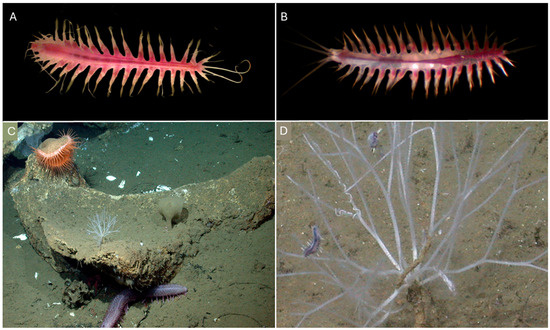
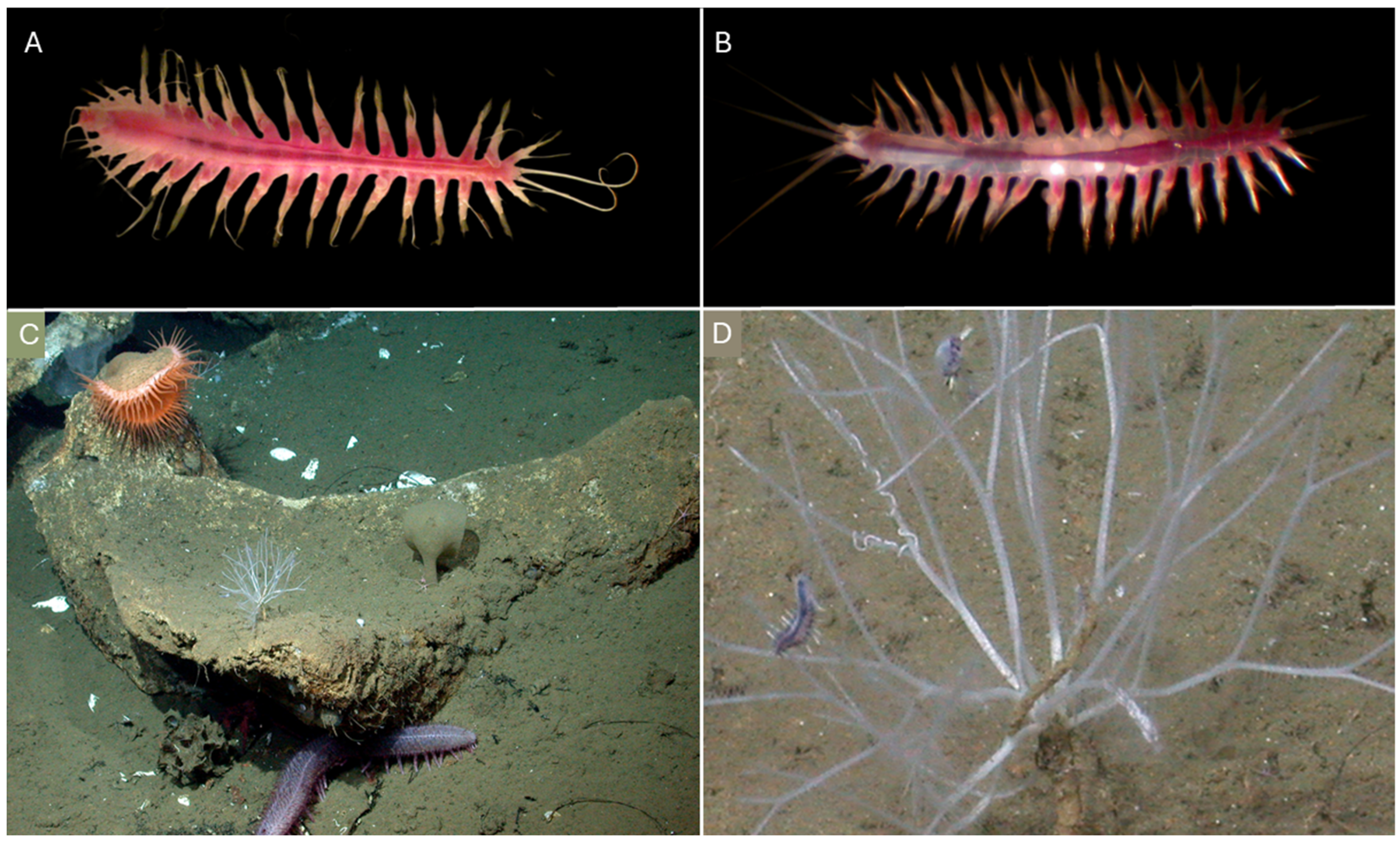
In this paper we describe a new species from the scale-bearing annelid family Polynoidae Kinberg, 1856 [15] (Figure 1A,B). This species was collected from a cladorhizid sponge (Figure 1C,D) attached to a whale scapula (Figure 1C) from the Santa Catalina whale fall [1]. The whale fall is the remains of a 21 m long balaenopterid discovered in 1987 and located at ~1240 m depth, ~33°12′ N, ~118°30′ W [1]. The discovery of this particular whale confirmed the first records of a chemoautotrophic community containing vesicomyid clams, bathymodiolin mussels and bacterial mats living on a whale carcass [1,16], creating the hypothesis that whale-falls could act as ’stepping-stones’ for the dispersal of fauna on ecological and evolutionary timescales.
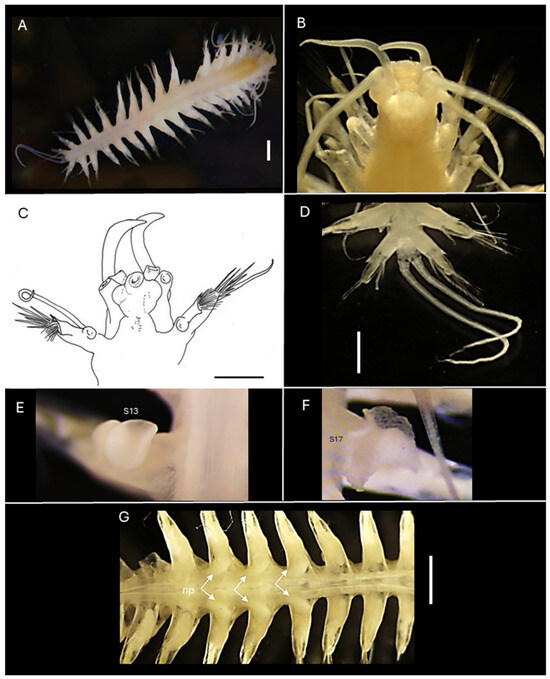
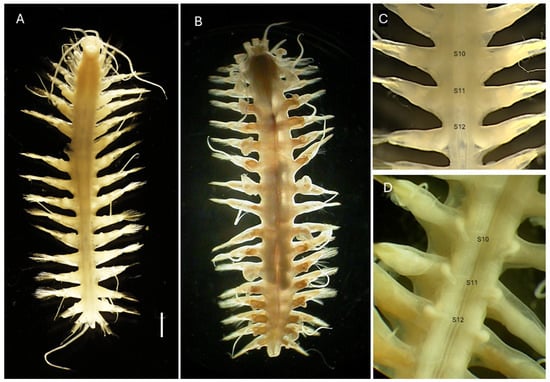
Figure 1.
(A) Macellicephala irisae sp. nov., live image of holotype NHMUK.ANEA 2019.8146. (B) Macellicephala irisae sp. nov., live image of paratype NHMUK.ANEA 2026.701, with eggs visible through segment 8–14. (C) Right scapula of the whale in Santa Catalina Basin with associated sessile fauna, including the predatory tunicate Megalodicopia sp., the Venus flytrap anemone Actinoscyphia sp. and cladorhizid sponge; surrounding sediment contains vesicomyid clams and holothurian. (D) Detail of cladorhizid sponge showing two specimens of Macellicephala irisae sp. nov. crawling over the sponge.
The Santa Catalina skeleton, estimated to have arrived at the sea floor in ~1948 [17], was crucial for studying whale fall successional stages, including a decades-long, sulfophilic stage [18]. At the time of sampling reported in this publication (2005), the whale fall was thus >50 years old. The bones showed differences in bacterial mat cover and presence of species dependent on chemosynthesis, with individual bones likely in the different successional stages, ranging from the late sulphophilic to the early reef stage. The scapula, from which the worms were collected, is suggested to be transitioning into the reef stage based on limited evidence of microbial mats and chemosynthetic fauna, as well the presence of the sessile, suspension-feeding megafauna attached to the bone (Figure 1C).
This whale fall has been previously shown to support a diverse and novel polynoid fauna by Pettibone [19], who reported two previously known polynoid species—Bathykurila guaymasensis Pettibone, 1989 [20], originally described from the Guaymas Basin hydrothermal mounds, and Subadyte mexicana Fauchald, 1972 [21], from deep waters off Mexico. The report of B. guaymasensis suggested a link between whale falls and hydrothermal vents, both chemosynthetic habitats. Two newly described species at that time—Peinaleopolynoe santacatalina Pettibone, 1993, and Harmothoe craigsmithi Pettibone, 1993—provided further evidence for whale falls as reservoirs of novel biodiversity. Later, Glover et al. [22] reported on B. guaymasensis from the same whale fall (and from the nearby Santa Cruz whale fall), showing it exhibits sexual dimorphism and molecular diversity suggesting that the nominal species B. guaymasensis may potentially consist of two sympatric species.
Unlike Pettibone’s specimens, which were reported as “collected on or within 0.5 m of the bones” during the sulphophilic stage [19], the novel polynoid species reported here was found in association with a cladorhizid sponge attached to the whale scapula (Figure 1C,D), and it was not reported by Pettibone [19]. Given the ~15-year sampling gap, this may suggest that the novel polynoid species is associated with a different successional whale fall stage—the reef stage [2,18]. Furthermore, the oil content of individual whale bones varies, with scapulae showing a moderate lipid content, with values of ~15–30% [23], making them likely to enter the reef stage faster than other more lipid-rich bones, such as the caudal vertebrae.
The new species described here belongs to the subfamily Macellicephalinae Hartmann-Schröder, 1971 [24], which is known to be restricted to deep-sea habitats (e.g., [25,26]) or analogous environments, such as anchialine caves [27] and polar shelfs [28,29,30]. Within Macellicephalinae, the genus Macellicephala McIntosh, 1885 [31], is the most species rich, currently with 23 valid species [32]. Here, a description of a new species in this genus, Macellicephala irisae sp. nov., is provided with the support from morphological and molecular data.
2. Materials and Methods
2.1. Sample Collection
The Santa Catalina whale fall was sampled at 1240 m depth, 33°11.72 N, 118°29.46 W using the ROV Tiburon from Monterey Bay Aquarium Research Institute during a research cruise in February 2005. This cruise formed part of an ongoing research program on numerous whale fall habitats in this region led by C.R. Smith. Specimens were collected using the suction sampler and rotating basket of the ROV Tiburon and preserved for DNA analyses and standard morphology. Specimens for DNA sequencing were preserved in 95% ethanol and stored in 4 °C, and specimens for standard morphology were fixed in 10% formalin in seawater and subsequently transferred to 70% ethanol.
2.2. Morphological Analysis
Specimens were examined and imaged using light and scanning electron microscopy (SEM). Photomicrographs of both live and fixed specimens were taken using Nikon 4500 Coolpix (Nikon, Tokyo, Japan) and Optem microscope eyepiece adapter (Optem, New York, NY, USA). Specimens were measured at widest part of the body, including parapodia but excluding chaetae. Specimens for scanning electron microscopy (SEM) were dehydrated in ethanol, critical point dried, gold-coated and imaged using a Hitachi S2500 (Hitachi, Tokyo, Japan) and Phillips XL-30 SEM (Phillips, Amsterdam, The Netherlands) in the Imaging and Analysis Facility at the Natural History Museum. The type material and voucher specimens for sequences were deposited at the Natural History Museum in London, UK.
2.3. Molecular Analysis
Extraction of DNA was done with DNeasy Tissue Kit (Qiagen, Hilden, Germany) following the protocol supplied by the manufacturer. Approximately 1800 bp of 18S were amplified using the primers 18SA 5′-AYCTGGTTGATCCTGCCAGT-3′ [33] and 18SB 5′-ACCTTGTTACGACTTTTACTTCCTC-3′ (Nygren & Sundberg 2003) [34]. Around 450 bp of 16S were amplified with the primers ann16Sf 5′-GCGGTATCCTGACCGTRCWAAGGTA-3′ [35] and 16SbrH 5′-CCGGTCTGAACTCAGATCACGT-3′ [36], and around 650 bp of cytochrome c oxidase were amplified using LCO1490 5′-GGTCAACAAATCATAAAGATATTGG-3′ [37] and COI-E 5′-TATACTTCTGGGTGTCCGAAGAATCA-3′ [38]. PCR mixtures contained ddH2O, 1 µL of each primer (10 µM), 2 µL of template DNA and puReTaq Ready-To-Go PCR Beads (GE Healthcare, Chicago, IL, USA) in a mixture of a total of 25 µL. The temperature profile was as follows: 96 °C/240 s − (94 °C/30 s − 50 °C/30 s − 72 °C/60 s) × 45 cycles − 72 °C/480 s. PCR products were purified using Millipore Multiscreen 96-well PCR Purification System, and sequencing was performed on an ABI 3730XL DNA Analyser (Applied Biosystems, Waltham, MA, USA) at The Natural History Museum Sequencing Facility, using the same primers as in the PCR reactions plus two internal primers for 18S, 620F 5′-TAAAGYTGYTGCAGTTAAA-3′ [34] and 1324R 5′-CGGCCATGCACCACC-3′ [39].
Overlapping sequence fragments were merged into consensus sequences using Geneious Prime 2025.0.3 (https://www.geneious.com, accessed on 30 April 2026). Sequences in the study were combined with sequences downloaded from NCBI GenBank (Table 1). The three genes were aligned separately using MAFFT [40] with default settings, provided as plug-in in Geneious. The alignment consists of 49 Polynoidae sequences mainly from the subfamily Macellicephalinae, with Admetella sp. (Admetellinae) as root and two Eulagiscinae taxa as outgroups, following Murray et al. [41], where those taxa fell closest to the subfamily Macellicephalinae. Maximum Likelihood (ML) analysis was performed using IQTree 2 [42], where ModelFinder [43] selected the optimal models TIM+F+I+G4 for 18S, TIM2+F+I+R4 for 16S and GTR+F+I+G4 for COI. The ML analysis was run with 1000 ultrafast bootstrap replicates. Bayesian phylogenetic analyses (BA) were conducted with MrBayes v.3.2.6 [44]. In the combined Bayesian analysis, the data were partitioned into the three parts (18S, 16S, and COI), the evolutionary model GTR+I+G was applied to each partition, and the parameters used for the partitions were unlinked. The Bayesian analyses were run independently three times for 10,000,000 generations. Of these, 2,500,000 generations were discarded as burn-in. The tree files were interpreted with FigTree v1.4.4 (http://tree.bio.ed.ac.uk/software/figtree/, accessed on 30 April 2026) and edited using Affinity Publisher (https://affinity.serif.com, accessed on 30 April 2026). All sequences obtained in this study have been deposited in GenBank (http://www.ncbi.nlm.nih.gov/genbank).
Table 1.
The list of taxa and their associated sequences downloaded from NCBI GenBank and included in the phylogenetic analysis in this study.
3. Results
3.1. Phylogenetic Analyses
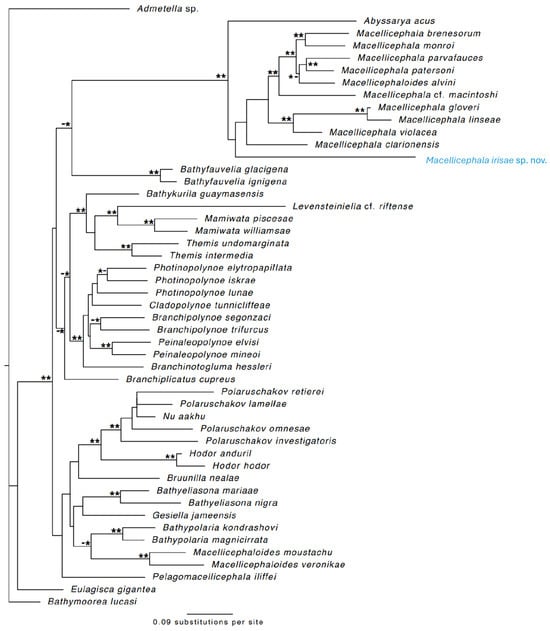
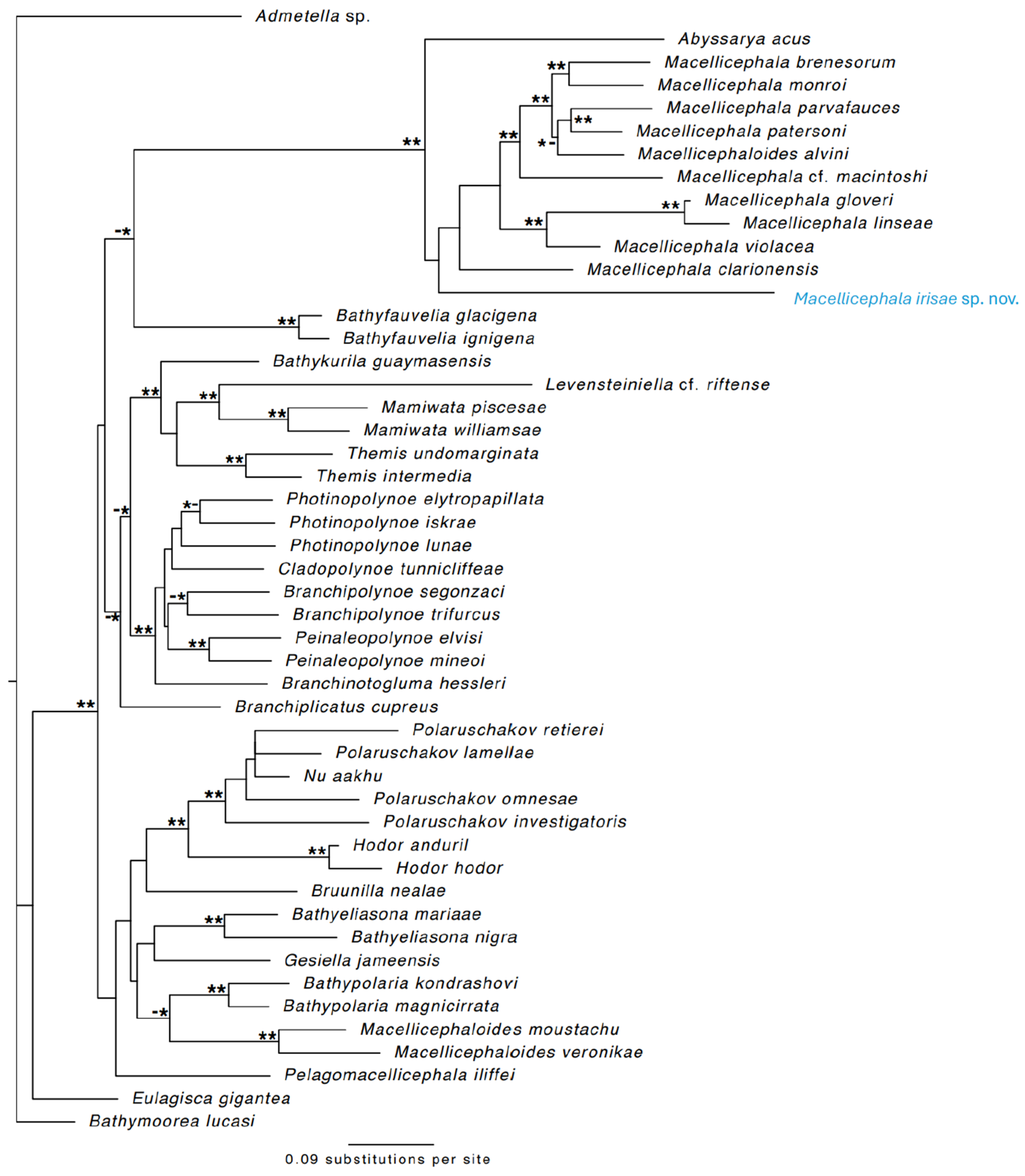
DNA was obtained from holotype NHMUK.ANEA 2019.8146 and paratype NHMUK.ANEA 2019.8147, and the sequences from the holotype were used in the molecular analyses. In both analyses, the new species falls within a well-supported clade containing all sequenced Macellicephala species, together with Abyssarya acus Bonifácio & Menot, 2018, and sequences labelled Macellicephaloides alvini (Figure 2). The position of Macellicephaloides alvini within Macellicephala might be due to DNA contamination or misidentification. Abyssarya acus falls basal to Macellicephala, and the position of the new species within the Macellicephala–Abyssarya clade is not well resolved (Figure 2).
Figure 2.
Majority rule consensus tree from the Bayesian analyses (BA) using 18S, 16S and COI, with 49 taxa from Polynoidae, using taxa from subfamilies Admetellinae Uschakov, 1977, and Eulagiscinae Pettibone, 1997, as outgroups. The bootstrap support values from the Maximum Likelihood (ML) analyses are added in to the Bayesian tree as BA/ML on the nodes. Support values at or above 0.95 for the BA and 95 for ML are shown in the tree as asterisks. Support values from both analyses are shown as **, while if support is low from one of the analyses it is shown as *- (ML low) or -* (BA low). No symbols on nodes show that there was low support in both analyses.
3.2. Systematics
Polynoidae Kinberg, 1856
Macellicephalinae, Hartmann-Schröder, 1971
Macellicephala McIntosh, 1885
Type-species: Macellicephala mirabilis (McIntosh, 1885)
Macellicephala irisae sp. nov.
urn:lsid:zoobank.org:pub:9EA4AAC7-07F8-4ADD-AD54-09A37BD17F2A
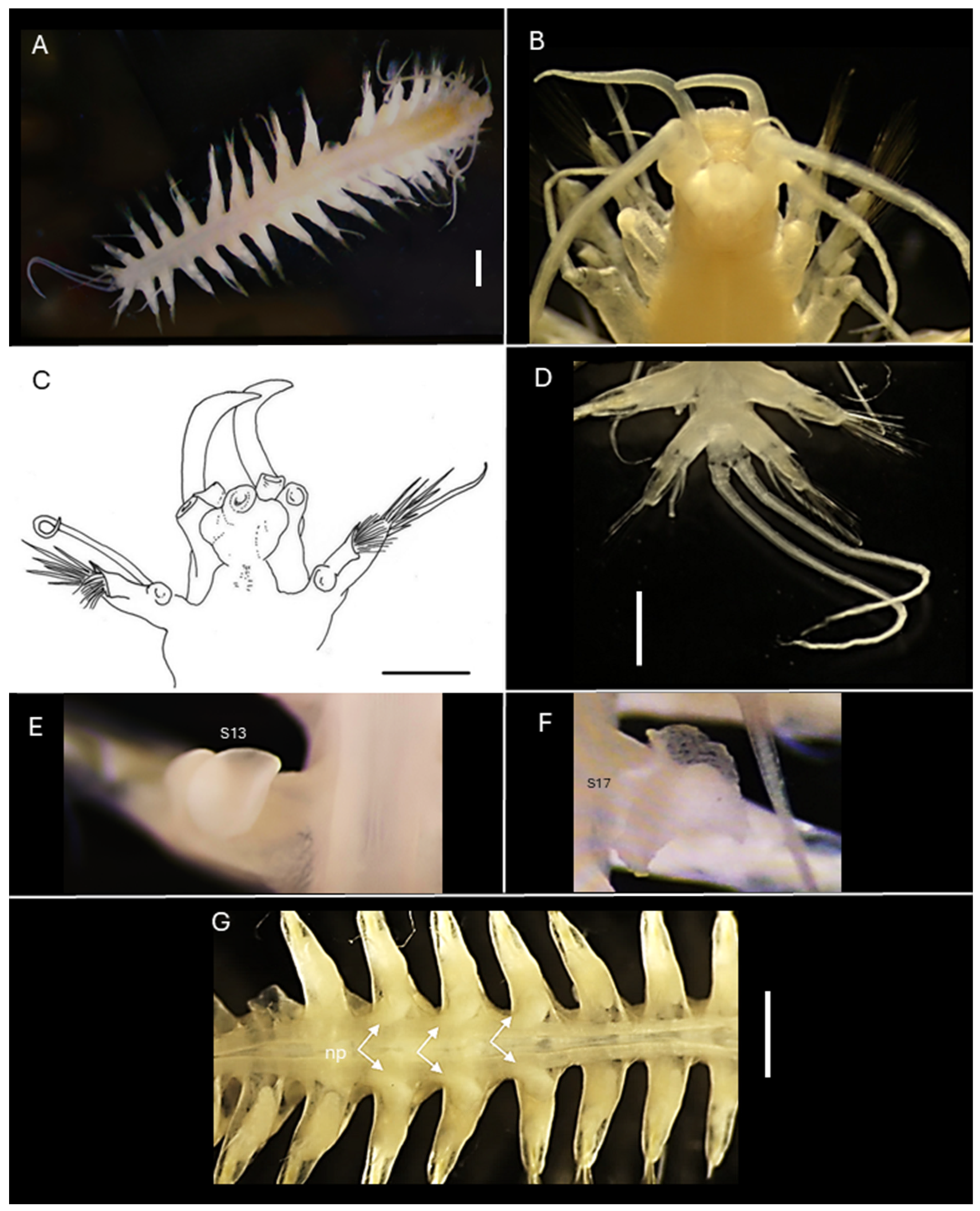
Figure 3.
Macellicephala irisae sp. nov., preserved holotype NHMUK.ANEA 2019.8146, except for (C). (A) Overview of preserved specimen in dorsal view. (B) Prostomium in anterodorsal view, showing the enlarged ceratophore of median antenna, style missing. (C) Line drawing of paratype NHMUK.ANEA 2019.8147 showing detail of prostomium in dorsal view with palps, styles of median antenna and tentacular cirri missing. (D) Pygidium in ventral view with long anal cirri. (E) Small smooth elytron attached to segment 13 (S13). (F) Small shrivelled and textured elytron attached to segment 17 (S17). (G) Ventrum with enlarged round nephridial papillae on segments 10–12 (marked by arrows), female. All scale bars: 1 mm.
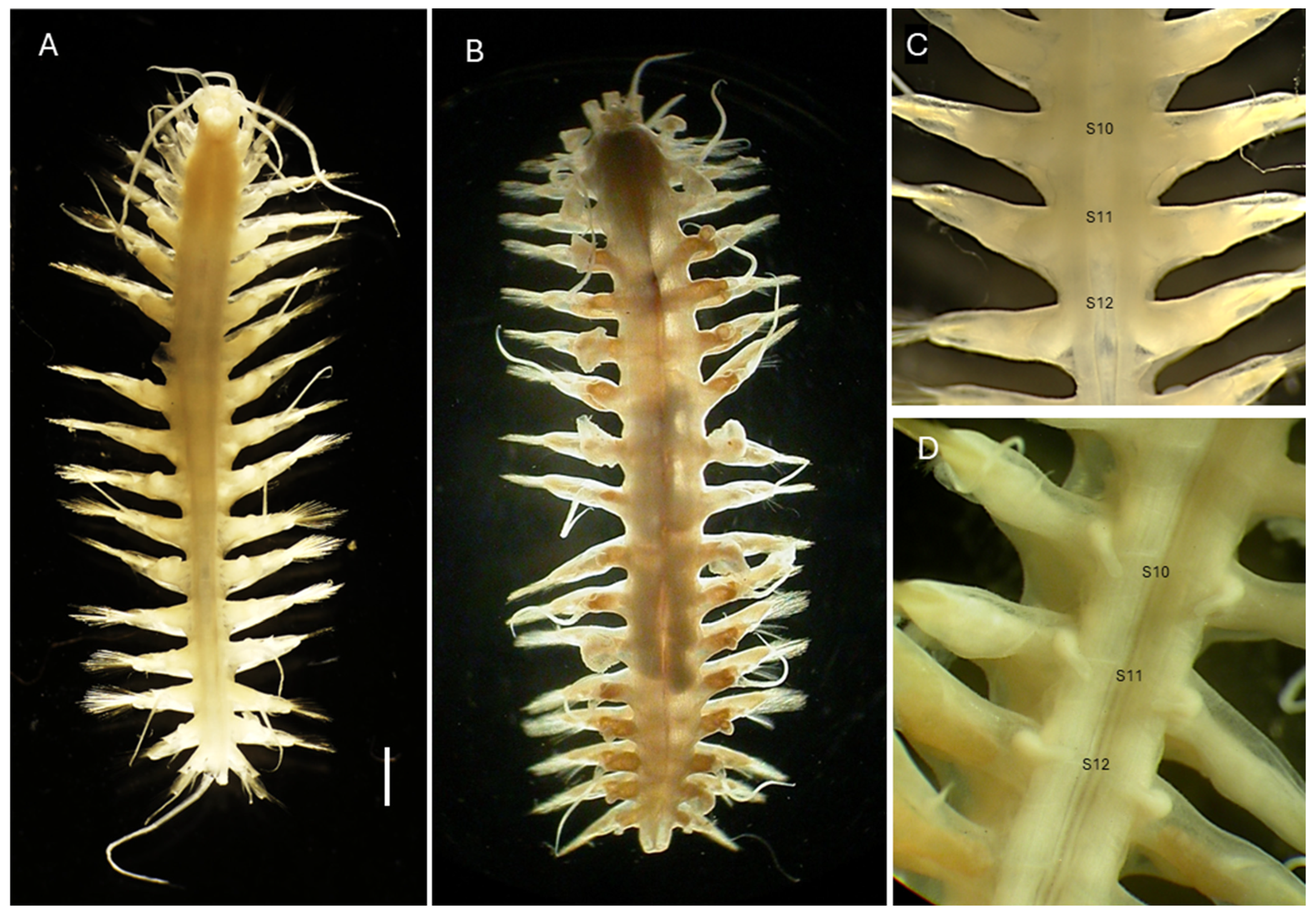
Figure 4.
Macellicephala irisae sp. nov. (A) Paratype NHMUK.ANEA 2019.8147, preserved specimen in dorsal view. (B) Paratype NHMUK.ANEA 2019.8145, preserved specimen in dorsal view. (C) Rounded nephridial papillae on segments 10–12, paratype NHMUK.ANEA 2019.8147, female. (D) Elongated nephridial papillae on segments 10–12, paratype NHMUK.ANEA 2019.8145. Scale bar: 1 mm.
Figure 5.
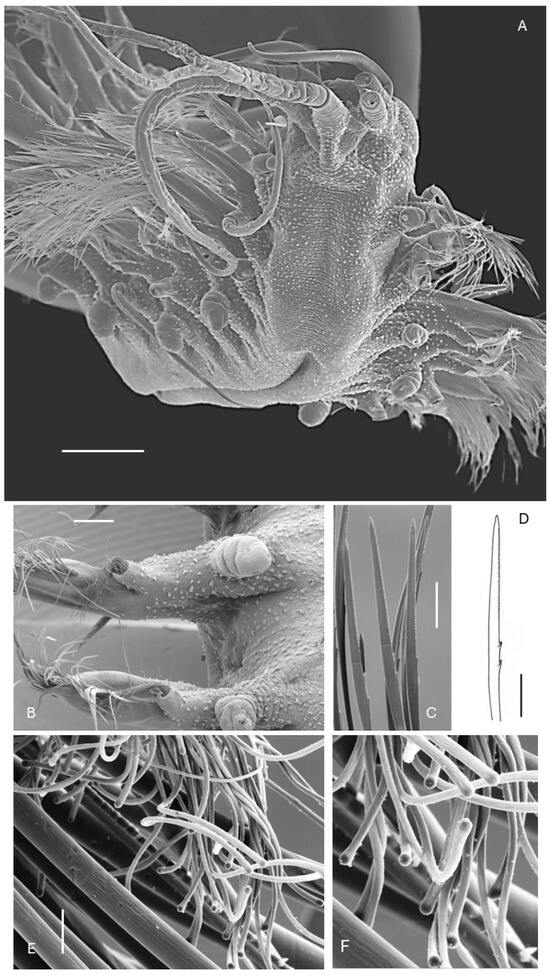
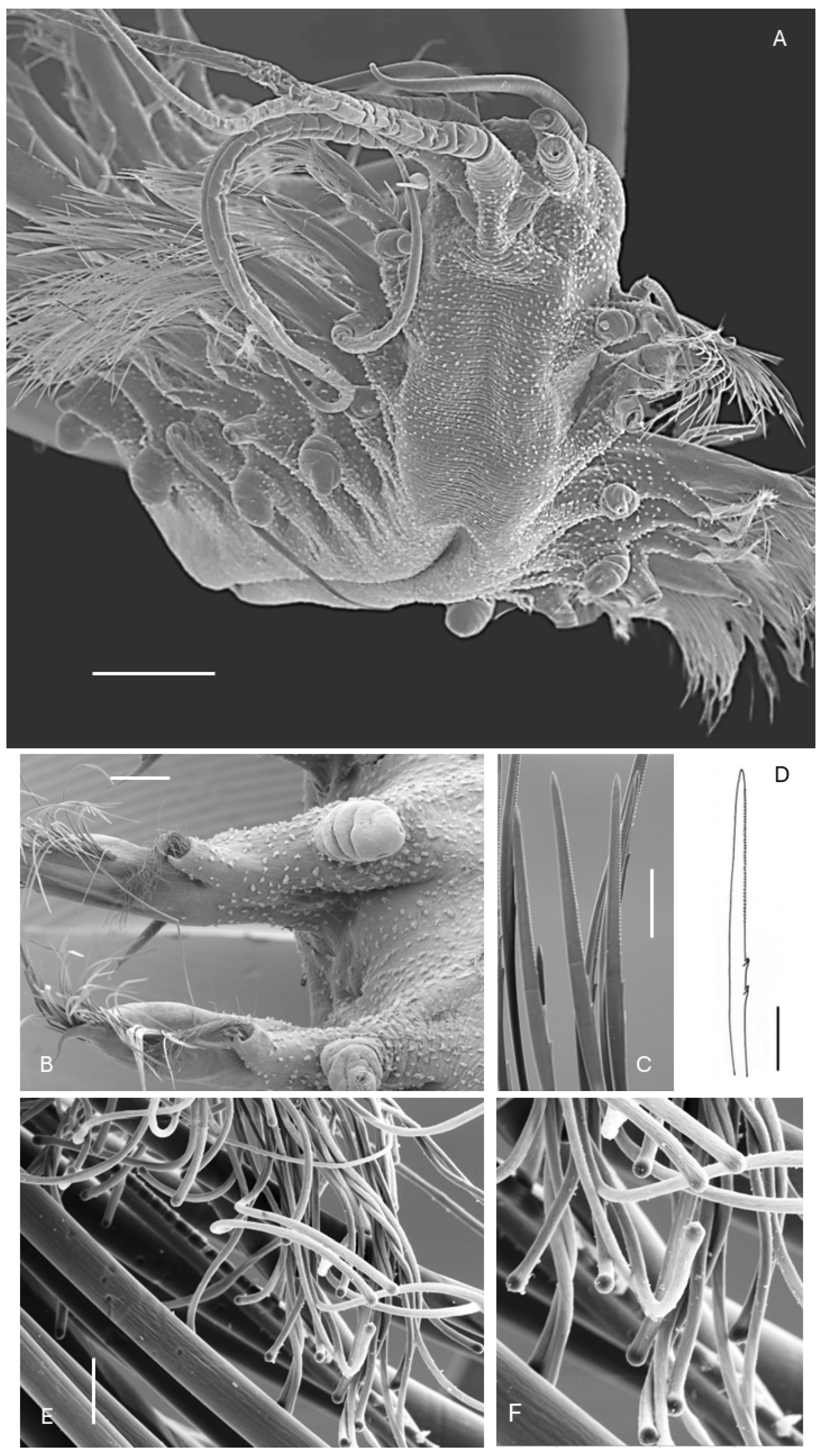
Macellicephala irisae sp. nov., SEM micrograph and line drawing of paratype NHMUK.ANEA 2026.701. (A) Anterior end in anterodorsal view showing prostomium with long median antenna and tentacular cirri (styles missing), dense papillation of the dorsum and parapodia visible. (B) Elytrogerous (top) and cirrigerous parapodia. (C) Neurochaetae. (D) Detail of neurochaetae showing two semi-lunar pockets. (E) Filamentous notochaetae. (F) Rounded tips of notochaetae. Scale bars: (A) = 1 mm; (B) = 200 μm; (C,D) = 50 μm; (E) = 10 μm.
Figure 6.
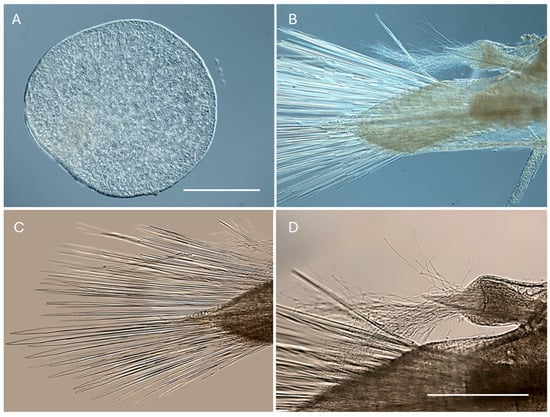
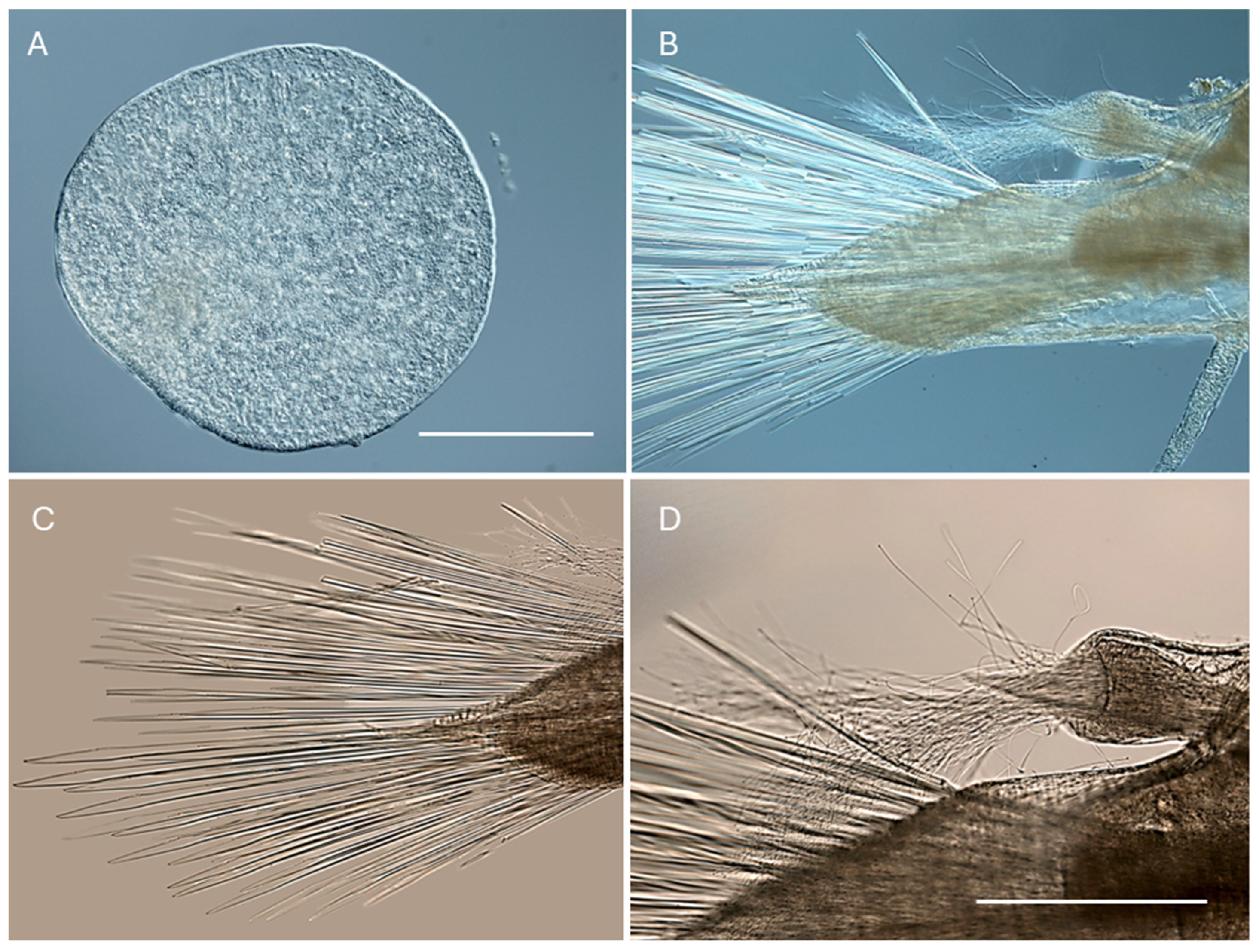
Macellicephala irisae sp. nov., preserved paratype NHMUK.ANEA 2026.701. (A) Smooth elytron. (B) Parapodium showing reduced notopodium with prominent acicular lobe (ac). (C) Notochaetae. (D) Slender filamentous neurochaetae. Scale bars = (A) = 500 μm; (D) = 750 μm.
Materials examined. Holotype NHMUK.ANEA 2019.8146 (ETOH), GenBank accession numbers PZ310488, PZ314305 and PZ318984; paratype NHMUK.ANEA 2026.701, live, SEM, (Formalin); paratype NHMUK.ANEA 2019.8145 (Formalin); paratype NHMUK.ANEA 2019.8147 (ETOH), GenBank accession numbers PZ310489 and PZ318985. All specimens collected on cladorhizid sponge associated with 21 m, 60 t blue or fin whale carcass, Santa Catalina Basin, southern California, eastern Pacific Ocean, 33°11.72 N, 118°29.46 W, 1244 m, February 2005, Tiburon Dive No. 825, slurp chamber 9.
Measurements. Holotype NHMUK.ANEA 2019.8146: 13.1 mm, width 3.9 mm without chaetae, 18 segments; paratype NHMUK.ANEA 2026.701: length 11.2 mm, 4.25 mm wide without chaetae, 18 segments; paratype NHMUK.ANEA 2019.8145: length 20.15 mm, width 6.9 mm without chaetae, 18 segments; paratype NHMUK.ANEA 2019.8147: length 13.4 mm, width 4.75 mm without chaetae, 18 segments.
Diagnosis. Body with 18 segments (including the tentacular segment = segment 1). Nine pairs of elytra on segments 2, 4, 5, 7, 9, 11, 13, 15 and 17. Prostomium very small, bilobed, no obvious notch between prostomial lobes. Large achaetous tentaculophores of segment 1 lateral to prostomium. Parapodia biramous. Notopodia short and near rectangular with acicular lobe. Notochaetae very fine and filamentous, forming “tufts”, distally with rounded tips. Distal ends of neurochaetae flattened, tapering to blunt tips with two semi-lunar pockets close to shoulder of chaetae. Prominent nephridial papillae on segments 10–12, large and rounded in females, elongated in males.
Description. Medium-sized species up to 20.15 mm in length and 6.9 mm width, represented by four specimens. All specimens dorsally complete with 18 segments (Figure 1A,B, Figure 3A and Figure 4A,B). Body long and tapering posteriorly. Nine pairs of elytra on segments 2, 4, 5, 7, 9, 11, 13, 15 and 17, elytra mostly missing. Live specimen deep pink in colour (Figure 1A,B), preserved specimens pale yellow (Figure 3A and Figure 4A,B). Integument dorsally covered with small tufts of papillae, best observed under SEM (Figure 5A). Prominent nephridial papillae on segments 10–12: large and rounded in females (Figure 3G and Figure 4C) but elongated in males (Figure 4D).
Prostomium very small, bilobed with no obvious notch present between prostomial lobes (Figure 3B,C and Figure 5A). Massive median antennophore positioned anteriorly on prostomium (Figure 3A,B and Figure 5A) with smooth style about four times the length of prostomium (Figure 5A). Large achaetous tentaculophores of segment 1 about a quarter the width of the prostomium, lateral to prostomium (Figure 3C and Figure 5A). Tentacular cirri smooth, dorsal pair about equal to length of median antenna, ventral pair about 2/3 length of median antenna. Palps thick and smooth, tapering to fine points, about twice the length of prostomium. Lateral antennae absent. Frontal filaments absent. Eyes absent.
Bulbous elytrophores close to proximal end of notopodia. Elytra mostly missing, when observed extremely small (Figure 3E), translucent and almost spherical, without papillae on borders, elytral surface with granular appearance (Figure 6A); irregular and textured elytra also observed even on the same specimen—segment 13 versus segment 17 (Figure 3E,F).
Dorsal cirrophores large, cylindrical (Figure 5B), styles smooth and tapering, extending beyond the end of neurochaetae. Dorsal tubercles not developed. Buccal cirri tapering, about twice as long as following ventral cirri and attached basally on parapodia. Ventral cirri short, tapering, inserted at mid-length of neuropodia.
Parapodia biramous (Figure 5B and Figure 6B). Notopodia reduced, short and near rectangular with prominent prechaetal acicular lobe (Figure 5B and Figure 6B). Notochaetae, very fine and filamentous, forming very fine ‘tufts’ (Figure 6B,D), with distinctly rounded tips (Figure 5E,F and Figure 6D). Notochaetae shorter than neurochaetae. Neuropodia, about equal length to width of body, tapering to triangular prechaetal acicular lobe (Figure 6B). Distal ends of neurochaetae flattened, tapering to blunt tips (Figure 5C,D and Figure 6C), blades with finely serrated edge (Figure 5C,D), shaft with two semi-lunar pockets close to shoulder of chaetae (Figure 5D).
Pygidium distally truncated lobe (Figure 3D), enclosed by posterior segment. Anal cirri smooth, slender and very long (Figure 3A,B and Figure 4A).
Etymology. The species name is dedicated to Iris Altamira to recognise her longstanding contribution to annelid taxonomy.
Remarks. A new species agrees well with diagnosis of Macellicephala in having the following characters: body with 18 segments, 9 pairs of elytra on segments 2, 4, 5, 7, 9, 11, 13, 15 and 17, prostomium bilobed, with median antenna. Segment 1 without chaetae. Segment 2 with buccal (ventral) cirri longer than following ventral cirri, attached to basal parts of parapodia lateral to mouth. Parapodia biramous, with shorter notopodia and long neuropodia, both rami with elongate acicular processes. Nephridial papillae usually largest on segments 10, 11 and 12. However we cannot comment on the morphology of proboscis, which was not everted in the new species.
The very small head, neurochaetae with semi-lunar pockets, body surface with papillae, and filamentous notochaetae differentiate the new species from all known Macellicephala species. Tufts of papillae covering the dorsum have not been previously reported in Macellicephala but given that these are best observed under SEM (Figure 5A,B), they might have been previously overlooked in other species. Similar papillae have been reported in other Macellicephalinae species, e.g., genus Macellicephaloides (e.g., [30]).
The unique features of the new species, particularly the filamentous notochaetae, may warrant erection of a new genus. However, given the currently limited coverage within the genus Macellicephala and closely related Abyssarya (Figure 2), we prefer to remain conservative and include the new species within genus Macellicephala.
In live specimen, paratype NHMUK.ANEA 2026.701, 14 spherical eggs (diameter 340 μm) were visible through segments 8 to 13 (Figure 1D). This species exhibits sexual dimorphism in the shape of nephridial papillae present ventrally in segments 10–12 (Figure 3G and Figure 4C,D). As documented in other Polynoidae species (e.g., [22,45]), males show particularly enlarged and elongated nephridial papillae (Figure 4D) in comparison to females (Figure 4C).
Genetics. DNA from the holotype (18S, 16S, COI) and paratype (16S, COI) were recovered. Given the current taxon coverage, the new species falls into a well-supported Macellicephala-Abyssarya clade in the phylogenetic analyses (Figure 2). The generic placement of the new species, as well as that of M. clarionensis and Abyssarya may be re-evaluated in the future with further taxon sampling, especially regarding the fact that DNA from the type species of the genus Macellicephala mirabilis is currently not available.
Distribution. Known from the type locality only.
4. Discussion
The scapula of the Santa Catalina whale fall in 2005 showed little evidence of microbial mats, and the associated megafauna consists mainly of suspension feeders (Figure 1C). However, it should be noted that some cladorhizid sponges, to which the host here belongs, have been previously reported from chemoautotrophic habitats and shown to utilize both methane-oxidizing bacteria and in some cases small crustacean prey as nutrient sources [46]. Thus, this bone appears to be transitioning to the reef stage, with some vestiges of a reducing habitat potentially remaining. The whale fall reef stage is the final, and potentially longest phase of a whale carcass’s persistence on the deep seafloor. It follows the mobile scavenger, enrichment, and sulphophilic stages [18], thus occurring after organic nutrients are depleted, leaving the exposed mineral remains of the bones to provide hard, reef-like substrates for sessile megafaunal suspension feeders. Such megafauna can in turn support other species, further enhancing the biodiversity of the whale fall. It is such an association between a cladorhizid sponge and Macellicephala irisae sp. nov. that has been observed in this study (Figure 1B). Several new species in the genera Asbestopluma Topsent, 1901 [47], and Cladorhiza Sars, 1872 [48], have been described from near the type locality reported here (see Lundsten et al. [46] for details). The cladorhizid host imaged (Figure 1C,D) here may belong to one of those species or potentially represent a new species.
Associations between polynoids and various hosts (mainly Echinodermata, Mollusca, Cnidaria, Porifera, Crustacea, and other Annelida) are well-known, with Martin & Britayev [49] reporting on multiple such associations, most of them commensal. Worms likely find shelter and food, while the hosts may benefit from cleaned surfaces or are largely unaffected. For example, the polynoid Neopolynoe chondrocladiae (Fauvel, 1943) [50] living inside a cladorhizid sponge has been suggested to act as a “sit-and-wait” predator, using the sponge primarily for shelter [51], whilst the polynoid Polyeunoa laevis McIntosh, 1885, was found to feed on soft coral [52]. Some polynoids even show a morphological adaptation to their hosts [53]. However, without any detailed or long-term observations of the polynoid—host interactions, captured only in ROV images in this study (Figure 1C,D)—we cannot provide further insights into this association. Nevertheless, this observation represents the first reported instance of an apparent symbiotic relationship within the genus Macellicephala, although symbiosis has been reported in the closely related genus Abyssarya [25].
The unusually thin, soft, thread-like notochaetae—a unique feature of Macellicephala irisae sp. nov.—are unlikely to aid in locomotion nor do they harbour bacteria associated with the sulphophilic stage. Chaetae that have been previously suggested to aid in host attachment are usually distinctly stout and hooked, as in Abyssarya acus (reported in Bonifácio & Menot [25]) or Uncopolynoe corallicola (reported in Wehe [54]). On the other hand, the lunar pockets observed here on the shafts on neurochaetae could provide an attachment function (Figure 5C,D). Similar pockets have been previously reported in symbiotic polynoid genera such as Paradyte, Adyte and Subadyte [55,56], although their function remains unknown.
5. Conclusions
A new species has been identified within the genus Macellicephala, characterized by unique features including filamentous notochaetae, neurochaetae with semi-lunar pockets, a particularly small head, and papillae on the dorsum. These characters may suggest a future re-evaluation of its taxonomic classification, though it is currently retained in Macellicephala due to insufficient molecular coverage of related taxa. Ecologically, associations between Macellicephala and cladorhizid sponge growing on the whale scapula have been observed at the Santa Catalina whale fall site. This indicates that at least some bones of this whale fall site were transitioning to reef stage after more than 50 years on the seabed, supporting novel biodiversity.
Author Contributions
Research design: C.R.S. Sample collection: C.R.S., A.G.G. and T.G.D. Laboratory work and data analysis: L.N., A.B., H.W. and K.K. Writing of the paper: all authors. All authors have read and agreed to the published version of the manuscript.
Funding
The field work of this project was funded by grant number UAF 03-0094 from the National Undersea Research Center Alaska, NOAA, USA, to CRS and by the Natural Environment Research Council (NERC) and internal Natural History Museum grants to AGG. This publication has been partially funded by a grant from the Nippon Foundation.
Data Availability Statement
All sequence reads were deposited in GenBank.
Acknowledgments
We would like to thank the Masters, crew and ROV pilots aboard the R/V Western Flyer and ROV Tiburon, without whose expertise we would never have obtained any samples. Jon Hestetun assisted with the identification of the host specimen from the images. We are also thankful to the reviewers whose comments helped to improve the manuscript.
Conflicts of Interest
The authors declare no conflicts of interests.
References
- Smith, C.R.; Kukert, H.; Wheatcroft, R.A.; Jumars, P.A.; Deming, J.W. Vent fauna on whale remains. Nature 1989, 341, 27–28. [Google Scholar] [CrossRef] [Scilit]
- Smith, C.R.; Glover, A.G.; Treude, T.; Higgs, N.D.; Amon, D.J. Whale-fall ecosystems: Recent insights into ecology, paleoecology, and evolution. Annu. Rev. Mar. Sci. 2015, 7, 571–596. [Google Scholar] [CrossRef] [Scilit] [PubMed]
- Gage, J.D.; Tyler, P.A. Deep-Sea Biology: A Natural History of Organisms at the Deep-Sea Floor; Cambridge University Press: Cambridge, UK, 1991. [Google Scholar]
- Levin, L.A. Polychaetes as environmental indicators: Response to low oxygen and organic enrichment. Bull. Mar. Sci. 2000, 67, 668. [Google Scholar]
- Grassle, J.F.; Morse-Porteous, L.S. Macrofaunal colonization of disturbed deep-sea environments and the structure of deep-sea benthic communities. Deep Sea Res. Part A Oceanogr. Res. Pap. 1987, 34, 1911–1915, 1917–1950. [Google Scholar] [CrossRef] [Scilit]
- Butman, C.A.; Carlton, J.T.; Palumbi, S.R. Whaling effects on deep-sea biodiversity. Conserv. Biol. 1995, 9, 462–464. [Google Scholar] [CrossRef] [Scilit]
- Baco, A.R.; Smith, C.R. High species richness in deep-sea chemoautotrophic whale skeleton communities. Mar. Ecol. Prog. Ser. 2003, 260, 109–114. [Google Scholar] [CrossRef] [Scilit]
- Li, Q.; Liu, Y.; Li, G.; Wang, Z.; Zheng, Z.; Sun, Y.; Lei, N.; Li, Q.; Zhang, W. Review of the impact of whale fall on biodiversity in deep-sea ecosystems. Front. Ecol. Evol. 2022, 10, 885572. [Google Scholar] [CrossRef] [Scilit]
- Rouse, G.W.; Goffredi, S.K.; Vrijenhoek, R.C. Osedax: Bone-eating marine worms with dwarf males. Science 2004, 305, 668–671. [Google Scholar] [CrossRef] [Scilit]
- Dahlgren, T.G.; Glover, A.G.; Baco, A.; Smith, C.R. Fauna of whale falls: Systematics and ecology of a new polychaete (Annelida: Chrysopetalidae) from the deep Pacific Ocean. Deep Sea Res. Part I Oceanogr. Res. Pap. 2004, 51, 1873–1887. [Google Scholar] [CrossRef] [Scilit]
- Watson, C.; Ignacio Carvajal, J.; Sergeeva, N.G.; Pleijel, F.; Rouse, G.W. Free-living calamyzin chrysopetalids (Annelida) from methane seeps, anoxic basins, and whale falls. Zool. J. Linn. Soc. 2016, 177, 700–719. [Google Scholar] [CrossRef] [Scilit]
- Shimabukuro, M.; Carrerette, O.; Alfaro-Lucas, J.M.; Rizzo, A.E.; Halanych, K.M.; Sumida, P.Y.G. Diversity, distribution and phylogeny of Hesionidae (Annelida) colonizing whale falls: New species of Sirsoe and connections between ocean basins. Front. Mar. Sci. 2019, 6, 478. [Google Scholar] [CrossRef] [Scilit]
- Shimabukuro, M.; Couto, D.M.; Bernardino, A.F.; Souza, B.H.; Carrerette, O.; Pellizari, V.H.; Sumida, P.Y. Whale bone communities in the deep Southwest Atlantic Ocean. Deep Sea Res. Part I Oceanogr. Res. Pap. 2022, 190, 103916. [Google Scholar] [CrossRef] [Scilit]
- Georgieva, M.N.; Wiklund, H.; Ramos, D.A.; Neal, L.; Glasby, C.J.; Gunton, L.M. The annelid community of a natural deep-sea whale fall off eastern Australia. Rec. Aust. Mus. 2023, 75, 167–213. [Google Scholar] [CrossRef] [Scilit]
- Kinberg, J.H. Nya slägten och arter af Annelider, Öfversigt af Kongl. Öfvers. Kongl. Vetensk. Akad. Förh. 1856, 12, 381–388. [Google Scholar]
- Smith, C.R.; Baco, A.R.; Glover, A.G. Faunal succession on replicate deep-sea whale falls: Time scales and vent-seep affinities. Cah. Biol. Mar. 2002, 43, 293–298. [Google Scholar]
- Schuller, D.; Kadko, D.; Smith, C.R. Use of 210Pb/226Ra disequilibria in the dating of deep-sea whale falls. Earth Planet. Sci. Lett. 2004, 218, 277–289. [Google Scholar] [CrossRef] [Scilit]
- Smith, C.R.; Baco, A.R. Ecology of whale falls at the deep-sea floor. In Oceanography and Marine Biology; Gibson, R.N., Atkinson, R.J.A., Gordon, J.D.M., Eds.; CRC Press: Boca Raton, FL, USA, 2003; pp. 319–354. [Google Scholar]
- Pettibone, M.H. Polynoid polychaetes associated with a whale skeleton in the bathyal Santa Catalina Basin. Proc. Biol. Soc. Wash. 1993, 106, 678–688. [Google Scholar]
- Pettibone, M.H. Polynoidae and Sigalionidae (Polychaeta) from the Guaymas Basin, with descriptions of two new species, and additional records from hydrothermal vents of the Galapagos Rift, 21ºN, and seep-sites in the Gulf of Mexico (Florida and Louisiana). Proc. Biol. Soc. Wash. 1989, 102, 154–168. [Google Scholar]
- Fauchald, K. Benthic polychaetous annelids from deep water off western Mexico and adjacent areas in the Eastern Pacific Ocean. Allan Hancock Monogr. Mar. Biol. 1972, 7, 1–575. [Google Scholar]
- Glover, A.G.; Goetze, E.; Dahlgren, T.G.; Smith, C.R. Morphology, reproductive biology and genetic structure of the whale-fall and hydrothermal vent specialist, Bathykurila guaymasensis Pettibone, 1989 (Annelida: Polynoidae). Mar. Ecol. 2005, 26, 223–234. [Google Scholar] [CrossRef] [Scilit]
- Higgs, N.D.; Little, C.T.; Glover, A.G. Bones as biofuel: A review of whale bone composition with implications for deep-sea biology and palaeoanthropology. Proc. R. Soc. B Biol. Sci. 2011, 278, 9–17. [Google Scholar] [CrossRef] [Scilit] [PubMed]
- Hartmann-Schröder, G. Die Unterfamilie Macellicephalinae Hartmann-Schröder, 1971 (Polynoidae, Polychaeta). Mit Beschreibung einer neuen Art, Macellicephala jameensis n.sp., aus einem Höhlengewässer von Lanzarote (Kanarische Inseln). Mitt. Hamb. Zool. Mus. Inst. 1971, 71, 75–85. [Google Scholar]
- Bonifácio, P.; Menot, L. New genera and species from the Equatorial Pacific provide phylogenetic insights into deep-sea Polynoidae (Annelida). Zool. J. Linn. Soc. 2019, 185, 555–635. [Google Scholar] [CrossRef] [Scilit]
- Bonifácio, P.; Neal, L.; Menot, L. Diversity of deep-sea scale-worms (Annelida, Polynoidae) in the Clarion-Clipperton Fracture Zone. Front. Mar. Sci. 2021, 8, 656899. [Google Scholar] [CrossRef] [Scilit]
- Gonzalez, B.C.; Martínez, A.; Borda, E.; Iliffe, T.M.; Fontaneto, D.; Worsaae, K. Genetic spatial structure of an anchialine cave annelid indicates connectivity within-but not between-islands of the Great Bahama Bank. Mol. Phylogenetics Evol. 2017, 109, 259–270. [Google Scholar] [CrossRef] [Scilit]
- Neal, L.; Barnich, R.; Wiklund, H.; Glover, A.G. A new genus and species of Polynoidae (Annelida, Polychaeta) from Pine Island Bay, Amundsen Sea, Southern Ocean—A region of high taxonomic novelty. Zootaxa 2012, 3542, 80–88. [Google Scholar] [CrossRef] [Scilit]
- Neal, L.; Brasier, M.J.; Wiklund, H. Six new species of Macellicephala (Annelida: Polynoidae) from the Southern Ocean and south Atlantic with re-description of type species. Zootaxa 2018, 4455, 1–34. [Google Scholar] [CrossRef] [Scilit]
- Neal, L.; Wiklund, H.; Glover, A.G. Description of new species Macellicephaloides veronikae sp. n. (Polynoidae, Annelida) from the Amundsen Sea, Southern Ocean. Polar Biol. 2025, 48, 107. [Google Scholar] [CrossRef] [Scilit]
- McIntosh, W.C. Report on the Scientific Results of the Voyage of H.M.S. Challenger during the years 1873–76. Zoology 1885, 12, i–xxxvi, 1–554. [Google Scholar]
- Read, G.; Fauchald, K. World Polychaeta Database. Macellicephala McIntosh, 1885. World Register of Marine Species. 2026. Available online: https://www.marinespecies.org/aphia.php?p=taxdetails&id=129498 (accessed on 19 January 2026).
- Medlin, L.; Elwood, H.J.; Stickel, S.; Sogin, M.L. The characterization of enzymatically amplified eukaryotic 16S-like rRNA-coding regions. Gene 1988, 71, 491–499. [Google Scholar] [CrossRef] [Scilit]
- Nygren, A.; Sundberg, P. Phylogeny and evolution of reproductive modes in Autolytinae (Syllidae, Annelida). Mol. Phylogenetics Evol. 2003, 29, 235–249. [Google Scholar] [CrossRef] [Scilit] [PubMed]
- Sjölin, E.; Erséus, C.; Källersjö, M. Phylogeny of Tubificidae (Annelida, Clitellata) based on mitochondrial and nuclear sequence data. Mol. Phylogenetics Evol. 2005, 35, 431–441. [Google Scholar] [CrossRef] [Scilit] [PubMed]
- Palumbi, S.R. Nucleic Acids II: The Polymerase Chain Reaction; ScienceOpen, Inc.: Lexington, MA, USA, 1996; pp. 205–247. [Google Scholar]
- Folmer, O.; Black, M.; Hoeh, W.; Lutz, R.; Vrijenhoek, R. DNA primers for amplification of mitochondrial cytochrome c oxidase subunit I from diverse metazoan invertebrates. Mol. Mar. Biol. Biotechnol. 1994, 3, 294–299. [Google Scholar]
- Bely, A.E.; Wray, G.A. Molecular phylogeny of naidid worms (Annelida: Clitellata) based on cytochrome oxidase I. Mol. Phylogenetics Evol. 2004, 30, 50–63. [Google Scholar] [CrossRef] [Scilit]
- Cohen, B.L.; Gawthrop, A.; Cavalier-Smith, T. Molecular phylogeny of brachiopods and phoronids based on nuclear-encoded small subunit ribosomal RNA gene sequences. Philos. Trans. R. Soc. Lond. B Biol. Sci. 1998, 353, 2039–2061. [Google Scholar] [CrossRef] [Scilit]
- Katoh, K.; Misawa, K.; Kuma, K.I.; Miyata, T. MAFFT: A novel method for rapid multiple sequence alignment based on fast Fourier transform. Nucleic Acids Res. 2002, 30, 3059–3066. [Google Scholar] [CrossRef] [Scilit]
- Murray, A.; Burghardt, I.; Gunton, L.M.; Nizar, N.M.; Nikolic, M.C.; Wilson, R.S. Polynoidae (Annelida) from bathyal and abyssal depths in southern and eastern Australia. Rec. Aust. Mus. 2025, 77, 193–269. [Google Scholar] [CrossRef] [Scilit]
- Minh, B.Q.; Schmidt, H.A.; Chernomor, O.; Schrempf, D.; Woodhams, M.D.; Von Haeseler, A.; Lanfear, R. IQ-TREE 2: New Models and Efficient Methods for Phylogenetic Inference in the Genomic Era. Mol. Biol. Evol. 2020, 37, 1530–1534. [Google Scholar] [CrossRef] [Scilit]
- Kalyaanamoorthy, S.; Minh, B.Q.; Wong, T.K.; Von Haeseler, A.; Jermiin, L.S. ModelFinder: Fast model selection for accurate phylogenetic estimates. Nat. Methods 2017, 14, 587–589. [Google Scholar] [CrossRef] [Scilit]
- Ronquist, F.; Teslenko, M.; Van Der Mark, P.; Ayres, D.L.; Darling, A.; Höhna, S.; Larget, B.; Liu, L.; Suchard, M.A.; Huelsenbeck, J.P. MrBayes 3.2: Efficient Bayesian phylogenetic inference and model choice across a large model space. Syst. Biol. 2012, 61, 539–542. [Google Scholar] [CrossRef] [Scilit]
- Wu, X.; Zhan, Z.; Xu, K. Two new and two rarely known species of Branchinotogluma (Annelida: Polynoidae) from deep-sea hydrothermal vents of the Manus Back-Arc basin, with remarks on the diversity and biogeography of vent polynoids. Deep Sea Res. Part I Oceanogr. Res. Pap. 2019, 149, 103051. [Google Scholar] [CrossRef] [Scilit]
- Lundsten, L.; Reiswig, H.M.; Austin, W.C. Four new species of Cladorhizidae (Porifera, Demospongiae, Poecilosclerida) from the Northeast Pacific. Zootaxa 2014, 3786, 101–123. [Google Scholar] [CrossRef] [Scilit]
- Topsent, E. Spongiaires. Résultats du voyage du S.Y. ‘Belgica’en 1897-99 sous le commandement de A. de Gerlache de Gomery. Expédition antarctique belge. Zoologie 1901, 4, 1–54. [Google Scholar]
- Sars, G.O. On Some Remarkable Forms of Animal Life from the Great Deeps Off the Norwegian Coast. Part 1, Partly from Posthumous Manuscripts of the Late Professor Dr. Michael Sars. University Program for the 1st Half-Year 1869; Christiania viii; Brøgger & Christie: Oslo, Norway, 1872; Volume 82, pp. 1–6. [Google Scholar]
- Martin, D.; Britayev, T.A. Symbiotic polychaetes revisited: An update of the known species and relationships (1998–2017). In Oceanography and Marine Biology; Hawkins, S.J., Evans, A.J., Dale, A.C., Eds.; CRC Press: Boca Raton, FL, USA, 2018; pp. 371–447. [Google Scholar] [CrossRef] [Scilit]
- Fauvel, P. Deux polychètes nouvelles. Bull. Mus. Natl. Hist. Nat. 2e Sér. 1942, 15, 200–202. [Google Scholar]
- Taboada, S.; Serra Silva, A.; Díez-Vives, C.; Neal, L.; Cristobo, J.; Ríos, P.; Hestetun, J.T.; Clark, B.; Rossi, M.E.; Junoy, J.; et al. Sleeping with the enemy: Unravelling the symbiotic relationships between the scale worm Neopolynoe chondrocladiae (Annelida: Polynoidae) and its carnivorous sponge hosts. Zool. J. Linn. Soc. 2021, 193, 295–318. [Google Scholar] [CrossRef] [Scilit]
- Bogantes, V.E.; Whelan, N.V.; Webster, K.; Mahon, A.R.; Halanych, K.M. Unrecognized diversity of a scale worm, Polyeunoa laevis (Annelida: Polynoidae), that feeds on soft coral. Zool. Scr. 2020, 49, 236–249. [Google Scholar] [CrossRef] [Scilit]
- Serpetti, N.; Taylor, M.L.; Brennan, D.; Green, D.H.; Rogers, A.D.; Paterson, G.L.J.; Narayanaswamy, B.E. Ecological adaptations and commensal evolution of the Polynoidae (Polychaeta) in the Southwest Indian Ocean Ridge: A phylogenetic approach. Deep Sea Res. II Top. Stud. Oceanogr. 2017, 137, 273–281. [Google Scholar] [CrossRef] [Scilit]
- Wehe, T. Revision of the scale worms (Polychaeta: Aphroditoidea) occurring in the seas surrounding the Arabian Peninsula. Part I: Polynoidae. Fauna Arab. 2006, 22, 23–197. [Google Scholar]
- Pettibone, M.H. Review of some species referred to Scalisetosus McIntosh (Polychaeta, Polynoidae). Proc. Biol. Soc. Wash. 1996, 82, 1–30. [Google Scholar]
- Barnich, R.; Fiege, D.; Sun, R. Polychaeta (Annelida) of Hainan Island, South China Sea. Part III. Aphroditoidea. Species Divers. 2004, 9, 285–329. [Google Scholar] [CrossRef] [Scilit]

Disclaimer/Publisher’s Note: The statements, opinions and data contained in all publications are solely those of the individual author(s) and contributor(s) and not of MDPI and/or the editor(s). MDPI and/or the editor(s) disclaim responsibility for any injury to people or property resulting from any ideas, methods, instructions or products referred to in the content. |
© 2026 by the authors. Licensee MDPI, Basel, Switzerland. This article is an open access article distributed under the terms and conditions of the Creative Commons Attribution (CC BY) license.