


Abstract
This study developed a sonoseeding strategy for controlling the crystal size of acetaminophen during cooling crystallization by introducing sonication into a supersaturated solution, thereby inducing nucleation. Based on the synthetic route of acetaminophen, crystallization behavior in both water and acetic acid aqueous solutions was investigated, along with the influence of a structurally related additive, p-aminophenol, on nucleation. To establish the sonoseeding approach, the solubility of acetaminophen in water and an aqueous solution of acetic acid, with and without the additive, was measured over a temperature range of 10–70 °C using a titration method. In parallel, the nucleation temperatures and metastable zone widths of acetaminophen were systematically determined during cooling crystallization under varying operating conditions. Results demonstrate that sonication effectively induces nucleation and significantly narrows the metastable zone width, particularly in aqueous solutions of acetic acid. Guided by the determined solubility and nucleation behavior, sonoseeding crystallization experiments were conducted at various supersaturation levels, allowing for the efficient control of acetaminophen crystal size, which ranged from 27 μm to 95 μm, with narrower particle size distributions compared to spontaneous nucleation. Furthermore, the recrystallized acetaminophen was confirmed as Form I using PXRD, DSC, and FTIR analysis. This study demonstrates that the sonoseeding approach is an efficient method for controlling crystal size during the crystallization of active pharmaceutical ingredients.
1. Introduction
Crystallization is a crucial unit operation in the pharmaceutical industry, governing the isolation, purification, and crystal properties of active pharmaceutical ingredients (APIs). For example, controlling the polymorph directly impacts the bioavailability of poorly water–soluble APIs [1]. Investigating the crystal property transformation is essential to understanding the stability of the drug product [2]. Designing and screening the novel crystal form and providing better thermophysical properties accelerates the development of the drug candidates [3,4]. To improve crystal quality control in the pharmaceutical industry, several efficient modifications or process intensifications have been proposed and developed in the literature [5,6,7]. While crystallization establishes the solid–state properties of the API, controlling nucleation remains one of the most challenging aspects due to the stochastic nature of spontaneous nucleation [8,9,10]. One of the commonly used strategies is nucleation control by seeding, which controls crystallization pathways and ensures reproducibility [11,12]. Seeding involves the introduction of seed crystals into a supersaturated solution, providing defined nucleation sites. In addition, it is also crucial to control particle size distribution and crystal habit, both of which significantly influence downstream processes such as filtration, drying, and formulation [13,14,15]. By initiating growth under lower supersaturation levels, seeding minimizes uncontrolled secondary nucleation and reduces the likelihood of impurity entrapment, thereby enhancing overall product purity. Industrially, seeding offers scalability and robustness, aligning well with quality–by–design (QbD) and process analytical technology (PAT) frameworks for consistent manufacturing [16,17]. Its capacity to control polymorphic forms, particle characteristics, and process consistency highlights its essential role in guaranteeing that APIs achieve the critical quality attributes necessary for regulatory acceptance and therapeutic efficacy.
Conventional seeding remains a widely used technique in pharmaceutical crystallization. For example, Zhang et al. and He et al. reviewed the progress and opportunities for utilizing seeding techniques in solution crystallization processes [18,19]. However, the conventional seeding still presents several inherent challenges. The method’s reliance on spontaneous interactions between solute molecules and seed surfaces can be unpredictable, especially under low supersaturation conditions or for poorly soluble compounds, leading to inconsistent nucleation and polymorph formation [15]. Moreover, conventional seeding may inadequately suppress secondary nucleation, resulting in broad particle size distributions and agglomeration, which complicate downstream processing [20]. Uneven seed dispersion and agglomeration can result in inhomogeneous crystal populations, which in turn affect the crystal size control [21]. Additionally, conventional seeding typically does not accelerate induction times, so processes can remain time-consuming, particularly for systems with high nucleation energy barriers [22]. These limitations motivate the development of the advanced seeding approach to achieve more precise and reliable control over crystal properties.
Crystallization accompanied by sonication, also known as sonocrystallization, is an intensified technique for the efficient control of nucleation and crystal growth, particularly in the context of API crystallization [23,24]. The key mechanism arises from acoustic cavitation, where the rapid collapse of cavitation bubbles generates localized hotspots with transiently high temperatures, pressures, and shock waves. These extreme microenvironments disrupt solute–solvent interactions, significantly reducing induction times and promoting nucleation [25,26]. As a result, sonocrystallization enables controlled initiation of crystallization at lower supersaturations, leading to improved reproducibility, narrower particle size distributions, and the possibility of modifying crystal habit [27,28,29,30,31]. Attributed to the effect of nucleation promotion, rather than adding seed crystals, sonication can be considered a tool to induce nucleation at a low supersaturation. This sonoseeding concept offers more efficient and controllable nucleation, eliminating the need to introduce external seed crystals. Additionally, sonoseeding also minimizes the risk of contamination, prevents the agglomeration of seed crystals, and efficiently manipulates crystal size [32,33,34]. Although the sonoseeding concept has been proposed, comprehensive and systematic investigations that design crystallization processes based on sonoseeding principles remain rather limited. Therefore, the objective of this study is to systematically investigate sonoseeding as a controlled nucleation approach in crystallization processes, with particular emphasis on its effectiveness in inducing nucleation at low supersaturation, regulating nucleation behavior, and manipulating crystal size and size distribution.
In this study, the sonoseeding approach was designed to manipulate nucleation during the cooling crystallization of acetaminophen, aiming to control its crystal size. Acetaminophen, also known as paracetamol, is a widely used analgesic and antipyretic drug for relieving mild to moderate pain and reducing fever. It is one of the most common API in over–the–counter medications due to its efficacy and safety at therapeutic doses [35]. The crystallization of acetaminophen significantly influences its physicochemical properties, including particle size, flowability, tabletability, and dissolution rate, making the control of its crystal form and size crucial in pharmaceutical formulation and manufacturing processes [36,37,38]. In the literature, several studies have been reported for the sonocrystallization of acetaminophen. For example, Bučar et al. prepared monoclinic acetaminophen by sonocrystallization to improve the compaction behavior [39]. Nguyen et al. investigated the effect of impurity acetanilide on the sonocrystallization of acetaminophen [40]. Devos et al. used acetaminophen as a model compound to estimate nucleation kinetics in sonocrystallization [41]. Dhanasekaran et al. investigated the effects of ultrasound and hydrodynamic cavitation on the crystallization of acetaminophen [42]. Patel A.M. and Patel S.R. used a Box–Behnken design to optimize the sonocrystallization of acetaminophen [43]. Kaur Bhangu et al. applied sonication to induce the generation of orthorhombic acetaminophen (form II) in an antisolvent crystallization [44]. Although acetaminophen has been studied in sonocrystallization, sonication has mostly been applied as an intensification tool rather than systematically designed as an alternative to conventional seeding. Therefore, this study aims to investigate sonoseeding systematically in acetaminophen crystallization, focusing on its ability to control nucleation behavior, regulate crystal size and distribution, and evaluate its potential as a controlled alternative to traditional seeding. In addition, the above studies focused on the kinetic study of sonocrystallization, using pure solvents such as water or ethanol. To couple sonocrystallization with acetaminophen synthesis, this study investigates the nucleation behavior and manipulates the particle size of acetaminophen by sonoseeding during cooling crystallization using a simulated reaction medium. According to the studies of Lee et al. [45,46] and Jiang and Ni [47]. Acetaminophen was frequently synthesized by the reaction between p-aminophenol and acetic anhydride in water. A simulated aqueous reaction medium containing acetic acid and the reactant p-aminophenol was adopted. By determining the nucleation temperature and metastable zone width of acetaminophen with and without sonication, a suitable temperature interval for sonoseeding was identified. In this interval, nucleation can only be induced by sonication. By applying sonoseeding at different designed supersaturations, the particle size of the produced acetaminophen crystals was compared and discussed. In addition, the crystal form of the produced acetaminophen crystals was analyzed using PXRD, DSC, and FTIR to demonstrate the capability of sonoseeding in controlling the particle size of acetaminophen.
2. Materials and Methods
2.1. Materials
Acetaminophen, the model API, was purchased from Sigma-Aldrich Co. (St. Louis, MO, USA) with a purity that meets USP testing specifications (>98%). The crystal form of the purchased acetaminophen was checked by powder X-ray diffraction (PXRD) analysis and confirmed to belong to Form I, as compared with the simulated PXRD pattern acquired from the CCDC (Cambridge Crystallographic Data Centre) database. The structurally similar additive, p-aminophenol, was obtained from Alfa Aesar (Haverhill, MA, USA) with a minimum purity of 98%. Acetic acid, which is used to prepare the crystallization solution, was purchased from Sigma-Aldrich with a minimum purity of 99.8%. The physical properties of these chemicals are summarized in Table 1 and were used as received without further purification. The deionized water used in this study was prepared in the laboratory using a UNISS Pure Product II instrument (UNISS, New Taipei City, Taiwan).
Table 1.
Properties of the materials used in this study.
2.2. Crystallization Solution Design
In this study, the nucleation behavior of acetaminophen was investigated under conditions with or without sonication, thereby enabling the design of a sonoseeding approach at a specified supersaturation to control the particle size. To couple the sonocrystallization with the synthesis of acetaminophen, in contrast to using a pure solvent, such as water, a simulated reaction medium was used in this study. According to the study of Lee et al. [45], p-aminophenol can undergo an acetylation reaction with acetic anhydride in water to produce acetaminophen and acetic acid, with a conversion of approximately 80–90%. According to the conversion and concentrations reported by Lee et al., the residual reactant, p-aminophenol, accounts for approximately 5–10 wt% of the synthesized acetaminophen, and the resulting acetic acid concentration in the aqueous solution is approximately 3 M. Therefore, 3 M acetic acid aqueous solutions, with and without 5 or 10 wt% p-aminophenol, were selected as the simulated reaction media in this study. In addition, crystallization of acetaminophen in a pure water system was also designed as a comparative experiment. For designing the sonoseeding approach, the solubility of acetaminophen in these media was first measured. The nucleation temperature of acetaminophen was then determined under both sonicated and non-sonicated conditions. Finally, a temperature interval favorable for sonoseeding was determined, and the particle size characteristics of the acetaminophen crystals produced by sonoseeding at different supersaturations were compared and discussed.
2.3. Solubility Measurement Methodology
Before designing the sonoseeding at a given supersaturation, it is essential to determine the solubility of acetaminophen in the crystallization solution. In this study, the solubilities of acetaminophen dissolved in water, 3 M acetic acid aqueous solution, 3 M acetic acid aqueous solution containing 5% p-aminophenol and 3 M acetic acid aqueous solution containing 10% p-aminophenol at four temperatures (10, 30, 50, and 70 °C) were determined using a titration method that developed by Lee et al. [45]. The experimental procedure was as follows: first, the solvent was pre-heated or pre-cooled in a water bath at the designed temperature. Then, an empty sample vial with a magnetic stir bar was weighed, followed by the addition of precisely weighted acetaminophen powder and the additive, if necessary. The sample vial was then placed in a water bath at the designed temperature and stirred at 500 rpm. The solvent was added dropwise in a fixed amount, and after each addition, the mixture was stirred for 3 min to observe whether all solids had dissolved. This process was repeated until the solid had completely dissolved. Afterward, the sample vial was weighed, and the weight of the added solvent was determined by subtracting the known weights of the sample vial, stir bar, acetaminophen, and the additive. Using the mass of acetaminophen and the solvent, along with the solvent density, the solubility of acetaminophen in each solvent system was calculated and expressed in the unit of mg/mL solvent. Each reported solubility value represents the mean of three individual measurements, with a coefficient of variation of less than 10%.
2.4. Sonocrystallization Apparatus and Experimental Procedure
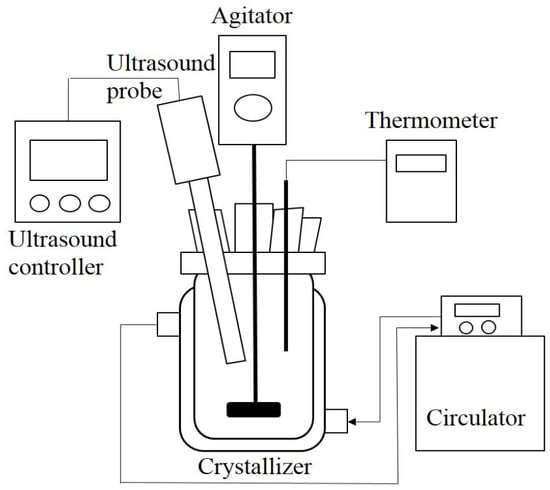
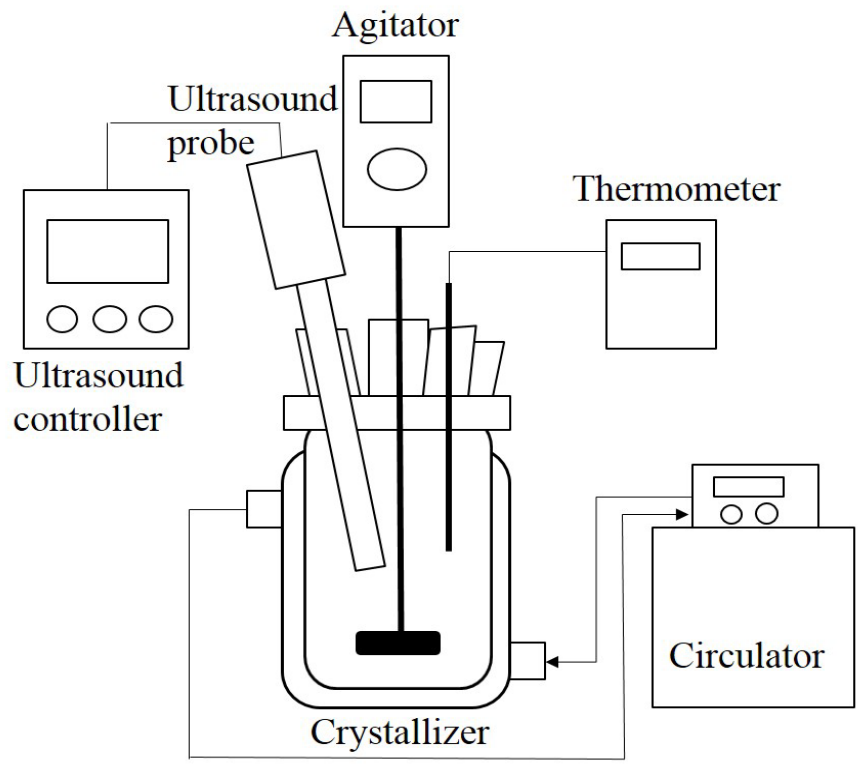
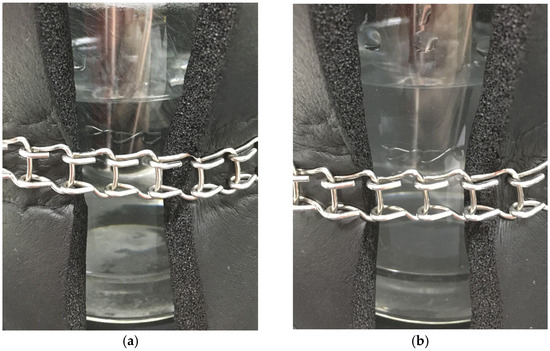
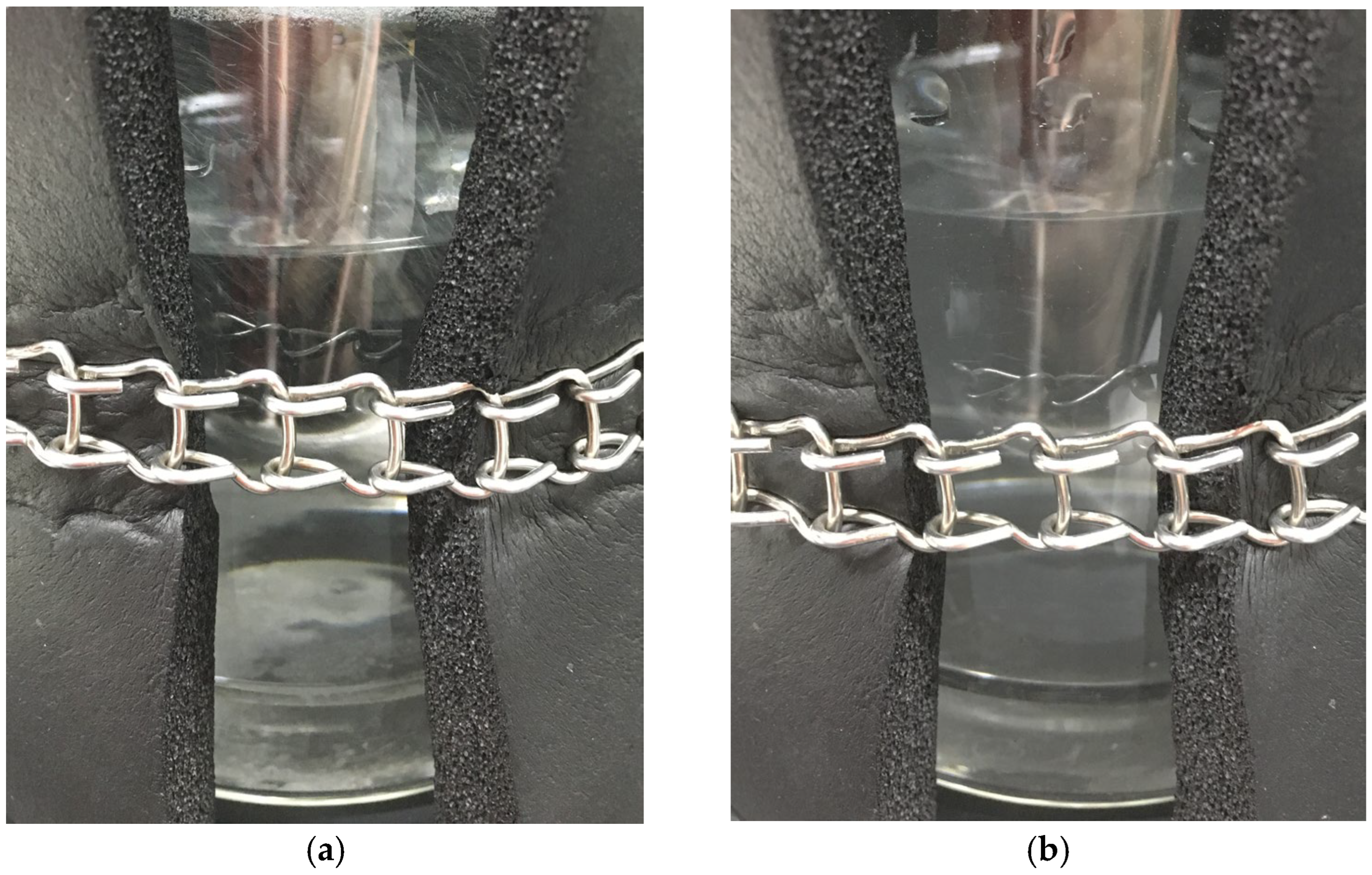
The experimental setup for the cooling sonocrystallization used in this study is shown in Figure 1. The apparatus mainly consisted of an ultrasonic probe (Branson Ultrasonics, 101-147-049, Brookfield, CT, USA), an ultrasonic controller (Branson Ultrasonics, Digital Sonifier, 450, Brookfield, CT, USA), a 250 mL jacketed crystallizer, a thermometer (Rixen, TK-6200, New Taipei City, Taiwan), an overhead agitator (IKA, Eurostar 40 digital, Staufen, Germany), and a heating/cooling circulator (Thermo Fischer Scientific, Arctic A25, Waltham, MA, USA). The sonication frequency was fixed at 20 kHz. For designing the sonoseeding procedure, the nucleation temperature of acetaminophen during cooling in water and 3 M acetic acid aqueous solution at a given concentration was determined. A 200 mL solution with a specified acetaminophen concentration, with or without p-aminophenol, was prepared and poured into the jacketed crystallizer. The agitation speed was 250 rpm. According to the measured solubility data, a high temperature was first set to ensure total dissolution of the acetaminophen. Afterward, the temperature of the crystallization solution was cooled at a rate of 20 °C/h by the heating/cooling circulator. During cooling, the sonication was turned on at an intensity of 10% and continuously applied to the crystallization solution. A video was recorded during cooling, and the nucleation of acetaminophen was observed by the naked eye when the solution became turbid from the recorded video. Then, the nucleation temperature was recorded. An example illustrating the appearance of the solution before and after nucleation is presented in Figure 2. The nucleation temperatures reported in this study were the average value obtained from at least two experimental measurements. The nucleation temperature for spontaneous nucleation was also determined and compared using the same procedure, but with the ultrasonic probe removed. According to the results of the nucleation temperatures, a temperature interval suitable for sonoseeding was determined, in which nucleation occurs only by the introduction of sonication. According to the determined solubility data and nucleation temperatures, sonication can be designed and applied during cooling crystallization at a given temperature, corresponding to a designed supersaturation, to induce nucleation. For the sonoseeding crystallization experiment, an acetaminophen solution with a given concentration was prepared and heated to total dissolution in the jacket crystallizer. Then, the solution temperature was cooled at a rate of 20 °C/h. While the sonication–enabled temperature reached, the sonication was turned on for 2 min to induce nucleation. After nucleation induction, the ultrasonic probe was removed, and the solution temperature was cooled to 0 °C and maintained for 30 min. Finally, the resulting crystals were filtered and dried in a 50 °C oven for further analysis.
Figure 1.
Experimental apparatus for the sonocrystallization experiment.
Figure 2.
Photographs were taken from the recorded video for (a) before nucleation, and (b) after nucleation.
2.5. Analytical Method
The solid–state properties of unprocessed and crystallized acetaminophen, including crystal habit, particle size, and crystal form, were determined and compared. The crystal habit was analyzed using a scanning electron microscope (SEM, Hitachi S-3000H, Tokyo, Japan). The powders were adhered to a sample holder, and then a gold coating was applied using a vacuum sputter coater for 120 s to enhance the conductivity. In this study, a laser diffraction particle size analyzer (PSA, Malvern Mastersizer 2000, Malvern, Worcestershire, UK) was used to analyze the particle size characteristics. Approximately 100 mg of the sample was placed in a sample vial, followed by the addition of 15 mL of n-hexane. To facilitate dispersion, two drops of the surfactant Span 80 were added to the suspension. The mixture was then vortexed and sonicated to well–disperse the sample powder. Afterward, about 10 mL of the suspension was introduced into the PSA sample cell for analysis. The mean size and span of the particles were reported. The span was used to illustrate the particle size distribution. The span value is calculated by the following formula.
D10, D50, and D90 are the particle sizes at which 10, 50, and 90% of the distribution is smaller. In addition, powder X-ray diffraction (PXRD, Malvern Panalytical X’Pert3, Almelo, The Netherlands) was employed to analyze the crystal form of acetaminophen. The sample was evenly spread on the sample holder. The PXRD pattern was recorded from 10° to 50° with a scanning rate of 13°/min. Differential scanning calorimetry (DSC, Perkin Elmer DSC 4000, Shelton, CT, USA) was also used to confirm the crystal form of acetaminophen. Approximately 5 mg of the sample was placed and sealed in a sample pan, then scanned from 50 °C to 200 °C at a heating rate of 10 °C/min under a nitrogen gas flow. Finally, to identify the spectrometric property, Fourier–transform infrared spectroscopy (FTIR, Perkin Elmer Spectrum Two, Shelton, CT, USA) was employed in attenuated total reflectance (ATR) mode. Spectra were collected over 600–4000 cm−1 at a resolution of 1 cm−1 with 8 scans per sample.
3. Results and Discussion
3.1. Solubility Measurement
Before investigating the nucleation behavior, it is essential to determine the solubility of acetaminophen in various solvents. In this study, the titration method was employed to determine the solubility of acetaminophen in four solvent systems: water, a 3 M acetic acid aqueous solution, a 3 M acetic acid aqueous solution with a 5 wt% additive, and a 3 M acetic acid aqueous solution with a 10 wt% additive at four temperatures of 10, 30, 50, and 70 °C. The weight percent of the additive p-aminophenol was based on the mass of acetaminophen. It is emphasized that the titration method provides a convenient and rapid way of understanding solubility behavior in crystallization design. However, the titration method neglects the effect of dissolution kinetics, frequently resulting in an underestimation of solubility compared with the solubility data estimated by the equilibrium method. The measured solubility data are presented in Table 2 and correlated using the van’t Hoff equation for further interpretation of the solubility results. According to Table 2, the solubility of acetaminophen increased considerably when dissolved in an aqueous solution of acetic acid, which is consistent with the literature finding [47]. On the other hand, the additive p-aminophenol shows a relatively minor effect on the solubility behavior of acetaminophen.
Table 2.
Solubility of Form I acetaminophen in water and 3 M acetic acid aqueous solution.
3.2. Nucleation Temperature Estimation
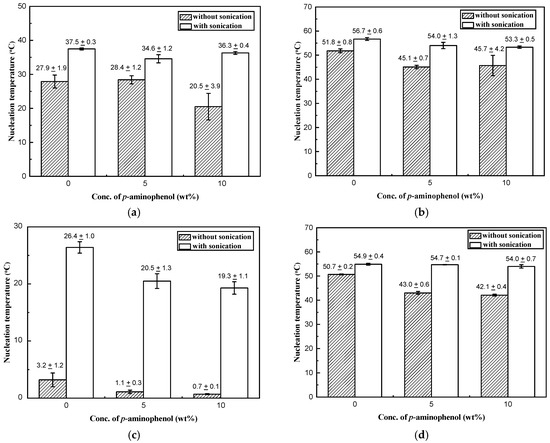
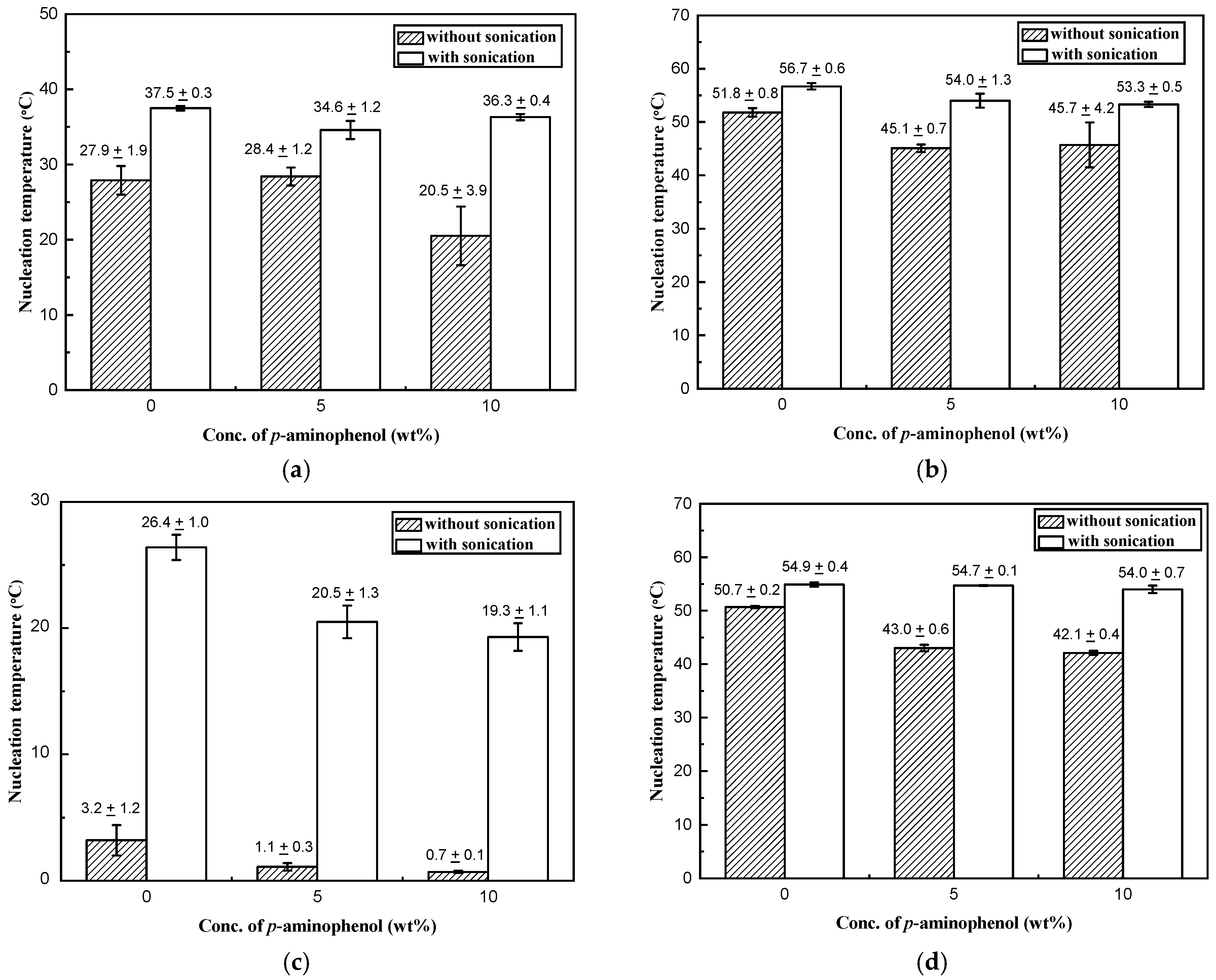
To screen the suitable conditions for designing sonoseeding, the nucleation temperatures of acetaminophen with and without sonication were determined for various cooling crystallization combinations. Two acetaminophen concentrations, 25 mg/mL and 50 mg/mL, were used for water, and 50 mg/mL and 130 mg/mL for the 3 M acetic acid aqueous solution. These two concentrations were close to the saturated solubility values at 50 °C or 70 °C for the corresponding solvent systems, and both temperatures were also chosen as sonication–enabled temperatures. Additionally, the effect of p-aminophenol on the nucleation of acetaminophen was also investigated at concentrations of 5 wt% and 10 wt%. The nucleation experiments begin with the total dissolution of acetaminophen at high temperatures, specifically 60 °C or 80 °C, depending on the concentration of acetaminophen used. Afterward, the solution was cooled at a rate of 20 °C/h, and sonication was initiated at the sonication–enabled temperatures. The nucleation temperature was identified visually from the recording video. A total of 24 cooling crystallization experiments were conducted to investigate the effects of solvent, sonication, acetaminophen concentration, and p-aminophenol content on the nucleation temperature, as summarized in Figure 3. The presented nucleation temperature was determined as the average of at least two experimental runs.
Figure 3.
Comparison of nucleation temperature of (a) pure water system and API concentration of 25 mg/mL, (b) pure water system and API concentration of 50 mg/mL, (c) 3 M acetic acid aqueous solution system and API concentration of 50 mg/mL, and (d) 3 M acetic acid aqueous solution system and API concentration of 130 mg/mL.
According to Figure 3, it is evident that sonication accelerates the nucleation of acetaminophen and reduces the metastable zone width compared to spontaneous nucleation. During cooling, the nucleation temperature was increased while sonication was applied. For example, in the pure water system and at an acetaminophen concentration of 50 mg/mL (Figure 3b), sonication increases the nucleation temperature to 56.7 °C, compared to the spontaneous nucleation temperature of 51.8 °C. In addition, the effect of sonication on nucleation induction was considerable in the low–acetaminophen concentration condition, especially in the 3 M acetic acid aqueous solution system. For example, for a 3 M acetic acid aqueous solution system without an additive and at an acetaminophen concentration of 130 mg/mL (Figure 3d), the nucleation temperature increased from 50.7 °C to 54.9 °C when sonication was enabled. On the other hand, when the acetaminophen concentration decreases to 50 mg/mL, the nucleation temperature increases considerably, from 3.2 °C to 26.4 °C, as shown in Figure 3c with sonication enabled. Without sonication, nucleation occurs at extremely low temperatures, reflecting the intrinsic slow nucleation kinetics under low concentration conditions, and indicating that a significant subcooling is required for nucleation to occur. At these low concentration conditions, the acoustic cavitation effects are more efficient in disrupting solute–solvent interactions and promoting molecular aggregation. Furthermore, the existence of additive p-aminophenol also influences the nucleation of acetaminophen. In most cases, adding p-aminophenol is unfavorable and decreases the nucleation temperature of acetaminophen. For example, the nucleation temperature decreases from 26.4 °C to 20.5 °C, then to 19.3 °C, while the p-aminophenol content increases from 0 to 5 wt%, then to 10 wt%, as shown in Figure 3c. The structural similarity between acetaminophen and p-aminophenol may interfere with molecular packing during the nucleation stage. In Figure 3, the effect of sonication on acetaminophen nucleation in various cooling crystallization combinations was compared. Notably, under the condition of 3 M acetic acid aqueous solution and acetaminophen concentration of 50 mg/mL, the nucleation temperature difference between spontaneous and sonication–enabled was the most considerable, as presented in Figure 3c. The largest temperature difference provides a flexible and wide temperature interval for designing a sonoseeding approach to control particle size.
3.3. Sonoseeding and Particle Size Control
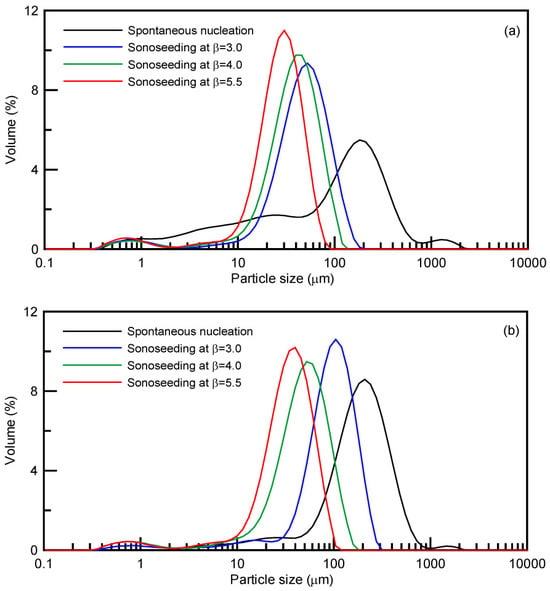
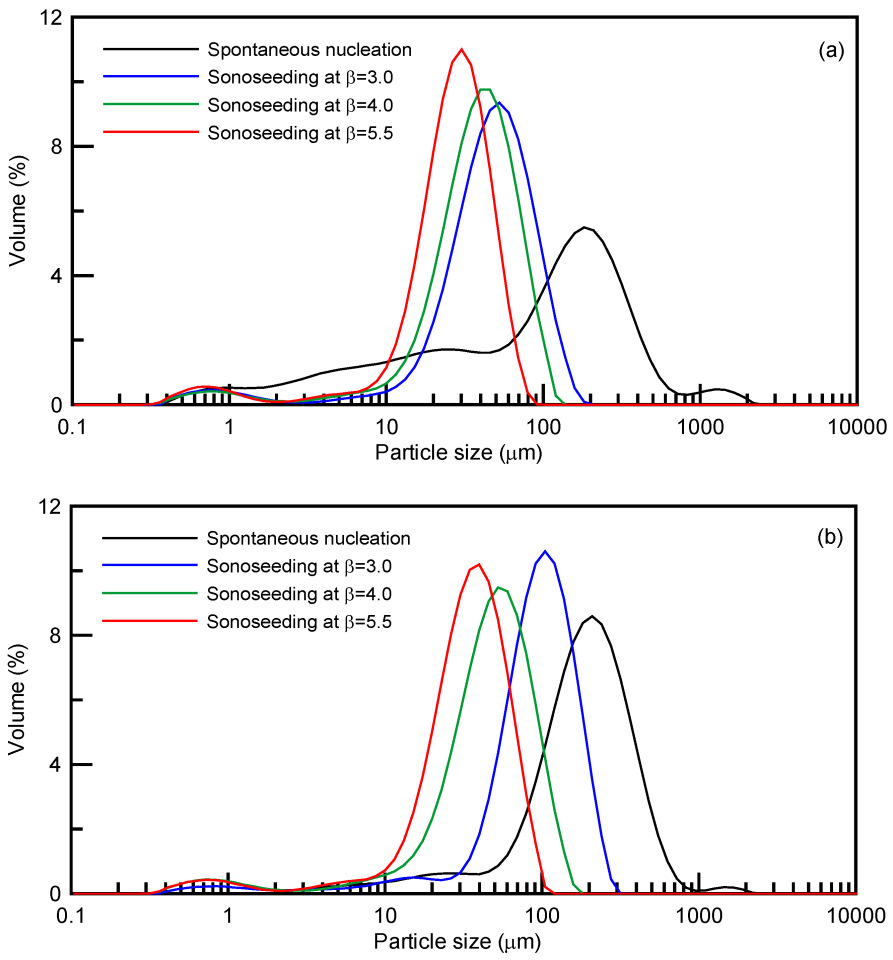
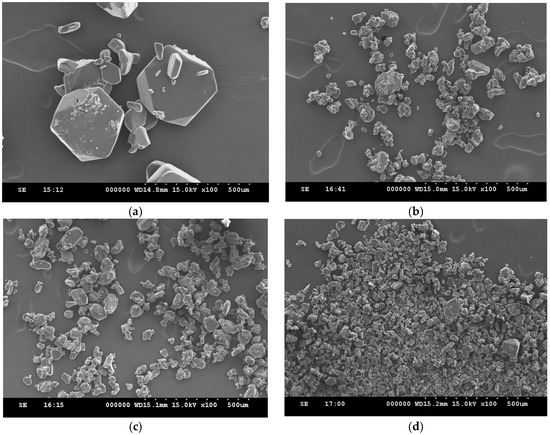
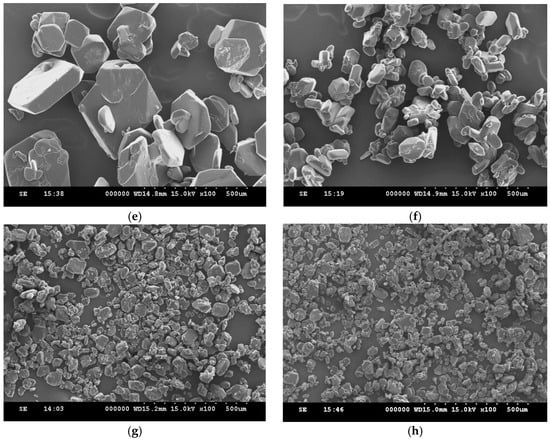
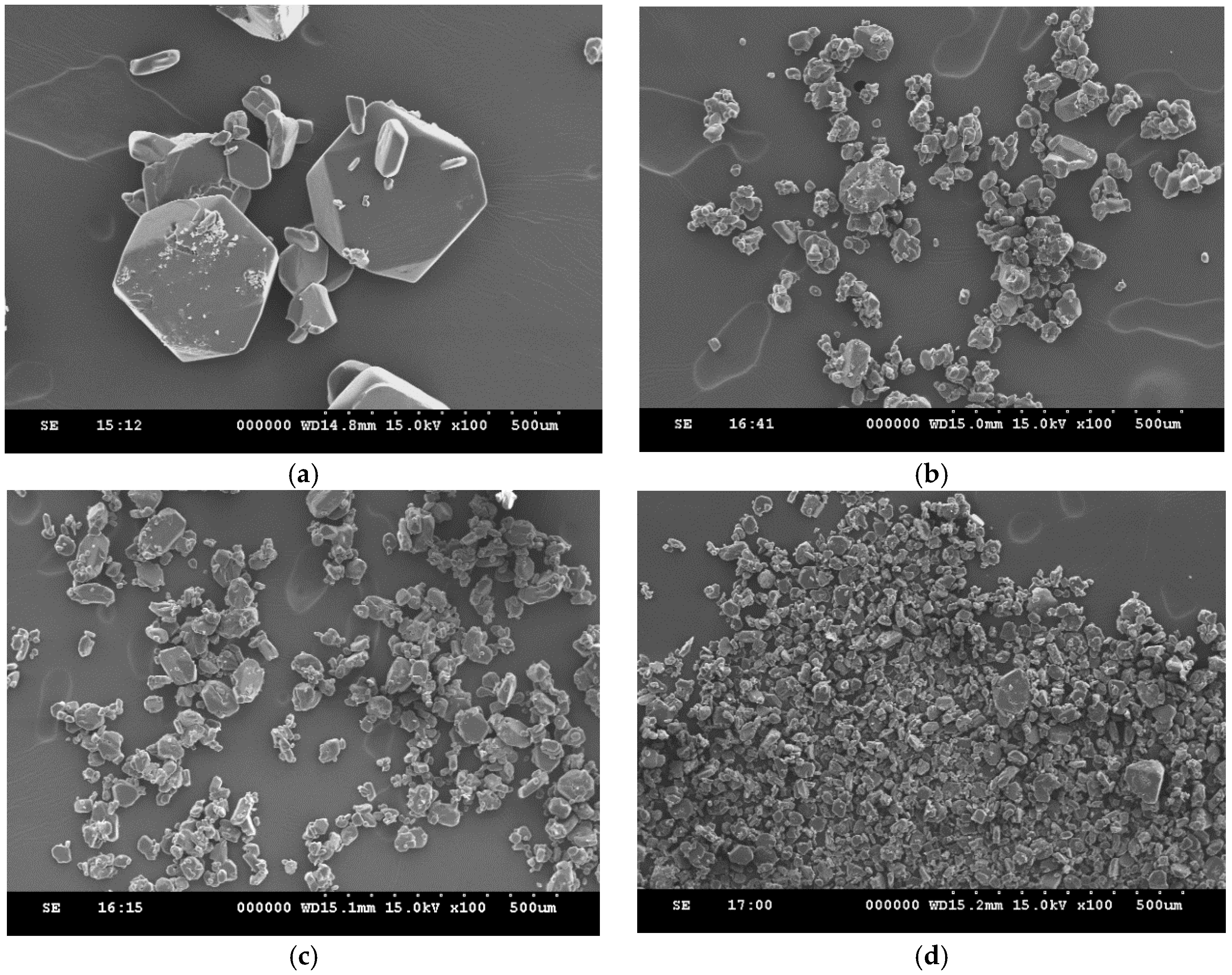
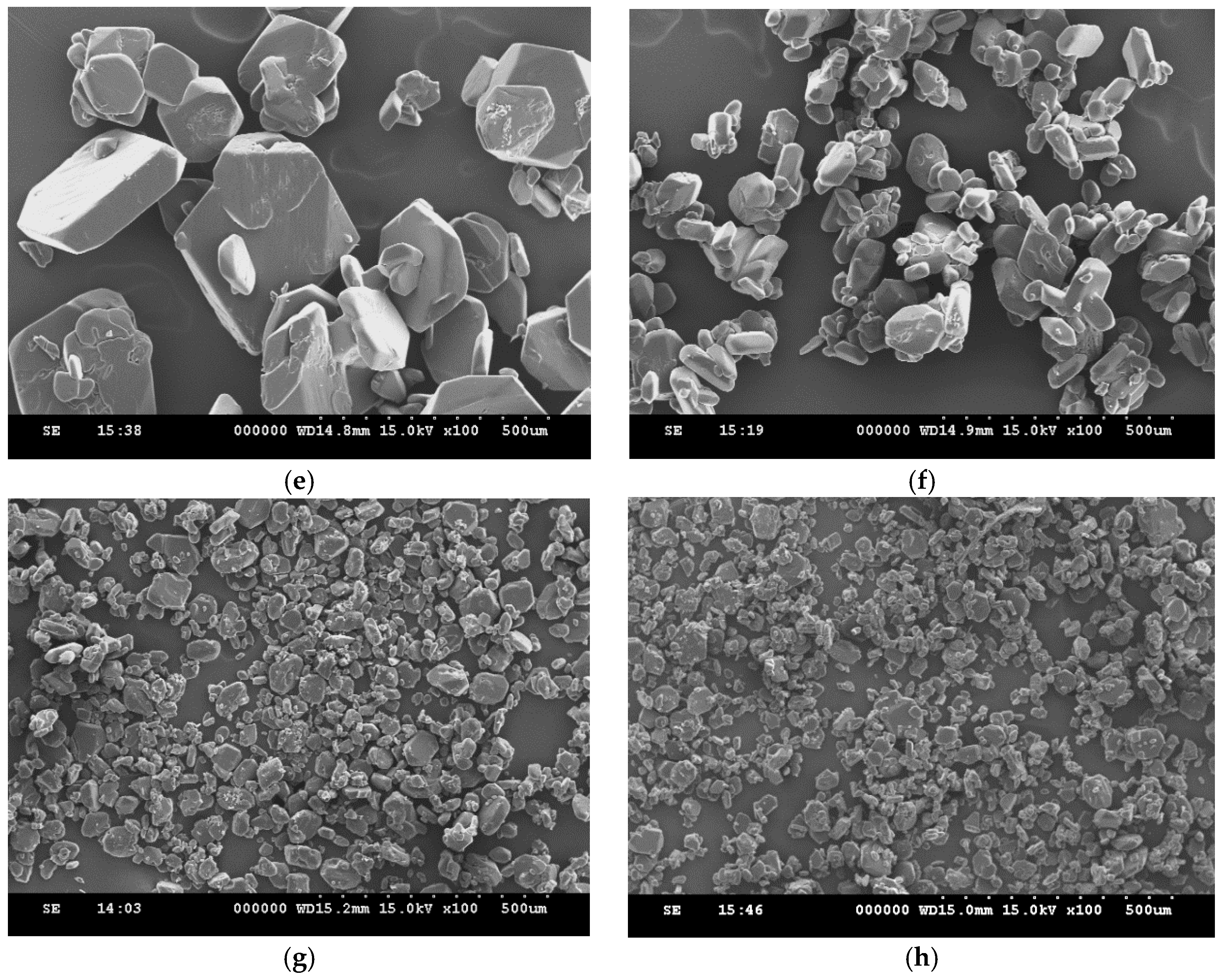
According to the nucleation temperature results discussed above, a 3 M acetic acid aqueous solution containing 50 mg/mL of acetaminophen, with or without 5 wt% p-aminophenol, was adopted to perform sonoseeding at different supersaturations (β) to control the particle size of acetaminophen. From the solubility data reported in Table 1 and its corresponding van’t Hoff correlation parameter, the sonication–enabled temperature for sonoseeding at supersaturation of 3, 4, and 5.5 was designed. During cooling, after the nucleation induction at the sonication–enabled temperature, the sonication was stopped, and the ultrasonic probe was removed. The conditions of sonoseeding experiments were summarized in Table 3. In Table 3, the particle size results, including the mean size and span from the spontaneous nucleation (Exps. 1 and 5), were also reported and compared. Particle size distributions of acetaminophen crystals obtained from spontaneous nucleation and sonoseeded nucleation are presented in Figure 4, and the corresponding SEM images are shown in Figure 5.
Table 3.
Experimental conditions and results of the sonoseeding experiments (a).
Figure 4.
Comparison of PSD results of recrystallized acetaminophen obtained from (a) 3 M acetic acid aqueous solution and (b) 3 M acetic acid aqueous solution with 5% additive.
Figure 5.
SEM images of recrystallized acetaminophen obtained from (a) Exp. 1, (b) Exp. 2, (c) Exp. 3, (d) Exp. 4, (e) Exp. 5, (f) Exp. 6, (g) Exp. 7, and (h) Exp. 8.
According to the results listed in Table 3, Figure 4 and Figure 5, the acetaminophen crystals obtained from sonoseeding exhibit a smaller mean size and a narrower size distribution compared to those obtained from spontaneous nucleation. In addition, through sonoseeding at high supersaturation, acetaminophen crystals with a small mean size were received. For example, in a 3 M acetic acid aqueous solution without p-aminophenol, the mean size of the produced acetaminophen reduced from 48.9 μm, 38.7 μm to 27.1 μm when sonoseeding at supersaturation of 3, 4, and 5.5. Generally, the nucleation rate is directly proportional to the supersaturation. While sonoseeding at a high supersaturation, the accelerated nucleation kinetics preferred the generation of more nuclei, resulting in a small crystal size [48]. Furthermore, under identical conditions, the presence of 5 wt% additive resulted in larger particles than those without the additive. According to Figure 3c, since the additive p-aminophenol is a structural analog of acetaminophen, the existence of p-aminophenol suppresses nucleation rate and decreases the nucleation temperature. The suppressed nucleation rate reduced the number of generated nuclei, while the supersaturation contributed to further crystal growth, resulting in the formation of large particles. The effect of a structural analog additive on the nucleation behavior of acetaminophen was also reported by Prasad et al. [49]. In summary, by adopting the sonoseeding approach, the particle size of acetaminophen can be successfully manipulated through the application of sonication at various supersaturation conditions.
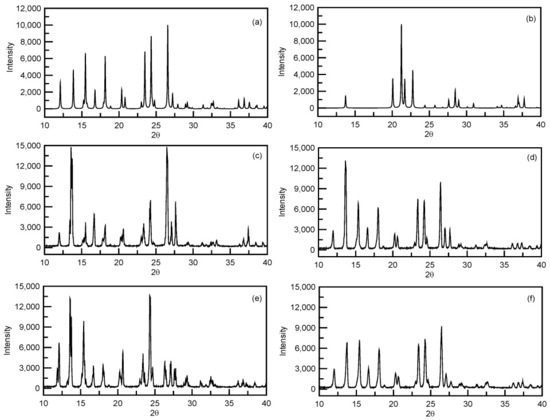
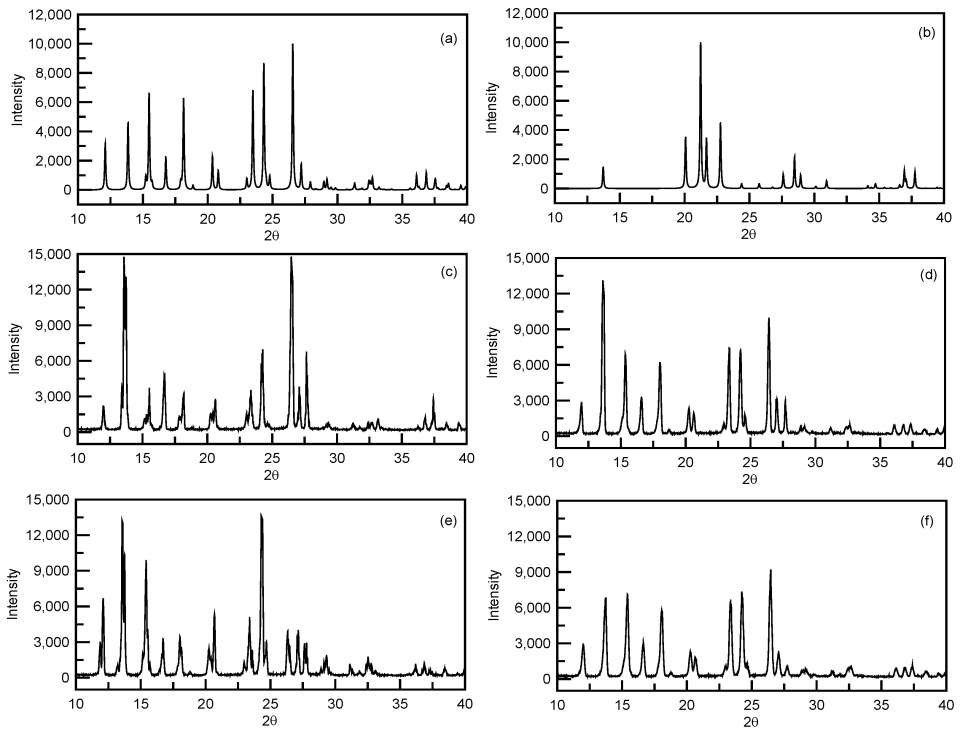
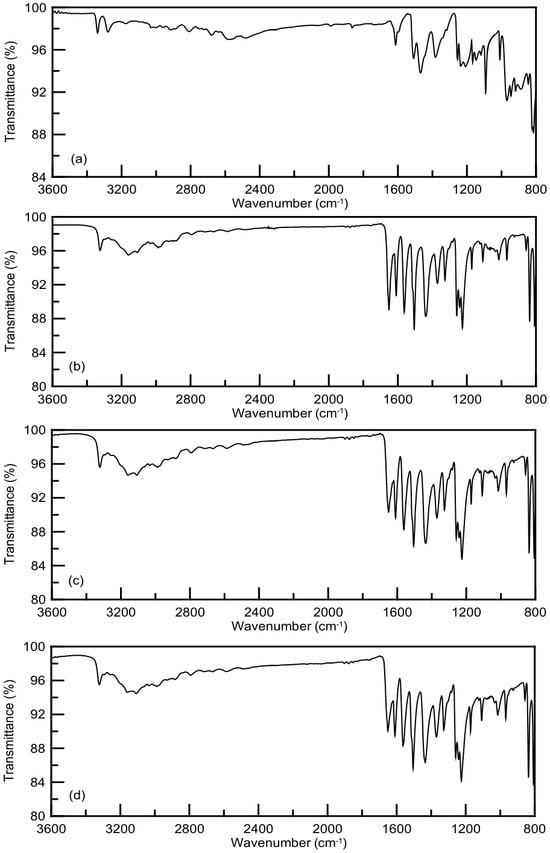
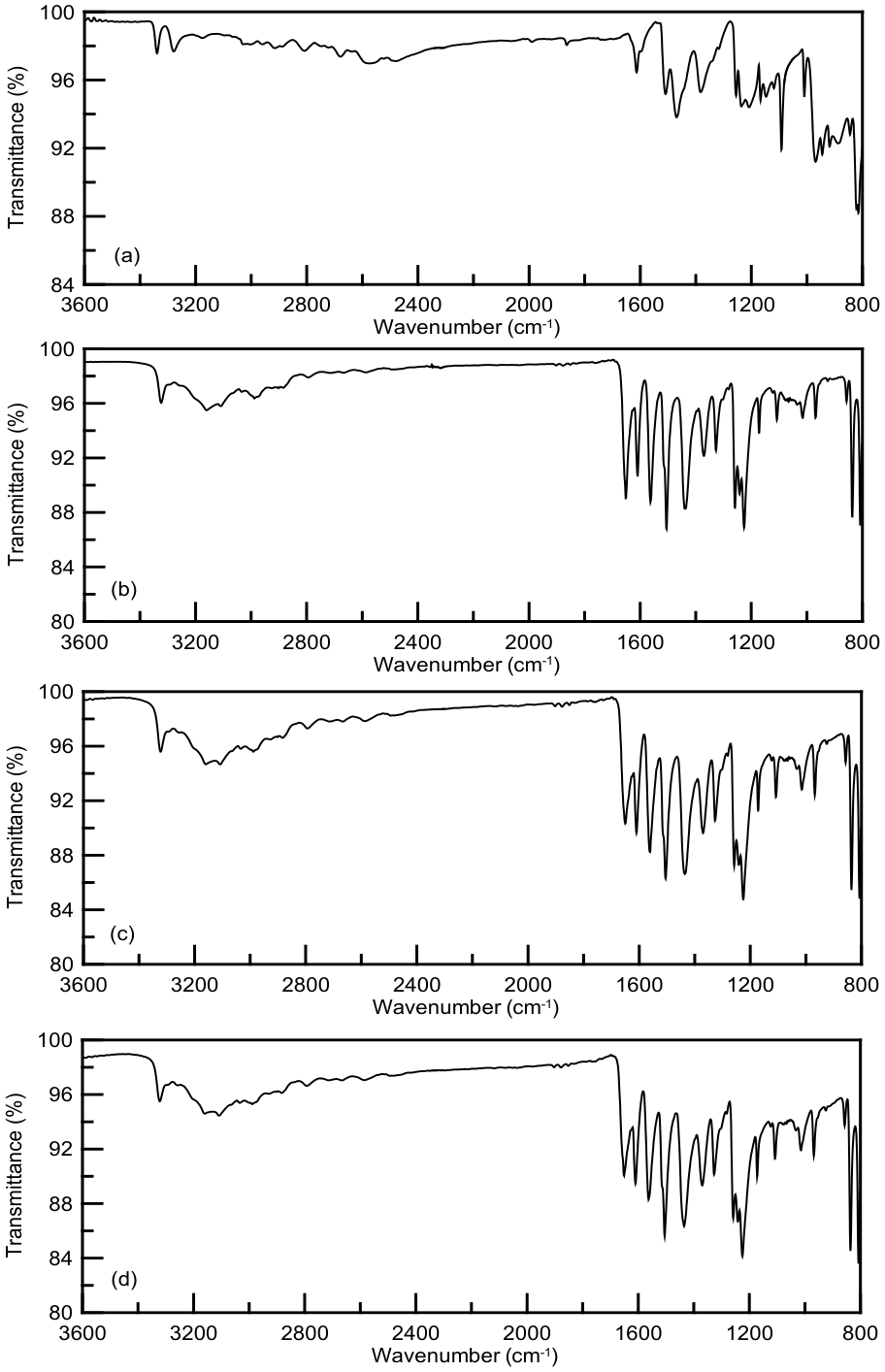
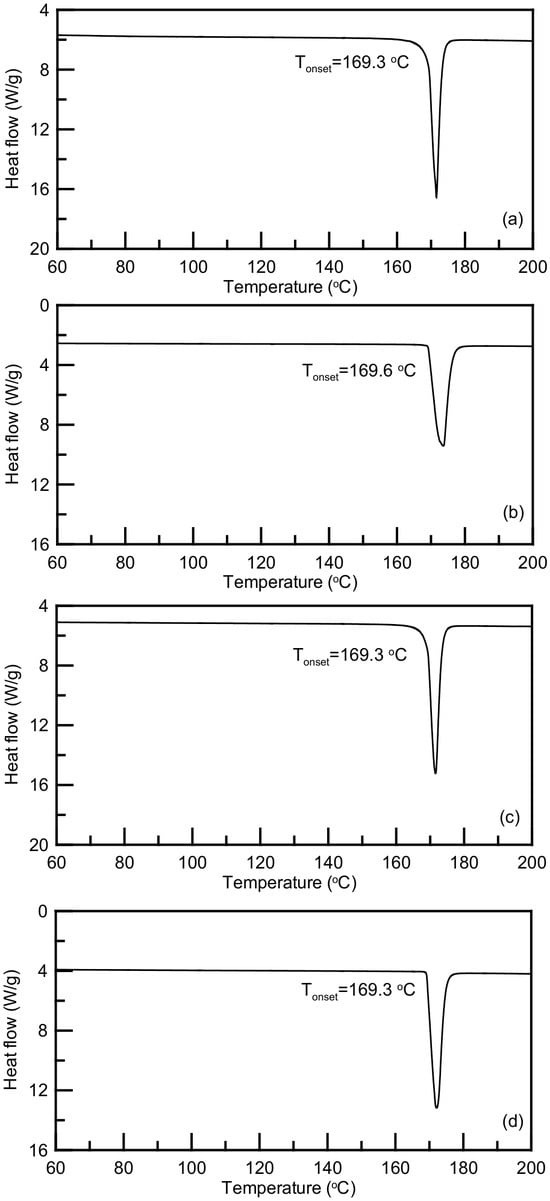
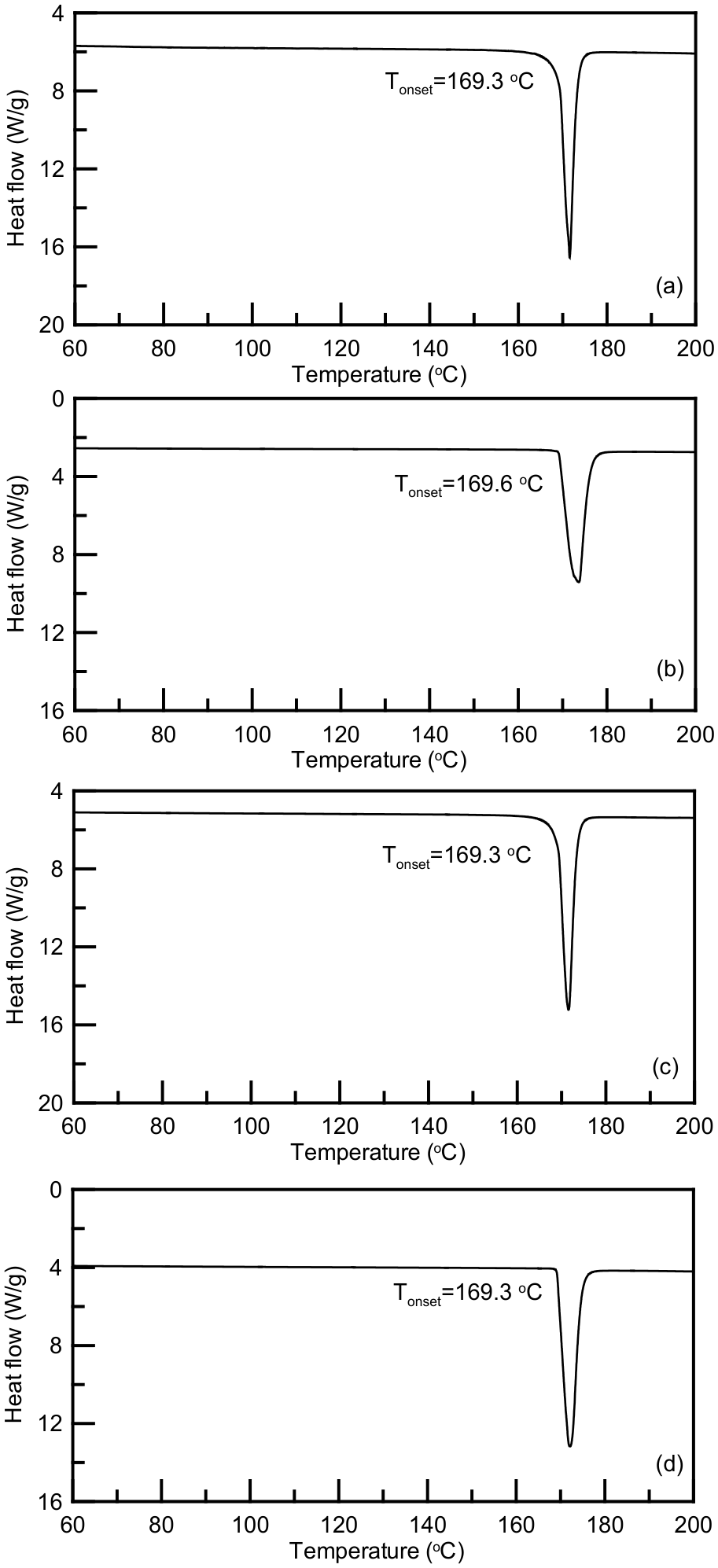
In addition to the particle size, to identify the crystal form of acetaminophen, comparison of the PXRD patterns of the acetaminophen crystals obtained from spontaneous and sonoseeded nucleation is shown in Figure 6. The simulated PXRD patterns of Form I acetaminophen and p-aminophenol acquired from the CCDC database were also presented in Figure 6 for comparison. As shown, according to the 2θ peak position, the acetaminophen generated in this study exhibited a typical diffraction pattern of Form I acetaminophen. In addition, in the case of p-aminophenol addition, the main diffraction peaks of p-aminophenol at 2θ of 21.2° and 21.7° were not observed, as shown in Figure 6e,f. The absence of p-aminophenol in the recrystallized sample was also checked by the FTIR analysis. As shown in Figure 7, the FTIR spectra of recrystallized acetaminophen obtained from Experiments 5 and 8 are consistent with the as-received acetaminophen sample. Although the PXRD patterns of recrystallized acetaminophen from different experiments correspond to the same crystal form as Form I acetaminophen, slight differences in peak intensities are observed. These variations can be attributed to several factors, such as the presence of lattice defects during recrystallization and preferred orientation during sample preparation. Therefore, while the overall crystal structure remains unchanged, subtle differences in microstructure and sample conditions result in minor variations observed in the PXRD patterns. Finally, the crystal form of the generated acetaminophen was also verified by the DSC analysis. As shown in Figure 8, the single endothermal melting temperature at around 170 °C confirms that all crystals were Form I acetaminophen.
Figure 6.
Comparison of PXRD results of (a) CCDC pattern of acetaminophen (#1178859), (b) CCDC pattern of p-aminophenol (#1102748), (c) sample obtained from Exp. 1, (d) sample obtained from Exp. 4, (e) sample obtained from Exp. 5, and (f) sample obtained from Exp. 8.
Figure 7.
Comparison of FTIR results of (a) p-aminophenol as received, (b) acetaminophen as received, (c) sample obtained from Exp. 5, and (d) sample obtained from Exp. 8.
Figure 8.
Comparison of DSC thermograms of recrystallized acetaminophen obtained from (a) Exp. 1, (b) Exp. 4, (c) Exp. 5, and (d) Exp. 8.
4. Conclusions
This study demonstrated the effectiveness of sonoseeding in controlling the nucleation and crystal size of acetaminophen during cooling crystallization. Sonication significantly narrowed the metastable zone width and raised the nucleation temperature compared with spontaneous nucleation, confirming its ability to promote early nucleation. Among the crystallization combinations considered in this study, the 3 M acetic acid solution containing 50 mg/mL acetaminophen exhibited the largest temperature difference between spontaneous and sonicated nucleation, representing an optimal condition for designing sonoseeding. Under controlled supersaturation ratios (β within 3 to 5.5), sonoseeding produced crystals with smaller mean sizes and narrower distributions than spontaneous nucleation. Increasing supersaturation further reduced crystal size, indicating that enhanced supersaturation accelerates nucleation kinetics and generates more nuclei. In contrast, the addition of 5 wt% p-aminophenol resulted in larger particles under identical conditions. In addition, PXRD, DSC, and FTIR analysis confirmed that all samples were Form I. Overall, compared with spontaneous nucleation, the sonoseeding approach effectively induced nucleation at higher temperatures and lower supersaturation, producing finer and more uniform crystals without altering the crystal form. It provides a promising strategy for the precise manipulation of crystallization kinetics and crystal size in pharmaceutical crystallization.
Author Contributions
Conceptualization, C.-S.S.; methodology, S.C.; validation, M.-T.S. and C.-S.S.; formal analysis, S.C.; data curation, S.C.; writing—original draft preparation, S.C. and C.-S.S.; writing—review and editing, M.-T.S. and C.-S.S.; supervision, C.-S.S.; project administration, C.-S.S.; funding acquisition, M.-T.S. and C.-S.S. All authors have read and agreed to the published version of the manuscript.
Funding
This research was funded by the National Science and Technology Council (NSTC), through grants NSTC 113-2221-E-027-009-MY3, and the University System of Taipei Joint Research Program, through grants USTP-NTUT-TMU-105-02.
Data Availability Statement
The data presented in this study are available on request from the corresponding author.
Conflicts of Interest
The authors declare no conflicts of interest.
References
- Censi, R.; Di Martino, P. Polymorph impact on the bioavailability and stability of poorly soluble drugs. Molecules 2015, 20, 18759–18776. [Google Scholar] [CrossRef] [Scilit] [PubMed]
- Dubok, A.S.; Rychkov, D.A. Relative stability of pyrazinamide polymorphs revisited: A computational study of bending and brittle forms phase transitions in a broad temperature range. Crystals 2023, 13, 617. [Google Scholar] [CrossRef] [Scilit]
- Drebushchak, V.A.; McGregor, L.; Rychkov, D.A. Cooling rate “window” in the crystallization of metacetamol form II. J. Therm. Anal. Calorim. 2017, 127, 1807–1814. [Google Scholar] [CrossRef] [Scilit]
- McGregor, L.; Rychkov, D.A.; Coster, P.L.; Day, S.; Drebushchak, V.A.; Achkasov, A.F.; Boldyreva, E.V. A new polymorph of metacetamol. CrystEngComm 2015, 17, 6183–6192. [Google Scholar] [CrossRef] [Scilit]
- Rychkov, D.A.; Arkhipov, S.G.; Boldyreva, E.V. Simple and efficient modifications of well known techniques for reliable growth of high-quality crystals of small bioorganic molecules. J. Appl. Crystallogr. 2014, 47, 1435–1442. [Google Scholar] [CrossRef] [Scilit]
- Wang, J.; Li, F.; Lakerveld, R. Process intensification for pharmaceutical crystallization. Chem. Eng. Process.-Process Intensif. 2018, 127, 111–126. [Google Scholar] [CrossRef] [Scilit]
- Xiouras, C.; Kuijpers, K.; Fanfair, D.; Dorbec, M.; Gielen, B. Enabling technologies for process intensification in pharmaceutical research and manufacturing. Curr. Opin. Chem. Eng. 2023, 41, 100920. [Google Scholar] [CrossRef] [Scilit]
- Zhang, F.; Meng, A.; Long, Y.; Yu, Z.-Q.; Yu, S.; Shan, B.; Wang, X.Z.; Xu, Q. Advances and opportunities concerning nucleation measurement and control technology in crystallization. Org. Process Res. Dev. 2024, 28, 3055–3077. [Google Scholar] [CrossRef] [Scilit]
- Sun, M.; Bi, J.; Zhao, Y.; Gong, J. Particle design of drugs via spherical crystallization: A review from fundamental aspects to technology development. Cryst. Growth Des. 2024, 24, 2266–2287. [Google Scholar] [CrossRef] [Scilit]
- Burcham, C.L.; Doherty, M.F.; Peters, B.G.; Price, S.L.; Salvalaglio, M.; Reutzel-Edens, S.M.; Zhao, Y. Pharmaceutical digital design: From chemical structure through crystal polymorph to conceptual crystallization process. Cryst. Growth Des. 2024, 24, 5417–5438. [Google Scholar] [CrossRef] [Scilit]
- Artusio, F.; Contreras-Montoya, R.; Gavira, J.A. Advances in pharmaceutical crystals: Control over nucleation and polymorphism. Crystals 2024, 14, 805. [Google Scholar] [CrossRef] [Scilit]
- Bártová, A.; Gabriel, R.; Prudilová, B.B.; Otyepková, E.; Malina, L.; Otyepka, M. Controlled nucleation of crystallization process as an efficient tool to tune the properties of corticosteroid API. Powder Technol. 2022, 402, 117334. [Google Scholar] [CrossRef] [Scilit]
- Prudilová, B.B.; Gabriel, R.; Otyepka, M.; Otyepková, E. Controlled crystallization enables facile fine-tuning of physical–chemical properties of nicergoline toward easier processability. Pharmaceuticals 2025, 18, 1465. [Google Scholar] [CrossRef] [Scilit] [PubMed]
- Liu, F.; Bagi, S.D.; Su, Q.; Chakrabarti, R.; Barral, R.; Gamekkanda, J.C.; Mascia, S. Targeting particle size specification in pharmaceutical crystallization: A review on recent process design and development strategies and particle size measurements. Org. Process Res. Dev. 2022, 26, 3190–3203. [Google Scholar] [CrossRef] [Scilit]
- Nyande, B.W.; Thomas, K.M.; Takarianto, A.A.; Lakerveld, R. Control of crystal size distribution in batch protein crystallization by integrating a gapped Kenics static mixer to flexibly produce seed crystals. Chem. Eng. Sci. 2022, 263, 118085. [Google Scholar] [CrossRef] [Scilit]
- Gao, Y.; Zhang, T.; Ma, Y.; Xue, F.; Gao, Z.; Hou, B.; Gong, J. Application of PAT-based feedback control approaches in pharmaceutical crystallization. Crystals 2021, 11, 221. [Google Scholar] [CrossRef] [Scilit]
- Kraus, H.F.; Acevedo, D.; O’Connor, T.F.; Liu, D.; Mohammad, A. Size-dependent growth modeling method for batch crystallization of carbamazepine from variable seed crystal size distributions. Cryst. Growth Des. 2024, 24, 5569–5581. [Google Scholar] [CrossRef] [Scilit]
- Zhang, F.; Shan, B.; Wang, Y.; Zhu, Z.; Yu, Z.Q.; Ma, C.Y. Progress and opportunities for utilizing seeding techniques in crystallization processes. Org. Process Res. Dev. 2021, 25, 1496–1511. [Google Scholar] [CrossRef] [Scilit]
- He, Y.; Gao, Z.; Zhang, T.; Sun, J.; Ma, Y.; Tian, N.; Gong, J. Seeding techniques and optimization of solution crystallization processes. Org. Process Res. Dev. 2020, 24, 1839–1849. [Google Scholar] [CrossRef] [Scilit]
- Chianese, A.; Di Berardino, F.; Jones, A.G. On the effect of secondary nucleation on the crystal size distribution from a seeded batch crystallizer. Chem. Eng. Sci. 1993, 48, 551–560. [Google Scholar] [CrossRef] [Scilit]
- Gao, Z.; Rohani, S.; Gong, J.; Wang, J. Recent developments in the crystallization process: Toward the pharmaceutical industry. Engineering 2017, 3, 343–353. [Google Scholar] [CrossRef] [Scilit]
- Allahyarov, E.; Sandomirski, K.; Egelhaaf, S.U.; Löwen, H. Crystallization seeds favour crystallization only during initial growth. Nat. Commun. 2015, 6, 7110. [Google Scholar] [CrossRef] [Scilit]
- Ruecroft, G.; Hipkiss, D.; Ly, T.; Maxted, N.; Cains, P.W. Sonocrystallization: The use of ultrasound for improved industrial crystallization. Org. Process Res. Dev. 2005, 9, 923–932. [Google Scholar] [CrossRef] [Scilit]
- Chang, C.H.; Hsieh, C.M.; Su, C.S. Particle size and crystal habit modification of active pharmaceutical ingredient using cooling sonocrystallization: A case study of probenecid. Cryst. Res. Technol. 2021, 56, 2000182. [Google Scholar] [CrossRef] [Scilit]
- Nalesso, S.; Bussemaker, M.J.; Sear, R.P.; Hodnett, M.; Lee, J. A review on possible mechanisms of sonocrystallisation in solution. Ultrason. Sonochem. 2019, 57, 125–138. [Google Scholar] [CrossRef] [Scilit] [PubMed]
- Kim, H.N.; Suslick, K.S. The effects of ultrasound on crystals: Sonocrystallization and sonofragmentation. Crystals 2018, 8, 280. [Google Scholar] [CrossRef] [Scilit]
- Kuo, P.H.; Zhang, B.C.; Su, C.S.; Liu, J.J.; Sheu, M.T. Application of two-level factorial design to investigate the effect of process parameters on the sonocrystallization of sulfathiazole. J. Cryst. Growth 2017, 471, 8–14. [Google Scholar] [CrossRef] [Scilit]
- Yang, Z.Y.; Yen, S.K.; Hu, W.S.; Huang, Y.Z.; Yang, T.M.; Su, C.S. Sonocrystallization—Case studies of salicylamide particle size reduction and isoniazid derivative synthesis and crystallization. Crystals 2018, 8, 249. [Google Scholar] [CrossRef] [Scilit]
- Lin, S.; Khudaida, S.H.; Su, C.S. Particle size and crystal habit modification of ammonium perchlorate using cooling sonocrystallization process. Cryst. Res. Technol. 2024, 59, 2400163. [Google Scholar] [CrossRef] [Scilit]
- Sabnis, S.S.; Singh, S.D.; Gogate, P.R. Improvements in azithromycin recrystallization using ultrasound for size reduction. Ultrason. Sonochem. 2022, 83, 105922. [Google Scholar] [CrossRef] [Scilit] [PubMed]
- Belca, L.M.; Ručigaj, A.; Teslič, D.; Krajnc, M. The use of ultrasound in the crystallization process of an active pharmaceutical ingredient. Ultrason. Sonochem. 2019, 58, 104642. [Google Scholar] [CrossRef] [Scilit]
- Zhang, B.; Stefanidis, G.D.; Van Gerven, T. Can ultrasound replace seeding in flow reactive crystallization of an aromatic amine? Org. Process Res. Dev. 2024, 28, 4431–4443. [Google Scholar] [CrossRef] [Scilit]
- Dhumal, R.S.; Biradar, S.V.; Paradkar, A.R.; York, P. Ultrasound assisted engineering of lactose crystals. Pharm. Res. 2008, 25, 2835–2844. [Google Scholar] [CrossRef] [Scilit] [PubMed]
- Gracin, S.; Uusi-Penttilä, M.; Rasmuson, Å.C. Influence of ultrasound on the nucleation of polymorphs of p-aminobenzoic acid. Cryst. Growth Des. 2005, 5, 1787–1794. [Google Scholar] [CrossRef] [Scilit]
- Kalantzi, L.; Reppas, C.; Dressman, J.B.; Amidon, G.L.; Junginger, H.E.; Midha, K.K.; Barends, D.M. Biowaiver monographs for immediate release solid oral dosage forms: Acetaminophen (paracetamol). J. Pharm. Sci. 2006, 95, 4–14. [Google Scholar] [CrossRef] [Scilit]
- Ahmed, B.; Brown, C.J.; McGlone, T.; Bowering, D.L.; Sefcik, J.; Florence, A.J. Engineering of acetaminophen particle attributes using a wet milling crystallisation platform. Int. J. Pharm. 2019, 554, 201–211. [Google Scholar] [CrossRef] [Scilit]
- Yeh, K.L.; Lee, H.L.; Lee, T. Crystallization of form II paracetamol with the assistance of carboxylic acids toward batch and continuous processes. Pharmaceutics 2022, 14, 1099. [Google Scholar] [CrossRef] [Scilit] [PubMed]
- Ghazi, N.; Liu, Z.; Bhatt, C.; Kiang, S.; Cuitino, A. Investigating the effect of APAP crystals on tablet behavior manufactured by direct compression. Aaps PharmSciTech 2019, 20, 168. [Google Scholar] [CrossRef] [Scilit]
- Bučar, D.K.; Elliott, J.A.; Eddleston, M.D.; Cockcroft, J.K.; Jones, W. Sonocrystallization yields monoclinic paracetamol with significantly improved compaction behavior. Angew. Chem. Int. Ed. 2015, 54, 249–253. [Google Scholar] [CrossRef] [Scilit]
- Nguyen, T.T.; Khan, A.; Bruce, L.M.; Forbes, C.; O’Leary, R.L.; Price, C.J. The effect of ultrasound on the crystallisation of paracetamol in the presence of structurally similar impurities. Crystals 2017, 7, 294. [Google Scholar] [CrossRef] [Scilit]
- Devos, C.; Van Gerven, T.; Kuhn, S. Nucleation kinetics for primary, secondary and ultrasound-induced paracetamol crystallization. CrystEngComm 2021, 23, 5164–5175. [Google Scholar] [CrossRef] [Scilit]
- Dhanasekaran, M.; Sarvothaman, V.P.; Guida, P.; Roberts, W.L. Mechanistic insights into paracetamol crystallization: Exploring ultrasound and hydrodynamic cavitation with quartz crystal microbalance dissipation. ACS Eng. Au 2024, 5, 36–44. [Google Scholar] [CrossRef] [Scilit]
- Patel, A.M.; Patel, S.R. Ultrasound assisted cooling crystallization of paracetamol: Effect of process parameters on crystal yield, crystal size and optimization through Box–Behnken design. J. Chem. Technol. Metall. 2024, 59, 1029–1042. [Google Scholar]
- Kaur Bhangu, S.; Ashokkumar, M.; Lee, J. Ultrasound assisted crystallization of paracetamol: Crystal size distribution and polymorph control. Cryst. Growth Des. 2016, 16, 1934–1941. [Google Scholar] [CrossRef] [Scilit]
- Lee, T.; Lin, H.Y.; Lee, H.L. Engineering reaction and crystallization and the impact on filtration, drying, and dissolution behaviors: The study of acetaminophen (paracetamol) by in-process controls. Org. Process Res. Dev. 2013, 17, 1168–1178. [Google Scholar] [CrossRef] [Scilit]
- Lee, H.L.; Lin, H.Y.; Lee, T. Large-scale crystallization of a pure metastable polymorph by reaction coupling. Org. Process Res. Dev. 2014, 18, 539–545. [Google Scholar] [CrossRef] [Scilit]
- Jiang, M.; Ni, X.W. Effects of water and temperature on reaction mechanism and crystal properties in a reactive crystallization of paracetamol. Chem. Eng. Process Process Intensif. 2018, 131, 20–26. [Google Scholar] [CrossRef] [Scilit]
- Jordens, J.; Canini, E.; Gielen, B.; Van Gerven, T.; Braeken, L. Ultrasound Assisted Particle Size Control by Continuous Seed Generation and Batch Growth. Crystals 2017, 7, 195. [Google Scholar] [CrossRef] [Scilit]
- Prasad, K.V.; Ristic, R.I.; Sheen, D.B.; Sherwood, J.N. Crystallization of paracetamol from solution in the presence and absence of impurity. Int. J. Pharm. 2001, 215, 29–44. [Google Scholar] [CrossRef] [Scilit]

Disclaimer/Publisher’s Note: The statements, opinions and data contained in all publications are solely those of the individual author(s) and contributor(s) and not of MDPI and/or the editor(s). MDPI and/or the editor(s) disclaim responsibility for any injury to people or property resulting from any ideas, methods, instructions or products referred to in the content. |
© 2026 by the authors. Licensee MDPI, Basel, Switzerland. This article is an open access article distributed under the terms and conditions of the Creative Commons Attribution (CC BY) license.