5.2. Load Asymmetry Mechanisms and Structural Behavior
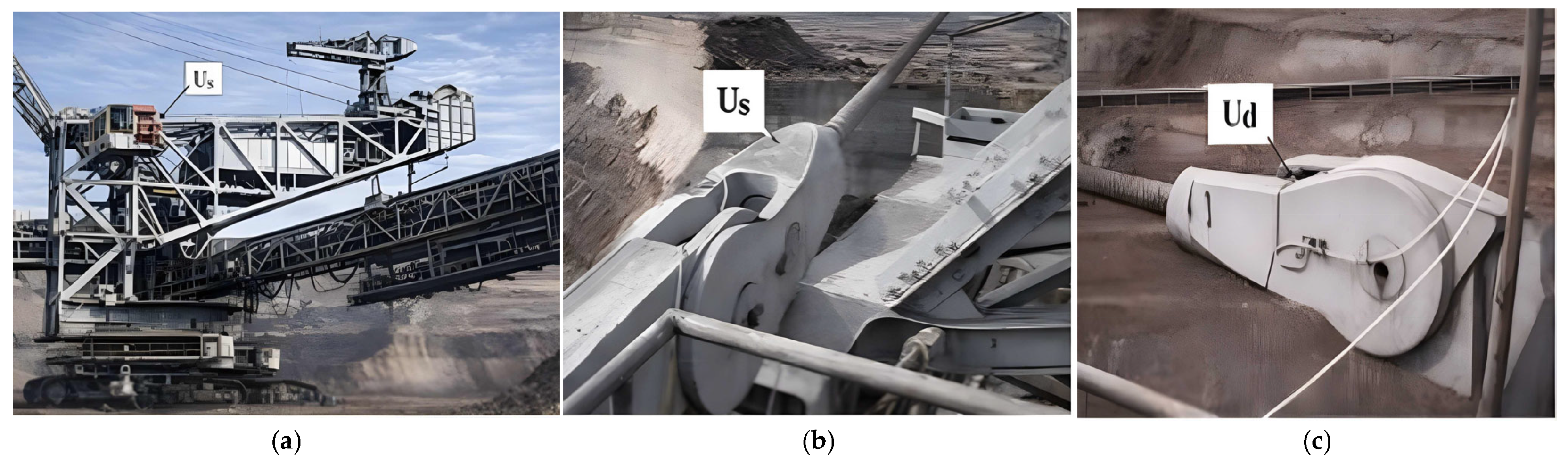
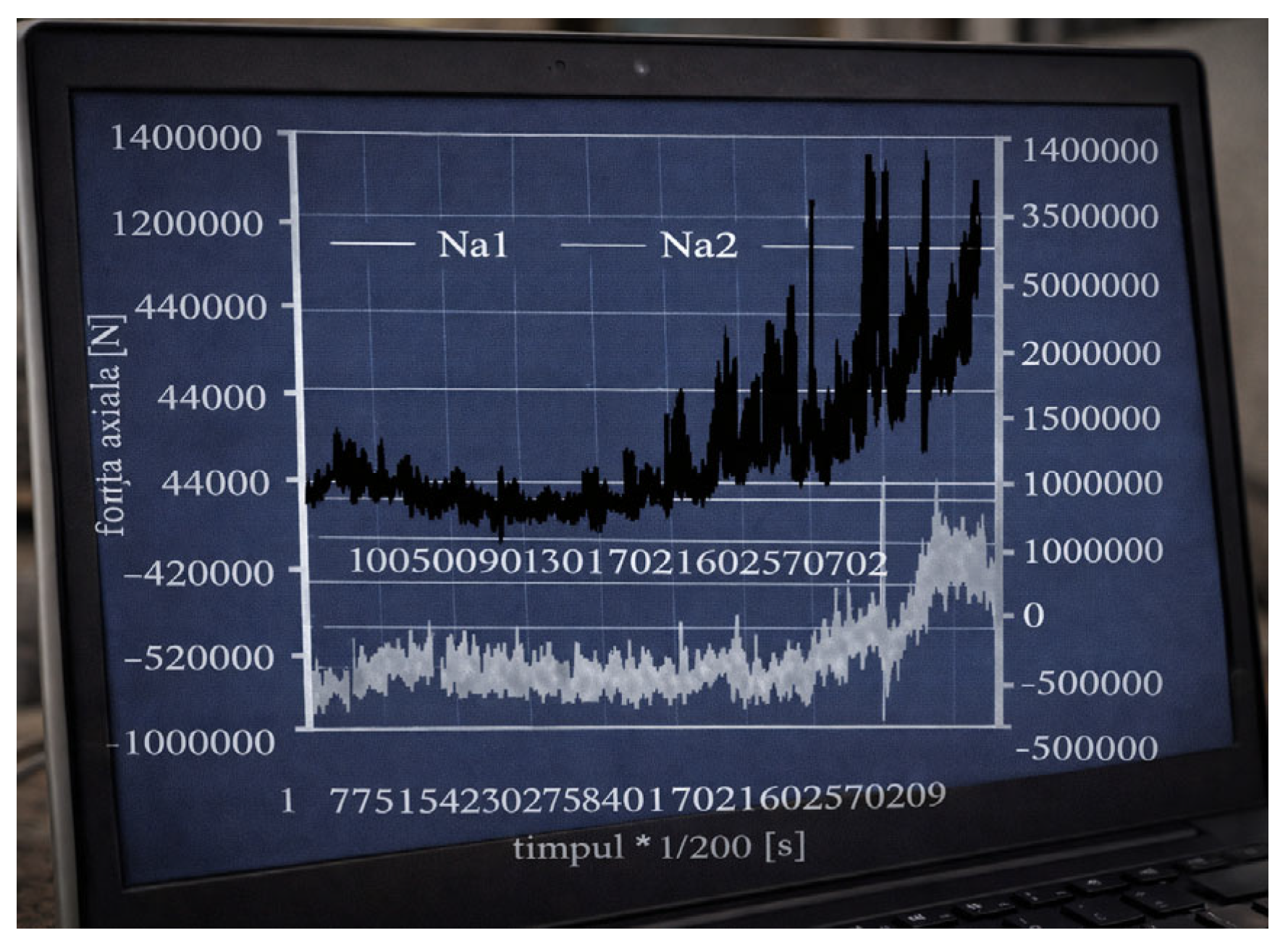
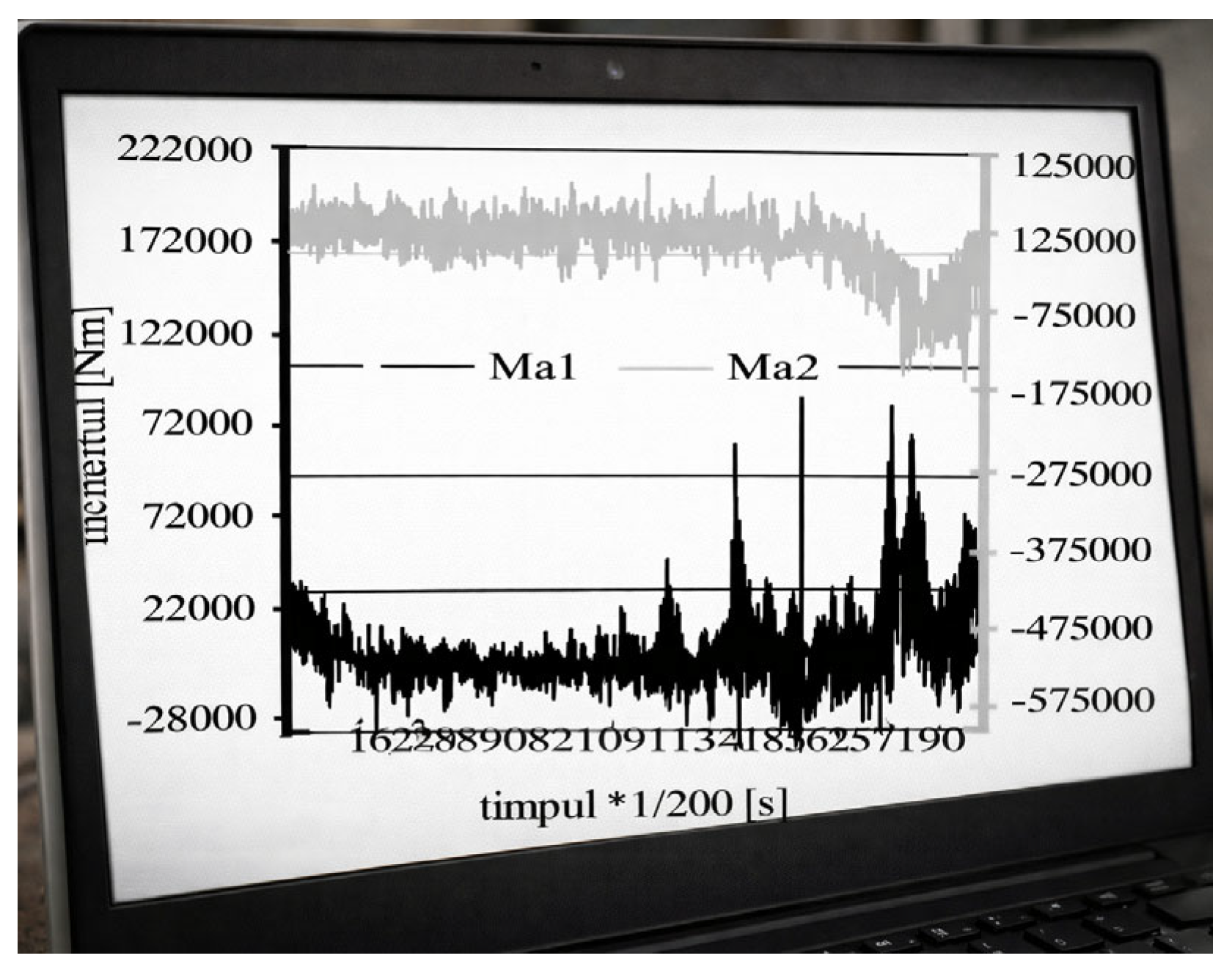
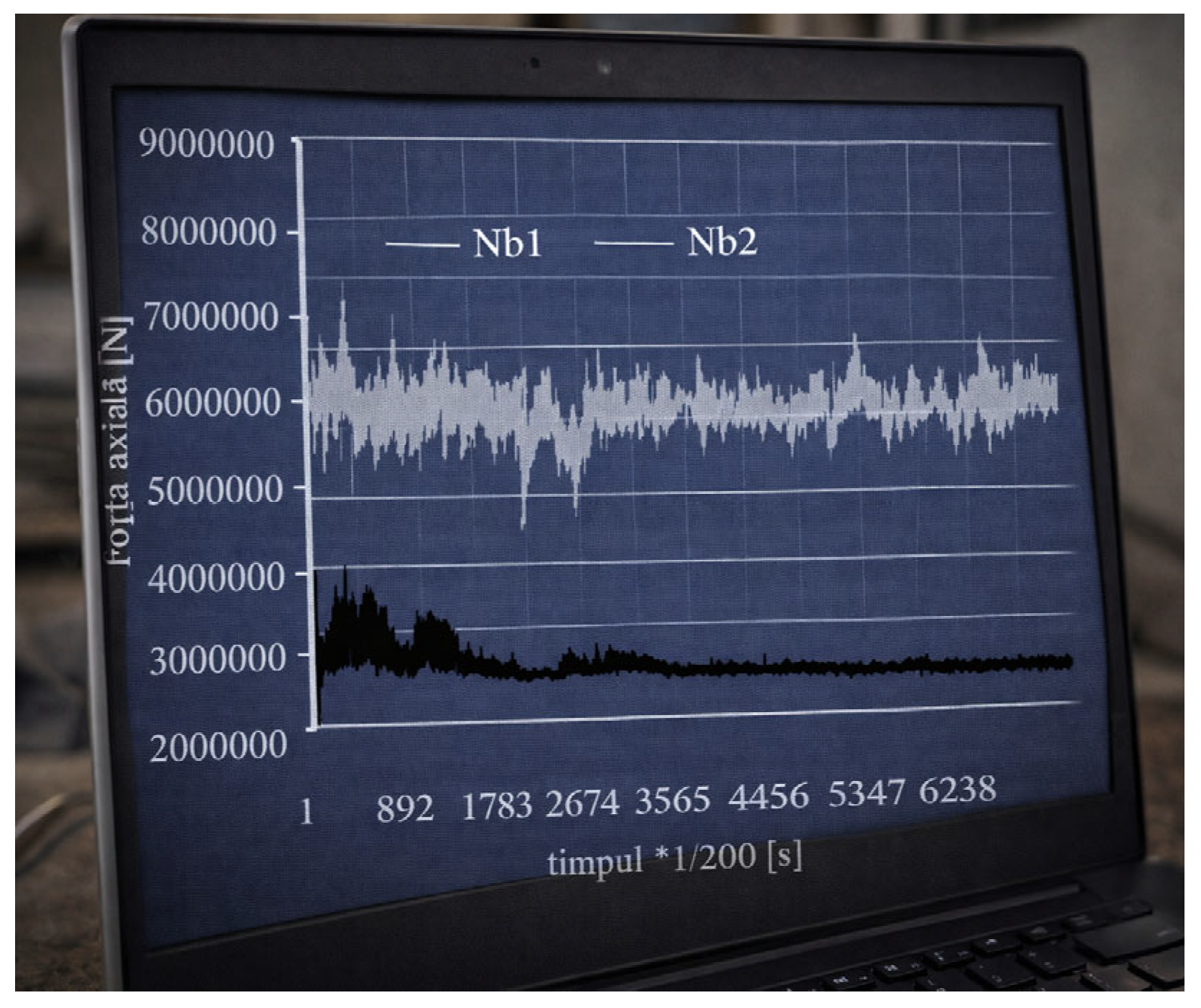
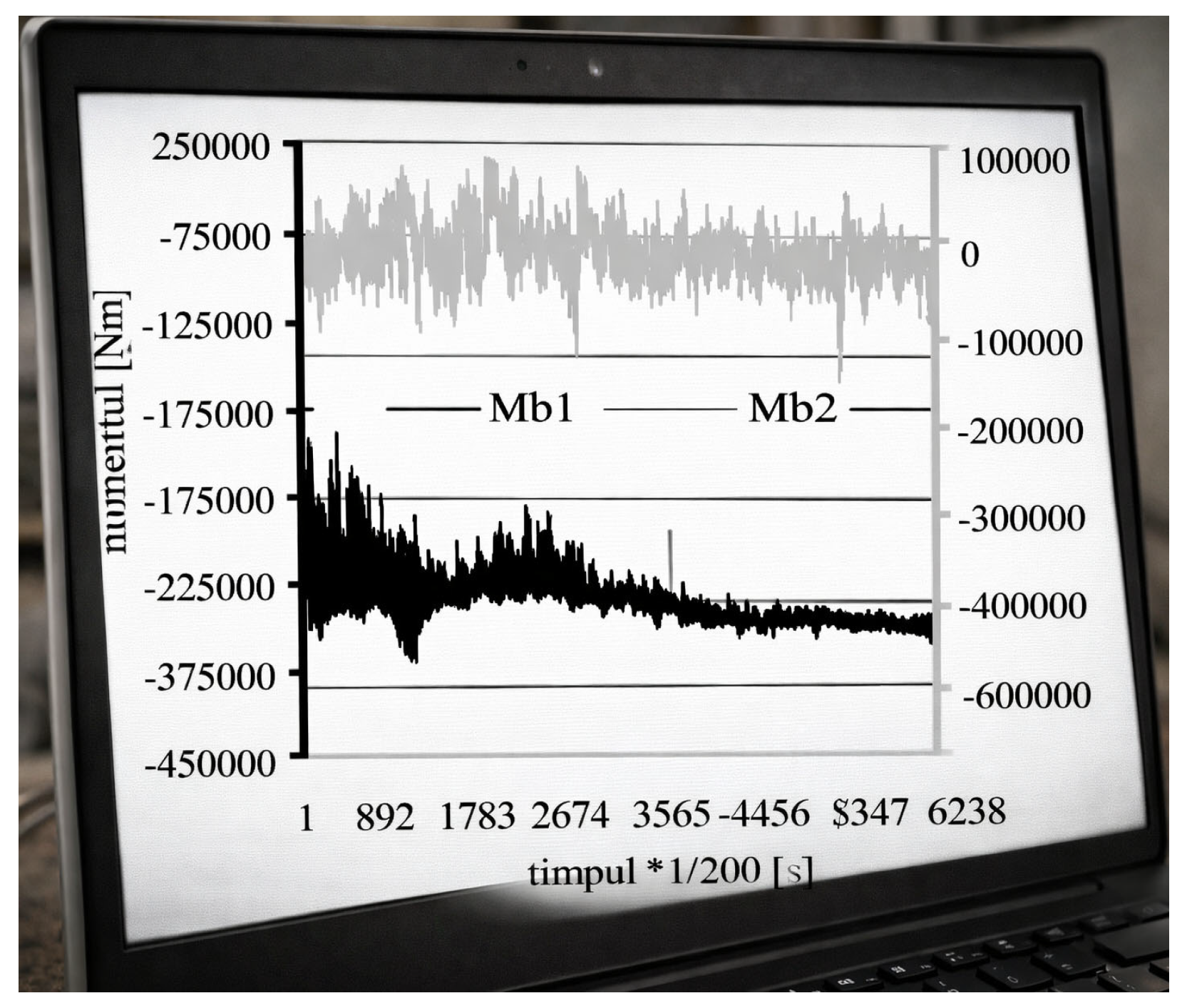
The pronounced directional load asymmetry observed in the measurement data (mean asymmetry ratio 3.53×, range 2.84–5.00×) requires a detailed mechanical explanation to inform both operational decisions and potential structural modifications.
Asymmetry Mechanism:
This pronounced directional asymmetry can be attributed to four interrelated factors:
Counterweight Positioning: The counterweight center of gravity is offset from the excavator centerline by approximately 2–3 m, creating unequal cable tensions when the bucket wheel swings left versus right.
Mast Deflection Pattern: During left rotation, the extended boom position creates a longer moment arm, increasing bending moments transmitted through the mast–counterweight connection.
Cable Geometry: The included angle between the two main support cables becomes less favorable during left rotation, increasing individual cable tensions.
Inertial Effects: Direction-dependent inertial forces from the rotating bucket-wheel mass (approximately 60–80 tons) contribute to the asymmetric loading pattern.
Comparative Structural Behavior:
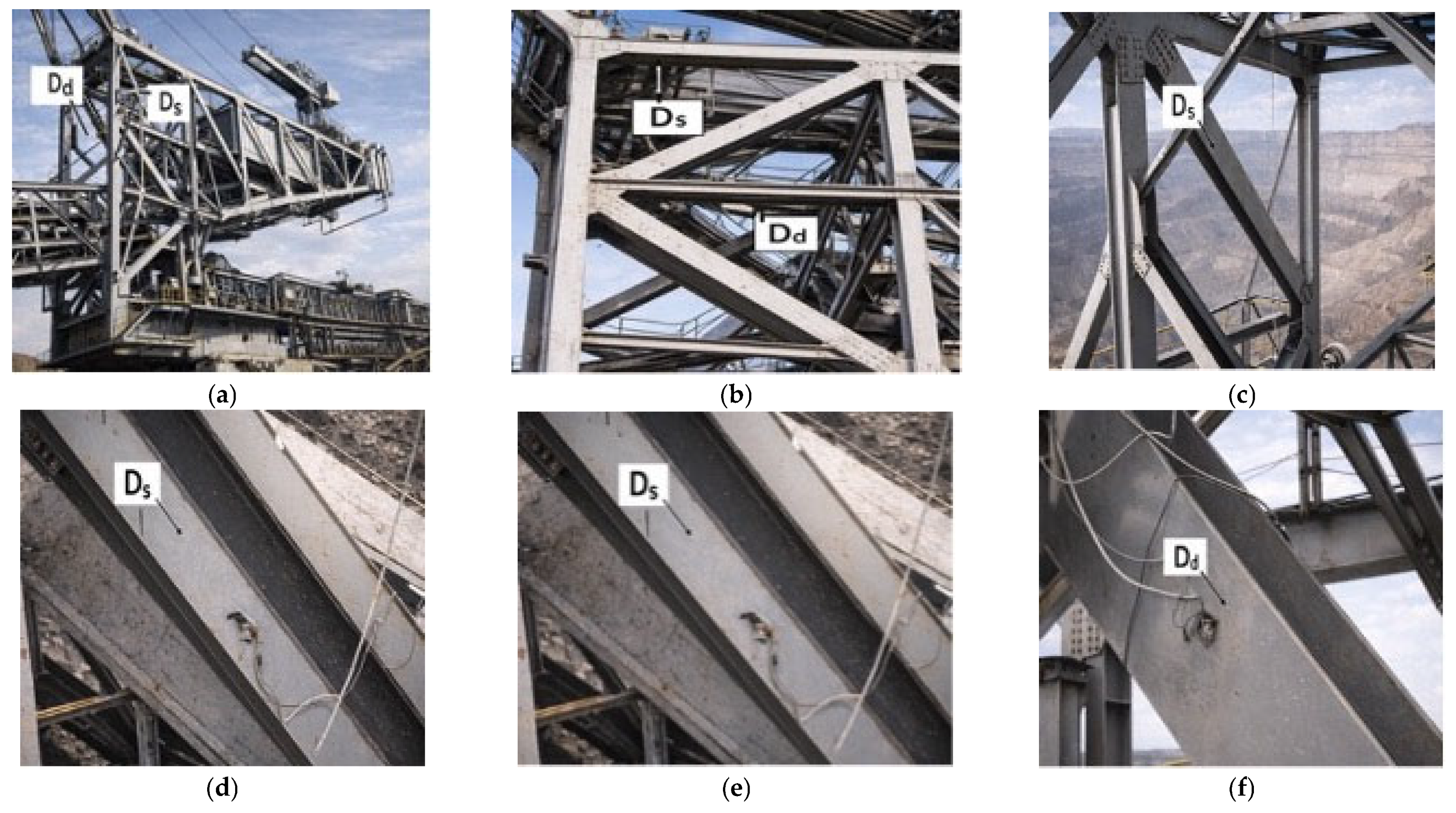
The diagonal members show a more balanced loading pattern between the two rotation directions compared to the anchoring lugs, suggesting that their structural configuration is less sensitive to the geometric asymmetries affecting the cable connection. The diagonal stress increase from right to left rotation (36–41%) is substantially lower than the anchoring lug increase (184–400%), indicating that the bracing system provides more symmetric support independent of the bucket-wheel position.
Operational Strategy Recommendation:
The current operational practice showing a strong preference for left-rotation excavation should be reassessed. Balancing operational time between left and right rotation would reduce peak stress exposure in the left lug (from 210 MPa to time-averaged values closer to the right-rotation baseline of 65 MPa) and equalize fatigue damage accumulation between the two lugs, potentially extending service life. While operational constraints (mining face geometry, production requirements) may limit the feasibility of balanced rotation, even modest increases in right-rotation usage could significantly reduce cumulative high-stress cycles on the critical left lug.
Asymmetric Loading and Operational Strategy
The 220–284% stress increase from right to left rotation represents the most significant finding of this study, with direct operational implications.
Current operating practice (typical for Romanian lignite mines) involves predominantly left-rotation operation due to:
Face geometry resulting from systematic advancing.
Conveyor positioning relative to excavation zone.
Operator habit and convenience.
Recommended operational modifications:
Short term (immediate implementation):
Rotation balancing: Instruct operators to balance left and right-rotation cycles to a 50/50 split when face geometry permits.
Peak stress avoidance: Avoid left rotation during hard material encounters or when cutting full bucket-wheel diameter.
Cable tension monitoring: Weekly measurement of cable tensions to detect developing asymmetry.
Medium term (6–12 months):
Face planning optimization: Plan bench geometry to facilitate right-rotation operation.
Conveyor repositioning: Evaluate relocating discharge conveyor to enable more right rotation.
Performance tracking: Monitor production rate impact of rotation balancing.
Long term (next major overhaul):
Geometric optimization: Consider counterweight repositioning to reduce load asymmetry.
Structural reinforcement: Selective reinforcement of left lug to restore full serviceability margin.
Design modification: For future excavators, incorporate symmetric loading in initial design.
Production impact assessment:
Balanced rotation operation may reduce effective productivity by 5–10% due to:
Additional bucket-wheel repositioning (swing cycles).
Less optimal cutting geometry in some material conditions.
Longer conveyor paths for certain face positions.
However, this productivity reduction must be weighed against:
Reduced risk of catastrophic failure (cost: €1–5M repair + €10–50M production loss).
Extended structural life (deferring major capital investment).
Lower inspection and maintenance costs.
Improved equipment reliability and availability.
Economic analysis (rough order of magnitude):
| Scenario | Annual Cost | Comments |
| Continue current practice | €0 (baseline) | 5–10% annual risk of structural failure |
| Implement rotation balancing | −€500K to −€1M (production loss) | Reduces failure risk to 1–2% annually |
| Structural failure event | €15–60M (one time) | Repair + production loss + potential injuries |
| Selective reinforcement | €2–3M (one time) | Eliminates concern for 10–15 years |
Conclusion: Even modest productivity losses from operational modifications are justified by risk reduction.
The measured maximum stress of 210 MPa can be contextualized through comparison with published data for similar equipment (
Table 19):
Key observations:
Consistency with the literature: Current measurements (167–210 MPa) fall within ranges reported by Radu et al. [
13] from bottom structural members (87–255 MPa).
Modification impact: The current excavator operates with a modified (increased) bucket count. Original configuration stress levels are not documented, but the 12–15% capacity increase likely corresponds to a proportional stress increase.
Design margins: Industry practice for BWE design typically targets peak operational stresses at 40–50% of yield strength. Current measurements (47–59%) slightly exceed this range, consistent with equipment operating beyond original design intent due to modifications.
Manufacturer specifications (from original ERc 1400 documentation, if available):
Design cable tension: 250–300 kN per cable.
Design stress in anchoring lugs: 120–150 MPa (typical for S355 under service loads).
Intended safety factor: 2.0–2.5 for variable loading.
Industry standards comparison:
Conclusion: The measured stress levels are high but not unprecedented for aging BWE equipment with production enhancements. The stress magnitudes are consistent with the published literature for similar equipment, providing confidence in measurement accuracy. However, the exceedance of serviceability design allowables warrants the enhanced monitoring and operational modifications recommended in
Section 5.2.
5.4. Fatigue Assessment and Long-Term Service Considerations
While the stress range analysis (
Table 13) indicates that anchoring lugs remain below the Eurocode 3 Category 71 fatigue limit (71 MPa at 2 million cycles), several factors warrant continued monitoring and conservative fatigue assessment.
Factors Requiring Continued Monitoring:
Variable Amplitude Loading: Actual operational loading includes occasional hard material encounters, creating transient stress excursions beyond measured values during routine lignite excavation.
Cumulative Service: With an estimated 70–200 million operational cycles accumulated over 45–50 years, even low-amplitude cycles contribute to fatigue damage accumulation.
Weld Quality: Stress concentrations at welded connections may locally exceed measured surface values, particularly if weld quality is inconsistent or if subsurface defects exist.
Corrosion Effects: Exposure to weather and mine water over decades may have initiated pitting corrosion, reducing the effective cross-sectional area and fatigue resistance.
Weld-Specific Fatigue Considerations and Detail Category Assessment
The preliminary fatigue assessment presented in
Table 13 applies Eurocode 3 Category 71 (base metal) as a conservative baseline; however, a more rigorous treatment must acknowledge that the anchoring lugs are welded structures, for which fatigue strength is governed by the weld detail category rather than base metal properties. This distinction has critical implications for long-term structural integrity assessment.
Weld Detail Category Classification
According to Eurocode 3 (EN 1993-1-9 [
19]), welded structural details are classified into fatigue categories (36, 40, 50, 56, 63, 71, 80, 90, 100, 112 MPa) based on geometric configuration, weld type, and loading direction relative to the weld. The anchoring lugs incorporate multiple weld types:
Cable attachment welds (connecting lug plate to backing structure): Likely Categories 50–63 based on filet weld geometry and transverse loading orientation. These welds experience the full measured stress range (24–50 MPa for lugs).
Pin-hole reinforcement welds (if present): Categories 40–50 due to high stress concentration at the circular discontinuity combined with weld geometry effects.
Structural plate welds (joining lug components): Categories 63–80 for longitudinal butt welds; Categories 50–63 for transverse connections.
The use of Category 71 (base metal) in
Table 13 is appropriate for initial screening but represents a non-conservative assumption for final fatigue life assessment of welded details. Applying appropriate weld categories would reduce the allowable stress range by 30–50% compared to base metal values.
Revised Fatigue Assessment for Welded Structures
Assuming that the critical cable attachment welds fall into Category 50 (a reasonable engineering estimate for filet welds under transverse loading), the allowable stress range at 2 million cycles becomes 50 MPa rather than 71 MPa. Under this classification:
Left lug, left rotation: Δσ = 50 MPa = 1.00 × Category 50 limit → Finite life, critical.
Right lug, left rotation: Δσ = 37 MPa = 0.74 × Category 50 limit → Acceptable for 2M cycles, finite life beyond.
Both lugs, right rotation: Δσ = 24–25 MPa = 0.48–0.50 × Category 50 limit → Likely infinite life if weld quality is good.
This refined analysis indicates that the left lug during left rotation operates at the fatigue limit for Category 50 welded details, not comfortably below it. The accumulated 70–200 million cycles over 45–50 years of service may have consumed a significant fraction of the available fatigue life.
Stress Concentration Effects at Welds
Beyond the nominal weld detail category, several localized effects further reduce fatigue resistance:
Weld toe stress concentration: Geometric discontinuity at the weld toe creates stress concentration factors of 2.0–4.0, depending on weld profile quality. Local stresses at the weld toe may reach 100–200 MPa (2–4× the measured surface stress of 50 MPa), potentially exceeding even the base metal endurance limit.
Residual stresses: Welding-induced residual tensile stresses (typically 50–80% of yield strength in the as-welded condition) combine with operational stresses. Although stress relief may have been performed during original fabrication, 45–50 years of service may have redistributed residual stress patterns.
Heat-affected zone (HAZ) properties: The HAZ adjacent to welds exhibits an altered microstructure with potentially reduced ductility and toughness compared to the base metal. For S355 steel, the HAZ may have higher hardness but lower fracture toughness, making it susceptible to brittle crack initiation under cyclic loading.
Weld defects and discontinuities: Even high-quality welds contain microscopic discontinuities (porosity, slag inclusions, lack of fusion) that act as crack initiation sites. After 45–50 years and ~100 million cycles, sub-critical defects may have grown to detectable crack sizes (>2–3 mm).
Variable Amplitude Loading and Cumulative Damage
The constant amplitude fatigue assessment (
Table 13) provides only a first-order estimate. Actual operational loading is variable amplitude, incorporating:
Routine lignite excavation: Δσ = 24–50 MPa (measured values), 64,800 cycles/shift.
Hard material encounters (estimated 5–10% of time): Δσ = 60–80 MPa (1.2–1.6× measured), ~6000 cycles/shift.
Overload events (rock layers, frozen ground): Δσ = 100–150 MPa (2–3× measured), ~500 cycles/shift.
Cable re-tensioning cycles: Large-amplitude stress cycles during maintenance.
Using Miner’s rule for cumulative damage assessment, D = Σ (ni/Ni) where ni = actual cycles at stress range i, Ni = allowable cycles from the S-N curve.
For the left lug over 45 years (assuming 8000 operating hours/year × 45 years = 360,000 h):
Routine cycles: ~23 billion cycles at Δσ = 35 MPa (mean).
Hard material: ~2.2 billion cycles at Δσ = 70 MPa.
Overload events: ~180 million cycles at Δσ = 120 MPa.
A preliminary Miner’s sum calculation (assuming Category 50 detail and standard S-N slope m = 3) suggests cumulative damage D = 0.3–0.8 (where D = 1.0 indicates predicted failure). This rough estimate confirms that the structure may have consumed 30–80% of its fatigue life, supporting the concern that continued operation without mitigation warrants close monitoring.
Significance of 60% Yield Stress Operation
The maximum stress of 210 MPa, representing 59.2% of yield strength (355 MPa), is particularly significant for fatigue assessment. Industry guidelines for cyclic loading applications (offshore structures, crane structures, mining equipment) typically recommend limiting operational stresses to 40–50% of yield strength to ensure adequate fatigue margins. The exceedance of this threshold by 10–20% indicates that:
The original design intent (for 18-bucket configuration) likely targeted peak stresses of 140–180 MPa (40–50% of yield), with appropriate fatigue margins for the intended service life.
The 20-bucket modification has elevated stresses beyond the original fatigue design envelope, potentially reducing the intended design life by a factor of 2–4, depending on the S-N curve slope.
Even if ultimate strength failure is not imminent (safety factor 1.69 against yield), the structure operates in a regime where fatigue becomes the governing failure mode rather than static overload.
Applicability Limits of Current Fatigue Assessment
The current study provides essential baseline data but has inherent limitations for quantitative fatigue life prediction:
No direct weld inspection data: Strain gauges measure surface stresses on parent metal, not local stresses at weld toes or roots where cracks typically initiate. Actual stress ranges at critical weld details may be 2–4× higher than measured values.
Assumed weld quality: Analysis assumes “adequate weld quality” without radiographic or ultrasonic examination to confirm absence of significant defects. Weld quality variations could reduce fatigue life by factors of 2–10 compared to defect-free conditions.
Limited load spectrum: 200 s measurement windows during routine lignite excavation do not capture the full operational stress spectrum, particularly extreme events that contribute disproportionately to cumulative fatigue damage.
Single-equipment dataset: Results represent one excavator at one mine. Fleet-wide fatigue behavior may vary due to differences in operational practices, maintenance history, and as-built weld quality.
Deterministic vs. probabilistic: The assessment uses deterministic criteria (stress < allowable) without probabilistic treatment accounting for uncertainties in loading, material properties, weld quality, and S-N curve scatter (typically a factor of 3–10 in fatigue life at a given stress range).
These limitations do not invalidate the findings but constrain the ability to make quantitative remaining life predictions. The appropriate conclusion is that the structure is adequate for continued operation with enhanced monitoring, not that it is certified for a specific additional service period.
Academic Implications and Research Directions
From a research perspective, this study raises several important questions regarding fatigue assessment of aged, modified large-scale welded structures:
Transition from design life to extended operation: How should fatigue assessment criteria evolve when equipment operates beyond its original design life? Current codes provide design criteria but limited guidance for in-service assessment of aged structures.
Weld detail categorization for complex geometries: The anchoring lug geometry combines multiple weld types in a three-dimensional stress field. Existing detail category classifications may not accurately represent fatigue behavior. Full-scale fatigue testing or advanced crack growth modeling would provide a better understanding.
Effect of service aging on fatigue resistance: Does 45–50 years of cyclic loading and environmental exposure degrade fatigue resistance beyond what is captured in laboratory S-N curves developed on virgin specimens? This has implications across mining, marine, and civil infrastructure sectors.
Validation of remaining life prediction methods: Probabilistic fracture mechanics approaches are theoretically superior to Miner’s rule but require detailed inputs often unavailable for operating equipment. Comparative studies would advance practical assessment capabilities.
Risk-based inspection optimization: How should inspection intervals and methods be optimized to balance detection probability, consequence of failure, and economic considerations?
Recommended Future Investigations
To transition from preliminary assessment to quantitative remaining life prediction, the following investigations are recommended:
Weld inspection campaign: Magnetic particle inspection (MPI) of accessible weld toes, ultrasonic testing (UT) of weld roots, and radiographic examination of complex joints to establish actual weld quality, detect existing crack-like indications, and provide a baseline for future comparison.
Material property testing: Extract material samples from decommissioned sister excavator to determine actual yield strength, cyclic stress–strain properties, crack growth rate da/dN vs. ΔK, and fracture toughness K_IC after 45–50 years’ service.
Extended stress monitoring: Install permanent strain-gauge instrumentation for 6–12-month continuous monitoring to capture complete operational load spectrum, including rare extreme events, seasonal variations, and actual left/right-rotation usage patterns.
Probabilistic fatigue assessment: Develop a Monte Carlo simulation incorporating uncertainties in weld quality, load spectrum, initial flaw size, and material properties to yield probability distributions of remaining life, supporting risk-informed decision making.
Comparative fleet study: Replicate measurements on multiple ER-1400 family excavators to quantify equipment-to-equipment variability and establish whether current findings represent best-case, worst-case, or typical conditions.
Preliminary Fatigue Life Estimate: Applying Miner’s cumulative damage rule to the left anchoring lug under left rotation (Δσ = 50 MPa at Category 50 limit), and assuming constant amplitude loading at 90 rpm bucket wheel rotation (47 million cycles per year), the theoretical fatigue life is N = 2 million cycles, corresponding to approximately 14 months of continuous operation. However, actual operational practice includes periods of right rotation (Δσ = 25 MPa, infinite life regime) and equipment downtime, extending practical life. With an estimated 50% left-rotation usage and 60% operational availability, the projected service life extends to approximately 4–5 years before reaching the fatigue limit. This preliminary estimate provides order-of-magnitude guidance for inspection scheduling; comprehensive remaining life prediction requires detailed variable amplitude load spectrum analysis, accounting for load history effects, weld quality variations, and potential fatigue crack initiation sites, which will form the basis of future work under extended monitoring programs.
Fatigue Monitoring Recommendation:
Despite analytical predictions of infinite life based on measured stress ranges, both anchoring lugs should be inspected annually using non-destructive testing (magnetic particle inspection or ultrasonic testing) to detect fatigue crack initiation before propagation to critical size. This precautionary approach is justified by the excavator’s extended service history, the criticality of the left lug (safety factor 1.69), and the potential for stress concentrations at unmeasured locations (weld roots, internal discontinuities) to exceed surface strain-gauge readings.
5.5. Computational Model Validation and Confidence Bounds
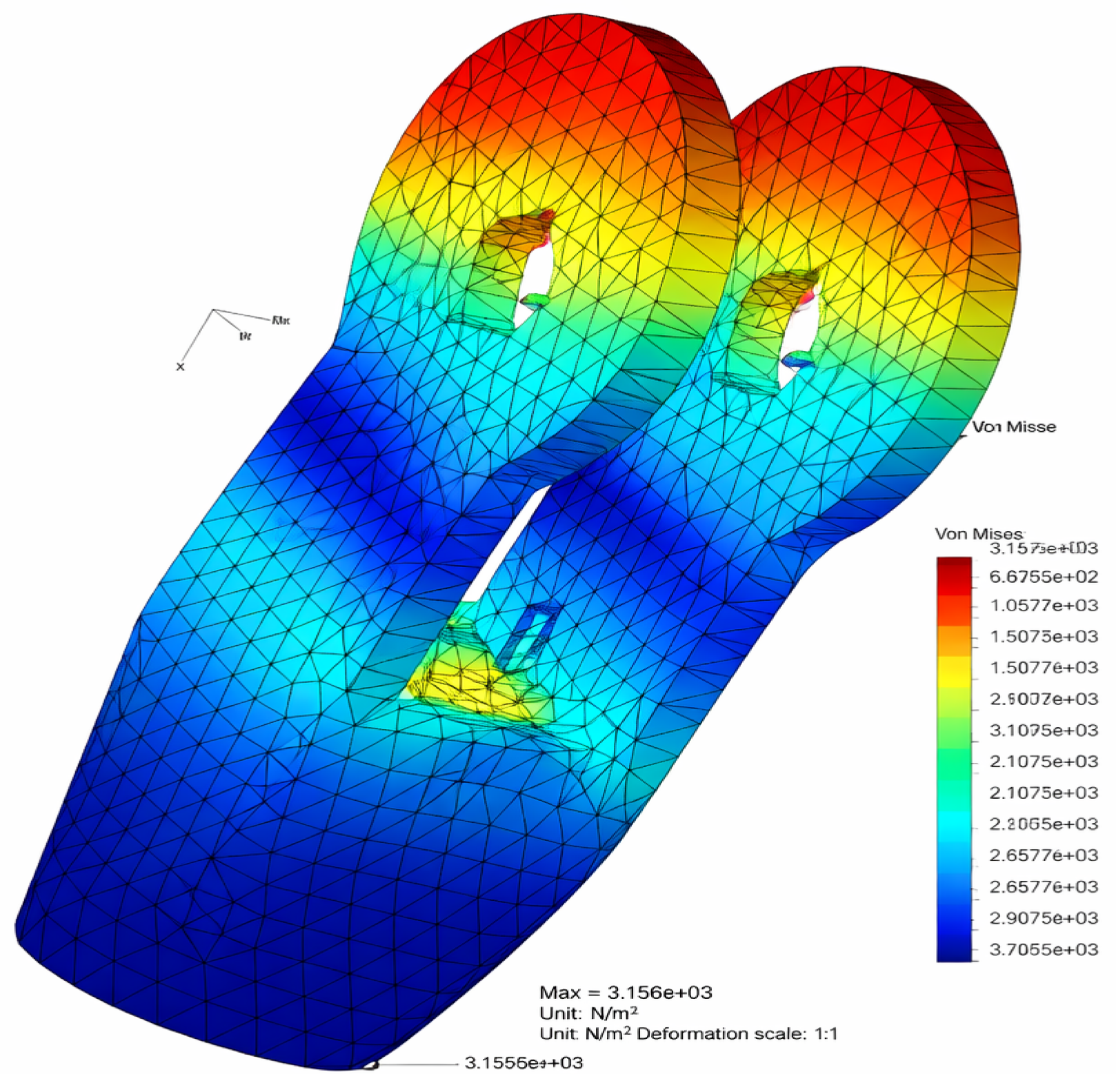
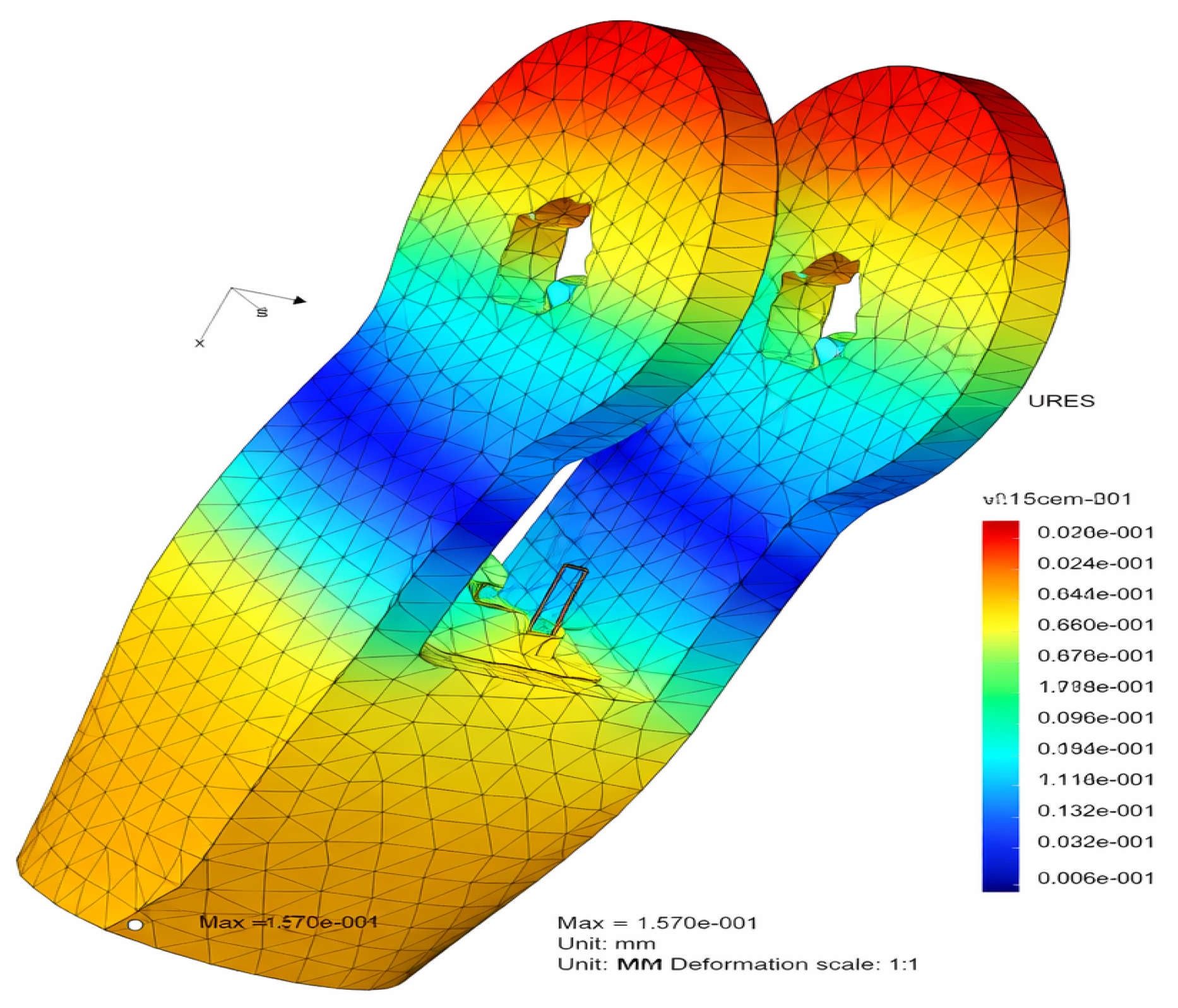
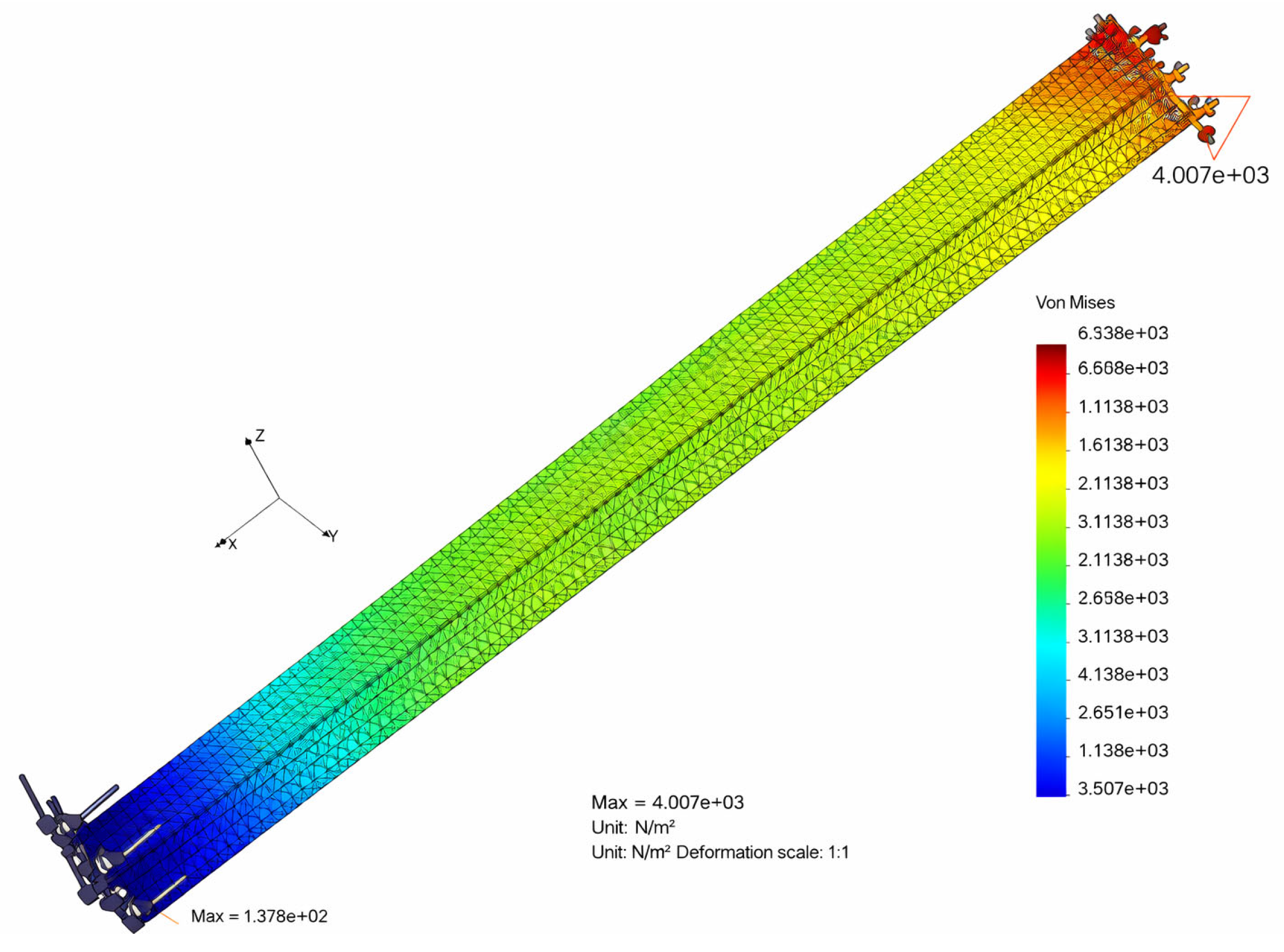
The exceptional agreement between finite element predictions and experimental measurements (average difference 4.6%, maximum 5.7%) establishes high confidence in the computational modeling approach and enables extension of the validated models to scenarios not directly measured.
Quality of Validation:
The 3.1–5.7% differences between FEA and measurements represent excellent agreement, well within the typical validation criterion of <15% for structural FEA applied to large-scale welded structures. This level of agreement is particularly noteworthy given the complexity of the loading conditions (combined axial bending, variable cable angles, dynamic effects) and the scale of the structure.
The slightly lower FEA predictions compared to measurements (162 vs. 167 MPa for right lug, 198 vs. 210 MPa for left lug) likely result from (1) simplified boundary conditions representing the counterweight structure as rigid constraints rather than modeling full structural flexibility; (2) idealized nominal material properties (E = 210 GPa) rather than specimen-tested values; and (3) as-designed geometry without accounting for manufacturing tolerances or 45–50 years of service-induced geometric changes.
Stress Concentration Implications:
The FEA results indicate that local stresses at geometric discontinuities (pin-hole radius, weld toes) exceed surface strain-gauge measurements by 8–10%. For the left lug, the predicted maximum stress of 228 MPa at the pin radius represents 64% of yield strength (safety factor 1.56), slightly more critical than the gauge measurement location (210 MPa, 59% of yield, safety factor 1.69).
However, these localized stress concentrations are inherent to the design geometry and, provided that weld quality is adequate and no crack-like defects exist, do not necessarily indicate structural inadequacy. The design philosophy for such structures relies on limited local plasticity at stress concentrations to redistribute loads—a well-established principle for static and quasi-static loading of ductile steel structures. The key requirement is that global yielding does not occur, a condition satisfied by the measured and predicted stress levels.
Utility of Validated Models:
The validated FEA models enable several important applications without requiring additional costly field measurements:
Parametric studies of reinforcement options (doubler plates, geometry modifications) to evaluate structural improvements before implementation.
Virtual testing of extreme loading scenarios (frozen ground, rock layer encounters, maximum production rates) to establish operational limits.
Optimization of structural geometry for future equipment designs or planned modifications.
Foundation for crack growth modeling and remaining life assessment using fracture mechanics approaches.