Article

Unlocking Innovation in Tourism: A Bibliometric Analysis of Blockchain and Distributed Ledger Technology Trends, Hotspots, and Future Pathways

by
Roberto A. Pava-Díaz
1,
Juan M. Sánchez-Céspedes
2,* and
Oscar Danilo Montoya
3
1
Laboratorio de Investigación y Desarrollo en Electrónica y Redes (LIDER), Facultad de Ingeniería, Universidad Distrital Francisco José de Caldas, Bogotá 110231, Colombia
2
Gestión e Investigación en Informática, Redes y Afines (GIIRA), Facultad de Ingeniería, Universidad Distrital Francisco José de Caldas, Bogotá 110231, Colombia
3
Grupo de Compatibilidad e Interferencia Electromagnética (GCEM), Facultad de Ingeniería, Universidad Distrital Francisco José de Caldas, Bogotá 110231, Colombia
*
Author to whom correspondence should be addressed.
Submission received: 4 November 2025 / Revised: 13 January 2026 / Accepted: 14 January 2026 / Published: 19 January 2026

Abstract

This article presents a comprehensive bibliometric analysis of the indexed academic literature on the application of distributed ledger technology (DLT) and blockchain in the tourism industry. Using the bibliometrix library within the RStudio environment, key bibliometric indicators were examined in order to characterize the evolution, structure, and thematic focus of this emerging field of research. The systematic literature review, which adhered to PRISMA guidelines, involved retrieving publications from the Web of Science and Scopus databases. A curated dataset of 100 relevant documents was identified and analyzed in terms of annual scientific production, leading journals, influential authors, and highly cited publications. The results indicate that blockchain technology dominates the literature, with a strong emphasis on its potential to enhance trust, transparency, and efficiency in tourism-related processes. In particular, identity management, secure transactions, and disintermediation emerge as central research themes, reflecting blockchain’s capacity to support decentralized, immutable, and privacy-preserving interactions between tourists and service providers. Overall, the findings reveal a rapidly growing and increasingly structured body of knowledge, highlighting emerging research directions and technological challenges for future studies on DLT applications in tourism.

1. Introduction

Before the COVID-19 pandemic, tourism drove a staggering GDP of 9.63 billion dollars in 2019—representing 10.4 % of the global GDP. However, in 2020, this value decreased drastically [1,2,3] because of the pandemic and the restrictions set in motion to address it. In addition, the global GDP fell by 50.4 % , and 62 million jobs were lost within the tourism industry [4,5]. This sector has steadily recovered; in 2022, it remained only 26 % below its pre-pandemic levels. The WTO (World Tourism Organization) estimated that, by 2023, the sector would reach the same levels as in 2019 [6,7].
Given the global importance of the tourism sector and the inclusion of new technologies, there are some notable challenges underway. The use of technology should be encouraged while improving the experience for tourists. For instance, one of the most important and uncomfortable aspects for tourists is the identification process during international travels, which is performed by migration agents. Biometric systems have been implemented, yet they only operate in the tourist’s country of origin. It could prove useful to deploy certain tools that can identify individuals in any part of the world. This would ease migration and check-in processes in airports and hotels, thereby improving the user experience.
Today, several solutions based on distributed ledger technology (DLT) have been developed, such as blockchain, which can facilitate tourism-related processes. DLT is a decentralized and distributed peer-to-peer network that maintains information accuracy by applying a consensus algorithm, where each node keeps an updated copy of transactional records [8,9]. DLT can significantly help the tourism sector by increasing the effectiveness of its processes. One of the aspects to improve with this technology is identity confirmation in authentication and authorization tasks. Furthermore, this technology can enable the direct integration between various tourism stakeholders, ensuring the confidentiality and integrity of information [10]. DLT could reduce the number of middlemen required, simplifying the value chain and increasing the value perceived by tourists [11]. The use of DLT can also generate new payment methods, such as those involving cryptocurrencies [12]. Given that DLT is based on a distributed ledger, it could help users verify the authenticity and accuracy of information [13]. Another relevant aspect of DLT is that it could be entrusted with the registration and authentication of tourism-related assets such as hotels, museums, landmarks, and other attractions [14]. Lastly, DLT favors the design and implementation of reputation and customer loyalty programs [15].
Despite the increasing academic interest in blockchain and DLT within the tourism sector, several important knowledge gaps remain. The existing studies are spread across different disciplinary domains and tend to emphasize conceptual discussions, isolated applications, or adoption-related analyses. There is a limited number of studies that systematically examine how blockchain- and DLT-related research themes are structured, how they evolve over time, and how collaboration patterns shape knowledge production in this field. Moreover, few contributions explicitly link bibliometric evidence to broader discussions on digital platforms, digital governance, and digital transformation, thereby constraining a holistic understanding of the maturation of blockchain-enabled digital ecosystems in tourism.
Addressing these gaps is particularly relevant in light of the growing role of digital infrastructures and governance mechanisms in shaping innovation trajectories. By offering a comprehensive and integrative bibliometric perspective, this study provides new insights into the intellectual foundations, thematic dynamics, and emerging research directions of blockchain and DLT in tourism. In doing so, it contributes not only to tourism research but also to the broader literature on digital innovation by clarifying how DLTs evolve from experimental infrastructures towards value-oriented digital platforms.
Accordingly, this study is based on the following research questions:
  • RQ1: What are the main thematic clusters and research trends in DLT studies within the tourism sector?
  • RQ2: How has DLT-related research evolved over time, and what does this evolution reveal about shifts in digital innovation dynamics?
  • RQ3: What collaboration patterns and knowledge networks characterize the development of DLT research in tourism?
These research questions are addressed through a PRISMA-guided systematic selection process and a set of bibliometric techniques that includes co-word analysis, thematic evolution, and collaboration network analysis.
The objective of this article is to conduct a comprehensive bibliometric analysis of scientific publications on the application of DLT in tourism. By integrating data from Web of Science and Scopus and employing PRISMA guidelines alongside bibliometric laws and network analyses, this study aims to identify the intellectual structure, dominant research themes, influential contributors, and emerging research pathways shaping blockchain-driven innovation in the tourism sector.
Thus, this article is structured as follows. The introduction states the main concepts related to the tourism industry, DLT, and its use within the sector. Afterwards, the methodology is detailed, as well as the results obtained. This document ends with some concluding remarks.

2. Background

2.1. The Tourism Industry

According to the WTO, tourism is defined as “a social, cultural, and economic phenomenon that stems from the migration of people to countries or places outside their environment due to personal, professional, or business reasons. These people are called travelers (which can be tourists, campers, residents, or non-residents), and tourism encompasses their activities, where some entail touristic expenses” [16]. The activities in this sector can be classified into international and national tourism. The latter has a greater economic and social impact but has sparked a lower research interest compared to the former [17]. A simple definition of tourism would be the commuting of people that travel outside their regular environment, which is related to certain activities that require spending money. The expenses of the traveler—both the base expenses and the corresponding taxes—are added within the country to determine the income from products and services in the tourism industry. Hence, the gross domestic product (GDP) of tourism is measured as a component of the national GDP and constitutes an economic indicator of the wealth of a nation.
Tourism activities generate diverse types of transactions depending on the traveler profile and the nature of travel (e.g., leisure, business, cultural, ecological, or health-related tourism) [18]. This diversity increases operational complexity, particularly in core revenue-generating activities such as transportation, accommodation, and food services. As the sector has grown and become more digitized, tourism organizations face increasing challenges related to customer experience, capacity management, security, and data privacy.
One critical bottleneck in tourism processes is traveler identification, which occurs repeatedly across different stages of the journey, at airports, hotels, and border controls. Conventional centralized identity verification mechanisms and large-scale tracking applications, while effective for control purposes, have raised concerns regarding privacy, data misuse, and user experience [19]. Consequently, digital identity solutions—particularly biometric-based systems—have been proposed in order to enhance efficiency, security, and trust while reducing friction in tourism operations [20].
Table 1 shows a comparative summary of three emerging models in the tourism sector, where the need to implement biometric identification technologies has been known for about a decade [21]. Furthermore, governments such as the United States have expressed the need to implement biometric identification systems for national and international flights, with the aim of mitigating potential terrorist attacks perpetrated by domestic and international flight passengers [22]. This research focused on analyzing the viability of implementing the aforementioned models and their commercial and ethical implications.
Among the insights obtained, it was established that these technologies would improve the comfort of the customer as well as operational efficiency and safety, yet they could cause an ethical issue related to the treatment of the information gathered [21]. Another study presented a review of the international legal frameworks to determine the viability of implementing biometric technologies on international flights. The authors revealed a need to develop a global framework for the exchange of passenger name records (PNRs) and advanced passenger information (API), as well as changes in government regulations in order to support the implementation of technologies such as biometrics and electronic travel authorization (ETA) systems for data collection [23].
On a technological scale, researchers have developed viable technologies for implementing biometrics in traveler identification processes, such as immigration control [24] or hotel registration [25,26,27], yet these are limited to the identification of individuals and fail to consider the treatment of the information gathered, e.g., the authorization and exchange of information with other entities. Tourism has also been studied with regard to the integration of biometric systems with other technologies or areas of knowledge. For instance, the authors of [28] analyzed how tourism companies can measure the satisfaction of customers throughout their travels in real time by integrating biometric recognition systems with neuroscientific methods, and [29] proposed the integration of said systems with artificial intelligence (AI) techniques, so that tourism companies could understand and infer user travel purposes and preferences while also offering tailored assistance and strengthening their portfolio. As discussed above, it is necessary to incorporate biometrics-based identification in the tourism sector, which will help improve the experience of tourists during their travels. However, these systems should incorporate information treatment mechanisms, ensuring that private data are respected and allowing users to decide whether they want to share it, as well as when and where.

2.2. Distributed Ledger Technology in a Nutshell

DLT is a decentralized peer-to-peer network designed to preserve information accuracy via consensus algorithms, where each node retains an updated copy of the transactional history [8,9]. DLT is primarily classified into two groups based on data structure: (1) DLT-BC (blockchain), which is block-based; and (2) DLT-DAG, a blockless structure where transactions are directly linked, typically forming a directed acyclic graph (DAG) [8]. DLT-BC provides distinct advantages, including enhanced security due to network decentralization, data immutability, and the elimination of intermediaries for validation. However, this strategy suffers from limited scalability, given the intensive computational requirements of global consensus, leading to energy inefficiencies, higher transaction costs, and potential network congestion. Additionally, the transparent nature of public blockchains poses some privacy risks, as transactional visibility can compromise user anonymity. The primary distinction between the two architectures lies in record preservation; while DLT-BC relies on a linear chain, DLT-DAG utilizes a nonlinear, ramified structure allowing for parallel transaction validation. This design theoretically eliminates throughput thresholds (TPSs), offering superior scalability and economic efficiency since nodes only verify related transactions. Nevertheless, DLT-DAG poses its own challenges, including development complexity and specific vulnerabilities, such as those observed in the Iota Tangle [30]. Furthermore, the lack of mining incentives may hinder network participation. Conclusively, DLT adoption faces three pivotal hurdles: scalability (TPS), carbon footprint (particularly in Proof-of-Work systems), and constraints associated with national and international regulations [31].

DLT Applied to the Tourism Industry

In the specialized literature, the work by [32] highlights DLT’s immutability, transparency, programmability, anonymity (or pseudo-anonymity), and decentralization as drivers of user-service interaction within the tourism industry. Furthermore, the authors of [33] propose the following elements for the development of smart tourism: (i) context awareness to offer custom services, (ii) cultural heritage to promote the local assets of a region, (iii) social media to understand customer segments, (iv) the Internet of Things to supervise the parameters of the environment or automate processes, (v) user experience to assess tourist satisfaction, (vi) real-time monitoring to obtain updated information, (vii) user modeling for a deep analysis of user characteristics, (viii) recommendation systems to provide a personalized tourist experience, (ix) augmented reality, (x) Big Data, and (xi) privacy and data protection.
The features of DLT and AI enable the digital transformation of tourism by encompassing these 11 components. The impact scenarios in the industry include the following [34]:
1.
Adding a digital identity layer that is user-centered to improve identity management in the tourism sector. This will allow travelers and other people to keep their personal information safe and accessible under their control and in the setting of their choice. This lowers the risk of identity theft and information loss.
2.
Facilitating a direct interaction between the stakeholders in tourism, ensuring confidentiality and integrity in the exchange and storage of sensitive information. This could be leveraged for the design of decentralized recommender systems [10], in order to improve the trustworthiness of the information collected from social networks regarding trips and tourist experiences in general [35].
3.
Achieving the disintermediation of the tourist market by applying new decentralized shared economy models, reducing the dependence on middlemen, especially regarding the offer and commercialization of services [11]. This disintermediation is influenced by the 3T wave (travel, tourism, and technology) [36]. As a Web 3.0 technology, DLT would offer technological support to businesses, thus simplifying the process of making flight reservations, booking hotel rooms, or renting cars [37]. Smart contracts would allow customers to book and pay for goods and services in a safe and automated manner without the need to increase efficiency in the registration and storage of personal and financial data, lowering the complexity of transactions and creating decentralized accounting systems within companies [38].
4.
Revolutionizing payment systems through the adoption of cryptocurrencies, rendering transactions faster and lowering the costs and times associated with financial middlemen. However, regulation frameworks would need to be designed and approved [12].
5.
Ensuring the trust and transparency of information systems, as users can verify the authenticity and accuracy of the information delivered through DLT. In fact, user experiences could be monitored while guaranteeing that a provider does not censor or edit them. Furthermore, the verification and auditing of sensible parameters such as temperature, expiration dates, weight, and humidity in the supply chain could improve the quality and safety of products and services [13].
6.
Registering and authenticating touristic assets such as hotels, museums, and attractions to offer more transparency and traceability in managing and maintaining said assets. This record will facilitate the development of smart tourism destination solutions, wherein a smart tourism organization (STO) can digitalize the entire touristic portfolio of a region [14]. STOs would come to be considered as a new actor in the tourism sector, which would operate under a new model of tourism business [39]. The digital transformation of tourism will create new communication alternatives between travelers and providers, offering competitive advantages such as the personalization of the touristic offer and long-term sustainability guarantees [40]. The sustainability model of tourism has three fundamental pillars: economic, social, and environmental. The economic factor is related to the costs and profits of tourism-related activities. The social dimension includes criminal activities, traffic accidents, and sociocultural affectation, and, lastly, the environmental factor focuses on the natural resources used, i.e., natural parks, energy, water, and the pollution generated by travelers [41].
7.
Designing customer loyalty programs [42] that allow managing rewards or incentives for customers through DLT, as well as supervising compliance with service-level agreements [15]. This would provide more transparency and efficiency in the allocation and follow-up of said rewards, increase the level of user trust and satisfaction, and promote their immersion into a tokenized market to ensure the assertive adoption of technology.

3. Methodology

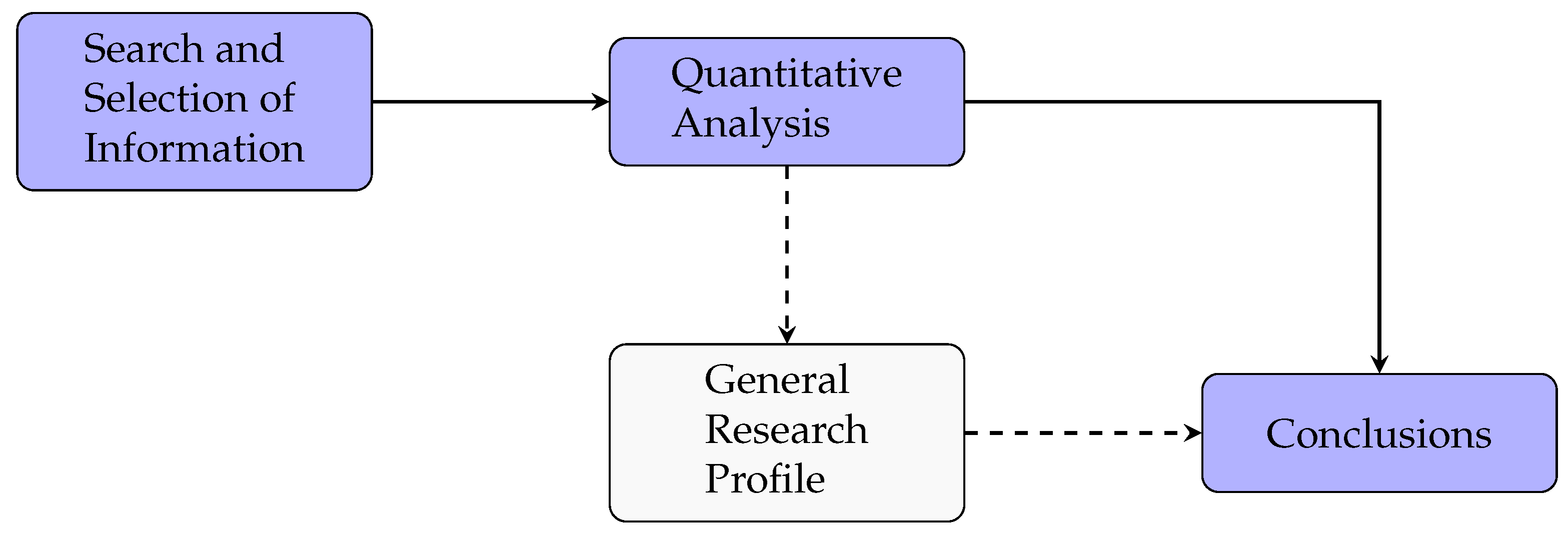
The method used in this work comprised the following stages: (i) search and selection of information, (ii) quantitative analysis, and (iii) conclusions. These steps are illustrated in Figure 1 and explained below.

3.1. Search and Selection of Information

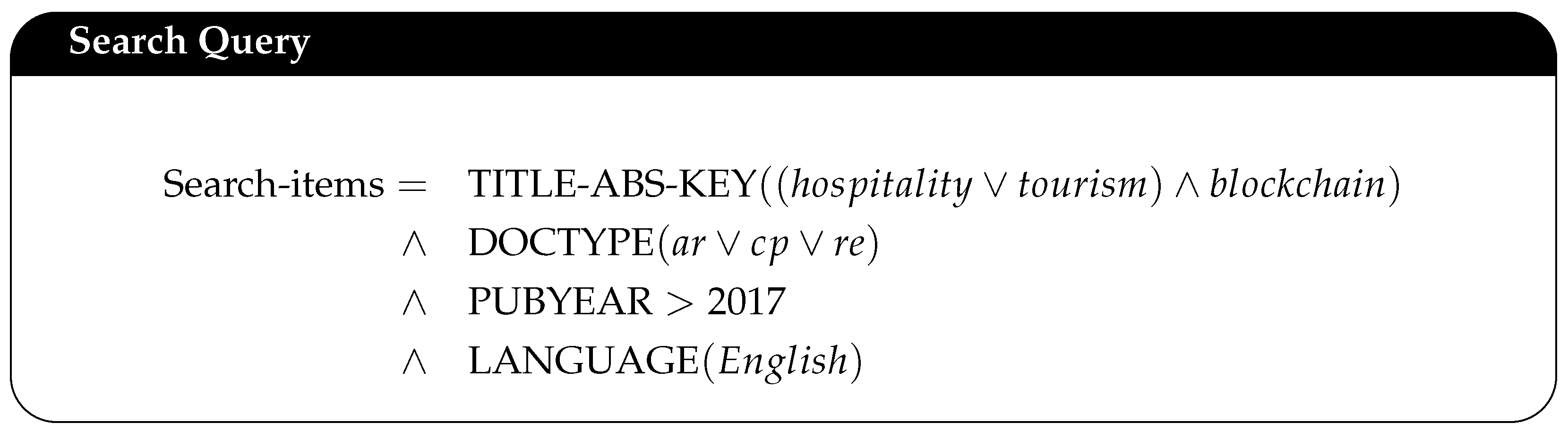
The identification stage gathered records from the Scopus and Web of Science academic databases. These databases are credible, which makes their indexed journals and conference proceedings trustworthy. The search utilized the equation shown in Figure 2 to extract metadata associated with the titles, keywords, and abstracts of publications within the selected databases. The relevant search terms included hospitality, which focuses on accommodation services for travelers, such as hotels; and tourism, which aims to provide a satisfying travel experience. Both terms were combined with the application of distributed ledgers, specifically blockchain. The search, conducted on 31 July 2024, yielded 232 documents in Scopus and 231 documents in Web of Science, encompassing journal, review, and conference papers. The combination of the two reference sets yielded 81 duplicate documents, which were removed, resulting in 361 unique references.
Table 2 summarizes the inclusion and exclusion criteria applied during the PRISMA-based screening process.

3.2. Quantitative Analysis

A quantitative bibliometric approach was employed to characterize the intellectual structure, productivity patterns, and thematic evolution of blockchain and DLT research in tourism. The analysis focused on three complementary dimensions: publication performance, intellectual influence, and thematic relationships.
Publication performance was examined through indicators such as annual scientific output and source distribution. Bradford’s Law [43] was applied to identify the core journals that concentrated the majority of publications. Author productivity and influence were analyzed using Lotka’s Law [44], together with the H- and G-indices, enabling the identification of specialized and highly influential authors.
Intellectual influence was assessed by identifying highly cited publications, which represent foundational or agenda-setting contributions in the field.
Network and collaboration analyses were conducted to explore the relational structures within the literature. Keyword co-occurrence networks were constructed to identify thematic clusters based on shared conceptual focus while following established bibliometric approaches [45]. Additionally, country collaboration networks were generated in order to visualize international research partnerships.
Emerging research directions were analyzed through keyword trend analysis and thematic mapping, enabling the identification of evolving topics and shifts in research focus over time.
The indicators used in this work are listed below:
1.
Indicators:
(a)
Dataset:
  • Yearly scientific production. This indicator shows the number of annual publications on the target topic over a range of years.
(b)
Journals:
  • Primary bibliographic sources. The most influential publication outlets were selected using Bradford’s Law [43].
(c)
Authors:
  • Top author productivity over time. This metric quantifies the annual publication output of the most prolific authors in recent years. A subset of these authors, often referred to as specialized authors, tends to dominate publication output within a given field, as described by Lotka’s Law [44].
  • H- and G-indices. The H-index identifies authors with at least h publications cited at least h times in a given source [46], while the G-index, on the other hand, determines the maximum number of articles receiving at least g citations [47].
(d)
Papers:
  • Highly cited publications. This indicator identifies scientific publications with the highest citation counts.
2.
Network and collaboration analysis:
(a)
Keywords:
  • Keyword co-occurrence network. Keywords are clustered based on their co-occurrence patterns within the same publications. By calculating the frequency of keyword pairs, a network is constructed where the nodes represent the keywords and the edges signify the strength of their co-occurrence. This approach, inspired by Luukkonen’s work [45], helps to identify the semantic and topical clusters within the set of keywords.
(b)
Countries:
  • Country collaboration network. This is a tool for mapping and visualizing international research collaborations.
3.
Emerging topics and trends:
(a)
Keyword trends over time. This indicator analyzes keyword frequency and evolution over the specified timeframe.
(b)
Thematic map. This is a visual tool for depicting and analyzing the thematic structure within the scientific literature.
This general research profile was generated using the bibliometrix library, version 4.1 [48], within RStudio’s integrated development environment (version 2024.04.2-764) [49]. Graphical visualizations were generated using VOSviewer, version 1.16.20 [50], to support the interpretation of the results. The complete dataset, including bibliographic references and the full bibliometric analysis, is available at [51].

3.3. Conclusions of Bibliometric Findings

After establishing a general profile of blockchain research applied to the tourism sector, a detailed analysis was conducted on the most influential publications identified. These findings formed the basis for the subsequent formulation of the conclusions, which are presented in Section 6.

4. General Research Profile

The dataset used includes 361 documents sourced from 212 different publications, such as journals and books, reflecting an annual growth rate of 66.62%. The average age of the documents is 2.52 years, with an average of 18.94 citations per document and 4.471 citations per document per year. The document types predominantly include articles (253), with a small number of retracted publications (2), conference papers (101), and reviews (5). In terms of content, the dataset includes 1156 Keywords Plus (ID) and 1220 Author Keywords (DE). The authorship data indicate contributions from 1257 authors, with 1412 author appearances, including 30 single-author documents. Collaboration metrics show an average of 0.287 documents per author and 3.91 co-authors per document, with 22.99% of the documents resulting from international co-authorship.

4.1. Yearly Scientific Production

There has been a notable upward trajectory in the annual scientific production related to the application of blockchain technology within the tourism industry. The 2017–2023 period saw a significant increase in the number of scholarly articles published on this subject. Starting modestly with only five publications in 2017 and 2018, interest in this interdisciplinary field rapidly gained momentum, leading to a substantial rise to 21 publications in 2019. This upward trend continued steadily, reaching 56, 74, and 93 articles in 2020, 2021, and 2022, respectively. The most recent year, 2023, witnessed a peak of 107 publications, signifying a substantial surge in research activity. These findings underscore the growing recognition and exploration of blockchain’s potential to revolutionize various aspects of the tourism sector, ranging from supply chain management and secure payment processing to customer loyalty programs, digital self-identity solutions, and decentralized service ecosystems.

4.2. Primary Bibliographic Sources

Bradford’s Law allows identifying the distribution of articles across different sources for a specific field of research, based on the hypothesis that most documents stem from a limited number of scientific journals, thus delivering the sources with the highest impact. Bradford divides the set of bibliographic references into three groups, each containing approximately a third of the documents. The first group contains the most relevant sources regarding the topic of interest, and the other groups exhibit an exponential decrease in impact [43]. Applying this law to the studied dataset yielded a correlation coefficient of −0.2885, indicating a weak negative correlation between source rank and the number of articles published. This suggests that, although there is a general trend for higher-ranked sources to have fewer articles, the relationship is not strictly linear. A coefficient of determination ( R 2 ) of 0.0832 further confirms this weak correlation, revealing that only 8.32% of the variability in the number of articles can be attributed to source rank. This implies a weak relationship between source rank and article count, indicating that other factors may be influencing the distribution of the scientific output. Given the limitations encountered when applying Bradford’s Law, the top 15 sources from the core zone were selected (see Table 3) and combined with the journals exhibiting the highest citation counts.
Table 3 presents a comprehensive overview of the top 15 bibliographic sources contributing to blockchain research within the tourism industry from 2013 to 2024. Dominated by Q1 journals such as IEEE Access, Sustainability, and Sensors, characterized by high article counts and H-indices, the table highlights the growing interest and scholarly output in this field. The inclusion of conference proceedings, particularly in the Q4 tier, indicates the dynamic nature of blockchain research, with emerging ideas often disseminated through these platforms. This diverse landscape, spanning journals and conferences with varying impact factors and publication histories, underscores the multifaceted exploration of blockchain’s potential within the tourism sector. The data suggest a burgeoning research community that is actively engaged in understanding and harnessing blockchain technology for tourism applications.
A notable finding of our analysis is the significant impact exerted by certain journals despite their limited publication output. For instance, International Journal of Information Management, Computers & Industrial Engineering, and Computer law & Security Review garnered substantial citation counts (451, 183, and 134 citations, respectively) from a single contribution. This underscores the exceptional quality and influence of these publications. Similarly, conferences such as CITS 2019 and ICETA 2017 exhibited an unexpected impact, given the typically lower citation rates associated with conference proceedings. These results emphasize the importance of considering both the quantity and quality of publications when assessing research output. It is also crucial to acknowledge the contributions of journals like Annals of Tourism Research ( 2 186 ), Tourism Management ( 3 197 ), Future Generation Computer Systems – The International Journal of Escience ( 3 168 ), and Asia Pacific Journal of Tourism Research ( 3 106 ), which, despite their relatively small number of articles, have demonstrated substantial influence within their respective fields.

4.3. Most Relevant Authors

Lotka’s Law is an empirical law that describes the frequency distribution of scientific productivity among authors in a given field. This law helps to rapidly identify the most relevant scholars in a field [44], i.e., the specialized authors.
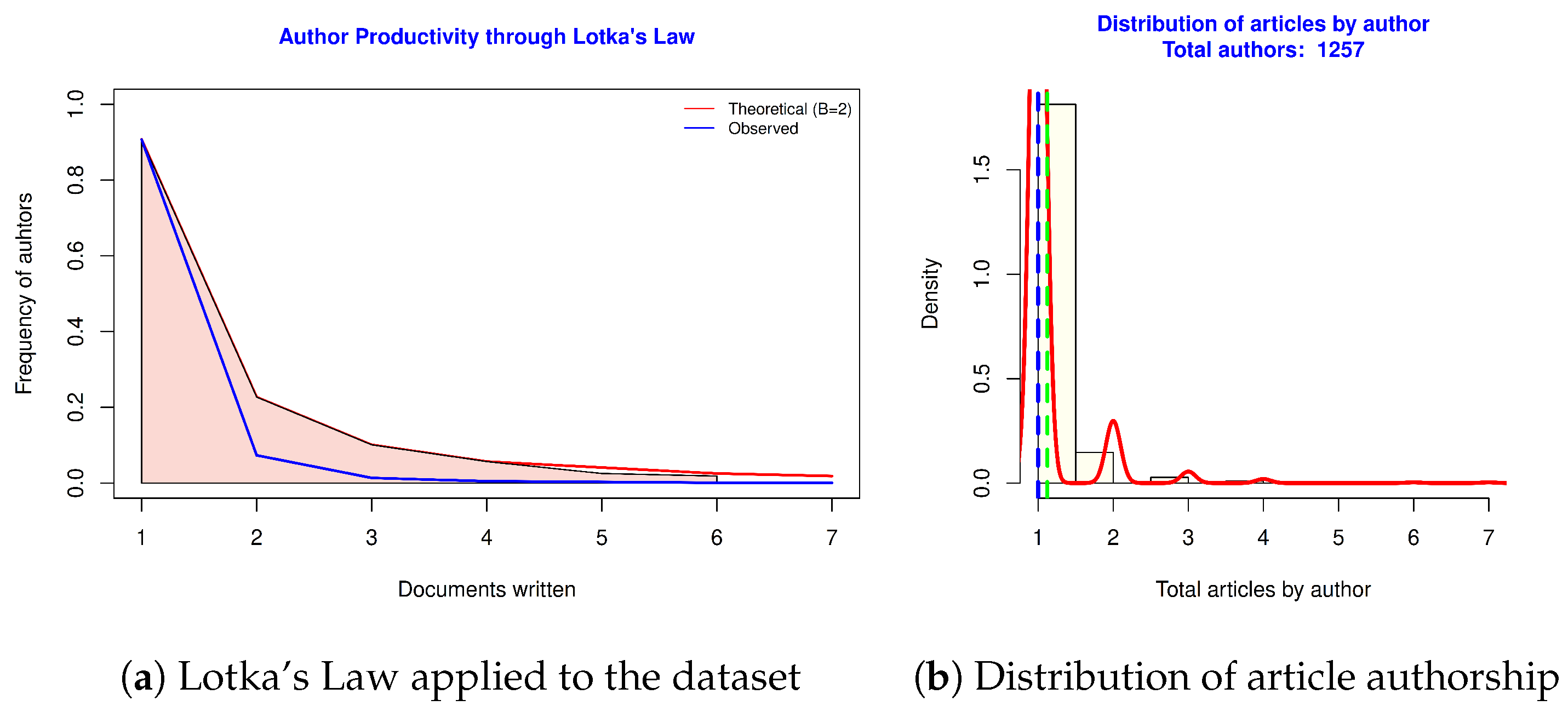
The dataset comprises 1257 authors generating 1412 appearances across 30 single-authored documents, with 90.7% ( n = 1140 ) contributing one publication and progressively rarer higher-productivity cohorts: 92 (2 articles), 17 (3), 6 (4), and 2 (≥6). Figure 3a illustrates Lotka’s Law fitting, yielding β = 3.77 —substantially exceeding the canonical value of 2—indicating accelerated productivity concentration compared to theoretical ( β = 2 ) expectations. Complementarily, Figure 3b overlays kernel density estimates, juxtaposing the theoretical distribution (blue dashed line: β = 3.77 , C = 0.907 , R 2 = 0.995 , K-S p = 0.139 ) against empirical realization (red line), confirming leptokurtic asymmetry through non-rejection of the null hypothesis ( p > 0.05 ). The constant C = 0.907209090231859 precisely matches observed single-publication frequency (90.7%), while this 1.99% specialized core (≥3 articles: 17 × 3, 6 × 4, 2 × ≥6) disproportionately shapes domain knowledge production, exemplifying highly skewed productivity characteristic of emergent bibliometric fields.
Table 4 presents a comprehensive analysis of author metrics and publications in the field of blockchain technology applied to the tourism sector, highlighting the most productive researchers. The data offer valuable insights into the publication patterns and influence of key contributors in this domain. The table is organized by the total number of documents published, highlighting authors with at least three publications. M. Hariadi and H. Treiblmaier emerge as the most prolific authors, with seven and six documents, respectively, both accompanied by notably high citation counts. The H- and G-indices further contextualize the impact and consistency of each author’s work. For example, Treiblmaier has the highest H-index (6), reflecting a strong balance between the quantity and impact of their publications. Interestingly, some authors such as S. Tanwar and N. Kumar have significantly high total citation counts (618 and 613, respectively) despite having fewer publications, which suggests that their work has had a particularly strong impact in the field. The table also reveals collaborative patterns, with several authors co-authoring multiple papers (indicated by red citations), which underscores the interconnected nature of research in this area. The publications by P. Sharma, R. Singh, and S. Singh were omitted from this analysis due to the misattribution caused by author homonymy. Additionally, one article by M. Khan was excluded because it was retracted.

4.4. Most Relevant Publications

Table 5 presents the 15 most cited articles along with their respective average annual citation counts. A high citation count is often correlated with an article’s quality and enduring relevance, which facilitates a deeper analysis of the published literature.
In addition, the work presented in [61] is pivotal in outlining three key research directions for blockchain in tourism:
1.
New forms of evaluation and review technologies will lead to trustworthy rating systems, with a focus on ensuring the online report of user experience by using touristic services and mitigating the risks of manipulation and censorship.
  • BloHosT
2.
The widespread adoption of cryptocurrencies will lead to new types of C2C markets, facilitating the transfer of assets between customers, lowering costs, and increasing operating speed, since financial middlemen are no longer required.
  • The study by [89] discusses the adoption of cryptocurrency payments in small and medium-sized enterprises in the tourism industry.
3.
Blockchain technology will lead to increased disintermediation in the tourism industry, anticipating increased disintermediation, which will diminish the roles of online travel agencies (OTAs) and global distribution systems (GDSs).
Table 5. Top 15 most cited publications on blockchain applied to tourism (elaborated using RStudio’s bibliometrix library).
Ref.Document TitleYearTotal Citations
[73]Blockchain for Industry 4.0: A comprehensive review2020478
[61]Blockchain and tourism: Three research propositions2018158
[74]BloHosT: Blockchain enabled smart tourism and hospitality management2019111
[89]Blockchain technology adoption behavior and sustainability of the business in tourism and hospitality SMEs: An empirical study2020109
[65]Blockchain technology for smart city and smart tourism: Latest trends and challenges2021105
[90]Blockchain technology framework: Current and future perspectives for the tourism industry202091
[91]Assessment of blockchain applications in travel and tourism industry202082
[92]The blockchain technology and the scope of its application in hospitality operations202078
[37]A critical reflection on the adoption of blockchain in tourism202177
[93]The importance of behavioral data to identify online fake reviews for tourism businesses: A systematic review201972
[79]Control, use and ownership of Big Data: A reciprocal view of customer Big Data value in the hospitality and tourism industry202069
[94]Is blockchain technology a watershed for tourism development?201968
[95]Technology assessment: Enabling blockchain in hospitality and tourism sectors202163
[78]Blockchain: A paradigm shift in business practices201954
[68]Ensuring transparency and traceability of food local products: A blockchain application to a smart tourism region202154
BloHosT encompasses the first proposition made by Önder: a blockchain-based tourism and hospitality framework that allows the traveler to make payments with the token of their preference. BloHosT is integrated with the TeDL framework, which supports the analysis of travel itineraries along with the derived assessments [74].
The fourth publication, titled Blockchain technology for smart cities and smart tourism: Latest trends and challenges, has been cited 78 times in total and about 26.0 times per year. This document presents the main features of blockchain, i.e., disintermediation, security, automation, immutability, trust, costs, and traceability. Furthermore, this article shows 13 DApps developed for smart tourism, which can be grouped into three of Önder’s research proposals: (i) TravelChain (https://travelchain.io accessed on 23 July 2025), DeskBell Chain (https://cryptototem.com/deskbell-chain-dbt-ico/ accessed on 23 July 2025), Explore (https://icomarks.ai/ico/explorecoin accessed on 23 July 2025), and Travel Block (https://travel-inblock.io/ accessed on 23 July 2025); (ii) Global tourist (https://global-tourist.com/en/ accessed on 23 July 2025), Travelflex (https://traveleflex.com/ accessed on 23 July 2025), and Tripago (https://icoholder.com/es/tripago-19365 accessed on 23 July 2025); and (iii) LockTrip (https://locktrip.com accessed on 23 July 2025), Travala (https://travala.com accessed on 23 July 2025), Winding Tree (https://windingtree.com/ accessed on 23 July 2025), Trippki (https://blog.trippki.com/ accessed on 23 July 2025), and TravelCoin Foundation (https://trlcoin.com/ accessed on 23 July 2025). Lastly, the article highlights the definition of economic incentives for the tokenization of the sector with the adoption of DLT [65].
The fifth publication, titled Review of Ethereum: Smart home case study, has the highest number of bibliographic citations. It has been cited 71 times, or about 10.14 times per year. This article focuses on the Internet of Things (IoT) as a technological factor for the development of the tourism sector. The combination of IoT and blockchain enables the automation of user access within physical spaces in smart home systems (SHSs) [96].
The next article, ranked sixth, is titled Blockchain technology framework: Current and future perspectives for the tourism industry. It has been cited 67 times in total and has received 16.75 citations per year on average. The document mentions two blockchain platforms in the tourism industry: (a) bee token (https://www.thebeetoken.com/ accessed on 25 July 2025), a cryptocurrency for payments on home-sharing platforms that includes a reputation system, and (b) TUI bed-swap (https://www.cocus.com/en/tui-group-relies-on-blockchain-and-cocus/ accessed on 25 July 2025), a permissioned blockchain that enables the real-time management of beds and rooms. Furthermore, this work identifies three sectors of the tourism industry as being susceptible to DLT implementation: accommodation, travel agents and agencies, and food services [90].
The seventh paper, titled A critical reflection on the adoption of blockchain in tourism, was cited 63 times in total and 21.0 times per year. This work analyzes the relevance of blockchain for the tourism industry, stating some use cases such as the tracking of the status and location of passenger bags in airlines like Singapore Airlines, Air France, or KLM; the management of bed availability for the TUI Group through a bed-swap application; and decentralized service offerings such as LockTrip and Winding Tree. Lastly, the author defines the requirements for the adoption of blockchain scenarios necessitating the exchange of digital assets, information repositories shared in real time (which should be immutable, persistent, safe, auditable, and reliable), the elimination or reduction of the dependence on middlemen, and process automation [37].
The eighth most cited article is titled The blockchain technology and the scope of its application in hospitality operations, with 59 citations and an average of 14.75 citations per year. This work discusses the potential of blockchain technology in new shared economy scenarios regarding hospitality. This paves the way for direct interaction between travelers and lodging providers, cutting intermediation fees under an identification and authentication system that ensures the reliability of recommendations by allowing users to detect and report fake or unfair comments in social networks while also restricting user censorship [92].
Another statement is made in the ninth article, The importance of behavioral data to identify online fake reviews for tourism businesses: A systematic review, where the author highlights electronic word-of-mouth (eWOM) as one of the main sources of information influencing the behavior of users in the tourism sector [93].
The tenth position belongs to the last article in the ranking, titled Is blockchain technology a watershed for tourism development? This work focuses on the opportunities and challenges of blockchain adoption in tourism. The author presents five areas of application: (i) loyalty programs for discounts and incentives or rewards, (ii) digital payment methods with cryptocurrencies, (iii) credentials management to identify and authenticate users, (iv) inventory management considering the installed capacity, and (v) reservations and ticketing services for insurance, flights, room booking, or vehicle renting [94].
It can be concluded that most articles discuss the importance of blockchain adoption in this industry within the framework of Önder’s three research proposals. The intrinsic features of blockchain will enable the creation of environments for identity management centered on and controlled by the user, which help the main actors of the sector (tourists and service providers) interact directly within a reliable, transparent, decentralized, immutable, and persistent framework that protects the privacy of people and organizations.

4.5. Keyword Analysis

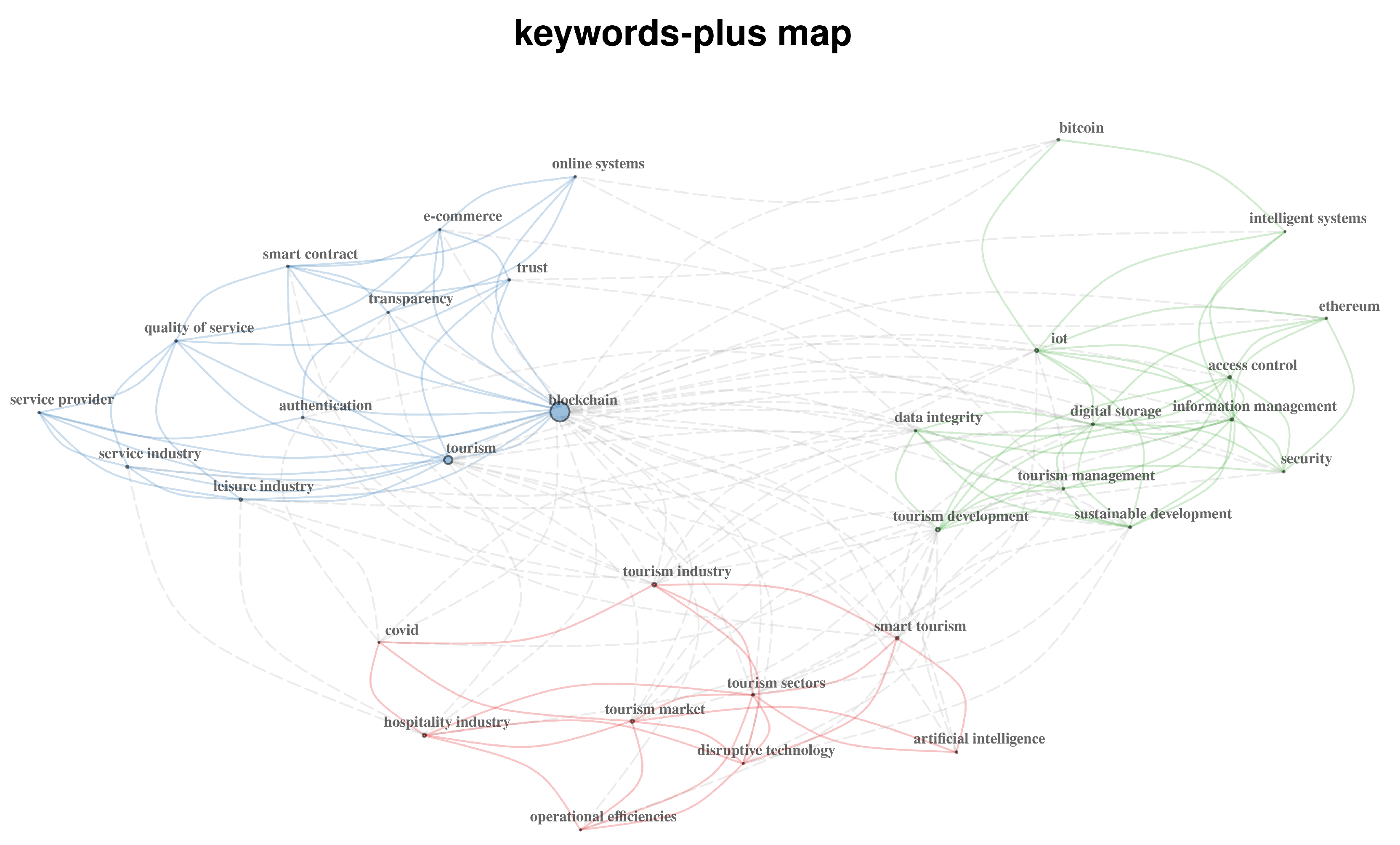
Figure 4 shows the interconnection map of the analyzed keywords, which was automatically generated by the publication databases (Keywords Plus ID). Three groups can be clearly distinguished, in line with the three research propositions of "Onder (see page 12). The first group corresponds to the first statement and is depicted in blue, with blockchain at its core. It encompasses applications that leverage authentication, transparency, and trust to support tourism and leisure e-commerce through smart contracts. The second group is associated with the second proposition, highlighted in green and focused on data safety and integrity, including technologies such as the IoT and smart systems in diverse scenarios (e.g., blockchain-based access control, Ethereum, and cryptocurrency-based payments). The third group, shown in red, is linked to the third statement and situates tourism and hospitality within a new market driven by disruptive technologies like blockchain and AI, which foster the transition towards smart tourism and greater operational efficiency. Here, the COVID-19 pandemic has been identified as a key change-inducing factor for the industry.
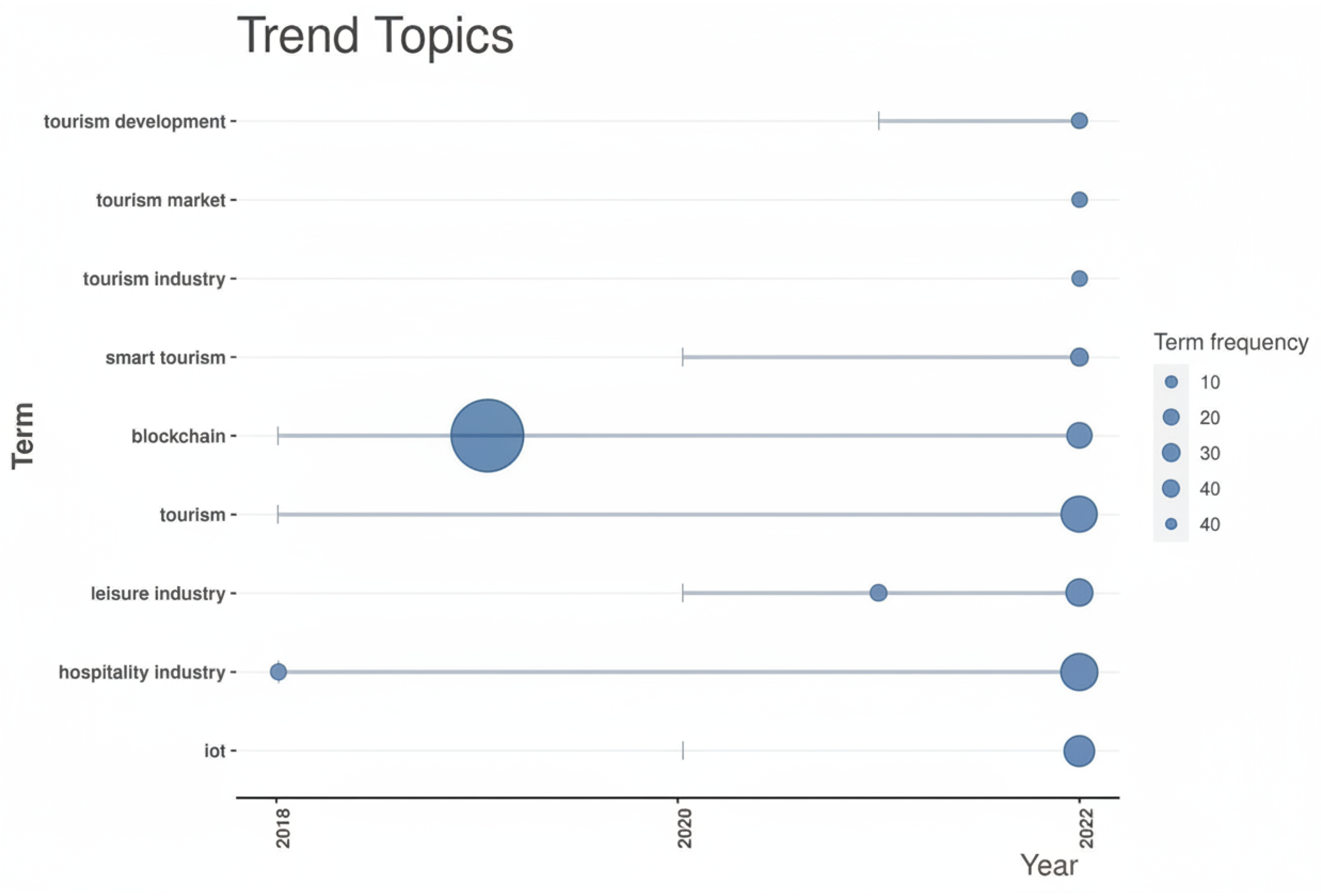
Lastly, a critical examination of the keyword trends ( Figure 5) reveals a structural transition in the technological focus of tourism research; while earlier studies (prior to 2021) emphasized the IoT and smart tourism, concepts that are primarily linked to hardware connectivity and data acquisition for sensing the environment, the recent shift towards blockchain and DLT signals a move towards value connectivity. This evolution suggests that the research agenda has matured beyond merely automating processes or collecting data; it now prioritizes an infrastructure for trust, secure value exchange, and decentralized governance among heterogeneous tourism actors. However, despite this conceptual maturity, our bibliometric analysis highlights a significant gap between theoretical potential and operational reality. Keywords related to scalability, interoperability, and regulatory compliance appear with much lower frequency than trust or transparency. This indicates that, while the academic literature is prolific in proposing architectural frameworks, it largely overlooks the practical friction of implementing DLT in high-volume, real-world tourism scenarios. The scarcity of empirical studies addressing how blockchain systems handle peak-season transaction loads or cross-border data privacy regulations (such as GDPR) remains a critical barrier that hinders the transition from pilot projects to industry-wide adoption.

5. Discussion

Table 6 describes the use cases detailed in the analyzed articles.
The discussion around DLT applications in the tourism sector is structured around publication trends, research impact, and thematic evolution. Scientific production in this field shows a notable increase after 2019, coinciding with the consolidation of blockchain-focused research frameworks. This growth reflects a shift from exploratory conceptualization towards more application-oriented and solution-driven research. The influential work by Önder [61], which articulated three foundational research propositions linking blockchain and tourism, constitutes a pivotal reference point, accumulating over 100 citations and shaping the subsequent academic discourse.
Beyond the descriptive characterization of publication trends and thematic groupings, the identified clusters reveal a deeper transformation in the logic of digital innovation associated with blockchain and DLT. Early research focused predominantly on technological feasibility, system architecture, and infrastructure-level experimentation, reflecting an exploratory phase in which blockchain was primarily evaluated as an enabling technology. As the field evolved, the consolidation of clusters related to trust, identity management, reputation systems, and decentralized coordination indicated a conceptual shift towards value creation and platform-oriented innovation.
This evolution can be interpreted as evidence of the maturation of blockchain- and DLT-based digital ecosystems in the sector. The shift from infrastructure-centric concerns to value-driven applications suggests that research attention has progressively moved from technical readiness towards issues of ecosystem governance, interoperability, and institutional trust. These patterns align with broader trajectories observed in digital platform research, where technological capabilities precede the emergence of stable value networks and governance mechanisms. Consequently, the thematic evolution identified in this study not only reflects changes in research focus, but also the gradual institutionalization of DLT in complex, multi-stakeholder digital environments.
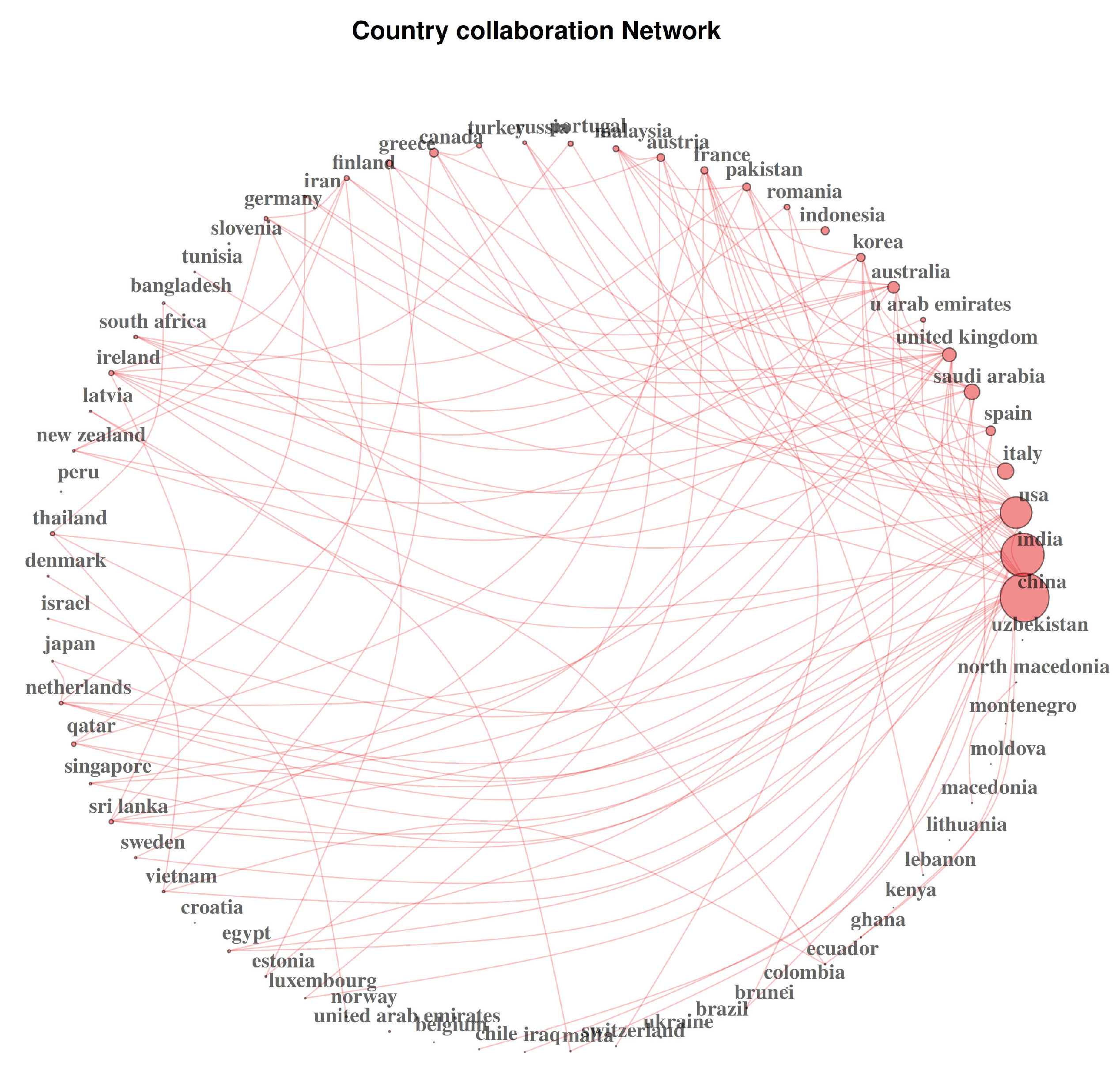
On the other hand, from a geographical perspective, scientific production is highly concentrated in a relatively small group of countries, with China clearly leading in terms of publication volume, followed by India, the United States, Italy, and Saudi Arabia, which constitute the central core of the international collaboration network (see Figure 6). This core comprises key hubs that connect a diverse set of peripheral nations, facilitating the dissemination and consolidation of specific research streams across borders. In these leading countries, tourism also represents a strategic sector of the economy, contributing substantially to the GDP and employment rates, which in turn increases institutional and governmental incentives to invest in tourism-related research and innovation. However, the overall weight of a country’s contribution cannot be explained solely by the number of documents it generates, but also by the intellectual centrality of highly cited authors, who act as theoretical and methodological anchors within the network. This pattern indicates that scientific impact in the field depends not only on critical mass in terms of output and the macroeconomic relevance of tourism, but also on the epistemic leadership of research groups and scholars who structure international collaborations and steer the research agenda.
From a dissemination perspective, high-impact journals classified as Q1-SJR dominate the publication landscape, indicating that blockchain and tourism research has achieved visibility within top-tier outlets. Journals such as Current Issues in Tourism, Sustainability, and the Journal of Hospitality and Tourism Technology serve as central platforms for advancing scholarly debate on digital transformation in tourism.
At the thematic level, keyword and trend-topic analyses reveal a gradual evolution from early technological enablers towards value-oriented applications. The literature increasingly emphasizes trust, identity management, reputation systems, and decentralized payment mechanisms. This evolution suggests a shift from infrastructure-focused innovation to solutions addressing core operational challenges such as transparency, user privacy, and the reduction of intermediaries. The prominence of identity verification and biometric systems further underscores the sector’s demand for secure and seamless traveler experiences, particularly in highly regulated and mobility-intensive contexts.
A closer examination of the trend-topic evolution reveals a meaningful transition in the technological focus of research in the field. Early studies emphasized enabling technologies such as the IoT, primarily aiming for enhanced connectivity, data collection, and real-time monitoring within tourism infrastructures. Over time, however, the thematic emphasis shifted towards blockchain and DLT, reflecting a broader movement from hardware-centric connectivity to value-centric connectivity. This transition indicates that the research agenda has matured beyond sensing and automation, prioritizing mechanisms for trust creation, value exchange, and decentralized coordination among heterogeneous actors in tourism ecosystems.
Despite the growing scholarly interest and the diversification of use cases, the bibliometric evidence also suggests persistent structural barriers to the large-scale adoption of DLT in the sector. Keywords related to regulation, governance, scalability, and interoperability appear less frequently, indicating that these challenges remain underexplored in terms of technological potential. Issues such as regulatory uncertainty, cross-border compliance, energy consumption, and integration with legacy systems represent critical constraints that may slow real-world implementation. The relative scarcity of empirical deployment studies highlights a gap between conceptual innovation and operational feasibility, underscoring the need for future research to move beyond proof-of-concept applications towards scalable and regulation-aware solutions.
Overall, the findings indicate that future research on DLT in tourism should prioritize the development of interoperable protocols and governance frameworks that balance decentralization with regulatory compliance. Such efforts are essential to support scalable, trustworthy, and user-centered digital ecosystems capable of reshaping business-to-business and consumer-to-consumer interactions in the industry.
In this context, it is imperative for the tourism sector to integrate a sophisticated understanding of distributed governance. This study identifies three pivotal analytical axes: (a) the visibility of DLT infrastructure investment, empirically demonstrating how the predominance of technical features (blockchain: 487 mentions; trust: 312) often eclipses implicit governance decisions (governance: 89; stewardship: 12) [114]; (b) the identification of a critical friction between decentralized autonomy and territorial regulatory frameworks [115,116], where the low bibliometric co-occurrence between DIDs and GDPR (0.023) reveals a prioritization of disintermediation that neglects compatibility with privacy regulations and the right to be forgotten; and (c) the argument, grounded in Williamson’s transaction cost economics [117], that DLT functions as a redistribution mechanism rather than a mere cost reduction tool. By eliminating traditional intermediaries, DLT introduces novel overheads regarding oracles, smart contract auditing, and consensus governance, representing strategic opportunities for future inquiry.
These analytical axes transcend into three strategic domains. In fintech, the scarcity of regulatory terminology in the tourism–DLT corpus (MiCA: 0 mentions; AML/KYC: 1) contrasts sharply with the implementation of the Markets in crypto-assets regulation (MiCA-EU 2023) in January 2025. This gap positions tourism as a decentralized governance laboratory where dynamic consent architectures and federated auditing can prototype financial innovation under jurisdictional constraints [118]. In digital health, the null co-occurrence between decentralized identifiers (DIDs) and medical terms (0.0) exposes a lack of interdisciplinary coordination. Nevertheless, tourism-based identity solutions that successfully verify cross-border credentials (compliant with W3C 2021 [119]) serve as proofs-of-concept for public health architectures where cryptographic credentials mitigate the forgery vulnerabilities exposed during COVID-19. Finally, in sustainable supply chains, immutable traceability mechanisms (blockchain transparency: 0.34; DLT supply chain: 0.28) are directly transferable to the Scope 3 emissions auditing required by emerging carbon border adjustment mechanism (CBAM) regulations. Here, tourism–DLT architectures operating under ’weak trust’ models demonstrate how global supply chains can verify sustainability without relying on intermediary self-reporting.

6. Conclusions

This study provides a comprehensive bibliometric mapping of DLT research within the tourism domain (2017–2024), synthesizing 361 records from Web of Science and Scopus into a unified analytical corpus. The dataset delineates a research landscape characterized by simultaneous volumetric expansion and structural consolidation: authorship patterns adhere to Lotka’s steep productivity skew, while publication venues converge into a Bradfordian core of fifteen journals that effectively serve as the field’s primary gatekeepers [51]. Within this nucleus, scholarship has coalesced around three interlocking thematic pillars: trust and reputation infrastructures, cryptocurrency payment rails, and the disintermediation of legacy service providers [61]. These themes underscore a strategic transition towards transparent, user-centric ecosystems where identity management, immutable transactions, and smart-contract automation constitute the requisite baseline for future service architectures [14,32,90].
Nevertheless, the bibliometric evidence reveals a widening chasm between conceptual promise and operational feasibility. Scalability emerges as the most critical oversight: while the lexicon contains between 89 and 234 occurrences of related terms, the literature lacks empirical ledger throughput models that are capable of sustaining the 400 million transaction peaks typical of a European summer season—the exact operational capacity demanded by the industry [51]. Regulatory compliance exhibits an even more pronounced absence; the term appears only thrice in the corpus, while the co-occurrence of GDPR with decentralized identity solutions remains statistically negligible (0.023). Furthermore, the MiCA-UE regulation that came into force on January 1 2025 is entirely unmentioned, despite being an existential prerequisite for any cross-border payment infrastructure [115,116,118]. Consequently, data governance is often misconstrued as an implementation hurdle rather than an architectural contradiction: the performative commitment to transparency (487 mentions) directly collides with legal mandates for erasure, dynamic consent, and post hoc auditability [116].
These bibliometric voids translate into three fundamental implementation challenges. First, trust-based reputation systems require architectures that protect identity-sensitive data under GDPR while maintaining distributed transparency—a tension that necessitates governance designs where privacy controls and audit mechanisms are harmonized rather than conflicted [116]. Second, cryptocurrency infrastructures must achieve seasonal peak scalability while embedding real-time compliance with frameworks like MiCA into the platform’s core at the design stage, rather than as post hoc overlays [118]. Third, the disintermediation of traditional gatekeepers (e.g., OTA platforms) through smart contracts introduces operating costs and vulnerabilities that have been frequently underestimated in the existing literature, such as algorithmic collusion in reputation scoring, token volatility within loyalty schemes, and accountability gaps during distributed dispute resolution failures [120].
The convergence of AI with DLT further exacerbates these dilemmas. Current scholarship fails to interrogate how traveler behavioral data can maintain cryptographic privacy while remaining regulatorily auditable, or how distributed liability is allocated when automated systems cause financial or reputational harm [120,121]. Thus, transitioning from experimental pilots to production-grade platforms requires a categorical reconceptualization: DLT deployment must be framed as a governance challenge before it is engineered as a technical system. This shift requires three commitments: (i) embedding multi-jurisdictional compliance (GDPR, MiCA) directly into the protocol layer; (ii) developing governance architectures, such as selective encryption and off-chain anchoring, in order to reconcile immutability with the legal right to be forgotten; and (iii) establishing a transdisciplinary scaffolding that integrates Williamsonian transaction cost economics with ethnographic insights into trust-in-practice and actor-network sensitivities [117,122].
Ultimately, this analysis confirms a structural migration towards value coordination architectures. However, the absence of scalability economics and compliance frameworks suggests that inquiry has yet to secure the institutional and legal bedrock required for commercial viability. Closing this gap demands a convergence of three siloed streams: empirical stress-testing under realistic industry loads, protocol designs that internalize regulatory primitives, and qualitative research that documents how accountability is stabilized in systems without centralized arbiters. Only such an integrative program can transform the current bibliometric consensus into sustainable, regulation-proof infrastructures capable of serving the global tourism ecosystem.


Author Contributions

Conceptualization, R.A.P.-D. and J.M.S.-C.; data curation, R.A.P.-D. and O.D.M.; methodology, R.A.P.-D., J.M.S.-C. and O.D.M.; writing (original draft), R.A.P.-D. and O.D.M.; writing (review and editing), J.M.S.-C. and O.D.M. All authors have read and agreed to the published version of the manuscript.

Funding

This research received no external funding.

Institutional Review Board Statement

No medical tests on human subjects were performed in this work.

Informed Consent Statement

Not applicable.

Data Availability Statement

Data are contained within the article.

Acknowledgments

The authors acknowledge the use of AI-based tools, including Open AI’s ChatGPT Version 5.1, as support in refining the manuscript’s structure, language, and clarity. These tools were employed solely to enhance the presentation of the authors’ original ideas, formulations, and numerical simulations, without altering the scientific content or integrity of the work.

Conflicts of Interest

The authors declare no conflicts of interest.

Abbreviations

The following abbreviations are used in this manuscript:
APIAdvanced passenger information
DLTDistributed ledger technology
ETAElectronic travel authorization
GDPGross domestic product
GDSsGlobal distribution systems
OTAOnline travel agency
PNRsPassenger name records
STOSmart tourism organization
WTOWorld Tourism Organization

References

  1. World Travel and Tourism Council. Insights and Reports; World Travel and Tourism Council: London, UK, 2020; Available online: https://wttc.org/reports-insights (accessed on 25 June 2022).
  2. Economic Research Manager, WTTC. Travel and Tourism Recovery Scenarios 2020 and Economic Impact from COVID-19; Technical Report; World Travel and Tourism Council: London, UK, 2020. [Google Scholar]
  3. World Tourism Organization. World Tourism Barometer. Un Tour. World Tour. Barom. 2021, 18, 1–32. [Google Scholar] [CrossRef]
  4. Organización Mundial del Turismo. El Impacto del COVID-19 En el Turismo Costará Cuatro Billones de Dolares; Technical Report 34; Organización Mundial del Turismo: Madrid, Spain, 2021. [Google Scholar]
  5. Simpson, J. Economic Impact 2022; World Travel and Tourism Council: London, UK, 2022; pp. 1–36. [Google Scholar]
  6. World Travel and Tourism Council (WTTC). Economic Impact Reports; World Travel and Tourism Council: London, UK, 2023. [Google Scholar]
  7. Organización Mundial del Turismo. El Turismo va Camino de Recuperar los Niveles Prepandemia en Algunas Regiones en 2023; Technical Report 34; Organización Mundial del Turismo: Madrid, Spain, 2023. [Google Scholar]
  8. Suciu, G.; Nădrag, C.; Istrate, C.; Vulpe, A.; Ditu, M.C.; Subea, O. Comparative Analysis of Distributed Ledger Technologies. In Proceedings of the 2018 Global Wireless Summit (GWS), Chiang Rai, Thailand, 25–28 November 2018; pp. 370–373. [Google Scholar] [CrossRef]
  9. Treiblmaier, H.; Böhme, R. (Eds.) Business Transformation Through Blockchain I; Palgrave Macmillan: Cham, Switzerland, 2019; p. 296. [Google Scholar] [CrossRef]
  10. Gamidullaeva, L.; Finogeev, A.; Kataev, M.; Bulysheva, L. A Design Concept for a Tourism Recommender System for Regional Development. Algorithms 2023, 16, 58. [Google Scholar] [CrossRef]
  11. Fragnière, E.; Sahut, J.M.; Hikkerova, L.; Schegg, R.; Schumacher, M.; Grèzes, S.; Ramseyer, R. Blockchain Technology in the Tourism Industry: New Perspectives in Switzerland. J. Innov. Econ. Manag. 2022, 37, 65–90. [Google Scholar] [CrossRef]
  12. Turkay, B.; Dincer, F.I.; Dincer, M.Z. An Evaluation of New Values in Economy and Their Impacts on Future Transformation in Tourism. Procedia Comput. Sci. 2019, 158, 1095–1102. [Google Scholar] [CrossRef]
  13. Ahmad, M.I.R.S.; Shah, S.M. Moving beyond the crypto-currency success of blockchain: A systematic survey. Scalable Comput. Pract. Exp. 2021, 22, 321–345. [Google Scholar] [CrossRef]
  14. Ansari, N.; Tyagi, S.; Mehrwal, N.; Rastogi, N.; Chibber, S.; Memoria, M.; Kumar, R.; Gupta, A. A Critical Insight into the Impact of Technology in Transformation of Tourist Business into Smart Tourism. In Proceedings of the 2022 International Conference on Machine Learning, Big Data, Cloud and Parallel Computing, Faridabad, India, 26–27 May 2022; pp. 832–837. [Google Scholar] [CrossRef]
  15. Le, D.T.; Nguyen, T.V.; Lê, L.S.; Kurniawan, T.A. Reinforcing Service Level Agreements in Tourism Sector The Role of Blockchain and Mobile Computing. In Proceedings of the 2020 International Conference on Advanced Computing and Applications (ACOMP), Quy Nhon, Vietnam, 25–27 November 2020; pp. 160–164. [Google Scholar] [CrossRef]
  16. World Tourism Organization. Glossary of Tourism Terms; World Tourism Organization: Madrid, Spain, 2020; Available online: https://www.unwto.org/glossary-tourism-terms (accessed on 20 April 2023).
  17. Bayih, B.; Singh, A. Modeling domestic tourism: Motivations, satisfaction and tourist behavioral intentions. Heliyon 2020, 6, e04839. [Google Scholar] [CrossRef]
  18. Latiesa Rodríguez, M.; Ferrando, M.; Álvarez Sousa, A. Sociología del Ocio y del Turismo: Tipos, Planificación y Desarrollo; Editorial Universidad de Granada: Granada, Spain, 2009; p. 378. [Google Scholar]
  19. Jiang, X.; Mohamed, A. The insufficiency of the Malaysian contact tracing app from the perspective of Chinese tourists: Preparing for international tourism in the post-COVID-19 world. Heliyon 2020, 8, e12154. [Google Scholar] [CrossRef]
  20. World Travel & Tourism Council. Seamless Traveller Journey: Emerging Models Overview & Finding; World Travel and Tourism Council: London, UK, November 2019; Available online: https://wttc.org/initiatives/security-travel-facilitation (accessed on 15 May 2025).
  21. Mills, J.; Meyers, M.; Byun, S. Embracing broadscale applications of biometric technologies in hospitality and tourism: Is the business ready? J. Hosp. Tour. Technol. 2010, 1, 245–256. [Google Scholar] [CrossRef]
  22. Miller, A. (Ed.) U.S. Visa Policies, Programs and Considerations (American Political, Economic, and Security Issues); Nova Science Publishers Inc.: Hauppauge, NY, USA, 2012; p. 253. [Google Scholar]
  23. Betts, A. Global Migration Governance; Oxford University Press: Oxford, UK, 2011. [Google Scholar] [CrossRef]
  24. Neo, H.; Rasiah, D.; Tong, D.; Teo, C. Biometric technology and privacy: A perspective from tourist satisfaction. Inf. Technol. Tour. 2014, 14, 219–237. [Google Scholar] [CrossRef]
  25. Gusain, R.; Jain, H.; Pratap, S. Enhancing bank security system using Face Recognition, Iris Scanner and Palm Vein Technology. In Proceedings of the 2018 3rd International Conference On Internet of Things: Smart Innovation and Usages (IoT-SIU), Bhimtal, India, 23–24 February 2018; pp. 1–5. [Google Scholar] [CrossRef]
  26. Pai, C.K.; Wang, T.W.; Chen, S.H.; Cai, K.Y. Empirical study on Chinese tourists perceived trust and intention to use biometric technology. Asia Pac. J. Tour. Res. 2018, 23, 880–895. [Google Scholar] [CrossRef]
  27. Xu, L.; Jiao, N.T. The Design of Hotel Management System Based on Iris Recognition Research. In Proceedings of the Vehicle, Mechatronics and Information Technologies II; Trans Tech Publications Ltd.: Zurich, Switzerland, 2014; Volume 543, pp. 4565–4568. [Google Scholar] [CrossRef]
  28. Bastiaansen, M.; Lub, X.; Mitas, O.; Jung, T.; Ascenção, M.P.; Han, D.I.; Moilanen, T.; Smit, B.; Strijbosch, W. Emotions as core building blocks of an experience. Int. J. Contemp. Hosp. Manag. 2019, 31, 651–668. [Google Scholar] [CrossRef]
  29. Ding, X.; Shi, P.; Li, X.; Gong, L. Promoting Effect of Artificial Intelligence Expert Decision-making Technology in Tourism Management Mechanism. IPPTA Q. J. Indian Pulp Pap. Tech. Assoc. 2018, 30, 635–645. [Google Scholar]
  30. Heilman, E.; Narula, N.; Tanzer, G.; Lovejoy, J.; Colavita, M.; Virza, M.; Dryja, T. Cryptanalysis of Curl-P and Other Attacks on the IOTA Cryptocurrency. IACR Trans. Symmetric Cryptol. 2020, 2020, 367–391. [Google Scholar] [CrossRef]
  31. Shoker, A. Analysis of tourism sustainability synthetic indicators. A case study of Aragon. One Earth 2021, 4. [Google Scholar] [CrossRef]
  32. Treiblmaier, H. Blockchain and Tourism; Springer: Berlin/Heidelberg, Germany, 2020; pp. 1–21. [Google Scholar] [CrossRef]
  33. Kontogianni, A.; Alepis, E. AI, Blockchain & Cyber tourism joining the Smart Tourism realm. In Proceedings of the 2022 13th International Conference on Information, Intelligence, Systems & Applications, Corfu, Greece, 18–20 July 2022; pp. 1–6. [Google Scholar] [CrossRef]
  34. Balasubramanian, S.; Sethi, J.S.; Ajayan, S.; Paris, C.M. An enabling Framework for Blockchain in Tourism. Inf. Technol. Tour. 2022, 24, 165–179. [Google Scholar] [CrossRef]
  35. Berhanu, K.; Raj, S. The trustworthiness of travel and tourism information sources of social media: Perspectives of international tourists visiting Ethiopia. Heliyon 2020, 6, e03439. [Google Scholar] [CrossRef]
  36. Melkic, S.; Čavlek, N. The impact of blockchain technology on tourism intermediation. Tourism 2020, 68, 130–143. [Google Scholar] [CrossRef]
  37. Valeri, M.; Baggio, R. A critical reflection on the adoption of blockchain in tourism. Inf. Technol. Tour. 2021, 23, 121–132. [Google Scholar] [CrossRef]
  38. Ampountolas, A.; Chiffer, E. Will blockchain shift Online Travel Agencies toward growth or to an end? Tour. Econ. 2022, 28, 1342–1347. [Google Scholar] [CrossRef]
  39. Ghorbani, A.; Danaei, A.; Zargar, S.; Hematian, H. Designing of smart tourism organization (STO) for tourism management: A case study of tourism organizations of South Khorasan province, Iran. Heliyon 2019, 5, e01850. [Google Scholar] [CrossRef]
  40. Arbatskaya, E.; Khoreva, L. Blockchain as an innovative digitalization achievement in logistics of eco-tourism. In Proceedings of the E3S Web of Conferences; EDP Sciences: Les Ulis, France, 2021; Volume 258, p. 8. [Google Scholar] [CrossRef]
  41. Yuedi, H.; Sanagustín-Fons, V.; Galiano Coronil, A.; Moseñe-Fierro, J. Analysis of tourism sustainability synthetic indicators. A case study of Aragon. Heliyon 2023, 9, e15206. [Google Scholar] [CrossRef]
  42. Pérez-Sánchez, M.d.l.Á.; Tian, Z.; Barrientos-Báez, A.; Gómez-Galán, J.; Li, H. Blockchain technology for winning consumer loyalty: Social norm analysis using structural equation modeling. Mathematics 2021, 9, 532. [Google Scholar] [CrossRef]
  43. Bradford, S.C. Sources of information on specific subjects. J. Inf. Sci. 1985, 10, 173–175. [Google Scholar] [CrossRef]
  44. Lotka, A.J. The Frequency Distribution of Scientific Productivity. J. Wash. Acad. Sci. 1926, 16, 317–323. [Google Scholar]
  45. Luukkonen, T.; Tijssen, R.J.; Persson, O.; Sivertsen, G. The measurement of international scientific collaboration. Scientometrics 1993, 28, 15–36. [Google Scholar] [CrossRef]
  46. Universidad de Huelva. Índice H—Evaluación de la Investigación; Universidad de Huelva: Huelva, Spain, 2021. [Google Scholar]
  47. Biblioteca ULPGC. Indicadores e índices de la Producción Científica; Universidad de Las Palmas de Gran Canaria, Biblioteca ULPGC: Las Palmas, Spain, 2021. [Google Scholar]
  48. Aria, M.; Cuccurullo, C. Bibliometrix: An R-tool for comprehensive science mapping analysis. J. Informetr. 2017, 11, 959–975. [Google Scholar] [CrossRef]
  49. Posit Software. The Most Trusted IDE for Open Source Data Science; Posit Software: Boston, MA, USA, 2024; Available online: https://posit.co/products/open-source/rstudio/ (accessed on 9 May 2024).
  50. Centre for Science and Technology Studies. VOSviewer: A Software Tool for Constructing and Visualizing Bibliometric Networks. In CWTS; Leiden University: Leiden, The Netherlands, 2024; Available online: https://www.vosviewer.com/ (accessed on 9 May 2024).
  51. Pava, R. Bibliometric analysis of tourism and blockchain research in Scopus and WoS. Figshare 2024, v1, 25687032. [Google Scholar] [CrossRef]
  52. Arif, Y.; Putra, D.; Wardani, D.; Nugroho, S.; Hariadi, M. Decentralized recommender system for ambient intelligence of tourism destinations serious game using known and unknown rating approach. Heliyon 2023, 9, e14267. [Google Scholar] [CrossRef]
  53. Wibowo, A.T.; Hariadi, M.; Suhartono; Shodiq, M. Enhanced PBFT Blockchain based on a Combination of Ripple and PBFT (R-PBFT) to Cryptospatial Coordinate. Regist. J. Ilm. Teknol. Sist. Inf. 2022, 8, 133–141. [Google Scholar] [CrossRef]
  54. Wibowo, A.T.; Hariadi, M.; Sulistyono, M.T.; Khusnu Milad, M.; Rhofita, E.I.; Bimo Gumelar, A. Mapping of tourism destinations by GIS-Blockchain RPCA based on PNPOLY Algorithm. In Proceedings of the 2020 International Seminar on Application for Technology of Information and Communication: IT Challenges for Sustainability, Scalability, and Security in the Age of Digital Disruption, iSemantic, Yogyakarta, Indonesia, 19–20 September 2020; pp. 412–416. [Google Scholar] [CrossRef]
  55. Arif, Y.M.; Nurhayati, H.; Harini, S.; Susiki Nugroho, S.M.; Hariadi, M. Decentralized Tourism Destinations Rating System Using 6AsTD Framework and Blockchain. In Proceedings of the 2020 International Conference on Smart Technology and Applications: Empowering Industrial IoT by Implementing Green Technology for Sustainable Development, Yogyakarta, Indonesia, 19–20 September 2020; pp. 1–6. [Google Scholar] [CrossRef]
  56. Arif, Y.M.; Nurhayati, H.; Kurniawan, F.; Nugroho, S.M.S.; Hariadi, M. Blockchain-Based Data Sharing for Decentralized Tourism Destinations Recommendation System. Int. J. Intell. Eng. Syst. 2020, 13, 472–486. [Google Scholar] [CrossRef]
  57. Arif, Y.M.; Pradana, R.P.; Nurhayati, H.; Nugroho, S.M.S.; Hariadi, M. A Blockchain-Based Multiplayer Transaction for Tourism Serious Game. In Proceedings of the International Conference on Computer Engineering, Network, and Intelligent Multimedia, Yogyakarta, Indonesia, 17–18 November 2020; pp. 138–143. [Google Scholar] [CrossRef]
  58. Wibowo, A.T.; Teguh Sulistyono, M.; Hariadi, M. Cryptospatial Coordinate using the RPCA Based on A point in polygon test for cultural heritage tourism. Commun. Sci. Lett. Univ. žIlina 2020, 22, 211–217. [Google Scholar] [CrossRef]
  59. Treiblmaier, H. The token economy as a key driver for tourism: Entering the next phase of blockchain research. Ann. Tour. Res. 2021, 91, 103177. [Google Scholar] [CrossRef]
  60. Treiblmaier, H.; Leung, D.; Kwok, A.O.J.; Tham, A. Cryptocurrency adoption in travel and tourism–an exploratory study of Asia Pacific travellers. Curr. Issues Tour. 2021, 24, 3165–3181. [Google Scholar] [CrossRef]
  61. Önder, I.; Treiblmaier, H. Blockchain and tourism: Three research propositions. Ann. Tour. Res. 2018, 72, 180–182. [Google Scholar] [CrossRef]
  62. Strebinger, A.; Treiblmaier, H. Cultural roadblocks? Acceptance of blockchain-based hotel booking among individualistic and collectivistic travelers. J. Hosp. Tour. Technol. 2022, 13, 891–906. [Google Scholar] [CrossRef]
  63. Treiblmaier, H. Blockchain and tourism: Paradoxes, misconceptions, and a research roadmap. Tour. Econ. 2022, 28, 1956–1960. [Google Scholar] [CrossRef]
  64. Strebinger, A.; Treiblmaier, H. Profiling early adopters of blockchain-based hotel booking applications: Demographic, psychographic, and service-related factors. Inf. Technol. Tour. 2022, 24, 1–30. [Google Scholar] [CrossRef]
  65. Nam, K.; Dutt, C.S.; Chathoth, P.; Khan, M.S. Blockchain technology for smart city and smart tourism: Latest trends and challenges. Asia Pac. J. Tour. Res. 2021, 26, 454–468. [Google Scholar] [CrossRef]
  66. Ullah, M.A.; Alvi, A.N.; Javed, M.A.; Khan, M.B.; Abul Hasanat, M.H.; Saudagar, A.K.J.; Alkhathami, M. An Efficient MAC Protocol for Blockchain-Enabled Patient Monitoring in a Vehicular Network. Appl. Sci. 2022, 12, 10957. [Google Scholar] [CrossRef]
  67. Habiba, U.; Awais, M.; Khan, M.; Jaleel, A. An Inexpensive Upgradation of Legacy Cameras Using Software and Hardware Architecture for Monitoring and Tracking of Live Threats. IEEE Access 2020, 8, 40106–40117. [Google Scholar] [CrossRef]
  68. Baralla, G.; Pinna, A.; Tonelli, R.; Marchesi, M.; Ibba, S. Ensuring transparency and traceability of food local products: A blockchain application to a Smart Tourism Region. Concurr. Comput. Pract. Exp. 2021, 33, e5857. [Google Scholar] [CrossRef]
  69. Caddeo, F.; Pinna, A. Opportunities and challenges of Blockchain-Oriented systems in the tourism industry. In Proceedings of the 2021 IEEE/ACM 4th International Workshop on Emerging Trends in Software Engineering for Blockchain (WETSEB), Madrid, Spain, 31 May 2021; pp. 9–16. [Google Scholar] [CrossRef]
  70. Farris, G.; Pinna, A.; Baralla, G.; Tonelli, R.; Modica, P.; Marchesi, M. Design of a Blockchain-Oriented System for the Sustainable Disintermediation in Tourism. In Proceedings of the 2021 IoT Vertical and Topical Summit for Tourism, Cagliari, Italy, 20–24 September 2021; pp. 1–6. [Google Scholar] [CrossRef]
  71. Scarlato, M.; Catte, M.; Massidda, C.; Modica, P.; Pinna, A.; Piras, R.; Tonelli, R.; Jeon, M. BATDIV: A Blockchain-based Approach for Tourism Data Insertion and Visualization. In Proceedings of the 2021 IoT Vertical and Topical Summit for Tourism, Cagliari, Italy, 20–24 September 2021; pp. 1–6. [Google Scholar] [CrossRef]
  72. Trivedi, M.; Kakkar, R.; Gupta, R.; Agrawal, S.; Tanwar, S.; Niculescu, V.C.; Raboaca, M.S.; Alqahtani, F.; Saad, A.; Tolba, A. Blockchain and Deep Learning-Based Fault Detection Framework for Electric Vehicles. Mathematics 2022, 10, 3626. [Google Scholar] [CrossRef]
  73. Bodkhe, U.; Tanwar, S.; Parekh, K.; Khanpara, P.; Tyagi, S.; Kumar, N.; Alazab, M. Blockchain for Industry 4.0: A Comprehensive Review. IEEE Access 2020, 8, 79764–79800. [Google Scholar] [CrossRef]
  74. Bodkhe, U.; Bhattacharya, P.; Tanwar, S.; Tyagi, S.; Kumar, N.; Obaidat, M.S. BloHosT: Blockchain Enabled Smart Tourism and Hospitality Management. In Proceedings of the 2019 International Conference on Computer, Information and Telecommunication Systems, Beijing, China, 38–31 August 2019; pp. 1–5. [Google Scholar] [CrossRef]
  75. Kumari, A.; Chintukumar Sukharamwala, U.; Tanwar, S.; Raboaca, M.S.; Alqahtani, F.; Tolba, A.; Sharma, R.; Aschilean, I.; Mihaltan, T.C. Blockchain-Based Peer-to-Peer Transactive Energy Management Scheme for Smart Grid System. Sensors 2022, 22, 10957. [Google Scholar] [CrossRef]
  76. Baralla, G.; Ibba, S.; Marchesi, M.; Tonelli, R.; Missineo, S. A blockchain based system to ensure transparency and reliability in food supply chain. In Proceedings of the 24th International Conference on Parallel and Distributed Computing, Euro-Par, 27–28 August 2018; Lecture Notes in Computer Science (including subseries Lecture Notes in Artificial Intelligence and Lecture Notes in Bioinformatics); Springer: Cham, Switzerland, 2019; Volume 11339 LNCS, pp. 379–391. [Google Scholar] [CrossRef]
  77. Erol, I.; Neuhofer, I.O.; Dogru (Dr. True), T.; Oztel, A.; Searcy, C.; Yorulmaz, A.C. Improving sustainability in the tourism industry through blockchain technology: Challenges and opportunities. Tour. Manag. 2022, 93, 4628. [Google Scholar] [CrossRef]
  78. Kizildag, M.; Dogru, T.; Zhang, T.C.; Mody, M.A.; Altin, M.; Ozturk, A.B.; Ozdemir, O. Blockchain: A paradigm shift in business practices. Int. J. Contemp. Hosp. Manag. 2020, 32, 953–975. [Google Scholar] [CrossRef]
  79. Line, N.D.; Dogru, T.; El-Manstrly, D.; Buoye, A.; Malthouse, E.; Kandampully, J. Control, use and ownership of big data: A reciprocal view of customer big data value in the hospitality and tourism industry. Tour. Manag. 2020, 80, 104106. [Google Scholar] [CrossRef]
  80. Sharma, P.; Jain, S.; Gupta, S.; Chamola, V. Role of machine learning and deep learning in securing 5G-driven industrial IoT applications. Ad Hoc Netw. 2021, 123, 102685. [Google Scholar] [CrossRef]
  81. Oberoi, S.; Kansra, P.; Gupta, S. A Systematic Review on Determinants Inciting Sustainable E-Medical Tourism. Int. J. Reliab. Qual.-E-Healthc. 2022, 11, 1–13. [Google Scholar] [CrossRef]
  82. Chauhan, H.; Kumar, D.; Gupta, D.; Gupta, S.; Verma, V. Blockchain and IoT based vehicle tracking system for industry 4.0 applications. In Proceedings of the IOP Conference Series: Materials Science and Engineering, Rajpura, India, 24 October 2020. [Google Scholar] [CrossRef]
  83. Ray, P.P.; Kumar, N.; Dash, D. BLWN: Blockchain-Based Lightweight Simplified Payment Verification in IoT-Assisted e-Healthcare. IEEE Syst. J. 2021, 15, 134–145. [Google Scholar] [CrossRef]
  84. Nguyen, T.; Nguyen, H.; Partala, J.; Pirttikangas, S. TrustedMaaS: Transforming trust and transparency Mobility-as-a-Service with blockchain. Future Gener. Comput. Syst. Int. J. Escience 2023, 149, 606–621. [Google Scholar] [CrossRef]
  85. Nguyen, T.V.; Lê, L.S.; Dao, B.; Nguyen-An, K. Leveraging Blockchain in Monitoring SLA-Oriented Tourism Service Provisioning. In Proceedings of the 2019 International Conference on Advanced Computing and Applications, Nha Trang, Vietnam, 26–28 November 2019; pp. 42–50. [Google Scholar] [CrossRef]
  86. Prados-Castillo, J.F.; Torrecilla-García, J.A.; Andraz, G.; Guaita Martínez, J.M. Blockchain in Peer-to-Peer Platforms: Enhancing Sustainability and Customer Experience in Tourism. Sustainability 2023, 15, 15968. [Google Scholar] [CrossRef]
  87. Prados-Castillo, J.F.; Solano-Sánchez, M.A.; Guaita Fernandez, P.; Guaita Martínez, J.M. Potential of the Crypto Economy in Financial Management and Fundraising for Tourism. Sustainability 2023, 15, 4978. [Google Scholar] [CrossRef]
  88. Prados-Castillo, J.F.; Guaita Martínez, J.M.; Zielińska, A.; Gorgues Comas, D. A Review of Blockchain Technology Adoption in the Tourism Industry from a Sustainability Perspective. J. Theor. Appl. Electron. Commer. Res. 2023, 18, 814–830. [Google Scholar] [CrossRef]
  89. Nuryyev, G.; Wang, Y.P.; Achyldurdyyeva, J.; Jaw, B.S.; Yeh, Y.S.; Lin, H.T.; Wu, L.F. Blockchain technology adoption behavior and sustainability of the business in tourism and hospitality SMEs: An empirical study. Sustainability 2020, 12, 1256. [Google Scholar] [CrossRef]
  90. Rashideh, W. Blockchain technology framework: Current and future perspectives for the tourism industry. Tour. Manag. 2020, 80, 104125. [Google Scholar] [CrossRef]
  91. Ozdemir, A.I.; Ar, I.M.; Erol, I. Assessment of blockchain applications in travel and tourism industry. Qual. Quant. 2020, 54, 1549–1563. [Google Scholar] [CrossRef]
  92. Filimonau, V.; Naumova, E. The blockchain technology and the scope of its application in hospitality operations. Int. J. Hosp. Manag. 2020, 87, 102383. [Google Scholar] [CrossRef]
  93. Reyes-Menendez, A.; Saura, J.R.; Filipe, F. The importance of behavioral data to identify online fake reviews for tourism businesses: A systematic review. Peerj Comput. Sci. 2019, 5, e219. [Google Scholar] [CrossRef]
  94. Kwok, A.O.J.; Koh, S.G.M. Is blockchain technology a watershed for tourism development? Curr. Issues Tour. 2019, 22, 2447–2452. [Google Scholar] [CrossRef]
  95. Sharma, M.; Sehrawat, R.; Daim, T.; Shaygan, A. Technology assessment: Enabling Blockchain in hospitality and tourism sectors. Technol. Forecast. Soc. Change 2021, 169, 120810. [Google Scholar] [CrossRef]
  96. Aung, Y.N.; Tantidham, T. Review of Ethereum: Smart home case study. In Proceedings of the 2017 2nd International Conference on Information Technology, Nakhonpathom, Thailand, 2–3 November 2017; pp. 1–4. [Google Scholar] [CrossRef]
  97. ShoCard Inc. Identity Management Verified Using the Blockchain; ShoCard Inc.: Seattle, WA, USA, 2017; Available online: https://www.pingidentity.com/en.html (accessed on 12 January 2022).
  98. Girish Kumar, B.C.; Nand, P.; Bali, V. Opportunities and Challenges of Blockchain Technology for Tourism Industry in Future Smart Society. In Proceedings of the 2022 5th International Conference on Computational Intelligence and Communication Technologies, Sonepat, India, 8–9 July 2022; pp. 318–323. [Google Scholar] [CrossRef]
  99. Aghaei, H.; Naderibeni, N.; Karimi, A. Designing a tourism business model on block chain platform. Tour. Manag. Perspect. 2021, 39, 100845. [Google Scholar] [CrossRef]
  100. Muharam, I.N.; Tussyadiah, I.P.; Kimbu, A.N. A theoretical model of user acceptance of blockchain-based peer-to-peer accommodation. Curr. Issues Tour. 2023, 27, 1008–1025. [Google Scholar] [CrossRef]
  101. Nakamoto, S. Bitcoin: A Peer-to-Peer Electronic Cash System. 2008. Available online: https://bitcoin.org/bitcoin.pdf (accessed on 15 July 2020).
  102. CoinMarketCap. LockTrip Token; CoinMarketCap: Wilmington, DE, USA, 2023; Available online: https://coinmarketcap.com/currencies/lockchain/ (accessed on 4 May 2023).
  103. Pilkington, M.; Crudu, R.; Grant, L.G. Blockchain and bitcoin as a way to lift a country out of poverty—Tourism 2.0 and e-governance in the Republic of Moldova. Int. J. Internet Technol. Secur. Trans. 2017, 7, 115–143. [Google Scholar] [CrossRef]
  104. Erceg, A.; Sekuloska, J.D.; Kelic, I. Blockchain in the tourism industry—A review of the situation in Croatia and Macedonia. Informatics 2020, 7, 5. [Google Scholar] [CrossRef]
  105. Ukhina, T.V.; Otteva, I.V.; Plaksa, J.V.; Makushkin, S.A.; Ryakhovsky, D.I.; Khromtsova, L.S. Opportunities for the Use of Blockchain Technology in the Tourism Industry. Int. J. Comput. Sci. Netw. Secur. 2022, 22, 51–56. [Google Scholar]
  106. De Camargo Silva, L.; Samaniego, M.; Deters, R. IoT and Blockchain for Smart Locks. In Proceedings of the 2019 IEEE 10th Annual Information Technology, Electronics and Mobile Communication Conference, Vancouver, BC, Canada, 17–19 October 2019; pp. 262–269. [Google Scholar] [CrossRef]
  107. Yadav, A.; Yadav, D.; Gupta, S.; Kumar, D.; Kumar, P. Online Food Court Payment System using Blockchain Technology. In Proceedings of the 2018 5th IEEE Uttar Pradesh Section International Conference on Electrical, Electronics and Computer Engineering (UPCON), Gorakhpur, India, 2–4 November 2018; pp. 1–7. [Google Scholar] [CrossRef]
  108. George, R.V.; Harsh, H.O.; Ray, P.; Babu, A.K. Food quality traceability prototype for restaurants using blockchain and food quality data index. J. Clean. Prod. 2019, 240, 118021. [Google Scholar] [CrossRef]
  109. Önder, I.; Gunter, U. Blockchain: Is it the future for the tourism and hospitality industry? Tour. Econ. 2022, 28, 291–299. [Google Scholar] [CrossRef]
  110. Liu, Y.Y.; Lace, N.; Chen, L.L. Application of Blockchain Technology to Smart Sustainable Tourism Destination Marketing. In Proceedings of the 13th International Multi-Conference on Complexity, Informatics and Cybernetics, Virtual Conference, 8–11 March 2022; Volume 2, pp. 177–182. [Google Scholar] [CrossRef]
  111. Karode, T.; Werapun, W.; Arpornthip, T. Blockchain-based global travel review framework. Int. J. Adv. Comput. Sci. Appl. 2020, 11, 90–99. [Google Scholar] [CrossRef]
  112. Barton, L. Heritage Preservation. Curr. Anthropol. 2007, 48, 347. [Google Scholar] [CrossRef]
  113. Luo, L.; Zhou, J. BlockTour: A blockchain-based smart tourism platform. Comput. Commun. 2021, 175, 186–192. [Google Scholar] [CrossRef]
  114. Star, S.L.; Ruhleder, K. Steps toward an ecology of infrastructure: Design and access for large information spaces. Inf. Syst. Res. 1996, 7, 111–134. [Google Scholar] [CrossRef]
  115. Janssen, M.; Voß, N.; Estevez, E. Digital transformation for decentralized data governance. Gov. Inf. Q. 2020, 37, 101475. [Google Scholar] [CrossRef]
  116. Hanisch, M.; Theil, S.; Matzner, M. Digital governance: A conceptual framework and research agenda. J. Bus. Res. 2023, 165, 113987. [Google Scholar] [CrossRef]
  117. Williamson, O.E. The economics of organization: The transaction cost approach. Am. J. Sociol. 1981, 87, 548–577. [Google Scholar] [CrossRef]
  118. European Union. Regulation (EU) 2023/1114 on Markets in Crypto-Assets, Amending REGULATION (EU) No 1093/2010; European Union: Brussels, Belgium, 2023; Available online: https://eur-lex.europa.eu/legal-content/EN/TXT/?uri=CELEX:32023R1114 (accessed on 1 January 2025).
  119. World Wide Web Consortium. Decentralized Identifiers (DIDs) v1.0: Core Data Model and Syntaxes. In Standard Specification for Decentralized Identities; W3C: Cambridge, MA, USA, 2021. [Google Scholar]
  120. Gorwa, R. What is platform governance? Inf. Commun. Soc. 2019, 22, 854–871. [Google Scholar] [CrossRef]
  121. Verhoef, P.C.; Broekhuizen, T.; Bart, Y.; Bhattacharya, A.; Dong, J.Q.; Fabian, N.; Haenlein, M. Digital transformation: A multidisciplinary reflection and research agenda. J. Bus. Res. 2021, 122, 889–901. [Google Scholar] [CrossRef]
  122. Latour, B. Reassembling the Social: An Introduction to Actor-Network-Theory; Oxford University Press: Oxford, UK, 2005. [Google Scholar]
Figure 1. Flowchart illustrating the stages of our methodology.
Digital 06 00007 g001
Figure 2. Bibliometric search query for information retrieval from Scopus and Web of Science.
Digital 06 00007 g002
Figure 3. Distribution of authorship and application of Lotka’s Law to the bibliographic dataset (elaborated using RStudio’s bibliometrix library).
Digital 06 00007 g003
Figure 4. Keyword Plus co-occurrence network (elaborated using RStudio’s bibliometrix library).
Digital 06 00007 g004
Figure 5. Trend topics regarding Keywords Plus (elaborated using RStudio’s bibliometrix library).
Digital 06 00007 g005
Figure 6. Country collaboration network (elaborated using RStudio’s bibliometrix library).
Digital 06 00007 g006
Table 1. Emerging models for the tourism industry [20].
ModelOverviewEnd-to-End IntegrationUse Case
GOVERNMENT-DRIVEN
  • Centralized approach
  • Identity service management provider
  • Biometrics data on a centralized database
  • No booking information is integrated
  • Regulatory restrictions are risk factors
  • Privacy risk from sharing biometric and biographical data
  • Through an Identity as a Service (IDaaS) by web-based API connections
  • Defines workflows for integration in non-airport environments such as car rentals or hotel counters
  • Depends on biometric capture technology
  • Ability to allow travellers to verify additional aspects of their identity
  • Mainly at touch points across the airport ecosystem
  • Seamless Travel Australia (Australia)
  • eGates and Biometric Inmigration Tunnel (United Arab Emirates)
  • Traveller Verification Service (TVS, USA)
PER TRIP
  • Semi-federated approach
  • An optional enrollment in a travel experience system
  • Identity management platform for Know Your Customer (KYC)
  • Digital identity with biometrics data that only lasts for the duration of the journey
  • Privacy by design principles
  • A traveler is authenticated with facial recognition technology
  • Limited to the duration of the journey (each journey requires re-enrollment)
  • Stakeholder systems through API integrations must securely store and manage traveler data
  • Enrollment at the first point in the journey: airport, hotel, car rental, etc.
  • Aruba Happy Flow, Seamless Flow Netherlands (Aruba and the Netherlands)
  • Sydney Airport—Facial Recognition Pilot (Australia)
  • Air France—Biometric Boarding Pass (France)
  • Smart Departure e-Channel (Hong Kong)
  • London Heathrow (LHR) Passenger Identification Programme (United Kingdom)
  • Fast and Seamless Travel (Singapore)
PER LIFE
  • Federated approach
  • Information under traveler’s control: management and storing
  • Digital identity is built from identity documents and biometric data (it is stored on a mobile device)
  • Integration of digital identity with reservations to enable the management and exchange of data
  • Uses DLT
  • The challenge lies ensuring stakeholder acceptance and trust in this level of federated digital identity
  • The traveler manages their digital identity and grants or revokes permissions on their information
  • It is necessary to build a DLT architecture oriented towards interoperability between different stakeholders
  • Chain of Trust Project (Canada)
  • Digi Yatra (Pilot implementation (INDIA)
  • AirAsia—Fast Airport Clearance Experience System (MALAYSIA)
  • Forum—Known Traveller Digital Identity (Netherlands and Canada)
  • SmartPass (South Korea)
  • CLEAR (USA)
Table 2. Inclusion and exclusion criteria.
Inclusion CriteriaExclusion Criteria
Academic research focused on DLT applied to the tourism sector.Studies in which DLTs are not substantively related to tourism contexts.
Presence of keywords related to blockchain, distributed ledger technology, or DLT-based platforms in tourism-related applications.Publications where tourism appears only as a marginal example or peripheral mention.
Empirical, conceptual, or review studies addressing technological, organizational, or governance aspects of blockchain and DLT in tourism.Studies focused exclusively on technical blockchain architectures without any tourism-related application.
Publications indexed in the Web of Science and Scopus databases.Publications indexed exclusively in non-curated or non-academic databases.
Studies published between 1 January 2010 and 31 July 2024.Publications outside the defined time window.
Table 3. Top 15 bibliographic sources by number of papers (generated using the bibliometrix library in RStudio).
Sources Articles Citations TypeRankH-IndexCoverage
IEEE access 15 / 797 JournalQ12422013–2023
Sustainability 10 / 272 JournalQ11692009–2023
IEEE Internet of Things Journal 8 / 369 JournalQ11792014–2023
Lecture Notes in Networks and Systems 7 / 11 Conference proceedingsQ4262016-2024
Applied Sciences 6 / 45 JournalQ21302011–2023
E3S Web of Conferences 6 / 14 Conference Proceedings392013–2023
Information Technology & tourism 6 / 144 JournalQ1392014–2023
Sensors 6 / 72 JournalQ12452001–2023
Communications in Computer and Information Science 5 / 7 Conference proceedingsQ4692007–2023
Current Issues in Tourism 5 / 144 JournalQ11081998–2023
Electronics 5 / 19 JournalQ2832012–2023
IEEE Transactions on Intelligent Transportation Systems 5 / 93 JournalQ12012000–2023
Journal of Hospitality and Tourism Technology 5 / 110 JournalQ1512010–2023
Lecture Notes in Computer Science 5 / 65 Conference proceedingsQ24701973–2023
Smart Innovation Systems and Technologies 5 / 7 Conference proceedingsQ4352010–2024
Table 4. Author metrics sorted by number of publications (elaborated using RStudio’s bibliometrix library).
AuthorStart YearTotal DocsTotal CitesH-IndexG-IndexDocuments
Hariadi, M.202075747[52,53,54,55,56,57,58]
Treiblmaier, H.2018626766[59,60,61,62,63,64]
Arif, Y.202045034[52,55,56,57]
Khan, M.2020410924[65,66,67]
Pinna, A.202147644[68,69,70,71]
Tanwar, S.2019461844[72,73,74,75]
Tonelli, R.2019411544[68,70,71,76]
Baralla, G.2019311033[68,70,76]
Dogru, T.2019316033[77,78,79]
Gupta, S.202136333[80,81,82]
Kumar, N.2019361333[73,74,83]
Nguyen, T.201931223[15,84,85]
Nugroho, S.202033933[52,56,57]
Nurhayati, H.202034733[55,56,57]
Prados-Castillo, J.202331723[86,87,88]
Tyagi, S.2019359233[14,73,74]
Table 6. Blockchain use cases in the tourism industry. Links are accessed on 1 August 2025.
Use CasesExample
Self-sovereign identityShocard [97] in SITA Group (https://www.sita.aero/) [98].
Online travel agencies (OTAs) or decentralization in the accommodation market or tour operators [99]Travelport (https://www.travelport.com/), Travelchain (https://www.crunchbase.com/organization/travelchain) (Russia), Winding Tree (https://windingtree.com/) (Switzerland), Cool Cousin (https://finder.startupnationcentral.org/company_page/cool-cousin) (London), WebJet (https://www.webbeds.com/webjet-limited-unveils-rezchain-at-wtm/) (Australia), Sandblock (https://sandblock.io/) (France), Accenture (https://www.accenture.com/) (Canada), peer-to-peer accommodation [100], and BLOBLIA [98].
Cryptocurrencies as a payment method [99]Expedia Travel (bitcoin [101]), Lockchain (LockTrip (https://locktrip.com/) token [102]), Moldova Tours 2.0 [74,103], FlightDelay (https://etherisc.com/) for flight insurance policies [104], and Beenest [98] and its bee token (https://www.thebeetoken.com/).
Global distribution systems (GDS) or IoT applied to tourism [105]Intelligent transportation system (ITS) for the interconnection of vehicles within the Internet of Vehicles (IoV), which allows tracking the tourism supply chain [13], Foodchain (https://food-chain.it/), in addition to baggage tracking (Bagtrax (http://www.bagtrax.eu/)), smart locks for hospitality services [106], supply chains with cryptocurrency payment systems [107], and food quality traceability [108].
Tourism recommendation systems, loyalty programs, and rating systemsUniversal information recommendation systems for building a personalized tourist route [10,109], BATDIV [110], winning consumer loyalty [42], decentralized tourism destination rating systems [55,56], Trippki: guest loyalty rewards system (https://blog.trippki.com/), global-scale online review for tourism systems [111], and Loyyal: The Internet of Loyalty (https://loyyal.com/).
Smart Tourism or tourism destination [13,33]BloHost: blockchain-enabled smart tourism and hospitality management [14,74], smart home systems for access control [96], HeriLedger for cultural heritage preservation linked to smart tourism destinations [112], BlockTour: a blockchain-based platform for smart tourism [113], and tourism destinations serious game (TDSG): a multi-criteria recommender system for selecting tourism destinations [52].
Disclaimer/Publisher’s Note: The statements, opinions and data contained in all publications are solely those of the individual author(s) and contributor(s) and not of MDPI and/or the editor(s). MDPI and/or the editor(s) disclaim responsibility for any injury to people or property resulting from any ideas, methods, instructions or products referred to in the content.