1. Introduction
Biobanking, encompassing the systematic collection, processing, storage, and distribution of biological specimens, has become an indispensable component of biomedical research [
1]. As personalized medicine and biomarker-driven diagnostics continue to advance, the importance of high-quality, well-preserved biological samples has grown exponentially [
2]. Among the various types of biospecimens, biofluids such as urine, saliva, and blood plasma are particularly valuable due to the ease of their collection, especially in clinical and field settings where non-invasive or minimally invasive procedures are preferred [
3].
Despite their utility, biofluid samples pose unique challenges in terms of long-term preservation and stability. Given the challenges in preserving biofluids, it is essential to minimize the impact of collection, processing, shipping, and archiving protocols on sample integrity [
4]. Unlike solid tissues, which can often be stabilized more effectively through established cryopreservation techniques, biofluids are more prone to rapid degradation. This is especially true for urine and saliva, which harbor naturally occurring non-pathogenic microbiota. These commensal organisms, while generally harmless, can rapidly alter the molecular composition of a sample post-collection, thereby compromising the integrity of biomarkers intended for downstream analysis [
5].
Urine, in particular, has emerged as a critical biofluid for diagnostic purposes [
6]. It is commonly used for urinalysis to diagnose a broad spectrum of conditions, including urinary tract infections (e.g., cystitis), unexplained fevers (pyrexia of unknown origin), hematuria, diabetes mellitus, and renal pathologies. Given its diagnostic breadth, ensuring the reliability and consistency of stored urine samples is vital [
7].
However, current best practices recommend that urine analysis be conducted within two hours of collection, as this window minimizes the risk of biochemical degradation [
8]. Moreover, the addition of preservatives, though potentially stabilizing, can interfere with certain analytical techniques and is therefore not broadly endorsed. The stability of urine-based biomarkers is not only time-sensitive but also influenced by a host of pre-analytical variables, including storage temperature, freeze–thaw cycles, and container materials [
9]. While ISBER (International Society for Biological and Environmental Repositories) has formulated comprehensive storage guidelines for tissues and some biospecimens, there remains a pressing need for evidence-based protocols specifically tailored to fluid biospecimens [
10]. Many countries have also prepared their best practice guidelines [
1,
11,
12]. In countries like India, where centralized biobanking infrastructure is still developing, researchers frequently rely on ISBER guidelines or develop their institution-specific protocols. Existing examples of biobanking infrastructure include the tumor repositories at Tata Memorial Centre and ACTREC in Mumbai, and the Brain Biobank at NIMHANS in Bengaluru, each contributing significantly to disease-specific research.
Nonetheless, biofluids like urine require different handling protocols than solid tissue due to differences in their physical properties, biochemical composition, and microbial load. Biofluids often exist in large volumes, and long-term storage at ultra-low temperatures (e.g., −80 °C or in liquid nitrogen) demands considerable infrastructure, both in terms of cost and capacity. Without rigorous, standardized protocols, there is a heightened risk that stored samples may no longer be “fit for purpose” when retrieved for research or clinical diagnostics, potentially compromising study outcomes or leading to misleading conclusions [
13]. It is important to understand the effects of storage processing parameters and storage conditions on biomarkers contained within biospecimens [
13].
To address this gap, the present study evaluated the longitudinal stability of molecular components in urine samples stored without preservatives over a two-year period. Although this timeframe does not represent true long-term storage, it provides valuable insights into the temporal degradation patterns of urine under commonly used storage conditions [
14]. The study assessed a variety of molecular markers relevant to high-throughput research, including nucleic acids (DNA/RNA), proteins, and metabolites, under different temperatures and storage durations [
15]. The data generated not only highlights critical thresholds beyond which sample degradation becomes significant but also provides pragmatic recommendations for optimizing storage practices from the outset of collection. These findings underscore the need for early intervention and consistent methodologies to preserve biofluid integrity, especially in resource-constrained settings where repeated collections may not be feasible. Importantly, the principles and protocols established through this study can also be extended to other, less commonly studied biofluids such as bile, peritoneal fluid, and pleural fluid. These fluids are increasingly being explored in research for their potential as sources of disease-specific biomarkers—particularly in oncology, infectious diseases, and autoimmune disorders.
2. Methodology
2.1. Sample Collection Handling and Storage
The study was submitted to and approved by the Hospital ethics committee (IECVMMCISJH/Project/11-2022/CC-299). After obtaining written consent, urine samples were collected from patients admitted to the Urology ward in VMMC & Safdarjung Hospital, New Delhi, India. Random mid-void samples were obtained. A volume of 30–50 mL urine was collected from 170 patients in sterile 50 mL Falcon tube (Cat. No. 14-222-963, Axygen, Union City, CA, USA). These samples belong to genito-urinary disease patients such as prostate cancer, bladder cancer, prostate calculi, etc. (
Table 1 and
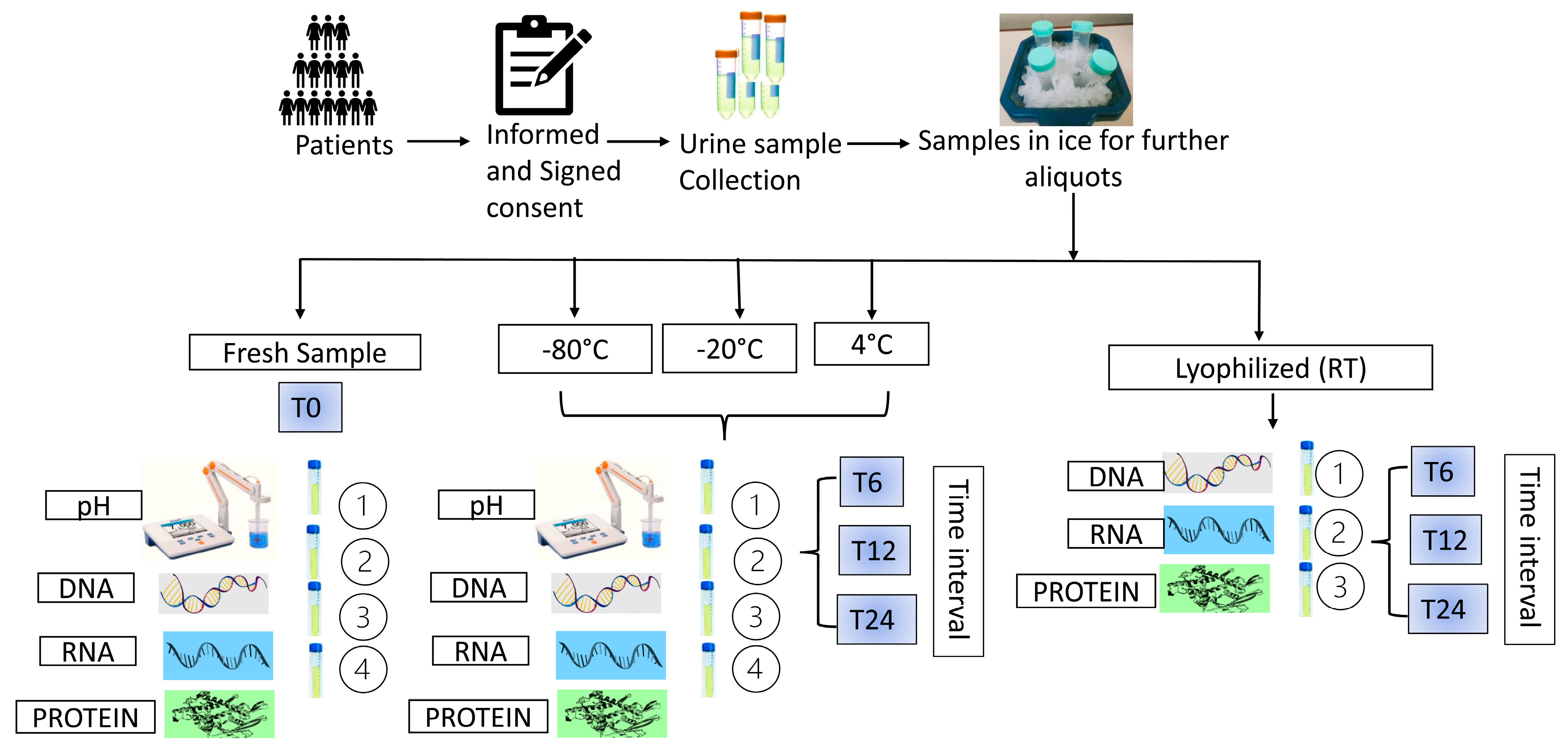
Table S1). Samples were labeled with the patient’s unique id, time and date of collection, and transported from the ward to the lab (10 min away) soon after, on ice. All samples were collected in the ward from patients before surgery. The patients who had catheters inserted were excluded. Within an hour, aliquoted into small sterile vials (2 mL, 5 mL, and 10 mL) to avoid repeated freeze–thaw cycles and store at −80 °C, −20 °C, 4 °C.
2.2. Lyophilization of Urine
To prepare lyophilized samples for storage at room temperature (RT), 10 mL aliquot of urine was transferred to a 50 mL Falcon tube (Cat. No. 14-222-963, Axygen) and then covered with parafilm. Furthermore, urine was frozen at −80 °C temperature and then transferred rapidly to a freeze dryer with a precooled chamber of Lyophilizer (Labconco, Kansas City, MO, USA) and applied high vacuum (0.002 mbar) pressure for 8 to 12 h. The lyophilized sample was weighed and stored at room temperature. For DNA, RNA, and protein isolation, urine powder was reconstituted in nuclease-free water (Cat. No. AM9937, Ambion, Austin, TX, USA), and a standardized uniform final volume was used across all samples for subsequent biomolecule extraction.
2.3. Study Design
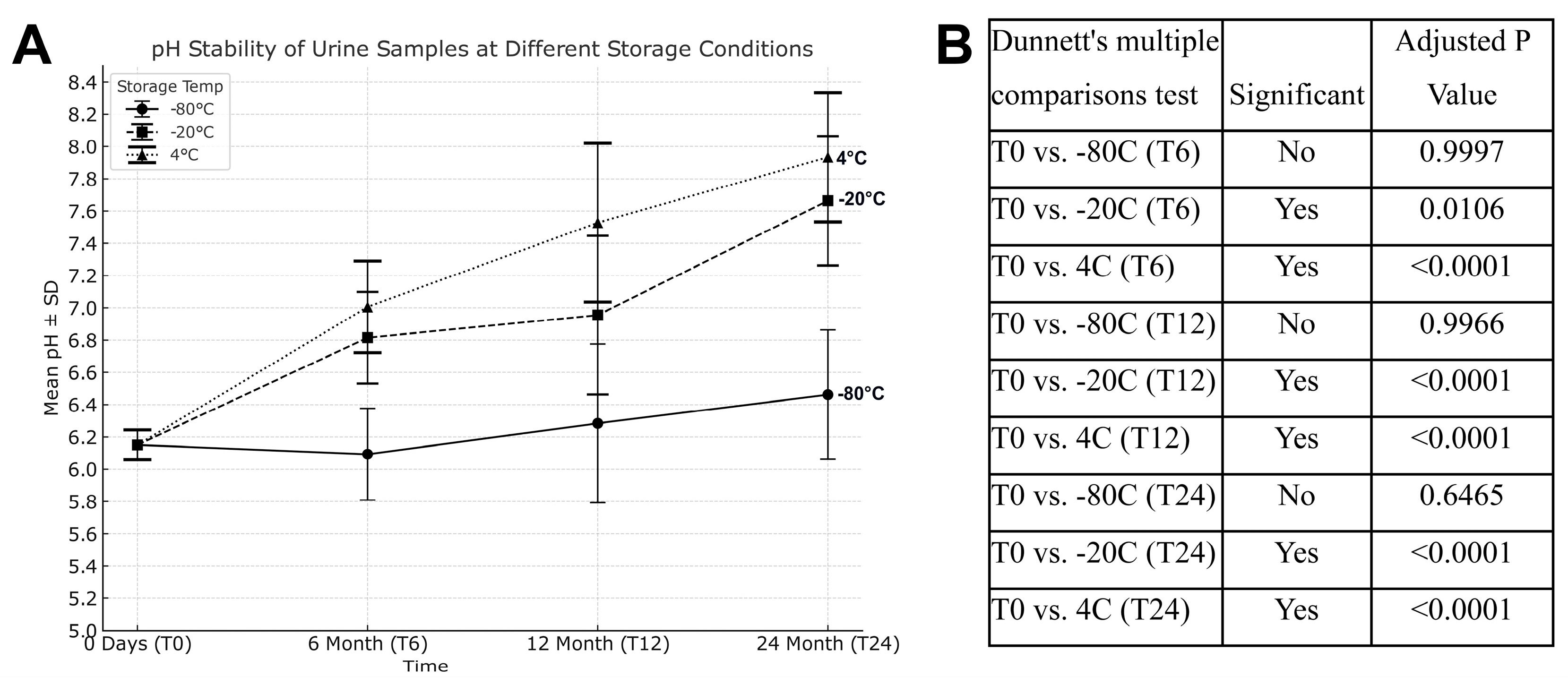
The pH of all 170 samples was measured at the time of collection (T0) (
Supplementary Table S1). Furthermore, pH of samples stored at −80 °C, −20 °C, 4 °C was also measured at three subsequent time points: 6 months (T6), 12 months (T12), and 24 months (T24) of storage in the 20–40 samples. The corresponding sample data for pH, protein, and DNA measurements are provided in
Supplementary Table S2,
Supplementary Table S3, and
Supplementary Tables S4 and S5, respectively.
Only random samples were performed due to sample volume limitations. These analyses were conducted under various storage conditions, including −80 °C, −20 °C, 4 °C, and in lyophilized form at room temperature (RT) (
Figure 1) at different time periods (T0, T6, T12, T24). The number of samples used for testing pH, DNA, RNA, and protein at different storage conditions and time points is summarized in
Table 1.
2.4. Determination of Urine Sample pH
Three 0.5 mL aliquots of the sample were made from the 2 mL aliquot of tube, the cup was filled with one aliquot at a time to be tested, and the pH value was measured using the Benchtop pH/MV Meter (4885-860031-ND, Sper Scientific, Scottsdale, Arizona). The average of the three values was recorded.
2.5. Protein Isolation from Urine
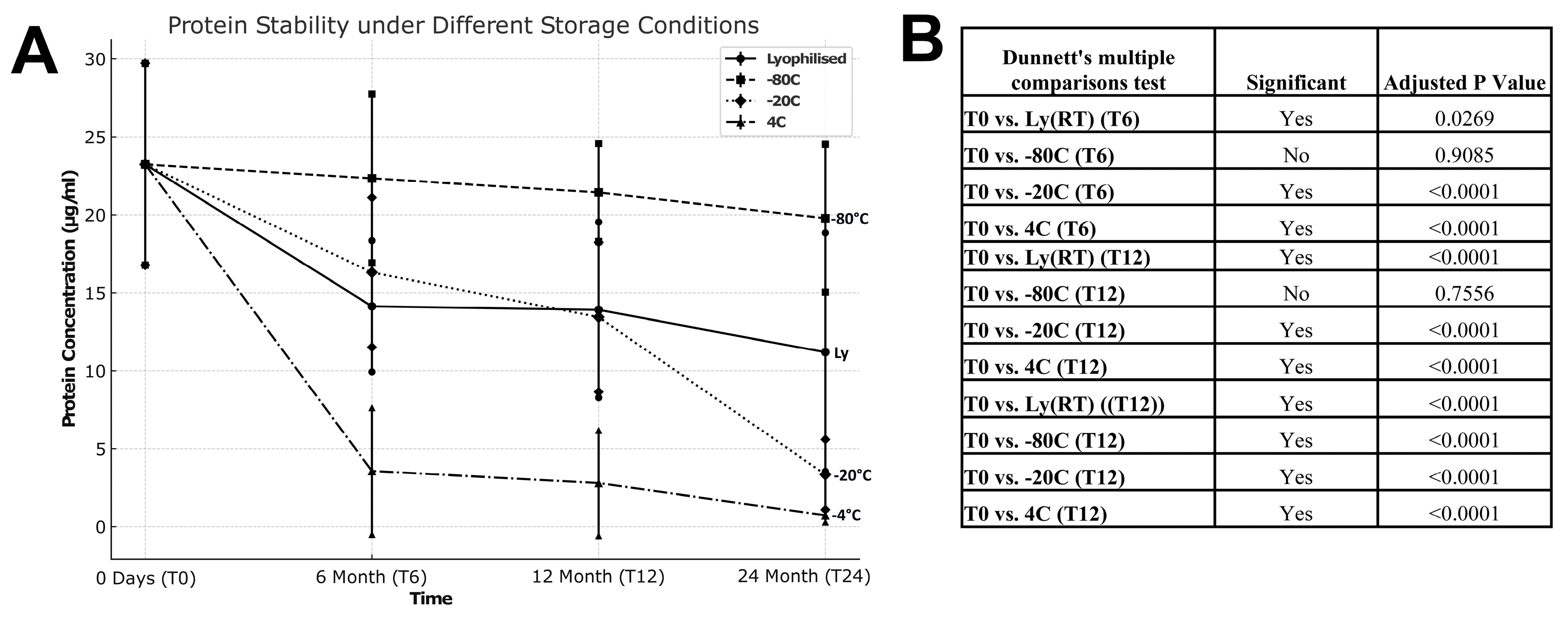
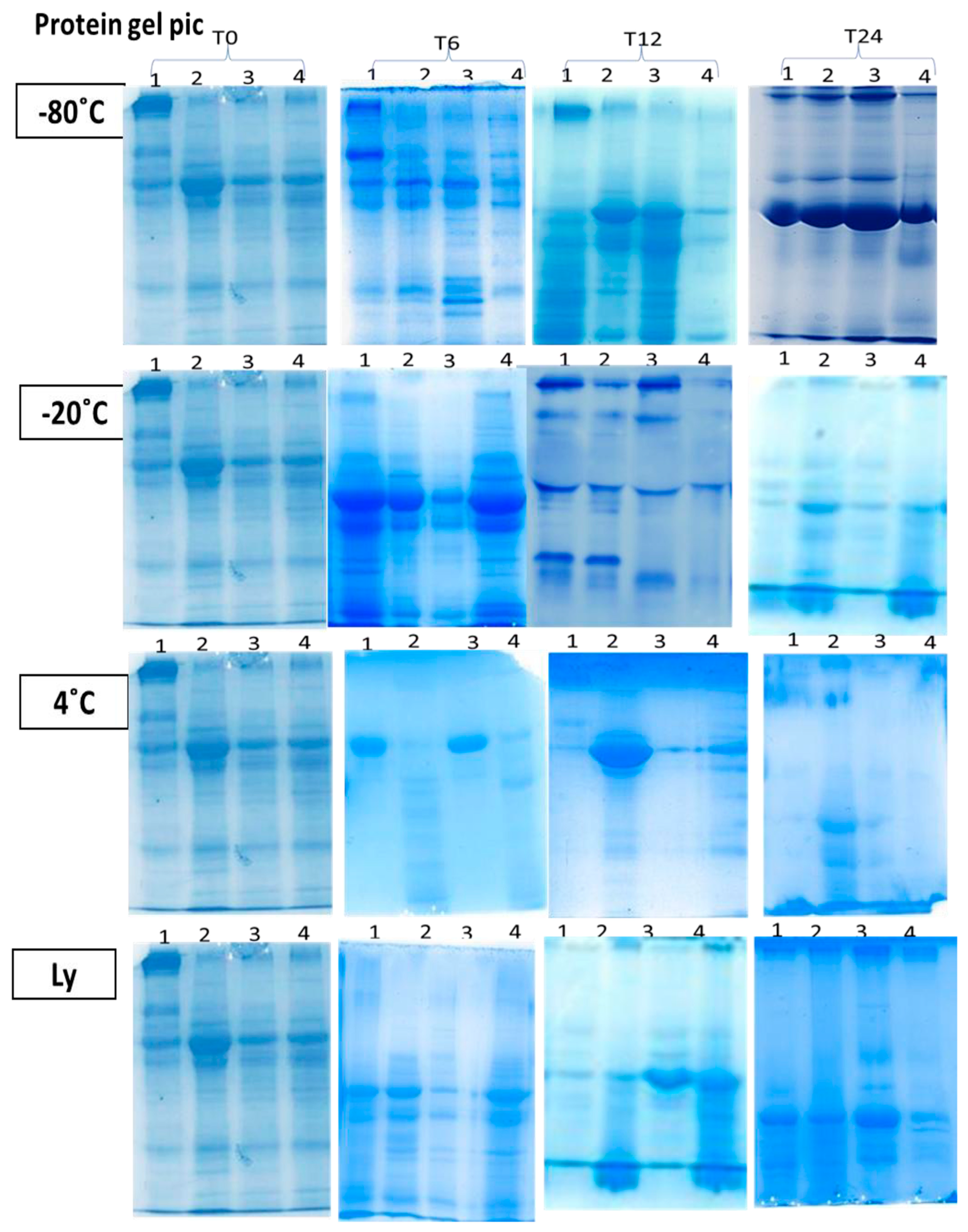
A 5 mL fresh (T0) and aliquot of thawed urine sample were stored at 4 °C, −20 °C, −80 °C (T6, T12, T24) and, in case of lyophilized reconstituted urine, was taken in a 15 mL Falcon tube, and an equal volume of chilled acetone was added to it and incubated overnight at −20 °C. The mixture was centrifuged at 15,000× g, 4 °C for 30 min the next day. The supernatant was discarded carefully so that the pellet was not disturbed. The pellet was washed with ice-cold 1 mL acetone and centrifuged at 7500× g, 4 °C for 5 min. The supernatant was discarded carefully, and the pellet was air-dried at room temperature. The 1X RIPA lysis buffer (Cat. No. 20-188, MERCK, Darmstadt, Germany) was added (200–500 μL according to pellet size). It was then sonicated at 70 Hz, 0.5 cycle, and 30 s until the pellet dissolved completely. It was centrifuged at 10,000× g, 4 °C for 10 min, and the supernatant containing protein was separated in a new 1.5 mL tube, and protease inhibitor (0.1 μL/mL) (Cat. No. 78429, Thermo Scientific, Waltham, MA, USA) was added to it. The quantity and quality were checked with Bicinchoninic Acid (BCA) protein assay kit (Cat No. 23225, Thermo Scientific) assay and SDS-PAGE, respectively. Protein concentration was determined using the BCA method according to the manufacturer’s protocol. Absorbance was measured at a wavelength of 562 nm. Measurements were recorded at the time of sample collection (T0) and after 6 months (T6), 12 months (T12), and 24 months (T24) of storage under different conditions: room temperature (RT, lyophilized), –80 °C, –20 °C, and 4 °C.
2.6. Isolation of DNA from Urine
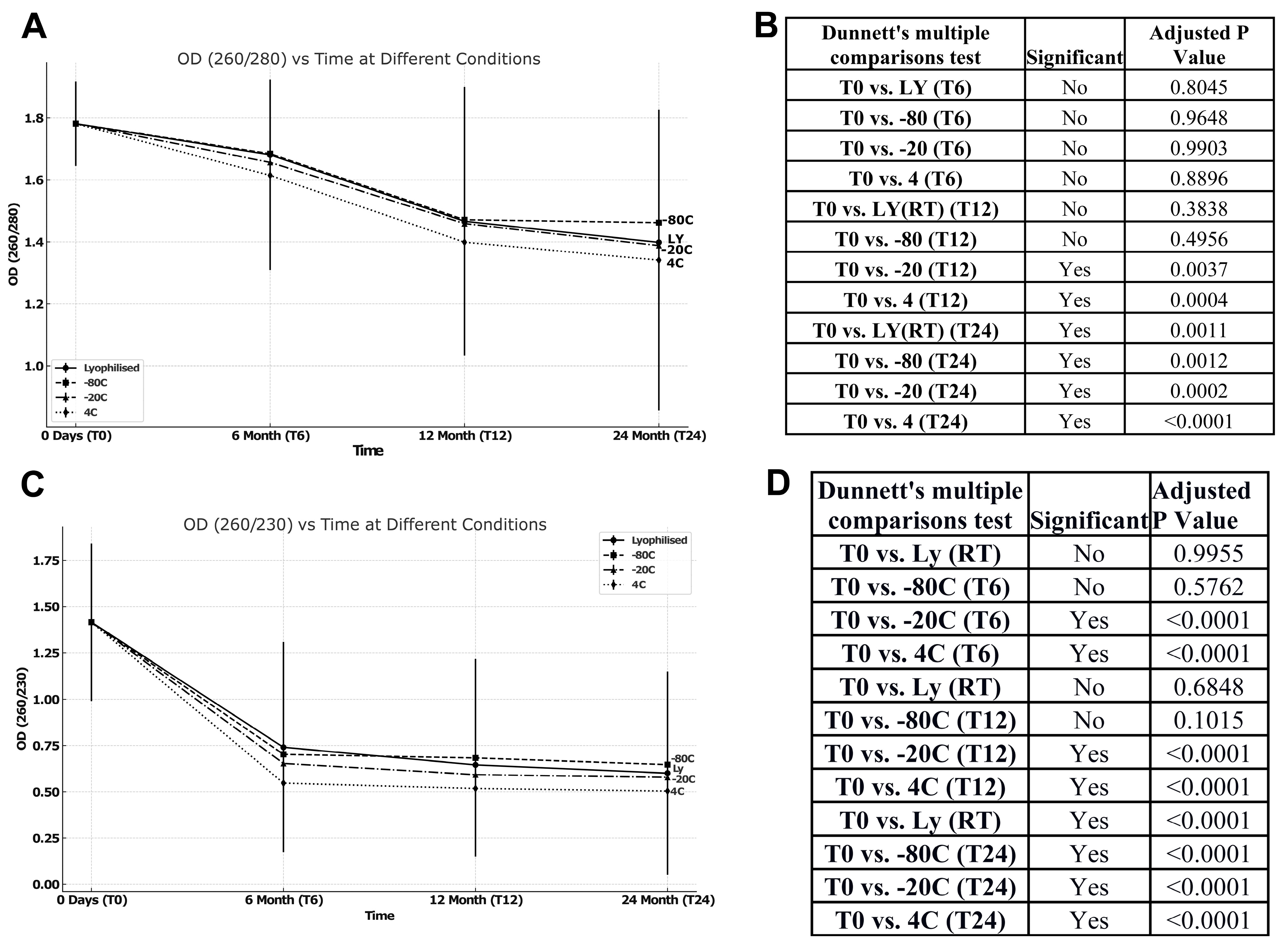
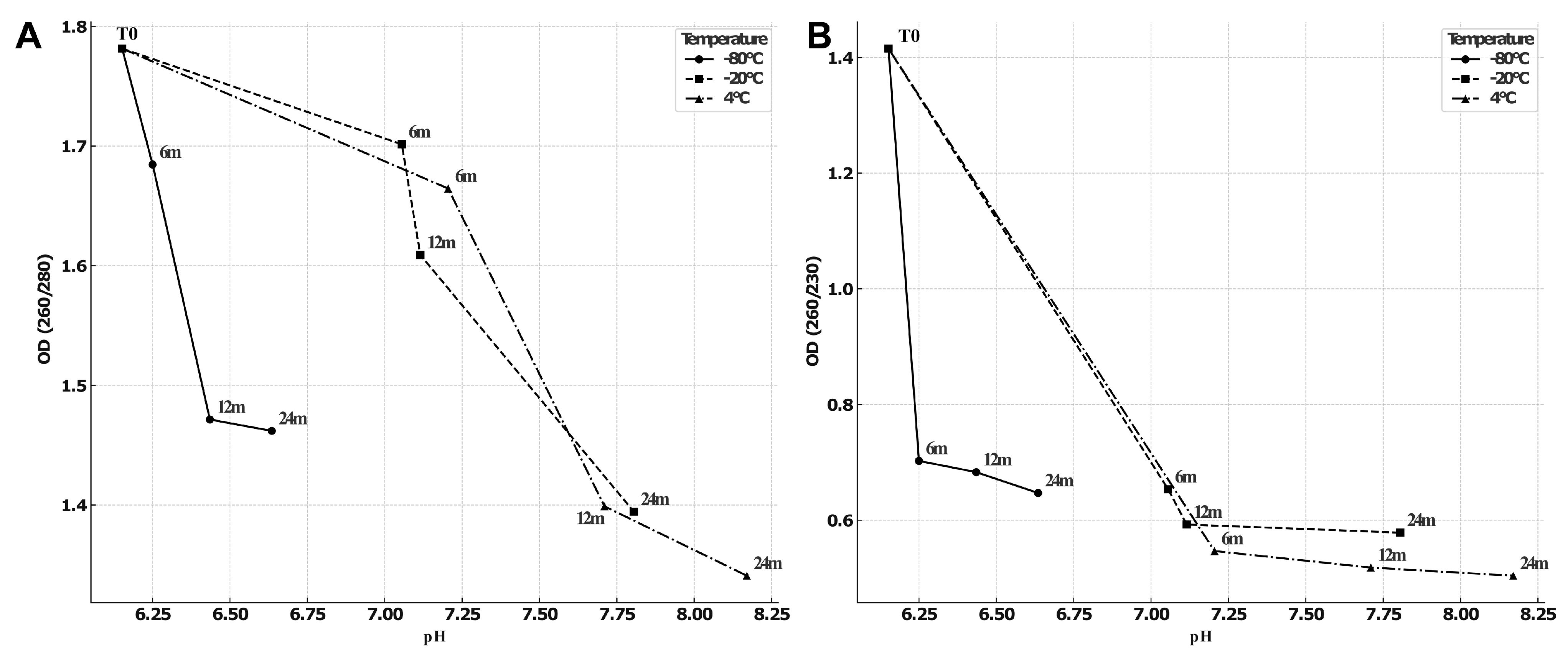
A 5 mL fresh (T0) and aliquot of thawed urine sample stored at 4 °C, −20 °C, −80 °C (T6, T12, T24) were centrifuged at 8000 rpm for 2 min at room temperature (RT). The supernatant was discarded. MilliQ water (1 mL) was added and mixed by pipetting. In the case of the lyophilized urine sample, 0.6 mg was taken in a 2 mL microcentrifuge tube (Cat. No. MCT-200-C, Axygen), dissolved in 1.5 mL MilliQ water, and incubated at 4 °C overnight. The next day, it was centrifuged at 8000 rpm for 2 min at RT. All processed samples were then transferred to an Eppendorf tube, and DNA extraction was performed using the QIAamp DNA Mini Kit (Cat. No. 56304, Qiagen, Venlo, The Netherlands) manufacturer’s protocol. DNA quality was assessed using a NanoDrop 2000 spectrophotometer (Thermo Scientific), where absorbance was measured at 260 nm, 280 nm, and 230 nm. The purity ratios (A260/A280 and A260/A230) were recorded for each sample to evaluate protein and salt contamination, respectively.
2.7. Agarose Gel Electrophoresis
1 g Agarose (Cat. No. MB229, HiMedia, Mumbai, India) was melted in 100 mL TAE (Tris-acetate-EDTA) Buffer (TRIS acetate salt—Cat. No. GRM1217 and EDTA—Cat. No. GRM678, HiMedia) in a hot water bath till the solution became clear. The solution was cooled gradually to about 50–55 °C by swirling the flask occasionally. After cooling, ethidium bromide (EtBr) (Cat. No. 1610433, Bio-Rad, Hercules, CA, USA) was added from a 10 mg/mL stock, so the final concentration in the gel was 0.5 µg/mL. The melted agarose (1%) was poured into assembled casting tray with combs, the comb was pulled out carefully after cooling, and the gel was placed in the electrophoresis chamber (Horizontal Electrophoresis Systems, Bio-Rad). TAE buffer was added to it so that the gel was completely submerged in the buffer. Samples and a 1 kB ladder (Cat. No. 10787018, Invitrogen, Carlsbad, CA, USA) were loaded into the wells and run at 80 Volts. The gel was visualized with the help of the Gel Doc XR+ Gel Documentation System (Bio-Rad).
2.9. Statistical Analyses
Dunnett’s multiple comparison, one-way ANOVA, and Student’s t-test were used for statistical analysis of DNA, RNA, and Protein in GraphPad. p-value < 0.05 was considered statistically significant.
4. Discussion
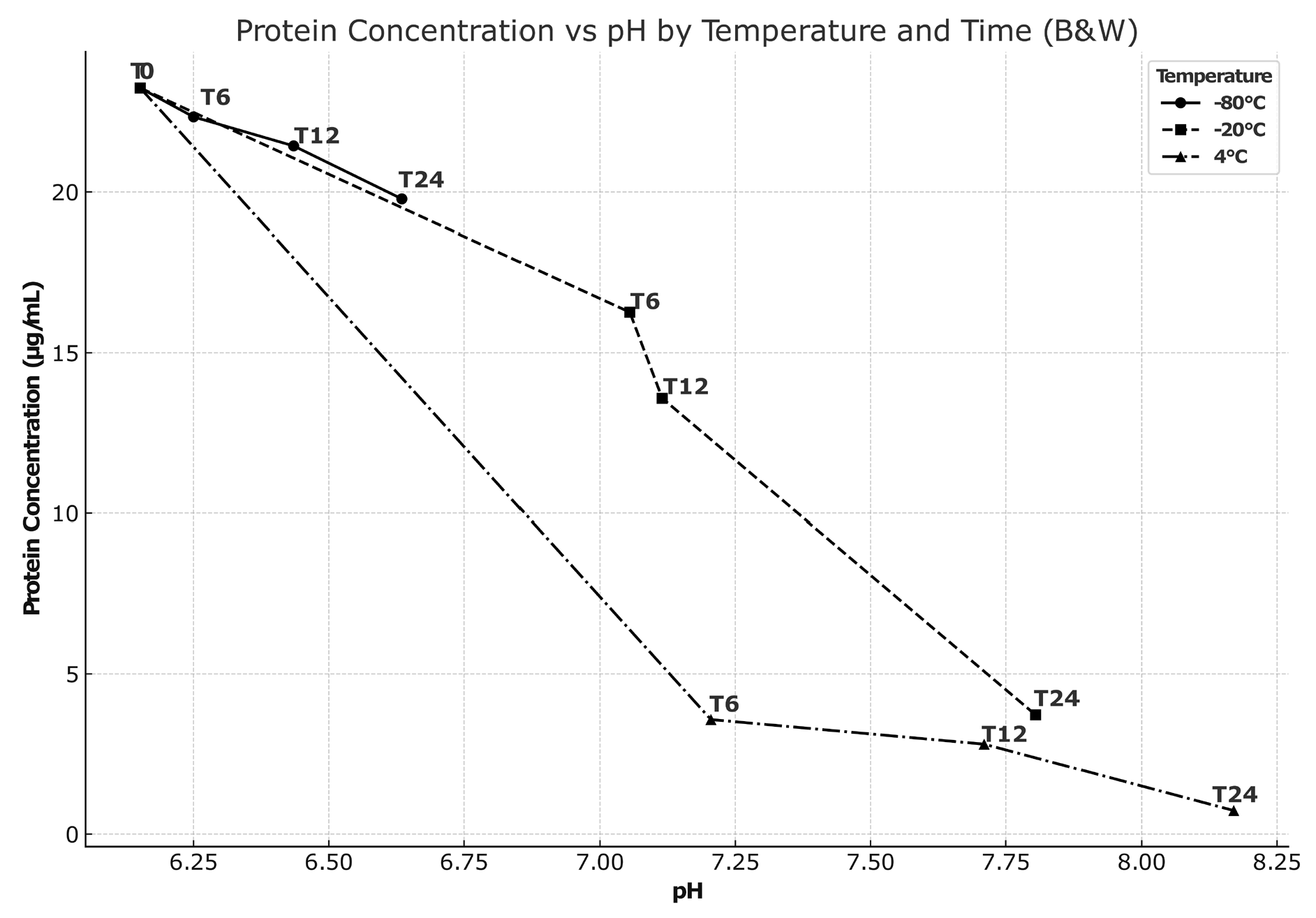
Urine is a good source of biological material, is non-invasive, and reflects the body’s metabolic condition. It has been used for ages as a diagnostic tool for alteration of physical and chemical properties, concentration of metabolites, and for microscopic examination. The present study measured and evaluated the parameters of pH, protein, DNA, and RNA quantity and quality over time in different storage conditions. The urine samples were stored at a temperature of −80 °C, −20 °C, 4 °C, and in lyophilized form at room temperature for up to 2 years without any preservative and were not filtered for bacteria before preservation. pH rose significantly from the time of collection to 6-month testing and became alkaline on storage at −20 °C and 4 °C. The pH of the urine sample was found to be more stable at −80 °C than at −20 °C and 4 °C, which indicates the lower stability of metabolites at these temperatures. A significant drop in protein concentration was seen between the same time points at these same temperatures. On the other hand, it has previously been shown that the quality of metabolites in urine samples stored at −20 °C does not change even after 10 or more years of storage [
14].
Urine is known to degrade rapidly at room temperature, leading to increased alkalinity and the breakdown of nitrogenous compounds [
16]. This rise in pH is attributed primarily to urea hydrolysis into ammonia and bicarbonate, along with the proliferation of bacterial contaminants under ambient conditions [
15,
17,
18,
19]. Such conditions can also result in altered cell morphology [
20]. Even in lyophilized samples, a significant decline in protein concentration has been observed within the first six months of storage, which correlates with a rise in pH. This pH increase might partially stem from changes that occur prior to freezing, due to a delay of about 30 min in transport and aliquoting, although samples were kept on ice during this time. Substantial protein loss was also noted between similar time points at both 4 °C and −20 °C storage conditions. Consequently, it is strongly recommended that urine samples be processed the same day, preferably within four hours of collection, or stored immediately at −80 °C for long-term preservation, up to two years [
21].
Tissues are generally kept in long-term storage at −80 °C and liquid nitrogen (−196 °C) and found to be adequate for downstream applications [
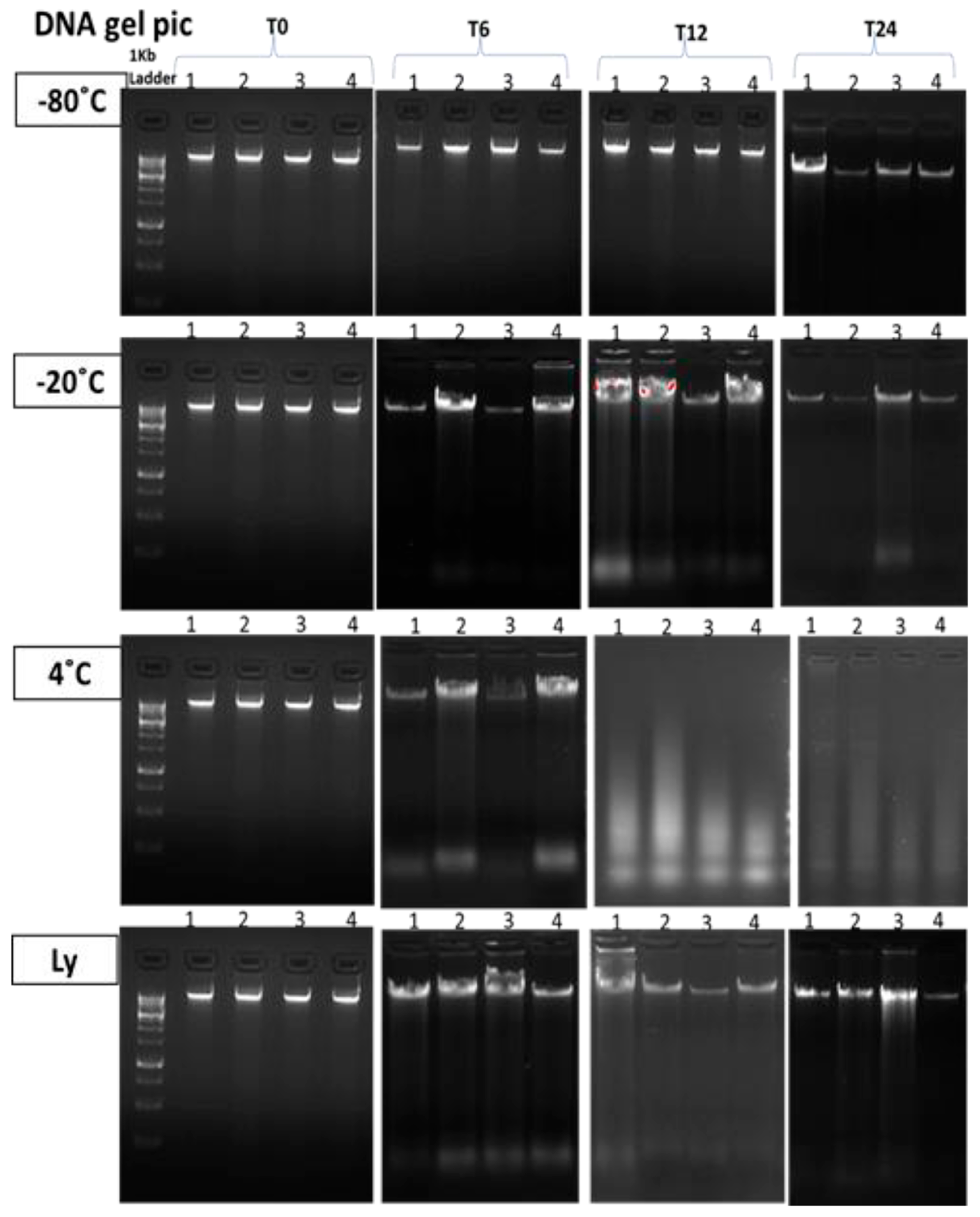
22]. The volume of urine is too high to permit the storage of many samples at these temperatures. The infrastructure costs are high for prolonged storage. The urine samples in the present study showed degradation to be faster and more when stored at 4 °C than at −20 °C, which showed faster degradation than the ones stored at −80 °C. The quality of DNA, measured by absorbance values at 260/280 and 260/230, did not differ significantly, but the gel pictures showed smearing of DNA when stored at 4 °C and −20 °C for one year. Urinary DNA has previously been reported to deteriorate quickly [
23]. The samples of urine which were filtered, dialysed, and concentrated before freeze-drying and storing for prolonged periods at room temperature, and they were reported to yield DNA usable for PCR analysis in 63% cases [
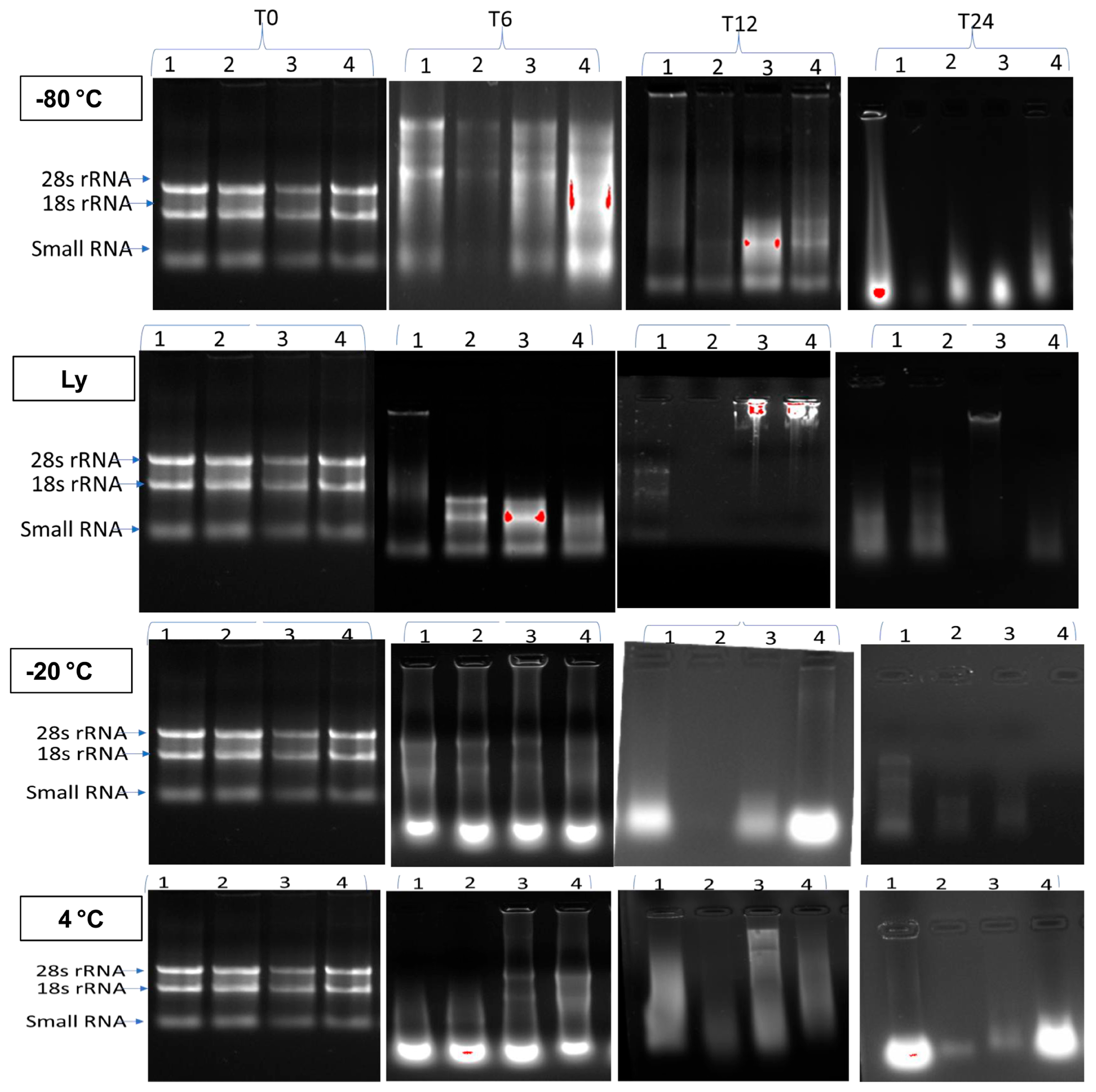
24]. The present study showed deterioration of DNA in lyophilised urine samples stored at room temperature beyond 1 year, but these samples were not filtered or dialysed. RNA was extracted from stored samples but showed degraded bands after six months when stored at 4 °C or −20 °C. However, RNA quality was maintained for six months when stored at −80 °C or when lyophilised and kept at room temperature. It was established that in most cases, lyophilized samples maintained the sample quality, though RNA deteriorated after one year in the stored samples. It is also possible that some amount of deterioration at room temperature is because of fluctuating room temperatures in the laboratory or the geographical location. Since samples stored for any amount of time, even at −80 °C, showed RNA degradation, storing samples in lyophilized form can be considered good practice as the other end-products are ‘fit for purpose’.
Taken together, these data demonstrate that both −80 °C storage and lyophilization provide markedly superior preservation of urinary biomolecules compared with −20 °C and 4 °C storage. The −80 °C condition continues to serve as the gold standard for long-term stability, ensuring minimal degradation of DNA, RNA, and protein over extended periods. However, lyophilization emerges as a compelling alternative, particularly in resource-limited or large-scale biobanking settings, because it permits stable storage at ambient temperature. This eliminates the dependency on costly ultra-low temperature freezers, reduces energy consumption, and simplifies transportation and logistics. Although lyophilization may show some early loss of biomolecule yield, the overall preservation of integrity remains comparable to −80 °C for extended durations. Thus, lyophilization provides a practical, cost-effective, and sustainable approach for biobanking and clinical sample preservation when maintaining −80 °C infrastructure is not feasible. Further study is recommended for longer storage times, urine samples stored directly in liquid nitrogen (−196 °C) to establish the shelf life for each parameter. In conclusion, the results of this study reinforce the critical importance of evidence-based best practices for biofluid biobanking. By identifying the conditions under which urine and potentially other fluids can be stably stored, this research lays the groundwork for improved biobanking standards that ensure biological samples retain their value for future research, diagnostics, and therapeutic development. However, this study was limited to urine samples, which may be extended for future study for other biofluids such as blood, plasma, serum, and cerebrospinal fluid. The practice of lyophilization could extend to other biofluids, such as peritoneal and pleural fluid. At these storage conditions, the suitability of the samples for downstream applications such as high-throughput sequencing still needs to be validated and further explored.




 ,
,