Article

The Effects of Cigarette Smoke and Heated-Tobacco Aerosol on Streptococcus mutans Adhesion and Surface Topography of Dental Hard Tissues In Vitro


1
School of Medicine and Dentistry, Griffith University, Gold Coast, QLD 4222, Australia
2
Oral Biology Department, Faculty of Dentistry, The British University in Egypt, Cairo 11837, Egypt
3
Pharmaceutical Science, Faculty of Pharmacy, Ain Shams University, Cairo 11566, Egypt
*
Author to whom correspondence should be addressed.
Submission received: 7 April 2026 / Revised: 2 May 2026 / Accepted: 29 May 2026 / Published: 4 June 2026

Abstract

Background/Objectives: Methods of smoking have evolved over the years, including heated tobacco products. The impact of exposure to traditional tobacco smoke and heated/electronic tobacco products (IQOS) on biofilm formation has not been previously compared in vitro. Aims and objectives: The present study aimed to evaluate the impact of tobacco and electronic smoking on microbial biofilm formation on dental hard tissues. Materials and Methods: Thirty premolars were randomly assigned to six groups (n = 10 per group) according to tissue type and smoking exposure: Six experimental groups were defined: Group 1, non-exposed enamel; Group 2, enamel subjected to conventional cigarette smoke (CS); Group 3, enamel subjected to heated tobacco (HT); Group 4, non-exposed cementum; Group 5, cementum subjected to conventional cigarette smoke; and Group 6, cementum exposed to heated tobacco. Enamel and root discs were then immersed in 2 mL of an adjusted, standardized bacterial suspension of Streptococcus mutans (S. mutans) to allow bacterial biofilm adhesion after incubation for 48 h at 37 °C. The mean colony-forming unit (CFU) count was calculated, and the surface topography and roughness were assessed using scanning electron microscopy and ImageJ software with the SurfCharJ plugin, respectively. Results: Conventional cigarette smoking showed significantly higher S. mutans adhesion on the enamel and root discs compared with IQOS and control groups. Both IQOS and cigarette smoking increased roughness on enamel and root versus the control group, and cigarette smoking produced significantly higher roughness on the enamel surface when compared to IQOS; however, there were no significant differences in the roughness between the two smoking methods on the root surface. SEM analysis showed the most extensive enamel and root microtopography change in IQOS smoking. Conclusions: Aerosols from heated tobacco products (IQOS) alter the surface topography and roughness of enamel and root, while traditional cigarette smoking significantly increases bacterial colonization. Further in vivo studies are warranted to simulate the dynamic nature of the oral cavity.

1. Introduction

Although smoking is one of the prominent causes of several health problems, alternative nicotine delivery systems have grown exponentially in recent years. As scientific literature continues to emphasize the health risk posed by tobacco consumption, the tobacco industry has reacted by creating new products and marketing strategies that present these devices as safer alternatives and continue consumer nicotine dependence [1]. The rising use and accessibility of new tobacco and nicotine devices, such as e-cigarettes and heated tobacco products like IQOS, have raised similar health issues. Aside from its overall health implications, tobacco use heavily compromises oral health. Smokers are at higher risk of various oral illnesses, including but not limited to oral cancer, mucosal lesions of the oral cavity, periodontal (gum) disease, and dental caries [2].
Cigarette smoking is a major risk factor for multiple bacterial infections, especially those associated with biofilm formation, including chronic periodontitis, bacterial vaginosis, otitis media, and community-acquired pneumonia [3]. Chemical constituents of tobacco smoke and altered bacterial surfaces promote biofilm growth and tolerance, or even increased growth, in many pathogens in response to these substances, such as Staphylococcus aureus, Streptococcus mutans, Klebsiella pneumoniae, Porphyromonas gingivalis, and Pseudomonas aeruginosa [4].
Settlement of dental biofilms occurs in a strongly ordered sequence of colonization. The initial formation of pellicles on the tooth surface provides a site for bacterial attachment. Early adhesion can occur via weak physicochemical forces, which may be followed by strong binding of adhesion receptors. Co-adhesion follows: the secondary colonizers adhere to the pioneer species, and finally, the biofilm matures, with microbial proliferation and possible planktonic cell detachment [5,6].
The extracellular matrix is important for maintaining biofilm stability because it enhances firm attachment to surfaces and provides a homeostatic environment that supports microbial survival. The matrix allows cells to interact cooperatively and to minimize direct competition, as it organizes cells in spatially beneficial locations [7].
It also contributes to biofilm structuring by protecting against desiccation and antimicrobial pressure, fixing nutrients, including cations, and retaining extracellular enzymes, thereby enabling effective substrate breakdown. The biofilms found in the mouth are unique in that most native microorganisms can both synthesize and degrade EPS, making them adaptable organisms. A microcolony is the basic organizational unit at the structural centrality of the biofilm [8].
One significant but neglected perspective is the impact of tobacco smoking on oral microbial biofilm. The chemical composition of cigarette smoke is so complex that it should not be surprising that the complex characteristics of this environmental cue influence microbial physiology in a powerful way, since it is known that the environmental cues, such as pH, temperature, and the availability of iron, regulate bacterial gene expression [9]. Such effects are not limited to tolerance; they also actively influence biofilm formation and pathogenicity. The role of tobacco use is not only to affect human health directly but also to influence the tendencies of microbial populations that cause the infection [10].
Furthermore, harmful chemicals from tobacco smoke directly affect the oral microbiota and induce oral dysbiosis, a shift in bacterial composition, changes in metabolic activity, and alterations in bacterial distribution, with a loss of healthy microbial species. This disruption creates an environment favourable to an overabundance of disease-causing pathogens, which contributes to the progression and development of dental pathologies [11]. Exposure to cigarette smoke condensate has been shown to enhance the expression of adhesion-related genes in Streptococcus mutans, increasing its capacity to form cariogenic biofilms and adhere to dental hard tissues [12]. Additionally, nicotine has been demonstrated to promote biofilm formation and extracellular polysaccharide production, further strengthening biofilm structure and resistance [13].
Beyond single-species effects, smoking also disrupts the balance of the oral microbiome, favouring a shift toward a more pathogenic, dysbiotic community. Studies using high-throughput sequencing have shown that smokers exhibit increased colonization by periodontopathogenic species such as Porphyromonas gingivalis and Fusobacterium nucleatum, alongside reduced microbial diversity [14]. This dysbiosis is associated with enhanced inflammatory responses and increased susceptibility to periodontal disease. Furthermore, cigarette smoke has been shown to impair host immune responses, including neutrophil function and cytokine signalling, which indirectly facilitate biofilm persistence and pathogenicity [3]. Importantly, emerging evidence suggests that e-cigarettes may exert similar, though not identical, effects on microbial adhesion and surface characteristics, indicating that “safer” alternatives are not biologically inert [15].
Collectively, these findings highlight that tobacco not only directly damages oral tissues but also creates a biologically favourable environment for pathogenic biofilm development. This dual effect underscores the importance of incorporating microbial and biofilm-focused perspectives into tobacco-related oral health research and reinforces the need for targeted preventive and therapeutic strategies in smokers. Therefore, this study aimed to evaluate the impact of tobacco and electronic smoking on the surface topography and the microbial biofilm formation on dental hard tissues.

2. Materials and Methods

2.1. Specimens’ Preparation

Ethical approval (FD BUE REC 24-001) of the study was obtained from the Research and Ethics Committee of the Faculty of Dentistry, The British University in Egypt. Thirty intact, non-carious human maxillary premolars extracted for orthodontic purposes were disinfected and used. Sample size was calculated using G*Power (Version 3.1.9.7 for Windows) (power = 80%, α = 0.05) [16]. Written informed consent was obtained from all participants prior to tooth extraction. Participants provided consent for their extracted teeth to be collected and used for research purposes in the present study. Each extracted tooth provided one enamel specimen and one cementum specimen, allowing for a total of sixty specimens to be derived from the thirty premolars collected for the present study. Enamel and cementum specimens were randomly allocated into six groups (n = 10): enamel without smoking exposure; enamel exposed to conventional cigarette smoke (CS); enamel exposed to heated tobacco (HT); cementum without smoking exposure; cementum exposed to CS; and cementum exposed to HT.

2.2. Smoking Protocol

A custom-designed smoking standardization apparatus was utilized in this study [16]. The system incorporated a geared motor calibrated to operate at 2 Hz (two cycles per second). Rotational motion was converted into reciprocating linear displacement (4.5 cm stroke length) using a crankshaft–connecting rod mechanism driving a slider assembly. Suction was generated using a stainless-steel cylinder (12 cm length; 6 cm radius) fitted with a piston, producing a displacement volume of approximately 500 mL, corresponding to a typical tidal volume during smoking.
The test product (conventional cigarette or heated tobacco device) was connected to a unidirectional inlet valve that allowed aerosol intake only, simulating oral inhalation. A second one-way outlet valve enabled controlled exhaust, mimicking nasal exhalation and preventing backflow. The entire system was housed within a temperature- and humidity-controlled chamber consisting of a water reservoir with an integrated heating element and thermal sensor, maintaining conditions at 36.5–37.5 °C and 100% relative humidity to approximate the intraoral environment.
Specimens were positioned on perforated platforms within the chamber to ensure uniform and unobstructed exposure to the generated smoke/aerosol stream across all samples. Conventional cigarettes (LM, Philip Morris International Inc., New Cairo, Egypt) and heated tobacco products (HEETS, Russet Selection, Philip Morris International Inc., Rome, Italy) were used for experimental exposure. Specimens were subjected to either smoke from 600 conventional cigarettes or 600 heated tobacco sticks (HTS), simulating 30 days of smoking in a medium smoker (20 cigarettes per day) [17,18,19].

2.3. Preparation of Bacterial Culture of Streptococcus mutans (S. mutans)

In this study, Streptococcus mutans (ATCC 25175) standard bacterial strains were obtained from the Faculty of Dentistry, Cairo University. These strains were sub-cultured on brain heart agar (Lab M Ltd., Heywood, Greater Manchester, UK) and stored as glycerol stock at −80 °C. An overnight culture of S. mutans was grown on brain heart agar at 37 °C for 48 h. A pure single colony of Streptococcus mutans strain (ATCC 25175) was inoculated into 5 mL of Oxoid™ brain heart infusion broth (Thermo Fisher Scientific, Waltham, MA, USA) supplemented with 2% sucrose (Sigma-Aldrich, St Louis, MO, USA) [20].

2.4. Bacterial Biofilm Formation on the Surfaces of Enamel and Root Discs

The optical density (OD) of the incubated bacterial culture was adjusted to 0.09 at 600 nm using brain heart infusion broth supplemented with 2% of sucrose to reach a bacterial concentration of 107 CFU/mL. The concentration of the S. mutans bacterial culture was obtained using a spectrophotometer (Unicam, Cambridge, UK). The enamel and root discs were placed in Petri plates and autoclaved for 21 min. The sterilized discs were placed into 50 mL Falcon tubes using sterilized forceps. Afterwards, 2 mL aliquots of the adjusted, standardized S. mutans bacterial suspension were pipetted into each Falcon tube to allow bacterial biofilm adhesion. Then, the discs immersed with the bacterial suspension were incubated for 48 h in an incubator (Binder GmbH, Tuttlingen, Germany) [21].

2.5. Assessment of Bacterial Biofilm Detachment from Enamel and Root Disc Surface and Colony-Forming Unit (CFU Counting)

After the incubation period, the discs were aseptically removed from the S. mutans bacterial culture and placed into Falcon tubes using sterile forceps. The enamel and root were rinsed thoroughly with 0.9% saline (El-Nasr Chemicals Co., Giza, Egypt) to remove the non-adherent bacteria. After that, the washed discs were placed in new Falcon tubes filled with 5 mL of 0.9% saline. To harvest adherent S. mutans cells from the surface of discs, the Falcon tubes containing the discs were vigorously vortexed with a sonicator (Acculab, Central Islip, NY, USA) at 30 g for 3 min to disperse the biofilm attached to the discs. The resulting suspension of detached biofilm was two-fold serially diluted to 1:10−6 in 0.9% saline. Dilution of each enamel and root disc was performed in triplicate. The suspension containing the detached biofilm was used to count the colonies. Aliquots of 10 μL of each diluted suspension were plated in duplicate onto brain heart agar. The CFU counts were obtained and reported in CFU/mL. The values of CFU are expressed in Log 10. The protocol mentioned above was also performed on uncultured negative control plates to rule out contamination [22].

2.6. Assessment of Surface Topography (SEM)

Surface topography was evaluated using scanning electron microscopy (SEM) before and after smoke exposure. SEM analysis was performed using a field emission gun environmental scanning electron microscope (FEG-ESEM; Quattro S, Thermo Fisher Scientific, Waltham, MA, USA).

2.7. Assessment of Surface Roughness

Surface roughness parameters were quantified from SEM micrographs using ImageJ software (version 1.54p) (National Institutes of Health, Bethesda, MD, USA) with the SurfCharJ plugin. All images were analyzed to calculate the average surface roughness (Ra) and the root-mean-square roughness (Rq) [23].

2.8. Statistical Analysis

Data were analyzed using GraphPad Prism software (version 11.0.0). The normality of data distribution was assessed using the Shapiro–Wilk test. Descriptive data were presented as mean ± standard deviation (SD). For each outcome variable, including CFU counts expressed as log10 CFU/mL and surface roughness values, comparisons among the three exposure groups within each tissue type were performed using one-way analysis of variance (ANOVA), followed by Tukey’s post hoc multiple-comparison test when a significant difference was detected. The level of statistical significance was set at p < 0.05.

3. Results

3.1. Bacterial Biofilm Formation on Dental Discs and Assessment of Colony-Forming Units (CFU Counting)

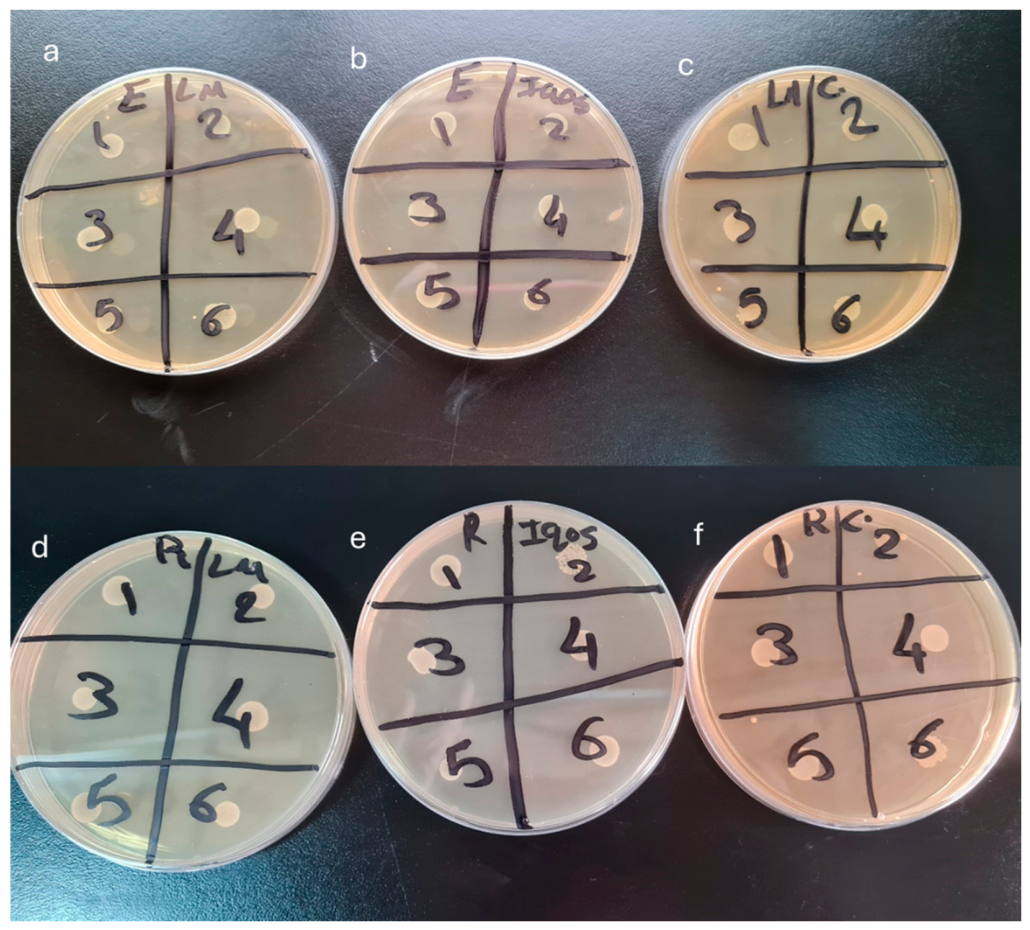
Representative images of enamel and root discs subjected to cigarette smoking and IQOS on brain heart agar showing bacterial biofilm formation are presented in Figure 1. The number of microbes adherent to the biofilm-forming surfaces of enamel discs subjected to cigarette smoking was the highest among the groups, compared with the control group.
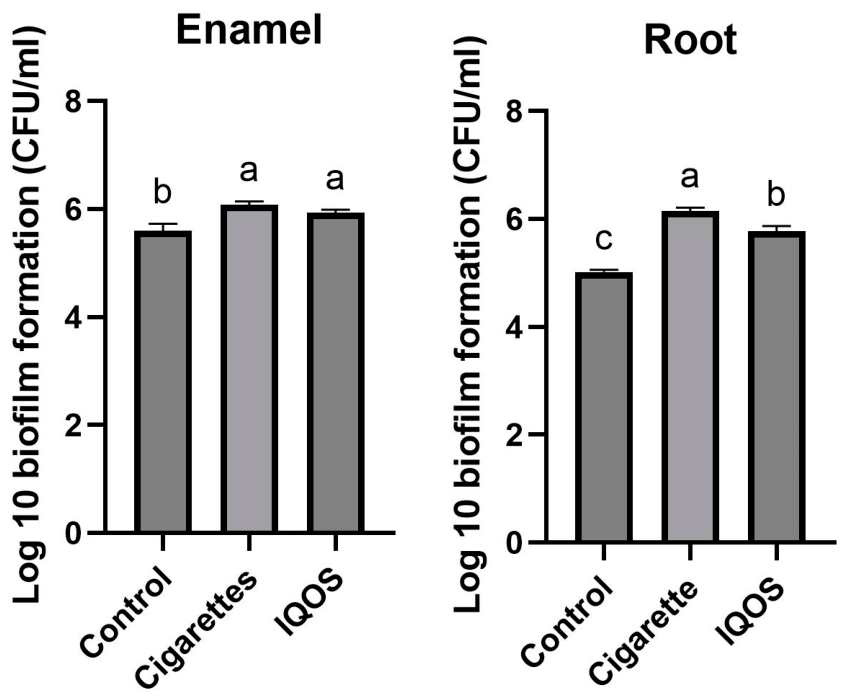
Bacterial growth on enamel discs subjected to IQOS was lower than that on enamel discs subjected to cigarette smoking, but significantly higher (p = 0.007) than the growth on control discs. There was no significant difference (p = 0.2) between conventional (cigarette smoking) and advanced (IQOS) smoking in S. mutans bacterial adhesion, with higher microbial adhesion on the surfaces of enamel and root discs subjected to conventional smoking (cigarette smoking) (Figure 2).
The number of microbes adherent to discs, representing biofilm formation on the surfaces of root discs subjected to cigarette smoking, was significantly higher (p < 0.0001) than that in the control group. Bacterial growth on root discs subjected to IQOS was significantly lower (p = 0.002) than that on root discs subjected to cigarette smoking but significantly higher (p < 0.0001) than the growth on control discs. The highest mean values of colony forming unit were found for the biofilm grown on the root disc subjected to cigarette smoking when compared to the others subjected to cigarette smoking.

3.2. Scanning Electron Microscope (SEM)

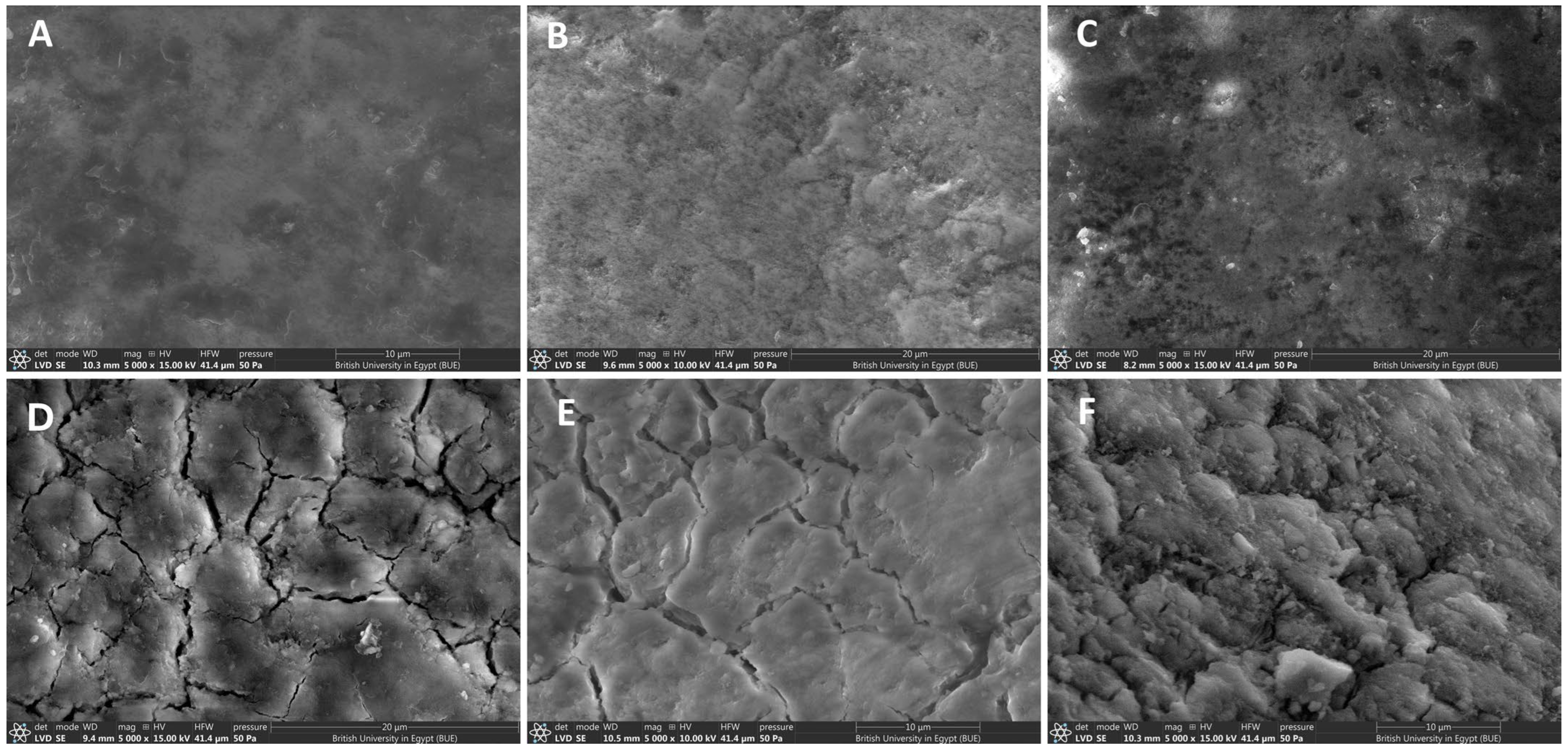
SEM of enamel control surfaces appeared relatively smooth with shallow undulations and minimal debris (Figure 3A). After cigarette smoke, enamel exhibited pronounced granular roughening with scattered pits, micro-islands, and occasional microcracks (Figure 3B). Heated-tobacco aerosol produced a uniformly nodular/particulate condensate layer with deeper valleys and sharper summits across the field (Figure 3C), indicating the most extensive change in enamel microtopography. On root cementum, controls displayed the expected coarse tile-like crack network and broad valleys (Figure 3D). Following cigarette smoke, fissures widened, and ridge borders sharpened with prominent micro-islands (Figure 3E). After heated-tobacco exposure, dense agglomerated deposits formed coating-like ridges that partially obscured the crack pattern (Figure 3F).

3.3. Surface Roughness

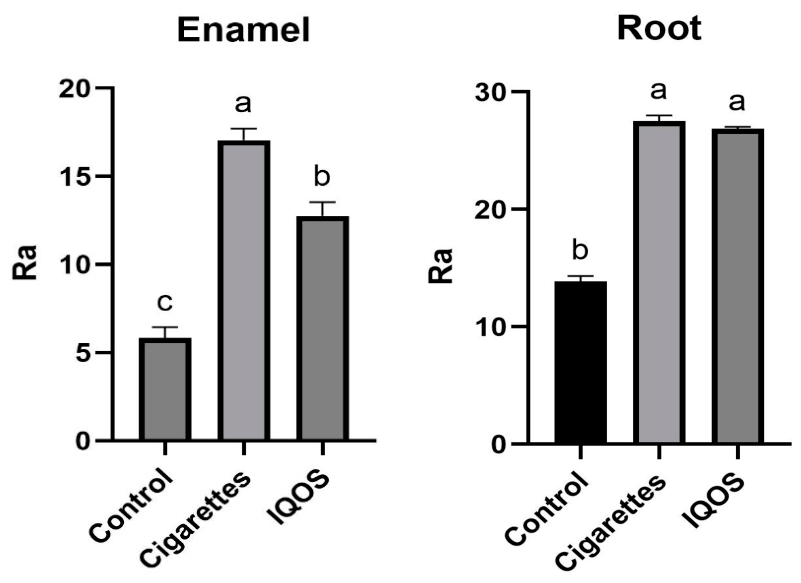
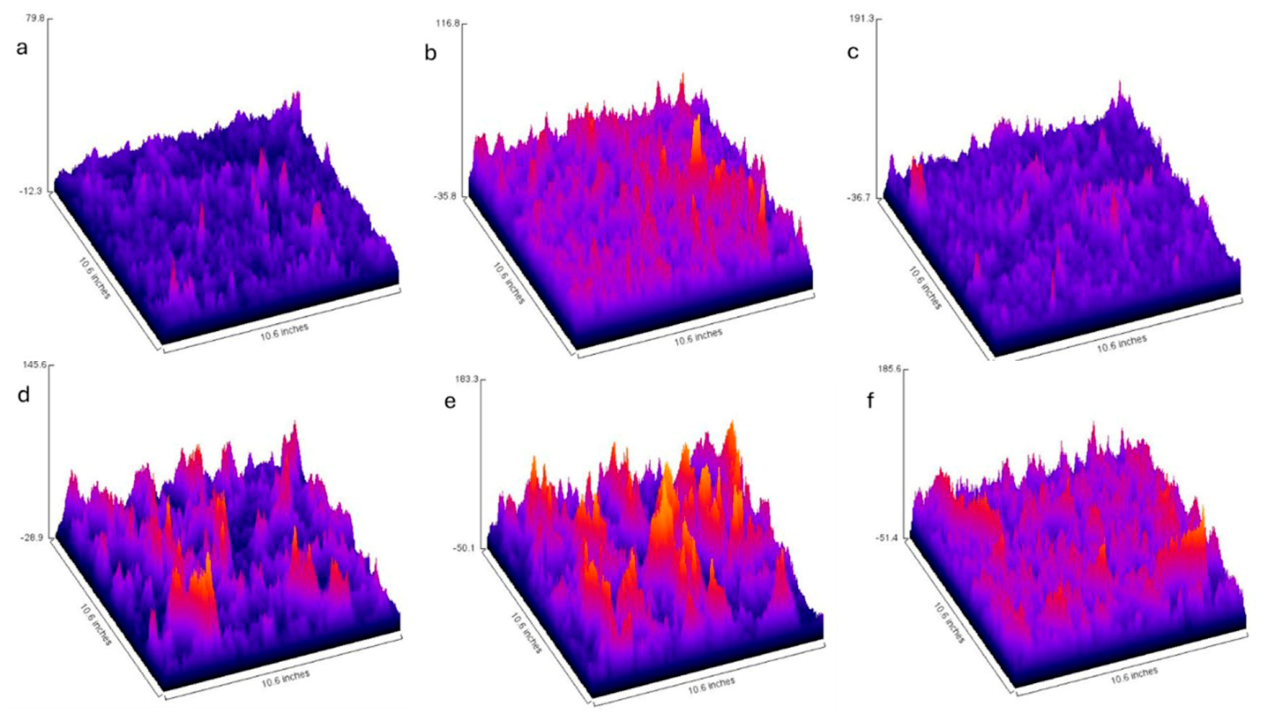
Surface roughness results (Figure 4) showed that both products increased roughness on enamel and root surfaces compared with controls. On enamel, Ra rose from 5.2 (control) to 17.7 with cigarette smoking and 12.7 with IQOS; one-way ANOVA with post hoc testing indicated cigarette smoking > control and IQOS > control (p < 0.001 for both), and cigarette smoking > IQOS (p < 0.0001). On root, Ra increased from 14.3 (control) to 27.8 (cigarette smoking) and 26.4 (IQOS); both cigarette smoking > control and IQOS > control were significantly different (p < 0.001), whereas IQOS vs. cigarette smoking was not significantly different (p = 0.2). The 3D topography maps corroborate these trends, showing a transition from low, evenly distributed micro-peaks in controls to taller, denser summits and deeper valleys after exposure; IQOS produced the most pronounced enamel roughening, whereas cigarette smoking and IQOS generated comparable roughness fields on the root (Figure 5).

4. Discussion

Cigarette consumption is a major risk factor for biofilm-mediated infections, including chronic periodontitis, bacterial vaginosis, otitis media, and community-acquired pneumonia, largely through host–microbe and microbe–surface interactions that favour biofilm growth [3]. We hypothesized that exposure to traditional tobacco smoke (cigarette smoking) and heated/electronic tobacco products (IQOS) would enhance Streptococcus mutans (S. mutans) biofilm formation on dental hard tissues. Consistent with this hypothesis, both cigarette smoking and IQOS exposures increased S. mutans adhesion relative to controls. While cigarette smoking produced only a marginally greater effect on enamel than IQOS, it elicited a significantly greater increase on root surfaces. These findings suggest that conventional cigarette smoke disproportionately promotes colonization on root substrates compared with enamel, highlighting the particular vulnerability of exposed root surfaces in smokers.
Mechanistically, our findings on cigarette smoking align with reports that tobacco constituents, notably nicotine, upregulate S. mutans adhesins, such as antigen I/II (also known as P1), which is anchored by Sortase A and mediates binding to salivary agglutinin, thereby enhancing initial adhesion and biofilm accrual [24,25]. Prior in vitro work has shown dose-dependent increases in S. mutans biofilm formation and metabolic activity with nicotine up to 16 mg/mL [12], and clinical isolate data indicate greater biofilm formation among samples from smokers than from non-smokers [26]. Together, these observations provide a biologically plausible pathway by which exposure to combustible cigarettes augments early S. mutans colonization.
IQOS exposure also significantly increased S. mutans adhesion to both enamel and root, consistent with evidence that nicotine can upregulate early-adhesion machinery, such as glucan-binding proteins (Gbps) and glucosyltransferases (Gtfs), in planktonic cells, thereby facilitating surface attachment. In contrast, it exerts different effects in mature biofilms [12]. Beyond nicotine, e-liquid constituents (e.g., humectants and flavouring agents) have been implicated in promoting microbial adhesion and biomass accumulation; several reports associate glycerin/flavour combinations and viscous-heating aerosols with greater microbial attachment to dental surfaces [27,28,29]. Moreover, IQOS aerosols contain multiple reactive and potentially toxic species, including carbonyls (e.g., acrolein), metals, tobacco-specific nitrosamines (TSNAs), and PAHs, that could alter surface properties or microbial responses [30]. In vitro exposure to e-cigarette aerosols has also been shown to facilitate biofilm growth [31]. While some public-health narratives portray heated tobacco products as lower-risk alternatives [32], our data indicate that their aerosols can nonetheless promote S. mutans adhesion, warranting caution, particularly for individuals with caries risk.
The greater effect on root versus enamel observed for both cigarette smoking and IQOS is biologically reasonable. Root surfaces (cementum/dentin) differ from enamel in composition, porosity, and surface topography; they present a more heterogeneous, retentive substrate for bacterial attachment and biofilm [33,34,35]. Clinically, smokers exhibit higher plaque indices and calculus deposition, especially with combustible products, which likely amplifies bacterial retention and biofilm mass [36]. In addition to tar-rich residues, conventional smoking delivers complex mixtures of nitrosamines, PAHs, and metals that may further condition surfaces to favour adhesion [37]. By contrast, heated tobacco products may emit fewer combustion by-products yet still generate viscous aerosols and bioactive chemicals sufficient to increase early adhesion—consistent with our IQOS findings. Importantly, the present results pertain to early S. mutans colonization and should not be over-generalized to whole microbiome “dysbiosis” without multispecies or clinical corroboration [16,38].
In our samples, surface roughness (Ra) increased after exposure to both enamel and root substrates. The findings are consistent with the well-established principle that rougher oral surfaces retain more plaque/bacteria by increasing protected niches and effective contact area for microbial attachment. Classic reviews demonstrate that increases in surface roughness, together with changes in surface free energy, elevate early bacterial adhesion and biofilm formation on intraoral substrates.
At the same time, roughness alone did not fully account for differences in adhesion. Although IQOS produced the greatest enamel roughening, S. mutans counts showed cigarette smoking was only marginally higher (or comparable) on enamel, and cigarette smoking exceeded IQOS on root, despite near-identical Ra. This pattern aligns with reports that S. mutans adhesion depends on both topography and surface chemistry/wettability, which tobacco aerosols and residues can alter.
Mechanistically, constituents common to cigarette smoke and heated-tobacco aerosols (e.g., nicotine, carbonyls such as acrolein, and other reactive species) can modulate S. mutans adhesins and the early-adhesion machinery (e.g., antigen I/II anchored by Sortase A; glucan-binding proteins and glucosyltransferases), enhancing initial attachment and biomass—even when pure roughness changes are similar. Reviews of heated-tobacco emissions further document the presence of carbonyls, metals, and tobacco-specific nitrosamines in IQOS aerosols, which could condition enamel/dentin surfaces and affect pellicle behaviour and bacterial hydrophobicity. In parallel, e-liquid humectants and flavourings have been associated with increased microbial adhesion and biofilm formation, as well as changes in bacterial cell-surface hydrophobicity, supporting our observation that chemistry and condensate properties co-determine adhesion beyond Ra alone.
A strength of our study is the side-by-side comparison of cigarette smoking and IQOS on both enamel and root substrates, using standardized in vitro exposure and quantification. However, several limitations should be acknowledged. Firstly, this is a mono-species (S. mutans) model of early adhesion; multispecies biofilms and salivary pellicle dynamics were not assessed, and ecological interactions (e.g., with S. sanguinis) may modulate net effects [24]. This limits the ecological relevance of the results, as oral biofilms are inherently multispecies communities with interdependent microbial interactions that can alter adhesion and pathogenicity. Furthermore, surface physicochemical changes (e.g., roughness, wettability) were not measured pre- and post-exposure; such parameters could help explain the enamel–root differential. The in vitro design does not fully replicate the complex and dynamic conditions of the oral environment, where factors such as salivary flow, acquired pellicle formation, host immune responses, and mechanical shear forces significantly influence biofilm development. In addition to the above, although a standardized smoking protocol was employed, the exposure conditions may not accurately reflect real-life patterns of tobacco use, including variations in puff frequency, duration, as well as individual differences in tobacco consumption and exposure levels. Additionally, surface characterization was limited and relied on SEM-derived analysis and ImageJ-based roughness measurements without complementary techniques (e.g., profilometry or contact angle analysis) to assess surface free energy, wettability, and the chemical composition of deposited residues, which are known to influence bacterial adhesion beyond roughness alone. The relatively small sample size (n = 10 per group) may also limit statistical power and generalizability of the results. Finally, the absence of long-term or in vivo validation restricts the ability to translate these findings to clinical outcomes, particularly regarding the progression from initial adhesion to mature biofilm formation and disease development. The short incubation period did not allow for evaluation of the long-term biofilm maturation or the effects of repeated exposure cycles, which are critical for understanding chronic oral disease processes.
Future studies should incorporate standardized pellicle formation and multispecies communities, quantify deposited aerosol constituents per unit area, and couple CFU counts with surface roughness/wettability and imaging-based biomass metrics to clarify mechanisms underlying product- and substrate-specific effects.

5. Conclusions

Our data suggest that both conventional and heated tobacco exposure can enhance early S. mutans adhesion to dental tissues, with a particularly pronounced effect on root surfaces. This underscores the importance of tobacco cessation counselling and intensified root-surface caries prevention for users of any tobacco product.

Author Contributions

Conceptualisation, M.M.B. and M.A.A.; methodology, M.S., S.M. and M.A.A.; software, M.S., N.T. and M.A.A.; investigation, M.M.B., M.S., N.T., S.M. and M.A.A.; resources, M.M.B. and M.A.A.; data curation, M.A.A. and M.S.; writing—original draft preparation, M.M.B., M.S. and M.A.A.; writing—review and editing, M.M.B., M.S., N.T., S.M. and M.A.A.; supervision, M.M.B. and M.A.A. All authors have read and agreed to the published version of the manuscript.

Funding

This research received no external funding.

Institutional Review Board Statement

This study was conducted in accordance with the Declaration of Helsinki and approved by the Research and Ethics Committee of the Faculty of Dentistry, The British University in Egypt. [FD BUE REC 24-001; 10 January 2024].

Informed Consent Statement

Informed consent for participation was obtained from all subjects involved in the study.

Data Availability Statement

The work includes all the original contributions made, and any additional questions can be forwarded to the corresponding author.

Conflicts of Interest

The authors declare no conflicts of interest.

References

  1. Kim, S.C.; Friedman, T.C. A New Ingenious Enemy: Heat-Not-Burn Products. Tob. Use Insights 2022, 15, 1179173X221076419. [Google Scholar] [CrossRef]
  2. Gajendra, S.; McIntosh, S.; Ghosh, S. Effects of tobacco product use on oral health and the role of oral healthcare providers in cessation: A narrative review. Tob. Induc. Dis. 2023, 21, 12. [Google Scholar] [CrossRef] [PubMed]
  3. Bagaitkar, J.; Demuth, D.R.; Scott, D.A. Tobacco use increases susceptibility to bacterial infection. Tob. Induc. Dis. 2008, 4, 12. [Google Scholar] [CrossRef] [PubMed]
  4. Hutcherson, J.A.; Scott, D.A.; Bagaitkar, J. Scratching the surface—Tobacco-induced bacterial biofilms. Tob. Induc. Dis. 2015, 13, 1. [Google Scholar] [CrossRef] [PubMed]
  5. Lv, C.; Wang, Z.; Li, Z.; Shi, X.; Xiao, M.; Xu, Y. Formation, architecture, and persistence of oral biofilms: Recent scientific discoveries and new strategies for their regulation. Front. Microbiol. 2025, 16, 1602962. [Google Scholar] [CrossRef]
  6. Marsh, P.D. Dental plaque as a biofilm and a microbial community—Implications for health and disease. BMC Oral Health 2006, 6, S14. [Google Scholar] [CrossRef]
  7. Jakubovics, N.S.; Goodman, S.D.; Mashburn-Warren, L.; Stafford, G.P.; Cieplik, F. The dental plaque biofilm matrix. Periodontology 2000 2021, 86, 32–56. [Google Scholar] [CrossRef]
  8. Socransky, S.S.; Haffajee, A.D. Dental biofilms: Difficult therapeutic targets. Periodontology 2000 2002, 28, 12–55. [Google Scholar] [CrossRef]
  9. Wakabayashi, H.; Yamauchi, K.; Kobayashi, T.; Yaeshima, T.; Iwatsuki, K.; Yoshie, H. Inhibitory effects of lactoferrin on growth and biofilm formation of Porphyromonas gingivalis and Prevotella intermedia. Antimicrob. Agents Chemother. 2009, 53, 3308–3316. [Google Scholar] [CrossRef]
  10. Huang, C.; Shi, G. Smoking and microbiome in oral, airway, gut and some systemic diseases. J. Transl. Med. 2019, 17, 225. [Google Scholar] [CrossRef]
  11. Senaratne, N.L.M.; Yung On, C.; Shetty, N.Y.; Gopinath, D. Effect of different forms of tobacco on the oral microbiome in healthy adults: A systematic review. Front. Oral Health 2024, 5, 1310334. [Google Scholar] [CrossRef]
  12. Huang, R.; Li, M.; Gregory, R.L. Effect of nicotine on growth and metabolism of Streptococcus mutans. Eur. J. Oral Sci. 2012, 120, 319–325. [Google Scholar] [CrossRef]
  13. Wu, J.; Li, M.; Huang, R. The effect of smoking on caries-related microorganisms. Tob. Induc. Dis. 2019, 17, 32. [Google Scholar] [CrossRef] [PubMed]
  14. Wu, J.; Peters, B.A.; Dominianni, C.; Zhang, Y.; Pei, Z.; Yang, L.; Ma, Y.; Purdue, M.P.; Jacobs, E.J.; Gapstur, S.M.; et al. Cigarette smoking and the oral microbiome in a large study of American adults. ISME J. 2016, 10, 2435–2446. [Google Scholar] [CrossRef] [PubMed]
  15. Ganesan, S.M.; Dabdoub, S.M.; Nagaraja, H.N.; Scott, M.L.; Pamulapati, S.; Berman, M.L.; Shields, P.G.; Wewers, M.E.; Kumar, P.S. Adverse effects of electronic cigarettes on the disease-naive oral microbiome. Sci. Adv. 2020, 6, eaaz0108. [Google Scholar] [CrossRef]
  16. Al Ankily, M.; Makkeyah, F.; Bakr, M.M.; Shamel, M. Evaluating the Effects of Cigarette Smoking and Heated Tobacco Products on Hard Dental Tissues: A Comparative Histological and Colorimetric Analysis. Clin. Exp. Dent. Res. 2024, 10, e941. [Google Scholar] [CrossRef]
  17. El Shafei, S.F.; Amin, A.H.; Abdelghaffar, E.G.; Moataz, S.; Makkeyah, F.; Shamel, M.; Al Ankily, M. The effect of cigarette smoking and heated tobacco products on different denture materials; an in vitro study. BMC Oral Health 2025, 25, 179. [Google Scholar] [CrossRef]
  18. Makkeyah, F.; El Sergany, O.; Shamel, M.; Al Ankily, M. Effect of conventional cigarette smoking and recent heated tobacco products on CAD/CAM restorative materials. BMC Oral Health 2024, 24, 765. [Google Scholar] [CrossRef]
  19. Salama, M.S.; Botros, S.A.; Makkeyah, F.; Shamel, M.; Ankily, M.A. Effect of smoking and finishing and polishing protocol on color stability and surface roughness of resin composite. BMC Oral Health 2025, 25, 1875. [Google Scholar] [CrossRef]
  20. Zayed, S.M.; Aboulwafa, M.M.; Hashem, A.M.; Saleh, S.E. Biofilm formation by Streptococcus mutans and its inhibition by green tea extracts. AMB Express 2021, 11, 73. [Google Scholar] [CrossRef] [PubMed]
  21. Poker, B.C.; Oliveira, V.C.; Macedo, A.P.; Goncalves, M.; Ramos, A.P.; Silva-Lovato, C.H. Evaluation of surface roughness, wettability and adhesion of multispecies biofilm on 3D-printed resins for the base and teeth of complete dentures. J. Appl. Oral Sci. 2024, 32, e20230326. [Google Scholar] [CrossRef]
  22. Hamza, B.; Eliades, T.; Attin, T.; Schwendener, S.; Karygianni, L. Initial bacterial adherence and biofilm formation on novel restorative materials used in paediatric dentistry. Dent. Mater. 2024, 40, 573–579. [Google Scholar] [CrossRef]
  23. Mendes, G.N.; Floresta, L.G.; Takeshita, W.M.; Brasileiro, B.F.; Trento, C.L. The Application of ImageJ Software for Roughness Analysis of Dental Implants. J. Imaging Inform. Med. 2025, 38, 1812–1819. [Google Scholar] [CrossRef]
  24. Li, M.; Huang, R.; Zhou, X.; Zhang, K.; Zheng, X.; Gregory, R.L. Effect of nicotine on dual-species biofilms of Streptococcus mutans and Streptococcus sanguinis. FEMS Microbiol. Lett. 2014, 350, 125–132. [Google Scholar] [CrossRef] [PubMed]
  25. Li, M.Y.; Huang, R.J.; Zhou, X.D.; Gregory, R.L. Role of sortase in Streptococcus mutans under the effect of nicotine. Int. J. Oral Sci. 2013, 5, 206–211. [Google Scholar] [CrossRef]
  26. Goldstein-Daruech, N.; Cope, E.K.; Zhao, K.Q.; Vukovic, K.; Kofonow, J.M.; Doghramji, L.; González, B.; Chiu, A.G.; Kennedy, D.W.; Palmer, J.N.; et al. Tobacco smoke mediated induction of sinonasal microbial biofilms. PLoS ONE 2011, 6, e15700. [Google Scholar] [CrossRef]
  27. Cuadra, G.A.; Smith, M.T.; Nelson, J.M.; Loh, E.K.; Palazzolo, D.L. A Comparison of Flavorless Electronic Cigarette-Generated Aerosol and Conventional Cigarette Smoke on the Survival and Growth of Common Oral Commensal Streptococci. Int. J. Environ. Res. Public Health 2019, 16, 1669. [Google Scholar] [CrossRef] [PubMed]
  28. Fairchild, R.; Setarehnejad, A. Erosive potential of commonly available vapes: A cause for concern? Br. Dent. J. 2021, 231, 487–491. [Google Scholar] [CrossRef] [PubMed]
  29. Zhang, Q.; Wen, C. The risk profile of electronic nicotine delivery systems, compared to traditional cigarettes, on oral disease: A review. Front. Public Health 2023, 11, 1146949. [Google Scholar] [CrossRef]
  30. Uguna, C.N.; Snape, C.E. Should IQOS Emissions Be Considered as Smoke and Harmful to Health? A Review of the Chemical Evidence. ACS Omega 2022, 7, 22111–22124. [Google Scholar] [CrossRef]
  31. Rouabhia, M.; Semlali, A. Electronic cigarette vapor increases Streptococcus mutans growth, adhesion, biofilm formation, and expression of the biofilm-associated genes. Oral Dis. 2021, 27, 639–647. [Google Scholar] [CrossRef] [PubMed]
  32. Tompkins, C.N.E.; Burnley, A.; McNeill, A.; Hitchman, S.C. Factors that influence smokers’ and ex-smokers’ use of IQOS: A qualitative study of IQOS users and ex-users in the UK. Tob. Control 2021, 30, 16–23. [Google Scholar] [CrossRef] [PubMed]
  33. Rudiger, S.G.; Dahlen, G.; Carlen, A. Protein and bacteria binding to exposed root surfaces and the adjacent enamel surfaces in vivo. Swed. Dent. J. 2015, 39, 11–22. [Google Scholar]
  34. Shahmoradi, M.; Bertassoni, L.; Elfallah, H.; Swain, M. Fundamental Structure and Properties of Enamel, Dentin and Cementum. In Advances in Calcium Phosphate Biomaterials; Ben-Nissan, B., Ed.; Springer: Berlin/Heidelberg, Germany, 2014; pp. 511–547. [Google Scholar]
  35. Yu, O.Y.; Zhao, I.S.; Mei, M.L.; Lo, E.C.; Chu, C.H. Dental Biofilm and Laboratory Microbial Culture Models for Cariology Research. Dent. J. 2017, 5, 21. [Google Scholar] [CrossRef]
  36. Surdu, A.; Trifan, D.; Foia, C.; Sufaru, I.-G.; Cioloca, D.; Scutariu, M. Impact of smoking on oral status in young adults: A comparative analysis between conventional cigarettes and heated tobacco products. Rom. J. Oral Rehabil. 2025, 17, 411–419. [Google Scholar] [CrossRef]
  37. Wang, L.; Wang, Y.; Chen, J.; Liu, P.; Li, M. A Review of Toxicity Mechanism Studies of Electronic Cigarettes on Respiratory System. Int. J. Mol. Sci. 2022, 23, 5030. [Google Scholar] [CrossRef]
  38. Liberati, A.; Altman, D.G.; Tetzlaff, J.; Mulrow, C.; Gotzsche, P.C.; Ioannidis, J.P.; Clarke, M.; Devereaux, P.J.; Kleijnen, J.; Moher, D. The PRISMA statement for reporting systematic reviews and meta-analyses of studies that evaluate health care interventions: Explanation and elaboration. J. Clin. Epidemiol. 2009, 62, e1–e34. [Google Scholar] [CrossRef]
Figure 1. Bacterial biofilm formation with its serial dilution on brain heart agar on (ac) Enamel: (a) control, (b) cigarette smoking exposure, (c) IQOS exposure. (df) Root: (d) control, (e) cigarette smoking exposure, (f) IQOS exposure.
Oral 06 00069 g001
Figure 2. Colony-forming unit developed by S. mutans on different enamel and root groups subjected to cigarette smoking and IQOS, showing different degrees of biofilm formation compared to that of the control. Different letters indicate a significant difference between groups (p < 0.05).
Oral 06 00069 g002
Figure 3. SEM micrographs of enamel and root surfaces (×5000). (AC) Enamel: (A) control—smooth, shallow undulations; (B) after combustible cigarette smoke—granular roughening with pits/microcracks; (C) after heated-tobacco aerosol—dense nodular/particulate deposits and deeper valleys (most pronounced enamel change). (DF) Root (cementum/dentin): (D) control—coarse crack-network topography; (E) after combustible smoke—widened fissures and sharper ridges; (F) after heated-tobacco aerosol—agglomerated condensates forming coating-like ridges.
Oral 06 00069 g003
Figure 4. Surface roughness (Ra, µm) of enamel and cementum/root after tobacco exposures. Different letters indicate a significant difference between groups (p < 0.05).
Oral 06 00069 g004
Figure 5. Three-dimensional surface topography (10.6 × 10.6 units scan) of enamel and root substrates. (ac) Enamel: (a) control, (b) cigarette smoking exposure, (c) IQOS exposure. (df) Root: (d) control, (e) cigarette smoking exposure, (f) IQOS exposure. The image shows peaks and valleys in blue, purple, red, orange, and yellow, indicating their elevation and depression on a micrometric scale.
Oral 06 00069 g005
Disclaimer/Publisher’s Note: The statements, opinions and data contained in all publications are solely those of the individual author(s) and contributor(s) and not of MDPI and/or the editor(s). MDPI and/or the editor(s) disclaim responsibility for any injury to people or property resulting from any ideas, methods, instructions or products referred to in the content.