Article

Molar–Incisor Hypomineralisation: Possible Aetiological Factors and Their Association with Hypomineralised Second Primary Molars. A Pilot Study


by
Carolina Díaz-Hernández
1,†,
Gloria Saavedra-Marbán
1,†,
Nuria Esther Gallardo-López
1,
Manuel Joaquín de Nova-García
1,
Nere Zurro-Arrazola
1 and
Antonia María Caleya
1,2,*,†
1
Paediatric Dentistry, Faculty of Dentistry, Complutense University of Madrid, 28040 Madrid, Spain
2
Griñón Health Center (Madrid Health Service; SERMAS), 28971 Madrid, Spain
*
Author to whom correspondence should be addressed.
These authors contributed equally to this work.
Oral 2025, 5(4), 104; https://doi.org/10.3390/oral5040104
Submission received: 1 October 2025 / Revised: 21 November 2025 / Accepted: 12 December 2025 / Published: 16 December 2025
(This article belongs to the Topic Advances in Dental Health, 2nd Edition)

Abstract

Molar incisor hypomineralisation (MIH) is a developmental defect affecting permanent first molars and often the incisors too. Hypomineralised second primary molars (HSPM) have been proposed as potential early indicators of MIH. Aim: The aim was to identify potential aetiological factors associated with MIH and assess their relationship with HSPM in a pilot study. Methods: A cross-sectional case–control study was conducted with 120 patients (60 cases and 60 controls), aged 7–15 years, from the Paediatric Dentistry Postgraduate Programme. MIH was diagnosed following European Academy of Paediatric Dentistry (EAPD) guidelines. Parents completed a structured questionnaire on potential aetiological factors. Results: MIH was significantly associated with maternal smoking during pregnancy (p = 0.013), birth hypoxia (p = 0.013) and the use of amoxicillin and inhalation therapy during infancy (p < 0.001). It was also associated with tonsillitis (p = 0.022), bronchiolitis (p = 0.005) and other respiratory disorders (p = 0.049). HSPM was associated with anaemia and hypotension during pregnancy (p = 0.001), bottle-feeding (p = 0.044) and urinary tract infections (p = 0.003). No statistically significant association was found between MIH and HSPM. Conclusions: This pilot study has identified specific prenatal, perinatal, and postnatal factors associated with MIH and HSPM. The findings emphasise the clinical relevance for early diagnosis and management and highlight the need for studies with larger sample sizes to validate these associations.

1. Introduction

Molar incisor hypomineralisation (MIH) is a developmental enamel defect affecting at least one permanent first molar and often the incisors too. In 2003 and 2018, Weerheijm and Hubbard [1,2] described MIH lesions as discoloured enamel opacities, which are usually white, cream, yellow or brown, with clear borders to adjacent healthy enamel.
The global prevalence of MIH varies widely, from 2.8% to 44% [3]. In Spain, the prevalence of MIH varies significantly by region and over time. For example, Valencia reported a prevalence of 21.8% in 2014 [4], a few years later, Barcelona reported a 7.94% [5], and Madrid a 12.4% in 2007. A recent multicentre study in Madrid (2020–2024) showed an increase to 28.63% [6].
Although the aetiology of MIH remains unclear, it is considered to be multifactorial, involving both genetic and environmental influences. The defect arises during the maturation phase of amelogenesis—the final stage of enamel formation—which is genetically regulated and highly sensitive to disruption. The first year of extrauterine life is critical for enamel maturation [7].
Environmental aetiological factors are categorised as either prenatal (e.g., maternal illness, malnutrition, vitamin D deficiency, gestational diabetes), perinatal (e.g., preterm birth, hypoxia, caesarean delivery, low birth weight), and postnatal (e.g., childhood infections, antibiotic use, allergies, endocrine disruptors, coeliac disease, breastfeeding duration) [8].
The mechanism by which these factors affect ameloblasts remains speculative. Although in vitro studies suggest that prenatal exposure to endocrine disruptors may induce specific changes in ameloblasts contributing to the development of MIH, the exact mechanism remains unclear, despite several hypotheses having been proposed. Experimental studies suggest that exposure to endocrine-disrupting chemicals (EDCs) during pregnancy may alter ameloblast function, affecting enamel protein expression and crystal growth. Fever has also been linked to changes in genes involved in enamel formation [9,10]. However, no observational studies have confirmed these associations.
Alternatively, the aetiology may be related to a metabolic disorder. Studies in rats have shown that acidic conditions can hinder crystal growth due to hydrogen ion accumulation [11]. Another possible mechanism is morphological changes in the ameloblasts resulting in changes to the structure of the enamel prisms. This mechanism has not yet been fully elucidated. Further laboratory studies on the protein composition, structure, and ultrastructure of hypomineralised enamel are needed to complement the observational studies and establish a clear pathogenesis for MIH [10,12]. In addition, genetic predisposition and epigenetic influences are also likely to play a role in the multifactorial aetiology, but further exploration of these factors is needed [10]. Among these genetic studies, the one by Bezamat et al. [13] stands out. The researchers analysed two genes: the interferon regulatory factor 6 (IRF6) gene, which is involved in the formation of the oral and maxillofacial structures during head and neck development; and transforming growth factor alpha (TGFA), an essential cell regulator involved in proliferation, differentiation, migration and apoptosis. This study hypothesised that these genes interact and contribute to the predisposition to MIH alongside environmental factors affecting children aged three years and over, which also play an important role in the aetiology of the disease. A total of 1065 saliva samples were collected from four different cohorts and DNA was extracted and genotyped for nine different single-nucleotide polymorphisms from each sample. In the Turkish cohort, a potential interaction was identified between TGFA rs930655 and all markers tested. This interaction was not identified in the remaining cohorts. Furthermore, medication use after the age of three was found to correlate with MIH [13].
These defects result from a reduction in the enamel’s inorganic components and lead to various functional issues, including caries, fractures, and sensitivity. This can result in worse oral hygiene, a reduced response to anaesthesia and behavioural and psychological problems. Depending on the degree of incisor involvement, aesthetics may also be compromised [14]. As a result, these patients may require repeated treatment and their quality of life may be compromised, as has been reported in some studies. However, contrary to what might be expected, no increased dental fear or anxiety has been observed in patients with MIH [15]. MIH has been associated with Hypomineralised Second Primary Molars (HSPM), which present similar enamel defects and clinical challenges [16]. The prevalence of HSPM is less well studied, with estimates of around 5% in Germany [17] and Chile [18], 6.5% in the U.S. [16], and 7.5% in India [19]. Aetiological factors include genetic predisposition and environmental exposures during tooth development, such as nutritional deficiencies, toxins, infections, systemic diseases, trauma, and prolonged breastfeeding [8,20]. The potential predictive relationship between HSPM and MIH has gained attention due to their shared clinical and aetiological features. Several studies suggest that HSPM may precede MIH [16,21]. Marcianes et al. [22] found HSPM to be more prevalent in children with MIH, suggesting that it may serve as an early indicator, although its absence does not exclude the presence of MIH.
Considering the increasing prevalence of MIH and HSPM and their impact on oral health and quality of life, there is an urgent need to improve our understanding of the underlying aetiological factors. While previous studies have suggested possible associations, evidence remains limited and fragmented. This pilot study was therefore conducted to explore potential prenatal, perinatal, and postnatal factors as well as their association with socioeconomic variables and medical conditions. Additionally, we examined whether HSPM could predict MIH, enabling earlier diagnosis and preventive intervention. It is essential to disseminate MIH diagnostic criteria and promote early referral to paediatric dentistry to mitigate the risk of long-term consequences.

2. Materials and Methods

2.1. Sample Size and Selection

A cross-sectional, analytical case–control study was conducted from July 2023 to April 2024. Ethical approval was obtained from the Ethics Committee of the Hospital Clínico San Carlos (internal code: 23/363-E_TFM) on 9 June 2023. Prior to participating, parents or legal guardians were informed about the study and signed a consent form. Additionally, a specific assent form for minors was completed, and the procedure was explained to the children.
The study included patients aged 7–15 years who were attending the Paediatric Dentistry Postgraduate Programme at the Complutense University of Madrid (UCM).
The exclusion criteria were as follows: patients whose permanent molars had not erupted to at least two-thirds of their crown heights; patients with orthodontic bands or other devices that hindered clinical examination; adopted or foster children, due to potential limitations in obtaining reliable prenatal and postnatal data; patients undergoing chronic pharmacological treatment; and patients with medical conditions known to affect enamel development.
All patients diagnosed with Molar Incisor Hypomineralisation (MIH) were assigned to the case group. The control group consisted of children showing no clinical signs of hypomineralisation.

2.2. Diagnostic Criteria and Data Collection

All patients diagnosed with MIH underwent both clinical and photographic examinations. Enamel defects were identified and classified according to the criteria established by the European Academy of Paediatric Dentistry (EAPD), and findings were documented on a standardised evaluation sheet [23].
Clinical examinations were performed by the principal investigator, a third-year Postgraduate student, under the supervision of two senior professors from the same Postgraduate Programme, both of whom have over 20 years’ experience and expertise in MIH prevalence studies [6]. The examinations consisted of a visual inspection in natural light using standard dental equipment. The principal investigator was previously calibrated using photographs. Teeth were dried with an air syringe or, in cases of dental hypersensitivity, with cotton rolls or gauze. Intraoral photographs were subsequently taken to support further evaluation and confirm clinical findings.
Simultaneously, parents or legal guardians completed a structured questionnaire designed to collect socioeconomic information and potential aetiological factors, including prenatal, perinatal, and postnatal variables.
Control group participants were selected through stratified random sampling. Upon clinical examination, children who did not present signs of MIH were invited to participate in the study. If they agreed, their parents completed the same questionnaire as those in the case group.
A structured questionnaire, comprising 41 items, grouped into three domains (prenatal (11 items), perinatal (5 items), and postnatal factors (25 items)), was specifically designed in Spanish for this study.
The development process was structured: first, an exhaustive review of the literature [1,7,8,10,24,25] and clinical experience in paediatric dentistry produced an initial pool of items. Next, a panel of expert paediatric dentists reviewed the items for relevance, clarity and comprehensiveness, making modifications accordingly.
Although the questionnaire was not formally validated, it was piloted to ensure that it was clear, internally consistent and relevant to the target population. The form was administered to caregivers by calibrated examiners during clinical visits. Responses were recorded using dichotomous (Yes/No) and categorical options, with additional space provided for specifying relevant details where applicable.
The full English translation of the questionnaire is presented below for reference and potential future validation (Appendix A).

2.3. Statistical Analysis

The estimated minimum sample size of 120 patients was determined based on the pilot study conducted by Alvarado et al. in 2022 [8], which included patients from the same clinical setting (the Paediatric Dentistry Postgraduate Programme at the UCM). The calculation was performed using the finite population formula and considering a total population of 477 patients. To ensure representativeness, the calculation was performed with a margin of error of 5%, a confidence interval of 95%, and a beta risk (β) of 0.20, resulting in a minimum required sample size of 120 participants.
Data analysis was conducted using SPSS version 29.0 for Windows (IBM: 1 New Orchard Rd, Armonk, NY, USA). Two study groups were defined: patients diagnosed with MIH and those without. The analysed variables included sex, age, the presence of HSPM and the type of tooth affected. Descriptive statistics were calculated for both quantitative and qualitative variables. Normality of quantitative data was assessed using the Kolmogorov–Smirnov and Shapiro–Wilk tests. Associations between qualitative variables (e.g., MIH and sex; MIH and HSPM) were evaluated using the Chi-squared test or Fisher’s exact test, depending on the expected frequencies. Contingency tables were constructed using the CROSSTABS procedure. For group comparisons involving quantitative variables (e.g., age and number of affected teeth), analysis of variance (ANOVA) was performed, followed by Bonferroni post hoc test where appropriate. The association between MIH and HSPM was analysed specifically using the Chi-squared Test.

3. Results

A total of 120 patients (51.7% boys and 48.3% girls) were included in the study, divided into two groups with 60 patients in each. Of these, 62 were female and 58 were male. Most participants (114) were born in Spain, although some were born in other countries such as Argentina, Peru, Romania, or Venezuela. Regarding the educational level of caregivers, 2 had no formal education, 20 had completed basic education, 33 had completed secondary education, and the majority, 65, had completed higher education.
A total of 1.409 permanent teeth were examined, including first permanent molars and incisors. The frequency and percentages of each tooth are detailed in Table 1.
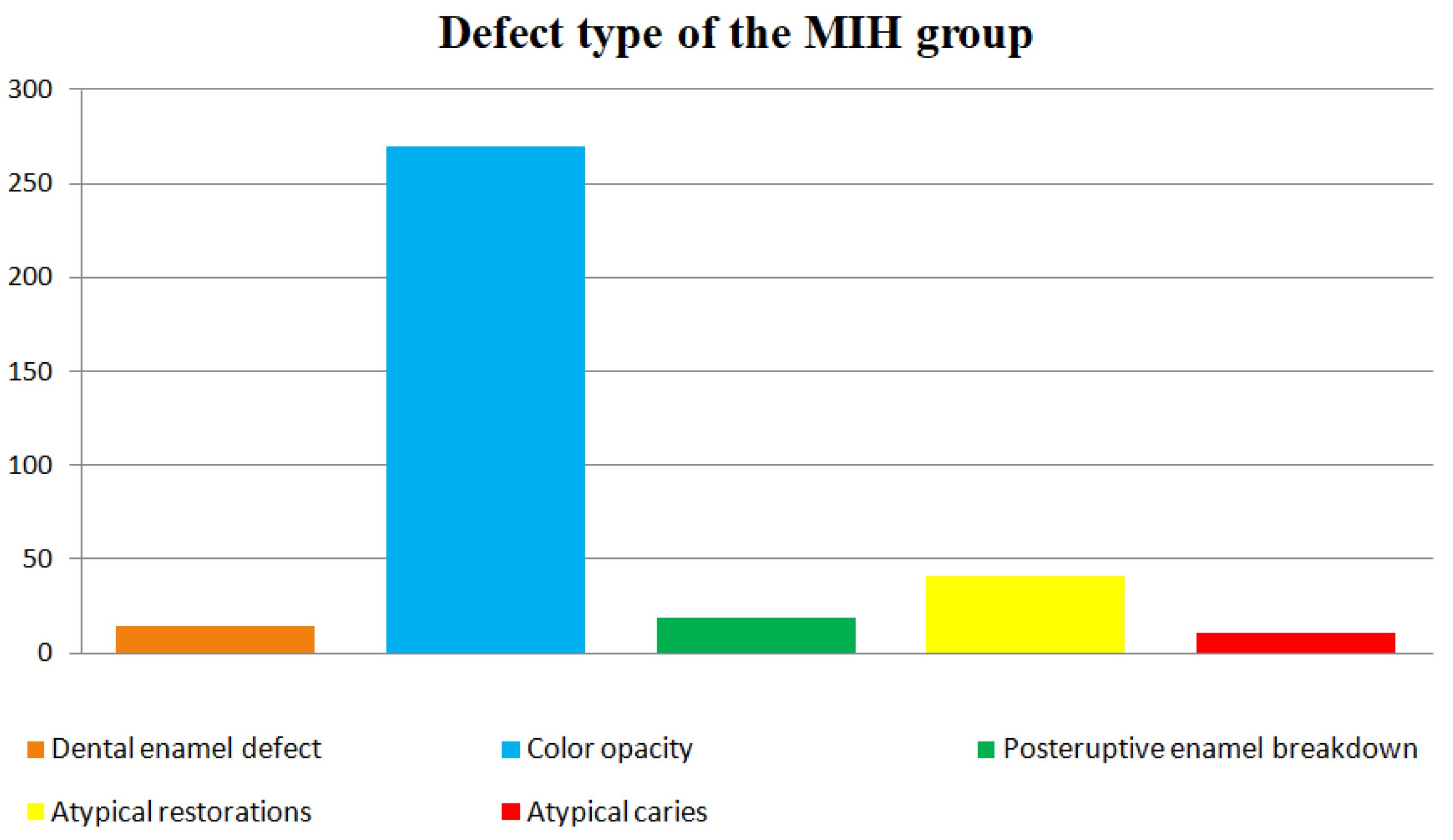
A total of 10 teeth were not evaluable, either because they had not fully erupted or had extensive carious lesions not related to MIH. The distribution by tooth of the MIH group is shown in Table 2, and the distribution by defect type in Figure 1.
We examined the coloration, affected surface area and extent of the defect in teeth affected by MIH. The most common coloration was white (65.6%) and the most frequently affected surface was vestibular (56.6%). Most defects affected less than one-third of the crown (59.9%).
No statistically significant associations were found between MIH and the country of birth or residence until the age of 3, or the educational level of the primary caregiver.
Of the prenatal factors examined, maternal smoking was found to be statistically significant (Chi-square p = 0.013; Table 3).
Among perinatal factors, hypoxia at birth was the only variable showing statistical significance (Chi-square, p = 0.013) (Table 4).
Postnatal factors in the first years of life with statistically significant results were the presence of tonsillitis (Chi-square p = 0.022), respiratory tract disorders (Chi-square p = 0.049) and bronchiolitis (Chi-square p = 0.005) (Table 5).
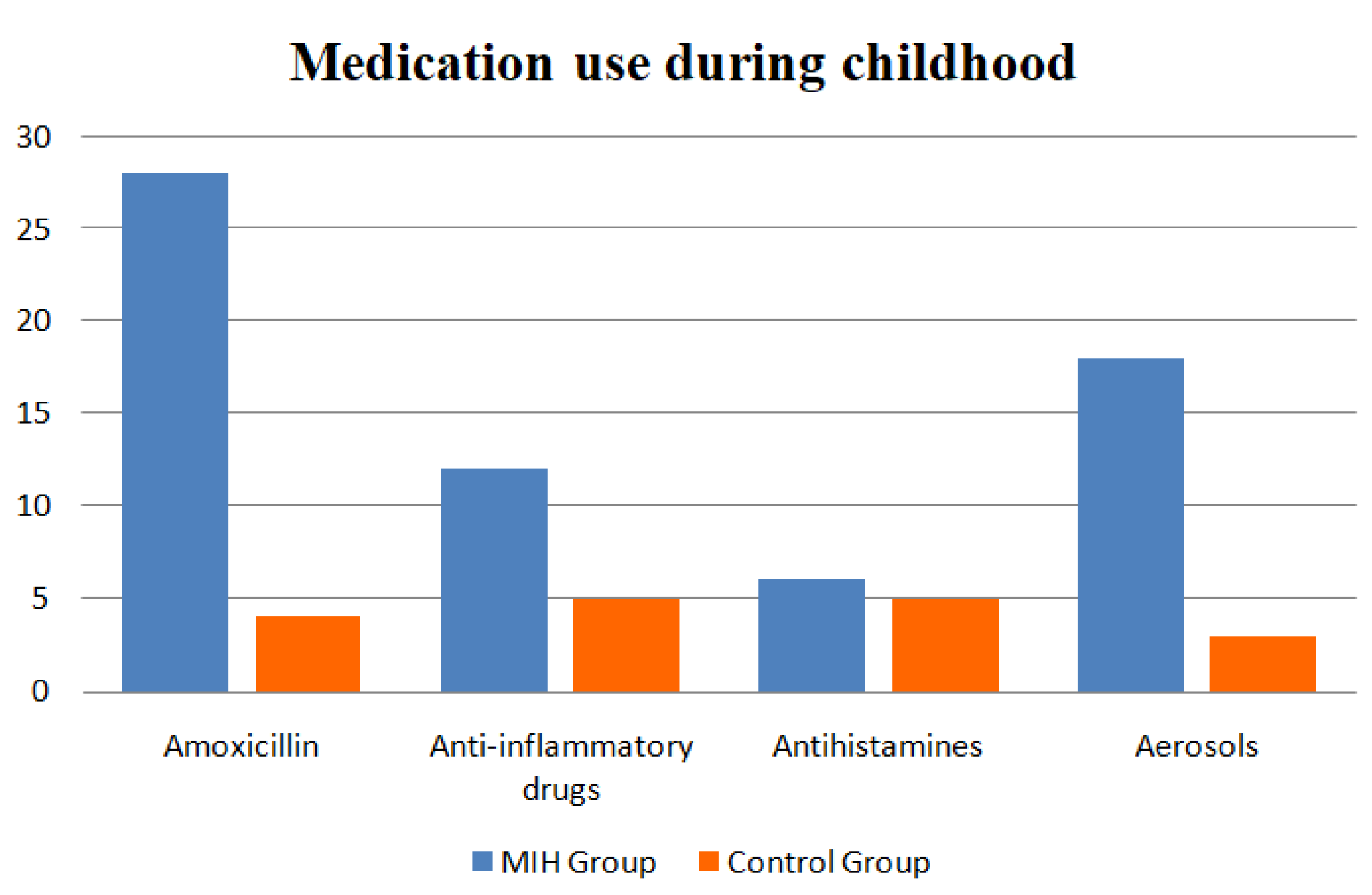
Statistically significant associations were also found for medication use during childhood (Chi-square p < 0.001), amoxicillin (Chi-square p < 0.001) and inhaled medication (salbutamol and budesonide) (Chi-square p < 0.001) as shown in Table 6 and Figure 2.
Using independent samples tests (Levene’s test for equality of variances and t-test for equality of means), no statistically significant differences were found between patient age and occurrence of MIH (p = 0.475), nor between MIH and maternal age at childbirth (p = 0.579).
A Chi-Square test analysis was performed to determine if there was a relationship between the appearance of HSPMs and MIH. No statistically significant relationship was found in this study (Chi-Square p = 0.311). HSPM was associated with anaemia and hypotension during pregnancy (p = 0.001), bottle-feeding (p = 0.044) and urinary tract infections (p = 0.003).
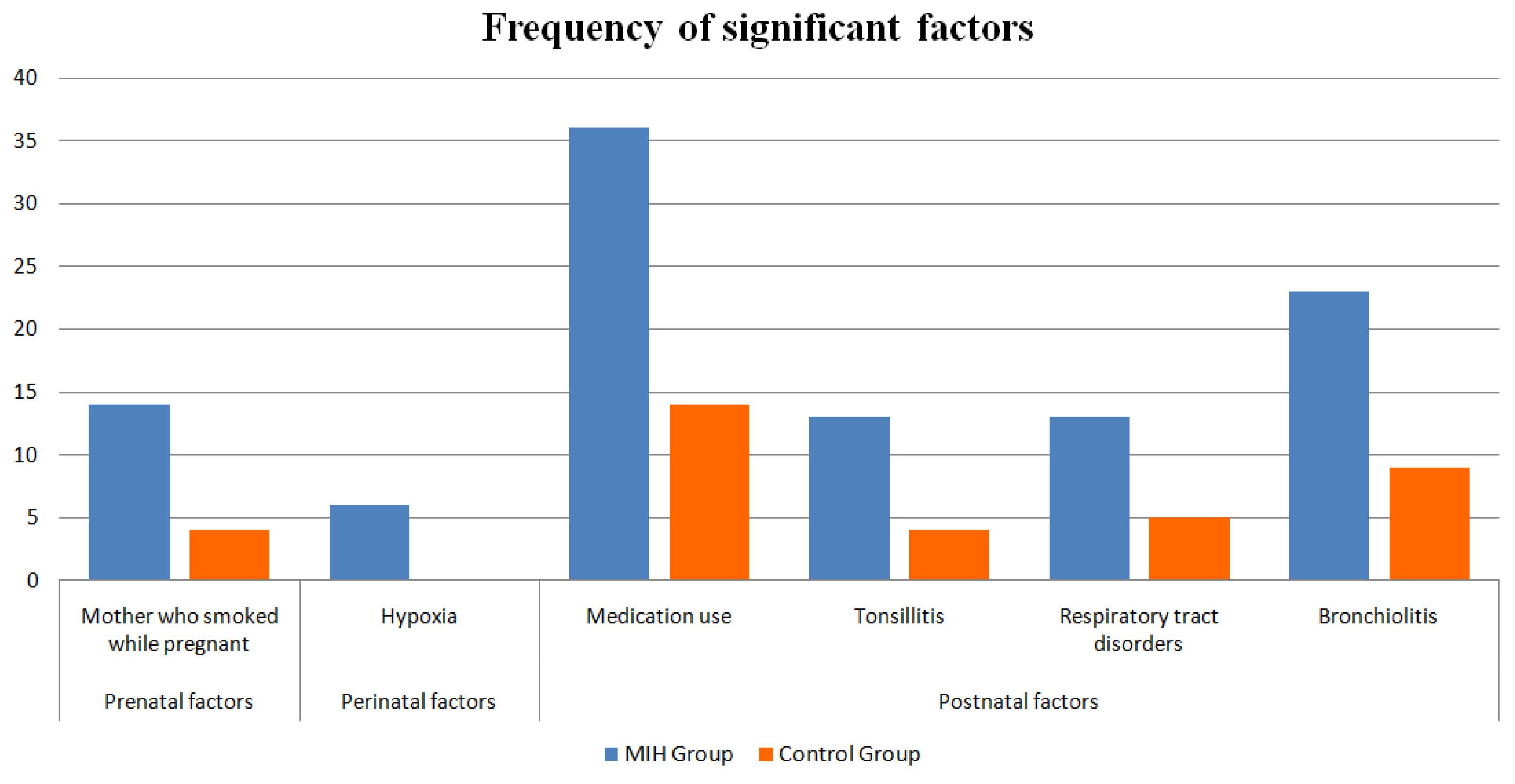
Figure 3 summarises the most relevant aetiological factors identified in the prenatal, perinatal and postnatal periods. This visualisation highlights the variables that showed statistically significant associations with MIH in our sample (Figure 3).
Summary of significant findings
The most relevant findings were as follows:
Characteristics of MIH defects: the most frequent colour was white (65.6%), the most affected surface was vestibular (56.6%), and most of the defects involved less than one-third of the crown (59.9%).
Prenatal factors: maternal smoking was significantly associated with MIH (p = 0.013).
Perinatal factors: birth hypoxia was significantly associated (p = 0.013).
Postnatal factors: significant associations were observed with tonsillitis (p = 0.022), respiratory tract disorders (p = 0.049), and bronchiolitis (p = 0.005).
Medication use in childhood: significant associations were also found with medication use in childhood, specifically with antibiotic use (amoxicillin, p < 0.001) and inhalation therapy (salbutamol and budesonide, p < 0.001).
Other factors: no significant associations were found between MIH and patient age, maternal age at childbirth, country of birth, or caregiver’s educational level. No relationship was found between MIH and HSPM (p = 0.311). In contrast, HSPM was significantly associated with anaemia and hypotension during pregnancy (p = 0.001), bottle-feeding (p = 0.044), and urinary tract infections (p = 0.003).

4. Discussion

In our daily clinical practice, we have observed an increase in the prevalence of MIH. Although there are many related studies and publications, its aetiology is still unknown. Most publications in the literature, including ours, use cross-sectional and case–control analytical studies to determine the aetiology of MIH and its clinical characteristics and/or severity [26,27]. Although longitudinal, prospective and cohort studies would be ideal to obtain more accurate and precise data, there are not many studies with these characteristics in the reviewed literature due to their long duration, high economic cost and possible sample loss during the study period [28].
Our sample included 60 patients in the control group and 60 in the case group. Similar sample sizes were reported in studies by Giuca et al. [24] and Bagattoni et al. [25], who also investigated the aetiological factors associated with MIH. In contrast, larger-scale studies have been conducted by Ortega-Luengo et al. [6], who examined 489 children attending dental check-ups across various health centres in the Community of Madrid; García-Margarit et al. [4], who studied 840 patients in Valencia; and by Hysis and Kuscu [29], who examined 1575 children in Albania. Earlier exploratory research, however, reported smaller sample sizes, such as the study by Beentjes et al. [30], which included only 45 children. These comparisons underscore the relevance and adequacy of our sample size for pilot studies and regional epidemiological investigations into MIH.
As in previous studies, all examinations were performed by a single investigator to ensure diagnostic consistency and accurate interpretation of defects. To minimise potential bias associated with this approach, the following strategies were implemented: the investigator was trained and calibrated according to the 2022 EAPD criteria [23], pilot sessions confirmed consistency, and the examiner’s performance was subsequently reviewed by two senior professors with over 20 years of experience in paediatric dentistry. This reinforced diagnostic accuracy. In addition, standardised photographs of all participants were taken to document the lesions and allow subsequent verification if needed, thereby further enhancing transparency and reproducibility. While other studies (e.g., Ortega-Luengo et al.) used multiple pre-calibrated examiners across various health centres in the Community of Madrid, our decision to use a single examiner prioritised diagnostic coherence, supported by a rigorous calibration process. The guideline published by the EAPD in 2022 was used as a reference for the diagnosis and categorization of MIH lesions [23]. It has also been used in recent studies, including those by Ortega-Luengo et al. [6] in Spain, Martignon [31] in Colombia and Amend et al. [32] in Germany. We identified other previous studies using different diagnostic criteria, such as Alvarado [8] using DDEm (Developmental Defect of modified Enamel) index or Alaluusua [7] who used his own index in his study.
For our study, we decided to include teeth with at least two-thirds of their crown height erupted. Similar methodology has been reported in studies by Wogelius [33], Zawaid [34] and Ortega-Luengo et al. [6]. However, other studies excluded teeth that were not fully erupted [5,29] or did not mention the eruption status of the teeth at the time of data collection in their selection criteria [4,35,36].
A total of 1409 first permanent molars and incisors were examined (Table 1). The tooth most frequently affected was the upper right first molar, which is consistent with findings from other studies [6,35,36,37]. The second most frequently affected tooth was the upper left central incisor, while the first permanent lower molars (on both sides) were affected to an equal extent and ranked third. The least affected tooth was the right lower lateral incisor. According to the literature [34,38], maxillary teeth are more commonly affected by MIH than mandibular teeth, a finding that aligns with our results (Table 2).
In the primary dentition, a total of 253 second molars were examined. The upper right and lower left molars were the most affected. The incidence of HSPM in our sample was 10%, which is similar to that observed in other recent studies [6,8,16,37,39,40].
Enamel opacities were related to the upper right first molar and the upper central incisors, while more severe defects such as restorations and atypical caries and post-eruptive enamel breakdown were associated with the upper left first molar and the lower first permanent molars. Similar results were seen in the studies by Giuca et al. [24] and Da Costa et al. [41].
We observed a higher frequency of colour opacities in HSPM, in agreement with the literature [24,28]. In our study, the most prevalent colour of MIH defects was creamy white, consistent with previous publications [19]. The prevalence of creamy-white opacities may indicate a milder form of enamel hypomineralisation, given that yellow-brown opacities are linked to greater porosity and a higher risk of post-eruptive enamel breakdown [41]. It is important to emphasise the relationship between yellow and brown coloration and posteruptive enamel breakdown found by some authors [41].
The most common colour in our patients’ HSPM was white, but very often followed by yellow, similar to most of the literature [6,16,19].
The most affected tooth area was the buccal surface, with mild to moderate involvement (<2/3 of the tooth). These results are consistent with those obtained by Lopes et al. [42], Almuallem [43] and Reis et al. [44]. However, other authors [44,45] report a higher frequency on the occlusal surface.
In contrast, and similarly to the results published by Da Silva [16], the tooth area most affected by HSPM was the occlusal surface, with a medium extension.
In our study, we found no significant gender-related differences in the presence of HSPM or MIH, results that are consistent with other published studies [42,45,46].
Many authors have reported an association between HSPM and MIH [8,46,47,48,49]. However, neither this study nor that of Lygidakis and Wong [50] found statistically significant relation between these dental alterations. Second primary molars mineralise earlier than permanent first molars and incisors, which mineralise later in childhood. Consequently, HSPM may reflect disturbances occurring during pregnancy or shortly after birth, whereas MIH is more likely to be associated with systemic factors that occur afterwards. This variation in mineralisation timing may explain the differences in the reported associations between HSPM and MIH.
In terms of socioeconomic factors, there is data relating HSPM to the mother’s country of birth [17] or to a higher socioeconomic level [48]. However, our results did not show these to be significant. Similarly, we did not find any statistically significant differences relating to maternal age. However, there are studies [51] that suggest a stronger association between having HSPM and mothers who were younger at the time of their child’s birth.
Regarding prenatal factors, statistically significant differences were found in the occurrence of HSPM as well as hypotension and anaemia during pregnancy. The association between HSPM and anaemia is not clearly established in the scientific literature. However, it is known that anaemia can affect the body in several ways, including decreasing the delivery of oxygen to tissues. This can interfere with the normal development of teeth and bones and, as a result, affect the formation of tooth enamel. While some studies have investigated the relation between anaemia and enamel defects in general, evidence on the specific association between anaemia and HSPM is limited [52,53]. Further research is needed to better understand this potential relation and the underlying mechanisms.
Although our study found no association between perinatal factors and HSPM [8,20,54], others have found, for example, a relation between prematurity and low birth weight with HSPM [55,56,57,58].
Regarding postnatal factors, our study found an association between bottle-feeding and HSPM. Della et al. [54] found that an absence of breastfeeding was related to HSPM. We also found an association between urinary tract infections to HSPM, in agreement with the findings of Salanitri and Seow [20].
As in the studies by Lygidakis [57] and Jälevik [58], we found no association between the proposed socioeconomic factors and MIH in our study.
Regarding prenatal factors, we found a significant association between MIH and maternal smoking during pregnancy. Similar results were obtained by Silva [48], Ribeiro [59] and Sonmez [60].
Among the possible perinatal aetiological factors, statistically significant results were found between hypoxia and MIH, as in studies by da Silva [16], Lygidakis [57] and Garot [61].
Some authors, such as Wu et al. [62], have found a relation between prematurity, low birth weight and MIH. Others, such as Pitiphat et al. [63], have associated MIH with caesarean birth and low birth weight. A systematic review [61] found that prematurity and caesarean birth were associated with MIH. In our study, however, these factors did not show significant results.
Regarding postnatal factors, we found an association between MIH and tonsillitis, respiratory tract disorders and bronchiolitis. These results are consistent with those reported in numerous publications [61,64,65]. Other authors, such as Alvarado et al. [8] or Beentjes et al. [30] have also found an association between MIH and multiple episodes of high fever and otitis media [30,31,57,65]. However, other studies [36,65,66,67] found no relation between the disease and MIH during the first three years of life.
In this study, we also found a statistically significant relation between the use of medication and MIH. Further analysis revealed a statistically significant association between the use of antibiotics and aerosols. The relationship between these medications and MIH has been extensively studied, with many publications yielding results similar to ours [68,69,70,71]. One possible explanation for these associations is that recurrent respiratory infections in early childhood may interfere with enamel mineralisation during critical stages of tooth development. Systemic inflammation, fever, and hypoxic episodes could impair ameloblast function, resulting in hypomineralisation. Furthermore, frequent medication use during these conditions may also play a role, either directly or indirectly, by altering mineral deposition during amelogenesis. These mechanisms may help to explain why certain postnatal factors appear to contribute to MIH, even though findings across studies remain heterogeneous.
Although we found significant associations between MIH and the use of medications for pulmonary disorders, no such relationship was observed in relation to asthma [49,60,72]. Other factors previously reported to be associated with MIH include coeliac disease [73,74], urinary tract infections [63], multiple episodes of high fevers [72], allergies [8,48,61,75], otitis media [61,75], atopic dermatitis, and jaundice [30,75]. In our study, however, no significant associations were found between MIH and these conditions.
This study has several limitations that should be acknowledged. Firstly, the use of an unvalidated ad hoc questionnaire may affect the reliability of the data collected on aetiological factors. Although the main examiner was calibrated and the instrument was developed based on evidence-based criteria and expert consensus, intra-examiner concordance was not formally assessed. Future studies should incorporate repeated evaluations to establish intra-examiner reliability and further strengthen diagnostic consistency.
Secondly, due to the exploratory nature of the study and the limited sample size, no multivariate models were applied. However, the possibility of controlling for confounding variables through multivariate analysis was considered during the design phase and this approach is recommended for future studies with larger sample sizes.
Thirdly, while the sample size is small, it is comparable to that of previous studies investigating the aetiology of MIH, such as the work of Beentjes et al. (2002) [30], which also had a small sample size but provided valuable insights into the field.
The use of a non-validated questionnaire and the small sample size may have reduced the reliability of aetiological data and constrained the statistical power to detect associations. Future research should therefore focus on validating the instrument through psychometric testing, as well as recruiting a larger and more representative cohort to enable multivariate analyses and strengthen causal inferences.
A fourth limitation of this study is the potential for recall bias, since information regarding medical history and early-life exposures was obtained from parental reports. This bias may have influenced the accuracy of the data collected. In addition, the use of a specific clinical sample limits the generalizability of the findings to the wider population.
Data collection relied on caregiver recall, particularly for prenatal and early postnatal factors, which may introduce recall bias and affect the accuracy of reported exposures.
Finally, the sample was drawn from a specific clinical setting (Paediatric Dentistry Postgraduate Programme at UCM), which may limit the generalizability of the findings to broader paediatric populations.
This pilot study has several strengths. It was conducted in a well-defined clinical setting, ensuring contextual relevance. Although ad hoc, the questionnaire was based on literature and expert consensus. Data collection was performed by a calibrated examiner, reducing observer bias. The study comprehensively addressed prenatal, perinatal, and postnatal factors. The sample size was calculated using robust statistical parameters to support representativeness.
The clinical relevance lies in the early detection of hypomineralised second primary molars, as these may indicate an increased risk of molar-incisor hypomineralisation (MIH). Although no association between HSPM and MIH was found in the present study, identifying HSPM allows clinicians to monitor affected children more closely and implement preventive strategies aimed at reducing the potential impact of MIH on the permanent dentition. This highlights the importance of routine dental examinations in early childhood and the need to integrate preventive approaches into paediatric dental care. Further research is needed to clarify the relationship between HSPM and MIH and to improve preventive protocols in paediatric dentistry.

5. Conclusions

This study identified the following aetiological factors associated with MIH: maternal smoking during pregnancy (prenatal); hypoxia during childbirth (perinatal); and tonsillitis, respiratory tract alterations, bronchiolitis, and the use of antibiotics and aerosols during the first years of life (postnatal). Regarding HSPM, maternal hypotension and anaemia during pregnancy were identified as prenatal aetiological factors, while bottle-feeding and urinary tract infections in early life were identified as postnatal factors.
MIH and HSPM are now recognised as health problems that are not only systemic in origin but may also result from systemic conditions interacting with genetic and environmental factors. Further research is needed to gather data on the aetiological factors of MIH and HSPM, as these defects are becoming increasingly prevalent. In order to prevent these defects and provide the most appropriate treatment for children, it is crucial to identify their causes.

Author Contributions

C.D.-H.: Conceptualisation, Data curation, Formal analysis, Investigation, Methodology, Resources, Software, Validation, Visualisation, Writing—original draft, Writing—review and editing. G.S.-M.: Conceptualisation, Data curation, Formal analysis, Funding acquisition, Investigation, Methodology, Project Administration, Resources, Software, Supervision, Validation, Visualisation, Writing—original draft, Writing—review and editing. N.E.G.-L.: Conceptualisation, Data curation, Formal analysis, Funding acquisition, Investigation, Methodology, Project Administration, Resources, Software, Supervision, Validation, Visualisation, Writing—original draft, Writing—review and editing. M.J.d.N.-G.: Project Administration, Resources, Software, Supervision, Validation, Visualisation, Writing—original draft, Writing—review and editing, N.Z.-A.: Validation, Visualisation, Writing—original draft, Writing—review and editing. A.M.C.: Conceptualisation, Data curation, Formal analysis, Funding acquisition, Investigation, Methodology, Project Administration, Resources, Software, Supervision, Validation, Visualisation, Writing—original draft, Writing—review and editing. All authors have read and agreed to the published version of the manuscript.

Funding

This research received no external funding.

Institutional Review Board Statement

The study was carried out in compliance with national regulatory guidelines, following the ethical requirements for the development of medical research on human subjects as mentioned in the Declaration of Helsinki and with the approval of the Clinic San Carlos Hospital Ethics Committee of Madrid, Spain (internal code: 23/363-E_TFM, date: 9 June 2023).

Informed Consent Statement

Signed informed consent was obtained from all parents or legal guardians of the child patients.

Data Availability Statement

Data to support the conclusions of this study are made available through the corresponding author.

Conflicts of Interest

The authors declare no conflicts of interest.

Abbreviations

MIHMolar incisor hypomineralisation
HSPMHypomineralised Second Primary Molars Directory of open access journals
EAPDEuropean Academy of Paediatric Dentistry
UCMComplutense University of Madrid

Appendix A

Questionnaire
Surname and First name:Date:
Date of birth:Age/years/months:
Identifier number:Sex:
Country where he lived from ages 0 to 3:Educational level of primary caregiver:
No formal education
Basic
Intermediate
Higher
Prenatal factors
Pregnancy complications (high-risk pregnancy, bed rest, etc.)Yes
No
Malnutrition/undernourishment (prolonged vomiting during pregnancy)Yes
No
PreeclampsiaYes
No
Illnesses during pregnancyYes
No
Hypotension or anaemiaYes
No
Vitamin D deficiencyYes
No
Alcohol consumption during pregnancyYes
No
Psychological stressYes
No
Infectious conditions in the mother (episodes of high fever, viral infections during the last month of pregnancy)Yes
No
Gestational diabetesYes
No
Mother who smoked during pregnancyYes: Number of cigarettes/days:
No
Perinatal factors
Childbirth Full term (38 weeks or more)
Premature (less than 37 weeks)
Vaginal
Caesarean section
Mother’s age at the time of the patient’s birth
Hypoxia
(lack of oxygen at birth)
Yes
No
Birth weight1500 g or less
2500 g or less
More than 2500 g
Complications during childbirth
Postnatal factors
Illnesses in the first years of life:
In the first month
In the first year
In the first three years
Prescription medication
Yes:  Age:
No
Medication intake
Yes: 
Antibiotics/Amoxicillin
Anti-inflammatories
Antihistamines
No
Hospitalisations
How many times per year?
 1 2 ≥3
Reason:
Treatment:
Vaccinations
Yes
No
Breastfeeding
Yes: 
Less than 6 months
More than 6 months
No
Pacifier use
Yes: 
Less than 3 years
More than 3 years
No
Baby bottleYes: 
Less than 1.5 years
More than 1.5 years
No
Otitis media
Yes:  Medication:
No
Asthma
Yes:  Medication:
No
Tonsillitis
Yes:  Medication:
No
Adenoids
Yes:  Medication:
No
Multiple episodes of high fever
Yes:  Medication:
No
Calcium and phosphate metabolic disorders
Chickenpox
Measles
Kidney infections
Yes:  Medication:
No
Respiratory tract disorders
Yes:  Medication:
No
Urinary tract infections
Yes:  Medication:
No
Pneumonia
Yes:  Medication:
No
Bronchiolitis
Yes:  Medication:
No
Gastrointestinal disorders
Yes:  Medication:
No
Coeliac disease
Allergies
Yes:  Medication:
No
Exposure to smoke until age 2

References

  1. Weerheijm, K.L. Molar incisor hypomineralization (MIH): Clinical presentation, aetiology and management. Dent. Update 2004, 31, 9–12. [Google Scholar] [CrossRef]
  2. Hubbard, M.J. Molar hypomineralization: What is the US experience? J. Dent. Assoc. 2018, 149, 329–330. [Google Scholar] [CrossRef]
  3. Hernández, M.; Boj, J.R.; Espasa, E. Do We Really Know the Prevalence of MIH? J. Clin. Pediatr. Dent. 2016, 40, 259–263. [Google Scholar] [CrossRef] [PubMed]
  4. García-Margarit, M.; Catalá-Pizarro, M.; Montiel-Company, J.M.; Almerich-Silla, J.M. Epidemiologic study of molar-incisor hypomineralization in 8-year-old Spanish children. Int. J. Paediatr. Dent. 2014, 24, 14–22. [Google Scholar] [CrossRef]
  5. Hernández, M.; Boj, J.R.; Espasa, E.; Peretz, B. First Permanent Molars and Permanent Incisors teeth by Tooth Prevalence of Molar–Incisor–Hypomineralisation in a Group of Spanish Schoolchildren. Acta Stomatol. Croat. 2018, 52, 4–11. [Google Scholar] [CrossRef] [PubMed]
  6. Ortega-Luengo, S.; Feijoo-García, G.; Miegimolle-Herrero, M.; Gallardo-López, N.E.; Caleya-Zambrano, A.M. Prevalence and clinical presentation of molar incisor hypomineralisation among a population of children in the community of Madrid. BMC Oral Health 2024, 24, 229. [Google Scholar] [CrossRef] [PubMed]
  7. Alaluusua, S. Aetiology of Molar-Incisor Hypomineralisation: A systematic review. Eur. Arch. Paediatr. Dent. 2010, 11, 53–58. [Google Scholar] [CrossRef]
  8. Alvarado-Gaytan, J.; Saavedra-Marban, G.; Velayos-Galan, L.; Gallardo-Lopez, N.E.; de Nova-García, M.J.; Caleya, A.M. Dental Developmental Defects: A Pilot Study to Examine the Prevalence and Etiology in a Population of Children between 2 and 15 Years of Age. Dent. J. 2024, 12, 84. [Google Scholar] [CrossRef]
  9. Jedeon, K.; De la Dure-Molla, M.; Brookes, S.J.; Loiodice, S.; Marciano, C.; Kirkham, J.; Canivenc-Lavier, M.C.; Boudalia, S.; Bergès, R.; Harada, H.; et al. Enamel defects reflect perinatal exposure to bisphenol A. Am. J. Pathol. 2013, 183, 108–118. [Google Scholar] [CrossRef]
  10. Silva, M.J.; Scurrah, K.J.; Craig, J.M.; Manton, D.J.; Kilpatrick, N. Etiology of molar incisor hypomineralization—A systematic review. Community Dent. Oral. Epidemiol. 2016, 44, 342–353. [Google Scholar] [CrossRef]
  11. Ryynänen, H.; Sahlberg, C.; Lukinmaa, P.L.; Alaluusua, S. The effect of high temperature on the development of mouse dental enamel in vitro. Arch. Oral Biol. 2014, 59, 400–406. [Google Scholar] [CrossRef] [PubMed]
  12. Bronckers, A.L.; Lyaruu, D.M.; Guo, J.; Bijvelds, M.J.; Bervoets, T.J.; Zandieh-Doulabi, B.; Medina, J.F.; Li, Z.; Zhang, Y.; DenBesten, P.K. Composition of mineralizing incisor enamel in cystic fibrosis transmembrane conductance regulator-deficient mice. Eur. J. Oral. Sci. 2015, 123, 9–16. [Google Scholar] [CrossRef] [PubMed]
  13. Bezamat, M.; Souza, J.F.; Silva, F.M.F.; Correa, E.G.; Fatturi, A.L.; Brancher, J.A.; Carvalho, F.M.; Cavallari, T.; Bertolazo, L.; Machado-Souza, C.; et al. Gene-environment interaction in molar-incisor hypomineralization. PLoS ONE 2021, 16, e0241898. [Google Scholar] [CrossRef] [PubMed]
  14. Almulhim, B. Molar and Incisor Hypomineralization. JNMA J. Nepal Med. Assoc. 2021, 59, 295–302. [Google Scholar] [CrossRef]
  15. Jalevik, B.; Sabel, N.; Robertson, A. Can molar incisor hypomineralization cause dental fear and anxiety or influence the oral health-related quality of life in children and adolescents -a systematic review. Eur. Arch. Paediatr. Dent. 2022, 23, 65–78. [Google Scholar] [CrossRef]
  16. da Silva Figueiredo Se, M.J.; Ribeiro, A.P.D.; Dos Santos-Pinto, L.A.M.; de Cassia Loiola Cordeiro, R.; Cabral, R.N.; Leal, S.C. Are Hypomineralized Primary Molars and Canines Associated with Molar-Incisor Hypomineralization? Pediatr. Dent. 2017, 39, 445–449. [Google Scholar]
  17. Elfrink, M.E.; Schuller, A.A.; Veerkamp, J.S.; Poorterman, J.H.; Moll, H.A.; ten Cate, B.J. Factors increasing the caries risk of second primary molars in 5-year-old Dutch children. Int. J. Paediatr. Dent. 2010, 20, 151–157. [Google Scholar] [CrossRef]
  18. Gambetta-Tessini, K.; Marino, R.; Ghanim, A.; Calache, H.; Manton, D.J. The impact of MIH/HSPM on the carious lesion severity of schoolchildren from Talca, Chile. Eur. Arch. Paediatr. Dent. 2019, 20, 417–423. [Google Scholar] [CrossRef]
  19. Singh, R.; Srivastava, B.; Gupta, N. Prevalence and pattern of molar incisor hypomineralization in Delhi Region. Int. J. Clin. Pedatr. Dent. 2020, 69, 150–154. [Google Scholar] [CrossRef]
  20. Salanitri, S.; Seow, W.K. Developmental enamel defects in the primary dentition: Aetiology and clinical management. Aust. Dent. J. 2013, 58, 133–266. [Google Scholar] [CrossRef]
  21. Negre-Barber, A.; Montiel-Company, J.M.; Boronat-Catala, M.; Catalá-Pizarro, M.; Almerich-Silla, J.M. Hypomineralized Second Primary Molars as Predictor of Molar Incisor Hypomineralization. Sci. Rep. 2016, 6, 31929. [Google Scholar] [CrossRef] [PubMed]
  22. Marcianes, M.; García-Camba, P.; Albaladejo, A.; Varela Morales, M. Predictive Value of Hypomineralization of Second Primary Molars for Molar Incisor Hypomineralization and Other Relationships between Both Developmental Defects of Dental Enamel. J. Clin. Med. 2023, 12, 5533. [Google Scholar] [CrossRef]
  23. Lygidakis, N.A.; Garot, E.; Somani, C.; Taylor, G.D.; Rouas, P.; Wong, F.S.L. Best clinical practice guidance for clinicians dealing with children presenting with molar-incisor- hypomineralisation (MIH): An updated European Academy of Paediatric Dentistry policy document. Eur. Arch. Paediat. Dent. 2022, 23, 3–21. [Google Scholar] [CrossRef] [PubMed]
  24. Giuca, M.R.; Cappe, M.; Carli, E.; Lardani, L.; Pasini, M. Investigation of clinical characteristics and etiological factors in children with molar incisor hypomineralization. Int. J. Dent. 2018, 2018, 7584736. [Google Scholar] [CrossRef] [PubMed]
  25. Bagattoni, S.; Carli, E.; Gatto, M.R.; Gasperoni, I.; Piana, G.; Lardani, L. Predisposing factors involved in the aetiology of Molar Incisor Hypomineralization: A case control study. Eur. J. Paediatr. Dent. 2022, 23, 116–120. [Google Scholar]
  26. Rai, A.; Singh, A.; Menon, I.; Singh, J.; Rai, V.; Aswal, G.S. Molar Incisor Hypomineralization: Prevalence and Risk Factors Among 7–9 Years Old School Children in Muradnagar, Ghaziabad. Open Dent. J. 2018, 12, 714–722. [Google Scholar] [CrossRef]
  27. Teixeira, R.J.P.B.; Andrade, N.S.; Queiroz, L.C.C.; Mendes, F.M.; Moura, M.S.; Moura, L.F.A.D.; Lima, M.D.M. Exploring the association between genetic and environmental factors and molar incisor hypomineralization: Evidence from a twin study. Int. J. Paediatr. Dent. 2018, 28, 198–206. [Google Scholar] [CrossRef]
  28. Wagner, Y. Developmental defects of enamel in primary teeth findings of a regional German birth cohort study. BMC Oral Health 2016, 17, 10. [Google Scholar] [CrossRef]
  29. Hysi, D.; Kuscu, O.O.; Droboniku, E.; Toti, C.; Xhemnica, L.; Caglar, E. Prevalence and aetiology of Molar-Incisor Hypomineralisation among children aged 8–10 years in Tirana, Albania. Eur. J. Paediatr. Dent. 2016, 17, 75–79. [Google Scholar]
  30. Beentjes, V.E.; Weerheijm, K.L.; Groen, H.J. Factors involved in the aetiology of molar-incisor hypomineralisation (MIH). Eur. J. Paediatr. Dent. 2002, 3, 9–13. [Google Scholar]
  31. Martignon, S.; Bartlett, D.; Manton, D.J.; Martínez-Mier, E.A.; Splieth, C.; Avila, V. Epidemiology of Erosive Tooth Wear, Dental Fluorosis and Molar Incisor Hypomineralization in the American Continent. Caries Res. 2021, 55, 1–11. [Google Scholar] [CrossRef] [PubMed]
  32. Amend, S.; Nossol, C.; Bausback-Schomakers, S.; Wleklinski, C.; Scheibelhut, C.; Pons-Kuhnemann, J.; Frankenberger, R.; Krämer, N. Prevalence of molar-incisor-hypomineralisation (MIH) among 6-12-year-old children in Central Hesse (Germany). Clin. Oral Investig. 2021, 25, 2093–2100. [Google Scholar] [CrossRef] [PubMed]
  33. Wogelius, P.; Haubek, D.; Poulsen, S. Prevalence and distribution of demarcated opacities in permanent 1st molars and incisors in 6 to 8 year old Danish children. Acta Odontol. Scand. 2008, 66, 58–64. [Google Scholar] [CrossRef] [PubMed]
  34. Zawaidh, F.I.; Al-Jundi, S.H.; Al-Jaljoli, M.H. Molar incisor hypomineralization: Prevalence in Jordanian children and clinical characteristics. Eur. Arch. Paediatr. Dent. 2011, 12, 31–36. [Google Scholar] [CrossRef]
  35. Dietrich, G.; Sperling, S.; Hetzer, G. Molar incisor hypomineralization in a group of children and adolescents living in Dresden (Germany). Eur. J. Paediatr. Dent. 2003, 4, 133–137. [Google Scholar]
  36. Martínez Gómez, T.P.; Guinot Jimeno, F.; Bellet Dalmau, L.J.; Giner Tarrida, L. Prevalence of molar-incisor hypomineralisation observed using transillumination in a group of children from Barcelona (Spain). Int. J. Paediatr. Dent. 2012, 22, 100–109. [Google Scholar] [CrossRef]
  37. Estivals, J.; Fahd, C.; Baillet, J.; Rouas, P.; Manton, D.J.; Garot, E. The prevalence and characteristics of and the association between MIH and HSPM in South-Western France. Int. J. Paediatr. Dent. 2023, 33, 298–304. [Google Scholar] [CrossRef]
  38. Ghanim, A.; Morgan, M.; Marino, R.; Bailey, D.; Manton, D. Molar-incisor hypomineralisation: Prevalence and defect characteristics in Iraqi children. Int. J. Paediatr. Dent. 2011, 21, 413–421. [Google Scholar] [CrossRef]
  39. Ghanim, A.; Manton, D.; Marino, R.; Morgan, M.; Bailey, D. Prevalence of demarcated hypomineralisation defects in second primary molars in Iraqi children. Int. J. Paediatr. Dent. 2013, 23, 48–55. [Google Scholar] [CrossRef]
  40. McCarra, C.; Olegario, I.C.; O’Connell, A.C.; Leith, R. Prevalence of hypomineralised second primary molars (HSPM): A systematic review and meta-analysis. Int. J. Paediatr. Dent. 2022, 32, 367–382. [Google Scholar] [CrossRef]
  41. Da Costa-Silva, C.M.; Ambrosano, G.M.; Jeremias, F.; De Souza, J.F.; Mialhe, F.L. Increase in severity of molar-incisor hypomineralization and its relationship with the colour of enamel opacity: A prospective cohort study. Int. J. Paediatr. Dent. 2011, 21, 333–341. [Google Scholar] [CrossRef] [PubMed]
  42. Lopes, L.B.; Machado, V.; Mascarenhas, P.; Mendes, J.J.; Botelho, J. The prevalence of molar-incisor hypomineralization: A systematic review and meta-analysis. Sci. Rep. 2021, 11, 22405. [Google Scholar] [CrossRef] [PubMed]
  43. Almuallem, Z.; Busuttil-Naudi, A. Molar incisor hypomineralisation (MIH)—An overview. Br. Dent. J. 2018, 225, 601–609. [Google Scholar] [CrossRef] [PubMed]
  44. Reis, P.P.G.; Jorge, R.C.; Americano, G.C.A.; Thiago Pontes, N.S.; Peres, A.M.A.M.; Silva Oliveira, A.G.E.; Soviero, V.M. Prevalence and Severity of Molar Incisor Hypomineralization in Brazilian Children. Pediatr. Dent. 2021, 43, 270–275. [Google Scholar]
  45. Kusku, O.; Caglar, E.; Sandalli, N. The prevalence and aetiology of molar incisor hypomineralisation in a group of children in Istanbul. Eur. J. Paediatr. Dent. 2008, 9, 139–144. [Google Scholar]
  46. Davenport, M.; Welles, A.D.; Angelopoulou, M.V.; Gonzalez, C.; Okunseri, C.; Barbeau, L.; Bansal, N.K.; Vergotine, R.J.; Hodgson, B.D. Prevalence of molar-incisor hypomineralization in Milwaukee, Wisconsin, USA: A pilot study. Clin. Cosmet. Investig. Dent. 2019, 11, 109–117. [Google Scholar] [CrossRef]
  47. Elfrink, M.E.; Ghanim, A.; Manton, D.J.; Weerheijm, K.L. Standardised studies on Molar Incisor Hypomineralisation (MIH) and Hypomineralised Second Primary Molars (HSPM): A need. Eur. Arch. Paediatr. Dent. 2015, 16, 247–255. [Google Scholar] [CrossRef]
  48. Silva, M.J.; Kilpatrick, N.M.; Craig, J.M.; Manton, D.J.; Leong, P.; Burgner, D.; Scurrah, K.J. Etiology of Hypomineralized Second Primary Molars: A Prospective Twin Study. J. Dent. Res. 2019, 98, 77–83. [Google Scholar] [CrossRef]
  49. Elfrink, M.E.C.; ten Cate, J.M.; Jaddoe, V.W.; Hofman, A.; Moll, H.A.; Veerkamp, J.S. Deciduous molar hypomineralization and Molar Incisor Hypomineralization. J. Dent. Res. 2012, 91, 551–555. [Google Scholar] [CrossRef]
  50. Lygidakis, N.A.; Wong, F. Jalevik scores, pitfalls and denials in MIH interpretations. Eur. Arch. Paediatr. Dent. 2014, 15, 375–380. [Google Scholar]
  51. Llena, C.; Forner, L.; Baca, P.; Collado, V. Iron deficiency and dental caries in infants and toddlers: A cross-sectional study. J. Dent. Child. 2014, 81, 134–138. [Google Scholar]
  52. Doğan, S.; Duran, İ.; Kocak, S.; Yiğit, D. Maternal anemia and hypoxia during pregnancy and dental caries in children. J. Matern. Fetal Neonatal Med. 2016, 29, 325–328. [Google Scholar]
  53. Zhang, S.; Liu, J.; Lo, E.C.; Chu, C.H. Dental caries status of Dai preschool children in Yunnan Province, China. BMC Oral Health 2013, 13, 68. [Google Scholar] [CrossRef] [PubMed][Green Version]
  54. Wong, H.M.; Peng, S.M.; Wen, Y.F.; King, N.M.; McGrath, C.P. Risk factors of developmental defects of enamel—A prospective cohort study. PLoS ONE 2014, 9, e109351. [Google Scholar] [CrossRef]
  55. Cruvinel, V.R.; Gravina, D.B.; Azevedo, T.D.; Rezende, C.S.; Bezerra, A.C.; Toledo, O.A. Prevalence of enamel defects and associated risk factors in both dentitions in preterm and full term born children. J. Appl. Oral Sci. 2012, 20, 310–317. [Google Scholar] [CrossRef]
  56. Allazzam, S.M.; Alaki, S.M. Hypomineralization of primary second molars: Prevalence, defect characteristics and relationship with dental caries in Saudi children. Eur. Arch. Paediatr. Dent. 2014, 15, 105–112. [Google Scholar]
  57. Lygidakis, N.A.; Dimou, G.; Marinou, D. Molar-incisor-hypomineralisation (MIH). A retrospective clinical study in Greek children. II. Possible medical aetiological factors. Eur. Arch. Paediatr. Dent. 2008, 9, 207–217. [Google Scholar] [CrossRef]
  58. Jälevik, B.; Noren, J.G. Enamel hypomineralization of permanent first molars: A morphological study and survey of possible aetiological factors. Int. J. Paediatr. Dent. 2000, 10, 278–289. [Google Scholar] [CrossRef]
  59. Ribeiro, A.P.D.; Carvalho, F.M.; Dantas-Neta, N.B. Influence of prenatal factors on developmental defects of enamel. J. Oral Sci. 2015, 57, 285–292. [Google Scholar]
  60. Sonmez, H.; Yildirim, G.; Bezgin, T. Prevalence and aetiology of molarincisor hypomineralisation among children aged 8–15 years in Istanbul, Turkey. Eur. Arch. Paediatr. Dent. 2013, 14, 375–380. [Google Scholar]
  61. Garot, E.; Rouas, P.; Somani, C.; Taylor, G.D.; Wong, F.; Lygidakis, N.A. An update of the aetiological factors involved in molar incisor hypomineralisation (MIH): A systematic review and meta-analysis. Eur. Arch. Paediatr. Dent. 2022, 23, 23–38. [Google Scholar] [CrossRef] [PubMed]
  62. Wu, X.; Wang, J.; Li, Y.H.; Yang, Z.Y.; Zhou, Z. Association of molar incisor hypomineralization with premature birth or low birth weight: Systematic review and meta-analysis. J. Matern. Fetal Neonatal Med. 2020, 33, 1700–1708. [Google Scholar] [CrossRef] [PubMed]
  63. Pitiphat, W.; Luangchaichaweng, S.; Pungchanchaikul, P.; Angwaravong, O.; Chansamak, N. Factors associated with molar incisor hypomineralization in Thai children. Eur. J. Oral Sci. 2014, 122, 265–270. [Google Scholar] [CrossRef]
  64. Garg, N.; Jain, A.K.; Saha, S.; Singh, J. Essentiality of early diagnosis of molar incisor hypomineralization in children and review of its clinical presentation, etiology and management. Int. J. Clin. Pediatr. Dent. 2012, 5, 190–196. [Google Scholar] [CrossRef] [PubMed]
  65. Kuhnisch, J.; Mach, D.; Thiering, E.; Brockow, I.; Hoffmann, U.; Neumann, C.; Heinrich-Weltzien, R.; Bauer, C.P.; Berdel, D.; von Berg, A.; et al. Respiratory diseases are associated with molar-incisor hypomineralizations. Swiss Dent. J. 2014, 124, 286–293. [Google Scholar] [CrossRef]
  66. Durmus, B.; Abbasoglu, Z.; Peker, S.; Kargul, B. Possible medical aetiological factors and characteristics of molar incisor hypomineralisation in a group of turkish children. Acta Stomatol. Croat. 2013, 47, 297–305. [Google Scholar] [CrossRef]
  67. Muratbegovic, A.; Markovic, N.; Ganibegovic Selimovic, M. Molar incisor hypomineralisation in Bosnia and Herzegovina: Aetiology and clinical consequences in medium caries activity population. Eur. Arch. Paediatr. Dent. 2007, 8, 189–194. [Google Scholar] [CrossRef]
  68. Souza, J.F.; Costa-Silva, C.M.; Jeremias, F.; Santos-Pinto, L.; Zuanon, A.C.; Cordeiro, R.C. Molar incisor hypomineralisation: Possible aetiological factors in children from urban and rural areas. Eur. Arch. Paediatr. Dent. 2012, 13, 164–170. [Google Scholar] [CrossRef]
  69. Laisi, S.; Ess, A.; Sahlberg, C.; Arvio, P.; Lukinmaa, P.L.; Alaluusua, S. Amoxicillin may cause molar incisor hypomineralization. J. Dent. Res. 2009, 88, 132–136. [Google Scholar] [CrossRef]
  70. Wuollet, E.; Laisi, S.; Salmela, E.; Ess, A.; Alaluusua, S. Molar-incisor hypomineralization and the association with childhood illnesses and antibiotics in a group of Finnish children. Acta Odontol. Scand. 2016, 74, 416–422. [Google Scholar] [CrossRef]
  71. Loli, D.; Costacurta, M.; Maturo, P.; Docimo, R. Correlation between aerosol therapy in early childhood and Molar Incisor Hypomineralisation. Eur. Arch. Paediatr. Dent. 2015, 16, 73–77. [Google Scholar]
  72. Juárez-López, M.L.A.; Salazar-Treto, L.V.; Hernández-Monjaraz, B.; Molina-Frechero, N. Etiological Factors of Molar Incisor Hypomineralization: A Systematic Review and Meta-Analysis. Dent. J. 2023, 11, 111. [Google Scholar] [CrossRef]
  73. Kuklik, H.H.; Cruz, I.T.S.A.; Celli, A.; Fraiz, F.C.; Assuncao, L.R.D.S. Molar incisor hypomineralization and celiac disease. Arq. Gastroenterol. 2020, 57, 167–171. [Google Scholar] [CrossRef]
  74. Inchingolo, A.D.; Dipalma, G.; Viapiano, F.; Netti, A.; Ferrara, I.; Ciocia, A.M.; Mancini, A.; Di Venere, D.; Palermo, A.; Inchingolo, A.M.; et al. Celiac Disease-Related Enamel Defects: A Systematic Review. J. Clin. Med. 2024, 13, 1382. [Google Scholar] [CrossRef]
  75. Hernández, M.; Boj, J.; Espasa, E.; Planells, P.; Peretz, B. Molar-Incisor Hypomineralization: Positive Correlation with Atopic Dermatitis and Food Allergies. J. Clin. Pediatr. 2018, 42, 344–348. [Google Scholar] [CrossRef]
Figure 1. Distribution by defect type of the MIH group.
Oral 05 00104 g001
Figure 2. Comparison of each type of medication use between cases and controls.
Oral 05 00104 g002
Figure 3. Graphical representation of the most relevant results.
Oral 05 00104 g003
Table 1. Distribution of the total sample by type of tooth.
ToothFrequencyPercentage
111198.4%
121107.8%
161208.5%
211188.4%
221127.9%
261208.5%
311188.4%
321178.3%
361208.5%
411188.4%
421178.3%
461208.5%
Total1409100%
Table 2. Distribution of MIH cases by tooth type. (MIH: Molar Incisor Hypomineralisation).
ToothMIH PresenceMIH Percentage
165142.5%
121412.8%
113731.4%
214538.5%
222018.2%
264134.5%
364235%
321210.3%
311916.2%
411512.8%
42108.6%
464235%
Total34824.9%
Table 3. Prenatal factors. Statistical results in permanent dentition.
Prenatal FactorsMIH GroupControl GroupPearson’s
Chi-Squared Test
Fisher’s Exact Test
Problems during pregnancy1590.2010.256
Malnutrition650.7080.761
Diseases during pregnancy1050.1900.270
Preeclampsia620.1570.273
Hypotension and anaemia540.7681.000
Vitamin D deficiency120.5390.616
Alcohol intake during pregnancy100.3231.000
Psychological stress870.8361.000
Maternal infection300.0850.244
Gestational diabetes640.5450.743
Mother who smoked while pregnant1440.0130.020
Table 4. Perinatal factors. Statistical results in permanent dentition.
Perinatal FactorsMIH GroupControl GroupPearson’s
Chi-Squared Test
Fisher’s Exact Test
Prematurity7110.386-
Caesarean birth22170.386-
Hypoxia600.0130.028
Birth weight (<2500 g)12160.615-
Childbirth complications1590.2010.256
Table 5. Postnatal factors. Statistical results in permanent dentition.
Postnatal FactorsMIH GroupControl GroupPearson’s
Chi-Squared Test
Fisher’s Exact Test
Diseases in the first month of life550.9561.000
Diseases in the first year of life1390.3910.481
Diseases in the third year of life1570.0720.098
Prescribed medication1080.549-
Medication use3614<0.001<0.001
Hospitalisation14120.7280.826
Vaccines59600.3231.000
Breastfeeding58520.1690.201
Bottle-feeding49430.3350.391
Pacifier use41390.8971.000
Otitis media15100.3030.371
Asthma940.1600.240
Tonsillitis1340.0220.034
Adenoiditis230.6210.677
Several episodes of high fever820.0540.095
Calcium and phosphate disorders110.9811.000
Chickenpox1190.6830.808
Measles230.6210.677
Renal infections100.3231.000
Respiratory tract disorders1350.0490.042
Urinary tract infections520.2610.439
Pneumonia1030.087-
Bronchiolitis2390.0050.007
Gastrointestinal disorders220.9731.000
Coeliac disease100.3231.000
Allergies 13100.5440.645
Smoking environment760.8181.000
Table 6. Medication use. Statistical results in permanent dentition.
MedicineMIH GroupControl GroupPearson’s
Chi-Squared Test
Fisher’s Exact Test
Amoxicillin304<0.001<0.001
Anti-inflammatory drug1240.0740.056
Antihistamine660.9511.000
Salbutamol, Budesonide or Aerosols183<0.001<0.001
Disclaimer/Publisher’s Note: The statements, opinions and data contained in all publications are solely those of the individual author(s) and contributor(s) and not of MDPI and/or the editor(s). MDPI and/or the editor(s) disclaim responsibility for any injury to people or property resulting from any ideas, methods, instructions or products referred to in the content.