


Abstract
The study aimed to evaluate knowledge, awareness, and perception of tooth-supported and implant-supported prostheses among an adult sample in Sana’a city in Yemen. A cross-sectional descriptive–analytical study was conducted on a convenient sample of 509 participants. All participants were aged 18 years and above with at least 1 missing tooth. The participants visited the public or private hospitals or their outpatient clinics in the municipality of the capital, Sana’a, Yemen. Their chief complaints when visiting the hospitals were not related to dental problems but to general healthcare. The participants who agreed and signed the consent form were interviewed and examined. The data were then recorded and statistically analyzed. The levels of awareness and knowledge of implant-supported prostheses among the 509 participants were low (58.0%, 33.6%, respectively). A significant positive correlation was found between genders (p = 0.003 for males, p = 0.000 for females), but no significant differences were detected between genders related to the awareness and knowledge of tooth-supported prostheses (p = 0.690). Most of the respondents had a low level of awareness, knowledge, and perception of treatment options for tooth replacement modalities.
1. Introduction
Tooth loss results from multiple factors, of which dental caries are the most common and can affect the patient’s well-being [1]. It can also cause a reduction in the alveolar ridge and prosthesis-bearing area, radical alteration in the facial profile [2], reducing masticatory efficiency, and affecting social activities [3] and self-image [4]. Edentulism has been considered an inevitable part of the aging process that has a negative effect on a patient’s quality of life [5]. With increasing age, the prosthetic requires increasing levels of treatment [6].
Tooth loss is a sign of the rapid acceleration of the aging process and is regarded as a traumatic life event that needs significant social and psychological adjustment in addition to a suitable prosthodontic replacement [7]. Many patients visit a dentist only when they have a problem, and the demand increases when the problem is related to the esthetic zone, function, satisfaction, or smile. Patients tend to preserve their natural teeth for longer periods. If there are clinical situations with various treatment options, a patient’s awareness and knowledge of these different options have a significant impact on the final treatment decision [8]. A study has been conducted in Kuwait regarding the public awareness of dental therapies and healthcare maintenance [9], revealing that replacing missing teeth are necessary for a healthy oral cavity and the quality of life of an individual. In addition, public awareness is the most important factor in maintaining overall oral health and in determining the selection of suitable dental therapies that match public needs [10]. Public awareness regarding dental caries, periodontal disease, and orthodontics has been reported, but studies are sparse on the public’s awareness of prosthodontics [11].
Dental implants have become a popular treatment option with improved retention, stability, and functional efficiency leading to improved quality of life and long-term success [12]. Tooth-supported prostheses (TSPs) include both removable and fixed dental prostheses. Unlike TSPs, implant-supported prostheses (ISP) are fixed partial dentures or removable dentures that are supported by artificial roots inserted surgically into the jaw bones [13] and are originally used to replace missing teeth in edentulous patients. ISP has the advantage that adjacent teeth do not have to be prepared; however, financial considerations, patients’ preferences to avoid surgery, and prolonged treatment time might lead to the selection of TSP.
Since the introduction of the root-formed implant in the 1960s by Brånemark and colleagues [14,15,16], high survival rates (82% for the maxilla and 98% for the mandible after 10 years) have been reported [17]. Currently, ISP has been widely accepted within the dental professional community due to their high success rate and highly esthetic outcomes [18,19]. As a result, studies have shifted toward different applications, such as the representation of the original form of the missing tooth, investigation of the function and aesthetic requirements for all intraoral and extraoral replacements, and anchorage in orthodontics [20]. However, studies are lacking on the awareness, knowledge, and treatment need of TSP and ISP in Yemen. Therefore, this study was conducted to evaluate knowledge, awareness, intra-oral prosthetic status (IOPS), and treatment needs among an adult sample in Sana’a city in Yemen.
2. Materials and Methods
To achieve the study objectives as stated below, a cross-sectional descriptive–analytical study was conducted on a convenient sample of 509 Yemeni adults who were selected from those visiting Al-Jimhori Hospital, Al Kuwait Hospital, and the University of Science and Technology Hospital (UST) in the capital city of Sana’a. To facilitate access to individuals of different economic groups, cultures, and ethnicities from various Yemeni regions and to increase the response rate, the sample was selected from those who came to the public educational hospitals of Sana’a University, the University of Science and Technology Hospital, and their outpatient clinics to receive healthcare or request treatment for non-dental problems because these hospitals provide inexpensive healthcare services.
This convenience sample was selected from the hospitals’ participants and their companions. The study was carried out in a mountainous region, one of the five regions based on climatic characteristics in Yemen. It was conducted through personal interviews and clinical examinations of all participants by the main author (A.A.).
2.1. Sample Size Determination
The minimum sample size was calculated to be 384 by using Open EPI Software, according to the formula, N = z2p (1 − p)/e2, and considering p = 0.05 and power of 80% for the calculation. However, the final sample size comprised 580 individuals in order to exceed the required minimum number according to the table of Krejcie and Morgan [21] and to comply with the study inclusion criteria. A total of 509 individuals responded and agreed to participate in the study.
2.2. Selection Criteria
Inclusion criteria:
- Male or female participants with at least one missing tooth, excluding third molars, and aged 18 years or older.
- Participants who visited the hospital with complaints other than replacement of their missing teeth.
- Accompanying persons without dental complaints.
Exclusion criteria:
- Participants who visited the hospital or the dental clinic for treatment related to the replacement of missing teeth.
- Inability to communicate or understand the questionnaire, for example, mental incapability.
- Conditions that alter the dental arch and oral function, for example, oral tumors.
- Those in the dental profession, including dentists, dental technicians, and dental assistants.
2.3. Data Collection for the Study
Data were collected by using face-to-face interview questionnaires and clinical examinations.
All participants were interviewed face-to-face during the examination; hence, the feedback was encouraging, and the response rate was high, with all the questions answered. The interviews were performed by a trained dentist (A.A.), and the interviews were carried out using pretested structured questionnaires developed with reference to previous studies and the relevant theoretical framework [22]. A preliminary version of the questionnaire was presented to several teaching staff members at the University of Science and Technology to ensure clarity and validity. The questionnaire was modified and prepared to evaluate participants’ knowledge, awareness, and acceptance of replacement options for missing teeth. The questionnaires were tested for validity with a pilot study of 50 participants that were not part of the main study. After the pilot study, the questionnaires were modified according to their outcome. The questionnaires consisted of two parts: biographic data that included gender, age, marital status, profession, education, and financial status, and the second part consisted of 17 questions to evaluate the participant’s knowledge and awareness of TSP and ISP and reasons for not replacing missing teeth.
2.4. Research Questions
- What are the levels of awareness and knowledge of TSP and ISP?
- Is there any gender difference in the awareness and knowledge of TSP and ISP?
- What are the levels of awareness and knowledge of replacing missing teeth?
- What is the main source of information on ISP?
- What are the causes of tooth loss?
- Are the levels of awareness and knowledge of TSP and ISP associated with age, educational level, economic status, and prosthesis status?
- What are the most common prosthetic treatment requirements according to participants?
The clinical examinations were performed by the same trained dentist (A.A.), with participants seated in a chair. The dentist used a sterilized disposable examination kit under natural light to evaluate the participant’s prosthetic status and treatment needs by applying World Health Organization (WHO) codes and the possibilities of prosthetic treatment (ISP and TSP or no clinical need for replacement), considering the participant’s wishes. The outcomes of the clinical examinations were recorded by using WHO scores [22] for both prosthetic status and treatment in both the maxillary and mandibular jaws.
The prosthetic status was recorded as follows:
- Code 0 means no prosthesis (*denture);
- Code 1 means one bridge (*denture);
- Code 2 means more than one bridge (*denture);
- Code 3 means partial denture;
- Code 4 means both partial denture (s) and bridge (s);
- Code 5 means complete removable dentures;
- Code 9 means no record.
* Version 5 of WHO
The prosthetic treatment needs were recorded for both jaws as follows:
- Code 0 means no prosthesis is needed;
- Code 1 means only one prosthesis is needed (one tooth replacement);
- Code 2 means multi-unit prosthesis needed (more than one replacement);
- Code 3 means a combination of one and/or multi-unit prosthesis needed;
- Code 4 means full prosthesis is needed (replacement of all teeth).
- Code 9 means not recorded.
2.5. Ethical Consideration
This study was granted the approval number (#EAC/UST/124—Dated 3 January 2018) by the ethics committee of the Scientific Research Department, University of Science and Technology (UST), Sana’a, Yemen. The permission was obtained from the manager and director of the educational hospitals after receiving a letter written by UST to the directors of the three hospitals for both public (Al-Jimhori and Al Kuwait hospitals) and private sectors (University of Science and Technology hospital). The directors signed the authorization that allowed the investigator to start communication with the educational hospitals. Informed consent forms were obtained and signed by all participants after receiving all details and information about the objectives of the present study before their participation. The objectives were as follows:
- To evaluate awareness and knowledge toward replacement of missing teeth using ISP or TSP.
- To determine the reasons for missing teeth and the reason for not replacing a missing tooth.
- To investigate the association between awareness and knowledge of tooth and ISP with the participants’ age, gender, level of education, economic status, and prosthetic status.
2.6. A Pilot Study
A pilot study was conducted before the main study to achieve the following:
- Identify logistical problems of questionnaires before the main study exercise.
- Test the reliability of research forms used in recording the information in terms of clarity and ease of understanding. This was important as the Yemeni researchers had not performed this before.
- Familiarize the examiner with participants and their accompanying person visiting healthcare facilities.
- Determine the time needed to complete the questionnaires and the clinical examination.
During the pilot and main studies, the trained dentist (A.A.) used the method of examination and re-examination (duplicate examination) according to WHO standards [22]. After the pilot study had been conducted, the trained dentist became familiar with the forms to be used to conduct the study, and the time taken for the examination was recorded (17 to 19 min on average). Cronbach’s alpha test was carried out on the pilot study data and revealed that the questionnaire reliability was low (0.668). However, after rewriting and rearranging the questions according to the measuring scales designed, the Cronbach alpha was increased to an acceptable level (0.743).
During the period of study, all subjects were informed about the study objectives.
The participants who agreed to attend the study signed a consent form.
2.7. Statistical Analysis
The data were processed with a statistical computer program IBM (SPSS Statistics, version 24; IBM Corp., Armonk, NY, USA). Descriptive statistics were used, and the results were presented as frequency and percentages. The questionnaire was tested by the Cronbach alpha test to measure the internal consistency of reliability. The correlation tests between the variables were performed using the chi-square statistics with a specific statistical significance level at α = 0.05.
3. Results
3.1. Sample Demographics Results
The participants were interviewed about TSP and ISP by using a questionnaire and a WHO clinical examination sheet. They complied with all the study inclusion criteria and understood the study aims and objectives. The demographic characteristics of the study results are given in Table 1.
Table 1.
Demographics characteristics of study results.
3.2. Replacement of Missing Tooth
3.2.1. Readiness to Replace a Missing Tooth
When the participants were asked, ‘Do you plan to replace a missing tooth?’, most respondents 91.9%) showed very positive responses in regard to the replacement of a missing tooth. There was a statistically significant difference between males and females regarding the readiness to replace a missing tooth (p = 0.002) (Table 2).
Table 2.
Awareness and knowledge toward tooth replacement prosthesis.
3.2.2. Knowledge of Tooth Replacement
In response to the question, ‘Do you know that a missing tooth should be replaced?’, most of those interviewed (81.1%) knew that the missing tooth should be replaced. There was no statistically significant difference between males and females in this regard (p = 0.058) (Table 2).
3.2.3. Attitude toward Tooth Replacement
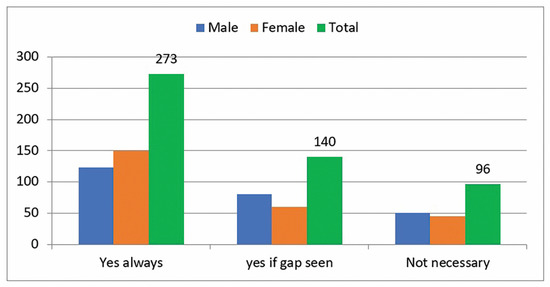
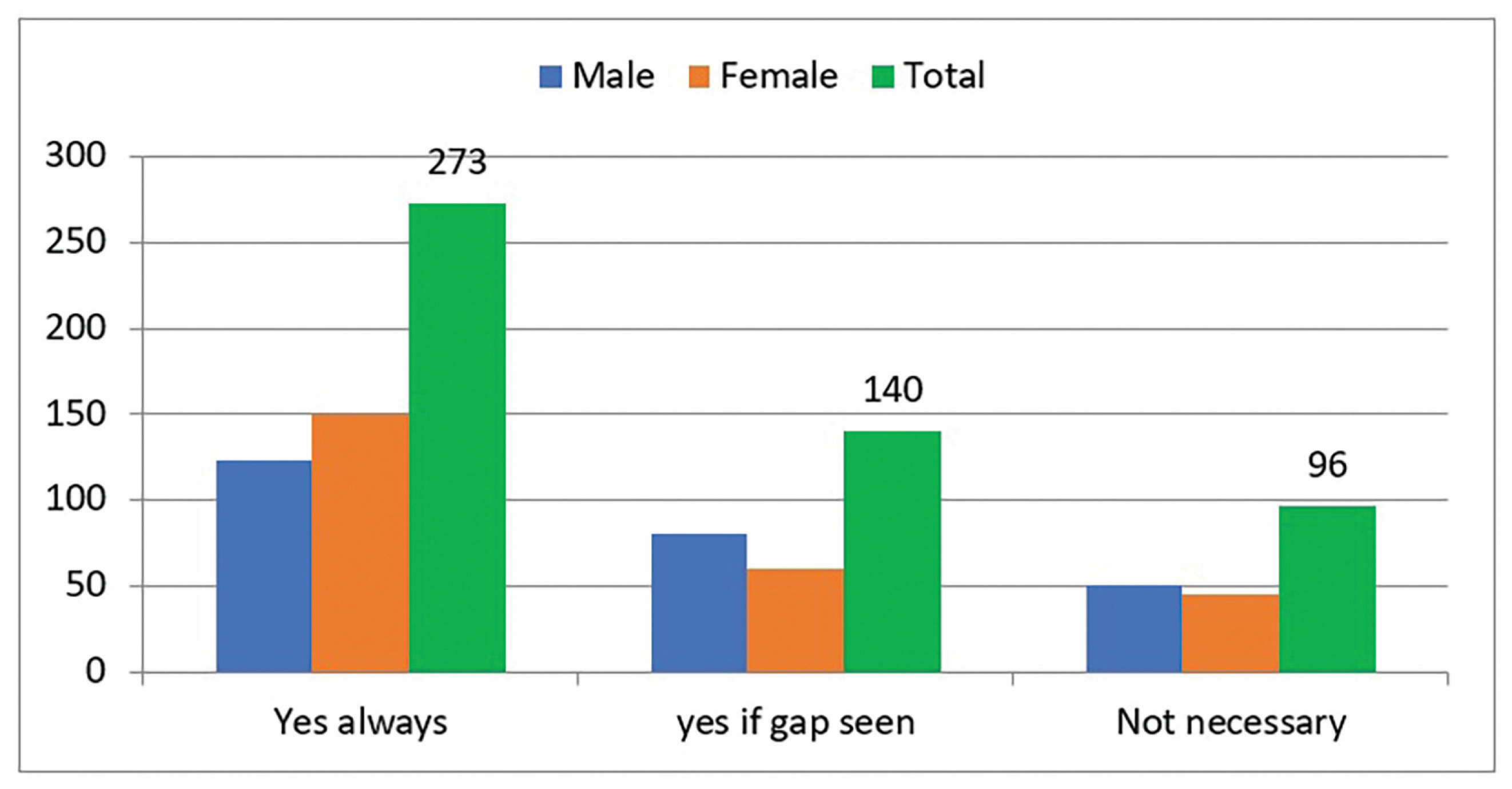
More than half of the participants (53.6%) agreed that the missing tooth should be replaced, whereas (27.5%) agreed that it should be replaced only if the gap could be seen, and (18.9%) stated that it was not necessary (Figure 1).
Figure 1.
Attitude toward tooth replacement.
3.2.4. Reasons for Not Replacing a Missing Tooth
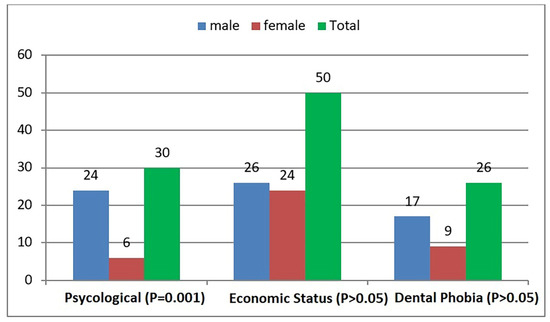
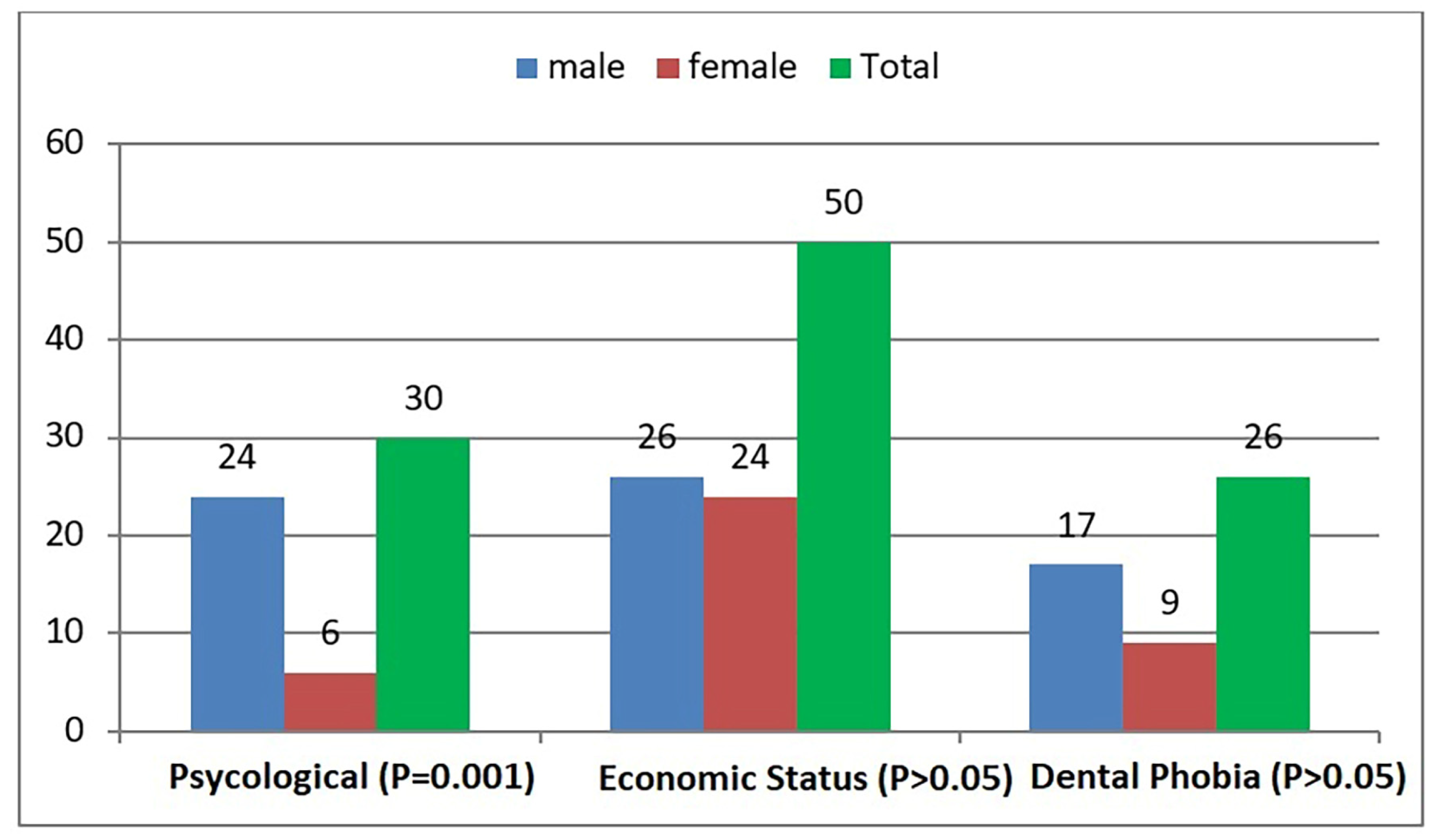
The most common reason for rejecting tooth replacement by participants was economic (50, 9.8%), followed by psychological status (30, 5.9%) and dental phobia (26, 5.1%). No significant differences were found between males and females except for their psychological statuses (p = 0.001) (Figure 2).
Figure 2.
Reasons for not replacing a missing tooth.
3.2.5. Knowledge of Reasons for Missing Teeth
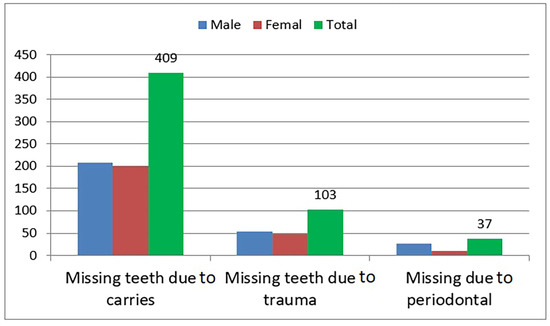
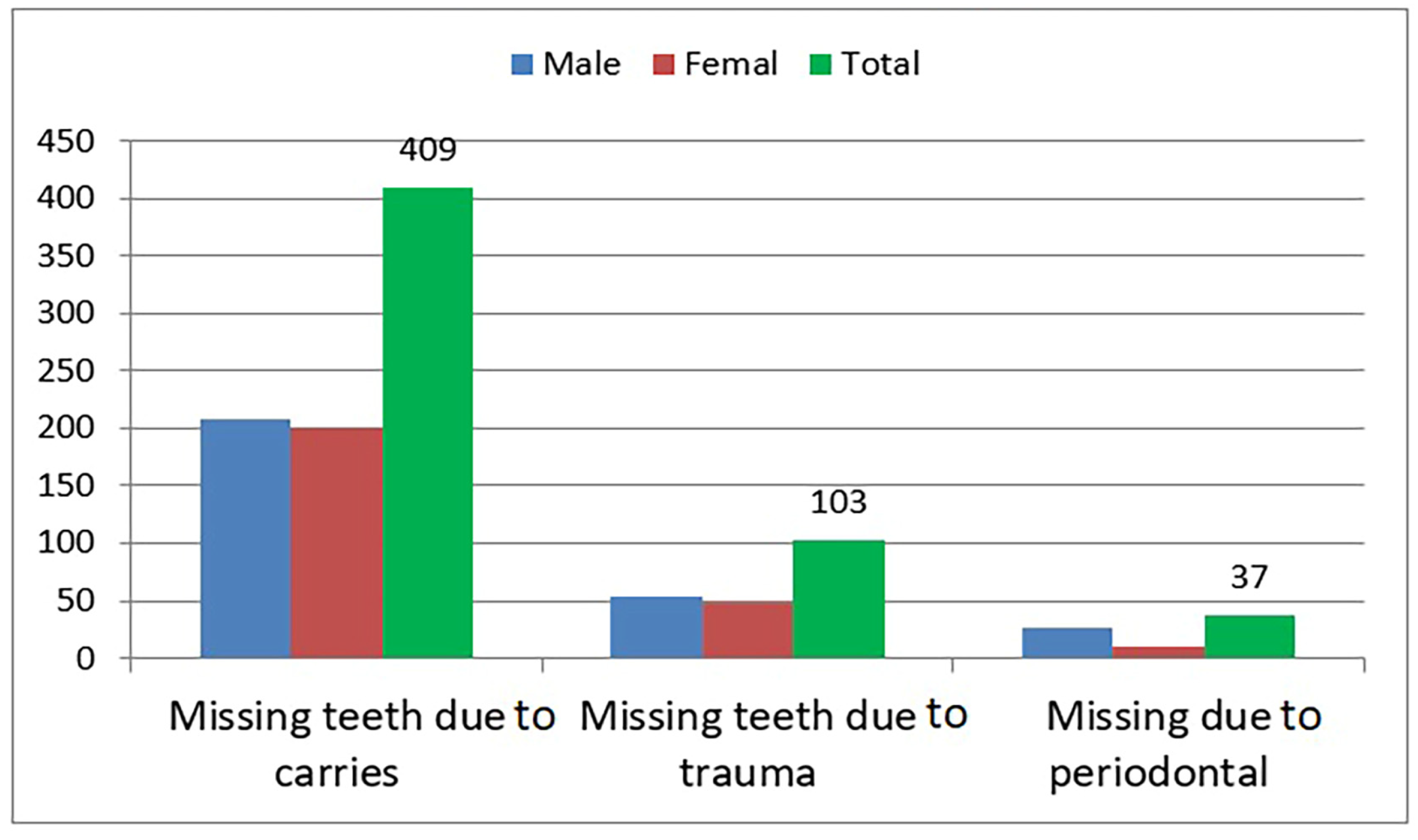
More than two-thirds of the participants (80.4%) said that dental caries was a common reason, followed by trauma (20.2%) and periodontal reasons (7.3%) (Figure 3).
Figure 3.
Reasons for missing teeth.
3.3. Implant-Supported Prosthesis (ISP)
3.3.1. Awareness of ISP
Table 3 demonstrates the awareness of ISP. Males were significantly more aware of the existence of ISP than females (p = 0.003).
Table 3.
Awareness and knowledge toward ISP.
3.3.2. Knowledge of ISP
Regarding the response to the question, “Do you know about the ISP?’, almost two-thirds (66.4%) of the participants do not have any information about ISP). At the same time, about one-third (33.6%) indicated that they had some knowledge (they know that there is a screw that should be inserted in the jaw and after that, there is a prosthesis that will be attached to it; however, they do not know the exact procedures and the sequence of treatment) (Table 3).
3.3.3. Source and Type of Information on ISP
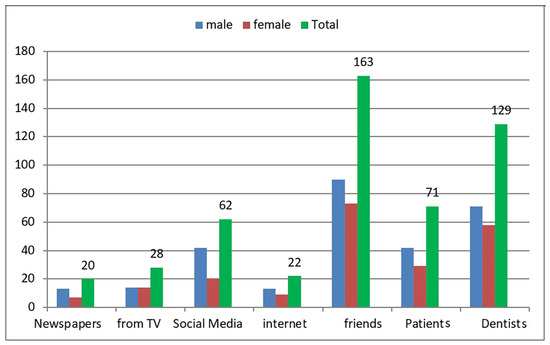
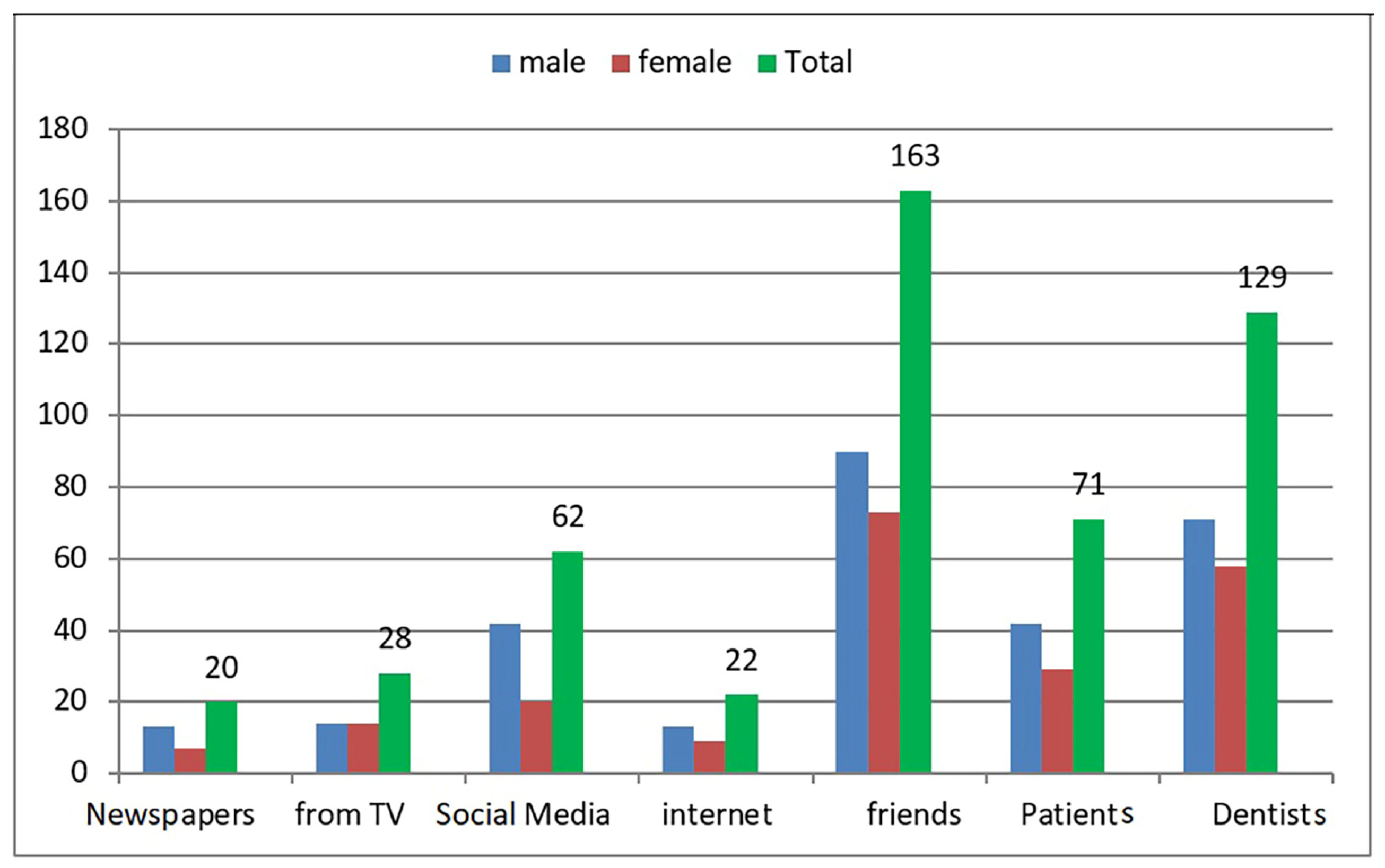
The participants’ most common source of information on ISP was friends (32.3%), followed by dentists (1, 25.5%), other patients (7, 14.1%), social media (12.3%), TV (5.5%), the Internet (4.4%), and newspapers (4%). When comparing males with females, there were no statistically significant differences in sources of information, except for media (p = 0.002) (Figure 4).
Figure 4.
Source of information about ISP.
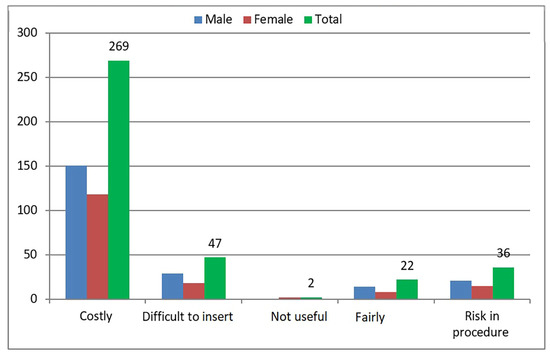
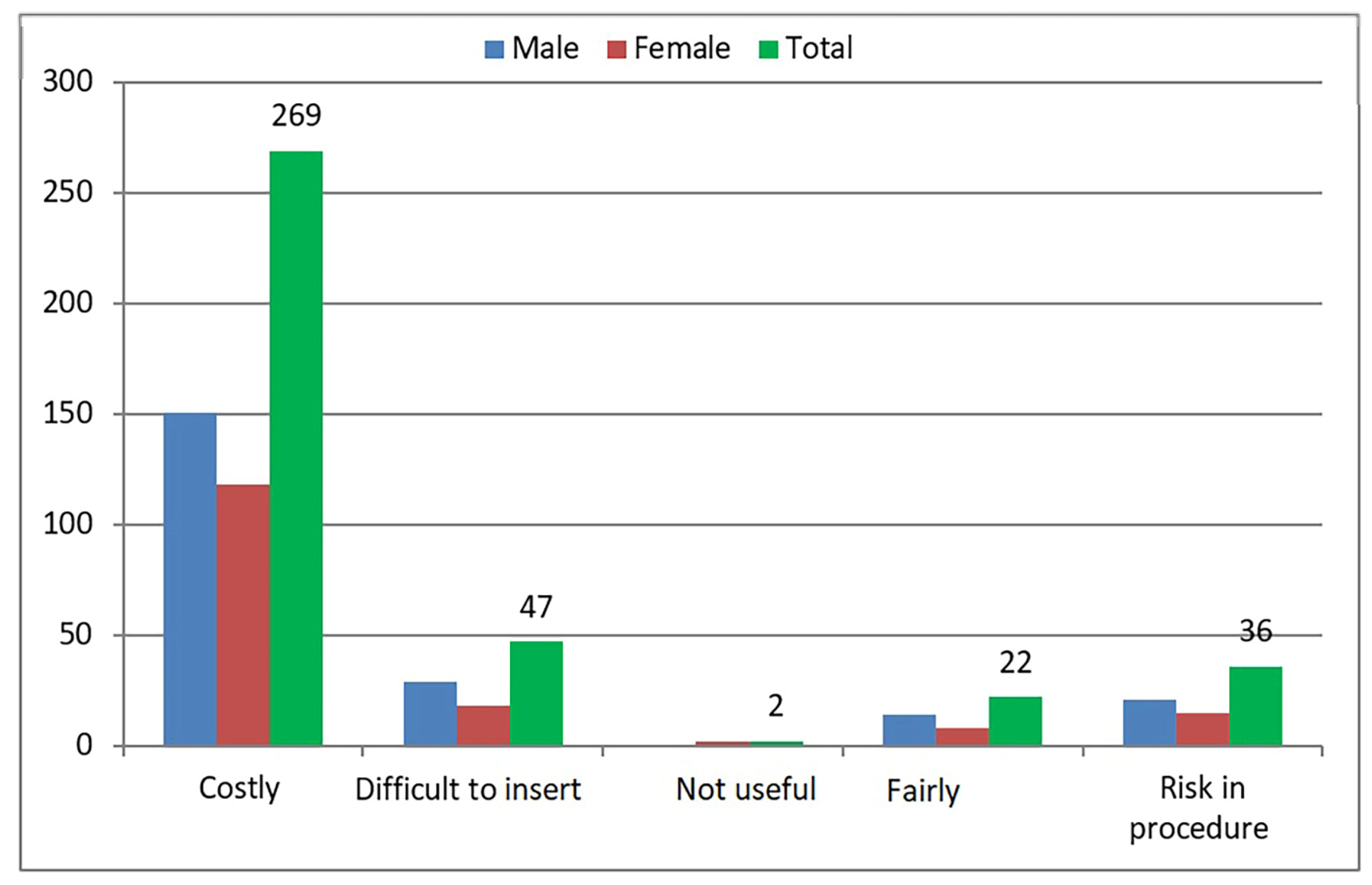
More than half (269, 53.3%) of the participants confirmed that the ISP had high costs, and there were statistically significant differences between genders: males (151, 29.9%) and females (118, 23.5%). Moreover, 47 (9.3%) participants thought that implant insertion would be difficult; no significant gender differences were detected, and 99.6% agreed that ISP are useful; however, 0.4% thought that ISP are not useful. In addition, 4.32% of participants thought that they would consider implant insertion with some fear, and 7.07% of participants thought that implant insertion procedures could be risky (Figure 5).
Figure 5.
Procedures of ISP.
3.3.4. Attitude to Obtaining Knowledge about ISP
The majority of participants (80.1%) were willing to know more about ISP. When comparing willingness and attitude to knowing more about ISP, there was a statistically significant difference between males and females (p = 0.011), with males being more open to this than females (Table 4).
Table 4.
Awareness and knowledge of ISP.
3.3.5. Attitude to Selecting ISP as Prosthetic Treatment Option
Regarding the participants’ attitude to selecting an ISP for treatment, over half of those interviewed (59.9%) reported that they would consider ISP (Table 4). When comparing attitudes to selecting ISP, there was no statistically significant difference between genders (p = 0.294), with males being more than females (Table 4).
3.3.6. Reasons for Refusing ISP
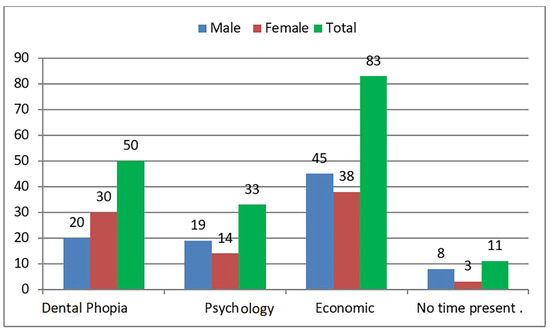
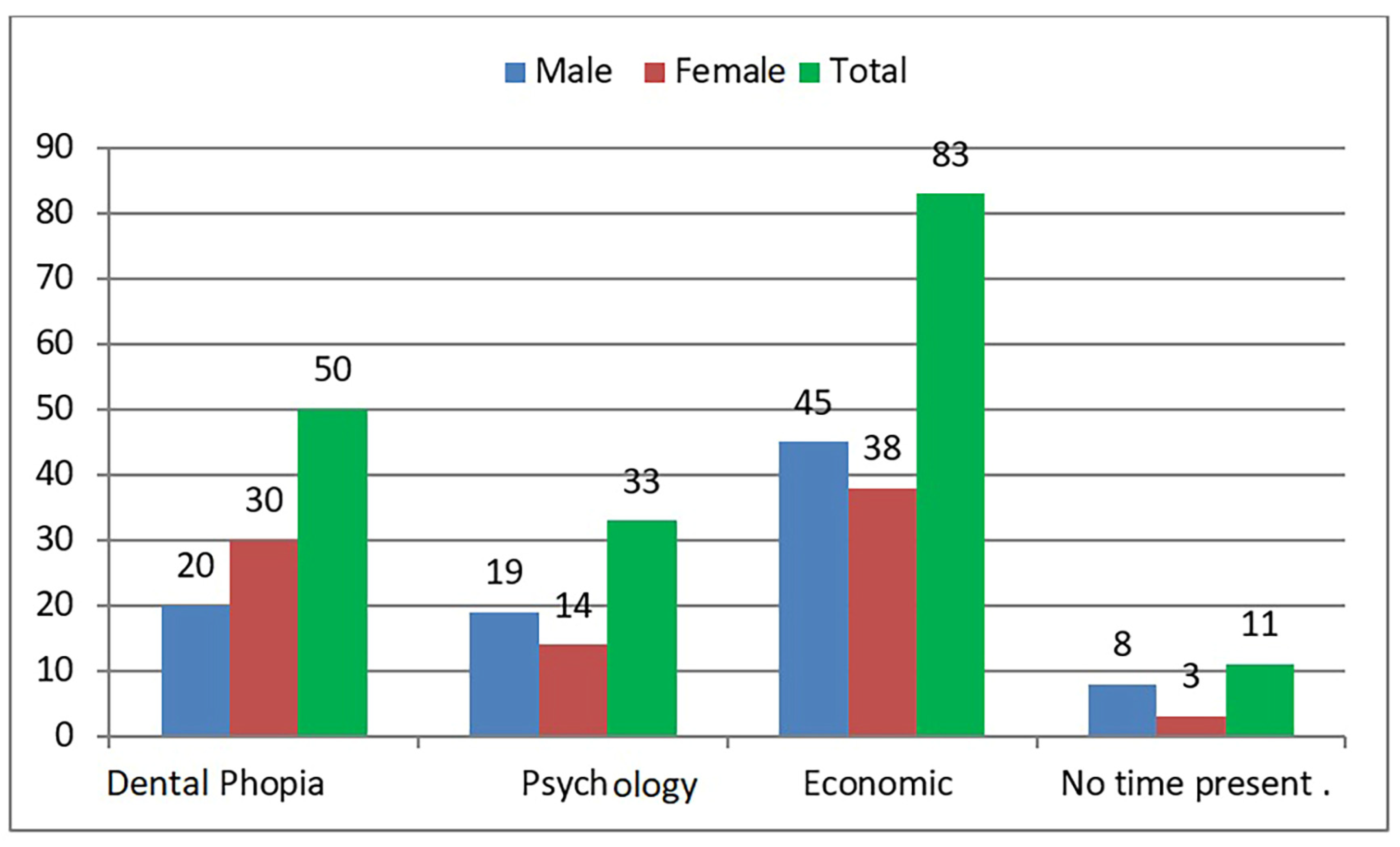
Table 4 displays that 204 (40.1%) of the study participants would not consider ISP as a treatment option. Out of those (204) participants, (177) provided the reasons for their refusal as follows: economic (16.4%), followed by dental phobia (50, 10.1%), and psychological status (6.6%). The least common reason was that the participants had no time for the implant treatment process (2.2%). There were no statistically significant differences between genders (Figure 6). Out of those (204) participants, 27 participants refused ISP without mentioning the reasons.
Figure 6.
Reasons of refusal of ISP.
3.3.7. Attitude toward Accepting the ISP Treatment Procedure
Procedure: About two-thirds of the respondents (67.6%) considered the placement procedure with an ISP to be a frightening one. There was a statistically significant difference between males and females (p < 0.001) (Table 5). Only 32.4% displayed no fear of the procedure. Insertion and Healing Period: Most respondents (80%) considered the insertion and implant treatment period painful, while 20% considered them not painful. There was a significant difference between males and females (p = 0.025) (Table 5).
Table 5.
Perception of ISP.
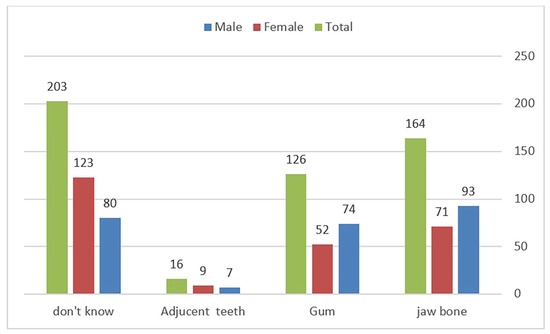
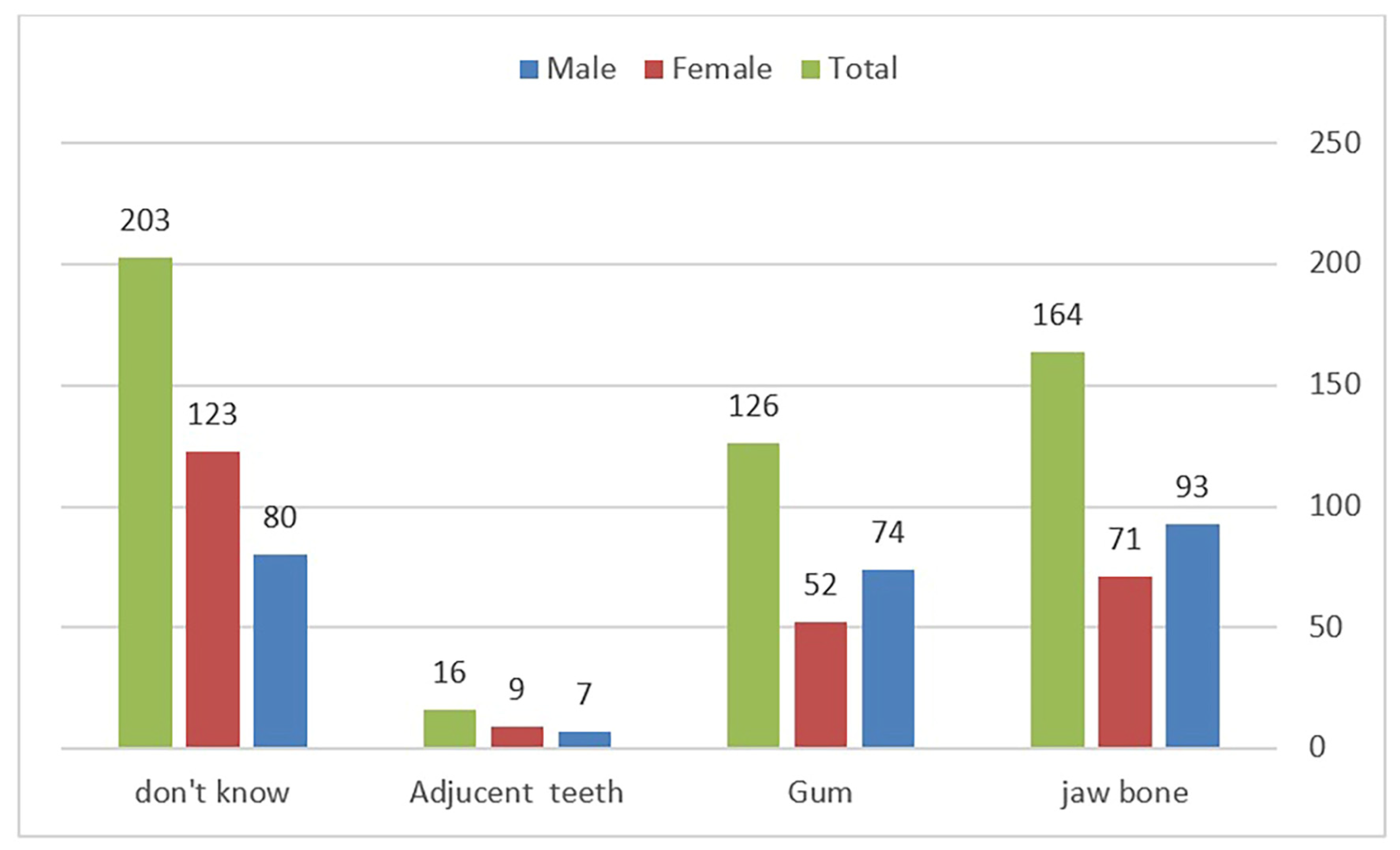
Placement: More than one-third (39.9%) of the participants did not know where an implant should be placed in order to support a prosthesis. Less than one-third (32.2%) knew that the implant was a metal screw inserted into the jaw bone. Moreover, 24.8% of participants thought that it was a metal screw placed in the gum, and 3.1% thought that it was a metal screw placed in the adjacent teeth. There were statistical differences between genders (p = 0.001) (Figure 7).
Figure 7.
Location of placement of implants.
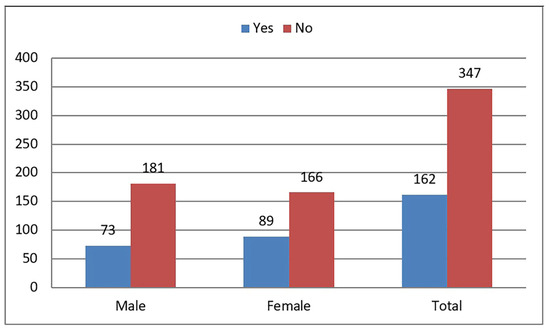
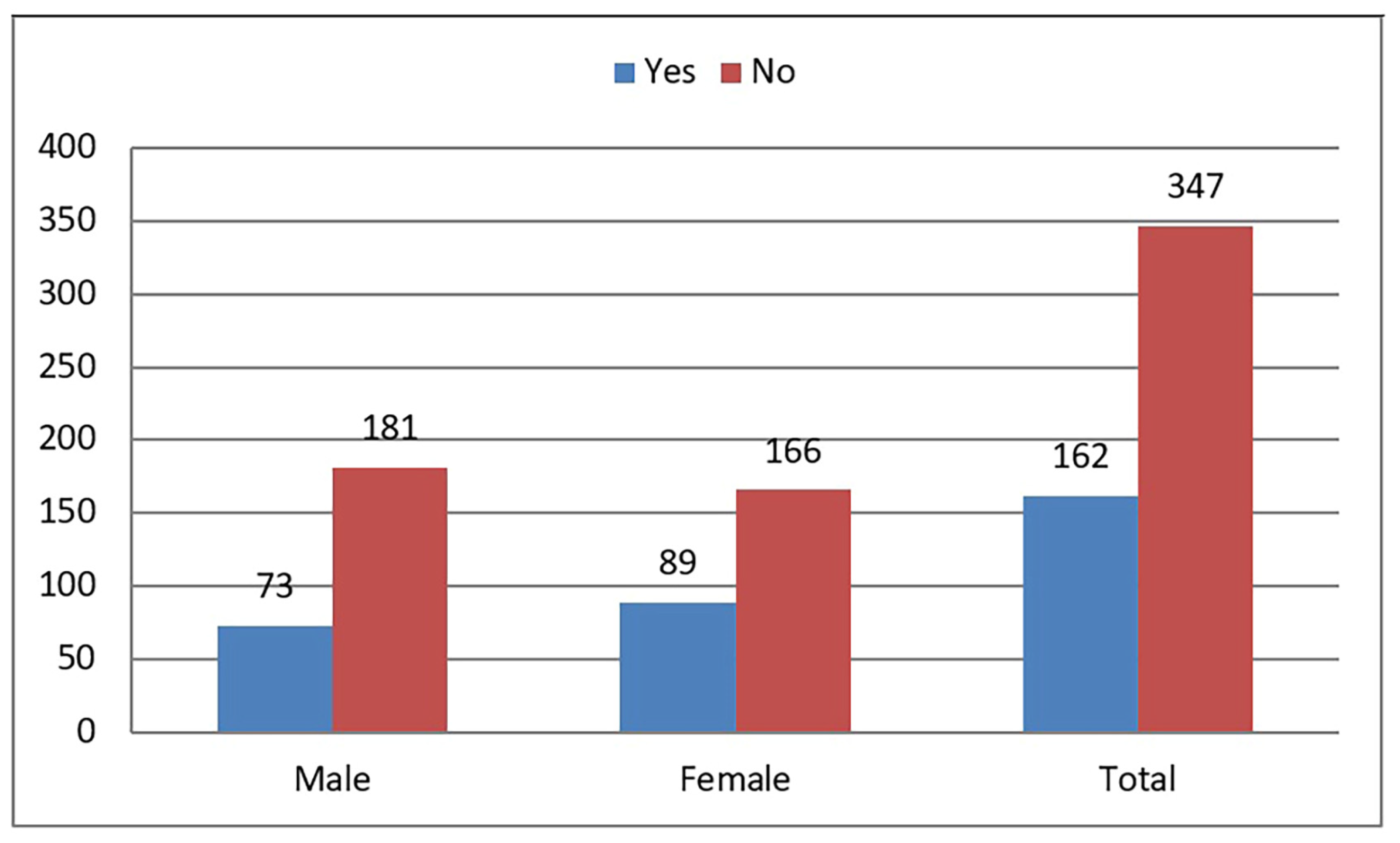
Acceptance: Acceptance of using an implant as a retaining device for removable prosthesis. Figure 8 displays that 31.8% of respondents accepted that implants could be used to retain or support a prosthesis; however, 68.2% did not. There was no significant difference between genders (p = 0.128) (Figure 8).
Figure 8.
Acceptance of implants as retaining items for removable dentures.
3.4. Awareness and Knowledge of ISP in Relation to Age Group, Educational Levels, and Socioeconomic Levels
Table 6 shows that, regarding awareness and knowledge of ISP, 28.3% and 17.5% of respondents were in the 31–50-year age group, respectively. There were no statistically significant differences. In relation to educational level, the illiterate group had a higher rate of awareness and knowledge than other educational levels, and statistically significant differences were detected (p < 0.001). Regarding socioeconomic levels, the group with annual incomes between 100,001–500,000 Yemeni Rial had a higher rate of awareness and knowledge in comparison to other groups, and statistically significant differences were detected (p = 0.033 and 0.024), respectively.
Table 6.
Awareness and knowledge of ISP in relation to age groups, education levels, and socioeconomic levels.
3.5. Tooth-Supported Prosthesis (TSP)
3.5.1. Awareness and Knowledge of TSP
Among the 509 participants, 254 (49.9%), 171 (33.6%), and 84(16.5%) knew that fixed prostheses (FP), ISP, and removable prostheses (RP), respectively, were tooth replacement treatment options. This knowledge was not statistically different between gender except for the complete dentures and ISP (p < 0.001).
3.5.2. Knowledge of TSP Procedure
Out of those who were interviewed, 35.8% said that they knew of the TSP procedure, whereas 64.2% did not. There was a statistically significant difference between genders, with males being more aware than females (p = 0.006) (Table 7).
Table 7.
Perception toward TSP procedure.
3.6. Awareness and Knowledge of TSP in Relation to Age Groups, Educational Levels, and Socioeconomic Levels
As shown in Table 8, when education and socioeconomic status were considered, statistically significant differences were detected (p = 0.036 and 0.011), respectively, whereas age group was not a relevant factor. The majority of respondents were in the age group of 31–50 (23.2%).
Table 8.
Awareness and knowledge of TSP in relation to age groups, education levels, and socioeconomic levels.
3.7. Clinical Examination Results
3.7.1. Clinical Status of Possibilities for Prosthetic Treatment Needs
According to WHO scores, 39.7% of the examined participants needed a combination of one and/or multi-unit prosthesis, followed by 36.5 who needed a multi-unit prosthesis, 16.1% needed only one prosthesis, and 6.5% needed a complete arch prosthesis, while only 0.8% of examined participants did not need any prosthesis (Table 1).
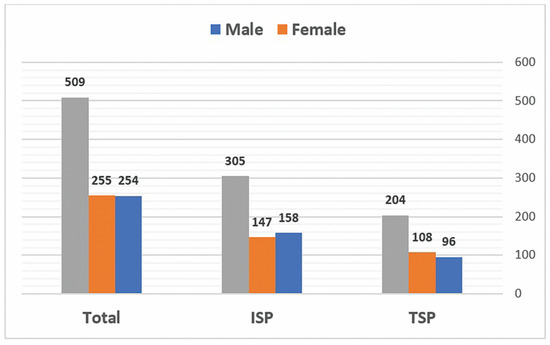
According to participant wishes, 59.9% of the respondents to this item hoped to receive an ISP as a possible option for their replacement needs, whereas 40.1% hoped for a TSP (Figure 9).
Figure 9.
Possibilities of prosthetic treatment needs according to participants’ desire.
3.7.2. Clinical Status of Prosthetic Treatment
Of the questioned participants, 64.4% had one fixed bridge (FP), 18.7% had more than one FPs, 12.2% had a removable partial denture, 1.0% had a complete removable denture (complete removable dental prosthesis), 2.0% had both a removable partial and a fixed dental prosthesis, 1.6% had no prosthesis, and 0.2% were not recorded (Table 1).
3.7.3. Awareness and Knowledge of ISP and TSP in Relation to IOPS and Prosthetic Treatment Needs (PTN)
There are no significant effects between IOPS and PTN on one side and awareness and knowledge on the other side (Table 9).
Table 9.
Awareness and knowledge of ISP in relation to IOPS and PTN.
4. Discussion
The main objective of the study was to evaluate awareness, knowledge, attitude, prosthetic status, and treatment needs for the TSP and ISP in the Municipality of Sana’a, Yemen. Partially dentate participants or their companions aged 18 years or older were included.
The respondents’ attitudes toward replacing a missing tooth were evaluated; the majority of respondents (81.1%) were very positive and planned to replace missing teeth. This percentage was comparable to that revealed by Siddique et al. in 2019 [23], slightly higher than those reported by Jayasinghe in 2017 [24] and Mayya et al. in 2018 [25], nearly two-fold higher than that reported by Gupta et al. in 2022 [26], and almost three-fold higher than that reported by Reddy et al. [27]. The results of the current study revealed no statistical significance in the attitude of males and females toward the replacement of missing teeth. This finding is consistent with the published findings [24,26,27]. Jayasinghe et al. reported that the most commonly given reason for the negative attitude of the respondents towards tooth replacement was that replacement was not necessary, and the second most frequently reported reason was financial constraint [24]. On the contrary, the present study was in agreement with the study of Raj and coworkers, who identified socioeconomic factors as the most common barrier [28].
Of 509 participants, 33.6% knew that ISP was an option for replacing a missing tooth. This value corresponds to a report by a previous study [29] and is higher than another study conducted in an Asian population [8]. This disparity could be attributed to the spread of dental implant treatment in Yemen in comparison to the neighboring countries in the region. Moreover, the study results showed that the participants were more likely to accept a TSP or ISP (83.5%) than the other treatment options, and no statistically significant differences were detected in relation to gender. Similar findings were observed in an earlier study that showed a high participant preference (62%) for fixed prostheses over removable prostheses [24].
Moreover, the finding of the study conducted by Al-Quran et al. [8] showed that only 34% of the participants preferred the removable prosthesis option. In contrast, a study conducted in Saudi Arabia reported that about 50% of the participants preferred removable partial dentures and that 25% of participants with fixed tooth-supported prostheses preferred not to receive implants [27], which could be attributed to financial reasons, literacy level, and media exposure. In our study, more than half of the participants (59.9%) prefer the ISP mode of treatment for missing teeth, and this is due to it being the healthiest treatment mode for missing teeth. However, 40.1% prefer TSPs (including fixed and removable prostheses) due to economic factors, dental phobia of implant procedures, and the time needed for the implant treatment process. This result is in agreement with the Al-Quran study, wherein the patients preferred fixed prostheses (in our study, this was supported by implants). In addition, these variations are brought on by the population’s literacy level and media exposure.
When comparing the awareness levels of TSP and ISP in the present study (57.9%) with other studies, differences were found. The present study observed a lower percentage among the participants in comparison to other studies [30,31] (77%, and 70.1%, respectively). This observation may be due to the social and cultural background of populations in industrialized countries and their scientific progress. Although some studies that were conducted in Arab countries revealed a high level of awareness (over 80%) of ISP, including studies by Mukatash et al. [32] and Al-Musawi [9], however, another study conducted by Al-Johany revealed a low level of awareness (66%) [33].
Although some studies reported [33] the source of information as being largely different media channels, family members, or social gatherings, there was an agreement between the present study and those studies regarding the information obtained by dentists, which seems disturbing and requires attention. In contrast, a study conducted by Tomruk et al. [34] differed from the present and the previous studies regarding the main source of information. It showed that the dentist was the commonest source of information, followed by friends, while the present study indicates that information came more from friends, followed by dentists [34].
Regarding the level of knowledge between men and women of TSP and ISP, the findings of the present study were in contrast to the findings of Tomruk et al. [34]. The present study indicates that men had a higher level of knowledge than women, while Tomruk’s study reported the opposite. In addition, the results published by Salim et al. in 2021 support the findings of the present study [35]. This could indicate that women in Yemeni society still have limited access to useful information. Nevertheless, the present study was consistent with the study of Tomruk et al. in that the individual was increasingly interested in choosing a dental implant to treat a missing tooth [34]. This interest was evident in females, who showed a higher rate of interest in ISP. A similar result has also been reported by another study [36].
That the majority of the study participants (80%) considered the dental implant treatment relatively difficult and accompanied by severe pain was surprising. This could be a strong barrier to the adoption of ISP in the treatment of tooth loss in the Yemeni population. To solve this dilemma, surgeons, prosthodontics, and dentists should exert their best effort to correct this false concept. However, the present study revealed a positive and encouraging result. Most of the participants (99.6%) believed that dental implants are very useful. Accordingly, a certain compatibility can be found between the present study and the study of Al-Musawi [9] regarding both the surprising and encouraging results.
In the present study, friends (32.3%) were the main source of information, followed by dentists (25.5%). This finding could probably mean that the type of information received by the participant might be incorrect and misleading. These findings were in agreement with the findings of a study conducted by Zimmer et al. [30], in which a friend, as a source of information, was 35% while a dentist was 17%. In addition, a study conducted in Jordan by Al-Dwairi et al. [37] showed that a friend as a provider of information was 58.3% and a dentist was 38.9%.
As in any study, this investigation has its limitations. One limitation of this study was that the selected participants were all in one city, so the subject variance may have been small. Additionally, some of the questionnaire’s optional answers did not include options such as “I don’t know” or free-text responses, which can cause misleading results. Future studies could have a larger sample size and could be multinational or multicenter.
5. Conclusions
Within the limitations of this survey-based study, the following conclusions were drawn:
- (1)
- Most of the questioned participants had low awareness and knowledge of the tooth replacement options and the role of ISP in treating a missing tooth.
- (2)
- The study also revealed that the ISP is an expensive and unaffordable therapy for treating a missing tooth.
- (3)
- Education for patients is highly suggested so patients do not think that implant therapy produces severe pain.
Author Contributions
Conceptualization, A.A.-F. and M.D.; methodology, A.A.-F.; software, A.A.-F.; validation, A.A.-F., M.D. and A.S. (Abdulaziz Samran); formal analysis, A.S. (Ahlam Smran); investigation, A.A.-F.; resources, A.A.-F.; data curation, A.A.-F.; writing—original draft preparation, A.A.-F.; writing—review and editing, S.E.B.; visualization, A.A.-F.; supervision, M.D.; project administration, A.S. (Abdulaziz Samran); funding acquisition, A.A.-F. All authors have read and agreed to the published version of the manuscript.
Funding
This research received no external funding.
Institutional Review Board Statement
This study was granted the approval number (#EAC/UST/124) by the ethics committee of the Scientific Research Department, University of Science and Technology (UST), Sana’a, Yemen.
Informed Consent Statement
Informed consent was obtained from all subjects involved in the study.
Data Availability Statement
The data used to support the findings of this study are available from the corresponding author upon request.
Acknowledgments
Authors are grateful to the Deanship of Graduate Studies and Research, Dar Al-Uloom University, for their support.
Conflicts of Interest
The authors declare no conflict of interest.
References
- Allen, P.F.; McMillan, A.S. A review of the functional and psychosocial outcomes of edentulousness treated with complete replacement dentures. J. Can. Dent. Assoc. 2003, 69, 662. [Google Scholar]
- Kumar, S.; Tadakamadla, J.; Tibdewal, H.; Prabu, D.; Kulkarni, S. Dental prosthetic status and treatment needs of green marble mine laborers, udaipur, India. Dent. Res. J. 2011, 8, 123–127. [Google Scholar]
- Omar, R.; Tashkandi, E.; Abduljabbar, T.; Abdullah, M.A.; Akeel, R.F. Sentiments Expressed in Relation to Tooth Loss: A Qualitative Study Among Edentulous Saudis. Int. J. Prosthodont. 2003, 16, 515–520. [Google Scholar] [CrossRef] [Scilit]
- Roessler, D.M. Complete denture success for patients and dentists. Int. Dent. J. 2003, 53, 340–345. [Google Scholar] [CrossRef] [Scilit] [PubMed]
- Rodrigues, S.M.; Oliveira, A.C.; Vargas, A.M.D.; Moreira, A.N. Implications of edentulism on quality of life among elderly. Int. J. Environ. Res. Public Health 2012, 9, 100–109. [Google Scholar] [CrossRef] [Scilit] [PubMed]
- Peeran, S.A.; Al Sanabani, F.; Al-Makramani, B.M.A.; Elamin, E.I. Dental prosthetic status and treatment needs of adult population in Jizan, Saudi Arabia: A survey report. Eur. J. Dent. 2016, 10, 459–463. [Google Scholar] [CrossRef] [Scilit] [PubMed]
- Fiske, J.; Davis, D.M.; Frances, C.; Gelbier, S. The emotional effects of tooth loss in edentulous people. Br. Dent. J. 1998, 184, 90–93; discussion 79. [Google Scholar] [CrossRef] [Scilit] [PubMed]
- Al-Quran, F.A.; Al-Ghalayini, R.F.; Al-Zu’bi, B.N. Single-tooth replacement: Factors affecting different prosthetic treatment modalities. BMC Oral. Health 2011, 11, 34. [Google Scholar] [CrossRef] [Scilit]
- Al-Musawi, A.; Sharma, P.; Maslamani, M.; Dashti, M. Public awareness and perception of dental implants in randomly selected sample in Kuwait. J. Med. Imp. Surg. 2017, 2, 2. [Google Scholar]
- Nadgere, J.; Gala-Doshi, A.; Kishore, S. An evaluation of prosthetic status and prosthetic need amongst people living in and around Panvel, Navi-Mumbai-A Survey. Int. J. Prosthet. Dent. 2010, 1, 6–10. [Google Scholar]
- Reddy, N.S. Edentulism-an epidemiological survey of population in Chennai, India. J. Orofac. Sci. 2010, 2, 14. [Google Scholar]
- Awad, M.A.; Lund, J.P.; Dufresne, E.; Feine, J.S. Comparing the efficacy of mandibular implant-retained overdentures and conventional dentures among middle-aged edentulous patients: Satisfaction and functional assessment. Int. J. Prosthodont. 2003, 16, 117–122. [Google Scholar] [PubMed]
- Lindh, T.; Gunne, J.; Tillberg, A.; Molin, M. A meta-analysis of implants in partial edentulism. Clin. Oral. Implant. Res. 1998, 9, 80–90. [Google Scholar] [CrossRef] [Scilit]
- Branemark, P.I.; Hansson, B.O.; Adell, R.; Breine, U.; Lindstrom, J.; Hallen, O.; Ohman, A. Osseointegrated implants in the treatment of the edentulous jaw. Experience from a 10-year period. Scand. J. Plast. Reconstr. Surg. Suppl. 1977, 16, 1–132. [Google Scholar] [PubMed]
- Adell, R.; Hansson, B.O.; Branemark, P.I.; Breine, U. Intra-osseous anchorage of dental prostheses. II. Review of clinical approaches. Scand. J. Plast. Reconstr. Surg. 1970, 4, 19–34. [Google Scholar] [CrossRef] [Scilit] [PubMed]
- Branemark, P.I.; Adell, R.; Breine, U.; Hansson, B.O.; Lindstrom, J.; Ohlsson, A. Intra-osseous anchorage of dental prostheses. I. Experimental studies. Scand. J. Plast. Reconstr. Surg. 1969, 3, 81–100. [Google Scholar] [CrossRef] [Scilit]
- Adell, R.; Eriksson, B.; Lekholm, U.; Branemark, P.I.; Jemt, T. Long-term follow-up study of osseointegrated implants in the treatment of totally edentulous jaws. Int. J. Oral. Maxillofac. Implant. 1990, 5, 347–359. [Google Scholar]
- Thomason, J.M.; Feine, J.; Exley, C.; Moynihan, P.; Müller, F.; Naert, I.; Ellis, J.S.; Barclay, C.; Butterworth, C.; Scott, B. Mandibular two implant-supported overdentures as the first choice standard of care for edentulous patients-the York Consensus Statement. Br. Dent. J. 2009, 207, 185. [Google Scholar] [CrossRef] [Scilit]
- Jurado, C.A.; Tsujimoto, A.; Guzman, L.G.; Fischer, N.G.; Markham, M.D.; Barkmeier, W.W.; Latta, M.A. Implant therapy with ultratranslucent monolithic zirconia restorations in the esthetic zone: A case report. Gen. Dent. 2020, 68, 46–49. [Google Scholar]
- Henry, P. Tooth loss and implant replacement. Aust. Dent. J. 2000, 45, 150–172. [Google Scholar] [CrossRef] [Scilit]
- Morgan, K. Sample size determination using Krejcie and Morgan table. Kenya Proj. Organ. (KENPRO) 1970, 38, 607–610. [Google Scholar]
- World Health Organization. Oral Health Surveys: Basic Methods; World Health Organization: Geneva, Switzerland, 2013. [Google Scholar]
- Siddique, E.A.; Bhat, P.R.; Kulkarni, S.S.; Trasad, V.A.; Thakur, S.L. Public awareness, knowledge, attitude and acceptance of dental implants as a treatment modality among patients visiting SDM College of Dental Sciences and Hospital, Dharwad. J. Indian Soc. Periodontol. 2019, 23, 58. [Google Scholar]
- Jayasinghe, R.M.; Perera, J.; Jayasinghe, V.; Thilakumara, I.P.; Rasnayaka, S.; Shiraz, M.H.M.; Ranabahu, I.; Kularatna, S. Awareness, attitudes, need and demand on replacement of missing teeth among a group of partially dentate patients attending a University Dental Hospital. BMC Res. Notes 2017, 10, 334. [Google Scholar] [CrossRef] [Scilit]
- Mayya, A.; D’souza, J.; George, A.M.; Shenoy, K.; Jodalli, P.; Mayya, S.S. Knowledge and awareness of dental implants as a treatment choice in adult population in South India: A hospital-based study. Indian J. Dent. Res. 2018, 29, 263. [Google Scholar] [CrossRef] [Scilit]
- Gupta, V.; Singh, S.; Singhal, P.; Gupta, P.; Gupta, B.; Kumar, S. Perception, awareness, and practice about missing teeth, prosthetic options, and knowledge about dental implants as a treatment modality in the adult population of Jharkhand State: A hospital-based study. J. Pharm. Bioallied Sci. 2022, 14, S644. [Google Scholar]
- Reddy, R.N.; Elamin, E.I.; Vempalli, S.; Al Sanabani, F. Perception and awareness of prosthodontic rehabilitation among Jazan population in the Southern Region of Saudi Arabia. Glob. J. Med. Res. 2016, 16, 1–8. [Google Scholar]
- Raj, N.; Reddy, N.; Japatti, S.; Thomas, M.; Uthappa, R. Knowledge, attitudes towards prosthodontics rehabilitation and utilization of dental services among Songadh and Amargadh Population. J. Dent. Med. Med. Sci. 2014, 3, 1–6. [Google Scholar]
- Suprakash, B.; Ahammed, A.Y.; Thareja, A.; Kandaswamy, R.; Kumar, N.; Bhondwe, S. Knowledge and attitude of patients toward dental implants as an option for replacement of missing teeth. J. Contemp. Dent. Pract. 2013, 14, 115. [Google Scholar]
- Zimmer, C.M.; Zimmer, W.M.; Williams, J.; Liesener, J. Public awareness and acceptance of dental implants. Int. J. Oral. Maxillofac. Implant. 1992, 7, 207–217. [Google Scholar]
- Berge, T.I. Public awareness, information sources and evaluation of oral implant treatment in Norway. Clin. Oral. Implant. Res. 2000, 11, 401–408. [Google Scholar] [CrossRef] [Scilit]
- Mukatash, G.N.; Al-Rousan, M.; Al-Sakarna, B. Needs and demands of prosthetic treatment among two groups of individuals. Indian J. Dent. Res. 2010, 21, 564. [Google Scholar] [CrossRef] [Scilit]
- Al-Johany, S.; Al Zoman, H.A.; Al Juhaini, M.; Al Refeai, M. Dental patients’ awareness and knowledge in using dental implants as an option in replacing missing teeth: A survey in Riyadh, Saudi Arabia. Saudi Dent. J. 2010, 22, 183–188. [Google Scholar] [CrossRef] [Scilit]
- Ozcakir Tomruk, C.; Ozkurt-Kayahan, Z.; Sencift, K. Patients’ knowledge and awareness of dental implants in a Turkish subpopulation. J. Adv. Prosthodont. 2014, 6, 133–137. [Google Scholar] [CrossRef] [Scilit]
- Salim, N.A.; Meyad, F.H.; Al-Abdallah, M.M.; Abu-Awwad, M.; Satterthwaite, J.D. Knowledge and awareness of dental implants among Syrian refugees: A cross sectional study in Zaatari camp. BMC Oral. Health 2021, 21, 442. [Google Scholar] [CrossRef] [Scilit]
- Elani, H.; Starr, J.; Da Silva, J.; Gallucci, G. Trends in dental implant use in the US, 1999–2016, and projections to 2026. J. Dent. Res. 2018, 97, 1424–1430. [Google Scholar] [CrossRef] [Scilit]
- AL-Dwairi, Z.N.; El Masoud, B.M.; AL-Afifi, S.A.; Borzabadi-Farahani, A.; Lynch, E. Awareness, attitude, and expectations toward dental implants among removable prostheses wearers. J. Prosthodont. 2014, 23, 192–197. [Google Scholar] [CrossRef] [Scilit]

Disclaimer/Publisher’s Note: The statements, opinions and data contained in all publications are solely those of the individual author(s) and contributor(s) and not of MDPI and/or the editor(s). MDPI and/or the editor(s) disclaim responsibility for any injury to people or property resulting from any ideas, methods, instructions or products referred to in the content. |
© 2023 by the authors. Licensee MDPI, Basel, Switzerland. This article is an open access article distributed under the terms and conditions of the Creative Commons Attribution (CC BY) license (https://creativecommons.org/licenses/by/4.0/).