Review

Efficient Chitin Derivatization Methods Using Ionic Liquids and Deep Eutectic Solvents


Graduate School of Science and Engineering, Kagoshima University, 1-21-40 Korimoto, Kagoshima 890-0065, Japan
*
Author to whom correspondence should be addressed.
Macromol 2026, 6(1), 12; https://doi.org/10.3390/macromol6010012
Submission received: 2 December 2025 / Revised: 6 January 2026 / Accepted: 9 February 2026 / Published: 11 February 2026

Abstract

Ionic liquids (ILs) and deep eutectic solvents (DESs) have emerged as effective solvents for poorly soluble materials such as natural polysaccharides, including chitin. This review describes recently developed efficient chitin derivatization methods that harness the solubilizing power of ILs and DESs. It covers chitin acylation approaches, including acylation and mixed ester formation, as well as chitin etherification protocols. For example, the ILs 1-allyl-3-methylimidazolium bromide (AMIMBr) and 1-allyl-2,3-dimethylimidazolium bromide serve as effective media for chitin acylation and etherification, respectively, yielding single esters and benzyl derivatives with high degrees of substitution (DS). The use of DESs comprising AMIM chloride (AMIMCl) as a hydrogen bond acceptor and several hydrogen bond donors for chitin acylation are presented. In an optimized system, acylation using acyl chlorides proceeded smoothly without additives, such as a base/catalyst, in a DES comprising AMIMCl and 1,1,3,3-tetramethylguanidine, affording high-DS ester derivatives. The method was extended to the synthesis of mixed chitin esters bearing both long and bulky acyl substituents at appropriate substitution ratios, which exhibit thermoplasticity.

1. Introduction

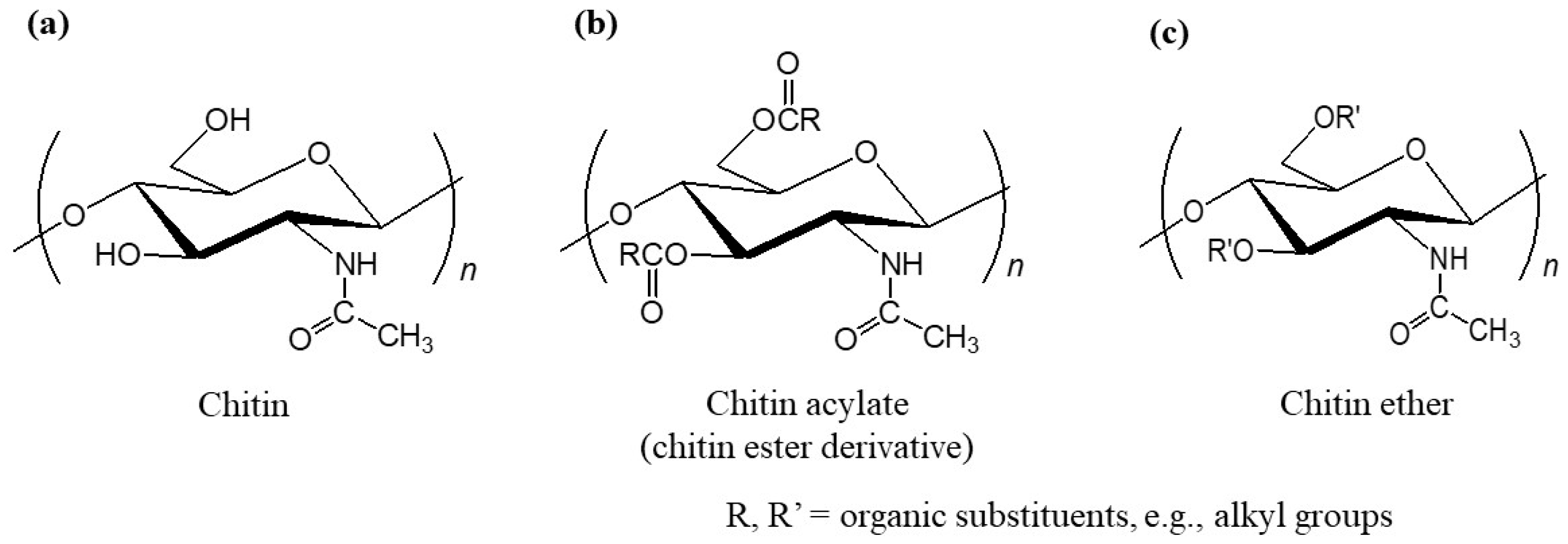
Polysaccharides are among the most abundant types of biomasses on Earth [1,2]. Cellulose and chitin are representative natural polysaccharides that serve as structural components of plant cell walls and crustacean shells, respectively [3,4,5,6,7]. The former is composed of d-glucose and the latter of N-acetyl-d-glucosamine (GlcNAc) repeating units, linked through β(1 → 4)-glycosidic bonds (Figure 1a). Cellulose has traditionally been used as a fundamental material in furniture, clothing, pulp, and paper. Furthermore, derivatization of the hydroxy groups in cellulose has enabled its application to be extended to other fields beyond the above-mentioned traditional purposes [8,9,10,11].
Cellulose acylation (ester derivatization) and etherification are widely practiced to impart new functions and properties [12,13,14]. The cellulose ester derivative, cellulose triacetate (CTA) exhibits thermoplasticity, resulting in its commercial use as protective sheeting for polarizing plates, optical compensation sheeting for liquid crystal displays, and photographic sheets [8]. Mixed cellulose esters such as cellulose acetate butyrate, which contain multiple acyl substituents, exhibit greater melt processability than CTA owing to their lower viscous flow temperature, leading to superior thermoplasticity [15]. On the other hand, some cellulose ether derivatives such as methyl and ethyl celluloses are used as viscous agents in food and biomedical applications [10,12,13,14].
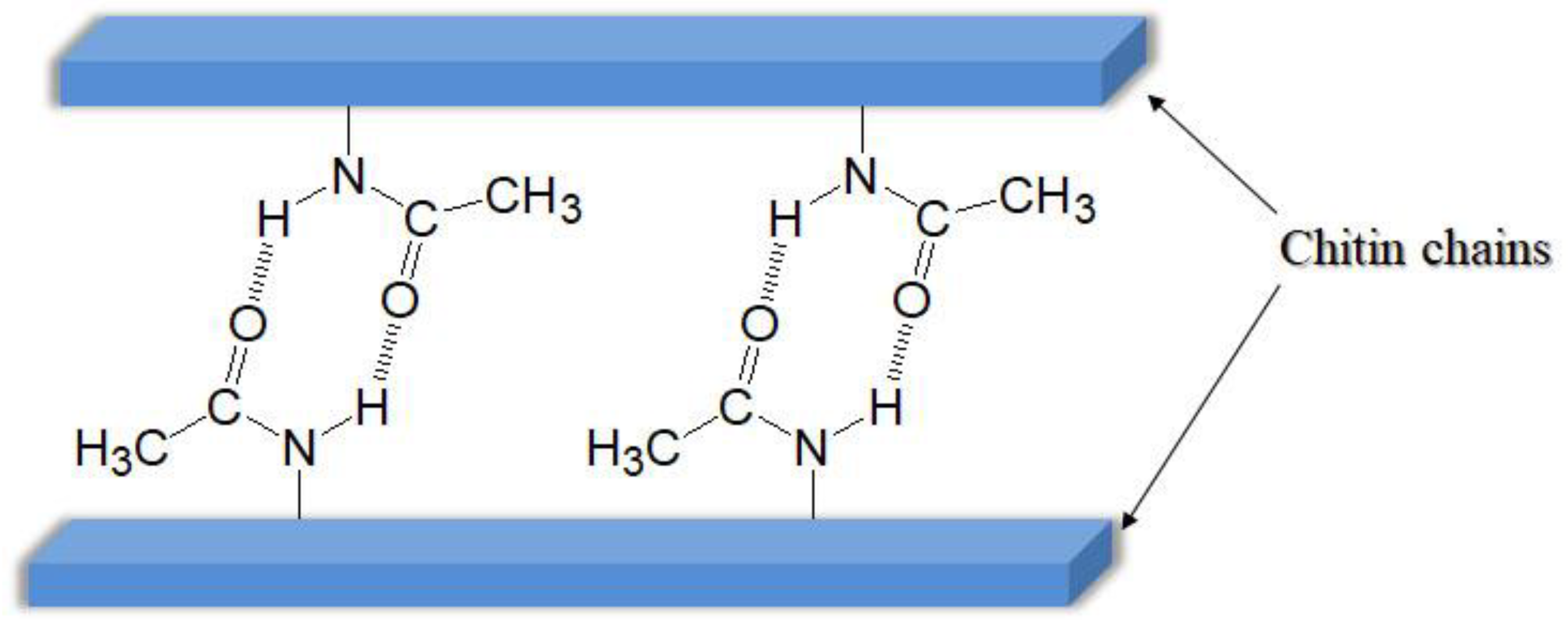
Despite the biosynthesis of chitin being comparable to that of cellulose, efficient chitin acylation and etherification (Figure 1b,c) methods are scarce because of the poor solubility and derivatization feasibility of chitin relative to cellulose. These disadvantages stem from the highly crystalline and rigid molecular packing of chitin chains resulting from tight hydrogen bonding mainly between the acetamido groups at the C-2 position of the GlcNAc units (Figure 2).
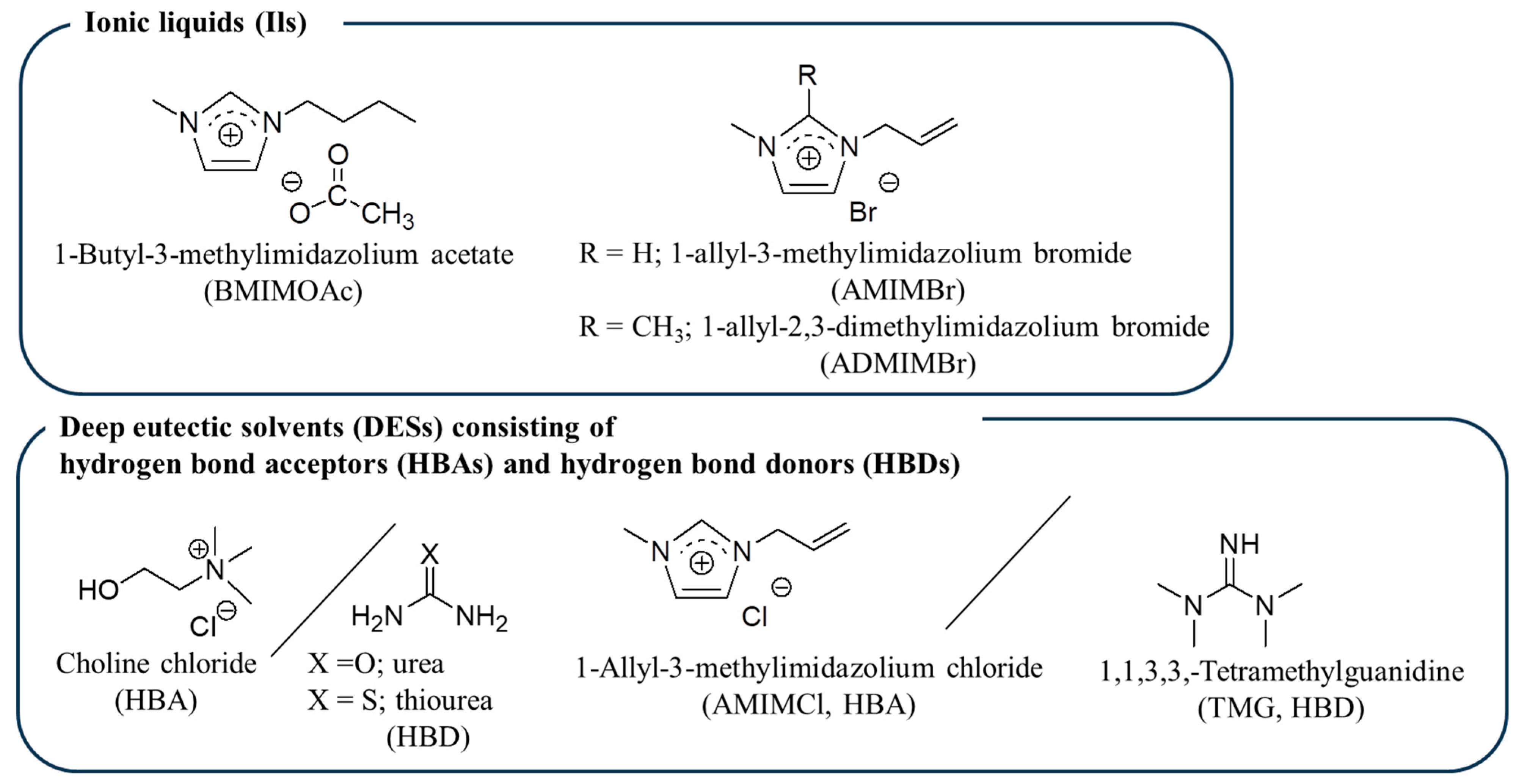
Ionic liquids (ILs) are molten salts with melting points lower than the boiling point of water. Following the 2002 finding that the IL 1-butyl-3-methylimidazolium chloride (BMIMCl) can dissolve cellulose at relatively high concentrations [16], numerous other ILs have been identified as efficient solvents for cellulose and other polysaccharides [17,18,19,20,21,22,23,24,25,26,27,28]. Thus, ILs have also been employed as media for cellulose derivatization [22]. However, chitin is soluble in only a few types of ILs [29,30,31,32,33,34,35]. Chitin dissolution was first reported using 1-butyl-3-methylimidazolium acetate (BMIMOAc) (Figure 3) [36]. Similar ILs, such as those based on the imidazolium and ammonium framework accompanied by carboxylates as counter anions, have been reported for the dissolution of chitin [35]. Counter carboxylate anions include acetate, alkanoates with varying carbon chain lengths, lactate, and amino acid salts. However, ILs containing carboxylates are not suitable media for chitin derivatization due to their high nucleophilicity. This is because the carboxylate anions can react with electrophilic reactants, which are typically utilized for derivatizing hydroxy groups, thereby impeding the desired reaction. For example, chitin acetylation using acetic anhydride as an electrophile in BMIMOAc at 100 °C for 24 h afforded a low degree of derivatization (DS) (0.81, highest DS for chitin is 2) [35].
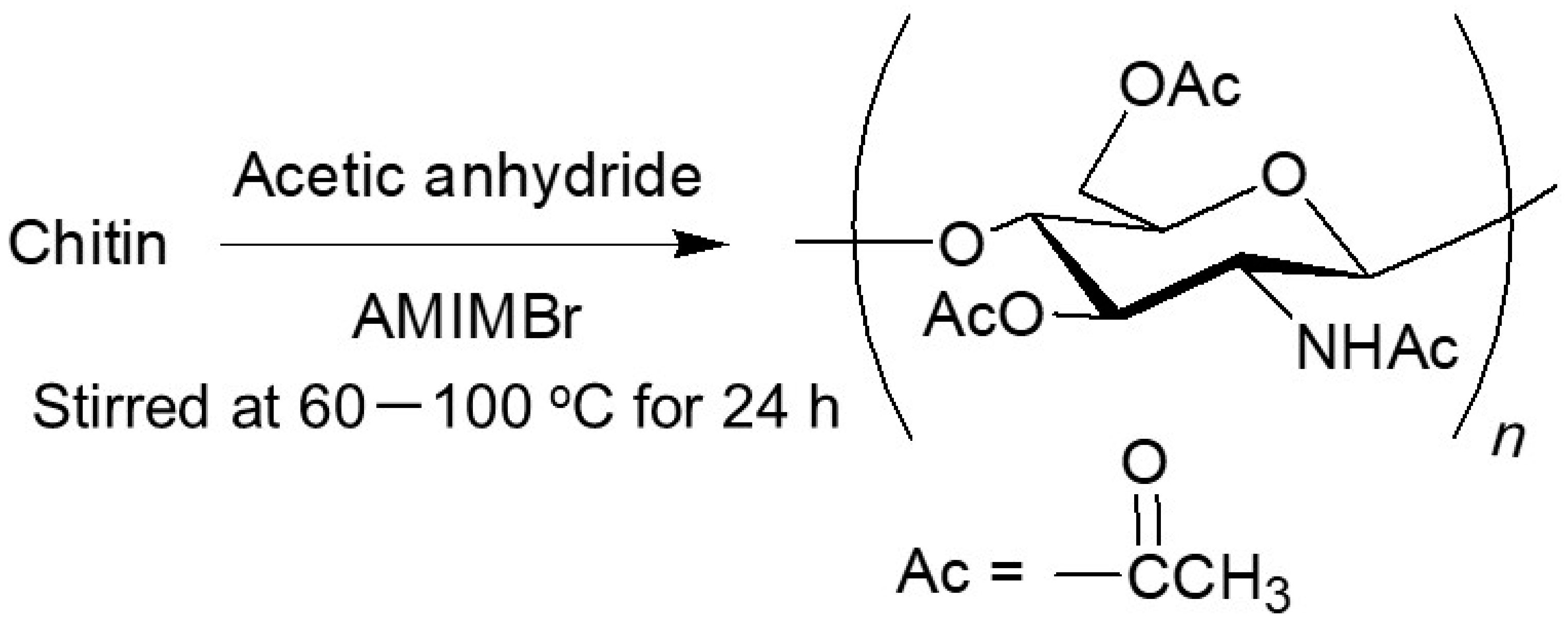
We reported the dissolution of chitin at concentrations up to 4.8 wt.% with heating using a different type of IL, namely 1-allyl-3-methylimidazolium bromide (AMIMBr) (Figure 3) [37]. Acetylation using acetic anhydride in AMIMBr under conditions similar to those described above (60–100 °C for 24 h) gave chitin acetates with high DSs (1.82–1.90, Figure 4) [38]. This result indicated the suitability of AMIMBr as a medium for chitin derivatization. A similar IL, 1-allyl-2,3-dimethylimidazolium bromide (ADMIMBr, Figure 3), which has a methyl substituent at C-2 of the imidazolium ring, is also capable of dissolving chitin at ~5 wt.% [39].
Deep eutectic solvents (DESs) are analogs of ILs formed by mixing appropriate hydrogen bond acceptors and hydrogen-bond donors (HBAs and HBDs, respectively) [40]. DESs are capable of self-associating interactions through hydrogen bonding and form eutectic fluids because their melting points are lower than those of their constituent HBAs and HBDs. Several DESs have been reported to dissolve cellulose [41,42]. DESs capable of dissolving chitin typically consist of choline chloride as the HBA and HBDs such as urea and thiourea (Figure 3) [43,44,45,46,47,48,49,50,51,52]. Our group achieved the dissolution of chitin at concentrations up to 4.8 wt.% in DESs comprising 1-allyl-3-methylimodazolium chloride (AMIMCl, HBA) and several HBDs such as thiourea (1:0.1 molar ratios) with heating, whereas pure AMIMCl did not dissolve chitin [53]. The formation of the DES from AMIMCl/thiourea was confirmed using differential scanning calorimetry (DSC). It is important to note that not all ILs and DESs capable of dissolving chitin are suitable media for its derivatization. In addition, the solvent should incorporate components that neither inhibit nor participate in the target reaction, such as non-nucleophilic counter anions and HBDs. We previously published a review on chitin acylation in ILs, DESs, and conventional solvent systems, which includes a detailed comparison of the reaction media [54].
Based on the facile dissolution of chitin in AMIMBr and DESs consisting of AMIMCl, we utilized these solvents to develop acylation and etherification methods for chitin [33,35,39,54]. In this review, chitin acylation using acyl chlorides in AMIMBr and a DES composed of AMIMCl combined with 1,1,3,3-tetramethylguanidine (TMG) as an HBD is described first (Figure 3). Next, the extension of the acylation method to obtain mixed chitin esters with multiple acyl substituents is discussed. The resulting derivatives were found to exhibit thermoplasticity depending on their substituent ratios, representing the first example of thermoplastic chitin derivatives. Finally, we describe the development of an efficient chitin benzylation method as a representative etherification approach.

2. Acylation of Chitin in Ionic Liquids and Deep Eutectic Solvents

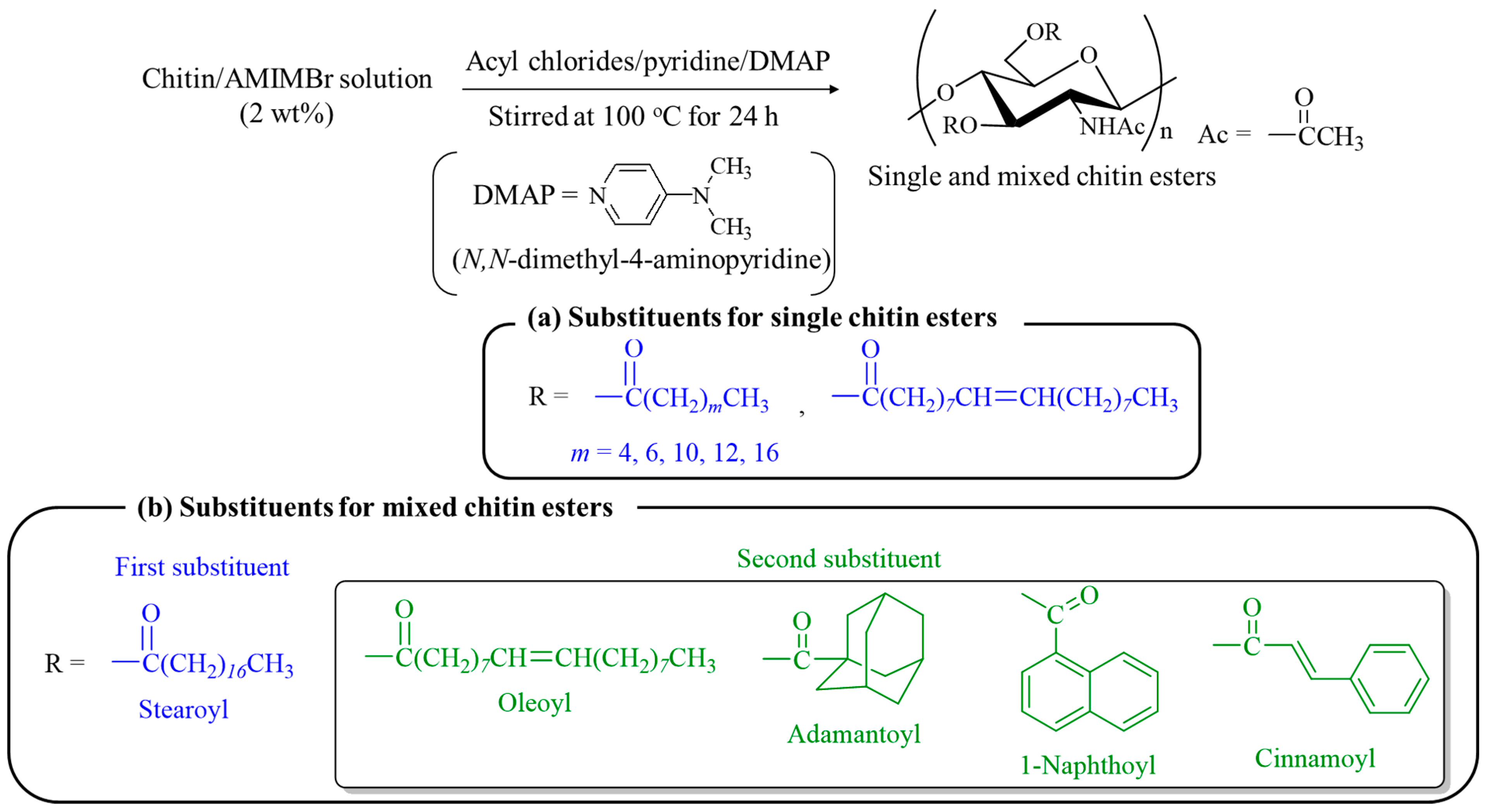
As mentioned, chitin acetylation using acetic anhydride (20 equiv. per repeating unit) proceeds efficiently at 60–100 °C for 24 h in AMIMBr (2 wt.% chitin) to yield chitin acetates with high DSs (1.82–1.90, Figure 4) [38]. An acylation method for the synthesis of single chitin esters with various fatty acyl substituents was then developed using AMIMBr (Figure 5a) [55]. An AMIMBr chitin solution (2 wt.%) was stirred with fatty acyl chlorides (20 equiv.), pyridine (10 equiv.), and N,N-dimethyl-4-aminopyridine (DMAP, 0.25 equiv.) at 100 °C for 24 h to yield the corresponding single chitin esters. The 1H NMR spectra of all products obtained in CDCl3/CF3CO2H supported the corresponding single chitin ester structures with high DS values (1.6–2.0). The mechanism was proposed to proceed via an in situ halogen exchange between AMIMBr and the acyl chlorides. Because the resultant acyl bromides are more reactive than their acyl chloride counterparts, efficient reaction with the hydroxy groups in chitin was achieved, affording high-DS derivatives [56].
In a subsequent study, chitin acylation using acyl chlorides was attempted employing AMIMCl/HBD-DESs [57]. Hexanoylation of chitin was first conducted using AMIMCl/thiourea-DES under conditions analogous to those used for AMIMBr: 2 wt.% chitin solution in AMIMCl/thiourea-DES and hexanoyl chloride (10 equiv.) were stirred in the presence of pyridine (10 equiv.) and DMAP (0.25 equiv.) at 100 °C for 24 h. However, a low-DS derivative was obtained due to the high nucleophilicity of thiourea, which likely reacted with hexanoyl chloride.
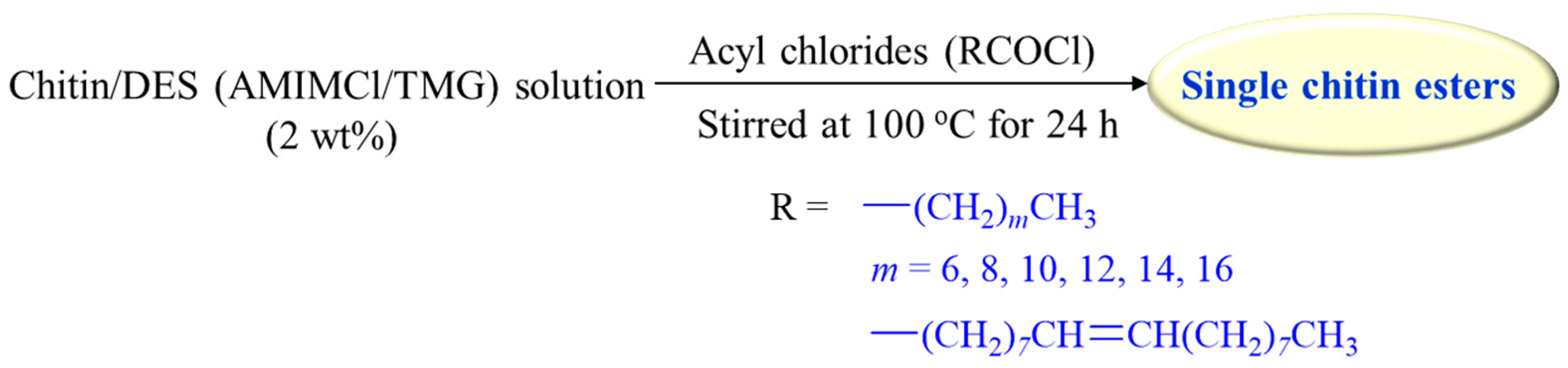
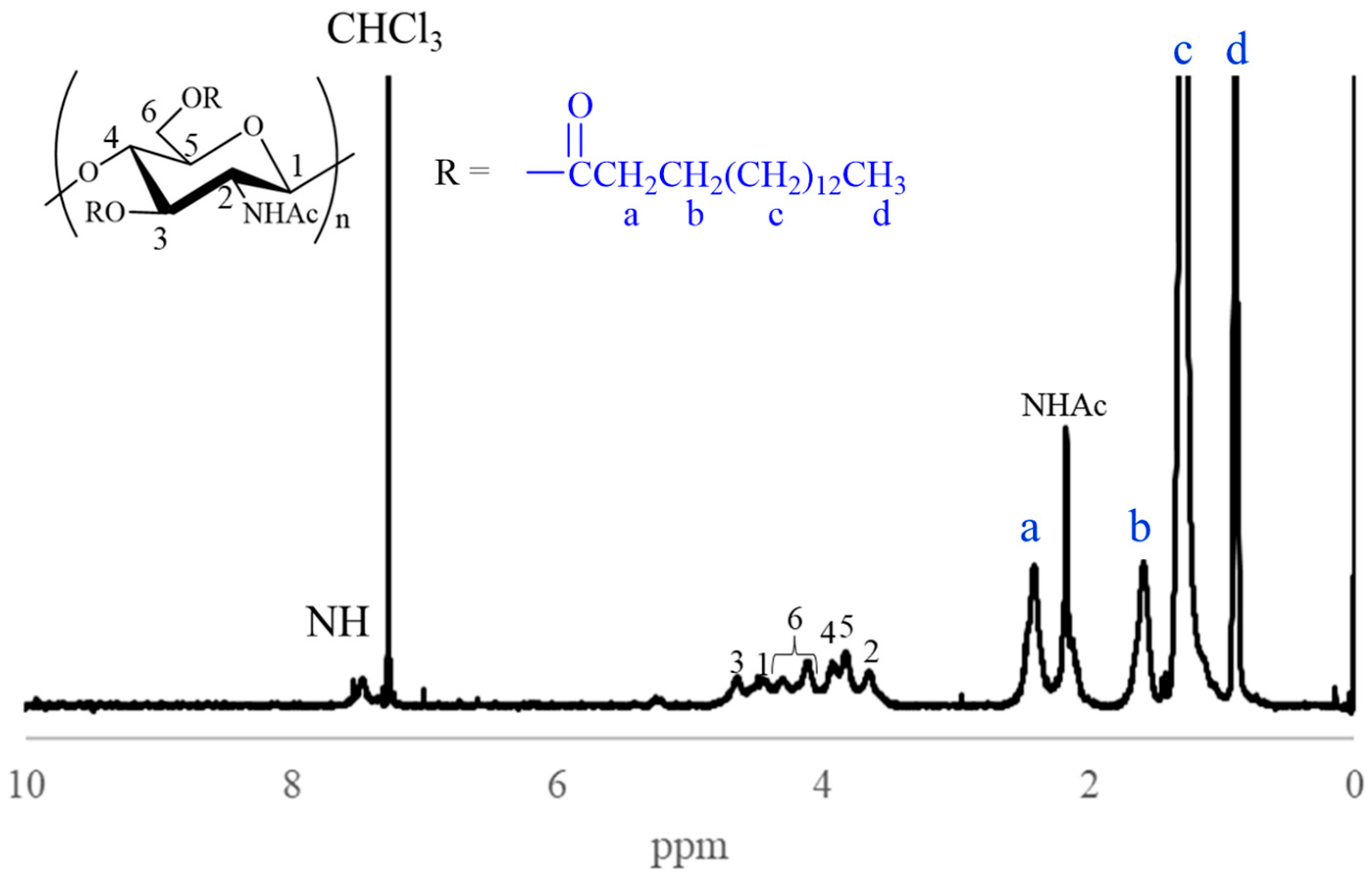
Accordingly, thiourea was replaced with less nucleophilic HBDs, including TMG, urea, acetyl urea, and acetyl thiourea [57]. The nucleophilicities of these HBDs were lower owing to increased steric hindrance imposed by the four methyl groups in the case of TMG, replacement of the sulfur atom with the more electronegative oxygen atom, and the presence of electron-withdrawing acetyl groups. AMIMCl-DESs comprising these HBDs were capable of dissolving chitin at 4–5 wt.%. Notably, hexanoylation of chitin in the corresponding 2 wt.% AMIMCl-DES solutions under analogous conditions furnished chitin hexanoates with high DSs (1.6–1.8). In particular, TMG acted not only as an HBD but also as a base/catalyst in the hexanoylation reaction owing to its high basicity/low nucleophilicity. Therefore, hexanoylation in AMIMCl/TMG-DES proceeded efficiently without the addition of pyridine/DMAP to furnish chitin hexanoate with a high DS (1.80, Table 1). Chitin was then efficiently acylated using various acyl chlorides in AMIMCl/TMG-DES under the established conditions to deliver the corresponding high-DS single chitin esters (Figure 6, Table 1). For example, the 1H NMR spectrum (CDCl3/CF3CO2H) of the product obtained from palmitoyl chloride exhibited signals assignable to the palmitoyl group (a–d in Figure 7), and seven signals ascribed to the H1–H6 protons in the GlcNAc units, supporting the chitin palmitate structure. The DS value (1.96) was estimated based on the integration ratio of the palmitoyl methyl signal d to the H1–H6 signals in the GlcNAc units.
However, the single chitin esters obtained using AMIMBr and AMIMCl/TBD-DESs did not exhibit desirable properties such as thermoplasticity owing to the formation of intrinsic chitin crystals. This was attributed to the persistent formation of intermolecular hydrogen bonding between the acetamido groups after acylation.

3. Synthesis of Thermoplastic Mixed Chitin Esters in Ionic Liquids and Deep Eutectic Solvents

As mentioned, mixed cellulose esters exhibit better thermoplasticity than CTA [15]. Thus, the AMIMBr chitin acylation method was extended to prepare mixed chitin esters consisting of two types of acyl groups, namely, a stearoyl group combined with oleoyl, adamantoyl, 1-naphthoyl, and cinnamoyl substituents, to obtain thermoplastic chitin materials (Figure 5b) [56]. The resultant high-DS mixed chitin esters formed films when cast because of their lower crystallinity relative to that of single chitin esters. This finding inspired us to investigate the thermoplasticity of the mixed chitin esters.
In a subsequent study, the crystalline structures and thermal properties of mixed chitin esters comprising benzoyl and stearoyl substituents were characterized [58]. Chitin benzoate stearates were synthesized in the same manner as described above, using benzoyl and stearoyl chlorides in the presence of pyridine/DMAP in AMIMBr. The 1H NMR spectra of the resulting derivatives acquired in CDCl3/CF3CO2H indicated a dependency of the benzoyl/stearoyl substituent ratio on the feed ratio of the two acyl chlorides. Thus, chitin benzoate stearates with varying benzoyl/stearoyl ratios were also synthesized using the corresponding benzoyl/stearoyl chloride feed ratios in AMIMCl/TMG-DES [59].
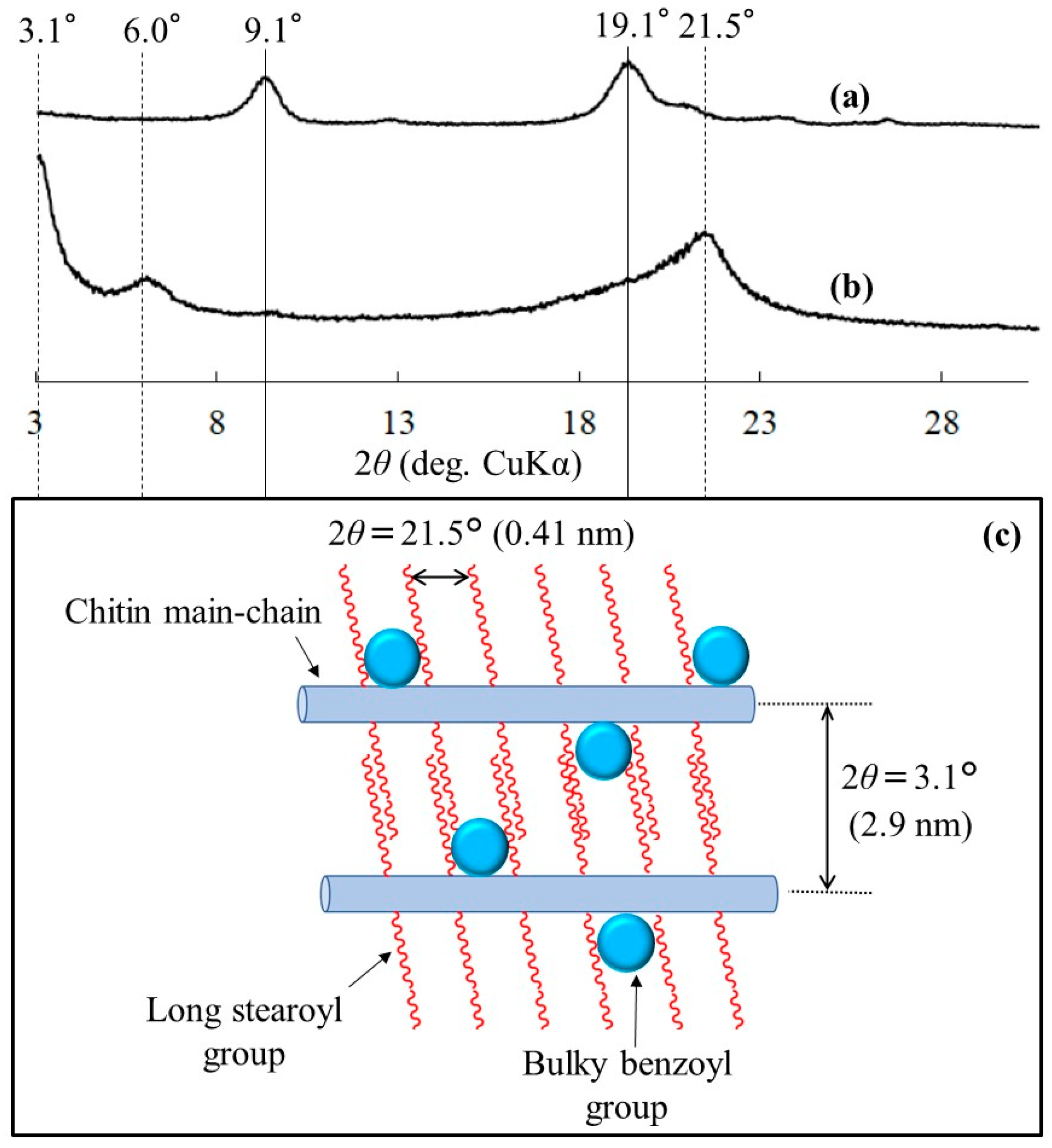
The XRD profiles of the resulting chitin benzoate stearates did not exhibit prominent diffraction peaks characteristic for chitin crystals (Figure 8a,b). This indicated that the introduction of bulky benzoyl groups prevented the formation of the typical chitin crystalline structure. The XRD patterns of the derivatives with lower benzoyl/stearoyl ratios (~0.02:1–0.2:1) contained three obvious diffraction peaks at 3.1°, 6.0°, and 21.5° (Figure 8b shows the XRD profile for benzoyl/stearoyl ratio = 0.018:1). The diffraction peak at 3.1° (d-spacing = 2.9 nm) was assigned to chitin chains organized in a well-ordered layered array, in which the stearoyl chains pack in an interdigitated, chain-end fashion between the main-chain layers. The corresponding peak at 6.0° represents the second-order diffraction of this lattice plane. The peak at 21.5° (d-spacing = 0.41 nm) was ascribed to the stearoyl chains arranged parallel to each other and perpendicular to the chitin chain. The results indicated that the chitin main chains and stearoyl side chains formed regular layered and parallel arrays, respectively, resulting in the disruption of the intrinsic chitin crystalline structure (Figure 8c). The DSC profiles of the chitin benzoate stearates exhibited prominent endothermic peaks at approximately 40 °C, which were assigned to the melting of the stearoyl packing.
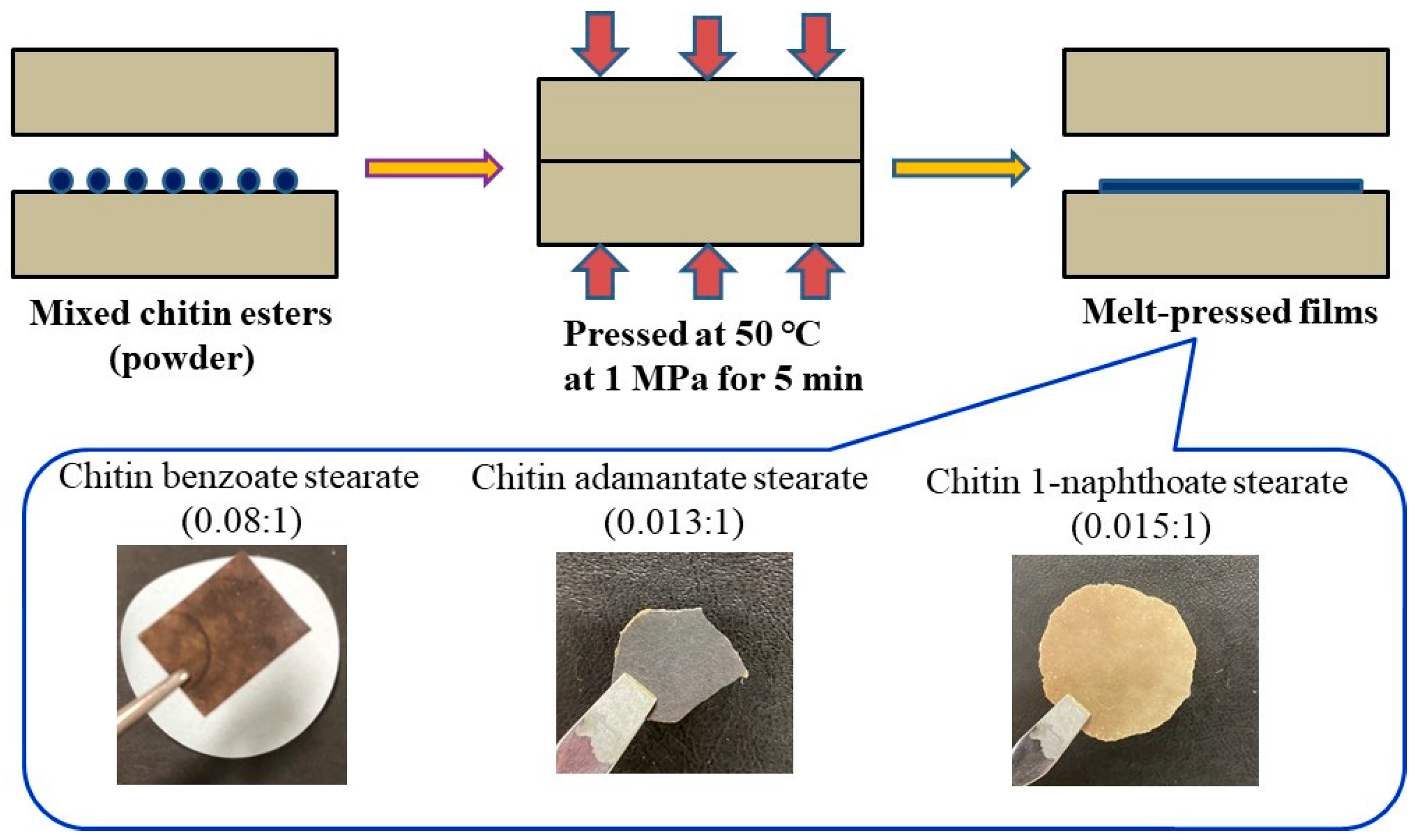
The melting behavior of the stearoyl chains enabled the chitin benzoate stearates with low benzoyl/stearoyl ratios to form films when melt-pressed at 50 °C above their melting temperatures at 1 MPa for 5 min (Figure 9). This result clearly suggested the thermoplasticity of the chitin benzoate stearates. Mixed chitin esters with low ratios of bulky adamantoyl, cinnamoyl, and 1-naphthoyl groups relative to the stearoyl group were also synthesized using the corresponding acyl chlorides in AMIMCl/TMG-DES. The XRD and DSC results of these esters were similar to those of the chitin benzoate stearates [54,59]. Therefore, these mixed chitin esters also exhibited thermoplasticity when subjected to melt-pressing at 50 °C above their melting point and 1 MPa for 5 min (Figure 9). Detailed characterization data for the mixed chitin esters can be found in the original publications [54,56,58].

4. Etherification of Chitin in Ionic Liquids

Efficient chitin etherification methods are scarce. Chitin benzylation via the well-known Williamson ether synthesis method (benzyl chloride/KOH in DMSO dispersions) was found to afford low DS values (~0.75) [60]. When the authors attempted benzylation of chitin, ADMIMBr was used as the IL media instead of AMIMBr. We hypothesized that the acidic hydrogen at C-2 of the imidazolium in AMIMBr was abstracted under the strong alkaline conditions to generate the corresponding N-heterocyclic carbene, which impeded the benzylation reaction. Accordingly, this hydrogen was replaced with a methyl substituent, and the resultant ADMIMBr IL was used as the medium for Williamson ether synthesis. Specifically, chitin benzylation was attempted by stirring benzyl bromide (10 equiv. per hydroxy group) and chitin/ADMIMBr solution (2 wt.%) in the presence of LiOH (7.5 equiv. per hydroxy group) at 100 °C for 24 h [39]. However, the DS value (0.5) of the product did not improve significantly, as estimated by 1H NMR analysis (9 wt.% LiCl/DMSO-d6).
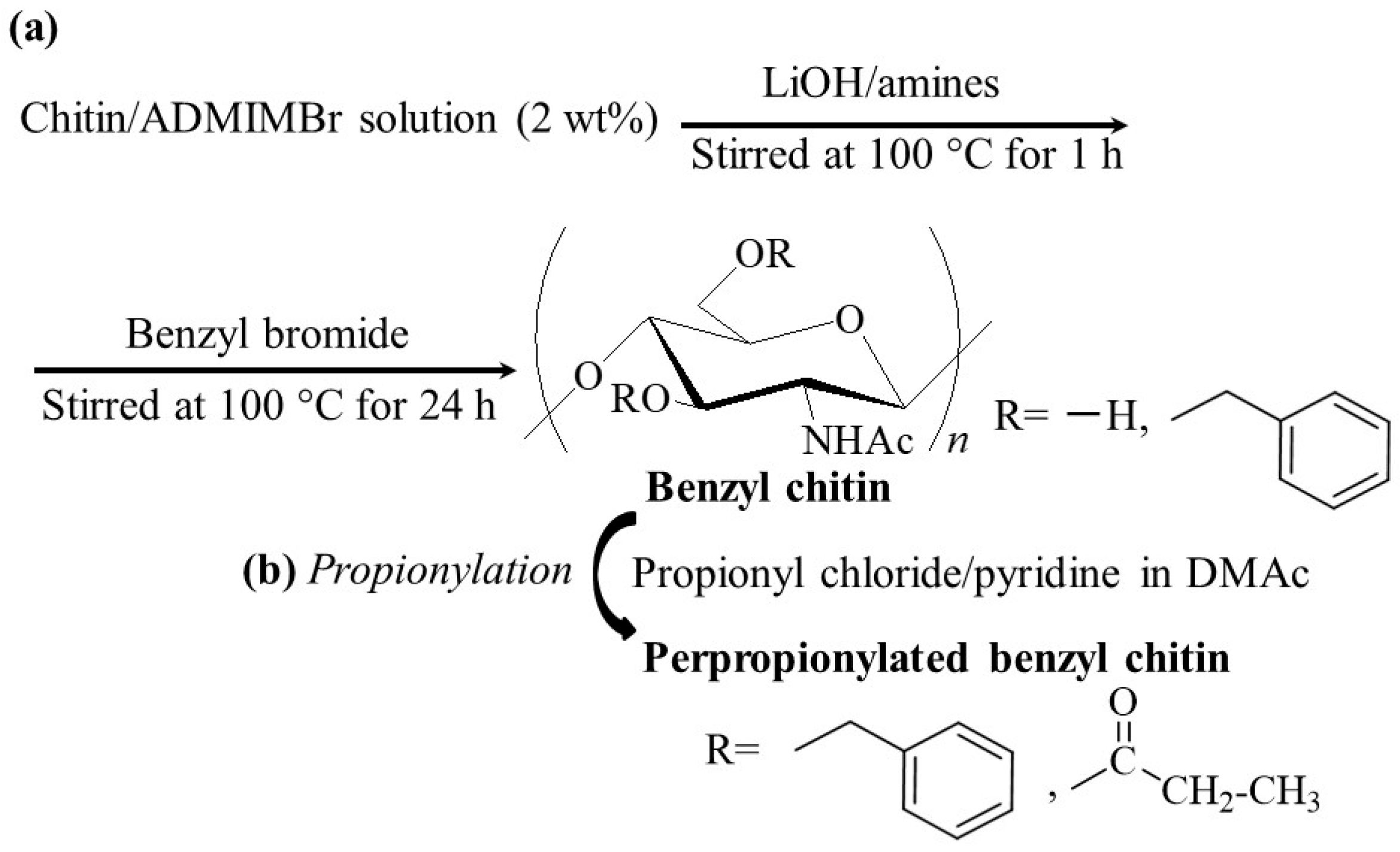
Therefore, we investigated the benzylation of chitin in ADMIMBr under various conditions to increase the DS values. Consequently, the abovementioned benzylation system was found to be efficiently promoted by the addition of various amines (partial amounts) such as tributylamine (Figure 10a) [39]. For example, benzylation was performed using chitin/ADMIMBr solution (2 wt.%), benzyl bromide (10 equiv. per hydroxy group), LiOH (7.5 equiv. per hydroxy group), and tributylamine (3 equiv. per hydroxy group) at 100 °C for 24. A DS value of 1.84 was determined for the isolated product based on 1H NMR analysis. The addition of other amines, such as triethylamine, pyridine, N,N-diethylmethylamine also accelerated chitin benzylation under analogous conditions (DS values: 1.34, 1.73, and 1.81, respectively).
As the signals originating from the GlcNAc units in the benzylated product were not clearly observed in the 1H NMR spectrum due to its low solubility in 9 wt.% LiCl/DMSO-d6, propionylation of the remaining free hydroxy groups was performed using propionyl chloride/pyridine to increase solubility in certain NMR solvents (Figure 10b). The perpropionylated product was sufficiently soluble in CDCl3/CF3CO2H (2/1 in volume), enabling NMR analysis. The 1H NMR spectrum displayed prominent signals assignable to the GlcNAc units as well as the benzyl and propionyl groups, supporting the perpropionylated benzyl chitin structure. The DS value of the benzyl groups was estimated to be 1.90 based on 1H NMR analysis, which is comparable to that calculated for benzyl chitin from its 9 wt.% LiCl/DMSO-d6 1H NMR spectrum.
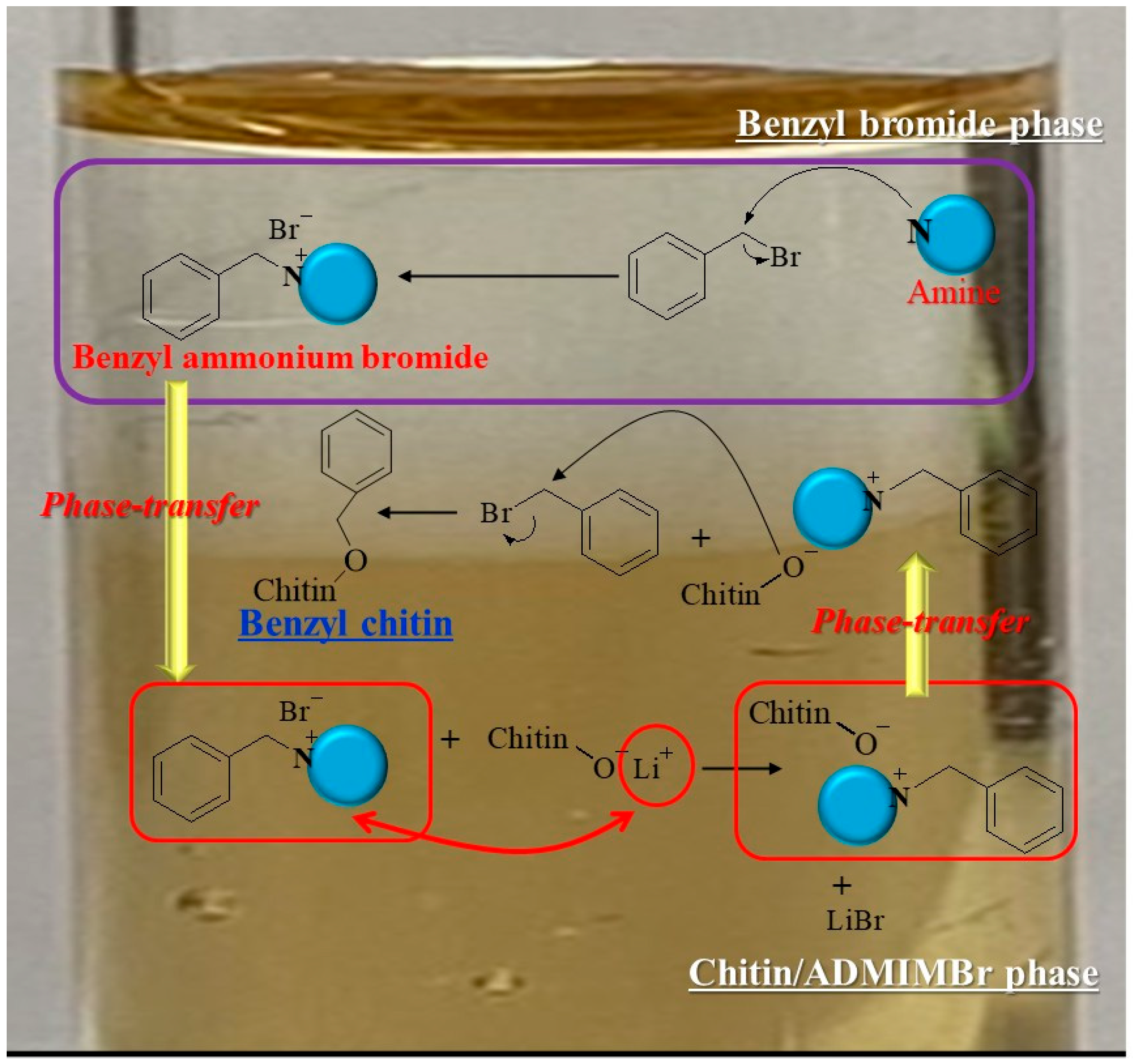
The efficient benzylation of chitin in the biphasic benzyl bromide-chitin/ADMIMBr system was attributed to the contrasting polarities of benzyl bromide and ADMIMBr (Figure 11) and was proposed to proceed via the following mechanism. Initial nucleophilic substitution of an electrophilic benzyl bromide with a nucleophilic amine base, such as tributylamine, produces benzyl ammonium bromide in situ. The obtained ammonium salt is then transferred from the benzyl bromide phase to the chitin/ADMIMBr phase and participates in ion exchange with chitin-OLi+ to generate an ammonium alkoxide. The chitin alkoxide reacts with benzyl bromide at the interfacial area, thereby affecting benzylation. The above-described system is the first example of benzyl chitin synthesis with high DS; therefore, its application to other etherification reactions using various alkyl halides is anticipated.

5. Conclusions

The present review concludes that ILs and DESs are powerful media for efficient chitin derivatization reactions including acylation and etherification. The relatively low nucleophilicity of the bromide counterion in AMIMBr and ADMIMBr ILs, and that of TMG in the corresponding DESs enables the formation of chitin esters and ether derivatives with high DS values. AMIMBr or AMIMCl-TMG-DES serve as excellent media for obtaining mixed chitin esters with stearoyl and bulky acyl groups in appropriate ratios, which exhibit thermoplasticity. Furthermore, the first efficient benzylation method was described as a representative chitin etherification approach, yielding benzyl chitins with high DS values. Benzyl chitins can be applied as processable soft materials because of their solubility in organic solvents and their low crystallinity, as evaluated by XRD analysis. Moreover, this derivatization method can potentially be extended to the synthesis of diverse chitin derivatives containing various substituents. Importantly, chitin-based polymeric materials with unique functions can be obtained from such derivatives. The ability to incorporate various side chains onto the chitin backbone offers a pathway toward finely tuned and advanced functionalities through tailored non-covalent interactions [61]. Consequently, future research should prioritize the evaluation of mechanical properties to better understand such materials. To facilitate industrial utility, it is also essential to investigate the long-term stability, recyclability, and biodegradability of all synthesized derivatives. Moreover, as chitin derivatization methods using ILs and DESs are still in the early stages, rigorous systematic investigations are required, specifically those involving reaction monitoring, kinetic analyses, and byproduct characterization. These efforts will be instrumental in expanding the practical utility of chitin-based materials.

Author Contributions

Conceptualization, methodology, validation, data curation, writing—original draft preparation, review, and editing; funding acquisition, M.T. and J.-i.K.; supervision, project administration, J.-i.K. All authors have read and agreed to the published version of the manuscript.

Funding

This research received no external funding.

Institutional Review Board Statement

Not applicable.

Informed Consent Statement

Not applicable.

Data Availability Statement

The raw data supporting the conclusions of this article will be made available by the authors on request.

Conflicts of Interest

The authors declare no conflicts of interest.

References

  1. Schuerch, C. Polysaccharides. In Encyclopedia of Polymer Science and Engineering, 2nd ed.; Mark, H.F., Bilkales, N., Overberger, C.G., Eds.; John Wiley & Sons: New York, NY, USA, 1986; Volume 13, pp. 87–162. [Google Scholar]
  2. Song, E.H.; Shang, J.; Ratner, D.M. Polysaccharides. In Polymer Science: A Comprehensive Reference; Matyjaszewski, K., Möller, M., Eds.; Elsevier: Amsterdam, The Netherlands, 2012; pp. 137–155. [Google Scholar] [CrossRef]
  3. Klemm, D.; Heublein, B.; Fink, H.P.; Bohn, A. Cellulose: Fascinating biopolymer and sustainable raw material. Angew. Chem. Int. Ed. 2005, 44, 3358–3393. [Google Scholar] [CrossRef] [PubMed]
  4. Rinaudo, M. Chitin and chitosan: Properties and applications. Prog. Polym. Sci. 2006, 31, 603–632. [Google Scholar] [CrossRef]
  5. Berezina, N. Production and application of chitin. Phys. Sci. Rev. 2016, 1, 20160048. [Google Scholar] [CrossRef]
  6. Crini, G. Historical review on chitin and chitosan biopolymers. Environ. Chem. Lett. 2019, 17, 1623–1643. [Google Scholar] [CrossRef]
  7. Piekarska, K.; Sikora, M.; Owczarek, M.; Jóźwik-Pruska, J.; Wiśniewska-Wrona, M. Chitin and Chitosan as Polymers of the Future—Obtaining, Modification, Life Cycle Assessment and Main Directions of Application. Polymers 2023, 15, 793. [Google Scholar] [CrossRef]
  8. Sata, H.; Murayama, M.; Shimamoto, S. Properties and applications of cellulose triacetate film. Macromol. Symp. 2004, 208, 323–334. [Google Scholar] [CrossRef]
  9. Nishino, T.; Takano, K.; Nakamae, K.; Saitaka, K.; Itakura, S.; Azuma, J.I.; Okamura, K. Elastic modulus of the crystalline regions of cellulose triesters. J. Polym. Sci. B Polym. Phys. 1995, 33, 611–618. [Google Scholar] [CrossRef]
  10. Zhou, J.; Zhang, L.; Deng, Q.; Wu, X. Synthesis and characterization of cellulose derivatives prepared in NaOH/urea aqueous solutions. J. Polym. Sci. A Polym. Chem. 2004, 42, 5911–5920. [Google Scholar] [CrossRef]
  11. Cheng, W.; Zhu, Y.; Jiang, G.; Cao, K.; Zeng, S.; Chen, W.; Zhao, D.; Yu, H. Sustainable cellulose and its derivatives for promising biomedical applications. Prog. Mater. Sci. 2023, 138, 101152. [Google Scholar] [CrossRef]
  12. Tang, Q.; Huang, G. Progress in Polysaccharide Derivatization and Properties. Mini Rev. Med. Chem. 2016, 16, 1244–1257. [Google Scholar] [CrossRef] [PubMed]
  13. Edgar, K.J.; Buchanan, C.M.; Debenham, J.S.; Rundquist, P.A.; Seiler, B.D.; Shelton, M.C.; Tindall, D. Advances in cellulose ester performance and application. Prog. Polym. Sci. 2001, 26, 1605–1688. [Google Scholar] [CrossRef]
  14. Kostag, M.; Gericke, M.; Heinze, T.; El Seoud, O.A. Twenty-five years of cellulose chemistry: Innovations in the dissolution of the biopolymer and its transformation into esters and ethers. Cellulose 2019, 26, 139–184. [Google Scholar] [CrossRef]
  15. Wang, X.; Wang, Y.; Xia, Y.; Huang, S.; Wang, Y.; Qiu, Y. Preparation, structure, and properties of melt spun cellulose acetate butyrate fibers. Text. Res. J. 2018, 88, 1491–1504. [Google Scholar] [CrossRef]
  16. Swatloski, R.P.; Spear, S.K.; Holbrey, J.D.; Rogers, R.D. Dissolution of cellose with ionic liquids. J. Am. Chem. Soc. 2002, 124, 4974–4975. [Google Scholar] [CrossRef] [PubMed]
  17. El Seoud, O.A.; Koschella, A.; Fidale, L.C.; Dorn, S.; Heinze, T. Applications of ionic liquids in carbohydrate chemistry: A window of opportunities. Biomacromolecules 2007, 8, 2629–2647. [Google Scholar] [CrossRef] [PubMed]
  18. Liebert, T.; Heinze, T. Interaction of ionic liquids with polysaccharides 5. Solvents and reaction media for the modification of cellulose. Bioresources 2008, 3, 576–601. [Google Scholar] [CrossRef]
  19. Feng, L.; Chen, Z.I. Research progress on dissolution and functional modification of cellulose in ionic liquids. J. Mol. Liq. 2008, 142, 1–5. [Google Scholar] [CrossRef]
  20. Pinkert, A.; Marsh, K.N.; Pang, S.S.; Staiger, M.P. Ionic liquids and their interaction with cellulose. Chem. Rev. 2009, 109, 6712–6728. [Google Scholar] [CrossRef]
  21. Zakrzewska, M.E.; Bogel-Łukasik, E.; Bogel-Łukasik, R. Solubility of carbohydrates in ionic liquids. Energy Fuel. 2010, 24, 737–745. [Google Scholar] [CrossRef]
  22. Gericke, M.; Fardim, P.; Heinze, T. Ionic Liquids—Promising but Challenging Solvents for Homogeneous Derivatization of Cellulose. Molecules 2012, 17, 7458–7502. [Google Scholar] [CrossRef]
  23. Isik, M.; Sardon, H.; Mecerreyes, D. Ionic liquids and cellulose: Dissolution, chemical modification and preparation of new cellulosic materials. Int. J. Mol. Sci. 2014, 15, 11922–11940. [Google Scholar] [CrossRef]
  24. Zhang, X.; Wu, X.; Gao, D.; Xia, K. Bulk cellulose plastic materials from processing cellulose powder using back pressure-equal channel angular pressing. Carbohydr. Polym. 2012, 87, 2470–2476. [Google Scholar] [CrossRef]
  25. Hermanutz, F.; Vocht, M.P.; Panzier, N.; Buchmeiser, M.R. Processing of cellulose using ionic liquids. Macromol. Mater. Eng. 2019, 304, 1800450. [Google Scholar] [CrossRef]
  26. Verma, C.; Mishra, A.; Chauhan, S.; Verma, P.; Srivastava, V.; Quraishi, M.A.; Ebenso, E.E. Dissolution of cellulose in ionic liquids and their mixed cosolvents: A review. Sustain. Chem. Pharm. 2019, 13, 100162. [Google Scholar] [CrossRef]
  27. Taokaew, S.; Kriangkrai, W. Recent progress in processing cellulose using ionic liquids as solvents. Polysaccharides 2022, 3, 671–691. [Google Scholar] [CrossRef]
  28. Szabó, L.; Milotskyi, R.; Sharma, G.; Takahashi, K. Cellulose processing in ionic liquids from a materials science perspective: Turning a versatile biopolymer into the cornerstone of our sustainable future. Green Chem. 2023, 25, 5338–5389. [Google Scholar] [CrossRef]
  29. Wang, W.T.; Zhu, J.; Wang, X.L.; Huang, Y.; Wang, Y.Z. Dissolution behavior of chitin in ionic liquids. J. Macromol. Sci. Phys. 2010, 49, 528–541. [Google Scholar] [CrossRef]
  30. Jaworska, M.M.; Kozlecki, T.; Gorak, A. Review of the application of ionic liquids as solvents for chitin. J. Polym. Eng. 2012, 32, 67–69. [Google Scholar] [CrossRef]
  31. Kadokawa, J. Ionic liquid as useful media for dissolution, derivatization, and nanomaterial processing of chitin. Green Sustain. Chem. 2013, 3, 19–25. [Google Scholar] [CrossRef]
  32. Silva, S.S.; Mano, J.F.; Reis, R.L. Ionic liquids in the processing and chemical modification of chitin and chitosan for biomedical applications. Green Chem. 2017, 19, 1208–1220. [Google Scholar] [CrossRef]
  33. Kadokawa, J. Dissolution, derivatization, and functionalization of chitin in ionic liquid. Int. J. Biol. Macromol. 2019, 123, 732–737. [Google Scholar] [CrossRef]
  34. Shamshina, J.L. Chitin in ionic liquids: Historical insights into the polymer’s dissolution and isolation. A review. Green Chem. 2019, 21, 3974–3993. [Google Scholar] [CrossRef]
  35. Kadokawa, J. Application of ionic liquids for the functional materialization of chitin. Mater. Adv. 2022, 3, 3355–3364. [Google Scholar] [CrossRef]
  36. Wu, Y.; Sasaki, T.; Irie, S.; Sakurai, K. A novel biomass-ionic liquid platform for the utilization of native chitin. Polymer 2008, 49, 2321–2327. [Google Scholar] [CrossRef]
  37. Prasad, K.; Murakami, M.; Kaneko, Y.; Takada, A.; Nakamura, Y.; Kadokawa, J. Weak gel of chitin with ionic liquid, 1-allyl-3-methylimidazolium bromide. Int. J. Biol. Macromol. 2009, 45, 221–225. [Google Scholar] [CrossRef]
  38. Mine, S.; Izawa, H.; Kaneko, Y.; Kadokawa, J. Acetylation of α-chitin in ionic liquids. Carbohydr. Res. 2009, 344, 2263–2265. [Google Scholar] [CrossRef] [PubMed]
  39. Totani, M.; Kawano, T.; Shigenobu, Y.; Kadokawa, J. Efficient benzylation of chitin in ionic liquids. New J. Chem. 2025, 49, 11584–11587. [Google Scholar] [CrossRef]
  40. Smith, E.L.; Abbott, A.P.; Ryder, K.S. Deep eutectic solvents (DESs) and their applications. Chem. Rev. 2014, 114, 11060–11082. [Google Scholar] [CrossRef]
  41. Chen, Y.L.; Zhang, X.; You, T.T.; Xu, F. Deep eutectic solvents (DESs) for cellulose dissolution: A mini-review. Cellulose 2019, 26, 205–213. [Google Scholar] [CrossRef]
  42. Okwuwa, C.C.; Adam, F.; Mohd Said, F.; Ries, M.E. Cellulose dissolution for edible biocomposites in deep eutectic solvents: A review. J. Clean. Prod. 2023, 427, 139166. [Google Scholar] [CrossRef]
  43. Sharma, M.; Mukesh, C.; Mondal, D.; Prasad, K. Dissolution of α-chitin in deep eutectic solvents. RSC Adv. 2013, 3, 18149–18155. [Google Scholar] [CrossRef]
  44. Mukesh, C.; Mondal, D.; Sharma, M.; Prasad, K. Choline chloride-thiourea, a deep eutectic solvent for the production of chitin nanofibers. Carbohydr. Polym. 2014, 103, 466–471. [Google Scholar] [CrossRef]
  45. Zhu, P.; Gu, Z.; Hong, S.; Lian, H. One-pot production of chitin with high purity from lobster shells using choline chloride-malonic acid deep eutectic solvent. Carbohydr. Polym. 2017, 177, 217–223. [Google Scholar] [CrossRef]
  46. Hong, S.; Yuan, Y.; Yang, Q.; Zhu, P.; Lian, H. Versatile acid base sustainable solvent for fast extraction of various molecular weight chitin from lobster shell. Carbohydr. Polym. 2018, 201, 211–217. [Google Scholar] [CrossRef]
  47. Huang, W.-C.; Zhao, D.; Guo, N.; Xue, C.; Mao, X. Green and facile production of chitin from crustacean shells using a natural deep eutectic solvent. J. Agric. Food Chem. 2018, 66, 11897–11901. [Google Scholar] [CrossRef]
  48. Saravana, P.S.; Ho, T.C.; Chae, S.J.; Cho, Y.J.; Park, J.S.; Lee, H.J.; Chun, B.S. Deep eutectic solvent-based extraction and fabrication of chitin films from crustacean waste. Carbohydr. Polym. 2018, 195, 622–630. [Google Scholar] [CrossRef]
  49. Hong, S.; Yuan, Y.; Yang, Q.; Chen, L.; Deng, J.; Chen, W.; Lian, H.; Mota-Morales, J.D.; Liimatainen, H. Choline chloride-zinc chloride deep eutectic solvent mediated preparation of partial O-acetylation of chitin nanocrystal in one step reaction. Carbohydr. Polym. 2019, 220, 211–218. [Google Scholar] [CrossRef]
  50. Cao, S.L.; Gu, W.M.; Ou-Yang, W.D.; Chen, D.C.; Yang, B.Y.; Lai, L.H.; Wu, Y.D.; Liu, Y.J.; Zhu, J.; Chen, W.J.; et al. Preparation, characterization and application of rod-like chitin nanocrystal by using p-toluenesulfonic acid/choline chloride deep eutectic solvent as a hydrolytic media. Carbohydr. Polym. 2019, 213, 304–310. [Google Scholar] [CrossRef]
  51. Zhao, D.; Huang, W.C.; Guo, N.; Zhang, S.; Xue, C.; Mao, X. Two-step separation of chitin from shrimp shells using citric acid and deep eutectic solvents with the assistance of microwave. Polymers 2019, 11, 409. [Google Scholar] [CrossRef] [PubMed]
  52. Wang, J.; Teng, C.; Yan, L. Applications of deep eutectic solvents in the extraction, dissolution, and functional materials of chitin: Research progress and prospects. Green Chem. 2022, 24, 552–564. [Google Scholar] [CrossRef]
  53. Idenoue, S.; Yamamoto, K.; Kadokawa, J. Dissolution of chitin in deep eutectic solvents composed of imidazolium ionic liquids and thiourea. ChemEngineering 2019, 3, 90. [Google Scholar] [CrossRef]
  54. Kadokawa, J. An overview on acylation methods of α-chitin. Int. J. Biol. Macromol. 2024, 262, 130166. [Google Scholar] [CrossRef]
  55. Hirayama, H.; Yoshida, J.; Yamamoto, K.; Kadokawa, J. Facile acylation of α-chitin in ionic liquid. Carbohydr. Polym. 2018, 200, 567–571. [Google Scholar] [CrossRef]
  56. Kohori, K.; Hirayama, H.; Yamamoto, K.; Kadokawa, J. Synthesis of mixed chitin esters with long fatty and bulky acyl substituents in ionic liquid. Int. J. Biol. Macromol. 2021, 190, 763–768. [Google Scholar] [CrossRef]
  57. Egi, Y.; Kadokawa, J. Facile and efficient acylation of chitin in deep eutectic solvents. Tetrahedron Green Chem 2023, 1, 100012. [Google Scholar] [CrossRef]
  58. Shigenobu, Y.; Nakashima, A.; Kadokawa, J. Synthesis of thermoplastic mixed chitin esters. Biomacromolecules 2023, 24, 5175–5182. [Google Scholar] [CrossRef]
  59. Egi, Y.; Kadokawa, J. Synthesis of mixed chitin esters via acylation of chitin in deep eutectic solvents. Molecules 2023, 28, 8132. [Google Scholar] [CrossRef]
  60. Somorin, O.; Nishi, N.; Tokura, S.; Noguchi, J. Studies on chitin. II. Preparation of benzyl and benzoylchitins. Polym. J. 1979, 11, 391–396. [Google Scholar] [CrossRef]
  61. Liu, H.; Jin, Z.; An, L.; Wang, D.; Meng, Y.; Yang, A.; Zhang, H.; Zhang, Y. A Reproducible and Self-Repairable Ionic Skin with Robust Performance Retention Enabled by Modulating the Noncovalent Interactions. ACS Appl. Polym. Mater. 2025, 7, 1459–1470. [Google Scholar] [CrossRef]
Figure 1. Chemical structures of (a) chitin, (b) chitin acylate (chitin ester derivative), and (c) chitin ether.
Macromol 06 00012 g001
Figure 2. Intermolecular hydrogen bonding between acetamido groups in chitin.
Macromol 06 00012 g002
Figure 3. Representative ionic liquids (ILs) and deep eutectic solvents (DESs) used for chitin dissolution.
Macromol 06 00012 g003
Figure 4. Acetylation of chitin using acetic anhydride in AMIMBr.
Macromol 06 00012 g004
Figure 5. Synthesis of (a) single and (b) mixed chitin esters in AMIMBr (adapted with permission from Ref. [54]. Copyright 2023, Elsevier).
Macromol 06 00012 g005
Figure 6. Acylation of chitin in AMIMCl/TMG-DES in the absence of pyridine/DMAP.
Macromol 06 00012 g006
Figure 7. 1H NMR spectrum of chitin palmitate synthesized in AMIMCl/TMG-DES (CDCl3/CF3CO2H).
Macromol 06 00012 g007
Figure 8. Powder XRD profiles of (a) chitin and (b) chitin benzoate stearate (0.018:1) and (c) plausible layered array and parallel packing structures, constructed from chitin main chains and stearoyl side chains, respectively.
Macromol 06 00012 g008
Figure 9. Melt-pressing experiment of powdered mixed chitin esters to form melt-pressed films.
Macromol 06 00012 g009
Figure 10. (a) Benzylation of chitin using benzyl bromide in the presence of LiOH/amines in ADMIMBr and (b) propionylation of benzyl chitin using propionyl chloride/pyridine in DMAc.
Macromol 06 00012 g010
Figure 11. Schematic showing in situ generation of benzyl ammonium bromide as a phase-transfer catalyst and subsequent chitin benzylation; the scheme is superimposed on an image of the biphasic benzyl bromide-chitin/ADMIMBr system, showing where each process occurs.
Macromol 06 00012 g011
Table 1. DS values of single chitin esters obtained using various acyl chlorides in AMIMCl/TMG-DES.
Acyl ChlorideDS
Hexanoyl1.80
Octanoyl1.87
Decanoyl1.82
Lauroyl1.87
Myristoyl1.82
Palmitoyl1.96
Stearoyl1.94
Oleoyl1.98
Disclaimer/Publisher’s Note: The statements, opinions and data contained in all publications are solely those of the individual author(s) and contributor(s) and not of MDPI and/or the editor(s). MDPI and/or the editor(s) disclaim responsibility for any injury to people or property resulting from any ideas, methods, instructions or products referred to in the content.