
Review

Latest and Greatest in Inflammatory Skin Disease and Gut Microbiome
1
Department of Dermatology, University of Pittsburgh School of Medicine, Pittsburgh, PA 15213, USA
2
Department of Dermatology, University of Pittsburgh Medical Center, Pittsburgh, PA 15213, USA
*
Authors to whom correspondence should be addressed.
Dermato 2026, 6(2), 20; https://doi.org/10.3390/dermato6020020
Submission received: 2 January 2026 / Revised: 13 February 2026 / Accepted: 8 May 2026 / Published: 2 June 2026
(This article belongs to the Special Issue Reviews in Dermatology: Current Advances and Future Directions)

Abstract

Emerging research highlights the complex interplay between the gut microbiome, skin health, and environmental exposures, forming what is now recognized as the gut–skin–exposome axis. This narrative review explores the role of gut microbiome dysbiosis—a disruption in the balance of intestinal microorganisms—in the pathogenesis and progression of various non-communicable inflammatory skin diseases, including acne, atopic dermatitis, psoriasis, rosacea, systemic lupus erythematosus, chronic spontaneous urticaria, hidradenitis suppurativa, and alopecia areata. This review synthesizes mechanistic studies, clinical trials, and Mendelian randomization data to elucidate how altered gut microbial composition contributes to systemic and cutaneous inflammation. Key modifiable factors, such as diet, antibiotics, stress, and sleep, as well as interventions like probiotics, prebiotics, synbiotics, and fecal microbiota transplantation, are discussed for their potential therapeutic value. By integrating clinical insights with microbiome science, this review underscores the importance of a holistic, systems-based approach in managing inflammatory skin diseases, offering clinicians evidence-based strategies to improve patient outcomes through gut microbiome modulation.

1. Introduction

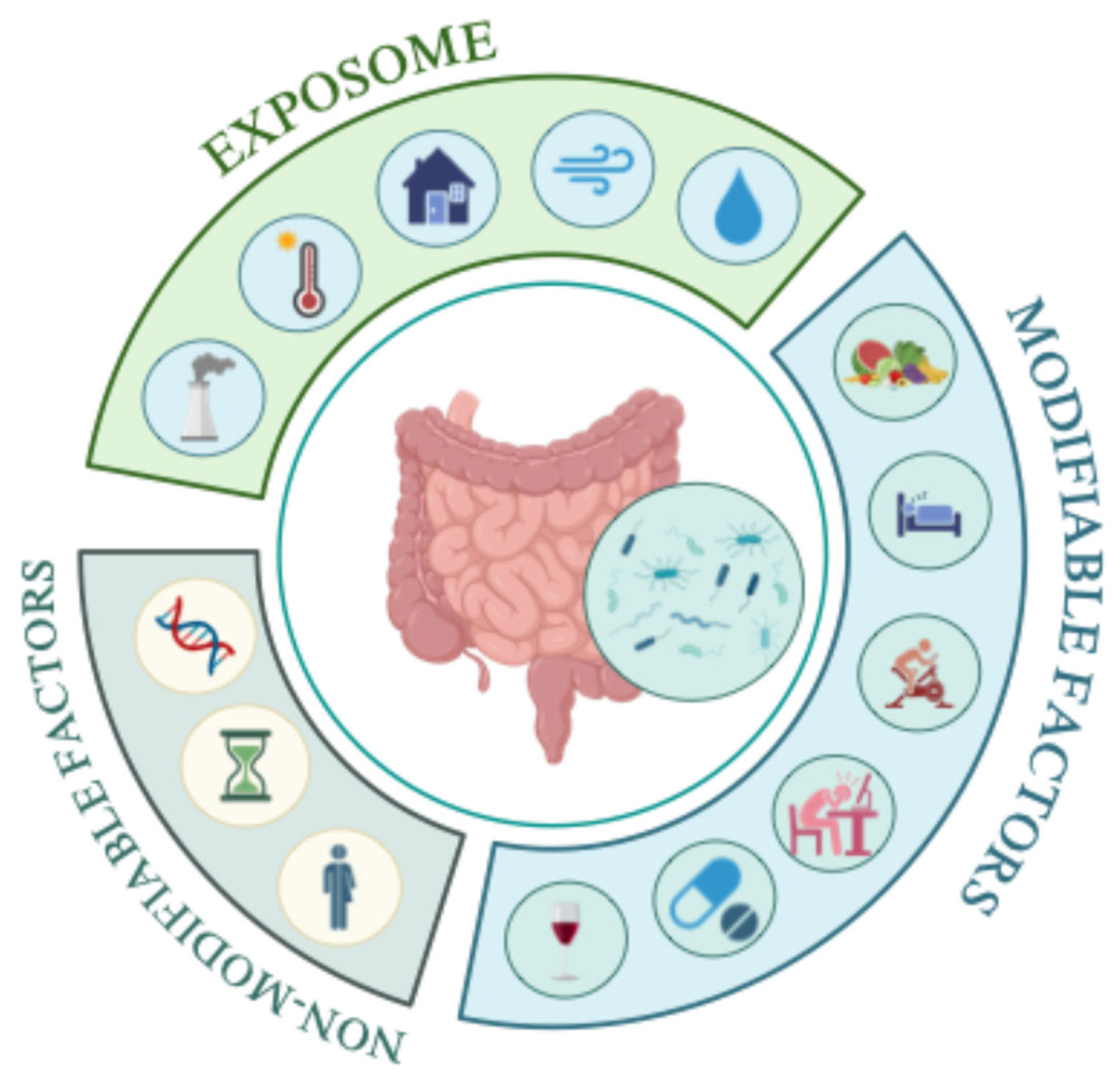
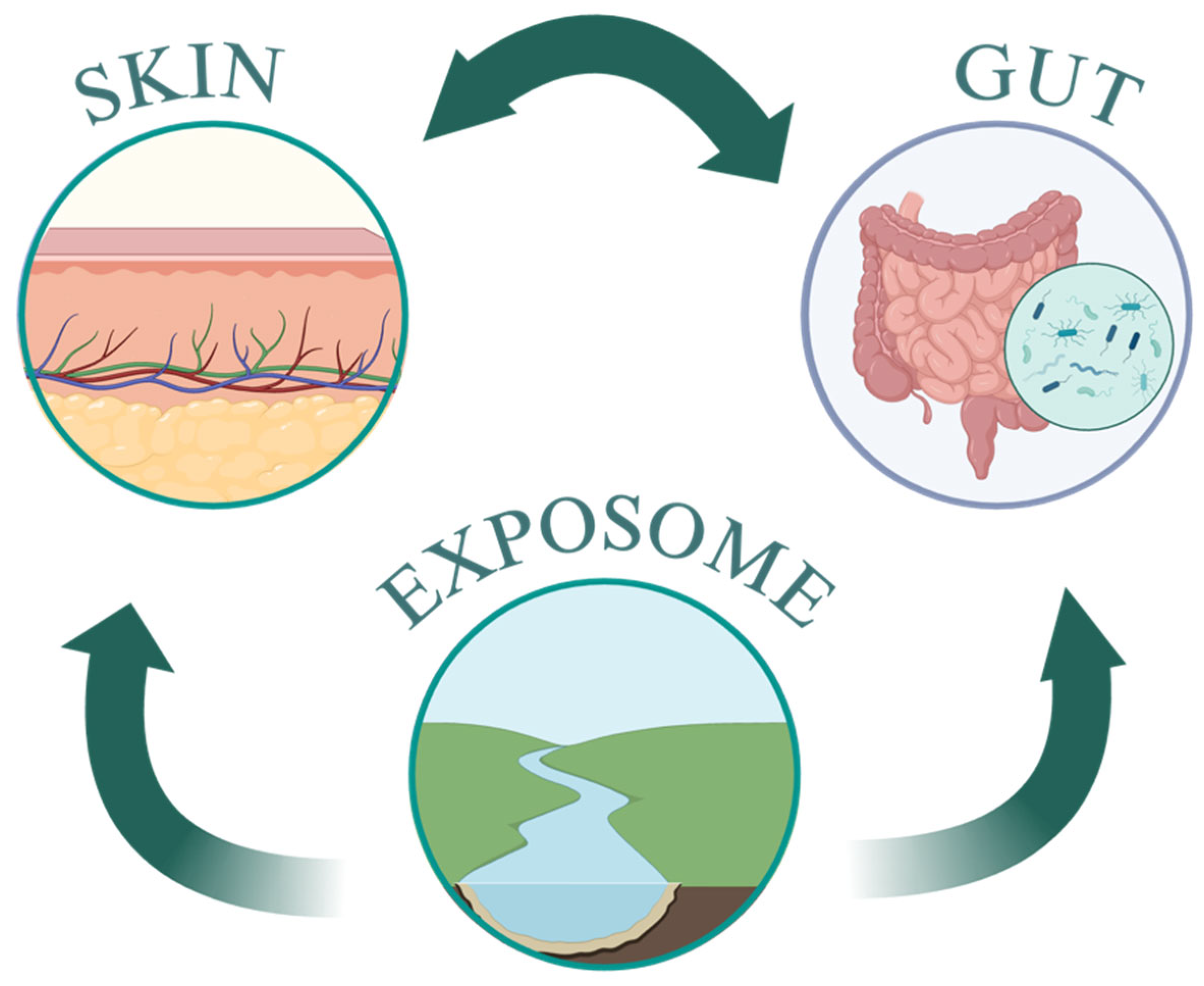
The human gut microbiome (GM) hosts a diverse array of microorganisms that engage in multidirectional communication with their host [1]. The GM influences physiological functions through its metabolic capacity to produce bioactive compounds that act across various organs and systems [2]. As a result, it is often considered the body’s largest endocrine organ as well as an important immune system modulator. Evidence increasingly links gastrointestinal health to skin homeostasis, with GM disruptions often accompanying dermatological manifestations [3]. Likewise, the skin and the “exposome,” [4] or all human environmental exposures, both internal and external, exert their own effect on the GM. A study exploring repeated sub-erythemal UVB skin exposure found a significant increase in the alpha and beta diversity of the GM, likely due to UVB light’s influence on the immune system and, consequently, the microbiome’s composition [5]. Okada et al. demonstrated the effect of skin inflammation on the GM and how, in turn, the changes in the GM promoted further cutaneous inflammation. Staphylococcus aureus and Streptococcus danieliae, isolated from the GM of an inflammatory skin mouse model (Kcasp1Tg) and strongly associated with its skin manifestations, were orally transplanted into a psoriasis imiquimod mouse model. This transplantation exacerbated skin inflammation in a psoriasis-like condition and increased TNF-α and IL-17 levels, worsening skin symptoms [6]. This multi-prong connection between the gut–skin–exposome offers a new understanding of inflammatory skin disease pathogenesis and the potential for a more holistic approach to health, one that considers the role of GM balance (Figure 1).
GM dysbiosis may be defined as a reduction or loss of beneficial microbiota in the intestinal tract [7]. Disruption of this equilibrium can lead to a pro-inflammatory state in the gut due to impaired mucosal barrier function and increased host immunological vulnerability. Notable pathways in the gut–skin axis involve key host receptors that facilitate communication between the gut microbiota and the skin. For instance, short-chain fatty acids (SCFAs) such as propionate and acetate signal through G-protein-coupled receptors GPR41 and GPR43 to decrease inflammatory responses [2]. Additionally, circulating tryptophan, which appears to be regulated by gut microbiota, activates the aryl hydrocarbon receptor (AhR) to support epithelial barrier integrity [3]. In contrast, the TLR4–LPS–NF-κB pathway may be activated in response to gut dysbiosis, causing downstream pro-inflammatory cytokine signaling that contributes to skin inflammation [3].
Although not yet fully understood, the disturbance caused by GM dysbiosis appears to have a significant impact on skin health, leading to non-communicable, inflammatory cutaneous conditions [8,9] (Figure 2).
Given that such diseases affect 15–20% of the population [10], understanding their causes and exploring therapeutic interventions is crucial. In this review, we discuss common inflammatory skin diseases [11]—including hidradenitis suppurativa (HS), acne, chronic spontaneous urticaria, rosacea, atopic dermatitis (AD), psoriasis, systemic lupus erythematosus (SLE), and alopecia areata—their connection to GM dysbiosis, therapeutic approaches, and clinical implications for dermatologists.
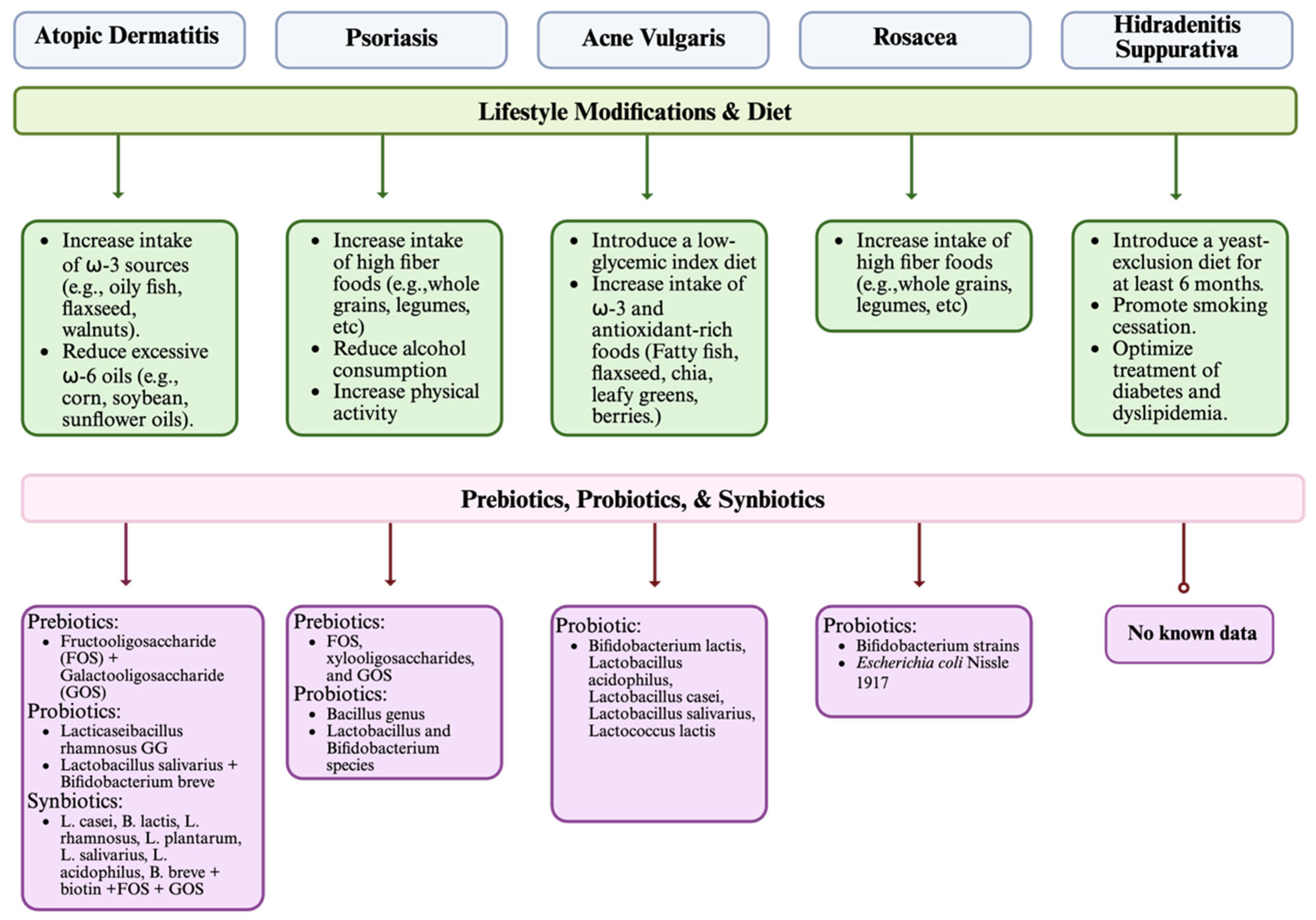
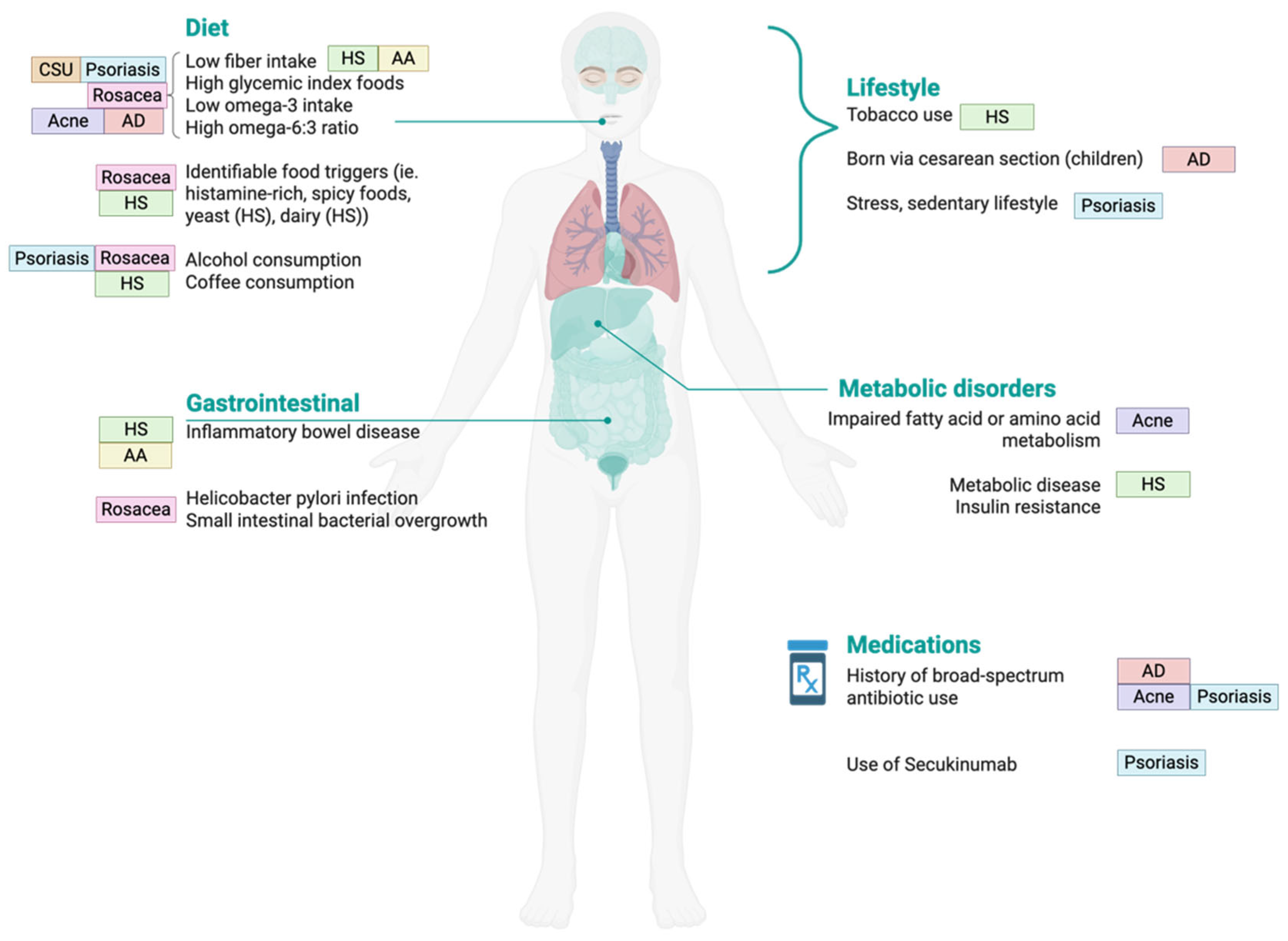
This review aims to synthesize emerging data on GM dysbiosis in key inflammatory skin diseases, highlighting clinical implications and therapeutic opportunities for dermatologists (Figure 3 and Figure 4).
This diagram illustrates an integrative framework targeting gut dysbiosis to improve inflammatory skin conditions. The approach combines lifestyle interventions with microbiota-directed therapies. Dietary strategies include high-fiber, plant-rich nutrition; increased omega-3s; and reduced glycemic load to promote SCFA production and anti-inflammatory microbial profiles. Additional lifestyle measures, regular exercise, smoking and alcohol reduction, stress management, and sleep optimization further support microbial diversity and lower systemic inflammation. Microbiome therapies include prebiotics (e.g., FOS, GOS), probiotics (e.g., Lactobacillus rhamnosus, Bifidobacterium breve, Bacillus spp.), and synbiotics. Together, these strategies aim to restore gut–skin immune balance and improve outcomes in chronic inflammatory dermatoses. Created in BioRender. Curbelo-Paz, A. (2025) https://BioRender.com/nw9a0te, accessed on the 25 October 2025. This figure presents a conceptual, hypothesis-generating framework based on a narrative synthesis of the literature and should not be interpreted as a clinical protocol, treatment algorithm, or standard-of-care recommendation. The interventions depicted are discussed for academic and exploratory purposes only. Clinical decisions should be based on comprehensive evaluation and established evidence-based guidelines. Full understanding requires interpretation within the complete context of the manuscript.
This diagram summarizes key screening domains for inflammatory skin diseases associated with gut dysbiosis. Risk factors cluster into five categories: diet (high-glycemic, low-fiber, skewed omega-6:omega-3 ratio, yeast- or histamine-rich foods), gastrointestinal history (SIBO, H. pylori infection, IBD), lifestyle (smoking, stress, born via cesarean section), metabolic disorders (obesity, insulin resistance), and medications (antibiotics, biologics). Together, these factors contribute to gut dysbiosis as a shared pathogenic pathway, supporting risk stratification and targeted intervention. Created in BioRender. Curbelo-Paz, A. (2025) https://BioRender.com/nw9a0te, accessed on the 25 October 2025. This screening schematic is provided as a conceptual overview derived from this narrative-style research paper and is not intended to serve as a validated clinical screening tool or formal guideline. The categories presented reflect patterns described in the literature and are meant to facilitate academic discussion. Interpretation and application require careful consideration of the full manuscript and current evidence-based clinical standards.

2. Methods

This narrative review synthesizes literature on the gut–skin axis, focusing on GM dysbiosis and non-communicable, inflammatory skin disorders. A flexible approach was chosen to explore mechanistic insights, clinical implications, and therapeutic interventions. The research question evolved iteratively, refining dysbiosis as a functional disruption rather than a compositional imbalance.
A structured search was conducted using PubMed with terms such as “gut microbiome AND skin disorder,” “gut dysbiosis AND dermatology,” and disease-specific queries (e.g., “gut microbiome AND psoriasis”). The search primarily targeted studies published within the past 15 years, although seminal earlier studies were included when conceptually relevant. Eligibility criteria included clinical trials, systematic reviews, meta-analyses, longitudinal and cross-sectional observational studies, mechanistic investigations (including animal and in vitro models), and Mendelian randomization analyses examining associations between the gut microbiome and inflammatory dermatologic conditions. Grey literature, conference abstracts without full manuscripts, and non-peer-reviewed sources were excluded. Where available, studies with higher levels of evidence (e.g., randomized controlled trials, Mendelian randomization studies, large cohort analyses) were prioritized; however, preclinical and exploratory studies were included when necessary to contextualize mechanistic pathways in this emerging field. The search strategy evolved iteratively based on emerging themes. While this review is not meant to provide an exhaustive assessment of the current body of literature, it provides a meaningful and relevant synthesis of the chosen topic.
Clinical pearls were extracted, and emerging treatments—probiotics, prebiotics, fecal microbiota transplantation (FMT), and dietary interventions—were examined. Using the Oxford Centre for Evidence-Based Medicine (2011), studies were classified by level of evidence (I–V), with systematic reviews and meta-analyses as Level I, randomized controlled trials as Level II, and preclinical studies (in vitro or animal) considered unranked and hypothesis-generating (Table 1). A gut dysbiosis profile for inflammatory skin conditions was developed to highlight taxa shown in the literature to be increased or decreased in each disease (Table 2).
For rigor and accuracy, experts in dermatology and microbiome research conducted an internal peer review. Feedback was integrated to refine the scope, strengthen the analysis, and improve clarity, ensuring a balanced, evidence-based synthesis [12].

3. Results

3.1. Atopic Dermatitis

Atopic dermatitis, a chronic inflammatory skin condition, is characterized clinically by erythematous, eczematous plaques with pruritus, xerosis, and a relapsing–remitting course. Gut dysbiosis may contribute to skin inflammation in AD through impairing intestinal and epidermal barrier integrity, as well as altering immune tolerance.
Long-standing research demonstrates that immune dysregulation impacts AD, with microbial diversity changes also implicated in AD pathogenesis. Several studies have found decreased alpha diversity in the gut microbiota of patients with AD compared to controls, as well as associations between the relative abundance of specific gut bacteria and AD. For instance, through 16S ribosomal RNA sequencing of fecal samples, Ye et al. found a statistically significant increase in abundance of Bacteroides ovatus and Bacteroides uniformis in patients with AD compared to controls, while Clostridium was significantly higher in the control group than in patients with AD [13]. While a variety of bacterial species have been studied in this context, studies have reported variable findings about which specific microbial species, when overabundant, may contribute to gut dysbiosis and AD.
Given the early age of onset in many individuals with AD, studies have also focused on infant microbiome diversity and AD during early development. In the “Enquiring About Tolerance” RCT, Marrs et al. conducted a nested longitudinal study involving 16S ribosomal RNA sequencing on gut microbiota of breast-fed infants, finding that a transition to Bacteroides-rich communities (“adult-like” colonization) occurred in the first 12 months of life. Delivery by cesarean section was associated with a significant reduction in GM diversity, as well as a reduction in Bacteroides colonization. With Bacteroides abundance and diversity being a significant contributor to gut microbiota in adults, this study highlights a potential need to better screen for allergic and atopic diseases like AD in infants born via cesarean section. Therefore, treatments targeting diversification of the GM, specifically increases in Bacteroides diversity, could benefit infants at risk for AD [14]. Additionally, an RCT investigating Lactobacillus rhamnosus GG probiotic use in pregnant women found that it reduced the incidence of AD in children at 2 years [15] and at long-term follow-up of the children at 6 years [16].
Research demonstrating altered gut microbiota and its association with AD has prompted subsequent studies utilizing probiotics. In an RCT by Carucci et al., probiotic supplementation with lacticaseibacillus rhamnosus GG (LGG, 1 × 10¹⁰ CFU/daily) for 12 weeks showed efficacy in improving clinical symptoms and quality of life and reducing topical steroid use in pediatric patients (aged 6–36 months) with AD [17]. Therefore, LGG probiotics have been implicated as a potential adjuvant treatment for AD, although these have not yet been implemented in clinical practice due to variable results in research studies.
Additionally, studies have also investigated the use of synbiotics as therapeutic options for AD. An observational study by Ibáñez et al. found that a synbiotic product (Lactobacillus casei, Bifidobacterium lactis, Lactobacillus rhamnosus, Lactobacillus plantarum, fructooligosaccharide, galactooligosaccharide, and biotin) improved AD in children, as measured through comparison of the Scoring Atopic Dermatitis (SCORAD) index after 8 weeks versus baseline. However, there is a need for further randomized controlled trials to explore the efficacy of this symbiotic in treating AD [18].
Moreover, dietary lipid composition itself has emerged as a key modulator of the gut–skin axis. In a two-sample Mendelian randomization study, Li et al. demonstrated that genetically higher circulating omega-3 polyunsaturated fatty acid levels are causally associated with a reduced risk of AD, whereas a higher omega- 6:omega-3 ratio is causally associated with increased AD risk (OR ≈ 0.86 and OR ≈ 1.17, respectively) [19]. These findings underscore that beyond microbial therapies, practical dietary modifications—specifically increasing omega-3-rich foods (e.g., fatty fish, flaxseed, walnuts) and reducing excessive omega-6 oils—have the potential to favorably reshape the GM and ameliorate atopic inflammation in patients with AD.
Microbial products such as SCFAs, particularly butyrate, have been suggested as key modulators in immune mechanisms related to AD. In analyzing fecal samples of pediatric patients (ages 0–6) with AD, Reddel et al. found significant decreases in the abundance of SCFA-producing bacteria such as Bifidobacterium [20]. Decreases in these microbial products may contribute to inflammatory diseases like AD through a decreased ability to inhibit inflammatory processes and maintain the mucosal barrier. Thus, adhering to a high-fiber diet rich in complex carbohydrates could potentially increase SCFA production in the gut and improve AD symptoms [21].
In analyzing GM changes in AD patients utilizing dupilumab treatment, Yang et al. found significant changes in beta diversity after 16 weeks of dupilumab treatment in pediatric (3–18 years old) and adult patients with AD, suggesting a potential role of GM in modulating the clinical response to dupilumab. Specific changes in the gut composition included increased Bifidobacterium, Ruminococcus gnavus, and Coprococcus colonization, which have been negatively correlated with disease severity in AD patients. Overall, the study suggests that dupilumab shifts the GM in AD patients towards that of healthy controls, independent of clinical response. However, this trial was not randomized or controlled, and there is a need for further research to understand whether GM changes may help modulate the clinical impact of dupilumab treatment in AD patients [22].
FMT has provided clinical efficacy for patients with AD, as seen in a case study of a 15-year-old male with AD [23], as well as a cohort study of 9 patients, which found statistically significant decreases in average SCORAD score in those who completed the study protocol [24]. Although FMT shows promise in these small studies, larger trials are needed to appropriately elucidate therapeutic recommendations.

3.2. Psoriasis

Psoriasis is a chronic inflammatory skin disease characterized by well-demarcated, erythematous plaques with silvery scales commonly involving the elbows, knees, scalp, and lower back. The pathogenesis of psoriasis involves an immune-mediated process, primarily driven by the inappropriate activation of T cells and dendritic cells, leading to the release of inflammatory cytokines such as IL-17, IL-23, and TNF-α. These cytokines promote keratinocyte hyperproliferation and inflammation, resulting in the characteristic psoriatic plaques [25].
The relationship between psoriasis and the GM is increasingly recognized as significant in the pathogenesis and progression of the disease. GM dysbiosis potentiates increased intestinal permeability. The “leaky gut” hypothesis suggests that this increased intestinal permeability allows microbial products to enter the bloodstream, promoting systemic inflammation and potentially exacerbating psoriasis [26]. These microbial products may reinforce IL-17, IL-23, and TNF-α signaling, thereby contributing to the keratinocyte hyperproliferation and inflammation that modulates psoriasis pathogenesis. Modifiable factors such as stress, unhealthy diet, excessive alcohol consumption, and antibiotic use can disrupt the gut microbiota and compromise the intestinal barrier.
Immune cells within the intestines, such as Th17 cells, are theorized to play a vital role in the relationship between gut microbes, homeostasis, and the pathogenicity of inflammatory and autoimmune diseases. Evidence suggests that Th17 levels are correlated negatively with the level of Firmicutes and positively with the levels of Bacteroidetes, and studies have shown that psoriasis patients exhibit higher levels of Firmicutes and lower levels of Bacteroidetes compared to healthy controls [27,28]. Further, as demonstrated in other cutaneous diseases, the relative abundance of Akkermansia muciniphila is decreased in patients with psoriasis [29].
Emerging evidence indicates that gut microbiota composition can influence the response to psoriasis treatments, including biologics targeting IL-23 and IL-17 pathways [30,31,32]. Diet modification, probiotic supplementation, and fecal microbiota transplantation are being explored as potential therapeutic strategies to modulate the GM and improve psoriasis severity and outcomes.
High-fiber diets represent a cost-effective means to address gut dysbiosis and psoriasis severity. Dietary fiber fermentation byproducts, such as butyrate, propionate, and acetate, have been shown to regulate inflammation by modulating regulatory T cell activity and normalizing the enhanced expression of IL-17 and IL-6 in psoriatic skin lesions [33]. Further, addressing alcohol intake represents a paramount objective for improving psoriasis severity and outcomes. Studies demonstrate that chronic alcohol consumption induces gut dysbiosis. Patients with psoriasis have been found to have higher-than-average alcohol consumption. Further, a study demonstrated a positive correlation between alcohol intake and the severity of psoriasis [33].
Prebiotics and probiotics represent a targeted strategy to reverse gut dysbiosis and improve the clinical manifestations of psoriasis. In a 12-week randomized controlled trial of 90 patients with psoriasis involving a probiotic mixture containing a total of 1 × 10⁹ CFU of Bifidobacterium longum CECT 7347, B. lactis CECT 8145, and Lactobacillus rhamnosus CECT 836 along with topical corticosteroids and calcipotriol, patients saw improved measures of disease severity, activity, inflammatory markers, and quality of life as measured by the Psoriasis Area and Severity Index (PASI) 75 score. In addition, following 12 weeks of supplementation, patients demonstrated improved gut microbiota composition with decreased Rhodococcus and increased Collinsella and Lactobacillus genera, which are associated with improved gut health [33,34].
Fecal microbiota transplantation, the ultimate targeted approach to restoring gut microbiota homeostasis, has the potential to improve psoriasis severity and treatment outcomes. Studies have demonstrated that alterations in the GM in treatment-refractory patients via FMT have significantly improved outcomes in patients with melanoma undergoing anti-PD-1 immunotherapy [35]. Further studies demonstrated the efficacy and potential for increased remission and response in other autoimmune diseases, such as ulcerative colitis and Crohn’s [36]. A study in mice demonstrated that FMT from mice with severe psoriasis-like symptoms exacerbated psoriasiform skin inflammation in recipient mice [37]. Conversely, reversing gut dysbiosis through FMT represents a potential solution to definitively address treatment-refractory psoriasis and improve outcomes. However, it is important to note that while these interventions show promise, more long-term studies are needed to conclusively establish their efficacy.

3.3. Acne

Acne vulgaris, a common, chronic inflammatory skin condition presenting as open and closed comedones, inflammatory papules and pustules, and scarring in severe cases, has garnered increasing attention in relation to gut dysbiosis [38]. Although its pathogenesis is multifactorial—characterized by increased sebum production, hyperkeratinization of pilosebaceous ducts, inflammation, and Cutibacterium acnes proliferation—gastrointestinal involvement has also been suggested [39,40,41]. While the precise mechanism by which the gut microbiota influences acne remains under investigation, it is hypothesized that systemic inflammation [3], similar to mechanisms seen in AD and psoriasis [1,42], contributes to acne development. Studies comparing gut microbiota in patients with acne to healthy controls have revealed notable differences [43]. While variability between patients exists, some patterns have been established. Several studies have reported a higher ratio of Bacteroidetes to Firmicutes [39,44,45,46], a decrease in Actinobacteria, and an increase in Proteobacteria in patients with acne [43]. Several taxa typically associated with anti-inflammatory functions and SCFA production—such as Bifidobacterium, Butyricicoccus, Coprobacillus, Lactobacillus, and Allobaculum—are significantly decreased in patients with acne [47]. Another study published in 2017 did report differing findings, including a lower Bacteroidetes to Firmicutes ratio, and no alteration in levels of Actinobacteria and Proteobacteria [48].
One study involving 43 patients with acne and 43 controls found decreased alpha diversity and an increased Bacteroidetes-to-Firmicutes ratio in acne patients [39], patterns also associated with the Western diet [49,50,51]. The same study also reported reductions in beneficial taxa like Clostridia, Lachnospiraceae, and Ruminococcaceae. These beneficial taxa typically produce SCFAs [52]. The study also suggested a benefit for diet and probiotic-based interventions for the treatment and prevention of acne vulgaris [39]. A similar case–control study assessing differences in gut microbiota between patients with acne and healthy controls found similar intestinal microbiota; however, they did identify a loss of Bifidobacterium and an increase in Proteobacteria, both statistically significant. Changes in these may contribute to acne through increased intestinal permeability [38].
Unsurprisingly, the western diet has been implicated in the pathogenesis of acne in addition to numerous metabolic, immune, and other skin diseases [53,54,55]. Western dietary patterns—high in processed carbohydrates, dairy, and saturated fats—typically lack long-chain omega-3 PUFAs and yield a high omega-6:omega-3 ratio [56]. This skewed fatty acid profile promotes systemic inflammation via pro-inflammatory eicosanoids. In the context of acne, these findings imply that Western diets may exacerbate acne pathogenesis by favoring omega-6-driven inflammatory mediators (e.g., IL-1β, IL-17) in the skin and altering sebum lipid composition. Moreover, low-fiber, high-fat diets induce gut dysbiosis (loss of beneficial Lactobacilli/Bifidobacteria) and increase gut permeability so that endotoxins and cytokines enter circulation and contribute to systemic inflammation [56]. Previous randomized controlled trials have also shown that low-glycemic diets reduce acne lesions compared to high-carbohydrate diets, reinforcing diet as a potential therapeutic intervention [57].
Interestingly, a study published in 2021 reported different types of gut dysbiosis between men and women with acne. The study included 86 subjects, including 26 men with acne, 26 healthy control men, 17 women with acne, and 17 healthy control women [58]. Key results included lower alpha diversity in men with acne compared to control men, with no significant differences between women with acne and control women. The analysis of similarities (ANOSIM) test showed significant increases in Firmicutes and decreases in Bacteroidetes in men with acne compared to control men, with no differences in women with acne compared to controls. In the same study, men with acne were found to have impaired fatty acid metabolism, while women with acne had impaired amino acid metabolism. Long-chain fatty acids, specifically including alpha-linolenic acid (omega-6), are proinflammatory and can aggravate acne [59].
While clinical studies evaluating probiotics for acne remain limited, in vitro research supports their ability to produce antimicrobial substances that inhibit C. acnes., a ubiquitous bacterium in human skin that can be a commensal or pathogen [60]. Several clinical trials have been conducted exploring the use of probiotics in patients with acne. One study published in 2013 evaluated 45 patients with acne, divided into three groups and treated for 12 weeks with an oral probiotic mixture (containing Lactobacillus acidophilus, 5 billion CFU/capsule; Lactobacillus bulgaricus, 5 billion CFU/capsule; and Bifidobacterium bifidum, 20 billion CFU/capsule), oral minocycline, and the oral probiotic alongside minocycline [60]. Although all three groups showed improvement at 4 weeks and until the end of the study, the group receiving the probiotic combined with the minocycline showed significantly better efficacy, characterized by a significant decrease in total lesion count, compared to the oral probiotic and minocycline alone [61]. A study conducted by Rahmayani et al. used a similar probiotic mixture containing a total of >108 CFU of Bifidobacterium lactis, Lactobacillus acidophilus, Lactobacillus casei, Lactobacillus salivarius, and Lactococcus lactis and found an increase in levels of the anti-inflammatory cytokine IL-10 in 33 acne patients after 30 days of treatment [62].
Antibiotic choice also remains crucial as GM recovery can take months to years. A 2022 study by Moura et al. found that sarecycline caused the least disruption to the microbiota compared to minocycline and doxycycline, with most microbial populations recovering after treatment [63].

3.4. Rosacea

While the root cause of rosacea—a condition characterized by persistent erythema, papules, pustules, and phymatous changes—remains unclear, it has been linked to several gastrointestinal comorbidities contributing to gut dysbiosis. Among these, Helicobacter pylori (H. pylori) infection and small intestinal bacterial overgrowth (SIBO) are of particular therapeutic interest. The association between H. pylori infection and rosacea is controversial; however, some studies report a strong correlation in antibiotic-naive individuals, possibly because the prolonged use of antibiotics for rosacea may confound H. pylori detection. Additionally, a higher prevalence of H. pylori infection has been observed in patients with moderate to severe rosacea, suggesting a dose–response relationship between disease severity and H. pylori infection rates. There are also reports that H. pylori eradication can effectively treat rosacea, even in cases unresponsive to conventional therapies. The proposed mechanisms for this link include H. pylori’s ability to induce inflammation and flushing via increased levels of nitrous oxide, hypergastrinemia, and the release of cytotoxin-associated gene A (CagA), which promotes pro-inflammatory cytokines like tumor necrosis factor (TNF) and IL-8. Nonetheless, mixed findings in existing research underscore the need for further investigation to clarify whether H. pylori infection has a causal role in rosacea [64].
Emerging evidence suggests that SIBO and its contribution to gut dysbiosis play an important role as a therapeutic target for rosacea treatment. A three-year prospective study reported that eradication of SIBO through rifaximin treatment led to clinical remission of rosacea in all patients. Persistent remission was observed without the addition of other treatments for more than 9 months. Interestingly, for patients without SIBO, rifaximin did not improve rosacea symptoms [65]. Speculated mechanisms of SIBO’s contribution to rosacea pathogenesis include the amplification of cytokines such as TNF, inhibition of IL-17, and initiation of the T helper 1-mediated immune response. The improvement of rosacea symptoms through treatment targeting SIBO and H. pylori suggests a novel therapeutic avenue for patients.
While gut dysbiosis may contribute to rosacea pathogenesis, recent Mendelian randomization (MR) studies have identified protective roles of certain bacteria against the disease. Notably, Li et al.’s MR study highlighted Actinobacteria and the genus Butyrivibrio despite their minor representation in the GM [66]. The Actinobacteria phylum contributes to gut homeostasis by modulating immune responses, primarily through its Bifidobacteria species. Prior research referenced in the study demonstrated that a 6–8-week regimen with Bifidobacterium infantis—a key member of Actinobacteria—resulted in significantly reduced levels of TNF-α, showcasing its therapeutic potential in managing inflammatory conditions. Importantly, the outcomes of this MR analysis differed from previous clinical studies conducted in Asian populations as the data used in Li et al.’s study were derived from the European FinnGen cohort [66]. Another bidirectional MR study also utilizing a predominant European cohort reinforced the role of Butyrivibrio in reducing the risk of rosacea [67]. Moreover, the genus Prevotella7 was also associated with a potential to reduce the risk of developing rosacea. Prior research on the GM of rosacea patients and healthy controls also supports this observation.
Analysis of the currently available literature suggests that diet may play a role in managing gut dysbiosis associated with rosacea. Commonly reported dietary triggers for rosacea patients include histamine-rich foods, spicy foods, cinnamaldehyde-containing foods, hot drinks, and alcohol. Conversely, supplementation with anti-inflammatory nutrients such as zinc, selenium, and omega-3 fatty acids has shown promise as a potential treatment avenue. While individual microbiomes vary, research supports recommending a fiber-rich diet due to fiber’s role in increasing GM diversity and promoting anti-inflammatory effects. Additionally, the use of probiotics has shown initial benefits by introducing bacteria that inhibit proinflammatory substance P; however, whether these changes are sustained after discontinuing probiotic use remains uncertain. While further research is imperative, current evidence highlights the potential of modulating the GM as a therapeutic strategy for managing rosacea, with implications for reducing inflammation and improving patient outcomes [68,69].

3.5. Hidradenitis Suppurativa

Hidradenitis Suppurativa is a chronic inflammatory skin condition marked by painful nodular lesions, abscesses, and scarring in flexural areas. Although its pathogenesis is not fully elucidated, growing evidence suggests that gut dysbiosis plays a significant role, particularly through a causal relationship with inflammatory bowel disease. Genetic factors, such as ELOVL7, SULT1E1, and SULT1B1, are linked to increased susceptibility in HS and IBD by influencing tumor necrosis factor, interleukin release, and transcription factor and T-cell activation pathways [70].
While a close interaction exists between the GM, immune system, and skin health, recent studies indicate that gut dysbiosis has a more direct impact on skin function. Notably, HS and IBD appear to interact in a unidirectional manner: IBD can exacerbate HS, but HS itself does not induce IBD through the gut–skin axis [70]. Anti-tumor necrosis factor α (anti-TNFα) medications show efficacy in treating both HS and IBD, supporting the idea of comparable inflammatory pathomechanisms. The use of Adalimumab, an anti-TNF α, has been shown to alter fecal microbiota, SCFA production, and metabolic function of HS patients. These changes shift the microbial environment and SCFA production to better resemble healthy controls [71]. Nevertheless, the shift seen with Adalimumab use is not associated with clinical response, urging further exploration of the matter. Therefore, adaptation of a holistic approach that includes screening for IBD subtypes and optimizing gut health may enhance the management of HS.
Mendelian studies have also pinpointed specific gut microbes with a causal link to HS. Protective bacteria, such as Family XI (part of Clostridium cluster XI) and Porphyromonadaceae, have been shown to help guard against HS due to their ability to produce SCFAs. Consequently, these microbes help reduce levels of systemic inflammation, which, in turn, reduces symptoms of HS. Studies indicate that individuals with higher levels of Porphyromonadaceae have lower levels of systemic inflammation and lower levels of adipose tissue. Conversely, the Clostridium innocuum and Lachnospira groups are linked to a higher risk of HS, with the Lachnospira worsening HS by inciting a pro-inflammatory state in the dysbiotic environment [72].
Both modifiable and non-modifiable factors, such as the GM, lifestyle, and genetics, are assumed to play a role in the pathophysiology of HS. For example, smoking is known to reduce the relative abundance of Firmicutes in the gut microbiota, suggesting that smoking cessation may help correct gut dysbiosis in HS patients. In parallel, dietary interventions have emerged as a promising therapeutic strategy. A growing body of evidence, including a recent 6-year follow-up study, indicates that HS patients experience significant symptom stabilization when adhering to a diet that excludes foods containing Saccharomyces cerevisiae, also known as yeast. Seventy percent of patients enrolled in the study reported improvement of symptomatology without any additional treatment, with eighty-one percent of those patients having improvement in less than six months. The subsequent decrease in inflammatory lesions led to less invasive operative excisions and a decreased use of antibiotics. Interestingly, HS symptoms returned when exposed to restricted foods, underscoring the importance of excluding specific dietary triggers. The dietary intervention also showed a marked decrease in patients’ weight, with almost fifty percent of patients experiencing a form of weight loss [73]. In addition to yeast exclusion, significant differences in dietary habits have been observed between individuals with HS and healthy controls, particularly regarding sugar and milk intake. HS patients tend to consume more sugar and dairy, corroborating previous research that implicates these factors in disease severity. Restricting simple carbohydrates and certain dairy may help mitigate HS symptoms by reducing systemic inflammation and modulating gut microbiota composition. Additionally, coffee consumption may influence the prevalence of several proinflammatory genera, including Bilophila of the (Ruminococcus) gauvreauii group. UCG-003 in patients with HS. Bilophila has been linked to conditions like inflammatory bowel disease, and the (Ruminococcus) gauvreauii group is associated with enhanced immune responses via pro-inflammatory cytokines [74].
Taken together, these findings suggest that a more personalized therapeutic approach targeting gut health, lifestyle modifications, and systemic anti-inflammatory treatments could yield more effective management of this complex condition.

3.6. Chronic Spontaneous Urticaria

Chronic spontaneous urticaria (CSU), an autoimmune skin condition presenting with recurrent wheals, intense pruritus, and angioedema, is characterized by the release of histamine and other proinflammatory substances from skin mast cells. Emerging research highlights a link between gut dysbiosis and an increased risk of developing the disease. Recent Mendelian randomization studies reveal a causal relationship between the bacteria Intestinibacter and an elevated risk of urticaria [67]. Intestinibacter is believed to worsen urticaria through the induction of a type-I hypersensitivity reaction, primarily through the production of lipopolysaccharides (LPSs). LPSs can trigger systemic inflammation through the disruption of colonic epithelium, compromising its protective function and stimulating the release of proinflammatory cytokines. Prior research indicates that adherence to a Mediterranean diet has proven to reduce the abundance of Intestinibacter, which can, in turn, also diminish the risk of urticaria [75].
Further evidence highlights the role of gut microbiota diversity in the pathogenesis of urticaria. A recent case–control study found that patients with urticaria exhibited significantly reduced alpha diversity of their gut microbiota compared to control groups, particularly in the Firmicutes phylum and its subordinate taxa. In the gut, Firmicutes degrade insoluble fibers and support the nutrition and cultivation of other microbiota species. A reduction in this group of bacteria may contribute to various presentations of urticaria. Additionally, a significant reduction in Subdoligranulum and Ruminococcus bromii levels was observed in this study, with potential diagnostic value for CSU according to receiver operating characteristic (ROC) curve analysis. Enterobacteriaceae and Klebsiella were positively correlated with the duration of CSU, suggesting a role in disease persistence. Moreover, higher levels of Clostridium disporicum were positively correlated with the Dermatology Life Quality Index (DLQI), indicating a lower quality of life for patients with urticaria. With this in mind, understanding specific bacterial profiles associated with urticaria may offer a pathway to more personalized therapeutic strategies for patients [76].
The use of the humanized anti-IgE monoclonal antibody omalizumab has been widespread in the treatment of urticaria, particularly in patients resistant to antihistamines. A recent prospective interventional study in adolescent patients demonstrated a significant difference in beta diversity in the GM before and after treatment with omalizumab. Decreased levels of Alphaproteobacteria and Betaproteobacteria at the class level, which belong to the phylum Proteobacteria, were also observed. Studies have reported higher levels of Proteobacteria in allergic diseases as well as in patients with chronic urticaria. Additionally, research suggests that an abundance of Proteobacteria contributes to the development of inflammatory skin diseases through increasing permeability of the gut mucosa and allowing bacteria to damage the mucosal barrier. Given these findings, Alphaproteobacteria and Betaproteobacteria could serve as potential therapeutic targets for omalizumab, as reductions in these bacteria may correspond with clinical improvement in CSU [77].
Prebiotics and probiotics have emerged as promising adjunct therapies for CSU. In a randomized, placebo-controlled trial involving children with chronic urticaria, supplementation with a six-strain probiotic in combination with standard antihistamine treatment significantly improved the Symptom Score Reduction Index (SSRI) compared to placebo. Additionally, notable reductions in wheal size and attack frequency were observed as early as the first week and persisted throughout the 4-week study period [78]. In a separate study involving patients with refractory CSU, an 8-week course of Lactobacillus salivarius LS01 and Bifidobacterium breve BR03 administered twice daily led to a reduction in symptom severity and improvements in quality of life in a subset of participants [79]. These findings highlight the therapeutic potential of probiotics in modulating the gut microbiota to manage CSU symptoms. Prebiotics may also offer preventive benefits in CSU pathogenesis. Studies in infants have shown that supplementation with specific prebiotic mixtures—particularly short-chain galacto-oligosaccharides/long-chain fructo-oligosaccharides (scGOS/lcFOS)—can reduce the risk of developing urticaria, suggesting a potential role in early immune modulation and long-term protection [80].

3.7. Systemic Lupus Erythematosus

Systemic lupus erythematosus (SLE) is a complex, multisystem autoimmune disease, with skin involvement manifesting in over 80% of affected individuals. Skin involvement in SLE is characterized by photosensitivity, malar rash, discoid lesions, and scarring alopecia. While non-modifiable factors such as genetic predisposition are a well-established contributor to its pathogenesis, environmental triggers and other modulatory factors are critical in initiating and perpetuating disease activity [81]. Emerging evidence points to gut dysbiosis as a contributor to SLE development [82], with a 2014 landmark study revealing a significantly lower Firmicutes/Bacteroidetes (F/B) ratio in SLE individuals in remission compared to healthy controls in a Spanish population [83]. Subsequent research replicated these findings in Chinese [84] and Egyptian [85] subjects despite different ethnicities and geographical locations, which heavily impact the GM. Underlying the gut dysbiosis seen in SLE is a loss of immune tolerance and increased systemic inflammation, with interferon-α playing a prominent role in this pathogenesis. Furthermore, a Th17-skewed phenotype results in the increased IL-17 and IL-6 levels seen in SLE patients [82].
In in vitro studies, microbiota derived from SLE patient stool samples were shown to promote lymphocyte activation and Th17 differentiation from naïve CD4+ lymphocytes at higher rates than their healthy counterparts. Supplementation with Bifidobacterium bifidum prevented CD4+ lymphocyte overactivation, highlighting a potential therapeutic benefit of probiotics containing Treg-inducing strains to restore the Treg/Th17/Th1 imbalance characteristic of SLE [86]. Furthermore, another study established a causal relationship between a higher genetically predicted level of Bifidobacterium and a lower risk of SLE and linked genetically predicted levels of Ruminococcus with a higher risk of SLE [87].
Despite being a commonly found species in the human GM, emerging evidence implicates Ruminococcus gnavus (R. gnavus) as a potential pathobiont in autoimmune and inflammatory diseases. Research highlights how R. gnavus strains isolated from individuals with SLE during a flare are genetically different from their healthy counterparts [88]. This genetic distinction may offer a competitive advantage through highly immunogenic lipoglycans and spontaneous increased production of IgG antibodies during disease flares, particularly in cases of SLE-related renal disease [89]. Moreover, patients with higher Systemic Lupus Erythematosus Disease Activity Index (SLEDAI) scores have been proven to exhibit elevated levels of antibodies specific to certain R. gnavus strains [90], further supporting its role as a pathobiont that compromises gut integrity.
Antibodies produced against microbial immunogens, or molecules produced by microorganisms that stimulate an immune response, often cross-react with an individual’s own epitopes, suggesting molecular mimicry as a significant mediator of SLE mechanisms. The concept of molecular mimicry has been proposed to link the GM and SLE pathogenesis. For instance, R. gnavus extracts have been shown to interact with the host’s anti-dsDNA autoantibodies, demonstrating that segments of R. gnavus’s cell wall share molecular similarities with host DNA. The ability of microbial antigenic determinants to mimic those of the host can consequently trigger and exacerbate autoimmune reactions in the host [91].
While the GM has been established as a potential therapeutic target in SLE, current interventional studies have been mostly limited to murine models [92]. Nevertheless, smaller studies in humans have concluded that proton pump inhibitor therapy increased alpha diversity and beneficial microbiota in the gut of SLE patients, while also reducing levels of opportunistic pathogenic genera [93]. Additionally, a study comparing an all-female cohort of SLE patients undergoing glucocorticoid therapy, an SLE group without intervention, to a healthy control group found that the microbiome of the glucocorticoid-treated patients became more similar to that of healthy controls after treatment [94]. Notably, the Firmicutes/Bacteroidetes ratio in patients who received glucocorticoid therapy also increased [95]. Probiotics also offer a possible avenue for intervention, particularly to address the skin manifestations of SLE. A cross-sectional study reported a decrease in photosensitivity following the administration of probiotics [96]. Additionally, Widhani et al. studied the effects of a daily dose of synbiotics composed of 3 × 10⁹ CFU of L. helicus, B. infantis, and B. bifidum for 60 days on 46 female SLE patients. A significant reduction in IL-6 levels and improvement of butyrate metabolism were found [97].
New avenues for intervention in SLE continue to be explored. One single-arm study concluded that encapsulated FMT is safe for SLE patients, effective in microbiota transplantation, and does not trigger lupus flares, opening a way for a possible future intervention [98]. However, further research is still needed to ensure safe and effective therapies for SLE patients. Nonetheless, the GM offers a promising pathway to both understanding and improving the management of SLE.

3.8. Alopecia Areata

With the increasing prevalence and significance of GM research in regard to autoimmune disease, recent research has also investigated the potential role of GM dysbiosis in Alopecia Areata (AA), a condition involving well-circumscribed, non-scarring, patchy hair loss of the scalp or body. The literature highlights comorbidities of AA with other autoimmune conditions, such as inflammatory bowel disease [99], as well as cases of AA in patients with ulcerative colitis [100]. These comorbidities suggest that inflammation in the gut, causing a leaky gut epithelial barrier and a pro-inflammatory state of stress on the immune system, could contribute to AA [101].
Studies investigating the microbiome diversity of patients in AA versus controls have largely found no statistically significant differences in alpha and beta diversity, but have found differences in the overall compositions of the gut microbiota. In a cross-sectional study conducted by Moreno-Arrones, no significant differences in alpha and beta diversity were found when comparing the alopecia universalis and control groups. However, sequencing the 16SrRNA of stool samples demonstrated enrichment of Holdemania filiformis, Erysipelotrichacea, Lachnospiraceae, Parabacteroides johnsonii, the Clostridiales vadin BB60 group, Bacteroides eggerthii, and Parabacteroides distasonis. Additionally, development of a predictive model based on Parabacteroides distasonis and Clostridiales vadin BB60 group counts was utilized to predict disease status correctly in 80% of patients, demonstrating that specific bacteria may be implicated in the pathophysiology of alopecia universalis [102].
In a Mendelian randomization analysis conducted by Xu et al., data from the MiBioGen and FinnGen genome-wide association study (GWAS) datasets were utilized to evaluate causality between gut microbiota and AA. The study found that Butyricimonas, Enterorhabdus, Eubacterium (xylanophilum group), and Phascolarctobacterium were protective against AA and that Ruminococcaceae UCG003 was a risk factor for AA [103]. Taken together with findings from microbiome composition studies, these results further support a potential role for gut microbiota in AA pathogenesis. However, given the variability in sample sizes and study populations, further research is needed to clarify which bacterial subsets may contribute to or inhibit AA development.
Studies investigating probiotic use in AA are limited, but a few have been noted in the recent literature. Navarro-Belmonte et al. found that use of a probiotic mixture containing 109 CFU total of Lactobacillus rhamnosus and Bifidobacterium longum as an adjuvant to intralesional corticosteroids showed clinical efficacy, with reduced AA plaque count and Affected Scalp Surface Area (SALT Scale) in patients receiving the probiotic versus controls [104]. Due to the limited sample size, however, the changes were not statistically significant, and further studies need to be done to conclude whether this probiotic could benefit patients with AA [104].
In a double-blind, placebo-controlled study, Liang et al. investigated the use of 1 × 10¹⁰ CFU of the probiotic Lactiplantibacillus plantarum TCI999 in patients suffering from hair loss [105]. The probiotic resulted in increased hair density and decreased hair loss, and also improved GM as measured by 16S sequencing [105]. However, given that this study was conducted in patients with hair loss, and not specific to AA, more research is needed to determine the efficacy for patients with AA.
Potential contributors to this immune dysregulation in AA include imbalances between Treg and Th17 cells of the immune system. As discussed previously, SCFAs have been shown to regulate Treg cells in the gut. Therefore, increasing fiber intake to promote SCFA-producing bacteria in the gut could help to improve AA or its associated disease symptoms [106].
In a case report presented by Xie et al., an 86-year-old man in China being treated for noninfectious diarrhea with a history of colon carcinoma also presented with a patch of alopecia on the right side of his head. Considering potential gut dysbiosis, the patient was given six rounds of FMT. Despite no other treatments for alopecia areata before or after FMT, the patient reported new hair growth on the affected regions of his scalp at 4 weeks after FMT. He also experienced restoration of hair pigmentation. This case strongly suggests an influence of the GM on AA, which could inform both prevention and treatment for AA, such as FMT or probiotic supplementation [107].
Table 1. Clinical pearls and recommendations from research data.
Inflammatory Skin ConditionClinical PearlLevel of Evidence
Atopic DermatitisHigh-fiber diet can boost SCFA (butyrate)-producing bacteria and restore gut barrier [21].Level V; narrative review.
Increasing omega-3 intake and reducing the omega-6:3 ratio is associated with a lower risk of AD [19].Level I; two-sample Mendelian randomization study.
Mixed-strain synbiotics (e.g., 7-strain blends with fructooligosaccharide) have improved SCORAD in young children [18].Level III; observational single-cohort prospective study.
Probiotic use in pregnant women (Lactobacillus rhamnosus GG) has been shown to reduce AD incidence in children at both 2-year and 6-year follow-ups [15,16].Level II; randomized controlled trial.
FMT may offer a steroid-sparing option for refractory atopic dermatitis, with over 75% of patients achieving sustained ≥50% SCORAD improvement after four transplants and no reported adverse events [24].Level II; single-blinded, placebo-controlled pilot trial.
PsoriasisSedentary psoriasis patients have higher disease severity, while vigorous physical activity is associated with lower psoriasis risk [108].Level IV; cross-sectional study.
Adherence to a Mediterranean-style diet (high in vegetables, legumes, fish, whole grains, and healthy oils) correlates with lower PASI scores [109].Level II; randomized controlled trial.
A high-fiber diet promoting SCFA production may regulate psoriatic inflammation by modulating cytokine activity (IL-17, IL-6) [33].Level V; narrative review.
Probiotics (Bacillus genus) and prebiotics (fructooligosaccharides, galactooligosaccharides) have been shown to improve gut microbiota composition and disease severity [33].Level V; narrative review.
Fecal microbiota transplantation (FMT) is being explored as a potential therapy for treatment-refractory psoriasis, with promising evidence from autoimmune disease models [36,37].Level I; systematic review and meta-analysis [36], preclinical biomedical research [37].
IL-17 inhibitors (secukinumab) markedly alter gut microbiota—increasing Proteobacteria and decreasing beneficial Firmicutes—a pattern also seen in inflammatory bowel disease [32].Level III; prospective longitudinal observational cohort study.
Acne VulgarisHigh-glycemic diets increase insulin/IGF, while low-glycemic diets are associated with reduced acne lesions and lower insulin/IGF-1 activity [57].Level V; narrative review.
Diets rich in omega-3s and antioxidants (e.g., fish, flaxseeds, leafy greens) may help reduce inflammation and acne severity [57].Level V; narrative review.
Acne patients often show decreased alpha microbiota diversity, increased Proteobacteria, and altered Firmicutes/Bacteroidetes ratios, though findings are inconsistent [49,50,51].Level IV; cross-sectional, observational analysis [49]. Level IIIa; case-controlled observational [50]. Level V; narrative review.
Reduced levels of Bifidobacterium, Butyricicoccocus, Coprobacillus, Lactobacillus, and Allobaculum have been linked to acne pathogenesis [47].Level III; case-controlled observational.
A combination of Lactobacillus acidophilus, Lactobacillus bulgaricus, and Bifidobacterium bifidum with oral minocycline may enhance treatment outcomes [61].Level II; randomized controlled trial.
Sarecycline may serve as a better alternative to minocycline and doxycycline due to its minimal and transient impact on the gut microbiota composition and diversity [63].Preclinical biomedical research.
RosaceaIdentifying and avoiding common dietary triggers—histamine-rich, spicy, or cinnamaldehyde-containing foods—can reduce flares [68,69].Level V; narrative review.
Anti-inflammatory nutrients (zinc, selenium, omega-3s) may support skin barrier function and reduce rosacea severity [68,69].Level V; narrative review.
High-fiber diets may enhance gut diversity and lower systemic inflammation, aiding rosacea management [68].Level V; narrative review.
Probiotic use has demonstrated initial benefits in rosacea by introducing bacteria that inhibit proinflammatory substance P. However, whether these changes persist after discontinuing probiotics remains uncertain [68].Level V; narrative review.
Mendelian randomization studies suggest that Actinobacteria, Butyrivibrio, and Prevotella may have protective roles in rosacea, offering potential targets for microbiome-based therapies [67].Level I; bidirectional Mendelian randomization study.
Helicobacter pylori (H. pylori) infection may be more common in antibiotic-naive rosacea patients, suggesting a potential link between H. pylori and disease severity [65].Level V; narrative review.
H. pylori eradication therapy has been reported to improve rosacea symptoms in refractory cases, highlighting its role as a potential therapeutic option [65].Level V; narrative review.
A study found that small intestinal bacterial overgrowth (SIBO) treatment with rifaximin led to sustained rosacea remission in patients with SIBO, but no benefits were observed in those without SIBO [65].Level I; bidirectional Mendelian randomization study.
Hidradenitis
Suppurativa
HS is strongly linked with obesity and smoking, patients often have metabolic syndrome, and even modest BMI reduction can improve inflammation; therefore, management of BMI, diabetes, smoking, and dyslipidemia is advised [73,74].Level III; observational cohort study [73]. Level II; case–control study [74].
A diet excluding Saccharomyces cerevisiae (yeast) has been shown to stabilize HS symptoms significantly, with rapid symptom improvement in many patients. Dermatologists can recommend yeast-free diets as an adjunct therapy, especially for those with recurrent flares [73].Level III; observational cohort study.
Microbiome-modifying strategies, including probiotics, could be considered in HS management. Specific gut bacteria, such as Porphyromonadaceae, are associated with lower inflammation, whereas Clostridium innocuum and Lachnospira may worsen HS [72].Level I; two-sample Mendelian randomization study.
Adalimumab therapy shifts the GM toward a healthier balance, though its correlation with clinical response is still under investigation. Understanding this effect can help dermatologists assess treatment efficacy holistically [71].Level IV; clinical observational study.
Chronic Spontaneous UrticariaCertain probiotic combinations may help improve CSU symptoms when used alongside antihistamines [78].Level II; randomized controlled trial.
Adding strains like Lactobacillus salivarius LS01 and Bifidobacterium breve BR03 may provide modest symptom relief in refractory CSU [80].Level V; narrative review.
Early-life prebiotic supplementation (galactooligosaccharides/fructooligosaccharides in infant formulas) has also been shown to halve the incidence of allergic urticaria in high-risk children [80].Level V; narrative review.
Intestinibacter may exacerbate urticaria via type-I hypersensitivity reactions driven by lipopolysaccharides, which disrupt gut barrier integrity and increase inflammatory cytokines [75].Level I; two-sample Mendelian randomization study.
Adopting a Mediterranean diet has been shown to reduce Intestinibacter levels, potentially lowering the risk of urticaria by promoting an anti-inflammatory GM [75].Level I; two-sample Mendelian randomization study.
Patients with chronic spontaneous urticaria often exhibit reduced Firmicutes and lower Subdoligranulum and Ruminococcus bromii, which may have diagnostic value [76].Level III; case–control study.
Higher levels of Enterobacteriaceae and Klebsiella are associated with prolonged CSU duration, suggesting their role in disease persistence [76].Level III; case–control study.
Omalizumab is effective in antihistamine-resistant CSU and has been shown to alter GM beta diversity, reducing Alphaproteobacteria and Betaproteobacteria levels, which are associated with allergic diseases [77].Level IV; clinical observational study.
Systemic Lupus ErythematousRuminococcus gnavus strains isolated from SLE patients during flares show genetic differences from healthy individuals, producing highly immunogenic lipoglycans that may exacerbate disease activity [88,89].Level V; narrative review [88]. Preclinical biomedical research [89].
Antibodies specific to R. gnavus have been associated with higher SLE Disease Activity Index (SLEDAI) scores and lupus nephritis, suggesting its role as a pathobiont [90,91].Level IV; cross-sectional [90]. Level V; narrative review [91].
Proton pump inhibitor therapy has been found to increase gut microbiota diversity and reduce pathogenic bacteria in SLE patients [93].Level III; case–control study.
Probiotic supplementation (L. helicus, B. infantis, B. bifidum) has been shown to reduce IL-6 levels and improve butyrate metabolism in SLE patients [97].Level II; randomized controlled trial.
Encapsulated FMT has shown early safety signals in SLE patients without causing an SLE flare and may be explored further as a therapeutic option [98].Level III; single-arm clinical trial.
Alopecia AreataDecreased SCFA-producing bacteria may contribute to immune dysregulation in AA, as SCFAs regulate Treg cells. Increasing dietary fiber intake may help restore gut homeostasis and improve disease outcomes [106].Level V; narrative review.
A case report of an 86-year-old patient undergoing FMT for noninfectious diarrhea showed unexpected hair regrowth and repigmentation, suggesting a gut-immune link in AA pathogenesis [106].Level V; narrative review.
A higher abundance of Parabacteroides distasonis and Clostridiales vadin BB60 may help predict AA, particularly alopecia universalis [102].Level IV; cross-sectional study.
Lactiplantibacillus plantarum TCI999 has demonstrated increased hair density and reduced hair loss in general hair loss patients, with improvements in GM composition. Its role in AA specifically remains under investigation [105].Level II; randomized controlled trial.
Disease abbreviations: AD, atopic dermatitis; HS, hidradenitis suppurativa; CSU, chronic spontaneous urticaria; SLE, systemic lupus erythematosus. Clinical indices: SCORAD, SCORing Atopic Dermatitis (clinical severity index); PASI, Psoriasis Area and Severity Index; SLEDAI, Systemic Lupus Erythematosus Disease Activity Index. Microbiota and interventions: GM, gut microbiota; FMT, fecal microbiota transplantation; SCFA, short-chain fatty acid; SIBO, small intestinal bacterial overgrowth; H. pylori, Helicobacter pylori. Immune markers: IL-6, interleukin-6; IL-17, interleukin-17; Treg, regulatory T cells; TNF, tumor necrosis factor.
Table 2. Gut dysbiosis profile in inflammatory skin conditions.
ConditionDecreased TaxaIncreased Taxa
Atopic DermatitisLactobacilli [110], Bifidobacteria [110]Bacteroides ovatus [13], E. coli [110], C. difficile [111], S. aureus [110]
PsoriasisFaecalibacterium [26], Akkermansia [29], Bacteroidetes [27,28]Firmicutes [27,28], Proteobacteria phylum * [26]
Acne VulgarisActinobacteria [43], Bifidobacterium [47], Butyricicoccus [47], Coprobacillus [47], Lactobacillus [47], Allobaculum [47], Bacteroidetes: Firmicutes * [39,44,45,46], Clostridia [50], Lachnospiraceae [52], Ruminococcaceae [52]Proteobacteria [43], Coprobacillus [47], Bacteroidetes: Firmicutes * [39,44,45,46]
RosaceaMethanobrevibacter [112], Slackia * [66,112], Coprobacillus [111], Desulfovibrio [112], Actinobacteria [66], Butyrivibrio [66], Cyanobacteria [66], Pasteurellales/Pasteurellaceae [66], Anaerofilum [66], Prevotella9 [66], Ruminococcus2 [66], Ruminococcus gauvreauii group [66], Lactobacillus [113], Megasphaera * [113], Acidaminococcus * [113], Haemophilus [113], Roseburia [113], Clostridium (Firmicutes) [113], Citrobacter * [113]Acidaminococcus * [112], Megasphaera * [112], Unidentified Lactobacillales [112], Rhabdochlamydia [113], CF231 [113], Bifidobacterium [113], Sarcina [113], Ruminococcus * [113], Clostridia [66], Deltaproteobacteria [66], Clostridiales [66], Desulfovibrionales [65], Dorea [66], Odoribacter [66], Helicobacter pylori [65], Actinobacteria (protective) [67], Butyrivibrio (protective) [67]
Hidradenitis SuppurativaPorphyromonadaceae [72], Firmicutes [74], Bacteroidetes [74]Proteobacteria [74], Actinobacteria [74], Clostridium innocuum [72], Lachnospira [72]
Chronic Spontaneous UrticariaFirmicutes [76], Ruminococcus bromii [76], Subdoligranulum [76]Enterobacteriaceae [76], Clostridium disporicum [76], Proteobacteria [77], Klebsiella [76], Intestinibacter [75]
Systemic Lupus ErythematousFirmicutes/Bacteroidetes [83,84,85]Ruminococcus gnavus [87,88,89,90], Bifidobacterium (protective) [87]
Alopecia AreataButyricimonas (protective) [103], Enterorhabdus (protective) [103], Eubacterium (xylanophilum group) (protective) [103], Phascolarctobacterium (protective) [103] (note: many are short-chain fatty acid-producers → support Treg activity [106])Holdemania filiformis [102], Erysipelotrichaceae [102], Lachnospiraceae [102], Parabacteroides johnsonii [102], Clostridiales vadin BB60 group [102], Bacteroides eggerthii [102], Parabacteroides distasonis [102], Ruminococcaceae UCG003 [103]
* Taxa reported as both increased and decreased across different populations/studies.

4. Conclusions

In conclusion, the intricate relationship between the GM, skin, and environmental exposures—the gut–skin–exposome axis—represents a promising frontier in understanding and managing inflammatory skin diseases. As emerging evidence continues to highlight how gut microbial imbalances can drive cutaneous inflammation and how skin and environmental factors can reciprocally alter gut microbiota composition, it becomes increasingly clear that dermatological care must evolve toward a more integrated, systems-based model.
However, despite growing interest in this field, the current body of literature remains heterogeneous and, in many areas, preliminary. Conflicting results across studies regarding specific microbial taxa associated with individual diseases reflect variability in sequencing techniques, geographic populations, dietary patterns, sample handling, and analytical pipelines. As a narrative review, this manuscript provides a structured and interpretive synthesis rather than a systematic or quantitative meta-analysis, which may introduce selection bias despite prioritization of higher levels of evidence. While efforts were made to ensure rigor through structured searching and internal expert peer review, the conclusions should be interpreted within the context of these methodological constraints.
This review not only explores the mechanistic links between gut dysbiosis and common inflammatory skin conditions—such as acne, AD, psoriasis, and systemic lupus erythematosus—but also provides clinical pearls to help dermatologists navigate this complex interplay in practice. By synthesizing existing evidence, this work aims to contribute a more nuanced understanding of the gut–skin axis and encourage rigorous future investigations. Advancement of the field will require adequately powered longitudinal cohorts, reproducible analytic methodologies, and well-designed interventional trials. Only through such efforts can the transition from associative observation to causal inference and responsible clinical translation be achieved.

Author Contributions

All authors reviewed the final version to be published and agree to be accountable for all aspects of the work. A.C.-P.: Project administration, Methodology, Investigation, Visualization, Writing—Original Draft, Writing—Review & Editing. E.T.L.: Writing—Original Draft, Visualization, Writing—Review & Editing. A.K.S.: Writing—Original Draft, Writing—Review & Editing. N.D.: Writing—Original Draft, Writing—Review & Editing. S.C.: Visualization, Supervision, Conceptualization, Writing—Review & Editing. All authors have read and agreed to the published version of the manuscript.

Funding

This research received no external funding.

Data Availability Statement

No new data were created or analyzed in this study. Data sharing is not applicable to this article.

Conflicts of Interest

All authors have declared that no financial support was received from any organization for the submitted work. Financial relationships: Sonal Choudhary declares a medical educational grant from Eli Lily. Sonal Choudhary declares non-financial support from Regeneron. Sonal Choudhary declares non-financial support from Sanofi. Other relationships: All authors have declared that there are no other relationships or activities that could appear to have influenced the submitted work.

References

  1. De Pessemier, B.; Grine, L.; Debaere, M.; Maes, A.; Paetzold, B.; Callewaert, C. Gut-Skin Axis: Current Knowledge of the Interrelationship between Microbial Dysbiosis and Skin Conditions. Microorganisms 2021, 9, 353. [Google Scholar] [CrossRef] [PubMed] [PubMed Central]
  2. Clarke, G.; Stilling, R.M.; Kennedy, P.J.; Stanton, C.; Cryan, J.F.; Dinan, T.G. Minireview: Gut microbiota: The neglected endocrine organ. Mol. Endocrinol. 2014, 28, 1221–1238. [Google Scholar] [CrossRef] [PubMed] [PubMed Central]
  3. Salem, I.; Ramser, A.; Isham, N.; Ghannoum, M.A. The Gut Microbiome as a Major Regulator of the Gut-Skin Axis. Front. Microbiol. 2018, 9, 1459. [Google Scholar] [CrossRef] [PubMed] [PubMed Central]
  4. Merra, G.; Gualtieri, P.; La Placa, G.; Frank, G.; Della Morte, D.; De Lorenzo, A.; Di Renzo, L. The Relationship between Exposome and Microbiome. Microorganisms 2024, 12, 1386. [Google Scholar] [CrossRef] [PubMed] [PubMed Central]
  5. Bosman, E.S.; Albert, A.Y.; Lui, H.; Dutz, J.P.; Vallance, B.A. Skin Exposure to Narrow Band Ultraviolet (UVB) Light Modulates the Human Intestinal Microbiome. Front. Microbiol. 2019, 10, 2410. [Google Scholar] [CrossRef] [PubMed] [PubMed Central]
  6. Okada, K.; Matsushima, Y.; Mizutani, K.; Yamanaka, K. The Role of Gut Microbiome in Psoriasis: Oral Administration of Staphylococcus aureus and Streptococcus danieliae Exacerbates Skin Inflammation of Imiquimod-Induced Psoriasis-Like Dermatitis. Int. J. Mol. Sci. 2020, 21, 3303. [Google Scholar] [CrossRef] [PubMed] [PubMed Central]
  7. Do, N.M. From Leaky Gut to Leaky Skin: A Clinical Review of Lifestyle Influences on the Microbiome. Am. J. Lifestyle Med. 2024. Epub ahead of print. [Google Scholar] [CrossRef] [PubMed] [PubMed Central]
  8. Sinha, S.; Lin, G.; Ferenczi, K. The skin microbiome and the gut-skin axis. Clin. Dermatol. 2021, 39, 829–839. [Google Scholar] [CrossRef] [PubMed]
  9. Lee, H.J.; Kim, M. Skin Barrier Function and the Microbiome. Int. J. Mol. Sci. 2022, 23, 13071. [Google Scholar] [CrossRef] [PubMed] [PubMed Central]
  10. Ujiie, H.; Rosmarin, D.; Schön, M.P.; Ständer, S.; Boch, K.; Metz, M.; Maurer, M.; Thaci, D.; Schmidt, E.; Cole, C.; et al. Unmet Medical Needs in Chronic, Non-communicable Inflammatory Skin Diseases. Front. Med. 2022, 9, 875492. [Google Scholar] [CrossRef] [PubMed] [PubMed Central]
  11. Richard, M.A.; Paul, C.; Nijsten, T.; Gisondi, P.; Salavastru, C.; Taieb, C.; Trakatelli, M.; Puig, L.; Stratigos, A. EADV burden of skin diseases project team. Prevalence of most common skin diseases in Europe: A population-based study. J. Eur. Acad. Dermatol. Venereol. 2022, 36, 1088–1096. [Google Scholar] [CrossRef] [PubMed] [PubMed Central]
  12. Sukhera, J. Narrative Reviews: Flexible, Rigorous, and Practical. J. Grad. Med. Educ. 2022, 14, 414–417. [Google Scholar] [CrossRef] [PubMed] [PubMed Central]
  13. Ye, S.; Yan, F.; Wang, H.; Mo, X.; Liu, J.; Zhang, Y.; Li, H.; Chen, D. Diversity analysis of gut microbiota between healthy controls and those with atopic dermatitis in a Chinese population. J. Dermatol. 2021, 48, 158–167. [Google Scholar] [CrossRef] [PubMed]
  14. Marrs, T.; Jo, J.H.; Perkin, M.R.; Rivett, D.W.; Witney, A.A.; Bruce, K.D.; Logan, K.; Craven, J.; Radulovic, S.; Versteeg, S.A. Gut microbiota development during infancy: Impact of introducing allergenic foods. J. Allergy Clin. Immunol. 2021, 147, 613–621.e9. [Google Scholar] [CrossRef] [PubMed] [PubMed Central]
  15. Dotterud, C.K.; Storrø, O.; Johnsen, R.; Øien, T. Probiotics in pregnant women to prevent allergic disease: A randomized, double-blind trial. Br. J. Dermatol. 2010, 163, 616–623. [Google Scholar] [CrossRef] [PubMed]
  16. Simpson, M.R.; Dotterud, C.K.; Storrø, O.; Johnsen, R.; Øien, T. Perinatal probiotic supplementation in the prevention of allergy related disease: 6 year follow up of a randomised controlled trial. BMC Dermatol. 2015, 15, 13. [Google Scholar] [CrossRef] [PubMed] [PubMed Central]
  17. Carucci, L.; Nocerino, R.; Paparo, L.; De Filippis, F.; Coppola, S.; Giglio, V.; Cozzolino, T.; Valentino, V.; Sequino, G.; Bedogni, G.; et al. Therapeutic effects elicited by the probiotic Lacticaseibacillus rhamnosus GG in children with atopic dermatitis. The results of the ProPAD trial. Pediatr. Allergy Immunol. 2022, 33, e13836. [Google Scholar] [CrossRef] [PubMed] [PubMed Central]
  18. Ibáñez, M.D.; Rodríguez Del Río, P.; González-Segura Alsina, D.; Villegas Iglesias, V. Effect of synbiotic supplementation on children with atopic dermatitis: An observational prospective study. Eur. J. Pediatr. 2018, 177, 1851–1858. [Google Scholar] [CrossRef] [PubMed] [PubMed Central]
  19. Li, Y.; Li, Q.; Cao, Z.; Wu, J. The causal association of polyunsaturated fatty acids with allergic disease: A two-sample Mendelian randomization study. Front. Nutr. 2022, 9, 962787. [Google Scholar] [CrossRef] [PubMed] [PubMed Central]
  20. Reddel, S.; Del Chierico, F.; Quagliariello, A.; Giancristoforo, S.; Vernocchi, P.; Russo, A.; Fiocchi, A.; Rossi, P.; Putignani, L.; El Hachem, M. Gut microbiota profile in children affected by atopic dermatitis and evaluation of intestinal persistence of a probiotic mixture. Sci. Rep. 2019, 9, 4996. [Google Scholar] [CrossRef] [PubMed] [PubMed Central]
  21. Sharma, N.; Chaudhary, S.M.; Khungar, N.; Aulakh, S.K.; Idris, H.; Singh, A.; Sharma, K. Dietary Influences on Skin Health in Common Dermatological Disorders. Cureus 2024, 16, e55282. [Google Scholar] [CrossRef] [PubMed] [PubMed Central]
  22. Yang, L.; Li, D.; Sun, S.; Liu, D.; Wang, Y.; Liu, X.; Zhou, B.; Nie, W.; Li, L.; Wang, Y.; et al. Dupilumab therapy improves gut microbiome dysbiosis and tryptophan metabolism in Chinese patients with atopic dermatitis. Int. Immunopharmacol. 2024, 131, 111867. [Google Scholar] [CrossRef] [PubMed]
  23. Deng, W.Y.; Chen, W.J.; Zhong, H.J.; Wu, L.H.; He, X.X. Washed microbiota transplantation: A case report of clinical success with skin and gut microbiota improvement in an adolescent boy with atopic dermatitis. Front. Immunol. 2023, 14, 1275427. [Google Scholar] [CrossRef] [PubMed] [PubMed Central]
  24. Mashiah, J.; Karady, T.; Fliss-Isakov, N.; Sprecher, E.; Slodownik, D.; Artzi, O.; Samuelov, L.; Ellenbogen, E.; Godneva, A.; Segal, E.; et al. Clinical efficacy of fecal microbial transplantation treatment in adults with moderate-to-severe atopic dermatitis. Immun. Inflamm. Dis. 2022, 10, e570. [Google Scholar] [CrossRef] [PubMed] [PubMed Central]
  25. Griffiths, C.E.M.; Armstrong, A.W.; Gudjonsson, J.E.; Barker, J.N.W.N. Psoriasis. Lancet 2021, 397, 1301–1315. [Google Scholar] [CrossRef] [PubMed]
  26. Olejniczak-Staruch, I.; Ciążyńska, M.; Sobolewska-Sztychny, D.; Narbutt, J.; Skibińska, M.; Lesiak, A. Alterations of the skin and gut microbiome in psoriasis and psoriatic arthritis. Int. J. Mol. Sci. 2021, 22, 3998. [Google Scholar] [CrossRef] [PubMed] [PubMed Central]
  27. Sun, C.Y.; Yang, N.; Zheng, Z.L.; Liu, D.; Xu, Q.L. T helper 17 (Th17) cell responses to the gut microbiota in human diseases. Biomed. Pharmacother. 2023, 161, 114483. [Google Scholar] [CrossRef] [PubMed]
  28. Dei-Cas, I.; Giliberto, F.; Luce, L.; Dopazo, H.; Penas-Steinhardt, A. Metagenomic analysis of gut microbiota in non-treated plaque psoriasis patients stratified by disease severity: Development of a new Psoriasis-Microbiome Index. Sci. Rep. 2020, 10, 12754. [Google Scholar] [CrossRef] [PubMed] [PubMed Central]
  29. Tan, L.; Zhao, S.; Zhu, W.; Wu, L.; Li, J.; Shen, M.; Lei, L.; Chen, X.; Peng, C. The Akkermansia muciniphila is a gut microbiota signature in psoriasis. Exp. Dermatol. 2018, 27, 144–149. [Google Scholar] [CrossRef] [PubMed]
  30. Polak, K.; Bergler-Czop, B.; Szczepanek, M.; Wojciechowska, K.; Frątczak, A.; Kiss, N. Psoriasis and gut microbiome-current state of art. Int. J. Mol. Sci. 2021, 22, 4529. [Google Scholar] [CrossRef] [PubMed] [PubMed Central]
  31. Huang, Y.H.; Chang, L.C.; Chang, Y.C.; Chung, W.H.; Yang, S.F.; Su, S.C. Compositional alteration of gut microbiota in psoriasis treated with IL-23 and IL-17 inhibitors. Int. J. Mol. Sci. 2023, 24, 4568. [Google Scholar] [CrossRef] [PubMed] [PubMed Central]
  32. Yeh, N.L.; Hsu, C.Y.; Tsai, T.F.; Chiu, H.Y. Gut microbiome in psoriasis is perturbed differently during secukinumab and ustekinumab therapy and associated with response to treatment. Clin. Drug Investig. 2019, 39, 1195–1203. [Google Scholar] [CrossRef] [PubMed]
  33. Kanda, N.; Hoashi, T.; Saeki, H. Nutrition and psoriasis. Int. J. Mol. Sci. 2020, 21, 5405. [Google Scholar] [CrossRef] [PubMed] [PubMed Central]
  34. Navarro-López, V.; Martínez-Andrés, A.; Ramírez-Boscá, A.; Núñez-Delegido, E.; Carrión-Gutiérrez, M.A.; Prieto-Merino, D.; Codoñer-Cortés, F.; Ramón-Vidal, D.; Genovés-Martínez, S. Efficacy and Safety of Oral Administration of a Mixture of Probiotic Strains in Patients with Psoriasis: A Randomized Controlled Clinical Trial. Acta Derm. Venereol. 2019, 99, 1078–1084. [Google Scholar] [CrossRef]
  35. Davar, D.; Dzutsev, A.K.; McCulloch, J.A.; Rodrigues, R.R.; Chauvin, J.M.; Morrison, R.M.; Deblasio, R.N.; Menna, C.; Ding, Q.; Pagliano, O.; et al. Fecal microbiota transplant overcomes resistance to anti-PD-1 therapy in melanoma patients. Science 2021, 371, 595–602. [Google Scholar] [CrossRef] [PubMed] [PubMed Central]
  36. Zeng, L.; Deng, Y.; Yang, K.; Chen, J.; He, Q.; Chen, H. Safety and efficacy of fecal microbiota transplantation for autoimmune diseases and autoinflammatory diseases: A systematic review and meta-analysis. Front. Immunol. 2022, 13, 944387. [Google Scholar] [CrossRef] [PubMed] [PubMed Central]
  37. Zhao, Q.; Yu, J.; Zhou, H.; Wang, X.; Zhang, C.; Hu, J.; Hu, Y.; Zheng, H.; Zeng, F.; Yue, C.; et al. Intestinal dysbiosis exacerbates the pathogenesis of psoriasis-like phenotype through changes in fatty acid metabolism. Signal Transduct. Target. Ther. 2023, 8, 40. [Google Scholar] [CrossRef] [PubMed] [PubMed Central]
  38. Sánchez-Pellicer, P.; Navarro-Moratalla, L.; Núñez-Delegido, E.; Ruzafa-Costas, B.; Agüera-Santos, J.; Navarro-López, V. Acne, microbiome, and probiotics: The gut-skin axis. Microorganisms 2022, 10, 1303. [Google Scholar] [CrossRef] [PubMed] [PubMed Central]
  39. Deng, Y.; Wang, H.; Zhou, J.; Mou, Y.; Wang, G.; Xiong, X. Patients with acne vulgaris have a distinct gut microbiota in comparison with healthy controls. Acta Derm. Venereol. 2018, 98, 783–790. [Google Scholar] [CrossRef] [PubMed]
  40. Collier, C.N.; Harper, J.C.; Cantrell, W.C.; Wang, W.; Foster, K.W.; Elewski, B.E. The prevalence of acne in adults 20 years and older. J. Am. Acad. Dermatol. 2008, 58, 56–59. [Google Scholar] [CrossRef] [PubMed]
  41. Forsythe, P.; Kunze, W.; Bienenstock, J. Moody microbes or fecal phrenology: What do we know about the microbiota-gut-brain axis? BMC Med. 2016, 14, 58. [Google Scholar] [CrossRef]
  42. Navarro-López, V.; Núñez-Delegido, E.; Ruzafa-Costas, B.; Sánchez-Pellicer, P.; Agüera-Santos, J.; Navarro-Moratalla, L. Probiotics in the therapeutic arsenal of dermatologists. Microorganisms 2021, 9, 1513. [Google Scholar] [CrossRef]
  43. Dréno, B.; Dagnelie, M.A.; Khammari, A.; Corvec, S. The skin microbiome: A new actor in inflammatory acne. Am. J. Clin. Dermatol. 2020, 21, 518–524. [Google Scholar] [CrossRef]
  44. Szanto, M.; Dozsa, A.; Antal, D.; Szabo, K.; Kemeny, L.; Bai, P. Targeting the gut-skin axis—Probiotics as new tools for skin disorder management? Exp. Dermatol. 2019, 28, 1210–1218. [Google Scholar] [CrossRef] [PubMed]
  45. Clark, A.K.; Haas, K.N.; Sivamani, R.K. Edible plants and their influence on the gut microbiome and acne. Int. J. Mol. Sci. 2017, 18, 1070. [Google Scholar] [CrossRef]
  46. Bowe, W.P.; Logan, A.C. Acne vulgaris, probiotics and the gut-brain-skin axis—Back to the future? Gut Pathog. 2011, 3, 1. [Google Scholar] [CrossRef] [PubMed]
  47. Yan, H.M.; Zhao, H.J.; Guo, D.Y.; Zhu, P.Q.; Zhang, C.L.; Jiang, W. Gut microbiota alterations in moderate to severe acne vulgaris patients. J. Dermatol. 2018, 45, 1166–1171. [Google Scholar] [CrossRef] [PubMed]
  48. Hitosugi, N. Analysis of gut microbiome in patients with acne vulgaris. J. Clin. Exp. Dermatol. Res. 2017, 8. [Google Scholar] [CrossRef]
  49. Wu, G.D.; Chen, J.; Hoffmann, C.; Bittinger, K.; Chen, Y.Y.; Keilbaugh, S.A.; Bewtra, M.; Knights, D.; Walters, W.A.; Knight, R.; et al. Linking long-term dietary patterns with gut microbial enterotypes. Science 2011, 334, 105–108. [Google Scholar] [CrossRef]
  50. Larsen, N.; Vogensen, F.K.; van den Berg, F.W.; Nielsen, D.S.; Andreasen, A.S.; Pedersen, B.K.; Al-Soud, W.A.; Sørensen, S.J.; Hansen, L.H.; Jakobsen, M. Gut microbiota in human adults with type 2 diabetes differs from non-diabetic adults. PLoS ONE 2010, 5, e9085. [Google Scholar] [CrossRef]
  51. Man, S.M.; Kaakoush, N.O.; Mitchell, H.M. The role of bacteria and pattern-recognition receptors in Crohn’s disease. Nat. Rev. Gastroenterol. Hepatol. 2011, 8, 152–168. [Google Scholar] [CrossRef]
  52. Schwarz, A.; Bruhs, A.; Schwarz, T. The short-chain fatty acid sodium butyrate functions as a regulator of the skin immune system. J. Invest. Dermatol. 2017, 137, 855–864. [Google Scholar] [CrossRef]
  53. Palm, N.W.; de Zoete, M.R.; Flavell, R.A. Immune-microbiota interactions in health and disease. Clin. Immunol. 2015, 159, 122–127. [Google Scholar] [CrossRef]
  54. Sonnenburg, J.L.; Bäckhed, F. Diet-microbiota interactions as moderators of human metabolism. Nature 2016, 535, 56–64. [Google Scholar] [CrossRef]
  55. Song, H.; Yoo, Y.; Hwang, J.; Na, Y.C.; Kim, H.S. Faecalibacterium prausnitzii subspecies-level dysbiosis in the human gut microbiome underlying atopic dermatitis. J. Allergy Clin. Immunol. 2016, 137, 852–860. [Google Scholar] [CrossRef]
  56. Lee, Y.B.; Byun, E.J.; Kim, H.S. Potential role of the microbiome in acne: A comprehensive review. J. Clin. Med. 2019, 8, 987. [Google Scholar] [CrossRef]
  57. Baldwin, H.; Tan, J. Effects of Diet on Acne and Its Response to Treatment. Am. J. Clin. Dermatol. 2021, 22, 55–65, Erratum in Am. J. Clin. Dermatol. 2021, 22, 67. https://doi.org/10.1007/s40257-020-00576-2. PMID: 32748305; PMCID: PMC7847434.. [Google Scholar] [CrossRef]
  58. Huang, Y.; Liu, L.; Chen, L.; Zhou, L.; Xiong, X.; Deng, Y. Gender-Specific Differences in Gut Microbiota Composition Associated with Microbial Metabolites for Patients with Acne Vulgaris. Ann. Dermatol. 2021, 33, 531–540. [Google Scholar] [CrossRef] [PubMed] [PubMed Central]
  59. Balić, A.; Vlašić, D.; Žužul, K.; Marinović, B.; Bukvić Mokos, Z. Omega-3 versus omega-6 polyunsaturated fatty acids in the prevention and treatment of inflammatory skin diseases. Int. J. Mol. Sci. 2020, 21, 741. [Google Scholar] [CrossRef]
  60. Barnard, E.; Shi, B.; Kang, D.; Craft, N.; Li, H. The balance of metagenomic elements shapes the skin microbiome in acne and health. Sci. Rep. 2016, 6, 39491. [Google Scholar] [CrossRef]
  61. Jung, G.W.; Tse, J.E.; Guiha, I.; Rao, J. Prospective, randomized, open-label trial comparing the safety, efficacy, and tolerability of an acne treatment regimen with and without a probiotic supplement and minocycline in subjects with mild to moderate acne. J. Cutan. Med. Surg. 2013, 17, 114–122. [Google Scholar] [CrossRef]
  62. Rahmayani, T.; Putra, I.B.; Jusuf, N.K. The effect of oral probiotic on the interleukin-10 serum levels of acne vulgaris. Open Access Maced. J. Med. Sci. 2019, 7, 3249–3252. [Google Scholar] [CrossRef]
  63. Moura, I.B.; Grada, A.; Spittal, W.; Clark, E.; Ewin, D.; Altringham, J.; Fumero, E.; Wilcox, M.H.; Buckley, A.M. Profiling the Effects of Systemic Antibiotics for Acne, Including the Narrow-Spectrum Antibiotic Sarecycline, on the Human Gut Microbiota. Front. Microbiol. 2022, 13, 901911. [Google Scholar] [CrossRef] [PubMed] [PubMed Central]
  64. Wang, F.Y.; Chi, C.C. Rosacea, Germs, and Bowels: A Review on Gastrointestinal Comorbidities and Gut-Skin Axis of Rosacea. Adv. Ther. 2021, 38, 1415–1424. [Google Scholar] [CrossRef] [PubMed] [PubMed Central]
  65. Sánchez-Pellicer, P.; Eguren-Michelena, C.; García-Gavín, J.; Llamas-Velasco, M.; Navarro-Moratalla, L.; Núñez-Delegido, E.; Agüera-Santos, J.; Navarro-López, V. Rosacea, microbiome and probiotics: The gut-skin axis. Front. Microbiol. 2024, 14, 1323644. [Google Scholar] [CrossRef]
  66. Li, J.; Yang, F.; Liu, Y.; Jiang, X. Causal relationship between gut microbiota and rosacea: A two-sample Mendelian randomization study. Front. Med. 2024, 11, 1322685. [Google Scholar] [CrossRef]
  67. Wang, Y.; Yao, T.; Lin, Y.; Ge, H.; Huang, B.; Gao, Y.; Wu, J. Association between gut microbiota and pan-dermatological diseases: A bidirectional Mendelian randomization research. Front. Cell Infect. Microbiol. 2024, 14, 1327083. [Google Scholar] [CrossRef]
  68. Alia, E.; Feng, H. Rosacea pathogenesis, common triggers, and dietary role: The cause, the trigger, and the positive effects of different foods. Clin. Dermatol. 2022, 40, 122–127. [Google Scholar] [CrossRef]
  69. Searle, T.; Ali, F.R.; Carolides, S.; Al-Niaimi, F. Rosacea and diet: What is new in 2021? J. Clin. Aesthet. Dermatol. 2021, 14, 49–54. [Google Scholar]
  70. Bao, B.; Zhu, C.; Shi, J.; Lu, C. Causal association between inflammatory bowel disease and hidradenitis suppurativa: A two-sample bidirectional Mendelian randomization study. Front. Immunol. 2023, 14, 1071616. [Google Scholar] [CrossRef]
  71. Tatian, A.; Bordbar, S.; Sarkissian, S.; Woods, J.A.; Cains, G.D.; Chong, C.W.; Mariño, E.; Frew, J.W. Adalimumab therapy is associated with increased faecal short chain fatty acids in hidradenitis suppurativa. Exp. Dermatol. 2022, 31, 1872–1880. [Google Scholar] [CrossRef]
  72. Liu, C.; Liu, X.; Li, X. Causal relationship between gut microbiota and hidradenitis suppurativa: A two-sample Mendelian randomization study. Front. Microbiol. 2024, 15, 1302822. [Google Scholar] [CrossRef]
  73. Aboud, C.; Zamaria, N.; Cannistrà, C. Treatment of hidradenitis suppurativa: Surgery and yeast (Saccharomyces cerevisiae)-exclusion diet. Results after 6 years. Surgery 2020, 167, 1012–1015. [Google Scholar] [CrossRef]
  74. Lelonek, E.; Szepietowski, J.C. Insights into gut microbiome composition in hidradenitis suppurativa: A comprehensive examination of dietary habits and environmental influences. Nutrients 2024, 16, 1776. [Google Scholar] [CrossRef]
  75. Gu, Y.; Zhang, W.; Zhao, W.; Zeng, X. Investigating causal relationships between the gut microbiota and inflammatory skin diseases: A Mendelian randomization study. Australas. J. Dermatol. 2024, 65, 319–327. [Google Scholar] [CrossRef]
  76. Liu, R.; Peng, C.; Jing, D.; Xiao, Y.; Zhu, W.; Zhao, S.; Zhang, J.; Chen, X.; Li, J. Biomarkers of gut microbiota in chronic spontaneous urticaria and symptomatic dermographism. Front. Cell Infect. Microbiol. 2021, 11, 703126. [Google Scholar] [CrossRef]
  77. Wang, M.; Zhao, L.; Wang, K.; Qin, Y.; Jin, J.; Wang, D.; Yan, H.; You, C. Changes of gut microbiome in adolescent patients with chronic spontaneous urticaria after omalizumab treatment. Clin. Cosmet. Investig. Dermatol. 2023, 16, 345–357. [Google Scholar] [CrossRef]
  78. Bi, X.D.; Lu, B.Z.; Pan, X.X.; Liu, S.; Wang, J.Y. Adjunct therapy with probiotics for chronic urticaria in children: Randomised placebo-controlled trial. Allergy Asthma Clin. Immunol. 2021, 17, 39. [Google Scholar] [CrossRef] [PubMed] [PubMed Central]
  79. Nettis, E.; Di Leo, E.; Pastore, A.; Distaso, M.; Zaza, I.; Vacca, M.; Macchia, L.; Vacca, A. Probiotics and refractory chronic spontaneous urticaria. Eur. Ann. Allergy Clin. Immunol. 2016, 48, 182–187. [Google Scholar] [PubMed]
  80. Cai, R.; Zhou, C.; Tang, R.; Meng, Y.; Zeng, J.; Li, Y.; Wen, X. Current insights on gut microbiome and chronic urticaria: Progress in the pathogenesis and opportunities for novel therapeutic approaches. Gut Microbes 2024, 16, 2382774. [Google Scholar] [CrossRef] [PubMed] [PubMed Central]
  81. García-Carrasco, M.; Mendoza Pinto, C.; Solís Poblano, J.C.; Etchegaray Morales, I.; Cervera, R.; Anaya, J.-M. Systemic lupus erythematosus. In Autoimmunity: From Bench to Bedside [Internet]; El Rosario University Press: Bogota, Colombia, 2013; Chapter 25. Available online: https://www.ncbi.nlm.nih.gov/books/NBK459474/ (accessed on 13 May 2024).
  82. Lei, Y.; Liu, Q.; Li, Q.; Zhao, C.; Zhao, M.; Lu, Q. Exploring the complex relationship between microbiota and systemic lupus erythematosus. Curr. Rheumatol. Rep. 2023, 25, 107–116. [Google Scholar] [CrossRef] [PubMed]
  83. Hevia, A.; Milani, C.; López, P.; Cuervo, A.; Arboleya, S.; Duranti, S.; Turroni, F.; González, S.; Suárez, A.; Gueimonde, M.; et al. Intestinal dysbiosis associated with systemic lupus erythematosus. mBio 2014, 5, e01548-14. [Google Scholar] [CrossRef] [PubMed]
  84. He, Z.; Shao, T.; Li, H.; Xie, Z.; Wen, C. Alterations of the gut microbiome in Chinese patients with systemic lupus erythematosus. Gut Pathog. 2016, 8, 64. [Google Scholar] [CrossRef] [PubMed] [PubMed Central]
  85. Gerges, M.A.; Esmaeel, N.E.; Makram, W.K.; Sharaf, D.M.; Gebriel, M.G. Altered profile of fecal microbiota in newly diagnosed systemic lupus erythematosus Egyptian patients. Int. J. Microbiol. 2021, 2021, 9934533. [Google Scholar] [CrossRef] [PubMed] [PubMed Central]
  86. López, P.; de Paz, B.; Rodríguez-Carrio, J.; Hevia, A.; Sánchez, B.; Margolles, A.; Suárez, A. Th17 responses and natural IgM antibodies are related to gut microbiota composition in systemic lupus erythematosus patients. Sci. Rep. 2016, 6, 24072. [Google Scholar] [CrossRef] [PubMed] [PubMed Central]
  87. Xu, Q.; Ni, J.J.; Han, B.X.; Yan, S.S.; Wei, X.T.; Feng, G.J.; Zhang, H.; Zhang, L.; Li, B.; Pei, Y.F. Causal relationship between gut microbiota and autoimmune diseases: A two-sample Mendelian randomization study. Front. Immunol. 2022, 12, 746998. [Google Scholar] [CrossRef] [PubMed] [PubMed Central]
  88. Silverman, G.J.; Azzouz, D.F.; Gisch, N.; Amarnani, A. The gut microbiome in systemic lupus erythematosus: Lessons from rheumatic fever. Nat. Rev. Rheumatol. 2024, 20, 143–157. [Google Scholar] [CrossRef]
  89. Azzouz, D.F.; Chen, Z.; Izmirly, P.M.; Chen, L.A.; Li, Z.; Zhang, C.; Mieles, D.; Trujillo, K.; Heguy, A.; Pironti, A.; et al. Longitudinal gut microbiome analyses and blooms of pathogenic strains during lupus disease flares. Ann. Rheum. Dis. 2023, 82, 1315–1327. [Google Scholar] [CrossRef] [PubMed] [PubMed Central]
  90. Azzouz, D.; Omarbekova, A.; Heguy, A.; Schwudke, D.; Gisch, N.; Rovin, B.H.; Caricchio, R.; Buyon, J.P.; Alekseyenko, A.V.; Silverman, G.J. Lupus nephritis is linked to disease-activity associated expansions and immunity to a gut commensal. Ann. Rheum. Dis. 2019, 78, 947–956. [Google Scholar] [CrossRef] [PubMed] [PubMed Central]
  91. Kalayci, F.N.C.; Ozen, S. Possible role of dysbiosis of the gut microbiome in SLE. Curr. Rheumatol. Rep. 2023, 25, 247–258. [Google Scholar] [CrossRef] [PubMed]
  92. de la Visitación, N.; Robles-Vera, I.; Moleón-Moya, J.; Sánchez, M.; Jiménez, R.; Gómez-Guzmán, M.; González-Correa, C.; Olivares, M.; Toral, M.; Romero, M.; et al. Probiotics prevent hypertension in a murine model of systemic lupus erythematosus induced by Toll-like receptor 7 activation. Nutrients 2021, 13, 2669. [Google Scholar] [CrossRef] [PubMed] [PubMed Central]
  93. Li, X.B.; Chu, X.J.; Cao, N.W.; Wang, H.; Fang, X.Y.; Fan, Y.G.; Li, B.Z.; Ye, D.Q. Proton pump inhibitors induce changes in the gut microbiome composition of systemic lupus erythematosus patients. BMC Microbiol. 2022, 22, 117. [Google Scholar] [CrossRef] [PubMed] [PubMed Central]
  94. Yao, K.; Xie, Y.; Wang, J.; Lin, Y.; Chen, X.; Zhou, T. Gut microbiota: A newly identified environmental factor in systemic lupus erythematosus. Front. Immunol. 2023, 14, 1202850. [Google Scholar] [CrossRef] [PubMed] [PubMed Central]
  95. Guo, M.; Wang, H.; Xu, S.; Zhuang, Y.; An, J.; Su, C.; Xia, Y.; Chen, J.; Xu, Z.Z.; Liu, Q.; et al. Alteration in gut microbiota is associated with dysregulation of cytokines and glucocorticoid therapy in systemic lupus erythematosus. Gut Microbes 2020, 11, 1758–1773. [Google Scholar] [CrossRef] [PubMed] [PubMed Central]
  96. Mirfeizi, Z.; Mahmoudi, M.; Faridzadeh, A. Probiotics as a complementary treatment in systemic lupus erythematosus: A systematic review. Health Sci. Rep. 2023, 6, e1640. [Google Scholar] [CrossRef] [PubMed] [PubMed Central]
  97. Widhani, A.; Djauzi, S.; Suyatna, F.D.; Dewi, B.E. Changes in gut microbiota and systemic inflammation after synbiotic supplementation in patients with systemic lupus erythematosus: A randomized, double-blind, placebo-controlled trial. Cells 2022, 11, 3419. [Google Scholar] [CrossRef] [PubMed] [PubMed Central]
  98. Xin, Y.; Huang, C.; Zheng, M.; Zhou, W.; Zhang, B.; Zhao, M.; Lu, Q. Fecal microbiota transplantation in the treatment of systemic lupus erythematosus: What we learnt from the explorative clinical trial. J. Autoimmun. 2023, 141, 103058. [Google Scholar] [CrossRef] [PubMed]
  99. Maghfour, J.; Olson, J.; Conic, R.R.Z.; Mesinkovska, N.A. The association between alopecia and inflammatory bowel disease: A systematic review and meta-analysis. Dermatology 2021, 237, 658–672. [Google Scholar] [CrossRef] [PubMed]
  100. Simakou, T.; Butcher, J.P.; Reid, S.; Henriquez, F.L. Alopecia areata: A multifactorial autoimmune condition. J. Autoimmun. 2019, 98, 74–85. [Google Scholar] [CrossRef] [PubMed]
  101. Borde, A.; Åstrand, A. Alopecia areata and the gut-the link opens up for novel therapeutic interventions. Expert. Opin. Ther. Targets 2018, 22, 503–511. [Google Scholar] [CrossRef] [PubMed]
  102. Moreno-Arrones, O.M.; Serrano-Villar, S.; Perez-Brocal, V.; Saceda-Corralo, D.; Morales-Raya, C.; Rodrigues-Barata, R.; Moya, A.; Jaen-Olasolo, P.; Vano-Galvan, S. Analysis of the gut microbiota in alopecia areata: Identification of bacterial biomarkers. J. Eur. Acad. Dermatol. Venereol. 2020, 34, 400–405. [Google Scholar] [CrossRef] [PubMed]
  103. Xu, W.; Zhang, L.; Song, X. Exploring the link between gut microbiota and alopecia areata: A two-sample Mendelian randomization analysis. Int. J. Dermatol. 2024, 63, 597–603. [Google Scholar] [CrossRef] [PubMed]
  104. Navarro-Belmonte, M.R.; Aguado-García, Á.; Sánchez-Pellicer, P.; Núñez-Delegido, E.; Navarro-Moratalla, L.; Martínez-Villaescusa, M.; García-Navarro, A.; Navarro-López, V. The effect of an oral probiotic mixture on clinical evolution and the gut and skin microbiome in patients with alopecia areata: A randomized clinical trial. Cosmetics 2024, 11, 119. [Google Scholar] [CrossRef]
  105. Liang, C.H.; Lin, Y.H.; Chan, S.T.; Lin, Y.K.; Chiang, C.F. Lactiplantibacillus plantarum TCI999 probiotic promoted hair growth and regulated gut microbiome: Double-blind, placebo-controlled trial. J. Probiot. Health 2022, 10, 285. [Google Scholar]
  106. Sánchez-Pellicer, P.; Navarro-Moratalla, L.; Núñez-Delegido, E.; Agüera-Santos, J.; Navarro-López, V. How our microbiome influences the pathogenesis of alopecia areata. Genes 2022, 13, 1860. [Google Scholar] [CrossRef] [PubMed] [PubMed Central]
  107. Xie, W.R.; Yang, X.Y.; Xia, H.H.; Wu, L.H.; He, X.X. Hair regrowth following fecal microbiota transplantation in an elderly patient with alopecia areata: A case report and review of the literature. World J. Clin. Cases 2019, 7, 3074–3081. [Google Scholar] [CrossRef] [PubMed] [PubMed Central]
  108. Toledano, E.; Chacón, C.C.; Compán, O.; Gómez-Lechón, L.; Hidalgo, C.; Ibañez, M.; Márquez, A.; Montilla, C. Analysis of physical activity in psoriatic arthritis: Relationship with clinical and analytical parameters and comorbidity-description of the sedentary patient. Front. Med. 2024, 11, 1385842. [Google Scholar] [CrossRef]
  109. Perez-Bootello, J.; Berna-Rico, E.; Abbad-Jaime de Aragon, C.; Goni, L.; Vazquez-Ruiz, Z.; Neria, F.; Cova-Martin, R.; Naharro-Rodriguez, J.; Ballester-Martinez, A.; Pindado-Ortega, C. Mediterranean Diet and Patients With Psoriasis: The MEDIPSO Randomized Clinical Trial. JAMA Dermatol. 2025, 161, 1215. [Google Scholar] [CrossRef] [PubMed]
  110. Zhang, X.; Huang, X.; Zheng, P.; Liu, E.; Bai, S.; Chen, S.; Pang, Y.; Xiao, X.; Yang, H.; Guo, J. Changes in oral, skin, and gut microbiota in children with atopic dermatitis: A case-control study. Front. Microbiol. 2024, 15, 1442126. [Google Scholar] [CrossRef]
  111. Tang, H.; Li, W.; Xu, Y.; Zhou, Y.; Hamblin, M.R.; Wen, X. Gut microbiota modulation: A key determinant of atopic dermatitis susceptibility in children. Front. Microbiol. 2025, 16, 1549895. [Google Scholar] [CrossRef]
  112. Nam, J.H.; Yun, Y.; Kim, H.S.; Kim, H.N.; Jung, H.J.; Chang, Y.; Ryu, S.; Shin, H.; Kim, H.L.; Kim, W.S. Rosacea and its association with enteral microbiota in Korean females. Exp. Dermatol. 2018, 27, 37–42. [Google Scholar] [CrossRef]
  113. Chen, Y.J.; Lee, W.H.; Ho, H.J.; Tseng, C.H.; Wu, C.Y. An altered fecal microbial profiling in rosacea patients compared to matched controls. J. Formos. Med. Assoc.=Taiwan Yi Zhi. 2021, 120, 256–264. [Google Scholar] [CrossRef]
Figure 1. This figure presents a comprehensive overview of the diverse factors that influence the GM. At the center of the figure is the GM, encircled by both modifiable and unmodifiable influences. Modifiable factors include diet—especially unhealthy eating patterns—chronic stress, poor sleep quality, low levels of physical activity, excessive alcohol consumption, and medication use, particularly antibiotics, which can disrupt microbial balance (dysbiosis) and compromise intestinal barrier integrity. Unmodifiable factors such as age and genetics also play a critical role, shaping an individual’s baseline microbiome composition. Created in BioRender. Curbelo-Paz, A. (2025) https://BioRender.com/6s4u9rj, accessed on 25 October 2025. This figure is a conceptual illustration developed within the framework of this narrative-style research paper. It is intended for academic discussion only and does not constitute clinical guidance or prescriptive recommendations. The relationships depicted are based on the synthesis and interpretation of the existing literature and should be interpreted within the full context of the manuscript.
Dermato 06 00020 g001
Figure 2. This figure further emphasizes the role of environmental exposures—collectively referred to as the exposome—which exert both direct and indirect effects on the GM, including through the skin. The gut–skin–exposome axis is highlighted to illustrate the complex, bidirectional communication between these systems. Created in BioRender. Curbelo-Paz, A. (2025) https://BioRender.com/6s4u9rj, accessed on the 25 October 2025. This diagram is a conceptual representation derived from this narrative-style review and is not intended to provide diagnostic or therapeutic recommendations. The pathways illustrated reflect current theoretical and emerging evidence and must be interpreted within the broader scientific context presented in the full manuscript.
Dermato 06 00020 g002
Figure 3. Holistic approach to managing dysbiosis in inflammatory diseases.
Dermato 06 00020 g003
Figure 4. Gut dysbiosis-associated risk factors: screening guide.
Dermato 06 00020 g004
Disclaimer/Publisher’s Note: The statements, opinions and data contained in all publications are solely those of the individual author(s) and contributor(s) and not of MDPI and/or the editor(s). MDPI and/or the editor(s) disclaim responsibility for any injury to people or property resulting from any ideas, methods, instructions or products referred to in the content.