Article

Patient Radiation Dose During Fluoroscopy-Guided Peripherally Inserted Central Catheter (PICC) Placement


1
Department of Radiology, Toranomon Hospital, 2-2-2 Toranomon, Minato-ku, Tokyo 105-8470, Japan
2
Department of Radiological Technology, Tohoku University Graduate School of Medicine, 2-1 Seiryo, Aoba-ku, Sendai 980-8575, Japan
3
Department of Radiological Disasters and Medical Science, International Research Institute of Disaster Science, Tohoku University, 468-1 Aramaki Aza-Aoba, Aoba-ku, Sendai 980-0845, Japan
*
Author to whom correspondence should be addressed.
Radiation 2026, 6(1), 9; https://doi.org/10.3390/radiation6010009
Submission received: 6 February 2026 / Revised: 4 March 2026 / Accepted: 6 March 2026 / Published: 10 March 2026

Simple Summary

Peripherally inserted central catheters are frequently placed under fluoroscopic guidance, resulting in patient radiation exposure, while detailed data on radiation dose remain limited. The aim of this study was to evaluate patient radiation dose during catheter insertion and to identify factors that influence dose levels. We measured radiation dose and examined its relationship with fluoroscopy time, number of radiographic images, and patient body size. Our findings showed that patient radiation dose was generally low compared with other X-ray guided procedures, but increased with a longer fluoroscopy time and a higher body mass index. These results highlight the importance of minimizing fluoroscopy time and optimizing radiation use, even for procedures with relatively low radiation exposure. This study provides useful information for improving radiation safety in image-guided procedures.

Abstract

This retrospective study evaluated patient radiation dose during fluoroscopy-guided peripherally inserted central catheter (PICC) placement. A total of 1240 consecutive adult patients who underwent PICC placement between January 2023 and December 2024 were analyzed. Patient radiation dose indices, including air kerma (AK) and dose–area product (DAP), as well as fluoroscopy time and number of radiographic acquisitions, were obtained from the radiology information system. The mean and median AK were 2.47 mGy and 1.54 mGy, respectively, and the median DAP was 901.9 mGy·cm2. The median fluoroscopy time was 1.9 min, and the median number of radiographic acquisitions was 1. Patient radiation dose during PICC placement was lower than the Japanese Diagnostic Reference Levels (Japan DRLs 2025). AK showed a strong positive correlation with fluoroscopy time (Spearman’s rank correlation, ρ = 0.77), whereas correlations between AK and BMI or the number of radiographic acquisitions were weak. In some patients with high BMI, AK values exceeding 40 mGy were observed. These findings indicate that patient radiation dose during PICC placement is generally low but remains closely associated with fluoroscopy time. Optimization of the patient radiation dose should be considered, particularly for patients with high BMIs or those undergoing repeated PICC placements.

1. Introduction

Fluoroscopically guided procedures (e.g., percutaneous coronary intervention) are useful therapeutic approaches that are currently performed worldwide. Because these procedures generally do not require general anesthesia, they reduce patient risk and are less invasive compared with surgical interventions. However, fluoroscopically guided procedures are associated with the issue of radiation exposure [1,2,3,4,5,6]. In fact, radiation-induced skin injuries in patients [7,8] and radiation-induced cataracts in medical staff, including physicians, have been reported [9,10,11,12].
Therefore, achieving a reduction in radiation risk in fluoroscopically guided procedures has become an important issue [13,14,15], and numerous studies have investigated radiation exposure associated with these procedures [16,17,18,19]. Our research group has also conducted studies on the evaluation of radiation dose during fluoroscopically guided procedures, reduction in patient radiation dose, and radiation protection for medical staff [20,21,22,23].
In patients with advanced cancer, venous access is required in various clinical situations, such as administration of chemotherapeutic agents and intravenous infusion when oral intake is difficult. However, securing peripheral venous access is often challenging because of factors such as vascular fragility due to advanced age, dehydration, and subcutaneous hematoma formation caused by repeated venipuncture. In such cases, central venous catheters (CVCs) have traditionally been placed via the subclavian or internal jugular vein. Peripherally inserted central catheters (PICCs) are considered safer than conventional central venous catheters because they are associated with fewer mechanical complications at the time of insertion and have become increasingly used over the past few decades [24,25,26,27,28].
CVC insertion is an invasive procedure, and serious complications such as pneumothorax, hemothorax, and arterial puncture cannot be completely prevented. In contrast, PICC, which are inserted through arm veins, are associated with an extremely low incidence of procedure-related complications such as pneumothorax and hemothorax [29,30,31,32]. Important complications that may occur after catheter placement include catheter-related bloodstream infection (CRBSI) and deep vein thrombosis (DVT) for both CVCs and PICC, both of which are associated with increased mortality and prolonged hospitalization [33,34,35,36].
The 2011 Centers for Disease Control and Prevention (CDC) guidelines for the prevention of intravascular catheter-related infections state that PICCs have a lower incidence of CRBSI compared with CVCs [37]. Consistent findings have been reported in numerous previous studies [38,39,40,41,42,43,44,45,46]. For this reason, PICCs are actively used at our institution when central venous access is required. However, patients with cancer may be at increased risk of developing CRBSI because of factors such as immunosuppression related to chemotherapy and a prothrombotic state [47,48].
Placement of CVC under fluoroscopic guidance is relatively uncommon, whereas PICC placement is typically performed under fluoroscopic guidance [37,49]. Despite the widespread use of this technique, data regarding patient radiation dose during fluoroscopy-guided PICC placement remain limited, and its relationship with procedural factors such as fluoroscopy time has not been sufficiently clarified [50,51]. Therefore, the aim of this study was to quantify patient radiation dose during fluoroscopy-guided PICC placement and to evaluate its association with procedural parameters. This study demonstrates that patient radiation dose during PICC placement is generally low compared with established diagnostic reference levels, but is strongly correlated with fluoroscopy time, indicating that optimization of fluoroscopic use is essential for minimizing radiation exposure.

2. Materials and Methods

2.1. Study Design and Patioents

This study was a retrospective study. Adult patients who underwent peripherally inserted central catheter (PICC) placement at Toranomon Hospital between January 2023 and December 2024 were included. During the study period, all consecutive PICC procedures performed in the fluoroscopy room were eligible for analysis. Procedures performed at the bedside (e.g., in patients with limited mobility who could not be transferred to the fluoroscopy suite) were excluded. A total of 1240 consecutive cases were analyzed, consisting of 777 male and 463 female patients (Table 1). At our institution, the primary indication for PICC placement was administration of anticancer chemotherapy. All PICC procedures were performed under fluoroscopic guidance with patients in the supine position. The catheter was inserted via the basilic vein of either the left or right upper arm, and the catheter tip was positioned at the cavoatrial junction (CAJ). The PICC device used in this study was the Argyle™ Fukuroi PICC Kit, a peripherally inserted central venous catheter, single-lumen standard type (4 Fr; Cardinal Health, Tokyo, Japan). PICC placement was performed by 10 physicians, all of whom were well trained in fluoroscopically guided vascular procedures. Among them, four had five years of experience, and six had three years of experience.

2.2. X-Ray System and Imaging Protocol

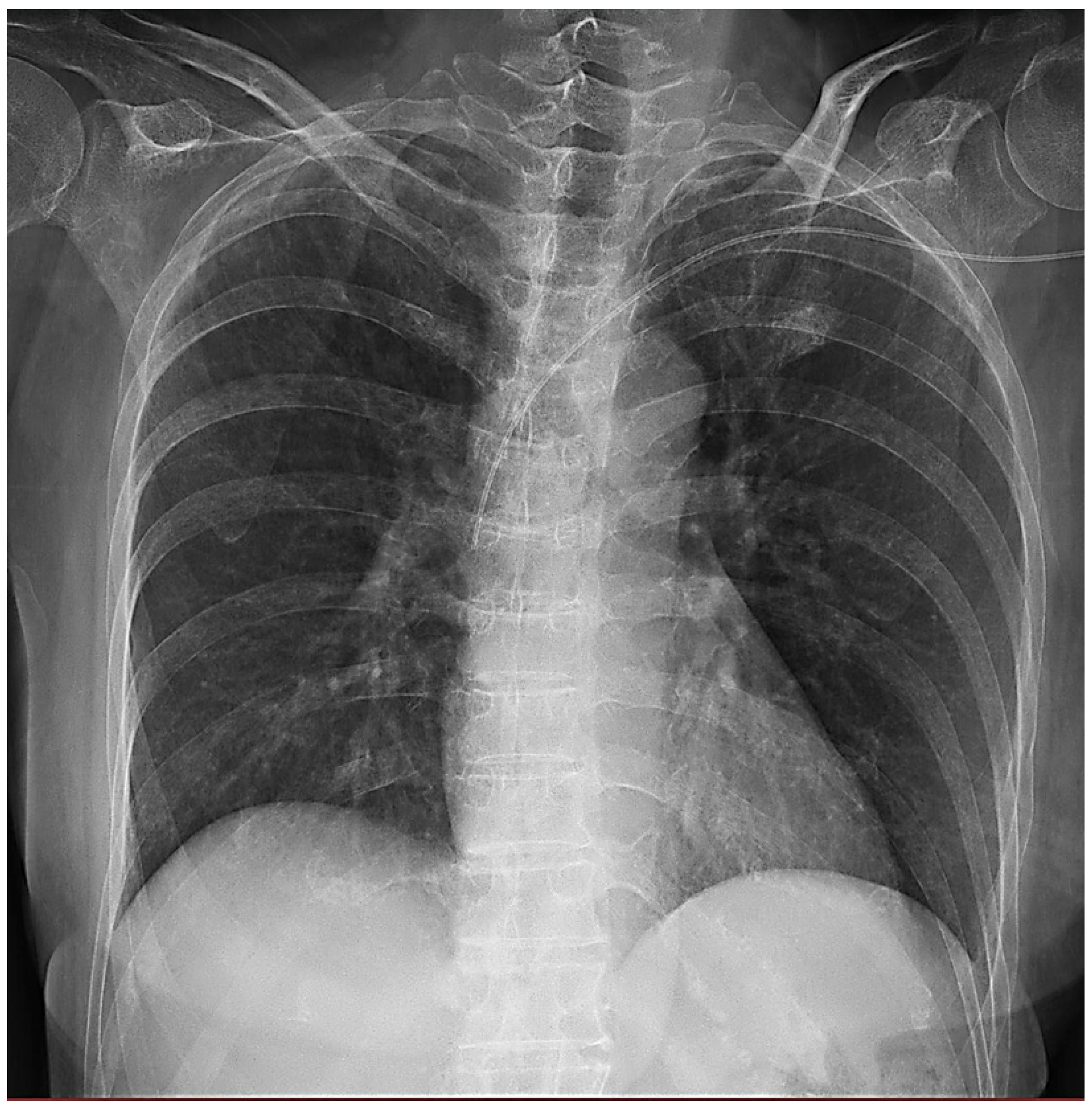
An over-table fluoroscopic X-ray system (DREX-ZX80; Canon, Tokyo, Japan) was used for all procedures. The imaging detector was a 17-inch flat-panel detector (FPD, DREX-ZX80; Canon, Tokyo, Japan), and the anti-scatter grid had a ratio of 15:1 with 80 lines/cm. The source-to-image distance (SID) was 110 cm, and the total X-ray tube filtration was equivalent to 2.8 mm aluminum. To guide PICC insertion, pulsed fluoroscopy at 7.5 frames per second was used in the anteroposterior (AP) view. A representative fluoroscopic image obtained during the procedure is shown in Figure 1. Fluoroscopic exposure parameters were automatically controlled using an automatic exposure control (AEC) system, with a tube voltage of approximately 95–120 kV and a tube current of approximately 1.5–2.0 mA. Exposure parameters were automatically adjusted according to patient body habitus and attenuation characteristics. Radiographic imaging was also performed as needed to confirm catheter tip position, using automatic exposure settings. The mean tube voltage for radiographic acquisitions was 73.5 ± 4.5 kV, and the mean mAs value was 3.0 ± 2.2. The system operated in pulsed fluoroscopy mode, and the reported tube current values correspond to those converted to continuous fluoroscopy equivalents.
This study was approved by the Institutional Review Board of Toranomon Hospital (Approval No. 2728; 21 October 2025). All PICC placement procedures were performed in accordance with the guidelines issued by the Centers for Disease Control and Prevention (CDC) [37].

2.3. Data Collection and Evaluation

The X-ray system used in this study was capable of recording patient radiation dose-related parameters, including air kerma (AK) and dose–area product (DAP). In diagnostic radiology, when evaluating patient radiation dose, the entrance surface dose is particularly important because it represents the maximum dose to the patient; therefore, air kerma was used as the dose indicator in this study [52]. For each PICC procedure, AK, DAP, fluoroscopy time, and number of radiographic acquisitions recorded in the Radiology Information System (RIS) were extracted and used for analysis. In addition, the relationship between radiation dose indices and patient body mass index (BMI) was evaluated. Correlation analyses between dose-related parameters were performed using Spearman’s rank correlation coefficient because the data did not follow a normal distribution. Statistical analyses were conducted using Microsoft Excel and JMP® Student Edition version 18.2.1 (SAS Institute Inc., Cary, NC, USA). The following items were evaluated:
  • Histograms of air kerma (overall, male, and female);
  • Histograms of dose–area product (overall, male, and female);
  • Histograms of fluoroscopy time (overall, male, and female);
  • Histograms of the number of radiographic acquisitions (overall, male, and female);
  • Histograms of BMI (overall, male, and female);
  • Correlation between fluoroscopy time and air kerma (overall, male, and female);
  • Correlation between fluoroscopy time and dose–area product (overall, male, and female);
  • Correlation between BMI and air kerma (overall, male, and female);
  • Correlation between the number of radiographic acquisitions and air kerma (overall, male, and female).

3. Results

  • Air Kerma Distribution
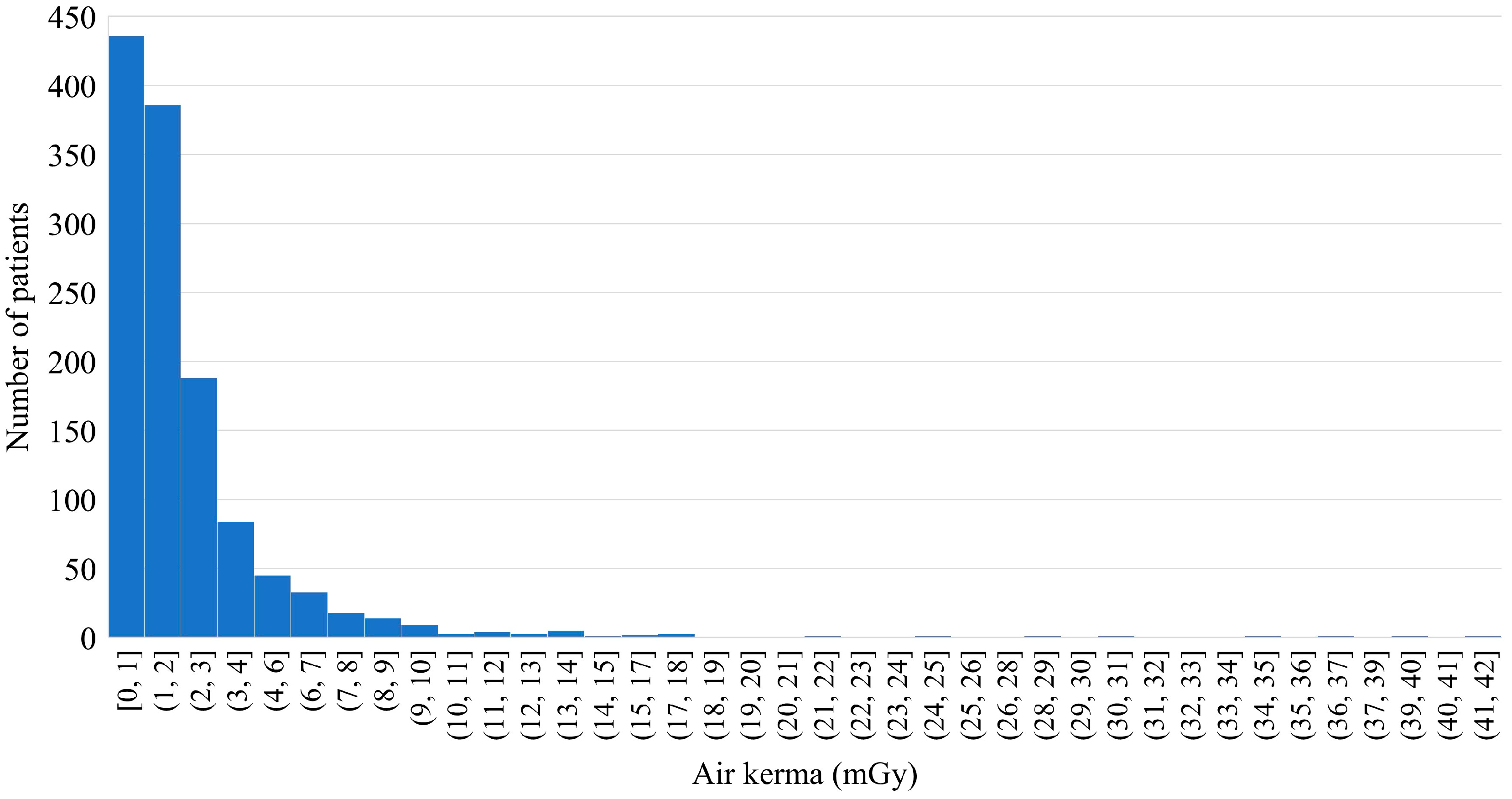
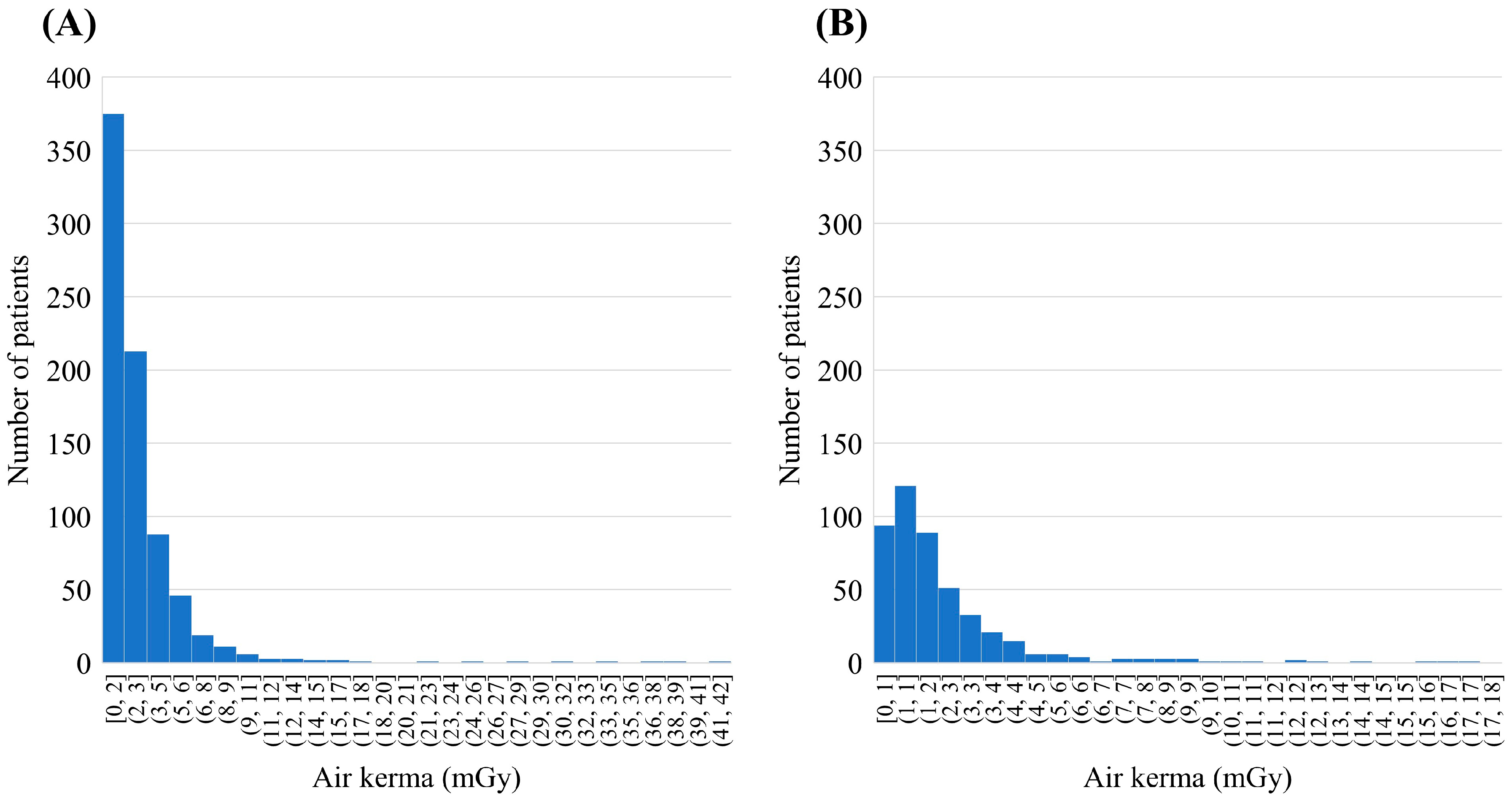
Figure 2 shows the histogram of air kerma during PICC placement. For all PICC procedures, the mean air kerma was 2.47 ± 2.30 mGy and the median air kerma was 1.54 mGy. As shown in Figure 3, the median air kerma in male patients (1.74 mGy) was 1.26 times higher than that in female patients (1.38 mGy).
  • Dose–Area Product Distribution
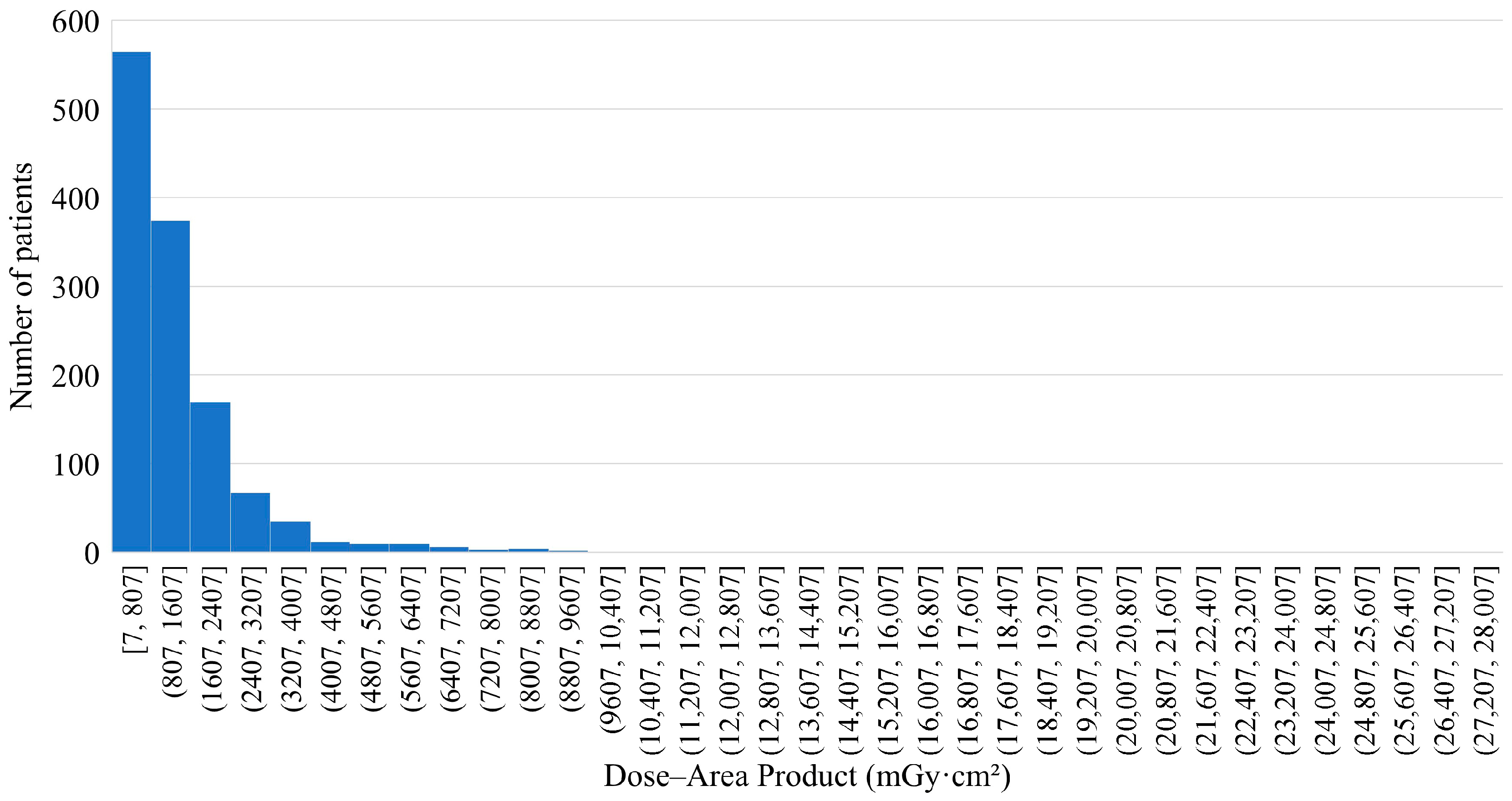
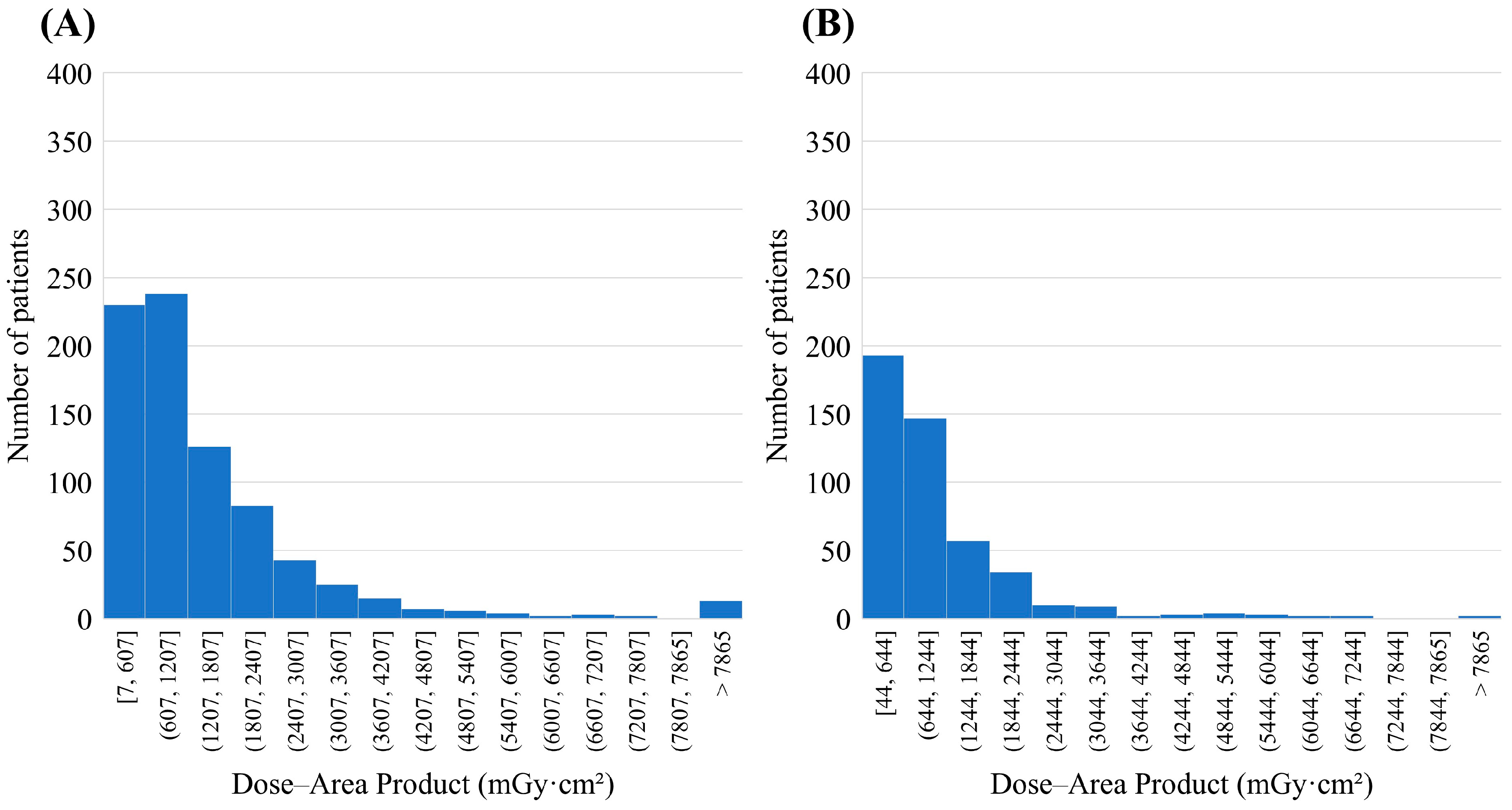
Figure 4 shows the histogram of DAP during PICC placement. For all PICC procedures, the mean DAP was 1382.3 ± 1849.5 mGy·cm2 and the median DAP was 901.9 mGy·cm2. As shown in Figure 5, the median DAP in male patients (988.6 mGy·cm2) was 1.31 times higher than that in female patients (756.2 mGy·cm2).
  • Fluoroscopy Time Distribution
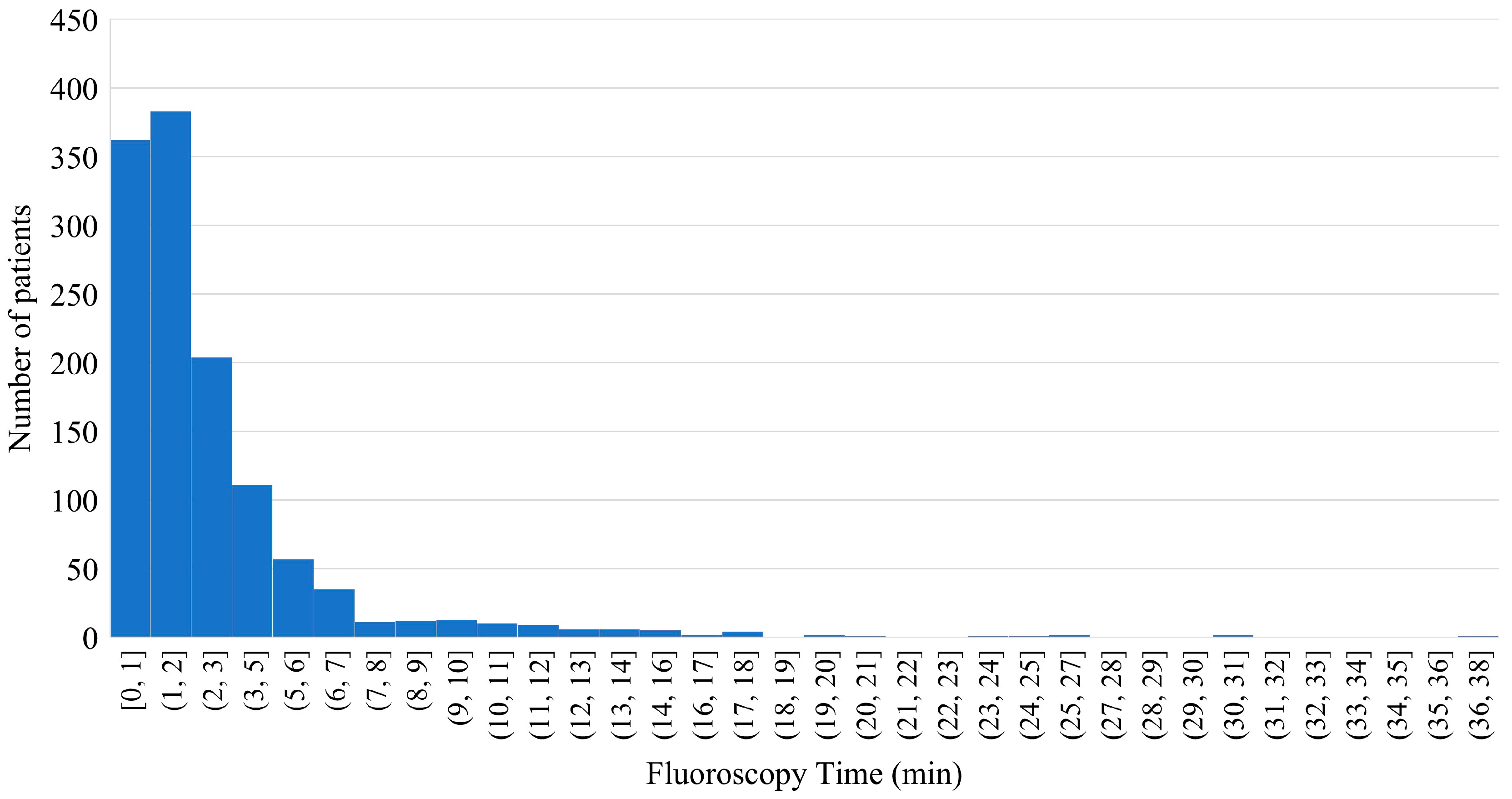
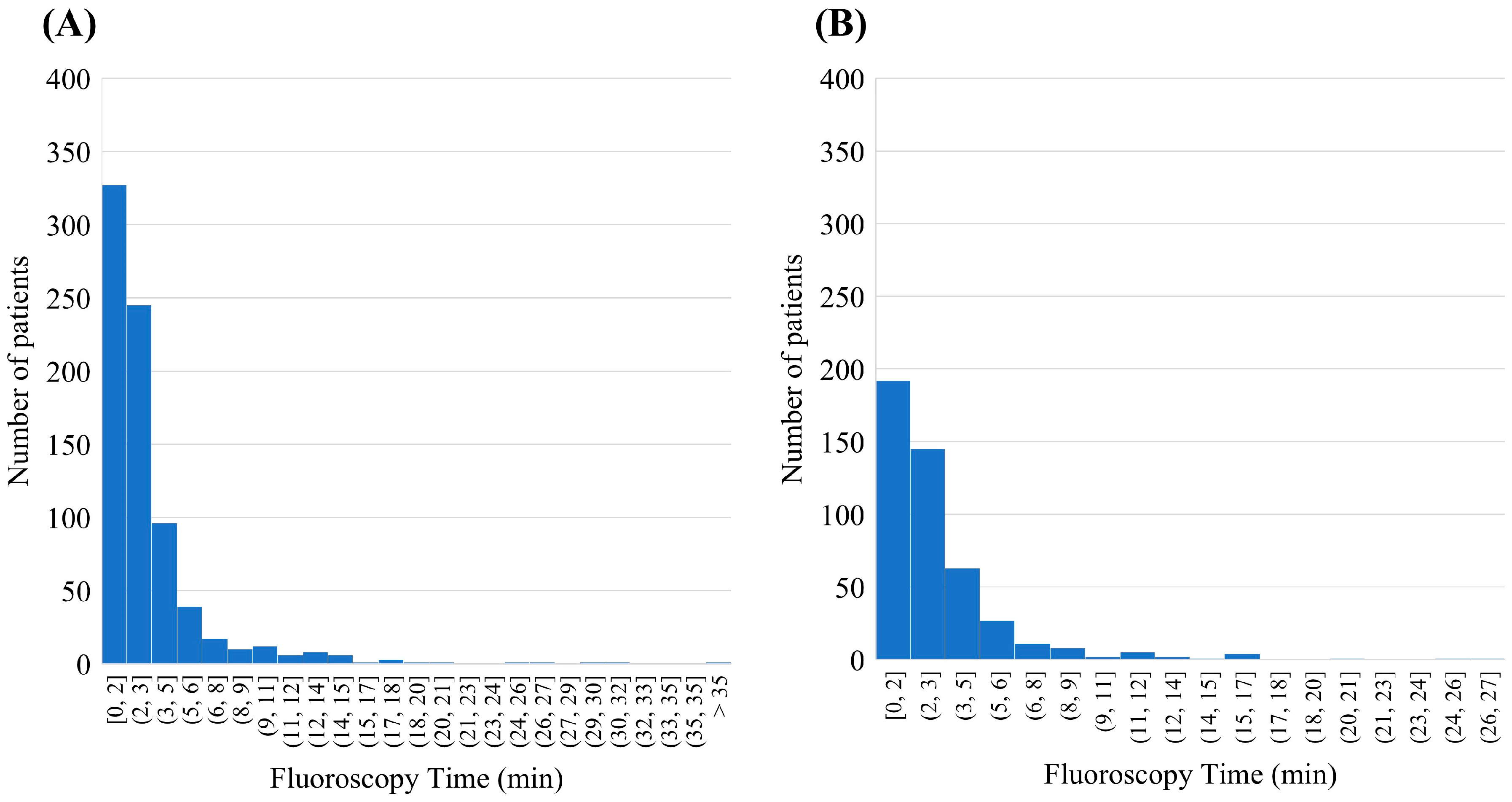
Figure 6 shows the histogram of fluoroscopy time during PICC placement. For all PICC procedures, the mean fluoroscopy time was 2.9 min and the median fluoroscopy time was 1.9 min. As shown in Figure 7, the median fluoroscopy time was identical in male and female patients (1.9 min).
  • Number of Radiographic Acquisitions
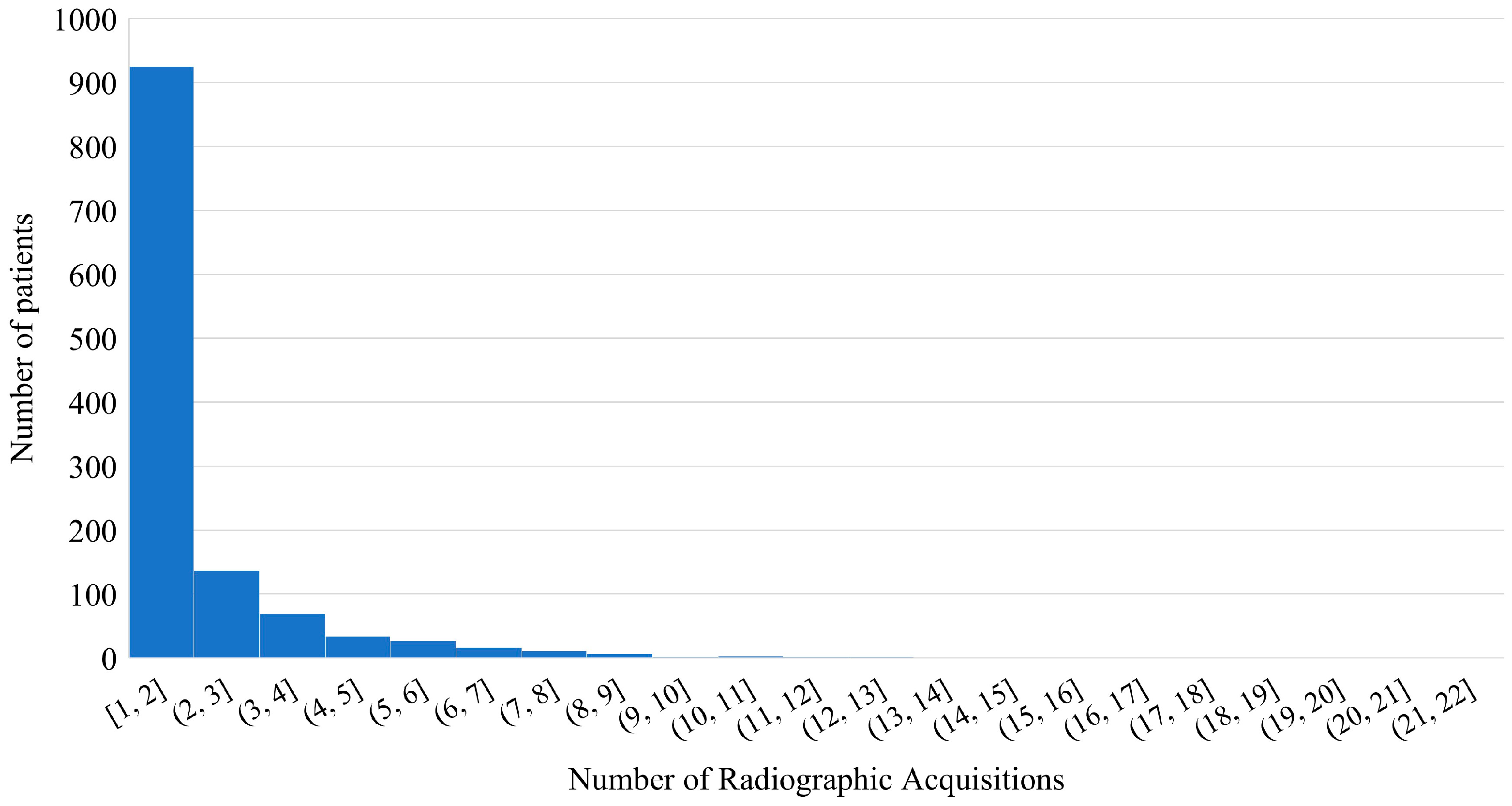
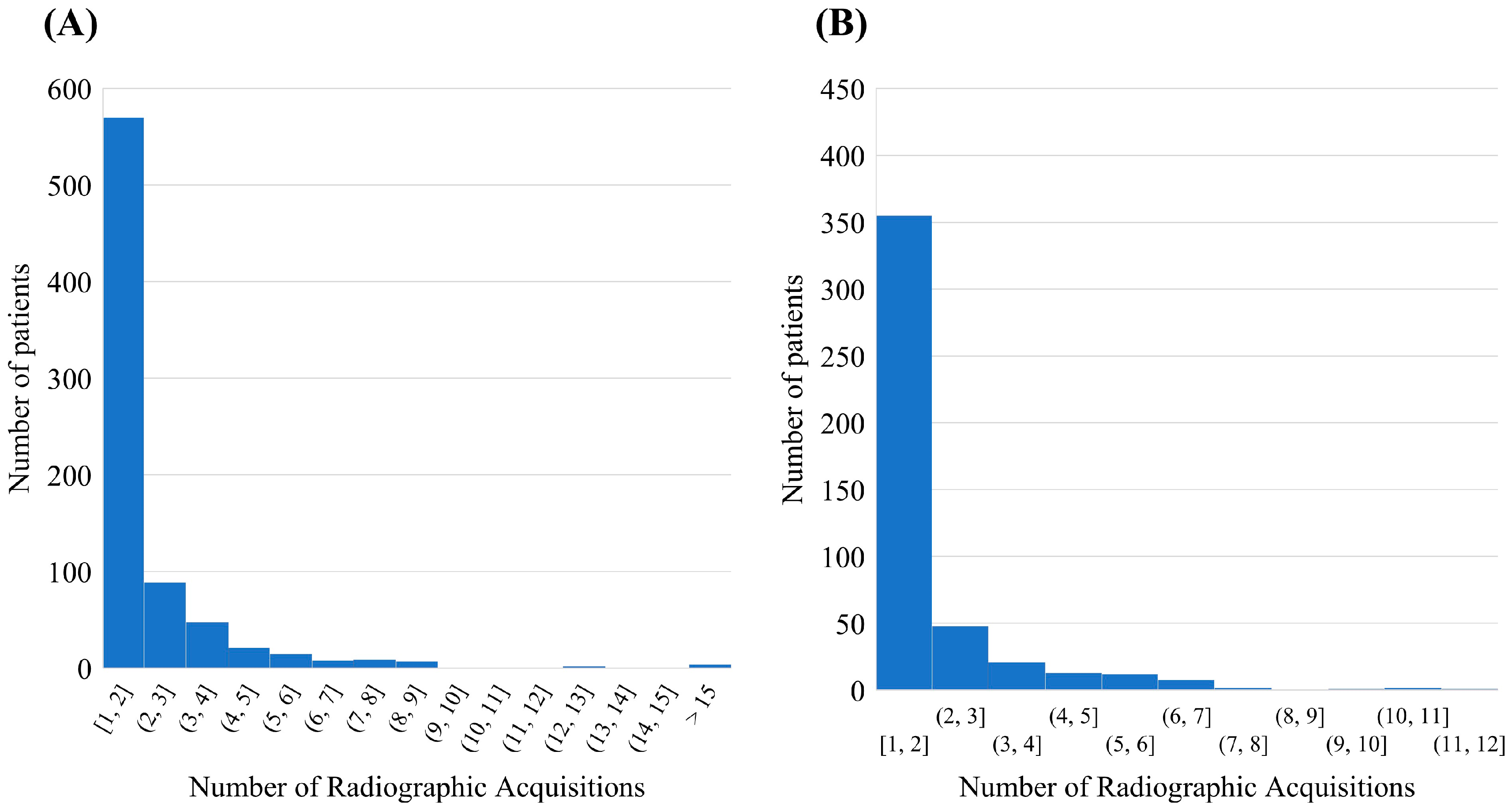
Figure 8 shows the histogram of the number of radiographic acquisitions during PICC placement. For all PICC procedures, the mean number of acquisitions was 2.1 and the median number was 1. As shown in Figure 9, the median number of acquisitions was the same in male and female patients.
  • Body Mass Index Distribution
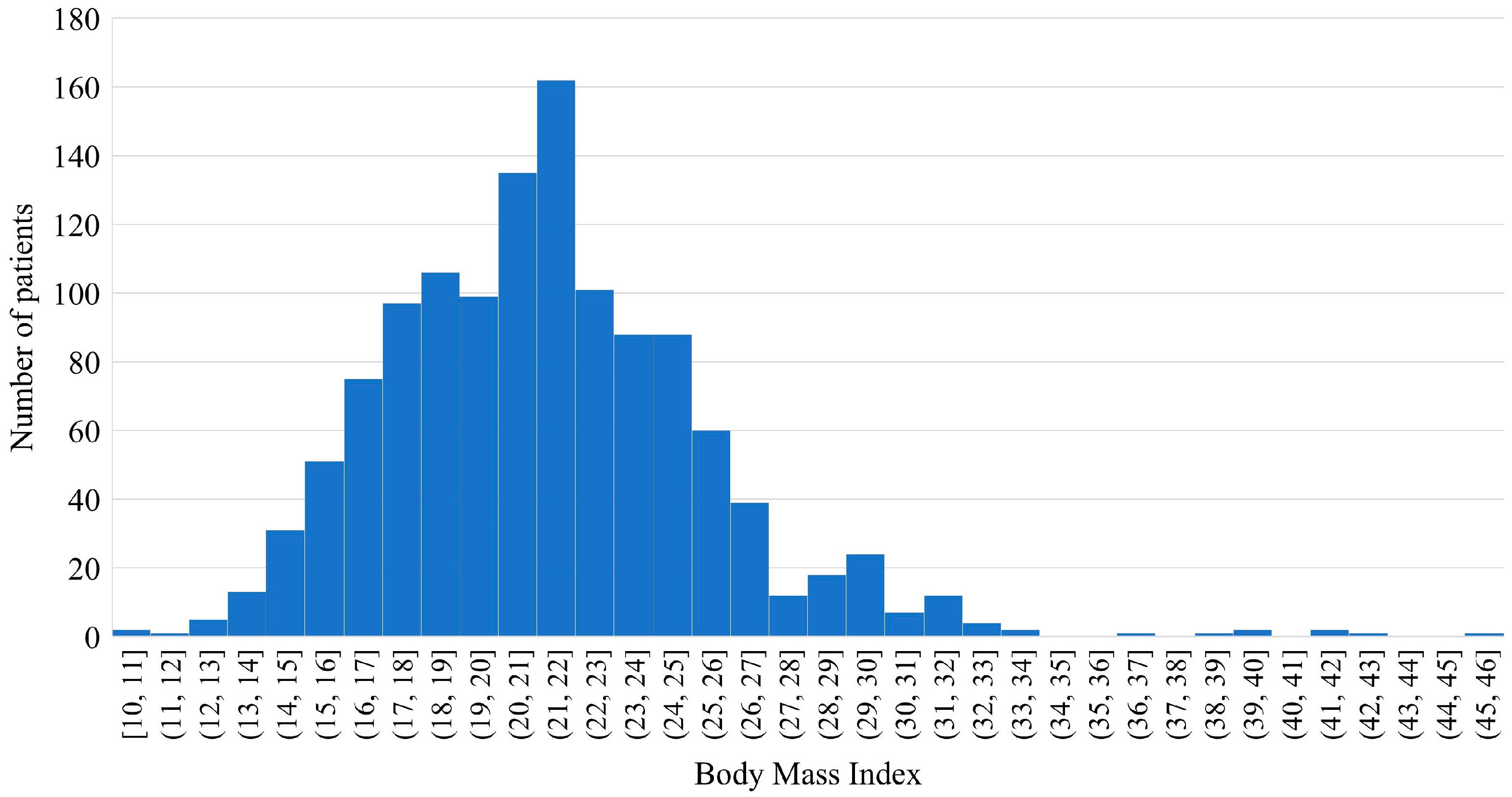
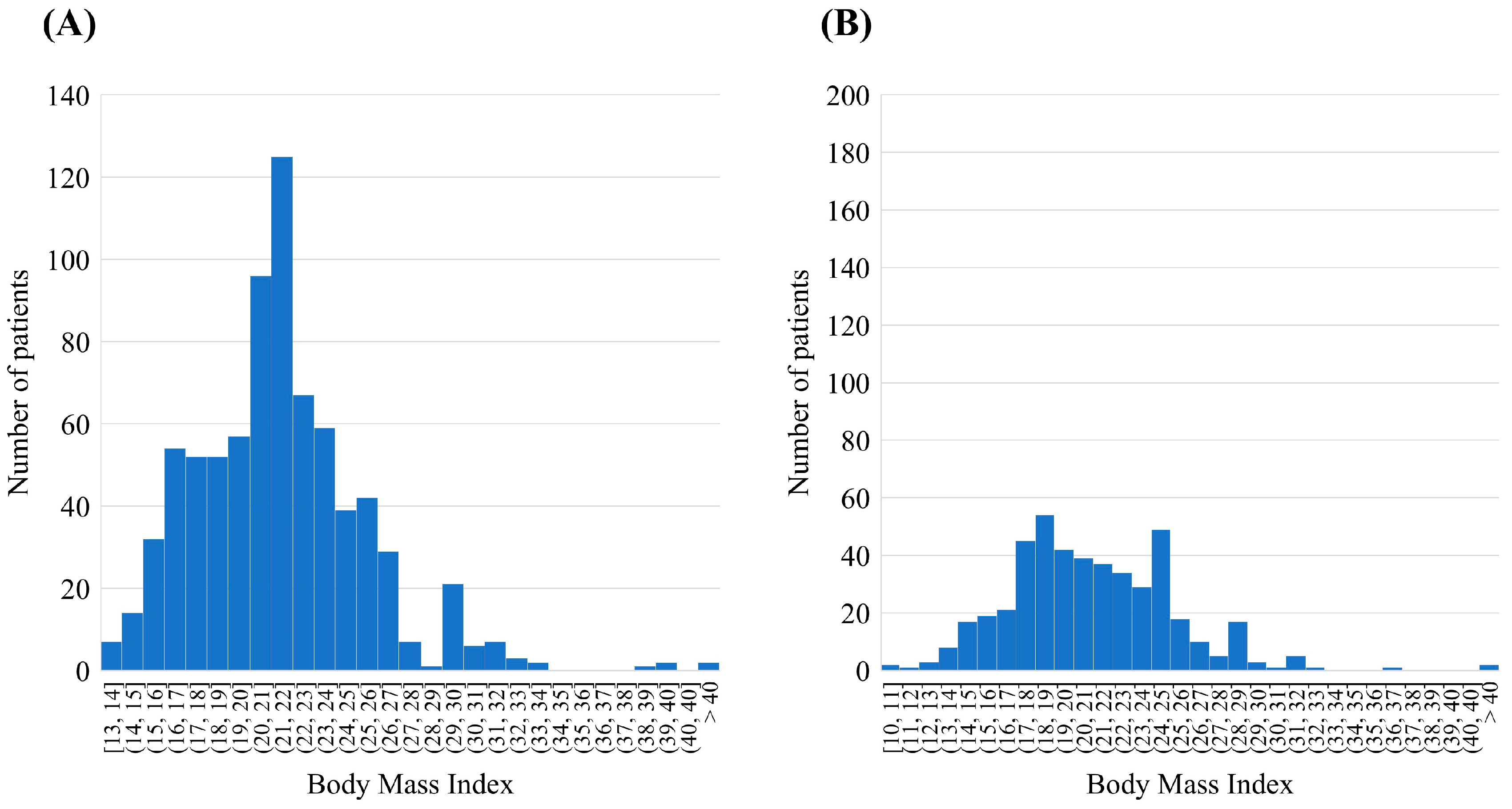
Figure 10 shows a histogram of patient body mass index (BMI) during PICC placement. For all PICC procedures, the mean BMI was 20.7 kg/m2 and the median BMI was 20.6 kg/m2. As shown in Figure 11, the median BMI in male patients (20.7 kg/m2) was 1.05 times higher than that in female patients (19.8 kg/m2). The relatively low mean BMI likely reflects the high proportion of patients with malignancies, including those with cancer-related weight loss.
  • Correlation Between Fluoroscopy Time and Air Kerma
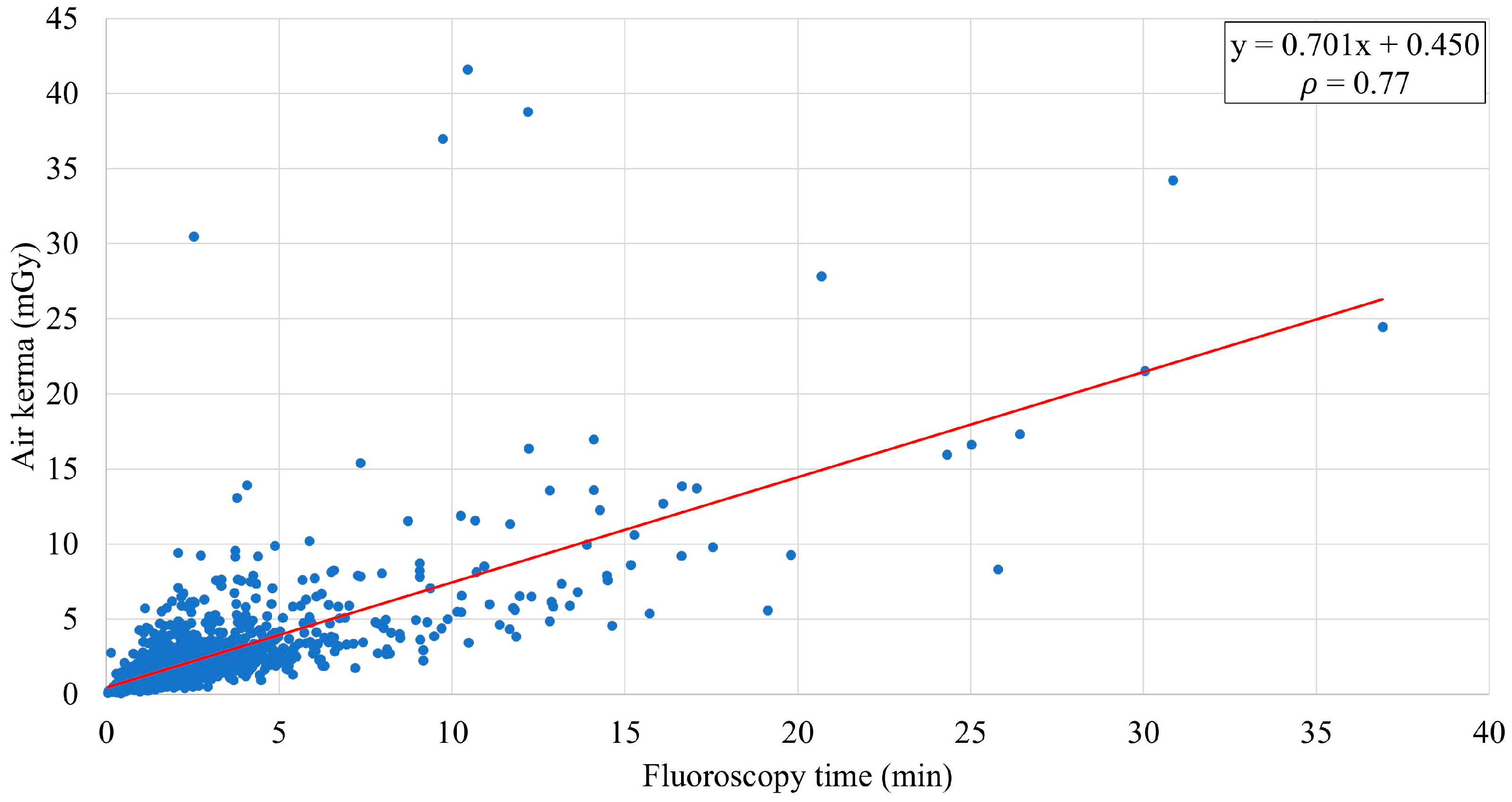
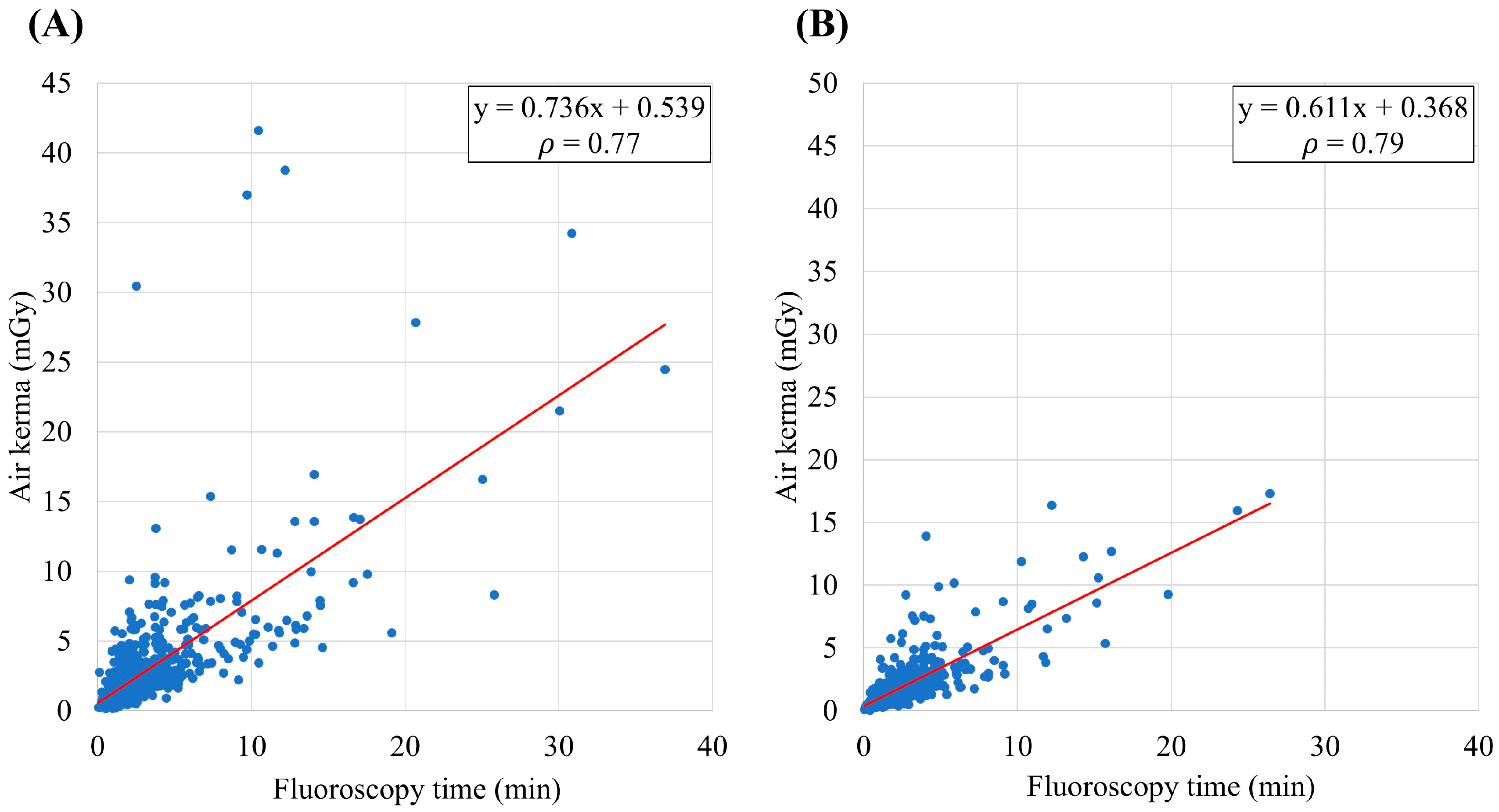
Figure 12 shows the correlation between fluoroscopy time and air kerma during PICC placement. For all PICC procedures, fluoroscopy time and air kerma showed a positive correlation (ρ = 0.77). As shown in Figure 13, the correlation coefficient between fluoroscopy time and air kerma was lower in male patients (ρ = 0.77) than in female patients (ρ = 0.79).
  • Correlation Between Fluoroscopy Time and Dose–Area Product
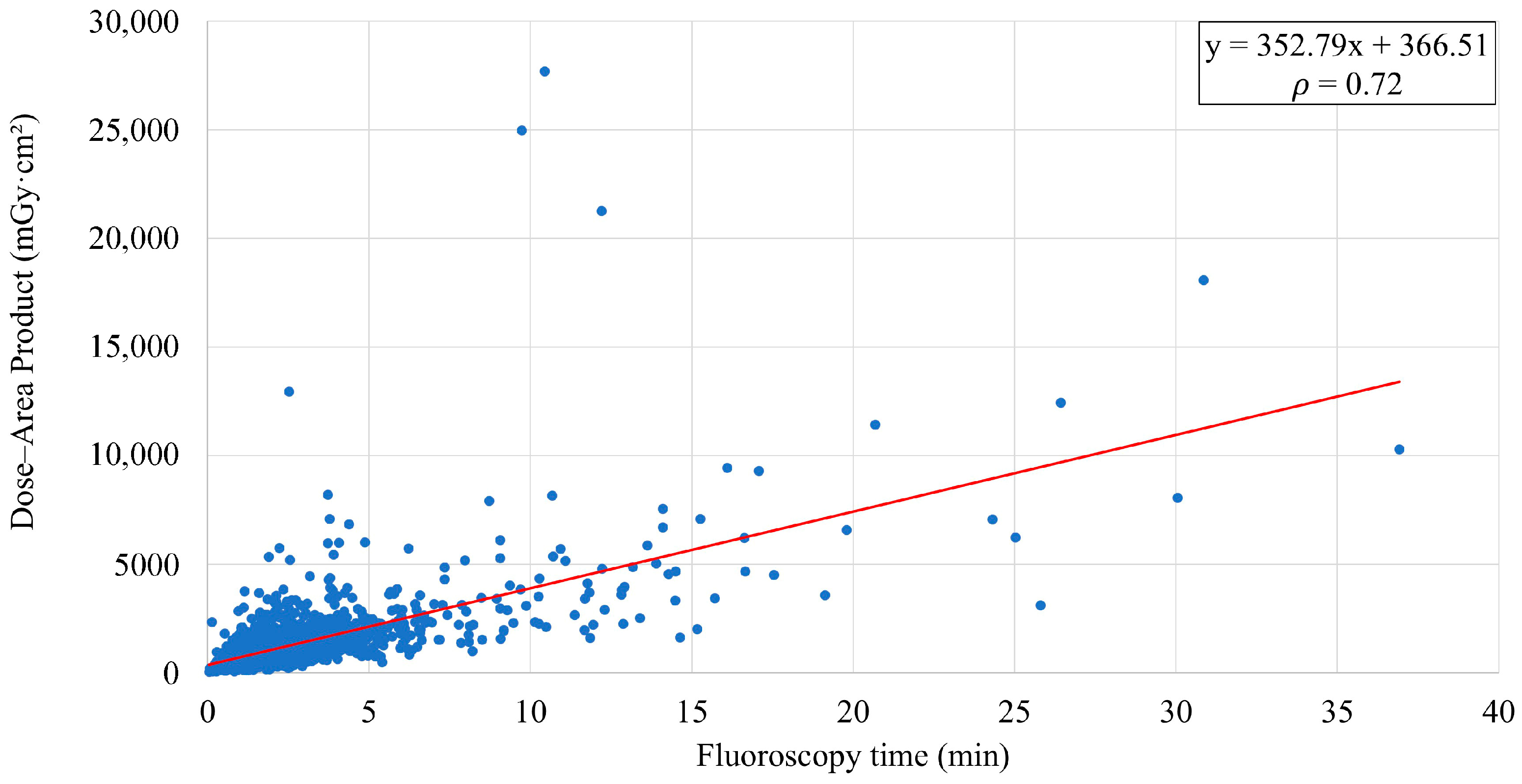
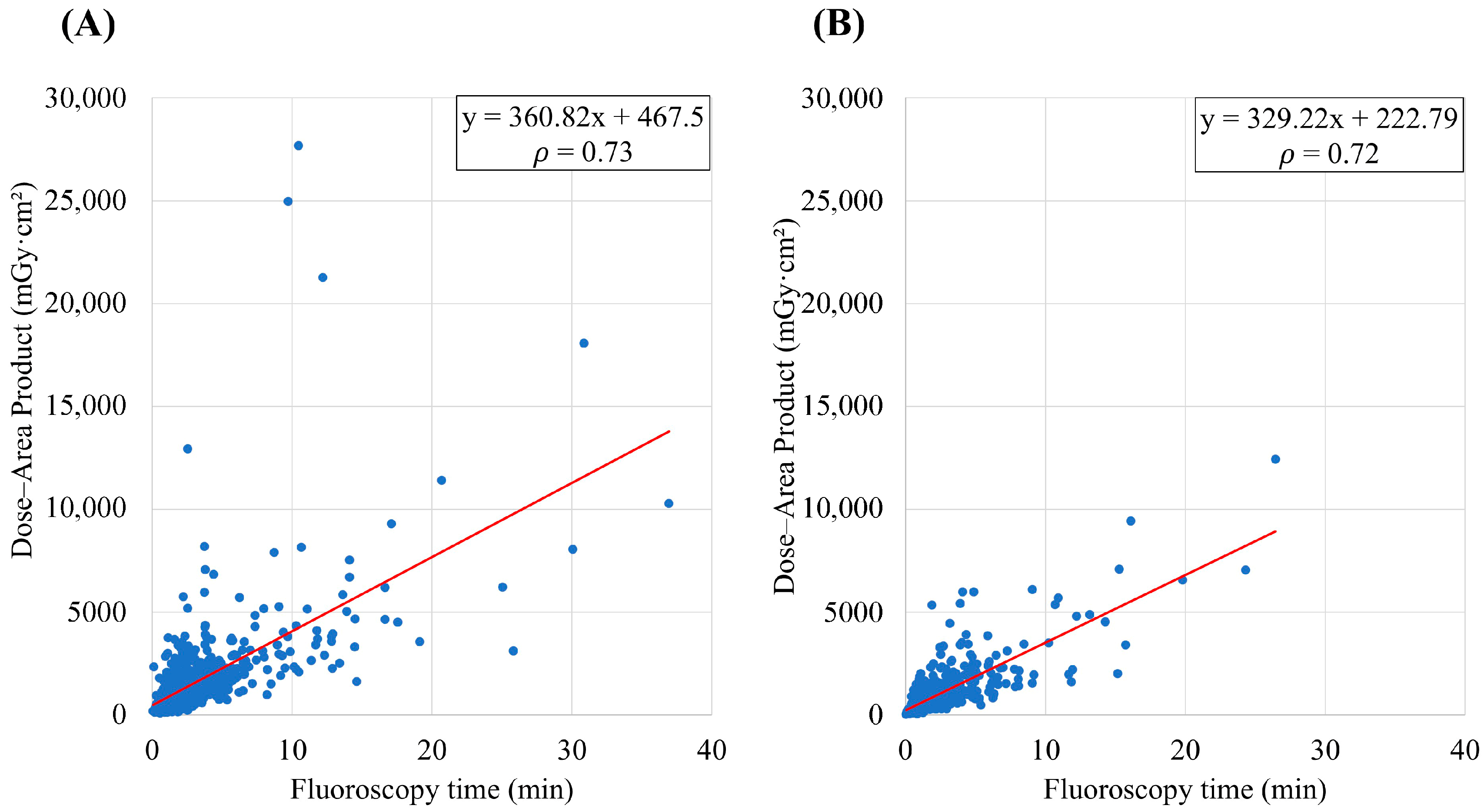
Figure 14 shows the correlation between fluoroscopy time and DAP during PICC placement. For all PICC procedures, fluoroscopy time and DAP showed a positive correlation ( ρ = 0.72). As shown in Figure 15, the correlation coefficient between fluoroscopy time and DAP was lower in male patients ( ρ = 0.73) than in female patients ( ρ = 0.72).
  • Correlation Between the Body Mass Index and Air Kerma
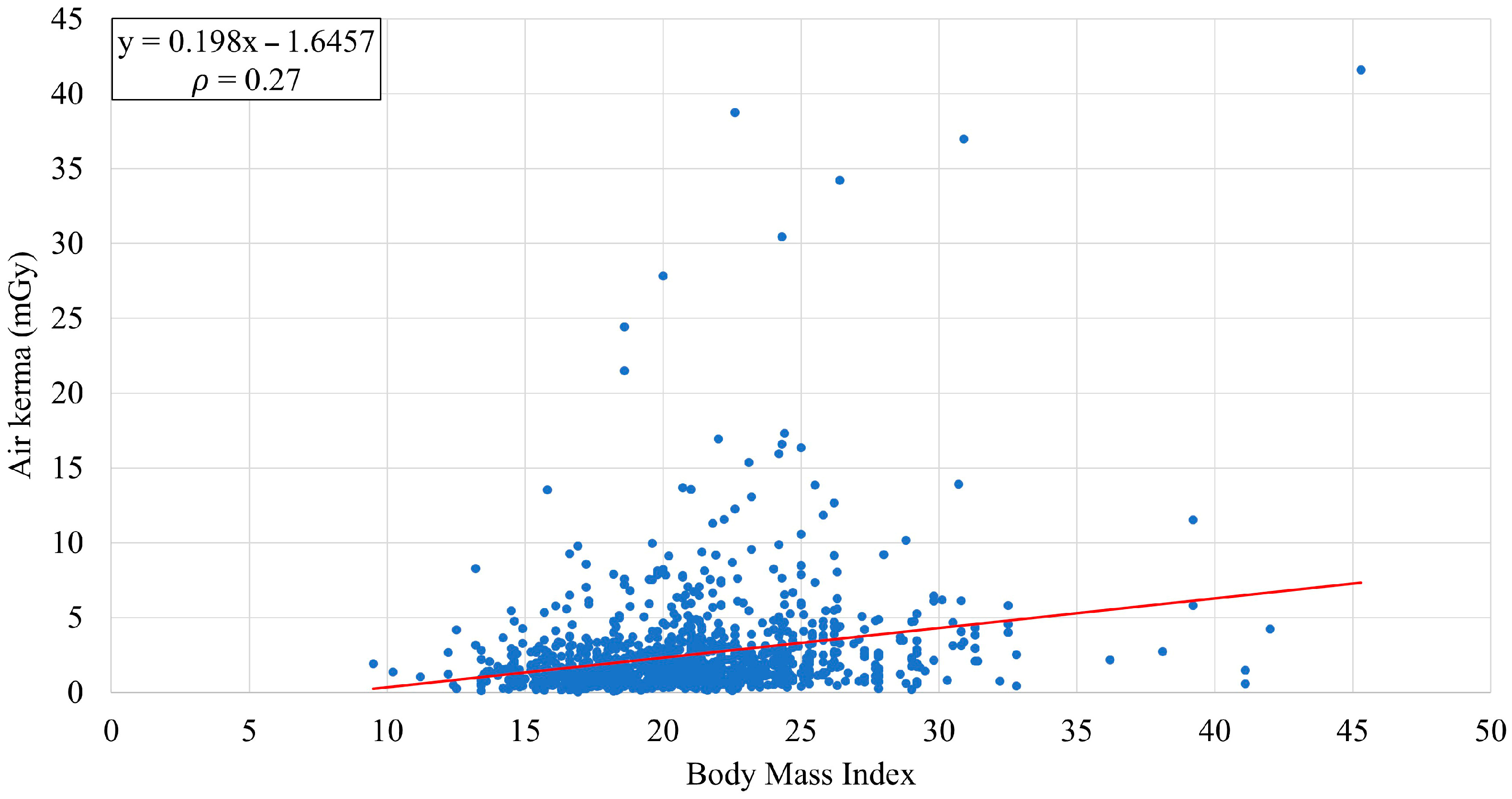
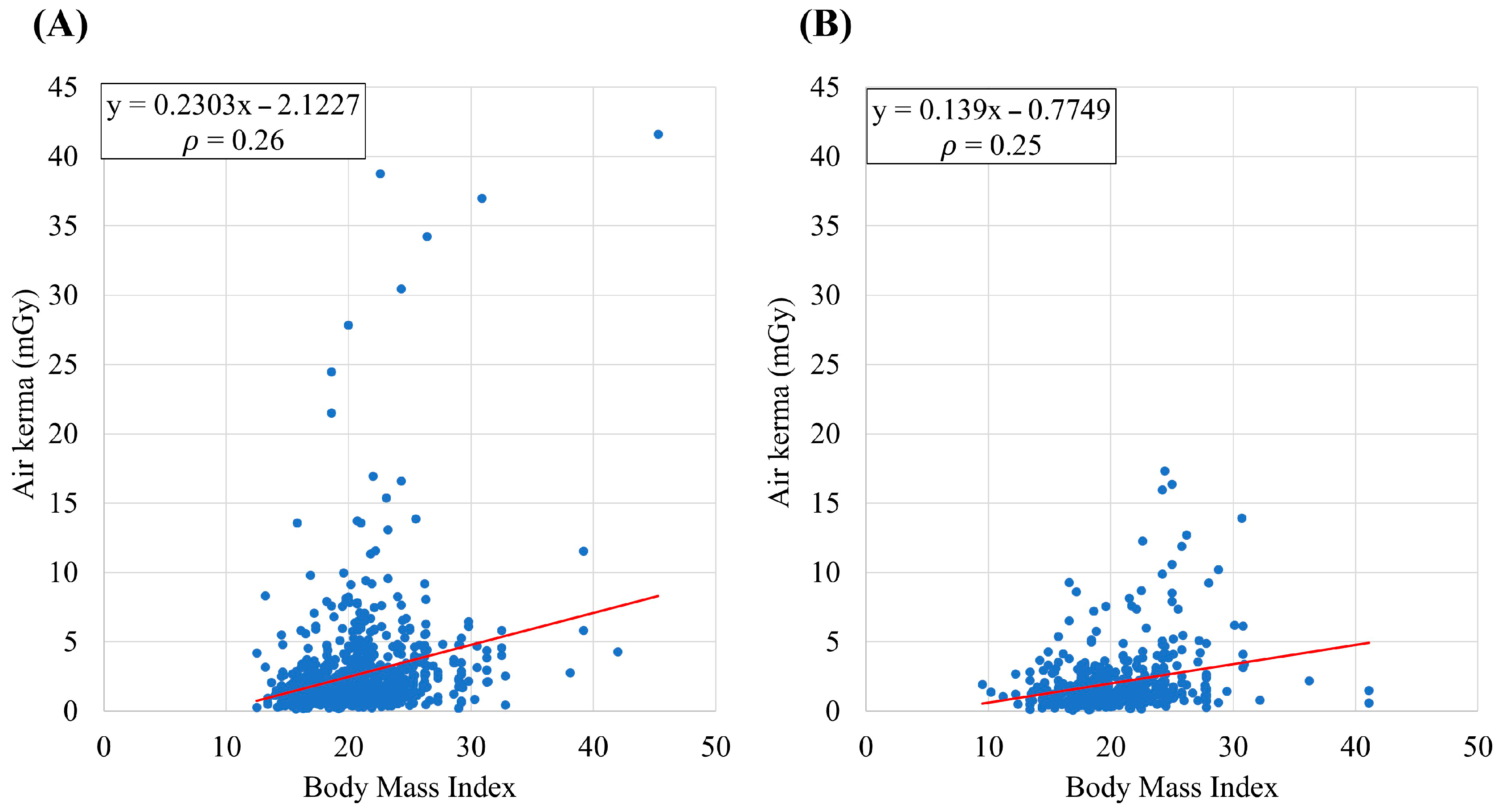
Figure 16 shows the correlation between the body mass index and air kerma during PICC placement. For all PICC procedures, the correlation coefficient between BMI and air kerma was low (ρ = 0.27). As shown in Figure 17, the correlation coefficient between BMI and air kerma was similar in male patients (ρ = 0.26) and female patients (ρ = 0.25), indicating little correlation.
  • Correlation Between Number of Radiographic Acquisitions and Air Kerma
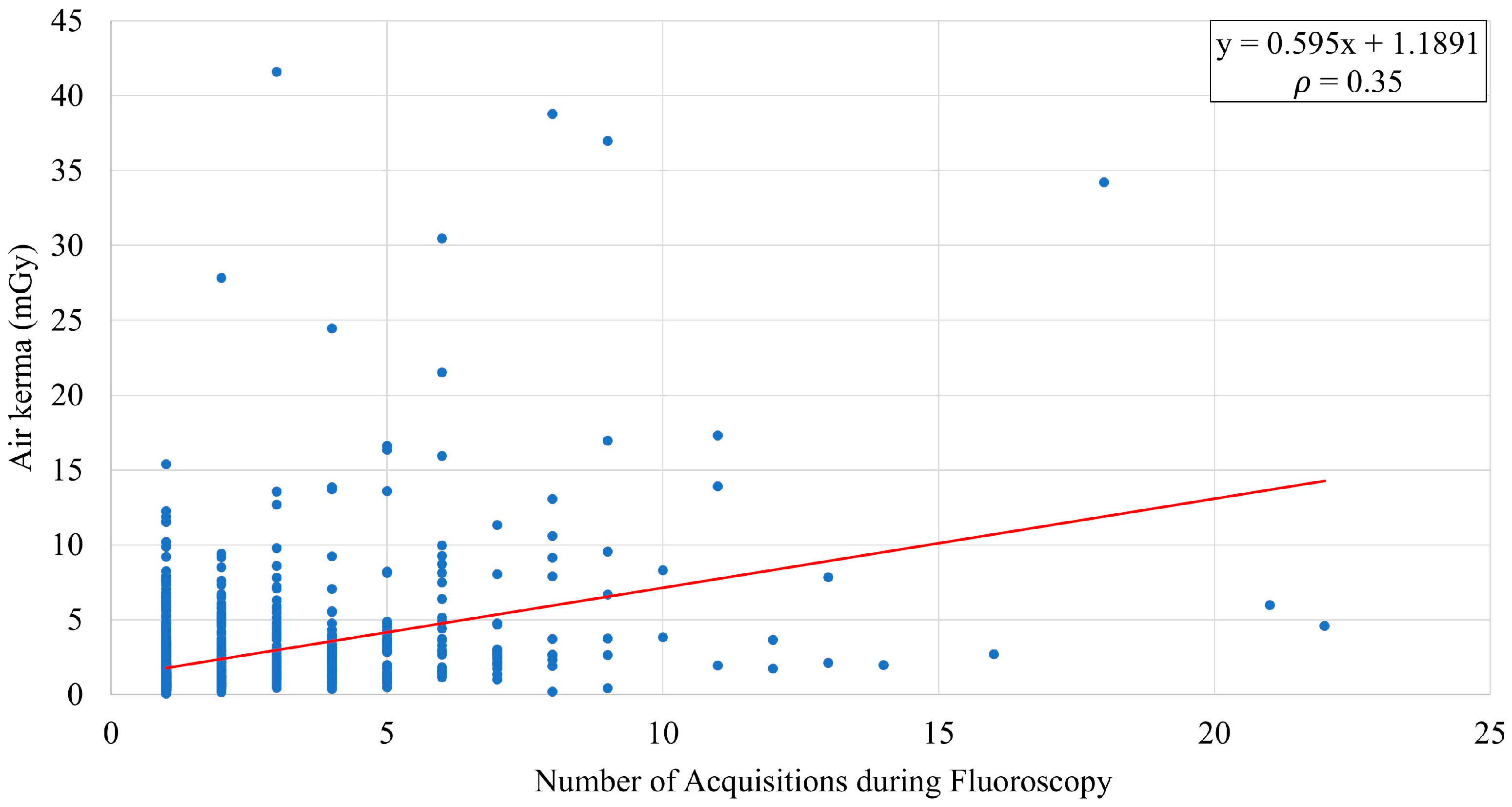
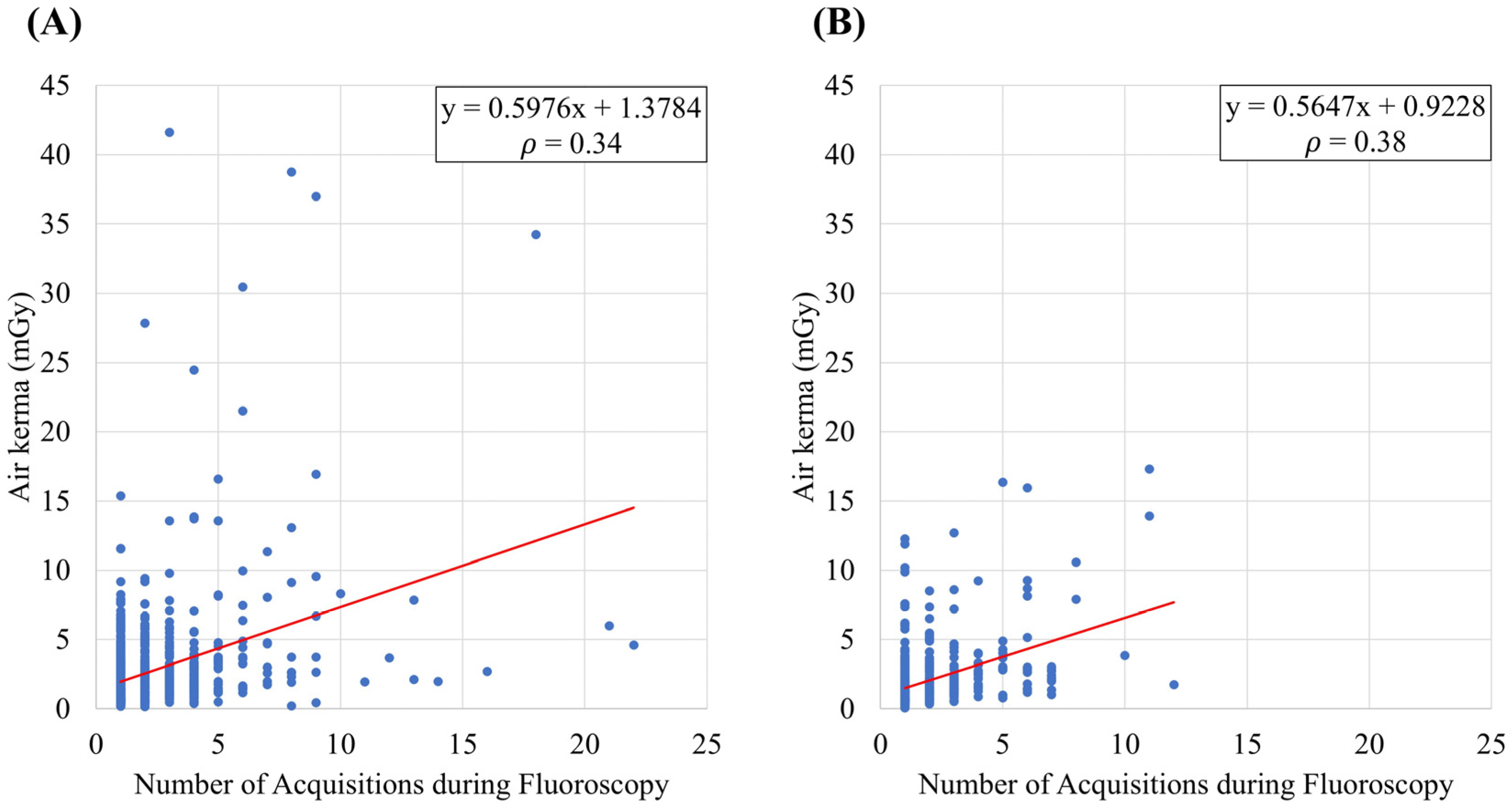
Figure 18 shows the correlation between the number of radiographic acquisitions and air kerma during PICC placement. For all PICC procedures, the number of radiographic acquisitions and air kerma showed a weak positive correlation (ρ = 0.35). As shown in Figure 19, the correlation coefficient was lower in male patients (ρ = 0.34) than in female patients (ρ = 0.38).

4. Discussion

Radiological procedures are indispensable in modern medicine; however, they are inevitably associated with radiation exposure [53,54]. Therefore, radiation dose management in radiological practice is an important issue [55,56,57,58,59]. In fluoroscopically guided procedures, evaluation of radiation exposure is also required [60,61]. Similarly, radiation dose management is important in PICC procedures; however, patient radiation dose during PICC placement has not been sufficiently clarified to date.
In the present study, the median air kerma during PICC placement was 1.54 mGy, the median dose–area product was 901.9 mGy·cm2, the median fluoroscopy time was 1.9 min, and the median number of radiographic acquisitions was 1. Table 2 shows a comparison with the Japanese Diagnostic Reference Levels (Japan DRLs 2025) [62]. All dose-related parameters observed in this study were lower than the corresponding Japan DRLs (2025). Possible reasons for the low patient radiation dose observed in this study include the relatively short fluoroscopy time and the use of pulsed fluoroscopy with a low pulse rate. Pulsed fluoroscopy at a low pulse rate (e.g., 7.5 pulses/s) can reduce radiation dose compared with conventional continuous fluoroscopy [63]. However, when compared with international reference levels, there may still be room for further dose reduction. For example, the United Kingdom National Diagnostic Reference Level (NDRL) for PICC line insertion reports a dose–area product of 310 mGy·cm2, which is lower than the median value observed in the present study [64]. Although differences in equipment, procedural techniques, and patient populations should be taken into account, this comparison suggests that additional efforts toward radiation dose optimization may be warranted. Continuous review of fluoroscopic protocols and adherence to optimization principles remain important to further reduce patient radiation exposure.
In procedures such as percutaneous coronary intervention, radiation-induced tissue reactions, including skin erythema, have been reported. Because patient radiation dose during PICC placement is considerably lower than that during PCI and similar procedures, the risk of radiation-induced tissue reactions, such as skin erythema, is considered to be negligible. However, in patients with high body mass indexes (BMIs), air kerma values exceeding 40 mGy were observed in some cases, and certain patients may undergo repeated PICC placements. Therefore, in PICC procedures, radiation dose should be optimized in accordance with the as low as reasonably achievable (ALARA) principle, and careful patient dose management remains necessary. With appropriate dose optimization and management, the clinical impact of radiation exposure during PICC placement is expected to be minimal. While the radiation dose from an individual PICC placement is relatively low, cumulative exposure should be considered in patients requiring multiple PICCs. This underscores the importance of maintaining optimized imaging protocols and appropriate dose management. In contrast, compared with fluoroscopic guidance, ultrasound-guided PICC placement is more frequently performed at the bedside and has been reported to be associated with a higher incidence of catheter malposition requiring post-procedural repositioning [65].
In this study, correlations between patient radiation dose indices (air kerma and DAP) and fluoroscopy time, number of radiographic acquisitions, and patient BMI were evaluated. As a result, patient radiation dose (air kerma) during PICC placement showed the strongest positive correlation with fluoroscopy time ( ρ = 0.77). In particular, a higher correlation coefficient was observed in female patients ( ρ = 0.79). These findings indicate that fluoroscopy time may serve as a predictor of patient radiation dose and that reduction in fluoroscopy time contributes most substantially to patient dose reduction. In cardiac interventional radiology, fluoroscopy time is known to correlate with patient radiation dose [66], and the present results suggest that a similar relationship exists in PICC placement procedures.
In contrast, radiographic imaging during PICC placement is primarily performed for confirmation of the catheter tip position. Consequently, the number of radiographic acquisitions during PICC placement was low, typically around one acquisition, and is unlikely to contribute substantially to patient radiation dose. For reference, the entrance surface air kerma for a standard chest radiograph is approximately 0.11 mGy, indicating that the additional dose from a single radiographic acquisition is relatively small [67].
Radiation-induced occupational effects, such as cataracts, have been reported among staff involved in fluoroscopically guided procedures. Therefore, evaluation and protection of occupational radiation exposure among staff engaged in fluoroscopically guided procedures are important. In future studies, assessment of occupational radiation dose during PICC placement should also be performed.
In addition, Lee et al. reported radiation dose and associated risk factors during fluoroscopy-guided PICC placement using conventional angiography equipment and a flat panel detector-based mobile C-arm system [51]. In their study, the mean dose–area product (DAP) during PICC placement was approximately 2.7 Gy·cm2 with conventional angiography and 0.8 Gy·cm2 with the mobile C-arm system. Although direct comparison is difficult due to differences in equipment specifications, study design, and patient characteristics, the median DAP observed in the present study (901.9 mGy·cm2) appears to be comparable to or lower than the values reported for conventional angiography systems in their study.
Lee et al. further demonstrated, through multivariate analysis, that tube current (both chest and arm fluoroscopy) and fluoroscopy equipment type were significant determinants of radiation dose. In contrast, patient-related factors such as BMI were not identified as significant independent predictors. In the present study, air kerma showed the strongest correlation with fluoroscopy time ( ρ = 0.77), whereas BMI demonstrated only a weak correlation ( ρ = 0.27). These findings are partially consistent with those of Lee et al., in that procedural and equipment-related factors appear to play a more important role than patient characteristics in determining radiation dose during PICC placement.
Furthermore, Lee et al. emphasized that lower-output fluoroscopy systems were associated with reduced radiation dose while maintaining acceptable image quality. In our study, pulsed fluoroscopy at a low pulse rate (7.5 pulses/s) was routinely used, which may have contributed to the relatively low radiation dose observed. Taken together, these findings suggest that optimization of fluoroscopic parameters and appropriate equipment selection are key strategies for minimizing radiation exposure during PICC procedures in accordance with the ALARA principle [68].

Limitation

This study has several limitations. First, it was a single-center retrospective study, which may limit the generalizability of the findings. Second, multivariate analysis was not conducted; therefore, potential confounding factors could not be fully adjusted. Further multicenter studies with more comprehensive statistical approaches are warranted to validate and extend the present findings.

5. Conclusions

This study investigated patient radiation dose during peripherally inserted central catheter (PICC) placement. The mean and median patient radiation doses expressed as air kerma were 2.47 mGy and 1.54 mGy, respectively. Patient radiation dose (air kerma) during PICC placement showed the strongest correlation with fluoroscopy time ( ρ = 0.77). Compared with fluoroscopically guided procedures in the cardiac field, patient radiation dose during PICC placement was low. However, in patients with high body mass indexes, air kerma values exceeding 40 mGy were observed in some cases, and repeated PICC placements were not uncommon. Therefore, radiation dose during PICC procedures should be optimized in accordance with the as low as reasonably achievable (ALARA) principle, and careful patient dose management remains important. With appropriate dose optimization and management, the clinical impact of radiation exposure during PICC placement is expected to be minimal. The present study provides additional useful information regarding patient radiation dose during PICC placement.

Author Contributions

Conceptualization, M.T. and K.C.; methodology, M.T.; software, M.T.; validation, M.T., K.S. and K.C.; formal analysis, K.S.; investigation, M.T.; resources, K.C.; data curation, M.T.; writing—original draft preparation, M.T.; writing—review and editing, K.S. and K.C.; visualization, K.S.; supervision, K.C.; project administration, K.C. All authors have read and agreed to the published version of the manuscript.

Funding

Industrial Disease Clinical Research, 240401-02.

Institutional Review Board Statement

The study was conducted in accordance with the Declaration of Helsinki and approved by the Ethics Committee of Toranomon Hospital on 21 October 2025. (approval number: 2728).

Informed Consent Statement

Informed consent was obtained from all subjects involved in the study.

Data Availability Statement

The data presented in this study are available on request from the corresponding author due to privacy and ethical restrictions.

Acknowledgments

We thank Takuyo Kozuka and Satoru Kawauchi from Toranomon Hospital (Okinaka Memorial Institute for Medical Research), Japan, for their invaluable assistance.

Conflicts of Interest

The authors declare no conflicts of interest.

Abbreviations

The following abbreviations are used in this manuscript:
AECAutomatic Exposure Control
AKAir Kerma
APAnteroposterior
BMIBody Mass Index
CAJCavoatrial Junction
CDCCenters for Disease Control and Prevention
CRBSICatheter-Related Bloodstream Infection
CVCCentral Venous Catheter
DAPDose–Area Product
DRLsDiagnostic Reference Levels
DVTDeep Vein Thrombosis
FPDFlat-Panel Detector
IRInterventional Radiology
PCIPercutaneous Coronary Intervention
PICCPeripherally Inserted Central Catheter
RISRadiology Information System
SIDSource-to-Image Distance

References

  1. ICRP. Avoidance of Radiation Injuries from Medical Interventional Procedures; ICRP Publication 85, Annals of the ICRP; ICRP: Ottawa, ON, Canada, 2000; Volume 30. [Google Scholar]
  2. ICRP. Radiological Protection in Medicine; ICRP Publication 105, Annals of the ICRP; ICRP: Ottawa, ON, Canada, 2007; Volume 37. [Google Scholar]
  3. ICRP. Radiological Protection in Cardiology; ICRP Publication 120, Annals of the ICRP; ICRP: Ottawa, ON, Canada, 2013; Volume 42. [Google Scholar]
  4. Sagehashi, K.; Haga, Y.; Kato, T.; Takahira, S.; Sota, M.; Kaga, Y.; Abe, M.; Tada, N.; Chida, K. Impact of Physician Height and Experience on Eye Lens Dose in Interventional Cardiology: An Initial Study. Appl. Sci. 2025, 15, 12137. [Google Scholar] [CrossRef]
  5. Chida, K. What are useful methods to reduce occupational radiation exposure among radiological medical workers, especially for interventional radiology personnel? Radiol. Phys. Technol. 2022, 15, 101–115. [Google Scholar] [CrossRef]
  6. IAEA. International Atomic Energy Agency, Implications for Occupational Radiation Protection of the New Dose Limit for the Lens of the Eye. IAEA TECDOC. 2013, 1731, 2013. [Google Scholar]
  7. ICRP. Education and Training in Radiological Protection for Diagnostic and Interventional Procedures; ICRP Publication 113, Annals of the ICRP; ICRP: Ottawa, ON, Canada, 2009; Volume 39. [Google Scholar]
  8. Wong, L.; Rehm, J. Radiation Injury from a Fluoroscopic Procedure. N. Engl. J. Med. 2004, 350, e23. [Google Scholar] [CrossRef]
  9. ICRP. Radiological Protection in Fluoroscopically Guided Procedures Outside the Imaging Department; ICRP Publication 117, Annals of the ICRP; ICRP: Ottawa, ON, Canada, 2010; Volume 40. [Google Scholar]
  10. ICRP. Occupational Radiological Protection in Interventional Procedures; ICRP Publication 139, Annals of the ICRP; ICRP: Ottawa, ON, Canada, 2018; Volume 47. [Google Scholar]
  11. Hijikata, Y.; Yamashita, K.; Hatsusaka, N.; Nagata, T.; Kitamura, H.; Morota, K.; Matsuzaki, S.; Nakagami, K.; Hitomi, G.; Kuriyama, T.; et al. Prevalence of Cataractous Changes in the Eyes and Chronic Inflammatory Changes in the Hands Among Spine Surgeons. JBJS 2025, 107, e25. [Google Scholar] [CrossRef]
  12. The ORAMED Project: Optimisation of Radiation Protection for Medical Staff. Available online: https://www.eu-alara.net/index.php/activities/sub-networks-and-working-groups/220-oramed.html (accessed on 5 February 2026).
  13. ICRP. Radiological Protection in Paediatric Diagnostic and Interventional Radiology; ICRP Publication 121, Annals of the ICRP; ICRP: Ottawa, ON, Canada, 2013; Volume 42. [Google Scholar]
  14. ICRP. Diagnostic Reference Levels in Medical Imaging; ICRP Publication 135, Annals of the ICRP; ICRP: Ottawa, ON, Canada, 2017; Volume 46. [Google Scholar]
  15. Shindo, R.; Yamamoto, K.; Ohno, S.; Konta, S.; Inaba, Y.; Suzuki, M.; Zuguchi, M.; Chida, K. Evaluation of radiation protection by lead glasses for interventional radiology physicians wearing prescription glasses: Considering dose reduction by prescription glasses excluding lead. J. Radiat. Res. 2025, 66, 486–495. [Google Scholar] [CrossRef] [PubMed]
  16. Fujisawa, M.; Haga, Y.; Takahira, S.; Sota, M.; Kato, T.; Abe, M.; Kaga, Y.; Inaba, Y.; Suzuki, M.; Chida, K. Development of a headgear-based eye protection device for physicians performing fluoroscopy-guided bronchoscopy. J. Radiat. Res. 2025, 66, 372–384. [Google Scholar] [CrossRef]
  17. Inaba, Y.; Nakamura, M.; Zuguchi, M.; Chida, K. Development of Novel Real-Time Radiation Systems Using 4-Channel Sensors. Sensors 2020, 20, 2741. [Google Scholar] [CrossRef] [PubMed]
  18. Fujibuchi, T.; Arakawa, H.; Anam, C. Development of a Real-Time Radiation Exposure Estimation Method Using a Depth Camera for Radiation Protection Education. Radiation 2024, 4, 261–275. [Google Scholar] [CrossRef]
  19. Matsuzaki, S.; Moritake, T.; Morota, K.; Nagamoto, K.; Nakagami, K.; Kuriyama, T.; Kunugita, N. Development and assessment of an educational application for the proper use of ceiling-suspended radiation shielding screens in angiography rooms using augmented reality technology. Eur. J. Radiol. 2021, 143, 109925. [Google Scholar] [CrossRef]
  20. Ohno, S.; Konta, S.; Shindo, R.; Yamamoto, K.; Isobe, R.; Inaba, Y.; Suzuki, M.; Zuguchi, M.; Chida, K. Effect of backscatter radiation on the occupational eye-lens dose. J. Radiat. Res. 2024, 65, 450–458. [Google Scholar] [CrossRef]
  21. Hattori, K.; Inaba, Y.; Kato, T.; Fujisawa, M.; Yasuno, H.; Yamada, A.; Haga, Y.; Suzuki, M.; Zuguchi, M.; Chida, K. Evaluation of a New Real-Time Dosimeter Sensor for Interventional Radiology Staff. Sensors 2023, 23, 512. [Google Scholar] [CrossRef]
  22. Inaba, Y.; Chida, K.; Murabayashi, Y.; Endo, M.; Otomo, K.; Zuguchi, M. An initial investigation of a wireless patient radiation dosimeter for use in interventional radiology. Radiol. Phys. Technol. 2020, 13, 321–326. [Google Scholar] [CrossRef]
  23. Kato, M.; Chida, K.; Nakamura, M.; Toyoshima, H.; Terata, K.; Abe, Y. New real-time patient radiation dosimeter for use in radiofrequency catheter ablation. J. Radiat. Res. 2019, 60, 215–220. [Google Scholar] [CrossRef]
  24. Estrada-Orozco, K.; Cantor-Cruz, F.; Larrota-Castillo, D.; Díaz-Ríos, S.; Ruiz-Cardozo, M.A. Central venous catheter insertion and maintenance: Evidence-based clinical recommendations. Rev. Colomb. Obstet. Ginecol. 2020, 71, 115–162. [Google Scholar] [CrossRef]
  25. Johansson, E.; Hammarskjöld, F.; Lundberg, D.; Arnlind, M.H. Advantages and disadvantages of peripherally inserted central venous catheters (PICC) compared to other central venous lines: A systematic review of the literature. Acta Oncol. 2013, 52, 886–892. [Google Scholar] [CrossRef]
  26. Chung, D.H.; Ziegler, M.M. Central Venous Catheter Access. Nutrition 1998, 14, 119–123. [Google Scholar] [CrossRef]
  27. Brescia, F.; Annetta, M.G.; Pinelli, F.; Pittiruti, M. A GAVeCeLT bundle for PICC-port insertion: The SIP-Port protocol. J. Vasc. Access 2024, 25, 1713–1720. [Google Scholar] [CrossRef] [PubMed]
  28. Nakaya, Y.; Imasaki, M.; Shirano, M.; Shimizu, K.; Yagi, N.; Tsutsumi, M.; Yoshida, M.; Yoshimura, T.; Hayashi, Y.; Nakao, T.; et al. Peripherally inserted central venous catheters decrease central line-associated bloodstream infections and change microbiological epidemiology in adult hematology unit: A propensity score-adjusted analysis. Ann. Hematol. 2022, 101, 2069–2077. [Google Scholar] [CrossRef] [PubMed]
  29. McGee, D.C.; Gould, M.K. Preventing Complications of Central Venous Catheterization. N. Engl. J. Med. 2003, 348, 1123–1133. [Google Scholar] [CrossRef] [PubMed]
  30. Parienti, J.-J.; Mongardon, N.; Mégarbane, B.; Mira, J.-P.; Kalfon, P.; Gros, A.; Marqué, S.; Thuong, M.; Pottier, V.; Ramakers, M.; et al. Intravascular Complications of Central Venous Catheterization by Insertion Site. N. Engl. J. Med. 2015, 373, 1220–1229. [Google Scholar] [CrossRef]
  31. Complications of Central Venous Catheterization. N. Engl. J. Med. 2016, 374, 1489–1492. [CrossRef]
  32. Cotogni, P.; Barbero, C.; Garrino, C.; Degiorgis, C.; Mussa, B.; De Francesco, A.; Pittiruti, M. Peripherally inserted central catheters in non-hospitalized cancer patients: 5-year results of a prospective study. Support. Care Cancer 2015, 23, 403–409. [Google Scholar] [CrossRef] [PubMed]
  33. dos Santos, B.N.; Beato, B.V.G.; Ferreira, E.B.; Braga, F.T.M.M.; dos Reis, P.E.D.; Silveira, R.C.d.C.P. Prevalence of PICC-related thrombosis in patients with hematological malignancies: A systematic review. Support. Care Cancer 2024, 32, 462. [Google Scholar] [CrossRef] [PubMed]
  34. Oza-Gajera, B.P.; Davis, J.A.; Farrington, C.; Lerma, E.V.; Moossavi, S.; Sheta, M.A.; Dwyer, A.; Almehmi, A. PICC line management among patients with chronic kidney disease. J. Vasc. Access 2023, 24, 329–337. [Google Scholar] [CrossRef]
  35. Citla Sridhar, D.; Abou-Ismail, M.Y.; Ahuja, S.P. Central venous catheter-related thrombosis in children and adults. Thromb. Res. 2020, 187, 103–112. [Google Scholar] [CrossRef]
  36. Chopra, V.; Flanders, S.A.; Saint, S. The Problem with Peripherally Inserted Central Catheters. JAMA 2012, 308, 1527–1528. [Google Scholar] [CrossRef]
  37. O’Grady, N.P. Guidelines for the Prevention of Intravascular Catheter-Related Infections (2011). Clin. Infect. Dis. 2011, 52, e162–e193. [Google Scholar] [CrossRef]
  38. Chopra, V.; O’Horo, J.C.; Rogers, M.A.M.; Maki, D.G.; Safdar, N. The Risk of Bloodstream Infection Associated with Peripherally Inserted Central Catheters Compared with Central Venous Catheters in Adults: A Systematic Review and Meta-Analysis. Infect. Control Hosp. Epidemiol. 2013, 34, 908–918. [Google Scholar] [CrossRef]
  39. Chopra, V.; Anand, S.; Hickner, A.; Buist, M.; Rogers, M.A.; Saint, S.; Flanders, S.A. Risk of venous thromboembolism associated with peripherally inserted central catheters: A systematic review and meta-analysis. Lancet 2013, 382, 311–325. [Google Scholar] [CrossRef]
  40. Cowl, C.T.; Weinstock, J.V.; Al-jurf, A.; Ephgrave, K.; Murray, J.A.; Dillon, K. Complications and cost associated with parenteral nutrition delivered to hospitalized patients through either subclavian or peripherally-inserted central catheters. Clin. Nutr. 2000, 19, 237–243. [Google Scholar] [CrossRef]
  41. Crnich, C.J.; Maki, D.G. The Promise of Novel Technology for the Prevention of Intravascular Device—Related Bloodstream Infection. I. Pathogenesis and Short-Term Devices. Clin. Infect. Dis. 2002, 34, 1232–1242. [Google Scholar] [CrossRef]
  42. Safdar, N.; Maki, D.G. Risk of Catheter-Related Bloodstream Infection with Peripherally Inserted Central Venous Catheters Used in Hospitalized Patients. Chest 2005, 128, 489–495. [Google Scholar] [CrossRef] [PubMed]
  43. Yeung, C.-Y.; Lee, H.-C.; Huang, F.-Y.; Wang, C.-S. Sepsis during total parenteral nutrition: Exploration of risk factors and determination of the effectiveness of peripherally inserted central venous catheters. Pediatr. Infect. Dis. J. 1998, 17, 135. [Google Scholar] [CrossRef]
  44. Harter, C.; Ostendorf, T.; Bach, A.; Egerer, G.; Goldschmidt, H.; Ho, A.D. Peripherally inserted central venous catheters for autologous blood progenitor cell transplantation in patients with haematological malignancies. Support. Care Cancer 2003, 11, 790–794. [Google Scholar] [CrossRef] [PubMed]
  45. Cotogni, P.; Pittiruti, M.; Barbero, C.; Monge, T.; Palmo, A.; Boggio Bertinet, D. Catheter-Related Complications in Cancer Patients on Home Parenteral Nutrition. J. Parenter. Enter. Nutr. 2013, 37, 375–383. [Google Scholar] [CrossRef] [PubMed]
  46. Chopra, V.; Ratz, D.; Kuhn, L.; Lopus, T.; Chenoweth, C.; Krein, S. PICC-associated Bloodstream Infections: Prevalence, Patterns, and Predictors. Am. J. Med. 2014, 127, 319–328. [Google Scholar] [CrossRef]
  47. Cheong, K.; Perry, D.; Karapetis, C.; Koczwara, B. High rate of complications associated with peripherally inserted central venous catheters in patients with solid tumours. Intern. Med. J. 2004, 34, 234–238. [Google Scholar] [CrossRef]
  48. Worth, L.J.; Seymour, J.F.; Slavin, M.A. Infective and thrombotic complications of central venous catheters in patients with hematological malignancy: Prospective evaluation of nontunneled devices. Support. Care Cancer 2009, 17, 811–818. [Google Scholar] [CrossRef]
  49. Ling, M.L.; Apisarnthanarak, A.; Jaggi, N.; Harrington, G.; Morikane, K.; Thu, L.T.A.; Ching, P.; Villanueva, V.; Zong, Z.; Jeong, J.S.; et al. APSIC guide for prevention of Central Line Associated Bloodstream Infections (CLABSI). Antimicrob. Resist. Infect. Control 2016, 5, 16. [Google Scholar] [CrossRef]
  50. Jonczyk, M.; Gebauer, B.; Schnapauff, D.; Rotzinger, R.; Hamm, B.; Collettini, F. Peripherally inserted central catheters: Dependency of radiation exposure from puncture site and level of training. Acta Radiol. 2018, 59, 688–693. [Google Scholar] [CrossRef]
  51. Lee, T.; Shin, S.W.; Choi, D.; Cho, S.K.; Hyun, D.; Do, Y.S.; Jeon, S.; Cha, B.; Bok, E.K.; Kim, S. Risk factors of radiation dose in patients undergoing peripherally-inserted central catheter procedure using conventional angiography equipment and flat panel detector-based mobile C-arm fluoroscopy. Acta Radiol. 2014, 55, 1234–1238. [Google Scholar] [CrossRef]
  52. Tanabe, R.; Araki, F. Real-time estimation of surface dose based on incident air kerma in diagnostic radiology. Phys. Medica 2021, 89, 176–181. [Google Scholar] [CrossRef]
  53. ICRP. Managing Patient Dose in Computed Tomography; ICRP Publication 87, Annals of the ICRP; ICRP: Ottawa, ON, Canada, 2000; Volume 30. [Google Scholar]
  54. Konta, S.; Ohno, S.; Shindo, R.; Yamamoto, K.; Haga, Y.; Kato, T.; Sota, M.; Kaga, Y.; Abe, M.; Chida, K. Assessment of lens absorbed dose by radiological technologists during mobile X-ray radiography: A comparison between computed radiography and flat panel detector systems. Radiol. Phys. Technol. 2025, 18, 766–774. [Google Scholar] [CrossRef]
  55. ICRP. Managing Patient Dose in Digital Radiology; ICRP Publication 93, Annals of the ICRP; ICRP: Ottawa, ON, Canada, 2004; Volume 34. [Google Scholar]
  56. Sagehashi, K.; Haga, Y.; Takahira, S.; Tanabe, M.; Nakamura, M.; Sota, M.; Kaga, Y.; Abe, M.; Tada, N.; Chida, K. Evaluation of radiation dose to the lens in interventional cardiology physicians before and after dose limit regulation changes. J. Radiol. Prot. 2024, 44, 031512. [Google Scholar] [CrossRef]
  57. Yamada, A.; Haga, Y.; Sota, M.; Abe, M.; Kaga, Y.; Inaba, Y.; Suzuki, M.; Tada, N.; Zuguchi, M.; Chida, K. Eye Lens Radiation Dose to Nurses during Cardiac Interventional Radiology: An Initial Study. Diagnostics 2023, 13, 3003. [Google Scholar] [CrossRef]
  58. Shindo, R.; Ohno, S.; Yamamoto, K.; Konta, S.; Inaba, Y.; Suzuki, M.; Zuguchi, M.; Chida, K. Comparison of shielding effects of over-glasses-type and regular eyewear in terms of occupational eye dose reduction. J. Radiol. Prot. 2024, 44, 023501. [Google Scholar] [CrossRef]
  59. Inaba, Y.; Hitachi, S.; Watanuki, M.; Chida, K. Occupational Radiation Dose to Eye Lenses in CT-Guided Interventions Using MDCT-Fluoroscopy. Diagnostics 2021, 11, 646. [Google Scholar] [CrossRef] [PubMed]
  60. Ishii, H.; Chida, K.; Satsurai, K.; Haga, Y.; Kaga, Y.; Abe, M.; Inaba, Y.; Zuguchi, M. Occupational eye dose correlation with neck dose and patient-related quantities in interventional cardiology procedures. Radiol. Phys. Technol. 2022, 15, 54–62. [Google Scholar] [CrossRef] [PubMed]
  61. Kato, M.; Chida, K.; Ishida, T.; Sasaki, F.; Toyoshima, H.; Oosaka, H.; Terata, K.; Abe, Y.; Kinoshita, T. Occupational Radiation Exposure dose of the eye in Department of Cardiac Arrhythmia Physician. Radiat. Prot. Dosim. 2019, 187, 361–368. [Google Scholar] [CrossRef] [PubMed]
  62. Japan Network for Research and Information on Medical Exposure (J-RIME). National Diagnostic Reference Levels in Japan. 2025. Available online: https://j-rime.qst.go.jp/report/JapanDRLs2025_en.pdf (accessed on 5 February 2026).
  63. Holmes, D.R.; Wondrow, M.A.; Gray, J.E.; Vetter, R.J.; Fellows, J.L.; Julsrud, P.R. Effect of pulsed progressive fluoroscopy on reduction of radiation dose in the cardiac catheterization laboratory. J. Am. Coll. Cardiol. 1990, 15, 159–162. [Google Scholar] [CrossRef] [PubMed]
  64. National Diagnostic Reference Levels (NDRLs) from 11 December 2025. Available online: https://www.gov.uk/government/publications/diagnostic-radiology-national-diagnostic-reference-levels-ndrls/ndrl (accessed on 26 February 2026).
  65. Yu, B.; Hong, J. Safety and Efficacy of Peripherally Inserted Central Catheter Placement by Surgical Intensivist–Led Vascular Access Team. Vasc. Spec. Int. 2022, 38, 41. [Google Scholar] [CrossRef]
  66. Mahesh, M. Fluoroscopy: Patient Radiation Exposure Issues. RadioGraphics 2001, 21, 1033–1045. [Google Scholar] [CrossRef] [PubMed]
  67. Kaushik, C.; Sandhu, I.S.; Srivastava, A.K.; Chitkara, M. Estimation of Entrance Surface Air Kerma in Digital Radiographic Examinations. Radiat. Prot. Dosim. 2021, 193, 16–23. [Google Scholar] [CrossRef] [PubMed]
  68. ICRP. The 2007 Recommendations of the International Commission on Radiological Protection; ICRP Publication 103, Annals of the ICRP; ICRP: Ottawa, ON, Canada, 2007; Volume 37. [Google Scholar]
Figure 1. Representative fluoroscopic image during peripherally inserted central catheter (PICC) placement.
Radiation 06 00009 g001
Figure 2. Histogram of Patient Air Kerma. Histogram showing the distribution of patients according to air kerma. The mean air kerma was 2.47 ± 3.34 mGy, with a median of 1.54 mGy. The minimum and maximum values were 0.06 mGy and 41.6 mGy, respectively. The 25th and 75th percentiles were 0.86 mGy and 2.89 mGy.
Radiation 06 00009 g002
Figure 3. Histograms of Patient Air Kerma Categorized by Sex. Histograms showing the distribution of patient air kerma by sex: (A) male patients and (B) female patients. For male patients, the mean air kerma was 2.70 ± 3.81 mGy, with a median of 1.74 mGy. The minimum and maximum values were 0.16 mGy and 41.6 mGy, respectively, and the 25th and 75th percentiles were 0.93 mGy and 3.10 mGy. For female patients, the mean air kerma was 2.07 ± 2.30 mGy, with a median of 1.38 mGy. The minimum and maximum values were 0.06 mGy and 17.3 mGy, respectively, and the 25th and 75th percentiles were 0.78 mGy and 2.33 mGy.
Radiation 06 00009 g003
Figure 4. Histogram of Patient Dose–Area Product. Histogram showing the distribution of patient DAP. The mean DAP was 1382.3 ± 1849.5 mGy·cm2, with a median of 901.9 mGy·cm2. The minimum and maximum values were 7.20 mGy·cm2 and 27,687.1 mGy·cm2, respectively. The 25th and 75th percentiles were 503.0 mGy·cm2 and 1634.5 mGy·cm2.
Radiation 06 00009 g004
Figure 5. Histograms of Patient Dose–Area Product Categorized by Sex (mGy·cm2). Histograms showing the distribution of patient DAP by sex: (A) male patients and (B) female patients. For male patients, the mean DAP was 1531.5 ± 2107.6 mGy·cm2, with a median of 988.6 mGy·cm2. The minimum and maximum values were 7.20 mGy·cm2 and 27,687.1 mGy·cm2, respectively, and the 25th and 75th percentiles were 535.0 mGy·cm2 and 1839.2 mGy·cm2. For female patients, the mean DAP was 1128.1 ± 1268.3 mGy·cm2, with a median of 756.2 mGy·cm2. The minimum and maximum values were 43.9 mGy·cm2 and 12,434.6 mGy·cm2, respectively, and the 25th and 75th percentiles were 453.0 mGy·cm2 and 1352.2 mGy·cm2.
Radiation 06 00009 g005
Figure 6. Histogram of Patient Fluoroscopy Time. Histogram showing the distribution of patient fluoroscopy time. The mean fluoroscopy time was 2.9 min, with a median of 1.9 min. The minimum and maximum values were 0.12 min and 36.9 min, respectively. The 25th and 75th percentiles were 1.12 min and 3.27 min.
Radiation 06 00009 g006
Figure 7. Histograms of Patient Fluoroscopy Time Categorized by Sex. Histograms showing the distribution of patient fluoroscopy time by sex: (A) male patients and (B) female patients. For male patients, the mean fluoroscopy time was 2.9 min, with a median of 1.9 min. The minimum and maximum values were 0.13 min and 36.9 min, respectively, and the 25th and 75th percentiles were 1.12 min and 3.28 min. For female patients, the mean fluoroscopy time was 2.8 min, with a median of 1.9 min. The minimum and maximum values were 0.12 min and 26.4 min, respectively, and the 25th and 75th percentiles were 1.12 min and 3.25 min.
Radiation 06 00009 g007
Figure 8. Histogram of the Number of Radiographic Acquisitions. Histogram showing the distribution of the number of radiographic acquisitions for all patients. The mean number of acquisitions was 2.1, with a median of 1. The minimum and maximum values were 1 and 22, respectively. The 25th and 75th percentiles were 1 and 3.
Radiation 06 00009 g008
Figure 9. Histograms of the Number of Radiographic Acquisitions Categorized by Sex. Histograms showing the distribution of the number of radiographic acquisitions by sex: (A) male patients and (B) female patients. For male patients, the mean number of acquisitions was 2.22, with a median of 1. The minimum and maximum values were 1 and 22, respectively, and the 25th and 75th percentiles were 1 and 3. For female patients, the mean number of acquisitions was 2.03, with a median of 1. The minimum and maximum values were 1 and 12, respectively, and the 25th and 75th percentiles were 1 and 2.
Radiation 06 00009 g009
Figure 10. Histogram of Patient Body Mass Index. Histogram showing the distribution of the body mass index (BMI) for all patients (n = 1240). The mean BMI was 20.7, with a median of 20.6. The minimum and maximum values were 9.5 and 45.3, respectively. The 25th and 75th percentiles were 17.9 and 23.0.
Radiation 06 00009 g010
Figure 11. Histograms of Patient Body Mass Index Categorized by Sex. Histograms showing the distribution of the body mass index (BMI) by sex: (A) male patients (n = 777) and (B) female patients (n = 463). For male patients, the mean BMI was 21.0, with a median of 20.7. The minimum and maximum values were 12.5 and 45.3, respectively, and the 25th and 75th percentiles were 18.3 and 23.0. For female patients, the mean BMI was 20.4, with a median of 19.8. The minimum and maximum values were 9.5 and 41.1, respectively, and the 25th and 75th percentiles were 17.6 and 23.0.
Radiation 06 00009 g011
Figure 12. Correlation between Fluoroscopy Time and Air Kerma. Scatter plot showing the relationship between fluoroscopy time and air kerma, with the fitted linear regression line. A positive correlation was observed between fluoroscopy time and air kerma (ρ = 0.77). The regression equation was y = 0.7006x + 0.4503, where y represents air kerma (mGy) and x represents fluoroscopy time (min).
Radiation 06 00009 g012
Figure 13. Sex-Specific Correlation between Fluoroscopy Time and Air Kerma. Scatter plots showing the relationship between fluoroscopy time and air kerma categorized by sex: (A) male patients and (B) female patients, both with fitted linear regression lines. For male patients, fluoroscopy time was positively correlated with air kerma (ρ = 0.77), and the regression equation was y = 0.7356x + 0.5386. For female patients, a strong positive correlation was observed between fluoroscopy time and air kerma (ρ = 0.79), and the regression equation was y = 0.6109x + 0.3676. In all analyses, y represents air kerma (mGy) and x represents fluoroscopy time (min).
Radiation 06 00009 g013
Figure 14. Correlation between Fluoroscopy Time and Dose–Area Product. Scatter plot showing the relationship between fluoroscopy time and DAP, with a fitted linear regression line. A positive correlation was observed between fluoroscopy time and DAP (ρ = 0.72). The regression equation was y = 352.79x + 366.51, where y represents dose–area product (mGy·cm2) and x represents fluoroscopy time (min).
Radiation 06 00009 g014
Figure 15. Sex-Specific Correlation between Fluoroscopy Time and Dose–Area Product. Scatter plots showing the relationship between fluoroscopy time and DAP categorized by sex: (A) male patients and (B) female patients, both with fitted linear regression lines. For male patients, fluoroscopy time was positively correlated with DAP (ρ = 0.73), and the regression equation was y = 360.82x + 467.5. For female patients, a strong positive correlation was observed between fluoroscopy time and DAP (ρ = 0.72), and the regression equation was y = 329.22x + 222.79. In all analyses, y represents dose–area product (mGy·cm2) and x represents fluoroscopy time (min).
Radiation 06 00009 g015
Figure 16. Correlation between Body Mass Index and Air Kerma. Scatter plot showing the relationship between the body mass index (BMI) and air kerma, with a fitted linear regression line. A weak positive correlation was observed between BMI and air kerma (ρ = 0.27). The regression equation was y = 0.198x − 1.6457, where y represents air kerma (mGy) and x represents the body mass index.
Radiation 06 00009 g016
Figure 17. Sex-Specific Correlation between Body Mass Index and Air Kerma. Scatter plots showing the relationship between the body mass index (BMI) and air kerma categorized by sex: (A) male patients and (B) female patients, both with fitted linear regression lines. For male patients, BMI showed a weak positive correlation with air kerma (ρ = 0.26), and the regression equation was y = 0.2303x − 2.1227. For female patients, a weak positive correlation was also observed between BMI and air kerma (ρ = 0.25), and the regression equation was y = 0.139x − 0.7749. In all analyses, y represents air kerma (mGy) and x represents the body mass index.
Radiation 06 00009 g017
Figure 18. Correlation between Number of Radiographic Acquisitions and Air Kerma. Scatter plot showing the relationship between the number of radiographic acquisitions and air kerma, with a fitted linear regression line. A moderate positive correlation was observed between the number of radiographic acquisitions and air kerma (ρ = 0.35). The regression equation was y = 0.595x + 1.1891, where y represents air kerma (mGy) and x represents the number of radiographic acquisitions.
Radiation 06 00009 g018
Figure 19. Sex-Specific Correlation between the Number of Radiographic Acquisitions and Air Kerma. Scatter plots showing the relationship between the number of radiographic acquisitions and air kerma categorized by sex: (A) male patients and (B) female patients, both with fitted linear regression lines. For male patients, the number of radiographic acquisitions was moderately correlated with air kerma (ρ = 0.34), and the regression equation was y = 0.5976x + 1.3784. For female patients, a moderate positive correlation was observed between the number of image acquisitions and air kerma (ρ = 0.38), and the regression equation was y = 0.5647x + 0.9228. In all analyses, y represents air kerma (mGy) and x represents the number of radiographic acquisitions.
Radiation 06 00009 g019
Table 1. Patient characteristics in the present study.
Total (Male + Female)MaleFemale
n1240777463
Age (years, mean ± SD)64.6 ± 12.865.5 ± 11.763.0 ± 14.3
Age range (min, max)15, 9825, 9815, 95
BMI (kg/m2, mean ± SD)20.8 ± 4.121.0 ± 4.120.4 ± 4.3
BMI range (min, max)9.5, 45.312.5, 45.39.5, 41.1
Air kerma (mGy, mean)2.47 ± 3.342.70 ± 3.812.07 ± 2.30
Table 2. Comparison with the Japanese Diagnostic Reference Levels (Japan DRLs 2025) for central venous catheter insertion.
Air Kerma
(mGy)
Dose–Area Product (mGy·cm2)Fluoroscopy Time (min)Number of
Acquisitions
Diagnostic
Reference Levels
7.632002.72
Present study
(median)
1.549001.91
Disclaimer/Publisher’s Note: The statements, opinions and data contained in all publications are solely those of the individual author(s) and contributor(s) and not of MDPI and/or the editor(s). MDPI and/or the editor(s) disclaim responsibility for any injury to people or property resulting from any ideas, methods, instructions or products referred to in the content.