Systematic Review

The Digital Transformation of Agritourism (2010–2025): A Bibliometric Analysis

1
Doctoral School of Business and Management, Faculty of Economics and Business, University of Debrecen, 4032 Debrecen, Hungary
2
Institute of Economics, Faculty of Economics and Business, University of Debrecen, 4032 Debrecen, Hungary
*
Author to whom correspondence should be addressed.
Tour. Hosp. 2026, 7(7), 201; https://doi.org/10.3390/tourhosp7070201
Submission received: 6 May 2026 / Revised: 24 June 2026 / Accepted: 26 June 2026 / Published: 9 July 2026

Abstract

Agritourism is increasingly intersecting with digital technologies to foster rural resilience, economic growth, and sustainable development. This study conducts a comprehensive systematic bibliometric review to map the intellectual structure, thematic evolution, and collaborative networks characterizing the digitalization of agritourism from 2010 to 2025. Guided by the PRISMA framework, data from the Scopus database were analyzed using scientific mapping techniques, including keyword co-occurrence, thematic evolution tracking, and spatial collaboration analysis. The findings reveal a paradigm shift categorized into three evolutionary phases: an incubation period of basic web adoption (2011–2017), a disruptive phase catalyzed by the COVID-19 pandemic (2018–2022), and an exponential maturation phase driven by Industry 4.0 technologies such as Artificial Intelligence (AI), Big Data, and Virtual Reality (2023–2025). Four primary thematic clusters emerged: digital marketing and connectivity, smart tourism and advanced analytics, immersive technologies for heritage preservation, and macro-level sustainability policies. Geopolitically, research is driven by two distinct networks: an Asian-centric hub led by China focusing on state-sponsored smart villages, and a Western hub anchored by the USA and Italy emphasizing entrepreneurial diversification. The study concludes that digitalization has transitioned from a reactive survival mechanism to a proactive strategic necessity. It highlights the critical need to bridge the digital divide through human capital investment and provides a future research agenda focusing on the ethical application of AI, the circular economy, and the preservation of rural authenticity in emerging ’phygital’ environments.

1. Introduction

1.1. Context and Background

The allocation of government and private funds toward rural infrastructure and digital development has become increasingly important to bridge the economic gap between urban and rural areas (Torabi et al., 2023). This shift is highly relevant today because it transforms isolated agricultural regions into accessible, sought-after destinations, driving essential funding, job creation, and economic resilience into rural communities (Bagi & Reeder, 2012; Lapuz, 2023; Yang et al., 2021). In this context, the influence of social media and online websites has become paramount for information sharing and destination marketing (Kavoura & Bitsani, 2013; Król, 2019). Traditional tourist agencies, which once served as the primary gatekeepers of travel planning, are now being complemented and sometimes bypassed by social media influencers and user-generated content (Wu & Yang, 2023). These digital actors facilitate a direct connection between remote rural areas and urban consumers, sharing real-time information that shapes travel behavior and fosters a new era of rural tourism.
The global tourism industry is currently experiencing a significant digital transformation that changes the marketing, experience, and management of destinations (Zhang et al., 2025). In recent years, there has been a significant increase in the digitalization of the tourism industry, driven by rapid developments in information and communication technologies (ICT), mobile communications, and the growing impact of social media (Stylianou et al., 2025). The digital revolution has penetrated all areas of the tourism industry, including agritourism, which has traditionally been associated with nature-oriented tourism (Gajic et al., 2025). Agritourism, which includes farm stays, culinary tourism, heritage tourism, and agricultural education (Gil Arroyo et al., 2013; Streifeneder, 2016), has traditionally relied on word-of-mouth recommendations and direct engagement with the local population (Ollenburg & Buckley, 2007; Qorri & Felföldi, 2024). However, the digital age has ushered in transformative tools that help farmers and agritourism entrepreneurs reach global markets, improve visitor experiences through immersive technologies, and optimize operational efficiency through smart systems (Supriono et al., 2025). The intersection of digitalization and agritourism represents a particularly compelling area of inquiry. Today, agritourism businesses are increasingly relying on social media platforms like Instagram, Facebook, and TikTok to promote sustainable farming, show the authentic lifestyle of the countryside, and share food content that resonates with people living in cities seeking to reconnect with nature and their agricultural heritage (Azhar et al., 2022). But that’s not all. Given these rapid developments, scholars are becoming more interested in how digitalization affects agritourism economically, socially, and environmentally (Zhang et al., 2025). In the last fifteen years, research in this area has expanded across a range of disciplines, from tourism management and agricultural economics to information systems and rural development.

1.2. Conceptual Boundaries

To establish a clear analytical framework, it is necessary to distinguish between agritourism, farm tourism, and rural tourism. Rural tourism is a broader concept that encapsulates various tourism forms linked to rural settings ranging from cultural, leisure, and nature-based experiences with agritourism being a subset that focuses on active farm-based experiences (Streifeneder, 2016). Farm tourism, while closely related, emphasizes a lifestyle element where tourism is integrated with rural living and family dynamics, nurturing urban–rural connectivity and leadership opportunities (Ollenburg & Buckley, 2007). Agritourism is defined as tourism activities carried out on a working farm where visitors engage directly with agricultural practices, thus supporting rural development through sustainable diversification (Gil Arroyo et al., 2013; Gullino et al., 2018). Despite these conceptual distinctions, this study incorporates “agritourism,” “farm tourism,” and “rural tourism” within the same analytical framework. The justification for this inclusive approach is that in the context of digital transformation, the technological tools (e.g., social media marketing, smart tourism destinations, e-reputation management) and the infrastructural challenges (e.g., the digital divide) are largely shared across these domains. Furthermore, the literature frequently uses these terms interchangeably when discussing the broader ecosystem of digitally enabled rural hospitality. Therefore, capturing this terminology collectively ensures a comprehensive mapping of the digital transition in rural agricultural settings.

1.3. Motivation, Research Gap and Research Questions

The motivation for this research stems from the realization that, while digitalization is seen as a key driver in the evolution of agritourism, much of what has been academically written about this topic is fragmented across a number of journals, theoretical frameworks, and methodological approaches. Many studies focus narrowly on a particular technology, a particular region, or a small part of the tourism value chain (Gajic et al., 2025). Narrative approaches, although important, are often limited in terms of providing a comprehensive understanding of a field, owing to inherent biases in the selection of sources and a lack of systematic rigor. On the other hand, bibliometric analysis, with its strong emphasis on objectivity, quantification, and comprehensiveness, allows for a deeper understanding of patterns in large datasets, as well as a more objective identification of key contributors, key publications, and key areas of research (Rauniyar et al., 2021).
What is currently missing from the literature is a comprehensive synthesis that maps the intellectual structure, identifies key themes, traces the evolution of scholarly discourse, and points to new trends and gaps in the research. This synthesis is needed not just to integrate what we know, but to guide future research and policy directions that foster sustainable digital transformations in agritourism (Stylianou et al., 2025).
To address the identified research gap, this study conducts a comprehensive systematic bibliometric review of the literature on digitalization in agritourism published between 2010 and 2025. Specifically, the study pursues the following four objectives: to analyze the publication trends and identify the most influential contributors (authors, journals, countries, and institutions) shaping the field of digital agri-tourism; to visualize the conceptual structure of the field by identifying major thematic clusters (e.g., smart tourism, digital marketing) and their relationships; to examine the evolution of research themes over time, distinguishing between foundational topics (e.g., website adoption) and emerging trends (e.g., AI, VR/AR, gamification); and to propose a future research agenda based on identified gaps in the current literature.
To achieve these objectives, the study is guided by the following explicit research questions:
RQ1: What are the evolutionary publication trends, and who are the most influential contributors (authors, sources, and countries) shaping the digital agritourism literature?
RQ2: What is the conceptual structure of the field, and what are the primary thematic clusters driving current research?
RQ3: How have research themes evolved over time, particularly in response to systemic shocks (e.g., the COVID-19 pandemic) and the emergence of Industry 4.0 technologies?
RQ4: What are the existing gaps in the literature, and what future research directions can be proposed to advance the sustainable digital transformation of agritourism?
By answering these questions, this study contributes to the scholarly discourse on digital transformation in rural tourism and provides actionable insights for advancing both research and practice in this dynamic and socially significant field.

2. Materials and Methods

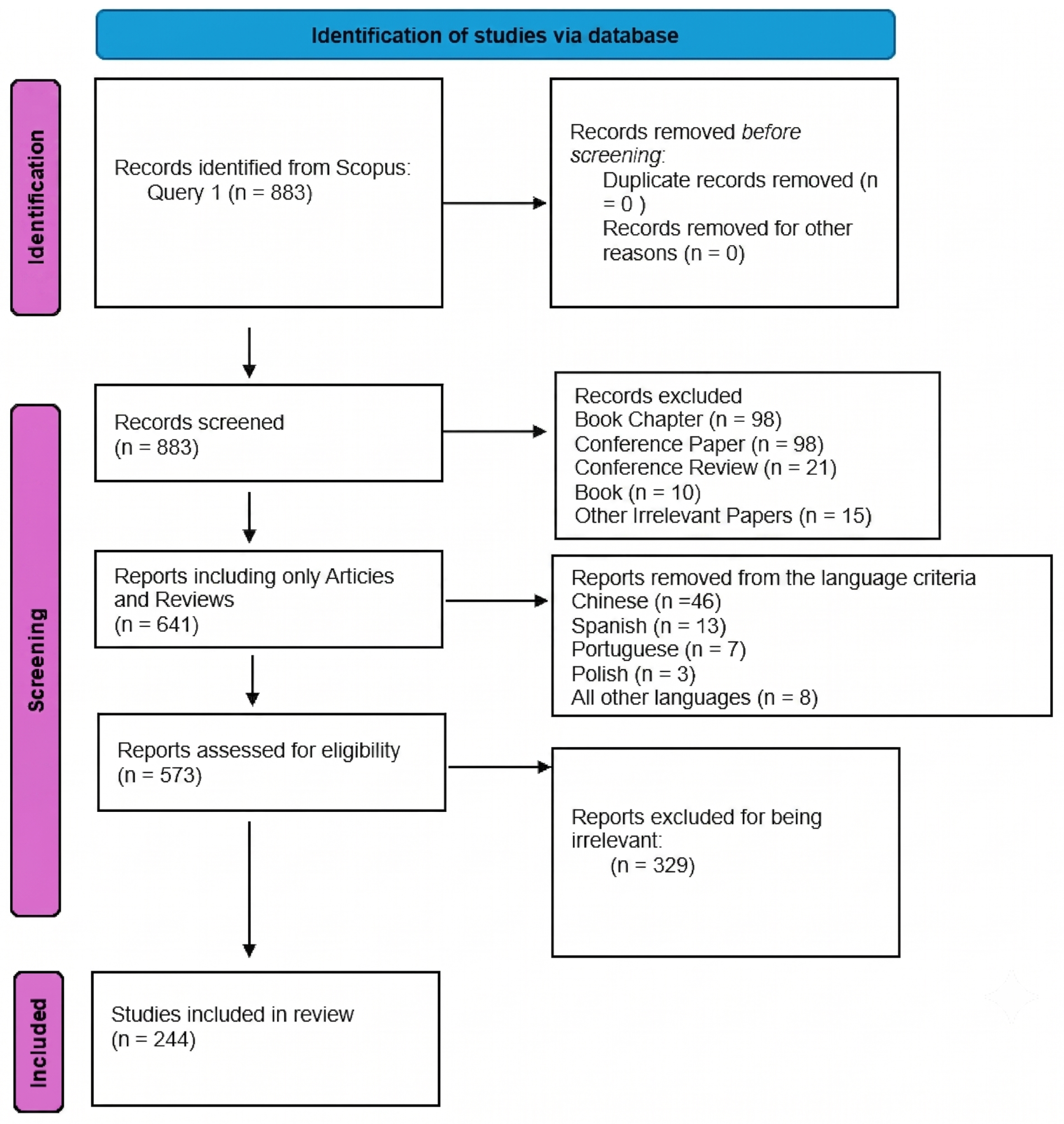
To ensure a rigorous, transparent, and replicable research process, we employed a systematic bibliometric review integrating quantitative science mapping techniques with qualitative interpretation of the identified thematic clusters (Aria & Cuccurullo, 2017; Donthu et al., 2021). The article selection process followed the Preferred Reporting Items for Systematic Reviews and Meta-Analyses (PRISMA) 2020 framework (Page et al., 2021) to ensure a transparent, replicable, and bias-minimizing identification and screening procedure. This methodology allows for the objective evaluation of large volumes of literature, identifying the evolutionary nuances, key contributors, and structural themes within the intersection of digitalization and agritourism (van Eck & Waltman, 2010; Zupic & Čater, 2015). Data retrieval was conducted exclusively using the Scopus database. Scopus was selected because it is recognized as one of the largest, most comprehensive, and highest-quality abstract and citation databases for peer-reviewed literature. While utilizing multiple databases can broaden a search, Scopus is particularly well-suited for this specific interdisciplinary research domain, the nexus of tourism, agricultural economics, and information technology, because it provides broader coverage of the social sciences and technology than Web of Science, alongside highly structured metadata essential for robust bibliometric mapping. The conceptualization of this research and the data extraction took place in February 2026. The search query was designed to capture the intersection of rural/agricultural tourism and digital transformation. A combination of Boolean operators (AND, OR) was used to search within article titles, abstracts, and keywords [(TITLE-ABS-KEY ((“agritourism” OR “agri-tourism” OR “agro-tourism” OR “agrotourism” OR “farm tourism” OR “rural tourism” OR “farm holiday” OR “agriturismo”)) AND TITLE-ABS-KEY ((“digital” OR “smart” OR “ICT” OR “internet” OR “online” OR “web*” OR “technology” OR “e-tourism” OR “e-marketing” OR “social media” OR “platform” OR “mobile app*” OR “virtual” OR “artificial intelligence” OR “IoT”))) AND PUBYEAR > 2009 AND PUBYEAR < 2026 AND (LIMIT-TO (SUBJAREA, “SOCI”) OR LIMIT-TO (SUBJAREA, “BUSI”) OR LIMIT-TO (SUBJAREA, “ENVI”) OR LIMIT-TO (SUBJAREA, “AGRI”))]. The timeframe was restricted to documents published between 2010 and 2025 to capture the evolution from basic Web 2.0 adoption to the emergence of Industry 4.0 technologies. The initial search query yielded a total of 883 documents. To ensure the quality and relevance of the dataset, a multi-stage filtering process was applied based on predefined criteria, as illustrated in the PRISMA flow diagram. To maintain high academic rigor, only peer-reviewed journal articles and reviews were included. We excluded book chapters (n = 98), conference papers (n = 98), conference reviews (n = 21), books (n = 10), and other irrelevant document types (Retracted, Editorial and Erratum (n = 15)). This step reduced the dataset to 641 reports. To ensure precise semantic analysis and comprehension during the manual screening phase, the literature was restricted to the English language. Documents published in Chinese (n = 46), Spanish (n = 13), Portuguese (n = 7), Polish (n = 3), and other languages (Russian, Catalan, Serbian, Malay, Japanese, Indonesian and German (n = 8)) were removed, leaving 573 reports. The implications of excluding non-English literature, particularly Chinese publications, are addressed in the limitations section. The remaining 573 reports were subjected to title and abstract screening. During this phase, 329 articles were excluded for being out of scope. The initial title and abstract screening was conducted by the lead author based on strictly predefined inclusion and exclusion criteria. To minimize selection bias, any ambiguities or borderline cases regarding whether a paper fit the scope were discussed and resolved in consultation with the co-authors. A specific exclusion criterion was applied to studies that solely focused on basic, general social media usage without addressing the broader structural, economic, or strategic novelty of digital transformation in rural settings. During the screening phase of the PRISMA procedure, 329 documents were excluded as ‘out of scope’. A detailed manual review of titles and abstracts revealed that these documents were initially captured by the search string due to overlapping terminology but failed to meet the strict inclusion criteria for this study. The manual exclusions were based on three primary reasons: (1) Lack of Digitalization Focus: Many papers focused on the sociological, ecological, or gastronomic aspects of agritourism but lacked a core focus on ICT, digitalization, or smart technologies (often capturing the word ‘smart’ in non-technological contexts such as ‘climate-smart agriculture’). (2) Lack of Tourism Focus: Several papers focused purely on agricultural production (e.g., crop yields, precision farming) and only mentioned agritourism in passing as a secondary keyword. (3) Superficial Technological Context: A specific exclusion criterion was applied to studies that solely focused on basic, general social media usage without addressing the broader structural, economic, or strategic novelty of digital transformation in rural settings. This criterion was carefully applied to exclude studies where social media was mentioned only incidentally (e.g., passing references to tourists using Facebook) without analyzing it as a technological tool. Foundational research evaluating early e-marketing, website adoption, and intentional social media strategies was strictly retained. Following this rigorous filtering process, a final dataset of 244 documents was identified, downloaded in CSV format (including citation information, bibliographical details, abstracts, and keywords), and retained for bibliometric analysis. To ensure transparency and reproducibility, the complete list of the 244 documents included in the final qualitative synthesis and bibliometric analysis is provided as a .csv file in the Supplementary Materials. The extracted dataset was analyzed using both performance analysis and science mapping techniques. We evaluated the scientific productivity and impact of the research field, identifying the annual publication growth, the most relevant academic journals, and the most cited authors. We employed science mapping techniques to reveal the intellectual structure and dynamic evolution of the field. Analytical tools, primarily the R-package Bibliometrix (via the Biblioshiny web interface), were utilized to generate visual representations of the data. Specific techniques included keyword co-occurrence networking to identify sub-disciplinary clusters, Sankey diagrams to trace thematic evolution over time, and thematic mapping (centrality vs. density) to classify topics into motor, basic, niche, and emerging/declining themes. Finally, a country collaboration network was visualized to map the geopolitical distribution of digital agritourism research.
We followed the PRISMA guidelines and the criteria for paper selection (Figure 1).
The detailed protocol for this systematic bibliometric review was registered retrospectively in the Open Science Framework (OSF) registry (registration link: https://doi.org/10.17605/OSF.IO/PMR9H). Furthermore, this study was conducted in strict adherence to the PRISMA 2020 guidelines, and the completed checklist is provided in the Supplementary Materials.

3. Results

In this section, a comprehensive and in-depth analysis of the bibliometric data gathered from the literature on the digitalization of agritourism is provided. The results are systematically grouped under three major domains: Performance Results, which define the evolutionary path of scientific production by year and pinpoint the most productive and influential sources and authors; Scientific Mapping Results, which involve the use of advanced bibliometric visualizations, including word clouds, keyword co-occurrence network visualizations, thematic evolution visualizations and trend topic timelines, to pinpoint the most crucial areas of scientific inquiry and provide a qualitative synthesis of the underlying literature; and Analysis of Country Collaboration, which pinpoints the geopolitical distribution of scientific research and collaboration in this scientific domain.

3.1. Performance Results

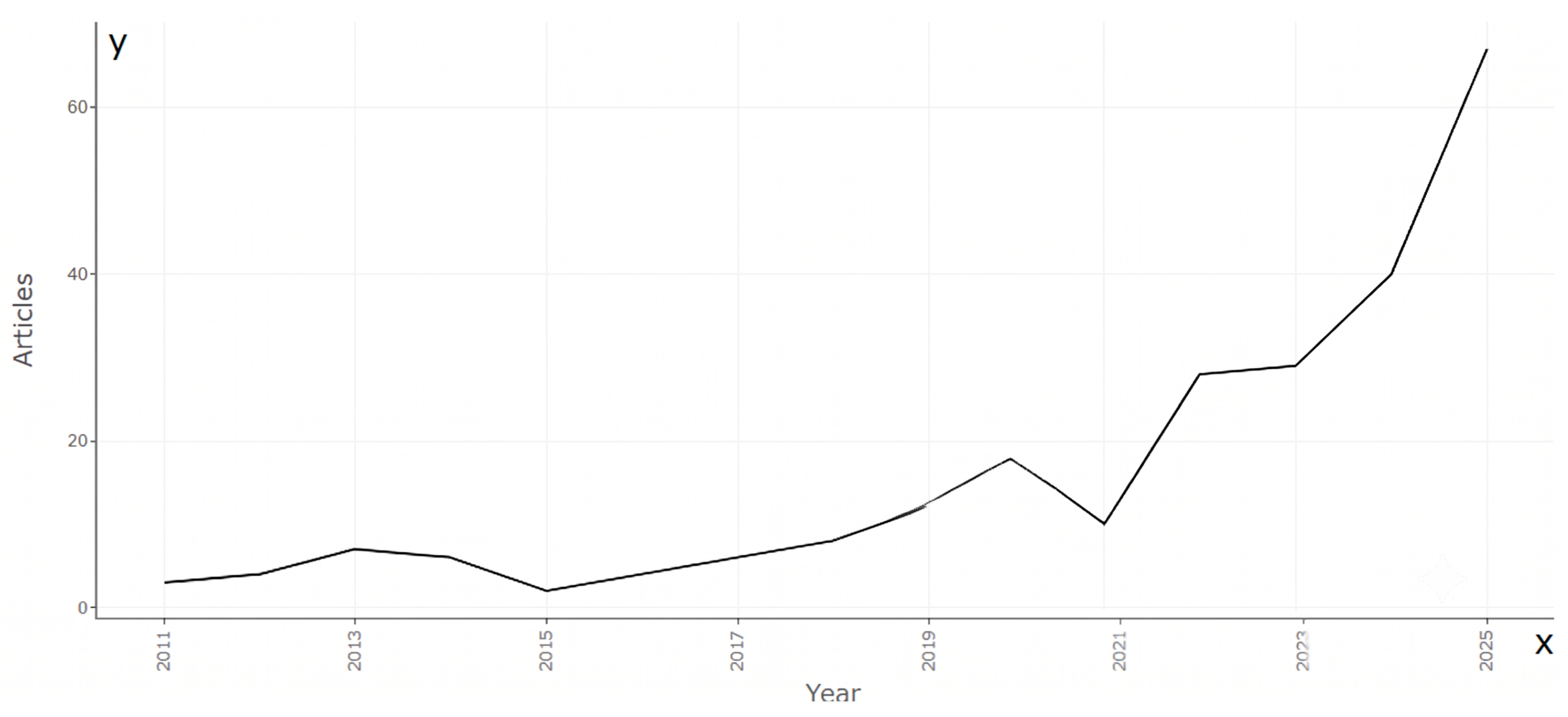
The pattern of annual scientific production (Figure 2) represents a basic reference point for understanding the evolutionary lifecycle of a scientific domain of research. The analysis of publication trends from 2011 to 2025 points to a profound shift in the interest of scholars for the theme of integrating digital technologies into agritourism and rural hospitality.

3.1.1. Annual Scientific Production

The publication trends may be distinctly characterized into three periods: the First Period (2011–2017), the Second Period (2018–2022), and the Third Period (2023–2025). During the First Period (2011–2017), the annual scientific production remained relatively stagnant as indicated by a single-digit count of publications: three publications in 2011, four publications in 2012, seven publications in 2013, six publications in 2014, two publications in 2015, four publications in 2016, and six publications in 2017. During this period, the theme of agritourism was researched from a conventional sociological and economic perspective, and the theme of digitalization was perceived as a complementary tool, mostly restricted to basic website programming and early social media uptake. The publications of this period reflect a sector that has remained relatively slow in adopting Information and Communication Technologies (ICT) compared to the mainstream urban tourism industry. The Second Period (2018–2022) is a critical inflection point. Publications started to emerge steadily, with 8 publications in 2018 and 12 publications in 2019, reflecting the penetration of Web 2.0 technologies, mobile applications, and the emergence of a new ‘smart tourism’ model. However, the most dramatic catalyst for publications was felt in 2020 (18 publications), 2021 (10 publications), and 2022 (28 publications). It is important to point out that this dramatic emergence of publications is highly associated with the start and immediate aftermath of the global COVID-19 pandemic. As a severe external shock, the pandemic coincided with a powerful acceleration in the need for rural enterprises to undergo a digital transformation. The publication data suggest that the prolonged lockdowns may have accelerated digital adoption pressures on rural enterprises. The academic community’s response documented through the sharp rise in publications appears to reflect an urgent scholarly interest in theorizing and analyzing digital coping mechanisms in this period. The Third Period (2023–2025) clearly indicates a dramatic increase in research interest, with 29 articles in 2023, 40 in 2024, and an unprecedented peak of 67 articles in 2025. The exponential rise in research suggests that scholarly framing of digitalization in agritourism has shifted from documenting reactive survival responses toward examining proactive, strategic applications. The sharp increase in research publications in 2024 and 2025 coincides with growing scholarly attention to sophisticated technologies such as Artificial Intelligence (AI), suggesting these developments are closely intertwined in the literature. The research clearly indicates that the digitalization of rural tourism is one of the most rapidly growing sub-disciplines of both tourism management studies and rural geography studies.

3.1.2. Most Relevant Sources

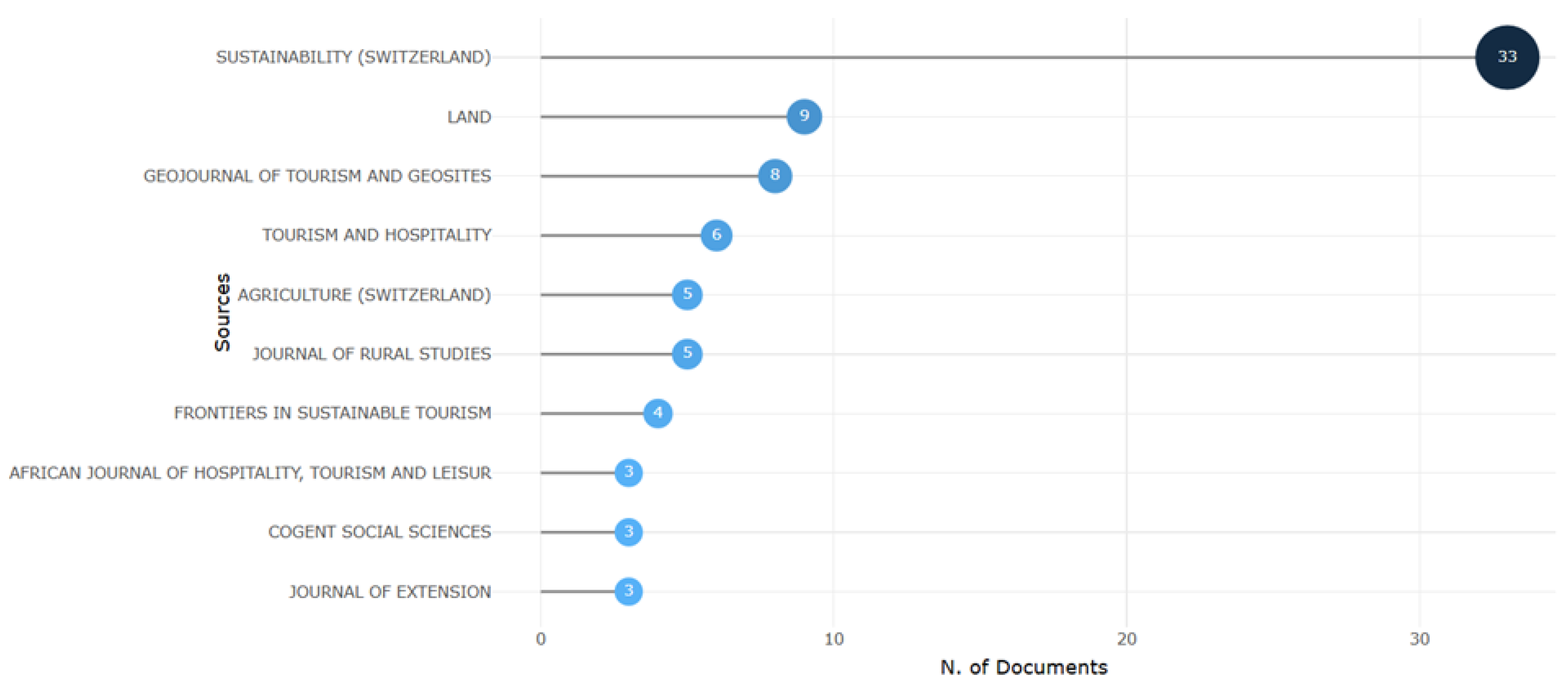
Research is published in a wide range of academic journals, which provide valuable insights into the thought process of the field itself. From the Most Relevant Sources section, it is quite obvious that the topic of digitalized agritourism is an interdisciplinary field of study, bringing together concepts of environmental science, (Figure 3) spatial geography, and hospitality management. The top journal is Sustainability (Switzerland), which has 33 publications. This demonstrates another key concept: the essence of digitalization is sustainable development itself. It appears that researchers see digitalization as a means of maintaining economic viability for small farming units, preserving rural culture, and reducing the negative footprint of tourism itself on the environment (Ciolac et al., 2020; Pérez-Olmos & Aguilar-Rivera, 2021). The next most relevant sources are Land, which has nine publications, and GeoJournal of Tourism and Geosites, which has eight publications. These geography-based publications indicate that spatial geography and spatial planning are critical components of the discussion, as is the use of GIS in the context of digitalization itself (Guo, 2023). The spatial context of rural areas is characterized by a lack of accessibility and a lack of technological infrastructure in the form of the digital divide. Tourism and Hospitality has six publications, Agriculture (Switzerland) has five publications, and Journal of Rural Studies has five publications as well. The presence of Frontiers in Sustainable Tourism and the African Journal of Hospitality, Tourism and Leisure, which have four and three publications, respectively, indicates a global and sector-specific nature of the topic itself. The wide range of publications indicates that it is not possible to discuss the topic of the digitalization of agritourism in a single-dimensional manner, as it is a holistic topic that brings together concepts of agricultural economics, rural sociology, and sustainable tourism management itself.

3.1.3. Most Cited Sources

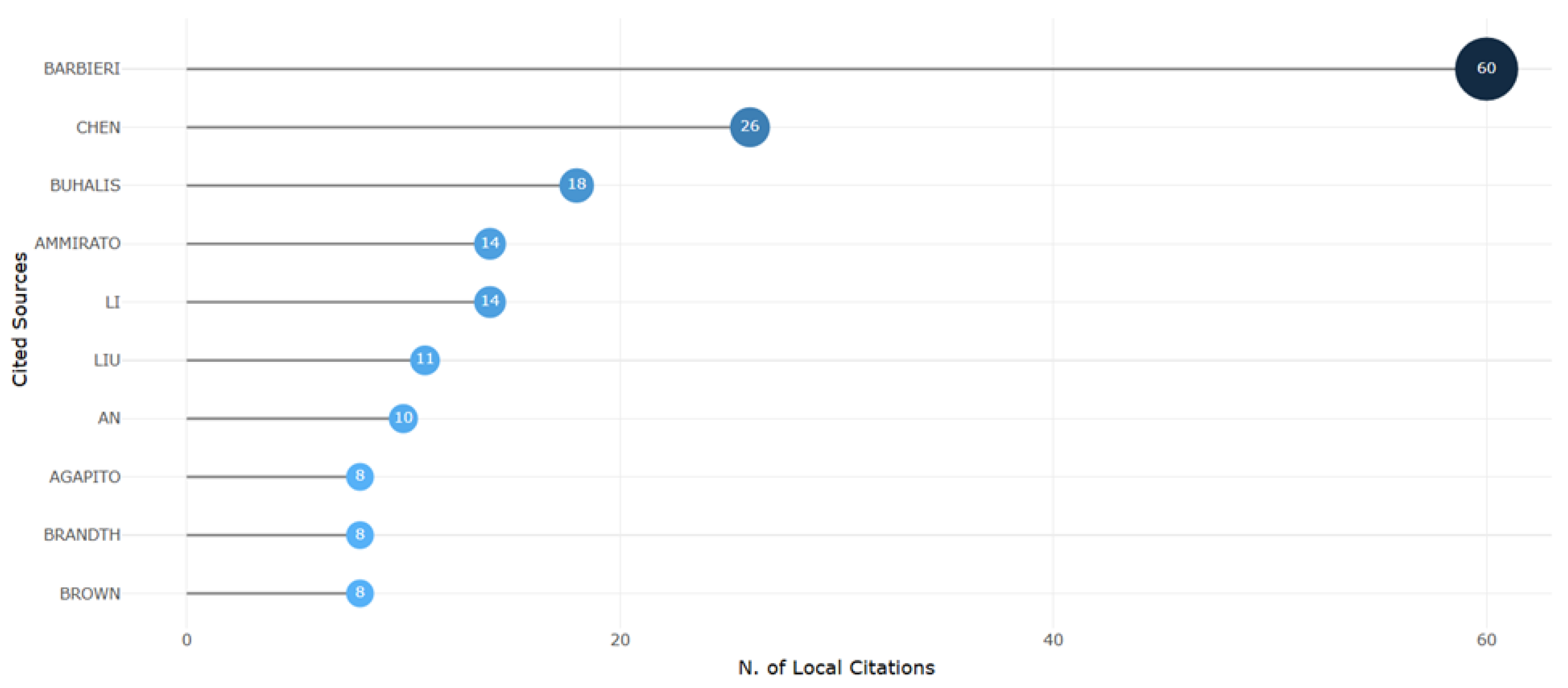
An analysis of the most cited and prominent authors (Figure 4) can help understand the ideas in the field. It appears that the authors include some fundamental rural tourism scholars and some pioneering technology in tourism scholars. Barbieri is the leading author in the dataset with 60 citations. She has done fundamental work in the field, and her work is highly cited, including ideas on the multifunctionality of farming, the diversification of rural businesses, and the economic and social sustainability of family farms. It is evident that the current research on digital agritourism is based on the conventional ideas on the diversification of farms. This is because digitalization is the latest form of the diversification of farms. Chen is the next prominent author in the dataset, with 26 citations, which is likely due to the quality of work done on the modeling of rural tourists, destination images, and the incorporation of e-commerce into agricultural supply chains. Buhalis is the next prominent author in the dataset, with 18 citations, and is at the forefront of technology in the field. He is a leading scholar in e-tourism and smart tourism destinations. Therefore, the high number of citations in the dataset is a reflection of the application of the concept of smart cities and smart tourism in rural and farming communities. Other prominent authors in the dataset include Ammirato (14), Li (14), Liu (11), and An (10). The presence of Agapito (8), Brandth (8), and Brown (8) in the dataset is a reflection of the research focus on the sensory dimension of the tourism experience, gender in rural tourism, and the social and cultural effects of digital marketing, respectively. These authors have contributed to the theoretical base of the current research in the field, including the use of AI, VR, and big data in agritourism.

3.2. Scientific Mapping Results

Advanced scientific mapping techniques were employed in this section. These include word frequency analysis, keyword co-occurrence networking, thematic evolution tracking, and trend topic analysis. To provide a robust understanding of the literature, the visual bibliometric findings are integrated with a qualitative synthesis of the underlying studies.

3.2.1. Word Cloud

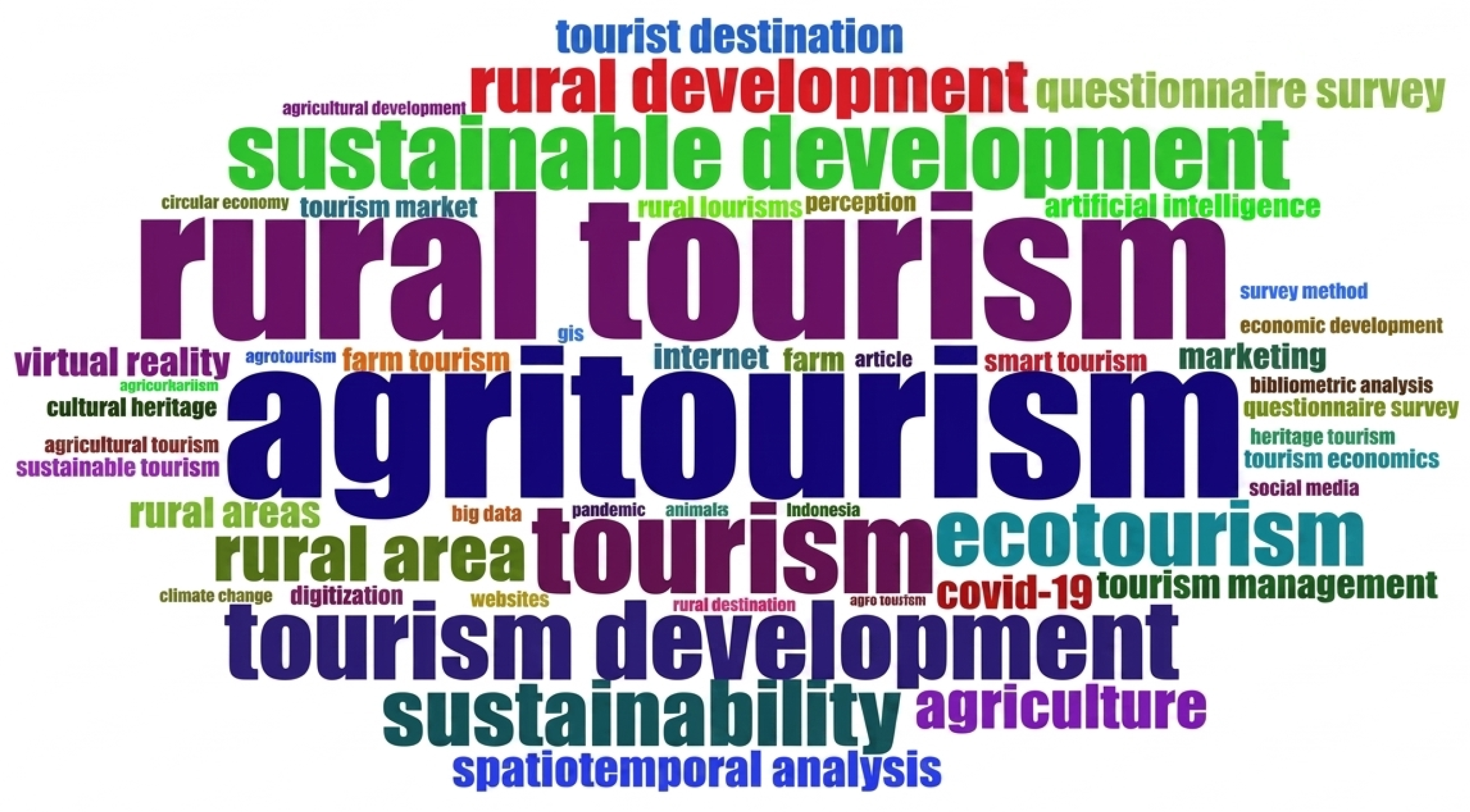
A word cloud and word count (Figure 5) provide a general sense of the vocabulary used in the field. The most frequently used words indicate the overall focus of the research, with ‘agritourism’ (60) and ‘rural tourism’ (58) being the most prominent. The second tier of most frequently used words indicates the overall purpose of the research. The most prominent of these are ‘tourism development’ (31), ‘sustainable development’ (29), ‘ecotourism’ (26), ‘sustainability’ (26), and ‘rural development’ (21), which indicate the overarching theme of helping the environment through rural tourism. It is also important to note that the word count indicates which technologies are being used. ‘Spatiotemporal analysis’ (14) indicates the sophisticated GIS mapping tools being used to track tourists’ movements to best utilize the resources of the countryside. ‘Virtual reality’ (11) indicates the increasing interest in virtual reality technology to create virtual farm tours, market destinations, and preserve heritage sites. ‘Internet’ (10), ‘artificial intelligence’ (9), ‘big data’ (6), and ‘social media’ (6) indicate the tools being used by rural tourism entrepreneurs. Furthermore, the prominent usage of ‘COVID-19’ (13) indicates the lasting impact of the pandemic on the research path, encouraging recent research into the adoption of technology.

3.2.2. Keyword Occurrence Network

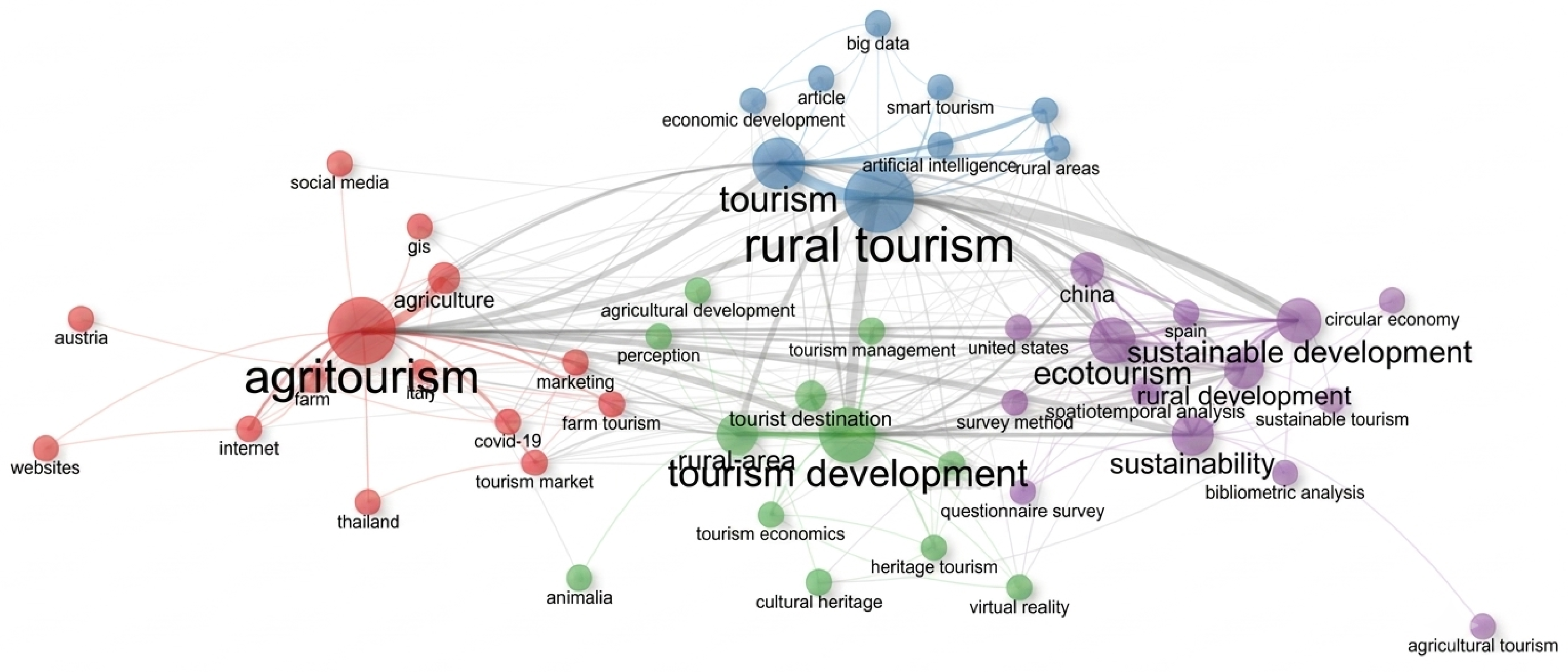
The keyword co-occurrence network graph (Figure 6) provides a structural understanding of how different concepts interact, forming distinct sub-disciplinary clusters. The network reveals four highly cohesive thematic clusters, differentiated by color. By qualitatively examining the articles within these clusters, distinct research themes emerge: Cluster 1 (Red—The Digital Marketing and Connectivity Hub): This cluster, centered on “agritourism” and “agriculture,” has strong connections to “social media,” “internet,” “websites,” and “marketing.” This section of the literature examines the basic level of digitalization in the country, and how farms in rural areas are using Web 2.0 technologies to sell directly to consumers, cutting out the middleman of travel agencies (Cheng & Jiang, 2025; Forleo et al., 2025). The literature within this cluster highlights that the integration of Information and Communication Technology (ICT) has fundamentally reshaped agritourism marketing. For instance, Kavoura and Bitsani argue that e-branding is essential for remote rural areas, suggesting that websites must convey emotional and sensory appeals such as tranquility and culinary authenticity (Kavoura & Bitsani, 2013). However, the digital transition is not without its pitfalls. Król identifies the phenomenon of “abandoned websites,” warning that outdated, non-responsive sites built on obsolete technologies fail to perform marketing functions (Król, 2019). To address digital skill gaps among rural operators, Extension programming has successfully utilized webinars to educate farmers on agritourism business management and social media marketing (Rozier-Rich et al., 2011). Furthermore, understanding customer satisfaction is critical within this marketing hub. Researchers have increasingly turned to online travel reviews to mine consumer sentiments, with studies applying mixed-method approaches to identify that the natural environment and cultural heritage are the most critical attributes influencing tourist satisfaction (Fanelli & Romagnoli, 2020; Gao et al., 2014; Pham, 2025; Wu & Yang, 2023). Cluster 2 (Blue—The Smart Tourism and Advanced Analytics): This cluster is centered on “tourism” and “rural tourism.” It is connected to the larger concepts of “big data,” “artificial intelligence,” “smart tourism,” and “economic development.” This section of the literature examines the cutting-edge concepts of Industry 4.0 in rural areas, and how big data from tourists can be analyzed by machine learning algorithms to help forecast tourist behavior and develop “smart villages” similar to “smart cities.” (Das et al., 2025). The concept of “smart tourism” is expanded by Zhu and Shang, who propose a rural smart tourism system utilizing cloud data centers, 3D GIS engines, and intelligent behavior analysis to enhance marketing precision and tourist convenience (Zhu & Shang, 2021). In developing regions, this digital transformation requires significant community empowerment. Lapuz found that in the Philippines, digital transformation in rural tourism fosters individual, gender, political, and social empowerment, enabling locals, particularly women, to assume decision-making roles (Lapuz, 2023; Lapuz et al., 2024). Similarly, capacity-building programs have been shown to accelerate the adoption of smart tourism technologies (STT) in rural areas, effectively bridging the digital divide (Torabi et al., 2023). Cluster 3 (Green—Immersive Technologies and Heritage Preservation): This cluster connects “tourist destination” and “tourism development” with “virtual reality,” “cultural heritage,” “heritage tourism,” and “perception.” It examines the interface of rural traditions with the latest in visualization technologies. It examines the use of VR and AR in recreating ancient rural landscapes, pre-visiting immersive experiences, and preserving intangible heritage without degrading the original locations due to excess tourism (Fan et al., 2025). The qualitative literature reveals that technology is altering the very nature of rural experiences. Skinner et al. suggest that gamification, such as GPS-based geocaching, can attract Millennials and Generation Z to rural destinations by offering digitally enhanced, interactive treasure-hunting experiences (Chaisriya et al., 2024; Skinner et al., 2018). Taking this concept one step further, Sutherland explores the “desk-chair countryside,” demonstrating how farming computer games mobilize affective responses, allowing players to experience and reshape contemporary imaginaries of the rural idyll virtually (Sutherland, 2020). Cluster 4 (Purple—Macro-level Sustainability and Policy): This cluster centers on broad themes such as “sustainable development,” “sustainability,” “ecotourism,” and “circular economy,” as well as country-related terms such as “China” and “Spain.” It expands from the micro-level of the farm to the macro-level of governance and policy. It examines the support of digital technologies in the circular economy, such as reducing waste and using energy efficiently, as well as large-scale rural revitalization efforts (Ingrassia et al., 2023). Agritourism is widely recognized for its contribution to sustainable rural development through the promotion of farm multifunctionality (Barbieri, 2013). Studies within this cluster demonstrate that sustainable business performance and rural economic conditions are the primary drivers of environmental sustainability (Tseng et al., 2019). Furthermore, Yang et al. illustrate how rural revitalization strategies and touristification have driven morphological and social evolution in rural communities (Yang et al., 2021). To systematically measure these multifaceted impacts, researchers have proposed KPI frameworks that align smart rural mobility and tourism with the United Nations Sustainable Development Goals (SDGs) (Hussain et al., 2023).

3.2.3. Thematic Evolution

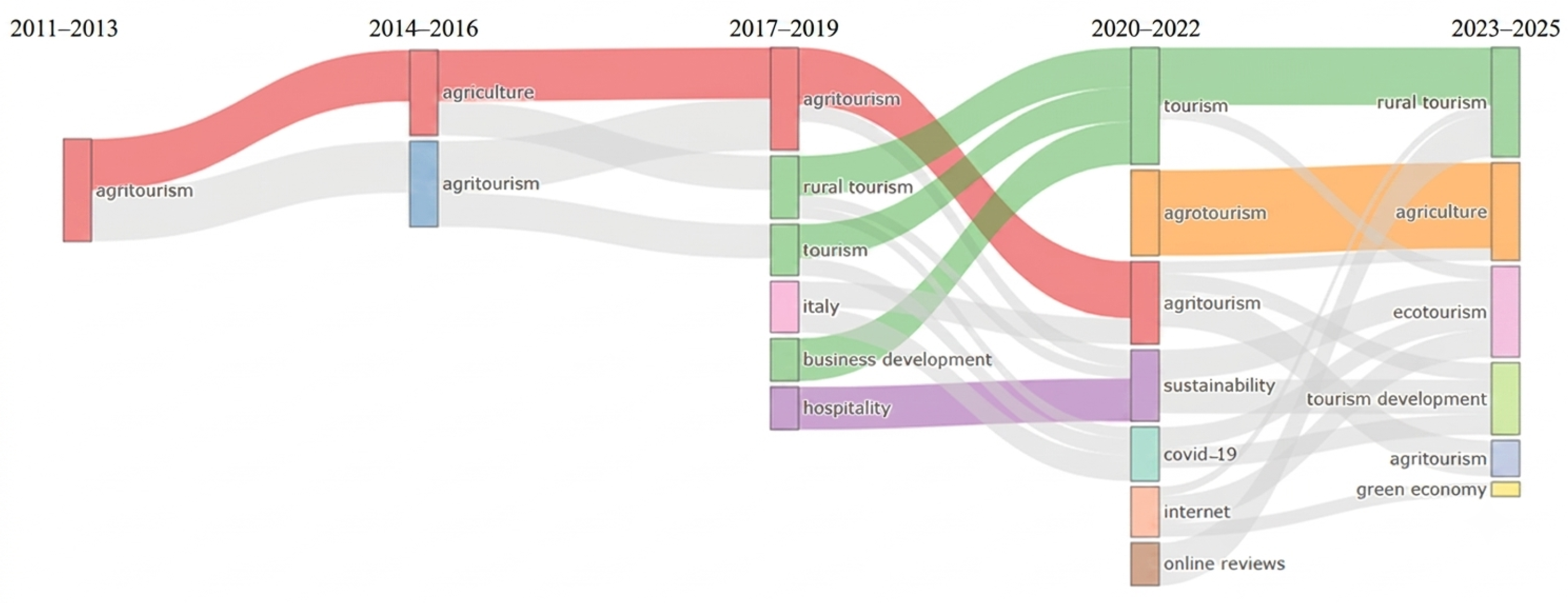
The thematic evolution, visualized through a Sankey diagram (Figure 7), traces the chronological flow and morphing of research themes across five distinct time slices. In the initial periods (2011–2013 and 2014–2016), the research streams were highly consolidated and monolithic, focusing almost exclusively on ‘agritourism’ and ‘agriculture.’ The discourse was largely confined to defining the sector and establishing its basic parameters as a farm diversification strategy. During the 2017–2019 period, the streams began to bifurcate and expand. ‘Agritourism’ and ‘rural tourism’ remained central, but new distinct streams emerged, including ‘business development,’ ‘hospitality,’ and ‘Italy.’ This indicates a shift from viewing agritourism purely as an agricultural side-project to treating it as a formalized sector within the broader hospitality and business management disciplines. The 2020–2022 time slice reveals massive disruption and thematic splitting. The prominent emergence of ‘COVID-19’ as a keyword is associated with a marked redirection in research themes. We see the sudden, thick emergence of ‘internet,’ ‘online reviews,’ and ‘sustainability’ branching off from the main trunks. The bibliometric record suggests the pandemic was strongly associated with a reorientation of the literature toward digital survival strategies, e-reputation management, and destination resilience. Finally, in the 2023–2025 period, the thematic streams reconverge into highly mature, sophisticated categories. The raw technological terms merge into broader, outcome-oriented themes like ‘tourism development,’ ‘ecotourism,’ and the ‘green economy.’ This evolutionary flow demonstrates that digitalization is no longer studied as an isolated novelty; it has been fully absorbed into the core methodologies of achieving sustainable rural tourism development.

3.2.4. Thematic Map

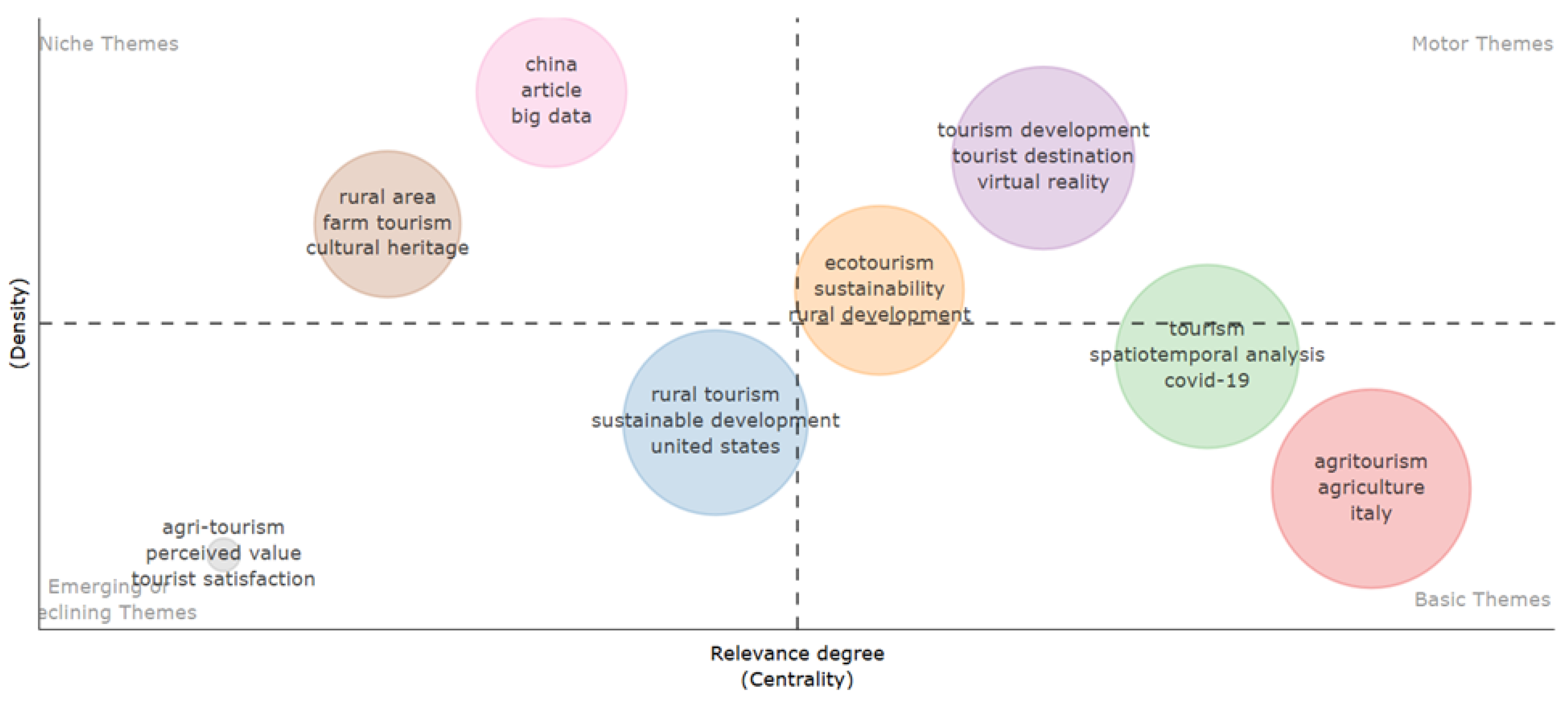
A thematic map (Figure 8) has been created in order to depict the themes in the area of the conducted research and their level of maturity. This bibliometric tool positions themes in a space where Centrality (X-axis) indicates the level of importance of a theme in the whole field, and Density (Y-axis) points to the level of development of a theme inside itself. The crossing point of these axes has four quadrants: Motor Themes, Basic Themes, Niche Themes, and Emerging or Declining Themes. Motor themes are characterized by high centrality and high density, indicating they are both highly relevant and well-developed, effectively driving the research field forward. The prominent cluster in this quadrant consists of ‘tourism development,’ ‘tourist destination,’ and ‘virtual reality.’ This validates earlier findings that the integration of immersive technologies (VR) into destination development is not merely a fringe concept, but a core, highly structured engine of current academic inquiry in rural tourism. Basic themes possess high centrality but lower density. They represent foundational, cross-cutting concepts that are highly important to the discipline but remain broad and continuously evolving. A massive cluster here includes the core terms ‘agritourism,’ ‘agriculture,’ and ‘Italy,’ cementing the Mediterranean model of farm diversification as the theoretical baseline of the field. A second major cluster features ‘tourism,’ ‘spatiotemporal analysis,’ and ‘COVID-19.’ This indicates that the pandemic, alongside the geographical tracking of tourists (spatiotemporal analysis), constitutes fundamental contextual frameworks upon which other research is built. Additionally, a central cluster straddling the basic and motor quadrants highlights ‘ecotourism,’ ‘sustainability,’ and ‘rural development,’ reinforcing that ecological and economic sustainability remain the persistent, underlying goals of digital agritourism. Niche themes exhibit high density but low centrality, representing highly specialized, internally cohesive, yet somewhat isolated areas of research. A notable cluster here pairs ‘China’ with ‘big data’ and ‘article.’ This perfectly aligns with the country collaboration analysis, demonstrating that Chinese academia has cultivated a highly advanced, specialized niche in applying macro-level big data analytics to rural tourism, though it remains somewhat distinct from the broader global discourse. Another niche cluster focuses on ‘rural area,’ ‘farm tourism,’ and ‘cultural heritage,’ representing traditional, highly developed qualitative studies on heritage preservation (Picuno et al., 2017). Emerging or Declining themes have both low centrality and low density, indicating marginality. The cluster containing ‘agri-tourism’ (hyphenated), ‘perceived value,’ and ‘tourist satisfaction’ suggests that traditional consumer psychology metrics (like perceived value) are either emerging in the context of digital agritourism (Nguyen & Nguyen, 2025) or are being overshadowed by broader technological and sustainability frameworks. Similarly, a cluster featuring ‘rural tourism,’ ‘sustainable development,’ and ‘United States’ sits on the border of this quadrant, suggesting a transition in how these traditional concepts are being applied in North American contexts compared to the heavily digitized Asian and European models.

3.2.5. Trend Topics

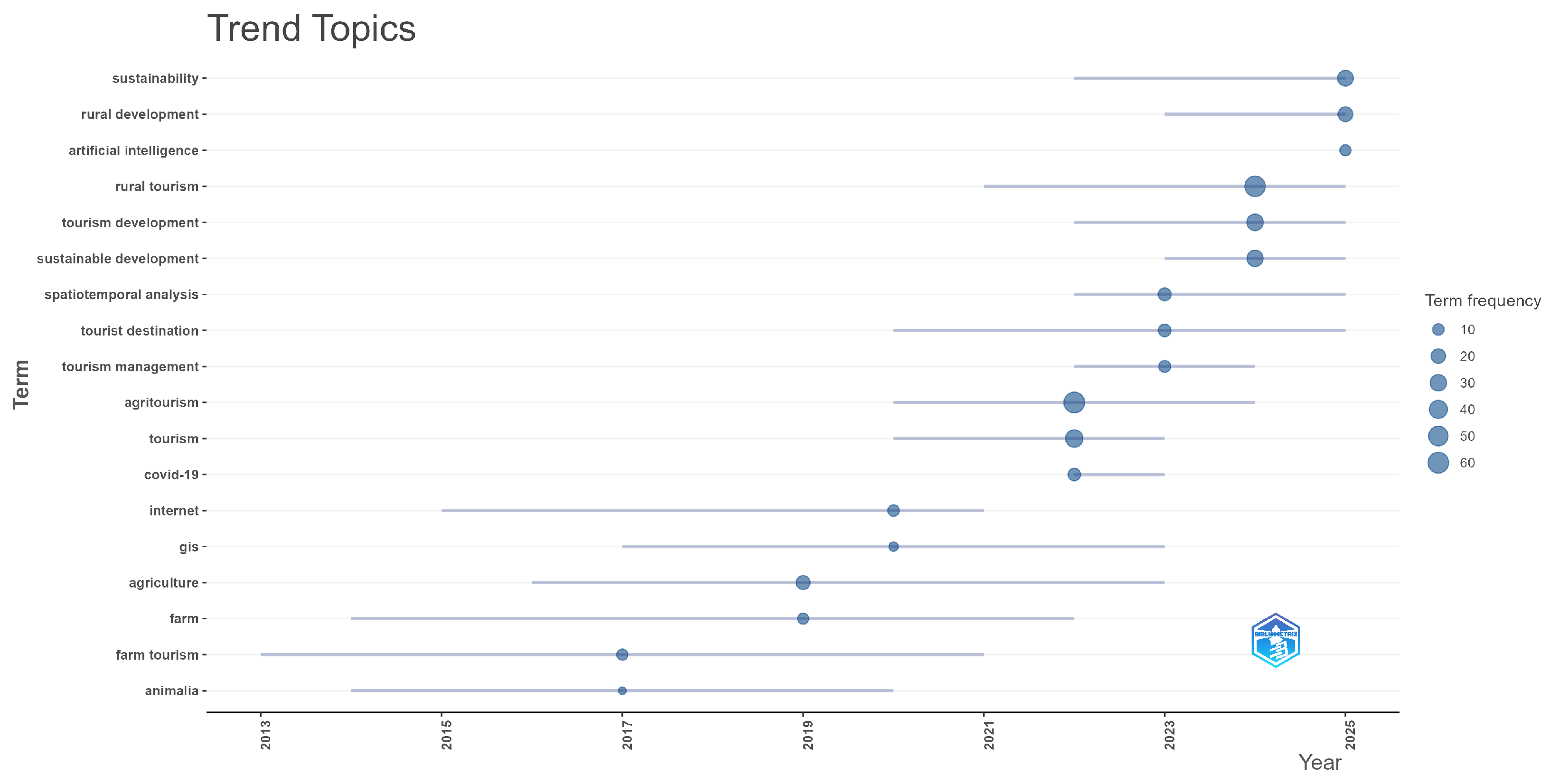
The timeline graph of trend topics (Figure 9) provides a view of when specific keywords peaked in academic focus, illustrating the exact velocity of technological integration in the field. The timeline begins with early, traditional topics. ‘Farm tourism’ (spanning 2013–2021) and ‘animalia’ (2014–2020) peaked in 2017. These represent the pre-digital focus on the physical, agrarian elements of the tourist experience. As we move into the transitional phase, ‘agriculture’ peaks in 2019, alongside ’farm.’ Concurrently, foundational digital terms begin to crest: ‘internet’ spans 2015–2021 but peaks exactly in 2020, aligning perfectly with the sudden reliance on web connectivity during the initial COVID-19 lockdowns. ‘GIS’ (Geographic Information System) also peaks in 2020, reflecting a growing need to digitally map rural resources. The disruptive phase is clearly marked by the ‘COVID-19’ topic, which appears sharply between 2022 and 2023, peaking in 2022. This represents the peak of retrospective analyses regarding pandemic impacts and digital resilience strategies. As noted in the literature, farms demonstrated remarkable resilience during this period by diversifying economic activities, adopting digital technologies like virtual tourism, and adapting human resources (Chin & Musa, 2021). During this same window, general terms like ‘agritourism’ and ‘tourism’ hit their highest frequency peaks (2022), reflecting the overall explosion in publication volume. The current frontier (2023–2025) is defined by highly advanced, analytical, and macro-strategic terms. ‘Spatiotemporal analysis’ peaks in 2023, indicating a shift towards complex, big-data-driven geographical tracking. ‘Tourist destination’ and ‘tourism management’ also peak in 2023. By 2024, the focus shifts heavily to outcomes, with ‘rural tourism,’ ‘tourism development,’ and ‘sustainable development’ hitting their medians. Most critically, the timeline concludes with ’sustainability’ and ’rural development’ peaking in 2025. Furthermore, ‘artificial intelligence’ appears as a sharp, isolated point on the timeline, emerging and peaking exclusively in 2025. This pattern suggests that AI, including machine learning, predictive analytics, and generative models, represents a rapidly emerging area of scholarly interest in agritourism, though its trajectory remains nascent and warrants cautious interpretation.

3.3. Analysis of Country Collaboration

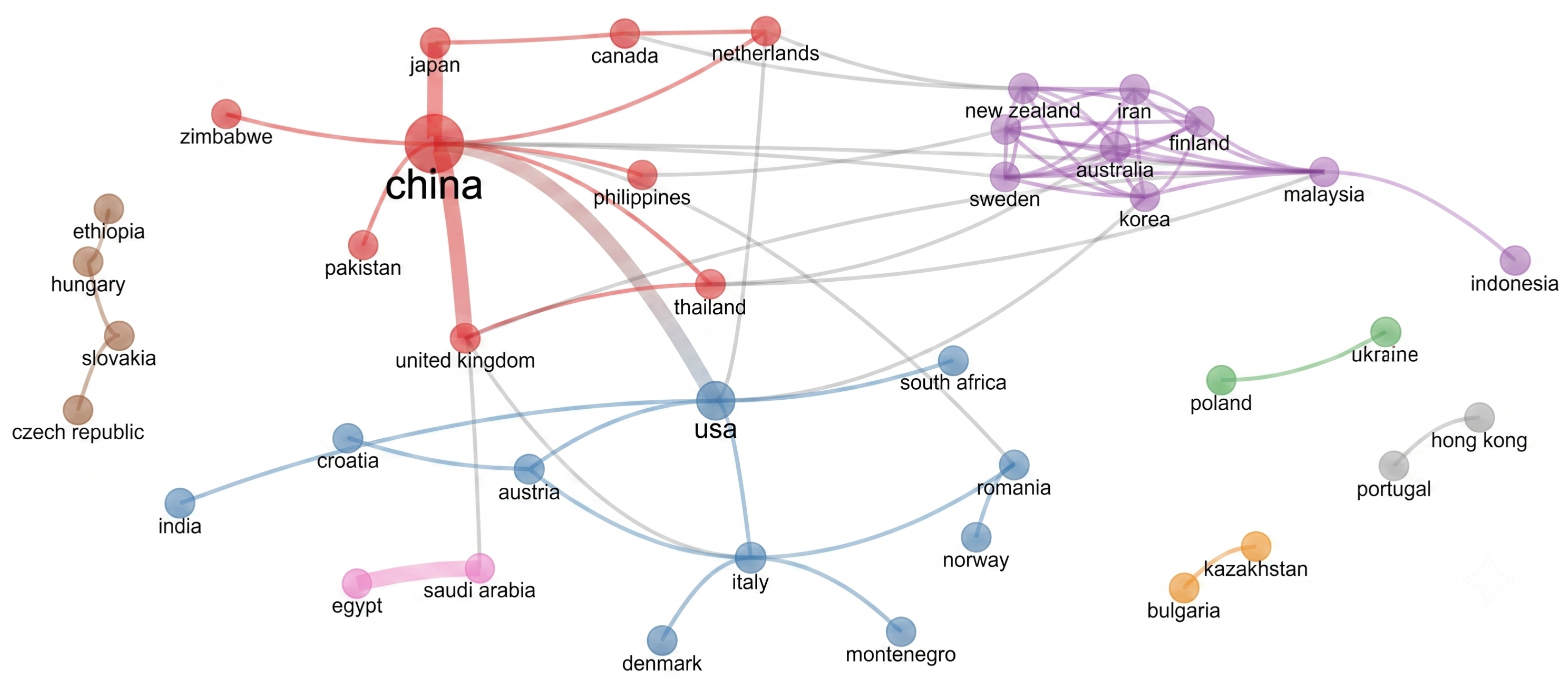
The Country Collaboration network graph (Figure 10) visualizes the international partnerships driving research in digital agritourism. The network is characterized by a high degree of globalization, yet it is structured around distinct, regionalized hubs of influence. The graph reveals three primary collaborative ecosystems: the Asian-Centric Hub, the Western/Transatlantic Hub, and the Asia–Pacific/Nordic Bridge. The Asian-Centric Hub, represented by the massive red nodes and thick connecting edges, is unequivocally dominated by China. China stands as the absolute center of gravity in this research domain, exhibiting both the highest volume of domestic output and the most extensive international collaboration network. China’s central node shares thick, high-frequency collaboration lines with Japan, the United Kingdom, Thailand, and Pakistan, alongside connections to Canada, the Netherlands, and the Philippines. The sheer magnitude of China’s presence in the network is a direct reflection of aggressive, state-sponsored macroeconomic policies. Initiatives such as the ‘Rural Revitalization Strategy’ and ‘Digital China’ have pumped massive funding into modernizing the rural economy. Consequently, Chinese academia serves as the primary laboratory for testing advanced digital integrations from AI and big data to IoT sensor networks in rural tourism settings, exporting this knowledge globally through extensive co-authorships. The Western/Transatlantic Hub, denoted by the blue network, is anchored by the United States and Italy. The USA acts as a highly connective node, bridging research efforts with South Africa, Romania, Norway, Denmark, Montenegro, Croatia, and Austria. Italy’s prominence within this blue network is particularly noteworthy. Italy possesses a historically entrenched and legally formalized agritourism sector (‘agriturismo’). The strong collaboration between Italy, the USA, and various European nations reflects a concerted academic effort to digitize traditional, heritage-rich European farming models. Research in this hub frequently focuses on e-reputation (TripAdvisor reviews), digital marketing, and the use of technology to preserve the ‘authentic’ rural idyll while remaining commercially competitive in a globalized market Capriello et al. (2013). The Asia–Pacific/Nordic Bridge, represented by the purple nodes, highlights a unique, cross-continental collaborative cluster. Malaysia serves as the primary anchor for this group, maintaining strong ties with Australia, New Zealand, South Korea, Sweden, Finland, and Iran. This cluster often focuses on community-based tourism (CBT), smart rural development, and overcoming the digital divide in developing or geographically dispersed regions (Djuwendah et al., 2023). The collaboration between Southeast Asian nations and highly digitized Nordic countries (Sweden, Finland) suggests a knowledge transfer dynamic, where advanced European digital frameworks are adapted to tropical, community-run agritourism ecosystems. Finally, the network reveals several smaller, isolated micro-clusters. Green nodes connect Poland and Ukraine, reflecting localized Eastern European research on post-socialist rural transition and digital adoption. Orange nodes link Bulgaria and Kazakhstan, while brown nodes group the Czech Republic, Slovakia, Hungary, and Ethiopia. These smaller clusters indicate that while there are massive global hubs driving the cutting edge of AI and big data, there remains a vital tier of localized research focusing on the foundational digital transition of rural economies in developing and transitional states.

4. Discussion

This bibliometric analysis mapped the intellectual structure, evolutionary trajectory, and thematic concentrations of research at the intersection of digitalization and agritourism from 2010 to 2025. The findings reveal a field that has undergone a profound transformation, evolving from a niche sub-topic of rural sociology into a dynamic, technology-driven discipline. Critically, the bibliometric patterns identified are not merely artifacts of publication behavior; they reflect deeper structural, economic, and geopolitical forces that shaped both the demand for digital transformation in agritourism and the academic communities that responded to it.

4.1. The Evolutionary Drivers of Digital Agritourism

The three-phase publication trajectory is not simply a reflection of rising scholarly interest; it mirrors the structural conditions that govern ICT adoption in rural enterprises. The stagnation of the First Period (2011–2017) reflects the dual-burden model of agritourism: micro-entrepreneurs simultaneously managing agricultural production and hospitality services have limited bandwidth for technological experimentation, and rural broadband deficits further constrained adoption (Torabi et al., 2023). Publication growth was sparse because there was little industry-side digitalization to study. The inflection of the Second Period (2018–2022) had already begun before COVID-19, driven by the normalization of smartphone platforms and review ecosystems as commercial tools for small rural businesses. The pandemic appears to have functioned as a temporal compressor in the bibliometric record—the publication surge between 2020 and 2022 is consistent with a scenario in which the simultaneous disruption of traditional agritourism revenue channels and the urgent policy interest in documenting digital resilience strategies converged to accelerate scholarly output. Whether this reflects actual operator adoption or primarily reactive documentation remains a question for primary research. The exponential Third Period (2023–2025) reflects a further mechanism: institutional legitimization. The bibliometric evidence is consistent with a scenario in which institutionalization of digitalization research through government bodies, EU rural development programs, and national science councils has made the methodologically sophisticated work on AI and spatiotemporal analytics now visible at the frontier of the field, though the funding mechanisms themselves lie beyond the scope of this analysis.

4.2. The Unique Context of Agritourism vs. Mainstream Tourism

While the thematic map confirms that digitalization now occupies a central, motor-theme position in agritourism research, the bibliometric evidence signals that this transition is structurally more complex in agritourism than in mainstream tourism. Three interlocking features explain this. First, the dual-burden entrepreneurial model means that digital adoption is constrained not primarily by cost or awareness, but by cognitive and temporal bandwidth—a constraint absent from corporate hotel chains with dedicated IT departments. The appearance of “extension programming” and “webinars” as significant nodes in Cluster 1 (Digital Marketing) reflects this: agricultural extension services play an irreplaceable knowledge-intermediary role that has no equivalent in mainstream hospitality (Rozier-Rich et al., 2011). Second, the product that agritourism must digitize is fundamentally intangible: concepts such as “authenticity,” “rural tranquility,” and “heritage” resist digital representation in ways that an airline seat or hotel room does not. The prominence of VR and AR in Cluster 3 (Immersive Technologies) reflects the first credible technological pathway for conveying multisensory rural experiences to urban consumers, a qualitatively different challenge from transactional hospitality booking. Third, the persistent structural constraint of the rural broadband "digital divide" means that agritourism digitalization is as much a problem of social equity and rural geography as it is of technology, distinguishing it fundamentally from urban hospitality digitalization (Torabi et al., 2023).

4.3. Geopolitical Divergence in Digital Strategies

The bifurcated country collaboration network reflects not only differential academic interest in digitalization, but fundamentally different political economies of rural development. The dominance of China in the Asian-centric hub is explained by state-orchestrated transformation: initiatives such as the “Rural Revitalization Strategy” and “Digital China” created a massive funded research ecosystem oriented toward macro-level policy evaluation and technology infrastructure assessment (Yang et al., 2021; Zhu & Shang, 2021), producing the niche cluster of “China,” “big data,” and “smart village” visible in the thematic map. Under this model, digitalization is deployed by the state as a tool for poverty alleviation and the modernization of rural economies (Yang et al., 2021), and Chinese scholars study its systemic outcomes because that is what exists in their research environment to study. Conversely, the Western hub anchored by the USA and Italy reflects a bottom-up, market-driven model in which individual operators self-digitize in response to competitive pressure and declining agricultural incomes (Barbieri, 2013; Fanelli & Romagnoli, 2020). Research in this hub is consequently concentrated on e-reputation management via online review platforms, TripAdvisor analytics, and extension-mediated social media adoption (Fanelli & Romagnoli, 2020; Kavoura & Bitsani, 2013; Rozier-Rich et al., 2011). Research within these hubs is therefore not examining the same phenomenon under different conditions; rather, it is examining structurally different models of rural digital transformation that happen to share terminology. This conceptual divergence explains the thin cross-cluster collaboration edges in the network and underscores the need for integrative theoretical frameworks that account for the role of the state in mediating digitalization outcomes—a comparison that remains an explicit gap in the current literature (Gajic et al., 2025).

4.4. The Convergence of Sustainability and Digitalization

The deep structural overlap between sustainability and digitalization across all bibliometric dimensions is not coincidental; three mechanisms produce it. First, the ecological fragility of rural agritourism destinations unlike engineered urban tourism infrastructure creates a genuine operational demand for digital management tools such as GIS-based spatiotemporal visitor flow monitoring, which would not exist at the same urgency in mainstream hospitality (Yu et al., 2018). The peak of “spatiotemporal analysis” as a trend topic in 2023 reflects this: overtourism in fragile rural ecosystems made such tools existentially necessary, not merely fashionable (Zainol & Roslan, 2025). Second, the multifunctional nature of the agritourism enterprise as a simultaneous agricultural producer, hospitality provider, environmental steward, and cultural heritage custodian means that digital tools serve economic, ecological, and cultural objectives in an integrated rather than merely complementary way. Circular economy platforms and precision agriculture sensors serve the farm production and tourism functions simultaneously, which is structurally impossible in a conventional hotel (Phan, 2024). Third, the EU rural development policy architecture mandates sustainability compliance as a condition for CAP funding, creating a regulatory linkage between digital adoption and sustainability reporting that channels research toward KPI frameworks and SDG alignment evidenced by the policy-vocabulary prominence of Cluster 4. Future research must engage with these three mechanisms explicitly rather than treating sustainability as a generic modifier applied to digital tools.

5. Conclusions

This study conducted a comprehensive systematic bibliometric analysis to map the intellectual structure, thematic evolution, and collaborative networks characterizing the digitalization of agritourism between 2010 and 2025. The findings illuminate a profound paradigm shift within the discipline: what began as a slow, fragmented adoption of basic Web 2.0 marketing tools has rapidly matured into a sophisticated, technology-driven field of study anchored in the principles of Industry 4.0. The evidence strongly associates the COVID-19 pandemic with this transformation. This period is associated in the bibliometric record with a pivot in scholarly framing from documenting reactive survival tactics toward examining proactive digital strategies and with sustained research attention to technologies such as e-commerce, big data analytics, and virtual reality. Furthermore, our analysis of trend topics suggests that the scholarly frontier of agritourism research is currently defined by Artificial Intelligence (AI) and spatiotemporal analysis, with the literature increasingly engaging with the ‘smart destination’ discourse previously concentrated in urban tourism. Conceptually, this review demonstrates that the digitalization of agritourism rests on four interconnected pillars: digital marketing and connectivity, smart tourism and advanced analytics, immersive technologies for heritage preservation, and macro-level sustainability policies. Geopolitically, the research is driven by two distinct collaborative hubs: an Asian-centric network led by China, focusing on top-down, state-sponsored smart village infrastructure, and a Western network anchored by the United States and Italy, emphasizing bottom-up, entrepreneurial diversification and e-reputation management. From a practical standpoint, this study underscores that a passive digital presence is no longer viable for rural entrepreneurs. Success in the modern agritourism market requires active, data-driven engagement and the adoption of immersive and interactive tools. However, as the literature repeatedly highlights, the persistent “digital divide” poses a significant threat to equitable rural development. Policymakers and Destination Management Organizations (DMOs) must prioritize human capital development through capacity building, digital literacy programs, and targeted funding to ensure that smallholder farmers and marginalized groups are not left behind in this digital transition. Ultimately, the digitalization of agritourism is not about replacing the authentic rural experience with technology, but rather using technology as a strategic enabler to enhance it. By guiding future research toward the ethical applications of AI and the integration of digital tools within the circular economy, this study provides a foundational roadmap. Balancing technological innovation with ecological sustainability and cultural preservation will be the defining challenge and the greatest opportunity for the future of global agritourism.

6. Limitations

While this study provides a comprehensive overview of the digital agritourism landscape, several methodological limitations must be acknowledged. First, data retrieval was restricted exclusively to the Scopus database. Although Scopus offers extensive coverage of interdisciplinary social sciences and technology, relying on a single database may exclude relevant studies indexed only in Web of Science, Google Scholar, or regional databases. Second, there is an inherent degree of subjectivity in the selection of the search query keywords and the manual screening process. Specifically, the exclusion of studies focusing solely on “basic social media usage” required qualitative judgment, though this was mitigated through strict adherence to predefined inclusion criteria. Third, the decision to restrict the dataset to English-language publications resulted in the exclusion of 77 documents, including 46 published in Chinese. This presents a notable limitation, particularly given that the country collaboration analysis positions China as the absolute center of gravity in this research domain. However, rather than undermining this finding, this exclusion suggests that the true magnitude of Chinese research and influence in digital agritourism is likely even larger than what is represented in this study, as a substantial body of domestic-focused Chinese literature was omitted. Future systematic reviews should consider multilingual approaches to capture these localized academic discourses. Finally, the temporal scope of this study constitutes an inherent limitation. Restricting the dataset to 2010–2025, while justified by the emergence of Web 2.0 as a meaningful analytical starting point, excludes foundational pre-2010 scholarship on rural tourism and ICT adoption that may have shaped the conceptual vocabulary of the field. Furthermore, given the exponential growth in publications observed in 2024 and 2025, the findings should be interpreted as a snapshot of the intellectual landscape as of early 2026 rather than a definitive picture of a discipline that continues to evolve rapidly.

7. Future Research Agenda

Based on the gaps identified in the thematic and evolutionary analysis, the following future research agenda is proposed to guide scholars in advancing the sustainable digital transformation of agritourism:
(a)
What are the ethical implications and best practices for applying Artificial Intelligence (AI) in traditional, heritage-based agritourism settings?
(b)
How can small, family-run farms successfully adopt basic AI tools (such as customer service chatbots) and smart systems to alleviate traditional labor shortages?
(c)
How can agritourism destinations balance rapid technological innovation with the preservation of authentic cultural heritage and ecological sustainability?
(d)
How can digital technologies and smart platforms be effectively integrated to support circular economy principles (e.g., waste reduction, energy efficiency) within rural farm stays?
(e)
How can Destination Management Organizations (DMOs) best utilize big data and spatiotemporal analysis (GIS) to map visitor flows and prevent localized overtourism in fragile rural environments?
(f)
How can Key Performance Indicator (KPI) frameworks for smart rural mobility be standardized to align with the UN Sustainable Development Goals (SDGs) in rural tourism?
(g)
What are the most effective capacity-building, digital literacy, and extension service frameworks to ensure smallholder farmers and aging rural populations are not left behind in the digital transition?
(h)
How can digital transformation policies be specifically designed to foster social equity and empower marginalized demographics—particularly women and indigenous communities—to assume leadership roles in the rural tourism economy?
(i)
How can policymakers move beyond funding physical infrastructure (like broadband) to effectively invest in the human capital required for a digital rural economy?
(j)
How do active, data-driven marketing strategies, such as short-video platforms (e.g., TikTok) and live-streaming, influence the travel behaviors of Millennial and Generation Z tourists regarding agritourism?
(k)
How does the proactive management of online reviews and e-reputation directly impact the operational resilience, service improvement, and commercial success of rural farmhouses?
(l)
What are the most effective models for Destination Management Organizations (DMOs) to design and manage integrated regional digital platforms that consolidate the offerings of highly fragmented micro-entrepreneurs?
(m)
How do top-down, state-sponsored smart village models (e.g., China’s macro-level infrastructure approach) compare to bottom-up, entrepreneurial digital models (e.g., the United States and Italy) in achieving sustainable rural revitalization?
(n)
How can advanced digital frameworks and STT from highly digitized nations (e.g., Nordic countries) be successfully adapted and localized for CBT in developing or geographically dispersed regions (e.g., Southeast Asia)?

Supplementary Materials

The following supporting information can be downloaded at https://www.mdpi.com/article/10.3390/tourhosp7070201/s1: File S1: Complete list of 244 documents included in the bibliometric analysis (.csv format); File S2: PRISMA 2020 Checklist.

Author Contributions

Conceptualization, F.L., D.Q. and K.K.; methodology, F.L. and D.Q.; software, F.L. and D.Q.; validation, F.L., D.Q. and K.K.; formal analysis, F.L. and D.Q.; investigation, F.L. and D.Q.; resources, F.L., D.Q. and K.K.; data curation, F.L., D.Q. and K.K.; writing—original draft preparation, F.L. and D.Q.; writing—review and editing, F.L.; visualization, F.L. and D.Q.; supervision, K.K.; project administration, D.Q. and K.K. All authors have read and agreed to the published version of the manuscript.

Funding

This research received no external funding.

Institutional Review Board Statement

Not applicable.

Informed Consent Statement

Not applicable.

Data Availability Statement

No new data were created or analyzed in this study. Data sharing is not applicable to this article.

Acknowledgments

The Article Processing Charge (APC) was funded by the University of Debrecen.

Conflicts of Interest

The authors declare no conflicts of interest.

References

  1. Aria, M., & Cuccurullo, C. (2017). bibliometrix: An R-tool for comprehensive science mapping analysis. Journal of Informetrics, 11, 959–975. [Google Scholar] [CrossRef]
  2. Azhar, M., Hamid, S., & Subhan, M. (2022). Delineating the influence of social media use on sustainable rural tourism: An application of TPB with place emotion. Journal of Tourism, Sustainability and Well-Being, 10(4), 292–312. [Google Scholar] [CrossRef]
  3. Bagi, F. S., & Reeder, R. J. (2012). Factors affecting farmer participation in agritourism. Agricultural and Resource Economics Review, 41, 189–199. [Google Scholar] [CrossRef]
  4. Barbieri, C. (2013). Assessing the sustainability of agritourism in the US: A comparison between agritourism and other farm entrepreneurial ventures. Journal of Sustainable Tourism, 21, 252–270. [Google Scholar] [CrossRef]
  5. Capriello, A., Mason, P. R., Davis, B., & Crotts, J. C. (2013). Farm tourism experiences in travel reviews: A cross-comparison of three alternative methods for data analysis. Journal of Business Research, 66, 778–785. [Google Scholar] [CrossRef]
  6. Chaisriya, K., Preeyawongsakul, P., Gilbert, L. H., Nualnoom, P., Rattanarungrot, S., Narongrach, R., & Silakun, N. (2024). Enhancing visitor experiences and economic outcomes through gamified AR: The impact of a location-based augmented reality game in agritourism. Journal of Open Innovation: Technology, Market, and Complexity, 10, 100415. [Google Scholar] [CrossRef]
  7. Cheng, S., & Jiang, Y. (2025). Effects of social media marketing on rural tourism product sales: Evidence from controlled experiments. Frontiers in Sustainable Food Systems, 9, 1714233. [Google Scholar] [CrossRef]
  8. Chin, W. L., & Musa, S. F. P. D. (2021). Agritourism resilience against COVID-19: Impacts and management strategies. Cogent Social Sciences, 7, 1950290. [Google Scholar] [CrossRef]
  9. Ciolac, M. R., Tiberiu, I., Brad, I., Popescu, G., Marin, D., & Adamov, T. C. (2020). Agritourism activity—A “smart chance” for mountain rural environment’s sustainability. Sustainability, 12, 6237. [Google Scholar] [CrossRef]
  10. Das, P., Mandal, S., Nedungadi, P. P., & Raman, R. (2025). Unveiling sustainable tourism themes with machine learning based topic modeling. Discover Sustainability, 6, 280. [Google Scholar] [CrossRef]
  11. Djuwendah, E., Karyani, T., Wulandari, E., & Pradono, P. (2023). Community-based agro-ecotourism sustainability in West Java, Indonesia. Sustainability, 15, 10432. [Google Scholar] [CrossRef]
  12. Donthu, N., Kumar, S., Mukherjee, D., Pandey, N., & Lim, W. M. (2021). How to conduct a bibliometric analysis: An overview and guidelines. Journal of Business Research, 133, 285–296. [Google Scholar] [CrossRef]
  13. Fan, W., Li, C., Gao, S., Ai, N., & Li, N. (2025). How AR-enhanced cultural heritage landscapes influence perception in rural tourism spaces: Evidence from eye tracking and HRV. Sustainability, 17, 10575. [Google Scholar] [CrossRef]
  14. Fanelli, R. M., & Romagnoli, L. (2020). Customer satisfaction with farmhouse facilities and its implications for the promotion of agritourism resources in Italian municipalities. Sustainability, 12, 1749. [Google Scholar] [CrossRef]
  15. Forleo, M. B., Giaccio, V., & Spina, A. (2025). Digital marketing tools for supporting farmhouse development in rural areas: A regional case study. Agricultural and Food Economics, 13, 62. [Google Scholar] [CrossRef]
  16. Gajic, T., Blesic, I., & Miljkovic, O. (2025). Adapting the Smart Village Index as a technological tool for rural digitalization and tourism development in emerging economies. Technologies, 13, 513. [Google Scholar] [CrossRef]
  17. Gao, J., Barbieri, C., & Valdivia, C. (2014). Agricultural landscape preferences: Implications for agritourism development. Journal of Travel Research, 53, 366–379. [Google Scholar] [CrossRef]
  18. Gil Arroyo, C., Barbieri, C., & Rozier Rich, S. (2013). Defining agritourism: A comparative study of stakeholders’ perceptions in Missouri and North Carolina. Tourism Management, 37, 39–47. [Google Scholar] [CrossRef]
  19. Gullino, P., Battisti, L., & Larcher, F. (2018). Linking multifunctionality and sustainability for valuing peri-urban farming: A case study in the Turin Metropolitan Area (Italy). Sustainability, 10, 1625. [Google Scholar] [CrossRef]
  20. Guo, Y. (2023). Geospatial ecological economic planning based on water-energy-agritourism nexus, a case study of Jilin Province, China. Water Supply, 23, 4126–4136. [Google Scholar] [CrossRef]
  21. Hussain, S., Ahonen, V., Karasu, T., & Leviäkangas, P. (2023). Sustainability of smart rural mobility and tourism: A key performance indicators-based approach. Technology in Society, 74, 102287. [Google Scholar] [CrossRef]
  22. Ingrassia, M., Bacarella, S., Bellia, C., Columba, P., Adamo, M. M., Altamore, L., & Chironi, S. (2023). Circular economy and agritourism: A sustainable behavioral model for tourists and farmers in the post-COVID era. Frontiers in Sustainable Food Systems, 7, 1174623. [Google Scholar] [CrossRef]
  23. Kavoura, A., & Bitsani, E. (2013). E-branding of rural tourism in Carinthia, Austria. Tourism, 61, 289–312. [Google Scholar]
  24. Król, K. (2019). Forgotten agritourism: Abandoned websites in the promotion of rural tourism in Poland. Journal of Hospitality and Tourism Technology, 10, 461–472. [Google Scholar] [CrossRef]
  25. Lapuz, M. C. M. (2023). The role of local community empowerment in the digital transformation of rural tourism development in the Philippines. Technology in Society, 74, 102308. [Google Scholar] [CrossRef]
  26. Lapuz, M. C. M., Manlapaz, C. R., & Francisco, J. G. B. (2024). Turning challenges into opportunities through women empowerment: Agritourism in Central Luzon, Philippines. SAGE Open, 14, 21582440241283172. [Google Scholar] [CrossRef]
  27. Nguyen, V. N., & Nguyen, A. N. N. (2025). Bibliometric analysis of the theory of planned behavior and its role in agritourism. Cogent Social Sciences, 11, 2573158. [Google Scholar] [CrossRef]
  28. Ollenburg, C., & Buckley, R. (2007). Stated economic and social motivations of farm tourism operators. Journal of Travel Research, 45, 444–452. [Google Scholar] [CrossRef]
  29. Page, M. J., McKenzie, J. E., Bossuyt, P. M., Boutron, I., Hoffmann, T. C., Mulrow, C. D., & Moher, D. (2021). The PRISMA 2020 statement: An updated guideline for reporting systematic reviews. BMJ, 372, n71. [Google Scholar] [CrossRef] [PubMed]
  30. Pérez-Olmos, K. N., & Aguilar-Rivera, N. (2021). Agritourism and sustainable local development in Mexico: A systematic review. Environment, Development and Sustainability, 23, 17180–17200. [Google Scholar] [CrossRef]
  31. Pham, T. N. (2025). Investigating the impact of online reviews, virtual reality, and AI chatbots on first-time hotel bookings in rural destinations: The role of sense of presence and trust. GeoJournal of Tourism and Geosites, 61, 1845–1858. [Google Scholar] [CrossRef]
  32. Phan, V. P. (2024). Is a circular economy model for a developing country feasible? A discussion from the perspective of Mekong Delta of Vietnam. Circular Economy and Sustainability, 4, 63–74. [Google Scholar] [CrossRef]
  33. Picuno, C. A., Laković, I., Roubis, D., Picuno, P., & Kapetanović, A. (2017). Analysis of the characteristics of traditional rural constructions for animal corrals in the Adriatic-Ionian area. Sustainability, 9, 1441. [Google Scholar] [CrossRef]
  34. Qorri, D., & Felföldi, J. (2024). Research trends in agricultural marketing cooperatives: A bibliometric review. Agriculture, 14, 199. [Google Scholar] [CrossRef]
  35. Rauniyar, S., Awasthi, M. K., Kapoor, S., & Mishra, A. K. (2021). Agritourism: Structured literature review and bibliometric analysis. Tourism and Recreation Research, 46, 52–70. [Google Scholar] [CrossRef]
  36. Rozier-Rich, S. R., Komar, S. J., Schilling, B. J., Tomas, S. R., Carleo, J. S., & Colucci, S. J. (2011). Meeting extension programming needs with technology: A case study of agritourism webinars. Journal of Extension, 49, 6FEA4. [Google Scholar] [CrossRef]
  37. Skinner, H., Sarpong, D., & White, G. R. T. (2018). Meeting the needs of the Millennials and Generation Z: Gamification in tourism through geocaching. Journal of Tourism Futures, 4, 93–104. [Google Scholar] [CrossRef]
  38. Streifeneder, T. (2016). Agriculture first: Assessing European policies and scientific typologies to define authentic agritourism and differentiate it from countryside tourism. Tourism Management Perspectives, 20, 251–264. [Google Scholar] [CrossRef]
  39. Stylianou, C., Pipyros, K., & Aslanides, A. (2025). Rural place branding through social media: A stakeholder strategy perspective. Worldwide Hospitality and Tourism Themes, 17(1), 62–76. [Google Scholar] [CrossRef]
  40. Supriono, Irawan, A. I., Wiyata, & Ramadhani, Z. A. (2025). The power of social media marketing as information technology for tourism industry revitalization: Study on Indonesian SMEs agrotourism. Veredas do Direito, 22, e223929. [Google Scholar] [CrossRef]
  41. Sutherland, L.-A. (2020). The ‘desk-chair countryside’: Affect, authenticity and the rural idyll in a farming computer game. Journal of Rural Studies, 78, 350–363. [Google Scholar] [CrossRef]
  42. Torabi, Z.-A., Rezvani, M. R., Hall, C. M., & Allam, Z. (2023). On the post-pandemic travel boom: How capacity building and smart tourism technologies in rural areas can help—Evidence from Iran. Technological Forecasting and Social Change, 193, 122633. [Google Scholar] [CrossRef] [PubMed]
  43. Tseng, M.-L., Chang, C.-H., Wu, K.-J., Lin, C.-W. R., Kalnaovkul, B., & Tan, R. R. (2019). Sustainable agritourism in Thailand: Modeling business performance and environmental sustainability under uncertainty. Sustainability, 11, 4087. [Google Scholar] [CrossRef]
  44. van Eck, N. J., & Waltman, L. (2010). Software survey: VOSviewer, a computer program for bibliometric mapping. Scientometrics, 84, 523–538. [Google Scholar] [CrossRef] [PubMed]
  45. Wu, J., & Yang, T. (2023). Service attributes for sustainable rural tourism from online comments: Tourist satisfaction perspective. Journal of Destination Marketing and Management, 30, 100822. [Google Scholar] [CrossRef]
  46. Yang, J., Yang, R., Chen, M.-H., Su, C.-H. J., Zhi, Y., & Xi, J. (2021). Effects of rural revitalization on rural tourism. Journal of Hospitality and Tourism Management, 47, 35–45. [Google Scholar] [CrossRef]
  47. Yu, X., Mingju, E., Sun, M., Xue, Z., Lu, X., Jiang, M., & Zou, Y. (2018). Wetland recreational agriculture: Balancing wetland conservation and agro-development. Environmental Science and Policy, 87, 11–17. [Google Scholar] [CrossRef]
  48. Zainol, R., & Roslan, F. F. (2025). A scoping review of big data application in assessing rural tourism destination. Journal of Design and Built Environment, 2025, 107–119. [Google Scholar] [CrossRef]
  49. Zhang, Q., Feng, H., Feng, X., Xu, W., & Wei, L. (2025). Has digitalization boosted the rural tourism income? Evidence from prefecture-level city panel data in China. Land, 14, 17. [Google Scholar] [CrossRef]
  50. Zhu, W., & Shang, F. (2021). Rural smart tourism under the background of internet plus. Ecological Informatics, 65, 101424. [Google Scholar] [CrossRef]
  51. Zupic, I., & Čater, T. (2015). Bibliometric methods in management and organization. Organizational Research Methods, 18, 429–472. [Google Scholar] [CrossRef]
Figure 1. PRISMA guideline report. Source: Authors’ own work.
Tourismhosp 07 00201 g001
Figure 2. Annual scientific production. The x-axis displays the period analyzed in this study, from 2011 to 2025, whereas the y-axis represents the number of publications published in each year.
Tourismhosp 07 00201 g002
Figure 3. Most relevant sources.
Tourismhosp 07 00201 g003
Figure 4. Most cited sources.
Tourismhosp 07 00201 g004
Figure 5. Word Cloud.
Tourismhosp 07 00201 g005
Figure 6. Co-occurrence network. A more extensive thickness suggests that the keywords are closely connected. The node’s color signifies the cluster in which the keyword is linked. The keywords and relationships imply that each cluster relates to a study subject. This graphic was created automatically by RStudio software 4.5.3.
Tourismhosp 07 00201 g006
Figure 7. Thematic evolution. The Sankey diagram displays the development and links of academic themes in the literature throughout seven time periods using authors’ keywords.
Tourismhosp 07 00201 g007
Figure 8. Thematic Map.
Tourismhosp 07 00201 g008
Figure 9. Trend topics over the years 2013:2025. The horizontal lines represent the duration of a topic’s active presence in the literature, while the blue dots indicate the peak year of frequency for that topic.
Tourismhosp 07 00201 g009
Figure 10. The social network of collaboration at the country level.
Tourismhosp 07 00201 g010
Disclaimer/Publisher’s Note: The statements, opinions and data contained in all publications are solely those of the individual author(s) and contributor(s) and not of MDPI and/or the editor(s). MDPI and/or the editor(s) disclaim responsibility for any injury to people or property resulting from any ideas, methods, instructions or products referred to in the content.