Article

Brewing Precarity: Human Resource Challenges, Informal Labor Regimes, and Workforce Sustainability in Emerging Coffee Tourism Destinations: A Case Study from Bajawa, Flores, Indonesia


1
Tourism Department, Universitas Pelita Harapan, M.H. Thamrin Boulevard Diponegoro 1100, Tangerang 15811, Indonesia
2
Hospitality Management Department, Universitas Pelita Harapan, M.H. Thamrin Boulevard Diponegoro 1100, Tangerang 15811, Indonesia
*
Authors to whom correspondence should be addressed.
Tour. Hosp. 2026, 7(5), 139; https://doi.org/10.3390/tourhosp7050139
Submission received: 18 March 2026 / Revised: 4 May 2026 / Accepted: 7 May 2026 / Published: 12 May 2026

Abstract

Coffee tourism has emerged as a significant niche within community-based tourism development across the Global South, promising economic diversification and cultural preservation. Yet the human resource foundations of this sector remain under-theorized relative to those of marketing and the supply chain. This study examines the human resource challenges confronting coffee tourism development in Bajawa, Flores, Indonesia—an emerging destination strategically positioned within national tourism priorities. Drawing on qualitative research including in-depth interviews with 42 informants (coffee farmers, tourism workers, village officials, private sector facilitators, and NGO representatives), document analysis, and field observations, the study suggests that workforce sustainability in coffee tourism is undermined by three intersecting dynamics: precarious labor regimes characterized by casualization and income instability; significant skill gaps across the coffee–tourism nexus; and institutional fragmentation wherein state programs, private sector initiatives, and customary labor systems operate without coherent coordination. The findings highlight that human resource challenges are not merely technical capacity deficits but are produced through informal labor arrangements, unequal power relations, and governance fragmentation. The study contributes theoretically by extending precarity scholarship to emerging destination contexts and proposing an integrative framework linking labor regimes, competency development, and workforce sustainability.

1. Introduction

Coffee tourism represents one of the fastest-growing niches within agritourism and culinary tourism sectors (Pan, 2023; O. Vu et al., 2022). From the highlands of Ethiopia to the plantations of Colombia and the volcanic slopes of Indonesia, coffee-producing regions increasingly position themselves as destinations where visitors can experience the journey “from bean to cup” while immersing themselves in local farming cultures. For rural communities dependent on volatile global coffee commodity markets, tourism offers potential for economic diversification and value addition (Madhyamapurush, 2022; Purbawati et al., 2025).
Indonesia, the world’s fourth-largest coffee producer, has actively promoted coffee tourism as part of its national tourism development strategies. The Ministry of Tourism and Creative Economy has identified coffee tourism as a priority niche, particularly in eastern Indonesia, where tourism development is framed as a catalyst for regional economic equalization (Suhud et al., 2025; Winarti et al., 2025). Flores, designated as one of “Ten New Balis”, has received significant policy attention, with Bajawa emerging as a center for Arabica coffee production and tourism development.
Yet beneath promotional narratives of community empowerment lies a more complex reality. The workforce that sustains coffee tourism—farmers who host visitors, guides who interpret landscapes, homestay operators, and baristas—faces significant human resource challenges that remain inadequately addressed. These include limited service skills, weak digital literacy, income instability from seasonality, informal employment arrangements, and intergenerational succession crises (Xu et al., 2024; J. Yang et al., 2023).
The existing literature has focused predominantly on supply chain dynamics, marketing strategies, and visitor experiences (Zahrah et al., 2025; Zúñiga-Collazos et al., 2025) with comparatively less attention to labor conditions and workforce development. Where human resources are addressed, studies often adopt competency frameworks that treat skill deficits as training problems (Carlisle et al., 2021; Faisal et al., 2025). Such approaches, while valuable, may insufficiently address structural conditions—informal labor regimes, unequal power relations, governance fragmentation—that shape human resource outcomes. Although previous research on coffee tourism has provided important insights into destination marketing, value chains, and visitor experience development, workforce sustainability perspectives remain comparatively less examined, particularly in relation to labor regimes, competency development pathways, and governance coordination shaping employment conditions in emerging coffee tourism destinations (Harsanto, 2025; Paraušić et al., 2025).
This gap is particularly consequential in emerging destination contexts. Unlike established tourism economies, emerging destinations in the Global South typically lack formal employment structures and institutionalized training pathways (Bindawas, 2025; Perwita et al., 2025). Labor in these contexts is often characterized by “precarity”—conditions of insecurity and informality that are systemic features of tourism employment under neoliberal development regimes (Adeyinka-Ojo et al., 2020; Kholifaturrohmah et al., 2025).
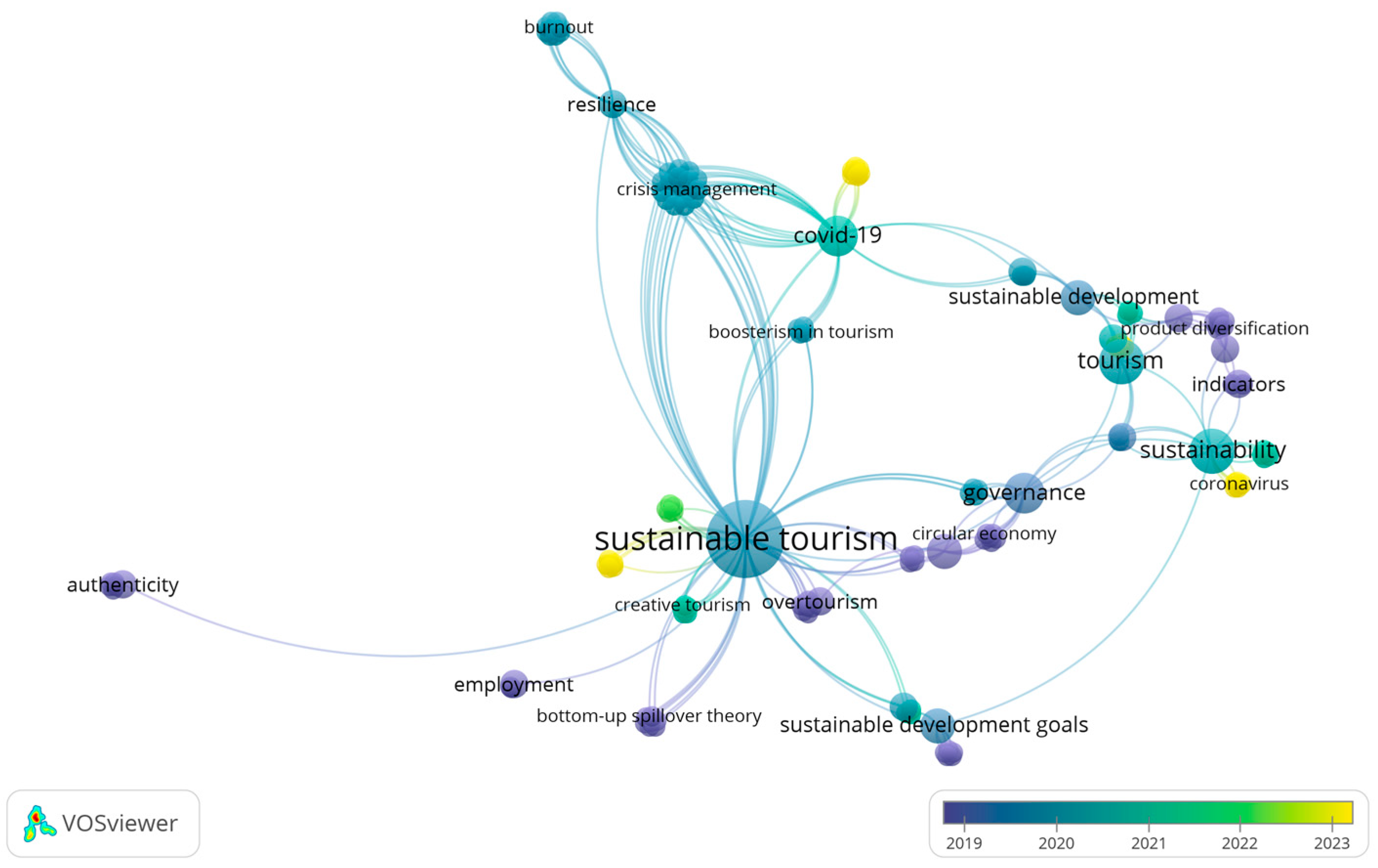
Although sustainable tourism has become a dominant research focus in recent years, the overlay visualization indicates that workforce sustainability remains relatively peripheral compared with governance, resilience, and indicator-based sustainability measurement approaches. In particular, limited attention has been given to how labor regimes, competency development structures, and fragmented institutional coordination interact to shape workforce sustainability risks in emerging coffee tourism destinations. By addressing these dimensions simultaneously, this study extends existing sustainable tourism research toward a more workforce-centered analytical perspective. In particular, existing studies have tended to prioritize marketing performance, product diversification, and destination competitiveness, while comparatively less attention has been given to the structural conditions shaping workforce participation and sustainability within rural coffee tourism contexts (Jafaruddin et al., 2020; Priatmoko et al., 2023; Su et al., 2023; Woyesa & Kumar, 2020).
As shown in Figure 1, sustainable tourism research has evolved from governance- and policy-oriented approaches toward resilience-based and indicator-driven sustainability frameworks in recent years. However, the overlay visualization also reveals that workforce-centered sustainability perspectives—especially those addressing labor precarity, competency development constraints, and fragmented institutional coordination—remain comparatively peripheral within the dominant research structure. This gap is particularly relevant in emerging coffee tourism destinations, where workforce sustainability plays a critical role in shaping long-term destination resilience. Therefore, this study contributes by positioning workforce sustainability as an integrated analytical dimension within sustainable tourism development.
This study addresses these gaps by examining human resource challenges in Bajawa through an integrated analytical lens. The research is guided by three questions:
  • What human resource challenges confront coffee tourism development in Bajawa?
  • How do informal labor regimes and power relations shape these challenges?
  • How does institutional fragmentation affect workforce sustainability?

2. Literature Review and Conceptual Framework

Power relations and governance coordination are closely intertwined in shaping workforce sustainability outcomes in emerging tourism destinations (Marsuki et al., 2025). Rather than operating as separate analytical dimensions, institutional authority structures, stakeholder coordination mechanisms, and access to development programs jointly influence how training opportunities, employment pathways, and participation in tourism value chains are distributed across local communities (Farsari, 2021; Thompson & Taheri, 2020; Yamin et al., 2025).

2.1. Training Traps and Agritourism in Postcolonial Contexts

The concept of a “training trap” has emerged in development and tourism literature to describe situations where skill development interventions fail to translate into sustainable employment due to structural barriers. In postcolonial contexts, training traps are often exacerbated by legacies of extractive economies, weak institutional coordination, and the persistence of informal labor regimes (Degarege, 2021; Woyesa & Kumar, 2020). Within agritourism specifically, research has documented how training programs in coffee-producing regions of the Global South frequently operate as isolated, donor-funded projects rather than as components of integrated workforce development systems (Candelo, 2019; Jacobi et al., 2024).
Postcolonial perspectives highlight that the very structure of coffee tourism value chains often reproduces colonial patterns: international tour operators and export-oriented buyers capture value, while local farmers remain trapped in low-margin, precarious work despite acquiring new skills (Lyon, 2013; Samoggia & Fantini, 2023). This literature suggests that addressing workforce sustainability requires not only competency development but also structural reforms to labor regimes and governance coordination.

2.2. Coffee Tourism, Labor Precarity, and Informal Work

Coffee tourism is defined as visitation to coffee-producing regions for purposes including education, experience, and consumption (Marsuki et al., 2025; Sitikarn, 2022; Wafaretta & Faronny, 2024). Proponents argue that coffee tourism offers economic diversification beyond volatile commodity markets and preservation of coffee-growing heritage (Juliana et al., 2024b; Pramono et al., 2025). Research has examined visitor motivations (Juliana et al., 2024a, 2023), supply chain integration (Juliana et al., 2022a; Y. Liu, 2025; Pedroza-Gutiérrez & Hernández, 2020) and institutional barriers (Degarege, 2021; Gunawan et al., 2022; Woitowich et al., 2021). In Indonesia, studies have explored the coffee tourism potential across East Java (Basalamah et al., 2023; Hidayat et al., 2023; Marsuki et al., 2025; Priminingtyas, 2021; Wafaretta & Faronny, 2024), West Java (Aji et al., 2025; Lestari et al., 2023; Wafaretta & Faronny, 2024; Yamin et al., 2025) and Labuan Bajo (Widianingsih et al., 2025).
The past decade has witnessed growing attention to labor precarity in tourism. Precarity refers to employment conditions characterized by insecurity, instability, and informality (Aji et al., 2025; Lestari et al., 2023). Robinson et al. (2019) identify multiple dimensions: contractual precarity (casual arrangements), temporal precarity (seasonal hours), spatial precarity (mobility requirements), and social precarity (exclusion from protections). Porto and Garcia (2021); Yagi (2025) argues that precarity is not aberrant but systemic in tourism employment under capitalism.
Emerging destination contexts present distinctive dynamics. Unlike established tourism economies with labor regulations, emerging destinations typically lack formal employment structures (Çıvak, 2024; González-Domingo et al., 2023; Wilson & Dashper, 2022). Labor operates predominantly in the informal economy—unregistered, unprotected. Coffee tourism labor in emerging destinations exemplifies these dynamics across farmers, guides, homestay operators, and baristas (James, 2024; Valente et al., 2023; X. Yang et al., 2021).
In this study, Bourdieu’s forms of capital are used as an interpretive lens to understand how differences in access to skills, institutional support, and social networks shape participation in coffee tourism workforce development processes, rather than as a primary analytical framework guiding the coding structure (Lestari et al., 2023; Qian et al., 2024; Tong et al., 2024).

2.3. Governance Fragmentation and Workforce Sustainability

Coffee tourism sits at the intersection of multiple policy domains: agriculture, tourism, industry, and village empowerment. In Indonesia’s decentralized system, responsibilities are distributed across national ministries, provincial agencies, district governments, and village authorities, often without effective coordination (Aji et al., 2025; Basalamah et al., 2023; Hidayat et al., 2023). This fragmentation has implications for human resource development: coffee extension services focus on production, tourism training addresses hospitality, and village empowerment supports enterprise development—often without integration (Farsari, 2021; Marsuki et al., 2025; Wafaretta & Faronny, 2024; Yamin et al., 2025).
The consequences include duplication, missed synergies, and sustainability challenges. Training programs may be one-off interventions without follow-up. Workers may receive coffee quality training from agricultural extension and service skills from tourism programs, but lack opportunities to integrate these competencies. Workforce sustainability requires attention to both individual competencies and institutional arrangements, enabling continuous development (Jafaruddin et al., 2020; Prayitno et al., 2023; Priatmoko et al., 2023).
Competency-based approaches have made an important contribution to understanding workforce development in tourism by identifying the skills and capabilities required for service quality improvement and destination competitiveness (Eom et al., 2020). These frameworks are particularly valuable for designing training interventions and supporting workforce readiness in emerging tourism sectors (Rogando, 2025; Saber & Kamaruddin, 2025; Yurchyshyna et al., 2021). However, recent studies suggest that competency development alone may not fully explain workforce sustainability outcomes in rural and agricultural-based tourism destinations, where employment conditions are also shaped by labor regimes, institutional coordination, and governance structures (Johnson et al., 2019; Nono et al., 2024; Silitonga, 2020). Therefore, this study builds on competency-based perspectives while extending the analysis toward a broader workforce sustainability framework that integrates structural and institutional dimensions of tourism employment.

2.4. Conceptual Framework

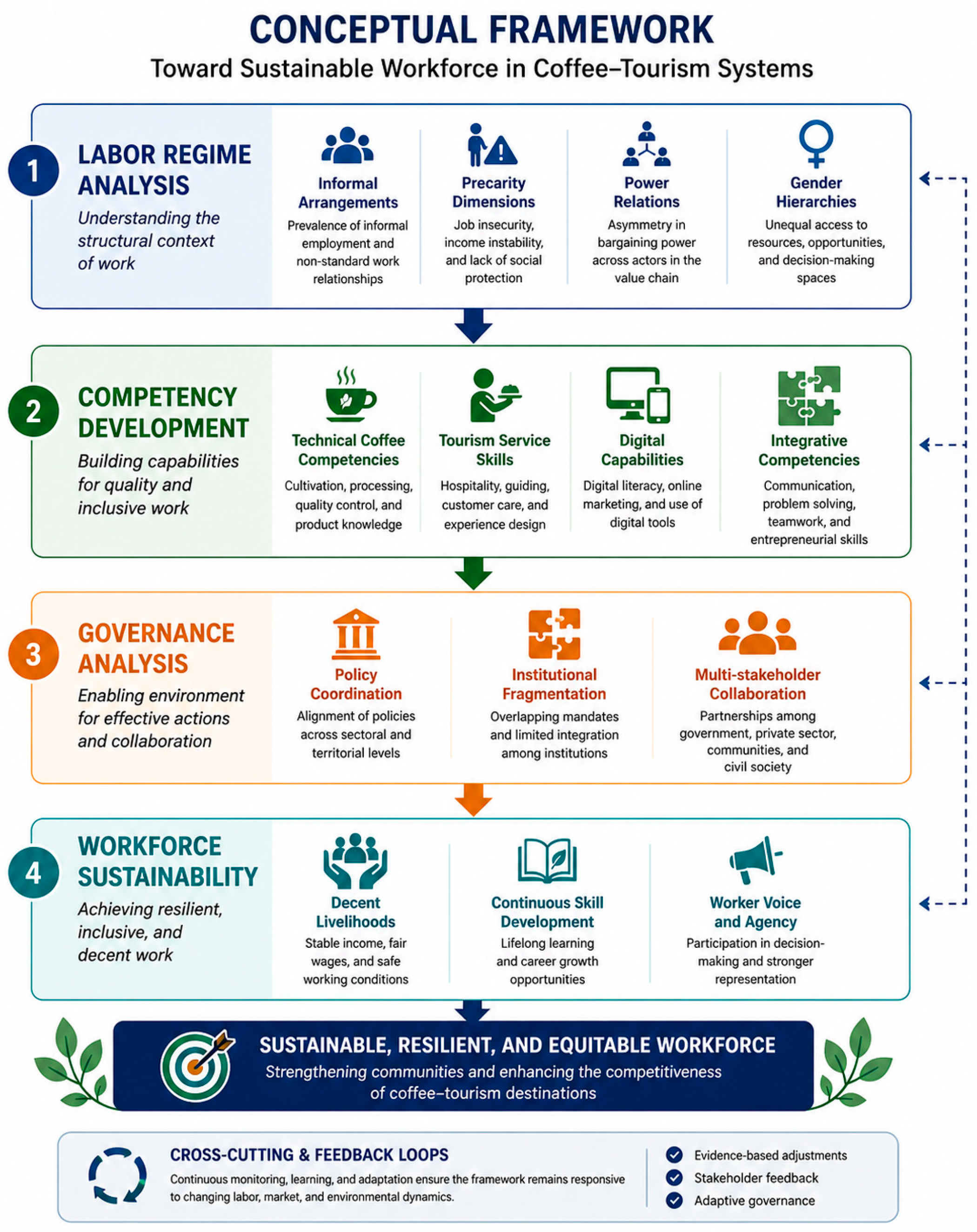
This study advances an integrative conceptual framework comprising three interconnected dimensions (Figure 2). Labor regime analysis examines informal arrangements, employment conditions, and power relations structuring coffee tourism work. Competency development analysis examines knowledge, skills, and abilities required for effective participation, and barriers to their acquisition. Governance analysis examines institutional arrangements, policy frameworks, and coordination mechanisms shaping human resource outcomes.
These dimensions are interconnected: labor regimes shape access to competency development; governance arrangements determine whether training interventions are sustained; competency levels influence bargaining power within informal labor regimes. Bourdieu’s forms of capital (cultural, social, economic) are used as an interpretive lens to understand how differential access to skills, networks, and institutional support shapes workforce participation.
Interpreting these findings through Bourdieu’s framework highlights how variations in social capital (access to cooperative networks), cultural capital (tourism-related knowledge and service skills), and institutional capital (connections with development programs and local governance structures) shape unequal access to workforce development opportunities within emerging coffee tourism destinations. Rather than functioning as a standalone explanatory model, this perspective complements the analysis of labor regimes and governance coordination by illustrating how capability development pathways are embedded within broader relational and institutional structures.

3. Methodology

3.1. Research Design and Case Selection

This study adopts a qualitative case study design grounded in an interpretive paradigm (Alhoussawi, 2023; Gavidia & Adu, 2022). while informed by a critical orientation (Sithole, 2025; Tomaszewski et al., 2020).
Bajawa was selected based on four criteria: (1) emerging coffee tourism destination within Indonesia’s “Ten New Balis” initiative; (2) significant coffee tourism development activity across multiple villages; (3) human resource challenges characteristic of emerging destinations; (4) accessibility and existing research networks. Researchers had previous collaborative relationships with Universitas Nusa Nipa in Flores, which facilitated introductions but also required careful reflexivity regarding potential bias.

3.2. Data Collection

Data were collected between June and November 2025 using multiple qualitative methods. In-depth semi-structured interviews (n = 42) were conducted with informants selected through purposive and snowball sampling: coffee farmers engaged in tourism (n = 12), tourism workers (guides, homestay operators, baristas; n = 8), village officials and customary leaders (n = 6), private sector facilitators (n = 4), and government officials (n = 6). Interviews averaged 65 min, were conducted in Indonesian, and were audio-recorded with informed consent. Document analysis examined policy documents, program reports, and training materials. Field observations (approximately 80 h) were conducted across two villages (Table 1). Document analysis examined policy documents, program reports, and training materials as sources of information and discursive artifacts (Cardno, 2019; Lutwama et al., 2021; Wash, 2020).

3.3. Data Analysis

Analysis followed iterative thematic analysis using NVivo 14 through three stages (Table 2). Stage 1 (open coding) identified initial patterns related to work conditions, skill needs, and institutional arrangements, generating 47 initial codes. Stage 2 (focused coding) refined categories around labor regimes, competency development, and governance. Stage 3 (interpretive synthesis) examined relationships among themes.
While analysis was informed by the conceptual framework, care was taken to allow unexpected themes to emerge. Regular debriefing sessions among the three research team members involved critical questioning of whether interpretations were forced by pre-existing categories. Negative cases—instances contradicting emerging patterns—were actively sought and discussed.

3.4. Trustworthiness and Ethics

Trustworthiness was ensured through triangulation across data sources, methods, and investigators. Member checking with key informants verified interpretations. Prolonged engagement (five months) enabled building trust. Peer debriefing with Indonesian and international scholars provided external critique.
Ethical approval was obtained from the researchers’ university ethics committee (approval number: 070/IRB-UPH/VII/2024). Informed consent was obtained from all participants with clear explanations of purpose, voluntary participation, and rights to withdraw. Anonymity and confidentiality were maintained. Reflexive practices critically assessed researcher positionality, including how existing networks might influence access and how regional identities could shape participant responses.

4. Results

4.1. Precarious Labor Regimes

Coffee tourism work in Bajawa is structured through informal labor regimes characterized by multiple dimensions of precarity (Benavides et al., 2022; Geyer, 2023; Lobato, 2025). Rather than formal employment with contracts and protections, work is organized through casual arrangements, household labor, and community reciprocity (Farrugia, 2020; Hammer & Ness, 2021; Munck et al., 2020; Santos, 2023).
A farmer in Beiwali described: “When groups come, sometimes the tour leader gives something, sometimes not. There’s no fixed arrangement” (Farmer 03). Work is seasonal, peaking during the dry season (May–October) and declining sharply during the rainy season. A guide explained: “I guide maybe twice a month in peak season, sometimes not at all in wet months. There’s no guarantee” (Guide 02). Spatial precarity operates through dependence on particular locations, and social precarity is evident in exclusion from labor protections. A homestay operator noted: “If I get sick, I can’t host guests. There’s no insurance from anywhere” (Homestay Operator 01) (Table 3).

4.2. Skill Gaps Across the Coffee–Tourism Nexus

Significant skill gaps constrain coffee tourism development. Farmers possess deep knowledge of coffee cultivation but require additional competencies for tourism engagement—explaining production, demonstrating processing, and communicating quality attributes. Service skill gaps are pervasive. A guide described: “I learned guiding by doing, watching others, figuring out what tourists like. No one trained me” (Guide 03). Digital skill gaps severely constrain marketing and sales. Most farmers lack the ability to use social media, online booking platforms, or digital payments. Access to training is uneven. An extension officer acknowledged: “We have training programs, but not enough budget, not enough staff. Maybe one training per year for one village” (Government Official 04). A farmer observed: “Coffee training taught me about fertilizer. Tourism training taught me to smile. Nobody taught me how to tell coffee stories while serving visitors” (Farmer 06).

4.3. Institutional Fragmentation

Institutional fragmentation across coffee, tourism, and village development governance produces uncoordinated human resource development. At the district level, the Tourism Office focuses on promotion and hospitality training, the Agriculture Office focuses on production, and the Village Empowerment Office supports community enterprise development—each with its own budget and targets. A district official described: “Each office has its own budget, its own targets. Combining resources is difficult” (Government Official 02). At the village level, coordination among actors is limited. A village head noted: “We have farmers, homestay owners, guides, the coffee house. But they all work separately. When tourists come, it’s not organized” (Village Official 01). The sustainability implications are significant. Training programs are typically one-off, without follow-up. A farmer expressed frustration: “Every year someone comes to train us. Last year agriculture, this year tourism. But after they leave, nothing changes” (Farmer 09). Workforce sustainability requires not just individual competency development but institutional arrangements enabling continuous learning.

4.4. Gender Dimensions and Data Limitations

Women are disproportionately affected by precarious labor regimes. In farming households, women undertake significant hospitality work—cooking, cleaning, hosting—without recognition as workers or separate income. A woman farmer described: “When guests come, I cook, I clean, I explain about our coffee. But the payment, if any, goes to my husband” (Woman Farmer 04).
Contextual note on gender data: The gender-related observations presented above are based on interviews with a limited number of women farmers (n = 4) within the broader sample. The study design did not specifically target gender-based workforce analysis; therefore, these findings should be interpreted as indicative case-based insights rather than generalizable conclusions. Future research employing gender-focused analytical frameworks would be required to more systematically examine how structural and cultural factors shape women’s roles in coffee tourism workforce development.

5. Discussion

The findings from Bajawa suggest that human resource challenges in coffee tourism cannot be reduced to skill deficits solvable through training alone. While competency gaps are real and consequential, our data indicate they are produced and sustained by structural conditions—informal labor regimes, unequal power relations, and governance fragmentation. These gender-related observations are based on a limited number of interviews with women farmers and should therefore be interpreted as indicative case-based insights rather than generalizable conclusions. While the present study identifies several gender-related participation patterns in coffee tourism activities, these findings should be interpreted as exploratory indications rather than comprehensive conclusions, as the study design did not specifically target gender-based workforce analysis. Nevertheless, the results suggest that gender-sensitive training access and institutional support mechanisms may represent an important direction for future workforce sustainability research in emerging tourism destinations. Although gender-related participation patterns emerged in the interview data, further research using gender-focused analytical frameworks would be required to more systematically examine how structural and cultural factors shape women’s roles within coffee tourism workforce development processes.

5.1. Comparison with Prior Studies

These findings resonate with and extend existing research. The skill gaps documented align with those identified by Widianingsih et al. (2025) in Labuan Bajo, who found that limited human resource competencies constrained coffee MSME performance. Similarly, (Guritno et al., 2019) identified technology literacy barriers in Malang that parallel Bajawa’s digital competency challenges. However, our findings suggest these competency issues cannot be understood in isolation from labor regime conditions—an aspect less developed in previous competency-focused studies (Karatepe & Scherrer, 2024; Ramírez-Gómez et al., 2022; Rujitoningtyas et al., 2025; Vargas et al., 2023).
The precarious labor conditions in Bajawa reflect patterns documented elsewhere in the Global South (Alubel et al., 2021; Bires & Raj, 2020; Endris & Kassegn, 2022). A study of Ethiopian coffee tourism identified institutional barriers that, while focused on different dimensions, similarly revealed how power asymmetries between value chain actors shape development outcomes. Theorization of precarity dimensions—contractual, temporal, spatial, social—finds empirical illustration in Bajawa, extending their framework to an emerging destination where informal labor is normative rather than exceptional (Jacobi et al., 2024; Lin et al., 2024; Samoggia & Fantini, 2023).

5.2. Power, Value Capture, and Human Resource Development

The findings illuminate how power relations shape who benefits from coffee tourism. Drawing on Bourdieu’s (Prayitno et al., 2023; Sitikarn, 2022; Thompson & Taheri, 2020) forms of capital, different actors possess unequal resources. Private sector facilitators possess economic and cultural capital (investment capacity, quality expertise). Village elites possess social capital (networks to external actors) (Guritno et al., 2019; Maspul, 2024). Farmers possess land and labor but limited other capital. These inequalities shape training access: our data indicate that training reaches those connected to powerful actors—villages selected for the Astra program, individuals with relationships to facilitators. Women’s hospitality work remains unrecognized and untrained. The very structure of coffee tourism value chains, with multiple intermediaries, limits local value capture regardless of skill levels. Publicly available program documentation associated with the Astra Desa Sejahtera initiative reports improvements in farmer income and employment opportunities in participating villages; however, these figures were not independently verified within this study and are therefore interpreted cautiously as contextual background rather than empirical findings. Institutional reports related to the Astra Desa Sejahtera initiative indicate improvements in livelihood diversification and employment opportunities in participating communities. However, as these indicators were derived from program documentation rather than primary data collected in this study, they are interpreted cautiously as contextual background supporting the broader development setting of coffee tourism activities in Bajawa.
The strategic integration of coffee tourism with educational initiatives is crucial for enhancing the quality of human capital within this burgeoning sector, thereby fostering regional tourism development and ensuring long-term sustainability (O. T. K. Vu, 2025) This involves targeted training programs in coffee cultivation, processing, and hospitality management, which can empower local communities to effectively manage and benefit from agro-tourism initiatives (Huang & Bu, 2022). Moreover, a comprehensive strategy should encompass data-driven decision-making and technological innovation to optimize resource allocation and enhance the overall visitor experience (Octafian et al., 2025). Such initiatives are critical for amplifying the economic benefits for local populations, as demonstrated by successful models that integrate coffee agribusiness education with tourism to increase participant knowledge and income (Maspul, 2024; J. Wang et al., 2023).
Furthermore, empowering small and medium-sized enterprises through coffee tourism can significantly bolster local economic development by providing opportunities for direct trade and collaboration between coffee growers and tourism operators (Maspul, 2024). This direct engagement between producers and consumers, facilitated by coffee tourism, allows local farmers to circumvent traditional supply chains, thereby increasing their share of the value created and providing a significant boost to their economic well-being (Kulyniak et al., 2024; J. Wang et al., 2023). This approach also cultivates diversified management structures and offers extensive training opportunities, which are critical for the continued growth of local cooperatives and the introduction of new professional roles within the coffee tourism industry (Prasetyanto et al., 2025; Sharma et al., 2025). This empowerment extends to farmers becoming trainers for tourists, thereby disseminating acquired knowledge and fostering a sense of independence and entrepreneurial spirit (Candelo, 2019).
This comprehensive approach to human resource development not only elevates the professional capabilities of individuals but also strengthens the institutional capacity of agro-tourism supporting entities, leading to increased coffee productivity and improved community income (Jiménez, 2023; Lyon, 2013). Moreover, robust governmental support, alongside partnerships with private entities and educational institutions, is essential for establishing comprehensive training facilities and implementing multi-stakeholder strategies that can effectively leverage local potential (Santharam et al., 2025; Sharanya Pothula, 2025; Sharma et al., 2025). These synergistic collaborations are instrumental in developing robust frameworks for skill enhancement, market access, and sustainable resource management, ultimately reinforcing the economic viability and resilience of coffee-producing regions. Specifically, training workshops focused on agritourism approaches can equip small farmers with essential skills in marketing, digital literacy, and hospitality management, fostering greater autonomy and self-confidence in their entrepreneurial endeavors (Kulyniak et al., 2024).
These programs can mitigate rural-to-urban migration by providing stable income sources within communities and supporting the development of micro-enterprises such as handicrafts and home-based eateries (Wen-Ta, 2025). Beyond direct economic benefits, agritourism offers a holistic approach to rural development by preserving cultural heritage, promoting environmental stewardship, and enhancing social cohesion through community-centered initiatives (Lee et al., 2023; Verduga, 2024). This multifunctional approach not only strengthens farmers’ economic resilience and product value but also promotes capacity-building through training, innovation, and the adoption of sustainable agricultural practices necessary to support tourism activities (Prasetyanto et al., 2025). Such integration of agricultural and tourism sectors creates unique rural experiences while simultaneously supporting economic, cultural, and environmental sustainability (Juliana et al., 2025b, 2025c). Such initiatives highlight the importance of institutional support, robust legislative frameworks, and effective extension services to enable farmers to transition into agri-entrepreneurs (Meutia et al., 2022).
These comprehensive programs are crucial for the holistic revitalization of rural areas by creating supplementary income streams, fostering local employment, and developing robust agritourism products (Guritno et al., 2019; Karatepe & Scherrer, 2024) These synergistic collaborations are instrumental in developing robust frameworks for skill enhancement, market access, and sustainable resource management, ultimately reinforcing the economic viability and resilience of coffee-producing regions (Santharam et al., 2025; Sharanya Pothula, 2025). Agritourism, by diversifying farm income and promoting sustainable practices, also emerges as a crucial catalyst for rural revival, preserving cultural heritage and fostering community engagement (Lee et al., 2023; Sharma et al., 2025). This diversification strategy offers additional revenue, particularly during periods of agricultural instability, and contributes to rural economic growth by creating jobs, preserving cultural heritage, and encouraging sustainable natural resource management (Hosseini et al., 2025; Sharanya Pothula, 2025).
Moreover, the development of agritourism necessitates financial investment for infrastructure, accommodation, and specialized agricultural goods, alongside structured training and awareness programs in agritourism management, environmental conservation, and cultural preservation (Lee et al., 2023). These investments underpin the capacity for agritourism to serve as a strategic tool for sustainable rural development by integrating economic, social, and environmental objectives (Hosseini et al., 2025; Zvavahera & Chigora, 2023). Furthermore, international studies underscore agritourism’s role as a social innovation, revitalizing natural and human elements while rebuilding rural areas through new economic opportunities (Grillini et al., 2024; Yusuf & Wulandari, 2023). This strategy directly contributes to the sustainable development of local lifestyles and poverty alleviation by creating new income streams, fostering job creation, and promoting innovative working practices within agricultural communities (Lee et al., 2023). Concurrently, policy frameworks supporting entrepreneurship and business competencies among farmers are vital for successful agritourism ventures (Kedla et al., 2025; Rogerson & Rogerson, 2014). By empowering local communities through involvement in decision-making processes, training, and equitable distribution of economic benefits, agritourism initiatives can significantly enhance local income, employment, and overall quality of life (Yusuf & Wulandari, 2023). This holistic approach ensures that agritourism not only serves as a mechanism for economic diversification but also acts as a powerful tool for social upliftment and cultural preservation in rural settings (Grillini et al., 2024; Kedla et al., 2025). Specifically, agritourism offers substantial economic benefits by diversifying income for farmers, creating new employment opportunities, and strengthening local markets through direct sales and unique rural experiences (Kedla et al., 2025; Thakur & Arora, 2025).
From a sustainability perspective, this model integrates economic, social, and environmental dimensions to ensure holistic development (Hubner et al., 2025; Juliana et al., 2022b). This multifaceted strategy not only mitigates the risks associated with sole reliance on traditional agriculture but also contributes to achieving broader sustainable development goals, such as poverty reduction and responsible consumption (Juliana et al., 2025a). It not only adds to farmers’ incomes but also helps in ecological conservation and traditional practices (Wright & Annes, 2014; Yasin & Bacsi, 2025). By engaging and empowering local communities in decision-making processes and providing training, agritourism can significantly enhance local income, employment, and overall quality of life (Fantini et al., 2025). Furthermore, by creating opportunities for entrepreneurial ventures, agritourism stimulates local economies and provides additional tax revenues for community investment (Kier & McMullen, 2020; Neneh, 2022).
This economic stimulus, combined with increased tourism, can lead to the preservation of traditional farming practices and cultural heritage, thereby enhancing the overall socio-economic well-being of rural communities (Fu et al., 2021; Juliana et al., 2025b).
Specifically, coffee-based edutourism has demonstrated significant potential to stimulate local economies, generate employment, and advance sustainable development objectives, provided there is continuous support through mentoring, marketing innovation, and robust infrastructure (Lovelock, 2023). These elements are crucial for transforming agricultural activities into compelling tourist attractions that both educate visitors and provide tangible benefits to rural communities (Gómez-Zapata, 2025; Tresiana, 2022). The integration of agricultural practices with tourism fosters economic diversity, cultural preservation, and environmental sustainability, improving socio-economic welfare and promoting sustainable resource utilization within rural areas.
This study highlights the need for a more equitable distribution of resources and opportunities within coffee tourism, particularly by addressing the systemic disempowerment of farmers who often experience an asymmetry of information and limited access to critical resources compared to other stakeholders in the supply chain (Candelo, 2019). This disparity is further exacerbated by capital constraints, with many farmers relying on personal savings and lacking access to credit for essential investments in inputs, equipment, and climate-smart agricultural practices (Butollo, 2021; Laspidou, 2020). Such systemic vulnerabilities often trap smallholder farmers in cycles of poverty, hindering their capacity to innovate and adopt resilient agricultural systems due to limited access to vital linking social capital (Musavengane, 2020; Stasa & Machek, 2022). Addressing these entrenched disparities necessitates comprehensive interventions that enhance smallholder integration into agricultural value chains through improved access to finance, market information, and capacity-building initiatives (Brorsson et al., 2020; Kim et al., 2020; Kundu & Pandey, 2020).
Furthermore, enhancing technical training, particularly for advanced cultivation and post-harvest processing methods, could significantly improve product quality and market competitiveness for smallholders (Kapgen & Roudart, 2022; Karatepe & Scherrer, 2024). The sustainability of such agricultural systems is further compromised by inconsistent postharvest practices and inadequate infrastructure, which erode product quality and exacerbate farmer concerns regarding the erosion of cultural traditions associated with coffee rituals (Azkar et al., 2025). This situation is compounded by a fragmented governance structure that constrains access to resources and influence for many smallholder farmers, despite strong international demand for specialty coffee (Junaid et al., 2020). This suggests a critical need for policy interventions aimed at strengthening producer organizations and cooperatives, which can mitigate power imbalances and ensure fairer price incentives for farmers (Günther et al., 2025). Such initiatives can foster alternative market structures that balance economic viability with social equity and environmental sustainability, challenging assumptions about unequal trade relationships and enabling competitive participation in global markets while fostering social cohesion (Amin et al., 2025; Fantini et al., 2025; Zheng, 2020).

5.3. The “Training Trap”

Findings from the Bajawa case suggest the presence of what may be described as a “training trap”, in which repeated short-term training activities were not consistently linked to sustained employment opportunities or coordinated workforce development pathways. Our findings suggest what might be termed a “training trap”—enhancing competencies without addressing structural conditions may produce skilled workers who remain precarious. This interpretation emerges from several data points: farmers who received training but continued working without contracts or protections; women whose hospitality skills improved but whose work remained unrecognized; young people who developed digital competencies but lacked market access (Ioannides et al., 2021; Parsons et al., 2022). While this concept requires further empirical validation, it directs attention to the limits of competency-focused interventions. This interpretation is based on interview evidence indicating that training initiatives were often implemented as isolated interventions without long-term institutional coordination or follow-up support mechanisms. The concept of a “training trap” is used in this study as an interpretive lens to describe situations in which training activities are implemented without sustained institutional coordination or clear employment pathways, thereby limiting their long-term contribution to workforce sustainability.
This pattern reflects broader challenges identified in rural tourism development contexts, where training interventions are sometimes implemented as project-based activities rather than as components of coordinated human resource governance strategies. In the Bajawa case, stakeholders described training initiatives that focused primarily on short-term skill acquisition, such as hospitality awareness, product presentation, and guiding practices, while limited follow-up mechanisms existed to support employment continuity or entrepreneurial scaling (Lee-Anant & Kungwansith, 2025; Valadas, 2025). These findings suggest that competency development efforts, although valuable, may be less effective when not embedded within longer-term institutional coordination frameworks connecting training providers, tourism operators, cooperatives, and local governance actors (Gede et al., 2023a; Syafruddin et al., 2025).
Rather than representing a generalized structural condition across coffee tourism destinations, the notion of a “training trap” should therefore be interpreted as an analytical insight emerging from the Bajawa case context, illustrating how fragmented training delivery systems can constrain workforce sustainability outcomes (Khartishvili et al., 2019; Toh et al., 2024). Similar observations have been reported in emerging tourism destinations where capability-building programs are not consistently aligned with labor market absorption mechanisms or destination-level development planning (Chen, 2023; Rujitoningtyas et al., 2025). In this respect, the findings complement competency-based workforce development perspectives by highlighting the importance of coordination between training provision and governance structures in shaping the long-term effectiveness of capacity-building initiatives (Ramírez-Gómez et al., 2022; Thomas & Olago, 2024).
Importantly, the concept of the “training trap” does not suggest that training programs are ineffective; rather, it emphasizes the need for stronger integration between competency development pathways and institutional coordination mechanisms to ensure that training contributes meaningfully to sustainable employment opportunities (Anser et al., 2020; El Wali et al., 2021; Rollo, 2025). Strengthening alignment between tourism training initiatives, agricultural extension services, and village-level development planning may therefore represent an important step toward improving workforce sustainability in emerging coffee tourism destinations such as Bajawa. Future comparative research across multiple rural tourism contexts would be valuable for examining whether similar coordination gaps between training provision and employment pathways represent broader patterns within coffee tourism workforce development systems.

5.4. Governance Implications

The governance analysis suggests that addressing workforce sustainability requires mechanisms for aligning agriculture, tourism, and village development programs. Current fragmentation produces what our informants described as one-off interventions without cumulative capacity building (Qiu et al., 2021; Valderrama et al., 2024). The governance analysis indicates that enhancing workforce sustainability in nascent coffee tourism locales necessitates more robust coordination mechanisms that synchronise agricultural development programs, tourism capacity-building initiatives, and village-level planning processes (Reina-Usuga et al., 2024; Valderrama & Polanco, 2022). Evidence from interviews in the Bajawa case shows that current interventions are often done as separate activities instead of as part of a larger plan for workforce development. Several informants characterised these initiatives as ephemeral or singular programs that offered valuable exposure to tourism-related skills but were deficient in continuity and institutional follow-up, thereby constraining their overall impact on the long-term development of capabilities within the local tourism workforce.
These findings underscore the significance of cross-sector governance coordination in influencing workforce sustainability outcomes in rural tourism destinations where livelihoods are intricately linked to agricultural production systems (Gede et al., 2023b; Mulyani et al., 2021). Tourism training programs, agricultural extension services, and village development programs should not work alone. Instead, they should work together in coordinated institutional frameworks that encourage long-term participation in tourism value chains (Bichler & Lösch, 2019; Meliana et al., 2025). In Bajawa, fragmented coordination among sectoral actors seemed to hinder the conversion of training opportunities into stable employment pathways, underscoring the necessity of integrated governance strategies to enhance workforce resilience at the destination level.
This interpretation aligns with prior research highlighting the significance of collaborative governance frameworks in facilitating sustainable agro-tourism development. This finding aligns with (F. Liu et al., 2025; Susanti et al., 2023; Taufik et al., 2023) who emphasize collaboration between academics, government, industry, and communities for sustainable agro-tourism and underscore the significance of collaboration among academic institutions, government entities, industry participants, and local communities in enhancing adaptive capacity within rural tourism systems. This study expands on this viewpoint by illustrating that the efficacy of such collaboration is intricately connected to the congruence of competency development pathways with institutional coordination mechanisms that influence workforce participation opportunities (Ramukumba, 2025; Sands, 2022; Q. Wang et al., 2025).
It is important to note that these governance implications should be seen as insights that are specific to the Bajawa case, not as conclusions that apply to all coffee tourism destinations. However, the results indicate that enhancing coordination among agricultural, tourism, and village governance systems may be an essential measure for advancing workforce sustainability outcomes in developing rural tourism settings. Future comparative research across various coffee tourism destinations would elucidate how integrated governance models facilitate the long-term development of workforce capabilities and employment stability within agro-tourism systems. Developing integrated human resource governance mechanisms that connect training provision, cooperative structures, and village-level development planning may therefore represent an important strategic direction for enhancing workforce sustainability in emerging coffee tourism destinations.

6. Conclusions

This study examined human resource challenges in coffee tourism development in Bajawa, Flores, through an integrative lens combining labor regime analysis, competency development, and governance analysis. The findings reveal a workforce characterized by precarious labor regimes across all dimensions of coffee tourism work. Significant skill gaps constrain both worker livelihoods and destination development. Yet these competency gaps are not merely training deficits; they are produced and sustained by structural conditions, including unequal power relations, gender hierarchies, and governance fragmentation. These findings provide context-specific insights into workforce sustainability challenges in emerging coffee tourism destinations and suggest directions for future comparative research examining similar governance and capability development dynamics across rural tourism contexts. Although the findings highlight important relationships between governance coordination, competency development pathways, and workforce precarity in the Bajawa context, further comparative research across multiple coffee tourism destinations would be needed to examine the broader structural implications of these patterns.
Theoretical contributions: This study makes three theoretical contributions.
First, it extends precarity scholarship to emerging destination contexts, demonstrating that precarity is normative where informal labor dominates. Unlike studies in established tourism economies where formal employment is the baseline, Bajawa shows precarity as the normative condition—workers never expect contracts, protections, or stable income. This finding supports Robinson et al.’s (2019) argument that precarity is systemic in tourism employment, while extending it to contexts where the informal economy dominates.
Second, it advances critical human resource development theory by demonstrating the limits of competency-focused approaches. Most tourism HRD literature assumes that skill development leads to improved employment outcomes. Our findings problematize this assumption: competency gaps are real, but filling them through training without addressing labor regime conditions and governance fragmentation produces what we term a “training trap”—skilled workers who remain precarious. The “training trap” concept offers a new analytical lens applicable beyond coffee tourism to other emerging destination sectors facing similar fragmented training governance.
Third, it contributes to tourism governance scholarship by demonstrating how institutional fragmentation across agriculture, tourism, and village development produces workforce outcomes that no single sector can address alone. This extends collaborative governance theory by specifying vertical (cross-sectoral) fragmentation as a distinct barrier to workforce sustainability. The integrative framework proposed (labor regimes + competency development + governance) can be applied to other emerging tourism destinations in the Global South facing similar structural challenges.
Practical implications: For policymakers, human resource development must address labor regime conditions alongside competency gaps; coordination across agriculture, tourism, and village development governance is essential; and gender dimensions require specific attention. For coffee tourism operators, the findings suggest developing integrated training programs that connect coffee production knowledge with tourism service skills, creating more stable employment arrangements that include basic protections, investing in digital capacity building, and establishing coordination mechanisms.
Limitations and future research: This study focused on two villages; findings may not generalize to other contexts. The cross-sectional design captures challenges at a particular moment. Future research should include comparative studies across Indonesian coffee tourism destinations, gendered analysis of coffee tourism labor, longitudinal tracking of workforce evolution, action research on coordinated governance mechanisms, and examination of digital transformations reshaping labor conditions.

Author Contributions

Conceptualization, R.P. and J.J.; methodology, R.P. and J.J.; Formal analysis, R.P. J.J. and Y.D.T.; investigation, R.P. and J.J.; writing—original draft preparation, R.P., J.J. and Y.D.T.; writing—review and editing, R.P. and J.J.; supervision, J.J.; Funding acquisition, R.P., J.J. and Y.D.T. All authors have read and agreed to the published version of the manuscript.

Funding

This research was funded by LPPM Universitas Pelita Harapan grant number No. 090-FPar/VII/2024.

Institutional Review Board Statement

This study was conducted in accordance with the Declaration of Helsinki and approved by the Internal Review Board Universitas Pelita Harapan (IRB UPH) the Ethics Committee of (protocol code 070/IRB-UPH/VII/2024 and date of approval: 31 July 2024).

Informed Consent Statement

Informed consent was obtained from all subjects involved in the study.

Data Availability Statement

The original contributions presented in the study are included in the article. Further inquiries can be directed to the corresponding authors.

Acknowledgments

The authors would like to thank the respondents who participated in this research and who were willing to be data sources.

Conflicts of Interest

The authors declare no conflicts of interest.

References

  1. Adeyinka-Ojo, S., Lee, S., Abdullah, S. K., & Teo, J. (2020). Hospitality and tourism education in an emerging digital economy. Worldwide Hospitality and Tourism Themes, 12, 113–125. [Google Scholar] [CrossRef]
  2. Aji, P. B. B., Nanda P, E. W., Nabila, A. H., & Gamayuni, R. R. (2025). Development of coffee products based on local wisdom as an international culinary tourism attraction. Indonesian Journal of Community Engagement, 2(1), 58–62. [Google Scholar] [CrossRef]
  3. Alhoussawi, H. (2023). Perspectives on research paradigms: A guide for education researchers. International Research in Education, 11, 106–124. [Google Scholar] [CrossRef]
  4. Alubel, W. E., Geetachew, M. A., & Asnakew, A. (2021). Practices and challenges of visitor management implementation for sustainable tourism development in Fasil Ghebbi, Ethiopia. Journal of Hospitality Management and Tourism, 12(1), 1–8. [Google Scholar] [CrossRef]
  5. Amin, S., Adiawaty, S., Juliana, J., Endratno, H., Tamsah, H., & Shahnaz, M. (2025). Managing team performance in higher education institutions through friendship prevalence, work engagement, and organizational citizenship behavior: A structural equation modeling study. Zbornik Radova Ekonomskog Fakulteta u Rijeci/Proceedings of Rijeka Faculty of Economics, 43(1), 9–32. [Google Scholar] [CrossRef]
  6. Anser, M. K., Yousaf, Z., Nassani, A. A., Vo, X. V., & Zaman, K. (2020). Evaluating ‘natural resource curse’ hypothesis under sustainable information technologies: A case study of Saudi Arabia. Resources Policy, 68, 101699. [Google Scholar] [CrossRef]
  7. Azkar, R., Darma, R., Amir, A. A., Syam, S. H., Kasim, M., Ali, H., Amandaria, R., & Astaman, P. (2025). Sustainability of the Toraja Arabica coffee value chain in Indonesia: Economic, cultural, environmental, and certification dimensions. Frontiers in Sustainability, 6, 1691977. [Google Scholar] [CrossRef]
  8. Basalamah, A., Abdillah, F., Susanto, S., Permata, S., & Windawaty, H. (2023). Coffee tourism development potential in banyuwangi regency, East Java. Sadar Wisata: Jurnal Pariwisata, 6(2), 83–88. [Google Scholar] [CrossRef]
  9. Benavides, F., Silva-Peñaherrera, M., & Vives, A. (2022). Informal employment, precariousness, and decent work: From research to preventive action. Scandinavian Journal of Work, Environment & Health, 48, 169–172. [Google Scholar] [CrossRef]
  10. Bichler, B., & Lösch, M. (2019). Collaborative governance in tourism: Empirical insights into a community-oriented destination. Sustainability, 11, 6673. [Google Scholar] [CrossRef]
  11. Bindawas, A. (2025). Promoting sustainable tourism through employee skills: Contextualizing quality education and the human resource management perspective (SDG-4). Sustainability, 17, 748. [Google Scholar] [CrossRef]
  12. Bires, Z., & Raj, S. (2020). Tourism as a pathway to livelihood diversification: Evidence from biosphere reserves, Ethiopia. Tourism Management, 81, 104159. [Google Scholar] [CrossRef]
  13. Brorsson, A., Öhman, A., Lundberg, S., Cutchin, M. P., & Nygård, L. (2020). How accessible are grocery shops for people with dementia? A qualitative study using photo documentation and focus group interviews. Dementia, 19(6), 1872–1888. [Google Scholar] [CrossRef]
  14. Butollo, F. (2021). Digitalization and the geographies of production: Towards reshoring or global fragmentation? Competition and Change, 25(2), 259–278. [Google Scholar] [CrossRef]
  15. Candelo, E. (2019). A ticket to coffee: Stakeholder view and theoretical framework of coffee tourism benefits. Tourism Analysis, 24(3), 329–340. [Google Scholar] [CrossRef]
  16. Cardno, C. (2019). Policy document analysis: A practical educational leadership tool and a qualitative research method. Educational Administration: Theory and Practice, 24(4), 623–640. [Google Scholar] [CrossRef]
  17. Carlisle, S., Ivanov, S., & Dijkmans, C. (2021). The digital skills divide: Evidence from the European tourism industry. Journal of Tourism Futures, 9(2), 240–266. [Google Scholar] [CrossRef]
  18. Chen, A. (2023). Talent cultivation model of rural tourism and industry-education integration combined with the advantageous correlation degree method. Applied Mathematics and Nonlinear Sciences, 9, 205–210. [Google Scholar] [CrossRef]
  19. Çıvak, B. (2024). How could it be better? Seeking solutions to the precarization in the tourism workforce. Anadolu Üniversitesi Sosyal Bilimler Dergisi, 24(4), 1915–1938. [Google Scholar] [CrossRef]
  20. Degarege, G. A. (2021). Institutional barriers to coffee tourism development: Insights from Ethiopia—The birthplace of coffee. International Journal of Culture Tourism and Hospitality Research, 15(3), 428–442. [Google Scholar] [CrossRef]
  21. El Wali, M., Golroudbary, S. R., & Kraslawski, A. (2021). Circular economy for phosphorus supply chain and its impact on social sustainable development goals. Science of the Total Environment, 777, 146060. [Google Scholar] [CrossRef]
  22. Endris, E., & Kassegn, A. (2022). The role of micro, small and medium enterprises (MSMEs) to the sustainable development of sub-Saharan Africa and its challenges: A systematic review of evidence from Ethiopia. Journal of Innovation and Entrepreneurship, 11(1), 1–18. [Google Scholar] [CrossRef]
  23. Eom, T., Han, H., & Song, H. (2020). Discovering the perceived attributes of CBT destination travelers in South Korea: A mixed method approach. Tourism Management, 77, 104013. [Google Scholar] [CrossRef]
  24. Faisal, R., Ginting, G., & Asnawi, S. K. (2025). Improving human resource quality and cultural values to foster community independence in the gayo coffee agrotourism area, bener meriah regency. Transekonomika: Akuntansi, Bisnis Dan Keuangan, 5, 370–382. [Google Scholar] [CrossRef]
  25. Fantini, A., Samoggia, A., Bonfigli, L., & Quiñones-Ruiz, X. F. (2025). Fairness in coffee value chains: Organizational solutions for the self-governance of small producers. Frontiers in Sustainable Food Systems, 9, 1661027. [Google Scholar] [CrossRef]
  26. Farrugia, C. (2020). Making sharing work: Migrant community groups and informal/formal work. Critical Sociology, 46, 495–509. [Google Scholar] [CrossRef]
  27. Farsari, I. (2021). Exploring the nexus between sustainable tourism governance, resilience and complexity research. Tourism Recreation Research, 48, 352–367. [Google Scholar] [CrossRef]
  28. Fu, J., Zhou, J., & Deng, Y. (2021). Heritage values of ancient vernacular residences in traditional villages in western Hunan, China: Spatial patterns and influencing factors. Building and Environment, 188, 107473. [Google Scholar] [CrossRef]
  29. Gavidia, L. P., & Adu, J. (2022). Critical narrative inquiry: An examination of a methodological approach. International Journal of Qualitative Methods, 21, 1–5. [Google Scholar] [CrossRef]
  30. Gede, I., Mangku, P., Made, I., & Mahayana, A. (2023a). Improving coffee processing towards community-based agritourism. AJARCDE (Asian Journal of Applied Research for Community Development and Empowerment), 7(3), 78–82. [Google Scholar] [CrossRef]
  31. Gede, I., Putra, E., Sentanu, S., Haryono, B., Zamrudi, Z., & Praharjo, A. (2023b). Challenges and successes in collaborative tourism governance: A systematic literature review. European Journal of Tourism Research, 33, 3302. [Google Scholar] [CrossRef]
  32. Geyer, H. (2023). Precarious and non-precarious work in the informal sector: Evidence from South Africa. Urban Studies, 60, 1915–1931. [Google Scholar] [CrossRef]
  33. González-Domingo, A., Russo, A., & Gosálbez, M. I. P. (2023). Reassembling tourism labour and housing precarity: Barcelona during COVID-19. Tourism Geographies, 25, 1778–1796. [Google Scholar] [CrossRef]
  34. Gómez-Zapata, J. D. (2025). A choice experiment economic valuation of cultural heritage tourism ecosystems. Journal of Sustainable Tourism, 33(3), 591–612. [Google Scholar] [CrossRef]
  35. Grillini, G., Streifeneder, T., Sacchi, G., & Fischer, C. (2024). Comparative analysis of alpine agritourism in trentino, tyrol, and south tyrol: Regional variations and prospects. Open Agriculture, 9(1), 1–17. [Google Scholar] [CrossRef]
  36. Gunawan, A., Bloemer, J., Van Riel, A., & Essers, C. (2022). Institutional barriers and facilitators of sustainability for indonesian batik SMEs: A policy agenda. Sustainability, 14, 8772. [Google Scholar] [CrossRef]
  37. Guritno, B., Aprilliyani, R., & Listyorini, H. (2019). Human resource development implementation as a development of regional tourism development in Central Java. KnE Social Sciences, 3(23), 46–56. [Google Scholar] [CrossRef]
  38. Günther, M., Bosch, C., Ewell, H., Nawrotzki, R., & Kato, E. (2025). Step by step to higher yields? Adoption and impacts of a sequenced training approach for climate-smart coffee production in Uganda. International Journal of Agricultural Sustainability, 23(1), 2545042. [Google Scholar] [CrossRef]
  39. Hammer, A., & Ness, I. (2021). Informal and precarious work: Insights from the Global South. Journal of Labor and Society, 24, 1–15. [Google Scholar] [CrossRef]
  40. Harsanto, B. T. (2025). Managing human resource in the rural tourism sector: Evidence from Indonesia. Cogent Business & Management, 12, 2493312. [Google Scholar] [CrossRef]
  41. Hidayat, F., Hakim, L., & Parmawati, R. (2023). Analysis of community-based coffee agro-tourism sustainability in East Java, Indonesia. HABITAT, 34(1), 1–12. [Google Scholar] [CrossRef]
  42. Hosseini, S. A., Borimnejad, V., Rahmani-Fazli, H., & Dehyouri, S. (2025). Evaluating the potentials and challenges of agritourism development in Golestan Province, Iran: A clustering and risk analysis. Discover Sustainability, 6(1), 1–19. [Google Scholar] [CrossRef]
  43. Huang, R., & Bu, H. M. (2022). Destination attributes of memorable chinese rural tourism experiences: Impact on positive arousal, memory and behavioral intention. Psychology Research and Behavior Management, 15, 3639–3661. [Google Scholar] [CrossRef]
  44. Hubner, I. B., Juliana, J., Lemy, D. M., Pramezwary, A., & Djakasaputra, A. (2025). Balancing growth and tradition: The potential of community-based wellness tourism in Ubud, Bali. Tourism and Hospitality, 6(4), 205. [Google Scholar] [CrossRef]
  45. Ioannides, D., Gyimóthy, S., & James, L. (2021). From liminal labor to decent work: A human-centered perspective on sustainable tourism employment. Sustainability, 13, 851. [Google Scholar] [CrossRef]
  46. Jacobi, J., Lara, D., Opitz, S., De Castelberg, S., Urioste, S., Irazoque, A., Castro, D., Wildisen, E., Gutierrez, N., & Yeretzian, C. (2024). Making specialty coffee and coffee-cherry value chains work for family farmers’ livelihoods: A participatory action research approach. World Development Perspectives, 33, 100551. [Google Scholar] [CrossRef]
  47. Jafaruddin, N., Noor, T., & Karyani, T. (2020). Variables influencing the potency of community based coffee agro-tourism in Mount Galunggung, Tasikmalaya, Indonesia. Pelita Perkebunan (a Coffee and Cocoa Research Journal), 36, 267–276. [Google Scholar] [CrossRef]
  48. James, D. (2024). Precarious labour geographies of working holiday makers: Querying sustainability. Tourism Geographies, 26, 1053–1071. [Google Scholar] [CrossRef]
  49. Jiménez, A. A. (2023). Potential coffee distribution in a central-western region of Mexico. Ecologies, 4(2), 269–287. [Google Scholar] [CrossRef]
  50. Johnson, K., Huang, T.-Y., & Doyle, A. (2019). Mapping talent development in tourism and hospitality: A literature review. European Journal of Training and Development, 43(9), 821–841. [Google Scholar] [CrossRef]
  51. Juliana, J., Djakasaputra, A., Pramezwary, A., Lemy, D. M., & Anwar, M. M. (2025a). How social media influencers drive tourist motivation and engagement: The case of nature tourism. Journal of Quality Assurance in Hospitality & Tourism, 1–24. [Google Scholar] [CrossRef]
  52. Juliana, J., Hubner, I. B., Lemy, D. M., Pramezwary, A., & Djakasaputra, A. (2024a). Antecedents of happiness and tourism servicescape satisfaction and the influence on promoting rural tourism. International Journal of Sustainable Development and Planning, 19(10), 4041–4059. [Google Scholar] [CrossRef]
  53. Juliana, J., Hubner, I. B., Sianipar, R., Indra, F., & Djakasaputra, A. (2024b). Systematic literature review: Combining foodscape and touristcape for international tourism marketing in Singapore and Batam. Studies in Systems, Decision and Control, 545, 969–980. [Google Scholar] [CrossRef]
  54. Juliana, J., Indra, F., Sianipar, R., & Djakasaputra, A. (2025b). Reimagining heritage tourism through co-creation: Insights from Prenggan Tourism Village, Yogyakarta. Sustainability, 17(24), 11112. [Google Scholar] [CrossRef]
  55. Juliana, J., Nagoya, R., Bangkara, B. M. A. S. A., Purba, J. T., & Fachrurazi, F. (2022a). The role of supply chain on the competitiveness and the performance of restaurants. Uncertain Supply Chain Management, 10(2), 445–452. [Google Scholar] [CrossRef]
  56. Juliana, J., Pramezwary, A., Djakasaputra, A., Muhlis, M., Jie, F., Juliana, J., Pramezwary, A., Djakasaputra, A., & Muhlis, M. (2025c). The missing link in urban tourism: Connecting leisure, accessibility and resident participation for enhanced value. Cogent Social Sciences, 11(1), 2556473. [Google Scholar] [CrossRef]
  57. Juliana, J., Pramezwary, A., Lemy, D. M., Teguh, F., Djakasaputra, A., & Sianipar, R. (2022b). Antecedents experiential commitment and consequences in willingness to post photo and behavioral intention toward the destination. International Journal of Design and Nature and Ecodynamics, 17(4), 547–556. [Google Scholar] [CrossRef]
  58. Juliana, J., Sianipar, R., Lemy, D. M., Pramezwary, A., Pramono, R., & Djakasaputra, A. (2023). Factors influencing visitor satisfaction and revisit intention in lombok tourism: The role of holistic experience, experience quality, and vivid memory. International Journal of Sustainable Development and Planning, 18(8), 2503–2511. [Google Scholar] [CrossRef]
  59. Junaid, M., Hussain, K., Asghar, M. M., Javed, M., Hou, F., & Liutiantian. (2020). An investigation of the diners’ brand love in the value co-creation process. Journal of Hospitality and Tourism Management, 45, 172–181. [Google Scholar] [CrossRef]
  60. Kapgen, D., & Roudart, L. (2022). A Multidisciplinary approach to assess smallholder farmers’ adoption of new technologies in development interventions. European Journal of Development Research, 35(4), 974–995. [Google Scholar] [CrossRef]
  61. Karatepe, I., & Scherrer, C. (2024). Smallholder challenges of social and economic upgrading in agricultural value chains: A cross-country, cross-crop comparison. Agrarian South: Journal of Political Economy, 13, 317–340. [Google Scholar] [CrossRef]
  62. Kedla, S., Prasanna, S., & Veena, N. M. (2025). Agritourism as a sustainable rural development approach. European Journal of Ecology, Biology and Agriculture, 2(2), 63–67. [Google Scholar] [CrossRef]
  63. Khartishvili, L., Muhar, A., Dax, T., & Khelashvili, I. (2019). Rural tourism in Georgia in transition: Challenges for regional sustainability. Sustainability, 11(2), 410. [Google Scholar] [CrossRef]
  64. Kholifaturrohmah, R., Mayasari, C. V., Mulasiwi, M., Andri, A., Rifda, W. L., Naufalin, R., & Juju, P. (2025, July 30–31). The role of human capital competencies in improving coffee msme performance in community-based tourism. The International Conference on Sustainable Economics Management and Accounting Proceeding, Labuan Bajo, Indonesia. [Google Scholar] [CrossRef]
  65. Kier, A., & McMullen, J. (2020). Entrepreneurial imaginativeness and new venture ideation in newly forming teams. Journal of Business Venturing, 35, 106048. [Google Scholar] [CrossRef]
  66. Kim, Y. Y., Kim, Y. E., & Oh, K. Y. (2020). Small-and medium-sized firms’ internationalization and performance during a recession. Journal of Asian Finance, Economics and Business, 7(9), 341–350. [Google Scholar] [CrossRef]
  67. Kulyniak, I., Dziurakh, Y., Lagodiienko, V., Tomashevskyi, Y., & Sembay, N. (2024). Agriculture and tourism: A historical perspective on food security strategies in rural development. Evolutionary Studies in Imaginative Culture, 8, 790–807. [Google Scholar] [CrossRef]
  68. Kundu, D., & Pandey, A. K. (2020). World urbanisation: Trends and patterns BT—Developing national urban policies: Ways forward to green and smart cities (D. Kundu, R. Sietchiping, & M. Kinyanjui, Eds.; pp. 13–49). Springer Nature. [Google Scholar] [CrossRef]
  69. Laspidou, C. S. (2020). Systems thinking on the resource nexus: Modeling and visualisation tools to identify critical interlinkages for resilient and sustainable societies and institutions. Science of the Total Environment, 717, 137264. [Google Scholar] [CrossRef]
  70. Lee, K., Nguyen, A. T., Nguyen, N. P. T., Nguyen, T. H., Tran, N. P., Nguyen, T. L., Khuc, V. Q., & Vu, T. T. (2023). Determinants of agritourism development in green tea farms of the northern mountains of Vietnam: A hybrid approach based on the combination of diffusion of Innovation (DOI) theory and PLS-SEM. Multidisciplinary Science Journal, 6(4), 2024047. [Google Scholar] [CrossRef]
  71. Lee-Anant, C., & Kungwansith, P. (2025). Policy shaping and capacity building for sustainable community-based tourism in Thailand’s eastern economic corridor. Suranaree Journal of Social Science, 19, e278596. [Google Scholar] [CrossRef]
  72. Lestari, A. T., Ami, A., Aan, A., Mochamad, W. A., Ahmad, S., & Icha, N. A. (2023). Potential analysis and development of educational tourism objects for citaman Indah coffee plantation, Cijeruk Village. AbdimasMu UMTAS, 2, 10–13. [Google Scholar] [CrossRef]
  73. Lin, M. S., Zhang, H., Luo, Y., & Li, Y. (2024). Environmental, social, and governance (ESG) measurement in the tourism and hospitality industry: Views from a developing country. Journal of Travel & Tourism Marketing, 41(1), 154–168. [Google Scholar] [CrossRef]
  74. Liu, F., Wang, L., Gao, J., & Liu, Y. (2025). Study on the coupling coordination relationship between rural tourism and agricultural green development level: A case study of Jiangxi Province. Agriculture, 15, 874. [Google Scholar] [CrossRef]
  75. Liu, Y. (2025). Dynamic Supply chain decision-making of live e-commerce considering netflix marketing under different power structures. Journal of Theoretical and Applied Electronic Commerce Research, 20(3), 202. [Google Scholar] [CrossRef]
  76. Lobato, J. (2025). Unveiling the structural character of informal work: New Labour subject and financial exploitation beyond the promise of transition. Industrial Law Journal, 57, 1–34. [Google Scholar] [CrossRef]
  77. Lovelock, B. (2023). Growing agri-heritage tourism in africa: Challenges and opportunities. In Cultural heritage and tourism in Africa (pp. 137–153). Routledge. [Google Scholar] [CrossRef]
  78. Lutwama, G., Kok, M., & Jacobs, E. (2021). An exploratory study of the barriers and facilitators to the implementation of community health worker programmes in conflict-affected South Sudan. Conflict and Health, 15, 1–14. [Google Scholar] [CrossRef] [PubMed]
  79. Lyon, S. (2013). Coffee tourism in Chiapas: Recasting colonial narratives for contemporary markets. Culture Agriculture Food and Environment, 35(2), 125–139. [Google Scholar] [CrossRef]
  80. Madhyamapurush, W. (2022). Analysis on factors affecting tourist involvement in coffee tourism after the COVID-19 pandemic in Thailand. F1000Research, 11, 1269. [Google Scholar] [CrossRef]
  81. Marsuki, N. R., Manda, D., Kamaruddin, S., Asrifan, A., Riswandy, N., & Marsuki. (2025). Constructing sustainable community-based tourism: Institutional challenges and local empowerment in Gowa Regency, Indonesia. Journal of Humanities and Social Sciences Studies, 7, 65–81. [Google Scholar] [CrossRef]
  82. Maspul, K. A. (2024). Exploring Ho Chi Minh City’s coffee value chain through the unique intersection of specialty coffee and tourism. Khazanah Sosial, 6(1), 60–70. [Google Scholar] [CrossRef]
  83. Meliana, M., Akbar, G. G., & Kania, I. (2025). Multi-stakeholder collaboration in the development of tourism villages in garut regency: Collaborative governance approach. Jurnal Toursci, 2, 319–331. [Google Scholar] [CrossRef]
  84. Meutia, I. F., Yulianti, D., Sujadmiko, B., Faedlulloh, D., & Sanjaya, F. J. (2022). Tourism and ethnodevelopment: Female contribution in rural community-based agritourism. International Journal of Sustainable Development and Planning, 17(3), 787–794. [Google Scholar] [CrossRef]
  85. Mulyani, S., Ahsani, R. D. P., & Wijaya, D. N. (2021). Collaborative governance on ecotourism: Towards sustainable tourism development. Jurnal Borneo Administrator, 17, 319–334. [Google Scholar] [CrossRef]
  86. Munck, R., Pradella, L., & Wilson, T. D. (2020). Introduction: Special issue on precarious and informal work. Review of Radical Political Economics, 52, 361–370. [Google Scholar] [CrossRef]
  87. Musavengane, R. (2020). Social capital: An investment towards community resilience in the collaborative natural resources management of community-based tourism schemes. Tourism Management Perspectives, 34, 100654. [Google Scholar] [CrossRef]
  88. Neneh, B. N. (2022). Entrepreneurial passion and entrepreneurial intention: The role of social support and entrepreneurial self-efficacy. Studies in Higher Education, 47(3), 587–603. [Google Scholar] [CrossRef]
  89. Nono, E. A. L., Patiung, M., & Sastryawanto, H. (2024). Sustainable tourism through coffee: Agrotourism development in Turekisa Village, East Nusa Tenggara. SCIENTIA: Journal of Multi Disciplinary Science, 3, 40–48. [Google Scholar] [CrossRef]
  90. Octafian, R., Pramudya, A. L., & Zelda, Y. C. (2025). Smart tourism synergies in central Java-Yogyakarta: Human capital, technology, and institutional integration for sustainable growth. SHS Web of Conferences, 226, 01024. [Google Scholar] [CrossRef]
  91. Pan, Q. (2023). The past, present and future of coffee tourism. Open Journal of Business and Management, 11, 688–703. [Google Scholar] [CrossRef]
  92. Paraušić, V., Pantović, D., Mihailović, B., & Radosavljević, K. (2025). Digital literacy of farmers in the context of rural tourism services provision in Serbia. Menadzment u Hotelijerstvu i Turizmu, 13, 99–117. [Google Scholar] [CrossRef]
  93. Parsons, D., Choi, M., Thomas, R., Glyptou, K., & Walsh, K. (2022). The policy responses of tourism agencies to emerging digital skills constraints: A critical assessment of six countries. International Journal of Tourism Research, 25, 97–108. [Google Scholar] [CrossRef]
  94. Pedroza-Gutiérrez, C., & Hernández, J. M. (2020). Social networks and supply chain management in fish trade. SAGE Open, 10(2), 215824402093181. [Google Scholar] [CrossRef]
  95. Perwita, D., Widuri, R., & Hadi, P. (2025, July 30–31). Strengthening the coffee value chain through strategic integration of MSME’s, tourism, and digital innovation. The International Conference on Sustainable Economics Management and Accounting Proceeding, Labuan Bajo, Indonesia. [Google Scholar] [CrossRef]
  96. Porto, N., & Garcia, C. (2021). Unveiling the truth about tourism labour precarity in Argentinian cities. International Journal of Tourism Cities, 8, 342–356. [Google Scholar] [CrossRef]
  97. Pramono, R., Juliana, Timba, Y. D., Lemy, D. M., & Pramezwary, A. (2025). Sustainability practices in bajawa coffee cultivation: A case study in Beiwali and Wajamala Villages, Ngada regency BT—Sustainable digital technology and ethics in an ever-changing environment: Volume 2 (M. Al Mubarak, Ed.; pp. 411–423). Springer Nature. [Google Scholar] [CrossRef]
  98. Prasetyanto, N. W., Setiawan, I., Djuwendah, E., & Suhartini, S. (2025). Emerging issues in the development of agritourism in Indonesia: A bibliometric analysis. SEPA Jurnal Sosial Ekonomi Pertanian Dan Agribisnis, 22(2), 207. [Google Scholar] [CrossRef]
  99. Prayitno, G., Auliah, A., Ari, I., Effendi, A., Hayat, A., Delisa, A., Siankwilimba, E., & Hiddlestone-Mumford, J. (2023). Social capital for sustainable tourism development in Indonesia. Cogent Social Sciences, 10, 2293310. [Google Scholar] [CrossRef]
  100. Priatmoko, S., Kabil, M., Akaak, A., Lakner, Z., Gyuricza, C., & Dávid, L. (2023). Understanding the complexity of rural tourism business: Scholarly perspective. Sustainability, 15, 1193. [Google Scholar] [CrossRef]
  101. Priminingtyas, D. N. (2021). The development strategy of dampit coffee ecotourism to improve the rural economy (A case study in Amadanom Village, Malang Regency, East Java, Indonesia). IOP Conference Series: Earth and Environmental Science, 709, 012049. [Google Scholar] [CrossRef]
  102. Purbawati, D., Ainuddin, I., Ngatno, N., Saryadi, S., Wijayanto, A., Maulina, G., Alfaricha, T., Qomariah, A., & Naimi, D. I. A. (2025). From beans to tourism: Exploring the potential of coffee-based tourism in Posong and Tawangmangu, Indonesia. International Journal of Innovative Research in Multidisciplinary Education, 4(8), 802–813. [Google Scholar] [CrossRef]
  103. Qian, J., Zeng, Y., Tang, X., & Hu, X. (2024). Empowering left-behind places in Southwest China: Participation in coffee value chains as place-based development. Cambridge Journal of Regions, Economy and Society, 17, 375–392. [Google Scholar] [CrossRef]
  104. Qiu, P., Zhou, Z., & Kim, D. (2021). A new path of sustainable development in traditional agricultural areas from the perspective of open innovation—A coupling and coordination study on the agricultural industry and the tourism industry. Journal of Open Innovation: Technology, Market, and Complexity, 7, 16. [Google Scholar] [CrossRef]
  105. Ramírez-Gómez, C. J., Saes, M., Silva, V., & Piao, S. (2022). The coffee value chain and its transition to sustainability in Brazil and Colombia from innovation system approach. International Journal of Agricultural Sustainability, 20, 1150–1165. [Google Scholar] [CrossRef]
  106. Ramukumba, T. (2025). Tourism collaborative governance: The views of tourism small and medium-sized enterprises in rural areas. Interdisciplinary Journal of Management Sciences, 2, a04. [Google Scholar] [CrossRef]
  107. Reina-Usuga, L., Camino, F., Gómez-Casero, G., & Alba, C. A. J. (2024). Rural tourism initiatives and their relationship to collaborative governance and perceived value: A review of recent research and trends. Journal of Destination Marketing & Management, 34, 100926. [Google Scholar] [CrossRef]
  108. Robinson, R. N. S., Martins, A., Solnet, D., & Baum, T. (2019). Sustaining precarity: Critically examining tourism and employment. Journal of Sustainable Tourism, 27(7), 1008–1025. [Google Scholar] [CrossRef]
  109. Rogando, S. (2025). Perceived employability skills and training needs assessment of tourism workers in Baguio City. Cognizance Journal of Multidisciplinary Studies, 5(2), 249–266. [Google Scholar] [CrossRef]
  110. Rogerson, C. M., & Rogerson, J. M. (2014). Agritourism and local economic development in South Africa. Bulletin of Geography Socio-Economic Series, 26(26), 93–106. [Google Scholar] [CrossRef]
  111. Rollo, M. F. (2025). Interconnected nature and people: Biosphere reserves and the power of memory and oral histories as biocultural heritage for a sustainable future. Sustainability, 17(9), 4030. [Google Scholar] [CrossRef]
  112. Rujitoningtyas, C. N., Nugraha, E., Laksana, H. D., Apriyanto, Y., & Dewi, N. G. (2025). Enhancing digital literacy for business development in Micro, Small, and Medium Enterprises (MSMEs) through banking initiatives at the rural level in Indonesia. Jurnal Akuntansi Dan Bisnis, 10, 122–132. [Google Scholar] [CrossRef]
  113. Saber, J. M., & Kamaruddin, K. (2025). A bibliometric analysis of training, competencies, and job readiness in the hotel and tourism industry: Trends and future directions. International Journal of Research and Innovation in Social Science, IX, 282–297. [Google Scholar] [CrossRef]
  114. Samoggia, A., & Fantini, A. (2023). Revealing the governance dynamics of the coffee chain in Colombia: A state-of-the-art review. Sustainability, 15, 3646. [Google Scholar] [CrossRef]
  115. Sands, S. (2022). Unreal influence: Leveraging AI in influencer marketing. European Journal of Marketing, 56(6), 1721–1747. [Google Scholar] [CrossRef]
  116. Santharam, B., Parasuraman, B., Selvanayaki, S., Mugilan, K., Vanitha, G., Hariraj, N., & Sarath, S. (2025). Agritourism and rural livelihood sustainability: A systematic literature review. Plant Science Today, 12(3), 1–12. [Google Scholar] [CrossRef]
  117. Santos, E. (2023). From neglect to progress: Assessing social sustainability and decent work in the tourism sector. Sustainability, 15, 10329. [Google Scholar] [CrossRef]
  118. Sharanya Pothula, Y. (2025). Agri-tourism: A sustainable path to rural prosperity and cultural preservation. Zenodo (CERN European Organization for Nuclear Research), 1(1), 10–12. [Google Scholar] [CrossRef]
  119. Sharma, S., Maisnam, G., Thangjam, D., Choudhary, R., Kırbağ, S., Sushkova, S., & Assouguem, A. (2025). Agritourism as a catalyst for sustainable rural development: Exploring its multifunctional prospects. CABI Reviews, 20, 0068. [Google Scholar] [CrossRef]
  120. Silitonga, P. (2020). Competency-based education: A multi-variable study of tourism vocational high school graduates. Journal of Teaching in Travel & Tourism, 21, 72–90. [Google Scholar] [CrossRef]
  121. Sithole, A. (2025). Choosing a qualitative research paradigm for social sciences: A literature review for educational researchers. International Journal of Research and Innovation in Social Science, VIII, 3945–3954. [Google Scholar] [CrossRef]
  122. Sitikarn, B. (2022). Coffee value symbiosis toward a mountain geographical community-based tourism in Thailand. Geojournal of Tourism and Geosites, 42, 657–663. [Google Scholar] [CrossRef]
  123. Stasa, M., & Machek, O. (2022). Social capital in the family business literature: A systematic review and future research Agenda. Family Business Review, 35(4), 415–441. [Google Scholar] [CrossRef]
  124. Su, Z., Xian, K., Lu, D., Wang, W., Zheng, Y., & Khotphat, T. (2023). Rural tourism households adapting to seasonality: An exploratory sequential mixed-methods study. Sustainability, 15, 14158. [Google Scholar] [CrossRef]
  125. Suhud, U., Allan, M., Hoo, W. C., Fafurida, F., & Azinuddin, M. (2025). Boosting coffee tourism: Linking visit intention and storytelling engagement in holiday contexts. Geojournal of Tourism and Geosites, 62, 2316–2328. [Google Scholar] [CrossRef]
  126. Susanti, R., Purwandari, S., Prilosadoso, B., & Info, A. (2023). Sustainable tourism village development through strengthening collaborative governance strategy. International Journal of Social Science, 3, 403–410. [Google Scholar] [CrossRef]
  127. Syafruddin, S., Syarif, E., Sukandar, E., & Kustiyono, K. (2025). Bridging the skills gap: The role of vocational education in developing competent human resources for sustainable tourism. The Journal of Academic Science, 2, 290–299. [Google Scholar] [CrossRef]
  128. Taufik, M., Ibrahim, M. A., Ahmad, B., Suni, M., & Nur, M. (2023). Collaborative government in tourism sector development. KnE Social Sciences, 8(17), 530–547. [Google Scholar] [CrossRef]
  129. Thakur, S., & Arora, S. (2025). Agritourism as a catalyst for sustainable rural development. International Journal of Social Science Research and Review, 8(7), 404–419. [Google Scholar] [CrossRef]
  130. Thomas, O., & Olago, D. (2024). Behavioural communication change for empowering small-scale farmers in addressing climate change: Perceptions, mitigation and adaptation strategies. African Journal of Environmental Science and Technology, 18(3), 69–81. [Google Scholar] [CrossRef]
  131. Thompson, J., & Taheri, B. (2020). Capital deployment and exchange in volunteer tourism. Annals of Tourism Research, 81, 102848. [Google Scholar] [CrossRef]
  132. Toh, T. L., Bhaumik, A., Chakkaravarthy, M., & Liana, S. R. (2024). The vital role of institutional capacity interrelation with impact of sustainable tourism development: A case study of Inle Region, Myanmar. International Journal on Recent Trends in Business and Tourism, 8, 29–40. [Google Scholar] [CrossRef]
  133. Tomaszewski, L., Zarestky, J., & Gonzalez, E. (2020). Planning qualitative research: Design and decision making for new researchers. International Journal of Qualitative Methods, 19, 160940692096717. [Google Scholar] [CrossRef]
  134. Tong, J., Li, Y., & Yang, Y. (2024). System construction, tourism empowerment, and community participation: The sustainable way of rural tourism development. Sustainability, 16, 422. [Google Scholar] [CrossRef]
  135. Tresiana, N. (2022). Developing Forest coffe cultural tourism and historical heritage megalitic sites in social innovation governance: How does it work in a sustainable way? Journal of Environmental Management and Tourism, 13(4), 1036–1046. [Google Scholar] [CrossRef]
  136. Valadas, C. (2025). The long road for vulnerable jobseekers transitioning to green and socially sustainable employment. Social Inclusion, 13, 10573. [Google Scholar] [CrossRef]
  137. Valderrama, E., & Polanco, J.-A. (2022). Understanding how collaborative governance mediates rural tourism and sustainable territory development: A systematic literature review. Tourism Recreation Research, 49, 888–904. [Google Scholar] [CrossRef]
  138. Valderrama, E., Polanco, J.-A., & Hernandez-Diaz, P. (2024). Does collaborative governance mediate rural tourism to achieve sustainable territory development? Evidence of stakeholders’ perceptions in Colombia. Sustainable Development, 33, 493–507. [Google Scholar] [CrossRef]
  139. Valente, R., Zaragozí, B., & Russo, A. (2023). Labour precarity in the visitor economy and decisions to move out. Tourism Geographies, 25, 1912–1928. [Google Scholar] [CrossRef]
  140. Vargas, A. M. Y., Finke, J., Morales, M. I. V., Cruz, L. E. G., Castellanos, A. A., Florez, G. A. G., & Posada, L. M. (2023). Factors influencing the empowerment of women coffee growers in southern Colombia. Cogent Social Sciences, 9, 2204633. [Google Scholar] [CrossRef]
  141. Verduga, L. A. A. (2024). Agrotourism as economic, social and sustainable development on farms in Ecuador. Open Journal of Social Sciences, 12(12), 322–344. [Google Scholar] [CrossRef]
  142. Vu, O., Alonso, A., Martens, W., Ha, L. D. T., Tran, T., & Nguyen, T. (2022). Hospitality and tourism development through coffee shop experiences in a leading coffee-producing nation. International Journal of Hospitality Management, 106, 103300. [Google Scholar] [CrossRef]
  143. Vu, O. T. K. (2025). Understanding coffee tourism development through the dynamic capabilities lens: A qualitative cross-national exploration. Tourism Recreation Research, 1–18. [Google Scholar] [CrossRef]
  144. Wafaretta, E., & Faronny, D. I. (2024). Coffee tourism development strategy for potential liberica coffee farm in Poncokusumo, Malang Regency. Journal of Coffee and Sustainability, 1, 118–128. [Google Scholar] [CrossRef]
  145. Wang, J., Xia, L., Zhou, F., Chen, C., & Zhu, Q. (2023). Impacts of the integrated development of agriculture and tourism on sustainable development of agriculture—Based on provincial data of China from 2008 to 2019. Polish Journal of Environmental Studies, 32(4), 3825–3843. [Google Scholar] [CrossRef]
  146. Wang, Q., Dang, X., Song, T., Xiao, G., & Lu, Y. (2025). Agro-tourism integration and county-level sustainability: Mechanisms and regional heterogeneity in China. Sustainability, 17, 549. [Google Scholar] [CrossRef]
  147. Wash, I. (2020). Interpreting public policy dilemmas: Discourse analytical insights. Humanities and Social Sciences Communications, 7, 1–12. [Google Scholar] [CrossRef]
  148. Wen-Ta, K. (2025). Innovative pathways for agritourism development: Trends, challenges, and opportunities. Pakistan Journal of Life and Social Sciences (PJLSS), 23(1), 2741. [Google Scholar] [CrossRef]
  149. Widianingsih, R., Nuha, A. U., & Mubarok, A. H. (2025, July 30–31). Transforming coffee tourism in labuan bajo through digital innovation and technology. The International Conference on Sustainable Economics Management and Accounting Proceeding, Labuan Bajo, Indonesia. [Google Scholar] [CrossRef]
  150. Wilson, J., & Dashper, K. (2022). In the shadow of the mountain: The crisis of precarious livelihoods in high altitude mountaineering tourism. Journal of Sustainable Tourism, 31, 2270–2290. [Google Scholar] [CrossRef]
  151. Winarti, N. K., Yeni, N. P. H. A., Ananda, K. T. D., & Prameswari, A. A. S. M. (2025). Local coffee-based product innovation as a new attraction for gastronomic tourism. Journal Management and Hospitality, 2, 44–49. [Google Scholar] [CrossRef]
  152. Woitowich, N. C., Jain, S., Arora, V. M., & Joffe, H. (2021). COVID-19 threatens progress toward gender equity within academic medicine. Academic Medicine, 96(6), 813–816. [Google Scholar] [CrossRef]
  153. Woyesa, T., & Kumar, S. (2020). Potential of coffee tourism for rural development in Ethiopia: A sustainable livelihood approach. Environment, Development and Sustainability, 23, 815–832. [Google Scholar] [CrossRef]
  154. Wright, W., & Annes, A. (2014). Farm women and agritourism: Representing a new rurality. Sociologia Ruralis, 54(4), 477–499. [Google Scholar] [CrossRef]
  155. Xu, D., Li, G., Zhang, C., & Yang, Y. (2024). Born in a tour guide’s family: How can tourism employment fuel intergenerational social mobility? Current Issues in Tourism, 27, 3697–3714. [Google Scholar] [CrossRef]
  156. Yagi, T. (2025). Labour geographies of social sustainability and precarity. Tourism Geographies, 27, 1600–1616. [Google Scholar] [CrossRef]
  157. Yamin, M., Widjanarko, W., Wahyuningrat, W., Ayu, K. R., & Ifani, M. (2025). Structural power in local tourism governance: Balancing growth and culture in Central Java, Indonesia. Review of Economics and Political Science, 11, 153–168. [Google Scholar] [CrossRef]
  158. Yang, J., Zhang, T.-H., & Zhang, L. (2023). Research on the influence of digital penetration on the entrepreneurial behavior tendency of rural residents in tourism. Environment, Development and Sustainability, 26, 25549–25567. [Google Scholar] [CrossRef]
  159. Yang, X., Round, J., & Bao, J. (2021). Coping with precarity in the tourism performing arts industry: A case study of China’s Wa entertainers. Journal of Sustainable Tourism, 30, 1937–1955. [Google Scholar] [CrossRef]
  160. Yasin, A. S., & Bacsi, Z. (2025). Agritourism and rural development: A global bibliometric analysis of the state of research, limitations, and future directions. Agriculture, 15(8), 866. [Google Scholar] [CrossRef]
  161. Yurchyshyna, L., Bieloborodova, M., & Kaliuzhna, T. (2021). Competency-based approach as a factor of a tourist enterprise effective personnel policy. Eкoнoмiкa i Peгioн/Economics and Region, 3(82), 62–68. [Google Scholar] [CrossRef]
  162. Yusuf, E. S., & Wulandari, S. (2023). Agritourism development: Designing an effective model for sustainable growth. BIO Web of Conferences, 69, 4023. [Google Scholar] [CrossRef]
  163. Zahrah, Z., Makiah, M., Anggara, B., Purnama, L., & Rafles, R. (2025). Strengthening management of local human resources to create a sustainable green tourism destination at Lantan. Jurnal Masyarakat Madani Indonesia, 4, 1494–1504. [Google Scholar] [CrossRef]
  164. Zheng, D. (2020). Building resident commitment through tourism consumption: A relational cohesion lens. Journal of Destination Marketing and Management, 16, 100441. [Google Scholar] [CrossRef]
  165. Zúñiga-Collazos, A., Orozco, J. M. V., & Rojas-Ospina, A. (2025). Digital competences and their impact on employability in the tourism sector—An applied study. Sustainability, 17, 6133. [Google Scholar] [CrossRef]
  166. Zvavahera, P., & Chigora, F. (2023). Agritourism: A source for socio-economic transformation in developing economies. Qeios. [Google Scholar] [CrossRef]
Figure 1. Overlay visualization illustrating the temporal evolution of sustainable tourism research themes using an overlay visualization generated through VOSviewer 1.6.20.
Tourismhosp 07 00139 g001
Figure 2. Integrative Conceptual Framework for Coffee Tourism Workforce Sustainability.
Tourismhosp 07 00139 g002
Table 1. Interview Sample by Category.
CategoryNumberRole in Coffee Tourism Value Chain
Coffee farmers engaged in tourism12Farm hosting, processing demonstrations
Tourism workers (guides, homestay operators, baristas)8Visitor guiding, accommodation, beverage service
Village officials and customary leaders6Tourism development coordination, community regulation
Private sector facilitators4Program implementation, training delivery
Government officials (district level)6Policy implementation, extension services
Table 2. Coding Stages.
StageGoalOutput
Stage 1: Open codingIdentify initial patterns from data47 descriptive codes
Stage 2: Focused codingRefine categories around conceptual framework12 thematic categories across 3 domains
Stage 3: Interpretive synthesisExamine relationships among themes3 overarching themes with interconnections
Table 3. Summary of Precarity Dimensions in Bajawa Coffee Tourism.
DimensionManifestationIllustrative Evidence
ContractualNo formal employment contracts“There’s no fixed arrangement” (Farmer 03)
TemporalSeasonal work, income instability“Maybe twice a month in peak season” (Guide 02)
SpatialDependence on specific locationsMust remain on land to host visitors
SocialExclusion from labor protections“No insurance from anywhere” (Homestay 01)
GenderWomen’s work unrecognized“Payment goes to my husband” (Woman Farmer 04)
Disclaimer/Publisher’s Note: The statements, opinions and data contained in all publications are solely those of the individual author(s) and contributor(s) and not of MDPI and/or the editor(s). MDPI and/or the editor(s) disclaim responsibility for any injury to people or property resulting from any ideas, methods, instructions or products referred to in the content.