1. Introduction
In recent decades, the approach to building new stadiums has changed radically, both because of the need to replace aging facilities and because of the emergence of new football clubs seeking to establish their identity through their home ground. This new trend is due to changing socioeconomic conditions, but also to the modern demands of sports (
Paramio et al., 2008). Luxury and an improved fan experience have become defining features of modern stadiums (
Rockerbie, 2024). Safety issues have played a key role in shaping sports infrastructure, as the past violent incidents at football matches have led to stricter regulations and government intervention (
Ginesta, 2016;
Paramio et al., 2008).
At the same time, various economic pressures, sports marketing, technological innovation, and the requirements of global events and activities have significantly contributed to the transformation of stadium design and its multi-functionality. Significant investments have enhanced both visitors’ experience and stadium efficiency (
Fried & Kastel, 2020;
Ginesta, 2016;
Lee et al., 2015).
Many large American and European stadiums now operate as platforms for promoting their brand throughout the year, offering, among other things, hospitality services and products aimed at attracting visitors-consumers outside of match days (
Brochado et al., 2021;
Ramos et al., 2022). Services such as stadium tours, visits to club museums, and the availability of retail stores, restaurants, and cafes offer complementary experiences, providing visitors with access to both the front and back-end of the main “stage” of a stadium (
Brochado et al., 2021). Hence, stadiums have become an integral part of the tourism marketing strategies of both football clubs and the cities that host them, offering multidimensional and high-quality experiences to visitors/tourists to an urban destination (
Ginesta, 2016;
Edensor et al., 2021;
Ramos et al., 2022). This new role for stadiums transforms infrastructure into attractive landmarks, incorporates strategic tourism alliances, invests in sponsorship opportunities, such as naming rights, and participates in new cooperation programs to gain visitor loyalty that goes beyond traditional participation (
Vrondou, 2022).
In addition, emphasis is placed on sustainability, which is fundamentally considered from the early stages of design and construction, as well as on contemporary architectural trends. The sustainability of stadiums is closely linked to the effective use of sports facilities after events, since the very high construction and maintenance cost requires investments that are not fully recouped by match-day spectator attendance alone (
Fried & Kastel, 2020). In this context, there is a growing tendency to renovate existing stadiums to meet sustainability requirements (
Khashaba & Rehan, 2020). The renovation of stadiums requires a multidisciplinary approach that addresses social, environmental, and economic dimensions to enhance comfort and quality of life and reduce waste production (
Trachte & Salvesen, 2014).
On the other hand, this transformation is followed by increasing challenges, such as economic, environmental, and social changes, while it competes with the rapid growth of other entertainment venues (
Paramio et al., 2008;
Lee et al., 2012;
Ginesta, 2016). The demand for modern, sustainable, and attractive tourist destinations, combined with the impact of new technologies and continuous improvements in venue management, has led to the construction of increasingly luxurious stadiums that attract millions of tourists throughout the year, serving as multifunctional entertainment platforms (
Ginesta, 2016).
However, academic interest in stadium tourism is considered insufficient, despite the increasing efforts of clubs to promote their facilities as tourist destinations, both on match days and outside of them, and despite the growing global appeal of football, star players, major events, and large, multi-functional stadiums (
Oliveira et al., 2021;
Brochado et al., 2021;
Edensor et al., 2021).
Some papers highlight the broader role of sports tourism in enhancing the image of a destination (
Andersson et al., 2021;
Chang et al., 2021). However, it is only recently that football-related tourism has begun to be studied, with the first studies appearing in 2003 (
Oliveira et al., 2021). More recent studies have used bibliometric approaches to examine its relationship with sustainable development (
Jiang & Jiang, 2024), while reviews of sports tourism provide the necessary framework for understanding the phenomenon (
Mollah et al., 2021;
Kumar et al., 2023;
Arici et al., 2023). It is worth noticing that most studies have explored the topic from the supply side (
Ginesta, 2016;
Brochado et al., 2021;
Ramshaw & Gammon, 2010;
Ramshaw et al., 2013).
It is clear that football stadiums should be further investigated as primary hubs of football tourism, particularly from visitors’ perspectives, focusing on the post-COVID-19 pandemic period. Tourist experiences and their sentiment impact, as experienced on match days, and especially outside them, also need more study and analysis (
Brochado et al., 2021;
Ramos et al., 2022;
Edensor et al., 2021;
Darko et al., 2023). Thus, this paper aims to enrich the existing literature by exploring visitors’ experiences of stadium visits, measuring the sentiment impact of those experiences.
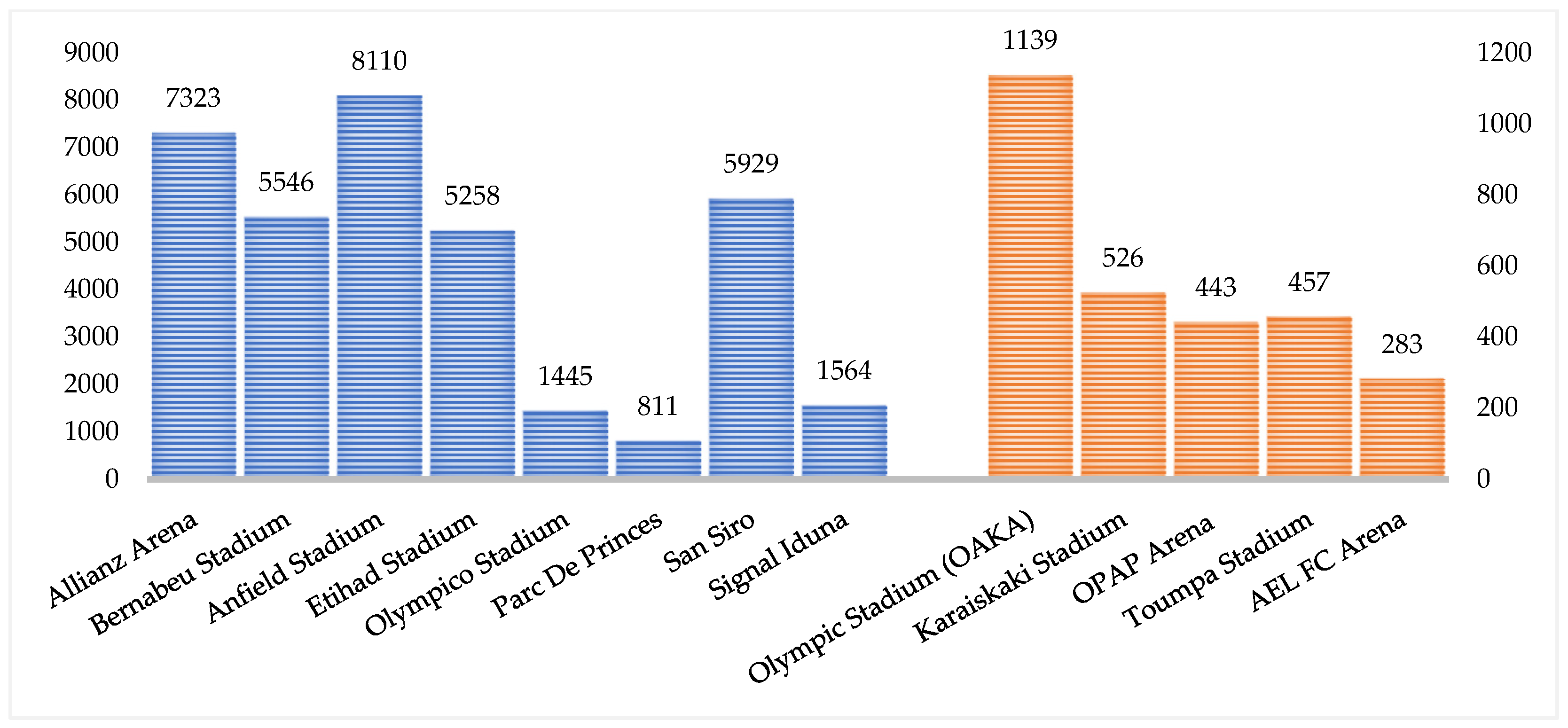
More specifically, this study aims to examine the sentiment impact of visitors’ experiences at a football stadium on well-defined themes known to be related to football stadiums. The research is focused on comments posted on well-known online review platforms by visitors to eight (8) major European and five (5) Greek football stadiums. The main selection criteria were the UEFA ranking and UEFA star-quality of stadiums/stadium capacity. The objectives of this study are summarized in the following research questions:
Q1. What are the main themes that emerge from online reviews of selected football stadiums? Do the findings confirm the themes identified in the literature?
Q2. Which themes are most frequently mentioned?
Q3. What is the sentiment impact on visitors for each of these themes?
Q4. Are there differences in the preferences and experiences of visitors between the European and Greek stadiums studied?
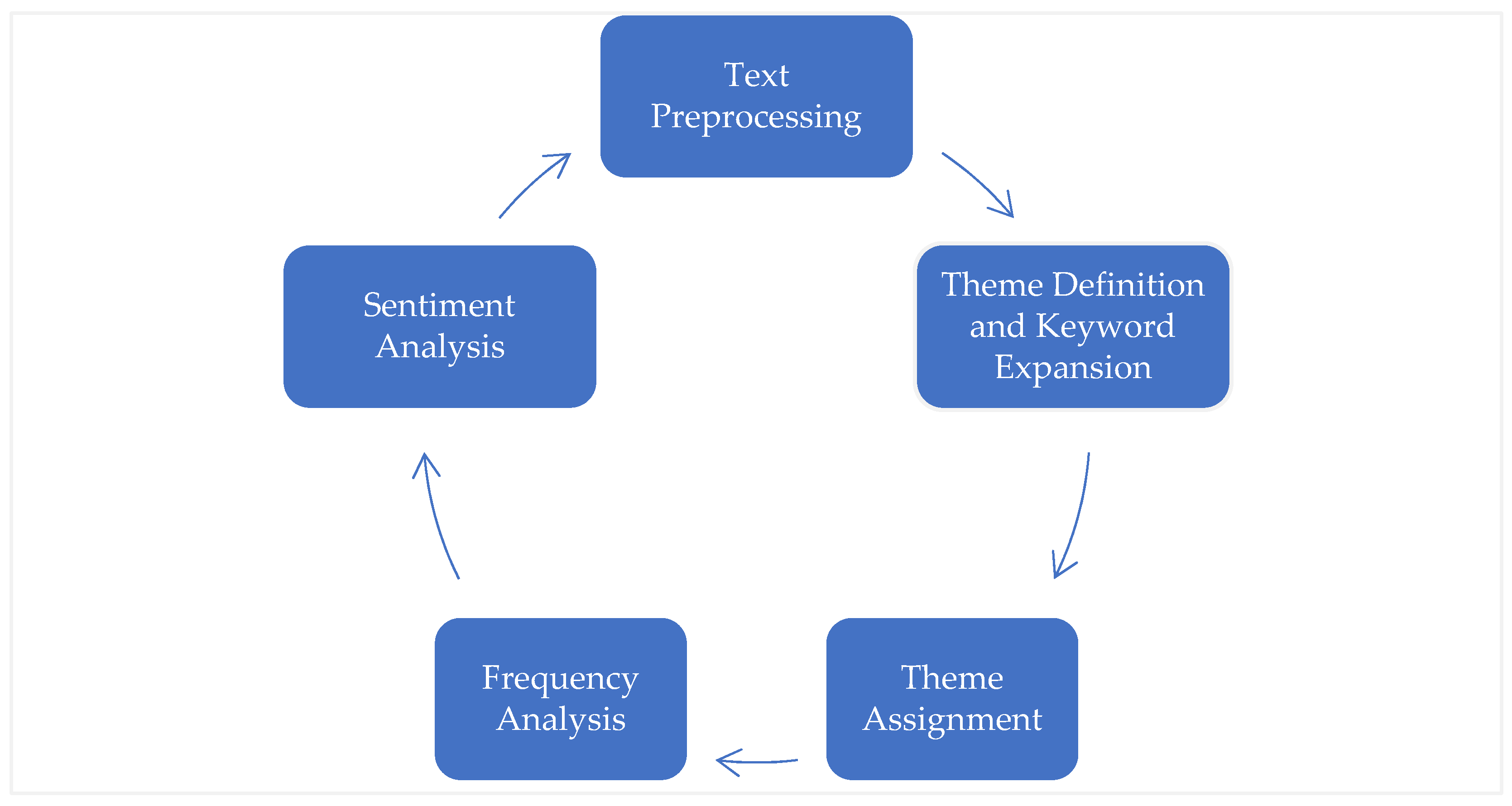
The article is structured as follows. The subsequent section reviews the relevant literature, followed by a detailed description of the methodological framework. Data analysis employs a mixed text-mining approach applied to football stadium reviews from well-known and widely used platforms, such as Google and TripAdvisor. The adopted strategy is based on natural language processing (NLP) techniques, semantic similarity algorithms, and sentiment analysis. In depth, the proposed process begins with the lexical expansion of the adopted themes and generates comprehensive keyword sets for each theme. These sets are then used to match the used comments to the members of the theme set and consequently to the themes themselves. The next step is to apply sentiment analysis, using a dictionary-based approach to represent experience sentiment as a numeric value. This combination of sentiment analysis and theme-based matching enables the measurement of sentiment for each theme. The article concludes with the presentation of research findings, a discussion of their practical implications, and suggestions for future research.
3. Results
Forty-six single-word themes were used to implement the proposed methodological framework. Each collected review can potentially be matched to any number of themes, theoretically, from none to all. Some themes are not worth mentioning, as very few reviews were mapped on them.
To ensure that analyses of each stadium were meaningful, ranking lists were introduced. A ranking list corresponds to a stadium and contains themes sorted based on the total number of reviews assigned to them. We then arbitrarily considered only the top ten themes from each ranking list. At the end of this function, a total of 19 out of 46 themes were considered to be the most prominent for this study, as presented in
Table 4 (
Table A1 and
Table A2 in the
Appendix A presents the frequencies of all studied themes across all stadiums). The first column of
Table 4 lists the considered themes, the second shows the frequency of theme occurrences in ranking lists, and the third shows the weighted average sentiment per theme across all stadiums, while the fourth and fifth columns present the average sentiment per theme in European and Greek stadiums, respectively.
Based on the results of
Table 4, we can make the following initial observations:
The themes team, experience, place, and game were spotted in 13 stadiums.
The themes room, opportunity, and fan appeared in 12 stadiums.
The theme events was located in 8 stadiums.
The themes seating and legacy were spotted in 6 stadiums.
The theme dining was found in 5 stadiums.
The theme stadium appeared in 4 stadiums.
The themes ticket and service were discussed in 3 stadiums.
The theme tour was spotted in 2 stadiums.
The themes shop, museum, heritage, and attraction were located in 1 stadium each.
The most dominant emerging themes are presented in
Table 5. It is evident that the application of the proposed framework results in well-known and validated themes found in existing literature. The “legacy” theme is thoroughly analyzed in an Olympic stadium framework (
Preuss & Plambeck, 2021) and was initially considered as possible thematic dimension in stadium tourism.
Following the above findings, visitors are interested in a variety of themes, perhaps due to the distinct characteristics of each stadium, such as age and services provided (
Ramos et al., 2022). Themes related to the core activities of the stadiums and the football experience (team, place, game, and experience) were discussed across all thirteen stadiums, indicating their fundamental role in shaping the visitor experience. These themes are consistently associated with relatively high sentiment scores across all stadiums, regardless of their geographical location, highlighting the centrality of sporting action, team identity, and overall experience quality in visitor ratings.
Themes related to visitor engagement and spatial experience (room, opportunity, and fan) were also prevalent across 12 stadiums. Among these, fan and experience scored particularly highly on the sentiment scale, suggesting that emotional engagement and participatory aspects of stadium visits are key factors in visitors’ positive perceptions.
Themes such as events, seating, and legacy were discussed in a moderate number of stadiums (six to eight). Despite their lower frequency compared to the core themes, these dimensions received high sentiment scores, particularly in European stadiums. The strong emotions associated with legacy suggest that the historical and symbolic narratives of stadiums can elicit significant emotional responses, even when not widely discussed. Similarly, seating consistently achieved a high sentiment score, suggesting that comfort and viewing quality remain important factors for visitor satisfaction when explicitly addressed.
Hospitality-related themes, such as dining, appeared in only five stadiums but achieved some of the highest overall sentiment scores in the dataset. This pattern underscores the importance of the food and beverage experience in the stadium environment, reinforcing its role as a value-adding element to the visitor experience.
Themes related to ancillary services (service, tour, and shop) appeared in relatively few stadiums. However, when they did appear, these themes were associated with particularly high sentiment scores, especially in Europe. This finding suggests that complementary services, although not widely discussed, can significantly improve emotional ratings when provided effectively.
Themes such as museum, heritage, and attraction appeared only once each, but were associated with the highest sentiment scores in the table. This result highlights the potential of cultural and educational activities to cause strong positive emotional reactions, even when they constitute specialized elements of the overall stadium experience.
Another interesting finding is that the proposed theme “legacy” appeared highly on the ranking lists, showing high positive levels of emotional excitement. According to the Cambridge Dictionary, “legacy” is “something that is a part of your history or that remains from an earlier time” (dictionary.cambridge.org). Furthermore, according to the Merriam-Webster dictionary, “legacy is something transmitted by or received from an ancestor or predecessor or from the past… relating to, associated with, or carried over from an earlier time, technology, business, etc.” (merriam-webster.com).
In stadium tourism, legacy refers to the consequences of using stadiums after a sporting event (
Fang & Wan, 2014).
Preuss and Plambeck (
2021) developed a conceptual framework for stadium legacy consisting of four dimensions and twelve functions that an Olympic property may exhibit.
Sant et al. (
2013) conceptualized the legacy of Olympic tourism in Vancouver.
Sant and Mason (
2015) identified potential legacies arising from the events in Vancouver during the Olympic bid.
Bama and Tichaawa (
2020) explored mega-events and stadium legacies in South Africa.
Essex and Latuf de Oliveira Sanchez (
2024) examined the concepts of sustainability and legacies from cities that hosted the Summer Olympic Games, 2012–2024.
Romano et al. (
2023) investigated the legacy and impact of major sporting events in Brazil.
Bondarik et al. (
2020) identified the legacy of the 2014 World Cup in Brazil in terms of tourism development and urban mobility.
The above findings reveal an academic tendency to evaluate the forms of legacy left behind at stadiums after major sporting events. According to the results of this study, interest in stadium legacy is strong in football venues beyond major sporting events and, moreover, beyond football matches.
Remark 1. Although we limited the studied themes (we selected the 10 most dominant in each stadium and then the union of them formulate the proposed thematic framework), almost every theme occurs in every stadium except ticket, tour and shop, which occur in 12 (in all European and in 4 Greek stadiums), and museum in 11 stadiums (in all European and in 3 Greek stadiums). It is clear from Table A1 and Table A2 (Appendix A), especially in European stadiums, that all themes were reviewed by visitors, sometimes with less and sometimes with more intensity. For example, the “legacy” theme, appears only in 6 stadiums in the top ten ranking lists, however the average ranking across all stadiums is 10.15 and the average number of corresponding reviews is 365.23 across all stadiums (13), while for “attraction” theme, the average ranking is 16.77 and the average number of reviews is 104.31 across all stadiums (13). On the other hand, there are themes that exist in almost all stadiums but do not seem to “concern” a large portion of visitors, e.g., the “museum” theme is ranked at 29.18, with 75.18 reviews on average, while “heritage” theme is ranked at 24.77 and has 43.31 reviews on average (Appendix A, Table A3).
In the second part of the analysis, the dominant themes in European and Greek stadiums were considered separately. In other words, the themes that appeared at least once in the top 10 of the European stadiums ranking lists were considered themes of interest, followed by the themes that appeared at least once in the top 10 of the Greek stadiums ranking lists.
In the first case, the thematic framework consisted of 15 themes (
Table 6), including “legacy”. Visitors to European stadiums showed a common interest in team, room, place, opportunity, game, fan, and experience. This trend suggests a balanced interest in multiple themes that shape the tourist experience at European stadiums. The themes events, dining, and seating were an important factor in shaping the experience at about half of the stadiums, whereas in a few stadiums, visitors showed interest in tickets, legacy, stadium, tour, and service. The differences recorded in the latter themes indicate organizational differences among stadiums’ management, as the characteristics of each stadium shape the opinion and interest of visitors.
In the second case, the thematic framework consists of 17 themes (
Table 7), including “legacy” as well. Visitors to Greek football stadiums show interest in topics related to team, place, game, and experience (these themes appeared in all 5 stadiums), room, opportunity, and fan (4 stadiums), legacy and events (3 stadiums), stadium, service, and seating (2 stadiums), and tour, shop, museum, heritage, and attraction (1 stadium). The strong interest in the team and the game indicates that visitors to Greek stadiums tend to consider themselves part of the team, especially during the game, while also paying attention to the physical environment (place), without neglecting the importance of the overall experience. Thus, visitors’ attention is mainly focused on the characteristics of the match day, and their impressions are shaped by these elements. Next, the themes of room, opportunity, and fan suggest that for visitors, spatial conditions are just as important as the available opportunities (e.g., shops, access, etc.), enhanced by the atmosphere and environment of the fans. Issues such as legacy, events, and service, which are mentioned in 3 of the 5 stadiums, suggest that visitors are also interested in specialized topics and emotions, while the themes of tour, shop, museum, heritage, and attraction are at the bottom of the ranking lists, indicating the distinct characteristics of each Greek stadium (age, owner, activities organized there, etc.).
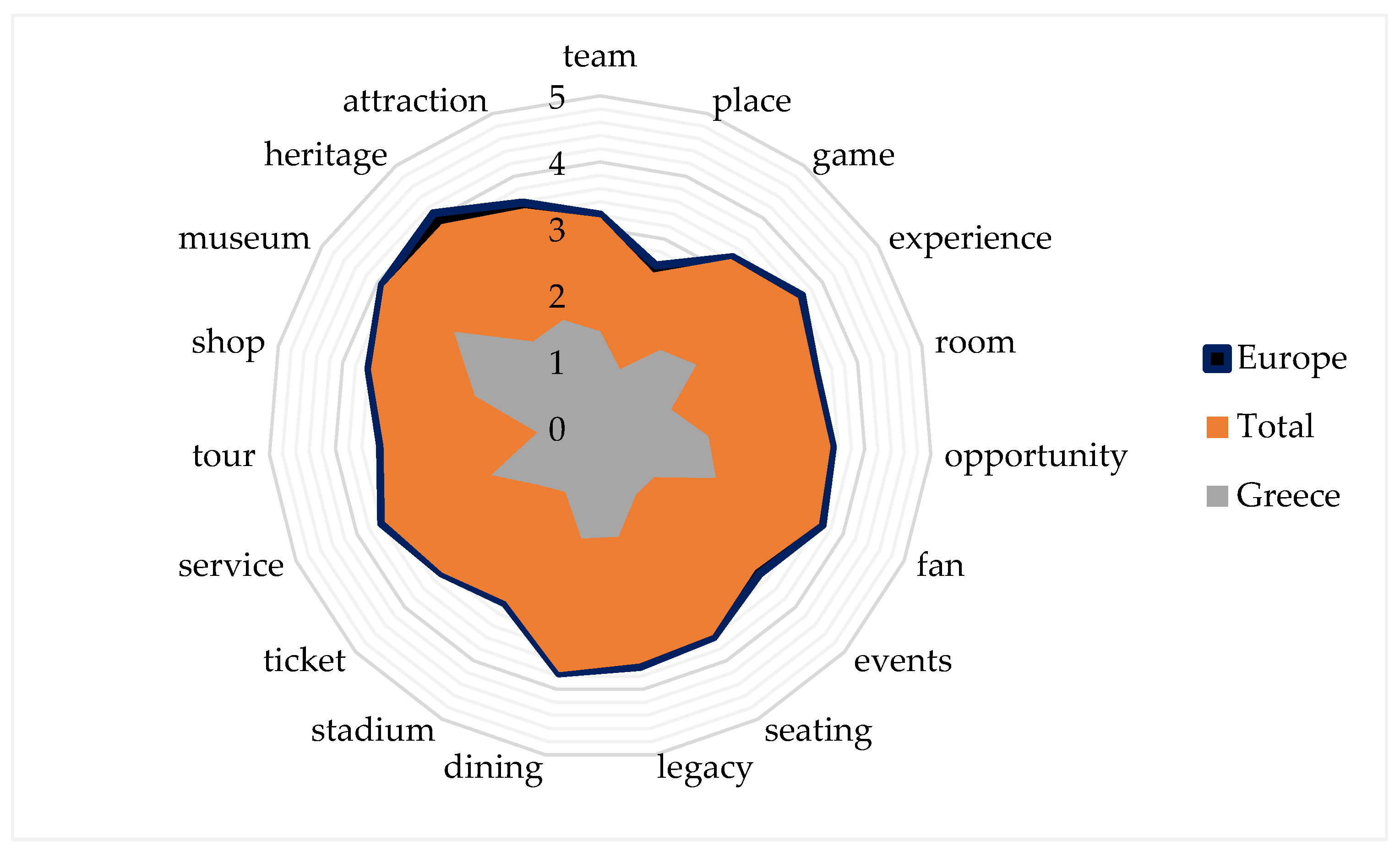
Although the overall thematic structure of stadium visitors’ experiences is largely similar across European and Greek stadiums, there are clear differences in terms of the dominance of themes, the intensity of emotions, and the expression of criticism. Key thematic elements of the experience (team, place, game, and experience) are consistently present in both analyses, confirming their universal significance. However, their frequency is lower in Greek stadiums, suggesting a less uniform expression of these dimensions. The themes of participation and space (fan, room, and opportunity) are also discussed less consistently in Greek stadiums, although they maintain a positive sentiment when present. A notable deviation concerns hospitality: dining is moderately common and is evaluated very positively in European stadiums, but it is absent from Greek stadiums, suggesting differences in the integration or importance of food and beverage services. In contrast, Greek stadiums reveal specialized themes related to culture and cultural heritage (museum, heritage, and attraction), which are absent from European stadiums but are associated with some of the highest sentiment scores, suggesting a strong emotional response where they are found. In almost all common themes, the sentiment scores for Greek stadiums are consistently lower than those observed for European stadiums, regardless of the resulting thematic context (
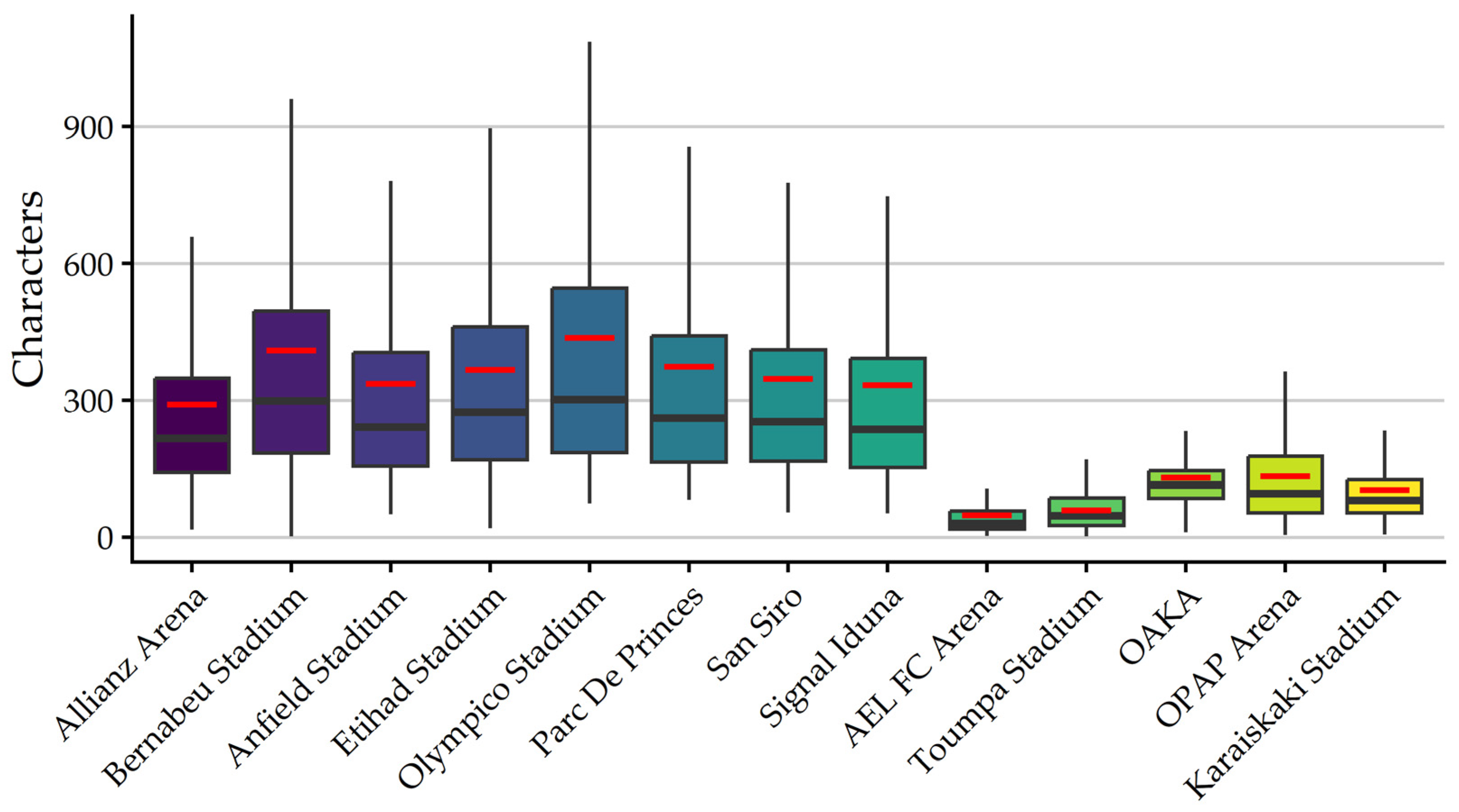
Figure 3). Although the empirical dimensions are largely comparable, the emotional intensity expressed in reviews of Greek stadiums appears to be more moderate. This difference is further reflected in the significantly higher number of unclassified reviews for Greek stadiums, which often consist of very short, slogan-like expressions referring to favorite teams (e.g., “PAOKARA,” “only AEK”), while reviews of European stadiums tend to be longer, more descriptive, and emotionally expressive. Overall, these findings suggest that regional differences in stadium experiences are due less to a lack of empirical data and more to differences in expressive culture, emotional engagement, service quality, infrastructure maturity, and visitor expectations. The differences in expressive culture among fans visiting European and Greek stadiums are presented in
Figure 4, which shows a descriptive analysis of the reviews’ lengths (the red line indicates the average characters used).
4. Discussion
Existing online reviews regarding visitors at football stadiums reveal a wide variety of themes, beyond the match experience, which can shape a unique tourist experience, ranging from topics related to the team, the game, and the atmosphere created by the fans to functional and cultural elements and characteristics, such as service, legacy, dining, and shopping (Q1).
Visitors’ experiences at European stadiums were analyzed across a range of themes, essential for providing a holistic experience. In Greek stadiums, visitors’ interests vary and focus primarily on matchday experiences and the characteristics of each venue. The different emotional impact on satisfaction between visitors to European and Greek stadiums suggests differences in sports venues depending on their age, management, and ownership, and the products and services they offer. Topics such as dining, legacy, fans, experience, and services elicit the strongest positive emotional responses in European stadiums visitors, while museums, shops, and fan experiences elicit the most intense positive emotions in Greek ones (Q2).
The thematic and sentiment analyses provide a comprehensive understanding of the opinions, preferences, and prior experiences of visitors to European and Greek football stadiums. The well-developed and organized facilities at European stadiums impress visitors, while, in contrast, Greek stadiums receive relatively lower ratings and reactions, suggesting that despite interest in certain aspects, such as museums and shops, the overall experience remains low (Q3).
All European stadiums offer a well-organized and balanced experience, enhanced by complementary features such as quality services and various attractions, which influence the intensity of visitors’ emotions. Greek stadiums offer various services and products, usually to a limited extent, which leads to lower visitor satisfaction. Additionally, the excitement in Greek stadiums results from features such as fan and museums, mainly from the experience of match days (Q4).
Overall, the study’s findings underscore the importance of providing a multidimensional and well-integrated stadium experience to enhance visitor enjoyment and engagement, as well as to attract a wide range of visitors, fans, and tourists. Thus, this information can provide valuable guidance for managers and tourism professionals seeking improvements and attractive tourist experiences at football stadiums.