
Review

Microbial Biostimulants as Powerful Catalysts for Next-Generation Integrated Pest Management in Botanical Gardens


1
College of Life Science and Technology, Tarim University, Alar 843300, China
2
College of Food Science and Engineering, Tarim University, Alar 843300, China
3
Key Laboratory of Tarim Animal Husbandry Science and Technology, Xinjiang Production and Construction Group, School of Animal Science and Technology, Tarim University, Alar 843300, China
4
Department of Horticulture, The University of Agriculture, Peshawar 25120, Pakistan
5
National Key Laboratory for Germplasm Innovation and Utilization of Horticultural Crops, College of Horticulture and Forestry Sciences, Huazhong Agricultural University, Wuhan 430070, China
6
Key Laboratory of Comprehensive Utilization of Saline-Alkali Land, Xinjiang Production and Construction Corps, College of Water Hydraulic and Architectural Engineering, Tarim University, Alar 843300, China
7
Soil and Water Science Department, Indian River Research and Education Center, Institute of Food and Agricultural Sciences, University of Florida, Fort Pierce, FL 34945, USA
*
Authors to whom correspondence should be addressed.
These authors contributed equally to this work.
J. Zool. Bot. Gard. 2026, 7(3), 33; https://doi.org/10.3390/jzbg7030033
Submission received: 16 April 2026 / Revised: 14 July 2026 / Accepted: 14 August 2026 / Published: 19 August 2026

Abstract

Botanical gardens are highly heterogeneous plant systems characterized by high taxonomic diversity, with numerous plant taxa represented within confined areas, and complex ecological interactions that create unique challenges for pest management. Conventional IPM strategies, designed for simplified agroecosystems, often fail to address complex pest pressures in curated environments. Microbial biostimulants have emerged as promising components of sustainable IPM strategies by enhancing plant defense responses, improving stress resilience, and reducing reliance on chemical inputs. This review synthesizes current knowledge on microbial biostimulants, including plant growth-promoting rhizobacteria, arbuscular mycorrhizal fungi and endophytic microorganisms, in modulating plant defense against insect herbivores. These beneficial microbes enhance plant resistance through multiple mechanisms. They activate induced systemic resistance and modulate key phytohormones, including jasmonic acid, salicylic acid, and ethylene. Additionally, they regulate calcium-dependent and reactive oxygen species-mediated defenses. Microbially induced changes in plant secondary metabolites and volatile organic compounds further influence herbivore behavior and trophic interactions. Emphasis is placed on integrating microbial biostimulants into IPM frameworks tailored to botanical gardens. This highlights compatibility with biological control agents and reduced reliance on synthetic pesticides. Despite promising advances, challenges remain, including context-dependent efficacy, host specificity and limited long-term validation. Overall, microbial biostimulants offer a promising tool for enhancing IPM in biodiversity-rich botanical gardens, although further long-term validation is needed to fully assess their sustainability and effectiveness.

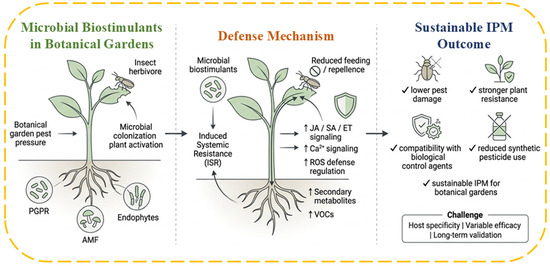
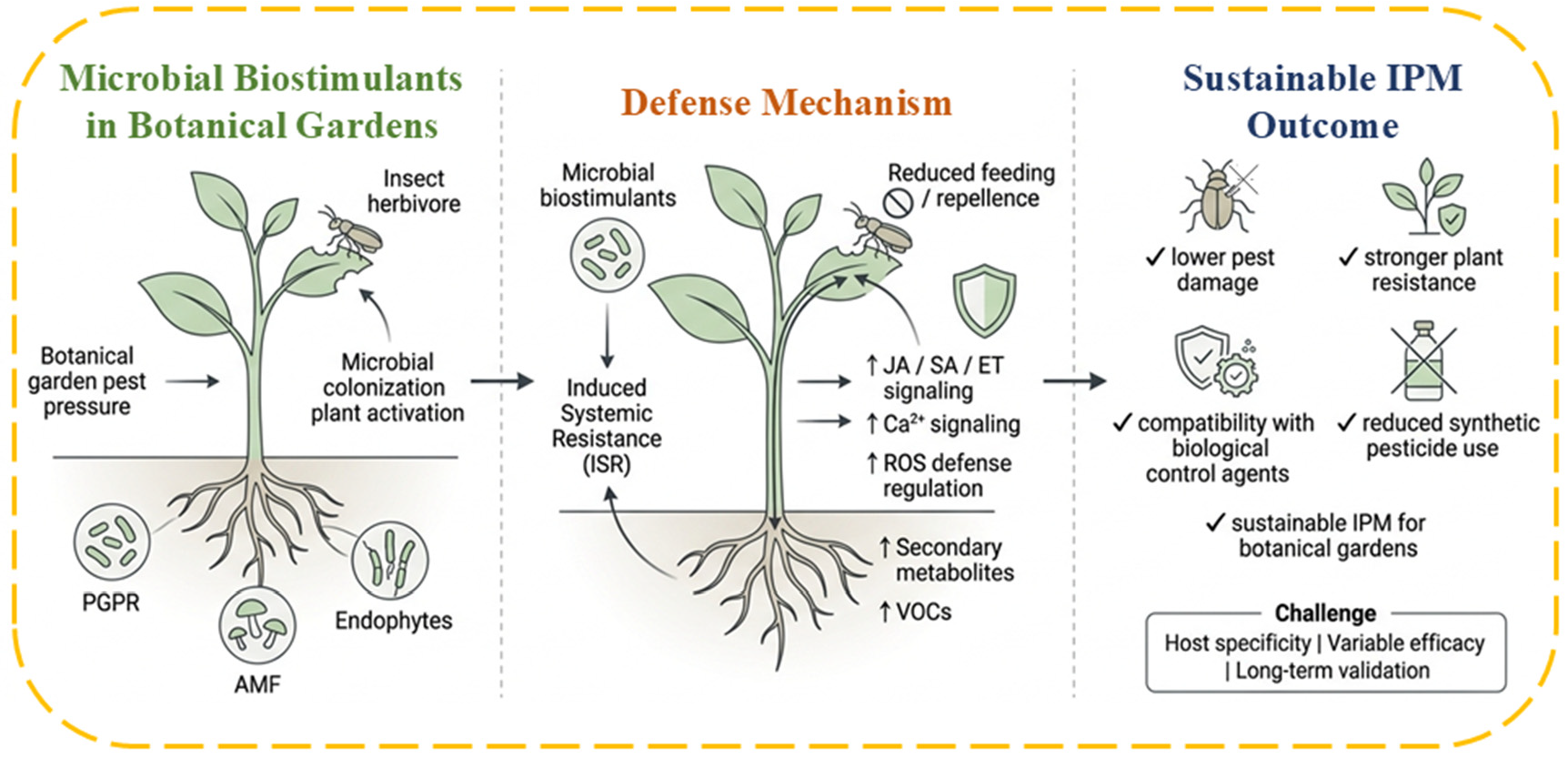
Graphical Abstract

1. Introduction

Botanical gardens are increasingly understood not simply as public landscapes, but as curated living collections that integrate ex situ conservation, botanical research, education, and horticultural experimentation. A study quoted by Mounce et al. [1] states that global botanical garden living collections include 105,634 plant species, representing approximately 30% of known land plant diversity, and contain more than 41% of threatened plant species. Complementary assessments further indicate that living collections and associated seed banks represent over 35% of known plant species, highlighting the wider conservation role of botanical gardens in maintaining plant genetic diversity [2]. Together, these findings demonstrate the importance of botanical gardens as reservoirs of biodiversity under increasing habitat loss, climate change, and plant-health threats. Biosecurity assessments suggest that botanical gardens serve not only as sentinel sites but also as potential pathways for pest and pathogen entry. Eight major biosecurity risks associated with plant movement, soil transfer, visitor numbers and urban adjacency were documented in evaluations of plant movement, soil transfer, visitor numbers and urban adjacency, demonstrating that living collections can contribute to the spread of invasive organisms if quarantine is incomplete [3].
In parallel, investigations of soilborne pathogens in South African botanical gardens recovered Phytophthora species in 48 of 103 samples, including eight described species, one unnamed lineage, and three putative hybrids; three species represented first records for the region [4]. Further investigations in the KwaZulu-Natal gardens found further diverse Phytophthora assemblages, supporting the discovery of hidden pathogen diversity in root-zone substrates in botanical gardens [5]. The results show a positive contribution of botanical gardens for the early-warning detection of emerging pathogens, as well as the importance of implementing traditional visual monitoring, without which it is not possible to manage them in time. A high diversity of insect pests was observed in botanical gardens. More than 100 aphid species were recorded in five European gardens, including several non-native taxa and newly reported species, as well as alien insects and potential virus vectors that are found early in the gardens [6].
High plant diversity in botanical gardens can have a positive effect on ecological stability and on the potential to reduce the pest problem via natural regulation and increasing biological interactions but can also cause complex problems. A diversity of plant taxa with differing susceptibility can allow a greater diversity of potential hosts to exist that can help the pest/pathogen survive, adapt and be transmitted within collections [7]. Thus, the management of pests in botanical gardens must be integrated with considerations of both conservation goals and plant-health risks while focusing on proactive management and monitoring strategies that promote plant diversity. Traditional integrated pest management (IPM) approaches do not always consider the dynamics of a botanical garden ecosystem. Agricultural IPM makes various simplifying assumptions to deal with the measurable loss of yield and the presence of economic thresholds [8]. Botanical gardens, on the other hand, may feature rare, threatened, and historically significant accessions, as well as various glasshouse and nursery collections and outdoor exhibits. The Royal Botanic Garden Edinburgh showed that the success of plant-health protection was dependent on coordinated quarantine procedures, hygienic measures, in-house diagnostics, statutory cooperation, engaging visitors and implementing precautionary actions in accession distribution [9]. This underscores the importance of a holistic institutional preventive and risk-based approach to plant-health management in botanical gardens over a reactive approach. Chemical testing identified that public-facing ornamental collections can be important sources of pesticide exposure.
Residue analysis of “bee-friendly” ornamental plants found that 70% of sampled specimens contained neonicotinoids, and, in a separate survey, 53 of 54 plants contained at least one pesticide, with one plant containing 19 different active compounds, indicating substantial exposure risk to non-target organisms [10,11]. Multinational assessments of pollinators also revealed that pesticide use, habitat loss, and pathogen pressure are interacting to cause pollinator decline, reflecting the importance of adopting low-impact practices for pest management in botanical gardens [12]. Microbial biostimulants are now considered as preventive biological tools, which can improve plants’ growth and tolerance to stress. Definitions recognize biostimulants as any substance or microorganisms used to increase nutrient efficiency, abiotic-stress tolerance or crop quality without necessarily providing nutrients [13]. Meta-analyses showed that the overall effect of biostimulants was an increase of 17.9% in plant performance, with greater effects under drought, salinity stress, nutrient deficiency, and low organic matter conditions, highlighting the context-specific nature of biostimulants efficacy [14].
Further evaluations indicated that microbial viability, host compatibility, colonization ability, substrate chemistry, and resident microbial communities determine the success of inoculants in heterogeneous environments [15]. From these observations, it can be concluded that the use of microbial biostimulants for improving resilience can be evaluated in complex conditions, which, in the context of a botanical garden, is also a conservation approach. Taken together, botanical gardens maintain substantial global plant diversity and serve as early-warning systems for pest and pathogen detection, yet they are exposed to hidden pathogen loads, invasive insects, and pesticide contamination. Quarantine, hygiene, and integrated plant-health systems are critical for preserving collection integrity. Although microbial biostimulants offer a potential tool for preventive management, the responses are context-dependent, and there is a need for their operational testing in multi-species, heterogeneous environments. The review also explores the differences between microbial biostimulants and conventional fertilizers, biopesticides and other biological products, and the prospects for microbial biostimulants in a preventative and resilience-based management approach. A special focus is placed on elucidating their mechanisms of action, operational limitations, and research gaps that must be addressed to enable confident application in botanical garden practice.

2. Pest Dynamics in Botanical Garden Ecosystems

Botanical gardens are characterized by exceptional plant diversity, mixed provenance, and high taxonomic novelty. But this diversity does not always result in a predictable and reduced pest problem. A greater diversity of hosts can lead to a decrease in pest abundance due to the dilution of host concentration but can also lead to an increase in pest richness due to the creation of additional ecological niches, which can lead to non-linear or hump-shaped relationships [16]. In addition to species richness, species composition, host phylogenetic relatedness, spatial arrangement, plant chemical traits, soil conditions, and resident arthropod communities are important factors affecting pest dynamics in these ecosystems [17]. These dynamics are further modified by spatial connectivity between beds, glasshouses, nurseries and display areas.
Plant chemical diversity mediates herbivore interactions. Volatile organic compounds, secondary metabolites, and induced defense responses influence herbivore host selection, feeding, and oviposition, while also affecting predator and parasitoid behavior [18]. These chemical signals can lead to associational resistance or associational susceptibility. Associational resistance is the result of the masking of host cues, the reduction of host appearance, or the support of natural enemies by neighboring non-host plants, while associational susceptibility is due to neighbors attracting shared herbivores, providing refuges, or increasing local host availability [19]. Experimental evidence shows that the identity of neighboring plants has a strong effect on herbivory, with some combinations reducing damage and others increasing it [19]. In botanical gardens, plant diversity does not necessarily lead to a uniform suppression of pests, but to a mosaic of resistant and vulnerable hosts. The spatial organization of botanical gardens also influences the establishment and spread of pests.
Horticultural activities, visitor access and the movement of substrates between beds, borders, nurseries, glasshouses, propagation and mature collections are all linked. This connection allows pests to spread from protected to open areas. Pests adapted to one host may be more likely to colonize closely related taxa, thus increasing the pest risk when host plants are phylogenetically related [20]. Botanical gardens are a multi-trophic pest dynamic system. Plant health is affected by herbivores, predators, parasitoids, decomposers, pollinators and microbial communities. The multifunctional ecosystems can be increased by plant diversity in several trophic levels, indicating that pest regulation requires ecological networks instead of just plant–pest interactions [17,18]. Botanical collections can also help maintain populations of insects that are pests and provide early-warning detection systems [21]. International movement of horticulture crops poses further risk. Botanical gardens are linked to the international plant trade via accession exchanges, propagation networks and the acquisition of ornamental plants, and have the potential to spread pests and pathogens internationally by unintended means [22]. The potential for latent introduction and transmission of viral, bacterial, fungal, and oomycete pathogens exists during plant transport, accession exchange, or initial cultivation phases [4,5,22,23,24].
Climate change also alters the risk of pests by changing the distribution of hosts, pathogen survival, vector activity, and host susceptibility [24]. Climate, host identity, geography, and phylogeny all influence insect and fungal communities, as evidenced by environmental surveys, and thus botanical collections serve as dynamic pest observatories [21]. The likelihood of pest establishment is predicted by phylogenetic structure: pest assemblages with high numbers of close relatives of competent hosts are more likely to be colonized by pests [25]. Secondary dispersal, bridgehead effects, and asymmetric intercontinental movements of invasive insects are significant factors of pest invasions in curated landscapes, as revealed by global syntheses [26]. Public access, conservation goals, and pollinators and natural enemies limit the options for pesticide management in botanical gardens. Residues of pesticides can be found in ornamental plants, even those that are bee-friendly, in the flowers, leaves, roots, and soil, posing a risk of exposure [27,28].
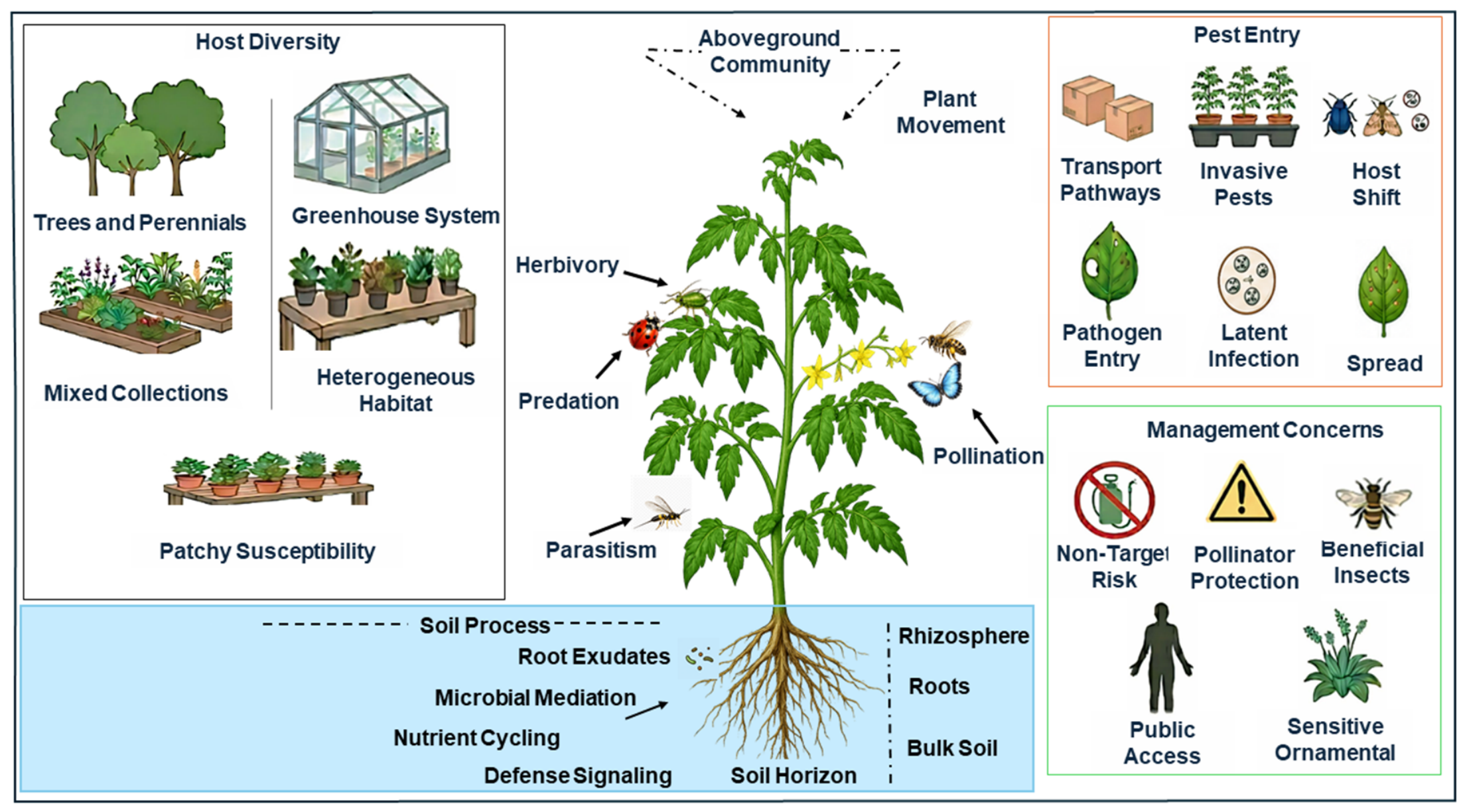
Global analyses show that pesticide use is still a significant contribution to pollinator decline, and there are still gaps in knowledge about non-bee pollinators and non-agricultural exposure routes [29]. Landscape-scale investigations reveal that pesticide exposure in pollinators can be strongly influenced by land-use patterns in urbanized areas and its surrounding landscape [30]. Thus, chemical control is not the only method that can be used in botanical gardens. A strategy for prevention should include quarantine, plant inspection, sanitation, spatial risk assessment, host-relatedness evaluation, biological regulation, habitat management and low-impact interventions. The ability of host diversity to increase resilience depends on the species composition, spatial distribution, plant chemistry, and habitat structure that facilitate ecological regulation, and not pest amplification [16,18]. Botanical gardens are a nexus of conservation, horticulture and global plant exchange, and need to be managed with methods that consider multi-trophic regulation, host diversity, plant movement, invasion risk, rhizosphere processes, and the limitations of pesticides. These mutually interacting processes are summarized in Figure 1 and a framework for preventive interventions such as microbial biostimulants to bolster the resilience of plants before outbreaks is possible.

3. Microbial Biostimulants and Functional Diversity

Microbial biostimulants are functionally specialized biological inputs. They reprogram plant physiology, nutrient acquisition, and stress signaling. This improves plant resilience before pest or pathogen pressure reach levels that can cause significant damage [31]. This makes them particularly suitable for IPM in botanical gardens. In these conditions, the wide range of plant species, continual movement of plants, high aesthetic standards, and preference for low-toxicity interventions require preventive, system-based resilience rather than repeated curative pesticide use [32]. Functional diversity is more important than taxonomy per se. Rhizosphere bacteria, mycorrhizal fungi, endophytes, and designed consortia inhabit distinct plant compartments and act through partially complementary mechanisms. These include nutrient movement, hormone signaling, redox buffering, defense priming, and microbiome restructuring [33].
Microbial biostimulants should be different from similar biological inputs. The main mechanisms of action of microbial biostimulants include plant physiological regulation, nutrient acquisition, stress tolerance, rhizosphere activity, and defense preparedness. Biofertilizers primarily increase nutrient availability or nutrient uptake, while biocontrol agents inhibit the growth of pests or pathogens by antagonism, competition or induced resistance [34]. Biopesticides are products specifically developed to directly control pests or diseases by means of toxic, pathogenic or inhibitory effects. In this review, microbial biostimulants do not fall into the category of pest control agents but are viewed as modulators of plant resilience. The evidence shown for microbial biostimulants is found to be variable depending on the microbial group, host plants and the experimental system used. There are many reported benefits; however, these are based upon controlled crop or greenhouse studies and are not fully tested in the long term with diverse botanical garden collections [35]. The microbiological quality of microbial biostimulants should be considered in addition to the other parameters. They involve a proper identification of the relevant microbial strain, a proper count of the number of viable cells or propagules, a confirmation on the stability of the microbial formulation during storage and application. The compatibility of microbial formulation with the host plant and its microbial community is the ability of microbial formulation to colonize the rhizosphere or plant tissues and its persistence under local environmental conditions. These criteria are key for determining whether mechanisms reported in the literature can lead to uniform plant resilience in botanical garden IPM.

3.1. Plant Growth-Promoting Rhizobacteria (PGPR)

Plant growth-promoting rhizobacteria (PGPR) initially interacts at the rhizosphere interface where root exudates attract bacteria to the interface by chemotaxis and signaling interactions. When they are anchored on the rhizoplane or in biofilms, they enhance the performance of plants by acting in nutritional and immunological pathways [34]. Mechanistically, biological processes such as nitrogen fixation, phosphate solubilization, and iron capture through siderophores increase the pool of plant-available nutrients. These nutrients become available without the use of traditional fertilizers. Simultaneously, the numerous strains produce phytohormones or hormone-like cues, such as auxin-related compounds, and modify root system architecture to facilitate the exploration of a broader soil volume [35]. One of the most essential stress-buffering processes is the production of 1-aminocyclopropane-1-carboxylate (ACC) deaminase, which reduces ethylene levels in plants by breaking down its precursor, ACC. Elevated ethylene under abiotic-stresses such as salinity, drought, flooding, or transplant shock can inhibit root growth and development, so ACC deaminase helps maintain root activity under these conditions. While this mechanism primarily confers abiotic stress tolerance, healthier and more vigorous roots can indirectly improve plant resilience to pest pressure by supporting overall plant vigor and defense capacity [36]. PGPR also secretes specific volatile organic compounds (VOCs), such as 2,3-butanediol and acetoin, and polyamines like putrescine and spermidine, which can modify root architecture, enhance lateral root formation, and stimulate photosynthetic efficiency. These compounds act by modulating hormone signaling pathways, including auxin and cytokinin responses, leading to improved nutrient uptake and overall plant vigor. Induced systemic resistance (ISR) is often the most valuable PGPR trait, in IPM terms. Plant pattern recognition receptors (PRRs) perceive microbe-associated molecular patterns and other bacterial determinants, triggering mitogen-activated protein kinase (MAPK cascades), WRKY transcription factors (WRKYs), and defense networks involving salicylic acid (SA), jasmonic acid (JA) and ethylene (ET) [37]. Such signaling does not necessarily result in a complete defense response in the moment; instead, it often leads to a primed state, whereby subsequent attack induces quicker and stronger antimicrobial, oxidative, and structural defenses. PGPR induces ISR, which is associated with increased activities of defense-related enzymes, including phenylalanine ammonia-lyase, peroxidase, catalase, and superoxide dismutase, as well as enhanced expression of pathogenesis-related (PR) genes. These responses strengthen plant defense mechanisms against pathogen attack, although the magnitude and effectiveness of ISR can vary depending on the microbial strain, host plant, and environmental conditions [38].

3.2. Arbuscular Mycorrhizal Fungi (AMF)

Arbuscular mycorrhizal fungi (AMF) provide another functional layer since they extend the plant root system by physically forming extraradical hyphae networks that essentially increase the size of the absorptive surface past the depletion zone around roots. This enhances the uptake of phosphorus, nitrogen, water, and alters the transport of membranes, roots hair formation and soil aggregation [39]. AMF are consequently nutrient partners as well as hydraulic and structural engineers of the rhizosphere. Their role in plant defense is increasingly revealed at the molecular level. Symbiosis is initiated when plant receptors perceive fungal Myc factors, activating the common symbiosis signaling pathway (CSSP) through DMI1, DMI2, DMI3, and CCaMK. Calcium spiking acts as a central second messenger in this process [40]. Upon colonization, AMF modulate host hormonal crosstalk, including SA, JA, abscisic acid (ABA), nitric oxide, auxin, cytokinin, and gibberellin. Among these, SA and JA are particularly important for pest resilience, as they regulate systemic acquired resistance and defense against herbivores, while ABA and auxin help balance growth and stress responses to maintain plant vigor under biotic stress. Mechanistically, the pest resilience mediated by AMF relies on a few processes that are coupled [41]. They activate antioxidant enzymes, enhance osmotic regulation and enhance the synthesis of protective secondary metabolites. They further strengthen the physical barriers by the deposition of callose, lignification and fortification of the cell wall, restricting the ingress of pathogens. On a community level, AMF restructure root exudates and attracts beneficial microbes that are compatible, establishing a more suppressive rhizosphere [42].

3.3. Endophytic Microorganisms

Endophytes are different from PGPR and AMF since they are known to live within plant tissues, including roots, stems, leaves or vascular compartments, without causing disease. This internal niche provides them with a mechanistic advantage: they have a lower exposure to external fluctuations and are nearer to host signaling pathways than rhizosphere microbes, which can result in more enduring effects [43]. Endophytes increase the resilience both by direct antagonism and host-mediated defense control. They directly generate lipopeptides, phenolics, terpenoids, alkaloids, peptides, volatile compounds, siderophores and hydrolytic enzymes that inhibit pathogens, disrupt membranes, chelate iron, or degrade cell walls. They indirectly stimulate SAR- and ISR-like signals that are mediated by SA, JA, and ET, suppress stress-sensitive genes, and reinforce antioxidant and osmotic defenses [44]. Endophyte metabolites serve as antimicrobials and signaling molecules that help adjust the plant’s growth–defense balance. For example, Bacillus subtilis and Pseudomonas fluorescens endophytes produce lipopeptides and siderophores that inhibit fungal pathogens such as Fusarium oxysporum and reduce colonization by vascular pests. Because these microbes inhabit the endosphere, they can also protect internal tissues against herbivores and pathogens that move through vascular pathways, as observed in tomato and maize, where endophyte inoculation decreased the incidence of root-feeding nematodes and vascular wilt disease [45]. Mechanistically, they can prime systemic immunity, facilitate nutrient intake and redox homeostasis stabilization on the part of the host. Other recent studies also identify quorum sensing, biosynthetic gene clusters and host–microbe chemical mimicry as significant layers that regulate endophyte performance [46].

3.4. Microbial Consortia and Next-Generation Biostimulants

The next generation of microbial biostimulants is not only shifting away from single-strain products, but also toward microbial consortia and synthetic communities (SynComs) based on functional complementarity [47]. The explanation is mechanistic: any individual microbe cannot be depended on to provide nutrient mobilization, hormone regulation, immune priming, pathogen suppression, stress buffering and stable field establishment in all hosts and environments [48]. Instead, well-designed consortia share these functions with several members, enabling them to divide labor, cross-feed, have functional redundancy, and niche complementarity. Plants actively influence microbial communities by releasing root exudates and signaling molecules that recruit and stabilize specific consortium members [49]. This is likely to be the most promising direction in the case of IPM in botanical gardens. The rational consortia could be designed to suit ornamentals and rare species, e.g., a phosphate-solubilizing PGPR, an ISR-inducing Bacillus, an AMF partner to network soil and an endophyte to secrete antifungal or insect-deterring metabolites [50]. Table 1 shows the mechanistic roles of major microbial biostimulants groups in enhancing plant resilience and supporting integrated pest management in botanical gardens.

4. Mechanisms of Microbial Biostimulants-Mediated Pest Resistance

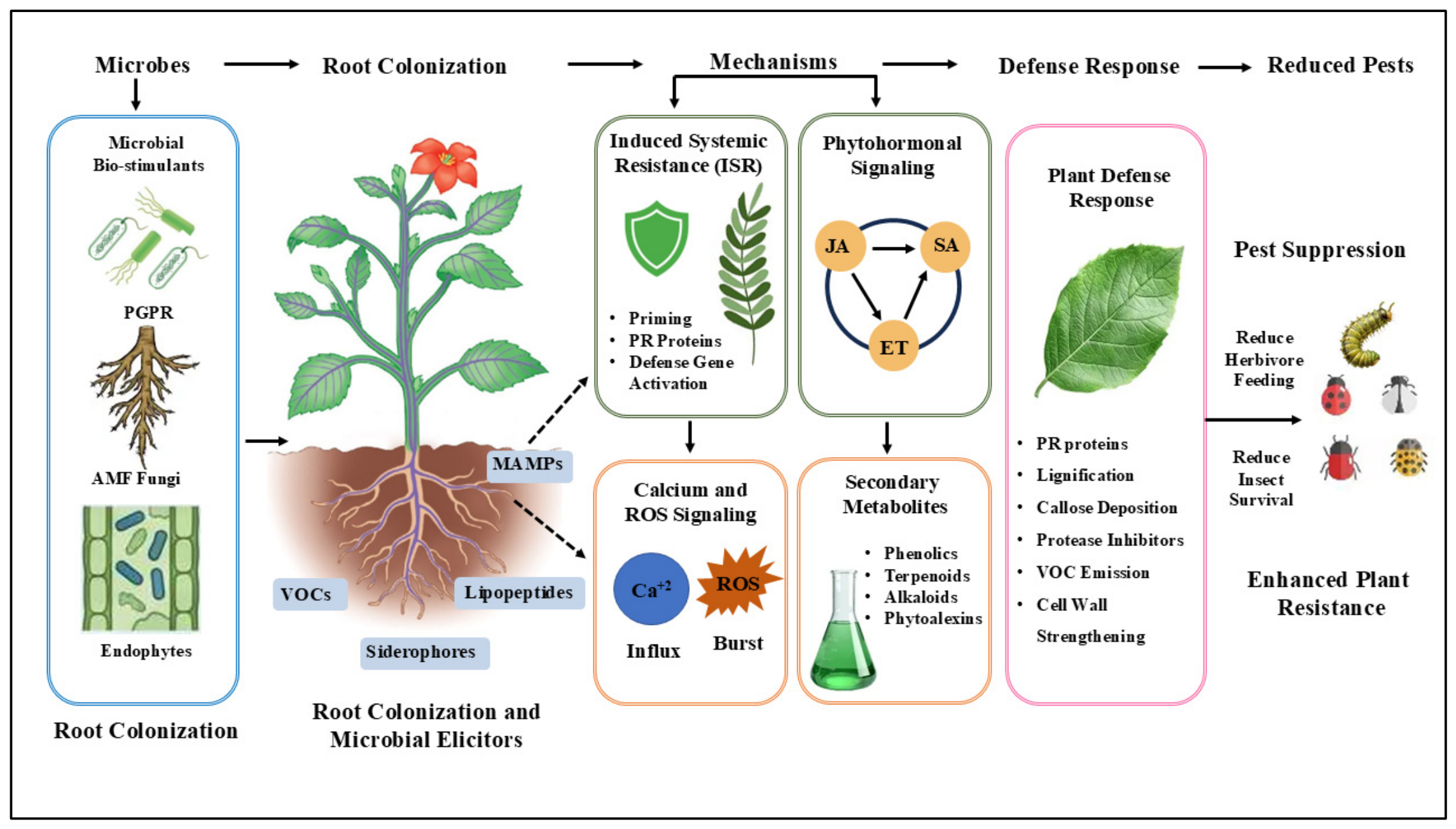
Microbial biostimulants-mediated resistance is a process that enhances plant defenses at molecular, biochemical, and physiological levels to improve resistance to insect pests. Beneficial microorganisms such as PGPR, AMF, and endophytes colonize plant tissues and stimulate systemic resistance, including ISR and, in some cases, systemic acquired resistance (SAR). These responses involve JA- and SA-dependent pathways that activate defense enzymes, proteinase inhibitors, and anti-herbivore metabolites, reducing pest colonization and herbivore feeding. In comparison to classical biological control agents that directly act on pests, microbial biostimulants mostly work by activating plant defense systems so that they can respond more rapidly and intensively to herbivore attacks with minimal metabolic costs linked with consistent defense activation [51]. Beneficial microorganisms secrete elicitors like lipopeptides, volatile organic compounds, siderophores, and microbe-associated molecular patterns (MAMPs). Plant receptors are able to recognize these signals, leading to transcriptional reprogramming of defense genes and stimulating the synthesis of pathogenesis-related proteins, oxidative enzymes, and defensive metabolites. As a result, plants have less herbivore consumption, slower insect growth, and enhanced resistance to pest attack [52].
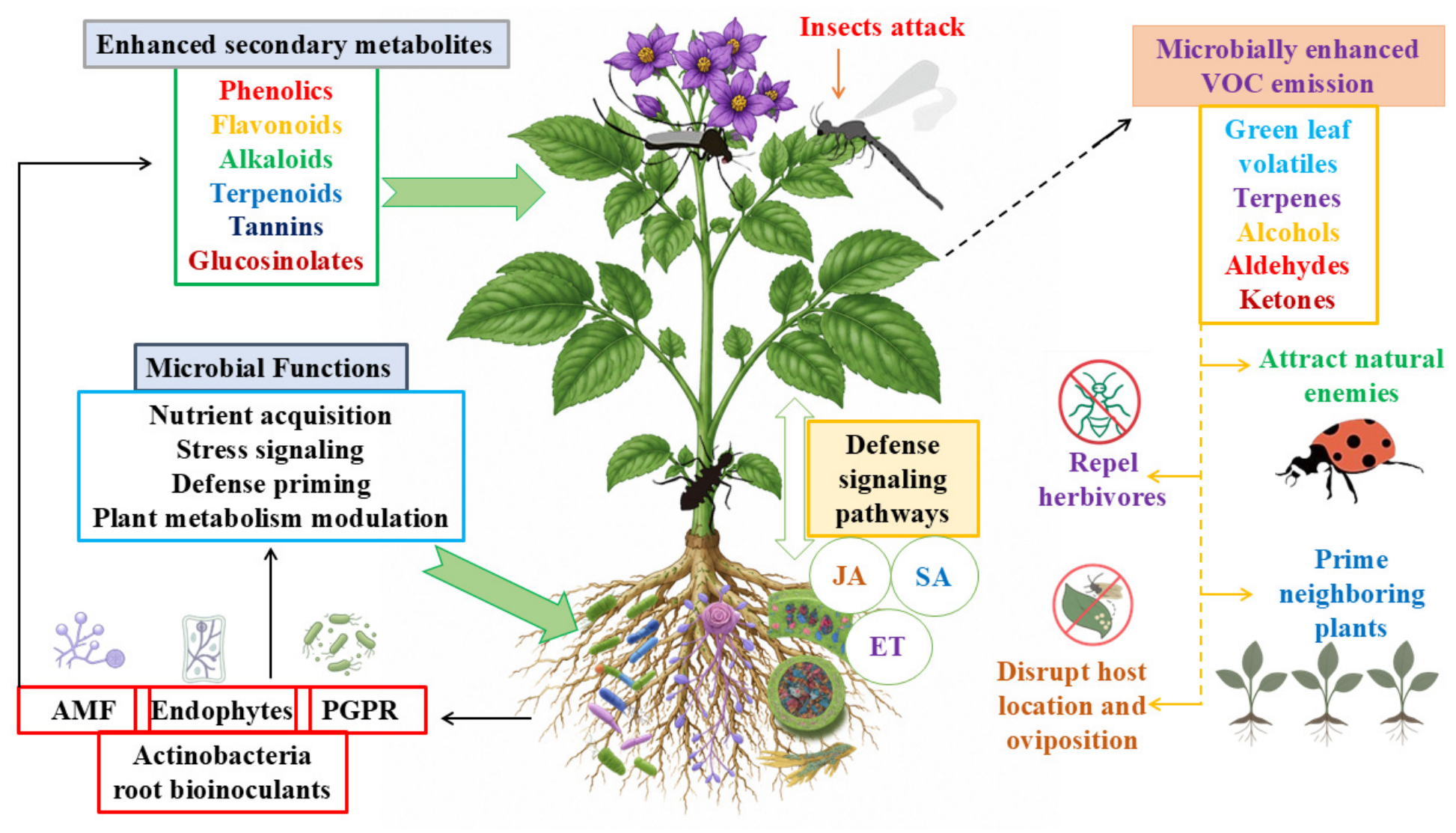
Microbial biostimulants-mediated resistance is an interconnected phenomenon with ISR, phytohormonal signal, calcium and reactive oxygen species (ROS) cascades, and secondary metabolite accumulation [53]. All these processes together create a pre-stimulated physiological status that promotes plant defense without hampering growth and ecological balance in botanical garden ecosystems (Figure 2).
One of the well-characterized mechanisms of microbial biostimulants-mediated pest resistance is ISR. When the plant roots are colonized by beneficial microbes, ISR is activated, stimulating the systemic defense pathways without causing disease. This primed condition helps plants to react quickly and robustly when they are attacked by herbivores. ISR is generally controlled by JA and ET signaling and contrasts with SAR, mainly relying on SA signaling [54]. PGPR genera, mainly Pseudomonas, Bacillus, and Azospirillum, induce ISR by synthesizing cyclic lipopeptides, siderophores, and microbial volatiles. These elicitors stimulate a transcription factor that controls defense genes encoding peroxidase, polyphenol oxidase, chitinase and 1, 3 glucanase. Increased enzymatic activity reinforces the plant tissues and stimulates the production of antimicrobial compounds, decreasing herbivore consumption and pest survival [55].
ISR also includes metabolic priming, during which plants acquire dormant defense precursors that can quickly be mobilized when faced with any pest attack. Plants primed with beneficial microbes often show increased accumulation of phenolics, enhanced callose deposition, and greater lignification following herbivore attack. For example, tomato plants inoculated with Bacillus subtilis displayed higher phenolic content and callose deposition after aphid infestation, while maize seedlings colonized by AMF showed increased lignification that reduced root herbivory [54]. These structural and biochemical changes decrease plant palatability and can inhibit insect growth. For example, tomato plants primed with Bacillus subtilis showed reduced oviposition by Helicoverpa armigera and slower larval development, while maize colonized by AMF exhibited decreased root herbivory by Diabrotica larvae. However, the efficacy of ISR can vary depending on the microbial strain, plant species, and herbivore type, and it may be less effective under extreme abiotic stress or in highly diverse plant communities [53,54]. Notably, ISR reduces the trade-offs between growth and defense since defense pathways are not used until herbivores attack. This aspect is especially relevant in botanical gardens, where maintaining both ornamental value and plant vigor is essential. Emerging data suggest that ISR can involve epigenetic memory, in which previous microbial or pest exposures modify chromatin marks or DNA methylation patterns. These epigenetic changes enable plants to maintain a heightened level of defense readiness when repeatedly challenged by herbivores or pathogens, resulting in faster or stronger activation of defense genes upon subsequent attacks [56].
Phytohormonal signaling networks play a key role in microbial biostimulants-mediated pest resistance. Beneficial microbes can modulate the balance of JA, SA, and ET, which collectively regulate plant defense responses. For example, tomato plants inoculated with Bacillus subtilis showed enhanced JA signaling that increased resistance to chewing insects such as Helicoverpa armigera, while colonization by Pseudomonas fluorescens enhanced SA-dependent defenses that reduced the performance of sap-feeding aphids (Myzus persicae). Ethylene acts as an integrator that links crosstalk between these pathways [54,57]. Microbial biostimulants enhance jasmonic acid (JA)-dependent defenses. This increases the production of proteinase inhibitors, polyphenol oxidases, and anti-herbivore metabolites, which interfere with insect digestion and reduce feeding efficiency. JA signaling induced by PGPR can reduce caterpillar growth and herbivore fitness. For instance, tomato (Solanum lycopersicum) plants treated with PGPR exhibit enhanced JA responses that slow the development of Helicoverpa armigera larvae and reduce their feeding efficiency. The magnitude of these effects can vary depending on the plant genotype, microbial strain, and environmental conditions [57]. SA-modulated defenses are especially effective against piercing–sucking insects like whiteflies and aphids. Microbe-based activation of SA signaling favors the accumulation of pathogenesis-related protein, callose deposition, and alterations in phloem structure that limit insect feeding. Differential activation of both JA and SA pathways thus allows microbial biostimulants to provide resistance to a variety of pest guilds [58]. The crosstalk of hormones further optimizes defense responses. Beneficial microbes tune JA-SA interactions to avoid antagonistic effects and ensure optimum defense activation. Ethylene increases JA responsiveness and boosts systemic signaling, reinforcing resistance to pests with the help of ISR and reducing the fitness cost [57,58].
Early signaling of microbial defense responses to biostimulants includes calcium (Ca2+) and ROS signaling. Microbial elicitor recognition prompts rapid rises in cytosolic Ca2+ and activates calcium-dependent protein kinases and downstream transcriptional events that regulate defense gene expression and systemic resistance [59]. Another characteristic of microbial-induced defense is the production of ROS, such as hydrogen peroxide and superoxide radicals. The oxidative burst fortifies cell walls, enhances lignification, and activates defense enzymes. ROS acts primarily as signaling molecules that activate plant defense pathways. By inducing the production of defense enzymes, secondary metabolites, and structural barriers, ROS indirectly reduce herbivore performance and feeding efficiency, rather than acting as direct anti-herbivore agents. Microbial biostimulants promote selective ROS accumulation, allowing robust defense activation without causing oxidative stress [60]. Ca2+ and ROS pathways are closely related. The Ca2+ influx triggers NADPH oxidases to produce ROS, and ROS activate Ca2+ channels, creating a positive feedback loop that enhances defense signaling and systemic resistance [61]. Moreover, Ca2+ and ROS signaling increase the activity of antioxidant enzymes, control stomatal closing, and increase callose deposition. These defense reactions reduce pest performance through mechanisms such as callose deposition, cell wall lignification, and production of anti-herbivore metabolites. Sap-feeding insects, like aphids, are particularly affected because phloem access is physically obstructed and chemical deterrents are enhanced. Chewing insects are less affected by these barriers but may experience reduced growth due to secondary metabolites. This highlights the importance of rapid signal initiation in microbial biostimulants-induced pest resistance and the specificity of defenses across different herbivore types.
Biosynthesis of secondary metabolites that act as chemical defenses against herbivores are stimulated by microbial biostimulants. They mainly include phenolics, flavonoids, alkaloids, terpenoids, and phytoalexins, which decrease herbivore feeding, hinder digestion, and prevent the development of pests [62]. The phenylpropanoid pathway is induced by the presence of PGPR and AMF colonization, which increases lignin and phenolic synthesis that strengthens the cell walls and minimize palatability of tissues. Higher phenolic concentrations have been linked with lower survival of insects and a slower growth of larvae [63]. There are also microbial biostimulants that increase the production of proteinase inhibitors which interfere with insect digestive enzymes [63]. The microbial colonization further causes volatile secondary metabolites to act as indirect defenses. These volatiles attract natural predators like parasites and predators and repel herbivores, facilitating tri-trophic interactions and IPM-sustainable approaches [64]. In addition, metabolic reprogramming in response to microbes involves the simultaneous activation of various biosynthetic pathways, leading to coordinated generation of defense molecules. Such combined chemical defenses supplement ISR, hormonal signaling, and ROS-induced reactions, and eventually contribute to plant resilience to insect pests [65].

5. Microbial Regulation of Plant–Insect Interactions

Plant-associated microorganisms, including rhizobacteria, endophytes, and mycorrhizal fungi, play a critical role in shaping plant–insect interactions in botanical garden collections [66]. These microbes influence herbivore behavior, performance, and the ecological interactions between plants and insects by modulating plant physiology, nutrient allocation, and defense signaling. Emerging evidence suggests that plant-associated bacteria act as active regulators of above- and below-ground multi-trophic interactions, rather than passive symbionts. Microbial biostimulants affect host plant resistance through multiple mechanisms, including antixenosis (non-preference), antibiosis, and tolerance.
Microbial effects on insects are not always suppressive. The final result is determined by a balance between two opposing plant reactions: enhancing nutritional status and triggering defense responses. In this case where the microbial colonization is primarily increasing nutrient availability or quality of leaves or the vigor of the plant, some herbivores may benefit from better host quality. However, if microbial colonization induces JA-, SA-, or ET-mediated defenses, or secondary metabolites, proteinase inhibitors, or structural barriers are strong, the insect feeding and development may be reduced [66]. Thus, microbial control of plant–insect interactions should be viewed as a context-dependent, not a blanket protection strategy. Microbial colonization can alter plant chemical and physical cues, influencing herbivore host-selection behavior. PGPR, AMF, and endophytes can secrete VOCs, secondary metabolites, and visual traits of leaves, which can either repel herbivores or reduce feeding preference [67,68]. In botanical gardens, where plants from multiple regions are grown together, microbial-mediated changes in VOCs have been observed to increase parasitoid and predator recruitment, providing indirect pest suppression. For example, in Kew Gardens, enhanced microbial activity in mixed-species beds increased HIPV emissions, leading to a higher recruitment of natural enemies and reduced aphid colonization.
Microbes can strengthen plant defenses that directly reduce herbivore growth and survival. PGPR-induced JA signaling promotes the production of proteinase inhibitors, phenolics, terpenoids, and ROS-mediated defenses. Caterpillars and other chewing insects often show lower feeding efficiency, slower growth, extended larval development, and higher mortality when plants are colonized by JA-priming microbes. Sap-feeding insects, such as aphids, are affected when microbial symbionts modify phloem composition or induce cell-wall barriers that reduce stylet penetration. In botanical garden studies, tomato plants inoculated with beneficial rhizobacteria exhibited reduced Helicoverpa armigera larval growth, demonstrating antibiosis in a curated, conservation-sensitive context [69]. Microbial symbionts can also enhance plant tolerance by improving nutrient acquisition, growth, and stress resilience. By increasing nitrogen and phosphorus content or promoting root growth via ACC deaminase and auxin signaling, microbes allow plants to sustain productivity and compensate for herbivore damage. While this may sometimes make plant tissues more attractive to herbivores, enhanced vigor improves overall plant resilience in botanical gardens, where plants are irreplaceable and aesthetic value is critical.
Microbial symbionts further influence tri-trophic interactions. By modulating herbivore-induced volatiles (HIPVs), microbial biostimulants can attract predators and parasitoids, amplifying indirect plant defenses. Changes in plant chemistry can simultaneously reduce herbivore feeding and enhance natural enemy activity. Conversely, improved nutritional quality without sufficient defense activation may increase herbivore abundance, altering predator–prey interactions. In curated botanical gardens, such multi-trophic effects have been observed in both greenhouse and outdoor display collections, highlighting the context-dependency of microbial-mediated pest regulation [70,71,72]. Reciprocal feedback between above- and below-ground communities is also critical. Root-colonizing microbes influence aboveground herbivores, and insect feeding can reshape rhizosphere microbial composition via root exudates and plant signaling. In this way, plants act as integrative centers connecting microbes, herbivores, and natural enemies across spatial compartments [73].
Altogether, microbial control in botanical gardens is complex, context-dependent, and highly relevant to conservation-sensitive collections. Microbes can modulate antixenosis, antibiosis, and tolerance mechanisms; influence insect growth, feeding behavior, and reproductive success; and mediate tri-trophic interactions that enhance biological control. By understanding these mechanisms, botanical garden managers can use microbial biostimulants strategically to reduce herbivore pressure, enhance plant resilience, and support ecological stability without relying solely on chemical interventions [74,75]. Table 2 summarizes key examples of the microbial modulation of plant–insect interactions in botanical garden and experimental systems.

6. Volatile and Metabolite-Mediated Pest Suppression

Volatile- and metabolite-mediated pest suppression constitutes an important aspect of microbial biostimulant-assisted defense in plants and is particularly pertinent to integrated pest management (IPM) in botanical gardens. Unlike traditional pest control procedures that depend on direct toxic effects, microbial biostimulants can improve the host’s resistance by modifying the biochemical pathways and ecological signaling networks in plants. These processes include the induction of defensive secondary metabolites, the emission of volatile organic compounds (VOCs), and the enhancement of indirect defenses by attracting natural enemies [86]. These microbially mediated mechanisms provide a biologically sustainable approach to enhancing pest resilience. This is particularly important in diverse and ecologically sensitive systems, such as botanical gardens, where pesticide use is often restricted and conservation is a key priority [87].

6.1. Microbial Induction of Plant Secondary Metabolites

One of the main ways that microbial biostimulants help keep pests away is by boosting plant secondary metabolism. Beneficial microorganisms, including PGPR, AMF, and endophytic microbes, influence host metabolic reprogramming. They also induce the accumulation of defensive compounds, including phenolics, flavonoids, alkaloids, terpenoids, tannins, and glucosinolates [88,89]. These compounds play critical roles in plant protection by lowering tissue palatability, impairing herbivore digestion, interfering with insect growth and development, and deterring feeding or oviposition. Microbial colonization often leads to an activated state in which plant defense mechanisms remain metabolically primed and respond more rapidly to subsequent pest attacks. This priming effect is beneficial in IPM systems as it leads to a decrease in the physiological price of constitutive defense and enhancing biotic stress responsiveness [90]. Several beneficial microbes induce the production of the phenylpropanoid pathway resulting in increased phenolic acids, lignin precursors, and flavonoid derivatives that give cell-wall fortification and anti-herbivore defense [88,90]. Similarly, AMF-mediated enhancement in nutrient uptake and carbon partitioning may accelerate the biosynthesis of carbon-based defense compounds, thereby increasing host resistance under pest pressure [91]. These microbial-induced changes have significant effects on herbivorous insects, influencing their feeding behavior, growth, and reproductive success, rather than directly altering the broader environment. In chewing insects, high levels of toxic or deterrent metabolites can reduce feeding efficiency, slow larval growth, and decrease survival and reproductive success. The effectiveness of these defenses, however, depends on the insect species, their feeding strategies, and the specific metabolites involved. Some generalist herbivores may tolerate or detoxify certain compounds, while specialists might be more sensitive to others [89]. In botanical gardens, where plant species from diverse regions coexist, these microbial-mediated metabolites can create a complex mosaic of herbivore pressures, with some insects deterred and others able to exploit hosts. This variability highlights the importance of integrating knowledge of plant chemistry, microbial colonization, and herbivore ecology to predict pest outcomes and design sustainable management strategies. Microbially induced alterations to plant chemistry may change the composition of the phloem, make it less nutritious, or make it harder for sap-feeding pests to probe and keep eating [92]. These effects are particularly relevant in botanical gardens, where pest communities often include multiple feeding guilds attacking a taxonomically diverse array of host plants. For instance, surveys of European botanic gardens have documented the simultaneous presence of chewing insects, sap-feeding aphids, and leaf-mining larvae on mixed-species display beds, illustrating the complex pest pressures faced by curated collections [87]. Besides this, plant secondary metabolites cannot only be regarded as end-of-pipe defensive products. Most of these compounds are embedded into larger defense signaling systems and closely interact with JA-, SA-, and ET-dependent pathways [90,93]. Therefore, microbial induction of secondary metabolites defines both a biochemical and regulatory process, connecting local plant responses to broader systemic resistance mechanisms.

6.2. Volatile Organic Compounds and Indirect Defense

In addition to non-volatile defense metabolites, beneficial microbes can also change how plants make and release VOCs, which are important for ecological communication and indirect protection. VOCs are tiny molecules that come out of leaves, stems, flowers, and roots, reacting to alterations in development and stress in the environment. When herbivores attack, plants often release mixtures of green leaf volatiles, terpenes, alcohols, aldehydes, ketones, and esters. Many of these affect how herbivores act and how various kinds of organisms interact with each other [94,95,96].
Microbial biostimulants may modify the composition and the magnitude of VOC emissions by influencing host signaling pathways of perceptions of stress and defense activation. Specifically, plant volatile production can be enhanced by herbivore-induced endophytic microorganisms and PGPR through JA- and ET-associated signaling, thereby strengthening indirect defense responses [95,97,98]. These changes caused by microbes may make the host less appealing to herbivores, mess with the way pests find hosts, or tell nearby plants to get prepared to defend themselves. So, VOC-mediated defense makes microbial biostimulants perform better beyond the single plant and into the ecosystem around it (Figure 3) [94]. Microbial modulation of plant VOCs can attract natural enemies of herbivores, thereby enhance biological control and support sustainable IPM [99,100].

7. Integration of Microbial Biostimulants into Integrated Pest Management (IPM)

Incorporating microbial biostimulants into IPM can enhance the preventive capacity of these programs, particularly in botanical garden ecosystems, where plant diversity, conservation needs, and aesthetic considerations make conventional interventions challenging [101]. Unlike agricultural monocultures, botanical gardens host taxonomically diverse plant communities. These collections are vulnerable to a wide range of insect pests, which respond differently to chemical control measures due to ecological constraints and the need to minimize interventions in conservation-sensitive and publicly accessible settings [102]. IPM can include microbial biostimulants as base elements that increase the plant defense capability, stabilize and supplement biological and cultural control measures [103]. The addition of microbial biostimulants can enhance IPM by promoting plant physiological health and priming defenses, which may reduce the likelihood or severity of pest outbreaks. However, the effectiveness of this approach depends on the microbial strain, plant species, pest type, and environmental conditions, and it does not guarantee the complete prevention of economic or aesthetic damage [104]. In IPM systems, microbial biostimulants primarily act as preventive agents, enhancing baseline plant resistance.
One important benefit of this preventive action is the possibility of a lower reliance on the reapplication of chemicals for plant-protection. This is particularly relevant because pesticide residues on ornamental plants can impact pollinators, natural enemies, soil organisms, visitors, and other non-target organisms, and broader pesticide application can lead to ecological risk in conservation landscape settings [10,11]. By strengthening baseline plant resistance before severe pest outbreaks occur, microbial biostimulants may lower the frequency or intensity of chemical interventions and may also complement, rather than fully replace, biological control strategies [12]. Microbial biostimulants, however, should not be offered as a risk-free and universal alternative to traditional plant protection products. The extent of their performance and ecological safety relies on their viability, strain identity, their compatibility with the host, ability to colonize, substrate conditions, and interactions with indigenous microorganisms [15]. Therefore, microbial biostimulants should be used as monitored risk-reduction tools within IPM, not as complete replacements for chemical or biological control.
The application of microbial biostimulants in practical IPM programs should be based primarily on the prevention and early control of pest infestations rather than as a curative measure after a heavy pest infestation. They might best be utilized for new introductions, plants that are especially valuable, or forms that are seldom seen when previous records show a history of aphids, whitefly, thrips, mite, and chewing-insect pressure [104]. Selection should be based on microbial strain identity, host compatibility, viable concentration, formulation stability, application method, substrate conditions, irrigation regime, and compatibility with biological control agents and resident microbiomes. Root drenches or substrate inoculation may be suitable for perennial collections and nursery plants, seed or propagule treatments for newly introduced accessions, and foliar applications for short-term defense activation during periods of elevated pest risk [103]. Success should be evaluated using measurable indicators, including improved plant vigor, reduced pest establishment, slower pest population growth, enhanced natural enemy activity, microbial colonization or persistence, reduced pesticide use, and absence of negative effects on non-target organisms. Mycorrhizal fungi, endophytic microorganisms and rhizosphere-associated bacteria form symbiotic interactions which alter plant metabolism and defense preparedness [105]. These microorganisms have effects on systemic signaling networks and precondition plants to respond more robustly to herbivore attack. Priming-based protection is especially useful in botanical gardens, where space heterogeneity can interfere with the early pest detection. Beneficial microbes usually colonize plants and therefore reduce the herbivore colonization; they slow down population increase and reduced ease of feeding [106]. This approach aligns with the principles of IPM, emphasizing early intervention, reliance on pest thresholds, and reduced use of chemical pesticides.
Microbial biostimulants are also known to improve the effectiveness of the biological control aspects of IPM. Positive microorganisms may modify plant biochemical patterns in a manner that affects the relationship in relation to herbivorous and natural enemies [107]. To illustrate, the presence of microbial colonization can enhance the release of plant volatiles produced under the influence of herbivores in attracting parasitoids and predatory insects [108]. They are mediated responses involving volatile compounds that enhance indirect defensive responses in plants and enhance the effectiveness of pre-existing botanical garden ecosystem biological control agents [109]. Moreover, microbial-mediated changes in plant quality can reduce herbivore nutrition, slow larval development and increase exposure to natural predators. These interactions may result in synergetic impacts between biological control and microbial biostimulants, which enhances multi-layered pest suppression approaches [110]. Table 3 provides an overview of the integration levels of microbial biostimulants into IPM systems in botanical gardens. Therefore, microbial biostimulants’ integration into IPM should be guided by plant value, pest risk, microbial compatibility, application timing, and measurable plant-health outcomes.
Microbial biostimulants used in IPM also encourage compatibility with cultural management practices. Sanitation, pruning, and irrigation control as well as habitat diversification are some of the typical methods used to lower the occurrence of pests in botanical gardens. Such practices determine the vigor of a plant and its microenvironment and ultimately, outer colonization and the persistence of microbes [117]. As an example, microbial survival in the rhizosphere can be promoted by organic soil additions and mulching of soils, and by lowering pesticide application, the maintenance of desirable levels of beneficial microbes. Equally, botanical gardens with diversified planting schemes can possibly sustain stable microbial communities that can be used to suppress pests in the long-term. The inclusion of microbial biostimulants into such cultural management activities can enhance the overall efficacy of IPM because of enhanced ecological systems and minimized pest outbreaks. The other fact of microbial biostimulants integration is the application strategies based on botanical garden systems. Root-zone application and soil inoculation encourage long term colonization and are appropriate for perennial ornamental collections. Propagule or seed treatments are especially effective with newly introduced species, to guarantee rapid acquisition of useful microbes. Activation of systemic resistance by use of foliar applications in mature plants, during high risk of pests, can be utilized [118]. The choice of application methods varies with the type of plants, pressure of the pests and the environment. In botanical gardens where plants differ, strategy in application should be flexible to get similar results. Also, microbial consortia such as bacteria and fungi could be useful in expanding the coverage of functions and enhancing stability on a wide range of plant hosts.
Microbial biostimulants can be integrated into IPM frameworks that use monitoring and threshold-based interventions. Applications timed with early pest detection or before seasonal outbreaks can help prevent pest establishment, while post-detection inoculation may still reduce herbivore growth and feeding. In botanical gardens, effectiveness depends on plant species, microbial strain, environmental conditions, and native microbiomes. Optimizing microbial IPM in these settings requires attention to host-specific compatibility, early intervention, and long-term field validation to maintain plant health and ecological integrity [119]. Advanced modeling, such as climate-based pest forecasting that includes plant–microbe–insect interactions, can further improve IPM accuracy and reliability. Effectiveness depends on environmental conditions, plant genotype, soil properties, and host-specific compatibility, which is particularly important in botanical gardens with diverse, geographically sourced plants [120]. Interactions between introduced and native microbiomes may also affect performance. Selection of locally adapted strains, multi-species compatibility, long-term field validation, and standardized application protocols are essential for consistent outcomes. Compared with crop IPM, microbial integration in botanical gardens faces additional constraints due to high plant diversity, conservation priorities, and aesthetic requirements. Despite these challenges, microbial biostimulants offer a promising tool to enhance plant resilience, reduce herbivore pressure, and support biodiversity. Key evidence gaps remain in long-term performance, multi-species interactions, and translating greenhouse results to complex garden ecosystems. Addressing these gaps is crucial to fully realize their potential in sustainable botanical garden IPM.

8. Limitations and Forward-Looking Solutions

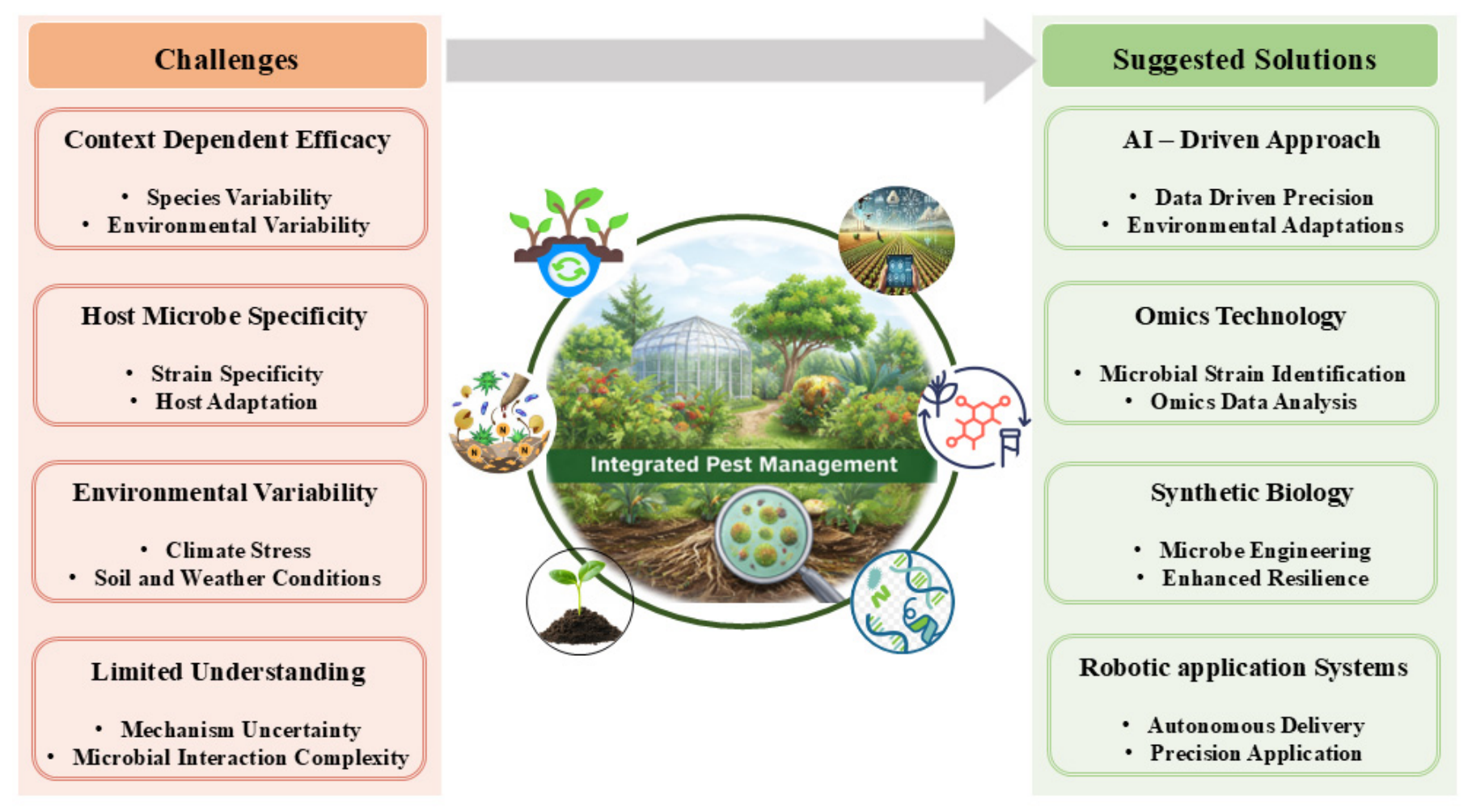
The allocation of microbial biostimulants into IPM in botanical gardens poses considerable challenges that need to be overcome to fully harness their potential [121]. A key challenge is the context-dependent efficacy of microbial treatments. The efficacy of biostimulants is affected by various factors, including plant species, environmental conditions, and pest pressure [122]. A microbial strain that induces pest resistance in one plant species may not exhibit the same efforts in another due to the variations in plant physiology and microbial interactions [123]. Furthermore, environmental variability such as soil type, temperature, and humidity can significantly impact microbial performance, making it difficult to maintain consistent results across different seasons and regions (Figure 4) [124]. Additionally, the host–microbe specificity of many microbial biostimulants further complicates their broad application. Many microbial strains exhibit high specificity to certain plant species, limiting their effectiveness in diverse botanical garden ecosystems [125]. Therefore, a broad application of microbial biostimulants in botanical gardens should follow a stepwise validation approach. Each product should first be tested on selected plant groups under local garden conditions, with the monitoring of colonization, persistence, plant response, pest suppression, and possible effects on resident microbial communities [126]. This evidence will help managers decide whether microbial biostimulants can safely reduce chemical treatments or biological control releases, or whether conventional interventions are still required. To mitigate these concerns, the research of the future should aim at creating microbial consortia that would be able to target all the plant species and maximize the compatibility of microbial strains with diverse environmental factors. The future of microbial biostimulants in IPM is the use of modern technologies, including AI, synthetic biology, and omics technologies. AI has the potential to revolutionize microbial-based pest control by offering real-time and informed decision-making. Systems with AI might examine the environment and pest data, enabling the accurate delivery of microbial biostimulants unique to the circumstance. This might enhance the effectiveness and accuracy of interventions, as biostimulants may be used at the time and location of the greatest need. Moreover, omics technologies such as metagenomics and proteomics can provide a deeper understanding of plant–microbe interactions, helping to identify novel microbial strains with superior pest resistance properties. The integration of synthetic biology holds promise for engineering microbes that are more resilient to environmental stressors and can be tailored to provide multifunctional benefits, including enhanced pest resistance, growth promotion, and environmental sustainability. In the future, by using robotic systems and drone-monitors, it might be possible to conduct automated and accurate uses of microbial biostimulants in botanical gardens to maintain pests in a cost-effective and sustainable manner. Such developments will aid the fight against the issue of environmental variability and host specificity, leading to more effective and stable microbial-based IPM systems.

9. Conclusions

Microbial biostimulants, including PGPR, AMF, and endophytic microorganisms, offer a promising tool for enhancing plant resistance and reducing herbivore pressure in botanical gardens through systemic resistance, hormonal modulation, and the production of defensive metabolites. Beyond direct defense enhancement, their practical value also lies in reducing dependence on repeated chemical plant-protection treatments in publicly accessible and conservation-sensitive botanical gardens. However, this reduction should be viewed as a gradual risk-reduction strategy rather than a complete replacement for chemical or biological control, because microbial products still require careful validation before broad use. While these benefits are well documented in controlled studies, their effectiveness in diverse, conservation-sensitive garden collections is variable, influenced by host specificity, plant diversity, environmental conditions, and interactions with native microbiomes. Long-term field validation, assessment of microbial persistence, and consideration of biosafety are essential to ensure reliable outcomes. Future research should prioritize understanding host–microbe compatibility, multi-trophic effects, and integration with existing microbiomes, providing a solid evidence base for practical IPM implementation. Focusing on these realistic, context-specific objectives will optimize microbial biostimulants use, improve predictability, and advance sustainable pest management in botanical gardens.

Author Contributions

Conceptualization, A.A. and M.M.A.; methodology, M.S.K.; software, S.M.H. and M.; validation, M.S.G. and M.I.; formal analysis, M.A.; investigation, M.B.K.; resources, A.A.; data curation, M.M.N.; writing—original draft preparation, A.A.; writing—review and editing, M.M.A. and S.A.; visualization, M.M.A.; supervision M.B.K. and S.C. All authors have read and agreed to the published version of the manuscript.

Funding

This work was supported by the Talent Project of Tarim University (TDZKPY202607), the National Natural Science Foundation of China (Grant No. 32260356), and the Corps Science and Technology Program (Outstanding Youth Project, Grant No. 2025DB003).

Institutional Review Board Statement

Not applicable.

Data Availability Statement

No new data were created or analyzed in this study. Data sharing is not applicable to this article.

Acknowledgments

The authors gratefully acknowledge the research platform provided by the State Key Laboratory Incubation Base for Conservation and Utilization of Bio-Resource in the Tarim Basin. We also extend our sincere thanks to the anonymous reviewers for their valuable comments and suggestions, which have greatly improved the quality of this manuscript.

Conflicts of Interest

The authors declare no conflicts of interest.

Abbreviations

The following abbreviations are used in this manuscript:
ABAAbscisic acid
AGOArgonaute protein
AIArtificial intelligence
APXAscorbate peroxidase
CATCatalase
CDPKCalcium-dependent protein kinase
CNNConvolutional neural network
CPMCounts per million
CRISPRClustered regularly interspaced short palindromic repeats
DAMPsDamage-associated molecular patterns
DCLDicer-like protein
DBTLDesign–Build–Test–Learn
DREBDehydration-responsive element-binding protein
DWDry weight
ETEthylene
FDRFalse discovery rate
GC-MSGas chromatography–mass spectrometry
HSPsHeat shock proteins
IAAIndole-3-acetic acid
IPMIntegrated pest management
ISRInduced systemic resistance
JAJasmonic acid
LC-MSLiquid chromatography–mass spectrometry
LEALate embryogenesis abundant proteins
lncRNALong non-coding RNA
LSTMLong short-term memory network
MAPKMitogen-activated protein kinase
MDAMalondialdehyde
miRNAMicroRNA
WRKYWRKY transcription factor
MLMachine learning
ncRNANon-coding RNA
NMRNuclear magnetic resonance
PEGPolyethylene glycol
PAMPsPathogen-associated molecular patterns
PODPeroxidase
PRPathogenesis-related protein
PRRsPattern recognition receptors
PTGSPost-transcriptional gene silencing
PTIPAMP-triggered immunity
RDRRNA-dependent RNA polymerase
RISCRNA-induced silencing complex
RLKsReceptor-like kinases
RLCKsReceptor-like cytoplasmic kinases
RNAiRNA interference
ROSReactive oxygen species
SASalicylic acid
SARSystemic acquired resistance
siRNASmall interfering RNA
SODSuperoxide dismutase
SVMSupport vector machine
TCATricarboxylic acid cycle
TPMTranscripts per million
VOCsVolatile organic compounds

References

  1. Mounce, R.; Smith, P.; Brockington, S. Ex situ conservation of plant diversity in the world’s botanic gardens. Nat. Plants 2017, 3, 795–802. [Google Scholar] [CrossRef] [Scilit] [PubMed]
  2. O’Donnell, K.; Sharrock, S. The contribution of botanic gardens to ex-situ conservation through seed banking. Plant Divers. 2017, 39, 373–378. [Google Scholar] [CrossRef] [Scilit] [PubMed]
  3. Wondafrash, M.; Wingfield, M.J.; Wilson, J.R.U.; Hurley, B.P.; Slippers, B.; Paap, T. Botanical gardens as key resources and hazards for biosecurity. Biodivers. Conserv. 2021, 30, 1929–1946. [Google Scholar] [CrossRef] [Scilit]
  4. Hulbert, J.M.; Paap, T.; Burgess, T.I.; Roets, F.; Wingfield, M.J. Botanical gardens provide valuable baseline Phytophthora diversity data. Urban For. Urban Green. 2019, 46, 126461. [Google Scholar] [CrossRef] [Scilit]
  5. Paap, T.; Balocchi, F.; Burgess, T.I.; Bose, T.; Wingfield, M.J. A diverse range of Phytophthora species from botanical gardens in South Africa, including the novel Clade 5 species Phytophthora mammiformis sp. nov. Fungal Syst. Evol. 2024, 13, 111–122. [Google Scholar] [CrossRef] [Scilit] [PubMed]
  6. Wieczorek, K.; Chłond, D.; Ball, K.; Zawisza-Raszka, A.; Bauters, K.; Baert, D.; Elliot, M. Aphids (Hemiptera: Aphididae) in living collections of selected European botanic gardens: Diversity, biosecurity challenges, and sentinel insights. Insects 2026, 17, 196. [Google Scholar] [CrossRef] [Scilit] [PubMed]
  7. Hinsley, A.; Hughes, A.C.; van Valkenburg, J.; Stark, T.; van Delft, J.; Sutherland, W.; Petrovan, S.O. Understanding the environmental and social risks from the international trade in ornamental plants. BioScience 2025, 75, 222–239. [Google Scholar] [CrossRef] [Scilit] [PubMed]
  8. Han, P.; Rodriguez-Saona, C.; Zalucki, M.P.; Liu, S.S.; Desneux, N. A theoretical framework to improve the adoption of green integrated pest management tactics. Commun. Biol. 2024, 7, 337. [Google Scholar] [CrossRef] [Scilit] [PubMed]
  9. Hayden, K. Botanic gardens and plant pathogens: A risk-based approach at the Royal Botanic Garden Edinburgh. Sibbaldia 2020, 18, 127–139. [Google Scholar] [CrossRef] [Scilit]
  10. Lentola, A.; David, A.; Abdul-Sada, A.; Tapparo, A.; Goulson, D.; Hill, E.M. Ornamental plants on sale to the public are a significant source of pesticide residues with implications for the health of pollinating insects. Environ. Pollut. 2017, 228, 297–304. [Google Scholar] [CrossRef] [Scilit] [PubMed]
  11. Porseryd, T.; Hellström, K.V.; Dinnétz, P. Pesticide residues in ornamental plants marketed as bee friendly: Levels in flowers, leaves, roots and soil. Environ. Pollut. 2024, 345, 123466. [Google Scholar] [CrossRef] [Scilit] [PubMed]
  12. Dicks, L.V.; Breeze, T.D.; Ngo, H.T.; Senapathi, D.; An, J.; Aizen, M.A.; Basu, P.; Buchori, D.; Galetto, L.; Garibaldi, L.A.; et al. A global-scale expert assessment of drivers and risks associated with pollinator decline. Nat. Ecol. Evol. 2021, 5, 1453–1461. [Google Scholar] [CrossRef] [Scilit] [PubMed]
  13. du Jardin, P. Plant biostimulants: Definition, concept, main categories and regulation. Sci. Hortic. 2015, 196, 3–14. [Google Scholar] [CrossRef] [Scilit]
  14. Li, J.; Van Gerrewey, T.; Geelen, D. A meta-analysis of biostimulant yield effectiveness in field trials. Front. Plant Sci. 2022, 13, 836702. [Google Scholar] [CrossRef] [Scilit] [PubMed]
  15. Castiglione, A.M.; Mannino, G.; Contartese, V.; Bertea, C.M.; Ertani, A. Microbial biostimulants as response to modern agriculture needs: Composition, role and application of these innovative products. Plants 2021, 10, 1533. [Google Scholar] [CrossRef] [Scilit] [PubMed]
  16. Guo, Q.; Fei, S.; Potter, K.M.; Liebhold, A.M.; Wen, J. Tree Diversity Regulates Forest Pest Invasion. Proc. Natl. Acad. Sci. USA 2019, 116, 7382–7386. [Google Scholar] [CrossRef] [Scilit] [PubMed]
  17. Li, Y.; Schuldt, A.; Ebeling, A.; Eisenhauer, N.; Huang, Y.; Albert, G.; Albracht, C.; Amyntas, A.; Bonkowski, M.; Bruelheide, H.; et al. Plant Diversity Enhances Ecosystem Multifunctionality via Multitrophic Diversity. Nat. Ecol. Evol. 2024, 8, 2037–2047. [Google Scholar] [CrossRef] [Scilit] [PubMed]
  18. Abdala-Roberts, L.; Moreira, X. Effects of Phytochemical Diversity on Multitrophic Interactions. Curr. Opin. Insect Sci. 2024, 64, 101228. [Google Scholar] [CrossRef] [Scilit] [PubMed]
  19. Sato, Y.; Shimizu-Inatsugi, R.; Takeda, K.; Schmid, B.; Nagano, A.J.; Shimizu, K.K. Reducing Herbivory in Mixed Planting by Genomic Prediction of Neighbor Effects in the Field. Nat. Commun. 2024, 15, 8467. [Google Scholar] [CrossRef] [Scilit] [PubMed]
  20. Lynch, S.C.; Reyes-Gonzalez, E.; Bossard, E.L.; Alarcon, K.S.; Love, N.L.; Hollander, A.D.; Nobua-Behrmann, B.E.; Gilbert, G.S. A Phylogenetic Epidemiology Approach to Predicting the Establishment of Multi-Host Plant Pests. Commun. Biol. 2025, 8, 117. [Google Scholar] [CrossRef] [Scilit] [PubMed]
  21. Wieczorek, K.; Fulcher, T.K.; Chłond, D. The Composition of the Aphid Fauna (Insecta, Hemiptera) of the Royal Botanic Gardens, Kew. Sci. Rep. 2019, 9, 10000. [Google Scholar] [CrossRef] [Scilit] [PubMed]
  22. Franić, I.; Allan, E.; Prospero, S.; Adamson, K.; Attorre, F.; Auger-Rozenberg, M.A.; Augustin, S.; Avtzis, D.; Baert, W.; Barta, M.; et al. Climate, Host and Geography Shape Insect and Fungal Communities of Trees. Sci. Rep. 2023, 13, 11570. [Google Scholar] [CrossRef] [Scilit] [PubMed]
  23. Pardo, J.M.; Suwannarach, N.; Malichan, S.; Cuellar, W.J.; Siriwan, W. Mixed-Pathogen Infections in Vegetatively Propagated Crops: From Biological Synergism to Integrated Management. Plants 2026, 15, 1332. [Google Scholar] [CrossRef] [Scilit] [PubMed]
  24. Hammond, J.; Huang, Q.; Jordan, R.; Meekes, E.; Fox, A.; Vazquez-Iglesias, I.; Vaira, A.M.; Copetta, A.; Delmiglio, C. International Trade and Local Effects of Viral and Bacterial Diseases in Ornamental Plants. Annu. Rev. Phytopathol. 2023, 61, 73–95. [Google Scholar] [CrossRef] [Scilit] [PubMed]
  25. Singh, B.K.; Delgado-Baquerizo, M.; Egidi, E.; Guirado, E.; Leach, J.E.; Liu, H.; Trivedi, P. Climate Change Impacts on Plant Pathogens, Food Security and Paths Forward. Nat. Rev. Microbiol. 2023, 21, 640–656. [Google Scholar] [CrossRef] [Scilit] [PubMed]
  26. Bertelsmeier, C.; Bonnamour, A.; Garnas, J.R.; Liu, T.; Perreault, R.; Ollier, S. Temporal Dynamics and Global Flows of Insect Invasions in an Era of Globalization. Nat. Rev. Biodivers. 2025, 1, 90–103. [Google Scholar] [CrossRef] [Scilit]
  27. Cabrera, M.; Wilson, S.B.; Rostán, V.; Begcy, K.; Wilson, P.C. Pesticide Contamination of Pollen in Container-Grown Blanket Flower. Horticulturae 2026, 12, 891. [Google Scholar] [CrossRef] [Scilit]
  28. Chwoyka, C.; Linhard, D.; Durstberger, T.; Zaller, J.G. Ornamental Plants as Vectors of Pesticide Exposure and Potential Threat to Biodiversity and Human Health. Environ. Sci. Pollut. Res. 2024, 31, 49079–49099. [Google Scholar] [CrossRef] [Scilit] [PubMed]
  29. Basu, P.; Ngo, H.T.; Aizen, M.A.; Garibaldi, L.A.; Gemmill-Herren, B.; Imperatriz-Fonseca, V.; Klein, A.M.; Potts, S.G.; Seymour, C.L.; Vanbergen, A.J. Pesticide Impacts on Insect Pollinators: Current Knowledge and Future Research Challenges. Sci. Total Environ. 2024, 954, 176656. [Google Scholar] [CrossRef] [Scilit] [PubMed]
  30. Hisamoto, S.; Ikegami, M.; Goka, K.; Sakamoto, Y. The Impact of Landscape Structure on Pesticide Exposure to Honey Bees. Nat. Commun. 2024, 15, 8999. [Google Scholar] [CrossRef] [Scilit] [PubMed]
  31. Ahmed, M.M.; Hamid, S.M.; Rui, Z.; Zhiyong, P.; Xingyu, G.; Qian, Y.; Yu, S.; Asim, M.; Qiuhao, X.; Ahmad, A.; et al. Role of Microbial Biotechnology in Mitigating Climate-Induced Agricultural Stress. In Impacts of Climate Change on Agriculture in the MENA Region; IGI Global Scientific Publishing: Hershey, PA, USA, 2026; pp. 257–280. [Google Scholar] [CrossRef] [Scilit]
  32. Fassih, B.; Ben-Laouane, R.; Fakhech, A.; Ait-El-Mokhtar, M.; Wahbi, S. Biostimulants for Sustainable and Resilient Agriculture. Sustainability 2026, 18, 7342. [Google Scholar] [CrossRef] [Scilit]
  33. Berg, S.; Dennis, P.G.; Paungfoo-Lonhienne, C.; Anderson, J.; Robinson, N.; Brackin, R.; Schmidt, S. Effects of Commercial Microbial Biostimulants on Soil and Root Microbial Communities and Sugarcane Yield. Biol. Fertil. Soils 2020, 56, 565–580. [Google Scholar] [CrossRef] [Scilit]
  34. Panizzi, A.R.; McPherson, J.E.; Bundy, C.S.; Esquivel, J.F.; Pozzebon, A.; Mele, A.; Bueno, A.F. The Expanding Impact of Pentatomoid Bugs: Drivers, Challenges, and Innovations in Integrated Pest Management (IPM). Entomol. Gen. 2026, 46, 341–364. [Google Scholar] [CrossRef] [Scilit]
  35. Mesele, E.; Gebreslassie, G.; Yaekob, A.T.; Semere, T. Molecular Mechanisms of Plant Growth–Promoting Rhizobacteria (PGPR) in Biofertilization and Disease Suppression of Crops. Int. J. Agron. 2026, 2026, 9398708. [Google Scholar] [CrossRef] [Scilit]
  36. Dhiman, I.; Poria, V.; Kumar, S.; Yadav, R.; Shaik, T.; Bedwal, S.; Wati, L. Plant Growth Promoting Rhizobacteria (PGPR) Mediated Amelioration of Plant Tolerance to Abiotic Stresses: Drought, Salinity, and Heavy Metals. Arch. Microbiol. 2026, 208, 100. [Google Scholar] [CrossRef] [Scilit] [PubMed]
  37. Yang, J.; Tang, M.; Zhao, H. Physiological Mechanisms of Plant Growth-Promoting Rhizobacteria in Enhancing Abiotic Stress Tolerance of Vegetable Crops: A Review. Plants 2026, 15, 686. [Google Scholar] [CrossRef] [Scilit] [PubMed]
  38. Kong, H.J.; Kim, D.S.; Lee, S.H.; Park, J.Y.; Lim, H.; Kang, J.W. Effects of Plant Growth-Promoting Rhizobacteria (PGPR) Inoculation on Poplar Growth Depend on Bacterial Strain and Host Clone. Forests 2026, 17, 416. [Google Scholar] [CrossRef] [Scilit]
  39. ul Abideen, M.Z.; Ahmed, M.M.; Asim, M.; Zhiyong, P.; Rui, Z.; Razzaq, K.; Yerhazi, Y.; Ashraf, M.A.; Hamid, S.M.; Ahmad, A. Abiotic Stress and Crop Production in a Changing Global Environment. In Impacts of Climate Change on Agriculture in the MENA Region; IGI Global Scientific Publishing: Hershey, PA, USA, 2026; pp. 227–256. [Google Scholar] [CrossRef] [Scilit]
  40. Marrassini, V.; Ercoli, L.; Cardelli, R.; Cantini, V.; Pellegrino, E. Lack of Complementary or Synergistic Benefits of Arbuscular Mycorrhizal Fungi (AMF) and Organic Amendments but Functional Differentiation among AMF Species in a Maize–Wheat Rotation. Sci. Total Environ. 2026, 1012, 181292. [Google Scholar] [CrossRef] [Scilit] [PubMed]
  41. Asim, M.; Raza, A.; Safdar, M.; Ahmed, M.M.; Khokhar, A.; Aarif, M.; Al Ansari, M.S.; Sattar, J.; Chowdhury, I.U.Z. Sustainable agriculture and the SDGs: A convergence approach. In Sustainable Practices for Agriculture and Marketing Convergence; IGI Global Scientific Publishing: Hershey, PA, USA, 2024; pp. 1–26. [Google Scholar] [CrossRef] [Scilit]
  42. Kokkoris, V. Mycelial Dynamics in Arbuscular Mycorrhizal Fungi. New Phytol. 2026, 249, 691–713. [Google Scholar] [CrossRef] [Scilit] [PubMed]
  43. Yuan, H.; Huang, D. From Aboveground to Underground: Root–Microbe Interaction-Driven Mechanisms and Application Frontiers of Crop Heat Tolerance. Adv. Resour. Res. 2026, 6, 31–61. [Google Scholar] [CrossRef] [PubMed]
  44. Ahmad, A.; Ahmed, M.M.; Akhtar, A.; Shuihong, C.; Zafar, Z.; Ullah, R.; Asim, M.; He, Z.; Khan, M.B. New Insight into Endophytic Fungi–Plant Symbioses Under Climate Change: Molecular Crosstalk, Nutrient Exchange, and Ecosystem Resilience. Appl. Microbiol. 2026, 6, 47. [Google Scholar] [CrossRef] [Scilit]
  45. Bajpai, A.; Dash, A.K.; Kollah, B.; Parmar, R.; Devi, M.H.; Rodrigues, E.; Mohanty, S.R. Differential Partitioning of Seed-Inhabiting Methylotrophs in the Endosphere of Wheat Plants. BMC Biol. 2026, 24, 13. [Google Scholar] [CrossRef] [Scilit] [PubMed]
  46. Ahmad, A.; Ahmed, M.M.; Akhtar, A.; Liu, W.; Yang, R.; Sun, X.; Wang, X.; Bibi, S.; Khan, M.B.; Chen, S. Unlocking Grass Stress Resistance: Fungal Endophyte-Mediated Pathogen Recognition and RNA Regulation. Int. J. Mol. Sci. 2026, 27, 3899. [Google Scholar] [CrossRef] [Scilit] [PubMed]
  47. Ahmed, M.M.; Hamid, S.M.; Asim, M.; Ahmad, A.; Raziq, A.; Rui, Z.; Zhiyong, P. Nutrient Cycling and Plant–Microbe Interaction in Alpine Ecosystem: Microbial Mediation of Soil Fertility and Plant Growth. In Biodiversity of Alpine Vegetation: Conservation, Challenges, Prospects, and Solutions; IGI Global Scientific Publishing: Hershey, PA, USA, 2026; pp. 319–364. [Google Scholar] [CrossRef] [Scilit]
  48. Asim, M.; Ateeq, M.; Shen, X.; An, S.; Ahmed, M.M.; Ashraf, M.A.; Zhu, K.; Liu, J. Molecular mechanisms and adaptive strategies for hypoxia tolerance in horticultural crops: Beyond model systems. Hortic. Adv. 2025, 3, 34. [Google Scholar] [CrossRef] [Scilit]
  49. Yaseen, R. Immobilization of a Biostimulator Microbial Consortium on Bacterial Cellulose and Its Effect on Onion Growth, Soil Nutrient Status and the Microbial Community. World J. Microbiol. Biotechnol. 2026, 42, 97. [Google Scholar] [CrossRef] [Scilit] [PubMed]
  50. Sharma, A.; Arora, H.; Dubey, S.; Gupta, D.K. Green Synergy: Advancements in Biosurfactant-Assisted Microbial Remediation and Formulation Strategies for Explosive-Contaminated Soils. Curr. Opin. Biotechnol. 2026, 98, 103459. [Google Scholar] [CrossRef] [Scilit] [PubMed]
  51. Ahmed, M.M.; Sharif, U.; Raza, A.; Safdar, M.; Ali, W.; Asim, M.; Muzammal, H.; Sattar, J.; Maqbool, S.; Zaheer, M. Climate-smart agriculture for resilience and profitability. In Sustainable Practices for Agriculture and Marketing Convergence; IGI Global Scientific Publishing: Hershey, PA, USA, 2024; pp. 27–50. [Google Scholar] [CrossRef] [Scilit]
  52. Serag, A.; Salem, M.A.; Gong, S.; Wu, J.L.; Farag, M.A. Decoding Metabolic Reprogramming in Plants under Pathogen Attacks: A Comprehensive Review of Emerging Metabolomics Technologies to Maximize Their Applications. Metabolites 2023, 13, 424. [Google Scholar] [CrossRef] [Scilit] [PubMed]
  53. Ali, S.; Akhtar, M.S.; Siraj, M.; Zaman, W. Molecular Communication of Microbial Plant Biostimulants in the Rhizosphere under Abiotic Stress Conditions. Int. J. Mol. Sci. 2024, 25, 12424. [Google Scholar] [CrossRef] [Scilit] [PubMed]
  54. Park, A.R.; Jeong, S.I.; Jeon, H.W.; Kim, J.; Kim, N.; Ha, M.T.; Mannaa, M.; Kim, J.; Lee, C.W.; Min, B.S.; et al. A Diketopiperazine, Cyclo-(L-Pro-L-Ile), Derived from Bacillus thuringiensis JCK-1233 Controls Pine Wilt Disease by Elicitation of Moderate Hypersensitive Reaction. Front. Plant Sci. 2020, 11, 1023. [Google Scholar] [CrossRef] [Scilit] [PubMed]
  55. Dos Santos, C.; Franco, O.L. Pathogenesis-Related Proteins (PRs) with Enzyme Activity Activating Plant Defense Responses. Plants 2023, 12, 2226. [Google Scholar] [CrossRef] [Scilit] [PubMed]
  56. Jayaveni, M.; Johnson Thangaraj Edward, Y.S.; Suganthi, A.; Kannan, M.; Anandham, R.; Kannan, R. Epiphytic Microbes Induced Defensive Phytochemicals against Insects. Phytochem. Rev. 2026, 25, 1127–1148. [Google Scholar] [CrossRef] [Scilit]
  57. Pappas, M.L.; Baptista, P.; Broufas, G.D.; Dalakouras, A.; Djobbi, W.; Flors, V.; Guerfali, M.M.; Khayi, S.; Mentag, R.; Pastor, V.; et al. Biological and Molecular Control Tools in Plant Defense. In Plant Defence: Biological Control; Springer International Publishing: Cham, Switzerland, 2020; pp. 3–43. [Google Scholar] [CrossRef] [Scilit]
  58. Olowe, O.M.; Akanmu, A.O.; Asemoloye, M.D. Exploration of Microbial Stimulants for Induction of Systemic Resistance in Plant Disease Management. Ann. Appl. Biol. 2020, 177, 282–293. [Google Scholar] [CrossRef] [Scilit]
  59. Negi, N.P.; Prakash, G.; Narwal, P.; Panwar, R.; Kumar, D.; Chaudhry, B.; Rustagi, A. The Calcium Connection: Exploring the Intricacies of Calcium Signaling in Plant–Microbe Interactions. Front. Plant Sci. 2023, 14, 1248648. [Google Scholar] [CrossRef] [Scilit] [PubMed]
  60. Zandi, P.; Schnug, E. Reactive Oxygen Species, Antioxidant Responses and Implications from a Microbial Modulation Perspective. Biology 2022, 11, 155. [Google Scholar] [CrossRef] [Scilit] [PubMed]
  61. Yadav, M.; Singh, A. Interplay of Calcium Sensors with ROS: Unravelling the Crosstalk in Plant Defense Response. J. Plant Growth Regul. 2025, 44, 6353–6363. [Google Scholar] [CrossRef] [Scilit]
  62. Upadhyay, R.; Saini, R.; Shukla, P.K.; Tiwari, K.N. Role of Secondary Metabolites in Plant Defense Mechanisms: Molecular and Biotechnological Insights. Phytochem. Rev. 2025, 24, 953–983. [Google Scholar] [CrossRef] [Scilit]
  63. Palermo, J.S.; Palermo, T.B.; Cappellari, L.D.R.; Balcke, G.U.; Tissier, A.; Giordano, W.; Banchio, E. Influence of Plant Growth-Promoting Rhizobacteria (PGPR) Inoculation on Phenolic Content and Key Biosynthesis-Related Processes in Ocimum basilicum under Spodoptera frugiperda Herbivory. Plants 2025, 14, 857. [Google Scholar] [CrossRef] [Scilit] [PubMed]
  64. Mortoja, S.G.; Paul, A.; Panja, P.; Bhattacharya, S.; Mondal, S.K. Role Reversals in a Tri-Trophic Prey–Predator Interaction System: A Model-Based Study Using Deterministic and Stochastic Approaches. Math. Comput. Appl. 2024, 29, 3. [Google Scholar] [CrossRef] [Scilit]
  65. Ateeq, M.; Alam, S.M.; Kaleem, M.M.; Fahad, S.; Ashraf, M.A.; Asim, M.; Zhu, K.; Shireen, F.; Liu, J.; He, H. Unlocking Plant Abiotic Stress Resilience through Biostimulants and Omics-Driven Innovations. J. Integr. Plant Biol. 2026, 68, 1653–1671. [Google Scholar] [CrossRef] [Scilit] [PubMed]
  66. Hasan, A.; Tabassum, B.; Hashim, M.; Khan, N. Role of Plant Growth Promoting Rhizobacteria (PGPR) as a Plant Growth Enhancer for Sustainable Agriculture: A Review. Bacteria 2024, 3, 59–75. [Google Scholar] [CrossRef] [Scilit]
  67. Mostafa, S.; Wang, Y.; Zeng, W.; Jin, B. Plant Responses to Herbivory, Wounding, and Infection. Int. J. Mol. Sci. 2022, 23, 7031. [Google Scholar] [CrossRef] [Scilit] [PubMed]
  68. Grunseich, J.M.; Thompson, M.N.; Aguirre, N.M.; Helms, A.M. The Role of Plant-Associated Microbes in Mediating Host-Plant Selection by Insect Herbivores. Plants 2019, 9, 6. [Google Scholar] [CrossRef] [Scilit] [PubMed]
  69. Liu, Z.; Xia, Y.; Tan, J.; Wei, M. Construction of a Beneficial Microbes-Enriched Rhizosphere System Assists Plants in Phytophagous Insect Defense: Current Status, Challenges and Opportunities. Pest Manag. Sci. 2024, 80, 5608–5618. [Google Scholar] [CrossRef] [Scilit] [PubMed]
  70. Alexandersson, E.; Mulugeta, T.; Lankinen, Å.; Liljeroth, E.; Andreasson, E. Plant Resistance Inducers against Pathogens in Solanaceae Species—From Molecular Mechanisms to Field Application. Int. J. Mol. Sci. 2016, 17, 1673. [Google Scholar] [CrossRef] [Scilit] [PubMed]
  71. Aartsma, Y.; Bianchi, F.J.; van der Werf, W.; Poelman, E.H.; Dicke, M. Herbivore-Induced Plant Volatiles and Tritrophic Interactions across Spatial Scales. New Phytol. 2017, 216, 1054–1063. [Google Scholar] [CrossRef] [Scilit] [PubMed]
  72. Núñez-Rodríguez, L.; Suárez-Estrada, M.; Torres-Cuesta, D.; Polanía-Hincapié, K.; Moreno-Bermúdez, J.; Molano-Chávez, L.; Chavarro-Bermeo, J.; Estrada-Bonilla, G. Impact of Microbial Dynamics During Composting on Product Quality and Soil Biological Enrichment Efficiency. Microorganisms 2026, 14, 1205. [Google Scholar] [CrossRef] [Scilit] [PubMed]
  73. Szwarc, J.; Niemann, J.; Bocianowski, J.; Jakubus, M.; Mrówczyński, M. Connection between Nutrient Content and Resistance to Selected Pests Analyzed in Brassicaceae Hybrids. Agriculture 2021, 11, 94. [Google Scholar] [CrossRef] [Scilit]
  74. Kergunteuil, A.; Bakhtiari, M.; Formenti, L.; Xiao, Z.; Defossez, E.; Rasmann, S. Biological Control beneath the Feet: A Review of Crop Protection against Insect Root Herbivores. Insects 2016, 7, 70. [Google Scholar] [CrossRef] [Scilit] [PubMed]
  75. Bostock, R.M.; Karban, R.; Thaler, J.S.; Weyman, P.D.; Gilchrist, D. Signal Interactions in Induced Resistance to Pathogens and Insect Herbivores. Eur. J. Plant Pathol. 2001, 107, 103–111. [Google Scholar] [CrossRef] [Scilit]
  76. Roychowdhury, R.; Hada, A.; Biswas, S.; Mishra, S.; Prusty, M.R.; Das, S.P.; Ray, S.; Kumar, A.; Sarker, U. Jasmonic Acid (JA) in Plant Immune Response: Unravelling Complex Molecular Mechanisms and Networking of Defence Signalling against Pathogens. J. Plant Growth Regul. 2025, 44, 89–114. [Google Scholar] [CrossRef] [Scilit]
  77. Barbaś, P.; Skiba, D.; Pszczółkowski, P.; Sawicka, B. Mechanisms of Plant Natural Immunity and the Role of Selected Oxylipins as Molecular Mediators in Plant Protection. Agronomy 2022, 12, 2619. [Google Scholar] [CrossRef] [Scilit]
  78. Asghar, W.; Kataoka, R. Effect of Co-Application of Trichoderma spp. with Organic Composts on Plant Growth Enhancement, Soil Enzymes and Fungal Community in Soil. Arch. Microbiol. 2021, 203, 4281–4291. [Google Scholar] [CrossRef] [Scilit] [PubMed]
  79. Miranda, A.M.; Hernandez-Tenorio, F.; Villalta, F.; Vargas, G.J.; Sáez, A.A. Advances in the Development of Biofertilizers and Biostimulants from Microalgae. Biology 2024, 13, 199. [Google Scholar] [CrossRef] [Scilit] [PubMed]
  80. Anton, S.; Cortesero, A.M. Plasticity in Chemical Host Plant Recognition in Herbivorous Insects and Its Implication for Pest Control. Biology 2022, 11, 1842. [Google Scholar] [CrossRef] [Scilit] [PubMed]
  81. Kaltenpoth, M.; Florez, L.V.; Vigneron, A.; Dirksen, P.; Engl, T. Origin and Function of Beneficial Bacterial Symbioses in Insects. Nat. Rev. Microbiol. 2025, 23, 551–567. [Google Scholar] [CrossRef] [Scilit] [PubMed]
  82. Basit, A.; Haq, I.U.; Hyder, M.; Humza, M.; Younas, M.; Akhtar, M.R.; Ghafar, M.A.; Liu, T.-X.; Hou, Y. Microbial Symbiosis in Lepidoptera: Analyzing the Gut Microbiota for Sustainable Pest Management. Biology 2025, 14, 937. [Google Scholar] [CrossRef] [Scilit] [PubMed]
  83. Leyva-Morales, R.; Vega-Arreguín, J.; Amezcua-Romero, J.C.; González-Rodríguez, A.; Alarcón, A.; Diaz, T.; Jensen, B.; Larsen, J. Soil Fungal Communities Associated with Chili Pepper Respond to Mineral and Organic Fertilization and Application of the Biocontrol Fungus Trichoderma harzianum. Appl. Soil Ecol. 2024, 201, 105523. [Google Scholar] [CrossRef] [Scilit]
  84. Mao, T.; Jiang, X. Changes in Microbial Community and Enzyme Activity in Soil under Continuous Pepper Cropping in Response to Trichoderma hamatum MHT1134 Application. Sci. Rep. 2021, 11, 21585. [Google Scholar] [CrossRef] [Scilit] [PubMed]
  85. Wu, J.; Zhu, J.; Zhang, D.; Cheng, H.; Hao, B.; Cao, A.; Yan, D.; Wang, Q.; Li, Y. Beneficial Effect on the Soil Microenvironment of Trichoderma Applied after Fumigation for Cucumber Production. PLoS ONE 2022, 17, e0266347. [Google Scholar] [CrossRef] [Scilit] [PubMed]
  86. Chamani, M.; Dadpour, M.; Dehghanian, Z.; Panahirad, S.; Chenari Bouket, A.; Oszako, T.; Kumar, S. From Digestion to Detoxification: Exploring Plant Metabolite Impacts on Insect Enzyme Systems for Enhanced Pest Control. Insects 2025, 16, 392. [Google Scholar] [CrossRef] [Scilit] [PubMed]
  87. Mikiciuk, G.; Miller, T.; Kisiel, A.; Cembrowska-Lech, D.; Mikiciuk, M.; Łobodzińska, A.; Bokszczanin, K. Harnessing Beneficial Microbes for Drought Tolerance: A Review of Ecological and Agricultural Innovations. Agriculture 2024, 14, 2228. [Google Scholar] [CrossRef] [Scilit]
  88. Rashid, M.H.O.; Chung, Y.R. Induction of Systemic Resistance against Insect Herbivores in Plants by Beneficial Soil Microbes. Front. Plant Sci. 2017, 8, 1816. [Google Scholar] [CrossRef] [Scilit] [PubMed]
  89. Formenti, L.; Rasmann, S. Mycorrhizal Fungi Enhance Resistance to Herbivores in Tomato Plants with Reduced Jasmonic Acid Production. Agronomy 2019, 9, 131. [Google Scholar] [CrossRef] [Scilit]
  90. Shrivastava, G.; Ownley, B.H.; Augé, R.M.; Toler, H.; Dee, M.; Vu, A.; Köllner, T.G.; Chen, F. Colonization by Arbuscular Mycorrhizal and Endophytic Fungi Enhanced Terpene Production in Tomato Plants and Their Defense against a Herbivorous Insect. Symbiosis 2015, 65, 65–74. [Google Scholar] [CrossRef] [Scilit]
  91. Qin, J.; Wu, M.; Liu, H.; Gao, Y.; Ren, A. Endophyte Infection and Methyl Jasmonate Treatment Increased the Resistance of Achnatherum sibiricum to Insect Herbivores Independently. Toxins 2018, 11, 7. [Google Scholar] [CrossRef] [Scilit] [PubMed]
  92. Qin, J.; Gao, Y.; Liu, H.; Zhou, Y.; Ren, A.; Gao, Y. Effect of Endophyte Infection and Clipping Treatment on Resistance and Tolerance of Achnatherum sibiricum. Front. Microbiol. 2016, 7, 1988. [Google Scholar] [CrossRef] [Scilit] [PubMed]
  93. Wang, D.; Pan, M.; Biere, A.; Ding, J. Arbuscular Mycorrhizal Fungi and Belowground Herbivores Interact to Determine Plant Productivity and Performance of Subsequently Feeding Conspecifics by Changing Plant Metabolites. J. Pest Sci. 2024, 97, 1647–1660. [Google Scholar] [CrossRef] [Scilit]
  94. Martinez, M.; Diaz, I. Plant Cyanogenic-Derived Metabolites and Herbivore Counter-Defences. Plants 2024, 13, 1239. [Google Scholar] [CrossRef] [Scilit] [PubMed]
  95. Pineda, A.N.A.; Soler, R.; Weldegergis, B.T.; Shimwela, M.M.; Van Loon, J.J.; Dicke, M. Non-Pathogenic Rhizobacteria Interfere with the Attraction of Parasitoids to Aphid-Induced Plant Volatiles via Jasmonic Acid Signalling. Plant Cell Environ. 2013, 36, 393–404. [Google Scholar] [CrossRef] [Scilit] [PubMed]
  96. Pangesti, N.; Weldegergis, B.T.; Langendorf, B.; van Loon, J.J.; Dicke, M.; Pineda, A. Rhizobacterial Colonization of Roots Modulates Plant Volatile Emission and Enhances the Attraction of a Parasitoid Wasp to Host-Infested Plants. Oecologia 2015, 178, 1169–1180. [Google Scholar] [CrossRef] [Scilit] [PubMed]
  97. Wang, C.; Tian, B.; Yu, Z.; Ding, J. Effect of Different Combinations of Phosphorus and Nitrogen Fertilization on Arbuscular Mycorrhizal Fungi and Aphids in Wheat. Insects 2020, 11, 365. [Google Scholar] [CrossRef] [Scilit] [PubMed]
  98. Dady, E.R.; Kleczewski, N.; Ugarte, C.M.; Ngumbi, E. Plant Variety, Mycorrhization, and Herbivory Influence Induced Volatile Emissions and Plant Growth Characteristics in Tomato. J. Chem. Ecol. 2023, 49, 710–724. [Google Scholar] [CrossRef] [Scilit] [PubMed]
  99. Valenzuela, H.; Aqueveque-Jara, D.; Sanz, M.; Ocampo, M.; Henríquez-Aedo, K.; Aranda, M.; Aqueveque, P. Antimicrobial Activity of Submerged Cultures of Endophytic Fungi Isolated from Three Chilean Nothofagus Species. J. Fungi 2026, 12, 77. [Google Scholar] [CrossRef] [Scilit] [PubMed]
  100. Pappas, M.L.; Samaras, K.; Koufakis, I.; Broufas, G.D. Beneficial Soil Microbes Negatively Affect Spider Mites and Aphids in Pepper. Agronomy 2021, 11, 1831. [Google Scholar] [CrossRef] [Scilit]
  101. Hassan, M.A.; Raza, A.; Bashir, S.; Song, J.; Sajad, S.; Khan, A.; Malik, L.; Awan, Z.A. Regenerative Agriculture and Sustainable Plant Protection: Enhancing Resilience through Natural Strategies. Plants 2025, 15, 113. [Google Scholar] [CrossRef] [Scilit] [PubMed]
  102. Bassignana, C.F.; Bruno, V.; Migliorini, P. A Novel Framework for Assessing Ecosystem Services through Agroecological Practices. Front. Agron. 2025, 7, 1648022. [Google Scholar] [CrossRef] [Scilit]
  103. Hamid, B.; Zaman, M.; Farooq, S.; Fatima, S.; Sayyed, R.Z.; Baba, Z.A.; Sheikh, T.A.; Reddy, M.S.; El Enshasy, H.; Gafur, A.; et al. Bacterial Plant Biostimulants: A Sustainable Way towards Improving Growth, Productivity, and Health of Crops. Sustainability 2021, 13, 2856. [Google Scholar] [CrossRef] [Scilit]
  104. Rusyani, E.; Lavuri, R.; Gunardi, A. Purchasing Eco-Sustainable Products: Interrelationship between Environmental Knowledge, Environmental Concern, Green Attitude, and Perceived Behavior. Sustainability 2021, 13, 4601. [Google Scholar] [CrossRef] [Scilit]
  105. Arinaitwe, U.; Yabwalo, D.N.; Hangamaisho, A. Unlocking the Potential of Biostimulants: A Review of Classification, Mode of Action, Formulations, Efficacy, Mechanisms, and Recommendations for Sustainable Intensification. Int. J. Plant Biol. 2025, 16, 122. [Google Scholar] [CrossRef] [Scilit]
  106. Riseh, R.S.; Fathi, F.; Vazvani, M.G.; Tarkka, M.T. Plant Colonization by Biocontrol Bacteria and Improved Plant Health: A Review. Front. Biosci.-Landmark 2025, 30, 23223. [Google Scholar] [CrossRef] [Scilit] [PubMed]
  107. Mounaimi, S.; Hamim, A.; El Boukhari, M.E.M.; Elarroussi, H.; Lyamlouli, K. A Comprehensive Review of Integrating Biostimulants and Biopesticides for Organic Berry Farming: Exploring Challenges and Opportunities for Africa. Front. Sustain. Food Syst. 2024, 8, 1452823. [Google Scholar] [CrossRef] [Scilit]
  108. Ngumbi, E.N. Beneficial Soil Microbes as Drivers of Plant-Insect Interactions: A Perspective. Curr. Opin. Insect Sci. 2025, 72, 101432. [Google Scholar] [CrossRef] [Scilit] [PubMed]
  109. Abo-Zaid, G.A.; Abdullah, A.S.; Soliman, N.A.-M.; El-Sharouny, E.E.; Al-Askar, A.A.; Su, Y.; Abdelkhalek, A.; Sabry, S.A.-F. Evaluation of Bio-Friendly Formulations from Siderophore-Producing Fluorescent Pseudomonas as Biocontrol Agents for the Management of Soil-Borne Fungi, Fusarium oxysporum and Rhizoctonia solani. Agriculture 2023, 13, 1418. [Google Scholar] [CrossRef] [Scilit]
  110. Nie, Y.; Yu, G.; Hu, H. Niche Differentiation and Predicted Functions of Microbiomes in a Tri-Trophic Willow–Gall (Euura viminalis)–Parasitoid Wasp System. Insects 2026, 17, 43. [Google Scholar] [CrossRef] [Scilit] [PubMed]
  111. Umer, M.; Anwar, N.; Mubeen, M.; Li, Y.; Ali, A.; Alshaharni, M.O.; Liu, P. Roles of Arbuscular Mycorrhizal Fungi in Plant Growth and Disease Management for Sustainable Agriculture. Front. Microbiol. 2025, 16, 1616273. [Google Scholar] [CrossRef] [Scilit] [PubMed]
  112. Verma, K.K.; Song, X.-P.; Tian, D.-D.; Guo, D.-J.; Chen, Z.-L.; Zhong, C.-S.; Nikpay, A.; Singh, M.; Rajput, V.D.; Singh, R.K.; et al. Influence of Silicon on Biocontrol Strategies to Manage Biotic Stress for Crop Protection, Performance, and Improvement. Plants 2021, 10, 2163. [Google Scholar] [CrossRef] [Scilit] [PubMed]
  113. Benaissa, O.; Taoussi, M.; Legrifi, I.; Belabess, Z.; Lazraq, A.; Lahlali, R. Strengthening Tomato Resilience: Harnessing Microbial Consortia to Overcome Biotic and Abiotic Stress. Phyton 2025, 94, 1453–1495. [Google Scholar] [CrossRef] [Scilit]
  114. Elijah, O.; Abioye, A.E.; Maguvu, T.E. Pest and Disease Management in Ginger Plants: Artificial Intelligence of Things (AIoT). IEEE Trans. AgriFood Electron. 2024, 3, 86–97. [Google Scholar] [CrossRef] [Scilit]
  115. Adkar-Purushothama, C.R.; Chettimada, A.; Murali, T.S.; Muthusamy, A.; Bouarab, K.; Perreault, J.P. Non-Chemical Control of Fungal Pathogens in Crops: A One-Health Perspective on Strategies, Mechanisms, and Future Directions. Front. Plant Sci. 2025, 16, 1746521. [Google Scholar] [CrossRef] [Scilit] [PubMed]
  116. Han, H.; Luo, Z.; Pei, X.; Xie, Y.; Zhu, Y.; Li, J.; Zou, T.; Wang, Z.; Su, C. Microbial-Plant Interaction: Bacillus subtilis–Driven Gravel Soil Improvement and Growth Promotion of Festuca arundinacea. Microb. Ecol. 2025, 89, 9. [Google Scholar] [CrossRef] [Scilit] [PubMed]
  117. Belbase, P.; Balaji Bhaskar, M.S. Sustainable Cultivation of Dragon Fruit: Integrated Nutrient and Pest Management Strategies for Enhanced Productivity and Environmental Stewardship. Agronomy 2025, 15, 2514. [Google Scholar] [CrossRef] [Scilit]
  118. Yao, X.; Liu, Q.; Liu, Y.; Li, D. Managing Macadamia Decline: A Review and Proposed Biological Control Strategies. Agronomy 2024, 14, 308. [Google Scholar] [CrossRef] [Scilit]
  119. Prabhu, S.; Poorniammal, R.; Dufossé, L. Microbial Metabolites: A Sustainable Approach to Combat Plant Pests. Metabolites 2025, 15, 418. [Google Scholar] [CrossRef] [Scilit] [PubMed]
  120. Adedayo, A.A.; Olorunkosebi, M.T. Coevolution Dynamics of Beneficial and Pathogenic Microbes in Plant–Microbe Interactions. Biology 2025, 14, 1505. [Google Scholar] [CrossRef] [Scilit] [PubMed]
  121. Dar, S.A.; Mahdi, S.S.; Al Galil, F.M.A.; Mir, S.H.; Jan, R.; Sultan, R.M.S. Role of Botanicals in Integrated Pest Management for Sustained Crop Production. In Secondary Agriculture: Sustainability and Livelihood in India; Springer International Publishing: Cham, Switzerland, 2022; pp. 147–168. [Google Scholar] [CrossRef] [Scilit]
  122. Han, M.; Kasim, S.; Yang, Z.; Deng, X.; Saidi, N.; Uddin, M.; Shuib, E. Plant Extracts as Biostimulant Agents: A Promising Strategy for Managing Environmental Stress in Sustainable Agriculture. Phyton 2024, 93, 2149–2166. [Google Scholar] [CrossRef] [Scilit]
  123. Ge, J.; Li, D.; Ding, J.; Xiao, X.; Liang, Y. Microbial Coexistence in the Rhizosphere and the Promotion of Plant Stress Resistance: A Review. Environ. Res. 2023, 222, 115298. [Google Scholar] [CrossRef] [Scilit] [PubMed]
  124. Bogati, K.A.; Sewerniak, P.; Walczak, M. Unraveling the Effect of Soil Moisture on Microbial Diversity and Enzymatic Activity in Agricultural Soils. Microorganisms 2025, 13, 1245. [Google Scholar] [CrossRef] [Scilit] [PubMed]
  125. Zulfiqar, U.; Haider, F.U.; Maqsood, M.F.; Mohy-Ud-Din, W.; Shabaan, M.; Ahmad, M.; Shahzad, B. Recent Advances in Microbial-Assisted Remediation of Cadmium-Contaminated Soil. Plants 2023, 12, 3147. [Google Scholar] [CrossRef] [Scilit] [PubMed]
  126. Singh, A.; Yadav, V.K.; Chundawat, R.S.; Soltane, R.; Awwad, N.S.; Ibrahium, H.A.; Vicas, S.I. Enhancing Plant Growth Promoting Rhizobacterial Activities through Consortium Exposure: A Review. Front. Bioeng. Biotechnol. 2023, 11, 1099999. [Google Scholar] [CrossRef] [Scilit] [PubMed]
Figure 1. Mechanistic overview of pest dynamics in botanical garden ecosystems. Host diversity, heterogeneous habitats, and patchy susceptibility influence herbivore pressure, while aboveground and below-ground multi-trophic interactions regulate plant responses through predation, parasitism, pollination, rhizosphere activity, nutrient cycling, and defense signaling. Plant movement increases the risk of invasive pest and pathogen entry and spread, whereas pesticide use is limited by non-target effects, pollinator protection, public access, residue concerns, and conservation value. These interacting factors make botanical garden pest dynamics more complex than those of simplified crop systems.
Jzbg 07 00033 g001
Figure 2. Mechanistic pathways of microbial biostimulants in enhancing plant defense responses. The figure illustrates the process initiated with microbial root colonization by PGPR, AMF, and endophytes, followed by ISR and the activation of plant defense mechanisms, including phytohormonal signaling, ROS and calcium signaling, and the production of defense proteins. These pathways culminate in pest suppression through reduced herbivore feeding and insect survival, ultimately enhancing plant resistance.
Jzbg 07 00033 g002
Figure 3. The figure illustrates how plants defend themselves by releasing herbivore-induced VOCs after insect attack. These chemicals can repel pests, alert nearby plants, and attract natural enemies of herbivores. Beneficial soil microbes such as PGPR, AMF, and endophytes further strengthen plant defense. Overall, the figure highlights indirect pest suppression for sustainable integrated pest management in botanical gardens.
Jzbg 07 00033 g003
Figure 4. Challenges and suggested solutions for integrating microbial biostimulants into IPM in botanical gardens. The figure illustrates the important challenges—such as context-dependent efficacy, host–microbe specificity, environmental variability, and limited understanding—and their corresponding technological solutions, including artificial intelligence (AI-driven) approaches, omics technologies, synthetic biology, and robotic application systems.
Jzbg 07 00033 g004
Table 1. Microbial biostimulants and their mechanistic roles in pest resilience.
Microbial GroupKey MechanismsRole in Pest Resilience/IPMReferences
PGPRNutrient solubilization, siderophores, phytohormone modulation, ACC deaminase 1, ISR primingImproves root vigor, lowers stress ethylene, strengthens induced defenses[32,33]
AMFHyphal nutrient transfer, CSSP 2 signaling, hormone crosstalk, antioxidant activation, and cell-wall strengtheningEnhances nutrient and water uptake, improves stress tolerance, reinforces defense barriers[35,36]
EndophytesInternal colonization, antimicrobial metabolites, SAR 3/ISR 4 like signaling, redox regulationProtects internal tissues, primes systemic immunity, improves defense stability[38,39]
Microbial consortiaFunctional complementarity, cross-feeding, niche partitioning, microbiome engineeringProvides broader resilience, reduces pest susceptibility, supports preventive IPM[41,42,43]
Synthetic communities/next-generation biostimulantsRational strain assembly, signal complementarity, stable colonization, tailored microbiome designOffers targeted, reproducible resilience for high-value botanical collections[46,47,48]
1 1-aminocyclopropane-1-carboxylate deaminase; 2 common symbiosis signaling pathway; 3 systemic acquired resistance; 4 induced systemic resistance.
Table 2. Microbial modulation of plant–insect interactions.
Microbial GroupExample MicrobeHost PlantTarget InsectMechanism of ModulationEffect on Plant–Insect DynamicsReference
Plant Growth-Promoting Rhizobacteria (PGPR)Bacillus amyloliquefaciensMaize, TomatoSpodoptera spp., AphidsPromotes JA/SA signaling, increases volatile emission (such as terpenes), and induces systemic resistance (ISR).Decreases herbivore performance and attracts insects’ natural enemies[76]
Endophytic FungiEpichloë spp., Piriformospora indicaGrass, Arabidopsis, RiceAphids, Stemborers, lepidopteran larvae (caterpillars)Creates alkaloids, controls volatile compounds, and primes defensive mechanisms.Increases the attraction of parasitoids, prevents feeding parasite damage, and avoids herbivores.[77]
AMFFunneliformis mosseae, Rhizophagus irregularisBean, CottonSpider mites, Whiteflies, lepidopteran larvae (Lepidoptera)Enhances nutrient uptake, modifies volatile profiles, and modulates root-shoot resource allocation.Frequently improves indirect protection; can raise or lower resistance[78]
PhytopathogensPseudomonas syringae, Botrytis cinereaArabidopsis, Tobacco, BeanThrips, lepidopteran larvae (Lepidoptera)Inhibits anti-herbivore defenses, activates the SA pathway, and interacts with JA.Mostly increases sensitivity to insects and interferes with trophic signaling[78,79,80]
Insect-Associated Microbes (Gut/Symbionts)Wolbachia, Hamiltonella defensa (in aphids)Various host plantsAphids, WhitefliesModifies insect feeding habits and changes how insects affect plants.Increases insect fitness while decreasing the identification of plant defense[81,82]
Soil Fungal Communities/TrichodermaTrichoderma harzianumCucumber, PepperThrips, Root-knot nematodes + leaf-damaging insects, including lepidopteran larvae, leaf beetles, aphids, whitefliesHIPVs are altered by systemic defensive priming.Increases plant resilience both directly and indirectly[83,84,85]
Table 3. Integration strategies of microbial biostimulants into IPM for pest resilience in botanical gardens.
IPM ComponentRole of Microbial BiostimulantsApplication MethodOutcomesLimitationsReferences
Preventive plant defenseInduced systemic resistance and defense primingSeed treatment, soil inoculationReduced pest establishmentHost-specific response[111]
Biological controlEnhancement of predator and parasitoid attraction via VOCsRoot inoculation, foliar sprayImproved natural enemy efficiencyEnvironmental variability[112]
Cultural practicesImproved plant vigor and stress toleranceSoil amendment, microbial consortiaIncreased plant resilienceVariable field performance[113]
Monitoring-based IPMTiming microbial application with pest thresholdsFoliar or root applicationEarly pest suppressionRequires precise timing[114]
Reduced pesticide useComplementary non-chemical pest suppressionIntegrated microbial formulationsLower chemical inputsPersistence of microbes[115]
Habitat managementRhizosphere enhancement and microbial competitionSoil drenching, organic substratesSuppressed pest colonizationMicrobial competition with native flora[116]
Disclaimer/Publisher’s Note: The statements, opinions and data contained in all publications are solely those of the individual author(s) and contributor(s) and not of MDPI and/or the editor(s). MDPI and/or the editor(s) disclaim responsibility for any injury to people or property resulting from any ideas, methods, instructions or products referred to in the content.