Review

The Making of a Flagship: Nile Lechwe Kobus megaceros in Rome’s Giardino Zoologico

by
Spartaco Gippoliti
1 and
Dario Fraschetti
2,*
1
Società per la Storia della Fauna Giuseppe Altobello, Viale Liegi 48, 00198 Rome, Italy
2
Wilhelma Zoologisch-Botanische Garten, Wilhelma 13, 70376 Stuttgart, Germany
*
Author to whom correspondence should be addressed.
J. Zool. Bot. Gard. 2026, 7(3), 27; https://doi.org/10.3390/jzbg7030027
Submission received: 27 April 2026 / Revised: 21 June 2026 / Accepted: 6 July 2026 / Published: 8 July 2026

Abstract

Antelopes are a crucial part of Western fascination with African ecosystems but are generally well behind other charismatic species. The Nile lechwe Kobus megaceros is a threatened antelope endemic to the Sudd Swamps in Southern Sudan and to neighbouring Ethiopia. It is currently managed as an ex-situ population by both the AZA (Association of Zoos and Aquaria) and the EAZA (European Association of Zoos and Aquaria). Currently, more than thirty European institutions keep the species, while in the 1990s only a handful of European zoos kept it. The foundations of this success story lay partially on the initiatives carried out in the last decades of the 20th century by the staff of the Giardino Zoologico di Roma (now Bioparco), where the species had been kept since 1959 and where in the 1990s one of the then largest European breeding groups of this species was formed. This paper aims to gather all the data, both from published and unpublished sources, on the management and development of this species in the Giardino Zoologico di Roma in the second half of the twentieth century, and to highlight the research, education, and conservation initiatives started by ungulate curator Elisabetta Falchetti. The history of post-World War II Nile lechwe populations in zoos is also discussed. The ex-situ initiatives on the Nile lechwe are also discussed in light of its potential role as a flagship species for the conservation of the wetland ecosystems of South Sudan, which are often overlooked in the education messages conveyed by zoos. This case study illustrates how ex-situ populations may integrate a scientific perspective with a broader cultural and environmental vision so that zoological gardens enhance their conservation message behind the usual flagship species.

1. Introduction

Flagship species are charismatic species which act as symbols and rallying points for conservation initiatives [1]. These species possess one or more traits (i.e., perceived charisma, conservation status, or cultural significance) which appeal to a certain target audience and more importantly to stakeholders both at a national and international level [2]. Examples of such species are represented by tigers, orangutans, giant pandas, and elephants [3]. Campaigns associated to these species result in positive outcomes for conservation initiatives (i.e., fundraising) which equivalent initiatives for other species would not achieve [4,5]. As a matter of fact, large-sized mammalian species with forward-facing eyes are most frequently used as flagships by NGOs for international fundraising campaigns [6]. The strategy of focusing conservation initiatives and resources on popular and iconic mammalian species has been heavily criticised [7,8], mainly because only a few selected species benefit from the conservation initiatives and resources reinforcing a conservation bias against non-mammalian taxa and even less charismatic mammalian taxa such as rodents [9].
In the last decades, zoological gardens have strived to position themselves as conservation institutions through both ex-situ programmes and in-situ conservation initiatives [10,11,12,13]. However large-sized mammalian species, which are considered attractive by the public, are preferentially kept in zoos [14]. Sometimes these species overlap with threatened flagship species (i.e., apes, elephants, or large cats), but that is not always the case, as mammalian species are not always kept in zoos because of their threat level [15,16,17]. The direct consequence of this is that uncharismatic or unattractive taxa can be neglected in zoo collections [18,19]. This may result in visitors overlooking the conservation needs of most non-charismatic—often with restricted ranges—threatened species [20]. Nonetheless, it has been shown that visitors’ interest in non-charismatic taxa (i.e., reptiles) can increase after a visit to the zoo while the interest in charismatic mammals may decrease [21].
There are instances when only non-charismatic threatened species can act as flagships in zoological gardens for certain ecosystems. An example of this is represented by the Nile lechwe Kobus megaceros, a threatened antelope which had last been assessed as Endangered by the IUCN Red List in 2016 [22]. This species is mainly endemic to the seasonal swamps and grasslands within the Sudd and the Machar–Gambella wetlands of Southern Sudan; a further population has been reported in Southwest Ethiopia, where the survival of the species is highly precarious due to human activities [22,23]. Unlike other species endemic to the region, the Nile lechwe has become rather common in zoological gardens during the last decades, particularly in Europe where an ex-situ population is currently managed as an EEP. As taxonomy is often a limiting factor in ex-situ breeding programmes [24], Nile Lechwe has the privilege of being a clearly distinct and monomorphic species. According to ZIMS (Zoological Information Management System) Nile lechwes were kept on 26 March 2026 in 53 zoological gardens worldwide for a total of 491 individuals (154.322.15) [25]. An unknown number of animals is also kept in other institutions without ZIMS.
An institution whose history is deeply linked with the history of this species in captivity is the Giardino Zoologico di Roma (Bioparco di Roma since 1998), where one of the largest breeding groups of this species was established during the second half of the 20th century [26]. Reviewing the history of Rome’s initiative may be a useful contribution to zoo history and zoo biology. In particular, this initiative attempted to integrate a complete set of goals which are the core of modern zoological gardens: serving as research centre, contributing to public and to conservation education, and maintaining viable ex-situ populations [12]. Other than on published sources, this review is also based on the personal data of the senior author of this work (S.G.) who, together with Andreina D’Alessandro then registrar of the Giardino Zoologico, focused their interest towards this species in the 1980s. The review starts with an overview on the history of the Nile lechwe in zoological gardens with a short focus on the current situation. A detailed history of the husbandry and management of this species in the Giardino Zoologico di Roma and an overview of the conservation goals identified by the zoo in the 1990s follows. Finally, the educational messages of the in-situ conservation of this species are discussed in light of the movement for the decolonization of conservation. Raising awareness in zoos of the conservation of little-known taxa can be somewhat challenging, as reflected by the following anecdotal evidence. Originally, the Nile lechwes in Rome were identified on the zoo’s signage with the junior synonym of Cobo di Gray Kobus mariae (Mrs Gray’s lechwe). When the nomenclature on the signage was updated in the early 1990s to Nile lechwe, the visitors often commented that the species was evidently of Egyptian origin.

2. History of Nile Lechwes in Zoos

Not much is known about the history of Nile lechwes in zoos prior to World War II, other than that the first animal, a male born at Giza Zoo (Cario) in Egypt, arrived at Berlin Zoo in 1928 [27] and that the Bronx Zoological Park in New York kept the species in the 1930s without reporting any breeding [28]. The history of Nile lechwes in European and North American zoos in the second half of the 20th Century, which has led to the establishment of the two respective captive populations, has been partially discussed by a survey carried out in the early 1990’s [29]. Here, the history is summarised and integrated with further data from the captive-births censuses carried out by the International Zoo Yearbook. Unfortunately, the Nile lechwe was never taken in consideration for the censuses of rare animals in zoos carried out by the International Zoo Yearbook, as its threat level was highlighted only between the end of the 1990s and the early 2000s [22]. It is also important to emphasise that, in the case of the animals imported to Europe from African zoos, their origins remain somewhat unknown, as they may have not been born in those zoos and, in the case they were captive-born, it is not currently known how much the animals were related to each other. The different continents are discussed separately.

2.1. Europe

During the second half of the 20th century, Nile lechwes were not very common in European zoos. Excluding Rome, the first zoo to receive this species in the 1950s was the Zoo of Gelsenkirchen (Germany), which received three animals (2.1) likely imported from the Ruhe animal-dealing firm, which managed both Hannover and Gelsenkirchen zoos [29]. Between the 1970s and the 1980s, Gelsenkirchen imported a further 2.2 animals from North Africa and 5.5 animals from other European zoos (2.4 from Neuwied, 2.1 from Hannover, and 1.0 from Bode Gronau) and bred at least 21 individuals [29]. The zoo kept this species at least until the end of the 1980s [30]. According to Lothar Dietrich, the then zoological director of Hannover Zoo, the first Nile lechwes to be kept at the zoo after World War II were 1.2 animals that arrived from Karthoum Zoo in Sudan on 4 May 1965 [31]. The species was kept at Hannover Zoo until 1993 [30]. The zoo started breeding the species in 1965 [32]. It is currently unknown how many individuals were born at Hannover zoo, but it was reported that up to 1984, 22.23 calves were born at the zoo [31]. During the 1960s the species was also kept and bred at Thoiry in France [33]. At the beginning of the 1970s the Safari Park of Dvůr Králové imported 2.4 animals from Egyptian zoos: respectively 1.0 from Cairo in 1972 and 1.4 from Alexandria in 1972 and 1973 [29]. This institution would be very prolific in the reproduction of the species, as in the two following decades 97 individuals (56.41) were born there [29]. During the 1970s, Hannover Zoo sent some of its animals to the zoo of Mallorca (Spain) [31].
The 1980s saw a strong increase in holdings as the zoos of Augsburg, Cologne, and West Berlin (Germany); Paris and Bois d’Attilly (France); Pilsen (Czechia); and Naples (Italy) started keeping and breeding Nile lechwes [29,34,35,36]. Similarly during the 1990s the zoos of Whipsnade (United Kingdom); Ústí nad Labem (Czechia); Osnabrück and Hodenhagen (Germany); Singean (France); and Valbrembo (Italy) started keeping and breeding the species [37,38,39,40]. In the mid-2000s, the number of instituions keeping Nile lechwes in the European region amounted to 14 for a total of 191 (71.117.3) individuals as of 26 March 2006 [25]. Since then, the number of European institutions keeping the species has more than doubled, with 34 ZIMS institutions currently keeping the species, for a total of 320 individuals (84.225.11) [25]. According to Zootierliste, on 26 March 2026, 38 European zoos kept Nile lechwes, indicating that the species is not overly popular in zoos outside of the ZIMS [30].

2.2. North America

During the 1960s, some animals were imported into North American Zoos but not much is known in this regard. It is known that the Omaha Hernly Doorly Zoo imported at least 0.1 individual from Africa in 1964 [29]. However, as it can be inferred from the International Zoo Yearbooks census of animals born in zoos, during that decade the species was kept and bred in additional American institutions, such as Chicago Brookfield Zoo, San Diego Zoo, and the National Zoo in Washington DC [33,41,42,43]. Between 1969 and 1972, the zoos of San Antonio and Dallas imported, respectively, 1.2 and 1.1 individuals from Hannover, while the zoos of Los Angeles and the San Diego Wild Animal Park both imported 1.2 animals from other North American institutions between 1976 and 1978 [29]. In the same decade, Nile lechwes were also kept and bred at the zoos of Boston and Baton Rouge [44,45].
During the 1980s, the zoos of Miami, Houston, and Memphis started keeping and breeding the species [33,46,47], while in the 1990s, the zoos of Albuquerque, Kansas City, Jacksonville, and Yulee started with the species [39,40]. In the mid-2000s, the number of North American ZIMS institutions keeping the species amounted to 12 for a total of 109 individuals (46.63), since then the number of institutions and individuals has moderately increased to 14 and 136 (59.73.3) [25]. There is no difference between ZIMS and Zootierliste in the numbers of institutions which keep the species [30].

2.3. Africa, Asia, and South America

The records concerning African zoos are rather scant. Giza Zoo (Egypt) already kept this species in the 1930 [27]. According to the International Zoo Yearbook, Nile lechwes were kept and bred at the zoos of Alexandria and Giza in Egypt and Karthoum in Sudan in the 1960s [48]. As reported above these zoos provided the source of most Nile lechwe exported outside Africa. At present only one African institution with ZIMS keeps Nile lechwes for a total on 14 individuals (4.9.1), while Zootierliste reports that a further institution keeps this species [25,30].
The species is only kept in three Asian institutions for a total of 19 individuals (6.13) as of 26 March 2026 [25]. During the 1970s this species was kept and bred at the zoo of Abu Dhabi in Saudi Arabia [49] and, respectively, since the late 1980s and early 1990s in the zoos of Ryad (Saudi Arabia) and Singapore [50,51]. Only one institution in South America keeps Nile lechwes (3.1), while it was reported that at the end of the 1970s the species was kept and bred in the zoo of Sao Paolo (Brazil) [52].

3. Nile Lechwes in Rome

During the 20th century, the Giardino Zoologico di Roma was well-known for its antelope collection [26]. Since the 1930s, the collection was used to showcase the Italian colonies (i.e., Libya, Eritrea, Somalia, and Ethiopia), and antelopes played a pivotal role due to their exotic nature and their great appeal among the Western elites as hunting trophies from safaris. At the end of the decade, the antelope collection reached 35 species, including the first pair of bongo Tragelaphus euryceros ever held in captivity. The effects of World War II led to the decline of the antelope collection, which completely disappeared when all the Bovidae kept in the zoo had to be culled following a rinderpest outbreak in 1949 [26]. In the 1950s, the zoo gradually started to rebuild its antelope collection. In this regard, the establishment of a quarantine station near Naples in 1953 played also valuable role in establishing a direct trade of antelopes, from Africa to Europe and Italy in particular [53]. During this decade, breeding groups of rare species such as lesser kudus Tragelaphus imberbis, Coke’s hartbeest Alcelaphus cokii, Soemmering’s gazelle Nanger soemmeringi, and Heuglin’gazelle Eudorcas tilonura were established at the zoo [54].
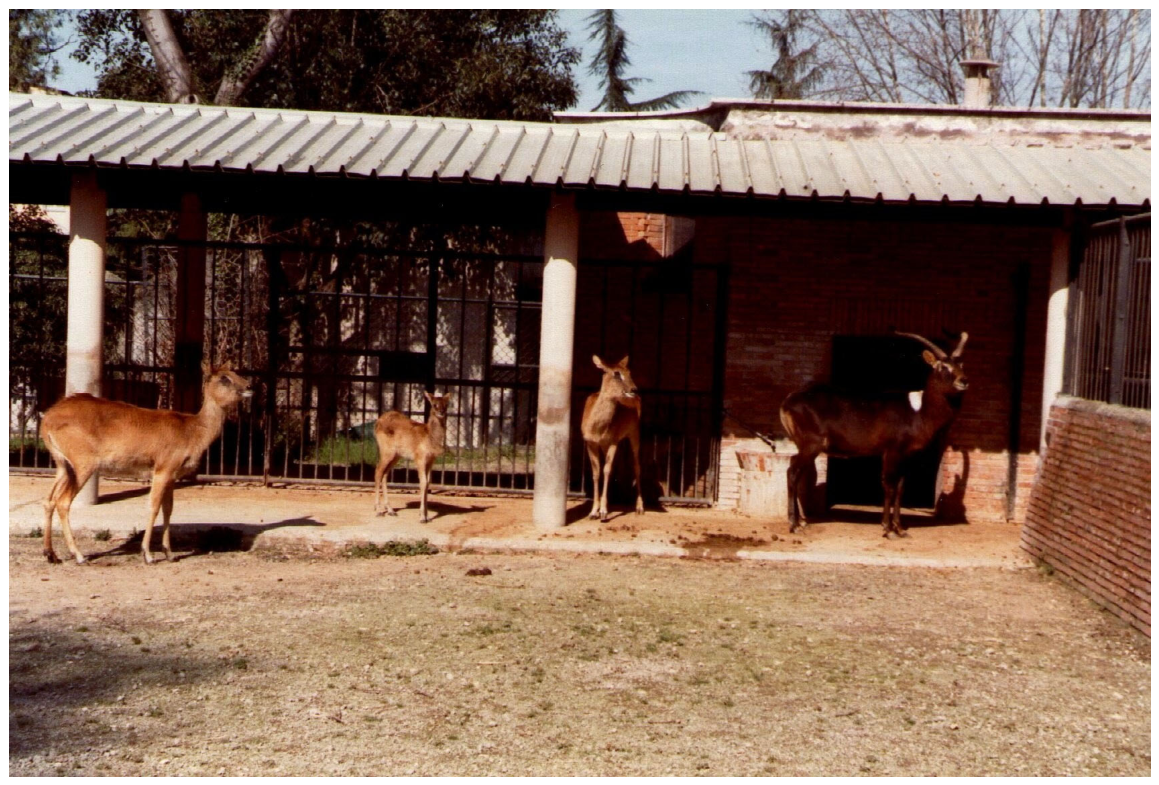
On 2 November 1959 the zoo acquired from the Ruhe animal-dealing company a pair of Nile lechwes, which likely came from the quarantine station in Naples [55]. The animals were housed in one of the main antelope facilities in the zoo, which consisted of a linear row of paddocks. This facility was built in the 1930s with the aim of keeping a pair of the highest possible number of species. The paddock where the animals were originally accommodated measured approximately 140 m2 and it had access to two 4 m2 indoor stables (Figure 1) [55]. The substrate consisted of hard ground, but occasionally it could be partially flooded in the summer season. Each paddock featured also a smaller pen for allowing the separation of individuals according to their needs.
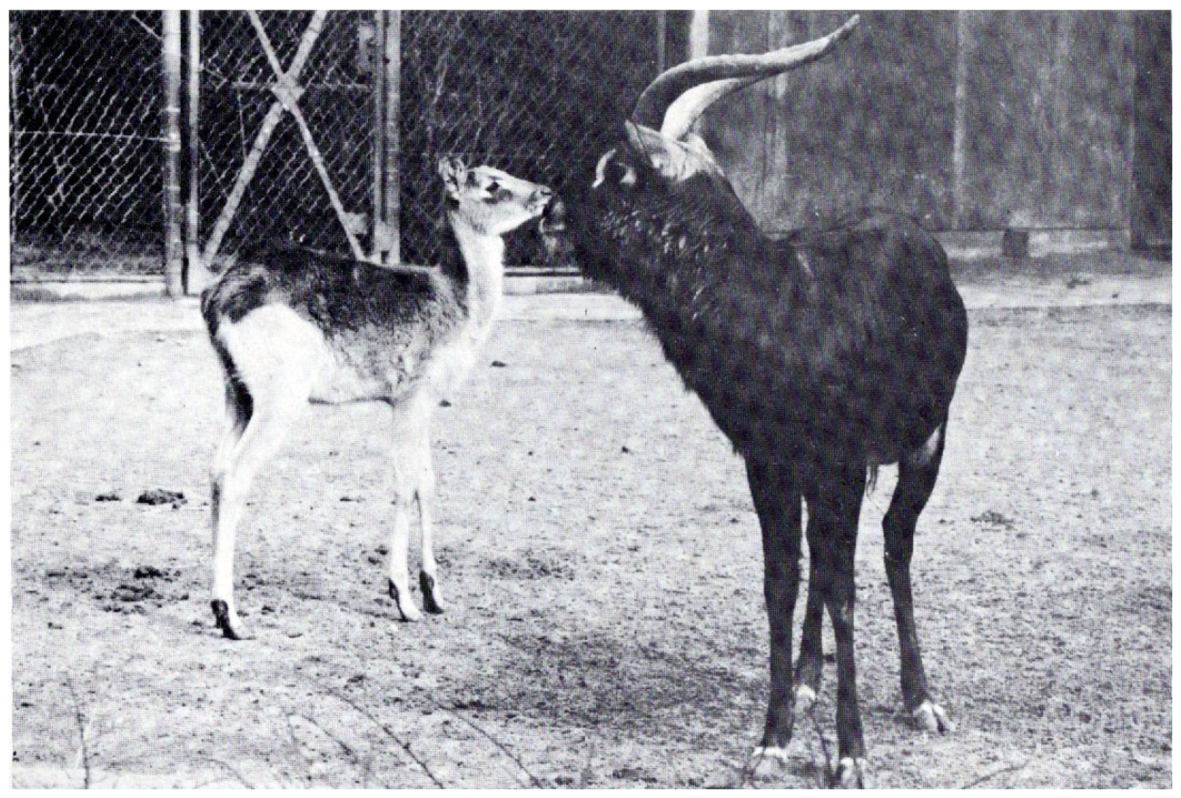
The first Nile lechwe was born on 21 December 1959 as the female arrived already pregnant, but the calf died the following day. A subsequent birth would take place on 12 November 1960, with the male calf surviving. The original founding pair had at least three further offspring (1.2) between 1962 and 1965. The species bred almost every year, with 104 calves born at the zoo between 1960 and 1992, including twins born on 8 June 1983 [55]. Following the death of the breeding male in 1965, the zoo’s population started gradually to inbreed, as no new unrelated animals were brought in the zoo. The increasing inbreeding levels were reflected by a gradual increase in the calves’ mortality that reached a peak in the early 80s [55]. It is also noteworthy that adult males in Rome showed a reduced spot of white pelage in comparison to wild animals, where it generally extends from the ears through the back of the neck and forms a patch on the shoulder [56]. Some males in Rome presented the white spot only on their shoulders and had a black back of the neck but others were completely devoid of the white patch on the shoulder and neck. As we lack photos of the original male, which came from Ruhe in 1959, we are unable to provide a hypothesis concerning whether inbreeding played a role in the origin or development of this morphological characteristic. Individuals with both these characteristics are common in other Italian zoos and there is no seasonal or yearly variation in the coat of males. Nonetheless, this morphological variability was also observed in some males at Hannover Zoo (Figure 2) [31].
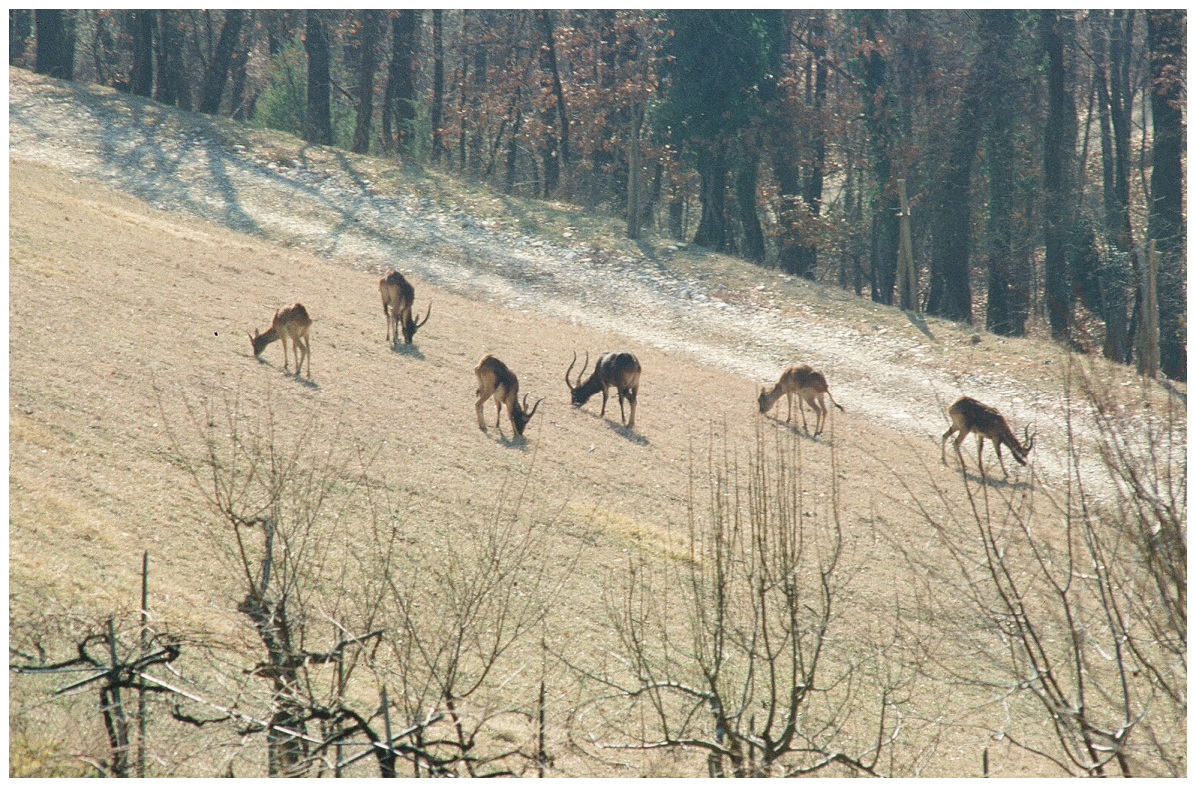
With the increase in number of individuals between the end of the 1960s and the start of the 1970s, the available space in the paddock was not enough. Thus, new accommodations for the animals were found within the zoo. This led to the establishment of a secondary breeding group in another paddock located in another section dedicated to the antelopes. In 1977, the zoo started to send surplus individuals to other institutions, with a total of 15 individuals (6.9) sent elsewhere between 1977 and 1984. At the time, most of the animal transports were mediated by animal-dealing companies due to the bureaucracy of the City of Rome and the final destination of many of these animals is unknown. It is, however, known that 2.5 animals were sent to a private park in Atina (Italy), where several species of antelopes lived in a 75 ha enclosure, which in 1981 also received and unrelated male from Dvůr Králové, improving the genetic diversity of the herd (Figure 3) [29]. It can be assumed that some of these animals were transferred to other Italian institutions, such as the Zoo di Napoli (Naples). This would start a nationwide tradition, as the species is still today well-represented in zoos around the country, being the most widespread wild artiodactyl species now that the giraffe is represented by four distinct species [57].
At the start of the 1980s two breeding herds were present in Rome, but the situation was dire, as, likely due to the high-levels of inbreeding within the population, none of the 19 calves born between 1980 and 1984 survived [55]. Following the death of one the two breeding males, the remaining four individuals (1.3) were reunited in a single herd. As a possible result of improved care, a female calf born on 22 February 1985 named Stella survived until adulthood. The remaining group continued breeding: three males were born between March and July 1987 and all reached adulthood.
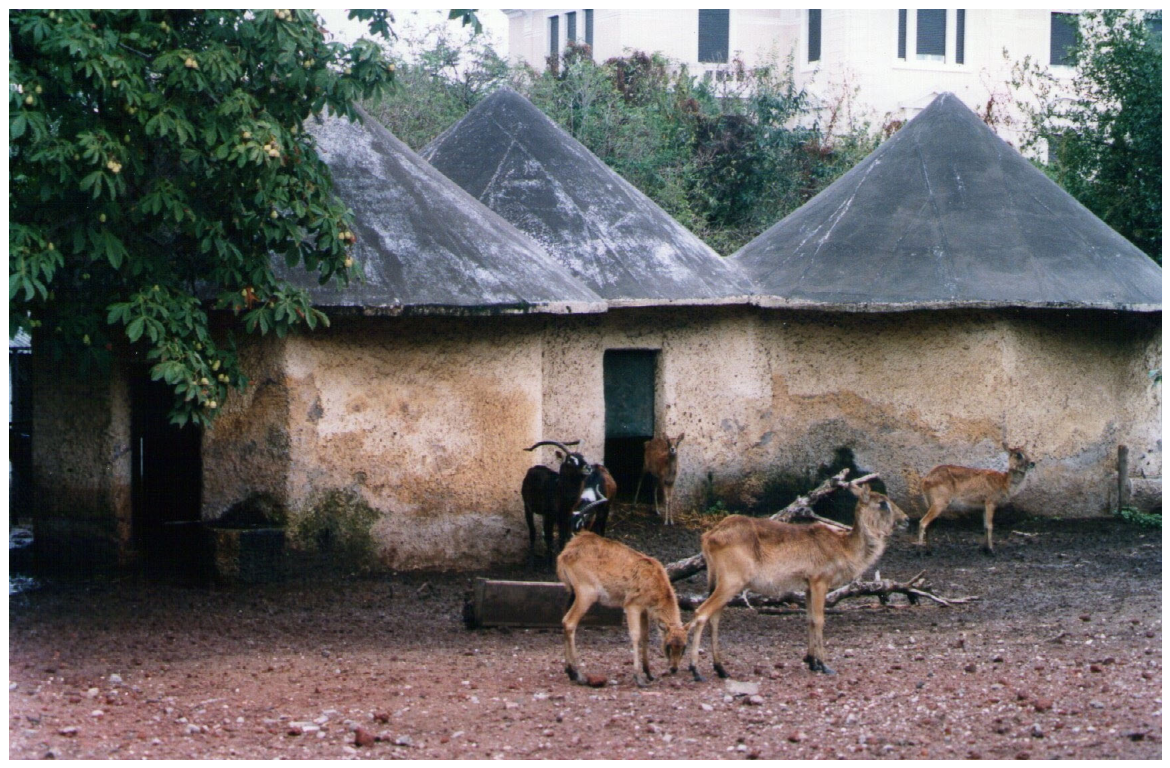
However, to assure the long-term survival of the Rome population it was felt urgent to add some new individuals in the herd. Between April and June 1989, two batches amounting to 11 (2.9) individuals were donated from Atina to the Giardino Zoologico. These animals were the descendants of the individuals which came from Rome at the end of the 1970s and of the male which arrived from Dvůr Králové in 1981. The Atina group was temporarily housed in one paddock of the deer facility, while the definitive facility was being refurbished. The latter was built in the 1930s and consisted of three 400 m2 paddocks that had access to three tucul-shaped 5 m2 stalls with two adjacent smaller stalls and enclosures (Figure 4). The Atina group had access to a single of the three paddocks and started breeding already in 1990. In 1993, the Roman and Atina groups were still separate and respectively amounted to 4.8 and 3.11 individuals [29]. In the first half of the 1990s, the Roman group was introduced to the Atina groups so that they could interbreed. The enlarged group had access to two 400 m2 paddocks. Eventually, the third paddock was also allocated to Nile lechwes, so that the animals could have access to the whole section.
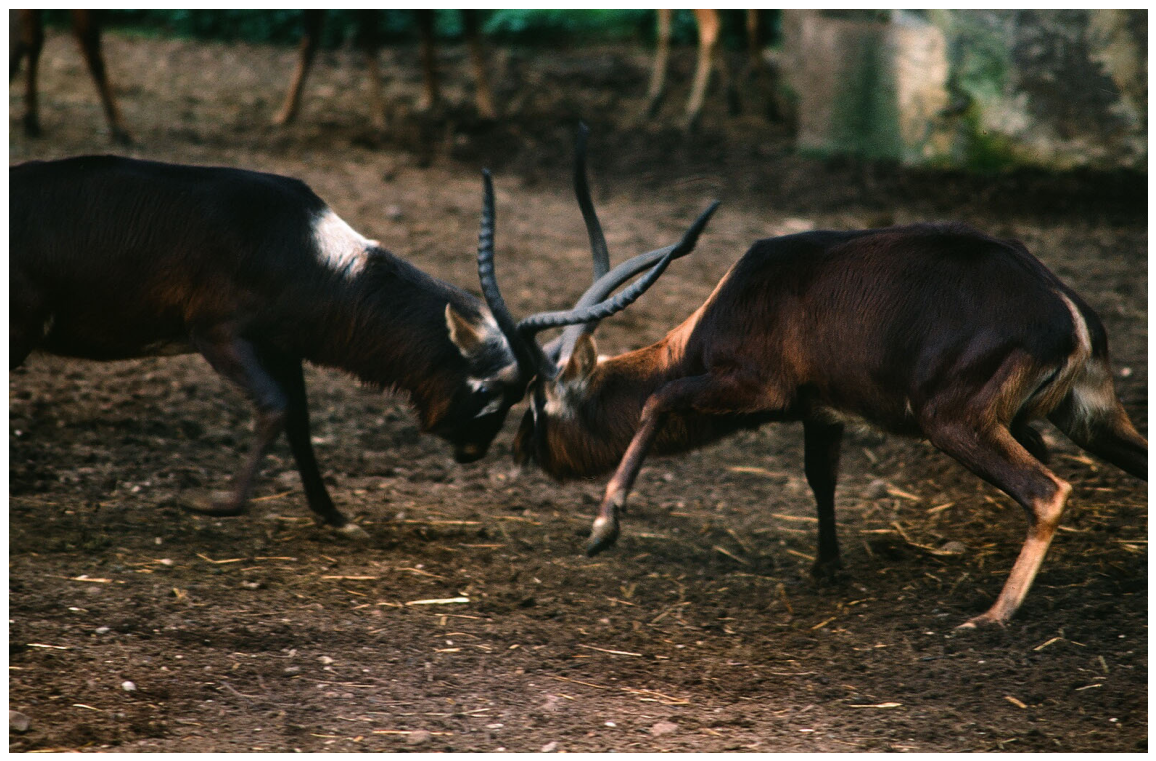
Elisabetta Falchetti (1948–2022) was a zoo professional whose career was deeply linked with the Nile lechwe. During her tenure as ungulate curator at the Giardino Zoologico, she established a behavioural research programme on the species in the second half of the 1980s, in collaboration with Sapienza University of Rome. The transfer to the new exhibit was also beneficial in this regard, as a larger exhibit where this shy species could be less influenced by visitors was ideal for behavioural analyses. In the following years, a number of MSc theses in Biology and Natural Sciences were carried out in the zoo. The results of these theses were published only as abstracts, which concerned social interactions, hierarchical dominance in both females and males, and the relationships between dominance and colour pattern in the latter (Figure 5) [58,59,60]. Nonetheless, the effort to maintain and broaden the scientific role for the Giardino Zoologico was noteworthy at a time when only primatological research was being carried out in the Giardino Zoologico [61,62,63].
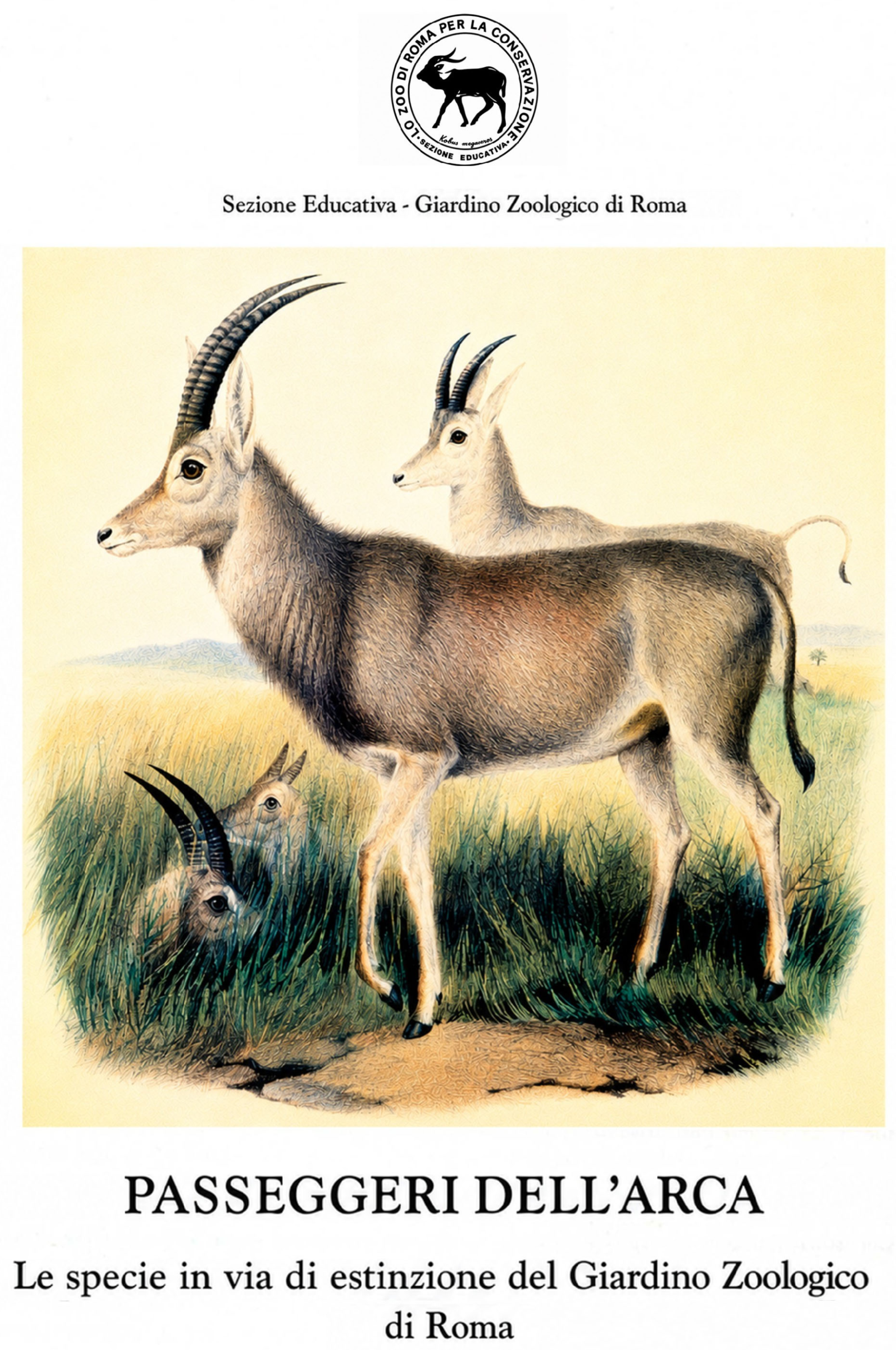
Following her demotion to the head of the Education Section of the Giardino Zoologico at the start of the 1990s, Falchetti had the possibility to exploit the educational potential of the species. In 1990, Nile lechwes were already discussed in Johnathan Kingdon’s volume Island Africa as specialised animals associated with rivers and lakes, together with the shoebill Baleaniceps rex [56]. This was a further confirmation that while the species remained interesting from a behavioural research perspective, it had great potential to serve a critical educational role as flagship of the often-overlooked marshland habitats along the White Nile, as is the case with the Eastern Bongo Tragelaphus euryceros isaaci for the mountain forests of Kenya [64]. Falchetti chose the Nile lechwe as the logo of the Educational Section. Soon after that, the Nile lechwe was assessed as Vulnerable by the IUCN Red List. It was included in Passegeri dell’Arca (Figure 6), a pamphlet issued by the education section on the threatened species at the Giardino Zoologico [65].
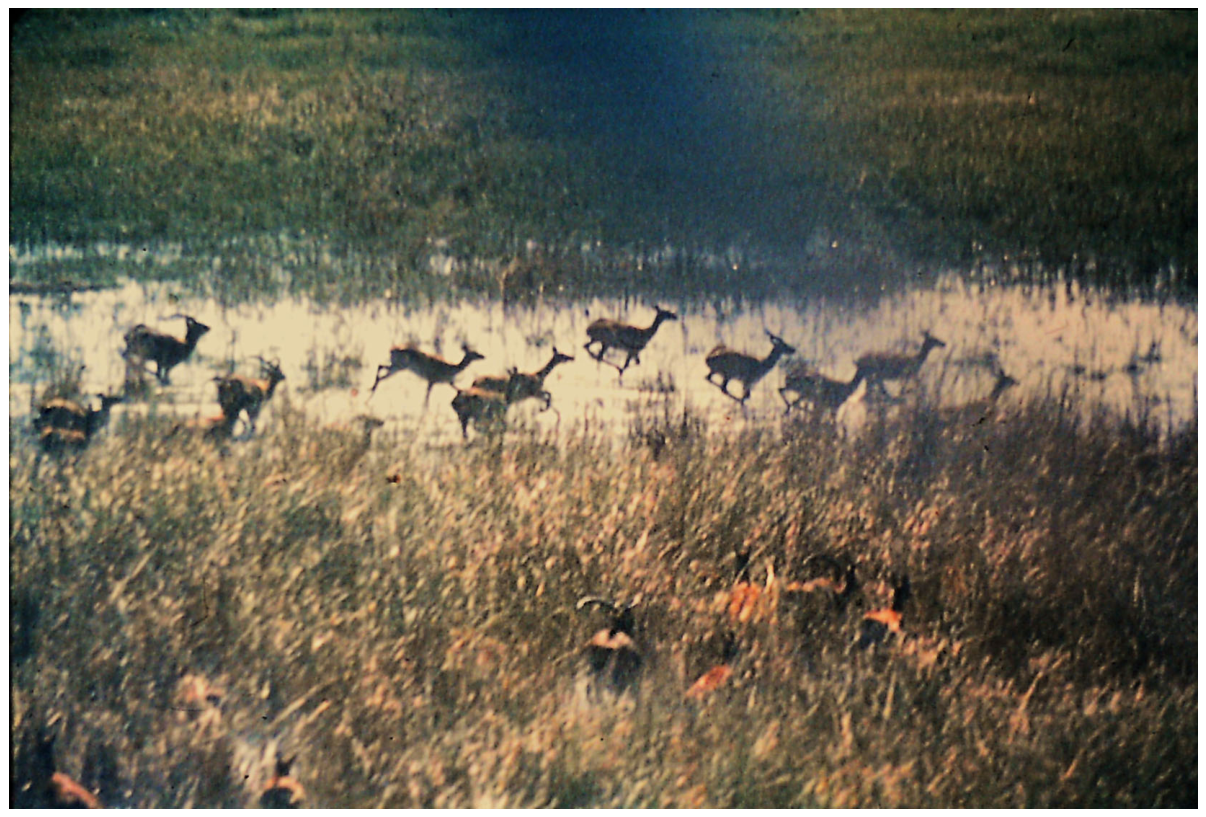
While no in-situ conservation initiative for the Nile lechwe was supported by any zoo at the time, Falchetti also discussed the status of the species in-situ with Italian ornithologist Alfredo Guillet [66], who had studied the shoebill in the range of the Nile lechwe (Figure 7) [67]. Additionally, Falchetti published in 1996 in the Newsletter of the IUCN Antelope Specialist Group a preliminary action plan for the in-situ conservation of the species [68,69]. It is relevant that Falchetti’s proposals for an action plan remain the only contribution in this regard, as up to this day, no species action plan for the Nile lechwe has been officially produced [22]. Overall, her work helped to highlight the status of the species both in-situ and in zoos, and was instrumental for the management of this species as an EEP, which is today managed by the Bioparco di Roma. The circle closed almost a quarter of century later, when Jonathan Kingdon asked Elisabetta Falchetti to coauthor the chapter on the species for his Mammals of Africa [23].

4. Nile Lechwes, ‘Sudan’, and the Decolonisation of Conservation

The Sudd region, like most of the Sudan, was characterised by political unrest and instability for a long period over the last decades, which have affected negatively the local wildlife, leading to the functional extinction of the northern white rhinoceros Ceratotherium simum cottonii, now reduced to two living females in Kenya [70,71]. Before the war, the existence of the Sudd Swamp, where Nile lechwes are endemic (Figure 7), was threatened by the construction of the Jonglei Canal, which would have increased the flow of water for agriculture, as well as by irrigation projects in the Sudd [72,73,74]. Thus, the decades-long political unrest may also have had some positive outcomes for wildlife. A recent study indicates that Nile lechwe may be susceptible to climate change [75]. The area of the Boma–Jongeli ecosystem in South Sudan, which also encompasses the Sudd Swamp, has been reported to be the site of large-scale ungulate migrations of species such as the white-eared kob Kobus kob leucotis and the tiang Damaliscus lunatus tiang [76,77,78,79]. However, these migrations have remained understudied and have often been overlooked in comparison to more well-known migrations such as the great migration in the Serengeti [80]. It should also be remembered that an isolated small population of Nile lechwe occurs in the Gambela National Park, in Western Ethiopia. A recent literature review indicated that the population is limited to the Alewero Swamp in the eastern edge of the park [81]. As the region is threatened by large-scale agricultural investments which may change the extension of the wetlands, international cooperation focused on Nile lechwe could be of critical relevance for the whole habitat [82]. As international NGOs have started to collaborate with the South Sudan Government, conservation initiatives such as the 2024 aerial survey indicated that the migrations of the Boma Badingilo Jonglei Landscape encompass up to six million ungulates such as the aforementioned white-eared kobs and tiangs, but also the Mongalla gazelle Eudorcas albonotata and reedbucks Redunca redunca [83]. As none of these species nor the shoebill are common in zoological gardens [84,85,86,87,88], Nile lechwes could be exceptionally well-suited to serve as ex-situ flagship, not only for a unique biotype and ecological process. However, the task could result even more difficult when Nile lechwes are kept in generalised “savannah mixed species exhibits”, which often mix species whose ranges do not overlap in the wild. In this way, the Nile lechwe becomes another “savannah antelope”, limiting the educational message that the species may convey.
Additionally, Nile lechwes would be ideal to shed light to the history of Sudan and its complex colonial and post-colonial heritage. Before the secession of Southern Sudan in 2011, Sudan was the largest African country. After the country’s independence from Britain in 1956, the mainly Islamic northern regions were politically dominant over the southern ones, mainly animistic or Christian. Civil wars were the result of the diverse ethnic groups of the south fighting back the central Islamic government of the north to preserve indigenous cultures, ideologies, jurisdiction, and land ownership. Inevitably, communicating the related conservation issues of Nile lechwe means also speaking about geography, people, history, and politics of Southern Sudan. Therefore, the long-term management of an ex-situ population of Nile lechwe is much more than the building up of an assurance population under common sense politics [89]. Zoological gardens, through their official associations (i.e., EAZA) or individually, could reaffirm their political role in the environmental agenda as empirically science-based institutions promoting critical thinking in the society, including a decolonisation of conservation practices [90]. In particular, this could be achieved by zoos by presenting species conservation in a broader socio-cultural and political context, which also acknowledges local communities, their complex relationship with wildlife, and the history of those lands, which is too often forgotten in zoos’ educational messages. Therefore, it should be desirable that zoo professionals recognise South Sudan’s cultural diversity [91] by adopting a particularly respectful attitude toward communities also in consideration of the long dramatic history of these regions.

5. Conclusions

The present contribution demonstrates how a threatened but somewhat uncharismatic species can become gradually more common in zoological gardens thanks to the efforts of the staff of a single zoological garden. It is also a lesson on how even uncharismatic species can be used as flagships of broader ecological and conservation themes, enhancing both the collections and the educational messages of the whole international zoo community.

Author Contributions

S.G. and D.F. have contributed equally to the conceptualisation and writing of the manuscript. All authors have read and agreed to the published version of the manuscript.

Funding

The research received no external funding.

Data Availability Statement

No new data were created or analysed in this study. Data sharing is not applicable to this article.

Acknowledgments

The authors would like to acknowledge the past efforts of Andreina D’Alessandro in recording the reproduction events of this species in the Giardino Zoologico, and also of Alfredo Guillet in providing us his photograph.

Conflicts of Interest

The authors declare no conflicts of interest.

Abbreviations

The following abbreviations are used in this manuscript:
EAZAEuropean Association of Zoos and Aquaria
AZAAssociation of Zoos and Aquaria
ZIMSZoological Information Management System
EEPEAZA Ex-situ Programme
SSPSpecies Survival Programme

References

  1. Heywood, V.H. Global Biodiversity Assessment; Cambridge University Press: Cambridge, UK, 1995. [Google Scholar]
  2. Clucas, B.; McHugh, K.; Caro, T. Flagship species on covers of US conservation and nature magazines. Biodivers. Conserv. 2008, 17, 1517–1528. [Google Scholar] [CrossRef]
  3. Jepson, P.; Barua, M. A Theory of Flagship Species Action. Conserv. Soc. 2015, 13, 95–104. [Google Scholar] [CrossRef]
  4. Verissimo, D.; MacMillan, D.C.; Smith, R.J. Toward a systematic approach for identifying conservation flagships. Conserv. Lett. 2011, 4, 1–8. [Google Scholar]
  5. Leader-Williams, N.; Dublin, H.T. Charismatic megafauna as ‘flagship species’. In Priorities for the Conservation of Mammalian Diversity: Has the Panda Had Its Day? Entwistle, A., Dunstone, N., Eds.; Cambridge University Press: Cambridge, UK, 2000; pp. 53–81. [Google Scholar]
  6. Smith, R.J.; Verıssimo, D.; Isaac, N.J.B.; Jones, K.E. Identifying Cinderella species: Uncovering mammals with conservation flagship appeal. Conserv. Lett. 2012, 5, 205–212. [Google Scholar] [CrossRef]
  7. Simberloff, D. Flagships, umbrellas and keystones: Is single species management passé in the landscape era? Biol. Conserv. 1998, 83, 247–257. [Google Scholar] [CrossRef]
  8. Andelman, S.J.; Fagan, W.F. Umbrellas and flagships: Efficient conservation surrogates or expensive mistakes? Proc. Natl. Acad. Sci. USA 2000, 97, 5954–5959. [Google Scholar] [CrossRef] [PubMed]
  9. Gippoliti, S.; Amori, G. Rodent conservation, zoos, and the importance of the “common species”. Zoo Biol. 1998, 17, 263–265. [Google Scholar] [CrossRef]
  10. Gippoliti, S.; Carpaneto, G.M. Captive breeding, zoos, and good sense. Conserv. Biol. 1997, 11, 806–807. [Google Scholar] [CrossRef]
  11. Lees, C.M.; Wilcken, J. Sustaining the Ark: The challenges faced by zoos in maintaining viable populations. Int. Zoo Yearb. 2009, 43, 6–18. [Google Scholar] [CrossRef]
  12. Robovský, J.; Melichar, L.; Gippoliti, S. Zoos and conservation in the Anthropocene: Opportunities and problems. In Problematic Wildlife II–New Conservation and Management Challenge in the Human-Wildlife Interactions; Angelici, F.M., Rossi, L., Eds.; Springer: Berlin/Heidelberg, Germany, 2020; pp. 451–484. [Google Scholar]
  13. Byers, O.; Lees, C.; Wilcken, J.; Schwitzer, C. The One Plan Approach: The philosophy and implementation of CBSG’s approach to integrated species conservation planning. WAZA Mag. 2013, 14, 2–5. [Google Scholar]
  14. Frynta, D.; Šimková, O.; Lišková, S.; Landová, E. Mammalian collection on Noah’s ark: The effects of beauty, brain and body size. PLoS ONE 2013, 8, e63110. [Google Scholar] [PubMed]
  15. Conde, D.A.; Colchero, F.; Gusset, M.; Pearce-Kelly, P.; Byers, O.; Flesness, N.; Browne, R.K.; Jones, O.R. Zoos through the lens of the IUCN Red List: A global metapopulation approach to support conservation breeding programs. PLoS ONE 2013, 8, e80311. [Google Scholar] [CrossRef] [PubMed]
  16. Brereton, S.R.; Brereton, J.E. Sixty years of collection planning: What species do zoos and aquariums keep. Int. Zoo Yearb. 2020, 54, 131–145. [Google Scholar] [CrossRef]
  17. Kerr, K.C.R. Zoo animals as “proxy species” for threatened sister taxa: Defining a novel form of species surrogacy. Zoo Biol. 2021, 40, 65–75. [Google Scholar] [PubMed]
  18. Fraschetti, D.; Gippoliti, S.; Battisti, C. Waders (Aves: Charadriiformes) in zoos: A worldwide arrangement and implications for conservation. Biodiversity 2025, 26, 416–424. [Google Scholar] [CrossRef]
  19. Fraschetti, D.; Gippoliti, S.; Colangelo, P. Global representation of rodents in zoological institutions: Implications for ex-situ conservation. J. Nat. Conserv. 2026, 91, 127253. [Google Scholar]
  20. Gippoliti, S.; Amori, G. Beyond threatened species and reintroduction: Establishing priorities for conservation and breeding programmes for European rodents in zoos. Int. Zoo Yearb. 2007, 41, 194–202. [Google Scholar] [CrossRef]
  21. Zhou, K.; Xu, J.; Chen, Z.; Williams, K.H.J.; Liang, Z.; Lin, W.; Lee, T.M.; Hu, S. From Iconic Species to Biodiversity: The Role of Zoos in Inspiring Visitors’ Affinity for a Broader Range of Wild Animals. Integr. Conserv. 2025, 4, 205–217. [Google Scholar] [CrossRef]
  22. IUCN SSC Antelope Specialist Group. Kobus megaceros. The IUCN Red List of Threatened Species 2017: e.T11034A50189177. Available online: https://www.iucnredlist.org/species/11034/50189177 (accessed on 26 March 2026).
  23. Falchetti, E.; Kingdon, J. Kobus megaceros Nile Lechwe. In Mammals of Africa; Kingdon, J., Hoffmann, M., Eds.; Bloomsbury: London, UK, 2013; Volume 6, pp. 455–460. [Google Scholar]
  24. Gippoliti, S.; Ziegler, T. Taxonomy Goes Zoos: The Inevitable Relevance of Species Delimitation and Conservation Unit Recognition for Adequate ex-situ Conservation Measures. Der Zool. Gart. 2024, 92, 147–158. [Google Scholar]
  25. ZIMS Population Overview. Species360 Zoological Information Management System. Available online: http://zims.species360.org (accessed on 26 March 2026).
  26. Gippoliti, S. La Giungla di Villa Borghese; Edizioni Belvedere: Latina, Italy, 2010. [Google Scholar]
  27. Flower, S.S. Notes on Eight Continental Zoological Gardens visited in 1929. Proc. Zool. Soc. Lond. 2024, 99, 659–669. [Google Scholar]
  28. Leister, C.W. Antelopes in Retrospect. Bull. N. Y. Zool. Soc. 1938, 16, 75–93. [Google Scholar]
  29. Falchetti, E.; Mostacci, B. The Nile lechwe: PVA factors and guidelines to captive management. Int. Zoo Yearb. 1993, 32, 60–69. [Google Scholar]
  30. Nile Lechwe. Available online: https://www.zootierliste.de/en/?klasse=1&ordnung=121&familie=12117&art=1160827 (accessed on 26 March 2026).
  31. Dittrich, L. Seltene Antelopen vom Weiben Nil. Zoofreunde Hann. 1984, 52, 2–5. [Google Scholar]
  32. Dittrich, L. Gestation periods and age of sexual maturity of some African antelopes. Int. Zoo Yearb. 1972, 12, 184–187. [Google Scholar] [CrossRef]
  33. Anonymous. Species of wild animals bred in captivity during 1969. Int. Zoo Yearb. 1971, 11, 259–320. [Google Scholar] [CrossRef]
  34. Gorgas, M. Panorama of Africa: A complex for large African mammals. Int. Zoo Yearb. 1987, 26, 315–318. [Google Scholar] [CrossRef]
  35. Anonymous. Species of wild animals bred in captivity during 1985 and multiple generation captive births. Int. Zoo Yearb. 1988, 27, 341–435. [Google Scholar]
  36. Anonymous. Species of wild animals bred in captivity during 1986 and multiple generation captive births. Int. Zoo Yearb. 1989, 28, 385–487. [Google Scholar] [CrossRef]
  37. Anonymous. Species of wild animals bred in captivity during 1991 and multiple generation captive births. Int. Zoo Yearb. 1993, 32, 363–529. [Google Scholar] [CrossRef]
  38. Anonymous. Species of wild animals bred in captivity during 1993 and multiple generation captive births. Int. Zoo Yearb. 1995, 34, 347–461. [Google Scholar] [CrossRef]
  39. Anonymous. Species of wild animals bred in captivity during 1994 and multiple generation captive births. Int. Zoo Yearb. 1997, 35, 345–462. [Google Scholar] [CrossRef]
  40. Anonymous. Species of wild animals bred in captivity during 1995/1996 and multiple generation captive births. Int. Zoo Yearb. 1998, 36, 363–551. [Google Scholar]
  41. Anonymous. Species of wild animals bred in captivity during 1965. Int. Zoo Yearb. 1967, 7, 300–356. [Google Scholar] [CrossRef]
  42. Anonymous. Species of wild animals bred in captivity during 1966. Int. Zoo Yearb. 1968, 8, 288–348. [Google Scholar] [CrossRef]
  43. Anonymous. Species of wild animals bred in captivity during 1968. Int. Zoo Yearb. 1970, 10, 249–310. [Google Scholar] [CrossRef]
  44. Anonymous. Species of wild animals bred in captivity during 1977 and multiple generation captive births. Int. Zoo Yearb. 1979, 19, 297–383. [Google Scholar] [CrossRef]
  45. Anonymous. Species of wild animals bred in captivity during 1971. Int. Zoo Yearb. 1971, 11, 284–346. [Google Scholar]
  46. Anonymous. Species of wild animals bred in captivity during 1984 and multiple generation captive births. Int. Zoo Yearb. 1987, 26, 411–506. [Google Scholar] [CrossRef]
  47. Anonymous. Species of wild animals bred in captivity during 1987 and multiple generation captive births. Int. Zoo Yearb. 1990, 29, 243–348. [Google Scholar] [CrossRef]
  48. Anonymous. Species of wild animals bred in captivity during 1964. Int. Zoo Yearb. 1966, 6, 385–431. [Google Scholar]
  49. Anonymous. Species of wild animals bred in captivity during 1976 and multiple generation captive births. Int. Zoo Yearb. 1978, 18, 319–404. [Google Scholar] [CrossRef]
  50. Anonymous. Species of wild animals bred in captivity during 1988/1989 and multiple generation captive births. Int. Zoo Yearb. 1991, 30, 311–489. [Google Scholar]
  51. Anonymous. Species of wild animals bred in captivity during 1992 and multiple generation captive births. Int. Zoo Yearb. 1994, 33, 297–407. [Google Scholar]
  52. Anonymous. Species of wild animals bred in captivity during 1978 and multiple generation captive births. Int. Zoo Yearb. 1980, 20, 374–448. [Google Scholar]
  53. Cuneo, F. Quarantine and acclimatization station at Naples Zoo. Int. Zoo Yearb. 1965, 5, 251–252. [Google Scholar] [CrossRef]
  54. D’Alessandro, A.; Gippoliti, S. A list of wild mammals breeding at the Zoo of Rome from its foundation (1911) to 1991. Hystrix 1993, 4, 45–59. [Google Scholar] [CrossRef]
  55. Falchetti, E.; Mostacci, B. A case study of inbreeding and juvenile mortality in the population of Nile Lechwe Kobus megaceros at Rome Zoo. Int. Zoo Yearb. 1995, 34, 225–231. [Google Scholar] [CrossRef]
  56. Kingdon, J. Island Africa. The Evolution of Africa’s Rare Animals and Plants; Collins: London, UK, 1990. [Google Scholar]
  57. Fraschetti, D.; Gippoliti, S. Which mammal species can I see at the zoo? A first analysis of mammal collections of Italian licensed zoological gardens. Biol. Ambient. 2022, 36, 29–42. [Google Scholar]
  58. Falchetti, E.; Ceccarelli, A.; Mantovani, C. Relationship between dominance/subordination and colouring patterns in Kobus megaceros (Bovidae, Reduncinae) captive males. Boll. Di Zool. Suppl. 1994, 61, 68. [Google Scholar]
  59. Falchetti, E.; Ceccarelli, A. A peculiar behaviour of the dominant males of Nile lechwes (Kobus megaceros, Bovidae Reduncinae): Urination on the neck. Ethol. Ecol. Evol. 1993, 5, 392–393. [Google Scholar] [CrossRef]
  60. Falchetti, E.; Miliani, D. Observations on some displays in Nile lechwes (Kobus megaceros, Reduncinae Bovidae) and their utilization in social interactions. Ethol. Ecol. Evol. 1993, 5, 393–394. [Google Scholar] [CrossRef]
  61. Visalberghi, E. Aspects of space representation in an infant gorilla. In Current Perspectives in Primate Social Dynamics; King, F., Taub, A., Eds.; Van Nostrand Reinhold: New York, NY, USA, 1984; pp. 445–452. [Google Scholar]
  62. Antinucci, F.; Visalberghi, E. Tool use in Cebus apella: A case study. Int. J. Primatol. 1986, 7, 351–363. [Google Scholar] [CrossRef]
  63. Majolo, B.; Schino, G.; Troisi, A. Towards thirty years of ethological research on the Japanese Macaque (Macaca fuscata) colony of the Rome Zoo: A review. J. Anthropol. Sci. 2005, 83, 43–60. [Google Scholar]
  64. Gippoliti, S.; Lupták, P.; Groves, C.P. Flagship but only locally: Bongo Tragelaphus eurycerus taxonomic history and its effects on current conservation policy. Gazella 2018, 44, 65–77. [Google Scholar]
  65. Anonymous. Passegeri dell’Arca. Le specie in via di Estinzione del Giardino Zoologico di Roma; Sezione Educativa-Giardino Zoologco di Roma: Rome, Italy, 1996; p. 23. [Google Scholar]
  66. Falchetti, E.; Guillet, A.; Mostacci, B. Status and Conservation of Kobus megaceros (Bovidae, Reduncinae) in the wild: Population Viability Analysis Factors and Wild Management. Suppl. Ric. Biol. Selvag. 1993, 21, 319–326. [Google Scholar]
  67. Guillet, A. Distribution and conservation of the shoebill (Balaeniceps rex) in the southern Sudan. Biol. Conserv. 1978, 13, 39–49. [Google Scholar] [CrossRef]
  68. Falchetti, E. General issues in the conservation biology of Nile Lechwe (Kobus megaceros) and preliminary guidelines for an action plan, Part 1. Gnusletter 1997, 16, 6–9. [Google Scholar]
  69. Falchetti, E. General issues in the conservation biology of Nile Lechwe (Kobus megaceros) and preliminary guidelines for an action plan. Gnusletter 1998, 17, 4–10. [Google Scholar]
  70. Gippoliti, S. Lost African paradises and biodiversity conservation: Do not forget history. Biodivers. J. 2024, 15, 773–776. [Google Scholar] [CrossRef]
  71. Emslie, R. Ceratotherium simum ssp. Cottoni. The IUCN Red List of Threatened Species, 2020. e.T4183A45813838. Available online: https://www.iucnredlist.org/species/4183/45813838 (accessed on 21 April 2026).
  72. East, R. African Antelope Database; IUCN: Gland, Switzerland, 1998. [Google Scholar]
  73. Galla, R.; Ishidaira, H.; Magome, J.; Souma, K. Impact of the Jonglei Canal diversion on water surface area and evaporation over the Sudd Wetland, South Sudan. J. Jpn. Soc. Civ. Eng. 2024, 12, 24–27009. [Google Scholar]
  74. Fay, M.; Elkan, P.; Marjan, M.; Grossman, F. Aerial Surveys of Wildlife, Livestock, and Human Activity in and Around Existing and Proposed Protected Areas of Southern Sudan, Dry Season 2007; Wildlife Conservation Society: New York, NY, USA, 2007. [Google Scholar]
  75. Alier, G.; Idohou, R.; Hounsou-Dindin, G.; Glèlè Kakaï, R. Assessing the potential impact of climate change on Kobus megaceros in South Sudan: A combination of geostatistical and species distribution modelling. Model. Earth Syst. Environ. 2024, 10, 1531–1542. [Google Scholar]
  76. Fryxell, J.M. Wildlife migration in Boma National Park. Swara 1983, 6, 12–15. [Google Scholar]
  77. Fryxell, J.M.; Sinclair, A.R.E. Seasonal migration by white-eared kob in relation to resources. Afr. J. Ecol. 1988, 26, 17–31. [Google Scholar]
  78. Mefit-Babtie. Development Studies in the Jonglei Canal Area: Final Report; Mefit-Babtie: Glasgow, Rome, 1983. [Google Scholar]
  79. Howell, P.P.; Lock, M.; Cobb, S. (Eds.) Wildlife. In The Jonglei Canal: Impact and Opportunity; Cambridge University Press: Cambridge, UK, 1988; pp. 350–374. [Google Scholar]
  80. Morjan, M.D.; Rayl, N.D.; Elkan, P.W.; Deutsch, J.C.; Henke, M.B.; Fuller, T.K. Armed conflict and development in South Sudan threatens some of Africa’s longest and largest ungulate migrations. Biodivers. Conserv. 2018, 27, 365–380. [Google Scholar]
  81. Rolkier, G.G. Current Status of Nile lechwe in Gambella National Park. Sci. Rep. Life Sci. 2021, 2, 18–24. [Google Scholar]
  82. Legas, M.S.; Mamo, B.T. Impact of human activities on wildlife: The case of the Nile lechwe (Kobus megaceros) Gambella National Park, Southwest Ethiopia. Int. J. Conserv. Sci. 2018, 9, 48–57. [Google Scholar]
  83. World Bank Group. South Sudan Natural Resources Review; World Bank Publications: Washington, DC, USA, 2025. [Google Scholar]
  84. White-Eared Kob. Available online: https://www.zootierliste.de/en/?klasse=1&ordnung=121&familie=12117&art=55005448 (accessed on 26 March 2026).
  85. Tiang. Available online: https://www.zootierliste.de/en/?klasse=1&ordnung=121&familie=12115&art=21102331 (accessed on 26 March 2026).
  86. Mongalla Gazelle. Available online: https://www.zootierliste.de/en/?klasse=1&ordnung=121&familie=12120&art=55010477 (accessed on 26 March 2026).
  87. Common Reedbuck. Available online: https://www.zootierliste.de/en/?klasse=1&ordnung=121&familie=12117&art=21102560 (accessed on 26 March 2026).
  88. Shoebill. Available online: https://www.zootierliste.de/en/?klasse=2&ordnung=208&familie=20804&art=2050301 (accessed on 26 March 2026).
  89. Gippoliti, S. Zoos and conservation in the XXI century: Overlooked meeting points between ecology and social science? Museol. Sci. 2011, 5, 168–176. [Google Scholar]
  90. Gippoliti, S.; Battisti, C. The ‘Humanised Zoo’: Decolonizing conservation education through a new narrative. Ethics Sci. Environ. Politics 2023, 23, 1–5. [Google Scholar] [CrossRef]
  91. Evan- Pritchard, E.E. The Nuer: A Description of the Modes of Livelihood and Political Institutions of a Nilotic People; Calendor Press: Oxford, UK, 1940. [Google Scholar]
Figure 1. Original Nile lechwe paddock in Giardino Zoologico di Roma in 1985. Photo: S. Gippoliti.
Jzbg 07 00027 g001
Figure 2. Nile lechwe at Hannover Zoo in the early 1980s. The absence of the white patch on the shoulders is clearly visible. Photo: [33].
Jzbg 07 00027 g002
Figure 3. Nile lechwes in the private collection in Atina in 1989. Photo: S. Gippoliti.
Jzbg 07 00027 g003
Figure 4. Nile lechwes in the new facility in Giardino Zoologico di Roma in 1998. Photo: S. Gippoliti.
Jzbg 07 00027 g004
Figure 5. Dominance interaction between two male Nile lechwes in the new facility in Giardino Zoologico di Roma in 1998. Photo: S. Gippoliti.
Jzbg 07 00027 g005
Figure 6. Cover of the pamphlet Passeggeri dell’Arca Le specie in via di estinzione del Giardino Zoologico di Roma (Passengers of the Ark-the endangered species of the Giardino Zoologico di Roma). The Nile lechwe logo of the education section is well visible on the top of the cover with the motto “Lo Zoo di Roma per la conservazione” (Rome Zoo for conservation). The centre of the cover displays the extinct bluebuck Hippotragus leucophaeus.
Jzbg 07 00027 g006
Figure 7. Free-ranging Nile lechwes in the Sudd Swamp in the 1980s. Photo: A. Guillet.
Jzbg 07 00027 g007
Disclaimer/Publisher’s Note: The statements, opinions and data contained in all publications are solely those of the individual author(s) and contributor(s) and not of MDPI and/or the editor(s). MDPI and/or the editor(s) disclaim responsibility for any injury to people or property resulting from any ideas, methods, instructions or products referred to in the content.