Article

Bridging Experimentation and Practice in Propagation and Ex Situ Conservation: Studies in Threatened Moss Drepanocladus sendtneri (Amblystegiaceae)


by
Bojana Z. Jadranin
1,
Marija V. Vesović
1,
Djordje P. Božović
1,
Nikolina A. Matić
1,
Michal Goga
2,3,
Milorad M. Vujičić
1,4,
Beáta Papp
5,
Aneta D. Sabovljević
1,4 and
Marko S. Sabovljević
1,2,4,*
1
Institute of Botany and Botanical Garden “Jevremovac”, Faculty of Biology, University of Belgrade, Takovska 43, 11000 Belgrade, Serbia
2
Department of Plant Biology, Institute of Biology and Ecology, Faculty of Science, Pavol Jozef Šafárik University in Košice, Mánesova 23, 040 01 Košice, Slovakia
3
Center for Interdisciplinary Biosciences, Technology and Innovation Park, Pavol Jozef Šafárik University in Košice, Jesenná 5, 041 54 Košice, Slovakia
4
Center of Plant Biotechnology and Conservation (CPBC), Takovska 43, 11000 Belgrade, Serbia
5
Botanical Department, Hungarian Natural History Museum, H-1431 Budapest, Hungary
*
Author to whom correspondence should be addressed.
J. Zool. Bot. Gard. 2026, 7(2), 18; https://doi.org/10.3390/jzbg7020018
Submission received: 24 February 2026 / Revised: 10 March 2026 / Accepted: 30 March 2026 / Published: 3 April 2026
(This article belongs to the Special Issue Integrative Conservation of Cryptogams)

Abstract

The rare and threatened pleurocarpous semi-aquatic moss Drepanocladus sendtneri (Amblystegiaceae) was the focus of an integrative conservation approach aimed at improving knowledge of its biological and ecological characteristics and enhancing its survival prospects. The results provide insights into both the axenic and xenic propagation of this species, as well as its biomass production under ex situ conditions. The KNOP medium proved to be the most suitable for propagation, particularly when demeristemized shoot tips were cultured in an upright orientation. Exogenous application of IBA increased the production of new shoots and reduced the time required to obtain substantial biomass under axenic conditions. Following successful acclimatisation to controlled xenic laboratory conditions, the moss was able to fully develop and spread in experimental basins maintained under outdoor botanical garden conditions, with humidity carefully regulated during dry periods. Within one year, a small number of initial plantlets expanded to cover approximately 4 dm2, spreading efficiently over rainwater-soaked filter paper covered with an inert plastic mesh. These results provide practical guidance for the production and ex situ maintenance of D. sendtneri, thereby supporting the development and improvement of conservation action plans for this rare and threatened moss species.

1. Introduction

Bryophytes, a large group of terrestrial non-vascular plants, are fundamental components of nearly all ecosystems, with the exception of marine environments. They play important ecological roles, including contributions to nutrient cycling, water retention, and habitat formation. Despite their ecological importance, bryophytes remain largely underrepresented in conservation initiatives compared to vascular plants. Nevertheless, they are subject to the same anthropogenic pressures, often to an even greater extent due to their high sensitivity to environmental change and the destruction of microhabitats. Thus, the absence of roots and cuticles, along with a water-dependent mode of sexual reproduction, makes bryophytes particularly vulnerable to climate change, water scarcity, habitat degradation, pollution, and even minor environmental disturbances that affect microhabitat quality. These factors have contributed to widespread declines in bryophyte species, with many now facing an elevated risk of extinction. According to Yin et al. [1], to date, nearly 1.5% of known recent bryophyte species have been assessed by the IUCN Red List, and over half of these are considered threatened. This is twice the global average for plants. This situation highlights the urgent need for detailed studies of threatened bryophyte biology, the development of effective protection measures, and the implementation of targeted conservation strategies. Although conservation-oriented physiological research can be time-consuming, it has the potential to substantially enhance species survival. Integrative conservation approaches, which combine experimental research with the development of practical survival strategies, are therefore becoming essential for safeguarding threatened bryophyte species under a rapidly changing environment.
Drepanocladus sendtneri (Schimp. ex H. Müll.) Warnst. is a semi-aquatic pleurocarpous moss belonging to the family Amblystegiaceae. Although it has a wide but scattered circum-polar, boreo-arctic and montane distribution type, it is a rare species. Less than 50% of its global population belongs to Europe, and it is estimated for conservation prioritisation among European moss threatened species [2].
The species is classified as vulnerable (VU) in Europe [3]. Its European populations are declining primarily due to the loss and degradation of its main habitat types. This is evidenced by national reports from several European countries where the species has not been recorded for decades or has experienced population declines exceeding 80%, despite its long-lived nature [2]. Subpopulations are rather small, isolated and severely fragmented throughout Europe. Sporophytes are extremely rarely recorded (maturing in late summer), and fragmentation is their only means of asexual reproduction. Isolated and tiny subpopulations may go easily extinct with a reduced probability of recolonization, if any [4]. Bearing in mind that it is a dioecious species, the probability of two-sex recolonization is even less plausible.
Although fairly widespread, particularly in northern Europe, it is nowhere common, and it is threatened in many of the countries in which it occurs. The species is classified as Critically Endangered (CR) in the Czech Republic and Switzerland, Endangered (EN) in Finland, Norway, Great Britain, Slovakia, Serbia, and Hungary; Vulnerable (VU) in Bulgaria, and Slovenia; Near Threatened (NT) in Ireland, Northern Ireland, and Romania; Highly Endangered in the Netherlands; and Rare in Poland [4,5,6].
Drepanocladus sendtneri occurs in seasonally flooded calcareous dune slacks and wet, calcareous mesotrophic fens, and is a perennial component of fen and wetland ecosystems, which are highly sensitive to climate change and hydrological fluctuations. It frequently co-occurs with other threatened tracheophyte, moss and liverwort species.
In this study, the conservation physiology, i.e., an experimental approach in establishing in vitro culture, micro and macro propagation, and acclimation, was tested and the following questions related to achieving knowledge on species biology and biomass production were also addressed: (1) Does explant orientation and growth medium type influence optimal axenic micropropagation of the species? (2) How does the exogenous application of selected plant growth regulators (PGRs) affect species morphogenesis, and does explant orientation modify these effects? (3) Can leafy gametophores be used for acclimatisation and xenic propagation under ex situ conditions, i.e., reintroduction to nature? In plant biology, the terms xenic and axenic refer to the propagation of plants in the presence or absence of other organisms. While plants under natural conditions always grow xenically, laboratory experiments allow plant growth to be studied in the presence or absence of associated and cohabiting organisms.

2. Materials and Methods

2.1. Plant Material

Plant material from a rather recent herbarium sample of D. sendtenri was used to establish the in vitro axenic cultures. The samples used were not dried quickly but allowed to dry spontaneously, and the material was not in a drying state for longer than two months. Voucher samples are present in the Moss Collection of the Hungarian Natural History Collection (BP192621) with the following data: Drepanocladus sendtneri; leg./det. Beáta Papp; 24 April 2017; loc. Hungary, Veszprém County at Gyepükaján; in Caricetum elatae Koch, 1926; altitude 160 m; N 47°02′30.2″ E 17°17′13.9″.

2.2. In Vitro Culture Establishment

Axenic cultures were established from a few vegetative tips (1 cm long) that were subject to rehydration for 2 h prior to the sterilisation procedure previously described [7].
Once the contaminant and cohabitant-free cultures were achieved, axenic cultures of D. sendtneri, maintained for over two years on minimal KNOP medium (for the details on growth medium, please see [8]), were used as the propagation source of experimental material. Cultivation was carried out under laboratory-controlled conditions with the details stated below.
Contaminant-free shoots, approximately 1 cm long, were used as explants and transferred to different culture media, either with or without the addition of plant growth regulators. Since gametophore initials undergo three consecutive cell divisions to form a tetrahedral apical cell meristem, which subsequently divides into a spiral pattern to generate a new leafy shoot, prior to experimentation, the shoot apices were removed (decapitated) to reduce the influence of existing apical meristematic activity. This ensured uniform starting conditions for all explants and comparable dedifferentiation/differentiation potential among them in various treatments. Removed meristemal apices were used for further axenic propagation in captivity to avoid loss of species and to speed up biomass production for further experimentations.

2.3. Experimental Design

The explants were used in two separate experimental designs. In Experiment type A, plantlets were cultured on three different growth media to identify the most suitable medium for in vitro growth and development. The media tested were solid KNOP medium, half-strength MS, and BCD medium (for the details of media composition, please see [8]). With the aim of assessing the effect of explant orientation on morphogenesis and nutrient transport, individual explants were placed either upright or prostrate on the media (Table 1). Since there are no culticules, the position should significantly differ in uptake surface size, i.e., contact with the medium.
In Experiment type B, plantlets were cultivated on KNOP medium supplemented with varying concentrations of plant growth regulators (PGRs), specifically the auxin IBA (indole-3-butyric acid) and the cytokinin BAP (6-benzylaminopurine), to evaluate their effects on moss growth and development. The tested concentrations were 0.03, 0.3, and 3 μM. Explants were positioned either upright or prostrate to assess the impact of orientation (i.e., contact surface size) on their response and document if there is a significant difference in uptake and biomass production speed of this threatened species (the experimental conditions are summarised in Table 1).
KNOP medium was selected for further experiments of type B, because it promoted healthy gametophore growth and the production of numerous new shoots, without the appearance of secondary protonema, as demonstrated in experiment type A, and preliminary medium comparison tests, as well as in some other tested Amblystegiacean species [7,9].
The pH of all media used in the experiments was adjusted to 5.8 before sterilisation at 121 °C for 30 min. Each treatment included 20 gametophores, distributed across 5 Petri dishes with 4 explants per dish. Explants were grown under axenic conditions in sterile Petri dishes at 18 ± 2 °C, 60–70% relative humidity, and a long-day photoperiod (16 h light/8 h dark). Light was provided by fluorescent lamps (Tesla Pančevo) at a photon flux density of 50 μmol m−2 s−1.
After 4 weeks of cultivation, morphogenetic responses were evaluated, including the number of new shoots produced per explant (further stated as the index of multiplication) and the survival rate. New shoots were defined as lateral branches appearing on the initial explants. The underdeveloped secondary protonema in these treatments did not produce novel gametophores at all.
Newly formed gametophores were not counted due to the underdeveloped secondary protonema observed in these treatments.
The diameter of secondary protonemal patches was not measured due to their limited visibility and poor development. Morphological observations were made and documented using a Leica MZ stereomicroscope (Leica MZ 7.5, Bi-Optic Inc., Santa Clara, CA, USA).
Moss material from Experiment type C, initially grown under axenic conditions in vitro, was acclimatised in two consecutive stages. In the first stage, explants were transferred to xenic conditions using rainwater to maintain moisture, while retaining the same controlled parameters as in axenic culture (18 ± 2 °C, 80% humidity, and a 16 h light/8 h dark photoperiod). The plantlets were placed on filter paper moistened with non-sterile rainwater collected from the Botanical Garden Jevremovac (Faculty of Biology, University of Belgrade) to enable interaction with naturally occurring microorganisms without causing lethal effects. In the second stage, the moss was relocated outdoors in semi-shaded, inclined plastic basins (30° slope) during autumn (10 November 2021) and its survival and spread were tested. The plants were positioned at the water’s edge in the transition zone of the basins and secured onto the moist filter paper using an inert plastic net (Table 1).

2.4. Statistical Analysis

Statistical analyses were performed using the R statistical computing framework (Version 4.3.2) [10]. Preliminary examination of the data indicated deviations from normality and heterogeneity of variances, as assessed by the Shapiro–Wilk and Levene tests, respectively. Consequently, the effects of experimental factors were evaluated using a nonparametric factorial approach based on the Aligned Rank Transform (ART) method [11,12] that enabled testing of main effects and interaction terms within factorial designs. Afterwards, contrast tests were applied to resolve specific differences among experimental groups [13].

3. Results

3.1. The Effect of Explant Position and Growth Medium Type on the Morphogenetic Response of D. sendtneri

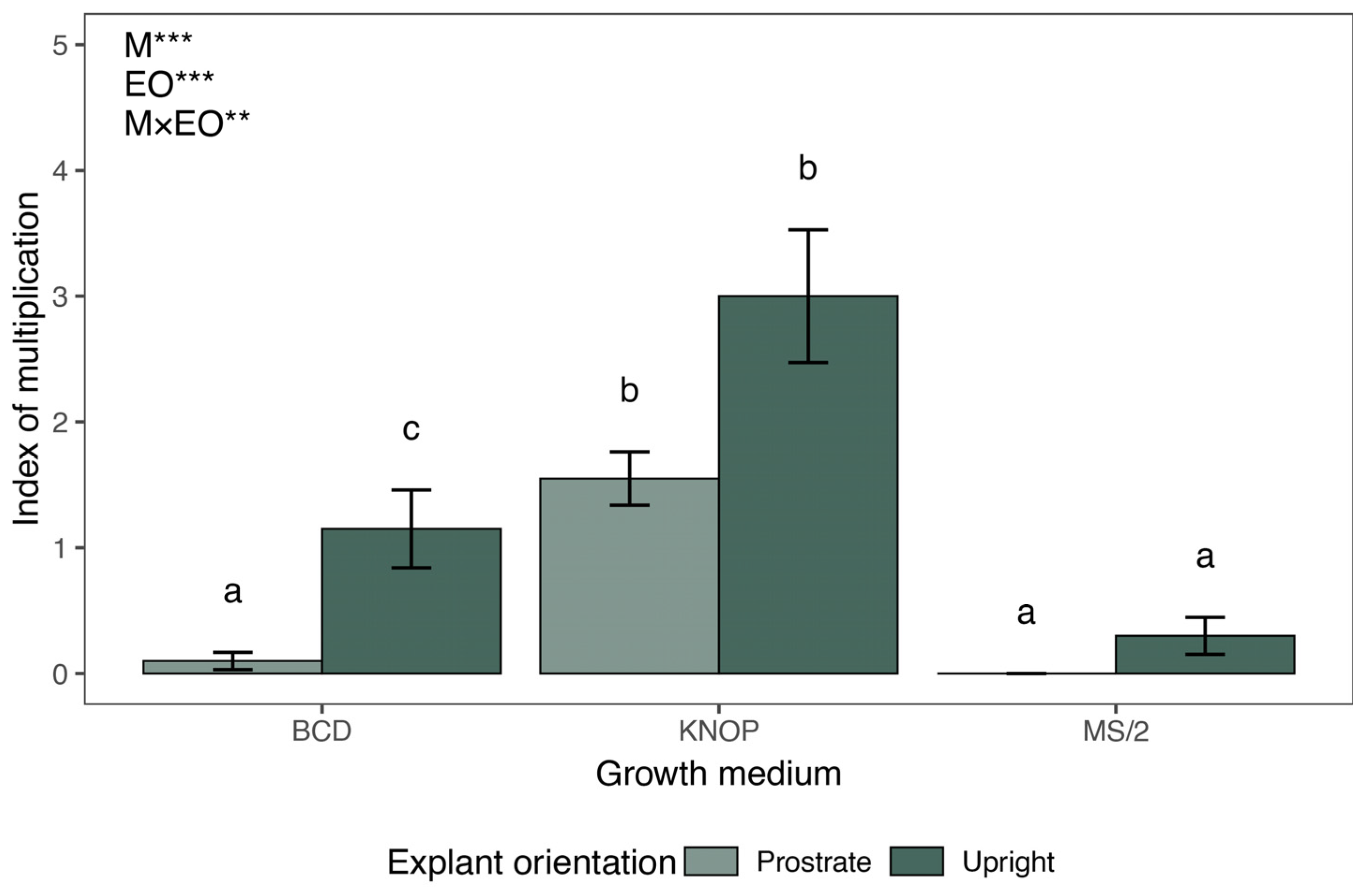
Significant main effects of both growth medium type (M) and explant orientation (EO), as well as their interaction (M × EO), were observed (p < 0.001), indicating that the multiplication index varied depending on both medium type and explant orientation (Figure 1). The highest multiplication index was observed in upright-oriented explants grown on KNOP medium (Figure 1). Moreover, KNOP medium produced a significantly higher multiplication index (p < 0.05) than the other two media for both explant orientations. A significant difference between explant orientations was observed only for the BCD medium (p < 0.05) (Figure 1).
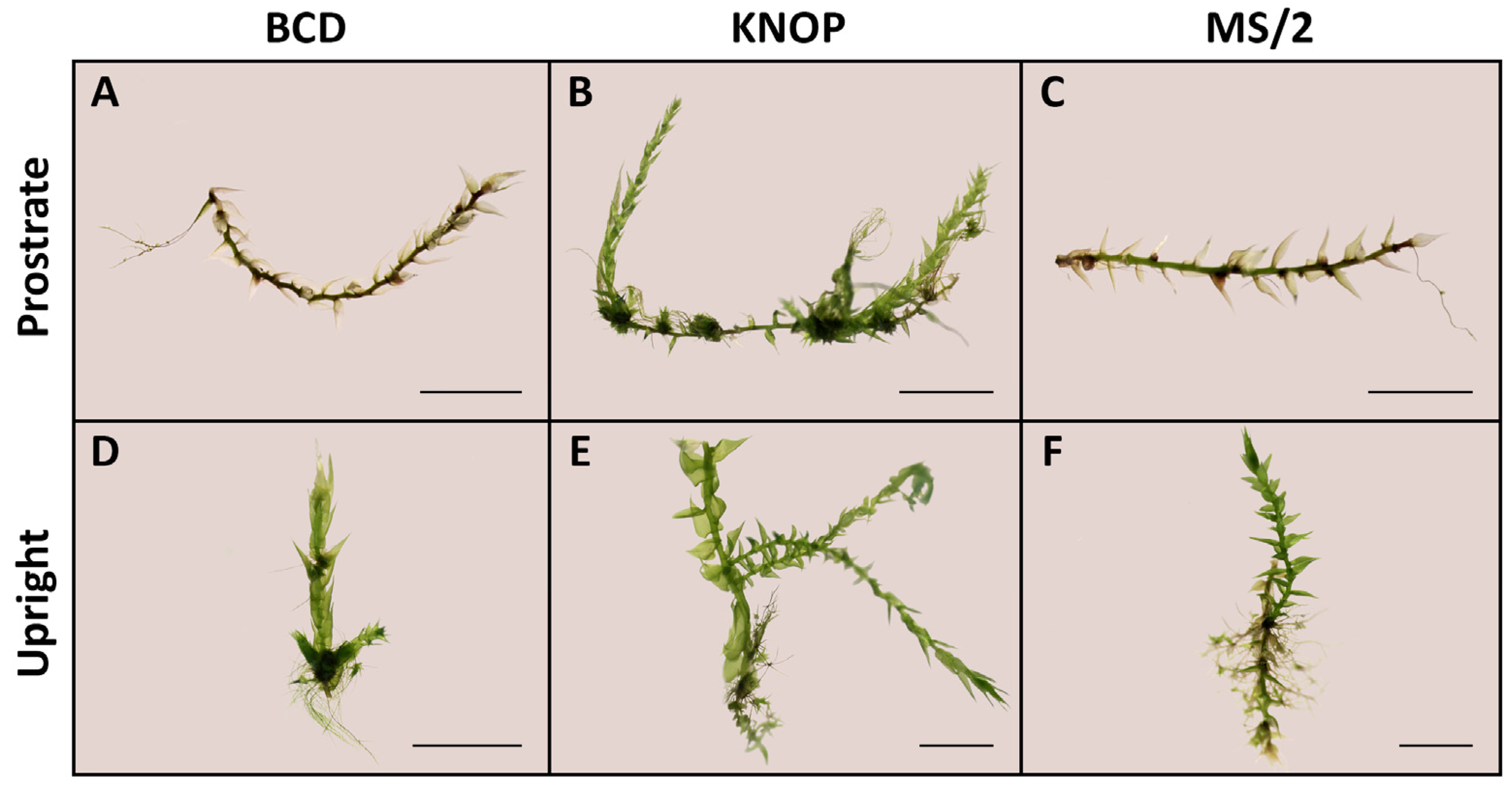
Morphological observations presented in Figure 2 showed that plants grown on KNOP medium developed normally in both prostrate and upright positions (Figure 2B,E), forming green gametophores with new branches. In contrast, plants cultured on MS/2 and BCD media remained small, underdeveloped, and exhibited depigmented phylloids, regardless of explant orientation (Figure 2A,C,D,F). These results from Experimentation A indicate that KNOP medium is the most suitable for the micropropagation of D. sendtneri, irrespective of explant position.

3.2. The Effect of Explant Position and Plant Growth Regulators on the Morphogenetic Response of D. sendtneri

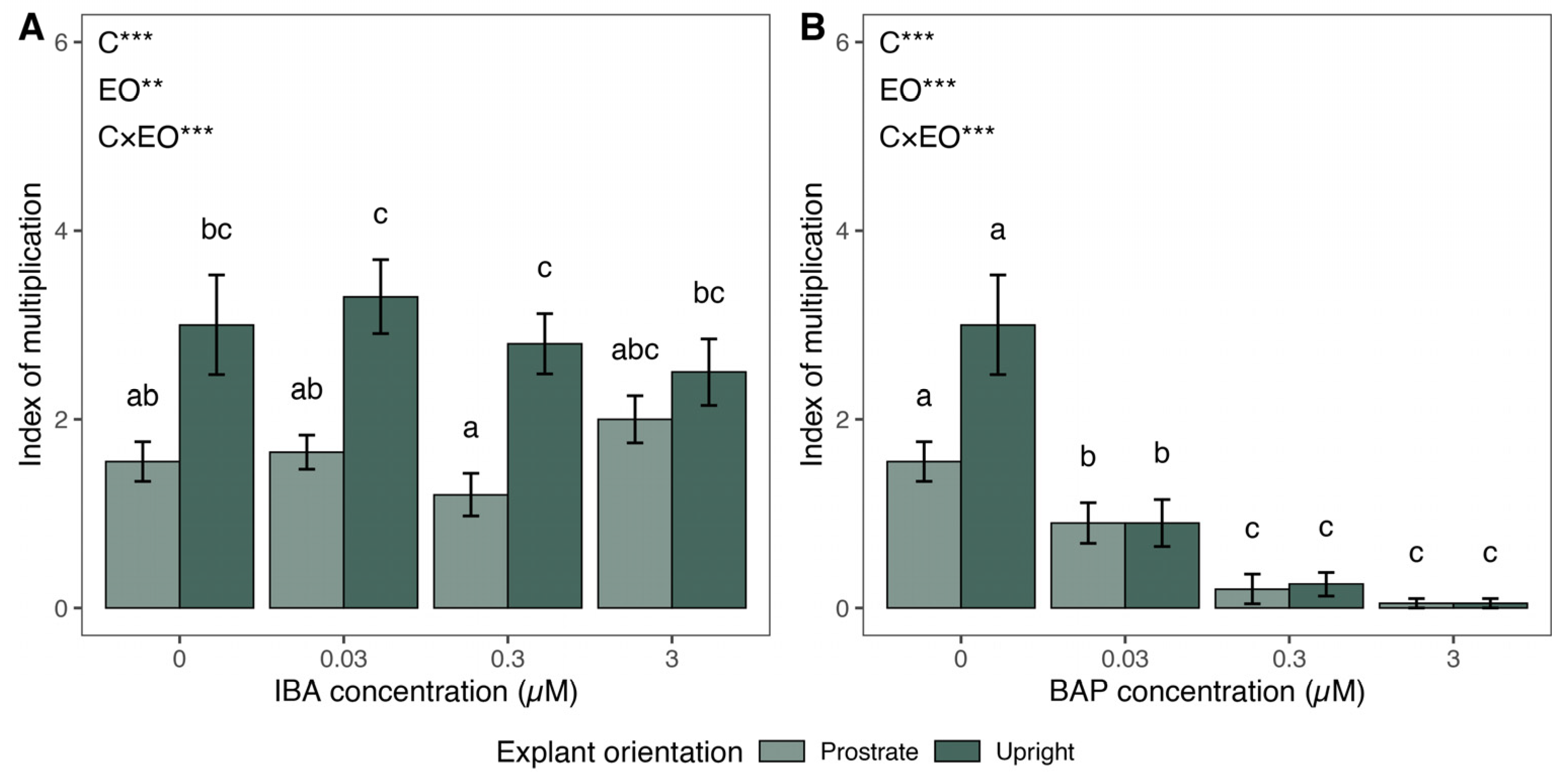
The main effects of plant growth regulator concentration (C) and explant orientation (EO), as well as their interaction (C × EO), were statistically significant (p < 0.001), indicating that the response to treatment concentration differed between explant orientations (Figure 3A,B). Lower concentrations of exogenously applied IBA (0.03 and 0.3 µM) resulted in significantly higher multiplication indices (p < 0.05) in upright-oriented explants compared to prostrate ones (Figure 3A). In contrast, at the highest IBA concentration (3 µM), no orientation-dependent differences were detected, potentially suggesting that the exogenously added IBA effect reached a saturating level at which explant orientation no longer influenced the response. Exogenous application of BAP significantly reduced the multiplication index (p < 0.05) regardless of explant orientation, with the highest values observed in the control groups (Figure 3B).
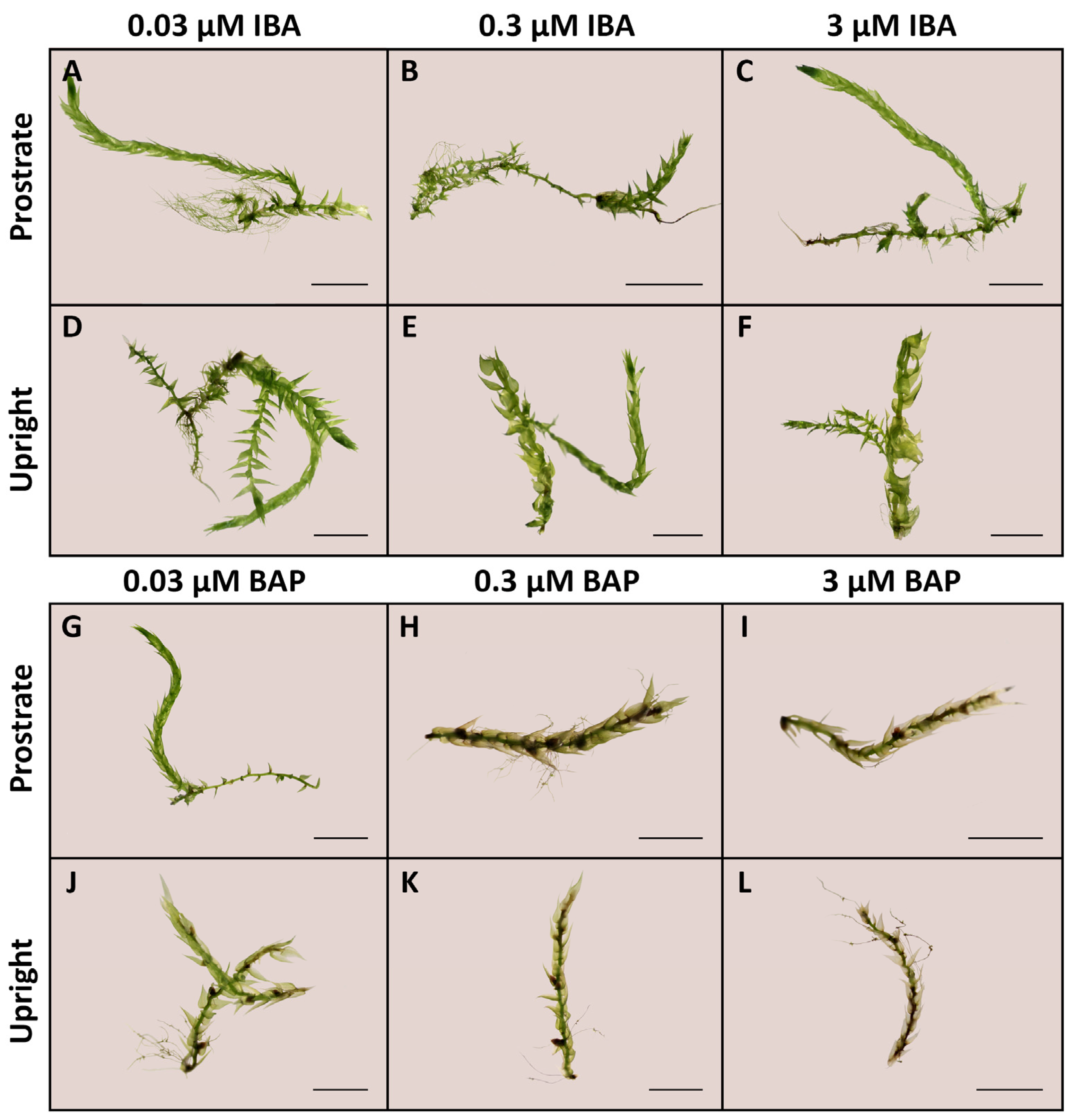
With the addition of IBA (Figure 4A–F), all plants developed normally, regardless of explant orientation, reaching sizes comparable to those of the control group. The gametophores appeared green and fully developed, with new branches, particularly at IBA concentrations of 0.03 and 0.3 µM when plants were positioned upright. As the results show, BAP reduced the number of new shoots in all treatments (Figure 4G–L). Consistent with these findings, the explants appeared depigmented, underdeveloped, and remained small, with almost no branching.

3.3. Establishment of an Ex Situ Population of D. sendtneri

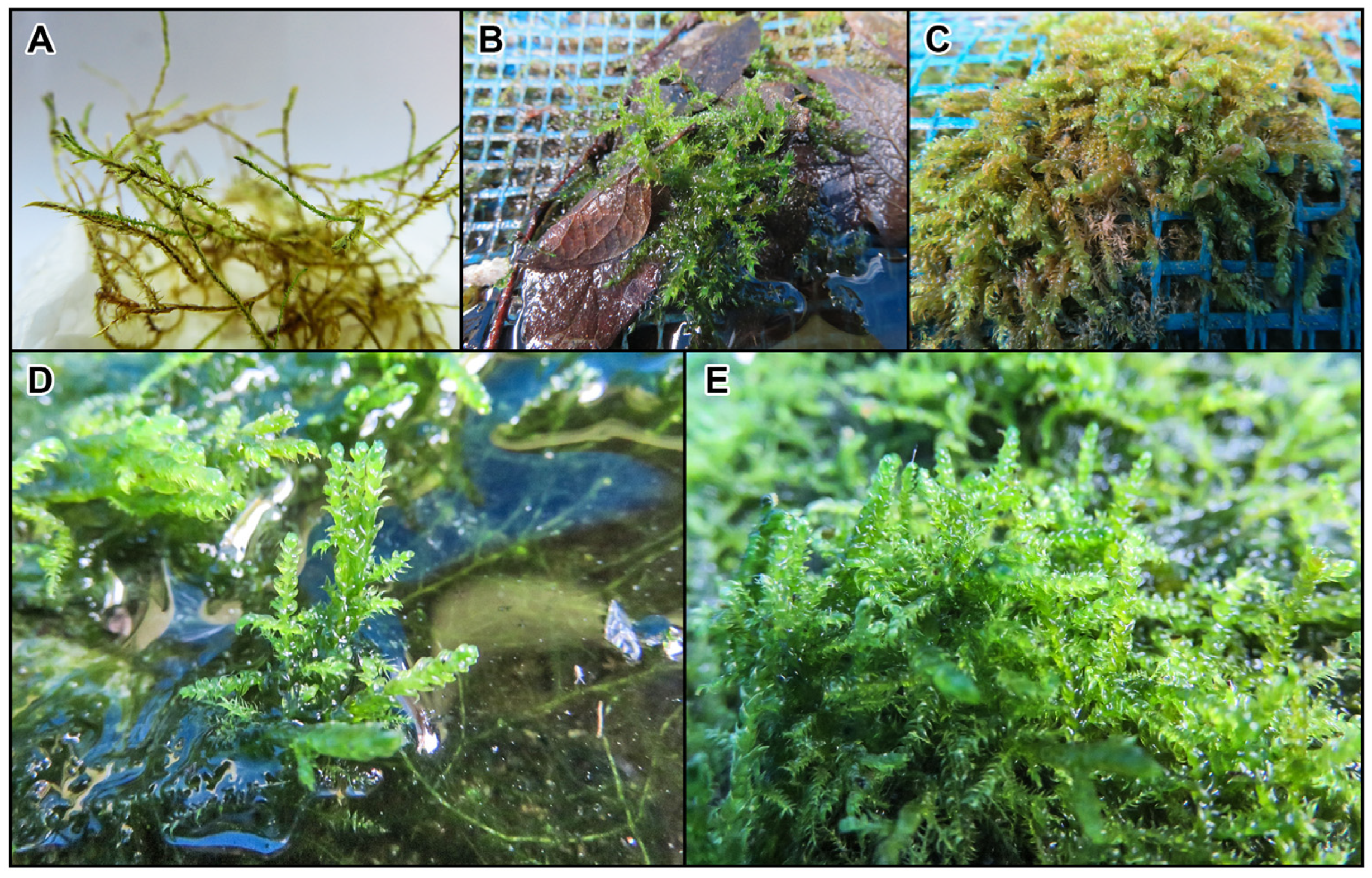
Following the initial acclimatisation phase, the moss plantlets remained viable and continued normal growth after transfer to xenic conditions (Figure 5A). During the subsequent outdoor phase, the plants developed fully formed green gametophores (Figure 5B,C) and, over the course of the following year, completely covered the 4 dm2 basin surface, with pronounced growth observed in the next spring (Figure 5D,E).

4. Discussion

4.1. The Influence of Explant Position and Growth Medium Type on the Morphogenetic Response of D. sendtneri

The rare species are limited in accumulated knowledge and any novel data brings insights into their biological and ecological features.
This was the case with most of the bryophyte species. There are many reasons for these, and apart from the rarity, some of these include a lack of moss material, no experimental approaches, both indoor and outdoor, and limited resources, experts and public interest. Experimental studies on D. sendtneri, to the best of our knowledge, have not been done, and this species has not been subject to date to a biotechnological approach, i.e., establishment and propagation both axenically and xenically [14]. Thus, the results presented here are the first of this kind, also for the in vitro growing of this species.
Investigation of how different growth media affect its morphogenesis can provide valuable insights into its in vitro development. The axenic conditions, choice of media, and explant orientation were selected based on preliminary research on this species by us, but also to enable comparisons with other studies on bryophytes ([15] and references therein).
The results indicate that the KNOP medium was most favourable for the formation of new shoots, with both prostrate and upright explants supporting the development of D. sendtneri, although upright explants showed a slightly higher multiplication index compared to prostrate ones. In contrast, BCD and half-strength MS (MS/2) media were less suitable for propagation, regardless of explant orientation. Gametophores grown on KNOP medium were fully developed and green, with new branching, whereas those on BCD and MS/2 media appeared underdeveloped and slightly depigmented. A similar trend has been reported in related Drepanocladus lycopodioides (Brid.) Warnst [9], a wetland pleurocarpous moss from the same genus. Upright explants on KNOP medium were also most suitable for D. lycopodioides, producing the highest number of new shoots, probably due to improved airflow around the explants (gas exchange), enhanced nutrient uptake through the wounded ends, and active cell-to-cell transport [16,17].
So far, no single nutrient medium can universally support the growth of all bryophyte species [14], as each has distinct nutritional requirements and media compositions can be significantly different among species and target developmental stages [8]. While some media adequately meet the species nutritional needs, others are less adequate, resulting in limited growth and development, or even stop further development. Bryophytes are highly adapted to their native microhabitats and, beyond basic requirements, they differ in nutrient needs and supply for optimal growth and propagation. Furthermore, the three main bryophyte lineages are phylogenetically rather distant, and their evolutionary adaptations, including nutritional requirements, are expected to differ to a significant extent. This may also influence their variable responses to different media formulations and supplements. KNOP medium, which provides a single nitrogen source as calcium nitrate (Ca(NO3)2 × 4H2O), is generally suitable for species adapted to low nutritional demands. In contrast, BCD medium supplies nitrogen as potassium nitrate (KNO3), while MS/2 medium has a more complex mineral composition with higher salt levels and two nitrogen sources: ammonium nitrate (NH4NO3) and potassium nitrate (KNO3). Presence of ion pairs and balancing with other ions present in the environment, as well as uptake possibilities, can distinctly affect the development of species and should be tested if the goal is large and rapid biomass achievement. The studied species naturally occurs in moist, swampy areas and nutrient-rich fens often exposed to periodic flooding, where nitrogen and calcium are abundant. The KNOP medium likely provides a more balanced ratio of nitrate to macro-elements and improved accessibility for explants, thereby promoting shoot multiplication in D. sendtneri.
KNOP medium is among the most commonly used nutrient formulations for in vitro cultivation of bryophytes and has been successfully applied to a broad range of mosses and liverworts, but not necessarily confirmed as the best one [18,19,20]. It supports the growth of species such as Physcomitrella patens (Hedw.) Bruch and Schimp., Plagiomnium undulatum (Hedw.) T.J. Kop., Physcomitrium pyriforme Hedw., Atrichum undulatum (Hedw.) P. Beauv., Rhynchostegium murale W.P. Schimper, Brachythecium rutabulum (Hedw.) Schimp., Aulacomnium androgynum (Hedw.) Schwägr., Thuidium sp., as well as the liverwort Marchantia polymorpha L. [21]. Recent studies have also confirmed its applicability for Podperaea krylovii (Podp.) Z. Iwats. and Glime [22], Campyliadelphus elodes (Lindb.) Kanda [7], and various mosses of the genus Sphagnum [23,24,25], among many other bryophytes [16].
Although used less frequently, MS/2 medium has also been reported to support the growth of several moss species, including Rhodobryum giganteum (Schwägr.) Paris [26], Hypnum cupressiforme Hedw. [27], Pterigoneurum sibiricum Otnyukova [28], Eurhynchium praelongum (Hedw.) Schimp. [29], as well as the liverwort Lunularia cruciata (L.) Dumort. ex Lindb. [30].
Prior research indicates that BCD medium can support the growth of some peculiar bryophytes, including Thamnobryum alopecurum (Hedw.) Gangulee [31], Molendoa hornschuchiana (Hook.) Lindb. ex Limpr. [32], Hennediella heimii (Hedw.) R.H. Zander [33], Vesicularia montagnei (Bél.) Broth. [34], Amblystegium serpens (Hedw.) Schimp. [35], and H. cupressiforme [27].
However, comprehensive analyses linking species, related taxonomic groups, families, orders, and major lineages to specific culture media and nutrient requirements remain a subject for future research, as no clear patterns have yet emerged regarding bryophyte growth and cultivation needs [8,14].
The present study indicates that higher biomass production, as shown by increased multiplication index values, is achieved when D. sendtneri is cultivated on KNOP medium, regardless of whether the explants are erect or prostrately posed. This highlights KNOP as the most suitable medium for its in vitro cultivation. Although further detailed studies are forthcoming, these findings provide a solid basis for starting propagation and preparing and developing ex situ conservation without harming natural populations, supporting protection efforts, species survival, and helping to prevent the species from extinction.

4.2. The Influence of Explant Position and Plant Growth Regulators on the Morphogenetic Response of D. sendtneri

Bryophytes not only produce their own endogenous hormones but also respond to exogenously applied plant growth regulators (PGRs) [36]. Numerous studies have shown that exogenous PGRs can influence in vitro growth and development, often enhancing shoot formation and overall development [37,38]. However, concentrations of PGRs that are above or below the optimal range, or applied for an inappropriate duration, can negatively affect plant development [15,39]. High levels of exogenously applied PGRs may disrupt hormonal balance, frequently leading to the inhibition of bud formation [40]. As the formation of new buds is regulated by exogenous cytokinins and auxins through their interactions with endogenous hormones, it is essential to determine the optimal concentrations and treatment durations to promote successful bud development. Auxin plays a crucial role in a wide range of developmental processes, such as cell division, elongation, and differentiation, as well as in the formation of tissues, organs, and reproductive structures [41]. Also, auxin stimulates the formation of additional rhizoids on gametophores [42]. On the other hand, cytokinins promote the growth of both chloronemal and caulonemal filaments [41] and can affect protonemal differentiation [43,44], with caulonemal branching occurring even at very low cytokinin concentrations [45]. They also induce bud formation on protonema by acting on caulonemal cells and triggering their differentiation into buds [37,46,47].
It has been shown that certain species, including the model moss P. patens [36] and C. elodes [7], are capable of spontaneously producing multiple new shoots under axenic conditions, whereas other species require the application of growth regulators to achieve similar results. This underscores the importance of studying species-specific response patterns to PGRs, which is essential for optimising large-scale micropropagation and for the conservation of rare and endangered bryophytes. Low-dose stimulation and hormetic effects of PGRs exogenously applied, as well as the combined effects of more than one PGR, seem to be species-specific in their responses.
In D. sendtneri lower concentrations of IBA (0.03 and 0.3 μM) in the upright orientation promoted the development of new explants, reflected by a higher index of multiplication, while the highest applied concentration (3 μM) produced results similar to the control, suggesting renuntiation from the exogenously applied IBA hormesis range in this species. In contrast, IBA combined with the prostrate orientation did not affect bud formation. These findings highlight a clear influence of explant orientation, with the upright position being favourable for the huge biomass production of D. sendtneri under optimal in vitro conditions. The addition of BAP in tested ranges inhibited plant development regardless of orientation, with increasing concentrations causing a further reduction in the index of multiplication, consistent with phenotypic observations.
Similarly, in bryo-halophytic H. heimii [33], high cytokinin concentrations often cause developmental abnormalities, such as gametophore deformation and inhibition of bud formation. Comparable effects were reported in the species Bryum argenteum Hedw., A. undulatum [48], and P. sibiricum [28], Garckea phascoides (Hook.) C. Mull. [40]. In H. cupressiforme, higher concentrations of IBA and BAP decreased the diameter of the secondary protonema, reflecting the inhibitory effect of the applied growth regulators [27], whereas lower BAP concentrations promoted secondary protonema growth. The application of exogenous cytokinins affected tissue senescence in Pogonatum urnigerum (Hedw.) P. Beauv. [49], likely by disrupting the balance of endogenous cytokinin levels. In contrast to the present study, it was previously reported that in decapitated Plagiomnium cuspidatum (Hedw.) T.J. Kop. the application of exogenous auxins inhibited the formation of new buds on primary shoots [50]. The rather unclear reports on the effects of various exogenously applied PGRs can be attributed to the methodologies used, the rather low number of tested species, and the different growth media and growth conditions, but the large phylogenetic distance among the tested species seems to be a good explanation as well for having no clear patterns of exogenous application, as in tracheophytes.
Published data indicate that plant growth regulators can affect gametangia development. Auxin stimulated antheridia formation in Barbula gregaria (Mitt.) A. Jaeger and Bryum coronatum Schwägr. [51]. In B. argenteum, auxins inhibited archegonia formation [38], while in D. lycopodioides, higher BAP concentrations promoted archegonia formation [9]. However, no effects on sex formation were noticed or documented in this study. However, sex development in bryophytes remains a huge unknown field both from the view of molecular mechanisms and epigenetic patterns, but it is extremely important from the conservation standpoint [52].
These findings highlight the need for further research examining a broader range of PGR types and concentrations to identify optimal conditions for the large-scale propagation of D. sendtneri, supporting an integrative conservation approach aimed at safeguarding its natural populations.

4.3. Establishment of an Ex Situ Population of D. sendtneri

Previous research on C. elodes and D. lycopodioides [7,9] has demonstrated successful acclimatisation of wetland species from the family Amblystegiaceae. These species were transferred from axenic to xenic conditions, exhibiting growth and normal development similar to those observed in this study.
In vitro-propagated moss plants were transferred to outdoor conditions in the Botanical Garden Jevremovac (Faculty of Biology, University of Belgrade). The acclimatisation process was conducted in two steps. In the first step, plantlets grown under laboratory-controlled axenic conditions were transferred to xenic conditions using non-sterilised rainwater to maintain the moisture. The moss plantlets remained viable and green and continued their normal growth after transfer to xenic conditions. New shoots and lateral branches developed actively, indicating that the plantlets were capable of adapting to interactions with naturally occurring xenic organisms while maintaining metabolic activity and physiological functions.
In the second step, carried out in late autumn (November 2021), the mosses were placed in semi-shaded, inclined plastic basins (30° angle). During the subsequent year, including both winter and summer, the mosses were periodically fully submerged during rainfall and were never allowed to dry out completely. Under these conditions, the plants exhibited vigorous growth and were able to completely cover the 4 dm2 basin surface within a year. Significant development in the following spring confirmed successful acclimatisation and adaptation to outdoor conditions.
These results highlight the potential of this approach as an ex situ method for fine acclimatisation of D. sendtneri, which could support future reintroduction efforts at sites where the species has disappeared.

5. Conclusions

A procedure for the propagation and ex situ conservation of the rare and threatened semi-aquatic moss D. sendtneri is presented. KNOP medium enriched with auxins proved to be the most suitable for mass propagation, with optimal results obtained when explants were positioned upright. Rainwater was effective for acclimatisation under outdoor conditions, and the species showed a strong capacity for spreading provided that desiccation was prevented and consistently wet conditions were maintained.

Author Contributions

Conceptualization, M.S.S., B.P. and A.D.S.; methodology, B.Z.J., M.G. and M.V.V.; software, D.P.B.; validation, M.M.V., D.P.B. and M.V.V.; formal analysis, B.Z.J. and D.P.B.; investigation, B.Z.J., N.A.M., D.P.B. and M.S.S.; resources, M.M.V. and B.P.; data curation, D.P.B. and B.Z.J.; writing—original draft preparation, B.Z.J., M.S.S. and D.P.B. writing—review and editing, M.S.S. and B.P.; visualisation, D.P.B. and M.V.V.; supervision, A.D.S. and M.S.S.; project administration, A.D.S., M.M.V. and M.S.S.; funding acquisition, A.D.S., M.M.V., M.S.S. and M.G. All authors have read and agreed to the published version of the manuscript.

Funding

This project is supported by the Serbian Ministry of Science, Technological Development and Innovations, contract Nos. 451-03-136/2025-03/200178 and 451-03-137/2025-03/200178 and the Grant Agency of the Ministry of Education, Science, Research, and Sport of the Slovak Republic (VEGA 1/0768/25).

Institutional Review Board Statement

Not applicable.

Informed Consent Statement

Not applicable.

Data Availability Statement

All the data are available from the authors upon reasonable request.

Conflicts of Interest

The authors declare no conflicts of interest.

Abbreviations

The following abbreviations are used in this manuscript:
VUVulnerable
CRCritically Endangered
ENEndangered
NTNear Threatened
PGRPlant Growth Regulator
IBAIndole-3-butyric acid
BAP6-benzylaminopurine
ARTAligned Rank Transform

References

  1. Yin, X.; Liu, Y.; Kong, F.; Shu, L.; Peng, C.; Ang, L.P. A global conservation blind spot: Neglect of bryophytes undermines biodiversity targets. Glob. Chang. Biol. 2026, 32, e70789. [Google Scholar] [CrossRef]
  2. Bisang, I.; Schnyder, N.; Schröck, C.; Hodgetts, N.; Lockhart, N.; Bergamini, A. Priority ranking for the conservation of all European bryophyte species. Biol. Conserv. 2025, 309, 111297. [Google Scholar] [CrossRef]
  3. Hodgetts, N.; Cálix, M.; Englefield, E.; Fettes, N.; Criado, M.G.; Patin, L.; Nieto, A.; Bergamini, A.; Bisang, I.; Baisheva, E.; et al. A Miniature World in Decline: European Red List of Mosses, Liverworts and Hornworts; International Union for Conservation of Nature: Brussels, Belgium, 2019; 87p. [Google Scholar] [CrossRef]
  4. Hodgetts, N.; Blockeel, T.; Konstantinova, N.; Lönnell, N.; Papp, B.; Schnyder, N.; Schröck, C.; Untereiner, A.; Vanderpoorten, A. Drepanocladus sendtneri (Europe Assessment). The IUCN Red List of Threatened Species 2019b: E.T86186454A87791766. Available online: https://www.iucnredlist.org/species/86186454/87791766 (accessed on 17 January 2026).
  5. Martinčič, A. New checklist and the red list of the mosses (Bryophyta) of Slovenia. Hacquetia 2024, 23, 69–118. [Google Scholar] [CrossRef]
  6. Sabovljević, M.S.; Pantović, J.P.; Širka, P.; Vujičić, M.M.; Sabovljević, A.D.; Papp, B. Red-list of moss species of Serbia: 2024 assessment. Bot. Serb. 2024, 48, 207–222. [Google Scholar] [CrossRef]
  7. Jadranin, B.Z.; Ćosić, M.V.; Vujičić, M.M.; Božović, Đ.P.; Papp, B.; Sabovljević, A.D.; Sabovljević, M.S. Towards ex situ conservation of the moss Campyliadelphus elodes (Amblystegiaceae, Bryophyta). Compr. Plant Biol. 2025, 49, 49–60. [Google Scholar] [CrossRef]
  8. Ćosić, M.V.; Božović, D.P.; Jadranin, B.Z.; Vujičić, M.M.; Sabovljević, A.D.; Sabovljević, M.S. Axenic cultivation of bryophytes: Growth media composition. Plant Cell Tissue Organ Cult. 2025, 160, 50. [Google Scholar] [CrossRef]
  9. Jadranin, B.Z.; Ćosić, M.V.; Božović, D.P.; Vujičić, M.M.; Papp, B.; Sabovljević, A.D.; Sabovljević, M.S. Novel insights into the conservation physiology and ex situ conservation of the threatened and rare semi-aquatic moss Drepanocladus lycopodioides (Amblystegiaceae). Phyton-Int. J. Exp. Bot. 2024, 93, 3039–3054. [Google Scholar] [CrossRef]
  10. R Core Team. R: A Language and Environment for Statistical Computing, Version 4.3.2; R Foundation for Statistical Computing: Vienna, Austria, 2021; Available online: https://www.r-project.org/ (accessed on 5 October 2023).
  11. Wobbrock, J.O.; Findlater, L.; Gergle, D.; Higgins, J.J. The aligned rank transform for nonparametric factorial analyses using only ANOVA procedures. In Proceedings of the SIGCHI Conference on Human Factors in Computing Systems, Vancouver, BC, Canada, 7–12 May 2011. [Google Scholar]
  12. Elkin, L.; Kay, M.; Higgins, J.; Wobbrock, J. An aligned rank transform procedure for multifactor contrast tests. In Proceedings of the 34th Annual ACM Symposium on User Interface Software and Technology, Virtual Event, 10–14 October 2021. [Google Scholar]
  13. Kay, M.; Elkin, L.; Higgins, J.; Wobbrock, J. Mjskay/ARTool: ARTool 0.11.0, v0.11.0. Zenodo. Available online: https://zenodo.org/records/4721941 (accessed on 26 April 2021).
  14. Božović, Đ.P.; Vesović, M.V.; Jadranin, B.Z.; Matić, N.A.; Sabovljević, A.D.; Sabovljević, M.S. Axenic cultivation of bryophytes: Cultivated species checklist. Compr. Plant Biol. 2025, 49, 351–373. [Google Scholar] [CrossRef]
  15. Sabovljević, M.S.; Ćosić, M.V.; Jadranin, B.Z.; Pantović, J.P.; Giba, Z.S.; Vujičić, M.M.; Sabovljević, A.D. The conservation physiology of bryophytes. Plants 2022, 11, 1282. [Google Scholar] [CrossRef]
  16. Papafotiou, M.; Martini, A.N. Effect of position and orientation of leaflet explants with respect to plant growth regulators on micropropagation of Zamioculcas zamiifolia Engl. (ZZ). Sci. Hortic. 2009, 120, 115–120. [Google Scholar] [CrossRef]
  17. Oliver, M.J.; Bewley, J.D. Desiccation and ultrastructure in bryophytes. Adv. Bryol. 1984, 2, 91–131. [Google Scholar]
  18. Ahmed, M.G.U.; Chang, Y.D.; Lee, C.H. Factors Affecting in vitro gametophyte formation from spore culture of four moss species. Kor. J. Hort. Sci. Technol. 2010, 28, 108–114. [Google Scholar]
  19. Awasthi, V.; Asthana, A.K.; Nath, V. In vitro propagation of an epiphytic pleurocarpous moss Erythrodontium julaceum (Schwaegr.) Par. J. Bryol. 2012, 34, 140–144. [Google Scholar] [CrossRef]
  20. Liu, S.; Wei, H.; Peng, X.; Li, J. Spore germination and protonemal development of Dolichomitriopsis diversiformis. Braz. Arch. Biol. Technol. 2016, 59, e16160061. [Google Scholar] [CrossRef]
  21. Beike, A.K.; Horst, N.A.; Rensing, S.A. Axenic bryophyte in vitro cultivation. Endocytobiosis Cell Res. 2010, 20, 102–108. [Google Scholar]
  22. Jadranin, B.Z.; Ćosić, M.V.; Božović, D.P.; Vujičić, M.M.; Ignatov, M.S.; Troitsky, A.V.; Sabovljević, A.D.; Sabovljević, M.S. Advances in conservation physiology and ex situ propagation strategies for the rare moss Podperaea krylovii (Amblystegiaceae, Bryophyta). Nat. Conserv. 2025, 58, 289–309. [Google Scholar] [CrossRef]
  23. Såstad, S.M.; Bakken, S.; Pedersen, B. Propagation of Sphagnum in axenic culture—A method for obtaining large numbers of cloned gametophores. Lindbergia 1998, 23, 65–73. [Google Scholar]
  24. Beike, A.K.; Spagnuolo, V.; Lüth, V.; Steinhart, F.; Ramos-Gómez, J.; Krebs, M.; Adamo, P.; Rey-Asensio, A.I.; Fernández, J.A.; Giordano, S.; et al. Clonal in vitro propagation of peat mosses (Sphagnum L.) as novel green resources for basic and applied research. Plant Cell Tissue Organ Cult. 2014, 120, 1037–1049. [Google Scholar] [CrossRef]
  25. Natcheva, R.; Cronberg, N. Genetic diversity in populations of Sphagnum capillifolium from the mountains of Bulgaria, and their possible refugial role. J. Bryol. 2023, 25, 91–99. [Google Scholar] [CrossRef]
  26. Chen, Y.Y.; Lou, Y.X.; Guo, S.L.; Cao, T. Successful tissue culture of the medicinal moss Rhodobryum giganteum and factors influencing proliferation of its protonemata. Ann. Bot. Fenn. 2009, 46, 516–524. [Google Scholar] [CrossRef]
  27. Vujičić, M.; Sabovljević, A.; Sabovljević, M. Axenically culturing the bryophytes: Establishment and propagation of the moss Hypnum cupressiforme Hedw. (Bryophyta Hypnaceae) in in vitro conditions. Bot. Serb. 2011, 35, 71–77. [Google Scholar]
  28. Jadranin, B.Z.; Ćosić, M.V.; Božović, D.P.; Vujičić, M.M.; Ignatov, M.S.; Ignatova, E.A.; Sabovljević, A.D.; Sabovljević, M.S. An insight into the biology of the rare and peculiar moss Pterygoneurum sibiricum (Pottiaceae): A conservation physiology approach. Plants 2023, 12, 1359. [Google Scholar] [CrossRef]
  29. Sabovljević, M.; Bijelović, A.; Dragićević, I. In vitro culture of mosses: Aloina aloides (K.F. Schultz) Kindb., Brachythecium velutinum (Hedw.) B.S.G., Ceratodon purpureus (Hedw.) Brid., Eurhynchium praelongum (Hedw.) B.S.G. and Grimmia pulvinata (Hedw.) Sm. Turkish J. Bot. 2003, 27, 441–446. [Google Scholar]
  30. Mukhia, S.; Mandal, P.; Singh, D.K.; Singh, D. Comparison of pharmacological properties and phytochemical constituents of in vitro propagated and naturally occurring liverwort Lunularia cruciata. BMC Complement. Altern. Med. 2019, 19, 181. [Google Scholar] [CrossRef] [PubMed]
  31. Sabovljević, A.; Vujičić, M.; Skorić, M.; Bajić-Ljubičić, J.; Sabovljević, M. Axenically culturing the bryophytes: Establishment and propagation of the pleurocarposs moss Thamnobryum alopecurum Nieuwland ex Gangulee (Bryophyta, Neckeraceae) in in vitro conditions. Pak. J. Bot. 2012, 44, 339–344. [Google Scholar]
  32. Vujičić, M.; Sabovljević, A.; Šinžar-Sekulić, J.; Skorić, M.; Sabovljević, M. In vitro development of the rare and endangered moss Molendoa hornschuchiana (Hook.) Lindb. ex Limpr. (Pottiaceae, Bryophyta). HortScience 2012, 47, 84–87. [Google Scholar] [CrossRef]
  33. Ćosić, M.V.; Sabovljević, M.S.; Papp, B.; Giba, Z.S.; Šinžar-Sekulić, J.B.; Sabovljević, A.D.; Vujičić, M.M. Micropropagation of rare bryo-halophyte Hennediella heimii. Bot. Serbica 2022, 46, 187–195. [Google Scholar] [CrossRef]
  34. Hu, Y.; Li, Q.; Chen, Z.; Xu, Z.; Li, H.; Wen, C.; Duan, L.; Yang, H.; Liu, L. Axenic in vitro cultivation and genome diploidization of the moss Vesicularia montagnei for horticulture utilization. Front. Plant Sci. 2023, 14, 1137214. [Google Scholar] [CrossRef]
  35. Cvetić, T.; Sabovljević, M.; Sabovljević, A.; Grubišić, D. In vitro culture and apogamy—Alternative pathway in the life cycle of the moss Amblystegium serpens (Amblystegiaceae). Arch. Biol. Sci. 2005, 57, 267–272. [Google Scholar] [CrossRef]
  36. von Schwartzenberg, K. Hormonal regulation of development by auxin and cytokinin in moss. In The Moss Physcomitrella Patens; Knight, C., Perroud, P.F., Cove, D., Eds.; Wiley Online Library: Hoboken, NY, USA, 2009; pp. 246–281. [Google Scholar] [CrossRef]
  37. Ashton, N.W.; Grimsley, N.H.; Cove, D.J. Analysis of gametophytic development in the moss, Physcomitrella patens, using auxin and cytokinin resistant mutants. Planta 1979, 144, 427–435. [Google Scholar] [CrossRef]
  38. Bhatla, S.C.; Chopra, R.N. Hormonal regulation of gametangial formation in the moss Bryum argenteum Hedw. J. Exp. Bot. 1981, 32, 1243–1256. [Google Scholar] [CrossRef]
  39. Bopp, M. Developmental physiology of bryophytes. In New Manual of Bryology; Schuster, R.M., Ed.; Hattori Botanical Laboratory: Miyazaki, Japan, 1983; Volume 1, pp. 276–324. [Google Scholar]
  40. Chopra, R.N. Bud formation in the moss Garckea phascoides (Hook.) C. Muell. I. Effects of auxins, cytokinins and their interaction. J. Hattori Bot. Lab. 1987, 61, 75–92. [Google Scholar]
  41. Suzuku, H.; Kohchi, T.; Nishihama, R. Auxin biology in bryophyta: A simple platform with versatile functions. Cold Spring Harb. Perspect. Biol. 2021, 13, a040055. [Google Scholar] [CrossRef]
  42. Sakakibara, K.; Nishiyama, T.; Sumikawa, N.; Kofuji, R.; Murata, T.; Hasebe, M. Involvement of auxin and a homeodomain-leucine zipper I gene in rhizoid development of the moss Physcomitrella patens. Development 2003, 130, 4835–4846. [Google Scholar] [CrossRef] [PubMed]
  43. Szweykowska, A.; Korcz, J.; Jakiewicz-Mroczkowska, B.; Metelska, M. The effect of various cytokinins and other factors on the protonemal cell division and the induction of gametophores in Ceratodon purpureus. Acta Soc. Bot. Pol. 1972, 41, 401–409. [Google Scholar] [CrossRef][Green Version]
  44. Thelander, M.; Olsson, T.; Ronne, H. Effect of the energy supply on filamentous growth and development in Physcomitrella patens. J. Exp. Bot. 2005, 56, 653–662. [Google Scholar] [CrossRef] [PubMed]
  45. Bopp, M.; Jacob, H.J. Cytokinin effect on branching and bud formation in Funaria. Planta 1986, 169, 462–464. [Google Scholar] [CrossRef] [PubMed]
  46. Brandes, H.; Kende, H. Studies on cytokinin-controlled bud formation in moss protonemata. Plant Physiol. 1968, 43, 827–837. [Google Scholar] [CrossRef]
  47. Erichsen, J.; Knoop, B.; Bopp, M. On the action mechanism of cytokinins in mosses: Caulonema specific proteins. Planta 1977, 135, 161–168. [Google Scholar] [CrossRef]
  48. Bijelović, A.; Sabovljević, M.; Grubišić, D.; Konjević, R. Phytohormone influence on the morphogenesis of two mosses (Bryum argenteum Hedw. and Atrichum undulatum (Hedw.) P. Beauv.). Isr. J. Plant Sci. 2004, 52, 31–36. [Google Scholar] [CrossRef]
  49. Cvetić, T.; Sabovljević, A.; Sabovljević, M.; Grubišić, D. Development of the moss Pogonatum urnigerum (Hedw.) P. Beauv. under in vitro culture conditions. Arch. Biol. Sci. 2007, 59, 57–61. [Google Scholar] [CrossRef]
  50. Nyman, L.P.; Cutter, E.G. Auxin–cytokinin interaction in the inhibition, release, and morphology of gametophore buds of Plagiomnium cuspidatum from apical dominance. Canad. J. Bot. 1981, 59, 750–762. [Google Scholar] [CrossRef]
  51. Chopra, R.N.; Kumra, P.K. Hormonal regulation of growth and antheridial production in three mosses grown in vitro. J. Bryol. 1983, 12, 491–502. [Google Scholar] [CrossRef]
  52. Božović, D.; Li, M.; Sabovljević, A.D.; Sabovljević, M.S.; Varotto, C. Sex determination in bryophytes: Current state of the art. J. Exp. Bot. 2024, 75, 6939–6956. [Google Scholar] [CrossRef]
Figure 1. Effects of growth medium type and explant orientation on the multiplication index of D. sendtneri. Values represent means with corresponding standard errors. Different letters above the bars denote statistically significant pairwise differences among experimental groups (p < 0.05). The significance of the main effects, i.e., growth medium type (M), explant orientation (EO), and their interaction (M × EO) as determined by factorial analysis is indicated by symbols (*** p < 0.001; ** p < 0.01).
Jzbg 07 00018 g001
Figure 2. The appearance of D. sendtneri explants grown on BCD (A,D), KNOP (B,E) and MS/2 (C,F) media types, for prostrate (AC) and upright (DF) treatments (scale bar 2 mm).
Jzbg 07 00018 g002
Figure 3. The effects of explant position and different concentrations of IBA (A) and BAP (B) on the multiplication index of D. sendtneri. Values are expressed as means with corresponding standard errors. Distinct letters above the bars indicate significant pairwise differences among experimental groups (p < 0.05). The statistical significance of the main effects, i.e., plant growth regulator concentration (C), explant orientation (EO), and their interaction (C × EO) derived from factorial analysis is indicated by symbols (*** p < 0.001; ** p < 0.01).
Jzbg 07 00018 g003
Figure 4. The appearance of D. sendtneri explants grown on KNOP medium supplemented with different IBA (AF) and BAP (GL) concentrations. Control group plants are shown in Figure 2B,E (scale bar 2 mm).
Jzbg 07 00018 g004
Figure 5. Initial acclimatisation phase in controlled xenic conditions (A), with the outdoor-grown plants of D. sendtneri in semi-shaded, inclined plastic basins (30° slope) during early (B,C) and late acclimatisation (D,E) stages.
Jzbg 07 00018 g005
Table 1. Summary of the experimental design of axenic and xenic setups.
Experiment TypeMedium/TreatmentExplant Orientation
AKNOPProstrate/Upright
AMS/2Prostrate/Upright
ABCDProstrate/Upright
BKNOP (control, PGR-free)Prostrate/Upright
BKNOP + 0.03 μM IBAProstrate/Upright
BKNOP + 0.3 μM IBAProstrate/Upright
BKNOP + 3 μM IBAProstrate/Upright
BKNOP + 0.03 μM BAPProstrate/Upright
BKNOP + 0.3 μM BAPProstrate/Upright
BKNOP + 3 μM BAPProstrate/Upright
CIndoor acclimatisation/
COutdoor acclimatisation/
Disclaimer/Publisher’s Note: The statements, opinions and data contained in all publications are solely those of the individual author(s) and contributor(s) and not of MDPI and/or the editor(s). MDPI and/or the editor(s) disclaim responsibility for any injury to people or property resulting from any ideas, methods, instructions or products referred to in the content.