Review

Trends in Marine Mammal Literature in Human Care: A Need for More Welfare-, Environmental- and Management-Related Research


by
Sabrina Brando
1,*,
Sara Torres Ortiz
2,
Geoff Hosey
3 and
Heather M. Manitzas Hill
4
1
INTERBEING AnimalConcepts, 03725 Alicante, Spain
2
Department of Biology, Marine Biological Research Center, University of Southern Denmark, 5300 Kerteminde, Denmark
3
Department of Psychology and Life Science, University of Bolton, Bolton BL3 5AB, UK
4
Department of Psychology, St. Mary’s University, San Antonio, TX 78228, USA
*
Author to whom correspondence should be addressed.
J. Zool. Bot. Gard. 2025, 6(4), 65; https://doi.org/10.3390/jzbg6040065
Submission received: 31 March 2025 / Revised: 17 November 2025 / Accepted: 8 December 2025 / Published: 18 December 2025

Abstract

Marine mammals have been successfully maintained under human care; however, the media, public, and professionals within the field frequently voice welfare concerns. This study systematically surveyed peer-reviewed (PR) literature from 1948 to 2024 (n = 1308) and included an opportunistic sample of non-peer-reviewed (NPR) literature from the past 40 years (n = 756) to evaluate research efforts associated with species housed in zoos and aquariums. The current study updates and extends previous efforts to assess research categories. The findings indicate that the volume of research published mirrors the species abundance in human care. Across taxa, PR papers concentrate on science that enhances the understanding of biological functions (Acoustics, Biology, Breeding, Behaviour, Health) but is not necessarily tailored to improve management or optimal care. In contrast, a substantial portion of the NPR literature focuses on daily handling and management, highlighting Environment and Management and Enrichment-related activities. While welfare-related research has increased in both PR and NPR literature, this review underscores the need for additional welfare-related empirical studies to further enhance animal care and wellbeing. We encourage those involved in the practical care of such taxa to empirically evaluate these interventions and disseminate their findings in the PR literature.

1. Introduction

Marine mammals are not a taxon but rather an informal, diverse group of approximately 120 species categorised by their reliance on marine environments. Extant species comprise 35 species of pinnipeds, 93 species of cetaceans, 4 species of sirenians [1], the sea otter (Enhydra lutris), the marine otter (Lontra felina), and the polar bear (Ursus maritimus). Marine mammals are distributed worldwide from the Arctic to the Antarctic [2]. Marine mammals have been housed under human care for over a century, during which facilities and care standards have improved from conditions associated with poor welfare to conditions that have resulted in increased overall wellbeing and life expectancy [3,4,5,6,7], as well as increased behavioural diversity [8,9,10,11], rehabilitation and release [12,13], and conservation efforts [14,15]. Early facilities were not designed to maximise animal welfare, as practices such as solitary housing for social animals, limited or poor nutrition and health care, minimal or no enrichment, and suboptimal training methods existed [4,10,16], with some continuing to this day. Moreover, the idea that animals could suffer from poor welfare and that provisions should be made to ensure optimal care has required a significant change in perception that has spread in recent decades [3,17,18,19]. Today, marine mammals are housed in modern zoos and aquaria with provisions for species-relevant health care, nutrition, water quality, and professional training based on positive reinforcement [3,4], while habitat design and enrichment programmes require more innovation and focus [18].
Depending on the marine mammal and facility, these species are involved in different roles, including shows, presentations, and interactive programmes, as well as education, conservation, and research [11]. Some individuals, mostly in rehabilitation centres, have been released into the wild [12,13]. Consequently, the public, researchers, and marine mammal care staff have expressed concerns about how these various activities and human care affect animals’ welfare [20,21]. Two highly publicised marine mammals, the common bottlenose dolphin (Tursiops truncatus) and orca (Orcinus orca), have been in the spotlight in the last few decades, as concerns and the need for evidence of positive welfare have been raised [3,4,17,22,23,24,25]. However, the overall effect of human care on marine mammals is not yet well understood, even though some aspects, such as veterinary science and care, are well studied [26,27]. Peer-reviewed research on the welfare of most marine mammal species in human care is lacking [4,17,27].
Knowledge gained from scientific studies is essential for guiding the management and wellbeing of these species. Standards and guidelines with minimum husbandry information are available for a range of marine mammals, such as eared seals [28], sea otters [29], and polar bears [30], but are more difficult to access for some species, such as Tursiops [31], on which information is not publicly available, and other cetaceans in human care; however, some information can be gained from different resources [32,33].
Moreover, these guidelines vary in terms of the quality of the information presented, the level of scientific research used to support the suggested guidelines, and the recency of the available information per species. For example, standards and guidelines with minimum husbandry information are available for Environment and Management (E&M) of the common bottlenose dolphin [31], but it is unclear to what extent the guidelines (e.g., space, enrichment options, presentations, interactions, display) are based on reliable empirical evidence.
A systematic review of evidence-based practices regarding the general management and conditions that support optimal animal welfare across multiple marine mammal species in human care has not yet been performed. Evaluating the gaps in the literature must include peer-reviewed (PR) and non-peer-reviewed (NPR) literature, as these two sources may encompass different topics. PR literature should be the primary information source for making evidence-based care decisions, with NPR sources and prior experience used only as supplementation. In addition to contributing to their host institutions’ educational and conservation priorities, marine mammals are sometimes subjects for research into aspects of their biology, which would be much more challenging to study in wild-living animals without the standardisation of techniques only possible with captive animals, such as health assessment parameters [24,34]. Such studies contribute to our knowledge of these animals and aid our understanding of their biological, physiological, or nutritional requirements, for example, both from a species and individual perspective. However, the priorities for such research are not always concordant with the need for applied knowledge. For example, numerous marine mammal species are under-represented in the academic literature despite being managed for decades (polar bears, sirenians, belugas, and marine otters) [27]. Conversely, there is a risk that our knowledge, and potentially our care guidelines, could be unduly influenced by a small study population of a species, regardless of its frequency of human care. Therefore, it is essential to establish what research has been undertaken, which taxa have been studied, and which topics, particularly those related to optimal welfare, have received the most attention.
Many observations and studies concerning animal management are published in the so-called ‘grey literature’, such as the quarterly magazine ‘Soundings’ by the International Marine Animal Trainers’ Association (IMATA), which is generally not peer-reviewed. There are several disadvantages with the NPR literature, including concerns over reliability and validity due to the lack of peer review [35] and difficulty of access to conduct systematic literature searches. Conversely, PR literature may not reflect the valuable and essential intricacies of animal care in practice. For example, the experience of senior-level keepers and managers may reflect decades of first-hand animal care knowledge based on what has been seen, heard, and discussed among long-time professionals, even if the information has not been published in peer-reviewed work. It is important to use academic PR sources to support first-hand experiences with empirical data wherever possible. The methodology, results, and discussion of literature subject to a formal peer-review process are generally considered higher-quality as the merits of the research were vetted by experts and thus represent a valuable resource that validates the informal knowledge of animal caretakers working in the field.
This study utilised a systematic approach to evaluate the available PR and NPR literature on topics that could inform the development and maintenance of dynamic, evidence-based marine mammal welfare programmes and successful education, conservation, and research programmes. We explored the following questions for both PR and NPR sources: (i) on what categories has research been performed and (ii) on which species, and (iii) how can we understand whether there is a difference between the categories that appear in the NPR compared to the PR literature? The outcomes of this study will address the current gaps in the literature regarding categories and topics associated with specific welfare indicators studied in marine mammals under human care.

2. Materials and Methods

A systematic but non-exhaustive search was conducted for PR and NPR papers involving marine mammals in human care. PR searches were performed using the Proquest search engine and the following databases: Aquatic Sciences and Fisheries Abstracts, Biological Sciences, Proquest Biology Journals, Proquest Psychology Journals, Proquest Science Journals, PsycINFO, and EBSCO. Additional searches were conducted using Google Scholar. The Web of Science and Scopus databases require monetary subscriptions for access, which were not available to the authors at the time of the search. The authors acknowledge that the conducted systematic search may not have been exhaustive, but it should be representative as many of the journals indexed in these two databases are also indexed by the databases accessed for the search. Basic searches of these databases used the keywords “captive*” plus a taxonomic term, which was either a genus or the taxon names “cetacea*” or “pinniped*.” The results were edited to remove papers that included wild-living animals, papers not directly relevant to animals, papers including a taxon not covered by our survey, or papers that reported on species from two different taxa to avoid pseudo-replication concerns. These searches resulted in 1,308 unique PR papers: cetaceans (n = 690), pinnipeds (n = 395), and other marine mammals, such as sirenians, sea otters, and polar bears (referred to collectively as ‘miscellaneous marine mammals’, n = 224). The papers encompassed the years from 1948 until July 2024, and this range should be considered in the context of digitised content and availability within the search engine used. The major journals where marine mammal research would have likely been published are over 50 years old (e.g., Aquatic Mammals), and not all content has been digitised and must be accessed through hard copy issues.
Similar concerns exist for the non-peer-reviewed literature (NPR), such as materials from leading marine mammal organisations that require membership to access the materials. However, ProQuest and Google Scholar have limited coverage of NPR papers (e.g., theses from Dissertation Abstracts International and some conference proceedings), and a systematic search of the NPR literature using these databases was impossible. To include more non-peer-reviewed literature, we extended our search to two publications (Conference Proceedings and Soundings) of the International Marine Animals Training Association (IMATA), which were not covered by the ProQuest search and where we thought most NPR papers on marine mammals would be published. Our coverage of these sources is incomplete due to publication access but spans 2003 to July 2024 for IMATA Proceedings, and 1976–1979 and 1987–July 2024 for IMATA Soundings. Together, these sources resulted in 756 unique NPR papers: cetaceans (n = 437), pinnipeds (n = 247), and miscellaneous marine mammals (n = 72). Although the same authors could have written articles for both PR and NPR literature, we considered these literature sources to be distinct and unique contributors, as each source has different formats, objectives, and audiences. One exception was made for papers and conference proceedings with identical titles. Such authors were only accepted as contributions to the PR literature and were excluded from the NPR literature.
The lists of papers were collated into an Excel spreadsheet and allocated to one of nine categories, which were set up based on a consensus between the authors on what was anticipated to be appropriate for research on animals across different domains and topics which are key to animal care and wellbeing. A small number of papers could have been placed in more than one category, which, in the case of these papers, was the category the authors felt best reflected the thrust of the research. All authors discussed the categories and agreed to place all papers in each category, and a cross-check of all papers was performed by Heather Hill and Sabrina Brando for inter-rater reliability. The categories are listed in Table 1.
The holdings of marine mammals in zoos and aquariums were obtained from the Species360 data as of December 2024. Not all zoos and aquariums use Species360, although many accredited facilities do; similarly, not all laboratory (university or government agency) holdings are recorded in this system, so the numbers of marine mammals worldwide are underrepresented. Furthermore, when comparing holdings to a publication database covering seven decades, there is no ideal moment to sample these holdings, as zoo and aquarium collections are constantly changing. Thus, these data are intended to provide a snapshot, with the proviso that the results may vary if examined at other times. For example, no zoos held any individuals of Inia in 2024, yet our database contained nine PR papers and two NPR papers on this taxon under human care.
All analyses were performed using SPSS Version 29, and R version 4.5.0 [36] was used to create specific figures. We tested the influence of category on different taxa in PR and NPR manuscripts. We built a series of contingency tables for each taxon or category classification (cetaceans, pinnipeds, and miscellaneous marine mammals) and for each manuscript type (PR and NPR), with one variable being the manuscript category and the other being the taxon. The relationships between the variables were tested using two chi-square tests of independence. We also investigated the influence of category on the different types of papers (PR or NPR) for each taxon classification (cetaceans, pinnipeds, and miscellaneous marine mammals). In this case, one variable was the manuscript category and the other was the literature source (PR or NPR). The relationship between these variables was tested using three chi-square tests of independence. Finally, the number of papers across different taxa was compared with species holdings (the number of animals or zoos/aquariums holding them) using Pearson’s correlation coefficients to assess the relationship between access to animals and publication trends.

3. Results

3.1. Taxon Coverage in the Literature

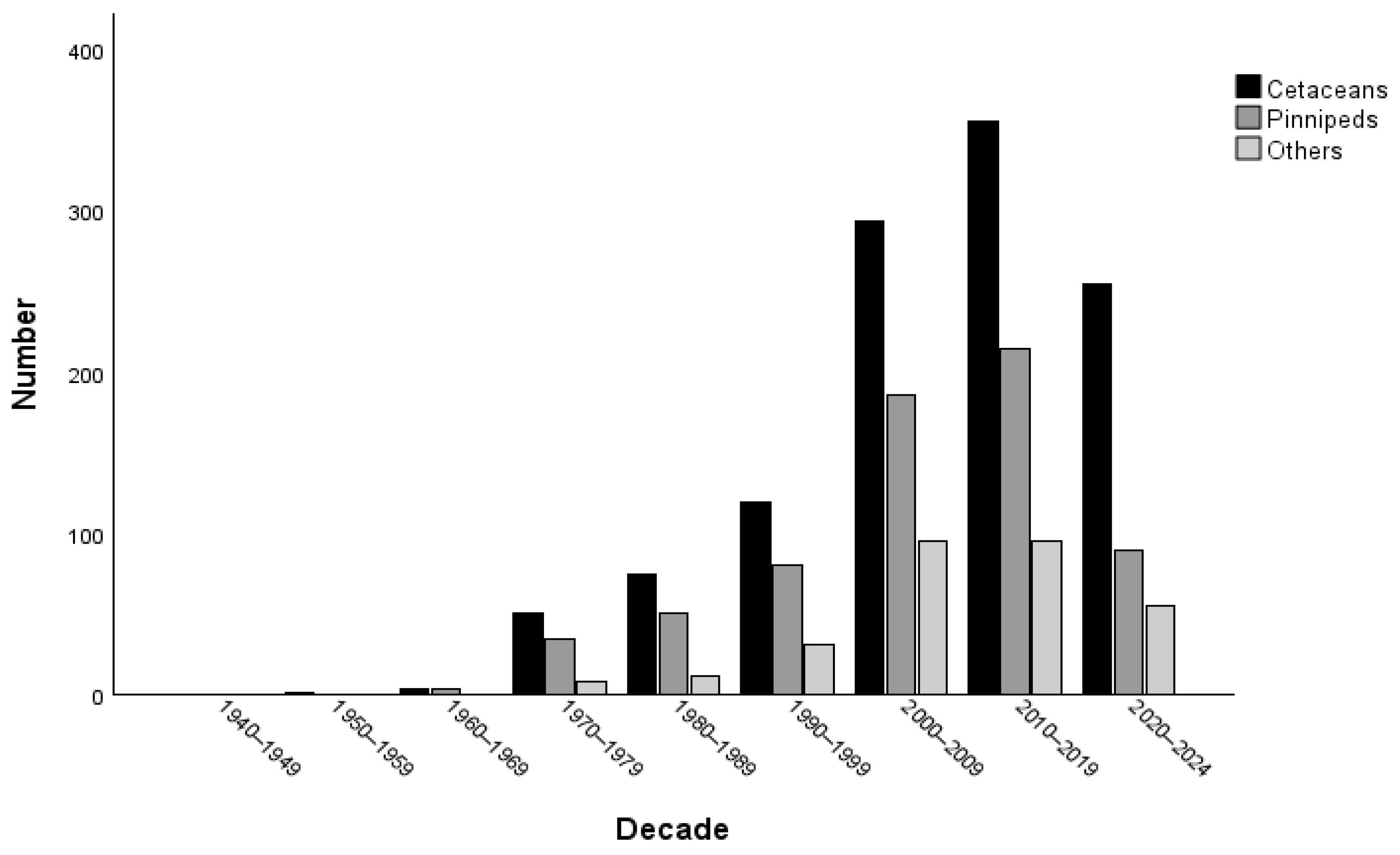
In total, our search identified 2064 papers across both peer-reviewed (PR) and non–peer-reviewed (NPR) sources. Of these, 1308 were PR papers, comprising 690 on cetaceans, 395 on pinnipeds, and 224 on other marine mammals, such as sirenians, sea otters, and polar bears (hereafter referred to collectively as miscellaneous marine mammals). The remaining 756 were NPR papers and comprised 437 on cetaceans, 247 on pinnipeds, and 72 on miscellaneous marine mammals. Papers were found for 22 cetacean genera (Figure 1). In PR papers, the most frequently studied genus was Tursiops (n = 347; 50% of all cetacean PR papers), followed by Delphinapterus (n = 74; 11%), and Orcinus (n = 40; 6%). The same ranking was observed for NPR papers, with Tursiops (n = 298; 68% of all cetacean NPR papers), Delphinapterus (n = 32; 7%), and Orcinus (n = 18; 4%) being the most commonly represented. The complete per-genus breakdown is as follows (PR/NPR): Cephalorhynchus (0/1), Delphinus (3/3), Eschrichtius (0/1), Feresa (0/1), Globicephala (5/1), Grampus (4/1), Inia (9/2), Lagenorhynchus (Scientific taxonomic re-classification occurred during the review and publication of this genus. We retained the original genus for the purpose of this paper.) (18/3), Lipotes (5/0), Lissodelphis (0/0), Neophocoena (34/1), Orcaella (4/0), Peponocephala (1/0), Phocoena (33/8), Pseudorca (8/2), Sotalia (4/0), Sousa (4/4), Stenella (2/3), and Steno (2/5). From our zoo and aquarium database search, we identified 306 individual cetaceans representing 9 genera. The most common genera were Tursiops (n = 263; 86% of all individuals), Lagenorhynchus1 (n = 18; 6%), and Delphinapterus (n = 4; 1%). The remaining genera each accounted for ≤1% of individuals: Grampus (n = 4), Neophocoena (n = 5), Orcinus (n = 5), Globicephala (n = 1), Phocoena (n = 3), and Pseudorca (i = 3). We also identified 38 zoos and aquariums holding cetaceans. Tursiops was present in 24 facilities (63% of all institutions), followed by Lagenorhynchus1 (n = 2), Grampus (n = 2), Orcinus (n = 2), Pseudorca (n = 2), and single holdings of Delphinapterus, Globicephala, Neophocoena, and Phocoena. Between 1970 and 2009, the number of PR papers published across taxon categories substantially increased (Figure 2). After 2009, the trend has continued to increase, and the decade 2020-2030 is expected to surpass the previous decades as research publications continue to be published, expecting the upward trajectory to continue as the decade progresses.
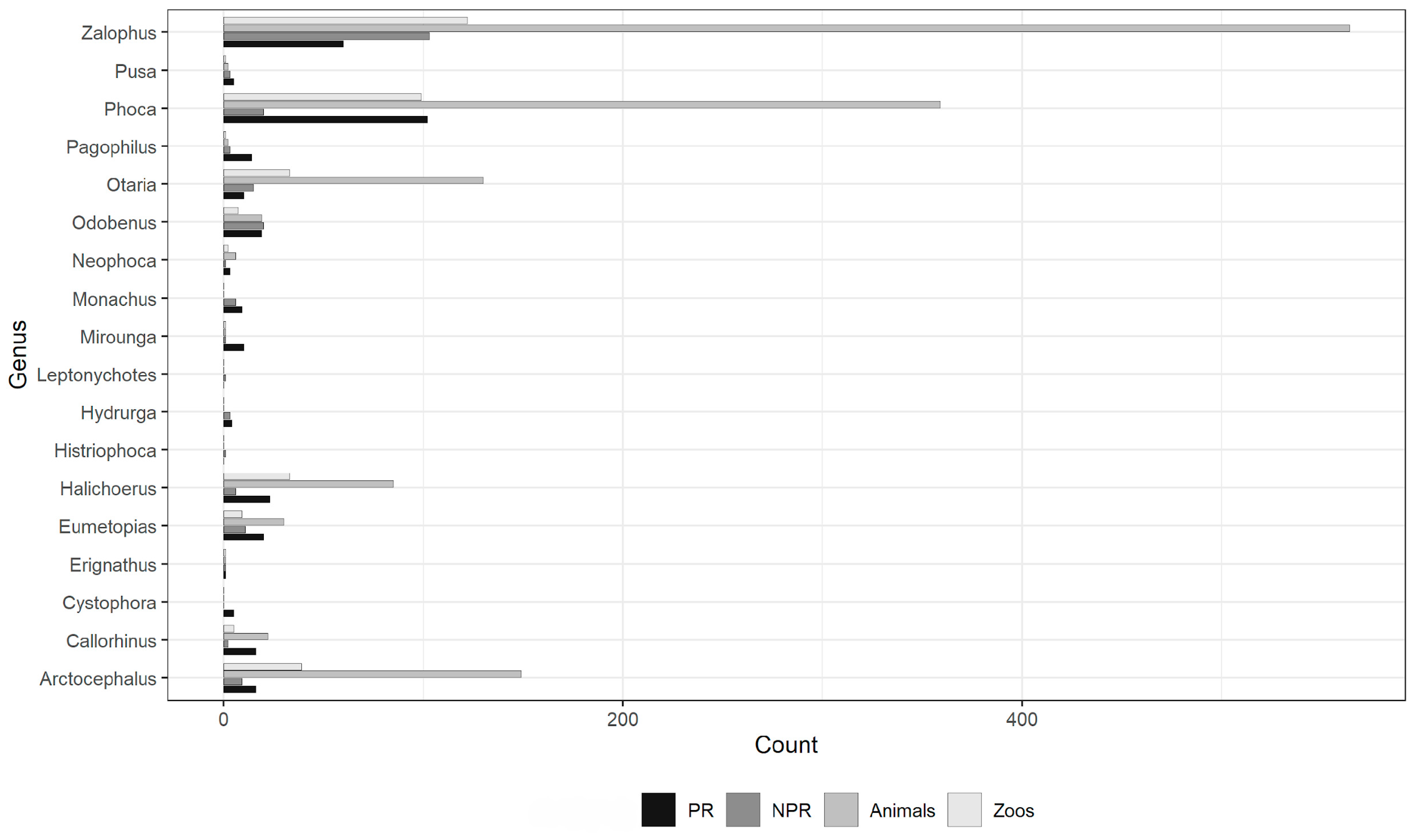
For pinnipeds, our search identified 642 papers, comprising 395 PR and 247 NPR papers. Publications covered 18 genera (Figure 3). In PR papers, the most studied genus was Phoca (n = 102; 26% of all pinniped PR papers), followed by Zalophus (n = 60; 15%) and Halichoerus (n = 23; 6%), respectively. In NPR papers, the ranking was Zalophus (n = 103; 42% of all pinniped NPR papers), Phoca (n = 20; 8%), and Odobenus (n = 20; 8%). The total per-genus counts (PR/NPR) were: Arctocephalus (16/9), Callorhinus (16/2), Cystophora (5/0), Erignathus (1/1), Eumetopias (20/11), Halichoerus (23/6), Histriophoca (0/1), Hydrurga (4/3), Leptonychotes (0/1), Mirounga (10/1), Monachus (9/6), Neophoca (3/1), Odobenus (19/20), Otaria (10/15), Pagophilus (14/3), Pusa (5/3), and Zalophus (60/103). From our zoo and aquarium database search, we recorded 1,504 individual pinnipeds representing 15 genera. The most common were Zalophus (n = 564; 38% of individuals), Phoca (n = 359; 24%), and Arctocephalus (n = 149; 10%). Other well-represented genera included Otaria (n = 130; 9%), Halichoerus (n = 85; 6%), and Eumetopias (n = 30; 2%). The remaining genera accounted for ≤2% of the individuals. A total of 487 zoological institutions housed pinnipeds. Zalophus was present in 122 facilities (25% of all institutions holding pinnipeds), Phoca in 99 (20%), and Arctocephalus in 39 (8%). Otaria and Halichoerus were each found in 33 facilities (7%), Eumetopias in 9 (2%), and Odobenus in 7 (1%). All other genera were represented in ≤5 institutions.
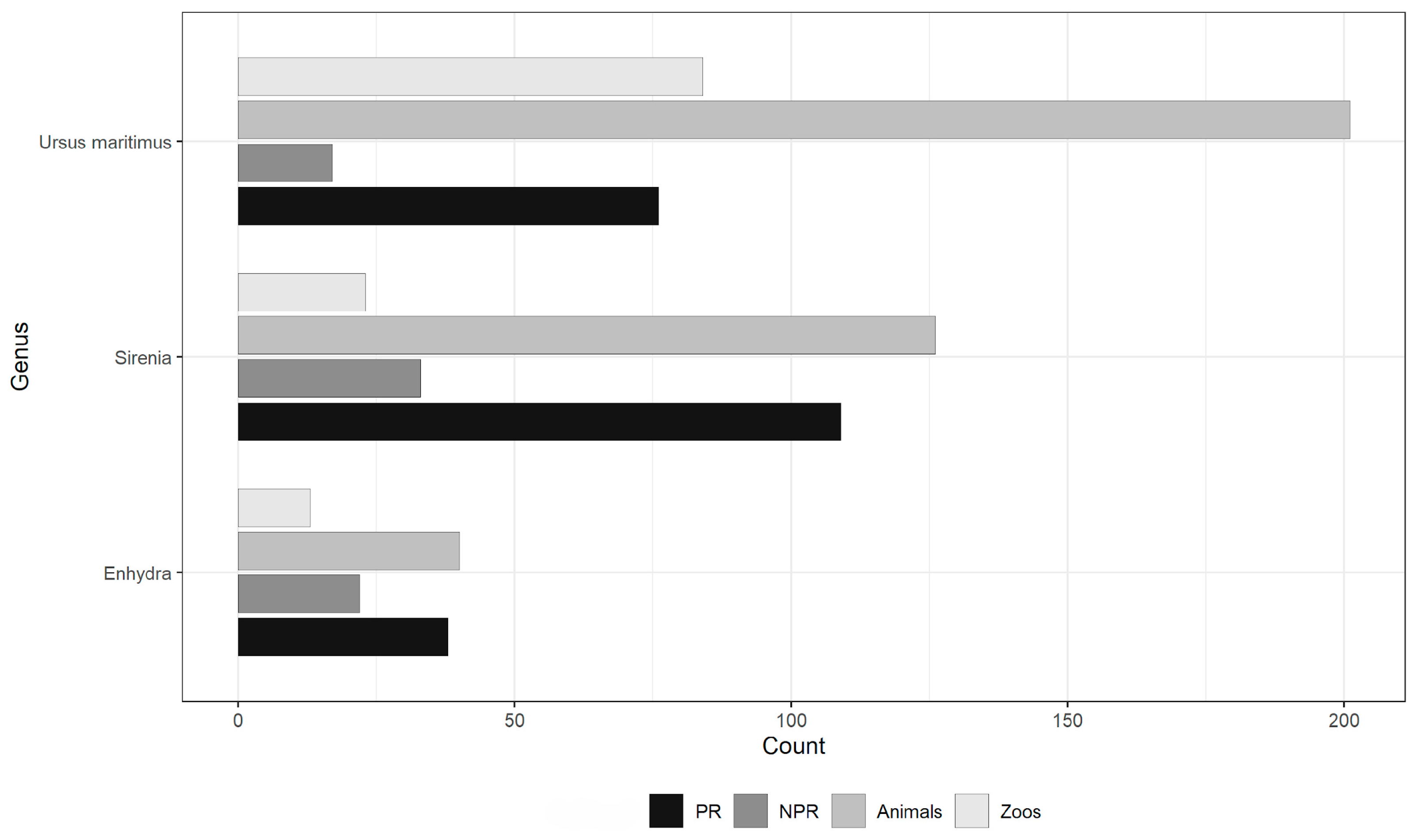
For the other three genera of miscellaneous marine mammals (sirenians, sea otters, and polar bears), our search identified 296 papers, comprising 224 PR papers and 72 NPR papers. Publications covered three genera (Figure 4). In PR papers, the most studied group included Sirenians (n = 109; 49% of all miscellaneous marine mammal PR papers), followed by Ursus maritimus (n = 76; 34%), and Enhydra (n = 38; 17%). In the NPR papers, the ranking was Enhydra (n = 22; 31%), Sirenians (n = 33; 46%), and Ursus maritimus (n = 17; 24%). From our zoo and aquarium database search, we recorded 367 individual miscellaneous marine mammals representing all three genera. The most common was Ursus maritimus (n = 201; 55% of individuals), followed by Sirenians (n = 126; 34%) and Enhydra (n = 40; 11%). A total of 120 zoological institutions held other marine mammals. Ursus maritimus was present in 84 facilities (70% of all institutions holding these taxa), Sirenians in 23 (19%), and Enhydra in 13 (11%).

3.2. Subject Coverage in the Literature

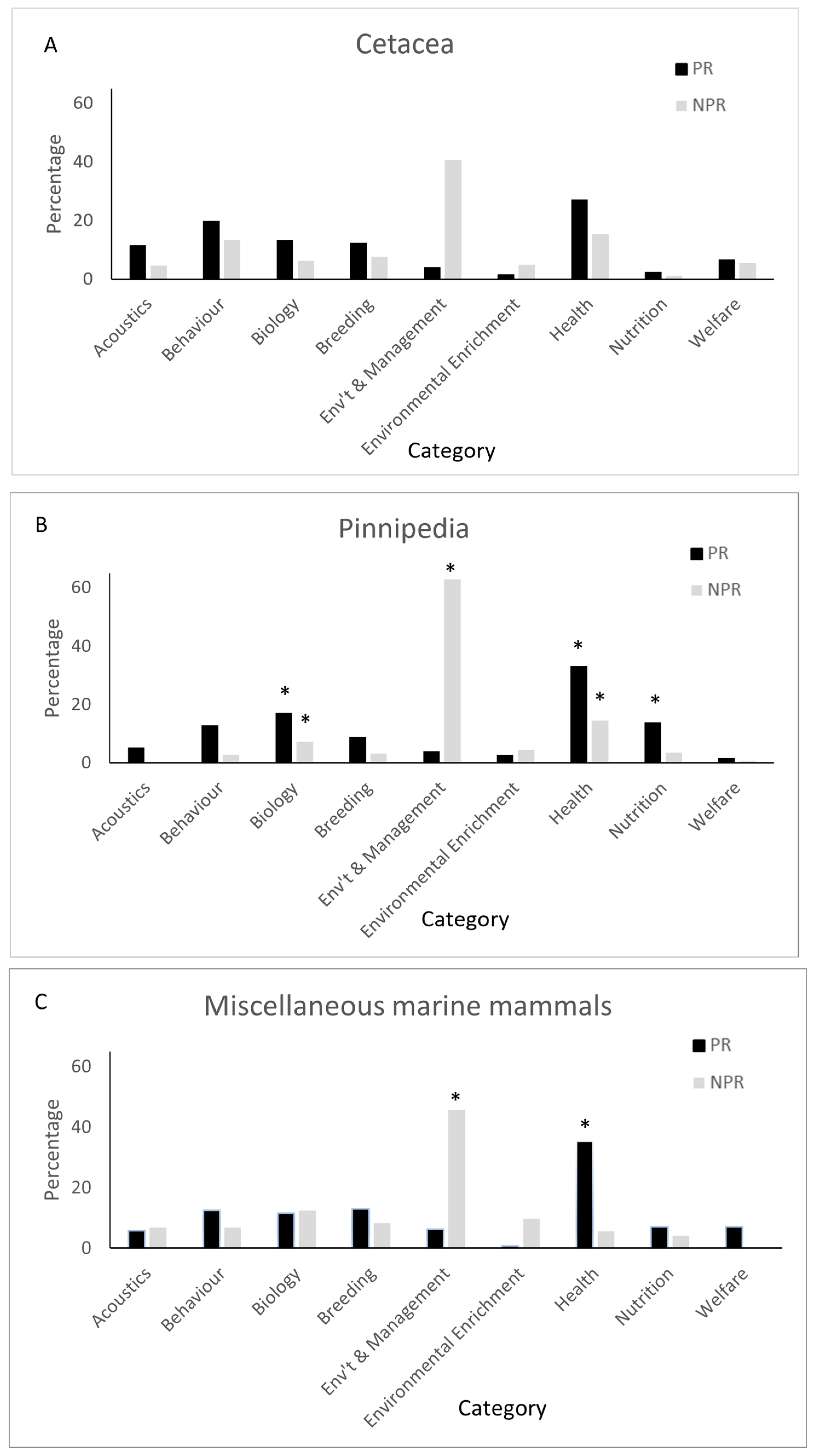
For cetaceans, the most frequent categories appearing in PR papers were Health (n = 193; 27%), Behaviour (n = 138; 20%), and Biology (n = 96; 13.5%), whereas in NPR papers, they were Environment and Management (n = 184; 41%), Health (n = 67; 15%), and Behaviour (n = 60; 13.5%; Figure 5A). A Chi-square test for independence indicated a significant relationship between category and source of paper (PR/NPR), χ2 (8, N = 1,127) = 266.86, p < 0.001. For pinnipeds, the most frequent categories in PR papers were Health (n = 142; 33%), Biology (n = 69; 17%), and Nutrition (n = 56; 14%). In contrast, the most frequent papers for NPR were on Environment and Management (n = 157; 63%), Health (n = 36; 15%), and Biology (n = 18; 7%; Figure 5B). The Chi-square test for independence revealed a significant association between category and source (PR/NPR) (χ2 (8, N = 642) = 281.29, p < 0.001). Among miscellaneous marine mammals, Health (n = 83; 35%) was the most prominent category among PR papers, and Environment and Management was the most prominent category among NPR papers (n = 33; 46%; Figure 5C). Category distribution differed significantly between PR and NPR papers (PR/NPR), χ2 (8, N = 295) = 93.21, p < 0.001.
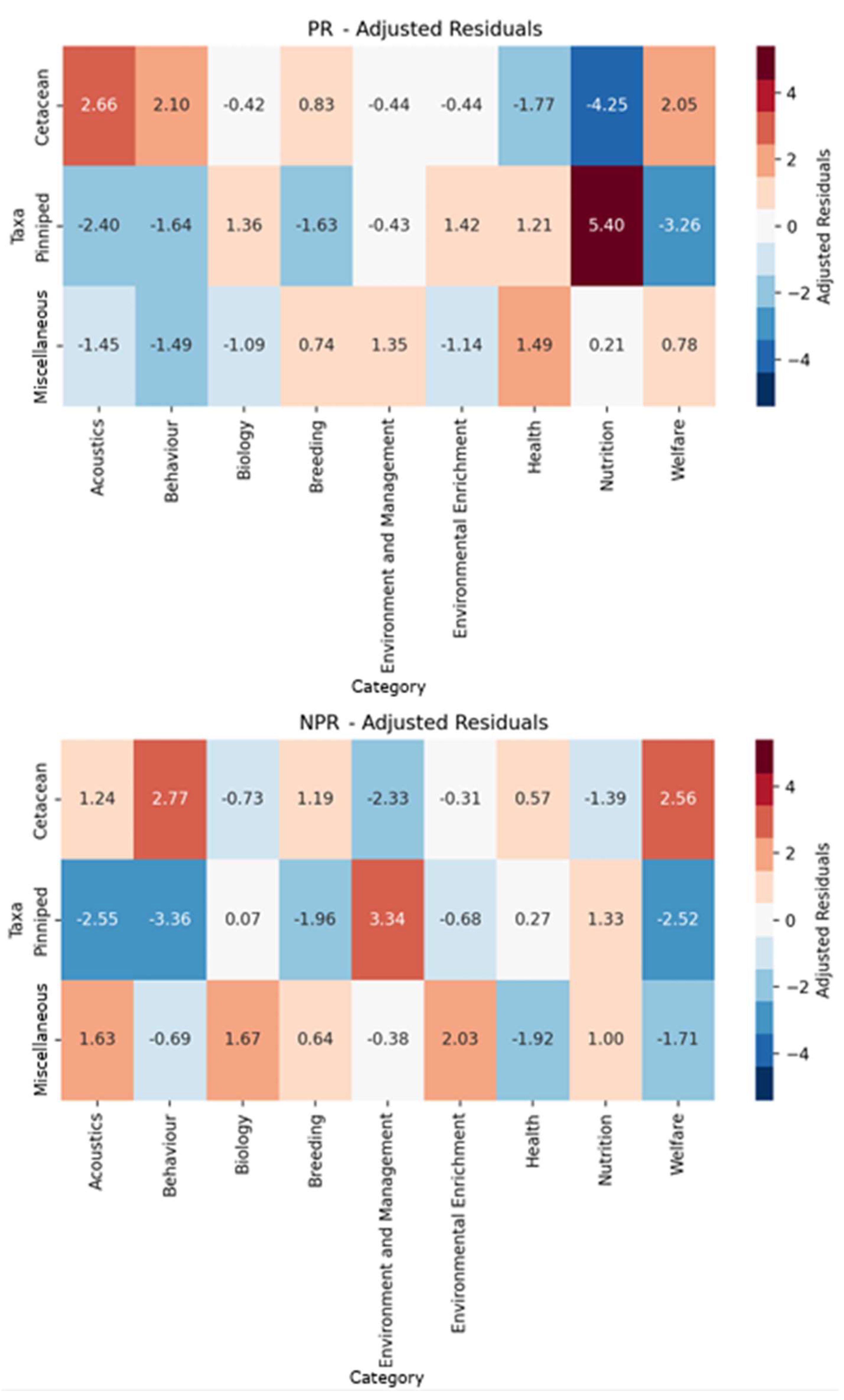
Two Chi-square tests of independence were conducted to analyse whether the taxon was related to the category for each source (Figure 6). For PR papers, a significant relationship was found between taxon and category, χ2 (16, N = 1308) = 104.63, p < 0.001. The categories of Acoustics (70%, n = 81, adjusted standardised residual = 4.0), Behaviour (64%, n = 138, adjusted standardised residual = 3.5), and Welfare (67%, n = 47, adjusted standardised residual = 2.5) had more publications than expected for cetaceans, whereas Nutrition (62.5%, n = 55, adjusted standardised residual = 6.8) was the most frequently represented. followed by Biology (36%, n = 68, adjusted standardised residual = 2.0) for pinnipeds. All categories for miscellaneous marine mammals were represented as expected, although Health (20%, n = 79, adjusted standardised residual = 1.8) approached a significant result.
A significant relationship was also found between taxa and category for NPR papers (χ2 (16, N = 756) = 81.92, p < 0.001). For cetaceans, Behaviour (83%, n = 59), Welfare (93%, n = 25), and Acoustics (77%, n = 20) were categories that were represented more than expected by chance. For pinnipeds, Environment and Management were described more than expected (42%, n = 155). In contrast, the categories generally occurred as expected for miscellaneous marine mammals, with few values exceeding ±2.

3.3. Species360 Relationship to Publications

There were 14 genera of cetaceans (Cephalorhynchus, Delphinus, Eschrichtius, Feresa, Globicephala, Inia, Lipotes, Lissodelphis, Orcaella, Peponocephala, Sotalia, Sousa, Stenella, and Steno) for which publications were available but were not represented in the Species360 database (Species360, 2025), implying that either these genera were housed in non-Species360 institutions or were housed at one time but were no longer in captivity. Tursiops was the most common genus, with 263 animals located in 24 different institutions in the Species360 database at the time of the present study in 2024. There were significant, strong positive correlations between the number of papers and both the number of animals of each genus listed in Species360 and the number of institutions housing them (animals: PR r = 0.987 and NPR r = 0.992; zoos: r = 0.975 for PR and r = 0.974 for NPR; df = 20, p < 0.001 for each correlation), implying that the most researched taxa were those housed in the greatest numbers. The distribution of PR and NPR papers across genera was significantly correlated (r = 0.988, df = 18, p < 0.001), indicating that the number of papers per genus published in the NPR literature was positively related to the number of papers per genus published in the PR literature, as expected. Figure 1 summarises these relationships.
For pinnipeds, five genera (Cystophora, Histriophoca, Hydrurga, Leptonychotes, and Monachus) were the subjects of papers but did not appear in the Species360 database. The most common pinnipeds in captivity were Phoca and Zalophus (Zalophus: 564 animals in 122 institutions; Phoca: 359 animals in 99 institutions). Again, there were significant, strong positive correlations between the number of papers and both the number of animals of each genus listed in Species360 and the number of institutions housing them (animals: PR r = 0.830 and NPR r = 0.895; zoos: PR r = 0.874 and NPR r = 0.820; df = 16, p < 0.001 for each correlation). The distribution of PR and NPR papers across taxa was significantly correlated (r = 0.570, df = 16, p < 0.05), but Phoca was the most studied taxon in PR papers, and Zalophus in NPR papers. Figure 3 summarises these relationships.
No significant results were observed for miscellaneous marine mammals, likely due to the limited sample size. We provide a brief summary of the analyses. There was a moderate, positive, non-significant correlation between the number of PR papers and the number of animals in captivity and a small, positive non-significant correlation between the number of NPR papers and the number of animals (animals: PR r = 0.567 and NPR r = 0.267, df = 2, ns). There was a small, positive, non-significant relationship between the number of PR papers and the number of zoos caring for these genera and a moderate, negative non-significant correlation between the number of NPR papers and the number of zoos (zoos: PR r = 0.170 and NPR r = −0.647; df = 2, ns, for each correlation), suggesting that the most frequently researched of these four taxa were not the most commonly housed in captivity. Figure 1 summarises these relationships.

4. Discussion

This study aimed to provide an overview of research trends on marine mammals under human or managed care by systematically analysing peer-reviewed (PR) literature and comprehensively reviewing non-peer-reviewed (NPR) sources. The results highlight where research and publication efforts within the marine mammal community have been concentrated, as well as notable gaps in current knowledge, as reflected in the published record.
For cetaceans, most of the PR and NPR literature was on bottlenose dolphins (Tursiops spp.), which are the most common cetaceans held. Belugas (Delphinapterus leucas), Pacific white-sided dolphins (Aethalodelphis obliquidens, formerly Lagenorhynchus obliquidens), orcas (Orcinus orca) and harbour porpoises (Phocoena phocoena) are not housed in large numbers compared to Tursiops but are proportionately represented in the PR and NPR literature. However, these numbers illustrate discrepancies between the reported animals in the Species360 database [37] and the number of animals housed in facilities worldwide. For example, in North America, there are at least 70 Beluga (Delphinapterus leucas) in human care, but they are not recorded in Species360. Similarly, many zoos and aquariums in Asia do not subscribe to Species360, and there is no systematic way to identify all captive animals. Correlation coefficients for both PR and NPR papers showed strong positive associations with the number of cetaceans and the number of zoos holding them, indicating that the research effort primarily reflected that most research was undertaken on the species most held. The distribution of PR papers correlated strongly with NPR, suggesting that these two groups of authors concentrated their work on the same taxa. Although the concentration on the most held taxa is understandable, it might also reflect a reluctance by researchers to draw unwanted attention from animal rights lobbyists towards work performed on sensitive species, such as orcas. Regardless of the reasons, this indicates that research on some taxa is being conducted.
The most studied pinnipeds were Zalophus and Phoca, which were also the most common pinnipeds held at the time of writing. Again, positive significant correlations were found, indicating that research efforts reflected the availability of animals. However, it is notable that the most studied taxon in the PR literature was Phoca, even though this was not the most abundant species in the Species360 database. This indicates that populations of common seals are maintained in several research institutions that may not contribute data to Species360 but are proportionally more highly represented in the PR literature. The distribution of PR and NPR papers across taxa was significantly correlated but less strongly than with cetaceans; this is likely due to more PR research on Phoca being conducted in research institutions rather than in zoos and aquariums.
No significant correlations were found between the studied taxa and the number of animals or zoos for either PR or NPR papers on miscellaneous marine taxa. However, different trends were observed. Specifically, positive but not significant correlations between the number of zoos and animals were found in PR papers. In contrast, negative, but not significant, correlations between the number of zoos and animals were found for NPR papers, suggesting that PR papers may reflect which species were studied in human care more than NPR papers. There are more papers on sirenians and fewer papers on polar bears than expected for the number of animals in captivity. This trend could be due to several factors; for example, researchers may be studying taxa that are interesting to them rather than what species are available, or efforts are being focused on species which are easier to manage outside of protected contact directly such as dolphins and seals who are usually worked with in direct contact instead of through fences and bars such as polar bears. Polar bears, for example, have been suggested to be particularly susceptible to developing stereotypical pacing in captivity, which is linked to their large ranges in the wild [38,39]. This tendency might lead to a reluctance to undertake further research on species that are sometimes perceived to have poor welfare in captivity. This finding prompted further research, which identified ways to reduce the polar bear pacing [40]. However, it may be the case that researchers feel there is little more to do on this topic and that it contributes little to our knowledge of polar bear biology.
It is important to note that some taxa have been studied in the past but are no longer in any facility, notably Lipotes, which is now extinct [41]. In other cases, certain species may have been found unsuitable for captivity, either because they were too difficult to manage or because they were perceived to have poor welfare. Other taxa that are still being researched may be housed in non-Species360 institutions and, therefore, do not appear in our data on animal holdings. Unfortunately, there is no way to quantify the total number of animals held in zoos and aquariums worldwide. We can conclude that for the data we have, the animals most subject to research primarily belong to the taxa that are most frequently maintained.
In cetaceans, the highest percentages of PR papers were in the fields of Health, Behaviour and Biology, while the lowest were in Nutrition, EE, E&M, and Welfare. In contrast, E&M, Health, and Behaviour were the largest categories of NPR papers. Health papers included topics such as clinical pathology, diseases, and treatment; Behaviour research focused on social interactions, play, interaction with the environment, and swimming patterns; Biology focused on hormones, thermal tolerance, physiology, body size, and teeth. In our sample, NPR papers concentrated on E&M, for example, food consumption and animal training; health-related topics such as procedures and voluntary cooperation; and Behaviour, including cognition, social behaviour, and communication. This is not unexpected, given that one of our primary sources of NPR literature was the publication of IMATA. Nevertheless, these results indicate that training is essential for the management of cetaceans. Cetacean welfare topics include animal welfare assessments, stereotypies, and the impact of the environment on animal wellbeing. A few studies have dealt with swim-with-dolphin programmes, anticipation of show activities, and human–animal interactions [21]. The areas of focus of PR papers are also not surprising. Cetaceans are unusual animals. They have morphological and physiological adaptations for a completely aquatic life; they use echolocation for navigation and finding food; some cetacean species appear to be highly intelligent, as evidenced, for example, by experiments that demonstrate symbol comprehension [42,43] and possibly mirror self-recognition [43,44]; some have complexities of communication, such as signature calls [45,46]; and some show tool use and social learning [47]. Moreover, cetaceans live in an environment where observational studies are difficult, let alone experiments, and it is not surprising that the opportunities afforded for research in these areas by captive animals would be embraced.
The profiles of papers for both pinnipeds and miscellaneous marine mammals were similar, with Health as the largest category in PR papers and E&M in NPR papers. Again, the least prevalent topics were EE, Welfare, Acoustics, and Nutrition. Similar research topics to those identified for cetaceans were found for various categories of pinnipeds. As with cetaceans, NPR papers reported very little other than E&M, most of which were reports of animal training. Again, Welfare and EE were underrepresented topics, and unlike cetaceans, there was not much evidence of literature concerning environmental enrichment. Nutrition-related papers were the least common topic for cetaceans, pinnipeds, and miscellaneous marine mammals.
Our literature survey suggests that there is an emphasis in PR papers on ‘pure’ science (Acoustics, Biology, Breeding, Behaviour, Health), that is, science that adds to our knowledge of the biological functioning of animals but is not necessarily designed to aid in the management and optimal care of these animals. In contrast, a large part of the NPR literature is concerned with the day-to-day handling and management of animals. However, because of the limited accessibility of most of the NPR literature, it is likely that some important studies are not receiving the extent of circulation that they deserve. However, much of the NPR literature is likely to be conducted by zoo staff who may not have sufficient skills or training to conduct a robust scientific study and disseminate these results to the level required for publication in the PR literature. Greater collaboration between zoos and research facilities, including colleges and universities, is an essential first step in bridging the gap between the NPR and PR literature on environmental enrichment, husbandry, welfare, and housing [48]. Continued professional development opportunities focusing on providing staff with the skills needed to disseminate their work are also essential to driving change [49].
The number of PR papers published on marine mammals has steadily increased each decade since the 1960s. This growth has occurred in nearly all topic categories. In all categories except EE, 2000–2009 produced more papers than in previous decades. There were no enrichment papers before 2009 for cetaceans, but they have been on the rise in PR literature since. Across the taxonomic groups, all categories were covered only in 1990–2000, and EE was the least covered topic overall between 1970 and 2009. While we would hope that worthwhile studies in the NPR literature also end up in the PR literature, we know that this is not the case. Based on the findings of the present review, we suspect that many such studies have not been published in peer-reviewed journals. Much work is being conducted on topics such as E&M that are not subject to empirical or systematic monitoring and assessment. Monitoring and assessment are also lacking in common interventions, particularly in studies of environmental enrichment for marine mammals. Monitoring and assessment allow practitioners to determine whether an intervention, such as enrichment, has had the desired effect, which is valuable for other practitioners. There are journals available now, such as the Journal of Zoo and Aquarium Research, Zoo Biology, and the Journal of Applied Animal Welfare Science, which accept submissions of such small-scale case study papers for peer review. Animal caregivers, curators, veterinarians, and others involved in the direct and indirect care of animals have valuable knowledge and experience with the animals in their care and their ability to evaluate an animal’s wellbeing [50,51].
We would guide prospective authors to the BIAZA Handbook [52] for further information on how zoo staff can conduct systematic studies in zoo and aquarium settings. Different software programmes such as the ZooMonitor app, Observer, ZIMS for care and wellbeing, and Tracks can all be helpful in observations and recordkeeping to make evidence-based decisions. Facilities that do not have scientists or other experts on staff to design a robust research project, analyse, write, and navigate the peer-review process can create liaisons with universities and collaborate with marine mammal scientists and experts who are already well-established in the field.
Very few studies have empirically focused on welfare, even though related research categories can positively affect welfare. In a survey of this kind, it is necessary to define categories; however, there will necessarily be some overlap between categories. Thus, some basic research on topics such as health and feeding can have implications for management and, hence, potentially for improving welfare; however, the experience of the animal is not often the focus of the research. The maintenance of captive marine mammals, particularly cetaceans, is under increased critical scrutiny [53], and questions are repeatedly raised about their welfare. It is appropriate and necessary that these questions be answered with solid empirical research and not opinions or emotional zeal. Published research has increased over the last few decades and includes notable advances in our understanding of marine mammals [3,54,55]. However, more directed and systematic research on welfare, enrichment, training, and other related topics is required.

5. Conclusions

Our analysis shows that a substantial and growing body of research is being undertaken on marine mammals in human care, as reported in the PR literature. It is also clear that those managing these animals are documenting their experiences in the NPR literature. However, in both cases, animal welfare and environmental enrichment are relatively minor topics in terms of the number of papers published. There is also a disparity between reports in the NPR literature of enrichment and animal training efforts that have been successfully tried and systematic empirical evaluations of enrichment and animal training in the PR literature; most enrichment and animal training efforts for marine mammals are never empirically tested and thus only appear anecdotally in the NPR literature. However, the NPR literature can be challenging to access, and the validity and reliability of anecdotal reports are uncertain. There is a clear need for more research on welfare, environmental enrichment, animal training, and related topics. We would also urge those who experiment with innovative enrichment strategies and other novel husbandry improvements with their animals to monitor and evaluate these strategies empirically and systematically, seeking help and collaboration from external experts and scientists, to publish their findings in PR journals where their value will be clearer and accessible to a broader audience.

Author Contributions

Conceptualization, S.B.; methodology, S.B. and G.H.; formal analysis, G.H., S.T.O. and H.M.M.H.; writing—original draft preparation, S.B.; writing—review and editing, S.B., G.H., S.T.O. and H.M.M.H.; visualisation, H.M.M.H. and S.T.O.; project administration, S.B. All authors have read and agreed to the published version of the manuscript.

Funding

This research received no external funding.

Acknowledgments

The authors would like to thank Nicole Sharpe for her help with the EBSCO search and feedback on earlier versions of this manuscript, Melody Tamayo Moreno and Max Norman for their help with the manuscript preparation, and Francesca Bandoli for their help with access to species and facility data.

Conflicts of Interest

The authors declare no conflicts of interest.

References

  1. Wilson, D.E.; Mittermeier, R.A. Handbook of the Mammals of the World; Lynx Edicions: Barcelona, Spain, 2014. [Google Scholar]
  2. Folkens, P.A.; Reeves, R.R. Guide to Marine Mammals of the World. 2002. Available online: https://www.nhbs.com/guide-to-marine-mammals-of-the-world-book (accessed on 19 December 2024).
  3. Brando, S. Habitat Complexity: Future Ideas for Marine Mammals Housed Under Human Care. In Proceedings of the 2nd International Symposium on Zoo Animal Welfare: Innovations & Future Directions, Chicago, IL, USA, 5–6 June 2013. [Google Scholar]
  4. Brando, S. Marine mammals. In Routledge Handbook of Animal Welfare, 1st ed.; Knight, A., Phillips, C., Sparks, P., Eds.; Routledge: London, UK, 2022; pp. 293–308. [Google Scholar] [CrossRef]
  5. Jaakkola, K. Are dolphins kept in impoverished environments? Animals 2023, 13, 2707. [Google Scholar] [CrossRef] [PubMed]
  6. Tidière, M.; Colchero, F.; Staerk, J.; Adkesson, M.J.; Andersen, D.H.; Bland, L.; Böye, M.; Brando, S.; Clegg, I.; Cubaynes, S.; et al. Survival improvements of marine mammals in zoological institutions mirror historical advances in human longevity. Proc. R. Soc. B Biol. Sci. 2023, 290, 20231895. [Google Scholar] [CrossRef] [PubMed]
  7. Venn-Watson, S.K.; Jensen, E.; Smith, C.R.; Xitco, M.; Ridgway, S.H. Evaluation of annual survival and mortality rates and longevity of bottlenose dolphins (Tursiops truncatus) at the United States Navy Marine Mammal Program from 2004 through 2013. J. Am. Vet. Med. Assoc. 2015, 246, 893–898. [Google Scholar] [CrossRef] [PubMed]
  8. Delfour, F.; Vaicekauskaite, R.; García-Párraga, D.; Pilenga, C.; Serres, A.; Brasseur, I.; Pascaud, A.; Perlado-Campos, E.; Sánchez-Contreras, G.J.; Baumgartner, K.; et al. Behavioural diversity study in bottlenose dolphin (Tursiops truncatus) groups and its implications for welfare assessments. Animals 2021, 11, 1715. [Google Scholar] [CrossRef]
  9. Hill, H.; Guarino, S.; Crandall, S.; Lenhart, E.; Dietrich, S. Young belugas diversify adult beluga (Delphinapterus leucas) behavior. Anim. Behav. Cogn. 2015, 2, 267–284. [Google Scholar] [CrossRef]
  10. Miller, L.J.; Lauderdale, L.K.; Bryant, J.L.; Mellen, J.D.; Walsh, M.T.; Granger, D.A. Behavioral diversity as a potential positive indicator of animal welfare in bottlenose dolphins. PLoS ONE 2021, 16, e0253113. [Google Scholar] [CrossRef]
  11. Miller, L.J.; Mellen, J.; Greer, T.; Kuczaj, S.A., II. The effects of education programmes on Atlantic bottlenose dolphin (Tursiops truncatus) behaviour. Anim. Welf. 2011, 20, 159–172. [Google Scholar] [CrossRef]
  12. Allende-Marín, N.; García-Cegarra, A.M. Effectiveness of marine wildlife rescue and rehabilitation centers in Chile in relation to strandings of sea turtles, penguins, sea lions, and sea otters. Rev. Biol. Mar. Oceanogr. 2022, 57, 181–191. [Google Scholar] [CrossRef]
  13. Simeone, C.A.; Rousselet, E.; Atkin, C.; De Trez, M.; Delemotte, M.; Johnson, S.P. A systematic review of global marine mammal rehabilitation and refloating, 2000–2023. Sustainability 2024, 16, 4589. [Google Scholar] [CrossRef]
  14. Clegg, I.; Boys, R.M.; Stockin, K.A. Increasing the awareness of animal welfare science in marine mammal conservation: Addressing language, translation and reception issues. Animals 2021, 11, 1596. [Google Scholar] [CrossRef]
  15. Nelms, S.E.; Alfaro-Shigueto, J.; Arnould, J.P.Y.; Avila, I.C.; Nash, S.B.; Campbell, E.; Carter, M.I.D.; Collins, T.; Currey, R.J.C.; Domit, C.; et al. Marine mammal conservation: Over the horizon. Endanger. Species Res. 2021, 44, 291–325. [Google Scholar] [CrossRef]
  16. Brando, S. Wild animals in entertainment. In Animal Ethics in the Age of Humans: Blurring Boundaries in Human-Animal Relationships; Bovenkerk, B., Keulartz, J., Eds.; Springer International Publishing: Cham, Switzerland, 2016; pp. 295–318. [Google Scholar] [CrossRef]
  17. Brando, S.; Broom, D.M.; Acasuso-Rivero, C.; Clark, F. Optimal marine mammal welfare under human care: Current efforts and future directions. Behav. Process. 2018, 156, 16–36. [Google Scholar] [CrossRef] [PubMed]
  18. Broom, D.M. A history of animal welfare science. Acta Biotheor. 2011, 59, 121–137. [Google Scholar] [CrossRef] [PubMed]
  19. Mellor, D.J.; Beausoleil, N.J.; Littlewood, K.E.; McLean, A.N.; McGreevy, P.D.; Wilkins, C. The 2020 Five Domains Model: Including human-animal interactions in assessments of animal welfare. Animals 2020, 10, 1870. [Google Scholar] [CrossRef]
  20. Curtin, S.; Wilkes, K. Swimming with captive dolphins: Current debates and post-experience dissonance. Int. J. Tour. Res. 2007, 9, 131–146. [Google Scholar] [CrossRef]
  21. Trone, M.; Kuczaj, S.; Solangi, M. Does participation in dolphin–human interaction programs affect bottlenose dolphin behaviour? Appl. Anim. Behav. Sci. 2005, 93, 363–374. [Google Scholar] [CrossRef]
  22. Clegg Borger-Turner, J.L.; Eskelinen, H.C. C-Well: The development of a welfare assessment index for captive bottlenose dolphins (Tursiops truncatus). Anim. Welf. 2015, 24, 267–282. [Google Scholar] [CrossRef]
  23. Jiang, Y.; Lück, M.; Parsons, E.C.M. Public awareness, education, and marine mammals in captivity. Tour. Rev. Int. 2007, 11, 237–249. [Google Scholar] [CrossRef]
  24. Lauderdale, L.K.; Walsh, M.T.; Mitchell, K.A.; Granger, D.A.; Mellen, J.D.; Miller, L.J. Health reference intervals and values for common bottlenose dolphins (Tursiops truncatus), Indo-Pacific bottlenose dolphins (Tursiops aduncus), Pacific white-sided dolphins (Lagenorhynchus obliquidens), and beluga whales (Delphinapterus leucas). PLoS ONE 2021, 16, e0250332. [Google Scholar] [CrossRef]
  25. McBain, J.F. Cetaceans in captivity: A discussion of welfare. J. Am. Vet. Med. Assoc. 1999, 214, 1170–1174. [Google Scholar]
  26. Hill, H.M.; Guarino, S.; Dietrich, S.; St Leger, J. An inventory of peer-reviewed articles on killer whales (Orcinus orca) with a comparison to bottlenose dolphins (Tursiops truncatus). Anim. Behav. Cogn. 2016, 3, 135–149. [Google Scholar] [CrossRef]
  27. Hill, H.; Lackups, M. Journal publication trends regarding cetaceans found in both wild and captive environments: What do we study and where do we publish? Int. J. Comp. Psychol. 2010, 23, 414–534. [Google Scholar] [CrossRef]
  28. EAZA. Best Practice Guidelines for Otariidae and Phocidae; European Association of Zoos and Aquariums: Amsterdam, The Netherlands, 2018. [Google Scholar]
  29. AZA Marine Mammal TAG. Sea Otter Care Manual; Association of Zoos and Aquariums: Silver Spring, MD, USA, 2019. [Google Scholar]
  30. AZA Bear TAG. Polar Bear (Ursus maritimus) Care Manual; Association of Zoos and Aquariums: Silver Spring, MD, USA, 2009. [Google Scholar]
  31. EAAM. Standards and Guidelines for the Management of Bottlenose Dolphins (Tursiops species) Under Human Care; European Association for Aquatic Mammals: Brussels, Belgium, 2009. [Google Scholar]
  32. EAZA. Marine Mammal Demonstration and Public Interaction Guidelines; European Association of Zoos and Aquariums: Amsterdam, The Netherlands, 2019. [Google Scholar]
  33. Gulland, F.M.D.; Dierauf, L.A.; Whitman, K.L. CRC Handbook of Marine Mammal Medicine; Routledge: London, UK, 2018; Available online: https://www.routledge.com/CRC-Handbook-of-Marine-Mammal-Medicine/Gulland-Dierauf-Whitman/p/book/9781498796873 (accessed on 19 December 2024).
  34. Fahlman, A.; Sterba-Boatwright, B.; Cauture, F.; Sweeney, J.; Stone, R. Spirometry as a diagnostic tool to assess respiratory health in beached bottlenose dolphins Tursiops spp. Dis. Aquat. Org. 2025, 161, 113–124. [Google Scholar] [CrossRef] [PubMed]
  35. Melfi, V.A. There are big gaps in our knowledge, and thus approach, to zoo animal welfare: A case for evidence-based zoo animal management. Zoo Biol. 2009, 28, 574–588. [Google Scholar] [CrossRef]
  36. R Core Team. R Core Team; R Foundation for Statistical Computing: Vienna, Austria, 2013; Available online: https://apps.dtic.mil/sti/citations/AD1039033 (accessed on 19 December 2024).
  37. Species360. Species360 Zoological Information Management System (ZIMS); ZIMS: Minneapolis, MN, USA, 2025; Available online: http://Zims.Species360.org (accessed on 19 December 2024).
  38. Clubb, R.; Mason, G.J. Natural behavioural biology as a risk factor in carnivore welfare: How analysing species differences could help zoos improve enclosures. Appl. Anim. Behav. Sci. 2007, 102, 303–328. [Google Scholar] [CrossRef]
  39. Kroshko, J.; Clubb, R.; Harper, L.; Mellor, E.; Moehrenschlager, A.; Mason, G. Stereotypic route tracing in captive Carnivora is predicted by species-typical home range sizes and hunting styles. Anim. Behav. 2016, 117, 197–209. [Google Scholar] [CrossRef]
  40. Shepherdson, D.; Lewis, K.D.; Carlstead, K.; Bauman, J.; Perrin, N. Individual and environmental factors associated with stereotypic behavior and fecal glucocorticoid metabolite levels in zoo housed polar bears. Appl. Anim. Behav. Sci. 2013, 147, 268–277. [Google Scholar] [CrossRef]
  41. Turvey, S. Witness to Extinction: How We Failed to Save the Yangtze River Dolphin; Abe Books: Victoria, BC, Canada, 2009; Available online: https://www.abebooks.com/9780199549474/Witness-Extinction-Failed-Save-Yangtze-0199549478/plp (accessed on 19 December 2024).
  42. Brando, S.; Kooistra, N.; Hosey, G. Pre and post session behaviour of captive bottlenose dolphins Tursiops truncatus involved in “swim-with-dolphin” events. J. Zoo Aquar. Res. 2019, 7, 4. [Google Scholar] [CrossRef]
  43. Herman, L.M.; Pack, A.A.; Morrel-Samuels, P. (Eds.) Representational and conceptual skills of dolphins. In Language and Communication; Psychology Press: New York, NY, USA, 1993. [Google Scholar] [CrossRef]
  44. Herzing, D.L.; Johnson, C.M. Dolphin Communication and Cognition; MIT Press: Cambridge, MA, USA, 2023; Available online: https://mitpress.mit.edu/9780262549622/dolphin-communication-and-cognition/ (accessed on 19 December 2024).
  45. Mitchell, R.W. Evidence of dolphin self-recognition and the difficulties of interpretation. Conscious. Cogn. 1995, 4, 229–234. [Google Scholar] [CrossRef]
  46. Reiss, D.; Marino, L. Mirror self-recognition in the bottlenose dolphin: A case of cognitive convergence. Proc. Natl. Acad. Sci. USA 2001, 98, 5937–5942. [Google Scholar] [CrossRef]
  47. Kershenbaum, A.; Sayigh, L.S.; Janik, V.M. The encoding of individual identity in dolphin signature whistles: How much information is needed? PLoS ONE 2013, 8, e77671. [Google Scholar] [CrossRef]
  48. Krützen, M.; Mann, J.; Heithaus, M.R.; Connor, R.C.; Bejder, L.; Sherwin, W.B. Cultural transmission of tool use in bottlenose dolphins. Proc. Natl. Acad. Sci. USA 2005, 102, 8939–8943. [Google Scholar] [CrossRef]
  49. Schulz, A.K.; Shriver, C.; Aubuchon, C.; Weigel, E.G.; Kolar, M.; Mendelson, J.R., III; Hu, D.L. A guide for successful research collaborations between zoos and universities. Integr. Comp. Biol. 2022, 62, 1174–1185. [Google Scholar] [CrossRef]
  50. Bacon, H.; Vigors, B.; Shaw, D.J.; Waran, N.; Dwyer, C.M.; Bell, C. Zookeepers—The most important animal in the zoo? J. Appl. Anim. Welf. Sci. 2023, 26, 634–646. [Google Scholar] [CrossRef]
  51. Meagher, R.K. Observer ratings: Validity and value as a tool for animal welfare research. Appl. Anim. Behav. Sci. 2009, 119, 1–14. [Google Scholar] [CrossRef]
  52. Whitham, J.C.; Wielebnowski, N. Animal-based welfare monitoring: Using keeper ratings as an assessment tool. Zoo Biol. 2009, 28, 545–560. [Google Scholar] [CrossRef]
  53. Bishop, J.; Hosey, G.; Plowman, A. Handbook of Zoo Research: Guidelines for Conducting Research in Zoos; BIAZA: London, UK, 2013. [Google Scholar]
  54. White, T.I. Dolphins, captivity and cruelty. In Palgrave Macmillan Animal Ethics Series; Springer Nature: Cham, Switzerland, 2022; pp. 271–295. [Google Scholar] [CrossRef]
  55. Baumgartner, K.; Hüttner, T.; Clegg, I.L.K.; Hartmann, M.G.; Garcia-Párraga, D.; Manteca, X.; Mercera, B.; Monreal-Pawlowsky, T.; Pilenga, C.; Ternes, K.; et al. Dolphin-WET—Development of a welfare evaluation tool for bottlenose dolphins (Tursiops truncatus) under human care. Animals 2024, 14, 701. [Google Scholar] [CrossRef]
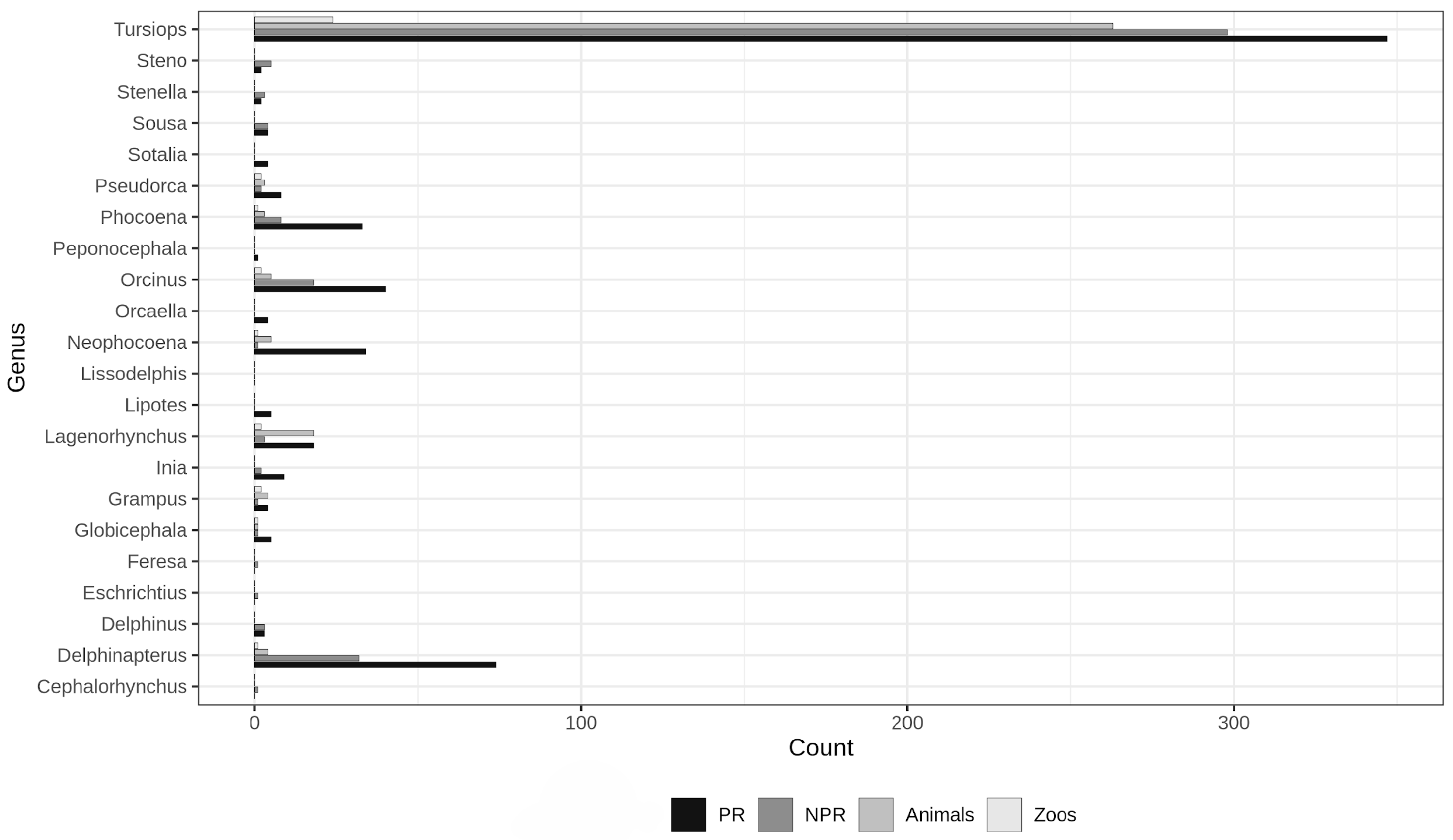
Figure 1. Number of papers in PR and NPR sources, number of zoos housing the reported individuals in Species360, and number of individuals reported in Species360 across the different cetacean genera.
Jzbg 06 00065 g001
Figure 2. Number of PR papers published for each of the three taxonomic groupings across nine decades from 1948 to 2024. Note: The final decade shown represents only the first half of the period and is therefore based on fewer years of data than the other decades. The apparent decrease in the number of publications should not be interpreted as a reversal of the trend, and we expect the upward trajectory to continue as the decade progresses.
Jzbg 06 00065 g002
Figure 3. Number of papers in PR and NPR sources, number of zoos housing the reported individuals in Species360, and number of individuals reported in Species360 across the different pinniped genera.
Jzbg 06 00065 g003
Figure 4. Number of papers in PR and NPR sources, number of zoos housing the reported individuals in Species360, and number of individuals reported in Species360 across the different miscellaneous marine mammal genera.
Jzbg 06 00065 g004
Figure 5. (AC) Percentage of PR and NPR papers within category for papers on cetacea, pinnipedia, and miscellaneous marine taxa. Note the y-axis max of 65. Asterisks denote significant adjusted standardised residuals that indicate more papers than expected for that category within the literature source (PR/NPR).
Jzbg 06 00065 g005
Figure 6. Residuals from the Chi-squared test for independence between order (cetaceans, pinnipeds, and miscellaneous) and the different research categories for PR and NPR papers. Positive residuals are shown in red-orange. Positive values in cells indicate more papers than expected between the corresponding row and column variables, in this case, topics and taxa (positive association). Negative residuals are shown in blue. Negative values in cells imply fewer papers than expected between the corresponding taxa and category variables (negative association).
Jzbg 06 00065 g006
Table 1. Categories of research identified in marine mammal studies from 1948–2024.
CategoryDescription
AcousticsPapers on sound production and perception, including echolocation and communication
BehaviourDescriptions and analyses of individual and social
behaviour
BiologyAspects of biological functioning (e.g., physiology, ecology) not covered by any of the other categories
BreedingAspects of reproduction and reproduction management
Environment Enrichment (EE)Interventions designed to change behaviour in order to improve animal welfare (e.g., objects, puzzles, structures)
Environment and Management (E&M)Papers regarding the environment (e.g., pool sizes, filtration) and management (e.g., policies and procedures)
HealthPapers about managing animal health and veterinary treatment
NutritionPapers about the feeding and nutrition of animals, including fish handling and safety
WelfarePapers about the physical and psychological wellbeing of the animals, but not including aspects related to health or feeding
Disclaimer/Publisher’s Note: The statements, opinions and data contained in all publications are solely those of the individual author(s) and contributor(s) and not of MDPI and/or the editor(s). MDPI and/or the editor(s) disclaim responsibility for any injury to people or property resulting from any ideas, methods, instructions or products referred to in the content.