
Immunomodulatory and Anti-Inflammatory Effects of Gabapentin: A Systematic Review and Risk of Bias Analysis of Preclinical Studies

 , , , , , and
Abstract
1. Introduction
1.1. Pharmacokinetics of Gabapentin
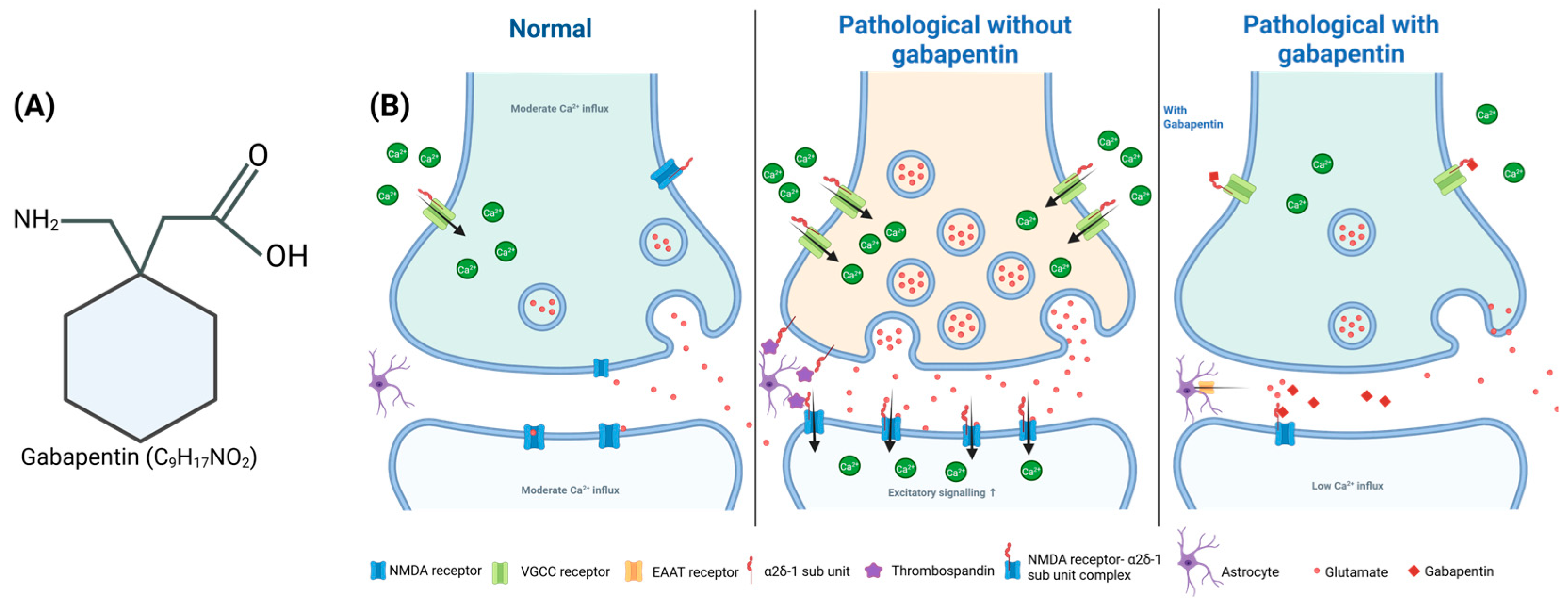
1.2. Pharmacodynamics of Gabapentin
1.3. Side Effects and Possible Misuse of Gabapentin
1.4. Therapeutic Indications and Off-Label Applications of Gabapentin
2. Materials and Methods
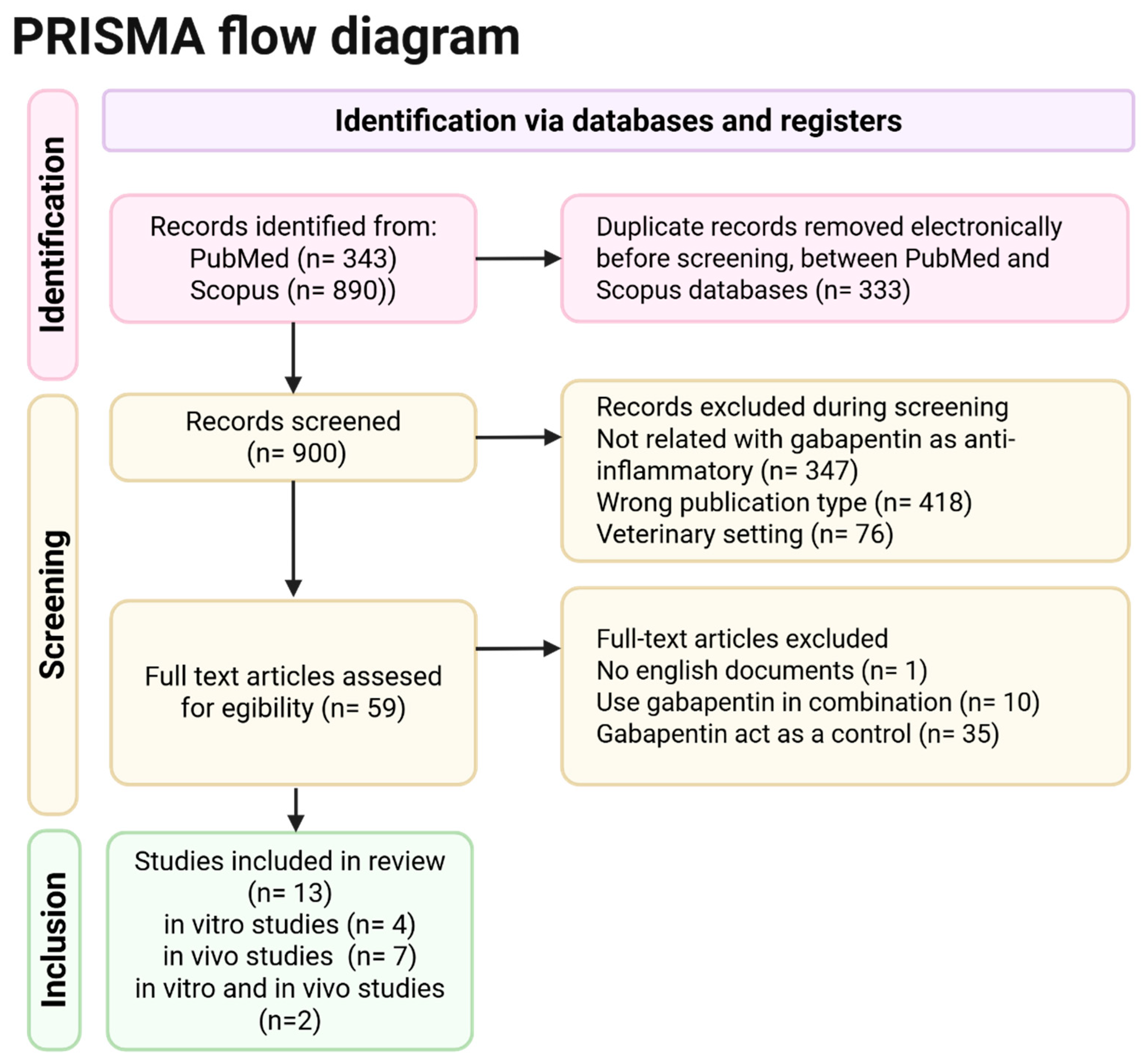
2.1. Search Strategy and Eligibility Criteria
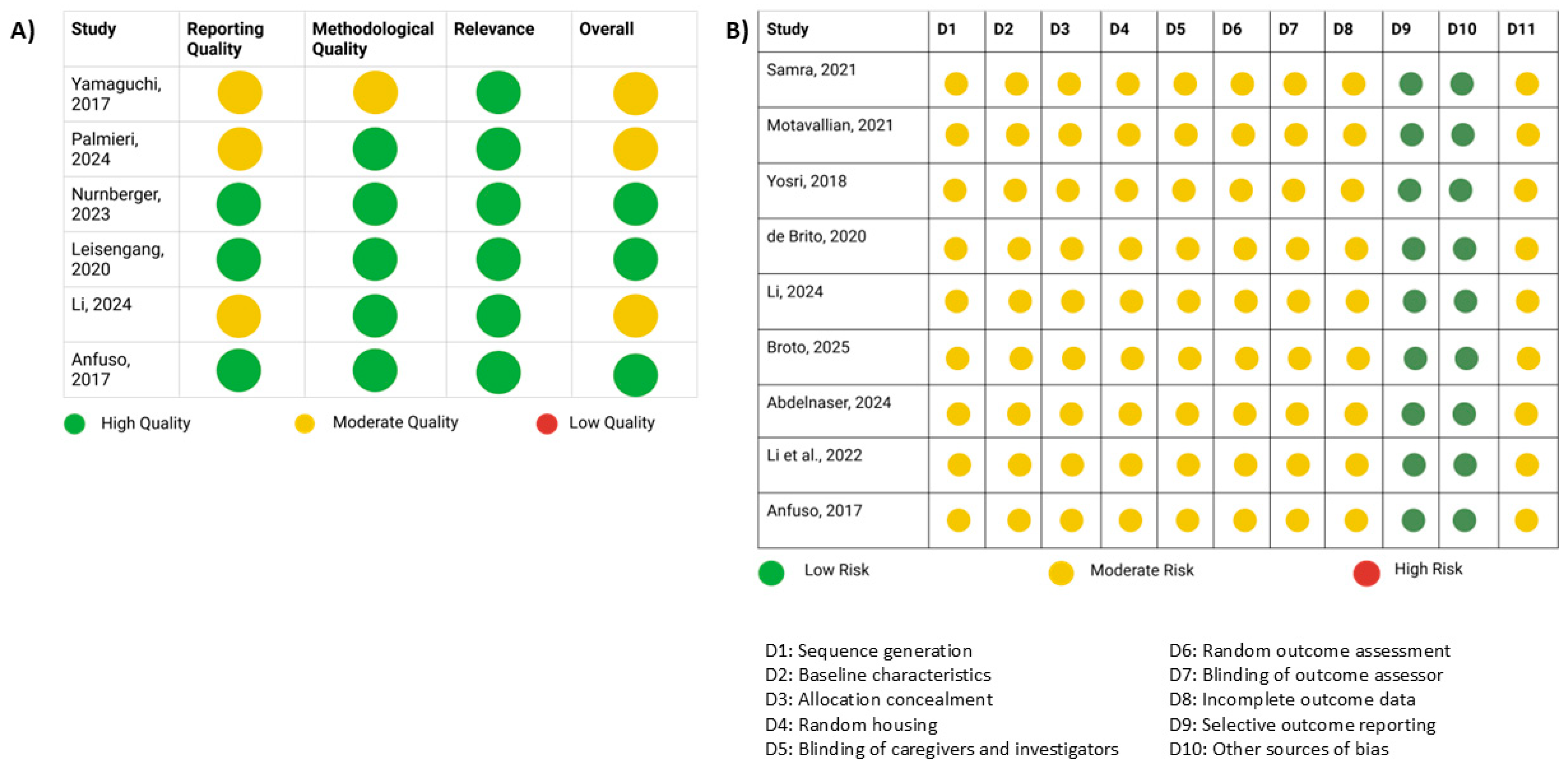
2.2. Risk of Bias and Quality Assessment
3. Results
3.1. In Vitro Studies and Study Quality
3.2. In Vivo Studies and Risk of Bias
4. Discussion
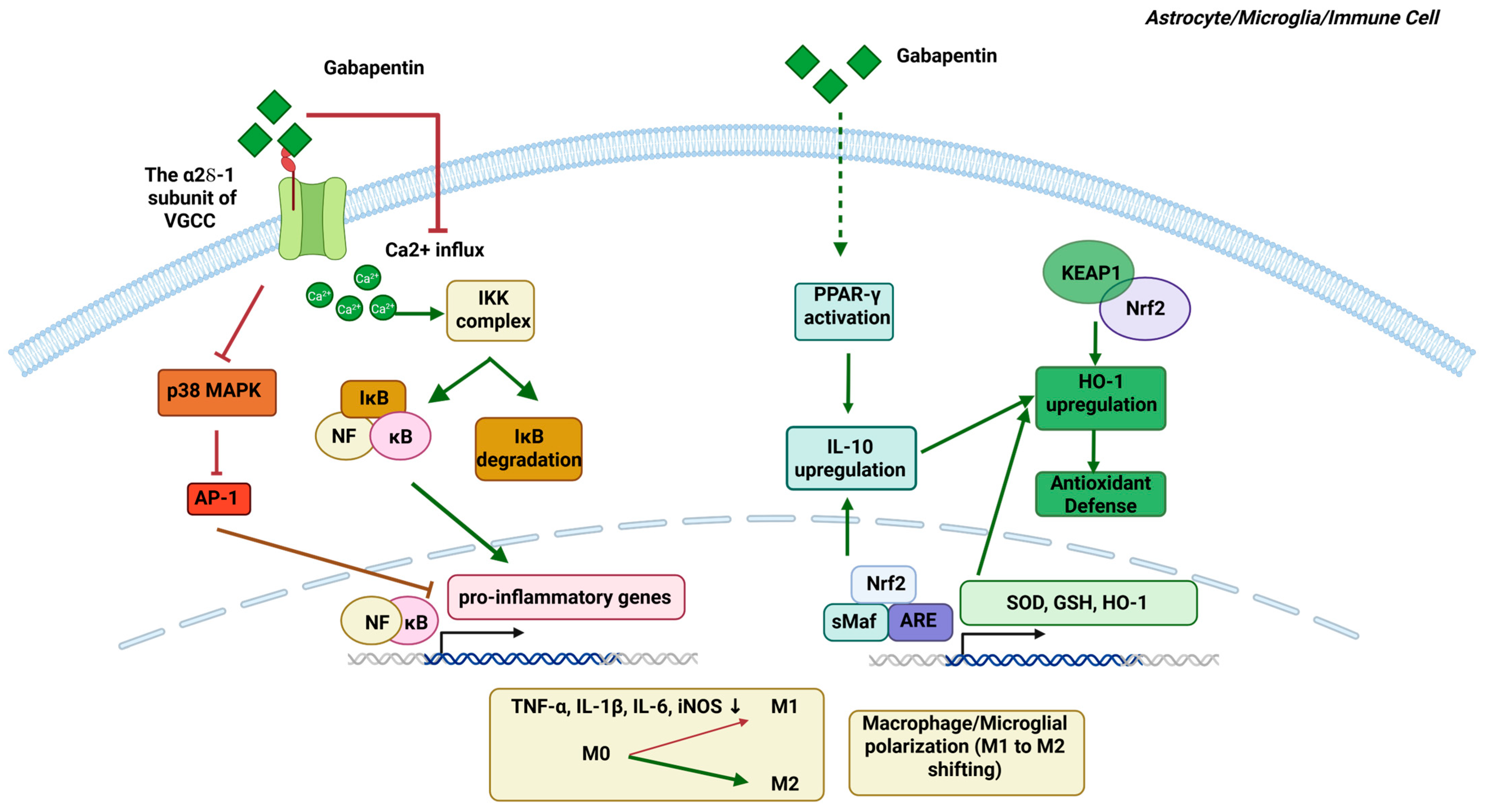
4.1. Gabapentin Inhibits Pro-Inflammatory Pathway
4.2. Gabapentin Induces Anti-Inflammatory Cytokines and Anti-Oxidant Enzymes
4.3. Gabapentin Effects on Glia and Tissue Inflammation
4.4. Translational Relevance and Therapeutic Implications
4.5. Limitations and Future Directions
5. Conclusions
Author Contributions
Funding
Data Availability Statement
Conflicts of Interest
Abbreviations
| AWS | Alcohol Withdrawal Syndrome |
| DRG | Dorsal Root Ganglion |
| EIU | Endotoxin-Induced Uveitis |
| HO-1 | Heme Oxygenase-1 |
| LPS | Lipopolysaccharide |
| MDA | Malondialdehyde |
| MPO | Myeloperoxidase |
| Nrf2 | Nuclear Factor Erythroid 2–Related Factor 2 |
| PPAR | Peroxisome Proliferator-Activated Receptor |
| SciRAP | Science in Risk Assessment and Policy |
| SYRCLE | Systematic Review Centre for Laboratory Animal Experimentation |
| VGCC | Voltage-Gated Calcium Channel |
References
- Anhut, H.; Ashman, P.; Feuerstein, T.J.; Sauermann, W.; Saunders, M.; Schmidt, B.; The International Gabapentin Study Group. Gabapentin (Neurontin) as Add-on Therapy in Patients with Partial Seizures: A Double-Blind, Placebo-Controlled Study. Epilepsia 1994, 35, 795–801. [Google Scholar] [CrossRef] [Scilit]
- Deng, N.-J.; Li, X.-Y.; Zhang, Z.-X.; Xian-Yu, C.-Y.; Tao, Y.-T.; Ma, Y.-T.; Li, H.-J.; Gao, T.-Y.; Liu, X.; Luo, J.; et al. Effectiveness and safety of single anti-seizure medication as adjunctive therapy for drug-resistant focal epilepsy based on network meta-analysis. Front. Pharmacol. 2025, 16, 1500475. [Google Scholar] [CrossRef] [Scilit]
- US Food & Drug Administration. 021-446 Original Approval Package. 2004. Available online: https://www.accessdata.fda.gov/drugsatfda_docs/nda/2004/021446_Lyrica%20Capsules_approv.PDF (accessed on 4 April 2026).
- US Food & Drug Administration. FDA Approves First Drug for Treating Fibromyalgia. ScienceDaily 2027. Available online: https://www.sciencedaily.com/releases/2007/06/070622090149.htm (accessed on 4 April 2026).
- Wilson, J.R.; Doty, S.; Petitt, J.C.; El-Abtah, M.; Francis, J.J.; Sharpe, M.G.; Kelly, M.L.; Anderson, K.D. Feasibility of gabapentin as an intervention for neurorecovery after an acute spinal cord injury: Protocol. Front. Neurol. 2022, 13, 1033386. [Google Scholar] [CrossRef] [Scilit]
- Jang, H.N.; Oh, T.J. Pharmacological and Nonpharmacological Treatments for Painful Diabetic Peripheral Neuropathy. Diabetes Metab. J. 2023, 47, 743–756. [Google Scholar] [CrossRef] [Scilit]
- Chen, J.; Li, L.; Chen, S.-R.; Chen, H.; Xie, J.-D.; Sirrieh, R.E.; MacLean, D.M.; Zhang, Y.; Zhou, M.-H.; Jayaraman, V.; et al. The α2δ-1-NMDA Receptor Complex Is Critically Involved in Neuropathic Pain Development and Gabapentin Therapeutic Actions. Cell Rep. 2018, 22, 2307–2321. [Google Scholar] [CrossRef] [Scilit]
- Levine, A.R.; Carrasquillo, L.; Mueller, J.; Nounou, M.I.; Naut, E.R.; Ibrahim, D. High-Dose Gabapentin for the Treatment of Severe Alcohol Withdrawal Syndrome: A Retrospective Cohort Analysis. Pharmacotherapy 2019, 39, 881–888. [Google Scholar] [CrossRef] [Scilit]
- Smith, R.V.; Havens, J.R.; Walsh, S.L. Gabapentin misuse, abuse and diversion: A systematic review. Addiction 2016, 111, 1160–1174. [Google Scholar] [CrossRef] [Scilit]
- Chincholkar, M. Gabapentinoids: Pharmacokinetics, pharmacodynamics and considerations for clinical practice. Br. J. Pain. 2020, 14, 104–114. [Google Scholar] [CrossRef] [Scilit]
- Bockbrader, H.N.; Wesche, D.; Miller, R.; Chapel, S.; Janiczek, N.; Burger, P. A comparison of the pharmacokinetics and pharmacodynamics of pregabalin and gabapentin. Clin. Pharmacokinet. 2010, 49, 661–669. [Google Scholar] [CrossRef] [Scilit]
- Jackson, C.D.; Clanahan, M.J.; Joglekar, K.; Decha-Umphai, S.T. Hold the Gaba: A Case of Gabapentin-induced Hepatotoxicity. Cureus 2018, 10, e2269. [Google Scholar] [CrossRef] [Scilit]
- Davari, M.; Amani, B.; Amani, B.; Khanijahani, A.; Akbarzadeh, A.; Shabestan, R. Pregabalin and gabapentin in neuropathic pain management after spinal cord injury: A systematic review and meta-analysis. Korean J. Pain. 2020, 33, 3–12. [Google Scholar] [CrossRef] [Scilit]
- Mayoral, V.; Galvez, R.; Ferrándiz, M.; Vázquez, X.M.; Cordero-García, C.; Montero, A.A.; Pérez, C.; Pérez-Páramo, M. Pregabalin vs. gabapentin in the treatment of neuropathic pain: A comprehensive systematic review and meta-analysis of effectiveness and safety. Front. Pain Res. 2025, 5, 1513597. [Google Scholar] [CrossRef] [Scilit]
- Wiffen, P.J.; Derry, S.; Bell, R.F.; Rice, A.S.; Tölle, T.R.; Phillips, T.; Moore, R.A. Gabapentin for chronic neuropathic pain in adults. Cochrane Database Syst. Rev. 2017, 6, Cd007938. [Google Scholar] [CrossRef] [Scilit]
- Antunes, F.T.T.; Campos, M.M.; Carvalho, V.d.P.R.; Junior, C.A.d.S.; Magno, L.A.V.; de Souza, A.H.; Gomez, M.V. Current Drug Development Overview: Targeting Voltage-Gated Calcium Channels for the Treatment of Pain. Int. J. Mol. Sci. 2023, 24, 9223. [Google Scholar] [CrossRef] [Scilit]
- Zhou, C.; Luo, Z.D. Electrophysiological characterization of spinal neuron sensitization by elevated calcium channel alpha-2-delta-1 subunit protein. Eur. J. Pain. 2014, 18, 649–658. [Google Scholar] [CrossRef] [Scilit]
- Patel, R.; Dickenson, A.H. Mechanisms of the gabapentinoids and α 2 δ-1 calcium channel subunit in neuropathic pain. Pharmacol. Res. Perspect. 2016, 4, e00205. [Google Scholar] [CrossRef] [Scilit]
- Yu, J.; Wang, D.-S.; Bonin, R.P.; Penna, A.; Alavian-Ghavanini, A.; Zurek, A.A.; Rauw, G.; Baker, G.B.; Orser, B.A. Gabapentin increases expression of δ subunit-containing GABA(A) receptors. EBioMedicine 2019, 42, 203–213. [Google Scholar] [CrossRef] [Scilit]
- Huang, Y.-H.; Hsueh, H.-Y.; Lee, M.T.; Yeh, C.-J.; Chiou, L.-C. Unravelling the role of cerebellar α6GABAA receptors in anti-tremor pharmacotherapies. Biomed. Pharmacother. 2025, 192, 118644. [Google Scholar] [CrossRef] [Scilit]
- Park, J.; Yu, Y.P.; Zhou, C.Y.; Li, K.W.; Wang, D.; Chang, E.; Kim, D.S.; Vo, B.; Zhang, X.; Gong, N.; et al. Central Mechanisms Mediating Thrombospondin-4-induced Pain States. J. Biol. Chem. 2016, 291, 13335–13348. [Google Scholar] [CrossRef] [Scilit]
- Ryu, J.H.; Lee, P.B.; Kim, J.H.; Do, S.H.; Kim, C.S. Effects of pregabalin on the activity of glutamate transporter type 3. Br. J. Anaesth. 2012, 109, 234–239. [Google Scholar] [CrossRef] [Scilit]
- Bannister, K.; Qu, C.; Navratilova, E.; Oyarzo, J.; Xie, J.Y.; King, T.; Dickenson, A.H.; Porreca, F. Multiple sites and actions of gabapentin-induced relief of ongoing experimental neuropathic pain. Pain 2017, 158, 2386–2395. [Google Scholar] [CrossRef] [Scilit]
- Suto, T.; Severino, A.L.; Eisenach, J.C.; Hayashida, K. Gabapentin increases extracellular glutamatergic level in the locus coeruleus via astroglial glutamate transporter-dependent mechanisms. Neuropharmacology 2014, 81, 95–100. [Google Scholar] [CrossRef] [Scilit]
- Kimura, M.; Eisenach, J.C.; Hayashida, K.I. Gabapentin loses efficacy over time after nerve injury in rats: Role of glutamate transporter-1 in the locus coeruleus. Pain 2016, 157, 2024–2032. [Google Scholar] [CrossRef] [Scilit]
- Lin, H.C.; Huang, Y.H.; Chao, T.H.; Lin, W.Y.; Sun, W.Z.; Yen, C.T. Gabapentin reverses central hypersensitivity and suppresses medial prefrontal cortical glucose metabolism in rats with neuropathic pain. Mol. Pain 2014, 10, 63. [Google Scholar] [CrossRef] [Scilit]
- Chincholkar, M. Analgesic mechanisms of gabapentinoids and effects in experimental pain models: A narrative review. Br. J. Anaesth. 2018, 120, 1315–1334. [Google Scholar] [CrossRef] [Scilit]
- Toth, C. Pregabalin: Latest safety evidence and clinical implications for the management of neuropathic pain. Ther. Adv. Drug Saf. 2014, 5, 38–56. [Google Scholar] [CrossRef] [Scilit]
- Lennox, R.; Mangin, D. Gabapentin misuse. Can. Med. Assoc. J. 2019, 191, E47. [Google Scholar] [CrossRef] [Scilit]
- Evoy, K.E.; Morrison, M.D.; Saklad, S.R. Abuse and Misuse of Pregabalin and Gabapentin. Drugs 2017, 77, 403–426. [Google Scholar] [CrossRef] [Scilit]
- LaCrosse, A.L.; Jacobson, M.C.; Hubl, A.G.; Natale, C.J.; Hoffmann, J.M.; Stage, A.B.; Enger, I.E.; Donar, A.R.; McManey, M.K.; Prus, A.J. Effects of naltrexone on gabapentin reward and buprenorphine combinations in male mice. Behav. Brain Res. 2025, 495, 115801. [Google Scholar] [CrossRef] [Scilit]
- Gomes, T.; Juurlink, D.N.; Antoniou, T.; Mamdani, M.M.; Paterson, J.M.; van den Brink, W. Gabapentin, opioids, and the risk of opioid-related death: A population-based nested case-control study. PLoS Med. 2017, 14, e1002396. [Google Scholar] [CrossRef] [Scilit]
- Mathieson, S.; Lin, C.-W.C.; Underwood, M.; Eldabe, S. Pregabalin and gabapentin for pain. BMJ 2020, 369, m1315. [Google Scholar] [CrossRef] [Scilit]
- Panebianco, M.; Al-Bachari, S.; Hutton, J.L.; Marson, A.G. Gabapentin add-on treatment for drug-resistant focal epilepsy. Cochrane Database Syst. Rev. 2021, 1, CD001415. [Google Scholar] [CrossRef] [Scilit]
- Finnerup, N.B.; Kuner, R.; Jensen, T.S. Neuropathic Pain: From Mechanisms to Treatment. Physiol. Rev. 2021, 101, 259–301. [Google Scholar] [CrossRef] [Scilit]
- Greenblatt, H.K.; Greenblatt, D.J. Gabapentin and Pregabalin for the Treatment of Anxiety Disorders. Clin. Pharmacol. Drug Dev. 2018, 7, 228–232. [Google Scholar] [CrossRef] [Scilit]
- DeFoster, R.E.; Morgan, R.J.; Leung, J.G.; Schenzel, H.; Vijapura, P.; Kashiwagi, D.T.; Fischer, K.M.; Philbrick, K.L.; Kung, S. Use of Gabapentin for Alcohol Withdrawal Syndrome in the Hospital Setting: A Randomized Open-Label Controlled Trial. Subst. Use Misuse 2023, 58, 1643–1650. [Google Scholar] [CrossRef] [Scilit]
- Kume, A. Gabapentin enacarbil for the treatment of moderate to severe primary restless legs syndrome (Willis-Ekbom disease): 600 or 1,200 mg dose? Neuropsychiatr. Dis. Treat. 2014, 10, 249–262. [Google Scholar] [CrossRef] [Scilit]
- Leung, J.G.; Rakocevic, D.B.; Allen, N.D.; Handler, E.M.; Perossa, B.A.; Borreggine, K.L.; Stark, A.L.; Betcher, H.K.; Hosker, D.K.; Minton, B.A.; et al. Use of a Gabapentin Protocol for the Management of Alcohol Withdrawal: A Preliminary Experience Expanding From the Consultation-Liaison Psychiatry Service. Psychosomatics 2018, 59, 496–505. [Google Scholar] [CrossRef] [Scilit]
- Vadiei, N.; Smith, T.L.; Walton, A.E.; Kjome, K.L. Impact of Gabapentin Adjunct use with Benzodiazepines for the Treatment of Alcohol Withdrawal in a Psychiatric Hospital. Psychopharmacol. Bull. 2019, 49, 17–27. [Google Scholar] [CrossRef] [Scilit]
- Merlino, G.; Serafini, A.; Young, J.J.; Robiony, F.; Gigli, G.L.; Valente, M. Gabapentin enacarbil, a gabapentin prodrug for the treatment of the neurological symptoms associated with disorders such as restless legs syndrome. Curr. Opin. Investig. Drugs 2009, 10, 91–102. [Google Scholar]
- Linde, M.; Mulleners, W.M.; Chronicle, E.P.; McCrory, D.C. Gabapentin or pregabalin for the prophylaxis of episodic migraine in adults. Cochrane Database Syst. Rev. 2013, 2016, CD010609. [Google Scholar] [CrossRef] [Scilit]
- Zhang, J.; Yan, R.; Cui, Y.; Su, D.; Feng, T. Treatment for essential tremor: A systematic review and Bayesian Model-based Network Meta-analysis of RCTs. eClinicalMedicine 2024, 77, 102889. [Google Scholar] [CrossRef] [Scilit] [PubMed]
- Di Trapani, G.; Mei, D.; Marra, C.; Mazza, S.; Capuano, A. Gabapentin in the prophylaxis of migraine: A double-blind randomized placebo-controlled study. Clin. Ter. 2000, 151, 145–148. [Google Scholar] [PubMed]
- Mathew, N.T.; Rapoport, A.; Saper, J.; Magnus, L.; Klapper, J.; Ramadan, N.; Stacey, B.; Tepper, S. Efficacy of gabapentin in migraine prophylaxis. Headache 2001, 41, 119–128. [Google Scholar] [CrossRef] [Scilit]
- Vuković, V.; Lovrencić-Huzjan, A.; Bosnar-Puretić, M.; Demarin, V. The efficacy of gabapentin in migraine prophylaxis: An observational open label study. Acta Clin. Croat. 2009, 48, 145–151. [Google Scholar]
- Shanker, V. Essential tremor: Diagnosis and management. BMJ 2019, 366, l4485. [Google Scholar] [CrossRef] [Scilit]
- Kralic, J.E.; Criswell, H.E.; Osterman, J.L.; O’bUckley, T.K.; Wilkie, M.E.; Matthews, D.B.; Hamre, K.; Breese, G.R.; Homanics, G.E.; Morrow, A.L. Genetic essential tremor in gamma-aminobutyric acidA receptor alpha1 subunit knockout mice. J. Clin. Investig. 2005, 115, 774–779. [Google Scholar] [CrossRef] [Scilit]
- Cooney, C.; Murphy, S.; Tessema, H.; Freyne, A. Use of low-dose gabapentin for aggressive behavior in vascular and Mixed Vascular/Alzheimer Dementia. J. Neuropsychiatry Clin. Neurosci. 2013, 25, 120–125. [Google Scholar] [CrossRef] [Scilit]
- Bates, D.; Schultheis, B.C.; Hanes, M.C.; Jolly, S.M.; Chakravarthy, K.V.; Deer, T.R.; Levy, R.M.; Hunter, C.W. A Comprehensive Algorithm for Management of Neuropathic Pain. Pain. Med. 2019, 20, S2–S12. [Google Scholar] [CrossRef] [Scilit]
- Cooper, T.E.; Derry, S.; Wiffen, P.J.; Moore, R.A. Gabapentin for fibromyalgia pain in adults. Cochrane Database Syst. Rev. 2017, 1, Cd012188. [Google Scholar] [CrossRef] [Scilit]
- Markota, M.; Morgan, R.J. Treatment of Generalized Anxiety Disorder with Gabapentin. Case Rep. Psychiatry 2017, 2017, 6045017. [Google Scholar] [CrossRef] [Scilit]
- Allameh, Z.; Rouholamin, S.; Valaie, S. Comparison of Gabapentin with Estrogen for treatment of hot flashes in post-menopausal women. J. Res. Pharm. Pract. 2013, 2, 64–69. [Google Scholar] [CrossRef] [Scilit]
- Solaro, C.; Uccelli, M.M.; Guglieri, P.; Uccelli, A.; Mancardi, G.L. Gabapentin is effective in treating nocturnal painful spasms in multiple sclerosis. Mult. Scler. J. 2000, 6, 192–193. [Google Scholar] [CrossRef] [Scilit]
- Cutter, N.C.; Scott, D.D.; Johnson, J.C.; Whiteneck, G. Gabapentin effect on spasticity in multiple sclerosis: A placebo-controlled, randomized trial. Arch. Phys. Med. Rehabil. 2000, 81, 164–169. [Google Scholar] [CrossRef] [Scilit]
- Houtchens, M.K.; Richert, J.R.; Sami, A.; Rose, J.W. Open label gabapentin treatment for pain in multiple sclerosis. Mult. Scler. J. 1997, 3, 250–253. [Google Scholar] [CrossRef] [Scilit]
- Yamaguchi, K.; Kumakura, S.; Someya, A.; Iseki, M.; Inada, E.; Nagaoka, I. Anti-inflammatory actions of gabapentin and pregabalin on the substance P-induced mitogen-activated protein kinase activation in U373 MG human glioblastoma astrocytoma cells. Mol. Med. Rep. 2017, 16, 6109–6115. [Google Scholar] [CrossRef] [Scilit]
- de Brito, T.V.; Júnior, G.J.D.; Júnior, J.S.d.C.; Silva, R.O.; Monteiro, C.E.d.S.; Franco, A.X.; Vasconcelos, D.F.P.; de Oliveira, J.S.; Costa, D.V.d.S.; Carneiro, T.B.; et al. Gabapentin attenuates intestinal inflammation: Role of PPAR-gamma receptor. Eur. J. Pharmacol. 2020, 873, 172974. [Google Scholar] [CrossRef] [Scilit]
- Page, M.J.; McKenzie, J.E.; Bossuyt, P.M.; Boutron, I.; Hoffmann, T.C.; Mulrow, C.D.; Shamseer, L.; Tetzlaff, J.M.; Akl, E.A.; Brennan, S.E.; et al. The PRISMA 2020 statement: An updated guideline for reporting systematic reviews. BMJ 2021, 372, n71. [Google Scholar] [CrossRef] [Scilit] [PubMed]
- Hooijmans, C.R.; Rovers, M.M.; de Vries, R.B.; Leenaars, M.; Ritskes-Hoitinga, M.; Langendam, M.W. SYRCLE’s risk of bias tool for animal studies. BMC Med. Res. Methodol. 2014, 14, 43. [Google Scholar] [CrossRef] [Scilit] [PubMed]
- Nürnberger, F.; Rummel, C.; Ott, D.; Gerstberger, R.; Schmidt, M.J.; Roth, J.; Leisengang, S. Gabapentinoids Suppress Lipopolysaccharide-Induced Interleukin-6 Production in Primary Cell Cultures of the Rat Spinal Dorsal Horn. Neuroimmunomodulation 2023, 30, 1–14. [Google Scholar] [CrossRef] [Scilit] [PubMed]
- Leisengang, S.; Ott, D.; Murgott, J.; Nürnberger, F.; Gerstberger, R.; Rummel, C.; Schmidt, M.; Roth, J. Effects of gabapentinoids on responses of primary cultures from rat dorsal root ganglia to inflammatory or somatosensory stimuli. J. Basic Clin. Physiol. Pharmacol. 2020, 31, 20190261. [Google Scholar] [CrossRef] [Scilit]
- Palmieri, A.; Pellati, A.; Lauritano, D.; Lucchese, A.; Carinci, F.; Scapoli, L.; Martinelli, M. Drugs That Induce Gingival Overgrowth Drive the Pro-Inflammatory Polarization of Macrophages In Vitro. Int. J. Mol. Sci. 2024, 25, 11441. [Google Scholar] [CrossRef] [Scilit]
- Samra, Y.A.; Amin, M.N.; Said, E. Cardio-protective impact of gabapentin against doxorubicin-induced myocardial toxicity in rats; emphasis on modulation of inflammatory-apoptotic signaling. Int. Immunopharmacol. 2021, 90, 107125. [Google Scholar] [CrossRef] [Scilit]
- Motavallian, A.; Bouzari, S.; Zamani, E.; Karimian, P.; Dabirian, S.; Molavi, M.; Torshkooh, F.A. An investigation of the anti-inflammatory effects of gabapentin on acetic acid-induced colitis in rats. Mol. Biol. Rep. 2021, 48, 3423–3430. [Google Scholar] [CrossRef] [Scilit] [PubMed]
- Yosri, H.; Said, E.; Elkashef, W.F.; Gameil, N.M. Modulatory role of gabapentin against ovalbumin-induced asthma, bronchial and airway inflammation in mice. Environ. Toxicol. Pharmacol. 2018, 64, 18–25. [Google Scholar] [CrossRef] [Scilit] [PubMed]
- Broto, E.P.; Turchan, A.; Sudiana, I.K.; Utomo, B.; Parenrengi, M.A.; Suryaningtyas, W. Effect of gabapentin on CGRP and IL-10 expression on model of the dorsal cortex of the spinal cord after neuropathic lesions of peripheral nerves. J. Med. Pharm. Chem. Res. 2025, 7, 195–206. [Google Scholar] [CrossRef]
- Abdelnaser, M.; Alaaeldin, R.; Attya, M.E.; Fathy, M. Modulating Nrf-2/HO-1, apoptosis and oxidative stress signaling pathways by gabapentin ameliorates sepsis-induced acute kidney injury. Naunyn Schmiedebergs Arch. Pharmacol. 2024, 397, 947–958. [Google Scholar] [CrossRef] [Scilit]
- Li, J.; Xu, K.; Ding, H.; Xi, Q. Gabapentin Reduces Alcohol Intake in Rats by Regulating NF-κB Signaling Pathway Via PPAR γ. Alcohol. Alcohol. 2022, 57, 234–241. [Google Scholar] [CrossRef] [Scilit]
- Li, Z.; Wang, S.; Qin, Y.; Yang, B.; Wang, C.; Lu, T.; Xu, J.; Zhu, L.; Yuan, C.; Han, W. Gabapentin attenuates cardiac remodeling after myocardial infarction by inhibiting M1 macrophage polarization through the peroxisome proliferator-activated receptor-γ pathway. Eur. J. Pharmacol. 2024, 967, 176398. [Google Scholar] [CrossRef] [Scilit]
- Anfuso, C.D.; Olivieri, M.; Fidilio, A.; Lupo, G.; Rusciano, D.; Pezzino, S.; Gagliano, C.; Drago, F.; Bucolo, C. Gabapentin Attenuates Ocular Inflammation: In vitro and In vivo Studies. Front. Pharmacol. 2017, 8, 173. [Google Scholar] [CrossRef] [Scilit]
- Müller, L.; Di Benedetto, S.; Müller, V. From Homeostasis to Neuroinflammation: Insights into Cellular and Molecular Interactions and Network Dynamics. Cells 2025, 14, 54. [Google Scholar] [CrossRef] [Scilit]
- Luecke, S.; Guo, X.; Sheu, K.M.; Singh, A.; Lowe, S.C.; Han, M.; Diaz, J.; Lopes, F.; Wollman, R.; Hoffmann, A. Dynamical and combinatorial coding by MAPK p38 and NFκB in the inflammatory response of macrophages. Mol. Syst. Biol. 2024, 20, 898–932. [Google Scholar] [CrossRef] [Scilit] [PubMed]
- Ruiz-Malagón, A.J.; Rodríguez-Sanchez, M.J.; Rodríguez-Sojo, M.J.; Vezza, T.; Pischel, I.; Algieri, F.; Rodríguez-Cabezas, M.E.; Rodríguez-Nogales, A.; Gálvez, J. Intestinal anti-inflammatory and visceral analgesic effects of a Serpylli herba extract in an experimental model of irritable bowel syndrome in rats. Front. Pharmacol. 2022, 13, 967644. [Google Scholar] [CrossRef] [Scilit] [PubMed]
- Akaberi, M.; Forouzanfar, F.; Rakhshandeh, H.; Moshirian-Farahi, S.M. Analgesic effect of apricot kernel oil on neuropathic pain in rats. Heliyon 2024, 10, e34988. [Google Scholar] [CrossRef] [Scilit]
- Hashemi, B.; Fakhri, S.; Kiani, A.; Abbaszadeh, F.; Miraghaee, S.; Mohammadi, M.; Echeverría, J. Anti-neuropathic effects of astaxanthin in a rat model of chronic constriction injury: Passing through opioid/benzodiazepine receptors and relevance to its antioxidant and anti-inflammatory effects. Front. Pharmacol. 2024, 15, 1467788. [Google Scholar] [CrossRef] [Scilit]
- Hoffmann, A.; Cheng, G.; Baltimore, D. NF-κB: Master regulator of cellular responses in health and disease. Immun. Inflamm. 2025, 1, 2. [Google Scholar] [CrossRef] [Scilit]
- Malnick, S.D.H.; Alin, P.; Somin, M.; Neuman, M.G. Fatty Liver Disease-Alcoholic and Non-Alcoholic: Similar but Different. Int. J. Mol. Sci. 2022, 23, 16226. [Google Scholar] [CrossRef] [Scilit] [PubMed]
- Bhol, N.K.; Bhanjadeo, M.M.; Singh, A.K.; Dash, U.C.; Ojha, R.R.; Majhi, S.; Duttaroy, A.K.; Jena, A.B. The interplay between cytokines, inflammation, and antioxidants: Mechanistic insights and therapeutic potentials of various antioxidants and anti-cytokine compounds. Biomed. Pharmacother. 2024, 178, 117177. [Google Scholar] [CrossRef] [Scilit]
- Bao, Y.-H.; Zhou, Q.-H.; Chen, R.; Xu, H.; Zeng, L.-L.; Zhang, X.; Jiang, W.; Du, D.-P. Gabapentin enhances the morphine anti-nociceptive effect in neuropathic pain via the interleukin-10-heme oxygenase-1 signalling pathway in rats. J. Mol. Neurosci. 2014, 54, 137–146. [Google Scholar] [CrossRef] [Scilit]
- García-Domínguez, M. Neuroinflammation: Mechanisms, Dual Roles, and Therapeutic Strategies in Neurological Disorders. Curr. Issues Mol. Biol. 2025, 47, 417. [Google Scholar] [CrossRef] [Scilit]
- Pan, N.; Cao, P.; Chen, B.; Chen, L.; Liao, X.; Ning, Y. CX3CR1–TLR4 Axis as a Shared Neuroimmune Target in COVID-19 and Epilepsy: Integrative Transcriptomics and Gabapentin Repositioning. Biomedicines 2025, 13, 2133. [Google Scholar] [CrossRef] [Scilit]
- Milligan, E.D.; Watkins, L.R. Pathological and protective roles of glia in chronic pain. Nat. Rev. Neurosci. 2009, 10, 23–36. [Google Scholar] [CrossRef] [Scilit] [PubMed]
- Glass, C.K.; Saijo, K. Nuclear receptor transrepression pathways that regulate inflammation in macrophages and T cells. Nat. Rev. Immunol. 2010, 10, 365–376. [Google Scholar] [CrossRef] [Scilit] [PubMed]
- Zulfatim, H.S. Effect of Gabapentin on Histopathological Changes in the Intestine and Liver of Zebrafish (Danio rerio) in an Alcoholic Liver Disease Model. Master’s Thesis, Universitas Airlangga, Surabaya, Indonesia, 2025. [Google Scholar]



| Pharmacokinetics/ Pharmacodynamics | Details |
|---|---|
| Absorption | Active absorption via l-amino acid transporters in small intestine; saturable at high doses |
| Bioavailability | 27–60% (decreases with higher doses) |
| Half-life | 5–7 h |
| Administration | 3–4 times/day; titrated over ~14 days |
| Metabolism | Not metabolized; no CYP450 interaction |
| Elimination | Renally excreted unchanged |
| Mechanism of Action | Binds to α2δ-1 subunit of VGCC thereby reducing Ca2+ influx and excitatory neurotransmission |
| Common Side Effects | Dizziness (19%), somnolence (14%), gait disturbance (14%), blurred vision (7%) |
| CNS Effects | Confusion, memory loss, speech issues, vertigo |
| Misuse Risk | 15–22% misuse rate; concerns in substance abuse populations |
| Contraindications | Renal impairment, hypersensitivity |
| Condition | Approved Use | Typical Dose | Evidence Level |
|---|---|---|---|
| Partial Seizures (Epilepsy) [1,10] | FDA approved | 900–3600 mg/day in 3 doses | Moderate-High |
| Postherpetic Neuralgia (PHN) [50] | FDA approved | ≥1200 mg/day | High |
| Fibromyalgia [4,51] | Pregabalin: FDA approved | 1200–2400 mg/day | Moderate |
| Neuropathic Pain (e.g., DPN) [3,35] | Off-label Pregabalin: FDA approved | ≥1200 mg/day | High |
| Alcohol Withdrawal Syndrome (AWS) [37] | Off-label | 900–1800 mg/day (can exceed in severe cases) | Moderate |
| Restless Legs Syndrome (RLS) [38] | Gabapentin Enacarbil | 600–1200 mg/day | Moderate |
| Generalized Anxiety Disorder (GAD) [52] | Off-label | 900–3200 mg/day | Moderate |
| Hot Flashes (Menopause) [53] | Off-label | 300–900 mg/day | Low-moderate |
| Migraine Prevention [42,46] | Off-label | 300–2400 mg/day | Low-moderate |
| Essential tremor [20] | Off-label | 900–1800 mg/day | Moderate-High |
| Pain and spasm in Multiple sclerosis [54,55,56] | Off-label | 300–2700 mg/day | Moderate-High |
| Pain and agitation in vascular dementia [49] | Rarely | 100–200 mg/day | Low-moderate |
| Study | Types | Induction | GBP | Outcomes | Conclusion |
|---|---|---|---|---|---|
| In vitro | |||||
| Yamaguchi, 2017 [57] | U373 MG human glioblastoma astrocytoma cells (1 × 10⁵ cells/well) | Substance P (100 nM) for 10–15 min or 24 h | Gabapentin 1 mM for 60 min | GBP (1 mM) substantially suppressed SP-induced phosphorylation of p38 MAPK (but not ERK1/2). GBP significantly abolished SP-induced phosphorylation of NF-κB and suppressed IL-6 and IL-8 production | GBP likely prevents SP-induced IL-6 and IL-8 production in U373 MG cells via inhibition of p38 MAPK and NF-κB, exhibiting anti-neuroinflammatory effects |
| Palmieri, 2024 [63] | Human monocytes (THP-1 cells) differentiated to M0-naïve macrophages | Drug-induced gingival overgrowth model, including gabapentin | Gabapentin 100 µM | Gabapentin induced M0 macrophages to polarize toward pro-inflammatory M1 phenotype. Increased expression of M1-associated genes: CCL5, CXCL10, and IDO1 expression. | Gabapentin drives pro-inflammatory polarization of macrophages in vitro, contributing to drug-induced gingival overgrowth pathogenesis |
| Nürnberger, 2022 [61] | Primary cell cultures of rat spinal dorsal horn | Lipopolysaccharide (LPS) stimulation for 4 h | Gabapentin 100 µM or Pregabalin 100 µM | Gabapentinoids suppressed LPS-induced IL-6 production in primary spinal dorsal horn cultures | Gabapentinoids exhibit anti-inflammatory effects by suppressing cytokine production in spinal cord cells |
| Leisengang, 2020 [62] | Primary cultures from rat dorsal root ganglia (DRG) | Inflammatory stimuli (LPS) for 120 min and capsaicin | Gabapentin 100 µM or Pregabalin 100 µM or capsaicin 1 µM | Gabapentinoids modulated inflammatory responses in DRG cultures. Reduced cytokine release in response to inflammatory stimuli | Gabapentinoids suppress inflammatory responses in peripheral sensory neurons. |
| Li, 2024 [70] | THP-1-derived macrophages | Lipopolysaccharide (LPS) stimulation for 6 h | Gabapentin 100 μM, 2 h prior LPS stimulation | GBP reduced NGF, iNOS, TNF-α, and IL-1β expression in LPS-stimulated macrophages. Effects attenuated by PPAR-γ antagonist GW9662. Reduced α2δ1 expression and calcium content | Gabapentin inhibits M1 macrophage polarization via PPAR-γ activation and calcium channel modulation. |
| Anfuso, 2017 [71] | ARPE-19 cells Human retinal endothelial cells | TNF-α (10 ng/mL) stimulation for various time points | Gabapentin (0.1–10 μM) pre-treatment for 30 min before TNF-α | Highest dose GBP significantly inhibited TNF-α-induced IL-1β production. GBP reduced TNF-α-induced cPLA2 (cytosolic phospholipase A2) phosphorylation and activation. GBP suppressed COX-2 expression and PGE2 production in dose-dependent manner. | GBP attenuates ocular inflammation by inhibiting the cPLA2–COX-2–PGE2 pathway and proinflammatory cytokines. |
| In vivo | |||||
| Samra, 2021 [64] | Male Wistar rats (n = 48), 10 weeks old | Doxorubicin-induced myocardial toxicity | 10–30 mg/kg, p.o., once daily | GBP reduced myocardial MDA content by 34–41.5%, increased TAC by 200–212%, reduced TRAIL by 27.8–32.5%, and caspase-8 by 34–39.6% | Gabapentin confers cardioprotective effects against DOX-induced myocardial injury by modulating inflammatory/apoptotic signaling pathway |
| Motavallian, 2021 [65] | Male Wistar rats, 6 groups (n = 6–8/group) | Acetic acid-induced colitis (2 mL of 3% acetic acid intracolonic) | 25, 50, and 100 mg/kg, i.p., daily | GBP (50 and 100 mg/kg) significantly reduced macroscopic and microscopic colonic lesions, MPO activity, and colonic IL-6, IL-1β, and TNF-α concentrations | Gabapentin exerts beneficial anti-inflammatory effects in experimental colitis, potential therapeutic agent for IBD |
| Yosri, 2018 [66] | Swiss Albino mice (n = 30), male, 8 weeks old, 20–25 g | Ovalbumin-induced allergic asthma (10 mg OVA with Al(OH)3, days 0 and 7; nebulized 1% OVA days 14–16) | 50 mg/kg, p.o., once daily | GBP significantly reduced lung inflammatory cell counts, serum LDH and catalase activities, lung/body weight index. Increased lung GSH and SOD activity. Reduced TNF-α, IL-4, and IL-13. Improved lung histopathology | Gabapentin’s modulatory effect on IL-4, IL-13, and TNF-α accounts for anti-inflammatory and anti-allergic properties in asthma |
| de Brito, 2020 [58] | Male Wistar rats (150–200 g) | TNBS-induced colitis (trinitrobenzenesulfonic acid) | 0.6, 3.0, and 15 mg/kg, i.p. | High dose of GBP decreased macroscopic lesion scores, wet weight, mast cell count, MPO, MDA, nitrate/nitrite, IL-1β, TNF-α, COX-2, iNOS, and NFκB. Restored GSH levels. Effects blocked by PPAR-γ inhibitor | Gabapentin inhibits bowel inflammation by activating PPAR-γ receptor, which inhibits NFκB activation and reduces inflammatory gene expression |
| Li, 2024 [70] | Male rats (MI model); Sham (n = 12), MI (n = 20), MI + GBP (n = 16) | Myocardial infarction by left coronary artery ligation | 100 mg/kg p.o for 28 consecutive days with 24 h interval | At 1 week: reduced iNOS (M1 marker), TNF-α, IL-1β; increased Arginase-1, CD163 (M2 markers), IL-10, TGF-β. At 4 weeks: improved cardiac function, reduced infarct size and fibrosis. Reduced sympathetic nerve activity, TH, GAP43, and NGF | Gabapentin attenuates cardiac remodeling after MI by inhibiting M1 macrophage polarization through PPAR-γ pathway and preventing calcium overload |
| Broto, 2025 [67] | Rattus norvegicus Sprague-Dawley (n = 23); Normal, PSL, PSL + GBP groups | Partial sciatic nerve ligation (PSL)-peripheral neuropathic lesion model | 50 mg/kgBW/day p.o | Significant reduction in CGRP expression in PSL + GBP group vs. PSL group (p = 0.002). No significant difference in IL-10 expression between groups (p = 0.85) | Gabapentin reduces CGRP expression in dorsal horn of spinal cord after neuropathic lesions but does not increase IL-10 expression |
| Abdelnaser, 2024 [68] | Male Wistar rats (n = 120, 200–250 g) Sepsis-induced acute kidney injury model | Cecal ligation and puncture (CLP) to induce polymicrobial sepsis and acute renal damage | Gabapentin (50 and 100 mg/kg i.p for 4 days. administered after CLP induction for evaluation period | GBP improved renal function, reduced inflammation and oxidative stress, modulated Nrf2/HO-1 and NF-κB signaling, and alleviated renal histopathological damage. | GBP mitigated CLP-induced septic AKI by activating Nrf2/HO-1 signaling, suppressing inflammation and oxidative stress, and inhibiting apoptosis, demonstrating renoprotective effects. |
| Li et al., 2022 [69] | Male Sprague-Dawley rats (n = 70, 8–10 weeks old, 220–260 g) | Intermittent access to 20% ethanol in 2-bottle choice (IA2BC) procedure for 4 weeks to establish high voluntary ethanol consumption (>5.5 g/kg/day) | GBP (30, 60, and 120 mg/kg) once daily for 20 days. GBP (60 mg/kg) and co-administration GBP 60 mg/kg + BADGE (PPAR-γ inhibitor) 30 mg/kg | GBP dose-dependently reduced ethanol intake, suppressed IL-1β/TNF-α and hippocampal NF-κB, and increased PPAR-γ expression without motor impairment; these effects were completely abolished by the PPAR-γ inhibitor BADGE. | GBP reduces alcohol intake and neuroinflammation by activating PPAR-γ, suppressing NF-κB signaling and proinflammatory cytokines; reversal by BADGE confirms PPAR-γ as the causal target. |
| Anfuso, 2017 [71] | New Zealand White rabbits (endotoxin-induced uveitis model) | Intravitreal injection of LPS (100 ng/0.1 mL) to induce endotoxin-induced uveitis (EIU) | Topical GBP eye drops (0.1%, 0.3%, 1.0% solutions) applied 2 h before and 1, 4, 8, 12, 16, 20 h after LPS injection | Topical GBP (1.0%) dose-dependently reduced uveitis severity, suppressed TNF-α/IL-1β, and inhibited the cPLA2-COX-2-PGE2 pathway, with maximal efficacy at 1.0%. | Topical GBP attenuates ocular inflammation by inhibiting the cPLA2–COX-2–PGE2 pathway and proinflammatory cytokines, demonstrating therapeutic potential for uveitis. |
Disclaimer/Publisher’s Note: The statements, opinions and data contained in all publications are solely those of the individual author(s) and contributor(s) and not of MDPI and/or the editor(s). MDPI and/or the editor(s) disclaim responsibility for any injury to people or property resulting from any ideas, methods, instructions or products referred to in the content. |
© 2026 by the authors. Licensee MDPI, Basel, Switzerland. This article is an open access article distributed under the terms and conditions of the Creative Commons Attribution (CC BY) license.
Share and Cite
d’Arqom, A.; Rizky, K.A.; Aqilah, N.M.; Huda, F.; Lee, M.T.; Tansy, B.A.; Noor, S.M.; Rimbun; Megasari, N.L.A. Immunomodulatory and Anti-Inflammatory Effects of Gabapentin: A Systematic Review and Risk of Bias Analysis of Preclinical Studies. Immuno 2026, 6, 30. https://doi.org/10.3390/immuno6020030
d’Arqom A, Rizky KA, Aqilah NM, Huda F, Lee MT, Tansy BA, Noor SM, Rimbun, Megasari NLA. Immunomodulatory and Anti-Inflammatory Effects of Gabapentin: A Systematic Review and Risk of Bias Analysis of Preclinical Studies. Immuno. 2026; 6(2):30. https://doi.org/10.3390/immuno6020030
Chicago/Turabian Styled’Arqom, Annette, Kireina Azizah Rizky, Nasya Malfa Aqilah, Fathul Huda, Ming Tatt Lee, Belinda Anasthasya Tansy, Suzita Mohd Noor, Rimbun, and Ni Luh Ayu Megasari. 2026. "Immunomodulatory and Anti-Inflammatory Effects of Gabapentin: A Systematic Review and Risk of Bias Analysis of Preclinical Studies" Immuno 6, no. 2: 30. https://doi.org/10.3390/immuno6020030
APA Styled’Arqom, A., Rizky, K. A., Aqilah, N. M., Huda, F., Lee, M. T., Tansy, B. A., Noor, S. M., Rimbun, & Megasari, N. L. A. (2026). Immunomodulatory and Anti-Inflammatory Effects of Gabapentin: A Systematic Review and Risk of Bias Analysis of Preclinical Studies. Immuno, 6(2), 30. https://doi.org/10.3390/immuno6020030