Article

Understanding Public Discourse on Bipolar Disorder: A Sentiment and Topic Modeling Analysis of Spanish-Language Tweets

by
Elena Plaza-Montero
1,
Miguel Ángel Álvarez-Mon
2,3,4,5,
Miguel Ortega
1,4,
Óscar Fraile-Martínez
1,4,
Cielo García-Montero
1,4,
María-Elena Brenlla
6,7,
Irene Caro-Canizares
6,7,
Melchor Álvarez-Mon
1,4,8 and
Javier Domingo-Espineira
7,9,*
1
Department of Medicine and Medical Specialties, Faculty of Medicine and Health Sciences, University of Alcalá, 28805 Alcalá de Henares, Spain
2
Department of Psychiatry, Infanta Leonor University Hospital, 28031 Madrid, Spain
3
Department of Legal and Psychiatry, Complutense University, 28040 Madrid, Spain
4
Ramón y Cajal Institute of Sanitary Research (IRYCIS), Ramón y Cajal Hospital, 28034 Madrid, Spain
5
CIBERSAM-ISCIII (Biomedical Research Networking Centre in Mental Health), 28029 Madrid, Spain
6
Faculty of Psychology and Health Sciences, Universidad a Distancia de Madrid—UDIMA, 28400 Collado Villalba, Spain
7
Research Group: Health Outcomes from Psychology and Education for Equality and Suicide Prevention (HOPES), Faculty of Psychology and Health Sciences, Universidad a Distancia de Madrid—UDIMA, 28400 Collado Villalba, Spain
8
Immune System Diseases Rheumatology and Internal Medicine Service, University Hospital Príncipe de Asturias, Network Biomedical Research Center|Hepatic and Digestive Diseases (CIBERHD), 28805 Alcalá de Henares, Spain
9
Faculty of Business and Technology Sciences, Universidad a Distancia de Madrid—UDIMA, 28805 Collado Villalba, Spain
*
Author to whom correspondence should be addressed.
Psychiatry Int. 2026, 7(4), 164; https://doi.org/10.3390/psychiatryint7040164
Submission received: 8 March 2026 / Revised: 18 July 2026 / Accepted: 27 July 2026 / Published: 30 July 2026
(This article belongs to the Special Issue The Impact of Social Media on Mental Health)

Abstract

Background/Objectives: Bipolar disorder (BD) is a chronic psychiatric condition associated with substantial emotional and psychosocial burden. Social media platforms provide an opportunity to examine how BD is discussed and emotionally framed outside clinical settings. Although Spanish-language public discourse on BD remains underexplored, this gap is particularly relevant given that linguistic and cultural factors may influence how mental health conditions are expressed, perceived, and communicated. Understanding these differences is essential for developing culturally sensitive public health strategies, improving mental health literacy, and addressing stigma in diverse populations. Methods: A retrospective observational study was conducted using Spanish-language tweets referring to BD posted between 2007 and 2023. After preprocessing, 170,411 unique tweets were analyzed. Latent Dirichlet Allocation (LDA) was applied to identify dominant thematic domains, and emotional tone was classified using a RoBERTa-based model adapted from Ekman’s basic emotions. Statistical analyses were performed to examine associations between topics, emotional categories, and the presence of clinical terminology. Results: Tweet activity related to BD remained low until 2019, followed by a marked increase peaking in 2020 and remaining elevated thereafter. Topic modeling identified seven main themes, predominantly centered on symptoms, illness-related life crises, social anxiety, help-seeking, and the impact of BD on romantic relationships, while diagnosis- and treatment-related topics were less frequent. Emotional analysis showed a clear predominance of sadness across all topics, accounting for approximately 75% of tweets. Anger, joy, and optimism were present at lower frequencies and varied across thematic domains. Clinical terminology was significantly more common in diagnosis- and treatment-related topics, whereas experiential and affective narratives dominated the remaining themes. Conclusions: Spanish-language discourse on BD on Twitter is largely characterized by emotional expression and lived experience rather than biomedical language. These findings highlight cultural relevance of social media as a complementary source for understanding public perceptions of BD and underscore the importance of culturally and linguistically specific analyses in digital mental health research.

1. Introduction

Bipolar disorder (BD) is a chronic and recurrent psychiatric condition associated with substantial emotional, functional, and social burden. It affects approximately 1–2% of the global population and is characterized by alternating episodes of depression, mania, and hypomania, often accompanied by significant psychosocial impairment and elevated suicide risk [1]. BD often presents diagnostic and therapeutic challenges due to its clinical heterogeneity, frequent psychiatric comorbidities, and the high risk of associated complications, such as suicide [2]. Despite advances in clinical management, early identification and comprehensive understanding of BD remain limited, in part due to persistent social stigma and misconceptions surrounding mental health conditions [3].
BD presents with highly diverse clinical manifestations, both between different individuals and within the same person over time. This variability makes early diagnosis particularly difficult, and misdiagnoses are common. Such diagnostic delays can hinder timely intervention and increase the likelihood of iatrogenic harm [4]. Multiple biological factors have been identified in BD, although their precise roles remain uncertain [1,2]. These include excessive cortisol secretion, calcium influx into brain cells, abnormal hyperactivity of the prefrontal cortical glutamatergic system, and disruptions in circadian rhythm [5].
Currently, there are more than 15 approved treatments for the various phases of BD; however, therapeutic outcomes often remain below expectations due to limited efficacy, adverse effects, and/or restricted access to care [6]. These limitations highlight the need for complementary approaches to better understand how BD is experienced and perceived beyond clinical settings.
In this context, social media has emerged as a valuable resource for identifying and gaining deeper insight into public concerns about mental health. These platforms offer spaces where individuals can share their views and take part in conversations on health-related issues [7,8,9,10,11]. Thanks to their real-time, unfiltered nature, with the sense of anonymity they provide, people are often more willing to express genuine thoughts and emotions [12].
Among these platforms, Twitter (now known as X) offers unique advantages due to its predominantly textual nature, public accessibility, and widespread use, providing researchers with an unprecedented window into spontaneous, real-time discourse on mental health [13]. Several studies have demonstrated the utility of Twitter for exploring social conversations surrounding neurological and psychiatric disorders, including dementia [14], mental health professionals [12], and psychiatric disorders such as schizophrenia, anxiety, or depression [13,15,16,17].
Given the high burden of BD on affected individuals, their families, and healthcare systems, as well as its significant psychosocial impact, understanding how this disorder is perceived and discussed on social media can offer relevant insights for public health strategies, stigma reduction efforts, and the development of digital tools for early detection or psychoeducation [18]. Furthermore, analyzing the emotional tone of social media conversations may reveal patterns of distress, support-seeking behaviors, or misinformation that warrant targeted intervention.
Spanish-language discourse on BD remains notably underrepresented in the literature, despite Spanish being one of the most widely spoken languages worldwide [19]. Cultural and linguistic factors may influence how mental health conditions are discussed, perceived, and emotionally framed, underscoring the importance of language-specific analyses [20]. Examining Spanish-language social media discourse may therefore provide complementary insights into public perceptions of BD that are not captured in English-centered studies.
Despite the growing use of social media to explore mental-health-related conversations, the concept of “public discourse” in this context remains insufficiently defined. In this study, public discourse is understood as the set of narratives, emotional expressions, and socially shared meanings through which individuals interpret and communicate mental health experiences in digital environments. This perspective emphasizes not only the dissemination of clinical information, but also the social construction of perceptions, stigma, and help-seeking behaviors.
Although previous studies have analyzed mental health discourse on social media, most have focused on English-language data or have examined either thematic or emotional dimensions in isolation. Consequently, there remains a gap in understanding how BD is represented in Spanish-language social media and how thematic content and emotional tone interact to shape its public perception.
Addressing this gap, the present study aims to examine how BD is socially constructed and communicated in Spanish-language Twitter discourse. By integrating topic modeling and emotion classification, this study seeks to (1) identify the main topics of conversation surrounding BD, (2) characterize the emotional profile associated with these topics, and (3) explore patterns that may inform future preventive and educational efforts in digital environments. To our knowledge, studies examining public discourse on BD in Spanish-language Twitter remain limited, and this work contributes to advancing understanding of how this complex disorder is perceived and discussed in everyday contexts.

2. Materials and Methods

2.1. Study Design and Data Collection

We conducted a retrospective observational study based on publicly available posts from Twitter. This platform was selected because of its predominantly text-based format, open access, and extensive use for sharing personal views and health-related information.
All tweets written in Spanish and referring to BD were collected between 1 January 2007 and 28 February 2023 using Tweet Binder, a search engine with access to 100% of public tweets. Tweets were retrieved by filtering for the presence of relevant keywords related to BD: “bipolar”, “trastorno bipolar”, “bipolaridad”, “episodio maniaco”, “episodio hipomaniaco”, “depresion” combined using Boolean operators (OR) to maximize the sensitivity of the search. Only tweets that met the following inclusion criteria were retained: 1) written in Spanish; 2) publicly accessible; 3) containing one or more of the predefined keywords; 4) posted within the study period. For each tweet, metadata such as publication date, number of likes and retweets, and user profile description were retrieved.

2.2. Preprocessing

Before analysis, tweets were cleaned using a standardized natural language processing pipeline. First, the dataset was filtered to retain tweets containing mental-health-related terms associated with BD, including references to diagnosis, symptoms, mood episodes, treatment, psychiatric or psychological care, emotional states, stigma, and help-seeking. Non-Spanish content, spam, tweets containing hyperlinks, tweets with fewer than three words and tweets containing repeated “toc toc” expressions were removed as they often consist of external content, insufficient linguistic information or unrelated content. URLs, mentions, emojis, punctuation, and hashtags were stripped from the text. Tokens were lowercased, stop-words were removed, and lemmatization was applied using the spaCy (v.3.8.8) library to ensure consistent linguistic representation.
Tweets were not excluded on the basis of tone or intent. Therefore, ironic, derogatory, or stigmatizing tweets were retained in the corpus, as these forms of expression were considered part of the natural variability of public discourse around BD.
The final dataset comprised 170,411 unique tweets suitable for topic and emotion analysis.

2.3. Topic Modeling

Latent Dirichlet Allocation (LDA) was used to identify latent themes within the corpus [3]. Tweets were vectorized using the Bag-of-Words representation implemented in Gensim (v.4.4.0). Multiple LDA models were trained using topic numbers ranging from 4 to 12. Model quality was assessed using the c_v coherence metric, which evaluates semantic similarity among top words within each topic.
The final topic solution was selected based on the highest coherence value and interpretability of the resulting topics. Topic labels were assigned through qualitative interpretation of the most representative terms and tweets associated with each topic.

2.4. Emotion Classification

To classify the emotional tone of the tweets, we applied a RoBERTa-based transformer model trained on Ekman’s basic emotions. As state-of-the-art fine-grained emotion classification models are primarily developed and validated on English-language datasets, all tweets were translated from Spanish to English using the Deep-Translator Python library to ensure compatibility with the model [4,5].
The emotion classification model assigned each tweet to one of six basic emotions: sadness, joy, anger, fear, love, or surprise. In order to improve the interpretability of the results, these emotions were subsequently consolidated into four final affective categories. The sadness category combined sadness and fear, given their conceptual proximity in contexts of emotional distress. Anger was retained as an independent category, corresponding directly to the original anger label. Joy was also preserved as a standalone basic emotion. Finally, an optimism category was defined, grouping expressions of positive affect derived from love, as well as supportive, hopeful, or encouraging language.
The emotion of surprise was excluded from further analysis because of its very limited occurrence and its lack of clear contextual interpretability in the short and fragmented format typical of tweets.
Thus, the final emotional categories used in the study were sadness, anger, joy, and optimism. The original emotion categories were retained prior to aggregation to ensure transparency in the analytical process, and the grouping was performed to enhance interpretability rather than to redefine the underlying emotional constructs. This aggregation improved interpretability and allowed for more robust statistical comparisons across topics [6].

2.5. Statistical Analysis

Descriptive statistics were used to summarize tweet frequency over time, distribution across topics, and emotional categories. Associations between topics, emotional tone, and clinical terminology were examined using chi-square tests. Variability in emotional intensity across topics was assessed using analysis of variance (ANOVA) and Kruskal–Wallis tests when appropriate. All analyses were performed using Python 3.9 with Pandas (v.2.3.3), Scikit-learn (v.1.7.2), Gensim (v.4.4.0), and Transformers (v.4.56.2).

3. Results

3.1. Dataset Overview

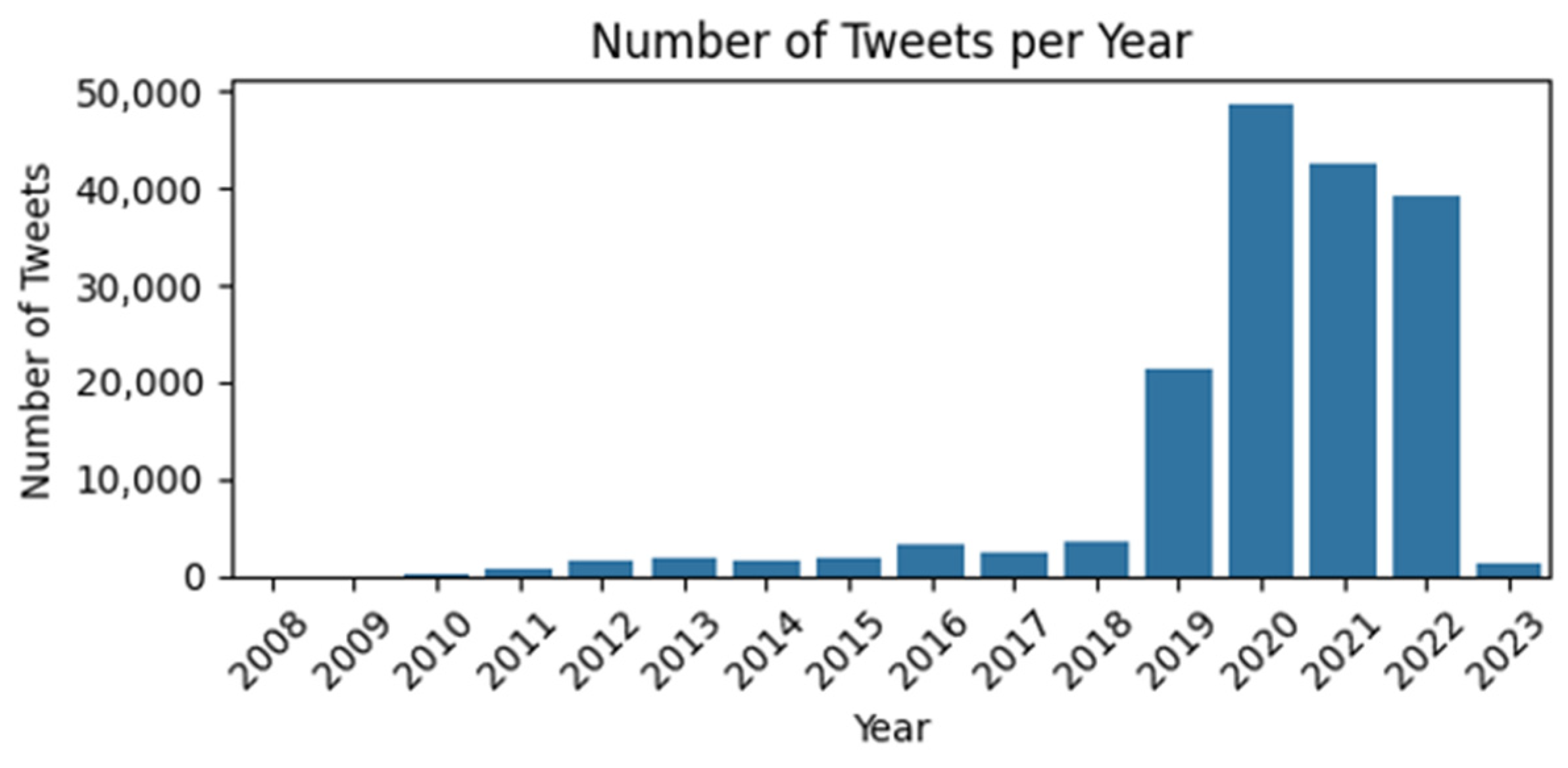
A total of 530,322 tweets were initially retrieved. After preprocessing and filtering, 170,411 Spanish-language tweets referring to BD were retained for analysis, representing approximately 32.1% of the original corpus. The temporal distribution of tweets is presented in Figure 1. Overall, tweet activity remained low and relatively stable between 2008 and 2018, with only minor year-to-year fluctuations. From 2019 onwards, a marked increase in tweet volume is observed, with a sharp rise in 2020, where activity peaks at nearly 50,000 tweets. This elevated level is sustained in 2021 and 2022, followed by an apparent decline in 2023.
The decline observed in 2023 should be interpreted with caution, as data collection for this year was incomplete at the time of extraction and therefore does not reflect full annual activity.

3.2. Topic Modeling

The Latent Dirichlet Allocation (LDA) model identified a seven-topic solution based on optimal coherence (≈0.44). The topics were labeled according to the predominant thematic content observed in the tweets, allowing for a structured description of the main topics present in the dataset. Due to the size of the dataset, full manual validation of all topics was not feasible; however, topic coherence metrics and qualitative inspection of representative terms and tweets were used to ensure semantic consistency and interpretability.
Topic 1 was related to diagnosis, comprising tweets that referred to clinical and psychiatric classification of mental health conditions. Topic 2 corresponded to illness-related life crises, including content describing personal experiences linked to anxiety or mental health difficulties in the context of life events.
Topic 3 focused on symptoms, capturing references to emotional and psychological manifestations associated with mental health conditions. Topic 4 was associated with treatment, encompassing tweets related to therapeutic processes, psychiatric care, and professional mental health support.
Topic 5 was identified as social anxiety, including content related to interpersonal situations and social contexts. Topic 6 addressed the impact of mental health conditions on romantic relationships, reflecting discussions of emotional experiences within intimate relationships. Topic 7 was related to help-seeking, including tweets that referred to seeking assistance, mental health awareness, and community-oriented support initiatives.
These seven topics represent the main thematic categories identified by the LDA model within the analyzed corpus. Additional details regarding the identified topics are provided in the Appendix A, including representative keywords, interpretative labels, and example tweets for each topic. This supplementary table facilitates a clearer interpretation of the thematic structure identified by the LDA model (Appendix A, Table A1).
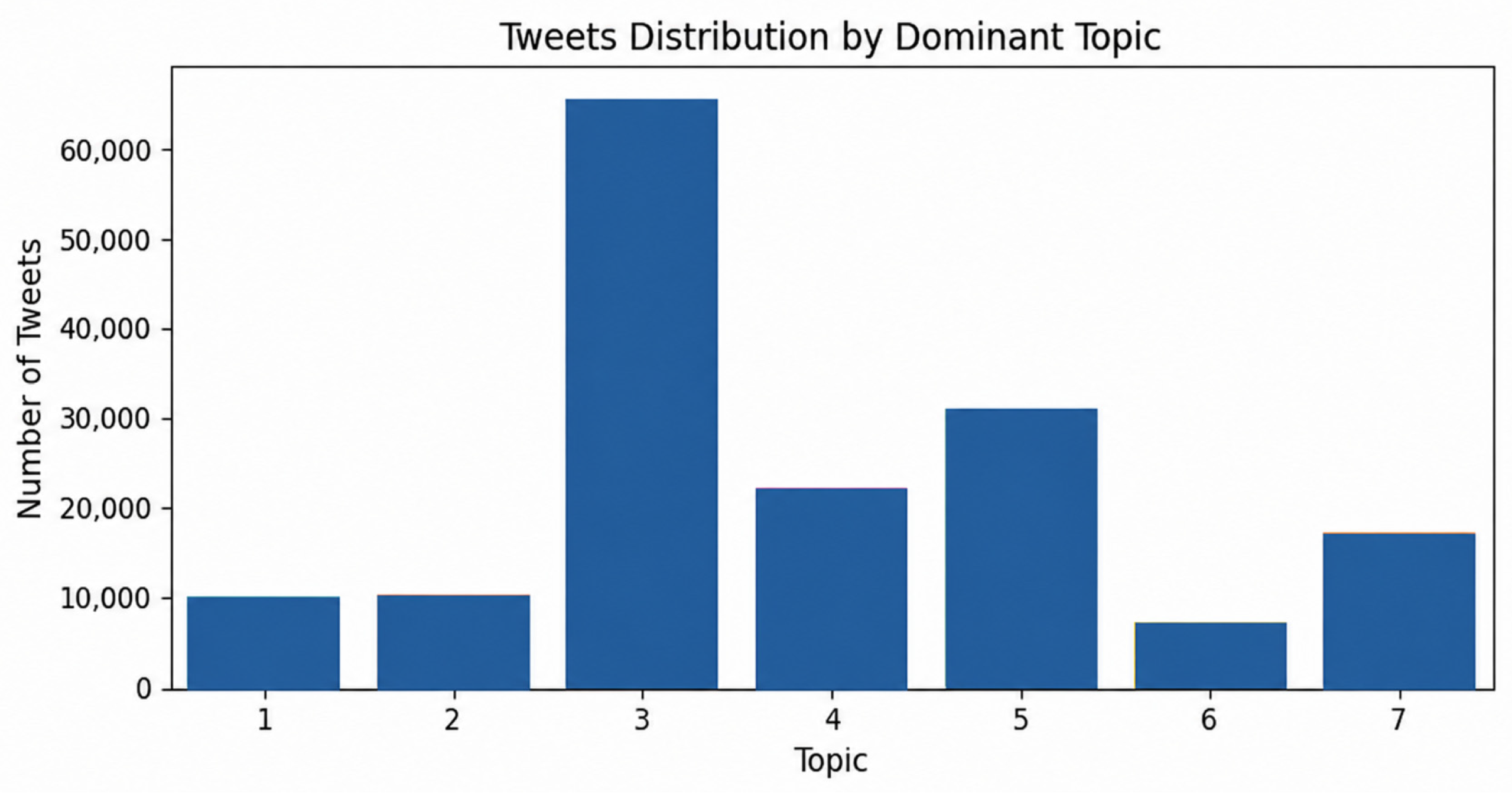
The distribution of tweets across the seven topics is shown in Figure 2. Topic 3 (Symptoms) represented the largest proportion of tweets (≈68,000 messages), representing a substantial share of the total corpus. This is followed by Topic 5 (Social anxiety) (≈31,000 tweets), Topic 4 (Treatment) (≈22,000 tweets), indicating that these themes dominate the overall discourse.
In contrast, Topics 1 and 2 (Diagnosis and Illness-related life crisis) show comparatively lower frequencies (≈10,000 tweets each), while Topic 6 (Romantic relationships) represents the least prevalent theme in the dataset (≈7000 tweets). Topic 7 (Help-seeking) occupies an intermediate position, with approximately 17,000 tweets.
A chi-square test revealed a significant association between topic and dominant emotion (χ2(18) = 5474.62, p < 0.0001, Cramér’s V = 0.103), indicating a statistically significant but small effect size. Additional analyses showed a significant association between topic and the presence of clinical terminology (p < 0.0001), with Topics 1 and 4 (Diagnosis and Treatment) containing the highest proportion of medicalized terms. A one-way analysis of variance (ANOVA) also indicated statistically significant differences in mean topic-membership probability across the seven dominant topics (F(6, 170404) = 1321.64, p < 0.0001, η2 = 0.044), likewise reflecting a small effect size. Given the large sample size, these statistically significant findings should be interpreted with caution, as even small effect sizes may yield highly significant p-values without necessarily indicating substantial practical differences.

3.3. Emotion Classification

The emotion classification model assigned each tweet one of four affective categories: sadness, anger, joy, or optimism. Sadness was the most frequent emotion across the dataset, accounting for approximately 75% of all classified tweets.
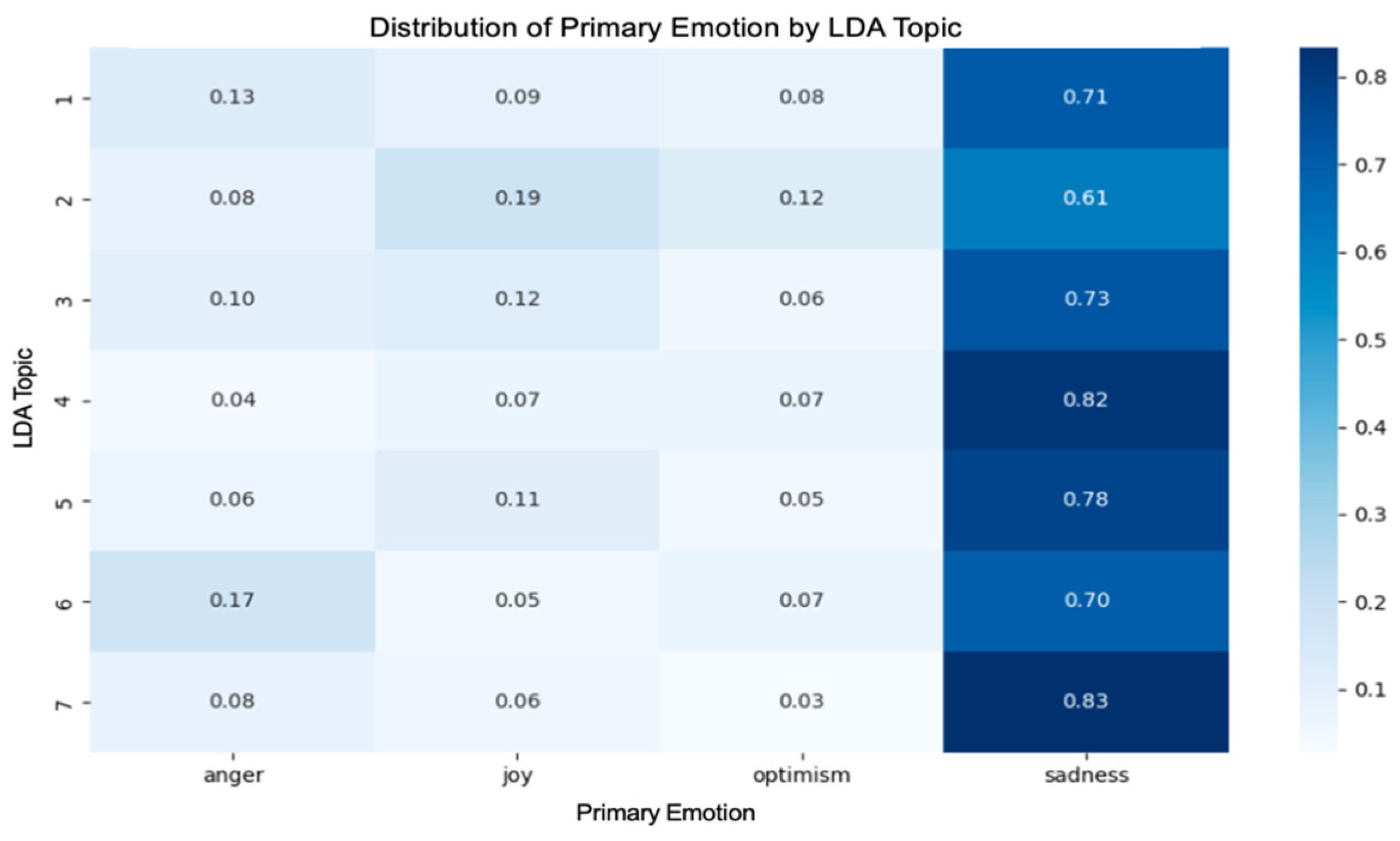
Figure 3 shows the proportional distribution of emotions across the seven LDA-derived topics. Sadness was the dominant emotion in all topics, with the highest proportions observed in Topic 7—Help-seeking (0.83), Topic 4—Treatment (0.82), and Topic 5—Social anxiety (0.78). Anger reached its highest values in Topic 6—Romantic relationships (0.17) and Topic 1—Diagnosis (0.13). Joy showed its highest proportions in Topic 2—Illness-related life crises (0.19) and Topic 3—Symptoms (0.12). Optimism appeared at lower levels across topics, with its highest values in Topic 2—Illness-related life crises (0.12) and Topic 1—Diagnosis (0.08).
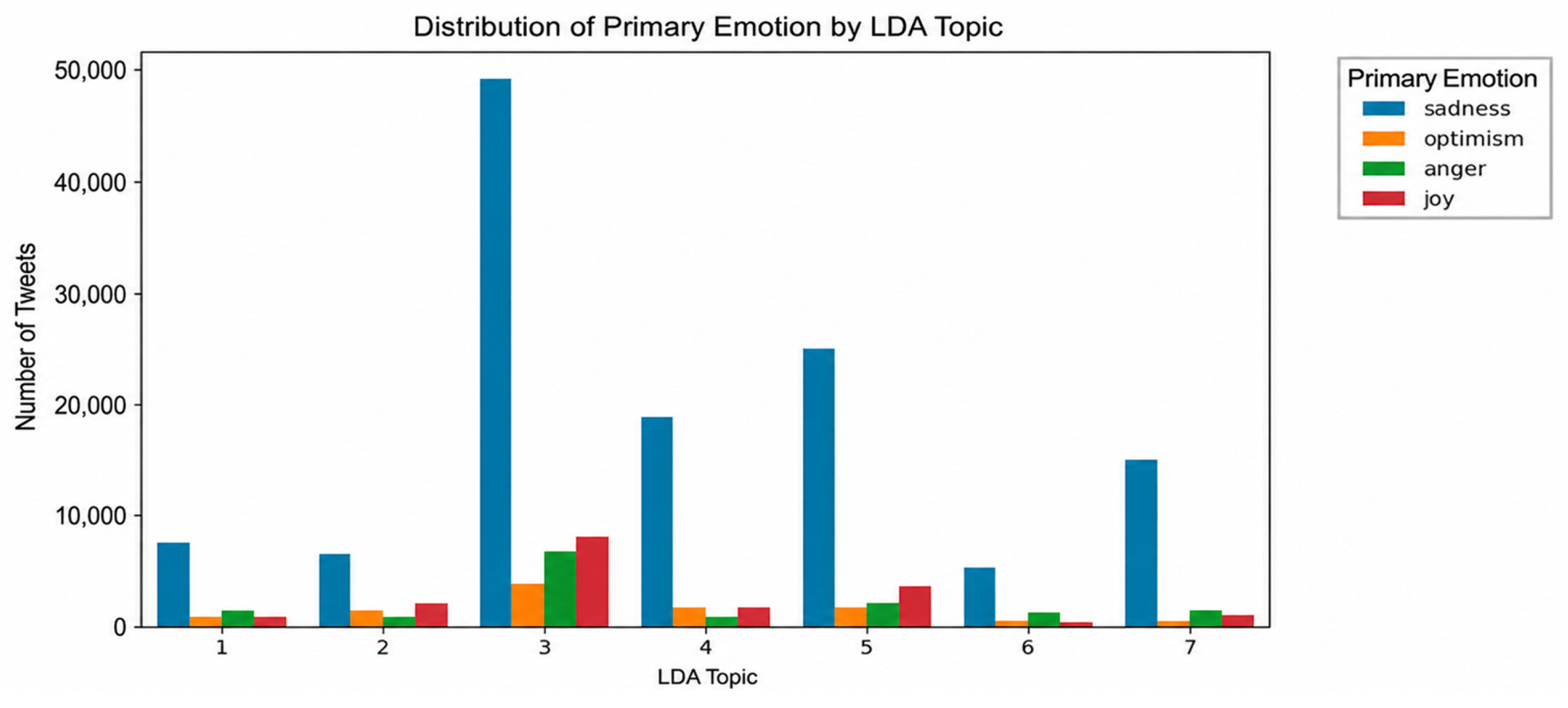
Figure 4 presents the absolute number of tweets per emotion within each topic. Consistent with the proportional results, sadness accounts for the largest volume of tweets across all topics, with particularly high counts in Topic 3 (Symptoms), Topic 5 (Social anxiety), Topic 4 (Treatment), and Topic 7 (Help-seeking).
In contrast, the remaining emotional categories—anger, joy, and optimism—appear in substantially lower absolute volumes across all topics. Among these, joy shows relatively higher counts in Topic 3 (Symptoms) and Topic 5 (Social anxiety), while anger reaches its highest levels in Topic 3 (Symptoms) and Topic 7 (Help-seeking). Optimism remains the least represented emotional category overall.
These results reinforce the predominance of negative emotional expression in BD-related discourse, as reflected not only in proportional terms but also in absolute tweet volume.
Statistical analyses revealed a significant association between topic and dominant emotion (χ2(18) = 5474.62, p < 0.0001, Cramér’s V = 0.103), indicating a small effect size. A Kruskal–Wallis test also indicated significant differences in sadness intensity across topics (H(6) = 3769.96, p < 0.0001, ε2 = 0.022), likewise reflecting a small effect size.

4. Discussion

4.1. Main Findings

This study provides a longitudinal analysis of public discourse on BD in Twitter by integrating topic modeling and emotion classification over a 15-year period. Overall, the results revealed a marked increase in BD-related discourse from 2019 onwards, together with a clear predominance of experiential and psychosocial topics over strictly clinical discussions.
Specifically, topics related to Symptoms, Illness-related life crises, Disease’s impact on romantic relationships, and Help-seeking accounted for a substantial proportion of the discourse, whereas themes focused on Diagnosis and Treatment were comparatively less frequent. Emotion analysis further showed a clear predominance of sadness across all thematic categories. Taken together, these findings suggest that Twitter primarily functions as a space for sharing lived experiences and emotional burden related to BD rather than for the dissemination of technical medical information. This general pattern is consistent with previous studies describing social media as platforms for emotional expression and peer support in mental health contexts, and in large-scale analyses of neurological and psychiatric discourse on Twitter. This reflects the role of these platforms as informal spaces where users prioritize sharing subjective over clinically structured information [5,7,8,9].

4.2. Temporal Evolution of BD-Related Discourse

The temporal analysis showed a substantial increase in BD-related tweets beginning in 2019, with sustained high levels through 2022. While similar temporal trends have been documented in other longitudinal studies examining mental-health-related discourse on social media, the observed increase likely reflects broader societal shifts rather than a phenomenon specific to BD [5,10,11,12,13,14,15,16].
In particular, this rise may be associated with the growing visibility of mental health issues in public discourse, increased digital engagement, and the impact of the COVID-19 pandemic, which has been linked to heightened psychological distress and greater reliance on social media as a space for emotional expression and support-seeking. These factors may have contributed not only to the increased volume of tweets but also to the predominantly emotional nature of the discourse observed during this period [15,17,18,19,20].

4.3. Topic Modeling

The topic modeling analysis identified seven distinct thematic domains reflecting the main concerns expressed in BD-related discourse on Twitter. Overall, the distribution of topics showed a clear predominance of experiential and psychosocial themes—particularly Symptoms, Illness-related life crises, Disease’s impact on romantic relationships, and Help-seeking—over more technical discussions focused on Diagnosis and Treatment. This thematic imbalance is consistent with previous studies reporting that mental-health-related conversations on social media are largely driven by personal experiences and psychosocial concerns rather than clinical terminology [7,17,21,22,23,24,25,26,27,28].
Similar thematic patterns have been observed in analyses of other psychiatric and neurological conditions, where symptom-related narratives and support-seeking behaviors dominate user-generated content [5,29,30,31,32]. Notably, the identification of Disease’s impact on romantic relationships as a distinct topic highlights an interpersonal dimension that has received less attention in previous social media studies and may reflect disorder-specific concerns in BD discourse. Together, these findings suggest that the thematic structure observed in this study aligns with broader patterns of mental health communication in open online environments while also capturing topics of relevance to BD.

4.4. Emotional Classification

The emotional analysis revealed a pronounced predominance of sadness across all thematic categories, indicating that BD-related discourse on Twitter is largely characterized by negative affect. This finding is consistent with previous social media-based studies reporting high levels of sadness and distress-related emotions in discussions of psychiatric and neurological conditions [5,17,32,33,34,35,36,37,38].
Although anger, joy, and optimism were less frequent than sadness, their distribution varied across topics, suggesting that emotional expression is not uniform across thematic domains. Similar heterogeneity in affective patterns has been documented in longitudinal analyses of health-related discourse on Twitter, where different topics are associated with distinct emotional profiles [18,39,40,41,42,43,44]. These results reinforce the relevance of integrating topic modeling and emotion analysis to capture the complexity of mental health discourse in social media settings.

4.5. Clinical Significance

The findings of this study have relevant clinical implications, as they offer insight into the concerns, emotional states, and informational needs expressed by individuals discussing BD in an open online environment. The predominance of topics related to Symptoms, Illness-related life crises, Disease’s impact on romantic relationships, and Help-seeking suggests that users frequently use Twitter to articulate subjective distress, interpersonal difficulties, and uncertainty regarding their condition. Previous research has highlighted the value of social media data for capturing patient-centered perspectives that may complement traditional clinical assessments [7,8,18,44,45,46].
From a clinical perspective, these results emphasize the importance of addressing psychosocial and relational dimensions of BD alongside symptom management and pharmacological treatment. Topics related to romantic relationships and help-seeking point to areas of concern that may be underexplored during routine consultations. In line with previous infodemiological studies examining public perceptions of mental health care, the present findings support the potential utility of social media analyses as complementary tools for identifying unmet needs, informing psychoeducation strategies, and enhancing patient–clinician communication [10,18,41,47,48].

4.6. Strengths and Limitations

This study has several strengths. First, it spans a long temporal window (2007–2023), enabling the examination of longitudinal trends in BD-related discourse. Second, the large volume of tweets analyzed allows for robust thematic and emotional characterization. Third, the integration of topic modeling and emotion classification provides a multidimensional perspective on public discourse, consistent with methodological approaches adopted in other large-scale analyses of health-related conversations on Twitter [10,18,40,43,49].
Several limitations should also be acknowledged. Twitter users do not constitute a representative sample of the general population or of individuals with clinically confirmed BD, and the content analyzed reflects self-reported experiences rather than verified diagnoses. Furthermore, data collection was based on keyword-driven retrieval, which may have included tweets using the term “bipolar” in non-clinical or metaphorical contexts, despite subsequent preprocessing efforts.
Additionally, the use of automated natural language processing techniques introduces inherent uncertainty, particularly in topic assignment and emotion classification. Due to the size of the dataset, full manual validation of all topics was not feasible, and topic selection relied on coherence metrics combined with qualitative interpretation. In addition, statistically significant differences should be interpreted with caution given the large sample size, as small effect sizes may still yield highly significant results. Similar methodological challenges have been discussed in previous studies applying machine learning to mental-health-related discourse [14,15,16,17,50]. Finally, the restriction to Spanish-language tweets may limit the generalizability of the findings to other linguistic and cultural contexts. Additionally, the translation to English may introduce semantic bias or loss of linguistic nuance, particularly in culturally specific expressions.

5. Conclusions and Future Directions

This study provides a large-scale analysis of public discourse on BD using Spanish-language data from social media over an extended temporal period. By combining topic modeling and emotion classification, the results offer a multidimensional perspective on how BD is represented in non-clinical digital environments.
The findings reveal a predominance of emotionally oriented content over strictly clinical discourse, as well as the presence of themes related to personal experiences, stigma, and help-seeking behaviors. These patterns highlight the role of social media as a space where mental health is expressed and socially constructed beyond traditional clinical settings.
From a practical perspective, these insights may inform mental health professionals, public health initiatives, and digital communication strategies by improving understanding of how BD is perceived and discussed in everyday contexts. This knowledge may contribute to the development of more effective interventions aimed at reducing stigma and promoting mental health awareness.
Future research should expand this approach to multilingual datasets, incorporate additional statistical measures such as effect sizes and confidence intervals, and explore hybrid validation strategies combining automated techniques with targeted human annotation. Further work could also examine the relationship between online discourse and real-world mental health trends, as well as the evolution of these narratives across different social media platforms.

Author Contributions

Conceptualization, E.P.-M., Ó.F.-M., M.Á.Á.-M. and J.D.-E.; methodology, E.P.-M., Ó.F.-M., C.G.-M., M.O., M.Á.-M., M.Á.Á.-M. and J.D.-E.; software, E.P.-M.; validation, E.P.-M., M.O., M.Á.-M., M.Á.Á.-M. and J.D.-E.; formal analysis, E.P.-M.; investigation, E.P.-M., Ó.F.-M. and C.G.-M.; resources, M.O., M.Á.-M. and M.Á.Á.-M.; data curation, E.P.-M.; writing—original draft preparation, E.P.-M., Ó.F.-M. and C.G.-M.; writing—review and editing, M.O., M.Á.-M., M.Á.Á.-M., M.-E.B., I.C.-C., J.D.-E.; visualization, E.P.-M., M.O., M.Á.-M., M.Á.Á.-M., M.-E.B., I.C.-C., J.D.-E.; supervision, M.Á.Á.-M. and J.D.-E.; project administration, M.O., M.Á.-M., M.Á.Á.-M. and J.D.-E.; All authors have read and agreed to the published version of the manuscript.

Funding

The authors declare financial support was received for the research, authorship, and/or publication of this article. This study was funded by the Instituto de Salud Carlos III (ISCIII) through project “PI22/00653” and was co-funded by the European Union, as well as by P2022/BMD-7321 (Comunidad deMadrid). The authors declare that this study also received funding from Fundacion Starlite (ProACapital), Halekulani S.L. and MJR. The funders were not involved in the study design, collection, analysis, interpretation of data, the writing of this article, or the decision to submit it for publication.

Institutional Review Board Statement

Ethical review and approval were waived for this study due to legal regulations, particularly Regulation (EU) 2016/679 (GDPR) and Spanish Organic Law 3/2018 on Personal Data Protection and Digital Rights Guarantee. This study exclusively involved the analysis of publicly accessible data, did not involve any interaction with or recruitment of human participants, and did not include any experimental intervention. No user identities were investigated or disclosed, and no usernames, profile information, or other direct identifiers are reported in the manuscript. All data were processed for scientific research purposes, analyzed in aggregated form, and handled with data minimization and confidentiality measures in place.

Informed Consent Statement

Informed consent was waived because this study exclusively involved the analysis of publicly accessible data, did not involve any interaction with or recruitment of human participants, and did not include any experimental intervention. No individual-level user information, personal identifiers, or sensitive personal data were available to the researchers.

Data Availability Statement

The raw data analyzed in this study are not publicly available due to privacy and ethical considerations associated with social media data and the potential risk of user re-identification. All relevant aggregated results are provided within the article and its Appendix A.

Conflicts of Interest

E.P.-M. is Supply Chain Analyst at Medis—TEVA Pharmaceutical Spain. However, Medis—TEVA has neither participated in nor contributed to this research work. J.D.-E. is Business Unit Director CNS & Oncology at Adamed Pharma Spain. However, Adamed Pharma has not participated neither contribute to this research work. The remaining authors declare that the research was conducted in the absence of any commercial or financial relationships that could be construed as a potential conflict of interest.

Abbreviations

The following abbreviations are used in this manuscript:
BDBipolar Disorder

Appendix A

Table A1. Overview of the seven LDA-derived topics, including representative keywords, interpretative labels, descriptions, and example tweets.
TopicTopic NameKeywordsInterpretative LabelDescriptionExample Tweets
1Diagnosisdisorder, depressive, major, bipolar, obsessiveClinical diagnosis and comorbid disordersClinical theme, DSM-related terminology“People experiencing a manic episode may display impulsive behavior in their social relationships and react defensively when others warn them about the harmful consequences of their actions. This difficulty in regulating impulses may facilitate self-directed or hetero-directed aggression.”
“when bipolar individuals feel very happy and energetic, they may be experiencing a manic episode”
2Illness-related life crisesattack, anxiety, woman, said, yearsPersonal crisis narrativesPersonal stories and gender-related experiences“When my mom was my age, she went through a depressive episode that left her practically catatonic for several days. I was young, I would lie next to her and she would stroke me with her motionless hand. She had just divorced my dad, and he already had a new girlfriend, much younger than him.”
“he suffered a severe depressive episode six years ago”
3Symptomsanxiety, life, have, do, personEveryday anxiety and subjective experienceSubjective emotional and psychological effects“I feel mentally exhausted, it’s hard to even get up. Sorry if I arrived late, I was having a manic episode.”
“Sorry if I arrived late, I was having a manic episode.”
4Treatmentdysthymia, sadness, psychiatrist, therapyDysthymia and psychological treatmentChronic disorder and professional support“It’s like when you keep waiting for your manic episode to be a bit more productive, but your dysthymia doesn’t help the cause.”
“my friends helping me out of a depressive episode”
5Social anxietyattack, anxiety, people, life, socialSocial anxiety and external agitationInterpersonal environment and social perception“how to differentiate motivation from a manic episode? Yahoo answers”
“after a depressive episode comes sexualization on Instagram”
6Romantic relationshipsanxiety, death, love, roller coasterIntense emotional anxiety and relationshipsEmotional expression and metaphorical language“having bipolarity is confusing happiness with a manic episode lol”
“Ooooooooo hi I love you so much, please don’t provoke me knowing I have a mood disorder and that you could trigger a depressive episodeeeeeeeeeeeeeeeeeeeeeee aooa aa a”
7Help-seekingpanic, mental health, help, stressMental health discourse and help-seekingAwareness campaigns and community support“The Secretary of Health says mental health problems should be handled at home—so are we supposed to expect people with depression to kill themselves at home, and a bipolar person in a manic episode to destroy their life in private? This government’s stance is irresponsible, nothing more.”
“Today is World Depression Awareness Day. It affects millions of people worldwide. Overcoming a depressive episode requires specialized medical guidance and support from the person’s emotional and family environment.”

References

  1. Aniserowicz, A.M.; Safi, F.; Colquhoun, H.; Stier, J.; Nowrouzi-Kia, B. Developing a Profile of Activities of Daily Living for Bipolar Disorder: A Systematic Review Protocol and Meta-Analysis. BMJ Open 2022, 12, e058783. [Google Scholar] [CrossRef] [Scilit] [PubMed]
  2. Sher, L. Testosterone and Suicidal Behavior in Bipolar Disorder. Int. J. Environ. Res. Public Health 2023, 20, 2502. [Google Scholar] [CrossRef] [Scilit] [PubMed]
  3. Latifian, M.; Abdi, K.; Raheb, G.; Islam, S.M.S.; Alikhani, R. Stigma in People Living with Bipolar Disorder and Their Families: A Systematic Review. Int. J. Bipolar Disord. 2023, 11, 9. [Google Scholar] [CrossRef] [Scilit] [PubMed]
  4. McIntyre, R.S.; Alda, M.; Baldessarini, R.J.; Bauer, M.; Berk, M.; Correll, C.U.; Fagiolini, A.; Fountoulakis, K.; Frye, M.A.; Grunze, H.; et al. The Clinical Characterization of the Adult Patient with Bipolar Disorder Aimed at Personalization of Management. World Psychiatry 2022, 21, 364–387. [Google Scholar] [CrossRef] [Scilit] [PubMed]
  5. Manji, H.K.; Quiroz, J.A.; Payne, J.L.; Singh, J.; Lopes, B.P.; Viegas, J.S.; Zarate, C.A. The Underlying Neurobiology of Bipolar Disorder. World Psychiatry 2003, 2, 136–146. [Google Scholar] [PubMed]
  6. Goes, F.S. Diagnosis and Management of Bipolar Disorders. BMJ 2023, 381, e073591. [Google Scholar] [CrossRef] [Scilit] [PubMed]
  7. Low, D.M.; Rumker, L.; Talkar, T.; Torous, J.; Cecchi, G.; Ghosh, S.S. Natural Language Processing Reveals Vulnerable Mental Health Support Groups and Heightened Health Anxiety on Reddit during COVID-19. J. Med. Internet Res. 2020, 22, e22635. [Google Scholar] [CrossRef] [Scilit] [PubMed]
  8. Domingo-Espiñeira, J.; Varaona-Santos, A.; Lara Abelenda, F.J.; Montero, M.; Fernandez-Egea, E.; Muñoz-Manchado, L.I.; Ortega, M.A.; Álvarez-Mon, M.; Álvarez-Mon, M.Á. Mental Illness Discussion Variations on X: Topic Modelling and Sentiment Analysis. Eur. J. Psychiatry 2025, 39, 100300. [Google Scholar] [CrossRef] [Scilit]
  9. Gkotsis, G.; Oellrich, A.; Velupillai, S.; Liakata, M.; Hubbard, T.J.P.; Dobson, R.J.B.; Dutta, R. Characterisation of Mental Health Conditions in Social Media Using Informed Deep Learning. Sci. Rep. 2017, 7, 45141. [Google Scholar] [CrossRef] [Scilit] [PubMed]
  10. Mayor, E.; Bietti, L.M. A Social Media Study of Portrayals of Bipolar Disorders on YouTube: Content and Thematic Analyses. J. Med. Internet Res. 2025, 27, e67129. [Google Scholar] [CrossRef] [Scilit] [PubMed]
  11. Thamrin, S.; Chen, E.; Chen, A. Detecting Bipolar Disorder on Social Media by Post Grouping and Interpretable Deep Learning. J. Intell. Inf. Syst. 2024, 63, 161–182. [Google Scholar] [CrossRef] [Scilit]
  12. Domingo-Espiñeira, J.; Varaona, A.; Montero, M.; Lara-Abelenda, F.J.; Gutierrez-Rojas, L.; Fernández del Campo, E.A.; Rodriguez-Jimenez, R.; Pinto da Costa, M.; Ortega, M.A.; Alvarez-Mon, M.; et al. Public Perception of Psychiatry, Psychology and Mental Health Professionals: A 15-Year Analysis. Front. Psychiatry 2024, 15, 1369579. [Google Scholar] [CrossRef] [Scilit] [PubMed]
  13. Chandrasekaran, R.; Kotaki, S.; Nagaraja, A.H. Detecting and Tracking Depression through Temporal Topic Modeling of Tweets: Insights from a 180-Day Study. npj Ment. Health Res. 2024, 3, 62. [Google Scholar] [CrossRef] [Scilit] [PubMed]
  14. Beierle, F.; Pryss, R.; Aizawa, A. Sentiments About Mental Health on Twitter—Before and During the COVID-19 Pandemic. Healthcare 2023, 11, 2893. [Google Scholar] [CrossRef] [Scilit] [PubMed]
  15. Qayyum, R.; Afzal, H.; Mahmood, K.; Iltaf, N. Detection and Analysis of Mental Health Illness Using Social Media. In Proceedings of the 2023 International Conference on Communication Technologies (ComTech), Rawalpindi, Pakistan, 15–16 March 2023. [Google Scholar]
  16. Ang, C.; Venkatachala, R. Generalizability of Machine Learning to Categorize Various Mental Illness Using Social Media Activity Patterns. Societies 2023, 13, 117. [Google Scholar] [CrossRef] [Scilit]
  17. Talbot, C.V.; Roe, D.; Brunner, M. Navigating Who I Was and Who I Am Online: How People with Dementia Use Social Media Platforms to Support Identity. Dementia 2025, 24, 647–665. [Google Scholar] [CrossRef] [Scilit] [PubMed]
  18. Alhazzaa, L.; Curcin, V. Profiling Generalized Anxiety Disorder on Social Networks: Content and Behavior Analysis. J. Med. Internet Res. 2025, 27, e53399. [Google Scholar] [CrossRef] [Scilit] [PubMed]
  19. Fonseka, L.N.; Woo, B.K.P. Social Media and Schizophrenia: An Update on Clinical Applications. World J. Psychiatry 2022, 12, 897–903. [Google Scholar] [CrossRef] [Scilit] [PubMed]
  20. Guntuku, S.C.; Yaden, D.B.; Kern, M.L.; Ungar, L.H.; Eichstaedt, J.C. Detecting Depression and Mental Illness on Social Media: An Integrative Review. Curr. Opin. Behav. Sci. 2017, 18, 43–49. [Google Scholar] [CrossRef] [Scilit]
  21. DuPont-Reyes, M.J.; Zou, W.; Li, J.; Villatoro, A.P.; Tang, L. A Machine Learning Language Model Approach to Evaluating Mental Health Awareness Content across Spanish- and English-Language Social Media Posts on Twitter. Soc. Psychiatry Psychiatr. Epidemiol. 2025, 60, 2249–2259. [Google Scholar] [CrossRef] [Scilit] [PubMed]
  22. Pérez-Flores, N.J.; Bagwell, M.; Mora, A.; Cabassa, L.J. Analysis of Spanish-Language News Reports on Schizophrenia and Psychosis. Psychiatr. Serv. 2024, 75, 12. [Google Scholar] [CrossRef] [Scilit] [PubMed]
  23. Plank, L.; Zlomuzica, A. Linguistic Trajectories of Bipolar Disorder on Social Media. arXiv 2025, arXiv:2509.10035. [Google Scholar] [CrossRef] [Scilit]
  24. Benrouba, F.; Boudour, R. Emotional Sentiment Analysis of Social Media Content for Mental Health Safety. Soc. Netw. Anal. Min. 2023, 13, 17. [Google Scholar] [CrossRef] [Scilit]
  25. Rakeen, S.; Prasad, T.A.H.; Bharadwaj, S.S.; Srinivas, S. Harnessing Social Media Sentiments for Accurate Mental Health Diagnosis Across Multiple Conditions. Int. J. Sci. Res. Arch. 2024, 13, 881–889. [Google Scholar] [CrossRef] [Scilit]
  26. Jain, E.; Rathour, A. Understanding Mental Health Through Sentiment Analysis: Using Machine Learning to Analyze Social Media for Emotional Insights. In Proceedings of the 2024 5th International Conference on Data Intelligence and Cognitive Informatics (ICDICI), Tirunelveli, India, 18–20 November 2024; pp. 782–786. [Google Scholar]
  27. Joinson, D.; Davis, O.; Simpson, E. The Dynamics of Emotion Expression on Twitter and Mental Health in a UK Longitudinal Study. Int. J. Popul. Data Sci. 2024, 9, 22. [Google Scholar] [CrossRef] [Scilit]
  28. Landowska, A.; Skórski, M.; Rajda, K. Mapping the Technological Future: A Topic, Sentiment, and Emotion Analysis in Social Media Discourse. arXiv 2024, arXiv:2407.17522. [Google Scholar]
  29. Ranjan, A.; Kumar, S. Real-Time Twitter Trends Analysis Using Latent Dirichlet Allocation and Machine Learning. Int. J. Sci. Res. Eng. Manag. 2024, 12, 1967–1979. [Google Scholar] [CrossRef] [Scilit]
  30. Domingo-Espiñeira, J.; Fraile-Martínez, Ó.; García Montero, C.; Lara Abelenda, F.J.; Porta-Etessam, J.; Baras Pastor, L.; Muñoz-Manchado, L.I.; Arrieta, M.; Saeidi, M.; Ortega, M.A.; et al. Analyzing Public Discourse of Dementia from Spanish and English Tweets: A Comparative Analysis with Other Neurological Disorders. Front. Neurol. 2024, 15, 1459578. [Google Scholar] [CrossRef] [Scilit] [PubMed]
  31. Berry, N.; Lobban, F.; Belousov, M.; Emsley, R.; Nenadic, G.; Bucci, S. #WhyWeTweetMH: Understanding Why People Use Twitter to Discuss Mental Health Problems. J. Med. Internet Res. 2017, 19, e107. [Google Scholar] [CrossRef] [Scilit] [PubMed]
  32. Masand, P.S.; Tracy, N. Results From an Online Survey of Patient and Caregiver Perspectives on Unmet Needs in the Treatment of Bipolar Disorder. Prim. Care Companion CNS Disord. 2014, 16. [Google Scholar] [CrossRef] [Scilit] [PubMed]
  33. Budenz, A.; Klassen, A.; Purtle, J.; Yom Tov, E.; Yudell, M.; Massey, P. Mental Illness and Bipolar Disorder on Twitter: Implications for Stigma and Social Support. J. Ment. Health 2020, 29, 191–199. [Google Scholar] [CrossRef] [Scilit] [PubMed]
  34. AbouWarda, H.; Dolata, M.; Schwabe, G. How Does an Online Mental Health Community on Twitter Empower Diverse Population Levels and Groups? A Qualitative Analysis of #BipolarClub. J. Med. Internet Res. 2024, 26, e55965. [Google Scholar] [CrossRef] [Scilit] [PubMed]
  35. Valdez, D.; ten Thij, M.; Bathina, K.; Rutter, L.A.; Bollen, J. Social Media Insights Into US Mental Health During the COVID-19 Pandemic: Longitudinal Analysis of Twitter Data. J. Med. Internet Res. 2020, 22, e21418. [Google Scholar] [CrossRef] [Scilit] [PubMed]
  36. Fisher, A.; Manicavasagar, V.; Kiln, F.; Juraskova, I. Communication and Decision-Making in Mental Health: A Systematic Review Focusing on Bipolar Disorder. Patient Educ. Couns. 2016, 99, 1106–1120. [Google Scholar] [CrossRef] [Scilit] [PubMed]
  37. Cotton, S.M.; Hasty, M.; Mitchell, P.; Murray, G.; Hickie, I.B.; McGorry, P.D.; Walder, K.; Dean, O.M.; Mihalopoulos, C.; Yung, A.R.; et al. Addressing the Unmet Needs of Bipolar Disorder in Australia and Beyond. Aust. N. Z. J. Psychiatry 2025, 59, 957–965. [Google Scholar] [CrossRef] [Scilit] [PubMed]
  38. Zhan, X.; Song, M.; Shrader, C.H.; Forbes, C.E.; Algarin, A.B. Decoding HIV Discourse on Social Media: Large-Scale Analysis of 191,972 Tweets Using Machine Learning, Topic Modeling, and Temporal Analysis. J. Med. Internet Res. 2025, 27, e76745. [Google Scholar] [CrossRef] [Scilit] [PubMed]
  39. Mangalik, S.; Eichstaedt, J.C.; Giorgi, S.; Mun, J.; Ahmed, F.; Gill, G.; Ganesan, A.V.; Subrahmanya, S.; Soni, N.; Clouston, S.A.P.; et al. Robust Language-Based Mental Health Assessments in Time and Space through Social Media. npj Digit. Med. 2024, 7, 109. [Google Scholar] [CrossRef] [Scilit] [PubMed]
  40. Sun, W.; Li, S. Social Media Discussion on COVID-19 on Mental Health in the US, UK, and India. Issues Inf. Syst. 2022, 23, 280–293. [Google Scholar] [CrossRef] [Scilit]
  41. Kumar, M.; Khan, L.; Choi, A. RAMHA: A Hybrid Social Text-Based Transformer with Adapter for Mental Health Emotion Classification. Mathematics 2025, 13, 2918. [Google Scholar] [CrossRef] [Scilit]
  42. Gaonkar, S.; Naik, V.; Kumar, A.; S., N. Effectiveness of Data Mining Techniques in Identifying Early Signs of Mental Health Issues from Social Media Usage. Int. J. Innov. Res. Eng. Multidiscip. Phys. Sci. 2025, 13, 232640. [Google Scholar] [CrossRef] [Scilit]
  43. Thakur, R.; Singh, J. AI and NLP for Mental Health Prediction from Social Media: A Decade of Progress, Challenges, and Explainability (2015–2025). Int. J. Res. Appl. Sci. Eng. Technol. 2025, 13, 1707–1715. [Google Scholar] [CrossRef] [Scilit]
  44. Köckritz, J.; İlgen, B.; Cohrdes, C.; Hattab, G. Current Applications and Future Directions in Natural Language Processing for News Media and Mental Health. Sci. Rep. 2025, 15, 32532. [Google Scholar] [CrossRef] [Scilit] [PubMed]
  45. De Anta, L.; Alvarez-Mon, M.Á.; Pereira-Sanchez, V.; Donat-Vargas, C.C.; Lara-Abelenda, F.J.; Arrieta, M.; Montero-Torres, M.; García-Montero, C.; Fraile-Martínez, Ó.; Mora, F.; et al. Assessment of Beliefs and Attitudes towards Benzodiazepines Using Machine Learning Based on Social Media Posts: An Observational Study. BMC Psychiatry 2024, 24, 659. [Google Scholar] [CrossRef] [Scilit] [PubMed]
  46. Gómez-Prieto, A.; Mercado-Rodriguez, A.; Chart-Pascual, J.P.; Fernandez-Lazaro, C.I.; Lara-Abelenda, F.J.; Montero-Torres, M.; Aymerich, C.; Quintero, J.; Alvarez-Mon, M.; Gonzalez-Pinto, A.; et al. Unveiling Social Media Content Related to ADHD Treatment: Machine Learning Study Using X’s Posts over 15 Years. Healthcare 2025, 13, 2487. [Google Scholar] [CrossRef] [Scilit] [PubMed]
  47. Zhang, S.; Sun, L.; Zhang, D.; Li, P.; Liu, Y.; Anand, A.; Xie, Z.; Li, D. The COVID-19 Pandemic and Mental Health Concerns on Twitter in the United States. Health Data Sci. 2022, 2022, 9758408. [Google Scholar] [CrossRef] [Scilit] [PubMed]
  48. Wicaksono, M.L.; Rusdah, R.; Apriana, D. Sentiment Analysis of Mental Health Using K-Nearest Neighbors on Social Media Twitter. Bit (Fak. Teknol. Inf. Univ. Budi Luhur) 2022, 19, 98–103. [Google Scholar] [CrossRef] [Scilit]
  49. Pavlova, A.; Berkers, P. Mental Health Discourse and Social Media: Which Mechanisms of Cultural Power Drive Discourse on Twitter. Social. Sci. Med. 2020, 263, 113250. [Google Scholar] [CrossRef] [Scilit] [PubMed]
  50. Reagan, K.; Varde, A.; Xie, L. Evolving Perceptions of Mental Health on Social Media and Their Medical Impacts. In Proceedings of the 2022 IEEE Conference, Osaka, Japan, 17–20 December 2022. [Google Scholar] [CrossRef] [Scilit]
Figure 1. Annual distribution of tweets related to BD from 2008 to 2023.
Psychiatryint 07 00164 g001
Figure 2. Distribution of tweets across the seven LDA-derived topics: Diagnosis (Topic 1), Illness-related life crises (Topic 2), Symptoms (Topic 3), Treatment (Topic 4), Social anxiety (Topic 5), Romantic relationships (Topic 6), and Help-seeking (Topic 7) derived topics.
Psychiatryint 07 00164 g002
Figure 3. Heatmap showing the proportional distribution of emotional categories across the seven LDA-derived topics: Diagnosis (Topic 1), Illness-related life crises (Topic 2), Symptoms (Topic 3), Treatment (Topic 4), Social anxiety (Topic 5), Romantic relationships (Topic 6), and Help-seeking (Topic 7).
Psychiatryint 07 00164 g003
Figure 4. Absolute distribution of tweets across emotional categories (sadness, optimism, anger, and joy) within each of the seven LDA-derived topics: Diagnosis (Topic 1), Illness-related life crises (Topic 2), Symptoms (Topic 3), Treatment (Topic 4), Social anxiety (Topic 5), Romantic relationships (Topic 6), and Help-seeking (Topic 7).
Psychiatryint 07 00164 g004
Disclaimer/Publisher’s Note: The statements, opinions and data contained in all publications are solely those of the individual author(s) and contributor(s) and not of MDPI and/or the editor(s). MDPI and/or the editor(s) disclaim responsibility for any injury to people or property resulting from any ideas, methods, instructions or products referred to in the content.