Article

Fluoxetine ± Low-Dose Quetiapine in Adolescent Major Depression: Comparing Six-Week Effects on Depressive Symptoms and Body Composition—Pilot Study


1
Clinic of Psychiatry, Jessenius Faculty of Medicine in Martin, Comenius University in Bratislava, University Hospital Martin, 03659 Martin, Slovakia
2
Biomedical Centre Martin, Jessenius Faculty of Medicine in Martin, Comenius University in Bratislava, 03601 Martin, Slovakia
3
Department of Physiology, Jessenius Faculty of Medicine in Martin, Comenius University in Bratislava, 03601 Martin, Slovakia
*
Author to whom correspondence should be addressed.
Psychiatry Int. 2026, 7(3), 105; https://doi.org/10.3390/psychiatryint7030105
Submission received: 20 February 2026 / Revised: 27 March 2026 / Accepted: 30 April 2026 / Published: 7 May 2026

Abstract

Background: Data on early changes in body composition during acute-phase treatment in adolescents with major depressive disorder (MDD) remain limited. In particular, the utility of novel anthropometric indices reflecting central and visceral adiposity has not been explored in this population. This study therefore aimed to examine short-term clinical outcomes alongside detailed anthropometric measures in drug-naïve adolescent inpatients receiving fluoxetine-based pharmacotherapy. Methods: Prospective, clinician-directed, non-randomized inpatient study. Drug-naïve adolescents with severe MDD (n = 23) received fluoxetine 20 mg/day, with some patients additionally receiving low-dose quetiapine (100 mg/day) based on clinical indication for six weeks. Depressive symptomatology was evaluated by questionnaires Montgomery–Åsberg Depression Rating Scale (MADRS) and Children’s Depression Inventory (CDI). Conventional and novel anthropometric indices (BMI, WHtR; BRI, AVI, ABSI, BAI) were examined using the objective bioimpedance-derived method for body composition. Results: Depressive symptom severity decreased over the six-week treatment period, with significant improvements observed on both MADRS and CDI (time effect p < 0.001). Response and remission rates increased over time in the overall sample. No statistically significant changes were observed in conventional or novel anthropometric indices across the study period. Conclusions: In this prospective pilot cohort of adolescent inpatients with MDD, six weeks of fluoxetine-based pharmacotherapy was associated with improvement in depressive symptoms. No short-term changes were observed in anthropometric indices; however, given the small sample size and limited follow-up, these findings should be interpreted cautiously and cannot be considered definitive evidence of cardiometabolic safety.

1. Introduction

Adolescence is a developmental period characterized by rapid physical, psychological, and social changes, and is particularly vulnerable to the emergence of psychopathological conditions [1]. According to a recent meta-analysis [2], an estimated 18.9% of adolescents worldwide are currently experiencing moderate to severe depressive episodes, with a clearly established increasing trend. By the age of 19, approximately 25% of adolescents worldwide have experienced at least one depressive episode [3]. The most severe depressive condition, major depressive disorder (MDD), affects approximately 3.7% of adolescents [2].
Adolescent MDD frequently co-occurs with other psychiatric conditions such as anxiety, conduct disorder, and substance abuse [4,5]. MDD is also an independent risk factor for chronic somatic disorders [6]. Compared with adults, irritability and affective lability are associated with a heightened risk of self-harm and suicidal behavior among adolescents—a leading cause of adolescent mortality worldwide [7,8,9,10]. Neurovegetative symptoms (appetite change, sleep disruption and fatigue) and somatic complaints (such as headaches and abdominal pain) are also more prevalent [9]. Novel clinical approaches also highlight self-hatred and, in particular, loneliness as the most prominent features of adolescent MDD—features that are not overtly captured by the DSM criteria [7,11,12,13].
The treatment of adolescent MDD consists of a multimodal approach combining pharmacotherapy with psychoeducation, lifestyle optimization, and psychotherapy [6]. Currently, the only two FDA-approved medications for adolescent MDD are escitalopram and fluoxetine [14]. A recent retrospective analysis of prescribing patterns [15] noted an increasing use of antipsychotics (mainly atypical agents such as quetiapine, aripiprazole, or olanzapine) as adjunctive treatment of adolescent MDD.
Fluoxetine, a selective serotonin reuptake inhibitor (SSRI), is considered the antidepressant of first choice for adolescent MDD, boasting the most robust evidence for efficacy, particularly when combined with psychotherapy [3,16]. As with other SSRIs, the therapeutic benefits of fluoxetine typically emerge gradually over the first 2–6 weeks of treatment. Initiation can be accompanied by adverse effects such as insomnia and heightened anxiety, often termed “activation” or “serotonin activation syndrome”, reported in roughly 11–14% of children and adolescents and associated with early discontinuation [17,18,19,20]. In the acute phase, SSRIs may be associated with modest weight loss [21], however, weight tends to return to baseline levels and in some cases surpass them after longer-term treatment (≥6 months) [22]. From an anthropometric standpoint, a 1.5-year follow-up study [23] in adolescents found a positive (weight-increasing) effect of SSRI use on BMI, visceral adiposity, and proportional increases in both fat and muscle mass.
In routine inpatient care for adolescents with severe MDD, clinicians often need to manage acute agitation, insomnia, and anxiety during the initial weeks after starting SSRI treatment, before the therapeutic effects of fluoxetine become evident. From this perspective, quetiapine at lower doses is widely used in clinical practice to target these symptoms frequently accompanying depressive episodes in adolescents. Quetiapine boasts a dose-dependent, multi-receptor pharmacodynamic profile, with well-documented antidepressant effects at moderate doses (150–300 mg daily), making it a beneficial augmenting agent for treatment-resistant or severe MDD. At low doses (sub 100 mg daily), quetiapine shows antihistaminergic and serotonergic (5-HT2A antagonistic) activity, with relatively limited dopaminergic D2 receptor occupancy [17,24,25]. Like other atypical antipsychotics, quetiapine may produce metabolic side effects, particularly weight gain. According to a recent meta-analysis [26], even low doses of quetiapine led to significant weight gain; however, other studies [27,28] suggest that the rate of weight gain displays a dose-dependent behavior.
In adolescent depression, weight- and shape-related changes influence cardiometabolic risk, self-esteem, and acceptance of pharmacotherapy, making the monitoring of body composition during treatment essential. Moreover, unfavorable body composition parameters are associated with emotional dysregulation, further underscoring the interplay between somatic and affective dimensions of depressive disorders [29]. Bioelectrical impedance analysis (BIA) represents a widely available, noninvasive method for assessing body composition, showing good correlation with dual-energy X-ray absorptiometry (DXA) as the gold standard for body composition assessment [30]. Anthropometric indices determined by BIA allow us to gain detailed knowledge of body composition. In addition to the widely used conventional measures (e.g., body mass index-BMI and others), several novel indices were proposed to better reflect central adiposity and shape. Novel anthropometric indices, such as a body adiposity index (BAI), a body shape index (ABSI), body roundness index (BRI), and abdominal volume index (AVI), were developed specifically to capture aspects of body shape and fat distribution that conventional measures like BMI fail to reflect—particularly central and visceral adiposity, which are the primary drivers of cardiometabolic morbidity [31,32,33,34,35,36,37]. BAI estimates body fat percentage based on hip circumference and height; ABSI captures a larger-than-expected waist for a given height and weight (a proxy for greater visceral adiposity) [38]; BRI quantifies body shape irrespective of height and often outperforms other indices in predicting total and visceral fat [39,40]; and AVI estimates abdominal volume as a proxy for visceral fat and is associated with impaired glucose tolerance, diabetes, and metabolic syndrome [41]. Collectively, these indices can improve early detection of abdominal obesity—including in adolescents with normal overall weight/BMI—and are particularly relevant in depression, where neuroendocrine and inflammatory changes, sleep disruption, appetite dysregulation, and medication effects can shift fat distribution toward a more atherogenic profile [42]. It seems that the assessment of the anthropometric profile based on traditional and novel indices of body composition may be crucial for determining the possible cardiometabolic risk in the pharmacotherapy of depression, particularly in adolescents.
Despite widespread first-line use of fluoxetine and the rising off-label use of low-dose quetiapine in adolescent MDD, there is limited evidence on their comparative short-term effects on both depressive symptoms and body composition [43,44]. Therefore, this study aimed to assess the effect of short-term fluoxetine-based pharmacotherapy on body composition and depressive symptomatology in adolescent patients with depression.

2. Materials and Methods

2.1. Study Design and Participants

This prospective, clinician-directed, non-randomized comparative study was conducted at the Psychiatric Clinic of Jessenius Faculty of Medicine, Comenius University in Bratislava and University Hospital Martin (Slovakia). This study, including preparation, dissemination and ongoing data preparation collection phases, took place between September 2023 and August 2025. After obtaining approval from the Institutional Ethics Committee of the Jessenius Faculty of Medicine in Martin, Comenius University in Bratislava, participant recruitment and data collection activities were conducted. All procedures within the study complied with the ethical standards of the institutional and national research committees and with the principles of the Declaration of Helsinki (1964 and its later amendments). The study protocol was approved by the Ethics Committee of the Jessenius Faculty of Medicine in Martin, Comenius University in Bratislava (Slovak Republic; approval no. EK 47/2023 and date of approval 18 October 2023). Written informed consent was obtained from each participant’s legal guardian.
Participants were recruited from inpatients admitted with severe MDD without psychotic symptoms, diagnosed according to DSM-5 criteria [7] and independently confirmed by two certified child and adolescent psychiatrists. The inclusion criteria were set as follows: drug-naïve adolescents aged 12–18 years, initiating MDD treatment consisting of fluoxetine monotherapy (20 mg daily) or fluoxetine plus low-dose quetiapine augmentation (20 mg fluoxetine + 100 mg quetiapine daily). The exclusion criteria were set as follows: comorbid mental disorders such as psychotic illness, manic episodes, anxiety disorders (participants with MDD who exhibited only mild anxiety symptoms insufficient to warrant an independent diagnosis were not excluded), and substance abuse or dependence; endocrinological, cardiovascular, neurological, or other somatic disorders that contraindicated the regimen (e.g., clinically significant arrhythmias); known allergic or adverse reactions to the study medications; and treatment non-adherence.
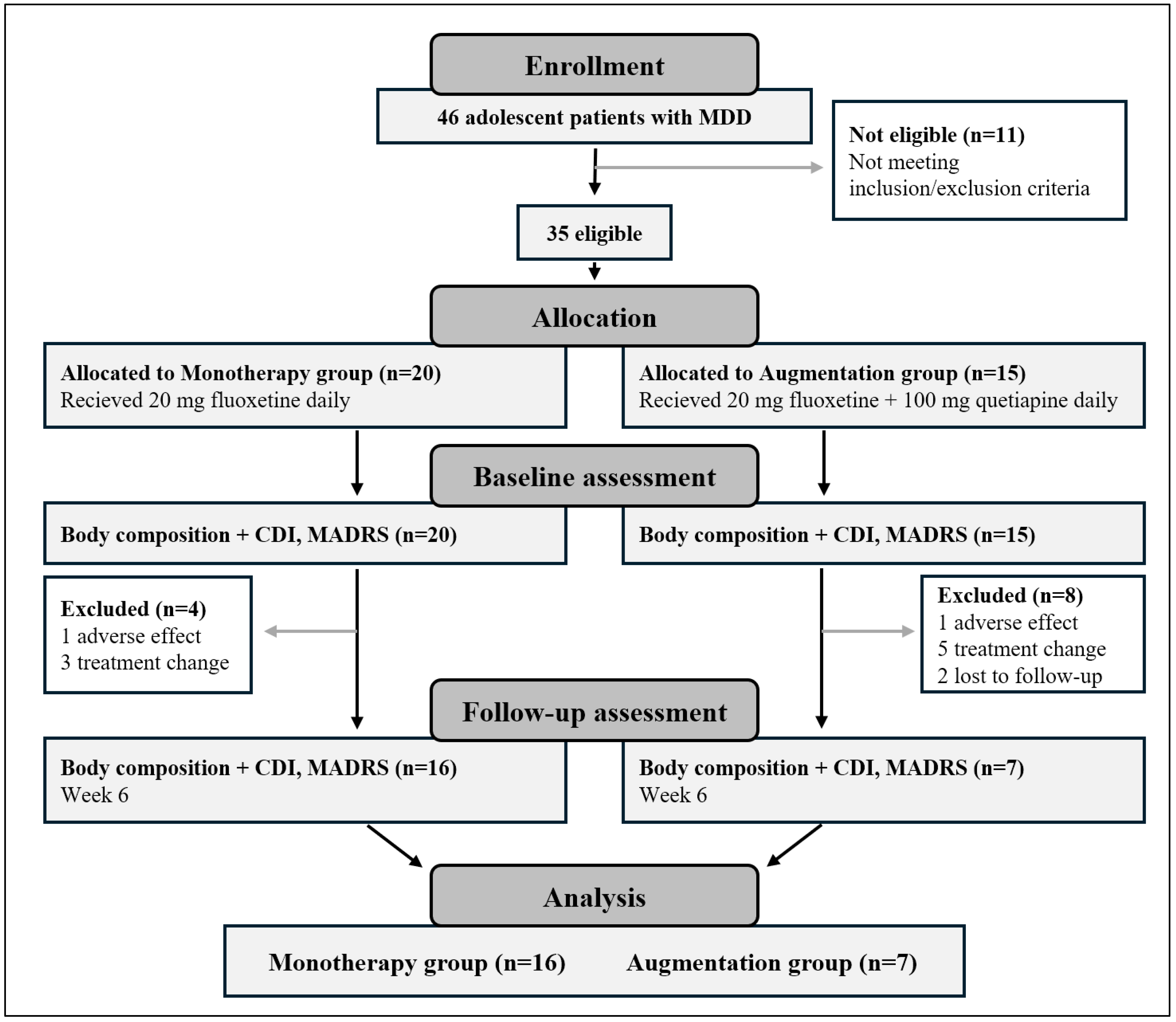
Of the 46 adolescents initially approached, 11 were excluded prior to enrolment for not meeting the eligibility criteria after further assessment (Figure 1). A further 12 were excluded after enrolment owing to treatment change (n = 8), loss to follow-up (n = 2), or adverse effects (n = 2) which were not associated with metabolic changes. The final study sample comprised 23 participants (3 boys, 20 girls; age 12–17 years). Patients experiencing depression with acute risk features (e.g., current suicidal ideation/behavior, marked agitation, severe insomnia) additionally received low-dose quetiapine (100 mg/day). In the present study, low-dose quetiapine was not primarily intended to function as a direct antidepressant augmentation agent in the conventional sense (i.e., via mechanisms demonstrated at >150 mg/day), but rather as an adjunctive intervention aimed at improving sleep and reducing anxiety and early treatment-related activation.
A six-week assessment window was chosen to capture the acute phase of antidepressant treatment. This interval encompasses the expected onset of SSRI effects (≈2–4 weeks) and approaches steady exposure to the active metabolites of both studied drugs, while remaining early enough to guide decisions on continuation, optimization, or change, consistent with 4–8-week “adequate trial” conventions [45,46]. It also spans the period of greatest vigilance for adverse effects, yet is short enough to limit attrition and avoid confounding from maintenance-phase adjustments or pubertal changes.

2.2. Protocol

All adolescents with MDD received fluoxetine 20 mg once daily; with some patients additionally receiving quetiapine 100 mg daily, titrated in accordance with the low titration approach by 25 mg increments over the first five days of treatment [47,48]. Moreover, all participants received standard inpatient psychiatric care, including psychoeducation, psychological first aid, and regular ward-based therapeutic community activities (e.g., morning group meetings). During the whole six-week study period, both dietary intake and physical activity were largely standardized. All patients received the same hospital-provided meal plan with fixed caloric content, and the daily ward routine—including structured activities and rest periods. The controlled inpatient environment substantially reduced the risk of confounding by differential caloric intake or physical activity levels, which is a notable strength of the study in the context of body composition assessment.

2.3. Anthropometric Measurement

All anthropometric measurements were examined in a temperature-controlled, quiet room of the Psychophysiological Laboratory of the Psychiatric Clinic of Jessenius Faculty of Medicine and University Hospital in Martin, after a light breakfast between 9:00 and 11:30 a.m. Body composition was assessed by using a bioimpedance analyzer (InBody 120, Biospace Co., Ltd., Seoul, Republic of Korea) with multi-segmental multifrequency (20/100 kHz) bioimpedance analysis via eight tactile electrodes (thumbs, fingers, heels, toes), with each participant standing during assessment. Detailed analysis of body composition was performed using proprietary data analysis software (LookinBody 120, version 1.2.2.6). The following conventional anthropometric parameters were evaluated: weight (kg), height (cm), waist circumference (WC, cm) and hip circumference (HC, cm), total body water (TBW, l), protein content (kg), mineral content (kg), overall fat content (kg), muscle content (kg), body mass index (BMI, kg/m2), body fat percentage (%), visceral fat adiposity (cm2), and waist-to-height ratio (WHtR). Consecutively, the following novel anthropometric indices were derived from these measurements:
BAI [39], using hip circumference in centimeters and height in meters:
B A I = H C h e i g h t   1.5 18
ABSI [38] using waist circumference and height in meters, and BMI in kg/m2:
A B S I = W C B M I   2 / 3   ×   h e i g h t   1 / 2
BRI [31] using waist circumference and height in centimeters:
B R I =   364.2 365.5 × 1 W C π   ×   h e i g h t 2  
AVI [41] using waist circumference and hip circumference in centimeters:
A V I = 2   ×   W C 2   +   0.7   ×   W C H C 2 1000

2.4. Depressive Symptomatology

Depressive symptom severity was assessed using rating scales validated for the assessment of depressive symptoms in adolescents: the Montgomery–Åsberg Depression Rating Scale (MADRS) and the Children’s Depression Inventory (CDI).
The Montgomery–Åsberg Depression Rating Scale (MADRS) [49] is a clinician-rated 10-item scale, emphasizing the objective rating of core mood symptoms in MDD. The MADRS has been specifically designed to detect early treatment-induced changes in depressive symptoms [49,50,51], a property particularly relevant to our 6-week study window assessing the early treatment phase. The MADRS has been used as an outcome measure in multiple adolescent antidepressant randomized controlled trials [52], and is often used as the primary outcome measure in adult quetiapine augmentation trials [53,54,55]. Using the MADRS thus makes our study comparable to the existing literature, which is important given the near-total absence of adolescent quetiapine augmentation data. The individual items of the scale are as follows: apparent sadness (No. 1), reported sadness (No. 2), inner tension (No. 3), reduced sleep (No. 4), reduced appetite (No. 5), concentration difficulties (No. 6), lassitude (No. 7), inability to feel (No. 8), pessimistic thoughts (No. 9), and suicidal ideations (No. 10). The items are scored on a seven-point scale from 0, meaning none, to 6, meaning severe.
The Children’s Depression Inventory (CDI) [56] is a 27-item self-report scale designed to capture cognitive/affective and functional aspects of youth depression, useful for tracking the subjective experience of symptoms over time. Each item contains three statements from which the subject selects one, with responses scored from 0 to 2 points. The items are divided into five significantly intercorrelated areas: negative mood (CDI A), interpersonal problems (CDI B), ineffectiveness (CDI C), anhedonia (CDI D), and negative self-esteem (CDI E). The individual areas are rated on a scale as follows: CDI A from 0 to 12, CDI B and CDI C from 0 to 8, CDI D from 0 to 16, and CDI E from 0 to 10. The inclusion of the CDI alongside the MADRS ensured that both clinician-rated and youth-specific subjective perspectives on depressive symptom change were captured.

2.5. Statistical Analysis

Data analyses were performed in jamovi (version 1.6.9; The jamovi project, Sydney, Australia). Normality of variables was assessed using the Shapiro–Wilk test. The repeated-measures analysis of variance (repeated-measured ANOVA) was used to analyze the effect of time (baseline, week 6 of treatment), effect of treatment (monotherapy, augmentation), and mixed effect of time × treatment, with the post hoc Bonferroni test. Data represented as percentages were evaluated using contingency tables followed by Kendall’s Tau-B (τB) test. The effect size (partial eta-squared, η2p) and critical F value for power higher than 0.80 were calculated using G*Power 3.1.9.7 (Dusseldorf University, Dusseldorf, Germany) post hoc: the computation achieved power for the repeated-measures ANOVA test from the obtained parameters. According to evaluated data, the critical F value was set at 4.32 with the minimal power at 0.82. Next, threshold values for η2p (ranged from 0 to 1) were interpreted as small (around 0.01), medium (around 0.06), and large (around 0.14) powers [57]. Moreover, false discovery rate and family-wise error were controlled via the Benjamini–Hochberg adjustment (pBH; q = 0.10). Significance was attributed only to results meeting three concurrent conditions: p < 0.05, pBH < 0.05, and p < pBH. All data were parametrically distributed. Data are expressed as mean ± SD in tables and as marginal estimated means ± SE in the text. Lastly, a priori sample size calculation was not performed before study initiation.

3. Results

3.1. Characteristics of the Study Group

The basic descriptive characteristics of the study group are presented in Table 1.

3.2. Primary Clinical Outcomes

3.2.1. Anthropometric Parameters

Repeated-measures ANOVA revealed no significant effect of time (before therapy and 6 weeks after therapy) for all anthropometric parameters. All results are presented in Table 2.

3.2.2. Depressive Symptomatology

The repeated-measures ANOVA revealed a robust effect of time (before therapy and 6 weeks after therapy) for MADRS total score from 31.5 ± 1.2 to 21.1 ± 1.2 (F = 80.41, p < 0.001, pBH = 0.003, with post hoc p < 0.001), as well as CDI total score from 26.5 ± 1.2 to 17.4 ± 0.8 (F = 91.49, p < 0.001, pBH = 0.024, with post hoc p < 0.001). These results are presented in Table 3. Results derived from individual items of MADRS and CDI are summarized in Supplementary Material—Table S2.

3.3. Secondary Outcomes

In addition to the primary analysis, we conducted an exploratory evaluation to compare the effects of treatment (monotherapy with fluoxetine (n = 16) versus fluoxetine in combination with quetiapine (n = 7)). The exploratory analysis showed no significant main effect of treatment or mixed effect of time × treatment interaction for anthropometric or MADRS and CDI scores. Patients with MDD treated with fluoxetine alone and patients with MDD treated with the combination of fluoxetine and quetiapine exhibited similar trends over the 6-week period, with no statistically superior outcomes for one medication over the other in the evaluated parameters (p > 0.050). All results are presented in the Supplementary Material—Tables S1 and S2, and Figure S1.

3.4. Clinical Efficacy and Remission Rates

Moreover, by the study endpoint, all participants demonstrated improvements in both clinician-rated (MADRS) and self-report (CDI) measures. Overall, on the MADRS, 13.0% (3/23) achieved a ≥50% reduction and 4.3% (1/23) met remission (a Minimal Clinically Important Difference (MCID) defined as MADRS ≤ 12); on the CDI, 4.3% (1/23) achieved a ≥50% reduction and 17.4% (4/23) met remission (CDI ≤ 14). Responder and remitter proportions were comparable between monotherapy (n = 16) and augmentation groups (n = 7): MADRS response 12.5% vs. 14.3% and remission 6.3% vs. 0%; CDI response 0% vs. 14.3% and remission 18.8% vs. 14.3%, respectively. None of the associations between treatment group and outcome category reached statistical significance (MADRS response τB = 0.024, p = 0.909; MADRS remission τB = −0.141, p = 0.508; CDI response τB = 0.322, p = 0.131; CDI remission τB = −0.054, p = 0.799). To further assess clinical impact, the Number Needed to Treat (NNT) for MADRS response was calculated at 56, indicating a negligible clinical difference between groups in this exploratory sample.

4. Discussion

In this study, adolescent patients with MDD initiating fluoxetine-based pharmacotherapy (i.e., fluoxetine monotherapy or fluoxetine + low-dose quetiapine) showed the expected substantial improvement in clinician-rated and self-reported depressive symptoms. We observed a higher remission rate on the self-reported CDI than on the clinician-rated MADRS indicating earlier subjective improvements relative to objective clinician assessments. This subjective–objective discordance has been linked to greater comorbidity burden (e.g., personality pathology) and a slower rate of improvement [58].
Our preliminary results show no clear therapeutic superiority of adding 100 mg/day quetiapine by week 6 on MADRS/CDI change. This aligns broadly with other studies, although some reports describe benefits at doses as low as 50 mg/day, sustaining debate regarding low-dose utility [44,59]. Sub-therapeutic quetiapine dosing is common in routine clinical care to target these symptoms such as acute agitation, insomnia, and anxiety accompanying depressive episodes in adolescents during the initial weeks after starting SSRI treatment [43,44,60,61]. In our cohort, augmentation with 100 mg quetiapine did not improve the MADRS sleep (item 4), inner-tension (item 3), or lassitude (item 7) scores. The discovered lack of sleep improvement is consistent with evidence showing weak-to-negative hypnotic efficacy at ~100 mg and reports of attenuation (“tolerance”) of sedative effects over several weeks [62,63]. Moreover, antihistaminergic sedation chiefly shortens sleep latency and increases somnolence; it does not reliably translate into lower perceived “sleep disturbance” or psychic anxiety on validated scales at a six-week assessment [64,65]. Early SSRI-related activation may further counterbalance any initial sedative benefit. Despite these non-significant results, it is important to note that the augmentation with low-dose quetiapine can be associated with potential adverse effects. Specifically, quetiapine’s H1-receptor antagonism at low doses produces not only nocturnal sedation but also residual daytime somnolence, which in adolescents may translate into a cascade of functional consequences. Impaired daytime alertness directly compromises school concentration and academic performance—a domain of central developmental importance during adolescence. Persistent fatigue may also reduce motivation for social engagement, contributing to withdrawal from peer interactions and extracurricular activities, thereby reinforcing the social isolation that is already a hallmark of adolescent MDD. From a treatment perspective, daytime somnolence is a recognized driver of poor medication adherence and early treatment discontinuation in adolescents, who may attribute the fatigue to the medication and become reluctant to continue pharmacotherapy. These functional dimensions are not adequately captured by symptom rating scales alone, and therefore future studies should incorporate measures of daytime functioning, academic performance, and treatment adherence to fully characterize the risk–benefit profile of low-dose quetiapine augmentation in this age group.
Weight gain as an adverse effect of psychopharmacotherapy is well recognized, affecting more than 65% of long-term antidepressant users and ranking among the leading reasons for spontaneous treatment discontinuation [66]. Furthermore, MDD treatment is associated with increased odds of metabolic syndrome [67]. While fluoxetine alone is known to have a weight-neutral effect or even lead to a short period of weight loss (according to appetite blunting, mild nausea, and activation) [68,69], quetiapine use is associated with weight increases and a heightened cardiometabolic risk [68,69]. In adolescents (relative to adults), considerable weight gain has been documented even with agents traditionally deemed “cardiometabolically low-risk” [70], reinforcing the need for intensified anthropometric surveillance. The rate of weight gain in the first month of treatment appears to be the best predictor of subsequent weight trajectory [71].
Knowledge on short-term weight change during fluoxetine-based pharmacotherapy at adolescence is sparse (most studies are cross-sectional or focus on long-term outcomes), and several studies imply modest advantages of novel anthropometric indices over conventional indices [72,73,74,75,76]. Since the often-used BMI is less sensitive to localized change (e.g., abdominal fat increase), indices driven by waist geometry have a better chance of moving in parallel with early central adiposity change. This study used novel waist-based anthropometric indices (e.g., BRI, AVI, ABSI, and BAI) for monitoring MDD pharmacotherapy in adolescent patients which were developed specifically to capture aspects of body shape and fat distribution that conventional measures like BMI fail to reflect—particularly central and visceral adiposity, which are the primary drivers of cardiometabolic morbidity. These indices have demonstrated predictive value for hypertension, impaired glucose tolerance, metabolic syndrome, and cardiovascular events in large epidemiological cohorts, including in individuals with normal BMI [30,38,39,40]. In the present study, we employed these indices as non-invasive, objective proxies for cardiometabolic risk, reasoning that medication-induced shifts in body fat distribution—even when total weight remains stable—could signal early unfavorable metabolic remodeling. However, our study revealed no significant changes in all (conventional as well as novel) evaluated anthropometric indices in adolescents with MDD during short-term fluoxetine-based pharmacotherapy. It is important to note that averaged baseline visceral adiposity was higher, although not significantly, in patients treated with fluoxetine plus quetiapine (116.0 cm2 versus 66.3 cm2 in adolescents with MDD treated with fluoxetine alone). Despite these baseline disparities, the visualization of individual trajectories of the individual anthropometric indices over the 6-week treatment shows a relatively stable magnitude and direction of change reflecting the persistence of baseline differences not comprising the comparability of the short-term effects of the selected pharmacotherapy on body composition regardless of initial differences among the evaluated patients. To sum up, from the cardiometabolic perspective captured by conventional and novel anthropometric indices, short-term treatment with fluoxetine and fluoxetine in combination with low-dose quetiapine seems to be relatively safe; however, these findings warrant further confirmation with a larger, more balanced sample of MDD adolescents.

Strengths and Limitations

There have been no large controlled trials in the past decade focusing on the effects of fluoxetine + low-dose quetiapine on body composition in young people with depression, marking this study as the first of its kind. The strengths of this study include the focus on major depressive disorder in the vulnerable period of adolescence, a prospective design with standardized clinician-rated and self-report scaling, and direct comparison of conventional and novel anthropometric indices by objective BIA body composition assessment with a controlled inpatient environment reducing the risk of confounding by differential caloric intake or physical activity levels over a clinically meaningful six-week window.
On the other hand, the small and imbalanced sample size is the principal limitation of this study reducing statistical power of the study. However, the final sample reflects the number of eligible participants who met the strict inclusion criteria and were available for recruitment within the defined study period in a naturalistic clinical setting. The primary intention was to explore treatment outcomes in a real-world context rather than to conduct a fully powered comparative efficacy analysis. Therefore, our findings should be considered preliminary and hypothesis-generating for future research with a focus on a larger, more balanced sample of MDD patients.
Furthermore, the overlap between quetiapine’s primary pharmacological effects (sedation, anxiolysis) and several items on both the MADRS and the CDI limit the ability of this study to distinguish a direct antidepressant signal from secondary score improvement driven by better sleep or reduced anxiety; future studies should consider incorporating sleep- and anxiety-specific instruments alongside depression rating scales.
Lastly, comprehensive assessment of cardiometabolic risk should also include biochemical monitoring such as changes in lipid profile, fasting glucose, insulin resistance, or inflammatory markers. Our study was focused only on body composition changes; however, to fully capture the potential cardiometabolic risk, future studies should incorporate biochemical markers alongside body composition indices.

5. Conclusions

In this prospective, open-label pilot study of 23 drug-naïve adolescent inpatients with MDD, six weeks of fluoxetine-based pharmacotherapy was associated with reductions in depressive symptom severity on both the clinician-rated MADRS and the self-report CDI. Remission rates appeared higher on the CDI than on the MADRS, which may reflect earlier subjective improvement relative to clinician-assessed recovery. No statistically significant changes were observed in conventional or novel anthropometric indices, including waist-based measures designed to capture early shifts in central and visceral adiposity (BRI, AVI, ABSI, BAI). However, given the small sample size and short follow-up, these findings should be interpreted cautiously and cannot be taken as definitive evidence of cardiometabolic safety. We did not observe a clear additional symptomatic benefit of low-dose quetiapine augmentation in this small cohort. Overall, these findings are preliminary and hypothesis-generating, and require confirmation in adequately powered randomized controlled trials with longer follow-up and comprehensive metabolic assessment.

Supplementary Materials

The following supporting information can be downloaded at: https://www.mdpi.com/article/10.3390/psychiatryint7030105/s1, Table S1: Evaluated anthropometric parameters before and after treatment in both groups; Figure S1: Spaghetti plots illustrating individual trajectories of anthropometric measures before and 6-weeks after treatment for patients in the AUG group; Table S2: Evaluated MADRS and CDI scores before treatment and six weeks after treatment in monotherapy and augmentation groups.

Author Contributions

Conceptualization, I.T. and T.K.; methodology, I.T. and I.O.; software and statistical analysis, Z.V.; investigation, T.K., A.M., V.K., Z.V. and N.F.; resources, I.O. and I.T.; writing—original draft preparation, T.K.; writing—review and editing, T.K., I.T., Z.V., N.F. and T.F.; visualization, T.K.; supervision, I.T. All authors have read and agreed to the published version of the manuscript.

Funding

This research was funded by the Scientific Grant Agency of the Ministry of Education, Science, Research, and Sport of the Slovak Republic under grant VEGA 1/0048/24; and by the Comenius University in Bratislava under Comenius University Grant UK/1258/2026.

Institutional Review Board Statement

The study was conducted in accordance with the Declaration of Helsinki, and approved by the Institutional Ethics Committee of Jessenius Faculty of Medicine in Martin, Comenius University in Bratislava (protocol code EK 47/2023 and date of approval 18 October 2023).

Informed Consent Statement

Informed consent was obtained from all subjects involved in the study.

Data Availability Statement

The data presented in this study are available on request from the corresponding author. The data are not publicly available due to ethical/privacy issues.

Conflicts of Interest

The authors declare no conflicts of interest.

References

  1. Henje Blom, E.; Ho, T.C.; Connolly, C.G.; LeWinn, K.Z.; Sacchet, M.D.; Tymofiyeva, O.; Weng, H.Y.; Yang, T.T. The Neuroscience and Context of Adolescent Depression. Acta Paediatr. 2016, 105, 358–365. [Google Scholar] [CrossRef] [Scilit]
  2. Lu, B.; Lin, L.; Su, X. Global Burden of Depression or Depressive Symptoms in Children and Adolescents: A Systematic Review and Meta-Analysis. J. Affect. Disord. 2024, 354, 553–562. [Google Scholar] [CrossRef] [Scilit]
  3. Hetrick, S.E.; McKenzie, J.E.; Bailey, A.P.; Sharma, V.; Moller, C.I.; Badcock, P.B.; Cox, G.R.; Merry, S.N.; Meader, N. New Generation Antidepressants for Depression in Children and Adolescents: A Network Meta-analysis. Cochrane Database Syst. Rev. 2021, 5, CD013674. [Google Scholar] [CrossRef] [Scilit]
  4. Bohman, H.; Låftman, S.B.; Alaie, I.; Ssegonja, R.; Jonsson, U. Adult Mental Health Outcomes of Adolescent Depression and Co-Occurring Alcohol Use Disorder: A Longitudinal Cohort Study. Eur. Child Adolesc. Psychiatry 2025, 34, 1649–1659. [Google Scholar] [CrossRef] [Scilit] [PubMed]
  5. Jiao, L.; Chen, T.; Huang, Y.; Huang, X. Effect Analysis of Repeated Transcranial Magnetic Stimulation Combined with Fluoxetine in the Treatment of First-Episode Adolescent Depression. Front. Psychiatry 2024, 15, 1397706. [Google Scholar] [CrossRef] [Scilit] [PubMed]
  6. Korczak, D.J.; Westwell-Roper, C.; Sassi, R. Diagnosis and Management of Depression in Adolescents. CMAJ 2023, 195, E739–E746. [Google Scholar] [CrossRef] [Scilit]
  7. American Psychiatric Association. DSM-V: Diagnostic and Statistical Manual of Mental Disorders, 5th ed.; American Psychiatric Publishing: Washington, DC, USA, 2013; ISBN 978-0-89042-554-1. [Google Scholar]
  8. Ledesma-Corvi, S.; Jornet-Plaza, J.; Gálvez-Melero, L.; García-Fuster, M.J. Novel Rapid Treatment Options for Adolescent Depression. Pharmacol. Res. 2024, 201, 107085. [Google Scholar] [CrossRef] [Scilit]
  9. Izaki, Y. Depression among Adolescents: Clinical Features and Interventions. J. Med. Investig. 2021, 68, 22–28. [Google Scholar] [CrossRef] [Scilit] [PubMed]
  10. Yagci, I.; Avci, S. Biochemical Predictors in Presentations to the Emergency Department after a Suicide Attemp. Bratisl. Med. J. 2021, 122, 224–229. [Google Scholar] [CrossRef] [Scilit]
  11. Manfro, P.H.; Pereira, R.B.; Rosa, M.; Cogo-Moreira, H.; Fisher, H.L.; Kohrt, B.A.; Mondelli, V.; Kieling, C. Adolescent Depression beyond DSM Definition: A Network Analysis. Eur. Child Adolesc. Psychiatry 2023, 32, 881–892. [Google Scholar] [CrossRef] [Scilit]
  12. Achterbergh, L.; Pitman, A.; Birken, M.; Pearce, E.; Sno, H.; Johnson, S. The Experience of Loneliness among Young People with Depression: A Qualitative Meta-Synthesis of the Literature. BMC Psychiatry 2020, 20, 415. [Google Scholar] [CrossRef] [Scilit] [PubMed]
  13. Viduani, A.; Benetti, S.; Martini, T.; Buchweitz, C.; Ottman, K.; Wahid, S.S.; Fisher, H.L.; Mondelli, V.; Kohrt, B.A.; Kieling, C. Social Isolation as a Core Feature of Adolescent Depression: A Qualitative Study in Porto Alegre, Brazil. Int. J. Qual. Stud. Health Well-Being 2021, 16, 1978374. [Google Scholar] [CrossRef] [Scilit]
  14. Clinical Practice Guideline for the Treatment of Depression Across Three Age Cohorts. Available online: https://www.apa.org/depression-guideline (accessed on 22 January 2025).
  15. Dauchot, D.; Rettey, S.; Melton, B.L.; Moeller, K.E. Antipsychotics in Child and Adolescent Patients with Major Depressive Disorder: A Retrospective Analysis of Prescribing Patterns. Ment. Health Clin. 2024, 14, 10–16. [Google Scholar] [CrossRef] [Scilit]
  16. Reyad, A.A.; Plaha, K.; Girgis, E.; Mishriky, R. Fluoxetine in the Management of Major Depressive Disorder in Children and Adolescents: A Meta-Analysis of Randomized Controlled Trials. Hosp. Pharm. 2021, 56, 525–531. [Google Scholar] [CrossRef] [Scilit] [PubMed]
  17. Stahl, S.M. Stahl’s Essential Psychopharmacology, 4th ed.; Cambridge University Press: New York, NY, USA, 2013; ISBN 978-1-107-68646-5. [Google Scholar]
  18. Stahl, S.M. Stahl’s Essential Psychopharmacology: The Prescriber’s Guide: Antidepressants, 4th ed.; Cambridge University Press: New York, NY, USA, 2011; ISBN 978-1-107-66796-9. [Google Scholar]
  19. Strawn, J.R.; Mills, J.A.; Poweleit, E.A.; Ramsey, L.B.; Croarkin, P.E. Adverse Effects of Antidepressant Medications and Their Management in Children and Adolescents. Pharmacother. J. Hum. Pharmacol. Drug Ther. 2023, 43, 675–690. [Google Scholar] [CrossRef] [Scilit]
  20. Murphy, S.E.; Capitão, L.P.; Giles, S.L.C.; Cowen, P.J.; Stringaris, A.; Harmer, C.J. The Knowns and Unknowns of SSRI Treatment in Young People with Depression and Anxiety: Efficacy, Predictors, and Mechanisms of Action. Lancet Psychiatry 2021, 8, 824–835. [Google Scholar] [CrossRef] [Scilit]
  21. Kukucka, T.; Ferencova, N.; Visnovcova, Z.; Ondrejka, I.; Hrtanek, I.; Kovacova, V.; Macejova, A.; Mlyncekova, Z.; Tonhajzerova, I. Mechanisms Involved in the Link between Depression, Antidepressant Treatment, and Associated Weight Change. Int. J. Mol. Sci. 2024, 25, 4511. [Google Scholar] [CrossRef] [Scilit]
  22. Lee, S.H.; Paz-Filho, G.; Mastronardi, C.; Licinio, J.; Wong, M.-L. Is Increased Antidepressant Exposure a Contributory Factor to the Obesity Pandemic? Transl. Psychiatry 2016, 6, e759. [Google Scholar] [CrossRef] [Scilit]
  23. Calarge, C.A.; Mills, J.A.; Janz, K.F.; Burns, T.L.; Coryell, W.H.; Zemel, B.S. Body Composition in Adolescents During Treatment with Selective Serotonin Reuptake Inhibitors. Pediatrics 2017, 140, e20163943. [Google Scholar] [CrossRef] [Scilit] [PubMed]
  24. Hao, Y.; Zhang, J.; Yu, J.; Yu, Z.; Yang, L.; Hao, X.; Gao, F.; Zhou, C. Predicting Quetiapine Dose in Patients with Depression Using Machine Learning Techniques Based on Real-World Evidence. Ann. Gen. Psychiatry 2024, 23, 5. [Google Scholar] [CrossRef] [Scilit]
  25. Peters, E.M.; Bowen, R.; Balbuena, L. Low-Dose Quetiapine for Major Depressive Disorder and Sleep Improvement. J. Clin. Psychopharmacol. 2020, 40, 500. [Google Scholar] [CrossRef] [Scilit] [PubMed]
  26. Sonim, P.; Ferreira, R.M.; Lourenço, I.; Fernandes, L.; Ferreira, A.R. Metabolic Adverse Effects of Low-Dose Quetiapine: A Systematic Review and Meta-Analysis. Acta Psychiatr. Scand. 2025, 152, 328–340. [Google Scholar] [CrossRef] [Scilit]
  27. Dubath, C.; Piras, M.; Gholam, M.; Laaboub, N.; Grosu, C.; Sentissi, O.; Gamma, F.; Solida, A.; von Gunten, A.; Conus, P.; et al. Effect of Quetiapine, from Low to High Dose, on Weight and Metabolic Traits: Results from a Prospective Cohort Study. Pharmacopsychiatry 2021, 54, 279–286. [Google Scholar] [CrossRef] [Scilit]
  28. Wu, H.; Siafis, S.; Hamza, T.; Schneider-Thoma, J.; Davis, J.M.; Salanti, G.; Leucht, S. Antipsychotic-Induced Weight Gain: Dose-Response Meta-Analysis of Randomized Controlled Trials. Schizophr. Bull. 2022, 48, 643–654. [Google Scholar] [CrossRef] [Scilit]
  29. Covili Arevalo, N.; Aramburú-Navarro, C.; Sandoval-Obando, E.; Caamaño-Navarrete, F.; Arriagada-Hernández, C.; Etchegaray-Pezo, P.; Fuentes-Vilugrón, G. Body Composition, Emotional Dysregulation, and Suicide Risk in College Students. Psychiatry Int. 2026, 7, 35. [Google Scholar] [CrossRef] [Scilit]
  30. Seo, Y.-G.; Kim, J.H.; Kim, Y.; Lim, H.; Ju, Y.-S.; Kang, M.J.; Lee, K.; Lee, H.-J.; Jang, H.B.; Park, S.I.; et al. Validation of Body Composition Using Bioelectrical Impedance Analysis in Children According to the Degree of Obesity. Scand. J. Med. Sci. Sports 2018, 28, 2207–2215. [Google Scholar] [CrossRef] [Scilit] [PubMed]
  31. Thomas, D.M.; Bredlau, C.; Bosy-Westphal, A.; Mueller, M.; Shen, W.; Gallagher, D.; Maeda, Y.; McDougall, A.; Peterson, C.M.; Ravussin, E.; et al. Relationships between Body Roundness with Body Fat and Visceral Adipose Tissue Emerging from a New Geometrical Model. Obesity 2013, 21, 2264–2271. [Google Scholar] [CrossRef] [Scilit]
  32. Hu, Q.; Xu, Z.; Su, Z.; Li, Z.; Zhao, X.; Pan, L.; Wang, L. Body Roundness Index Outperforms Traditional Obesity Metrics in Predicting Cardiometabolic Risk among Children and Adolescents: The EMSNGS Study. Front. Nutr. 2026, 13, 1760511. [Google Scholar] [CrossRef] [Scilit]
  33. Jahan, A.; Abdullah, M.M.; Frank, R.; Castellanos, L.J.; Singer, P.; Shen, C.L.; Basalely, A.M.; Sethna, C.B. Body Roundness Index Is a Stronger Predictor of Cardiometabolic Risk than Body Mass Index in Children between Ages 8 to 17 Years. J. Pediatr. 2026, 288, 114826. [Google Scholar] [CrossRef] [Scilit]
  34. Yang, M.; Liu, J.; Shen, Q.; Chen, H.; Liu, Y.; Wang, N.; Yang, Z.; Zhu, X.; Zhang, S.; Li, X.; et al. Body Roundness Index Trajectories and the Incidence of Cardiovascular Disease: Evidence From the China Health and Retirement Longitudinal Study. J. Am. Heart Assoc. 2024, 13, e034768. [Google Scholar] [CrossRef] [Scilit] [PubMed]
  35. Li, Y.; He, Y.; Yang, L.; Liu, Q.; Li, C.; Wang, Y.; Yang, P.; Wang, J.; Chen, Z.; Huang, X. Body Roundness Index and Waist–Hip Ratio Result in Better Cardiovascular Disease Risk Stratification: Results From a Large Chinese Cross-Sectional Study. Front. Nutr. 2022, 9, 801582. [Google Scholar] [CrossRef] [Scilit]
  36. Cristine Silva, K.; Santana Paiva, N.; Rocha de Faria, F.; Franceschini, S.d.C.C.; Eloiza Piore, S. Predictive Ability of Seven Anthropometric Indices for Cardiovascular Risk Markers and Metabolic Syndrome in Adolescents. J. Adolesc. Health Off. Publ. Soc. Adolesc. Med. 2020, 66, 491–498. [Google Scholar] [CrossRef] [Scilit]
  37. Alanazi, M.A.; Alshehri, K.; Alerwy, F.H.; Alrasheed, T.; Lahza, H.F.M.; Aref Albezrah, N.K.; Alghabban, Y.I.; Mohammed Abdulghani, M.A. Abdominal Volume Index Is Associated with Higher Oxidized LDL, High Blood Pressure and Lower HDL among Obese Adults. BMC Endocr. Disord. 2025, 25, 56. [Google Scholar] [CrossRef] [Scilit]
  38. Krakauer, N.Y.; Krakauer, J.C. A New Body Shape Index Predicts Mortality Hazard Independently of Body Mass Index. PLoS ONE 2012, 7, e39504. [Google Scholar] [CrossRef] [Scilit]
  39. Bergman, R.N.; Stefanovski, D.; Buchanan, T.A.; Sumner, A.E.; Reynolds, J.C.; Sebring, N.G.; Xiang, A.H.; Watanabe, R.M. A Better Index of Body Adiposity. Obesity 2011, 19, 1083–1089. [Google Scholar] [CrossRef] [Scilit] [PubMed]
  40. Calderón-García, J.F.; Roncero-Martín, R.; Rico-Martín, S.; De Nicolás-Jiménez, J.M.; López-Espuela, F.; Santano-Mogena, E.; Alfageme-García, P.; Sánchez Muñoz-Torrero, J.F. Effectiveness of Body Roundness Index (BRI) and a Body Shape Index (ABSI) in Predicting Hypertension: A Systematic Review and Meta-Analysis of Observational Studies. Int. J. Environ. Res. Public Health 2021, 18, 11607. [Google Scholar] [CrossRef] [Scilit] [PubMed]
  41. Guerrero-Romero, F.; Rodríguez-Morán, M. Abdominal Volume Index. an Anthropometry-Based Index for Estimation of Obesity Is Strongly Related to Impaired Glucose Tolerance and Type 2 Diabetes Mellitus. Arch. Med. Res. 2003, 34, 428–432. [Google Scholar] [CrossRef] [Scilit]
  42. Wu, L.; Zhu, W.; Qiao, Q.; Huang, L.; Li, Y.; Chen, L. Novel and Traditional Anthropometric Indices for Identifying Metabolic Syndrome in Non-Overweight/Obese Adults. Nutr. Metab. 2021, 18, 3. [Google Scholar] [CrossRef] [Scilit]
  43. Hartung, D.; Wisdom, J.P.; Pollack, D.A.; Hamer, A.; Haxby, D.; Middleton, L.; McFarland, B. Patterns of Atypical Antipsychotic Sub-Therapeutic Dosing Among Oregon Medicaid Patients. J. Clin. Psychiatry 2008, 69, 1540–1547. [Google Scholar] [CrossRef] [Scilit]
  44. Jing, Y.; Guo, Z.; Kalsekar, I.; Forbes, R.A.; Hebden, T.; Thase, M.E. Dosing Patterns of Aripiprazole and Quetiapine for Adjunctive Treatment of Major Depressive Disorder (2006–2010). Int. Clin. Psychopharmacol. 2013, 28, 87–90. [Google Scholar] [CrossRef] [Scilit] [PubMed]
  45. Lam, R.W.; Kennedy, S.H.; Adams, C.; Bahji, A.; Beaulieu, S.; Bhat, V.; Blier, P.; Blumberger, D.M.; Brietzke, E.; Chakrabarty, T.; et al. Canadian Network for Mood and Anxiety Treatments (CANMAT) 2023 Update on Clinical Guidelines for Management of Major Depressive Disorder in Adults: Réseau Canadien Pour Les Traitements de l’humeur et de l’anxiété (CANMAT) 2023: Mise à Jour Des Lignes Directrices Cliniques Pour La Prise En Charge Du Trouble Dépressif Majeur Chez Les Adultes. Can. J. Psychiatry Rev. Can. Psychiatr. 2024, 69, 641–687. [Google Scholar] [CrossRef] [Scilit]
  46. Ward, W.; Haslam, A.; Prasad, V. Antidepressant Trial Duration Versus Duration of Real-World Use: A Systematic Analysis. Am. J. Med. 2025, 138, 1400–1407.e10. [Google Scholar] [CrossRef] [Scilit]
  47. Pae, C.-U.; Wang, S.-M.; Han, C.; Lee, S.-J.; Patkar, A.A.; Masand, P.S. Quetiapine Augmentation for Depression: Dosing Pattern in Routine Practice. Int. Clin. Psychopharmacol. 2015, 30, 54–58. [Google Scholar] [CrossRef] [Scilit] [PubMed]
  48. Masi, G.; Milone, A.; Veltri, S.; Iuliano, R.; Pfanner, C.; Pisano, S. Use of Quetiapine in Children and Adolescents. Pediatr. Drugs 2015, 17, 125–140. [Google Scholar] [CrossRef] [Scilit]
  49. Montgomery, S.A.; Asberg, M. A New Depression Scale Designed to Be Sensitive to Change. Br. J. Psychiatry J. Ment. Sci. 1979, 134, 382–389. [Google Scholar] [CrossRef] [Scilit]
  50. Santen, G.; Danhof, M.; Della Pasqua, O. Sensitivity of the Montgomery Asberg Depression Rating Scale to Response and Its Consequences for the Assessment of Efficacy. J. Psychiatr. Res. 2009, 43, 1049–1056. [Google Scholar] [CrossRef] [Scilit]
  51. Yavorsky, C.; Ballard, E.; Opler, M.; Sedway, J.; Targum, S.D.; Lenderking, W. Recommendations for Selection and Adaptation of Rating Scales for Clinical Studies of Rapid-Acting Antidepressants. Front. Psychiatry 2023, 14, 1135828. [Google Scholar] [CrossRef] [Scilit]
  52. Wu, T.; Song, F.; Cao, W.; Liu, C.; Jia, S. Comparative Efficacy of Antidepressant Medication for Adolescent Depression: A Network Meta-Analysis and Systematic Review. BMC Psychiatry 2025, 25, 471. [Google Scholar] [CrossRef] [Scilit] [PubMed]
  53. Bauer, M.; Dell’Osso, L.; Kasper, S.; Pitchot, W.; Dencker Vansvik, E.; Köhler, J.; Jørgensen, L.; Montgomery, S.A. Extended-Release Quetiapine Fumarate (Quetiapine XR) Monotherapy and Quetiapine XR or Lithium as Add-on to Antidepressants in Patients with Treatment-Resistant Major Depressive Disorder. J. Affect. Disord. 2013, 151, 209–219. [Google Scholar] [CrossRef] [Scilit]
  54. Olver, J.S.; Ignatiadis, S.; Maruff, P.; Burrows, G.D.; Norman, T.R. Quetiapine Augmentation in Depressed Patients with Partial Response to Antidepressants. Hum. Psychopharmacol. 2008, 23, 653–660. [Google Scholar] [CrossRef] [Scilit]
  55. Weisler, R.; Joyce, M.; McGill, L.; Lazarus, A.; Szamosi, J.; Eriksson, H. Moonstone Study Group Extended Release Quetiapine Fumarate Monotherapy for Major Depressive Disorder: Results of a Double-Blind, Randomized, Placebo-Controlled Study. CNS Spectr. 2009, 14, 299–313. [Google Scholar] [CrossRef] [Scilit] [PubMed]
  56. Kovacs, M. The Children’s Depression, Inventory (CDI). Psychopharmacol. Bull. 1985, 21, 995–998. [Google Scholar]
  57. Richardson, J.T.E. Eta Squared and Partial Eta Squared as Measures of Effect Size in Educational Research. Educ. Res. Rev. 2011, 6, 135–147. [Google Scholar] [CrossRef] [Scilit]
  58. Rane, L.J.; Fekadu, A.; Wooderson, S.; Poon, L.; Markopoulou, K.; Cleare, A.J. Discrepancy between Subjective and Objective Severity in Treatment-Resistant Depression: Prediction of Treatment Outcome. J. Psychiatr. Res. 2010, 44, 1082–1087. [Google Scholar] [CrossRef] [Scilit]
  59. Cutler, A.; Ball, S.; Stahl, S.M. Dosing Atypical Antipsychotics. CNS Spectr. 2008, 13, 3–14. [Google Scholar] [CrossRef] [Scilit]
  60. Pringsheim, T.; Gardner, D.M. Dispensed Prescriptions for Quetiapine and Other Second-Generation Antipsychotics in Canada from 2005 to 2012: A Descriptive Study. Can. Med. Assoc. Open Access J. 2014, 2, E225–E232. [Google Scholar] [CrossRef] [Scilit] [PubMed]
  61. Gjerden, P.; Bramness, J.G.; Tvete, I.F.; Slørdal, L. The Antipsychotic Agent Quetiapine Is Increasingly Not Used as Such: Dispensed Prescriptions in Norway 2004–2015. Eur. J. Clin. Pharmacol. 2017, 73, 1173–1179. [Google Scholar] [CrossRef] [Scilit]
  62. Monti, J.M.; Torterolo, P.; Pandi Perumal, S.R. The Effects of Second Generation Antipsychotic Drugs on Sleep Variables in Healthy Subjects and Patients with Schizophrenia. Sleep Med. Rev. 2017, 33, 51–57. [Google Scholar] [CrossRef] [Scilit] [PubMed]
  63. Lin, C.-Y.; Chiang, C.-H.; Tseng, M.-C.M.; Tam, K.-W.; Loh, E.-W. Effects of Quetiapine on Sleep: A Systematic Review and Meta-Analysis of Clinical Trials. Eur. Neuropsychopharmacol. 2023, 67, 22–36. [Google Scholar] [CrossRef] [Scilit]
  64. Modesto-Lowe, V.; Harabasz, A.K.; Walker, S.A. Quetiapine for Primary Insomnia: Consider the Risks. Cleve. Clin. J. Med. 2021, 88, 286–294. [Google Scholar] [CrossRef] [Scilit]
  65. Thompson, W.; Quay, T.A.W.; Rojas-Fernandez, C.; Farrell, B.; Bjerre, L.M. Atypical Antipsychotics for Insomnia: A Systematic Review. Sleep Med. 2016, 22, 13–17. [Google Scholar] [CrossRef] [Scilit]
  66. Gill, H.; Gill, B.; El-Halabi, S.; Chen-Li, D.; Lipsitz, O.; Rosenblat, J.D.; Van Rheenen, T.E.; Rodrigues, N.B.; Mansur, R.B.; Majeed, A.; et al. Antidepressant Medications and Weight Change: A Narrative Review. Obesity 2020, 28, 2064–2072. [Google Scholar] [CrossRef] [Scilit]
  67. Meshkat, S.; Duffy, S.F.; Tassone, V.K.; Lin, Q.; YM Pang, H.; Jung, H.; Lou, W.; Bhat, V. Increased Odds of Metabolic Syndrome among Adults with Depressive Symptoms or Antidepressant Use. Transl. Psychiatry 2025, 15, 68. [Google Scholar] [CrossRef] [Scilit]
  68. Serretti, A.; Mandelli, L. Antidepressants and Body Weight: A Comprehensive Review and Meta-Analysis. J. Clin. Psychiatry 2010, 71, 979. [Google Scholar] [CrossRef] [Scilit]
  69. Verhaegen, A.A.; Van Gaal, L.F. Drugs Affecting Body Weight, Body Fat Distribution, and Metabolic Function-Mechanisms and Possible Therapeutic or Preventive Measures: An Update. Curr. Obes. Rep. 2021, 10, 1–13. [Google Scholar] [CrossRef] [Scilit]
  70. Højlund, M.; Wesselhoeft, R.; Heinrichsen, M.; Pagsberg, A.K.; Correll, C.U.; Steinhausen, H.-C. Excess Cardiometabolic Risk in Children and Adolescents Initiating Antipsychotic Treatment Compared to Young Adults: Results from a Nationwide Cohort Study. World Psychiatry 2025, 24, 103–112. [Google Scholar] [CrossRef] [Scilit] [PubMed]
  71. Vandenberghe, F.; Gholam-Rezaee, M.; Saigí-Morgui, N.; Delacrétaz, A.; Choong, E.; Solida-Tozzi, A.; Kolly, S.; Thonney, J.; Gallo, S.F.; Hedjal, A.; et al. Importance of Early Weight Changes to Predict Long-Term Weight Gain During Psychotropic Drug Treatment. J. Clin. Psychiatry 2015, 76, 8736. [Google Scholar] [CrossRef] [Scilit]
  72. Barreira, T.V.; Broyles, S.T.; Gupta, A.K.; Katzmarzyk, P.T. Relationship of Anthropometric Indices to Abdominal and Total Body Fat in Youth: Sex and Race Differences. Obesity 2014, 22, 1345–1350. [Google Scholar] [CrossRef] [Scilit] [PubMed]
  73. Carlsson, A.C.; Risérus, U.; Engström, G.; Ärnlöv, J.; Melander, O.; Leander, K.; Gigante, B.; Hellénius, M.-L.; de Faire, U. Novel and Established Anthropometric Measures and the Prediction of Incident Cardiovascular Disease: A Cohort Study. Int. J. Obes. 2013, 37, 1579–1585. [Google Scholar] [CrossRef] [Scilit]
  74. Darbandi, M.; Pasdar, Y.; Moradi, S.; Mohamed, H.J.J.; Hamzeh, B.; Salimi, Y. Discriminatory Capacity of Anthropometric Indices for Cardiovascular Disease in Adults: A Systematic Review and Meta-Analysis. Prev. Chronic Dis. 2020, 17, E131. [Google Scholar] [CrossRef] [Scilit] [PubMed]
  75. Jayawardena, R.; Ranasinghe, P.; Ranathunga, T.; Mathangasinghe, Y.; Wasalathanththri, S.; Hills, A.P. Novel Anthropometric Parameters to Define Obesity and Obesity-Related Disease in Adults: A Systematic Review. Nutr. Rev. 2020, 78, 498–513. [Google Scholar] [CrossRef] [Scilit] [PubMed]
  76. Wang, F.; Chen, Y.; Chang, Y.; Sun, G.; Sun, Y. New Anthropometric Indices or Old Ones: Which Perform Better in Estimating Cardiovascular Risks in Chinese Adults. BMC Cardiovasc. Disord. 2018, 18, 14. [Google Scholar] [CrossRef] [Scilit] [PubMed]
Figure 1. Study flowchart. Abbreviations: MDD—major depressive disorder; CDI—Children’s Depression Inventory; MADRS—Montgomery–Åsberg Depression Rating Scale.
Psychiatryint 07 00105 g001
Table 1. Basic descriptive characteristics of the studied groups.
ParameterFLX Monotherapy Group (n = 16)AUG Augmentation Group (n = 7)ALL Total Population (n = 23)
Sex13 girls, 3 boys7 girls, 0 boys20 girls, 3 boys
Age (years)13.9 ± 0.915.1 ± 1.614.5 ± 1.3
Baseline MADRS31.1 ± 5.532.0 ± 4.131.3 ± 5.0
Baseline CDI25.2 ± 5.827.9 ± 4.626.0 ± 5.5
Weight (kg)57.2 ± 11.568.3 ± 21.860.5 ± 15.7
Height (cm)164.0 ± 10.7165.0 ± 4.8165.0 ± 9.2
Abbreviations: CDI—the self-report Children’s Depression Inventory, MADRS—the Montgomery–Åsberg Depression Rating Scale.
Table 2. Evaluated anthropometric parameters before and after treatment.
ParameterALL Before TreatmentALL After TreatmentF-Statisticp-Value Effect of TimepBH-ValueSign/N-Signη2p-Effect Sizep-Value
(Post Hoc)
Weight (kg)60.5 ± 15.760.9 ± 15.71.030.3220.024N-sign0.0470.322
Total body water (L)31.4 ± 6.331.7 ± 6.12.870.1050.006N-sign0.1200.105
Total protein (kg)9.6 ± 5.69.9 ± 6.70.190.6650.044N-sign0.0090.665
Total minerals (kg)3.1 ± 0.63.1 ± 0.60.420.5220.038N-sign0.0200.522
Overall fat mass (kg)17.6 ± 10.217.5 ± 10.10.400.5360.041N-sign0.0190.536
Total muscle (kg)23.4 ± 5.122.4 ± 4.93.500.0760.003N-sign0.1430.076
Body fat percentage (%)27.7 ± 9.027.4 ± 8.62.240.1500.012N-sign0.0960.057
Visceral fat adiposity (cm2)81.1 ± 53.980.5 ± 53.61.500.2350.015N-sign0.0850.235
WHR0.85 ± 0.060.85 ± 0.072.370.1390.009N-sign0.1010.139
WC (cm)79.5 ± 13.579.7 ± 13.50.780.3860.032N-sign0.0360.386
HC (cm)93.2 ± 8.493.2 ± 8.20.090.7620.047N-sign0.0040.762
WHtR0.48 ± 0.080.48 ± 0.080.860.3650.026N-sign0.0390.365
BAI3.2 ± 3.43.2 ± 3.50.00030.9870.050N-sign0.000010.987
ABSI129.0 ± 7.9129.0 ± 8.00.550.4690.035N-sign0.0250.469
BRI3.2 ± 1.63.2 ± 1.61.070.3120.021N-sign0.0490.312
AVI13.1 ± 4.813.2 ± 4.90.850.3670.029N-sign0.0390.367
BMI (kg/m2)22.2 ± 4.922.4 ± 4.91.410.2480.018N-sign0.0630.248
Abbreviations: ALL—total study population, WHR—waist to hip ratio, WC—waist circumference, HC—hip circumference, WHtR—waist to height ratio, BAI—body adiposity index, ABSI—a body shape index, BRI—body roundness index, AVI—abdominal volume index, BMI—body mass index, Sign—significant changed data, N-sign—non-significant changed data, BH—Benjamini–Hochberg correction. Degree of freedom (df) for between-groups comparisons as well as df for within-group comparisons was 1. For the effect of time, F values and p-values are provided, and effect size was assessed by partial eta-squared (η2p), with large effect sizes (>0.14). Data are considered as statistically significantly different if the following conditions are met at the same time: p < 0.05, pBH < 0.05, and p < pBH. A p-value < 0.05 (post hoc) indicates statistically significant differences between times (i.e., before and 6 weeks after therapy).
Table 3. Evaluated MADRS and CDI scores before treatment and six weeks after treatment.
ParameterALL Before TreatmentALL After TreatmentFp-Value Effect of TimepBH-ValueSign/N-Signη2p-Effect Sizep-Value (Post Hoc)
MADRS
total score
31.3 ± 5.020.8 ± 5.480.41<0.0010.003Sign0.793<0.001
CDI
total score
26.0 ± 5.517.1 ± 3.691.49<0.0010.024Sign0.813<0.001
Abbreviations: ALL—total study population, MADRS—the Montgomery–Åsberg Depression Rating Scale, CDI—the self-report Children’s Depression Inventory, Sign—significant changed data, N-sign—non-significant changed data, BH—Benjamini–Hochberg correction. Degree of freedom (df) for between-groups comparisons as well as df for within-group comparisons was 1. Effect of time, treatment and mixed effect values provided are F value and p-value and effect size was assessed by partial eta-squared (η2p), with large effect sizes (>0.14). Data are considered as statistically significant different as the following conditions are met at the same time: p < 0.05, pBH < 0.05, and p < pBH. A p-value < 0.05 (post hoc) indicates statistically significant differences between time (i.e., before and 6 weeks after therapy).
Disclaimer/Publisher’s Note: The statements, opinions and data contained in all publications are solely those of the individual author(s) and contributor(s) and not of MDPI and/or the editor(s). MDPI and/or the editor(s) disclaim responsibility for any injury to people or property resulting from any ideas, methods, instructions or products referred to in the content.