
Post-COVID-19 Cardiovascular Complications: An Updated Systematic Review

 ,
,  , , ,
, , ,  , , , , ,
Abstract
1. Background
2. Pathophysiology and Evolutionary Origins of SARS-CoV-2 and Its Long-Term Sequelae
3. Methods
3.1. Effect Measures
3.2. Synthesis Method
- Inclusion criteria:
- Peer-reviewed original research (prospective or retrospective cohort, cross-sectional, or case–control design).
- Adult participants (≥18 years) with laboratory-confirmed SARS-CoV-2 infection (RT-PCR, antigen testing, or serology).
- Minimum follow-up of ≥3 months after the acute phase of COVID-19.
- At least one cardiovascular outcome, including objectively measured parameters (e.g., LVEF, GLS, ECG, PWV) or clinically reported cardiovascular symptoms relevant to long COVID (e.g., palpitations, chest pain, exercise intolerance).
- Exclusion criteria:
- Pediatric-only studies.
- Case reports or case series with fewer than 10 participants.
- Editorials, narrative commentaries, or reviews without original patient-level data.
- Studies reporting only nonspecific or non-cardiovascular symptoms (e.g., fatigue, anosmia, dysgeusia, cognitive complaints, psychological symptoms) without any cardiovascular relevance.
- Preprints without peer review at the time of data extraction.
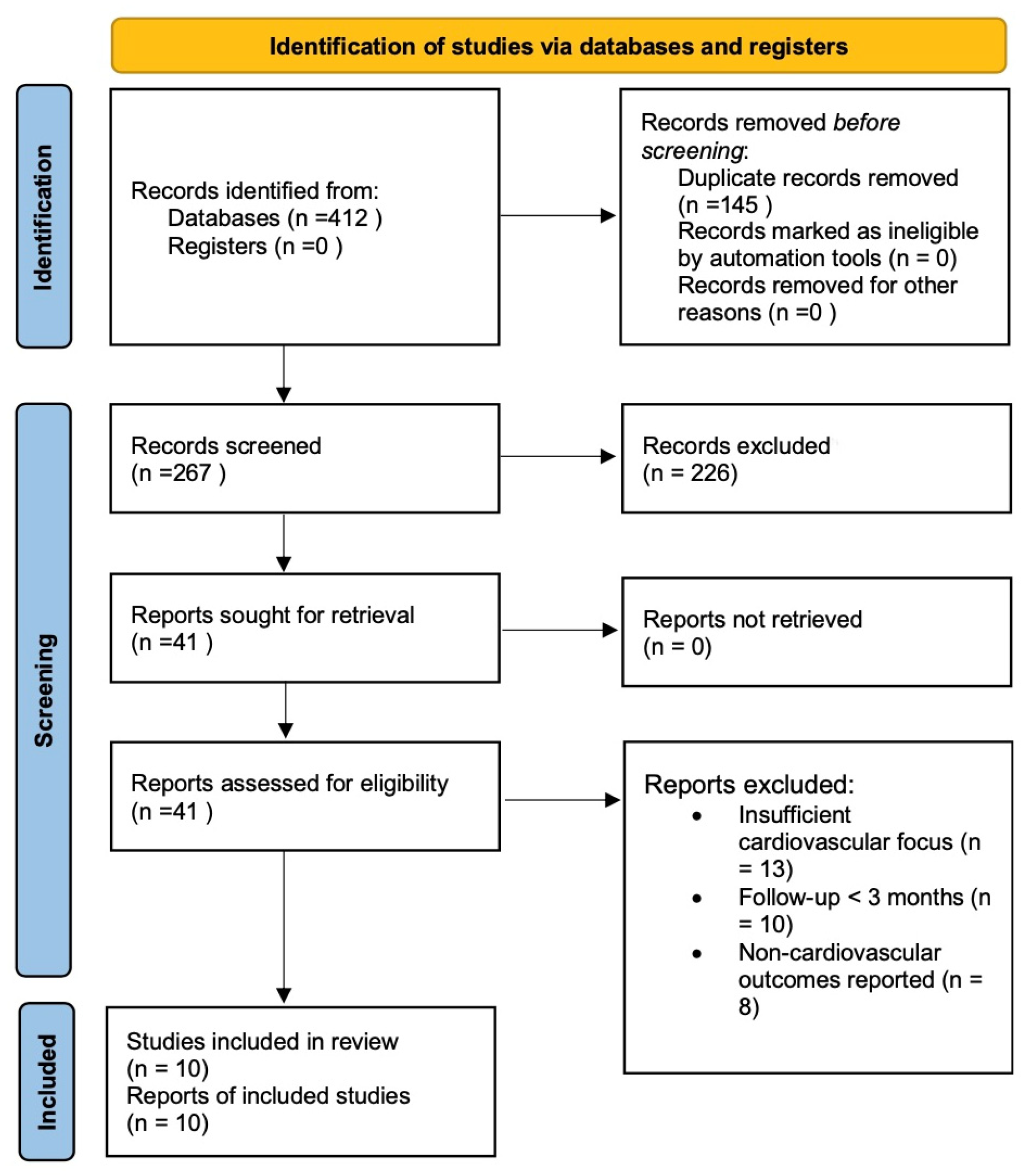
- Study Selection:
3.3. PRISMA Compliance, Registration, and Risk of Bias Assessment
3.4. Synthesis of Results
3.5. Population Characteristics and Study Heterogeneity
4. Discussion
4.1. Myocardial Structure and Function
4.2. Arrhythmias and Conduction Abnormalities
4.3. Vascular Dysfunction and Endothelial Injury
4.4. Blood Pressure Abnormalities
4.5. Biomarkers of Myocardial Injury
4.6. Impact of Vaccination Status
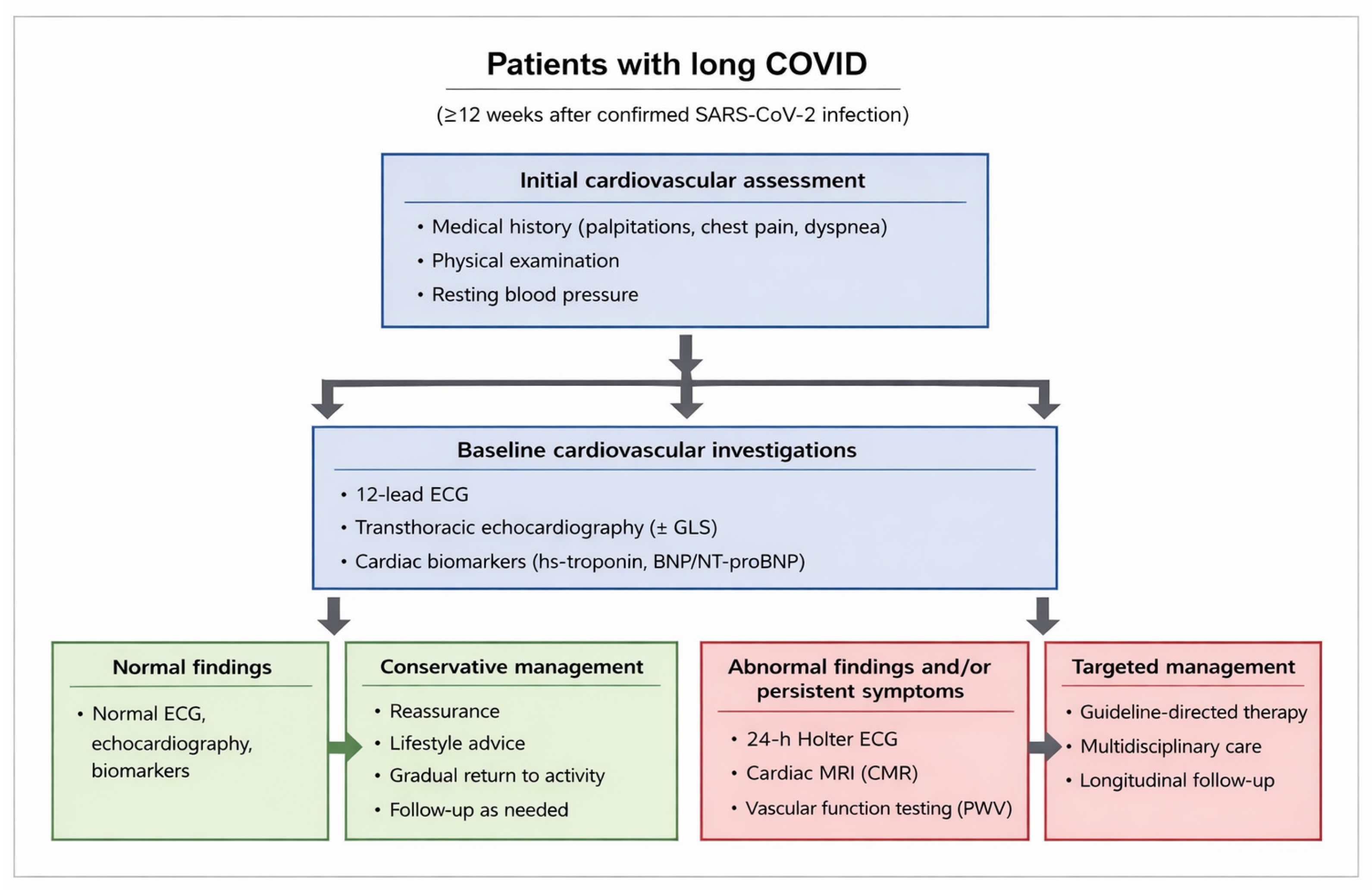
4.7. Clinical Implications
4.8. Limitations of Current Evidence
5. Conclusions
Supplementary Materials
Author Contributions
Funding
Institutional Review Board Statement
Informed Consent Statement
Data Availability Statement
Acknowledgments
Conflicts of Interest
References
- Cocoş, R.; Mahler, B.; Turcu-Stiolica, A.; Stoichiță, A.; Ghinet, A.; Shelby, E.-S.; Bohîlțea, L.C. Risk of Death in Comorbidity Subgroups of Hospitalized COVID-19 Patients Inferred by Routine Laboratory Markers of Systemic Inflammation on Admission: A Retrospective Study. Viruses 2022, 14, 1201. [Google Scholar] [CrossRef]
- Behzad, S.; Aghaghazvini, L.; Radmard, A.R.; Gholamrezanezhad, A. Extrapulmonary manifestations of COVID-19: Radiologic and clinical overview. Clin. Imaging 2020, 66, 35–41. [Google Scholar] [CrossRef] [PubMed]
- Huang, C.; Wang, Y.; Li, X.; Ren, L.; Zhao, J.; Hu, Y.; Zhang, L.; Fan, G.; Xu, J.; Gu, X.; et al. Clinical features of patients infected with 2019 novel coronavirus in Wuhan, China. Lancet 2020, 395, 497–506. [Google Scholar] [CrossRef] [PubMed]
- Morozov, S.P.; Andreychenko, A.E.; Blokhin, I.A.; Gelezhe, P.B.; Gonchar, A.P.; Nikolaev, A.E.; Pavlov, N.A.; Chernina, V.Y.; Gombolevskiy, V.A. MosMedData: Data set of 1110 chest CT scans performed during the COVID-19 epidemic. Digit. Diagn. 2020, 1, 49–59. [Google Scholar] [CrossRef]
- TBrett, T.S.; Rohani, P. Containing novel SARS-CoV-2 variants at source is possible with high-intensity sequencing. PNAS Nexus 2022, 1, pgac159. [Google Scholar] [CrossRef]
- Mohebbi, F.; Zelikovsky, A.; Mangul, S.; Chowell, G.; Skums, P. Early detection of emerging viral variants through analysis of community structure of coordinated substitution networks. Nat. Commun. 2024, 15, 2838. [Google Scholar] [CrossRef]
- World Health Organization. WHO Policy Brief: COVID-19 Surveillance; World Health Organization: Geneva, Switzerland, 2024; Available online: https://www.who.int/docs/default-source/coronaviruse/policy-briefs/policy-brief_covid-19_surveillance.pdf?download=true&sfvrsn=53601807_2 (accessed on 10 December 2025).
- COVID-19 Deaths|WHO COVID-19 Dashboard. Available online: https://data.who.int/dashboards/covid19/deaths?n=o (accessed on 29 June 2025).
- Kim, D. Minimizing Public Health Consequences of the COVID-19 Pandemic: Let’s Consider the Threat of a Triple Recession. Lancet Reg. Health-Am. 2022, 8, 100176. [Google Scholar] [CrossRef]
- Patterson, G.E.; McIntyre, K.M.; Clough, H.E.; Rushton, J. Societal Impacts of Pandemics: Comparing COVID-19 with History to Focus Our Response. Front. Public Health 2021, 9, 630449. [Google Scholar] [CrossRef]
- Mahler, B.; Parliteanu, O.A.; Alexe, O.; Popazu, C.R.; Ene, C.E.; Timar, B.; Constantinescu, T. Mucormycosis in a Patient with Severe COVID-19 Disease—The First Case Report in Romania and a Literature Review. Medicina 2023, 59, 555. [Google Scholar] [CrossRef]
- Mahler, B.; Parliteanu, O.A.; Alexe, O.; Popazu, C.R.; Ene, C.E.; Timar, B.; Constantinescu, T. Post-acute sequelae of COVID-19: Understanding and addressing the burden of multisystem manifestations. Lancet Respir. Med. 2023, 11, 739–754. [Google Scholar] [CrossRef]
- Sinclair, J.E.; Vedelago, C.; Ryan, F.J.; Carney, M.; Redd, M.A.; Lynn, M.A.; Grubor-Bauk, B.; Cao, Y.; Henders, A.K.; Chew, K.Y.; et al. Post-acute sequelae of SARS-CoV-2 cardiovascular symptoms are associated with trace-level cytokines that affect cardiomyocyte function. Nat. Microbiol. 2024, 9, 3135–3147. [Google Scholar] [CrossRef]
- Russell, S.J.; Parker, K.; Lehoczki, A.; Lieberman, D.; Partha, I.S.; Scott, S.J.; Phillips, L.R.; Fain, M.J.; Nikolich, J.Ž. Post-acute sequelae of SARS-CoV-2 infection (Long COVID) in older adults. GeroScience 2024, 46, 6563–6581. [Google Scholar] [CrossRef]
- Greenhalgh, T.; Knight, M.; A’court, C.; Buxton, M.; Husain, L. Management of post-acute covid-19 in primary care. BMJ 2020, 370, m3026. [Google Scholar] [CrossRef]
- Dong, E.; Du, H.; Gardner, L. An interactive web-based dashboard to track COVID-19 in real time. Lancet Infect. Dis. 2020, 20, 533–534. [Google Scholar] [CrossRef]
- Gupta, A.; Madhavan, M.V.; Sehgal, K.; Nair, N.; Mahajan, S.; Sehrawat, T.S.; Bikdeli, B.; Ahluwalia, N.; Ausiello, J.C.; Wan, E.Y.; et al. Extrapulmonary manifestations of COVID-19. Nat. Med. 2020, 26, 1017–1032. [Google Scholar] [CrossRef]
- Tenforde, M.W. Symptom Duration and Risk Factors for Delayed Return to Usual Health Among Outpatients with COVID-19 in a Multistate Health Care Systems Network—United States, March–June 2020. MMWR Morb. Mortal. Wkly. Rep. 2020, 69, 993–998. [Google Scholar] [CrossRef] [PubMed]
- Nalbandian, A.; Sehgal, K.; Gupta, A.; Madhavan, M.V.; McGroder, C.; Stevens, J.S.; Cook, J.R.; Nordvig, A.S.; Shalev, D.; Sehrawat, T.S.; et al. Post-acute COVID-19 syndrome. Nat. Med. 2021, 27, 601–615. [Google Scholar] [CrossRef] [PubMed]
- World Health Organization (WHO). A Clinical Case Definition of Post COVID-19 Condition by a Delphi Consensus; World Health Organization: Geneva, Switzerland, 2021. [Google Scholar]
- Lu, R.; Zhao, X.; Li, J.; Niu, P.; Yang, B.; Wu, H.; Wang, W.; Song, H.; Huang, B.; Zhu, N.; et al. Genomic characterisation and epidemiology of 2019 novel coronavirus: Implications for virus origins and receptor binding. Lancet 2020, 395, 565–574. [Google Scholar] [CrossRef]
- Wacharapluesadee, S.; Tan, C.W.; Maneeorn, P.; Duengkae, P.; Zhu, F.; Joyjinda, Y.; Kaewpom, T.; Ni Chia, W.; Ampoot, W.; Lim, B.L.; et al. Evidence for SARS-CoV-2 related coronaviruses circulating in bats and pangolins in Southeast Asia. Nat. Commun. 2021, 12, 972. [Google Scholar] [CrossRef] [PubMed]
- Jackson, C.B.; Farzan, M.; Chen, B.; Choe, H. Mechanisms of SARS-CoV-2 entry into cells. Nat. Rev. Mol. Cell Biol. 2022, 23, 3–20. [Google Scholar] [CrossRef]
- Hosey, M.M.; Needham, D.M. Survivorship after COVID-19 ICU stay. Nat. Rev. Dis. Primers 2020, 6, 60. [Google Scholar] [CrossRef]
- Tabibzadeh, A.; Esghaei, M.; Soltani, S.; Yousefi, P.; Taherizadeh, M.; Tameshkel, F.S.; Golahdooz, M.; Panahi, M.; Ajdarkosh, H.; Zamani, F.; et al. Evolutionary study of COVID-19, severe acute respiratory syndrome coronavirus 2 (SARS-CoV-2) as an emerging coronavirus: Phylogenetic analysis and literature review. Vet. Med. Sci. 2021, 7, 559–571. [Google Scholar] [CrossRef] [PubMed]
- Hu, B.; Guo, H.; Zhou, P.; Shi, Z.L. Characteristics of SARS-CoV-2 and COVID-19. Nat. Rev. Microbiol. 2021, 19, 141–154, Correction in Nat. Rev. Microbiol. 2022, 20, 315. https://doi.org/10.1038/s41579-022-00711-2. [Google Scholar] [CrossRef] [PubMed]
- Militaru, A.; Armean, P.; Ghita, N.; Andrei, D.P. Perceptions of Rehabilitation Access After SARS-CoV-2 Infection in Romanian Patients with Chronic Diseases: A Mixed-Methods Exploratory Study. Healthcare 2025, 13, 1532. [Google Scholar] [CrossRef]
- Abdelrahman, Z.; Li, M.; Wang, X. Comparative Review of SARS-CoV-2, SARS-CoV, MERS-CoV, and Influenza A Respiratory Viruses. Front. Immunol. 2020, 11, 552909. [Google Scholar] [CrossRef]
- Li, K.; Wu, Q.; Li, H.; Sun, H.; Xing, Z.; Li, L.; Chen, H. Multiomic characterisation of the long-term sequelae of SARS survivors: A clinical observational study. eClinicalMedicine 2023, 58, 101884. [Google Scholar] [CrossRef]
- Phetsouphanh, C.; Darley, D.R.; Wilson, D.B.; Howe, A.; Munier, C.M.L.; Patel, S.K.; Juno, J.A.; Burrell, L.M.; Kent, S.J.; Dore, G.J.; et al. Immunological dysfunction persists for 8 months following initial mild-to-moderate SARS-CoV-2 infection. Nat. Immunol. 2022, 23, 210–216. [Google Scholar] [CrossRef]
- T’ng, K.; Kenardy, J.; Hartanto, A. Hartanto Evaluating Mental Health Outcomes in COVID-19 ICU Survivors: A Scoping Review of Measurement Tools. J. Clin. Med. 2024, 13, 3191. [Google Scholar] [CrossRef] [PubMed]
- Mosteanu, I.-M.; Mahler, B.; Parliteanu, O.-A.; Stoichita, A.; Matache, R.-S.; Marghescu, A.-S.; Filip, P.-V.; Mota, E.; Vladu, M.I.; Mota, M. Wedge Resection and Optimal Solutions for Invasive Pulmonary Fungal Infection and Long COVID Syndrome—A Case Report and Brief Literature Review. Reports 2024, 7, 25. [Google Scholar] [CrossRef]
- Singh, T.K.; Zidar, D.A.; McCrae, K.; Highland, K.B.; Englund, K.; Cameron, S.J.; Chung, M.K. A Post-Pandemic Enigma: The Cardiovascular Impact of Post-Acute Sequelae of SARS-CoV-2. Circ. Res. 2023, 132, 1358. [Google Scholar] [CrossRef]
- Lu, J.Y.; Lu, J.Y.; Wang, S.H.; Duong, K.S.; Hou, W.; Duong, T.Q. New-onset cardiovascular diseases post SARS-CoV-2 infection in an urban population in the Bronx. Sci. Rep. 2024, 14, 31451. [Google Scholar] [CrossRef] [PubMed]
- Mukkawar, R.V.; Reddy, H.; Rathod, N.; Kumar, S.; Acharya, S. The Long-Term Cardiovascular Impact of COVID-19: Pathophysiology, Clinical Manifestations, and Management. Cureus 2024, 16, e66554. [Google Scholar] [CrossRef] [PubMed]
- Pazukhina, E.; Garcia-Gallo, E.; Reyes, L.F.; Kildal, A.B.; Jassat, W.; Dryden, M.; Holter, J.C.; Chatterjee, A.; Gomez, K.; Søraas, A.; et al. Long Covid: A global health issue—A prospective, cohort study set in four continents. BMJ Glob. Health 2024, 9, e015245. [Google Scholar] [CrossRef]
- Theresa, C.; Katebe, B.; Shibao, C.A.; Kirabo, A. Arterial stiffness in adults with Long COVID in sub-Saharan Africa. Physiol. Rep. 2024, 12, e70029. [Google Scholar] [CrossRef]
- Soriano, J.B.; Peláez, A.; Busquets, X.; Rodrigo-García, M.; Pérez-Urría, E.Á.; Alonso, T.; Girón, R.; Valenzuela, C.; Marcos, C.; García-Castillo, E.; et al. ABO blood group as a determinant of COVID-19 and Long COVID: An observational, longitudinal, large study. PLoS ONE 2023, 18, e0286769. [Google Scholar] [CrossRef]
- Tan, S.; Pryor, A.J.G.; Melville, G.W.; Fischer, O.; Hewitt, L.; Davis, K.J. The lingering symptoms of post-COVID-19 condition (long-COVID): A prospective cohort study. Intern. Med. J. 2024, 54, 224–233. [Google Scholar] [CrossRef]
- Qadir, G.O.; Ahmed, K.O.; Saleh, B.A.; Ameen, K.A.H.; Mawlud, I.M.; Taher, H.J. Taher Post-COVID-19 Complications and their Laboratory Findings: A Cohort Study. Arch. Razi Inst. 2023, 78, 715–720. [Google Scholar] [CrossRef]
- Kapusta, J.; Babicki, M.; Pieniawska-Śmiech, K.; Kałuzińska-Kołat, Ż.; Kołat, D.; Jankowski, P.; Kasprzak, J.D.; Wejner-Mik, P.; Bianek-Bodzak, A.; Chudzik, M. Clinical and electrocardiographic correlates of myocardial dysfunction after COVID-19 in nonhospitalised patients in long-term follow-up. Data from the polish long-covid cardiovascular study. J. Med. Virol. 2023, 95, e29331. [Google Scholar] [CrossRef]
- Vyas, P.; Joshi, D.; Sharma, V.; Parmar, M.; Vadodariya, J.; Patel, K.; Modi, G. Incidence and predictors of development of new onset hypertension post COVID-19 disease. Indian Heart J. 2023, 75, 347–351. [Google Scholar] [CrossRef] [PubMed]
- Kingery, J.R.; Safford, M.M.; Martin, P.; Lau, J.D.; Rajan, M.; Wehmeyer, G.T.; Li, H.A.; Alshak, M.N.; Jabri, A.; Kofman, A.; et al. Health Status, Persistent Symptoms, and Effort Intolerance One Year After Acute COVID-19 Infection. J. Gen. Intern. Med. 2022, 37, 1218–1225. [Google Scholar] [CrossRef]
- Fung, K.W.; Baye, F.; Baik, S.H.; Zheng, Z.; McDonald, C.J. Prevalence and characteristics of long COVID in elderly patients: An observational cohort study of over 2 million adults in the US. PLoS Med. 2023, 20, e1004194. [Google Scholar] [CrossRef]
- Cioboata, R.; Nicolosu, D.; Streba, C.T.; Vasile, C.M.; Olteanu, M.; Nemes, A.; Gheorghe, A.; Calarasu, C.; Turcu, A.A. Post-COVID-19 Syndrome Based on Disease Form and Associated Comorbidities. Diagnostics 2022, 12, 2502. [Google Scholar] [CrossRef]
- O’MAhoney, L.L.; Routen, A.; Gillies, C.; Ekezie, W.; Welford, A.; Zhang, A.; Karamchandani, U.; Simms-Williams, N.; Cassambai, S.; Ardavani, A.; et al. The prevalence and long-term health effects of Long Covid among hospitalised and non-hospitalised populations: A systematic review and meta-analysis. eClinicalMedicine 2022, 55, 101762. [Google Scholar] [CrossRef] [PubMed]
- Al-Aly, Z.; Bowe, B.; Xie, Y. Long COVID after breakthrough SARS-CoV-2 infection. Nat. Med. 2022, 28, 1461–1467. [Google Scholar] [CrossRef] [PubMed]
- Chen, C.; Haupert, S.R.; Zimmermann, L.; Shi, X.; Fritsche, L.G.; Mukherjee, B. Global Prevalence of Post-Coronavirus Disease 2019 (COVID-19) Condition or Long COVID: A Meta-Analysis and Systematic Review. J. Infect. Dis. 2022, 226, 1593–1607. [Google Scholar] [CrossRef] [PubMed]
- Bielecka-Dabrowa, A.; Kapusta, J.; Sakowicz, A.; Banach, M.; Jankowski, P.; Chudzik, M. The Influence of Long COVID on the Cardiovascular System and Predictors of Long COVID in Females: Data from the Polish Long COVID Cardiovascular (PoLoCOV-CVD) Study. J. Clin. Med. 2024, 13, 7829. [Google Scholar] [CrossRef]
- Yones, M.S.; Alwasiti, E.A.; Al-Qaseer, A.H.A.; Nile, A.K. The Impact of Severe COVID-19 Infection on Renal and Liver Markers (Urea, Creatinine, GOT, GPT) in Diabetic Patients. Iraqi J. Med. Sci. 2023, 21, 237–244. [Google Scholar]
- Barker-Davies, R.M.; O’sUllivan, O.; A Holdsworth, D.; Ladlow, P.; Houston, A.; Chamley, R.; Greenhalgh, A.; Nicol, E.D.; Bennett, A.N. How long is Long-COVID? Symptomatic improvement between 12 and 18 months in a prospective cohort study. BMJ Mil. Health 2023, 171, e002500. [Google Scholar] [CrossRef]
- Torki, E.; Hoseininasab, F.; Moradi, M.; Sami, R.; Sullman, M.J.M.; Fouladseresht, H. The demographic, laboratory and genetic factors associated with long COVID-19 syndrome: A case–control study. Clin. Exp. Med. 2024, 24, 13. [Google Scholar] [CrossRef]
- Turner, S.; Khan, M.A.; Putrino, D.; Woodcock, A.; Kell, D.B.; Pretorius, E. Long COVID: Pathophysiological factors and abnormalities of coagulation. Trends Endocrinol. Metab. 2023, 34, 321–344. [Google Scholar] [CrossRef]
- Heidecker, B.; Dagan, N.; Balicer, R.; Eriksson, U.; Rosano, G.; Coats, A.; Tschöpe, C.; Kelle, S.; Poland, G.A.; Frustaci, A.; et al. Myocarditis following COVID-19 vaccine: Incidence, presentation, diagnosis, pathophysiology, therapy, and outcomes put into perspective. A clinical consensus document supported by the Heart Failure Association of the European Society of Cardiology (ESC) and the ESC Working Group on Myocardial and Pericardial Diseases. Eur. J. Heart Fail. 2022, 24, 2000–2018. [Google Scholar] [CrossRef] [PubMed]
- Gluckman, T.J.; Bhave, N.M.; Allen, L.A.; Chung, E.H.; Spatz, E.S.; Ammirati, E.; Baggish, A.L.; Bozkurt, B.; Cornwell, W.K.; Harmon, K.G.; et al. 2022 ACC Expert Consensus Decision Pathway on Cardiovascular Sequelae of COVID-19 in Adults: Myocarditis and Other Myocardial Involvement, Post-Acute Sequelae of SARS-CoV-2 Infection, and Return to Play: A Report of the American College of Cardiology Solution Set Oversight Committee. J. Am. Coll. Cardiol. 2022, 79, 1717–1756. [Google Scholar] [CrossRef] [PubMed]
- Page, M.J.; McKenzie, J.E.; Bossuyt, P.M.; Boutron, I.; Hoffmann, T.C.; Mulrow, C.D.; Shamseer, L.; Tetzlaff, J.M.; Akl, E.A.; Brennan, S.E.; et al. The PRISMA 2020 statement: An updated guideline for reporting systematic reviews. BMJ 2021, 372, n71. [Google Scholar] [CrossRef] [PubMed]



| Study & Year | Design | N | Population Characteristics | Acute COVID-19 Severity | Cardiovascular Parameters Evaluated | Key Quantitative Findings | Study Limitations |
|---|---|---|---|---|---|---|---|
| Pazukhina et al., 2024—Long COVID: A Global Health Issue [36] | Prospective multicenter cohort (4 continents) | 11,860 | Mean age 54; 51% female; mixed comorbidities (HTN, DM, CAD) | Mild (42%), moderate (37%), severe (21%) | Symptom persistence, functional capacity | 44% had fatigue, 32% dyspnea, 15% chest pain at 12 months; self-reported palpitations in 11% | No imaging or biomarker data; CV symptoms self-reported; heterogeneity in follow-up protocols |
| Theresa et al., 2023—Arterial Stiffness in Adults with Long COVID (Sub-Saharan Africa) [37] | Cross-sectional | 74 | Mean age 47; 48% female; low baseline CVD prevalence | Mild/moderate (82%), severe (18%) | Pulse Wave Velocity (PWV), Arterial Stiffness Index (ASI) | PWV ↑ by 1.2 m/s (p < 0.05); ASI ↑ by 18% vs. controls | Small sample; no pre-COVID baseline PWV; limited adjustment for confounders |
| Soriano et al., 2023—ABO Blood Group and Long COVID [38] | Observational longitudinal | 676 | Mean age 52; 49% female; 27% hypertensive | All severities; vaccinated and unvaccinated included | Symptom incidence by blood group | No significant CV symptom difference between blood groups; palpitations in ~10% | No cardiac imaging or biomarkers; focus not primarily CV |
| Tan et al., 2024—Long-COVID Symptom Trajectories [39] | Prospective cohort | 339 | Mean age 50; 55% female; 35% with ≥1 comorbidity | Mild (58%), moderate/severe (42%) | Symptom follow-up, chest pain frequency | CV symptoms in 14% at 12 months; vaccinated patients recovered faster (HR 1.5) | No objective cardiac testing; symptoms patient-reported |
| Qadir et al., 2023—Post-COVID Complications and Laboratory Findings [40] | Prospective cohort | 986 | Mean age 48; 46% female; HTN 28%, DM 18% | Mostly hospitalized | Troponin, D-dimer, ECG, chest pain | Troponin ↑ in 7% at follow-up; 15% with abnormal ECG; 12% persistent chest pain | No imaging; no standardized troponin timing; possible residual acute illness effects |
| Kapusta et al., 2024—Polish Long-COVID Cardiovascular Study [41] | Prospective, multicenter | 4142 | Mean age 52; 52% male; mostly without pre-existing CVD | Non-hospitalized (mild/moderate) | Echocardiography (LVEF, GLS), ECG | LVEF < 50% in 8%; GLS reduction in 15%; QRS fragmentation in 9%; arrhythmias in 6% | No baseline imaging pre-COVID; observational design |
| Vyas et al., 2023—New-Onset Hypertension Post-COVID [42] | Prospective | 393 | Mean age 49; 55% male; 22% obese | Hospitalized moderate/severe | BP monitoring, CT severity score correlation | New hypertension in 32.3%; associated with high CT severity and steroid use | No ambulatory BP monitoring; potential pre-existing undiagnosed HTN |
| Kingery et al., 2022—Effort Intolerance One Year Post-COVID [43] | Prospective follow-up | 1032 | Mean age 56; 50% female; high comorbidity burden | Hospitalized moderate/severe | 6 min walk, functional assessment | 40% with reduced exercise tolerance; 15% chest pain | No direct cardiac imaging; functional limits may be multifactorial |
| Fung et al., 2023—Long COVID vs. Long Flu in Elderly [44] | Retrospective cohort (Medicare data) | 3.5 million | ≥65 years; 57% female; high comorbidity prevalence | All severities | Symptom codes, healthcare utilization | Palpitations in 12%, dyspnea in 28% vs. lower in long flu | Administrative data only; no direct clinical assessment |
| Cioboata et al., 2022—Post-COVID Syndrome by Disease Form [45] | Observational | 767 | Mean age 51; 54% female; comorbidities in 40% | Hospitalized moderate/severe | Symptom reporting, suspected dysautonomia | Fatigue 38%, palpitations 15%; higher prevalence in severe disease | No imaging or biomarker confirmation |
Disclaimer/Publisher’s Note: The statements, opinions and data contained in all publications are solely those of the individual author(s) and contributor(s) and not of MDPI and/or the editor(s). MDPI and/or the editor(s) disclaim responsibility for any injury to people or property resulting from any ideas, methods, instructions or products referred to in the content. |
© 2026 by the authors. Licensee MDPI, Basel, Switzerland. This article is an open access article distributed under the terms and conditions of the Creative Commons Attribution (CC BY) license.
Share and Cite
Stoichita, A.; Mahler, B.; Vlasceanu, S.; Parliteanu, O.; Dragomir, J.A.; Balteanu, M.; Radu, A.D.; Teleaga, C.; Baiceanu, D.; Panciu, T.C.; et al. Post-COVID-19 Cardiovascular Complications: An Updated Systematic Review. J. Respir. 2026, 6, 4. https://doi.org/10.3390/jor6010004
Stoichita A, Mahler B, Vlasceanu S, Parliteanu O, Dragomir JA, Balteanu M, Radu AD, Teleaga C, Baiceanu D, Panciu TC, et al. Post-COVID-19 Cardiovascular Complications: An Updated Systematic Review. Journal of Respiration. 2026; 6(1):4. https://doi.org/10.3390/jor6010004
Chicago/Turabian StyleStoichita, Alexandru, Beatrice Mahler, Silviu Vlasceanu, Oana Parliteanu, Justina Antonela Dragomir, Mara Balteanu, Alexandru Daniel Radu, Cristina Teleaga, Dragos Baiceanu, Traian Constantin Panciu, and et al. 2026. "Post-COVID-19 Cardiovascular Complications: An Updated Systematic Review" Journal of Respiration 6, no. 1: 4. https://doi.org/10.3390/jor6010004
APA StyleStoichita, A., Mahler, B., Vlasceanu, S., Parliteanu, O., Dragomir, J. A., Balteanu, M., Radu, A. D., Teleaga, C., Baiceanu, D., Panciu, T. C., Madalina, M., Ibraim, E., Ciupan, M. M., & Iliesiu Mihaela, A. (2026). Post-COVID-19 Cardiovascular Complications: An Updated Systematic Review. Journal of Respiration, 6(1), 4. https://doi.org/10.3390/jor6010004