Systematic Review

The Effect of Home-Based Inspiratory Muscle Training in Post-COVID Population—Systematic Review

by
Stiliani Andreadou
1,†,
Georgia Tziouvara
2,†,
Georgios Mitsiou
3,
Aphrodite Evangelodimou
3,
Stavros Dimopoulos
2,4 and
Irini Patsaki
3,*
1
ICU Department, General Hospital Chalkida, 34100 Chalkida, Greece
2
Lab of Clinical Ergospirometry, Exercise and Rehabilitation, Medical School, National and Kapodistrian University of Athens (NKUA), 11527 Athens, Greece
3
Laboratory of Advanced Physiotherapy, Physiotherapy Department, University of West Attica, 12243 Egaleo, Greece
4
Cardiac Surgery Intensive Care Unit, Onassis Hospital, 356 Syngrou Ave, 17674 Kallithea, Greece
*
Author to whom correspondence should be addressed.
These authors contributed equally to this work.
J. Respir. 2026, 6(1), 5; https://doi.org/10.3390/jor6010005
Submission received: 9 December 2025 / Revised: 21 January 2026 / Accepted: 4 March 2026 / Published: 5 March 2026

Abstract

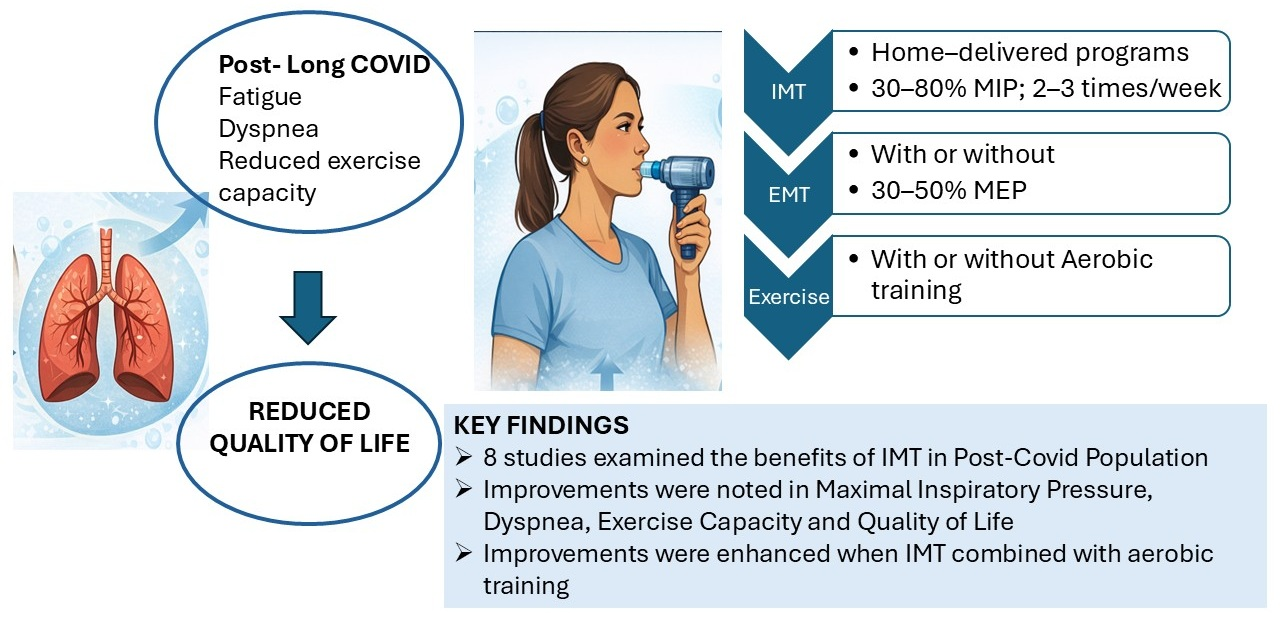
Background/Objective: Post-COVID survivors present significant respiratory deficiency that has been associated with ongoing shortness of breath and impaired lung function. Inspiratory muscle training (IMT) is increasingly used in survivors of COVID-19 rehabilitational programs as a means to facilitate recovery of the respiratory system. Yet, its home-based effectiveness across clinically relevant outcomes remains unclear. This systematic review aimed to present current evidence on home- or tele-delivered IMT in the post-COVID-19 population. Methods: PubMed, Scopus, Cochrane library and Science Direct were systematically searched for studies evaluating home-based (or telerehabilitation) IMT, alone or as part of a respiratory muscle training program, in adults with post-COVID-19 symptoms. The primary outcome was inspiratory muscle strength. Secondary outcomes included dyspnea, pulmonary function, exercise capacity and health-related quality of life. The methodological quality of the included studies was assessed via the PEDro scale. Owing to clinical and methodological heterogeneity, we performed only a qualitative synthesis. Results: Eight studies met the inclusion criteria. Two included both inspiratory and expiratory muscles training and three included physical training as well. The methodological quality was found to be good. IMT consistently increased inspiratory muscle strength across trials. Respiratory muscle training (RMT) programs that combined inspiratory and expiratory training also improved maximal expiratory pressure. IMT reduced dyspnea versus control/sham or baseline and several studies reported improvements in exercise capacity and physical function. Spirometry/DLCO changes were small or null in most cohorts. HRQoL gains were domain-specific in anxiety and depression. Adherence was generally good. No serious adverse events attributable to IMT were reported. Conclusions: Home-based IMT for adults with post-COVID-19 conditions is safe and seems to improve inspiratory muscle strength and dyspnea, with signs of benefit for exercise capacity, physical function, and selected HRQoL domains. Effects on ventilatory efficiency and conventional lung function appear limited. Future multicenter, sham-controlled RCTs should further explore the characteristics of IMT, employ core outcome sets, include longer follow-up, and predefine phenotype-based subgroups.

Graphical Abstract

1. Introduction

The global COVID-19 pandemic caused by the severe acute respiratory syndrome coronavirus 2 (SARS-CoV-2) has led to significant morbidity and mortality worldwide [1]. While most individuals recover from the acute phase of the illness, a considerable proportion continue to experience persistent symptoms beyond the initial infection. This condition, commonly referred to as post-COVID-19 condition or long-COVID, is defined by the World Health Organization (WHO) as the presence of symptoms that last for at least two months and occur within three months of probable or confirmed SARS-CoV-2 infection, which cannot be explained by an alternative diagnosis [2].
Commonly reported symptoms of post-COVID-19 syndrome include dyspnea, fatigue, reduced exercise capacity, and impaired quality of life [3,4]. These long-term effects are thought to result from a combination of factors such as deconditioning, systemic inflammation, pulmonary impairment, and neuromuscular dysfunction. Notably, respiratory muscle weakness, particularly involving the inspiratory muscles, has been identified as a significant contributor to reduced functional capacity in affected individuals [5].
Inspiratory muscle training (IMT) is a targeted rehabilitation strategy that aims to strengthen the inspiratory muscles, typically through resistance-based breathing exercises using threshold devices [6]. IMT has demonstrated clinical benefits in various populations with respiratory and cardiovascular diseases, such as chronic obstructive pulmonary disease (COPD) and heart failure, including improvements in inspiratory muscle strength, dyspnea, functional capacity, and health-related quality of life [7,8,9]. Given the similarity in respiratory symptoms and functional impairments observed in post-COVID-19 patients, there is increasing interest in the potential application of IMT within this population.
While a growing number of studies have examined respiratory muscle training in post-COVID-19 populations, the overall effectiveness remains inconclusive, with studies reporting variable outcomes and limited sample sizes [10]. Additionally, limited data have been presented regarding home-based programs as a strategy to overcome time and distance barriers. This highlights the need for a systematic synthesis of current findings to better inform clinical practice and therapists.
The objective of this systematic review was to synthesize the available evidence on the effectiveness of home-based inspiratory muscle training in adults with post-COVID-19 conditions, focusing on key outcomes such as inspiratory muscle strength, pulmonary function, dyspnea, exercise capacity, and quality of life.

2. Methods and Materials

This systematic review was conducted in accordance with The Preferred Reporting Items for Systematic Reviews and Meta-Analyses (PRISMA) guidelines (Supplementary Table S1) [11]. The study has been registered in PROSPERO: international prospective register of systematic reviews (CRD420251060158).

2.1. Search and Study Identification

A comprehensive literature search was conducted by two authors (S.A. and G.T.) independently in the following electronic databases: PubMed, Scopus, Cochrane library and Science Direct for studies published between January 2020 and August 2025 in the English language. The search strategy combined Medical Subject Headings (MeSH) and keywords related to “post covid-19” OR “Long COVID” OR “Post-acute sequelae” AND “Inspiratory muscle training” OR “IMT” OR “respiratory muscle training” AND “home-based” OR “telerehabilitation”. All the terms were used in various combinations to create search strategies applied to the selected databases (Supplementary Table S2). Additionally, a hand search was carried out across all reference lists of the identified articles.
The criteria for inclusion of studies in this systematic review were as follows: (a) randomized clinical trials and pilot clinical trials, (b) with adults over 18 years of age, (c) adults diagnosed with post-COVID-19 conditions, including persistent symptoms lasting >4 weeks after acute SARS-CoV-2 infection, (d) the intervention included inspiratory muscle training implemented through portable trainers, (e) being delivered at home or remotely and (f) studies published in English language. Exclusion criteria from the research study were (a) participants who were in the acute phase of COVID-19, (b) the intervention did not include inspiratory muscle training, (c) the intervention was performed in-hospital and (d) case reports, editorials, reviews, and conference abstracts.
A thorough review of the titles and abstracts of studies published in the databases selected was performed by two authors (S.A. and G.T.) independently. For those studies that met the inclusion criteria and none of the exclusions, a further assessment was performed on the full text. Additionally, the reference lists of pertinent literature were examined for potentially relevant articles published in English. Any discrepancies were discussed and resolved by consensus between the two reviewers or by a third (I.P.) when needed.
Data extraction was performed independently by two reviewers including study characteristics (authors, year, country, design), participant characteristics (sample size, age, sex, time since infection), intervention details (type, duration, frequency of IMT), comparator details (description of intervention, frequency and duration), outcome measures and results. A qualitative synthesis was performed to summarize findings.

2.2. Methodological Quality and Risk of Bias

The methodological quality of the included studies was assessed with the PEDro (Physiotherapy Evidence Database) scale, which is valid and reliable [12]. It contains 11 criteria, 10 of which are answered with a yes or no response. If the criterion is satisfied, it is scored as 1 point, if not, it is scored as 0. Criterion 1 affects external validity and does not contribute to the final PEDro scale score. ‘Low quality’ studies were defined as those scoring zero to three points, while studies were defined as ‘moderate quality’ and ‘high quality’ if they scored four to six points and seven to ten points, respectively. Regarding the risk of bias, each of the articles was assessed using the Cochrane Collaboration’s tool [13].
Both methodological and risk-of-bias assessments were performed by two authors independently. Any doubts or disagreements were resolved through consensus with another author.

3. Results

3.1. Identification of Studies

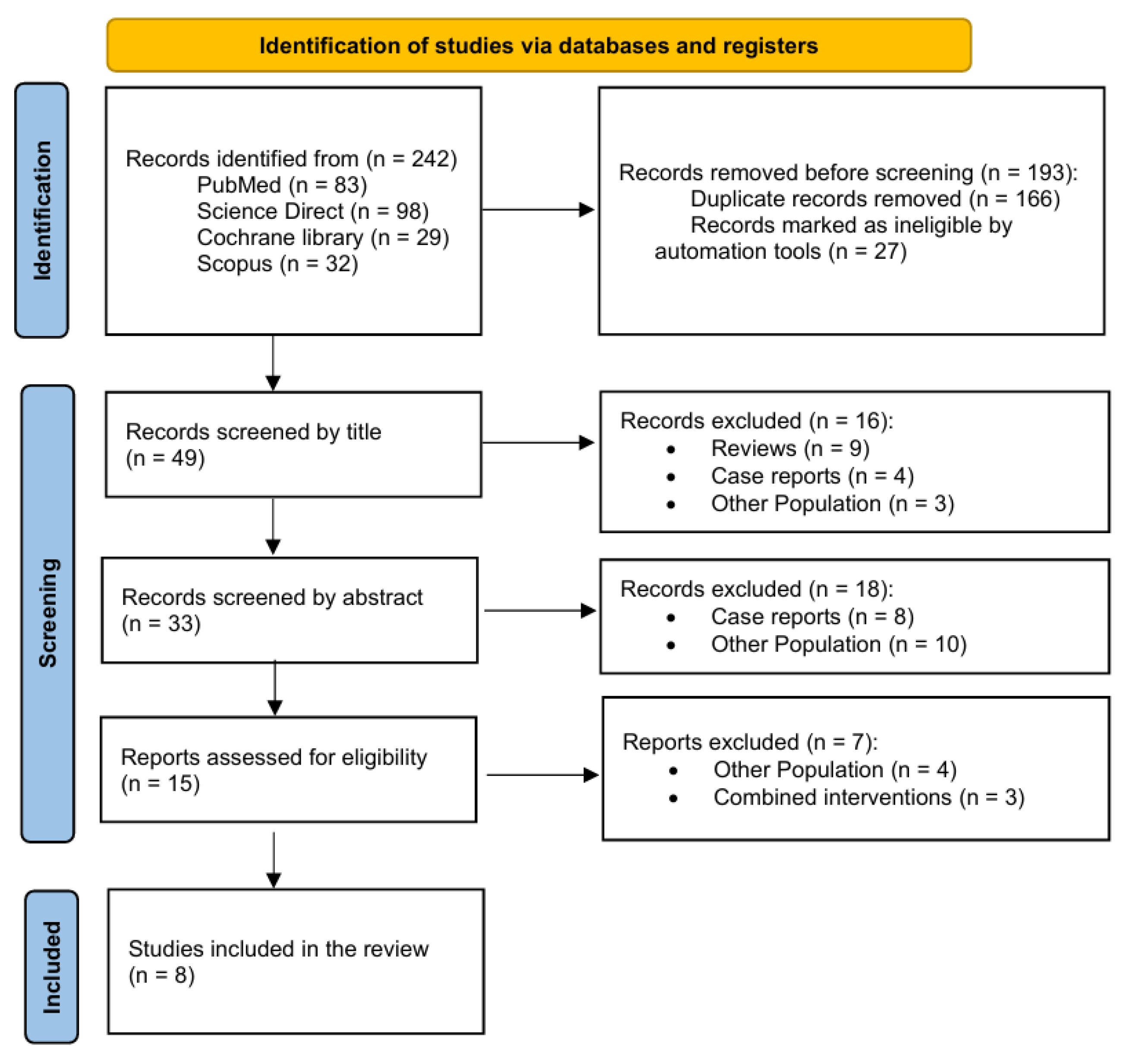
The initial search of the online database identified 242 records (Figure 1). After removing 166 duplicate records, 76 studies remained and were assessed for inclusion. Only eight studies [14,15,16,17,18,19,20,21] were considered eligible and were included in the review. Seven [14,15,16,17,18,19,20] were recognized as randomized controlled trials (RCT) and one as a pilot without a control group [21].

3.2. Methodological Quality and Risk of Bias

Most studies [14,15,17,18,19,20] presented a good methodological quality and only two studies [16,19] had a fair score. In all studies, we noted the absence of blinding, especially regarding therapists. Only two did not achieve blinding of assessors [16,19] and three did not conceal allocation [16,18,19]. Additionally, intention-to-treat analysis was performed in 4/7 studies [14,15,17,20]. Yet, the average score (6.8) of the included studies underlines their good methodological quality (Table 1).
Three trials were judged to have a low risk of bias, one presented some concerns, and three were rated as high risk of bias. High risk of bias was mainly attributed to deviations from intended interventions, lack of sham controls, and high attrition in unsupervised home-based IMT protocols. In contrast, trials using sham-controlled and remotely supervised designs demonstrated low risk of bias across all domains (Supplementary Table S1, Figures S1 and S2).

3.3. Description of Intervention

The studies included explored the benefits of inspiratory muscle training alone or in combination with other types of exercises. Six studies [14,15,16,18,19,21] applied only inspiratory muscle training, with two [16,18] of them combining it with a physical training program. From the two studies that implemented an inspiratory and expiratory muscle training (EMT) program, only one [20] combined it with aerobic training in a cycloergometer. Variations were also noted in the characteristics of both IMT and EMT programs. The duration of the programs varied: in one study, it was four weeks [18]; in another one, it was six weeks [19]; in five studies, it was 8 weeks [14,16,17,20,21] and in two other studies, it reached twelve weeks [15,16]. Differences were also noted in terms of intensity, with most of them applying a medium one at 40–50% of Maximal Inspiratory Pressure (MIP) or sustained negative inspiratory pressure (SNIP). Only one started from a high intensity of 80% SNIP [14] and another used the Borg scale of dyspnea to identify the level of implemented loading [16]. A threshold trainer was utilized in most studies, with only one exception [19], where we had an electronic trainer that used a new technique, that of tapered resistance flow. The characteristics of the studies included are presented in Table 2. Details of the IMT program that was implemented across the studies are given in Table 3.

3.4. Effect of Intervention on Inspiratory and Expiratory Muscle Strength

Inspiratory muscle strength was measured by non-invasive methods, such as Maximal Inspiratory Pressure (MIP) in five studies [14,17,18,20,21], sustained negative inspiratory pressure in one study [14], and with an invasive method via sniff transdiaphragmatic pressure in another one [19]. Home-delivered inspiratory muscle training consistently improved inspiratory muscle performance across studies [14,17,18,20,21]. Similar results are being demonstrated for the expiratory muscles as well [17,20] in studies that introduced both inspiratory and expiratory programs. MIP reached a statistically significant difference in four studies [14,17,18,20], two of which combined IMT with aerobic training [18,20]. Endurance of inspiratory muscles was measured in two studies [17,20]. Both presented a statistically significant difference between the intervention and the sham groups.

3.5. Effect of Intervention on Dyspnea

In our study, dyspnea was assessed in seven studies [14,16,17,18,19,21], through different measurement tools such as Transition Dyspnea Index (TDI) [14], Borg scale [18,19] and mMRC [16,18,19]. McNarry et al. [14] reported clinically meaningful reduction in dyspnea, with the IMT group demonstrating a ≥2-unit increase in TDI (exceeding the MCID), whereas the control group showed no significant change. In del Corral et al. [17], both IMT and combined RMT (IMT and EMT) reached a statistically significant reduction in long-term post-COVID-19 dyspnea in relation to the sham groups [17]. The combined IMT and EMT protocol produced the largest improvement. Jimeno-Almazán et al. [16] reported reduced dyspnea (mMRC) across all intervention arms (the number of participants with mMRC < 2 increased from 55% to 79% (p < 0.001)), with no additional benefit of IMT. On the other hand, Sánchez-Milá et al. [18] showed that aerobic training, along with IMT, significantly reduced dyspnea in relation to no treatment. Among individuals with persistent diaphragm dysfunction, IMT reduced dyspnea on exertion and its probable pathophysiological correlation (i.e., diaphragm/inspiratory muscle weakness) in individuals with long-COVID, but did not reach statistical significance between groups [19]. The improvements persisted for 6 weeks after the end of therapy [19]. In the study of Edgell et al. [21], the rating of perceived exertion after completing the 6MWD was higher in ME/CFS and PASC compared to healthy controls, with no change after IMT (p = 0.109).

3.6. Effect of Intervention on Pulmonary Function

Across studies, pulmonary function as assessed by spirometry and diffusion measures remained largely unchanged following IMT [17,18,20,21]. In both respiratory muscle training trials [17,20], FEV1 and FVC were stable, with increases observed only in PEF when expiratory loading was included. Yet, the introduction of IMT in aerobic training managed to improve statistically significant lung volumes even with a short duration program of 4 weeks [18]. In individuals with chronic diaphragm impairment, IMT improved neuromuscular activation and contractility without altering lung volume or diffusion capacity [19]. Overall, IMT enhances respiratory muscle function rather than pulmonary structure or volumes.

3.7. Effect of Intervention on Exercise Capacity

Exercise capacity was assessed in most studies through cardiopulmonary testing [14,15,16,20] or a submaximal test like the 6 min walk distance test (6MWDT) [19,21] and Ruffier test [17]. Home-based IMT programs demonstrated improvements in exercise capacity, with these reaching statistical significance between groups in only one study [15]. Additional improvements were not noted when IMT was combined with whole-body training [16,20]. The 1 min sit-to-stand test has been identified as a valuable alternative to assessing exercise capacity during the pandemic [22]. The combination of IMT and EMT in Del Coral et al. [17]’s study did not reveal significant differences among groups in Ruffier test, but it did in the 1 min sit-to-stand test.

3.8. Effects of Intervention on Quality of Life and Fatigue

Improvements in quality of life were observed in studies where IMT reduced respiratory symptom burden [15,17,20]. This was presented regardless of the incorporation of EMT into IMT or aerobic training into IMT. The RECOVE study reported significant improvements in SF-12 physical and mental domains across all interventional groups without reaching between-group differences [16]. Fatigue outcomes were improved [14,16]. Yet, this reached a statistically significant difference between groups only when concurrent aerobic and resistance training was added to respiratory muscle training [16].

3.9. Safety, Feasibility, and Adherence

Across studies, home-based or telerehabilitation IMT was feasible, with good adherence and no serious adverse events attributed to training. Where analyzed, greater adherence correlated with larger HRQoL gains, suggesting dose–response effects that future trials should capture with device-logged training data [14,15,17,20,21].

4. Discussion

This systematic review included studies that investigated the effectiveness of inspiratory muscle training programs that were implemented alone or combined with expiratory training programs at home or remotely in a post-COVID-19 population. We identified improvements in both respiratory and physical function, whether IMT has been implemented alone or combined with physical rehabilitation programs. These improvements were more evident and reached statistically significant differences between groups in inspiratory muscle strength and dyspnea. Positive effects have also been presented in exercise capacity, fatigue and physical function. This underlines the physiological nature of the technique, which is more related to respiratory muscle strengthening than to global cardiovascular adaptations. IMT has been well-recognized as a beneficial intervention when added to pulmonary or cardiac rehabilitation programs in people living with chronic obstructive pulmonary disease (COPD) [7,23], heart failure [24] or cardiovascular disease [25]. This accumulated experience supports the physiological plausibility of IMT in post-COVID-19 syndrome. Its cardiovascular manifestations makes it evident that COVID-19 is more than a respiratory disease [26]. Especially in heart failure patients, the standalone IMT eases breathing, increases walking capacity, and improves quality of life. Moreover, higher-load protocols were particularly useful for patients unable to tolerate conventional exercise—an observation that resonates with post-COVID-19 cohorts presenting marked exertional symptoms and deconditioning [27,28]. Evidence from ICU and weaning studies further underlines the significance of this intervention to address diaphragmatic dysfunction [29]. Especially in a COVID-19 population that was admitted in the ICU and survived critical illness, a targeted loading can reverse clinically significant diaphragmatic dysfunction with persistent ventilatory pump weakness [5,30].
As already noted, IMT consistently improved inspiratory muscle strength, indicating a robust physiological response to targeted loading of the respiratory muscles. In certain cases, the improvement exceeded the minimum clinically important difference of 17 cmH2Ocm for MIP and 18 cmH2Ocm for MEP [17,20,31,32]. This response is consistent with known principles of skeletal muscle adaptation whereby pressure-threshold loading at sufficient intensity induces increases in muscle fiber recruitment, contractile efficiency, and fatigue resistance of the targeted muscles [33]. The improvements in MIP, SMIP, MEP and respiratory endurance observed across trials suggest that IMT enhances both force-generating capacity and resistance to ventilatory fatigue, thereby reducing the relative effort required for breathing during daily and exertional activities [33,34]. These changes could likely explain the reductions in dyspnea seen in studies where IMT was delivered at adequate intensity or when combined with whole-body training.
As IMT is a dose-responsive intervention, heterogeneity driven by dose, outcome measures and supervision could be responsible for limiting the robustness of findings regarding exercise capacity and functional performance. Longer programs (3 months) that are implemented closely to hospital discharge presented more promising results in oxygen consumption [15] than when introduced in more chronic cases [14,16]. Yet, these were more evident when IMT was combined with EMT and both were integrated into concurrent aerobic or resistance training [16]. This pattern suggests that while IMT reduces the ventilatory load component of exertion, exercise tolerance could be limited by cardiorespiratory and peripheral metabolic factors that require a holistic and systemic training approach. As respiratory weakness has been associated with respiratory and peripheral muscle fatigue that limits physical performance, a thorough assessment is needed to identify those people who would be most benefited by the inclusion of IMT to therapeutic exercise. IMT may be suggested as a complementary intervention targeting ventilatory efficiency, which will allow trainees to tolerate exercise programs as seen in the COPD population as well.
The absence of significant change in spirometry indices across studies further reinforces that IMT acts on neuromuscular function rather than pulmonary structure. Post-COVID-19 respiratory impairment in most of these cohorts was not driven by restrictive or obstructive disease, but by reduced inspiratory muscle performance and dysfunctional breathing patterns. It has been described that long-COVID patients with long-lasting unexplained dyspnea may present a reduced maximal exercise capacity, but normal spirometry, compared to healthy control subjects [35]. Lee et al., in a systematic review of a pulmonary functional test and computed tomography abnormalities 6–12 months after COVID-19, found restrictive ventilatory defects in 28% of the included patients [36]. It has been suggested that most studies did not preclude patients with underlying lung diseases, which could result in over-estimation of COVID-19-associated pulmonary abnormalities [36]. The authors have also commented that certain extrapulmonary causes, such as obesity, respiratory muscle fatigue, and localized microvascular changes, could have been frequently cited as causes of restrictive defects. Thus, improvements that were noted in ventilatory drive, diaphragm activation, and perceived breathing effort were related to symptom relief rather than lung-volume changes [14,17,19,20]. Persistent pulmonary impairments are mostly seen in patients with already compromised respiratory muscle contractibility and decreased pulmonary function, as in chronic obstructive pulmonary disease (COPD) and asthma [37].
Improvements in health-related quality of life could be attributed to symptom reduction and improved physical performance, as seen in chronic respiratory patients who participate in pulmonary rehabilitation programs [14,15,16,20]. Importantly, qualitative evidence further supports the acceptability and patient-perceived value of IMT-based rehabilitation. Palacios-Ceña et al. [38] reported that individuals participating in telerehabilitation programs involving respiratory muscle training described increased confidence in their breathing, greater control over symptoms, and a renewed sense of physical capability. However, participants also highlighted the need for structured guidance and ongoing follow-up to maintain training adherence and avoid loss of progress once formal supervision ends. This perspective reinforces the role of therapist support, progression monitoring, and continuity of care when implementing IMT in real-world post-COVID-19 rehabilitation pathways.
Our findings are in agreement with prior evidence of similar systematic reviews and meta-analyses that explored the benefits of various breathing and physical exercises along with IMT and/or EMT in this population [10,39,40,41,42]. Da Costa Correia et al. [41], after examining both IMT and multi-component physical training programs, have concluded that IMT showed statistically significant improvement in MIP, VO2max, and physical functioning. These findings are consistent with those of a similar systematic review evaluating the same intervention in patients with PCC. Da Cost Correia et al. [41] underlined the value of a multi-component rehabilitation strategy that targets both respiratory and peripheral muscle deconditioning. They also highlighted that pulmonary rehabilitation could be delivered either in-person or remotely, with the same effectiveness [43]. Regarding VO2max, three recent meta-analyses have manifested a significant improvement in the change from baseline of VO2max in the IMT group compared with the control group (p = 0.001) [10,39,41]. Yet, either included studies with various interventions added to the IMT such as manual therapy of the diaphragm [39] and physical exercises like tai-chi [41] or studies with a wider population of COVID-19 from those being in the ICU to the community [10,39]. On the other hand, Correa et al. [40], having examined the exercise tolerance of IMT delivered at home or in outpatient facilities, concluded that positive findings could not be generalized due to limited and heterogeneous findings. Statistically significant changes that were noted in VO2max were presented by 6MWT or the Ruffier test in our study as well. Guo et al. [42] investigated home-delivered RMT, but in an older post-COVID-19 population and included breathing exercises in general. The author has stated that these improvements likely result from physiological adaptations that enhance inspiratory muscle strength, endurance and ventilatory efficiency [42].
These findings suggest that IMT may play a valuable role in comprehensive rehabilitation programs for post-COVID. However, IMT alone is unlikely to fully restore exercise tolerance or resolve fatigue. Its benefits appear greatest when combined with aerobic and resistance training that address the systemic effects of post-COVID deconditioning. Therefore, the evidence supports the integration of progressive IMT as a targeted, low-cost, home-deliverable component of multimodal rehabilitation, rather than as a standalone intervention.

4.1. Limitations

The findings of this systematic review should be interpreted in the context of several limitations. First, heterogeneity in intervention design (e.g., IMT alone vs. IMT combined with aerobic or neuromuscular rehabilitation, inspiratory vs. inspiratory + expiratory loading) limits direct comparability across studies. Training intensity, frequency, and progression criteria were not standardized, and some studies did not report adherence, making it difficult to determine dose–response effects. Also, there was a significant variation among the populations in terms of the time that has passed from the COVID-19 infection to the onset of the intervention. This could probably create significant differences in the severity of the burdens caused by the disease and lead to discrimination among the findings among studies, even in common outcomes. Additionally, studies including combined rehabilitation interventions make it challenging to isolate the specific contribution of IMT to improvements in exercise tolerance and quality of life. Second, outcome measures were inconsistent, particularly for dyspnea, fatigue, and functional capacity, with some trials employing disease-specific instruments and others using generic measures, and notably, not all IMT trials measured MIP, despite targeting inspiratory muscle function. Both aforementioned differentiations prevented us from continuing with a meta-analysis. Third, several studies were small in sample size, underpowered for subgroup or mediator analysis, or relied on short intervention periods, limiting conclusions about durability of effects.

4.2. Future Research Directions

Future research should aim to standardize IMT dosing parameters, including starting load, progression criteria and session structure, to clarify dose–response relationships and identify the minimum effective training stimulus. Larger, well-powered randomized controlled trials are needed to determine the independent contribution of IMT when delivered within multi-component rehabilitation and to identify which patient subgroups (e.g., those with diaphragm dysfunction, autonomic dysregulation or persistent dyspnea with normal spirometry) derive the greatest benefit. Longer-term follow-up is required to evaluate the durability of improvements, particularly in exercise tolerance and quality of life. Additionally, future studies should incorporate consistent outcome measures, including MIP, dyspnea scales, and validated functional tests, to improve comparability across trials.

5. Conclusions

Home-based inspiratory muscle training is a safe, feasible, and clinically useful intervention for adults with post-COVID-19 and persistent symptoms. The most consistent effect is a meaningful increase in inspiratory muscle strength, accompanied by reduced dyspnea and selective HRQoL gains. These findings suggest clinical improvements of the respiratory function that could benefit this population. Thus, incorporating a structured, home-based IMT within comprehensive post-COVID-19 rehabilitation—particularly for patients with inspiratory weakness or prominent breathlessness—is advised. Still, we need to emphasize the need for adequately powered multicenter RCTs using standardized, core outcome sets, and longer follow-up to establish durability and identify the subgroups most likely to benefit.

Supplementary Materials

The following supporting information can be downloaded at: https://www.mdpi.com/article/10.3390/jor6010005/s1, Table S1: PRISMA 2020 Checklist; Table S2: Search strategies applied in PubMed; Table S3: Risk of bias assessment; Figure S1: Risk of bias bar plot summary; Figure S2: Risk of bias “traffic light” plot summary.

Author Contributions

Conceptualization, I.P. and G.T.; methodology, I.P., G.T. and S.A.; software, G.M.; formal analysis, I.P.; investigation, I.P., S.A. and G.T.; resources, G.M. and A.E.; writing—original draft preparation, S.A. and G.T.; writing—review and editing, G.M.; I.P. and A.E.; supervision, S.D. and I.P. All authors have read and agreed to the published version of the manuscript.

Funding

This study received no external funding.

Institutional Review Board Statement

Not applicable.

Informed Consent Statement

Not applicable.

Data Availability Statement

No new data were created or analyzed in this study. Data sharing is not applicable to this article.

Conflicts of Interest

The authors declare no conflicts of interest.

References

  1. Djaharuddin, I.; Munawwarah, S.; Nurulita, A.; Ilyas, M.; Tabri, N.A.; Lihawa, N. Comorbidities and mortality in COVID-19 patients. Gac. Sanit. 2021, 35, S530–S532. [Google Scholar] [CrossRef]
  2. Soriano, J.B.; Murthy, S.; Marshall, J.C.; Relan, P.; Diaz, J.V.; WHO. Clinical Case Definition Working Group on Post-COVID-19 Condition. Lancet Infect. Dis. 2022, 22, e102–e107. [Google Scholar] [CrossRef]
  3. Lopez-Leon, S.; Wegman-Ostrosky, T.; Perelman, C.; Sepulveda, R.; Rebolledo, P.A.; Cuapio, A.; Villapol, S. More than 50 long-term effects of COVID-19: A systematic review and meta-analysis. Sci. Rep. 2021, 11, 16144. [Google Scholar] [CrossRef]
  4. Davis, H.E.; Assaf, G.S.; McCorkell, L.; Wei, H.; Low, R.J.; Re’em, Y.; Redfield, S.; Austin, J.P.; Akrami, A. Characterizing long COVID in an international cohort: 7 months of symptoms and their impact. EClinicalMedicine 2021, 38, 101019. [Google Scholar] [CrossRef]
  5. Abodonya, A.M.; Abdelbasset, W.K.; Awad, E.A.; Elalfy, I.E.; Salem, H.K.; Elsayed, S.H. Inspiratory muscle training for recovered COVID-19 patients after weaning from mechanical ventilation: A pilot control clinical study. Medicine 2021, 100, e25339. [Google Scholar] [CrossRef]
  6. Shei, R.J.; Paris, H.L.; Sogard, A.S.; Mickleborough, T.D. Time to Move Beyond a “One-Size Fits All” Approach to Inspiratory Muscle Training. Front. Physiol. 2022, 12, 766346. [Google Scholar] [CrossRef]
  7. Han, B.; Chen, Z.; Ruan, B.; Chen, Y.; Lv, Y.; Li, C.; Yu, L. Effects of Inspiratory Muscle Training in People with Chronic Obstructive Pulmonary Disease: A Systematic Review and Meta-Analysis. Life 2024, 14, 1470. [Google Scholar] [CrossRef]
  8. HajGhanbari, B.; Yamabayashi, C.; Buna, T.R.; Coelho, J.D.; Freedman, K.D.; Morton, T.A.; Palmer, S.A.; Toy, M.A.; Walsh, C.; Sheel, A.W.; et al. Effects of respiratory muscle training on performance in athletes: A systematic review with meta-analyses. J. Strength Cond. Res. 2013, 27, 1643–1663. [Google Scholar] [CrossRef]
  9. Illi, S.K.; Held, U.; Frank, I.; Spengler, C.M. Effect of respiratory muscle training on exercise performance in healthy individuals: A systematic review and meta-analysis. Sports Med. 2012, 42, 707–724. [Google Scholar] [CrossRef]
  10. Xavier, D.M.; Abreu, R.A.L.; Corrêa, F.G.; Silva, W.T.; Silva, S.N.; Galvão, E.L.; Junior, M.G.D.N. Effects of respiratory muscular training in post-covid-19 patients: A systematic review and meta-analysis of randomized controlled trials. BMC Sports Sci. Med. Rehabil. 2024, 16, 181. [Google Scholar] [CrossRef] [PubMed]
  11. Page, M.J.; McKenzie, J.E.; Bossuyt, P.M.; Boutron, I.; Hoffmann, T.C.; Mulrow, C.D.; Shamseer, L.; Tetzlaff, J.M.; Akl, E.A.; Brennan, S.E.; et al. The PRISMA 2020 statement: An updated guideline for reporting systematic reviews. BMJ 2021, 372, n71. [Google Scholar] [CrossRef]
  12. Maher, C.G.; Sherrington, C.; Herbert, R.D.; Moseley, A.M.; Elkins, M. Reliability of the PEDro scale for rating quality of randomized controlled trials. Phys. Ther. 2003, 83, 713–721. [Google Scholar] [CrossRef]
  13. Higgins, J.P.; Altman, D.G.; Gøtzsche, P.C.; Jüni, P.; Moher, D.; Oxman, A.D.; Savovic, J.; Schulz, K.F.; Weeks, L.; Sterne, J.A.; et al. The Cochrane Collaboration’s tool for assessing risk of bias in randomised trials. BMJ 2011, 343, d5928. [Google Scholar] [CrossRef]
  14. McNarry, M.A.; Berg, R.M.G.; Shelley, J.; Hudson, J.; Saynor, Z.L.; Duckers, J.; Lewis, K.; Davies, G.A.; Mackintosh, K.A. Inspiratory muscle training enhances recovery post-COVID-19: A randomised controlled trial. Eur. Respir. J. 2022, 60, 2103101. [Google Scholar] [CrossRef]
  15. Palau, P.; Domínguez, E.; Gonzalez, C.; Bondía, E.; Albiach, C.; Sastre, C.; Martínez, M.L.; Núñez, J.; López, L. Effect of a home-based inspiratory muscle training pro gramme on functional capacity in post-discharged patients with long COVID: The InsCOVID trial. BMJ Open Respir. Res. 2022, 9, e001439. [Google Scholar] [CrossRef]
  16. Jimeno-Almazán, A.; Buendía-Romero, Á.; Martínez-Cava, A.; Franco-López, F.; Sánchez-Alcaraz, B.J.; Courel-Ibáñez, J.; Pallarés, J.G. Effects of a concurrent train ing, respiratory muscle exercise, and self-management recommendations on recovery from post-COVID-19 conditions: The RECOVE trial. J. Appl. Physiol. (1985) 2023, 134, 95–104. [Google Scholar] [CrossRef]
  17. Del Corral, T.; Fabero-Garrido’, R.; Plaza-Manzano, G.; Fernández-de-Las-Peñas, C.; Navarro-Santana, M.; López-de-Uralde-Villanueva, I. Home-based respiratory muscle training on quality of life and exercise tolerance in long-term post-COVID-19: Randomized controlled trial. Ann. Phys. Rehabil. Med. 2023, 66, 101709. [Google Scholar] [CrossRef]
  18. Sánchez Milá, Z.; Rodríguez Sanz, D.; Martín Nieto, A.; Jiménez Lobo, A.; Ramos Hernández, M.; Campón Chekroun, A.; Frutos Llanes, R.; Barragán Casas, J.M.; Velázquez Saornil, J. Effects of a respiratory and neurological rehabilitation treatment plan in post Covid-19 affected university students. Randomized clinical study. Chron. Respir. Dis. 2024, 21, 14799731241255967. [Google Scholar] [CrossRef]
  19. Spiesshoefer, J.; Regmi, B.; Senol, M.; Jörn, B.; Gorol, O.; Elfeturi, M.; Walterspacher, S.; Giannoni, A.; Kahles, F.; Gloeckl, R.; et al. Potential Diaphragm Muscle Weakness-related Dyspnea Persists 2 Years after COVID-19 and Could Be Improved by Inspiratory Muscle Training: Results of an Observational and an Interventional Clinical Trial. Am. J. Respir. Crit. Care Med. 2024, 210, 618–628. [Google Scholar] [CrossRef]
  20. Del Corral, T.; Fabero-Garrido, R.; Plaza-Manzano, G.; Izquierdo-García, J.; López-Sáez, M.; García-García, R.; López-de-Uralde-Villanueva, I. Effect of respiratory rehabilitation on quality of life in individuals with post-COVID-19 symptoms: A randomised controlled trial. Ann. Phys. Rehabil. Med. 2025, 68, 01920. [Google Scholar] [CrossRef] [PubMed]
  21. Edgell, H.; Pereira, T.J.; Kerr, K.; Bray, R.; Tabassum, F.; Sergio, L.; Badhwar, S. Inspiratory muscle training improves autonomic function in myalgic encephalomyelitis/chronic fatigue syndrome and post-acute sequelae of SARS-CoV-2: A pilot study. Respir. Physiol. Neurobiol. 2025, 331, 104360. [Google Scholar] [CrossRef] [PubMed]
  22. Mellaerts, P.; Demeyer, H.; Blondeel, A.; Vanhoutte, T.; Breuls, S.; Wuyts, M.; Coosemans, I.; Claes, L.; Vandenbergh, N.; Beckers, K.; et al. The one-minute sit-to-stand test: A practical tool for assessing functional exercise capacity in patients with COPD in routine clinical practice. Chron. Respir. Dis. 2024, 21, 14799731241291530. [Google Scholar] [CrossRef] [PubMed]
  23. Beaumont, M.; Forget, P.; Couturaud, F.; Reychler, G. Effects of inspiratory muscle training in COPD patients: A systematic review and meta-analysis. Clin. Respir. J. 2018, 12, 2178–2188. [Google Scholar] [CrossRef]
  24. Fernandez-Rubio, H.; Becerro-de-Bengoa-Vallejo, R.; Rodríguez-Sanz, D.; Calvo-Lobo, C.; Vicente-Campos, D.; Chicharro, J.L. Inspiratory Muscle Training in Patients with Heart Failure. J. Clin. Med. 2020, 9, 1710. [Google Scholar] [CrossRef] [PubMed]
  25. Beaujolin, A.; Mané, J.; Presse, C.; Barbosa-Silva, J.; Bernini, M.; Corbellini, C.; de Abreu, R.M. Inspiratory Muscle Training Intensity in Patients Living with Cardiovascular Diseases: A Systematic Review. Hearts 2024, 5, 75–90. [Google Scholar] [CrossRef]
  26. Denegri, A.; Dall’ Ospedale, V.; Covani, M.; Pruc, M.; Szarpak, L.; Niccoli, G. Cardiovascular Complications of COVID-19 Disease: A Narrative Review. Diseases 2025, 13, 252. [Google Scholar] [CrossRef]
  27. Li, H.; Tao, L.; Huang, Y.; Li, Z.; Zhao, J. Inspiratory muscle training in patients with heart failure: A systematic review and meta-analysis. Front. Cardiovasc. Med. 2022, 9, 993846. [Google Scholar] [CrossRef]
  28. Azambuja, A.C.M.; Borghi-Silva, A.; Reis, M.S.; Catai, A.M.; Arena, R. Inspiratory muscle training in patients with heart failure: An updated systematic review. BMJ Evid Based Med. 2020, 25, 190–191. [Google Scholar]
  29. Patsaki, I.; Kouvarakos, A.; Vasileiadis, I.; Koumantakis, G.A.; Ischaki, E.; Grammatopoulou, E.; Kotanidou, A.; Magira, E.E. Low-Medium and High-Intensity Inspiratory Muscle Training in Critically Ill Patients: A Systematic Review and Meta-Analysis. Medicina 2024, 60, 869. [Google Scholar] [CrossRef]
  30. Martin, A.D.; Smith, B.K.; Davenport, P.D.; Harman, E.; Gonzalez-Rothi, R.J.; Baz, M.; Layon, A.J.; Banner, M.J.; Caruso, L.J.; Deoghare, H.; et al. Inspiratory muscle strength training improves weaning outcome in failure-to-wean patients: A randomized trial. Crit. Care 2011, 15, R84. [Google Scholar] [CrossRef] [PubMed]
  31. Iwakura, M.; Okura, K.; Kubota, M.; Sugawara, K.; Kawagoshi, A.; Takahashi, H.; Shioya, T. Estimation of minimal clinically important difference for quadriceps and inspiratory muscle strength in older outpatients with chronic obstructive pulmonary disease: A prospective cohort study. Phys. Ther. Res. 2020, 24, 35–42. [Google Scholar] [CrossRef]
  32. del Corral, T.; Fabero-Garrido, R.; Plaza-Manzano, G.; Fernández-de-las-Peñas, C.; Navarro-Santana, M.J.; López-de-Uralde-Villanueva, I. Minimal Clinically Important Differences in Inspiratory Muscle Function Variables after a Respiratory Muscle Training Programme in Individuals with Long-Term Post-COVID-19 Symptoms. J. Clin. Med. 2023, 12, 2720. [Google Scholar] [CrossRef]
  33. Ammous, O.; Feki, W.; Lotfi, T.; Khamis, A.M.; Gosselink, R.; Rebai, A.; Kammoun, S. Inspiratory muscle training, with or without concomitant pulmonary rehabilitation, for chronic obstructive pulmonary disease (COPD). Cochrane Database Syst. Rev. 2023, 1, CD013778. [Google Scholar]
  34. Torres-Castro, R.; Caicedo-Trujillo, S.; Gimeno-Santos, E.; Gutiérrez-Arias, R.; Alsina-Restoy, X.; Vasconcello-Castillo, L.; Seron, P.; Spruit, M.A.; Blanco, I.; Vilaró, J. Effectiveness of inspiratory muscle training in patients with a chronic respiratory disease: An overview of systematic reviews. Front. Sports Act. Living 2025, 7, 1549652. [Google Scholar] [CrossRef] [PubMed]
  35. Frizzelli, A.; Di Spigno, F.; Moderato, L.; Halasz, G.; Aiello, M.; Tzani, P.; Manari, G.; Calzetta, L.; Pisi, R.; Pelà, G.; et al. An Impairment in Resting and Exertional Breathing Pattern May Occur in Long-COVID Patients with Normal Spirometry and Unexplained Dyspnoea. J. Clin. Med. 2022, 11, 7388. [Google Scholar] [CrossRef] [PubMed]
  36. Lee, J.H.; Yim, J.-J.; Park, J. Pulmonary function and chest computed tomography abnormalities 6–12 months after recovery from COVID-19: A systematic review and meta-analysis. Respir. Res. 2022, 23, 233. [Google Scholar] [CrossRef]
  37. Gach, D.; Beijers, R.J.H.C.G.; van Zeeland, R.; van Kampen-van den Boogaart, V.; Posthuma, R.; Schols, A.M.W.J.; van den Bergh, J.P.; van Osch, F.H.M. Pulmonary function trajectories in COVID-19 survivors with and without pre-existing respiratory disease. Sci. Rep. 2024, 14, 16571. [Google Scholar] [CrossRef]
  38. Palacios-Ceña, D.; Bautista-Villaécija, O.; Güeita-Rodríguez, J.; García-Bravo, C.; Pérez-Corrales, J.; Del Corral, T.; López-de-Uralde-Villanueva, I.; Fabero-Garrido, R.; Plaza-Manzano, G. Supervised Telerehabilitation and Home-Based Respiratory Muscle Training for Post-COVID-19 Condition Symptoms: A Nested Qualitative Study Exploring the Perspectives of Participants in a Randomized Controlled Trial. Phys. Ther. 2024, 104, pzae043. [Google Scholar] [CrossRef] [PubMed]
  39. Chen, Y.; Liu, X.; Tong, Z. Can inspiratory muscle training benefit patients with COVID-19? A systematic review and meta-analysis. J. Med. Virol. 2023, 95, e28956. [Google Scholar] [CrossRef] [PubMed]
  40. Corrêa, E.M.; da Silva Mendonça, S.; Rocha, R.S.B.; da Costa Cunha, K.; Falcão, L.F.M.; Normando, V.M.F. The effects of inspiratory muscle training on exercise tolerance in patients with post-covid-19 syndrome: A systematic review. Respir. Med. 2025, 248, 108375. [Google Scholar] [CrossRef] [PubMed]
  41. da Costa Correia, A.; Ribeiro, F.; Amorim, F.F.; Giusti, P.R.; Peccin, M.S.; Imoto, A.M. Effectiveness of inspiratory muscle training and multicomponent physical training in patients with post-COVID conditions: A systematic review and meta-analysis. Syst. Rev. 2025, 14, 230. [Google Scholar] [CrossRef] [PubMed]
  42. Guo, X.; Li, X. Advances in home-based respiratory muscle training for improving physical function in older adults with long COVID. Front. Physiol. 2025, 16, 1662537. [Google Scholar] [CrossRef] [PubMed]
  43. Martínez-Pozas, O.; Corbellini, C.; Cuenca-Zaldívar, J.N.; Meléndez-Oliva, É.; Sinatti, P.; Sánchez Romero, E.A. Effectiveness of telerehabilitation versus face-to-face pulmonary rehabilitation on physical function and quality of life in people with post COVID-19 condition: A systematic review and network meta-analysis. Eur. J. Phys Rehabil Med. 2024, 60, 868–877. [Google Scholar] [CrossRef] [PubMed]
Figure 1. Prisma flow diagram.
Jor 06 00005 g001
Table 1. Methodological quality of RCT studies using the PEDro Scale.
Study1. *2.3.4.5.6.7.8.9.10.11.Total Score
McNarry et al., 2022 [14]YYYYNNYYYYY8
Palau et al., 2022 [15]YYYYNNYYYYY8
Jimeno-Almazán et al., 2023 [16]YYNYNNNYNYY5
Del Corral et al., 2023 [17]YYYYNNYYYYY8
Sánchez Mila et al., 2024 [18]YYNYNNYYNYY6
Spiesshoefer et al., 2024 [19]YYNYNNNYNYY5
Del Corral et al., 2025 [20]YYYYNNYYYYY8
Total 6.8
Y = yes; N = no. * This item is not used to calculate the PEDro score.
Table 2. Characteristics of the included studies.
PopulationInterventionComparisonOutcomes
McNarry et al., 2022 [14]
RCT
8 wk
IG: 111
CG: 37
9 months after COVID
IMT with PrO2 (PrO2Fit Health, Smithfield, RI, USA)UCTDI ITT and per-protocol populations *
MIP ITT and per-protocol *
SMIP ITT and per-protocol *
FIT ITT and per-protocol #
Estimated VO2max (Chester Step Test) ITT and per-protocol # for IMT
K-BILD subdomains per protocol (psychological *, breathlessness and activities #, chest symptoms #)
K-BILD total (per-protocol) *
Palau et al., 2022 [15]
RCT
IG: 13
CG: 13
(>3 months after hospital admission)
Τhreshold IMT, (Respironics)UC (only assessment, no physiotherapy)PeakVO2 *
pp-peakVO2 *
VE/VCO2 = ns
EQ-5D-3L (QoL) subdomains (mobility, self-care and pain/discomfort dimensions = ns)
IMT group EQ-5D-3L subdomains (VAS usual activities, anxiety/depression #)
Jimeno-Almazán et al., 2023 [16]
RCT
CT (n = 20)
IMT (n = 17)
CTIMT (n = 23)
Con (n = 20)
(>12 weeks from infection)
CT: multi-component exercise
program
IMT: Threshold IMT powerbreath
CTIMT: Both CT and IMT
Control: Non supervised self- management recommendationsVO2max = ns
VO2max CTand CTIMT #
FSS *
HG = ns
BP and HST # for CT and CTIMT
mMRC (dyspnea) = ns, GAD-7 (anxiety) = ns, PCFS (functional status) = ns, SF-12 subdomains physical activity and mental Health # for CT, IMT and CTIMT.
del Corral et al., 2023 [17]
RCT
8 wk
IMTgroup: 22
IMTsham group: 22 RMTgroup: 22
RMTsham group: 22
1 year post-COVID
Inspiratory and expiratory muscle training with threshold trainerSham IMT
Sham RMT
MIP * MEP * IME *
Dyspea *
Lung Function: PEF *, FEV1 = ns, FVC = ns
1 min STS *, HG = ns, Rufflier test = ns
HRQoL #
MoCA #, HADS #, PCL-C #
Sánchez Mila et al., 2024 [18]
RCT
4 wk
IG: 100
CG: 100
5 months after COVID
Powerbreath threshold IMT
Aerobic exercise
Gustatory–olfactory exercises
No treatmentFVC and FEV1/FVC Ratio *,
MIP *
Modified Borg Scale and mMRC *
Singapore Smell and Taste Questionnaire *
Spiesshoefer et al., 2024
[19]
RCT
6 wk
IG: 9
CG: 9
Previously hospitalized
2 years after COVID-19
IMT tapered flow resistance
(Powerbreath KH2 device)
ShamSniff nasal pressure *
Dyspnea (Borg score and mMRC) for IMT #
Sniff Pdi and cough gas #
Resistance set test *
6MWT = ns
del Corral et al., 2025 [20]
RCT
8 wk
AE + RMT = 32
AE + RMTsham = 32
Inspiratory and expiratory muscles training with the Oxygen Dual valve.
Aerobic exercise training on bicycle ergometer.
AE + RMT shamMIP *, MEP *, IME *
1 min STS #
Peak VO2 # for AE + RMT
HG = ns
PEF for AE + RMT #
EQ-5D-5 L index #
EQ-5D-5 L VAS for AE + RMT #
Edgell et al., 2025 [21]
pilot study
8 wk
1.
Healthy Controls = 12
2.
People with PASC who had a COVID-19 = 9
3.
People with mild-to-moderate ME/CFS = 12
POWERbreath Threshold IMT-MIP #
6MWD #,
vasomotor and secretomotor scores in ME/CFS #
* Between-group statistically significant difference (p < 0.05), # within-group statistically significant difference (p < 0.05), AE: aerobic training; K-BILD: King’s Brief Interstitial Lung Disease; BP: Bench press; HADS: Hospital Anxiety and Depression Scale; HST: half squat test; FSS: fatigue severity scale; FIT: fatigue index time; PEF; peak expiratory flow; IMT: inspiratory muscle training; IME: inspiratory muscle endurance; MIP: Maximal Inspiratory Pressure; MEP: maximal expiratory pressure; mMRC: Modified Medical Research Council; MoCA: Montreal Cognitive Assessment; pp-peakVO2: per cent of predicted peakVO2; RMT: respiratory muscle training (inspiratory and expiratory training); TDI: Transition Dyspnea Index; SMIP: Sustained Maximal Inspiratory Pressure; 6MWT: 6 min walk test; FVC: forced vital capacity; FEV1: the maximum volume of exhaled air in the first second; UC: usual care.
Table 3. Inspiratory muscle training (IMT) protocols across included studies.
StudyPopulationDevice/InstrumentIMT or EMT
Duration
Daily DoseIntensityProgression
McNarry et al., 2022 [14]Community post-COVIDPrO2 (PrO2Fit Health, Smithfield, RI, USA)8 weeks3×/week
20 min session
80% SMIPEvery 2 weeks
Palau et al., 2022 [15]Post-discharge long-COVIDThreshold IMT (Philips Respironics)12 weeks2×/daily
20 min each session
25–30% MIPWeekly increases
Jimeno-Almazán et al., 2023 (RECOVE) [16]Post-COVIDPowerBreath Classic Heath Series mechanic threshold8 weeks2×/day × 30 breaths12–15 on Borg scaleEvery 2 weeks
del Corral et al., 2023 [17]Long-COVIDOxygen dual valve Threshold IMT + EMT device8 weeks2×/day each session 20 min
3×/week
50%MIP/MEP10%MIP/MEP every week
Sánchez Milá et al., 2024 [18]Post-COVID studentsPowerbreath Plus threshold IMT31 days30 breaths/day
daily
50%MIP-
Spiesshoefer et al., 2024 [19]Dyspnea + diaphragm weakness
2years after COVID
Powerbreath KH2P6 weeks2×/day × 30 breaths
daily
40–50% (SNIP), VAS goal: Perceived effort for five breaths should be between 4 and 7 on the 0–10 VAS scale. If VAS score ≤ 4: increase resistance by 5% each week
del Corral et al., 2025 [20]Post-COVID respiratory rehabilitationOxygen Dual Valve (IMT + EMT)8 weeks2×/day each session 20 min
3×/week
a 3 min warm-up at 30% of MIP/MEP and 10 repetitions and 6 cycles with a 1 min rest between cycles. Every 2 weeks, the MIP/MEP was increased by 10%, starting at 50% of the initial
MIP/MEP.
Edgell et al., 2025 [21]ME/CFS + PASCPowerbreath plus Threshold IMT8 weeks3 times/week
6 sets/6 breaths
(108 breaths/week)
80% of each individual’s MIPWeekly
EMT: expiratory muscle training; IMT: inspiratory muscle training; MIP: Maximal Inspiratory Pressure; MEP: maximal expiratory pressure; RMT: inspiratory and expiratory muscle training.
Disclaimer/Publisher’s Note: The statements, opinions and data contained in all publications are solely those of the individual author(s) and contributor(s) and not of MDPI and/or the editor(s). MDPI and/or the editor(s) disclaim responsibility for any injury to people or property resulting from any ideas, methods, instructions or products referred to in the content.