Review

Metformin as an Upstream Substrate-Modifying Strategy for Atrial Fibrillation in Metabolic Dysfunction: Mechanistic Rationale and Clinical Evidence


1
Department of Internal Medicine, Trinity Health Oakland/Wayne State University School of Medicine, Pontiac, MI 48341, USA
2
Department of Cardiovascular Medicine, Trinity Health Oakland Hospital, Pontiac, MI 48341, USA
3
Lake Erie College of Osteopathic Medicine Erie, Erie, PA 16509, USA
4
Faculty of Medicine, Jordan University of Science and Technology, Irbid P.O. Box 22110, Jordan
5
Department of Cardiology, Endeavor Health Cardiovascular Institute, Endeavor Health Glenbrook Hospital, Glenview, IL 60026, USA
6
Division of Cardiology, Department of Medicine, University of Chicago Pritzker School of Medicine, Chicago, IL 60637, USA
7
Department of Cardiology, Electrophysiology Division, University of Kansas Medical Center, Kansas City, KS 64110, USA
8
Department of Cardiology, Electrophysiology Division, Trinity Health Oakland/Wayne State University School of Medicine, Pontiac, MI 48341, USA
*
Author to whom correspondence should be addressed.
J. Mol. Pathol. 2026, 7(3), 25; https://doi.org/10.3390/jmp7030025
Submission received: 6 March 2026 / Revised: 17 May 2026 / Accepted: 22 June 2026 / Published: 1 July 2026

Abstract

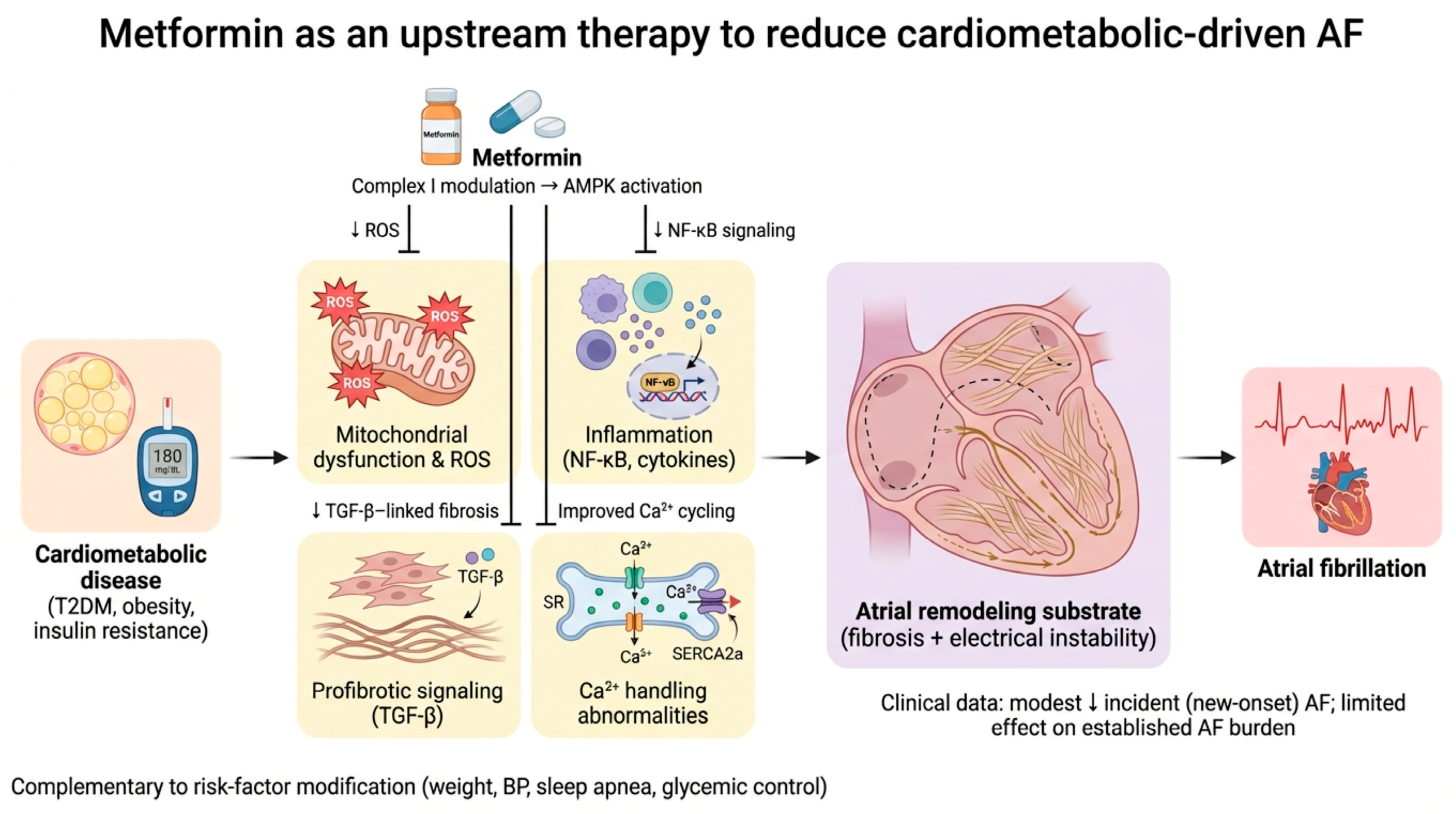
Atrial fibrillation (AF) is the most prevalent sustained arrhythmia and is increasingly driven by cardiometabolic disease, including type 2 diabetes mellitus (T2DM), obesity, and insulin resistance. These conditions promote atrial electrical instability and a permissive substrate through mitochondrial dysfunction, oxidative stress, inflammation, calcium-handling abnormalities, and profibrotic signaling, culminating in atrial fibrosis and conduction heterogeneity. Metformin, the foundational glucose-lowering therapy for T2DM, exerts pleiotropic actions that intersect with these upstream pathways. Beyond glycemic control, metformin induces mild mitochondrial complex I modulation with reduction of reverse electron transfer-derived reactive oxygen species, activates adenosine monophosphate (AMP) activated protein kinase, and attenuates nuclear factor kappa-light-chain-enhancer of activated B cells (NF-κB)-mediated cytokine signaling; experimental data further suggest favorable effects on adiponectin–sarcoendoplasmic reticulum calcium adenosine triphosphatase (SERCA) 2a-dependent calcium cycling, connexin expression, small-conductance Ca2+-activated K+ channel remodeling, lipid handling, and transforming growth factor-β (TGF)-β-associated fibrotic remodeling. Observational cohort studies have reported associations between metformin exposure and a modest reduction in incident AF, particularly with longer treatment duration and in higher-risk metabolic phenotypes; device-based surveillance cohorts support a preventive association for new-onset AF rather than reduction of established AF burden. Data after catheter ablation suggest improved freedom from recurrence in metformin-treated patients, whereas evidence in postoperative AF is largely neutral, likely reflecting distinct acute mechanisms. Collectively, metformin may be best conceptualized as a potential substrate-modifying, upstream therapy candidate; however, confounding, exposure misclassification, and heterogeneity in comparators limit causal inference, underscoring the need for prospective randomized trials with AF endpoints. In practice, integration with comprehensive risk-factor modification (blood pressure, weight, sleep apnea, and glycemic optimization) remains essential when considering AF prevention strategies.

1. Introduction

Atrial fibrillation (AF) is the most common cardiac arrhythmia and has become a global health concern [1]. It is estimated that by 2050, 6–12 million individuals in the United States and by 2060, 17.9 million individuals in Europe may carry the diagnosis of AF [1]. As its prevalence continues to rise, AF is also associated with considerable healthcare costs and increased morbidity [1]. Additionally, cardiometabolic conditions, such as diabetes mellitus and metabolic dysfunction, are associated with increased risk of atrial fibrillation and contribute to cardiac structural and functional changes [2]. This highlights growing interest in upstream therapeutic strategies aimed at modifying the atrial substrate to potentially mitigate AF development and progression. Clinical studies indicate that modifiable risk factors such as hypertension (HTN), poor glycemic control, and obstructive sleep apnea (OSA) may contribute to the association between metabolic dysfunction and developing AF [2]. Metformin, a widely utilized metabolic therapy with pleiotropic effects, has been increasingly investigated for its potential association with reduced cardiometabolic complications due to its ability to limit oxidative injury and provide redox rebalance [3]. This narrative review will encapsulate the relationship between diabetes mellitus, metabolic dysfunction, and the pathophysiology of AF, while providing clinical evidence regarding the potential benefits and risks of utilizing upstream therapy.
This narrative review was based on a structured literature search of PubMed/MEDLINE, Embase, and Google Scholar using terms related to metformin, atrial fibrillation, adenosine monophosphate-activated protein kinase (AMPK), oxidative stress, fibrosis, diabetes mellitus, and metabolic dysfunction. Relevant mechanistic, translational, observational, and clinical studies published in peer-reviewed journals were prioritized based on their relevance to atrial remodeling and AF outcomes. Additional articles were identified through manual review of reference lists. Where conflicting evidence existed, both supportive and neutral findings were incorporated to provide a balanced overview of the available literature.

2. Pathophysiology of Atrial Fibrillation: Mechanistic Foundations

2.1. Electrical Remodeling

Electrical remodeling is a central mechanism underlying both the initiation and maintenance of AF and is characterized by profound alterations in atrial ion channel expression and calcium handling. Experimental and human atrial tissue studies consistently demonstrate downregulation of L-type calcium channels (I_Ca, L) and alterations in multiple potassium currents, resulting in shortening of the atrial action potential duration (APD) and effective refractory period [4,5,6]. These electrophysiological changes reduce atrial wavelength, thereby facilitating reentrant activity. In parallel, disturbed intracellular calcium homeostasis—driven by sarcoplasmic reticulum calcium leak and abnormal ryanodine receptor phosphorylation—promotes delayed afterdepolarizations that act as triggers for AF initiation [7,8,9]. Importantly, rapid atrial activation itself accelerates these changes, creating a self-perpetuating cycle in which “AF begets AF,” a concept validated across multiple animal models and human atrial biopsy studies [4,5] (Table 1).

2.2. Structural Remodeling and Atrial Fibrosis

Structural remodeling provides the anatomical substrate that stabilizes AF, with atrial fibrosis representing its most critical component. Fibroblast activation and excessive extracellular matrix deposition lead to separation of atrial myocyte bundles, disrupting electrical coupling and promoting conduction heterogeneity [10,11,12]. Transforming growth factor-β (TGF-β) signaling plays a central role in this process by driving fibroblast differentiation into myofibroblasts and enhancing collagen synthesis, particularly in the setting of mechanical stretch, neurohormonal activation, and metabolic disease (Figure 1) [13,14,15]. Fibrotic remodeling increases anisotropic conduction, favors wavebreak, and facilitates the anchoring of reentrant circuits, thereby contributing to AF persistence and resistance to rhythm-control strategies [11,12,16]. Clinical mapping and imaging studies further confirm that the extent of atrial fibrosis correlates with AF burden and recurrence following catheter ablation, underscoring its mechanistic and translational significance [17,18] (Table 1).

2.3. Inflammation and Oxidative Stress

Inflammation and oxidative stress are increasingly recognized as interconnected drivers of both electrical and structural atrial remodeling. Elevated circulating inflammatory markers and atrial cytokine expression have been consistently associated with AF onset and progression, suggesting that inflammatory signaling contributes directly to atrial injury and substrate formation [19,20]. Reactive oxygen species (ROS), generated from mitochondrial dysfunction, nicotinamide adenine dinucleotide phosphate (NADPH) oxidases, and uncoupled nitric oxide synthase, induce redox imbalance that modifies ion channel function, impairs calcium handling, and activates profibrotic signaling pathways [21,22]. Oxidative activation of calcium/calmodulin-dependent protein kinase II (CaMKII) represents a key molecular link between ROS and arrhythmogenesis, promoting sarcoplasmic reticulum calcium leak and triggered activity [23,24]. Together, inflammatory and oxidative pathways act as feed-forward mechanisms that facilitate AF initiation while simultaneously reinforcing the atrial substrate required for its maintenance [19,22,25] (Table 1).

2.4. Metabolic Dysfunction and Insulin Resistance

Metabolic dysfunction and insulin resistance contribute to AF pathophysiology through effects on mitochondrial energetics, redox balance, and calcium homeostasis. Atrial myocardium from patients with diabetes and metabolic syndrome exhibits impaired mitochondrial oxidative phosphorylation, increased mitochondrial ROS production, and altered substrate utilization, all of which destabilize atrial electrophysiology [26]. Energetic stress compromises ATP-dependent ion pumps and calcium cycling proteins, thereby promoting calcium mishandling and arrhythmogenic after depolarizations [27,28]. Obesity and metabolic syndrome further amplify AF risk by promoting atrial enlargement, systemic inflammation, adipose-derived cytokine signaling, and atrial fibrosis, creating a permissive substrate for AF development and progression [29,30,31]. These metabolic mechanisms provide an important biological framework linking cardiometabolic disease to AF and form a critical foundation for understanding how metabolic therapies, such as metformin, may exert upstream anti-arrhythmic effects (Table 1).

3. Metformin: Pharmacology and Cardiovascular Pleiotropy

3.1. Mechanism of Action

Metformin’s biologic activity originates primarily within the mitochondria, where the drug exerts a subtle but meaningful influence on cellular energy production. Early work from Leverve and colleagues demonstrated that metformin lowers respiratory-chain complex I activity in living hepatocytes, leading to slower NADH oxidation, a reduced proton gradient, and decreased mitochondrial oxygen consumption [32]. Although metformin is far weaker than traditional lipophilic inhibitors such as rotenone [33], its mitochondrial impact is amplified by its positive charge. The mitochondrial membrane potential (ΔΨ) can drive substantial accumulation of the drug within the matrix, allowing micromolar cytosolic concentrations to translate into much higher intramitochondrial levels [34]. This principle helps explain why complex I inhibition is consistently observed in intact cells at clinically relevant concentrations [32,35].
In addition to altering nucleotide balance, metformin also influences mitochondrial redox biology [36]. By reducing reactive oxygen species generated through reverse electron transfer at complex I [37], the drug limits oxidative injury, diminishes mitochondrial calcium overload, and helps restrain pro-fibrotic signaling pathways [38,39].
As complex I activity declines, cellular ATP production decreases modestly, resulting in higher AMP and ADP levels. This shift leads to activation of AMPK, a central regulator of metabolic stress responses [40,41,42]. Through AMPK, metformin suppresses energetically costly anabolic pathways, favors fatty-acid oxidation, and stabilizes mitochondrial efficiency [41].
Beyond AMPK, several other pathways contribute to metformin’s systemic metabolic profile. AMP-mediated inhibition of adenylate cyclase lowers cAMP and blunts glucagon signaling [43]. Metformin also modifies cytosolic redox status by inhibiting mitochondrial reverse electron transfer at complex I–glycerol-3-phosphate dehydrogenase, shifting the NADH/NAD+ ratio and suppressing redox-dependent gluconeogenesis [44].
Together, these mechanisms provide a biologically plausible framework. Metformin reshapes the cellular energy state, reduces oxidative and inflammatory stress, and engages signaling pathways linked to metabolic homeostasis. These upstream actions directly intersect with processes implicated in atrial remodeling, establishing a mechanistic basis for metformin’s potential influence on AF susceptibility and progression.

3.2. Cardiovascular Effects Beyond Glycemic Control

Although metformin is primarily prescribed for glucose lowering, accumulating data show that its cardiovascular actions are mediated by broader effects on mitochondrial redox signaling, endothelial biology, and inflammatory pathways. In endothelial and vascular wall cells, metformin activates AMPK, enhances mitochondrial biogenesis and function, reduces oxidative stress, and improves nitric-oxide-dependent endothelial homeostasis, thereby delaying vascular senescence and attenuating atherosclerotic burden [45,46]. In parallel, metformin modulates AMPK–mTOR–autophagy signaling and limits the proliferation and migration of vascular smooth-muscle and fibroblast populations, further contributing to plaque stabilization [47].
By exerting a mild inhibitory effect on complex I, metformin reduces RET-derived ROS formation [48], thereby protecting endothelial cells from oxidative burden and preserving nitric oxide availability, an essential determinant of vascular homeostasis.
RET-driven oxidative stress is also a potent trigger for inflammatory signaling, as elevated mitochondrial ROS activate redox-sensitive pathways and promote cytokine production, including IL-1β and related pro-inflammatory mediators [49,50,51,52]. Through its capacity to lower mitochondrial ROS, metformin interrupts this inflammatory amplification loop, limiting endothelial activation and downstream vascular injury. AMPK activation further strengthens these anti-inflammatory effects [40,41,42] by improving cellular energy balance and dampening metabolic stress pathways that contribute to chronic inflammation.
These combined reductions in oxidative and inflammatory stress may have important implications for cardiac structure and function, although several of these mechanisms are inferred from broader cardiovascular and metabolic models rather than direct AF-specific studies. RET-mediated ROS promotes fibroblast activation, extracellular-matrix remodeling, and atrial fibrosis, key processes that increase susceptibility to arrhythmogenesis [45,47]. By mitigating these upstream drivers, metformin may attenuate atrial structural remodeling and support a more stable electrophysiologic substrate.
At the myocardial level, metformin also modulates cellular energetics and mitochondrial resilience in ways that are highly relevant to atrial substrates. In cardiomyocytes, AMPK activation inhibits acetyl-CoA carboxylase, lowers malonyl-CoA, and relieves inhibition of carnitine palmitoyl transferase-1, thereby enhancing mitochondrial fatty-acid oxidation while simultaneously promoting glucose uptake via increased GLUT4 translocation and reduced endocytosis [53]. In parallel, metformin-induced increases in circulating and locally produced lactate provide cardiomyocytes with a readily oxidizable alternative substrate, which is particularly advantageous in diabetic or ischemic myocardium with impaired glucose utilization [53]. Complementary human data from induced pluripotent stem cell-derived cardiomyocytes and mitochondria isolated from atrial appendage tissue show a biphasic mitochondrial response to metformin: at low, clinically relevant concentrations, metformin increases oxygen consumption rate through AMPK-dependent signaling and stimulation of mitochondrial biogenesis, whereas at higher concentrations it directly inhibits complex I, reduces superoxide generation, delays Ca2+-induced mitochondrial permeability transition pore opening, and triggers a compensatory metabolic shift toward glycolysis and glutaminolysis [54].
Together, these findings support a model in which metformin enhances myocardial energetic efficiency under basal and moderate-stress conditions, while also strengthening mitochondrial tolerance to acute oxidative and calcium stress during ischemia–reperfusion or decompensation.

4. Molecular Mechanisms Linking Metformin to AF Prevention

While several of the following mechanisms are supported by direct experimental evidence in atrial tissue or AF models, others are derived from broader cardiovascular, metabolic, or mitochondrial studies and should therefore be interpreted as biologically plausible but not yet definitively established in human AF pathophysiology (Table 2).

4.1. AMPK Activation and Atrial Remodeling

4.1.1. Energy Homeostasis in Atrial Cardiomyocytes

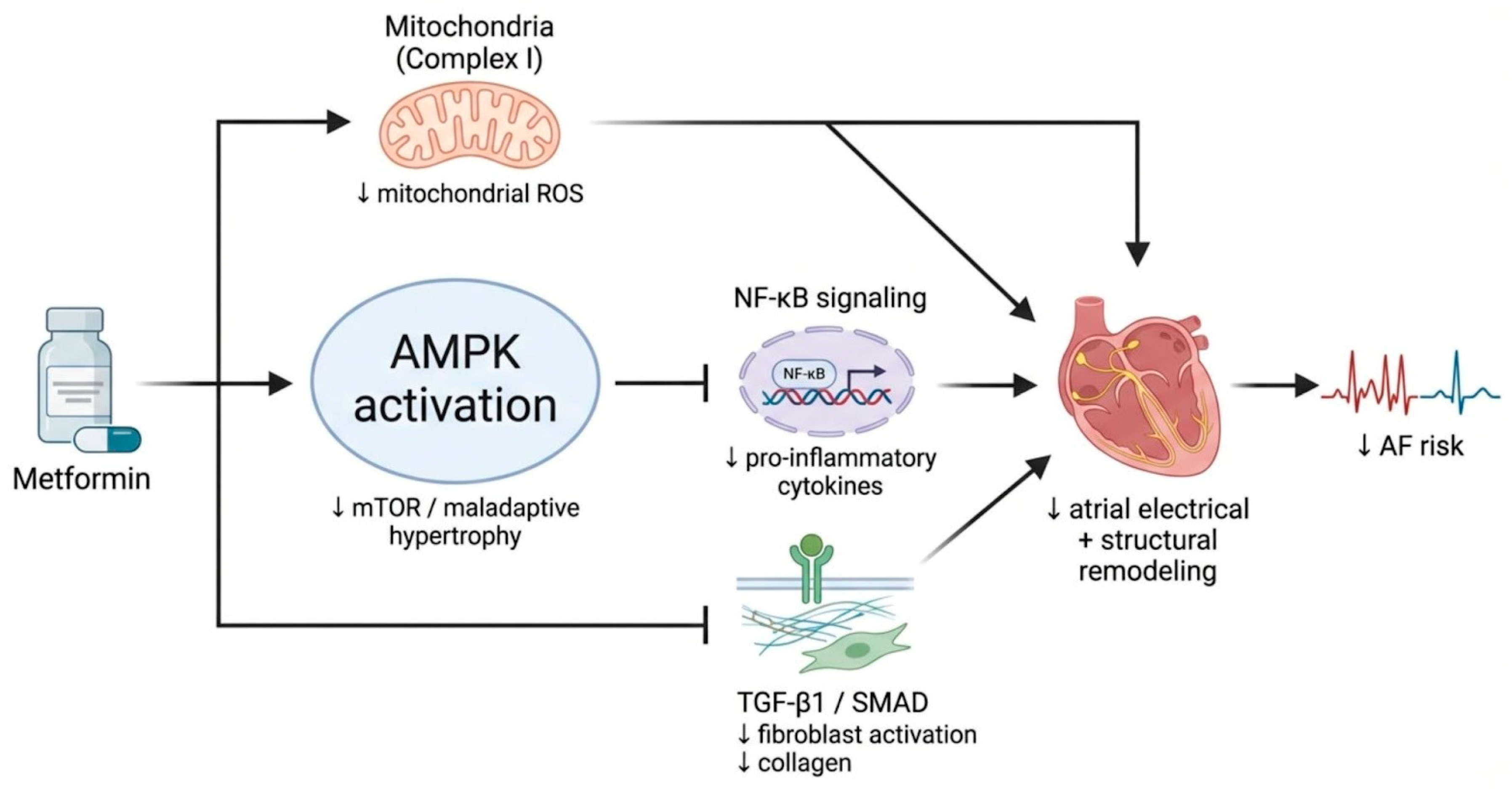
Metformin has been known historically to increase insulin sensitivity, decrease hepatic glucose production, and reduce intestinal glucose absorption [55]. The mechanism by which metformin provides anti-hyperglycemic effects is under investigation, with most data suggesting activation of AMPK (Figure 2) [40,55]. AMPK phosphorylates and regulates key proteins that control key enzymes of metabolic pathways of hepatic ketogenesis, cholesterol synthesis, lipogenesis, triglyceride synthesis, adipocyte lipolysis, and skeletal muscle fatty acid oxidation [56]. AMPK also mediates the stimulation of glucose uptake induced by muscle contraction. Insulin secretion by insulin secreting (INS-1) cells in culture is also moderated by AMPK activation. Defects of the AMPK signaling system have been implicated in the metabolic disturbances identified in type 2 diabetes mellitus [56] (Table 2).

4.1.2. Suppression of Maladaptive Hypertrophic Signaling

Impaired fatty acid metabolism and increased lipid accumulation have been identified in Atrial Fibrillation. Studies report the role of metformin in decreasing lipid content in left atrial appendage (LAA) in addition to significantly reducing atrial fibrosis. Metformin was shown to attenuate atrial electrical and structural remodeling in chronic atrial fibrillation [57]. Metformin has been hypothesized to influence atrial arrhythmogenic remodeling through AMPK-related pathways, although much of the supporting evidence derives from experimental or non-human models [58]. Metformin has also been associated with attenuation of pathways implicated in left ventricular hypertrophy. In addition to a reduction in blood pressure, metabolic roles of metformin through increased AMPK activity and inhibition of mitochondrial complex I supplement its activity [59]. Lastly, improved AMPK activity also leads to decreased mTOR activity, which has been hypothesized to prevent the development of LVH [59] (Table 2).

4.2. Oxidative Stress Modulation

4.2.1. Reduction of Mitochondrial ROS

Metformin has been observed to selectively inhibit mitochondrial respiratory chain complex 1, which leads to decreased NADH oxidation, reduction of the proton gradient across the inner mitochondrial membrane, and a decrease in the consumption of oxygen [60]. These inhibitory effects of metformin have not only been observed in rat hepatocytes and various biological models, but also in cancer cells. The effect of metformin on inhibition of complex 1 is weak, reversible, and selective, in contrast to rotenone and piericidin A which are uncharged and hydrophobic [60] (Table 2).

4.2.2. Preservation of Redox Balance

As previously established, metformin reduces ROS production and apoptosis in human and rat cardiomyocytes exposed to high glucose stimulation in a protein phosphatase 2-dependent manner [61]. In addition, metformin has demonstrated protective effects in experimental cardiomyocyte models [62], although direct translation of these findings to human atrial electrophysiology remains uncertain (Table 2).

4.3. Anti-Inflammatory Pathways

4.3.1. Inhibition of NF-κB Signaling

Metformin has been associated with decreasing the production of proinflammatory cytokines, inducing anti-inflammatory cytokines, and mediating cell differentiation. Metformin has been noted to increase AMPK activity and decrease phosphorylation of IKB (Ser32/36) and p65 (Ser536). Ser536 and Ser276 are noted to be important phosphorylation sites on the NF-KB p65 subunit. Through regulation of AMPK and NF-KB axis, metformin inhibits expression of CCL2, CXCL10, CXCL11, IL-1α, IL-1β, and IL-6 [63]. Metformin has also been noted to inhibit the transcription activity of NK-KB in HaCaT cells by preventing degradation of IκBα, noted in [64] (Table 2).

4.3.2. Cytokine Suppression

Metformin also plays a role in decreasing the expression of LPS-induced IL-1α, IL-1β, and IL-6 in macrophages, in addition to reducing the expression of chemokines such as CCL2, CXCL10, CXCL11. It is speculated that metformin’s inhibitory effect is through AMPK activation, as AMPK inhibitor Compound C was noted to block the role of metformin on cytokines [63] (Table 2).

4.4. Anti-Fibrotic Effects

4.4.1. Interference with TGF-β Signaling

Metformin has been observed to interfere with TGF-β1 signaling by blocking the binding between TGF-β1 to TβRII. It plays this role by binding directly to TGF-β1, independent of AMPK activation. Previous studies have also reported metformin inhibits collagen synthesis through inhibition of TGF-β1 [65]. By inhibiting TGF-β1, metformin has been reported to reduce fibrosis in the heart, liver, and kidney [66,67,68]. In addition, metformin interferes with the action of TGF-β1 inducing malignant progression of mesenchymal cells [69] (Table 2).

4.4.2. Attenuation of Fibroblast Differentiation and Collagen Deposition

Metformin was noted to inhibit salivary gland fibrosis by attenuating TGF-β1 directed fibrosis via inhibition of SMAD phosphorylation [70]. This has also been observed in the left ventricles of mice [66]. TGF-β1′s role in formation of the extracellular matrix is well established. Studies report that metformin inhibits production of myocardial TGF-β1 and therefore inhibits collagen synthesis dose dependently through TGF-β1 in cardiac fibroblasts. Studies also report that the inhibitory effect of metformin on collagen synthesis is independent of AMPK activation [66]. On the contrary, metformin has been observed to reduce deposition of collagen and inhibit fibroblast activation in the lung through targeting S100A4 via the AMPK-STAT3 (Signal transducer and activator of transcription 3) axis. Metformin has also been observed to inhibit angiotensin II–induced myofibroblast differentiation in experimental cardiac fibroblast models, suggesting a potentially relevant anti-fibrotic mechanism that warrants further validation in AF-specific settings [71] (Table 2).

5. Metformin and Electrical Remodeling

Structural changes in myocytes and the extracellular matrix, along with electrical factors such as tachycardia and a shortened refractory period, lead to cardiac remodeling that can trigger arrhythmias, including atrial fibrillation (AF) [72]. Various factors contribute to the onset of atrial fibrillation, including atrial ischemia, inflammation, alcohol use, illicit drug use, hemodynamic stress, neurological and endocrine disorders, advanced age, and genetic predispositions [72].
Numerous studies have investigated the role of metformin in the prevention and development of atrial fibrillation. For instance, Chang et al. reported that metformin use was independently associated with a lower risk of new-onset AF in diabetic patients, with a hazard ratio of 0.81 (95% CI 0.76–0.86). This protection is likely due to the reduction of atrial cell tachycardia-induced myolysis and oxidative stress [73]. Other studies have indicated that metformin users experienced lower hospitalization rates for atrial fibrillation compared to non-users [74,75]. A network analysis by Lal et al. discovered that metformin use was associated with a significantly lower risk of atrial fibrillation compared to other diabetes treatments, presenting an odds ratio of 0.48 (95% CI 0.36–0.64, p < 0.001) [76]. Additionally, Ostropolets et al. reported that metformin monotherapy reduced the risk of atrial arrhythmias, including AF, when compared to monotherapy with dipeptidyl peptidase-4 inhibitors (DPP-4) or thiazolidinediones (TZD) [77]. Zhou et al. performed a propensity-matched analysis that found sulfonylureas were associated with higher risks of incident atrial fibrillation (hazard ratio 2.89, 95% CI: 2.75–3.77; p < 0.0001), cardiovascular mortality (HR: 3.60, 95% CI 2.62–4.81; p < 0.0001), and all-cause mortality (HR: 4.35, 95% CI: 3.16–4.75; p < 0.0001) [78]. A case-matched study involving patients with diabetes mellitus showed that users of metformin and thiazolidinediones had a lower risk of AF compared to non-users (OR 0.81, 95% CI 0.71–0.95; OR 0.72, 95% CI 0.63–0.83, respectively), whereas insulin users had a higher risk of AF (OR 1.19; 95% CI 1.06–1.35) [79]. Despite these findings, some studies have found conflicting results. For example, Chen et al. noted no significant difference in AF risk between metformin users and non-users (OR 1.01; 95% CI 0.88–1.15) but did confirm that insulin was associated with a higher AF risk (OR 1.58; 95% CI 1.37–1.82) [79]. Similarly, a retrospective cohort study demonstrated equivalent rates of AF between metformin and other non-insulin hypoglycemic medications [80]. In a study involving 271 patients with diabetes mellitus undergoing AF ablation, Deshmukh et al. found that metformin users were more likely to maintain sinus rhythm after 13 months compared to non-users, with an adjusted hazard ratio of 0.63 (95% CI 0.42–0.96). This effect was independent of blood glucose levels [81]. However, Basnet et al. reported that preoperative treatment with metformin did not reduce the risk of postoperative AF in a cohort of 1283 patients with diabetes who underwent cardiac surgery [82]. Additionally, a randomized controlled trial indicated that administering metformin three days before cardiac surgery did not reduce the incidence of postoperative AF [83].
Electrical remodeling is a critical factor in the initiation and perpetuation of atrial fibrillation, characterized by changes in ion channel expression, action potential duration (APD), refractoriness, and calcium handling [84]. Inflammation has been linked to the development, severity, persistence, and recurrence of arrhythmias, suggesting that therapies that reduce inflammation may also lower the incidence of atrial fibrillation [84,85,86]. Adiponectin, known for its antifibrotic and anti-inflammatory properties, may counteract atrial fibrosis and the development of AF. Studies have shown reduced levels of adiponectin alongside increased activity of TGF-beta1, IL-6, and TNF-alpha in AF, identifying potential therapeutic targets for metformin [87,88,89,90].
Research has established a link between oxidative stress and atrial fibrillation (AF). It suggests that oxidative damage and atrial remodeling during tachyarrhythmias may promote AF through the action of reactive oxygen species and activated signaling pathways [20,91,92]. Additionally, studies have shown that metformin can reduce oxidative stress in canine models by decreasing the phosphorylation of NF-kappa beta [73,93].
Homeostasis of calcium ions is critical for optimal cardiomyocyte function [84]. During the cardiac action potential, calcium-induced calcium release from the sarcoplasmic reticulum (SR) allows calcium to bind to myofilaments and initiate myocyte contraction. Atrial relaxation occurs partly through the retreat of calcium back into the SR via SERCA2a (sarcoplasmic endoplasmic reticulum Ca2+ adenosine triphosphatase), and dysregulation of this process is thought to increase the risk of ectopic activity and reentry [94,95,96]. In vivo, metformin has shown the ability to attenuate inflammation-induced decreases in SERCA2a expression and increases in cytosolic calcium ions, potentially through the upregulation of adiponectin, which can enhance SERCA2a expression in cardiomyocytes [93]. Delayed afterdepolarizations and spontaneous depolarizations caused by alterations in calcium handling, and heightened cytosolic calcium can trigger atrial fibrillation, according to current evidence [97,98,99].
Myocardial ischemia and infarction contribute to arrhythmogenesis by promoting metabolic stress, ATP depletion, and electrophysiologic heterogeneity [100,101,102]. The heterogeneity in action potential duration and refractoriness between healthy and ischemic myocardium contributes to conditions that heighten the risk of arrhythmias [84,100,101]. There is compensatory activation of AMPK to preserve energy in cellular metabolism in ischemia [103,104]. Animal studies suggest that metformin may help reduce ATP depletion in ischemic hearts, thereby lowering the risk of arrhythmias associated with increased AMPK activity and maintained ATP levels [84,105,106]. With oxygen deficiency, there is a metabolic shift from oxidative phosphorylation to glycolysis, seen as a reduction in AMPK activity, which can lead to persistent atrial fibrillation [107]. Another effect of metformin is its capability to reverse the Warburg effect via AMPK, enhancing oxidative phosphorylation and subsequently reducing the incidence of atrial fibrillation [108].
The progression of atrial fibrillation (AF) is associated with the accumulation of intracellular lipids and dysregulated fatty acid metabolism [109]. Studies have shown that patients with atrial fibrillation have higher plasma concentrations of saturated fatty acids, lower levels of unsaturated fatty acids, and increased atrial expression of fatty acid binding protein 3, which is involved in fatty acid uptake and intracellular transport, compared to those in sinus rhythm [84,109]. Additionally, cardiac adiposity has been linked to an increased risk and severity of atrial fibrillation [110]. Research indicates that increased RAP elevates the levels of HIF-1α, which enhances aerobic glycolysis and downregulates AMPK and PPAR-α. This process reduces fatty acid oxidation and increases lipid accumulation [57]. The antiarrhythmic effects of metformin in experimental models may relate to its ability to enhance fatty acid oxidation [84]. Metformin helps mitigate lipotoxicity by promoting fatty acid oxidation and autophagy, counteracting RAP’s effects by increasing AMPK and PPAR-α, thereby offering protection against atrial fibrillation [84,109,111].
Atrial fibrosis can lead to conduction disturbances that promote reentry, further exacerbating the progression of atrial fibrosis [84]. Metformin has been shown to attenuate or even reverse atrial fibrosis [57,93]. For example, metformin reduces the disorganization of cardiomyocytes and infiltration of leukocytes in atrial tissue by activating AMPK, which helps maintain the expression of ion channels and gap junction proteins [108,112]. Reduced activity of AMPK in the atria can lead to electrophysiological changes and ectopic activity that may result in AF [113,114]. Experimental data suggest that metformin, by activating AMPK, may prevent fibrotic changes that are known to both cause and result from atrial fibrillation [76,84].
The vulnerability to atrial fibrillation is often heightened due to the shortening and increased dispersion of the atrial refractory period [84,115]. In canine models, RAP was found to decrease the atrial effective refractory period (ERP) and increase ERP dispersion. These effects were either reduced or completely reversed by metformin, which corresponded with a decrease in atrial fibrillation inducibility and vulnerability windows [84,93]. Metformin also addressed AF-related electrical remodeling by restoring gap junction proteins (connexin-40 and connexin-43) that were suppressed during RAP or atrial fibrillation [108,116]. Small-conductance calcium-activated potassium (SK) channels contribute to atrial repolarization heterogeneity; metformin favorably modulates this by upregulating SK2 and downregulating SK3 channels, a pattern associated with reduced atrial fibrillation burden [84,117,118,119].
Collectively, these findings suggest that metformin may modulate the atrial electrophysiologic substrate through multiple interconnected pathways rather than acting as a direct antiarrhythmic agent. This perspective aligns with new strategies in managing atrial fibrillation that emphasize modifying the substrate, reinforcing the observed clinical links between metformin use and reduced incidence and recurrence of atrial fibrillation.

6. Autonomic Modulation and Metformin

Sympathovagal imbalance is now recognized as a core modulator of atrial fibrillation (AF) rather than a simple background trigger. Building on Coumel’s triangle, the autonomic nervous system shapes both initiation and maintenance of AF by dynamically altering atrial refractoriness, conduction, and calcium handling. Clinically, this is reflected in vagal AF, often seen in younger, structurally normal patients with episodes at night or after meals, and adrenergic AF, which tends to occur during physical or emotional stress in patients with more structural heart disease; in practice, however, mixed patterns with overlapping vagal and sympathetic influences are frequent rather than purely “vagal” or “adrenergic” forms [120,121]. Continuous ECG and heart rate-variability analyses support this view: AF episodes are often preceded by shifts in sympathovagal balance, including phases of enhanced sympathetic drive, phases of relative vagal predominance, or a sequence of sympathetic surge followed by abrupt vagal dominance [121,122]. In the setting of acute myocardial infarction, lower LF/HF ratios together with higher pNN50 and rMSSD values indicate that new-onset AF commonly arises on a background of exaggerated parasympathetic influence rather than purely acute sympathetic activation, suggesting pre-existing autonomic remodeling [122]. Experimental work in large-animal models complements these human data: direct recordings of stellate and vagal nerve activity show that simultaneous sympathovagal discharges frequently precede paroxysmal AF, while combined norepinephrine and acetylcholine exposure facilitates calcium overload, early afterdepolarizations, and triggered activity in pulmonary vein sleeves [121]. Taken together, these clinical and experimental findings indicate that AF often emerges from a vulnerable atrial substrate exposed to unstable, combined sympathetic and parasympathetic inputs, rather than from isolated activation of a single autonomic branch [120,121,122].
Studies from animal models and clinical cohorts suggest that metformin can influence autonomic activity, but its effects vary depending on the metabolic state and treatment setting. In early metabolic dysfunction, preclinical work generally shows a favorable shift in autonomic balance. For example, in rodents exposed to mild caloric excess, metformin therapy improved baroreflex responsiveness, increased heart-rate variability, and lowered markers of inflammation in myocardial and adipose tissue, changes consistent with early reversal of autonomic impairment [123]. A similar pattern was observed in the MSG-obesity model, where chronic metformin corrected disordered autonomic signaling by reducing excessive vagal drive, enhancing sympathetic output, and restoring M3-receptor-linked cholinergic pathways that regulate insulin secretion [124].
Consistent with these findings, a recent systematic review of metformin’s CNS actions reports convergent preclinical evidence that the drug modulates central autonomic pathways, including reductions in sympathetic outflow, improvements in baroreflex function, and attenuation of neuroinflammatory signaling in models of metabolic and vascular disease [125].
Complementing these autonomic data, large-scale epidemiologic and mechanistic AF studies suggest that metformin’s anti-inflammatory and antioxidant actions translate into fewer arrhythmic events. In a nationwide cohort of 645,710 patients with type 2 diabetes, metformin use was independently associated with a lower incidence of new-onset AF (adjusted HR ≈ 0.81), and in vitro work from the same group showed that metformin attenuated tachycardia-induced ROS generation and myofibrillar injury in atrial myocytes [73]. In a canine rapid atrial pacing model, chronic metformin reduced AF inducibility and duration, limited atrial fibrosis and epicardial adipose remodeling, suppressed ROS/NF-κB-driven cytokine signaling, and restored adiponectin–SERCA2a–phospholamban-dependent Ca2+ handling [93]. Together with the autonomic findings above, these data suggest that metformin may influence neural, inflammatory, and structural substrates implicated in AF susceptibility that lower the threshold for AF initiation and maintenance.
Notably, much of the evidence linking metformin to autonomic modulation originates from preclinical metabolic and neurohumoral models rather than direct AF-specific human studies, and the translational significance of these findings remains incompletely defined.

7. Clinical Evidence

Most evidence linking metformin use with atrial fibrillation (AF) derives from large, population-based observational studies, supported by mechanistic experiments and smaller clinical cohorts. Diabetes mellitus (DM) is consistently associated with an increased incidence of AF through mechanisms that remain incompletely understood. Proposed contributors include structural remodeling such as atrial enlargement, biochemical pathways involving inflammation and oxidative stress, and the high prevalence of clinical comorbidities including coronary artery disease and heart failure among individuals with diabetes [126,127,128] (Table 3).

7.1. Metformin and Incident Atrial Fibrillation

7.1.1. Evidence from Large Asian Population-Based Cohorts

Important observational evidence emerged from a large Taiwanese national cohort study that included more than 645,000 insulin-naïve adults with newly diagnosed diabetes. In this analysis, Chang et al. demonstrated a significantly lower incidence of AF among patients initiated on metformin compared with non-users, despite a higher baseline prevalence of hypertension and sleep apnea in the metformin group. Over a mean follow-up of 5.4 years, metformin exposure was associated with an approximately 19% relative reduction in AF risk after multivariable adjustment, with early separation of AF-free survival curves that persisted for more than a decade. Importantly, this association remained robust after adjustment for major cardiovascular comorbidities and concomitant statin and antihypertensive therapy, suggesting that the observed benefit could not be fully explained by improved cardiovascular risk-factor control alone [73]. Notably, the protective effect appeared to attenuate two to three years after diabetes diagnosis, potentially reflecting progressive anatomical and metabolic deterioration over time, although the mechanisms underlying this temporal pattern remain uncertain and warrant further investigation [73] (Table 3).
Subsequent nationwide analyses from Taiwan reinforced and extended these observations. Using hospitalization-confirmed AF diagnoses to enhance outcome specificity, Tseng et al. demonstrated a marked, exposure-dependent reduction in AF hospitalization among metformin users, with hazard ratios declining progressively with longer cumulative treatment duration and reaching approximately 0.23 among individuals treated for more than five years. These findings remained consistent across multiple sensitivity analyses addressing immortal-time bias, renal dysfunction, and concomitant incretin use. When outpatient AF diagnoses were included, effect estimates were attenuated but remained statistically significant, underscoring the influence of outcome definition and potential non-differential misclassification inherent to outpatient coding practices [74] (Table 3).

7.1.2. Evidence from Western and Multiethnic Populations

Data from Western populations have been comparatively heterogeneous. In a large U.S. integrated healthcare cohort, first-line metformin monotherapy was not associated with a statistically significant reduction in incident AF compared with other glucose-lowering monotherapies after accounting for competing risks, despite numerically lower cumulative AF incidence among metformin users [80]. In contrast, a nationwide Korean cohort encompassing more than 2.5 million individuals demonstrated a modest but statistically significant reduction in AF risk associated with metformin use. In this study, the protective association was more pronounced among younger patients, women, and individuals with longer diabetes duration or insulin-treated disease [129]. Collectively, these findings suggest that the relationship between metformin and AF may be modified by population characteristics, comparator therapies, duration of exposure, and baseline metabolic risk (Table 3).

7.2. Device-Based and Rhythm Surveillance Cohorts

Additional support for a preventive—rather than disease-modifying—role of metformin comes from device-based cohorts with continuous rhythm monitoring. In patients with implanted pacemakers and no prior history of AF, metformin use was independently associated with a 60–65% lower risk of new-onset AF after comprehensive multivariable adjustment. In contrast, metformin exerted no significant effect on AF burden once paroxysmal AF had developed [130]. This dissociation between AF prevention and modification of established arrhythmia has been observed across multiple datasets and suggests that metformin primarily influences early atrial susceptibility rather than advanced electrical instability [130] (Table 3).

7.3. Metformin After Catheter Ablation and Postoperative Settings

Beyond atrial fibrillation (AF) incidence, metformin has also been evaluated in the context of rhythm-control strategies. In a retrospective cohort of patients with type 2 diabetes undergoing first-time catheter ablation for AF, Metformin therapy was associated with higher rates of freedom from recurrent atrial arrhythmias at one year without the use of antiarrhythmic drugs. This association remained significant after multivariable adjustment for AF type, left atrial size, renal function, and glycemic indices [81]. In contrast, evidence in postoperative AF has been largely neutral. In propensity-matched analyses of diabetic patients undergoing cardiac surgery, preadmission metformin use was not associated with a reduced incidence of postoperative AF [82]. This discrepancy likely reflects fundamental differences in AF pathophysiology, as postoperative AF is predominantly driven by acute inflammation, adrenergic activation, and surgical stress, processes that may overwhelm the more gradual anti-inflammatory and antifibrotic effects attributed to metformin [81,82] (Table 3).

7.4. Mechanistic and Translational Evidence

Mechanistic and translational data provide biological plausibility for these clinical observations. In vitro studies demonstrate that metformin attenuates tachycardia-induced oxidative stress, reactive oxygen species production, and atrial myocyte remodeling—processes central to AF pathogenesis—although these experimental findings do not fully account for the magnitude of AF risk reduction observed in clinical populations [73]. Metformin possesses well-established anti-inflammatory and antioxidant properties [131,132], resembling those of thiazolidinediones (TZDs), which have also been shown to reduce new-onset AF in patients with type 2 diabetes not treated with insulin [133]. Given the central role of oxidative stress in tachycardia-induced cellular remodeling, inhibition of inflammatory and oxidative pathways likely contributes to metformin’s protective association [134] (Table 3).
At a metabolic level, metformin improves insulin resistance through enhanced insulin receptor expression and tyrosine kinase activation and rarely induces hypoglycemia when used in the absence of insulin or insulin secretagogues [135,136]. Through activation of AMP-activated protein kinase, metformin promotes fatty acid oxidation, reduces myocardial lipid accumulation, enhances glucose transporter expression, and improves energetic efficiency in cardiomyocytes, thereby mitigating metabolic stress that may predispose patients to AF [111,135]. Additional mechanisms include modulation of epicardial adipose tissue inflammation [137], attenuation of atrial fibrosis via inhibition of transforming growth factor–β signaling, and reductions in profibrotic biomarkers such as interleukin-6 and matrix metalloproteinase-9 [135,138]. Autonomic dysfunction may represent another mechanistic link between diabetes, metformin use, and AF. Diabetic autonomic neuropathy has been implicated in AF initiation and maintenance through altered vagal–sympathetic balance, increased P-wave dispersion, and transient adrenergic surges preceding AF episodes [139,140,141]. By improving metabolic control and reducing oxidative stress, metformin may indirectly mitigate autonomic instability and thereby reduce AF (Table 3).

7.5. Comparative Effectiveness Among Glucose-Lowering Therapies

Comparative effectiveness analyses further contextualize metformin’s role among glucose-lowering therapies. Although relatively few studies have directly compared antidiabetic drugs with respect to atrial fibrillation (AF) incidence, available evidence suggests a favorable profile for metformin. Ostropolets et al. reported a lower risk of AF with metformin compared with other glucose-lowering agents, including sulfonylureas, dipeptidyl peptidase-4 inhibitors, and thiazolidinediones (TZDs), potentially mediated through attenuation of tachycardia-induced atrial myolysis and oxidative stress [73,77]. In contrast, Pallisgaard et al. and Zhang et al. demonstrated that TZD use was associated with fewer new-onset AF diagnoses compared with other second-line therapies [142,143]. Notably, metformin was also associated with a substantially lower risk of ventricular tachyarrhythmias than sulfonylureas [77], raising the possibility that its electrophysiologic effects extend beyond the atria (Table 3).
Earlier nested case–control studies reported similar patterns, with protective associations observed for biguanides and TZDs, neutral effects for sulfonylureas and DPP-4 inhibitors, and higher AF risk among insulin-treated patients—likely reflecting confounding by disease severity and cumulative glycemic burden [75]. Network meta-analyses integrating randomized and observational data further suggest that incretin-based therapies, particularly GLP-1 receptor agonists, may confer greater relative reductions in AF risk than metformin, whereas differences between metformin and insulin-providing therapies appear less pronounced [137] (Table 3).
Combination therapy with metformin and TZDs has been associated with greater AF risk reduction than metformin alone, potentially reflecting complementary effects on glycemic stability, inflammation, oxidative stress, and atrial fibrosis [129]. However, safety concerns surrounding TZDs, particularly the risk of heart failure, limit their clinical applicability despite consistent signals of AF prevention (Table 3).
Overall, the available clinical evidence suggests a possible association between metformin use and a modest reduction in incident AF [144], particularly with prolonged exposure and among metabolically vulnerable populations. The apparent benefit is greatest for primary prevention and early disease stages, with limited impact on established arrhythmia burden. While mechanistic data support biologically plausible pathways involving metabolic stress reduction, inflammation, oxidative injury, fibrosis, and autonomic modulation, definitive causal inference will require large prospective randomized trials specifically designed to evaluate AF as a primary endpoint (Table 3).
Taken together, the clinical evidence should be interpreted in the context of important methodological and clinical differences across studies. The stronger associations reported in several Asian population-based cohorts may reflect differences in population characteristics, diabetes duration, background cardiovascular risk, prescribing patterns, and cumulative metformin exposure, whereas Western cohorts using active-comparator designs have shown more neutral findings [73,74,80,129]. Similarly, metformin appears more consistently associated with reduced incident AF than with reduction of established AF burden, suggesting that its potential role may be more relevant to early substrate modification than to reversal of advanced arrhythmogenic remodeling [130]. The discrepant findings between post-ablation and postoperative AF studies may also reflect distinct mechanisms: recurrence after ablation is closely related to chronic atrial substrate, whereas postoperative AF is often driven by acute inflammation, adrenergic activation, and surgical stress [81,82,83]. Finally, variation in outcome definitions, including incident AF, AF hospitalization, device-detected AF, AF burden, and postoperative AF, as well as differences in treatment exposure classification and duration, likely contribute to heterogeneity across studies and limit direct comparison. Importantly, many observational studies remain susceptible to residual confounding, confounding by indication, immortal time bias, and differences in comparator therapies, limiting causal inference despite biologically plausible associations (Table 3).

8. Conclusions

AF is increasingly driven by cardiometabolic disease, where insulin resistance, obesity, and diabetes promote oxidative stress, inflammation, calcium-handling abnormalities, and profibrotic signaling that together create a vulnerable atrial substrate. At present, the available evidence does not support the use of metformin specifically for AF prevention outside established metabolic indications. Its potential role should instead be viewed as complementary to established AF risk-factor modification strategies, including weight reduction, blood pressure control, glycemic optimization, sleep apnea treatment, and contemporary cardiometabolic therapies. Metformin may influence several of these upstream pathways through mild modulation of mitochondrial complex I, AMPK activation, anti-inflammatory, and anti-fibrotic effects, supporting its potential role as an emerging substrate-modifying strategy rather than a direct antiarrhythmic drug. Clinically, most observational cohorts report an association between metformin use and a modest reduction in incident AF, although causality remains unproven, with signals that are stronger with longer exposure and in higher-risk metabolic phenotypes. Device-based studies suggest that the benefit is most evident in preventing new-onset AF, with a limited impact on established AF burden. Post-ablation studies suggest fewer recurrences, whereas postoperative AF studies have largely shown neutral findings, likely reflecting distinct underlying mechanisms. However, heterogeneity, confounding, and exposure/outcome misclassification limit causal inference. Prospective randomized trials with rigorous rhythm surveillance and AF endpoints are needed to define the true preventive effect, optimal timing, and target population. Until then, metformin’s role should be viewed as complementary to proven risk-factor modification for weight loss, blood pressure control, sleep apnea treatment, and metabolic optimization, which remain central to AF prevention.

Author Contributions

Conceptualization, R.V., C.T.G., and R.N.; methodology, R.V., C.T.G., and M.M.; validation, C.T.G., R.N., and Y.M.R.; formal analysis, R.V.; investigation, R.V., C.T.G., F.H., H.V.M., F.Z., J.H., M.S., P.B., R.H., F.M., M.M., Y.M.R., and R.N.; resources, C.T.G. and R.N.; data curation, R.V.; writing—original draft preparation, R.V.; writing—review and editing, C.T.G., F.H., H.V.M., F.Z., J.H., M.S., P.B., R.H., F.M., M.M., Y.M.R., and R.N.; visualization, M.M.; supervision, C.T.G. and R.N.; project administration, R.V. and C.T.G. All authors have read and agreed to the published version of the manuscript.

Funding

This research received no external funding.

Institutional Review Board Statement

Not applicable.

Informed Consent Statement

Not applicable.

Data Availability Statement

No new data were created or analyzed in this study. Data sharing is not applicable to this article.

Acknowledgments

Figure 1 and Figure 2 are created in BioRender. Mylavarapu, M. (2026) https://BioRender.com/78ztlm2 (accessed on 4 March 2026).

Conflicts of Interest

The authors declare no conflicts of interest.

Abbreviations

The following abbreviations are used in this manuscript:
AFAtrial fibrillation
T2DMType 2 diabetes mellitus
AMPKAMP-activated protein kinase
NF-κBNuclear factor kappa-light-chain-enhancer of activated B cells
SERCA2aSarco/endoplasmic reticulum Ca2+-ATPase 2a
TGF-βTransforming growth factor-beta
HTNHypertension
OSAObstructive sleep apnea
I_Ca,LL-type calcium current
APDAction potential duration
ERPEffective refractory period
ROSReactive oxygen species
NADPHNicotinamide adenine dinucleotide phosphate
CaMKIICalcium/calmodulin-dependent protein kinase II
ATPAdenosine triphosphate
OXPHOSOxidative phosphorylation
ΔΨMitochondrial membrane potential
NADHNicotinamide adenine dinucleotide (reduced form)
ADPAdenosine diphosphate
cAMPCyclic adenosine monophosphate
GLUT4Glucose transporter type 4
mTORMechanistic target of rapamycin
INS-1Insulin-secreting cell line 1
LAALeft atrial appendage
LVHLeft ventricular hypertrophy
IKBInhibitor of kappa B
CCL2C-C motif chemokine ligand 2
CXCL10C-X-C motif chemokine ligand 10
CXCL11C-X-C motif chemokine ligand 11
IL-1αInterleukin-1 alpha
IL-1βInterleukin-1 beta
IL-6Interleukin-6
LPSLipopolysaccharide
TβRIITransforming growth factor-beta receptor II
SMADSmall mothers against decapentaplegic
STAT3Signal transducer and activator of transcription 3
SRSarcoplasmic reticulum
DPP-4Dipeptidyl peptidase-4
TZDThiazolidinedione
RAPRapid atrial pacing
HIF-1αHypoxia-inducible factor-1 alpha
PPAR-αPeroxisome proliferator-activated receptor-alpha
SKSmall-conductance calcium-activated potassium
ECGElectrocardiogram
LF/HFLow-frequency/high-frequency ratio
pNN50Percentage of adjacent NN intervals differing by more than 50 ms
rMSSDRoot mean square of successive differences
CABGCoronary artery bypass grafting
GLP-1Glucagon-like peptide-1
RCTRandomized controlled trial

References

  1. Lippi, G.; Sanchis-Gomar, F.; Cervellin, G. Global Epidemiology of Atrial Fibrillation: An Increasing Epidemic and Public Health Challenge. Int. J. Stroke 2021, 16, 217–221. [Google Scholar] [PubMed]
  2. Homan, E.A.; Reyes, M.V.; Hickey, K.T.; Morrow, J.P. Clinical Overview of Obesity and Diabetes Mellitus as Risk Factors for Atrial Fibrillation and Sudden Cardiac Death. Front. Physiol. 2018, 9, 1847. [Google Scholar] [PubMed]
  3. Li, Y.; Liu, X.; Lv, W.; Wang, X.; Du, Z.; Liu, X.; Meng, F.; Jin, S.; Wen, S.; Bai, R.; et al. Metformin Use Correlated with Lower Risk of Cardiometabolic Diseases and Related Mortality among Us Cancer Survivors: Evidence from a Nationally Representative Cohort Study. BMC Med. 2024, 22, 269. [Google Scholar] [CrossRef] [PubMed]
  4. Nattel, S.; Burstein, B.; Dobrev, D. Atrial Remodeling and Atrial Fibrillation: Mechanisms and Implications. Circ. Arrhythm. Electrophysiol. 2008, 1, 62–73. [Google Scholar] [PubMed]
  5. Wijffels, M.C.; Kirchhof, C.J.; Dorland, R.; Allessie, M.A. Atrial Fibrillation Begets Atrial Fibrillation. A Study in Awake Chronically Instrumented Goats. Circulation 1995, 92, 1954–1968. [Google Scholar] [PubMed]
  6. Heijman, J.; Voigt, N.; Nattel, S.; Dobrev, D. Cellular and Molecular Electrophysiology of Atrial Fibrillation Initiation, Maintenance, and Progression. Circ. Res. 2014, 114, 1483–1499. [Google Scholar] [CrossRef] [PubMed]
  7. Dobrev, D.; Wehrens, X.H. Calmodulin Kinase Ii, Sarcoplasmic Reticulum Ca2+ Leak, and Atrial Fibrillation. Trends Cardiovasc. Med. 2010, 20, 30–34. [Google Scholar] [CrossRef] [PubMed]
  8. Pronto, J.R.D.; Mason, F.E.; Rog-Zielinska, E.A.; Fakuade, F.E.; Bülow, D.; Tóth, M.; Machwart, K.; Brandes, P.; Wiedmann, F.; Kohlhaas, M.; et al. Impaired Atrial Mitochondrial Calcium Handling in Patients with Atrial Fibrillation. Circ. Res. 2025, 137, 1333–1352. [Google Scholar] [CrossRef] [PubMed]
  9. Wit, A.L.; Boyden, P.A. Triggered Activity and Atrial Fibrillation. Heart Rhythm. 2007, 4, S17–S23. [Google Scholar] [CrossRef] [PubMed]
  10. Burstein, B.; Nattel, S. Atrial Fibrosis: Mechanisms and Clinical Relevance in Atrial Fibrillation. J. Am. Coll. Cardiol. 2008, 51, 802–809. [Google Scholar] [CrossRef] [PubMed]
  11. Spach, M.S.; Boineau, J.P. Microfibrosis Produces Electrical Load Variations Due to Loss of Side-to-Side Cell Connections: A Major Mechanism of Structural Heart Disease Arrhythmias. Pacing Clin. Electrophysiol. 1997, 20, 397–413. [Google Scholar] [PubMed]
  12. de Jong, S.; van Veen, T.A.; van Rijen, H.V.; de Bakker, J.M. Fibrosis and Cardiac Arrhythmias. J. Cardiovasc. Pharmacol. 2011, 57, 630–638. [Google Scholar] [CrossRef] [PubMed]
  13. Verheule, S.; Sato, T.; Everett, T.; Engle, S.K.; Otten, D.; der Lohe, M.R.-V.; Nakajima, H.O.; Nakajima, H.; Field, L.J.; Olgin, J.E. Increased Vulnerability to Atrial Fibrillation in Transgenic Mice with Selective Atrial Fibrosis Caused by Overexpression of Tgf-Beta1. Circ. Res. 2004, 94, 1458–1465. [Google Scholar] [CrossRef] [PubMed]
  14. Khan, R.; Sheppard, R. Fibrosis in Heart Disease: Understanding the Role of Transforming Growth Factor-Beta in Cardiomyopathy, Valvular Disease and Arrhythmia. Immunology 2006, 118, 10–24. [Google Scholar] [PubMed]
  15. Everett, T.H.; Olgin, J.E. Atrial Fibrosis and the Mechanisms of Atrial Fibrillation. Heart Rhythm. 2007, 4, S24–S27. [Google Scholar] [CrossRef] [PubMed]
  16. Arentz, T.; Müller-Edenborn, B.; Jadidi, A. Arrhythmogenic Atrial Substrate in Persistent Atrial Fibrillation: Relationship to Heart Failure. JACC Clin. Electrophysiol. 2018, 4, 97–98. [Google Scholar] [PubMed]
  17. Marrouche, N.F.; Wilber, D.; Hindricks, G.; Jais, P.; Akoum, N.; Marchlinski, F.; Kholmovski, E.; Burgon, N.; Hu, N.; Mont, L.; et al. Association of Atrial Tissue Fibrosis Identified by Delayed Enhancement Mri and Atrial Fibrillation Catheter Ablation: The Decaaf Study. JAMA 2014, 311, 498–506. [Google Scholar] [PubMed]
  18. Kottkamp, H. Human Atrial Fibrillation Substrate: Towards a Specific Fibrotic Atrial Cardiomyopathy. Eur. Heart J. 2013, 34, 2731–2738. [Google Scholar] [CrossRef] [PubMed]
  19. Korantzopoulos, P.; Letsas, K.P.; Tse, G.; Fragakis, N.; Goudis, C.A.; Liu, T. Inflammation and Atrial Fibrillation: A Comprehensive Review. J. Arrhythm. 2018, 34, 394–401. [Google Scholar] [CrossRef] [PubMed]
  20. Hadi, H.A.; Alsheikh-Ali, A.A.; Mahmeed, W.A.; Suwaidi, J.M. Inflammatory Cytokines and Atrial Fibrillation: Current and Prospective Views. J. Inflamm. Res. 2010, 3, 75–97. [Google Scholar] [CrossRef] [PubMed]
  21. Yang, K.C.; Dudley, S.C. Oxidative Stress and Atrial Fibrillation. Circulation 2013, 128, 1724–1726. [Google Scholar] [CrossRef] [PubMed][Green Version]
  22. Abe, J.; Berk, B.C. Reactive Oxygen Species as Mediators of Signal Transduction in Cardiovascular Disease. Trends Cardiovasc. Med. 1998, 8, 59–64. [Google Scholar] [CrossRef] [PubMed]
  23. He, B.J.; A Joiner, M.L.; Singh, M.V.; Luczak, E.D.; Swaminathan, P.D.; Koval, O.M.; Kutschke, W.; Allamargot, C.; Yang, J.; Guan, X.; et al. Oxidation of Camkii Determines the Cardiotoxic Effects of Aldosterone. Nat. Med. 2011, 17, 1610–1618. [Google Scholar] [CrossRef] [PubMed]
  24. Liu, X.; Wang, S.; Guo, X.; Li, Y.; Ogurlu, R.; Lu, F.; Prondzynski, M.; Buzon, S.d.l.S.; Ma, Q.; Zhang, D.; et al. Increased Reactive Oxygen Species-Mediated Ca(2+)/Calmodulin-Dependent Protein Kinase Ii Activation Contributes to Calcium Handling Abnormalities and Impaired Contraction in Barth Syndrome. Circulation 2021, 143, 1894–1911. [Google Scholar] [PubMed]
  25. Li, J.; Solus, J.; Chen, Q.; Rho, Y.H.; Milne, G.; Stein, C.M.; Darbar, D. Role of Inflammation and Oxidative Stress in Atrial Fibrillation. Heart Rhythm. 2010, 7, 438–444. [Google Scholar] [CrossRef] [PubMed]
  26. Goudis, C.A.; Korantzopoulos, P.; Ntalas, I.V.; Kallergis, E.M.; Liu, T.; Ketikoglou, D.G. Diabetes Mellitus and Atrial Fibrillation: Pathophysiological Mechanisms and Potential Upstream Therapies. Int. J. Cardiol. 2015, 184, 617–622. [Google Scholar] [CrossRef] [PubMed]
  27. Liu, T.; O’ROurke, B. Enhancing Mitochondrial Ca2+ Uptake in Myocytes from Failing Hearts Restores Energy Supply and Demand Matching. Circ. Res. 2008, 103, 279–288. [Google Scholar] [PubMed]
  28. Bare, D.J.; Ai, X. Stress-Induced Calcium Mishandling in Cardiac (Patho)Physiology. Cell. Mol. Life Sci. 2025, 82, 437. [Google Scholar] [CrossRef] [PubMed]
  29. Lavie, C.J.; Pandey, A.; Lau, D.H.; Alpert, M.A.; Sanders, P. Obesity and Atrial Fibrillation Prevalence, Pathogenesis, and Prognosis: Effects of Weight Loss and Exercise. J. Am. Coll. Cardiol. 2017, 70, 2022–2035. [Google Scholar] [PubMed]
  30. Abed, H.S.; Wittert, G.A.; Leong, D.P.; Shirazi, M.G.; Bahrami, B.; Middeldorp, M.E.; Lorimer, M.F.; Lau, D.H.; Antic, N.A.; Brooks, A.G.; et al. Effect of Weight Reduction and Cardiometabolic Risk Factor Management on Symptom Burden and Severity in Patients with Atrial Fibrillation: A Randomized Clinical Trial. JAMA 2013, 310, 2050–2060. [Google Scholar] [PubMed]
  31. Pathak Rajeev, K.; Melissa, E.M.; Dennis, H.L.; Abhinav, B.M.; Mahajan, R.; Twomey, D.; Alasady, M.; Lorraine Hanley, A.; Antic Nicholas, R.; Doug McEvoy, M.; et al. Aggressive Risk Factor Reduction Study for Atrial Fibrillation and Implications for the Outcome of ablation. JACC 2014, 64, 2222–2231. [Google Scholar] [CrossRef] [PubMed]
  32. El-Mir, M.-Y.; Nogueira, V.; Fontaine, E.; Avéret, N.; Rigoulet, M.; Leverve, X. Dimethylbiguanide Inhibits Cell Respiration via an Indirect Effect Targeted on the Respiratory Chain Complex I. J. Biol. Chem. 2000, 275, 223–228. [Google Scholar] [CrossRef] [PubMed]
  33. Degli Esposti, M. Inhibitors of Nadh-Ubiquinone Reductase: An Overview. Biochim. Biophys. Acta 1998, 1364, 222–235. [Google Scholar] [PubMed]
  34. Fontaine, E. Metformin and Respiratory Chain Complex I: The Last Piece of the Puzzle? Biochem. J. 2014, 463, e3–e5. [Google Scholar] [CrossRef] [PubMed]
  35. Detaille, D.; Guigas, B.; Leverve, X.; Wiernsperger, N.; Devos, P. Obligatory Role of Membrane Events in the Regulatory Effect of Metformin on the Respiratory Chain Function. Biochem. Pharmacol. 2002, 63, 1259–1272. [Google Scholar] [CrossRef] [PubMed]
  36. Cameron, A.R.; Logie, L.; Patel, K.; Erhardt, S.; Bacon, S.; Middleton, P.; Harthill, J.; Forteath, C.; Coats, J.T.; Kerr, C.; et al. Metformin Selectively Targets Redox Control of Complex I Energy Transduction. Redox Biol. 2018, 14, 187–197. [Google Scholar] [CrossRef] [PubMed]
  37. Ojha, R.; Tantray, I.; Rimal, S.; Mitra, S.; Cheshier, S.; Lu, B. Regulation of Reverse Electron Transfer at Mitochondrial Complex I by Unconventional Notch Action in Cancer Stem Cells. Dev. Cell 2022, 57, 260–276.e9. [Google Scholar] [CrossRef] [PubMed]
  38. Batandier, C.; Guigas, B.; Detaille, D.; El-Mir, M.Y.; Fontaine, E.; Rigoulet, M.; Leverve, X.M. The Ros Production Induced by a Reverse-Electron Flux at Respiratory-Chain Complex 1 Is Hampered by Metformin. J. Bioenerg. Biomembr. 2006, 38, 33–42. [Google Scholar] [PubMed]
  39. Fukushima, C.T.; Dancil, I.-S.; Clary, H.; Shah, N.; Nadtochiy, S.M.; Brookes, P.S. Reactive Oxygen Species Generation by Reverse Electron Transfer at Mitochondrial Complex I under Simulated Early Reperfusion Conditions. bioRxiv 2023. [Google Scholar] [CrossRef] [PubMed]
  40. Zhou, G.; Myers, R.; Li, Y.; Chen, Y.; Shen, X.; Fenyk-Melody, J.; Wu, M.; Ventre, J.; Doebber, T.; Fujii, N.; et al. Role of Amp-Activated Protein Kinase in Mechanism of Metformin Action. J. Clin. Investig. 2001, 108, 1167–1174. [Google Scholar] [CrossRef] [PubMed]
  41. Guigas, B.; Viollet, B. Targeting Ampk: From Ancient Drugs to New Small-Molecule Activators. Exp. Suppl. 2016, 107, 327–350. [Google Scholar] [CrossRef] [PubMed]
  42. Hardie, D.G. Amp-Activated Protein Kinase: Maintaining Energy Homeostasis at the Cellular and Whole-Body Levels. Annu. Rev. Nutr. 2014, 34, 31–55. [Google Scholar] [PubMed]
  43. Pham, L.; Arroum, T.; Wan, J.; Pavelich, L.; Bell, J.; Morse, P.T.; Lee, I.; Grossman, L.I.; Sanderson, T.H.; Malek, M.H.; et al. Regulation of Mitochondrial Oxidative Phosphorylation through Tight Control of Cytochrome C Oxidase in Health and Disease—Implications for Ischemia/Reperfusion Injury, Inflammatory Diseases, Diabetes, and Cancer. Redox Biol. 2024, 78, 103426. [Google Scholar] [PubMed]
  44. Baur, J.A.; Birnbaum, M.J. Control of Gluconeogenesis by Metformin: Does Redox Trump Energy Charge? Cell Metab. 2014, 20, 197–199. [Google Scholar] [CrossRef] [PubMed]
  45. Gao, F.; Chen, J.; Zhu, H. A Potential Strategy for Treating Atherosclerosis: Improving Endothelial Function via Amp-Activated Protein Kinase. Sci. China Life Sci. 2018, 61, 1024–1029. [Google Scholar] [CrossRef] [PubMed]
  46. Karnewar, S.; Neeli, P.K.; Panuganti, D.; Kotagiri, S.; Mallappa, S.; Jain, N.; Jerald, M.K.; Kotamraju, S. Metformin Regulates Mitochondrial Biogenesis and Senescence through Ampk Mediated H3k79 Methylation: Relevance in Age-Associated Vascular Dysfunction. Biochim. Biophys. Acta Mol. Basis Dis. 2018, 1864, 1115–1128. [Google Scholar] [CrossRef] [PubMed]
  47. You, G.; Long, X.; Song, F.; Huang, J.; Tian, M.; Xiao, Y.; Deng, S.; Wu, Q. Metformin Activates the Ampk-Mtor Pathway by Modulating Lncrna Tug1 to Induce Autophagy and Inhibit Atherosclerosis. Drug Des. Devel Ther. 2020, 14, 457–468. [Google Scholar] [PubMed]
  48. Jansen, T.; Kvandová, M.; Daiber, A.; Stamm, P.; Frenis, K.; Schulz, E.; Münzel, T.; Kröller-Schön, S. The Amp-Activated Protein Kinase Plays a Role in Antioxidant Defense and Regulation of Vascular Inflammation. Antioxidants 2020, 9, 525. [Google Scholar] [CrossRef] [PubMed]
  49. Ouslimani, N.; Peynet, J.; Bonnefont-Rousselot, D.; Thérond, P.; Legrand, A.; Beaudeux, J.L. Metformin Decreases Intracellular Production of Reactive Oxygen Species in Aortic Endothelial Cells. Metabolism 2005, 54, 829–834. [Google Scholar] [CrossRef] [PubMed]
  50. Nishikawa, T.; Edelstein, D.; Du, X.L.; Yamagishi, S.-I.; Matsumura, T.; Kaneda, Y.; Yorek, M.A.; Beebe, D.J.; Oates, P.J.; Hammes, H.-P.; et al. Normalizing Mitochondrial Superoxide Production Blocks Three Pathways of Hyperglycaemic Damage. Nature 2000, 404, 787–790. [Google Scholar] [CrossRef] [PubMed]
  51. Azemi, A.K.; Mokhtar, S.S.; Rasool, A.H.G. Clinacanthus Nutans Leaves Extract Reverts Endothelial Dysfunction in Type 2 Diabetes Rats by Improving Protein Expression of Enos. Oxidative Med. Cell Longev. 2020, 2020, 7572892. [Google Scholar] [CrossRef]
  52. Legein, B.; Temmerman, L.; Biessen, E.A.; Lutgens, E. Inflammation and Immune System Interactions in Atherosclerosis. Cell Mol. Life Sci. 2013, 70, 3847–3869. [Google Scholar] [CrossRef] [PubMed]
  53. Giaccari, A.; Solini, A.; Frontoni, S.; Del Prato, S. Metformin Benefits: Another Example for Alternative Energy Substrate Mechanism? Diabetes Care 2021, 44, 647–654. [Google Scholar] [CrossRef] [PubMed]
  54. Emelyanova, L.; Bai, X.; Yan, Y.; Bosnjak, Z.J.; Kress, D.; Warner, C.; Kroboth, S.; Rudic, T.; Kaushik, S.; Stoeckl, E.; et al. Biphasic Effect of Metformin on Human Cardiac Energetics. Transl. Res. 2021, 229, 5–23. [Google Scholar] [CrossRef] [PubMed]
  55. Corcoran, C.; Jacobs, T.F. Metformin. In StatPearls [Internet]; StatPearls Publishing: Treasure Island, FL, USA, 2025; Updated 17 August 2023; Bookshelf ID NBK518983. [Google Scholar] [PubMed]
  56. Winder, W.W.; Hardie, D.G. AMP-activated protein kinase, a metabolic master switch: Possible roles in type 2 diabetes. Am. J. Physiol. Endocrinol. Metab. 1999, 277, E1–E10. [Google Scholar] [CrossRef]
  57. Liu, Y.; Bai, F.; Liu, N.; Zhang, B.; Qin, F.; Tu, T.; Li, B.; Li, J.; Ma, Y.; Ouyang, F.; et al. Metformin improves lipid metabolism and reverses the Warburg effect in a canine model of chronic atrial fibrillation. BMC Cardiovasc. Disord. 2020, 20, 50. [Google Scholar] [CrossRef] [PubMed]
  58. Nantsupawat, T.; Wongcharoen, W.; Chattipakorn, S.C.; Chattipakorn, N. Effects of metformin on atrial and ventricular arrhythmias: Evidence from cell to patient. Cardiovasc. Diabetol. 2020, 19, 198. [Google Scholar] [CrossRef] [PubMed]
  59. Li, J.; Minczuk, K.; Massey, J.C.; Howell, N.L.; Roy, R.J.; Paul, S.; Patrie, J.T.; Kramer, C.M.; Epstein, F.H.; Carey, R.M.; et al. Metformin improves cardiac metabolism and function, and prevents left ventricular hypertrophy in spontaneously hypertensive rats. J. Am. Heart Assoc. 2020, 9, e015154. [Google Scholar] [CrossRef] [PubMed]
  60. Vial, G.; Detaille, D.; Guigas, B. Role of Mitochondria in the Mechanism(s) of Action of Metformin. Front. Endocrinol. 2019, 10, 294. [Google Scholar] [CrossRef]
  61. Cheng, G.; Li, L. High-glucose-induced apoptosis, ROS production and pro-inflammatory response in cardiomyocytes is attenuated by metformin treatment via PP2A activation. J. Biosci. 2020, 45, 126. [Google Scholar] [PubMed]
  62. Liu, X.-D.; Li, Y.-G.; Wang, G.-Y.; Bi, Y.-G.; Zhao, Y.; Yan, M.-L.; Liu, X.; Wei, M.; Wan, L.-L.; Zhang, Q.-Y. Metformin Protects High Glucose-Cultured Cardiomyocytes from Oxidative Stress by Promoting NDUFA13 Expression and Mitochondrial Biogenesis via the AMPK Signaling Pathway. Mol. Med. Rep. 2020, 22, 5262–5270. [Google Scholar] [PubMed]
  63. Ye, J.; Zhu, N.; Sun, R.; Liao, W.; Fan, S.; Shi, F.; Lin, H.; Jiang, S.; Ying, Y. Metformin Inhibits Chemokine Expression Through the AMPK/NF-κB Signaling Pathway. J. Interferon Cytokine Res. 2018, 38, 363–369. [Google Scholar] [PubMed]
  64. Ba, W.; Xu, Y.; Yin, G.; Yang, J.; Wang, R.; Chi, S.; Wang, Y.; Li, C. Metformin Inhibits Pro-Inflammatory Responses via Targeting Nuclear Factor-κB in HaCaT Cells. Cell Biochem. Funct. 2019, 37, 4–10. [Google Scholar] [PubMed]
  65. Xiao, H.; Zhang, J.; Zhang, Z.; Chen, R.; Sun, J.; Wang, J.; Li, Z.; Feng, Y.; Zhou, Y. Metformin Is a Novel Suppressor for Transforming Growth Factor (TGF)-β1. Sci. Rep. 2016, 6, 28597. [Google Scholar] [CrossRef] [PubMed]
  66. Xiao, H.; Ma, X.; Feng, W.; Fu, Y.; Lu, Z.; Xu, M.; Shen, Q.; Zhu, Y.; Zhang, Y. Metformin Attenuates Cardiac Fibrosis by Inhibiting the TGF-β1-Smad3 Signalling Pathway. Cardiovasc. Res. 2010, 87, 504–513. [Google Scholar] [PubMed]
  67. Duvnjak, M.; Tomasic, V.; Gomercic, M.; Smircic Duvnjak, L.; Barsic, N.; Lerotic, I. Therapy of Nonalcoholic Fatty Liver Disease: Current Status. J. Physiol. Pharmacol. 2009, 60, 57–66. [Google Scholar] [PubMed]
  68. Cavaglieri, R.C.; Day, R.T.; Feliers, D.; Abboud, H.E. Metformin Prevents Renal Interstitial Fibrosis in Mice with Unilateral Ureteral Obstruction. Mol. Cell Endocrinol. 2015, 412, 116–122. [Google Scholar] [CrossRef] [PubMed]
  69. Cufí, S.; Vazquez-Martin, A.; Oliveras-Ferraros, C.; Martin-Castillo, B.; Joven, J.; Menendez, J.A. Metformin against TGFβ-induced epithelial-to-mesenchymal transition (EMT): From cancer stem cells to aging-associated fibrosis. Cell Cycle 2010, 9, 4461–4468. [Google Scholar] [PubMed]
  70. Wang, L.; Zhong, N.-N.; Wang, X.; Peng, B.; Chen, Z.; Wei, L.; Li, B.; Li, Y.; Cheng, Y. Metformin Attenuates TGF-β1-Induced Fibrosis in Salivary Gland: A Preliminary Study. Int. J. Mol. Sci. 2023, 24, 16260. [Google Scholar] [PubMed]
  71. Bai, J.; Zhang, N.; Hua, Y.; Wang, B.; Ling, L.; Ferro, A.; Xu, B. Metformin Inhibits Angiotensin II-Induced Differentiation of Cardiac Fibroblasts into Myofibroblasts. PLoS ONE 2013, 8, e72120. [Google Scholar] [CrossRef] [PubMed]
  72. Nesheiwat, Z.; Goyal, A.; Jagtap, M. Atrial Fibrillation. [Updated 2023 Apr 26]. In StatPearls [Internet]; StatPearls Publishing: Treasure Island, FL, USA, 2025. Available online: https://www.ncbi.nlm.nih.gov/books/NBK526072/ (accessed on 1 March 2026).
  73. Chang, S.H.; Wu, L.S.; Chiou, M.J.; Liu, J.-R.; Yu, K.-H.; Kuo, C.-F.; Wen, M.-S.; Chen, W.-J.; Yeh, Y.-H.; See, L.-C. Association of metformin with lower atrial fibrillation risk among patients with type 2 diabetes mellitus: A population-based dynamic cohort and in vitro studies. Cardiovasc. Diabetol. 2014, 13, 123. [Google Scholar] [CrossRef] [PubMed]
  74. Tseng, C. Metformin Use Is Associated With a Lower Incidence of Hospitalization for Atrial Fibrillation in Patients With Type 2 Diabetes Mellitus. Front. Med. 2021, 7, 592901. [Google Scholar] [CrossRef] [PubMed]
  75. Liou, S.; Yang, Y.; Chen, Y.; Jong, P. Antihyperglycemic drugs use and new-onset atrial fibrillation: A population-based nested case control study. PLoS ONE 2018, 13, e0197245. [Google Scholar] [CrossRef] [PubMed]
  76. Lal, J.C.; Mao, C.; Zhou, Y.; Gore-Panter, S.R.; Rennison, J.H.; Lovano, B.S.; Castel, L.; Shin, J.; Gillinov, A.M.; Smith, J.D.; et al. Transcriptomics-based network medicine approach identifies metformin as a repurposable drug for atrial fibrillation. Cell Rep. Med. 2022, 3, 100749. [Google Scholar] [CrossRef] [PubMed]
  77. Ostropolets, A.; Elias, P.A.; Reyes, M.V.; Wan, E.Y.; Pajvani, U.B.; Hripcsak, G.; Morrow, J.P. Metformin Is Associated With a Lower Risk of Atrial Fibrillation and Ventricular Arrhythmias Compared With Sulfonylureas: An Observational Study. Circ. Arrhythm. Electrophysiol. 2021, 14, e009115. [Google Scholar] [CrossRef] [PubMed]
  78. Zhou, J.; Zhang, G.; Chang, C.; Chou, O.H.I.; Lee, S.; Leung, K.S.K.; Wong, W.T.; Liu, T.; Wai, A.K.C.; Cheng, S.H.; et al. Metformin versus sulphonylureas for new onset atrial fibrillation and stroke in type 2 diabetes mellitus: A population-based study. Acta Diabetol. 2022, 59, 697–709. [Google Scholar] [CrossRef] [PubMed]
  79. Chen, H.Y.; Yang, F.Y.; Jong, G.P.; Liou, Y.S. Antihyperglycemic drugs use and new-onset atrial fibrillation in elderly patients. Eur. J. Clin. Investig. 2017, 47, 388–393. [Google Scholar] [CrossRef] [PubMed]
  80. Iqbal, A.; Tekin, Z.; Kattan, M.W.; Ji, X.; Milinovich, A.; Pantalone, K.M.; Zimmerman, R.S.; Chung, M.K.; Kashyap, S.R. Association between first-line monotherapy with metformin and the risk of atrial fibrillation (AMRAF) in patients with type 2 diabetes. J. Diabetes Complicat. 2022, 36, 108315. [Google Scholar] [CrossRef] [PubMed]
  81. Deshmukh, A.; Ghannam, M.; Liang, J.; Saeed, M.; Cunnane, R.; Ghanbari, H.; Latchamsetty, R.; Crawford, T.; Batul, S.A.; Chung, E.; et al. Effect of metformin on outcomes of catheter ablation for atrial fibrillation. J. Cardiovasc. Electrophysiol. 2021, 32, 1232–1239. [Google Scholar] [CrossRef] [PubMed]
  82. Basnet, S.; Kozikowski, A.; Sun, H.; Troup, M.; Urrutia, L.E.; Pekmezaris, R. Metformin therapy and postoperative atrial fibrillation in diabetic patients after cardiac surgery. J. Intensive Care 2017, 5, 60. [Google Scholar] [CrossRef] [PubMed]
  83. El Messaoudi, S.; Nederlof, R.; Zuurbier, C.J.; A van Swieten, H.; Pickkers, P.; Noyez, L.; Dieker, H.-J.; Coenen, M.J.; Donders, A.R.T.; Vos, A.; et al. Effect of metformin pretreatment on myocardial injury during coronary artery bypass surgery in patients without diabetes (MetCAB): A double-blind, randomised controlled trial. Lancet Diabetes Endocrinol. 2015, 3, 615–623. [Google Scholar] [CrossRef] [PubMed]
  84. Mascarenhas, L. Antiarrhythmic effects of metformin. Heart Rhythm. Open 2024, 5, 310–320. [Google Scholar] [CrossRef] [PubMed]
  85. Hu, Y.F.; Chen, Y.J.; Lin, Y.J.; Chen, S.A. Inflammation and the pathogenesis of atrial fibrillation. Nat. Rev. Cardiol. 2015, 12, 230–243. [Google Scholar] [CrossRef] [PubMed]
  86. Gutierrez, A.; Van Wagoner, D.R. Oxidant and Inflammatory Mechanisms and Targeted Therapy in Atrial Fibrillation: An Update. J. Cardiovasc. Pharmacol. 2015, 66, 523–529. [Google Scholar] [CrossRef] [PubMed]
  87. Ren, M.; Li, X.; Hao, L.; Zhong, J. Role of tumor necrosis factor alpha in the pathogenesis of atrial fibrillation: A novel potential therapeutic target? Ann. Med. 2015, 47, 316–324. [Google Scholar] [CrossRef] [PubMed]
  88. Li, J.; Yang, Y.; Ng, C.Y.; Zhang, Z.; Liu, T.; Li, G. Association of Plasma Transforming Growth Factor-β1 Levels and the Risk of Atrial Fibrillation: A Meta-Analysis. PLoS ONE 2016, 11, e0155275. [Google Scholar] [CrossRef] [PubMed]
  89. Assar, O. Low adiponectin level may contribute to higher incidence of postcardiac surgery atrial fibrillation in obese patients. Ann. Thorac. Surg. 2012, 93, 1762–1763. [Google Scholar] [CrossRef] [PubMed]
  90. Gramley, F.; Lorenzen, J.; Koellensperger, E.; Kettering, K.; Weiss, C.; Munzel, T. Atrial fibrosis and atrial fibrillation: The role of the TGF-β1 signaling pathway. Int. J. Cardiol. 2010, 143, 405–413. [Google Scholar] [CrossRef] [PubMed]
  91. Nattel, S.; Maguy, A.; Le Bouter, S.; Yeh, Y.H. Arrhythmogenic ion-channel remodeling in the heart: Heart failure, myocardial infarction, and atrial fibrillation. Physiol. Rev. 2007, 87, 425–456. [Google Scholar] [CrossRef] [PubMed]
  92. Ziolo, M.T.; Mohler, P.J. Defining the role of oxidative stress in atrial fibrillation and diabetes. J. Cardiovasc. Electrophysiol. 2015, 26, 223–225. [Google Scholar] [CrossRef] [PubMed]
  93. Li, B.; Po, S.S.; Zhang, B.; Bai, F.; Li, J.; Qin, F.; Liu, N.; Sun, C.; Xiao, Y.; Tu, T.; et al. Metformin regulates adiponectin signalling in epicardial adipose tissue and reduces atrial fibrillation vulnerability. J. Cell. Mol. Med. 2020, 24, 7751–7766. [Google Scholar] [CrossRef] [PubMed]
  94. Heijman, J.; Voigt, N.; Nattel, S.; Dobrev, D. Calcium handling and atrial fibrillation. Wien. Med. Wochenschr. 2012, 162, 287–291. [Google Scholar] [CrossRef] [PubMed]
  95. Dobrev, D. Atrial Ca2+ signaling in atrial fibrillation as an antiarrhythmic drug target. Naunyn Schmiedebergs Arch. Pharmacol. 2010, 381, 195–206. [Google Scholar] [CrossRef] [PubMed]
  96. Dobrev, D.; Voigt, N.; Wehrens, X.H. The ryanodine receptor channel as a molecular motif in atrial fibrillation: Pathophysiological and therapeutic implications. Cardiovasc. Res. 2011, 89, 734–743. [Google Scholar] [CrossRef] [PubMed]
  97. Song, Z.; Ko, C.Y.; Nivala, M.; Weiss, J.N.; Qu, Z. Calcium-voltage coupling in the genesis of early and delayed afterdepolarizations in cardiac myocytes. Biophys. J. 2015, 108, 1908–1921. [Google Scholar] [CrossRef] [PubMed]
  98. Sardu, C.; Santulli, G.; Guerra, G.; Trotta, M.C.; Santamaria, M.; Sacra, C.; Testa, N.; Ducceschi, V.; Gatta, G.; Amico, M.D.; et al. Modulation of SERCA in Patients with Persistent Atrial Fibrillation Treated by Epicardial Thoracoscopic Ablation: The CAMAF Study. J. Clin. Med. 2020, 9, 544. [Google Scholar] [CrossRef] [PubMed]
  99. Boddu, N.J.; Theus, S.; Luo, S.; Wei, J.Y.; Ranganathan, G. Is the lack of adiponectin associated with increased ER/SR stress and inflammation in the heart? Adipocyte 2014, 3, 10–18. [Google Scholar] [CrossRef] [PubMed]
  100. Luqman, N.; Sung, R.J.; Wang, C.L.; Kuo, C.T. Myocardial ischemia and ventricular fibrillation: Pathophysiology and clinical implications. Int. J. Cardiol. 2007, 119, 283–290. [Google Scholar] [CrossRef] [PubMed]
  101. Adabag, A.S.; Therneau, T.M.; Gersh, B.J.; Weston, S.A.; Roger, V.L. Sudden death after myocardial infarction. JAMA 2008, 300, 2022–2029. [Google Scholar] [CrossRef] [PubMed]
  102. Murphy, E.; Steenbergen, C. Mechanisms underlying acute protection from cardiac ischemia-reperfusion injury. Physiol. Rev. 2008, 88, 581–609. [Google Scholar] [CrossRef] [PubMed]
  103. Bairwa, S.C.; Parajuli, N.; Dyck, J.R. The role of AMPK in cardiomyocyte health and survival. Biochim. Biophys. Acta 2016, 1862, 2199–2210. [Google Scholar] [CrossRef] [PubMed]
  104. Omar, M.A.; Fraser, H.; Clanachan, A.S. Ischemia-induced activation of AMPK does not increase glucose uptake in glycogen-replete isolated working rat hearts. Am. J. Physiol. Heart Circ. Physiol. 2008, 294, H1266–H1273. [Google Scholar] [CrossRef] [PubMed]
  105. Kawabata, H.; Ishikawa, K. Cardioprotection by metformin is abolished by a nitric oxide synthase inhibitor in ischemic rabbit hearts. Hypertens. Res. 2003, 26, 107–110. [Google Scholar] [CrossRef] [PubMed]
  106. Lu, L.; Ye, S.; Scalzo, R.L.; Reusch, J.E.B.; Greyson, C.R.; Schwartz, G.G. Metformin prevents ischaemic ventricular fibrillation in metabolically normal pigs. Diabetologia 2017, 60, 1550–1558. [Google Scholar] [CrossRef] [PubMed]
  107. Liu, Y.; Bai, F.; Liu, N.; Ouyang, F.; Liu, Q. The Warburg effect: A new insight into atrial fibrillation. Clin. Chim. Acta. 2019, 499, 4–12. [Google Scholar] [CrossRef] [PubMed]
  108. Ozcan, C.; Dixit, G.; Li, Z. Activation of AMP-Activated Protein Kinases Prevents Atrial Fibrillation. J. Cardiovasc. Transl. Res. 2021, 14, 492–502. [Google Scholar] [CrossRef] [PubMed]
  109. Shingu, Y.; Takada, S.; Yokota, T.; Shirakawa, R.; Yamada, A.; Ooka, T.; Katoh, H.; Kubota, S.; Matsui, Y. Correlation between increased atrial expression of genes related to fatty acid metabolism and autophagy in patients with chronic atrial fibrillation. PLoS ONE 2020, 15, e0224713. [Google Scholar] [CrossRef] [PubMed]
  110. Hatem, S.N.; Redheuil, A.; Gandjbakhch, E. Cardiac adipose tissue and atrial fibrillation: The perils of adiposity. Cardiovasc. Res. 2016, 109, 502–509. [Google Scholar] [CrossRef] [PubMed]
  111. Bai, F.; Liu, Y.; Tu, T.; Li, B.; Xiao, Y.; Ma, Y.; Qin, F.; Xie, J.; Zhou, S.; Liu, Q. Metformin regulates lipid metabolism in a canine model of atrial fibrillation through AMPK/PPAR-α/VLCAD pathway. Lipids Health Dis. 2019, 18, 109. [Google Scholar] [CrossRef] [PubMed]
  112. Fu, X.; Pan, Y.; Cao, Q.; Li, B.; Wang, S.; Du, H.; Duan, N.; Li, X. Metformin restores electrophysiology of small conductance calcium-activated potassium channels in the atrium of GK diabetic rats. BMC Cardiovasc. Disord. 2018, 18, 63. [Google Scholar] [CrossRef] [PubMed]
  113. Su, K.N.; Ma, Y.; Cacheux, M.; Ilkan, Z.; Raad, N.; Muller, G.K.; Wu, X.; Guerrera, N.; Thorn, S.L.; Sinusas, A.J.; et al. Atrial AMP-activated protein kinase is critical for prevention of dysregulation of electrical excitability and atrial fibrillation. J. Clin. Investig. Insight 2022, 7, e141213. [Google Scholar] [CrossRef] [PubMed]
  114. Harada, M.; Tadevosyan, A.; Qi, X.; Xiao, J.; Liu, T.; Voigt, N.; Karck, M.; Kamler, M.; Kodama, I.; Murohara, T.; et al. Atrial Fibrillation Activates AMP-Dependent Protein Kinase and its Regulation of Cellular Calcium Handling: Potential Role in Metabolic Adaptation and Prevention of Progression. J. Am. Coll. Cardiol. 2015, 66, 47–58. [Google Scholar] [CrossRef] [PubMed]
  115. Yu, W.C.; Chen, S.A.; Lee, S.H.; Tai, C.-T.; Feng, A.-N.; Kuo, B.I.-T.; Ding, Y.-A.; Chang, M.-S. Tachycardia-induced change of atrial refractory period in humans: Rate dependency and effects of antiarrhythmic drugs. Circulation 1998, 97, 2331–2337. [Google Scholar] [CrossRef] [PubMed]
  116. Li, J.; Li, B.; Bai, F.; Ma, Y.; Liu, N.; Liu, Y.; Wang, Y.; Liu, Q. Metformin therapy confers cardioprotection against the remodeling of gap junction in tachycardia-induced atrial fibrillation dog model. Life Sci. 2020, 254, 117759. [Google Scholar] [CrossRef] [PubMed]
  117. Li, N.; Timofeyev, V.; Tuteja, D.; Xu, D.; Lu, L.; Zhang, Q.; Zhang, Z.; Singapuri, A.; Albert, T.R.; Rajagopal, A.V.; et al. Ablation of a Ca2+-activated K+ channel (SK2 channel) results in action potential prolongation in atrial myocytes and atrial fibrillation. J. Physiol. 2009, 587, 1087–1100. [Google Scholar] [CrossRef] [PubMed]
  118. Hsueh, C.H.; Chang, P.C.; Hsieh, Y.C.; Reher, T.; Chen, P.S.; Lin, S.F. Proarrhythmic effect of blocking the small conductance calcium activated potassium channel in isolated canine left atrium. Heart Rhythm. 2013, 10, 891–898. [Google Scholar] [CrossRef] [PubMed]
  119. Saljic, A.; Soattin, L.; Trachsel, D.S.; Boddum, K.; Jespersen, T. In vivo knockdown of SK3 channels using antisense oligonucleotides protects against atrial fibrillation in rats. J. Mol. Cell. Cardiol. 2020, 147, 18–26. [Google Scholar] [CrossRef] [PubMed]
  120. Rebecchi, M.; De Ruvo, E.; Sgueglia, M.; Lavalle, C.; Canestrelli, S.; Politano, A.; Jacomelli, I.; Golia, P.; Crescenzi, C.; De Luca, L.; et al. Atrial Fibrillation and Sympatho-Vagal Imbalance: From the Choice of the Antiarrhythmic Treatment to Patients with Syncope and Ganglionated Plexi Ablation. Eur. Heart J. Suppl. 2023, 25, C1–C6. [Google Scholar] [PubMed]
  121. Chen, P.S.; Tan, A.Y. Autonomic Nerve Activity and Atrial Fibrillation. Heart Rhythm. 2007, 4, S61–S64. [Google Scholar] [CrossRef] [PubMed]
  122. Sagnard, A.; Guenancia, C.; Mouhat, B.; Maza, M.; Fichot, M.; Moreau, D.; Garnier, F.; Lorgis, L.; Cottin, Y.; Zeller, M. Involvement of Autonomic Nervous System in New-Onset Atrial Fibrillation During Acute Myocardial Infarction. J. Clin. Med. 2020, 9, 1481. [Google Scholar] [CrossRef] [PubMed]
  123. Al-Assi, O.; Ghali, R.; Mroueh, A.; Kaplan, A.; Mougharbil, N.; Eid, A.H.; A Zouein, F.; El-Yazbi, A.F. Cardiac Autonomic Neuropathy as a Result of Mild Hypercaloric Challenge in Absence of Signs of Diabetes: Modulation by Antidiabetic Drugs. Oxidative Med. Cell. Longev. 2018, 2018, 9389784. [Google Scholar] [CrossRef]
  124. Franco, C.C.d.S.; Previate, C.; Trombini, A.B.; Miranda, R.A.; Barella, L.F.; Saavedra, L.P.J.; de Oliveira, J.C.; Prates, K.V.; Tófolo, L.P.; Ribeiro, T.A.; et al. Metformin Improves Autonomic Nervous System Imbalance and Metabolic Dysfunction in Monosodium L-Glutamate-Treated Rats. Front. Endocrinol. 2021, 12, 660793. [Google Scholar]
  125. Maciejczyk, A.; Blecharz-Klin, K. Exploring the Impact of Metformin on the Central Nervous System and Neurotransmission: A Systematic Review. Biomed. Pharmacother. 2025, 193, 118743. [Google Scholar] [CrossRef] [PubMed]
  126. Chamberlain, A.M.; Agarwal, S.K.; Ambrose, M.; Folsom, A.R.; Soliman, E.Z.; Alonso, A. Metabolic syndrome and incidence of atrial fibrillation among blacks and whites in the Atherosclerosis Risk in Communities (ARIC) Study. Am. Heart J. 2010, 159, 850–856. [Google Scholar] [CrossRef] [PubMed] [PubMed Central]
  127. Tanner, R.M.; Baber, U.; Carson, A.P.; Voeks, J.; Brown, T.M.; Soliman, E.Z.; Howard, V.J.; Muntner, P. Association of the metabolic syndrome with atrial fibrillation among United States adults (from the REasons for Geographic and Racial Differences in Stroke [REGARDS] Study). Am. J. Cardiol. 2011, 108, 227–232. [Google Scholar] [CrossRef] [PubMed] [PubMed Central]
  128. Shigematsu, Y.; Hamada, M.; Nagai, T.; Nishimura, K.; Inoue, K.; Suzuki, J.; Ogimoto, A.; Higaki, J. Risk for atrial fibrillation in patients with hypertrophic cardiomyopathy: Association with insulin resistance. J. Cardiol. 2011, 58, 18–25. [Google Scholar] [CrossRef] [PubMed]
  129. Kim, S.; Park, S.Y.; Kim, B.; Min, C.; Cho, W.; Yon, D.K.; Kim, J.Y.; Han, K.D.; Rhee, E.J.; Lee, W.Y.; et al. Association between antidiabetic drugs and the incidence of atrial fibrillation in patients with type 2 diabetes: A nationwide cohort study in South Korea. Diabetes Res. Clin. Pract. 2023, 198, 110626. [Google Scholar] [CrossRef] [PubMed]
  130. Zhong, C.; Bai, J.; Qu, X.; Liu, Y.; Li, Z.; Hao, H.; Qiao, S.; Zhang, Z.; Xu, X.; Si, J.; et al. Metformin reduces new-onset atrial fibrillation risk rather than atrial fibrillation burden in type 2 diabetes patients: A case-control study. Heliyon 2024, 10, e30992. [Google Scholar] [PubMed]
  131. Isoda, K.; Young, J.L.; Zirlik, A.; MacFarlane, L.A.; Tsuboi, N.; Gerdes, N.; Schönbeck, U.; Libby, P. Metformin inhibits proinflammatory responses and nuclear factor-kappaB in human vascular wall cells. Arterioscler. Thromb. Vasc. Biol. 2006, 26, 611–617. [Google Scholar] [CrossRef] [PubMed]
  132. Arai, M.; Uchiba, M.; Komura, H.; Mizuochi, Y.; Harada, N.; Okajima, K. Metformin, an antidiabetic agent, suppresses the production of tumor necrosis factor and tissue factor by inhibiting early growth response factor-1 expression in human monocytes in vitro. J. Pharmacol. Exp. Ther. 2010, 334, 206–213. [Google Scholar] [CrossRef] [PubMed]
  133. Chao, T.F.; Leu, H.B.; Huang, C.C.; Chen, J.W.; Chan, W.L.; Lin, S.J.; Chen, S.A. Thiazolidinediones can prevent new onset atrial fibrillation in patients with non-insulin dependent diabetes. Int. J. Cardiol. 2012, 156, 199–202. [Google Scholar] [CrossRef] [PubMed]
  134. Yeh, Y.H.; Kuo, C.T.; Chan, T.H.; Chang, G.J.; Qi, X.Y.; Tsai, F.; Nattel, S.; Chen, W.J. Transforming growth factor-β and oxidative stress mediate tachycardia-induced cellular remodelling in cultured atrial-derived myocytes. Cardiovasc. Res. 2011, 91, 62–70. [Google Scholar] [CrossRef] [PubMed]
  135. Harada, M.; Melka, J.; Sobue, Y.; Nattel, S. Metabolic Considerations in Atrial Fibrillation—Mechanistic Insights and Therapeutic Opportunities. Circ. J. 2017, 81, 1749–1757. [Google Scholar] [CrossRef] [PubMed]
  136. Viollet, B.; Guigas, B.; Sanz Garcia, N.; Leclerc, J.; Foretz, M.; Andreelli, F. Cellular and molecular mechanisms of metformin: An overview. Clin. Sci. 2012, 122, 253–270. [Google Scholar] [CrossRef] [PubMed] [PubMed Central]
  137. Packer, M. Drugs That Ameliorate Epicardial Adipose Tissue Inflammation May Have Discordant Effects in Heart Failure With a Preserved Ejection Fraction as Compared With a Reduced Ejection Fraction. J. Card. Fail. 2019, 25, 986–1003. [Google Scholar] [CrossRef] [PubMed]
  138. Stanciu, A.E.; Vatasescu, R.G.; Stanciu, M.M.; Serdarevic, N.; Dorobantu, M. The role of pro-fibrotic biomarkers in paroxysmal and persistent atrial fibrillation. Cytokine 2018, 103, 63–68. [Google Scholar] [CrossRef] [PubMed]
  139. Rizzo, M.R.; Sasso, F.C.; Marfella, R.; Siniscalchi, M.; Paolisso, P.; Carbonara, O.; Capoluongo, M.C.; Lascar, N.; Pace, C.; Sardu, C.; et al. Autonomic dysfunction is associated with brief episodes of atrial fibrillation in type 2 diabetes. J. Diabetes Complicat. 2015, 29, 88–92. [Google Scholar] [CrossRef] [PubMed]
  140. Zhong, X.; Jiao, H.; Gao, J.; Teng, J. Autonomic Tone Variations Prior to Onset of Paroxysmal Atrial Fibrillation. Med. Sci. Monit. 2022, 28, e934028. [Google Scholar] [CrossRef] [PubMed] [PubMed Central]
  141. Vinik, A.I.; Maser, R.E.; Mitchell, B.D.; Freeman, R. Diabetic autonomic neuropathy. Diabetes Care 2003, 26, 1553–1579. [Google Scholar] [CrossRef] [PubMed]
  142. Pallisgaard, J.L.; Brooks, M.M.; Chaitman, B.R.; Boothroyd, D.B.; Perez, M.; Hlatky, M.A.; Bypass Angioplasty Revascularization Investigation 2 Diabetes Study Group. Thiazolidinediones and Risk of Atrial Fibrillation Among Patients with Diabetes and Coronary Disease. Am. J. Med. 2018, 131, 805–812. [Google Scholar] [CrossRef] [PubMed] [PubMed Central]
  143. Zhang, Z.; Zhang, X.; Korantzopoulos, P.; Letsas, K.P.; Tse, G.; Gong, M.; Meng, L.; Li, G.; Liu, T. Thiazolidinedione use and atrial fibrillation in diabetic patients: A meta-analysis. BMC Cardiovasc. Disord. 2017, 17, 96. [Google Scholar] [CrossRef] [PubMed] [PubMed Central]
  144. Vempati, R.; Damarlapally, N.; Roy, P.; Mylavarapu, M.; Vasudevan, S.S.; Reguram, R.; Vora, T.; Jain, H.; Ahmed, R.; Krishnamoorthy, G. Metformin and Risk of New-Onset Atrial Fibrillation in Type 2 Diabetes: A Systematic Review and Meta-Analysis. Diagnostics 2025, 15, 2288. [Google Scholar] [CrossRef] [PubMed]
Figure 1. Metformin as an Upstream Therapy for Cardiometabolic-Driven Atrial Fibrillation. Created in BioRender. Mylavarapu, M. (2026) https://BioRender.com/zw8ck6z (accessed on 4 March 2026).
Jmp 07 00025 g001
Figure 2. Molecular Mechanisms Linking Metformin to Reduced Atrial Fibrillation Risk. Created in BioRender. Mylavarapu, M. (2026) https://BioRender.com/78ztlm2 (accessed on 4 March 2026).
Jmp 07 00025 g002
Table 1. Pathophysiologic Mechanisms of Atrial Fibrillation and Links to Metabolic Dysfunction.
Pathophysiologic DomainKey Molecular ChangesElectrophysiologic ConsequenceLink to Metabolic Dysfunction
Electrical Remodeling↓ I_Ca,L, altered K+ currents, CaMKII activation, SR Ca2+ leakShortened APD, ↓ ERP, DADsROS-mediated ion channel modulation, mitochondrial stress
Structural RemodelingTGF-β activation, fibroblast differentiation, and collagen depositionConduction heterogeneity, reentry circuitsHyperinsulinemia, adiposity, RAAS activation
Inflammation↑ IL-6, TNF-α, NF-κB signalingSubstrate destabilizationChronic low-grade metabolic inflammation
Oxidative Stress↑ ROS, NADPH oxidase activationCaMKII oxidation, SR leakMitochondrial dysfunction in diabetes
Metabolic Energetic ImpairmentImpaired OXPHOS, lipotoxicity, Warburg shiftImpaired Ca2+ cyclingInsulin resistance, obesity
Autonomic DysregulationSympathovagal imbalanceTriggered AF initiationDiabetic autonomic neuropathy
Table 2. Molecular Mechanisms by Which Metformin Modulates Atrial Substrate.
Mechanistic DomainTarget PathwayDownstream EffectImpact on AF Substrate
AMPK Activation↑ AMPK signaling↑ Fatty acid oxidation, ↓ mTOR↓ Hypertrophy, ↓ fibrosis
Mitochondrial Redox ModulationMild complex I inhibition↓ Reverse electron transfer ROS↓ Oxidative injury
Anti-Inflammatory↓ NF-κB signaling↓ IL-6, TNF-α↓ Atrial inflammation
Anti-Fibrotic↓ TGF-β1 signaling↓ SMAD phosphorylation↓ Collagen deposition
Calcium Handling↑ SERCA2a, ↓ SR Ca2+ leak↓ DADsStabilized repolarization
Gap Junction Restoration↑ Connexin 40/43Improved conduction homogeneity↓ Reentry
SK Channel Modulation↑ SK2, ↓ SK3Reduced repolarization dispersion↓ AF inducibility
Lipotoxicity Reduction↑ PPAR-α↓ Lipid accumulationImproved metabolic substrate
Autonomic ModulationImproved HR variability↓ Sympathovagal instabilityReduced trigger susceptibility
Table 3. Clinical Evidence Linking Metformin Use to Atrial Fibrillation Outcomes.
StudyPopulationDesignMain OutcomeEffect Estimate (from Forest Plot Where Applicable)Key Reference
Chang et al., 2014645,710 insulin-naïve, newly diagnosed T2DMPopulation-based dynamic cohortIncident AFHR 0.81 (95% CI 0.76–0.86), p < 0.001[73]
Tseng et al., 2021T2DM (Taiwan national database)Retrospective cohortAF hospitalizationHR 0.62 (95% CI 0.44–0.86), p < 0.001[74]
Kim et al., 20232.5 million T2DM (South Korea)Nationwide cohortIncident AFHR 0.98 (95% CI 0.96–0.99), p < 0.001[129]
Iqbal et al., 2022U.S. cohort (T2DM, first-line monotherapy)Retrospective cohortIncident AFHR 0.92 (95% CI 0.69–1.22), p = 0.56[80]
Ostropolets et al., 2021T2DM (comparative effectiveness cohorts)ObservationalAF + ventricular arrhythmiasHR 0.84 (95% CI 0.81–0.87), p < 0.001[77]
Zhong et al., 2024T2DM, device-based/rhythm surveillance cohortCase–control (device/rhythm surveillance)New-onset AF vs. AF burdenHR 0.36 (95% CI 0.14–0.92), p = 0.03[130]
Deshmukh et al., 2021T2DM undergoing AF ablationRetrospective cohortAF recurrence post-ablationHR 0.63 (95% CI 0.42–0.96)[81]
Basnet et al., 2017T2DM undergoing cardiac surgeryPropensity matchedPostoperative AFNeutral association[82]
El Messaoudi et al., 2015CABG (non-diabetic)Randomized (MetCAB RCT)Postoperative AFNo reduction[83]
Disclaimer/Publisher’s Note: The statements, opinions and data contained in all publications are solely those of the individual author(s) and contributor(s) and not of MDPI and/or the editor(s). MDPI and/or the editor(s) disclaim responsibility for any injury to people or property resulting from any ideas, methods, instructions or products referred to in the content.