6. Limitations
Several limitations of the reviewed literature and the review methodology should be acknowledged. First, the reliance on Scopus and Web of Science as primary databases, combined with the restriction to English-language publications, may have excluded relevant research published in other languages or indexed in regional databases. Although the sample includes studies from diverse geographical contexts, the overrepresentation of research from Spain, the United States, and the United Kingdom suggests that findings from other regions may be underrepresented.
Second, most studies in the reviewed corpus employ cross-sectional designs, providing valuable correlational data but limiting causal inferences about the relationship between AI implementation and journalistic outcomes. The few experimental studies offer stronger evidence for causal effects but typically examine short-term responses to controlled stimuli rather than naturalistic newsroom engagement over time. Longitudinal investigations remain relatively scarce, creating a significant gap in understanding how AI adoption trajectories evolve.
Third, measurement inconsistencies present a methodological challenge across the reviewed literature. Studies vary considerably in how they operationalise key constructs such as “AI adoption,” “automation,” “audience trust,” and “credibility.” This heterogeneity complicates direct comparisons across studies and may partially explain divergent findings. Similarly, validation procedures vary widely, with some research employing established instruments while others use adapted scales with limited psychometric documentation.
Fourth, sampling limitations are particularly noteworthy. Despite the growing body of work on AI in journalism, male participants and non-Western populations are underrepresented in many audience perception studies. The concentration of news production case studies in major Western news organisations limits understanding of how AI technologies are adopted in smaller outlets, local journalism, and developing media markets.
Fifth, the rapid evolution of AI technologies during the study period (2020–2026) presents a challenge for cross-temporal comparisons. Studies from the early part of this period examined fundamentally different technological capabilities than those published more recently, particularly following the emergence of large language models. The field’s rapid development means that some findings may already be dated, and the long-term implications of recent technological advances remain uncertain.
Finally, the classification framework, while grounded in the literature and independently validated by the STM (optimal K = 4), organises studies across partially overlapping analytical dimensions. Audience perception and content analysis, though thematically convergent, employ different methodological traditions (experimental/survey vs. computational/text-analytic). Meta-research and implementation studies operate at different levels of analysis (field-level vs. organisational). Some studies could reasonably be placed in multiple categories, and the quantitative proportions reported should be understood as indicative distributions that capture thematic affinities rather than rigid partitions. Additionally, formal quality assessment of individual studies was not conducted due to the substantial methodological heterogeneity of the included studies, which span experiments, surveys, case studies, content analyses, and system development papers; no single quality assessment instrument would be appropriate across all designs. Future research should address these limitations through more diverse sampling strategies, longitudinal designs, standardised measurement protocols, and improved channels for knowledge exchange between academia and industry.
7. Conclusions
This systematic review has provided comprehensive insights into the integration of AI and ML technologies in journalism practice by analysing 121 peer-reviewed publications spanning 2020 to 2026. Through a multi-method approach combining qualitative thematic analysis, structural topic modelling, and bibliometric network analysis, we have developed a four-category classification framework that organises a rapidly expanding field into coherent thematic areas: news production and automation, audience perception and content analysis, ethical and legal considerations, and meta-research and implementation studies.
Several key findings emerge from this synthesis. First, news production and automation dominates the research landscape, reflecting the tangible impact of AI on journalistic practice, though the field is evolving from descriptive case studies toward more sophisticated empirical investigations examining organisational, cultural, and ethical dimensions. Second, audience perception research has matured considerably, with the machine heuristic—originating from Sundar’s MAIN model—consistently identified as a central mediating mechanism, and with cultural context and disclosure practices emerging as critical moderators of how audiences evaluate AI-generated content. Third, ethical and legal frameworks lag behind technological developments, with copyright protection for AI-generated news remaining contested across the European Union, the United States, and China, creating uncertainty for practitioners and policymakers. Fourth, the STM analysis revealed that legal-regulatory vocabulary and institutional-sociological discourse pervade the literature across all categories, indicating that the field’s engagement with the institutional implications of AI is not confined to a single thematic area but functions as a shared discursive backbone.
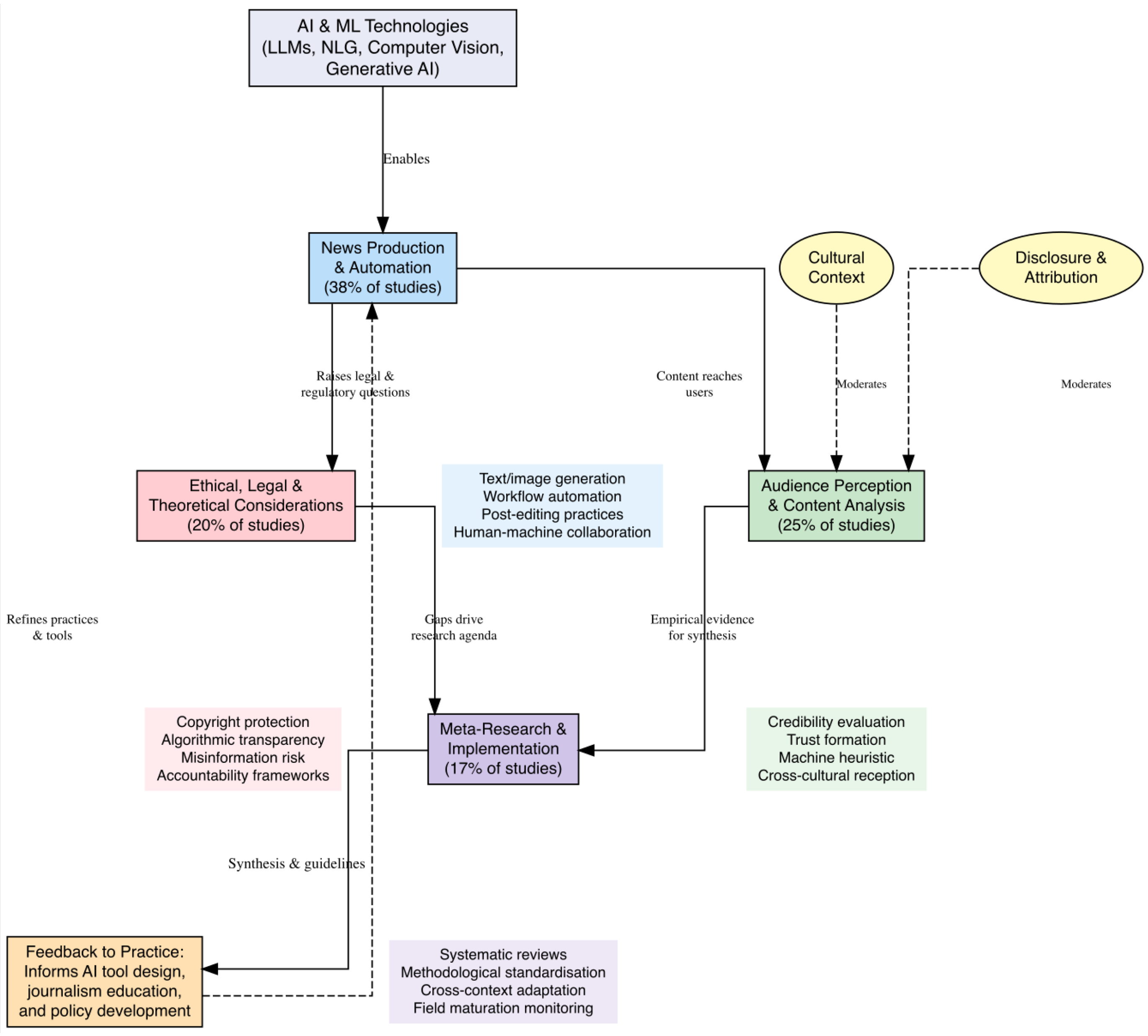
This study makes a significant theoretical contribution by developing an integrated framework that maps the directional relationships among the four research domains, identifies cultural context and disclosure practices as key moderating mechanisms, and generates testable propositions for future investigation. The framework advances beyond static typologies by specifying how developments in automation capabilities cascade through audience perception, raise ethical questions, and inform meta-research synthesis, with feedback loops that progressively refine journalistic practice.
Looking forward, the field must address several critical challenges. Longitudinal studies tracking AI systems and their societal impacts over time are urgently needed. Cross-cultural research systematically including perspectives from underrepresented regions is essential for developing globally applicable theoretical frameworks. The development of standardised validation protocols and quality assessment instruments would significantly strengthen methodological rigour. As generative AI technologies continue to evolve, researchers must grapple with emerging questions about multi-modal content verification, algorithmic accountability, and the reconfiguration of professional roles in increasingly automated news production environments.
Author Contributions
Conceptualisation, G.J. and N.D.; methodology, N.D.; software, N.D.; validation, G.J., N.D. and M.A.A.; formal analysis, N.D.; investigation, G.J. and N.D.; resources, M.A.A.; data curation, N.D.; writing—original draft preparation, G.J. and N.D.; writing—review and editing, G.J., N.D. and M.A.A.; visualisation, N.D.; supervision, M.A.A.; project administration, N.D.; funding acquisition, M.A.A. All authors have read and agreed to the published version of the manuscript.
Funding
This research received no external funding.
Institutional Review Board Statement
Not applicable.
Informed Consent Statement
Not applicable.
Data Availability Statement
The data supporting this systematic review, including search strategies, screening records, and data extraction forms, are available from the corresponding author upon reasonable request. The full list of included studies and their classifications is provided in the reference list.
Acknowledgments
The authors would like to thank the Faculty of Arts and Social Sciences, University of Malaya, for providing the resources and support necessary for conducting this research. During the preparation of this manuscript, the authors used AI-assisted tools for literature search, screening assistance, and reference management. The authors have reviewed and edited all content and take full responsibility for the final manuscript.
Conflicts of Interest
The authors declare no conflicts of interest.
Abbreviations
The following abbreviations are used in this manuscript:
| AI | Artificial Intelligence |
| ML | Machine Learning |
| PRISMA | Preferred Reporting Items for Systematic Reviews and Meta-Analyses |
| NLP | Natural Language Processing |
| LLM | Large Language Model |
| STM | Structural Topic Model |
References
- Alivi, M. A., Ghazali, A. H. A., Tamam, E., & Osman, M. N. (2021). Motives to use online news and the impact on satisfaction with the government and vote choice. Electronic Government, an International Journal, 17(1), 55–74. [Google Scholar] [CrossRef]
- Anderson, C. W. (2013). Towards a sociology of computational and algorithmic journalism. New Media & Society, 15(7), 1005–1021. [Google Scholar]
- Aria, M., & Cuccurullo, C. (2017). bibliometrix: An R-tool for comprehensive science mapping analysis. Journal of Informetrics, 11(4), 959–975. [Google Scholar] [CrossRef]
- Arias Robles, F., Marín-Sanchiz, C. R., Abellán-Mancheño, A., & García-Avilés, J. A. (2023). Transparency in informative content. An analysis of methods in Spanish data journalism (2019–2022). Analisi-Quaderns de Comunicacio i Cultura, 68, 97–116. [Google Scholar]
- Baptista, J. P., Rivas-de-Roca, R., Gradim, A., & Pérez-Curiel, C. (2025). Human-made news vs AI-generated news: A comparison of Portuguese and Spanish journalism students’ evaluations. Humanities and Social Sciences Communications, 12(1), 567. [Google Scholar] [CrossRef]
- Bartleman, M., Schapals, A. K., & Dubois, E. (2026). Generative AI and the new landscape of automated journalism: A systematized review of 185 studies (2012–2024). Journalism and Media, 7(1), 39. [Google Scholar] [CrossRef]
- Bhaskaran, H., Kashyap, G., & Mishra, H. (2024). Teaching data journalism: A systematic review. Journalism Practice, 18(3), 722–743. [Google Scholar]
- Broussard, M. (2016). Big data in practice: Enabling computational journalism through code-sharing and reproducible research methods. Digital Journalism, 4(2), 266–279. [Google Scholar]
- Bucher, T. (2017). The algorithmic imaginary: Exploring the ordinary affects of facebook algorithms. Information, Communication & Society, 20(1), 30–44. [Google Scholar] [CrossRef]
- Camaj, L., Lanosga, G., & Martin, J. (2025). A global perspective on data journalism materiality: Knowledge production across public transparency infrastructure environments. Digital Journalism, 13(3), 418–437. [Google Scholar]
- Carlson, M. (2015). The robotic reporter: Automated journalism and the redefinition of labor, compositional forms, and journalistic authority. Digital Journalism, 3(3), 416–431. [Google Scholar]
- Caswell, D., & Dörr, K. (2018). Automated Journalism 2.0: Event-driven narratives: From simple descriptions to real stories. Journalism Practice, 12(4), 477–496. [Google Scholar]
- Chung, J., & Lee, J. (2026). AI byline, human content: Exploring how source and message framing shape news perception. Computers in Human Behavior, 179, 108949. [Google Scholar] [CrossRef]
- Coddington, M. (2015). Clarifying journalism’s quantitative turn: A typology for evaluating data journalism, computational journalism, and computer-assisted reporting. Digital Journalism, 3(3), 331–348. [Google Scholar]
- Cools, H., & Diakopoulos, N. (2026). Uses of generative AI in the newsroom: Mapping journalists’ perceptions of perils and possibilities. Journalism Practice, 20(3), 878–896. [Google Scholar]
- Cools, H., & Koliska, M. (2024). News automation and algorithmic transparency in the newsroom: The case of the Washington post. Journalism Studies, 25(6), 662–680. [Google Scholar] [CrossRef]
- Danzon-Chambaud, S. (2021). A systematic review of automated journalism scholarship: Guidelines and suggestions for future research. Open Research Europe, 1, 4. [Google Scholar] [CrossRef] [PubMed]
- Danzon-Chambaud, S. (2023). Automated news in practice: A cross-national exploratory study. Open Research Europe, 3, 95. [Google Scholar] [CrossRef]
- Danzon-Chambaud, S., & Cornia, A. (2023). Changing or reinforcing the “rules of the game”: A field theory perspective on the impacts of automated journalism on media practitioners. Journalism Practice, 17(2), 174–188. [Google Scholar]
- Danzon-Chambaud, S., & Cornia, A. (2025). The cultural capital you need to work with automated news: Not only “your beautiful piece of work”, but also “patterns that emerge”. Journalism, 26(12), 2581–2598. [Google Scholar]
- de-Lima-Santos, M. F. (2024). The entanglements between data journalism, collaboration and business models: A systematic literature review. Digital Journalism, 12(2), 256–281. [Google Scholar]
- Demirci, S., & Sagiroglu, S. (2022). TwitterBulletin: An intelligent and real-time automated news categorization tool for twitter. Journal of Universal Computer Science (JUCS), 28(4), 345–377. [Google Scholar] [CrossRef]
- Descampe, A., Massart, C., Poelman, S., Standaert, F. X., & Standaert, O. (2022). Automated news recommendation in front of adversarial examples and the technical limits of transparency in algorithmic accountability. AI and Society, 37(1), 67–80. [Google Scholar]
- Diakopoulos, N., & Koliska, M. (2017). Algorithmic transparency in the news media. Digital Journalism, 5(7), 809–828. [Google Scholar]
- Dierickx, L. (2023). News automation, materialities, and the remix of an editorial process. Journalism, 24(3), 654–670. [Google Scholar]
- Dierickx, L., Opdahl, A. L., Khan, S. A., Lindén, C. G., & Guerrero Rojas, D. C. (2024). A data-centric approach for ethical and trustworthy AI in journalism. Ethics and Information Technology, 26(4), 64. [Google Scholar] [CrossRef]
- Dodds, T., Vandendaele, A., Simon, F. M., Helberger, N., Resendez, V., & Yeung, W. N. (2025). Knowledge silos as a barrier to responsible AI practices in journalism? Exploratory evidence from four dutch news organisations. Journalism Studies, 26(6), 740–758. [Google Scholar] [CrossRef]
- Dorr, K. N., & Hollnbuchner, K. (2017). Ethical challenges of algorithmic journalism. Digital Journalism, 5(4), 404–419. [Google Scholar]
- Elhosary, M. (2026). Pixels of prejudice: Decoding embedded biases in ai-generated news imagery and their implications for visual journalism-toward an algorithmic-mediated visual framing. Journalism & Mass Communication Quarterly, 103(2), 430–461. [Google Scholar]
- Erkmen, O. (2024). Data Journalism: A systematic literature review. Journalism Studies, 25(1), 58–79. [Google Scholar]
- Gambino, O. J., García Mendoza, C. V., Hernandez Minutti, B., Zapata-Manilla, C. M., Bernal-Trani, M. A., & Calvo, H. (2026). A modular approach to automated news generation using large language models. Information, 17(4), 319. [Google Scholar] [CrossRef]
- Gavurova, B., Skare, M., Hynek, N., Moravec, V., & Polishchuk, V. (2024). An information-analytical system for assessing the level of automated news content according to the population structure—A platform for media literacy system development. Technological Forecasting and Social Change, 200, 123161. [Google Scholar] [CrossRef]
- Gillespie, T. (2014). The relevance of algorithms. In T. Gillespie, P. J. Boczkowski, & K. A. Foot (Eds.), Media technologies: Essays on communication, materiality, and society (pp. 167–194). MIT Press. [Google Scholar]
- Graefe, A., & Bohlken, N. (2020). Automated journalism: A meta-analysis of readers’ perceptions of human-written in comparison to automated news. Media and Communication, 8(3), 50–59. [Google Scholar] [CrossRef]
- Haapanen, L., & Leppänen, L. (2020). Recycling a genre for news automation: The production of valtteri the election bot. AILA Review, 33(1), 67–85. [Google Scholar] [CrossRef]
- Haim, M., & Graefe, A. (2017). Automated news: Better than expected? Digital Journalism, 5(8), 1044–1059. [Google Scholar] [CrossRef]
- Henestrosa, A. L., Greving, H., & Kimmerle, J. (2023). Automated journalism: The effects of AI authorship and evaluative information on the perception of a science journalism article. Computers in Human Behavior, 138, 107445. [Google Scholar] [CrossRef]
- Hollanek, T., Peters, D., Drage, E., & Hernandes, R. (2025). AI, journalism, and critical AI literacy: Exploring journalists’ perspectives on AI and responsible reporting. AI and Society, 40(8), 6393–6405. [Google Scholar] [CrossRef]
- Hong, J. W., Chang, H. C. H., & Tewksbury, D. (2025). Can AI become Walter Cronkite? Testing the machine heuristic, the hostile media effect, and political news written by artificial intelligence. Digital Journalism, 13(4), 845–868. [Google Scholar]
- Ioscote, F., Gonçalves, A., & Quadros, C. (2024). Artificial intelligence in journalism: A ten-year retrospective of scientific articles (2014–2023). Journalism and Media, 5(3), 873–891. [Google Scholar] [CrossRef]
- Jamil, S. (2021). Increasing accountability using data journalism: Challenges for the pakistani journalists. Journalism Practice, 15(1), 19–40. [Google Scholar]
- Jia, C., Riedl, M. J., & Woolley, S. (2024). Promises and perils of automated journalism: Algorithms, experimentation, and “teachers of machines” in China and the United States. Journalism Studies, 25(1), 38–57. [Google Scholar] [CrossRef]
- Kim, D., & Kim, S. (2021). A model for user acceptance of robot journalism: Influence of positive disconfirmation and uncertainty avoidance. Technological Forecasting and Social Change, 163, 120448. [Google Scholar] [CrossRef]
- Kim, H. M., Lee, E. J., Park, J. W., & Walter, N. (2026). Synthetic news, natural doubts? A meta-analysis of credibility perceptions of AI-generated news. Cyberpsychology Behavior and Social Networking, 29(5), 281–288. [Google Scholar] [CrossRef] [PubMed]
- Kim, W., & Ryoo, Y. (2026). The literacy paradox: How AI literacy amplifies biases in evaluating AI-generated news articles. International Journal of Information Management, 86, 102992. [Google Scholar] [CrossRef]
- Kuai, J. (2024). Unravelling copyright dilemma of ai-generated news and its implications for the institution of journalism: The cases of US, EU, and China. New Media and Society, 26(9), 5150–5168. [Google Scholar] [CrossRef]
- La-Rosa Barrolleta, L. A., & Sandoval-Martín, T. (2024). Artificial intelligence versus journalists: The quality of automated news and bias by authorship using a Turing test. Anàlisi: Quaderns de Comunicació i Cultura, 70, 15–36. [Google Scholar] [CrossRef]
- Lee, S., Nah, S., Chung, D. S., & Kim, J. (2020). Predicting AI News credibility: Communicative or social capital or both? Communication Studies, 71(3), 428–447. [Google Scholar] [CrossRef]
- Lewis, S. C., Guzman, A. L., & Schmidt, T. R. (2019). Automation, journalism, and human–machine communication: Rethinking roles and relationships of humans and machines in news. Digital Journalism, 7(4), 409–427. [Google Scholar] [CrossRef]
- Lischka, J. A., Schaetz, N., & Oltersdorf, A. L. (2023). Editorial technologists as engineers of journalism’s future: Exploring the professional community of computational journalism. Digital Journalism, 11(6), 1026–1044. [Google Scholar] [CrossRef]
- Liu, B., & Wei, L. (2018). Reading machine-written news: Effect of machine heuristic and novelty on hostile media perception. Lecture Notes in Computer Science, 10901, 307–324. [Google Scholar] [CrossRef]
- Liu, Y. (2025). Culture or industry: Chinese and American young journalists’ usage and perception of AI and Gen-AI. Journalism Practice, 1–20. [Google Scholar] [CrossRef]
- Mazari, N. (2025). Unpacking public trust in ai-generated news: Constructing and validating a three-factor measurement tool. Moscow University Journalism Bulletin, 2025(6), 53–79. [Google Scholar]
- Møller, L. A. (2022). Between personal and public interest: How algorithmic news recommendation reconciles with journalism as an ideology. Digital Journalism, 10(10), 1794–1812. [Google Scholar] [CrossRef]
- Nanz, A., Binder, A., & Matthes, J. (2025). AI in the newsroom: Does the public trust automated journalism and will they pay for It? Journalism Studies, 26(14), 1745–1764. [Google Scholar] [CrossRef]
- Napoli, P. M. (2014). Automated media: An institutional theory perspective on algorithmic media production and consumption. Communication Theory, 24(3), 340–360. [Google Scholar] [CrossRef]
- Oh, C., Choi, J., Lee, S., Park, S., Kim, D., Song, J., Kim, D., Lee, J., & Suh, B. (2020, April 25–30). Understanding user perception of automated news generation system. 2020 CHI Conference on Human Factors in Computing Systems, Honolulu, HI, USA. [Google Scholar]
- Olsen, G. R. (2025). Enthusiasm and alienation: How implementing automated journalism affects the work meaningfulness of three newsroom groups. Journalism Practice, 19(2), 304–320. [Google Scholar] [CrossRef]
- Page, M. J., McKenzie, J. E., Bossuyt, P. M., Boutron, I., Hoffmann, T. C., Mulrow, C. D., Shamseer, L., Tetzlaff, J. M., Akl, E. A., Brennan, S. E., Chou, R., Glanville, J., Grimshaw, J. M., Hróbjartsson, A., Lalu, M. M., Li, T., Loder, E. W., Mayo-Wilson, E., McDonald, S., … Moher, D. (2021). The PRISMA 2020 statement: An updated guideline for reporting systematic reviews. BMJ, 372, n71. [Google Scholar] [CrossRef] [PubMed]
- Rani Krishna, K. M., Somasundaram, K., Arulmozhivarman, P., Immanuel, S. A., & Rajkumar, E. R. (2025). Deep learning for text summarization using NLP for automated news digest. Scientific Reports, 15(1), 36343. [Google Scholar] [CrossRef] [PubMed]
- Roberts, M. E., Stewart, B. M., Tingley, D., Lucas, C., Leder-Luis, J., Gadarian, S. K., Albertson, B., & Rand, D. G. (2014). Structural topic models for open-Ended survey responses. American Journal of Political Science, 58(4), 1064–1082. [Google Scholar] [CrossRef]
- Salih, M. I., Mohammed, S. M., Ibrahim, A. K., Ahmed, O. M., & Haji, L. M. (2025). Fine-tuning BERT for automated news classification. Engineering, Technology & Applied Science Research, 15(3), 22953–22959. [Google Scholar] [CrossRef]
- Sandoval-Martín, T., & Barrolleta, L. L. R. (2023). Research on the quality of automated news in international scientific production: Methodologies and results. Cuadernos.Info, 55, 114–136. [Google Scholar]
- Shah, M. H. A., Alivi, M. A., Dharejo, N., Dayo, F., Khoso, I. A., & Shah, A. (2024). Explaining journalist interns’ concerns using AI technology in media workspace in Pakistan. Pakistan Journal of Life & Social Sciences, 22(2). [Google Scholar] [CrossRef]
- Shilina, M. G., Volkova, I. I., Bombin, A. Y., & Smirnova, A. A. (2023). Artificial journalism: The reverse of human-machine communication paradigm. Mapping the field of AI critical media studies. Rudn Journal of Studies in Literature and Journalism, 28(4), 757–768. [Google Scholar] [CrossRef]
- Shin, D. (2022). Expanding the role of trust in the experience of algorithmic journalism: User sensemaking of algorithmic heuristics in Korean users. Journalism Practice, 16(6), 1168–1191. [Google Scholar] [CrossRef]
- Sigsgaard, M. E. (2026). Striking the (im)balance—A review of the relative prevalence of meta-ethical models in AI journalism research. Journalism, 27(3), 757–775. [Google Scholar] [CrossRef]
- Sonni, A. F., Hafied, H., Irwanto, I., & Latuheru, R. (2024). Digital newsroom transformation: A systematic review of the impact of artificial intelligence on journalistic practices, news narratives, and ethical challenges. Journalism and Media, 5(4), 1554–1570. [Google Scholar] [CrossRef]
- Srinivas, B., Bagadi, L., Darimireddy, N. K., Prasad, P. S., Satrupalli, S., & Kumar, A. (2024). Deep learning-based modified transformer model for automated news article summarization. Facta Universitatis, Series: Electronics and Energetics, 37(2), 261–276. [Google Scholar] [CrossRef]
- Sundar, S. S. (2008). The MAIN model: A heuristic approach to understanding technology effects on credibility. In M. J. Metzger, & A. J. Flanagin (Eds.), Digital media, youth, and credibility (pp. 73–100). MIT Press. [Google Scholar]
- Thäsler-Kordonouri, S. (2025). Refining automated news? The role of journalistic post-editing in shaping reader perceptions. European Journal of Communication, 40(5), 471–490. [Google Scholar] [CrossRef]
- Thäsler-Kordonouri, S., & Barling, K. (2025). Automated journalism in UK local newsrooms: Attitudes, integration, impact. Journalism Practice, 19(1), 58–75. [Google Scholar] [CrossRef]
- Thurman, N., Dörr, K., & Kunert, J. (2017). When reporters get hands-on with robo-writing: Professionals consider automated journalism’s capabilities and consequences. Digital Journalism, 5(10), 1240–1259. [Google Scholar]
- Trapova, A., & Mezei, P. (2022). Robojournalism—A copyright study on the use of artificial intelligence in the European news industry. GRUR International, 71(7), 589–602. [Google Scholar] [CrossRef]
- van Dalen, A. (2012). The algorithms behind the headlines: How machine-written news redefines the core skills of human journalists. Journalism Practice, 6(5–6), 648–658. [Google Scholar]
- Waddell, T. F. (2025). The effects of AI attribution, source priming, and story topic polarization on news credibility. Digital Journalism, 1–18. [Google Scholar] [CrossRef]
- Wang, R., & Ophir, Y. (2026). Behind the black box: The moderating role of the machine heuristic on the effect of transparency information about automated journalism on hostile media bias perception. Journalism, 27(1), 103–121. [Google Scholar] [CrossRef]
- Wiley, S. K. (2023). The grey area: How regulations impact autonomy in computational journalism. Digital Journalism, 11(6), 889–905. [Google Scholar] [CrossRef]
- Young, M. L., & Hermida, A. (2015). From Mr. and Mrs. outlier to central tendencies: Computational journalism and crime reporting at the Los Angeles Times. Digital Journalism, 3(3), 381–397. [Google Scholar]
- Zheng, Y., Zhong, B., & Yang, F. (2018). When algorithms meet journalism: The user perception to automated news in a cross-cultural context. Computers in Human Behavior, 86, 266. [Google Scholar] [CrossRef]
- Zulqarnain, W., & Alivi, M. A. (2025). AI in media professions: Trends, challenges, and professional norms; a systematic literature review (2024–2025). Journal of Media Horizons, 6(7), 834–846. [Google Scholar]
- Zulqarnain, W., Alivi, M. A., & Zulqarnain, A. (2026). Selective resistance and strategic adoption: Professional culture and AI integration in a Global South media ecosystem. Future Business Journal, 12(1), 118. [Google Scholar] [CrossRef]
Figure 1.
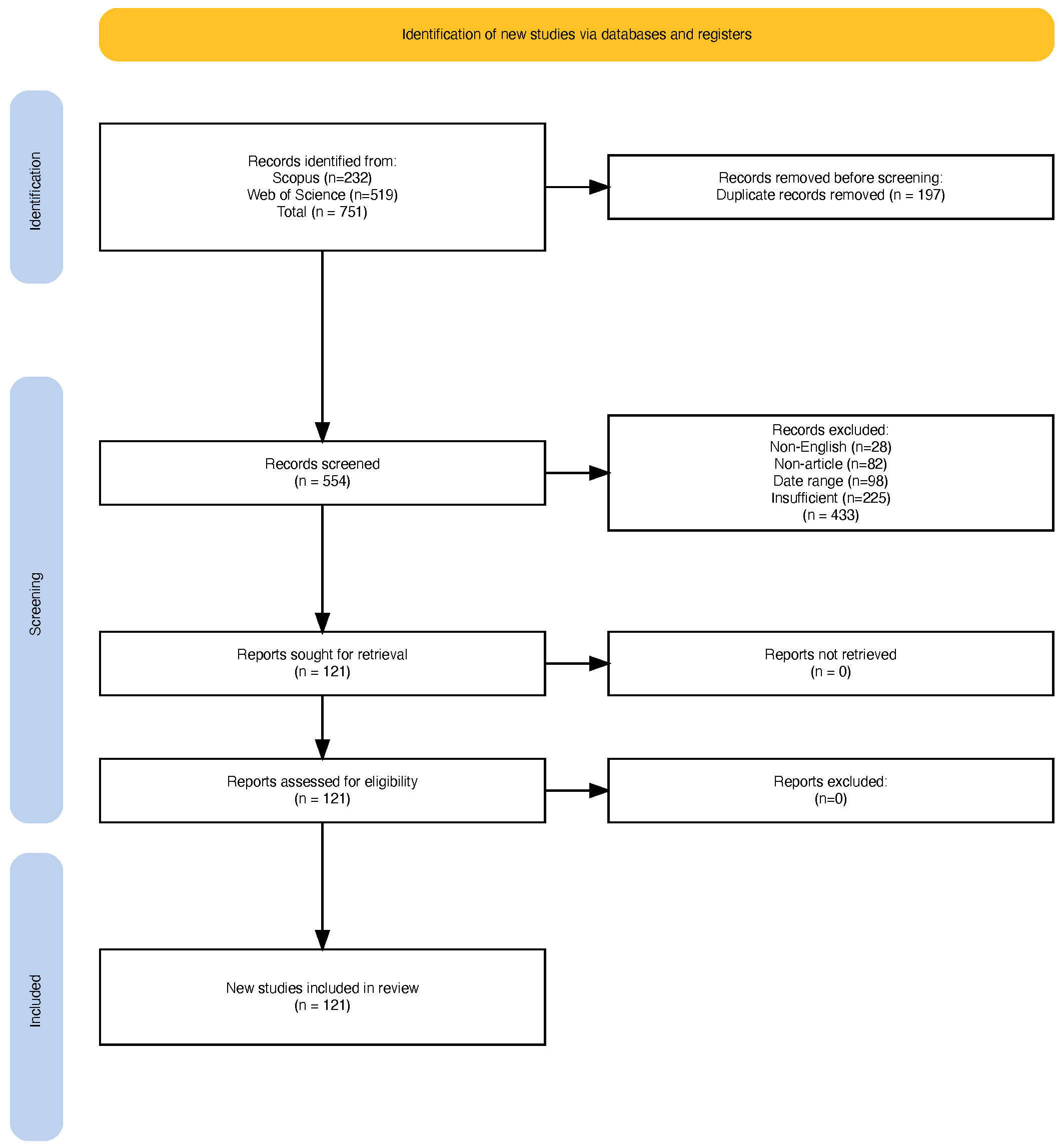
PRISMA 2020 flow diagram for the systematic review.
Figure 2.
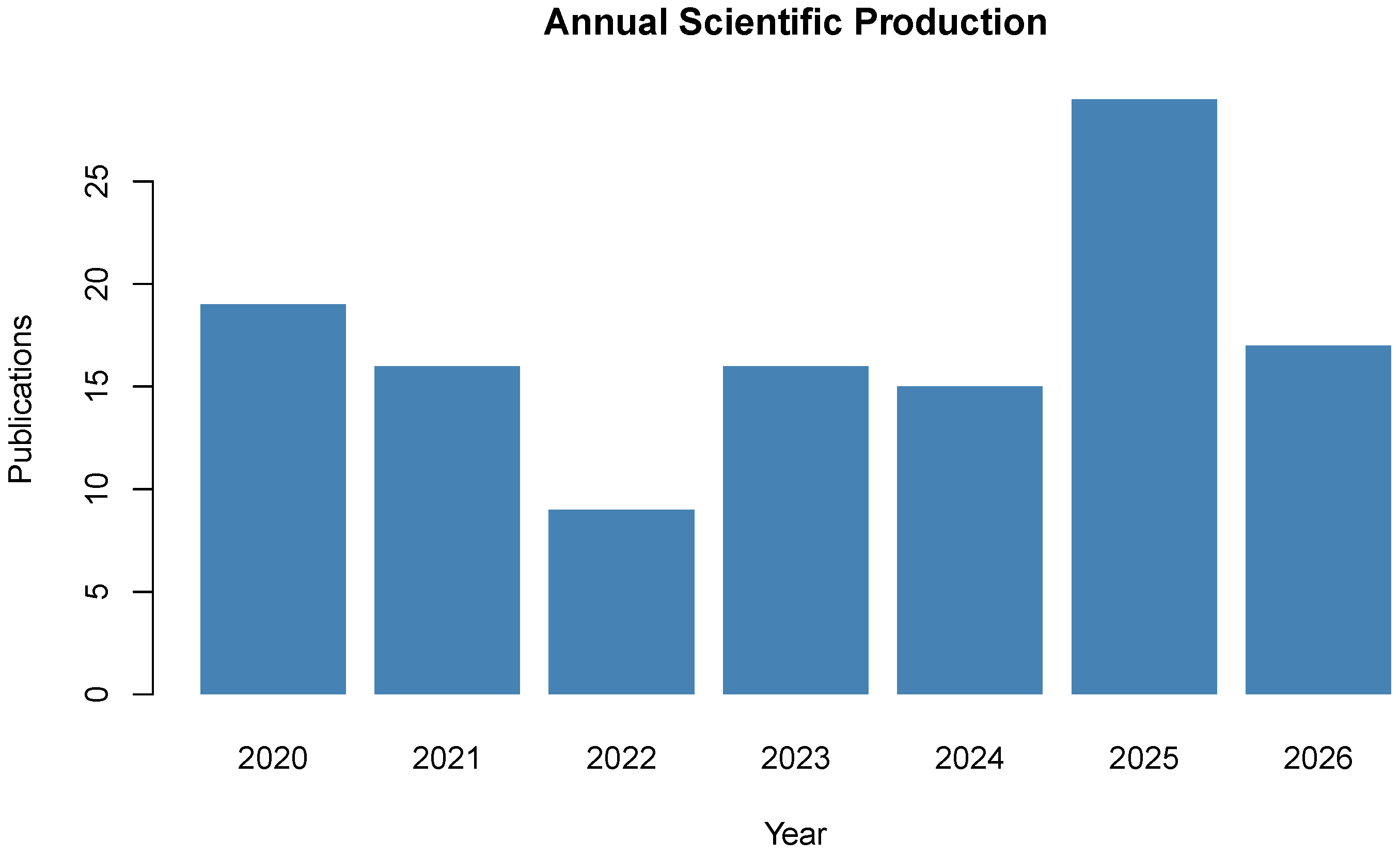
Annual scientific production of the 121 included studies (2020–2026).
Figure 3.
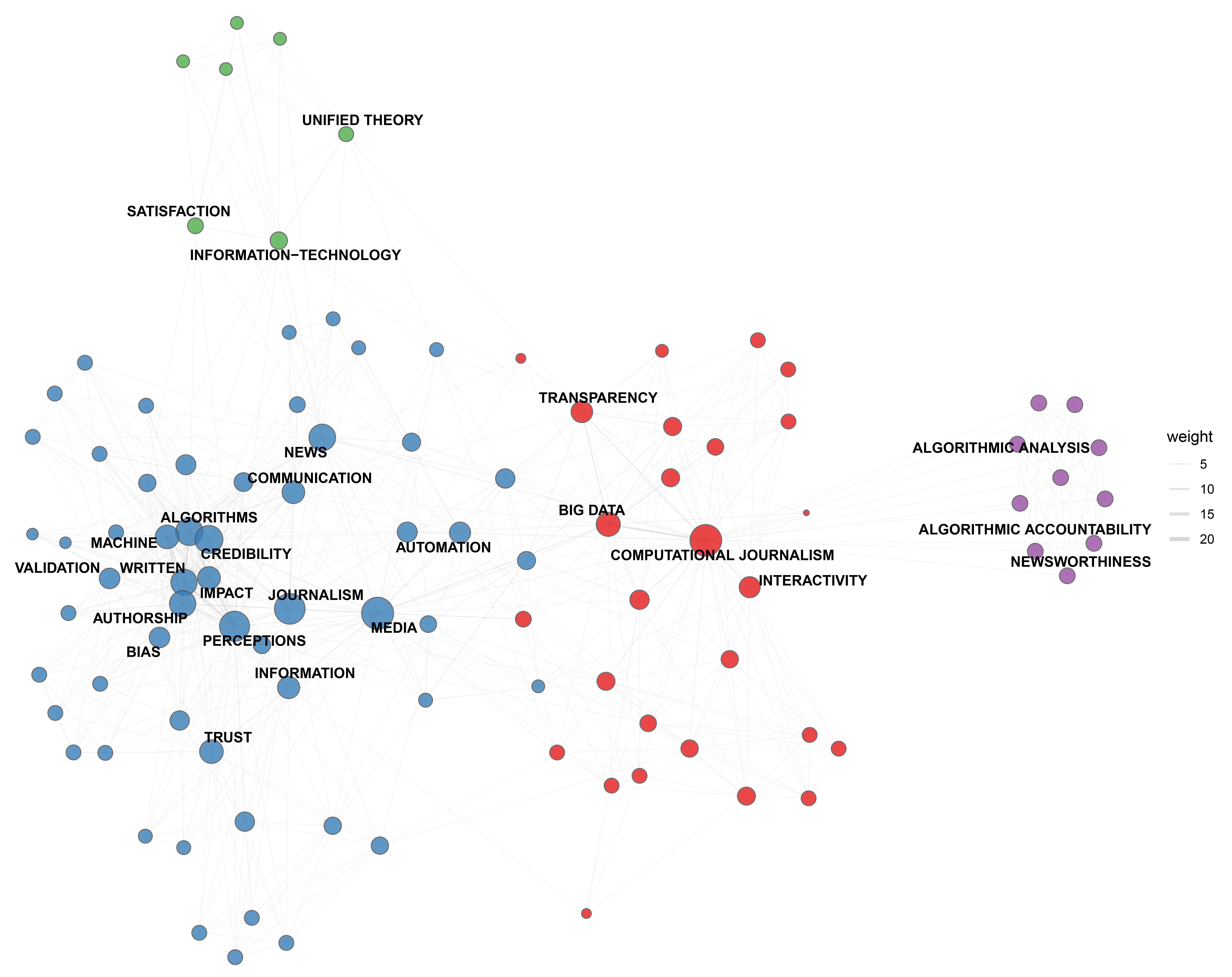
Keyword co-occurrence network. Node size indicates frequency; edge colour indicates community membership (Walktrap algorithm, Q = 0.56).
Figure 4.
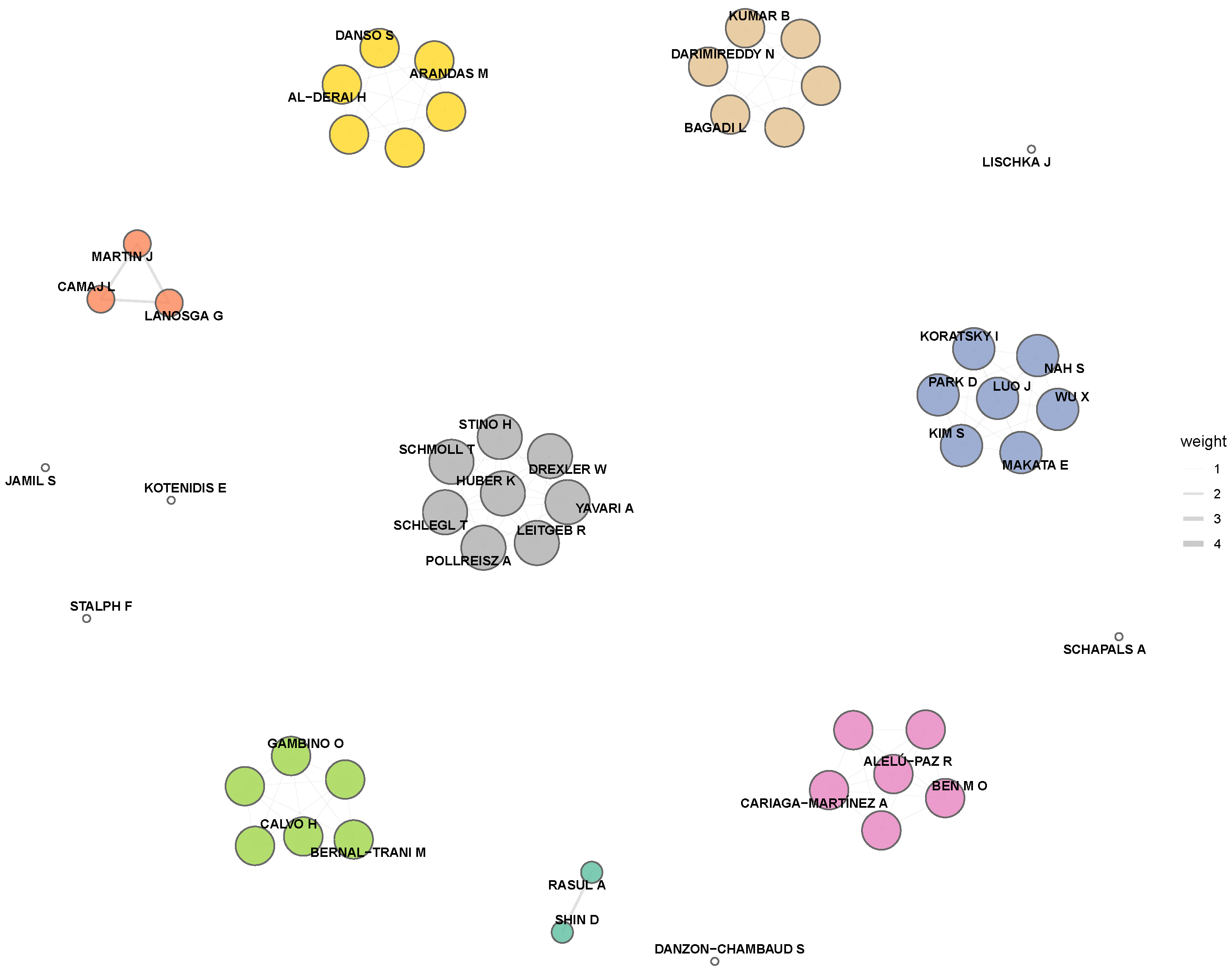
Author collaboration network.
Figure 5.
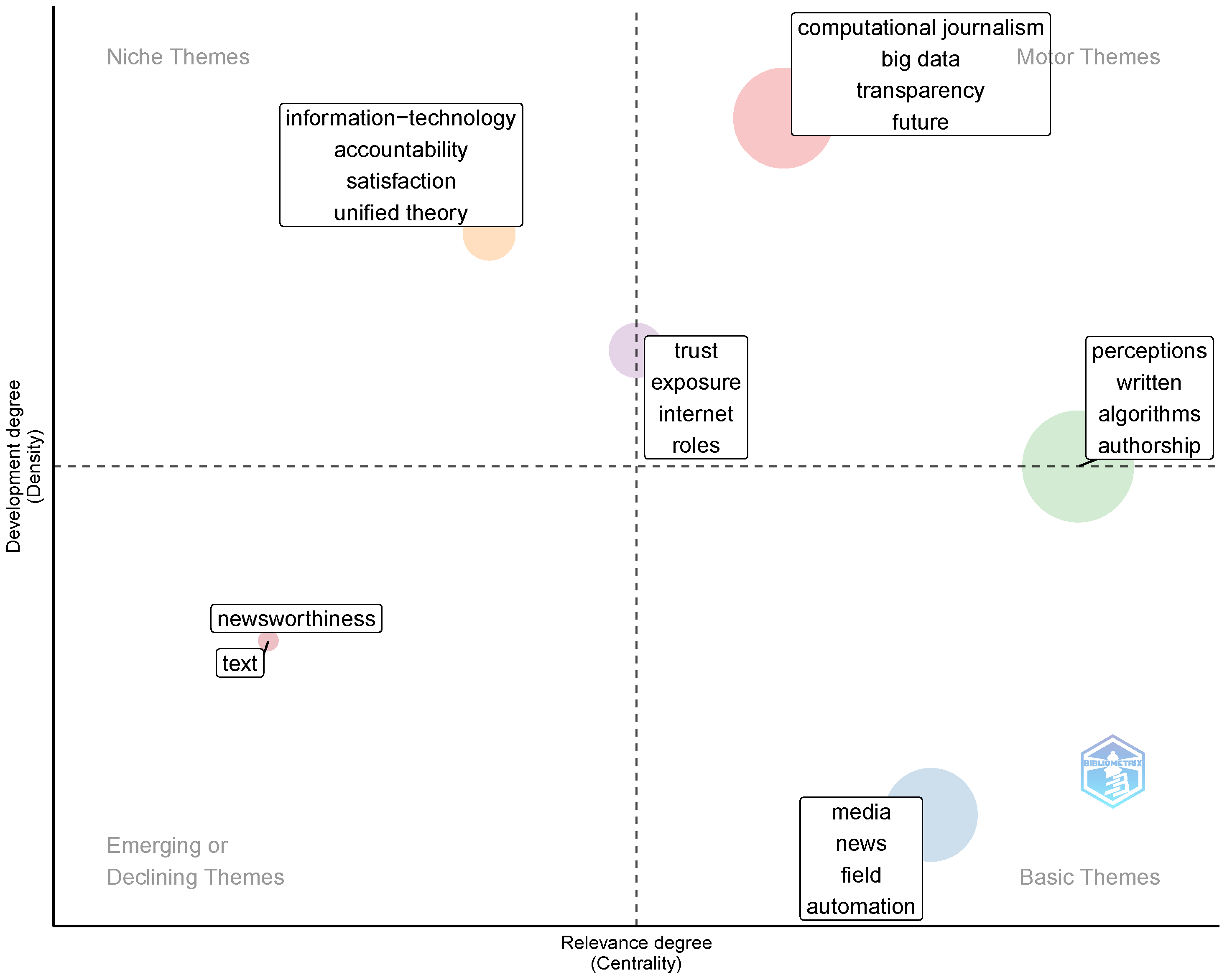
Thematic map of the AI journalism research field. X-axis: Callon’s centrality (relevance degree). Y-axis: Callon’s density (development degree).
Figure 6.
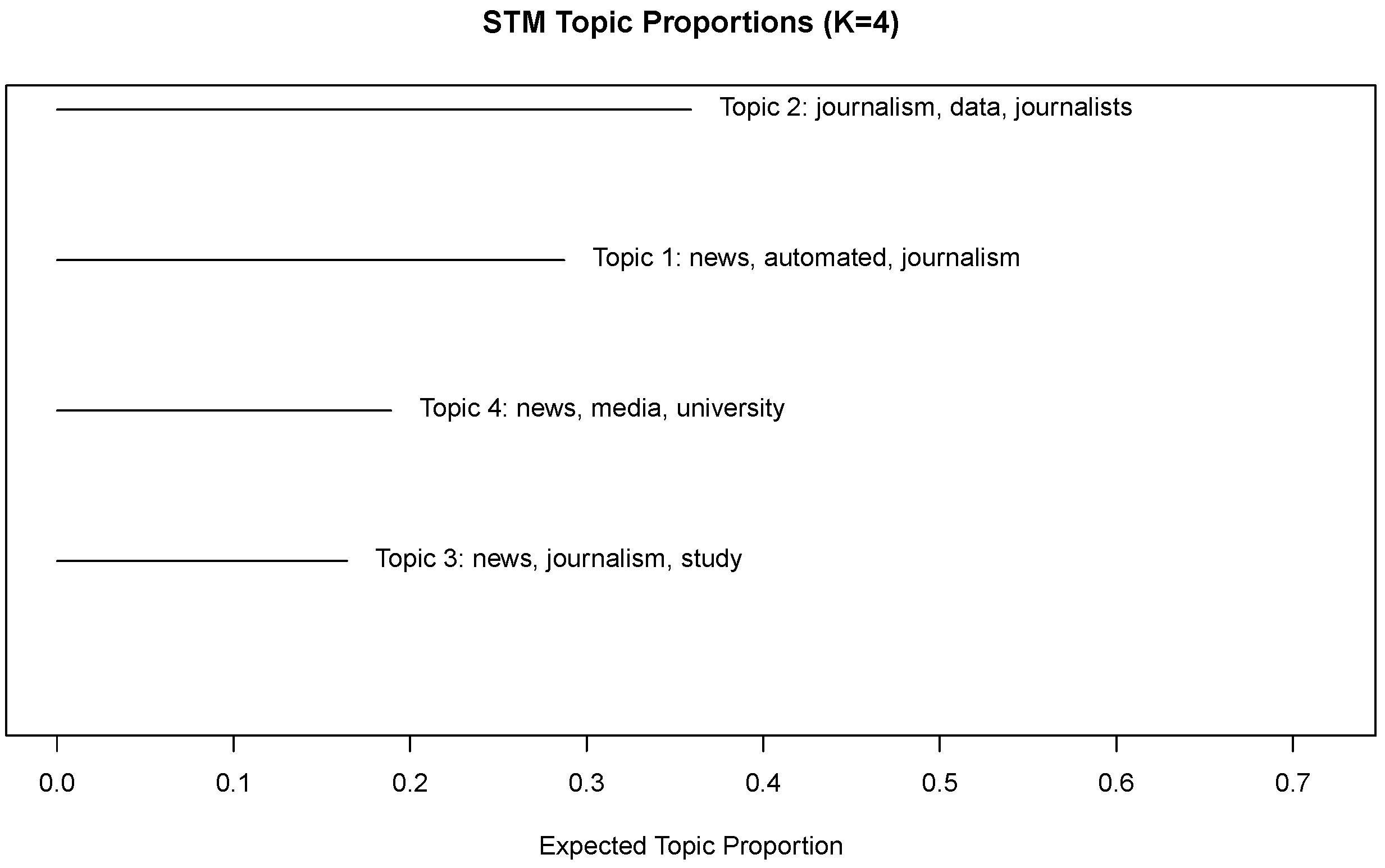
STM expected topic proportions (K = 4). Mean values with 95% confidence intervals.
Figure 7.
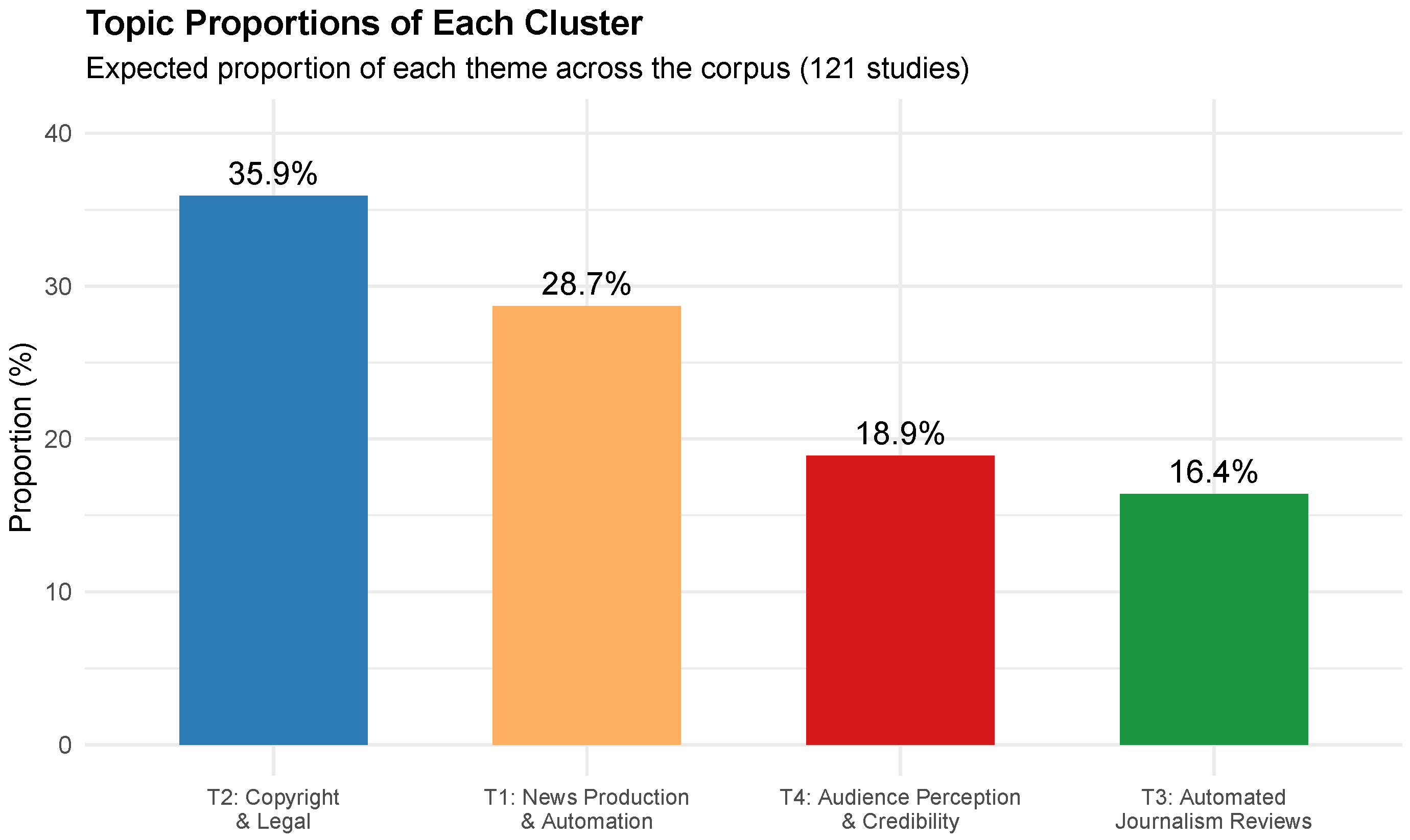
Topic proportions of each STM cluster. Percentage values represent the expected proportion of each theme across the corpus of 121 included studies.
Figure 8.
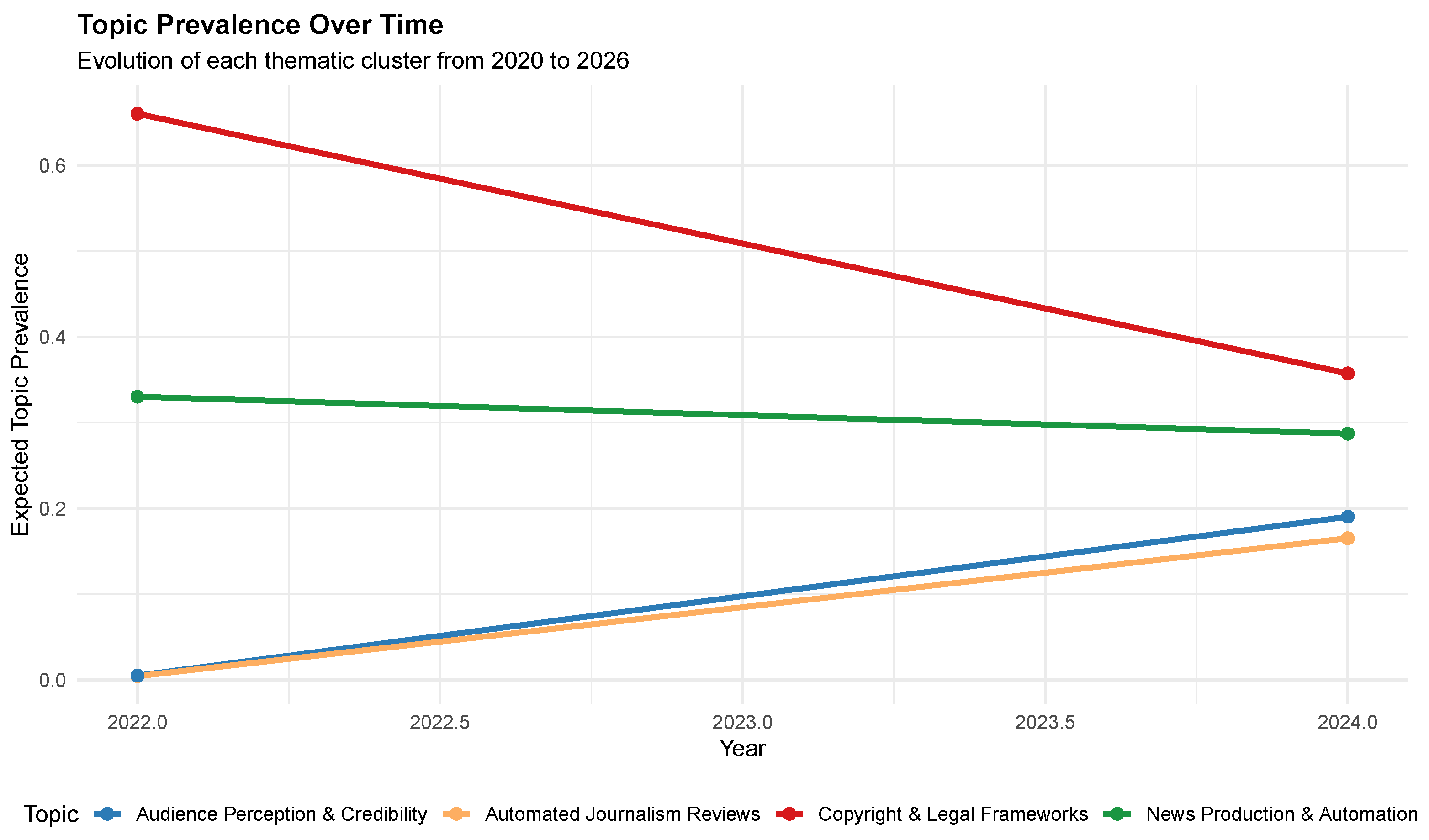
Topic prevalence over time. Lines trace the expected prevalence of each thematic cluster from 2020 to 2026, showing divergent trajectories across the four themes.
Figure 9.
Integrated theoretical framework of AI/ML applications in journalism research. The model identifies four interconnected research domains, two key moderating mechanisms (cultural context and disclosure/attribution practices), and feedback loops from meta-research to practice. Percentage values indicate the proportion of studies in each category based on qualitative classification.
Table 1.
Top ten most relevant journals publishing AI journalism research.
| Rank | Journal | Articles |
|---|
| 1 | Journalism | 15 |
| 2 | Journalism Practice | 14 |
| 3 | Digital Journalism | 7 |
| 4 | Journalism Studies | 6 |
| 5 | Journalism and Media | 5 |
| 6 | Brazilian Journalism Research | 4 |
| 7 | New Media & Society | 4 |
| 8 | Media and Communication | 3 |
| 9 | Anàlisi: Quaderns de Comunicació i Cultura | 2 |
| 10 | Computers in Human Behavior | 2 |
Table 2.
Top ten most productive authors in the included studies.
| Rank | Author | Publications |
|---|
| 1 | Danzon-Chambaud, S. (2021, 2023a, 2023b, 2025) | 4 |
| 2 | Dierickx, L. (2020a, 2020b, 2023, 2024) | 4 |
| 3 | Jamil, S. (2021, 2023, 2025) | 3 |
| 4 | Schapals, A. (2020, 2021, 2026) | 3 |
| 5 | Shin, D. (2022, 2024, 2025) | 3 |
| 6 | Thäsler-Kordonouri, S. (2025a, 2025b, 2026) | 3 |
| 7 | Barrolleta, L. (2023, 2024) | 2 |
| 8 | Camaj, L. (2025, 2026) | 2 |
| 9 | Chaparro-Domínguez, M. (2020, 2023) | 2 |
| 10 | Cornia, A. (2023, 2025) | 2 |
Table 3.
STM cluster identifications for the included studies.
| Topic | Top Keywords | Description |
|---|
| T1: News Production & Automation | journalists, technology, use, adoption, factors, study, expectancy, performance, effort, facilitating | AI implementation in journalistic workflows, technology adoption factors, newsroom integration, and computational text generation systems |
| T2: Copyright & Legal Frameworks | copyright, news, robojournalism, authority, human, intelligence, artificial, outputs, cognition, guidelines | Legal protection of AI-generated content, algorithmic accountability, intellectual property challenges, and regulatory frameworks for automated journalism |
| T3: Automated Journalism Reviews | review, automated, news, generative, research, studies, systematic, ethical, university, field | Meta-research mapping the field’s evolution, systematic reviews of AI journalism scholarship, and landscape analyses of generative AI impacts |
| T4: Audience Perception & Credibility | perception, perceived, news, credibility, media, study, respondents, human, articles, students | Audience evaluation of AI-generated versus human-written content, trust and credibility assessments, and cross-cultural perception studies |
Table 4.
Top ten highest-probability words for each STM topic.
| Topic | Top Probability Words |
|---|
| T1: News Production & Automation | news, automated, journalism, content, human, credibility, media, journalists, production, quality |
| T2: Copyright & Legal Frameworks | journalism, data, journalists, media, news, study, automated, journalistic, research, practices |
| T3: Automated Journalism Reviews | news, journalism, ai-generated, media, trust, artificial, intelligence, robot, algorithmic, effect |
| T4: Audience Perception & Credibility | news, media, social, information, content, models, knowledge, automated, learning, analysis |
Table 5.
FREX (frequency–exclusivity) words distinguishing each topic.
| Topic | FREX Words |
|---|
| T1: News Production & Automation | readers, labeling, human-written, AIGC, post-editing, pay, voice, evaluative, readability, declared |
| T2: Copyright & Legal Frameworks | wrangling, ideology, academic, editors, projects, Egyptian, freedom, occupational, norms, government |
| T3: Automated Journalism Reviews | robot, hostile, comfort, expectancy, laws, copyright, avoidance, disconfirmation, acceptance, uncertainty |
| T4: Audience Perception & Credibility | summarization, artwork, rouge, chatbot, mental, correlation, images, translation, addiction, scores |
Table 6.
Document-topic proportion distribution across the 121 included studies.
| Topic | Category | Mean | SD | Range |
|---|
| T1 | News Production & Automation | 28.7% | 41.9% | 0.1–99.5% |
| T2 | Copyright & Legal Frameworks | 35.9% | 44.7% | 0.2–99.6% |
| T3 | Automated Journalism Reviews | 16.4% | 34.5% | 0.1–99.5% |
| T4 | Audience Perception & Credibility | 18.9% | 36.8% | 0.1–99.5% |
Table 7.
Summary of classification framework for AI/ML applications in media research.
| Category | Proportion | Primary Methods |
|---|
| News Production and Automation | 38.0% | Case studies, System development |
| Audience Perception and Content Analysis | 24.8% | Experimental, Survey |
| Ethical, Legal, and Theoretical Considerations | 19.8% | Theoretical analysis, Legal review |
| Meta-Research and Implementation Studies | 17.4% | Literature review, Comparative analysis |
| Disclaimer/Publisher’s Note: The statements, opinions and data contained in all publications are solely those of the individual author(s) and contributor(s) and not of MDPI and/or the editor(s). MDPI and/or the editor(s) disclaim responsibility for any injury to people or property resulting from any ideas, methods, instructions or products referred to in the content. |